EP3068802B1 - Anticorps contre le ganglioside gd2-o-acétylé comportant une activité pro-apoptotique - Google Patents
Anticorps contre le ganglioside gd2-o-acétylé comportant une activité pro-apoptotique Download PDFInfo
- Publication number
- EP3068802B1 EP3068802B1 EP14806173.2A EP14806173A EP3068802B1 EP 3068802 B1 EP3068802 B1 EP 3068802B1 EP 14806173 A EP14806173 A EP 14806173A EP 3068802 B1 EP3068802 B1 EP 3068802B1
- Authority
- EP
- European Patent Office
- Prior art keywords
- antibody
- seq
- domain
- human
- acetylated
- Prior art date
- Legal status (The legal status is an assumption and is not a legal conclusion. Google has not performed a legal analysis and makes no representation as to the accuracy of the status listed.)
- Active
Links
Images


Classifications
-
- C—CHEMISTRY; METALLURGY
- C07—ORGANIC CHEMISTRY
- C07K—PEPTIDES
- C07K16/00—Immunoglobulins [IG], e.g. monoclonal or polyclonal antibodies
- C07K16/18—Immunoglobulins [IG], e.g. monoclonal or polyclonal antibodies against material from animals or humans
- C07K16/28—Immunoglobulins [IG], e.g. monoclonal or polyclonal antibodies against material from animals or humans against receptors, cell surface antigens or cell surface determinants
- C07K16/30—Immunoglobulins [IG], e.g. monoclonal or polyclonal antibodies against material from animals or humans against receptors, cell surface antigens or cell surface determinants from tumour cells
- C07K16/3076—Immunoglobulins [IG], e.g. monoclonal or polyclonal antibodies against material from animals or humans against receptors, cell surface antigens or cell surface determinants from tumour cells against structure-related tumour-associated moieties
- C07K16/3084—Immunoglobulins [IG], e.g. monoclonal or polyclonal antibodies against material from animals or humans against receptors, cell surface antigens or cell surface determinants from tumour cells against structure-related tumour-associated moieties against tumour-associated gangliosides
-
- C—CHEMISTRY; METALLURGY
- C07—ORGANIC CHEMISTRY
- C07K—PEPTIDES
- C07K16/00—Immunoglobulins [IG], e.g. monoclonal or polyclonal antibodies
- C07K16/18—Immunoglobulins [IG], e.g. monoclonal or polyclonal antibodies against material from animals or humans
- C07K16/28—Immunoglobulins [IG], e.g. monoclonal or polyclonal antibodies against material from animals or humans against receptors, cell surface antigens or cell surface determinants
- C07K16/30—Immunoglobulins [IG], e.g. monoclonal or polyclonal antibodies against material from animals or humans against receptors, cell surface antigens or cell surface determinants from tumour cells
-
- A—HUMAN NECESSITIES
- A61—MEDICAL OR VETERINARY SCIENCE; HYGIENE
- A61K—PREPARATIONS FOR MEDICAL, DENTAL OR TOILETRY PURPOSES
- A61K39/00—Medicinal preparations containing antigens or antibodies
- A61K39/395—Antibodies; Immunoglobulins; Immune serum, e.g. antilymphocytic serum
-
- A—HUMAN NECESSITIES
- A61—MEDICAL OR VETERINARY SCIENCE; HYGIENE
- A61K—PREPARATIONS FOR MEDICAL, DENTAL OR TOILETRY PURPOSES
- A61K39/00—Medicinal preparations containing antigens or antibodies
- A61K39/395—Antibodies; Immunoglobulins; Immune serum, e.g. antilymphocytic serum
- A61K39/39533—Antibodies; Immunoglobulins; Immune serum, e.g. antilymphocytic serum against materials from animals
- A61K39/39558—Antibodies; Immunoglobulins; Immune serum, e.g. antilymphocytic serum against materials from animals against tumor tissues, cells, antigens
-
- A—HUMAN NECESSITIES
- A61—MEDICAL OR VETERINARY SCIENCE; HYGIENE
- A61P—SPECIFIC THERAPEUTIC ACTIVITY OF CHEMICAL COMPOUNDS OR MEDICINAL PREPARATIONS
- A61P35/00—Antineoplastic agents
-
- A—HUMAN NECESSITIES
- A61—MEDICAL OR VETERINARY SCIENCE; HYGIENE
- A61P—SPECIFIC THERAPEUTIC ACTIVITY OF CHEMICAL COMPOUNDS OR MEDICINAL PREPARATIONS
- A61P43/00—Drugs for specific purposes, not provided for in groups A61P1/00-A61P41/00
-
- C—CHEMISTRY; METALLURGY
- C07—ORGANIC CHEMISTRY
- C07K—PEPTIDES
- C07K16/00—Immunoglobulins [IG], e.g. monoclonal or polyclonal antibodies
- C07K16/18—Immunoglobulins [IG], e.g. monoclonal or polyclonal antibodies against material from animals or humans
- C07K16/28—Immunoglobulins [IG], e.g. monoclonal or polyclonal antibodies against material from animals or humans against receptors, cell surface antigens or cell surface determinants
- C07K16/30—Immunoglobulins [IG], e.g. monoclonal or polyclonal antibodies against material from animals or humans against receptors, cell surface antigens or cell surface determinants from tumour cells
- C07K16/3015—Breast
-
- C—CHEMISTRY; METALLURGY
- C07—ORGANIC CHEMISTRY
- C07K—PEPTIDES
- C07K16/00—Immunoglobulins [IG], e.g. monoclonal or polyclonal antibodies
- C07K16/18—Immunoglobulins [IG], e.g. monoclonal or polyclonal antibodies against material from animals or humans
- C07K16/28—Immunoglobulins [IG], e.g. monoclonal or polyclonal antibodies against material from animals or humans against receptors, cell surface antigens or cell surface determinants
- C07K16/30—Immunoglobulins [IG], e.g. monoclonal or polyclonal antibodies against material from animals or humans against receptors, cell surface antigens or cell surface determinants from tumour cells
- C07K16/3023—Lung
-
- C—CHEMISTRY; METALLURGY
- C07—ORGANIC CHEMISTRY
- C07K—PEPTIDES
- C07K16/00—Immunoglobulins [IG], e.g. monoclonal or polyclonal antibodies
- C07K16/46—Hybrid immunoglobulins
-
- A—HUMAN NECESSITIES
- A61—MEDICAL OR VETERINARY SCIENCE; HYGIENE
- A61K—PREPARATIONS FOR MEDICAL, DENTAL OR TOILETRY PURPOSES
- A61K39/00—Medicinal preparations containing antigens or antibodies
- A61K2039/505—Medicinal preparations containing antigens or antibodies comprising antibodies
-
- C—CHEMISTRY; METALLURGY
- C07—ORGANIC CHEMISTRY
- C07K—PEPTIDES
- C07K2317/00—Immunoglobulins specific features
- C07K2317/20—Immunoglobulins specific features characterized by taxonomic origin
- C07K2317/24—Immunoglobulins specific features characterized by taxonomic origin containing regions, domains or residues from different species, e.g. chimeric, humanized or veneered
-
- C—CHEMISTRY; METALLURGY
- C07—ORGANIC CHEMISTRY
- C07K—PEPTIDES
- C07K2317/00—Immunoglobulins specific features
- C07K2317/50—Immunoglobulins specific features characterized by immunoglobulin fragments
- C07K2317/52—Constant or Fc region; Isotype
-
- C—CHEMISTRY; METALLURGY
- C07—ORGANIC CHEMISTRY
- C07K—PEPTIDES
- C07K2317/00—Immunoglobulins specific features
- C07K2317/50—Immunoglobulins specific features characterized by immunoglobulin fragments
- C07K2317/52—Constant or Fc region; Isotype
- C07K2317/522—CH1 domain
-
- C—CHEMISTRY; METALLURGY
- C07—ORGANIC CHEMISTRY
- C07K—PEPTIDES
- C07K2317/00—Immunoglobulins specific features
- C07K2317/50—Immunoglobulins specific features characterized by immunoglobulin fragments
- C07K2317/52—Constant or Fc region; Isotype
- C07K2317/524—CH2 domain
-
- C—CHEMISTRY; METALLURGY
- C07—ORGANIC CHEMISTRY
- C07K—PEPTIDES
- C07K2317/00—Immunoglobulins specific features
- C07K2317/50—Immunoglobulins specific features characterized by immunoglobulin fragments
- C07K2317/52—Constant or Fc region; Isotype
- C07K2317/526—CH3 domain
-
- C—CHEMISTRY; METALLURGY
- C07—ORGANIC CHEMISTRY
- C07K—PEPTIDES
- C07K2317/00—Immunoglobulins specific features
- C07K2317/50—Immunoglobulins specific features characterized by immunoglobulin fragments
- C07K2317/52—Constant or Fc region; Isotype
- C07K2317/53—Hinge
-
- C—CHEMISTRY; METALLURGY
- C07—ORGANIC CHEMISTRY
- C07K—PEPTIDES
- C07K2317/00—Immunoglobulins specific features
- C07K2317/50—Immunoglobulins specific features characterized by immunoglobulin fragments
- C07K2317/56—Immunoglobulins specific features characterized by immunoglobulin fragments variable (Fv) region, i.e. VH and/or VL
- C07K2317/565—Complementarity determining region [CDR]
-
- C—CHEMISTRY; METALLURGY
- C07—ORGANIC CHEMISTRY
- C07K—PEPTIDES
- C07K2317/00—Immunoglobulins specific features
- C07K2317/70—Immunoglobulins specific features characterized by effect upon binding to a cell or to an antigen
- C07K2317/72—Increased effector function due to an Fc-modification
-
- C—CHEMISTRY; METALLURGY
- C07—ORGANIC CHEMISTRY
- C07K—PEPTIDES
- C07K2317/00—Immunoglobulins specific features
- C07K2317/70—Immunoglobulins specific features characterized by effect upon binding to a cell or to an antigen
- C07K2317/73—Inducing cell death, e.g. apoptosis, necrosis or inhibition of cell proliferation
-
- C—CHEMISTRY; METALLURGY
- C07—ORGANIC CHEMISTRY
- C07K—PEPTIDES
- C07K2317/00—Immunoglobulins specific features
- C07K2317/70—Immunoglobulins specific features characterized by effect upon binding to a cell or to an antigen
- C07K2317/76—Antagonist effect on antigen, e.g. neutralization or inhibition of binding
-
- C—CHEMISTRY; METALLURGY
- C07—ORGANIC CHEMISTRY
- C07K—PEPTIDES
- C07K2317/00—Immunoglobulins specific features
- C07K2317/90—Immunoglobulins specific features characterized by (pharmaco)kinetic aspects or by stability of the immunoglobulin
- C07K2317/92—Affinity (KD), association rate (Ka), dissociation rate (Kd) or EC50 value
Definitions
- the present invention provides novel antibodies and their uses in cancer therapies.
- cancers of neuroectodermal origin specifically express the GD2-O-acetylated ganglioside and that a therapeutic antibody targeting GD2-O-acetylated ganglioside (mAb 8B6) can be administrated and show beneficial effects without neurotoxicity, especially due to the absence of expression of this cancer antigen on healthy cells, notably on peripheral nerves.
- mAb 8B6 a therapeutic antibody targeting GD2-O-acetylated ganglioside
- the potent activity of the anti-OAcGD2 murine IgG3, ⁇ mAb 8B6 has been described in ALVAREZ-RUEDA et al. (PLoS One, vol.6(9), p:e25220, 2011 ).
- This antibody has an efficient ADCC and CDC activity in vitro, and also shows a pro-apoptotic activity ( COCHONNEAU et al., Cancer Lett., vol.333(2), p: 194-204, 2013 ).
- This antibody also induces cell death by an apoptotic pathway corresponding to the inhibition of the proliferation for OAcGD2 positive tumor cells in culture via cell cycle arrest and apoptosis in vitro.
- c.60C3 Alvarez-Rueda established a mouse/human chimeric antibody specific for GD2 ganglioside named c.60C3 having enhanced ADCC and CDC activities than its mouse counterpart ( Clin Cancer Res 2007;13(18Suppl) September 15, 2007 ). However, c.60C3 is ineffective at inducing death of GD2-expressing tumor cells by apoptosis.
- the obtained antibody comprises the good combination of IgG1 properties - i.e. ADCC activity and a long half-life- with a pro-apoptotic activity.
- the present invention relates to an antibody, or an O-acetylated-GD2 ganglioside binding fragment thereof comprising a CH1 domain, which binds specifically to the O-acetylated-GD2 ganglioside, said antibody comprising:
- the present invention also relates to a pharmaceutical composition
- a pharmaceutical composition comprising at least one of such antibody, and a pharmaceutically acceptable carrier.
- the present invention also relates to the above mentioned pharmaceutical composition for use in the treatment of cancer expressing the GD2-O-acetylated ganglioside such as neuroblastomas, melanomas, glioblastomas, small cell lung cancers, breast cancers and cancer stem cell cancers.
- cancer expressing the GD2-O-acetylated ganglioside such as neuroblastomas, melanomas, glioblastomas, small cell lung cancers, breast cancers and cancer stem cell cancers.
- the application discloses a method for treating a cancer comprising providing to a patient in need thereof such a pharmaceutical composition which comprises at least one said antibody, or at least one functional fragment thereof.
- the application further discloses the use of at least one of such antibody, or of at least one functional fragment thereof for the preparation of a medicament for treating and/or preventing cancer.
- the present invention relates to a method for increasing the therapeutic efficacy of an antibody, or an O-acetylated-GD2 ganglioside binding fragment thereof comprising a CH1 domain, which binds specifically to the O-acetylated-GD2 ganglioside, said antibody comprising:
- the present invention concerns an antibody, or an O-acetylated-GD2 ganglioside binding fragment thereof comprising a CH1 domain, which binds specifically to the O-acetylated-GD2 ganglioside, said antibody comprising:
- Said antibody has a restored pro-apoptotic activity against cells expressing GD2-O-Acetylated ganglioside, while also exhibiting IgG1 properties as ADCC activity and half-life.
- An antibody is an immunoglobulin molecule corresponding to a tetramer comprising four polypeptide chains, two identical heavy (H) chains (about 50-70 kDa when full length) and two identical light (L) chains (about 25 kDa when full length) inter-connected by disulfide bonds. Light chains are classified as kappa and lambda.
- the heavy chain is classified as gamma for the IgG.
- Each heavy chain is comprised of a N-term heavy chain variable region (abbreviated herein as HCVR) and a heavy chain constant region.
- the heavy chain constant region is comprised of three domains (CH1, CH2, and CH3) for IgG, with a hinge domain between CH1 and CH2 domains.
- Each light chain is comprised of a N-term light chain variable region (abbreviated herein as LCVR) and a light chain constant region.
- the light chain constant region is comprised of one domain, CL.
- the HCVR and LCVR regions can be further subdivided into regions of hypervariability, termed complementarity determining regions (CDRs), interspersed with regions that are more conserved, termed framework regions (FR).
- CDRs complementarity determining regions
- FR framework regions
- Each HCVR and LCVR is composed of three CDRs and four FRs, arranged from amino-terminus to carboxy-terminus in the following order: FR1, CDR1, FR2, CDR2, FR3, CDR3, FR4.
- fragments refers to antibody fragments, which bind specifically to the O-acetylated-GD2 ganglioside and which comprise CH1 domain.
- Such fragments can be simply identified by the skilled person and comprise, as an example, F ab fragment (e.g., by papain digestion), F ab ' fragment (e.g., by pepsin digestion and partial reduction), F( ab ') 2 fragment (e.g., by pepsin digestion), F acb (e.g., by plasmin digestion), and also F d (e.g., by pepsin digestion, partial reduction and reaggregation) fragment are encompassed by the invention.
- F ab fragment e.g., by papain digestion
- F ab ' fragment e.g., by pepsin digestion and partial reduction
- F( ab ') 2 fragment e.g., by pepsin digestion
- F acb e.g., by plasmin digestion
- F d e.g.,
- Such fragments can be produced by enzymatic cleavage, synthetic or recombinant techniques, as known in the art and/or as described herein.
- Antibodies can also be produced in a variety of truncated forms using antibody genes in which one or more stop codons have been introduced upstream of the natural stop site.
- a combination gene encoding a F( ab ') 2 heavy chain portion can be designed to include DNA sequences encoding the CH 1 domain and/or hinge region of the heavy chain.
- the various portions of antibodies can be joined together chemically by conventional techniques, or can be prepared as a contiguous protein using genetic engineering techniques.
- binding specifically to the O-acetylated-GD2 ganglioside refers to a K D of less than 2 ⁇ 10 -7 M.
- antibody refers to a monoclonal antibody per se.
- a monoclonal antibody can be a human antibody, chimeric antibody and/or humanized antibody.
- the antibodies useful in the invention are produced recombinantly, as manipulation of the typically murine or other non-human antibodies with the appropriate specificity is required in order to convert them to humanized form.
- Antibodies may or may not be glycosylated, though glycosylated antibodies are preferred.
- Antibodies are properly cross-linked via disulfide bonds, as is well-known.
- the antibody of the invention is a chimeric antibody.
- chimeric antibody an antibody that is composed of variables regions from a murine immunoglobulin and of constant regions of a human immunoglobulin. This alteration consists simply of substituting the mouse constant region by a human constant region, thus resulting in a human/murine chimera which may have sufficiently low immunogenicity to be acceptable for pharmaceutical use.
- said chimeric antibody comprises the constant regions from human light and heavy chains.
- the antibody of the invention is a humanized antibody.
- humanized antibody is meant an antibody that is composed partially or fully of amino acid sequences derived from a human antibody germline by altering the sequence of an antibody having non-human complementarity determining regions (CDR). This humanization of the variable region of the antibody and eventually the CDR is made by techniques that are by now well known in the art.
- British Patent Application GB 2188638A and US Patent No. 5,585,089 disclose processes wherein recombinant antibodies are produced where the only portion of the antibody that is substituted is the complementarity determining region, or "CDR".
- CDR complementarity determining region
- the CDR grafting technique has been used to generate antibodies which consist of murine CDRs, and human variable region framework and constant regions (See. e. g., RIECHMANN et al., Nature, vol.332, p: 323-327, 1988 ). These antibodies retain the human constant regions that are necessary for Fc dependent effector function, but are much less likely to evoke an immune response against the antibody.
- the framework regions of the variable regions are substituted by the corresponding human framework regions leaving the non-human CDR substantially intact, or even replacing the CDR with sequences derived from a human genome.
- Fully human antibodies are produced in genetically modified mice whose immune systems have been altered to correspond to human immune systems. As mentioned above, it is sufficient for use in the methods of the invention, to employ an immunologically specific fragment of the antibody, including fragments representing single chain forms.
- a humanized antibody again refers to an antibody comprising a human framework, at least one CDR from a non-human antibody, and in which any constant region present is substantially identical to a human immunoglobulin constant region, i. e., at least about 85 or 90%, preferably at least 95% identical.
- all parts of a humanized antibody, except possibly the CDRs, are substantially identical to corresponding parts of one or more native human immunoglobulin sequences.
- a humanized immunoglobulin would typically not encompass a chimeric mouse variable region/human constant region antibody.
- the design of humanized immunoglobulins may be carried out as follows: When an amino acid falls under the following category, the framework amino acid of a human immunoglobulin to be used (acceptor immunoglobulin) is replaced by a framework amino acid from a CDR-providing non-human immunoglobulin (donor immunoglobulin) : (a) the amino acid in the human framework region of the acceptor immunoglobulin is unusual for human immunoglobulin at that position, whereas the corresponding amino acid in the donor immunoglobulin is typical for human immunoglobulin at that position ; (b) the position of the amino acid is immediately adjacent to one of the CDRs ; or (c) any side chain atom of a framework amino acid is within about 5-6 angstroms (center-to-center) of any atom of a CDR amino acid in a three dimensional immunoglobulin model ( QUEEN et al., Proc.
- said antibody comprises the light chain variable region (LCVR) with the amino acid sequence SEQ ID NO :6 and/or the heavy chain variable region (HCVR) with the amino acid sequence SEQ ID NO :7.
- LCVR light chain variable region
- HCVR heavy chain variable region
- a human kappa ( ⁇ ) CL domain is well known from the skilled person and corresponds, as an example, to SEQ ID NO: 8.
- SEQ ID NO: 8 A human kappa ( ⁇ ) CL domain is well known from the skilled person and corresponds, as an example, to SEQ ID NO: 8.
- the antibody of the invention has a light chain having the amino acid sequence SEQ ID NO: 9.
- SEQ ID NO: 9 amino acid sequence SEQ ID NO: 9
- CH2 and CH3 domains from a human IgG1 are well known from the skilled person and correspond as an example to SEQ ID NO: 10.
- CH1 domain from a human IgG1 is well known from the skilled person.
- a "CH1 domain, which is mutated so as to restore the pairing between the CH1 and CL domains that is typical of the human IgG2, IgG3 and IgG4 subclasses” refers to a human CH1 domain from a human IgG1 wherein an amino acid has been substituted by a cysteine residue, preferably so as to present a cysteine residue at the 133 or 134 position of the CH1 sequence.
- the numbering of the constant region is that of the EU index as set forth in Kabat et al. (1991, NIH Publication n°91-3242, National technical Information Service Springfield, VA).
- the CH1 domain from a human IgG1 corresponds to SEQ ID NO: 29.
- Said CH1 domain, when mutated so as to restore the typical IgG pairing between CH1 and light chains typical of the other IgG subclasses corresponds to the amino acid sequence SEQ ID NO: 11, wherein the serine residue in position 133 has been substituted by a cysteine or to the amino acid sequence SEQ ID NO: 30, wherein the serine residue in position 134 has been substituted by a cysteine.
- the cysteine residue at the 133 or 134 position of the CH1 sequence restores a disulfide bound between the light chain and the heavy chain of the antibodies of the invention.
- SEQ ID NO: 29 SEQ ID NO: 11
- CH1 domain from a human IgG2, IgG3, and IgG4 are well known from the skilled person.
- CH1 domain from a human IgG2 corresponds to SEQ ID NO: 31
- the CH1 domain from a human IgG3 corresponds to SEQ ID NO: 12
- the CH1 domain from a human IgG4 corresponds to SEQ ID NO: 32.
- SEQ ID NO: 31 SEQ ID NO: 12
- the antibody of the invention comprises a mutated CH1 domain from a human IgG1 presenting a cysteine residue at the 133 or 134 position of its sequence, preferably said domain has the sequence SEQ ID NO: 11.
- said antibody is selected in the group comprising 301.14a, 301.14b, 301.16 and 301.18.
- the chimeric antibody of the invention comprises a CH1 domain from a human IgG2, IgG3 or IgG4, preferably said domain is a CH1 domain from an IgG3, such as the sequence SEQ ID NO: 12.
- said antibody is selected in the group comprising 301.15, 301.15b, 301.17 and 301.19.
- the chimeric antibody of the invention also comprises a hinge domain from a human IgG1, IgG2, IgG3, IgG4 or a derivative of a hinge domain from a human IgG1, or a truncated hinge domain from a human IgG3.
- the hinge domain from a human IgG1 is well known from the skilled person and corresponds as an example to SEQ ID NO: 13.
- Derivative of hinge domain from a human IgG1 corresponds typically to a hinge domain, wherein the cysteine residue at the fifth position of the hinge sequence has been substituted by another residue. In fact, said mutation results in the restoration of the structure typical of the other IgG subclasses.
- SEQ ID NO: 14 EPKSCDKTHTCPPCP
- Hinge domains from a human IgG2, IgG3 or IgG4 are well known from the skilled person and correspond as an example to SEQ ID NO: 15 for IgG3.
- Truncated hinge domains from a human IgG3 are also well known from the skilled person and are selected from the group consisting of SEQ ID NO: 16 to 19, preferably SEQ ID NO: 19.
- SEQ ID NO: 15 SEQ ID NO: 16 SEQ ID NO: 17 ELKTPLGDTTHTCPRCPEPKSCDTPPPCPRCP SEQ ID NO: 18 EPKSCDTPPPCPRCP SEQ ID NO: 19 ELKTPLGDTTHTCPRCP
- the antibody of the invention comprises a hinge domain from a human IgG1 or a derivative thereof, preferably said domain has the sequence SEQ ID NO: 13 or SEQ ID NO: 14.
- said antibody is selected in the group comprising 301.14a, 301.14b, 301.15, 301.15b, 301.20 and 301.21.
- the antibody of the invention comprises a hinge domain from a human IgG2, IgG3, IgG4, a hinge domain from a human IgG1 wherein the cysteine residue at the fifth position of the hinge sequence has been substituted by another residue, or a truncated hinge from a human IgG3, preferably said domain is from a human IgG3 and has the sequence selected in the group consisting of SEQ ID NO: 15 to SEQ ID NO: 19, and most preferably SEQ ID NO: 15 or SEQ ID NO: 19.
- said antibody is selected in the group comprising 301.16, 301.17, 301.18 and 301.19.
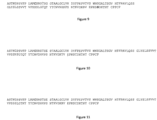
- the antibody of the invention comprises: 1) a light chain having the amino acid sequence SEQ ID NO: 9, 2) a heavy chain comprising: • the CH2 and CH3 domains from a human IgG1 having the sequence SEQ ID NO: 10, • an amino acid sequence corresponding to human CH1 and hinge domains selected in the group comprising or consisting of: Sequence Antibody Figure SEQ ID NO: 20 301.14a 2 SEQ ID NO: 21 301.14b 3 SEQ ID NO: 22 301.15 4 SEQ ID NO: 34 301.15b 9 SEQ ID NO: 23 301.16 5 SEQ ID NO: 24 301.17 6 SEQ ID NO: 25 301.18 7 SEQ ID NO: 26 301.19 8 SEQ ID NO: 31 301.20 10 SEQ ID NO: 32 301.21 11
- the antibody of the invention is selected among the 301.14b, 301.15, 301.18 and 301.19 antibodies.
- these antibodies show unexpectedly a pro-apoptotic activity greater than the one of the original antibody.
- the antibody of the invention is the 301.15 antibody.
- this antibody is the only one showing a binding cooperativity as for the original antibody.
- the introduction of a cysteine residue within the antibodies of the invention either by a mutated CH1 domain from a human IgG1 presenting a cysteine residue at the 133 or 134 position of its sequence, or by a CH1 domain from a human IgG2, IgG3 or IgG4 do not liberate any free thiol group previously linked to another cysteine residue.
- the antibodies of the invention encompass immunoconjugates.
- immunoconjugate refers to a conjugate molecule comprising at least one chimeric antibody or a functional fragment thereof, bound to a second molecule, preferably a cytotoxic agent or a radioisotope.
- said antibody or functional fragment thereof is bound to said second molecule by covalent linkage.
- the antibody of the invention is an immunoconjugate.
- the antibody of the invention is an immunoconjugate wherein said immunoconjugate comprises an antibody of the invention or an O-acetylated-GD2 ganglioside binding fragment thereof comprising a CH1 domain and a cytotoxic agent.
- the antibody of the invention is an immunoconjugate wherein said immunoconjugate comprises an antibody of the invention or an O-acetylated-GD2 ganglioside binding fragment thereof comprising a CH1 domain and a radioisotope.
- the present invention is related to a pharmaceutical composition
- a pharmaceutical composition comprising at least one antibody as described herein and a pharmaceutically acceptable carrier for use in therapy.
- Said composition is particularly useful for treating cancer expressing the GD2-O-acetylated ganglioside.
- the invention relates to a pharmaceutical composition for use in the treatment of cancer expressing the GD2-O-acetylated ganglioside such as neuroblastomas, melanomas, glioblastomas, small cell lung cancers, breast cancers and cancer stem cell cancers.
- GD2-O-acetylated ganglioside such as neuroblastomas, melanomas, glioblastomas, small cell lung cancers, breast cancers and cancer stem cell cancers.
- Said composition may be in any pharmaceutical form suitable for administration to a patient, including but not limited to solutions, suspensions, lyophilized powders, capsule and tablets.
- compositions of the invention may further comprise any pharmaceutically acceptable diluent, excipient or auxiliary.
- composition of the invention may be formulated for injection, e.g. local injection, transmucosal administration, inhalation, oral administration and more generally any formulation that the skilled person finds appropriate to achieve the desired therapy.
- the antibody of the invention is contained in said pharmaceutical composition in an amount effective to achieve the intended purpose, and in dosages suitable for the chosen route of administration.
- a therapeutically effective dose means an amount of a compound effective to prevent, alleviate or ameliorate symptoms of the subject suffering from cancer.
- the chimeric antibody of the invention may further comprise additional constituents.
- the chimeric antibody of the invention may correspond to an immunoconjugate.
- the application also discloses a method for treating cancer expressing the GD2-O-acetylated ganglioside comprising providing to a patient in need thereof a pharmaceutical composition as described herein, which comprises at least one chimeric antibody as described herein.
- the term "patient” refers to a mammal, preferably to a human.
- a patient in need thereof corresponds to a patient suffering from a cancer expressing the GD2-O-acetylated ganglioside.
- Said cancer expressing the GD2-O-acetylated ganglioside are selected in the group comprising neuroblastomas, melanomas, glioblastomas, small cell lung cancers, breast cancers and cancer stem cell cancers.
- a third aspect of the present invention concerns a method for increasing the therapeutic efficacy of human IgG1 antibody which binds specifically to the O-acetylated-GD2 ganglioside, or an O-acetylated-GD2 ganglioside binding fragment thereof comprising a CH1 domain, said antibody comprising:
- Said method of increasing the therapeutic efficacy comprises increasing the pro-apoptotic activity of said antibody.
- the method of the invention comprises the step of mutating the CH1 domain from a human IgG1 antibody which binds specifically to the O-acetylated-GD2 ganglioside, so as to restore the pairing between CH1 and CL domains that is typical of other IgG subclasses.
- CH1 domain from a human IgG1 is well known from the skilled person.
- CH1 domain from a human IgG1 antibody which binds specifically to the O-acetylated-GD2 ganglioside can be shown on figure 1 .
- the step of substituting the amino acid at the 133 or 134 position of SEQ ID NO: 29 of the human CH1 ⁇ 1 domain from said antibody, according to EU index as set forth in Kabat et al., by a cysteine residue thereby restoring the pairing between CH1 and CL domains that is typical of human IgG2, IgG3 and IgG4 subclasses, is done by:
- the method of the invention comprises the step of substituting said CH1 domain from a human IgG1 by the CH1 domain from a human IgG2, IgG3 or IgG4.
- CH1 domain from a human IgG2, IgG3 and IgG4 are well known from the skilled person.
- the CH1 domain from a human IgG3 corresponds to SEQ ID NO: 12.
- the step of substituting the CH1 domain of a human IgG1 antibody which binds specifically to the O-acetylated-GD2 ganglioside by the CH1 domain from a human IgG2, IgG3 or IgG4 is done by:
- the method of the invention further comprises the step of mutating the hinge IgG1 domain from a human IgG1 antibody which binds specifically to the O-acetylated-GD2 ganglioside wherein the cysteine residue at the fifth position of the hinge sequence has been substituted by another residue, thereby restoring the pairing between the hinge and CH2 domain that is typical of human IgG2, IgG3 and IgG4 subclasses, or of substituting human hinge IgG1 domain of said antibody by the hinge domain from a human IgG2, IgG3 or IgG4, or a truncated hinge domain from a human IgG3 selected from the group consisting of SEQ ID NO: 16, SEQ ID NO: 17, SEQ ID NO: 18 and SEQ ID NO: 19.
- the hinge domain from a human IgG1 is well known from the skilled person and corresponds as an example to SEQ ID NO: 13.
- the step of "mutating the hinge domain from a human IgG1 antibody which binds specifically to the O-acetylated-GD2 ganglioside, so as to restore the pairing between hinge and CH2 domains that is typical of other IgG subclasses” refers to a human IgG1 hinge domain of said antibody, wherein the cysteine residue at the fifth position of the hinge protein sequence has been substituted by another residue, preferably by a serine.
- said mutation results in the restoration of the typical IgG structure.
- the step of mutating the human hinge from said antibody that restores the pairing between hinge and the CH2 that is typical of human IgG2, IgG3 and IgG4 subclasses is done by:
- Hinge domains from a human IgG2, IgG3 or IgG4 are well known from the skilled person and corresponds as an example to SEQ ID NO: 15 for IgG3.
- Derivatives of human IgG3 are also well known from the skilled person and correspond as an example to SEQ ID NO: 16 to 19, preferably SEQ ID NO: 19.
- the step of substituting human hinge IgG1 domain of said antibody by the hinge domain from a human IgG2, IgG3 or IgG4, or a truncated hinge domain from a human IgG3 selected from the group consisting of SEQ ID NO: 16, SEQ ID NO: 17, SEQ ID NO: 18 and SEQ ID NO:19, is done by:
- the chimeric anti-OAcGD2 antibody, c8B6 has been designed from 8B6 by substituting its constant regions by the one of a human IgG1, ⁇ . Its sequences are represented in figure 1 (SEQ ID NO: 27 and SEQ ID NO: 28).
- the structure of this antibody comprises 2 intramolecular disulfide bonds in light chain (Cys23-Cys93 and Cys139-Cys199), and 4 intramolecular disulfide bonds in heavy chain (Cys22-Cys98, Cys146-Cys202, Cys263-Cys323, and Cys369-Cys427. Cysteine residues involved in intra-chain disulfide bonds are indicated by a star (*).
- the whole structure is stabilized by 3 intermolecular disulfide bonds: light chain is connected to heavy chain by one disulfide bond between the last cysteine residue of light chain and the cysteine residue of the upper hinge region (Cys219-Cys222), and heavy chains are connected by 2 disulfide bonds connecting the Cysteine in the middle hinge (Cys228-Cys228 and Cys231-Cys231). Cysteine residues involved in inter-chain disulfide bonds are indicated by a arrow ( ⁇ ).
- the 8B6 LCVR is cloned NotI-KasI in a pEvi vector so as to be fused with the CL domain of a human IgG1.
- the 8B6 HCVR domain is cloned NotI-NheI in a pEvi' vector so as to be fused with the constant domain of the heavy chain of a human IgG1.
- CHO K1 cells are co-transfected by both vectors.
- the CHO K1 cells After transfection, the CHO K1 cells are maintained in a serum free medium for several days.
- the culture medium is harvested and freezed at -80°C. A new medium is added to the transfected cells until the cell viability is less than 70-80%.
- the harvested culture media are pooled and the antibody is purified using protein A immobilized on a sepharose matrix.
- the binding of the antibody to its target was confirmed by flow cytometry on IMR5 cells expressing GD2-O-Acetylated ganglioside. The binding was revealed by a goat anti-human IgG conjugated to fluorescein isothiocyanate (FITC). These experiments have confirmed the functionality of this antibody, which binds GD2-O-Acetylated.
- FITC fluorescein isothiocyanate
- 1 ⁇ 10 4 IMR5, SUM159PT or H187 cells are incubated 24h at 37°C in a 96-well microplate.
- Antibodies from 80-0.15 ⁇ g/mL were added and incubated 24h at 37°C.
- Fifty ⁇ g of MTT were then added to each well and incubated at least 4h at 37°C, before cells were solubilized with 10% SDS and to incubate O.N. at 37°C.
- the absorbance was then read at 570 and 650 nm. Absorbance of the product at 650 nm was subtracted from the absorbance at 570 nm (Abs570-Abs650) to calculate total conversion of dye.
- the antibody c8B6 has lost the direct cytotoxicity of 8B6 following the chimerization step by passing from murine constant IgG3 domains to human IgG1 constant domains. Moreover, the antibody further lost the cooperativity properties of the parental IgG3 8B6.
- the antibody 301.14a corresponds to a mutated human CH1 ⁇ 1 (underlined mutation S133C) with the human Hinge ⁇ 1 domain as represented in figure 2 (SEQ ID NO: 20).
- the other constant domains correspond to CH2 and CH3 domains of IgG1 (SEQ ID NO: 9) and the kappa CL domain (SEQ ID NO: 8).
- the antibody 301.14b corresponds to a mutated human CH1 ⁇ 1 (underlined mutation S133C) with a mutated human Hinge ⁇ 1 domain (underlined mutation corresponding to the substitution of the cysteine 222 by a serine residue, C222S) as represented in figure 3 (SEQ ID NO: 21).
- the other constant domains correspond to CH2 and CH3 domains of IgG1 (SEQ ID NO: 9) and the kappa CL domain (SEQ ID NO: 8).
- the antibody 301.15 corresponds to a human CH1 ⁇ 3 (replacing its cousin CH1 ⁇ 1) with the human Hinge ⁇ 1 domain as represented in figure 4 (SEQ ID NO: 22).
- the other constant domains corresponds to CH2 and CH3 domains of IgG1 (SEQ ID NO: 9) and the kappa CL domain (SEQ ID NO: 8).
- the antibody 301.15b corresponds to a human CH 1 13 (replacing its cousin CH1 ⁇ 1) with a mutated human Hinge ⁇ 1 domain (underlined mutation corresponding to the substitution of the cysteine 222 by a serine residue, C222S) as represented in figure 9 (SEQ ID NO: 34).
- the other constant domains corresponds to CH2 and CH3 domains of IgG1 (SEQ ID NO: 9) and the kappa CL domain (SEQ ID NO: 8).
- the antibody 301.16 corresponds to a mutated human CH1 ⁇ 1 (underlined mutation S133C) with the human Hinge13 domain (replacing its cousin Hinge ⁇ 1) as represented in figure 5 (SEQ ID NO: 23).
- the other constant domains corresponds to CH2 and CH3 domains of IgG1 (SEQ ID NO: 9) and the kappa CL domain (SEQ ID NO: 8).
- the antibody 301.17 corresponds to a human CH1 ⁇ 3 (replacing its cousin CH1 ⁇ 1) with the human Hinge ⁇ 3 domain (replacing its cousin Hinge ⁇ 1) as represented in figure 6 (SEQ ID NO: 24).
- the other constant domains corresponds to CH2 and CH3 domains of IgG1 (SEQ ID NO: 9) and the kappa CL domain (SEQ ID NO: 8).
- the antibody 301.18 corresponds to a mutated human CH1 ⁇ 1 (underlined mutation S133C) with a shortened (17 amino acids) human Hinge13 domain as represented in figure 7 (SEQ ID NO: 25).
- the other constant domains corresponds to CH2 and CH3 domains of IgG1 (SEQ ID NO: 9) and the kappa CL domain (SEQ ID NO: 8).
- the antibody 301.19 corresponds to a human CH1 ⁇ 3 (replacing its cousin CH1 ⁇ 1) with a shortened (17 amino acids) human Hinge13 domain as represented in figure 8 (SEQ ID NO: 26).
- the other constant domains corresponds to CH2 and CH3 domains of IgG1 (SEQ ID NO: 9) and the kappa CL domain (SEQ ID NO: 8).
- the antibody 301.20 corresponds to a human CH1 ⁇ 2 (replacing its cousin CH1 ⁇ 1) with the human Hinge ⁇ 1 domain as represented in figure 10 (SEQ ID NO: 31).
- the other constant domains corresponds to CH2 and CH3 domains of IgG1 (SEQ ID NO: 9) and the kappa CL domain (SEQ ID NO: 8).
- the antibody 301.21 corresponds to a human CH1 ⁇ 4 (replacing its cousin CH1 ⁇ 1) with the human Hinge ⁇ 1 domain as represented in figure 11 (SEQ ID NO: 32).
- the other constant domains corresponds to CH2 and CH3 domains of IgG1 (SEQ ID NO: 9) and the kappa CL domain (SEQ ID NO: 8).
- the muIgG3 control corresponds to a murine 8B6 IgG3, wherein the CH1 IgG3 corresponds to SEQ ID NO: 33, wherein the cysteine residue at position 134 is substituted by a serine residue and the serine residue at position 224 is substituted by a cysteine residue.
- the chimeric antibodies comprising a mutated human CH1 ⁇ 1 or a human CH1 ⁇ 3 have a pro-apoptotic activity, meaning that loss of direct cytotoxicy might be due to the structure of human IgG1. Moreover, these antibodies all show an EC 50 greater than the one of the initial antibody 8B6.
- the 301.15 antibody was the only one to present an aggregative profile in competition curves corresponding to a restored binding cooperativity.
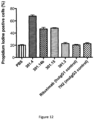
- the chimeric antibodies comprising a human CH1 ⁇ 2 or CH1 ⁇ 4 have a pro-apoptotic activity on IMR5 cells, meaning that loss of direct cytotoxicy might be due to the structure of human IgG1.
- the chimeric antibodies comprising a human CH1 ⁇ 3 and a mutated human Hinge ⁇ 1 domain (underlined mutation corresponding to the substitution of the cysteine 222 by a serine residue, C222S) have a pro-apoptotic activity on IMR5 cells.
- IMR5 cells 150000 IMR5 cells were plated in 24-well plates for 24h at 37°C and then treated for 24h at 37°C with 40 ⁇ g/mL of each antibody. Thereafter, dead cells were labeling by propidium iodide (12.5 ⁇ g/ml). All samples were analyzed by flow cytometry in a LSRII FACS (Becton Dickinson, San Jose, CA, USA).
- the inventors succeeded in the chimerization of the 8B6 antibody with a maintained pro-apoptotic activity, which pro-apoptotic activity is even increased for two antibodies, one of which showing also a cooperative binding like the original antibody.
- NOD/SCID mice aged 5 weeks, were purchased from CHARLES RIVER.
- mice received 8B6 (muIgG3) mAb, or c.8B6 (huIgG1) mAb, or double mutated huIgG1 mAb, or huIgG1 CH1 substituted by huIgG3 CH1.
Landscapes
- Health & Medical Sciences (AREA)
- Chemical & Material Sciences (AREA)
- Life Sciences & Earth Sciences (AREA)
- Immunology (AREA)
- Organic Chemistry (AREA)
- Medicinal Chemistry (AREA)
- General Health & Medical Sciences (AREA)
- Biophysics (AREA)
- Genetics & Genomics (AREA)
- Biochemistry (AREA)
- Molecular Biology (AREA)
- Proteomics, Peptides & Aminoacids (AREA)
- Cell Biology (AREA)
- Engineering & Computer Science (AREA)
- Veterinary Medicine (AREA)
- Animal Behavior & Ethology (AREA)
- Public Health (AREA)
- Pharmacology & Pharmacy (AREA)
- Bioinformatics & Cheminformatics (AREA)
- Microbiology (AREA)
- Epidemiology (AREA)
- Mycology (AREA)
- Nuclear Medicine, Radiotherapy & Molecular Imaging (AREA)
- General Chemical & Material Sciences (AREA)
- Chemical Kinetics & Catalysis (AREA)
- Biomedical Technology (AREA)
- Oncology (AREA)
- Peptides Or Proteins (AREA)
- Medicines Containing Antibodies Or Antigens For Use As Internal Diagnostic Agents (AREA)
- Preparation Of Compounds By Using Micro-Organisms (AREA)
Claims (21)
- Un anticorps, ou un fragment de celui-ci liant le ganglioside GD2-O-acétylé comprenant un domaine CH1, qui se lie spécifiquement au ganglioside GD2-O-acétylé, ledit anticorps comprenant :a) une chaine légère comprenant trois régions déterminant la complémentarité (CDRs) de chaine légère ayant les séquences d'acides aminés suivantes :i) le CDR1 de chaine légère : QSLLKNNGNTFL (SEQ id n°1) ;ii) le CDR2 de chaine légère : KVS,iii) le CDR3 de chaine légère : SQSTHIPYT (SEQ id n°2) ; etquatre régions charpentes de chaine légère d'une chaine légère d'immunoglobuline, et un domaine CL kappa (κ) humain ; etb) une chaine lourde comprenant trois régions déterminant la complémentarité (CDRs) de chaine lourde ayant les séquences d'acides aminés suivantes :i) le CDR1 de chaine lourde : EFTFTDYY (SEQ id n°3) ;ii) le CDR2 de chaine lourde : IRNRANGYTT (SEQ id n°4) ;iii) le CDR3 de chaine lourde : ARVSNWAFDY (SEQ id n°5) ; etquatre régions charpentes de chaine lourde d'une chaine lourde d'immunoglobuline, et :1) les domaines CH2 et CH3 d'une IgG1 humaine, et2) un domaine CH1 d'une IgG1 humaine, dans lequel l'acide aminé à la position 133 ou 134 de SEQ id n°29, selon l'index EU tel que présenté dans Kabat et al., a été substitué par un résidu cystéine restaurant ainsi le couplage entre les domaines CH1 et CL qui est typique des sous-classes d'IgG2, IgG3 et IgG4 humaines, ou un domaine CH1 d'une IgG2, IgG3 ou IgG4 humaine.
- L'anticorps de la revendication 1, dans lequel ledit anticorps comprend la région variable de chaine légère (LCVR) ayant la séquence d'acides aminés SEQ id n°6, et/ou la région variable de chaine lourde (HCVR) avec la séquence d'acides aminés SEQ id n°7.
- L'anticorps de l'une quelconque des revendications 1 ou 2, dans lequel ledit anticorps comprend un domaine CL kappa (κ) humain ayant la séquence SEQ id n°8.
- L'anticorps de la revendication 3, dans lequel ledit anticorps a une chaine légère ayant la séquence d'acides aminés SEQ id n°9.
- L'anticorps de l'une quelconque des revendications 1 à 4, dans lequel ledit anticorps comprend les domaines CH2 et CH3 d'une IgG1 humaine ayant la séquence SEQ id n°10.
- L'anticorps de l'une quelconque des revendications 1 à 5, dans lequel ledit anticorps comprend un domaine CH1 d'une IgG1 humaine, dans lequel l'acide aminé à la position 133 ou 134 de SEQ id n°29, selon l'index EU tel que présenté dans Kabat et al., a été substitué par un résidu cystéine restaurant ainsi le couplage entre les domaines CH1 et CL qui est typique des sous-classes d'IgG2, IgG3 et IgG4 humaines.
- L'anticorps de l'une quelconque des revendications 1 à 5, dans lequel ledit anticorps comprend un domaine CH1 d'une IgG3 humaine tel que SEQ id n°12.
- L'anticorps de l'une quelconque des revendications 1 à 7, dans lequel ledit anticorps comprend également un domaine charnière d'une IgG1, IgG2, IgG3, IgG4 humaine, un domaine charnière d'une IgG1 humaine dans lequel le résidu cystéine à la cinquième position de la séquence charnière a été substitué par un autre résidu, ou un domaine charnière d'une IgG3 humaine tronqué sélectionné parmi le groupe consistant en SEQ id n°16, SEQ id n°17, SEQ id n°18 et SEQ id n°19.
- L'anticorps de la revendication 8, dans lequel ledit domaine charnière est sélectionné dans le groupe comprenant SEQ id n°13 à SEQ id n°19.
- L'anticorps de la revendication 2, dans lequel ledit anticorps comprend :1) une chaine légère ayant la séquence d'acides aminés SEQ id n°9, et2) une chaine lourde comprenant :• les domaines CH2 et CH3 d'une IgG1 humaine ayant la séquence SEQ id n°10, et• une séquence d'acides aminés correspondant aux domaines CH1 et charnière humains sélectionnés dans le groupe comprenant ou consistant en :
Séquence Anticorps Figure SEQ id n°20 301.14a 2 SEQ id n°21 301.14b 3 SEQ id n°22 301.15 4 SEQ id n°34 301.15b 9 SEQ id n°23 301.16 5 SEQ id n°24 301.17 6 SEQ id n°25 301.18 7 SEQ id n°26 301.19 8 SEQ id n°31 301.20 10 SEQ id n°32 301.21 11 - L'anticorps de la revendication 10, dans lequel ledit anticorps comprend une séquence d'acides aminés correspondant aux domaines CH1 et charnière humains sélectionnés parmi le groupe consistant en SEQ id n°21 (301.14b), SEQ id n°22 (301.15), SEQ id n°25 (301.18) et SEQ id n°26 (301.19), de préférence SEQ id n°22 (301.15)
- L'anticorps de l'une quelconque des revendications 1 à 11, dans lequel ledit anticorps est un immunoconjugué.
- Une composition pharmaceutique comprenant au moins un anticorps selon l'une quelconque des revendications 1 à 12, et un transporteur pharmaceutiquement acceptable.
- La composition pharmaceutique de la revendication 13 pour son utilisation dans le traitement de cancers exprimant le ganglioside GD2-O-acétylé tels que les neuroblastomes, les mélanomes, les glioblastomes, les cancers du poumon à petites cellules, les cancers du sein et les cancers à cellules souches cancéreuses.
- Une méthode pour augmenter l'efficacité thérapeutique d'un anticorps, ou d'un fragment de celui-ci liant le ganglioside GD2-O-acétylé comprenant un domaine CH1, qui se lie spécifiquement au ganglioside GD2-O-acétylé, ledit anticorps comprenant :a) une chaine légère comprenant trois régions déterminant la complémentarité (CDRs) de chaine légère ayant les séquences d'acides aminés suivantes :i) le CDR1 de chaine légère : QSLLKNNGNTFL (SEQ id n°1) ;ii) le CDR2 de chaine légère : KVS,iii) le CDR3 de chaine légère : SQSTHIPYT (SEQ id n°2) ; etquatre régions charpentes de chaine légère d'une chaine légère d'immunoglobuline, et un domaine CL kappa (κ) humain ; etb) une chaine lourde comprenant trois régions déterminant la complémentarité (CDRs) de chaine lourde ayant les séquences d'acides aminés suivantes :i) le CDR1 de chaine lourde : EFTFTDYY (SEQ id n°3) ;ii) le CDR2 de chaine lourde : IRNRANGYTT (SEQ id n°4) ;iii) le CDR3 de chaine lourde : ARVSNWAFDY (SEQ id n°5) ; etquatre régions charpentes de chaine lourde d'une chaine lourde d'immunoglobuline, et :1) les domaines CH2 et CH3 d'une IgG1 humaine, et2) un domaine CH1 d'une IgG1 (CH1γ1) humaine,ladite méthode comprenant l'étape de substituer l'acide aminé à la position 133 ou 134 de SEQ id n°29 du domaine CH1γ1 humain dudit anticorps, selon l'index EU tel que présenté dans Kabat et al., par un résidu cystéine restaurant ainsi le couplage entre les domaines CH1 et CL qui est typique des sous-classes d'IgG2, IgG3 et IgG4 humaines, ou de substituer ledit domaine CH1γ1 humain par un domaine CH1 d'une IgG2 (CH1γ2), IgG3 (CH1γ3) ou IgG4 (CH1γ4) humaine.
- La méthode selon la revendication 15, dans laquelle augmenter l'efficacité thérapeutique comprend l'augmentation de l'activité pro-apoptotique dudit anticorps.
- La méthode selon les revendications 15 ou 16, dans laquelle l'étape de muter le domaine CH1γ1 humain dudit anticorps qui restaure le couplage entre les domaines CH1 et CL qui est typique des sous-classes d'IgG2, IgG3 et IgG4, est réalisée en :a) isolant une séquence d'acides nucléiques comprenant le domaine CH1 d'un anticorps IgG1 humain qui se lie spécifiquement au ganglioside GD2-O-acétylé, ladite séquence d'acides nucléiques codant de préférence la chaine lourde de l'anticorps ;b) mutant un codon du domaine CH1γ1 dudit anticorps, de préférence mutant le codon codant le résidu d'acide aminé à la position 133 ou 134 dudit domaine CH1, afin de coder le résidu d'acide aminé cystéine (C), afin de fournir une séquence d'acides nucléiques mutée ;c) munissant la séquence d'acides nucléiques mutée d'éléments d'expression contrôlables ;d) coexprimant l'acide nucléique muté avec une séquence d'acides nucléiques codant la chaine légère de l'anticorps dans un hôte adapté fournissant ainsi un anticorps IgG1 humain muté qui se lie spécifiquement au ganglioside GD2-O-acétylé, ou un fragment liant le ganglioside GD2-O-acétylé ; ete) optionnellement, isolant l'anticorps muté ou le fragment de celui-ci liant le ganglioside GD2-O-acétylé.
- La méthode selon les revendications 15 ou 16, dans laquelle l'étape de substituer le domaine CH1 de l'anticorps IgG1 humain qui se lie spécifiquement au ganglioside GD2-O-acétylé par le domaine CH1 d'une IgG2, IgG3 ou IgG4 humaine est réalisée en :a) isolant une séquence d'acides nucléiques comprenant le domaine CH1 d'un anticorps IgG1 humain qui se lie spécifiquement au ganglioside GD2-O-acétylé, ladite séquence d'acides nucléiques codant de préférence la chaine lourde de l'anticorps ;b) substituant ledit acide nucléique du domaine CH1 d'un anticorps IgG1 humain qui se lie spécifiquement au ganglioside GD2-O-acétylé par une séquence d'acides nucléiques codant le domaine CH1 d'une IgG2, IgG3 ou IgG4 humaine afin de fournir une séquence d'acides nucléiques mutée ;c) munissant la séquence d'acides nucléiques mutée d'éléments d'expression contrôlables ;d) coexprimant l'acide nucléique muté avec une séquence d'acides nucléiques codant la chaine légère de l'anticorps dans un hôte adapté fournissant ainsi un anticorps IgG1 humain muté qui se lie spécifiquement au ganglioside GD2-O-acétylé, ou un fragment liant le ganglioside GD2-O-acétylé ; ete) optionnellement, isolant l'anticorps muté, ou le fragment de celui-ci liant le ganglioside GD2-O-acétylé.
- La méthode selon les revendications 15 à 18, ladite méthode comprenant en outre l'étape de muter le domaine charnière IgG1 d'un anticorps IgG1 humain qui se lie spécifiquement au ganglioside GD2-O-acétylé dans lequel le résidu cystéine à la cinquième position de la séquence de la charnière a été substitué par un autre résidu, restaurant ainsi le couplage entre la charnière et le domaine CH2 qui est typique des sous-classes d'IgG2, IgG3 et IgG4 humaines, ou de substituer le domaine charnière IgG1 humain dudit anticorps par le domaine charnière d'une IgG2, IgG3 ou IgG4 humaine, ou un domaine charnière d'une IgG3 humaine tronqué sélectionné parmi le groupe consistant en SEQ id n°16, SEQ id n°17, SEQ id n°18 et SEQ id n°19.
- La méthode selon la revendication 19, dans laquelle l'étape de muter la charnière humaine dudit anticorps qui restaure le couplage entre la charnière et le domaine CH2 qui est typique des sous-classes d'IgG2, IgG3 et IgG4 humaines est réalisée en :a) isolant une séquence d'acides nucléiques comprenant le domaine charnière d'un anticorps IgG1 humain qui se lie spécifiquement au ganglioside GD2-O-acétylé, ladite séquence d'acides nucléiques codant de préférence la chaine lourde de l'anticorps ;b) mutant le codon codant le résidu d'acide aminé cystéine (C) à la position 5 dudit domaine charnière afin de coder un autre résidu d'acide aminé, de préférence un résidu sérine, afin de fournir une séquence d'acides nucléiques mutée ;c) munissant la séquence d'acides nucléiques mutée d'éléments d'expression contrôlables ;d) coexprimant l'acide nucléique muté avec une séquence d'acides nucléiques codant la chaine légère de l'anticorps dans un hôte adapté fournissant ainsi un anticorps IgG1 humain muté qui se lie spécifiquement au ganglioside GD2-O-acétylé, ou un fragment liant l'antigène ; ete) optionnellement, isolant l'anticorps muté, ou le fragment de celui-ci liant le ganglioside GD2-O-acétylé.
- La méthode selon la revendication 19, dans laquelle l'étape de substituer le domaine charnière IgG1 humain dudit anticorps par le domaine charnière d'une IgG2, IgG3, ou IgG4 humaine, ou un domaine charnière d'une IgG3 humaine tronqué sélectionné parmi le groupe consistant en SEQ id n°16, SEQ id n°17, SEQ id n°18 et SEQ id n°19, est réalisée en :a) isolant une séquence d'acides nucléiques comprenant le domaine charnière d'un anticorps IgG1 humain qui se lie spécifiquement au ganglioside GD2-O-acétylé, ladite séquence d'acide nucléique codant de préférence la chaine lourde de l'anticorps ;b) substituant la séquence d'acides nucléiques du domaine charnière d'un anticorps IgG1 humain qui se lie spécifiquement au ganglioside GD2-O-acétylé par une séquence d'acides nucléiques codant le domaine charnière d'une IgG2, IgG3, IgG4 humaine ou un domaine charnière d'une IgG3 humaine tronqué sélectionné parmi le groupe consistant en SEQ id n°16, SEQ id n° 17, SEQ id n°18 et SEQ id n°19 afin de fournir une séquence d'acides nucléiques mutée ;c) munissant la séquence d'acides nucléiques mutée d'éléments d'expression contrôlables ;d) coexprimant l'acide nucléique muté avec une séquence d'acides nucléiques codant la chaine légère de l'anticorps dans un hôte adapté fournissant ainsi un anticorps IgG1 humain muté qui se lie spécifiquement au ganglioside GD2-O-acétylé, ou un fragment liant le ganglioside GD2-O-acétylé ; ete) optionnellement, isolant l'anticorps muté, ou le fragment de celui-ci liant le ganglioside GD2-O-acétylé.
Priority Applications (1)
| Application Number | Priority Date | Filing Date | Title |
|---|---|---|---|
| EP14806173.2A EP3068802B1 (fr) | 2013-11-11 | 2014-11-11 | Anticorps contre le ganglioside gd2-o-acétylé comportant une activité pro-apoptotique |
Applications Claiming Priority (3)
| Application Number | Priority Date | Filing Date | Title |
|---|---|---|---|
| EP20130005298 EP2871190A1 (fr) | 2013-11-11 | 2013-11-11 | Anticorps contre le ganglioside GD2-O-acétylé comportant une activité pro-apoptotique |
| PCT/EP2014/003009 WO2015067375A1 (fr) | 2013-11-11 | 2014-11-11 | Anticorps dirigé contre un ganglioside gd2 o-acétylé présentant une activité pro-apoptotique |
| EP14806173.2A EP3068802B1 (fr) | 2013-11-11 | 2014-11-11 | Anticorps contre le ganglioside gd2-o-acétylé comportant une activité pro-apoptotique |
Publications (2)
| Publication Number | Publication Date |
|---|---|
| EP3068802A1 EP3068802A1 (fr) | 2016-09-21 |
| EP3068802B1 true EP3068802B1 (fr) | 2023-02-15 |
Family
ID=49578070
Family Applications (2)
| Application Number | Title | Priority Date | Filing Date |
|---|---|---|---|
| EP20130005298 Withdrawn EP2871190A1 (fr) | 2013-11-11 | 2013-11-11 | Anticorps contre le ganglioside GD2-O-acétylé comportant une activité pro-apoptotique |
| EP14806173.2A Active EP3068802B1 (fr) | 2013-11-11 | 2014-11-11 | Anticorps contre le ganglioside gd2-o-acétylé comportant une activité pro-apoptotique |
Family Applications Before (1)
| Application Number | Title | Priority Date | Filing Date |
|---|---|---|---|
| EP20130005298 Withdrawn EP2871190A1 (fr) | 2013-11-11 | 2013-11-11 | Anticorps contre le ganglioside GD2-O-acétylé comportant une activité pro-apoptotique |
Country Status (11)
| Country | Link |
|---|---|
| US (1) | US10611848B2 (fr) |
| EP (2) | EP2871190A1 (fr) |
| JP (1) | JP6666257B2 (fr) |
| KR (1) | KR102340725B1 (fr) |
| CN (1) | CN106029698B9 (fr) |
| AU (1) | AU2014345942B2 (fr) |
| CA (1) | CA2930120C (fr) |
| DK (1) | DK3068802T3 (fr) |
| ES (1) | ES2943710T3 (fr) |
| RU (1) | RU2679715C1 (fr) |
| WO (1) | WO2015067375A1 (fr) |
Cited By (1)
| Publication number | Priority date | Publication date | Assignee | Title |
|---|---|---|---|---|
| EP4684803A1 (fr) | 2024-07-25 | 2026-01-28 | CeMM - Forschungszentrum für Molekulare Medizin GmbH | Inducteurs chimiques conjugués à des anticorps de dégradation de rbm39 et leurs utilisations thérapeutiques |
Families Citing this family (9)
| Publication number | Priority date | Publication date | Assignee | Title |
|---|---|---|---|---|
| CN106414494B (zh) * | 2013-11-12 | 2020-09-18 | Ogd2药物 | 具有促凋亡活性的人IgG1衍生的抗体 |
| EP3269739A1 (fr) * | 2016-07-15 | 2018-01-17 | OGD2 Pharma | Anticorps humanisé contre le ganglioside gd2 o-acétylé (oacgd2) |
| EP3329937A1 (fr) * | 2016-12-05 | 2018-06-06 | OGD2 Pharma | Utilisation d'anticorps contre le ganglioside gd2 o-acétylé afin d'améliorer le potentiel thérapeutique de médicaments |
| CN108948211B (zh) * | 2018-07-24 | 2021-08-20 | 北京美康基免生物科技有限公司 | 一种基于靶向gd2的嵌合抗原受体及其应用 |
| US20220267467A1 (en) * | 2019-07-19 | 2022-08-25 | WuXi Biologics Ireland Limited | Polypeptide complex for conjugation and use thereof |
| EP4149627A4 (fr) * | 2020-05-14 | 2024-05-29 | The General Hospital Corporation | Polypeptides agonistes de la superfamille des récepteurs au facteur de nécrose tumorale |
| EP4322937A1 (fr) | 2021-04-14 | 2024-02-21 | Institut National de la Santé et de la Recherche Médicale (INSERM) | Nouveau procédé pour améliorer l'activité antitumorale de macrophages |
| EP4322938A1 (fr) | 2021-04-14 | 2024-02-21 | Institut National de la Santé et de la Recherche Médicale (INSERM) | Nouvelle méthode pour améliorer la cytotoxicité de cellules nk |
| CN114106180B (zh) * | 2021-12-13 | 2023-07-28 | 中国药科大学 | 一种单克隆抗体及其应用 |
Family Cites Families (10)
| Publication number | Priority date | Publication date | Assignee | Title |
|---|---|---|---|---|
| US5225539A (en) | 1986-03-27 | 1993-07-06 | Medical Research Council | Recombinant altered antibodies and methods of making altered antibodies |
| GB8607679D0 (en) | 1986-03-27 | 1986-04-30 | Winter G P | Recombinant dna product |
| US5530101A (en) | 1988-12-28 | 1996-06-25 | Protein Design Labs, Inc. | Humanized immunoglobulins |
| ZA200305980B (en) * | 2001-02-12 | 2007-01-31 | Res Dev Foundation | Modified proteins, designer toxins, and methods of making thereof |
| FR2906808B1 (fr) * | 2006-10-10 | 2012-10-05 | Univ Nantes | Utilisation d'anticorps monoclonaux specifiques de la forme o-acetylee du ganglioside gd2 dans le traitement de certains cancers |
| HUE026846T2 (en) * | 2007-12-18 | 2016-08-29 | Bioalliance Cv | Antibodies to Recognize Carbohydrate-Containing Epitope on CD43 and CEA Expressed on Cancer Cells and Procedures for their Use |
| BRPI0907046A2 (pt) * | 2008-01-18 | 2015-07-28 | Medimmune Llc | Anticorpo de cisteína engenheirada, ácido nucleico isolado, vetor, célula hospedeira, conjugado de anticorpo, composição farmacêutica, métodos de detecção de câncer, doenças ou distúrbios autoimunes, inflamatórios ou infecciosos em um indivíduo e de inibição de proliferação de uma célula alvo |
| CN103347537A (zh) * | 2010-10-20 | 2013-10-09 | 莫弗泰克股份有限公司 | 抗叶酸受体α抗体糖型 |
| US20120264137A1 (en) * | 2011-04-18 | 2012-10-18 | Indian Institute Of Science | Techniques for bufferless lysing of cells and separation of cellular components using modified membranes |
| DE102011054413A1 (de) * | 2011-10-12 | 2013-04-18 | Ernst-Moritz-Arndt-Universität Greifswald | Monoklonaler anti-Idiotyp-Antikörper Ganglidiomab |
-
2013
- 2013-11-11 EP EP20130005298 patent/EP2871190A1/fr not_active Withdrawn
-
2014
- 2014-11-11 DK DK14806173.2T patent/DK3068802T3/da active
- 2014-11-11 US US15/035,979 patent/US10611848B2/en active Active
- 2014-11-11 CN CN201480071485.1A patent/CN106029698B9/zh active Active
- 2014-11-11 JP JP2016552669A patent/JP6666257B2/ja active Active
- 2014-11-11 ES ES14806173T patent/ES2943710T3/es active Active
- 2014-11-11 RU RU2016121105A patent/RU2679715C1/ru active
- 2014-11-11 WO PCT/EP2014/003009 patent/WO2015067375A1/fr not_active Ceased
- 2014-11-11 AU AU2014345942A patent/AU2014345942B2/en active Active
- 2014-11-11 CA CA2930120A patent/CA2930120C/fr active Active
- 2014-11-11 EP EP14806173.2A patent/EP3068802B1/fr active Active
- 2014-11-11 KR KR1020167015005A patent/KR102340725B1/ko active Active
Cited By (2)
| Publication number | Priority date | Publication date | Assignee | Title |
|---|---|---|---|---|
| EP4684803A1 (fr) | 2024-07-25 | 2026-01-28 | CeMM - Forschungszentrum für Molekulare Medizin GmbH | Inducteurs chimiques conjugués à des anticorps de dégradation de rbm39 et leurs utilisations thérapeutiques |
| WO2026022395A1 (fr) | 2024-07-25 | 2026-01-29 | Cemm - Forschungszentrum Für Molekulare Medizin Gmbh | Inducteurs chimiques de dégradation de rbm39 conjugués à un anticorps et utilisations thérapeutiques correspondantes |
Also Published As
| Publication number | Publication date |
|---|---|
| KR20160081977A (ko) | 2016-07-08 |
| JP6666257B2 (ja) | 2020-03-13 |
| DK3068802T3 (da) | 2023-05-15 |
| EP2871190A1 (fr) | 2015-05-13 |
| EP3068802A1 (fr) | 2016-09-21 |
| CN106029698A (zh) | 2016-10-12 |
| AU2014345942A1 (en) | 2016-06-02 |
| JP2017501212A (ja) | 2017-01-12 |
| US10611848B2 (en) | 2020-04-07 |
| CA2930120C (fr) | 2023-04-04 |
| CN106029698B9 (zh) | 2021-08-13 |
| AU2014345942B2 (en) | 2020-04-16 |
| KR102340725B1 (ko) | 2021-12-20 |
| RU2016121105A (ru) | 2017-12-19 |
| RU2679715C1 (ru) | 2019-02-12 |
| ES2943710T3 (es) | 2023-06-15 |
| WO2015067375A1 (fr) | 2015-05-14 |
| US20160272722A1 (en) | 2016-09-22 |
| CN106029698B (zh) | 2021-06-18 |
| CA2930120A1 (fr) | 2015-05-14 |
Similar Documents
| Publication | Publication Date | Title |
|---|---|---|
| EP3068802B1 (fr) | Anticorps contre le ganglioside gd2-o-acétylé comportant une activité pro-apoptotique | |
| EP3068798B1 (fr) | Anticorps dérivé d'une igg1 humaine ayant une activité pro-apoptique | |
| CN108699157B (zh) | Psma结合抗体及其用途 | |
| BR112020013086A2 (pt) | Anticorpos específicos de heterodímero de cd3-delta/épsilon | |
| RU2700092C2 (ru) | Комбинированная терапия на основе афукозилированного антитела к cd20 в сочетании с конъюгатом антитело к cd22 - лекарственное средство | |
| CN112261952A (zh) | 针对螯合的放射性核素的抗体 | |
| WO2021127489A1 (fr) | Anticorps à chaîne lourde se liant à cd38 | |
| CN106687476B (zh) | 抗brdu抗体及使用方法 | |
| EP4585618A1 (fr) | Anticorps anti-ilt4 et utilisation pharmaceutique associée | |
| KR20250124805A (ko) | Cd24에 대한 항체 및 이의 용도 | |
| HK40042319A (en) | Antibodies for chelated radionuclides | |
| HK40042318A (en) | Antibodies for chelated radionuclides and clearing agents |
Legal Events
| Date | Code | Title | Description |
|---|---|---|---|
| PUAI | Public reference made under article 153(3) epc to a published international application that has entered the european phase |
Free format text: ORIGINAL CODE: 0009012 |
|
| 17P | Request for examination filed |
Effective date: 20160613 |
|
| AK | Designated contracting states |
Kind code of ref document: A1 Designated state(s): AL AT BE BG CH CY CZ DE DK EE ES FI FR GB GR HR HU IE IS IT LI LT LU LV MC MK MT NL NO PL PT RO RS SE SI SK SM TR |
|
| AX | Request for extension of the european patent |
Extension state: BA ME |
|
| DAX | Request for extension of the european patent (deleted) | ||
| STAA | Information on the status of an ep patent application or granted ep patent |
Free format text: STATUS: EXAMINATION IS IN PROGRESS |
|
| 17Q | First examination report despatched |
Effective date: 20170816 |
|
| RIN1 | Information on inventor provided before grant (corrected) |
Inventor name: TERME, MICKAEL Inventor name: LE DOUSSAL, JEAN-MARC Inventor name: DORVILLIUS, MYLENE |
|
| RIC1 | Information provided on ipc code assigned before grant |
Ipc: A61P 43/00 20060101ALI20220114BHEP Ipc: A61P 35/00 20060101ALI20220114BHEP Ipc: C07K 16/46 20060101ALI20220114BHEP Ipc: C07K 16/30 20060101AFI20220114BHEP |
|
| GRAP | Despatch of communication of intention to grant a patent |
Free format text: ORIGINAL CODE: EPIDOSNIGR1 |
|
| STAA | Information on the status of an ep patent application or granted ep patent |
Free format text: STATUS: GRANT OF PATENT IS INTENDED |
|
| INTG | Intention to grant announced |
Effective date: 20220428 |
|
| GRAJ | Information related to disapproval of communication of intention to grant by the applicant or resumption of examination proceedings by the epo deleted |
Free format text: ORIGINAL CODE: EPIDOSDIGR1 |
|
| STAA | Information on the status of an ep patent application or granted ep patent |
Free format text: STATUS: EXAMINATION IS IN PROGRESS |
|
| RAP1 | Party data changed (applicant data changed or rights of an application transferred) |
Owner name: NANTES UNIVERSITE Owner name: OGD2 PHARMA |
|
| INTC | Intention to grant announced (deleted) | ||
| GRAP | Despatch of communication of intention to grant a patent |
Free format text: ORIGINAL CODE: EPIDOSNIGR1 |
|
| STAA | Information on the status of an ep patent application or granted ep patent |
Free format text: STATUS: GRANT OF PATENT IS INTENDED |
|
| INTG | Intention to grant announced |
Effective date: 20220926 |
|
| GRAS | Grant fee paid |
Free format text: ORIGINAL CODE: EPIDOSNIGR3 |
|
| GRAA | (expected) grant |
Free format text: ORIGINAL CODE: 0009210 |
|
| STAA | Information on the status of an ep patent application or granted ep patent |
Free format text: STATUS: THE PATENT HAS BEEN GRANTED |
|
| AK | Designated contracting states |
Kind code of ref document: B1 Designated state(s): AL AT BE BG CH CY CZ DE DK EE ES FI FR GB GR HR HU IE IS IT LI LT LU LV MC MK MT NL NO PL PT RO RS SE SI SK SM TR |
|
| REG | Reference to a national code |
Ref country code: CH Ref legal event code: EP Ref country code: GB Ref legal event code: FG4D |
|
| REG | Reference to a national code |
Ref country code: DE Ref legal event code: R096 Ref document number: 602014086234 Country of ref document: DE |
|
| REG | Reference to a national code |
Ref country code: AT Ref legal event code: REF Ref document number: 1548186 Country of ref document: AT Kind code of ref document: T Effective date: 20230315 Ref country code: IE Ref legal event code: FG4D |
|
| REG | Reference to a national code |
Ref country code: NL Ref legal event code: FP |
|
| REG | Reference to a national code |
Ref country code: DK Ref legal event code: T3 Effective date: 20230508 |
|
| REG | Reference to a national code |
Ref country code: SE Ref legal event code: TRGR |
|
| REG | Reference to a national code |
Ref country code: LT Ref legal event code: MG9D |
|
| REG | Reference to a national code |
Ref country code: ES Ref legal event code: FG2A Ref document number: 2943710 Country of ref document: ES Kind code of ref document: T3 Effective date: 20230615 |
|
| P01 | Opt-out of the competence of the unified patent court (upc) registered |
Effective date: 20230523 |
|
| REG | Reference to a national code |
Ref country code: AT Ref legal event code: MK05 Ref document number: 1548186 Country of ref document: AT Kind code of ref document: T Effective date: 20230215 |
|
| PG25 | Lapsed in a contracting state [announced via postgrant information from national office to epo] |
Ref country code: RS Free format text: LAPSE BECAUSE OF FAILURE TO SUBMIT A TRANSLATION OF THE DESCRIPTION OR TO PAY THE FEE WITHIN THE PRESCRIBED TIME-LIMIT Effective date: 20230215 Ref country code: PT Free format text: LAPSE BECAUSE OF FAILURE TO SUBMIT A TRANSLATION OF THE DESCRIPTION OR TO PAY THE FEE WITHIN THE PRESCRIBED TIME-LIMIT Effective date: 20230615 Ref country code: NO Free format text: LAPSE BECAUSE OF FAILURE TO SUBMIT A TRANSLATION OF THE DESCRIPTION OR TO PAY THE FEE WITHIN THE PRESCRIBED TIME-LIMIT Effective date: 20230515 Ref country code: LV Free format text: LAPSE BECAUSE OF FAILURE TO SUBMIT A TRANSLATION OF THE DESCRIPTION OR TO PAY THE FEE WITHIN THE PRESCRIBED TIME-LIMIT Effective date: 20230215 Ref country code: LT Free format text: LAPSE BECAUSE OF FAILURE TO SUBMIT A TRANSLATION OF THE DESCRIPTION OR TO PAY THE FEE WITHIN THE PRESCRIBED TIME-LIMIT Effective date: 20230215 Ref country code: HR Free format text: LAPSE BECAUSE OF FAILURE TO SUBMIT A TRANSLATION OF THE DESCRIPTION OR TO PAY THE FEE WITHIN THE PRESCRIBED TIME-LIMIT Effective date: 20230215 Ref country code: AT Free format text: LAPSE BECAUSE OF FAILURE TO SUBMIT A TRANSLATION OF THE DESCRIPTION OR TO PAY THE FEE WITHIN THE PRESCRIBED TIME-LIMIT Effective date: 20230215 |
|
| PG25 | Lapsed in a contracting state [announced via postgrant information from national office to epo] |
Ref country code: PL Free format text: LAPSE BECAUSE OF FAILURE TO SUBMIT A TRANSLATION OF THE DESCRIPTION OR TO PAY THE FEE WITHIN THE PRESCRIBED TIME-LIMIT Effective date: 20230215 Ref country code: IS Free format text: LAPSE BECAUSE OF FAILURE TO SUBMIT A TRANSLATION OF THE DESCRIPTION OR TO PAY THE FEE WITHIN THE PRESCRIBED TIME-LIMIT Effective date: 20230615 Ref country code: GR Free format text: LAPSE BECAUSE OF FAILURE TO SUBMIT A TRANSLATION OF THE DESCRIPTION OR TO PAY THE FEE WITHIN THE PRESCRIBED TIME-LIMIT Effective date: 20230516 Ref country code: FI Free format text: LAPSE BECAUSE OF FAILURE TO SUBMIT A TRANSLATION OF THE DESCRIPTION OR TO PAY THE FEE WITHIN THE PRESCRIBED TIME-LIMIT Effective date: 20230215 |
|
| PG25 | Lapsed in a contracting state [announced via postgrant information from national office to epo] |
Ref country code: SM Free format text: LAPSE BECAUSE OF FAILURE TO SUBMIT A TRANSLATION OF THE DESCRIPTION OR TO PAY THE FEE WITHIN THE PRESCRIBED TIME-LIMIT Effective date: 20230215 Ref country code: RO Free format text: LAPSE BECAUSE OF FAILURE TO SUBMIT A TRANSLATION OF THE DESCRIPTION OR TO PAY THE FEE WITHIN THE PRESCRIBED TIME-LIMIT Effective date: 20230215 Ref country code: EE Free format text: LAPSE BECAUSE OF FAILURE TO SUBMIT A TRANSLATION OF THE DESCRIPTION OR TO PAY THE FEE WITHIN THE PRESCRIBED TIME-LIMIT Effective date: 20230215 Ref country code: CZ Free format text: LAPSE BECAUSE OF FAILURE TO SUBMIT A TRANSLATION OF THE DESCRIPTION OR TO PAY THE FEE WITHIN THE PRESCRIBED TIME-LIMIT Effective date: 20230215 |
|
| REG | Reference to a national code |
Ref country code: DE Ref legal event code: R097 Ref document number: 602014086234 Country of ref document: DE |
|
| PG25 | Lapsed in a contracting state [announced via postgrant information from national office to epo] |
Ref country code: SK Free format text: LAPSE BECAUSE OF FAILURE TO SUBMIT A TRANSLATION OF THE DESCRIPTION OR TO PAY THE FEE WITHIN THE PRESCRIBED TIME-LIMIT Effective date: 20230215 |
|
| PLBE | No opposition filed within time limit |
Free format text: ORIGINAL CODE: 0009261 |
|
| STAA | Information on the status of an ep patent application or granted ep patent |
Free format text: STATUS: NO OPPOSITION FILED WITHIN TIME LIMIT |
|
| 26N | No opposition filed |
Effective date: 20231116 |
|
| PG25 | Lapsed in a contracting state [announced via postgrant information from national office to epo] |
Ref country code: SI Free format text: LAPSE BECAUSE OF FAILURE TO SUBMIT A TRANSLATION OF THE DESCRIPTION OR TO PAY THE FEE WITHIN THE PRESCRIBED TIME-LIMIT Effective date: 20230215 |
|
| PG25 | Lapsed in a contracting state [announced via postgrant information from national office to epo] |
Ref country code: BG Free format text: LAPSE BECAUSE OF FAILURE TO SUBMIT A TRANSLATION OF THE DESCRIPTION OR TO PAY THE FEE WITHIN THE PRESCRIBED TIME-LIMIT Effective date: 20230215 |
|
| PG25 | Lapsed in a contracting state [announced via postgrant information from national office to epo] |
Ref country code: BG Free format text: LAPSE BECAUSE OF FAILURE TO SUBMIT A TRANSLATION OF THE DESCRIPTION OR TO PAY THE FEE WITHIN THE PRESCRIBED TIME-LIMIT Effective date: 20230215 |
|
| PGFP | Annual fee paid to national office [announced via postgrant information from national office to epo] |
Ref country code: LU Payment date: 20241126 Year of fee payment: 11 Ref country code: NL Payment date: 20241120 Year of fee payment: 11 |
|
| PGFP | Annual fee paid to national office [announced via postgrant information from national office to epo] |
Ref country code: MC Payment date: 20241129 Year of fee payment: 11 |
|
| PGFP | Annual fee paid to national office [announced via postgrant information from national office to epo] |
Ref country code: DK Payment date: 20241125 Year of fee payment: 11 |
|
| PGFP | Annual fee paid to national office [announced via postgrant information from national office to epo] |
Ref country code: BE Payment date: 20241120 Year of fee payment: 11 |
|
| PGFP | Annual fee paid to national office [announced via postgrant information from national office to epo] |
Ref country code: IE Payment date: 20241125 Year of fee payment: 11 |
|
| PGFP | Annual fee paid to national office [announced via postgrant information from national office to epo] |
Ref country code: IT Payment date: 20241126 Year of fee payment: 11 Ref country code: ES Payment date: 20241230 Year of fee payment: 11 |
|
| PGFP | Annual fee paid to national office [announced via postgrant information from national office to epo] |
Ref country code: SE Payment date: 20241120 Year of fee payment: 11 |
|
| PGFP | Annual fee paid to national office [announced via postgrant information from national office to epo] |
Ref country code: CH Payment date: 20241201 Year of fee payment: 11 |
|
| PG25 | Lapsed in a contracting state [announced via postgrant information from national office to epo] |
Ref country code: CY Free format text: LAPSE BECAUSE OF FAILURE TO SUBMIT A TRANSLATION OF THE DESCRIPTION OR TO PAY THE FEE WITHIN THE PRESCRIBED TIME-LIMIT; INVALID AB INITIO Effective date: 20141111 |
|
| PG25 | Lapsed in a contracting state [announced via postgrant information from national office to epo] |
Ref country code: HU Free format text: LAPSE BECAUSE OF FAILURE TO SUBMIT A TRANSLATION OF THE DESCRIPTION OR TO PAY THE FEE WITHIN THE PRESCRIBED TIME-LIMIT; INVALID AB INITIO Effective date: 20141111 |
|
| PG25 | Lapsed in a contracting state [announced via postgrant information from national office to epo] |
Ref country code: TR Free format text: LAPSE BECAUSE OF FAILURE TO SUBMIT A TRANSLATION OF THE DESCRIPTION OR TO PAY THE FEE WITHIN THE PRESCRIBED TIME-LIMIT Effective date: 20230215 |
|
| PGFP | Annual fee paid to national office [announced via postgrant information from national office to epo] |
Ref country code: DE Payment date: 20251119 Year of fee payment: 12 |
|
| PGFP | Annual fee paid to national office [announced via postgrant information from national office to epo] |
Ref country code: GB Payment date: 20251120 Year of fee payment: 12 |
|
| PGFP | Annual fee paid to national office [announced via postgrant information from national office to epo] |
Ref country code: FR Payment date: 20251125 Year of fee payment: 12 |