EP3072896B1 - Composé taxane, et son procédé de préparation et son utilisation - Google Patents
Composé taxane, et son procédé de préparation et son utilisation Download PDFInfo
- Publication number
- EP3072896B1 EP3072896B1 EP14863167.4A EP14863167A EP3072896B1 EP 3072896 B1 EP3072896 B1 EP 3072896B1 EP 14863167 A EP14863167 A EP 14863167A EP 3072896 B1 EP3072896 B1 EP 3072896B1
- Authority
- EP
- European Patent Office
- Prior art keywords
- pcmi
- compound
- taxanes
- reaction
- preparation
- Prior art date
- Legal status (The legal status is an assumption and is not a legal conclusion. Google has not performed a legal analysis and makes no representation as to the accuracy of the status listed.)
- Active
Links
- MSVWUXLRSKRKFZ-PAMZHZACSA-N CC(C)(C)OC(N([C@H]1c2ccccc2)C(c(cc2)ccc2OC)O[C@H]1C(O)=O)=O Chemical compound CC(C)(C)OC(N([C@H]1c2ccccc2)C(c(cc2)ccc2OC)O[C@H]1C(O)=O)=O MSVWUXLRSKRKFZ-PAMZHZACSA-N 0.000 description 1
- YKXUGUGVLASWRE-LHJLODMPSA-N CC(C)(C)OC(N([C@H]1c2ccccc2)C(c(cc2)ccc2OC)O[C@H]1C(OCc1ccccc1)=O)=O Chemical compound CC(C)(C)OC(N([C@H]1c2ccccc2)C(c(cc2)ccc2OC)O[C@H]1C(OCc1ccccc1)=O)=O YKXUGUGVLASWRE-LHJLODMPSA-N 0.000 description 1
- CSZKYGXEOKKLPJ-MYFVLZFPSA-N CC(C)(C)OC(N([C@H]1c2ncccc2)C(c(cc2)ccc2OC)O[C@H]1C(O)=O)=O Chemical compound CC(C)(C)OC(N([C@H]1c2ncccc2)C(c(cc2)ccc2OC)O[C@H]1C(O)=O)=O CSZKYGXEOKKLPJ-MYFVLZFPSA-N 0.000 description 1
- YAUGYCVULRGNGS-LCSBGEBQSA-N CC(C)(C)OC(N[C@H]([C@H](C(O[C@@H]([C@@H]1O2)C(C)=C([C@H](C3=[O][C@@]3([C@H](C[C@H]3OC4)OC(N(C)C)=O)[C@H]([C@@H]5OC(c6ccccc6)=O)[C@@]34OC(C)=O)OC)C(C)(C)[C@@]15OC2=O)=O)O)c1ccccc1)=O Chemical compound CC(C)(C)OC(N[C@H]([C@H](C(O[C@@H]([C@@H]1O2)C(C)=C([C@H](C3=[O][C@@]3([C@H](C[C@H]3OC4)OC(N(C)C)=O)[C@H]([C@@H]5OC(c6ccccc6)=O)[C@@]34OC(C)=O)OC)C(C)(C)[C@@]15OC2=O)=O)O)c1ccccc1)=O YAUGYCVULRGNGS-LCSBGEBQSA-N 0.000 description 1
- VCDBYXDLKJUWAZ-KYONPUIFSA-N CC(C)(C)OC(N[C@H]([C@H](C(O[C@@H]([C@@H]1O2)C(C)=C([C@H](C3=[O][C@@]3([C@H](C[C@H]3OC4)OC(N(C)C)=O)[C@H]([C@@H]5OC(c6ccccc6)=O)[C@@]34OC(C)=O)OC)C(C)(C)[C@@]15OC2=O)=O)O)c1ccccn1)=O Chemical compound CC(C)(C)OC(N[C@H]([C@H](C(O[C@@H]([C@@H]1O2)C(C)=C([C@H](C3=[O][C@@]3([C@H](C[C@H]3OC4)OC(N(C)C)=O)[C@H]([C@@H]5OC(c6ccccc6)=O)[C@@]34OC(C)=O)OC)C(C)(C)[C@@]15OC2=O)=O)O)c1ccccn1)=O VCDBYXDLKJUWAZ-KYONPUIFSA-N 0.000 description 1
- VBFUUJJXKDNOFR-KYONPUIFSA-N CC(C)(C)OC(N[C@H]([C@H](C(O[C@@H]([C@@H]1O2)C(C)=C([C@H](C3=[O][C@@]3([C@H](C[C@H]3OC4)OC)[C@H]([C@@H]5OC(c6ccccc6)=O)[C@@]34OC(C)=O)OC(N(C)C)=O)C(C)(C)[C@@]15OC2=O)=O)O)c1ccccn1)=O Chemical compound CC(C)(C)OC(N[C@H]([C@H](C(O[C@@H]([C@@H]1O2)C(C)=C([C@H](C3=[O][C@@]3([C@H](C[C@H]3OC4)OC)[C@H]([C@@H]5OC(c6ccccc6)=O)[C@@]34OC(C)=O)OC(N(C)C)=O)C(C)(C)[C@@]15OC2=O)=O)O)c1ccccn1)=O VBFUUJJXKDNOFR-KYONPUIFSA-N 0.000 description 1
- VXDYOTIHBSNVLA-FDINSXQFSA-N CC(C)([C@@](C1)([C@H]([C@@H]([C@]2([C@H](C[C@H]3OC4)O)[O]=C2[C@@H]2O)[C@@]34OC(C)=O)OC(c3ccccc3)=O)O)C2=C(C)[C@H]1O Chemical compound CC(C)([C@@](C1)([C@H]([C@@H]([C@]2([C@H](C[C@H]3OC4)O)[O]=C2[C@@H]2O)[C@@]34OC(C)=O)OC(c3ccccc3)=O)O)C2=C(C)[C@H]1O VXDYOTIHBSNVLA-FDINSXQFSA-N 0.000 description 1
- OFXJKLMDCMQRHK-VAFWMRIRSA-N CC(C)([C@@]([C@H]1O2)([C@H]([C@@H]([C@]3([C@H](C[C@H]4OC5)OC)[O]=C3[C@@H]3OC)[C@@]45OC(C)=O)OC(c4ccccc4)=O)OC2=O)C3=C(C)[C@H]1OC([C@@H]([C@H](c1ccccc1)NC(N(C)C)=O)O)=O Chemical compound CC(C)([C@@]([C@H]1O2)([C@H]([C@@H]([C@]3([C@H](C[C@H]4OC5)OC)[O]=C3[C@@H]3OC)[C@@]45OC(C)=O)OC(c4ccccc4)=O)OC2=O)C3=C(C)[C@H]1OC([C@@H]([C@H](c1ccccc1)NC(N(C)C)=O)O)=O OFXJKLMDCMQRHK-VAFWMRIRSA-N 0.000 description 1
- HHIZGYOENYSHIZ-CYABTQQWSA-N CC(C)C[C@@H]([C@H](C(O[C@@H]([C@@H]1O2)C(C)=C([C@H](C3=[O][C@@]3([C@H](C[C@H]3OC4)OC)[C@H]([C@@H]5OC(c6ccccc6)=O)[C@@]34OC(C)=O)OC)C(C)(C)[C@@]15OC2=O)=O)O)NC(OC(C)(C)C)=O Chemical compound CC(C)C[C@@H]([C@H](C(O[C@@H]([C@@H]1O2)C(C)=C([C@H](C3=[O][C@@]3([C@H](C[C@H]3OC4)OC)[C@H]([C@@H]5OC(c6ccccc6)=O)[C@@]34OC(C)=O)OC)C(C)(C)[C@@]15OC2=O)=O)O)NC(OC(C)(C)C)=O HHIZGYOENYSHIZ-CYABTQQWSA-N 0.000 description 1
- UETZQSBUMBCMEN-MYBIFESPSA-N CC(C)C[C@@H]([C@H](C(O[C@@H]([C@@H]1O2)C(C)=C([C@H](C3=[O][C@@]3([C@H](C[C@H]3OC[C@]334)OC(OC)=O)[C@@]3([C@@H]3OC(c5ccccc5)=O)[O]4C(C)=O)OC)C(C)(C)[C@@]13OC2=O)=O)O)NC(OC(C)(C)C)=O Chemical compound CC(C)C[C@@H]([C@H](C(O[C@@H]([C@@H]1O2)C(C)=C([C@H](C3=[O][C@@]3([C@H](C[C@H]3OC[C@]334)OC(OC)=O)[C@@]3([C@@H]3OC(c5ccccc5)=O)[O]4C(C)=O)OC)C(C)(C)[C@@]13OC2=O)=O)O)NC(OC(C)(C)C)=O UETZQSBUMBCMEN-MYBIFESPSA-N 0.000 description 1
- SKNQXUHTYVQMEA-UHFFFAOYSA-N CC1=CC=CCN1 Chemical compound CC1=CC=CCN1 SKNQXUHTYVQMEA-UHFFFAOYSA-N 0.000 description 1
- SZUMBBCQUYEHSA-WBKDKREJSA-N CCSC(O[C@@H](C[C@H]1OC[C@]1([C@]12[C@@H]([C@]([C@H]3O4)(C(C)(C)C([C@H]5OC)=C(C)[C@H]3O)OC4=O)OC(c3ccccc3)=O)[O]1C(C)=O)[C@@]2(C)C5=O)=O Chemical compound CCSC(O[C@@H](C[C@H]1OC[C@]1([C@]12[C@@H]([C@]([C@H]3O4)(C(C)(C)C([C@H]5OC)=C(C)[C@H]3O)OC4=O)OC(c3ccccc3)=O)[O]1C(C)=O)[C@@]2(C)C5=O)=O SZUMBBCQUYEHSA-WBKDKREJSA-N 0.000 description 1
Images










Classifications
-
- A—HUMAN NECESSITIES
- A61—MEDICAL OR VETERINARY SCIENCE; HYGIENE
- A61K—PREPARATIONS FOR MEDICAL, DENTAL OR TOILETRY PURPOSES
- A61K31/00—Medicinal preparations containing organic active ingredients
- A61K31/33—Heterocyclic compounds
- A61K31/335—Heterocyclic compounds having oxygen as the only ring hetero atom, e.g. fungichromin
- A61K31/337—Heterocyclic compounds having oxygen as the only ring hetero atom, e.g. fungichromin having four-membered rings, e.g. taxol
-
- A—HUMAN NECESSITIES
- A61—MEDICAL OR VETERINARY SCIENCE; HYGIENE
- A61K—PREPARATIONS FOR MEDICAL, DENTAL OR TOILETRY PURPOSES
- A61K31/00—Medicinal preparations containing organic active ingredients
- A61K31/33—Heterocyclic compounds
- A61K31/335—Heterocyclic compounds having oxygen as the only ring hetero atom, e.g. fungichromin
- A61K31/365—Lactones
-
- A—HUMAN NECESSITIES
- A61—MEDICAL OR VETERINARY SCIENCE; HYGIENE
- A61K—PREPARATIONS FOR MEDICAL, DENTAL OR TOILETRY PURPOSES
- A61K31/00—Medicinal preparations containing organic active ingredients
- A61K31/33—Heterocyclic compounds
- A61K31/395—Heterocyclic compounds having nitrogen as a ring hetero atom, e.g. guanethidine or rifamycins
- A61K31/435—Heterocyclic compounds having nitrogen as a ring hetero atom, e.g. guanethidine or rifamycins having six-membered rings with one nitrogen as the only ring hetero atom
- A61K31/44—Non condensed pyridines; Hydrogenated derivatives thereof
- A61K31/4427—Non condensed pyridines; Hydrogenated derivatives thereof containing further heterocyclic ring systems
- A61K31/443—Non condensed pyridines; Hydrogenated derivatives thereof containing further heterocyclic ring systems containing a five-membered ring with oxygen as a ring hetero atom
-
- A—HUMAN NECESSITIES
- A61—MEDICAL OR VETERINARY SCIENCE; HYGIENE
- A61P—SPECIFIC THERAPEUTIC ACTIVITY OF CHEMICAL COMPOUNDS OR MEDICINAL PREPARATIONS
- A61P35/00—Antineoplastic agents
-
- A—HUMAN NECESSITIES
- A61—MEDICAL OR VETERINARY SCIENCE; HYGIENE
- A61P—SPECIFIC THERAPEUTIC ACTIVITY OF CHEMICAL COMPOUNDS OR MEDICINAL PREPARATIONS
- A61P35/00—Antineoplastic agents
- A61P35/02—Antineoplastic agents specific for leukemia
-
- C—CHEMISTRY; METALLURGY
- C07—ORGANIC CHEMISTRY
- C07D—HETEROCYCLIC COMPOUNDS
- C07D493/00—Heterocyclic compounds containing oxygen atoms as the only ring hetero atoms in the condensed system
- C07D493/02—Heterocyclic compounds containing oxygen atoms as the only ring hetero atoms in the condensed system in which the condensed system contains two hetero rings
- C07D493/08—Bridged systems
Definitions
- the present invention belongs to the field of pharmaceutical chemistry, and specifically relates to a novel compound, in particular to taxanes compounds.
- the present invention also relates to the preparation method of the taxanes compounds and use thereof as active ingredients in manufacturing oral antitumor medicaments.
- Paclitaxel has a structure represented by the following formula:
- Paclitaxel was extracted from the bark of Taxus genus Taxus brevifolia in 1971, which is an active antitumor compound with a unique anticancer mechanism and has definite therapeutic effect on a variety of cancers.
- paclitaxel is usually administered by intravenous injection.
- paclitaxel is usually dissolved in a mixed solvent of polyoxyethylated castor oil (Chremophor EL) and ethanol (1:1, v/v), to prepare paclitaxel injections, which is sold under the trade name "Taxol" or "Paxene”.
- paclitaxel is also restricted by many factors in the meantime: (1) firstly, paclitaxel itself has toxic and side effects, including dose-limiting toxicity and bone marrow suppression (clinically, it is necessary be used in combination with a growth factor for treatment), on normal tissues and cells, and cannot cross the blood-brain barrier, etc; (2) with the use of Chremophor EL, the ensuing problem is serious allergic reactions, primary hyperlipidemia, central nervous system (CNS) toxicity and pharmacokinetics change of paclitaxel [ ten Tije AJ, et al, Clin Pharmacokinet 42, 655-685, 2003 ; H. Gelderblom, et al, Eur. J.
- 14 ⁇ -hydroxy baccatin III (14 ⁇ -OH-DAB) has a structure represented by the following formula:
- US 5,705,508 A discloses taxane derivatives of the formula (I) wherein the residues R 1 to R 8 can have various meanings and exemplifies compounds, wherein R 4 is OH.
- the disclosed compounds are described as having an increased solubility, strong antitumor activity and an improved therapeutic profile.
- taxanes derivatives The in vivo absorption and transport of taxanes derivatives is predicted by using the human-derived colorectal adenocarcinoma cell line Caco-2 cell monolayer model. It can be seen from the experimental results that, compared with the prior art, most of these derivatives have improved oral bioavailability. Therefore, the cytotoxicity of these taxanes derivatives containing structure of 1,14-carbonate baccatin III are maintained (or even enhanced), furthermore, their oral bioavailability are also enormously improved.
- the present invention provides taxanes compounds having the structure represented by the following general formula I: wherein,
- the present invention further provides a preparation method of taxanes compounds of the present invention.
- Said preparation method of taxanes compounds of the present invention comprises the following steps:
- the preparation method of the taxanes compounds of the present invention comprises the following steps:
- the present invention provides a pharmaceutical composition
- a pharmaceutical composition comprising the compounds of the above defined general formula (I), pharmaceutically acceptable salts or solvates thereof as active ingredients, as well as the use of the same in manufacturing oral antitumor medicaments.
- alkyl used herein refers to the group consisting of carbon and hydrogen atoms only without any unsaturated degree (such as double bonds, triple bonds or rings), which covers all kinds of possible geometric isomers and stereo-isomers thereof. The groups are attached to the rest of the molecule by a single bond.
- C1-C6 alkyl used herein refers to the above defined alkyl with a carbon number of 1-6.
- C1-C6 alkyl the following groups with straight chain or branched chain may be enumerated: methyl, ethyl, n -propyl, isopropyl, n -butyl, isobutyl, sec -butyl, t -butyl, n- pentyl and isomers thereof, as well as n -hexyl and isomers thereof.
- alkenyl used herein refers to the group which is formed from the above mentioned alkyl group (except methyl) by having one or more double bonds.
- C1-C6 alkenyl refers to the above defined alkenyl with a carbon number of 1-6.
- alkynyl used herein refers to the group which is formed from the above mentioned alkyl group (except methyl) by having one or more triple bonds.
- C1-C6 alkynyl refers to the above defined alkynyl with a carbon number of 1-6.
- hydrocarbon group used herein refers to the group consisting of carbon and hydrogen atoms only.
- substituted hydrocarbon group refers to the above defined alkyl, alkenyl or alkynyl group and the like having substituents.
- the substituent can be a hydroxyl group, an amino group and the like.
- heterocyclic group refers to an aromatic 5-14 member ring or a non-aromatic 3-15 member ring consisting of carbon atoms and heteroatoms independently selected from N, O or S.
- the aromatic ring may be monocyclic, bicyclic or polycyclic, in which the bicyclic and polycyclic groups are formed from monocyclic groups by connected with each other through single bonds or in a fused way.
- heteroaryl groups the following groups may be enumerated: oxazolyl, isoxazolyl, imidazolyl, furyl, indolyl, isoindolyl, pyrrolyl, triazolyl, triazinyl, tetrazolyl, thienyl, thiazolyl, isothiazolyl, pyridinyl, pyrimidinyl, pyrazinyl, pyridazinyl, benzofuranyl, benzothiazolyl, benzoxazolyl, benzimidazolyl, benzothienyl, benzopyranyl, carbazolyl, quinolinyl, isoquinolinyl, quinazolinyl, cinnolinyl, naphthyridinyl, pteridinyl, purinyl, quinoxalinyl, thiadiazolyl, indolizinyl, acribidazolyl
- the non-aromatic ring may be monocyclic, bicyclic or polycyclic, and fused ring, bridged ring or spiro ring, which may optionally contain one or more double bonds.
- the heterocyclic groups the following groups may be enumerated: azepinyl, acridinyl, benzodioxolyl, benzodioxanyl, chromanyl, dioxolanyl, dioxaphospholanyl, decahydro isoquinolinyl, indanyl, indolinyl, isoindolinyl, isochromanyl, isothiazolidinyl, isoxazolidinyl, morpholinyl, oxazolinyl, oxazolidinyl, oxadiazolyl, 2-oxo-piperazinyl, 2-oxo-piperidinyl, 2-oxopyrrolidinyl, 2-oxo
- aryl refers to an aromatic ring consisting of at least 6 carbon atoms, which may be monocyclic, bicyclic or polycyclic, in which bicyclic and polycyclic rings may be formed from monocyclic rings by connected with each other through single bonds or in a fused way.
- aryl groups the following groups may be enumerated: phenyl, naphthyl, anthryl, phenanthryl, indenyl, pyrenyl, perylenyl, azulenyl, acenaphthenyl, fluorenyl, benzoacenaphthenyl, triphenylenyl, chrysenyl, biphenyl, binaphthyl and the like.
- substituted aromatic group refers to the above defined aromatic group having substituents.
- the substituent may be an alkyl, an alkenyl, an alkynyl, a hydroxyl, an amino and the like.
- the present invention provides taxanes compounds having the structure represented by the following general formula I: wherein,
- the taxanes compounds of the present invention are selected from the compounds having the following structures: Code MW Formula Structure PCMI-01 877 C 46 H 55 NO 16 PCMI-02 881 C 48 H 51 NO 15 PCMI-03 848 C 44 H 52 N 2 O 15 PCMI-04 878 C 45 H 54 N 2 O 16 PCMI-05 857 C 44 H 59 NO 16 PCMI-08 934 C 48 H 58 N 2 O 17 PCMI-09 935 C 47 H 57 N 3 O 17 PCMI-10 914 C 46 H 62 N 2 O 17 PCMI-11 905 C 46 H 55 N 3 O 16 PCMI-12 921 C 47 H 55 NO 18 PCMI-13 951 C 48 H 57 NO 17 S PCMI-14 934 C 48 H 58 N 2 O 17 PCMI-15 935 C 47 H 57 N 3 O 17 PCMI-16 914 C 46 H 62 N 2 O 17 PCMI-17 921 C 47 H 55 NO 18 PCMI-18 922 C 46 H 54 N 2 O 18 PCMI-19 892 C 45 H 52 N 2 O 17 PCMI-20 90
- the compounds having the structures represented by the general formula (I) may be formed into a pharmaceutically acceptable non-toxic salts.
- the compounds having the structures represented by the general formula (I) may optionally exist in the form of solvates (such as hydrates). Therefore, these solvates (such as hydrates) are also included within the compounds of the present invention.
- the present invention provides a pharmaceutical composition
- a pharmaceutical composition comprising the compounds having the structures represented by the above defined general formula (I), the pharmaceutically acceptable salts or solvates thereof as active ingredients, as well as and the use thereof in manufacturing oral antitumor medicaments.
- the weight ratio of the compounds of the present invention is 0.01%-99.99% with the balance of pharmaceutically acceptable carriers.
- the pharmaceutical composition is in the form of suitable preparations.
- the preparations include: tablets, capsules, granules, pills, powders, slurries, suspensions, injections, powder-injections, suppositories, creams, drops or patches.
- the tablets are sugar-coated tablets, film-coated tablets, enteric coated tablets or sustained release tablets;
- the capsules are hard capsules, soft capsules or sustained release capsules;
- the powder-injections are lyophilized powder-injections.
- each dosage form contains an effective amount of 0.1mg-1000mg of the compounds of the present invention.
- each dosage form refers to each unit thereof, e.g. each tablet in tablets, each capsule in capsules. Alternatively, it can also refer to the dose administrated at each time (e.g. a dose of 100mg at each time).
- the solid carriers may be used, when the pharmaceutical composition of the present invention is prepared into solid or semi-solid preparations such as powders, tablets, dispersible powders, capsules, cachets, suppositories and ointments.
- the usable solid carrier is preferably selected from one or more substances of diluents, flavors, solubilizers, lubricants, suspending agents, binders, bulking agents and the like, or may be encapsulating materials. In powder preparations, it contains 5-70wt% of the micronized active ingredient in the carriers.
- Suitable solid carriers include magnesium carbonate, magnesium stearate, talc powder, sucrose, lactose, pectin, dextrin, starch, gelatin, methyl cellulose, sodium carboxymethyl cellulose, low boiling point wax, cocoa butter and the like. Since tablets, powders, cachets and capsules are easily to be administrated, they represent the most advantageous oral solid preparations.
- the liquid preparations of the present invention include solutions, suspensions and emulsions.
- the injection preparations for parenteral administration can be in the form of water solution or water-propylene glycol solution, which is used to adjust isotonicity, pH, etc., making it adapted to the physiological conditions of the living body.
- liquid preparations can be prepared in the form of polyethylene glycol or water solution.
- the oral water solution can be prepared by dissolving the active ingredients in water and adding appropriate amounts of colorants, flavors, stabilizing agents and thickening agents therein.
- the oral water suspensions can be prepared by dispersing the micronized active ingredients into viscous materials, such as natural and synthetic gums, methylcellulose, sodium carboxymethyl cellulose and other known suspending agents.
- the preparation unit refers to a physically separable unit containing a single dose. Each unit contains a well-calculated predetermined amount of active ingredients, which can produce desired therapeutic effects.
- This preparation unit may be in the packaged form, for example tablets, capsules, powders in small tubes or bottles, or ointments, gels or creams in tubes or bottles.
- the amount of active ingredient in the preparation unit can be varied, it is generally in a range of 1mg-1000mg based on the efficacy of the selected active ingredient.
- the compounds of the present invention represented by the formula (I) are used as antitumor agents, their dose may be varied depending on the needs of patients, conditions of the disease, the selected compounds and the like.
- the taxanes compounds are prepared by a method comprising the following steps:
- the preparation method of the taxanes compounds of the present invention comprises the following steps:
- Step 1 the stereoselective reduction on the C13 keto-carbonyl group by CBS reduction method includes the following specific steps: C13-oxo is stereoselectively reduced into C13- ⁇ -OH by using anhydrous tetrahydrofuran, dry dichloromethane or alcohols as the solvent, (R)-2-methyl oxazaborodine as the catalyst and boranes as the reducing agent at room temperature to -70°C.
- said different substituted aldehydes include C1-C6 hydrocarbyl aldehydes, C1-C6 substituted hydrocarbyl aldehydes, aromatic aldehydes, substituted aromatic aldehydes and heteroaromatic aldehydes and the like;
- the reaction involved in the substitution of the amino group on the chiral intermediates is carried out by using tetrahydrofuran, dichloromethane or dioxane as the solvent, to react with the corresponding acyl chlorides under alkaline conditions at room temperature to -70 °C ;
- palladium-charcoal or palladium hydroxide is used as the catalyst, hydrogen is introduced at normal pressure or pressurized conditions, and the reaction is preferably carried out in alcohols, tetrahydrofuran or dichloromethane and the like as the solvent.
- Step 1 the hydroxyl groups C7 and C10 positions are protected by substitutents:
- Step 1 the stereoselective reduction on the C13 keto-carbonyl group by CBS reduction method is preferably carried out at room temperature by using anhydrous tetrahydrofuran as the solvent;
- Step 2 in the reaction involved in the substitution of the amino group on the intermediate, lithium hexamethyldisilazide (LHMDS) is preferably used as the alkali and tetrahydrofuran is used as the solvent; the temperature is preferably at -40°C, the acyl chloride includes phenylCOCl, t-butylOCOCl and dimethylNCOCl; in the catalytic hydrogenation reaction, palladium hydroxide is preferably used as the catalyst, hydrogen is introduced at 20psi and the reaction is preferably carried out in an alcoholic solution.
- LHMDS lithium hexamethyldisilazide
- taxanes compounds of the present invention have oral antitumor activity and the beneficial effects of the present invention are illustrated below by experimental data.
- Paclitaxel was used as the positive drug.
- MTT assay was used to investigate the proliferation inhibition rate of taxanes derivatives containing 1,14-carbonate baccatin III of the present invention on 16 cancer cell lines (including MCF-7, MDA-MB-436 breast cancer cells; A549, NCI-H460 non-small cell lung cancer; A2780 ovarian cancer; A375, B16 melanoma; HCT 116, HT-29 colon cancer; Hela cervical cancer; HL-60, K562 leukemia; LNCaP, Du145 prostate cancer; LN-18, BGC-823 gastric cancer) at a concentration of 1 ⁇ M and the experimental results are shown in Table 1.
- Table 1 Proliferation inhibition rate of the taxanes compounds of the present invention on 16 cancer cell lines Proliferation inhibition rate at a concentration of 1 ⁇ M Compounds A2780 Ovarian cancer HeLa Uterin cancer MCF-7 Breast cancer NCI-H460 Non-small cell lung cancer A375 Melanoma HT29 Colon cancer HL60 Leukemia DU145 Prostate cancer Paclitaxel 96.68 101.04 94.20 87.48 96.22 88.36 96.80 90.62 PCMI-01 96.72 100.54 96.00 87.94 90.80 89.41 96.57 87.76 PCMI-02 94.69 98.20 93.54 82.25 89.84 88.98 95.90 84.71 PCMI-03 95.13 99.36 95.27 85.31 88.56 88.47 95.69 84.96 PCMI-04 94.65 98.28 100.73 81.84 82.17 88.28 95.81
- the IC 50 value of the positive control drug paclitaxel is 7.05nM.
- the IC 50 values of taxanes derivatives containing the structure of 1,14-carbonate baccatin III of the present invention thereof are quite equal to that of paclitaxel, maintaining at the same order of magnitude. While IC 50 values of some derivatives are better than that of paclitaxel. Thus, it can be seen that in vitro activity of the derivatives of the present invention remain unchanged or even be improved as compared with paclitaxel.
- Human-derived colorectal adenocarcinoma cell line Caco-2 cell monolayer model was used to study the bidirectional transport of the target compounds from the apical (AP) side to the basolateral (BL) side and from BL side to AP side.
- HPLC was used for quantitative analysis to calculate transport parameters, apparent permeability coefficient (Papp) and the efflux ratio.
- Paclitaxel was used as the positive control drug and the P-gp substrates erythromycin was used as a reference to predict the oral bioavailability in vivo of these taxanes derivatives and affinity thereof with P-gp.
- trans-membrane recovery rates of these taxanes derivatives are shown in Table 4.
- Bidirectional transports of 10 compounds selected from the 21 taxanes derivatives are evaluated and the results are shown in Table 5. It can be seen from the efflux ratios that, as compared with paclitaxel, efflux ratios of these derivatives of the present invention are reduced at different levels. Accordingly, the oral absorption in vivo is predicted to be improved.
- the compound PCMI-08 was synthesized and detected according to the methods provided in the present invention.
- the internal standard, paclitaxel was purchased from China's National Institute for the Control of Pharmaceutical and Biological Products (NICPBP). Chromatography-grade acetonitrile was purchased from Sigma-Aldrich Inc. Tween 80 and ethyl acetate were purchased from Aladdin reagent Inc. Male S.D. rats were purchased from Beijing Weitonglihua Inc. and raised in animal house for two weeks.
- PCMI-08 200mg of PCMI-08 was dissolved in 4ml of a mixed solution of Tween 80 and anhydrous ethanol (1:1) to prepare a stock solution at 50mg/ml and normal saline was added to adjust to a suitable concentration.
- 12 male S.D. rats 300g of body weight were taken and divided into two groups after overnight fasting. One group was treated with intravenous injection (5mg/kg) and the other group was treated orally (60mg/kg).
- Blood was sampled in the intravenous group at 0 th min, 5 th min, 10 th min, 20 th min, 40 th min, 1 st h, 2 nd h, 4 th h, 6 th h, 8 th h, 12 th h, 24 th h, while the oral group at 5 th min, 15 th min, 30 th min, 45 th min, 1 st h, 2 nd h, 4 th h, 6 th h, 8 th h, 12 th h, 24 th h. After 10min centrifugation of plasma at 4500rpm, the upper serum was taken and transferred to the corresponding EP tube, placed in a -40 °C freezer for assay.
- Agilent 1100 series configuration Agilent G1313A HPLC autosampler device, 150mm ⁇ 2.1mm C18 Thermo column (particle size 3 ⁇ m) reversed-phase column, detection wavelength at 230nm, column temperature at 30°C, mobile phase of acetonitrile / water (7:3), a flow rate at 0.2ml/min, injection volume of 20 ⁇ l.
- MS mass spectrometry
- MS Thermo Finnigan TSQ Quantum triple quadrupole configurated with electrospray ionization (ESI) in the positive ion mode.
- MS analysis was as follows: spray chamber voltage, 4.0kv; heated capillary temperature, 350°C; protective gas (nitrogen); 20psi; auxiliary gas (nitrogen): 5psi; collision gas (argon); pressure: 1.5mmTorr.; Collision energy: CA 17eV; FA and IFA were 19eV; IS was 15eV.
- Paclitaxel was selected as an internal standard with a retention time of 3.07min. Retention time of PCMI-08 was 5.13min. MS detection condition to PCMI-08 was set as follows: 957 ⁇ 901m/z; paclitaxel as an internal standard. Detection conditions: 876 ⁇ 308m/z. The concentration range of the standard curve of PCMI-08 was 5-10,000ng/ml ( ⁇ 2 >0.99) and the minimum detection limit was 5ng/ml.
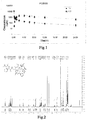
- Fig. 1 Drug concentration-time curve of the compound PCMI-08 by oral or intravenous administration is shown in Fig. 1 .
- Related pharmacokinetic parameters of PCMI-08 are shown in the following Table.
- the half-life of PCMI-08 is relatively long, generally 10h, and the mean retention time thereof is also extended relatively up to 10h or longer.
- the absolute oral bioavailability (F%) is up to 65.8%. As compared with the reported absolute oral bioavailability of paclitaxel of less than 6%, the oral bioavailability of PCMI-08 in animals has been improved to a significant extent.
- PCMI-08 Intravenous administration (5 mg/kg) Oral administration (60 mg/kg) t 1/2 h 10.21 ⁇ 1.72 1 0.44 ⁇ 1.14 C max ng/ml 11017.79 ⁇ 2679.59 2 121.12 ⁇ 454.09 t max h 0 3.
- the product obtained in the previous step (5.25g, 0.011mol) was dissolved in 20ml of 2N HCl/EtOAc solution and reacted at room temperature for 10 hours. After the completion of the reaction, the reaction liquid was concentrated and the obtained concentrate was extracted with dichloromethane/water (50ml/100ml). The aqueous phase was collected, extracted with dichloromethane and the pH value thereof was adjusted with 28% aqueous ammonia to 9-10. Finally, the aqueous phase was extracted with dichloromethane for 3 times (20ml ⁇ 3). The combined organic phase was dried, filtered and concentrated to give a white solid (2.85g, 95.7%).
- Benzyl 2R-hydroxy-3S-amino-phenyl propionate (2.66g, 9.84mmol) and the catalyst PPTS (0.24g, 0.93mmol) were dissolved in 10ml of toluene and 1,1-dimethoxymethyl-4-methoxybenzene (2.15g, 11.79mmol) was slowly added dropwise into the reaction liquid at 100°C. After that, the reaction was maintained at a temperature of 90-100 °C for 2 hours, which was continued to be supplemented with 2.4g of 1-dimethoxymethyl-4-methoxybenzene and then reacted for about 2 hours before finishing the reaction.
- the yellow oil contained a small amount of p -methoxybenzaldehyde.
- the compound 1 (1 eq.) was dissolved in anhydrous tetrahydrofuran to react with methyl magnesium bromide (2.5 eq.) for 3 hours at room temperature under the protection of nitrogen. After post-treatment, the crude compound 2 was obtained after dried.
- the compound 2 (1 eq.) was dissolved in acetone solution, into which 10 equivalents of manganese dioxide was added at room temperature to react for 4 hours.
- the compound 3 was given in a yield of 85%.
- the compound 3 (1 eq.) was dissolved in dry THF/DMPU (4:1) solution, into which 1.2 equivalents of potassium t -butoxide was added at -70°C to react for 20min.
- the obtained reaction liquid was slowly added dropwise with 2 equivalents of N-(sulfonyl) oxaziridine to react for 2 hours.
- the compound 4 was given in a yield of 75%.
- the compound 5 (1 eq.) was dissolved in dry tetrahydrofuran, into which 0.2 equivalents of (R)-2-methyl oxazaborodine was added as the catalyst, followed by adding 5 equivalents of borane/THF solution to react for 8 hours at room temperature. After completion of reaction, by post-treatment of purification by column chromatography, the compound 6 of 7,10-dimethoxyl-1,14-carbonate baccatin III was obtained as the final product in a yield of 86%.
- the compound 7 was dissolved in dichloromethane which was used as the solvent, into which 2 equivalents of pyridine was added at 0°C. Successively, the reaction liquid was added dropwise with 2 equivalents of p -toluenesulfonyl chloride to react for 4 hours. By post-treatment of purification by column chromatography, the compound 8 was given in a yield of 85-90%.
- the compound 8 (1 eq.) was dissolved in anhydrous tetrahydrofuran to react with methyl magnesium bromide (2 eq.) at room temperature for 3 hours under the protection of nitrogen. After post-treatment, the crude compound 9 was obtained after dried.
- the compound 9 (1 eq.) was dissolved in acetone solution, into which 10 equivalents of manganese dioxide was added to react for 4 hours at room temperature.
- the compound 10 was given in a yield of 75%.
- the compound 10 (1 eq.) was dissolved in dry THF/DMPU (4:1) solution, into which 1.2 equivalents of potassium t -butoxide was added at -70°C to react for 20min.
- the obtained reaction liquid was slowly added dropwise with 2 equivalents of N-(sulfonyl)oxaziridine to react for 2 hours.
- the compound 11 was given in a yield of 75%.
- the compound 12 (1 eq.) was dissolved in dry tetrahydrofuran, into which 0.2 equivalents of (R)-2-methyl oxazaborodine was added at room temperature as a catalyst, followed by addition of 5 equivalents of borane/THF solution to react for 8 hours. After completion of reaction, by post-treatment of purification by column chromatography, the compound 13 of 10-methoxyl-1,14-carbonate baccatin III was obtained as the final product in a yield of 80%.
- Step 3 The specific method was seen in Step 3) in Example 1 and the purity of the final product was 95% or higher.
- the compound 7 was dissolved in dichloromethane which was used as the solvent, into which 2 equivalents of pyridine was added at 0°C. Successively, the reaction liquid was added dropwise with 2 equivalents of p -toluenesulfonyl chloride to react for 4 hours. By post-treatment of purification by column chromatography, the compound 8 was given in a yield of 85-90%.
- the compound 8 (1 eq.) was dissolved in anhydrous tetrahydrofuran to react with methyl magnesium bromide (2 eq.) at room temperature for 3 hours under the protection of nitrogen. After post-treatment, the crude compound 9 was obtained after dried.
- the compound 9 (1 eq.) was dissolved in dry THF, into which 1.5 equivalents of tetrabutylammonium fluoride (which is in the form of a solution in THF) was added at room temperature. After 1 hour of reaction, the reaction was completed. By post-treatment of purification by column chromatography, the compound 14 was given in a yield of 92%.
- the compound 14 (1 eq.) was dissolved in dry THF, into which 8 equivalents of N,N'-carbonyldiimidazole (CDI) was added at room temperature. After 2 hour of reaction, the reaction was completed. By post-treatment of purification by column chromatography, the compound 15 was obtained in a yield of 78%.
- CDI N,N'-carbonyldiimidazole
- the compound 15 (1 eq.) was dissolved in the solution of dioxane/tetrahydrofuran (10:1). 0.2 Equivalents of azobisisobutyronitrile was added at 100°C as a catalyst to induce free radicals reaction. Afterward, the reaction liquid was added with 4 equivalents of n -butyl tin hydride (Bu 3 SnH) to react for 1 hour, cooled at room temperature overnight. By purification by column chromatography, the compound 16 was given in a yield of 52%.
- the compound 16 (1 eq.) was dissolved in acetone solution, into which 10 equivalents of manganese dioxide was added at room temperature to react for 4 hours.
- the compound 17 was given in a yield of 75%.
- the compound 17 (1 eq.) was dissolved in dry THF/DMPU (4:1) solution, into which 1.2 equivalents of potassium t -butoxide was added at -70°C to react for 20min.
- the obtained reaction liquid was slowly added dropwise with 2 equivalents of N-(sulfonyl)oxaziridine to react for 2 hours.
- the compound 18 was given in a yield of 75%.
- the compound 19 (1 eq.) was dissolved in dry tetrahydrofuran, into which 0.2 equivalents of (R)-2-methyl oxazaborodine was added at room temperature as a catalyst, followed by addition of 5 equivalents of borane/THF solution to react for 8 hours. After completion of reaction, by post-treatment of purification by column chromatography, the compound 20 of 10-methoxyl-7-dihydro-1,14-carbonate baccatin III was obtained as the final product in a yield of 80%.
- Step 3 The specific method was seen in Step 3) in Example 1 and the purity of the final product was 95% or higher.
- the compound 7 (1 eq.) was dissolved in dry THF which was used as the solvent, into which 1.5 equivalents LHMDS was added at 0°C. After 1 hour of reaction, 2 equivalents of dimethylcarbamoyl chloride was slowly added dropwise to the reaction liquid and reacted for 2 hours. By post-treatment of purification by column chromatography, the compound 21 was given in a yield of 87%.
- the compound 21 (1 eq.) was dissolved in acetone solution, into which 10 equivalents of manganese dioxide was added at room temperature to react for 4 hours.
- the compound 22 was given in a yield of 75%.
- the compound 22 (1 eq.) was dissolved in dry THF, into which 1.5 equivalents of tetrabutylammonium fluoride (which is in the form of a solution in THF) was added at room temperature. After 1 hour of reaction, the reaction was completed. By post-treatment of purification by column chromatography, the compound 23 was given in a yield of 90%.
- the compound 23 was reacted with p -toluenesulfonyl chloride to give the compound 24.
- the compound 24 (1 eq.) was dissolved in anhydrous tetrahydrofuran to react with methyl magnesium bromide (2 eq.) at room temperature for 3 hours under the protection of nitrogen. After post-treatment, the crude compound 25 was obtained after dried.
- the compound 25 (1 eq.) was dissolved in dry THF/DMPU (4:1) solution, into which 1.2 equivalents of potassium t -butoxide was added at -70°C to react for 20min.
- the obtained reaction liquid was slowly added dropwise with 2 equivalents of N-(sulfonyl)oxaziridine to react for 2 hours.
- the compound 26 was given in a yield of 75%.
- the compound 27 (1 eq.) was dissolved in dry tetrahydrofuran, into which 0.2 equivalents of (R)-2-methyl oxazaborodine was added at room temperature as a catalyst, followed by addition of 5 equivalents of borane/THF solution to react for 8 hours. After completion of reaction, by post-treatment of purification by column chromatography, the compound 28 of 10-dimethylcarbamoyl-7-methoxy-1,14-carbonate baccatin III was obtained as the final product in a yield of 80%.
- Step 3 The specific method was seen in Step 3) in Example 1 and the purity of the final product was 95% or higher.
- Step 3 The specific method was seen in Step 3) in Example 1 and the purity of the final product was 95% or higher.
- Step 3 The specific method was seen in Step 3) in Example 1 and the purity of the final product was 95% or higher.
- Step 3 The specific method was seen in Step 3) in Example 1 and the purity of the final product was 95% or higher.
- the compound 29 (1 eq.) was dissolved in acetone solution, into which 10 equivalents of manganese dioxide was added at room temperature to react for 4 hours.
- the compound 30 was given in a yield of 75%.
- the compound 30 (1 eq.) was dissolved in dry THF, into which 1.5 equivalents of tetrabutylammonium fluoride (which is in the form of a solution in THF) was added at room temperature. After 1 hour of reaction, the reaction was completed. By post-treatment of purification by column chromatography, the compound 31 was given in a yield of 90%.
- the compound 31 was reacted with p -toluenesulfonyl chloride to give the compound 32.
- the compound 32 (1 eq.) was dissolved in anhydrous tetrahydrofuran to react with methyl magnesium bromide (2 eq.) at room temperature for 3 hours under the protection of nitrogen. After post-treatment, the crude compound 33 was obtained after dried.
- the compound 33 (1 eq.) was dissolved in dry THF/DMPU (4:1) solution, into which 1.2 equivalents of potassium t -butoxide was added at -70°C to react for 20min.
- the obtained reaction liquid was slowly added dropwise with 2 equivalents of N-(sulfonyl)oxaziridine to react for 2 hours.
- the compound 34 was given in a yield of 75%.
- the compound 34 (1 eq.) was reacted with 2 equivalents of N,N'-carbonyldiimidazole (CDI) in dry tetrahydrofuran to give the compound 35 in a yield of 95%.
- CDI N,N'-carbonyldiimidazole
- the compound 35 (1 eq.) was dissolved in dry tetrahydrofuran, into which 0.2 equivalents of (R)-2-methyl oxazaborodine was added at room temperature as a catalyst, followed by addition of 5 equivalents of borane/THF solution to react for 8 hours. After completion of reaction, by post-treatment of purification by column chromatography, the compound 36 of 10-methoxyl formyl-7-methoxy-1,14-carbonate baccatin III was obtained as the final product in a yield of 80%.
- Step 3 The specific method was seen in Step 3) in Example 1 and the purity of the final product was 95% or higher.
- the compound 7 (1 eq.) was dissolved in dry THF which was used as the solvent and firstly reacted with 2 equivalents of N,N'-carbonyldiimidazole at room temperature for 2 hours. Then the reaction liquid was added with 2 equivalents of ethanethiol. After 4 hours of reaction, by post-treatment of purification by column chromatography, the compound 37 was given in a yield of 72%.
- the compound 37 (1 eq.) was dissolved in acetone solution, into which 10 equivalents of manganese dioxide was added at room temperature to react for 4 hours.
- the compound 38 was given in a yield of 86%.
- the compound 38 (1 eq.) was dissolved in dry THF, into which 1.5 equivalents of tetrabutylammonium fluoride (which is in the form of a solution in THF) was added at room temperature. After 1 hour of reaction, the reaction was completed. By post-treatment of purification by column chromatography, the compound 39 was given in a yield of 90%.
- the compound 39 was reacted with p -toluenesulfonyl chloride to give the compound 40.
- the compound 40 (1 eq.) was dissolved in anhydrous tetrahydrofuran to react with methyl magnesium bromide (2 eq.) at room temperature for 3 hours under the protection of nitrogen. After post-treatment, the crude compound 41 was obtained after dried.
- the compound 41 (1 eq.) was dissolved in dry THF/DMPU (4:1) solution, into which 1.2 equivalents of potassium t -butoxide was added at -70°C to react for 20min.
- the obtained reaction liquid was slowly added dropwise with 2 equivalents of N-(sulfonyl)oxaziridine to react for 2 hours.
- the compound 42 was given in a yield of 75%.
- the compound 43 (1 eq.) was dissolved in dry tetrahydrofuran, into which 0.2 equivalents of (R)-2-methyl oxazaborodine was added at room temperature as a catalyst, followed by addition of 5 equivalents of borane/THF solution to react for 8 hours. After completion of reaction, by post-treatment of purification by column chromatography, the compound 44 of 10-ethylthioformyl-7-methoxy-1,14-carbonate baccatin III was obtained as the final product in a yield of 80%.
- Step 3 The specific method was seen in Step 3) in Example 1 and the purity of the final product was 95% or higher.
- the compound 7 was dissolved in dichloromethane which was used as the solvent, into which 2 equivalents of pyridine was added at 0°C. Successively, the reaction liquid was added dropwise with 2 equivalents of p -toluenesulfonyl chloride. After 4 hours of reaction, by post-treatment of purification by column chromatography, the compound 8 was given in a yield of 85-90%.
- the compound 8 (1 eq.) was dissolved in anhydrous tetrahydrofuran to react with methyl magnesium bromide (2 eq.) at room temperature for 3 hours under the protection of nitrogen. After post-treatment, the crude compound 9 was obtained after dried.
- the compound 9 (1 eq.) was dissolved in acetone solution, into which 10 equivalents of manganese dioxide was added at room temperature to react for 4 hours.
- the compound 10 was given in a yield of 75%.
- the compound 10 (1 eq.) was dissolved in dry THF, into which 1.5 equivalents of tetrabutylammonium fluoride (which is in the form of a solution in THF) was added at room temperature. After 1 hour of reaction, the reaction was completed. By post-treatment of purification by column chromatography, the compound 45 was given in a yield of 90%.
- the compound 45 (1 eq.) was dissolved in dry THF which was used as the solvent, into which 1.5 equivalents LHMDS was added at 0°C. After 1 hour of reaction, 2 equivalents of dimethylcarbamoyl chloride was slowly added dropwise to the reaction liquid and reacted for 2 hours. By post-treatment of purification by column chromatography, the compound 46 was given in a yield of 87%.
- the compound 46 (1 eq.) was dissolved in dry THF/DMPU (4:1) solution, into which 1.2 equivalents of potassium t -butoxide was added at -70°C to react for 20min. The obtained reaction liquid was slowly added dropwise with 2 equivalents of N-(sulfonyl)oxaziridine to react for 2 hours. By post-treatment of purification by column chromatography, the compound 47 was given in a yield of 75%.
- the compound 48 (1 eq.) was dissolved in dry tetrahydrofuran, into which 0.2 equivalents of (R)-2-methyl oxazaborodine was added at room temperature as a catalyst, followed by addition of 5 equivalents of borane/THF solution to react for 8 hours. After completion of reaction, by post-treatment of purification by column chromatography, the compound 49 of 7-dimethylcarbamoyl-10-methoxyl-1,14-carbonate baccatin III was obtained as the final product in a yield of 80%.
- Step 3 The specific method was seen in Step 3) in Example 1 and the purity of the final product was 95% or higher.
- Step 3 The specific method was seen in Step 3) in Example 1 and the purity of the final product was 95% or higher.
- Step 3 The specific method was seen in Step 3) in Example 1 and the purity of the final product was 95% or higher.
- the compound 7 was dissolved in dichloromethane which was used as the solvent, into which 2 equivalents of pyridine was added at 0°C. Successively, the reaction liquid was added dropwise with 2 equivalents of p -toluenesulfonyl chloride. After 4 hours of reaction, by post-treatment of purification by column chromatography, the compound 8 was given in a yield of 85-90%.
- the compound 8 (1 eq.) was dissolved in anhydrous tetrahydrofuran to react with methyl magnesium bromide (2 eq.) at room temperature for 3 hours under the protection of nitrogen. After post-treatment, the crude compound 9 was obtained after dried.
- the compound 9 (1 eq.) was dissolved in acetone solution, into which 10 equivalents of manganese dioxide was added at room temperature to react for 4 hours.
- the compound 10 was given in a yield of 75%.
- the compound 10 (1 eq.) was dissolved in dry THF, into which 1.5 equivalents of tetrabutylammonium fluoride (which is in the form of a solution in THF) was added at room temperature. After 1 hour of reaction, the reaction was completed. By post-treatment of purification by column chromatography, the compound 45 was given in a yield of 90%.
- the compound 45 (1 eq.) was dissolved in dry THF which was used as the solvent, into which 1.5 equivalents LHMDS was added at 0°C. After 1 hour of reaction, 2 equivalents of methoxyformyl chloride was slowly added dropwise to the reaction liquid and reacted for 2 hours. By post-treatment of purification by column chromatography, the compound 50 was given in a yield of 71%.
- the compound 50 (1 eq.) was dissolved in dry THF/DMPU (4:1) solution, into which 1.2 equivalents of potassium t -butoxide was added at -70°C to react for 20min.
- the obtained reaction liquid was slowly added dropwise with 2 equivalents of N-(sulfonyl)oxaziridine to react for 2 hours.
- the compound 51 was given in a yield of 75%.
- the compound 51 (1 eq.) was reacted with 2 equivalents of N,N'-carbonyldiimidazole (CDI) in dry tetrahydrofuran to give the compound 52 in a yield of 95%.
- CDI N,N'-carbonyldiimidazole
- the compound 52 (1 eq.) was dissolved in dry tetrahydrofuran, into which 0.2 equivalents of (R)-2-methyl oxazaborodine was added at room temperature as a catalyst, followed by addition of 5 equivalents of borane/THF solution to react for 8 hours. After completion of reaction, by post-treatment of purification by column chromatography, the compound 53 of 7-methoxyformyl-10-methoxyl-1,14-carbonate baccatin III was obtained as the final product in a yield of 80%.
- Step 3 The specific method was seen in Step 3) in Example 1 and the purity of the final product was 95% or higher.
- Step 3 The specific method was seen in Step 3) in Example 1 and the purity of the final product was 95% or higher.
- Step 3 The specific method was seen in Step 3) in Example 1 and the purity of the final product was 95% or higher.
- Step 3 The specific method was seen in Step 3) in Example 1 and the purity of the final product was 95% or higher.
- the compound 7 was dissolved in dichloromethane which was used as the solvent, into which 2 equivalents of pyridine was added at 0°C. Successively, the reaction liquid was added dropwise with 2 equivalents of p -toluenesulfonyl chloride. After 4 hours of reaction, by post-treatment of purification by column chromatography, the compound 8 was given in a yield of 90%.
- the compound 8 (1 eq.) was dissolved in anhydrous tetrahydrofuran to react with methyl magnesium bromide (2 eq.) at room temperature for 3 hours under the protection of nitrogen. After post-treatment, the crude compound 9 was obtained after dried.
- the compound 9 (1 eq.) was dissolved in acetone solution, into which 10 equivalents of manganese dioxide was added at room temperature to react for 4 hours.
- the compound 10 was given in a yield of 75%.
- the compound 10 (1 eq.) was dissolved in dry THF, into which 1.5 equivalents of tetrabutylammonium fluoride (which is in the form of a solution in THF) was added at room temperature. After 1 hour of reaction, the reaction was completed. By post-treatment of purification by column chromatography, the compound 45 was given in a yield of 90%.
- the compound 45 (1 eq.) was dissolved in dry THF which was used as the solvent and firstly reacted with 2 equivalents of N,N'-carbonyldiimidazole at room temperature for 2 hours. Then the reaction liquid was added with 2 equivalents of ethanethiol. After 4 hours of reaction, by post-treatment of purification by column chromatography, the compound 54 was given in a yield of 78%.
- the compound 54 (1 eq.) was dissolved in dry THF/DMPU (4:1) solution, into which 1.2 equivalents of potassium t -butoxide was added at -70°C to react for 20min.
- the obtained reaction liquid was slowly added dropwise with 2 equivalents of N-(sulfonyl)oxaziridine to react for 2 hours.
- the compound 55 was given in a yield of 75%.
- the compound 55 (1 eq.) was reacted with 2 equivalents of N,N'-carbonyldiimidazole (CDI) in dry tetrahydrofuran to give the compound 56 in a yield of 95%.
- CDI N,N'-carbonyldiimidazole
- the compound 56 (1 eq.) was dissolved in dry tetrahydrofuran, into which 0.2 equivalents of (R)-2-methyl oxazaborodine was added at room temperature as a catalyst, followed by addition of 5 equivalents of borane/THF solution to react for 8 hours. After completion of reaction, by post-treatment of purification by column chromatography, the compound 57 of 7-ethylthioformyl-10-methoxy-1,14-carbonate baccatin III was obtained as the final product in a yield of 80%.
- Step 3 The specific method was seen in Step 3) in Example 1 and the purity of the final product was 95% or higher.
Landscapes
- Chemical & Material Sciences (AREA)
- Health & Medical Sciences (AREA)
- Organic Chemistry (AREA)
- Veterinary Medicine (AREA)
- Medicinal Chemistry (AREA)
- Pharmacology & Pharmacy (AREA)
- Life Sciences & Earth Sciences (AREA)
- Animal Behavior & Ethology (AREA)
- General Health & Medical Sciences (AREA)
- Public Health (AREA)
- Epidemiology (AREA)
- Chemical Kinetics & Catalysis (AREA)
- General Chemical & Material Sciences (AREA)
- Nuclear Medicine, Radiotherapy & Molecular Imaging (AREA)
- Hematology (AREA)
- Oncology (AREA)
- Pharmaceuticals Containing Other Organic And Inorganic Compounds (AREA)
- Heterocyclic Carbon Compounds Containing A Hetero Ring Having Oxygen Or Sulfur (AREA)
- Low-Molecular Organic Synthesis Reactions Using Catalysts (AREA)
- Epoxy Compounds (AREA)
Claims (10)
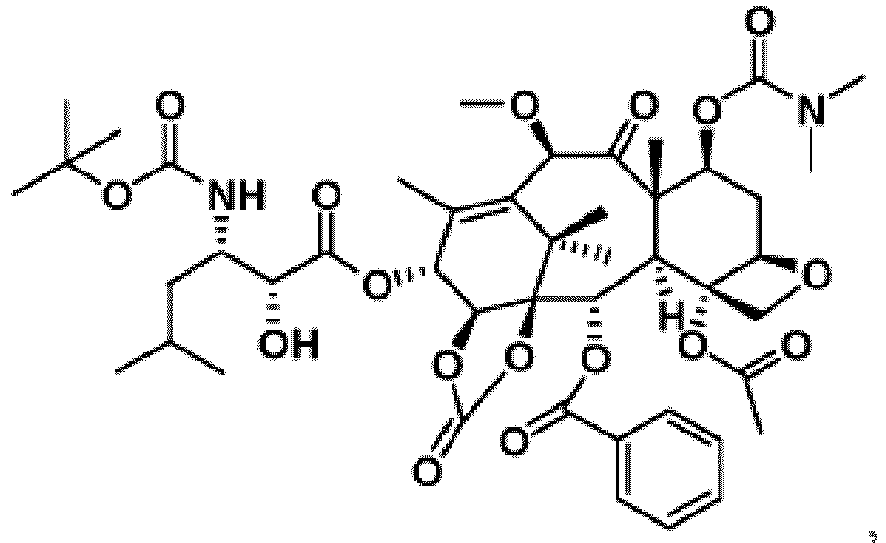
- Composés de taxane ayant la structure représentée par la formule générale I suivante :
 R1 est un benzoyle, un t-butyloxycarbonyle, ou un N,N'-di-méthylcarbamoyle,R2 est un phényle,
 R3 est -OMe, -OCOOCH3, -OCON(CH3)2, ou -OCOSC2H5 ;R4 est -OMe, -OCOOCH3, -OCON(CH3)2, ou -OCOSC2H5 ;
 - Composés de taxanes selon la revendication 1, les composés sont sélectionnés parmi le composé ayant la structure suivante :




- Composés de taxanes selon l'une quelconque des revendications 1 et 2, dans lesquels lesdits composés de taxanes sont formés en sels non toxiques pharmaceutiquement acceptables.
- Composés de taxanes selon l'une quelconque des revendications 1 et 2, dans lesquels lesdits composés de taxanes existent sous forme de solvates.
- Composition pharmaceutique antitumorale, dans laquelle la composition contient les composés de taxanes de formule I selon l'une quelconque des revendications 1 à 4, les sels ou solvates de ceux-ci pharmaceutiquement acceptables en tant qu'ingrédients actifs.
- Composition selon la revendication 5, dans laquelle la composition pharmaceutique contient les composés de taxanes de formule I, les sels ou solvates de ceux-ci pharmaceutiquement acceptables à un rapport en poids de 0,01 % à 99,99 %, le reste étant des supports pharmaceutiquement acceptables.
- Composés de taxane selon l'une quelconque des revendications 1 à 4, les sels pharmaceutiquement acceptables, les solvates de ceux-ci et les compositions pharmaceutiques selon la revendication 5 ou la revendication 6 pour une utilisation comme médicament antitumoral oral.
- Procédé de préparation des composés de taxanes selon l'une quelconque des revendications 1 et 2, caractérisé en ce que, le procédé comprend les étapes suivantes :Étape 1 synthèse de la partie noyau mère des taxanes : en utilisant la 10-désacétyl baccatine III (10-DAB) comme matière première, tout d'abord, les groupes hydroxyle en positions C7 et C10 de la partie noyau mère sont protégés sélectivement avec des substituts, puis le groupe hydroxy en C13 est oxydé en groupe céto-carbonyle, suivi par l'introduction hautement stéréosélective d'un groupe hydroxyle avec une configuration β en C14 en utilisant de la N-(sulfonyl)oxaziridine, pour former une structure 1,14-carbonate sous l'action du CDI, et finalement le groupe céto-carbonyle en C13 est réduit de manière hautement stéréosélective en groupe hydroxyle avec une configuration α par le procédé de réduction CBS pour donner la partie noyau mère des taxanes ;Étape 2 synthèse d'un précurseur de chaîne latérale d'oxazolidine acide à cinq chaînons : l'acide glycolique, utilisé comme matière première, est protégé successivement par un groupe benzyle et un groupe butyloxycarbonyle (groupe Boc) pour générer le glycolate de benzyle protégé par un Boc ; différents aldéhydes substitués sont condensés au (SR)-t-butyl sulfinamide pour former les composés d'ènamine correspondants ; le glycolate de benzyle protégé par un Boc et le composé d'ènamine sont mis à réagir via une réaction d'addition en présence d'un sel de lithium, et ensuite un intermédiaire chiral est donné après hydrolyse acide, et l'intermédiaire obtenu est mis à réagir avec du 1,1'-(diméthoxyméthyl) p-méthoxy-benzène via une réaction de condensation aldolique, catalysée par le p-toluènesulfonate de pyridinium (PPTS) pour obtenir un composé de condensation ; le groupe amino du composé de condensation est substitué avec différents substituants, et le précurseur de chaîne latérale d'oxazolidine acide à cinq chaînons est finalement donné après hydrogénation catalytique ;Étape 3 synthèse de dérivés de taxanes : le précurseur de chaîne latérale d'oxazolidine acide à cinq chaînons est lié à la partie noyau mère des taxanes par estérification, et une série de dérivés de taxanes est générée après élimination du groupe protecteur par hydrolyse acide.
- Procédé de préparation des composés de taxanes selon la revendication 8, caractérisé en ce que,
dans l'étape 1, les groupes hydroxyle en C7 et C10 sont protégés avec des substituants :(1) quand R3 et R4 sont -OMe, la réaction impliquée est : tout d'abord, le groupe hydroxyle est mis à réagir avec du chlorure de p-toluènesulfonyle (TsCl) à température ambiante à 0 °C dans du tétrahydrofurane ou du dichlorométhane comme solvant et de la pyridine (Py) comme alcalin pour donner un p-toluènesulfonate, qui est ensuite mis à réagir avec un réactif de Grignard pour donner l'éther -OMe correspondant ;(2) quand R3 et R4 sont -OCOOCH3 ou -OCON(CH3)2, la réaction impliquée est : dans des conditions alcalines, le groupe hydroxyle est mis à réagir avec le chlorure d'acyle correspondant dans du tétrahydrofurane comme solvant à température ambiante à -70 °C ;(3) quand R3 et R4 sont -OCOSC2H5, la réaction impliquée est : le groupe hydroxyle est mis à réagir avec du N,N'-carbonyldiimidazole (CDI) dans du tétrahydrofurane comme solvant à température ambiante, et le produit obtenu est ensuite mis à réagir avec un mercaptan via une réaction de substitution ;dans l'étape 1, la réduction stéréosélective du groupe céto-carbonyle en C13 par le procédé de réduction CBS comprend les étapes spécifiques suivantes : l'oxo en C13 est réduit de manière stéréosélective en α-OH en C13 en utilisant du tétrahydrofurane anhydre, du dichlorométhane sec ou des alcools comme solvant, de la (R)-2-méthyl oxazaborodine comme catalyseur et des boranes comme agent de réduction à température ambiante à -70 °C ;
dans l'étape 2, lesdits différents aldéhydes substitués comprennent les aldéhydes d'hydrocarbyle en C1-C6, les aldéhydes d'hydrocarbyle substitués en C1-C6, les aldéhydes aromatiques, les aldéhydes aromatiques substitués et les aldéhydes hétéroaromatiques ; la réaction impliquée dans la substitution du groupe amino du composé de condensation est effectuée en utilisant du tétrahydrofurane, du dichlorométhane ou du dioxane comme solvant, pour réagir avec les chlorures d'acyle correspondants dans des conditions alcalines à température ambiante à -70 °C ; dans la réaction d'hydrogénation catalytique, du palladium sur charbon ou de l'hydroxyde de palladium est utilisé comme catalyseur, de l'hydrogène est introduit à pression normale ou dans des conditions pressurisées, et la réaction est effectuée dans des alcools, du tétrahydrofurane ou du dichlorométhane comme solvant. - Procédé de préparation des composés de taxanes selon la revendication 9, caractérisé en ce que,
dans l'étape 1, les groupes hydroxyle en C7 et en C10 sont protégés par des substituants :(1) quand R3 et R4 sont -OMe, du dichlorométhane est utilisé comme solvant, la température est à 0 °C et le réactif de Grignard comprend MeMgBr ;(2) quand R3 et R4 sont -OCOOCH3 ou -OCON(CH3)2, de l'hexaméthyldisilazide de lithium est utilisé comme alcalin et la température est à -40 °C ; le chlorure d'acyle comprend CH3OCOCl et(CH3)2NCOCl ;(3) quand R3 et R4 sont -OCOSC2H5, le mercaptan comprend C2H5SH ;dans l'étape 1, la réduction stéréosélective du groupe céto-carbonyle en C13 par le procédé de réduction CBS est effectuée à température ambiante en utilisant du tétrahydrofurane anhydre comme solvant ;
dans l'étape 2, dans la réaction impliquée dans la substitution du groupe amino sur le composé de condensation, de l'hexaméthyldisilazide de lithium est utilisé comme alcalin et du tétrahydrofurane est utilisé comme solvant ; la température est à -40 °C, le chlorure d'acyle comprend phénylCOCl, t-butylOCOCl et diméthylCOCl ; dans la réaction d'hydrogénation catalytique, de l'hydroxyde de palladium est utilisé comme catalyseur, de l'hydrogène est introduit à 20 psi et la réaction est effectuée dans une solution alcoolique.
Applications Claiming Priority (2)
| Application Number | Priority Date | Filing Date | Title |
|---|---|---|---|
| CN201310594994.XA CN104650109B (zh) | 2013-11-22 | 2013-11-22 | 紫杉烷类化合物 |
| PCT/CN2014/091911 WO2015074606A1 (fr) | 2013-11-22 | 2014-11-21 | Composé taxane, et son procédé de préparation et son utilisation |
Publications (3)
| Publication Number | Publication Date |
|---|---|
| EP3072896A1 EP3072896A1 (fr) | 2016-09-28 |
| EP3072896A4 EP3072896A4 (fr) | 2017-09-06 |
| EP3072896B1 true EP3072896B1 (fr) | 2021-01-06 |
Family
ID=53178985
Family Applications (1)
| Application Number | Title | Priority Date | Filing Date |
|---|---|---|---|
| EP14863167.4A Active EP3072896B1 (fr) | 2013-11-22 | 2014-11-21 | Composé taxane, et son procédé de préparation et son utilisation |
Country Status (11)
| Country | Link |
|---|---|
| US (1) | US9890175B2 (fr) |
| EP (1) | EP3072896B1 (fr) |
| JP (1) | JP6573900B2 (fr) |
| KR (1) | KR20160087899A (fr) |
| CN (1) | CN104650109B (fr) |
| AU (1) | AU2014352372B2 (fr) |
| CA (1) | CA2931366C (fr) |
| DK (1) | DK3072896T5 (fr) |
| RU (1) | RU2686459C1 (fr) |
| WO (1) | WO2015074606A1 (fr) |
| ZA (1) | ZA201603990B (fr) |
Families Citing this family (3)
| Publication number | Priority date | Publication date | Assignee | Title |
|---|---|---|---|---|
| CN107056767B (zh) * | 2015-12-04 | 2022-07-15 | 江苏恩华络康药物研发有限公司 | 用于制备水溶性紫杉烷类衍生物的方法及中间体 |
| CN110143934B (zh) * | 2018-08-29 | 2023-03-28 | 牡丹江师范学院 | 一种含氟紫杉烷类化合物及其制备方法与应用 |
| CN110590793A (zh) * | 2019-08-30 | 2019-12-20 | 浙江工业大学 | 一种2,4-二苯基吡啶并[3,2-c]香豆素的合成方法 |
Family Cites Families (13)
| Publication number | Priority date | Publication date | Assignee | Title |
|---|---|---|---|---|
| FR2698363B1 (fr) * | 1992-11-23 | 1994-12-30 | Rhone Poulenc Rorer Sa | Nouveaux dérivés du taxane, leur préparation et les compositions qui les contiennent. |
| US5475011A (en) * | 1993-03-26 | 1995-12-12 | The Research Foundation Of State University Of New York | Anti-tumor compounds, pharmaceutical compositions, methods for preparation thereof and for treatment |
| IT1275435B (it) * | 1995-05-19 | 1997-08-07 | Indena Spa | Derivati della 10-desacetil-14beta-idrossibaccatina iii,loro metodo di preparazione e formulazioni che li contengono |
| EP0747372A1 (fr) * | 1995-06-06 | 1996-12-11 | Dr. Reddy's Research Foundation | Dérivés de taxane à partir de 14-bêta-hydroxy-10-désacétylbaccatin III |
| ITMI991483A1 (it) * | 1999-07-06 | 2001-01-06 | Indena Spa | Derivati tassanici e procedimenti per la loro preparazione |
| MXPA02003797A (es) * | 1999-10-15 | 2002-12-13 | Daiichi Seiyaku Co | Compuestos de taxano pentaciclico. |
| IT1320107B1 (it) * | 2000-11-28 | 2003-11-18 | Indena Spa | Procedimento per la preparazione di derivati tassanici. |
| EP1737444A4 (fr) * | 2004-03-05 | 2008-05-21 | Univ Florida State Res Found | Taxanes a substitution de c7 lactyloxy- |
| CN1923189A (zh) | 2005-08-30 | 2007-03-07 | 孔庆忠 | 一种紫杉碱类抗癌药物的缓释注射剂 |
| EP2080764B1 (fr) * | 2008-01-18 | 2012-08-22 | INDENA S.p.A. | Formes solides d'ortataxel |
| EP2080763A1 (fr) * | 2008-01-18 | 2009-07-22 | INDENA S.p.A. | Ortataxel sous forme cristalline I |
| CN101353333B (zh) * | 2008-09-08 | 2010-08-11 | 上海大学 | 10-去乙酰基-9(r)-氢化-1-去氧紫杉醇类似物及其制备方法 |
| SG194128A1 (en) * | 2011-04-07 | 2013-11-29 | Arbor Therapeutics Llc | Taxane and abeo-taxane analogs |
-
2013
- 2013-11-22 CN CN201310594994.XA patent/CN104650109B/zh active Active
-
2014
- 2014-11-21 WO PCT/CN2014/091911 patent/WO2015074606A1/fr not_active Ceased
- 2014-11-21 KR KR1020167016613A patent/KR20160087899A/ko not_active Ceased
- 2014-11-21 US US15/039,271 patent/US9890175B2/en active Active
- 2014-11-21 DK DK14863167.4T patent/DK3072896T5/da active
- 2014-11-21 CA CA2931366A patent/CA2931366C/fr active Active
- 2014-11-21 EP EP14863167.4A patent/EP3072896B1/fr active Active
- 2014-11-21 AU AU2014352372A patent/AU2014352372B2/en active Active
- 2014-11-21 RU RU2016124631A patent/RU2686459C1/ru active
- 2014-11-21 JP JP2016554787A patent/JP6573900B2/ja active Active
-
2016
- 2016-06-13 ZA ZA2016/03990A patent/ZA201603990B/en unknown
Non-Patent Citations (1)
| Title |
|---|
| None * |
Also Published As
| Publication number | Publication date |
|---|---|
| AU2014352372A1 (en) | 2016-06-16 |
| ZA201603990B (en) | 2019-04-24 |
| EP3072896A1 (fr) | 2016-09-28 |
| WO2015074606A1 (fr) | 2015-05-28 |
| CA2931366A1 (fr) | 2015-05-28 |
| RU2686459C1 (ru) | 2019-04-26 |
| EP3072896A4 (fr) | 2017-09-06 |
| US20160340365A1 (en) | 2016-11-24 |
| JP2016539187A (ja) | 2016-12-15 |
| AU2014352372B2 (en) | 2018-08-30 |
| DK3072896T3 (da) | 2021-04-06 |
| CA2931366C (fr) | 2019-09-24 |
| CN104650109A (zh) | 2015-05-27 |
| CN104650109B (zh) | 2019-01-01 |
| JP6573900B2 (ja) | 2019-09-11 |
| KR20160087899A (ko) | 2016-07-22 |
| US9890175B2 (en) | 2018-02-13 |
| RU2016124631A (ru) | 2017-12-27 |
| DK3072896T5 (da) | 2021-05-31 |
Similar Documents
| Publication | Publication Date | Title |
|---|---|---|
| WO2021129820A1 (fr) | Composé de quinazoline contenant un cycle spiro | |
| WO2021190467A1 (fr) | Composé de quinazoline contenant un cycle spiro | |
| CN111196790B (zh) | 新型紫杉烷类衍生物及其药物组合物和用途 | |
| EP3072896B1 (fr) | Composé taxane, et son procédé de préparation et son utilisation | |
| EP3081560B1 (fr) | Composés de type taxanes, leur procédé de préparation et leurs utilisation | |
| CN104513290A (zh) | 雷醇内酯衍生物及其应用 | |
| CN105121419B (zh) | Cabazitaxel类抗多药耐药紫杉烷类抗肿瘤化合物及其制备方法 | |
| CN110981882A (zh) | 一类白屈菜碱一氧化氮供体衍生物及其制备方法和用途 | |
| CN112225730B (zh) | 一种稠环化合物的晶型、其组合物、制备方法及其应用 | |
| CN111574582B (zh) | 一种雷公藤红素衍生物及其制备方法与应用 | |
| CN113045554A (zh) | 一种非索替尼晶型及其制备方法 | |
| CN113754659A (zh) | 含螺环的喹唑啉化合物 | |
| CN104884128A (zh) | 力格赛狄盐及其晶型、它们的制备方法和用途 | |
| CN101973987B (zh) | 埃博霉素类似物,制备方法及其药物组合物和用途 | |
| CN103804323A (zh) | 一种卡巴他赛溶剂化物及其制备方法和应用 | |
| CN105461665A (zh) | 卡巴他赛晶n6型物质及制备方法和其组合物与用途 | |
| CN105367521A (zh) | 卡巴他赛晶n4型物质及制备方法和其组合物与用途 | |
| CN105461664A (zh) | 卡巴他赛晶n5型物质及制备方法和其组合物与用途 |
Legal Events
| Date | Code | Title | Description |
|---|---|---|---|
| PUAI | Public reference made under article 153(3) epc to a published international application that has entered the european phase |
Free format text: ORIGINAL CODE: 0009012 |
|
| 17P | Request for examination filed |
Effective date: 20160609 |
|
| AK | Designated contracting states |
Kind code of ref document: A1 Designated state(s): AL AT BE BG CH CY CZ DE DK EE ES FI FR GB GR HR HU IE IS IT LI LT LU LV MC MK MT NL NO PL PT RO RS SE SI SK SM TR |
|
| AX | Request for extension of the european patent |
Extension state: BA ME |
|
| DAX | Request for extension of the european patent (deleted) | ||
| RIC1 | Information provided on ipc code assigned before grant |
Ipc: A61K 31/365 20060101ALI20170420BHEP Ipc: A61P 35/00 20060101ALI20170420BHEP Ipc: C07D 493/18 20060101AFI20170420BHEP Ipc: A61K 31/443 20060101ALI20170420BHEP Ipc: A61P 35/02 20060101ALI20170420BHEP Ipc: C07D 493/08 20060101ALI20170420BHEP |
|
| A4 | Supplementary search report drawn up and despatched |
Effective date: 20170809 |
|
| RIC1 | Information provided on ipc code assigned before grant |
Ipc: C07D 493/18 20060101AFI20170803BHEP Ipc: A61K 31/443 20060101ALI20170803BHEP Ipc: A61P 35/02 20060101ALI20170803BHEP Ipc: A61K 31/365 20060101ALI20170803BHEP Ipc: A61P 35/00 20060101ALI20170803BHEP Ipc: C07D 493/08 20060101ALI20170803BHEP |
|
| STAA | Information on the status of an ep patent application or granted ep patent |
Free format text: STATUS: EXAMINATION IS IN PROGRESS |
|
| 17Q | First examination report despatched |
Effective date: 20191125 |
|
| GRAP | Despatch of communication of intention to grant a patent |
Free format text: ORIGINAL CODE: EPIDOSNIGR1 |
|
| STAA | Information on the status of an ep patent application or granted ep patent |
Free format text: STATUS: GRANT OF PATENT IS INTENDED |
|
| INTG | Intention to grant announced |
Effective date: 20200615 |
|
| GRAS | Grant fee paid |
Free format text: ORIGINAL CODE: EPIDOSNIGR3 |
|
| GRAA | (expected) grant |
Free format text: ORIGINAL CODE: 0009210 |
|
| STAA | Information on the status of an ep patent application or granted ep patent |
Free format text: STATUS: THE PATENT HAS BEEN GRANTED |
|
| AK | Designated contracting states |
Kind code of ref document: B1 Designated state(s): AL AT BE BG CH CY CZ DE DK EE ES FI FR GB GR HR HU IE IS IT LI LT LU LV MC MK MT NL NO PL PT RO RS SE SI SK SM TR |
|
| REG | Reference to a national code |
Ref country code: GB Ref legal event code: FG4D |
|
| REG | Reference to a national code |
Ref country code: AT Ref legal event code: REF Ref document number: 1352255 Country of ref document: AT Kind code of ref document: T Effective date: 20210115 Ref country code: CH Ref legal event code: EP |
|
| REG | Reference to a national code |
Ref country code: DE Ref legal event code: R096 Ref document number: 602014074099 Country of ref document: DE |
|
| REG | Reference to a national code |
Ref country code: IE Ref legal event code: FG4D |
|
| REG | Reference to a national code |
Ref country code: NL Ref legal event code: FP |
|
| REG | Reference to a national code |
Ref country code: FI Ref legal event code: FGE |
|
| REG | Reference to a national code |
Ref country code: DK Ref legal event code: T3 Effective date: 20210331 |
|
| REG | Reference to a national code |
Ref country code: DK Ref legal event code: T5 Effective date: 20210527 |
|
| REG | Reference to a national code |
Ref country code: AT Ref legal event code: MK05 Ref document number: 1352255 Country of ref document: AT Kind code of ref document: T Effective date: 20210106 |
|
| REG | Reference to a national code |
Ref country code: LT Ref legal event code: MG9D |
|
| PG25 | Lapsed in a contracting state [announced via postgrant information from national office to epo] |
Ref country code: GR Free format text: LAPSE BECAUSE OF FAILURE TO SUBMIT A TRANSLATION OF THE DESCRIPTION OR TO PAY THE FEE WITHIN THE PRESCRIBED TIME-LIMIT Effective date: 20210407 Ref country code: HR Free format text: LAPSE BECAUSE OF FAILURE TO SUBMIT A TRANSLATION OF THE DESCRIPTION OR TO PAY THE FEE WITHIN THE PRESCRIBED TIME-LIMIT Effective date: 20210106 Ref country code: PT Free format text: LAPSE BECAUSE OF FAILURE TO SUBMIT A TRANSLATION OF THE DESCRIPTION OR TO PAY THE FEE WITHIN THE PRESCRIBED TIME-LIMIT Effective date: 20210506 Ref country code: LT Free format text: LAPSE BECAUSE OF FAILURE TO SUBMIT A TRANSLATION OF THE DESCRIPTION OR TO PAY THE FEE WITHIN THE PRESCRIBED TIME-LIMIT Effective date: 20210106 Ref country code: NO Free format text: LAPSE BECAUSE OF FAILURE TO SUBMIT A TRANSLATION OF THE DESCRIPTION OR TO PAY THE FEE WITHIN THE PRESCRIBED TIME-LIMIT Effective date: 20210406 Ref country code: BG Free format text: LAPSE BECAUSE OF FAILURE TO SUBMIT A TRANSLATION OF THE DESCRIPTION OR TO PAY THE FEE WITHIN THE PRESCRIBED TIME-LIMIT Effective date: 20210406 |
|
| PG25 | Lapsed in a contracting state [announced via postgrant information from national office to epo] |
Ref country code: SE Free format text: LAPSE BECAUSE OF FAILURE TO SUBMIT A TRANSLATION OF THE DESCRIPTION OR TO PAY THE FEE WITHIN THE PRESCRIBED TIME-LIMIT Effective date: 20210106 Ref country code: PL Free format text: LAPSE BECAUSE OF FAILURE TO SUBMIT A TRANSLATION OF THE DESCRIPTION OR TO PAY THE FEE WITHIN THE PRESCRIBED TIME-LIMIT Effective date: 20210106 Ref country code: LV Free format text: LAPSE BECAUSE OF FAILURE TO SUBMIT A TRANSLATION OF THE DESCRIPTION OR TO PAY THE FEE WITHIN THE PRESCRIBED TIME-LIMIT Effective date: 20210106 Ref country code: RS Free format text: LAPSE BECAUSE OF FAILURE TO SUBMIT A TRANSLATION OF THE DESCRIPTION OR TO PAY THE FEE WITHIN THE PRESCRIBED TIME-LIMIT Effective date: 20210106 Ref country code: AT Free format text: LAPSE BECAUSE OF FAILURE TO SUBMIT A TRANSLATION OF THE DESCRIPTION OR TO PAY THE FEE WITHIN THE PRESCRIBED TIME-LIMIT Effective date: 20210106 |
|
| PG25 | Lapsed in a contracting state [announced via postgrant information from national office to epo] |
Ref country code: IS Free format text: LAPSE BECAUSE OF FAILURE TO SUBMIT A TRANSLATION OF THE DESCRIPTION OR TO PAY THE FEE WITHIN THE PRESCRIBED TIME-LIMIT Effective date: 20210506 |
|
| REG | Reference to a national code |
Ref country code: DE Ref legal event code: R097 Ref document number: 602014074099 Country of ref document: DE |
|
| PG25 | Lapsed in a contracting state [announced via postgrant information from national office to epo] |
Ref country code: EE Free format text: LAPSE BECAUSE OF FAILURE TO SUBMIT A TRANSLATION OF THE DESCRIPTION OR TO PAY THE FEE WITHIN THE PRESCRIBED TIME-LIMIT Effective date: 20210106 Ref country code: CZ Free format text: LAPSE BECAUSE OF FAILURE TO SUBMIT A TRANSLATION OF THE DESCRIPTION OR TO PAY THE FEE WITHIN THE PRESCRIBED TIME-LIMIT Effective date: 20210106 Ref country code: SM Free format text: LAPSE BECAUSE OF FAILURE TO SUBMIT A TRANSLATION OF THE DESCRIPTION OR TO PAY THE FEE WITHIN THE PRESCRIBED TIME-LIMIT Effective date: 20210106 |
|
| PLBE | No opposition filed within time limit |
Free format text: ORIGINAL CODE: 0009261 |
|
| STAA | Information on the status of an ep patent application or granted ep patent |
Free format text: STATUS: NO OPPOSITION FILED WITHIN TIME LIMIT |
|
| PG25 | Lapsed in a contracting state [announced via postgrant information from national office to epo] |
Ref country code: RO Free format text: LAPSE BECAUSE OF FAILURE TO SUBMIT A TRANSLATION OF THE DESCRIPTION OR TO PAY THE FEE WITHIN THE PRESCRIBED TIME-LIMIT Effective date: 20210106 Ref country code: SK Free format text: LAPSE BECAUSE OF FAILURE TO SUBMIT A TRANSLATION OF THE DESCRIPTION OR TO PAY THE FEE WITHIN THE PRESCRIBED TIME-LIMIT Effective date: 20210106 Ref country code: ES Free format text: LAPSE BECAUSE OF FAILURE TO SUBMIT A TRANSLATION OF THE DESCRIPTION OR TO PAY THE FEE WITHIN THE PRESCRIBED TIME-LIMIT Effective date: 20210106 |
|
| 26N | No opposition filed |
Effective date: 20211007 |
|
| PG25 | Lapsed in a contracting state [announced via postgrant information from national office to epo] |
Ref country code: AL Free format text: LAPSE BECAUSE OF FAILURE TO SUBMIT A TRANSLATION OF THE DESCRIPTION OR TO PAY THE FEE WITHIN THE PRESCRIBED TIME-LIMIT Effective date: 20210106 |
|
| PG25 | Lapsed in a contracting state [announced via postgrant information from national office to epo] |
Ref country code: SI Free format text: LAPSE BECAUSE OF FAILURE TO SUBMIT A TRANSLATION OF THE DESCRIPTION OR TO PAY THE FEE WITHIN THE PRESCRIBED TIME-LIMIT Effective date: 20210106 |
|
| PG25 | Lapsed in a contracting state [announced via postgrant information from national office to epo] |
Ref country code: IT Free format text: LAPSE BECAUSE OF FAILURE TO SUBMIT A TRANSLATION OF THE DESCRIPTION OR TO PAY THE FEE WITHIN THE PRESCRIBED TIME-LIMIT Effective date: 20210106 |
|
| PG25 | Lapsed in a contracting state [announced via postgrant information from national office to epo] |
Ref country code: IS Free format text: LAPSE BECAUSE OF FAILURE TO SUBMIT A TRANSLATION OF THE DESCRIPTION OR TO PAY THE FEE WITHIN THE PRESCRIBED TIME-LIMIT Effective date: 20210506 |
|
| PG25 | Lapsed in a contracting state [announced via postgrant information from national office to epo] |
Ref country code: MC Free format text: LAPSE BECAUSE OF FAILURE TO SUBMIT A TRANSLATION OF THE DESCRIPTION OR TO PAY THE FEE WITHIN THE PRESCRIBED TIME-LIMIT Effective date: 20210106 |
|
| REG | Reference to a national code |
Ref country code: CH Ref legal event code: PL |
|
| PG25 | Lapsed in a contracting state [announced via postgrant information from national office to epo] |
Ref country code: LU Free format text: LAPSE BECAUSE OF NON-PAYMENT OF DUE FEES Effective date: 20211121 Ref country code: BE Free format text: LAPSE BECAUSE OF NON-PAYMENT OF DUE FEES Effective date: 20211130 |
|
| REG | Reference to a national code |
Ref country code: BE Ref legal event code: MM Effective date: 20211130 |
|
| PG25 | Lapsed in a contracting state [announced via postgrant information from national office to epo] |
Ref country code: LI Free format text: LAPSE BECAUSE OF NON-PAYMENT OF DUE FEES Effective date: 20211130 Ref country code: CH Free format text: LAPSE BECAUSE OF NON-PAYMENT OF DUE FEES Effective date: 20211130 |
|
| PG25 | Lapsed in a contracting state [announced via postgrant information from national office to epo] |
Ref country code: IE Free format text: LAPSE BECAUSE OF NON-PAYMENT OF DUE FEES Effective date: 20211121 |
|
| PG25 | Lapsed in a contracting state [announced via postgrant information from national office to epo] |
Ref country code: HU Free format text: LAPSE BECAUSE OF FAILURE TO SUBMIT A TRANSLATION OF THE DESCRIPTION OR TO PAY THE FEE WITHIN THE PRESCRIBED TIME-LIMIT; INVALID AB INITIO Effective date: 20141121 |
|
| P01 | Opt-out of the competence of the unified patent court (upc) registered |
Effective date: 20230512 |
|
| PG25 | Lapsed in a contracting state [announced via postgrant information from national office to epo] |
Ref country code: CY Free format text: LAPSE BECAUSE OF FAILURE TO SUBMIT A TRANSLATION OF THE DESCRIPTION OR TO PAY THE FEE WITHIN THE PRESCRIBED TIME-LIMIT Effective date: 20210106 |
|
| PG25 | Lapsed in a contracting state [announced via postgrant information from national office to epo] |
Ref country code: MK Free format text: LAPSE BECAUSE OF FAILURE TO SUBMIT A TRANSLATION OF THE DESCRIPTION OR TO PAY THE FEE WITHIN THE PRESCRIBED TIME-LIMIT Effective date: 20210106 |
|
| PG25 | Lapsed in a contracting state [announced via postgrant information from national office to epo] |
Ref country code: TR Free format text: LAPSE BECAUSE OF FAILURE TO SUBMIT A TRANSLATION OF THE DESCRIPTION OR TO PAY THE FEE WITHIN THE PRESCRIBED TIME-LIMIT Effective date: 20210106 |
|
| PG25 | Lapsed in a contracting state [announced via postgrant information from national office to epo] |
Ref country code: MT Free format text: LAPSE BECAUSE OF FAILURE TO SUBMIT A TRANSLATION OF THE DESCRIPTION OR TO PAY THE FEE WITHIN THE PRESCRIBED TIME-LIMIT Effective date: 20210106 |
|
| PGFP | Annual fee paid to national office [announced via postgrant information from national office to epo] |
Ref country code: NL Payment date: 20251119 Year of fee payment: 12 |
|
| PGFP | Annual fee paid to national office [announced via postgrant information from national office to epo] |
Ref country code: DE Payment date: 20251118 Year of fee payment: 12 |
|
| PGFP | Annual fee paid to national office [announced via postgrant information from national office to epo] |
Ref country code: GB Payment date: 20251120 Year of fee payment: 12 |
|
| PGFP | Annual fee paid to national office [announced via postgrant information from national office to epo] |
Ref country code: FI Payment date: 20251118 Year of fee payment: 12 Ref country code: DK Payment date: 20251119 Year of fee payment: 12 |
|
| PGFP | Annual fee paid to national office [announced via postgrant information from national office to epo] |
Ref country code: FR Payment date: 20251120 Year of fee payment: 12 |