EP3073692A1 - Procédé de traitement d'une pluralité de signaux et dispositif de traitement de signal - Google Patents
Procédé de traitement d'une pluralité de signaux et dispositif de traitement de signal Download PDFInfo
- Publication number
- EP3073692A1 EP3073692A1 EP16154721.1A EP16154721A EP3073692A1 EP 3073692 A1 EP3073692 A1 EP 3073692A1 EP 16154721 A EP16154721 A EP 16154721A EP 3073692 A1 EP3073692 A1 EP 3073692A1
- Authority
- EP
- European Patent Office
- Prior art keywords
- multipath
- channel
- probabilistic
- estimates
- estimate
- Prior art date
- Legal status (The legal status is an assumption and is not a legal conclusion. Google has not performed a legal analysis and makes no representation as to the accuracy of the status listed.)
- Granted
Links
Images



Classifications
-
- H—ELECTRICITY
- H04—ELECTRIC COMMUNICATION TECHNIQUE
- H04B—TRANSMISSION
- H04B17/00—Monitoring; Testing
- H04B17/30—Monitoring; Testing of propagation channels
- H04B17/391—Modelling the propagation channel
-
- H—ELECTRICITY
- H04—ELECTRIC COMMUNICATION TECHNIQUE
- H04W—WIRELESS COMMUNICATION NETWORKS
- H04W24/00—Supervisory, monitoring or testing arrangements
- H04W24/08—Testing, supervising or monitoring using real traffic
-
- H—ELECTRICITY
- H04—ELECTRIC COMMUNICATION TECHNIQUE
- H04B—TRANSMISSION
- H04B17/00—Monitoring; Testing
- H04B17/30—Monitoring; Testing of propagation channels
- H04B17/309—Measuring or estimating channel quality parameters
- H04B17/346—Noise values
-
- H—ELECTRICITY
- H04—ELECTRIC COMMUNICATION TECHNIQUE
- H04L—TRANSMISSION OF DIGITAL INFORMATION, e.g. TELEGRAPHIC COMMUNICATION
- H04L25/00—Baseband systems
- H04L25/02—Details ; arrangements for supplying electrical power along data transmission lines
- H04L25/0202—Channel estimation
- H04L25/0204—Channel estimation of multiple channels
-
- H—ELECTRICITY
- H04—ELECTRIC COMMUNICATION TECHNIQUE
- H04L—TRANSMISSION OF DIGITAL INFORMATION, e.g. TELEGRAPHIC COMMUNICATION
- H04L25/00—Baseband systems
- H04L25/02—Details ; arrangements for supplying electrical power along data transmission lines
- H04L25/0202—Channel estimation
- H04L25/0212—Channel estimation of impulse response
-
- H—ELECTRICITY
- H04—ELECTRIC COMMUNICATION TECHNIQUE
- H04L—TRANSMISSION OF DIGITAL INFORMATION, e.g. TELEGRAPHIC COMMUNICATION
- H04L25/00—Baseband systems
- H04L25/02—Details ; arrangements for supplying electrical power along data transmission lines
- H04L25/0202—Channel estimation
- H04L25/0224—Channel estimation using sounding signals
-
- H—ELECTRICITY
- H04—ELECTRIC COMMUNICATION TECHNIQUE
- H04L—TRANSMISSION OF DIGITAL INFORMATION, e.g. TELEGRAPHIC COMMUNICATION
- H04L25/00—Baseband systems
- H04L25/02—Details ; arrangements for supplying electrical power along data transmission lines
- H04L25/0202—Channel estimation
- H04L25/024—Channel estimation channel estimation algorithms
- H04L25/0242—Channel estimation channel estimation algorithms using matrix methods
-
- H—ELECTRICITY
- H04—ELECTRIC COMMUNICATION TECHNIQUE
- H04L—TRANSMISSION OF DIGITAL INFORMATION, e.g. TELEGRAPHIC COMMUNICATION
- H04L27/00—Modulated-carrier systems
- H04L27/26—Systems using multi-frequency codes
- H04L27/2601—Multicarrier modulation systems
-
- H—ELECTRICITY
- H04—ELECTRIC COMMUNICATION TECHNIQUE
- H04L—TRANSMISSION OF DIGITAL INFORMATION, e.g. TELEGRAPHIC COMMUNICATION
- H04L5/00—Arrangements affording multiple use of the transmission path
- H04L5/0001—Arrangements for dividing the transmission path
- H04L5/0003—Two-dimensional division
- H04L5/0005—Time-frequency
- H04L5/0007—Time-frequency the frequencies being orthogonal, e.g. OFDM(A) or DMT
-
- H—ELECTRICITY
- H04—ELECTRIC COMMUNICATION TECHNIQUE
- H04W—WIRELESS COMMUNICATION NETWORKS
- H04W72/00—Local resource management
- H04W72/12—Wireless traffic scheduling
- H04W72/1221—Wireless traffic scheduling based on age of data to be sent
-
- H—ELECTRICITY
- H04—ELECTRIC COMMUNICATION TECHNIQUE
- H04W—WIRELESS COMMUNICATION NETWORKS
- H04W72/00—Local resource management
- H04W72/50—Allocation or scheduling criteria for wireless resources
- H04W72/54—Allocation or scheduling criteria for wireless resources based on quality criteria
Definitions
- OFDM Orthogonal Frequency Division Multiplexing
- OFDM receivers may obtain an estimate of a physical channel, which may be characterized by the channel impulse response (CIR).
- CIR channel impulse response
- the channel estimate may reflect distinct channel characteristics such as Doppler shift, path-loss, phase shifts, multipath propagation, noise and other interference, etc.
- LTE Long Term Evolution
- 3GPP 3 rd Generation Partnership Project
- a base station may transmit pilot (or reference) symbols to be received by mobile terminals.
- the pilot symbols may be predetermined, and accordingly a mobile terminal may analyze a received pilot symbol in order to determine any differences impressed on the symbol by the wireless channel.
- the mobile terminal may then obtain a channel estimate by comparing the received pilot symbol to the predetermined pilot symbols, and may compensate for channel effects based on the channel estimate.
- Channel estimates may therefore be useful in approximating the effects a wireless channel will have on a transmitted wireless signal.
- accurate channel estimates may be valuable in offline testing and analysis of wireless networks.
- VDT Virtual Drive Testing
- VDT may act as a substitute for physical drive tests, which involve taking physical measurements of wireless signals at various locations around a physical base station in order to evaluate network performance.
- VDT may thus provide a cost-effective alternative to physical drive tests, as VDT may be performed in a laboratory environment as opposed to field testing.
- VDT may also assist in decreasing time to market for new equipment, as debugging in a lab environment may be greatly simplified compared to debugging during field testing.
- VDT may help to optimize field performance.
- VDT In order to act as a suitable substitute for field testing, VDT must be able to "replay" a wireless channel with a high degree of accuracy.
- the wireless channel may thus be recreated in a lab environment such as an Over The Air (OTA) chamber, where testing may be performed using the recreated wireless channel.
- OTA Over The Air
- Sparse channel estimation particularly sparse Bayesian learning
- sparse Bayesian channel estimation methods involve discretizing the delay domain.
- the delay domain may be reduced from the continuous domain in real-world applications to a finite discrete grid of points. While the delay domain discretization may be advantageous in reducing processing requirements for estimating channel impulse responses, the discretization may introduce a "model mismatch" (i.e. significant differences between the channel impulse response estimate and the actual channel impulse response), which may result in performance degradation in VDT environments.
- Improved performance of VDT may be realized by utilizing a channel estimation method that considers a continuous-domain delay space as opposed to a discretized delay space.
- a continuous domain-delay channel estimation method may provide significant improvements over a discretized-domain delay method, and may estimate the number of multipath components as well as their associated parameters (delays and gains) with high accuracy.
- a "cell” in the context of telecommunications may be understood as a sector of a base station.
- a base station may thus be composed of one or more “cells” (or sectors), where each cell includes at least one unique communication channel.
- An “inter-cell handover” may thus be understood as handover from a first "cell” to a second "cell", where the first "cell” is different than the second "cell”.
- Inter-cell handovers may be characterized as either “inter-base station handovers” or "intra-base station handovers”.
- Inter-base station handovers may be understood as handover from a first "cell” to a second "cell”, where the first "cell” is provided at a first base station and the second "cell” is provided at a second, different base station.
- “Intra-base station handovers” may be understood as a handover from a first "cell” to a second "cell”, where the first "cell” is provided at the same base station as the second "cell”.
- a “serving cell” may be understood as a “cell” which a mobile terminal is currently connected to according to the mobile communication protocols of the associated mobile communication network standard.
- Channel estimation may be performed by estimating the channel impulse response of a target wireless channel.
- channel impulse responses may be estimated by recording pilot Orthogonal Frequency Division Multiplexing (OFDM) symbols transmitted by base stations during field tests. The recorded pilot symbols may then be utilized to estimate the effects of a wireless channel on signals transmitted thereon in order to obtain a channel impulse response of the wireless channel.
- OFDM Orthogonal Frequency Division Multiplexing
- the determined channel impulse response estimates may then be utilized in order to perform Virtual Drive Testing (VDT), e.g. in order to perform simulations in a lab environment as opposed to more costly field testing.
- VDT Virtual Drive Testing
- the wireless channels may be recreated in an Over The Air (OTA) chamber in order to simulate the effects of each channel on wireless signals transmitted thereon.
- OTA Over The Air
- the signal model for reception of OFDM symbols may be utilized to develop a basis for channel impulse response estimation.
- OFDM pilot symbols transmitted by a network transmitter such as e.g. a base station
- the received OFDM pilot symbols may then be analyzed in order to evaluate wireless channel effects on the transmitted pilot symbols, thereby obtaining a channel impulse response.
- Each of the received OFDM pilot symbols may be identified according to the m th pilot index, where m ⁇ M and the set of possible pilot indices is M .
- One symbol may be received over each of the N subcarriers, thereby bounding the set of possible pilot indices M to M ⁇ 1, ..., N ⁇ .
- a set of observations each corresponding to one of the received OFDM pilot symbols may thus be derived from received OFDM pilot symbols.
- the set of observations may then be used to estimate the channel impulse response according to the methods enclosed herein.
- An OFDM symbol associated with the m th pilot index may be received and subsequently demodulated by the OFDM receiver, such as e.g. by performing cyclic prefix removal and a Discrete Fourier Transform, in order to yield a demodulated OFDM pilot symbol.
- the demodulated pilot symbol may then be divided by a corresponding predefined pilot symbol (of unit amplitude) to derive the m th observation of the system.
- the m th observation may thus characterize the channel effects of the wireless channel.
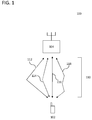
- base station 104 may transmit a wireless signal to User Equipment (UE) 102.
- UE User Equipment
- the wireless signal may be directly transmitted to UE 102 over multipath channel 116, which may be substantially straight.
- multipath propagation present in the wireless channel may result in UE 102 receiving the wireless signal over one or more additional paths.
- the wireless signal transmitted by base station 104 may reflect off of terrestrial objects, such as e.g.
- UE 102 may receive multiple reflected versions of the wireless signal in addition to receiving the wireless signal over direct multipath 116.
- UE 102 may receive three additional versions of the wireless signal (e.g. multipaths) over multipath channels 112, 114, and 118.
- multipath channels 112 - 118 As the overall distance the wireless signal traveled will vary with each of multipath channels 112 - 118, UE 102 will receive the multiple versions of the wireless signals at different times.
- the signal strength of each of the versions of the received wireless signal will vary with each of multipath channels 112 - 118, e.g. to the unique channel gain of each of multipath channels 112 - 118.
- z m is defined in relation to Equation 3 as independent zero-mean complex Gaussian distributed noise z m ⁇ CN (0, ⁇ -1 ), where ⁇ is the noise precision (i.e. the inverse of the variance of the noise).
- the receiver noise z m may thus be estimated using the same noise precision value ⁇ for all of the K multipath components.
- the multipath delay components ⁇ k in Equation 3 are in the continuous time domain, and accordingly may be any value ranging from [0; T CP ] (as the cyclic prefix T CP is conventionally selected to be greater than the largest possible multipath delay spread).
- i 0, ... P - 1 ⁇ , where P is the number of total points in the grid and ⁇ t is the grid spacing (or grid resolution) defining the distance between each of the points.
- Sparse channel estimators attempt to determine a sparse vector w of weights with P total elements, i.e. a vector w containing a small number of non-zero elements, where each weight corresponds to the respective multipath gain of one of the multipath channels.
- P » K the majority of elements in w are expected to be zero, where the number of non-zero elements in the determined sparse vector w represents the estimated total number of multipath components.
- the values of each of the non-zero elements of w are an estimated channel gain for one of the multipath components, where the index of each non-zero element in the vector w gives estimated multipath component delay.
- the remaining zero-valued elements of w each corresponding to the remaining indices in w are thus assumed to not be multipath components, and thus there is assumed to be no multipath component with a multipath delay corresponding to the remaining indices.
- Each of the i columns of ⁇ is therefore associated with one of the discretized delay grid points defined by i ⁇ ⁇ t , and consequently any solutions will be based on the discretized delay space.
- the use of a discrete delay space in this manner may result in model mismatch between the obtained channel impulse response estimate (defined by the multipath delay components, weights, and noise precision) and the actual channel impulse response. It is therefore desirable to estimate the multipath delays using a continuous delay space in order to obtain more accurate estimates for each multipath delay component.
- the multipath delay corresponding to each of the L multipath components may be "normalized" by scaling the delay domain by the constant term ⁇ 2 ⁇ NT s .
- the i th column of the dictionary matrix ⁇ ( ⁇ ), where 1 ⁇ i ⁇ L, is the vector-valued function ⁇ ( ⁇ i ) ( e jm ⁇ i
- the proposed observation model now contains continuous-delay dictionary matrix ⁇ ( ⁇ ) to be similarly estimated.
- the conventional SBL channel estimators operate by performing iterative updates of each of the weights w and noise precision estimate ⁇ until a suitable sparse vector w is obtained, and accordingly calculates the number of multipath components based on the number of non-zero elements in w . Each of the respective multipath delays may then be determined by the respective index of each non-zero element in w .
- the modified channel estimator may perform similar updates of the weight and noise precision estimates in addition to an added procedure for updating the delay estimates ⁇ i of the dictionary matrix ⁇ ( ⁇ ).
- the delay estimates ⁇ i may not be limited to a discretized grid, and therefore may be able to take any value in the continuous interval [0; T CP ].
- the delay estimates ⁇ i may also be updated according to an iterative process in which the columns of the dictionary are refined (i.e. updated) during each iteration.
- the dictionary matrix ⁇ ( ⁇ ) may thus be considered “dynamic” as opposed to the traditional SBL approach with a “static” dictionary (i.e. "fixed” according to the delay grid).
- the CIR estimator may be similarly based on the Bayesian approach to estimate the delay ⁇ and weight w for each of the L multipath components using observations y m , m ⁇ M (i.e. observations derived from a received OFDM pilot symbol).
- the CIR estimator may simultaneously estimate the noise precision ⁇ in order to characterize the receiver noise (as zero-mean complex Gaussian noise with precision ⁇ as previously detailed) for all multipath components in the model.
- L ⁇ K the number of multipath components in the observation model may be greater than the number of actual multipath components. Consequently, the model order estimate (i.e. number of estimated multipath components of the model) is the number of non-zero coordinates of w .
- the joint posterior PDF of w , ⁇ , ⁇ , and ⁇ may jointly provide the PDF of w , ⁇ , ⁇ , and ⁇ based on (i.e. conditioned on) the received observations y and is defined as: p ⁇ , w , ⁇ , ⁇
- ⁇ , w , ⁇ p ⁇ ⁇ i 1 L p ⁇ i p i
- Equation 7 the likelihood function is p ( y
- ⁇ , w , ⁇ ) p CN ( y ; ⁇ ( ⁇ )w, ⁇ -1 I ), where I denotes the identity matrix.
- the SBL channel estimator may thus try to find an expected value for each of channel parameters w , ⁇ , ⁇ , and ⁇ based on the received observations y ,.
- determining the expected value of each parameter from the join posterior PDF of Equation 8 may be computationally intensive, and a more approachable implementation may be desired.
- the SBL channel estimator may calculate a surrogate PDF q ( ⁇ , w , ⁇ , ⁇ ) which is an approximation of joint posterior PDF p ( ⁇ , w , ⁇ , ⁇
- Surrogate PDF q ( ⁇ , w , ⁇ , ⁇ ) may be a factorized approximation of joint posterior PDF p ( ⁇ , w , ⁇ , ⁇
- the estimated channel impulse response may be modeled according to the factors expected value of each q ( w ), q ( ⁇ ), q ( ⁇ i ), and q( ⁇ i ) of surrogate PDF q ( ⁇ , w, ⁇ , ⁇ ).
- the channel impulse response may be characterized according to delays ⁇ , weights w , and noise precision ⁇ , where the delays ⁇ and weights w are vectors containing a delay ⁇ i and weight w i corresponding to the delay and weight of the i th multipath component of the model.
- the estimated channel impulse response may be similarly characterized based on the estimated channel parameters ⁇ , w , and ⁇ , where each of estimated channel parameters ⁇ i , ⁇ , and ⁇ may be calculated by determining the expected value of each of beliefs q ( w ), q ( ⁇ ), and q ( ⁇ i ) from surrogate PDF q ( ⁇ , w , ⁇ , ⁇ ).
- the SBL channel estimator may then estimate the joint posterior PDF p ( ⁇ , w , ⁇ , ⁇
- a surrogate PDF q ( ⁇ , w , ⁇ , ⁇ ) may be introduced in order to approximate the joint posterior PDF p ( ⁇ , w, ⁇ , ⁇
- Each of estimated channel parameters ⁇ , ⁇ , and ⁇ may thus be obtained based on surrogate PDF q ( ⁇ , w , ⁇ , ⁇ ).
- the calculation of each of estimated channel parameters ⁇ , ⁇ , and ⁇ may depend on the other estimated channel parameters, and consequently the calculation of each of estimated channel parameters ⁇ , ⁇ , and ⁇ may be done in an iterative fashion. For example, one of estimated channel parameters ⁇ , ⁇ , and ⁇ may be selected to be updated. The remaining channel parameters may then be utilized in order to perform the appropriate update of the selected estimated channel parameter. Following completion of the update, another of estimated channel parameters ⁇ , ⁇ , and ⁇ may be updated using the newly updated originally selected estimated channel parameter.
- Estimated gain precisions ⁇ i may additionally depend on the other estimated channel parameters ⁇ , ⁇ , and ⁇ , and conseqeuntly estimated gain precisions ⁇ i may also be updated as part of the same iterative process. Estimated gain precisions ⁇ i may thus also be considered as one of the estimated channel parameters along with ⁇ , ⁇ , and ⁇ .
- each of estimated channel parameters ⁇ , ⁇ , ⁇ , and ⁇ may be held constant in time and provided for the update of the estimated channel parameter currently being updated.
- Each of estimated channel parameters ⁇ , ⁇ , ⁇ , and ⁇ may therefore be updated using the remaining estimated channel parameters and the received observations y based on a predetermined criteria that will minimize the KL divergence between surrogate PDF q ( ⁇ , w , ⁇ , ⁇ ) and joint posterior PDF p ( ⁇ , w , ⁇ , ⁇
- an expected value for each of estimated channel parameters ⁇ , ⁇ , ⁇ , and ⁇ may be calculated based on the other estimated channel parameters and observations y that will minimize the KL divergence between surrogate PDF q ( ⁇ , w , ⁇ , ⁇ ) and joint posterior PDF p ( ⁇ , w , ⁇ , ⁇
- the provided CIR estimator performs updates of the multipath delay estimates ⁇ for each multipath component in addition to the conventional weight and noise precision updates.
- y ) is given as the following proportion: q ⁇ i ⁇ p ⁇ i ⁇ m ⁇ M p VM m ⁇ i ⁇ i , m ⁇ i , m where p VM ( ⁇ ; ⁇ , ⁇ ) denotes a von Mises PD with mean direction ⁇ and concentration parameter ⁇ .
- Equation 10 thus gives the form of the delay belief q ( ⁇ i ) that will minimize the KL divergence between surrogate PDF q ( ⁇ , w , ⁇ , ⁇ ) and joint posterior PDF p ( ⁇ , w , ⁇ , ⁇
- p VM m ⁇ i ⁇ i , m ⁇ i , m ⁇ 1 m ⁇ r 0 m ⁇ 1 p VM ⁇ i ⁇ i , m + 2 r ⁇ m ⁇ ⁇ i , m
- the von Mises mixture approximation may be progressively built by multiplying the mixtures corresponding to the first two indices in M and truncating the resulting mixture to the D dominant components with means in ⁇ 2 ⁇ T CP NT s ; 0 .
- the current mixture may be multiplied with the mixture corresponding to the third index in M followed by similarly truncating the outcome.
- the process may be repeated by sweeping through all indices in M .
- the outcome of this sequential procedure is a mixture of D von Mises PDFs representing belief an approximation of delay belief q ( ⁇ i ) as satisfying Equation 10.
- the estimated weights w , noise precision ⁇ , and gain precision hyper-parameters ⁇ i may also be iteratively updated.
- One of the estimated channel parameters ⁇ , w , ⁇ , and ⁇ may thus be updated while holding the remaining estimated channel parameters fixed.
- weight estimates w may be updated according to a predefined criteria for weight belief q ( w ) that minimizes the KL divergence between surrogate PDF q ( ⁇ , w , ⁇ , ⁇ ) and joint posterior PDF p ( ⁇ , w , ⁇ , ⁇
- the expectation ⁇ ⁇ w ⁇ q ( w ) may be computed as the mean of the resulting Gaussian PDF, wherein the expectation w depends on the estimated precision hyper-parameter vector ⁇ , noise precision estimate ⁇ , delay estimates ⁇ , and observations y .
- Each of the current values for each estimated channel parameter may thus be used to calculate weight estimate w
- the noise precision estimate ⁇ may also be calculated by determining the expected value of the noise precision belief q ( ⁇ ) that minimizes the KL divergence between surrogate PDF q ( ⁇ , ⁇ , ⁇ , ⁇ ) and joint posterior PDF p ( ⁇ , w , ⁇ , ⁇
- the gain precision hyperparameter estimate ⁇ i may also be iteratively updated, and utilized to determine the appropriate weight estimate ⁇ .
- 2 + [ C ] i,i + b ). Accordingly, the mean may be taken as expectation ⁇ i ⁇ i ⁇ q ( y i ) .
- Each of the estimated channel parameters ⁇ , w , ⁇ , and ⁇ may therefore be updated according to the above-described process. This may be performed as an iterative process, where one of the beliefs is updated while holding the remaining elements fixed.
- the update during each iteration for each belief may be obtained by minimizing the KL divergence of p ( ⁇ , w , ⁇ , ⁇
- a specific criteria for each belief q ( w ), q ( ⁇ ), q ( ⁇ i ), and q ( ⁇ i ) that minimizes the KL divergence may be used to calculate the updated value for each estimated channel parameter ⁇ , ⁇ i , ⁇ , and ⁇ i .
- the iterative update process may be performed a certain number of times, or until a predetermined termination criteria is reached.
- the estimated channel parameters may then be utilized to characterize the channel impulse response of the wireless channel which the OFDM symbols were received over.
- the estimated channel parameters ⁇ , ⁇ , and ⁇ may be utilized to characterize the channel impulse reponse in terms of a multipath channel, where the number of non-zero elements of w indicates the total number of multipath components, the values of the non-zero elements of w denotes the channel gain of the multipath component, and the respective element in ⁇ identifies the multipath delay of the multipath component.
- the noise precision estimate ⁇ provides the precision parameter used to model the receiver noise as zero-mean complex Gaussian noise. An accurate channel impulse response may thus be obtained.
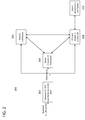
- the received OFDM pilot symbol may be initially processed at pre-processing block 202 , where the cyclic prefix may be removed from the symbol. Demodulation of the OFDM pilot symbol may then proceed in calculating a Discrete Fourier Transform of the pilot symbol as is well-known for OFDM receivers. The received pilot symbol may then be divided by a pre-defined (i.e. previously known/defined by the network) OFDM pilot symbol corresponding to the received pilot symbol in order to arrive further isolate the wireless channel effects on the OFDM pilot symbol during transmission.
- a pre-defined i.e. previously known/defined by the network
- the resulting symbol y may thus be treated as an observation of the observation model used to estimate the channel impulse response.
- a plurality of pilot symbols may be received and processed to obtain a plurality of observations included in the observation vector y .
- the resulting observation vector y may then be utilized according to the above-detailed processes in order to iteratively update each of estimated channel parameters ⁇ , w , ⁇ , and ⁇ based on the respective beliefs q ( w ), q ( ⁇ ), q ( ⁇ i ), and q ( ⁇ i ) of surrogate PDF q ( ⁇ , w, ⁇ , ⁇ ).
- the observations y may be provided to each of noise precision ⁇ estimation block 204 , delay ⁇ estimation block 206 , and channel weight y estimation block 208 .
- Each of estimation blocks 204 - 208 may then calculate the estimated channel parameter ⁇ , w , and ⁇ corresponding to the respective element ⁇ , w , or ⁇ based on the received observations y as well as the current values of the remaining estimated channel parameters ⁇ , w , and ⁇ .
- Each of estimation blocks 204 - 208 may thus be configured to provide each of the other estimation blocks with the current value of estimated channel parameters ⁇ , w , or ⁇ .
- Prior distributions for each of the channel parameters ⁇ , w , ⁇ , and ⁇ may be defined and utilized to define a joint posterior PDF p ( ⁇ , w , ⁇ , ⁇
- This joint posterior PDF may form the basis of the estimation process.
- a surrogate PDF q ( ⁇ , w , ⁇ , ⁇ ) may be introduced as an approximation to p ( ⁇ , w , ⁇ , ⁇
- the surrogate PDF q ( ⁇ , w , ⁇ , ⁇ ) may be factorized with the marginal posterior PDFs q ( w ), q ( ⁇ ), q ( ⁇ i ), and q ( ⁇ i ) as factors, and may thus offer reduced computational complexity in performing the requisite estimates when compared to operating on p ( ⁇ , w , ⁇ , ⁇
- the estimates for each of delays ⁇ , weights w , noise precision ⁇ , and hyper-parameters ⁇ may then be computed by calculating expected values of the beliefs q ( w ), q ( ⁇ ), q ( ⁇ i ), and q ( ⁇ i ) of surrogate PDF q ( ⁇ , w , ⁇ , ⁇ ). This maybe performed as an iterative process.
- the estimates for each element ⁇ i , ⁇ , ⁇ , and ⁇ i may then be obtained based on the calculation of the expectation of each belief.
- each iterative update of the estimated channel parameters ⁇ , w, ⁇ , and ⁇ may be performed by minimizing the KL divergence between q ( ⁇ , w , ⁇ , ⁇ ) and p ( ⁇ , w , ⁇ , ⁇
- the iterative estimation algorithm may thus yield updated beliefs q ( w ), q ( ⁇ ), q ( ⁇ i ), and q ( ⁇ i ), from which estimates ⁇ i , ⁇ , ⁇ , and ⁇ i for each of the delays ⁇ , weights w , and noise precisions ⁇ may be obtained based on expected values of each of the beliefs.
- the resulting estimates may be used estimate the channel impulse response of the analyzed wireless channel.
- the model accuracy may be improved through the estimation of the delay values ⁇ using a continuous delay space instead of the existing discretized grid models.
- an additional component may record and determine observations y , which may each be e.g. a received OFDM symbol divided by a corresponding predefined OFDM symbol at the receiver, such as detailed in Equation 6.
- the resulting observations y may be stored in observation memory 302 for further use in offline processing.
- Channel estimation processing circuit 300 may be configured to obtain a channel impulse response estimation by determining estimates for weights w , delays ⁇ , and noise precisions ⁇ associated with the channel model. Accordingly, noise precision ⁇ estimation circuit 304, delay ⁇ estimation circuit 306, channel weight w estimation circuit 308, and hyper-parameter ⁇ estimation circuit 310 may be configured with functionality corresponding to each of noise precision ⁇ estimation block 204, delay ⁇ estimation block 206 , channel weight w estimation block 208, and hyper-parameter y estimation block 210 of FIG. 2 , respectively.
- each of noise precision ⁇ estimation circuit 304, delay ⁇ estimation circuit 306, and channel weight w estimation circuit 308 may contain an updated value of each of their respective estimated channel parameters.
- Noise precision ⁇ estimation circuit 304, delay ⁇ estimation circuit 306, and channel weight w estimation circuit 308 may then provide the final parameter estimates ⁇ i , ⁇ , and ⁇ ,based on the updated beliefs to CIR modeling circuit 312, which may be e.g. a memory configured to hold the parameter estimates associated with the channel.
- CIR modeling circuit 312 may thus contain the requisite information to perform channel replay such as e.g. in later VDT simulations.
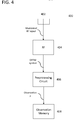
- OFDM receiver 400 may receive wireless radio frequency signals over antenna 402.
- Antenna 402 may be implemented as either a single antenna or an antenna array, such as e.g. for use in Multiple Input Multiple Output (MIMO) communications.
- Antenna 402 may receive wireless radio frequency signals and provide resulting electrical radio frequency signals to RF receiver 404.
- RF receiver 400 may digitize and demodulate the received radio frequency signals to obtain one or more baseband OFDM symbols.
- RF receiver 404 may then provide the OFDM symbols to preprocessing circuit 406.
- Preprocessing circuit 406 may then remove the cyclic prefix from the received OFDM symbols, perform a Discrete Fourier Transform (e.g. in order to complete the demodulation process associated with OFDM reception), and divide the resulting symbol by a corresponding predefined OFDM pilot symbol.
- the functionality of preprocessing circuit 406 may thus be substantially similar to preprocessing block 202 of block diagram 200. Preprocessing circuit 406 may thus therefore produce observations y for use by channel estimation processing circuit 300.
- the resulting channel impulse response estimates may then be used in a variety of applications, including the aforementioned Virtual Drive Testing scenarios.
- VDT implementations may constitute offline processing, where the observation vector y is determined based on OFDM pilot symbols recorded during field drive tests.
- the obtained observation vector may then be evaluated according to the above-described channel estimation methods in order to arrive at an estimated channel impulse response.
- the resulting channel impulse response may then be used for channel replay, such as in an anechoic OTA testing chamber used to simulate wireless networks.
- the simulations may be utilized in order to perform testing on various wireless equipment that may otherwise require field testing.
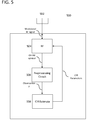
- FIG. 5 shows mobile terminal 500, which includes antenna 502, RF transceiver 504, preprocessing circuit 506, and CIR estimation circuit 508.
- the aforementioned circuitry and hardware may be implemented as separate circuits, e.g. as separate integrated circuits, as illustrated in FIG. 5 . However, it is understood that some or all of the circuits may be implemented by a common programmable processor, such as e.g. a microprocessor. Accordingly, some or all of the functionality of the one or more of the aforementioned components may be consolidated into a single hardware component.
- channel estimation processing circuit 300 may include a number of additional components, including hardware, processors, memory, and other specialty or generic hardware/processors/circuits, etc., in order to support a variety of additional operations of wireless radio communications.
- Mobile terminal 500 may also include a variety of user input/output devices such as displays, keypads, touchscreens, speakers, external buttons, etc.
- RF transceiver 504 may be additionally configured to transmit radio frequency signals, such as e.g. by modulating baseband signals onto a radio frequency carrier signal and providing the resulting radio frequency signals to antenna 502 for wireless transmission.
- Mobile terminal 500 may thus perform wireless communications with other wireless communication devices using RF transceiver 504 and antenna 502.
- RF transceiver 504 may thus provide baseband OFDM symbols to preprocessing circuit.
- Preprocessing circuit 506 may then process the received OFDM symbols in order to produce observations for use in estimating the channel, by e.g. removing the cyclic prefix, performing a discrete Fourier transform, and dividing by a corresponding predefined OFDM pilot symbol.
- Preprocessing circuit 506 may thus produce observations y to CIR estimation circuit 508.
- CIR estimation circuit 508 may then compute an estimated channel impulse response based on the received observations y .
- CIR estimation circuit 508 may be configured similarly to channel estimation processing circuit 300, and may receive observations y from preprocessing circuit 506 as opposed to an observation memory. CIR estimation circuit 508 may then utilized the received observations y in order to estimate the channel impulse response of the wireless channel that the OFDM symbols were received over.
- CIR estimation circuit 508 may thus be iteratively update each of a noise precision estimate ⁇ , a plurality of delay estimates ⁇ , and a plurality of channel weight estimates ⁇ .
- CIR estimation circuit 508 may thus contain a noise precision estimation circuit, delay estimation circuit, and channel weight estimation circuit similar to noise precision ⁇ estimation circuit 304, delay ⁇ estimation circuit 306, channel weight w estimation circuit 308 of channel estimation processing circuit 300.
- CIR estimation circuit 508 may additionally include a hyper-parameter ⁇ estimation circuit, e.g. similar to hyper-parameter ⁇ estimation circuit 310. CIR estimation circuit 508 may utilize the hyper-parameter ⁇ estimation circuit in order to estimate a gain precision ⁇ for use in updating channel weight estimates ⁇ .
- the CIR estimation circuit 508 may thus generate an estimated channel impulse response.
- the estimated channel impulse response may include a plurality of multipath components, where each of the plurality of multipath components is associated with a channel weight estimate and a multipath delay estimate.
- the estimated channel response may further include a noise precision estimate, which may be used to estimate the noise present in the channel.
- CIR estimation circuit 508 may then provide the estimated channel impulse response to RF transceiver 504, e.g. in the form of the channel impulse response parameters: estimated channel gain values, estimated multipath delay values, and estimated noise precision.
- RF transceiver 504 may then utilize the estimated channel impulse response provided by CIR estimation circuit 508 to receive and/or transmit signals on the wireless channel. For example, RF transceiver 504 may receive further radio frequency signals over the wireless channel which the estimated channel impulse response is based on. RF transceiver 504 may process the received radio frequency signals according to the estimated channel impulse response, thereby effectively accounting for channel effects. RF transceiver 504 may obtain higher reception performance when using the estimated channel impulse response to receive wireless signals over the wireless channel.
- a separate component may be provided internal to mobile terminal 500 which CIR estimation circuit 508 may provide the estimated channel impulse response to.
- the separate component may be configured to perform processing on received signals, such as e.g. after being provided with received signals by RF transceiver 504.
- RF transceiver 504 may additionally use the estimated channel impulse response in order to perform transmission of signals. This may be particularly useful in a scenario with a duplexing scheme that offers channel reciprocity between the uplink and downlink channels, such as e.g. a Time Division Duplexing scheme.
- RF transceiver 504 may be provided with signals intended for uplink transmission, e.g. from another mobile communication processing component of mobile terminal 500 (not shown). RF transceiver 504 may then perform processing on the signals intended for uplink transmission before providing them to antenna 502. RF transceiver 504 may thus be able to preemptively compensate for wireless channel effects through the use of the estimated channel impulse response, thereby performing higher quality uplink transmissions.
- FIG. 7 shows a process 700 for processing a plurality of signals according to another exemplary aspect of the disclosure.
- process 700 may receive one or more observations characterizing a wireless channel.
- Process 700 may then numerically update a multipath delay estimate of an estimated channel impulse response of the wireless channel based on the one or more received observations, an estimated probabilistic distribution of the wireless channel, and a target probabilistic distribution of the wireless channel in 720.
- Process 700 may then process the plurality of signals using the estimated channel impulse response in 730.
- Process 700 may process the plurality of signals using the probabilistic channel model e.g. by artificially recreating the wireless channel using the an estimated channel impulse response for a Virtual Drive Test.
- process 600 may be implemented e.g. in a mobile terminal, and may be utilized to process incoming or outgoing communication signals in order to compensate for wireless channel effects.
- Example 2 the subject matter of Example 1 can optionally include wherein the probabilistic channel model is an estimated channel impulse response including the one or more multipath gain estimates and the one or more multipath delay estimates.
- the probabilistic channel model is an estimated channel impulse response including the one or more multipath gain estimates and the one or more multipath delay estimates.
- Example 3 the subject matter of Example 2 can optionally include wherein the estimated channel impulse response further includes a noise precision estimate, and wherein the processing the plurality of signals using the probabilistic channel model includes processing the plurality of signals using the estimated channel impulse response.
- Example 4 the subject matter of Example 3 can optionally include wherein the processing the plurality of signals using the estimated channel impulse response includes processing the plurality of signals using the one or more multipath gain estimates and the one or more multipath delay estimates of the estimated channel impulse response.
- Example 6 the subject matter of Example 3 can optionally include wherein the processing the plurality of signals using the estimated channel impulse response includes artificially recreating the wireless channel using the plurality of signals and the estimated channel impulse response during a Virtual Drive Test.
- Example 7 the subject matter of Example 3 can optionally include wherein the processing the plurality of signals using the estimated channel impulse response includes receiving the plurality of signals over the wireless channel; and processing the plurality of received signals using the estimated channel response.
- Example 9 the subject matter of Example 8 can optionally include wherein the channel estimation includes determining a new multipath component model; evaluating the new multipath component model based on the one or more received observations to generate an evaluation result; and adding the new multipath component model to the one or more multipath component models based on the evaluation result.
- Example 10 the subject matter of Example 8 can optionally include wherein each of the one or more multipath component models estimate a multipath propagation channel of the wireless channel according to the multipath gain estimate and multipath delay estimate associated with each of the one or more multipath component models.
- Example 11 the subject matter of Example 8 can optionally include wherein the processing the plurality of signals using the probabilistic channel model includes processing the plurality of signals using the one or more multipath gain estimates and the one or more multipath delay estimates of the estimated channel impulse response.
- Example 12 the subject matter of Example 2 can optionally include wherein the estimated channel impulse response further includes a noise precision estimate.
- Example 13 the subject matter of Example 12 can optionally include wherein the noise precision estimate is an estimate of the inverse of the variance of zero-mean complex Gaussian noise in the wireless channel.
- Example 15 the subject matter of Example 14 can optionally include wherein the numerically updating a noise precision estimate based on the one or more received observations and the probability distribution associated with the probabilistic channel model includes determining an expected value based on the probability distribution associated with the probabilistic channel model in order to update the noise precision estimate.
- Example 16 the subject matter of Example 14 can optionally include wherein the numerically updating the one or more multipath gain estimates based on the one or more received observations and a probability distribution associated with the probabilistic channel model includes determining an expected value based on the probability distribution associated with the probabilistic channel model in order to update the one or more multipath gain estimates.
- Example 17 the subject matter of Example 14 can optionally include wherein the numerically updating the one or more multipath delay estimates based on the one or more received observations and a probability distribution associated with the probabilistic channel model includes determining an expected value based on the probability distribution associated with the probabilistic channel model in order to update the one or more multipath delay estimates.
- Example 18 the subject matter of Example 14 can optionally include wherein the numerically updating the one or more multipath gain estimates, the one or more multipath delay estimates, and the noise precision estimate associated with the probabilistic channel model includes selecting the one or more multipath gain estimates, the one or more multipath delay estimates, or the noise precision estimate to be updated; and updating the selected estimates based on the remaining non-selected estimates.
- Example 19 the subject matter of Example 18 can optionally include wherein the updating the selected estimates based on the remaining non-selected estimates includes calculating an expected value of the selected estimates based on the remaining non-selected estimates.
- Example 21 the subject matter of Example 20 can optionally include wherein the estimated joint probability distribution is conditioned on the one or more received observations.
- Example 23 the subject matter of Example 22 can optionally include wherein the probabilistic divergence is a Kullback-Leibler divergence between the estimated joint probability distribution and a joint posterior probability distribution associated with the wireless channel.
- the probabilistic divergence is a Kullback-Leibler divergence between the estimated joint probability distribution and a joint posterior probability distribution associated with the wireless channel.
- Example 25 the subject matter of Example 24 can optionally include wherein the numerically updating the one or more multipath delay estimates further includes calculating the expected value of a mixture of probability distributions to generate a multipath delay estimate of the one or more multipath delay estimates.
- Example 26 the subject matter of Example 25 can optionally include wherein the calculating the expected value of a mixture of probability distributions to generate a multipath delay estimate of the one or more multipath delay estimates is based on the one or more multipath gain estimates and the noise precision estimate.
- Example 27 the subject matter of Example 25 can optionally include wherein the mixture of probability distributions are a mixture of von Mises probability distributions, and wherein the numerically updating the one or more multipath delay estimates further includes calculating the mixture of von Mises probability distributions to approximate the product of a plurality of wrapped von Mises probability distributions.
- Example 28 the subject matter of Example 1 can optionally include wherein the numerically updating one or more multipath delay estimates associated with the probabilistic channel model based on the one or more received observations and a probability distribution associated with the probabilistic channel model includes calculating the expected value of a mixture of probability distributions to generate a multipath delay estimate of the one or more multipath delay estimates.
- Example 29 the subject matter of Example 28 can optionally include wherein the calculating the expected value of a mixture of probability distributions to generate a multipath delay estimate of the one or more multipath delay estimates is based on the one or more multipath gain estimates and the noise precision estimate.
- Example 30 the subject matter of Example 28 can optionally include wherein the mixture of probability distributions are a mixture of von Mises probability distributions, and wherein the numerically updating the one or more multipath delay estimates further includes calculating the mixture of von Mises probability distributions to approximate the product of a plurality of wrapped von Mises probability distributions.
- Example 31 the subject matter of Example 1 can optionally include wherein the numerically updating one or more multipath gain estimates associated with the probabilistic channel model based on the one or more received observations and a probability distribution associated with the probabilistic channel model includes numerically updating the one or more multipath gain estimates based on the one or more received observations, a probability distribution associated with the probabilistic channel model, and one or more estimated gain precisions.
- Example 33 the subject matter of Example 31 can optionally include wherein the numerically updating the one or more multipath gain estimates based on the one or more received observations, a probability distribution associated with the probabilistic channel model, and one or more estimated gain precisions includes calculating an expected value based on the probability distribution associated with the probabilistic channel model in order to numerically update the one or more multipath gain estimates.
- Example 34 the subject matter of Example 1 can optionally include wherein the one or more observations are based on one or more pilot symbols received over the wireless channel.
- Example 35 the subject matter of Example 34 can optionally include wherein the one or more pilot symbols are OFDM pilot symbols.
- Example 36 the subject matter of Example 1 can optionally include processing a plurality of pilot symbols received over the wireless channel to generate the one or more observations.
- Example 37 the subject matter of Example 36 can optionally include wherein the processing a plurality of pilot symbols includes performing cyclic prefix removal; performing a discrete Fourier transform; and dividing each of the plurality of pilot symbols by a predefined respective pilot symbol.
- Example 38 the subject matter of Example 1 can optionally include wherein the numerically updating one or more multipath gain estimates and one or more multipath delay estimates associated with the probabilistic channel model includes iteratively updating the multipath gain estimates and the multipath delay estimates associated with the probabilistic channel model until a termination criterion is reached.
- Example 39 the subject matter of Example 38 can optionally include wherein the termination criterion is a threshold number of iterations.
- Example 40 the subject matter of Example 38 can optionally include wherein the channel estimation further includes numerically updating a noise precision estimate associated with the probabilistic channel model based on the one or more received observations and a probability distribution associated with the probabilistic channel; and determining the relative change in the noise precision estimate over one or more numerical updates of the noise precision estimate; and wherein the termination criterion is a relative change threshold of the noise precision estimate.
- Example 41 is a signal processing device.
- the signal processing device includes a multipath gain estimation circuit configured to numerically update one or more multipath gain estimates of a probabilistic channel model of a wireless channel based on one or more received observations characterizing the wireless channel and a probability distribution associated with the probabilistic channel model; a multipath delay estimation circuit configured to numerically update one or more multipath delay estimates based on the one or more received observations characterizing the wireless channel and the probability distribution associated with the probabilistic channel model; and a signal processing circuit configured to process a plurality of signals using the probabilistic channel model.
- Example 42 the subject matter of Example 41 can optionally include wherein the probabilistic channel model is an estimated channel impulse response includes the one or more multipath gain estimates and the one or more multipath delay estimates.
- Example 43 the subject matter of Example 42 can optionally include wherein the estimated channel impulse response further includes a noise precision estimate, and wherein the signal processing circuit is configured to process a plurality of signals using the probabilistic channel model by processing the plurality of signals using the estimated channel impulse response.
- Example 44 the subject matter of Example 43 can optionally include wherein the signal processing circuit is configured to process the plurality of signals using the estimated channel impulse response by processing the plurality of signals using the one or more multipath gain estimates and the one or more multipath delay estimates of the estimated channel impulse response.
- Example 45 the subject matter of Example 43 can optionally include a noise precision estimation circuit configured to estimate a noise precision estimate, wherein the estimate channel impulse response further includes the noise precision estimate, and wherein the signal processing circuit is configured to process the plurality of signals using the estimated channel impulse response by processing the plurality of signals using the one or more multipath gain estimates, the one or more multipath delay estimates of the estimated channel impulse response, and the noise precision estimate.
- a noise precision estimation circuit configured to estimate a noise precision estimate
- the estimate channel impulse response further includes the noise precision estimate
- the signal processing circuit is configured to process the plurality of signals using the estimated channel impulse response by processing the plurality of signals using the one or more multipath gain estimates, the one or more multipath delay estimates of the estimated channel impulse response, and the noise precision estimate.
- Example 46 the subject matter of Example 43 can optionally include wherein the signal processing circuit is configured to process the plurality of signals using the estimated channel impulse response by artificially recreating the wireless channel using the plurality of signals and the estimated channel impulse response during a Virtual Drive Test.
- Example 47 the subject matter of Example 43 can optionally include a receiver configured to receive the plurality of signals over the wireless channel; and wherein the signal processing circuit is configured to process the plurality of signals using the estimated channel impulse response by processing the plurality of received signals using the estimated channel response.
- Example 48 the subject matter of Example 42 can optionally include wherein the estimated channel impulse response includes one or more multipath component models, and wherein each of the one or more multipath gain estimates and each of the multipath delay estimates are associated with a respective multipath component model of the one or more multipath component models.
- Example 49 the subject matter of Example 48 can optionally include a channel model control circuit configured to determine a new multipath component model including a multipath gain estimate and a multipath delay estimate; evaluate the new multipath component model based on the one or more received observations to generate an evaluation result; and add the new multipath component model to the one or more multipath component models based on the evaluation result.
- a channel model control circuit configured to determine a new multipath component model including a multipath gain estimate and a multipath delay estimate; evaluate the new multipath component model based on the one or more received observations to generate an evaluation result; and add the new multipath component model to the one or more multipath component models based on the evaluation result.
- Example 50 the subject matter of Example 48 can optionally include wherein each of the one or more multipath component models estimate a multipath propagation channel of the wireless channel according to the multipath gain estimate and multipath delay estimate associated with each of the one or more multipath component models.
- Example 52 the subject matter of Example 42 can optionally include wherein the estimated channel impulse response further includes a noise precision estimate.
- Example 53 the subject matter of Example 42 can optionally include wherein the noise precision estimate is an estimate of the inverse of the variance of zero-mean complex Gaussian noise in the wireless channel.
- Example 54 the subject matter of Example 41 can optionally include a noise precision estimation circuit configured to numerically update a noise precision estimate based on the one or more received observations and the probability distribution associated with the probabilistic channel model.
- a noise precision estimation circuit configured to numerically update a noise precision estimate based on the one or more received observations and the probability distribution associated with the probabilistic channel model.
- Example 55 the subject matter of Example 54 can optionally include wherein the noise precision estimation circuit is configured to numerically update the noise precision estimate by determining an expected value based on the probability distribution associated with the probabilistic channel model in order to update the noise precision estimate.
- Example 56 the subject matter of Example 54 can optionally include wherein the multipath gain estimation circuit is configured to numerically update the one or more multipath gain estimates by determining an expected value based on the probability distribution associated with the probabilistic channel model in order to update the one or more multipath gain estimates.
- Example 57 the subject matter of Example 54 can optionally include wherein the multipath delay estimation circuit is configured to numerically update the one or more multipath delay estimates by determining an expected value based on the probability distribution associated with the probabilistic channel model in order to update the one or more multipath delay estimates.
- Example 61 the subject matter of Example 60 can optionally include wherein the estimated joint probability distribution is conditioned on the one or more received observations.
- Example 62 the subject matter of Example 60 can optionally include wherein the multipath gain estimation circuit is configured to numerically update the one or more multipath gain estimates by numerically updating the one or more multipath gain estimates based on minimizing a probabilistic divergence between the estimated joint probability distribution and a joint posterior probability distribution associated with the wireless channel.
- the multipath gain estimation circuit is configured to numerically update the one or more multipath gain estimates by numerically updating the one or more multipath gain estimates based on minimizing a probabilistic divergence between the estimated joint probability distribution and a joint posterior probability distribution associated with the wireless channel.
- Example 63 the subject matter of Example 62 can optionally include wherein the probabilistic divergence is a Kullback-Leibler divergence between the estimated joint probability distribution and a joint posterior probability distribution associated with the wireless channel.
- the probabilistic divergence is a Kullback-Leibler divergence between the estimated joint probability distribution and a joint posterior probability distribution associated with the wireless channel.
- Example 64 the subject matter of Example 60 can optionally include wherein the multipath delay estimation circuit is configured to numerically update the one or more multipath delay estimates by numerically updating the one or more multipath delay estimates based on minimizing a probabilistic divergence between the estimated joint probability distribution and a joint posterior probability distribution associated with the wireless channel.
- Example 66 the subject matter of Example 65 can optionally include wherein the calculating the expected value of a mixture of probability distributions to generate a multipath delay estimate of the one or more multipath delay estimates is based on the one or more multipath gain estimates and the noise precision estimate.
- Example 67 the subject matter of Example 65 can optionally include wherein the mixture of probability distributions are a mixture of von Mises probability distributions, and wherein the multipath delay estimation circuit is further configured to numerically update the one or more multipath delay estimates by calculating the mixture of von Mises probability distributions to approximate the product of a plurality of wrapped von Mises probability distributions.
- Example 68 the subject matter of Example 41 can optionally include wherein the multipath delay estimation circuit is configured to numerically update the one or more multipath delay estimates by calculating the expected value of a mixture of probability distributions to generate a multipath delay estimate of the one or more multipath delay estimates.
- Example 69 the subject matter of Example 68 can optionally include wherein the multipath delay estimation circuit is configured to calculate the expected value of a mixture of probability distributions to generate a multipath delay estimate of the one or more multipath delay estimates based on the one or more multipath gain estimates and the noise precision estimate.
- the multipath delay estimation circuit is configured to calculate the expected value of a mixture of probability distributions to generate a multipath delay estimate of the one or more multipath delay estimates based on the one or more multipath gain estimates and the noise precision estimate.
- Example 70 the subject matter of Example 68 can optionally include wherein the mixture of probability distributions are a mixture of von Mises probability distributions, and wherein the multipath delay estimation circuit is configured to numerically update the one or more multipath delay estimates by calculating the mixture of von Mises probability distributions to approximate the product of a plurality of wrapped von Mises probability distributions.
- Example 72 the subject matter of Example 71 can optionally incude a gain precision estimation circuit configured to numerically update the estimated gain precision based on the probability distribution associated with the probabilistic channel mode and the one or more multipath gain estimates.
- Example 73 the subject matter of Example 71 can optionally include wherein the multipath gain estimation circuit is configured to numerically update the one or more multipath gain estimates by calculating an expected value based on the probability distribution associated with the probabilistic channel model in order to numerically update the one or more multipath gain estimates.
- Example 74 the subject matter of Example 41 can optionally include wherein the one or more observations are based on one or more pilot symbols received over the wireless channel.
- Example 75 the subject matter of Example 74 can optionally include wherein the one or more pilot symbols are OFDM pilot symbols.
- Example 76 the subject matter of Example 75 can optionally include a receiver configured to receive the plurality of pilot symbols over the wireless channel; and a preprocessing circuit configured to process the received plurality of pilot symbols to generate the one or more observations.
- Example 78 the subject matter of Example 41 can optionally include wherein the multipath gain estimation circuit and multipath delay estimation circuit are configured to numerically update the one or more multipath gain estimates and the one or more multipath delay estimates by iteratively updating the multipath gain estimates and the multipath delay estimates until a termination criterion is reached.
- Example 80 the subject matter of Example 78 can optionally include a noise precision estimation circuit configured to numerically update a noise precision estimate associated with the probabilistic channel model based on the one or more received observations and a probability distribution associated with the probabilistic channel; and a channel model control circuit configured to determine the relative change in the noise precision estimate over one or more numerical updates of the noise precision estimate, and wherein the termination criterion is a relative change threshold of the noise precision estimate.
- a noise precision estimation circuit configured to numerically update a noise precision estimate associated with the probabilistic channel model based on the one or more received observations and a probability distribution associated with the probabilistic channel
- a channel model control circuit configured to determine the relative change in the noise precision estimate over one or more numerical updates of the noise precision estimate, and wherein the termination criterion is a relative change threshold of the noise precision estimate.
- Example 81 is a method for processing a plurality of signals.
- the method includes receiving one or more observations characterizing a wireless channel; updating a multipath delay estimate of an estimated channel impulse response of the wireless channel based on the one or more received observations, an estimated probabilistic distribution of the wireless channel, and a target probabilistic distribution of the wireless channel; and processing the plurality of signals using the estimated channel impulse response.
- Example 82 the subject matter of Example 81 can optionally include wherein the numerically updating a multipath delay estimate of an estimated channel impulse response numerically updating the multipath delay estimate based on a probabilistic divergence between the estimated probabilistic distribution and the target probabilistic distribution.
- Example 83 the subject matter of Example 82 can optionally include wherein the probabilistic divergence is a Kullback-Leibler divergence between the estimated joint probability distribution and a joint posterior probability distribution associated with the wireless channel.
- the probabilistic divergence is a Kullback-Leibler divergence between the estimated joint probability distribution and a joint posterior probability distribution associated with the wireless channel.
- Example 85 the subject matter of Example 82 can optionally include wherein the numerically updating a multipath delay estimate calculating an expected value of the multipath delay estimate, numerically updating the multipath delay estimate to be the expected value of the multipath delay estimate.
- Example 86 the subject matter of Example 85 can optionally include wherein the calculating an expected value of the multipath delay estimate calculating the expected value of a mixture of von Mises probabilistic distributions.
- Example 87 the subject matter of Example 86 can optionally include wherein the calculating an expected value of the multipath delay estimate further includes calculating the mixture of von Mises probabilistic distributions to approximate of the product of a plurality of wrapped von Mises probabilistic distributions.
- Example 88 the subject matter of Example 81 can optionally include wherein the estimated channel impulse response includes one or more multipath delay estimates, one or more multipath gain estimates, and a noise precision estimate, and wherein the one or more multipath delay estimates includes the multipath delay estimate.
- Example 89 the subject matter of Example 88 can optionally include wherein the numerically updating the multipath delay estimate calculating an updated delay estimate as the multipath delay estimate based on the one or more received observations, the one or more multipath gain estimates, and the noise precision estimate.
- Example 90 the subject matter of Example 89 can optionally include wherein the calculating an updated delay estimate as the multipath delay estimate includes calculating an updated delay estimate as the multipath delay estimate based on the one or more received observations, the one or more multipath gain estimates, and the noise precision estimate in order to minimize the probabilistic divergence between the estimated probabilistic distribution and the target probabilistic distribution.
- Example 91 the subject matter of Example 90 can optionally include wherein the calculating an updated delay estimate as the multipath delay estimate includes calculating an expected value of a multipath delay probabilistic distribution as the updated delay estimate, and further including setting the multipath delay estimate as the updated delay estimate.
- Example 92 the subject matter of Example 91 can optionally include wherein the estimated probabilistic distribution includes the multipath delay probabilistic distribution.
- Example 93 the subject matter of Example 88 can optionally include numerically updating the one or more multipath gain estimates and the one noise precision estimate based on the one or more received observations, the estimated probabilistic distribution, and the target probabilistic distribution.
- Example 94 the subject matter of Example 93 can optionally include wherein the numerically updating the one or more multipath gain estimates and the one noise precision estimate includes numerically updating the one or more multipath gain estimates and the one noise precision estimate in order to minimize the probabilistic divergence between the estimated probabilistic destitution and the target probabilistic distribution.
- Example 95 the subject matter of Example 93 can optionally include wherein the numerically updating the one or more multipath gain estimates and the one noise precision estimate based on the one or more received observations, the estimated probabilistic distribution, and the target probabilistic distribution includes numerically updating the one or more multipath gain estimates and the one noise precision estimate based on the one or more received observations, the estimated probabilistic distribution, the target probabilistic distribution, and the one or more multipath delay estimates.
- Example 96 the subject matter of Example 93 can optionally include numerically updating one or more gain precision estimates, and wherein the numerically updating the one or more multipath gain estimates further includes numerically updating the one or more multipath gain estimates based on the one or more gain precision estimates.
- Example 97 the subject matter of Example 81 can optionally include wherein the estimated probabilistic distribution is an approximation of the target probabilistic distribution.
- Example 98 the subject matter of Example 81 can optionally include wherein the one or more received observations are based on pilot symbols received over the wireless channel.
- Example 100 the subject matter of Example 81 can optionally include wherein the processing the plurality of signals using the estimated channel impulse response includes receiving the plurality of signals over the wireless channel; and processing the plurality of received signals using the estimated channel response.
- Example 101 is a signal processing device.
- the signal processing device includes a multipath delay estimation circuit configured to numerically update a multipath delay estimate of an estimated channel impulse response of a wireless channel based on one or more observations characterizing the wireless channel, an estimated probabilistic distribution of the wireless channel, and a target probabilistic distribution of the wireless channel; and a signal processing circuit configured to process the plurality of signals using the probabilistic channel model.
- Example 102 the subject matter of Example 101 can optionally include wherein the multipath delay estimation circuit is configured to numerically update a multipath delay estimate of an estimated channel impulse response by numerically updating the multipath delay estimate based on a probabilistic divergence between the estimated probabilistic distribution and the target probabilistic distribution.
- the multipath delay estimation circuit is configured to numerically update a multipath delay estimate of an estimated channel impulse response by numerically updating the multipath delay estimate based on a probabilistic divergence between the estimated probabilistic distribution and the target probabilistic distribution.
- Example 103 the subject matter of Example 102 can optionally include wherein the probabilistic divergence is a Kullback-Leibler divergence between the estimated probabilistic distribution and the target probabilistic distribution.
- Example 104 the subject matter of Example 102 can optionally include wherein the multipath delay estimation circuit is configured to numerically update the multipath delay estimate based on a probabilistic divergence by numerically updating the multipath delay estimate in order to minimize the probabilistic divergence between the estimated probabilistic distribution and the target probabilistic distribution.
- Example 105 the subject matter of Example 102 can optionally include wherein the multipath delay estimation circuit is configured to numerically update the multipath delay estimate based on a probabilistic divergence by calculating an expected value of the multipath delay estimate; numerically updating the multipath delay estimate to be the expected value of the multipath delay estimate.
- Example 106 the subject matter of Example 105 can optionally include wherein the multipath delay estimation circuit is configured to calculate an expected value of the multipath delay estimate by calculating the expected value of a mixture of von Mises probabilistic distributions.
- Example 107 the subject matter of Example 106 can optionally include wherein the multipath delay estimation circuit is configured to calculate the expected value of a mixture of von Mises probabilistic distributions by calculating the mixture of von Mises probabilistic distributions to approximate of the product of a plurality of wrapped von Mises probabilistic distributions.
- Example 108 the subject matter of Example 101 can optionally include wherein the estimated channel impulse response includes one or more multipath delay estimates, one or more multipath gain estimates, and a noise precision estimate, and wherein the one or more multipath delay estimates include the multipath delay estimate.
- Example 109 the subject matter of Example 108 can optionally include wherein the multipath delay estimation circuit is configured to numerically update the multipath delay estimate by calculating an updated delay estimate as the multipath delay estimate based on the one or more received observations, the one or more multipath gain estimates, and the noise precision estimate.
- the multipath delay estimation circuit is configured to numerically update the multipath delay estimate by calculating an updated delay estimate as the multipath delay estimate based on the one or more received observations, the one or more multipath gain estimates, and the noise precision estimate.
- Example 114 the subject matter of Example 113 can optionally include wherein the multipath gain estimation circuit is configured to numerically update the one or more multipath gain estimates by numerically updating the one or more multipath gain estimates in order to minimize the probabilistic divergence between the estimated probabilistic destitution and the target probabilistic distribution, and wherein the noise precision estimation circuit is configured to numerically update the noise precision estimate by numerically updating the noise precision estimate in order to minimize the probabilistic divergence between the estimated probabilistic destitution and the target probabilistic distribution.
- Example 115 the subject matter of Example 113 can optionally include wherein the multipath gain estimation circuit is configured to numerically update the one or more multipath gain estimates by numerically updating the one or more multipath gain estimates based on the one or more received observations, the estimated probabilistic distribution, the target probabilistic distribution, and the one or more multipath delay estimates, and wherein the noise precision estimation circuit is configured to numerically update the noise precision by numerically updating the noise precision estimate based on the one or more received observations, the estimated probabilistic distribution, the target probabilistic distribution, and the one or more multipath delay estimates.
- Example 116 the subject matter of Example 113 can optionally include a gain precision estimation circuit configured to numerically update one or more gain precision estimates, and wherein the multipath gain estimation circuit is further configured to numerically update the one or more multipath gain estimates based on the one or more gain precision estimates.
- a gain precision estimation circuit configured to numerically update one or more gain precision estimates
- the multipath gain estimation circuit is further configured to numerically update the one or more multipath gain estimates based on the one or more gain precision estimates.
- Example 117 the subject matter of Example 101 can optionally include wherein the estimated probabilistic distribution is an approximation of the target probabilistic distribution.
- Example 120 the subject matter of Example 101 can optionally include wherein the signal processing circuit is configured to process the plurality of signals using the estimated channel impulse response by receiving the plurality of signals over the wireless channel; and processing the plurality of received signals using the estimated channel response.
Landscapes
- Engineering & Computer Science (AREA)
- Signal Processing (AREA)
- Computer Networks & Wireless Communication (AREA)
- Power Engineering (AREA)
- Physics & Mathematics (AREA)
- Electromagnetism (AREA)
- Quality & Reliability (AREA)
- Mathematical Physics (AREA)
- Mobile Radio Communication Systems (AREA)
- Position Fixing By Use Of Radio Waves (AREA)
- Noise Elimination (AREA)
Applications Claiming Priority (1)
| Application Number | Priority Date | Filing Date | Title |
|---|---|---|---|
| US14/670,465 US9948415B2 (en) | 2015-03-27 | 2015-03-27 | Method of processing a plurality of signals and signal processing device |
Publications (2)
| Publication Number | Publication Date |
|---|---|
| EP3073692A1 true EP3073692A1 (fr) | 2016-09-28 |
| EP3073692B1 EP3073692B1 (fr) | 2019-12-04 |
Family
ID=55349677
Family Applications (1)
| Application Number | Title | Priority Date | Filing Date |
|---|---|---|---|
| EP16154721.1A Active EP3073692B1 (fr) | 2015-03-27 | 2016-02-08 | Procédé de traitement d'une pluralité de signaux et dispositif de traitement de signal |
Country Status (4)
| Country | Link |
|---|---|
| US (1) | US9948415B2 (fr) |
| EP (1) | EP3073692B1 (fr) |
| CN (1) | CN106027429B (fr) |
| TW (1) | TWI607642B (fr) |
Cited By (2)
| Publication number | Priority date | Publication date | Assignee | Title |
|---|---|---|---|---|
| CN109239649A (zh) * | 2018-04-04 | 2019-01-18 | 唐晓杰 | 一种阵列误差条件下的互质阵列doa估计新方法 |
| CN119902167A (zh) * | 2025-02-11 | 2025-04-29 | 西安电子科技大学 | 基于vmd和稀疏贝叶斯盲分离的雷达抗间歇采样干扰方法 |
Families Citing this family (14)
| Publication number | Priority date | Publication date | Assignee | Title |
|---|---|---|---|---|
| US10475123B2 (en) | 2014-03-17 | 2019-11-12 | Chicago Mercantile Exchange Inc. | Coupon blending of swap portfolio |
| US10319032B2 (en) | 2014-05-09 | 2019-06-11 | Chicago Mercantile Exchange Inc. | Coupon blending of a swap portfolio |
| US10810671B2 (en) * | 2014-06-27 | 2020-10-20 | Chicago Mercantile Exchange Inc. | Interest rate swap compression |
| EP3016058A1 (fr) | 2014-10-31 | 2016-05-04 | Chicago Mercantile Exchange, Inc. | Génération d'un portefeuille fx mélangé |
| DE102015107080B3 (de) * | 2015-05-06 | 2016-08-25 | Intel IP Corporation | Verfahren und Vorrichtungen zur Kanalschätzung für Mobilsysteme ungenügender zyklischer Präfixlänge |
| CN106788816B (zh) * | 2016-11-30 | 2020-11-13 | 全球能源互联网研究院有限公司 | 一种信道状态检测方法及装置 |
| US10609172B1 (en) | 2017-04-27 | 2020-03-31 | Chicago Mercantile Exchange Inc. | Adaptive compression of stored data |
| CN109460856A (zh) * | 2018-10-08 | 2019-03-12 | 国网青海省电力公司 | 考虑风速-风向相关性的风电场频率风险评估方法 |
| EP3926903B1 (fr) * | 2020-06-19 | 2023-07-05 | Mitsubishi Electric R&D Centre Europe B.V. | Optimisation d'une capacité d'un canal de communication à l'aide d'un processus de dirichlet |
| US11907207B1 (en) | 2021-10-12 | 2024-02-20 | Chicago Mercantile Exchange Inc. | Compression of fluctuating data |
| EP4174512A1 (fr) * | 2021-10-28 | 2023-05-03 | Nokia Technologies Oy | Estimation de trajets multiples et détection de lignes de visée multiples pour la localisation |
| US12278715B2 (en) * | 2022-05-24 | 2025-04-15 | Astronics Test Systems | Vector channel analyzer |
| WO2024154895A1 (fr) * | 2023-01-16 | 2024-07-25 | 삼성전자 주식회사 | Dispositif et procédé de traitement de signal reçu par un dispositif de réception dans un système de communication sans fil |
| US12547983B1 (en) | 2024-03-22 | 2026-02-10 | Chicago Mercantile Exchange Inc. | Elimination of legacy data objects via data compression |
Citations (3)
| Publication number | Priority date | Publication date | Assignee | Title |
|---|---|---|---|---|
| EP2429138A1 (fr) * | 2010-09-07 | 2012-03-14 | Technische Universität Graz | Procédé pour la détermination du nombre de signaux superposés utilisant l'inférence bayésienne variationnelle |
| EP2627015A2 (fr) * | 2012-02-13 | 2013-08-14 | Elektrobit System Test OY | Données de canal radio et leur utilisation |
| US20140098704A1 (en) * | 2012-10-09 | 2014-04-10 | Xiao-an Wang | Channel Estimation By Time-Domain Parameter Extraction |
Family Cites Families (43)
| Publication number | Priority date | Publication date | Assignee | Title |
|---|---|---|---|---|
| US6975666B2 (en) * | 1999-12-23 | 2005-12-13 | Institut National De La Recherche Scientifique | Interference suppression in CDMA systems |
| GB0227626D0 (en) * | 2002-11-27 | 2003-01-08 | Koninkl Philips Electronics Nv | Low complexity equalizer for radio receiver |
| JPWO2004059876A1 (ja) * | 2002-12-24 | 2006-05-11 | 松下電器産業株式会社 | 伝送路シミュレート方法及び伝送路シミュレータ |
| US7245677B1 (en) * | 2003-03-14 | 2007-07-17 | Ralink Technology, Inc. | Efficient method for multi-path resistant carrier and timing frequency offset detection |
| WO2005006010A2 (fr) * | 2003-06-30 | 2005-01-20 | Nokia Corporation | Appareil et procede associe de test d'un terminal mobile dans des conditions de test emulant un cadre d'exploitation |
| KR100630196B1 (ko) * | 2004-11-15 | 2006-09-29 | 삼성전자주식회사 | 직교 주파수 분할 다중 방식을 사용하는 이동 통신시스템에서 동기 획득 장치 및 방법 |
| KR20060098679A (ko) | 2005-03-03 | 2006-09-19 | 삼성전자주식회사 | 통신 시스템에서의 시스템 검증을 위한 시스템 및 그 방법 |
| US7856068B1 (en) * | 2005-06-28 | 2010-12-21 | Ralink Technology Corporation | Nested preamble for multi input multi output orthogonal frequency division multiplexing |
| TWI291817B (en) | 2005-07-15 | 2007-12-21 | Silicon Integrated Sys Corp | Method and system for residual frequency offset compensation of multi-carrier communication |
| US7738538B1 (en) * | 2005-08-01 | 2010-06-15 | Ralink Technology Corporation | Flexible and in-band signaling for nested preamble |
| WO2008084784A1 (fr) * | 2007-01-12 | 2008-07-17 | Panasonic Corporation | Dispositif de réception par multiplexage par répartition orthogonale de la fréquence (ofdm), circuit intégré de réception ofdm, procédé de réception ofdm et programme de réception ofdm |
| KR20100030631A (ko) * | 2007-06-01 | 2010-03-18 | 넥스티비티 인코포레이티드 | 단거리 부스터 및 복수의 안테나로 증폭하는 방법 |
| TWI350070B (en) * | 2007-06-28 | 2011-10-01 | Sunplus Mmobile Inc | Rake receiver and de-spreading method thereof |
| US7801020B2 (en) * | 2007-08-29 | 2010-09-21 | Intel Corporation | Mobile channel estimation algorithm for DVB-H COFDM demodulator |
| DE102007044671B4 (de) * | 2007-09-18 | 2013-02-21 | Deutsches Zentrum für Luft- und Raumfahrt e.V. | Verfahren zur Schätzung von Parametern eines in einer dynamischen Mehrwegeumgebung empfangenen GNSS-Navigationssignals |
| US8660844B2 (en) | 2007-10-24 | 2014-02-25 | At&T Intellectual Property I, L.P. | System and method of evaluating user simulations in a spoken dialog system with a diversion metric |
| US8514954B1 (en) * | 2008-03-04 | 2013-08-20 | Microsoft Corporation | Pilot design for wireless system |
| US8285719B1 (en) * | 2008-08-08 | 2012-10-09 | The Research Foundation Of State University Of New York | System and method for probabilistic relational clustering |
| US8571485B2 (en) * | 2008-10-15 | 2013-10-29 | Elektrobit System Test Oy | Data collection and simulation |
| US8149905B1 (en) * | 2008-11-24 | 2012-04-03 | Qualcomm Atheros, Inc. | System and method for doppler frequency estimation |
| EP2273687B1 (fr) * | 2009-07-01 | 2016-12-07 | Telefonaktiebolaget LM Ericsson (publ) | Suivi de synchronisation de trajets multiples et modelage des défauts pour une performance améliorée de récepteur GRAKE dans des scénarios de mobilité |
| US8565287B2 (en) * | 2009-09-29 | 2013-10-22 | Broadcom Corporation | Method and system for per-cell interference estimation for interference suppression |
| US8514984B2 (en) * | 2009-09-02 | 2013-08-20 | Qualcomm Incorporated | Iterative decoding architecture with HARQ combining and soft decision directed channel estimation |
| TWI396415B (zh) | 2009-09-15 | 2013-05-11 | Univ Nat Sun Yat Sen | 正交分頻多工系統的通道長度估測方法及其估測器 |
| KR101655950B1 (ko) * | 2009-12-29 | 2016-09-08 | 톰슨 라이센싱 | 채널 추정을 위한 방법 및 장치 |
| US8583674B2 (en) * | 2010-06-18 | 2013-11-12 | Microsoft Corporation | Media item recommendation |
| CN102130731B (zh) * | 2011-03-18 | 2013-09-25 | 电子科技大学 | 一种高分辨率多径信道时延谱的测定方法 |
| CA2840958C (fr) * | 2011-07-06 | 2018-03-27 | D-Wave Systems Inc. | Systemes bases sur un processeur quantique et methodes minimisant une fonction economique |
| US8509702B2 (en) * | 2011-07-28 | 2013-08-13 | Amtran Technology Co., Ltd | Methods of calibrating a device under test to communicate wirelessly |
| TWI427957B (zh) * | 2011-08-23 | 2014-02-21 | Ind Tech Res Inst | 一種通道估測方法及裝置 |
| US9148808B2 (en) * | 2011-12-01 | 2015-09-29 | Echo Ridge Llc | Adaptive RF system testing system and method |
| EP2738962A1 (fr) * | 2012-11-29 | 2014-06-04 | Thomson Licensing | Procédé et appareil pour la détermination des directions de source sonore dominante dans une représentation d'ambiophonie d'ordre supérieur d'un champ sonore |
| DE102013201688A1 (de) * | 2013-02-01 | 2014-08-07 | Rohde & Schwarz Gmbh & Co. Kg | Testgerät und Verfahren zum Testen IP-basierter Mobilfunkendgeräte |
| US9042468B2 (en) * | 2013-06-27 | 2015-05-26 | Intel Mobile Communications GmbH | Channel estimation technique |
| US9402132B2 (en) * | 2013-10-14 | 2016-07-26 | Qualcomm Incorporated | Limiting active noise cancellation output |
| US9488716B2 (en) * | 2013-12-31 | 2016-11-08 | Google Inc. | Microphone autolocalization using moving acoustic source |
| CN103763223B (zh) * | 2014-01-20 | 2017-01-11 | 清华大学 | 基于信道空时相关性的稀疏mimo-ofdm信道估计方法 |
| US9450786B2 (en) * | 2014-03-27 | 2016-09-20 | King Fahd University Of Petroleum And Minerals | Low-complexity method for estimating impulse-radio UWB wireless channels |
| CN103905350B (zh) * | 2014-04-08 | 2017-01-04 | 电子科技大学 | 一种ofdm系统中基于s‑ifft的信道估计方法 |
| DE102014008347B4 (de) | 2014-06-05 | 2021-01-28 | Apple Inc. | Verfahren und vorrichtung zur kanalschätzung und ofdm-empfänger |
| WO2016022157A1 (fr) | 2014-08-08 | 2016-02-11 | Intel Corporation | Virtualisation d'environnements radio naturels pour le test de dispositif radio |
| GB2531367B (en) * | 2015-01-09 | 2016-12-28 | Imagination Tech Ltd | Impulsive noise rejection |
| US9992001B2 (en) * | 2015-02-11 | 2018-06-05 | Marvell World Trade Ltd. | Interference measurement pilot tones |
-
2015
- 2015-03-27 US US14/670,465 patent/US9948415B2/en not_active Expired - Fee Related
-
2016
- 2016-02-08 EP EP16154721.1A patent/EP3073692B1/fr active Active
- 2016-02-24 TW TW105105514A patent/TWI607642B/zh not_active IP Right Cessation
- 2016-02-26 CN CN201610109431.0A patent/CN106027429B/zh not_active Expired - Fee Related
Patent Citations (3)
| Publication number | Priority date | Publication date | Assignee | Title |
|---|---|---|---|---|
| EP2429138A1 (fr) * | 2010-09-07 | 2012-03-14 | Technische Universität Graz | Procédé pour la détermination du nombre de signaux superposés utilisant l'inférence bayésienne variationnelle |
| EP2627015A2 (fr) * | 2012-02-13 | 2013-08-14 | Elektrobit System Test OY | Données de canal radio et leur utilisation |
| US20140098704A1 (en) * | 2012-10-09 | 2014-04-10 | Xiao-an Wang | Channel Estimation By Time-Domain Parameter Extraction |
Cited By (3)
| Publication number | Priority date | Publication date | Assignee | Title |
|---|---|---|---|---|
| CN109239649A (zh) * | 2018-04-04 | 2019-01-18 | 唐晓杰 | 一种阵列误差条件下的互质阵列doa估计新方法 |
| CN109239649B (zh) * | 2018-04-04 | 2023-02-10 | 中国人民解放军空军预警学院 | 一种阵列误差条件下的互质阵列doa估计新方法 |
| CN119902167A (zh) * | 2025-02-11 | 2025-04-29 | 西安电子科技大学 | 基于vmd和稀疏贝叶斯盲分离的雷达抗间歇采样干扰方法 |
Also Published As
| Publication number | Publication date |
|---|---|
| US9948415B2 (en) | 2018-04-17 |
| EP3073692B1 (fr) | 2019-12-04 |
| CN106027429A (zh) | 2016-10-12 |
| TWI607642B (zh) | 2017-12-01 |
| TW201642635A (zh) | 2016-12-01 |
| CN106027429B (zh) | 2020-04-14 |
| US20160285571A1 (en) | 2016-09-29 |
Similar Documents
| Publication | Publication Date | Title |
|---|---|---|
| EP3073692B1 (fr) | Procédé de traitement d'une pluralité de signaux et dispositif de traitement de signal | |
| EP3404438B1 (fr) | Procédé et appareil d'estimation de localisation à l'aide d'un point d'accès dans un système de communication sans fil | |
| Krijestorac et al. | Spatial signal strength prediction using 3D maps and deep learning | |
| Kasparick et al. | Kernel-based adaptive online reconstruction of coverage maps with side information | |
| Van Vaerenbergh et al. | A comparative study of kernel adaptive filtering algorithms | |
| Shutin et al. | Incremental sparse Bayesian learning for parameter estimation of superimposed signals | |
| Dai et al. | Sensor selection for TDOA-based source localization using angle and range information | |
| Van de Velde et al. | Improved censoring and NLOS avoidance for wireless localization in dense networks | |
| Müller et al. | Statistical trilateration with skew-t distributed errors in LTE networks | |
| Alrumayh et al. | Optimal analysis of adaptive type-II progressive censored for new unit-lindley model | |
| US12474434B2 (en) | Methods and apparatus for positioning of a moving unmanned aerial vehicle | |
| CN105939299A (zh) | 一种基于改进后的sage算法的信道参数估计方法 | |
| Yu et al. | Digital twin channel: a data-driven continuous trajectory modeling | |
| CN106162865A (zh) | 终端的定位方法及装置 | |
| Xing et al. | Impulse noise mitigation and channel estimation method in OFDM systems based on TMSBL | |
| US11658712B1 (en) | Computer implemented method for reducing adaptive beamforming computation using a Kalman filter | |
| CN105763269A (zh) | 用于校准天线的方法、校准信号处理装置和系统 | |
| Gölz et al. | Improving inference for spatial signals by contextual false discovery rates | |
| CN105099964A (zh) | 一种功率强度估计和确定干扰小区的方法及设备 | |
| CN110048971B (zh) | 一种多普勒频移估计方法及装置 | |
| CN103782520A (zh) | 用于cdma系统的信道估计方法、信道估计装置及通信设备 | |
| Zhou et al. | The automatic model selection and variable kernel width for RBF neural networks | |
| CN106411793A (zh) | Dmrs信道参数估计方法、装置及用户终端 | |
| CN113688908A (zh) | 基于在线ε型孪生支持向量回归机的蓝牙信号室内传播模型校正方法 | |
| EP4358605A1 (fr) | Polarisation d'horloge |
Legal Events
| Date | Code | Title | Description |
|---|---|---|---|
| PUAI | Public reference made under article 153(3) epc to a published international application that has entered the european phase |
Free format text: ORIGINAL CODE: 0009012 |
|
| 17P | Request for examination filed |
Effective date: 20160208 |
|
| AK | Designated contracting states |
Kind code of ref document: A1 Designated state(s): AL AT BE BG CH CY CZ DE DK EE ES FI FR GB GR HR HU IE IS IT LI LT LU LV MC MK MT NL NO PL PT RO RS SE SI SK SM TR |
|
| AX | Request for extension of the european patent |
Extension state: BA ME |
|
| STAA | Information on the status of an ep patent application or granted ep patent |
Free format text: STATUS: EXAMINATION IS IN PROGRESS |
|
| 17Q | First examination report despatched |
Effective date: 20180927 |
|
| GRAP | Despatch of communication of intention to grant a patent |
Free format text: ORIGINAL CODE: EPIDOSNIGR1 |
|
| STAA | Information on the status of an ep patent application or granted ep patent |
Free format text: STATUS: GRANT OF PATENT IS INTENDED |
|
| INTG | Intention to grant announced |
Effective date: 20190628 |
|
| GRAS | Grant fee paid |
Free format text: ORIGINAL CODE: EPIDOSNIGR3 |
|
| GRAA | (expected) grant |
Free format text: ORIGINAL CODE: 0009210 |
|
| STAA | Information on the status of an ep patent application or granted ep patent |
Free format text: STATUS: THE PATENT HAS BEEN GRANTED |
|
| AK | Designated contracting states |
Kind code of ref document: B1 Designated state(s): AL AT BE BG CH CY CZ DE DK EE ES FI FR GB GR HR HU IE IS IT LI LT LU LV MC MK MT NL NO PL PT RO RS SE SI SK SM TR |
|
| REG | Reference to a national code |
Ref country code: GB Ref legal event code: FG4D |
|
| REG | Reference to a national code |
Ref country code: CH Ref legal event code: EP |
|
| REG | Reference to a national code |
Ref country code: AT Ref legal event code: REF Ref document number: 1210875 Country of ref document: AT Kind code of ref document: T Effective date: 20191215 |
|
| REG | Reference to a national code |
Ref country code: DE Ref legal event code: R096 Ref document number: 602016025341 Country of ref document: DE |
|
| REG | Reference to a national code |
Ref country code: IE Ref legal event code: FG4D |
|
| REG | Reference to a national code |
Ref country code: NL Ref legal event code: FP |
|
| REG | Reference to a national code |
Ref country code: LT Ref legal event code: MG4D |
|
| PG25 | Lapsed in a contracting state [announced via postgrant information from national office to epo] |
Ref country code: SE Free format text: LAPSE BECAUSE OF FAILURE TO SUBMIT A TRANSLATION OF THE DESCRIPTION OR TO PAY THE FEE WITHIN THE PRESCRIBED TIME-LIMIT Effective date: 20191204 Ref country code: LV Free format text: LAPSE BECAUSE OF FAILURE TO SUBMIT A TRANSLATION OF THE DESCRIPTION OR TO PAY THE FEE WITHIN THE PRESCRIBED TIME-LIMIT Effective date: 20191204 Ref country code: NO Free format text: LAPSE BECAUSE OF FAILURE TO SUBMIT A TRANSLATION OF THE DESCRIPTION OR TO PAY THE FEE WITHIN THE PRESCRIBED TIME-LIMIT Effective date: 20200304 Ref country code: BG Free format text: LAPSE BECAUSE OF FAILURE TO SUBMIT A TRANSLATION OF THE DESCRIPTION OR TO PAY THE FEE WITHIN THE PRESCRIBED TIME-LIMIT Effective date: 20200304 Ref country code: GR Free format text: LAPSE BECAUSE OF FAILURE TO SUBMIT A TRANSLATION OF THE DESCRIPTION OR TO PAY THE FEE WITHIN THE PRESCRIBED TIME-LIMIT Effective date: 20200305 Ref country code: LT Free format text: LAPSE BECAUSE OF FAILURE TO SUBMIT A TRANSLATION OF THE DESCRIPTION OR TO PAY THE FEE WITHIN THE PRESCRIBED TIME-LIMIT Effective date: 20191204 Ref country code: FI Free format text: LAPSE BECAUSE OF FAILURE TO SUBMIT A TRANSLATION OF THE DESCRIPTION OR TO PAY THE FEE WITHIN THE PRESCRIBED TIME-LIMIT Effective date: 20191204 |
|
| PGFP | Annual fee paid to national office [announced via postgrant information from national office to epo] |
Ref country code: NL Payment date: 20200212 Year of fee payment: 5 Ref country code: GB Payment date: 20200129 Year of fee payment: 5 |
|
| PG25 | Lapsed in a contracting state [announced via postgrant information from national office to epo] |
Ref country code: RS Free format text: LAPSE BECAUSE OF FAILURE TO SUBMIT A TRANSLATION OF THE DESCRIPTION OR TO PAY THE FEE WITHIN THE PRESCRIBED TIME-LIMIT Effective date: 20191204 Ref country code: HR Free format text: LAPSE BECAUSE OF FAILURE TO SUBMIT A TRANSLATION OF THE DESCRIPTION OR TO PAY THE FEE WITHIN THE PRESCRIBED TIME-LIMIT Effective date: 20191204 |
|
| PG25 | Lapsed in a contracting state [announced via postgrant information from national office to epo] |
Ref country code: AL Free format text: LAPSE BECAUSE OF FAILURE TO SUBMIT A TRANSLATION OF THE DESCRIPTION OR TO PAY THE FEE WITHIN THE PRESCRIBED TIME-LIMIT Effective date: 20191204 |
|
| PGFP | Annual fee paid to national office [announced via postgrant information from national office to epo] |
Ref country code: FR Payment date: 20200127 Year of fee payment: 5 |
|
| PG25 | Lapsed in a contracting state [announced via postgrant information from national office to epo] |
Ref country code: RO Free format text: LAPSE BECAUSE OF FAILURE TO SUBMIT A TRANSLATION OF THE DESCRIPTION OR TO PAY THE FEE WITHIN THE PRESCRIBED TIME-LIMIT Effective date: 20191204 Ref country code: EE Free format text: LAPSE BECAUSE OF FAILURE TO SUBMIT A TRANSLATION OF THE DESCRIPTION OR TO PAY THE FEE WITHIN THE PRESCRIBED TIME-LIMIT Effective date: 20191204 Ref country code: PT Free format text: LAPSE BECAUSE OF FAILURE TO SUBMIT A TRANSLATION OF THE DESCRIPTION OR TO PAY THE FEE WITHIN THE PRESCRIBED TIME-LIMIT Effective date: 20200429 Ref country code: ES Free format text: LAPSE BECAUSE OF FAILURE TO SUBMIT A TRANSLATION OF THE DESCRIPTION OR TO PAY THE FEE WITHIN THE PRESCRIBED TIME-LIMIT Effective date: 20191204 Ref country code: CZ Free format text: LAPSE BECAUSE OF FAILURE TO SUBMIT A TRANSLATION OF THE DESCRIPTION OR TO PAY THE FEE WITHIN THE PRESCRIBED TIME-LIMIT Effective date: 20191204 |
|
| PG25 | Lapsed in a contracting state [announced via postgrant information from national office to epo] |
Ref country code: SK Free format text: LAPSE BECAUSE OF FAILURE TO SUBMIT A TRANSLATION OF THE DESCRIPTION OR TO PAY THE FEE WITHIN THE PRESCRIBED TIME-LIMIT Effective date: 20191204 Ref country code: SM Free format text: LAPSE BECAUSE OF FAILURE TO SUBMIT A TRANSLATION OF THE DESCRIPTION OR TO PAY THE FEE WITHIN THE PRESCRIBED TIME-LIMIT Effective date: 20191204 Ref country code: IS Free format text: LAPSE BECAUSE OF FAILURE TO SUBMIT A TRANSLATION OF THE DESCRIPTION OR TO PAY THE FEE WITHIN THE PRESCRIBED TIME-LIMIT Effective date: 20200404 |
|
| REG | Reference to a national code |
Ref country code: DE Ref legal event code: R097 Ref document number: 602016025341 Country of ref document: DE |
|
| REG | Reference to a national code |
Ref country code: AT Ref legal event code: MK05 Ref document number: 1210875 Country of ref document: AT Kind code of ref document: T Effective date: 20191204 |
|
| REG | Reference to a national code |
Ref country code: CH Ref legal event code: PL |
|
| PLBE | No opposition filed within time limit |
Free format text: ORIGINAL CODE: 0009261 |
|
| STAA | Information on the status of an ep patent application or granted ep patent |
Free format text: STATUS: NO OPPOSITION FILED WITHIN TIME LIMIT |
|
| REG | Reference to a national code |
Ref country code: BE Ref legal event code: MM Effective date: 20200229 |
|
| PG25 | Lapsed in a contracting state [announced via postgrant information from national office to epo] |
Ref country code: DK Free format text: LAPSE BECAUSE OF FAILURE TO SUBMIT A TRANSLATION OF THE DESCRIPTION OR TO PAY THE FEE WITHIN THE PRESCRIBED TIME-LIMIT Effective date: 20191204 Ref country code: MC Free format text: LAPSE BECAUSE OF FAILURE TO SUBMIT A TRANSLATION OF THE DESCRIPTION OR TO PAY THE FEE WITHIN THE PRESCRIBED TIME-LIMIT Effective date: 20191204 Ref country code: LU Free format text: LAPSE BECAUSE OF NON-PAYMENT OF DUE FEES Effective date: 20200208 |
|
| 26N | No opposition filed |
Effective date: 20200907 |
|
| PG25 | Lapsed in a contracting state [announced via postgrant information from national office to epo] |
Ref country code: SI Free format text: LAPSE BECAUSE OF FAILURE TO SUBMIT A TRANSLATION OF THE DESCRIPTION OR TO PAY THE FEE WITHIN THE PRESCRIBED TIME-LIMIT Effective date: 20191204 Ref country code: LI Free format text: LAPSE BECAUSE OF NON-PAYMENT OF DUE FEES Effective date: 20200229 Ref country code: PL Free format text: LAPSE BECAUSE OF FAILURE TO SUBMIT A TRANSLATION OF THE DESCRIPTION OR TO PAY THE FEE WITHIN THE PRESCRIBED TIME-LIMIT Effective date: 20191204 Ref country code: CH Free format text: LAPSE BECAUSE OF NON-PAYMENT OF DUE FEES Effective date: 20200229 Ref country code: AT Free format text: LAPSE BECAUSE OF FAILURE TO SUBMIT A TRANSLATION OF THE DESCRIPTION OR TO PAY THE FEE WITHIN THE PRESCRIBED TIME-LIMIT Effective date: 20191204 |
|
| PG25 | Lapsed in a contracting state [announced via postgrant information from national office to epo] |
Ref country code: IT Free format text: LAPSE BECAUSE OF FAILURE TO SUBMIT A TRANSLATION OF THE DESCRIPTION OR TO PAY THE FEE WITHIN THE PRESCRIBED TIME-LIMIT Effective date: 20191204 Ref country code: IE Free format text: LAPSE BECAUSE OF NON-PAYMENT OF DUE FEES Effective date: 20200208 |
|
| PG25 | Lapsed in a contracting state [announced via postgrant information from national office to epo] |
Ref country code: BE Free format text: LAPSE BECAUSE OF NON-PAYMENT OF DUE FEES Effective date: 20200229 |
|
| REG | Reference to a national code |
Ref country code: DE Ref legal event code: R081 Ref document number: 602016025341 Country of ref document: DE Owner name: INTEL CORPORATION, SANTA CLARA, US Free format text: FORMER OWNER: INTEL IP CORPORATION, SANTA CLARA, CA, US |
|
| GBPC | Gb: european patent ceased through non-payment of renewal fee |
Effective date: 20210208 |
|
| REG | Reference to a national code |
Ref country code: NL Ref legal event code: MM Effective date: 20210301 |
|
| PG25 | Lapsed in a contracting state [announced via postgrant information from national office to epo] |
Ref country code: NL Free format text: LAPSE BECAUSE OF NON-PAYMENT OF DUE FEES Effective date: 20210301 |
|
| PG25 | Lapsed in a contracting state [announced via postgrant information from national office to epo] |
Ref country code: FR Free format text: LAPSE BECAUSE OF NON-PAYMENT OF DUE FEES Effective date: 20210228 Ref country code: GB Free format text: LAPSE BECAUSE OF NON-PAYMENT OF DUE FEES Effective date: 20210208 |
|
| PG25 | Lapsed in a contracting state [announced via postgrant information from national office to epo] |
Ref country code: TR Free format text: LAPSE BECAUSE OF FAILURE TO SUBMIT A TRANSLATION OF THE DESCRIPTION OR TO PAY THE FEE WITHIN THE PRESCRIBED TIME-LIMIT Effective date: 20191204 Ref country code: MT Free format text: LAPSE BECAUSE OF FAILURE TO SUBMIT A TRANSLATION OF THE DESCRIPTION OR TO PAY THE FEE WITHIN THE PRESCRIBED TIME-LIMIT Effective date: 20191204 Ref country code: CY Free format text: LAPSE BECAUSE OF FAILURE TO SUBMIT A TRANSLATION OF THE DESCRIPTION OR TO PAY THE FEE WITHIN THE PRESCRIBED TIME-LIMIT Effective date: 20191204 |
|
| PG25 | Lapsed in a contracting state [announced via postgrant information from national office to epo] |
Ref country code: MK Free format text: LAPSE BECAUSE OF FAILURE TO SUBMIT A TRANSLATION OF THE DESCRIPTION OR TO PAY THE FEE WITHIN THE PRESCRIBED TIME-LIMIT Effective date: 20191204 |
|
| P01 | Opt-out of the competence of the unified patent court (upc) registered |
Effective date: 20230518 |
|
| PGFP | Annual fee paid to national office [announced via postgrant information from national office to epo] |
Ref country code: DE Payment date: 20251224 Year of fee payment: 11 |