EP3073786A2 - Kommunikationsendgerät und verfahren zur umschaltung eines anrufs zwischen funkzugriffstechnologien - Google Patents
Kommunikationsendgerät und verfahren zur umschaltung eines anrufs zwischen funkzugriffstechnologien Download PDFInfo
- Publication number
- EP3073786A2 EP3073786A2 EP16154724.5A EP16154724A EP3073786A2 EP 3073786 A2 EP3073786 A2 EP 3073786A2 EP 16154724 A EP16154724 A EP 16154724A EP 3073786 A2 EP3073786 A2 EP 3073786A2
- Authority
- EP
- European Patent Office
- Prior art keywords
- radio access
- access technology
- call
- communication
- communication terminal
- Prior art date
- Legal status (The legal status is an assumption and is not a legal conclusion. Google has not performed a legal analysis and makes no representation as to the accuracy of the status listed.)
- Granted
Links
Images


Classifications
-
- H—ELECTRICITY
- H04—ELECTRIC COMMUNICATION TECHNIQUE
- H04M—TELEPHONIC COMMUNICATION
- H04M15/00—Arrangements for metering, time-control or time indication ; Metering, charging or billing arrangements for voice wireline or wireless communications, e.g. VoIP
- H04M15/56—Arrangements for metering, time-control or time indication ; Metering, charging or billing arrangements for voice wireline or wireless communications, e.g. VoIP for VoIP communications
-
- H—ELECTRICITY
- H04—ELECTRIC COMMUNICATION TECHNIQUE
- H04M—TELEPHONIC COMMUNICATION
- H04M15/00—Arrangements for metering, time-control or time indication ; Metering, charging or billing arrangements for voice wireline or wireless communications, e.g. VoIP
- H04M15/57—Arrangements for metering, time-control or time indication ; Metering, charging or billing arrangements for voice wireline or wireless communications, e.g. VoIP for integrated multimedia messaging subsystem [IMS]
-
- H—ELECTRICITY
- H04—ELECTRIC COMMUNICATION TECHNIQUE
- H04W—WIRELESS COMMUNICATION NETWORKS
- H04W36/00—Hand-off or reselection arrangements
- H04W36/0005—Control or signalling for completing the hand-off
- H04W36/0011—Control or signalling for completing the hand-off for data sessions of end-to-end connection
- H04W36/0022—Control or signalling for completing the hand-off for data sessions of end-to-end connection for transferring data sessions between adjacent core network technologies
- H04W36/00224—Control or signalling for completing the hand-off for data sessions of end-to-end connection for transferring data sessions between adjacent core network technologies between packet switched [PS] and circuit switched [CS] network technologies, e.g. circuit switched fallback [CSFB]
- H04W36/00226—Control or signalling for completing the hand-off for data sessions of end-to-end connection for transferring data sessions between adjacent core network technologies between packet switched [PS] and circuit switched [CS] network technologies, e.g. circuit switched fallback [CSFB] wherein the core network technologies comprise IP multimedia system [IMS], e.g. single radio voice call continuity [SRVCC]
-
- H—ELECTRICITY
- H04—ELECTRIC COMMUNICATION TECHNIQUE
- H04W—WIRELESS COMMUNICATION NETWORKS
- H04W24/00—Supervisory, monitoring or testing arrangements
- H04W24/10—Scheduling measurement reports ; Arrangements for measurement reports
-
- H—ELECTRICITY
- H04—ELECTRIC COMMUNICATION TECHNIQUE
- H04W—WIRELESS COMMUNICATION NETWORKS
- H04W36/00—Hand-off or reselection arrangements
- H04W36/02—Buffering or recovering information during reselection ; Modification of the traffic flow during hand-off
- H04W36/023—Buffering or recovering information during reselection
-
- H—ELECTRICITY
- H04—ELECTRIC COMMUNICATION TECHNIQUE
- H04W—WIRELESS COMMUNICATION NETWORKS
- H04W36/00—Hand-off or reselection arrangements
- H04W36/02—Buffering or recovering information during reselection ; Modification of the traffic flow during hand-off
- H04W36/026—Multicasting of data during hand-off
-
- H—ELECTRICITY
- H04—ELECTRIC COMMUNICATION TECHNIQUE
- H04W—WIRELESS COMMUNICATION NETWORKS
- H04W76/00—Connection management
- H04W76/10—Connection setup
- H04W76/15—Setup of multiple wireless link connections
- H04W76/16—Involving different core network technologies, e.g. a packet-switched [PS] bearer in combination with a circuit-switched [CS] bearer
-
- H—ELECTRICITY
- H04—ELECTRIC COMMUNICATION TECHNIQUE
- H04W—WIRELESS COMMUNICATION NETWORKS
- H04W84/00—Network topologies
- H04W84/02—Hierarchically pre-organised networks, e.g. paging networks, cellular networks, WLAN [Wireless Local Area Network] or WLL [Wireless Local Loop]
- H04W84/10—Small scale networks; Flat hierarchical networks
- H04W84/12—WLAN [Wireless Local Area Networks]
-
- H—ELECTRICITY
- H04—ELECTRIC COMMUNICATION TECHNIQUE
- H04W—WIRELESS COMMUNICATION NETWORKS
- H04W88/00—Devices specially adapted for wireless communication networks, e.g. terminals, base stations or access point devices
- H04W88/02—Terminal devices
- H04W88/06—Terminal devices adapted for operation in multiple networks or having at least two operational modes, e.g. multi-mode terminals
Definitions
- Embodiments described herein generally relate to communication terminals and methods for switching a call between radio access technologies.
- a handover between different radio access technologies is a feature of modern mobile communication devices that allows providing a user with a better user experience (e.g. optimized bandwidth) as well as lower costs and power consumption.
- a user for example communicating with another user, e.g. via a VoIP call, does not even notice such a handover during the communication. Accordingly, handover procedures which allow short interruption times and, e.g., a low number of audio artifacts are desirable.
- Figure 1 shows a communication system 100, for example according to 3GPP (Third Generation Partnership Project).
- the communication system 100 may be a cellular mobile communication system (also referred to as cellular radio communication network in the following) including a radio access network (e.g. an E-UTRAN, Evolved UMTS (Universal Mobile Communications System) Terrestrial Radio Access Network according to LTE (Long Term Evolution), or LTE-Advanced) 101 and a core network (e.g. an EPC, Evolved Packet Core, according LTE, or LTE-Advanced) 102.
- the radio access network 101 may include base stations (e.g. base transceiver stations, eNodeBs, eNBs, home base stations, Home eNodeBs, HeNBs according to LTE, or LTE-Advanced) 103.
- Each base station 103 may provide radio coverage for one or more mobile radio cells 104 of the radio access network 101.
- the base stations 103 of the radio access network 101 may span different types of cells 104 (e.g. macro cells, femto cells, pico cells, small cells, open cells, closed subscriber group cells, hybrid cells, for instance according to LTE, or LTE-Advanced).
- cells 104 e.g. macro cells, femto cells, pico cells, small cells, open cells, closed subscriber group cells, hybrid cells, for instance according to LTE, or LTE-Advanced.
- LTE communication networks e.g. communication networks according to UMTS, GSM (Global System for Mobile Communications), WIFI etc.
- a mobile terminal (e.g. a UE) 105 located in a mobile radio cell 104 may communicate with the core network 102 and with other mobile terminals via the base station 103 providing coverage in (in other words operating) the mobile radio cell 104.
- the base station 103 operating the mobile radio cell 104 in which the mobile terminal 105 is located may provide the E-UTRA user plane terminations including the PDCP (Packet Data Convergence Protocol) layer, the RLC (Radio Link Control) layer and the MAC (Medium Access Control) layer and control plane terminations including the RRC (Radio Resource Control) layer towards the mobile terminal 105.
- the mobile terminal 105 includes, among other typical components such as a speaker, a microphone and a memory, an application processor 111 and an LTE modem 112.
- Control and user data may be transmitted between a base station 103 and a mobile terminal 105 located in the mobile radio cell 104 operated by the base station 103 over the air interface 106 on the basis of a multiple access method.
- a mobile communication standard air interface such as LTE air interface 106
- different duplex methods such as FDD (Frequency Division Duplex) or TDD (Time Division Duplex) may be deployed.
- the base stations 103 are interconnected with each other by means of a first interface 107, e.g. an X2 interface.
- the base stations 103 are also connected by means of a second interface 108, e.g. an S1 interface, to the core network 102, e.g. to an MME (Mobility Management Entity) 109 via an S1-MME interface 108 and to a Serving Gateway (S-GW) 110 by means of an S1-U interface 108.
- the S1 interface 108 supports a many-to-many relation between MMEs/S-GWs 109, 110 and the base stations 103, i.e. a base station 103 may be connected to more than one MME/S-GW 109, 110 and an MME/S-GW 109, 110 may be connected to more than one base station 103. This may enable network sharing in LTE.
- the MME 109 may be responsible for controlling the mobility of mobile terminals located in the coverage area of E-UTRAN, while the S-GW 110 may be responsible for handling the transmission of user data between mobile terminals 105 and the core network 102.
- the radio access network 101 i.e. the E-UTRAN 101 in case of LTE
- the base station 103 i.e. the eNBs 103 in case of LTE
- PDCP/RLC/MAC E-UTRA user plane
- RRC control plane
- Each base station 103 of the communication system 100 may control communications within its geographic coverage area, namely its mobile radio cell 104 that is ideally represented by a hexagonal shape.
- the mobile terminal 105 When the mobile terminal 105 is located within a mobile radio cell 104 and is camping on the mobile radio cell 104 (in other words is registered with a Tracking Area (TA) assigned to the mobile radio cell 104) it communicates with the base station 103 controlling that mobile radio cell 104.
- TA Tracking Area
- radio channels are set up between the mobile terminal 105 and the base station 103 controlling the mobile radio cell 104 in which the mobile station is located.
- the communication system may initiate a transfer of the call to radio channels of another mobile radio cell 104 into which the mobile terminal 105 moves.
- the mobile terminal 105 can communicate with other devices located in other networks, e.g. a server in the Internet, for example for downloading data using a TCP (Transport Control Protocol) connection according to FTP (File Transport Protocol).
- TCP Transmission Control Protocol
- FTP File Transport Protocol
- the user of the mobile terminal 105 may communicate with the user of another mobile terminal via VoIP (Voice Over IP), e.g., in this example, VoLTE (Voice over LTE), based on IMS (Internet Multimedia Subsystem).
- VoIP Voice Over IP
- VoLTE Voice over LTE
- IMS Internet Multimedia Subsystem
- VoIP calls can be provided over 2G/3G/LTE and over WiFi.
- a mobile terminal may have two different modems, one for cellular communications over 2G/3G/LTE and one for communications over WiFi, as illustrated in figure 2 .
- Figure 2 shows a communication arrangement 200.
- the communication arrangement 200 comprises a mobile terminal 201, e.g. corresponding to mobile terminal 105, a cellular base station (e.g. a GSM, UMTS or LTE base station) 202 and a WiFi (or WLAN) access point 203.
- a mobile terminal 201 e.g. corresponding to mobile terminal 105
- a cellular base station e.g. a GSM, UMTS or LTE base station
- WiFi or WLAN
- the mobile terminal 201 comprises a cellular modem 204 which allows communication with an IMS 206 via the base station 202 and a WiFi modem 205 which allows communication with the IMS 204 via the access point 203.
- a user of the mobile terminal 201 can communicate by means of a VoIP call with a user of another communication device 207, e.g. a further mobile terminal which is similarly connected to the IMS 206.
- the mobile terminal 201 further comprises an application processor 208.
- the mobile terminal 201 may use a VoIP engine located on the cellular modem 204 for 2G/3G/LTE VoIP calls (leaving the remaining parts of the system idle, i.e. the application processor 208 and the WiFi modem 205) whereas for VoIP calls over WiFi, it may use a VoIP engine located on the application processor 208 or located on the WiFi modem 205 (leaving the cellular modem 204 idle during the WiFi VoIP call).
- the mobile terminal 201 may also perform a handover of a VoIP from the cellular RAT (radio access technology) to WiFi and vice versa.
- a VoIP from the cellular RAT (radio access technology) to WiFi and vice versa.
- cellular RAT radio access technology
- WiFi wireless local area network
- an issue is typically to handle such a handover such that the interruption time during the handover is minimized and no audio distortion is noticeable by the user.
- a communication terminal which for example allows handling IMS VoIP handovers with VoIP engines relocations from a modem to another component (and back from the other component to the modem), e.g. another modem or an application processor, with minimized interruption time and minimized audio artifacts (e.g. limited to some silence during the very short interruption time).
- Figure 3 shows a communication terminal 300.
- the communication terminal 300 comprises a first communication component 301 configured for communication using a first radio access technology and a second communication component 302 configured for communication using a second radio access technology.
- the first communication component is configured to communicate speech data of a call using the first radio access technology.
- the communication terminal 300 further comprises a controller 303 configured to control the second communication component 302 to generate transport protocol packets comprising speech data of the call for uplink transmission of the speech data using the second radio access technology and to switch the call from the first radio access technology to the second radio access technology access technology after (or when) the second communication component 302 begins generating the transport protocol packets for uplink transmission (i.e. uplink transmission of media data of the call), e.g. after it has successfully started the generation of transport protocol packets for uplink transmission, e.g. when a necessary setup or configuration such as a loading of firmware, setup of new audio paths in the communication terminal, and/or allocation of communication resources has been completed.
- a controller 303 configured to control the second communication component 302 to generate transport protocol packets comprising speech data of the call for uplink transmission of the speech data using the second radio access technology and to switch the call from the first radio access technology to the second radio access technology access technology after (or when) the second communication component 302 begins generating the transport protocol packets for uplink transmission (i
- a handover of a call is performed from a first radio access technology to a second radio access technology when the communication module supporting the second radio access technology has completed its configuration or setup for taking over the call in terms of it having started generation of uplink transport protocol packets.
- the call is a VoIP call and the first communication component provides (together with, e.g., components of a first communication network, e.g. an LTE network) a first VoIP path and the VoIP call is switched to a second VoIP path provided by the second communication component (together with, e.g., components of a second communication network, e.g. a WiFi network).
- the communication terminal may cope with high jitter during the handover. Even if it uses buffering of transport protocol packets at the time of the handover to protect against network jitter it may avoid the buffered packets being lost during the handover by relocating them as well to the second communication component and playing them out in the expected order (potentially interleaved with packets received after the handover).
- the components of the communication device may for example be implemented by one or more circuits.
- a “circuit” may be understood as any kind of a logic implementing entity, which may be special purpose circuitry or a processor executing software stored in a memory, firmware, or any combination thereof.
- a “circuit” may be a hard-wired logic circuit or a programmable logic circuit such as a programmable processor, e.g. a microprocessor.
- a “circuit” may also be a processor executing software, e.g. any kind of computer program. Any other kind of implementation of the respective functions which will be described in more detail below may also be understood as a "circuit".
- controller and the second communication component may be implemented by the same processor, e.g. by running different frameworks or engines on the processor.
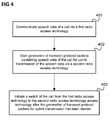
- the communication terminal 300 for example carries out a method for switching a call from a first radio access technology to a second radio access technology as illustrated in figure 4 .
- Figure 4 shows a flow diagram 400.
- the flow diagram 400 illustrates a method for switching a call between radio access technologies, for example carried out by a communication terminal.
- the communication terminal communicates speech data of a call using a first radio access technology.
- the communication terminal generatestransport protocol packets comprising speech data of the call for uplink transmission of the speech data using a second radio access technology.
- the communication terminal switches the call from the first radio access technology to the second radio access technology access technology after the generation of transport protocol packets for uplink transmission is begun.
- Example 1 is a communication terminal as illustrated in figure 3 .
- Example 2 the subject matter of Example 1 may optionally include the controller being configured to determine whether a predetermined handover criterion being fulfilled and, if the predetermined handover criterion being fulfilled, to control the second communication component to generate transport protocol packets.
- Example 3 the subject matter of Example 2 may optionally include the predetermined handover criterion being based on at least one of a media communication quality of the call, user preferences, operator preferences and radio quality measurements for at least one of the first radio access technology and the second radio access technology.
- Example 4 the subject matter of any one of Examples 1-3 may optionally include the controller being implemented by an application processor of the communication terminal.
- Example 5 the subject matter of any one of Examples 1-4 may optionally include the first communication component being at least partially implemented by a modem or an application processor of the communication terminal.
- Example 6 the subject matter of any one of Examples 1-5 may optionally include the second communication component being at least partially implemented by a modem or an application processor of the communication terminal.
- Example 7 the subject matter of any one of Examples 1-6 may optionally include the call being an IMS call.
- Example 8 the subject matter of any one of Examples 1-7 may optionally include the call being a VoIP call.
- Example 9 the subject matter of any one of Examples 1-8 may optionally include the first radio access technology being a cellular mobile radio network radio access technology and the second radio access technology being a wireless local area network radio access technology or the first radio access technology being a wireless local area network radio access technology and the second radio access technology being a cellular mobile radio network radio access technology.
- Example 10 the subject matter of any one of Examples 1-9 may optionally include the transport protocol packets being real-time transport protocol (RTP) packets.
- RTP real-time transport protocol
- Example 11 the subject matter of any one of Examples 1-10 may optionally include initiating a switch of the call comprising transmitting a message to a communication network providing the call indicating that the call is to be switched from the first radio access technology to the second radio access technology.
- Example 12 the subject matter of any one of Examples 1-11 may optionally include the controller being configured to switch the call from the first radio access technology to the second radio access technology access technology when a setup of a communication path for the call using the second radio access technology, including the starting of generation of transport protocol packets for uplink transmission, is completed.
- Example 13 the subject matter of Example 12 may optionally include the setup of the communication path further comprising at least one of setting loading program instructions into a memory and setting up one or more audio paths.
- Example 14 the subject matter of any one of Examples 1-13 may optionally include the controller being configured to control the second communication component to discard generated transport protocol packets before the call is switched from the first radio access technology to the second radio access technology and to stop discarding generated transport protocol packets when the call is switched from the first radio access technology to the second radio access technology.
- Example 15 the subject matter of any one of Examples 1-14 may optionally include the controller being configured to control the second communication component to mute the output of audio data received using the second radio access technology before the call is switched from the first radio access technology to the second radio access technology and to stop muting the output of audio data received using the second radio access technology when the call is switched from the first radio access technology to the second radio access technology.
- Example 16 the subject matter of any one of Examples 1-15 may optionally include the controller being configured to control the transfer of buffered transport protocol packets received by the first communication component to the second communication component upon the switch of the call from the first radio access technology to the second radio access technology.
- Example 17 the subject matter of any one of Examples 1-16 may optionally include controlling the second communication component to generate transport protocol packets including instructing the second communication component to start generation of transport protocol packets.
- Example 18 the subject matter of any one of Examples 1-17 may optionally include controlling the second communication component to generate transport protocol packets including controlling the second communication component to set up a communication path for the call.
- Example 19 is a method for switching a call between radio access technologies as illustrated in figure 4 .
- Example 20 the subject matter of Example 19 may optionally include determining whether a predetermined handover criterion being fulfilled and, if the predetermined handover criterion being fulfilled, generating transport protocol packets.
- Example 21 the subject matter of Example 20 may optionally include the predetermined handover criterion being based on at least one of a media communication quality of the call, user preferences, operator preferences and radio quality measurements for at least one of the first radio access technology and the second radio access technology.
- Example 22 the subject matter of any one of Examples 19-21 may optionally include an application processor of a communication terminal starting the generation of transmission control packets and initiating the switch.
- Example 23 the subject matter of any one of Examples 19-22 may optionally include a modem or an application processor of the communication terminal communicating speech data of the call using the first radio access technology.
- Example 24 the subject matter of any one of Examples 19-23 may optionally include a modem or an application processor of the communication terminal communicating speech data of the call using the first radio access technology.
- Example 25 the subject matter of any one of Examples 19-24 may optionally include the call being an IMS call.
- Example 26 the subject matter of any one of Examples 19-25 may optionally include the call being a VoIP call.
- Example 27 the subject matter of any one of Examples 19-26 may optionally include the first radio access technology being a cellular mobile radio network radio access technology and the second radio access technology being a wireless local area network radio access technology or the first radio access technology being a wireless local area network radio access technology and the second radio access technology being a cellular mobile radio network radio access technology.
- Example 28 the subject matter of any one of Examples 19-28 may optionally include the transport protocol packets being real-time transport protocol packets.
- Example 29 the subject matter of any one of Examples 19-28 may optionally include initiating a switch of the call comprising transmitting a message to a communication network providing the call indicating that the call is to be switched from the first radio access technology to the second radio access technology.
- Example 30 the subject matter of any one of Examples 19-29 may optionally include initiating a switch of the call from the first radio access technology to the second radio access technology access technology when a setup of a communication path for the call using the second radio access technology, including the starting of generation of transport protocol packets for uplink transmission, is completed.
- Example 31 the subject matter of Example 30 may optionally include the setup of the communication path further comprising at least one of setting loading program instructions into a memory and setting up one or more audio paths.
- Example 32 the subject matter of any one of Examples 19-31 may optionally include discarding generated transport protocol packets before the call is switched from the first radio access technology to the second radio access technology and stopping discarding generated transport protocol packets when the call is switched from the first radio access technology to the second radio access technology.
- Example 33 the subject matter of any one of Examples 19-32 may optionally include muting the output of audio data received using the second radio access technology before the call is switched from the first radio access technology to the second radio access technology and stopping muting the output of audio data received using the second radio access technology when the call is switched from the first radio access technology to the second radio access technology.
- Example 34 the subject matter of any one of Examples 19-33 may optionally include transferring buffered transport protocol packets received using the first radio access technology to a communication component for communicating using the second radio access technology upon the switch of the call from the first radio access technology to the second radio access technology.
- Example 35 the subject matter of any one of Examples 19-34 may optionally include instructing a communication component for communication using the second radio access technology to start generation of transport protocol packets.
- Example 36 the subject matter of any one of Examples 19-37 may optionally include controlling a communication component for communication using the second radio access technology to set up a communication path for the call.
- Example 37 is a computer readable medium having recorded instructions thereon which, when executed by a processor, make the processor perform a method for switching a call between radio access technologies according to any one of Examples 19 to 38.
- Example 38 is a method to enable at least one of VoIP and IMS devices that are WiFi and cellular capable, that enables, on one side, optimal device power consumption and optimal audio latency before and after a handover, and on the other side, a smooth engine relocation and reconfiguration procedure, when switching from one radio access technology to another.
- Example 39 the subject matter of Example 38 may optionally include the optimal power consumption and optimal latency, before and after the handover, being guaranteed via VoIP engine relocation and eventually also acoustics engine relocation during a VoIP call.
- Example 40 the subject matter of Example 39 may optionally include the VoIP engine and acoustics engine relocation procedure being designed to minimize, during the handover reconfiguration, interruption time, audio artifacts and RTP (Real-time transport protocol) packet losses.
- VoIP engine and acoustics engine relocation procedure being designed to minimize, during the handover reconfiguration, interruption time, audio artifacts and RTP (Real-time transport protocol) packet losses.
- RTP Real-time transport protocol
- Example 41 is a communication terminal comprising a first communication means for communicating using a first radio access technology, a second communication means for communicating using a second radio access technology, wherein the first communication means being for communicate speech data of a call using the first radio access technology; and a controlling means for controlling the second communication means to generate transport protocol packets comprising speech data of the call for uplink transmission of the speech data using the second radio access technology; and initiating a switch of the call from the first radio access technology to the second radio access technology access technology after the second communication means begins generation of transport protocol packets for uplink transmission.
- Example 42 the subject matter of Example 41 may optionally include the controlling means being for determining whether a predetermined handover criterion being fulfilled and, if the predetermined handover criterion being fulfilled, controlling the second communication means to generate transport protocol packets.
- Example 43 the subject matter of Example 42 may optionally include the predetermined handover criterion being based on at least one of a media communication quality of the call, user preferences, operator preferences and radio quality measurements for at least one of the first radio access technology and the second radio access technology.
- Example 44 the subject matter of any one of Examples 41-43 may optionally include the controlling means being implemented by an application processor of the communication terminal.
- Example 45 the subject matter of any one of Examples 41-44 may optionally include the first communication means being at least partially implemented by a modem or an application processor of the communication terminal.
- Example 46 the subject matter of any one of Examples 41-45 may optionally include the second communication means being at least partially implemented by a modem or an application processor of the communication terminal.
- Example 47 the subject matter of any one of Examples 41-46 may optionally include the call being an IMS call.
- Example 48 the subject matter of any one of Examples 41-47 may optionally include the call being a VoIP call.
- Example 49 the subject matter of any one of Examples 41-48 may optionally include the first radio access technology being a cellular mobile radio network radio access technology and the second radio access technology being a wireless local area network radio access technology or the first radio access technology being a wireless local area network radio access technology and the second radio access technology being a cellular mobile radio network radio access technology.
- Example 50 the subject matter of any one of Examples 41-49 may optionally include the transport protocol packets are real-time transport protocol packets.
- Example 51 the subject matter of any one of Examples 41-50 may optionally include initiating a switch of the call comprising transmitting a message to a communication network providing the call indicating that the call is to be switched from the first radio access technology to the second radio access technology.
- Example 52 the subject matter of any one of Examples 41-51 may optionally include the controlling means being for initiating a switch of the call from the first radio access technology to the second radio access technology access technology when a setup of a communication path for the call using the second radio access technology, including the starting of generation of transport protocol packets for uplink transmission, is completed.
- Example 53 the subject matter of Example 52 may optionally include the setup of the communication path further comprising at least one of setting loading program instructions into a memory and setting up one or more audio paths.
- Example 54 the subject matter of any one of Examples 41-53 may optionally include the controlling means being for controlling the second communication means to discard generated transport protocol packets before the call is switched from the first radio access technology to the second radio access technology and for stopping discarding generated transport protocol packets when the call is switched from the first radio access technology to the second radio access technology.
- Example 55 the subject matter of any one of Examples 41-54 may optionally include the controlling means being for controlling the second communication means to mute the output of audio data received using the second radio access technology before the call is switched from the first radio access technology to the second radio access technology and for stopping muting the output of audio data received using the second radio access technology when the call is switched from the first radio access technology to the second radio access technology.
- the controlling means being for controlling the second communication means to mute the output of audio data received using the second radio access technology before the call is switched from the first radio access technology to the second radio access technology and for stopping muting the output of audio data received using the second radio access technology when the call is switched from the first radio access technology to the second radio access technology.
- Example 56 the subject matter of any one of Examples 41-55 may optionally include the controlling means being for controlling the transfer of buffered transport protocol packets received by the first communication means to the second communication means upon the switch of the call from the first radio access technology to the second radio access technology.
- Example 57 the subject matter of any one of Examples 41-56 may optionally include controlling the second communication means to generate transport protocol packets including instructing the second communication means to generate of transport protocol packets.
- Example 58 the subject matter of any one of Examples 41-57 may optionally include controlling the second communication means to start generation of transport protocol packets including controlling the second communication means to set up a communication path for the call.
- one or more of the following is performed for handover execution and VoIP engine relocation.
- a setup of the second communication component (e.g. the VoIP WiFi engine in the following example) is performed before the interruption (or break) of the VoIP call, i.e. the switch from the first radio access technology to the second radio access technology to diminish interruption time.
- the switching or handover procedure is split into three phases:
- phase are for example triggered by commands from an external telephony/WiFi framework (which is for example in charge of cellular or WiFi signaling and control).
- an external telephony/WiFi framework which is for example in charge of cellular or WiFi signaling and control.
- two VoIP paths are enabled in parallel during the transition (i.e. switching) phase (with the new VoIP path being muted and the old VoIP path being unmuted).
- Unplayed RTP audio packets are transferred from the old JBM (Jitter Buffer Management) buffer (i.e. the JBM buffer of the first radio access technology in the mobile terminal) to the new JBM buffer (i.e. the JBM buffer of the second radio access technology in the mobile terminal).
- the RTP timestamp of the next packet that was expected to be played is transferred from the old JBM buffer to the new JBM buffer.
- During the termination phase communication resources for providing the old VoIP path e.g. radio channel resources
- communication resources for providing the old VoIP path e.g. radio channel resources
- a lip synchronization may be started for the new VoIP path (if video was part of the ongoing call).
- VoIP engine that is not relocated.
- APE Application Processor Entity
- the application processor would be ideal to handle handovers.
- this approach may not be desirable because it leads to a high power consumption for VoLTE and a minimized VoLTE power consumption is a typical goal of mobile terminal manufacturers.
- a handover is an action of relatively short duration that can be expected to happen rather infrequently (switching from LTE to WiFi and vice et versa) whereas a VoLTE call is typically the key use case with long duration.
- the switch from VoLTE to WiFi may be, as in the following example, initiated by the mobile terminal rather than the network side e.g. according to 3GPP.
- Key items of the handover procedure to/from WiFi according to 3GPP may be seen in that
- VoLTE to WiFi being terminal initiated in contrast to, for example, a switch from 3G to LTE (and vice et versa) which is network initiated) makes it easier to setup a preparation phase on the mobile terminal before executing the switch.
- the handover procedure is in the following example described based on the example of a switch from LTE to WIFI. However, the same principles and actions can be applied to a handover from WiFi to cellular.
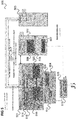
- Figure 5 shows an architecture of a mobile terminal related to a handover from a VoIP call from a cellular radio access technology to WiFi.
- the mobile terminal e.g. corresponding to mobile terminal 201, comprises an application processor 501, a cellular modem 502, a WiFi modem 503, an audio DSP (digital signal processor) 504 and a hardware audio codec 505.
- an application processor 501 e.g. corresponding to mobile terminal 201
- a cellular modem 502 e.g. a cellular modem 502
- a WiFi modem 503 e.g. corresponding to mobile terminal 201
- an audio DSP (digital signal processor) 504 e.g. corresponding to mobile terminal 201
- the software components providing the VoIP call including an LTE VoIP engine 506 and cellular acoustic functions 507 (e.g. speech enhancements such as noise reduction and echo cancellation) are executed on the cellular modem 502, thus allowing a low VoLTE power consumption.
- LTE VoIP engine 506 e.g. speech enhancements such as noise reduction and echo cancellation
- cellular acoustic functions 507 e.g. speech enhancements such as noise reduction and echo cancellation
- the VoIP engine and the acoustic functions are relocated and a WiFi VoIP engine 508 and WiFi acoustic functions 509 are provided by the application processor 501 and the audio DSP 504 (or, alternatively, also by the application processor 501) such that the cellular modem can remain idle during the IMS VoIP call via WiFi.
- a switching (or handover) procedure allowing a short interruption time and avoiding RTP packets losses and audio distortions during the switch is described in the following.
- the switch is performed in three steps (preparation, execution and termination phases) where the triggers are in this example sent by a signaling/control framework 510 provided by the application processor 501.
- the control framework 510 is in charge of collecting information like measurements reports on the current radio technology (LTE in this example) and also on the other candidate radio technology (WiFi in this example). This is a background activity that may be performed without frequent wake ups of the application processor 501, especially as long as the audio quality on the ongoing VoIP call is good.
- the control framework 510 may for example trigger a handover based on a criterion depending on one or more of the following:
- a policy may be used to prepare and execute a handover without requiring frequent wakeups of the application processor 501.
- the control framework 510 detects that a handover criterion is fulfilled (e.g. if the media quality of ongoing call is below a predefined threshold or if radio signal measurements reported on WiFi are above a predefined threshold), it issues, in 511, a preparation (or start) command and thus triggers the preparation phase (phase 1).
- a handover criterion e.g. if the media quality of ongoing call is below a predefined threshold or if radio signal measurements reported on WiFi are above a predefined threshold
- the audio DSP 504 loads its firmware and the WiFi VoIP engine 508 starts uplink RTP packet generation.
- the new VoIP path is set up but not yet used but muted. For example, the generated uplink RTP packets are discarded and audio data (in the form of PCM samples) that may already be received via the new VoIP path are not played.
- the setup of the new VoIP path including, for example, the loading of specific firmware of the audio DSP 504, setting up new audio routes etc. takes time so this is done before the control framework 510 triggers the actual switching.
- the new VoIP path setup When the new VoIP path setup has been completed, e.g. by an audio framework, it may for example send an acknowledgement message to the telephony/WiFi control framework 510. Then, in 514, if the criterion for the handover is still valid after the setup of the new VoIP path, the control framework 510, sends a remote trigger to the network if the handover is mobile terminal initiated and sends a local trigger for executing the switch to the audio framework which triggers the execution phase (phase 2). If the criterion is no longer fulfilled, the control framework 510 may for example cancel the handover and the setup of the new VoIP path immediately or after a predetermined timeout.
- the new VoIP path is unmuted and the old VoIP path is muted.
- the audio data received via the second radio access technology WiFi in this example
- the interruption time can be kept low, even with a distributed architecture that has to handle VoIP engine relocation and the setup of a new VoIP path.
- the LTE VoIP engine is stopped wherein in 517, to avoid losing the RTP packets buffered (on the cellular modem side) but not yet played, which would create an audio glitch, these RTP packets are transferred from the VoLTE JBM buffer (on the cellular modem 502) to the WiFi JBM buffer (on the application processor 501).
- the transferred RTP packets are handled by the WiFi JBM as if they were just received via the WiFi VoIP path: depending on their sequence numbers and/or RTP timestamps they are reordered and played out as long as their expected playout time has not yet elapsed (otherwise the WiFi JBM discards them).
- RTP packet typically corresponds to 20 ms of speech and it can be expected that the transfer from the VoLTE JBM buffer to the WiFi JBM buffer takes place in less than 20 ms, no RTP packet will presumably be lost or discarded due to the transfer latency (or just one RTP packet in case that, when starting the transfer, the expected processing of a new RTP packet is already close).
- the new VoIP path is fully functional, processing newly received RTP packets and eventually playing out old RTP packets that were buffered before the handover.
- the audio framework can acknowledge that the second phase has been completed (and e.g. inform the control framework 510 accordingly) and, in 518, the control framework 510 triggers the termination phase (phase 3) and instructs the cellular modem 502 to release the old VoIP path.
- a lip synchronization may be activated if the VoIP call is a video call, wherein the video is now provided an video engine 520 running on the application processor 501.
- the above mechanism allows a VoLTE power optimized approach which may be used for devices supporting IMS VoIP over WiFi, audio/video calls and handovers to other radio technologies and which allows having a very low interruption time and very few audio artifacts during the switch.
- a switch from WiFi to LTE may be performed using a similar sequence and similar principles.
Landscapes
- Engineering & Computer Science (AREA)
- Computer Networks & Wireless Communication (AREA)
- Signal Processing (AREA)
- Multimedia (AREA)
- Mobile Radio Communication Systems (AREA)
Applications Claiming Priority (1)
| Application Number | Priority Date | Filing Date | Title |
|---|---|---|---|
| US14/670,543 US10341904B2 (en) | 2015-03-27 | 2015-03-27 | Communication terminal and method for switching a call between radio access technologies |
Publications (3)
| Publication Number | Publication Date |
|---|---|
| EP3073786A2 true EP3073786A2 (de) | 2016-09-28 |
| EP3073786A3 EP3073786A3 (de) | 2016-10-05 |
| EP3073786B1 EP3073786B1 (de) | 2018-01-03 |
Family
ID=55521384
Family Applications (1)
| Application Number | Title | Priority Date | Filing Date |
|---|---|---|---|
| EP16154724.5A Active EP3073786B1 (de) | 2015-03-27 | 2016-02-08 | Kommunikationsendgerät und verfahren zur umschaltung eines anrufs zwischen funkzugriffstechnologien |
Country Status (4)
| Country | Link |
|---|---|
| US (1) | US10341904B2 (de) |
| EP (1) | EP3073786B1 (de) |
| CN (1) | CN106028409B (de) |
| TW (1) | TWI654889B (de) |
Cited By (2)
| Publication number | Priority date | Publication date | Assignee | Title |
|---|---|---|---|---|
| WO2018107892A1 (zh) * | 2016-12-13 | 2018-06-21 | 广东欧珀移动通信有限公司 | 网络通信功能异常的处理方法及处理装置、终端设备、计算机存储介质 |
| CN116264598A (zh) * | 2021-12-14 | 2023-06-16 | 荣耀终端有限公司 | 一种多屏协同的通话方法、系统、终端及存储介质 |
Families Citing this family (19)
| Publication number | Priority date | Publication date | Assignee | Title |
|---|---|---|---|---|
| WO2017088931A1 (en) * | 2015-11-27 | 2017-06-01 | Huawei Technologies Co., Ltd. | Network nodes, wireless communication system and methods thereof |
| US10212627B2 (en) * | 2015-12-11 | 2019-02-19 | Reliance Jio Infocomm Usa, Inc. | Co-existence mechanism for downloadable voice application client |
| EP3439358A4 (de) * | 2016-04-29 | 2019-03-20 | Huawei Technologies Co., Ltd. | Verfahren zur verarbeitung von sprachdienst und basisstation |
| US10517021B2 (en) | 2016-06-30 | 2019-12-24 | Evolve Cellular Inc. | Long term evolution-primary WiFi (LTE-PW) |
| US10439989B2 (en) * | 2016-07-13 | 2019-10-08 | Htc Corporation | Device and method of handling cellular network and wireless local area network radio level integration with internet protocol security tunnel |
| US10485005B2 (en) | 2016-07-26 | 2019-11-19 | Industrial Technology Research Institute | Method and apparatuses for controlling quality of experience based on UE-assisted feedback |
| JP6940592B2 (ja) * | 2017-03-28 | 2021-09-29 | 京セラ株式会社 | 無線通信機器およびその制御方法 |
| US11147010B2 (en) | 2017-03-31 | 2021-10-12 | British Telecommunications Public Limited Company | Network discovery |
| WO2018178241A1 (en) | 2017-03-31 | 2018-10-04 | British Telecommunications Public Limited Company | Access network selection |
| EP3603210A1 (de) | 2017-03-31 | 2020-02-05 | British Telecommunications Public Limited Company | Zugriffsnetzwerkauswahl |
| CN107396412B (zh) | 2017-08-09 | 2020-12-15 | 惠州Tcl移动通信有限公司 | Ims语音通话网络的切换方法、存储设备及移动终端 |
| CN109429290B (zh) * | 2017-08-23 | 2021-04-23 | 展讯通信(上海)有限公司 | 数据传输控制装置及数据流的控制方法 |
| US10560940B2 (en) * | 2017-11-10 | 2020-02-11 | Nokia Solutions And Networks Oy | Intelligent traffic steering over optimal paths using multiple access technologies |
| CN111727628B (zh) * | 2018-02-15 | 2022-08-26 | 瑞典爱立信有限公司 | 用于无线电接入技术间切换的方法 |
| US11337077B2 (en) | 2018-03-29 | 2022-05-17 | British Telecommunications Public Limited Company | Method of channel selection in a wireless network |
| WO2020078730A1 (en) | 2018-10-16 | 2020-04-23 | British Telecommunications Public Limited Company | Measuring channel performance in wireless local area networks |
| CN115801961A (zh) * | 2021-09-13 | 2023-03-14 | 华为技术有限公司 | 一种呼叫方法及电子设备 |
| US20240080117A1 (en) * | 2022-09-02 | 2024-03-07 | Mediatek Inc. | Efficient radio switch for optimizing power consumption in low power scenario |
| WO2025121582A1 (en) * | 2023-12-09 | 2025-06-12 | Samsung Electronics Co., Ltd. | Method and user equipment for handling network access during handover from 3gpp network to non-3gpp network |
Family Cites Families (15)
| Publication number | Priority date | Publication date | Assignee | Title |
|---|---|---|---|---|
| US7254119B2 (en) * | 2002-05-28 | 2007-08-07 | Zte San Diego, Inc. | Interworking mechanism between CDMA2000 and WLAN |
| US7613171B2 (en) | 2004-08-31 | 2009-11-03 | Ephraim Zehavi | Cellular network service over WLAN |
| GB0428266D0 (en) | 2004-12-23 | 2005-01-26 | Lucent Technologies Inc | RTCP/RTP distinction for VoIP transmission over wireless networks |
| CN101064718B (zh) | 2006-04-25 | 2011-04-27 | Sk电信有限公司 | 在移动因特网网络中注册ip地址的方法和系统 |
| US8391873B2 (en) | 2006-07-21 | 2013-03-05 | Qualcomm Incorporated | Systems and methods for coordinating supplementary services for voice telephone calls in a centralized fashion |
| CN101491060B (zh) | 2006-07-21 | 2014-03-12 | 高通股份有限公司 | 以集中方式协调语音电话呼叫的补充业务的系统和方法 |
| JP2009006609A (ja) * | 2007-06-28 | 2009-01-15 | Ricoh Co Ltd | 画像形成装置、欠陥ノズル判定方法 |
| US8744451B2 (en) * | 2007-12-12 | 2014-06-03 | Aruba Networks, Inc. | Delayed ACK in dual-mode call handover |
| DE102009004195A1 (de) * | 2009-01-09 | 2010-08-05 | Energetica Holding Gmbh | Solar-Modul in einem Isolierglasverbund und Verfahren zur Herstellung und Anwendung |
| US8787381B2 (en) * | 2011-06-08 | 2014-07-22 | Broadcom Corporation | Quality of service, battery lifetime, and latency in wireless communication devices |
| US9930712B2 (en) * | 2012-05-15 | 2018-03-27 | Qualcomm Incorporated | Limiting failure rate by serving through multiple channels |
| US9655019B2 (en) | 2012-10-08 | 2017-05-16 | Samsung Electronics Co., Ltd. | Apparatus and method for switching call in mobile communication system |
| KR102056408B1 (ko) | 2013-03-21 | 2019-12-16 | 삼성전자주식회사 | 전자장치에서 멀티미디어 서비스를 지원하기 위한 방법 및 장치 |
| US9819701B2 (en) | 2013-06-25 | 2017-11-14 | Avago Technologies General Ip (Singapore) Pte. Ltd. | Low latency IMS-based media handoff between a cellular network and a WLAN |
| US20160205573A1 (en) * | 2015-01-09 | 2016-07-14 | Qualcomm Incorporated | Intra-rat (radio access technology) and inter-rat measurement reporting |
-
2015
- 2015-03-27 US US14/670,543 patent/US10341904B2/en active Active
-
2016
- 2016-02-08 EP EP16154724.5A patent/EP3073786B1/de active Active
- 2016-02-24 TW TW105105517A patent/TWI654889B/zh not_active IP Right Cessation
- 2016-02-26 CN CN201610108752.9A patent/CN106028409B/zh not_active Expired - Fee Related
Non-Patent Citations (1)
| Title |
|---|
| None |
Cited By (2)
| Publication number | Priority date | Publication date | Assignee | Title |
|---|---|---|---|---|
| WO2018107892A1 (zh) * | 2016-12-13 | 2018-06-21 | 广东欧珀移动通信有限公司 | 网络通信功能异常的处理方法及处理装置、终端设备、计算机存储介质 |
| CN116264598A (zh) * | 2021-12-14 | 2023-06-16 | 荣耀终端有限公司 | 一种多屏协同的通话方法、系统、终端及存储介质 |
Also Published As
| Publication number | Publication date |
|---|---|
| EP3073786B1 (de) | 2018-01-03 |
| CN106028409A (zh) | 2016-10-12 |
| TW201642682A (zh) | 2016-12-01 |
| US10341904B2 (en) | 2019-07-02 |
| TWI654889B (zh) | 2019-03-21 |
| CN106028409B (zh) | 2020-01-31 |
| EP3073786A3 (de) | 2016-10-05 |
| US20160286438A1 (en) | 2016-09-29 |
Similar Documents
| Publication | Publication Date | Title |
|---|---|---|
| US10341904B2 (en) | Communication terminal and method for switching a call between radio access technologies | |
| US8594074B2 (en) | Call setup for access division multiplexing | |
| EP2880908B1 (de) | Knoten und verfahren zur weiterleitung eines teilsatzes von trägern | |
| EP2056640B1 (de) | Sprachsynchronisierung bei der Anrufweitergabe | |
| CN101978737B (zh) | 用户装置、基站装置以及移动通信方法 | |
| US9445335B2 (en) | Handover prediction using historical data | |
| KR101441946B1 (ko) | Sr-vcc 이동도에서 흐름 중단의 감소 | |
| TWI662854B (zh) | 對無線通訊中的多個活躍連接的數據機輔助式爭用處置 | |
| JP5159883B2 (ja) | ハンドオーバー中のアップリンクパワー制御パラメータの転送方法 | |
| EP2464169B1 (de) | Verfahren und vorrichtung zur minimierung der unterbrechungszeit bei der übergabe von voip-anrufen | |
| CN101543130B (zh) | 在移动通信系统中进行切换之时选择接入方法 | |
| JP2016519891A (ja) | 回線交換フォールバック手順の実行後に第2の無線ネットワークから第1の無線ネットワークへの復帰を可能にすること | |
| WO2008085373A3 (en) | Method and apparatus for maintaining call continuity between packet and circuit domains in a wireless communication system | |
| US20170181048A1 (en) | Apparatus and method for managing call continuity at user equipment | |
| CN108713330A (zh) | 用于网络控制的切换和ue自主切换的混合方案 | |
| WO2015018006A1 (zh) | 一种双连接下的通信方法、基站和用户设备 | |
| US20100290428A1 (en) | Mobile communication system, base station device, and handover method | |
| WO2017177427A1 (zh) | 业务处理方法和相关装置及通信系统 | |
| CN108235385A (zh) | 振铃之前的单射频语音呼叫连续性的实现方法、装置及移动终端 | |
| US20130188573A1 (en) | Radio communication apparatus and radio communication method | |
| WO2009024075A1 (en) | Method and terminal equipment for realizing service continuity |
Legal Events
| Date | Code | Title | Description |
|---|---|---|---|
| PUAI | Public reference made under article 153(3) epc to a published international application that has entered the european phase |
Free format text: ORIGINAL CODE: 0009012 |
|
| PUAL | Search report despatched |
Free format text: ORIGINAL CODE: 0009013 |
|
| 17P | Request for examination filed |
Effective date: 20160208 |
|
| AK | Designated contracting states |
Kind code of ref document: A2 Designated state(s): AL AT BE BG CH CY CZ DE DK EE ES FI FR GB GR HR HU IE IS IT LI LT LU LV MC MK MT NL NO PL PT RO RS SE SI SK SM TR |
|
| AX | Request for extension of the european patent |
Extension state: BA ME |
|
| AK | Designated contracting states |
Kind code of ref document: A3 Designated state(s): AL AT BE BG CH CY CZ DE DK EE ES FI FR GB GR HR HU IE IS IT LI LT LU LV MC MK MT NL NO PL PT RO RS SE SI SK SM TR |
|
| AX | Request for extension of the european patent |
Extension state: BA ME |
|
| RIC1 | Information provided on ipc code assigned before grant |
Ipc: H04W 76/02 20090101ALN20160829BHEP Ipc: H04W 88/06 20090101ALN20160829BHEP Ipc: H04W 36/00 20090101AFI20160829BHEP Ipc: H04W 28/08 20090101ALN20160829BHEP |
|
| GRAP | Despatch of communication of intention to grant a patent |
Free format text: ORIGINAL CODE: EPIDOSNIGR1 |
|
| RIC1 | Information provided on ipc code assigned before grant |
Ipc: H04W 28/08 20090101ALN20170704BHEP Ipc: H04W 36/00 20090101AFI20170704BHEP Ipc: H04W 76/02 20090101ALN20170704BHEP Ipc: H04W 88/06 20090101ALN20170704BHEP Ipc: H04W 36/02 20090101ALN20170704BHEP Ipc: H04W 84/12 20090101ALN20170704BHEP |
|
| RIC1 | Information provided on ipc code assigned before grant |
Ipc: H04W 84/12 20090101ALN20170711BHEP Ipc: H04W 28/08 20090101ALN20170711BHEP Ipc: H04W 88/06 20090101ALN20170711BHEP Ipc: H04W 36/02 20090101ALN20170711BHEP Ipc: H04W 36/00 20090101AFI20170711BHEP Ipc: H04W 76/02 20090101ALN20170711BHEP |
|
| INTG | Intention to grant announced |
Effective date: 20170725 |
|
| GRAS | Grant fee paid |
Free format text: ORIGINAL CODE: EPIDOSNIGR3 |
|
| GRAA | (expected) grant |
Free format text: ORIGINAL CODE: 0009210 |
|
| STAA | Information on the status of an ep patent application or granted ep patent |
Free format text: STATUS: THE PATENT HAS BEEN GRANTED |
|
| AK | Designated contracting states |
Kind code of ref document: B1 Designated state(s): AL AT BE BG CH CY CZ DE DK EE ES FI FR GB GR HR HU IE IS IT LI LT LU LV MC MK MT NL NO PL PT RO RS SE SI SK SM TR |
|
| REG | Reference to a national code |
Ref country code: GB Ref legal event code: FG4D |
|
| REG | Reference to a national code |
Ref country code: CH Ref legal event code: EP Ref country code: AT Ref legal event code: REF Ref document number: 961313 Country of ref document: AT Kind code of ref document: T Effective date: 20180115 |
|
| REG | Reference to a national code |
Ref country code: IE Ref legal event code: FG4D |
|
| REG | Reference to a national code |
Ref country code: DE Ref legal event code: R096 Ref document number: 602016001240 Country of ref document: DE |
|
| REG | Reference to a national code |
Ref country code: FR Ref legal event code: PLFP Year of fee payment: 3 |
|
| REG | Reference to a national code |
Ref country code: NL Ref legal event code: MP Effective date: 20180103 |
|
| REG | Reference to a national code |
Ref country code: LT Ref legal event code: MG4D |
|
| REG | Reference to a national code |
Ref country code: AT Ref legal event code: MK05 Ref document number: 961313 Country of ref document: AT Kind code of ref document: T Effective date: 20180103 |
|
| PG25 | Lapsed in a contracting state [announced via postgrant information from national office to epo] |
Ref country code: NL Free format text: LAPSE BECAUSE OF FAILURE TO SUBMIT A TRANSLATION OF THE DESCRIPTION OR TO PAY THE FEE WITHIN THE PRESCRIBED TIME-LIMIT Effective date: 20180103 |
|
| PG25 | Lapsed in a contracting state [announced via postgrant information from national office to epo] |
Ref country code: CY Free format text: LAPSE BECAUSE OF FAILURE TO SUBMIT A TRANSLATION OF THE DESCRIPTION OR TO PAY THE FEE WITHIN THE PRESCRIBED TIME-LIMIT Effective date: 20180103 Ref country code: HR Free format text: LAPSE BECAUSE OF FAILURE TO SUBMIT A TRANSLATION OF THE DESCRIPTION OR TO PAY THE FEE WITHIN THE PRESCRIBED TIME-LIMIT Effective date: 20180103 Ref country code: ES Free format text: LAPSE BECAUSE OF FAILURE TO SUBMIT A TRANSLATION OF THE DESCRIPTION OR TO PAY THE FEE WITHIN THE PRESCRIBED TIME-LIMIT Effective date: 20180103 Ref country code: LT Free format text: LAPSE BECAUSE OF FAILURE TO SUBMIT A TRANSLATION OF THE DESCRIPTION OR TO PAY THE FEE WITHIN THE PRESCRIBED TIME-LIMIT Effective date: 20180103 Ref country code: NO Free format text: LAPSE BECAUSE OF FAILURE TO SUBMIT A TRANSLATION OF THE DESCRIPTION OR TO PAY THE FEE WITHIN THE PRESCRIBED TIME-LIMIT Effective date: 20180403 Ref country code: FI Free format text: LAPSE BECAUSE OF FAILURE TO SUBMIT A TRANSLATION OF THE DESCRIPTION OR TO PAY THE FEE WITHIN THE PRESCRIBED TIME-LIMIT Effective date: 20180103 |
|
| PG25 | Lapsed in a contracting state [announced via postgrant information from national office to epo] |
Ref country code: SE Free format text: LAPSE BECAUSE OF FAILURE TO SUBMIT A TRANSLATION OF THE DESCRIPTION OR TO PAY THE FEE WITHIN THE PRESCRIBED TIME-LIMIT Effective date: 20180103 Ref country code: LV Free format text: LAPSE BECAUSE OF FAILURE TO SUBMIT A TRANSLATION OF THE DESCRIPTION OR TO PAY THE FEE WITHIN THE PRESCRIBED TIME-LIMIT Effective date: 20180103 Ref country code: AT Free format text: LAPSE BECAUSE OF FAILURE TO SUBMIT A TRANSLATION OF THE DESCRIPTION OR TO PAY THE FEE WITHIN THE PRESCRIBED TIME-LIMIT Effective date: 20180103 Ref country code: PL Free format text: LAPSE BECAUSE OF FAILURE TO SUBMIT A TRANSLATION OF THE DESCRIPTION OR TO PAY THE FEE WITHIN THE PRESCRIBED TIME-LIMIT Effective date: 20180103 Ref country code: BG Free format text: LAPSE BECAUSE OF FAILURE TO SUBMIT A TRANSLATION OF THE DESCRIPTION OR TO PAY THE FEE WITHIN THE PRESCRIBED TIME-LIMIT Effective date: 20180403 Ref country code: IS Free format text: LAPSE BECAUSE OF FAILURE TO SUBMIT A TRANSLATION OF THE DESCRIPTION OR TO PAY THE FEE WITHIN THE PRESCRIBED TIME-LIMIT Effective date: 20180503 Ref country code: GR Free format text: LAPSE BECAUSE OF FAILURE TO SUBMIT A TRANSLATION OF THE DESCRIPTION OR TO PAY THE FEE WITHIN THE PRESCRIBED TIME-LIMIT Effective date: 20180404 Ref country code: RS Free format text: LAPSE BECAUSE OF FAILURE TO SUBMIT A TRANSLATION OF THE DESCRIPTION OR TO PAY THE FEE WITHIN THE PRESCRIBED TIME-LIMIT Effective date: 20180103 |
|
| REG | Reference to a national code |
Ref country code: DE Ref legal event code: R097 Ref document number: 602016001240 Country of ref document: DE |
|
| PG25 | Lapsed in a contracting state [announced via postgrant information from national office to epo] |
Ref country code: AL Free format text: LAPSE BECAUSE OF FAILURE TO SUBMIT A TRANSLATION OF THE DESCRIPTION OR TO PAY THE FEE WITHIN THE PRESCRIBED TIME-LIMIT Effective date: 20180103 Ref country code: MC Free format text: LAPSE BECAUSE OF FAILURE TO SUBMIT A TRANSLATION OF THE DESCRIPTION OR TO PAY THE FEE WITHIN THE PRESCRIBED TIME-LIMIT Effective date: 20180103 Ref country code: IT Free format text: LAPSE BECAUSE OF FAILURE TO SUBMIT A TRANSLATION OF THE DESCRIPTION OR TO PAY THE FEE WITHIN THE PRESCRIBED TIME-LIMIT Effective date: 20180103 Ref country code: RO Free format text: LAPSE BECAUSE OF FAILURE TO SUBMIT A TRANSLATION OF THE DESCRIPTION OR TO PAY THE FEE WITHIN THE PRESCRIBED TIME-LIMIT Effective date: 20180103 Ref country code: EE Free format text: LAPSE BECAUSE OF FAILURE TO SUBMIT A TRANSLATION OF THE DESCRIPTION OR TO PAY THE FEE WITHIN THE PRESCRIBED TIME-LIMIT Effective date: 20180103 |
|
| PLBE | No opposition filed within time limit |
Free format text: ORIGINAL CODE: 0009261 |
|
| STAA | Information on the status of an ep patent application or granted ep patent |
Free format text: STATUS: NO OPPOSITION FILED WITHIN TIME LIMIT |
|
| REG | Reference to a national code |
Ref country code: IE Ref legal event code: MM4A |
|
| REG | Reference to a national code |
Ref country code: BE Ref legal event code: MM Effective date: 20180228 |
|
| PG25 | Lapsed in a contracting state [announced via postgrant information from national office to epo] |
Ref country code: SM Free format text: LAPSE BECAUSE OF FAILURE TO SUBMIT A TRANSLATION OF THE DESCRIPTION OR TO PAY THE FEE WITHIN THE PRESCRIBED TIME-LIMIT Effective date: 20180103 Ref country code: CZ Free format text: LAPSE BECAUSE OF FAILURE TO SUBMIT A TRANSLATION OF THE DESCRIPTION OR TO PAY THE FEE WITHIN THE PRESCRIBED TIME-LIMIT Effective date: 20180103 Ref country code: DK Free format text: LAPSE BECAUSE OF FAILURE TO SUBMIT A TRANSLATION OF THE DESCRIPTION OR TO PAY THE FEE WITHIN THE PRESCRIBED TIME-LIMIT Effective date: 20180103 Ref country code: LU Free format text: LAPSE BECAUSE OF NON-PAYMENT OF DUE FEES Effective date: 20180208 Ref country code: SK Free format text: LAPSE BECAUSE OF FAILURE TO SUBMIT A TRANSLATION OF THE DESCRIPTION OR TO PAY THE FEE WITHIN THE PRESCRIBED TIME-LIMIT Effective date: 20180103 |
|
| 26N | No opposition filed |
Effective date: 20181005 |
|
| RIC2 | Information provided on ipc code assigned after grant |
Ipc: H04W 76/02 20181130ALN20170711BHEP Ipc: H04W 28/08 20090101ALN20170711BHEP Ipc: H04W 84/12 20090101ALN20170711BHEP Ipc: H04W 88/06 20090101ALN20170711BHEP Ipc: H04W 36/02 20090101ALN20170711BHEP Ipc: H04W 36/00 20090101AFI20170711BHEP |
|
| REG | Reference to a national code |
Ref country code: CH Ref legal event code: PK Free format text: BERICHTIGUNGEN |
|
| PG25 | Lapsed in a contracting state [announced via postgrant information from national office to epo] |
Ref country code: IE Free format text: LAPSE BECAUSE OF NON-PAYMENT OF DUE FEES Effective date: 20180208 |
|
| REG | Reference to a national code |
Ref country code: CH Ref legal event code: PK Free format text: BERICHTIGUNGEN |
|
| RIC2 | Information provided on ipc code assigned after grant |
Ipc: H04W 36/00 20090101AFI20170711BHEP Ipc: H04W 36/02 20090101ALN20170711BHEP Ipc: H04W 28/08 20090101ALN20170711BHEP Ipc: H04W 84/12 20090101ALN20170711BHEP Ipc: H04W 76/02 20090101ALN20170711BHEP Ipc: H04W 88/06 20090101ALN20170711BHEP |
|
| PG25 | Lapsed in a contracting state [announced via postgrant information from national office to epo] |
Ref country code: SI Free format text: LAPSE BECAUSE OF FAILURE TO SUBMIT A TRANSLATION OF THE DESCRIPTION OR TO PAY THE FEE WITHIN THE PRESCRIBED TIME-LIMIT Effective date: 20180103 Ref country code: BE Free format text: LAPSE BECAUSE OF NON-PAYMENT OF DUE FEES Effective date: 20180228 |
|
| PGFP | Annual fee paid to national office [announced via postgrant information from national office to epo] |
Ref country code: FR Payment date: 20190125 Year of fee payment: 4 |
|
| REG | Reference to a national code |
Ref country code: CH Ref legal event code: PL |
|
| PG25 | Lapsed in a contracting state [announced via postgrant information from national office to epo] |
Ref country code: CH Free format text: LAPSE BECAUSE OF NON-PAYMENT OF DUE FEES Effective date: 20190228 Ref country code: LI Free format text: LAPSE BECAUSE OF NON-PAYMENT OF DUE FEES Effective date: 20190228 |
|
| PG25 | Lapsed in a contracting state [announced via postgrant information from national office to epo] |
Ref country code: MT Free format text: LAPSE BECAUSE OF NON-PAYMENT OF DUE FEES Effective date: 20180208 |
|
| PG25 | Lapsed in a contracting state [announced via postgrant information from national office to epo] |
Ref country code: TR Free format text: LAPSE BECAUSE OF FAILURE TO SUBMIT A TRANSLATION OF THE DESCRIPTION OR TO PAY THE FEE WITHIN THE PRESCRIBED TIME-LIMIT Effective date: 20180103 |
|
| PG25 | Lapsed in a contracting state [announced via postgrant information from national office to epo] |
Ref country code: PT Free format text: LAPSE BECAUSE OF FAILURE TO SUBMIT A TRANSLATION OF THE DESCRIPTION OR TO PAY THE FEE WITHIN THE PRESCRIBED TIME-LIMIT Effective date: 20180103 |
|
| PG25 | Lapsed in a contracting state [announced via postgrant information from national office to epo] |
Ref country code: HU Free format text: LAPSE BECAUSE OF FAILURE TO SUBMIT A TRANSLATION OF THE DESCRIPTION OR TO PAY THE FEE WITHIN THE PRESCRIBED TIME-LIMIT; INVALID AB INITIO Effective date: 20160208 Ref country code: MK Free format text: LAPSE BECAUSE OF NON-PAYMENT OF DUE FEES Effective date: 20180103 |
|
| GBPC | Gb: european patent ceased through non-payment of renewal fee |
Effective date: 20200208 |
|
| PG25 | Lapsed in a contracting state [announced via postgrant information from national office to epo] |
Ref country code: FR Free format text: LAPSE BECAUSE OF NON-PAYMENT OF DUE FEES Effective date: 20200229 Ref country code: GB Free format text: LAPSE BECAUSE OF NON-PAYMENT OF DUE FEES Effective date: 20200208 |
|
| P01 | Opt-out of the competence of the unified patent court (upc) registered |
Effective date: 20230518 |
|
| PGFP | Annual fee paid to national office [announced via postgrant information from national office to epo] |
Ref country code: DE Payment date: 20251224 Year of fee payment: 11 |