EP3075247A1 - Remedes conjugues de therapie et diagnostic du cancer - Google Patents
Remedes conjugues de therapie et diagnostic du cancer Download PDFInfo
- Publication number
- EP3075247A1 EP3075247A1 EP15200535.1A EP15200535A EP3075247A1 EP 3075247 A1 EP3075247 A1 EP 3075247A1 EP 15200535 A EP15200535 A EP 15200535A EP 3075247 A1 EP3075247 A1 EP 3075247A1
- Authority
- EP
- European Patent Office
- Prior art keywords
- group
- compound
- cancer
- acid
- asp
- Prior art date
- Legal status (The legal status is an assumption and is not a legal conclusion. Google has not performed a legal analysis and makes no representation as to the accuracy of the status listed.)
- Granted
Links
- 0 CCC(C(CN(C(CC(C(O)=O)NC)=O)C(N*)=O)F)=O Chemical compound CCC(C(CN(C(CC(C(O)=O)NC)=O)C(N*)=O)F)=O 0.000 description 4
- PEWGYJCJPPXUEC-HUDPQJTASA-N CC(C(NC(CCC(N(C[C@@H](C(N1)=O)F)C1=O)=O)C(O)=O)=O)N Chemical compound CC(C(NC(CCC(N(C[C@@H](C(N1)=O)F)C1=O)=O)C(O)=O)=O)N PEWGYJCJPPXUEC-HUDPQJTASA-N 0.000 description 1
- LMITZMDRTWDUFO-UHFFFAOYSA-N NC(CCC(N(C=C(C(N1)=O)F)C1=O)=O)C(NC(CCC(N(C=C(C(N1)=O)F)C1=O)=O)C(O)=O)=O Chemical compound NC(CCC(N(C=C(C(N1)=O)F)C1=O)=O)C(NC(CCC(N(C=C(C(N1)=O)F)C1=O)=O)C(O)=O)=O LMITZMDRTWDUFO-UHFFFAOYSA-N 0.000 description 1
Images



Classifications
-
- A—HUMAN NECESSITIES
- A61—MEDICAL OR VETERINARY SCIENCE; HYGIENE
- A61K—PREPARATIONS FOR MEDICAL, DENTAL OR TOILETRY PURPOSES
- A61K47/00—Medicinal preparations characterised by the non-active ingredients used, e.g. carriers or inert additives; Targeting or modifying agents chemically bound to the active ingredient
- A61K47/50—Medicinal preparations characterised by the non-active ingredients used, e.g. carriers or inert additives; Targeting or modifying agents chemically bound to the active ingredient the non-active ingredient being chemically bound to the active ingredient, e.g. polymer-drug conjugates
- A61K47/51—Medicinal preparations characterised by the non-active ingredients used, e.g. carriers or inert additives; Targeting or modifying agents chemically bound to the active ingredient the non-active ingredient being chemically bound to the active ingredient, e.g. polymer-drug conjugates the non-active ingredient being a modifying agent
- A61K47/54—Medicinal preparations characterised by the non-active ingredients used, e.g. carriers or inert additives; Targeting or modifying agents chemically bound to the active ingredient the non-active ingredient being chemically bound to the active ingredient, e.g. polymer-drug conjugates the non-active ingredient being a modifying agent the modifying agent being an organic compound
- A61K47/542—Carboxylic acids, e.g. a fatty acid or an amino acid
-
- A—HUMAN NECESSITIES
- A61—MEDICAL OR VETERINARY SCIENCE; HYGIENE
- A61K—PREPARATIONS FOR MEDICAL, DENTAL OR TOILETRY PURPOSES
- A61K47/00—Medicinal preparations characterised by the non-active ingredients used, e.g. carriers or inert additives; Targeting or modifying agents chemically bound to the active ingredient
- A61K47/50—Medicinal preparations characterised by the non-active ingredients used, e.g. carriers or inert additives; Targeting or modifying agents chemically bound to the active ingredient the non-active ingredient being chemically bound to the active ingredient, e.g. polymer-drug conjugates
- A61K47/51—Medicinal preparations characterised by the non-active ingredients used, e.g. carriers or inert additives; Targeting or modifying agents chemically bound to the active ingredient the non-active ingredient being chemically bound to the active ingredient, e.g. polymer-drug conjugates the non-active ingredient being a modifying agent
- A61K47/54—Medicinal preparations characterised by the non-active ingredients used, e.g. carriers or inert additives; Targeting or modifying agents chemically bound to the active ingredient the non-active ingredient being chemically bound to the active ingredient, e.g. polymer-drug conjugates the non-active ingredient being a modifying agent the modifying agent being an organic compound
- A61K47/55—Medicinal preparations characterised by the non-active ingredients used, e.g. carriers or inert additives; Targeting or modifying agents chemically bound to the active ingredient the non-active ingredient being chemically bound to the active ingredient, e.g. polymer-drug conjugates the non-active ingredient being a modifying agent the modifying agent being an organic compound the modifying agent being also a pharmacologically or therapeutically active agent, i.e. the entire conjugate being a codrug
-
- A—HUMAN NECESSITIES
- A61—MEDICAL OR VETERINARY SCIENCE; HYGIENE
- A61P—SPECIFIC THERAPEUTIC ACTIVITY OF CHEMICAL COMPOUNDS OR MEDICINAL PREPARATIONS
- A61P35/00—Antineoplastic agents
-
- A—HUMAN NECESSITIES
- A61—MEDICAL OR VETERINARY SCIENCE; HYGIENE
- A61P—SPECIFIC THERAPEUTIC ACTIVITY OF CHEMICAL COMPOUNDS OR MEDICINAL PREPARATIONS
- A61P35/00—Antineoplastic agents
- A61P35/02—Antineoplastic agents specific for leukemia
Definitions
- the present invention relates to conjugates comprising a chemotherapeutic agent and an amino acid or a derivative thereof, which are readily taken up by a target cell.
- the present invention relates to conjugates comprising anti-proliferative drugs and asparagine or glutamine and analogs thereof, pharmaceutical compositions comprising the conjugates and methods for the treatment of cancer using the compositions.
- Anti-proliferative drugs also known as anti-metabolites, anti-neoplastic agents and covalent DNA binding drugs, act by inhibiting essential metabolic pathways and are commonly used in the treatment of malignant diseases.
- their high toxicity to normal cells and severe side effects limit their use as therapeutic agents.
- Undesirable side effects include inter alia anemia, emesis and balding due to cytotoxic effects on rapidly dividing normal cells, such as stem cells in the bone marrow, epithelial cells of the intestinal tract, hair follicle cells, etc.
- Multi-drug resistance the resistance of cells to a broad spectrum of structurally unrelated cytotoxic drugs, is a severe problem in the clinic.
- MDR significantly limits the efficacy of many cancer chemotherapy regimens and is a major factor in their failure. MDR may account for intrinsic resistance in colorectal and renal cancer, and for acquired resistance observed in acute non-lymphocytic leukemia, malignant lymphomas, myeloma, and breast and ovarian carcinomas.
- Asparagine is an essential amino acid that is required by rapidly proliferating cells.
- L-asparaginase type CE-2, CE 3.5.1.1
- L-asparaginase hydrolyzes L-asparagine to aspartate and ammonia, hence depleting L-asparagine from the serum and inhibiting tumor growth.
- L-asparaginase is used mainly in the treatment of Acute Lymphoblastic Leukemia (ALL) and shows some activity against other hematological cancers including acute non-lymphocytic leukemia (Whitecar, et al., 1970; Capizzi et al., 1970).
- L-asparaginase used in the clinic is available in two unmodified forms (native) purified from bacterial sources, and one as a PEGylated compound.
- US Patent No.4,179,337 teaches PEGylated L-asparaginase, wherein the enzyme is coupled to PEG having a molecular weight of about 500 to 20,000 daltons.
- asparagine synthetase may provide an efficient mechanism for inhibiting tumor growth.
- cells respond to amino acid deprivation by a concerted increase in asparagine synthetase mRNA, protein, and enzymatic activity that involves transcriptional control of the asparagine synthetase gene. (Hutson, et al., 1997).
- 4,348,522 teaches the salt of PALA, N-phosphonacetyl-L-aspartic acid, which has been shown to exhibit anti-tumor activity and is presently in clinical trials as combination chemotherapy for colorectal and pancreatic cancers (Whitehead et al, 2004a, 2004b).
- Arginine has also been shown to be required for the growth of some tumor cell lines, including certain breast cancer cell lines (Caso, et al, 2004).
- amino acid derivatives and amino acid conjugates include sulphur containing tyrosine analogs having potent anti-melanoma activity (Thomas et al, 1999; McLaughlin et al, 1988; Tandon, et al, 1998) and antiproliferative activity (Purro et al, 2003).
- a proline analog of melphanan (Mel-pro) was shown to be a prodrug susceptible to the action of the cytosolic imidodipeptidase prolidase, suggesting that prolidase targeting may serve as a potential strategy in pharmacotherapy of breast cancer (Chrzanowski et al., 2003).
- prodrugs to impart desired characteristics such as increased bioavailability or increased site-specificity is a recognized concept in the art of pharmaceutical development.
- direct or indirect conjugation of a drug to an antibody creates a stable conjugate that can arrive at the target site with minimum dissociation of the drug.
- Drug targeting may be combined with a mechanism of selective release of the drug for maximal potency.
- US Patent No. 4,296,105 describes doxorubicin derivatives linked to an optionally substituted amino acid at the hydroxy group of the amino acid residue, which possess in vitro a higher antitumor activity and lower toxicity than doxorubicin.
- US Patent No. 5,962,216 teaches tumor activated prodrugs, which are unable to enter the cell, until cleaved by a factor or factors secreted by a target cell.
- compositions comprising at least one active agent, and at least one modified non-alpha amino acid or poly amino acid, which acts as a carrier of the active agent.
- the amino acid modification includes acylation or sulfonation of at least one free amine group.
- US Patent No. 5,106,951 discloses a conjugate comprising an aromatic drug non-covalently intercalated between two aromatic side chains on an oligopeptide, and an antibody or antibody fragment covalently attached to the oligopeptide for targeting to cancer cells.
- US Patent No. 6,617,306 teaches a carrier for the in vivo delivery of a therapeutic agent, the carrier and therapeutic agent linked by a disulfide bond.
- the carrier comprises a polymer, and at least one thiol compound conjugated to the polymer, such that the thiol group of the thiol compound and the thiol group of the therapeutic agent form a disulfide bond.
- the present invention excludes known covalently linked conjugates of therapeutic agents and diagnostic agents to amino acid residues, enzymes, growth factors, peptide ligands of receptors, antibodies, as exemplified for instance in US Patent Nos. 5,106,951 and 4,401,592 , among others.
- the present invention provides novel compounds comprising amino acids including asparagine or glutamine or derivatives or analogs thereof covalently linked to a drug, which exhibit enhanced uptake by neoplastic cells, pharmaceutical compositions comprising the compounds and methods of treating a subject in need thereof.
- the compounds of the present invention comprise a residue of an amino acid such as asparagine or glutamine or an analog or derivative thereof covalently linked to at least one drug, thereby providing an amino acid-drug conjugate.
- the conjugate may serve as a delivery vehicle for a drug or prodrug in which the drug undergoes rapid uptake by cancer cells; for example those cells that lack asparagine synthetase and depend upon external uptake of asparagine or glutamine.
- the present invention provides a compound having the general formula (I): wherein,
- the amino acid side chain, A derives from an amino acid or a derivative thereof selected from the group consisting of arginine, asparagine, aspartic acid, citrulline, cysteine, glutamic acid, glutamine, lysine, ornithine, serine, threonine, tryptophan, tyrosine, alpha-aminosuberic acid, 3,5-diiodotyrosine, homocitrulline, homoserine, hydroxyproline, penicillamine, statine, 4-ethylamine phenylglycine, 4-aminophenylglycine, 4-sulfophenylalanine, 4-aminophenylalanine and 2-amino-4[4-(2-amino)-pyrimidinyl]butanoic acid.
- amino acid or a derivative thereof selected from the group consisting of arginine, asparagine, aspartic acid, citrulline, cysteine, glutamic acid, glutamine,
- amino acid is selected from the group consisting of asparagine, aspartic acid, glutamic acid, glutamine, lysine and cysteine.
- D is a drug selected from a group consisting of an alkaloid, an alkylating agent, an antibiotic, an antimetabolite, a DNA binding agent, a microtubule binding drug, a toxin and a DNA antagonist.
- the drug preferably provides cytostatic, cytotoxic and/or anti-proliferative activity.
- the antimetabolite is selected from azacitidine, hydroxyurea, urethan and fluorouracil.
- the drug is fluorouracil.
- the compound comprises an asparagine residue conjugated to a toxin selected from a group consisting of plant toxin, a microbial toxin and a snake venom toxin.
- a toxin selected from a group consisting of plant toxin, a microbial toxin and a snake venom toxin.
- the toxin is selected from ricin, botulinum toxin, pseudomonas exotoxin, anthrax toxin, and diphtheria toxin.
- R 1 and R 2 are both hydrogen.
- R 1 is hydrogen and R 2 is a polymer chain selected from a natural polymer and a synthetic polymer.
- the synthetic polymer is selected from polyethylene glycol (PEG), polylactic acid, poly-L-lactic acid, poly-D,L-lactic acid, polyglycolic acid, poly-e-caprolactone, poly-p-dioxanon, tri-methylene carbonate, poly anhydrides, polyortho ester, polyurethanes, polyamino acids, poly(hydroxy alkanoates), polyphosphazenes and poly-beta-maleic acid.
- R 1 and R 2 are polymer chains.
- the natural polymer is selected from a protein and a polysaccharide.
- the protein is selected from collagen, gelatin, laminin, keratin, albumin, fibronectin, fibrin and fibrinogen.
- the polysaccharide is selected from chitin, chitosan, alginate and sulfated polysaccharides including heparin, hyaluronic acid, heparan sulfate and chondroitin sulfate.
- R 1 and R 2 are H and D is a metal chelator selected from the group consisting of DOTA and DTPA.
- X is a hydroxyl group.
- X is selected from the group consisting of an amide, a hydrazide, an ester, a thioester, an aldehyde, an amino acid and a peptide.
- an ester is selected from a group consisting of methyl-ester, ethyl-ester, propyl-ester, isopropyl-ester, butyl-ester, isobutyl-ester, tertbutyl-ester, tertpentyl-ester, 1-pentyl-ester, 2-pentyl-ester, 3-pentyl-ester, n-hexyl-ester, n-heptyl-ester, 2-heptyl-ester, 1-octyl-ester, 2-octyl-ester, n-nonyl-ester, n-decyl-ester, 1-dodecyl-estetr, 1-myristyl-ester, cetyl-ester, stearyl-ester, and the like.
- a thioester modification of the carboxylic acid group of the amino acid residue is a derivative of thiol and is selected from a group consisting of methyl-mercapto-ester, ethyl-mercapto-ester, n-butyl-mercapto-ester, 2-butyl-mercapto-ester, tert-butyl-mercapto-ester, n-amyl-mercapto-ester, and the like.
- X is an amide group selected from the group consisting of a carboxy amide and a phosphono amide.
- the compound of the invention is a compound selected from a group consisting of compounds having general formula II and general formula III: wherein,
- the compound of the invention is L-aspartic acid-beta-1N-(2,4-dioxo-5-fluoropyrimidine; Asp(5-FU)), having chemical formula IV:
- the compound of the invention is L-aspartamide -beta-1N-(2,4-dioxo-5-fluoropyrimidine), having chemical formula V:
- compositions comprising as an active ingredient a compound selected from a group consisting of compounds having general formula (I), formula (II) and formula (III), and a pharmacologically acceptable carrier, excipient or diluent.
- the present invention relates to a method of treating a disorder comprising administering to a subject in need thereof a therapeutically effective amount of a compound selected from a group consisting of compounds having general formula (I), formula (II) and formula (III).
- a disorder includes any type of cancer including solid tumors and non-solid tumors.
- the solid tumors are selected from tumors in the CNS (central nervous system), liver cancer, colorectal carcinoma, breast cancer, gastric cancer, pancreatic cancer, bladder carcinoma, cervical carcinoma, head and neck tumors, vulvar cancer and dermatological neoplasms including melanoma, squamous cell carcinoma and basal cell carcinomas.
- non-solid tumors include lymphoproliferative disorders including leukemias and lymphomas.
- a disorder is metastatic disease.
- the present invention further provides a method of treating cancer and metastases comprising contacting neoplastic cells with a therapeutically effective amount of an anti-cancer novel drug compound of the general formula (I).
- the invention comprises administration of the novel compound in concentration calculated to provide the subject being treated with appropriate milieu to provide prevention, control or cessation of cancer.
- the method of treating cancer comprises contacting neoplastic cells with a therapeutically effective amount of an anti-cancer novel drug compound of the general formula (II) or general formula (III).
- the method of treating cancer comprises contacting neoplastic cells with a therapeutically effective amount of an anti-cancer novel drug compound of the general formula (IV).
- the method of treating cancer comprises contacting neoplastic cells with a therapeutically effective amount of an anti-cancer novel drug compound of the general formula (V).
- the present invention provides a method for imaging a tumor in mammalian tissue comprising administering to the mammal an amount of a compound of formula (I) wherein D is an imaging agent carrier and detecting said compound.
- the mammal is a human.
- the mammalian tissue is located in the breast, lung, thyroid, lymph node, genitourinary system, musculoskeletal system, gastrointestinal tract, central or peripheral nervous system, head, neck, or heart.
- the present invention provides a method for treating a tumor in a mammal comprising administering to the mammal an effective therapeutic amount of a compound of formula (I) wherein D is an imaging agent carrier and wherein said compound comprises at least one therapeutic radionuclide.
- D is an imaging agent carrier
- said compound comprises at least one therapeutic radionuclide.
- the mammalian tissue is located in the breast, lung, thyroid, lymph node, genitourinary system, musculoskeletal system, gastrointestinal tract, central or peripheral nervous system, head, neck, or heart.
- the present invention provides a compound selected from a group consisting of compounds having general formula (I), formula (II) and formula (III) for use in medical therapy or diagnosis.
- the imaging agent carrier is a metal chelator selected from DOTA and DTPA.
- the compound of the present invention comprises at least one non-metallic or metallic radionuclide.
- the present invention further provides a method of increasing the uptake of an anti-proliferative agent by neoplastic cells comprising contacting the neoplastic cells with an anti-proliferative compound general formula (I).
- the present invention further provides a method of overcoming multi-drug resistance in neoplastic cells comprising contacting the neoplastic cells with an anti-proliferative a compound selected from a compound having general formula (I).
- the present invention further provides the use of a compound according to the invention for the preparation of a medicament for the treatment of cancer.
- the present invention provides novel compounds comprising conjugates of amino acid or derivatives thereof covalently linked to therapeutic or diagnostic agents.
- the conjugates of the present invention demonstrate enhanced uptake by proliferating cells such as neoplastic cells, yet exhibit limited uptake and reduced toxicity to normal cells.
- the present invention provides a compound represented by general formula (I): wherein,
- the present invention is directed to compounds having a formula as follows: Z-A(D)-X wherein,
- the compounds of the present invention comprise the amino acid selected from the group consisting of arginine, asparagine, aspartic acid, citrulline, cysteine, glutamic acid, glutamine, lysine, ornithine, serine, threonine, tryptophan, tyrosine, alpha-aminosuberic acid, 3,5-diiodotyrosine, homocitrulline, homoserine, hydroxyproline, penicillamine, statine, 4-ethylamine phenylglycine, 4-aminophenylglycine, 4-sulfophenylalanine, 4-aminophenylalanine and 2-amino-4[4-(2-amino)-pyrimidinyl]butanoic acid.
- amino acid selected from the group consisting of arginine, asparagine, aspartic acid, citrulline, cysteine, glutamic acid, glutamine, lysine, ornithine, serine,
- amino acid is selected from the group consisting of asparagine, aspartic acid, glutamic acid, glutamine, lysine and cysteine.
- the amino-acid conjugates of the present invention are transported into the cell via amino acid transporters thereby bypassing multi-drug resistance (MDR) mechanisms, and arrest cell growth or kill the cell from within.
- MDR multi-drug resistance
- the present invention also relates to an asparagine-drug conjugate wherein the drug is a toxin, which can inhibit enzymes involved in the metabolism of asparagine.
- the drug is a toxin
- One important enzyme that can be inhibited by the asparagine-toxin conjugate is asparagine synthetase, which is essential for asparagine synthesis in mammalian cells.
- Other enzymes involved in the metabolism of glycoproteins, especially those that have N-linked sugars connected to the asparagine amino acid in the protein including, but not limited, glucosidase I, glucosidase II, calnexin, and alpha-glucosyltransferase can be potentially inhibited by an asparagine-toxin conjugate.
- N-glycosylation in N-glycan proteins occurs on asparagine at the consensus sequence Asn-X-Ser/Thr, and interference with glycosylation metabolism disrupts the folding and secretion of glycoproteins. Inhibition of glycosylation of essential glycoproteins will cause cell arrest and cell death.
- An asparagine-toxin conjugate can also affect the metabolism of other amino acids such as ornithine, since asparagine has been shown to be involved in membrane Na+/H+ antiport in ornithine decarboxylase induction (Fong and Law, 1988).
- Asparagine-toxin can undergo fast uptake by aspartate and glutamate transporters, which mediate transmission of glutamic/glutamine and aspartic/asparagine amino acids through the blood brain barrier (BBB), and can be applied as efficient drug delivery system to transport chemotherapeutic drugs to treat tumors of the CNS.
- BBB blood brain barrier
- CSF cerebrospinal fluid
- plasma levels of asparagine are significantly lower in patients with primary and secondary tumors of the Central Nervous System (CNS), (Piek et al., 1987).
- Hepatoma cancer cells have been shown to express a new glutamine transporter (McGivan, 1998), which show a much higher rate of glutamine uptake in human hepatoma cells, and not in normal hepatocytes, thus indicating that glutamine-toxin can be used for treatment of liver cancers.
- Potential asparagine and glutamine drug conjugates useful for antiviral treatment include acyclovir, cidofovir, cytarabin, dideoxyadenosine, didanosine, edoxudine, famcicolovir, floxuridine, ganciclovir, idoxuridine, inosine pranobex, lamivudine, MADU, penciclovir, sorivudine, stavudin, trifluridine, valacyclovir, vidarabine, zalcitabine, zidovudine.
- Toxins which may be particularly useful for conjugating to an amino acid or derivative thereof include plant toxins, microbial toxins and snake venom toxins.
- the toxin is selected from ricin, botulinum toxin, pseudomonas exotoxin, anthrax toxin, and diphtheria toxin.
- residue of a drug refers to a drug excluding the functional group that that was used to attach the amino acid in forming the amino acid-drug conjugate A(D).
- drug denotes any pharmacologically active agent capable of arresting cell growth, or inducing death of the hyperproliferative cell or labeling a cell in which it is present and includes known cytotoxic, cytostatic, antiproliferative drugs, or imaging agents such as are known in the art, exemplified by the following compounds:
- Alkaloids including docetaxel, etoposide, irinotecan, paclitaxel (Taxol), teniposide, topotecan, vinblastine, vincristine, vindesine.
- Alkylating agents including busulfan, improsulfan, piposulfan, benzodepa, carboquone, meturedepa, uredepa, altretamine, triethylenemelamine, triethylenephosphoramide, triethylenethiophosphoramide, chlorambucil, chloranaphazine, cyclophosphamide, estramustine, ifosfamide, mechlorethamine, mechlorethamine oxide HCl, melphalan novemebichin, perfosfamide phenesterine, prednimustine, trofosfamide, uracil mustard, carmustine, chlorozotocin, fotemustine, lomustine, nimustine, semustine ranimustine, dacarbazine, mannomustine, mitobronitol, mitolactol, pipobroman, temozolomide.
- Antibiotics and analogs thereof including aclacinomycins, actinomycins, anthramycin, azaserine, bleomycins, cactinomycin, carubicin, carzinophilin, cromomycins, dactinomycins, daunorubicin, 6-diazo-5-oxo-1-norleucine, doxorubicin, epirubicin, idarubicin, menogaril, mitomycins, mycophenolic acid, nogalamycine, olivomycins, peplomycin, pirarubicin, plicamycin, porfiromycin, puromycine, streptonigrin, streptozocin, tubercidin, zinostatin, zorubicin.
- aclacinomycins actinomycins, anthramycin, azaserine, bleomycins, cactinomycin, carubicin, carzinophilin, cromomycins
- Antimetabolites including denopterin, edatrexate, mercaptopurine (6-MP), methotrexate, piritrexim, pteropterin, pentostatin (2'-DCF), tomudex, trimetrexate, cladridine, fludarabine, thiamiprine, ancitabine, azacitidine, 6-azauridine, carmofur, cytarabine, doxifluridine, emitefur, floxuridine, fluorouracil, gemcitabine, tegafur, hydroxyurea and urethan;
- Platinum complexes including caroplatin, cisplatin, miboplatin, oxaliplatin;
- Microtubule binding agents including vinblastine and taxol
- drugs including aceglatone, amsacrine, bisantrene, defosfamide, demecolcine, diaziquone, eflornithine, elliptinium acetate, etoglucid, etoposide, fenretinide, gallium nitrate, hydroxyurea, lonidamine, miltefosine, mitoguazone, mitoxantrone, mopidamol, nitracrine, pentostatin, phenamet, podophillinic acid 2-ethyl-hydrazide, procarbazine, razoxane, sobuzoxane, spirogermanium, teniposide tenuazonic acid, triaziquone, 2,2',2"-trichlorotriethylamine; and
- Pyrimidine and purine antagonists including fluorouracil (5-FU), fluorodeoxyuridine (5-FUDR), azacytidine (5-AZC), 6-thioguanine (6-TG), chlorodeoxyadenosine (2-CDA).
- neoplastic cell refers to slowing, interrupting, arresting or stopping its growth and metastasis, and does not necessarily indicate a total elimination of the neoplastic growth.
- amino acids used in this invention are those, which are available commercially or are available by routine synthetic methods. Natural coded amino acids and their derivatives are represented by three-letter codes according to IUPAC conventions. When there is no indication, either the L or the D isomer may be used. The D isomers are indicated by "D" before the residue abbreviation.
- the drug is covalently attached to the side chain of the amino acid or amino acid analog.
- the skilled artisan will be able to optimize the appropriate linkage and position of the drug moiety within the compound.
- Various concerns should be taken into consideration to guide the artisan in this decision, such as selection of the specific drug, selection of the derivatives, selection of the position of attachment to the drug species, and requirements concerning host intracellular enzymes for drug activation.
- the size of the peptide about 2 to about 50 amino acids, preferably fewer than 40 amino acids, more preferably fewer than about 30 amino acids and most preferably fewer than about 20 amino acids.
- alkyl is intended to include linear, branched, or cyclic hydrocarbon structures and combinations thereof.
- “Lower alkyl” refers to linear, branched or cyclic alkyl groups of from 1 to 6 carbon atoms. Examples of lower alkyl groups include but are not limited to methyl, ethyl, propyl, isopropyl, butyl, s-and t-butyl and the like.
- Cycloalkyl is a subset of alkyl and includes cyclic hydrocarbon groups of from 3 to 6 carbon atoms. Examples of cycloalkyl groups include cyclopropyl, cyclobutyl, cyclopentyl, cyclohexyl and the like.
- the present invention does not encompass drug or imaging agent conjugates known in the art, specifically excluded are known drug conjugates to amino acid residues enzymes, growth factors, peptide ligands of receptors, antibodies as exemplified for instance in US Patents 5,106,951 , 4,859,764 and 4,401,592 , among many others.
- the compounds described herein comprise an anti-cancer drug or an imaging agent conjugated to an amino acid or derivatives or analogs of amino acids.
- the compounds of the present invention can be readily prepared from amino acids by methods familiar to one with skill in the art. The methods include, in a non-limiting manner, methods described in International patent application publications WO96/30036 and WO97/36480 , and US Patent Nos. 5,643,957 and 5,650,386 , among others.
- the compounds may be prepared by reacting the single amino acid with the appropriate acylating or amine-modifying agent, which reacts with a free amino moiety present in the amino acid to form amides. Protecting groups may be used to avoid unwanted side reactions as would be known to those skilled in the art.
- Toxicity and therapeutic efficacy of the peptides described herein can be determined by standard pharmaceutical procedures in cell cultures or experimental animals, e. g., by determining the IC50 (the concentration which provides 50% inhibition) and the LD50 (lethal dose causing death in 50 % of the tested animals) for a subject compound.
- the data obtained from cell culture assays and animal studies can be used in formulating a range of dosage for use in human subjects.
- the dosage may vary depending upon the dosage form employed and the route of administration utilized. The exact formulation, route of administration and dosage can be chosen by the individual physician in view of the patient's condition. (See e.g., Fingl, et al., 1975, in "The Pharmacological Basis of Therapeutics", Ch. 1 pp. 1 ).
- the amount of active agent used in a composition of the present invention is an amount effective to accomplish the purpose of the particular active agent for the target indication.
- the amount of active agent in the compositions typically is a pharmacologically, biologically, therapeutically, or chemically effective amount. However, the amount can be less than that amount when the composition is used in a dosage unit form because the dosage unit form may contain a plurality of compounds or active agents in a single composition or may contain a divided pharmacologically, biologically, therapeutically, or chemically effective amount.
- the total effective amount can then be administered in cumulative units containing, in total, an effective amount of the active agent.
- compositions of the present invention comprise at least one of the compounds of the present invention, and one or more pharmaceutically acceptable excipients or diluents.
- This invention includes the hydrates and the pharmaceutically acceptable salts of the compounds of general formula (I).
- a compound of this invention can possess a sufficiently basic functional group which can react with any of a number of inorganic and organic acids, to form a pharmaceutically acceptable salt.
- pharmaceutically acceptable salt refers to salts of the compounds of the general formula (I), formula (II) and formula (III), which are substantially non-toxic to living organisms.
- Typical pharmaceutically acceptable salts include those salts prepared by reaction of the compounds of the present invention with a pharmaceutically acceptable mineral or organic acid. Such salts are also known as acid addition salts.
- stereoisomer refers to a compound made up of the same atoms bonded by the same bonds but having different three-dimensional structures, which are not interchangeable. The three-dimensional structures are called configurations.
- enantiomer refers to two stereoisomers whose molecules are nonsuperimposable mirror images of one another.
- chiral center refers to a carbon atom to which four different groups are attached.
- diastereomers refers to stereoisomers, which are not enantiomers.
- two diastereomers, which have a different configuration at only one chiral center are referred to herein as "epimers”.
- racemate refers to a mixture of equal parts of enantiomers.
- the present invention includes enantiomers of the compounds having general formula (I), (II) and (III), and the specific compounds described herein.
- the present invention further provides pharmaceutical compositions comprising the compounds described herein as active agents.
- compositions comprising the compounds of the present invention have utility in the delivery of active agents to selected biological systems and in an increased or improved bioavailability of the active agent compared to administration of the active agent without the delivery agent. Delivery can be improved by delivering more active agent over a period of time, or in delivering active agent in a particular time period (such as to effect quicker or delayed delivery) or over a period of time (such as sustained delivery).
- compositions of the present invention may be manufactured by processes well known in the art, e.g., by means of conventional mixing, dissolving, granulating, grinding, pulverizing, dragee-making, levigating, emulsifying, encapsulating, entrapping or lyophilizing processes.
- a "pharmaceutical composition” refers to a preparation of one or more of the compounds described herein, or physiologically acceptable salts or solvents thereof, with other chemical components such as physiologically suitable carriers and excipients.
- the purpose of a pharmaceutical composition is to facilitate administration of a compound to a subject.
- compositions for use in accordance with the present invention thus may be formulated in conventional manner using one or more physiologically acceptable carriers comprising excipients and auxiliaries, which facilitate processing of the active compounds into preparations which, can be used pharmaceutically. Proper formulation is dependent upon the route of administration chosen.
- the compounds of the invention may be formulated in aqueous solutions, preferably in physiologically compatible buffers such as Hank's or Ringer's solution or physiological saline buffer.
- physiologically compatible buffers such as Hank's or Ringer's solution or physiological saline buffer.
- penetrants appropriate to the barrier to be permeated may be used in the formulation.
- penetrants including for example DMSO or polyethylene glycol, are known in the art.
- the compounds can be formulated readily by combining the active compounds with pharmaceutically acceptable carriers well known in the art.
- Such carriers enable the compounds of the invention to be formulated as tablets, pills, dragees, capsules, liquids, gels, syrups, slurries, suspensions, and the like, for oral ingestion by a patient.
- Pharmacological preparations for oral use can be made using a solid excipient, optionally grinding the resulting mixture, and processing the mixture of granules, after adding suitable auxiliaries if desired, to obtain tablets or dragee cores.
- Suitable excipients are, in particular, fillers such as sugars, including lactose, sucrose, mannitol, or sorbitol; cellulose preparations such as, for example, maize starch, wheat starch, rice starch, potato starch, gelatin, gum tragacanth, methyl cellulose, hydroxypropylmethyl-cellulose, sodium carbomethylcellulose; and/or physiologically acceptable polymers such as polyvinylpyrrolidone (PVP).
- disintegrating agents may be added, such as crosslinked polyvinyl pyrrolidone, agar or alginic acid or a salt thereof such as sodium alginate.
- enterocoating is useful as it is desirable to prevent exposure of the peptides of the invention to the gastric environment.
- compositions which can be used orally, include push-fit capsules made of gelatin as well as soft, sealed capsules made of gelatin and a plasticizer, such as glycerol or sorbitol.
- the push-fit capsules may contain the active ingredients in admixture with filler such as lactose, binders such as starches, lubricants such as talc or magnesium stearate and, optionally, stabilizers.
- the active compounds may be dissolved or suspended in suitable liquids, such as fatty oils, liquid paraffin, or liquid polyethylene glycols.
- suitable liquids such as fatty oils, liquid paraffin, or liquid polyethylene glycols.
- stabilizers may be added. All formulations for oral administration should be in dosages suitable for the chosen route of administration.
- compositions may take the form of tablets or lozenges formulated in conventional manner.
- the peptides for use according to the present invention are conveniently delivered in the form of an aerosol spray presentation from a pressurized pack or a nebulizer with the use of a suitable propellant, e. g., dichlorodifluoromethane, trichlorofluoromethane, dichloro-tetrafluoroethane or carbon dioxide.
- a suitable propellant e. g., dichlorodifluoromethane, trichlorofluoromethane, dichloro-tetrafluoroethane or carbon dioxide.
- the dosage unit may be determined by providing a valve to deliver a metered amount.
- Capsules and cartridges of, e. g., gelatin for use in an inhaler or insufflator may be formulated containing a powder mix of the peptide and a suitable powder base such as lactose or starch.
- compositions for parenteral administration include aqueous solutions of the active ingredients in water-soluble form. Additionally, suspensions of the active compounds may be prepared as appropriate oily injection suspensions. Suitable lipophilic solvents or vehicles include fatty oils such as sesame oil, or synthetic fatty acids esters such as ethyl oleate, triglycerides or liposomes. Aqueous injection suspensions may contain substances, which increase the viscosity of the suspension, such as sodium carboxymethyl cellulose, sorbitol or dextran. Optionally, the suspension may also contain suitable stabilizers or agents, which increase the solubility of the compounds, to allow for the preparation of highly concentrated solutions.
- the compounds of the present invention may also be formulated in rectal compositions such as suppositories or retention enemas, using, e.g., conventional suppository bases such as cocoa butter or other glycerides.
- dosing can also be a single administration of a slow release composition, with course of treatment lasting from several days to several weeks or until cure is effected or diminution of the disease state is achieved.
- the amount of a composition to be administered will, of course, be dependent on many factors including the subject being treated, the severity of the affliction, the manner of administration, the judgment of the prescribing physician.
- the present invention further provides the compounds as described herein for the diagnosis, imaging and treatment of tumors.
- the compound of the present invention preferably has a high uptake in tumor cells but low non-specific uptake in normal tissues.
- imaging agent denotes a labeled compound that is detectable using imaging equipment.
- label can be radioactive, fluorescent, calorimetric, or magnetic.
- the imaging agent preferably comprises a label selected from a metallic or non-metallic isotope.
- the imaging agent is capable of detecting cancer or other neoplastic cells in diagnostic procedures in vivo or in vitro.
- an "imaging agent carrier” is a moiety capable of binding the detectable label.
- the imaging agent carrier is a chelating group capable of chelating at least one detectable isotope (e.g., a metallic radioisotope) that serves as a marker of cancer or other neoplastic cells in a diagnostic procedure in vivo or in vitro.
- a detectable isotope e.g., a metallic radioisotope
- Any suitable chelating group can be employed.
- the chelating group can be selected from NTA, HEDTA, DCTA, RP414, MDP, DOTATOC, CDTA, HYNIC, EDTA, DTPA, TETA, DOTA, DOTMP, DCTA, 15N4, 9N3, 12N3, or MAG3.
- chelators include ethylenediamine, propylenediamine, diethylenetriamine, triethylenetetraamine, ethylenediaminetetraaceto, oxalato, hydroxyquinolates, hydroxyqinones, aminoquinones, dipyridyl, phenanthroline, acetylacetone, oxalic acid and bifunctional acids.
- the chelating group is selected from DOTA (1,4,7,10-tetraazacyclododecan-1,4,7,10-tetraacetic acid) and DTPA (diethylene-triaminopentaacetic acid).
- the imaging agent carrier further comprises at least one radionuclide as defined herein.
- a "detectable radionuclide” is any suitable radionuclide (i.e., radioisotope) capable of detecting cancer or other neoplastic cells in a diagnostic procedure in vivo or in vitro.
- Suitable detectable radionuclides include metallic and non-metallic radionuclides.
- the non-metallic radionuclide can be a paramagnetic atom (e.g., Fluorine-19) or a non-metallic positron emitting radionuclide (e.g., Carbon-11, Fluorine-18, Iodine-123, or Bromine-76).
- a paramagnetic atom e.g., Fluorine-19
- a non-metallic positron emitting radionuclide e.g., Carbon-11, Fluorine-18, Iodine-123, or Bromine-76.
- the metallic radionuclide can be a diagnostic gamma emitter (e.g., Tc-99m, In-111, Iodine-131, or Iron-59); a diagnostic metallic positron emitting radionuclide (e.g., Bismuth-206, Bismuth-207, Cobalt-55, Gallium-64, Copper-67, Yttrium-86, or Yttrium-88); or a paramagnetic diagnosis metal ion (e.g., Europium-152 or Gadolinium-157).
- a diagnostic gamma emitter e.g., Tc-99m, In-111, Iodine-131, or Iron-59
- a diagnostic metallic positron emitting radionuclide e.g., Bismuth-206, Bismuth-207, Cobalt-55, Gallium-64, Copper-67, Yttrium-86, or Yttrium-88
- a "therapeutic radionuclide” is any suitable radionuclide (i.e., radioisotope) that possesses therapeutic efficacy against cancer or other neoplastic cells in vivo or in vitro.
- Suitable therapeutic radionuclides include metallic radionuclides including Actinium-223, Bismuth-212, Indium-111, Rhenium-186, Rhenium-188, Strontium-89, Tin-117m, and Yttrium-90 or a therapeutic paramagnetic metal ion (e.g., Gadolinium-157).
- metal chelator refers to a chemical species (molecule, compound) having at least one coordinating group which is able to form a complex (coordinate) with a metal ion.
- suitable non-metallic radionuclides include Carbon-11, Fluorine-18, Bromine-76, or Iodine-123
- Iodine-124 and metallic radionuclides include Antimony-124, Antimony-125, Arsenic-74, Barium-103, Barium-140, Beryllium-7, Bismuth-206, Bismuth-207, Cadmium-109, Cadmium-115m, Calcium-45, Cerium-139, Cerium-141, Cerium-144, Cesium-137, Chromium-51, Cobalt-55, Cobalt-56, Cobalt-57, Cobalt-58, Cobalt-60, Cobalt-64, Copper-67, Erbium-169, Europium-152, Gallium-64, Gallium-68, Gadolinium-153, Gadolinium-157 Gold-195, Gold-199, Hafnium-175, Hafnium-175-181, Holmium-166, Indium-110, Indium-111,
- BOC-Asp-NH2 1mmol of BOC-Asp-NH2 was dissolved in 20ml NMP (N-methyl 2-pyrrolidone). One mmol of HBTU, 1 mmol HOBt and 3 mmol of DIEA (Diisopropylethylamine) were added to BOC-Asp-NH2 solution and mixed for 20 minutes. 1 mmol of solid 2,4-dioxo-5-fluoropyrimidine was added to the solution of activated BOC-Asp-NH2. The reaction was carried out for 20 hours at room temperature. The mixture was filtered and the product was precipitated from NMP by ice-cold t-butyl methyl ether. The product was washed several times with ether and air-dried. Cleavage of the protecting group (BOC) was carried out in 1ml TFA + 5% water for 3 hours. The acid was evaporated in a vacuum over KOH pellet. The final product was washed several times with diethy
- L-aspartamide beta-1N-(2,4-dioxo-5-fluoropyrimidine) denoted herein formula V was dissolved in methanol and precipitated with DCM. Yield of the product was 80% of white crystals. Molecular weight 244 g/mol.
- BOC-Glu-NH2 was dissolved in 20ml NMP.
- One mmol of HBTU, 1mmol HOBt and 3mmol of DIEA were added to the BOC-Glu-NH2 solution and mixed for 20 minutes.
- 1 mmol of solid 2,4-dioxo-5-fluoropyrimidine was added to the activated BOC-Glu-NH2 solution.
- the reaction was carried out for 20 hours at room temperature.
- the mixture was filtered and the product was precipitated from NMP by ice-cold t-Butyl methyl ether.
- the product was washed several times with ether and air-dried.
- Cleavage of the protecting group (BOC) was carried out in 1ml TFA and 5% water for 3 hours.
- the acid was evaporated in a vacuum over KOH pellet.
- the final product was washed several times with diethyl ether and dried.
- Hydroxyuroyl-beta-L-aspartic acid (compound 5) was recrystallized from ethanol. The product yield was 68%, with molecular weight of 191 g/mol.
- 2-Chlorotrityl chloride resin (100-200 mesh, 1% DVB), substitution of 1.2 g/mol was swollen in DCM for 1 hour. The resin was washed several times with DCM. 2.4 mmol of Fmoc-Asp(ODmab)-OH was dissolved in 20ml DCM and added to the resin, 4.8 mmol of diethyl isopropylamine, was added to the reaction and the reaction was carried out for 2 hours at room temperature.
- the resin was washed several times with DCM, methanol, DCM.
- ODmab protecting group was removed by washing the resin 7 times for 2 minutes each time with 2% hydrazine in DMF.
- the resin was washed several times with DMF and DCM followed by DMF.
- 2.4 mmol of urethan was dissolved in DMF, with 2.4 mmol DIC.
- the reaction was carried out for 2 hours at room temperature.
- the resin was washed several times with DMF and DCM, followed by DMF.
- Fmoc protecting group was removed by incubation in 20% piperidine in DMF 3 times for 10 minutes each time.
- the resin was washed several times with DMF, DCM.
- the resin was dried in a vacuum.
- the product was cleaved from the resin by 1ml of 1% of TFA in DCM + 1% water for 30 minutes.
- the acid/DCM was evaporated in a vacuum over KOH pellet.
- the final product was washed several times with diethyl ether and dried.
- Example 7 Synthesis of 6 - Mercaptopurine - beta - L-Cysteine.
- the resin was washed several times with DCM, DCE. The remaining hydroxyl groups were blocked with 0.3 ml benzoyl chloride and 0.3 ml pyridine in 8 ml DCE for 2 hours.
- the resin was washed with DCE, DCM. Mmt protecting group was removed by washing the resin 7 times for 2 minutes each time with 0.5% TFA in DCM.
- the resin was washed several times with DCM, DMF.
- 0.8 mmol 6-Mercaptopurine was dissolved in 10ml DMF and added to the resin with 8 mmol of dry I 2 (Iodine). The reaction was carried out for 5 hours at room temperature.
- the resin was washed several times with DMF and DCM, followed by DMF.
- Fmoc protecting group was removed by incubation in 20% piperidine in DMF 3 times for 10 minutes each time.
- the resin was washed several times with DMF, DCM.
- the resin was dried in a vacuum.
- the product was cleaved from the resin by 1ml of 95% of TFA + 5% water for 2 hours.
- the acid was evaporated in a vacuum over KOH pellet.
- the final product was washed several times with diethyl ether and dried.
- 6-mercaptopurine-beta-L-cysteine was recrystallized from methanol. Yield of the product was 38%, having molecular weight of 270 g/mol.
- Example 8 Synthesis of L-aspartate hydrazide-beta-1N-(2,4-dioxo-5-fluoropyrimidine) and derivatives on 4-hydroxymethylbenzoic acid (HMBA) resin
- HMBA resin Sheppard et al., 1982
- substitution of 0.7 g/mol was swollen in DCM for 1 hour.
- the resin was washed several times with DCM.
- 3.5 mmol of Fmoc-Asp(ODmab)-OH was dissolved in 20ml DCM with 3.5mmol DIC and 3.5mmol HOBt mixed for 20 minutes and then added to the resin.
- the reaction was carried out for 2 hours at room temperature.
- the resin was washed several times with DCM, methanol, DCM.
- ODmab protecting group was removed by washing the resin 7 times for 2 minutes each time with 2% hydrazine in DMF.
- the resin was washed several times with DMF, DCM and then DMF.
- the product (Lauroyl-Asp(5FU)-OBut) was washed several times with water and ethanol and air-dried. Cleavage of the protecting group (OtBu) was carried out in 1ml TFA (trifluoroacetic acid) + 5% water for 3 hours. The acid was evaporated in a vacuum over KOH pellet. The final product was washed several times with diethyl ether and dried.
- TFA trifluoroacetic acid
- N- ⁇ -Lauroyl-L-aspartic acid beta-1N-(2,4-dioxo-5-fluoropyrimidine) was recrystallized from methanol+Hexane. Yield of the product was 70% of white crystals. Molecular weight 427 g/mol.
- Palmitoyl - Glu - OBut 1mmol of Palmitoyl - Glu - OBut was dissolved in 20ml DCM. The mixture is cooled to 0°C. 1.1mmol of DCC is dissolved in 10ml DCM and added to the Palmitoyl-Glu-OBut mixture. The reaction was carried out for 30 minutes on cold ice and continued for another 2 hours at room temperature. The white crystals that appeared in the mixture were filtered out. One mmol of solid 2,4-dioxo-5-fluoropyrimidine was added to the clear solution of activated Palmitoyl-Glu-OBut. The reaction is carried out for 20 hours in room temperature. The mixture was filtered and the DCM was evaporated.
- the product (Palmitoyl-Glu(5FU)-OBut) was washed several times with water and ethanol and air-dried. Cleavage of the protecting group (OtBu) was carried out in 1ml TFA/5% water for 3 hours. The acid was evaporated in a vacuum over KOH pellet. The final product was washed several times with diethyl ether and dried.
- N- ⁇ -Palmitoyl-L-glutamic acid ⁇ -1N-(2,4-dioxo-5-fluoropyrimidine) was recrystallized from methanol and hexane. Yield of the product was 52% of white crystals. Molecular weight 497 g/mol.
- Fmoc-Asp-OtBu One mmol of Fmoc-Asp-OtBu is dissolved in 20ml DCM. The mixture is cooled to 0 °C. 1.1mmol of DCC is dissolved in 10ml DCM and added to the Fmoc-Asp-OtBu mixture. The reaction is carried out for 30 minutes on cold ice and continued for another 2 hours at room temperature. The white crystals that appear in the mixture are filtered out.
- Fmoc-Asp(OtBu)/Wang resin and 5 ml DMF was shaken for 30 minutes.
- DMF is filtered and the Fmoc protecting group was removed by incubation in 20% piperidine in DMF 3 times for 10 minutes each time.
- the resin was washed several times with DMF, DCM.
- Fmoc-Asp(5-FU)- OH, 10ml of DMF, 1mmol of DIC, HOBt were added to AA resin and shaken for 2 hours.
- the resin was washed with DMF 3 times.
- Fmoc protecting group was removed by incubation in 20% piperidine in DMF 3 times for 10 minutes each time.
- the dipeptidyl resin was washed several times with DMF, DCM.. Cleavage of the dipeptide and the protecting group (OtBu) was carried out in 1ml TFA + 5% water for 3 hours. The acid was evaporated in a vacuum over KOH pellet. Asp(5-FU)-Asp was washed several times with diethyl ether and dried. Yield of the product was 66% of white crystals. Molecular weight 360 g/mol.
- Fmoc-Glu(5-FU)-OH is synthesized as described in example 11a for Fmoc-Glu(5-FU)-OH.
- Binding of Fmoc-Glu(5-FU)-OH to Fmoc-Asp(OtBu)/Wang is synthesized as described in example 11b.
- Cleavage of dipeptide from resin and of the protecting group (OtBu) was carried out in 1ml TFA + 5% water for 3 hours. The acid was evaporated in a vacuum over KOH pellet.
- Glu(5-FU)-Asp was washed several times with diethyl ether and dried. Yield of the product was 76% of white crystals. Molecular weight 374 g/mol.
- Fmoc-Glu(5-FU)-OH is synthesized as described in example 11a for Fmoc-Glu(5-FU)-OH.
- Binding of Fmoc-Glu(5-FU)-OH to Fmoc-Glu(OtBu)/Wang is synthesized as described in example 11b.
- Cleavage of dipeptide from resin and of the protecting group (OtBu) was carried out in 1ml TFA + 5% water for 3 hours. The acid was evaporated in a vacuum over KOH pellet.
- Glu(5-FU)-Glu was washed several times with diethyl ether and dried. Yield of the product was 73% of white crystals. Molecular weight 388 g/mol.
- Fmoc-Asp-ODmab One mmol of Fmoc-Asp-ODmab was dissolved in 20ml DCM. The solution was cooled to 0 °C. 1.1 mmol of DCC was dissolved in 10ml DCM and added to the Fmoc-Asp-ODmab solution. The reaction was carried out for 30 minutes on cold ice and continued for another 2 hours at room temperature. The white crystals appeared in the solution were filtered out.
- 2-Chlorotrityl-chloride resin (100-200 mesh, 1% DVB), substitution of 1.2 g/mol was swollen in DCM for 1 hour. The resin was washed several times with DCM. 2.4 mmol of Fmoc-Asp(5-FU)-OH was dissolved in 20ml DCM and added to the resin, 4.8 mmol of diethyl isopropylamine, was added to the reaction. The reaction was carried out for 2 hours at room temperature. The resin was washed several times with DCM, methanol, DCM. Fmoc protecting group was removed by incubation in 20% piperidine in DMF 3 times for 10 minutes each time. The resin was washed several times with DMF, DCM.
- Fmoc-Asp(5-FU)-OH was added to the mixture of H-Asp(5-FU)-OH / 2-Chlorotrityl chloride resin, DIC, HOBt and 10 ml DMF. The mixture was shaken for 3 hours. The resin was washed several times with DMF. Fmoc protecting group was removed by incubation in 20% piperidine in DMF 3 times for 10 minutes each time. The resin was washed several times with DMF, DCM.
- Fmoc-Glu(5-FU)-OH was synthesized from Fmoc-Glu-ODmab and 2,4-dioxo-5-fluoropyrimidine as described for Fmoc-Asp(5-FU)-OH in example 14.
- Fmoc-Glu(5-FU)-OH is synthesized as described in example 11a for Fmoc-Glu(5-FU)-OH.
- Binding of Fmoc-Glu(5-FU)-OH to Fmoc-Gly/Wang is synthesized as described in example 11b.
- Cleavage of dipeptide from resin is carried out in 1 ml TFA + 5% water for 3 hours. The acid was evaporated in a vacuum over KOH pellet.
- Glu(5-FU)-Gly was washed several times with diethyl ether and dried. Yield of the product was 72% of molecular weight 316 g/mol.
- Cladribine-beta-L-aspartic acid, Cladribine-beta-L-glutamic acid, Azacytidine-beta-L-aspartic acid, Azacytidine-beta-L-glutamic acid, Cytarabine-beta-L-aspartic acid, Cytarabine-beta-L-glutamic acid, Gemcytabine-beta-L-aspartic acid and Gemcytabine-beta-L-glutamic acid are synthesized as described in example 6.
- DTPA (diethylene-triaminopentaacetic acid) 0.5 mmol and 1.5 mmol of triethylamine were dissolved in 5 ml HPLC water. The solution was mixed and 1.6 mmol of S-Boc-2-mercapto-4,6-dimethyl-pirimidine dissolved in 5 ml of dioxane was added. The reaction mixture was mixed for 18 hours. The product BOC 3 (DTPA) was extracted with ethylacetate and saturated citric acid solution. The product was crystallized from ethanol.
- DOTA (1,4,7,10-tetraazacyclododecan-1,4,7,10-tetraacetic acid) 0.5 mmol and 1.5 mmol of triethylamine were dissolved in 10ml DCM. 0.6 mmol of DCC was dissolved in 5ml DCM and added to the mixture. The reaction was carried out for 1 hour at room temperature. The white crystals that appeared in the mixture were filtered out. 0.5 mmol of solid BOC-Orn-OtBu was added to the reaction. The reaction was carried out for 20 hours at room temperature. The mixture was filtered and the DCM was evaporated. The product was washed several times with ethanol and air-dried.
- Human umbilical vein endothelial cells (HUVEC, normal) cells were grown in M199 medium supplemented with 20% fetal calf serum (FCS), vitamins, 1 ng/ml hbFGF, and antibiotics at 37°C, 5% CO 2 .
- Human melanoma cells (WW-94, cancer) cells were grown in 50% DMEM/50% F-12 medium supplemented with 10% fetal calf serum and antibiotics.
- the cells were seeded in a 96-well ELISA dish at a concentration of 10,000-20,000 cells/well.
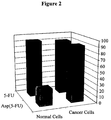
- the conjugates were added at concentrations that cause IC50 (50% lethality, Figure 1 ), or IC90 (90% lethality, Figure 2 ) by 5-FU.
- the cells were incubated for 72 hours at 37°C and 5% CO 2 . After 72 hours the medium was aspirated, and DMEM containing 5% FCS and 0.5 mg/ml MTT (3-(4,5-Dimethyl-2-thiazolyl)-2,5-diphenyl-2H-tetrazolium bromide, an indicator of cell viability) was added.
- the cells were incubated for 2-4 hours at 37°C and 5% CO 2 , washed with phosphate buffer saline (PBS) and dissolved in dimethylsulfoxide (DMSO). The results were analyzed using Techan ELISA reader equipped with a 570 nm filter. The results are represented as % of cell mortality.
- PBS phosphate buffer saline
- DMSO dimethylsulfoxide
- Results A concentration of 5-FU (black) that causes 50% mortality (IC 50 ) of normal and cancer cells as a free drug did not kill normal cells when administered as a Asp(5-FU) conjugate (gray) as shown in Figure 1 . Furthermore, a concentration of 5-FU that resulted in 90% mortality (IC 90 ), caused mortality of only 20% healthy cells when linked to Asp (gray, Asp(5-FU) as shown in Figure 2 . Asp(5-FU) shows a safe treatment profile by reducing toxicity by about 50% to about 70% in comparison to 5-FU.
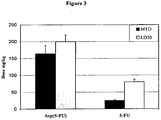
- IV acute intravenous toxicity of Asp(5-FU) in mice, estimated by Maximum Tolerated Dose (MTD) and 50% Lethal Dose (LD 50 ).
- IV intravenous toxicity of the Asp(5-FU) was assessed in groups of BALB/c female mice of 5 mice per group, in order to establish appropriate MTD levels towards a projected series of various anti-tumorigenic efficacy trials.
- Asp(5-FU) was administered as single IV injections at three dose levels of 80, 150 and 200 mg/kg.
- One group was administered with saline served as control.
- freshly prepared solutions were injected at a constant volume of 10 ml/kg.
- Asp(5-FU) was shown to be 600% less toxic than 5-FU.
- the potential anti-tumor activity of Asp(5-FU) was assessed based on the relative growth inhibition of human mammary duct carcinoma, MX-1 murine model.
- MX-1 fragments The Mammary Xenograft-1 (MX-1) is a human derived mammary duct carcinoma, supplied by the National Cancer Institute (NCI). The tissue was kept frozen until the time of implantation. The fragments (one to each animal in the study) were prepared according to the NCI recommended transplantation protocol.
- NCI National Cancer Institute
- Each vial containing 5 to 6 fragments was rapidly thawed (60-90 seconds) in a water bath at 37-40°C.
- the frozen fragments were implanted immediately after thawing.
- the donor animals were sacrificed, the tumors were excised, dissected and transferred to a sterile Petri dish placed over ice and cut into approximately 20 fragments (about 2 x 2 x 2 mm each) for their transplantation into 10 naive mice.
- a total of 42 tumor fragments were transplanted at the end of the second propagation phase. No more than 30 minutes elapsed from the time the tumor was removed from the donor animals until transplantation.
- Tumor Induction and Monitoring Upon completion of the propagation phase, tumor fragments measuring about 2 x 2 x 2 mm each, were implanted subcutaneously (SC) into the right flank of each test animal assigned to the main study. Tumor growth was monitored twice weekly and the total SC mass (mm 3 ) determined on the basis of width and length measurement using micrometer calipers. Treatment commenced 10 days following tumor transplantations (Day 10) and after tumors developed a mean group volume of 145-163 mm 3 (corresponding to individual tumor volume of 77-258 mm 3 ).
- Tumor Growth Monitoring Monitoring of progressive changes in tumor growth following treatment was carried out twice weekly.
- Clinical Signs Animals were observed once daily during regular work days for signs of unusual behavior and reactions and with a special emphasis on the tumor development area. Animals were observed for a maximum 5 weeks (treatment period days 1-25 and observation period days 26-35). Observations included changes in skin, fur, eyes, mucous membranes, occurrence of secretions and excretions (e.g. diarrhea) and autonomic activity (e.g. lacrimation, salivation, piloerection, pupil size, unusual respiratory pattern), changes in gait, posture and response to handling, as well as the presence of playful behavior, tremors, convulsions, sleep and coma. Animals showing enduring signs of severe distress or animals exhibiting tumor volume of above 2,200 mm 3 were humanely killed.
- secretions and excretions e.g. diarrhea
- autonomic activity e.g. lacrimation, salivation, piloerection, pupil size, unusual respiratory pattern
- Body Weight Individual body weights were determined prior to MX-1 fragment transplantation and thereafter once weekly until initiation of treatment. Following initiation of treatment individual body weights were determined twice weekly until the scheduled study termination or in case of removal of animals from the study due to animal welfare reasons, at the time of death.
- Blood Sampling Hematology and biochemistry parameters listed below were determined in all animals assigned to Groups 4,5 & 6, one day following the last dosing session. Blood samples (at least 100 ⁇ l of whole blood, collected into EDTA coated tubes for hematology and at least 200 ⁇ l serum, collected into non-coated tubes for biochemistry) were obtained by retro-orbital sinus bleeding under light CO 2 anesthesia. Following completion of blood collection, all blood and serum samples were kept at 2-8°C until transferred to the laboratory for analysis.
- the examined parameters are as follows: Hematology: WBC, RBC, HGB, HCT, MCV, MCH, MCHC, platelets, differential count.
- Biochemistry Creatinine, Calcium, Glucose, Cholesterol, Total protein, Globulin, LDH, Aspartate aminotransferase (AST), Potassium, CPK, Phosphorus, Urea, Amylase, Albumin, Total bilirubin, Alanine aminotransferase (ALT), Sodium, ⁇ -Glutamyl transpeptidase (GGT), Chloride, Triglycerides and Alkaline phosphatase (ALP).
- Necropsy Procedures and Macroscopic Examination Necropsy was performed on all animals including those removed from the study for animal welfare reasons and all surviving 10 days after the last dosing session (Groups 1,2 & 3), following euthanasia. At necropsy all animals were thoroughly examined for abnormality of tissues or organs and any gross pathological changes. All gross pathological changes were recorded.
- Organ/Tissue Fixations From all animals assigned to Groups 1,2 & 3 the brain, duodenum, heart, ileum, jejunum, kidneys, liver, lung, pancreas, skeletal muscle (thigh), spleen, sternum (bone marrow) and stomach were fixed and preserved in 10% neutral buffered formalin (approx. 4% formaldehyde solution) for histopathological examination. The individual tumor weight of all tested animals (Groups 1,2 & 3) was determined and the tumor was preserved as well in 4% formaldehyde.
- control, test and reference agents were administered by intravenous (IV) injection into one of the tail veins.
- Dose and Volume Dosage the test agent Asp(5-FU)was injected at two dose levels of 50 and 100 mg/kg. Equally sized groups were administered saline or 5-FU (26 mg/kg). In all instances, volume dosage was 10 ml/kg.
- Treatment was initiated 10 days following implantation of tumors. Treatment with control, test or reference agents was carried out as 1x daily injection at 3-days inter-dosing intervals x3.
- Asp(5-FU) treatment groups showed a 104% increase in tumor volume compared to 170% and 185% increase for the saline and 5-FU treatment arms, respectively.
- the results are shown in figure 5 , represented in volume (mm 3 ) of the tumor through the treatment period.
- tumor volume progression of MX-1 human mammary duct carcinoma is inhibited significantly by the compound Asp(5-FU) in BALB/c nude mice: Drugs were injected at Days 10, 14 and 18.
- the drugs represented are Asp(5-FU) ( ⁇ ), 5-FU ( ⁇ ), and control group ( ⁇ ).
- the graph represents tumor progression in volume (mm 3 ) per day.
- the solid line represents the trend line for the 5-FU treated animals, the dotted line represents the trend line for the control animals and the dashed line represents the trend line for the Asp(5-FU) treated animals.
- Asp(5-FU) shows a more safe and efficient profile than the free 5-FU.
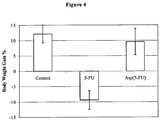
- Toxicology tests of Asp(5-FU) in animal models show significant reduction in drug toxicity in respect to maximum tolerated dose (MTD), body weight gain, and pathological signs than free 5-FU.
- MTD maximum tolerated dose
- Asp(5-FU) shows a significantly more efficient profile in reducing tumor volume and weight progression in human cancer xenografts in nude mice than free 5-FU.
- Example 24 in-vivo toxicity of oral administration in animal models
- OBJECTIVE To determine the Maximum Tolerated Dose (MTD) of the test product, Asp(5-FU), following a single administration by oral gavage (PO) to mice.
- MTD Maximum Tolerated Dose
- test agent was administered orally, by oral gavage.
- Asp(5-FU) was suspended in corn oil and administered by single oral gavage (PO), at 2 dose levels of 200 and 400 mg/kg, to 2 test groups.
- PO single oral gavage
- An additional equally sized group was administered the vehicle (corn oil) and served as control. In all instances the volume dosage was 10 ml/kg. Animals were observed for a total duration of 14 days.
- Mean group body weight gain of both treatment groups at the end of the 14-day observation period was similar to that of the vehicle control group.
- the appropriate MTD (Maximum Tolerated Dose) level for the Asp(5-FU) administered in corn oil to mice by a single oral gavage is higher than 400 mg/kg.
- Example 25 in-vivo efficacy of oral administration in animal models
- test agent administered orally, by oral gavage.
- the compounds were administered to mice following about 3-6 hours food deprivation prior to dosing, using a suitable stainless steel feeding needle. Following dosing, food was withheld for further 1-2 hours.
- Dose and Volume Dosage 50 mg/kg reference item and 200 mg/kg of Asp(5-FU).In all instances, volume dosage was 10 ml/kg.
Landscapes
- Health & Medical Sciences (AREA)
- Public Health (AREA)
- Veterinary Medicine (AREA)
- Chemical & Material Sciences (AREA)
- Medicinal Chemistry (AREA)
- Pharmacology & Pharmacy (AREA)
- Life Sciences & Earth Sciences (AREA)
- Animal Behavior & Ethology (AREA)
- General Health & Medical Sciences (AREA)
- Engineering & Computer Science (AREA)
- Bioinformatics & Cheminformatics (AREA)
- Epidemiology (AREA)
- Organic Chemistry (AREA)
- Chemical Kinetics & Catalysis (AREA)
- General Chemical & Material Sciences (AREA)
- Nuclear Medicine, Radiotherapy & Molecular Imaging (AREA)
- Hematology (AREA)
- Oncology (AREA)
- Pharmaceuticals Containing Other Organic And Inorganic Compounds (AREA)
- Medicinal Preparation (AREA)
- Medicines That Contain Protein Lipid Enzymes And Other Medicines (AREA)
- Medicines Containing Antibodies Or Antigens For Use As Internal Diagnostic Agents (AREA)
Applications Claiming Priority (3)
| Application Number | Priority Date | Filing Date | Title |
|---|---|---|---|
| US54033404P | 2004-02-02 | 2004-02-02 | |
| PCT/IL2005/000117 WO2005072061A2 (fr) | 2004-02-02 | 2005-02-02 | Remedes conjugues de therapie et diagnostic du cancer |
| EP05703160A EP1718145A4 (fr) | 2004-02-02 | 2005-02-02 | Remedes conjugues de therapie et diagnostic du cancer |
Related Parent Applications (2)
| Application Number | Title | Priority Date | Filing Date |
|---|---|---|---|
| EP05703160A Division EP1718145A4 (fr) | 2004-02-02 | 2005-02-02 | Remedes conjugues de therapie et diagnostic du cancer |
| PCT/IL2005/000117 Previously-Filed-Application WO2005072061A2 (fr) | 2004-02-02 | 2005-02-02 | Remedes conjugues de therapie et diagnostic du cancer |
Publications (2)
| Publication Number | Publication Date |
|---|---|
| EP3075247A1 true EP3075247A1 (fr) | 2016-10-05 |
| EP3075247B1 EP3075247B1 (fr) | 2022-10-12 |
Family
ID=34826214
Family Applications (2)
| Application Number | Title | Priority Date | Filing Date |
|---|---|---|---|
| EP05703160A Withdrawn EP1718145A4 (fr) | 2004-02-02 | 2005-02-02 | Remedes conjugues de therapie et diagnostic du cancer |
| EP15200535.1A Expired - Lifetime EP3075247B1 (fr) | 2004-02-02 | 2005-02-02 | Remedes conjugues de therapie et diagnostic du cancer |
Family Applications Before (1)
| Application Number | Title | Priority Date | Filing Date |
|---|---|---|---|
| EP05703160A Withdrawn EP1718145A4 (fr) | 2004-02-02 | 2005-02-02 | Remedes conjugues de therapie et diagnostic du cancer |
Country Status (3)
| Country | Link |
|---|---|
| US (2) | US7989188B2 (fr) |
| EP (2) | EP1718145A4 (fr) |
| WO (1) | WO2005072061A2 (fr) |
Families Citing this family (34)
| Publication number | Priority date | Publication date | Assignee | Title |
|---|---|---|---|---|
| WO2005072061A2 (fr) * | 2004-02-02 | 2005-08-11 | Biosight Ltd. | Remedes conjugues de therapie et diagnostic du cancer |
| AU2006243000B2 (en) * | 2005-05-05 | 2011-05-26 | Macrophage Pharma Limited | Alpha aminoacid ester-drug conjugates hydrolysable by carboxylesterase |
| EP2118107A1 (fr) * | 2007-03-02 | 2009-11-18 | Talia Miron | Dérivés de mercaptopurine utilisés en tant qu'agents anticancéreux |
| KR100807358B1 (ko) * | 2007-04-18 | 2008-02-28 | (주)나노하이브리드 | 암조직 선택성과 생분해성을 갖는 고리형 삼합체포스파젠-백금(ii) 착물 컨쥬게이트 항암제 및 그 제조방법 |
| WO2009048780A1 (fr) * | 2007-10-08 | 2009-04-16 | The University Of Kentucky Research Foundation | Conjugués polymère-chélateur de métaux et leurs utilisations |
| JP5555186B2 (ja) | 2008-02-29 | 2014-07-23 | クロマ セラピューティクス リミテッド | p38MAPキナーゼ阻害剤 |
| WO2009140186A1 (fr) * | 2008-05-14 | 2009-11-19 | Centocor Ortho Biotech Inc. | Procédé de préparation de dérivés de peptides |
| US20100120727A1 (en) * | 2008-11-12 | 2010-05-13 | Kyphia Pharmaceuticals, Inc. | Eflornithine Prodrugs, Conjugates and Salts, and Methods of Use Thereof |
| GB0907551D0 (en) | 2009-05-01 | 2009-06-10 | Univ Dundee | Treatment or prophylaxis of proliferative conditions |
| US20110054019A1 (en) * | 2009-09-01 | 2011-03-03 | Pedro Anastacio Serrano-Ojeda | Cancer Starvation Therapy |
| US10292956B2 (en) * | 2009-09-01 | 2019-05-21 | Serbig Pharmaceutics Corp. | Cancer starvation therapy |
| US10272068B2 (en) | 2012-01-17 | 2019-04-30 | Tyme, Inc. | Pharmaceutical compositions and methods |
| US10646552B2 (en) | 2012-01-17 | 2020-05-12 | Tyme, Inc. | Pharmaceutical compositions and methods |
| US20130183263A1 (en) | 2012-01-17 | 2013-07-18 | Steven Hoffman | Pharmaceutical compositions and methods |
| GB201315335D0 (en) | 2013-08-29 | 2013-10-09 | Of Singapore | Amino diacids containing peptide modifiers |
| US20170080093A1 (en) * | 2013-10-22 | 2017-03-23 | Tyme, Inc. | Tyrosine Derivatives And Compositions Comprising Them |
| US9585841B2 (en) * | 2013-10-22 | 2017-03-07 | Tyme, Inc. | Tyrosine derivatives and compositions comprising them |
| CN103936922B (zh) * | 2014-04-11 | 2016-06-29 | 西北师范大学 | 具有抗肿瘤活性的6-巯基嘌呤共聚物及其制备方法 |
| EP3378495B1 (fr) | 2015-11-18 | 2020-08-05 | Nippon Kayaku Kabushiki Kaisha | Composition comprenant un nouveau dérivé de l'acide glutamique et un copolymère à blocs, et utilisation de cette dernière |
| US11241427B2 (en) * | 2015-11-29 | 2022-02-08 | Kcl Therapeutics, Inc. | Small molecule modulators of NR2F6 activity |
| US11058701B2 (en) * | 2015-12-03 | 2021-07-13 | Biosight Ltd. | Cytarabine conjugates for cancer therapy |
| AU2016362239B2 (en) * | 2015-12-03 | 2021-03-25 | BioCytara Ltd. | Salts of conjugates for cancer therapy |
| US12071450B2 (en) | 2015-12-03 | 2024-08-27 | Biosight Ltd. | Salts of conjugates for cancer therapy |
| US12064445B2 (en) | 2015-12-03 | 2024-08-20 | Biosight Ltd. | Cytarabine conjugates for cancer therapy |
| AU2017368135A1 (en) * | 2016-11-30 | 2019-06-13 | Tyme, Inc. | Tyrosine derivatives and compositions comprising them |
| CA3069558A1 (fr) * | 2017-07-09 | 2019-01-17 | Biosight Ltd. | Polytherapie anticancereuse |
| US20190083430A1 (en) * | 2017-09-18 | 2019-03-21 | SEN-JAM Pharmaceutical LLC | Methods and Compositions to Inhibit Symptoms Associated with Opioid Withdrawal |
| AU2019216531A1 (en) | 2018-02-02 | 2020-09-24 | Maverix Oncology, Inc. | Small molecule drug conjugates of gemcitabine monophosphate |
| WO2020014153A1 (fr) * | 2018-07-09 | 2020-01-16 | The Regents Of The University Of California | Sondes fluorescentes redox-labiles et leurs procédés d'immobilisation sur une surface pour la détection de métabolites |
| JP2021535092A (ja) * | 2018-08-13 | 2021-12-16 | フラッグシップ パイオニアリング イノベーションズ ブイ, インコーポレイテッド | 結合体およびその使用方法 |
| WO2020232227A1 (fr) | 2019-05-14 | 2020-11-19 | Tyme, Inc. | Compositions et méthodes de traitement du cancer |
| CN112010811B (zh) * | 2019-05-30 | 2022-04-22 | 首都医科大学 | 茶氨酸与苯丙氨酸共同修饰的5-氟尿嘧啶,其合成,活性和应用 |
| CN110590862A (zh) * | 2019-11-01 | 2019-12-20 | 南京师范大学 | 阿糖胞苷4-n位氨基酸衍生物及其制备方法与应用 |
| CN120789042A (zh) * | 2025-09-12 | 2025-10-17 | 广东海洋大学深圳研究院 | Statine在制备抗结直肠肿瘤药物中的应用 |
Citations (16)
| Publication number | Priority date | Publication date | Assignee | Title |
|---|---|---|---|---|
| US2949451A (en) | 1959-04-21 | 1960-08-16 | Hoffmann La Roche | Preparation of thymidine and deoxyfluorouridine, and intermediates therefor |
| US3041335A (en) | 1959-04-21 | 1962-06-26 | Hoffmann La Roche | Mercury salts of nitrogen heterocyclics and preparation thereof |
| US4179337A (en) | 1973-07-20 | 1979-12-18 | Davis Frank F | Non-immunogenic polypeptides |
| US4296105A (en) | 1978-08-03 | 1981-10-20 | Institut International De Pathologie Cellulaire Et Moleculaire | Derivatives of doxorubicine, their preparation and use |
| US4348522A (en) | 1980-01-23 | 1982-09-07 | Starks Associates, Inc. | N-(phosphonacetyl)-L-aspartic acid salts with piperazine, cyclohexylamine and calcium |
| US4401592A (en) | 1978-12-29 | 1983-08-30 | Kureha Kagaku Kogyo Kabushiki Kaisha | Pharmaceutical composition having antitumor activity |
| US4859764A (en) | 1986-08-22 | 1989-08-22 | Shell Oil Company | Copolymerization of carbon monoxide and olefin with nitrogen containing phosphine ligand catalyst |
| US5106951A (en) | 1988-02-19 | 1992-04-21 | Neorx Corporation | Antibody conjugates |
| WO1996030036A1 (fr) | 1995-03-31 | 1996-10-03 | Emisphere Technologies, Inc. | Composes et compositions servant a l'apport d'agents actifs |
| US5643957A (en) | 1993-04-22 | 1997-07-01 | Emisphere Technologies, Inc. | Compounds and compositions for delivering active agents |
| WO1997036480A1 (fr) | 1996-03-29 | 1997-10-09 | Emisphere Technologies, Inc. | Composes et compositions d'apport de principes actifs |
| US5962216A (en) | 1994-08-19 | 1999-10-05 | La Region Wallonne | Tumor-activated prodrug compounds and treatment |
| WO2000033888A2 (fr) | 1998-12-11 | 2000-06-15 | Coulter Pharmaceutical, Inc. | Composes de promedicaments et procede de preparation |
| US6428780B2 (en) | 1995-03-31 | 2002-08-06 | Emisphere Technologies, Inc. | Compounds and compositions for delivering active agents |
| US6605638B1 (en) | 2000-12-20 | 2003-08-12 | D-Pharm Limited | Use of branched chain fatty acids and derivatives thereof for inhibition of P-glycoprotein |
| US6617306B2 (en) | 1998-03-19 | 2003-09-09 | Rutgers, The State University Of New Jersey | Carrier for in vivo delivery of a therapeutic agent |
Family Cites Families (3)
| Publication number | Priority date | Publication date | Assignee | Title |
|---|---|---|---|---|
| US4587046A (en) * | 1982-05-18 | 1986-05-06 | The Regents Of The University Of California | Drug-carrier conjugates |
| BRPI0210886B8 (pt) * | 2001-07-10 | 2021-05-25 | Amersham Health As | composto, composição farmacêutica, uso de um composto, e, métodos de geração de imagens, de monitoração do efeito do tratamento de um corpo humano ou animal com uma droga para combater uma condição associada com câncer e de tratamento de câncer ou de uma doença relacionada em um corpo humano ou animal |
| WO2005072061A2 (fr) * | 2004-02-02 | 2005-08-11 | Biosight Ltd. | Remedes conjugues de therapie et diagnostic du cancer |
-
2005
- 2005-02-02 WO PCT/IL2005/000117 patent/WO2005072061A2/fr not_active Ceased
- 2005-02-02 EP EP05703160A patent/EP1718145A4/fr not_active Withdrawn
- 2005-02-02 EP EP15200535.1A patent/EP3075247B1/fr not_active Expired - Lifetime
-
2006
- 2006-08-02 US US11/497,511 patent/US7989188B2/en not_active Expired - Lifetime
-
2011
- 2011-06-20 US US13/164,204 patent/US8993278B2/en not_active Expired - Lifetime
Patent Citations (19)
| Publication number | Priority date | Publication date | Assignee | Title |
|---|---|---|---|---|
| US3041335A (en) | 1959-04-21 | 1962-06-26 | Hoffmann La Roche | Mercury salts of nitrogen heterocyclics and preparation thereof |
| US2949451A (en) | 1959-04-21 | 1960-08-16 | Hoffmann La Roche | Preparation of thymidine and deoxyfluorouridine, and intermediates therefor |
| US4179337A (en) | 1973-07-20 | 1979-12-18 | Davis Frank F | Non-immunogenic polypeptides |
| US4296105A (en) | 1978-08-03 | 1981-10-20 | Institut International De Pathologie Cellulaire Et Moleculaire | Derivatives of doxorubicine, their preparation and use |
| US4401592A (en) | 1978-12-29 | 1983-08-30 | Kureha Kagaku Kogyo Kabushiki Kaisha | Pharmaceutical composition having antitumor activity |
| US4348522A (en) | 1980-01-23 | 1982-09-07 | Starks Associates, Inc. | N-(phosphonacetyl)-L-aspartic acid salts with piperazine, cyclohexylamine and calcium |
| US4859764A (en) | 1986-08-22 | 1989-08-22 | Shell Oil Company | Copolymerization of carbon monoxide and olefin with nitrogen containing phosphine ligand catalyst |
| US5106951A (en) | 1988-02-19 | 1992-04-21 | Neorx Corporation | Antibody conjugates |
| US5643957A (en) | 1993-04-22 | 1997-07-01 | Emisphere Technologies, Inc. | Compounds and compositions for delivering active agents |
| US5962216A (en) | 1994-08-19 | 1999-10-05 | La Region Wallonne | Tumor-activated prodrug compounds and treatment |
| US5650386A (en) | 1995-03-31 | 1997-07-22 | Emisphere Technologies, Inc. | Compositions for oral delivery of active agents |
| WO1996030036A1 (fr) | 1995-03-31 | 1996-10-03 | Emisphere Technologies, Inc. | Composes et compositions servant a l'apport d'agents actifs |
| US6428780B2 (en) | 1995-03-31 | 2002-08-06 | Emisphere Technologies, Inc. | Compounds and compositions for delivering active agents |
| US6623731B2 (en) | 1995-03-31 | 2003-09-23 | Emisphere Technologies, Inc. | Compounds and compositions for delivering active agents |
| WO1997036480A1 (fr) | 1996-03-29 | 1997-10-09 | Emisphere Technologies, Inc. | Composes et compositions d'apport de principes actifs |
| US6344213B1 (en) | 1996-03-29 | 2002-02-05 | Emisphere Technologies, Inc. | Compounds and compositions for delivering active agents |
| US6617306B2 (en) | 1998-03-19 | 2003-09-09 | Rutgers, The State University Of New Jersey | Carrier for in vivo delivery of a therapeutic agent |
| WO2000033888A2 (fr) | 1998-12-11 | 2000-06-15 | Coulter Pharmaceutical, Inc. | Composes de promedicaments et procede de preparation |
| US6605638B1 (en) | 2000-12-20 | 2003-08-12 | D-Pharm Limited | Use of branched chain fatty acids and derivatives thereof for inhibition of P-glycoprotein |
Non-Patent Citations (27)
| Title |
|---|
| ASLANIAN AM; FLETCHER BS; KILBERG MS: "Asparagine synthetase expression alone is sufficient to induce L-asparaginase resistance in MOLT-4 human leukaemia cells", BIOCHEM J., vol. 357, 2001, pages 321 - 8 |
| BARROWS, LR: "Remington: The Science and Practice of Pharmacy", 1995, MACK PUBLISHING CO, article "Antineoplastic and Immunoactive Drugs", pages: 1236 - 1262 |
| BRYNES S; FIORINA VJ; COONEY DA; MILMAN HA.: "Potential antitumor agents via inhibitors of L-asparagine synthetase: substituted sulfonamides and sulfonyl hydrazides related to glutamine", J PHARM SCI., vol. 67, no. 11, 1978, pages 1550 - 3 |
| BRYNES, S; BURCKART, GJ; MOKOTOFF, M.: "Potential inhibitors of L-asparagine biosynthesis. 4. Substituted sulfonamide and sulfonylhydrazide analogs of L-asparagine", J MED CHEM., vol. 21, no. 1, 1978, pages 45 - 9 |
| CAPIZZI RL; BERTINO JR; HANDSCHUMACHER RE.: "L-asparaginase", ANN REV MED, vol. 21, 1970, pages 433 - 444, XP008089348, DOI: doi:10.1146/annurev.me.21.020170.002245 |
| CASO G; MCNURLAN MA; MCMILLAN ND; EREMIN O; GARLICK PJ.: "Tumour cell growth in culture: dependence on arginine", CLIN SCI (LOND, vol. 107, no. 4, 2004, pages 371 - 9 |
| CHRZANOWSKI K; BIELAWSKA A; PALKA J.: "Proline analogue of melphalan as a prodrug susceptible to the action ofprolidase in breast cancer MDA-MB 231 cells", FARMACO., vol. 58, no. 11, 2003, pages 1113 - 9 |
| DATABASE BIOSIS [online] BIOSCIENCES INFORMATION SERVICE, PHILADELPHIA, PA, US; December 2015 (2015-12-01), ZUCKERMAN TSILA ET AL: "Astarabine, a Pro-Drug of Cytarabine, Is Safe for Patients with Advanced Acute Leukemia. A Phase I/IIa Single Center Study in Relapsed/Refractory or Medically Unfit Patients", XP002758689, Database accession no. PREV201600266096 * |
| FINGL ET AL.: "The Pharmacological Basis of Therapeutics", 1975, pages: 1 |
| FONG, WF; LAW, CL: "Possible role of the membrane Na+/H+ antiport in ornithine decarboxylase induction by L-asparagine", BIOCHEM BIOPHYS RES COMMUN, vol. 155, no. 2, 1988, pages 937 - 942, XP027114956, DOI: doi:10.1016/S0006-291X(88)80586-2 |
| HUTSON RG; KITOH T; MORAGA AMADOR DA; COSIC S; SCHUSTER SM; KILBERG MS.: "Amino acid control of asparagine synthetase: relation to asparaginase resistance in human leukemia cells", AM J PHYSIOL., vol. 272, no. 5-1, 1997, pages C1691 - 1699, XP008175096 |
| LI C: "POLY(L-GLUTAMIC ACID)-ANTICANCER DRUG CONJUGATES", ADVANCED DRUG DELIVERY REVIEWS, ELSEVIER BV, AMSTERDAM, NL, vol. 54, no. 5, 1 January 2002 (2002-01-01), pages 695 - 713, XP001199485, ISSN: 0169-409X, DOI: 10.1016/S0169-409X(02)00045-5 * |
| MANFREDINI S ET AL: "Peptide T-araC conjugates: solid-phase synthesis and biological activity of N4-(acylpeptidyl)-araC", BIOORGANIC & MEDICINAL CHEMISTRY, PERGAMON, GB, vol. 8, no. 3, 1 March 2000 (2000-03-01), pages 539 - 547, XP002601972, ISSN: 0968-0896 * |
| MASAYUKI YOKOYAMA: "Characterization and Anticancer Activity of the Micelle-forming Polymeric Anticancer Drug Adriamycin-conjugated Poly(ethylene glycol)-Poly(aspartic acid) Block Copolymer", CANCER RES, 1 January 1990 (1990-01-01), pages 1693 - 1700, XP055017571, Retrieved from the Internet <URL:http://cancerres.aacrjournals.org/content/50/6/1693.full.pdf> [retrieved on 20120125] * |
| MCGIVEN, BIOCHEM J., vol. 330, 1998, pages 255 - 260 |
| MCLAUGHLIN WH; THRAMANN WM JR; LAMBRECHT RM; MILIUS RA; BLOOMER WD: "Preliminary observations of malignant melanoma therapy using radiolabeled alpha-methyltyrosine", J SURG ONCOL., vol. 37, no. 3, 1988, pages 192 - 7 |
| MOCHIZUKI E ET AL: "Synthesis of poly-L-glutamates containing 5-substituted uracil moieties.", NUCLEIC ACIDS SYMPOSIUM SERIES 1985 LNKD- PUBMED:2418418, no. 16, 1985, pages 121 - 124, XP008147954, ISSN: 0261-3166 * |
| PIEK J; ADELT T; HUSE K; BOCK WJ.: "Cerebrospinal fluid and plasma aminograms in patients with primary and secondary tumors of the CNS", INFUSIONSTHER KLIN ERNAHR, vol. 14, no. 2, 1987, pages 73 - 77 |
| SAX, N. I., DANGEROUS PROPERTIES OF INDUSTRIAL MATERIAL REPORTS, vol. 8, no. 6, 1987, pages 64 |
| SHEPPARD RC; WILLIAMS BJ: "Acid-labile resin linkage agents for use in solid phase peptide synthesis", INT. J. PEPTIDE PROTEIN RES., vol. 20, 1982, pages 451 - 454 |
| STAMMER, CH; SATO, M: "5-Carboxamido-4-amino-3-isoxazolidone, an asparagine analog", J MED CHEM., vol. 21, no. 7, 1978, pages 709 - 712, XP000990040, DOI: doi:10.1021/jm00205a026 |
| TANDON M; THOMAS PD; SHOKRAVI M; SINGH S; SAMRA S; CHANG D; JIMBOW K.: "Synthesis and antitumour effect of the melanogenesis-based antimelanoma agent N-propionyl-4-S-cysteaminylphenol", BIOCHEM PHARMACOL, vol. 55, no. 12, 1998, pages 2023 - 9, XP008057665, DOI: doi:10.1016/S0006-2952(98)00090-2 |
| THOMAS PD; KISHI H; CAO H; OTA M; YAMASHITA T; SINGH S; JIMBOW K.: "Selective incorporation and specific cytocidal effect as the cellular basis for the antimelanoma action of sulphur containing tyrosine analogs", J INVEST DERMATOL., vol. 113, no. 6, 1999, pages 928 - 34 |
| WHITECAR JP JR; BODEY GP; HARRIS JE; FREIREICH EJ, L-ASPARAGINASE. N ENG J MED, vol. 282, 1970, pages 732 - 734 |
| WHITEHEAD RP; BENEDETTI JK; ABBRUZZESE JL; ARDALAN B; GOODWIN JW; BALCERZAK SP; SAMLOWSKI WE; LENZ HJ; MACDONALD JS.: "A phase II study of high-dose 24 hour continuous infusion 5-FU and leucovorin and low-dose PALA for patients with advanced pancreatic adenocarcinoma: a Southwest Oncology Group Study", INVEST NEW DRUGS., vol. 22, no. 3, 2004, pages 335 - 41, XP019206062, DOI: doi:10.1023/B:DRUG.0000026261.76197.54 |
| WHITEHEAD RP; BENEDETTI JK; ABBRUZZESE JL; ARDALAN B; WILLIAMSON S; GAYNOR ER; BALCERZAK SP; MACDONALD JS.: "A phase II pilot study of high-dose 24-hour continuous infusion of 5-FU and leucovorin and low-dose PALA for patients with colorectal cancer: a Southwest Oncology Group study", INVEST NEW DRUGS, vol. 22, no. 4, 2004, pages 467 - 73 |
| YAN GUO-PING ET AL: "Study on the anticancer drug 5-fluorouracil-conjugated polyaspartamide containing hepatocyte-targeting group", JOURNAL OF BIOACTIVE AND COMPATIBLE POLYMERS, SAGE PUBLICATIONS, GB, vol. 16, no. 4, 1 July 2001 (2001-07-01), pages 277 - 293, XP008147800, ISSN: 0883-9115, DOI: 10.1106/M4LK-LWJQ-34CL-LR85 * |
Also Published As
| Publication number | Publication date |
|---|---|
| EP1718145A2 (fr) | 2006-11-08 |
| US20110275590A1 (en) | 2011-11-10 |
| US8993278B2 (en) | 2015-03-31 |
| EP1718145A4 (fr) | 2012-03-07 |
| WO2005072061A2 (fr) | 2005-08-11 |
| EP3075247B1 (fr) | 2022-10-12 |
| US7989188B2 (en) | 2011-08-02 |
| US20070072800A1 (en) | 2007-03-29 |
| WO2005072061A3 (fr) | 2006-08-24 |
Similar Documents
| Publication | Publication Date | Title |
|---|---|---|
| US8993278B2 (en) | Conjugates for cancer therapy and diagnosis | |
| US12496292B2 (en) | PSMA binding ligand-linker conjugates and methods for using | |
| US20050004010A1 (en) | Cobalamin conjugates useful as imaging agents and as antitumor agents | |
| MXPA02003772A (es) | Conjugados de cobalamina, utiles como agentes para obtencion de imagen y como agentes terapeuticos. | |
| WO2002042318A2 (fr) | Conjugues fixant les recepteurs de transcobalamine pour therapie par capture de neutrons | |
| HK40118231A (en) | Psma binding ligand-linker conjugates and methods for using | |
| HK40055442A (en) | Psma binding ligand-linker conjugates and methods for using | |
| HK40053547A (en) | Psma binding ligand-linker conjugates and methods for using | |
| AU2006201021A1 (en) | Cobalamin conjugates useful as imaging agents and as antitumor agents |
Legal Events
| Date | Code | Title | Description |
|---|---|---|---|
| PUAI | Public reference made under article 153(3) epc to a published international application that has entered the european phase |
Free format text: ORIGINAL CODE: 0009012 |
|
| AC | Divisional application: reference to earlier application |
Ref document number: 1718145 Country of ref document: EP Kind code of ref document: P |
|
| AK | Designated contracting states |
Kind code of ref document: A1 Designated state(s): AT BE BG CH CY CZ DE DK EE ES FI FR GB GR HU IE IS IT LI LT LU MC NL PL PT RO SE SI SK TR |
|
| STAA | Information on the status of an ep patent application or granted ep patent |
Free format text: STATUS: REQUEST FOR EXAMINATION WAS MADE |
|
| 17P | Request for examination filed |
Effective date: 20170330 |
|
| RBV | Designated contracting states (corrected) |
Designated state(s): AT BE BG CH CY CZ DE DK EE ES FI FR GB GR HU IE IS IT LI LT LU MC NL PL PT RO SE SI SK TR |
|
| STAA | Information on the status of an ep patent application or granted ep patent |
Free format text: STATUS: EXAMINATION IS IN PROGRESS |
|
| 17Q | First examination report despatched |
Effective date: 20190618 |
|
| RAP1 | Party data changed (applicant data changed or rights of an application transferred) |
Owner name: BIOSIGHT LTD. |
|
| REG | Reference to a national code |
Ref country code: DE Ref legal event code: R079 Ref document number: 602005057454 Country of ref document: DE Free format text: PREVIOUS MAIN CLASS: A01N0037180000 Ipc: A61K0047540000 |
|
| RIC1 | Information provided on ipc code assigned before grant |
Ipc: A61P 35/02 20060101ALI20220329BHEP Ipc: A61P 35/00 20060101ALI20220329BHEP Ipc: A01N 37/18 20060101ALI20220329BHEP Ipc: A61K 47/55 20170101ALI20220329BHEP Ipc: A61K 47/54 20170101AFI20220329BHEP |
|
| GRAP | Despatch of communication of intention to grant a patent |
Free format text: ORIGINAL CODE: EPIDOSNIGR1 |
|
| STAA | Information on the status of an ep patent application or granted ep patent |
Free format text: STATUS: GRANT OF PATENT IS INTENDED |
|
| INTG | Intention to grant announced |
Effective date: 20220506 |
|
| GRAS | Grant fee paid |
Free format text: ORIGINAL CODE: EPIDOSNIGR3 |
|
| GRAA | (expected) grant |
Free format text: ORIGINAL CODE: 0009210 |
|
| STAA | Information on the status of an ep patent application or granted ep patent |
Free format text: STATUS: THE PATENT HAS BEEN GRANTED |
|
| AC | Divisional application: reference to earlier application |
Ref document number: 1718145 Country of ref document: EP Kind code of ref document: P |
|
| AK | Designated contracting states |
Kind code of ref document: B1 Designated state(s): AT BE BG CH CY CZ DE DK EE ES FI FR GB GR HU IE IS IT LI LT LU MC NL PL PT RO SE SI SK TR |
|
| REG | Reference to a national code |
Ref country code: GB Ref legal event code: FG4D |
|
| RIN1 | Information on inventor provided before grant (corrected) |
Inventor name: IZAKOVICH, ESTHER Inventor name: GENGRINOVITCH, STELA |
|
| REG | Reference to a national code |
Ref country code: CH Ref legal event code: EP |
|
| REG | Reference to a national code |
Ref country code: DE Ref legal event code: R096 Ref document number: 602005057454 Country of ref document: DE |
|
| REG | Reference to a national code |
Ref country code: IE Ref legal event code: FG4D |
|
| REG | Reference to a national code |
Ref country code: AT Ref legal event code: REF Ref document number: 1523756 Country of ref document: AT Kind code of ref document: T Effective date: 20221115 |
|
| REG | Reference to a national code |
Ref country code: LT Ref legal event code: MG9D |
|
| REG | Reference to a national code |
Ref country code: NL Ref legal event code: MP Effective date: 20221012 |
|
| REG | Reference to a national code |
Ref country code: AT Ref legal event code: MK05 Ref document number: 1523756 Country of ref document: AT Kind code of ref document: T Effective date: 20221012 |
|
| PG25 | Lapsed in a contracting state [announced via postgrant information from national office to epo] |
Ref country code: NL Free format text: LAPSE BECAUSE OF FAILURE TO SUBMIT A TRANSLATION OF THE DESCRIPTION OR TO PAY THE FEE WITHIN THE PRESCRIBED TIME-LIMIT Effective date: 20221012 |
|
| PG25 | Lapsed in a contracting state [announced via postgrant information from national office to epo] |
Ref country code: SE Free format text: LAPSE BECAUSE OF FAILURE TO SUBMIT A TRANSLATION OF THE DESCRIPTION OR TO PAY THE FEE WITHIN THE PRESCRIBED TIME-LIMIT Effective date: 20221012 Ref country code: PT Free format text: LAPSE BECAUSE OF FAILURE TO SUBMIT A TRANSLATION OF THE DESCRIPTION OR TO PAY THE FEE WITHIN THE PRESCRIBED TIME-LIMIT Effective date: 20230213 Ref country code: LT Free format text: LAPSE BECAUSE OF FAILURE TO SUBMIT A TRANSLATION OF THE DESCRIPTION OR TO PAY THE FEE WITHIN THE PRESCRIBED TIME-LIMIT Effective date: 20221012 Ref country code: FI Free format text: LAPSE BECAUSE OF FAILURE TO SUBMIT A TRANSLATION OF THE DESCRIPTION OR TO PAY THE FEE WITHIN THE PRESCRIBED TIME-LIMIT Effective date: 20221012 Ref country code: ES Free format text: LAPSE BECAUSE OF FAILURE TO SUBMIT A TRANSLATION OF THE DESCRIPTION OR TO PAY THE FEE WITHIN THE PRESCRIBED TIME-LIMIT Effective date: 20221012 Ref country code: AT Free format text: LAPSE BECAUSE OF FAILURE TO SUBMIT A TRANSLATION OF THE DESCRIPTION OR TO PAY THE FEE WITHIN THE PRESCRIBED TIME-LIMIT Effective date: 20221012 |
|
| PG25 | Lapsed in a contracting state [announced via postgrant information from national office to epo] |
Ref country code: PL Free format text: LAPSE BECAUSE OF FAILURE TO SUBMIT A TRANSLATION OF THE DESCRIPTION OR TO PAY THE FEE WITHIN THE PRESCRIBED TIME-LIMIT Effective date: 20221012 Ref country code: IS Free format text: LAPSE BECAUSE OF FAILURE TO SUBMIT A TRANSLATION OF THE DESCRIPTION OR TO PAY THE FEE WITHIN THE PRESCRIBED TIME-LIMIT Effective date: 20230212 Ref country code: GR Free format text: LAPSE BECAUSE OF FAILURE TO SUBMIT A TRANSLATION OF THE DESCRIPTION OR TO PAY THE FEE WITHIN THE PRESCRIBED TIME-LIMIT Effective date: 20230113 |
|
| P01 | Opt-out of the competence of the unified patent court (upc) registered |
Effective date: 20230517 |
|
| REG | Reference to a national code |
Ref country code: DE Ref legal event code: R097 Ref document number: 602005057454 Country of ref document: DE |
|
| PG25 | Lapsed in a contracting state [announced via postgrant information from national office to epo] |
Ref country code: RO Free format text: LAPSE BECAUSE OF FAILURE TO SUBMIT A TRANSLATION OF THE DESCRIPTION OR TO PAY THE FEE WITHIN THE PRESCRIBED TIME-LIMIT Effective date: 20221012 Ref country code: EE Free format text: LAPSE BECAUSE OF FAILURE TO SUBMIT A TRANSLATION OF THE DESCRIPTION OR TO PAY THE FEE WITHIN THE PRESCRIBED TIME-LIMIT Effective date: 20221012 Ref country code: DK Free format text: LAPSE BECAUSE OF FAILURE TO SUBMIT A TRANSLATION OF THE DESCRIPTION OR TO PAY THE FEE WITHIN THE PRESCRIBED TIME-LIMIT Effective date: 20221012 Ref country code: CZ Free format text: LAPSE BECAUSE OF FAILURE TO SUBMIT A TRANSLATION OF THE DESCRIPTION OR TO PAY THE FEE WITHIN THE PRESCRIBED TIME-LIMIT Effective date: 20221012 |
|
| PLBE | No opposition filed within time limit |
Free format text: ORIGINAL CODE: 0009261 |
|
| STAA | Information on the status of an ep patent application or granted ep patent |
Free format text: STATUS: NO OPPOSITION FILED WITHIN TIME LIMIT |
|
| PG25 | Lapsed in a contracting state [announced via postgrant information from national office to epo] |
Ref country code: SK Free format text: LAPSE BECAUSE OF FAILURE TO SUBMIT A TRANSLATION OF THE DESCRIPTION OR TO PAY THE FEE WITHIN THE PRESCRIBED TIME-LIMIT Effective date: 20221012 |
|
| 26N | No opposition filed |
Effective date: 20230713 |
|
| PG25 | Lapsed in a contracting state [announced via postgrant information from national office to epo] |
Ref country code: MC Free format text: LAPSE BECAUSE OF FAILURE TO SUBMIT A TRANSLATION OF THE DESCRIPTION OR TO PAY THE FEE WITHIN THE PRESCRIBED TIME-LIMIT Effective date: 20221012 |
|
| REG | Reference to a national code |
Ref country code: CH Ref legal event code: PL |
|
| REG | Reference to a national code |
Ref country code: BE Ref legal event code: MM Effective date: 20230228 |
|
| PG25 | Lapsed in a contracting state [announced via postgrant information from national office to epo] |
Ref country code: LU Free format text: LAPSE BECAUSE OF NON-PAYMENT OF DUE FEES Effective date: 20230202 Ref country code: LI Free format text: LAPSE BECAUSE OF NON-PAYMENT OF DUE FEES Effective date: 20230228 Ref country code: CH Free format text: LAPSE BECAUSE OF NON-PAYMENT OF DUE FEES Effective date: 20230228 |
|
| PG25 | Lapsed in a contracting state [announced via postgrant information from national office to epo] |
Ref country code: SI Free format text: LAPSE BECAUSE OF FAILURE TO SUBMIT A TRANSLATION OF THE DESCRIPTION OR TO PAY THE FEE WITHIN THE PRESCRIBED TIME-LIMIT Effective date: 20221012 |
|
| REG | Reference to a national code |
Ref country code: IE Ref legal event code: MM4A |
|
| PGFP | Annual fee paid to national office [announced via postgrant information from national office to epo] |
Ref country code: GB Payment date: 20231214 Year of fee payment: 20 |
|
| PG25 | Lapsed in a contracting state [announced via postgrant information from national office to epo] |
Ref country code: IE Free format text: LAPSE BECAUSE OF NON-PAYMENT OF DUE FEES Effective date: 20230202 |
|
| PGFP | Annual fee paid to national office [announced via postgrant information from national office to epo] |
Ref country code: FR Payment date: 20231212 Year of fee payment: 20 |
|
| PG25 | Lapsed in a contracting state [announced via postgrant information from national office to epo] |
Ref country code: BE Free format text: LAPSE BECAUSE OF NON-PAYMENT OF DUE FEES Effective date: 20230228 |
|
| PGFP | Annual fee paid to national office [announced via postgrant information from national office to epo] |
Ref country code: DE Payment date: 20231205 Year of fee payment: 20 |
|
| PG25 | Lapsed in a contracting state [announced via postgrant information from national office to epo] |
Ref country code: IT Free format text: LAPSE BECAUSE OF FAILURE TO SUBMIT A TRANSLATION OF THE DESCRIPTION OR TO PAY THE FEE WITHIN THE PRESCRIBED TIME-LIMIT Effective date: 20221012 |
|
| PG25 | Lapsed in a contracting state [announced via postgrant information from national office to epo] |
Ref country code: BG Free format text: LAPSE BECAUSE OF FAILURE TO SUBMIT A TRANSLATION OF THE DESCRIPTION OR TO PAY THE FEE WITHIN THE PRESCRIBED TIME-LIMIT Effective date: 20221012 |
|
| PG25 | Lapsed in a contracting state [announced via postgrant information from national office to epo] |
Ref country code: BG Free format text: LAPSE BECAUSE OF FAILURE TO SUBMIT A TRANSLATION OF THE DESCRIPTION OR TO PAY THE FEE WITHIN THE PRESCRIBED TIME-LIMIT Effective date: 20221012 |
|
| REG | Reference to a national code |
Ref country code: DE Ref legal event code: R071 Ref document number: 602005057454 Country of ref document: DE |
|
| REG | Reference to a national code |
Ref country code: GB Ref legal event code: PE20 Expiry date: 20250201 |
|
| PG25 | Lapsed in a contracting state [announced via postgrant information from national office to epo] |
Ref country code: GB Free format text: LAPSE BECAUSE OF EXPIRATION OF PROTECTION Effective date: 20250201 |
|
| PG25 | Lapsed in a contracting state [announced via postgrant information from national office to epo] |
Ref country code: CY Free format text: LAPSE BECAUSE OF FAILURE TO SUBMIT A TRANSLATION OF THE DESCRIPTION OR TO PAY THE FEE WITHIN THE PRESCRIBED TIME-LIMIT; INVALID AB INITIO Effective date: 20050202 |
|
| PG25 | Lapsed in a contracting state [announced via postgrant information from national office to epo] |
Ref country code: HU Free format text: LAPSE BECAUSE OF FAILURE TO SUBMIT A TRANSLATION OF THE DESCRIPTION OR TO PAY THE FEE WITHIN THE PRESCRIBED TIME-LIMIT; INVALID AB INITIO Effective date: 20050202 |
|
| PG25 | Lapsed in a contracting state [announced via postgrant information from national office to epo] |
Ref country code: TR Free format text: LAPSE BECAUSE OF FAILURE TO SUBMIT A TRANSLATION OF THE DESCRIPTION OR TO PAY THE FEE WITHIN THE PRESCRIBED TIME-LIMIT Effective date: 20221012 |