EP3076296A1 - Computer, steuerungsvorrichtung und datenverarbeitungsverfahren - Google Patents
Computer, steuerungsvorrichtung und datenverarbeitungsverfahren Download PDFInfo
- Publication number
- EP3076296A1 EP3076296A1 EP15785332.6A EP15785332A EP3076296A1 EP 3076296 A1 EP3076296 A1 EP 3076296A1 EP 15785332 A EP15785332 A EP 15785332A EP 3076296 A1 EP3076296 A1 EP 3076296A1
- Authority
- EP
- European Patent Office
- Prior art keywords
- application request
- control device
- tag
- resource allocation
- computer
- Prior art date
- Legal status (The legal status is an assumption and is not a legal conclusion. Google has not performed a legal analysis and makes no representation as to the accuracy of the status listed.)
- Ceased
Links
Images




Classifications
-
- G—PHYSICS
- G06—COMPUTING OR CALCULATING; COUNTING
- G06F—ELECTRIC DIGITAL DATA PROCESSING
- G06F9/00—Arrangements for program control, e.g. control units
- G06F9/06—Arrangements for program control, e.g. control units using stored programs, i.e. using an internal store of processing equipment to receive or retain programs
- G06F9/46—Multiprogramming arrangements
- G06F9/50—Allocation of resources, e.g. of the central processing unit [CPU]
- G06F9/5005—Allocation of resources, e.g. of the central processing unit [CPU] to service a request
- G06F9/5011—Allocation of resources, e.g. of the central processing unit [CPU] to service a request the resources being hardware resources other than CPUs, Servers and Terminals
-
- G—PHYSICS
- G06—COMPUTING OR CALCULATING; COUNTING
- G06F—ELECTRIC DIGITAL DATA PROCESSING
- G06F9/00—Arrangements for program control, e.g. control units
- G06F9/06—Arrangements for program control, e.g. control units using stored programs, i.e. using an internal store of processing equipment to receive or retain programs
- G06F9/46—Multiprogramming arrangements
- G06F9/48—Program initiating; Program switching, e.g. by interrupt
- G06F9/4806—Task transfer initiation or dispatching
- G06F9/4843—Task transfer initiation or dispatching by program, e.g. task dispatcher, supervisor, operating system
- G06F9/4881—Scheduling strategies for dispatcher, e.g. round robin, multi-level priority queues
-
- G—PHYSICS
- G06—COMPUTING OR CALCULATING; COUNTING
- G06F—ELECTRIC DIGITAL DATA PROCESSING
- G06F9/00—Arrangements for program control, e.g. control units
- G06F9/06—Arrangements for program control, e.g. control units using stored programs, i.e. using an internal store of processing equipment to receive or retain programs
- G06F9/46—Multiprogramming arrangements
- G06F9/50—Allocation of resources, e.g. of the central processing unit [CPU]
-
- G—PHYSICS
- G06—COMPUTING OR CALCULATING; COUNTING
- G06F—ELECTRIC DIGITAL DATA PROCESSING
- G06F9/00—Arrangements for program control, e.g. control units
- G06F9/06—Arrangements for program control, e.g. control units using stored programs, i.e. using an internal store of processing equipment to receive or retain programs
- G06F9/46—Multiprogramming arrangements
- G06F9/50—Allocation of resources, e.g. of the central processing unit [CPU]
- G06F9/5005—Allocation of resources, e.g. of the central processing unit [CPU] to service a request
- G06F9/5027—Allocation of resources, e.g. of the central processing unit [CPU] to service a request the resource being a machine, e.g. CPUs, Servers, Terminals
-
- G—PHYSICS
- G06—COMPUTING OR CALCULATING; COUNTING
- G06F—ELECTRIC DIGITAL DATA PROCESSING
- G06F9/00—Arrangements for program control, e.g. control units
- G06F9/06—Arrangements for program control, e.g. control units using stored programs, i.e. using an internal store of processing equipment to receive or retain programs
- G06F9/46—Multiprogramming arrangements
- G06F9/50—Allocation of resources, e.g. of the central processing unit [CPU]
- G06F9/5005—Allocation of resources, e.g. of the central processing unit [CPU] to service a request
- G06F9/5027—Allocation of resources, e.g. of the central processing unit [CPU] to service a request the resource being a machine, e.g. CPUs, Servers, Terminals
- G06F9/5044—Allocation of resources, e.g. of the central processing unit [CPU] to service a request the resource being a machine, e.g. CPUs, Servers, Terminals considering hardware capabilities
-
- G—PHYSICS
- G06—COMPUTING OR CALCULATING; COUNTING
- G06F—ELECTRIC DIGITAL DATA PROCESSING
- G06F9/00—Arrangements for program control, e.g. control units
- G06F9/06—Arrangements for program control, e.g. control units using stored programs, i.e. using an internal store of processing equipment to receive or retain programs
- G06F9/46—Multiprogramming arrangements
- G06F9/54—Interprogram communication
- G06F9/546—Message passing systems or structures, e.g. queues
Definitions
- the present invention relates to the computer field, and in particular, to a computer, a control device, and a data processing method.
- multiple application programs may implement resource sharing inside the computer.
- the multiple application programs may apply to a memory for a resource at the same time, thereby improving memory resource utilization.
- multiple application programs interfere with each other when sharing a resource, and therefore some important application programs cannot be processed preferentially, thereby affecting service quality.
- Embodiments of the present invention provide a computer, a control device, and a data processing method, which are used to improve service quality of an application program.
- a first aspect of the embodiments of the present invention provides a computer, where the computer includes a processing unit and a control device, where:
- the control device further includes a buffer, the buffer includes at least two queues, each queue corresponds to a range of quantities of resources, and a priority of each queue is different; the control device is specifically configured to select, from the at least two queues according to the quantity of resources allocated for the application request, a queue corresponding to the application request, and store the application request in the queue corresponding to the application request; and the component of the computer is configured to obtain the application request from the queue corresponding to the application request and execute the application request.
- control device further includes a processor and a cache, where the cache stores the resource allocation policy; and the processor is further configured to acquire the resource allocation policy from the cache.
- the resource allocation policy includes a control table, the control table includes multiple entries, and one entry of the multiple entries includes the correspondence between the tag and the quantity of resources allocated for the application request; the processor is specifically configured to send a query instruction to the cache, where the query instruction includes the tag; and the cache is configured to obtain, according to the query instruction, an entry corresponding to the tag, and send the entry corresponding to the tag to the processor of the control device.
- control device further includes a programming interface, and the programming interface is configured to modify the resource allocation policy.
- the computer further includes a memory, where the memory stores node management software; the processing unit is further configured to define the resource allocation policy by using the node management software; and the control device is further configured to acquire the resource allocation policy from the node management software, and write the resource allocation policy into the cache.
- the processing unit further includes a tag register; the processing unit is further configured to define the tag by using the node management software, and write the tag into the tag register by using the node management software; and the processing unit is further configured to read the tag from the tag register.
- a second aspect of the embodiments of the present invention provides a control device, where the control device is disposed on a component of a computer, and the control device includes a processor, where the processor is configured to receive an application request to which a tag is attached, and determine, according to the tag and a prestored resource allocation policy, a quantity of resources allocated for the application request, where the resource allocation policy includes a correspondence between the tag and the quantity of resources allocated for the application request; and further configured to instruct the component of the computer to process the application request according to the quantity of resources allocated for the application request.
- the control device further includes a buffer, the buffer includes at least two queues, each queue corresponds to a range of quantities of resources, and a priority of each queue is different; the processor is specifically configured to select, from the at least two queues according to the quantity of resources allocated for the application request, a queue corresponding to the application request, and store the application request in the queue corresponding to the application request; and the component of the computer is configured to obtain the application request from the queue corresponding to the application request and execute the application request.
- control device further includes a cache, where the cache stores the resource allocation policy; and the processor is further configured to acquire the resource allocation policy from the cache.
- the resource allocation policy includes a control table, the control table includes multiple entries, and one entry of the multiple entries includes the correspondence between the tag and the quantity of resources allocated for the application request;
- the processor is specifically configured to send a query instruction to the cache, where the query instruction includes the tag; and the cache is configured to obtain, according to the query instruction, an entry corresponding to the tag, and send the entry corresponding to the tag to the processor.
- control device further includes a programming interface, and the programming interface is configured to modify the resource allocation policy.
- the resource allocation policy is defined by the computer by using node management software and is sent to the control device, where the node management software is stored in a memory of the computer.
- a third aspect of the embodiments of the present invention provides a data processing method, where the method is applied to a control device, the control device is disposed on a component of a computer, and the method includes:
- control device further includes a buffer, the buffer includes at least two queues, each queue corresponds to a range of quantities of resources, and a priority of each queue is different; and the instructing, by the control device, the component of the computer to process the application request according to the quantity of resources allocated for the application request includes:
- control device further includes a processor and a cache, where the cache stores the resource allocation policy; and the method further includes: acquiring, by the processor of the control device, the resource allocation policy from the cache.
- the resource allocation policy includes a control table, the control table includes multiple entries, and one entry of the multiple entries includes the correspondence between the tag and the quantity of resources allocated for the application request; the acquiring, by the processor of the control device, the resource allocation policy from the cache includes: sending, by the processor of the control device, a query instruction to the cache, where the query instruction includes the tag; and obtaining, by the cache according to the query instruction, an entry corresponding to the tag, and sending the entry corresponding to the tag to the processor of the control device.
- the embodiments of the present invention provide a computer, where the computer includes a processing unit and a control device.
- the processing unit attaches a tag to an application request, and sends, to the control device, the attached application request; the control device determines, according to the tag and a prestored resource allocation policy, a quantity of resources allocated for the application request, and instructs a component of the computer to process the application request according to the quantity of resources allocated for the application request.
- the component of the computer may perform processing according to the quantity of resources allocated for the application request, which, to some extent, prevents a quantity of resources from being mutually preempted by multiple application requests, thereby improving service quality.
- the embodiments of the present invention provide a computer, a control device, and a data processing method, which are used to improve service quality of an application program.
- FIG. 1 is a schematic diagram of a system architecture of a computer 10 according to an embodiment of the present invention.
- the computer 10 includes multiple processing units 11, multiple control devices 66, and multiple components 33 (which are referred to as parts for short in FIG. 1 ) of the computer.
- the component of the computer in this embodiment of the present invention refers to a component of a computer whose resource may be occupied by multiple application programs.
- the processing unit 11 refers to one of processor cores that are on a central processing unit (Central Processing Unit, CPU) and that have a same function, and is configured to execute various operation commands such as read and write.
- CPU Central Processing Unit
- the component 33 of the computer includes a high-speed on-chip interconnection network and a component that is of the computer and directly connected to the high-speed on-chip interconnection network, for example, a cache (also referred to as a cache), a memory, a graphic processing unit (Graphic Processing Unit, GPU), and a video RAM, and may further include an I/O interconnection network and an I/O device connected to the I/O interconnection network, for example, a magnetic disk (also referred to as a hard disk), a network adapter, and a display.
- a cache also referred to as a cache
- memory a graphic processing unit (Graphic Processing Unit, GPU), and a video RAM
- I/O interconnection network and an I/O device connected to the I/O interconnection network for example, a magnetic disk (also referred to as a hard disk), a network adapter, and a display.
- the high-speed on-chip interconnection network is a connector for connecting the multiple processing units 11; the high-speed on-chip interconnection network is also connected to a cache, a memory, a graphic processing unit, a video RAM, and the like.
- a resource allocated by the cache to an application program may be cache space; for the memory, a resource allocated by the memory to an application program may be memory space; for the graphic processing unit, a resource allocated by the graphic processing unit to an application program may be a hardware acceleration resource; for the video RAM, a resource allocated by the video RAM to an application program may be video RAM space.
- the high-speed on-chip interconnection network may also be connected to the I/O interconnection network (also referred to as a southbridge).
- the I/O interconnection network is a device for controlling an I/O device.
- the component 33 of the computer further includes the I/O device directly connected to the I/O interconnection network, for example, a magnetic disk (also referred to as a hard disk), a network adapter, and a display.
- a magnetic disk also referred to as a hard disk
- a network adapter also referred to as a network adapter
- the computer 10 may process multiple application programs, and all these application programs need to occupy a resource of a component (for example, a memory) of the computer.
- a component for example, a memory
- the computer 10 may process multiple application programs, and all these application programs need to occupy a resource of a component (for example, a memory) of the computer.
- resources in the memory are limited, some important application programs cannot be processed in a timely manner, and therefore service quality is affected.
- the control devices 66 are disposed on components of the computer, where resources of the components may be applied for or occupied by multiple application programs.
- the control devices 66 are configured to allocate different quantities of resources to the application programs according to different types of the application programs, so as to process the application programs.
- the components, whose resources may be applied for or occupied by the multiple application programs, of the computer include but are not limited to: a high-speed on-chip interconnection network, a cache, a memory, a graphic processing unit, a video RAM, and an I/O interconnection network.
- control device 66 may be disposed only on one component of the computer among multiple components of the computer; or the control devices 66 may be disposed on multiple components of the computer; or even, the control devices 66 may be disposed on all of the above-mentioned components of the computer.
- the control device 66 In order to enable the control device 66 to identify the application programs of different types, types of application requests need to be identified and tagged at a source end at which the application requests (requests corresponding to the application programs) are generated. Therefore, when the application requests are sent to the control device 66 on a component of the computer later, the control device 66 may perform different processing on the application programs of different types according to tags. It should be noted that, in this embodiment of the present invention, the application programs and the application requests represent a same meaning.
- the application requests in this embodiment of the present invention include various instructions generated inside the computer and various instructions received from an outside of the computer, for example, a file access request, a video playback request, a memory access request, an I/O request, and an interconnect (Interconnect) request.
- the source end at which the application requests are generated may be the processing unit 11 or the I/O device (for example, a network adapter).
- the source end at which the application requests are generated may be the processing unit 11; when the application requests are from the outside of the computer 10, for example, when application requests sent by using the Internet are received, the source end at which the application requests are generated may be the network adapter or another input-output device.
- a manner of tagging may be as follows:
- the tag is defined by node management software (which is described in detail in the following) for the application request.
- the node management software may be a module in an operating system, or a module at a middle software layer (Hypervisor) between the operating system and computer hardware, and runs on the processing unit 11.
- the operating system may write the tag into a context of a process corresponding to the application request, and then write the context of the process corresponding to the application request into the register.
- the network adapter When the network adapter serves as a source end of an application request, in an implementation manner, the network adapter itself does not execute an action of tagging the application request.
- the application request is an application request including a tag. That is, a sending end of the application request may tag the application request before sending the application request.
- servers or computers may determine a tag of an application request by means of negotiation; or a tag server may be disposed to define and send a tag of an application request to each server. All of the implementation manners and the like shall fall within the protection scope of this embodiment of the present invention.
- Another implementation manner is as follows: when the network adapter receives a message packet, an application request is obtained by parsing the message packet, and then the application request is tagged.
- a manner of tagging the application request by the network adapter is similar to the manner, which is described above, of tagging by the processing unit 11 and is not described herein again.
- another component for example, an I/O interconnection network, inside the computer 10 may also attach a tag to an application request, an implementation manner thereof is similar to that of the processing unit 11 or the network adapter, and this embodiment of the present invention sets no limit to a component for tagging.
- the following describes a subsequent processing procedure by using an example in which the processing unit 11 attaches a tag to an application request.
- control device 66 is configured to receive the attached application request, and determine, according to the tag and a prestored resource allocation policy, a quantity of resources allocated for the application request, where the resource allocation policy includes a correspondence between the tag and the quantity of resources allocated for the application request; and further configured to instruct a component of the computer to process the application request according to the quantity of resources allocated for the application request.
- This embodiment of the present invention provides a computer, where the computer includes a processing unit and a control device.
- the processing unit attaches a tag to an application request, and sends, to the control device, the attached application request; the control device determines, according to the tag and a prestored resource allocation policy, a quantity of resources allocated for the application request, and instructs a component of the computer to process the application request according to the quantity of resources allocated for the application request.
- the component of the computer may perform processing according to the quantity of resources allocated for the application request, which, to some extent, prevents a quantity of resources from being mutually preempted by multiple application requests, thereby improving service quality.
- the control device 66 refers to a device, inside the computer 10, on any component of the components of the computer.
- the control device 66 may be a control device embedded in the controller or a newly-attached control device connected to the original controller; when some components of the computer do not include a controller, the control device 66 may be a newly-attached controller or control device connected to the components of the computer.
- control device 66 includes a processor 600a.
- the control device 66 is configured to receive an application request to which a tag is attached, and determine, according to the tag and a prestored resource allocation policy, a quantity of resources allocated for the application request, where the resource allocation policy includes a correspondence between the tag and the quantity of resources allocated for the application request; and further configured to instruct a component of the computer to process the application request according to the quantity of resources allocated for the application request.
- control device 66 may further include a buffer (also referred to as a buffer) 600b.
- a buffer also referred to as a buffer 600b.
- the processor 600a is configured to store, in the buffer 600b, the attached application request; read the tag from the buffer 600b, and determine, according to the tag and the prestored resource allocation policy, the quantity of resources allocated for the application request, where the resource allocation policy includes the correspondence between the tag and the quantity of resources allocated for the application request; and instruct the component of the computer to process the application request according to the quantity of resources allocated for the application request.
- the buffer 600b may also be a register in the processor 600a.
- a processing manner thereof may be as follows: the processor 600a is configured to store, in the register of the processor 600a, the attached application request; read the tag from the register, and determine, according to the tag and the prestored resource allocation policy, the quantity of resources allocated for the application request, where the resource allocation policy includes the correspondence between the tag and the quantity of resources allocated for the application request; and instruct the component of the computer to process the application request according to the quantity of resources allocated for the application request.
- the control device 66 may include a processor 600i, a buffer (also referred to as a buffer) 600b, and a queue 600c.
- the processor 600i may be a field-programmable gate array (Field-Programmable Gate Array, FPGA) or another programmable device.
- a resource allocation policy is built in the processor 600i, where the resource allocation policy may be a control table (as shown in Table 1) and the control table is editable.
- Table 1 Tag Attribute 1 ... Attribute i State 1 ... State i Tag 1 Value range ... Value range Value ... Value ... Tag k Value range ... Value range Value ... Value
- each entry in Table 1 corresponds to one tag.
- each entry of the control table includes multiple "attributes", where the "attribute” represents a quantity of resources allocated for an application request corresponding to the tag. There may be multiple types of quantities of resources, for example, target service quality, an IPC (Instruction per Cycle), a response time, a maximum tolerance, or the like may be included.
- a value range of the "attribute” may be set by a user. For example, the value range may be defined as a range not less than 30% or not greater than 80%.
- each entry further includes multiple "states", where the "state” represents a quantity of resources currently consumed by the application request corresponding to the tag, and a value of the "state” may be monitored in real time and updated.
- the resource allocation policy may also be firmware code and is built in an FPGA. This embodiment of the present invention sets no limit to a manner of storing a resource allocation policy.
- the buffer 600b is a temporary buffer.
- the control device 66 receives an application request including a tag, the application request is first placed into the buffer 600b for temporary storage.
- the queue 600c is also a temporary buffer, which may be located in a same temporary buffer as the buffer 600b, or may be separated from the buffer 600b to independently serve as a temporary buffer.
- the queue 600c is configured to store an application request processed by the processor 600i.
- the queue 600c may include multiple queues, and different queues are corresponding to different address segments in the buffer 600b. Different queues have different priorities, and the priorities are represented in different sequences for executing, by a component of the computer, application requests in the queues, which means that different quantities of resources are allocated for different queues.
- control device 66 may further include a programming interface 600d.
- the programming interface 600d is configured to implement an address space mapping mechanism, and can map the control table built in the processor 600i to physical address space of the computer 10.
- Node management software may access the physical address space of the computer 10 to edit the control table.
- the programming interface 600d may provide various functions, which are used to add, modify, or delete an entry stored in the control table.
- the processor 600i may further provide values of all "states" in each entry of the control table of the processor 600i to the node management software, so that the node management software further adjusts the resource allocation policy after collecting statistics on the values of the "states" of all application requests,.
- the processor 600i may acquire, from the buffer 600b, an application request including a tag, and query a corresponding entry in Table 1 according to the tag, so as to obtain an "attribute" of the application request. Because the "attribute" of the application request indicates a quantity of resources allocated for the application request, the processor 600i may select, from the at least two queues according to the quantity of resources allocated for the application request, a queue corresponding to the application request, and place the application request into the corresponding queue.
- the processor 600i may instruct a corresponding component of the computer to perform processing on the application request.
- the "corresponding component of the computer” refers to a component, to which the control device belongs, of the computer.
- the control device refers to a control device on a cache
- the "corresponding component of the computer” herein refers to the cache.
- the "instructing a corresponding component of the computer to perform processing on the application request” may be that the processor 600i dequeues the application request from the corresponding queue, and sends the application request to the corresponding component of the computer, or may be that the corresponding component of the computer obtains the application request from the corresponding queue.
- control device 66 may further include a data forwarder 600j.
- the processor 600i may send an application request to the data forwarder 600j after dequeuing the application request from the queues; and the data forwarder 600j is configured to forward the application request to a corresponding component of the computer. That is, the corresponding component of the computer herein may obtain the application request from the corresponding queue by using the data forwarder 600j.
- the processor 600i may perform some preprocessing operations, such as compression and encryption, on the application request, and then place the application request that has undergone the preprocessing operations into the corresponding queue 600c.
- control device 66 As shown in FIG. 4 , for the control device 66, another optional implementation manner is as follows:
- the buffer 600b and the queue 600c are the same as the buffer and the queue shown in FIG. 3 and are not described herein again.
- the microprocessor 600e may be a CPU or another controller whose function is similar to that of a CPU.
- a difference between the microprocessor 600e and the processor 600i shown in FIG. 3 lies in that: the processor 600i serves as a programmable device, a resource allocation policy is built in the processor 600i, and the resource allocation policy is editable; the microprocessor 600e executes a function of a CPU, but a control table cannot be built in the microprocessor 600e. Therefore, the control device 66 shown in FIG. 4 further includes the cache 600f.
- the cache 600f stores a resource allocation policy, where the resource allocation policy refers to program code whose function is similar to that of the control table.
- the control device 66 when the control device 66 receives an application request including a tag, the application request is first placed into the buffer 600b.
- the microprocessor 600e may acquire, from a queue of application requests stored in the buffer 600b, the application request including the tag; read the resource allocation policy from the cache 600f into the buffer 600b; determine, according to the tag and the resource allocation policy, a quantity of resources allocated for the application request; select, from the at least two queues, a queue corresponding to the application request; and place the application request into the corresponding queue.
- the microprocessor 600e then dequeues the application request from the corresponding queue, and sends the application request to a corresponding component of the computer.
- control device 66 may further include a data forwarder 600j.
- the microprocessor 600e may send an application request to the data forwarder 600j after dequeuing the application request from the queues, and the data forwarder 600j is configured to forward the application request to a corresponding component of the computer.
- a manner of subsequent processing is the same as the implementation manner shown in FIG. 3 and is not described herein again.
- control device 66 shown in FIG. 4 may further include control logic (which is not shown in FIG. 4 ), which is used to modify the resource allocation policy stored in the cache 600f.
- the microprocessor 600e may perform some preprocessing operations, such as compression and encryption, on the application request, and then place the application request that has undergone the preprocessing operations into the corresponding queue 600c.
- the microprocessor 600e may also read, into the buffer of the microprocessor 600e, the application request including the tag and the resource allocation policy stored in the cache 600f, process the application request in the buffer of the microprocessor 600e, and place the application request into the corresponding queue 600c according to a processing result.
- control device 66 For the control device 66, still another optional implementation manner is as follows:
- comparison control logic 600g may be an application-specific integrated circuit (Application Specific Integrated Circuits, ASIC) or another integrated circuit.
- ASIC Application Specific Integrated Circuits
- the buffer 600b is consistent with the buffer described above.
- the cache 600f stores a control table (Table 1).
- the control device 66 When the control device 66 receives an application request including a tag, the application request is first placed into a corresponding queue.
- the queue may be a part of cache space in the buffer 600b, or an independent buffer.
- the comparison control logic 600g reads the application request from the queue into the buffer 600b (or a buffer of the comparison control logic 600g), and sends a read instruction to the cache 600f according to the tag of the application request, to request the cache 600f to return an entry corresponding to the tag.
- the comparison control logic 600g selects the corresponding queue from the at least two queues according to the content of the entry in the buffer 600b (or the buffer of the comparison control logic 600g), so as to place the application request into the queue 600c.
- the comparison control logic 600g then dequeues the application request from the corresponding queue, and sends the application request to a corresponding component of the computer.
- control device 66 may further include a data forwarder 600j.
- the comparison control logic 600g may send an application request to the data forwarder 600j after dequeuing the application request from the queues, and the data forwarder 600j is configured to forward the application request to a corresponding component of the computer.
- comparison control logic 600g may further perform, in the buffer 600b, some preprocessing operations, such as compression and encryption, on the application request.
- control device 66 may further include a programming interface 600d, which is configured to edit the control table stored in the cache 600f.
- a programming interface 600d is configured to edit the control table stored in the cache 600f.
- control devices 66 on the components of the computer 10 may not be absolutely the same. Specifically, resource allocation policies stored by the control devices 66 may not be absolutely the same. For example, for a same application request, when the application request needs to access a memory, a quantity of resources allocated for the application request by the memory may reach 80%; when the application request needs to be output by using an I/O device, a quantity of resources allocated for the application request by an I/O interconnection network may be only 70%.
- a quantity of resources allocated for an application request may be determined according to a tag of the application request and a prestored resource allocation policy, and a component of a computer is instructed to process the application request according to the quantity of resources allocated for the application request.
- the component of the computer may perform processing according to the quantity of resources allocated for the application request, which, to some extent, prevents a quantity of resources from being mutually preempted by multiple application requests, thereby improving service quality.
- control devices 66 on the components of the computer may form a control device network, which is used to connect all the control devices 66, as shown by a dashed line in FIG. 1 or FIG. 2a .
- Each control device includes one physical access point, and accesses the control device network by using the physical access point.
- the control device network may transmit data by using the Peripheral Component Interconnect Express (Peripheral Component Interconnect Express, PCIe) protocol or another protocol, and a type of the protocol is not limited in this embodiment of the present invention.
- PCIe Peripheral Component Interconnect Express
- node management software (which is not shown in FIG. 1 ) may be further included, where the node management software may be a module in an operating system, or a module at a middle software layer (Hypervisor) between the operating system and computer hardware, and runs on one or multiple processing units 11.
- the node management software is configured to manage all the control devices 66 through the control device network, for example, performing an initialization operation on the control devices 66, collecting "state" values of the control devices 66, determining or adjusting the resource allocation policy according to the collected "state” values, sending the resource allocation policy to the control devices 66, and the like.
- an implementation manner is as follows: a dedicated network is established in the computer 10, and all the control devices 66 are connected by using a root router, where the physical access points of all the control devices 66 are connected to the dedicated network.
- the dedicated network may provide a communication protocol, where the communication protocol is responsible for defining a format of a message packet for accessing the control devices 66.
- the message packet may include but not limited to a control device number or control device ID, a control device command (for example, adding a resource allocation policy, deleting a resource allocation policy, or modifying a resource allocation policy), and a control device command parameter.
- the message packet may also be transmitted after being encapsulated by using the PCIe protocol or another protocol.
- each control device 66 performs data exchange with the node management software in an address space mapping manner. Specifically, each control device 66 maps the control table or the resource allocation policy of the control device 66 into the physical address space of the computer 10.
- the node management software may access the address space to implement editing of the control table or the resource allocation policy.
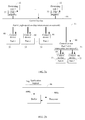
- node management software may include a control device driver module 701, a monitoring and managing module 702, and a user programming interface 703.
- the control device driver module 701 is configured to scan and identify a new control device 66 of a component of a computer, and initialize the control device 66; and send a resource allocation policy to the control device 66.
- the control device driver module 701 is further configured to add, modify, or delete the resource allocation policy.
- the monitoring and managing module 702 is configured to store a collected "state" value of each control device 66, perform correlation analysis on the collected "state” value of each control device 66, and determine the resource allocation policy in combination with a user demand.
- the user programming interface 703 is configured to provide an application programming interface (Application Programming Interface, API), so that another software or application program may implement programming of the control device 66 by using the API.
- API Application Programming Interface
- the API includes at least the following interfaces: an initialization command, a command for adding a resource allocation policy a command for modifying a resource allocation policy, a command for deleting a resource allocation policy, and the like.
- control device shown in FIG. 2b , FIG. 3 , FIG. 4 , or FIG. 5 , in the embodiments of the present invention is only an example that is applicable to the embodiments of the present invention, and is not intended to set specific limit to application of the present invention.
- the control device may also be an application-specific integrated circuit. No matter which form the control device is in, the control device implements, in a computer, a function of a control device.
- the computer described in the embodiments of the present invention may be a personal computer, a server, a mobile phone, or a palmtop computer; the present invention sets no limit to a specific implementation form of the computer. This application document does not describe other system embodiments or application scenarios one by one.
- a data processing method in this embodiment of the present invention may be implemented in the control device shown in FIG. 2b , FIG. 3 , FIG. 4 , or FIG. 5 .
- the method includes:
- the application request including the tag may be from the processing unit 11 shown in FIG. 1 or FIG. 2a , or may be from a network adapter.
- the processing unit 11 needs to attach the tag to the application request when receiving or generating the application request.
- FIG. 2a For a manner of attaching the tag to the application request by the processing unit 11, reference may be made to the embodiment shown in FIG. 2a , and details are not described herein again.
- the application request including the tag is from the network adapter
- the application request is an application request including a tag.
- the network adapter receives a message packet
- the application request is obtained by parsing the message packet, and then the application request is tagged.
- an operating system or a Hypervisor may perform an initialization operation on each control device 66 in a computer by using node management software, so that each control device is in a working state.
- the node management software After the control device 66 has undergone the initialization operation, the node management software sends a resource allocation policy to each control device 66 through a control device network.
- Step S102 The control device determines, according to the tag and a prestored resource allocation policy, a quantity of resources allocated for the application request, where the resource allocation policy includes a correspondence between the tag and the quantity of resources allocated for the application request.
- control device writes, into a first buffer (the buffer 600b shown in FIG. 2b ) of the control device, the application request including the tag, and reads the tag from the first buffer.
- a first buffer the buffer 600b shown in FIG. 2b
- the resource allocation policy is sent to the control device 66 by using the node management software, and the tag attached to the application request by the processing unit 11 is also defined by using the node management software; therefore, the tag carried in the application request may be associated with a tag in the resource allocation policy, and the control device may determine, according to the tag and the prestored resource allocation policy, the quantity of resources allocated for the application request.
- the quantity of resources herein may be a quantity of resources allocated for the application request by a component of the computer in which the control device is located, or may be a percentage value, or may further include priority information and the like.
- the quantity of resources may be a size of memory space, or a percentage value (for example, 80%) of memory space, or another information (reference is made to the descriptions of the "attribute" in Table 1).
- This embodiment of the present invention sets no limit to an expression form of the quantity of resources, and any one shall fall within the protection scope of this embodiment of the present invention provided that it represents a priority or speed of processing the application request by the component.
- the resource allocation policy herein may be built in a processor of the control device (reference is made to the implementation manner shown in FIG. 3 ), or may be stored in a cache of the control device (reference is made to the implementation manner shown in FIG. 3 ).
- Step S103 The control device instructs a component of the computer to process the application request according to the quantity of resources allocated for the application request.
- the instructing a component of the computer to process the application request according to the quantity of resources allocated for the application request may be sending the quantity of resources allocated for the application request and the application request to the component, or may be sending the application request to the component and notifying the component of a manner of processing the application request.
- a control device may determine, according to a tag carried in an application request and a correspondence between the tag and a quantity of resources allocated for the application request, the quantity of resources allocated for the application request, and then instruct a component of a computer to process the application request according to the quantity of resources allocated for the application request. Therefore, different quantities of resources may be allocated for different application requests, thereby improving service quality.
- the processed application request may be forwarded to a control device on the another component of the computer for processing, and a processing manner thereof is similar to step S101 to step S103. It should be noted that, the application request that is forwarded to the control device on the another component of the computer also carries the tag.
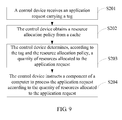
- the method includes:
- the control device may load the resource allocation policy to a buffer of a processor of the control device.
- the control device may send a query instruction to the cache, where the query instruction includes the tag, and the cache searches the control table for a corresponding entry according to the tag and returns the entry to the control device.
- the control device loads the entry to the buffer of the processor of the control device. Specifically, the entry includes a correspondence between the tag and a quantity of resources allocated for the application request.
- Step S203 The control device determines, according to the tag and the prestored resource allocation policy, a quantity of resources allocated for the application request.
- Step S204 It is the same as step S103.
- a control device may determine, according to a tag carried in an application request and a correspondence between the tag and a quantity of resources allocated for the application request, the quantity of resources allocated for the application request, and then instruct a component of a computer to process the application request according to the quantity of resources allocated for the application request. Therefore, different quantities of resources may be allocated for different application requests, thereby improving service quality.
- the method includes:
- control device may include a second buffer, and the queue is stored in the second buffer (reference may be made to the implementation manner shown in FIG. 3, FIG. 4 , or FIG. 5 ).
- the second buffer includes at least two queues, where each queue corresponds to a range of quantities of resources, and a priority of each queue is different.
- Step S304 A data forwarder (for example, the data forwarder 600j in FIG. 3 to FIG. 5 ) of the control device obtains the application request from the queue corresponding to the application request, and forwards the application request to a component of the computer.
- a data forwarder for example, the data forwarder 600j in FIG. 3 to FIG. 5
- Step S305 The component of the computer obtains and executes the application request.
- step S304 is an optional step, and the component of the computer may also directly obtain the application request from the corresponding queue.
- the second buffer may include three queues, which are a high-priority queue, a medium-priority queue, and a low-priority queue.
- a percentage value of a quantity of resources that corresponds to the high-priority queue is 70%-80%. If the quantity of resources allocated for the application request is 76%, the application request is placed into the high-priority queue.
- the high-priority queue means a preferential processing sequence or a relatively high processing speed.
- the component of the computer may preferentially obtain the application request from the high-priority queue and execute the application request.
- the control device may further refer to another factor, for example, a quantity of resources that have been used by the application request currently, to consider into which queue the application request is placed. In this application document, application scenarios are not described one by one.
- each queue may include multiple to-be-processed application requests.
- the component of the computer may perform processing according to a first in first out principle or another principle.
- control device may also dequeue the application requests from the queue in sequence (when there are multiple application requests in the queue), and then send the application requests to the component of the computer for processing.
- a control device may determine, according to a tag carried in an application request and a correspondence between the tag and a quantity of resources allocated for the application request, the quantity of resources allocated for the application request, place the application request into a corresponding queue according to the quantity of resources allocated for the application request, and then obtain the application request from the queue corresponding to the application request and send the application request to a data forwarder.
- the data forwarder forwards the application request to a component of a computer for executing, thereby improving service quality.
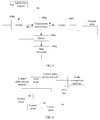
- Step 1 A user clicks a video file in a local computer.
- Step 2 A CPU generates a memory access request to read the video file.
- Step 3 The CPU tags the memory access request, and sends, to a control device on a memory, the memory access request including a tag.
- Step 4 The control device on the memory determines, according to the tag, memory space allocated for the memory access request, and further places the memory access request into a corresponding queue according to the allocated memory space.
- Step 5 The control device on the memory dequeues the memory access request from the queue, and sends the memory access request to the memory, so as to execute the memory access request.
- Step 6 The memory sends a response to the CPU after loading the video file.
- Step 7 The CPU obtains the video file from the memory, and sends a hardware acceleration request to a GPU, to request the GPU to perform hardware decoding on the video file, where the hardware acceleration request carries the video file and the tag.
- Step 8 A control device on the GPU determines, according to the tag, a quantity of hardware acceleration resources allocated for the video file, and then places the hardware acceleration request into a corresponding queue according to the quantity of allocated hardware acceleration resources.
- Step 9 The control device on the GPU dequeues the hardware acceleration request from the queue, and sends the hardware acceleration request to the GPU.
- Step 10 The GPU performs hardware acceleration processing on the video file according to the hardware acceleration request.
- Step 11 After the processing is complete, if it is not required to perform other processing on the video file, the GPU may send an output request to a southbridge (for example, the I/O control network shown in FIG. 1 or FIG. 2a ), where the output request includes the video file that has undergone the hardware acceleration processing and the tag.
- a southbridge for example, the I/O control network shown in FIG. 1 or FIG. 2a
- Step 12 A control device on the southbridge determines, according to the tag, bandwidth allocated for the video file, and then places the output request into a corresponding queue according to the allocated bandwidth.
- Step 13 The southbridge dequeues the video file from the queue, and sends the video file to a display.
- Step 14 The display displays the video file.
- the disclosed system, apparatus, and method may be implemented in other manners.
- the described apparatus embodiment is merely exemplary.
- the unit division is merely logical function division and may be other division in actual implementation.
- a plurality of units or components may be combined or integrated into another system, or some features may be ignored or not performed.
- the displayed or discussed mutual couplings or direct couplings or communication connections may be implemented through some interfaces.
- the indirect couplings or communication connections between the apparatuses or units may be implemented in electronic, mechanical, or other forms.
- the units described as separate parts may or may not be physically separate, and parts displayed as units may or may not be physical units, may be located in one position, or may be distributed on a plurality of network units. Some or all of the units may be selected according to actual needs to achieve the objectives of the solutions of the embodiments of the present invention.
- functional units in the embodiments of the present invention may be integrated into one processing unit, or each of the units may exist alone physically, or two or more units are integrated into one unit.
- the integrated unit may be implemented in a form of hardware, or may be implemented in a form of a software functional unit.
- the integrated unit When the integrated unit is implemented in the form of a software functional unit and sold or used as an independent product, the integrated unit may be stored in a computer-readable storage medium. Based on such an understanding, the technical solutions of the present invention essentially, or the part contributing to the prior art, or all or a part of the technical solutions may be implemented in the form of a software product.
- the software product is stored in a storage medium and includes several instructions for instructing a computer device (which may be a personal computer, a server, or a network device) to perform all or some of the steps of the methods described in the embodiments of the present invention.
- the foregoing storage medium includes: any medium that can store program code, such as a USB flash drive, a removable hard disk, a read-only memory (ROM, Read-Only Memory), a random access memory (RAM, Random Access Memory), a magnetic disk, or an optical disc.
- program code such as a USB flash drive, a removable hard disk, a read-only memory (ROM, Read-Only Memory), a random access memory (RAM, Random Access Memory), a magnetic disk, or an optical disc.
Landscapes
- Engineering & Computer Science (AREA)
- Software Systems (AREA)
- Theoretical Computer Science (AREA)
- Physics & Mathematics (AREA)
- General Engineering & Computer Science (AREA)
- General Physics & Mathematics (AREA)
- Memory System Of A Hierarchy Structure (AREA)
- Information Retrieval, Db Structures And Fs Structures Therefor (AREA)
- Stored Programmes (AREA)
- Data Exchanges In Wide-Area Networks (AREA)
- Information Transfer Between Computers (AREA)
Applications Claiming Priority (3)
| Application Number | Priority Date | Filing Date | Title |
|---|---|---|---|
| CN201410182148 | 2014-04-30 | ||
| CN201410682375.0A CN105094983B (zh) | 2014-04-30 | 2014-11-24 | 计算机,控制设备和数据处理方法 |
| PCT/CN2015/072672 WO2015165298A1 (zh) | 2014-04-30 | 2015-02-10 | 计算机,控制设备和数据处理方法 |
Publications (2)
| Publication Number | Publication Date |
|---|---|
| EP3076296A1 true EP3076296A1 (de) | 2016-10-05 |
| EP3076296A4 EP3076296A4 (de) | 2017-01-25 |
Family
ID=54358145
Family Applications (1)
| Application Number | Title | Priority Date | Filing Date |
|---|---|---|---|
| EP15785332.6A Ceased EP3076296A4 (de) | 2014-04-30 | 2015-02-10 | Computer, steuerungsvorrichtung und datenverarbeitungsverfahren |
Country Status (13)
| Country | Link |
|---|---|
| US (1) | US10572309B2 (de) |
| EP (1) | EP3076296A4 (de) |
| JP (1) | JP6475256B2 (de) |
| KR (1) | KR101784900B1 (de) |
| CN (2) | CN105094983B (de) |
| AU (1) | AU2015252673B2 (de) |
| BR (1) | BR112016016326B1 (de) |
| CA (1) | CA2935114C (de) |
| MX (1) | MX360278B (de) |
| PH (1) | PH12016501374B1 (de) |
| RU (1) | RU2651219C2 (de) |
| SG (1) | SG11201605623PA (de) |
| WO (1) | WO2015165298A1 (de) |
Cited By (1)
| Publication number | Priority date | Publication date | Assignee | Title |
|---|---|---|---|---|
| EP3550782A4 (de) * | 2016-11-30 | 2020-06-10 | ZTE Corporation | Ressourcenverwaltungsverfahren und system |
Families Citing this family (20)
| Publication number | Priority date | Publication date | Assignee | Title |
|---|---|---|---|---|
| CN106980463A (zh) * | 2016-01-18 | 2017-07-25 | 中兴通讯股份有限公司 | 存储系统的服务质量控制方法和装置 |
| US10521350B2 (en) | 2016-07-20 | 2019-12-31 | International Business Machines Corporation | Determining the effectiveness of prefetch instructions |
| US10452395B2 (en) | 2016-07-20 | 2019-10-22 | International Business Machines Corporation | Instruction to query cache residency |
| US10169239B2 (en) | 2016-07-20 | 2019-01-01 | International Business Machines Corporation | Managing a prefetch queue based on priority indications of prefetch requests |
| US10621095B2 (en) * | 2016-07-20 | 2020-04-14 | International Business Machines Corporation | Processing data based on cache residency |
| US10936490B2 (en) * | 2017-06-27 | 2021-03-02 | Intel Corporation | System and method for per-agent control and quality of service of shared resources in chip multiprocessor platforms |
| CN109582600B (zh) * | 2017-09-25 | 2020-12-01 | 华为技术有限公司 | 一种数据处理方法及装置 |
| CN109726005B (zh) * | 2017-10-27 | 2023-02-28 | 伊姆西Ip控股有限责任公司 | 用于管理资源的方法、服务器系统和计算机可读介质 |
| CN110968418B (zh) * | 2018-09-30 | 2025-03-25 | 北京忆恒创源科技股份有限公司 | 基于信号-槽的大规模有约束并发任务的调度方法与装置 |
| CN109542622A (zh) * | 2018-11-21 | 2019-03-29 | 新华三技术有限公司 | 一种数据处理方法及装置 |
| US10601740B1 (en) * | 2019-04-03 | 2020-03-24 | Progressive Casuality Insurance Company | Chatbot artificial intelligence |
| PH12019050292A1 (en) * | 2019-12-22 | 2021-11-08 | Samsung Electronics Ltd | Method for scaling gpu in the cloud |
| CN114490081B (zh) * | 2022-02-11 | 2026-03-27 | 苏州元脑智能科技有限公司 | 资源调度方法、装置及电子设备 |
| CN114244790B (zh) * | 2022-02-24 | 2022-07-12 | 摩尔线程智能科技(北京)有限责任公司 | PCIe设备与主机设备的通信方法、系统及设备 |
| CN114979131B (zh) * | 2022-04-07 | 2024-04-19 | 中国科学院深圳先进技术研究院 | 面向云计算的标签化冯诺依曼体系结构通信方法及装置 |
| US12293220B2 (en) | 2022-04-21 | 2025-05-06 | Dell Products L.P. | Context-driven framework to migrate the applications and its dependencies by analyzing the relationships |
| US12254207B2 (en) | 2022-07-22 | 2025-03-18 | Dell Products L.P. | Method and system for health driven network slicing based data migration |
| US12423163B2 (en) * | 2022-07-22 | 2025-09-23 | Dell Products L.P. | Context driven network slicing based migration of applications and their dependencies |
| US12253933B2 (en) | 2022-11-28 | 2025-03-18 | Dell Products L.P. | Predictive load driven proactive pre-flight check for applications |
| US12547445B2 (en) | 2022-11-28 | 2026-02-10 | Dell Products L.P. | Auto time optimization for migration of applications |
Family Cites Families (34)
| Publication number | Priority date | Publication date | Assignee | Title |
|---|---|---|---|---|
| US5940612A (en) * | 1995-09-27 | 1999-08-17 | International Business Machines Corporation | System and method for queuing of tasks in a multiprocessing system |
| US5787469A (en) * | 1996-09-06 | 1998-07-28 | Intel Corporation | System and method for exclusively writing tag during write allocate requests |
| US6195724B1 (en) * | 1998-11-16 | 2001-02-27 | Infineon Technologies Ag | Methods and apparatus for prioritization of access to external devices |
| US7058947B1 (en) * | 2000-05-02 | 2006-06-06 | Microsoft Corporation | Resource manager architecture utilizing a policy manager |
| US6785756B2 (en) * | 2001-05-10 | 2004-08-31 | Oracle International Corporation | Methods and systems for multi-policy resource scheduling |
| US7096471B2 (en) * | 2001-06-01 | 2006-08-22 | Texas Instruments Incorporated | Apparatus for resource management in a real-time embedded system |
| US20030067874A1 (en) * | 2001-10-10 | 2003-04-10 | See Michael B. | Central policy based traffic management |
| US7661130B2 (en) * | 2003-04-12 | 2010-02-09 | Cavium Networks, Inc. | Apparatus and method for allocating resources within a security processing architecture using multiple queuing mechanisms |
| JP4071668B2 (ja) | 2003-04-16 | 2008-04-02 | 富士通株式会社 | システムの使用資源を調整する装置および方法 |
| US20050016042A1 (en) * | 2003-04-28 | 2005-01-27 | Baratta Adam M. | Motion picture memorabilia and method for promoting motion pictures using same |
| US7430741B2 (en) * | 2004-01-20 | 2008-09-30 | International Business Machines Corporation | Application-aware system that dynamically partitions and allocates resources on demand |
| US7797699B2 (en) * | 2004-09-23 | 2010-09-14 | Intel Corporation | Method and apparatus for scheduling virtual machine access to shared resources |
| US7356631B2 (en) * | 2005-01-21 | 2008-04-08 | Himax Technologies, Inc. | Apparatus and method for scheduling requests to source device in a memory access system |
| US7380038B2 (en) * | 2005-02-04 | 2008-05-27 | Microsoft Corporation | Priority registers for biasing access to shared resources |
| CN100479374C (zh) | 2005-04-25 | 2009-04-15 | 华为技术有限公司 | 网络通信中处理紧急业务的方法 |
| GB0524008D0 (en) * | 2005-11-25 | 2006-01-04 | Ibm | Method and system for controlling the processing of requests for web resources |
| JP4594877B2 (ja) * | 2006-02-21 | 2010-12-08 | 株式会社日立製作所 | 計算機リソース割当管理方法および計算機リソース割当管理装置 |
| JP2007272868A (ja) | 2006-03-07 | 2007-10-18 | Sony Corp | 情報処理装置、情報通信システム、および情報処理方法、並びにコンピュータ・プログラム |
| CN101438256B (zh) * | 2006-03-07 | 2011-12-21 | 索尼株式会社 | 信息处理设备、信息通信系统、信息处理方法 |
| JP5061544B2 (ja) * | 2006-09-05 | 2012-10-31 | トヨタ自動車株式会社 | 燃料電池 |
| CN100459581C (zh) | 2006-09-21 | 2009-02-04 | 电子科技大学 | 一种用于实时混合业务环境的可变参数分组调度方法 |
| US8458711B2 (en) * | 2006-09-25 | 2013-06-04 | Intel Corporation | Quality of service implementation for platform resources |
| US8065682B2 (en) * | 2007-02-27 | 2011-11-22 | Microsoft Corporation | Enforcing system resource usage limits on query requests based on grouping query requests into workgroups and assigning workload groups to resource pools |
| US8886918B2 (en) * | 2007-11-28 | 2014-11-11 | International Business Machines Corporation | Dynamic instruction execution based on transaction priority tagging |
| US8396929B2 (en) * | 2008-07-02 | 2013-03-12 | Sap Portals Israel Ltd. | Method and apparatus for distributed application context aware transaction processing |
| US8676976B2 (en) * | 2009-02-25 | 2014-03-18 | International Business Machines Corporation | Microprocessor with software control over allocation of shared resources among multiple virtual servers |
| RU2496277C2 (ru) * | 2009-05-26 | 2013-10-20 | Нокиа Корпорейшн | Способ и устройство для переноса мультимедийного сеанса |
| EP2388700A3 (de) | 2010-05-18 | 2013-08-07 | Kaspersky Lab Zao | Systeme und Verfahren zur richtlinienbasierten Programmkonfiguration |
| JP5533315B2 (ja) | 2010-06-16 | 2014-06-25 | 富士ゼロックス株式会社 | 情報処理システム、管理装置、処理要求装置及びプログラム |
| US8560897B2 (en) * | 2010-12-07 | 2013-10-15 | International Business Machines Corporation | Hard memory array failure recovery utilizing locking structure |
| CN102195882B (zh) * | 2011-05-18 | 2016-04-06 | 深信服网络科技(深圳)有限公司 | 根据数据流应用类型选路的方法及装置 |
| CN102958166B (zh) | 2011-08-29 | 2017-07-21 | 华为技术有限公司 | 一种资源分配方法及资源管理平台 |
| JP5884595B2 (ja) * | 2012-03-29 | 2016-03-15 | 富士通株式会社 | メッセージ通信方法,メッセージ通信プログラムおよびコンピュータ |
| CN102739770B (zh) * | 2012-04-18 | 2015-06-17 | 上海和辰信息技术有限公司 | 一种基于云计算的资源调度方法及系统 |
-
2014
- 2014-11-24 CN CN201410682375.0A patent/CN105094983B/zh active Active
- 2014-11-24 CN CN202010307634.7A patent/CN111666148A/zh active Pending
-
2015
- 2015-02-10 SG SG11201605623PA patent/SG11201605623PA/en unknown
- 2015-02-10 EP EP15785332.6A patent/EP3076296A4/de not_active Ceased
- 2015-02-10 KR KR1020167019031A patent/KR101784900B1/ko active Active
- 2015-02-10 AU AU2015252673A patent/AU2015252673B2/en active Active
- 2015-02-10 MX MX2016011157A patent/MX360278B/es active IP Right Grant
- 2015-02-10 BR BR112016016326-5A patent/BR112016016326B1/pt active IP Right Grant
- 2015-02-10 JP JP2016553382A patent/JP6475256B2/ja active Active
- 2015-02-10 RU RU2016134457A patent/RU2651219C2/ru active
- 2015-02-10 CA CA2935114A patent/CA2935114C/en active Active
- 2015-02-10 WO PCT/CN2015/072672 patent/WO2015165298A1/zh not_active Ceased
-
2016
- 2016-07-12 PH PH12016501374A patent/PH12016501374B1/en unknown
- 2016-10-27 US US15/335,456 patent/US10572309B2/en active Active
Cited By (1)
| Publication number | Priority date | Publication date | Assignee | Title |
|---|---|---|---|---|
| EP3550782A4 (de) * | 2016-11-30 | 2020-06-10 | ZTE Corporation | Ressourcenverwaltungsverfahren und system |
Also Published As
| Publication number | Publication date |
|---|---|
| EP3076296A4 (de) | 2017-01-25 |
| JP2017513096A (ja) | 2017-05-25 |
| MX360278B (es) | 2018-10-26 |
| SG11201605623PA (en) | 2016-08-30 |
| MX2016011157A (es) | 2016-12-09 |
| US20170046202A1 (en) | 2017-02-16 |
| PH12016501374A1 (en) | 2016-08-15 |
| AU2015252673B2 (en) | 2017-12-14 |
| RU2651219C2 (ru) | 2018-04-18 |
| CN105094983A (zh) | 2015-11-25 |
| CN111666148A (zh) | 2020-09-15 |
| RU2016134457A (ru) | 2018-03-01 |
| KR20160098438A (ko) | 2016-08-18 |
| PH12016501374B1 (en) | 2018-12-12 |
| RU2016134457A3 (de) | 2018-03-01 |
| CA2935114A1 (en) | 2015-11-05 |
| US10572309B2 (en) | 2020-02-25 |
| WO2015165298A1 (zh) | 2015-11-05 |
| CA2935114C (en) | 2020-07-14 |
| KR101784900B1 (ko) | 2017-10-12 |
| BR112016016326B1 (pt) | 2023-04-11 |
| CN105094983B (zh) | 2020-04-28 |
| BR112016016326A2 (pt) | 2017-08-08 |
| AU2015252673A1 (en) | 2016-07-28 |
| JP6475256B2 (ja) | 2019-02-27 |
Similar Documents
| Publication | Publication Date | Title |
|---|---|---|
| EP3076296A1 (de) | Computer, steuerungsvorrichtung und datenverarbeitungsverfahren | |
| US11805058B2 (en) | Data packet forwarding method, network adapter, host device, and computer system | |
| US9678918B2 (en) | Data processing system and data processing method | |
| US9467512B2 (en) | Techniques for remote client access to a storage medium coupled with a server | |
| US10235047B2 (en) | Memory management method, apparatus, and system | |
| US20180210752A1 (en) | Accelerator virtualization method and apparatus, and centralized resource manager | |
| CN110837479B (zh) | 数据处理方法、相关设备及计算机存储介质 | |
| US12321635B2 (en) | Method for accessing solid state disk and storage device | |
| CN104731635B (zh) | 一种虚拟机访问控制方法,及虚拟机访问控制系统 | |
| JP2021518955A (ja) | プロセッサコアのスケジューリング方法、装置、端末及び記憶媒体 | |
| CN106445650B (zh) | 一种中断处理方法、ioapic及计算机系统 |
Legal Events
| Date | Code | Title | Description |
|---|---|---|---|
| PUAI | Public reference made under article 153(3) epc to a published international application that has entered the european phase |
Free format text: ORIGINAL CODE: 0009012 |
|
| 17P | Request for examination filed |
Effective date: 20160628 |
|
| AK | Designated contracting states |
Kind code of ref document: A1 Designated state(s): AL AT BE BG CH CY CZ DE DK EE ES FI FR GB GR HR HU IE IS IT LI LT LU LV MC MK MT NL NO PL PT RO RS SE SI SK SM TR |
|
| AX | Request for extension of the european patent |
Extension state: BA ME |
|
| A4 | Supplementary search report drawn up and despatched |
Effective date: 20161222 |
|
| RIC1 | Information provided on ipc code assigned before grant |
Ipc: G06F 9/50 20060101AFI20161216BHEP |
|
| DAX | Request for extension of the european patent (deleted) | ||
| STAA | Information on the status of an ep patent application or granted ep patent |
Free format text: STATUS: EXAMINATION IS IN PROGRESS |
|
| 17Q | First examination report despatched |
Effective date: 20190920 |
|
| REG | Reference to a national code |
Ref country code: DE Ref legal event code: R003 |
|
| STAA | Information on the status of an ep patent application or granted ep patent |
Free format text: STATUS: THE APPLICATION HAS BEEN REFUSED |
|
| 18R | Application refused |
Effective date: 20201201 |