EP3076343A1 - Procédé d'affectation d'entrées vocales - Google Patents
Procédé d'affectation d'entrées vocales Download PDFInfo
- Publication number
- EP3076343A1 EP3076343A1 EP16163502.4A EP16163502A EP3076343A1 EP 3076343 A1 EP3076343 A1 EP 3076343A1 EP 16163502 A EP16163502 A EP 16163502A EP 3076343 A1 EP3076343 A1 EP 3076343A1
- Authority
- EP
- European Patent Office
- Prior art keywords
- intention
- semantic
- determined
- intentions
- action
- Prior art date
- Legal status (The legal status is an assumption and is not a legal conclusion. Google has not performed a legal analysis and makes no representation as to the accuracy of the status listed.)
- Withdrawn
Links
Images

Classifications
-
- G—PHYSICS
- G06—COMPUTING OR CALCULATING; COUNTING
- G06N—COMPUTING ARRANGEMENTS BASED ON SPECIFIC COMPUTATIONAL MODELS
- G06N5/00—Computing arrangements using knowledge-based models
- G06N5/02—Knowledge representation; Symbolic representation
Definitions
- the invention relates to a computer-implemented method for assigning a first intention in the form of a first linguistic input into a computer to at least one suitable intention in the form of a second linguistic input into a computer.
- Today's Internet is a worldwide network of computer networks and allows the mutual exchange of data by means of various protocols, for example via the HTTP (S) protocol the call of electronic hypertext documents (web pages), in its entirety of a system linked by hyperlinks Make out World Wide Web.
- HTTP HyperText Transfer Protocol
- This system indicates that it can aggregate any kind of information and make it available again through browsers and search engines.
- a disadvantage proves that only elementary information and thus always only content is processed, which in turn can only be made available through search engines. Only about 40 percent of all accesses to the World Wide Web correspond to the purely information-oriented search, and the remaining 60 percent are actually Intent, that is, intentional, in particular transactional.
- user A's intention X includes having a specific property and looking for a particular buyer for amount Z for it.
- This user A places his property, individually and as content on a corresponding transaction platform on the Internet, and at the same time searches for a buyer via search engine, provided that this potential buyer has previously made his application public on a corresponding platform.
- the intention Y of another user B includes that he searches for such a property and for this purpose has an amount Z available. He also publishes his application individually on a transaction platform on the Internet and, in turn, searches for the corresponding property via the search engine.
- At least the objects of the invention are to discover higher-order evolutionary stages of information, for example intentions, as such, to process them as automatically processable in their entire semantic meaning structure, in a corresponding engine ("UNIFIELD engine") in the sense of their intentionality with one another be guided, where such a reaction is indicated and to find the optimal fit of two or more intentions as well as the creators of the intentions, the respective users, as a result to actively deliver and offer the possibility of connecting them in their common concern.
- a corresponding engine in the sense of their intentionality with one another be guided, where such a reaction is indicated and to find the optimal fit of two or more intentions as well as the creators of the intentions, the respective users, as a result to actively deliver and offer the possibility of connecting them in their common concern.
- An intention which is present as linguistic or written input, for example in the form of an intention text, can be represented as a semantic network.
- a semantic network is represented by a graph.
- the nodes of the graph represent the terms of the linguistic input.
- Relations between the concepts are realized by the edges of the graph.
- the type of action can take a variety of forms as a linguistic input, such as "search”, “offer”, “sell”, “lend”, “give away”, or a variety of other verbs that can exist in many different verb forms.
- Intentionsfacetten This can be a form of compensation, ie in particular a price, for example "maximum 500 euros” or "around 690 euros”.
- time information such as "in the summer”
- local information such as “in Bari”
- information about the sought after object such as "a stone house” or information about the desired transaction partner.
- Each Intentionsfacette can have for itself further descriptions or specifications, for example "in the summer, preferably in July” or "in Bari or in the area of Bari”.
- the intentions entered are stored as data objects and each comprise at least one intent object, an action type and at least one intention facet. All these elements of the intention are also stored as data objects.
- the method according to the invention comprises an analysis phase and a subsequent search phase.
- databases in particular semantic networks, are set up and indexed, which can be queried quickly in the search phase to determine suitable intentions.
- a semantic network is first formed from each entered intention in the form of a linguistic input and the correspondingly formed data object by a semantic interpreter.
- the semantic network is also stored as a data object. From this semantic network, the specific action type of intention is then determined, the contained intention facets extracted and stored in an Intentionsfacetten database, and the IntentionsTalk determined and stored in an IntentionsTalk database.
- the semantic network is stored in a graph database and indexed for faster retrieval by a graph indexing method, selecting from the prior art suitable graph indexing methods that allow in the search phase to determine suitable semantic networks as quickly as possible.
- this analysis phase is run through in advance with a large number of intentions. In concrete embodiments, this may involve hundreds of thousands or millions of intentions, which go through the analysis phase and are stored and indexed as semantic networks.
- the analysis phase is initially run through with this intention to be assigned. Thereafter, a search phase is started, in which the plurality of complementary types of actions, for example, "rent”, “sell”, “lend”, “give away”, are first determined for the determined type of action to be assigned, for example "search”. Then, from the semantic networks stored in the graph database, those matching networks are selected which have one of the determined complementary types of actions. The linguistic inputs corresponding to these suitable networks are then output.
- the intention object of the intention to be assigned is determined by reducing the created semantic network by the determined action type and all determined intention facets.
- At least one compensation preferably a price, a temporal restriction, a local restriction, and preferably a desired intentional partner, are provided as intention facets.
- the Facet Compensation may in the simplest case be called the number plus currency unit ("I offer this shelf for 50 EUR”). Missing currency units ("That should not cost more than 100") can be inferiert, desired intervals are recognized. Conversions between currency units can be made automatically at appropriate times. The linking of prices with time intervals ("500 USD per quarter", “200 francs monthly”) and prices with quantities (“89 ct per 10 pieces”) can be recognized and normalized or calculated accordingly during matching in the search phase.
- the facet time restrictions include the following: "Offer a holiday home in Veneto in August / summer / in the 2nd quarter / from March / until October.” In the search phase fits can be evaluated with a corresponding time logic.
- the Facet Partner contains requirements for the desired Intentionspartner. These too can be quite different in terms of language: "I am looking for a convertible from a private previous owner.”, “Looking for a flat, please no brokers.”, “Only dealers from the EU.”, “Offers only with VAT.”.
- the determination of the specific type of action from a multiplicity of possible types of stored actions is carried out by computer-aided retrieval and comparison of the semantic network with lexical data on verbs and their nominalizations or verb forms.
- proprietary or Internet-based databases can be queried, in which possible verbs and their derivatives are stored.
- the determination of complementary types of action is carried out by computer-aided retrieval of databases taking into account semantic rules, wherein a multiplicity of concrete types of actions and their complementary types of actions are stored in the databases.
- a separate program module the so-called complementer
- the complementer can use formal semantic rules to determine the complementary types of actions.
- semantic relations may be implemented in the complementer, for example, from the linguistic inputs "If the x leases the y to the z, then the z leases the y of x" the complementary types of actions "rent” - “rent” into extract their different verb forms.
- the determined matching networks ie those networks with complementary action types, are ranked on the basis of a weighting of the Intentions fleecees and Intentionsfacetten the intention to be assigned.
- the matching networks are ranked according to their agreement in the Intentions solicit and in higher-weighted Intentionsfacetten. For example, in one intention, the intentional facet "location" may be weighted higher than the intentional facet "compensation", as the director may be willing to pay a higher price, but certainly not accustomed to another location.
- those matching nets that match higher-weighted intent facets are ranked higher than other matching nets.
- the weights of the intentions object and / or the intent facets can be specified by the user, whereby the starting state may be an equal weighting or, in particular, an increased weighting of the intentional object, since the user may accept a deviation in an intention facet, as a deviation in the Intentionsmony.
- the determined matching meshes are ranked on the basis of the semantic and / or lexical proximity of the intention object and the intention facets of the intention to be assigned to the intent object and the intent facets of the matching meshes.
- the intentional object "holiday home” has a higher semantic proximity, that is to say a smaller semantic distance, for the intentional object "villa” than for the intentional object "apartment”.
- lexical proximity in addition to semantic proximity, denotes a closeness of concepts, which results not only from semantics but from lexical knowledge.
- the term “Bari” as a locality has a proximity to the term "Apulia", since the city of Bari is located in Puglia.
- the determined matching nets it is possible for the determined matching nets to be ranked in the search phase by taking into account both the weighting of the intentions object and each intent facet, as well as the semantic proximity of the intentions object and each intent facet of the matching nets to the intentions object and to the respective intention facets of the intention to be assigned becomes.
- the semantic distance of the complementary action type to the determined action type of the intention to be assigned is taken into account, and matching networks with a lower semantic distance are ranked higher.
- different types of actions can be fundamentally complementary to one another, they nevertheless have to be evaluated semantically differently.
- the type of action "buy” is basically complementary to "sell", “lend”, “leased”, but has greater semantic proximity to the action type "sell”.
- Intentional facets may be, for example, the Facets Agent (the Intendant), Agitatio (the cause of an intention), Aktand (having the Intendant and thus his status), Agendum (the role of the Intendant in relation to the actanden), the Agent (seeking the director), actant (the sought-after), actor (the sought-after co-director, whose actand is to correspond to his own actant), the action (the intended transaction) and the actum (as intended finality over one's own status) act.
- the Facets Agent the Intendant
- Agitatio the cause of an intention
- Aktand having the Intendant and thus his status
- Agendum the role of the Intendant in relation to the actanden
- the Agent seeking the director
- actant the sought-after
- actor the sought-after co-director, whose actand is to correspond to his own actant
- the action the intended transaction
- actum as intended finality over one's own status
- a degree of agreement is displayed which is calculated on the basis of the ascertained sequence of the matching networks. This allows the user to assess the relevance of the various appropriate intentions.
- the directors of the ascertained appropriate intentions are automatically informed of the fit and, in particular, forwarded to a predetermined service for processing the desired transaction.
- the invention further relates to a system, preferably Internet-based service and in particular Internet portal, for carrying out the method according to the invention.
- communication and / or management means are provided for connecting the directors of the intentions, in particular a communication module, an identification module, a verification module, a payment module, a logistics module, a shipping module, a collaboration module and / or a personalized management module for the management of each user's own data, settings, intentions, fits, history, and / or other data.
- the method according to the invention can be embodied, in particular, as an Internet-based service for the automatic processing of natural language input in spoken and written, based on intentions, as a next emergent level of elementary information, each individual and specific input, for example, with an intention of a respective user appropriate methods (eg knowledge representation methods such as data models, semantic networks, predicate logic, etc.) are semantically disambiguated and faceted into all possible facts and constituents of an ideal-type intention.
- knowledge representation methods such as data models, semantic networks, predicate logic, etc.
- the user is provided by the method according to the invention as the overall best possible correspondence of its intention, so that between the two or more concerned Intendanten a connection can be made in their concern.
- the users deposit contents of all kinds in the appendix of a linguistic input, in particular hyperlinks, text documents, picture, sound, film files and files of all other types.
- Fig. 1 shows a simplified embodiment of a method according to the invention.
- a user A makes his intention available in the form of a first linguistic input 1.
- This linguistic input represents an intention, namely that user A is looking for a house in Vienna.
- These linguistic inputs also represent intentions, namely that users B and C provide different real estate under different conditions.
- the intentions are stored in the system after passing through the analysis phase as semantic networks, whereby both the respective Intentions Participating ("Penthouse", "Villa"), as well as the respective Intentionsfacetten (“Vienna", “Döbling”) are stored in databases.
- the semantic networks are represented in simplified form as vectors; in the actual implementation, the semantic networks are stored by specially provided or implemented data objects.
- the action type "search" of the first semantic network 3 those complementary action types 7 are determined which, from the user's point of view, can be integrated into a transaction.
- the action type is "search", for example, the elements “sell”, “rent”, “give away”, since these can be integrated in the user's sense into a reaction, namely the acquisition of a property are. All stored semantic networks with these types of actions are selected.
- semantic networks with an identical or semantically similar intention object are searched for the intention object 9 of the intention to be assigned.
- semantic networks with the intentions objects “Villa”, “Domicile”, “Manor” and “Penthouse” are stored in the database.
- the term “villa” has the largest semantic proximity to the term “house”.
- the intent facets are considered.
- the intention to be assigned has only one location-related intention facet 10, namely the location of the search "Vienna”.
- the user finally receives as output the linguistic inputs corresponding to the determined appropriate semantic networks.
- a first user P sets the following intention: "I sell my 3 years old Vespa GT 125 for 6,598 euros.
- the piece of jewelery is a special design in martini design, with Malossi Variator, inclusive Helm in martini design.
- a second user L intends: "For my wife, I'm looking for a special scooter that will cost no more than 7,000 euros, ideally a one-of-a-kind or a rarity.” From this intention, as described above, a second semantic network is formed in the analysis phase. The comparison of the semantic meshes in the search phase results in a fit so that the user intentions can be merged.
- a second user E wrote the intention "I would like to learn riding in a radius of Vienna for less than 40 euros the hour on a riding stable with Freibergern, with the option for Western riding".
- the method described above generates and stores individual semantic nets with elements from the intentions entered, and a fit of the users is established and the user intentions are subsequently merged. In this case, a fit is also determined for the third, permanent intention, so that the users A and E are also merged with the third user.
- a first user M writes the intention "Could someone of the checkrobin community bring two larger packages from Verona, Italy, to Vienna within the next three days?"
- a second user S wrote the intention “I drive back from Verona to Vienna tomorrow and could take someone or anything with me”.
- the users M and S are first merged, and then their data is recorded and automatically forwarded to the predetermined service, the intention of which was determined to be suitable for the "carpooling" element.
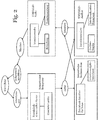
- Fig. 2 shows an embodiment of a system architecture for carrying out a method according to the invention.
- the intention text is transmitted by a user client to a semantic interpreter, which generates the semantic networks with the help of a syntactic semantic parser and computer dictionaries.
- the semantic search engine extracts the intention object underlying the intention.
- the UNIFIELD analysis analyzes the intentions and creates the Intentions facet database according to predetermined analysis rules.
- the search phase is implemented in the UNIFIELD search, in which the complementer determines the complementary action types and computes the score for the appropriate intentions. All appropriate intentions are forwarded to the User Client as a prepared and ranked match list.
- an updated Intentions Object Database and an updated Intentions Facet Database are provided.
- the result is a list of matches ordered by descending rating.
- Each match contains a vector that lists the matches per Intentionsfacette so that the User Client can provide informative explanations about what fits and what does not fit.
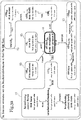
- the semantic representation as a semantic network, which the semantic interpreter provides, is simplified in Fig. 3a played.
- the semantic networks include the type of action 11 "rent” or “search”, the object of intention 12 "quarry stone holiday house”, which includes the properties "cottage” and “quarry stone”, and the Intentionsfacetten 13 in the form of the term “summer”, the local Indication “Bari”, the compensation "690 Euro per week” and the Intendant of the intention "We”.
- Typical of intentions is that several Intentionsfacetten be addressed, here time, place, price, object.
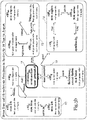
- the analysis phase identifies all facets in the manner specified above. This allows the search phase to find the following perfectly fitting intention from millions of other intentions: "My wife and I are looking for a holiday home in Apulia for 14 days in August.” The semantic representation of this intention of the action type "Rent" was generated automatically during the analysis phase and is in Fig. 3b shown.
Landscapes
- Engineering & Computer Science (AREA)
- Theoretical Computer Science (AREA)
- Computing Systems (AREA)
- Data Mining & Analysis (AREA)
- Evolutionary Computation (AREA)
- Physics & Mathematics (AREA)
- Computational Linguistics (AREA)
- General Engineering & Computer Science (AREA)
- General Physics & Mathematics (AREA)
- Mathematical Physics (AREA)
- Software Systems (AREA)
- Artificial Intelligence (AREA)
- Information Retrieval, Db Structures And Fs Structures Therefor (AREA)
Priority Applications (1)
| Application Number | Priority Date | Filing Date | Title |
|---|---|---|---|
| EP16163502.4A EP3076343A1 (fr) | 2015-04-02 | 2016-04-01 | Procédé d'affectation d'entrées vocales |
Applications Claiming Priority (2)
| Application Number | Priority Date | Filing Date | Title |
|---|---|---|---|
| EP15162429 | 2015-04-02 | ||
| EP16163502.4A EP3076343A1 (fr) | 2015-04-02 | 2016-04-01 | Procédé d'affectation d'entrées vocales |
Publications (1)
| Publication Number | Publication Date |
|---|---|
| EP3076343A1 true EP3076343A1 (fr) | 2016-10-05 |
Family
ID=53039197
Family Applications (1)
| Application Number | Title | Priority Date | Filing Date |
|---|---|---|---|
| EP16163502.4A Withdrawn EP3076343A1 (fr) | 2015-04-02 | 2016-04-01 | Procédé d'affectation d'entrées vocales |
Country Status (1)
| Country | Link |
|---|---|
| EP (1) | EP3076343A1 (fr) |
Cited By (1)
| Publication number | Priority date | Publication date | Assignee | Title |
|---|---|---|---|---|
| DE102019103078A1 (de) * | 2019-02-07 | 2020-08-13 | Labtwin Gmbh | Verfahren zur Unterstützung von Arbeitsabläufen in einer Laborumgebung mittels eines Assistenzsystems |
Citations (2)
| Publication number | Priority date | Publication date | Assignee | Title |
|---|---|---|---|---|
| DE102005035668A1 (de) * | 2005-07-29 | 2007-02-01 | Siemens Ag | Datenbanksystem zum rechnergestützten Zugriff auf digital gespeicherte Informationen |
| US20150032443A1 (en) * | 2013-07-25 | 2015-01-29 | Yael Karov | Self-learning statistical natural language processing for automatic production of virtual personal assistants |
-
2016
- 2016-04-01 EP EP16163502.4A patent/EP3076343A1/fr not_active Withdrawn
Patent Citations (2)
| Publication number | Priority date | Publication date | Assignee | Title |
|---|---|---|---|---|
| DE102005035668A1 (de) * | 2005-07-29 | 2007-02-01 | Siemens Ag | Datenbanksystem zum rechnergestützten Zugriff auf digital gespeicherte Informationen |
| US20150032443A1 (en) * | 2013-07-25 | 2015-01-29 | Yael Karov | Self-learning statistical natural language processing for automatic production of virtual personal assistants |
Non-Patent Citations (5)
| Title |
|---|
| "Correct System Design", vol. 2276, 1 January 2002, SPRINGER INTERNATIONAL PUBLISHING, Cham, ISBN: 978-3-642-33352-1, ISSN: 0302-9743, article H. HELBIG ET AL: "Multilayered Extended Semantic Networks as a Language for Meaning Representation in NLP Systems", pages: 69 - 85, XP055288525, 032548, DOI: 10.1007/3-540-45715-1_6 * |
| HIDEKI MIMA ET AL: "A METHOD FOR UNDERSTANDING INTENTIONS OF INDIRECT SPEECH ACTS IN NATURAL LANGUAGE INTERFACES", SYSTEMS & COMPUTERS IN JAPAN, WILEY, HOBOKEN, NJ, US, vol. 27, no. 1, 1 January 1996 (1996-01-01), pages 77 - 91, XP000551733, ISSN: 0882-1666 * |
| KUMAMOTO T ET AL: "Recognizing user communicative intention in a consultant system with a natural language interface", ROBOT AND HUMAN COMMUNICATION, 1992. PROCEEDINGS., IEEE INTERNATIONAL WORKSHOP ON TOKYO, JAPAN 1-3 SEPT. 1992, NEW YORK, NY, USA,IEEE, US, 1 September 1992 (1992-09-01), pages 311 - 316, XP010066629, ISBN: 978-0-7803-0753-7, DOI: 10.1109/ROMAN.1992.253869 * |
| MASSIMILIANO DAL MAS: "Faceted Semantic Search for Personalized Social Search", 29 February 2012 (2012-02-29), pages 1 - 12, XP055287783, Retrieved from the Internet <URL:https://arxiv.org/ftp/arxiv/papers/1202/1202.6685.pdf> [retrieved on 20160712] * |
| SEMPRIA GMBH: "SEMPRIA White Paper: Introduction to SEMPRIA Search The Meaning-oriented Search Engine", 6 September 2012 (2012-09-06), pages 1 - 12, XP055213735, Retrieved from the Internet <URL:http://www.sempria.de/static/SEMPRIA-Whitepaper-Introduction.pdf> [retrieved on 20150916] * |
Cited By (1)
| Publication number | Priority date | Publication date | Assignee | Title |
|---|---|---|---|---|
| DE102019103078A1 (de) * | 2019-02-07 | 2020-08-13 | Labtwin Gmbh | Verfahren zur Unterstützung von Arbeitsabläufen in einer Laborumgebung mittels eines Assistenzsystems |
Similar Documents
| Publication | Publication Date | Title |
|---|---|---|
| DE69815898T2 (de) | Identifizierung der relevantesten antworten auf eine aktuelle suchanfrage basierend auf bereits bei ähnlichen anfragen ausgewählten antworten | |
| DE60120822T2 (de) | Meta-Dokument und Verfahren zum Verwalten von Meta-Dokumenten | |
| DE69811066T2 (de) | Datenzusammenfassungsgerät. | |
| DE10244974A1 (de) | Automatische Inserentenbenachrichtigung für ein System zum Bereitstellen eines Platz- und Preisschutzes in einer Suchergebnisliste, die durch eine Computernetzwerksuchmaschine erzeugt wird | |
| DE10323444A1 (de) | Verfahren und Vorrichtung zum Kategorisieren und Darstellen von Dokumenten einer verteilten Datenbank | |
| DE102011017442A1 (de) | Verfahren zum Bestimmen des Kundenwerts und -potenzials aus sozialen Medien und anderen öffentlichen Datenquellen | |
| DE102013205737A1 (de) | System und Verfahren zum automatischen Erkennen und interaktiven Anzeigen von Informationen über Entitäten, Aktivitäten und Ereignisse aus multimodalen natürlichen Sprachquellen | |
| WO2015040052A1 (fr) | Machine de recherche commandée par un utilisateur | |
| EP1926081A1 (fr) | Procédé d'adaptation du dialogue et système de dialogue destiné à l'exécution | |
| Sanz Sabido | Postcolonial critical discourse analysis: Theory and method | |
| DE202021101389U1 (de) | Reinforcement Learning für Webseiten-Ergonomie | |
| DE202013005812U1 (de) | System zum indexieren elektronischer Inhalte | |
| DE10034694A1 (de) | Verfahren zum Vergleichen von Suchprofilen | |
| WO2007042245A1 (fr) | Moteur de recherche pour effectuer une recherche relative a un lieu | |
| DE102012025349B4 (de) | Bestimmung eines Ähnlichkeitsmaßes und Verarbeitung von Dokumenten | |
| US20080215614A1 (en) | Pyramid Information Quantification or PIQ or Pyramid Database or Pyramided Database or Pyramided or Selective Pressure Database Management System | |
| DE10325998A1 (de) | Verfahren zum Optimieren eines auf eine erste Netzwerkseite verweisenden Verweises | |
| EP3076343A1 (fr) | Procédé d'affectation d'entrées vocales | |
| EP3089097A1 (fr) | Procédé de génération de données de priorité pour des produits | |
| DE102014006951A1 (de) | Verfahren und Vorrichtung zum Aufbau von Kommunikation | |
| DE19835092C2 (de) | Verfahren zum Betrieb eines computergesteuerten Vermittlungssystems | |
| DE10261839A1 (de) | Verfahren und Einrichtung zur Durchführung einer elektronischen Recherche | |
| DE10043442C2 (de) | Elektronische Marktplattform | |
| Wang et al. | Triggering the internationalization of Malaysian quantity surveying firms | |
| DE102015008607B4 (de) | Adaptives Anpassen von Netzwerk-Anforderungen auf Client-Anforderungen in digitalen Netzwerken |
Legal Events
| Date | Code | Title | Description |
|---|---|---|---|
| PUAI | Public reference made under article 153(3) epc to a published international application that has entered the european phase |
Free format text: ORIGINAL CODE: 0009012 |
|
| AK | Designated contracting states |
Kind code of ref document: A1 Designated state(s): AL AT BE BG CH CY CZ DE DK EE ES FI FR GB GR HR HU IE IS IT LI LT LU LV MC MK MT NL NO PL PT RO RS SE SI SK SM TR |
|
| AX | Request for extension of the european patent |
Extension state: BA ME |
|
| RAP1 | Party data changed (applicant data changed or rights of an application transferred) |
Owner name: UNIFIELD TECHNOLOGIES LTD. |
|
| RIN1 | Information on inventor provided before grant (corrected) |
Inventor name: LUETHI DOMINIC |
|
| 17P | Request for examination filed |
Effective date: 20170227 |
|
| RBV | Designated contracting states (corrected) |
Designated state(s): AL AT BE BG CH CY CZ DE DK EE ES FI FR GB GR HR HU IE IS IT LI LT LU LV MC MK MT NL NO PL PT RO RS SE SI SK SM TR |
|
| 17Q | First examination report despatched |
Effective date: 20180615 |
|
| STAA | Information on the status of an ep patent application or granted ep patent |
Free format text: STATUS: THE APPLICATION HAS BEEN WITHDRAWN |
|
| 18W | Application withdrawn |
Effective date: 20181009 |