EP3078720A1 - Verfahren zur umleitung einer unterirdischen formation - Google Patents
Verfahren zur umleitung einer unterirdischen formation Download PDFInfo
- Publication number
- EP3078720A1 EP3078720A1 EP15163252.8A EP15163252A EP3078720A1 EP 3078720 A1 EP3078720 A1 EP 3078720A1 EP 15163252 A EP15163252 A EP 15163252A EP 3078720 A1 EP3078720 A1 EP 3078720A1
- Authority
- EP
- European Patent Office
- Prior art keywords
- group
- acid
- water
- derivatives
- telomeric
- Prior art date
- Legal status (The legal status is an assumption and is not a legal conclusion. Google has not performed a legal analysis and makes no representation as to the accuracy of the status listed.)
- Withdrawn
Links
Images
Classifications
-
- C—CHEMISTRY; METALLURGY
- C08—ORGANIC MACROMOLECULAR COMPOUNDS; THEIR PREPARATION OR CHEMICAL WORKING-UP; COMPOSITIONS BASED THEREON
- C08F—MACROMOLECULAR COMPOUNDS OBTAINED BY REACTIONS ONLY INVOLVING CARBON-TO-CARBON UNSATURATED BONDS
- C08F220/00—Copolymers of compounds having one or more unsaturated aliphatic radicals, each having only one carbon-to-carbon double bond, and only one being terminated by only one carboxyl radical or a salt, anhydride ester, amide, imide or nitrile thereof
- C08F220/02—Monocarboxylic acids having less than ten carbon atoms; Derivatives thereof
- C08F220/52—Amides or imides
- C08F220/54—Amides, e.g. N,N-dimethylacrylamide or N-isopropylacrylamide
- C08F220/58—Amides, e.g. N,N-dimethylacrylamide or N-isopropylacrylamide containing oxygen in addition to the carbonamido oxygen, e.g. N-methylolacrylamide, N-(meth)acryloylmorpholine
- C08F220/585—Amides, e.g. N,N-dimethylacrylamide or N-isopropylacrylamide containing oxygen in addition to the carbonamido oxygen, e.g. N-methylolacrylamide, N-(meth)acryloylmorpholine and containing other heteroatoms, e.g. 2-acrylamido-2-methylpropane sulfonic acid [AMPS]
-
- C—CHEMISTRY; METALLURGY
- C08—ORGANIC MACROMOLECULAR COMPOUNDS; THEIR PREPARATION OR CHEMICAL WORKING-UP; COMPOSITIONS BASED THEREON
- C08F—MACROMOLECULAR COMPOUNDS OBTAINED BY REACTIONS ONLY INVOLVING CARBON-TO-CARBON UNSATURATED BONDS
- C08F290/00—Macromolecular compounds obtained by polymerising monomers on to polymers modified by introduction of aliphatic unsaturated end or side groups
- C08F290/02—Macromolecular compounds obtained by polymerising monomers on to polymers modified by introduction of aliphatic unsaturated end or side groups on to polymers modified by introduction of unsaturated end groups
- C08F290/06—Polymers provided for in subclass C08G
- C08F290/062—Polyethers
-
- C—CHEMISTRY; METALLURGY
- C09—DYES; PAINTS; POLISHES; NATURAL RESINS; ADHESIVES; COMPOSITIONS NOT OTHERWISE PROVIDED FOR; APPLICATIONS OF MATERIALS NOT OTHERWISE PROVIDED FOR
- C09K—MATERIALS FOR MISCELLANEOUS APPLICATIONS, NOT PROVIDED FOR ELSEWHERE
- C09K8/00—Compositions for drilling of boreholes or wells; Compositions for treating boreholes or wells, e.g. for completion or for remedial operations
- C09K8/50—Compositions for plastering borehole walls, i.e. compositions for temporary consolidation of borehole walls
- C09K8/504—Compositions based on water or polar solvents
- C09K8/506—Compositions based on water or polar solvents containing organic compounds
- C09K8/508—Compositions based on water or polar solvents containing organic compounds macromolecular compounds
-
- C—CHEMISTRY; METALLURGY
- C09—DYES; PAINTS; POLISHES; NATURAL RESINS; ADHESIVES; COMPOSITIONS NOT OTHERWISE PROVIDED FOR; APPLICATIONS OF MATERIALS NOT OTHERWISE PROVIDED FOR
- C09K—MATERIALS FOR MISCELLANEOUS APPLICATIONS, NOT PROVIDED FOR ELSEWHERE
- C09K8/00—Compositions for drilling of boreholes or wells; Compositions for treating boreholes or wells, e.g. for completion or for remedial operations
- C09K8/50—Compositions for plastering borehole walls, i.e. compositions for temporary consolidation of borehole walls
- C09K8/504—Compositions based on water or polar solvents
- C09K8/506—Compositions based on water or polar solvents containing organic compounds
- C09K8/508—Compositions based on water or polar solvents containing organic compounds macromolecular compounds
- C09K8/5083—Compositions based on water or polar solvents containing organic compounds macromolecular compounds obtained by reactions only involving carbon-to-carbon unsaturated bonds
-
- E—FIXED CONSTRUCTIONS
- E21—EARTH OR ROCK DRILLING; MINING
- E21B—EARTH OR ROCK DRILLING; OBTAINING OIL, GAS, WATER, SOLUBLE OR MELTABLE MATERIALS OR A SLURRY OF MINERALS FROM WELLS
- E21B43/00—Methods or apparatus for obtaining oil, gas, water, soluble or meltable materials or a slurry of minerals from wells
- E21B43/25—Methods for stimulating production
Definitions
- the present invention relates to a method of deflecting underground oil formations.
- This method uses a solution comprising a thermosensitive copolymer which makes it possible to form a temporary deflection gel within the subterranean formation.
- the present invention also relates to a method for treating an underground formation using this deflection gel prior to the treatment operations.
- polymeric solutions can also be used in deviation techniques. These techniques are used inter alia in drilling operations, well reconditioning, completion, stimulation, tertiary recovery and all kinds of well treatments (biocide, anti-deposit, anticorrosion, etc.).
- gels can help perform localized treatments of wells, by deflecting areas to allow the treatment of other areas, for example, with the aid of a treatment fluid (eg acid treatments for the cracking of carbonates, consolidation of sands ).
- the gel temporarily blocks the targeted areas of high permeabilities. This temporary blocking makes it possible to divert the treatment liquid towards the zone to be treated despite its permeability or wettability less favorable initially. For this, it is necessary that the gel is both stable in the well for the duration of the treatment but it must also be eliminated quickly after said treatment. It must finally be easily injectable, easy to place and relatively far from the layer-hole connection if necessary.
- the solutions that can be envisaged at this stage are the generation of radicals for the radical polymerization, via one or more initiator (s) such as persulfate or a redox couple.
- initiator such as persulfate or a redox couple.
- the main difficulty lies in the fact that these initiators must be present in the gelling solution from the outset, to be active within the product.
- technologies, often complicated, related to encapsulation have been envisaged ( WO 2011/077337 ).
- the problems encountered are chromatographic separations of the components or differential adsorptions, making the crosslinking or the polymerization more or less controlled or random.
- deflection gels based on highly thickening or viscosifying polymers must be destroyed at the end of the treatment, so that the treated subterranean formation returns to its initial permeability after the deviation.
- the injection of enzyme or oxidant is used, but can hardly penetrate the gel formed, which leaves a damage to the treated area.
- the problem to be solved by the present invention is that of developing a process for deflecting zones of high permeabilities, which does not involve chromatographic separations of the components and which does not damage the permeability of the subterranean formation after a defined time.
- the present invention makes it possible to restore the initial permeability of the subterranean formation at the end of the deflection treatment. Unlike the methods of the prior art, no intervention or post-treatment is necessary to restore the initial permeability.
- the present invention relates to a method of deflecting an underground formation or rocks / oil-bearing zones, by means of polymers capable of forming in situ temporary deflection gels. This diversion makes it possible to treat the underground formations that are possibly heterogeneous or damaged. Said polymers are capable of degrading without intervention or post-treatment. The stability of the gel is however sufficient to allow the treatment of the formation to be carried out for the necessary duration.
- thermosensitive copolymer comprises at least one water-soluble monomer and at least one monomer of formula (I).
- thermosensitive copolymer is a copolymer of at least one of each of these two types of monomers.
- Deflection means the temporary blocking of one or more zones to ensure selective treatment of the subterranean formation. Due to a heterogeneous permeability of the formation, there are preferential passages through which the treatment tends to pass. By using deflection means, the treatment is prevented from going in these preferential passages. This allows the treatment to be diverted to targeted areas. The deviation being temporary, it lasts only the time of the treatment. The initial permeability of the subterranean formation is restored after the treatment.
- the water-soluble backbone of the thermosensitive copolymer may comprise at least one water-soluble monomer.
- the water-soluble monomer may be selected from the group consisting of nonionic monomers, anionic monomers, and mixtures of nonionic monomers and anionic monomers.
- the water-soluble monomer may be a nonionic monomer that may especially be chosen from the group comprising water-soluble vinyl monomers, and particularly acrylamide; N-isopropylacrylamide; N, N-dimethylacrylamide; N-vinylformamide; acryloyl morpholine; N, N-diethyl acrylamide; N-tert butyl acrylamide; N-vinylpyrrolidone; the N-vinyl caprolactam; and diacetone acrylamide.
- the nonionic monomer is acrylamide.
- thermosensitive copolymer advantageously comprises between 1 and 99.9 mol% of nonionic monomer (s), preferably between 40 and 95 mol% and more preferably between 60 and 90 mol%. relative to the total number of monomers.
- the water-soluble monomer may also be an anionic monomer.
- the anionic monomer (s) that can be used in the context of the invention can be chosen from a large group. These monomers may have acrylic, vinyl, maleic, fumaric, malonic, itaconic, allylic functional groups and contain a carboxylate, phosphonate, phosphate, sulphate, sulphonate or other anionically charged group.
- the anionic monomer may be in acid form or in the form of an alkaline earth metal salt or an alkali metal salt.
- Suitable monomers include acrylic acid; methacrylic acid; itaconic acid; crotonic acid; maleic acid; fumaric acid; the strong acid type monomers having, for example, a sulphonic acid or phosphonic acid type function, such as 2-acrylamido-2-methylpropanesulphonic acid, vinylsulphonic acid, vinylphosphonic acid, allylsulphonic acid or allylphosphonic acid; styrene sulfonic acid; and the water-soluble salts of these monomers such as their alkali metal, alkaline earth metal, or ammonium salts.
- a sulphonic acid or phosphonic acid type function such as 2-acrylamido-2-methylpropanesulphonic acid, vinylsulphonic acid, vinylphosphonic acid, allylsulphonic acid or allylphosphonic acid
- styrene sulfonic acid and the water-soluble salts of these monomers such as their alkali metal, alkaline earth metal, or ammonium salts.
- thermosensitive copolymer advantageously comprises between 1 and 99 mol% of anionic monomer (s), preferably between 3 and 80 mol%, and even more preferentially between 5 and 50 mol%, relative to to the total number of monomers.
- the backbone of the copolymer may comprise at least one cationic monomer.
- the water-soluble monomer may optionally be a cationic monomer of the acrylamide, acrylic, vinyl, allylic or maleic type having an amine or quaternary ammonium function. Mention may be made, in particular and in a nonlimiting manner, of dimethylaminoethyl acrylate (ADAME) and dimethylaminoethyl methacrylate (MADAME) which are quaternized or salified; dimethyldiallylammonium (DADMAC), acrylamido propyltrimethylammonium chloride (APTAC) and methacrylamido propyltrimethylammonium chloride (MAPTAC).
- ADAME dimethylaminoethyl acrylate
- MADAME dimethylaminoethyl methacrylate
- DDADMAC dimethyldiallylammonium
- ATAC acrylamido propyltrimethylammonium chloride
- MATAC methacrylamido propyltrimethylammonium chlor
- the macromonomer (s) corresponding to formula (I) contains a group X which is a hydrolyzable bond which may be of ester or amide type.
- This hydrolyzable bond degrades so as to dissociate the Y group of the macromonomer of formula (I) over time. In other words, it causes the breakdown of the X bond between the water-soluble backbone and the side groups.
- thermosensitive polymer then loses its gelling properties.
- the copolymer used has the double advantage of being degraded over time in the presence of water, and of being heat-sensitive, that is to say to be able to thicken a solution depending on the temperature. It therefore does not require co-injection of crosslinking agent or additives to gel, nor agent to deteriorate it.
- the molar percentage of macromonomers corresponding to formula (I) in the thermosensitive copolymer is between 0.1 and 10 mol%, preferably between 0.5 and 5 mol%, relative to the total number of monomers.
- the groups with an LCST correspond to groups whose solubility in water for a determined concentration is modified beyond a certain temperature and as a function of the salinity. These are groups having a heating transition temperature defining their lack of affinity with the solvent medium. The lack of affinity with the solvent results in opacification or loss of transparency which may be due to precipitation, aggregation, gelling or viscosification of the medium.
- the minimum transition temperature is called "LCST” (lower critical solubility temperature, the acronym “Lower Critical Solution Temperature”).
- LCST lower critical solubility temperature
- a heating transition temperature is observed. It is superior to the LCST which is the point minimum of the curve. Below this temperature, the polymer is soluble in water, above this temperature, the polymer loses its solubility in water.
- the measurement of the LCST can be done visually: the temperature at which the lack of affinity with the solvent appears is determined.
- the LCST can also be determined according to the type of phase transition, for example by DSC (Differential Scanning Calorimetry), a transmittance measurement or a viscosity measurement.
- DSC Different Scanning Calorimetry
- a transparent composition has a maximum light transmittance value, regardless of the wavelength between 400 and 800 nm, through a 1 cm thick sample, of at least 85 %, preferably at least 90%.
- the transition temperature is measured for group Y for a solution having a mass concentration in deionized water of 1% by weight of said groups Y.
- the macromonomer of formula (I) does not require any particular process development. Indeed it can be obtained according to all the techniques known to those skilled in the art. It is usually synthesized in two stages that can be reversed. More precisely, it is possible to select a vinyl group, to functionalize it in a first step and then to grow a group Y to LCST in a second step.
- the functionalized monomers are, for example, hydroxypropyl acrylate, hydroethyl methacrylate, glycidyl ether methacrylate.
- the macromolecules that can grow are, for example, alkylene oxides or amines, by ionic polymerization techniques.
- telomeres a mode of synthesis of group Y to LSCT of low molar masses
- the telogenic agents may be chosen, among others, from thiols, alcohols, disulphides, phosphorus derivatives, borated and halogenated derivatives. They may in particular make it possible to introduce specific functions at the end of the telomere chains, for example silane, trialkoxysilane, amine, epoxy, hydroxyl, phosphonate or acid functional groups.
- a vinyl double bond can be introduced at the end of the chain so that they serve as macromonomers which can in turn be polymerized.
- the reactions that can be carried out for couplings on monomers are multiple: alkylation, esterification, amidation, transesterification or transamidation ...
- the macromonomer can be of formula (III):
- the LCST groups of the thermosensitive copolymer have a heating transition temperature of 0 to 180 ° C for a mass concentration in deionized water of 1% by weight of said LCST groups.
- thermosensitive copolymer has, for a given mass concentration in aqueous solution and beyond a given critical temperature, viscosity properties or thermoviscosification properties.
- the minimum concentration required is evaluated by rheology measurements. It corresponds to the concentration at from which the viscosity of an aqueous thermosensitive copolymer solution becomes greater than the viscosity of a solution of the equivalent polymer having no LCST groups.
- the deflection is performed by injecting the aqueous solution containing the thermosensitive polymer into the zone to be temporarily blocked. It is the gradual change to the temperature of the underground formation that allows viscosification. It is generally between 20 and 200 ° C.
- thermosensitive copolymer may be adapted to the nature of the subterranean formation (temperature), in particular depending on the nature of the Y group and the molar amount of macromonomer, the salinity and / or the pH of the water used. to prepare the aqueous solution to be injected, the copolymer concentration.
- the thermosensitive copolymer has a viscosification temperature advantageously between 25 and 140 ° C, preferably between 30 and 120 ° C, and even more advantageously between 40 and 100 ° C.
- the aqueous solution used in the deflection process according to the invention comprises between 50 and 50,000 ppm by weight of at least one thermosensitive copolymer, more advantageously between 100 and 30,000 ppm, and even more advantageously between 500 and 10,000 ppm. relative to the weight of the injected polymeric aqueous solution.
- the viscosity is instantaneously once the deflecting fluid has reached the viscosity of the polymer, after injection into the subterranean formation to be treated.
- the polymer used may have a linear structure, connected, crosslinked, star (star-shaped) or comb (comb-shaped).
- These structures can be obtained by selection at the choice of the initiator, of the transfer agent, of the polymerization technique such as the controlled radical polymerization known as RAFT (reversible chain transfer by addition-fragmentation) of the English “reversible -addition fragmentation chain transfer "), NMP (Nitroxide Mediated Polymerization) or ATRP (atomic transfer radical polymerization) Radical Polymerization "), the incorporation of structural monomers, the concentration ...
- RAFT controlled radical polymerization
- NMP Non-M Mediated Polymerization
- ATRP atomic transfer radical polymerization
- thermosensitive copolymer does not require any particular polymerization process to be developed. Indeed, it can be obtained according to all polymerization techniques well known to those skilled in the art. It may especially be solution polymerization; gel polymerization; precipitation polymerization; emulsion polymerization (aqueous or inverse); suspension polymerization; or micellar polymerization.
- thermosensitive copolymer may be in liquid, gel or solid form when its preparation includes a drying step such as "spray drying", drum drying, microwave drying or fluidized bed drying. .
- thermosensitive copolymer can be obtained by copolymerization of at least one water-soluble monomer and at least one macromonomer of formula (I).
- thermosensitive copolymer can be obtained by grafting the LCST units onto a copolymer. In this case, it is not the copolymerization of a monomer having said LCST units.
- the introduction of LSCT units is performed once the polymer is synthesized.
- the patent WO2014047243 who describes this technique.
- thermosensitive copolymer has a molecular weight of between 100,000 and 25000000 g / mol, preferably 250000 and 20000000, and even more preferentially between 750000 and 150 000 000.
- thermosensitive copolymer described above is particularly suitable for use in deflection gels, due to the specific temperature of association of its units and its spontaneous viscosification without the need for an activator.
- the specific selection of monomers / macromonomers makes it possible to have a particular technical effect.
- the polymer solution is relatively viscous and remains very easily injectable.
- the polymer in solution is insensitive to mechanical and chemical degradation and can simply be prepared in cold water at high concentrations.
- the groups Y having crossed their LCST interact. This causes a sharp increase in the viscosity of the solution.
- This solution has a sufficiently high viscosity at this temperature to allow a deflection for a subsequent chemical treatment.
- the hydrolyzable bond of the macromonomer hydrolyzes and the Y groups no longer participate in the formation of the viscous solution.
- a gradual reduction in viscosity is effected until disappearing completely after a few days thus making the well free of production without reducing permeability, without adding or co-injection or post-treatment of a gel-breaking agent, encapsulated or not .
- the treatment operations may comprise, for example, the fracturing operations, the "gravel packing” operations, the acidification treatment operations, the dissolution and limescale removal operations, or the consolidation treatment, biocide injection, anti-redeposition agent, prevention of sandstorms.
- This synthesis is carried out in two steps which respectively consist in preparing a macromonomer and a copolymer by copolymerization of this macromonomer.
- the transition temperature of Biodac 2-32 (group Y) as defined is 34-36 ° C.
- thermosensitive copolymer
- the copolymer is prepared by radical polymerization.
- a 1.5L adiabatic reactor we loaded: 48.27g of previously prepared mono-mother macro, 375g of AMPS, 282.2g of acrylamide and 578.32g of water.
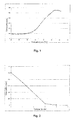
- the figure 1 shows the evolution of the viscosity of an aqueous solution at 4% by weight of KCl and 5000 ppm (by weight) of the thermosensitive copolymer as a function of temperature.
- the figure 2 shows the evolution of the viscosity of this polymeric solution, maintained at a temperature of 71 ° C, as a function of time. It decreases sharply from 500 cps to about 350 cps after one day. It is almost zero after 4 days.
- the viscosity of the polymeric solution is measured using a Bohlin rheometer (flat cone, 2.60 mm, 7.34 s -1 ).
Landscapes
- Chemical & Material Sciences (AREA)
- Life Sciences & Earth Sciences (AREA)
- General Life Sciences & Earth Sciences (AREA)
- Organic Chemistry (AREA)
- Chemical Kinetics & Catalysis (AREA)
- Engineering & Computer Science (AREA)
- Medicinal Chemistry (AREA)
- Health & Medical Sciences (AREA)
- Polymers & Plastics (AREA)
- Materials Engineering (AREA)
- Geology (AREA)
- Mining & Mineral Resources (AREA)
- Physics & Mathematics (AREA)
- Environmental & Geological Engineering (AREA)
- Fluid Mechanics (AREA)
- Geochemistry & Mineralogy (AREA)
- Macromonomer-Based Addition Polymer (AREA)
- Addition Polymer Or Copolymer, Post-Treatments, Or Chemical Modifications (AREA)
Priority Applications (6)
| Application Number | Priority Date | Filing Date | Title |
|---|---|---|---|
| EP15163252.8A EP3078720A1 (de) | 2015-04-10 | 2015-04-10 | Verfahren zur umleitung einer unterirdischen formation |
| PCT/EP2016/057840 WO2016162532A1 (fr) | 2015-04-10 | 2016-04-08 | Procede de deviation d'une formation souterraine |
| EP16719035.4A EP3280778B1 (de) | 2015-04-10 | 2016-04-08 | Verfahren zur umleitung einer unterirdischen formation |
| CN201680032164.XA CN107690467B (zh) | 2015-04-10 | 2016-04-08 | 转向地下地层的方法 |
| RU2017134951A RU2706045C9 (ru) | 2015-04-10 | 2016-04-08 | Способ обеспечения отклонения подземного пласта |
| US15/564,658 US10526525B2 (en) | 2015-04-10 | 2016-04-08 | Method for diverting an underground formation |
Applications Claiming Priority (1)
| Application Number | Priority Date | Filing Date | Title |
|---|---|---|---|
| EP15163252.8A EP3078720A1 (de) | 2015-04-10 | 2015-04-10 | Verfahren zur umleitung einer unterirdischen formation |
Publications (1)
| Publication Number | Publication Date |
|---|---|
| EP3078720A1 true EP3078720A1 (de) | 2016-10-12 |
Family
ID=52829011
Family Applications (2)
| Application Number | Title | Priority Date | Filing Date |
|---|---|---|---|
| EP15163252.8A Withdrawn EP3078720A1 (de) | 2015-04-10 | 2015-04-10 | Verfahren zur umleitung einer unterirdischen formation |
| EP16719035.4A Active EP3280778B1 (de) | 2015-04-10 | 2016-04-08 | Verfahren zur umleitung einer unterirdischen formation |
Family Applications After (1)
| Application Number | Title | Priority Date | Filing Date |
|---|---|---|---|
| EP16719035.4A Active EP3280778B1 (de) | 2015-04-10 | 2016-04-08 | Verfahren zur umleitung einer unterirdischen formation |
Country Status (5)
| Country | Link |
|---|---|
| US (1) | US10526525B2 (de) |
| EP (2) | EP3078720A1 (de) |
| CN (1) | CN107690467B (de) |
| RU (1) | RU2706045C9 (de) |
| WO (1) | WO2016162532A1 (de) |
Families Citing this family (15)
| Publication number | Priority date | Publication date | Assignee | Title |
|---|---|---|---|---|
| US20180171207A1 (en) | 2015-06-17 | 2018-06-21 | Clariant International Ltd. | Water-Soluble Or Water-Swellable Polymers As Water Loss Reducers In Cement Slurries |
| US11384186B2 (en) | 2016-12-12 | 2022-07-12 | Clariant International Ltd | Polymer comprising certain level of bio-based carbon |
| ES2867526T3 (es) | 2016-12-12 | 2021-10-20 | Clariant Int Ltd | Uso de un polímero bioderivado en una composición cosmética, dermatológica o farmacéutica |
| EP3554644B1 (de) | 2016-12-15 | 2025-03-19 | Clariant International Ltd | Wasserlösliches und/oder in wasser quellbares hybridpolymer |
| EP3554643B1 (de) | 2016-12-15 | 2025-03-19 | Clariant International Ltd | Wasserlösliches und/oder in wasser quellbares hybridpolymer |
| US11339241B2 (en) | 2016-12-15 | 2022-05-24 | Clariant International Ltd. | Water-soluble and/or water-swellable hybrid polymer |
| ES3017507T3 (en) | 2016-12-15 | 2025-05-13 | Clariant Int Ltd | Water-soluble and/or water-swellable hybrid polymer |
| CN107674668A (zh) * | 2017-11-10 | 2018-02-09 | 河北中大永迪生物科技有限公司 | 一种清洁型高温水基压裂液 |
| FR3088068B1 (fr) * | 2018-11-06 | 2020-11-06 | S N F Sa | Emulsion inverse polymerique auto inversible |
| FR3088071B1 (fr) | 2018-11-06 | 2020-11-13 | S N F Sa | Procede de recuperation assistee de petrole par injection d'une composition aqueuse polymerique |
| FR3135262A1 (fr) | 2022-05-03 | 2023-11-10 | Snf Sa | Composition cimentaire comprenant un micro-gel polymérique comme agent anti-migration de gaz |
| CN117024651B (zh) * | 2023-08-16 | 2025-08-05 | 常州大学 | 四元共聚物增粘剂及其制备方法 |
| FR3152279A1 (fr) | 2023-08-24 | 2025-02-28 | Snf Sa | Polymere hydrosoluble comme liant pour batterie |
| FR3152278A1 (fr) | 2023-08-24 | 2025-02-28 | Snf Sa | polymère hydrosoluble ramifié comme liant pour batterie |
| CN119039527B (zh) * | 2024-10-31 | 2025-01-03 | 中海油田服务股份有限公司 | 油井水泥用高温增粘型多功能助剂及其制备方法和应用 |
Citations (8)
| Publication number | Priority date | Publication date | Assignee | Title |
|---|---|---|---|---|
| WO2011077337A2 (en) | 2009-12-21 | 2011-06-30 | Schlumberger Canada Limited | Chemical diversion technique |
| WO2011081547A1 (en) | 2009-12-30 | 2011-07-07 | Schlumberger Canada Limited | Synthesis of degradable polymers downhole for oilfield applications |
| WO2011148110A1 (fr) * | 2010-05-27 | 2011-12-01 | S.P.C.M. Sa | Agent epaississant contenant un polymere cationique et composition assouplissante contenant ledit agent epaississant, en particulier pour le textile |
| US20120073809A1 (en) * | 2010-09-28 | 2012-03-29 | Eric Clum | Diversion pill and methods of using the same |
| FR2985727A1 (fr) * | 2012-01-16 | 2013-07-19 | Snf Sas | Nouveaux polymeres peignes utilisables en cosmetique et detergence |
| US20130233546A1 (en) | 2012-03-07 | 2013-09-12 | Halliburton Energy Services, Inc. | Degradable Fluid Sealing Compositions Having an Adjustable Degradation Rate and Methods for Use Thereof |
| WO2014047243A1 (en) | 2012-09-19 | 2014-03-27 | Dow Global Technologies Llc | Preparation of high molecular weight, functionalized poly(meth) acrylamide polymers by transamidation |
| US20140213748A1 (en) * | 2013-01-31 | 2014-07-31 | S.P.C.M. Sa | Novel comb polymers which can be used in cosmetics and detergents |
Family Cites Families (5)
| Publication number | Priority date | Publication date | Assignee | Title |
|---|---|---|---|---|
| FR2694939B1 (fr) * | 1992-08-20 | 1994-12-23 | Schlumberger Cie Dowell | Polymères thermoviscosifiants, leur synthèse et leurs applications notamment dans l'industrie pétrolière. |
| DE19745736A1 (de) * | 1997-10-16 | 1999-04-22 | Wacker Chemie Gmbh | Verfahren zur Behandlung von wasserhaltigen Erdgas- und Erdgasspeicherbohrungen |
| FR2819415B1 (fr) * | 2001-01-15 | 2003-11-21 | Oreal | Dispersions stabilisees a des temperatures des 4 a 50 au moyen d'un polymere comportant des unites hydrosolubles et des unites a lcst |
| US8076270B2 (en) * | 2008-09-26 | 2011-12-13 | Bp Corporation North America Inc. | Wellbore treatment compositions |
| US20120233546A1 (en) * | 2011-03-08 | 2012-09-13 | 3CLogic | System and method for providing voice, chat, and short message service applications usable in social media to service personal orders and requests by at least one agent |
-
2015
- 2015-04-10 EP EP15163252.8A patent/EP3078720A1/de not_active Withdrawn
-
2016
- 2016-04-08 US US15/564,658 patent/US10526525B2/en active Active
- 2016-04-08 WO PCT/EP2016/057840 patent/WO2016162532A1/fr not_active Ceased
- 2016-04-08 EP EP16719035.4A patent/EP3280778B1/de active Active
- 2016-04-08 CN CN201680032164.XA patent/CN107690467B/zh not_active Expired - Fee Related
- 2016-04-08 RU RU2017134951A patent/RU2706045C9/ru active
Patent Citations (8)
| Publication number | Priority date | Publication date | Assignee | Title |
|---|---|---|---|---|
| WO2011077337A2 (en) | 2009-12-21 | 2011-06-30 | Schlumberger Canada Limited | Chemical diversion technique |
| WO2011081547A1 (en) | 2009-12-30 | 2011-07-07 | Schlumberger Canada Limited | Synthesis of degradable polymers downhole for oilfield applications |
| WO2011148110A1 (fr) * | 2010-05-27 | 2011-12-01 | S.P.C.M. Sa | Agent epaississant contenant un polymere cationique et composition assouplissante contenant ledit agent epaississant, en particulier pour le textile |
| US20120073809A1 (en) * | 2010-09-28 | 2012-03-29 | Eric Clum | Diversion pill and methods of using the same |
| FR2985727A1 (fr) * | 2012-01-16 | 2013-07-19 | Snf Sas | Nouveaux polymeres peignes utilisables en cosmetique et detergence |
| US20130233546A1 (en) | 2012-03-07 | 2013-09-12 | Halliburton Energy Services, Inc. | Degradable Fluid Sealing Compositions Having an Adjustable Degradation Rate and Methods for Use Thereof |
| WO2014047243A1 (en) | 2012-09-19 | 2014-03-27 | Dow Global Technologies Llc | Preparation of high molecular weight, functionalized poly(meth) acrylamide polymers by transamidation |
| US20140213748A1 (en) * | 2013-01-31 | 2014-07-31 | S.P.C.M. Sa | Novel comb polymers which can be used in cosmetics and detergents |
Also Published As
| Publication number | Publication date |
|---|---|
| CN107690467A (zh) | 2018-02-13 |
| US10526525B2 (en) | 2020-01-07 |
| RU2706045C2 (ru) | 2019-11-13 |
| RU2017134951A (ru) | 2019-05-13 |
| CN107690467B (zh) | 2020-08-04 |
| RU2706045C9 (ru) | 2020-02-21 |
| EP3280778A1 (de) | 2018-02-14 |
| WO2016162532A1 (fr) | 2016-10-13 |
| RU2017134951A3 (de) | 2019-09-04 |
| US20180086966A1 (en) | 2018-03-29 |
| EP3280778B1 (de) | 2019-06-12 |
Similar Documents
| Publication | Publication Date | Title |
|---|---|---|
| EP3280778B1 (de) | Verfahren zur umleitung einer unterirdischen formation | |
| EP2984149B1 (de) | Frakturierungsflüssigkeiten auf basis von assoziativen polymeren und labilen tensiden | |
| EP2984144A1 (de) | Polymere für erhöhte kohlenwasserstoffgewinnung | |
| WO2010001002A1 (fr) | Nouveau procede de traitement des formations rocheuses et nouveaux polyampholytes | |
| EP3724295B1 (de) | Verfahren zur herstellung einer zusammensetzung enthaltend ein in einer hülle eingekapseltes wasserlösliches (co)polymer und verwendung dieser zusammensetzung in der unterstützten öl- und gasrückgewinnung | |
| EP3877483B1 (de) | Verfahren zur verbesserten ölrückgewinnung durch einspritzen einer wässrigen polymerzusammensetzung | |
| EP3918026A1 (de) | Verfahren zur modifizierung der wasserdurchlässigkeit einer unterirdischen formation | |
| EP3571261B1 (de) | Verfahren zur erhöhten ölrückgewinnung durch einspritzen einer wässrigen polymerzusammensetzung mit mikrogelen | |
| EP4514866B1 (de) | Polymer und seine verwendung als viskositätsminderer von kohlenwasserstoffen | |
| EP3918027A1 (de) | Verfahren zur modifizierung der wasserdurchlässigkeit einer unterirdischen formation | |
| FR3162751A1 (fr) | Emulsion inverse pour la fracturation hydraulique | |
| EA043665B1 (ru) | Способ повышения нефтеотдачи посредством нагнетания водной полимерной композиции | |
| OA19711A (en) | Method for preparing a composition comprising a hydrosoluble (co) polymer encapsulated in a shell and use of this composition in assisted oil and gas recovery | |
| Nasakul | Thermoreversible gels and temperature triggered kinetically controlled gels for oilfield applications |
Legal Events
| Date | Code | Title | Description |
|---|---|---|---|
| PUAI | Public reference made under article 153(3) epc to a published international application that has entered the european phase |
Free format text: ORIGINAL CODE: 0009012 |
|
| AK | Designated contracting states |
Kind code of ref document: A1 Designated state(s): AL AT BE BG CH CY CZ DE DK EE ES FI FR GB GR HR HU IE IS IT LI LT LU LV MC MK MT NL NO PL PT RO RS SE SI SK SM TR |
|
| AX | Request for extension of the european patent |
Extension state: BA ME |
|
| STAA | Information on the status of an ep patent application or granted ep patent |
Free format text: STATUS: THE APPLICATION HAS BEEN PUBLISHED |
|
| STAA | Information on the status of an ep patent application or granted ep patent |
Free format text: STATUS: THE APPLICATION IS DEEMED TO BE WITHDRAWN |
|
| 18D | Application deemed to be withdrawn |
Effective date: 20170413 |