EP3079079B1 - Verfahren, vorrichtung und datenstruktur zum kopieren von werten einer tabelle einer datenbank - Google Patents
Verfahren, vorrichtung und datenstruktur zum kopieren von werten einer tabelle einer datenbank Download PDFInfo
- Publication number
- EP3079079B1 EP3079079B1 EP15162563.9A EP15162563A EP3079079B1 EP 3079079 B1 EP3079079 B1 EP 3079079B1 EP 15162563 A EP15162563 A EP 15162563A EP 3079079 B1 EP3079079 B1 EP 3079079B1
- Authority
- EP
- European Patent Office
- Prior art keywords
- segments
- memory
- primary memory
- data
- segment
- Prior art date
- Legal status (The legal status is an assumption and is not a legal conclusion. Google has not performed a legal analysis and makes no representation as to the accuracy of the status listed.)
- Active
Links
Images



Classifications
-
- G—PHYSICS
- G06—COMPUTING OR CALCULATING; COUNTING
- G06F—ELECTRIC DIGITAL DATA PROCESSING
- G06F16/00—Information retrieval; Database structures therefor; File system structures therefor
- G06F16/20—Information retrieval; Database structures therefor; File system structures therefor of structured data, e.g. relational data
- G06F16/24—Querying
- G06F16/245—Query processing
- G06F16/2455—Query execution
- G06F16/24552—Database cache management
-
- G—PHYSICS
- G06—COMPUTING OR CALCULATING; COUNTING
- G06F—ELECTRIC DIGITAL DATA PROCESSING
- G06F16/00—Information retrieval; Database structures therefor; File system structures therefor
- G06F16/20—Information retrieval; Database structures therefor; File system structures therefor of structured data, e.g. relational data
- G06F16/27—Replication, distribution or synchronisation of data between databases or within a distributed database system; Distributed database system architectures therefor
- G06F16/278—Data partitioning, e.g. horizontal or vertical partitioning
-
- G—PHYSICS
- G06—COMPUTING OR CALCULATING; COUNTING
- G06F—ELECTRIC DIGITAL DATA PROCESSING
- G06F11/00—Error detection; Error correction; Monitoring
- G06F11/07—Responding to the occurrence of a fault, e.g. fault tolerance
- G06F11/14—Error detection or correction of the data by redundancy in operations
- G06F11/1402—Saving, restoring, recovering or retrying
- G06F11/1405—Saving, restoring, recovering or retrying at machine instruction level
- G06F11/1407—Checkpointing the instruction stream
-
- G—PHYSICS
- G06—COMPUTING OR CALCULATING; COUNTING
- G06F—ELECTRIC DIGITAL DATA PROCESSING
- G06F11/00—Error detection; Error correction; Monitoring
- G06F11/07—Responding to the occurrence of a fault, e.g. fault tolerance
- G06F11/14—Error detection or correction of the data by redundancy in operations
- G06F11/1446—Point-in-time backing up or restoration of persistent data
- G06F11/1448—Management of the data involved in backup or backup restore
- G06F11/1451—Management of the data involved in backup or backup restore by selection of backup contents
-
- G—PHYSICS
- G06—COMPUTING OR CALCULATING; COUNTING
- G06F—ELECTRIC DIGITAL DATA PROCESSING
- G06F12/00—Accessing, addressing or allocating within memory systems or architectures
- G06F12/02—Addressing or allocation; Relocation
- G06F12/08—Addressing or allocation; Relocation in hierarchically structured memory systems, e.g. virtual memory systems
- G06F12/12—Replacement control
- G06F12/121—Replacement control using replacement algorithms
- G06F12/122—Replacement control using replacement algorithms of the least frequently used [LFU] type, e.g. with individual count value
-
- G—PHYSICS
- G06—COMPUTING OR CALCULATING; COUNTING
- G06F—ELECTRIC DIGITAL DATA PROCESSING
- G06F12/00—Accessing, addressing or allocating within memory systems or architectures
- G06F12/02—Addressing or allocation; Relocation
- G06F12/08—Addressing or allocation; Relocation in hierarchically structured memory systems, e.g. virtual memory systems
- G06F12/12—Replacement control
- G06F12/121—Replacement control using replacement algorithms
- G06F12/128—Replacement control using replacement algorithms adapted to multidimensional cache systems, e.g. set-associative, multicache, multiset or multilevel
-
- G—PHYSICS
- G06—COMPUTING OR CALCULATING; COUNTING
- G06F—ELECTRIC DIGITAL DATA PROCESSING
- G06F16/00—Information retrieval; Database structures therefor; File system structures therefor
- G06F16/20—Information retrieval; Database structures therefor; File system structures therefor of structured data, e.g. relational data
- G06F16/22—Indexing; Data structures therefor; Storage structures
- G06F16/2282—Tablespace storage structures; Management thereof
-
- G—PHYSICS
- G06—COMPUTING OR CALCULATING; COUNTING
- G06F—ELECTRIC DIGITAL DATA PROCESSING
- G06F16/00—Information retrieval; Database structures therefor; File system structures therefor
- G06F16/20—Information retrieval; Database structures therefor; File system structures therefor of structured data, e.g. relational data
- G06F16/23—Updating
- G06F16/2308—Concurrency control
- G06F16/2336—Pessimistic concurrency control approaches, e.g. locking or multiple versions without time stamps
- G06F16/2343—Locking methods, e.g. distributed locking or locking implementation details
-
- G—PHYSICS
- G06—COMPUTING OR CALCULATING; COUNTING
- G06F—ELECTRIC DIGITAL DATA PROCESSING
- G06F16/00—Information retrieval; Database structures therefor; File system structures therefor
- G06F16/20—Information retrieval; Database structures therefor; File system structures therefor of structured data, e.g. relational data
- G06F16/23—Updating
- G06F16/2372—Updates performed during offline database operations
-
- G—PHYSICS
- G06—COMPUTING OR CALCULATING; COUNTING
- G06F—ELECTRIC DIGITAL DATA PROCESSING
- G06F16/00—Information retrieval; Database structures therefor; File system structures therefor
- G06F16/20—Information retrieval; Database structures therefor; File system structures therefor of structured data, e.g. relational data
- G06F16/28—Databases characterised by their database models, e.g. relational or object models
-
- G—PHYSICS
- G06—COMPUTING OR CALCULATING; COUNTING
- G06F—ELECTRIC DIGITAL DATA PROCESSING
- G06F2201/00—Indexing scheme relating to error detection, to error correction, and to monitoring
- G06F2201/80—Database-specific techniques
-
- G—PHYSICS
- G06—COMPUTING OR CALCULATING; COUNTING
- G06F—ELECTRIC DIGITAL DATA PROCESSING
- G06F2201/00—Indexing scheme relating to error detection, to error correction, and to monitoring
- G06F2201/84—Using snapshots, i.e. a logical point-in-time copy of the data
-
- G—PHYSICS
- G06—COMPUTING OR CALCULATING; COUNTING
- G06F—ELECTRIC DIGITAL DATA PROCESSING
- G06F2212/00—Indexing scheme relating to accessing, addressing or allocation within memory systems or architectures
- G06F2212/62—Details of cache specific to multiprocessor cache arrangements
- G06F2212/621—Coherency control relating to peripheral accessing, e.g. from DMA or I/O device
Definitions
- the present invention relates to a method and an apparatus for copying values of a table of a database.
- the present invention also relates to a computer-readable storage medium and a data structure.
- the traditional database storage layout of disk-based databases involves fixed-sized data pages composed of table rows.
- the data pages are fetched from disk and maintained in a shared page buffer pool, for efficient usage by concurrent applications.
- the page size and structure is optimized for efficient disk I/O.
- the solution is not suitable for in-memory databases because the overhead of the shared page buffer pool is too large. Especially, several steps of indirect addressing are applied to access a single data item (e.g. a column value). Additionally, in in-memory databases, there is no need to buffer the data on the way from, or to disk.
- the solution is also called a row store, or a row-oriented database because of the row orientation of the page structure. Row store is beneficial in on-line transaction processing (OLTP) databases.
- OTP on-line transaction processing
- in-memory databases are not designed for data migration.
- an in-memory table has to reside in memory in its totality. That also applies to columnar databases where column data is stored in fixed-size column vectors.
- One prior art solution, called anti-caching, applies moving of the data to disk on a row-by-row basis. That is not suitable to columnar databases when a need to migrate data on a column basis emerges.
- XP055222075 discloses an approach for columnar in-memory DBMS to leverage hybrid-memory by vertically partitioning data depending on its access frequency. It is outlined in what way the approach is suited to scale columnar in-memory DBMS to overcome existing drawbacks of Scale-Out solutions for certain workloads.
- one object of the present invention is to provide a method, an apparatus, a computer-readable storage medium and a data structure that solve at least one of the above-mentioned problems of the prior art.
- a first aspect of the invention provides a method for copying values of a table of a database between a primary memory and a secondary memory, wherein the table is organized in a plurality of stripes and a plurality of vertical partitions, wherein a stripe comprises at least two rows of the table and a vertical partition comprises one or more columns of the table, wherein the table is stored as a plurality of segments, wherein a segment comprises values at a cross-section of a stripe and a vertical partition, but comprises no values from at least one column of the table, and wherein a segment stores adjacent column values in adjacent locations of the primary or the secondary memory, the method comprising a step of selecting one or more segments and copying the one or more selected segments between the primary memory and the secondary memory.
- copying also comprises evicting, i.e., copying the data from source memory to destination memory and deleting the data from the source memory.
- the data of the table of database is organized and/or copied in segments. Segments can be units of database checkpointing and data migration.
- the segments can adhere to the principles of a columnar database in that they can contain sequences of column values of one or more columns of a table.
- a segment contains values at a cross-section of a set of rows and one or more columns of a table. It contains one or more column value vectors and is thus suitable for column-wise computing.
- column values are organized in adjacent memory locations, suitable for efficient scanning and vector processing (single instruction multiple data, SIMD).
- Column values are aligned, in segments, in such a way that a set of horizontal segments, called a stripe, represents a set of rows.
- a segment can be stored on the secondary memory in binary form, without a need of reformatting.
- the column vectors can be available at pre-defined offsets of the segment memory block.
- a segment is a data unit that is shared between the checkpoint activity and data migration activity.
- a segment comprises values of a cross-section of a connected set of rows and a connected set of one or more columns of a table of the database, but comprises no values from at least one column of the table.
- segments can comprise values of a rectangular region of the table of the database.
- a segment only consists of the values of a rectangular region of the table of the database.
- the segment might consist of the values of the rectangular region of the table of the database and some additional metadata, but no values from cells in the table that are outside the mentioned rectangular region.
- values of a table can refer to any kind of data that can be stored in a table, in particular any kind of data that can be stored in a cell of a table.
- a value can be an integer value, a floating point value, or any more complex variable or data structure.
- the method is implemented in a database management system and/or the primary memory is a volatile memory and the secondary memory is a persistent memory, in particular a hard disk.
- the primary memory is a volatile memory
- the secondary memory is a persistent memory, in particular a hard disk.
- the method is a checkpointing method for copying one or more changed segments from the primary memory of the database to the secondary memory. Storing some segments in a volatile memory and other segments in a persistent memory can be advantageous e.g. if the volatile memory has a faster access time than the persistent memory.
- changed segments i.e., segments that have changed in the memory
- the checkpoint intervals can be regular intervals determined by a clock unit, or they can be irregular intervals that are determined based on a rule, e.g. based on when a sufficient number of changes that need checkpointing has accumulated.
- the method of the first aspect comprises the steps:
- Freezing the one or more selected segments can be implemented e.g. by preventing write access to the segment. This allows that a consistent state of the one or more selected segments is copied to the secondary memory. Preferably, after copying, the frozen segments are released in the primary memory.
- freezing the one or more selected segments comprises shadowing, copying on write, or locking of the one or more selected segments.
- the frozen segments are "forgotten” (i.e. removed from memory) and replaced with changed copies. Freezing the selected segments can also be performed with further freezing methods that are known to the person skilled in the art.
- the method of the first aspect is a method for evicting data from the primary memory to the secondary memory.
- the method comprises the steps:
- a special case of a segment eviction is an eviction of a full column, wherein the full column can be evicted by evicting a plurality of segments that make up the full column. For example, if the table of the database is organized into four stripes, a full column can be evicted by evicting the corresponding four segments.
- the method according to the fifth possible implementation can further comprise a step of, for each identified segment that has been checkpointed, marking the segment as evicted.
- the one or more least recently used segments can be moved to disk. Because segments that are resident on the secondary memory are shared between the checkpoint and data migration, the method can include an optimization such that, upon eviction, the one or more segments need not be written to disk if they have been already checkpointed before. In that case, the one or more segments are only removed from primary memory and marked as evicted. Most of the segments being evicted satisfy the condition because, in most cases, the evicted segments have not been recently used (e.g. changed).
- the step of selecting the segments to be evicted comprises:
- the selecting method also include selecting spans of rows, with segment granularity, based on some criterion like the age of data. On segment restore, demand paging can be used whereby the segments are actually loaded to memory when they are needed.
- the one or more selected segments are encrypted and/or compressed before they are copied to the secondary memory. Encrypting the one or more selected segments has the advantage that unauthorized access to the data of the database is prevented. For example, if an intruder achieves unauthorized access to the secondary memory, he could not retrieve the information content of the database table if the segments are encrypted before copying to the secondary memory.
- the copying is performed as part of restoring data from the secondary memory back to the primary memory.
- the method according to the first aspect further comprises the steps:
- the one or more selected segments are decrypted and/or decompressed before they are restored from the secondary memory back to the primary memory.
- the decryption or decompression is performed "on the fly", such that e.g. a database management system is not even aware that segments of its database were temporarily encrypted and/or compressed.
- adjacent column values are stored in adjacent memory locations only in the sense that their decrypted or decompressed version corresponds to storing adjacent column values in adjacent (uncompressed / unencrypted) memory locations.
- a second aspect of the present invention provides apparatus for copying values of a table of a database between a primary memory and a secondary memory, wherein the table is organized in stripes and vertical partitions and a stripe comprises at least two rows of the table and a vertical partition comprises one or more columns of the table, wherein the table is stored as a plurality of segments, wherein a segment comprises values at a cross-section of a stripe and a vertical partition, , but comprises no values from at least one column of the table, and wherein a segment stores adjacent column values in adjacent locations of the primary memory, wherein the apparatus is configured to select one or more segments and copy the one or more selected segments between the primary memory and the secondary memory.
- the second aspect of the invention provides an apparatus that is configured to carry out the method of the first aspect of the invention and/or one or more of the implementations of the first aspect of the invention.
- a third aspect of the invention provides a computer-readable storage medium, comprising program code, the program code comprising instructions for carrying out the method of the first aspect of the invention and/or one or more of the implementations of the first aspect of the invention.
- a fourth aspect of the invention provides a data structure of a database, comprising a plurality of segments of a table of the database, wherein the table is organized in stripes and vertical partitions and a stripe comprises at least two rows of the table and a vertical partition comprises one or more columns of the table, wherein the table is stored in the data structure as a plurality of segments, wherein a segment comprises values at a cross-section of a stripe and a vertical partition, and wherein a segment stores adjacent column values in adjacent locations of a primary memory.
- FIG. 1 is a high level diagram of a system for copying data that is not part of the present invention.
- the system 100 shown in FIG. 1 comprises a primary memory 110 and a secondary memory 120.
- the primary memory 110 is organized in a plurality of rows 10a that are indexed by an index 112.
- rows 10b are stored that were evicted from the primary memory 110.
- a row miss i.e., when access is required to a row that is missing in primary memory 110, the corresponding evicted row 10b is restored to primary memory 110. No column-wise eviction and restore is possible.
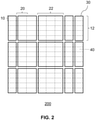
- FIG. 2 shows a schematic representation of a table 200 that is organized according to embodiments of the invention. This schematic representation also indicates the layout of a data structure according to an aspect of the present invention.
- the table 200 comprises rows 10 and columns 20.
- the table 200 is organized in stripes 12 that comprise a plurality of rows 10. In the example shown in FIG. 2 the first, second and third stripe 12 each comprises five rows.
- the table 200 is furthermore organized in vertical partitions 22 that comprise one or more columns 20.
- the first vertical partition comprises one column
- the second vertical partition comprises two columns
- the third vertical partition 22 comprises three columns
- the fourth and fifth vertical partition each comprise one column.
- Each cell of the table stores one column value 40.
- the organization of the table is reflected in the physical storage of the table such that the segments of the table are stored subsequently on a physical storage.
- the segments are units of database checkpointing and data migration.
- the segments adhere to the principles of a columnar database in that they contain sequences of column values of one or more columns of the table.
- FIG. 3 illustrates an apparatus and a method for checkpointing data of an in-memory database in accordance with the present invention.
- a database checkpoint is a persistent storage representing a consistent state of a database. Database checkpoints are used e.g. upon recovery from computer system failures. The operation of creating a checkpoint is called checkpointing. A preferable way to do checkpointing is to store only the data that has changed since the previous checkpointing. This is called incremental checkpointing. An execution of an incremental checkpointing using the invention method is illustrated in FIG. 3 .
- the system 300 shown in FIG. 3 comprises a table 310 that comprises rows 10 and columns 20 and that is organized in stripes 12 and vertical partitions 22.
- the plurality of stripes 12 and vertical partitions 22 define segments 30, wherein each segment 30 comprises the column values 40 that are contained in a cross section of a stripe 12 and a vertical partition 22.
- the primary memory 310 can be the working memory of a computing device which is hosting the database and a database management system managing the database.
- FIG. 4 shows a flow chart of a checkpointing method in accordance with the present invention.
- a new checkpoint is begun (e.g. by starting the time interval corresponding to a new checkpoint).
- one or more changed segments are identified and freezed, i.e. a further modification of the changed segments is prevented.
- freezing like shadowing, copy on write, or locking.
- the frozen segments are "forgotten” (i.e. removed from memory) and replaced with changed copies.
- step S430 the changed segments are copied to a checkpoint storage, which can be a persistent storage.
- step S440 the frozen segments are released, i.e. the frozen segments are made available for future modifications.
- step S450 the method ends. In other embodiments, instead of the method ending in step S450, the method can be executed iteratively, i.e. a new checkpoint is begun.
- a further embodiment of the present invention is related to an implementation of the operation of data migration from primary memory to persistent storage by way of segment eviction.
- a special case of a segment eviction is an eviction of a full column, as illustrated in FIG. 5 .
- the system 500 shown in FIG. 5 comprises a table 510 of an in-memory database that is primarily stored in a primary memory. Furthermore, the system 500 comprises a secondary memory 520 that acts as a segment storage for one or more segments 32a, 32b, 32c that are evicted from the primary memory.
- step S610 the method is invoked.
- step S620 a need for eviction is detected, and an extent (in terms of the amount of free space needed) is evaluated.
- a selection method can be chosen, for example by selecting full columns for eviction.
- step S630 the segments to be evicted are selected. As a special case, the whole column can be indicated for eviction.
- step S640 for each evicted segment, a check is done whether that segment has been checkpointed in its current state. If so, no storing to persistent storage is needed.
- the segment is removed from the primary memory. If the segment has not been checkpointed, in step S650 it is moved to the secondary memory, e.g. a persistent storage such as a hard disk.
- step S660 the method ends. In other embodiments of the invention, the previous steps can be carried out iteratively, i.e., instead of ending the method in step S660, execution of the method is continued at step S620.
- steps S640 and S650 are performed for each segment of the table.
- a third embodiment of the invention is an implementation of an operation of segment restore, after the segments have been evicted before.
- the need for restore can result from a query that accesses the evicted data, for example an evicted column.
- FIG. 7 illustrates a system 700 where a plurality of segments 33a, 33b, 33c are restored from a segment storage 720 to a table 710 that is stored in a primary memory.
- step S810 Execution of the method begins in step S810.
- the need for restore (e.g. caused by a query requesting the evicted data) is evaluated in step S820.
- the segments to be restored are identified in step S830.
- step S840 a check is performed whether there is enough memory space for restoring the segments. If not, in step S850, the necessary memory space is freed by evicting segments from the primary memory.
- step S860 the identified segments are restored from the secondary memory to the primary memory.
- step S870 the method terminates.
Landscapes
- Engineering & Computer Science (AREA)
- Theoretical Computer Science (AREA)
- Databases & Information Systems (AREA)
- Physics & Mathematics (AREA)
- General Engineering & Computer Science (AREA)
- General Physics & Mathematics (AREA)
- Data Mining & Analysis (AREA)
- Quality & Reliability (AREA)
- Computational Linguistics (AREA)
- Computing Systems (AREA)
- Software Systems (AREA)
- Information Retrieval, Db Structures And Fs Structures Therefor (AREA)
Claims (10)
- Verfahren zum Kopieren von Werten einer Tabelle (200, 520, 710) einer Datenbank zwischen einem Primärspeicher (110, 310, 510) und einem Sekundärspeicher (120, 320, 520), wobei die Tabelle in einer Mehrzahl von Streifen (12) und einer Mehrzahl von vertikalen Partitionen (22) organisiert ist, wobei ein Streifen mindestens zwei Zeilen (10) der Tabelle umfasst, und eine vertikale Partition eine oder mehrere Spalten (20) der Tabelle umfasst, wobei die Tabelle als eine Mehrzahl von Segmenten (30, 32a, 32b, 32c) gespeichert wird, wobei ein Segment Werte an einem Kreuzschnitt eines Streifens und einer vertikalen Partition umfasst, aber keine Werte aus mindestens einer Spalte der Tabelle umfasst, und wobei ein Segment benachbarte Spaltenwerte (40) an benachbarten Speicherorten des Primär- oder des Sekundärspeichers speichert, wobei das Verfahren einen Schritt des Auswählens (S420) eines oder mehrerer Segmente und Kopierens des einen oder der mehreren ausgewählten Segmente zwischen dem Primärspeicher und dem Sekundärspeicher umfasst, wobei der Primärspeicher ein flüchtiger Speicher ist, und der Sekundärspeicher ein persistenter Speicher ist, dadurch gekennzeichnet, dass das Verfahren umfasst:- Erkennen (S620) einer Notwendigkeit einer Datenentfernung,- Bestimmen (S620) eines Ausmaßes der erforderlichen Datenentfernung,- Auswählen (S630) eines oder mehrerer Segmente, die entfernt werden sollen,- Bestimmen (S640) für jedes ausgewählte Segment, ob das Segment mit einem Prüfpunkt versehen wurde,- Kopieren (S650) für jedes ausgewählte Segment, das nicht mit einem Prüfpunkt versehen wurde, des Segments aus dem Primärspeicher (110, 310, 510) in den Sekundärspeicher (120, 320, 520), und- Löschen (S650) der ausgewählten Segmente aus dem Primärspeicher (110, 310, 510),wobei das Verfahren ein Prüfpunktverfahren zum Kopieren (S430) eines oder mehrerer geänderter Segmente aus dem Primärspeicher der Datenbank in den Sekundärspeicher ist, und das Auswählen des einen oder der mehreren zu entfernenden Segmente umfasst:- Auswählen eines oder mehrerer am längsten nicht verwendeter Segmente,- Auswählen einer oder mehrerer vollständiger Spalten, die wahrscheinlich nicht verwendet werden, und/oder- Auswählen eines oder mehrerer Segmente basierend auf einem Auswahlkriterium, das auf einem Alter der Daten basiert.
- Verfahren nach Anspruch 1, umfassend die folgenden Schritte:- Auswählen (S420) eines oder mehrerer Segmente im Primärspeicher, die sich geändert haben,- Einfrieren (S420) des einen oder der mehreren ausgewählten Segmente, derart, dass ein Zustand des einen oder der mehreren ausgewählten Segmente bewahrt wird,- Kopieren (S430) des einen oder der mehreren eingefrorenen Segmente in den Sekundärspeicher, und- Freigeben (S440) der eingefrorenen Segmente.
- Verfahren nach Anspruch 2, wobei das Einfrieren (S420) des einen oder der mehreren ausgewählten Segmente ein Bilden von Schatten, Kopieren-beim-Schreiben oder Sperren des einen oder der mehreren ausgewählten Segmente umfasst.
- Verfahren nach einem der vorhergehenden Ansprüche, wobei das Verfahren ein Verfahren zum Entfernen von Daten aus dem Primärspeicher (110, 310, 510) in den Sekundärspeicher (120, 320, 520) ist.
- Verfahren nach einem der vorhergehenden Ansprüche, wobei das eine oder die mehreren ausgewählten Segmente verschlüsselt und/oder komprimiert werden, bevor sie in den Sekundärspeicher (120, 320, 520) kopiert werden.
- Verfahren nach einem der vorhergehenden Ansprüche, wobei das Kopieren als Teil eines Wiederherstellens von Daten aus dem Sekundärspeicher (120, 320, 520) zurück in den Primärspeicher (110, 310, 510) durchgeführt wird.
- Verfahren nach einem der vorhergehenden Ansprüche, ferner umfassend die folgenden Schritte:- Erkennen (S820) einer Notwendigkeit eines Wiederherstellens von Daten,- Bestimmen (S820), welche Daten Wiederherstellung benötigen,- Auswählen (S830) eines oder mehrerer Segmente, die wiederhergestellt werden sollen,- Bestimmen (S840), ob der Primärspeicher genügend freien Speicherplatz zum Wiederherstellen der ausgewählten Segmente aufweist,- Freimachen von Speicherplatz (S850) im Primärspeicher, wenn nicht genügend Speicherplatz vorhanden ist, durch Entfernen von Daten, insbesondere eines oder mehrere Segmente, aus dem Primärspeicher (110, 310, 510),- Wiederherstellen (S860) der ausgewählten Segmente aus dem Sekundärspeicher zurück in den Primärspeicher (110, 310, 510).
- Verfahren nach Anspruch 7, wobei das eine oder die mehreren ausgewählten Segmente entschlüsselt und/oder dekomprimiert werden, bevor sie aus dem Sekundärspeicher (120, 320, 520) zurück in den Primärspeicher (110, 310, 510) wiederhergestellt werden.
- Vorrichtung zum Kopieren von Werten einer Tabelle einer Datenbank zwischen einem Primärspeicher und einem Sekundärspeicher (120, 320, 520), wobei die Tabelle (200, 520, 710) in einer Mehrzahl von Streifen (12) und einer Mehrzahl von vertikalen Partitionen (22) organisiert ist, und ein Streifen mindestens zwei Zeilen (10) der Tabelle umfasst, und eine vertikale Partition eine oder mehrere Spalten (20) der Tabelle umfasst, wobei die Tabelle als eine Mehrzahl von Segmenten (30, 32a, 32b, 32c) gespeichert ist, und wobei ein Segment Werte an einem Kreuzschnitt eines Streifens und einer vertikalen Partition umfasst, aber keine Werte aus mindestens einer Spalte der Tabelle umfasst, und wobei ein Segment benachbarte Spaltenwerte (40) an benachbarten Speicherorten des Primär- oder des Sekundärspeichers speichert, wobei die Vorrichtung zum Auswählen (S420) eines oder mehrerer Segmente und Kopieren des einen oder der mehreren Segmente zwischen dem Primärspeicher und dem Sekundärspeicher konfiguriert ist, wobei der Primärspeicher ein flüchtiger Speicher ist, und der Sekundärspeicher ein persistenter Speicher, insbesondere eine Festplatte, ist,
dadurch gekennzeichnet, dass die Vorrichtung eine Prüfpunktvorrichtung zum Kopieren (S430) eines oder mehrerer geänderter Segmente aus dem Primärspeicher der Datenbank in den Sekundärspeicher ist, und die Vorrichtung zum Durchführen des Verfahrens nach einem der vorhergehenden Ansprüche konfiguriert ist. - Computerlesbares Speichermedium, das Programmcode umfasst, wobei der Programmcode Anweisungen zum Durchführen des Verfahrens nach einem der Ansprüche 1 bis 8 umfasst.
Priority Applications (4)
| Application Number | Priority Date | Filing Date | Title |
|---|---|---|---|
| EP15162563.9A EP3079079B8 (de) | 2015-04-07 | 2015-04-07 | Verfahren, vorrichtung und datenstruktur zum kopieren von werten einer tabelle einer datenbank |
| CN201580077836.4A CN107533489B (zh) | 2015-04-07 | 2015-11-27 | 拷贝数据库中表的值的方法、装置及数据结构 |
| PCT/CN2015/095840 WO2016161811A1 (en) | 2015-04-07 | 2015-11-27 | Method, apparatus and data structure for copying values of table of database |
| US15/656,404 US10621202B2 (en) | 2015-04-07 | 2017-07-21 | Method, apparatus and data structure for copying values of a table of a database |
Applications Claiming Priority (1)
| Application Number | Priority Date | Filing Date | Title |
|---|---|---|---|
| EP15162563.9A EP3079079B8 (de) | 2015-04-07 | 2015-04-07 | Verfahren, vorrichtung und datenstruktur zum kopieren von werten einer tabelle einer datenbank |
Publications (3)
| Publication Number | Publication Date |
|---|---|
| EP3079079A1 EP3079079A1 (de) | 2016-10-12 |
| EP3079079B1 true EP3079079B1 (de) | 2022-01-26 |
| EP3079079B8 EP3079079B8 (de) | 2022-04-27 |
Family
ID=52824087
Family Applications (1)
| Application Number | Title | Priority Date | Filing Date |
|---|---|---|---|
| EP15162563.9A Active EP3079079B8 (de) | 2015-04-07 | 2015-04-07 | Verfahren, vorrichtung und datenstruktur zum kopieren von werten einer tabelle einer datenbank |
Country Status (4)
| Country | Link |
|---|---|
| US (1) | US10621202B2 (de) |
| EP (1) | EP3079079B8 (de) |
| CN (1) | CN107533489B (de) |
| WO (1) | WO2016161811A1 (de) |
Families Citing this family (5)
| Publication number | Priority date | Publication date | Assignee | Title |
|---|---|---|---|---|
| EP3093773B1 (de) | 2015-05-13 | 2019-07-10 | Huawei Technologies Co., Ltd. | System und verfahren zur erzeugung von selektiven schnappschüssen einer datenbank |
| EP3291103B1 (de) | 2016-09-01 | 2019-11-06 | Huawei Technologies Co., Ltd. | System und verfahren zur erzeugung einer momentaufnahme einer teilmenge einer datenbank |
| US11196542B2 (en) | 2018-08-29 | 2021-12-07 | International Business Machines Corporation | Checkpointing for increasing efficiency of a blockchain |
| US10901957B2 (en) * | 2018-08-29 | 2021-01-26 | International Business Machines Corporation | Checkpointing for increasing efficiency of a blockchain |
| US11334439B2 (en) | 2018-08-29 | 2022-05-17 | International Business Machines Corporation | Checkpointing for increasing efficiency of a blockchain |
Family Cites Families (12)
| Publication number | Priority date | Publication date | Assignee | Title |
|---|---|---|---|---|
| US657039A (en) | 1896-07-30 | 1900-08-28 | Joseph J Little | Spacing or justifying device for type-bar or matrix machines. |
| US838092A (en) | 1904-07-22 | 1906-12-11 | Charles H Ely | Folding umbrella. |
| US6453383B1 (en) * | 1999-03-15 | 2002-09-17 | Powerquest Corporation | Manipulation of computer volume segments |
| US7080101B1 (en) | 2000-12-01 | 2006-07-18 | Ncr Corp. | Method and apparatus for partitioning data for storage in a database |
| CN1299096A (zh) * | 2001-01-12 | 2001-06-13 | 常促宇 | 通用串行总线接口的大容量移动存储器及其实现方法 |
| CN1217269C (zh) * | 2001-11-07 | 2005-08-31 | 无锡永中科技有限公司 | 数据对象存贮库与电子表格单元链接的方法 |
| EP2290562A1 (de) * | 2009-08-24 | 2011-03-02 | Amadeus S.A.S. | Segmentiertes, im Hauptspeicher gespeichertes Datenbanktabellensystem mit verbessertem kollaborativem Abtastalgorithmus |
| US8103904B2 (en) * | 2010-02-22 | 2012-01-24 | International Business Machines Corporation | Read-other protocol for maintaining parity coherency in a write-back distributed redundancy data storage system |
| LU91726B1 (en) * | 2010-09-10 | 2012-03-12 | Univ Saarland | A method of storing and accessing data in a database system |
| US9483512B2 (en) | 2011-11-07 | 2016-11-01 | Sap Se | Columnar database using virtual file data objects |
| US8327185B1 (en) * | 2012-03-23 | 2012-12-04 | DSSD, Inc. | Method and system for multi-dimensional raid |
| GB2513140B (en) * | 2013-04-16 | 2016-05-04 | Canon Kk | Methods, devices, and computer programs for streaming partitioned timed media data |
-
2015
- 2015-04-07 EP EP15162563.9A patent/EP3079079B8/de active Active
- 2015-11-27 WO PCT/CN2015/095840 patent/WO2016161811A1/en not_active Ceased
- 2015-11-27 CN CN201580077836.4A patent/CN107533489B/zh active Active
-
2017
- 2017-07-21 US US15/656,404 patent/US10621202B2/en active Active
Also Published As
| Publication number | Publication date |
|---|---|
| EP3079079A1 (de) | 2016-10-12 |
| US10621202B2 (en) | 2020-04-14 |
| US20170322997A1 (en) | 2017-11-09 |
| CN107533489B (zh) | 2020-09-25 |
| WO2016161811A1 (en) | 2016-10-13 |
| EP3079079B8 (de) | 2022-04-27 |
| CN107533489A (zh) | 2018-01-02 |
Similar Documents
| Publication | Publication Date | Title |
|---|---|---|
| US11663187B2 (en) | Key-value store system | |
| Chandramouli et al. | Faster: A concurrent key-value store with in-place updates | |
| US8732139B2 (en) | Method and system for dynamically partitioning very large database indices on write-once tables | |
| US10621202B2 (en) | Method, apparatus and data structure for copying values of a table of a database | |
| JP2001142751A (ja) | データベース管理方法および装置並びにデータベース管理プログラムを記録した記憶媒体 | |
| US12541492B2 (en) | Efficient analytical calculations on a data set and method for use therewith | |
| US20150379056A1 (en) | Transparent access to multi-temperature data | |
| US9305045B1 (en) | Data-temperature-based compression in a database system | |
| Liu et al. | TSCache: an efficient flash-based caching scheme for time-series data workloads | |
| US11797207B2 (en) | Base and compressed difference data deduplication | |
| US10037271B1 (en) | Data-temperature-based control of buffer cache memory in a database system | |
| US10339052B2 (en) | Massive access request for out-of-core textures by a parallel processor with limited memory | |
| US11803525B2 (en) | Selection and movement of data between nodes of a distributed storage system | |
| US11561934B2 (en) | Data storage method and method for executing an application with reduced access time to the stored data | |
| CN116954488A (zh) | 块和快照删除 | |
| Omar et al. | A scalable array storage for efficient maintenance of future data: MT Omar et al. | |
| Gemulla et al. | Deferred maintenance of disk-based random samples | |
| US11853577B2 (en) | Tree structure node compaction prioritization | |
| US12579119B2 (en) | Selective spool data storage in an object store or local database storage | |
| EP2960809B1 (de) | Transparenter Zugang zu Daten mit mehreren Temperaturen | |
| Nimako et al. | Chunked extendible dense arrays for scientific data storage | |
| Hou et al. | A memory optimization method for high cardinality based on InfluxDB | |
| US20180067858A1 (en) | Method for determining data in cache memory of cloud storage architecture and cloud storage system using the same | |
| Byun et al. | A column-aware index management using flash memory for read-intensive databases | |
| Li et al. | Scaling Parallel Algorithms to Massive Datasets using Multi-SSD Machines |
Legal Events
| Date | Code | Title | Description |
|---|---|---|---|
| PUAI | Public reference made under article 153(3) epc to a published international application that has entered the european phase |
Free format text: ORIGINAL CODE: 0009012 |
|
| AK | Designated contracting states |
Kind code of ref document: A1 Designated state(s): AL AT BE BG CH CY CZ DE DK EE ES FI FR GB GR HR HU IE IS IT LI LT LU LV MC MK MT NL NO PL PT RO RS SE SI SK SM TR |
|
| AX | Request for extension of the european patent |
Extension state: BA ME |
|
| STAA | Information on the status of an ep patent application or granted ep patent |
Free format text: STATUS: REQUEST FOR EXAMINATION WAS MADE |
|
| 17P | Request for examination filed |
Effective date: 20170327 |
|
| RBV | Designated contracting states (corrected) |
Designated state(s): AL AT BE BG CH CY CZ DE DK EE ES FI FR GB GR HR HU IE IS IT LI LT LU LV MC MK MT NL NO PL PT RO RS SE SI SK SM TR |
|
| STAA | Information on the status of an ep patent application or granted ep patent |
Free format text: STATUS: EXAMINATION IS IN PROGRESS |
|
| 17Q | First examination report despatched |
Effective date: 20190103 |
|
| REG | Reference to a national code |
Ref country code: DE Ref legal event code: R079 Ref document number: 602015076611 Country of ref document: DE Free format text: PREVIOUS MAIN CLASS: G06F0017300000 Ipc: G06F0016220000 |
|
| GRAP | Despatch of communication of intention to grant a patent |
Free format text: ORIGINAL CODE: EPIDOSNIGR1 |
|
| STAA | Information on the status of an ep patent application or granted ep patent |
Free format text: STATUS: GRANT OF PATENT IS INTENDED |
|
| RIC1 | Information provided on ipc code assigned before grant |
Ipc: G06F 16/2455 20190101ALI20210830BHEP Ipc: G06F 16/28 20190101ALI20210830BHEP Ipc: G06F 16/27 20190101ALI20210830BHEP Ipc: G06F 16/23 20190101ALI20210830BHEP Ipc: G06F 16/22 20190101AFI20210830BHEP |
|
| INTG | Intention to grant announced |
Effective date: 20210920 |
|
| GRAS | Grant fee paid |
Free format text: ORIGINAL CODE: EPIDOSNIGR3 |
|
| GRAA | (expected) grant |
Free format text: ORIGINAL CODE: 0009210 |
|
| STAA | Information on the status of an ep patent application or granted ep patent |
Free format text: STATUS: THE PATENT HAS BEEN GRANTED |
|
| AK | Designated contracting states |
Kind code of ref document: B1 Designated state(s): AL AT BE BG CH CY CZ DE DK EE ES FI FR GB GR HR HU IE IS IT LI LT LU LV MC MK MT NL NO PL PT RO RS SE SI SK SM TR |
|
| REG | Reference to a national code |
Ref country code: GB Ref legal event code: FG4D |
|
| REG | Reference to a national code |
Ref country code: CH Ref legal event code: EP |
|
| REG | Reference to a national code |
Ref country code: AT Ref legal event code: REF Ref document number: 1465838 Country of ref document: AT Kind code of ref document: T Effective date: 20220215 |
|
| REG | Reference to a national code |
Ref country code: IE Ref legal event code: FG4D |
|
| REG | Reference to a national code |
Ref country code: DE Ref legal event code: R096 Ref document number: 602015076611 Country of ref document: DE |
|
| GRAT | Correction requested after decision to grant or after decision to maintain patent in amended form |
Free format text: ORIGINAL CODE: EPIDOSNCDEC |
|
| REG | Reference to a national code |
Ref country code: CH Ref legal event code: PK Free format text: BERICHTIGUNG B8 Ref country code: CH Ref legal event code: PK Free format text: BERICHTIGUNGEN |
|
| RIN2 | Information on inventor provided after grant (corrected) |
Inventor name: WOLSKI, ANTONI Inventor name: GOIKHMAN, SHAY Inventor name: AVITZUR, AHARON Inventor name: DAR, USAMA Inventor name: CHEN, ZHIBIAO Inventor name: LEVY, ELIEZER |
|
| REG | Reference to a national code |
Ref country code: LT Ref legal event code: MG9D |
|
| REG | Reference to a national code |
Ref country code: NL Ref legal event code: MP Effective date: 20220126 |
|
| REG | Reference to a national code |
Ref country code: AT Ref legal event code: MK05 Ref document number: 1465838 Country of ref document: AT Kind code of ref document: T Effective date: 20220126 |
|
| PG25 | Lapsed in a contracting state [announced via postgrant information from national office to epo] |
Ref country code: NL Free format text: LAPSE BECAUSE OF FAILURE TO SUBMIT A TRANSLATION OF THE DESCRIPTION OR TO PAY THE FEE WITHIN THE PRESCRIBED TIME-LIMIT Effective date: 20220126 |
|
| PG25 | Lapsed in a contracting state [announced via postgrant information from national office to epo] |
Ref country code: SE Free format text: LAPSE BECAUSE OF FAILURE TO SUBMIT A TRANSLATION OF THE DESCRIPTION OR TO PAY THE FEE WITHIN THE PRESCRIBED TIME-LIMIT Effective date: 20220126 Ref country code: RS Free format text: LAPSE BECAUSE OF FAILURE TO SUBMIT A TRANSLATION OF THE DESCRIPTION OR TO PAY THE FEE WITHIN THE PRESCRIBED TIME-LIMIT Effective date: 20220126 Ref country code: PT Free format text: LAPSE BECAUSE OF FAILURE TO SUBMIT A TRANSLATION OF THE DESCRIPTION OR TO PAY THE FEE WITHIN THE PRESCRIBED TIME-LIMIT Effective date: 20220526 Ref country code: NO Free format text: LAPSE BECAUSE OF FAILURE TO SUBMIT A TRANSLATION OF THE DESCRIPTION OR TO PAY THE FEE WITHIN THE PRESCRIBED TIME-LIMIT Effective date: 20220426 Ref country code: LT Free format text: LAPSE BECAUSE OF FAILURE TO SUBMIT A TRANSLATION OF THE DESCRIPTION OR TO PAY THE FEE WITHIN THE PRESCRIBED TIME-LIMIT Effective date: 20220126 Ref country code: HR Free format text: LAPSE BECAUSE OF FAILURE TO SUBMIT A TRANSLATION OF THE DESCRIPTION OR TO PAY THE FEE WITHIN THE PRESCRIBED TIME-LIMIT Effective date: 20220126 Ref country code: ES Free format text: LAPSE BECAUSE OF FAILURE TO SUBMIT A TRANSLATION OF THE DESCRIPTION OR TO PAY THE FEE WITHIN THE PRESCRIBED TIME-LIMIT Effective date: 20220126 Ref country code: BG Free format text: LAPSE BECAUSE OF FAILURE TO SUBMIT A TRANSLATION OF THE DESCRIPTION OR TO PAY THE FEE WITHIN THE PRESCRIBED TIME-LIMIT Effective date: 20220426 |
|
| PG25 | Lapsed in a contracting state [announced via postgrant information from national office to epo] |
Ref country code: PL Free format text: LAPSE BECAUSE OF FAILURE TO SUBMIT A TRANSLATION OF THE DESCRIPTION OR TO PAY THE FEE WITHIN THE PRESCRIBED TIME-LIMIT Effective date: 20220126 Ref country code: LV Free format text: LAPSE BECAUSE OF FAILURE TO SUBMIT A TRANSLATION OF THE DESCRIPTION OR TO PAY THE FEE WITHIN THE PRESCRIBED TIME-LIMIT Effective date: 20220126 Ref country code: GR Free format text: LAPSE BECAUSE OF FAILURE TO SUBMIT A TRANSLATION OF THE DESCRIPTION OR TO PAY THE FEE WITHIN THE PRESCRIBED TIME-LIMIT Effective date: 20220427 Ref country code: FI Free format text: LAPSE BECAUSE OF FAILURE TO SUBMIT A TRANSLATION OF THE DESCRIPTION OR TO PAY THE FEE WITHIN THE PRESCRIBED TIME-LIMIT Effective date: 20220126 Ref country code: AT Free format text: LAPSE BECAUSE OF FAILURE TO SUBMIT A TRANSLATION OF THE DESCRIPTION OR TO PAY THE FEE WITHIN THE PRESCRIBED TIME-LIMIT Effective date: 20220126 |
|
| PG25 | Lapsed in a contracting state [announced via postgrant information from national office to epo] |
Ref country code: IS Free format text: LAPSE BECAUSE OF FAILURE TO SUBMIT A TRANSLATION OF THE DESCRIPTION OR TO PAY THE FEE WITHIN THE PRESCRIBED TIME-LIMIT Effective date: 20220526 |
|
| REG | Reference to a national code |
Ref country code: DE Ref legal event code: R097 Ref document number: 602015076611 Country of ref document: DE |
|
| PG25 | Lapsed in a contracting state [announced via postgrant information from national office to epo] |
Ref country code: SM Free format text: LAPSE BECAUSE OF FAILURE TO SUBMIT A TRANSLATION OF THE DESCRIPTION OR TO PAY THE FEE WITHIN THE PRESCRIBED TIME-LIMIT Effective date: 20220126 Ref country code: SK Free format text: LAPSE BECAUSE OF FAILURE TO SUBMIT A TRANSLATION OF THE DESCRIPTION OR TO PAY THE FEE WITHIN THE PRESCRIBED TIME-LIMIT Effective date: 20220126 Ref country code: RO Free format text: LAPSE BECAUSE OF FAILURE TO SUBMIT A TRANSLATION OF THE DESCRIPTION OR TO PAY THE FEE WITHIN THE PRESCRIBED TIME-LIMIT Effective date: 20220126 Ref country code: EE Free format text: LAPSE BECAUSE OF FAILURE TO SUBMIT A TRANSLATION OF THE DESCRIPTION OR TO PAY THE FEE WITHIN THE PRESCRIBED TIME-LIMIT Effective date: 20220126 Ref country code: DK Free format text: LAPSE BECAUSE OF FAILURE TO SUBMIT A TRANSLATION OF THE DESCRIPTION OR TO PAY THE FEE WITHIN THE PRESCRIBED TIME-LIMIT Effective date: 20220126 Ref country code: CZ Free format text: LAPSE BECAUSE OF FAILURE TO SUBMIT A TRANSLATION OF THE DESCRIPTION OR TO PAY THE FEE WITHIN THE PRESCRIBED TIME-LIMIT Effective date: 20220126 |
|
| PG25 | Lapsed in a contracting state [announced via postgrant information from national office to epo] |
Ref country code: AL Free format text: LAPSE BECAUSE OF FAILURE TO SUBMIT A TRANSLATION OF THE DESCRIPTION OR TO PAY THE FEE WITHIN THE PRESCRIBED TIME-LIMIT Effective date: 20220126 |
|
| REG | Reference to a national code |
Ref country code: CH Ref legal event code: PL |
|
| PLBE | No opposition filed within time limit |
Free format text: ORIGINAL CODE: 0009261 |
|
| STAA | Information on the status of an ep patent application or granted ep patent |
Free format text: STATUS: NO OPPOSITION FILED WITHIN TIME LIMIT |
|
| GBPC | Gb: european patent ceased through non-payment of renewal fee |
Effective date: 20220426 |
|
| 26N | No opposition filed |
Effective date: 20221027 |
|
| REG | Reference to a national code |
Ref country code: BE Ref legal event code: MM Effective date: 20220430 |
|
| PG25 | Lapsed in a contracting state [announced via postgrant information from national office to epo] |
Ref country code: MC Free format text: LAPSE BECAUSE OF FAILURE TO SUBMIT A TRANSLATION OF THE DESCRIPTION OR TO PAY THE FEE WITHIN THE PRESCRIBED TIME-LIMIT Effective date: 20220126 Ref country code: LU Free format text: LAPSE BECAUSE OF NON-PAYMENT OF DUE FEES Effective date: 20220407 Ref country code: LI Free format text: LAPSE BECAUSE OF NON-PAYMENT OF DUE FEES Effective date: 20220430 Ref country code: GB Free format text: LAPSE BECAUSE OF NON-PAYMENT OF DUE FEES Effective date: 20220426 Ref country code: FR Free format text: LAPSE BECAUSE OF NON-PAYMENT OF DUE FEES Effective date: 20220430 Ref country code: CH Free format text: LAPSE BECAUSE OF NON-PAYMENT OF DUE FEES Effective date: 20220430 |
|
| PG25 | Lapsed in a contracting state [announced via postgrant information from national office to epo] |
Ref country code: SI Free format text: LAPSE BECAUSE OF FAILURE TO SUBMIT A TRANSLATION OF THE DESCRIPTION OR TO PAY THE FEE WITHIN THE PRESCRIBED TIME-LIMIT Effective date: 20220126 Ref country code: BE Free format text: LAPSE BECAUSE OF NON-PAYMENT OF DUE FEES Effective date: 20220430 |
|
| PG25 | Lapsed in a contracting state [announced via postgrant information from national office to epo] |
Ref country code: IE Free format text: LAPSE BECAUSE OF NON-PAYMENT OF DUE FEES Effective date: 20220407 |
|
| PG25 | Lapsed in a contracting state [announced via postgrant information from national office to epo] |
Ref country code: IT Free format text: LAPSE BECAUSE OF FAILURE TO SUBMIT A TRANSLATION OF THE DESCRIPTION OR TO PAY THE FEE WITHIN THE PRESCRIBED TIME-LIMIT Effective date: 20220126 |
|
| PG25 | Lapsed in a contracting state [announced via postgrant information from national office to epo] |
Ref country code: HU Free format text: LAPSE BECAUSE OF FAILURE TO SUBMIT A TRANSLATION OF THE DESCRIPTION OR TO PAY THE FEE WITHIN THE PRESCRIBED TIME-LIMIT; INVALID AB INITIO Effective date: 20150407 |
|
| PG25 | Lapsed in a contracting state [announced via postgrant information from national office to epo] |
Ref country code: MK Free format text: LAPSE BECAUSE OF FAILURE TO SUBMIT A TRANSLATION OF THE DESCRIPTION OR TO PAY THE FEE WITHIN THE PRESCRIBED TIME-LIMIT Effective date: 20220126 Ref country code: CY Free format text: LAPSE BECAUSE OF FAILURE TO SUBMIT A TRANSLATION OF THE DESCRIPTION OR TO PAY THE FEE WITHIN THE PRESCRIBED TIME-LIMIT Effective date: 20220126 |
|
| PG25 | Lapsed in a contracting state [announced via postgrant information from national office to epo] |
Ref country code: TR Free format text: LAPSE BECAUSE OF FAILURE TO SUBMIT A TRANSLATION OF THE DESCRIPTION OR TO PAY THE FEE WITHIN THE PRESCRIBED TIME-LIMIT Effective date: 20220126 |
|
| PG25 | Lapsed in a contracting state [announced via postgrant information from national office to epo] |
Ref country code: MT Free format text: LAPSE BECAUSE OF FAILURE TO SUBMIT A TRANSLATION OF THE DESCRIPTION OR TO PAY THE FEE WITHIN THE PRESCRIBED TIME-LIMIT Effective date: 20220126 |
|
| PGFP | Annual fee paid to national office [announced via postgrant information from national office to epo] |
Ref country code: DE Payment date: 20250305 Year of fee payment: 11 |