EP3079221B1 - Dispositif de démarrage d' urgence et méthode de démarrage d' urgence - Google Patents
Dispositif de démarrage d' urgence et méthode de démarrage d' urgence Download PDFInfo
- Publication number
- EP3079221B1 EP3079221B1 EP15167725.9A EP15167725A EP3079221B1 EP 3079221 B1 EP3079221 B1 EP 3079221B1 EP 15167725 A EP15167725 A EP 15167725A EP 3079221 B1 EP3079221 B1 EP 3079221B1
- Authority
- EP
- European Patent Office
- Prior art keywords
- super
- capacitor
- accumulator battery
- controller
- engine
- Prior art date
- Legal status (The legal status is an assumption and is not a legal conclusion. Google has not performed a legal analysis and makes no representation as to the accuracy of the status listed.)
- Active
Links
Images


Classifications
-
- F—MECHANICAL ENGINEERING; LIGHTING; HEATING; WEAPONS; BLASTING
- F02—COMBUSTION ENGINES; HOT-GAS OR COMBUSTION-PRODUCT ENGINE PLANTS
- F02N—STARTING OF COMBUSTION ENGINES; STARTING AIDS FOR SUCH ENGINES, NOT OTHERWISE PROVIDED FOR
- F02N11/00—Starting of engines by means of electric motors
- F02N11/14—Starting of engines by means of electric starters with external current supply
-
- H—ELECTRICITY
- H02—GENERATION; CONVERSION OR DISTRIBUTION OF ELECTRIC POWER
- H02J—ELECTRIC POWER NETWORKS; CIRCUIT ARRANGEMENTS OR SYSTEMS FOR SUPPLYING OR DISTRIBUTING ELECTRIC POWER; SYSTEMS FOR STORING ELECTRIC ENERGY
- H02J7/00—Circuit arrangements for charging or discharging batteries or for supplying loads from batteries
- H02J7/34—Parallel operation in networks using both storage and other DC sources, e.g. providing buffering
- H02J7/342—The other DC source being a battery actively interacting with the first one, i.e. battery to battery charging
-
- H—ELECTRICITY
- H02—GENERATION; CONVERSION OR DISTRIBUTION OF ELECTRIC POWER
- H02J—ELECTRIC POWER NETWORKS; CIRCUIT ARRANGEMENTS OR SYSTEMS FOR SUPPLYING OR DISTRIBUTING ELECTRIC POWER; SYSTEMS FOR STORING ELECTRIC ENERGY
- H02J7/00—Circuit arrangements for charging or discharging batteries or for supplying loads from batteries
- H02J7/34—Parallel operation in networks using both storage and other DC sources, e.g. providing buffering
- H02J7/345—Parallel operation in networks using both storage and other DC sources, e.g. providing buffering using capacitors as storage or buffering devices
-
- F—MECHANICAL ENGINEERING; LIGHTING; HEATING; WEAPONS; BLASTING
- F02—COMBUSTION ENGINES; HOT-GAS OR COMBUSTION-PRODUCT ENGINE PLANTS
- F02N—STARTING OF COMBUSTION ENGINES; STARTING AIDS FOR SUCH ENGINES, NOT OTHERWISE PROVIDED FOR
- F02N11/00—Starting of engines by means of electric motors
- F02N11/08—Circuits specially adapted for starting of engines
- F02N11/0862—Circuits specially adapted for starting of engines characterised by the electrical power supply means, e.g. battery
- F02N11/0866—Circuits specially adapted for starting of engines characterised by the electrical power supply means, e.g. battery comprising several power sources, e.g. battery and capacitor or two batteries
-
- F—MECHANICAL ENGINEERING; LIGHTING; HEATING; WEAPONS; BLASTING
- F02—COMBUSTION ENGINES; HOT-GAS OR COMBUSTION-PRODUCT ENGINE PLANTS
- F02N—STARTING OF COMBUSTION ENGINES; STARTING AIDS FOR SUCH ENGINES, NOT OTHERWISE PROVIDED FOR
- F02N11/00—Starting of engines by means of electric motors
- F02N11/08—Circuits specially adapted for starting of engines
- F02N11/087—Details of the switching means in starting circuits, e.g. relays or electronic switches
-
- F—MECHANICAL ENGINEERING; LIGHTING; HEATING; WEAPONS; BLASTING
- F02—COMBUSTION ENGINES; HOT-GAS OR COMBUSTION-PRODUCT ENGINE PLANTS
- F02N—STARTING OF COMBUSTION ENGINES; STARTING AIDS FOR SUCH ENGINES, NOT OTHERWISE PROVIDED FOR
- F02N11/00—Starting of engines by means of electric motors
- F02N11/12—Starting of engines by means of mobile, e.g. portable, starting sets
-
- F—MECHANICAL ENGINEERING; LIGHTING; HEATING; WEAPONS; BLASTING
- F02—COMBUSTION ENGINES; HOT-GAS OR COMBUSTION-PRODUCT ENGINE PLANTS
- F02N—STARTING OF COMBUSTION ENGINES; STARTING AIDS FOR SUCH ENGINES, NOT OTHERWISE PROVIDED FOR
- F02N11/00—Starting of engines by means of electric motors
- F02N11/08—Circuits specially adapted for starting of engines
- F02N2011/0881—Components of the circuit not provided for by previous groups
- F02N2011/0885—Capacitors, e.g. for additional power supply
-
- F—MECHANICAL ENGINEERING; LIGHTING; HEATING; WEAPONS; BLASTING
- F02—COMBUSTION ENGINES; HOT-GAS OR COMBUSTION-PRODUCT ENGINE PLANTS
- F02N—STARTING OF COMBUSTION ENGINES; STARTING AIDS FOR SUCH ENGINES, NOT OTHERWISE PROVIDED FOR
- F02N11/00—Starting of engines by means of electric motors
- F02N11/08—Circuits specially adapted for starting of engines
- F02N2011/0881—Components of the circuit not provided for by previous groups
- F02N2011/0888—DC/DC converters
-
- F—MECHANICAL ENGINEERING; LIGHTING; HEATING; WEAPONS; BLASTING
- F02—COMBUSTION ENGINES; HOT-GAS OR COMBUSTION-PRODUCT ENGINE PLANTS
- F02N—STARTING OF COMBUSTION ENGINES; STARTING AIDS FOR SUCH ENGINES, NOT OTHERWISE PROVIDED FOR
- F02N2200/00—Parameters used for control of starting apparatus
- F02N2200/04—Parameters used for control of starting apparatus said parameters being related to the starter motor
- F02N2200/043—Starter voltage
-
- F—MECHANICAL ENGINEERING; LIGHTING; HEATING; WEAPONS; BLASTING
- F02—COMBUSTION ENGINES; HOT-GAS OR COMBUSTION-PRODUCT ENGINE PLANTS
- F02N—STARTING OF COMBUSTION ENGINES; STARTING AIDS FOR SUCH ENGINES, NOT OTHERWISE PROVIDED FOR
- F02N2200/00—Parameters used for control of starting apparatus
- F02N2200/04—Parameters used for control of starting apparatus said parameters being related to the starter motor
- F02N2200/046—Energy or power necessary for starting
Definitions
- the present invention relates to emergency starting technique for an engine, and more particularly, to an emergency starting device and an emergency starting method.
- Starting system is used for starting an engine which can be a gasoline engine or a diesel engine. That is to say, it makes an idle engine work.
- engine which can be a gasoline engine or a diesel engine. That is to say, it makes an idle engine work.
- almost all automobile engines and some small-sized farm machinery engines use electrical starting system, wherein accumulator battery is a critical component.
- the accumulator battery should provide a high starting current, which is generally in the range of 200-800Amp. While the performance of the accumulator battery during high rate discharging or in a cold environment is so poor that it may not able to provide a current high enough to start the engine. In addition, due to the performance degradation, the accumulator battery outputs a drastic changing voltage which may power down the starting system and thus the engine can not be started normally. In this case, an emergency starting device is needed. With its two output ends being respectively connected to the two output ends of the accumulator battery, the emergency starting device, which generally includes a battery such as lead-acid battery or lithium battery, substitutes the accumulator battery to output the starting current to start the engine. But the existing emergency devices are usually bulk and heavy, and the batteries in them are same with the accumulator battery used in the automobile, which has only 2-3 years lifetime. They don't function well in cold environment or with insufficient voltage, thus scheduled maintenance is needed to keep them effective.
- WO 2014/200697 discloses a method to decouple battery from high level cranking currents of diesel engines, which comprises charging a capacitor bank to a preselected DC supercapacitor voltage from a battery when said battery is above a preselected battery voltage, switching the supercapacitor bank to a load and switching the battery off the load, starting the engine and supplying initial voltage and current until terminal voltage of the supercapacitor is equal to terminal voltage of the battery, switching the battery into parallel with the supercapacitor, disconnecting the supercapacitor from the load, and recharging the supercapacitor to the preselected DC capacitor voltage.
- the method allows mitigation of stress placed on batteries and improved battery life while reducing the number of dead battery starts for an engine.
- a boost charger is used in WO 2014/200697 (A1 ), which is connected between the batteries and the supercapacitor bank, and a logic controller is used to activate or deactivate the boost charger based on the current in the capacitor circuit and the battery circuit and load as well as the voltage levels of the battery and capacitor.
- WO 2008/124342 discloses methods and systems for supplying power to a load, wherein the starting system for an internal combustion engine comprising a battery, a secondary electric charge storage device, an electric starter motor, a first switch operable to make and break an electrical connection between the battery and the electric starter motor, a second switch operable to make and break an electrical connection between the electric starter motor and the secondary electric charge storage device after a predetermined time delay, an a charging circuit configured to charge the secondary electric charge storage device in response to a voltage of the secondary electric charge storage device; and the method of starting an engine comprises the steps of supplying electrical energy to an engine starter motor from a battery, supplying electrical energy to the engine starter motor from an electric charge storage device, starting the engine, monitoring the terminal voltage of the electric charge storage device after the engine starts and charging the electric charge storage device while the terminal voltage of the electric charge storage device is less than a predetermined threshold.
- the methods and the systems allow the secondary power source, such as a supercapacitor, be isolated from the primary power source except during the starting event
- the primary power source in WO 2008/124342 is a battery.
- An isolator control module making and breaking the electrical connection between the electric starter motor and the supercapacitor is used to receive the voltage on the battery bus which will decrease at the time when the contacts of starter contactor close, and to begin a start-up delay of approximately thirty milliseconds at the instant when the starter relay contacts close.
- Both the battery in WO 2014/200697 (A1 ) and WO 2008/124342 (A1 ) are functioned to power the motor to start it.
- the battery will power the motor after the supercapacitor powering the motor for a period of time and in WO 2008/124342 (A1 ), the battery will power the motor for a period of time before the supercapacitor powering the motor. So it is required that the battery in WO 2014/200697 (A1 ) and WO 2008/124342 (A1 ) function well, and a battery having performance degradation cannot be used as shown in WO 2014/200697 (A1 ) and WO 2008/124342 (A1 ). Generally, the battery having performance degradation is not depleted and the energy stored in it should be used somehow.
- the invention aims to provide an emergency starting device and an emergency starting method to start the engine in emergency with the energy stored in a super-capacitor thereof.
- the invention provides an emergency starting device according to claim 1 or 2.
- the invention further provides an emergency starting method according to claim 7.
- the starting system in the following embodiments of the invention is a starting system for gasoline engine, whose starting voltage is generally of 12V and the output voltage of the accumulator battery in it should be of 13-15V.
- the emergency starting device of the invention can be connected to the starting system and substitute the starting system, which is not able to start the engine normally, to start the engine.
- the emergency starting device of the invention has a first output end and a second output end, which are connected to the positive electrode and the negative electrode of the accumulator battery in the starting system respectively.
- the negative electrode of the accumulator battery is grounded.
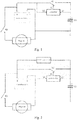
- the emergency starting device of the invention includes a super-capacitor C1, a controller and a relay K1.
- the super-capacitor is capable of storing energy (or power) and the energy stored in the super-capacitor C1 in this embodiment can start the engine in emergency.
- one end (i.e. one plate) of the super-capacitor C1 is connected to the positive electrode of the accumulator battery via the relay K1, the other end (i.e. the other plate) is grounded.
- the super-capacitor C1 is multiple commercially available super-capacitors connected in series because the voltage of an individual super-capacitor is generally 2.5-2.7V while a voltage of 13V-15V is needed to start an engine whose starting voltage is 12V and a voltage of 26-28V is needed to start an engine whose starting voltage is 24V.
- the relay K1 is a normally open relay.
- One output end of the controller is connected to the relay K1 to output a control signal S1 to control the on and off of the relay K1.
- One input end of the controller is connected to the positive electrode of the accumulator battery to receive the electrical signal form the accumulator battery in real time, for example to receive the signal 100 times per second.
- the signal can be a voltage V1 (as shown in Figure 1 ), and can be a current as well.
- the controller When the controller detects the ignition of the starting system, it sends out the control signal S1 to close the relay K1 to electrically connect the super-capacitor C1 and the accumulator battery, thereby the energy (or power) in the super-capacitor C1 can be outputted to start the engine.
- the controller receives the voltage V1 at the positive electrode of the accumulator battery and sends out the control signal S1 to close the relay K1 to electrically connect the super-capacitor C1 and the accumulator battery when it detects a sudden decrease of the voltage V1, for example the decreasing rate is not less than 2V/s.
- the controller can receive the current at the positive electrode of the accumulator battery by arranging a Hall element to the starting cable of the automobile, for example. The detected current at the cable is the current received at the positive electrode of the accumulator battery. The controller sends out the control signal S1 to close the relay K1 to electrically connect the super-capacitor C1 and the accumulator battery when it detects a sudden increase of the current, for example with an increasing rate of no less than 20A/s.
- the controller can calculate the energy (or power) stored in the super-capacitor C1 and determine whether the energy (or power) is sufficient to start the engine.
- the starting current for a small car is about 200A and with a duration time of 2 seconds.
- V1 is the end voltage of the accumulator battery with a unit of volt
- A is the starting current of the engine with a unit of ampere
- T is the duration time for one starting with a unit of hour
- E1 is the energy with a unit of watt ⁇ hour.
- C is the capacitance of the super-capacitor C1 with a unit of Farad
- V is the end voltage V2 of the super-capacitor C1 with a unit of volt
- E is the energy with a unit of watt ⁇ hour.
- the total energy stored in the super-capacitor C1 formed by N super-capacitors connected in series is N ⁇ E, so the controller can determine whether the energy stored in the super-capacitor C1 is sufficient to start the engine by comparing the total energy of the super-capacitor C1 to the energy E1 needed to start the engine once.
- the total energy of the super-capacitor C1 should not be less than twice of the E1.
- the controller determines that the energy (or power) of the super-capacitor C1 is not sufficient to start the engine and sends out an indicating signal when it determines that the total energy of the super-capacitor C1 is less than the energy E1 needed to start the engine once.
- the indicating signal can be an alarm sent out by a speaker controlled by the controller, light emitted by LED or picture and/or words presented on a screen, to indicate the user that the energy (or power) in the super-capacitor is insufficient and the super-capacitor needs to be charged.
- the controller in the embodiment includes chips, whose circuit is the same with the circuit of the controller shown in Figure 4 , except that the output ends K2_CON and K3_CON for outputting the control signals S2 and S3 are not needed. The detail will be discussed later.
- the controller is set to receive the voltage V2 immediately after the first output end and the second output end of the emergency starting device of the invention are connected to the positive electrode and the negative electrode of the accumulator battery in the starting system, to detect the energy of the super-capacitor C1.
- the controller can be equipped with a switch, which generally is a button.
- a switch which generally is a button.
- the controller functions and can receive signals, process signals and output signals.
- the switch is off, the controller does not function.
- the emergency starting method of the invention in the embodiment includes the following steps:
- the negative electrode of the accumulator battery is grounded, one end of the super-capacitor C1 is connected to the positive electrode of the accumulator battery via the relay K1, and the other end of the super-capacitor C1 is grounded.
- the electrical signal from the accumulator battery is the voltage V1 at its positive electrode.
- the controller receives the voltage V1 at a frequency of 100 times per second.
- the controller receives the electrical signal from the super-capacitor C1 in real time, which is the voltage V2 at the non-grounded end of the super-capacitor C1 specifically.
- the controller receives the voltage V2 at a frequency of 100 times per second.
- the controller calculates the energy stored in the super-capacitor C1 according to the voltage V2 and determines whether the energy is sufficient to start the engine. If the result is that the energy is sufficient to start the engine, the controller sends out the control signal S1 to the relay K1 when the electrical signal from the accumulator battery changed suddenly. If the result is that the energy is insufficient to start the engine, the controller sends out the indicating signal to indicate the user that the energy in the super-capacitor is insufficient and the super-capacitor needs to be charged.
- the emergency starting device of the invention has a first output end and a second output end, which are connected to the positive electrode and the negative electrode of the accumulator battery in the starting system respectively.
- the negative electrode of the accumulator battery is grounded.
- the emergency starting device of the invention includes a super-capacitor C1, a controller, a relay K1 and a DC-DC booster circuit.
- a super-capacitor C1 one end (i.e. one plate) of the super-capacitor C1 is connected to the positive electrode of the accumulator battery via the relay K1, the other end (i.e. the other plate) is grounded.
- the DC-DC booster circuit is connected to the relay K1 in parallel.
- the super-capacitor C1 is multiple commercially available super-capacitors connected in series.
- the relay K1 is a normally open relay.
- the super-capacitor C1 in this embodiment is not required to have energy stored in it but can have energy charged into it with the remaining energy in the accumulator battery by the DC-DC booster circuit.
- the accumulator battery still has a voltage of 8-12V though it cannot perform high current discharging, thus it is possible to transfer the energy (or power) remained in the accumulator battery to the super-capacitor C1 by the DC-DC booster circuit.
- the input current to the DC-DC booster circuit should be less than 20A so the end voltage of the accumulator battery will not drop drastically.
- One output end of the controller is connected to the relay K1 to output a control signal S1 to control the on and off of the relay K1.
- One input end of the controller is connected to the positive electrode of the accumulator battery to receive the electrical signal form the accumulator battery in real time.
- the electrical signal can be the voltage V1 (as shown in Figure 2 ), and can be a current as well.
- the controller receives the voltage V1 at a frequency of 100 times per second.
- another input end of the controller is connected to one end of the super-capacitor C1, specifically to the non-grounded end of the super-capacitor C1, to receive the electrical signal from the super-capacitor C1 in real time, specifically to receive the voltage V2 at the non-grounded end of the super-capacitor C1.
- the controller receives the voltage V2 at a frequency of 100 times per second.
- the controller can calculate the energy (or power) stored in the super-capacitor C1 according to the voltage V2, and determine whether the energy (or power) is sufficient to start the engine.
- the controller detects the ignition of the starting system and determines that the energy (or power) in the super-capacitor C1 is sufficient to start the engine, it sends out the control signal S1 to close the relay K1 to electrically connect the super-capacitor C1 and the accumulator battery, thereby the energy (or power) in the super-capacitor C1 can be outputted to start the engine.
- the controller will send out an indicating signal when it determines that the energy stored in the super-capacitor C1 is insufficient to start the engine after a preset time interval's detection, for example 5 minutes' detection.
- the indicating signal can be an alarm sent out by a speaker controlled by the controller, light emitted by LED or picture and/or words presented on a screen, to indicate the user that the energy (or power) in the super-capacitor is insufficient and the super-capacitor needs to be charged by an outer charger.
- the controller in the embodiment has a same circuit as that of the previous embodiment, and will not be described here.
- the controller is set to receive the voltage V2 immediately after the first output end and the second output end of the emergency starting device of the invention are connected to the positive electrode and the negative electrode of the accumulator battery in the starting system, to detect the energy of the super-capacitor C1.
- the controller can be equipped with a switch, which generally is a button.
- a switch which generally is a button.
- the controller functions and can receive signals, process signals and output signals.
- the switch is off, the controller does not function.
- the emergency starting method of the invention in the embodiment includes the following steps:
- the negative electrode of the accumulator battery is grounded, one end of the super-capacitor C1 is connected to the positive electrode of the accumulator battery via the relay K1, and the other end of the super-capacitor C1 is grounded.
- the electrical signal from the accumulator battery is the voltage V1 at the positive electrode thereof.
- the controller receives the voltage V1 at a frequency of 100 times per second.
- the controller receives the electrical signal from the super-capacitor C1 in real time, which is the voltage V2 at the non-grounded end of the super-capacitor C1 specifically.
- the controller receives the voltage V2 at a frequency of 100 times per second.
- the controller calculates the energy stored in the super-capacitor C1 according to the voltage V2 and determines whether the energy is sufficient to start the engine. If the result is that the energy is sufficient to start the engine, the controller sends out the control signal S1 to the relay K1 when the electrical signal from the accumulator battery changes suddenly.
- the controller sends out the indicating signal to indicate the user that the energy in the super-capacitor is insufficient and the super-capacitor needs to be charged by an outer charger.
- the emergency starting device of the invention has a first output end and a second output end, which are connected to the positive electrode and the negative electrode of the accumulator battery in the starting system respectively.
- the negative electrode of the accumulator battery is grounded.
- the emergency starting device of the invention includes a super-capacitor C1, a controller, a first relay K1, a second relay K2, a third relay K3, a DC-DC booster circuit and a battery pack.
- a super-capacitor C1 one end (i.e. one plate) of the super-capacitor C1 is connected to the positive electrode of the accumulator battery via the relay K1, the other end (i.e. the other plate) is grounded.
- the positive electrode of the battery pack is connected to the non-grounded end of the super-capacitor C1 via the third relay K3 and the DC-DC booster circuit, and its negative electrode is grounded.
- the DC-DC booster circuit is connected to the second relay K2 in series, and the series-connected DC-DC booster circuit and second relay K2 are connected to the first relay K1 in parallel.
- the super-capacitor C1 is multiple commercially available super-capacitors connected in series.
- the first relay K1, the second relay K2 and the third relay K3 are normally open relays.
- the battery pack is a rechargeable battery pack, such as lead-acid battery pack, NI-MH battery pack, lithium battery pack and etc. More preferably, it is an 18650 lithium battery pack.
- the super-capacitor C1 in this embodiment is not required to have energy stored in it but can be charged by the battery pack.
- the battery pack is connected to the super-capacitor C1 via the third relay K3 and the DC-DC booster circuit, and the DC-DC booster circuit can increase the output voltage of the battery pack to charge the super-capacitor C1 when the third relay K3 is closed, the output voltage of the battery pack can be lower than the starting voltage.
- the battery pack can be multiple 18650 lithium battery connected in parallel.
- One output end of the controller is connected to the relay K1 to output a control signal S1 to control the on and off of the first relay K1, another output end of the controller is connected to the second relay K2 to output a control signal S2 to control the on and off of the second relay K2, and the third output end of the controller is connected to the third relay K3 to output a control signal S3 to control the on and off of the third relay K3.
- One input end of the controller is connected to the positive electrode of the accumulator battery to receive the first electrical signal from the accumulator battery in real time.
- the electrical signal can be the voltage V1 (as shown in Figure 3 ), and can be a current as well.
- the controller receives the voltage V1 at a frequency of 100 times per second.
- another input end of the controller is connected to one end of the super-capacitor C1, specifically to the non-grounded end of the super-capacitor C1 to receive the second electrical signal from the super-capacitor C1 in real time, specifically to receive the voltage V2 at the non-grounded end of the super-capacitor C1.
- the controller receives the voltage V2 at a frequency of 100 times per second.
- the controller can calculate the energy (or power) stored in the super-capacitor C1 according to the voltage V2, and determine whether the energy (or power) is sufficient to start the engine.
- the starting system ignites, that is when the switch K0 shown in Figure 3 is closed, the voltage and the current outputted at the electrodes of the accumulator battery will change suddenly. So the ignition of the starting system can be detected by receiving the electrical signal.
- the detection is the same as that described in the first embodiment, and will not be described here.
- the controller When the controller detects the ignition of the starting system and determines that the energy (or power) in the super-capacitor C1 is sufficient to start the engine according to the voltage V2, it sends out the control signal S1 to close the first relay K1 to electrically connect the super-capacitor C1 and the accumulator battery, thereby the energy in the super-capacitor C1 can be outputted to start the engine.
- the controller When the controller detects the ignition of the starting system and determines that the energy in the super-capacitor C1 is insufficient to start the engine according to the voltage V2 and the third relay K3 is open, it sends out the control signal S3 to close the third relay K3 to electrically connect the super-capacitor C1 and the battery pack via the DC-DC booster circuit, thereby the battery pack charges the super-capacitor C1.
- the controller keeps on calculating the energy in the super-capacitor C1 according to the voltage V2 in real time, and when it determines that the energy in the super-capacitor C1 is sufficient to start the engine, it sends out the control signal S1 to close the first relay K1 and stops sending out the control signal S3 to open the third relay K3 so as to electrically connect the super-capacitor C1 and the accumulator battery, thereby the energy in the super-capacitor C1 can be outputted to start the engine.
- the controller determines that the energy stored in the super-capacitor C1 is still insufficient to start the engine after a preset time interval's detection, for example 5 minutes' detection since the third relay K3 is closed, and the second relay K2 is open, it sends out the control signal S2 to close the second relay K2 and stops sending out the control signal S3 to open the third relay K3 to electrically connect the super-capacitor C1 and the accumulator battery via the DC-DC booster circuit, thus the accumulator battery charges the super-capacitor C1.
- a preset time interval's detection for example 5 minutes' detection since the third relay K3 is closed, and the second relay K2 is open
- the controller keeps on calculating the energy in the super-capacitor C1 according to the voltage V2 in real time, and when it determines that the energy in the super-capacitor C1 is sufficient to start the engine, it sends out the control signal S1 to close the first relay K1 and stops sending out the control signal S2 to open the second relay K2 to electrically connect the super-capacitor C1 and the accumulator battery, thereby the energy in the super-capacitor C1 can be outputted to start the engine.
- the controller determines that the energy stored in the super-capacitor C1 is still insufficient to start the engine after a preset time interval's detection, for example 5 minutes' detection since the second relay K2 is closed, it sends out an indicating signal to indicate the user that the energy in the super-capacitor is insufficient and the battery pack should be replaced or the super-capacitor and/or the battery pack should be charged by an outer charger.
- a preset time interval's detection for example 5 minutes' detection since the second relay K2 is closed
- the circuit of the controller in the embodiment is shown as Figure 4 .
- the controller includes a chip U3, a chip VR1, a chip U2 and several resistors, capacitors, diodes and a inductance, wherein the chip U3 is MA86E/L508, the chip VR1 is 78L05, the chip U2 is AX5201, the resistance values of the resistors R13, R14 and R22 are shown in the figure, the capacitance values of the capacitors C8, C9, C10, C15, C16 and C20 are shown in the figure, the inductance value of the inductance L3 is shown in the figure, the types of the diodes D5, D6 and D7 are shown in the figure, and the connection between all these elements are as shown in the figure.
- the two input ends of the controller receive the first electrical signal and the second electrical signal, i.e. voltage V1 and voltage V2, respectively. Its three output ends are the three output ports K1_CON, K2_CON and K3_CON of the chip U3, and are used for outputting control signals S1, S2 and S3.
- the control signals S1, S2 and S3 are used for control the on and off of the first, the second and the third relays K1, K2 and K3.
- the first, the second and the third relays K1, K2 and K3 are normally open relays. They will close when the control signals S1, S2 and S3 are loaded, and open when the control signals S1, S2 and S3 are unloaded.
- the circuit of the first, the second and the third relays K1, K2 and K3 in the embodiment are same, and will be described below taking the second relay K2 as the example.
- the two ends, a and b, of the second relay K2 are connected to the positive electrode and the negative electrode of the accumulator battery respectively.
- the second relay K2 is connected to the resistor R12, the transistor Q3 and the diode D4 in the way as shown in the figure.
- the resistor R12 is connected to the port K2_CON of the chip U3 of the controller to receive the control signal S2 from the controller.
- the types and values of the elements are shown in the figure and will be not described here.
- the controller is set to receive the voltage V2 when the first output end and the second output end of the emergency starting device of the invention are connected to the positive electrode and the negative electrode of the accumulator battery in the starting system, to detect the energy of the super-capacitor C1.
- the controller can be equipped with a switch, which generally is a button.
- a switch which generally is a button.
- the controller functions and can receive signals, process signals and output signals.
- the switch is off, the controller does not function.
- the emergency starting method of the invention in the embodiment includes the following steps:
- the negative electrode of the accumulator battery is grounded, one end of the super-capacitor C1 is connected to the positive electrode of the accumulator battery via the first relay K1, and the other end of the super-capacitor C1 is grounded.
- the positive electrode of the battery pack is connected to the non-grounded end of the super-capacitor C1 via the third relay K3 and the DC-DC booster circuit, and its negative electrode is grounded.
- the series-connected second relay K2 and DC-DC booster are connected between the positive electrode of the accumulator battery and the non-grounded end of the super-capacitor C1.
- the first electrical signal is the voltage V1 at the positive electrode of the accumulator battery
- the second electrical signal is the voltage V2 at the non-grounded end of the super-capacitor C1.
- the controller receives the voltage V1 at a frequency of 100 times per second, and receives the voltage V2 at a frequency of 100 times per second.
Landscapes
- Engineering & Computer Science (AREA)
- Power Engineering (AREA)
- Chemical & Material Sciences (AREA)
- Combustion & Propulsion (AREA)
- Mechanical Engineering (AREA)
- General Engineering & Computer Science (AREA)
- Charge And Discharge Circuits For Batteries Or The Like (AREA)
Claims (10)
- Dispositif de démarrage d'urgence, pour utilisation lorsqu'un système de démarrage de moteur ne peut pas démarrer un moteur, incluant une première extrémité de sortie et une seconde extrémité de sortie, dans lequel la première extrémité de sortie est, en fonctionnement, raccordée à une électrode positive d'une batterie d'accumulateurs dans le système de démarrage de moteur et la seconde extrémité de sortie est, en fonctionnement, raccordée à une électrode négative de la batterie d'accumulateurs, dans lequel le dispositif inclut un supercondensateur, un dispositif de commande et un circuit survolteur CC-CC, dans lequel
le circuit survolteur CC-CC est agencé, en fonctionnement, pour être raccordé entre le supercondensateur et la batterie d'accumulateurs,
le circuit survolteur CC-CC est agencé pour augmenter la tension de sortie de la batterie d'accumulateurs pour charger le supercondensateur ;
l'électrode négative de la batterie d'accumulateurs est mise à la terre ;
le dispositif de commande est agencé pour recevoir un premier signal électrique en provenance de la batterie d'accumulateurs, le premier signal électrique étant une tension au niveau de l'électrode positive de la batterie d'accumulateurs ; caractérisé en ce que :le dispositif de commande est agencé pour raccorder électriquement le supercondensateur et la batterie d'accumulateurs pour démarrer le moteur à l'aide de l'énergie stockée dans le supercondensateur lorsque la tension diminue à une vitesse non inférieure à 2 V/s. - Dispositif de démarrage d'urgence, pour utilisation lorsqu'un système de démarrage de moteur ne peut pas démarrer un moteur, incluant une première extrémité de sortie et une seconde extrémité de sortie, dans lequel la première extrémité de sortie est, en fonctionnement, raccordée à une électrode positive d'une batterie d'accumulateurs dans le système de démarrage de moteur et la seconde extrémité de sortie est, en fonctionnement, raccordée à une électrode négative de la batterie d'accumulateurs, dans lequel le dispositif inclut un supercondensateur, un dispositif de commande et un circuit survolteur CC-CC, dans lequel
le circuit survolteur CC-CC est agencé, en fonctionnement, pour être raccordé entre le supercondensateur et la batterie d'accumulateurs,
le circuit survolteur CC-CC est agencé pour augmenter la tension de sortie de la batterie d'accumulateurs pour charger le supercondensateur ;
l'électrode négative de la batterie d'accumulateurs est mise à la terre ;
le dispositif de commande est agencé pour recevoir un premier signal électrique en provenance de la batterie d'accumulateurs, caractérisé en ce que le premier signal électrique est un courant au niveau de l'électrode positive de la batterie d'accumulateurs ; et
le dispositif de commande est agencé pour raccorder électriquement le supercondensateur et la batterie d'accumulateurs pour démarrer le moteur à l'aide de l'énergie stockée dans le supercondensateur lorsque le courant augmente à une vitesse non inférieure à 20 A/s. - Dispositif de démarrage d'urgence selon la revendication 1 ou la revendication 2, dans lequel le dispositif de démarrage d'urgence inclut en outre un relais normalement ouvert, par l'intermédiaire duquel une extrémité du supercondensateur est raccordée à l'électrode positive de la batterie d'accumulateurs, et l'autre extrémité du supercondensateur est mise à la terre ; le dispositif de commande ferme le relais pour raccorder électriquement le supercondensateur et la batterie d'accumulateurs lorsque le premier signal électrique change soudainement.
- Dispositif de démarrage d'urgence selon la revendication 3, dans lequel le dispositif de commande reçoit en outre un second signal électrique en provenance du supercondensateur et calcule l'énergie stockée dans le supercondensateur en fonction du signal électrique en provenance du supercondensateur; le dispositif de commande envoie un signal d'indication lorsque l'énergie est insuffisante pour démarrer le moteur.
- Dispositif de démarrage d'urgence selon la revendication 4, dans lequel le second signal électrique est une tension à une extrémité non mise à la terre du supercondensateur.
- Dispositif de démarrage d'urgence selon l'une quelconque de la revendication 1 ou de la revendication 2, dans lequel le dispositif de commande est équipé d'un commutateur; le dispositif de commande fonctionne lorsque le commutateur est en marche, le dispositif de commande ne fonctionne pas lorsque le commutateur est à l'arrêt.
- Procédé de démarrage d'urgence utilisé lorsqu'un système de démarrage ne peut pas démarrer un moteur, incluant les étapes suivantes :en utilisant un supercondensateur, un circuit survolteur CC-CC est raccordé entre le supercondensateur et une batterie d'accumulateurs dans le système de démarrage pour augmenter une tension de sortie de la batterie d'accumulateurs pour charger le supercondensateur, et une électrode négative de la batterie d'accumulateurs est mise à la terre ;utilisation d'un dispositif de commande, qui reçoit un premier signal électrique en provenance de la batterie d'accumulateurs, caractérisée en ce que :(i) le premier signal électrique est une tension au niveau de l'électrode positive de la batterie d'accumulateurs ; et le dispositif de commande raccorde électriquement le supercondensateur et la batterie d'accumulateurs pour démarrer le moteur à l'aide de l'énergie stockée dans le supercondensateur lorsque la tension diminue à une vitesse non inférieure à 2 V/s ; ou(ii) le premier signal électrique est un courant au niveau de l'électrode positive de la batterie d'accumulateurs ; et le dispositif de commande raccorde électriquement le supercondensateur et la batterie d'accumulateurs pour démarrer le moteur à l'aide de l'énergie stockée dans le supercondensateur lorsque le courant augmente à une vitesse non inférieure à 20 A/s.
- Procédé de démarrage d'urgence selon la revendication 7, dans lequel le dispositif de commande reçoit en outre un second signal électrique en provenance du supercondensateur et calcule l'énergie stockée dans le supercondensateur en fonction du second signal électrique ; le dispositif de commande raccorde électriquement le supercondensateur à la batterie d'accumulateurs par l'intermédiaire du circuit survolteur CC-CC lorsque l'énergie est insuffisante pour démarrer le moteur, pour avoir le supercondensateur chargé par la tension de sortie de la batterie d'accumulateurs augmentée par le circuit survolteur CC-CC.
- Procédé de démarrage d'urgence selon la revendication 8, dans lequel le second signal électrique est une tension à une extrémité non mise à la terre du supercondensateur.
- Procédé de démarrage d'urgence selon la revendication 9, dans lequel le dispositif de commande est équipé d'un commutateur; le dispositif de commande fonctionne lorsque le commutateur est en marche, le dispositif de commande ne fonctionne pas lorsque le commutateur est à l'arrêt.
Applications Claiming Priority (1)
| Application Number | Priority Date | Filing Date | Title |
|---|---|---|---|
| CN201510169078 | 2015-04-10 |
Publications (2)
| Publication Number | Publication Date |
|---|---|
| EP3079221A1 EP3079221A1 (fr) | 2016-10-12 |
| EP3079221B1 true EP3079221B1 (fr) | 2017-11-22 |
Family
ID=53719599
Family Applications (1)
| Application Number | Title | Priority Date | Filing Date |
|---|---|---|---|
| EP15167725.9A Active EP3079221B1 (fr) | 2015-04-10 | 2015-05-14 | Dispositif de démarrage d' urgence et méthode de démarrage d' urgence |
Country Status (6)
| Country | Link |
|---|---|
| US (1) | US10174736B2 (fr) |
| EP (1) | EP3079221B1 (fr) |
| JP (1) | JP2018517095A (fr) |
| CN (1) | CN207283184U (fr) |
| AU (1) | AU2015390343A1 (fr) |
| WO (1) | WO2016161687A1 (fr) |
Families Citing this family (42)
| Publication number | Priority date | Publication date | Assignee | Title |
|---|---|---|---|---|
| WO2018000130A1 (fr) * | 2016-06-27 | 2018-01-04 | 张磊 | Appareil d'alimentation électrique de secours de moteur |
| IT201700050571A1 (it) * | 2017-05-10 | 2018-11-10 | Beta Utensili Spa | Avviatore portatile |
| US10819132B2 (en) | 2017-08-04 | 2020-10-27 | Deltran Operations Usa, Inc. | Device with battery charger system and engine start system formed from high frequency transformers |
| JP6732831B2 (ja) * | 2018-04-10 | 2020-07-29 | 矢崎総業株式会社 | 電源供給装置 |
| CN110739755A (zh) * | 2018-07-02 | 2020-01-31 | 深圳市格威特光电科技有限公司 | 一种超级电容控制模组及控制方法 |
| GB2576699A (en) | 2018-08-09 | 2020-03-04 | Zapgo Ltd | Charging a capacitor from a battery |
| US11245280B2 (en) * | 2018-08-21 | 2022-02-08 | Milwaukee Electric Tool Corporation | Vehicle battery jump starter powered by a removable and rechargeable battery pack |
| US11674490B2 (en) | 2018-08-30 | 2023-06-13 | Schumacher Electric Corporation | Multifunctional battery booster |
| CN109552084A (zh) * | 2018-12-30 | 2019-04-02 | 宁波中车新能源科技有限公司 | 一种混合动力电车启停系统及其控制方法 |
| US11901729B2 (en) | 2019-03-11 | 2024-02-13 | Shenzhen Carku Technology Co., Limited | Charging device and emergency start method |
| CN109995103A (zh) | 2019-03-11 | 2019-07-09 | 深圳市华思旭科技有限公司 | 应急启动电源及应急启动方法 |
| US11615923B2 (en) | 2019-06-07 | 2023-03-28 | Anthony Macaluso | Methods, systems and apparatus for powering a vehicle |
| US11641572B2 (en) | 2019-06-07 | 2023-05-02 | Anthony Macaluso | Systems and methods for managing a vehicle's energy via a wireless network |
| US11222750B1 (en) | 2021-03-22 | 2022-01-11 | Anthony Macaluso | Hypercapacitor apparatus for storing and providing energy |
| US11685276B2 (en) | 2019-06-07 | 2023-06-27 | Anthony Macaluso | Methods and apparatus for powering a vehicle |
| US11289974B2 (en) | 2019-06-07 | 2022-03-29 | Anthony Macaluso | Power generation from vehicle wheel rotation |
| US11432123B2 (en) | 2019-06-07 | 2022-08-30 | Anthony Macaluso | Systems and methods for managing a vehicle's energy via a wireless network |
| US11837411B2 (en) * | 2021-03-22 | 2023-12-05 | Anthony Macaluso | Hypercapacitor switch for controlling energy flow between energy storage devices |
| CN110126693B (zh) * | 2019-06-24 | 2024-08-06 | 长春市夸克普精汽车电子有限责任公司 | 一种座椅加热装置及座椅 |
| US11591996B2 (en) * | 2020-01-17 | 2023-02-28 | Martin Koebler | Emergency start |
| US11598306B2 (en) * | 2020-01-17 | 2023-03-07 | Martin Koebler | Emergency start |
| WO2021226319A1 (fr) | 2020-05-07 | 2021-11-11 | Milwaukee Electric Tool Corporation | Bloc d'alimentation pour démarrage de secours de véhicule compatible avec plusieurs blocs-batteries |
| CN112072740B (zh) * | 2020-09-03 | 2023-05-02 | 安徽鸿创新能源动力有限公司 | 一种电动汽车低压蓄电池欠压启动电路及其控制方法 |
| CN112467821A (zh) * | 2020-10-15 | 2021-03-09 | 上海空间电源研究所 | 兼容uv/2uv输出的启动电源控制电路及其控制方法 |
| US11973366B2 (en) | 2020-10-20 | 2024-04-30 | Schumacher Electric Corporation | Battery booster |
| JP2023176047A (ja) * | 2020-10-23 | 2023-12-13 | トライポッド・デザイン株式会社 | 発電素子及びセンサ |
| CN112510810B (zh) * | 2020-12-07 | 2023-04-11 | 中国第一汽车股份有限公司 | 一种汽车及其电源系统的监控电路 |
| CN115224780A (zh) * | 2021-04-19 | 2022-10-21 | 宁波市嘉越机电有限公司 | 一种汽车应急启动电源装置和应急启动方法 |
| CN113944585A (zh) * | 2021-09-18 | 2022-01-18 | 东风柳州汽车有限公司 | 一种电池亏电状态下汽车应急启动装置及控制方法 |
| CN114320703B (zh) * | 2021-11-23 | 2024-02-20 | 深圳供电局有限公司 | 车辆辅助点火装置及车辆点火设备 |
| CN114268146B (zh) * | 2021-12-07 | 2024-02-13 | 成都长城开发科技股份有限公司 | 低温环境下电子仪表的供电装置、方法 |
| CN114189020A (zh) * | 2021-12-14 | 2022-03-15 | 深圳市卡莱福科技有限公司 | 一种车辆应急启动装置及线夹装置 |
| US11472306B1 (en) | 2022-03-09 | 2022-10-18 | Anthony Macaluso | Electric vehicle charging station |
| US11577606B1 (en) | 2022-03-09 | 2023-02-14 | Anthony Macaluso | Flexible arm generator |
| TWI798090B (zh) * | 2022-05-19 | 2023-04-01 | 低碳動能開發股份有限公司 | 車用24伏特超級電容升壓救援裝置及其控制方法 |
| US12160132B2 (en) | 2023-01-30 | 2024-12-03 | Anthony Macaluso | Matable energy storage devices |
| US20240291265A1 (en) * | 2023-02-24 | 2024-08-29 | Kold-Ban International, Ltd. | Protecting circuit for battery during engine starting events |
| US11955875B1 (en) | 2023-02-28 | 2024-04-09 | Anthony Macaluso | Vehicle energy generation system |
| US12407219B2 (en) | 2023-02-28 | 2025-09-02 | Anthony Macaluso | Vehicle energy generation system |
| US12412430B2 (en) | 2023-12-22 | 2025-09-09 | Anthony Macaluso | Systems and methods for managing a vehicle's energy via a wireless network |
| CN118003968A (zh) * | 2024-01-26 | 2024-05-10 | 上汽通用五菱汽车股份有限公司 | 一种车辆电池的控制方法、电子设备及存储介质 |
| CN118815642A (zh) * | 2024-06-25 | 2024-10-22 | 深圳市励骏光电有限公司 | 发动机的启动方法、设备及存储介质 |
Family Cites Families (26)
| Publication number | Priority date | Publication date | Assignee | Title |
|---|---|---|---|---|
| CN2033872U (zh) * | 1988-01-16 | 1989-03-08 | 黄琦 | 按键式水阀 |
| JPH02259277A (ja) | 1989-03-31 | 1990-10-22 | Isuzu Motors Ltd | エンジン始動装置 |
| US5793185A (en) * | 1997-06-10 | 1998-08-11 | Deltona Transformer Corporation | Jump starter |
| DE19832874C2 (de) | 1998-07-22 | 2000-10-26 | Daimler Chrysler Ag | Energieversorgungseinrichtung für eine elektromagnetische Ventilsteuerung einer Brennkraftmaschine |
| US6242887B1 (en) * | 2000-08-31 | 2001-06-05 | Kold Ban International, Ltd. | Vehicle with supplemental energy storage system for engine cranking |
| US6426606B1 (en) * | 2000-10-10 | 2002-07-30 | Purkey Electrical Consulting | Apparatus for providing supplemental power to an electrical system and related methods |
| JP2002195139A (ja) * | 2000-12-26 | 2002-07-10 | Nippon Avionics Co Ltd | エンジン起動装置 |
| US7015674B2 (en) * | 2001-06-22 | 2006-03-21 | Midtronics, Inc. | Booster pack with storage capacitor |
| JP2004072874A (ja) * | 2002-08-05 | 2004-03-04 | Fuji Heavy Ind Ltd | オルタネータの発電制御装置 |
| US6803743B2 (en) * | 2002-10-04 | 2004-10-12 | Delphi Technologies, Inc. | Jump start and reverse battery protection circuit |
| KR100675366B1 (ko) * | 2002-12-30 | 2007-01-29 | 주식회사 네스캡 | 전기에너지 저장장치 및 이의 충방전 방법 |
| DE102004054367A1 (de) | 2003-11-11 | 2005-06-16 | Remy Inc., Anderson | Vorrichtung zur Vermeidung des Mahlens beim Anlassermotor |
| US7199555B2 (en) * | 2004-05-19 | 2007-04-03 | Chien Hung Taiwan Ltd. | Portable emergency vehicle battery charger with microprocessor |
| JP4806981B2 (ja) * | 2005-07-06 | 2011-11-02 | パナソニック株式会社 | エンジン始動用蓄電池の劣化判別装置とこの劣化判別装置を備えたエンジン始動用蓄電池 |
| CN2855817Y (zh) * | 2006-01-13 | 2007-01-10 | 山东理工大学 | 车用超级电容辅助起动装置 |
| KR100837939B1 (ko) | 2006-10-11 | 2008-06-13 | 현대자동차주식회사 | 하이브리드 연료전지 버스의 파워 시스템 및 그 제어 방법 |
| EP2144773A4 (fr) | 2007-04-04 | 2013-12-04 | Cooper Technologies Co | Procédés et systèmes d'alimentation en puissance d'une charge |
| JP5484192B2 (ja) * | 2010-05-20 | 2014-05-07 | 本田技研工業株式会社 | 電動車両の始動制御装置 |
| CN102691607B (zh) * | 2012-06-08 | 2014-12-03 | 汤如法 | 一种车辆发动机的辅助启动装置 |
| US9194357B2 (en) * | 2012-11-19 | 2015-11-24 | Yung-Sheng Huang | Method for jump starting a vehicle |
| MY175571A (en) * | 2012-09-07 | 2020-07-01 | Huang Yung Sheng | Method for jump starting a vehicle |
| CN202978396U (zh) * | 2012-12-06 | 2013-06-05 | 辽宁百纳电气有限公司 | 超级电容汽车发动机启动装置 |
| CN203381507U (zh) * | 2013-05-30 | 2014-01-08 | 重庆市星海电子有限公司 | 新型汽车启动蓄能装置 |
| CA2915177A1 (fr) | 2013-06-13 | 2014-12-18 | Unison Industries, Llc | Procede pour decoupler une batterie de courants de demarrage de haut niveau de moteurs diesel |
| CN203387214U (zh) | 2013-06-17 | 2014-01-08 | 安科智慧城市技术(中国)有限公司 | 汽车应急启动电源及汽车电源装置 |
| CN103441561A (zh) * | 2013-08-15 | 2013-12-11 | 重庆长安汽车股份有限公司 | 基于超级电容的汽车二次储能装置及控制方法 |
-
2015
- 2015-05-07 JP JP2018503700A patent/JP2018517095A/ja active Pending
- 2015-05-07 AU AU2015390343A patent/AU2015390343A1/en not_active Abandoned
- 2015-05-07 WO PCT/CN2015/078477 patent/WO2016161687A1/fr not_active Ceased
- 2015-05-07 US US14/443,021 patent/US10174736B2/en active Active
- 2015-05-07 CN CN201590001067.5U patent/CN207283184U/zh not_active Expired - Fee Related
- 2015-05-14 EP EP15167725.9A patent/EP3079221B1/fr active Active
Non-Patent Citations (1)
| Title |
|---|
| None * |
Also Published As
| Publication number | Publication date |
|---|---|
| JP2018517095A (ja) | 2018-06-28 |
| AU2015390343A1 (en) | 2018-01-18 |
| US20170191459A1 (en) | 2017-07-06 |
| US10174736B2 (en) | 2019-01-08 |
| CN207283184U (zh) | 2018-04-27 |
| WO2016161687A1 (fr) | 2016-10-13 |
| EP3079221A1 (fr) | 2016-10-12 |
Similar Documents
| Publication | Publication Date | Title |
|---|---|---|
| EP3079221B1 (fr) | Dispositif de démarrage d' urgence et méthode de démarrage d' urgence | |
| US7339347B2 (en) | Apparatus and method for reliably supplying electrical energy to an electrical system | |
| CA2931115C (fr) | Dispositif d'amelioration de systeme electrique | |
| CN107521441B (zh) | 车辆的电池管理系统 | |
| US10029572B2 (en) | Power source system for a vehicle | |
| US5146095A (en) | Low discharge capacitor motor starter system | |
| US6057666A (en) | Method and circuit for controlling charging in a dual battery electrical system | |
| US9840209B2 (en) | Battery and motor vehicle | |
| EP2607178A1 (fr) | Alimentation électrique pour alimenter une charge électrique d'un véhicule | |
| US20140253045A1 (en) | Method and apparatus for battery control | |
| CN107078535A (zh) | 用于机动车车载电网的多蓄能器系统 | |
| US9350186B2 (en) | Battery pack | |
| EP1025632B1 (fr) | Procede et circuit de commande de charge d'un systeme electrique a deux batteries | |
| US20240291296A1 (en) | Protecting circuit for battery during engine starting events | |
| EP3975381A1 (fr) | Appareil de protection de batterie et système de batterie le comprenant | |
| US20200139821A1 (en) | Power supply device | |
| US20240291265A1 (en) | Protecting circuit for battery during engine starting events | |
| EP3454444A1 (fr) | Dispositif d'alimentation électrique | |
| CN209963790U (zh) | 一种24v应急启动电源 | |
| KR20160067600A (ko) | 배터리 셀 과충전 보호 장치 및 방법 | |
| US11482820B2 (en) | Charging apparatus | |
| CN113178934A (zh) | 一种车用集成式低压储能电源系统及其控制方法 | |
| WO2025144428A2 (fr) | Source d'énergie isolée pour applications de démarrage de moteur | |
| CA3225203A1 (fr) | Source d'energie isolee pour des applications de demarrage de moteur | |
| RU136099U1 (ru) | Комбинированная система пуска двигателя внутреннего сгорания |
Legal Events
| Date | Code | Title | Description |
|---|---|---|---|
| PUAI | Public reference made under article 153(3) epc to a published international application that has entered the european phase |
Free format text: ORIGINAL CODE: 0009012 |
|
| 17P | Request for examination filed |
Effective date: 20160622 |
|
| AK | Designated contracting states |
Kind code of ref document: A1 Designated state(s): AL AT BE BG CH CY CZ DE DK EE ES FI FR GB GR HR HU IE IS IT LI LT LU LV MC MK MT NL NO PL PT RO RS SE SI SK SM TR |
|
| AX | Request for extension of the european patent |
Extension state: BA ME |
|
| GRAP | Despatch of communication of intention to grant a patent |
Free format text: ORIGINAL CODE: EPIDOSNIGR1 |
|
| INTG | Intention to grant announced |
Effective date: 20170818 |
|
| GRAS | Grant fee paid |
Free format text: ORIGINAL CODE: EPIDOSNIGR3 |
|
| GRAA | (expected) grant |
Free format text: ORIGINAL CODE: 0009210 |
|
| AK | Designated contracting states |
Kind code of ref document: B1 Designated state(s): AL AT BE BG CH CY CZ DE DK EE ES FI FR GB GR HR HU IE IS IT LI LT LU LV MC MK MT NL NO PL PT RO RS SE SI SK SM TR |
|
| REG | Reference to a national code |
Ref country code: GB Ref legal event code: FG4D |
|
| REG | Reference to a national code |
Ref country code: CH Ref legal event code: EP |
|
| REG | Reference to a national code |
Ref country code: IE Ref legal event code: FG4D |
|
| REG | Reference to a national code |
Ref country code: AT Ref legal event code: REF Ref document number: 949244 Country of ref document: AT Kind code of ref document: T Effective date: 20171215 |
|
| REG | Reference to a national code |
Ref country code: DE Ref legal event code: R096 Ref document number: 602015006109 Country of ref document: DE |
|
| REG | Reference to a national code |
Ref country code: NL Ref legal event code: MP Effective date: 20171122 |
|
| REG | Reference to a national code |
Ref country code: LT Ref legal event code: MG4D |
|
| REG | Reference to a national code |
Ref country code: AT Ref legal event code: MK05 Ref document number: 949244 Country of ref document: AT Kind code of ref document: T Effective date: 20171122 |
|
| PG25 | Lapsed in a contracting state [announced via postgrant information from national office to epo] |
Ref country code: ES Free format text: LAPSE BECAUSE OF FAILURE TO SUBMIT A TRANSLATION OF THE DESCRIPTION OR TO PAY THE FEE WITHIN THE PRESCRIBED TIME-LIMIT Effective date: 20171122 Ref country code: FI Free format text: LAPSE BECAUSE OF FAILURE TO SUBMIT A TRANSLATION OF THE DESCRIPTION OR TO PAY THE FEE WITHIN THE PRESCRIBED TIME-LIMIT Effective date: 20171122 Ref country code: NO Free format text: LAPSE BECAUSE OF FAILURE TO SUBMIT A TRANSLATION OF THE DESCRIPTION OR TO PAY THE FEE WITHIN THE PRESCRIBED TIME-LIMIT Effective date: 20180222 Ref country code: NL Free format text: LAPSE BECAUSE OF FAILURE TO SUBMIT A TRANSLATION OF THE DESCRIPTION OR TO PAY THE FEE WITHIN THE PRESCRIBED TIME-LIMIT Effective date: 20171122 Ref country code: SE Free format text: LAPSE BECAUSE OF FAILURE TO SUBMIT A TRANSLATION OF THE DESCRIPTION OR TO PAY THE FEE WITHIN THE PRESCRIBED TIME-LIMIT Effective date: 20171122 Ref country code: LT Free format text: LAPSE BECAUSE OF FAILURE TO SUBMIT A TRANSLATION OF THE DESCRIPTION OR TO PAY THE FEE WITHIN THE PRESCRIBED TIME-LIMIT Effective date: 20171122 |
|
| REG | Reference to a national code |
Ref country code: FR Ref legal event code: PLFP Year of fee payment: 4 |
|
| PG25 | Lapsed in a contracting state [announced via postgrant information from national office to epo] |
Ref country code: BG Free format text: LAPSE BECAUSE OF FAILURE TO SUBMIT A TRANSLATION OF THE DESCRIPTION OR TO PAY THE FEE WITHIN THE PRESCRIBED TIME-LIMIT Effective date: 20180222 Ref country code: GR Free format text: LAPSE BECAUSE OF FAILURE TO SUBMIT A TRANSLATION OF THE DESCRIPTION OR TO PAY THE FEE WITHIN THE PRESCRIBED TIME-LIMIT Effective date: 20180223 Ref country code: RS Free format text: LAPSE BECAUSE OF FAILURE TO SUBMIT A TRANSLATION OF THE DESCRIPTION OR TO PAY THE FEE WITHIN THE PRESCRIBED TIME-LIMIT Effective date: 20171122 Ref country code: HR Free format text: LAPSE BECAUSE OF FAILURE TO SUBMIT A TRANSLATION OF THE DESCRIPTION OR TO PAY THE FEE WITHIN THE PRESCRIBED TIME-LIMIT Effective date: 20171122 Ref country code: AT Free format text: LAPSE BECAUSE OF FAILURE TO SUBMIT A TRANSLATION OF THE DESCRIPTION OR TO PAY THE FEE WITHIN THE PRESCRIBED TIME-LIMIT Effective date: 20171122 Ref country code: LV Free format text: LAPSE BECAUSE OF FAILURE TO SUBMIT A TRANSLATION OF THE DESCRIPTION OR TO PAY THE FEE WITHIN THE PRESCRIBED TIME-LIMIT Effective date: 20171122 |
|
| PG25 | Lapsed in a contracting state [announced via postgrant information from national office to epo] |
Ref country code: EE Free format text: LAPSE BECAUSE OF FAILURE TO SUBMIT A TRANSLATION OF THE DESCRIPTION OR TO PAY THE FEE WITHIN THE PRESCRIBED TIME-LIMIT Effective date: 20171122 Ref country code: CY Free format text: LAPSE BECAUSE OF FAILURE TO SUBMIT A TRANSLATION OF THE DESCRIPTION OR TO PAY THE FEE WITHIN THE PRESCRIBED TIME-LIMIT Effective date: 20171122 Ref country code: DK Free format text: LAPSE BECAUSE OF FAILURE TO SUBMIT A TRANSLATION OF THE DESCRIPTION OR TO PAY THE FEE WITHIN THE PRESCRIBED TIME-LIMIT Effective date: 20171122 Ref country code: SK Free format text: LAPSE BECAUSE OF FAILURE TO SUBMIT A TRANSLATION OF THE DESCRIPTION OR TO PAY THE FEE WITHIN THE PRESCRIBED TIME-LIMIT Effective date: 20171122 Ref country code: CZ Free format text: LAPSE BECAUSE OF FAILURE TO SUBMIT A TRANSLATION OF THE DESCRIPTION OR TO PAY THE FEE WITHIN THE PRESCRIBED TIME-LIMIT Effective date: 20171122 |
|
| REG | Reference to a national code |
Ref country code: DE Ref legal event code: R097 Ref document number: 602015006109 Country of ref document: DE |
|
| PG25 | Lapsed in a contracting state [announced via postgrant information from national office to epo] |
Ref country code: IT Free format text: LAPSE BECAUSE OF FAILURE TO SUBMIT A TRANSLATION OF THE DESCRIPTION OR TO PAY THE FEE WITHIN THE PRESCRIBED TIME-LIMIT Effective date: 20171122 Ref country code: SM Free format text: LAPSE BECAUSE OF FAILURE TO SUBMIT A TRANSLATION OF THE DESCRIPTION OR TO PAY THE FEE WITHIN THE PRESCRIBED TIME-LIMIT Effective date: 20171122 Ref country code: PL Free format text: LAPSE BECAUSE OF FAILURE TO SUBMIT A TRANSLATION OF THE DESCRIPTION OR TO PAY THE FEE WITHIN THE PRESCRIBED TIME-LIMIT Effective date: 20171122 |
|
| PLBE | No opposition filed within time limit |
Free format text: ORIGINAL CODE: 0009261 |
|
| STAA | Information on the status of an ep patent application or granted ep patent |
Free format text: STATUS: NO OPPOSITION FILED WITHIN TIME LIMIT |
|
| 26N | No opposition filed |
Effective date: 20180823 |
|
| PG25 | Lapsed in a contracting state [announced via postgrant information from national office to epo] |
Ref country code: SI Free format text: LAPSE BECAUSE OF FAILURE TO SUBMIT A TRANSLATION OF THE DESCRIPTION OR TO PAY THE FEE WITHIN THE PRESCRIBED TIME-LIMIT Effective date: 20171122 |
|
| REG | Reference to a national code |
Ref country code: CH Ref legal event code: PL |
|
| REG | Reference to a national code |
Ref country code: BE Ref legal event code: MM Effective date: 20180531 |
|
| PG25 | Lapsed in a contracting state [announced via postgrant information from national office to epo] |
Ref country code: MC Free format text: LAPSE BECAUSE OF FAILURE TO SUBMIT A TRANSLATION OF THE DESCRIPTION OR TO PAY THE FEE WITHIN THE PRESCRIBED TIME-LIMIT Effective date: 20171122 |
|
| REG | Reference to a national code |
Ref country code: IE Ref legal event code: MM4A |
|
| PG25 | Lapsed in a contracting state [announced via postgrant information from national office to epo] |
Ref country code: CH Free format text: LAPSE BECAUSE OF NON-PAYMENT OF DUE FEES Effective date: 20180531 Ref country code: LI Free format text: LAPSE BECAUSE OF NON-PAYMENT OF DUE FEES Effective date: 20180531 |
|
| PG25 | Lapsed in a contracting state [announced via postgrant information from national office to epo] |
Ref country code: LU Free format text: LAPSE BECAUSE OF NON-PAYMENT OF DUE FEES Effective date: 20180514 |
|
| PG25 | Lapsed in a contracting state [announced via postgrant information from national office to epo] |
Ref country code: IE Free format text: LAPSE BECAUSE OF NON-PAYMENT OF DUE FEES Effective date: 20180514 |
|
| PG25 | Lapsed in a contracting state [announced via postgrant information from national office to epo] |
Ref country code: BE Free format text: LAPSE BECAUSE OF NON-PAYMENT OF DUE FEES Effective date: 20180531 |
|
| REG | Reference to a national code |
Ref country code: DE Ref legal event code: R082 Ref document number: 602015006109 Country of ref document: DE Representative=s name: DEHMEL & BETTENHAUSEN PATENTANWAELTE PARTMBB, DE Ref country code: DE Ref legal event code: R081 Ref document number: 602015006109 Country of ref document: DE Owner name: NINGBO CARSTEL MANUFACTURING CO., LTD., CN Free format text: FORMER OWNER: ZHANG, LEI, NINGBO CITY, ZHEJIANG, CN |
|
| REG | Reference to a national code |
Ref country code: GB Ref legal event code: 732E Free format text: REGISTERED BETWEEN 20190926 AND 20191002 |
|
| PG25 | Lapsed in a contracting state [announced via postgrant information from national office to epo] |
Ref country code: MT Free format text: LAPSE BECAUSE OF NON-PAYMENT OF DUE FEES Effective date: 20180514 |
|
| PG25 | Lapsed in a contracting state [announced via postgrant information from national office to epo] |
Ref country code: TR Free format text: LAPSE BECAUSE OF FAILURE TO SUBMIT A TRANSLATION OF THE DESCRIPTION OR TO PAY THE FEE WITHIN THE PRESCRIBED TIME-LIMIT Effective date: 20171122 |
|
| PG25 | Lapsed in a contracting state [announced via postgrant information from national office to epo] |
Ref country code: PT Free format text: LAPSE BECAUSE OF FAILURE TO SUBMIT A TRANSLATION OF THE DESCRIPTION OR TO PAY THE FEE WITHIN THE PRESCRIBED TIME-LIMIT Effective date: 20171122 |
|
| PG25 | Lapsed in a contracting state [announced via postgrant information from national office to epo] |
Ref country code: MK Free format text: LAPSE BECAUSE OF NON-PAYMENT OF DUE FEES Effective date: 20171122 Ref country code: RO Free format text: LAPSE BECAUSE OF FAILURE TO SUBMIT A TRANSLATION OF THE DESCRIPTION OR TO PAY THE FEE WITHIN THE PRESCRIBED TIME-LIMIT Effective date: 20171122 Ref country code: HU Free format text: LAPSE BECAUSE OF FAILURE TO SUBMIT A TRANSLATION OF THE DESCRIPTION OR TO PAY THE FEE WITHIN THE PRESCRIBED TIME-LIMIT; INVALID AB INITIO Effective date: 20150514 |
|
| PG25 | Lapsed in a contracting state [announced via postgrant information from national office to epo] |
Ref country code: AL Free format text: LAPSE BECAUSE OF FAILURE TO SUBMIT A TRANSLATION OF THE DESCRIPTION OR TO PAY THE FEE WITHIN THE PRESCRIBED TIME-LIMIT Effective date: 20171122 Ref country code: IS Free format text: LAPSE BECAUSE OF FAILURE TO SUBMIT A TRANSLATION OF THE DESCRIPTION OR TO PAY THE FEE WITHIN THE PRESCRIBED TIME-LIMIT Effective date: 20180322 |
|
| PGFP | Annual fee paid to national office [announced via postgrant information from national office to epo] |
Ref country code: DE Payment date: 20250513 Year of fee payment: 11 |
|
| PGFP | Annual fee paid to national office [announced via postgrant information from national office to epo] |
Ref country code: GB Payment date: 20250521 Year of fee payment: 11 |
|
| PGFP | Annual fee paid to national office [announced via postgrant information from national office to epo] |
Ref country code: FR Payment date: 20250530 Year of fee payment: 11 |