EP3079295A1 - Procédé de renvoi d'informations de réponse, procédé de réception d'informations de réponse et appareils correspondants - Google Patents
Procédé de renvoi d'informations de réponse, procédé de réception d'informations de réponse et appareils correspondants Download PDFInfo
- Publication number
- EP3079295A1 EP3079295A1 EP14868170.3A EP14868170A EP3079295A1 EP 3079295 A1 EP3079295 A1 EP 3079295A1 EP 14868170 A EP14868170 A EP 14868170A EP 3079295 A1 EP3079295 A1 EP 3079295A1
- Authority
- EP
- European Patent Office
- Prior art keywords
- subframe
- downlink
- subframes
- answer information
- secondary carrier
- Prior art date
- Legal status (The legal status is an assumption and is not a legal conclusion. Google has not performed a legal analysis and makes no representation as to the accuracy of the status listed.)
- Granted
Links
Images



Classifications
-
- H—ELECTRICITY
- H04—ELECTRIC COMMUNICATION TECHNIQUE
- H04L—TRANSMISSION OF DIGITAL INFORMATION, e.g. TELEGRAPHIC COMMUNICATION
- H04L5/00—Arrangements affording multiple use of the transmission path
- H04L5/14—Two-way operation using the same type of signal, i.e. duplex
-
- H—ELECTRICITY
- H04—ELECTRIC COMMUNICATION TECHNIQUE
- H04W—WIRELESS COMMUNICATION NETWORKS
- H04W72/00—Local resource management
- H04W72/02—Selection of wireless resources by user or terminal
-
- H—ELECTRICITY
- H04—ELECTRIC COMMUNICATION TECHNIQUE
- H04L—TRANSMISSION OF DIGITAL INFORMATION, e.g. TELEGRAPHIC COMMUNICATION
- H04L1/00—Arrangements for detecting or preventing errors in the information received
- H04L1/12—Arrangements for detecting or preventing errors in the information received by using return channel
- H04L1/16—Arrangements for detecting or preventing errors in the information received by using return channel in which the return channel carries supervisory signals, e.g. repetition request signals
- H04L1/1607—Details of the supervisory signal
- H04L1/1671—Details of the supervisory signal the supervisory signal being transmitted together with control information
- H04L1/1678—Details of the supervisory signal the supervisory signal being transmitted together with control information where the control information is for timing, e.g. time stamps
-
- H—ELECTRICITY
- H04—ELECTRIC COMMUNICATION TECHNIQUE
- H04L—TRANSMISSION OF DIGITAL INFORMATION, e.g. TELEGRAPHIC COMMUNICATION
- H04L1/00—Arrangements for detecting or preventing errors in the information received
- H04L1/12—Arrangements for detecting or preventing errors in the information received by using return channel
- H04L1/16—Arrangements for detecting or preventing errors in the information received by using return channel in which the return channel carries supervisory signals, e.g. repetition request signals
- H04L1/18—Automatic repetition systems, e.g. Van Duuren systems
- H04L1/1829—Arrangements specially adapted for the receiver end
- H04L1/1861—Physical mapping arrangements
-
- H—ELECTRICITY
- H04—ELECTRIC COMMUNICATION TECHNIQUE
- H04L—TRANSMISSION OF DIGITAL INFORMATION, e.g. TELEGRAPHIC COMMUNICATION
- H04L1/00—Arrangements for detecting or preventing errors in the information received
- H04L1/12—Arrangements for detecting or preventing errors in the information received by using return channel
- H04L1/16—Arrangements for detecting or preventing errors in the information received by using return channel in which the return channel carries supervisory signals, e.g. repetition request signals
- H04L1/18—Automatic repetition systems, e.g. Van Duuren systems
- H04L1/1829—Arrangements specially adapted for the receiver end
- H04L1/1854—Scheduling and prioritising arrangements
Definitions
- the present disclosure relates to the field of radio communication technology, in particular to an answer information feedback method, an answer information reception method, and related apparatuses.
- Downlink retransmission timing for a Time Division Duplexing (TDD) mode and a Frequency Division Duplexing (FDD) has been specified in a 3 rd Generation Partnership Project (3GPP) Long Term Evolution (LTE) protocol.
- 3GPP 3 rd Generation Partnership Project
- LTE Long Term Evolution
- answer information transmitted in an uplink (UL) subframe includes Acknowledgement/Negative Acknowledgement (ACK/NACK) information, and it may merely correspond to the data transmission in a downlink (DL) subframe, i.e., in the answer information feedback, one uplink subframe corresponds to one downlink subframe.
- the answer information for the downlink subframe n-4 may be fed back in an uplink subframe n.
- the uplink subframe n corresponds to a fourth downlink subframe before the uplink subframe n, and it is used to feed back the answer information for this downlink subframe.
- the answer information transmitted in one uplink subframe may correspond to the data transmission in one or more downlink subframes, i.e., in the answer information feedback, one uplink subframe may correspond to one or more downlink subframes.
- the answer information for downlink subframe n-k will be fed back in uplink subframe n.
- the uplink subframe n corresponds to a k th downlink subframe before uplink subframe n, and it is used to feed back the answer information for this downlink subframe.
- Table 2 shows a value of k corresponding to each uplink subframe for feeding back the answer information with respect to the different TDD timeslot configurations.
- Table 1 TDD Timeslot Configurations Uplink-Downlink Configuration Downlink-to-Uplink Switch-Point Periodicity Subframe Number 0 1 2 3 4 5 6 7 8 9 0 5 ms D S U U U D S U U U 1 5 ms D S U U D D S U U D 2 5 ms D S U D D D S U D D 3 10 ms D S U U U D D D D D D 4 10 ms D S U U D D D D D D D 5 10 ms D S U D D D D D D D D D 6 5 ms D S U U U U D S U U D Table 2: Downlink Retransmission Timing Modes for TDD Timeslot Configurations Uplink-Downlink Configuration Subframe Number 0 1 2 3 4 5 6 7 8 9 0 - - 6 - 4 - - 6 - 4 1 - - 7, 6 4 - - - 7, 6 4 - 2 - - 8, 7, 4, 6 - - - - 8, 7, 4, 6
- the uplink subframes include subframes 2 to 4, and subframes 7 to 9. As shown in Table 2, Subframes 2, 4, 7 and 9 are used to feed back the answer information. Subframe 2 corresponds to a sixth subframe before it, subframe 4 corresponds to a fourth subframe before it, subframe 7 corresponds to a sixth subframe before it, and subframe 9 corresponds to a fourth subframe before it.
- Carrier aggregation has also been defined in the LTE protocol, i.e., more than two and less than five independent carriers may be aggregated by the terminal, so as to enhance a peak rate.
- a primary carrier may be configured by a system for the terminal, and the other carriers may be taken as secondary carriers.
- the answer information for the downlink subframes of the primary carrier and the secondary carriers may be fed back over the primary carrier.
- a downlink data channel retransmission is similar to that for a single carrier.
- the downlink data channel retransmission mode is similar to that for the single carrier.
- the primary carrier has a timeslot configuration different from the secondary carriers, it is necessary to define a DL-reference UL/DL configuration for the secondary carriers.
- a downlink retransmission timing mode for the DL-reference UL/DL configuration may be adopted.
- the configuration #2 in Table 1 is adopted by the primary carrier
- the configuration #0 is adopted by the secondary carriers
- the configuration #2 is defined as the DL-reference UL/DL configuration for the secondary carriers.
- subframe 2 of the primary carrier may be used to transmit the answer information for the fourth, sixth, seventh and eighth subframes before it.
- the sixth and seventh subframes are downlink subframes.
- subframe 2 of the primary carrier is used to transmit the answer information for the sixth and seventh subframes before it.
- subframe 7 of the primary carrier may be used to transmit the answer information for the sixth and seventh subframes before it.
- a downlink data channel retransmission method for the carrier aggregation defined in the conventional 3GPP LTE protocol merely supports the carrier aggregation in an identical duplexing mode, i.e., it merely supports the TDD+TDD carrier aggregation and the FDD+FDD carrier aggregation.
- the LTE may also use an unlicensed frequency band (e.g., 2.4GHz or 5.8GHz) that has been used by a Wireless Local Area Network (WLAN).
- the LTE using the unlicensed frequency band may be referred to as LTE-Unlicensed, LTE-U for short.
- the terminal may use the unlicensed frequency band for the carrier aggregation in the following four ways.
- the primary carrier is a carrier at the licensed frequency band
- the secondary carriers are carriers at the unlicensed frequency band.
- the FDD mode is adopted by the primary carrier
- a Supplement Downlink (SDL) mode is adopted by the secondary carriers, i.e., the unlicensed frequency band is merely used for the downlink transmission.
- the primary carrier is a carrier at the licensed frequency band
- the secondary carriers are carriers at the unlicensed frequency band.
- the FDD mode is adopted by the primary carrier
- the TDD mode is adopted by the secondary carriers.
- the primary carrier is a carrier at the licensed frequency band
- the secondary carriers are carriers at the unlicensed frequency band.
- the TDD mode is adopted by the primary carrier
- the SDL mode is adopted by the secondary carriers, i.e., the unlicensed frequency band is merely used for the downlink transmission.
- the primary carrier is a carrier at the licensed frequency band
- the secondary carriers are carriers at the unlicensed frequency band.
- the TDD mode is adopted by the primary carrier
- the TDD mode is adopted by the secondary carriers.
- the SDL mode may probably be adopted by the secondary carriers, and a TDD+SDL carrier aggregation mode may be used through the combination of the unlicensed frequency band for the secondary carriers and the licensed frequency band for the primary carrier.
- the 3GPP protocol has not yet proposed any relevant downlink data channel retransmission method for the TDD (adopted by the primary carrier) +SDL (adopted by the secondary carriers) carrier aggregation mode.
- An object of the present disclosure is to provide an answer information feedback method, an answer information reception method and related apparatuses, so as to feed back answer information under a condition where a TDD mode is adopted by a primary carrier and an SDL mode is adopted by secondary carriers.
- the present disclosure provides in some embodiments an answer information feedback method, including steps of: with respect to a current uplink subframe of a primary carrier in a TDD mode, determining, by a terminal, a downlink subframe of a secondary carrier in an SDL mode and corresponding to the current uplink subframe in answer information feedback as a to-be-fed-back downlink subframe, the to-be-fed-back downlink subframe being determined from designated downlink subframes of the secondary carrier in accordance with a downlink retransmission timing mode for a DL-reference UL/DL configuration of the secondary carrier, the designated downlink subframes including downlink subframes except a downlink subframe having a location identical to an uplink subframe indicated by the DL-reference UL/DL configuration, the DL-reference UL/DL configuration being identical to a timeslot configuration of the primary carrier; and transmitting answer information for the to-be-fed-back downlink subframe to a network side using the current uplink subframe.
- the present disclosure provides in some embodiments an answer information reception method, including a step of receiving, by a network side, answer information for a downlink subframe of a secondary carrier in an SDL mode, which is transmitted from a terminal using a current uplink subframe of a primary carrier in a TDD mode, the downlink subframe corresponding to the current uplink subframe in answer information feedback.
- the downlink subframe corresponding to the current uplink subframe is determined from designated downlink subframes of the secondary carrier in accordance with a downlink retransmission timing mode for a DL-reference UL/DL configuration of the secondary carrier, the designated downlink subframes include downlink subframes except a downlink subframe having a location identical to an uplink subframe indicated by the DL-reference UL/DL configuration, and the DL-reference UL/DL configuration is identical to a timeslot configuration of the primary carrier.
- an answer information feedback apparatus including: a first determination unit configured to, with respect to a current uplink subframe of a primary carrier in a TDD mode, determine a downlink subframe of a secondary carrier in an SDL mode and corresponding to the current uplink subframe in answer information feedback as a to-be-fed-back downlink subframe, the to-be-fed-back downlink subframe being determined from designated downlink subframes of the secondary carrier in accordance with a downlink retransmission timing mode for a DL-reference UL/DL configuration of the secondary carrier, the designated downlink subframes including downlink subframes except a downlink subframe having a location identical to an uplink subframe indicated by the DL-reference UL/DL configuration, the DL-reference UL/DL configuration being identical to a timeslot configuration of the primary carrier; and a transmission unit configured to transmit answer information for the to-be-fed-back downlink subframe to a network side using the current uplink
- an answer information reception apparatus including a reception unit configured to receive answer information for a downlink subframe of a secondary carrier in an SDL mode, which is transmitted from a terminal using a current uplink subframe of a primary carrier in a TDD mode, the downlink subframe corresponding to the current uplink subframe in answer information feedback.
- the downlink subframe corresponding to the current uplink subframe is determined from designated downlink subframes of the secondary carrier in accordance with a downlink retransmission timing mode for a DL-reference UL/DL configuration of the secondary carrier, the designated downlink subframes include downlink subframes except a downlink subframe having a location identical to an uplink subframe indicated by the DL-reference UL/DL configuration, and the DL-reference UL/DL configuration is identical to a timeslot configuration of the primary carrier.
- the DL-reference UL/DL configuration for the secondary carrier in the SDL mode is identical to the timeslot configuration of the primary carrier in the TDD mode, and the downlink subframe corresponding to the uplink subframe of the primary carrier may be determined from the designated downlink subframes of the secondary carrier in accordance with the downlink retransmission timing mode for the DL-reference UL/DL configuration.
- the answer information for the corresponding downlink subframe of the secondary carrier is fed back to the network side using the uplink subframe of the primary carrier, and the designated downlink subframes include the downlink subframes except the downlink subframe having a location identical to the uplink subframe indicated by the DL-reference UL/DL configuration.
- an answer information feedback method including steps of: with respect to subframe 2 of a primary carrier in a TDD mode, which serves as an uplink subframe, determining, by a terminal, a downlink subframe of a secondary carrier in an SDL mode and corresponding to subframe 2 in answer information feedback as a to-be-fed-back downlink subframe, the to-be-fed-back downlink subframe being determined from designated downlink subframes of the secondary carrier in accordance with a downlink retransmission timing mode for a DL-reference UL/DL configuration of the secondary carrier, the designated downlink subframes including downlink subframes except a downlink subframe having a location identical to an uplink subframe indicated by the DL-reference UL/DL configuration, the DL-reference UL/DL configuration including subframe 0 to subframe 9, in which subframe 1 is a special subframe, subframe 2 is an uplink subframe, and the other subframes are downlink subframe
- an answer information reception method including a step of receiving, by a network side, answer information for a downlink subframe of a secondary carrier in an SDL mode, which is transmitted from a terminal using subframe 2 of a primary carrier in a TDD mode which serves as an uplink subframe, the downlink subframe corresponding to subframe 2 in answer information feedback.
- the downlink subframe corresponding to subframe 2 is determined from designated downlink subframes of the secondary carrier in accordance with a downlink retransmission timing mode for a DL-reference UL/DL configuration of the secondary carrier, the designated downlink subframes includes downlink subframes except a downlink subframe having a location identical to an uplink subframe indicated by the DL-reference UL/DL configuration, and the DL-reference UL/DL configuration includes subframe 0 to subframe 9, in which subframe 1 is a special subframe, subframe 2 is an uplink subframe, and the other subframes are downlink subframes.
- an answer information feedback apparatus including: a determination unit configured to, with respect to subframe 2 of a primary carrier in a TDD mode, which serves as an uplink subframe, determine a downlink subframe of a secondary carrier in an SDL mode and corresponding to subframe 2 in answer information feedback as a to-be-fed-back downlink subframe, the to-be-fed-back downlink subframe being determined from designated downlink subframes of the secondary carrier in accordance with a downlink retransmission timing mode for a DL-reference UL/DL configuration of the secondary carrier, the designated downlink subframes including downlink subframes except a downlink subframe having a location identical to an uplink subframe indicated by the DL-reference UL/DL configuration, the DL-reference UL/DL configuration including subframe 0 to subframe 9, in which subframe 1 is a special subframe, subframe 2 is an uplink subframe, and the other subframes are downlink subframes
- an answer information reception apparatus including a reception unit configured to receive answer information for a downlink subframe of a secondary carrier in an SDL mode, which is transmitted from a terminal using subframe 2 of a primary carrier in a TDD mode which serves as an uplink subframe, the downlink subframe corresponding to subframe 2 in answer information feedback.
- the downlink subframe corresponding to subframe 2 is determined from designated downlink subframes of the secondary carrier in accordance with a downlink retransmission timing mode for a DL-reference UL/DL configuration of the secondary carrier, the designated downlink subframes includes downlink subframes except a downlink subframe having a location identical to an uplink subframe indicated by the DL-reference UL/DL configuration, and the DL-reference UL/DL configuration includes subframe 0 to subframe 9, in which subframe 1 is a special subframe, subframe 2 is an uplink subframe, and the other subframes are downlink subframes.
- subframe 1 is a special subframe
- subframe 2 is an uplink subframe
- the other subframes are downlink subframes.
- Subframe 2 of the primary carrier may be used to feed back the answer information for 9 downlink subframes in accordance with the downlink retransmission timing mode for the DL-reference UL/DL configuration, and the answer information is fed back through subframe 2 regardless of the timeslot configuration of the primary carrier.
- the downlink subframe corresponding to subframe 2 of the primary carrier may be determined from the designated downlink subframes of the secondary carrier in accordance with the downlink retransmission timing mode for the DL-reference UL/DL configuration.
- the answer information for the corresponding downlink subframe of the secondary carrier is fed back to the network side using subframe 2 of the primary carrier, and the designated downlink subframes include the downlink subframes except the downlink subframe having a location identical to the uplink subframe indicated by the DL-reference UL/DL configuration.
- it is able to feed back the answer information under the condition where the TDD mode is adopted by the primary carrier and the SDL mode is adopted by the secondary carrier.
- an answer information feedback method including steps of: acquiring, by a terminal, a timeslot configuration for a primary carrier in a TDD mode; with respect to a current uplink subframe of the primary carrier, determining a downlink subframe of a secondary carrier in an SDL mode and corresponding to the current uplink subframe in answer information feedback as a to-be-fed-back downlink subframe in accordance with a predetermined downlink retransmission timing mode of the secondary carrier for the timeslot configuration, in the predetermined downlink retransmission timing mode, uplink subframes of the primary carrier corresponding to different downlink subframes of the secondary carrier, a set of the downlink subframes of the secondary carrier corresponding to the respective uplink subframes of the primary carrier including all downlink subframes of the secondary carrier, one of the uplink subframes of the primary carrier being separated from a corresponding downlink subframe of the secondary carrier by at least four subframes; and transmitting answer information for the to
- an answer information reception method including a step of receiving, by a network side, answer information for a downlink subframe of a secondary carrier in an SDL mode, which is transmitted from a terminal using a current uplink subframe of a primary carrier in a TDD mode, the downlink subframe corresponding to the current uplink subframe in answer information feedback.
- the downlink subframe corresponding to the current uplink subframe is determined from downlink subframes of the secondary carrier in accordance with a predetermined downlink retransmission timing mode of the secondary carrier for a timeslot configuration of the primary carrier.
- uplink subframes of the primary carrier correspond to different downlink subframes of the secondary carrier
- a set of the downlink subframes of the secondary carrier corresponding to the respective uplink subframes of the primary carrier includes all downlink sub frames of the secondary carrier
- one of the uplink subframes of the primary carrier is separated from a corresponding downlink subframe of the secondary carrier by at least four subframes.
- an answer information feedback apparatus including: a determination unit configured to, with respect to a current uplink subframe of a primary carrier in a TDD mode, determine a downlink subframe of a secondary carrier in an SDL mode and corresponding to the current uplink subframe in answer information feedback as a to-be-fed-back downlink subframe in accordance with a predetermined downlink retransmission timing mode of the secondary carrier for a timeslot configuration of the primary carrier, in the predetermined downlink retransmission timing mode, uplink subframes of the primary carrier corresponding to different downlink subframes of the secondary carrier, a set of the downlink subframes of the secondary carrier corresponding to the respective uplink subframes of the primary carrier including all downlink subframes of the secondary carrier, one of the uplink subframes of the primary carrier being separated from a corresponding downlink subframe of the secondary carrier by at least four subframes; and a transmission unit configured to transmit answer information for the to-be-fed
- an answer information reception apparatus including a reception unit configured to receive answer information for a downlink subframe of a secondary carrier in an SDL mode, which is transmitted from a terminal using a current uplink subframe of a primary carrier in a TDD mode, the downlink subframe corresponding to the current uplink subframe in answer information feedback.
- the downlink subframe corresponding to the current uplink subframe is determined from downlink subframes of the secondary carrier in accordance with a predetermined downlink retransmission timing mode of the secondary carrier for a timeslot configuration of the primary carrier.
- uplink subframes of the primary carrier correspond to different downlink subframes of the secondary carrier
- a set of the downlink subframes of the secondary carrier corresponding to the respective uplink subframes of the primary carrier includes all downlink subframes of the secondary carrier
- one of the uplink subframes of the primary carrier is separated from a corresponding downlink subframe of the secondary carrier by at least four subframes.
- the downlink retransmission timing mode is pre-configured for the secondary carrier in accordance with the timeslot configuration of the primary carrier.
- the uplink subframes of the primary carrier correspond to different downlink subframes of the secondary carrier
- the set of the downlink subframes of the secondary carrier corresponding to the respective uplink subframes of the primary carrier includes all downlink subframes of the secondary carrier
- one of the uplink subframes of the primary carrier is separated from a corresponding downlink subframe of the secondary carrier by at least four subframes.
- the terminal may use the current uplink subframe of the primary carrier to feed back the answer information for the downlink subframe of the secondary carrier corresponding to the current uplink subframe in accordance with the predetermined downlink retransmission timing mode of the secondary carrier for the timeslot configuration of the primary carrier.
- the terminal may use the current uplink subframe of the primary carrier to feed back the answer information for the downlink subframe of the secondary carrier corresponding to the current uplink subframe in accordance with the predetermined downlink retransmission timing mode of the secondary carrier for the timeslot configuration of the primary carrier.
- the present disclosure provides in some embodiments an answer information feedback method, an answer information reception method and related apparatuses, so as to feed back answer information under a condition where a TDD mode is adopted by a primary carrier and an SDL mode is adopted by a secondary carrier.
- the present disclosure will be described hereinafter in conjunction with the drawings and embodiments. It should be appreciated that, the following embodiments are for illustrative purposes only, but shall not be used to limit the scope of the present disclosure. In addition, in the case of no conflict, the embodiments and the features mentioned in the embodiments may be combined in any form.
- the present disclosure provides in this embodiment an answer information feedback method which, as shown in Fig.2 , includes the following steps.
- Step 201 with respect to a current uplink subframe of a primary carrier in a TDD mode, determining, by a terminal, a downlink subframe of a secondary carrier in an SDL mode and corresponding to the current uplink subframe in answer information feedback as a to-be-fed-back downlink subframe.
- the to-be-fed-back downlink subframe is determined from designated downlink subframes of the secondary carrier in accordance with a downlink retransmission timing mode for a DL-reference UL/DL configuration of the secondary carrier, the designated downlink subframes include downlink subframes except a downlink subframe having a location identical to an uplink subframe indicated by the DL-reference UL/DL configuration, and the DL-reference UL/DL configuration is identical to a timeslot configuration of the primary carrier.
- Step 202 transmitting answer information for the to-be-fed-back downlink subframe to a network side using the current uplink subframe.
- the present disclosure further provides in this embodiment an answer information reception method which, as shown in Fig.3 , includes the following step.
- Step 301 receiving, by a network side, answer information for a downlink subframe of a secondary carrier in an SDL mode, which is transmitted from a terminal using a current uplink subframe of a primary carrier in a TDD mode, the downlink subframe corresponding to the current uplink subframe in answer information feedback.
- the downlink subframe corresponding to the current uplink subframe is determined from designated downlink subframes of the secondary carrier in accordance with a downlink retransmission timing mode for a DL-reference UL/DL configuration of the secondary carrier, the designated downlink subframes include downlink subframes except a downlink subframe having a location identical to an uplink subframe indicated by the DL-reference UL/DL configuration, and the DL-reference UL/DL configuration is identical to a timeslot configuration of the primary carrier.
- the network side may determine a timeslot configuration for the primary carrier as the DL-reference UL/DL configuration of the secondary carrier. Then, with respect to each uplink subframe of the primary carrier for feeding back the answer information, the network side may determine the downlink subframe corresponding to the uplink subframe in the answer information feedback from the designated downlink subframes of the secondary carrier in accordance with the downlink retransmission timing mode for the DL-reference UL/DL configuration, acquire feedback indication information indicating a determination result, and transmit the feedback indication information to the terminal.
- the terminal may, during the feedback of the answer information to the network side, in accordance with the feedback indication information, determine the downlink subframe of the secondary carrier and corresponding to the current uplink subframe of the primary carrier in the answer information feedback.
- the terminal may determine the timeslot configuration of the primary carrier as the DL-reference UL/DL configuration for the secondary carrier. Then, with respect to each uplink subframe of the primary carrier for feeding back the answer information, the terminal may determine the downlink subframe corresponding to the uplink subframe in the answer information feedback from the designated downlink subframes of the secondary carrier in accordance with the downlink retransmission timing mode for the DL-reference UL/DL configuration, and store a correspondence between the uplink subframe and the downlink subframe. In this way, in the subsequent feedback of the answer information to the network side, the terminal may determine the downlink subframe of the secondary carrier corresponding to the current uplink subframe of the primary carrier in the answer information feedback in accordance with the correspondence.
- the DL-reference UL/DL configuration of the secondary carrier is identical to the timeslot configuration of the primary carrier.
- the data transmission may be prohibited in the downlink subframe of the secondary carrier having a location identical to the uplink subframe indicated by the DL-reference UL/DL configuration.
- the network side does not transmit data and the terminal does not receive data in the downlink subframe of the secondary carrier having a location identical to the uplink subframe indicated by the DL-reference UL/DL configuration.
- the answer information feedback for the primary carrier may be carried out in accordance with the downlink retransmission timing mode for the timeslot configuration of the primary carrier, which will not be particularly defined herein.
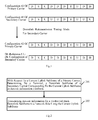
- Fig.4 is a schematic view showing the downlink retransmission timing mode of the secondary carrier according to the first embodiment of the present disclosure
- Fig.5 is a schematic view showing the answer information feedback corresponding to the downlink retransmission timing mode in Fig.4 .
- Configuration #2 in Table 1 is adopted by the primary carrier, the SDL mode is adopted by the secondary carrier, and the DL-reference UL/DL configuration of the secondary carrier is identical to the timeslot configuration of the primary carrier, i.e., the configuration #2.
- subframe 2 of the primary carrier is used to feed back the answer information for the fourth, the sixth, the seventh and eighth downlink subframes of the secondary carrier before subframe 2
- subframe 7 of the primary carrier is used to feed back the answer information for the fourth, the sixth, the seventh and eighth downlink subframes of the secondary carrier before subframe 7, e.g., the downlink subframes directed to subframe 2 and the subframe 7 through arrows in Fig.5 .
- the uplink subframes indicated by the DL-reference UL/DL configuration include subframe 2 and subframe 7, and the downlink subframes of the secondary carrier having the locations identical to the uplink subframes include subframe 2 and subframe 7.
- the data transmission may be prohibited in subframe 2 and subframe 7 of the secondary carrier.
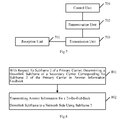
- an answer information feedback apparatus for a terminal which, as shown in Fig.6 , includes a first determination unit 601 and a transmission unit 602.
- the first determination unit 601 is configured to, with respect to a current uplink subframe of a primary carrier in a TDD mode, determine a downlink subframe of a secondary carrier in an SDL mode and corresponding to the current uplink subframe in answer information feedback as a to-be-fed-back downlink subframe.
- the to-be-fed-back downlink subframe is determined from designated downlink subframes of the secondary carrier in accordance with a downlink retransmission timing mode for a DL-reference UL/DL configuration of the secondary carrier.
- the designated downlink subframes include downlink subframes except a downlink subframe having a location identical to an uplink subframe indicated by the DL-reference UL/DL configuration, and the DL-reference UL/DL configuration is identical to a timeslot configuration of the primary carrier.
- the transmission unit 602 is configured to transmit answer information for the to-be-fed-back downlink subframe to a network side using the current uplink subframe.
- the answer information feedback apparatus further includes a reception unit 603 configured to receive from the network side feedback indication information indicating, with respect to each uplink subframe of the primary carrier for feeding back the answer information, a downlink subframe in the designated downlink subframes of the secondary carrier, which is corresponding to the uplink subframe in the answer information feedback.
- the first determination unit 601 is specifically configured to determine the downlink subframe of the secondary carrier corresponding to the current uplink subframe in the answer information feedback in accordance with the feedback indication information.
- the answer information feedback apparatus further includes a second determination unit 604 configured to determine a timeslot configuration of the primary carrier as the DL-reference UL/DL configuration of the secondary carrier, determine, with respect to each uplink subframe of the primary carrier for feeding back the answer information, a downlink subframe in the designated downlink subframes of the secondary carrier corresponding to the uplink subframe in the answer information feedback in accordance with the downlink retransmission timing mode for the DL-reference UL/DL configuration, and store a correspondence between the downlink subframe and the uplink subframe.
- the first determination unit 601 is specifically configured to determine the downlink subframe of the secondary carrier corresponding to the current uplink subframe in the answer information feedback in accordance with the correspondence.
- the answer information feedback apparatus further includes a control unit 605 configured to, during the communication with the network side through the secondary carrier, prohibit the data transmission in the downlink subframe of the secondary carrier having a location identical to the uplink subframe indicated by the DL-reference UL/DL configuration.
- an answer information reception apparatus for a network side which, as shown in Fig.7 , includes a reception unit 701 configured to receive answer information for a downlink subframe of a secondary carrier in an SDL mode, which is transmitted from a terminal using a current uplink subframe of a primary carrier in a TDD mode, the downlink subframe corresponding to the current uplink subframe in answer information feedback.
- the downlink subframe corresponding to the current uplink subframe is determined from designated downlink subframes of the secondary carrier in accordance with a downlink retransmission timing mode for a DL-reference UL/DL configuration of the secondary carrier, the designated downlink subframes include downlink subframes except a downlink subframe having a location identical to an uplink subframe indicated by the DL-reference UL/DL configuration, and the DL-reference UL/DL configuration is identical to a timeslot configuration of the primary carrier.
- the answer information reception apparatus further includes a determination unit 702 and a transmission unit 703.
- the determination unit 702 is configured to determine a timeslot configuration of the primary carrier as the DL-reference UL/DL configuration of the secondary carrier, determine, with respect to each uplink subframe of the primary carrier for feeding back the answer information, a downlink subframe in the designated downlink subframes of the secondary carrier corresponding to the uplink subframe in the answer information feedback in accordance with the downlink retransmission timing mode for the DL-reference UL/DL configuration, and acquire feedback indication information indicating a determination result.
- the transmission unit 703 is configured to transmit the feedback indication information to the terminal.
- the answer information reception apparatus further includes a control unit 704 configured to, during the communication with the terminal through the secondary carrier, prohibit the data transmission in the downlink subframe of the secondary carrier having the location identical to the uplink subframe indicated by the DL-reference UL/DL configuration.
- the primary carrier may be a carrier at a licensed frequency band
- the secondary carrier may be a carrier at an unlicensed frequency band
- the DL-reference UL/DL configuration for the secondary carrier in the SDL mode is identical to the timeslot configuration for the primary carrier in the TDD mode, and the downlink subframe corresponding to the uplink subframe of the primary carrier may be determined from the designated downlink subframes of the secondary carrier in accordance with the downlink retransmission timing mode for the DL-reference UL/DL configuration.
- the answer information for the corresponding downlink subframe of the secondary carrier is fed back to the network side using the uplink subframe of the primary carrier, and the designated downlink subframes include the downlink subframes except the downlink subframe having a location identical to the uplink subframe indicated by the DL-reference UL/DL configuration.
- the present disclosure provides in this embodiment an answer information feedback method which, as shown in Fig.8 , includes the following steps.
- Step 801 with respect to subframe 2 of a primary carrier in a TDD mode, which serves as an uplink subframe, determining, by a terminal, a downlink subframe of a secondary carrier in an SDL mode and corresponding to subframe 2 in answer information feedback as a to-be-fed-back downlink subframe.
- the to-be-fed-back downlink subframe is determined from designated downlink subframes of the secondary carrier in accordance with a downlink retransmission timing mode for a DL-reference UL/DL configuration of the secondary carrier, the designated downlink subframes include downlink subframes except a downlink subframe having a location identical to an uplink subframe indicated by the DL-reference UL/DL configuration, and the DL-reference UL/DL configuration includes subframe 0 to subframe 9, in which subframe 1 is a special subframe, subframe 2 is an uplink subframe, and the other subframes are downlink subframes.
- Step 802 transmitting answer information for the to-be-fed-back downlink subframe to a network side using subframe 2.
- an answer information reception method which, as shown in Fig.9 , includes Step 901 of receiving, by a network side, answer information for a downlink subframe of a secondary carrier in an SDL mode, which is transmitted from a terminal using subframe 2 of a primary carrier in a TDD mode which serves as an uplink subframe, the downlink subframe corresponding to subframe 2 in answer information feedback.
- the downlink subframe corresponding to subframe 2 is determined from designated downlink subframes of the secondary carrier in accordance with a downlink retransmission timing mode for a DL-reference UL/DL configuration of the secondary carrier, the designated downlink subframes includes downlink subframes except a downlink subframe having a location identical to an uplink subframe indicated by the DL-reference UL/DL configuration, and the DL-reference UL/DL configuration includes subframe 0 to subframe 9, in which subframe 1 is a special subframe, subframe 2 is an uplink subframe, and the other subframes are downlink subframes.
- the network side may determine that, in subframes 0-9 for the DL-reference UL/DL configuration of the secondary carrier, subframe 1 is a special subframe, subframe 2 is an uplink subframe, and the other subframes are downlink subframes, i.e., the configuration #5 in Table 1.
- the network side may determine, with respect to subframe 2 of the primary carrier for feeding back the answer information, the downlink subframe in the designated downlink subframes of the secondary carrier corresponding to subframe 2 in the answer information feedback in accordance with the downlink retransmission timing mode for the DL-reference UL/DL configuration, i.e., the downlink retransmission timing mode for the configuration #5 in Table 2, acquire feedback indication information indicating a determination result, and transmit the feedback indication information to the terminal.
- the terminal may, during the feedback of the answer information to the network side, determine the downlink subframe of the secondary carrier corresponding to subframe 2 of the primary carrier in the answer information feedback in accordance with the feedback indication information.
- the terminal may determine that, in subframes 0-9 for the DL-reference UL/DL configuration of the secondary carrier, subframe 1 is a special subframe, subframe 2 is an uplink subframe, and the other subframes are downlink subframes, i.e., the configuration #5 in Table 1.
- the terminal may determine, with respect to subframe 2 of the primary carrier for feeding back the answer information, the downlink subframe in the designated downlink subframes of the secondary carrier corresponding to subframe 2 in the answer information feedback in accordance with the downlink retransmission timing mode for the DL-reference UL/DL configuration, i.e., the downlink retransmission timing mode for the configuration #5 in Table 2, and store a correspondence between the downlink subframe and the uplink subframe.
- the terminal may determine the downlink subframe of the secondary carrier corresponding to subframe 2 of the primary carrier in the answer information feedback in accordance with the correspondence.
- the downlink subframe of the secondary carrier on the basis of the downlink retransmission timing mode for the selected DL-reference UL/DL configuration of the secondary carrier, for the downlink subframe of the secondary carrier having a location identical to the uplink subframe indicated by the DL-reference UL/DL configuration, i.e., downlink subframe 2, there is no corresponding uplink subframe for feeding back its answer information.
- the data transmission may be prohibited in the downlink subframe of the secondary carrier having the location identical to the uplink subframe indicated by the DL-reference UL/DL configuration.
- the network side does not transmit data and the terminal does not receive data in the downlink subframe of the secondary carrier having the location identical to the uplink subframe indicated by the DL-reference UL/DL configuration.
- the answer information feedback for the primary carrier may be carried out in accordance with the downlink retransmission timing mode for the timeslot configuration of the primary carrier, which will not be particularly defined herein.
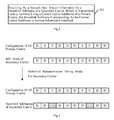
- Fig.10 is a schematic view showing the downlink retransmission timing mode of the secondary carrier according to the second embodiment of the present disclosure
- Fig.11 is a schematic view showing the answer information feedback corresponding to the downlink retransmission timing mode in Fig.10 .
- Configuration #2 in Table 1 is adopted by the primary carrier, and an SDL mode is adopted by the secondary carrier.
- the DL-reference UL/DL configuration of the secondary carrier includes subframes 0-9 in which subframe 1 is a special subframe, subframe 2 is an uplink subframe, and the other subframes are downlink subframes, i.e., configuration #5.
- subframe 2 of the primary carrier is used to feed back the answer information for the fourth to ninth and the eleventh to thirteenth downlink subframes of the secondary carrier before subframe 2, i.e., the downlink subframes directed to subframe 2 through arrows in Fig.11 .
- the uplink subframe indicated by the DL-reference UL/DL configuration is subframe 2
- the downlink subframe of the secondary carrier having the location identical thereto is subframe 2.
- the data transmission may be prohibited in subframe 2 of the secondary carrier.
- an answer information feedback apparatus for a terminal which, as shown in Fig. 12 , includes a determination unit 1201 and a transmission unit 1202.
- the determination unit 1201 is configured to, with respect to subframe 2 of a primary carrier in a TDD mode, which serves as an uplink subframe, determine a downlink subframe of a secondary carrier in an SDL mode and corresponding to subframe 2 in answer information feedback as a to-be-fed-back downlink subframe.
- the to-be-fed-back downlink subframe is determined from designated downlink subframes of the secondary carrier in accordance with a downlink retransmission timing mode for a DL-reference UL/DL configuration of the secondary carrier.
- the designated downlink subframes include downlink subframes except a downlink subframe having a location identical to an uplink subframe indicated by the DL-reference UL/DL configuration, and the DL-reference UL/DL configuration includes subframe 0 to subframe 9, in which subframe 1 is a special subframe, subframe 2 is an uplink subframe, and the other subframes are downlink subframes.
- the transmission unit 1202 is configured to transmit answer information for the to-be-fed-back downlink subframe to a network side using subframe 2.
- the answer information feedback apparatus further includes a reception unit 1203 configured to receive from the network side feedback indication information indicating, with respect to subframe 2 of the primary carrier for feeding back the answer information and serving as an uplink subframe, a downlink subframe in the designated downlink subframes of the secondary carrier corresponding to subframe 2 in the answer information feedback.
- the determination unit 1201 is specifically configured to determine the downlink subframe of the secondary carrier corresponding to subframe 2 in the answer information feedback in accordance with the feedback indication information.
- the answer information feedback apparatus further includes a control unit 1204 configured to, during the communication with the network side through the secondary carrier, prohibit the data transmission in the downlink subframe of the secondary carrier having the location identical to the uplink subframe indicated by the DL-reference UL/DL configuration.
- an answer information reception apparatus for a network side which, as shown in Fig.13 , includes a reception unit 1301 configured to receive answer information for a downlink subframe of a secondary carrier in an SDL mode, which is transmitted from a terminal using subframe 2 of a primary carrier in a TDD mode which serves as an uplink subframe, the downlink subframe corresponding to subframe 2 in answer information feedback.
- a reception unit 1301 configured to receive answer information for a downlink subframe of a secondary carrier in an SDL mode, which is transmitted from a terminal using subframe 2 of a primary carrier in a TDD mode which serves as an uplink subframe, the downlink subframe corresponding to subframe 2 in answer information feedback.
- the downlink subframe corresponding to subframe 2 is determined from designated downlink subframes of the secondary carrier in accordance with a downlink retransmission timing mode for a DL-reference UL/DL configuration of the secondary carrier, the designated downlink subframes includes downlink subframes except a downlink subframe having a location identical to an uplink subframe indicated by the DL-reference UL/DL configuration, and the DL-reference UL/DL configuration includes subframe 0 to subframe 9, in which subframe 1 is a special subframe, subframe 2 is an uplink subframe, and the other subframes are downlink subframes.
- the answer information reception apparatus further includes a determination unit 1302 and a transmission unit 1303.
- the determination unit 1302 is configured to determine that, in subframes 0 to 9 for the DL-reference UL/DL configuration of the secondary carrier, subframe 1 is a special subframe, subframe 2 is an uplink subframe and the other subframes are downlink subframes, determine, with respect to subframe 2 of the primary carrier for feeding back the answer information, a downlink subframe in the designated downlink subframes of the secondary carrier corresponding to subframe 2 in the answer information feedback in accordance with the downlink retransmission timing mode for the DL-reference UL/DL configuration, and acquire feedback indication information indicating a determination result.
- the transmission unit 1303 is configured to transmit the feedback indication information to the terminal.
- the answer information reception apparatus further includes a control unit 1304 configured to, during the communication with the terminal through the secondary carrier, prohibit the data transmission in the downlink subframe of the secondary carrier having the location identical to the uplink subframe indicated by the DL-reference UL/DL configuration.
- the primary carrier may be a carrier at a licensed frequency band
- the secondary carrier may be a carrier at an unlicensed frequency band
- subframe 1 is a special subframe
- subframe 2 is an uplink subframe
- the other subframes are downlink subframes.
- Subframe 2 of the primary carrier may be used to feed back the answer information for 9 downlink subframes in accordance with the downlink retransmission timing mode for the DL-reference UL/DL configuration, and the answer information is fed back through subframe 2 regardless of the timeslot configuration of the primary carrier.
- the downlink subframe corresponding to subframe 2 of the primary carrier may be determined from the designated downlink subframes of the secondary carrier in accordance with the downlink retransmission timing mode for the DL-reference UL/DL configuration.
- the answer information for the corresponding downlink subframe of the secondary carrier is fed back to the network side using subframe 2 of the primary carrier, and the designated downlink subframes include the downlink subframes except the downlink subframe having a location identical to the uplink subframe indicated by the DL-reference UL/DL configuration.
- it is able to feed back the answer information under the condition where the TDD mode is adopted by the primary carrier and the SDL mode is adopted by the secondary carrier.
- the present disclosure provides in this embodiment an answer information feedback method which, as shown in Fig.14 , includes the following steps.
- Step 1401 with respect to a current uplink subframe of a primary carrier in a TDD mode, determining, by a terminal, a downlink subframe of a secondary carrier in an SDL mode and corresponding to the current uplink subframe in answer information feedback as a to-be-fed-back downlink subframe in accordance with a predetermined downlink retransmission timing mode of the secondary carrier for a timeslot configuration of the primary carrier, in the predetermined downlink retransmission timing mode, uplink subframes of the primary carrier corresponding to different downlink subframes of the secondary carrier, a set of the downlink subframes of the secondary carrier corresponding to the uplink subframes of the primary carrier including all downlink subframes of the secondary carrier, one of the uplink subframes of the primary carrier being separated from a corresponding downlink subframe of the secondary carrier by at least four subframes.
- Step 1402 transmitting answer information for the to-be-fed-back downlink subframe to a network side using the current uplink subframe.
- an answer information reception method which, as shown in Figs.15 , includes Step 1501 of receiving, by a network side, answer information for a downlink subframe of a secondary carrier in an SDL mode, which is transmitted from a terminal using a current uplink subframe of a primary carrier in a TDD mode, the downlink subframe corresponding to the current uplink subframe in answer information feedback.
- the downlink subframe corresponding to the current uplink subframe is determined from downlink subframes of the secondary carrier in accordance with a predetermined downlink retransmission timing mode of the secondary carrier for a timeslot configuration of the primary carrier.
- uplink subframes of the primary carrier correspond to different downlink subframes of the secondary carrier
- a set of the downlink subframes of the secondary carrier corresponding to the uplink subframes of the primary carrier includes all downlink subframes of the secondary carrier
- one of the uplink subframes of the primary carrier is separated from a corresponding downlink subframe of the secondary carrier by at least four subframes.
- the uplink subframes of the primary carrier correspond to different downlink subframes of the secondary carrier
- the set of the downlink subframes of the secondary carrier corresponding to each uplink subframe includes all the downlink subframes of the secondary carrier.
- a difference between the quantities of the downlink subframes of the secondary carrier corresponding to the respective uplink subframes of the primary carrier is not greater than 1. In this way, it is able to substantially equally allocate the feedback of the answer information of the downlink subframes of the secondary carrier to each uplink subframe of the primary carrier.
- Table 3 shows the predetermined downlink retransmission timing modes for the timeslot configurations in Table 1.
- Table 3 Predetermined Downlink Retransmission Timing Modes of Secondary Carrier Uplink-Downl ink Configuration Subframe Number 0 1 2 3 4 5 6 7 8 9 0 - - 5, 6 4,5 4 - - 5,6 4,5 4 1 - - 7, 6, 5 4,5 - - - 7,6,5 4,5 - 2 - - 8, 7, 6, 5, 4 - - - - 8,7,6,5,4 - - 3 - - 11, 10, 9, 8 8,7,6 6,5,4 - - - - 4 - - 12, 11, 10, 9, 8 8,7,6,5,4 - - - - 5 - 13, 12, 11, 10, 9 ,8, 7, 6, 5, 4, - 6 - - 7, 6 6,5 5,4 - - 6,5 5,4 - - 6,5 5,4 - - 6,5 5,4 - - 6,5 5,4 - - 6,5 5,4
- subframes 2-4 and subframes 7-9 are uplink subframes
- subframes 1 and 6 are special subframes
- the other subframes are downlink subframes
- the timeslot configuration of the primary carrier is configuration #0
- subframe 2 in the downlink subframes of the secondary carrier corresponds to the fifth and sixth downlink subframes before it
- subframe 3 corresponds to the fourth and fifth downlink subframes before it
- subframe 4 corresponds to the fourth downlink subframe before it
- subframe 7 corresponds to the fifth and sixth downlink subframe before it
- subframe 8 corresponds to the fourth and fifth downlink subframes before it
- subframe 9 corresponds to the fourth downlink subframe before it.
- subframes 2, 3, 7 and 8 are uplink subframes
- subframes 1 and 6 are special subframes and the other subframes are downlink subframes
- the timeslot configuration of the primary carrier is configuration #1
- subframe 2 in the downlink subframes of the secondary carrier corresponds to the fifth to seventh downlink subframes before it
- subframe 3 corresponds to the fourth and fifth downlink subframes before it
- subframe 7 corresponds to the fifth to seventh downlink subframes before it
- subframe 8 corresponds to the fourth and fifth downlink subframes before it.
- subframes 2 and 7 are uplink subframes
- subframes 1 and 6 are special subframes
- the other subframes are downlink subframes
- the timeslot configuration of the primary carrier is configuration #2
- subframe 2 in the downlink subframes of the secondary carrier corresponds to the fourth to eighth downlink subframes before it
- subframe 7 corresponds to the fourth to eighth downlink subframes before it.
- subframe 1 is a special subframe and the other subframes are downlink subframes, i.e., the timeslot configuration of the primary carrier is configuration #3
- subframe 2 in the downlink subframes of the secondary carrier corresponds to the eighth to eleventh downlink subframes before it
- subframe 3 corresponds to the sixth to eighth downlink subframes before it
- subframe 4 corresponds to the fourth to sixth downlink subframes before it.
- subframe 1 is a special subframe and the other subframes are downlink subframes, i.e., the timeslot configuration of the primary carrier is configuration #4, in the predetermined downlink retransmission timing mode of the secondary carrier for the timeslot configuration of the primary carrier, subframe 2 in the downlink subframes of the secondary carrier corresponds to the eighth to twelfth downlink subframes before it, and subframe 3 corresponds to the fourth to eighth downlink subframes before it.
- subframe 2 in the case that, for the timeslot configuration of the primary carrier, subframe 2 is an uplink subframe, subframe 1 is a special subframe and the other subframes are downlink subframes, i.e., the timeslot configuration of the primary carrier is configuration #5, in the predetermined downlink retransmission timing mode of the secondary carrier for the timeslot configuration of the primary carrier, subframe 2 in the downlink subframes of the secondary carrier corresponds to the fourth to thirteenth downlink subframes before it.
- subframes 2-4 and 7-8 are uplink subframes
- subframes 1 and 6 are special subframes and the other subframes are downlink subframes
- the timeslot configuration of the primary carrier is configuration #6
- subframe 2 in the downlink subframes of the secondary carrier corresponds to the sixth and seventh downlink subframes before it
- subframe 3 corresponds to the fifth and sixth downlink subframes before it
- subframe 4 corresponds to the fourth and fifth downlink subframes before it
- subframe 7 corresponds to the fifth and sixth downlink subframes before it
- subframe 8 corresponds to the fourth and fifth downlink subframes before it.
- the predetermined downlink retransmission timing modes of the secondary carrier for the timeslot configurations of the primary carrier in Table 3 are for illustrative purposes only. During the actual application, any other downlink retransmission timing modes may also be used, as long as the uplink subframes of the primary carrier correspond to different downlink subframes of the secondary carrier, the set of the downlink subframes of the secondary carrier corresponding to the uplink subframes of the primary carrier includes all downlink subframes of the secondary carrier, and one of the uplink subframes of the primary carrier is separated from the corresponding downlink subframe of the secondary carrier by at least four subframes.
- the answer information feedback for the primary carrier may be carried out in accordance with the downlink retransmission timing mode for the timeslot configuration of the primary carrier, which will not be particularly defined herein.
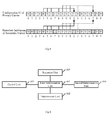
- Fig.16 is a schematic view showing the downlink retransmission timing mode of the secondary carrier in the third embodiment of the present disclosure
- Fig.17 is a schematic view showing the answer information feedback corresponding to the downlink retransmission timing mode in Fig.16 .
- Configuration #2 in Table 1 is adopted by the primary carrier, and an SDL mode is adopted by the secondary barrier.
- subframe 2 of the primary carrier is used to feed back the answer information for the fourth to eighth downlink subframes of the secondary carrier before it
- subframe 7 of the primary carrier is used to feed back the answer information for the fourth to eighth downlink subframes of the secondary carrier before it, i.e., the downlink subframes directed to subframes 2 and 7 through arrows in Fig.17 .
- an answer information feedback apparatus for a terminal which, as shown in Fig.18 , includes a determination unit 1801 and a transmission unit 1802.
- the determination unit 1801 is configured to, with respect to a current uplink subframe of a primary carrier in a TDD mode, determine a downlink subframe of a secondary carrier in an SDL mode and corresponding to the current uplink subframe in answer information feedback as a to-be-fed-back downlink subframe in accordance with a predetermined downlink retransmission timing mode of the secondary carrier for a timeslot configuration of the primary carrier.
- uplink subframes of the primary carrier correspond to different downlink subframes of the secondary carrier
- a set of the downlink subframes of the secondary carrier corresponding to the uplink subframes of the primary carrier includes all downlink subframes of the secondary carrier
- one of the uplink subframes of the primary carrier is separated from a corresponding downlink subframe of the secondary carrier by at least four subframes.
- the transmission unit 1802 is configured to transmit answer information for the to-be-fed-back downlink subframe to a network side using the current uplink subframe.
- a difference between the quantities of the downlink subframes of the secondary carrier corresponding to the respective uplink subframes of the primary carrier is not greater than 1.
- subframes 2-4 and subframes 7-9 are uplink subframes
- subframes 1 and 6 are special subframes
- the other subframes are downlink subframes
- subframe 2 in the downlink subframes of the secondary carrier corresponds to the fifth and sixth downlink subframes before it
- subframe 3 corresponds to the fourth and fifth downlink subframes before it
- subframe 4 corresponds to the fourth downlink subframe before it
- subframe 7 corresponds to the fifth and sixth downlink subframe before it
- subframe 8 corresponds to the fourth and fifth downlink subframes before it
- subframe 9 corresponds to the fourth downlink subframe before it.
- subframes 2, 3, 7 and 8 are uplink subframes
- subframes 1 and 6 are special subframes
- the other subframes are downlink subframes
- subframe 2 in the downlink subframes of the secondary carrier corresponds to the fifth to seventh downlink subframes before it
- subframe 3 corresponds to the fourth and fifth downlink subframes before it
- subframe 7 corresponds to the fifth to seventh downlink subframes before it
- subframe 8 corresponds to the fourth and fifth downlink subframes before it.
- subframes 2 and 7 are uplink subframes
- subframes 1 and 6 are special subframes
- the other subframes are downlink subframes
- subframe 2 in the downlink subframes of the secondary carrier corresponds to the fourth to eighth downlink subframes before it
- subframe 7 corresponds to the fourth to eighth downlink subframes before it.
- subframes 2, 3 and 4 are uplink subframes
- subframe 1 is a special subframe and the other subframes are downlink subframes
- subframe 2 in the downlink subframes of the secondary carrier corresponds to the eighth to eleventh downlink subframes before it
- subframe 3 corresponds to the sixth to eighth downlink subframes before it
- subframe 4 corresponds to the fourth to sixth downlink subframes before it.
- subframes 2 and 3 are uplink subframes
- subframe 1 is a special subframe and the other subframes are downlink subframes
- subframe 2 in the downlink subframes of the secondary carrier corresponds to the eighth to twelfth downlink subframes before it
- subframe 3 corresponds to the fourth to eighth downlink subframes before it.
- subframe 2 in the case that, for the timeslot configuration of the primary carrier, subframe 2 is an uplink subframe, subframe 1 is a special subframe and the other subframes are downlink subframes, in the predetermined downlink retransmission timing mode of the secondary carrier for the timeslot configuration of the primary carrier, subframe 2 in the downlink subframes of the secondary carrier corresponds to the fourth to thirteenth downlink subframes before it.
- subframes 2-4 and 7-8 are uplink subframes
- subframes 1 and 6 are special subframes
- the other subframes are downlink subframes
- subframe 2 in the downlink subframes of the secondary carrier corresponds to the sixth and seventh downlink subframes before it
- subframe 3 corresponds to the fifth and sixth downlink subframes before it
- subframe 4 corresponds to the fourth and fifth downlink subframes before it
- subframe 7 corresponds to the fifth and sixth downlink subframes before it
- subframe 8 corresponds to the fourth and fifth downlink subframes before it.
- an answer information reception apparatus for a network side which, as shown in Fig. 19 , includes a reception unit 1901 configured to receive answer information for a downlink subframe of a secondary carrier in an SDL mode, which is transmitted from a terminal using a current uplink subframe of a primary carrier in a TDD mode, the downlink subframe corresponding to the current uplink subframe in answer information feedback.
- a reception unit 1901 configured to receive answer information for a downlink subframe of a secondary carrier in an SDL mode, which is transmitted from a terminal using a current uplink subframe of a primary carrier in a TDD mode, the downlink subframe corresponding to the current uplink subframe in answer information feedback.
- the downlink subframe corresponding to the current uplink subframe is determined from downlink subframes of the secondary carrier in accordance with a predetermined downlink retransmission timing mode of the secondary carrier for a timeslot configuration of the primary carrier.
- uplink subframes of the primary carrier correspond to different downlink subframes of the secondary carrier
- a set of the downlink subframes of the secondary carrier corresponding to the uplink subframes of the primary carrier includes all downlink subframes of the secondary carrier
- one of the uplink subframes of the primary carrier is separated from a corresponding downlink subframe of the secondary carrier by at least four subframes.
- a difference between the quantities of the downlink subframes of the secondary carrier corresponding to the respective uplink subframes of the primary carrier is not greater than 1.
- subframes 2-4 and subframes 7-9 are uplink subframes
- subframes 1 and 6 are special subframes
- the other subframes are downlink subframes
- subframe 2 in the downlink subframes of the secondary carrier corresponds to the fifth and sixth downlink subframes before it
- subframe 3 corresponds to the fourth and fifth downlink subframes before it
- subframe 4 corresponds to the fourth downlink subframe before it
- subframe 7 corresponds to the fifth and sixth downlink subframe before it
- subframe 8 corresponds to the fourth and fifth downlink subframes before it
- subframe 9 corresponds to the fourth downlink subframe before it.
- subframes 2, 3, 7 and 8 are uplink subframes
- subframes 1 and 6 are special subframes
- the other subframes are downlink subframes
- subframe 2 in the downlink subframes of the secondary carrier corresponds to the fifth to seventh downlink subframes before it
- subframe 3 corresponds to the fourth and fifth downlink subframes before it
- subframe 7 corresponds to the fifth to seventh downlink subframes before it
- subframe 8 corresponds to the fourth and fifth downlink subframes before it.
- subframes 2 and 7 are uplink subframes
- subframes 1 and 6 are special subframes
- the other subframes are downlink subframes
- subframe 2 in the downlink subframes of the secondary carrier corresponds to the fourth to eighth downlink subframes before it
- subframe 7 corresponds to the fourth to eighth downlink subframes before it.
- subframes 2, 3 and 4 are uplink subframes
- subframe 1 is a special subframe and the other subframes are downlink subframes
- subframe 2 in the downlink subframes of the secondary carrier corresponds to the eighth to eleventh downlink subframes before it
- subframe 3 corresponds to the sixth to eighth downlink subframes before it
- subframe 4 corresponds to the fourth to sixth downlink subframes before it.
- subframes 2 and 3 are uplink subframes
- subframe 1 is a special subframe and the other subframes are downlink subframes
- subframe 2 in the downlink subframes of the secondary carrier corresponds to the eighth to twelfth downlink subframes before it
- subframe 3 corresponds to the fourth to eighth downlink subframes before it.
- subframe 2 in the case that, for the timeslot configuration of the primary carrier, subframe 2 is an uplink subframe, subframe 1 is a special subframe and the other subframes are downlink subframes, in the predetermined downlink retransmission timing mode of the secondary carrier for the timeslot configuration of the primary carrier, subframe 2 in the downlink subframes of the secondary carrier corresponds to the fourth to thirteenth downlink subframes before it.
- subframes 2-4 and 7-8 are uplink subframes
- subframes 1 and 6 are special subframes
- the other subframes are downlink subframes
- subframe 2 in the downlink subframes of the secondary carrier corresponds to the sixth and seventh downlink subframes before it
- subframe 3 corresponds to the fifth and sixth downlink subframes before it
- subframe 4 corresponds to the fourth and fifth downlink subframes before it
- subframe 7 corresponds to the fifth and sixth downlink subframes before it
- subframe 8 corresponds to the fourth and fifth downlink subframes before it.
- the primary carrier may be a carrier at a licensed frequency band
- the secondary carrier may be a carrier at an unlicensed frequency band
- the downlink retransmission timing mode is pre-configured for the secondary carrier in accordance with the timeslot configuration of the primary carrier.
- the uplink subframes of the primary carrier correspond to different downlink subframes of the secondary carrier
- the set of the downlink subframes of the secondary carrier corresponding to the uplink subframes of the primary carrier includes all downlink subframes of the secondary carrier
- one of the uplink subframes of the primary carrier is separated from a corresponding downlink subframe of the secondary carrier by at least four subframes.
- the terminal may use the current uplink subframe of the primary carrier to feed back the answer information for the downlink subframe of the secondary carrier corresponding to the current uplink subframe in accordance with the predetermined downlink retransmission timing mode of the secondary carrier for the timeslot configuration of the primary carrier.
- the terminal may use the current uplink subframe of the primary carrier to feed back the answer information for the downlink subframe of the secondary carrier corresponding to the current uplink subframe in accordance with the predetermined downlink retransmission timing mode of the secondary carrier for the timeslot configuration of the primary carrier.
- the answer information feedback apparatus and the answer information reception apparatus in the embodiments of the present disclosure may be implemented via computer programs. It should be appreciated that, the above-mentioned division mode for the modules is merely one of the various division modes.
- the answer information feedback apparatus and the answer information reception apparatus including the other modules or including no module shall also fall within the scope of the present disclosure, as long as they have the above-mentioned functions.
- each process and/or block, or combinations thereof, in the flow charts and/or block diagrams may be implemented via computer program commands.
- These computer program commands may be applied to a general-purpose computer, a special-purpose computer, an embedded processor or any other processor of programmable data processing equipment, so as to form a machine, thereby to obtain the means capable of effecting the functions specified in one or more processes in the flow charts and/or one or more blocks in the block diagrams in accordance with the commands executed by the computer or the processor of the other programmable data processing equipment.
- These computer program commands may also be stored in a computer-readable memory capable of guiding the computer or the other programmable data processing equipment to work in a special manner, so as to form a product including a command device capable of effecting the functions specified in one or more processes in the flow charts and/or one or more blocks in the block diagrams.
- These computer program commands may also be loaded onto a computer or the other programmable data processing equipment, so as to perform a series of operations thereon and generate the processings implemented by the computer, thereby to provide the steps capable of effecting the functions specified one or more processes in the flow charts and/or one or more blocks in the block diagrams in accordance with the instructions.
Landscapes
- Engineering & Computer Science (AREA)
- Signal Processing (AREA)
- Computer Networks & Wireless Communication (AREA)
- Mobile Radio Communication Systems (AREA)
Applications Claiming Priority (2)
| Application Number | Priority Date | Filing Date | Title |
|---|---|---|---|
| CN201310634860.6A CN104683076B (zh) | 2013-12-02 | 2013-12-02 | 应答信息反馈方法、应答信息接收方法及相关装置 |
| PCT/CN2014/092763 WO2015081840A1 (fr) | 2013-12-02 | 2014-12-02 | Procédé de renvoi d'informations de réponse, procédé de réception d'informations de réponse et appareils correspondants |
Publications (3)
| Publication Number | Publication Date |
|---|---|
| EP3079295A1 true EP3079295A1 (fr) | 2016-10-12 |
| EP3079295A4 EP3079295A4 (fr) | 2017-08-16 |
| EP3079295B1 EP3079295B1 (fr) | 2022-05-18 |
Family
ID=53272886
Family Applications (1)
| Application Number | Title | Priority Date | Filing Date |
|---|---|---|---|
| EP14868170.3A Active EP3079295B1 (fr) | 2013-12-02 | 2014-12-02 | Procédé de renvoi d'informations de réponse, procédé de réception d'informations de réponse et appareils correspondants |
Country Status (4)
| Country | Link |
|---|---|
| US (1) | US10129007B2 (fr) |
| EP (1) | EP3079295B1 (fr) |
| CN (1) | CN104683076B (fr) |
| WO (1) | WO2015081840A1 (fr) |
Families Citing this family (5)
| Publication number | Priority date | Publication date | Assignee | Title |
|---|---|---|---|---|
| CN106559374B (zh) * | 2015-09-29 | 2019-12-31 | 中国移动通信集团公司 | 一种干扰抑制方法及相关设备 |
| CN107710664B (zh) * | 2015-11-20 | 2021-04-23 | Oppo广东移动通信有限公司 | 传输数据的方法、终端和基站 |
| US10517021B2 (en) | 2016-06-30 | 2019-12-24 | Evolve Cellular Inc. | Long term evolution-primary WiFi (LTE-PW) |
| WO2019127048A1 (fr) * | 2017-12-26 | 2019-07-04 | Oppo广东移动通信有限公司 | Procédé de détermination de ressources de rétroaction, ue, équipement de réseau et support d'informations d'ordinateur |
| CN115804156B (zh) * | 2020-06-26 | 2025-07-25 | 高通股份有限公司 | 用于配置对半双工ue的补充下行链路支持的技术 |
Family Cites Families (9)
| Publication number | Priority date | Publication date | Assignee | Title |
|---|---|---|---|---|
| WO2012108720A2 (fr) | 2011-02-10 | 2012-08-16 | 엘지전자 주식회사 | Procédé et dispositif de transmission d'une confirmation de réception dans un système de communication sans fil |
| CN102752085B (zh) | 2011-04-21 | 2014-09-17 | 华为技术有限公司 | Tdd系统中确认或不确认指示信息发送的方法和设备 |
| CN102291227B (zh) | 2011-06-30 | 2013-07-10 | 电信科学技术研究院 | 一种发送和接收反馈信息的方法、系统及装置 |
| KR101973466B1 (ko) | 2011-11-01 | 2019-04-30 | 엘지전자 주식회사 | 신호 송수신 방법 및 이를 위한 장치 |
| US9203559B2 (en) * | 2012-01-27 | 2015-12-01 | Blackberry Limited | System and method for supporting inter-band carrier aggregation with different UL/DL TDD configurations |
| CN103516499B (zh) * | 2012-06-19 | 2017-06-13 | 电信科学技术研究院 | 一种ack/nack反馈比特数确定方法及装置 |
| KR102131458B1 (ko) * | 2013-08-08 | 2020-07-07 | 애플 인크. | Tdd 환경에서 다운링크 harq 타이밍을 제어하는 방법 및 장치 |
| WO2015039313A1 (fr) * | 2013-09-18 | 2015-03-26 | 华为技术有限公司 | Procédé, équipement d'utilisateur et station de base pour émission d'accusé de réception de demande de répétition automatique hybride |
| US9674845B2 (en) * | 2013-11-04 | 2017-06-06 | Qualcomm Incorporated | Soft buffer management |
-
2013
- 2013-12-02 CN CN201310634860.6A patent/CN104683076B/zh active Active
-
2014
- 2014-12-02 EP EP14868170.3A patent/EP3079295B1/fr active Active
- 2014-12-02 US US15/100,999 patent/US10129007B2/en active Active
- 2014-12-02 WO PCT/CN2014/092763 patent/WO2015081840A1/fr not_active Ceased
Also Published As
| Publication number | Publication date |
|---|---|
| CN104683076B (zh) | 2018-03-23 |
| US10129007B2 (en) | 2018-11-13 |
| WO2015081840A1 (fr) | 2015-06-11 |
| US20160308658A1 (en) | 2016-10-20 |
| EP3079295A4 (fr) | 2017-08-16 |
| CN104683076A (zh) | 2015-06-03 |
| EP3079295B1 (fr) | 2022-05-18 |
Similar Documents
| Publication | Publication Date | Title |
|---|---|---|
| EP2733883B1 (fr) | Procédé et dispositif de transmission de données dans un système à agrégation de porteuses | |
| EP3531605B1 (fr) | Procédé de génération de livre de codes de demande de répétition automatique hybride (harq) et dispositif associé | |
| EP3481115B1 (fr) | Procédé de réglage de séquence de synchronisation, station de base, terminal et système de communication | |
| EP3281334B1 (fr) | Procédé et appareil pour la transmission d'informations de renvoi de harq-ack dans un système d'agrégation de porteuses amélioré | |
| EP2868024B1 (fr) | Procédé et appareil pour envoyer et recevoir des informations de rétroaction harq-ack | |
| EP2636175B1 (fr) | Transmission de rétroaction de demande automatique de répétition hybride dans système de communication à multiples porteuses composantes à l'aide de ressources de requête de planification | |
| EP2875605B1 (fr) | Procédé et appareil pour transmettre des informations de rétroaction d'accusé de réception de demande de répétition automatique hybride (harq-ack) au moyen d'un équipement utilisateur dans un système de communications sans fil | |
| EP2844003B1 (fr) | Procédé et dispositif pour la transmission de signaux de commande sur la liaison descendante | |
| EP3754877B1 (fr) | Détermination de taille de livre de codes harq-ack | |
| EP2824860B1 (fr) | Procédé et dispositif de mise en oeuvre de renvoi d'informations harq | |
| KR102376050B1 (ko) | 무선 통신 시스템에서 D2D(Device-to-Device) 통신을 위한 제어 정보 송수신 방법 및 이를 위한 장치 | |
| EP3043501B1 (fr) | Procédé, équipement utilisateur et station de base pour transmission d'accusé de réception de demande automatique de répétition hybride | |
| EP2863574B1 (fr) | Procédé et dispositif de détermination de nombre de bits de rétroaction ack/nack | |
| EP2871883A1 (fr) | Procédé et dispositif de transmission de dci en agrégation de porteuses inter-bande | |
| EP3806367B1 (fr) | Procédé et appareil de renvoi d'informations d'accusé de réception (ack) de demande de répétition automatique hybride (harq) | |
| EP2995027B1 (fr) | Procedes, equipement utilisateur et noeud de reseau radio pour un groupage de ack/nack harq sur pusch dans un systeme tdd dynamique | |
| KR20160150120A (ko) | 캐리어 집성의 피드백 방법, 장치 및 시스템 | |
| EP3094030A1 (fr) | Procédé et appareil de transmission d'accusé de réception dans un système de communications sans fil | |
| EP3134977B1 (fr) | Procédé et appareil de communication de données sur un canal physique partagé de liaison descendante | |
| EP3079295B1 (fr) | Procédé de renvoi d'informations de réponse, procédé de réception d'informations de réponse et appareils correspondants | |
| EP2819337A1 (fr) | Procédé et dispositif pour la demande de répétition automatique hybride de structure de trame adaptative | |
| EP3057260B1 (fr) | Procédé et dispositif de transmission de signalisation d'ordonnancement | |
| EP3462659B1 (fr) | Procédé de transmission d'informations, dispositif d'utilisateur et support d'informations informatique | |
| KR101778638B1 (ko) | 피드백 정보 송신 및 수신 방법 및 그 장치 | |
| EP3032773A1 (fr) | Procédé et appareil d'émission de données en agrégation de spectre |
Legal Events
| Date | Code | Title | Description |
|---|---|---|---|
| PUAI | Public reference made under article 153(3) epc to a published international application that has entered the european phase |
Free format text: ORIGINAL CODE: 0009012 |
|
| 17P | Request for examination filed |
Effective date: 20160609 |
|
| AK | Designated contracting states |
Kind code of ref document: A1 Designated state(s): AL AT BE BG CH CY CZ DE DK EE ES FI FR GB GR HR HU IE IS IT LI LT LU LV MC MK MT NL NO PL PT RO RS SE SI SK SM TR |
|
| AX | Request for extension of the european patent |
Extension state: BA ME |
|
| DAX | Request for extension of the european patent (deleted) | ||
| A4 | Supplementary search report drawn up and despatched |
Effective date: 20170719 |
|
| RIC1 | Information provided on ipc code assigned before grant |
Ipc: H04L 1/16 20060101AFI20170713BHEP Ipc: H04W 72/02 20090101ALI20170713BHEP |
|
| STAA | Information on the status of an ep patent application or granted ep patent |
Free format text: STATUS: EXAMINATION IS IN PROGRESS |
|
| 17Q | First examination report despatched |
Effective date: 20190724 |
|
| REG | Reference to a national code |
Ref country code: DE Ref legal event code: R079 Ref document number: 602014083804 Country of ref document: DE Free format text: PREVIOUS MAIN CLASS: H04L0001160000 Ipc: H04W0072020000 |
|
| RIC1 | Information provided on ipc code assigned before grant |
Ipc: H04L 1/18 20060101ALN20211219BHEP Ipc: H04W 72/02 20090101AFI20211219BHEP |
|
| GRAP | Despatch of communication of intention to grant a patent |
Free format text: ORIGINAL CODE: EPIDOSNIGR1 |
|
| STAA | Information on the status of an ep patent application or granted ep patent |
Free format text: STATUS: GRANT OF PATENT IS INTENDED |
|
| INTG | Intention to grant announced |
Effective date: 20220215 |
|
| GRAS | Grant fee paid |
Free format text: ORIGINAL CODE: EPIDOSNIGR3 |
|
| GRAA | (expected) grant |
Free format text: ORIGINAL CODE: 0009210 |
|
| STAA | Information on the status of an ep patent application or granted ep patent |
Free format text: STATUS: THE PATENT HAS BEEN GRANTED |
|
| AK | Designated contracting states |
Kind code of ref document: B1 Designated state(s): AL AT BE BG CH CY CZ DE DK EE ES FI FR GB GR HR HU IE IS IT LI LT LU LV MC MK MT NL NO PL PT RO RS SE SI SK SM TR |
|
| REG | Reference to a national code |
Ref country code: GB Ref legal event code: FG4D |
|
| REG | Reference to a national code |
Ref country code: CH Ref legal event code: EP |
|
| REG | Reference to a national code |
Ref country code: IE Ref legal event code: FG4D |
|
| REG | Reference to a national code |
Ref country code: DE Ref legal event code: R096 Ref document number: 602014083804 Country of ref document: DE |
|
| REG | Reference to a national code |
Ref country code: AT Ref legal event code: REF Ref document number: 1493859 Country of ref document: AT Kind code of ref document: T Effective date: 20220615 |
|
| REG | Reference to a national code |
Ref country code: LT Ref legal event code: MG9D |
|
| REG | Reference to a national code |
Ref country code: NL Ref legal event code: MP Effective date: 20220518 |
|
| REG | Reference to a national code |
Ref country code: AT Ref legal event code: MK05 Ref document number: 1493859 Country of ref document: AT Kind code of ref document: T Effective date: 20220518 |
|
| PG25 | Lapsed in a contracting state [announced via postgrant information from national office to epo] |
Ref country code: SE Free format text: LAPSE BECAUSE OF FAILURE TO SUBMIT A TRANSLATION OF THE DESCRIPTION OR TO PAY THE FEE WITHIN THE PRESCRIBED TIME-LIMIT Effective date: 20220518 Ref country code: PT Free format text: LAPSE BECAUSE OF FAILURE TO SUBMIT A TRANSLATION OF THE DESCRIPTION OR TO PAY THE FEE WITHIN THE PRESCRIBED TIME-LIMIT Effective date: 20220919 Ref country code: NO Free format text: LAPSE BECAUSE OF FAILURE TO SUBMIT A TRANSLATION OF THE DESCRIPTION OR TO PAY THE FEE WITHIN THE PRESCRIBED TIME-LIMIT Effective date: 20220818 Ref country code: NL Free format text: LAPSE BECAUSE OF FAILURE TO SUBMIT A TRANSLATION OF THE DESCRIPTION OR TO PAY THE FEE WITHIN THE PRESCRIBED TIME-LIMIT Effective date: 20220518 Ref country code: LT Free format text: LAPSE BECAUSE OF FAILURE TO SUBMIT A TRANSLATION OF THE DESCRIPTION OR TO PAY THE FEE WITHIN THE PRESCRIBED TIME-LIMIT Effective date: 20220518 Ref country code: HR Free format text: LAPSE BECAUSE OF FAILURE TO SUBMIT A TRANSLATION OF THE DESCRIPTION OR TO PAY THE FEE WITHIN THE PRESCRIBED TIME-LIMIT Effective date: 20220518 Ref country code: GR Free format text: LAPSE BECAUSE OF FAILURE TO SUBMIT A TRANSLATION OF THE DESCRIPTION OR TO PAY THE FEE WITHIN THE PRESCRIBED TIME-LIMIT Effective date: 20220819 Ref country code: FI Free format text: LAPSE BECAUSE OF FAILURE TO SUBMIT A TRANSLATION OF THE DESCRIPTION OR TO PAY THE FEE WITHIN THE PRESCRIBED TIME-LIMIT Effective date: 20220518 Ref country code: ES Free format text: LAPSE BECAUSE OF FAILURE TO SUBMIT A TRANSLATION OF THE DESCRIPTION OR TO PAY THE FEE WITHIN THE PRESCRIBED TIME-LIMIT Effective date: 20220518 Ref country code: BG Free format text: LAPSE BECAUSE OF FAILURE TO SUBMIT A TRANSLATION OF THE DESCRIPTION OR TO PAY THE FEE WITHIN THE PRESCRIBED TIME-LIMIT Effective date: 20220818 Ref country code: AT Free format text: LAPSE BECAUSE OF FAILURE TO SUBMIT A TRANSLATION OF THE DESCRIPTION OR TO PAY THE FEE WITHIN THE PRESCRIBED TIME-LIMIT Effective date: 20220518 |
|
| PG25 | Lapsed in a contracting state [announced via postgrant information from national office to epo] |
Ref country code: RS Free format text: LAPSE BECAUSE OF FAILURE TO SUBMIT A TRANSLATION OF THE DESCRIPTION OR TO PAY THE FEE WITHIN THE PRESCRIBED TIME-LIMIT Effective date: 20220518 Ref country code: PL Free format text: LAPSE BECAUSE OF FAILURE TO SUBMIT A TRANSLATION OF THE DESCRIPTION OR TO PAY THE FEE WITHIN THE PRESCRIBED TIME-LIMIT Effective date: 20220518 Ref country code: LV Free format text: LAPSE BECAUSE OF FAILURE TO SUBMIT A TRANSLATION OF THE DESCRIPTION OR TO PAY THE FEE WITHIN THE PRESCRIBED TIME-LIMIT Effective date: 20220518 Ref country code: IS Free format text: LAPSE BECAUSE OF FAILURE TO SUBMIT A TRANSLATION OF THE DESCRIPTION OR TO PAY THE FEE WITHIN THE PRESCRIBED TIME-LIMIT Effective date: 20220918 |
|
| PG25 | Lapsed in a contracting state [announced via postgrant information from national office to epo] |
Ref country code: SM Free format text: LAPSE BECAUSE OF FAILURE TO SUBMIT A TRANSLATION OF THE DESCRIPTION OR TO PAY THE FEE WITHIN THE PRESCRIBED TIME-LIMIT Effective date: 20220518 Ref country code: SK Free format text: LAPSE BECAUSE OF FAILURE TO SUBMIT A TRANSLATION OF THE DESCRIPTION OR TO PAY THE FEE WITHIN THE PRESCRIBED TIME-LIMIT Effective date: 20220518 Ref country code: RO Free format text: LAPSE BECAUSE OF FAILURE TO SUBMIT A TRANSLATION OF THE DESCRIPTION OR TO PAY THE FEE WITHIN THE PRESCRIBED TIME-LIMIT Effective date: 20220518 Ref country code: EE Free format text: LAPSE BECAUSE OF FAILURE TO SUBMIT A TRANSLATION OF THE DESCRIPTION OR TO PAY THE FEE WITHIN THE PRESCRIBED TIME-LIMIT Effective date: 20220518 Ref country code: DK Free format text: LAPSE BECAUSE OF FAILURE TO SUBMIT A TRANSLATION OF THE DESCRIPTION OR TO PAY THE FEE WITHIN THE PRESCRIBED TIME-LIMIT Effective date: 20220518 Ref country code: CZ Free format text: LAPSE BECAUSE OF FAILURE TO SUBMIT A TRANSLATION OF THE DESCRIPTION OR TO PAY THE FEE WITHIN THE PRESCRIBED TIME-LIMIT Effective date: 20220518 |
|
| REG | Reference to a national code |
Ref country code: DE Ref legal event code: R097 Ref document number: 602014083804 Country of ref document: DE |
|
| PLBE | No opposition filed within time limit |
Free format text: ORIGINAL CODE: 0009261 |
|
| STAA | Information on the status of an ep patent application or granted ep patent |
Free format text: STATUS: NO OPPOSITION FILED WITHIN TIME LIMIT |
|
| PG25 | Lapsed in a contracting state [announced via postgrant information from national office to epo] |
Ref country code: AL Free format text: LAPSE BECAUSE OF FAILURE TO SUBMIT A TRANSLATION OF THE DESCRIPTION OR TO PAY THE FEE WITHIN THE PRESCRIBED TIME-LIMIT Effective date: 20220518 |
|
| 26N | No opposition filed |
Effective date: 20230221 |
|
| PG25 | Lapsed in a contracting state [announced via postgrant information from national office to epo] |
Ref country code: SI Free format text: LAPSE BECAUSE OF FAILURE TO SUBMIT A TRANSLATION OF THE DESCRIPTION OR TO PAY THE FEE WITHIN THE PRESCRIBED TIME-LIMIT Effective date: 20220518 |
|
| REG | Reference to a national code |
Ref country code: CH Ref legal event code: PL |
|
| REG | Reference to a national code |
Ref country code: BE Ref legal event code: MM Effective date: 20221231 |
|
| PG25 | Lapsed in a contracting state [announced via postgrant information from national office to epo] |
Ref country code: LU Free format text: LAPSE BECAUSE OF NON-PAYMENT OF DUE FEES Effective date: 20221202 |
|
| PG25 | Lapsed in a contracting state [announced via postgrant information from national office to epo] |
Ref country code: LI Free format text: LAPSE BECAUSE OF NON-PAYMENT OF DUE FEES Effective date: 20221231 Ref country code: IE Free format text: LAPSE BECAUSE OF NON-PAYMENT OF DUE FEES Effective date: 20221202 Ref country code: CH Free format text: LAPSE BECAUSE OF NON-PAYMENT OF DUE FEES Effective date: 20221231 |
|
| PG25 | Lapsed in a contracting state [announced via postgrant information from national office to epo] |
Ref country code: BE Free format text: LAPSE BECAUSE OF NON-PAYMENT OF DUE FEES Effective date: 20221231 |
|
| PG25 | Lapsed in a contracting state [announced via postgrant information from national office to epo] |
Ref country code: IT Free format text: LAPSE BECAUSE OF FAILURE TO SUBMIT A TRANSLATION OF THE DESCRIPTION OR TO PAY THE FEE WITHIN THE PRESCRIBED TIME-LIMIT Effective date: 20220518 |
|
| PG25 | Lapsed in a contracting state [announced via postgrant information from national office to epo] |
Ref country code: HU Free format text: LAPSE BECAUSE OF FAILURE TO SUBMIT A TRANSLATION OF THE DESCRIPTION OR TO PAY THE FEE WITHIN THE PRESCRIBED TIME-LIMIT; INVALID AB INITIO Effective date: 20141202 |
|
| PG25 | Lapsed in a contracting state [announced via postgrant information from national office to epo] |
Ref country code: CY Free format text: LAPSE BECAUSE OF FAILURE TO SUBMIT A TRANSLATION OF THE DESCRIPTION OR TO PAY THE FEE WITHIN THE PRESCRIBED TIME-LIMIT Effective date: 20220511 |
|
| PG25 | Lapsed in a contracting state [announced via postgrant information from national office to epo] |
Ref country code: MK Free format text: LAPSE BECAUSE OF FAILURE TO SUBMIT A TRANSLATION OF THE DESCRIPTION OR TO PAY THE FEE WITHIN THE PRESCRIBED TIME-LIMIT Effective date: 20220511 |
|
| PG25 | Lapsed in a contracting state [announced via postgrant information from national office to epo] |
Ref country code: MC Free format text: LAPSE BECAUSE OF FAILURE TO SUBMIT A TRANSLATION OF THE DESCRIPTION OR TO PAY THE FEE WITHIN THE PRESCRIBED TIME-LIMIT Effective date: 20220518 |
|
| PG25 | Lapsed in a contracting state [announced via postgrant information from national office to epo] |
Ref country code: MC Free format text: LAPSE BECAUSE OF FAILURE TO SUBMIT A TRANSLATION OF THE DESCRIPTION OR TO PAY THE FEE WITHIN THE PRESCRIBED TIME-LIMIT Effective date: 20220518 |
|
| PG25 | Lapsed in a contracting state [announced via postgrant information from national office to epo] |
Ref country code: MT Free format text: LAPSE BECAUSE OF FAILURE TO SUBMIT A TRANSLATION OF THE DESCRIPTION OR TO PAY THE FEE WITHIN THE PRESCRIBED TIME-LIMIT Effective date: 20220511 |
|
| PG25 | Lapsed in a contracting state [announced via postgrant information from national office to epo] |
Ref country code: BG Free format text: LAPSE BECAUSE OF FAILURE TO SUBMIT A TRANSLATION OF THE DESCRIPTION OR TO PAY THE FEE WITHIN THE PRESCRIBED TIME-LIMIT Effective date: 20220518 |
|
| PG25 | Lapsed in a contracting state [announced via postgrant information from national office to epo] |
Ref country code: BG Free format text: LAPSE BECAUSE OF FAILURE TO SUBMIT A TRANSLATION OF THE DESCRIPTION OR TO PAY THE FEE WITHIN THE PRESCRIBED TIME-LIMIT Effective date: 20220518 |
|
| PG25 | Lapsed in a contracting state [announced via postgrant information from national office to epo] |
Ref country code: TR Free format text: LAPSE BECAUSE OF FAILURE TO SUBMIT A TRANSLATION OF THE DESCRIPTION OR TO PAY THE FEE WITHIN THE PRESCRIBED TIME-LIMIT Effective date: 20220518 |
|
| PGFP | Annual fee paid to national office [announced via postgrant information from national office to epo] |
Ref country code: DE Payment date: 20251212 Year of fee payment: 12 |
|
| PGFP | Annual fee paid to national office [announced via postgrant information from national office to epo] |
Ref country code: GB Payment date: 20251114 Year of fee payment: 12 |
|
| PGFP | Annual fee paid to national office [announced via postgrant information from national office to epo] |
Ref country code: FR Payment date: 20251212 Year of fee payment: 12 |