EP3079424A1 - Zeitschlitzplanungsvorrichtung und -verfahren - Google Patents
Zeitschlitzplanungsvorrichtung und -verfahren Download PDFInfo
- Publication number
- EP3079424A1 EP3079424A1 EP14876616.5A EP14876616A EP3079424A1 EP 3079424 A1 EP3079424 A1 EP 3079424A1 EP 14876616 A EP14876616 A EP 14876616A EP 3079424 A1 EP3079424 A1 EP 3079424A1
- Authority
- EP
- European Patent Office
- Prior art keywords
- bss
- timeslot
- link
- interference
- information
- Prior art date
- Legal status (The legal status is an assumption and is not a legal conclusion. Google has not performed a legal analysis and makes no representation as to the accuracy of the status listed.)
- Granted
Links
Images





Classifications
-
- H—ELECTRICITY
- H04—ELECTRIC COMMUNICATION TECHNIQUE
- H04W—WIRELESS COMMUNICATION NETWORKS
- H04W72/00—Local resource management
- H04W72/50—Allocation or scheduling criteria for wireless resources
- H04W72/54—Allocation or scheduling criteria for wireless resources based on quality criteria
-
- H—ELECTRICITY
- H04—ELECTRIC COMMUNICATION TECHNIQUE
- H04L—TRANSMISSION OF DIGITAL INFORMATION, e.g. TELEGRAPHIC COMMUNICATION
- H04L1/00—Arrangements for detecting or preventing errors in the information received
-
- H—ELECTRICITY
- H04—ELECTRIC COMMUNICATION TECHNIQUE
- H04W—WIRELESS COMMUNICATION NETWORKS
- H04W24/00—Supervisory, monitoring or testing arrangements
- H04W24/08—Testing, supervising or monitoring using real traffic
-
- H—ELECTRICITY
- H04—ELECTRIC COMMUNICATION TECHNIQUE
- H04W—WIRELESS COMMUNICATION NETWORKS
- H04W72/00—Local resource management
- H04W72/04—Wireless resource allocation
- H04W72/044—Wireless resource allocation based on the type of the allocated resource
- H04W72/0446—Resources in time domain, e.g. slots or frames
-
- H—ELECTRICITY
- H04—ELECTRIC COMMUNICATION TECHNIQUE
- H04L—TRANSMISSION OF DIGITAL INFORMATION, e.g. TELEGRAPHIC COMMUNICATION
- H04L1/00—Arrangements for detecting or preventing errors in the information received
- H04L1/0078—Avoidance of errors by organising the transmitted data in a format specifically designed to deal with errors, e.g. location
- H04L1/0079—Formats for control data
-
- H—ELECTRICITY
- H04—ELECTRIC COMMUNICATION TECHNIQUE
- H04W—WIRELESS COMMUNICATION NETWORKS
- H04W24/00—Supervisory, monitoring or testing arrangements
- H04W24/02—Arrangements for optimising operational condition
-
- H—ELECTRICITY
- H04—ELECTRIC COMMUNICATION TECHNIQUE
- H04W—WIRELESS COMMUNICATION NETWORKS
- H04W84/00—Network topologies
- H04W84/02—Hierarchically pre-organised networks, e.g. paging networks, cellular networks, WLAN [Wireless Local Area Network] or WLL [Wireless Local Loop]
- H04W84/10—Small scale networks; Flat hierarchical networks
- H04W84/12—WLAN [Wireless Local Area Networks]
Definitions
- the present invention relates to the communications field, and more specifically, to an apparatus and a method for scheduling a timeslot.
- a 60 GHz millimeter-wave technology shows great potentiality as spectrum resources are in shortage nowadays.
- a 60 GHz millimeter wave has advantages of wide bandwidth, high flexibility, high rate up to gigabit level, and short wavelength that facilitates system package miniaturization.
- the technology is mostly applied to indoor high-definition data stream transfer, gigabit networks, and the like.
- Each cluster includes a synchronization PBSS control point (Personal Basic Service Set Control Point, PCP) or a synchronization access point (Access Point, AP), and several member PCPs or APs.
- PCP Personal Basic Service Set Control Point
- AP synchronization access point
- Each member PCP or AP in a cluster knows timeslot division of another member PCP or AP, and can schedule its own timeslot so as not to overlap a timeslot of a network on which the another member PCP or AP is located.
- the clustering mechanism of the IEEE 802.11ad standard does not provide a scheduling algorithm for scheduling a timeslot on networks with co-channel interference, and a PCP or an AP on each network cannot avoid causing interference to a link of another network.
- Embodiments of the present invention provide an apparatus and a method for scheduling a timeslot, which can avoid causing interference to a link of another network.
- an apparatus for scheduling a timeslot includes: a first acquiring module, configured to acquire first interference information, where the first interference information is used to determine whether a link of a first basic service set BSS experiences interference from a link of at least one second BSS; a second acquiring module, configured to acquire second interference information, where the second interference information is used to determine whether a link of the at least one second BSS experiences interference from a link of the first BSS; a third acquiring module, configured to acquire timeslot scheduling information of a link of the at least one second BSS, where the timeslot scheduling information is used to indicate information about a scheduled timeslot of the link of the at least one second BSS; and a scheduling module, configured to schedule a timeslot for a link of the first BSS according to the first interference information, the second interference information, and the timeslot scheduling information, so that a first link of the first BSS and a second link of the at least one second BSS are not interfered with each other when communication is performed in a
- the apparatus further includes: a notification module, configured to notify the first interference information to a personal basis service set control point PCP or an access point AP of the at least one second BSS.
- the notification module is further configured to send, to the at least one second BSS, a directional multi-gigabit DMG beacon frame that includes the first interference information.
- the scheduling module is configured to: determine, according to the first interference information, the second interference information, and a first timeslot that has been scheduled for a link of the at least one second BSS, at least one candidate link from a link of the first BSS, for which timeslot scheduling has not been performed, where the at least one candidate link and the link of the at least one second BSS, for which the first timeslot has been scheduled, are not interfered with each other; select the first link from the at least one candidate link, where an actual transmission timeslot corresponding to the first link is a longest timeslot that is less than the first timeslot among an actual transmission timeslot corresponding to the at least one candidate link; and schedule a timeslot of the first BSS that overlaps the first timeslot as a timeslot of the first link.
- the first BSS is a BSS for which timeslot scheduling is to be performed within current beacon frame duration
- the at least one second BSS is a BSS for which timeslot scheduling is performed before the first BSS and for which timeslot scheduling has been performed within the current beacon frame duration
- the scheduling module is further configured to cause the N th BSS not to transmit data in the m r th scheduled timeslot.
- the first BSS is a BSS for which timeslot scheduling is to be performed within current beacon frame duration
- the at least one second BSS is a BSS for which timeslot scheduling has been performed within the current beacon frame duration
- the scheduling module is specifically configured to: determine, according to the timeslot scheduling information, x overlapping timeslots of the first BSS and the at least one second BSS; and execute the following iteration process until z is greater than x, where an initial value of z is 1: traversing actual transmission timeslots required by y links of the first BSS, for which a timeslot is not scheduled, and scheduling a timeslot for the link of the first BSS according to the first interference information, the second interference information, and the timeslot scheduling information of the link of the at least one second BSS, so that the p th link of the first BSS, on which communication is performed in the z th overlapping timeslot of the x overlapping timeslots and a link of the at least one second
- the first scheduling module is further configured to: after the iteration process ends, schedule a timeslot for a remaining link of the first BSS, for which a timeslot is not scheduled, so that transmission is performed according to a random sequence on the remaining link of the first BSS, for which a timeslot is not scheduled.
- the apparatus further includes: a sending module, configured to send channel quality measurement request information to a user station STA of the first BSS, where the channel quality measurement request information is used to indicate the STA to perform channel quality measurement within a specified time period; and a first receiving module, configured to receive channel quality measurement report information sent by the STA, where the channel quality measurement report information is used to indicate a measurement result of channel quality of the STA; and the first acquiring module is configured to determine the first interference information according to the measurement result received by the first receiving module.
- the apparatus further includes: a second receiving module, configured to receive interference measurement indication information that is sent by a synchronization PCP or a synchronization AP within a cluster to which the first BSS and the at least one second BSS belong, where the interference measurement indication information is used to indicate a PCP or an AP of each of the first BSS and the at least one second BSS to send the channel quality measurement request information to a STA of the respective BSS, and the PCPs or the APs of the first BSS and the at least one second BSS belong to a same cluster.
- a second receiving module configured to receive interference measurement indication information that is sent by a synchronization PCP or a synchronization AP within a cluster to which the first BSS and the at least one second BSS belong, where the interference measurement indication information is used to indicate a PCP or an AP of each of the first BSS and the at least one second BSS to send the channel quality measurement request information to a STA of the respective BSS, and the PCPs or the APs
- the interference measurement indication information is indicated by a spatial sharing measurement enable field in a clustering control field that is carried in a DMG beacon frame, where the spatial sharing measurement enable field is used to enable a service period SP spatial sharing mechanism between the first BSS and the at least one second BSS, or is used to disable an SP spatial sharing mechanism between the first BSS and the at least one second BSS, so that the PCPs or the APs of the first BSS and the at least one second BSS indicate the STAs of the respective BSSs to perform channel quality measurement.
- the interference measurement indication information is carried in a Media Access Control MAC element
- the MAC element includes a cluster spatial sharing enable field that is used to enable a service period SP spatial sharing mechanism between the first BSS and the at least one second BSS or that is used to disable an SP spatial sharing mechanism between the first BSS and the at least one second BSS, so that the PCPs or the APs of the first BSS and the at least one second BSS indicate the STAs of the respective BSSs to perform channel quality measurement.
- the second acquiring module is configured to receive the second interference information that is sent by the PCP/AP of the at least one second BSS.
- the first interference information and the second interference information are SP sharing report elements of a MAC element format
- the SP spatial sharing report element includes an interference-free link field
- the interference-free link field includes an identifier of a BSS in which a measured transmission link is located, association addresses of a source STA and a target STA that perform SP transmission, and association addresses of a source STA and a target STA that perform channel quality measurement.
- an apparatus for scheduling a timeslot includes: a generating module, configured to generate interference measurement indication information; and a sending module, configured to send the interference measurement indication information to a first BSS and at least one second BSS, where the interference measurement indication information is used to indicate a PCP or an AP of each of the first BSS and the at least one second BSS to send channel quality measurement request information to a STA of the respective BSS, and the PCPs or the APs of the first BSS and the at least one second BSS belong to a same cluster.
- the interference measurement indication information is indicated by a spatial sharing measurement enable field in a clustering control field that is carried in a DMG beacon frame, where the spatial sharing measurement enable field is used to enable a service period SP spatial sharing mechanism between the first BSS and the at least one second BSS, or is used to disable an SP spatial sharing mechanism between the first BSS and the at least one second BSS, so that the PCPs or the APs of the first BSS and the at least one second BSS indicate the STAs of the respective BSSs to perform channel quality measurement.
- the interference measurement indication information is carried in a Media Access Control MAC element
- the MAC element includes a cluster spatial sharing enable field that is used to enable a service period SP spatial sharing mechanism between the first BSS and the at least one second BSS or that is used to disable an SP spatial sharing mechanism between the first BSS and the at least one second BSS, so that the PCPs or the APs of the first BSS and the at least one second BSS indicate the STAs of the respective BSSs to perform channel quality measurement.
- a method for scheduling a timeslot includes: acquiring first interference information, where the first interference information is used to determine whether a link of a first BSS experiences interference from a link of at least one second BSS; acquiring second interference information, where the second interference information is used to determine whether a link of the at least one second BSS experiences interference from a link of the first BSS; acquiring timeslot scheduling information of a link of the at least one second BSS, where the timeslot scheduling information is used to indicate information about a scheduled timeslot of the link of the at least one second BSS; and scheduling a timeslot for a link of the first BSS according to the first interference information, the second interference information, and the timeslot scheduling information, so that the link of the first BSS and the link of the at least one second BSS are not interfered with each other when communication is performed in a same timeslot.
- the method further includes: notifying the first interference information to a personal basis service set control point PCP or an access point AP of the at least one second BSS.
- the notifying the first interference information to a personal basis service set control point PCP or an access point AP of the at least one second BSS includes: sending, to the at least one second BSS, a directional multi-gigabit DMG beacon frame that includes the first interference information.
- the scheduling a timeslot for a link of the first BSS according to the first interference information, the second interference information, and the timeslot scheduling information includes: determining, according to the first interference information, the second interference information, and a first timeslot that has been scheduled for a link of the at least one second BSS, at least one candidate link from a link of the first BSS, for which timeslot scheduling has not been performed, where the at least one candidate link and the link of the at least one second BSS, for which the first timeslot has been scheduled, are not interfered with each other; selecting a first link from the at least one candidate link, where an actual transmission timeslot corresponding to the first link is a longest timeslot that is less than the first timeslot among an actual transmission timeslot corresponding to the at least one candidate link; and scheduling a timeslot of the first BSS that overlaps the first timeslot as a timeslot of the first link.
- the first BSS is a BSS for which timeslot scheduling is to be performed within current beacon frame duration
- the at least one second BSS is a BSS for which timeslot scheduling is performed before the first BSS and for which timeslot scheduling has been performed within the current beacon frame duration
- the method further includes: if the at least one candidate link does not exist, causing the N th BSS not to transmit data in the m r th scheduled timeslot.
- the first BSS is a BSS for which timeslot scheduling is to be performed within current beacon frame duration
- the at least one second BSS is a BSS that has scheduled a timeslot within the current beacon frame duration
- the scheduling a timeslot for a link of the first BSS according to the first interference information, the second interference information, and the timeslot scheduling information of the link of the at least one second BSS includes: determining, according to the timeslot scheduling information, x overlapping timeslots of the first BSS and the at least one second BSS; and executing the following iteration process until z is greater than x , where an initial value of z is 1: traversing actual transmission timeslots required by y links of the first BSS, for which a timeslot is not scheduled, and scheduling a timeslot for the link of the first BSS according to the first interference information, the second interference information, and the timeslot scheduling information of the link of the at least one second B
- the method further includes: after the iteration process ends, scheduling a timeslot for a remaining link of the first BSS, for which a timeslot is not scheduled, so that transmission is performed according to a random sequence on the remaining link of the first BSS, for which a timeslot is not scheduled.
- the acquiring the first interference information includes: sending channel quality measurement request information to a user station STA of the first BSS, where the channel quality measurement request information is used to indicate the STA to perform channel quality measurement within a specified time period; receiving channel quality measurement report information sent by the STA, where the channel quality measurement report information is used to indicate a measurement result of channel quality of the STA; and determining the first interference information according to the measurement result.
- the method further includes: receiving interference measurement indication information that is sent by a synchronization PCP or a synchronization AP within a cluster to which the first BSS and the at least one second BSS belong, where the interference measurement indication information is used to indicate a PCP or an AP of each of the first BSS and the at least one second BSS to send the channel quality measurement request information to a STA of the respective BSS.
- the interference measurement indication information is indicated by SPSH measurement enable in a clustering control field that is carried in a DMG beacon frame, where the spatial sharing measurement enable field is used to indicate a service period SP spatial sharing mechanism between the first BSS and the at least one second BSS, or is used to disable an SP spatial sharing mechanism between the first BSS and the at least one second BSS, so that the PCPs or the APs of the first BSS and the at least one second BSS indicate the STAs of the respective BSSs to perform channel quality measurement.
- the interference measurement indication information is a Media Access Control MAC element
- the MAC element includes a cluster spatial sharing enable field that is used to enable a service period SP spatial sharing mechanism between the first BSS and the at least one second BSS or that is used to disable an SP spatial sharing mechanism between the first BSS and the at least one second BSS, so that the PCPs or the APs of the first BSS and the at least one second BSS indicate the STAs of the respective BSSs to perform channel quality measurement.
- the acquiring second interference information includes: receiving the second interference information that is sent by the PCP/AP of the at least one second BSS.
- the first interference information and the second interference information are SP sharing report elements of a MAC element format
- the SP spatial sharing report element includes an interference-free link field
- the interference-free link field includes an identifier of a BSS in which a measured transmission link is located, association addresses of a source STA and a target STA that perform SP transmission, and association addresses of a source STA and a target STA that perform channel quality measurement.
- a method for scheduling a timeslot includes: generating interference measurement indication information; and sending the interference measurement indication information to a first BSS and at least one second BSS, where the interference measurement indication information is used to indicate a PCP or an AP of each of the first BSS and the at least one second BSS to send channel quality measurement request information to a STA of the respective BSS, and the PCPs or the APs of the first BSS and the at least one second BSS belong to a same cluster.
- the interference measurement indication information is indicated by a spatial sharing measurement enable field in a clustering control field that is carried in a DMG beacon frame, where the spatial sharing measurement enable field is used to indicate a service period SP spatial sharing mechanism between the first BSS and the at least one second BSS, or is used to disable an SP spatial sharing mechanism between the first BSS and the at least one second BSS, so that the PCPs or the APs of the first BSS and the at least one second BSS indicate the STAs of the respective BSSs to perform channel quality measurement.
- the interference measurement indication information is carried in a Media Access Control MAC element
- the MAC element includes a cluster spatial sharing enable field that is used to enable a service period SP spatial sharing mechanism between the first BSS and the at least one second BSS or that is used to disable an SP spatial sharing mechanism between the first BSS and the at least one second BSS, so that the PCPs or the APs of the first BSS and the at least one second BSS indicate the STAs of the respective BSSs to perform channel quality measurement.
- the embodiments of the present invention may be applied to a wireless local area network.
- the wireless local area network may be a BSS (Basic Service Set, basis service set) that includes an access point AP (Access Point, access point), for example, an infrastructure basic service set (Infrastructure BSS).
- the wireless local area network may be a PBSS (Personal Basic Service Set, personal basis service set) that includes no access point AP, and in this case, an ordinary STA (Station, station) in the PBSS may play a role of a network control point PCP.
- a PBSS established based on a PCP and a BSS established based on an AP are not differentiated in the embodiments of the present invention, and are collectively referred to as a BSS.
- a wireless communications system of another communications standard such as a TDMA (Time Division Multiple Access, Time Division Multiple Access) network, a GSM (Global System of Mobile communication, Global System for Mobile Communications) system, a CDMA (Code Division Multiple Access, Code Division Multiple Access) system, a WCDMA (Wideband Code Division Multiple Access, Wideband Code Division Multiple Access) system, a GPRS (General Packet Radio Service, general packet radio service) system, an LTE (Long Term Evolution, Long Term Evolution) system, an LTE-A (Advanced long term evolution, Long Term Evolution-Advanced) system, or a UMTS (Universal Mobile Telecommunication System, Universal Mobile Telecommunication System), which is not limited in the embodiments of the present invention.
- the wireless local area network is used as an example for description in the embodiments of the present invention.
- FIG. 1 is a schematic diagram of an application scenario of a communications system 100 according to an embodiment of the present invention.
- a PBSS network is used as an example for description in the embodiment of FIG. 1 .
- PBSS A and PBSS B there are two intra-frequency networks: PBSS A and PBSS B .
- network A normal communication is performed between PCP A and STA A1 , STA A2 , and STA A3
- network B normal communication is performed between PCP B and STA B1 , STA B2 , and STA B3 .
- a PCP may be, for example, a STA with a control function.
- interference may be caused to normal communication that is performed on another network.
- communication or a link between PCP A and STA A2 on network A causes interference to communication or a link between PCP B and STA B1 on network B
- communication or a link between PCP B and STA B3 on network B causes interference to communication or a link between PCP A and STA A3 on network A.
- interference is caused to communication between PCP B and STA B1 on network B. If communication is performed on the two links simultaneously, data transmission on network B cannot be normally completed because network B experiences interference.
- An apparatus and a method for scheduling a timeslot in the embodiments of the present invention can resolve a problem of co-channel interference in the scenario shown in FIG. 1 .
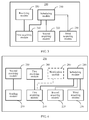
- FIG. 2 is a schematic block diagram of an apparatus 200 for scheduling a timeslot according to an embodiment of the present invention.
- the apparatus 200 in FIG. 2 is an example of PCP A or PCP B in FIG. 1 , and detailed description is appropriately omitted herein.
- the apparatus 200 may be a PCP (for example, a STA with a control function) or an AP.
- the apparatus 200 for scheduling a timeslot includes: a first acquiring module 210, a second acquiring module 220, a third acquiring module 230, and a scheduling module 240.
- the first acquiring module 110 is configured to acquire first interference information, where the first interference information is used to determine whether a link/links of a first basic service set BSS experiences interference from a link/links of at least one second BSS.
- the first interference information may indicate that a link of the first basic service set BSS experiences interference from a link of the at least one second BSS or indicate that a link of the first basic service set BSS experiences no interference from a link of the at least one second BSS.
- the first interference information may indicate which links of the first basic service set BSS experience interference from which links of the at least one second BSS or indicate which links of the first basic service set BSS experience no interference from which links of the at least one second BSS.
- the first interference information indicates that a first link of the first BSS experiences interference from a second link of the second BSS, or the first interference information indicates that a first link of the first BSS experiences no interference from a second link of the second BSS, so that the second link of the second BSS determines, according to the first interference information, that the second link of the second BSS causes interference or causes no interference to the first link of the first BSS.
- the second acquiring module 220 is configured to acquire second interference information, where the second interference information is used to determine whether a link of the at least one second BSS experiences interference from a link of the first BSS.
- the second interference information may indicate that a link of the first basic service set BSS causes interference to a link of the at least one second BSS or indicate that a link of the first basic service set BSS causes no interference to a link of the at least one second BSS.
- the second interference information may indicate which links of the first basic service set BSS cause interference to which links of the at least one second BSS or indicate which links of the first basic service set BSS cause no interference to which links of the at least one second BSS.
- the second interference information indicates that the first link of the first BSS causes interference to the second link of the second BSS, or the second interference information indicates that the first link of the first BSS causes no interference to the second link of the second BSS, so that the second link of the second BSS determines, according to the second interference information, that the second link of the second BSS causes no interference or causes no interference to the first link of the first BSS.
- the third acquiring module 230 is configured to acquire timeslot scheduling information of a link of the at least one second BSS, where the timeslot scheduling information is used to indicate information about a scheduled timeslot of the link of the at least one second BSS.
- the timeslot scheduling information is used to indicate that, within a preset time period (for example, within a beacon frame of a current to-be-scheduled timeslot), timeslots of which links in links of the foregoing at least one second BSS have been scheduled, or for which link a given timeslot in the second BSS is used as a transmission timeslot, or to which link a given timeslot in the second BSS is allocated and used as a transmission timeslot.
- a preset time period for example, within a beacon frame of a current to-be-scheduled timeslot
- the scheduling module 240 is configured to schedule a timeslot for a link of the first BSS according to the first interference information, the second interference information, and the timeslot scheduling information, so that the link of the first BSS and the link of the at least one second BSS are not interfered with each other when communication is performed in a same timeslot.
- the given timeslot may be evaded so as to avoid causing interference to the second link.
- the first interference information and the second interference information may include identification information of a recipient and a sender using an interfered link, or may include identification information of an interfered link, but this embodiment of the present invention is not limited thereto.
- the first interference information and the second interference information may further include identification information of a recipient and a sender using an interfering link.
- the identification information of the recipient and the sender may be addresses of the recipient and the sender.
- the link may be a communication link between a PCP and a STA or between an AP and a STA on a BSS network, or may be a communication link between STAs.
- the foregoing same timeslot may be a dedicated communication time period that user equipment (for example, a STA) requests a central device (for example, a PCP or an AP) to allocate to the user equipment.
- the timeslot may be a service period (Service Period, SP).
- the PCP/AP may send a directional channel quality request (Directional Channel Quality Request) and receive a directional channel quality report (Directional Channel Quality Report), so as to obtain information that a link within the network receives interference from another link within the network.
- a directional channel quality request Directional Channel Quality Request
- a directional channel quality report Directional Channel Quality Report
- the apparatus for scheduling a timeslot in this embodiment of the present invention acquires complete interference information about a link of a PCP/AP network in two statuses, that is, the link serves as an interfering party and as an interfered-with party, so that inter-network link interference can be avoided when timeslot scheduling is performed, which effectively improves data throughputs of networks.
- the apparatus 200 may be a PCP or an AP, or may be a synchronization PCP or a synchronization AP, or may be another central device with a scheduling function, which is not limited in this embodiment of the present invention.
- the apparatus 200 further includes a second receiving module 250, configured to: before the first module acquires the first interference information, receive interference measurement indication information sent by a synchronization PCP or a synchronization AP within the cluster in which the first BSS and the at least one second BSS are located, where the interference measurement indication information is used to indicate a PCP or an AP of each of the first BSS and the at least one second BSS to send channel quality measurement request information to a STA of the respective BSS, so that the STA performs channel quality measurement within a specified time period.
- a second receiving module 250 configured to: before the first module acquires the first interference information, receive interference measurement indication information sent by a synchronization PCP or a synchronization AP within the cluster in which the first BSS and the at least one second BSS are located, where the interference measurement indication information is used to indicate a PCP or an AP of each of the first BSS and the at least one second BSS to send channel quality measurement request information to a STA of the respective BSS, so that the
- the apparatus 200 further includes:
- the first acquiring module 210 is configured to determine the first interference information according to the measurement result received by the first receiving module.
- an inter-BSS interference measurement phase starts.
- Each network PCP/AP within a cluster freely plans timeslots according to a data requirement of each device, so that a STA transmits data.
- SPs on different networks cannot overlap in terms of time, that is, within a same SP time period, only one network is allowed to perform SP transmission and another network in the cluster remains silent.
- the PCP/AP requests, by using a measurement request element (Measurement Request element), the STA within the network to perform directional link quality measurement according to an indicated measurement type and an indicated measurement method, and the STA reports a measurement result to the PCP/AP by using a measurement report element (Measurement Report element).
- the PCP/AP selects an interference-free link from the measurement result by setting a threshold, and reports the interference-free link to a cluster member by using a clustering mechanism.
- the PCP/AP sets the measurement type of the measurement request element to a "directional channel quality request (Directional Channel Quality Request)", and sets the measurement method to an ANIPI (average noise plus interference power indicator)
- the STA reports, according to the indicated measurement type and the indicated measurement method, by using the measurement report element, directional channel quality obtained by means of measurement to the PCP/AP.
- the PCP/AP may set an ANIPI threshold. If the measurement result is less than the ANIPI threshold, it is considered that there is no interference on a measured directional channel.
- Each interference measurement is initiated by an S-PCP/S-AP within the cluster, and after the interference measurement ends, a PCP of each BSS within the cluster may learn a status of interference caused by another BSS link to links of the PCP/AP network.
- the S-PCP/S-AP may initiate one interference measurement within the entire cluster at a specific interval T, or may initiate one interference measurement within the cluster when overall link quality within the cluster decreases to a link quality threshold.
- Each PCP/AP within the cluster begins to indicate a STA in the BSS of the PCP/AP to perform link measurement, and the PCP/AP updates interference link information according to a measurement result of the STA.
- the interference measurement indication information is indicated by a spatial sharing (Spacial Sharing, SPSH) measurement enable field in a clustering control field that is carried in a DMG (Directional Multi-Gigabit, directional multi-gigabit) beacon frame, where the SPSH measurement enable field is used to indicate a service period SP spatial sharing mechanism between the first BSS and the at least one second BSS, or is used to disable an SP spatial sharing mechanism between the first BSS and the at least one second BSS, so that the PCPs or the APs of the first BSS and the at least one second BSS indicate the STAs of the respective BSSs to perform channel quality measurement.
- SPSH Spacial Sharing
- a method for setting the SPSH measurement enable field is: when the SPSH measurement enable field is set to 1, it indicates that during time after all member PCPs/APs within the cluster receive the clustering control field, inter-BSS interference measurement may be performed but inter-BSS SP spatial sharing cannot be executed, that is, a time-overlapped SP cannot be scheduled between BSSs; when the SPSH measurement enable field is set to 0, during time after all member PCPs/APs within the cluster receive the clustering control field, inter-BSS interference measurement cannot be performed but inter-BSS SP spatial sharing may be executed, that is, a time-overlapped SP can be scheduled between BSSs.
- the clustering control field that carries an SPSH measurement enable indication function may have a format shown in Table 1.
- Table 1 Beacon SP length Cluster ID Cluster member role Maximum quantity of cluster members SPSH measurement enable Bit: 1 1 1 1 1 1
- the interference measurement indication information may be carried in a Media Access Control MAC element.
- the MAC element includes a cluster spatial sharing enable (Cluster Spatial Sharing Enable) field that is used to enable an SP spatial sharing mechanism between the first BSS and the at least one second BSS or that is used to disable an SP spatial sharing mechanism between the first BSS and the at least one second BSS, so that the PCPs or the APs of the first BSS and the at least one second BSS indicate the STAs of the respective BSSs to perform channel quality measurement.
- cluster Spatial Sharing Enable Cluster Spatial Sharing Enable
- the MAC element is referred to as a cluster interference assessment element (Cluster Interference Assessment element).
- the cluster spatial sharing enable field is set as follows: when the cluster spatial sharing enable field is set to 1, it indicates that all member PCPs/APs within the cluster may use the SP spatial sharing mechanism between networks, that is, SPs scheduled for neighboring networks are allowed to be time-overlapped; when the cluster spatial sharing enable field is set to 0, it indicates that all member PCPs/APs within the cluster cannot use the SP spatial sharing mechanism between networks, that is, SPs scheduled for neighboring networks are not allowed to be time-overlapped but the member PCPs/APs may request a STA on a network of the member PCPs/APs to perform directional channel measurement. Another value is a reserved value.
- the cluster interference assessment element may have a MAC frame format shown in Table 2. Table 2 Element ID Length Cluster spatial sharing enable Reserved Octet : 1 1 1 1 1
- the apparatus 200 further includes: a notification module 260, configured to notify the first interference information to a personal basis service set control point PCP or an access point AP of the at least one second BSS.
- a notification module 260 configured to notify the first interference information to a personal basis service set control point PCP or an access point AP of the at least one second BSS.
- the PCP or the AP of the first BSS may send the first interference information to a PCP or an AP of the second BSS, or the PCP or the AP of the first BSS may send the first interference information to a PCP or an AP of the second BSS by using a synchronization PCP or a synchronization AP, which is not limited in this embodiment of the present invention.
- the notification module 260 is configured to send a DMG beacon frame that includes the first interference information to the at least one second BSS.
- each network PCP/AP in the cluster may notify, by using a DMG beacon frame or an announce frame, another PCP/AP in the cluster of which links or STAs are not interfered on the network of the PCP/AP.
- each network can obtain complete information about an interfered status of a link of the network and interference caused by the link of the network to another network.
- the second acquiring module 220 is specifically configured to receive the second interference information that is sent by the PCP/AP of the at least one second BSS.
- the first interference information and the second interference information are SP spatial sharing report elements (SP Spatial Sharing Report element) of a MAC element format.
- the SP spatial sharing report element further includes an interference-free link field, where the interference-free link field includes: an identifier of a BSS in which a measured transmission link is located, association addresses of a source STA (that is, a STA of a link of a measurement party) and a target STA (a link of a measurement party) that perform SP transmission, and association addresses of a source STA and a target STA that perform channel quality measurement.
- the spatial sharing list is used to report, to a PCP or an AP of a neighboring network, which links are not interfered with on the network of the PCP or the AP.
- the report may indicate whether communication or a link between the source STA and the target STA that perform SP transmission interferes with communication or a link between the source STA and the target STA that perform channel quality measurement.
- the SP spatial sharing report element may have a MAC frame format shown in Table 3.
- the interference-free link field may have a MAC frame format shown in Table 4.
- Table 3 Element ID Length Interference-free link 1 Interference-free link 2 ... Interference-free link n Octet 1 1 12 12 ... 12
- Table 4 Interference -free link ID BSSID SP source AID SP destination AID Measurement source AID Measurement destination AID Reserved Octet: 1 6 1 1 1 1 1 1 1 1
- Interference-free link ID An identifier of the interference-free link field
- BSSID An identifier of a PBSS/BSS in which a measured transmission link is located, that is, a MAC address of a PCP/AP of a measured network
- SP source AID An association address of a source STA of an SP
- SP destination AID SP Destination AID
- Measurement source AID Measurement Source AID
- Measurement Destination AID An association address of a destination STA that performs link measurement
- Measurement destination AID Measurement Destination AID
- the scheduling module 240 is specifically configured to: determine, according to the first interference information, the second interference information, and a first timeslot that has been scheduled for a link of the at least one second BSS, at least one candidate link from a link of the first BSS, for which timeslot scheduling has not been performed, where the at least one candidate link and the link of the at least one second BSS, for which the first timeslot has been scheduled, are not interfered with each other; select the first link from the at least one candidate link, where an actual transmission timeslot corresponding to the first link is a longest timeslot that is less than the first timeslot among an actual transmission timeslot corresponding to the at least one candidate link; and schedule a timeslot of the first BSS that overlaps the first timeslot as a timeslot of the first link.
- a timeslot when a timeslot is scheduled, according to acquired complete interference information about all links of a PCP/AP network in two statuses, that is, the links serve as interfering parties and as interfered-with parties, a candidate link that does not cause interference to the link of the first timeslot is selected based on an interference avoidance principle, and a corresponding timeslot with longest data transmission duration is selected from the candidate link based on a greedy principle.
- This can effectively utilize timeslot transmission time as far as possible, thereby improving effectiveness of spatial multiplexing and a throughput of an overall network.
- the first BSS is a BSS for which timeslot scheduling is to be performed within current beacon frame duration
- the at least one second BSS is a BSS for which timeslot scheduling is performed before the first BSS and for which timeslot scheduling has been performed within the current beacon frame duration
- the scheduling module 140 is specifically configured to:
- the N th BSS is caused not to transmit data in the m r th scheduled timeslot.
- the N th BSS does not allocate or schedule this scheduled timeslot.
- the first BSS is a BSS for which timeslot scheduling is to be performed within current beacon frame duration
- the at least one second BSS is a BSS for which timeslot scheduling has been performed within the current beacon frame duration
- the scheduling module 140 may further be specifically configured to:
- the scheduling module 240 is further specifically configured to:
- transmission is performed according to an original random sequence on the remaining to-be-scheduled link of the BSS.
- N BSS networks within a cluster is used to detail the process for scheduling a timeslot by the apparatus 100 in this embodiment of the present invention.
- the networks are respectively labeled as P 1 , P 2 , ..., and P N according to an access sequence, and each network includes one PCP and several STAs.
- Quantities of links of networks P 1 , P 2 , ..., and P N are respectively labeled as K 1 , K 2 , ..., and K N .
- BI timeslot scheduling of each network is implemented based on latest BIs that have already been scheduled by N -1 networks.
- the following information may be determined:
- ICI P N 2P n ⁇ 1
- ICI P N 2 P n i j ⁇ 1
- ICI P N 2 P n i j 0
- an initial value of a variable r is set to 0.
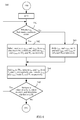
- the process for scheduling a timeslot by the scheduling module 240 of the apparatus 200 according to this embodiment of the present invention is as follows:
- step 530 Increase a value of r by 1 ( r ⁇ r + 1), and determine whether r is less than N. If yes, execute step 540; otherwise, execute step 3.
- both t Nmax and v Nmax are 0, and add t Nmax and v Nmax to the sets TP N and W N respectively.
- Timeslot scheduling of each BI on network A is implemented based on a latest BI that has already been scheduled respectively on network C and network B.
- Timeslot scheduling of each BI on network B is implemented based on latest BIs that have already been scheduled on network A and network C.
- timeslot scheduling of each BI on network C is implemented based on latest BIs that have already been scheduled on network B and network A.
- PBSS networks there are three intra-frequency PBSS networks: network A, network B, and network C.
- Each network has one PCP and five STAs, and it is assumed that the PCP communicates with each STA once in each BI on each network, and a link number is consistent with a STA number.
- network A performs communication 33 ms (ms) ahead of network B
- network B performs communication 33 ms (ms) ahead of network C.
- BI lengths of the three networks are all 100 ms, and units of the timeslot lengths are all ms.
- network C After allocation of timeslots of the first BIs of network A and network B separately ends, network C performs allocation according to a principle of avoiding interference timeslots of network A and network B, as shown in FIG. 7 .
- each accessing timeslot of network C should meet: (1) no interference can be caused to timeslots corresponding to network A and network B, including interference caused by network C to network A and network B, and interference caused by network A and network B to network C; (2) when there is an overlapping timeslot among the three networks or between two networks, a time of a timeslot corresponding to network A or network B cannot be exceeded; (3) a timeslot that meets the foregoing two restriction conditions and has the longest duration is selected.
- network A After scheduling in the first BI of network C is complete, network A performs scheduling for a next BI based on a same principle, so as to avoid causing interference or timeslot collision between network B and network C.
- a process similar to the foregoing process, is deduced by analogy.
- network C If network C is accessed, and transmission in all timeslots of network A is complete, network C avoids mutual interference between network C and network B according to a timeslot scheduling algorithm between two networks. If network C is accessed, and transmission in all timeslots of network A and network B is complete, network C directly schedules each timeslot according to the original random sequence without a need to consider interference avoidance.
- FIG. 8 is a schematic block diagram of an apparatus 800 for scheduling a timeslot according to another embodiment of the present invention.
- the apparatus 800 includes: a generating module 810 and a sending module 820.
- the generating module 810 is configured to generate interference measurement indication information.
- the sending module 820 is configured to send the interference measurement indication information to a first BSS and at least one second BSS, where the interference measurement indication information is used to indicate a PCP or an AP of each of the first BSS and the at least one second BSS to send channel quality measurement request information to a STA of the respective BSS, and the first BSS and the at least one second BSS belong to a same cluster.
- the apparatus 800 may be a synchronization PCP or may be a synchronization AP.
- the apparatus for scheduling a timeslot in this embodiment of the present invention sends the interference measurement indication information to all links of all networks in a cluster, so that all the networks in the cluster learn complete interference information about a STA in two statuses, that is, the STA serves as an interfering party and as an interfered-with party. In this way, interference to a link of another network can be avoided actively, and a timeslot can be scheduled properly.
- the interference measurement indication information is indicated by a spatial sharing measurement enable field in a clustering control field that is carried in a DMG beacon frame, where the spatial sharing measurement enable field is used to enable a service period SP spatial sharing mechanism between the first BSS and the at least one second BSS, or is used to disable an SP spatial sharing mechanism between the first BSS and the at least one second BSS, so that the PCPs or the APs of the first BSS and the at least one second BSS indicate the STAs of the respective BSSs to perform channel quality measurement.
- the interference measurement indication information is a Media Access Control MAC element
- the MAC element includes a cluster spatial sharing enable field that is used to enable a service period SP spatial sharing mechanism between the first BSS and the at least one second BSS or that is used to disable an SP spatial sharing mechanism between the first BSS and the at least one second BSS, so that the PCPs or the APs of the first BSS and the at least one second BSS indicate the STAs of the respective BSSs to perform channel quality measurement.
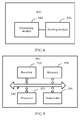
- FIG. 9 is a schematic block diagram of an apparatus 900 for scheduling a timeslot according to an embodiment of the present invention.
- the apparatus 900 includes a receiver 910, a processor 920, a memory 930, and a bus 940.
- the receiver 910 is configured to: acquire first interference information, where the first interference information is used to determine whether a link/links of a first basic service set BSS experiences interference from a link/links of at least one second BSS; acquire second interference information, where the second interference information is used to determine whether a link of the at least one second BSS experiences interference from a link of the first BSS; and acquire timeslot scheduling information of a link of the at least one second BSS, where the timeslot scheduling information is used to indicate information about a scheduled timeslot of the link of the at least one second BSS.
- the processor 920 calls, by using the bus 940, code stored in the memory 930, so as to schedule a timeslot for a link of the first BSS according to the first interference information, the second interference information, and the timeslot scheduling information, so that the link of the first BSS and the link of the at least one second BSS are not interfered with each other when communication is performed in a same timeslot.
- the apparatus 900 further includes a transmitter 950, configured to notify the first interference information to a personal basis service set control point PCP or an access point AP of the at least one second BSS.
- the transmitter 950 is specifically configured to send, to the at least one second BSS, a directional multi-gigabit DMG beacon frame that includes the first interference information.
- the processor 920 determines, according to the first interference information, the second interference information, and a first timeslot that has been scheduled for a link of the at least one second BSS, at least one candidate link from a link of the first BSS, for which timeslot scheduling has not been performed, where the at least one candidate link and the link of the at least one second BSS, for which the first timeslot has been scheduled, are not interfered with each other; selects a first link from the at least one candidate link, where an actual transmission timeslot corresponding to the first link is a longest timeslot that is less than the first timeslot among an actual transmission timeslot corresponding to the at least one candidate link; and schedules a timeslot of the first BSS that overlaps the first timeslot as a timeslot of the first link.
- the first BSS is a BSS for which timeslot scheduling is to be performed within current beacon frame duration
- the at least one second BSS is a BSS for which timeslot scheduling is performed before the first BSS and for which timeslot scheduling has been performed within the current beacon frame duration
- the processor 920 is further configured to cause the N th BSS not to transmit data in the m r th scheduled timeslot.
- the first BSS is a BSS for which timeslot scheduling is to be performed within current beacon frame duration
- the at least one second BSS is a BSS for which timeslot scheduling has been performed within the current beacon frame duration
- the processor 920 is further configured to: determine, according to the timeslot scheduling information, x overlapping timeslots of the first BSS and the at least one second BSS; and execute the following iteration process until z is greater than x , where an initial value of z is 1: traversing actual transmission timeslots required by y links of the first BSS, for which a timeslot is not scheduled, and scheduling a timeslot for the link of the first BSS according to the first interference information, the second interference information, and the timeslot scheduling information of the link of the at least one second BSS, so that the p th link of the first BSS, on which communication is performed in the z th overlapping timeslot of the x overlapping timeslots, and a link of the at least one second BSS, on which communication is
- the processor 920 is further configured to: after the iteration process ends, schedule a timeslot for a remaining link of the first BSS, for which a timeslot is not scheduled, so that transmission is performed according to a random sequence on the remaining link of the first BSS, for which a timeslot is not scheduled.
- the apparatus 900 further includes a transmitter 950, configured to send channel quality measurement request information to a user station STA of the first BSS, where the channel quality measurement request information is used to indicate the STA to perform channel quality measurement within a specified time period.
- the receiver 910 receives channel quality measurement report information sent by the STA, where the channel quality measurement report information is used to indicate a measurement result of channel quality of the STA; and the processor 920 determines the first interference information according to the measurement result.
- the receiver 910 is further configured to receive interference measurement indication information that is sent by a synchronization PCP or a synchronization AP within a cluster to which the first BSS and the at least one second BSS belong, where the interference measurement indication information is used to indicate a PCP or an AP of each of the first BSS and the at least one second BSS to send the channel quality measurement request information to a STA of the respective BSS.
- the interference measurement indication information is indicated by a spatial sharing measurement enable field in a clustering control field that is carried in a DMG beacon frame, where the spatial sharing measurement enable field is used to enable a service period SP spatial sharing mechanism between the first BSS and the at least one second BSS, or is used to disable an SP spatial sharing mechanism between the first BSS and the at least one second BSS, so that the PCPs or the APs of the first BSS and the at least one second BSS indicate the STAs of the respective BSSs to perform channel quality measurement.
- the interference measurement indication information is a Media Access Control MAC element
- the MAC element includes cluster spatial sharing enable that is used to enable a service period SP spatial sharing mechanism between the first BSS and the at least one second BSS or that is used to disable an SP spatial sharing mechanism between the first BSS and the at least one second BSS, so that the PCPs or the APs of the first BSS and the at least one second BSS indicate the STAs of the respective BSSs to perform channel quality measurement.
- the receiver 910 is configured to receive the second interference information sent by the PCP/AP of the at least one second BSS.
- the first interference information and the second interference information are SP sharing report elements of a MAC element format, where the SP spatial sharing report element includes an interference-free link field, and the interference-free link field includes an identifier of a BSS in which a measured transmission link is located, association addresses of a source STA and a target STA that perform SP transmission, and association addresses of a source STA and a target STA that perform channel quality measurement.
- FIG. 10 is a schematic block diagram of an apparatus 1000 for scheduling a timeslot according to another embodiment of the present invention.
- the apparatus 1000 includes: a processor 1010, a transmitter 1020, a memory 1030, and a bus 1040.
- the processor 1010 calls, by using the bus 1040, code stored in the memory 1030, so as to generate interference measurement indication information; the transmitter 1020 is configured to send the interference measurement indication information to a first BSS and at least one second BSS, where the interference measurement indication information is used to indicate a PCP or an AP of each of the first BSS and the at least one second BSS to send channel quality measurement request information to a STA of the respective BSS, and the first BSS and the at least one second BSS belong to a same cluster.
- the apparatus 1000 may be a synchronization PCP or may be a synchronization AP.
- the apparatus for scheduling a timeslot in this embodiment of the present invention sends the interference measurement indication information to all links of all networks in a cluster, so that all the networks in the cluster learn complete interference information about a STA in two statuses, that is, the STA serves as an interfering party and as an interfered-with party. In this way, interference to a link of another network can be avoided actively, and a timeslot can be scheduled properly.
- the interference measurement indication information is indicated by a spatial sharing measurement enable field in a clustering control field that is carried in a DMG beacon frame, where the spatial sharing measurement enable field is used to enable a service period SP spatial sharing mechanism between the first BSS and the at least one second BSS, or is used to disable an SP spatial sharing mechanism between the first BSS and the at least one second BSS, so that the PCPs or the APs of the first BSS and the at least one second BSS indicate the STAs of the respective BSSs to perform channel quality measurement.
- the interference measurement indication information is a Media Access Control MAC element
- the MAC element includes a cluster spatial sharing enable field that is used to enable a service period SP spatial sharing mechanism between the first BSS and the at least one second BSS or that is used to disable an SP spatial sharing mechanism between the first BSS and the at least one second BSS, so that the PCPs or the APs of the first BSS and the at least one second BSS indicate the STAs of the respective BSSs to perform channel quality measurement.
- the apparatus for scheduling a timeslot according to the embodiments of the present invention is described in detail with reference to FIG. 1 to FIG. 10 .
- a method for scheduling a timeslot according to the embodiments of the present invention is described in detail with reference to FIG. 11 to FIG. 13 .
- FIG. 11 is a schematic block diagram of a method for scheduling a timeslot according to an embodiment of the present invention.
- the embodiment of FIG. 11 is executed by the apparatus of FIG. 2 .
- the method for scheduling a timeslot includes:
- first interference information is used to determine whether a link/links of a first BSS experiences interference from a link/links of at least one second BSS.
- the apparatus for scheduling a timeslot in this embodiment of the present invention complete interference information about all links on a PCP/AP network in two statuses, that is, the links serve as interfering parties and as interfered-with parties, is acquired, so that inter-network link interference can be avoided when timeslot scheduling is performed, which effectively improves data throughputs of networks.
- the method for scheduling a timeslot further includes:
- the notifying the first interference information to a personal basis service set control point PCP or an access point AP of the at least one second BSS includes: sending, to the at least one second BSS, a directional multi-gigabit DMG beacon frame that includes the first interference information.
- 340 includes:
- the first BSS is a BSS for which timeslot scheduling is to be performed within current beacon frame duration
- the at least one second BSS is a BSS for which timeslot scheduling is performed before the first BSS and for which timeslot scheduling has been performed within the current beacon frame duration
- 840 further includes:
- the method for scheduling a timeslot further includes: if the at least one candidate link does not exist, causing the N th BSS not to transmit data in the m r th scheduled timeslot.
- the first BSS is a BSS for which timeslot scheduling is to be performed within current beacon frame duration
- the at least one second BSS is a BSS for which timeslot scheduling has been performed within the current beacon frame duration
- 340 includes:
- a timeslot is scheduled for a remaining link of the first BSS, for which a timeslot is not scheduled, so that transmission is performed according to a random sequence on the remaining link of the first BSS, for which a timeslot is not scheduled.
- the acquiring first interference information includes:
- the method for scheduling a timeslot further includes:
- the interference measurement indication information is indicated by a spatial sharing measurement enable field in a clustering control field that is carried in a DMG beacon frame, where the spatial sharing measurement enable field is used to indicate a service period SP spatial sharing mechanism between the first BSS and the at least one second BSS, or is used to disable an SP spatial sharing mechanism between the first BSS and the at least one second BSS, so that the PCPs or the APs of the first BSS and the at least one second BSS indicate the STAs of the respective BSSs to perform channel quality measurement.
- the interference measurement indication information is a Media Access Control MAC element
- the MAC element includes cluster spatial sharing enable that is used to enable a service period SP spatial sharing mechanism between the first BSS and the at least one second BSS or that is used to disable an SP spatial sharing mechanism between the first BSS and the at least one second BSS, so that the PCPs or the APs of the first BSS and the at least one second BSS indicate the STAs of the respective BSSs to perform channel quality measurement.
- the acquiring second interference information includes:
- the first interference information and the second interference information are SP sharing report elements of a MAC element format, where the SP spatial sharing report element includes an interference-free link field, and the interference-free link field includes an identifier of a BSS in which a measured transmission link is located, association addresses of a source STA and a target STA that perform SP transmission, and association addresses of a source STA and a target STA that perform channel quality measurement.
- the method for scheduling a timeslot in this embodiment of the present invention may be corresponding to the apparatus 200 for scheduling a timeslot in this embodiment of the present invention, and corresponding procedures of this method are separately used to implement the foregoing and other operations and/or functions of the modules of the corresponding apparatus 200. For brevity, details are not described herein again.
- FIG. 13 is a schematic flowchart of the method for scheduling a timeslot according to another embodiment of the present invention.
- the embodiment of FIG. 13 is executed by the apparatus of FIG. 8 .
- the method includes:
- the interference measurement indication information is used to indicate a PCP or an AP of each of the first BSS and the at least one second BSS to send channel quality measurement request information to a STA of the respective BSS, and the first BSS and the at least one second BSS belong to a same cluster.
- the interference measurement indication information is sent to all links of all networks in a cluster, so that all the networks in the cluster learn complete interference information about a STA in two statuses, that is, the STA serves as an interfering party and as an interfered-with party. In this way, interference to a link of another network can be avoided actively, and a timeslot can be scheduled properly.
- the interference measurement indication information is indicated by a spatial sharing measurement enable field in a clustering control field that is carried in a directional multi-gigabit DMG beacon frame, where the spatial sharing measurement enable field is used to indicate a service period SP spatial sharing mechanism between the first BSS and the at least one second BSS, or is used to disable an SP spatial sharing mechanism between the first BSS and the at least one second BSS, so that the PCPs or the APs of the first BSS and the at least one second BSS indicate the STAs of the respective BSSs to perform channel quality measurement.
- the interference measurement indication information is a Media Access Control MAC element
- the MAC element includes cluster spatial sharing enable that is used to enable a service period SP spatial sharing mechanism between the first BSS and the at least one second BSS or that is used to disable an SP spatial sharing mechanism between the first BSS and the at least one second BSS, so that the PCPs or the APs of the first BSS and the at least one second BSS indicate the STAs of the respective BSSs to perform channel quality measurement.
- the interference measurement indication information is sent to all links of all networks in a cluster, so that all the networks in the cluster learn complete interference information about a STA in two statuses, that is, the STA serves as an interfering party and as an interfered-with party. In this way, interference to a link of another network can be avoided actively, and a timeslot can be scheduled properly.
- system and “network” may be used interchangeably in this specification.
- network may be used interchangeably in this specification.
- the term “and/or” in this specification describes only an association relationship for describing associated objects and represents that three relationships may exist. For example, A and/or B may represent the following three cases: Only A exists, both A and B exist, and only B exists.
- the character “/” in this specification generally indicates an “or” relationship between the associated objects.
- B corresponding to A indicates B is associated with A, and B may be determined according to A.
- B is determined according to A does not means that B is determined according to only A, and B may be further determined according to A and/or other information.
- the disclosed system, apparatus, and method may be implemented in other manners.
- the described apparatus embodiment is merely exemplary.
- the unit division is merely logical function division and may be other division in actual implementation.
- a plurality of units or components may be combined or integrated into another system, or some features may be ignored or not performed.
- the displayed or discussed mutual couplings or direct couplings or communication connections may be implemented by using some interfaces.
- the indirect couplings or communication connections between the apparatuses or units may be implemented in electronic, mechanical, or other forms.
- the units described as separate parts may or may not be physically separate. Parts displayed as units may or may not be physical units, may be located in one position, or may be distributed on a plurality of network units. Some or all of the units may be selected according to actual needs to achieve the objectives of the solutions of the embodiments of the present invention.
- functional units in the embodiments of the present invention may be integrated into one processing unit, or each of the units may exist alone physically, or two or more units are integrated into one unit.
- the integrated unit may be implemented in a form of hardware, or may be implemented in a form of a software functional unit.
- the present invention may be implemented by hardware, firmware or a combination thereof.
- the foregoing functions may be stored in a computer-readable medium or transmitted as one or more instructions or code in the computer-readable medium.
- the computer-readable medium includes a computer storage medium and a communications medium, where the communications medium includes any medium that enables a computer program to be transmitted from one place to another.
- the storage medium may be any available medium accessible to a computer.
- the computer-readable medium may include a RAM, a ROM, an EEPROM, a CD-ROM, or another optical disc storage or a disk storage medium, or another magnetic storage device, or any other medium that can carry or store expected program code in a form of an instruction or a data structure and can be accessed by a computer.
- any connection may be appropriately defined as a computer-readable medium.
- the coaxial cable, optical fiber/cable, twisted pair, DSL or wireless technologies such as infrared ray, radio and microwave
- the coaxial cable, optical fiber/cable, twisted pair, DSL or wireless technologies such as infrared ray, radio and microwave are included in fixation of a medium to which they belong.
- a disk (Disk) and disc (disc) used by the present invention include a compact disc (CD), a laser disc, an optical disc, a digital versatile disc (DVD), a floppy disk and a Blu-ray disc, where the disk generally copies data by a magnetic means, and the disc copies data optically by a laser means.
Landscapes
- Engineering & Computer Science (AREA)
- Computer Networks & Wireless Communication (AREA)
- Signal Processing (AREA)
- Quality & Reliability (AREA)
- Mobile Radio Communication Systems (AREA)
Applications Claiming Priority (1)
| Application Number | Priority Date | Filing Date | Title |
|---|---|---|---|
| PCT/CN2014/070121 WO2015100737A1 (zh) | 2014-01-03 | 2014-01-03 | 调度时隙的装置和方法 |
Publications (3)
| Publication Number | Publication Date |
|---|---|
| EP3079424A1 true EP3079424A1 (de) | 2016-10-12 |
| EP3079424A4 EP3079424A4 (de) | 2017-03-22 |
| EP3079424B1 EP3079424B1 (de) | 2019-10-30 |
Family
ID=53493043
Family Applications (1)
| Application Number | Title | Priority Date | Filing Date |
|---|---|---|---|
| EP14876616.5A Active EP3079424B1 (de) | 2014-01-03 | 2014-01-03 | Zeitschlitzplanungsvorrichtung und -verfahren |
Country Status (4)
| Country | Link |
|---|---|
| US (1) | US10314064B2 (de) |
| EP (1) | EP3079424B1 (de) |
| CN (1) | CN105144814B (de) |
| WO (1) | WO2015100737A1 (de) |
Cited By (1)
| Publication number | Priority date | Publication date | Assignee | Title |
|---|---|---|---|---|
| EP3051860A4 (de) * | 2013-09-24 | 2017-04-19 | Samsung Electronics Co., Ltd. | Vorrichtung und verfahren zur analyse der netzwerktopologie in einem drahtloskommunikationssystem |
Families Citing this family (14)
| Publication number | Priority date | Publication date | Assignee | Title |
|---|---|---|---|---|
| JP6261455B2 (ja) * | 2014-06-13 | 2018-01-17 | パナソニック株式会社 | 通信制御局装置、通信端末装置及び通信制御方法 |
| JP6433260B2 (ja) * | 2014-11-19 | 2018-12-05 | パナソニック株式会社 | ワイヤレス通信システムにおける空間共有の方法 |
| CN106922029B (zh) | 2015-12-24 | 2020-11-06 | 华为技术有限公司 | 一种信道资源的调度方法及装置 |
| BR112019007966A2 (pt) * | 2016-10-28 | 2019-07-02 | Sony Corp | dispositivo de comunicação, método de controle de comunicação executado por um computador, e, programa. |
| US10541793B2 (en) * | 2016-12-14 | 2020-01-21 | Industrial Technology Research Institute | Method and apparatus of mitigating interference in a heterogeneous network using an inter-cell interference coordination |
| US10790948B2 (en) * | 2017-04-11 | 2020-09-29 | Huawei Technologies Co., Ltd. | BSS PCP/AP cluster network reference architecture |
| CN110832937B (zh) * | 2017-07-06 | 2023-05-30 | 索尼公司 | 已调度数据传输时段的空间重用 |
| US10912103B2 (en) * | 2017-08-02 | 2021-02-02 | Qualcomm Incorporated | Time division duplexed (TDD) service period |
| CN109842898B (zh) * | 2017-11-25 | 2021-08-03 | 华为技术有限公司 | 一种降低站点干扰的方法及设备 |
| CN110167145B (zh) * | 2018-02-12 | 2024-04-09 | 华为技术有限公司 | 一种空间复用的方法和装置 |
| CN110636631B (zh) * | 2018-06-25 | 2023-08-22 | 华为技术有限公司 | 传输调度的方法、相关装置及系统 |
| CA3105327A1 (en) * | 2018-11-09 | 2020-05-14 | Panasonic Intellectual Property Corporation Of America | Communication device |
| CN113258992B (zh) * | 2021-05-17 | 2023-04-07 | 厦门大学 | 一种应用于线性多跳水声传感器网络的时隙分配方法 |
| CN119744566A (zh) * | 2022-08-31 | 2025-04-01 | Oppo广东移动通信有限公司 | 用于传输的方法、装置、设备、存储介质及程序产品 |
Family Cites Families (12)
| Publication number | Priority date | Publication date | Assignee | Title |
|---|---|---|---|---|
| GB2396521A (en) * | 2002-12-18 | 2004-06-23 | Motorola Inc | Determining an interference relationship between cells of a cellular communication system |
| CN101360320B (zh) * | 2007-07-30 | 2011-11-30 | 电信科学技术研究院 | 基站间同频干扰规避方法、控制装置和基站设备 |
| US9042385B2 (en) * | 2008-03-05 | 2015-05-26 | Qualcomm, Incorporated | Traffic scheduling based on resource contention |
| US8913550B2 (en) * | 2010-02-16 | 2014-12-16 | Intel Corporation | Clustering management in mmWave wireless systems |
| US9544108B2 (en) | 2011-02-11 | 2017-01-10 | Qualcomm Incorporated | Method and apparatus for enabling channel and interference estimations in macro/RRH system |
| CN103428869B (zh) * | 2012-05-17 | 2016-12-28 | 华为技术有限公司 | 小区间干扰协调的方法、基站及通信系统 |
| US9629171B2 (en) * | 2012-08-28 | 2017-04-18 | Idac Holdings, Inc. | Method for millimeter wave beam tracking |
| EP2918123B1 (de) * | 2012-11-08 | 2023-03-29 | InterDigital Patent Holdings, Inc. | Verfahren und vorrichtung zur medienzugriffssteuerung für gleichmässige abdeckung mehrerer zugangspunkte in drahtlosen lokalbereichsnetzwerken |
| CN103179572B (zh) | 2013-03-06 | 2016-06-22 | 华为技术有限公司 | 一种成簇方法及装置 |
| CN103354663B (zh) * | 2013-07-04 | 2016-06-08 | 东南大学 | 无线局域网中的分布式时隙分配干扰协调方法 |
| KR102254192B1 (ko) * | 2013-09-24 | 2021-05-21 | 삼성전자주식회사 | 무선 통신 시스템에서 망 토폴로지 분석을 위한 장치 및 방법 |
| US9622218B2 (en) * | 2013-12-09 | 2017-04-11 | Electronics And Telecommunications Research Institute | Method and system for managing channel in wireless local area network |
-
2014
- 2014-01-03 WO PCT/CN2014/070121 patent/WO2015100737A1/zh not_active Ceased
- 2014-01-03 EP EP14876616.5A patent/EP3079424B1/de active Active
- 2014-01-03 CN CN201480000161.9A patent/CN105144814B/zh active Active
-
2016
- 2016-07-01 US US15/200,653 patent/US10314064B2/en active Active
Cited By (2)
| Publication number | Priority date | Publication date | Assignee | Title |
|---|---|---|---|---|
| EP3051860A4 (de) * | 2013-09-24 | 2017-04-19 | Samsung Electronics Co., Ltd. | Vorrichtung und verfahren zur analyse der netzwerktopologie in einem drahtloskommunikationssystem |
| US10051651B2 (en) | 2013-09-24 | 2018-08-14 | Samsung Electronics Co., Ltd. | Device and method for analyzing network topology in wireless communication system |
Also Published As
| Publication number | Publication date |
|---|---|
| CN105144814B (zh) | 2019-03-26 |
| US20160316484A1 (en) | 2016-10-27 |
| WO2015100737A1 (zh) | 2015-07-09 |
| EP3079424A4 (de) | 2017-03-22 |
| CN105144814A (zh) | 2015-12-09 |
| EP3079424B1 (de) | 2019-10-30 |
| US10314064B2 (en) | 2019-06-04 |
Similar Documents
| Publication | Publication Date | Title |
|---|---|---|
| EP3079424B1 (de) | Zeitschlitzplanungsvorrichtung und -verfahren | |
| JP7185029B2 (ja) | ハイブリッド自動再送要求確認コードブックの伝送方法及び機器 | |
| US11405896B2 (en) | Sidelink communication method and terminal device | |
| CN111052833B (zh) | D2d通信中资源配置的方法、终端设备和网络设备 | |
| CN113613338B (zh) | 用于上行链路laa的lbt信道接入过程的方法、无线装置以及存储器 | |
| EP4358558B1 (de) | Kapazitätsmeldevorrichtung und -verfahren | |
| US20200396771A1 (en) | System and Method for Random Access Backoffs | |
| KR20210021030A (ko) | 사이드링크 중 데이터 전송 방법과 단말 장치 | |
| US12010199B2 (en) | Information transmission method, apparatus, and system | |
| US20110310937A1 (en) | Method of Performing Buffer Status Reporting and Communication Device Thereof | |
| EP3300414A1 (de) | Messverfahren und -vorrichtung für funkressourcenverwaltung | |
| US20100111005A1 (en) | Apparatus and method for transmitting uplink signals in a wireless communication system | |
| EP3297365B1 (de) | Verfahren zur trägeraggregation unter verwendung von unterrahmenversatz und entsprechende basisstation | |
| CN111107634A (zh) | 用于无线回传网络的数据传输方法和装置 | |
| EP3429107B1 (de) | Verfahren zur messung von kanalstatusinformationen | |
| US20210211225A1 (en) | Methods and apparatus for multi-instance channel state information reporting | |
| JP6641481B2 (ja) | アンライセンス搬送波でアップリンク情報を伝送するための方法及び装置 | |
| EP2890182B1 (de) | Kanalverhandlungsverfahren und vorrichtung | |
| US10575308B2 (en) | Resource allocation method, base station, and user equipment | |
| US20180145736A1 (en) | Method for Transmitting Channel State Information and Transmission Device | |
| EP3550921B1 (de) | Erweiterte laa-planung für mehrpunkt-subset-übertragung in geteilten zellen | |
| US10980038B2 (en) | Data transmission method, user equipment, and base station | |
| CN115776322B (zh) | 一种随机接入方法及装置 | |
| CN109803378A (zh) | 一种资源选择触发方法和用户终端 | |
| US20170251470A1 (en) | Data transmission method and user equipment |
Legal Events
| Date | Code | Title | Description |
|---|---|---|---|
| PUAI | Public reference made under article 153(3) epc to a published international application that has entered the european phase |
Free format text: ORIGINAL CODE: 0009012 |
|
| 17P | Request for examination filed |
Effective date: 20160706 |
|
| AK | Designated contracting states |
Kind code of ref document: A1 Designated state(s): AL AT BE BG CH CY CZ DE DK EE ES FI FR GB GR HR HU IE IS IT LI LT LU LV MC MK MT NL NO PL PT RO RS SE SI SK SM TR |
|
| AX | Request for extension of the european patent |
Extension state: BA ME |
|
| RIC1 | Information provided on ipc code assigned before grant |
Ipc: H04W 72/12 20090101AFI20161111BHEP |
|
| A4 | Supplementary search report drawn up and despatched |
Effective date: 20170221 |
|
| RIC1 | Information provided on ipc code assigned before grant |
Ipc: H04W 72/12 20090101AFI20170215BHEP |
|
| DAX | Request for extension of the european patent (deleted) | ||
| STAA | Information on the status of an ep patent application or granted ep patent |
Free format text: STATUS: EXAMINATION IS IN PROGRESS |
|
| 17Q | First examination report despatched |
Effective date: 20171213 |
|
| REG | Reference to a national code |
Ref country code: DE Ref legal event code: R079 Ref document number: 602014056104 Country of ref document: DE Free format text: PREVIOUS MAIN CLASS: H04W0072040000 Ipc: H04W0072120000 |
|
| RIC1 | Information provided on ipc code assigned before grant |
Ipc: H04W 72/12 20090101AFI20190327BHEP Ipc: H04W 84/12 20090101ALN20190327BHEP Ipc: H04W 24/02 20090101ALN20190327BHEP Ipc: H04L 1/00 20060101ALN20190327BHEP |
|
| GRAP | Despatch of communication of intention to grant a patent |
Free format text: ORIGINAL CODE: EPIDOSNIGR1 |
|
| STAA | Information on the status of an ep patent application or granted ep patent |
Free format text: STATUS: GRANT OF PATENT IS INTENDED |
|
| RIC1 | Information provided on ipc code assigned before grant |
Ipc: H04L 1/00 20060101ALN20190403BHEP Ipc: H04W 84/12 20090101ALN20190403BHEP Ipc: H04W 24/02 20090101ALN20190403BHEP Ipc: H04W 72/12 20090101AFI20190403BHEP |
|
| INTG | Intention to grant announced |
Effective date: 20190503 |
|
| GRAS | Grant fee paid |
Free format text: ORIGINAL CODE: EPIDOSNIGR3 |
|
| GRAA | (expected) grant |
Free format text: ORIGINAL CODE: 0009210 |
|
| STAA | Information on the status of an ep patent application or granted ep patent |
Free format text: STATUS: THE PATENT HAS BEEN GRANTED |
|
| AK | Designated contracting states |
Kind code of ref document: B1 Designated state(s): AL AT BE BG CH CY CZ DE DK EE ES FI FR GB GR HR HU IE IS IT LI LT LU LV MC MK MT NL NO PL PT RO RS SE SI SK SM TR |
|
| REG | Reference to a national code |
Ref country code: GB Ref legal event code: FG4D |
|
| REG | Reference to a national code |
Ref country code: CH Ref legal event code: EP |
|
| REG | Reference to a national code |
Ref country code: AT Ref legal event code: REF Ref document number: 1197482 Country of ref document: AT Kind code of ref document: T Effective date: 20191115 |
|
| REG | Reference to a national code |
Ref country code: DE Ref legal event code: R096 Ref document number: 602014056104 Country of ref document: DE |
|
| REG | Reference to a national code |
Ref country code: IE Ref legal event code: FG4D |
|
| REG | Reference to a national code |
Ref country code: LT Ref legal event code: MG4D |
|
| PG25 | Lapsed in a contracting state [announced via postgrant information from national office to epo] |
Ref country code: NL Free format text: LAPSE BECAUSE OF FAILURE TO SUBMIT A TRANSLATION OF THE DESCRIPTION OR TO PAY THE FEE WITHIN THE PRESCRIBED TIME-LIMIT Effective date: 20191030 Ref country code: PL Free format text: LAPSE BECAUSE OF FAILURE TO SUBMIT A TRANSLATION OF THE DESCRIPTION OR TO PAY THE FEE WITHIN THE PRESCRIBED TIME-LIMIT Effective date: 20191030 Ref country code: GR Free format text: LAPSE BECAUSE OF FAILURE TO SUBMIT A TRANSLATION OF THE DESCRIPTION OR TO PAY THE FEE WITHIN THE PRESCRIBED TIME-LIMIT Effective date: 20200131 Ref country code: BG Free format text: LAPSE BECAUSE OF FAILURE TO SUBMIT A TRANSLATION OF THE DESCRIPTION OR TO PAY THE FEE WITHIN THE PRESCRIBED TIME-LIMIT Effective date: 20200130 Ref country code: LT Free format text: LAPSE BECAUSE OF FAILURE TO SUBMIT A TRANSLATION OF THE DESCRIPTION OR TO PAY THE FEE WITHIN THE PRESCRIBED TIME-LIMIT Effective date: 20191030 Ref country code: FI Free format text: LAPSE BECAUSE OF FAILURE TO SUBMIT A TRANSLATION OF THE DESCRIPTION OR TO PAY THE FEE WITHIN THE PRESCRIBED TIME-LIMIT Effective date: 20191030 Ref country code: NO Free format text: LAPSE BECAUSE OF FAILURE TO SUBMIT A TRANSLATION OF THE DESCRIPTION OR TO PAY THE FEE WITHIN THE PRESCRIBED TIME-LIMIT Effective date: 20200130 Ref country code: SE Free format text: LAPSE BECAUSE OF FAILURE TO SUBMIT A TRANSLATION OF THE DESCRIPTION OR TO PAY THE FEE WITHIN THE PRESCRIBED TIME-LIMIT Effective date: 20191030 Ref country code: LV Free format text: LAPSE BECAUSE OF FAILURE TO SUBMIT A TRANSLATION OF THE DESCRIPTION OR TO PAY THE FEE WITHIN THE PRESCRIBED TIME-LIMIT Effective date: 20191030 Ref country code: PT Free format text: LAPSE BECAUSE OF FAILURE TO SUBMIT A TRANSLATION OF THE DESCRIPTION OR TO PAY THE FEE WITHIN THE PRESCRIBED TIME-LIMIT Effective date: 20200302 |
|
| REG | Reference to a national code |
Ref country code: NL Ref legal event code: MP Effective date: 20191030 |
|
| PG25 | Lapsed in a contracting state [announced via postgrant information from national office to epo] |
Ref country code: IS Free format text: LAPSE BECAUSE OF FAILURE TO SUBMIT A TRANSLATION OF THE DESCRIPTION OR TO PAY THE FEE WITHIN THE PRESCRIBED TIME-LIMIT Effective date: 20200229 Ref country code: HR Free format text: LAPSE BECAUSE OF FAILURE TO SUBMIT A TRANSLATION OF THE DESCRIPTION OR TO PAY THE FEE WITHIN THE PRESCRIBED TIME-LIMIT Effective date: 20191030 Ref country code: RS Free format text: LAPSE BECAUSE OF FAILURE TO SUBMIT A TRANSLATION OF THE DESCRIPTION OR TO PAY THE FEE WITHIN THE PRESCRIBED TIME-LIMIT Effective date: 20191030 |
|
| PG25 | Lapsed in a contracting state [announced via postgrant information from national office to epo] |
Ref country code: AL Free format text: LAPSE BECAUSE OF FAILURE TO SUBMIT A TRANSLATION OF THE DESCRIPTION OR TO PAY THE FEE WITHIN THE PRESCRIBED TIME-LIMIT Effective date: 20191030 |
|
| PG25 | Lapsed in a contracting state [announced via postgrant information from national office to epo] |
Ref country code: CZ Free format text: LAPSE BECAUSE OF FAILURE TO SUBMIT A TRANSLATION OF THE DESCRIPTION OR TO PAY THE FEE WITHIN THE PRESCRIBED TIME-LIMIT Effective date: 20191030 Ref country code: RO Free format text: LAPSE BECAUSE OF FAILURE TO SUBMIT A TRANSLATION OF THE DESCRIPTION OR TO PAY THE FEE WITHIN THE PRESCRIBED TIME-LIMIT Effective date: 20191030 Ref country code: DK Free format text: LAPSE BECAUSE OF FAILURE TO SUBMIT A TRANSLATION OF THE DESCRIPTION OR TO PAY THE FEE WITHIN THE PRESCRIBED TIME-LIMIT Effective date: 20191030 Ref country code: EE Free format text: LAPSE BECAUSE OF FAILURE TO SUBMIT A TRANSLATION OF THE DESCRIPTION OR TO PAY THE FEE WITHIN THE PRESCRIBED TIME-LIMIT Effective date: 20191030 Ref country code: ES Free format text: LAPSE BECAUSE OF FAILURE TO SUBMIT A TRANSLATION OF THE DESCRIPTION OR TO PAY THE FEE WITHIN THE PRESCRIBED TIME-LIMIT Effective date: 20191030 |
|
| REG | Reference to a national code |
Ref country code: DE Ref legal event code: R097 Ref document number: 602014056104 Country of ref document: DE |
|
| REG | Reference to a national code |
Ref country code: AT Ref legal event code: MK05 Ref document number: 1197482 Country of ref document: AT Kind code of ref document: T Effective date: 20191030 |
|
| PG25 | Lapsed in a contracting state [announced via postgrant information from national office to epo] |
Ref country code: SK Free format text: LAPSE BECAUSE OF FAILURE TO SUBMIT A TRANSLATION OF THE DESCRIPTION OR TO PAY THE FEE WITHIN THE PRESCRIBED TIME-LIMIT Effective date: 20191030 Ref country code: SM Free format text: LAPSE BECAUSE OF FAILURE TO SUBMIT A TRANSLATION OF THE DESCRIPTION OR TO PAY THE FEE WITHIN THE PRESCRIBED TIME-LIMIT Effective date: 20191030 Ref country code: IT Free format text: LAPSE BECAUSE OF FAILURE TO SUBMIT A TRANSLATION OF THE DESCRIPTION OR TO PAY THE FEE WITHIN THE PRESCRIBED TIME-LIMIT Effective date: 20191030 Ref country code: MC Free format text: LAPSE BECAUSE OF FAILURE TO SUBMIT A TRANSLATION OF THE DESCRIPTION OR TO PAY THE FEE WITHIN THE PRESCRIBED TIME-LIMIT Effective date: 20191030 |
|
| REG | Reference to a national code |
Ref country code: CH Ref legal event code: PL |
|
| PLBE | No opposition filed within time limit |
Free format text: ORIGINAL CODE: 0009261 |
|
| STAA | Information on the status of an ep patent application or granted ep patent |
Free format text: STATUS: NO OPPOSITION FILED WITHIN TIME LIMIT |
|
| GBPC | Gb: european patent ceased through non-payment of renewal fee |
Effective date: 20200130 |
|
| 26N | No opposition filed |
Effective date: 20200731 |
|
| REG | Reference to a national code |
Ref country code: BE Ref legal event code: MM Effective date: 20200131 |
|
| PG25 | Lapsed in a contracting state [announced via postgrant information from national office to epo] |
Ref country code: GB Free format text: LAPSE BECAUSE OF NON-PAYMENT OF DUE FEES Effective date: 20200130 Ref country code: LU Free format text: LAPSE BECAUSE OF NON-PAYMENT OF DUE FEES Effective date: 20200103 |
|
| PG25 | Lapsed in a contracting state [announced via postgrant information from national office to epo] |
Ref country code: CH Free format text: LAPSE BECAUSE OF NON-PAYMENT OF DUE FEES Effective date: 20200131 Ref country code: LI Free format text: LAPSE BECAUSE OF NON-PAYMENT OF DUE FEES Effective date: 20200131 Ref country code: AT Free format text: LAPSE BECAUSE OF FAILURE TO SUBMIT A TRANSLATION OF THE DESCRIPTION OR TO PAY THE FEE WITHIN THE PRESCRIBED TIME-LIMIT Effective date: 20191030 Ref country code: BE Free format text: LAPSE BECAUSE OF NON-PAYMENT OF DUE FEES Effective date: 20200131 Ref country code: SI Free format text: LAPSE BECAUSE OF FAILURE TO SUBMIT A TRANSLATION OF THE DESCRIPTION OR TO PAY THE FEE WITHIN THE PRESCRIBED TIME-LIMIT Effective date: 20191030 |
|
| PG25 | Lapsed in a contracting state [announced via postgrant information from national office to epo] |
Ref country code: IE Free format text: LAPSE BECAUSE OF NON-PAYMENT OF DUE FEES Effective date: 20200103 |
|
| PG25 | Lapsed in a contracting state [announced via postgrant information from national office to epo] |
Ref country code: FR Free format text: LAPSE BECAUSE OF NON-PAYMENT OF DUE FEES Effective date: 20200131 |
|
| PG25 | Lapsed in a contracting state [announced via postgrant information from national office to epo] |
Ref country code: TR Free format text: LAPSE BECAUSE OF FAILURE TO SUBMIT A TRANSLATION OF THE DESCRIPTION OR TO PAY THE FEE WITHIN THE PRESCRIBED TIME-LIMIT Effective date: 20191030 Ref country code: MT Free format text: LAPSE BECAUSE OF FAILURE TO SUBMIT A TRANSLATION OF THE DESCRIPTION OR TO PAY THE FEE WITHIN THE PRESCRIBED TIME-LIMIT Effective date: 20191030 Ref country code: CY Free format text: LAPSE BECAUSE OF FAILURE TO SUBMIT A TRANSLATION OF THE DESCRIPTION OR TO PAY THE FEE WITHIN THE PRESCRIBED TIME-LIMIT Effective date: 20191030 |
|
| PG25 | Lapsed in a contracting state [announced via postgrant information from national office to epo] |
Ref country code: MK Free format text: LAPSE BECAUSE OF FAILURE TO SUBMIT A TRANSLATION OF THE DESCRIPTION OR TO PAY THE FEE WITHIN THE PRESCRIBED TIME-LIMIT Effective date: 20191030 |
|
| P01 | Opt-out of the competence of the unified patent court (upc) registered |
Effective date: 20230524 |
|
| PGFP | Annual fee paid to national office [announced via postgrant information from national office to epo] |
Ref country code: DE Payment date: 20251203 Year of fee payment: 13 |