EP3079697B1 - Prolylhydroxylase-/atf4-inhibitoren zur behandlung der beschädigung neuronaler zellen - Google Patents
Prolylhydroxylase-/atf4-inhibitoren zur behandlung der beschädigung neuronaler zellen Download PDFInfo
- Publication number
- EP3079697B1 EP3079697B1 EP14869532.3A EP14869532A EP3079697B1 EP 3079697 B1 EP3079697 B1 EP 3079697B1 EP 14869532 A EP14869532 A EP 14869532A EP 3079697 B1 EP3079697 B1 EP 3079697B1
- Authority
- EP
- European Patent Office
- Prior art keywords
- compound
- ring
- groups
- carbon atoms
- atf4
- Prior art date
- Legal status (The legal status is an assumption and is not a legal conclusion. Google has not performed a legal analysis and makes no representation as to the accuracy of the status listed.)
- Active
Links
- OSGNNLHWJCMJJM-UHFFFAOYSA-N CC(NC(c(cc1)cc2c1OCO2)c(ccc1c2nccc1)c2O)=O Chemical compound CC(NC(c(cc1)cc2c1OCO2)c(ccc1c2nccc1)c2O)=O OSGNNLHWJCMJJM-UHFFFAOYSA-N 0.000 description 1
- IKZCVITWOLNCTJ-UHFFFAOYSA-N CCCCC(NC(c1cc([N+]([O-])=O)ccc1)c(ccc1c2nccc1)c2O)=O Chemical compound CCCCC(NC(c1cc([N+]([O-])=O)ccc1)c(ccc1c2nccc1)c2O)=O IKZCVITWOLNCTJ-UHFFFAOYSA-N 0.000 description 1
- RHGXWTHRAGRGPU-UHFFFAOYSA-N Cc1cccc(NC(c(ccc2c3nc(C)cc2)c3O)c2ncccc2)n1 Chemical compound Cc1cccc(NC(c(ccc2c3nc(C)cc2)c3O)c2ncccc2)n1 RHGXWTHRAGRGPU-UHFFFAOYSA-N 0.000 description 1
- MVVZVJGMTSSYNJ-UHFFFAOYSA-N Cc1cccc(NC(c2ccccc2)c(ccc2c3nccc2)c3O)n1 Chemical compound Cc1cccc(NC(c2ccccc2)c(ccc2c3nccc2)c3O)n1 MVVZVJGMTSSYNJ-UHFFFAOYSA-N 0.000 description 1
Images










Classifications
-
- A—HUMAN NECESSITIES
- A61—MEDICAL OR VETERINARY SCIENCE; HYGIENE
- A61K—PREPARATIONS FOR MEDICAL, DENTAL OR TOILETRY PURPOSES
- A61K31/00—Medicinal preparations containing organic active ingredients
- A61K31/33—Heterocyclic compounds
- A61K31/395—Heterocyclic compounds having nitrogen as a ring hetero atom, e.g. guanethidine or rifamycins
- A61K31/435—Heterocyclic compounds having nitrogen as a ring hetero atom, e.g. guanethidine or rifamycins having six-membered rings with one nitrogen as the only ring hetero atom
- A61K31/47—Quinolines; Isoquinolines
- A61K31/4709—Non-condensed quinolines and containing further heterocyclic rings
-
- A—HUMAN NECESSITIES
- A61—MEDICAL OR VETERINARY SCIENCE; HYGIENE
- A61K—PREPARATIONS FOR MEDICAL, DENTAL OR TOILETRY PURPOSES
- A61K31/00—Medicinal preparations containing organic active ingredients
- A61K31/33—Heterocyclic compounds
- A61K31/395—Heterocyclic compounds having nitrogen as a ring hetero atom, e.g. guanethidine or rifamycins
- A61K31/435—Heterocyclic compounds having nitrogen as a ring hetero atom, e.g. guanethidine or rifamycins having six-membered rings with one nitrogen as the only ring hetero atom
- A61K31/47—Quinolines; Isoquinolines
-
- A—HUMAN NECESSITIES
- A61—MEDICAL OR VETERINARY SCIENCE; HYGIENE
- A61P—SPECIFIC THERAPEUTIC ACTIVITY OF CHEMICAL COMPOUNDS OR MEDICINAL PREPARATIONS
- A61P25/00—Drugs for disorders of the nervous system
Definitions
- This disclosure relates generally to methods for treating neural cell injury or death (e.g., brain and spinal cord injury), and more particularly, methods that include administering to a subject with such injury an inhibitor of hypoxia inducible factor (HIF) prolyl-4-hydroxylases (PHDs) and/or inhibitor of ATF4.
- HIF hypoxia inducible factor
- PBDs prolyl-4-hydroxylases
- ATF4 inhibitor of ATF4.
- the invention is directed to particular compounds useful in treating neural cell injury and conditions or diseases caused thereby or resulting therefrom.
- Brain or spinal cord injury is associated with significant morbidity and mortality and can occur as a result of, for example, intracerebral hemorrhage (ICH), stroke, traumatic brain injury, brain tumors, arterio-venous malformations, amyloid angiopathy, anticoagulant use, or sickle cell disease.
- Brain injury resulting from ICH is particularly prevalent, with a worldwide incidence of 10-20 cases per 100,000 people.
- therapies targeted at reducing primary injury have been largely unsuccessful, there has been a renewed focus on secondary injury mechanisms.
- blood breakdown products in the brain after ICH appear to be an important source of secondary injury.
- functional impairment is associated with red blood cell lysis, release of heme, and increases in redox active iron. In this scheme, free iron is able to interact with peroxide to generate highly reactive hydroxyl radicals via Fenton Chemistry and oxidative damage to lipid, protein and DNA in diverse cell types.
- HIF PHDs hypoxia inducible factor prolyl hydroxylase domain enzymes
- US2013/0023528A1 describes HIF PHD inhibiting compounds for use in the treatment of conditions resulting from suppressed or delayed onset of cellular HIF response such as ischemia, retinal degeneration and anemia.
- an HIF prolyl-4-hydroxylase inhibiting compound for use in the treatment of neural cell injury, wherein the neural cell injury is mild traumatic brain injury, and wherein the compound has the following general formula: wherein:
- the HIF prolyl-4-hydroxylase inhibiting compound inhibits ATF-4 or decreases edema.
- a patient suffering from neural cell injury may exhibit somatosensory, sensorimotor, or motor improvement after treatment with the compound of the invention.
- R 1 may be a carbocyclic ring that is unfused or fused with another ring, or R 1 may be a heterocyclic ring that is unfused or fused with another ring.
- the carbocyclic ring may be a phenyl ring.
- the heterocyclic ring may contain one or two ring nitrogen atoms.
- R 2 may be selected from cyclic groups of R 1 optionally attached via a linking group, or R 2 may be a heterocyclic ring that is unfused or fused with another ring, or R 2 may be a carbocyclic ring that is unfused or fused with another ring.
- R 2 may be selected from acyclic hydrocarbon groups R 5 containing up to twelve carbon atoms.
- the acyclic hydrocarbon groups may be alkyl groups.
- the acyclic hydrocarbon groups may contain up to six carbon atoms.
- R 6 and R 7 may be independently selected from hydrogen atom and hydrocarbon groups containing up to three carbon atoms.
- R 3 may be hydrogen
- t may be 1.
- t may be 0.
- polypeptide and the terms “protein” and “peptide”, which are used interchangeably herein, refer to a polymer of amino acids.
- exemplary polypeptides include gene products, naturally-occurring proteins, homologs, orthologs, paralogs, fragments, and other equivalents, variants, and analogs of the foregoing.
- amino acid is intended to embrace all molecules, whether natural or synthetic, which include both an amino functionality and an acid functionality and capable of being included in a polymer of naturally-occurring amino acids.
- exemplary amino acids include naturally-occurring amino acids; analogs, derivatives and congeners thereof; amino acid analogs having variant side chains; and all stereoisomers of any of the foregoing.
- a “fusion protein” or “fusion polypeptide” refers to a chimeric protein as that term is known in the art.
- a fusion protein or polypeptide may be synthesized by methods known in the art. In many examples of fusion proteins, there are two different polypeptide sequences, and in certain cases, there may be more. The sequences may be linked in frame.
- a fusion protein may include a domain found (albeit in a different protein) in an organism that also expresses the first protein, or it may be an "interspecies", "intergenic”, or related fusion expressed by different kinds of organisms.
- the fusion polypeptide may comprise one or more amino acid sequences linked to a first polypeptide.
- the fusion sequences may be multiple copies of the same sequence, or alternatively, may be different amino acid sequences.
- the fusion polypeptides may be fused to the N-terminus, the C-terminus, or the N- and C-terminus of the first polypeptide.
- Exemplary fusion proteins include polypeptides comprising a green fluorescent protein tag (GFP-tag), glutathione S transferase tag (GST-tag), histidine tag (His-tag), an immunoglobulin domain or an immunoglobulin binding domain.
- motif generally refers to an amino acid sequence within a protein that has a particular function in the enzymatic process.
- the function can involve, for example, binding of a substrate, binding of a cofactor, or participation in catalysis.
- Target genes of a transcription factor are native cellular genomic sequences whose transcriptional expression is controlled by the transcription factor.
- a “transcription factor” is a protein that, through binding to a cellular genomic DNA sequence or by facilitating the interaction of other proteins to such sequence, allows synthesis of mRNA, "transcription", from such genomic DNA sequence.
- hydrocarbon group (also denoted by the group R) is, in a first embodiment, composed solely of carbon and hydrogen.
- one or more of the hydrocarbon groups or linkers can contain precisely, or a minimum of, or a maximum of, for example, one, two, three, four, five, six, seven, eight, nine, ten, eleven, twelve, thirteen, fourteen, fifteen, sixteen, seventeen, eighteen, nineteen, or twenty carbon atoms, or a number of carbon atoms within a particular range bounded by any two of the foregoing carbon numbers.
- Hydrocarbon groups or linkers in different compounds described herein, or in different positions of a compound may possess the same or different number (or preferred range thereof) of carbon atoms in order to independently adjust or optimize the activity or other characteristics of the compound.
- the term "hydrocarbon linker”, as used herein, is a linking group that may be derived by any of the hydrocarbon groups by including at least one additional linking point by removal of one or more hydrogen atoms from the group (e.g., a -CH 2 CH 2 - or >CHCH 3 linking group can be derived from an ethyl (-CH 2 CH 3 ) group by removal of one of the hydrogen atoms of the ethyl group, either from an adjacent carbon atom or same carbon atom, respectively).
- the hydrocarbon groups or linkers (R) can be, for example, saturated and straight-chained (i.e., straight-chained alkyl groups or alkylene linkers).
- straight-chained alkyl groups (or alkylene linkers) include methyl (or methylene linker, i.e., -CH 2 -, or methine linker), ethyl (or ethylene or dimethylene linker, i.e., -CH2CH2- linker), n -propyl, n -butyl, n- pentyl , n -hexyl, n -heptyl, n -octyl, n- nonyl, n -decyl, n -undecyl, n -dodecyl, n -tridecyl, n -tetradecyl, n -pentadecyl, n-hexa
- the hydrocarbon groups or linkers (R) can alternatively be saturated and branched (i.e., branched alkyl groups or alkylene linkers).
- branched alkyl groups include isopropyl (2-propyl), isobutyl (2-methylprop-1-yl), sec -butyl (2-butyl), t -butyl (1,1-dimethylethyl-1-yl), 2-pentyl, 3-pentyl, 2-methylbut-1-yl, isopentyl (3-methylbut-1-yl), 1,2-dimethylprop-1-yl, 1,1-dimethylprop-1-yl, neopentyl (2,2-dimethylprop-1-yl), 2-hexyl, 3-hexyl, 2-methylpent-1-yl, 3-methylpent-1-yl, isohexyl (4-methylpent-1-yl), 1,1-dimethylbut-1-yl, 1,2-dimethylbut-1-yl,
- branched alkylene linkers are those derived by removal of a hydrogen atom from one of the foregoing exemplary branched alkyl groups (e.g., isopropylene, -CH(CH 3 )CH 2 -).
- the hydrocarbon groups or linkers (R) can alternatively be saturated and cyclic (i.e., cycloalkyl groups or cycloalkylene linkers).
- cycloalkyl groups include cyclopropyl, cyclobutyl, cyclopentyl, cyclohexyl, cycloheptyl, and cyclooctyl groups.
- the cycloalkyl group can also be a polycyclic (e.g., bicyclic) group by either possessing a bond between two ring groups (e.g., dicyclohexyl) or a shared (i.e., fused) side (e.g., decalin and norbornane).
- cycloalkylene linkers are those derived by removal of a hydrogen atom from one of the foregoing exemplary cycloalkyl groups.
- the hydrocarbon groups or linkers (R) can alternatively be unsaturated and straight-chained (i.e., straight-chained olefinic or alkenyl groups or linkers).
- the unsaturation occurs by the presence of one or more carbon-carbon double bonds and/or one or more carbon-carbon triple bonds.
- the hydrocarbon groups or linkers (R) can alternatively be unsaturated and branched (i.e., branched olefinic or alkenyl groups or linkers).
- branched olefinic linkers are those derived by removal of a hydrogen atom from one of the for
- the hydrocarbon groups or linkers (R) can alternatively be unsaturated and cyclic (i.e., cycloalkenyl groups or cycloalkenylene linkers).
- the unsaturated and cyclic group can be aromatic or aliphatic.
- unsaturated and cyclic hydrocarbon groups include cyclopropenyl, cyclobutenyl, cyclopentenyl, cyclopentadienyl, cyclohexenyl, cyclohexadienyl, phenyl, benzyl, cycloheptenyl, cycloheptadienyl, cyclooctenyl, cyclooctadienyl, and cyclooctatetraenyl groups.
- the unsaturated cyclic hydrocarbon group can also be a polycyclic group (such as a bicyclic or tricyclic polyaromatic group) by either possessing a bond between two of the ring groups (e.g., biphenyl) or a shared (i.e., fused) side, as in naphthalene, anthracene, phenanthrene, phenalene, or indene fused ring systems.
- cycloalkenylene linkers are those derived by removal of a hydrogen atom from one of the foregoing exemplary cycloalkenyl groups (e.g., phenylene and biphenylene).
- One or more of the hydrocarbon groups or linkers (R) may (i.e., optionally) include one or more heteroatoms, which are non-carbon non-hydrogen atoms.
- heteroatoms include oxygen (O), nitrogen (N), sulfur (S), and halogen (halide) atoms.
- halogen atoms include fluorine, chlorine, bromine, and iodine.
- the linker may contain one or more heteroatoms.
- the linker may contain one or more heteroatoms attached to a carbon atom, wherein the carbon atom of the linker links between two carbon atoms, e.g., a carbonyl (-C(O)-), thiocarbonyl (-C(S)-), or dihalomethylene (-CX 2 -) linker, where X represents a halogen atom.
- a heteroatom-containing group may be derived by replacing one or more hydrogen and/or carbon atoms or C-H or CH 2 groups in a hydrocarbon group (R) with one or more heteroatoms, and/or by inserting one or more heteroatoms between carbon atoms of the hydrocarbon group (R).
- heteroatom-containing groups include halogen-substituted groups (e.g., -CH 2 F, -CHF 2 , and -CF 3 ), carbonyl-containing groups (e.g., -C(O)R', which includes ketone and aldehyde groups), amino groups (-NR' 2 ), hydroxy and alkoxy groups (-OR'), carboxy-containing groups (-C(O)OR' or - OC(O)R'), thiocarboxy-containing groups (-C(S)OR' or -OC(S)R'), carboxamidecontaining groups (-C(O)NR' 2 or -N(R')C(O)R'), urea-containing groups (-NR'-C(O)-NR' 2 ), thiourea-containing groups (-NR'-C(S)-NR' 2 ), carbamate-containing groups (-NR'-C(O)-OR' or -OC(O)-NR' 2 ),
- -C(O)OR' includes carboxylic acid (-C(O)OH) and carboxylic ester (-C(O)OR), and -OR' includes hydroxy (OH) and alkoxy (OR), where R is selected from any of the hydrocarbon groups described above.
- Other heteroatom-containing groups made only of heteroatoms e.g., nitro, i.e., NO 2 ) are also considered.
- the hydrocarbon group or linker is substituted with multiple oxygen atoms to result in a dialkyleneoxide or polyalkyleneoxide group, such as a diethyleneoxide or polyethyleneoxide group.
- the polyalkylene oxide group may, for example, be of the formula -(CH 2 CR' 2 O) n -, where R' is a hydrogen atom or hydrocarbon group, as described above, but more typically independently selected from hydrogen and methyl groups.
- the nitrogen or sulfur atom may be bound to a sufficient number of groups to make it positively charged, as in an ammonium group (e.g., -NR' 3 + ) or sulfonium group (e.g., -SR' 2 +), in which case the positively charged moiety is necessarily associated with a counteranion (wherein R' independently represents hydrogen atom or any of the hydrocarbon groups described above).
- a heteroatom may bear a negative charge, as in a deprotonated carboxy, thiocarboxy, sulfonate, phosphonate, hydroxy, or thiol group, in which case the negatively charged moiety is necessarily associated with a countercation.
- the hydrocarbon group is, or includes, a cyclic group that contains at least three and up to seven ring carbon atoms.
- the cyclic group may be, for example, monocyclic by containing a single ring without connection or fusion to another ring.
- the cyclic group may alternatively be, for example, bicyclic, tricyclic, tetracyclic, or a higher polycyclic ring system by having at least two rings interconnected and/or fused.
- the cyclic group is carbocyclic, i.e., does not contain ring heteroatoms (i.e., only ring carbon atoms).
- the carbocyclic group is completely saturated, or a portion of the carbocyclic group is unsaturated, or the carbocyclic group is completely unsaturated, e.g., an aromatic carbocyclic group, which may be a monocyclic, bicyclic, tricylic, or higher polycyclic aromatic group. Numerous examples of saturated and unsaturated carbocyclic rings have been provided above.
- the cyclic group is a monocyclic or polycyclic group that includes at least one ring heteroatom, e.g., one, two, three, four, or higher number of heteroatoms.
- ring heteroatom-substituted cyclic groups are referred to herein as “heterocyclic groups” or “heterocyclic rings”.
- a "ring heteroatom” is an atom other than carbon and hydrogen (typically, selected from nitrogen, oxygen, and sulfur) that is inserted between ring carbon atoms or that replaces a ring carbon atom in a carbocyclic ring.
- the heterocyclic ring is saturated, while in other embodiments the heterocyclic ring is unsaturated, wherein the unsaturated heterocyclic ring may be aliphatic or aromatic.
- An aromatic heterocyclic ring is also referred to herein as a "heteroaromatic ring", or a “heteroaromatic fused-ring system” in the case of at least two fused rings, at least one of which contains at least one ring heteroatom.
- the heterocyclic ring (which may be a monocyclic ring or polycyclic ring system) is saturated.
- saturated heterocyclic rings containing at least one oxygen atom include oxetane, tetrahydrofuran, tetrahydropyran, 1,4-dioxane, 1,3-dioxane, and 1,3-dioxepane rings.
- saturated heterocyclic rings containing at least one nitrogen atom include pyrrolidine, piperidine, piperazine, imidazolidine, azepane, and decahydroquinoline rings.
- saturated heterocyclic rings containing at least one sulfur atom include tetrahydrothiophene, tetrahydrothiopyran, 1,4-dithiane, 1,3-dithiane, and 1,3-dithiolane rings.
- saturated heterocyclic rings containing at least one oxygen atom and at least one nitrogen atom include morpholine and oxazolidine rings.
- An example of a saturated heterocyclic ring containing at least one oxygen atom and at least one sulfur atom includes 1,4-thioxane.
- saturated heterocyclic rings containing at least one nitrogen atom and at least one sulfur atom includes thiazolidine and thiamorpholine rings.
- the heterocyclic ring (which may be a monocyclic ring or polycyclic ring system) is unsaturated.
- unsaturated heterocyclic rings containing at least one oxygen atom include furan, pyran, 1,4-dioxin, 1,2-benzodioxane, 1,3-benzodioxane, 1,4-benzodioxane, 1,3-benzodioxole, and dibenzodioxin rings.
- unsaturated heterocyclic rings containing at least one nitrogen atom include pyrrole, imidazole, pyrazole, pyridine, pyrazine, pyrimidine, 1,3,5-triazine, azepine, diazepine, indole, purine, benzimidazole, indazole, 2,2'-bipyridine, quinoline, isoquinoline, phenanthroline, 1,4,5,6-tetrahydropyrimidine, 1,2,3,6-tetrahydropyridine, 1,2,3,4-tetrahydroquinoline, quinoxaline, quinazoline, pyridazine, cinnoline, 5,6,7,8-tetrahydroquinoxaline, 1,8-naphthyridine, and 4-azabenzimidazole rings.
- unsaturated heterocyclic rings containing at least one sulfur atom include thiophene, thianaphthene, and benzothiophene rings.
- unsaturated heterocyclic rings containing at least one oxygen atom and at least one nitrogen atom include oxazole, isoxazole, benzoxazole, benzisoxazole, oxazoline, 1,2,5-oxadiazole (furazan), and 1,3,4-oxadiazole rings.
- unsaturated heterocyclic rings containing at least one nitrogen atom and at least one sulfur atom include thiazole, isothiazole, benzothiazole, benzoisothiazole, thiazoline, and 1,3,4-thiadiazole rings.
- the HIF prolyl-4-hydroxylase inhibiting compound for use in the treatment of neural cell injury wherein the neural cell injury is mild traumatic brain injury, has the following chemical structure:
- the subscript t in formula (1) is a number of 0 or 1.
- t the subtended carbonyl group is not present, thereby resulting in an amino group in which the shown nitrogen atom (attached to R 3 ) is directly bound to R 2 .
- t the subtended carbonyl group is present, thereby resulting in an amido group.
- the group R 1 is a cyclic group, as described above, that contains at least three and up to seven ring carbon atoms and optionally contains one or more ring heteroatoms selected from O, N, and S.
- the group R 1 can be any of the saturated or unsaturated, and carbocyclic or heterocyclic, and monocyclic or polycyclic groups described above.
- the cyclic group of R 1 is selected from five- or six-membered saturated or unsaturated rings that may be heteroatom-unsubstituted or heteroatom-substituted with one or two heteroatoms selected from nitrogen, oxygen, and sulfur.
- R 1 examples include cyclohexyl, cyclohexenyl, cyclohexadienyl, cyclopentyl, cyclopentenyl, cyclopentadienyl, phenyl, piperidinyl, piperazinyl, pyridinyl, pyrazinyl, pyrrolidinyl, imidazolyl, indolyl, benzimidazolyl, quinolinyl, isoquinolinyl, phenanthrolinyl, furyl, pyranyl, dioxinyl, benzodioxinyl, and 1,3-benzodioxolyl rings.
- the cyclic group of R 1 contains ring hydrogen atoms that are all unsubstituted, i.e., ring hydrogen atoms not replaced with a substituting group.
- the ring hydrogen atoms refer to hydrogen atoms on ring carbon atoms as well as on ring heteroatoms. Such a cyclic group is herein referred to as an "unsubstituted cyclic group”.
- the cyclic group of R 1 is substituted by having at least one ring hydrogen atom that has been substituted with a substituting (i.e., non-hydrogen atom) group selected from -R 4 , -C(O)R 4 , -NR 4 2 , -OR 4 , -NO 2 , -C(O)NR 4 2 , -NR 4 C(O)R 4 , -C(O)OR 4 , -OC(O)R 4 , -OC(O)NR 4 2 , -NR 4 C(O)NR 4 2 , -NR 4 C(O)OR 4 , -SO 2 R 4 , nitrile, and halogen atom, wherein R 4 is, independently, a hydrogen atom or an acyclic hydrocarbon group containing up to six carbon atoms (i.e., one, two, three, four, five, or six carbon atoms or a number of carbon atoms within a range therein).
- the cyclic group of R 1 may have one, two, or more substituting groups R 4 .
- the hydrocarbon group R 4 may be saturated or unsaturated, straight-chained or branched, cyclic or acyclic, and may be heteroatom-unsubstituted or heteroatom-substituted.
- R 4 examples include methyl, ethyl, n -propyl, isopropyl, n -butyl, isobutyl, sec-butyl, t-butyl, n-pentyl, isopentyl, neopentyl, n -hexyl, isohexyl, vinyl, allyl, cyclopropyl, cyclobutyl, cyclopentyl, cyclohexyl, cyclopentenyl, cyclohexenyl, cyclopentadienyl, cyclohexadienyl, phenyl, hydroxyethyl (HO-CH 2 CH 2 -), ethyloxy (CH 3 CH 2 -O-), aminomethyl (e.g., H 2 N-CH 2 -), aminoethyl (e.g., H 2 N-CH 2 CH 2 -), methylamino (e.g., CH
- R 1 being a heterocyclic ring
- the heterocyclic ring may be bound via one of its ring carbon atoms or by one of its ring heteroatoms to the carbon atom shown in Formula (1).
- the group R 4 may be bound to a ring carbon atom or a ring heteroatom of R 1 .
- the cyclic group of R 1 is directly attached to the carbon atom shown in Formula 1.
- the cyclic group of R 1 is substituted with one or more linkers that link the cyclic group with the shown carbon atom.
- the linker is generally no more than six atom lengths (in particular embodiments, no more than five, four, three, two, or one atom length).
- Some examples of -C(O)R 4 - linkers include -C(O)CH 2 - and -C(O)CH 2 CH 2 -.
- Some examples of -NR 4 - linkers include -NH-, -N(CH 3 )-, -N(CH 2 CH 3 )-, -N(iPr)-, -N(cyclopentyl)-, and -N(phenyl)-.
- R 2 in Formula (1) can be selected from any of the cyclic groups described above for R 1 .
- the cyclic group may (optionally) be attached to the carbonyl carbon or nitrogen atom shown in Formula (1) via any of the linkers described above under R 1 .
- R 2 is, or includes, a monocyclic, bicyclic, or higher polycyclic aromatic or heteroaromatic group, such as any of these groups described above.
- the aromatic or heteroaromatic group can be unsubstituted, or alternatively, substituted with one or more polar or non-polar substituents described above under R 1 .
- R 2 is, or includes, a heteroaromatic group that includes at least one (e.g., one, two, three, or four) ring nitrogen atoms.
- R 2 is, or includes, a monocyclic heteroaromatic group that includes at least one ring nitrogen atom, such as a 2-, 3-, or 4-pyridyl group, or a pyrrolyl, pyrazinyl, imidazolyl, or triazinyl group.
- the aromatic or heteroaromatic group of R 2 is directly bound to the shown carbonyl group (when t is 1) or the shown nitrogen atom (when t is 0).
- the aromatic or heteroaromatic group of R 2 is indirectly bound, via a linker (such as any of the linkers described above, as for R 1 ), to the shown carbonyl group (when t is 1) or the shown nitrogen atom (when t is 0).
- R 2 may be bound to the shown carbonyl group (when t is 1) or the shown nitrogen atom (when t is 0) either directly or indirectly (via a linker) by a ring carbon atom or ring heteroatom of R 2 .
- the heteroaromatic group When t is 0, and R 2 is, or includes, a heteroaromatic group, the heteroaromatic group generally binds to the shown nitrogen atom by a carbon atom, located either on the heteroaromatic group or on a linker connecting the heteroaromatic group with the shown nitrogen atom.
- R 2 in Formula (1) is selected from acyclic hydrocarbon groups R 5 containing up to twelve carbon atoms.
- the acyclic hydrocarbon group R 5 (and hence, R 2 ) can be any of the saturated or unsaturated, straight-chained or branched, and heteroatom-unsubstituted or heteroatom-substituted hydrocarbon groups described above under R and having up to twelve carbon atoms.
- R 2 is selected from acyclic hydrocarbon groups R 5 containing up to six, seven, eight, nine, ten, eleven, or twelve carbon atoms, or more particularly, straight-chained or branched alkyl or alkenyl groups containing up to six, seven, eight, nine, ten, eleven, or twelve carbon atoms.
- R 5 (and hence, R 2 ) is an acyclic hydrocarbon (or more particularly, alkyl or alkenyl) group containing one, two, three, four, five, six, seven, eight, nine, ten, eleven, or twelve carbon atoms, or a number of carbon atoms within a range bounded by any two of the foregoing numbers.
- R 5 (and hence, R 2 ) is a straight-chained or branched hydrocarbon (or more particularly, alkyl or alkenyl) group containing one, two, three, four, five, or six carbon atoms.
- R 2 is a hydrocarbon group R 5 only when t is 1.
- the group R 3 in Formula (1) can be a hydrogen atom or a hydrocarbon group containing up to six carbon atoms.
- the hydrocarbon group of R 3 contains one, two, three, four, five, or six carbon atoms or a number of carbon atoms within a range therein.
- the hydrocarbon group R 3 may be saturated or unsaturated, straight-chained or branched, cyclic or acyclic, and may be heteroatom-unsubstituted or heteroatom-substituted.
- R 3 include methyl, ethyl, n-propyl, isopropyl, n -butyl, isobutyl, sec-butyl, t-butyl, n-pentyl, isopentyl, neopentyl, n-hexyl, isohexyl, vinyl, allyl, cyclopropyl, cyclobutyl, cyclopentyl, cyclohexyl, cyclopentenyl, cyclohexenyl, cyclopentadienyl, cyclohexadienyl, phenyl, hydroxyethyl (HO-CH 2 CH 2 -), aminomethyl (e.g., H 2 N-CH 2 -), aminoethyl (e.g., H 2 N-CH 2 CH 2 -), N- methyl-aminomethyl (e.g., HN(CH 3 )-CH 2 -), N- methyl-
- R 2 and R 3 are not interconnected, while in other embodiments, R 2 and R 3 are interconnected to form a cyclic structure.
- the cyclic structure is a cyclic amine.
- the cyclic structure is a cyclic amide.
- R 2 and R 3 can form an interconnected structure by replacing a hydrogen atom from each of R 2 and R 3 with a bond connecting R 2 and R 3 .
- a double bond can also be included in said cyclic structure by replacing four hydrogen atoms from R 2 and R 3 with a double bond connecting R 2 and R 3 .
- the group -NR 2 R 3 (i.e., when t is 0), forms a saturated or unsaturated cyclic amine containing up to six ring carbon atoms.
- R 2 and R 3 are hydrocarbon groups without heteroatoms, the resulting cyclic amine contains only one nitrogen ring atom as a heteroatom.
- Some examples of such cyclic amine groups when R 2 and R 3 are interconnected include pyrrolidinyl, piperidinyl, azepanyl, and unsaturated forms thereof (e.g., pyridinyl and pyrrolyl).
- R 2 and R 3 are hydrocarbon groups with one or more heteroatoms
- the resulting cyclic amine includes the shown nitrogen atom as a ring heteroatom, along with one or more ring heteroatoms provided by R 2 and/or R 3 .
- -NR 2 R 3 can represent, for example, an imidazolyl, pyrazolyl, piperazinyl, pyrazinyl, pyrimidinyl, triazinyl, oxazolyl, morpholinyl, indolyl, thiazolyl, quinolinyl, isoquinolinyl, or other such groups containing two or three ring nitrogen atoms, or one or two ring nitrogen atoms along with one or two other ring heteroatoms.
- the groups R 6 and R 7 in Formula (1) are independently selected from hydrogen atom, hydrocarbon groups containing up to three carbon atoms, halogen atoms, and polar groups, such as those selected from -C(O)R 4 , -NR 4 2 , -OR 4 , -NO 2 , -C(O)NR 4 2 , -NR 4 C(O)R 4 , -C(O)OR 4 , -OC(O)R 4 , -OC(O)NR 4 2 , -NR 4 C(O)NR 4 2 , -NR 4 C(O)OR 4 , -SO 2 R 4 , and nitrile, wherein R 4 is, independently, a hydrogen atom or an acyclic hydrocarbon group containing up to six carbon atoms (i.e., one, two, three, four, five, or six carbon atoms or a number of carbon atoms within a range therein).
- the polar group may (optionally) be attached to the ring carbon atom to which it is attached in Formula (1) by a methylene linking group, e.g., -CH 2 -C(O)OR 4 .
- the polar group is selected from -C(O)OH, -OH, halogen, and nitro group, as well as methylene-linked versions thereof (e.g., -CH 2 -COOH or -CH 2 -OH).
- R 6 and R 7 are hydrogen atoms.
- one or both of R 6 and R 7 are independently selected from hydrocarbon groups containing up to three carbon atoms.
- one or both of R 6 and R 7 are independently selected from halogen atoms.
- one or both of R 6 and R 7 are independently selected from polar groups and methylene-linked versions thereof.
- the 8-hydroxyquinolinyl compounds described herein can be synthesized by any methods known in the art. Many of the quinolinyl derivatives described herein, in particular, can utilize the methodology described in the art for their synthesis, along with appropriate modification as would be readily understood in the art. See, for example, N. C. Warshakoon, et al., Bioorganic & Medicinal Chemistry Letters, 16, pp. 5517-5522 (2006 ).
- composition that contains any one, two, or more of the above HIF PHD-inhibiting compounds in a pharmaceutically acceptable vehicle (i.e., excipient).
- a pharmaceutically acceptable vehicle i.e., excipient.
- the pharmaceutical composition can also be formulated together with one or more medications that improve the overall efficacy of the pharmaceutical composition and/or reduces or avoids side effects.
- compositions and dosage forms may be specially formulated for administration in solid or liquid form, including those adapted for the following: (1) oral administration, such as, for example, tablets, capsules, powders, granules, or pastes for application to the tongue, aqueous or non-aqueous solutions or suspensions, drenches, or syrups; (2) parenteral administration, such as, for example, by subcutaneous, intramuscular or intravenous injection as provided by, for example, a sterile solution or suspension; (3) topical application, such as, for example, provided by a cream, ointment, or spray applied to the skin, lungs, or mucous membranes; or (4) intravaginally or intrarectally, such as, for example, as a pessary, cream or foam; (5) sublingually or buccally; (6) ocularly; (7) transdermally
- oral administration such as, for example, tablets, capsules, powders, granules, or pastes for application to the tongue, aqueous or non
- phrases "pharmaceutically acceptable” refers herein to those compounds, materials, compositions, and/or dosage forms which are, within the scope of sound medical judgment, suitable for administration to a subject.
- pharmaceutically acceptable excipient refers to a pharmaceutically-acceptable material, composition, or vehicle, such as a liquid or solid filler, diluent, carrier, manufacturing aid (e.g., lubricant, talc magnesium, calcium or zinc stearate, or steric acid), solvent or encapsulating material, involved in carrying or transporting the therapeutic composition for administration to the subject.
- manufacturing aid e.g., lubricant, talc magnesium, calcium or zinc stearate, or steric acid
- solvent or encapsulating material involved in carrying or transporting the therapeutic composition for administration to the subject.
- Each excipient should be “acceptable” in the sense of being compatible with the other ingredients of the formulation and not injurious to the subject.
- materials that can serve as pharmaceutically-acceptable excipients include sugars (e.g., lactose, glucose, sucrose, and oligosaccharides, such as sucrose, tetralose, lactose, or dextran); starches (e.g., corn and potato starch); cellulose and its derivatives (e.g., sodium carboxymethyl cellulose, ethyl cellulose and cellulose acetate); gelatin; talc; waxes; oils (e.g., peanut oil, cottonseed oil, safflower oil, sesame oil, olive oil, corn oil and soybean oil); glycols (e.g., ethylene glycol, propylene glycol, and polyethylene glycol); polyols (e.g., glycerin, sorbitol, and mannitol); esters (e.g., ethyl oleate and ethyl laurate); agar; buffering agents
- sugars e.g
- sweetening and/or flavoring and/or coloring agents may be added.
- suitable excipients can be found in standard pharmaceutical texts, e.g. in " Remington's Pharmaceutical Sciences", The Science and Practice of Pharmacy, 19th Ed. Mack Publishing Company, Easton, Pa., (1995 ).
- Diluents increase the bulk of a solid pharmaceutical composition, and may make a pharmaceutical dosage form that is easier for the patient or caregiver to handle.
- Diluents for solid compositions include, for example, microcrystalline cellulose (e.g. Avicel®), microfine cellulose, lactose, starch, pregelatinized starch, calcium carbonate, calcium sulfate, sugar, dextrates, dextrin, dextrose, dibasic calcium phosphate dihydrate, tribasic calcium phosphate, kaolin, magnesium carbonate, magnesium oxide, maltodextrin, mannitol, polymethacrylates (e.g. Eudragit®), potassium chloride, powdered cellulose, sodium chloride, sorbitol and talc.
- microcrystalline cellulose e.g. Avicel®
- microfine cellulose lactose
- starch pregelatinized starch
- calcium carbonate calcium sulfate
- sugar dextrates
- dextrin dextrin
- Solid pharmaceutical compositions that are compacted into a dosage form, such as a tablet may include excipients whose functions include helping to bind the active ingredient and other excipients together after compression.
- Binders for solid pharmaceutical compositions include acacia, alginic acid, carbomer (e.g. carbopol), carboxymethylcellulose sodium, dextrin, ethyl cellulose, gelatin, guar gum, hydrogenated vegetable oil, hydroxyethyl cellulose, hydroxypropyl cellulose (e.g. Klucel®), hydroxypropyl methyl cellulose (e.g. Methocel®), liquid glucose, magnesium aluminum silicate, maltodextrin, methylcellulose, polymethacrylates, povidone (e.g. Kollidon®, Plasdone®), pregelatinized starch, sodium alginate, and starch.
- carbomer e.g. carbopol
- carboxymethylcellulose sodium, dextrin ethyl cellulose
- gelatin
- the dissolution rate of a compacted solid pharmaceutical composition in the subject's stomach may be increased by the addition of a disintegrant to the composition.
- disintegrants include alginic acid, carboxymethylcellulose calcium, carboxymethylcellulose sodium (e.g. Ac Di Sol®, Primellose®), colloidal silicon dioxide, croscarmellose sodium, crospovidone (e.g. Kollidon®, Polyplasdone®), guar gum, magnesium aluminum silicate, methyl cellulose, microcrystalline cellulose, polacrilin potassium, powdered cellulose, pregelatinized starch, sodium alginate, sodium starch glycolate (e.g. Explotab®) and starch.
- auxiliary agents may be included in the pharmaceutical composition.
- these other auxiliary agents include glidants for improving the flowability of a non-compacted solid composition (e.g., colloidal silicon dioxide, magnesium trisilicate, powdered cellulose, starch, talc and tribasic calcium phosphate); lubricants to reduce adhesion during processing (e.g., magnesium stearate, calcium stearate, glyceryl monostearate, glyceryl palmitostearate, hydrogenated castor oil, hydrogenated vegetable oil, mineral oil, polyethylene glycol, sodium benzoate, sodium lauryl sulfate, sodium stearyl fumarate, stearic acid, talc and zinc stearate); liquid carriers or dispersants, such as water, vegetable oil, alcohol, polyethylene glycol, propylene glycol or glycerin; emulsifying agents, such as gelatin, egg yolk, casein, cholesterol, acacia, trag
- This disclosure also provides methods for treating a patient suffering from neural cell injury (e.g., brain or spinal cord injury) by administering to the patient an effective amount of any of the HIF PHD-inhibiting or ATF4-inhibiting compounds described above, typically by administration of a pharmaceutical composition containing one or more of the compounds described above.
- the treatment may be administered when neural cell injury is evident, or alternatively, as a preventative treatment before neural cell injury is evident.
- the method of this disclosure may also be directed to promoting recovery of neural cell function in a patient that has suffered neural cell injury or death in connection with brain or spinal cord injury.
- the brain injury in particular, can be a result of or associated with intracerebral hemorrhage (ICH).
- the method includes administering to the patient in need thereof an effective amount of a compound according to Formula (1) that reduces ATF4 activity to the extent that neural cell function is sufficiently recovered.
- the compound can function as a neuroprotective agent, wherein the term "neuroprotective agent” limits neural dysfunction and/or death in the central nervous system (CNS) and peripheral nervous system (PNS) by inducing neuroprotective effects.
- Neuroprotective effects include maintaining neuronal viability, which includes maintaining integrity of normal cellular interactions and normal neural function.
- the compound being administered may mitigate ICH-induced sensorimotor, somatosensory, or motor dysfunction. Stated differently, the compound being administered may improve sensorimotor, somatosensory, or motor skills of the patient being treated.
- the compound being administered may reduce hematoma size and/or edema (brain swelling).
- the brain injury considered herein for treatment may be any type of brain injury.
- the brain injury can be, for example, a primary or secondary brain injury, a focal or diffuse brain injury, or a traumatic, non-traumatic, neurotoxic-induced, or acquired brain injury.
- the brain injury can be classified as moderate, or severe traumatic brain injury.
- the method of this disclosure may also be directed to promoting synaptic plasticity in a patient suffering from neural cell injury, particularly brain or spinal cord injury.
- the method includes administering to the patient in need thereof an effective amount of a compound according to Formula (1) that reduces ATF4 activity to the extent that synaptic plasticity is improved.
- This disclosure also relates to a method for limiting oxidative stress in a patient suffering from neural cell injury, particularly brain or spinal cord injury, in which oxidative stress is a mediator of the injury.
- the method includes administering to the patient in need thereof an effective amount of a compound according to Formula (1) that reduces ATF4 activity.
- a compound is identified as a drug candidate with activity as a neuroprotective agent by determining whether the compound reduces the activity of (activating transcription factor 4) ATF4, which is also referred to as CREB2.
- ATF4 is a stress response transcription factor that is expressed constitutively only at low concentrations, but gets rapidly induced under particular cell stress conditions. Once translated, ATF4 protein binds to the promoter regions of an array of different target genes including many that are involved in amino acid metabolism and redox control.
- ATF4 refers to human ATF4 having a nucleic acid sequence and amino acid sequence as set forth in GenBank accession numbers NM__182810, NM_001675, and CU012942.
- the term “ATF4" further includes a nucleic acid and amino acid sequence having at least 95 percent homology (i.e., identity) to the sequences set forth in GenBank, as determined by methods known in the art.
- a compound that "reduces" ATF4 activity refers to a compound that decreases a measurable level of ATF4 activity in a given assay in the presence of the compound, relative to a measurable level of ATF4 activity in the absence of the compound when tested under the same conditions.
- Activity is generally considered reduced according to the invention if it is reduced at least about 10%, preferably, at least about 20%, more preferably at least about 30%, even more preferably at least about 40%, and most preferably at least about 50% or more than in the absence of the compound. Optimally, at least about 70%, more optimally at least about 85%, and most optimally 100% of the ATF4 activity in a cell is reduced in a neural cell.
- ATF4 activity can be reduced by any mechanism.
- ATF4 activity could be reduced by reducing transcriptional induction of its cognate messenger RNA (mRNA), decreasing stability of ATF4 mRNA, decreasing translation of ATF4 mRNA into protein, decreasing stability of ATF4 protein, decreasing ATF4 activity (in the presence or absence of decreased protein), inhibiting binding of ATF4 to its target DNA, or any other mechanism.
- mRNA cognate messenger RNA
- ATF4 activity can be reduced by reducing transcriptional induction of its cognate messenger RNA (mRNA), decreasing stability of ATF4 mRNA, decreasing translation of ATF4 mRNA into protein, decreasing stability of ATF4 protein, decreasing ATF4 activity (in the presence or absence of decreased protein), inhibiting binding of ATF4 to its target DNA, or any other mechanism.
- the act of determining whether a compound reduces ATF4 activity may include providing a cell expressing ATF4, contacting the cell with the compound, and measuring the level of ATF4 activity in the cell, wherein a decrease in the level of ATF4 activity in the cell in the presence of the compound indicates that the compound is able to reduce ATF4 activity.
- the act of determining whether a compound reduces ATF4 activity in a given cell may also be determined indirectly by determining either the amount of ATF4 mRNA or the amount of ATF4 protein produced by the cell before and after contact with the compound.
- the level of mRNA transcribed from the ATF4 gene or the level of ATF4 protein encoded by the ATF4 gene in the cell may be determined by quantitative methods known in the art. Any cell that expresses ATF4 may be used in the method of this disclosure. Expression may occur in the cell in vitro or in vivo.
- Examples of a suitable cell that expresses ATF4 in vitro include a neural cell and a cell from the mouse hippocampal cell line HT22-ATF4-Puro, and several cancer cell lines as disclosed in Fels, et al. 2006, Cancer Biol. Ther. 5:723-728 ;shringarpure, et al. 2006, Br. J. Haematol. 134:145-156 ; Torigoe, et al. 2005, Curr. Med. Chem. Anticancer Agents. 5:15-27 ; Park, et al. 2004, J. Natl. Cancer Inst. 96:1300-1310 ; Tanabe, et al., 2003, Cancer Res. 63:8592-8595 .
- the cell may be derived from any mammal, such as a mouse, rat, or human.
- the cell is typically derived from a human.
- Cells that express ATF4 in vitro may require a known compound to induce ATF4 expression, such as thapsigargin and tunicamycin. Accordingly, the level of ATF4 activity in the cell in the presence of the test compound may be measured in relation to a level of ATF4 activity in the cell contacted with thapsigargin or tunicamycin.
- a suitable cell that expresses ATF in vivo examples include neural cells. Any neural cell may be involved in the methods of this disclosure.
- a "neural cell” includes nerve cells (i.e., neurons, e.g., uni-, bi-, or multipolar neurons) and their precursors and glial cells (e.g., macroglia such as astrocytes, oligodendrocytes, ependymal cells, radial glia, Schwann cells, Satellite cells, and microglia) and their precursors.
- glia are specialized macrophages capable of phagocytosis that protect neurons of the central nervous system.
- the term "precursor” refers to cells which are capable of developing into a specific cell type.
- a neural cell precursor is a cell which is capable of developing into a mature neural cell (i.e., a cell having the characteristic morphology and function of a neural cell).
- Examples of cells that may undergo neural cell injury or death include cells of the central nervous system (CNS) or peripheral nervous system (PNS), including neurons, ganglia, Schwann cells, astrocytes, oligodendrocytes, microglia cells, endothelial cells, immune cells (e.g., macrophages, T cells, B cells, and neutrophils), etc.
- Suitable cells include those of mammals, e.g., laboratory animals, such as mice, rats, and other rodents; monkeys, baboons, and other primates, etc.
- the cell may be a human cell.
- the act of determining whether a compound reduces ATF4 activity includes contacting the cell expressing ATF4 with the compound.
- the term "contacting" refers to directly or indirectly bringing the cell and the compound together in physical proximity.
- the contacting may be performed in vitro or in vivo.
- the cell may be contacted with the compound by delivering the compound into the cell through known techniques, such as microinjection, injecting the compound into the bloodstream of a mammal, and incubating the cell in a medium that includes the compound.
- the act of determining whether a compound reduces ATF4 activity further includes measuring the level of ATF4 activity in the cell.
- the level of ATF4 may be measured by any method known in the art, including for example, PCR analysis, RT-PCR, Northern blot, Western blot, immunohistochemistry, ELISA assays, luciferase reporter assays, etc.
- the level of ATF4 activity may be assessed by measuring the level of induction of a reporter gene (e.g., luciferase) that is operably linked to the ATF4 gene.
- the level of ATF4 activity may also be assessed by detecting the level of activity of a gene that is targeted by ATF4.
- Genes that are targeted by ATF4 include, for example, heme oxygenase 1, stanniocalcin2, osteocalcin, gadd153/CHOP, and TRB3.
- the level of ATF4 activity in a given cell is measured in the presence of and in the absence of the test compound.
- Identifying drug candidates typically involves multiple phases. During the early stages, a library of compounds is typically screened or tested in vitro for binding to and/or biological activity at ATF4. The compounds that exhibit activity ("active compounds” or “hits") from this initial screening process are then typically tested through a series of other in vitro and in vivo tests to further characterize the neuroprotective activity of the compounds.
- the in vivo tests at this phase may include tests in non-human mammals, such as those mentioned above. If a compound meets the criteria for continued development as a drug following in vitro and in vivo tests, the compound may be selected as a candidate for testing in humans. A progressively smaller number of test compounds at each stage are typically selected for testing in the next stage.
- the series of tests eventually leads to one or a few drug candidates being selected to proceed to testing in human clinical trials.
- the human clinical trials may include studies in a human suffering from a medical condition that can be treated or prevented by reducing ATF4 activity.
- Suitable drug candidates for the methods described herein are preferably, but not necessarily, approved by a governmental entity responsible for approving drugs for human use (e.g., the United States Food and Drug Administration, and comparable national and regional agencies outside the United States).
- This disclosure also relates to a method for reducing ATF4 activity in one or more neural cells in a patient suffering from neural cell injury, particularly brain or spinal cord injury.
- the method includes administering to the patient an effective amount of any one or more compounds described above under Formula (1) to the extent that one or more adverse neural effects associated with brain or spinal cord injury are mitigated.
- the administration may include co-administration of one or more other compounds active for reducing ATF4 activity, such as Thimerosal; Gambogic Acid; Anthothecol; Disulfuram; Pyrithione Zinc; Thiram; Tomatine; Dihydrogambogic Acid; Trifluoperazine Hydrochloride; Alexidine Hydrochloride; Phenylmercuric Acetate; Pristimerin; Aklavine Hydrochloride; 6,3'-Dimethoxyflavone; Tetrachloroisophthalonitrile; Actinomycin D; Cedrelone; Pyrromycin; Mitoxanthrone Hydrochloride; Tyrothricin; Selinidin; Gentian Violet; Clofoctol; Aminacrine; Penicillic Acid; Byssochlamic Acid; Hieracin; Atranorin; Dihydrojasmonic Acid; Deltaline; Azaserine; Sodium Fluoroacetate; Thalidomide; Neomycin Sulfate; Camptothecin;
- a patient in need of a method for reducing ATF4 activity in a neural cell includes, for example, a patient suffering from a memory deficit; a memory surfeit; a stroke; ischemia; trauma to the central nervous system or peripheral nervous system; epilepsy-related brain damage, poisoning with a neurotoxic compound, or radiation-induced brain damage; an infectious disease of the central nervous system or peripheral nervous system; a cancer of the central nervous system or peripheral nervous system; and/or a neurodegenerative disease or condition.
- a neurodegenerative disease or condition includes, for example, Alexander disease, Alper's disease, Alzheimer's disease, Amyotrophic lateral sclerosis, Ataxia telangiectasia, Batten disease (also known as Spielmeyer-Vogt-Sjogren-Batten disease), Bovine spongiform encephalopathy (BSE), Canavan disease, Cockayne syndrome, Corticobasal degeneration, Creutzfeldt-Jakob disease, Huntington disease, HIV-associated dementia, Kennedy's disease, Krabbe disease, Lewy body dementia, Machado-Joseph disease (Spinocerebellar ataxia type 3), Multiple sclerosis, Multiple System Atrophy, Neuroborreliosis, Parkinson disease, Pelizaeus-Merzbacher Disease, Pick's disease, Primary lateral sclerosis, Prion diseases, Refsum's disease, Sandhoff disease, Schilder
- a patient in need of a method for reducing ATF4 activity in a neural cell may also be a patient in need of any of the methods described herein that include administering to the patient an effective amount of a compound that reduces ATF4 activity.
- Such methods include, for example, protecting neural cells from neural cell injury or death, promoting recovery of neural cell function, promoting synaptic plasticity, and limiting oxidative stress.
- the method for reducing ATF4 activity by administering a compound that reduces ATF4 activity further may include prescribing or treating the patient with physical therapy, psychotherapy, or a combination thereof.
- Physical therapy includes treating disease, injury, or disability by physical and mechanical means, e.g., by massage, regulated exercise, water, light, heat, and electricity.
- Physical therapy may include robotic techniques, such as those described in Volpe B T et al (2005) Robotics and Other Devices in the Treatment of Patients Recovering from Stroke. Current Neurology and Neuroscience Reports 5:465-470 .
- Conditions that can be treated with a combination of reducing ATF4 activity and physical therapy include, for example, muscular control, sport-related injuries, traumatic brain injury, stress incontinence, neurological conditions, such as stroke and multiple sclerosis, rehabilitation following amputation, and cardiopulmonary rehabilitation.
- Psychotherapy refers to treating a mental or emotional disorder or related physical conditions by psychological means.
- Psychotherapy includes various therapy models used by clinical psychologists. Four major psychotherapy perspectives include psychodynamic, cognitive behavioral, existential-humanistic, and systems or family therapy.
- Psychotherapy models generally involve a formal relationship between the clinical psychologist and client. The client may be an individual, couple, family, or small group.
- Psychotherapies typically employ a set of procedures to form a therapeutic alliance, explore the nature of psychological problems, and encourage new ways of thinking, feeling, or behaving.
- Some conditions that can be treated with a method for reducing ATF4 activity and psychotherapy include, for example, anxiety disorders, such as those listed in the DSM-IV, including generalized anxiety disorder, panic disorder (with and without agoraphobia), agoraphobia without history of panic disorder, specific phobia, social phobia, obsessivecompulsive disorder, posttraumatic stress disorder, and acute stress disorder.
- anxiety disorders such as those listed in the DSM-IV, including generalized anxiety disorder, panic disorder (with and without agoraphobia), agoraphobia without history of panic disorder, specific phobia, social phobia, obsessivecompulsive disorder, posttraumatic stress disorder, and acute stress disorder.
- This disclosure is also directed to a method for protecting a neural cell from further neural cell injury or death in a patient who has suffered neural cell injury.
- the method includes administering to the patient an effective amount of a compound that reduces ATF4 activity to the extent that the patient is protected from further neural cell injury or death.
- the method more particularly refers to decreasing further neural cell injury or death in a neural cell, as compared to the likelihood of such injury or death in the absence of a compound that reduces ATF4 activity.
- Protecting a neural cell includes being able to impart neuroprotective effects, as described above.
- a patient who has suffered a neural cell injury or death caused by a disease or disorder of the CNS or PNS may be susceptible to further neural cell injury or death.
- a patient who has suffered a first neural cell injury or death due to stroke is typically more susceptible or has a greater likelihood of suffering additional neural cell injury or death after the first episode of stroke.
- the increase in susceptibility is relative to a patient who has not suffered a first neural cell injury or death.
- neural cell injury or death refers to any physical alteration, disruption, physical or chemical insult to a neural cell, or disease or disorder in which reducing ATF4 activity is desired.
- the neural cell injury or death may result in a partial or complete loss of an ability of the neural cell to properly function.
- the method includes administering to the patient an effective amount of a compound that reduces ATF4 activity to the extent that an improvement in neural cell function is achieved.
- the method increases the rate or extent of recovery of neural cell function following a neural cell injury or death, wherein the neural cell injury or death may result in a partial or complete loss of an ability of the neural cell to properly function (i.e., loss or diminishment of ability of the patient to perform a usual or expected activity or behavior).
- the improvement in recovery is in comparison to the rate or extent of such recovery, if any, in the absence of a compound of Formula (1) that reduces ATF4 activity.
- the method more particularly results in improving the recovery of neural cell function compared to such recovery, if any, in the absence of a compound that reduces ATF4 activity.
- neural cell function refers to regaining, at least in part, the ability to perform a neural cell function properly, following a neural cell injury or death. Recovery can also refer to preservation of the ability of a neural cell to perform a function that it performed prior to a neural cell injury or death. The recovery of neural cell function may be due to partial or complete restoration of a structure of a neural cell that was subjected to a neural cell injury or death.
- neural cell function refers to any function, role, task, or activity performed by a normal neural cell. Neural cell functions include the ability to process and recall information; regulation of factors, hormones, proteins, or compounds relating to the CNS and PNS; stimulating release or uptake of endogenous chemicals; controlling of motor functions; receiving and processing sensory factors; maintaining consciousness, etc.
- This disclosure also relates to a method for promoting synaptic plasticity in a patient in need thereof.
- the method includes administering to a patient in need thereof an effective amount of a compound that reduces ATF4 activity to the extent that an improvement in synaptic plasticity is achieved.
- the method increases or otherwise improves synaptic plasticity in a neural cell following neural cell injury or death.
- the method more particularly results in increasing synaptic plasticity as compared to such increase, if any, in the absence of a compound that reduces ATF4 activity.
- the term "synaptic plasticity" refers to the capacity of a neural cell to change its structure and/or function in response to a neural cell injury or death, environmental condition, experience, or ongoing CNS or PNS activity.
- Synaptic plasticity may involve the proliferation of neural cells, the growth or movement of neural cell processes and/or alterations in their shape. Synaptic plasticity may involve formation of new synaptic connections between or among neural cells, which may involve growth or movement of neural cells. Synaptic plasticity may further involve strengthening or weakening of existing synaptic connections.
- This disclosure further relates to a method for limiting oxidative stress in a patient who has a condition in which oxidative stress is a mediator of neural cell injury.
- the method includes administering to the patient an effective amount of a compound that reduces ATF4 activity to the extent that oxidative stress is reduced.
- limiting oxidative stress refers to decreasing oxidative stress compared to such reduction of oxidative stress, if any, in the absence of a compound that reduces ATF4 activity.
- oxidative stress refers to a condition in which there is an overproduction of oxygen-free radicals or a deficiency in an antioxidant defense and repair mechanism, or both.
- disorders and diseases in which reducing ATF4 activity is desired for treatment include, for example, ischemia, neurodegenerative disease or condition, or stroke. Additional disorders and diseases in which reducing ATF4 activity is desired for treatment include, for example, traumatic disorders (including but not limited to brain injury, spinal cord injuries, spinal cord lesions, or other CNS pathway lesions), surgical nerve lesions, damage secondary to infarction, infection, exposure to toxic agents, malignancy, paraneoplastic syndromes, or patients with various types of neurodegenerative disorders of the central nervous system.
- the mammal suffering from neural cell injury or death is typically suffering from a disease or disorder in which reducing ATF4 activity is desired.
- Ischemia generally refers to a condition of decreased blood flow to an organ, tissue and/or cell.
- the decrease in blood flow can be caused by, for example, constriction (e.g., hypoxemic vasoconstriction) or obstruction (e.g., clot, atherosclerotic plaque) of a blood vessel.
- constriction e.g., hypoxemic vasoconstriction
- obstruction e.g., clot, atherosclerotic plaque
- Ischemia can occur in any cell, organ, and/or tissue.
- neuronal cells e.g., neurons, ganglia, Schwann cells, astrocytes, oligodendrocytes and microglia
- brain e.g., spinal cord, intestinal cells, kidney cells, heart and cardiac muscle cells such as myocytes, etc.
- a mammal suffering from a neurodegenerative disease or condition can also be treated in accordance with the methods of this disclosure.
- the neurodegenerative disease or condition may be an acute condition.
- Acute conditions generally occur as a result of trauma to a cell, tissue and/or organ of the nervous system.
- the trauma can, for example, partially or completely block blood flow to the cell, tissue and/or organ.
- Examples of acute neurodegenerative conditions include head injury and brain injury.
- a neurodegenerative disease or condition typically refers to a disorder characterized by gradual and progressive loss of cells, tissue and/or organ of the central or peripheral nervous system. Examples of such cells, tissues and organs include, for example, the brain, spinal cord, neurons, ganglia, Schwann cells, astrocytes, oligodendrocytes and microglia.
- the neurodegenerative disease or condition can be a chronic neurodegenerative condition.
- chronic neurodegenerative diseases and conditions include Parkinson's disease, Alzheimer's disease, Huntington's disease and Amyotrophic Lateral Sclerosis (also known as Lou Gherig's disease).
- neurodegenerative disorders and diseases that can be treated include but are not limited to Alexander disease, Alper's disease, Alzheimer's disease, Amyotrophic lateral sclerosis, Ataxia telangiectasia, Batten disease (also known as Spielmeyer-Vogt-Sjogren-Batten disease), Bovine spongiform encephalopathy (BSE), Canavan disease, Cockayne syndrome, Corticobasal degeneration, Creutzfeldt-Jakob disease, Huntington disease, HIV-associated dementia, Kennedy's disease, Krabbe disease, Lewy body dementia, Machado-Joseph disease (Spinocerebellar ataxia type 3), Multiple sclerosis, Multiple System Atrophy, Neuroborreliosis, Parkinson disease, Pelizaeus-Merzbacher Disease, Pick's disease, Primary lateral sclerosis, Prion diseases, Refsum's disease, Sandhoff disease, Schilder's disease, Schizophrenia, Spielmeyer-Vogt-
- the neurodegenerative disease being treated may be dementia.
- Dementia is a loss of mental ability severe enough to interfere with normal activities of daily living, lasting more than six months, not present since birth, and not associated with a loss or alteration of consciousness.
- Dementia is a group of symptoms caused by gradual death of brain cells. Dementia is usually caused by degeneration in the cerebral cortex, the part of the brain responsible for thoughts, memories, actions and personality. Death of brain cells in this region leads to the cognitive impairment that characterizes dementia. This degeneration can be a result of the process of aging.
- the loss of cognitive abilities that occurs with dementia leads to impairments in memory, reasoning, planning, and personality.
- the dementia may be a result of the process of aging, or may be a result of a sudden neural injury event.
- AD Alzheimer's disease
- vascular or multi-infarct dementia vascular or multi-infarct dementia.
- the brain of a person with AD becomes clogged with two abnormal structures, called neurofibrillary tangles and senile plaques.
- Neurofibrillary tangles are twisted masses of protein fibers inside nerve cells, or neurons.
- Senile plaques are composed of parts of neurons surrounding a group of proteins called beta-amyloid deposits. The underlying cause for the development of these structures is unknown.
- Current research indicates possible roles for inflammation, blood flow restriction, and toxic molecular fragments known as free radicals.
- Several genes have been associated with higher incidences of AD, although the exact role of these genes is still unknown.
- Vascular dementia occurs from decrease in blood flow to the brain, most commonly due to a series of small strokes (multi-infarct dementia).
- Other cerebrovascular causes include: vasculitis from syphilis, Lyme disease, or systemic lupus erythematosus; subdural hematoma; and subarachnoid hemorrhage. Because of the usually sudden nature of its cause, the symptoms of vascular dementia tend to begin more abruptly than those of aging or Alzheimer's dementia. Symptoms may progress stepwise with the occurrence of new strokes. Unlike AD, the incidence of vascular dementia is generally lower after age 75.
- AIDS Alzheimer's disease
- Lewy body disease AIDS
- Pick's disease Huntington's disease
- Creutzfeldt-Jakob disease brain tumor
- hydrocephalus head trauma
- multiple sclerosis prolonged use of alcohol or other drugs
- vitamin deficiency in thiamin, niacin, or B 12 hypothyroidism
- hypercalcemia hypercalcemia
- Stroke is a type of cardiovascular disease that generally involves the interruption of blood flow to and/or within the brain.
- the interruption of blood flow can be due, for example, to a blockage or rupture of an artery or vessel.
- the blockage typically occurs from a blood clot.
- the brain does not receive a sufficient amount of blood.
- a mammal suffering from trauma to the nervous system can also be treated in accordance with the methods of this disclosure.
- trauma of the CNS or PNS include, but are not limited to, spinal cord injuries, spinal cord lesions, other CNS pathway lesions, as well as injuries to the PNS, such as injuries to a nerve or neuron of the PNS and axon damage resulting in demyelination of the PNS.
- Such trauma can arise from either physical injury or disease.
- spinal cord injury refers to any damage to the spinal cord. The damage typically results in loss of function, such as mobility or feeling.
- Damage to the spinal cord can occur, for example, as a result of a physical trauma (e.g., car accident, gunshot, fall, etc.) or a disease (e.g., polio, spina bifida, Friedreich's Ataxia, etc).
- a physical trauma e.g., car accident, gunshot, fall, etc.
- a disease e.g., polio, spina bifida, Friedreich's Ataxia, etc.
- the injury can be, for example, a complete or incomplete injury to the spinal cord.
- Complete injury typically refers to a lack of function (e.g., no sensation and no voluntary movement) below the site of injury. Both sides of the body are typically affected.
- the injury may be an incomplete injury to the spinal cord.
- An incomplete injury generally refers to some function below the site of injury. For example, a person with an incomplete injury may be able to move one limb more than another, may be able to feel parts of the body that cannot be moved, or may have better function on one side of the body than the other, etc.
- Additional injuries, traumas, and insults include, for example, epilepsy-related brain damage; infectious disease, such as bacterial or viral meningitis and meningo-encephalitis, or prion diseases; poisoning with neurotoxic compounds; and radiation-induced brain damage.
- the HIF PHD-inhibiting or ATF4-inhibiting compound may be administered to the patient in such a manner that the composition does not specifically target particular tissue or cells of the body.
- the composition can be administered non-specifically by, for example, injection into the blood stream.
- the composition may be administered to the patient in such a manner that the composition selectively targets particular tissue or cells of the body.
- the composition can be made to selectively target particular tissue or cells within a mammal by, for example, administering the composition in a localized manner at the site of target tissue or cells (for example, by injection into target tissue or cells).
- the composition can be made to selectively target particular tissue or cells within a mammal by administering the composition non-locally or locally, and including in the composition a selective targeting agent (bound or otherwise associated with the compound) that selectively targets certain tissues or certain cells of the body (e.g., by employing an antibody targeting agent).
- tissue being treated can be, for example, tissue of the heart, kidneys, liver, bone marrow, pancreas, spleen, skin, lungs, nerves (particularly of the peripheral nervous system), eyes (e.g., retina), muscles, and brain, and any other tissue that may suffer from, or be at risk for, hypoxic damage.
- the compound may be administered in a therapeutically effective amount.
- the effective amount of the compound to be administered can be readily determined by those skilled in the art, for example, during pre-clinical trials and clinical trials, by methods familiar to physicians and clinicians.
- the dosage of the active ingredient(s) significantly depends on such factors as the extent and type of neural damage, method of administration, size of the patient, and potential side effects.
- a suitable dosage of the active ingredient may be precisely, at least, or no more than, for example, 1 mg, 10 mg, 50 mg, 100 mg, 200 mg, 300 mg, 400 mg, 500 mg, 600 mg, 700 mg, 800 mg, 900 mg, 1000 mg, 1200 mg, or 1500 mg, per 50 kg, 60 kg, or 70 kg adult, or a dosage within a range bounded by any of the foregoing exemplary dosages.
- the composition is administered in the indicated dosage by any suitable schedule, e.g., once, twice, or three times a day for a total treatment time of one, two, three, four, or five days, and up to, for example, one, two, three, or four weeks.
- the indicated dosage may alternatively be administered every two or three days, or per week.
- the composition is administered until a desired change is evidenced.
- an effective amount of a compound useful in the methods of the presentdisclosure may be administered to a mammal in need thereof by any of a number of well-known methods for administering pharmaceutical compounds.
- the compound may be administered systemically or locally.
- the compound may also be administered orally, intravenously, intranasally, intramuscularly, subcutaneously, or transdermally.
- Other routes of administration include intracerebroventricular or intrathecal routes, wherein intracerebroventicular refers to administration into the ventricular system of the brain and intrathecal refers to administration into the space under the arachnoid membrane of the spinal cord.
- Intracerebroventricular or intrathecal administration may be preferred for those diseases and conditions that affect the organs or tissues of the central nervous system.
- sustained release administration is a method of drug delivery to achieve a certain level of the drug over a particular period of time. The level typically is measured by serum or plasma concentration.
- a description of methods for delivering a compound by controlled release can be found in, for example, international PCT Application No. WO 02/083106 .
- Other controlled release agents are described, for example, in U.S. Patent Nos. 5,567,439 ; 6,838,094 ; 6,863,902 ; and 6,905,708 .
- HIF PHD enzymes can be modulated to protect neurons from hemin-induced toxicity
- this experiment examined structurally diverse inhibitors of the HIF PHDs: desferoxamine, cyclopirox, and dihydroxybenzoic acid.
- Co-treatment of neurons with hemin with structurally diverse HIF PHD inhibitors inhibited hemin-induced neuronal death in all three cell types examined.
- Previous studies established that while DFO and DHB can inhibit HIF PHD enzymes and stabilize HIF, only DFO can reduce iron content in neurons.
- HIF PHDs While DFO, DHB, and cyclopirox target the HIF PHDs and prevent hemin-induced toxicity, HIF PHDs belong to a superfamily of more than 60 2-oxoglutarate dependent dioxygenases. Some of these other family members are known to be inhibited by low molecular weight inhibitors of the HIF PHDs and so these other members might account for the neuroprotection herein observed.
- the experiment conditionally reduced PHD1, PHD2, and PHD3 expression simultaneously in the striatum of adult mice using dual injections of AAV8-Cre Recombinase (AAV8-Cre) and mice with homozygous floxed alleles of all three enzymes.
- AAV8-Cre AAV8-Cre Recombinase
- mice with homozygous floxed alleles of all three enzymes The experiment chose to reduce all three HIF PHD enzymes because prior studies in liver have shown that triple knockouts are required to stabilize HIF and drive Epo synthesis.
- the experiment focused on the striatum because this is where most intracerebral hemorrhages occur.
- the experiment used a floxed tdTomato reporter to verify that a dual injection of the AAV-8-CRE virus induced recombination mediolaterally in the striatum, which corresponded to the center of the hemorrhagic stroke induced in these mice.
- the results confirmed that AAV8-CRE but not AAV8-GFP injection into floxed mice two weeks prior to inducing ICH resulted in a significant reduction in message for each of the HIF PHDs and significant induction of canonical HIF target genes vascular endothelial growth factor and erythropoietin.
- HIF PHDs Molecular inactivation studies involving the HIF PHDs provide an important in vivo proof of concept of the viability of these oxygen sensing enzymes as a therapeutic target for ICH.
- ICH is spontaneous or acquired in those not known to be at high risk, it is difficult to imagine a practical prophylactic strategy for this illness. Rather, a specific, drug-like molecule which targets the HIF PHDs would be ideal as this would facilitate inhibition of the target post-injury.
- HIF PHD inhibitors suitable for testing in ICH To identify HIF PHD inhibitors suitable for testing in ICH, the experiment first sought to identify which of the known HIF PHD inhibitors could penetrate the blood brain barrier to inhibit HIF PHD activity in the CNS.
- ODD oxygen degradation domain
- the ODD domain contains proline 402 and 564, which are hydroxylated by the HIF PHDs to degrade HIF-1 or the ODD-luciferase. Accordingly, these mice have been used previously to track HIF PHD activity in diverse organs in vivo using in vivo bioluminescence imaging.
- HIF PHD inhibitors DFO, DHB and cyclopirox failed to increase ODD-luciferase activity in the brain.
- the failure of these agents to inhibit HIF PHDs could not be attributed to a lack of intrinsic inhibitory activity of these drugs as they induced the ODD-luciferase activity in cell based assays in parallel to being injected intraperitoneally into mice.
- the experiment focused on a novel small molecule, branched oxyquinoline inhibitor of the HIF PHDs for its ability to inhibit the HIF PHDs and activate adaptive responses to hypoxia in a cell based assay.
- the compound referred to herein as "adaptoquin”, has the following structure:
- ODD-luciferase activity was measured normalized to total protein in lysates from distinct brain regions using a luminometer. An increase in activity in response to adaptoquin treatment was observed. Stabilization of ODD luciferase in the brain was correlated with increased message levels of p21 waf1/cip1, a known HIF-1 regulated gene.
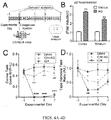
- adaptoquin was delivered to the peritoneum of mice two hours following the injection of collagenase into the striatum. An identical dose of adaptoquin (30 mg/kg) was given daily for seven days. To verify that adaptoquin does not inhibit collagenase activity in the brain, hematoma size was measured at 24 hours in wt and adaptoquin treated mice and found no difference between treated and untreated groups. Even though adaptoquin did not affect hematoma size at 24 hours, it was found that it did decrease edema at three days. In addition to reducing edema, adaptoquin also resulted in behavioral improvement.
- mice with striatal hemorrhage show a preference to turn ipsilaterally due to deficits in their weight balancing movements of the limbs contralateral to injury; this preference is significantly normalized by treatment with adaptoquin as measured by the corner turn task.
- Another somatosensory impairment e.g., tape removal task
- Improvements in behavior induced by adaptoquin were associated with a reduction in the number of degenerating neurons in the striatum in the hematoma as well as perihematomal area.
- adaptoquin was tested it (30mg/kg, intraperitoneal) in a model of autologous blood infusion in rats.
- Autologous blood infusion causes a narrower slit like lesion in the striatum than collagenase, but results in motor impairments out beyond 30 days.
- Adaptoquin (30 mg/kg) was administered two hours after autologous blood infusion and then daily for seven days. The drug resulted in no significant changes in temperature, body weight, and glucose levels, but did result in significant improvements in percent correct on a single pellet reaching task at later (23-25 days) time points after ICH.
- mice and rat data show that adaptoquin can effectively improve functional recovery of sensorimotor or motor outcomes following ICH in collagenase or autologous blood models.
- the canonical target for HIF PHD inhibition is the stabilization of HIF-1 ⁇ , leading to induction of a genetic adaptive response to hypoxia.
- HIF-1 ⁇ or HIF-2 ⁇
- HIF-1 ⁇ were required for the protective effects of HIF PHD inhibition
- Reduction of HIF-1 ⁇ protein using a retroviral shRNA failed to influence hemin-induced toxicity or protection by structurally diverse HIF PHD inhibitors. Similar results were obtained with an shRNA to HIF-2 ⁇ . Together, these results suggest that HIF PHD inhibition can protect against hemin-induced death independent of the HIF pathway.
Landscapes
- Health & Medical Sciences (AREA)
- Pharmacology & Pharmacy (AREA)
- Veterinary Medicine (AREA)
- Public Health (AREA)
- General Health & Medical Sciences (AREA)
- Chemical & Material Sciences (AREA)
- Animal Behavior & Ethology (AREA)
- Life Sciences & Earth Sciences (AREA)
- Medicinal Chemistry (AREA)
- Epidemiology (AREA)
- Neurosurgery (AREA)
- Organic Chemistry (AREA)
- Nuclear Medicine, Radiotherapy & Molecular Imaging (AREA)
- General Chemical & Material Sciences (AREA)
- Chemical Kinetics & Catalysis (AREA)
- Neurology (AREA)
- Biomedical Technology (AREA)
- Bioinformatics & Cheminformatics (AREA)
- Engineering & Computer Science (AREA)
- Pharmaceuticals Containing Other Organic And Inorganic Compounds (AREA)
Claims (14)
- HIF-Prolyl-4-hydroxylase-inhibierende Verbindung zur Verwendung bei der Behandlung einer Nervenzellenverletzung, wobei die Nervenzellenverletzung eine leichte traumatische Gehirnverletzung ist und wobei die Verbindung die folgende allgemeine Formel hat:
 R1 eine cyclische Gruppe ist, die wenigstens drei und bis zu sieben Ringkohlenstoffatome enthält und optional ein oder mehrere Ringheteroatome ausgewählt aus 0, N und S enthält, wobei die genannte cyclische Gruppe optional durch eine oder mehrere Gruppen ausgewählt aus -R4, -C(O)R4, -NR4 2, -OR4, NO2, -C(O)NR4 2, -NR4C(O)R4, -C(O)OR4, -OC(O)R4, - OC(O)NR4 2, -NR4C(O)NR4 2, -NR4C(O)OR4, -SO2R4, Nitril und Halogenatom substituiert ist, wobei R4 unabhängig ein Wasserstoffatom oder eine acyclische Kohlenwasserstoffgruppe mit bis zu sechs Kohlenstoffatomen ist und wobei die genannte cyclische Gruppe optional über eine Verknüpfungsgruppe an das dargestellte Kohlenstoffatom angefügt ist;R2 unabhängig ausgewählt ist aus den genannten cyclischen Gruppen von R1 und acyclischen Kohlenwasserstoffgruppen R5, die bis zu zwölf Kohlenstoffatome enthalten, wobei die genannte cyclische Gruppe optional über eine Verknüpfungsgruppe an das dargestellte Kohlenstoff- oder Stickstoffatom angefügt ist;R3 aus einem Wasserstoffatom und Kohlenwasserstoffgruppen mit bis zu sechs Kohlenstoffatomen ausgewählt ist;R2 und R3 optional miteinander verbunden sind;R6 und R7 unabhängig ausgewählt sind aus einem Wasserstoffatom, Kohlenwasserstoffgruppen mit bis zu drei Kohlenstoffatomen, einem Halogenatom und polaren Gruppen, ausgewählt aus -C(O)R4, -NR4 2, -OR4, NO2, -C(O)NR4 2, - NR4C(O)R4, -C(O)OR4, -OC(O)R4, -OC(O)NR4 2, -NR4C(O)NR2, - NR4C(O)OR4, -SO2R4 und Nitril sowie Methylen-verknüpften Versionen davon; undt 0 oder 1 ist.
 - Verbindung zur Verwendung nach Anspruch 1, wobei die genannte HIF-Prolyl-4-hydroxylase-inhibierende Verbindung ATF-4 hemmt oder Ödeme verringert.
- Verbindung zur Verwendung nach Anspruch 1, wobei ein Patient, der an einer Nervenzellenverletzung leidet, nach einer Behandlung mit der in Anspruch 1 definierten Verbindung eine somatosensorische, sensomotorische oder motorische Verbesserung aufzeigt.
- Verbindung zur Verwendung nach Anspruch 1, wobei R1 ein carbocyclischer Ring ist, der nicht kondensiert oder mit einem anderen Ring kondensiert ist, oder wobei R1 ein heterocyclischer Ring ist, der nicht kondensiert oder mit einem anderen Ring kondensiert ist.
- Verbindung zur Verwendung nach Anspruch 4, wobei der genannte carbocyclische Ring ein Phenylring ist.
- Verbindung zur Verwendung nach Anspruch 4, wobei der genannte heterocyclische Ring ein oder zwei Ringstickstoffatome enthält.
- Verbindung zur Verwendung nach Anspruch 1, wobei R2 ausgewählt ist aus cyclischen Gruppen von R1, die optional über eine Verknüpfungsgruppe angefügt sind, oder
wobei R2 ein heterocyclischer Ring ist, der nicht kondensiert oder mit einem anderen Ring kondensiert ist, oder
wobei R2 ein carbocyclischer Ring ist, der nicht kondensiert oder mit einem anderen Ring kondensiert ist. - Verbindung zur Verwendung nach Anspruch 1, wobei R2 aus acyclischen Kohlenwasserstoffgruppen R5 mit bis zu zwölf Kohlenstoffatomen ausgewählt ist.
- Verbindung zur Verwendung nach Anspruch 9, wobei die genannten acyclischen Kohlenwasserstoffgruppen Alkylgruppen sind.
- Verbindung zur Verwendung nach Anspruch 9, wobei die genannten acyclischen Kohlenwasserstoffgruppen bis zu sechs Kohlenstoffatome enthalten.
- Verbindung zur Verwendung nach Anspruch 1, wobei R6 und R7 unabhängig aus einem Wasserstoffatom und Kohlenwasserstoffgruppen mit bis zu drei Kohlenstoffatomen ausgewählt sind.
- Verbindung zur Verwendung nach Anspruch 1, wobei R3 Wasserstoff ist.
- Verbindung zur Verwendung nach Anspruch 1, wobei t 1 ist.
- Verbindung zur Verwendung nach Anspruch 1, wobei t 0 ist.
Applications Claiming Priority (2)
| Application Number | Priority Date | Filing Date | Title |
|---|---|---|---|
| US201361915068P | 2013-12-12 | 2013-12-12 | |
| PCT/US2014/070052 WO2015089416A1 (en) | 2013-12-12 | 2014-12-12 | Prolylhydroxylase/atf4 inhibitors for treating neural cell injury |
Publications (3)
| Publication Number | Publication Date |
|---|---|
| EP3079697A1 EP3079697A1 (de) | 2016-10-19 |
| EP3079697A4 EP3079697A4 (de) | 2017-06-07 |
| EP3079697B1 true EP3079697B1 (de) | 2021-02-03 |
Family
ID=53371873
Family Applications (1)
| Application Number | Title | Priority Date | Filing Date |
|---|---|---|---|
| EP14869532.3A Active EP3079697B1 (de) | 2013-12-12 | 2014-12-12 | Prolylhydroxylase-/atf4-inhibitoren zur behandlung der beschädigung neuronaler zellen |
Country Status (3)
| Country | Link |
|---|---|
| US (2) | US10716783B2 (de) |
| EP (1) | EP3079697B1 (de) |
| WO (1) | WO2015089416A1 (de) |
Families Citing this family (1)
| Publication number | Priority date | Publication date | Assignee | Title |
|---|---|---|---|---|
| US11253522B2 (en) | 2018-04-28 | 2022-02-22 | The Regents Of The University Of California | Cancer treatment targeted to tumor adaptive responses to protein synthesis stress |
Family Cites Families (17)
| Publication number | Priority date | Publication date | Assignee | Title |
|---|---|---|---|---|
| GB9407386D0 (en) | 1994-04-14 | 1994-06-08 | Smithkline Beecham Plc | Pharmaceutical formulation |
| US5567439A (en) | 1994-06-14 | 1996-10-22 | Fuisz Technologies Ltd. | Delivery of controlled-release systems(s) |
| UA74141C2 (uk) | 1998-12-09 | 2005-11-15 | Дж.Д. Сірл Енд Ко. | Фармацевтична композиція на основі тонкоподрібненого еплеренону (варіанти), спосіб її одержання та спосіб лікування розладів, опосередкованих альдостероном (варіанти) |
| US8545880B2 (en) | 1999-02-26 | 2013-10-01 | Andrx Pharmaceuticals, Llc | Controlled release oral dosage form |
| AU2002256092C1 (en) | 2001-04-05 | 2009-10-15 | Collagenex Pharmaceuticals, Inc. | Controlled delivery of tetracycline compounds and tetracycline derivatives |
| DK2298301T3 (en) * | 2001-12-06 | 2018-10-01 | Fibrogen Inc | MEDICINALS FOR TREATMENT OF ANEMIA ASSOCIATED WITH Kidney Disease |
| EP1951262A4 (de) * | 2005-11-21 | 2010-09-15 | Univ Alabama | Verfahren zur verwendung kleinmoleküliger verbindungen zum nervenschutz |
| EP1960363B1 (de) | 2005-12-09 | 2014-01-22 | Amgen, Inc. | Verbindungen auf chinolonbasis mit prolylhydroxylasehemmender wirkung sowie zusammensetzungen und anwendungen davon |
| WO2007082899A1 (en) * | 2006-01-17 | 2007-07-26 | Vib Vzw | Inhibitors of prolyl-hydroxylase 1 for the treatment of skeletal muscle degeneration |
| WO2008054534A2 (en) | 2006-05-11 | 2008-05-08 | Quark Pharmaceuticals, Inc. | Screening systems utilizing rtp801 |
| JP2009544631A (ja) * | 2006-07-25 | 2009-12-17 | エンビボ ファーマシューティカルズ インコーポレイテッド | キノリン誘導体 |
| WO2009020601A2 (en) | 2007-08-03 | 2009-02-12 | Cornell University | Atf4 inhibitors and their use for neural protection, repair, regeneration, and plasticity |
| EP2536709A4 (de) * | 2010-02-17 | 2013-11-27 | Univ Cornell | Prolylhydroxylasehemmer und verwendungsverfahren dafür |
| WO2011137511A1 (en) | 2010-05-05 | 2011-11-10 | Waratah Pharmaceuticals Inc. | Compounds, compositions and methods for treatment of central nervous system injuries |
| US9530248B2 (en) * | 2010-12-07 | 2016-12-27 | Wayne State University | Model-based helmet design to reduce concussions |
| RU2678364C2 (ru) * | 2011-07-20 | 2019-01-28 | Элминда Лтд. | Способ и система оценки сотрясения головного мозга |
| US8840937B2 (en) * | 2011-08-02 | 2014-09-23 | Walter Joe FORD, JR. | Composition and method for recovery from mild traumatic brain injury |
-
2014
- 2014-12-12 EP EP14869532.3A patent/EP3079697B1/de active Active
- 2014-12-12 WO PCT/US2014/070052 patent/WO2015089416A1/en not_active Ceased
- 2014-12-12 US US15/104,012 patent/US10716783B2/en active Active
-
2020
- 2020-06-22 US US16/908,071 patent/US20200360366A1/en not_active Abandoned
Non-Patent Citations (1)
| Title |
|---|
| None * |
Also Published As
| Publication number | Publication date |
|---|---|
| US20160317526A1 (en) | 2016-11-03 |
| US10716783B2 (en) | 2020-07-21 |
| WO2015089416A1 (en) | 2015-06-18 |
| US20200360366A1 (en) | 2020-11-19 |
| EP3079697A4 (de) | 2017-06-07 |
| EP3079697A1 (de) | 2016-10-19 |
Similar Documents
| Publication | Publication Date | Title |
|---|---|---|
| JP7659110B2 (ja) | Sarm1の阻害剤 | |
| EP2558446B1 (de) | Neuartige verbindungen zur behandlung von erkrankungen im zusammenhang mit amyloid- oder amyloidähnlichen proteinen | |
| JP7478252B2 (ja) | Sarm1の阻害剤 | |
| JP6630374B2 (ja) | τリン酸化を阻害する方法 | |
| JP7289375B2 (ja) | Sarm1の阻害剤 | |
| JP7478142B2 (ja) | Sarm1阻害剤 | |
| JP6807337B2 (ja) | ミトコンドリア治療剤としてのフェノチアジン類似体 | |
| JP5922031B2 (ja) | 化合物 | |
| JP7534390B2 (ja) | Sarm1の阻害剤 | |
| JP2009524676A (ja) | 精神分裂病を治療するための方法および組成物 | |
| RS54998B1 (sr) | Antagonisti c5ar | |
| JP7477642B2 (ja) | Sarm1の阻害剤 | |
| CN106146391A (zh) | 5-芳香炔基取代的苯甲酰胺类化合物及其制备方法、药物组合物和用途 | |
| JP7746384B2 (ja) | Sarm1のベンゾピラゾール阻害剤 | |
| EP2681209B1 (de) | Verbindungen und verfahren zur behandlung von schmerzen und anderen krankheiten | |
| CN105616400A (zh) | 一类牛蒡子苷元氨基甲酸酯衍生物在制备用于治疗阿尔茨海默病的药物中的用途 | |
| Zhang et al. | Design, synthesis, and bioevaluation of novel NLRP3 inhibitor with IBD immunotherapy from the virtual screen | |
| US20200360366A1 (en) | Prolylhydroxylase/atf4 inhibitors and methods of use for treating neural cell injury or death and conditions resulting therefrom | |
| EP4357338A1 (de) | N-substituierte phenylsulfonamidverbindung und verwendung davon | |
| EP2424533A1 (de) | Substituierte isochinolinderivate, pharmazeutische zusammensetzungen damit und verfahren zu ihrer verwendung als beta-sekretase-hemmer | |
| US20130338116A1 (en) | Compounds and methods for the treatment of pain and other diseases | |
| WO2021147971A1 (zh) | 治疗阿尔茨海默病的化合物 | |
| EA032129B1 (ru) | Пролекарство 1,1'-(1,6-диоксо-1,6-гександиил)бис-d-пролина | |
| Li et al. | Kinsenoside Targets IDH1 to Restore Microglial Immune‐Metabolic Homeostasis for Alzheimer's Disease Therapy | |
| JP2021520412A (ja) | タンパク質ミスフォールディング疾患のための療法 |
Legal Events
| Date | Code | Title | Description |
|---|---|---|---|
| PUAI | Public reference made under article 153(3) epc to a published international application that has entered the european phase |
Free format text: ORIGINAL CODE: 0009012 |
|
| 17P | Request for examination filed |
Effective date: 20160610 |
|
| AK | Designated contracting states |
Kind code of ref document: A1 Designated state(s): AL AT BE BG CH CY CZ DE DK EE ES FI FR GB GR HR HU IE IS IT LI LT LU LV MC MK MT NL NO PL PT RO RS SE SI SK SM TR |
|
| AX | Request for extension of the european patent |
Extension state: BA ME |
|
| DAX | Request for extension of the european patent (deleted) | ||
| A4 | Supplementary search report drawn up and despatched |
Effective date: 20170509 |
|
| RIC1 | Information provided on ipc code assigned before grant |
Ipc: C07D 401/12 20060101ALI20170502BHEP Ipc: A61P 25/00 20060101ALI20170502BHEP Ipc: A61K 31/47 20060101ALI20170502BHEP Ipc: A61K 31/4709 20060101AFI20170502BHEP |
|
| STAA | Information on the status of an ep patent application or granted ep patent |
Free format text: STATUS: EXAMINATION IS IN PROGRESS |
|
| 17Q | First examination report despatched |
Effective date: 20181031 |
|
| RIC1 | Information provided on ipc code assigned before grant |
Ipc: C07D 401/12 20060101ALI20200618BHEP Ipc: A61P 25/00 20060101ALI20200618BHEP Ipc: A61K 31/47 20060101ALI20200618BHEP Ipc: A61K 31/4709 20060101AFI20200618BHEP |
|
| GRAP | Despatch of communication of intention to grant a patent |
Free format text: ORIGINAL CODE: EPIDOSNIGR1 |
|
| STAA | Information on the status of an ep patent application or granted ep patent |
Free format text: STATUS: GRANT OF PATENT IS INTENDED |
|
| INTG | Intention to grant announced |
Effective date: 20200727 |
|
| GRAS | Grant fee paid |
Free format text: ORIGINAL CODE: EPIDOSNIGR3 |
|
| GRAA | (expected) grant |
Free format text: ORIGINAL CODE: 0009210 |
|
| STAA | Information on the status of an ep patent application or granted ep patent |
Free format text: STATUS: THE PATENT HAS BEEN GRANTED |
|
| AK | Designated contracting states |
Kind code of ref document: B1 Designated state(s): AL AT BE BG CH CY CZ DE DK EE ES FI FR GB GR HR HU IE IS IT LI LT LU LV MC MK MT NL NO PL PT RO RS SE SI SK SM TR |
|
| REG | Reference to a national code |
Ref country code: GB Ref legal event code: FG4D |
|
| REG | Reference to a national code |
Ref country code: AT Ref legal event code: REF Ref document number: 1359553 Country of ref document: AT Kind code of ref document: T Effective date: 20210215 Ref country code: CH Ref legal event code: EP |
|
| REG | Reference to a national code |
Ref country code: DE Ref legal event code: R096 Ref document number: 602014074732 Country of ref document: DE |
|
| REG | Reference to a national code |
Ref country code: IE Ref legal event code: FG4D |
|
| REG | Reference to a national code |
Ref country code: NL Ref legal event code: MP Effective date: 20210203 |
|
| REG | Reference to a national code |
Ref country code: LT Ref legal event code: MG9D |
|
| REG | Reference to a national code |
Ref country code: AT Ref legal event code: MK05 Ref document number: 1359553 Country of ref document: AT Kind code of ref document: T Effective date: 20210203 |
|
| PG25 | Lapsed in a contracting state [announced via postgrant information from national office to epo] |
Ref country code: PT Free format text: LAPSE BECAUSE OF FAILURE TO SUBMIT A TRANSLATION OF THE DESCRIPTION OR TO PAY THE FEE WITHIN THE PRESCRIBED TIME-LIMIT Effective date: 20210604 Ref country code: LT Free format text: LAPSE BECAUSE OF FAILURE TO SUBMIT A TRANSLATION OF THE DESCRIPTION OR TO PAY THE FEE WITHIN THE PRESCRIBED TIME-LIMIT Effective date: 20210203 Ref country code: FI Free format text: LAPSE BECAUSE OF FAILURE TO SUBMIT A TRANSLATION OF THE DESCRIPTION OR TO PAY THE FEE WITHIN THE PRESCRIBED TIME-LIMIT Effective date: 20210203 Ref country code: HR Free format text: LAPSE BECAUSE OF FAILURE TO SUBMIT A TRANSLATION OF THE DESCRIPTION OR TO PAY THE FEE WITHIN THE PRESCRIBED TIME-LIMIT Effective date: 20210203 Ref country code: GR Free format text: LAPSE BECAUSE OF FAILURE TO SUBMIT A TRANSLATION OF THE DESCRIPTION OR TO PAY THE FEE WITHIN THE PRESCRIBED TIME-LIMIT Effective date: 20210504 Ref country code: BG Free format text: LAPSE BECAUSE OF FAILURE TO SUBMIT A TRANSLATION OF THE DESCRIPTION OR TO PAY THE FEE WITHIN THE PRESCRIBED TIME-LIMIT Effective date: 20210503 Ref country code: NO Free format text: LAPSE BECAUSE OF FAILURE TO SUBMIT A TRANSLATION OF THE DESCRIPTION OR TO PAY THE FEE WITHIN THE PRESCRIBED TIME-LIMIT Effective date: 20210503 |
|
| PG25 | Lapsed in a contracting state [announced via postgrant information from national office to epo] |
Ref country code: NL Free format text: LAPSE BECAUSE OF FAILURE TO SUBMIT A TRANSLATION OF THE DESCRIPTION OR TO PAY THE FEE WITHIN THE PRESCRIBED TIME-LIMIT Effective date: 20210203 Ref country code: RS Free format text: LAPSE BECAUSE OF FAILURE TO SUBMIT A TRANSLATION OF THE DESCRIPTION OR TO PAY THE FEE WITHIN THE PRESCRIBED TIME-LIMIT Effective date: 20210203 Ref country code: LV Free format text: LAPSE BECAUSE OF FAILURE TO SUBMIT A TRANSLATION OF THE DESCRIPTION OR TO PAY THE FEE WITHIN THE PRESCRIBED TIME-LIMIT Effective date: 20210203 Ref country code: PL Free format text: LAPSE BECAUSE OF FAILURE TO SUBMIT A TRANSLATION OF THE DESCRIPTION OR TO PAY THE FEE WITHIN THE PRESCRIBED TIME-LIMIT Effective date: 20210203 Ref country code: AT Free format text: LAPSE BECAUSE OF FAILURE TO SUBMIT A TRANSLATION OF THE DESCRIPTION OR TO PAY THE FEE WITHIN THE PRESCRIBED TIME-LIMIT Effective date: 20210203 Ref country code: SE Free format text: LAPSE BECAUSE OF FAILURE TO SUBMIT A TRANSLATION OF THE DESCRIPTION OR TO PAY THE FEE WITHIN THE PRESCRIBED TIME-LIMIT Effective date: 20210203 |
|
| PG25 | Lapsed in a contracting state [announced via postgrant information from national office to epo] |
Ref country code: IS Free format text: LAPSE BECAUSE OF FAILURE TO SUBMIT A TRANSLATION OF THE DESCRIPTION OR TO PAY THE FEE WITHIN THE PRESCRIBED TIME-LIMIT Effective date: 20210603 |
|
| PG25 | Lapsed in a contracting state [announced via postgrant information from national office to epo] |
Ref country code: EE Free format text: LAPSE BECAUSE OF FAILURE TO SUBMIT A TRANSLATION OF THE DESCRIPTION OR TO PAY THE FEE WITHIN THE PRESCRIBED TIME-LIMIT Effective date: 20210203 Ref country code: CZ Free format text: LAPSE BECAUSE OF FAILURE TO SUBMIT A TRANSLATION OF THE DESCRIPTION OR TO PAY THE FEE WITHIN THE PRESCRIBED TIME-LIMIT Effective date: 20210203 Ref country code: SM Free format text: LAPSE BECAUSE OF FAILURE TO SUBMIT A TRANSLATION OF THE DESCRIPTION OR TO PAY THE FEE WITHIN THE PRESCRIBED TIME-LIMIT Effective date: 20210203 |
|
| REG | Reference to a national code |
Ref country code: DE Ref legal event code: R097 Ref document number: 602014074732 Country of ref document: DE |
|
| PG25 | Lapsed in a contracting state [announced via postgrant information from national office to epo] |
Ref country code: SK Free format text: LAPSE BECAUSE OF FAILURE TO SUBMIT A TRANSLATION OF THE DESCRIPTION OR TO PAY THE FEE WITHIN THE PRESCRIBED TIME-LIMIT Effective date: 20210203 Ref country code: RO Free format text: LAPSE BECAUSE OF FAILURE TO SUBMIT A TRANSLATION OF THE DESCRIPTION OR TO PAY THE FEE WITHIN THE PRESCRIBED TIME-LIMIT Effective date: 20210203 Ref country code: DK Free format text: LAPSE BECAUSE OF FAILURE TO SUBMIT A TRANSLATION OF THE DESCRIPTION OR TO PAY THE FEE WITHIN THE PRESCRIBED TIME-LIMIT Effective date: 20210203 Ref country code: ES Free format text: LAPSE BECAUSE OF FAILURE TO SUBMIT A TRANSLATION OF THE DESCRIPTION OR TO PAY THE FEE WITHIN THE PRESCRIBED TIME-LIMIT Effective date: 20210203 |
|
| PLBE | No opposition filed within time limit |
Free format text: ORIGINAL CODE: 0009261 |
|
| STAA | Information on the status of an ep patent application or granted ep patent |
Free format text: STATUS: NO OPPOSITION FILED WITHIN TIME LIMIT |
|
| 26N | No opposition filed |
Effective date: 20211104 |
|
| PG25 | Lapsed in a contracting state [announced via postgrant information from national office to epo] |
Ref country code: AL Free format text: LAPSE BECAUSE OF FAILURE TO SUBMIT A TRANSLATION OF THE DESCRIPTION OR TO PAY THE FEE WITHIN THE PRESCRIBED TIME-LIMIT Effective date: 20210203 |
|
| PG25 | Lapsed in a contracting state [announced via postgrant information from national office to epo] |
Ref country code: SI Free format text: LAPSE BECAUSE OF FAILURE TO SUBMIT A TRANSLATION OF THE DESCRIPTION OR TO PAY THE FEE WITHIN THE PRESCRIBED TIME-LIMIT Effective date: 20210203 |
|
| PG25 | Lapsed in a contracting state [announced via postgrant information from national office to epo] |
Ref country code: IT Free format text: LAPSE BECAUSE OF FAILURE TO SUBMIT A TRANSLATION OF THE DESCRIPTION OR TO PAY THE FEE WITHIN THE PRESCRIBED TIME-LIMIT Effective date: 20210203 |
|
| PG25 | Lapsed in a contracting state [announced via postgrant information from national office to epo] |
Ref country code: IS Free format text: LAPSE BECAUSE OF FAILURE TO SUBMIT A TRANSLATION OF THE DESCRIPTION OR TO PAY THE FEE WITHIN THE PRESCRIBED TIME-LIMIT Effective date: 20210603 |
|
| PG25 | Lapsed in a contracting state [announced via postgrant information from national office to epo] |
Ref country code: MC Free format text: LAPSE BECAUSE OF FAILURE TO SUBMIT A TRANSLATION OF THE DESCRIPTION OR TO PAY THE FEE WITHIN THE PRESCRIBED TIME-LIMIT Effective date: 20210203 |
|
| REG | Reference to a national code |
Ref country code: CH Ref legal event code: PL |
|
| REG | Reference to a national code |
Ref country code: BE Ref legal event code: MM Effective date: 20211231 |
|
| PG25 | Lapsed in a contracting state [announced via postgrant information from national office to epo] |
Ref country code: LU Free format text: LAPSE BECAUSE OF NON-PAYMENT OF DUE FEES Effective date: 20211212 Ref country code: IE Free format text: LAPSE BECAUSE OF NON-PAYMENT OF DUE FEES Effective date: 20211212 |
|
| PG25 | Lapsed in a contracting state [announced via postgrant information from national office to epo] |
Ref country code: BE Free format text: LAPSE BECAUSE OF NON-PAYMENT OF DUE FEES Effective date: 20211231 |
|
| PG25 | Lapsed in a contracting state [announced via postgrant information from national office to epo] |
Ref country code: LI Free format text: LAPSE BECAUSE OF NON-PAYMENT OF DUE FEES Effective date: 20211231 Ref country code: CH Free format text: LAPSE BECAUSE OF NON-PAYMENT OF DUE FEES Effective date: 20211231 |
|
| PG25 | Lapsed in a contracting state [announced via postgrant information from national office to epo] |
Ref country code: HU Free format text: LAPSE BECAUSE OF FAILURE TO SUBMIT A TRANSLATION OF THE DESCRIPTION OR TO PAY THE FEE WITHIN THE PRESCRIBED TIME-LIMIT; INVALID AB INITIO Effective date: 20141212 |
|
| PG25 | Lapsed in a contracting state [announced via postgrant information from national office to epo] |
Ref country code: CY Free format text: LAPSE BECAUSE OF FAILURE TO SUBMIT A TRANSLATION OF THE DESCRIPTION OR TO PAY THE FEE WITHIN THE PRESCRIBED TIME-LIMIT Effective date: 20210203 |
|
| PG25 | Lapsed in a contracting state [announced via postgrant information from national office to epo] |
Ref country code: MK Free format text: LAPSE BECAUSE OF FAILURE TO SUBMIT A TRANSLATION OF THE DESCRIPTION OR TO PAY THE FEE WITHIN THE PRESCRIBED TIME-LIMIT Effective date: 20210203 |
|
| PG25 | Lapsed in a contracting state [announced via postgrant information from national office to epo] |
Ref country code: TR Free format text: LAPSE BECAUSE OF FAILURE TO SUBMIT A TRANSLATION OF THE DESCRIPTION OR TO PAY THE FEE WITHIN THE PRESCRIBED TIME-LIMIT Effective date: 20210203 |
|
| PG25 | Lapsed in a contracting state [announced via postgrant information from national office to epo] |
Ref country code: MT Free format text: LAPSE BECAUSE OF FAILURE TO SUBMIT A TRANSLATION OF THE DESCRIPTION OR TO PAY THE FEE WITHIN THE PRESCRIBED TIME-LIMIT Effective date: 20210203 |
|
| PGFP | Annual fee paid to national office [announced via postgrant information from national office to epo] |
Ref country code: GB Payment date: 20251229 Year of fee payment: 12 |
|
| PGFP | Annual fee paid to national office [announced via postgrant information from national office to epo] |
Ref country code: FR Payment date: 20251226 Year of fee payment: 12 |
|
| PGFP | Annual fee paid to national office [announced via postgrant information from national office to epo] |
Ref country code: DE Payment date: 20251229 Year of fee payment: 12 |