EP3081939B1 - Marqueur permettant le diagnostic précoce de l'insuffisance rénale - Google Patents
Marqueur permettant le diagnostic précoce de l'insuffisance rénale Download PDFInfo
- Publication number
- EP3081939B1 EP3081939B1 EP14868998.7A EP14868998A EP3081939B1 EP 3081939 B1 EP3081939 B1 EP 3081939B1 EP 14868998 A EP14868998 A EP 14868998A EP 3081939 B1 EP3081939 B1 EP 3081939B1
- Authority
- EP
- European Patent Office
- Prior art keywords
- concentration
- subject
- renal failure
- serine
- pathological index
- Prior art date
- Legal status (The legal status is an assumption and is not a legal conclusion. Google has not performed a legal analysis and makes no representation as to the accuracy of the status listed.)
- Active
Links
Images







Classifications
-
- G—PHYSICS
- G01—MEASURING; TESTING
- G01N—INVESTIGATING OR ANALYSING MATERIALS BY DETERMINING THEIR CHEMICAL OR PHYSICAL PROPERTIES
- G01N33/00—Investigating or analysing materials by specific methods not covered by groups G01N1/00 - G01N31/00
- G01N33/48—Biological material, e.g. blood, urine; Haemocytometers
- G01N33/50—Chemical analysis of biological material, e.g. blood, urine; Testing involving biospecific ligand binding methods; Immunological testing
- G01N33/68—Chemical analysis of biological material, e.g. blood, urine; Testing involving biospecific ligand binding methods; Immunological testing involving proteins, peptides or amino acids
- G01N33/6803—General methods of protein analysis not limited to specific proteins or families of proteins
- G01N33/6806—Determination of free amino acids
- G01N33/6812—Assays for specific amino acids
-
- G—PHYSICS
- G01—MEASURING; TESTING
- G01N—INVESTIGATING OR ANALYSING MATERIALS BY DETERMINING THEIR CHEMICAL OR PHYSICAL PROPERTIES
- G01N30/00—Investigating or analysing materials by separation into components using adsorption, absorption or similar phenomena or using ion-exchange, e.g. chromatography or field flow fractionation
- G01N30/02—Column chromatography
- G01N30/88—Integrated analysis systems specially adapted therefor, not covered by a single one of the groups G01N30/04 - G01N30/86
- G01N2030/8809—Integrated analysis systems specially adapted therefor, not covered by a single one of the groups G01N30/04 - G01N30/86 analysis specially adapted for the sample
- G01N2030/8877—Integrated analysis systems specially adapted therefor, not covered by a single one of the groups G01N30/04 - G01N30/86 analysis specially adapted for the sample optical isomers
-
- G—PHYSICS
- G01—MEASURING; TESTING
- G01N—INVESTIGATING OR ANALYSING MATERIALS BY DETERMINING THEIR CHEMICAL OR PHYSICAL PROPERTIES
- G01N2800/00—Detection or diagnosis of diseases
- G01N2800/34—Genitourinary disorders
- G01N2800/347—Renal failures; Glomerular diseases; Tubulointerstitial diseases, e.g. nephritic syndrome, glomerulonephritis; Renovascular diseases, e.g. renal artery occlusion, nephropathy
-
- G—PHYSICS
- G01—MEASURING; TESTING
- G01N—INVESTIGATING OR ANALYSING MATERIALS BY DETERMINING THEIR CHEMICAL OR PHYSICAL PROPERTIES
- G01N30/00—Investigating or analysing materials by separation into components using adsorption, absorption or similar phenomena or using ion-exchange, e.g. chromatography or field flow fractionation
- G01N30/02—Column chromatography
- G01N30/26—Conditioning of the fluid carrier; Flow patterns
- G01N30/38—Flow patterns
- G01N30/46—Flow patterns using more than one column
- G01N30/461—Flow patterns using more than one column with serial coupling of separation columns
- G01N30/463—Flow patterns using more than one column with serial coupling of separation columns for multidimensional chromatography
-
- G—PHYSICS
- G16—INFORMATION AND COMMUNICATION TECHNOLOGY [ICT] SPECIALLY ADAPTED FOR SPECIFIC APPLICATION FIELDS
- G16H—HEALTHCARE INFORMATICS, i.e. INFORMATION AND COMMUNICATION TECHNOLOGY [ICT] SPECIALLY ADAPTED FOR THE HANDLING OR PROCESSING OF MEDICAL OR HEALTHCARE DATA
- G16H50/00—ICT specially adapted for medical diagnosis, medical simulation or medical data mining; ICT specially adapted for detecting, monitoring or modelling epidemics or pandemics
- G16H50/30—ICT specially adapted for medical diagnosis, medical simulation or medical data mining; ICT specially adapted for detecting, monitoring or modelling epidemics or pandemics for calculating health indices; for individual health risk assessment
Definitions
- the present invention relates to a method for analyzing the blood or urine of a subject suspected of renal failure, and a system for analyzing a blood or urine sample of a subject suspected of renal failure. More particularly, the present invention relates to a method for analyzing the blood, plasma, serum or urine of a subject that comprises a step for measuring the concentration of a pair of D-form and L-form of at least one amino acid selected from the group consisting of [D-serine] and [L-serine] and the like in the blood, plasma, serum or urine of the subject, and to a system for analyzing a blood, plasma, serum or urine sample of the subject for performing the aforementioned analysis method, comprising a memory unit, an analysis and measurement unit, a data processing unit and a pathological information output unit.
- Chronic kidney disease is a disease that affects 13.3 million Japanese, corresponding to roughly 13% of the Japanese adult population, and threatens the health of Japanese citizens due to the risk of progressing to end stage kidney disease (ESKD).
- Chronic kidney disease includes all pathological states in which depressed renal function as represented by glomerular filtration rate is found, or findings suggesting kidney damage persist in a chronic state (three months or longer).
- There is no effective treatment method for chronic kidney disease and if chronic kidney disease progresses resulting in further depression of renal function, there is the risk of uremia, resulting in the need for artificial dialysis or kidney transplant, which will place a considerable burden on the patient in terms of health care costs (Non-Patent Document 1).
- Chronic kidney disease does not exhibit subjective symptoms.
- Acute kidney injury is a disease in which renal function decreases rapidly over several weeks or several days.
- a known model of this disease is an acute kidney injury experimental model which is induced by a surgical procedure or administration of a drug.
- the "gold standards" for diagnosing acute kidney injury are urine production volume and serum creatinine concentration. Serum creatinine concentration is superior in that it can be evaluated without performing a biopsy regardless of the presence or absence of urination.
- glomerular filtration rate is required to be in a steady state.
- changes in glomerular filtration rate become apparent at a comparatively late stage.
- Non-Patent Document 2 Reported examples of markers for acute kidney injury include neutrophil gelatinase-associated lipocalin (NGAL), interleukin-18 (IL-18), kidney injury molecule-1 (KIM-1), proteins such as fatty acid binding proteins or cystatin C, and metabolic low molecular weight compounds such as homovanillic acid sulfate or trimethylamine-N-oxide.
- NGAL neutrophil gelatinase-associated lipocalin
- IL-18 interleukin-18
- KIM-1 kidney injury molecule-1
- proteins such as fatty acid binding proteins or cystatin C
- metabolic low molecular weight compounds such as homovanillic acid sulfate or trimethylamine-N-oxide.
- Non-Patent Document 3 D-amino acids (Ala, Pro, Ser) in the serum of nephritis patients tend to be elevated and have a correlation with creatinine level (Non-Patent Document 9).
- Non-Patent Document 5 D-serine and D-alanine concentration in the urine along with the ratio of the D-form to the total of the D-form and L-form were investigated in healthy individuals of various age groups, and it was suggested that processing of D-serine in the kidneys is different (Non-Patent Document 6).
- Non-Patent Document 7 Although the ratio of the D-form concentration/(D-form concentration + L-form concentration) of each amino acid is calculated in renal failure patients for which pathological assessment criteria have not been indicated, increases in these ratios are merely indicated randomly (or vaguely) irrespective of disease stage, and there are no descriptions or suggestions as to the fact that fluctuations in these ratios correlate with pathological or other biomarkers of renal failure.
- urinary D/L-serine ratio was suggested to be able to be used as a biomarker capable of detecting early stage ischemic renal failure and classifying pathological stage since it decreases over time following ischemia reperfusion injury (Non-Patent Document 8).
- D-amino acid oxidase which is involved in the decomposition of D-amino acids, is expressed in renal proximal tubules, and the enzyme activity of D-amino acid oxidase is known to decrease in ischemia reperfusion model rats (Non-Patent Document 4).
- L-serine is reabsorbed while D-serine is hardly reabsorbed at all under physiological conditions.
- the manner in which D-serine and other D-amino acids fluctuate in the early stage of renal failure is unknown.
- Patent Document 1 International Publication No. WO 2013/140785
- the present invention provides a method for analyzing the blood or urine of a subject suspected of renal failure.
- the analysis method of the present invention comprises a step for measuring the concentration of a pair of [D-serine] and [L-serine] and a step for calculating a pathological index value from the concentration of a pair of D-form and L-form of serine.
- the pathological index value calculated from a pair of D-serine and L-serine enables to correlate a subject with the pathology of kidney disease in the case where a significant decrease in the proportion of the D-form is indicated.
- the ratio of the concentration of the D-form to the concentration of the L-form of serine, or the ratio or percentage of the concentration of the D-form to the sum of the concentrations of the D-form and the L-form can be calculated as the pathological index value of the subject.
- amino acids in the urine of renal failure patients whose pathological assessment criteria have not been indicated are analyzed in Non-Patent Document 7, it is disclosed that the D-amino acid ratio for alanine, valine, proline, threonine and aspartic acid is significantly increased.
- a decrease in the proportion of D-amino acids in the urine of renal failure patients is a surprising finding.
- [D-glutamine] and [L-glutamine], [D-threonine] and [L-threonine], [D-allo-threonine] and [L-allo-threonine] and [D-leucine] and [L-leucine] may be included in the aforementioned amino acid group.
- the analysis method may comprise a step for measuring the concentration of a pair of D-form and L-form of at least one amino acid selected from the amino acid group consisting of [D-histidine] and [L-histidine], [D-asparagine] and [L-asparagine], [D-arginine] and [L-arginine], [D-allo-threonine] and [L-threonine], [D-glutamic acid] and [L-glutamic acid], [D-alanine] and [L-alanine], [D-proline] and [L-proline], [D-valine] and [L-valine], [D-allo-isoleucine] and [L-isoleucine], [D-phenylalanine] and [L-phenylalanine], [D-lysine] and [L-lysine], [D-glutamine] and [L-glutamine], [D-threonine] and [L-threonine], [
- the pathological index value calculated from a pair of D-form and L-form of at least one amino acid enables to correlate a subject with the pathology of kidney disease, when a significant decrease in the proportion of the D-form is indicated.
- the ratio of the concentration of the D-form to the concentration of the L-form of at least one amino acids, or the ratio or percentage of the concentration of the D-form to the sum of the concentrations of the D-form and the L-form can be calculated as the pathological index value of the subject.
- Another mode of the present invention may also relate to a detection method for detecting renal failure, comprising a step for measuring the concentration of a pair of D-form and L-form of at least one amino acid selected from the amino acid group consisting of [D-serine] and [L-serine] in the urine of a subject, and a step for calculating a pathological index value from the concentration of a pair of D-form and L-form of at least one amino acid that correlates a decrease in the proportion of a D-form with renal failure of the subject.
- the detection method relates to a method that may be performed by a non-physician such as a medical assistant or may be performed by an analysis facility.
- pathological index values have been indicated to decrease following renal ischemia reperfusion in the same manner as urine creatinine concentration. Since a decrease in urine creatinine concentration indicates depression of renal function, it can be used as a marker of renal failure, and a pathological index value of the present application can also be used as a marker of renal failure in the same manner as urine creatinine concentration. Furthermore, urine renal failure markers in the form of KIM-1 and NGAL demonstrate increases in urine concentration in response to depressed renal function. In an experimental model of ischemia reperfusion, although urine creatinine concentration decreased significantly 8 hours after ischemia reperfusion, urine KIM-1 increases significantly 20 hours after ischemia reperfusion and urine NGAL increased significantly 8 hours after ischemia reperfusion ( FIGS.
- Another pathological index value which does not form part of the present invention, calculated using the concentration of a pair of D-form and L-form of one or more amino acids selected from the group consisting of [D-histidine] and [L-histidine], [D-asparagine] and [L-asparagine], [D-proline] and [L-proline], and [D-lysine] and [L-lysine] decreases significantly at a level of significance of P ⁇ 0.01 4 hours after renal ischemia reperfusion, this pathological index value can be used as a marker having higher sensitivity.
- another pathological index value which does not form part of the present invention, calculated from concentration of a pair of D-form and L-form of one or more amino acids selected from the group consisting of [D-histidine] and [L-histidine], [D-proline] and [L-proline], and [D-lysine] and [L-lysine] decreases significantly at a level of significance of P ⁇ 0.001 4 hours after renal ischemia reperfusion, this pathological index value can be used as a marker having extremely high sensitivity.
- the pathological index value of the present invention has sensitivity that is equal to or higher than that of conventional renal failure markers such as serum creatinine, and can be used for early diagnosis of renal failure.
- Examples of early stage renal failure include a state in which serum creatinine has increased by 1.5 to 2.0 times, which is the criterion for the early stage of each of the RIFLE, AKIN and KDIGO classifications of acute kidney injury (AKI), a state wherein renal function reduction in chronic kidney disease (CKD) indicated by GFR is started, or an extremely early state prior to the appearance of changes in serum creatinine or GFR even though renal failure is present.
- AKI acute kidney injury
- CKD chronic kidney disease
- another pathological index value which does not form part of the present invention, calculated using the concentration of a pair of D-form and L-form of one or more amino acids selected from the group consisting of [D-glutamic acid] and [L-glutamic acid], [D-phenylalanine] and [L-phenylalanine], [D-valine] and [L-valine], [D-glutamine] and [L-glutamine], [D-threonine] and [L-threonine], [D-leucine] and [L-leucine], [D-allo-isoleucine] and [L-isoleucine], and [D-allo-threonine] and [L-threonine], which do not exhibit a significant difference 4 hours after renal ischemia reperfusion but exhibit a significant difference 8 hours after renal ischemia reperfusion, can be used as a marker having sensitivity equal to that of conventional markers such as creatinine.
- the pathological index value calculated from the concentration of D-form and L-form of one amino acid may be used, or the pathological index value calculated from the concentration of another D-form and L-form of another amino acid can be used in combination therewith.
- a pathological index value having extremely high sensitivity calculated from the concentration of D-form and L-form of one or more amino acids selected from the group consisting of [D-histidine] and [L-histidine], [D-proline] and [L-proline], and [D-lysine] and [L-lysine] may be combined with another pathological index value having extremely high sensitivity calculated from the concentration of a D-form and L-form of an amino acid selected from the same group.
- the aforementioned pathological index value having extremely high sensitivity can be used in combination with a pathological index value having a lower sensitivity, for example, a pathological index value calculated from the concentration of a D-form and L-form of one amino acid selected from the group consisting of [D-glutamic acid] and [L-glutamic acid], [D-phenylalanine] and [L-phenylalanine], [D-valine] and [L-valine], [D-glutamine] and [L-glutamine], [D-threonine] and [L-threonine], [D-leucine] and [L-leucine], [D-allo-isoleucine] and [L-isoleucine], and [D-allo-threonine] and [L-threonine], which enables sensitively detecting kidney injury in comparison with urine creatinine, urine KIM-1 or urine NGAL in a state in which de
- the analysis method of the present invention may further comprise a step for determining whether the pathological index value of a subject is similar to the pathological index reference value of a healthy individual, whether the pathological index value of a subject is similar to the pathological index reference value of an acute renal failure patient or chronic renal failure patient, or whether the pathological index value of a subject is between the pathological index reference value of a healthy individual and the pathological index reference value of a chronic renal failure patient, by comparing the pathological index value of the subject with the pathological index reference value of a healthy individual and the pathological index reference value of an acute renal failure patient and/or chronic renal failure patient.
- the present invention makes it possible to determine whether a subject suffers renal failure by preliminarily setting a threshold value based on the pathological index values of a healthy individual group and/or renal failure patient group, and then comparing the pathological index value of a subject with the threshold value.
- a threshold value is able to suitably set from the pathological index values of a healthy individual group and renal failure patient group.
- the average value, median value or X percentile value of the healthy individual group or renal failure patient group can be used for the threshold value, the threshold value is not limited thereto.
- an arbitrary numerical value can be selected for X, and a value of 3, 5, 10, 15, 20, 30, 40, 60, 70, 80, 85, 90, 95 or 97 can be suitably used. Only one threshold value may be used or a plurality of threshold values can be set depending on the type of renal failure (acute or chronic), the cause thereof (such as drug-induced nephropathy, diabetic nephropathy, IgA nephropathy, membranous nephropathy or nephrosclerosis), disease state (early, intermediate or late) and the amino acids or combination thereof used.
- the pathology of the renal failure of a subject can be assessed, determined or diagnosed by comparing the pathological index value of the subject with a preset threshold value.
- the analysis method of the present invention may further comprise a step for determining whether a first pathological index value of a subject, calculated from the concentration of [D-serine] and [L-serine] in the blood, plasma, serum or urine of the subject, is between the pathological index reference value of a healthy individual and the pathological index reference value of a chronic renal failure patient, and whether the second pathological index value of the subject, calculated from the concentration of a pair of D-form and L-form of at least one amino acid among [D-glutamic] and [L-glutamic acid], [D-allo-isoleucine] and [L-isoleucine] and [D-phenylalanine] and [L-phenylalanine] in the blood, plasma, serum or urine of the subject, is between a pathological index reference value of the healthy individual and the pathological index reference value of the chronic renal failure patient.
- the pathological index value of a subject calculated from the concentration of [D-serine] and [L-serine] can be used as a first pathological index value
- the pathological index value of the subject calculated from the concentration of [D-serine] and [L-serine] can be used for the first pathological index value.
- the present invention provides a system for analyzing a blood or urine sample of a subject suspected of renal failure.
- the sample analysis system of the present invention comprises a memory unit, an analysis and measurement unit, a data processing unit and a pathological information output unit.
- the aforementioned memory unit stores the pathological index reference values for the blood, plasma, serum or urine of healthy individuals, and the pathological index reference values for the blood, plasma, serum or urine of acute renal failure patients and/or chronic renal failure patients.
- the aforementioned analysis and measurement unit separates and quantifies D-serine and L-serine stereoisomers present in the blood, plasma, serum or urine of the aforementioned subject.
- the aforementioned data processing unit performs a step for calculating the pathological index value of the aforementioned subject from the concentration of [D-serine] and [L-serine].
- the pathological index value calculated from the concentration of a pair of D-form and L-form of serine enables a subject to be correlated with renal failure in the case of indicating a decrease in the composition ratio of the D-form.
- D-glutamine and L-glutamine D-threonine and L-threonine]
- [D-allo-threonine and L-allo-threonine and D-leucine and L-leucine may be included in addition to the aforementioned amino acid pairs.
- the aforementioned analysis and measurement unit separates and quantifies at least one pair of amino acid stereoisomers present in the blood, plasma, serum or urine of the aforementioned subject, selected from the group consisting of D-histidine and L-histidine, D-asparagine and L-asparagine, D-arginine and L-arginine, D-allo-threonine and L-threonine, D-glutamic acid and L-glutamic acid, D-alanine and L-alanine, D-proline and L-proline, D-valine and L-valine, D-allo-isoleucine and L-isoleucine, D-phenylalanine and L-phenylalanine, D-lysine and L-lysine, D-glutamine and L-glutamine, D-threonine and L-threonine, D-allo-threonine and L-allo-threonine and D-leucine
- the aforementioned data processing unit performs a step for calculating the pathological index value of the aforementioned subject from the concentration of a pair of D-form and L-form of at least one amino acid selected from the group consisting of [D-histidine] and [L-histidine], [D-asparagine] and [L-asparagine], [D-arginine] and [L-arginine], [D-allo-threonine] and [L-threonine], [D-glutamic acid] and [L-glutamic acid], [D-alanine] and [L-alanine], [D-proline] and [L-proline], [D-valine] and [L-valine], [D-allo-isoleucine] and [L-isoleucine], [D-phenylalanine] and [L-phenylalanine], [D-lysine] and [L-lysine], [D-glutamine] and [L-glutamine], [D-th
- the pathological index value refers to a value that can be calculated from the concentration of a D-form and L-form of serine, and enables a subject to be correlated with renal failure in the case of indicating a decrease in the composition ratio of the D-form.
- the ratio of the concentration of the D-form to the concentration of the L-form, and the ratio or percentage of the concentration of a D-form to the sum of the concentrations of the D-form and L-form is defined as the pathological index value of a subject.
- pathological index value of the subject When the pathological index value of the subject is compared with the pathological index reference value of a healthy individual and the pathological index reference value of a patient with acute renal failure and/or chronic renal failure, and the pathological index value of the subject is similar to the pathological index reference value of the healthy individual, information that the aforementioned subject is hardly suspected of renal failure is defined as pathological information of the aforementioned subject.
- pathological index value of the aforementioned subject is similar to the pathological index reference value of the aforementioned chronic renal failure patient, information that the aforementioned subject is suspected of renal failure is defined as pathological information of the aforementioned subject.
- pathological information of the aforementioned subject When the pathological index value of the aforementioned subject is between the pathological index reference value of the aforementioned healthy individual and the pathological index reference value of the aforementioned chronic renal failure patient, information that the aforementioned subject is suspected of early stage renal failure is defined as pathological information of the aforementioned subject.
- the aforementioned pathological information output unit outputs the pathological information of the aforementioned subject.
- the present invention provides a method for diagnosing renal failure.
- the diagnostic method of the present invention comprises a step for measuring the concentration in the blood, plasma, serum or urine of a subject suspected of renal failure of a pair of [D-serine] and [L-serine] and a step for calculating a pathological index value from the aforementioned concentration of the pair of D-form and L-form of aforementioned serine.
- [D-glutamine] and [L-glutamine], [D-threonine] and [L-threonine], and [D-leucine] and [L-leucine] may be included in the aforementioned amino acid group.
- the diagnostic method comprises a step for measuring the concentration in the blood, plasma, serum or urine of a subject suspected of renal failure of a pair of D-form and L-form of at least one amino acid selected from the amino acid group consisting of [D-histidine] and [L-histidine], [D-asparagine] and [L-asparagine], [D-arginine] and [L-arginine], [D-allo-threonine] and [L-threonine], [D-glutamic acid] and [L-glutamic acid], [D-alanine] and [L-alanine], [D-proline] and [L-proline], [D-valine] and [L-valine], [D-allo-isoleucine] and [L-isoleucine], [D-phenylalanine] and [L-phenylalanine], [D-lysine] and [L-lysine], [D-glutamine] and [L-glutamine], [D
- the pathological index value calculated from the concentration of a pair of D-form and L-form of at least one amino acid enables a subject to be correlated with renal failure in the case of indicating a decrease in the composition ratio of the D-form.
- the ratio of the concentration of the D-form to the concentration of the L-form of at least one amino acid pair, or the ratio or percentage of the concentration of the D-form to the sum of the concentrations of D-form and L-form, can be used as the pathological index value of the aforementioned subject.
- the diagnostic method of the present invention may further comprise a step for diagnosing that the aforementioned subject has a high likelihood of being a healthy individual or is hardly suspected of renal failure when the pathological index value of the aforementioned subject is compared with the pathological index reference value of the healthy individual and the pathological index reference value of a patient with acute renal failure and/or chronic renal failure, and the pathological index value of the aforementioned subject is similar to the pathological index reference value of the healthy individual; the aforementioned subject is diagnosed as being strongly suspected of renal failure when the pathological index value of the aforementioned subject is similar to the pathological index reference value of the aforementioned patient having acute renal failure or chronic renal failure; and the aforementioned subject is diagnosed as being suspected of early stage renal failure when the pathological index value of the aforementioned subject is between the pathological index reference value of the healthy individual and the pathological index reference value of the patient having acute renal failure or chronic renal failure.
- the diagnostic method of the present invention comprises a step for diagnosing that a subject is suspected of extremely early stage renal failure when a first pathological index value of a subject calculated from the concentration in the blood, plasma, serum or urine of the aforementioned subject of [D-serine] and [L-serine] is between the pathological index reference value of the aforementioned healthy individual and the pathological index reference value of the aforementioned chronic renal failure patient, and a second pathological index value of the aforementioned subject calculated from the concentration in the blood, plasma, serum or urine of the aforementioned subject of a pair of D-form and L-form of at least one amino acid selected from the group consisting of [D-glutamic acid] and [L-glutamic acid], [D-allo-isoleucine] and [L-isoleucine], and [D-phenylalanine] and [L-phenylalanine] is between the pathological index reference value of the aforementioned healthy individual and the pathological index reference value of the aforementioned chronic renal failure patient.
- the present invention provides a method for treating renal failure.
- the treatment method of the present invention comprises a step for measuring the concentration in the blood, plasma, serum or urine of a subject suspected of renal failure of a pair of D-form and L-form of at least one amino acid selected from the group consisting of [D-serine] and [L-serine], [D-histidine] and [L-histidine], [D-asparagine] and [L-asparagine], [D-arginine] and [L-arginine], [D-allo-threonine] and [L-threonine], [D-glutamic acid] and [L-glutamic acid], [D-alanine] and [L-alanine], [D-proline] and [L-proline], [D-valine] and [L-valine], [D-allo-isoleucine] and [L-isoleucine], [D-phenylalanine] and [L-phenylalanine], and [
- the treatment method comprises a step for diagnosing that a subject is suspected of extremely early stage renal failure when a first pathological index value of the aforementioned subject calculated from the concentration in the blood, plasma, serum or urine of the aforementioned subject of a pair of D-form and L-form of at least one amino acid selected from the group consisting of [D-serine] and [L-serine], [D-histidine] and [L-histidine], [D-asparagine] and [L-asparagine], [D-arginine] and [L-arginine], [D-allo-threonine] and [L-threonine], [D-alanine] and [L-alanine], [D-proline] and [L-proline], [D-valine] and [L-valine], and [D-lysine] and [L-lysine] is between the pathological index reference value of the aforementioned healthy individual and the pathological index reference value of the aforementioned chronic renal failure patient, and
- Measurement of D-amino acid concentration in blood, plasma, serum or urine in the present invention may be performed using any method commonly known among persons with ordinary skill in the art.
- a method consisting of preliminarily stereospecifically derivatizing D- and L-amino acids with o-phthaldehyde (OPA), N-tert-butyloxycarbonyl-L-cysteine (Boc-L-Cys) or other modifying reagent, followed by separating a mixture of 100 mM acetate buffer (pH 6.0) and acetonitrile by gradient elution using an analytical column in the manner of ODS-80TsQA can be used to simultaneous measure the D-forms and L-forms of aspartic acid, serine and alanine.
- OPA o-phthaldehyde
- Boc-L-Cys N-tert-butyloxycarbonyl-L-cysteine
- ODS-80TsQA acetonit
- a method consisting of preliminarily derivatizing D- and L-amino acids with a fluorescent reagent in the manner of 4-fluoro-7-nitro-2,1,3-benzoxadiazole (NBD-F) and then stereospecifically separating each amino acid using an analytical column in the manner of ODS-80TsQA or Mightysil RP-18GP, followed by stereospecifically separating by optically resolving using a Pirkle chiral stationary phase column (such as the Sumichiral OA-2500S or R), can be used to measure trace amounts of proline, leucine and other amino acids ( Hamase, K. and Zaitsu, K.: Analytical Chemistry, Vol. 53, 677-690 (2004 )).
- An optical resolution column system in the present description refers to a separation analysis system that at least uses an optical resolution column, and may include separation analyses using an analytical column other than an optical resolution column. More specifically, the concentrations of D- and L-amino acids in a sample can be measured by using an optical isomer analysis method comprising a step for passing a sample containing components having optical isomers through a stationary phase in the form of a first column packing material together with a mobile phase in the form of a first liquid to separate the aforementioned components of the aforementioned sample, a step for individually retaining each of the aforementioned components of the aforementioned sample in a multi-loop unit, a step for supplying each of the aforementioned components of the aforementioned sample individually retained in the aforementioned multi-loop unit by passing the flow path through a stationary phase in the form of a second column packing material having an optically active center together with a mobile phase in the form of a second liquid to resolve the aforementioned optical isomers contained in each component of the aforementioned
- D-amino acids can be quantified by an immunochemical method that uses monoclonal antibodies that identify optical isomers of amino acids, such as a monoclonal antibody that specifically binds to D-leucine or D-asparagine and the like (Japanese Patent Application No. 2008-27650 ).
- notations of amino acids enclosed in brackets ([]) refer to the concentration of that amino acid.
- the ratio of the concentration of a D-form to the concentration of an L-form and the percentage of the concentration of a D-form to the sum of the concentrations of a D-form and an L-form are used as parameters (pathological index values) based on the concentration of an amino acid.
- the volume of a liquid in the manner of blood, serum, plasma or urine is reduced in order to divide the concentration of a certain substance by the concentration of another substance. Consequently, differing from the case of concentration, these parameters offer the advantage of eliminating the need for correction for liquid volume.
- the function of the kidneys which produce urine by specifically removing only a portion of the components in blood by filtering and reabsorbing blood, play an important role. Consequently, although amino acid concentrations in the present invention may differ greatly between blood and urine, the differences between blood, serum and plasma are not that large. This is because amino acids are not known to be specifically concentrated in blood cells or blood clots and the like.
- serum concentrations are measured in examples of the present invention and parameters based on serum concentrations are used for the pathological index values of subjects or the pathological index reference values of healthy individuals and renal failure patients
- blood concentrations or plasma concentrations may be measured instead of serum concentrations
- parameters based on blood concentrations or plasma concentrations may be used for the pathological index values of subjects and the pathological index reference values of healthy individuals and renal failure patients.
- a pathological index value refers to a numerical value able to be calculated based on the concentrations of a plurality of biomarkers and not on the concentration of individual biomarker molecules.
- a pathological index value used in the present description can be calculated from the concentration of a certain D-form and L-form of at least one amino acid//, and refers to a value that enables a subject to be correlated with renal failure in the case of indicating a decrease in the composition ratio of the D-form.
- Pathological index values include, but are not limited to, the concentration ratio between a certain amino acid and an enantiomer thereof, such as the ratio of the concentration of a D-form to the concentration of the L-form of a certain amino acid, and the percentage of the concentration of a D-form to the sum of the concentrations of the D-form and L-form.
- a pathological index reference value refers to the average value or median value of the pathological index value of a biomarker molecule obtained for healthy individuals and acute renal failure and/or chronic renal failure patients diagnosed by a known diagnostic technique.
- a pathological index value is a numerical value of a specific subject at a specific point in time
- a pathological index reference value is a numerical value obtained by statistical processing from a plurality of healthy individuals and patients with acute renal failure and/or chronic renal failure.
- a certain pathological index value being similar to a certain pathological index reference value refers to the absence of a significant difference between the pathological index value and the aforementioned pathological index reference value.
- a statistical technique such as the two-tailed Student's t-test, one-way analysis of variance or Tukey's multiple comparison test can be used.
- a significance threshold P value of less than 0.05 constitutes significance in these tests.
- the system for analyzing the blood, plasma, serum or urine of a subject in the present invention comprises a memory unit, analysis and measurement unit, data processing unit and pathological information output unit.
- the memory unit contains memory that stores pathological index reference values, obtained from parameters based on enantiomer concentration data of amino acids present in blood, plasma, serum or urine, obtained for healthy individuals and patients with acute renal failure and/or chronic renal failure diagnosed by a known diagnostic technique.
- the aforementioned storage unit may contain significance threshold P data obtained by statistical processing from the number of the aforementioned healthy individuals and patients and individual data.
- the aforementioned analysis and measurement unit contains an automated analyzer, capable of automatically operating a two-dimensional HPLC system by remote control that measures amino acid enantiomer concentration explained in the present description, and a central control device for controlling the automated analyzer.
- the aforementioned data processing unit calculates parameters explained in the present description from amino acid enantiomer concentrations obtained with the aforementioned analysis and measurement unit.
- This unit also compares a pathological index value of a subject obtained from these parameters with pathological index reference values of healthy individuals and patients recalled from the aforementioned memory unit.
- pathological index value of the aforementioned subject is similar to the pathological index reference value of the aforementioned healthy individuals, information that the aforementioned subject is weakly suspected of renal failure is defined as pathological information of the aforementioned subject.
- pathological information of the aforementioned subject When the pathological index value of the aforementioned subject is similar to the pathological index reference value of the aforementioned chronic renal failure patients, information that the aforementioned subject is suspected of renal failure is defined as pathological information of the aforementioned subject.
- pathological index value of the aforementioned subject When the pathological index value of the aforementioned subject is between the pathological index reference value of the aforementioned healthy individuals and the pathological index reference value of the aforementioned chronic renal failure patients, information that the aforementioned subject is suspected of early stage renal failure is defined as pathological information of the aforementioned subject.
- the aforementioned significance threshold P value may be recalled from the aforementioned memory unit and used to determine the degree to which the pathological index value of the aforementioned subject is similar to the pathological index reference value of the aforementioned healthy individuals or patients.
- the data processing unit contains a computer of the prior art and pathological information processing software stored in the computer.
- the aforementioned pathological information output unit may display the pathological information of the aforementioned subject on a liquid crystal or other display screen, output the information to a printer for printout, or transmit the pathological information of the subject via the Internet or LAN and the like as data.
- analyzed or detected renal failure refers to a state in which renal function is depressed below that when normal, and includes all forms of kidney damage used in the normal sense of the word.
- renal failure generally refers to a state in which renal function is below 30% of normal renal function, and is broadly classified into acute renal failure and chronic renal failure. Examples of the causes of depressed renal function include multiple factors such as immune system abnormalities or drug allergies, hypertension, diabetes, hemorrhage or sudden drop in blood pressure, infection or dehydration accompanying burns.
- AKI acute renal failure
- stage 1 risk
- stage 2 injury
- stage 3 loss and end-stage kidney disease corresponding to the duration thereof.
- stage 1 all use serum creatinine level and urine volume as indicators, and the diagnostic criterion in the case of risk (stage 1), for example, consists of a 1.5-fold to 2.0-fold increase in serum creatinine from the baseline or urine volume of less than 0.5 ml/kg/hr persisting for 6 hours or more, that in the case of injury (stage 2) consists of a 2.0-fold to 3.0-fold increase in serum creatinine from the baseline or urine volume of less than 0.5 ml/kg/hr persisting for 12 hours or more, while that in the case of failure (stage 3) consists of a 3.0-fold or more increase in serum creatinine from the baseline or urine volume of less than 0.3 ml/kg/hr persisting for 24 hours or more.
- these classifications are able to more accurately classify acute renal failure by using in combination with other indicators such as the amount of change in GFR.
- Diagnostic criteria for disease stage 1 normal renal function although kidney damage is present, eGFR ⁇ 90) to disease stage 5 (renal failure, eGFR ⁇ 15) are indicated for chronic kidney disease (CKD) in guidelines of the Japanese Society of Nephrology (2009 ).
- estimated glomerular filtration rate (eGFR) used as an indicator, is calculated with serum creatinine level based on age and gender, and indicates the capacity of the kidney to discharge body waste into urine.
- depression of renal function can be detected with higher sensitivity than conventional renal function markers.
- subjects can be classified into a risk group that was not classified as renal failure using conventional markers, and for example, depression of renal function can even be detected in a high risk group having risk factors for AKI or CKD in the manner of the previously described causes, but for which there are no well-defined fluctuations observed for serum creatinine or GFR.
- the subject is not limited to a human, but rather can include experimental animals such as mice, rats, rabbits, dogs or monkeys.
- a subject may also be represented as a subject.
- the analysis method of the present invention can be used to gather preliminary data for a method for diagnosing chronic renal failure and/or acute renal failure. Although a physician can diagnose chronic renal failure and/or acute renal failure using such preliminary data, this analysis method may also be performed by a non-physician such as a medical assistant, or can be performed by an analysis facility and the like. Thus, the analysis method of the present invention can also be said to be a preliminary diagnostic method.
- Amino acid enantiomers and HPLC-grade acetonitrile were purchased from Nacalai Tesque, Inc., Kyoto, Japan.
- HPLC-grade methanol, trifluoroacetic acid and boric acid were purchased from Wako Pure Chemical Industries, Ltd., Osaka, Japan. Water was purified using the Milli-Q Gradient A10 System.
- mice were purchased from CLEA Japan, Inc., Tokyo, Japan. Mice having a point mutation of D-amino acid oxidase used in the examples were the result of a mutation in which glycine at position 181 was replaced with arginine and obtained by backcrossing strain ddY mice to strain C57BL/6J mice ( Sasabe, J. et al, Proc. Natl. Acad. Sci. U.S.A., 109:627 (2012 )). Serine racemase knockout mice were produced according to Miyoshi, Y. et al (Amino Acids 43:1919 (2012 )).
- mice were anesthetized with diethyl ether, blood was collected from the vena cava, and urine was collected from the urinary bladder after reperfusing for 4, 8, 20 and 24 hours. Following excision, the kidneys were perfused and fixed as necessary. Serum was separated by centrifuging at 1500 ⁇ g for 10 minutes in a Becton Dickinson (BD) Microtainer. Serum and urine creatinine levels and blood urea nitrogen (BUN) levels were measured using the Fuji DRI-CHEM4000 System (Fujifilm Corp., Tokyo, Japan).
- Serum cystatin C levels and urine KIM-1 and NGAL levels were measured using a mouse ELISA kit available from R&D Systems, Inc.
- NBD-F 4-fluoro-7-nitro-2,1,3-benzoxadiazole, Tokyo Chemical Industry Co., Ltd.
- HPLC HPLC system
- NBD-F 4-fluoro-7-nitro-2,1,3-benzoxadiazole
- HPLC HPLC system
- NBD-F 4-fluoro-7-nitro-2,1,3-benzoxadiazole
- HPLC HPLC system
- NBD-F 4-fluoro-7-nitro-2,1,3-benzoxadiazole
- HPLC HPLC system
- an in-house manufactured monolithic ODS column internal diameter: 1.5 mm ⁇ 250 mm, installed in quartz glass capillary tube
- Fluorescence was detected at an excitation wavelength of 470 nm and detection wavelength of 530 nm.
- the samples were transferred to an enantiomer selective column following reversed-phase separation.
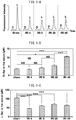
- FIG. 1-A is a typical chromatogram obtained by two-dimensional HPLC of D-/L-serine in the serum of C57BL/6J wild-type mice that underwent sham surgery or ischemia reperfusion treatment.
- markers were measured for 8 animals in a sham group and for 5, 9, 6 and 7 animals at 4, 8, 20 and 40 hours, respectively, after reperfusion.
- the bar graphs of FIGS. 1-A to 1-F represent average values, while the error bars represent the standard error of the sample mean (SEM). Data of the examples was tested statistically by one way analysis of variance followed by Tukey's multiple comparison test.
- SEM standard error of the sample mean
- one asterisk (*) indicates a P value of less than 0.05
- two asterisks (**) indicate a P value of less than 0.01
- three asterisks (***) indicate a P value of less than 0.001.
- NS stands for not significant.
- the word "sham” in the drawings indicates concentrations in mice that underwent sham surgery, while IRI4, IRI8, IRI20 and IRI40 indicate concentrations in mice at 4, 8, 20 and 40 hours after reperfusion, respectively. Although there were significant fluctuations in serum D-serine concentrations at 4 and 8 hours after reperfusion in the C57BL/6J mice, concentrations increased at 20 hours and increased further at 40 hours ( FIG. 1-B ). Furthermore, the values of D-serine concentration indicated in FIG.
- a certain value is only indicated at a certain point in time after reperfusion in the case of a monotonically changing marker
- a certain value is not only indicated at a single point in time, but may also increase another time or a plurality of times more. Consequently, the stage of progression of renal failure cannot be uniquely estimated by the value of a marker.
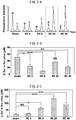
- FIGS. 2-A to 2-J represent average values, while the error bars represent the standard error of the sample mean (SEM). Data of the examples was tested statistically by one way analysis of variance followed by Tukey's multiple comparison test.
- one asterisk (*) indicates a P value of less than 0.05
- two asterisks (**) indicate a P value of less than 0.01
- three asterisks (***) indicate a P value of less than 0.001.
- NS stands for not significant.
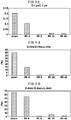
- FIGS. 3-A to 3-L indicate bar graphs of the ratio of the average value of the concentration of a D-form to the average value of the concentration of an L-form of individual mice for the mice at 4, 8, 20 and 40 hours after ischemia reperfusion treatment.
- [D-glutamic acid] and [L-glutamic acid] FIG. 3-F
- [D-allo-isoleucine] and [L-isoleucine] FIG. 3-J
- [D-phenylalanine] and [L-phenylalanine] FIG.
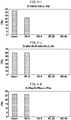
- FIGS. 4-A to 4-L indicate bar graphs of the percentages of the average values of concentrations of a D-form to the sum of the average values of the concentrations of an L-form and the average values of the concentrations of the D-form of individual mice for sham surgery mice and mice 4, 8, 20 and 40 hours after ischemia reperfusion treatment.
- FIG. 4-F [D-allo-isoleucine] and [L-isoleucine]
- FIG. 4-J [D-phenylalanine] and [L-phenylalanine]
- FIGS. 5-A to 5-R indicate bar graphs of the ratios of the average value of the concentration of a D-form to the average value of the concentration of an L-form in individual mice in sham surgery mice and mice at 4, 8, 20 and 40 hours after ischemia reperfusion treatment along with the results of investigating for the presence or absence of statistically significant differences.
- [D-allo-isoleucine] and [L-isoleucine] FIG. 5-J
- [D-phenylalanine] and [L-phenylalanine] FIG.
- FIG. 5-B [D-serine] and [L-serine]
- FIG. 5-C [D-arginine] and [L-arginine]
- FIG. 5-E [D-allo-threonine] and [L-threonine]
- FIG. 5-G [D-proline] and [L-proline]
- FIG. 5-H [D-lysine] and [L-lysine]
- FIG. 5-H and [D-lysine] and [L-lysine] ( FIG. 5-L ) can be used as a marker for renal failure having sensitivity that is equal to or greater than that of urine creatinine.
- one or a plurality of pathological index values selected from the group consisting of [D-histidine]/[L-histidine], [D-proline]/[L-proline] and [D-lysine]/[L-lysine] which demonstrate a significant difference of P ⁇ 0.001 with the sham surgery group at 4 hours after reperfusion, is capable of diagnosing renal failure with even higher sensitivity.
- pathological index values may be used alone, combining a plurality of pathological index values enables diagnoses having a
- [D-lysine] and [L-lysine] can be used as markers of renal failure having sensitivity that is equal to or greater than that of urine creatinine.
- a pathological index value of a subject is statistically significantly different from the pathological index reference value of a healthy individual group and statistically significantly different from the pathological index reference value of a renal failure patient group, and is between the pathological index reference value of a healthy individual group and the pathological index reference value of a renal failure patient group, the subject can be diagnosed as being suspected of early renal failure.
- renal failure can be diagnosed at an even earlier stage by using a pathological index value calculated from the concentration of one or a plurality of a pair of D-form and L-form of one or more amino acids selected from the group consisting of [D-histidine] and [L-histidine], [D-proline] and [L-proline] and [D-lysine] and [L-lysine], which exhibit a significant difference of p ⁇ 0.001 with a sham surgery group at 4 hours after reperfusion.
Landscapes
- Life Sciences & Earth Sciences (AREA)
- Health & Medical Sciences (AREA)
- Engineering & Computer Science (AREA)
- Molecular Biology (AREA)
- Hematology (AREA)
- Chemical & Material Sciences (AREA)
- Urology & Nephrology (AREA)
- Physics & Mathematics (AREA)
- Immunology (AREA)
- Biomedical Technology (AREA)
- Biophysics (AREA)
- Food Science & Technology (AREA)
- Biotechnology (AREA)
- Proteomics, Peptides & Aminoacids (AREA)
- Microbiology (AREA)
- Bioinformatics & Computational Biology (AREA)
- Bioinformatics & Cheminformatics (AREA)
- Cell Biology (AREA)
- Medicinal Chemistry (AREA)
- Analytical Chemistry (AREA)
- Biochemistry (AREA)
- General Health & Medical Sciences (AREA)
- General Physics & Mathematics (AREA)
- Pathology (AREA)
- Investigating Or Analysing Biological Materials (AREA)
Claims (3)
- Procédé pour analyser l'urine d'un sujet qui est suspecté d'avoir une insuffisance rénale, comprenant :la mesure de la concentration d'une paire de [D-sérine] et [L-sérine] dans l'urine du sujet,le calcul du rapport de la concentration de [D-sérine] sur la concentration de [L-sérine] ou du pourcentage de la concentration de [D-sérine] sur la somme des concentrations de [D-sérine] et de [L-sérine] en tant que valeur d'indice pathologique dudit sujet.
- Procédé d'analyse selon la revendication 1, comprenant en outre : la comparaison de la valeur d'indice pathologique du sujet avec une valeur d'indice pathologique de référence d'un groupe d'individus en bonne santé et une valeur d'indice pathologique de référence d'un groupe de patients ayant une insuffisance rénale aiguë et/ou une insuffisance rénale chronique, le fait de déterminer si la valeur d'indice pathologique du sujet est similaire à la valeur d'indice pathologique de référence des individus en bonne santé, si la valeur d'indice pathologique du sujet est similaire à la valeur d'indice pathologique de référence du groupe de patients ayant une insuffisance rénale aiguë et/ou une insuffisance rénale chronique, ou si la valeur d'indice pathologique du sujet se situe entre la valeur d'indice pathologique de référence du groupe d'individus en bonne santé et la valeur d'indice pathologique de référence du groupe de patients ayant une insuffisance rénale aiguë et/ou une insuffisance rénale chronique.
- Système pour analyser un échantillon d'urine d'un sujet suspecté d'avoir une insuffisance rénale, comprenant :une unité de mémoire qui comprend une mémoire, une unité d'analyse et de mesure qui comprend un analyseur automatisé,une unité de traitement de données qui comprend un ordinateur, et une unité de sortie d'information pathologique ; dans lequell'unité de mémoire stocke les valeurs de référence d'indice pathologique pour l'urine d'un groupe d'individus en bonne santé, et les valeurs de référence d'indice pathologique pour l'urine d'un groupe de patients ayant une insuffisance rénale aiguë et/ou une insuffisance rénale chronique,l'unité d'analyse et de mesure sépare et quantifie une paire de D-sérine et L-sérine présentes dans l'urine du sujet,l'unité de traitement de données calcule le rapport de la concentration de [D-sérine] sur la concentration de [L-sérine] ou du pourcentage de la concentration de [D-sérine] sur la somme des concentrations de [D-sérine] et de [L-sérine] en tant que valeur d'indice pathologique du sujet, compare la valeur d'indice pathologique du sujet avec les valeurs de référence d'indice pathologique du groupe d'individus en bonne santé et les valeurs de référence d'indice pathologique du groupe de patients ayant une insuffisance rénale aiguë et/ou une insuffisance rénale chronique de façon à définir une information pathologique du sujet selon laquelle le sujet est faiblement suspecté d'avoir une insuffisance rénale quand la valeur d'indice pathologique du sujet est similaire à la valeur de référence d'indice pathologique du groupe d'individus en bonne santé, de façon à définir une information pathologique du sujet selon laquelle le sujet est suspecté d'avoir une insuffisance rénale quand la valeur d'indice pathologique du sujet est similaire à la valeur de référence d'indice pathologique du groupe de patients ayant une insuffisance rénale aiguë et/ou une insuffisance rénale chronique, et de façon à définir une information pathologique du sujet selon laquelle le sujet est suspecté d'avoir une insuffisance rénale à un stade précoce quand la valeur d'indice pathologique du sujet est entre la valeur de référence d'indice pathologique du groupe d'individus en bonne santé et la valeur de référence d'indice pathologique du groupe de patients ayant une insuffisance rénale aiguë et/ou une insuffisance rénale chronique, etl'unité de sortie d'information pathologique délivre en sortie l'information pathologique du sujet.
Priority Applications (1)
| Application Number | Priority Date | Filing Date | Title |
|---|---|---|---|
| EP21155414.2A EP3842806A1 (fr) | 2013-12-11 | 2014-12-11 | Marqueur pour le diagnostic précoce de l'insuffisance rénale |
Applications Claiming Priority (2)
| Application Number | Priority Date | Filing Date | Title |
|---|---|---|---|
| JP2013256224 | 2013-12-11 | ||
| PCT/JP2014/082899 WO2015087985A1 (fr) | 2013-12-11 | 2014-12-11 | Marqueur permettant le diagnostic précoce de l'insuffisance rénale |
Related Child Applications (1)
| Application Number | Title | Priority Date | Filing Date |
|---|---|---|---|
| EP21155414.2A Division EP3842806A1 (fr) | 2013-12-11 | 2014-12-11 | Marqueur pour le diagnostic précoce de l'insuffisance rénale |
Publications (3)
| Publication Number | Publication Date |
|---|---|
| EP3081939A1 EP3081939A1 (fr) | 2016-10-19 |
| EP3081939A4 EP3081939A4 (fr) | 2017-06-21 |
| EP3081939B1 true EP3081939B1 (fr) | 2021-02-17 |
Family
ID=53371283
Family Applications (2)
| Application Number | Title | Priority Date | Filing Date |
|---|---|---|---|
| EP21155414.2A Withdrawn EP3842806A1 (fr) | 2013-12-11 | 2014-12-11 | Marqueur pour le diagnostic précoce de l'insuffisance rénale |
| EP14868998.7A Active EP3081939B1 (fr) | 2013-12-11 | 2014-12-11 | Marqueur permettant le diagnostic précoce de l'insuffisance rénale |
Family Applications Before (1)
| Application Number | Title | Priority Date | Filing Date |
|---|---|---|---|
| EP21155414.2A Withdrawn EP3842806A1 (fr) | 2013-12-11 | 2014-12-11 | Marqueur pour le diagnostic précoce de l'insuffisance rénale |
Country Status (5)
| Country | Link |
|---|---|
| US (3) | US10393749B2 (fr) |
| EP (2) | EP3842806A1 (fr) |
| JP (1) | JP5740523B1 (fr) |
| CN (1) | CN105793712B (fr) |
| WO (1) | WO2015087985A1 (fr) |
Families Citing this family (13)
| Publication number | Priority date | Publication date | Assignee | Title |
|---|---|---|---|---|
| AU2017266330A1 (en) * | 2016-05-17 | 2018-12-06 | Osaka University | Kidney disease prognosis prediction method and system |
| JP6609282B2 (ja) * | 2016-05-17 | 2019-11-20 | 国立大学法人大阪大学 | 糖尿病を判定するための血液試料の分析方法及びシステム |
| AU2017301949B2 (en) * | 2016-07-28 | 2021-09-23 | Metabolon, Inc. | Compounds, reagents, and uses thereof |
| US11026625B2 (en) | 2017-08-08 | 2021-06-08 | Fresenius Medical Care Holdings, Inc. | Systems and methods for treating and estimating progression of chronic kidney disease |
| EP3511716A1 (fr) * | 2018-01-16 | 2019-07-17 | Koninklijke Philips N.V. | Methodes, usage et kits pour la diagnose de la periodontitits |
| US12220394B2 (en) * | 2018-06-07 | 2025-02-11 | National University Corporation Kanazawa University | Pharmaceutical composition for prevention or treatment of kidney damage |
| WO2020080494A1 (fr) * | 2018-10-17 | 2020-04-23 | 株式会社 資生堂 | Marqueur permettant de déterminer une lésion rénale dans un stade critique |
| TW202028746A (zh) * | 2018-10-17 | 2020-08-01 | 日商資生堂股份有限公司 | 用以判定關鍵期之腎損傷之標記 |
| WO2020080484A1 (fr) * | 2018-10-17 | 2020-04-23 | 株式会社 資生堂 | Méthode de détermination de la capacité de filtration glomérulaire |
| EP3943948B1 (fr) | 2019-03-22 | 2025-07-09 | Kagami Inc. | Procédé d'aide à l'évaluation de l'état des reins, système d'évaluation de l'état des reins et programme d'évaluation de l'état des reins |
| WO2020196437A1 (fr) * | 2019-03-22 | 2020-10-01 | Kagami株式会社 | Méthode d'aide à l'évaluation d'états pathologiques rénaux, système d'évaluation d'états pathologiques rénaux et programme d'évaluation d'états pathologiques rénaux |
| WO2021132658A1 (fr) * | 2019-12-27 | 2021-07-01 | Kagami株式会社 | Procédé et système d'estimation de la fonction rénale |
| JP7390921B2 (ja) * | 2020-02-17 | 2023-12-04 | 花王株式会社 | 高次脳機能の測定方法 |
Family Cites Families (9)
| Publication number | Priority date | Publication date | Assignee | Title |
|---|---|---|---|---|
| AU775563B2 (en) | 1999-05-14 | 2004-08-05 | Brandeis University | Nucleic acid-based detection |
| WO2004081527A2 (fr) | 2003-03-10 | 2004-09-23 | Sionex Corporation | Systemes d'analyse de motilite ionique differentielle |
| JP4291628B2 (ja) | 2003-06-12 | 2009-07-08 | 株式会社資生堂 | 液体クロマトグラフ装置及び試料に含まれる光学異性体の分析方法 |
| BRPI0509331B8 (pt) * | 2004-03-30 | 2021-05-25 | Ilypsa Inc | uso de uma composição de ligação de sódio |
| US20060046268A1 (en) * | 2004-08-26 | 2006-03-02 | Australian Stem Cell Centre Ltd. | Diagnosis of anemia and optimizing treatment for heart repair |
| JP2008027650A (ja) | 2006-07-19 | 2008-02-07 | Koito Mfg Co Ltd | 車輌用灯具 |
| US20090075284A1 (en) | 2006-09-19 | 2009-03-19 | The Regents Of The University Of Michigan | Metabolomic profiling of prostate cancer |
| ES2799327T3 (es) | 2009-05-05 | 2020-12-16 | Infandx Ag | Método para diagnosticar asfixia |
| CN110133296B (zh) | 2012-03-18 | 2022-03-25 | 镜株式会社 | 疾病样品分析装置、分析系统及分析方法 |
-
2014
- 2014-12-11 US US15/103,539 patent/US10393749B2/en active Active
- 2014-12-11 JP JP2014251322A patent/JP5740523B1/ja active Active
- 2014-12-11 EP EP21155414.2A patent/EP3842806A1/fr not_active Withdrawn
- 2014-12-11 WO PCT/JP2014/082899 patent/WO2015087985A1/fr not_active Ceased
- 2014-12-11 EP EP14868998.7A patent/EP3081939B1/fr active Active
- 2014-12-11 CN CN201480065113.8A patent/CN105793712B/zh not_active Expired - Fee Related
-
2018
- 2018-12-21 US US16/231,381 patent/US20190339281A1/en not_active Abandoned
-
2019
- 2019-07-15 US US16/511,097 patent/US20190339282A1/en not_active Abandoned
Non-Patent Citations (1)
| Title |
|---|
| YANG J.H. ET AL.: "Brain-specific Phgdh deletion reveals a pivotal role for L-serine biosynthesis in controlling the level of D-serine, an N-methyl-D-aspartate receptor co-agonist, in adult brain", J. BIOL. CHEM., vol. 285, no. 53, 31 December 2010 (2010-12-31), pages 41380 - 41390 * |
Also Published As
| Publication number | Publication date |
|---|---|
| US10393749B2 (en) | 2019-08-27 |
| EP3842806A1 (fr) | 2021-06-30 |
| CN105793712A (zh) | 2016-07-20 |
| US20190339281A1 (en) | 2019-11-07 |
| JP5740523B1 (ja) | 2015-06-24 |
| JP2015132598A (ja) | 2015-07-23 |
| EP3081939A1 (fr) | 2016-10-19 |
| CN105793712B (zh) | 2018-01-05 |
| WO2015087985A1 (fr) | 2015-06-18 |
| US20190339282A1 (en) | 2019-11-07 |
| US20160313342A1 (en) | 2016-10-27 |
| EP3081939A4 (fr) | 2017-06-21 |
Similar Documents
| Publication | Publication Date | Title |
|---|---|---|
| EP3081939B1 (fr) | Marqueur permettant le diagnostic précoce de l'insuffisance rénale | |
| US20220003774A1 (en) | Kidney disease prognosis prediction method and system | |
| US20180252730A1 (en) | Disease-state biomarker for renal disease | |
| JP6609282B2 (ja) | 糖尿病を判定するための血液試料の分析方法及びシステム | |
| JP5832429B2 (ja) | 慢性腎臓病の病期を判定する方法又は装置若しくはその作動方法 | |
| WO2021132658A1 (fr) | Procédé et système d'estimation de la fonction rénale | |
| JP7471581B2 (ja) | 腎臓病の病態バイオマーカー | |
| HK1226808A1 (en) | Marker for early diagnosis of kidney failure | |
| JPWO2004005935A1 (ja) | 統合失調症の検査、診断方法 | |
| TW202028746A (zh) | 用以判定關鍵期之腎損傷之標記 | |
| TW202028747A (zh) | 絲球體過濾能力之決定方法 | |
| HK40002816A (en) | Kidney disease prognosis prediction method and system | |
| HK40002815A (en) | Blood sample analysis method and system, for determining diabetes |
Legal Events
| Date | Code | Title | Description |
|---|---|---|---|
| PUAI | Public reference made under article 153(3) epc to a published international application that has entered the european phase |
Free format text: ORIGINAL CODE: 0009012 |
|
| 17P | Request for examination filed |
Effective date: 20160707 |
|
| AK | Designated contracting states |
Kind code of ref document: A1 Designated state(s): AL AT BE BG CH CY CZ DE DK EE ES FI FR GB GR HR HU IE IS IT LI LT LU LV MC MK MT NL NO PL PT RO RS SE SI SK SM TR |
|
| AX | Request for extension of the european patent |
Extension state: BA ME |
|
| DAX | Request for extension of the european patent (deleted) | ||
| A4 | Supplementary search report drawn up and despatched |
Effective date: 20170523 |
|
| RIC1 | Information provided on ipc code assigned before grant |
Ipc: G01N 33/68 20060101AFI20170517BHEP |
|
| REG | Reference to a national code |
Ref country code: HK Ref legal event code: DE Ref document number: 1226808 Country of ref document: HK |
|
| STAA | Information on the status of an ep patent application or granted ep patent |
Free format text: STATUS: REQUEST FOR EXAMINATION WAS MADE |
|
| RAP1 | Party data changed (applicant data changed or rights of an application transferred) |
Owner name: SHISEIDO COMPANY LTD. |
|
| STAA | Information on the status of an ep patent application or granted ep patent |
Free format text: STATUS: EXAMINATION IS IN PROGRESS |
|
| 17Q | First examination report despatched |
Effective date: 20180912 |
|
| GRAP | Despatch of communication of intention to grant a patent |
Free format text: ORIGINAL CODE: EPIDOSNIGR1 |
|
| STAA | Information on the status of an ep patent application or granted ep patent |
Free format text: STATUS: GRANT OF PATENT IS INTENDED |
|
| INTG | Intention to grant announced |
Effective date: 20200123 |
|
| GRAJ | Information related to disapproval of communication of intention to grant by the applicant or resumption of examination proceedings by the epo deleted |
Free format text: ORIGINAL CODE: EPIDOSDIGR1 |
|
| STAA | Information on the status of an ep patent application or granted ep patent |
Free format text: STATUS: EXAMINATION IS IN PROGRESS |
|
| INTC | Intention to grant announced (deleted) | ||
| RAP1 | Party data changed (applicant data changed or rights of an application transferred) |
Owner name: KAGAMI INC. |
|
| GRAP | Despatch of communication of intention to grant a patent |
Free format text: ORIGINAL CODE: EPIDOSNIGR1 |
|
| STAA | Information on the status of an ep patent application or granted ep patent |
Free format text: STATUS: GRANT OF PATENT IS INTENDED |
|
| INTG | Intention to grant announced |
Effective date: 20200717 |
|
| GRAS | Grant fee paid |
Free format text: ORIGINAL CODE: EPIDOSNIGR3 |
|
| GRAA | (expected) grant |
Free format text: ORIGINAL CODE: 0009210 |
|
| STAA | Information on the status of an ep patent application or granted ep patent |
Free format text: STATUS: THE PATENT HAS BEEN GRANTED |
|
| AK | Designated contracting states |
Kind code of ref document: B1 Designated state(s): AL AT BE BG CH CY CZ DE DK EE ES FI FR GB GR HR HU IE IS IT LI LT LU LV MC MK MT NL NO PL PT RO RS SE SI SK SM TR |
|
| REG | Reference to a national code |
Ref country code: GB Ref legal event code: FG4D |
|
| REG | Reference to a national code |
Ref country code: CH Ref legal event code: EP |
|
| REG | Reference to a national code |
Ref country code: DE Ref legal event code: R096 Ref document number: 602014074982 Country of ref document: DE |
|
| REG | Reference to a national code |
Ref country code: AT Ref legal event code: REF Ref document number: 1362131 Country of ref document: AT Kind code of ref document: T Effective date: 20210315 |
|
| REG | Reference to a national code |
Ref country code: IE Ref legal event code: FG4D |
|
| REG | Reference to a national code |
Ref country code: CH Ref legal event code: NV Representative=s name: BUGNION S.A., CH |
|
| REG | Reference to a national code |
Ref country code: LT Ref legal event code: MG9D |
|
| REG | Reference to a national code |
Ref country code: NL Ref legal event code: MP Effective date: 20210217 |
|
| PG25 | Lapsed in a contracting state [announced via postgrant information from national office to epo] |
Ref country code: NO Free format text: LAPSE BECAUSE OF FAILURE TO SUBMIT A TRANSLATION OF THE DESCRIPTION OR TO PAY THE FEE WITHIN THE PRESCRIBED TIME-LIMIT Effective date: 20210517 Ref country code: BG Free format text: LAPSE BECAUSE OF FAILURE TO SUBMIT A TRANSLATION OF THE DESCRIPTION OR TO PAY THE FEE WITHIN THE PRESCRIBED TIME-LIMIT Effective date: 20210517 Ref country code: HR Free format text: LAPSE BECAUSE OF FAILURE TO SUBMIT A TRANSLATION OF THE DESCRIPTION OR TO PAY THE FEE WITHIN THE PRESCRIBED TIME-LIMIT Effective date: 20210217 Ref country code: GR Free format text: LAPSE BECAUSE OF FAILURE TO SUBMIT A TRANSLATION OF THE DESCRIPTION OR TO PAY THE FEE WITHIN THE PRESCRIBED TIME-LIMIT Effective date: 20210518 Ref country code: FI Free format text: LAPSE BECAUSE OF FAILURE TO SUBMIT A TRANSLATION OF THE DESCRIPTION OR TO PAY THE FEE WITHIN THE PRESCRIBED TIME-LIMIT Effective date: 20210217 Ref country code: LT Free format text: LAPSE BECAUSE OF FAILURE TO SUBMIT A TRANSLATION OF THE DESCRIPTION OR TO PAY THE FEE WITHIN THE PRESCRIBED TIME-LIMIT Effective date: 20210217 Ref country code: PT Free format text: LAPSE BECAUSE OF FAILURE TO SUBMIT A TRANSLATION OF THE DESCRIPTION OR TO PAY THE FEE WITHIN THE PRESCRIBED TIME-LIMIT Effective date: 20210617 |
|
| REG | Reference to a national code |
Ref country code: AT Ref legal event code: MK05 Ref document number: 1362131 Country of ref document: AT Kind code of ref document: T Effective date: 20210217 |
|
| PG25 | Lapsed in a contracting state [announced via postgrant information from national office to epo] |
Ref country code: SE Free format text: LAPSE BECAUSE OF FAILURE TO SUBMIT A TRANSLATION OF THE DESCRIPTION OR TO PAY THE FEE WITHIN THE PRESCRIBED TIME-LIMIT Effective date: 20210217 Ref country code: RS Free format text: LAPSE BECAUSE OF FAILURE TO SUBMIT A TRANSLATION OF THE DESCRIPTION OR TO PAY THE FEE WITHIN THE PRESCRIBED TIME-LIMIT Effective date: 20210217 Ref country code: LV Free format text: LAPSE BECAUSE OF FAILURE TO SUBMIT A TRANSLATION OF THE DESCRIPTION OR TO PAY THE FEE WITHIN THE PRESCRIBED TIME-LIMIT Effective date: 20210217 Ref country code: NL Free format text: LAPSE BECAUSE OF FAILURE TO SUBMIT A TRANSLATION OF THE DESCRIPTION OR TO PAY THE FEE WITHIN THE PRESCRIBED TIME-LIMIT Effective date: 20210217 Ref country code: PL Free format text: LAPSE BECAUSE OF FAILURE TO SUBMIT A TRANSLATION OF THE DESCRIPTION OR TO PAY THE FEE WITHIN THE PRESCRIBED TIME-LIMIT Effective date: 20210217 |
|
| PG25 | Lapsed in a contracting state [announced via postgrant information from national office to epo] |
Ref country code: IS Free format text: LAPSE BECAUSE OF FAILURE TO SUBMIT A TRANSLATION OF THE DESCRIPTION OR TO PAY THE FEE WITHIN THE PRESCRIBED TIME-LIMIT Effective date: 20210617 |
|
| PG25 | Lapsed in a contracting state [announced via postgrant information from national office to epo] |
Ref country code: SM Free format text: LAPSE BECAUSE OF FAILURE TO SUBMIT A TRANSLATION OF THE DESCRIPTION OR TO PAY THE FEE WITHIN THE PRESCRIBED TIME-LIMIT Effective date: 20210217 Ref country code: EE Free format text: LAPSE BECAUSE OF FAILURE TO SUBMIT A TRANSLATION OF THE DESCRIPTION OR TO PAY THE FEE WITHIN THE PRESCRIBED TIME-LIMIT Effective date: 20210217 Ref country code: CZ Free format text: LAPSE BECAUSE OF FAILURE TO SUBMIT A TRANSLATION OF THE DESCRIPTION OR TO PAY THE FEE WITHIN THE PRESCRIBED TIME-LIMIT Effective date: 20210217 Ref country code: AT Free format text: LAPSE BECAUSE OF FAILURE TO SUBMIT A TRANSLATION OF THE DESCRIPTION OR TO PAY THE FEE WITHIN THE PRESCRIBED TIME-LIMIT Effective date: 20210217 |
|
| REG | Reference to a national code |
Ref country code: DE Ref legal event code: R097 Ref document number: 602014074982 Country of ref document: DE |
|
| PG25 | Lapsed in a contracting state [announced via postgrant information from national office to epo] |
Ref country code: DK Free format text: LAPSE BECAUSE OF FAILURE TO SUBMIT A TRANSLATION OF THE DESCRIPTION OR TO PAY THE FEE WITHIN THE PRESCRIBED TIME-LIMIT Effective date: 20210217 Ref country code: ES Free format text: LAPSE BECAUSE OF FAILURE TO SUBMIT A TRANSLATION OF THE DESCRIPTION OR TO PAY THE FEE WITHIN THE PRESCRIBED TIME-LIMIT Effective date: 20210217 Ref country code: SK Free format text: LAPSE BECAUSE OF FAILURE TO SUBMIT A TRANSLATION OF THE DESCRIPTION OR TO PAY THE FEE WITHIN THE PRESCRIBED TIME-LIMIT Effective date: 20210217 Ref country code: RO Free format text: LAPSE BECAUSE OF FAILURE TO SUBMIT A TRANSLATION OF THE DESCRIPTION OR TO PAY THE FEE WITHIN THE PRESCRIBED TIME-LIMIT Effective date: 20210217 |
|
| PLBE | No opposition filed within time limit |
Free format text: ORIGINAL CODE: 0009261 |
|
| STAA | Information on the status of an ep patent application or granted ep patent |
Free format text: STATUS: NO OPPOSITION FILED WITHIN TIME LIMIT |
|
| 26N | No opposition filed |
Effective date: 20211118 |
|
| PG25 | Lapsed in a contracting state [announced via postgrant information from national office to epo] |
Ref country code: AL Free format text: LAPSE BECAUSE OF FAILURE TO SUBMIT A TRANSLATION OF THE DESCRIPTION OR TO PAY THE FEE WITHIN THE PRESCRIBED TIME-LIMIT Effective date: 20210217 |
|
| PG25 | Lapsed in a contracting state [announced via postgrant information from national office to epo] |
Ref country code: SI Free format text: LAPSE BECAUSE OF FAILURE TO SUBMIT A TRANSLATION OF THE DESCRIPTION OR TO PAY THE FEE WITHIN THE PRESCRIBED TIME-LIMIT Effective date: 20210217 |
|
| PG25 | Lapsed in a contracting state [announced via postgrant information from national office to epo] |
Ref country code: IT Free format text: LAPSE BECAUSE OF FAILURE TO SUBMIT A TRANSLATION OF THE DESCRIPTION OR TO PAY THE FEE WITHIN THE PRESCRIBED TIME-LIMIT Effective date: 20210217 |
|
| PG25 | Lapsed in a contracting state [announced via postgrant information from national office to epo] |
Ref country code: IS Free format text: LAPSE BECAUSE OF FAILURE TO SUBMIT A TRANSLATION OF THE DESCRIPTION OR TO PAY THE FEE WITHIN THE PRESCRIBED TIME-LIMIT Effective date: 20210617 |
|
| PG25 | Lapsed in a contracting state [announced via postgrant information from national office to epo] |
Ref country code: MC Free format text: LAPSE BECAUSE OF FAILURE TO SUBMIT A TRANSLATION OF THE DESCRIPTION OR TO PAY THE FEE WITHIN THE PRESCRIBED TIME-LIMIT Effective date: 20210217 |
|
| REG | Reference to a national code |
Ref country code: BE Ref legal event code: MM Effective date: 20211231 |
|
| PG25 | Lapsed in a contracting state [announced via postgrant information from national office to epo] |
Ref country code: LU Free format text: LAPSE BECAUSE OF NON-PAYMENT OF DUE FEES Effective date: 20211211 Ref country code: IE Free format text: LAPSE BECAUSE OF NON-PAYMENT OF DUE FEES Effective date: 20211211 |
|
| PG25 | Lapsed in a contracting state [announced via postgrant information from national office to epo] |
Ref country code: BE Free format text: LAPSE BECAUSE OF NON-PAYMENT OF DUE FEES Effective date: 20211231 |
|
| PGFP | Annual fee paid to national office [announced via postgrant information from national office to epo] |
Ref country code: FR Payment date: 20221208 Year of fee payment: 9 |
|
| PGFP | Annual fee paid to national office [announced via postgrant information from national office to epo] |
Ref country code: CH Payment date: 20230101 Year of fee payment: 9 |
|
| PG25 | Lapsed in a contracting state [announced via postgrant information from national office to epo] |
Ref country code: HU Free format text: LAPSE BECAUSE OF FAILURE TO SUBMIT A TRANSLATION OF THE DESCRIPTION OR TO PAY THE FEE WITHIN THE PRESCRIBED TIME-LIMIT; INVALID AB INITIO Effective date: 20141211 |
|
| PGFP | Annual fee paid to national office [announced via postgrant information from national office to epo] |
Ref country code: DE Payment date: 20221230 Year of fee payment: 9 |
|
| PG25 | Lapsed in a contracting state [announced via postgrant information from national office to epo] |
Ref country code: CY Free format text: LAPSE BECAUSE OF FAILURE TO SUBMIT A TRANSLATION OF THE DESCRIPTION OR TO PAY THE FEE WITHIN THE PRESCRIBED TIME-LIMIT Effective date: 20210217 |
|
| REG | Reference to a national code |
Ref country code: HK Ref legal event code: WD Ref document number: 1226808 Country of ref document: HK |
|
| PG25 | Lapsed in a contracting state [announced via postgrant information from national office to epo] |
Ref country code: MK Free format text: LAPSE BECAUSE OF FAILURE TO SUBMIT A TRANSLATION OF THE DESCRIPTION OR TO PAY THE FEE WITHIN THE PRESCRIBED TIME-LIMIT Effective date: 20210217 |
|
| PG25 | Lapsed in a contracting state [announced via postgrant information from national office to epo] |
Ref country code: TR Free format text: LAPSE BECAUSE OF FAILURE TO SUBMIT A TRANSLATION OF THE DESCRIPTION OR TO PAY THE FEE WITHIN THE PRESCRIBED TIME-LIMIT Effective date: 20210217 |
|
| REG | Reference to a national code |
Ref country code: DE Ref legal event code: R119 Ref document number: 602014074982 Country of ref document: DE |
|
| REG | Reference to a national code |
Ref country code: CH Ref legal event code: PL |
|
| PG25 | Lapsed in a contracting state [announced via postgrant information from national office to epo] |
Ref country code: MT Free format text: LAPSE BECAUSE OF FAILURE TO SUBMIT A TRANSLATION OF THE DESCRIPTION OR TO PAY THE FEE WITHIN THE PRESCRIBED TIME-LIMIT Effective date: 20210217 |
|
| PG25 | Lapsed in a contracting state [announced via postgrant information from national office to epo] |
Ref country code: DE Free format text: LAPSE BECAUSE OF NON-PAYMENT OF DUE FEES Effective date: 20240702 |
|
| PG25 | Lapsed in a contracting state [announced via postgrant information from national office to epo] |
Ref country code: FR Free format text: LAPSE BECAUSE OF NON-PAYMENT OF DUE FEES Effective date: 20231231 |
|
| PG25 | Lapsed in a contracting state [announced via postgrant information from national office to epo] |
Ref country code: CH Free format text: LAPSE BECAUSE OF NON-PAYMENT OF DUE FEES Effective date: 20231231 |
|
| PG25 | Lapsed in a contracting state [announced via postgrant information from national office to epo] |
Ref country code: FR Free format text: LAPSE BECAUSE OF NON-PAYMENT OF DUE FEES Effective date: 20231231 Ref country code: DE Free format text: LAPSE BECAUSE OF NON-PAYMENT OF DUE FEES Effective date: 20240702 Ref country code: CH Free format text: LAPSE BECAUSE OF NON-PAYMENT OF DUE FEES Effective date: 20231231 |
|
| PGFP | Annual fee paid to national office [announced via postgrant information from national office to epo] |
Ref country code: GB Payment date: 20251204 Year of fee payment: 12 |