EP3082079A1 - Procédé et système permettant d'identifier des configurations navales par l'évaluation de paramètres de conception et de fonctionnement - Google Patents
Procédé et système permettant d'identifier des configurations navales par l'évaluation de paramètres de conception et de fonctionnement Download PDFInfo
- Publication number
- EP3082079A1 EP3082079A1 EP16164938.9A EP16164938A EP3082079A1 EP 3082079 A1 EP3082079 A1 EP 3082079A1 EP 16164938 A EP16164938 A EP 16164938A EP 3082079 A1 EP3082079 A1 EP 3082079A1
- Authority
- EP
- European Patent Office
- Prior art keywords
- naval
- configurations
- ship
- parameters
- operational
- Prior art date
- Legal status (The legal status is an assumption and is not a legal conclusion. Google has not performed a legal analysis and makes no representation as to the accuracy of the status listed.)
- Withdrawn
Links
Images




Classifications
-
- G—PHYSICS
- G06—COMPUTING OR CALCULATING; COUNTING
- G06Q—INFORMATION AND COMMUNICATION TECHNOLOGY [ICT] SPECIALLY ADAPTED FOR ADMINISTRATIVE, COMMERCIAL, FINANCIAL, MANAGERIAL OR SUPERVISORY PURPOSES; SYSTEMS OR METHODS SPECIALLY ADAPTED FOR ADMINISTRATIVE, COMMERCIAL, FINANCIAL, MANAGERIAL OR SUPERVISORY PURPOSES, NOT OTHERWISE PROVIDED FOR
- G06Q10/00—Administration; Management
- G06Q10/04—Forecasting or optimisation specially adapted for administrative or management purposes, e.g. linear programming or "cutting stock problem"
Definitions
- the present invention relates to a method for identifying naval configurations, for example military ships, in particular through the evaluation of operational and design parameters, and a system implementing this method.
- the traditional process of development and construction of a new naval unit, in particular a military ship, is characterized by two quite distinct stages: the first stage consists in identifying the scenarios and naval missions that the naval unit must perform, while the second concerns analysing the physical constraints of feasibility, the technologies available and costs.
- this initial activity includes defining the scenario, characterized, for example, in terms of geographical areas and environmentally sensitive areas.
- This analysis represents a starting point for defining the first set of operating requirements for the new naval unit in terms of technical capabilities and other salient requirements, such as, for example, the (maximum and/or endurance) speed, operating range and mission duration, which serve as the starting point for the subsequent stages of the design process.
- this path can be limited to a "first turn" of the spiral, which in any case is expensive in terms of time and costs and cannot always be used effectively in the so-called early-stage design, due to physiological limitations in terms of knowledge of the details and certainties concerning the boundary conditions.
- One object of the present invention is therefore to provide a method for identifying naval configurations through the evaluation of operational and design parameters that is able to integrate the naval design world with that of operations, right from the very first stages of project development of a new naval unit, defining a data and information interchange network between different software platforms or applications, which are integrated together into a single, functional and logically organized global environment.
- a further object of the present invention is to create a method for identifying naval configurations that enables automatically and instantaneously checking what the consequences are of certain design choices (for example, a different propulsion apparatus, or a different subsystem of the combat system, if dealing with a military ship) on the cost and on the overall capability of the naval unit to carry out a certain operational task assigned to it (for example, different naval tasks in different environmental contexts).
- a further object of the present invention is to provide a method for identifying naval configurations that allow identifying the correct balance between expectations, specifically of the operating requirements drafting stage, the actual technical feasibility and the resultant cost of the ship, investigating how a change in an operating requirement, in a usage logic or design characteristic, affects all the other factors connected to it, in order to allow trade-off studies of the cost-performance type of ship configurations technically implementable according to the principles of naval architecture.
- a further object of the present invention is to provide a system implementing the method for identifying completed naval configurations through the evaluation of operational and design parameters.
- a method for identifying naval configurations through the evaluation of operational and design parameters comprises the following sequential steps:
- this method for identifying naval configurations enables integrating the naval design world with that of operations, right from the very first stages of project development of a new naval unit, also defining a data and information interchange network between different software applications, which are integrated together into a single, functional and logically organized environment.
- various implementation steps it will be possible to ultimately obtain a series of possible naval unit configurations, from which to choose the one that effectively meets the requested requirements and that satisfies both the economic and design constraints, all within a single environment supported by a normal data processor.
- this method comprises a step for checking operational effectiveness and possible redefinition of the design parameters according to step S3.
- step S7 it comprises a step for checking surrogate models and possible reconfiguration of the operating scenario(s) according to step S2.
- step S9 at the end of step S9, it comprises a step for checking the technical feasibility of a given naval configuration and the possible redefinition of possible alternative naval configurations according to step S8.
- a further object of the present invention is a system implementing the method for identifying naval configurations.
- This system implementing the method for identifying naval configurations enables integrating several software platforms or applications, which deal with evaluating the alternative configurations from different viewpoints.
- the main modules of the system are the Operational Evaluation Model (OEM), the function of which is to estimate the degree of operational effectiveness of a ship configuration in one or more scenarios; the Ship Synthesis Model (SSM), which has the aim of evaluating the soundness of the ship configuration according to the principles of naval architecture; and the module known as the Dashboard (D), which enables interfacing data, integrating the two models OEM and SSM and performing trade-off analysis, by acting as a kind of control panel on which the user can operate, modifying certain parameters and analysing the results obtained, in terms of operational performance, feasibility and cost, in real time.
- OEM Operational Evaluation Model
- SSM Ship Synthesis Model
- D the module known as the Dashboard
- Steps S1 to S7 of this method can be accomplished by means of the OEM module, steps S8 and S9 by means of the SSM module and step S10 by means of the Dashboard D.
- the Ship Synthesis Model (SSM) platform is a tool conceived for supporting the preliminary design stages of a naval combat unit. In practice, it consists of a logical sequence of parametric formulae, derived from the statistical analysis of existing ships, which enables rapidly and automatically evaluating the technical sustainability of a design.
- the feasibility of the defined configuration is evaluated at the end of the model, by comparison of the requested and available quantities, in terms of weight, area, volume, electrical power, propulsive power, autonomy and stability.
- the thrust provided by the submerged part of the hull is estimated via the initially set main dimensions and compared with the sum of all the estimated weights of the ship's apparatuses and systems.
- the parametric formulae that form the SSM are based on different existing ships. Use of the SSM is facilitated by a graphical interface, in which the quantities that characterize the configuration can be defined, together with the payload, which can be selected from an external database of arms and electronic systems.
- the Operational Evaluation Model (OEM) platform is a tool that performs a basic role in supporting the initial design stage in the development of military vessels, as it enables evaluating the operational effectiveness of the units within specific operational tasks.
- the OEM achieves this result through the definition of agent-based simulation models, the execution of simulation campaigns and the collection and analysis of the data thus obtained.
- the OEM enables the user to configure the operating scenarios that it is intended to study, specifying the main physical characteristics of the entities present and the related behavioural logics, together with the environmental boundary conditions.
- the simulation campaigns are carried out, in which the operating scenarios are repeated a large number of times, making changes on each iteration to a few random parameters (such as, for example, the number of neutral entities in a certain area or the initial positions of any threats), so as to produce a sufficient number of experiments from which to obtain an estimated degree of operational effectiveness of the ship configuration considered that is statistically significant.
- a few random parameters such as, for example, the number of neutral entities in a certain area or the initial positions of any threats
- the interface or dashboard is the tool that allows interfacing the two main models, namely the SSM application and the OEM application, allowing the user to integrate analysis of the operational effectiveness with the technical feasibility study and with the cost analysis. It is based on the connections between the models, specifically of the innovative process developed by OSN.
- the tool allows analysing how a change in a parameter, whether an operating requirement, a design parameter or a boundary condition, affects the ship as a whole.
- the tool enables analysing a large number of alternatives for which the technical feasibility is "promising”; in particular, the dashboard allows evaluating operational effectiveness and the cost of the alternatives considered, enabling trade-off analysis, with the two-fold aim of identifying the most appropriate operating requirements and tracing the criteria and reasons that led to the definition of these requirements.
- the present invention is concerned with a technical solution which is useful to solve the technical problems which are posed during the pre-planning step of the ship product, particularly of a military ship, that is the definition of the technical features of the ship downstream of a process of simulations concerning the operative performances, in front of particular requirements by the buyer.
- the present invention is therefore concerned with the ships construction in its main general features, that is the dimensions and the geometrical features, the speed, the autonomy, the payload of the ship already combined in a new feasible manner.
- Fig. 1 shows a general block diagram with the various steps of this method for identifying naval configurations. Steps S1 to S7 are carried out by the Operational Evaluation Model module OEM, steps S8 and S9 by the Ship Synthesis Model module SSM and step S10 by the Dashboard module D. S1 indicates the step of identifying the parameters or operational needs that the ship must meet. After step S1, there is a step S2 for configuration of the operating scenario(s) in which the ship will operate by identifying the physical parameters and other attribute of the ship. After this configuration is completed, there is a step S3 for definition of the design parameters to be simulated, on the basis of the results of the preceding step of scenario configuration.
- step S4 for execution of the simulation campaigns and obtaining data related to the effectiveness of a number of naval configurations in the previously defined scenario.
- the results are analysed in terms of operational effectiveness with respect to each configuration set of design parameters in step S5. If satisfactory results are obtained from this analysis, see decision node N1, the method passes to the next step S6 for the definition of surrogate models of the naval configurations, otherwise the method returns to step S3 for definition of the design parameters.
- step S6 data is also obtained for the successive step S7 for validation of the models. Basically, in this step the results of the previous steps S5 and S6 are combined and it is checked if there are any critical parameters, node N2.
- step S2 If critical parameters are identified, the method recommences from step S2, while if the models are validated, the method continues to the next step S8.
- the possible alternative naval configurations are defined in step S8 and performance analysis is carried out in step S9. If these configurations are found to be feasible, node N3, the method passes to the final step S10 of selecting configurations, also on the basis of cost and performance evaluations, while if these configurations are no feasible, the method returns to step S8.
- step S1 The purpose of step S1 is to define the operational needs that the naval unit must satisfy. These operational needs can comprise the naval missions that the unit must carry out, together with a brief description of the operating environments in which the ship will operate. An example of this type of need could be that of "patrolling several coastal areas and carrying out naval interdiction missions against asymmetrical threats", or "renovate an existing but close to be decommissioned system by extending its capabilities based on more recent technologies”.
- the output of this step S1 thus comprises a textual description of the set of one or more operational needs that the ship must satisfy, expressed in terms of missions to carry out, operating environment and/or technical or economic constraints. These operational needs will serve to identify the missions that the ship must carry out and translate the output of the economic policy assessments into requirements with which to guide solution development.
- the next step S2 serves to determine the operating scenarios and the missions that the ship as a whole must carry out, on the basis of the operational needs identified in the previous process.
- the description of these scenarios must be made in terms of the entities involved (whether friend, foe or neutral) and the physical environment.
- it is necessary to define their main physical and performance characteristics (clearly in an approximative manner, as this is a preliminary step of the project), together with their behavioural logic, i.e. the predetermined routes and/or the tactics and actions to perform in cases where particular events occur.
- Fig. 2 shows a screen 1 of the OEM, in which it is possible to view and modify certain parameters of an operating scenario and the naval classes, see "Classes” tab 2.
- this screen it is possible to define the type of ship that is intended to build and obtain a configuration, for example a military patrol boat 3 ("OPV”), or a commercial ship 4 ("CommercialShip”), a fishing boat 5 (“Fishing Boat”) and so on.
- OOV military patrol boat 3
- CommunicationShip Commercial ship 4
- fishing boat 5 (“Fishing Boat”
- the naval unit in this screen it is also possible to modify the physical attributes 6 ("Attributes") with which it is intended to characterize the entities, for example, speed, main dimensions, onboard systems, etc., the messages that each entity in the scenario can exchange with the others, for example, take-off order, identification request, etc., the states in which each entity may find itself during the simulation, for example, patrolling, stationary, in pursuit, etc.
- the interface of the OEM enables the user to configure any type of scenario and any type of entity and behaviour, from the simplest to the most complex.
- a reference library 7, called the "Base Library” from which it is possible to select predetermined configurations.
- Fig. 3 shows another screen 8 of the OEM, in which it is possible to modify other parameters that describe an operating scenario, for example, in the case where a naval patrol unit OPV has been selected, see "OPV-Following" tab 9.
- this screen it is possible to define and modify the behaviour of the entities in the scenario, describing the conditions that cause the passage from one state to another, and the logical sequences and messages necessary for passing from one condition to another.
- the interface allows the user to define any type of behaviour, also possibly making use of a library of already defined standard behaviours, see "Base Library” tab 7.
- This step of identification and description of the operating scenarios is carried out is via the graphical configuration interface of the OEM, but also with support from operational personnel who deal with these types of mission and therefore have the necessary experience for realistically describing the scenarios.
- the output of this step S2 is formed by the set of models of each scenario that it has been decided to study, in terms of entities (agents), behaviours and environmental conditions.
- step S3 is to identify those main parameters that it is considered necessary to study for the analysis and comparison with those configurations that will be identified as possible alternatives, always with regard, for example, to a patrol boat OPV.
- These parameters can be: technical aspects that describe the configuration of the solution, operational aspects that describe its behaviour or environmental aspects that affect its performance. The number of these parameters must not be too high (for example, not more than ten), so as not to make the control of all their iterations, and the possible effects due to changing each one of them, too complex.
- the parameters that describe configuration of the solution must not be particularly sophisticated, and may also correspond to the usual main parameters that are considered in the preliminary steps of the traditional approach in marine engineering, such as, for example, the speed, autonomy or payload.
- Fig. 4 shows a screen of the OEM that allows defining the set of variables to study in the simulations, which are referred to as design variables (or parameters), see "Design parameters" tab 11, whether for an OPV1 vessel or a SIAV1 vessel; in particular, the design parameters or variables for the OPV include, for example, the length "OPV1 Length", the maximum speed “OPV1MaxVelocity” and so on.
- design variables or parameters
- the first represented by the "Full Factorial” button 12
- the second represented by the "NOLH” button 13
- the last one represented by the "Custom Design” button 14
- the last one represented by the "Custom Design” button 14 consists in manually specifying the combinations it is wished to study in the simulations, one by one.
- the "RunID" header 21 indicates all the naval configurations that will be configured and subsequently simulated, and in this case run from 0 to 25, but the number can obviously be highly variable.
- This definition process of the design parameters is carried out through iterative analysis of the output deriving from the simulations.
- One valid approach could be to assume a possible set of design parameters and analyse, through the results of the simulations, the effect each one of them has on the degree of overall effectiveness (so-called sensitivity analysis), and then subsequently reduce the set of parameters to just the most significant ones.
- the output of this step is therefore the set of design parameters on which to subsequently perform trade-off analysis, together with their permissible variation ranges.
- step S4 The purpose of step S4 is to execute the simulation campaigns and obtain data that enables evaluating the degree of effectiveness of a ship configuration in each previously defined scenario. To this end, it is necessary to configure the OEM software application, carry out the simulations and collect the results. In this step, it is important to correctly represent the behavioural and environmental dynamics that describe the real development of an operating scenario in the most plausible manner possible. To this end, simplified models are necessary for representing, albeit approximatively, the performance of the system and the other entities present in the scenario, such as, for example, the accelerations, manoeuvring radii or sea-keeping.
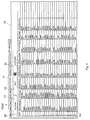
- Fig. 5 shows a screen 15 of the OEM in which it is possible to follow the progress of the simulation; in this case the "Batch Simulation" tab 16 has been selected.
- buttons 17, 18 and 19 on the screen that respectively represent the start, stop and saving of simulations.
- 83 simulations are being performed, as can be seen under the "Run Id" heading 21.
- Data regarding the degree of operational effectiveness of a certain configuration defined by a given Run Id is listed in the column under the "MOE" header 22, while bars indicating the progress of the various simulations are indicated under the "Progress” header 23.
- This screen 15 thus allows simultaneously managing and analysing a large number of simulations.
- the purpose of this type of usage of the simulator is to test a large number of scenario configurations and collect the data obtained from each one of them.
- the graphical display of the evolution of the simulated scenarios is possible via a successive screen so as to enable the computer to perform the evaluations in the least possible time.
- Each of these configurations is tested by repeating the simulation of the scenario a sufficient number of times, so as to obtain valid results from the statistical viewpoint. This usage mode is referred to as a "simulation campaign".
- a screen 24 of the OEM will appear displaying the dynamic evolution of a particular scenario, see Fig. 6 , for example, a map 25 that represents the region in which the simulation is taking place and which contains the previously defined entities, represented by dots 28 or other symbols. These dots can each have a different colour for identification purposes.
- These entities 28 move during the simulation, simulating the behaviour defined in the configuration step and interact with each other according to the established behaviour dynamics. After a certain time from the beginning of the simulation or after certain events decided by the user occur (for example, threat neutralization, mission failure, etc.), the simulation terminates and the results are collected for subsequent analysis.
- the output of this step S4 of execution of the simulation campaigns is constituted by the results of the simulations in terms of the degree of operational effectiveness MOE with respect to each specific configuration set of design parameters, and therefore with respect to each Run Id.
- step S5 The purpose of step S5 is to carry out statistical analysis on the results of the simulations (such as the already mentioned sensitivity analysis), so as to then define, in step S6, the so-called “surrogate models” or “meta-models”, i.e. abstractions of the simulation model, which allow instantaneously computing the degree of effectiveness of any configuration of the design parameters.
- These abstractions are generally used in cases where it is necessary to perform a large number of repetitions of simulation experiments to obtain all of the output required to have significant information from the statistical viewpoint.
- the analysis of this process enables saving a large part of the computing time necessary for obtaining the expected results, allowing the user of the tool to concentrate attention on the analysis of the results instead of on the progress of the simulation campaigns.
- surrogate models in being extensions of the simulation models, are by their nature affected by a certain degree of approximation: their results must thus be taken into consideration in terms of comparison and tendency rather than in absolute terms.
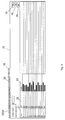
- Fig. 7 shows an illustrative screen 33 of the results of statistical analysis on the simulations: in particular, the different impacts, in terms of operational effectiveness in a specific scenario, deriving from the addition of certain systems to a reference unit or naval configuration, are shown. For example, by increasing the height of the radar by 10 metres, there is an 18% increase in terms of MOE effectiveness. If the maximum speed is increased or a helicopter is added to the naval unit, bearing in mind that it always an OPV that is involved, as mentioned at the beginning of the example, then the MOE effectiveness is increased even in these cases.
- These types of graphical diagrams allow having visual feedback on the estimate of the effect that a design change to the solution has on the overall effectiveness of the ship.
- the meta-models defined thanks to the simulation results, step S6, can be seen as functions that approximate the behaviour of a model, based on a limited (but sufficient) amount of information.
- a limited number of simulations for specific configurations of input parameters it is possible to obtain information on the expected results from the model in any other configuration of those parameters.
- These expected “results” are more intuitive in the case of a limited number of variables; for example; a certain curve in a two-dimensional graph will be obtained with only two variables, but they become very complex in the case of a large number of configuration parameters (which is precisely the case of a military ship project).
- meta-models lie in the fact that, once the function that approximates the behaviour of the model has been computed, it is possible to instantaneously calculate the output that would be obtained by carrying out the simulations for any configuration of the input parameters. Therefore, from the viewpoint of computation times, the definition of meta-models is a fundamental step for the process, because it allows evaluating the operational effectiveness of any design alternative in a just a few moments, without having to perform a large number of simulations, as would instead happen if no meta-models were available.
- This process of statistical analysis of the results of the simulations is carried out is by means of particularly effective computing tools and suitable commercial tools, supported by analysts skilled in statistics and probability.
- step S7 The purpose of step S7 is to identify the most relevant design parameters in terms of impact on the degree of operational effectiveness, from which it is possible to derive indications on possible alternative configurations.
- step S5 By combining the output of the simulations in step S5 with the results of statistical analysis in step S6, it is possible to estimate the effect that a certain choice in the configuration of the design parameters has on the degree of effectiveness. It is therefore possible to identify the critical parameters that are of primary importance and for which it is wished to study further. These are also the parameters to supply to the feasibility evaluation model (SSM) for studying their effective implementation feasibility.
- SSM feasibility evaluation model
- Fig. 8 shows an illustrative screen 34 of this step S7.
- the parameters 35 marked with a tick correspond to those identified as critical after analysis of the results of the simulations.
- the critical parameters may correspond to physical characteristics of the ship, to the systems loaded on board and/or to environmental characteristics of the scenario considered.
- This step of identifying the critical design parameters 35 is carried out by starting from the trends identified via technical analysis, opportunely evaluated with the support of operations experts with an appreciation of the subject.
- the output of this step is formed by the set of the most significant design parameters, which will serve as input for analysis on the technical feasibility and identification of possible alternative naval configurations.
- step S8 is primarily that of analysing the technical feasibility of several design alternatives, on the basis of indications provided in the previous steps.
- step S8 enables identifying possible solutions that meet the requirements and are potentially implementable according to the principles of marine engineering.
- the object of this step is also that of discarding those design parameter configurations that result in configurations or units that will be hard to achieve, so as to filter the entire spectrum of all possible solutions.
- This second aspect is very important, because it enables obtaining precious information on links and connections between the variables in play that are not always visible and therefore enables obtaining information that can be exploited to generate a larger number of feasible solutions.
- Fig. 9 shows a screen 36 of the SSM for the technical feasibility analysis of a certain naval configuration.
- the use can configure the main parameters that define a possible design solution and evaluate the soundness from the architectural viewpoint, i.e. evaluate the technical feasibility of this choice of parameters. It is a very efficient process, as it enables obtaining instantaneous responses concerning the technical feasibility of every possible configuration of the design parameters. This process can also be partially automated, leaving the computer to analyse all the possible input parameter combinations, and then filtering those that are not physically acceptable.
- the procedure of this step of analysis of the technical feasibility of possible configurations through the SSM module enables setting the above-described input parameters and others that define a possible ship configuration, and evaluating the soundness of the choice of these parameters.
- a ship configuration can be achieved that satisfies the feasibility constraints laid down or, alternatively, the conclusion that the chosen set of parameters does not lead to any implementable configuration and therefore of the need to identify an alternative.
- the output of this step S8 comprises a set of parameters that define one or more technically feasible naval configurations and, at the same time, meet the previously chosen requirements.
- the purpose of the next step S9 is to evaluate certain performance aspects of the previously identified naval configurations, in order to estimate what the real performance might be of the solutions in their operating environment.
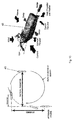
- the performance aspects evaluated are those in terms of the ship's sea-keeping and in terms of manoeuvrability, fundamental for evaluating behaviour in the operating scenarios.
- Figure 10 shows a graphical representation of the parameters that describe performance in terms of manoeuvrability of the ship 45 and the seakeeping movements, i.e. the seakeeping capability with high-sea wave states.
- the estimate of this performance is made difficult due to the scarcity of data available at this stage of project development: in fact, special methods are needed, calibrated for the type of ship being considered and which enable estimating, rapidly and with reasonable precision, the performance of any configuration of the parameters that describe the ship in different operating environments. This information must then be integrated in the simulations of the operating scenarios to have more precise corroboration of the operational effectiveness of the individual configurations.
- the output of this step comprises the performance evaluations of the ship configuration identified in the preceding step S8.
- Cost analysis is fundamental for subsequent trade-off analysis, which would not be very significant without the possibility of performing cost-effectiveness comparisons.
- Estimation of the costs of a naval unit is very difficult in the preliminary design stages, as little information is available and the possible risks to take into consideration can be numerous.
- Cost analysis provides for an estimate of the costs of acquiring the ship based on the physical design characteristics, and an estimate of the costs associated with the operating life of the ship, which also depends on the operational use of the unit and, in consequence, suffers from significant uncertainty. This cost analysis process is carried out by using a parametric model that allows assessing the life cycle costs of each alternative naval configuration.
- the output of this process consists in the cost assessment of the naval configurations identified in the previous step.
- the purpose of the result analysis step S10 is to check that the evaluations made in each of the preceding processes is correct and, if necessary, take action on those that should be improved. Once the soundness of results has been checked, it is possible to proceed with the comparative analysis of the identified solutions, perform cost-effectiveness trade-off analysis, attempt to change some assumptions by studying their effect on the results, modify the design parameters and identify the most promising solutions on which to concentrate further in-depth research.
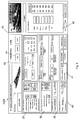
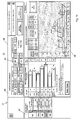
- FIG 14 shows an illustrative Dashboard screen 46 for cost-effectiveness trade-off analysis.
- the Dashboard is a decision support tool that allows the user to interface with the simulation models, collect the results and carry out comparative analysis. Given that the final objective of this process is that of identifying the candidate solutions that correspond to the operational needs, it is preferable that this step is supported and validated by the person(s) that defined the operational needs in the first steps of the process.
Landscapes
- Engineering & Computer Science (AREA)
- Business, Economics & Management (AREA)
- Human Resources & Organizations (AREA)
- Economics (AREA)
- Strategic Management (AREA)
- Marketing (AREA)
- Game Theory and Decision Science (AREA)
- Entrepreneurship & Innovation (AREA)
- Development Economics (AREA)
- Operations Research (AREA)
- Quality & Reliability (AREA)
- Tourism & Hospitality (AREA)
- Physics & Mathematics (AREA)
- General Business, Economics & Management (AREA)
- General Physics & Mathematics (AREA)
- Theoretical Computer Science (AREA)
- Management, Administration, Business Operations System, And Electronic Commerce (AREA)
Applications Claiming Priority (1)
| Application Number | Priority Date | Filing Date | Title |
|---|---|---|---|
| ITGE20150049 | 2015-04-17 |
Publications (1)
| Publication Number | Publication Date |
|---|---|
| EP3082079A1 true EP3082079A1 (fr) | 2016-10-19 |
Family
ID=53836643
Family Applications (1)
| Application Number | Title | Priority Date | Filing Date |
|---|---|---|---|
| EP16164938.9A Withdrawn EP3082079A1 (fr) | 2015-04-17 | 2016-04-12 | Procédé et système permettant d'identifier des configurations navales par l'évaluation de paramètres de conception et de fonctionnement |
Country Status (1)
| Country | Link |
|---|---|
| EP (1) | EP3082079A1 (fr) |
Cited By (2)
| Publication number | Priority date | Publication date | Assignee | Title |
|---|---|---|---|---|
| CN115374392A (zh) * | 2022-10-26 | 2022-11-22 | 北京方州科技有限公司 | 获取目标事件的对象参数的方法、电子设备和存储介质 |
| CN116050093A (zh) * | 2022-12-22 | 2023-05-02 | 西安电子科技大学 | 一种雷达数字化样机仿真平台的自适应参数设计方法 |
Citations (1)
| Publication number | Priority date | Publication date | Assignee | Title |
|---|---|---|---|---|
| EP2669173A1 (fr) * | 2012-06-01 | 2013-12-04 | ABB Technology AG | Procédé et système dýévaluation de performance de bateau |
-
2016
- 2016-04-12 EP EP16164938.9A patent/EP3082079A1/fr not_active Withdrawn
Patent Citations (1)
| Publication number | Priority date | Publication date | Assignee | Title |
|---|---|---|---|---|
| EP2669173A1 (fr) * | 2012-06-01 | 2013-12-04 | ABB Technology AG | Procédé et système dýévaluation de performance de bateau |
Cited By (3)
| Publication number | Priority date | Publication date | Assignee | Title |
|---|---|---|---|---|
| CN115374392A (zh) * | 2022-10-26 | 2022-11-22 | 北京方州科技有限公司 | 获取目标事件的对象参数的方法、电子设备和存储介质 |
| CN115374392B (zh) * | 2022-10-26 | 2023-11-24 | 北京方州科技有限公司 | 获取目标事件的对象参数的方法、电子设备和存储介质 |
| CN116050093A (zh) * | 2022-12-22 | 2023-05-02 | 西安电子科技大学 | 一种雷达数字化样机仿真平台的自适应参数设计方法 |
Similar Documents
| Publication | Publication Date | Title |
|---|---|---|
| Tompkins et al. | Improving system maturity assessments by incorporating a design structure matrix | |
| Dantas et al. | ASA-SimaaS: Advancing digital transformation through simulation services in the Brazilian Air Force | |
| Harel et al. | Creating a foundation for next-generation autonomous systems | |
| Sorbi et al. | Agent-based simulation framework for enhanced construction site risk estimation and safety management | |
| EP3082079A1 (fr) | Procédé et système permettant d'identifier des configurations navales par l'évaluation de paramètres de conception et de fonctionnement | |
| US12572549B2 (en) | Systems and methods for object design | |
| Dolezal | Success factors for digital mock-ups (DMU) in complex aerospace product development | |
| Gore et al. | Meeting the challenge of cognitive human performance model interpretability though transparency: MIDAS v5. x | |
| Quartuccio et al. | A model-based approach to investigate emergent behaviors in systems of systems | |
| Casarosa | The integration of human factors, operability and personnel movement simulation into the preliminary design of ships utilising the Design Building Block approach | |
| Miller | Design as a Sequential Decision Process: A Method for Reducing Set Space Using Models to Bound Objectives | |
| Gatian et al. | Planning technology development experimentation through quantitative uncertainty analysis | |
| Sutherland et al. | System-level design tools utilizing OPM and modelica | |
| Biemer et al. | Systems engineering: Basic concepts and life cycle | |
| Laughery | Simulation and modelling as a tool for analysing human performance | |
| Heitmeyer et al. | High assurance human-centric decision systems | |
| Engler III | A methodology for creating expert-based quantitative models for early phase design | |
| Denker | Assessing the spatio-temporal fitness of information supply and demand on ship bridges | |
| Saleh et al. | Challenges of numerical simulation technique in mechanical engineering with case studies | |
| Migliaccio et al. | Industrial Metaverse Building Blocks: An Extended Reality (XR) Model-Based Approach | |
| Feuerstack et al. | The human efficiency evaluator: a tool to predict and explore monitoring behaviour | |
| Amit et al. | Implications of Formal Verification and Modeling Tools for Performing Operational Profile-based Testing of VR Tourism Systems Design | |
| Sorbi | Construction site planning by using advanced simulation methods | |
| Srivastava et al. | Simulation environment to assess technology insertion impact and optimized manning | |
| Can et al. | Agent-Based Modelling Tools for CPS-An Experimental Evaluation |
Legal Events
| Date | Code | Title | Description |
|---|---|---|---|
| PUAI | Public reference made under article 153(3) epc to a published international application that has entered the european phase |
Free format text: ORIGINAL CODE: 0009012 |
|
| AK | Designated contracting states |
Kind code of ref document: A1 Designated state(s): AL AT BE BG CH CY CZ DE DK EE ES FI FR GB GR HR HU IE IS IT LI LT LU LV MC MK MT NL NO PL PT RO RS SE SI SK SM TR |
|
| AX | Request for extension of the european patent |
Extension state: BA ME |
|
| 17P | Request for examination filed |
Effective date: 20170330 |
|
| RBV | Designated contracting states (corrected) |
Designated state(s): AL AT BE BG CH CY CZ DE DK EE ES FI FR GB GR HR HU IE IS IT LI LT LU LV MC MK MT NL NO PL PT RO RS SE SI SK SM TR |
|
| 17Q | First examination report despatched |
Effective date: 20180810 |
|
| STAA | Information on the status of an ep patent application or granted ep patent |
Free format text: STATUS: THE APPLICATION IS DEEMED TO BE WITHDRAWN |
|
| 18D | Application deemed to be withdrawn |
Effective date: 20190221 |