EP3082371A1 - Procédé et dispositif d'accès aléatoire - Google Patents
Procédé et dispositif d'accès aléatoire Download PDFInfo
- Publication number
- EP3082371A1 EP3082371A1 EP14876704.9A EP14876704A EP3082371A1 EP 3082371 A1 EP3082371 A1 EP 3082371A1 EP 14876704 A EP14876704 A EP 14876704A EP 3082371 A1 EP3082371 A1 EP 3082371A1
- Authority
- EP
- European Patent Office
- Prior art keywords
- base station
- downlink assignment
- assignment information
- preamble
- contention resolution
- Prior art date
- Legal status (The legal status is an assumption and is not a legal conclusion. Google has not performed a legal analysis and makes no representation as to the accuracy of the status listed.)
- Granted
Links
Images



Classifications
-
- H—ELECTRICITY
- H04—ELECTRIC COMMUNICATION TECHNIQUE
- H04W—WIRELESS COMMUNICATION NETWORKS
- H04W74/00—Wireless channel access
- H04W74/002—Transmission of channel access control information
- H04W74/006—Transmission of channel access control information in the downlink, i.e. towards the terminal
-
- H—ELECTRICITY
- H04—ELECTRIC COMMUNICATION TECHNIQUE
- H04W—WIRELESS COMMUNICATION NETWORKS
- H04W74/00—Wireless channel access
- H04W74/08—Non-scheduled access, e.g. ALOHA
- H04W74/0833—Random access procedures, e.g. with 4-step access
-
- H—ELECTRICITY
- H04—ELECTRIC COMMUNICATION TECHNIQUE
- H04W—WIRELESS COMMUNICATION NETWORKS
- H04W74/00—Wireless channel access
- H04W74/08—Non-scheduled access, e.g. ALOHA
- H04W74/0833—Random access procedures, e.g. with 4-step access
- H04W74/0838—Random access procedures, e.g. with 4-step access using contention-free random access [CFRA]
Definitions
- the present invention relates to the field of communications technologies, and more specifically, to a random access method and an apparatus.
- Methods for randomly accessing a wireless communications network by user equipment may be divided into two types: non-contention based access random and contention based random access.
- a base station sends a random access response message to the UE, and before the UE sends an uplink message to the base station according to the random access response message, the base station further needs to send scheduling signaling of the random access response message to the UE through a PDCCH (Physical Downlink Control Channel, physical downlink control channel) channel.
- the scheduling signaling of the random access response message includes information such as a physical resource, a modulation and coding scheme, a redundancy version, and an HARQ (Hybrid Automatic Repeat Request, hybrid automatic repeat request) process ID that are used when the UE receives the random access response message.
- multiple channels used in communication between the UE and the base station need to be enhanced, including the PDCCH channel.
- a typical enhancement method is retransmitting content on the channel.
- the scheduling signaling of the random access response message is retransmitted on the PDCCH channel, which causes a channel resource waste and an access delay.
- embodiments of the present invention provide a random access method, to resolve problems of a channel resource waste and an access delay in an existing random access method.
- the problems are caused because the PDCCH channel is used to retransmit scheduling signaling of a random access response message.
- a first aspect of the embodiments of the present invention provides a random access method, including:
- the method further includes:
- the mapping relationship between first downlink assignment information and a preamble is carried in a communications protocol, a broadcast message sent by the base station, or a dedicated message sent by the base station.
- a manner in which the base station pre-obtains the first uplink grant information includes:
- a manner in which the base station pre-obtains the first uplink grant information includes:
- a manner in which the base station pre-obtains the second downlink assignment information includes:
- a manner in which the base station pre-obtains the second downlink assignment information includes:
- a time at which the UE receives the contention resolution message is further included in the random access response message sent by the base station, a broadcast message sent by the base station, a dedicated message sent by the base station, or a communications protocol.
- the generating, by the base station, a contention resolution message according to the identification information of the UE that is carried in the uplink message includes:
- the contention resolution message further includes:
- the contention resolution message when the third downlink assignment information is used to control, at least twice, the base station to send the data to the UE, the contention resolution message further includes an interval of using the third downlink assignment information.
- the contention resolution message when the second uplink grant information is used to control, at least twice, the base station to receive the data sent by the UE, the contention resolution message further includes an interval of using the second uplink grant information.
- a second aspect of the embodiments of the present invention provides a random access method, including: sending, by user equipment UE, a preamble to a base station; acquiring, by the UE according to a pre-obtained mapping relationship between first downlink assignment information and a preamble, first downlink assignment information corresponding to the preamble sent by the UE, where the first downlink assignment information is downlink assignment information used by a random access response message; and receiving, by the UE according to the first downlink assignment information, the random access response message sent by the base station.
- the method further includes:
- the mapping relationship between first downlink assignment information and a preamble is carried in a communications protocol, a broadcast message sent by the base station, or a dedicated message sent by the base station.
- a manner in which the UE pre-obtains the first uplink grant information includes:
- a manner in which the UE pre-obtains the first uplink grant information includes:
- a manner in which the UE pre-obtains the second downlink assignment information includes:
- a manner in which the UE pre-obtains the second downlink assignment information includes:
- the method further includes:
- the obtaining, by the UE, a contention resolution result according to the contention resolution message includes:
- the obtaining, by the UE, a contention resolution result according to the contention resolution message includes:
- the contention resolution message received by the UE further includes:
- the contention resolution message when the third downlink assignment information is used to control, at least twice, the UE to receive the data sent by the base station, the contention resolution message further includes an interval of using the third downlink assignment information.
- the contention resolution message when the second uplink grant information is used to control, at least twice, the UE to send the data to the base station, the contention resolution message further includes an interval of using the second uplink grant information.
- a third aspect of the embodiments of the present invention provides a base station, including:
- the base station further includes:
- the mapping relationship between first downlink assignment information and a preamble is carried in a communications protocol, a broadcast message sent by the base station, or a dedicated message sent by the base station.
- a third implementation manner of the third aspect of the embodiments of the present invention further includes:
- the base station further includes:
- the base station further includes:
- the base station further includes:
- a time at which the UE receives the contention resolution message is further included in the random access response message sent by the base station, a broadcast message sent by the base station, a dedicated message sent by the base station, or a communications protocol.
- the generation unit further includes:
- the contention resolution message further includes:
- the contention resolution message when the third downlink assignment information is used to control, at least twice, the base station to send the data to the UE, the contention resolution message further includes an interval of using the third downlink assignment information.
- the contention resolution message when the second uplink grant information is used to control, at least twice, the base station to receive the data sent by the UE, the contention resolution message further includes an interval of using the second uplink grant information.
- a fourth aspect of the embodiments of the present invention provides user equipment UE, including:
- the user equipment further includes:
- the mapping relationship between first downlink assignment information and a preamble is carried in a communications protocol, a broadcast message sent by the base station, or a dedicated message sent by the base station.
- the user equipment further includes:
- the user equipment further includes:
- the user equipment further includes:
- the user equipment further includes:
- the user equipment further includes:
- the contention result generation unit includes:
- the contention result generation unit includes:
- the contention resolution message received by the UE further includes:
- the contention resolution message when the third downlink assignment information is used to control, at least twice, the UE to receive the data sent by the base station, the contention resolution message further includes an interval of using the third downlink assignment information.
- the contention resolution message when the second uplink grant information is used to control, at least twice, the UE to send the data to the base station, the contention resolution message further includes an interval of using the second uplink grant information.
- first downlink assignment information is obtained in a manner of a mapping relationship between first downlink assignment information and a preamble, where the first downlink assignment information is downlink assignment information used by a random access response message, and scheduling signaling of the random access response message does not need to be retransmitted by using the PDCCH channel, thereby resolving problems of a channel resource waste and an access delay in an existing random access method.
- the problems are caused because the PDCCH channel is used to retransmit the scheduling signaling of the random access response message.
- a Global System for Mobile Communications global system for mobile communication, GSM for short
- GSM Global System for Mobile Communications
- CDMA Code Division Multiple Access
- WCDMA Wideband Code Division Multiple Access
- Universal Mobile Telecommunications System Universal Mobile Telecommunications System
- GPRS general packet radio service
- LTE Long term evolution
- LTE-A Long Term Evolution Advanced
- WiMAX Worldwide Interoperability for Microwave Access
- a base station may be a device communicating with user equipment (user equipment, UE for short) or another communication station such as a relay station, and the base station may provide communication coverage in a specific physical area.
- the base station may be specifically a base transceiver station (Base Transceiver Station, BTS for short) or a base station controller (Base Station Controller, BSC for short) in GSM or CDMA; or may be a NodeB (Node B, NB for short) in UMTS or a radio network controller (Radio Network Controller, RNC for short) in UMTS; or may be an evolved NodeB (Evolutional Node B, ENB or eNodeB for short) in LTE; or may be another access network device providing an access service in a wireless communications network, which is not limited in the present invention.
- BTS Base Transceiver Station
- BSC Base Station Controller
- RNC Radio Network Controller
- the UE may be distributed in an entire wireless network, and each UE may be stationary or in motion.
- the UE may be referred to as a terminal (terminal), a mobile station (mobile station), a subscriber unit (subscriber unit), a station (station), or the like.
- the UE may be a cellular phone (cellular phone), a personal digital assistant (personal digital assistant, PDA for short), a wireless modem (modem), a wireless communications device, a handheld device (handheld), a laptop computer (laptop computer), a cordless phone (cordless phone), a wireless local loop (wireless local loop, WLL for short) station, or the like.
- the UE When the UE is applied to communication in an M2M manner, the UE may be referred to as an M2M terminal and may be specifically a smart meter, a smart appliance, or the like that supports M2M communication.
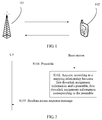
- FIG. 1 is a communications system according to an embodiment of the present invention, where the communications system includes UE 101 and a base station 102 providing an access service for the UE 101.
- the UE 101 is configured to send a preamble to the base station 102.
- the base station 102 is configured to: after acquiring, according to a pre-obtained mapping relationship between first downlink assignment information and a preamble, first downlink assignment information corresponding to the preamble received by the base station, send a random access response message to the UE according to the first downlink assignment information.
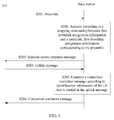
- the random access method includes:
- first downlink assignment information is obtained in a manner of a mapping relationship between first downlink assignment information and a preamble, where the first downlink assignment information is downlink assignment information used by a random access response message, and scheduling signaling of the random access response message does not need to be retransmitted by using the PDCCH channel, thereby resolving problems of a channel resource waste and an access delay in an existing random access method.
- the problems are caused because the PDCCH channel is used to retransmit the scheduling signaling of the random access response message.
- a mapping relationship is set between a preamble and downlink assignment information that is used by a random access response message, and the base station and the UE separately obtain, by using the mapping relationship, downlink assignment information that is used by the random access response message and that is corresponding to the preamble is a solution proposed when persons skilled in the art are resolving a problem in an existing contention based random access method. Then, the persons skilled in the art find by searching that the solution may further be applied to a non-contention based random access method. However, for the persons skilled in the art, creative efforts are also required when a process of the foregoing solution is applied to the non-contention based random access method.
- Another embodiment of the present invention further discloses a random access method.
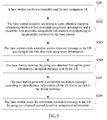
- a random access method includes:
- the second downlink assignment information is downlink assignment information used by the contention resolution message.
- the base station after generating the contention resolution message, the base station sends the contention resolution message to the UE by using the downlink assignment information used by the contention resolution message. Therefore, the base station needs to obtain the downlink assignment information used by the contention resolution message, that is, the second downlink assignment information.
- the downlink assignment information used by the contention resolution message includes information such as a physical resource, a modulation and coding scheme, a redundancy version, and an HARQ (Hybrid Automatic Repeat Request, hybrid automatic repeat request) process ID that are used by the contention resolution message.
- HARQ Hybrid Automatic Repeat Request, hybrid automatic repeat request
- a manner in which the base station pre-obtains the second downlink assignment information includes:
- the manner in which the base station pre-obtains the second downlink assignment information may further be: acquiring, by the base station, the second downlink assignment information carried in the random access response message sent by the base station.
- the random access response message sent by the base station carries the second downlink assignment information
- the base station may obtain the second downlink assignment information by reading data in the random access response message.
- the random access response message sent by the base station may further carry a time at which the UE receives the contention resolution message.
- the time at which the UE receives the contention resolution message and that is carried in the random access response message may be an absolute time, or may be an interval between a receiving time of the contention resolution message and a receiving time of the random access response message.
- the time at which the UE receives the contention resolution message may be carried in a communications protocol, a broadcast message sent by the base station, or a dedicated message sent by the base station.
- the time at which the UE receives the contention resolution message may be an absolute time, or may be an interval between a receiving time of the contention resolution message and a receiving time of the random access response message.
- the contention resolution message sent by the base station may further carry third downlink assignment information used when the base station sends data to the UE, where the third downlink assignment information includes information such as a physical resource, a modulation and coding scheme, a redundancy version, and an HARQ (Hybrid Automatic Repeat Request, hybrid automatic repeat request) process ID that are used by the data sent by the base station.
- the third downlink assignment information includes information such as a physical resource, a modulation and coding scheme, a redundancy version, and an HARQ (Hybrid Automatic Repeat Request, hybrid automatic repeat request) process ID that are used by the data sent by the base station.
- HARQ Hybrid Automatic Repeat Request, hybrid automatic repeat request
- the base station may acquire the third downlink assignment information in the contention resolution message, and sends the data according to the third downlink assignment information.
- the contention resolution message further carries an interval of using the third downlink assignment information and use times.
- the contention resolution message sent by the base station may also carry second uplink grant information used when the base station receives data sent by the UE, where the second uplink grant information includes information such as a physical resource, a modulation and coding scheme, a redundancy version, and an HARQ (Hybrid Automatic Repeat Request, hybrid automatic repeat request) process ID that are used by the data received by the base station.
- the second uplink grant information includes information such as a physical resource, a modulation and coding scheme, a redundancy version, and an HARQ (Hybrid Automatic Repeat Request, hybrid automatic repeat request) process ID that are used by the data received by the base station.
- HARQ Hybrid Automatic Repeat Request, hybrid automatic repeat request
- the base station may acquire the second uplink grant information in the contention resolution message, and receives, according to the second uplink grant information, the data sent by the UE.
- the contention resolution message further carries an interval of using the second uplink grant information and use times.
- the random access method includes:
- first downlink assignment information is obtained in a manner of a mapping relationship between first downlink assignment information and a preamble, where the first downlink assignment information is downlink assignment information used by a random access response message, and scheduling signaling of the random access response message does not need to be retransmitted by using the PDCCH channel, thereby resolving problems of a channel resource waste and an access delay in an existing random access method.
- the problems are caused because the PDCCH channel is used to retransmit the scheduling signaling of the random access response message.
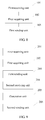
- the random access method includes:
- the uplink message carries identification information of the UE, and the first uplink grant information is uplink grant information used by the uplink message.
- the first uplink grant information includes information such as a physical resource, a modulation and coding scheme, a redundancy version, and an HARQ (Hybrid Automatic Repeat Request, hybrid automatic repeat request) process ID that are used by the uplink message.
- HARQ Hybrid Automatic Repeat Request, hybrid automatic repeat request
- the UE When sending the uplink message to the base station, the UE needs to first determine the uplink grant information used by the uplink message.
- the following gives specific illustration by using two embodiments.
- the UE acquires a mapping relationship between first uplink grant information and a preamble; and the UE acquires, according to the mapping relationship between first uplink grant information and a preamble, first uplink grant information corresponding to the preamble sent by the UE, where specifically, the mapping relationship between first uplink grant information and a preamble is carried in a communications protocol, a broadcast message sent by the base station, or a dedicated message sent by the base station.
- the UE acquires first uplink grant information carried in the random access response message received by the UE.
- step S404 in which the UE sends the uplink message to the base station further includes:
- the UE needs to receive only at the time at which the UE receives the contention resolution message, which can reduce resource overheads of the UE.
- the UE receives, by using pre-obtained second downlink assignment information, a contention resolution message sent by the base station.
- the second downlink assignment information is downlink assignment information used by the contention resolution message.
- the second downlink assignment information includes information such as a physical resource, a modulation and coding scheme, a redundancy version, and an HARQ (Hybrid Automatic Repeat Request, hybrid automatic repeat request) process ID that are used by the contention resolution message.
- HARQ Hybrid Automatic Repeat Request, hybrid automatic repeat request
- a specific implementation form may include:
- the UE obtains a contention resolution result according to the contention resolution message.
- a manner in which the UE obtains the contention resolution result according to the contention resolution message specifically includes:
- the manner in which the UE obtains the contention resolution result according to the contention resolution message may further include:
- Another embodiment of the present invention further discloses a random access method.
- the contention resolution message received by the UE further carries third downlink assignment information used when the UE receives data sent by the base station.
- the third downlink assignment information includes information such as a physical resource, a modulation and coding scheme, a redundancy version, and an HARQ (Hybrid Automatic Repeat Request, hybrid automatic repeat request) process ID that are used by the data sent by the base station.
- HARQ Hybrid Automatic Repeat Request, hybrid automatic repeat request
- the contention resolution message when the third downlink assignment information is used to control, at least twice, the UE to receive the data sent by the base station, the contention resolution message further carries an interval of using the third downlink assignment information and use times.
- the contention resolution message received by the UE further carries second uplink grant information used when the UE sends data to the base station.
- the second uplink grant information includes information such as a physical resource, a modulation and coding scheme, a redundancy version, and an HARQ (Hybrid Automatic Repeat Request, hybrid automatic repeat request) process ID that are used by the data received by the base station.
- HARQ Hybrid Automatic Repeat Request, hybrid automatic repeat request
- the contention resolution message further carries an interval of using the second uplink grant information and use times.
- Another embodiment of the present invention further discloses a base station.
- a base station includes:
- a first acquiring unit 102 obtains first downlink assignment information in a manner of a mapping relationship between first downlink assignment information and a preamble, where the first downlink assignment information is downlink assignment information used by a random access response message, and scheduling signaling of the random access response message does not need to be retransmitted by using the PDCCH channel, thereby resolving problems of a channel resource waste and an access delay in an existing random access method.
- the problems are caused because the PDCCH channel is used to retransmit the scheduling signaling of the random access response message.
- the base station includes:
- the random access response message sent by the second sending unit 206 further carries a time at which the UE receives the contention resolution message; or a time at which the UE receives the contention resolution message is carried in a broadcast message sent by the base station, a dedicated message sent by the base station, or a communications protocol.
- the contention resolution message may further include: third downlink assignment information used when the base station sends data to the UE, or second uplink grant information used when the base station receives data sent by the UE.
- the contention resolution message further includes an interval of using the third downlink assignment information and use times.
- the contention resolution message further includes an interval of using the second uplink grant information and use times.
- the base station further includes:
- the base station further includes:
- the base station further includes:
- the base station further includes a seventh acquiring unit, configured to acquire second downlink assignment information carried in the random access response message sent by the first sending unit.
- the user equipment includes:
- a first acquiring unit 302 obtains first downlink assignment information in a manner of a mapping relationship between first downlink assignment information and a preamble, where the first downlink assignment information is downlink assignment information used by a random access response message, and scheduling signaling of the random access response message does not need to be retransmitted by using the PDCCH channel, thereby resolving problems of a channel resource waste and an access delay in an existing random access method.
- the problems are caused because the PDCCH channel is used to retransmit the scheduling signaling of the random access response message.
- the user equipment includes:
- the contention result generation unit 406 includes:
- the contention result generation unit 406 includes:
- the contention resolution message received by the UE further includes:
- the contention resolution message further includes an interval of using the third downlink assignment information and use times.
- the contention resolution message further includes an interval of using the second uplink grant information and.
- the UE further includes:
- the UE further includes a fourth acquiring unit, configured to acquire first uplink grant information carried in the random access response message received by the first receiving unit.
- the UE further includes:
- the UE further includes:
- the UE further includes:
- the functions of the method in the embodiment are implemented in the form of a software functional unit and sold or used as an independent product, the functions may be stored in a computing device-readable storage medium. Based on such an understanding, the part of the embodiments of the present invention contributing to the prior art or some of the technical solutions may be implemented in a form of a software product.
- the software product is stored in a storage medium, and includes several instructions for instructing a computing device (which may be a personal computer, a server, or a network device) to perform all or some of the steps of the methods described in the embodiments of the present invention.
- the foregoing storage medium includes: any medium that can store program code, such as a USB flash drive, a removable hard disk, a read-only memory (ROM, Read-Only Memory), a random access memory (RAM, Random Access Memory), a magnetic disk, or an optical disc.
- program code such as a USB flash drive, a removable hard disk, a read-only memory (ROM, Read-Only Memory), a random access memory (RAM, Random Access Memory), a magnetic disk, or an optical disc.
Landscapes
- Engineering & Computer Science (AREA)
- Computer Networks & Wireless Communication (AREA)
- Signal Processing (AREA)
- Mobile Radio Communication Systems (AREA)
Applications Claiming Priority (2)
| Application Number | Priority Date | Filing Date | Title |
|---|---|---|---|
| CN201310753912.1A CN103747534B (zh) | 2013-12-31 | 2013-12-31 | 随机接入方法及装置 |
| PCT/CN2014/083887 WO2015101041A1 (fr) | 2013-12-31 | 2014-08-07 | Procédé et dispositif d'accès aléatoire |
Publications (3)
| Publication Number | Publication Date |
|---|---|
| EP3082371A1 true EP3082371A1 (fr) | 2016-10-19 |
| EP3082371A4 EP3082371A4 (fr) | 2016-12-21 |
| EP3082371B1 EP3082371B1 (fr) | 2018-04-04 |
Family
ID=50504506
Family Applications (1)
| Application Number | Title | Priority Date | Filing Date |
|---|---|---|---|
| EP14876704.9A Active EP3082371B1 (fr) | 2013-12-31 | 2014-08-07 | Procédés, station de base et dispositif d' utilisateur d'accès aléatoire |
Country Status (4)
| Country | Link |
|---|---|
| US (1) | US10462822B2 (fr) |
| EP (1) | EP3082371B1 (fr) |
| CN (1) | CN103747534B (fr) |
| WO (1) | WO2015101041A1 (fr) |
Cited By (1)
| Publication number | Priority date | Publication date | Assignee | Title |
|---|---|---|---|---|
| EP3496498A1 (fr) * | 2014-09-26 | 2019-06-12 | Huawei Technologies Co., Ltd. | Procédé de transmission de signal de liaison montante et dispositif associé |
Families Citing this family (14)
| Publication number | Priority date | Publication date | Assignee | Title |
|---|---|---|---|---|
| CN103747534B (zh) | 2013-12-31 | 2018-03-09 | 上海华为技术有限公司 | 随机接入方法及装置 |
| KR102024110B1 (ko) * | 2014-09-25 | 2019-09-23 | 후아웨이 테크놀러지 컴퍼니 리미티드 | 데이터 통신 방법 및 관련 장치 |
| CN105451360A (zh) * | 2014-09-26 | 2016-03-30 | 夏普株式会社 | 用于配置随机接入响应窗的方法以及基站和用户设备 |
| CN105611646B (zh) * | 2014-11-07 | 2021-11-02 | 夏普株式会社 | 基站、用户设备及其方法 |
| US9730249B2 (en) * | 2014-11-19 | 2017-08-08 | Intel Corporation | Systems, apparatuses, and methods for processing random acccess response messages for coverage constrained devices |
| JP2018101822A (ja) * | 2015-04-24 | 2018-06-28 | シャープ株式会社 | 端末装置、基地局装置、集積回路、および、通信方法 |
| US10383152B2 (en) | 2015-08-25 | 2019-08-13 | Lenovo Innovations Limited (Hong Kong) | Random access procedure for machine type communication |
| CN113438716A (zh) * | 2016-04-01 | 2021-09-24 | 华为技术有限公司 | 一种资源调度方法、接入网设备以及用户设备 |
| US11229049B2 (en) * | 2016-05-11 | 2022-01-18 | Nokia Technologies Oy | Method and apparatus for implementing preamble zone selection |
| CN109891797B (zh) | 2016-10-12 | 2020-10-23 | 华为技术有限公司 | 基于波束的随机接入 |
| CN108282874B (zh) * | 2017-01-06 | 2019-08-16 | 电信科学技术研究院 | 一种数据传输方法、装置及系统 |
| WO2018151434A1 (fr) * | 2017-02-20 | 2018-08-23 | 엘지전자 주식회사 | Procédé d'émission ou de réception de signal dans un système de communications sans fil et dispositif correspondant |
| WO2018165202A1 (fr) * | 2017-03-07 | 2018-09-13 | Intel IP Corporation | Surveillance de canaux de commande dans des ensembles de ressources de commande pour une nouvelle technologie radio |
| CN111567129B (zh) * | 2018-02-07 | 2022-05-17 | 华为技术有限公司 | 随机接入的方法和装置 |
Family Cites Families (13)
| Publication number | Priority date | Publication date | Assignee | Title |
|---|---|---|---|---|
| KR101424258B1 (ko) * | 2006-08-23 | 2014-08-13 | 엘지전자 주식회사 | 무선통신 시스템에서 랜덤 액세스 과정을 수행하는 방법 |
| CN101340707A (zh) * | 2007-07-04 | 2009-01-07 | 鼎桥通信技术有限公司 | 随机接入方法、网络控制单元、基站单元和用户终端 |
| GB0714927D0 (en) * | 2007-08-01 | 2007-09-12 | Nokia Siemens Networks Oy | Resource allocation |
| US8432812B2 (en) * | 2007-10-29 | 2013-04-30 | Lg Electronics Inc. | Method of performing random access procedure in wireless communication system |
| CN101754410B (zh) * | 2008-12-19 | 2012-09-05 | 华为技术有限公司 | 网络的接入方法及装置 |
| US20110243075A1 (en) * | 2009-06-16 | 2011-10-06 | Qualcomm Incorporated | Method and apparatus for access procedure in a wireless communication system |
| JP2011035861A (ja) | 2009-08-06 | 2011-02-17 | Sharp Corp | 移動局装置、無線通信方法および移動局装置の制御プログラム |
| CN102014476B (zh) * | 2009-10-10 | 2013-09-04 | 电信科学技术研究院 | 上行同步方法、系统和设备 |
| CN101674661B (zh) * | 2009-10-14 | 2011-12-07 | 普天信息技术研究院有限公司 | 长期演进系统中的随机接入方法 |
| US8885528B2 (en) * | 2010-06-18 | 2014-11-11 | Institute For Information Industry | Wireless apparatus, base station and uplink contention method thereof using mapping rule on uplink signal with preamble sequence and control message |
| CN103348756B (zh) | 2011-02-10 | 2016-10-26 | 富士通株式会社 | 无线通信系统、接收装置、发送装置以及无线通信方法 |
| CN103220811B (zh) * | 2012-01-19 | 2018-04-27 | 中兴通讯股份有限公司 | 信息处理方法、mtc ue随机接入lte系统的方法 |
| CN103747534B (zh) | 2013-12-31 | 2018-03-09 | 上海华为技术有限公司 | 随机接入方法及装置 |
-
2013
- 2013-12-31 CN CN201310753912.1A patent/CN103747534B/zh active Active
-
2014
- 2014-08-07 WO PCT/CN2014/083887 patent/WO2015101041A1/fr not_active Ceased
- 2014-08-07 EP EP14876704.9A patent/EP3082371B1/fr active Active
-
2016
- 2016-06-29 US US15/197,289 patent/US10462822B2/en active Active
Cited By (1)
| Publication number | Priority date | Publication date | Assignee | Title |
|---|---|---|---|---|
| EP3496498A1 (fr) * | 2014-09-26 | 2019-06-12 | Huawei Technologies Co., Ltd. | Procédé de transmission de signal de liaison montante et dispositif associé |
Also Published As
| Publication number | Publication date |
|---|---|
| WO2015101041A1 (fr) | 2015-07-09 |
| CN103747534A (zh) | 2014-04-23 |
| EP3082371A4 (fr) | 2016-12-21 |
| EP3082371B1 (fr) | 2018-04-04 |
| US20160309519A1 (en) | 2016-10-20 |
| CN103747534B (zh) | 2018-03-09 |
| US10462822B2 (en) | 2019-10-29 |
Similar Documents
| Publication | Publication Date | Title |
|---|---|---|
| EP3082371B1 (fr) | Procédés, station de base et dispositif d' utilisateur d'accès aléatoire | |
| CN107534974B (zh) | 用于无线通信的方法、用户设备、基站及计算机可读介质 | |
| CN108292980B (zh) | 业务传输的方法和装置 | |
| US11711808B2 (en) | Method, mobile station, and network apparatus for transmitting service | |
| US10798699B2 (en) | Physical downlink control channel transmission method, base station device, and user equipment | |
| EP3471484A1 (fr) | Procédé et dispositif de planification de ressource | |
| EP3596875B1 (fr) | Configurations de période transitoire dynamique pour des intervalles de temps de transmission raccourcis | |
| CN109076538B (zh) | 依赖于数字方案的信号传输 | |
| JP6975839B2 (ja) | 等しいサイズのコードブロックのためのトランスポートブロックサイズの決定 | |
| KR20190139272A (ko) | 데이터 전송 방법 및 장치 | |
| EP3637818B1 (fr) | Procédé et dispositif d'envoi et de réception de signal | |
| CN113273259A (zh) | 数据传输方法及装置 | |
| WO2020061945A1 (fr) | Procédé d'accès aléatoire, dispositif de réseau et dispositif terminal | |
| RU2728762C1 (ru) | Способ передачи информации, сетевое устройство и оконечное устройство | |
| CN111989978A (zh) | 随机接入的方法和设备 | |
| EP3876459B1 (fr) | Procédé et dispositif de transmission d'informations de commande de liaison descendante | |
| US20240080817A1 (en) | Wireless communication method, terminal device, and network device |
Legal Events
| Date | Code | Title | Description |
|---|---|---|---|
| PUAI | Public reference made under article 153(3) epc to a published international application that has entered the european phase |
Free format text: ORIGINAL CODE: 0009012 |
|
| 17P | Request for examination filed |
Effective date: 20160712 |
|
| AK | Designated contracting states |
Kind code of ref document: A1 Designated state(s): AL AT BE BG CH CY CZ DE DK EE ES FI FR GB GR HR HU IE IS IT LI LT LU LV MC MK MT NL NO PL PT RO RS SE SI SK SM TR |
|
| AX | Request for extension of the european patent |
Extension state: BA ME |
|
| A4 | Supplementary search report drawn up and despatched |
Effective date: 20161118 |
|
| RIC1 | Information provided on ipc code assigned before grant |
Ipc: H04W 74/08 20090101AFI20161111BHEP |
|
| DAX | Request for extension of the european patent (deleted) | ||
| REG | Reference to a national code |
Ref country code: DE Ref legal event code: R079 Ref document number: 602014023539 Country of ref document: DE Free format text: PREVIOUS MAIN CLASS: H04W0074080000 Ipc: H04W0074000000 |
|
| GRAP | Despatch of communication of intention to grant a patent |
Free format text: ORIGINAL CODE: EPIDOSNIGR1 |
|
| STAA | Information on the status of an ep patent application or granted ep patent |
Free format text: STATUS: GRANT OF PATENT IS INTENDED |
|
| INTG | Intention to grant announced |
Effective date: 20171020 |
|
| RIC1 | Information provided on ipc code assigned before grant |
Ipc: H04W 74/08 20090101ALN20171010BHEP Ipc: H04W 74/00 20090101AFI20171010BHEP |
|
| GRAS | Grant fee paid |
Free format text: ORIGINAL CODE: EPIDOSNIGR3 |
|
| GRAA | (expected) grant |
Free format text: ORIGINAL CODE: 0009210 |
|
| STAA | Information on the status of an ep patent application or granted ep patent |
Free format text: STATUS: THE PATENT HAS BEEN GRANTED |
|
| AK | Designated contracting states |
Kind code of ref document: B1 Designated state(s): AL AT BE BG CH CY CZ DE DK EE ES FI FR GB GR HR HU IE IS IT LI LT LU LV MC MK MT NL NO PL PT RO RS SE SI SK SM TR |
|
| REG | Reference to a national code |
Ref country code: GB Ref legal event code: FG4D |
|
| REG | Reference to a national code |
Ref country code: CH Ref legal event code: EP |
|
| REG | Reference to a national code |
Ref country code: AT Ref legal event code: REF Ref document number: 986922 Country of ref document: AT Kind code of ref document: T Effective date: 20180415 |
|
| REG | Reference to a national code |
Ref country code: IE Ref legal event code: FG4D |
|
| REG | Reference to a national code |
Ref country code: DE Ref legal event code: R096 Ref document number: 602014023539 Country of ref document: DE |
|
| REG | Reference to a national code |
Ref country code: NL Ref legal event code: MP Effective date: 20180404 |
|
| REG | Reference to a national code |
Ref country code: LT Ref legal event code: MG4D |
|
| PG25 | Lapsed in a contracting state [announced via postgrant information from national office to epo] |
Ref country code: NL Free format text: LAPSE BECAUSE OF FAILURE TO SUBMIT A TRANSLATION OF THE DESCRIPTION OR TO PAY THE FEE WITHIN THE PRESCRIBED TIME-LIMIT Effective date: 20180404 |
|
| PG25 | Lapsed in a contracting state [announced via postgrant information from national office to epo] |
Ref country code: ES Free format text: LAPSE BECAUSE OF FAILURE TO SUBMIT A TRANSLATION OF THE DESCRIPTION OR TO PAY THE FEE WITHIN THE PRESCRIBED TIME-LIMIT Effective date: 20180404 Ref country code: AL Free format text: LAPSE BECAUSE OF FAILURE TO SUBMIT A TRANSLATION OF THE DESCRIPTION OR TO PAY THE FEE WITHIN THE PRESCRIBED TIME-LIMIT Effective date: 20180404 Ref country code: SE Free format text: LAPSE BECAUSE OF FAILURE TO SUBMIT A TRANSLATION OF THE DESCRIPTION OR TO PAY THE FEE WITHIN THE PRESCRIBED TIME-LIMIT Effective date: 20180404 Ref country code: FI Free format text: LAPSE BECAUSE OF FAILURE TO SUBMIT A TRANSLATION OF THE DESCRIPTION OR TO PAY THE FEE WITHIN THE PRESCRIBED TIME-LIMIT Effective date: 20180404 Ref country code: BG Free format text: LAPSE BECAUSE OF FAILURE TO SUBMIT A TRANSLATION OF THE DESCRIPTION OR TO PAY THE FEE WITHIN THE PRESCRIBED TIME-LIMIT Effective date: 20180704 Ref country code: NO Free format text: LAPSE BECAUSE OF FAILURE TO SUBMIT A TRANSLATION OF THE DESCRIPTION OR TO PAY THE FEE WITHIN THE PRESCRIBED TIME-LIMIT Effective date: 20180704 Ref country code: PL Free format text: LAPSE BECAUSE OF FAILURE TO SUBMIT A TRANSLATION OF THE DESCRIPTION OR TO PAY THE FEE WITHIN THE PRESCRIBED TIME-LIMIT Effective date: 20180404 Ref country code: LT Free format text: LAPSE BECAUSE OF FAILURE TO SUBMIT A TRANSLATION OF THE DESCRIPTION OR TO PAY THE FEE WITHIN THE PRESCRIBED TIME-LIMIT Effective date: 20180404 |
|
| PG25 | Lapsed in a contracting state [announced via postgrant information from national office to epo] |
Ref country code: GR Free format text: LAPSE BECAUSE OF FAILURE TO SUBMIT A TRANSLATION OF THE DESCRIPTION OR TO PAY THE FEE WITHIN THE PRESCRIBED TIME-LIMIT Effective date: 20180705 Ref country code: HR Free format text: LAPSE BECAUSE OF FAILURE TO SUBMIT A TRANSLATION OF THE DESCRIPTION OR TO PAY THE FEE WITHIN THE PRESCRIBED TIME-LIMIT Effective date: 20180404 Ref country code: LV Free format text: LAPSE BECAUSE OF FAILURE TO SUBMIT A TRANSLATION OF THE DESCRIPTION OR TO PAY THE FEE WITHIN THE PRESCRIBED TIME-LIMIT Effective date: 20180404 Ref country code: RS Free format text: LAPSE BECAUSE OF FAILURE TO SUBMIT A TRANSLATION OF THE DESCRIPTION OR TO PAY THE FEE WITHIN THE PRESCRIBED TIME-LIMIT Effective date: 20180404 |
|
| REG | Reference to a national code |
Ref country code: AT Ref legal event code: MK05 Ref document number: 986922 Country of ref document: AT Kind code of ref document: T Effective date: 20180404 |
|
| PG25 | Lapsed in a contracting state [announced via postgrant information from national office to epo] |
Ref country code: PT Free format text: LAPSE BECAUSE OF FAILURE TO SUBMIT A TRANSLATION OF THE DESCRIPTION OR TO PAY THE FEE WITHIN THE PRESCRIBED TIME-LIMIT Effective date: 20180806 |
|
| REG | Reference to a national code |
Ref country code: DE Ref legal event code: R097 Ref document number: 602014023539 Country of ref document: DE |
|
| PG25 | Lapsed in a contracting state [announced via postgrant information from national office to epo] |
Ref country code: CZ Free format text: LAPSE BECAUSE OF FAILURE TO SUBMIT A TRANSLATION OF THE DESCRIPTION OR TO PAY THE FEE WITHIN THE PRESCRIBED TIME-LIMIT Effective date: 20180404 Ref country code: RO Free format text: LAPSE BECAUSE OF FAILURE TO SUBMIT A TRANSLATION OF THE DESCRIPTION OR TO PAY THE FEE WITHIN THE PRESCRIBED TIME-LIMIT Effective date: 20180404 Ref country code: EE Free format text: LAPSE BECAUSE OF FAILURE TO SUBMIT A TRANSLATION OF THE DESCRIPTION OR TO PAY THE FEE WITHIN THE PRESCRIBED TIME-LIMIT Effective date: 20180404 Ref country code: AT Free format text: LAPSE BECAUSE OF FAILURE TO SUBMIT A TRANSLATION OF THE DESCRIPTION OR TO PAY THE FEE WITHIN THE PRESCRIBED TIME-LIMIT Effective date: 20180404 Ref country code: DK Free format text: LAPSE BECAUSE OF FAILURE TO SUBMIT A TRANSLATION OF THE DESCRIPTION OR TO PAY THE FEE WITHIN THE PRESCRIBED TIME-LIMIT Effective date: 20180404 Ref country code: SK Free format text: LAPSE BECAUSE OF FAILURE TO SUBMIT A TRANSLATION OF THE DESCRIPTION OR TO PAY THE FEE WITHIN THE PRESCRIBED TIME-LIMIT Effective date: 20180404 |
|
| PLBE | No opposition filed within time limit |
Free format text: ORIGINAL CODE: 0009261 |
|
| STAA | Information on the status of an ep patent application or granted ep patent |
Free format text: STATUS: NO OPPOSITION FILED WITHIN TIME LIMIT |
|
| PG25 | Lapsed in a contracting state [announced via postgrant information from national office to epo] |
Ref country code: SM Free format text: LAPSE BECAUSE OF FAILURE TO SUBMIT A TRANSLATION OF THE DESCRIPTION OR TO PAY THE FEE WITHIN THE PRESCRIBED TIME-LIMIT Effective date: 20180404 Ref country code: IT Free format text: LAPSE BECAUSE OF FAILURE TO SUBMIT A TRANSLATION OF THE DESCRIPTION OR TO PAY THE FEE WITHIN THE PRESCRIBED TIME-LIMIT Effective date: 20180404 |
|
| 26N | No opposition filed |
Effective date: 20190107 |
|
| PG25 | Lapsed in a contracting state [announced via postgrant information from national office to epo] |
Ref country code: MC Free format text: LAPSE BECAUSE OF FAILURE TO SUBMIT A TRANSLATION OF THE DESCRIPTION OR TO PAY THE FEE WITHIN THE PRESCRIBED TIME-LIMIT Effective date: 20180404 |
|
| REG | Reference to a national code |
Ref country code: CH Ref legal event code: PL |
|
| PG25 | Lapsed in a contracting state [announced via postgrant information from national office to epo] |
Ref country code: CH Free format text: LAPSE BECAUSE OF NON-PAYMENT OF DUE FEES Effective date: 20180831 Ref country code: LU Free format text: LAPSE BECAUSE OF NON-PAYMENT OF DUE FEES Effective date: 20180807 Ref country code: LI Free format text: LAPSE BECAUSE OF NON-PAYMENT OF DUE FEES Effective date: 20180831 |
|
| REG | Reference to a national code |
Ref country code: BE Ref legal event code: MM Effective date: 20180831 |
|
| REG | Reference to a national code |
Ref country code: IE Ref legal event code: MM4A |
|
| PG25 | Lapsed in a contracting state [announced via postgrant information from national office to epo] |
Ref country code: SI Free format text: LAPSE BECAUSE OF FAILURE TO SUBMIT A TRANSLATION OF THE DESCRIPTION OR TO PAY THE FEE WITHIN THE PRESCRIBED TIME-LIMIT Effective date: 20180404 |
|
| PG25 | Lapsed in a contracting state [announced via postgrant information from national office to epo] |
Ref country code: IE Free format text: LAPSE BECAUSE OF NON-PAYMENT OF DUE FEES Effective date: 20180807 |
|
| PG25 | Lapsed in a contracting state [announced via postgrant information from national office to epo] |
Ref country code: BE Free format text: LAPSE BECAUSE OF NON-PAYMENT OF DUE FEES Effective date: 20180831 Ref country code: FR Free format text: LAPSE BECAUSE OF NON-PAYMENT OF DUE FEES Effective date: 20180831 |
|
| PG25 | Lapsed in a contracting state [announced via postgrant information from national office to epo] |
Ref country code: MT Free format text: LAPSE BECAUSE OF NON-PAYMENT OF DUE FEES Effective date: 20180807 |
|
| PG25 | Lapsed in a contracting state [announced via postgrant information from national office to epo] |
Ref country code: TR Free format text: LAPSE BECAUSE OF FAILURE TO SUBMIT A TRANSLATION OF THE DESCRIPTION OR TO PAY THE FEE WITHIN THE PRESCRIBED TIME-LIMIT Effective date: 20180404 |
|
| PG25 | Lapsed in a contracting state [announced via postgrant information from national office to epo] |
Ref country code: HU Free format text: LAPSE BECAUSE OF FAILURE TO SUBMIT A TRANSLATION OF THE DESCRIPTION OR TO PAY THE FEE WITHIN THE PRESCRIBED TIME-LIMIT; INVALID AB INITIO Effective date: 20140807 Ref country code: CY Free format text: LAPSE BECAUSE OF FAILURE TO SUBMIT A TRANSLATION OF THE DESCRIPTION OR TO PAY THE FEE WITHIN THE PRESCRIBED TIME-LIMIT Effective date: 20180404 Ref country code: MK Free format text: LAPSE BECAUSE OF NON-PAYMENT OF DUE FEES Effective date: 20180404 |
|
| PG25 | Lapsed in a contracting state [announced via postgrant information from national office to epo] |
Ref country code: IS Free format text: LAPSE BECAUSE OF FAILURE TO SUBMIT A TRANSLATION OF THE DESCRIPTION OR TO PAY THE FEE WITHIN THE PRESCRIBED TIME-LIMIT Effective date: 20180804 |
|
| PGFP | Annual fee paid to national office [announced via postgrant information from national office to epo] |
Ref country code: DE Payment date: 20250702 Year of fee payment: 12 |
|
| PGFP | Annual fee paid to national office [announced via postgrant information from national office to epo] |
Ref country code: GB Payment date: 20250703 Year of fee payment: 12 |