EP3083937B1 - Système de ciblage is pour l'introduction de gène et manipulation génétique de la bactérie deinococcus - Google Patents
Système de ciblage is pour l'introduction de gène et manipulation génétique de la bactérie deinococcus Download PDFInfo
- Publication number
- EP3083937B1 EP3083937B1 EP14824467.6A EP14824467A EP3083937B1 EP 3083937 B1 EP3083937 B1 EP 3083937B1 EP 14824467 A EP14824467 A EP 14824467A EP 3083937 B1 EP3083937 B1 EP 3083937B1
- Authority
- EP
- European Patent Office
- Prior art keywords
- deinococcus
- bacterium
- gene
- sequence
- genome
- Prior art date
- Legal status (The legal status is an assumption and is not a legal conclusion. Google has not performed a legal analysis and makes no representation as to the accuracy of the status listed.)
- Active
Links
- DJADFJBDXPHODZ-AROCSMEUSA-N C1C2=C/C1=C\C=C(/CC1)\C=C/C1=C(\CCC1)/C=C1/C=C\C=C/C=C\C(C1)=CC3=C1CC2=CC3 Chemical compound C1C2=C/C1=C\C=C(/CC1)\C=C/C1=C(\CCC1)/C=C1/C=C\C=C/C=C\C(C1)=CC3=C1CC2=CC3 DJADFJBDXPHODZ-AROCSMEUSA-N 0.000 description 1
Images

Classifications
-
- C—CHEMISTRY; METALLURGY
- C12—BIOCHEMISTRY; BEER; SPIRITS; WINE; VINEGAR; MICROBIOLOGY; ENZYMOLOGY; MUTATION OR GENETIC ENGINEERING
- C12N—MICROORGANISMS OR ENZYMES; COMPOSITIONS THEREOF; PROPAGATING, PRESERVING, OR MAINTAINING MICROORGANISMS; MUTATION OR GENETIC ENGINEERING; CULTURE MEDIA
- C12N15/00—Mutation or genetic engineering; DNA or RNA concerning genetic engineering, vectors, e.g. plasmids, or their isolation, preparation or purification; Use of hosts therefor
- C12N15/09—Recombinant DNA-technology
- C12N15/87—Introduction of foreign genetic material using processes not otherwise provided for, e.g. co-transformation
- C12N15/90—Stable introduction of foreign DNA into chromosome
- C12N15/902—Stable introduction of foreign DNA into chromosome using homologous recombination
-
- C—CHEMISTRY; METALLURGY
- C12—BIOCHEMISTRY; BEER; SPIRITS; WINE; VINEGAR; MICROBIOLOGY; ENZYMOLOGY; MUTATION OR GENETIC ENGINEERING
- C12N—MICROORGANISMS OR ENZYMES; COMPOSITIONS THEREOF; PROPAGATING, PRESERVING, OR MAINTAINING MICROORGANISMS; MUTATION OR GENETIC ENGINEERING; CULTURE MEDIA
- C12N1/00—Microorganisms; Compositions thereof; Processes of propagating, maintaining or preserving microorganisms or compositions thereof; Processes of preparing or isolating a composition containing a microorganism; Culture media therefor
- C12N1/20—Bacteria; Culture media therefor
-
- C—CHEMISTRY; METALLURGY
- C12—BIOCHEMISTRY; BEER; SPIRITS; WINE; VINEGAR; MICROBIOLOGY; ENZYMOLOGY; MUTATION OR GENETIC ENGINEERING
- C12N—MICROORGANISMS OR ENZYMES; COMPOSITIONS THEREOF; PROPAGATING, PRESERVING, OR MAINTAINING MICROORGANISMS; MUTATION OR GENETIC ENGINEERING; CULTURE MEDIA
- C12N15/00—Mutation or genetic engineering; DNA or RNA concerning genetic engineering, vectors, e.g. plasmids, or their isolation, preparation or purification; Use of hosts therefor
- C12N15/09—Recombinant DNA-technology
- C12N15/63—Introduction of foreign genetic material using vectors; Vectors; Use of hosts therefor; Regulation of expression
- C12N15/74—Vectors or expression systems specially adapted for prokaryotic hosts other than E. coli, e.g. Lactobacillus, Micromonospora
-
- C—CHEMISTRY; METALLURGY
- C12—BIOCHEMISTRY; BEER; SPIRITS; WINE; VINEGAR; MICROBIOLOGY; ENZYMOLOGY; MUTATION OR GENETIC ENGINEERING
- C12P—FERMENTATION OR ENZYME-USING PROCESSES TO SYNTHESISE A DESIRED CHEMICAL COMPOUND OR COMPOSITION OR TO SEPARATE OPTICAL ISOMERS FROM A RACEMIC MIXTURE
- C12P21/00—Preparation of peptides or proteins
-
- C—CHEMISTRY; METALLURGY
- C12—BIOCHEMISTRY; BEER; SPIRITS; WINE; VINEGAR; MICROBIOLOGY; ENZYMOLOGY; MUTATION OR GENETIC ENGINEERING
- C12N—MICROORGANISMS OR ENZYMES; COMPOSITIONS THEREOF; PROPAGATING, PRESERVING, OR MAINTAINING MICROORGANISMS; MUTATION OR GENETIC ENGINEERING; CULTURE MEDIA
- C12N2800/00—Nucleic acids vectors
- C12N2800/90—Vectors containing a transposable element
Definitions
- the present invention relates to methods and compositions for chromosome integration of nucleic acids into Deinococcus bacteria.
- the invention more particularly relates to IS-mediated multicopy gene insertion or IS targeting methods for chromosome engineering in Deinococcus bacteria, the resulting bacteria, and the uses thereof.
- Deinococcus is a gram positive bacterium that was isolated in 1956 by Anderson and collaborators. This extremophile organism is resistant to DNA damage by UV and ionizing radiations or by cross-linking agent (mitomycin C) and is tolerant to desiccation.
- WO01/023526 shows the unusual resistance of Deinococcus to radiation and further proposes their engineering and use in bioremediation.
- WO2009/063079 shows that Deinococcus bacteria can resist to solvents and transform biomass to generate biofuels.
- WO2010/130806 further discloses recombinant Deinococcus strains wherein ethanol biosynthesis genes have been inserted. These recombinant strains do exhibit improved performance in the production of ethanol.
- WO 02/14490 discloses a method of introducing a foreign gene encoding i.a. amylase, cellulase or laccase into bacteria, including Deinococcus, by homologous recombination using a DNA construct comprising the foreign gene flanked by "homology boxes" whose sequences are homologous to a sequence in the bacterial genome.
- the present invention discloses novel compositions and methods for genetically modifying Deinoccocus bacteria. More specifically, the invention provides improved Insertion Sequence-based methods for genetically modifying Deinoccocus bacteria.
- the invention relates to methods and constructs for gene recombination or chromosome engineering in Deinococcus bacteria. More specifically, the invention relates to IS-based methods and constructs for gene insertion or amplification in Deinococcus bacteria, or to IS-mediated genetic modification of Deinococcus bacteria.
- An object of the invention therefore relates to a method for introducing a nucleic acid into the genome of a Deinococcus bacterium, comprising introducing said nucleic acid into said genome by IS-mediated insertion.
- the nucleic acid is introduced into the genome of the bacterium by homologous recombination with an IS present in the genome, by intron-mediated insertion into an IS, or by IS-mediated transposition.
- a further object of the invention resides in a method for producing a recombinant Deinococcus bacterium comprising one or several copies of a gene of interest inserted into its genome, the method comprising introducing said gene of interest into the genome of said bacterium by IS-mediated insertion and, optionally, amplifying the copy number by subjecting said bacterium or a descendant thereof to a gene amplification treatment.
- the disclosure also relates to a method for inducing (or increasing) chromosomal rearrangement(s) or shuffling in a Deinococcus bacterium, the method comprising expressing (or increasing expression of) at least a transposase gene in said bacterium.
- the invention also relates to a Deinococcus bacterium obtained by IS-mediated insertion of a nucleic acid, or a descendant of said bacterium.
- Another object of the invention is a Deinococcus bacterium comprising one or several copies of a nucleic acid inserted into an IS element.
- a further object of the invention resides in a nucleic acid molecule comprising a gene of interest flanked, on one or both sides, by (i) a sequence homologous to a sequence of Deinococcus IS element or (ii) by a sequence of an inverted repeat sequence of Deinococcus IS element.
- the disclosure also relates to a recombinant Deinococcus bacterium comprising one or several copies of a transposase gene under control of a promoter.
- the invention may be performed with any Deinococcus bacteria and can be used to engineer bacteria with improved genotypes or phenotypes, particularly bacteria which express recombinant genes of interest.
- the invention relates to IS-mediated gene insertion or chromosome engineering in Deinococcus bacteria, the resulting bacteria, and the uses thereof.
- IS Insertion Sequences
- ORFs open reading frames
- IRs short-terminal inverted repeats
- IS may carry multiple repeated sequences at both ends, which may represent transposase binding sites ( Nagy Zita and Michael Chandler, Research in Microbiology 155 (5) p387-398 ). Contrary to transposons, IS do not contain ORF encoding drug resistance. Upon insertion, IS often undergo short directed repeats from 2 to 14 bp immediately outside the IRs.
- ISs have been grouped into families based on similarities and identities in the primary sequence of their transposases (Tpases) and in their genetic organization (Robinson, Lee, & Marx, 2012). This includes the disposition of their open reading frames (ORFs), length and similarity of the terminal inverted repeats, and the characteristic number of base pairs in the target DNA which they duplicate upon insertion (Mahillon, Léonard, & Chandler, 1999).
- insertion may be target site selective (Craig, 1997 ; Tobes & Pareja, 2006).
- IS can interrupt the coding region of a gene, or disrupt promoter regions and alter gene expression.
- IS can also serve as sites of DNA rearrangements such as deletions, duplications and inversions of adjacent DNA segments through homologous recombination (Robinson et al., 2012). Insertion sequences contribute to the variability of the prokaryotic genomes and phenotypes, and are thought to play an important role in the adaptability of prokaryotes to the environment (Schneider & Lenski, 2004).
- IS elements have been identified in D. radiodurans (Makarova et al, 2001 ; Islam et al., 2003 ; Mennecier, Servant, Coste, Bailone, & Sommer, 2006 ; Pasternak et al., 2010).
- the present invention discloses the characterization of particular IS sequences in Deinococcus bacteria, as well as the uses thereof for genetic modification or shuffling of such bacteria.
- the inventors analyzed the presence and occurrence of different IS families in Deinococcus sp genomes. A total of 11 IS families were found in 5 tested Deinococcus species, which are presented in Table 1. IS families IS4, IS5, IS1 and IS701 were found to be the most scattered among Deinococci, the largest family being IS4, which contains a total of 68 members in Deinococci.
- the genome of D. geothermalis DSM11300 and D. geothermalis MX6-1E possess a larger number of IS elements compared to the other Deinococcus strains (Table 1). In these strains, seventy six IS elements belonging to 10 distinct families were detected (DSM11300 strain) and fifty five spread into 7 IS families (MX6-1E strain).
- the present invention therefore shows an unexpected high level number of insertion sequences in thermophile Deinococcus strains such as D. geothermalis (table 1).
- This discovery brings new tools for genetic manipulation of thermophile Deinococcus strains and, in particular, allows multicopy integration of genes into Deinococcus bacteria to increase their expression.
- the presence of different IS families in a single Deinococcus genome even allows the introduction of different DNA constructs (one type of construct targets one family of IS).
- the present invention therefore provides a novel method to insert or spread or amplify a desired gene into a Deinococcus genome using Deinococcus insertion sequences.
- the present invention also provides a method for chromosomal engineering of a Deinococcus bacterium by expressing or overproducing in said bacterium a transposase that targets an IS present (preferably in several copies) on the chromosome or a plasmid of said bacterium.
- Insertion Sequence or " IS” element designates a transposable genetic element comprising at least one transposase gene and a flanking terminal Inverted Repeat. IS are devoid of drug resistance gene. ISs have a typical length ranging from 300 to 3000bp, the terminal inverted repeats (IRs) ranging typically from 7 to 50 bp in length.
- IRs terminal inverted repeats
- Preferred IS elements for use in the invention are Deinococcus IS elements, i.e., IS elements having the sequence of an IS present in one or, preferably, several copies in the genome of a Deinococcus bacterium.
- Specific examples of Deinococcus IS elements according to the invention are IS200/IS605 , IS630 ; IS701; IS607; IS982; IS3; IS1; IS6; IS5; IS4; or IS66. The sequence of these IS is provided in the sequence listing.
- IS-based methods or IS-mediated “ methods designates any method for inserting a gene in a Deinococcus bacterium which uses all or part of an IS element. Insertion is typically targeted, i.e., site-specific or site-controlled. In particular, because IS-mediated insertion generally follows target selectivity of the IS element, the gene insertion is not random but obeys the same rule.
- gene designates any nucleic acid molecule (e.g., DNA fragment) of interest, such as preferably a nucleic acid comprising an ORF encoding a product (e.g., RNA or polypeptide) of interest.
- the gene may be natural, recombinant or synthetic.
- a gene may be single or double-stranded, typically a DNA molecule.
- the gene preferably encodes a protein, such as an enzyme.
- the gene may further comprise one or several regulatory elements, operably linked to the ORF, such as a promoter, terminator, intron, etc.
- chromosomal engineering designates any modification or rearrangement of a chromosome, such as a deletion, translocation, duplication, or inversion of one or several sequences within a chromosome or episome. Chromosomal engineering may result in novel chromosomes or episomes, thus creating novel biological pathways and/or genetic diversity in bacteria, leading e.g., to bacteria having improved characteristics.
- the invention resides in IS-mediated genetic modification of Deinococcus bacteria, typically to produce recombinant or genetically improved bacteria.
- the invention is particularly advantageous since IS-mediated insertion is effective, can be site-selective, and allows insertion of multiple copies of a selected gene.
- IS-mediated insertion may comprise preferably the introduction of the gene into the genome of the bacterium by homologous recombination with a selected IS present (or inserted or amplified) in the genome of the bacterium; or by intron-mediated insertion into an IS present (or inserted or amplified) in the genome of the bacterium; or by IS-mediated transposition.
- the method may involve the use of an insertion cassette, the construction of artificial transposon, or the retro-homing mechanism of group II intron as described below, in combination or not with DNA-damaging treatments (UVs, gamma, x-irradiation).
- the IS-mediated insertion of a gene in a Deinococcus bacterium includes the (targeted) introduction of said gene into an IS sequence present in the genome of said bacterium.
- the invention may be used to genetically modify any Deinococcus containing an IS element, preferably any Deinococcus strain that contains or that can accept at least two copies of an IS element.
- Deinococcus host strains that can be engineered according to the present invention include, without limitation, D. geothermalis , D. radiodurans , D. cellulolysiticus , D. murrayi , D. guilhemensis, D. aerius, D. aerolatus, D. aerophilus, D. aetherius, D. alpinitundrae, D. altitudinis, D. apachensis, D. aquaticus, D. aquatilis, D. aquiradiocola, D.
- radiophilus D. radiopugnans, D. reticulitermitis, D. roseus, D. saxicola, D. sonorensis, D. wulumuqiensis, D. xibeiensis, D. xinjiangensis, D. yavapaiensis , and D. yunweiensis.
- Preferred acceptor bacteria are thermophile Deinococcus. Most preferred bacteria are Deinococcus comprising at least 2 copies of an IS element, preferably at least 3 copies thereof. The copies may be present in the chromosome, or induced in said chromosome.
- the method of the invention typically comprises the following steps:
- the targeted IS is an IS present in more than one copy on the genome (chromosome and/or plasmid) of the selected Deinococcus bacterium.
- the targeted IS is more preferably one of the IS elements selected by the inventors which are listed in Table 1. The identification of several distinct IS elements, in addition, allows the propagation and expression of different genes of interest in a Deinococcus genome.
- a preferred target IS is selected from IS200/IS605 , IS630 ; IS701; IS607; IS982; IS3; IS1; IS6; IS5; IS4; or IS66.
- the Deinococcus bacterium may contain said at least 2 copies naturally, or may be treated to amplify the copy number of a target IS element, prior to step b), or thereafter. Accordingly, the invention generally comprises the following steps:
- the step of treating the bacterium to amplify the copy number of the selected target IS element is conducted after the insertion step.
- the amplification step can be performed both before and after the insertion step.
- the treatment may comprise any treatment which allows or increases expression or activity of a transposase and/or causes a cell stress, such as a thermal shock or an irradiation of the cells, which may be selected from UV, gamma and/or X ray irradiation, either alone or in combinations, most preferably UV irradiation(s).
- Irradiation treatment typically comprises subjecting the microorganisms to one or several sequential irradiations (e.g., from 1 to 5), which may be of the same or different nature, preferably of the same nature. Repeated irradiation treatments are typically carried out at an interval of between 1 and 8 hours, preferably 3 to 5 hours, and more preferably of about 4 hours.
- a particularly preferred treatment comprises subjecting the sample to a UV, X, or gamma irradiation. Such a treatment indeed allows to amplify IS copy numbers and to stimulate chromosomal engineering.
- Particular UV treatments are typically of between 0.5 and 400 mJ/cm2, more preferably of between 1 and 200 mJ/cm2, typically between 1 and 100 mJ/cm2, applied for a period of time of about 5" to 5'.
- a preferred UV treatment is 4 mJ/cm2 for 30 seconds.
- the cells may be placed in a suitable culture medium such as, without limitation, PGY (Bacto-peptone 10g/L, Yeast extract 5g/L, glucose 20g/L) or LB (Bacto-tryptone 10g/L, Yeast extract 2.5g/L, Sodium chloride 10g/L).
- PGY Bacillus et al, 1974, Difco, 1995
- LB Bacillus etasulfate 10g/L
- suitable culture media are known to the skilled person (Buchanan et al, 1974, Difco, 1995)) or may be prepared by the skilled person from such known media.
- the gene to be inserted is typically assembled as a recombination cassette, which may be cloned or not in an appropriate vector, such as pMD66.
- the invention shows that linear DNA molecules can be used directly for transformation of Deinococcus bacteria.
- the recombination cassette typically comprises the gene flanked, on one or both sides, by a HR1 region and/or a HR2 region (of about 100-1000, more preferably about 200-700, such as 300-600, typically about 500 pb each), said HR1 and HR2 regions being homologous, respectively, to a 5' and 3' DNA sequence of the targeted IS element.
- HR1 and HR2 can be any part of the sequence of the target IS.
- HR1 and/or HR2 allow insertion of the gene of interest into the chromosome by specific homologous recombination.
- the recombination cassette may comprise, in addition, e.g., a marker gene (such as a drug resistance gene).
- a marker gene such as a drug resistance gene.
- the two genes may be placed under the control of either one promoter (operon structure) or of distinct separate promoters.
- marker genes include, e.g., antibiotic resistance genes such as genes conferring resistance to e.g., kanamycin, chloramphenicol, bleocin, oxytetracyclin, hygromycin, erythromycin, puromycin, or thiamphenicol.
- the recombination cassette (or the vector carrying the same) is introduced into the selected Deinococcus strain. Introduction may be performed using techniques such as transformation, lipofection, calcium-mediated precipitation, electroporation, etc. The presence of the recombination cassette or vector in the cell can be verified by e.g., detection of the gene or marker gene.
- insertion is induced or stimulated by thermal shock. Indeed, upon thermal shock, the vector is lost and recombinant strains expressing the gene have therefore inserted the gene into their chromosome.
- results presented in the examples show effective insertion by IS-targeted homologous recombination. They further show that transformation of Deinococcus is effective with a linear DNA construct. They further show that IS-targeted homologous recombination into Deinococcus can be performed with very large recombinant cassettes.
- a recombinant cassette of more than 6 kb (e.g., comprising 4 distinct genes) can be successfully inserted into a Deinococcus bacterium by IS-targeted homologous recombination.
- the invention also relates to a method for intrioducing a DNA into a Deinococcus bacterium, the method comprising:
- the linear DNA molecule comprises a HR1 and/or HR2 region as defined above and the method further comprises a step of maintaining the Deinococcus under conditions allowing homologous recombination.
- the linear DNA molecule comprises more than 2kb, even more than 3, 4, 5 or even 6 kb.
- IS-mediated insertion is performed by construction of an artificial transposon containing the gene, and introduction of the transposon into the selected Deinococcus bacterium, leading to IS-mediated insertion into the chromosome.
- the artificial transposon preferably comprises the gene, a transposase gene of a Deinococcus IS element, optionally a marker gene, and one or two IR elements of a Deinococcus IS element.
- the artificial transposon can be constructed using regions or sequences of any IS element as described in Table 1 as starting material.
- the transposase gene and IR sequences are derived from (e.g., have a sequence of a domain of) a same IS element.
- the transposase gene may be located inside the artificial transposon, that is the transposase gene may be located between the two inverted repeats.
- the transposase gene may be located outside the artificial transposon. In that case, it may be on the transposon-carrying vector, or on the chromosome, or on a distinct vector.
- the expression of the transposase may be under the control of its own promoter, a constitutive promoter, or an inducible promoter.
- the marker gene when present, can be e.g., any gene conferring resistance to an antibiotic such as kanamycin, chloramphenicol, bleocin, oxytetracyclin, or hygromycin.
- the constructed artificial-transposon is typically cloned into a suitable vector, such as pmD66, and introduced into the selected Deinococcus host strain. Upon introduction, IS-mediated insertion of the transposon occurs.
- DNA-damaging agents such as gamma and/or X-irradiations and/or UV treatments or, more generally, any treatment allowing or increasing expression or activity of a transposase, may be applied to enhance the transposition and increase integration and amplification of the artificial transposon in the Deinococcus host cells. Indeed, it has been shown that irradiation can induce transposition in Escherichia coli (Eichenbaum & Livneh, 1998).
- Another alternative embodiment for performing IS-mediated multicopy insertion of a gene into the chromosome of a Deinococcus bacterium is to use group II introns targeting IS sequences.
- Mobile group II introns are catalytic RNA elements present in a wide range of prokaryotic and eukaryotic organisms (Michel & Feral, 1995). Some of these introns can mobilize autonomously at a high frequency to allelic sites in a process known as homing. Mobile group II introns possess an intron-encoded protein (IEP) that has reverse transcriptase, RNA splicing ("maturase"), and DNA endonuclease activities (Frazier, Filippo, Lambowitz, & Mills, 2003).
- IEP intron-encoded protein
- Mobility initiates when the IEP helps the intron RNA fold into the catalytically active RNA structure to promote splicing, resulting in ligated exons and an intron lariat-IEP ribonucleoprotein (RNP) complex.
- the RNP complex recognizes specific DNA target sites and promotes integration by reverse splicing of the intron RNA directly into one strand of the target DNA.
- the IEP then cleaves the opposite strand and uses it as a primer for target DNA-primed reverse transcription of the inserted intron RNA.
- the resulting cDNA copy of the intron is integrated into genomic DNA by cellular recombination or repair mechanisms.
- DNA target site recognition by the RNP complex involves the base pairing of intron sequences denoted EBS1 and -2 (exon binding sites 1 and 2) and ⁇ to sequences denoted IBS1 and -2 (intron binding sites 1 and 2) and ⁇ ' in the DNA target site.
- the EBS sequences can be mutagenized to retarget the intron to invade a selected IS sequence in Deinococcus.
- a plasmid such as pMD66 carrying the IEP protein (reverse transcriptase)-encoding gene and the group II intron which contains in its sequence a multiple cloning site allowing the cloning of the gene of interest was used.
- the expression of group II intron harboring the gene of interest is controlled by a constitutive or inducible promoter, such as the T7 constitutive promoter whereas the IEP (reverse transcriptase)-encoding gene is under the control of an inducible or constitutive promoter.
- the group II introns harboring the gene of interest is integrated into the Deinococcus chromosome and the reverse transcriptase encoding-gene carried by a replicative plasmid is under the control of either a constitutive or inducible promoter.
- This system that uses intron-mediated insertion or amplification does not rely on homologous recombination to achieve multicopy integration and facilitate stable chromosomal genes delivery without selection (Rawsthorne, Turner, & Mills, 2006).
- a further object of the invention resides in a method for producing a recombinant Deinococcus bacterium comprising one or several copies of a gene of interest inserted into its genome, the method comprising introducing said gene of interest into the genome of said bacterium by IS-mediated insertion and, optionally, amplifying the copy number by subjecting said bacterium or a descendant thereof to a gene amplification treatment.
- the invention also relates to a Deinococcus bacterium obtained by IS-mediated insertion of a nucleic acid molecule (e.g. DNA fragment), or a descendant of said bacterium.
- a nucleic acid molecule e.g. DNA fragment
- the invention further relates to a Deinococcus bacterium comprising one or several copies of a nucleic acid molecule (e.g. DNA fragment) inserted into an IS element.
- a nucleic acid molecule e.g. DNA fragment
- a further object of the invention is a nucleic acid molecule (e.g. DNA fragment) comprising a gene of interest flanked, on one or both sides, by a sequence homologous to a sequence of Deinococcus IS element, as well as a vector comprising such a nucleic acid.
- a nucleic acid molecule e.g. DNA fragment
- a sequence homologous to a sequence of Deinococcus IS element as well as a vector comprising such a nucleic acid.
- Still another object of the invention is a nucleic acid molecule (e.g. DNA fragment) comprising a gene of interest flanked, on one or both sides, by a sequence of an inverted repeat sequence of Deinococcus IS element, as well as a vector comprising such a nucleic acid molecule.
- a nucleic acid molecule e.g. DNA fragment
- a sequence of an inverted repeat sequence of Deinococcus IS element as well as a vector comprising such a nucleic acid molecule.
- another object of the invention resides in a method for inducing (or increasing) chromosomal engineering (e.g., rearrangement or shuffling) in a Deinococcus bacterium, the method comprising expressing in said bacterium a transposase gene. More particularly, the method comprises:
- the transposase may be expressed on a vector, or chromosome, or supplied as a protein.
- the transposase is preferably a transposase of an IS element present in said bacterium. Expression of the transposase may be combined with a treatment of the cells to amplify a gene copy number, such as irradiation.
- a strain expressing one or several transposases can be submitted to an increasing selection pressure (e.g., increasing ethanol concentration to strengthen its resistance to ethanol).
- an increasing selection pressure e.g., increasing ethanol concentration to strengthen its resistance to ethanol.
- a shuffling of the genome will occur due to the expression of the transposases and the most resistant clones will be selected.
- the method of the invention may be used to insert any gene of interest into a Deinococcus strain, in one or more copies, allowing an increase of its expression.
- the gene may encode any product of interest, such as an RNA (mRNA, tRNA, siRNA, etc) or a polypeptide (protein, peptide, etc).
- RNA mRNA, tRNA, siRNA, etc
- polypeptide protein, peptide, etc.
- polypeptides include, without limitation, enzymes involved in metabolism, any biologically active polypeptide, etc.
- the polypeptide may be a polypeptide having pharmaceutical and/or agro-chemical interest.
- the polypeptide is a pharmaceutical compound (e.g., suitable for use in human or veterinary medicine).
- a pharmaceutical compound e.g., suitable for use in human or veterinary medicine.
- Specific examples of such a compound include, without limitation, antibiotics, bacteriostatic compounds, anti-metabolite, chemotherapeutic compounds, antioxidants, anti-inflammatory, polysaccharides, antiparasitic agents, anti-fungal agents, anti-viral compounds, cytokine-activity compounds, cell-growth factors, hormones, anti-depressives, anti-migraine, anti-asthma, contraceptives, anti-diabetics, psychotropic, anti-arythmics, enzyme-inhibitors, or adjuvants.
- the polypeptide may also have utility e.g., in cosmetics or agriculture, such as pigments, insecticides, pesticides, chemical-degrading compounds, etc.
- enzymes include biomass-degradation enzymes or fermentation enzymes, such as laccases, xylanases, amylases, ADH (alcohol dehydrogenase), PDC (pyruvate decarboxylase), etc.
- polypeptides include enzymes of biological biosynthetic pathways, particular enzymes involved in the synthesis of antibiotics.
- geothermalis and strains expressing the hygromycin gene are selected using the embedded marker on PGY-agar plate containing 800 ⁇ g/ml of hygromycine.
- a linear DNA fragment containing HR1-hygromycine-HR2 was used directly to transform Deinococcus cells, the selection of recombinants being carried out as described above.
- the clones that showed resistance to hygromycine were selected.
- Such clones are recombinant bacteria having inserted the target nucleic acid into an IS element.
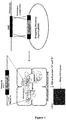
- the clones were subjected to PCR amplification with primers designated "A” and "B", which anneal specifically to the region upstream the IS66 and to the 5'-end of hygromycine gene, respectively generating a DNA PCR fragment of about 700 bp (see Fig.1 ).
- Fig 1 confirm the insertion of the recombinant nucleic acid into the targeted IS.
- An IS-targeting cassette was constructed comprising a PDC gene and two alcohol dehydrogenase encoding genes.
- the cassette also comprises an antibiotic resistance marker to hygromycine.
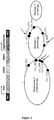
- the cassette is flanked by two 500 bp regions HR1 (SEQ ID NO: 11) and HR2 (SEQ ID NO: 12) ( Fig.2 , black rectangle), that are homologous to N-term and C-term sequences of the insertion sequence IS66 of the Deinococcus geothermalis, respectively.
- the cassette comprises 6548pb.
- the IS-targeting cassette linear molecule or a vector containing the cassette, are transformed into D.
- geothermalis and recombinant strains having inserted the cassette into their chromosome are selected using the embedded marker on PGY-agar plate containing 800 ⁇ g/ml of hygromycine.
- the mapping of the cassette in the genome is confirmed by PCR using primers "C” and "D", primer C being specific of each upstream sequence of IS66 and D being specific of 5' end of PDC.
- the results are presented in Fig. 2 . They show the construction has been found integrated into four different loci of IS66: CDS_1696, CDS_1721, CDS_2881 and CDS_2557 ( Fig 2 ), into the chromosome or into native plasmid 1 of Deinococcus.
- An IS-propagating cassette is prepared ( Fig 3 ).
- the gene of interest is flanked by 2 Inverted repeats sequences (black, IRs) that can be recognized by a Transposase.
- IRs Inverted repeats sequences
- a Deinococcus replicative vector allowing for Transposase thermosensitive-expression is transformed into the GOI_IRs strain.
- Upon Transposase expression grey, the gene is inserted and propagated into the chromosome.
Landscapes
- Health & Medical Sciences (AREA)
- Life Sciences & Earth Sciences (AREA)
- Genetics & Genomics (AREA)
- Engineering & Computer Science (AREA)
- Chemical & Material Sciences (AREA)
- Organic Chemistry (AREA)
- Wood Science & Technology (AREA)
- Zoology (AREA)
- Biotechnology (AREA)
- Bioinformatics & Cheminformatics (AREA)
- General Engineering & Computer Science (AREA)
- Biomedical Technology (AREA)
- Molecular Biology (AREA)
- Microbiology (AREA)
- Biochemistry (AREA)
- General Health & Medical Sciences (AREA)
- Plant Pathology (AREA)
- Biophysics (AREA)
- Physics & Mathematics (AREA)
- Mycology (AREA)
- Medicinal Chemistry (AREA)
- Tropical Medicine & Parasitology (AREA)
- Virology (AREA)
- Chemical Kinetics & Catalysis (AREA)
- General Chemical & Material Sciences (AREA)
- Micro-Organisms Or Cultivation Processes Thereof (AREA)
Claims (16)
- Méthode pour introduire une molécule d'acide nucléique dans le génome d'une bactérie Deinococcus, comprenant l'introduction ciblée de ladite molécule d'acide nucléique dans une séquence IS présente dans le génome de ladite bactérie.
- Méthode selon la revendication 1, dans laquelle ladite IS est présente en plusieurs copies dans le génome de ladite bactérie.
- Méthode selon l'une quelconque de la revendication 1 ou 2, dans laquelle la séquence IS est choisie parmi IS200/IS605, IS630 ; IS701 ; IS607 ; IS982 ; IS3 ; IS1 ; IS6 ; IS5 ; IS4 ; ou IS66.
- Méthode selon l'une quelconque des revendications précédentes, dans laquelle l'acide nucléique est introduit dans le génome de la bactérie par recombinaison homologue avec une IS présente dans le génome, par insertion médiée par un intron dans une IS, ou par transposition médiée par une IS.
- Méthode selon l'une quelconque des revendications précédentes, dans laquelle l'acide nucléique comprend un gène d'intérêt flanqué, au niveau d'un ou des deux côtés, par une séquence médiatrice d'insertion.
- Méthode selon la revendication 5, dans laquelle la séquence médiatrice d'insertion comprend une séquence homologue à une séquence de l'IS, permettant l'insertion médiée par une IS du gène d'intérêt par recombinaison homologue.
- Méthode selon la revendication 5, dans laquelle la séquence médiatrice d'insertion comprend un élément de Répétition Inversée d'une IS, permettant l'insertion médiée par une IS du gène d'intérêt par transposition; ou une séquence d'intron, permettant l'insertion médiée par une IS du gène d'intérêt par rétro-homing.
- Méthode selon l'une quelconque des revendications précédentes, dans laquelle la molécule d'acide nucléique est linéaire ou circulaire.
- Méthode selon l'une quelconque des revendications 5 à 8, dans laquelle le gène d'intérêt comprend un cadre de lecture ouvert, de préférence un cadre de lecture ouvert codant pour un polypeptide ou un ARN biologiquement actif.
- Méthode selon l'une quelconque des revendications précédentes, dans laquelle, avant, pendant ou après l'insertion médiée par une IS de l'acide nucléique dans le génome de la bactérie, la bactérie est soumise à un traitement d'amplification génique, de préférence un traitement endommageant l'ADN ou un traitement thermique.
- Méthode pour produire une bactérie Deinococcus recombinante comprenant une ou plusieurs copies d'un gène d'intérêt inséré dans son génome, comprenant l'introduction dudit gène d'intérêt dans le génome de ladite bactérie par insertion médiée par une IS et, éventuellement, l'amplification du nombre de copies en soumettant ladite bactérie ou l'une de ses descendantes à un traitement d'amplification génique.
- Méthode selon l'une quelconque des revendications précédentes, dans laquelle la bactérie Deinococcus est choisie parmi D. deserti; D. geothermalis; D. maricopensis; D. proteolyticus; ou D. radiodurans; D. murrayi; D. cellulolysiticus; D. guilhemensis, D. aquaticus, D. ficus, D. gobiensis, D. grandis, D. radiopugnans ou D. roseus, ou parmi toute bactérie Deinococcus thermophile, de manière davantage préférée la bactérie Deinococcus est une bactérie D. geothermalis.
- Bactérie Deinococcus obtenue par insertion médiée par une IS d'un acide nucléique, ou descendante de cette bactérie.
- Bactérie Deinococcus comprenant une ou plusieurs copies d'un acide nucléique inséré dans un élément IS.
- Acide nucléique comprenant un gène d'intérêt flanqué des deux côtés par (i) une séquence homologue à une séquence d'un élément IS de Deinococcus ou (ii) par une séquence d'une séquence répétée inversée d'un élément IS de Deinococcus.
- Utilisation d'une bactérie selon la revendication 13 ou 14 pour la production d'un polypeptide ayant un intérêt pharmaceutique et/ou agro-chimique ou pour la production d'une enzyme telle qu'une enzyme de dégradation de la biomasse ou une enzyme de fermentation, telle que les laccases, xylanases, amylases, cellulases, glucanases, ADH (alcool déshydrogénase), ou PDC (pyruvate décarboxylase).
Priority Applications (1)
| Application Number | Priority Date | Filing Date | Title |
|---|---|---|---|
| EP14824467.6A EP3083937B1 (fr) | 2013-12-20 | 2014-12-19 | Système de ciblage is pour l'introduction de gène et manipulation génétique de la bactérie deinococcus |
Applications Claiming Priority (3)
| Application Number | Priority Date | Filing Date | Title |
|---|---|---|---|
| EP13306811 | 2013-12-20 | ||
| PCT/EP2014/078858 WO2015092013A1 (fr) | 2013-12-20 | 2014-12-19 | Système de ciblage d'une séquence d'insertion pour l'introduction de gènes et de modifications génétiques dans des bactéries deinococcus |
| EP14824467.6A EP3083937B1 (fr) | 2013-12-20 | 2014-12-19 | Système de ciblage is pour l'introduction de gène et manipulation génétique de la bactérie deinococcus |
Publications (2)
| Publication Number | Publication Date |
|---|---|
| EP3083937A1 EP3083937A1 (fr) | 2016-10-26 |
| EP3083937B1 true EP3083937B1 (fr) | 2019-03-13 |
Family
ID=50272251
Family Applications (1)
| Application Number | Title | Priority Date | Filing Date |
|---|---|---|---|
| EP14824467.6A Active EP3083937B1 (fr) | 2013-12-20 | 2014-12-19 | Système de ciblage is pour l'introduction de gène et manipulation génétique de la bactérie deinococcus |
Country Status (5)
| Country | Link |
|---|---|
| US (2) | US10358657B2 (fr) |
| EP (1) | EP3083937B1 (fr) |
| DK (1) | DK3083937T3 (fr) |
| ES (1) | ES2728317T3 (fr) |
| WO (1) | WO2015092013A1 (fr) |
Families Citing this family (7)
| Publication number | Priority date | Publication date | Assignee | Title |
|---|---|---|---|---|
| US10392623B2 (en) | 2015-02-16 | 2019-08-27 | Deinove | L-arabinose assimilation pathway and uses thereof |
| KR101836889B1 (ko) | 2016-01-15 | 2018-03-09 | 씨제이제일제당(주) | 신규 폴리포스페이트-의존형 포도당인산화효소 및 이를 이용한 포도당-6-인산 제조방법 |
| CA3046436A1 (fr) | 2016-12-16 | 2018-06-21 | Deinove | Procedes de production de phytoene |
| KR20210126061A (ko) | 2019-02-11 | 2021-10-19 | 르 라보레또레 쎄르비에르 | 미생물 내 디오스민 및/또는 헤스페리딘의 생합성 방법 |
| WO2020165178A1 (fr) | 2019-02-11 | 2020-08-20 | Abolis Biotechnologies | Methode de biosynthese de l'eriodictyol et/ou de la luteoline dans une levure |
| CN113748204A (zh) | 2019-02-11 | 2021-12-03 | 埃博里斯生物科技公司 | 在微生物中生物合成香叶木素和/或橙皮素的方法 |
| WO2021151891A1 (fr) | 2020-01-27 | 2021-08-05 | Deinove | Nouveaux variants de la phytoène désaturase pour la production de neurosporène et/ou de zêta-carotène |
Citations (1)
| Publication number | Priority date | Publication date | Assignee | Title |
|---|---|---|---|---|
| EP2251415A1 (fr) * | 2009-05-14 | 2010-11-17 | Deinove | Bactérie recombinante et utilisations associées pour produire de l'éthanol |
Family Cites Families (2)
| Publication number | Priority date | Publication date | Assignee | Title |
|---|---|---|---|---|
| WO2002014490A2 (fr) * | 2000-08-11 | 2002-02-21 | Genencor International, Inc. | Transformation de bacille, transformants et bibliotheques de mutants |
| EA033901B1 (ru) * | 2010-03-02 | 2019-12-06 | Деинов | Применение бактерии deinococcus и ее экстракта для получения метаболитов, лекарственных средств и белков, а также для разложения биомассы |
-
2014
- 2014-12-19 EP EP14824467.6A patent/EP3083937B1/fr active Active
- 2014-12-19 ES ES14824467T patent/ES2728317T3/es active Active
- 2014-12-19 WO PCT/EP2014/078858 patent/WO2015092013A1/fr not_active Ceased
- 2014-12-19 US US15/039,867 patent/US10358657B2/en active Active
- 2014-12-19 DK DK14824467.6T patent/DK3083937T3/da active
-
2019
- 2019-06-12 US US16/438,760 patent/US20190309327A1/en not_active Abandoned
Patent Citations (1)
| Publication number | Priority date | Publication date | Assignee | Title |
|---|---|---|---|---|
| EP2251415A1 (fr) * | 2009-05-14 | 2010-11-17 | Deinove | Bactérie recombinante et utilisations associées pour produire de l'éthanol |
Non-Patent Citations (1)
| Title |
|---|
| GRAY Y H M: "It takes two transposons to tango:transposable-element-mediated chromosomal rearrangements", TRENDS IN GENET, ELSEVIER SCIENCE PUBLISHERS B.V. AMSTERDAM, NL, vol. 16, no. 10, 1 October 2000 (2000-10-01), pages 461 - 468, XP004237227, ISSN: 0168-9525, DOI: 10.1016/S0168-9525(00)02104-1 * |
Also Published As
| Publication number | Publication date |
|---|---|
| US20160376609A1 (en) | 2016-12-29 |
| EP3083937A1 (fr) | 2016-10-26 |
| WO2015092013A1 (fr) | 2015-06-25 |
| US20190309327A1 (en) | 2019-10-10 |
| ES2728317T3 (es) | 2019-10-23 |
| DK3083937T3 (da) | 2019-06-03 |
| US10358657B2 (en) | 2019-07-23 |
Similar Documents
| Publication | Publication Date | Title |
|---|---|---|
| EP3083937B1 (fr) | Système de ciblage is pour l'introduction de gène et manipulation génétique de la bactérie deinococcus | |
| US20230049124A1 (en) | Improved methods for modification of target nucleic acids | |
| AU2017260714B2 (en) | Harnessing heterologous and endogenous CRISPR-Cas machineries for efficient markerless genome editing in clostridium | |
| US10612043B2 (en) | Methods of in vivo engineering of large sequences using multiple CRISPR/cas selections of recombineering events | |
| JP6839082B2 (ja) | 環状ポリヌクレオチド修飾鋳型と組み合わせてガイドrna/casエンドヌクレアーゼ系を用いるe.コリ(e.coli)での効率的な遺伝子編集のための組成物および方法 | |
| EP2038418B1 (fr) | Molécules d'adn et procédés | |
| KR20220161383A (ko) | 클래스 ii, 유형 ii crispr 시스템 | |
| WO2016205623A1 (fr) | Méthodes et compositions pour l'édition de génome dans des bactéries à l'aide de systèmes cas9-crispr | |
| KR20170126875A (ko) | Crispr 하이브리드 dna/rna 폴리뉴클레오티드 및 사용 방법 | |
| US20240132873A1 (en) | Site-specific genome modification technology | |
| CN105483118A (zh) | 以Argonaute核酸酶为核心的基因编辑技术 | |
| US12410429B2 (en) | Compositions and methods for gene targeting using CRISPR-Cas and transposons | |
| JP2019500036A (ja) | 原核生物におけるdna末端修復経路の再構築 | |
| JP2022516025A (ja) | 遺伝子的に改変されたclostridium細菌の、調製およびその使用。 | |
| Yu et al. | Efficient and precise construction of markerless manipulations in the Bacillus subtilis genome | |
| AU2011201470A1 (en) | Reduction of spontaneous mutation rates in cells | |
| Cui et al. | Mobile group II intron targeting: applications in prokaryotes and perspectives in eukaryotes | |
| CN105087554B (zh) | Dna磷硫酰化修饰基因簇 | |
| Pan et al. | Utilization of Miniature CRISPR‐AsCas12f1 Nuclease for Efficient Genome Editing in Bacillus subtilis | |
| BR112018068934B1 (pt) | MÉTODO DE MODIFICAÇÃO DE MOLÉCULAS DE ÁCIDO NUCLEICO ALVO (NA ALVO) EM CÉLULAS, MOLÉCULA DE fuNA RECOMBINANTE, VETOR, SISTEMA DE VETOR, SISTEMA DE MODIFICAÇÃO DE NA ALVO EM CÉLULAS, COMPOSIÇÃO E USO DE VETOR |
Legal Events
| Date | Code | Title | Description |
|---|---|---|---|
| PUAI | Public reference made under article 153(3) epc to a published international application that has entered the european phase |
Free format text: ORIGINAL CODE: 0009012 |
|
| 17P | Request for examination filed |
Effective date: 20160527 |
|
| AK | Designated contracting states |
Kind code of ref document: A1 Designated state(s): AL AT BE BG CH CY CZ DE DK EE ES FI FR GB GR HR HU IE IS IT LI LT LU LV MC MK MT NL NO PL PT RO RS SE SI SK SM TR |
|
| AX | Request for extension of the european patent |
Extension state: BA ME |
|
| DAX | Request for extension of the european patent (deleted) | ||
| STAA | Information on the status of an ep patent application or granted ep patent |
Free format text: STATUS: EXAMINATION IS IN PROGRESS |
|
| 17Q | First examination report despatched |
Effective date: 20170803 |
|
| GRAP | Despatch of communication of intention to grant a patent |
Free format text: ORIGINAL CODE: EPIDOSNIGR1 |
|
| STAA | Information on the status of an ep patent application or granted ep patent |
Free format text: STATUS: GRANT OF PATENT IS INTENDED |
|
| INTG | Intention to grant announced |
Effective date: 20181001 |
|
| RIN1 | Information on inventor provided before grant (corrected) |
Inventor name: GERBER, ESTHER Inventor name: HAUSER, ELENA Inventor name: LEONETTI, JEAN-PAUL Inventor name: BERNARD, REMI |
|
| GRAS | Grant fee paid |
Free format text: ORIGINAL CODE: EPIDOSNIGR3 |
|
| GRAA | (expected) grant |
Free format text: ORIGINAL CODE: 0009210 |
|
| STAA | Information on the status of an ep patent application or granted ep patent |
Free format text: STATUS: THE PATENT HAS BEEN GRANTED |
|
| AK | Designated contracting states |
Kind code of ref document: B1 Designated state(s): AL AT BE BG CH CY CZ DE DK EE ES FI FR GB GR HR HU IE IS IT LI LT LU LV MC MK MT NL NO PL PT RO RS SE SI SK SM TR |
|
| REG | Reference to a national code |
Ref country code: GB Ref legal event code: FG4D |
|
| REG | Reference to a national code |
Ref country code: CH Ref legal event code: EP Ref country code: AT Ref legal event code: REF Ref document number: 1107679 Country of ref document: AT Kind code of ref document: T Effective date: 20190315 |
|
| REG | Reference to a national code |
Ref country code: IE Ref legal event code: FG4D |
|
| REG | Reference to a national code |
Ref country code: DE Ref legal event code: R096 Ref document number: 602014042954 Country of ref document: DE |
|
| REG | Reference to a national code |
Ref country code: CH Ref legal event code: NV Representative=s name: VALIPAT S.A. C/O BOVARD SA NEUCHATEL, CH |
|
| REG | Reference to a national code |
Ref country code: DK Ref legal event code: T3 Effective date: 20190529 |
|
| REG | Reference to a national code |
Ref country code: SE Ref legal event code: TRGR |
|
| REG | Reference to a national code |
Ref country code: NL Ref legal event code: FP |
|
| REG | Reference to a national code |
Ref country code: LT Ref legal event code: MG4D |
|
| PG25 | Lapsed in a contracting state [announced via postgrant information from national office to epo] |
Ref country code: FI Free format text: LAPSE BECAUSE OF FAILURE TO SUBMIT A TRANSLATION OF THE DESCRIPTION OR TO PAY THE FEE WITHIN THE PRESCRIBED TIME-LIMIT Effective date: 20190313 Ref country code: NO Free format text: LAPSE BECAUSE OF FAILURE TO SUBMIT A TRANSLATION OF THE DESCRIPTION OR TO PAY THE FEE WITHIN THE PRESCRIBED TIME-LIMIT Effective date: 20190613 Ref country code: LT Free format text: LAPSE BECAUSE OF FAILURE TO SUBMIT A TRANSLATION OF THE DESCRIPTION OR TO PAY THE FEE WITHIN THE PRESCRIBED TIME-LIMIT Effective date: 20190313 |
|
| PG25 | Lapsed in a contracting state [announced via postgrant information from national office to epo] |
Ref country code: BG Free format text: LAPSE BECAUSE OF FAILURE TO SUBMIT A TRANSLATION OF THE DESCRIPTION OR TO PAY THE FEE WITHIN THE PRESCRIBED TIME-LIMIT Effective date: 20190613 Ref country code: GR Free format text: LAPSE BECAUSE OF FAILURE TO SUBMIT A TRANSLATION OF THE DESCRIPTION OR TO PAY THE FEE WITHIN THE PRESCRIBED TIME-LIMIT Effective date: 20190614 Ref country code: HR Free format text: LAPSE BECAUSE OF FAILURE TO SUBMIT A TRANSLATION OF THE DESCRIPTION OR TO PAY THE FEE WITHIN THE PRESCRIBED TIME-LIMIT Effective date: 20190313 Ref country code: LV Free format text: LAPSE BECAUSE OF FAILURE TO SUBMIT A TRANSLATION OF THE DESCRIPTION OR TO PAY THE FEE WITHIN THE PRESCRIBED TIME-LIMIT Effective date: 20190313 Ref country code: RS Free format text: LAPSE BECAUSE OF FAILURE TO SUBMIT A TRANSLATION OF THE DESCRIPTION OR TO PAY THE FEE WITHIN THE PRESCRIBED TIME-LIMIT Effective date: 20190313 |
|
| REG | Reference to a national code |
Ref country code: ES Ref legal event code: FG2A Ref document number: 2728317 Country of ref document: ES Kind code of ref document: T3 Effective date: 20191023 |
|
| PG25 | Lapsed in a contracting state [announced via postgrant information from national office to epo] |
Ref country code: CZ Free format text: LAPSE BECAUSE OF FAILURE TO SUBMIT A TRANSLATION OF THE DESCRIPTION OR TO PAY THE FEE WITHIN THE PRESCRIBED TIME-LIMIT Effective date: 20190313 Ref country code: RO Free format text: LAPSE BECAUSE OF FAILURE TO SUBMIT A TRANSLATION OF THE DESCRIPTION OR TO PAY THE FEE WITHIN THE PRESCRIBED TIME-LIMIT Effective date: 20190313 Ref country code: EE Free format text: LAPSE BECAUSE OF FAILURE TO SUBMIT A TRANSLATION OF THE DESCRIPTION OR TO PAY THE FEE WITHIN THE PRESCRIBED TIME-LIMIT Effective date: 20190313 Ref country code: PT Free format text: LAPSE BECAUSE OF FAILURE TO SUBMIT A TRANSLATION OF THE DESCRIPTION OR TO PAY THE FEE WITHIN THE PRESCRIBED TIME-LIMIT Effective date: 20190713 Ref country code: AL Free format text: LAPSE BECAUSE OF FAILURE TO SUBMIT A TRANSLATION OF THE DESCRIPTION OR TO PAY THE FEE WITHIN THE PRESCRIBED TIME-LIMIT Effective date: 20190313 Ref country code: SK Free format text: LAPSE BECAUSE OF FAILURE TO SUBMIT A TRANSLATION OF THE DESCRIPTION OR TO PAY THE FEE WITHIN THE PRESCRIBED TIME-LIMIT Effective date: 20190313 |
|
| PG25 | Lapsed in a contracting state [announced via postgrant information from national office to epo] |
Ref country code: PL Free format text: LAPSE BECAUSE OF FAILURE TO SUBMIT A TRANSLATION OF THE DESCRIPTION OR TO PAY THE FEE WITHIN THE PRESCRIBED TIME-LIMIT Effective date: 20190313 Ref country code: SM Free format text: LAPSE BECAUSE OF FAILURE TO SUBMIT A TRANSLATION OF THE DESCRIPTION OR TO PAY THE FEE WITHIN THE PRESCRIBED TIME-LIMIT Effective date: 20190313 |
|
| REG | Reference to a national code |
Ref country code: DE Ref legal event code: R097 Ref document number: 602014042954 Country of ref document: DE |
|
| PG25 | Lapsed in a contracting state [announced via postgrant information from national office to epo] |
Ref country code: IS Free format text: LAPSE BECAUSE OF FAILURE TO SUBMIT A TRANSLATION OF THE DESCRIPTION OR TO PAY THE FEE WITHIN THE PRESCRIBED TIME-LIMIT Effective date: 20190713 |
|
| PLBE | No opposition filed within time limit |
Free format text: ORIGINAL CODE: 0009261 |
|
| STAA | Information on the status of an ep patent application or granted ep patent |
Free format text: STATUS: NO OPPOSITION FILED WITHIN TIME LIMIT |
|
| 26N | No opposition filed |
Effective date: 20191216 |
|
| PG25 | Lapsed in a contracting state [announced via postgrant information from national office to epo] |
Ref country code: SI Free format text: LAPSE BECAUSE OF FAILURE TO SUBMIT A TRANSLATION OF THE DESCRIPTION OR TO PAY THE FEE WITHIN THE PRESCRIBED TIME-LIMIT Effective date: 20190313 |
|
| PG25 | Lapsed in a contracting state [announced via postgrant information from national office to epo] |
Ref country code: TR Free format text: LAPSE BECAUSE OF FAILURE TO SUBMIT A TRANSLATION OF THE DESCRIPTION OR TO PAY THE FEE WITHIN THE PRESCRIBED TIME-LIMIT Effective date: 20190313 |
|
| PG25 | Lapsed in a contracting state [announced via postgrant information from national office to epo] |
Ref country code: MC Free format text: LAPSE BECAUSE OF FAILURE TO SUBMIT A TRANSLATION OF THE DESCRIPTION OR TO PAY THE FEE WITHIN THE PRESCRIBED TIME-LIMIT Effective date: 20190313 |
|
| PG25 | Lapsed in a contracting state [announced via postgrant information from national office to epo] |
Ref country code: LU Free format text: LAPSE BECAUSE OF NON-PAYMENT OF DUE FEES Effective date: 20191219 |
|
| PG25 | Lapsed in a contracting state [announced via postgrant information from national office to epo] |
Ref country code: CY Free format text: LAPSE BECAUSE OF FAILURE TO SUBMIT A TRANSLATION OF THE DESCRIPTION OR TO PAY THE FEE WITHIN THE PRESCRIBED TIME-LIMIT Effective date: 20190313 |
|
| PG25 | Lapsed in a contracting state [announced via postgrant information from national office to epo] |
Ref country code: HU Free format text: LAPSE BECAUSE OF FAILURE TO SUBMIT A TRANSLATION OF THE DESCRIPTION OR TO PAY THE FEE WITHIN THE PRESCRIBED TIME-LIMIT; INVALID AB INITIO Effective date: 20141219 Ref country code: MT Free format text: LAPSE BECAUSE OF FAILURE TO SUBMIT A TRANSLATION OF THE DESCRIPTION OR TO PAY THE FEE WITHIN THE PRESCRIBED TIME-LIMIT Effective date: 20190313 |
|
| REG | Reference to a national code |
Ref country code: AT Ref legal event code: UEP Ref document number: 1107679 Country of ref document: AT Kind code of ref document: T Effective date: 20190313 |
|
| PG25 | Lapsed in a contracting state [announced via postgrant information from national office to epo] |
Ref country code: MK Free format text: LAPSE BECAUSE OF FAILURE TO SUBMIT A TRANSLATION OF THE DESCRIPTION OR TO PAY THE FEE WITHIN THE PRESCRIBED TIME-LIMIT Effective date: 20190313 |
|
| PGFP | Annual fee paid to national office [announced via postgrant information from national office to epo] |
Ref country code: SE Payment date: 20221124 Year of fee payment: 9 Ref country code: NL Payment date: 20221123 Year of fee payment: 9 Ref country code: IT Payment date: 20221122 Year of fee payment: 9 Ref country code: IE Payment date: 20221123 Year of fee payment: 9 Ref country code: GB Payment date: 20221116 Year of fee payment: 9 Ref country code: FR Payment date: 20221123 Year of fee payment: 9 Ref country code: DK Payment date: 20221123 Year of fee payment: 9 Ref country code: DE Payment date: 20221122 Year of fee payment: 9 Ref country code: AT Payment date: 20221123 Year of fee payment: 9 |
|
| PGFP | Annual fee paid to national office [announced via postgrant information from national office to epo] |
Ref country code: BE Payment date: 20221122 Year of fee payment: 9 |
|
| PGFP | Annual fee paid to national office [announced via postgrant information from national office to epo] |
Ref country code: ES Payment date: 20230102 Year of fee payment: 9 Ref country code: CH Payment date: 20230101 Year of fee payment: 9 |
|
| REG | Reference to a national code |
Ref country code: DE Ref legal event code: R119 Ref document number: 602014042954 Country of ref document: DE |
|
| REG | Reference to a national code |
Ref country code: DK Ref legal event code: EBP Effective date: 20231231 |
|
| REG | Reference to a national code |
Ref country code: SE Ref legal event code: EUG |
|
| REG | Reference to a national code |
Ref country code: CH Ref legal event code: PL |
|
| REG | Reference to a national code |
Ref country code: NL Ref legal event code: MM Effective date: 20240101 |
|
| REG | Reference to a national code |
Ref country code: AT Ref legal event code: MM01 Ref document number: 1107679 Country of ref document: AT Kind code of ref document: T Effective date: 20231219 |
|
| GBPC | Gb: european patent ceased through non-payment of renewal fee |
Effective date: 20231219 |
|
| REG | Reference to a national code |
Ref country code: BE Ref legal event code: MM Effective date: 20231231 |
|
| PG25 | Lapsed in a contracting state [announced via postgrant information from national office to epo] |
Ref country code: NL Free format text: LAPSE BECAUSE OF NON-PAYMENT OF DUE FEES Effective date: 20240101 |
|
| PG25 | Lapsed in a contracting state [announced via postgrant information from national office to epo] |
Ref country code: NL Free format text: LAPSE BECAUSE OF NON-PAYMENT OF DUE FEES Effective date: 20240101 |
|
| REG | Reference to a national code |
Ref country code: IE Ref legal event code: MM4A |
|
| PG25 | Lapsed in a contracting state [announced via postgrant information from national office to epo] |
Ref country code: DE Free format text: LAPSE BECAUSE OF NON-PAYMENT OF DUE FEES Effective date: 20240702 Ref country code: IE Free format text: LAPSE BECAUSE OF NON-PAYMENT OF DUE FEES Effective date: 20231219 |
|
| PG25 | Lapsed in a contracting state [announced via postgrant information from national office to epo] |
Ref country code: GB Free format text: LAPSE BECAUSE OF NON-PAYMENT OF DUE FEES Effective date: 20231219 |
|
| PG25 | Lapsed in a contracting state [announced via postgrant information from national office to epo] |
Ref country code: BE Free format text: LAPSE BECAUSE OF NON-PAYMENT OF DUE FEES Effective date: 20231231 |
|
| PG25 | Lapsed in a contracting state [announced via postgrant information from national office to epo] |
Ref country code: FR Free format text: LAPSE BECAUSE OF NON-PAYMENT OF DUE FEES Effective date: 20231231 |
|
| PG25 | Lapsed in a contracting state [announced via postgrant information from national office to epo] |
Ref country code: CH Free format text: LAPSE BECAUSE OF NON-PAYMENT OF DUE FEES Effective date: 20231231 |
|
| PG25 | Lapsed in a contracting state [announced via postgrant information from national office to epo] |
Ref country code: AT Free format text: LAPSE BECAUSE OF NON-PAYMENT OF DUE FEES Effective date: 20231219 |
|
| PG25 | Lapsed in a contracting state [announced via postgrant information from national office to epo] |
Ref country code: IE Free format text: LAPSE BECAUSE OF NON-PAYMENT OF DUE FEES Effective date: 20231219 Ref country code: GB Free format text: LAPSE BECAUSE OF NON-PAYMENT OF DUE FEES Effective date: 20231219 Ref country code: FR Free format text: LAPSE BECAUSE OF NON-PAYMENT OF DUE FEES Effective date: 20231231 Ref country code: DE Free format text: LAPSE BECAUSE OF NON-PAYMENT OF DUE FEES Effective date: 20240702 Ref country code: CH Free format text: LAPSE BECAUSE OF NON-PAYMENT OF DUE FEES Effective date: 20231231 Ref country code: BE Free format text: LAPSE BECAUSE OF NON-PAYMENT OF DUE FEES Effective date: 20231231 Ref country code: AT Free format text: LAPSE BECAUSE OF NON-PAYMENT OF DUE FEES Effective date: 20231219 |
|
| PG25 | Lapsed in a contracting state [announced via postgrant information from national office to epo] |
Ref country code: DK Free format text: LAPSE BECAUSE OF NON-PAYMENT OF DUE FEES Effective date: 20231231 |
|
| PG25 | Lapsed in a contracting state [announced via postgrant information from national office to epo] |
Ref country code: DK Free format text: LAPSE BECAUSE OF NON-PAYMENT OF DUE FEES Effective date: 20231231 |
|
| REG | Reference to a national code |
Ref country code: ES Ref legal event code: FD2A Effective date: 20250205 |
|
| PG25 | Lapsed in a contracting state [announced via postgrant information from national office to epo] |
Ref country code: ES Free format text: LAPSE BECAUSE OF NON-PAYMENT OF DUE FEES Effective date: 20231220 |
|
| PG25 | Lapsed in a contracting state [announced via postgrant information from national office to epo] |
Ref country code: IT Free format text: LAPSE BECAUSE OF NON-PAYMENT OF DUE FEES Effective date: 20231219 |
|
| PG25 | Lapsed in a contracting state [announced via postgrant information from national office to epo] |
Ref country code: SE Free format text: LAPSE BECAUSE OF NON-PAYMENT OF DUE FEES Effective date: 20231220 |