EP3085122B1 - Système et procédé pour utiliser des barrières géographiques - Google Patents
Système et procédé pour utiliser des barrières géographiques Download PDFInfo
- Publication number
- EP3085122B1 EP3085122B1 EP14871032.0A EP14871032A EP3085122B1 EP 3085122 B1 EP3085122 B1 EP 3085122B1 EP 14871032 A EP14871032 A EP 14871032A EP 3085122 B1 EP3085122 B1 EP 3085122B1
- Authority
- EP
- European Patent Office
- Prior art keywords
- geo
- fence
- mobile device
- passive
- determining
- Prior art date
- Legal status (The legal status is an assumption and is not a legal conclusion. Google has not performed a legal analysis and makes no representation as to the accuracy of the status listed.)
- Not-in-force
Links
- 238000000034 method Methods 0.000 title claims description 27
- 230000015654 memory Effects 0.000 claims description 11
- 238000013507 mapping Methods 0.000 claims description 7
- 230000004044 response Effects 0.000 claims description 5
- 238000004891 communication Methods 0.000 description 5
- 238000012545 processing Methods 0.000 description 4
- 230000009471 action Effects 0.000 description 2
- 230000006399 behavior Effects 0.000 description 2
- 230000008901 benefit Effects 0.000 description 2
- 238000010586 diagram Methods 0.000 description 2
- 230000006870 function Effects 0.000 description 2
- 238000012546 transfer Methods 0.000 description 2
- 230000009286 beneficial effect Effects 0.000 description 1
- 230000005540 biological transmission Effects 0.000 description 1
- 230000001413 cellular effect Effects 0.000 description 1
- 230000001419 dependent effect Effects 0.000 description 1
- 238000005516 engineering process Methods 0.000 description 1
- VJYFKVYYMZPMAB-UHFFFAOYSA-N ethoprophos Chemical compound CCCSP(=O)(OCC)SCCC VJYFKVYYMZPMAB-UHFFFAOYSA-N 0.000 description 1
- 230000007274 generation of a signal involved in cell-cell signaling Effects 0.000 description 1
- 238000002372 labelling Methods 0.000 description 1
- 239000004973 liquid crystal related substance Substances 0.000 description 1
- 230000005291 magnetic effect Effects 0.000 description 1
- 230000007246 mechanism Effects 0.000 description 1
- 238000010295 mobile communication Methods 0.000 description 1
- 230000003287 optical effect Effects 0.000 description 1
- 230000008569 process Effects 0.000 description 1
- 230000001902 propagating effect Effects 0.000 description 1
- 230000008054 signal transmission Effects 0.000 description 1
- 230000003068 static effect Effects 0.000 description 1
- 230000001960 triggered effect Effects 0.000 description 1
Images


Classifications
-
- H—ELECTRICITY
- H04—ELECTRIC COMMUNICATION TECHNIQUE
- H04W—WIRELESS COMMUNICATION NETWORKS
- H04W4/00—Services specially adapted for wireless communication networks; Facilities therefor
- H04W4/02—Services making use of location information
- H04W4/021—Services related to particular areas, e.g. point of interest [POI] services, venue services or geofences
-
- H—ELECTRICITY
- H04—ELECTRIC COMMUNICATION TECHNIQUE
- H04M—TELEPHONIC COMMUNICATION
- H04M1/00—Substation equipment, e.g. for use by subscribers
- H04M1/72—Mobile telephones; Cordless telephones, i.e. devices for establishing wireless links to base stations without route selection
- H04M1/724—User interfaces specially adapted for cordless or mobile telephones
- H04M1/72448—User interfaces specially adapted for cordless or mobile telephones with means for adapting the functionality of the device according to specific conditions
- H04M1/72457—User interfaces specially adapted for cordless or mobile telephones with means for adapting the functionality of the device according to specific conditions according to geographic location
-
- H—ELECTRICITY
- H04—ELECTRIC COMMUNICATION TECHNIQUE
- H04W—WIRELESS COMMUNICATION NETWORKS
- H04W52/00—Power management, e.g. Transmission Power Control [TPC] or power classes
- H04W52/02—Power saving arrangements
- H04W52/0209—Power saving arrangements in terminal devices
- H04W52/0251—Power saving arrangements in terminal devices using monitoring of local events, e.g. events related to user activity
- H04W52/0254—Power saving arrangements in terminal devices using monitoring of local events, e.g. events related to user activity detecting a user operation or a tactile contact or a motion of the device
-
- H—ELECTRICITY
- H04—ELECTRIC COMMUNICATION TECHNIQUE
- H04W—WIRELESS COMMUNICATION NETWORKS
- H04W88/00—Devices specially adapted for wireless communication networks, e.g. terminals, base stations or access point devices
- H04W88/02—Terminal devices
-
- H—ELECTRICITY
- H04—ELECTRIC COMMUNICATION TECHNIQUE
- H04M—TELEPHONIC COMMUNICATION
- H04M2250/00—Details of telephonic subscriber devices
- H04M2250/10—Details of telephonic subscriber devices including a GPS signal receiver
-
- Y—GENERAL TAGGING OF NEW TECHNOLOGICAL DEVELOPMENTS; GENERAL TAGGING OF CROSS-SECTIONAL TECHNOLOGIES SPANNING OVER SEVERAL SECTIONS OF THE IPC; TECHNICAL SUBJECTS COVERED BY FORMER USPC CROSS-REFERENCE ART COLLECTIONS [XRACs] AND DIGESTS
- Y02—TECHNOLOGIES OR APPLICATIONS FOR MITIGATION OR ADAPTATION AGAINST CLIMATE CHANGE
- Y02D—CLIMATE CHANGE MITIGATION TECHNOLOGIES IN INFORMATION AND COMMUNICATION TECHNOLOGIES [ICT], I.E. INFORMATION AND COMMUNICATION TECHNOLOGIES AIMING AT THE REDUCTION OF THEIR OWN ENERGY USE
- Y02D30/00—Reducing energy consumption in communication networks
- Y02D30/70—Reducing energy consumption in communication networks in wireless communication networks
Definitions
- This application relates to the technical fields of software and/or hardware technology and, in one example embodiment, to system and method to utilize geo-fences to limit calls to a server system from a user's mobile device.
- a geo-fence is a virtual boundary corresponding to a shape on the surface of the Earth. Geographic location may be detected by the use of the Global Positioning System (GPS). Using geo-fences (also referred to as merely "fences") together with GPS-enabled devices may be referred to as geo-fencing. An event associated with a user crossing from outside a geo-fence shape to inside that shape, based on the geographic location of the user determined by the GPS, is referred to as the fence being broken. GPS-enabled mobile devices may be used in combination with geo-fences for the purpose of triggering an action when mobile location-enabled devices enter and/or exit said boundaries. For example, a user may get a notification via their mobile device of an item being on sale.
- GPS Global Positioning System
- a merchant who operates inside that geo-fence may get a notification that the user is coming to pick up their item.
- a typical way that geo-fencing is done is that the fence gets sent down to a GPS-enabled device, such as, for example, a mobile device.
- the mobile device monitors the user's location and sends location information, periodically, to a server system.
- D5 User Plane Location Protocol; OMA-TS-ULP-V3_0-20110920-C", OMA-TS-ULP-V3_0-20110920-C, OPEN MOBILE ALLIANCE (OMA), 4330 LA JOLLA VILLAGE DR., SUITE 110 SAN DIEGO, CA 92122; USA, no.
- geo-fences 3.0 20 September 2011 (2011-09-20), pages 1-287, XP064092610 , Retrieved from the Internet: URL:ftp/Public_documents/LOC/ Permanent_documents/ [retrieved on 2011-10-12] defines location applications for mobile devices. It defines different types of geo-fences: e.g. inside geo-fence (mobile sends location reports when inside the geo-fence) and outside geo-fence (mobile sends location reports when outside the geo-fence). The geo-fences may be combined.
- the term "or” may be construed in either an inclusive or exclusive sense.
- the term "exemplary” is merely to mean an example of something or an exemplar and not necessarily a preferred or ideal means of accomplishing a goal.
- any type of server environment including various system architectures, may employ various embodiments of the application-centric resources system and method described herein and is considered as being within a scope of the present invention.
- Geo-fences may be created on the server side and may represent so-called high engagement areas where a service provider would like to alert potential consumers to the availability of the service, to any deals or promotions, etc. Geo-fences can be downloaded to a GPS-enabled mobile device.
- a computing application executing on a mobile device - termed a geo-fencing application - may be configured to collect location information and periodically report the location information to a server system.
- a geo-fencing application may also download geo-fences from a server system to the mobile device. Both the reporting of the location to the server and the downloading of geo-fences may be battery-intensive and may result in quickly draining the battery of a mobile device.
- a geo-fence may be useful for determining that a user has entered a high engagement area, it may also be beneficial to designate low-engagement or non-engagement geographical areas, where a service provider is not as interested or not at all interested in engaging potential customers with respect to their service.
- a low or non-engagement geographical area may be represented by a so-called passive geo-fence.
- a passive geo-fence may also be referred to as an anti geo-fence, as it may be used to trigger behaviour that may be seen as the opposite of behaviour typically triggered by detecting a geo-fence.
- a geo-fence that is not a passive geo-fence may be referred to as an active geo-fence.
- a geo-fencing application executing on a mobile device may be configured to detect, based on the monitored location information, that the associated mobile device has entered the area represented by a passive geo-fence and stop reporting location information to the server until the mobile device is outside the area represented by the passive geo-fence.
- the geo-fencing application may also be configured to switch to a mode where location information is collected less frequently or not at all while the associated mobile device is within an area represented by a passive geo-fence and resume the original frequency of location collection when the mobile device has left the area represented by a passive geo-fence.
- the service provider's app executing on the user's mobile device may be configured to recognize that a particular geo-fence that has been crossed is a passive geo-fence and, in response to detecting that the mobile device is located within a passive geo-fence, stop reporting location information to the provider's server and fetching other geo-fences until the mobile device is outside the area represented by the passive geo-fence.
- a passive geo-fence may be created to represent an area within an active (or a non-passive) geo fence (a geo-fence that represents an engagement area as defined by the service provider). Using both such geo-fences may result in creating a doughnut-shaped area of engagement.
- the geo-fencing application reports the location information to the associated server system, but stops reporting the location information to the server when the mobile device enters the passive geo-fence, even though the mobile device is still within the area represented by the active geo-fence.
- a passive geo-fence thus may operate as "a black hole" within an active geo-fence to exclude areas within a geographical location where the service provider does not wish to target potential customers.
- a service provider or a merchant may wish to target all users within the Portland Metropolitan area, but there are certain neighbourhoods within Portland that does not have the user demographics that the service provider wishes to target.
- the service provider may benefit from utilizing an active geo-fence that represents the entire Portland Metropolitan area together with a passive geo-fence that represents the area within the Portland Metropolitan area where the service provider does not wish to target potential customers.
- the geo-fencing application may be configured to recognize a single passive geo-fence within an active geo-fence or multiple passive geo-fences within a single active geo-fence.
- An example method and system to utilize geo-fences to limit or eliminate calls to a server system from a user's mobile device may be implemented in the context of a network environment 100 illustrated in Fig. 1 .
- the network environment 100 may include a mobile device 110, and a server system 140.
- the mobile device 110 may be a GPS-enabled device and may execute a mobile application, such as, e.g., a geo-fencing application 122.
- the geo-fencing application 122 may be configured to permit an associated service provider or a merchant to provide a user of the mobile device 110 with information about their products or services while taking into account the user's current geographical location.
- the geo-fencing application 122 may be configured to include functionality to utilize geo-fences in a way to limit calls to the server system 140 from the mobile device 110.
- the geo-fencing application 112 may be related to an on-line trading platform 142 hosted at the server system 140.
- the mobile device 110 may have access to the server system 140 hosting the on-line trading platform 142 via a communications network 130.
- the communications network 130 may be a public network (e.g., the Internet, a mobile communication network, or any other network capable of communicating digital data).
- the server system 140 also hosts a geo-fencing system 144 and a recommendation system 146.
- the geo-fencing system 144 is configured to receive, from the mobile device 110, a stream of locations obtained by the GPS provided with the mobile device 110 and make one or more previously-stored geo-fences available for fetching by the mobile device 110.
- Geo-fences may be stored in the database 150 as geo-fences 152 and may be identified as active geo-fences or passive geo-fences.
- the recommendation system 146 may be provided as part of the geo-fencing system 144, as part of the on-line trading platform 142 or any other web-based platform that cooperates with the geo-fencing system 144, or it can be a stand-alone system.
- the recommendation system 146 may be configured to generate recommendations that may be based on the geo-location data monitored by the geo-fencing system 144.
- An example geo-fencing application that includes functionality to utilize geo-fences to limit calls to a server system from a user's mobile device is illustrated in Fig. 2 .
- Fig. 2 is a block diagram of a system 200 to utilize geo-fences to limit calls to a server system from a user's mobile device, in accordance with one example embodiment.
- the system 200 corresponds to the geo-fencing application 112 executing at the mobile device 110 of Fig. 1 .
- the system 200 includes a geo-location module 202, a crossing event detector 204, a passive geo-fence detector 206, and a mode selector 208.
- the geo-location module 202 may be configured to determine geographical location of a mobile device and to report the location data to a server system, e.g., to the geo-fencing system 144 executing at the server system 140 of Fig. 1 .
- the a crossing event detector 204 may be configured to determine, based on the current geographical location, that the mobile device 110 is within an area represented by a particular geo-fence, based on the current geographical location of the mobile device 110.
- the passive geo-fence detector 206 may be configured to determine that the geo-fence is a passive geo-fence. This determination may be made, e.g., based on a presence of a tag (a passive flag) associated with the geo-fence that indicates that the geo-fence is a passive geo-fence.
- the passive geo-fence detector 206 determines that the geo-fence is a passive geo-fence by accessing a mapping information that provides identification of the geo-fence as a passive geo-fence.
- the mapping information may be stored locally on the mobile device 110.
- the passive geo-fence detector 206 may also be configured to access mapping information that is being stored remotely, e.g., at the server system 140.
- the mode selector 208 may be configured to suppress reporting of geographical location of the mobile device 110 to the server system 140, once it is determined that the mobile device is within the area represented by the geo-fence that is a passive geo-fence. The mobile device 110 may thus stop reporting its location to the server 140 until the mobile device is outside of the area represented by a passive geo-fence. The mode selector 208 may also be configured to reduce frequency, with which the geo-location module collects location information, while the mobile device 110 is within the area represented by a passive geo-fence. Example operations performed by the geo-fencing application 112 are described with reference to Fig. 3 .
- Fig. 3 is a flow chart of a method 300 to utilize geo-fences to limit calls to a server system from a user's mobile device, according to one example embodiment.
- the method 300 may be performed by processing logic that may comprise hardware (e.g., dedicated logic, programmable logic, microcode, etc.), software (such as run on a general purpose computer system or a dedicated machine), or a combination of both.
- the processing logic resides at the mobile device 110 of Fig. 1 .
- the method 300 commences at operation 310, when the geo-location module 202 of Fig. 2 determines a current geographical location of a mobile device.
- the crossing event detector 204 of Fig. 2 determines, based on the current geographical location, that the mobile device 110 is within an area represented by a passive geo-fence, at operation 420. As explained above, this determination may be made based on a presence of a tag associated with the geo-fence that indicates that the geo-fence is a passive geo-fence or based on the examination of mapping information that provides identification of the geo-fence as a passive geo-fence.
- the mode selector 208 of Fig. 2 suppresses reporting of geographical location of the mobile device 110 to the server system 140 (operation 430), such that the mobile device 110 stops reporting its location to the server 140 until the mobile device is outside of the area represented by a passive geo-fence.
- the geo-location module 202 detects a further geographical location of the mobile device 110. Based on this new location, the crossing event detector 204 determines that the mobile device 110 is outside the area represented by the passive geo-fence, at operation 450.
- the mode selector 208 permits resuming of the reporting of geographical location of the mobile device 110 to the server system 140 (operation 450).
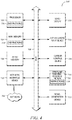
- Fig. 4 is a diagrammatic representation of a machine in the example form of a computer system 700 within which a set of instructions, for causing the machine to perform any one or more of the methodologies discussed herein, may be executed.
- the machine operates as a stand-alone device or may be connected (e.g., networked) to other machines.
- the machine may operate in the capacity of a server or a client machine in a server-client network environment, or as a peer machine in a peer-to-peer (or distributed) network environment.
- the machine may be a personal computer (PC), a tablet PC, a set-top box (STB), a Personal Digital Assistant (PDA), a cellular telephone, a web appliance, a network router, switch or bridge, or any machine capable of executing a set of instructions (sequential or otherwise) that specify actions to be taken by that machine.
- PC personal computer
- PDA Personal Digital Assistant
- STB set-top box
- WPA Personal Digital Assistant
- the example computer system 700 includes a processor 702 (e.g., a central processing unit (CPU), a graphics processing unit (GPU) or both), a main memory 704 and a static memory 706, which communicate with each other via a bus 707.
- the computer system 700 may further include a video display unit 710 (e.g., a liquid crystal display (LCD) or a cathode ray tube (CRT)).
- the computer system 700 also includes an alpha-numeric input device 712 (e.g., a keyboard), a user interface (UI) navigation device 714 (e.g., a cursor control device), a drive unit 716, a signal generation device 718 (e.g., a speaker) and a network interface device 720.
- a processor 702 e.g., a central processing unit (CPU), a graphics processing unit (GPU) or both
- main memory 704 e.g., a main memory 704
- static memory 706 e.
- the drive unit 716 includes a machine-readable medium 722 on which is stored one or more sets of instructions and data structures (e.g., software 724) embodying or utilized by any one or more of the methodologies or functions described herein.
- the software 724 may also reside, completely or at least partially, within the main memory 704 and/or within the processor 702 during execution thereof by the computer system 700, with the main memory 704 and the processor 702 also constituting machine-readable media.
- the software 724 may further be transmitted or received over a network 726 via the network interface device 720 utilizing any one of a number of well-known transfer protocols (e.g., Hyper Text Transfer Protocol (HTTP)).
- HTTP Hyper Text Transfer Protocol
- machine-readable medium 722 is shown in an example embodiment to be a single medium, the term “machine-readable medium” should be taken to include a single medium or multiple media (e.g., a centralized or distributed database, and/or associated caches and servers) that store the one or more sets of instructions.
- the term “machine-readable medium” shall also be taken to include any medium that is capable of storing and encoding a set of instructions for execution by the machine and that cause the machine to perform any one or more of the methodologies of embodiments of the present invention, or that is capable of storing and encoding data structures utilized by or associated with such a set of instructions.
- the term “machine-readable medium” shall accordingly be taken to include, but not be limited to, solid-state memories, optical and magnetic media.
- Such media may also include, without limitation, hard disks, floppy disks, flash memory cards, digital video disks, random access memory (RAMs), read only memory (ROMs), and the like.
- the tangible machine-readable medium is non-transitory in that it does not embody a propagating signal.
- labeling the tangible machine-readable medium as "non-transitory" should not be construed to mean that the medium is incapable of movement - the medium should be considered as being transportable from one physical location to another.
- the machine-readable medium since the machine-readable medium is tangible, the medium may be considered to be a machine-readable device.
- inventions described herein may be implemented in an operating environment comprising software installed on a computer, in hardware, or in a combination of software and hardware.
- inventive subject matter may be referred to herein, individually or collectively, by the term "invention" merely for convenience and without intending to voluntarily limit the scope of this application to any single invention or inventive concept if more than one is, in fact, disclosed.
- Modules may constitute either software modules (e.g., code embodied (1) on a non-transitory machine-readable medium or (2) in a transmission signal) or hardware-implemented modules.
- a hardware-implemented module is tangible unit capable of performing certain operations and may be configured or arranged in a certain manner.
- one or more computer systems e.g., a standalone, client or server computer system
- one or more processors may be configured by software (e.g., an application or application portion) as a hardware-implemented module that operates to perform certain operations as described herein.
- a hardware-implemented module may be implemented mechanically or electronically.
- a hardware-implemented module may comprise dedicated circuitry or logic that is permanently configured (e.g., as a special-purpose processor, such as a field programmable gate array (FPGA) or an application-specific integrated circuit (ASIC)) to perform certain operations.
- a hardware-implemented module may also comprise programmable logic or circuitry (e.g., as encompassed within a general-purpose processor or other programmable processor) that is temporarily configured by software to perform certain operations. It will be appreciated that the decision to implement a hardware-implemented module mechanically, in dedicated and permanently configured circuitry, or in temporarily configured circuitry (e.g., configured by software) may be driven by cost and time considerations.
- the term "hardware-implemented module” should be understood to encompass a tangible entity, be that an entity that is physically constructed, permanently configured (e.g., hardwired) or temporarily or transitorily configured (e.g., programmed) to operate in a certain manner and/or to perform certain operations described herein.
- hardware-implemented modules are temporarily configured (e.g., programmed)
- each of the hardware-implemented modules need not be configured or instantiated at any one instance in time.
- the hardware-implemented modules comprise a general-purpose processor configured using software
- the general-purpose processor may be configured as respective different hardware-implemented modules at different times.
- Software may accordingly configure a processor, for example, to constitute a particular hardware-implemented module at one instance of time and to constitute a different hardware-implemented module at a different instance of time.
- Hardware-implemented modules can provide information to, and receive information from, other hardware-implemented modules. Accordingly, the described hardware-implemented modules may be regarded as being communicatively coupled. Where multiple of such hardware-implemented modules exist contemporaneously, communications may be achieved through signal transmission (e.g., over appropriate circuits and buses) that connect the hardware-implemented modules. In embodiments in which multiple hardware-implemented modules are configured or instantiated at different times, communications between such hardware-implemented modules may be achieved, for example, through the storage and retrieval of information in memory structures to which the multiple hardware-implemented modules have access. For example, one hardware-implemented module may perform an operation, and store the output of that operation in a memory device to which it is communicatively coupled.
- a further hardware-implemented module may then, at a later time, access the memory device to retrieve and process the stored output.
- Hardware-implemented modules may also initiate communications with input or output devices, and can operate on a resource (e.g., a collection of information).
- processors may be temporarily configured (e.g., by software) or permanently configured to perform the relevant operations. Whether temporarily or permanently configured, such processors may constitute processor-implemented modules that operate to perform one or more operations or functions.
- the modules referred to herein may, in some example embodiments, comprise processor-implemented modules.
- the methods described herein may be at least partially processor-implemented. For example, at least some of the operations of a method may be performed by one or processors or processor-implemented modules. The performance of certain of the operations may be distributed among the one or more processors, not only residing within a single machine, but deployed across a number of machines. In some example embodiments, the processor or processors may be located in a single location (e.g., within a home environment, an office environment or as a server farm), while in other embodiments the processors may be distributed across a number of locations.
- the one or more processors may also operate to support performance of the relevant operations in a "cloud computing" environment or as a “software as a service” (SaaS). For example, at least some of the operations may be performed by a group of computers (as examples of machines including processors), these operations being accessible via a network (e.g., the Internet) and via one or more appropriate interfaces (e.g., Application Program Interfaces (APIs).)
- SaaS software as a service
Landscapes
- Engineering & Computer Science (AREA)
- Computer Networks & Wireless Communication (AREA)
- Signal Processing (AREA)
- Environmental & Geological Engineering (AREA)
- Human Computer Interaction (AREA)
- Telephonic Communication Services (AREA)
- Mobile Radio Communication Systems (AREA)
- Telephone Function (AREA)
Claims (5)
- Procédé mis en oeuvre dans un dispositif mobile (110) ayant au moins un processeur, le procédé comprenant :la détermination d'un premier emplacement géographique du dispositif mobile (110) à l'aide d'un GPS ;sur la base d'un premier emplacement géographique, la détermination que le dispositif mobile (110) est à l'intérieur d'une zone représentée par une première barrière géographique qui est une barrière géographique active, la première barrière géographique qui est une barrière géographique active représentant une zone de forte implication en ce qui concerne un service fourni par un fournisseur de services ;en réponse à la détermination que le dispositif mobile (110) est à l'intérieur de la zone représentée par la première barrière géographique qui est une barrière géographique active, l'indication périodique de l'emplacement géographique du dispositif mobile (110) à un système de serveur (140) du fournisseur de services ;la détermination d'un second emplacement géographique du dispositif mobile (110) à l'aide d'un GPS;sur la base d'un second emplacement géographique, la détermination que le dispositif mobile (110) s'est déplacé à l'intérieur d'une zone représentée par une seconde barrière géographique à l'intérieur de la zone de la première barrière géographique qui est une barrière géographique active et la détermination que la seconde barrière géographique est une barrière géographique passive en accédant à des informations de balise, de drapeau ou de mappage qui indiquent que la seconde barrière géographique est une barrière géographique passive, la seconde barrière géographique qui est une barrière géographique passive représentant une zone de faible implication en ce qui concerne le service fourni par le fournisseur de services ; eten réponse à la détermination que le dispositif mobile (110) est à l'intérieur de la zone représentée par la seconde barrière géographique qui est une barrière géographique passive, la réduction de la fréquence de l'indication ou l'arrêt de l'indication d'emplacement géographique du dispositif mobile au système de serveur (140).
- Procédé selon la revendication 1, comprenant :la détermination d'un autre emplacement géographique du dispositif mobile (110) à l'aide d'un GPS;sur la base de l'autre emplacement géographique, la détermination que le dispositif mobile (110) est en dehors de la zone représentée par la seconde barrière géographique qui est une barrière géographique passive et dans la zone représentée par la première barrière géographique qui est une barrière géographique active ; etla reprise de l'indication d'emplacement géographique du dispositif mobile (110) au système de serveur (140).
- Procédé selon la revendication 1, comprenant le stockage des informations de mappage sur le dispositif mobile (110) ou l'accès aux informations de mappage au niveau du système de serveur (140).
- Dispositif mobile (110) comprenant :une mémoire ; etau moins un processeur couplé à la mémoire, la mémoire stockant un code pour commander l'au moins un processeur pour exécuter le procédé selon l'une quelconque des revendications 1 à 3.
- Support lisible par machine portant des instructions pour amener une machine à exécuter le procédé selon l'une quelconque des revendications 1 à 3.
Applications Claiming Priority (2)
| Application Number | Priority Date | Filing Date | Title |
|---|---|---|---|
| US14/137,372 US20150181016A1 (en) | 2013-12-20 | 2013-12-20 | System and method to utilize geo-fences to limit calls to a server system from a user's mobile device |
| PCT/US2014/071307 WO2015095610A1 (fr) | 2013-12-20 | 2014-12-18 | Système et procédé pour utiliser des barrières géographiques |
Publications (3)
| Publication Number | Publication Date |
|---|---|
| EP3085122A1 EP3085122A1 (fr) | 2016-10-26 |
| EP3085122A4 EP3085122A4 (fr) | 2017-01-18 |
| EP3085122B1 true EP3085122B1 (fr) | 2019-03-27 |
Family
ID=53401449
Family Applications (1)
| Application Number | Title | Priority Date | Filing Date |
|---|---|---|---|
| EP14871032.0A Not-in-force EP3085122B1 (fr) | 2013-12-20 | 2014-12-18 | Système et procédé pour utiliser des barrières géographiques |
Country Status (7)
| Country | Link |
|---|---|
| US (1) | US20150181016A1 (fr) |
| EP (1) | EP3085122B1 (fr) |
| KR (3) | KR102122696B1 (fr) |
| CN (1) | CN106031199B (fr) |
| AU (1) | AU2014364419A1 (fr) |
| CA (1) | CA2934536A1 (fr) |
| WO (1) | WO2015095610A1 (fr) |
Families Citing this family (30)
| Publication number | Priority date | Publication date | Assignee | Title |
|---|---|---|---|---|
| US20150213496A1 (en) * | 2014-01-24 | 2015-07-30 | Aol Inc. | Methods and systems for displaying electronic content to individuals in geographic zone having inner boundary |
| US9325654B2 (en) | 2014-02-28 | 2016-04-26 | Aol Inc. | Systems and methods for optimizing message notification timing based on electronic content consumption associated with a geographic location |
| US9584968B2 (en) | 2014-05-21 | 2017-02-28 | Aol Inc. | Systems and methods for deploying dynamic geo-fences based on content consumption levels in a geographic location |
| US11477602B2 (en) | 2014-06-10 | 2022-10-18 | Verizon Patent And Licensing Inc. | Systems and methods for optimizing and refining message notification timing |
| US10231084B2 (en) | 2015-08-14 | 2019-03-12 | Aeris Communications, Inc. | System and method for monitoring devices relative to a learned geographic area |
| US9774994B2 (en) | 2015-08-14 | 2017-09-26 | Aeris Communications, Inc. | System and method for monitoring devices relative to a user defined geographic area |
| US10648823B2 (en) | 2017-06-22 | 2020-05-12 | Aeris Communications, Inc. | Learning common routes and automatic geofencing in fleet management |
| US10437575B2 (en) | 2015-08-14 | 2019-10-08 | Aeris Communications, Inc. | Aercloud application express and aercloud application express launcher |
| US9992620B2 (en) | 2016-05-09 | 2018-06-05 | Hippware, Inc. | Platform for geo-fence social media |
| US12451232B2 (en) * | 2016-11-16 | 2025-10-21 | Michael Jerome Senger | Systems and methods for monitoring compliance with recovery goals |
| US10841730B2 (en) * | 2016-11-16 | 2020-11-17 | Tech Diversified, LLC | Systems and methods for monitoring compliance with recovery goals |
| KR101822308B1 (ko) | 2016-11-23 | 2018-01-25 | 현대자동차주식회사 | 차량 서비스 제어 방법 및 시스템 |
| US10966049B2 (en) * | 2016-12-29 | 2021-03-30 | Cuebiq S.R.L. | Systems and methods to collect location data by using a dynamic geofencing methodology |
| US12349023B2 (en) | 2017-06-22 | 2025-07-01 | Aeris Communications, Inc. | Learning locations of interest using IoT devices |
| US11627195B2 (en) | 2017-06-22 | 2023-04-11 | Aeris Communications, Inc. | Issuing alerts for IoT devices |
| US10735904B2 (en) | 2017-06-22 | 2020-08-04 | Aeris Communications, Inc. | System and method for monitoring location and activity of devices |
| US11132636B2 (en) | 2017-06-22 | 2021-09-28 | Aeris Communications, Inc. | System and method for monitoring and sharing location and activity of devices |
| US10388085B2 (en) * | 2017-07-14 | 2019-08-20 | Allstate Insurance Company | Distributed data processing system for processing remotely captured sensor data |
| CN111164527B (zh) * | 2017-08-11 | 2022-04-19 | 联想(北京)有限公司 | 生成地理围栏数据 |
| CN109040968B (zh) * | 2018-06-26 | 2020-06-16 | 努比亚技术有限公司 | 路况提醒方法、移动终端及计算机可读存储介质 |
| CN112912906B (zh) * | 2018-08-27 | 2024-08-02 | 巴斯夫公司 | 用于数字地跟踪和监视汽车修补维修过程的方法和系统 |
| CN109285010A (zh) * | 2018-09-07 | 2019-01-29 | 北京摩拜科技有限公司 | 物品调度订单的验证方法、装置、服务器及系统 |
| US10559208B1 (en) * | 2019-01-25 | 2020-02-11 | Caterpillar Paving Products Inc | System and method for controlling reporting frequency |
| US11208097B2 (en) * | 2019-05-06 | 2021-12-28 | Caterpillar Inc. | Geofence body height limit with hoist prevention |
| CN110324785B (zh) * | 2019-07-02 | 2021-03-16 | 北京百度网讯科技有限公司 | 信息推荐方法、装置、设备及计算机可读存储介质 |
| US12314353B2 (en) | 2019-12-20 | 2025-05-27 | Cambrian Labs LLC | System and method for implementing a privacy policy |
| US12014065B2 (en) | 2020-02-11 | 2024-06-18 | Pure Storage, Inc. | Multi-cloud orchestration as-a-service |
| US11782930B2 (en) * | 2020-06-10 | 2023-10-10 | Samsara Networks Inc. | Automated annotation system for electronic logging devices |
| KR102862372B1 (ko) * | 2023-08-10 | 2025-09-22 | 주식회사 위드라이브 | 객체의 위치 감지 및 체류 시간 측정 방법 그리고 객체 위치 감지 및 체류 시간 측정 시스템 |
| US20260044694A1 (en) * | 2024-08-07 | 2026-02-12 | Toshiba Global Commerce Solutions, Inc. | Retail store entry and sign-in system |
Family Cites Families (19)
| Publication number | Priority date | Publication date | Assignee | Title |
|---|---|---|---|---|
| US20130080256A1 (en) * | 2011-09-22 | 2013-03-28 | Gregory A. Piccionelli | Telepresence system for providing information to a user through an agent based on the location of the agent |
| US20080312946A1 (en) * | 2004-05-03 | 2008-12-18 | Valentine Christopher H | Trade show information management |
| US8195198B1 (en) * | 2007-03-21 | 2012-06-05 | At&T Mobility Ii Llc | System, method and apparatus for protecting privacy when a mobile device is located in a defined privacy zone |
| US8019356B2 (en) * | 2007-04-26 | 2011-09-13 | Qualcomm Incorporated | Location based tracking |
| US20090140886A1 (en) * | 2007-12-03 | 2009-06-04 | International Truck Intellectual Property Company, Llc | Multiple geofence system for vehicles |
| US20090191853A1 (en) * | 2008-01-29 | 2009-07-30 | Truping Llc | Telephonic system of aggregating multiple advertisers or products within an on-demand consumer-accessible database and method thereof |
| US8686841B2 (en) * | 2008-12-12 | 2014-04-01 | Gordon*Howard Associates, Inc. | Methods and systems related to activating geo-fence boundaries and collecting location data |
| TW201035966A (en) | 2009-03-17 | 2010-10-01 | Chunghwa Picture Tubes Ltd | Method of observing a depth fused display |
| US8626184B2 (en) * | 2009-04-29 | 2014-01-07 | Blackberry Limited | Method and apparatus for reducing transmission of location information |
| US20100279713A1 (en) * | 2009-04-29 | 2010-11-04 | Research In Motion Limited | Method and apparatus for location sharing as a function of time and location |
| US8456302B2 (en) * | 2009-07-14 | 2013-06-04 | Savi Technology, Inc. | Wireless tracking and monitoring electronic seal |
| SG178484A1 (en) * | 2009-08-17 | 2012-04-27 | Deal Magic Inc | Contextually aware monitoring of assets |
| US8498807B2 (en) * | 2010-10-14 | 2013-07-30 | Verizon Patent And Licensing Inc. | Method and system for providing expanded access to navigational services |
| EP2656007B1 (fr) * | 2010-12-20 | 2016-03-16 | TomTom International B.V. | Dispositif mobile qui fonctionne différemment dans des régions différentes |
| WO2013044070A2 (fr) * | 2011-09-21 | 2013-03-28 | Jeff Thramann | Systèmes et procédés pour suivre des dispositifs mobiles |
| US8941489B2 (en) * | 2011-10-20 | 2015-01-27 | Qualcomm Incorporated | Method and/or apparatus for geofence management |
| US9411967B2 (en) * | 2012-08-24 | 2016-08-09 | Environmental Systems Research Institute (ESRI) | Systems and methods for managing location data and providing a privacy framework |
| US9408051B2 (en) * | 2013-05-29 | 2016-08-02 | Avaya Inc. | Context-aware social media disaster response and emergency management |
| CN103413095B (zh) * | 2013-08-21 | 2016-08-10 | 北京网秦天下科技有限公司 | 管理移动终端的方法和装置 |
-
2013
- 2013-12-20 US US14/137,372 patent/US20150181016A1/en not_active Abandoned
-
2014
- 2014-12-18 KR KR1020197010980A patent/KR102122696B1/ko not_active Expired - Fee Related
- 2014-12-18 EP EP14871032.0A patent/EP3085122B1/fr not_active Not-in-force
- 2014-12-18 KR KR1020167019539A patent/KR101902667B1/ko not_active Expired - Fee Related
- 2014-12-18 AU AU2014364419A patent/AU2014364419A1/en not_active Abandoned
- 2014-12-18 CA CA2934536A patent/CA2934536A1/fr not_active Abandoned
- 2014-12-18 CN CN201480075621.4A patent/CN106031199B/zh not_active Expired - Fee Related
- 2014-12-18 KR KR1020187026974A patent/KR101971676B1/ko not_active Expired - Fee Related
- 2014-12-18 WO PCT/US2014/071307 patent/WO2015095610A1/fr not_active Ceased
Non-Patent Citations (1)
| Title |
|---|
| "User Plane Location Protocol ; OMA-TS-ULP-V3_0-20110920-C", no. 3.0, 20 September 2011 (2011-09-20), pages 1 - 287, XP064092610, Retrieved from the Internet <URL:ftp/Public_documents/LOC/Permanent_documents/> [retrieved on 20111012] * |
Also Published As
| Publication number | Publication date |
|---|---|
| KR20160101123A (ko) | 2016-08-24 |
| EP3085122A1 (fr) | 2016-10-26 |
| KR101902667B1 (ko) | 2018-09-28 |
| KR101971676B1 (ko) | 2019-04-23 |
| EP3085122A4 (fr) | 2017-01-18 |
| AU2014364419A1 (en) | 2016-07-07 |
| CN106031199A (zh) | 2016-10-12 |
| KR20180105753A (ko) | 2018-09-28 |
| CN106031199B (zh) | 2020-02-28 |
| WO2015095610A1 (fr) | 2015-06-25 |
| KR20190042772A (ko) | 2019-04-24 |
| KR102122696B1 (ko) | 2020-06-12 |
| CA2934536A1 (fr) | 2015-06-25 |
| US20150181016A1 (en) | 2015-06-25 |
Similar Documents
| Publication | Publication Date | Title |
|---|---|---|
| EP3085122B1 (fr) | Système et procédé pour utiliser des barrières géographiques | |
| US9420418B2 (en) | Passive check-in | |
| CN105191361B (zh) | 地理围栏通知管理 | |
| US9823917B2 (en) | Update application user interfaces on client devices | |
| US20160150046A1 (en) | Re-establishing push notification channels via user identifiers | |
| US8918781B1 (en) | Product deployment system | |
| AU2014360332A1 (en) | A geo-fence system | |
| EP4359934A1 (fr) | Collecte dynamique à distance de données de diagnostic supplémentaires et déclenchement d'actions client pour application logicielle client | |
| US11799935B2 (en) | Computer-based systems configured to adjust data capacity in a data stream generated from multiple data producer applications and methods of use thereof | |
| US12393449B2 (en) | Computer-based systems configured for persistent state management and configurable execution flow and methods of use thereof | |
| US12395509B2 (en) | Computer-based systems configured for automatic detection of a verified identity related to interaction sessions and methods of use thereof | |
| CN111767486A (zh) | 用于展示页面的方法、装置、电子设备和计算机可读介质 | |
| CN114218160A (zh) | 日志处理方法、装置、电子设备和介质 | |
| US20250045364A1 (en) | Computer-based systems for time-based hiding and/or revealing of a password reveal selector of a password entry user interface element; and methods of use thereof | |
| CN105262829B (zh) | 地理位置监控方法和系统 | |
| WO2025030037A1 (fr) | Systèmes informatiques destinés à cacher et/ou révéler un sélecteur de révélation de mot de passe d'un élément d'interface utilisateur d'entrée de mot de passe et leurs procédés d'utilisation | |
| CN115134237A (zh) | 数据更新方法、心跳检测方法、装置、设备及介质 |
Legal Events
| Date | Code | Title | Description |
|---|---|---|---|
| PUAI | Public reference made under article 153(3) epc to a published international application that has entered the european phase |
Free format text: ORIGINAL CODE: 0009012 |
|
| 17P | Request for examination filed |
Effective date: 20160630 |
|
| AK | Designated contracting states |
Kind code of ref document: A1 Designated state(s): AL AT BE BG CH CY CZ DE DK EE ES FI FR GB GR HR HU IE IS IT LI LT LU LV MC MK MT NL NO PL PT RO RS SE SI SK SM TR |
|
| AX | Request for extension of the european patent |
Extension state: BA ME |
|
| A4 | Supplementary search report drawn up and despatched |
Effective date: 20161216 |
|
| RIC1 | Information provided on ipc code assigned before grant |
Ipc: H04W 4/02 20090101AFI20161212BHEP |
|
| DAX | Request for extension of the european patent (deleted) | ||
| STAA | Information on the status of an ep patent application or granted ep patent |
Free format text: STATUS: EXAMINATION IS IN PROGRESS |
|
| 17Q | First examination report despatched |
Effective date: 20180124 |
|
| GRAP | Despatch of communication of intention to grant a patent |
Free format text: ORIGINAL CODE: EPIDOSNIGR1 |
|
| STAA | Information on the status of an ep patent application or granted ep patent |
Free format text: STATUS: GRANT OF PATENT IS INTENDED |
|
| INTG | Intention to grant announced |
Effective date: 20181009 |
|
| GRAS | Grant fee paid |
Free format text: ORIGINAL CODE: EPIDOSNIGR3 |
|
| GRAA | (expected) grant |
Free format text: ORIGINAL CODE: 0009210 |
|
| STAA | Information on the status of an ep patent application or granted ep patent |
Free format text: STATUS: THE PATENT HAS BEEN GRANTED |
|
| AK | Designated contracting states |
Kind code of ref document: B1 Designated state(s): AL AT BE BG CH CY CZ DE DK EE ES FI FR GB GR HR HU IE IS IT LI LT LU LV MC MK MT NL NO PL PT RO RS SE SI SK SM TR |
|
| RAP1 | Party data changed (applicant data changed or rights of an application transferred) |
Owner name: EBAY, INC. |
|
| REG | Reference to a national code |
Ref country code: GB Ref legal event code: FG4D |
|
| REG | Reference to a national code |
Ref country code: CH Ref legal event code: EP |
|
| REG | Reference to a national code |
Ref country code: DE Ref legal event code: R096 Ref document number: 602014043826 Country of ref document: DE |
|
| REG | Reference to a national code |
Ref country code: AT Ref legal event code: REF Ref document number: 1114446 Country of ref document: AT Kind code of ref document: T Effective date: 20190415 |
|
| REG | Reference to a national code |
Ref country code: IE Ref legal event code: FG4D |
|
| REG | Reference to a national code |
Ref country code: NL Ref legal event code: FP |
|
| PG25 | Lapsed in a contracting state [announced via postgrant information from national office to epo] |
Ref country code: SE Free format text: LAPSE BECAUSE OF FAILURE TO SUBMIT A TRANSLATION OF THE DESCRIPTION OR TO PAY THE FEE WITHIN THE PRESCRIBED TIME-LIMIT Effective date: 20190327 Ref country code: FI Free format text: LAPSE BECAUSE OF FAILURE TO SUBMIT A TRANSLATION OF THE DESCRIPTION OR TO PAY THE FEE WITHIN THE PRESCRIBED TIME-LIMIT Effective date: 20190327 Ref country code: NO Free format text: LAPSE BECAUSE OF FAILURE TO SUBMIT A TRANSLATION OF THE DESCRIPTION OR TO PAY THE FEE WITHIN THE PRESCRIBED TIME-LIMIT Effective date: 20190627 Ref country code: LT Free format text: LAPSE BECAUSE OF FAILURE TO SUBMIT A TRANSLATION OF THE DESCRIPTION OR TO PAY THE FEE WITHIN THE PRESCRIBED TIME-LIMIT Effective date: 20190327 |
|
| PG25 | Lapsed in a contracting state [announced via postgrant information from national office to epo] |
Ref country code: GR Free format text: LAPSE BECAUSE OF FAILURE TO SUBMIT A TRANSLATION OF THE DESCRIPTION OR TO PAY THE FEE WITHIN THE PRESCRIBED TIME-LIMIT Effective date: 20190628 Ref country code: HR Free format text: LAPSE BECAUSE OF FAILURE TO SUBMIT A TRANSLATION OF THE DESCRIPTION OR TO PAY THE FEE WITHIN THE PRESCRIBED TIME-LIMIT Effective date: 20190327 Ref country code: LV Free format text: LAPSE BECAUSE OF FAILURE TO SUBMIT A TRANSLATION OF THE DESCRIPTION OR TO PAY THE FEE WITHIN THE PRESCRIBED TIME-LIMIT Effective date: 20190327 Ref country code: BG Free format text: LAPSE BECAUSE OF FAILURE TO SUBMIT A TRANSLATION OF THE DESCRIPTION OR TO PAY THE FEE WITHIN THE PRESCRIBED TIME-LIMIT Effective date: 20190627 Ref country code: RS Free format text: LAPSE BECAUSE OF FAILURE TO SUBMIT A TRANSLATION OF THE DESCRIPTION OR TO PAY THE FEE WITHIN THE PRESCRIBED TIME-LIMIT Effective date: 20190327 |
|
| REG | Reference to a national code |
Ref country code: AT Ref legal event code: MK05 Ref document number: 1114446 Country of ref document: AT Kind code of ref document: T Effective date: 20190327 |
|
| PG25 | Lapsed in a contracting state [announced via postgrant information from national office to epo] |
Ref country code: CZ Free format text: LAPSE BECAUSE OF FAILURE TO SUBMIT A TRANSLATION OF THE DESCRIPTION OR TO PAY THE FEE WITHIN THE PRESCRIBED TIME-LIMIT Effective date: 20190327 Ref country code: IT Free format text: LAPSE BECAUSE OF FAILURE TO SUBMIT A TRANSLATION OF THE DESCRIPTION OR TO PAY THE FEE WITHIN THE PRESCRIBED TIME-LIMIT Effective date: 20190327 Ref country code: ES Free format text: LAPSE BECAUSE OF FAILURE TO SUBMIT A TRANSLATION OF THE DESCRIPTION OR TO PAY THE FEE WITHIN THE PRESCRIBED TIME-LIMIT Effective date: 20190327 Ref country code: RO Free format text: LAPSE BECAUSE OF FAILURE TO SUBMIT A TRANSLATION OF THE DESCRIPTION OR TO PAY THE FEE WITHIN THE PRESCRIBED TIME-LIMIT Effective date: 20190327 Ref country code: EE Free format text: LAPSE BECAUSE OF FAILURE TO SUBMIT A TRANSLATION OF THE DESCRIPTION OR TO PAY THE FEE WITHIN THE PRESCRIBED TIME-LIMIT Effective date: 20190327 Ref country code: AL Free format text: LAPSE BECAUSE OF FAILURE TO SUBMIT A TRANSLATION OF THE DESCRIPTION OR TO PAY THE FEE WITHIN THE PRESCRIBED TIME-LIMIT Effective date: 20190327 Ref country code: PT Free format text: LAPSE BECAUSE OF FAILURE TO SUBMIT A TRANSLATION OF THE DESCRIPTION OR TO PAY THE FEE WITHIN THE PRESCRIBED TIME-LIMIT Effective date: 20190727 Ref country code: SK Free format text: LAPSE BECAUSE OF FAILURE TO SUBMIT A TRANSLATION OF THE DESCRIPTION OR TO PAY THE FEE WITHIN THE PRESCRIBED TIME-LIMIT Effective date: 20190327 |
|
| PG25 | Lapsed in a contracting state [announced via postgrant information from national office to epo] |
Ref country code: PL Free format text: LAPSE BECAUSE OF FAILURE TO SUBMIT A TRANSLATION OF THE DESCRIPTION OR TO PAY THE FEE WITHIN THE PRESCRIBED TIME-LIMIT Effective date: 20190327 Ref country code: SM Free format text: LAPSE BECAUSE OF FAILURE TO SUBMIT A TRANSLATION OF THE DESCRIPTION OR TO PAY THE FEE WITHIN THE PRESCRIBED TIME-LIMIT Effective date: 20190327 |
|
| PG25 | Lapsed in a contracting state [announced via postgrant information from national office to epo] |
Ref country code: AT Free format text: LAPSE BECAUSE OF FAILURE TO SUBMIT A TRANSLATION OF THE DESCRIPTION OR TO PAY THE FEE WITHIN THE PRESCRIBED TIME-LIMIT Effective date: 20190327 Ref country code: IS Free format text: LAPSE BECAUSE OF FAILURE TO SUBMIT A TRANSLATION OF THE DESCRIPTION OR TO PAY THE FEE WITHIN THE PRESCRIBED TIME-LIMIT Effective date: 20190727 |
|
| REG | Reference to a national code |
Ref country code: DE Ref legal event code: R097 Ref document number: 602014043826 Country of ref document: DE |
|
| PG25 | Lapsed in a contracting state [announced via postgrant information from national office to epo] |
Ref country code: DK Free format text: LAPSE BECAUSE OF FAILURE TO SUBMIT A TRANSLATION OF THE DESCRIPTION OR TO PAY THE FEE WITHIN THE PRESCRIBED TIME-LIMIT Effective date: 20190327 |
|
| PLBE | No opposition filed within time limit |
Free format text: ORIGINAL CODE: 0009261 |
|
| STAA | Information on the status of an ep patent application or granted ep patent |
Free format text: STATUS: NO OPPOSITION FILED WITHIN TIME LIMIT |
|
| PG25 | Lapsed in a contracting state [announced via postgrant information from national office to epo] |
Ref country code: SI Free format text: LAPSE BECAUSE OF FAILURE TO SUBMIT A TRANSLATION OF THE DESCRIPTION OR TO PAY THE FEE WITHIN THE PRESCRIBED TIME-LIMIT Effective date: 20190327 |
|
| 26N | No opposition filed |
Effective date: 20200103 |
|
| PG25 | Lapsed in a contracting state [announced via postgrant information from national office to epo] |
Ref country code: TR Free format text: LAPSE BECAUSE OF FAILURE TO SUBMIT A TRANSLATION OF THE DESCRIPTION OR TO PAY THE FEE WITHIN THE PRESCRIBED TIME-LIMIT Effective date: 20190327 |
|
| REG | Reference to a national code |
Ref country code: CH Ref legal event code: PL |
|
| REG | Reference to a national code |
Ref country code: BE Ref legal event code: MM Effective date: 20191231 |
|
| PG25 | Lapsed in a contracting state [announced via postgrant information from national office to epo] |
Ref country code: MC Free format text: LAPSE BECAUSE OF FAILURE TO SUBMIT A TRANSLATION OF THE DESCRIPTION OR TO PAY THE FEE WITHIN THE PRESCRIBED TIME-LIMIT Effective date: 20190327 |
|
| PG25 | Lapsed in a contracting state [announced via postgrant information from national office to epo] |
Ref country code: LU Free format text: LAPSE BECAUSE OF NON-PAYMENT OF DUE FEES Effective date: 20191218 Ref country code: IE Free format text: LAPSE BECAUSE OF NON-PAYMENT OF DUE FEES Effective date: 20191218 Ref country code: FR Free format text: LAPSE BECAUSE OF NON-PAYMENT OF DUE FEES Effective date: 20191231 |
|
| PG25 | Lapsed in a contracting state [announced via postgrant information from national office to epo] |
Ref country code: CH Free format text: LAPSE BECAUSE OF NON-PAYMENT OF DUE FEES Effective date: 20191231 Ref country code: BE Free format text: LAPSE BECAUSE OF NON-PAYMENT OF DUE FEES Effective date: 20191231 Ref country code: LI Free format text: LAPSE BECAUSE OF NON-PAYMENT OF DUE FEES Effective date: 20191231 |
|
| PGFP | Annual fee paid to national office [announced via postgrant information from national office to epo] |
Ref country code: GB Payment date: 20201209 Year of fee payment: 7 Ref country code: DE Payment date: 20201208 Year of fee payment: 7 |
|
| PGFP | Annual fee paid to national office [announced via postgrant information from national office to epo] |
Ref country code: NL Payment date: 20201214 Year of fee payment: 7 |
|
| PG25 | Lapsed in a contracting state [announced via postgrant information from national office to epo] |
Ref country code: CY Free format text: LAPSE BECAUSE OF FAILURE TO SUBMIT A TRANSLATION OF THE DESCRIPTION OR TO PAY THE FEE WITHIN THE PRESCRIBED TIME-LIMIT Effective date: 20190327 |
|
| PG25 | Lapsed in a contracting state [announced via postgrant information from national office to epo] |
Ref country code: HU Free format text: LAPSE BECAUSE OF FAILURE TO SUBMIT A TRANSLATION OF THE DESCRIPTION OR TO PAY THE FEE WITHIN THE PRESCRIBED TIME-LIMIT; INVALID AB INITIO Effective date: 20141218 Ref country code: MT Free format text: LAPSE BECAUSE OF FAILURE TO SUBMIT A TRANSLATION OF THE DESCRIPTION OR TO PAY THE FEE WITHIN THE PRESCRIBED TIME-LIMIT Effective date: 20190327 |
|
| PG25 | Lapsed in a contracting state [announced via postgrant information from national office to epo] |
Ref country code: MK Free format text: LAPSE BECAUSE OF FAILURE TO SUBMIT A TRANSLATION OF THE DESCRIPTION OR TO PAY THE FEE WITHIN THE PRESCRIBED TIME-LIMIT Effective date: 20190327 |
|
| REG | Reference to a national code |
Ref country code: DE Ref legal event code: R119 Ref document number: 602014043826 Country of ref document: DE |
|
| REG | Reference to a national code |
Ref country code: NL Ref legal event code: MM Effective date: 20220101 |
|
| GBPC | Gb: european patent ceased through non-payment of renewal fee |
Effective date: 20211218 |
|
| PG25 | Lapsed in a contracting state [announced via postgrant information from national office to epo] |
Ref country code: NL Free format text: LAPSE BECAUSE OF NON-PAYMENT OF DUE FEES Effective date: 20220101 |
|
| PG25 | Lapsed in a contracting state [announced via postgrant information from national office to epo] |
Ref country code: GB Free format text: LAPSE BECAUSE OF NON-PAYMENT OF DUE FEES Effective date: 20211218 Ref country code: DE Free format text: LAPSE BECAUSE OF NON-PAYMENT OF DUE FEES Effective date: 20220701 |
|
| P01 | Opt-out of the competence of the unified patent court (upc) registered |
Effective date: 20230523 |