EP3085151B1 - Wiederherstellung der benutzergerätesteuerung bei einem kommunikationsverbindungsausfall zwischen paketvermittelten und leitungsvermittelten steuerknoten durch relaisknoten - Google Patents
Wiederherstellung der benutzergerätesteuerung bei einem kommunikationsverbindungsausfall zwischen paketvermittelten und leitungsvermittelten steuerknoten durch relaisknoten Download PDFInfo
- Publication number
- EP3085151B1 EP3085151B1 EP14808583.0A EP14808583A EP3085151B1 EP 3085151 B1 EP3085151 B1 EP 3085151B1 EP 14808583 A EP14808583 A EP 14808583A EP 3085151 B1 EP3085151 B1 EP 3085151B1
- Authority
- EP
- European Patent Office
- Prior art keywords
- node
- type
- serving
- relaying
- mme
- Prior art date
- Legal status (The legal status is an assumption and is not a legal conclusion. Google has not performed a legal analysis and makes no representation as to the accuracy of the status listed.)
- Active
Links
Images





Classifications
-
- H—ELECTRICITY
- H04—ELECTRIC COMMUNICATION TECHNIQUE
- H04L—TRANSMISSION OF DIGITAL INFORMATION, e.g. TELEGRAPHIC COMMUNICATION
- H04L25/00—Baseband systems
- H04L25/02—Details ; arrangements for supplying electrical power along data transmission lines
- H04L25/20—Repeater circuits; Relay circuits
-
- H—ELECTRICITY
- H04—ELECTRIC COMMUNICATION TECHNIQUE
- H04W—WIRELESS COMMUNICATION NETWORKS
- H04W36/00—Hand-off or reselection arrangements
- H04W36/0005—Control or signalling for completing the hand-off
- H04W36/0011—Control or signalling for completing the hand-off for data sessions of end-to-end connection
- H04W36/0022—Control or signalling for completing the hand-off for data sessions of end-to-end connection for transferring data sessions between adjacent core network technologies
- H04W36/00224—Control or signalling for completing the hand-off for data sessions of end-to-end connection for transferring data sessions between adjacent core network technologies between packet switched [PS] and circuit switched [CS] network technologies, e.g. circuit switched fallback [CSFB]
-
- H—ELECTRICITY
- H04—ELECTRIC COMMUNICATION TECHNIQUE
- H04W—WIRELESS COMMUNICATION NETWORKS
- H04W24/00—Supervisory, monitoring or testing arrangements
- H04W24/04—Arrangements for maintaining operational condition
Definitions
- the invention relates to cellular communication systems, and more particularly to restoration of user equipment control in the presence of communication link failure between a network node that provides control of packet switched connections and a network node that provides control of circuit switched connections.
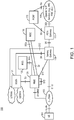
- a User Equipment (UE) 101 may interact in the digital realm (i.e., via the communication of data packets) with the Evolved Packet Switching system (EPS) 100 using the radio access mechanisms provided by the Evolved Universal Terrestrial Radio Access Network (E-UTRAN) 103.
- the interface between the UE and E-UTRAN is denoted "LTE-Uu”.
- PS Packet Switched
- UE-related control signaling is handled by a Mobility Management Entity (MME) 105 with support of subscription information provided by the Home Subscriber Server (HSS) 107.
- MME Mobility Management Entity
- HSS Home Subscriber Server
- the MME 105 communicates with E-UTRAN 103 via an S1-MME interface.
- the MME 105 interacts with the HSS 107 via an S6A interface.
- the MME can also interact with one or more other MMEs by mean of an S10 interface.
- the S-GW 109 is coupled to E-UTRAN via an S1-U interface, and the S-GW 109 is coupled to the P-GW 111 via an S5 interface.
- the P-GW 111 may interact, via a Gx interface, with a Policy and Charging Rules Function (PCRF) 113.
- PCRF Policy and Charging Rules Function
- IP Services 115 e.g., (Internet Protocol) Multimedia Subsystem (IMS), etc.
- IP Services 115 can be reached by the P-GW 111 via an SGi interface, and the PCRF 113 can interact with the operator's IP Services 115 via an Rx interface.
- IP Services 115 e.g., Internet Protocol) Multimedia Subsystem (IMS), etc.
- IMS Internet Protocol Multimedia Subsystem
- the system also provides for interaction with legacy system technology.
- the MME 105 can interact with a Serving GPRS (General Packet Radio Service) Support Node (SGSN) 117 via an S3 interface.
- SGSN General Packet Radio Service
- SGSN Serving GPRS
- S3 S3 interface
- MSC Mobile Switching Center
- SRVCC Single Radio Voice Call Continuity
- VoIP Voice over IP
- IMS Internet Protocol Multimedia Subsystem
- the 3GPP network may be organized using multiple MMEs serving the same tracking areas of a Long Term Evolution (LTE) radio network.
- LTE Long Term Evolution
- MME Pool The organization of multiple MMEs is referred to as an "MME Pool”.
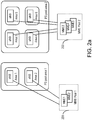
- a first MME Pool 201 comprises MMEs 1 and 2 and serves the Evolved Node B (eNB) service areas 1 and 2 identified as PS pool-area 1.
- a second MME Pool 203 comprises MMEs 3, 4, and 5, and serves the eNB service areas 3, 4, 5, and 6 identified as PS pool-area 2.
- one or more of the eNBs could be in more than one PS pool-area (e.g., Area 3 could be in both PS pool-area 1 and PS pool-area 2).
- the 3GPP network may also be organized using multiple SGSNs serving the same routing areas of a GERAN (GSM (Global System for Mobile communication) EDGE (Enhanced Data for GSM Evolution) Radio Access Network)/UTRAN radio network.
- GSM Global System for Mobile communication
- EDGE Enhanced Data for GSM Evolution
- the organization of multiple SGSNs is referred to as an "SGSN Pool”.
- MSC Mobility Control Service
- a first MSC Pool 205 comprises MSCs 1, 2, and 3, and serves the RAN node service areas 1, 2, 5, and 6 identified as CS pool-area 1.
- a second MSC Pool 207 comprises MSCs 4, 5, and 6, and serves the RAN node service areas 2, 3, 6, and 7 identified as CS pool-area 2. It will be observed that two of the RAN node service areas, namely areas 2 and 6, are in both CS pool-area 1 and CS pool-area 2.
- FIG. 2b further illustrates a first SGSN Pool 209 that comprises SGSNs 1 and 2, and serves the RAN node service areas 1 and 5 identified as PS pool-area 1.
- a second SGSN Pool 211 comprises SGSNs 3, 4, and 5, and serves the RAN node service areas 2, 3, 6, and 7 identified as PS pool-area 2.
- FIG. 2b also shows a single MSC 213 serving RAN service areas 4 and 8; and also shows a single SGSN 215 serving RAN service areas 4 and 8.
- the MME When the MME receives an indication from the serving MSC/VLR that a VLR restart has occurred, or if the VLR is no longer in service if there are no more Stream Control Transmission Protocol (SCTP) associations in service with that VLR for a given period of time, then the MME initiates an SGs restoration procedure as follows:
- the MME will contact an MSC only when an SRVCC PS to CS handover is required; that is, when a UE is moving toward a 2G/3G coverage area and leaving an LTE coverage area, where the ongoing voice call should be transferred from the PS domain to the CS domain.
- the MME when SRVCC functionality has been invoked and a path failure on the Sv interface has been detected when trying to make an SRVCC PS to CS Request towards the selected MSC, then the MME tries to perform the SRVCC PS to CS procedure to any other available MSC using the Sv interface. This requires of course that there be more than one MSC serving Sv and the UEs location (i.e., the MSC pool must be deployed). But, when no MSC is available to the MME, the restoration procedure initiated by the MME must be triggered; otherwise the voice call will be terminated due to the UE having left the LTE coverage area.
- the VLR When the VLR has to page the UE for a Mobile Terminated (MT) CS service (e.g., upon receipt of an incoming CS call), if the VLR detects that the MME serving the UE is no longer in service, the VLR should send an SGs paging request with a CS restoration indicator to an alternative MME in the same MME pool. The VLR should load-balance the paging requests among the available MMEs in the pool during the restoration procedure in order to avoid unduly burdening one or only a few of the MMEs in the pool.
- MT Mobile Terminated
- the VLR may know the set of MMEs pertaining to the same MME pool by local configuration or by checking the MME Group ID within the MME name that MMEs signal to the VLR in the SGsAP-LOCATION-UDATE-REQUEST, SGsAP-RESET-INDICATION or SGsAP-RESET-ACK messages.
- the MME should send an SGsAP-RESET-INDICATION message to the VLR after restart.
- the VLR may detect that an MME is no longer in service if there are no more SCTP associations in service with that MME.
- the MME shall accept the SGs paging request and proceed as follows upon receipt of an SGs paging request that includes the CS restoration indicator:
- the UE Upon receipt of a paging request including the IMSI and the CN domain indicator set to "PS", the UE re-attaches to one MME of the pool (the particular one may not necessarily be the MME that initiated the paging procedure towards the UE) and a new SGs association is established with the VLR.
- This VLR may not be the same VLR that initiated the SGs paging procedure (e.g., if Intra Domain Connection of RAN Nodes to Multiple CN Nodes is deployed for GERAN or UTRAN (see 3GPP TS 23.236)).
- the VLR should repeat the SGs paging request after the UE has re-attached to non-EPS services.
- the MT CS service or SMS is then delivered according to normal procedures.
- the MT CS service may be delivered via the new VLR using Mobile Terminating Roaming Retry or Mobile Terminating Roaming Forwarding (see 3GPP TS 23.018); the on-going MT SMS is retransmitted by the SMS-SC using the existing SMS procedures (SMS alert).
- SMS alert Mobile Terminating Roaming Retry or Mobile Terminating Roaming Forwarding
- the UE In a scenario in which the MME is unable to reach an MSC, the UE is not served by combined procedures but is instead limited only to Evolved Packet Core (EPC) services only. Further, in such instances SRVCC PS to CS handover will not be possible.
- EPC Evolved Packet Core
- the existing behaviors specified in the current 3GPP specifications are not optimal if the communication error is local to an MME in an MME pool and there are other MMEs in the same pool which do have a connection to suitable MSC(s). In this case, it is not optimal that the UE is denied CS services despite that MSC(s) is/are available to the MME pool when using a different MME.
- TAU Tracking Area Update
- the new MME will also fail to perform SGs/Sv signaling. The result would be that the new MME would also deny the UE's combined attachment. Nor will SRVCC be possible. Further, extra signaling will be induced by moving the UE from one MME to another.
- the UE would then either attempt to perform an access change to get CS attached in 2G/3G (voice centric), or would alternatively remain in the LTE access and no longer be able to use CS services (data centric).
- An ongoing Voice over LTE (VoLTE) call may also be dropped when going out of LTE coverage.
- the behavior is at risk of going cyclic with a never ending sequence of inter-MME TAU procedure executions impacting all UEs that make requests to get interface (I/F) SGs-related services.
- the approach would succeed and the UEs would eventually be registered by an MME that is able to signal at the I/F SGs.
- the foregoing and other objects are achieved in technology (e.g., methods, apparatus, processor-readable storage media) that restores user equipment control in the presence of communication link failure between a network node that provides control of packet switched connections and a network node that provides control of circuit switched connections.
- technology e.g., methods, apparatus, processor-readable storage media
- Altactel-Lucent et al: "Restoration of CS services after MME failure w/o restart"; 3GPP draft ; C4-111166 discloses that a network continues to deliver MT CS services to UEs via an alternative MME in the MME pool where the UE is located.
- the VLR gets knowledge of the identities of alternative MMEs in the MME pool.
- the CLR selects one of the alternative MMEs if it detects that the serving MME is no longer in service and sends a SGs paging request to the selected alternative MME with a new "restoration indicator" flag in the request message.
- the MME proceeds with the existing procedures for the case where it has restarted recently, but regardless of its own MME-reset value.
- WO 2012/062344 A1 describes a method for a switching unit in a network in which a UE is being adapted to be attached and connected to a 2G/3G network for performing CS communication with the network, or being adapted to be attached to a LTE network, for performing PS communication.
- the PS communication is adapted to be performed via a MME which may be arranged in a pool of MME's.
- the UE is adapted to receiving page signals so as to inform the user of incoming calls.
- the switching unit is adapted for issuing page signals to MME nodes, - receiving an incoming external CS call; - performing detection of a first selected MME, as to whether the first selected MME is ready or not; - if detecting a not ready state concerning the selected MME, selecting an alternative MME and issuing a page message to the alternative MME belonging to the same pool of MME's as the first MME.
- EP 2 079 253 A1 disclose a method for preparing and performing a handover of a mobile node from a non-3GPP network to a 3GPP network.
- the handover procedure can be improved by discovering and registering the new MME in advance. This includes the relocation of the relevant contexts from the old MME to the new MME before the actual handover is performed. Therefore, when the MN performs the handover to the 3GPP access, the Attach Request message transmitted by the MN already includes the identifier of the discovered new MME. Thereby, any disadvantages stemming from when having to change the MME during handover are eliminated.
- User equipment control is restored in the presence of communication link failure between a network node that provides control of packet switched connections and a network node that provides control of circuit switched connections.
- Such restoration includes using a serving node of a first type in communication with a node of a second type to provide a communication service to a user equipment, wherein the serving node of the first type controls one of packet switched connections and circuit switched connections, and the node of the second type controls a different one of packet switched connections and circuit switched connections.
- a failure of one or more links that enable communication between the serving node of the first type and the node of the second type is detected, and another node is identified, wherein the identified node is to be used as a first relaying node and is one of another node of the first type that has fully operational links with the node of the second type; and another node of the second type that has fully operational links with the serving node of the first type.
- Signaling is performed to establish the identified node as the first relaying node, and the communication service then continues to be provided to the user equipment by using the first relaying node to communicate one or more messages between the serving node of the first type and the node of the second type.
- the serving node of the first type is a serving mobility management entity
- the first relaying node is a relaying mobility management entity
- the serving and relaying mobility management entities are in a same mobility management entity pool.
- the node of the second type is a serving mobile switching center.
- detecting the failure of one or more links that enable communication between the serving node of the first type and the node of the second type is performed by the serving node of the first type; identifying said another node, wherein the identified node is to be used as the first relaying node, is performed by the serving node of the first type; the first relaying node is of the second type; and the node of the second type is a serving node of the second type.
- the first relaying node Furthermore continuing to provide the communication service to the user equipment by using the first relaying node to communicate one or more messages between the serving node of the first type and the node of the second type comprises the first relaying node relaying a message from the serving node of the first type to the serving node of the second type, wherein the message indicates that the serving node of the second type should continue with the communication service to the user equipment by re-registering the user equipment with a different node of the first type.
- the serving node of the first type is a serving mobile switching center; the first relaying node is a relaying mobility management entity; the serving node of the second type is a serving mobility management entity; and the different node of the first type is a different mobile switching center.
- the first relaying node relaying the message from the serving node of the first type to the serving node of the second type comprises tunneling Circuit Switched FallBack-related signaling between the first relaying node and the serving node of the second type.
- performing signaling to establish the identified node as the first relaying node comprises tunneling Circuit Switched FallBack-related signaling between the first and second mobility management entities.
- performing signaling to establish the identified node as the first relaying node comprises the first relaying node triggering a procedure that causes the first relaying node to become, from a point of view of the node of the second type, an associated node of the first type in place of the serving node of the first type.
- the first relaying node is a relaying node of the first type; and performing signaling to establish the identified node as the first relaying node comprises signaling to the node of the second type that messages between the node of the second type and the serving node of the first type are via the first relaying node.
- the node of the second type is a relaying node of the second type that communicates messages between the first relaying node and a serving node of the second type; and control restoration comprises the relaying node of the second type signaling to the serving node of the second type that messages between the serving node of the second type and the serving node of the first type are via the first relaying node.
- continuing to provide the communication service to the user equipment by using the first relaying node to communicate one or more messages between the serving node of the first type and the node of the second type comprises one or both of:
- circuitry configured to perform one or more described actions is used herein to refer to any such embodiment (i.e., one or more specialized circuits and/or one or more programmed processors).
- the invention can additionally be considered to be embodied entirely within any form of computer readable carrier, such as solid-state memory, magnetic disk, or optical disk containing an appropriate set of computer instructions that would cause a processor to carry out the techniques described herein.
- any such form of embodiments as described above may be referred to herein as "logic configured to” perform a described action, or alternatively as “logic that” performs a described action.
- this problem is addressed by technology that uses another MME or any other network entity, such as SGs/Sv message proxy, to relay the SGs/Sv message to the serving MSC or to an available MSC (for MME initiated restoration procedures, e.g. periodic TAU).
- another MME or any other network entity such as SGs/Sv message proxy, to relay the SGs/Sv message to the serving MSC or to an available MSC (for MME initiated restoration procedures, e.g. periodic TAU).
- another aspect of a backup mechanism involves using another MSC or any other network entity, such as an SGs/Sv message proxy, to relay the SGs/Sv message to the serving MME or to an available MME (which then forwards the SGs/Sv message to the serving MME).
- another MSC or any other network entity such as an SGs/Sv message proxy
- This can be applied, for example, in the case of MSC initiated restoration procedures (e.g., MT call).
- the information indicating that a given network entity supports the aforementioned technology should be exchanged among the concerning network entities (e.g., the serving MME, the relay/proxy MME, the serving MSC, the relay/proxy MSC) (i.e., so that a given node will know that its counterpart provides support for the herein-described protocol extension).
- the concerning network entities e.g., the serving MME, the relay/proxy MME, the serving MSC, the relay/proxy MSC
- Some aspects of the enhancement (which serves as a backup) for the MME initiated SGs or Sv restoration procedure, when it is not possible to select another available MSC to perform SGs restoration, are:
- alternative #1 or #2 is a matter of operator policy and possibly the duration of the SGs failure. Moving a UE has implications upon its PS connection and moving many UEs may also cause load distribution imbalances in the pool.
- the selection of an alternative MME having its SGs interface up and running may be based on Operations and Maintenance (O&M) information.
- O&M Operations and Maintenance
- the MME once the MME detects a total SGs/Sv path failure or a path failure over an SGs interface towards the registered MSC, it sends a broadcast message (a new type of message, preferably called "SGs/Sv query request"), towards all the MMEs in the pool to query whether any other MME is available for SGs/Sv communication.
- SGs/Sv query request a broadcast message
- the other MMEs in the pool report their SGs/Sv status.
- Another enhancement in some but not necessarily all embodiments of the MSC initiated SGs procedure includes, in addition to what is specified in TS 23.007 chapter 26, when another MME has to be selected as the recipient of the SGs paging request:
- an MME receives an SGs-Paging-Request with the CS restoration flag, it relays the SGs paging request to the current serving MME by encapsulating the SGs paging request via a new GTPv2 message, preferably called "direct transfer", over the interface between the MMEs.
- the Relaying MME relays the SGsAP Paging Request between the end points (peers) of the S10 I/F directly by using a protocol stack different from the GTP-based protocol stack normally used at the S10 I/F.
- the MME will be able to find the serving MME by using the MME Fully Qualified Domain Name (FQDN), and any subsequent SGs signaling for this UE will be relayed via this relay MME (the one selected by the MSC) or any other relay MME by encapsulating the subsequent SG messages via a new GTPv2 message (preferably called "direct transfer") over the interface between the MMEs.
- FQDN MME Fully Qualified Domain Name
- the Relaying MME relays the SGs signaling between the end points (peers) of the S10 I/F directly by using a protocol stack different from the GTP-based protocol stack normally used at the S10 I/F.
- the serving MME's FQDN is added to the SGs-Paging-Request message and other SGs messages sent from the MSC to the MME.
- the serving MSC identifier is added to the SGs messages (e.g., SGs-Service Request and other SGs messages sent from the MME to the MSC), and is further based on a new indication in those SGs messages when sent from the MME to the MSC (e.g., SGs-Location-Update-Request, SGs-Service-Request and so on) to let the serving MSC know that the message originated from the serving MME, not from the proxy/relay MME. Note that such indication is added by the serving MME.
- the affected MSC Upon the occurrence of a network failure in communication with the current serving MME such that it prevents the MSC where the UE is registered from performing the CS-to-PS SRVCC procedure (as defined by 3GPP by TS 23.216 in section 6.4.3.1) or from sending an SGs paging request, the affected MSC, assuming it is in an MSC Pool, applies a recovery process in which it utilizes the signaling capability from a different MSC in the pool or alternatively from any other network entity capable of serving as a relay to reach (i.e., communicate with) a suitable MME where the UE is registered. Selecting alternative MSC that has the SGs or Sv interface up and running may be based on O&M information.
- the MSC once the MSC detects a total SGs/Sv path failure or a path failure over the SGs interface towards the serving MME, it sends a broadcast message (a new type of message, preferably called "SGs query request / Sv query request"), towards all of the MSCs in the pool to query whether any other MSC is available for SGs or Sv communication.
- a broadcast message a new type of message, preferably called "SGs query request / Sv query request”
- the other MSCs in the pool report their SGs status in a response message. This information can then be used as a basis for selection.
- the Relaying MME may function in accordance with either of the following alternative procedures:
- Case A1 Receiving an MT Call paging in another MME, with the serving MME continuing to operate with the support of relayed signaling.
- the serving MME is completely incapable of using the SGs interface. Rather, the serving MME may still have SGs association toward one or more other MSCs, while for a specific UE, the signaling path between the registered MSC and the serving MME is broken, so the current serving MSC selects another MME to deliver the SGs paging request (per existing requirement in 3GPP TS 23.007), or select a proxy MSC which provides a signaling path between this proxy and the serving MME.
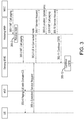
- Step 300-1 The Relaying MME receives an MT Call paging request over the SGs I/F from a pooled or non-pooled MSC, this being in response to the MSC having detected a link failure.
- the functionality required to make an MSC use another MME (Relaying MME) in the MME pool at MT Call is described in 3GPP TS 29.118 chapter 5.1.2.2 and 3GPP TS 23.007 chapter 26. If the MSC is serving UEs handled by other MMEs in the MME Pool, then the MSC has received the FQDN for each of the other MMEs.
- the MSC is able to identify other MMEs in the MME Pool based on the fact that the MME Group ID component of the FQDN is equal for all members of the MME Pool. If the MSC is currently not serving UEs from each of the other MMEs in the MME Pool, then the MSC may either use historical data (including cached FQDNs) from previous communication with MMEs from the MME Pool, or it may be configured with information about the MME Pool members. Such configuration may either be local to the node or external by means of, for example, DNS.
- Step 300-2 The MSC provides the FQDN name of the Serving MME. Using the FQDN, the Relaying MME sends a DNS query to get the address of the Serving MME.
- Step 300-3 The Relaying MME relays the SGsAP Paging Request over the S10 I/F to the Serving MME by encapsulating the SGs-Paging-Request into a new message (preferably called "SGs direct transfer"). Alternatively, the Relaying MME relays the SGsAP Paging Request between the end points (peers) of the S10 I/F directly by using a protocol stack different from the GTP-based protocol stack normally used at the S10 I/F.
- Step 300-5 The UE, as described in 3GPP TS 23.272, responds with an Extended Service Request.
- Step 300-6 The Serving MME informs the Relaying MME, via SGs direct transfer (the SGs direct transfer being a message container that carries the SGs message SGsAP-ServiceRequest), that the UE has now been paged and is in Connected mode via SGs direct transfer.
- This messaging can, for example, be in the form of an SGsAP-Service Request message.
- the general idea is that normal signaling for the paging procedure is performed.
- This technology differs from conventional technology, however, in that the normal paging procedure of the MME has been divided into two nodes in which 1) the serving MME performs normal paging procedure signaling at the S1-MME interface towards the eNB; and 2) the Relaying MME performs normal paging procedure signaling at the SGs interface.
- the MME split new signaling has been introduced on top of the existing S10 interface. This signaling can be characterized as "tunneling" CSFB-related signaling between the two MME nodes.
- SGs Direct Transfer This "tunneling” is referred to herein as "SGs Direct Transfer.”
- the signaling outlined by the described steps should follow the standardized signaling for CSFB as specified by 3GPP TS 23.272 and TS 23.007.
- the Serving MME indicates to the MSC that the SGs message is being relayed via another MME other than the Serving MME.
- Step 300-7 As an alternative to steps 300-8 through 300-11 below (and hence shown with a dashed line), the Relaying MME forwards the SGsAP-Service Request message to the MSC.
- Step 300-8 The relaying MME triggers the Location Update procedure to, in the view of the MSC, become the SGs associated MME.
- Step 300-9 As a consequence of receiving the Location Update, the MSC retransmits the MT Call paging request. This is described in 3GPP TS 23.007 chapter 2.
- Step 300-10 As a consequence of receiving the retransmitted MT Call paging request, the Relaying MME now directly answers with a Service Request. This is in accordance with the procedures specified in 3GPP TS 23.272.
- Step 300-11 Finally the Relaying MME also forwards the message received at step 300-9 and to the Serving MME, thereby triggering the Serving MME's continuing the CSFB procedure.
- Step 300-12 The CSFB procedure continues as, for example, specified in 3GPP TS 23.272.
- Case A2 Receiving an MT Call paging in another MME, with the serving MME using initial relay signaling only.
- the Serving MME may use another MSC for re-registration of the UE.
- the Relaying MME learns about what it is being instructed to do either
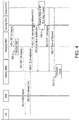
- Step 400-1 An MT Call paging request is received over the SGs I/F from a pooled MSC, this being in response to the MSC having detected a link failure.
- the functionality required to make an MSC use another MME (Relaying MME) in the MME pool at MT Call is described in, for example, 3GPP TS 29.118 chapter 5.1.2.2 and 3GPP TS 23.007 chapter 26. If the MSC is serving UEs handled by other MMEs in the MME Pool, then the MSC has received the FQDN for each of the other MMEs.
- the MSC is able to identify other MMEs in the MME Pool based on the fact that the MME Group ID component of the FQDN is equal for all members of the MME Pool. If the MSC is currently not serving UEs from each of the other MMEs in the MME Pool, then the MSC may either use historical data (including cached FQDNs) from previous communication with MMEs from the MME Pool, or it may be configured with information about the MME Pool members. Such configuration may either be local to the node or external by means of, for example, DNS.
- Step 400-2 The MSC provides the FQDN name of the Serving MME. Using the FQDN, the Relaying MME sends a DNS query to get the address of the Serving MME.
- Step 400-3 The Relaying MME relays the SGsAP Paging Request over the S10 I/F to the Serving MME using the newly defined "SGs Direct Transfer".
- Step 400-4 As the Serving MME has at least one working SGs I/F towards another MSC in the MSC pool, it uses IMSI Detach to detach the UE in order to re-register the UE in another MSC.
- Step 400-5 The UE issues a Combined TAU request as described in, for example, 3GPP TS 24.301 chapter 5.5.2.3.2.
- Step 400-6 The Serving MME informs the Relaying MME that the UE will be handled by the Serving MME through re-registration, thereby inhibiting any further actions by the Relaying MME.
- Step 400-7 The Relaying MME in turn informs the Serving MSC that the UE will be registered by a different MSC. This information enables the currently serving MSC to stop performing paging retries, which it otherwise would do in the absence of a response.
- Step 400-8 The Serving MME triggers the Location Update procedure to re-register the UE in the Backup MSC.
- Step 400-9 In response to receiving the Location Update message, the Backup MSC uses either an MT Roaming Retry or an MT Roaming Forward in order to trigger a transfer of the MT Call paging request from the Serving MSC to the Backup MSC.
- Step 400-10 As a consequence of the MT Call paging request being transferred from the Serving MSC to the Backup MSC, the MT Call paging request is retransmitted by the Backup MSC towards the Serving MME. This behavior is in accordance with procedures specified in 3GPP TS 23.007 chapter 26.
- Step 400-11 In response to receiving the MT Call paging request, the Serving MME sends a Service Request. This is in accordance with procedures specified in 3GPP TS 23.272.
- Step 400-12 Finally, the CSFB procedure is continued in the usual manner. See, for example, 3GPP TS 23.272 for further details.
- Step 500-1 A Combined Attach/TAU request is sent by a UE and received in the Serving MME which, in this example, is the MME with total SGs I/F failure. This process is in accordance with, for example, 3GPP TS 23.272.
- MME Relaying MME
- the Serving MME then sends an SGsAP Location Update Request to the selected Relaying MME by encapsulating the SGsAP Location Update Request into a new message, preferably called "direct transfer".
- the SGsAP Location Update Request is sent between the end points (peers) of the S10 I/F directly by using a protocol stack different from the GTP-based protocol stack normally used at the S10 I/F.
- the serving MME includes the MSC identifier and an indication to the MSC that the SGs message is being relayed via another MME other than the Serving MME.
- the Serving MME may obtain information about the SGs I/F status by sending a broadcast message to query all other MMEs (preferably in parallel) in order to find a suitable Relaying MME.
- Step 500-3 The Relaying MME performs the Location Update procedure to register (or in some cases, re-register) the UE in the MSC, so that from the point of view of the MSC, the relaying MME becomes the serving MME.
- the Location Update procedure can be, for example, in accordance with procedures described in 3GPP TS 23.272 and 29.118.
- the Relaying MME may inform the MSC about the identity of the Serving MME and further inform the MSC that that it (i.e., the Relaying MME) is only relaying the SGs messages.
- Step 500-4 The Relaying MME sends the Location Update Accept message to the Serving MME.
- Step 500-5 The Serving MME sends a Combined Attach/TAU accept message to the UE. This is in accordance with procedures defined in 3GPP TS 23.272.
- an MT Call paging request is sent by a pooled or non-pooled MSC over the SGs I/F towards the Relaying MME as this is the associated MME as seen from the MSC.
- the Relaying MME presents itself as the Serving MME to the Serving MSC.
- a different approach involves making the Serving MSC aware that the Relay MME is a Relay MME.
- the Serving MSC can use MME FQDN to select an alternative MME from the MME Pool.
- This alternative approach has the advantage of being more robust because the Serving MSC is able to use any arbitrary MME from the MME Pool to reach the Serving MME with application layer signaling.
- the use case can therefore be for an initial combined attach or TAU procedure, where the serving MME has not yet established SGs association for the given UE, so that the serving MME can use a relay MME to accomplish the registration procedure. It would be similar to the MT call use case:
- Step 600-1 At some point while it is serving a UE, an eNB sends a Handover Required message to the Serving MME. This includes an SRVCC HO indication. This signaling is in accordance with processes defined in 3GPP TS 23.216.
- Step 600-2 the Serving MME obtains information about Sv I/F status from all of the other MMEs in the pool and, based on this information, selects an MME (Relaying MME) that has a working Sv I/f towards the selected MSC.
- the SRVCC PS to CS Request message is then sent to the Relaying MME.
- the Serving MME may obtain information about Sv I/F status by other means or by trying (preferably in parallel) all other MMEs (e.g., by sending a broadcast message to query all other MMEs) in order to find a suitable Relaying MME.
- Step 600-3 The Relaying MME relays the SRVCC PS to CS Request message to the MSC.
- Step 600-4 The MSC sends the SRVCC PS to CS Response message to the Relaying MME.
- Step 600-5 The Relaying MME relays the SRVCC PS to CS Response message to the Serving MME.
- Step 600-6 The Serving MME sends a Handover Command message to the eNB. This aspect is carried out in accordance with procedures described in 3GPP TS 23.216.
- Step 600-7 After the UE, as part of performing a handover from EUTRAN, tunes to 2G or 3G radio services in the CS domain (see 601), the MSC sends an SRVCC PS to CS Complete Notification to the Relaying MME. This message includes the identity of the Serving MME.
- Step 600-8 The Relaying MME relays the SRVCC PS to CS Complete Notification to the Serving MME.
- Step 600-9 The Serving MME responds with a SRVCC PS to CS Complete Acknowledge to the Relaying MME.
- Step 600-10 The Relaying MME relays the SRVCC PS to CS Complete Acknowledge to the MSC.
- Various embodiments that are consistent with the invention provide a number of advantages over conventional error handling technology. Advantages that are present in some embodiments include, when the MME has lost SGs I/F connectivity, the ability to keep the UE registered. In instances in which the MME has lost its Sv I/F connectivity, some embodiments make it possible to perform an SRVCC.
- each node includes one or more processors 703 and a method may be performed based on a computer program comprising instructions 705 that, when executed by the one or more processors 703, carry out performance of a method consistent with that node's role as described above with respect to any one or combination of embodiments (e.g., when the node is a Serving MME, it carries out steps consistent with Serving MME operation as described above; when the node is a Relaying MME, it carries out steps consistent with Relaying MME operation as described above; when the node is an MSC, it carries out steps consistent with MSC steps as described above, etc.).
- the program 705 is executable on the one or more programmable processors 703.
- the application program may be implemented on a high-level procedural or object-oriented programming language, or in assembly or machine language if desired. In any case, the language may be compiled or an interpreted language.
- the program may be a full installation program, or an update program. In the latter case, the program is an update program that updates a programmable device, previously programmed performing parts of the method, to a state wherein the device is suitable for performing the whole method.
- the program 705 may be recorded on a processor-readable data storage medium 707.
- the data storage medium 707 may be any memory adapted for recording computer instructions.
- the data storage medium may thus be any form of nonvolatile memory, including by way of example, and without limitation, semiconductor memory devices, such as EPROM, EEPROM, and flash memory devices; magnetic disks such as internal hard disks and removable disks; magneto-optical disks; and CD-ROM disks.
- the storage medium 707 is operatively coupled to the one or more processors 703 to enable the processor(s) 703 to both read and, in some cases, write data and instructions into the storage medium 707.
- the node 701 further includes an interface 709 operatively coupled to the one or more processors 703 so as to enable communication between the node 701 and other nodes or network elements (not shown).
- the interface 709 may, for example and without limitation, operate as any one or more of the following interfaces: S1-MME; S3; S4, S6a; S10; S11; SGs; Sv.
- the node 701 may include other circuit and/or program elements 711 that may also be operatively coupled to the one or more processors 703. Description of any such other circuit and/or program elements 711 is both known to those of ordinary skill in the art and also beyond the scope of Applicants' embodiments, and therefore need not be described here.
- FIG. 8 is, in one respect, a flow chart of steps/processes performed by circuitry in accordance with some but not necessarily all exemplary embodiments of the invention for the purpose of restoring the network's UE control capability.
- FIG. 8 can be considered to depict means 800 for restoring the network's UE control capability, wherein the depicted blocks represent circuitry configured to perform the described functions.
- a communication service is provided to a UE by a Serving MME and a Serving MSC in a communication system (step 801). At some point, it is detected that one or more links that enable communication between the Serving MME and the Serving MSC have failed (step 803).
- Another MME and/or MSC are/is identified within the network that have/has fully operational links with the Serving MSC and/or Serving MME (step 805). Signaling is performed to establish the identified MME and/or MSC as a Relaying MME and/or Relaying MSC (step 807).
- Control of the UE continues with the Relaying MME communicating messages with the Serving MSC or Relaying MSC, and/or with the Relaying MSC communicating messages with the Serving MME or Relaying MME, and further with the Relaying MME relaying the messages to the Serving MME and/or with the Relaying MSC relaying the messages to the Serving MSC (step 809).
- step 807 and the UE control functionality of step 809 can be, for example, in accordance with any of the embodiments described above with respect to FIGS. 3 , 4 , 5 , and/or 6.
- the S-GW when the S-GW detects that the MME or SGSN is not reachable, for Downlink Data Notification message is triggered due to receiving Downlink data at the user plane or due to receiving control plane signaling messages (e.g., Create/Update/Delete bearer request message), it should include the Serving MME's FQDN (this is the MME's identifier) or the Serving SGSN's FQDN (this is the SGSN's identifier) in the Downlink Data Notification message and send it to another alternative MME or SGSN, to allow such proxy MME or SGSN to transfer these messages to the correct MME or SGSNs.
- the Serving MME's FQDN this is the MME's identifier
- the Serving SGSN's FQDN this is the SGSN's identifier
- Node of the First Type being unreachable by a Node of a Second type.
- Node of the First Type and also the Node of the Second Type are not of the same type (e.g., they are not both MME's) but otherwise can be selected from at least any of the following Nodes:
- FIG. 9 is, in one respect, a flow chart of steps/processes performed by circuitry in accordance with some but not necessarily all exemplary embodiments of the invention for the purpose of restoring the network's UE control capability.
- FIG. 9 can be considered to depict means 900 for restoring the network's UE control capability, wherein the depicted blocks represent circuitry configured to perform the described functions.
- a communication service is provided to a UE by a Serving Node of a First Type and a Serving Node of a Second Type in a communication system (step 901). At some point, it is detected that one or more links that enable communication between the Serving Node of the First Type and the Serving Node of the Second Type have failed (step 903).
- Another Node of the First Type and/or Node of the Second Type are/is identified within the network that have/has fully operational links with the Serving Node of the Second Type and/or Serving Node of the First Type (step 905).
- Signaling is performed to establish the identified Node of the First Type and/or Node of the Second Type as a Relaying Node of the First Type and/or Relaying Node of the Second type (step 907).
- Control of the UE continues with the Relaying Node of the First Type communicating messages with the Serving Node of the Second Type or Relaying Node of the Second Type, and/or with the Relaying Node of the Second Type communicating messages with the Serving Node of the First Type or Relaying Node of the First Type, and further with the Relaying Node of the First type relaying the messages to the Serving Node of the First Type and/or with the Relaying Node of the Second Type relaying the messages to the Serving Node of the Second Type (step 909).
- step 907 and the UE control functionality of step 909 can be, for example, in accordance with any of the embodiments described above with respect to FIGS. 3 , 4 , 5 , and/or 6.
Landscapes
- Engineering & Computer Science (AREA)
- Computer Networks & Wireless Communication (AREA)
- Signal Processing (AREA)
- Power Engineering (AREA)
- Mobile Radio Communication Systems (AREA)
Claims (21)
- Verfahren (800, 900) zum Wiederherstellen von Benutzerausrüstungssteuerung bei Auftreten eines Kommunikationsverbindungsfehlers zwischen einem Netzwerkknoten, der Steuerung von paketvermittelten Anschlüssen bereitstellt, und einem Netzwerkknoten, der Steuerung von leitungsvermittelten Anschlüssen bereitstellt, wobei das Verfahren umfasst:Verwenden (801, 901) eines dienenden Knotens von einem ersten Typ in Kommunikation mit einem Knoten von einem zweiten Typ, um einer Benutzerausrüstung einen Kommunikationsdienst bereitzustellen, wobei der dienende Knoten vom ersten Typ eines von paketvermittelten Anschlüssen und leitungsvermittelten Anschlüssen steuert und der Knoten vom zweiten Typ andere von paketvermittelten Anschlüssen und leitungsvermittelten Anschlüssen steuert;Erkennen (803, 903) eines Fehlers einer oder mehrerer Verbindungen, die Kommunikation zwischen dem dienenden Knoten vom ersten Typ und dem Knoten vom zweiten Typ ermöglichen;Identifizieren (805, 905) eines anderen Knotens, wobei der identifizierte Knoten als ein erster weiterleitender Knoten verwendet wird und eines ist von:einem anderen Knoten vom ersten Typ, der vollfunktionsfähige Verbindungen mit dem Knoten vom zweiten Typ aufweist; undeinem anderen Knoten vom zweiten Typ, der vollfunktionsfähige Verbindungen mit dem dienenden Knoten des ersten Typs aufweist;Durchführen von Signalisierung (807, 907), um den identifizierten Knoten als den ersten weiterleitenden Knoten einzurichten; undFortsetzen, der Benutzerausrüstung den Kommunikationsdienst dadurch bereitzustellen (809, 909), den ersten weiterleitenden Knoten zu verwenden, eine oder mehrere Nachrichten (300-1, 300-3, 400-1, 400-3, 500-2, 500-3, 500-4, 600-2, 600-3, 600-4, 600-5, 600-7, 600-8, 600-9, 600-10) zwischen dem dienenden Knoten vom ersten Typ und dem Knoten vom zweiten Typ zu kommunizieren,wobei der dienende Knoten vom ersten Typ eine dienende Mobilitätsmanagemententität ist;der erste weiterleitende Knoten eine weiterleitende Mobilitätsmanagemententität ist; unddie dienenden und weiterleitenden Mobilitätsmanagemententitäten in einer selben Mobilitätsmanagemententitätsgruppe (201, 203) sind, und wobeider Knoten vom zweiten Typ eine dienende Mobilfunkvermittlungsstelle ist.
- Verfahren nach Anspruch 1, wobei:
der Knoten vom zweiten Typ eine weiterleitende Mobilfunkvermittlungsstelle ist, die Nachrichten zwischen der weiterleitenden Mobilitätsmanagemententität und einer dienenden mobilen Vermittlungsstelle kommuniziert. - Verfahren nach Anspruch 1, wobei:Erkennen (803, 903) des Fehlers einer oder mehrerer Verbindungen, die Kommunikation zwischen dem dienenden Knoten vom ersten Typ und dem Knoten vom zweiten Typ ermöglichen, durch den dienenden Knoten vom ersten Typ durchgeführt wird;Identifizieren (805, 905) des anderen Knotens, wobei der identifizierte Knoten als der erste weiterleitende Knoten zu verwenden ist, durch den dienenden Knoten vom ersten Typ durchgeführt wird;der erste weiterleitende Knoten vom zweiten Typ ist;der Knoten vom zweiten Typ ein dienender Knoten vom zweiten Typ ist; undFortsetzen, der Benutzerausrüstung den Kommunikationsdienst dadurch bereitzustellen (809, 909), den ersten weiterleitenden Knoten zu verwenden, eine oder mehrere Nachrichten zwischen dem dienenden Knoten vom ersten Typ und dem Knoten vom zweiten Typ zu kommunizieren, umfasst:
den ersten weiterleitenden Knoten, der eine Nachricht (400-3) vom dienenden Knoten vom ersten Typ zum dienenden Knoten vom zweiten Typ weiterleitet, wobei die Nachricht angibt, dass der dienende Knoten vom zweiten Typ den Kommunikationsdienst zur Benutzerausrüstung dadurch fortsetzen sollte, die Benutzerausrüstung mit einem unterschiedlichen Knoten vom ersten Typ neu zu registrieren. - Verfahren nach Anspruch 3, wobei:der dienende Knoten vom ersten Typ eine dienende Mobilfunkvermittlungsstelle ist;der erste weiterleitende Knoten eine weiterleitende Mobilitätsmanagemententität ist;der dienende Knoten vom zweiten Typ eine dienende Mobilitätsmanagemententität ist; undder unterschiedliche Knoten vom ersten Typ eine unterschiedliche Mobilfunkvermittlungsstelle ist.
- Verfahren nach Anspruch 3, wobei, dass der erste weiterleitende Knoten die Nachricht vom dienenden Knoten vom ersten Typ zum dienenden Knoten vom zweiten Typ (400-3) weiterleitet, umfasst:
Tunneln von leitungsvermitteltem Ausfall (Circuit Switched FallBack)-bezogener Signalisierung zwischen dem ersten weiterleitenden Knoten und dem dienenden Knoten vom zweiten Typ. - Verfahren nach Anspruch 1, wobei Durchführen von Signalisierung (807, 907), um den identifizierten Knoten als den ersten weiterleitenden Knoten einzurichten, umfasst:
Tunneln von leitungsvermitteltem Ausfall-bezogener Signalisierung zwischen den ersten und zweiten Mobilitätsmanagemententitäten. - Verfahren nach Anspruch 6, wobei Durchführen von Signalisierung (807, 907), um den identifizierten Knoten als den ersten weiterleitenden Knoten einzurichten, umfasst:
den ersten weiterleitenden Knoten, der eine Prozedur auslöst, die den ersten weiterleitenden Knoten veranlasst, aus einer Sicht des Knotens vom zweiten Typ, ein verknüpfter Knoten vom ersten Typ anstelle des dienenden Knotens vom ersten Typ zu werden. - Verfahren nach Anspruch 1, wobei:der erste weiterleitende Knoten ein weiterleitender Knoten vom ersten Typ ist; undDurchführen von Signalisierung (807, 907), um den identifizierten Knoten als den ersten weiterleitenden Knoten einzurichten, umfasst:
Signalisieren an den Knoten vom zweiten Typ, dass Nachrichten zwischen dem Knoten vom zweiten Typ und dem dienenden Knoten vom ersten Typ über den ersten weiterleitenden Knoten gehen. - Verfahren nach Anspruch 8, wobei:der Knoten vom zweiten Typ ein weiterleitender Knoten vom zweiten Typ ist, der Nachrichten zwischen dem ersten weiterleitenden Knoten und einem dienenden Knoten vom zweiten Typ kommuniziert; unddas Verfahren umfasst:
den weiterleitenden Knoten vom zweiten Typ, der dem dienenden Knoten vom zweiten Typ signalisiert, dass Nachrichten zwischen dem dienenden Knoten vom zweiten Typ und dem dienenden Knoten vom ersten Typ über den ersten weiterleitenden Knoten gehen. - Verfahren nach Anspruch 1, wobei Fortzusetzen, der Benutzerausrüstung den Kommunikationsdienst dadurch bereitzustellen (809, 909), den ersten weiterleitenden Knoten zu verwenden, eine oder mehrere Nachrichten zwischen dem dienenden Knoten vom ersten Typ und dem Knoten vom zweiten Typ zu kommunizieren, eines oder beides umfasst von:dem dienenden Knoten vom ersten Typ, der eine oder mehrere Nachrichten an den ersten weiterleitenden Knoten sendet, die an den dienenden Knoten vom zweiten Typ gerichtet sind; unddem dienenden Knoten vom ersten Typ, der eine oder mehrere Nachrichten vom ersten weiterleitenden Knoten empfängt, die vom Knoten vom zweiten Typ ausgehen.
- Vorrichtung (703, 705), die konfiguriert ist, Benutzerausrüstungssteuerung bei Auftreten eines Kommunikationsverbindungsfehlers zwischen einem Netzwerkknoten, der Steuerung von paketvermittelten Anschlüssen bereitstellt, und einem Netzwerkknoten, der Steuerung von leitungsvermittelten Anschlüssen bereitstellt, wiederherzustellen, wobei die Vorrichtung umfasst:Schaltung, konfiguriert zum Verwenden (801, 901) eines dienenden Knotens von einem ersten Typ in Kommunikation mit einem Knoten von einem zweiten Typ, um einer Benutzerausrüstung einen Kommunikationsdienst bereitzustellen, wobei der dienende Knoten vom ersten Typ eines von paketvermittelten Anschlüssen und leitungsvermittelten Anschlüssen steuert und der Knoten vom zweiten Typ andere von paketvermittelten Anschlüssen und leitungsvermittelten Anschlüssen steuert;Schaltung, konfiguriert zum Erkennen (803, 903) eines Fehlers einer oder mehrerer Verbindungen, die Kommunikation zwischen dem dienenden Knoten vom ersten Typ und dem Knoten vom zweiten Typ ermöglichen;Schaltung, konfiguriert zum Identifizieren (805, 905) eines anderen Knotens, wobei der identifizierte Knoten als ein erster weiterleitender Knoten verwendet wird und eines ist von:einem anderen Knoten vom ersten Typ, der vollfunktionsfähige Verbindungen mit dem Knoten vom zweiten Typ aufweist; undeinem anderen Knoten vom zweiten Typ, der vollfunktionsfähige Verbindungen mit dem dienenden Knoten des ersten Typs aufweist;Schaltung, konfiguriert zum Durchführen von Signalisierung (807, 907), um den identifizierten Knoten als den ersten weiterleitenden Knoten einzurichten; undSchaltung, konfiguriert zum Fortsetzen, der Benutzerausrüstung den Kommunikationsdienst dadurch bereitzustellen (809, 909), den ersten weiterleitenden Knoten zu verwenden, eine oder mehrere Nachrichten (300-1, 300-3, 400-1,400-3, 500-2, 500-3, 500-4, 600-2, 600-3, 600-4, 600-5, 600-7, 600-8, 600-9, 600-10) zwischen dem dienenden Knoten vom ersten Typ und dem Knoten vom zweiten Typ zu kommunizieren,wobei der dienende Knoten vom ersten Typ eine dienende Mobilitätsmanagemententität ist;der erste weiterleitende Knoten eine weiterleitende Mobilitätsmanagemententität ist; unddie dienenden und weiterleitenden Mobilitätsmanagemententitäten in einer selben Mobilitätsmanagemententitätsgruppe (201, 203) sind,der Knoten vom zweiten Typ eine dienende Mobilfunkvermittlungsstelle ist.
- Vorrichtung nach Anspruch 11, wobei:
der Knoten vom zweiten Typ eine weiterleitende Mobilfunkvermittlungsstelle ist, die Nachrichten zwischen der weiterleitenden Mobilitätsmanagemententität und einer dienenden mobilen Vermittlungsstelle kommuniziert. - Vorrichtung nach Anspruch 11, wobei:der dienende Knoten vom ersten Typ die Schaltung umfasst, die zum Erkennen (803, 903) des Fehlers einer oder mehrerer Verbindungen, die Kommunikation zwischen dem dienenden Knoten vom ersten Typ und dem Knoten vom zweiten Typ ermöglichen, konfiguriert ist;der dienende Knoten vom ersten Typ die Schaltung umfasst, die zum Identifizieren (805, 905) des anderen Knotens konfiguriert ist, wobei der identifizierte Knoten als der erste weiterleitende Knoten zu verwenden ist;der erste weiterleitende Knoten vom zweiten Typ ist;der Knoten vom zweiten Typ ein dienender Knoten vom zweiten Typ ist; unddie Schaltung, die konfiguriert ist, fortzusetzen, der Benutzerausrüstung den Kommunikationsdienst dadurch bereitzustellen (809, 909), den ersten weiterleitenden Knoten zu verwenden, eine oder mehrere Nachrichten zwischen dem dienenden Knoten vom ersten Typ und dem Knoten vom zweiten Typ zu kommunizieren, umfasst:
Schaltung im ersten weiterleitenden Knoten, die konfiguriert ist, eine Nachricht (400-3) vom dienenden Knoten vom ersten Typ zum dienenden Knoten vom zweiten Typ weiterzuleiten, wobei die Nachricht angibt, dass der dienende Knoten vom zweiten Typ den Kommunikationsdienst zur Benutzerausrüstung dadurch fortsetzen sollte, die Benutzerausrüstung mit einem unterschiedlichen Knoten vom ersten Typ neu zu registrieren. - Vorrichtung nach Anspruch 13, wobei:der dienende Knoten vom ersten Typ eine dienende mobile Schaltstelle ist;der erste weiterleitende Knoten eine weiterleitende Mobilitätsmanagemententität ist;der dienende Knoten vom zweiten Typ eine dienende Mobilitätsmanagemententität ist; undder unterschiedliche Knoten vom ersten Typ eine unterschiedliche Mobilfunkvermittlungsstelle ist.
- Vorrichtung nach Anspruch 13, wobei die Schaltung im ersten weiterleitenden Knoten, der konfiguriert ist, die Nachricht vom dienenden Knoten vom ersten Typ an den dienenden Knoten vom zweiten Typ (400-3) weiterzuleiten, umfasst:
Schaltung, die konfiguriert ist, leitungsvermittelter Ausfall-bezogene Signalisierung zwischen dem ersten weiterleitenden Knoten und dem dienenden Knoten vom zweiten Typ zu tunneln. - Vorrichtung nach Anspruch 11, wobei die Schaltung konfiguriert ist, Signalisierung (807, 907) durchzuführen, um den identifizierten Knoten als den ersten weiterleitenden Knoten einzurichten, umfasst:
Schaltung, die konfiguriert ist, leitungsvermittelter Ausfall-bezogene Signalisierung zwischen den ersten und zweiten Mobilitätsmanagemententitäten zu tunneln. - Vorrichtung nach Anspruch 16, wobei die Schaltung, die konfiguriert ist, Signalisierung (807, 907) durchzuführen, um den identifizierten Knoten als den ersten weiterleitenden Knoten einzurichten, umfasst:
Schaltung im ersten weiterleitenden Knoten, die konfiguriert ist, eine Prozedur auszulösen, die den ersten weiterleitenden Knoten veranlasst, aus einer Sicht des Knotens vom zweiten Typ ein verknüpfter Knoten vom ersten Typ anstelle des dienenden Knotens vom ersten Typ zu werden. - Vorrichtung nach Anspruch 11, wobei:der erste weiterleitende Knoten ein weiterleitender Knoten vom ersten Typ ist; unddie Schaltung, die konfiguriert ist, Signalisierung (807, 907) durchzuführen, um den identifizierten Knoten als den ersten weiterleitenden Knoten einzurichten, umfasst:
Schaltung, die konfiguriert ist, dem Knoten vom zweiten Typ zu signalisieren, dass Nachrichten zwischen dem Knoten vom zweiten Typ und dem dienenden Knoten vom ersten Typ über den ersten weiterleitenden Knoten gehen. - Vorrichtung nach Anspruch 18, wobei:der Knoten vom zweiten Typ ein weiterleitender Knoten vom zweiten Typ ist, der Nachrichten zwischen dem ersten weiterleitenden Knoten und einem dienenden Knoten vom zweiten Typ kommuniziert; unddie Vorrichtung umfasst:
Schaltung im weiterleitenden Knoten vom zweiten Typ, die konfiguriert ist, dem dienenden Knoten vom zweiten Typ zu signalisieren, dass Nachrichten zwischen dem dienenden Knoten vom zweiten Typ und dem dienenden Knoten vom ersten Typ über den ersten weiterleitenden Knoten gehen. - Vorrichtung nach Anspruch 11, wobei die Schaltung konfiguriert ist, fortzusetzen, der Benutzerausrüstung den Kommunikationsdienst dadurch bereitzustellen (809, 909), den ersten weiterleitenden Knoten zu verwenden, eine oder mehrere Nachrichten zwischen dem dienenden Knoten vom ersten Typ und dem Knoten vom zweiten Typ zu kommunizieren, eines oder beides umfasst von:Schaltung im dienenden Knoten vom ersten Typ, die konfiguriert ist, eine oder mehrere Nachrichten an den ersten weiterleitenden Knoten zu senden, die an den dienenden Knoten vom zweiten Typ gerichtet sind; undSchaltung im dienenden Knoten vom ersten Typ, die konfiguriert ist, eine oder mehrere Nachrichten vom ersten weiterleitenden Knoten zu empfangen, die vom Knoten vom zweiten Typ ausgehen.
- Nichttransitorisches Prozessor-lesbares Speichermedium (707), umfassend Programmanweisungen, die, wenn durch einen oder mehrere Prozessoren ausgeführt, ein Verfahren (800, 900) zum Wiederherstellen von Benutzerausrüstungssteuerung bei Auftreten eines Kommunikationsverbindungsfehlers zwischen einem Netzwerkknoten, der Steuerung von paketvermittelten Anschlüssen bereitstellt, und einem Knoten, der Steuerung von leitungsvermittelten Anschlüssen bereitstellt, durchführen, wobei das Verfahren umfasst:Verwenden (801, 901) eines dienenden Knotens von einem ersten Typ in Kommunikation mit einem Knoten von einem zweiten Typ, um einer Benutzerausrüstung einen Kommunikationsdienst bereitzustellen, wobei der dienende Knoten vom ersten Typ eine von paketvermittelten Anschlüssen und leitungsvermittelten Anschlüssen steuert und der Knoten vom zweiten Typ eine unterschiedliche von paketvermittelten Anschlüssen und leitungsvermittelten Anschlüssen steuert;Erkennen (803, 903) eines Fehlers von einer oder mehreren Verbindungen, die Kommunikation zwischen dem dienenden Knoten vom ersten Typ und dem Knoten vom zweiten Typ ermöglichen;Identifizieren (805, 905) eines anderen Knotens, wobei der identifizierte Knoten als ein erster weiterleitender Knoten verwendet wird und eines ist von:einem anderen Knoten vom ersten Typ, der vollfunktionsfähige Verbindungen mit dem Knoten vom zweiten Typ aufweist; undeinem anderen Knoten vom zweiten Typ, der vollfunktionsfähige Verbindungen mit dem dienenden Knoten des ersten Typs aufweist;Durchführen von Signalisierung (807, 907), um den identifizierten Knoten als den ersten weiterleitenden Knoten einzurichten; undFortsetzen, der Benutzerausrüstung den Kommunikationsdienst dadurch bereitzustellen (809, 909), den ersten weiterleitenden Knoten zu verwenden, eine oder mehrere Nachrichten (300-1, 300-3, 400-1, 400-3, 500-2, 500-3, 500-4, 600-2, 600-3, 600-4, 600-5, 600-7, 600-8, 600-9, 600-10) zwischen dem dienenden Knoten vom ersten Typ und dem Knoten vom zweiten Typ zu kommunizieren,wobei der dienende Knoten vom ersten Typ eine dienende Mobilitätsmanagemententität ist;der erste weiterleitende Knoten eine weiterleitende Mobilitätsmanagemententität ist; unddie dienenden und weiterleitenden Mobilitätsmanagemententitäten in einer selben Mobilitätsmanagemententitätsgruppe (201, 203) sind,der Knoten vom zweiten Typ eine dienende Mobilfunkvermittlungsstelle ist.
Applications Claiming Priority (2)
| Application Number | Priority Date | Filing Date | Title |
|---|---|---|---|
| US201361918698P | 2013-12-20 | 2013-12-20 | |
| PCT/EP2014/076275 WO2015090941A1 (en) | 2013-12-20 | 2014-12-02 | Restoration of user equipment control in the presence of communication link failure between packet switched and circuit switched controlling nodes by relaying nodes |
Publications (2)
| Publication Number | Publication Date |
|---|---|
| EP3085151A1 EP3085151A1 (de) | 2016-10-26 |
| EP3085151B1 true EP3085151B1 (de) | 2020-02-05 |
Family
ID=52011198
Family Applications (1)
| Application Number | Title | Priority Date | Filing Date |
|---|---|---|---|
| EP14808583.0A Active EP3085151B1 (de) | 2013-12-20 | 2014-12-02 | Wiederherstellung der benutzergerätesteuerung bei einem kommunikationsverbindungsausfall zwischen paketvermittelten und leitungsvermittelten steuerknoten durch relaisknoten |
Country Status (5)
| Country | Link |
|---|---|
| US (1) | US9549348B2 (de) |
| EP (1) | EP3085151B1 (de) |
| CN (1) | CN105830494B (de) |
| RU (1) | RU2631863C1 (de) |
| WO (1) | WO2015090941A1 (de) |
Families Citing this family (14)
| Publication number | Priority date | Publication date | Assignee | Title |
|---|---|---|---|---|
| KR102446093B1 (ko) * | 2014-06-11 | 2022-09-23 | 아이피엘에이 홀딩스 인크. | 로컬 콘텐츠 리다이렉션을 위한 매핑 서비스 |
| US10349381B2 (en) | 2015-01-22 | 2019-07-09 | Telefonaktiebolaget Lm Ericsson (Publ) | Method for error handling in a cellular system, network device, user equipment, computer program and computer program product therefore |
| US10356669B2 (en) * | 2015-05-29 | 2019-07-16 | Reliance Jio Infocomm Limited | System and method of providing calling based service to a CSFB device from a PS network |
| EP3361788B1 (de) * | 2015-10-28 | 2020-03-11 | Huawei Technologies Co., Ltd. | Datenübertragungsverfahren und -vorrichtung |
| US9622067B1 (en) * | 2015-11-20 | 2017-04-11 | Sprint Spectrum L.P. | Controlling device connection based on whether device provides wireless relay backhaul connectivity |
| EP3403429B1 (de) * | 2016-01-14 | 2020-04-22 | Telefonaktiebolaget LM Ericsson (PUBL) | Verfahren und knoten zur durchführung eines verfahrens zur tracking-bereichsaktualisierung (tau) / routing-bereichsaktualisierung (rau) in einer zustandslosen architektur |
| KR102456331B1 (ko) * | 2016-04-08 | 2022-10-19 | 삼성전자 주식회사 | 무선 통신 시스템에서 회선 교환 서비스 제공 방법 및 장치 |
| WO2018126452A1 (zh) * | 2017-01-06 | 2018-07-12 | 华为技术有限公司 | 授权验证方法和装置 |
| US10873865B2 (en) * | 2017-03-27 | 2020-12-22 | Samsung Electronics Co., Ltd. | Methods and systems for providing call continuity in a user equipment (UE) |
| US11700565B2 (en) * | 2018-09-18 | 2023-07-11 | Qualcomm Incorporated | Management of radio link failure in wireless backhaul |
| EP3912405B1 (de) * | 2019-01-18 | 2025-03-05 | Telefonaktiebolaget Lm Ericsson (Publ) | Netzwerkknoten, benutzergerät und verfahren in einem drahtloskommunikationsnetzwerk |
| US11197198B2 (en) * | 2019-06-17 | 2021-12-07 | At&T Intellectual Property I, L.P. | Method, system, and computer program for automated offloading of subscribers during mobility management equipment failures |
| CN112996143B (zh) * | 2019-12-17 | 2023-07-21 | 中国移动通信集团河南有限公司 | 一种恢复网络连接的处理方法、装置及网络侧设备 |
| US20230403670A1 (en) * | 2022-06-09 | 2023-12-14 | T-Mobile Innovations Llc | Sip-deregistration by evolved packet core network |
Family Cites Families (7)
| Publication number | Priority date | Publication date | Assignee | Title |
|---|---|---|---|---|
| EP2079252A1 (de) * | 2006-10-25 | 2009-07-15 | Pioneer Corporation | Schallbildlokalisierungsverarbeitungsvorrichtungen und andere |
| EP2079253A1 (de) * | 2008-01-09 | 2009-07-15 | Panasonic Corporation | Optimierungen von Nicht-3GPP-zu-3GPP-Netzwerkweiterreichungen |
| US8249019B2 (en) * | 2008-08-26 | 2012-08-21 | Futurewei Technologies, Inc. | System and method for SR-VCC of IMS emergency sessions |
| CN102045651B (zh) * | 2009-10-12 | 2014-03-12 | 华为技术有限公司 | 集群呼叫的方法、msc、bsc及通信系统 |
| CN103329594B (zh) * | 2010-11-14 | 2017-05-10 | 瑞典爱立信有限公司 | 移动性管理实体池的电路交换回退寻呼 |
| WO2011116722A2 (zh) * | 2011-04-29 | 2011-09-29 | 华为技术有限公司 | Isr激活场景中移动管理设备故障的处理方法及设备 |
| US20150282011A1 (en) * | 2012-10-26 | 2015-10-01 | Interdigital Patent Holdings, Inc. | Systems and/or methods for improving packet-switched services during circuit switched fallback (csfb) |
-
2014
- 2014-12-02 EP EP14808583.0A patent/EP3085151B1/de active Active
- 2014-12-02 RU RU2016129695A patent/RU2631863C1/ru not_active IP Right Cessation
- 2014-12-02 CN CN201480069534.8A patent/CN105830494B/zh not_active Expired - Fee Related
- 2014-12-02 US US14/405,170 patent/US9549348B2/en not_active Expired - Fee Related
- 2014-12-02 WO PCT/EP2014/076275 patent/WO2015090941A1/en not_active Ceased
Non-Patent Citations (1)
| Title |
|---|
| None * |
Also Published As
| Publication number | Publication date |
|---|---|
| WO2015090941A1 (en) | 2015-06-25 |
| RU2631863C1 (ru) | 2017-09-27 |
| CN105830494A (zh) | 2016-08-03 |
| EP3085151A1 (de) | 2016-10-26 |
| CN105830494B (zh) | 2019-05-10 |
| US20160269942A1 (en) | 2016-09-15 |
| US9549348B2 (en) | 2017-01-17 |
Similar Documents
| Publication | Publication Date | Title |
|---|---|---|
| EP3085151B1 (de) | Wiederherstellung der benutzergerätesteuerung bei einem kommunikationsverbindungsausfall zwischen paketvermittelten und leitungsvermittelten steuerknoten durch relaisknoten | |
| US10666555B2 (en) | Method and apparatus for relocating and restoring connections through a failed serving gateway and traffic offloading | |
| CN109257787B (zh) | 用于重定位和恢复通过故障服务网关的连接及业务卸载的方法和设备 | |
| US9763281B2 (en) | Communication method, mobile network system and device | |
| US20210176817A1 (en) | Ue and communication method thereof | |
| TWI475901B (zh) | 分封交換核心網路實體故障時之行動終止電路交換服務的復原方法與其通訊實體 | |
| US9060374B2 (en) | Communication method, mobile network system and device | |
| US20120172066A1 (en) | Communication method, mobile network system and device | |
| WO2016055492A1 (en) | Handling of pdn connections for a user equipment in a mobile network at network initiated reselection of a serving core network entity | |
| US20120178479A1 (en) | Communication method, mobile network system and device | |
| HK1179089B (en) | Method and apparatuses for receiving a mobility management entity name |
Legal Events
| Date | Code | Title | Description |
|---|---|---|---|
| PUAI | Public reference made under article 153(3) epc to a published international application that has entered the european phase |
Free format text: ORIGINAL CODE: 0009012 |
|
| 17P | Request for examination filed |
Effective date: 20160520 |
|
| AK | Designated contracting states |
Kind code of ref document: A1 Designated state(s): AL AT BE BG CH CY CZ DE DK EE ES FI FR GB GR HR HU IE IS IT LI LT LU LV MC MK MT NL NO PL PT RO RS SE SI SK SM TR |
|
| AX | Request for extension of the european patent |
Extension state: BA ME |
|
| DAX | Request for extension of the european patent (deleted) | ||
| STAA | Information on the status of an ep patent application or granted ep patent |
Free format text: STATUS: EXAMINATION IS IN PROGRESS |
|
| 17Q | First examination report despatched |
Effective date: 20190415 |
|
| RIC1 | Information provided on ipc code assigned before grant |
Ipc: H04W 36/00 20090101AFI20190716BHEP Ipc: H04W 36/14 20090101ALI20190716BHEP |
|
| GRAP | Despatch of communication of intention to grant a patent |
Free format text: ORIGINAL CODE: EPIDOSNIGR1 |
|
| STAA | Information on the status of an ep patent application or granted ep patent |
Free format text: STATUS: GRANT OF PATENT IS INTENDED |
|
| INTG | Intention to grant announced |
Effective date: 20190911 |
|
| GRAS | Grant fee paid |
Free format text: ORIGINAL CODE: EPIDOSNIGR3 |
|
| GRAA | (expected) grant |
Free format text: ORIGINAL CODE: 0009210 |
|
| STAA | Information on the status of an ep patent application or granted ep patent |
Free format text: STATUS: THE PATENT HAS BEEN GRANTED |
|
| AK | Designated contracting states |
Kind code of ref document: B1 Designated state(s): AL AT BE BG CH CY CZ DE DK EE ES FI FR GB GR HR HU IE IS IT LI LT LU LV MC MK MT NL NO PL PT RO RS SE SI SK SM TR |
|
| REG | Reference to a national code |
Ref country code: GB Ref legal event code: FG4D |
|
| REG | Reference to a national code |
Ref country code: AT Ref legal event code: REF Ref document number: 1230798 Country of ref document: AT Kind code of ref document: T Effective date: 20200215 |
|
| REG | Reference to a national code |
Ref country code: DE Ref legal event code: R096 Ref document number: 602014060633 Country of ref document: DE |
|
| REG | Reference to a national code |
Ref country code: IE Ref legal event code: FG4D |
|
| REG | Reference to a national code |
Ref country code: CH Ref legal event code: EP |
|
| REG | Reference to a national code |
Ref country code: NL Ref legal event code: MP Effective date: 20200205 |
|
| PG25 | Lapsed in a contracting state [announced via postgrant information from national office to epo] |
Ref country code: RS Free format text: LAPSE BECAUSE OF FAILURE TO SUBMIT A TRANSLATION OF THE DESCRIPTION OR TO PAY THE FEE WITHIN THE PRESCRIBED TIME-LIMIT Effective date: 20200205 Ref country code: FI Free format text: LAPSE BECAUSE OF FAILURE TO SUBMIT A TRANSLATION OF THE DESCRIPTION OR TO PAY THE FEE WITHIN THE PRESCRIBED TIME-LIMIT Effective date: 20200205 Ref country code: NO Free format text: LAPSE BECAUSE OF FAILURE TO SUBMIT A TRANSLATION OF THE DESCRIPTION OR TO PAY THE FEE WITHIN THE PRESCRIBED TIME-LIMIT Effective date: 20200505 Ref country code: PT Free format text: LAPSE BECAUSE OF FAILURE TO SUBMIT A TRANSLATION OF THE DESCRIPTION OR TO PAY THE FEE WITHIN THE PRESCRIBED TIME-LIMIT Effective date: 20200628 |
|
| REG | Reference to a national code |
Ref country code: LT Ref legal event code: MG4D |
|
| PG25 | Lapsed in a contracting state [announced via postgrant information from national office to epo] |
Ref country code: BG Free format text: LAPSE BECAUSE OF FAILURE TO SUBMIT A TRANSLATION OF THE DESCRIPTION OR TO PAY THE FEE WITHIN THE PRESCRIBED TIME-LIMIT Effective date: 20200505 Ref country code: HR Free format text: LAPSE BECAUSE OF FAILURE TO SUBMIT A TRANSLATION OF THE DESCRIPTION OR TO PAY THE FEE WITHIN THE PRESCRIBED TIME-LIMIT Effective date: 20200205 Ref country code: GR Free format text: LAPSE BECAUSE OF FAILURE TO SUBMIT A TRANSLATION OF THE DESCRIPTION OR TO PAY THE FEE WITHIN THE PRESCRIBED TIME-LIMIT Effective date: 20200506 Ref country code: LV Free format text: LAPSE BECAUSE OF FAILURE TO SUBMIT A TRANSLATION OF THE DESCRIPTION OR TO PAY THE FEE WITHIN THE PRESCRIBED TIME-LIMIT Effective date: 20200205 Ref country code: SE Free format text: LAPSE BECAUSE OF FAILURE TO SUBMIT A TRANSLATION OF THE DESCRIPTION OR TO PAY THE FEE WITHIN THE PRESCRIBED TIME-LIMIT Effective date: 20200205 Ref country code: IS Free format text: LAPSE BECAUSE OF FAILURE TO SUBMIT A TRANSLATION OF THE DESCRIPTION OR TO PAY THE FEE WITHIN THE PRESCRIBED TIME-LIMIT Effective date: 20200605 |
|
| PG25 | Lapsed in a contracting state [announced via postgrant information from national office to epo] |
Ref country code: NL Free format text: LAPSE BECAUSE OF FAILURE TO SUBMIT A TRANSLATION OF THE DESCRIPTION OR TO PAY THE FEE WITHIN THE PRESCRIBED TIME-LIMIT Effective date: 20200205 |
|
| PG25 | Lapsed in a contracting state [announced via postgrant information from national office to epo] |
Ref country code: SK Free format text: LAPSE BECAUSE OF FAILURE TO SUBMIT A TRANSLATION OF THE DESCRIPTION OR TO PAY THE FEE WITHIN THE PRESCRIBED TIME-LIMIT Effective date: 20200205 Ref country code: CZ Free format text: LAPSE BECAUSE OF FAILURE TO SUBMIT A TRANSLATION OF THE DESCRIPTION OR TO PAY THE FEE WITHIN THE PRESCRIBED TIME-LIMIT Effective date: 20200205 Ref country code: RO Free format text: LAPSE BECAUSE OF FAILURE TO SUBMIT A TRANSLATION OF THE DESCRIPTION OR TO PAY THE FEE WITHIN THE PRESCRIBED TIME-LIMIT Effective date: 20200205 Ref country code: ES Free format text: LAPSE BECAUSE OF FAILURE TO SUBMIT A TRANSLATION OF THE DESCRIPTION OR TO PAY THE FEE WITHIN THE PRESCRIBED TIME-LIMIT Effective date: 20200205 Ref country code: SM Free format text: LAPSE BECAUSE OF FAILURE TO SUBMIT A TRANSLATION OF THE DESCRIPTION OR TO PAY THE FEE WITHIN THE PRESCRIBED TIME-LIMIT Effective date: 20200205 Ref country code: EE Free format text: LAPSE BECAUSE OF FAILURE TO SUBMIT A TRANSLATION OF THE DESCRIPTION OR TO PAY THE FEE WITHIN THE PRESCRIBED TIME-LIMIT Effective date: 20200205 Ref country code: DK Free format text: LAPSE BECAUSE OF FAILURE TO SUBMIT A TRANSLATION OF THE DESCRIPTION OR TO PAY THE FEE WITHIN THE PRESCRIBED TIME-LIMIT Effective date: 20200205 Ref country code: LT Free format text: LAPSE BECAUSE OF FAILURE TO SUBMIT A TRANSLATION OF THE DESCRIPTION OR TO PAY THE FEE WITHIN THE PRESCRIBED TIME-LIMIT Effective date: 20200205 |
|
| REG | Reference to a national code |
Ref country code: DE Ref legal event code: R097 Ref document number: 602014060633 Country of ref document: DE |
|
| REG | Reference to a national code |
Ref country code: AT Ref legal event code: MK05 Ref document number: 1230798 Country of ref document: AT Kind code of ref document: T Effective date: 20200205 |
|
| PLBE | No opposition filed within time limit |
Free format text: ORIGINAL CODE: 0009261 |
|
| STAA | Information on the status of an ep patent application or granted ep patent |
Free format text: STATUS: NO OPPOSITION FILED WITHIN TIME LIMIT |
|
| 26N | No opposition filed |
Effective date: 20201106 |
|
| PG25 | Lapsed in a contracting state [announced via postgrant information from national office to epo] |
Ref country code: IT Free format text: LAPSE BECAUSE OF FAILURE TO SUBMIT A TRANSLATION OF THE DESCRIPTION OR TO PAY THE FEE WITHIN THE PRESCRIBED TIME-LIMIT Effective date: 20200205 Ref country code: AT Free format text: LAPSE BECAUSE OF FAILURE TO SUBMIT A TRANSLATION OF THE DESCRIPTION OR TO PAY THE FEE WITHIN THE PRESCRIBED TIME-LIMIT Effective date: 20200205 |
|
| PG25 | Lapsed in a contracting state [announced via postgrant information from national office to epo] |
Ref country code: PL Free format text: LAPSE BECAUSE OF FAILURE TO SUBMIT A TRANSLATION OF THE DESCRIPTION OR TO PAY THE FEE WITHIN THE PRESCRIBED TIME-LIMIT Effective date: 20200205 Ref country code: SI Free format text: LAPSE BECAUSE OF FAILURE TO SUBMIT A TRANSLATION OF THE DESCRIPTION OR TO PAY THE FEE WITHIN THE PRESCRIBED TIME-LIMIT Effective date: 20200205 |
|
| REG | Reference to a national code |
Ref country code: CH Ref legal event code: PL |
|
| PG25 | Lapsed in a contracting state [announced via postgrant information from national office to epo] |
Ref country code: MC Free format text: LAPSE BECAUSE OF FAILURE TO SUBMIT A TRANSLATION OF THE DESCRIPTION OR TO PAY THE FEE WITHIN THE PRESCRIBED TIME-LIMIT Effective date: 20200205 |
|
| REG | Reference to a national code |
Ref country code: BE Ref legal event code: MM Effective date: 20201231 |
|
| PG25 | Lapsed in a contracting state [announced via postgrant information from national office to epo] |
Ref country code: LU Free format text: LAPSE BECAUSE OF NON-PAYMENT OF DUE FEES Effective date: 20201202 Ref country code: FR Free format text: LAPSE BECAUSE OF NON-PAYMENT OF DUE FEES Effective date: 20201231 Ref country code: IE Free format text: LAPSE BECAUSE OF NON-PAYMENT OF DUE FEES Effective date: 20201202 |
|
| PG25 | Lapsed in a contracting state [announced via postgrant information from national office to epo] |
Ref country code: LI Free format text: LAPSE BECAUSE OF NON-PAYMENT OF DUE FEES Effective date: 20201231 Ref country code: CH Free format text: LAPSE BECAUSE OF NON-PAYMENT OF DUE FEES Effective date: 20201231 |
|
| PGFP | Annual fee paid to national office [announced via postgrant information from national office to epo] |
Ref country code: GB Payment date: 20211227 Year of fee payment: 8 |
|
| PG25 | Lapsed in a contracting state [announced via postgrant information from national office to epo] |
Ref country code: TR Free format text: LAPSE BECAUSE OF FAILURE TO SUBMIT A TRANSLATION OF THE DESCRIPTION OR TO PAY THE FEE WITHIN THE PRESCRIBED TIME-LIMIT Effective date: 20200205 Ref country code: MT Free format text: LAPSE BECAUSE OF FAILURE TO SUBMIT A TRANSLATION OF THE DESCRIPTION OR TO PAY THE FEE WITHIN THE PRESCRIBED TIME-LIMIT Effective date: 20200205 Ref country code: CY Free format text: LAPSE BECAUSE OF FAILURE TO SUBMIT A TRANSLATION OF THE DESCRIPTION OR TO PAY THE FEE WITHIN THE PRESCRIBED TIME-LIMIT Effective date: 20200205 |
|
| PG25 | Lapsed in a contracting state [announced via postgrant information from national office to epo] |
Ref country code: MK Free format text: LAPSE BECAUSE OF FAILURE TO SUBMIT A TRANSLATION OF THE DESCRIPTION OR TO PAY THE FEE WITHIN THE PRESCRIBED TIME-LIMIT Effective date: 20200205 Ref country code: AL Free format text: LAPSE BECAUSE OF FAILURE TO SUBMIT A TRANSLATION OF THE DESCRIPTION OR TO PAY THE FEE WITHIN THE PRESCRIBED TIME-LIMIT Effective date: 20200205 |
|
| PG25 | Lapsed in a contracting state [announced via postgrant information from national office to epo] |
Ref country code: BE Free format text: LAPSE BECAUSE OF NON-PAYMENT OF DUE FEES Effective date: 20201231 |
|
| GBPC | Gb: european patent ceased through non-payment of renewal fee |
Effective date: 20221202 |
|
| PG25 | Lapsed in a contracting state [announced via postgrant information from national office to epo] |
Ref country code: GB Free format text: LAPSE BECAUSE OF NON-PAYMENT OF DUE FEES Effective date: 20221202 |
|
| PGFP | Annual fee paid to national office [announced via postgrant information from national office to epo] |
Ref country code: DE Payment date: 20251229 Year of fee payment: 12 |