EP3085357A1 - Mikronadel - Google Patents
Mikronadel Download PDFInfo
- Publication number
- EP3085357A1 EP3085357A1 EP14870738.3A EP14870738A EP3085357A1 EP 3085357 A1 EP3085357 A1 EP 3085357A1 EP 14870738 A EP14870738 A EP 14870738A EP 3085357 A1 EP3085357 A1 EP 3085357A1
- Authority
- EP
- European Patent Office
- Prior art keywords
- microspike
- preparation according
- vaccine antigen
- soluble
- preparation
- Prior art date
- Legal status (The legal status is an assumption and is not a legal conclusion. Google has not performed a legal analysis and makes no representation as to the accuracy of the status listed.)
- Granted
Links
Images






Classifications
-
- A—HUMAN NECESSITIES
- A61—MEDICAL OR VETERINARY SCIENCE; HYGIENE
- A61K—PREPARATIONS FOR MEDICAL, DENTAL OR TOILETRY PURPOSES
- A61K9/00—Medicinal preparations characterised by special physical form
- A61K9/0012—Galenical forms characterised by the site of application
- A61K9/0019—Injectable compositions; Intramuscular, intravenous, arterial, subcutaneous administration; Compositions to be administered through the skin in an invasive manner
- A61K9/0021—Intradermal administration, e.g. through microneedle arrays or needleless injectors
-
- A—HUMAN NECESSITIES
- A61—MEDICAL OR VETERINARY SCIENCE; HYGIENE
- A61K—PREPARATIONS FOR MEDICAL, DENTAL OR TOILETRY PURPOSES
- A61K39/00—Medicinal preparations containing antigens or antibodies
- A61K39/02—Bacterial antigens
- A61K39/08—Clostridium, e.g. Clostridium tetani
-
- A—HUMAN NECESSITIES
- A61—MEDICAL OR VETERINARY SCIENCE; HYGIENE
- A61K—PREPARATIONS FOR MEDICAL, DENTAL OR TOILETRY PURPOSES
- A61K39/00—Medicinal preparations containing antigens or antibodies
- A61K39/12—Viral antigens
-
- A—HUMAN NECESSITIES
- A61—MEDICAL OR VETERINARY SCIENCE; HYGIENE
- A61K—PREPARATIONS FOR MEDICAL, DENTAL OR TOILETRY PURPOSES
- A61K47/00—Medicinal preparations characterised by the non-active ingredients used, e.g. carriers or inert additives; Targeting or modifying agents chemically bound to the active ingredient
- A61K47/06—Organic compounds, e.g. natural or synthetic hydrocarbons, polyolefins, mineral oil, petrolatum or ozokerite
- A61K47/26—Carbohydrates, e.g. sugar alcohols, amino sugars, nucleic acids, mono-, di- or oligo-saccharides; Derivatives thereof, e.g. polysorbates, sorbitan fatty acid esters or glycyrrhizin
-
- A—HUMAN NECESSITIES
- A61—MEDICAL OR VETERINARY SCIENCE; HYGIENE
- A61K—PREPARATIONS FOR MEDICAL, DENTAL OR TOILETRY PURPOSES
- A61K47/00—Medicinal preparations characterised by the non-active ingredients used, e.g. carriers or inert additives; Targeting or modifying agents chemically bound to the active ingredient
- A61K47/30—Macromolecular organic or inorganic compounds, e.g. inorganic polyphosphates
- A61K47/36—Polysaccharides; Derivatives thereof, e.g. gums, starch, alginate, dextrin, hyaluronic acid, chitosan, inulin, agar or pectin
-
- A—HUMAN NECESSITIES
- A61—MEDICAL OR VETERINARY SCIENCE; HYGIENE
- A61K—PREPARATIONS FOR MEDICAL, DENTAL OR TOILETRY PURPOSES
- A61K47/00—Medicinal preparations characterised by the non-active ingredients used, e.g. carriers or inert additives; Targeting or modifying agents chemically bound to the active ingredient
- A61K47/30—Macromolecular organic or inorganic compounds, e.g. inorganic polyphosphates
- A61K47/36—Polysaccharides; Derivatives thereof, e.g. gums, starch, alginate, dextrin, hyaluronic acid, chitosan, inulin, agar or pectin
- A61K47/40—Cyclodextrins; Derivatives thereof
-
- C—CHEMISTRY; METALLURGY
- C12—BIOCHEMISTRY; BEER; SPIRITS; WINE; VINEGAR; MICROBIOLOGY; ENZYMOLOGY; MUTATION OR GENETIC ENGINEERING
- C12N—MICROORGANISMS OR ENZYMES; COMPOSITIONS THEREOF; PROPAGATING, PRESERVING, OR MAINTAINING MICROORGANISMS; MUTATION OR GENETIC ENGINEERING; CULTURE MEDIA
- C12N7/00—Viruses; Bacteriophages; Compositions thereof; Preparation or purification thereof
-
- A—HUMAN NECESSITIES
- A61—MEDICAL OR VETERINARY SCIENCE; HYGIENE
- A61K—PREPARATIONS FOR MEDICAL, DENTAL OR TOILETRY PURPOSES
- A61K39/00—Medicinal preparations containing antigens or antibodies
- A61K2039/51—Medicinal preparations containing antigens or antibodies comprising whole cells, viruses or DNA/RNA
- A61K2039/525—Virus
- A61K2039/5258—Virus-like particles
-
- A—HUMAN NECESSITIES
- A61—MEDICAL OR VETERINARY SCIENCE; HYGIENE
- A61K—PREPARATIONS FOR MEDICAL, DENTAL OR TOILETRY PURPOSES
- A61K39/00—Medicinal preparations containing antigens or antibodies
- A61K2039/54—Medicinal preparations containing antigens or antibodies characterised by the route of administration
-
- C—CHEMISTRY; METALLURGY
- C12—BIOCHEMISTRY; BEER; SPIRITS; WINE; VINEGAR; MICROBIOLOGY; ENZYMOLOGY; MUTATION OR GENETIC ENGINEERING
- C12N—MICROORGANISMS OR ENZYMES; COMPOSITIONS THEREOF; PROPAGATING, PRESERVING, OR MAINTAINING MICROORGANISMS; MUTATION OR GENETIC ENGINEERING; CULTURE MEDIA
- C12N2770/00—MICROORGANISMS OR ENZYMES; COMPOSITIONS THEREOF; PROPAGATING, PRESERVING, OR MAINTAINING MICROORGANISMS; MUTATION OR GENETIC ENGINEERING; CULTURE MEDIA ssRNA viruses positive-sense
- C12N2770/00011—Details
- C12N2770/16011—Caliciviridae
- C12N2770/16023—Virus like particles [VLP]
-
- C—CHEMISTRY; METALLURGY
- C12—BIOCHEMISTRY; BEER; SPIRITS; WINE; VINEGAR; MICROBIOLOGY; ENZYMOLOGY; MUTATION OR GENETIC ENGINEERING
- C12N—MICROORGANISMS OR ENZYMES; COMPOSITIONS THEREOF; PROPAGATING, PRESERVING, OR MAINTAINING MICROORGANISMS; MUTATION OR GENETIC ENGINEERING; CULTURE MEDIA
- C12N2770/00—MICROORGANISMS OR ENZYMES; COMPOSITIONS THEREOF; PROPAGATING, PRESERVING, OR MAINTAINING MICROORGANISMS; MUTATION OR GENETIC ENGINEERING; CULTURE MEDIA ssRNA viruses positive-sense
- C12N2770/00011—Details
- C12N2770/16011—Caliciviridae
- C12N2770/16034—Use of virus or viral component as vaccine, e.g. live-attenuated or inactivated virus, VLP, viral protein
-
- Y—GENERAL TAGGING OF NEW TECHNOLOGICAL DEVELOPMENTS; GENERAL TAGGING OF CROSS-SECTIONAL TECHNOLOGIES SPANNING OVER SEVERAL SECTIONS OF THE IPC; TECHNICAL SUBJECTS COVERED BY FORMER USPC CROSS-REFERENCE ART COLLECTIONS [XRACs] AND DIGESTS
- Y02—TECHNOLOGIES OR APPLICATIONS FOR MITIGATION OR ADAPTATION AGAINST CLIMATE CHANGE
- Y02A—TECHNOLOGIES FOR ADAPTATION TO CLIMATE CHANGE
- Y02A50/00—TECHNOLOGIES FOR ADAPTATION TO CLIMATE CHANGE in human health protection, e.g. against extreme weather
- Y02A50/30—Against vector-borne diseases, e.g. mosquito-borne, fly-borne, tick-borne or waterborne diseases whose impact is exacerbated by climate change
Definitions
- the present invention relates to a microneedle.
- a vaccine antigen in the form of a liquid or a freeze-dried preparation has been conventionally studied (Patent Literatures 5, 7 and 8), and is mainly performed by injection.
- the injection is, however, a painful administration method in which, for example, pain is felt in pricking the skin with an injection needle.
- a freeze-dried preparation is a preparation generally known as a porous dried product or a powder, and does not have a puncturing property against a body surface such as the skin.
- a microneedle refers to a preparation having a refined needle. If a microneedle containing a drug is applied to a body surface such as the skin, the refined needle sticks in the body surface so as to administer the drug into the body surface (Patent Literature 2). In addition, there is a report that an antigen is produced through intradermal administration although a preparation is not disclosed (Non Patent Literature 1). Since a needle is refined in a microneedle, the needle sticking in a body surface is less likely to cause pain. Accordingly, a method for painlessly administering a vaccine antigen by using a microneedle containing the vaccine antigen has been provided.
- microneedle As the form of a microneedle, various forms such as one having a drug coated on the surface of a refined needle, and one having a drug contained in a refined needle have been developed.
- a production method specialized for forming the needle For the form of a microneedle having a drug contained in a refined needle, a production method specialized for forming the needle has been developed.
- Non Patent Literature 2 Non Patent Literature 3 and Patent Literature 6
- a soluble microneedle As a microneedle improved in the operability, the safety and the certainty in drug administration, a soluble microneedle is drawing attention.
- a soluble microneedle refers to a microneedle in which a needle is formed by mixing a drug and a base material and the drug is dissolved together with the base material inside a body after stuck.
- the vaccine antigen is not always sufficiently stable.
- the present inventors made earnest studies on components contained in a microneedle, surprisingly found that the stability of a vaccine antigen is improved by mixing a specific component, and accomplished the present invention as a result of making further studies.
- the present invention relates to at least the following inventions:
- a preparation for a microneedle is prepared by mixing components defined by the present invention, an effect of improving the stability of an antigen contained in the microneedle can be exhibited.
- a microneedle of the present invention has an effect that an immune response to an antigen contained in the microneedle can be induced through intradermal administration.
- the present invention provides a preparation having a soluble microspike containing at least one selected from the group consisting of a non-reducing sugar, a sugar alcohol, a cyclodextrin and a surfactant, a vaccine antigen and an ionic polymer base material.
- the preparation refers to a product in which a projection corresponding to a portion sticking in a body surface such as the skin is held on a support in the shape of a sheet, a tape, a plate, a block or the like.
- the projection may directly be held on the support unified with a base in some cases.
- the projection is held on the support with the base sandwiched therebetween, namely, the projection is held on the base and the base is held on the support, a member different from the base, in some cases.
- the base holding the projection is sometimes designated as a spike holding member.
- the soluble microspike refers to a portion containing the vaccine antigen and corresponding to the whole or a part of the projection. If the microspike corresponds to a tip portion of the projection and a base portion of the projection does not contain the vaccine antigen, the base portion of the projection not containing the vaccine antigen may specifically be designated as a projection base in some cases.
- a sugar is any of monosaccharides, and oligosaccharides such as disaccharides, trisaccharides and tetrasaccharides.
- the non-reducing sugar is preferably an oligosaccharide, and examples include, but are not limited to, trehalose, sucrose, galactosucrose, trehalosamine, maltitol, cellobionic acid, lactobionic acid, lactitol and sucralose.
- Preferable examples of the non-reducing sugar include trehalose and sucrose.
- examples of the sugar alcohol include, but are not limited to, mannitol, sorbitol, glycerol, erythritol, threitol, ribitol, arabinitol, xylitol, alitol, glucitol, iditol, galactitol and talitol.
- Preferable examples of the sugar alcohol include mannitol, sorbitol, glycerol, xylitol and erythritol, and further preferable examples include mannitol, sorbitol and glycerol.
- cyclodextrin encompasses, in addition to a cyclodextrin, a derivative of the cyclodextrin, and salts of the cyclodextrin and the derivative thereof.
- the derivative of the cyclodextrin include hydroxypropyl-cyclodextrin, maltosyl-cyclodextrin, carboxymethyl-cyclodextrin, sulfobutyl ether cyclodextrin, dimethyl-cyclodextrin, and methyl-cyclodextrin.
- examples of the cyclodextrin include, but are not limited to, ⁇ -cyclodextrin, ⁇ -cyclodextrin, ⁇ -cyclodextrin, and derivatives and salts of these.
- Preferable examples of the cyclodextrin include ⁇ -cyclodextrin, and derivatives and salts thereof, and more preferable examples include hydroxypropyl- ⁇ -cyclodextrin and maltosyl- ⁇ -cyclodextrin.
- salts of the cyclodextrin and the derivatives thereof pharmacologically acceptable salts are preferred, and examples include a salt with an inorganic base, a salt with an organic base, a salt with an inorganic acid, a salt with an organic acid, and a salt with a basic or acidic amino acid.
- Suitable examples of the salt with an inorganic base include alkali metal salts such as a sodium salt and a potassium salt; alkali earth metal salts such as a calcium salt and a magnesium salt; and an aluminum salt and an ammonium salt.
- Suitable examples of the salt with an organic base include salts with trimethylamine, triethylamine, pyridine, picoline, ethanolamine, diethanolamine, triethanolamine, tromethamine [tris(hydroxymethy)methylamine], tert-butylamine, cyclohexylamine, benzylamine, dicyclohexylamine, and N,N-dibenzylethylenediamine.
- Suitable examples of the salt with an inorganic acid include salts with hydrochloric acid, hydrobromic acid, nitric acid, sulfuric acid and phosphoric acid.
- Suitable examples of the salt with an organic acid include salts with formic acid, acetic acid, trifluoroacetic acid, phthalic acid, fumaric acid, oxalic acid, tartaric acid, maleic acid, citric acid, succinic acid, malic acid, methanesulfonic acid, benzenesulfonic acid, and p-toluenesulfonic acid.
- Suitable examples of the salt with a basic amino acid include salts with arginine, lysine and ornithine.
- Suitable examples of the salt with an acidic amino acid include salts with aspartic acid and glutamic acid.
- the surfactant of the present invention is not especially limited, and preferable examples include a nonionic surfactant and a lecithin.
- the nonionic surfactant include polyoxyethylene (10) octylphenyl ether (Triton (TM) X100), polysorbate 80, polysorbate 20, poloxamer 188 and N-dodecyl-B-D-maltoside, glycerin fatty acid ester, sucrose fatty acid ester, alkyl polyethylene glycol, alkyl glucoside, and polyoxyethylene polyoxypropylene glycol, and more preferable examples include Triton (TM) X100, polysorbate 80, polysorbate 20, poloxamer 188 and N-dodecyl-B-D-maltoside.
- the lecithin include a soy lecithin and an egg yolk lecithin, and a more preferable example includes an egg yolk lecithin.
- the content of the non-reducing sugar is preferably 0.1 to 94.99% by weight, more preferably 10 to 94.99% by weight, and further preferably 30 to 94.99% by weight of the entire microspike.
- the content of the sugar alcohol is preferably 0.1 to 94.99% by weight, more preferably 10 to 94.99% by weight and further preferably 30 to 94.99% by weight of the entire microspike.
- the content of the cyclodextrin is preferably 0.1 to 94.99% by weight, more preferably 10 to 94.99% by weight and further preferably 30 to 94.99% by weight of the entire microspike.
- the content of the surfactant is preferably 0.01 to 50% by weight, more preferably 0.01 to 30% by weight and further preferably 0.01 to 15% by weight of the entire microspike.
- the content of the combination is preferably 0.01 to 94.99% by weight, more preferably 10 to 94.99% by weight and further preferably 30 to 94.99% by weight of the entire microspike.
- the content of the combination is preferably 0.1 to 94.99% by weight, more preferably 10 to 94.99% by weight and further preferably 30 to 94.99% by weight of the entire microspike.
- the amount of at least one selected from the group consisting of a non-reducing sugar, a sugar alcohol, a cyclodextrin and a surfactant is 0.01 to 94.99% by weight, more preferably 10 to 94.99% by weight and further preferably 30 to 94.99% by weight of the entire soluble microspike.
- the ionic polymer base material of the present invention is not especially limited, and a preferable example includes at least one selected from the group consisting of polysaccharides, copolymers thereof and salts thereof.
- a copolymer herein refers to a copolymer of polysaccharides mentioned below, and is a polymer (a random copolymer, an alternating copolymer, a block copolymer or a graft copolymer) using two polysaccharides, such as a chitin-chitosan copolymer.
- the polysaccharides, the copolymers thereof and the salts thereof pharmacologically acceptable salts are preferably used, and examples include the same as those described above with respect to the cyclodextrin.
- the ionic polymer base material is preferably a polysaccharide, and a preferable example of the polysaccharide includes at least one selected from the group consisting of chondroitin sulfuric acid, hyaluronic acid, chitosan and chitin, and salts of these. More preferable examples of the polysaccharide include sodium chondroitin sulfate, chitosan glutamate, chitosan hydrochloride, chitosan acetate, chitosan lactate, chitosan alginate and chitosan ascorbate. More preferable examples include sodium chondroitin sulfate and chitosan glutamate.
- the content of the ionic polymer base material is preferably 1 to 99.98% by weight, more preferably 1 to 70% by weight and further preferably 1 to 50% by weight of the entire microspike.
- the amount (weight) of the ionic polymer base material mixed is 1, the amount (weight) of the non-reducing sugar, the sugar alcohol, the cyclodextrin or the surfactant mixed is preferably 0.1 to 99, more preferably 0.1 to 70, and further preferably 0.1 to 50.
- a toxoid and a vaccine antigen having a particulate structure can be used, and a single one of these or a mixture of these can be used.
- the toxoid include, but are not limited to, a tetanus toxoid and a diphtheria toxoid.
- the vaccine antigen having a particulate structure include, but are not limited to, virus vaccines, such as a norovirus vaccine, a Dengue fever vaccine, an HPV vaccine, an influenza vaccine, and a rotavirus vaccine.
- the virus vaccines include a norovirus vaccine and a rotavirus vaccine, and a more preferable example includes a norovirus vaccine.
- the content of the vaccine antigen is preferably 0.01 to 10% by weight, more preferably 0.01 to 8% by weight and further preferably 0.01 to 6% by weight of the entire microspike.
- the microspike may further contain an adjuvant.
- the adjuvant include adjuvants usually used in producing vaccine preparations, such as a water-insoluble adjuvant, a hydrophilic gel adjuvant and a water-soluble adjuvant.
- water-insoluble adjuvant examples include a retinoid such as retinoic acid, 4-amino-1-(2-methylpropyl)-1H-imidazo[4,5-c]quinoline (imiquimod), imidazoquinolines such as 1-[4-amino-2-(ethoxymethyl)imidazo[4,5-c]quinolin-1-yl]-2-methylpropan-2-ol (Resquimod (R-848)), 4-amino- ⁇ , ⁇ ,2-dimethyl-1H-imidazo[4,5-c]quinoline-1-ethanol (R-842 (manufactured by 3M Pharmaceuticals, or the like); see Journal of Leukocyte Biology (1995) 58: 365-372 ), 4-amino- ⁇ , ⁇ ,2-trimethyl-1H-imidazo[4,5-c]quinoline-1-ethanol (S-27609) (manufactured by 3M Pharmaceuticals or the like); see Journal of Leukocyte Biology(1995) 58: 365-372 ), and 4-amino-2-
- hydrophilic gel adjuvant examples include aluminum hydroxide and aluminum phosphate.
- water-soluble adjuvant examples include ⁇ -defensin, ⁇ -defensin, cathelicidin, sodium alginate, poly[di(carboxylatophenoxy)phosphazene], saponin extract (Quil A) and polyethyleneimine.
- the content of the adjuvant is 0 to 1500% by weight, more preferably 0 to 1000% by weight and further preferably 0 to 500% by weight based on the vaccine antigen.
- the projection may directly be held on the support unified with the base.
- the support may be in the shape of a sheet or a plate, and may be or may not be an adhesive sheet.
- a commercially available double sided adhesive tape can be used.
- a material of the double sided adhesive tape one obtained by applying a pressure sensitive adhesive material used for a medical tape, such as an acrylic pressure sensitive adhesive or a silicone pressure sensitive adhesive, onto both sides of a support of a polyester film or nonwoven fabric can be used.
- the preparation can be prepared by forming, by using the base, the spike holding member for holding the projection, and by holding the spike holding member on the support.
- the projection may be in any shape suitable for sticking in a body surface, and the shape includes a cylindrical shape, is preferably a shape tapered from a large base toward a thin tip, and may be a needle shape, a pyramid shape, a conical shape, or any polygonal pyramid shape such as a triangular pyramid, a square pyramid, a pentagonal pyramid, a hexagonal pyramid, a heptagonal pyramid, an octagonal pyramid, a nonagonal pyramid, a decagonal pyramid, a hendecagonal pyramid, a dodecagonal pyramid, or another polygonal pyramid.
- the length (the height) of the projection is preferably 10 to 1000 ⁇ m, preferably 100 to 800 ⁇ m, and preferably 100 to 600 ⁇ m. If the projection is in the shape of a cylinder, the base diameter is preferably 10 to 500 ⁇ m, preferably 100 to 500 ⁇ m, and preferably 100 to 400 ⁇ m, and the tip diameter of the projection is preferably 0.1 to 20 ⁇ m, preferably 0.1 to 10 ⁇ m, and preferably 0.1 to 5 ⁇ m.
- the length of one side at the base is preferably 10 to 500 ⁇ m, preferably 100 to 500 ⁇ m, and preferably 100 to 400 ⁇ m, and the length of one side at the tip of the projection is preferably 0.1 to 20 ⁇ m, preferably 0.1 to 10 ⁇ m, and preferably 0.1 to 5 ⁇ m.
- the entire projection can be a microspike containing the vaccine antigen.
- the projection may include a plurality of layers, consisting of a layer of the microspike containing the vaccine antigen and a layer not containing the vaccine antigen, arranged in either a parallel direction or a vertical direction to the base, and the layers are preferably in parallel to the base. If the plural layers are in parallel to the base, the microspike may correspond to a tip layer of the projection, or an intermediate layer. Besides, the respective layers may have different compositions. If the microspike corresponds to the tip layer of the projection, the length of the microspike from the tip is preferably 0.01 to 800 ⁇ m, preferably 0.01 to 500 ⁇ m, and preferably 0.01 to 300 ⁇ m. If the microspike corresponds to the intermediate layer of the projection, the distance of the microspike from its bottom is preferably 50 to 999 ⁇ m, preferably 50 to 500 ⁇ m, and preferably 50 to 300 ⁇ m.
- the preparation of the present invention is suitably in a rectangular or circular shape, but may be in another shape as long as the object of the present invention can be attained.
- the preparation can advantageously be handled, if it is in a rectangular shape, by setting one side to about 1 mm to about 50 mm, preferably about 5 mm to 30 mm, more preferably about 10 mm to 20 mm, and if it is in a circular shape, by setting the diameter to about 1 mm to about 50 mm, preferably about 5 mm to 30 mm, and more preferably about 10 mm to 20 mm.
- Figs. 13A and 13B are conceptual diagrams of examples of the preparation of the present invention.
- the entire projection may correspond to the microspike containing the vaccine antigen
- Fig. 13A illustrates a conceptual diagram of an example of the preparation 1 in which a microspike 2 corresponds to the entire projection.
- the microspike 2 is in a shape projecting from a support 3 unified with a base.
- the microspike 2 is directly bonded to the support 3 unified with the base.
- Fig. 13B illustrates a conceptual diagram of an example of the preparation 1 in which the projection includes, in parallel to the base, a layer of the microspike containing the vaccine antigen and a layer not containing the vaccine antigen, and the microspike 2 corresponds to a tip layer of the projection.
- the microspike 2 containing the vaccine antigen is in a shape projecting from the support 3 unified with the base.
- the microspike 2 is bonded, via a projection base 4 not containing the vaccine antigen, to the support 3 unified with the base.
- Fig. 14 illustrates a conceptual diagram of still another example of the preparation of the present invention.
- the microspike 2 is directly bonded to the base 5 working as the spike holding member and is in a shape projecting from the base 5.
- the base 5 is held on the support 6.
- the preparation 1 is constituted by holding the microspike 2 on the support 6 with the base 5 sandwiched therebetween.
- the preparation of the present invention can be molded by using a shaping mold or another known technique.
- the shaping mold is provided with a hole or a recess for forming the projection.
- the shaping mold may be made of, but is not limited to, a metal, a ceramic, or a polymer such as a rubber, a resin, a silicon resin or a fluororesin.
- the shaping mold can be formed by pressing a plastic material against a mold provided with a convex portion having the shape of the projection and subsequently dissociating the material from the mold.
- the plastic material may be, but is not limited to, for example, a thermoplastic polymer such as a thermoplastic rubber, resin, silicon resin or fluororesin, and also encompasses a styrene-based elastomer.
- the mold provided with a convex portion is not limited but may be, for example, a mold of metal.
- the shaping mold can be obtained by placing a thermoplastic polymer over a heated mold followed by pressing, cooling the thermoplastic polymer and the mold, and then dissociating the thermoplastic polymer from the mold.
- the thermoplastic polymer may be or may not be in a sheet shape.
- the preparation of the present invention may be produced through the following process.
- the respective components of the microspike are mixed with water, another solvent or a mixed solution of water and another solvent to obtain a mixture, and the mixture is poured into the hole or the recess of the shaping mold.
- the poured mixture is preferably filled in the hole or the recess.
- Means for filling it is not limited but may be, for example, air press or centrifugation.
- the solvent used here include ethanol, methanol, acetonitrile, acetone, dichloromethane and chloroform.
- the production of the preparation of the present invention (such as the preparation illustrated in Fig. 13A or 13B ) including the support unified with the base is not especially limited, and for example, the following method may be employed for the production. Specifically, after a mixture containing the respective components of the microspike is filled in the hole or the recess of the shaping mold, the support unified with the base is placed over the shaping mold, and then, the support is dissociated from the shaping mold to collect a projection held thereon.
- the support unified with the base may be in the shape of a sheet, a tape, a plate, a block or another shape, and may be or may not be adhesive.
- the support unified with the base those described above as usable as the support can be used.
- the support unified with the base and holding the projection can directly be used as the preparation.
- the production of the preparation of the present invention is not especially limited, and for example, the following method may be employed for the production. Specifically, after a mixture containing the respective components of the microspike is filled in the hole or the recess of the shaping mold, the base working as the spike holding member is placed over the shaping mold, and then the base is dissociated from the shaping mold to collect a projection held thereon.
- the base may be in the shape of, for example, but is not limited to, a sheet, a tape, a plate, a block or another shape, and may be or may not be adhesive, and also encompasses a double sided adhesive tape.
- the preparation is produced by causing the spike holding member, that is, the base holding the projection, to adhere to the support.
- the base material of the base working as the spike holding member may be a solidifying material, and is not limited, but for example, the ionic polymer base material of the present invention, a resin sheet of polyvinylchloride, silicone rubber, a thermoplastic elastomer, polypropylene, polyethylene, polyethylene terephthalate, polycarbonate, polystyrene, polytetrafluoroethylene or polyurethane, or flexible paper, a nonwoven fabric, a fabric, a foam or a metal can be used.
- the ionic polymer base material of the present invention a resin sheet of polyvinylchloride, silicone rubber, a thermoplastic elastomer, polypropylene, polyethylene, polyethylene terephthalate, polycarbonate, polystyrene, polytetrafluoroethylene or polyurethane, or flexible paper, a nonwoven fabric, a fabric, a foam or a metal can be used.
- drying or solidifying is performed for forming the projection, and the drying or solidifying may be performed before or after taking the projection out of the shaping mold.
- a base material not containing a vaccine antigen may be first poured into the hole or the recess of the shaping mold, and thereafter respective components of the microspike containing the vaccine antigen may be poured into the hole or the recess of the shaping mold.
- a projection including a plurality of layers in which a tip layer does not contain the vaccine antigen but an intermediate layer contains the vaccine antigen can be formed.
- mixtures in accordance with the component concentrations may successively be poured into the hole or the recess of the shaping mold.
- the base material not containing the vaccine antigen at least one selected from the group consisting of the ionic polymer base material of the present invention, a nonionic polymer, an acrylic acid-based polymer and a methacrylic acid-based polymer is used, and the ionic polymer base material of the present invention, an acrylic acid-based polymer or a methacrylic acid-based polymer is preferably used. More preferably, the ionic polymer base material of the present invention is used, and an example includes at least one selected from the group consisting of polysaccharides, copolymers of these and salts of these.
- a more preferable example includes a polysaccharide, and an example of the polysaccharide includes at least one selected from the group consisting of chondroitin sulfuric acid, hyaluronic acid, chitosan and chitin, and salts of these. More preferable examples of the polysaccharide include sodium chondroitin sulfate, chitosan glutamate, chitosan hydrochloride, chitosan acetate, chitosan lactate, chitosan alginate and chitosan ascorbate. Still more preferable examples include sodium chondroitin sulfate and chitosan glutamate.
- the nonionic polymer refers to polyvinyl pyrrolidone, polyvinyl alcohol, polyethylene glycol, polyethylene oxide, polyacrylamide, dextran, polylactic acid, polyglycolic acid or a lactic acid/glycolic acid copolymer.
- the acrylic acid-based polymer refers to a carboxyvinyl polymer, polyacrylic acid, sodium polyacrylate, or a copolymer of acrylic acid/sodium acrylate.
- the methacrylic acid-based polymer refers to a methacrylic acid copolymer or an aminoalkyl methacrylate copolymer.
- the preparation has the projection base, as a base material of the projection base, at least one selected from the group consisting of the ionic polymer base material of the present invention, a nonionic polymer base material, an acrylic acid-based polymer and a methacrylic acid-based polymer is used.
- a nonionic polymer base material examples include those mentioned above.
- the ionic polymer base material of the present invention the acrylic acid-based polymer or the methacrylic acid-based polymer is preferably used.
- the ionic polymer base material of the present invention is used, and an example includes at least one selected from the group consisting of polysaccharides, copolymers of these and salts of these.
- a more preferable example includes a polysaccharide, and a preferable example of the polysaccharide includes at least one selected from the group consisting of chondroitin sulfuric acid, hyaluronic acid, chitosan and chitin, and salts of these.
- polysaccharide More preferable examples of the polysaccharide include sodium chondroitin sulfate, chitosan glutamate, chitosan hydrochloride, chitosan acetate, chitosan lactate, chitosan alginate and chitosan ascorbate. Still more preferable examples include sodium chondroitin sulfate and chitosan glutamate.
- the preparation of the present invention can be applied to a mammal (such as a human, a monkey, sheep, a horse, a dog, a cat, a rabbit, a rat or a mouse) for purpose of treatment, prevention and the like with the drug.
- a mammal such as a human, a monkey, sheep, a horse, a dog, a cat, a rabbit, a rat or a mouse
- the preparation can be applied to any position of the skin, and can be used also in an uneven region.
- a dose of the drug by using the preparation of the present invention is varied depending on the degree of symptom, the age, sex and weight of an administration target, the period and interval of the administration, the type of an active ingredient, and the like, and may be selected from a range where the dose as a pharmaceutical active ingredient can be an effective dose.
- the preparation of the present invention may be administered in one dose or two or three divided doses per day.
- the preparation of the present invention is useful for the treatment, the prevention and the like with the drug.
- the preparation of the present invention can contain the vaccine antigen in an amount necessary for the treatment and the prevention.
- a target disease and an amount of the drug necessary for the disease are described, for example, in Japan, in Minimum Requirements for Biological Products notified by the Ministry of Health and Welfare, and in equivalent official specifications or the like in the other countries.
- the amount of the drug to be administered cannot uniformly be defined in accordance with, for example, the purpose of inoculating the vaccine (such as initial inoculation, additional inoculation or the like), whether or not it is a combined vaccine, the age of a patient to be inoculated, the manufacturer, the virus strain and type, and therefore, generally used drug amounts are herein exemplarily described, but it is noted that the application to the present invention is not limited to the described amounts.
- the generally used drug amounts are, for example, 2.5 to 5 Lf for tetanus, 15 to 25 Lf for diphtheria, 20 to 40 micrograms for each type of human papilloma virus, 10 6 CCID 50 or more for rotavirus, 5 to 500 micrograms for norovirus, 10 3 PFU or more and 10 10 PFU or less for Dengue fever, and 15 micrograms or more and 100 micrograms or less (in HA content) for influenza.
- the preparation of the present invention can be used together with another preparation, such as an oral administration preparation or an injection.
- the ionic polymer is used as the base material, an effect of retaining or improving the strength necessary as a needle of a microneedle is exhibited.
- a mixing ratio between the ionic polymer base material of the present invention and a non-reducing sugar, a sugar alcohol, a cyclodextrin or a surfactant an effect of suppressing degradation, aggregation or the like of the antigen otherwise caused during drying or storage to improve the biological stability is exhibited.
- freeze-drying, spray-drying or the like is generally used as a method for drying a vaccine antigen.
- drying refers to, however, drying under a severe environment, such as natural drying under an environment of room temperature and reduced pressure over 18 hours, natural drying under an environment of room temperature and normal pressure over 18 hours, or air drying under an environment of room temperature and normal pressure over several minutes to several hours (for example, 1 minute to 2 hours, or 1 minute to 1 hour), and even under these environments, the degradation of the antigen can be suppressed by the present invention.
- room temperature refers to a temperature range of 15°C to 35°C.
- a vaccine antigen is generally stored under a refrigerated or frozen environment.
- the term "during storage” herein refers to, however, storage under a severe environment, such as storage under an environment of 25°C and 65%RH or 40°C and 75%RH, and even under these environments, the degradation of the antigen can be suppressed by the present invention.
- the mixing ratio between the ionic polymer base material of the present invention and a non-reducing sugar, a sugar alcohol, a cyclodextrin or a surfactant effects of providing the microspike with sufficient strength to be used for inserting into a body surface, and of biologically stabilizing the vaccine antigen in a solid state are exhibited.
- the strength of the soluble microspike can be measured by using a micro compression testing machine, a needle tip strength testing machine, a micro strength evaluation tester or the like
- the stability of the antigen in a solid state can be measured by size exclusion chromatography, reverse phase chromatography, electrophoresis, particle size measurement, a CD spectrum or the like.
- the strength of the present invention corresponds, if it is measured by using, for example, a needle tip strength testing machine (manufactured by ASTI Corporation), to a range where a measurement value of 5 to 300 gf is obtained as a pressure corresponding to a moving distance of 0.1 mm, and a preparation having strength of 10 to 200 gf, and further 20 to 100 gf can be produced.
- a preparation having proper and necessary strength in accordance with the drug or the like for intradermal administration can be produced.
- the stability attained by the present invention corresponds, if it is measured by, for example, the reverse phase chromatography, to a range where the degradation or the aggregation of the antigen is suppressed, in the entire antigen, to 0 to 30%, and includes a range where it is suppressed further to 0 to 15%, and still further to 0 to 10%.
- the stability corresponds to a range where the degradation or the aggregation of the antigen is suppressed, in the entire antigen, to 0 to 35%, and includes a range where it is suppressed further to 0 to 20%, and still further to 0 to 10%.
- the "stabilization" can be attained in terms of stabilization against chemical change and stabilization against physical change, and particularly, an effect of stabilization for the vaccine antigen retaining the antigenic activity and stabilization for attaining the strength as a spike of the preparation can be exhibited.
- a microneedle in which a drug is coated on the surface of a refined needle namely, a drug-coated microneedle
- a drug-coated microneedle is not implied in the preparation of the present invention.
- the refined needle is not encompassed by the soluble microspike of the present invention.
- the preparation of the present invention can be used for preventing or treating a disease by administering the vaccine antigen.
- the disease include infectious diseases such as tetanus, diphtheria, norovirus, Dengue fever, human papilloma virus (HPV), influenza and rotavirus, and other diseases that are prevented or treated by using vaccine antigens.
- the preparation of the present invention is stabilized as described above, and hence is safe, has no toxicity and is useful for the treatment, prevention and the like.
- a sheet of a styrene-based thermoplastic elastomer (RABARON (Registered Trademark), with a thickness of 1 mm, manufactured by Mitsubishi Chemical Corporation) was cut into a size of about 2.5 cm x 2.5 cm, and the cut sheet was placed over the heated mold and pressed for 30 seconds at a press pressure of about 25 N. The resultant sheet and mold were cooled at room temperature for about 1 minute, and then the sheet was peeled off from the mold to obtain a microneedle shaping mold having recesses each in a square pyramid shape.
- RABARON Registered Trademark
- FIG. 1 A micrograph of the thus obtained microneedle patch is illustrated in Fig. 1 .
- Each microneedle was in a square pyramid shape having a base length of 300 ⁇ m and a height of 500 ⁇ m, which was the same shape as that of the used mold.
- the content of ovalbumin per microneedle patch was 35 ⁇ g.
- a microneedle shaping mold obtained in the same manner as in Example 1 was used to obtain a microneedle patch by a similar method to Example 1.
- FIG. 2 A micrograph of the thus obtained microneedle patch is illustrated in Fig. 2 .
- Each microneedle was in a square pyramid shape having a base length of 300 ⁇ m and a height of 500 ⁇ m, which was the same shape as that of the used mold.
- the content of ovalbumin per microneedle patch was 172 ⁇ g.
- a microneedle shaping mold obtained in the same manner as in Example 1 was used to obtain a microneedle patch by a similar method to Example 1.
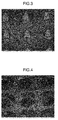
- FIG. 3 A micrograph of the thus obtained microneedle patch is illustrated in Fig. 3 .
- Each microneedle was in a square pyramid shape having a base length of 300 ⁇ m and a height of 500 ⁇ m, which was the same shape as that of the used mold.
- the content of ovalbumin per microneedle patch was 103 ⁇ g.
- a microneedle shaping mold obtained in the same manner as in Example 1 was used to collect a solid content on a tape adhesive surface by a similar method to Example 1.
- the thus collected solid content was caused to adhere to a surface of a soft polyethylene sheet having a length of 18 mm and a thickness of 0.3 mm via the double sided adhesive tape, so as to obtain a patch holding 100 lumps of the solid content thereon.
- FIG. 4 A micrograph of the thus obtained patch is illustrated in Fig. 4 . Although the solid content was found on the surface of the patch, no needle was formed.
- compositions and moldability of the microneedles of Examples 1 to 3 and Comparative Example are shown in Table 1.
- Table 1 In the formulation containing, as the base material, 5% by weight or more chitosan glutamate in addition to sucrose, needles in the same shape as the mold were formed, whereas in the formulation not containing chitosan glutamate, no needle was formed.
- Table 1 Composition and Moldability of Microneedle Components Weight Ratio Moldability
- Example 1 Ovalbumin, 10 Needle in the same shape as mold formed Chitosan Glutamate, 30 Sucrose 60
- Example 2 Ovalbumin, 10 Needle in the same shape as mold formed Chitosan Glutamate, 10 Sucrose 80
- Example 3 Ovalbumin, 5 Needle in the same shape as mold formed Chitosan Glutamate, 5 Sucrose, 90 Acid Red 52 0.03 Comparative Example 1 Ovalbumin, 10 No needle formed Sucrose, 90 Evans Blue 0.03
- a solution was prepared by mixing and dissolving 1 ml of a tetanus toxoid solution (9.7 mg/ml) (T) and 97 mg of sodium chondroitin sulfate (CS).
- T tetanus toxoid
- CS sodium chondroitin sulfate
- solutions respectively containing other additives were also prepared to have mixing amounts shown in Table 2, so as to prepare initial samples and samples stored at 40°C.
- Results are illustrated in Fig. 5 (initial samples) and Fig. 6 (samples after stored at 40°C for 1 week).
- a solution was prepared by mixing and dissolving 1 ml of a tetanus toxoid solution (9.7 mg/ml) (T) and 97 mg of sodium chondroitin sulfate (CS).
- T tetanus toxoid
- CS sodium chondroitin sulfate
- 48.5 mg of trehalose was added and well mixed, and the resultant was dividedly poured into two plastic tubes in an amount of 2.1 ⁇ l each.
- One of the tubes was used as an initial sample, and the other was air dried and then sealed in an aluminum pouch to be stored under conditions of 40°C and 75%RH for 1 week.
- solutions respectively containing other additives were also prepared to have mixing amounts shown in Table 2, so as to prepare initial samples and samples stored at 40°C.
- Results are illustrated in Fig. 5 (initial samples) and Fig. 6 (samples after stored at 40°C for 1 week).
- a solution was prepared by mixing and dissolving 1 ml of a tetanus toxoid solution (9.7 mg/ml) (T) and 97 mg of sodium chondroitin sulfate (CS).
- T tetanus toxoid
- CS sodium chondroitin sulfate
- 48.5 mg of G2- ⁇ -cyclodextrin was added and well mixed, and the resultant was dividedly poured into two plastic tubes in an amount of 2.1 ⁇ l each.
- One of the tubes was used as an initial sample, and the other was air dried and then sealed in an aluminum pouch to be stored under conditions of 40°C and 75%RH for 1 week.
- a solution containing another additive HP- ⁇ -cyclodextrin
- Table 2 a mixing amount shown in Table 2, so as to prepare an initial sample and a sample stored at 40°C.
- Results are illustrated in Fig. 5 (initial samples) and Fig. 6 (samples after stored at 40°C for 1 week).
- Results are illustrated in Fig. 5 (initial sample) and Fig. 6 (sample after stored at 40°C for 1 week).
- a solution was prepared by mixing and dissolving 100 ⁇ l of a norovirus VLP (G1) solution (4.4 mg/ml) and 5 mg of sodium chondroitin sulfate (CS).
- G1 norovirus VLP
- CS sodium chondroitin sulfate
- the other was air dried and then sealed in an aluminum pouch to be stored under conditions of 40°C and 75%RH for 1 week and was used as a solid sample stored at 40°C for 1 week.
- Water was added in an amount of 175 ⁇ l to the initial solution sample, and in an amount of 200 ⁇ l to each of the initial solid sample and the solid sample stored at 40°C for 1 week, and the resultants were well mixed.
- Evaluation was performed by the size exclusion chromatography. On the basis of a peak area, a VLP content was evaluated.
- Results are shown in Table 3. [Table 3] Table 3 VLP Content (%) Initial Liquid 89.8 Initial Solid 83.8 40°C/1W Solid 75.2
- a solution was prepared by mixing and dissolving 100 ⁇ l of a norovirus VLP (G1) solution (4.4 mg/ml) and 5 mg of sodium chondroitin sulfate (CS).
- G1 norovirus VLP
- CS sodium chondroitin sulfate
- 10 mg of sucrose was added and well mixed, and the resultant was dividedly poured into three plastic tubes in an amount of 25 ⁇ l each.
- One of the tubes was used as an initial solution sample, and another was air dried to be used as an initial solid sample.
- the other was air dried and then sealed in an aluminum pouch to be stored under conditions of 40°C and 75%RH for 1 week and was used as a solid sample stored at 40°C for 1 week.
- Results are shown in Table 4. [Table 4] Table 4 VLP Content (%) Initial Liquid 92.1 Initial Solid 88.7 40°C/1W Solid 71.1
- a solution was prepared by mixing and dissolving 100 ⁇ l of a norovirus VLP (G1) solution (4.4 mg/ml) and 5 mg of sodium chondroitin sulfate (CS).
- G1 norovirus VLP
- CS sodium chondroitin sulfate
- 10 mg of sorbitol was added and well mixed, and the resultant was dividedly poured into three plastic tubes in an amount of 25 ⁇ l each.
- One of the tubes was used as an initial solution sample, and another was air dried to be used as an initial solid sample.
- the other was air dried and then sealed in an aluminum pouch to be stored under conditions of 40°C and 75%RH for 1 week and was used as a solid sample stored at 40°C for 1 week.
- Results are shown in Table 5. [Table 5] Table 5 VLP Content (%) Initial Liquid 88.6 Initial Solid 85.5 40°C/1W Solid 66.3
- a solution was prepared by mixing and dissolving 100 ⁇ l of a norovirus VLP (G1) solution (4.4 mg/ml) and 5 mg of sodium chondroitin sulfate (CS).
- G1 norovirus VLP
- CS sodium chondroitin sulfate
- the thus obtained norovirus VLP-CS mixed solution was dividedly poured into three plastic tubes in an amount of 25 ⁇ l each.
- One of the tubes was used as an initial solution sample, and another was air dried to be used as an initial solid sample.
- the other was air dried and then sealed in an aluminum pouch to be stored under conditions of 40°C and 75%RH for 1 week and was used as a solid sample stored at 40°C for 1 week.
- Results are shown in Table 6. [Table 6] Table 6 VLP Content (%) Initial Liquid 73.7 Initial Solid 15.4 40°C/1W Solid 1.0
- a norovirus VLP (G1) solution (4.4 mg/ml) was dividedly poured into three plastic tubes in an amount of 25 ⁇ l each. One of the tubes was used as an initial solution sample, and another was air dried to be used as an initial solid sample. The other was air dried and then sealed in an aluminum pouch to be stored under conditions of 40°C and 75%RH for 1 week and was used as a solid sample stored at 40°C for 1 week.
- Results are shown in Table 7. [Table 7] Table 7 VLP Content (%) Initial Liquid 105.1 Initial Solid 4.7 40°C/1W Solid 0.8
- the norovirus VLP (G1) was more stable in the samples of Examples 7 to 9 than in the samples of Comparative Examples 3 and 4.
- Table 8 Example 7
- Example 8 Example 9 Comparative Example 3 Comparative Example 4
- Norovirus VLP (mg) 0.11 0.11 0.11 0.11 0.11 0.11 Sodium Chondroitin Sulfate (CS) (mg) 1.25 1.25 1.25 1.25 Trehalose (mg) 2.5 Sucrose (mg) 2.5 Sorbitol (mg) 2.5 VLP Content (%)
- a solution was prepared by mixing and dissolving 541.8 ⁇ l of a norovirus VLP (G1) solution (4.4 mg/ml), 15.5 mg of chitosan glutamate (PROTASAN (Registered Trademark) UP G213) and 158.2 ⁇ l of water.
- G1 norovirus VLP
- PROTASAN Registered Trademark
- UP G213 15.5 mg
- 158.2 ⁇ l of water 158.2 ⁇ l of water.
- sucrose was added and well mixed, and the resultant was dividedly poured into plastic tubes in an amount of 10 ⁇ l each.
- One of the tubes was used as an initial solution sample, and the other was air dried and then sealed in an aluminum pouch to be stored under conditions of 40°C and 75%RH for 1 week and was used as a solid sample stored at 40°C for 1 week.
- Results are shown in Table 9. [Table 9] Table 9 VLP Content (%) Initial Liquid 100 40°C/1W Solid 91
- a solution was prepared by mixing and dissolving 541.8 ⁇ l of a norovirus VLP (G1) solution (4.4 mg/ml), 15.5 mg of chitosan glutamate (PROTASAN (Registered Trademark) UP G213) and 158.2 ⁇ l of water.
- the thus obtained norovirus VLP-chitosan glutamate mixed solution was dividedly poured into plastic tubes in an amount of 10 ⁇ l each.
- One of the tubes was used as an initial solution sample, and the other was air dried and then sealed in an aluminum pouch to be stored under conditions of 40°C and 75%RH for 1 week and was used as a solid sample stored at 40°C for 1 week.
- the norovirus VLP (G1) was more stable in the sample of Example 10 than in the sample of Comparative Example 5. [Table 11] Table 11 Example 10 Comparative Example 5 Norovirus VLP (weight ratio) 3 12 Chitosan Glutamate (weight ratio) 20 79 Sucrose (weight ratio) 75 Histidine in Buffer (weight ratio) 2 9 VLP Content (%) Initial Liquid 100 100 40°C/1W Solid 91 34
- a sheet of a styrene-based thermoplastic elastomer RABARON (Registered Trademark), with a thickness of 1 mm, manufactured by Mitsubishi Chemical Corporation) was cut into a size of about 2.5 cm x 2.5 cm, and the cut sheet was placed over the heated mold and pressed for 30 seconds at a press pressure of about 25 N.
- the resultant sheet and mold were cooled at room temperature for about 1 minute, and then, the sheet was peeled off from the mold to obtain a microneedle shaping mold having recesses each in a square pyramid shape.
- microneedles 5302A manufactured by Nitto Denko Corporation was applied onto a surface of the shaping mold and was peeled, so as to collect microneedles on a tape adhesive surface.
- the thus collected microneedles were caused to adhere onto a surface of a polyethylene sheet via the double sided adhesive tape, and thus, a microneedle patch holding the 100 microneedles thereon was obtained.
- the obtained microneedles were sealed in an aluminum pouch to be stored at 25°C and 60%RH or 40°C and 75%RH for 1 month.
- Results are shown in Table 12. [Table 12] Table 12 Content of Tetanus Toxoid (%) Initial 100 25°C/1M Sealed 68 40°C/1M Sealed 25
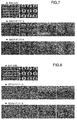
- Results are illustrated in Fig. 7 .
- a sheet of a styrene-based thermoplastic elastomer RABARON (Registered Trademark), with a thickness of 1 mm, manufactured by Mitsubishi Chemical Corporation) was cut into a size of about 2.5 cm x 2.5 cm, and the cut sheet was placed over the heated mold and pressed for 30 seconds at a press pressure of about 25 N.
- the resultant sheet and mold were cooled at room temperature for about 1 minute, and then, the sheet was peeled off from the mold to obtain a microneedle shaping mold having recesses each in a square pyramid shape.
- microneedles 5302A manufactured by Nitto Denko Corporation was applied onto a surface of the shaping mold and was peeled, so as to collect microneedles on a tape adhesive surface.
- the thus collected microneedles were caused to adhere onto a surface of a polyethylene sheet via the double sided adhesive tape, and thus, a microneedle patch holding the 100 microneedles thereon was obtained.
- the obtained microneedles were sealed in an aluminum pouch to be stored at 25°C and 60%RH or 40°C and 75%RH for 1 month.
- Results are shown in Table 13. [Table 13] Table 13 Content of Tetanus Toxoid (%) Initial 100 25°C/1M Sealed 55 40°C/1M Sealed 0
- Results are illustrated in Fig. 8 .
- the tetanus toxoid was more stable in the sample of Example 11 than in the sample of Comparative Example 6. Besides, based on the micrographs of Figs. 7 and 8 , the physical stability in the shapes of the microneedles after the storage was superior in the sample of Example 11 to that in the sample of Comparative Example 6.
- the weight ratios among principal components in a solid content were norovirus VLP (G1): 1.8%, norovirus VLP (G2): 1.8%, sucrose: 71.3% and chitosan glutamate: 18.4%, and a solid content concentration of the filling solution was set to 11.5% (in weight ratio).
- a sheet of a styrene-based thermoplastic elastomer (RABARON (Registered Trademark), with a thickness of 1 mm, manufactured by Mitsubishi Chemical Corporation) was cut into a size of about 2.5 cm x 2.5 cm, and the cut sheet was placed over the heated mold and pressed for 30 seconds at a press pressure of about 25 N. The resultant sheet and mold were cooled at room temperature for about 1 minute, and then, the sheet was peeled off from the mold to obtain a microneedle shaping mold having recesses each in a square pyramid shape.
- RABARON Registered Trademark
- the shaping mold was set on an XY stage of a microneedle manufacturing apparatus (manufactured by Kyokko Seiko Co., Ltd.), and a dispenser 1 (nozzle size: 0.075 mm in diameter) was used to fill the antigen-containing solution in the 100 needle holes up to needle bases (feed pressure: 0.017 MPa, number of times of application: 40 times). After filling, the air press was performed for 60 seconds by using a pneumatic press for filling the polymer into the innermost portion of each hole to remove bubbles remaining in the tip portion of the mold hole. Thereafter, the shaping mold was dried at room temperature for about 18 hours, and then an acrylic surface of a double sided adhesive tape (No.
- microneedles were put in an aluminum bag of 200 x 150 mm together with one piece of synthetic zeolite desiccant (synthetic zeolite 4A, 10 g, 60 x 40 x 4 mm), and the resultant bag was heat sealed.
- Aluminum bags each containing the preparation sealed therein were stored in a refrigerator at 5°C or a thermo-hygrostat at 25°C/60%RH or 40°C/75%RH. After 3 months, the microneedle patches were collected from the aluminum bags.
- Results are illustrated in Fig. 9 .
- Results are shown in Table 15. [Table 15] Table 15 VLP Content (%) Initial 100 5°C (sealed with desiccant)/3M Stored 91 25°C/60%RH (sealed with desiccant)/3M Stored 94 40°C/75%RH (sealed with desiccant)/3M Stored 96
- Results are shown in Table 16. [Table 16] Table 16 Content of G1 Protein (%) Initial 100 5°C (sealed with desiccant)/3M Stored 91 25°C/60%RH (sealed with desiccant)/3M Stored 99 40°C/75%RH (sealed with desiccant)/3M Stored 98 Content of G2 Protein (%) Initial 100 5°C (sealed with desiccant)/3M Stored 93 25°C/60%RH (sealed with desiccant)/3M Stored 99 40°C/75%RH (sealed with desiccant)/3M Stored 100
- the weight ratios among principal components in a solid content were norovirus VLP (G1): 1.8%, norovirus VLP (G2): 1.8%, sucrose: 71.3% and chitosan glutamate: 18.4%, and a solid content concentration of the filling solution was set to 11.5% (in weight ratio).
- a solid content concentration of the filling solution was set to 11.5% (in weight ratio).
- 80 mg of chitosan glutamate and 320 mg of sucrose were dissolved in 3200 ⁇ l of distilled water to obtain a base filling solution.
- a sheet of a styrene-based thermoplastic elastomer (RABARON (R), with a thickness of 1 mm, manufactured by Mitsubishi Chemical Corporation) was cut into a size of about 2.5 cm x 2.5 cm, and the cut sheet was placed over the heated mold and pressed for 30 seconds at a press pressure of about 25 N. After about 1 minute, the sheet was peeled off from the mold to obtain a microneedle shaping mold.
- RABARON styrene-based thermoplastic elastomer
- the shaping mold was set on an XY stage of a microneedle manufacturing apparatus (manufactured by Kyokko Seiko Co., Ltd.), and a dispenser 1 (nozzle size: 0.075 mm in diameter) was used to fill the antigen-containing solution in the 100 needle holes continuously by 24 times (feed pressure: 0.017 MPa). After filling, the air press was performed for 60 seconds by using a pneumatic press for filling the polymer into the innermost portion of each hole to remove bubbles remaining in the tip portion of the mold hole. Subsequently, the base filling solution was filled in base portions by 18 times, and the air press was similarly performed. Thereafter, the shaping mold was dried at room temperature for about 18 hours, and then an acrylic surface of a double sided adhesive tape (No.
- microneedles were put in an aluminum bag of 200 x 150 mm together with one piece of synthetic zeolite desiccant (synthetic zeolite 4A, 10 g, 60 x 40 x 4 mm), and the resultant bag was heat sealed.
- Aluminum bags each containing the preparation sealed therein were stored in a refrigerator at 5°C or a thermo-hygrostat at 25°C/60%RH or 40°C/75%RH. After 1 month, the microneedle patches were collected from the aluminum bags.
- Results are illustrated in Fig. 10 .
- Results are shown in Table 17. [Table 17] Table 17 VLP Content (%) Initial 100 5°C (sealed with desiccant)/1 M Stored 95 25°C/60%RH (sealed with desiccant)/1M Stored 96 40°C/75%RH (sealed with desiccant)/1M Stored 95
- a rabbit (kbl/NZWN, female, 8 weeks old) was administered with one or two microneedle patches (containing G1 and G2 proteins each in 20 ⁇ g/patch). Twenty-one days after the first administration, the second additional administration was performed at the same dose as in the first administration. Twenty-one days after the second administration, blood was collected to measure G1- and G2-specific IgG and IgA in the blood serum by ELISA.
- Results are illustrated in Fig. 12 .
- the weight ratios among principal components in a solid content were norovirus VLP (G1): 1.8%, norovirus VLP (G2): 1.8%, sucrose: 71.3% and chitosan glutamate: 18.4%, and a solid content concentration of the filling solution was set to 11.5% (in weight ratio).
- a solid content concentration of the filling solution was set to 11.5% (in weight ratio).
- 80 mg of chitosan glutamate and 320 mg of sucrose were dissolved in 3200 ⁇ l of distilled water to obtain a base filling solution.
- a sheet of a styrene-based thermoplastic elastomer (RABARON (Registered Trademark), with a thickness of 1 mm, manufactured by Mitsubishi Chemical Corporation) was cut into a size of about 2.5 cm x 2.5 cm, and the cut sheet was placed over the heated mold and pressed for 30 seconds at a press pressure of about 25 N. After about 1 minute, the sheet was peeled off from the mold to obtain a microneedle shaping mold.
- RABARON Registered Trademark
- the shaping mold was set on an XY stage of a microneedle manufacturing apparatus (manufactured by Kyokko Seiko Co., Ltd.), and a dispenser 1 (nozzle size: 0.075 mm in diameter) was used to fill the antigen-containing solution in the 100 needle holes continuously by 6 times (feed pressure: 0.017 MPa). After filling, the air press was performed for 60 seconds by using a pneumatic press for filling the polymer into the innermost portion of each hole to remove bubbles remaining in the tip portion of the mold hole. Subsequently, the base filling solution was filled in base portions by 36 times, and the air press was similarly performed. Thereafter, the shaping mold was dried at room temperature for about 18 hours, and then an acrylic surface of a double sided adhesive tape (No.
- microneedles were put in an aluminum bag of 200 x 150 mm together with one piece of synthetic zeolite desiccant (synthetic zeolite 4A, 10 g, 60 x 40 x 4 mm), and the resultant bag was heat sealed.
- Aluminum bags each containing the preparation sealed therein were stored in a refrigerator at 5°C or a thermo-hygrostat at 25°C/60%RH or 40°C/75%RH. After 1 month, the microneedle patches were collected from the aluminum bags.
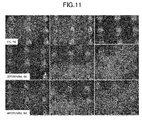
- Results are illustrated in Fig. 11 .
- Results are shown in Table 18. [Table 18] Table 18 VLP Content (%) Initial 100 5°C (sealed with desiccant)/1 M Stored 92 25°C/60%RH (sealed with desiccant)/1 M Stored 108 40°C/75%RH (sealed with desiccant)/1 M Stored 123
- a rabbit (kbl/NZWN, female, 8 weeks old) was administered with one microneedle patch (containing G1 and G2 proteins each in 5 ⁇ g/patch). Twenty-one days after the first administration, the second additional administration was performed at the same dose as in the first administration. Twenty-one days after the second administration, blood was collected to measure G1- and G2-specific IgG and IgA in the blood serum by the ELISA.
- Results are illustrated in Fig. 12 .
- Example 12 it was revealed that the norovirus proteins (G1 and G2) had stability.
- Example 14 it was revealed that the norovirus VLPs (G1 and G2) had also stability.
- the physical stability in the shapes of the stored microneedles was observed also in the samples of Examples 12 to 14.
- Example 13 and 14 antibody titers were measured in accordance with the amount per patch of the antigen of the norovirus proteins (G1 and G2) in the microneedles and the number of administered patches. It was revealed based on these results that the microneedles of Examples 13 and 14 have an ability to induce an immune response when intradermally administered.
- a microneedle of the present invention is used for more efficiently preventing or treating infectious diseases such as tetanus, diphtheria, norovirus, Dengue fever, human papilloma virus (HPV), influenza and rotavirus, and other diseases. Accordingly, the present invention makes a great contribution to the development of medical device industry and related industries.
Landscapes
- Health & Medical Sciences (AREA)
- Life Sciences & Earth Sciences (AREA)
- Chemical & Material Sciences (AREA)
- Medicinal Chemistry (AREA)
- General Health & Medical Sciences (AREA)
- Pharmacology & Pharmacy (AREA)
- Epidemiology (AREA)
- Animal Behavior & Ethology (AREA)
- Public Health (AREA)
- Veterinary Medicine (AREA)
- Microbiology (AREA)
- Immunology (AREA)
- Dermatology (AREA)
- Engineering & Computer Science (AREA)
- Mycology (AREA)
- Virology (AREA)
- Organic Chemistry (AREA)
- Inorganic Chemistry (AREA)
- Bioinformatics & Cheminformatics (AREA)
- Wood Science & Technology (AREA)
- Zoology (AREA)
- Biochemistry (AREA)
- Genetics & Genomics (AREA)
- Biomedical Technology (AREA)
- General Engineering & Computer Science (AREA)
- Molecular Biology (AREA)
- Biotechnology (AREA)
- Chemical Kinetics & Catalysis (AREA)
- General Chemical & Material Sciences (AREA)
- Oil, Petroleum & Natural Gas (AREA)
- Medicinal Preparation (AREA)
- Materials For Medical Uses (AREA)
- Medicines Containing Antibodies Or Antigens For Use As Internal Diagnostic Agents (AREA)
Applications Claiming Priority (2)
| Application Number | Priority Date | Filing Date | Title |
|---|---|---|---|
| JP2013259672 | 2013-12-16 | ||
| PCT/JP2014/083184 WO2015093452A1 (ja) | 2013-12-16 | 2014-12-15 | マイクロニードル |
Publications (3)
| Publication Number | Publication Date |
|---|---|
| EP3085357A1 true EP3085357A1 (de) | 2016-10-26 |
| EP3085357A4 EP3085357A4 (de) | 2017-05-24 |
| EP3085357B1 EP3085357B1 (de) | 2019-02-13 |
Family
ID=53402798
Family Applications (1)
| Application Number | Title | Priority Date | Filing Date |
|---|---|---|---|
| EP14870738.3A Not-in-force EP3085357B1 (de) | 2013-12-16 | 2014-12-15 | Mikronadel |
Country Status (4)
| Country | Link |
|---|---|
| US (1) | US20160310412A1 (de) |
| EP (1) | EP3085357B1 (de) |
| JP (1) | JP6556632B2 (de) |
| WO (1) | WO2015093452A1 (de) |
Cited By (2)
| Publication number | Priority date | Publication date | Assignee | Title |
|---|---|---|---|---|
| EP3706792A1 (de) * | 2017-11-10 | 2020-09-16 | LTS Lohmann Therapie-Systeme AG | Mikronadelsystem zur applikation eines hepatitis-impfstoffes |
| EP3797820A4 (de) * | 2018-05-23 | 2021-09-15 | FUJIFILM Corporation | Japan-enzephalitisimpfstoffhaltige mikronadelanordnung |
Families Citing this family (16)
| Publication number | Priority date | Publication date | Assignee | Title |
|---|---|---|---|---|
| GB0402131D0 (en) | 2004-01-30 | 2004-03-03 | Isis Innovation | Delivery method |
| AU2012323782B2 (en) | 2011-10-12 | 2017-04-06 | Vaxxas Pty Limited | Delivery device |
| WO2016123665A1 (en) | 2015-02-02 | 2016-08-11 | Vaxxas Pty Limited | Microprojection array applicator and method |
| WO2017045031A1 (en) | 2015-09-18 | 2017-03-23 | Vaxxas Pty Limited | Microprojection arrays with microprojections having large surface area profiles |
| CA2999538A1 (en) | 2015-09-28 | 2017-04-06 | Vaxxas Pty Limited | Microprojection arrays with enhanced skin penetrating properties and methods thereof |
| WO2017179615A1 (ja) * | 2016-04-15 | 2017-10-19 | 富士フイルム株式会社 | マイクロニードルアレイ及びマイクロニードルアレイの製造方法 |
| ES2960937T3 (es) | 2017-03-31 | 2024-03-07 | Vaxxas Pty Ltd | Dispositivo y método para recubrir superficies |
| US11175128B2 (en) | 2017-06-13 | 2021-11-16 | Vaxxas Pty Limited | Quality control of substrate coatings |
| EP4473998A3 (de) | 2017-08-04 | 2025-02-26 | Vaxxas Pty Limited | Kompakter hoher mechanischer energiespeicher und aktuator mit geringer auslösekraft für die abgabe von mikroprojektions-array-patches (map) |
| US20200246450A1 (en) * | 2017-08-10 | 2020-08-06 | Vaxxas Pty Limited | Differential coating of microprojections and microneedles on arrays |
| KR20190038433A (ko) * | 2017-09-29 | 2019-04-08 | 아이큐어 주식회사 | 마이크로 구조체, 이의 제조방법 및 비패치형 마이크로 니들 디바이스 |
| WO2019112921A1 (en) | 2017-12-07 | 2019-06-13 | Merck Sharp & Dohme Corp. | Formulations of dengue virus vaccine compositions |
| US20210308249A1 (en) * | 2018-08-20 | 2021-10-07 | Takeda Vaccines, Inc. | Vlp formulations |
| CN112516325B (zh) * | 2019-09-18 | 2023-12-08 | 洛阳赛威生物科技有限公司 | 一种稳定的口蹄疫疫苗组合物及其应用 |
| EP4371599A1 (de) * | 2021-07-15 | 2024-05-22 | Feroka Inc. | Mikronadelpflaster und mikronadelpflasterherstellungsverfahren |
| WO2024195868A1 (ja) * | 2023-03-23 | 2024-09-26 | デンカ株式会社 | ノロウイルスワクチン組成物 |
Family Cites Families (17)
| Publication number | Priority date | Publication date | Assignee | Title |
|---|---|---|---|---|
| ATE252373T1 (de) | 1994-08-04 | 2003-11-15 | Elan Drug Delivery Ltd | Feste verabreichungssysteme zur gesteuerten freisetzung von darin eingebauten molekülen sowie verfahren zu deren herstellung |
| GB0017999D0 (en) * | 2000-07-21 | 2000-09-13 | Smithkline Beecham Biolog | Novel device |
| CN1845708A (zh) * | 2003-07-02 | 2006-10-11 | 阿尔扎公司 | 微突出物阵列免疫贴剂和方法 |
| MXPA06013490A (es) * | 2004-05-19 | 2007-06-12 | Johnson & Johnson | Metodo y formulacion para el suministro transdermico de agentes inmunologicamente activos. |
| WO2006055799A1 (en) | 2004-11-18 | 2006-05-26 | 3M Innovative Properties Company | Masking method for coating a microneedle array |
| EP2066354B1 (de) * | 2006-09-29 | 2013-04-17 | Ligocyte Pharmaceuticals, Inc. | Norovirus-impfstoffformulierungen |
| ES2817249T3 (es) | 2007-04-16 | 2021-04-06 | Corium Inc | Matrices de microagujas obtenidas mediante disolución y colada que contienen un principio activo |
| CN104740624B (zh) | 2007-09-18 | 2018-04-24 | 武田疫苗股份有限公司 | 赋予针对诺如病毒的保护性免疫应答的疫苗 |
| KR101555391B1 (ko) | 2007-11-21 | 2015-09-23 | 가부시키가이샤 바이오세렌택 | 체표 적용 제제 및 체표 적용 제제 보유 시트 |
| DK2346563T3 (da) * | 2008-10-07 | 2019-01-02 | Tuo Jin | Polymere faseovergangsmikronåle |
| JP5808102B2 (ja) * | 2010-07-22 | 2015-11-10 | コスメディ製薬株式会社 | 抗原を含有する経皮免疫製剤およびその製造方法 |
| EP2679242B1 (de) * | 2011-02-25 | 2020-09-09 | Hisamitsu Pharmaceutical Co., Inc. | Hilfsstoff für transdermale oder transmukosale verabreichung und pharmazeutisches präparat damit |
| EP4112074A1 (de) | 2011-07-11 | 2023-01-04 | Takeda Vaccines, Inc. | Parenterale norovirus-impfstoffformulierungen |
| JP6121674B2 (ja) * | 2011-09-12 | 2017-04-26 | コスメディ製薬株式会社 | マイクロニードル迅速溶解法 |
| KR102281138B1 (ko) * | 2012-02-17 | 2021-07-26 | 코스메드 파마소티컬 씨오 쩜 엘티디 | 단시간 용해형 마이크로니들 |
| JP6323975B2 (ja) * | 2012-06-22 | 2018-05-16 | 凸版印刷株式会社 | 針状体の製造方法 |
| CN105188569B (zh) * | 2013-03-15 | 2020-11-20 | 考里安公司 | 用于递送活性剂的微结构阵列 |
-
2014
- 2014-12-15 US US15/104,642 patent/US20160310412A1/en not_active Abandoned
- 2014-12-15 EP EP14870738.3A patent/EP3085357B1/de not_active Not-in-force
- 2014-12-15 WO PCT/JP2014/083184 patent/WO2015093452A1/ja not_active Ceased
- 2014-12-15 JP JP2015553539A patent/JP6556632B2/ja not_active Expired - Fee Related
Cited By (3)
| Publication number | Priority date | Publication date | Assignee | Title |
|---|---|---|---|---|
| EP3706792A1 (de) * | 2017-11-10 | 2020-09-16 | LTS Lohmann Therapie-Systeme AG | Mikronadelsystem zur applikation eines hepatitis-impfstoffes |
| US12168053B2 (en) | 2017-11-10 | 2024-12-17 | Lts Lohmann Therapie-Systeme Ag | Microneedle system for applying a hepatitis vaccine |
| EP3797820A4 (de) * | 2018-05-23 | 2021-09-15 | FUJIFILM Corporation | Japan-enzephalitisimpfstoffhaltige mikronadelanordnung |
Also Published As
| Publication number | Publication date |
|---|---|
| WO2015093452A1 (ja) | 2015-06-25 |
| US20160310412A1 (en) | 2016-10-27 |
| JPWO2015093452A1 (ja) | 2017-03-16 |
| EP3085357A4 (de) | 2017-05-24 |
| JP6556632B2 (ja) | 2019-08-07 |
| EP3085357B1 (de) | 2019-02-13 |
Similar Documents
| Publication | Publication Date | Title |
|---|---|---|
| EP3085357B1 (de) | Mikronadel | |
| JP6894455B2 (ja) | 治療剤の送達のためのマイクロアレイ、使用方法および製造方法 | |
| US20230285731A1 (en) | Multi-component bio-active drug delivery and controlled release to the skin by microneedle array devices | |
| RU2662432C2 (ru) | Массив микроструктур для доставки действующих агентов | |
| ES2944885T3 (es) | Matriz de microestructuras para administración de agentes activos | |
| ES2691259T3 (es) | Dispositivo de microagujas | |
| JP6886925B2 (ja) | 分離可能なマイクロニードルを有する薬剤送達デバイス | |
| KR102203555B1 (ko) | 입자의 동결건조 또는 동결을 위한 중합체 부형제의 용도 | |
| US20200147209A1 (en) | Alum-containing coating formulations for microneedle vaccine patches | |
| EP2957297B1 (de) | Beschichtungszusammensetzung für mikronadel und mikronadelvorrichtung | |
| Tian et al. | Intradermal administration of influenza vaccine with trehalose and pullulan-based dissolving microneedle arrays | |
| CN101756908A (zh) | 聚酯包衣的羟基磷灰石微球及其制备方法 | |
| JP2010536837A5 (de) | ||
| US20240277756A1 (en) | Silicon particles for hydrogen release | |
| US20230158135A1 (en) | Immunogenic composition forming a vaccine, and a method for its manufacture | |
| DUMKLIANG et al. | Development of chitosan-based chitosan nanoparticles for intranasal vaccination and dissolving microneedles for intradermal vaccination of Japanese encephalitis | |
| KR20240002285A (ko) | 인플루엔자 백신을 포함하는 마이크로니들 및 이를 포함하는 인플루엔자 백신 패치 | |
| Kunda et al. | Protein Adsorbed PGA-co-PDL Nanocarriers for Vaccine Delivery |
Legal Events
| Date | Code | Title | Description |
|---|---|---|---|
| PUAI | Public reference made under article 153(3) epc to a published international application that has entered the european phase |
Free format text: ORIGINAL CODE: 0009012 |
|
| 17P | Request for examination filed |
Effective date: 20160617 |
|
| AK | Designated contracting states |
Kind code of ref document: A1 Designated state(s): AL AT BE BG CH CY CZ DE DK EE ES FI FR GB GR HR HU IE IS IT LI LT LU LV MC MK MT NL NO PL PT RO RS SE SI SK SM TR |
|
| AX | Request for extension of the european patent |
Extension state: BA ME |
|
| DAX | Request for extension of the european patent (deleted) | ||
| A4 | Supplementary search report drawn up and despatched |
Effective date: 20170425 |
|
| RIC1 | Information provided on ipc code assigned before grant |
Ipc: A61K 47/24 20060101ALI20170419BHEP Ipc: A61K 47/36 20060101ALI20170419BHEP Ipc: A61K 9/00 20060101AFI20170419BHEP Ipc: A61K 39/145 20060101ALI20170419BHEP Ipc: A61K 47/26 20060101ALI20170419BHEP Ipc: A61K 47/10 20170101ALI20170419BHEP Ipc: A61K 39/00 20060101ALI20170419BHEP Ipc: A61K 39/12 20060101ALI20170419BHEP |
|
| GRAP | Despatch of communication of intention to grant a patent |
Free format text: ORIGINAL CODE: EPIDOSNIGR1 |
|
| STAA | Information on the status of an ep patent application or granted ep patent |
Free format text: STATUS: GRANT OF PATENT IS INTENDED |
|
| INTG | Intention to grant announced |
Effective date: 20180809 |
|
| GRAS | Grant fee paid |
Free format text: ORIGINAL CODE: EPIDOSNIGR3 |
|
| GRAA | (expected) grant |
Free format text: ORIGINAL CODE: 0009210 |
|
| STAA | Information on the status of an ep patent application or granted ep patent |
Free format text: STATUS: THE PATENT HAS BEEN GRANTED |
|
| RIN1 | Information on inventor provided before grant (corrected) |
Inventor name: ISHII, YUMIKO Inventor name: OMACHI, YOSHIHIRO Inventor name: TANOUE, YUTAKA Inventor name: MANOSHIRO, TOMOYUKI |
|
| AK | Designated contracting states |
Kind code of ref document: B1 Designated state(s): AL AT BE BG CH CY CZ DE DK EE ES FI FR GB GR HR HU IE IS IT LI LT LU LV MC MK MT NL NO PL PT RO RS SE SI SK SM TR |
|
| REG | Reference to a national code |
Ref country code: GB Ref legal event code: FG4D |
|
| REG | Reference to a national code |
Ref country code: CH Ref legal event code: EP Ref country code: CH Ref legal event code: NV Representative=s name: BOHEST AG, CH Ref country code: AT Ref legal event code: REF Ref document number: 1095803 Country of ref document: AT Kind code of ref document: T Effective date: 20190215 |
|
| REG | Reference to a national code |
Ref country code: IE Ref legal event code: FG4D |
|
| REG | Reference to a national code |
Ref country code: DE Ref legal event code: R096 Ref document number: 602014041100 Country of ref document: DE |
|
| REG | Reference to a national code |
Ref country code: LT Ref legal event code: MG4D |
|
| REG | Reference to a national code |
Ref country code: NL Ref legal event code: MP Effective date: 20190213 |
|
| PG25 | Lapsed in a contracting state [announced via postgrant information from national office to epo] |
Ref country code: PT Free format text: LAPSE BECAUSE OF FAILURE TO SUBMIT A TRANSLATION OF THE DESCRIPTION OR TO PAY THE FEE WITHIN THE PRESCRIBED TIME-LIMIT Effective date: 20190613 Ref country code: SE Free format text: LAPSE BECAUSE OF FAILURE TO SUBMIT A TRANSLATION OF THE DESCRIPTION OR TO PAY THE FEE WITHIN THE PRESCRIBED TIME-LIMIT Effective date: 20190213 Ref country code: FI Free format text: LAPSE BECAUSE OF FAILURE TO SUBMIT A TRANSLATION OF THE DESCRIPTION OR TO PAY THE FEE WITHIN THE PRESCRIBED TIME-LIMIT Effective date: 20190213 Ref country code: NO Free format text: LAPSE BECAUSE OF FAILURE TO SUBMIT A TRANSLATION OF THE DESCRIPTION OR TO PAY THE FEE WITHIN THE PRESCRIBED TIME-LIMIT Effective date: 20190513 Ref country code: NL Free format text: LAPSE BECAUSE OF FAILURE TO SUBMIT A TRANSLATION OF THE DESCRIPTION OR TO PAY THE FEE WITHIN THE PRESCRIBED TIME-LIMIT Effective date: 20190213 Ref country code: LT Free format text: LAPSE BECAUSE OF FAILURE TO SUBMIT A TRANSLATION OF THE DESCRIPTION OR TO PAY THE FEE WITHIN THE PRESCRIBED TIME-LIMIT Effective date: 20190213 |
|
| PG25 | Lapsed in a contracting state [announced via postgrant information from national office to epo] |
Ref country code: BG Free format text: LAPSE BECAUSE OF FAILURE TO SUBMIT A TRANSLATION OF THE DESCRIPTION OR TO PAY THE FEE WITHIN THE PRESCRIBED TIME-LIMIT Effective date: 20190513 Ref country code: IS Free format text: LAPSE BECAUSE OF FAILURE TO SUBMIT A TRANSLATION OF THE DESCRIPTION OR TO PAY THE FEE WITHIN THE PRESCRIBED TIME-LIMIT Effective date: 20190613 Ref country code: GR Free format text: LAPSE BECAUSE OF FAILURE TO SUBMIT A TRANSLATION OF THE DESCRIPTION OR TO PAY THE FEE WITHIN THE PRESCRIBED TIME-LIMIT Effective date: 20190514 Ref country code: HR Free format text: LAPSE BECAUSE OF FAILURE TO SUBMIT A TRANSLATION OF THE DESCRIPTION OR TO PAY THE FEE WITHIN THE PRESCRIBED TIME-LIMIT Effective date: 20190213 Ref country code: LV Free format text: LAPSE BECAUSE OF FAILURE TO SUBMIT A TRANSLATION OF THE DESCRIPTION OR TO PAY THE FEE WITHIN THE PRESCRIBED TIME-LIMIT Effective date: 20190213 Ref country code: RS Free format text: LAPSE BECAUSE OF FAILURE TO SUBMIT A TRANSLATION OF THE DESCRIPTION OR TO PAY THE FEE WITHIN THE PRESCRIBED TIME-LIMIT Effective date: 20190213 |
|
| REG | Reference to a national code |
Ref country code: AT Ref legal event code: MK05 Ref document number: 1095803 Country of ref document: AT Kind code of ref document: T Effective date: 20190213 |
|
| PG25 | Lapsed in a contracting state [announced via postgrant information from national office to epo] |
Ref country code: CZ Free format text: LAPSE BECAUSE OF FAILURE TO SUBMIT A TRANSLATION OF THE DESCRIPTION OR TO PAY THE FEE WITHIN THE PRESCRIBED TIME-LIMIT Effective date: 20190213 Ref country code: RO Free format text: LAPSE BECAUSE OF FAILURE TO SUBMIT A TRANSLATION OF THE DESCRIPTION OR TO PAY THE FEE WITHIN THE PRESCRIBED TIME-LIMIT Effective date: 20190213 Ref country code: IT Free format text: LAPSE BECAUSE OF FAILURE TO SUBMIT A TRANSLATION OF THE DESCRIPTION OR TO PAY THE FEE WITHIN THE PRESCRIBED TIME-LIMIT Effective date: 20190213 Ref country code: EE Free format text: LAPSE BECAUSE OF FAILURE TO SUBMIT A TRANSLATION OF THE DESCRIPTION OR TO PAY THE FEE WITHIN THE PRESCRIBED TIME-LIMIT Effective date: 20190213 Ref country code: DK Free format text: LAPSE BECAUSE OF FAILURE TO SUBMIT A TRANSLATION OF THE DESCRIPTION OR TO PAY THE FEE WITHIN THE PRESCRIBED TIME-LIMIT Effective date: 20190213 Ref country code: ES Free format text: LAPSE BECAUSE OF FAILURE TO SUBMIT A TRANSLATION OF THE DESCRIPTION OR TO PAY THE FEE WITHIN THE PRESCRIBED TIME-LIMIT Effective date: 20190213 Ref country code: AL Free format text: LAPSE BECAUSE OF FAILURE TO SUBMIT A TRANSLATION OF THE DESCRIPTION OR TO PAY THE FEE WITHIN THE PRESCRIBED TIME-LIMIT Effective date: 20190213 Ref country code: SK Free format text: LAPSE BECAUSE OF FAILURE TO SUBMIT A TRANSLATION OF THE DESCRIPTION OR TO PAY THE FEE WITHIN THE PRESCRIBED TIME-LIMIT Effective date: 20190213 |
|
| REG | Reference to a national code |
Ref country code: DE Ref legal event code: R097 Ref document number: 602014041100 Country of ref document: DE |
|
| PG25 | Lapsed in a contracting state [announced via postgrant information from national office to epo] |
Ref country code: PL Free format text: LAPSE BECAUSE OF FAILURE TO SUBMIT A TRANSLATION OF THE DESCRIPTION OR TO PAY THE FEE WITHIN THE PRESCRIBED TIME-LIMIT Effective date: 20190213 Ref country code: SM Free format text: LAPSE BECAUSE OF FAILURE TO SUBMIT A TRANSLATION OF THE DESCRIPTION OR TO PAY THE FEE WITHIN THE PRESCRIBED TIME-LIMIT Effective date: 20190213 |
|
| PLBE | No opposition filed within time limit |
Free format text: ORIGINAL CODE: 0009261 |
|
| STAA | Information on the status of an ep patent application or granted ep patent |
Free format text: STATUS: NO OPPOSITION FILED WITHIN TIME LIMIT |
|
| PG25 | Lapsed in a contracting state [announced via postgrant information from national office to epo] |
Ref country code: AT Free format text: LAPSE BECAUSE OF FAILURE TO SUBMIT A TRANSLATION OF THE DESCRIPTION OR TO PAY THE FEE WITHIN THE PRESCRIBED TIME-LIMIT Effective date: 20190213 |
|
| 26N | No opposition filed |
Effective date: 20191114 |
|
| PG25 | Lapsed in a contracting state [announced via postgrant information from national office to epo] |
Ref country code: SI Free format text: LAPSE BECAUSE OF FAILURE TO SUBMIT A TRANSLATION OF THE DESCRIPTION OR TO PAY THE FEE WITHIN THE PRESCRIBED TIME-LIMIT Effective date: 20190213 |
|
| PGFP | Annual fee paid to national office [announced via postgrant information from national office to epo] |
Ref country code: FR Payment date: 20191120 Year of fee payment: 6 |
|
| PG25 | Lapsed in a contracting state [announced via postgrant information from national office to epo] |
Ref country code: TR Free format text: LAPSE BECAUSE OF FAILURE TO SUBMIT A TRANSLATION OF THE DESCRIPTION OR TO PAY THE FEE WITHIN THE PRESCRIBED TIME-LIMIT Effective date: 20190213 |
|
| PGFP | Annual fee paid to national office [announced via postgrant information from national office to epo] |
Ref country code: CH Payment date: 20191209 Year of fee payment: 6 |
|
| PGFP | Annual fee paid to national office [announced via postgrant information from national office to epo] |
Ref country code: DE Payment date: 20191223 Year of fee payment: 6 Ref country code: GB Payment date: 20191028 Year of fee payment: 6 |
|
| REG | Reference to a national code |
Ref country code: BE Ref legal event code: MM Effective date: 20191231 |
|
| PG25 | Lapsed in a contracting state [announced via postgrant information from national office to epo] |
Ref country code: MC Free format text: LAPSE BECAUSE OF FAILURE TO SUBMIT A TRANSLATION OF THE DESCRIPTION OR TO PAY THE FEE WITHIN THE PRESCRIBED TIME-LIMIT Effective date: 20190213 |
|
| PG25 | Lapsed in a contracting state [announced via postgrant information from national office to epo] |
Ref country code: LU Free format text: LAPSE BECAUSE OF NON-PAYMENT OF DUE FEES Effective date: 20191215 Ref country code: IE Free format text: LAPSE BECAUSE OF NON-PAYMENT OF DUE FEES Effective date: 20191215 |
|
| PG25 | Lapsed in a contracting state [announced via postgrant information from national office to epo] |
Ref country code: BE Free format text: LAPSE BECAUSE OF NON-PAYMENT OF DUE FEES Effective date: 20191231 |
|
| PG25 | Lapsed in a contracting state [announced via postgrant information from national office to epo] |
Ref country code: CY Free format text: LAPSE BECAUSE OF FAILURE TO SUBMIT A TRANSLATION OF THE DESCRIPTION OR TO PAY THE FEE WITHIN THE PRESCRIBED TIME-LIMIT Effective date: 20190213 |
|
| REG | Reference to a national code |
Ref country code: DE Ref legal event code: R119 Ref document number: 602014041100 Country of ref document: DE |
|
| PG25 | Lapsed in a contracting state [announced via postgrant information from national office to epo] |
Ref country code: MT Free format text: LAPSE BECAUSE OF FAILURE TO SUBMIT A TRANSLATION OF THE DESCRIPTION OR TO PAY THE FEE WITHIN THE PRESCRIBED TIME-LIMIT Effective date: 20190213 Ref country code: HU Free format text: LAPSE BECAUSE OF FAILURE TO SUBMIT A TRANSLATION OF THE DESCRIPTION OR TO PAY THE FEE WITHIN THE PRESCRIBED TIME-LIMIT; INVALID AB INITIO Effective date: 20141215 |
|
| REG | Reference to a national code |
Ref country code: CH Ref legal event code: PL |
|
| GBPC | Gb: european patent ceased through non-payment of renewal fee |
Effective date: 20201215 |
|
| PG25 | Lapsed in a contracting state [announced via postgrant information from national office to epo] |
Ref country code: FR Free format text: LAPSE BECAUSE OF NON-PAYMENT OF DUE FEES Effective date: 20201231 |
|
| PG25 | Lapsed in a contracting state [announced via postgrant information from national office to epo] |
Ref country code: LI Free format text: LAPSE BECAUSE OF NON-PAYMENT OF DUE FEES Effective date: 20201231 Ref country code: DE Free format text: LAPSE BECAUSE OF NON-PAYMENT OF DUE FEES Effective date: 20210701 Ref country code: GB Free format text: LAPSE BECAUSE OF NON-PAYMENT OF DUE FEES Effective date: 20201215 Ref country code: CH Free format text: LAPSE BECAUSE OF NON-PAYMENT OF DUE FEES Effective date: 20201231 |
|
| PG25 | Lapsed in a contracting state [announced via postgrant information from national office to epo] |
Ref country code: MK Free format text: LAPSE BECAUSE OF FAILURE TO SUBMIT A TRANSLATION OF THE DESCRIPTION OR TO PAY THE FEE WITHIN THE PRESCRIBED TIME-LIMIT Effective date: 20190213 |