EP3085376A1 - Agent anticancéreux - Google Patents
Agent anticancéreux Download PDFInfo
- Publication number
- EP3085376A1 EP3085376A1 EP14871776.2A EP14871776A EP3085376A1 EP 3085376 A1 EP3085376 A1 EP 3085376A1 EP 14871776 A EP14871776 A EP 14871776A EP 3085376 A1 EP3085376 A1 EP 3085376A1
- Authority
- EP
- European Patent Office
- Prior art keywords
- cancer
- malignant
- glycero
- cell
- phosphoethanolamine
- Prior art date
- Legal status (The legal status is an assumption and is not a legal conclusion. Google has not performed a legal analysis and makes no representation as to the accuracy of the status listed.)
- Withdrawn
Links
Images

Classifications
-
- A—HUMAN NECESSITIES
- A61—MEDICAL OR VETERINARY SCIENCE; HYGIENE
- A61K—PREPARATIONS FOR MEDICAL, DENTAL OR TOILETRY PURPOSES
- A61K31/00—Medicinal preparations containing organic active ingredients
- A61K31/66—Phosphorus compounds
- A61K31/683—Diesters of a phosphorus acid with two hydroxy compounds, e.g. phosphatidylinositols
- A61K31/685—Diesters of a phosphorus acid with two hydroxy compounds, e.g. phosphatidylinositols one of the hydroxy compounds having nitrogen atoms, e.g. phosphatidylserine, lecithin
-
- A—HUMAN NECESSITIES
- A61—MEDICAL OR VETERINARY SCIENCE; HYGIENE
- A61P—SPECIFIC THERAPEUTIC ACTIVITY OF CHEMICAL COMPOUNDS OR MEDICINAL PREPARATIONS
- A61P35/00—Antineoplastic agents
-
- A—HUMAN NECESSITIES
- A61—MEDICAL OR VETERINARY SCIENCE; HYGIENE
- A61P—SPECIFIC THERAPEUTIC ACTIVITY OF CHEMICAL COMPOUNDS OR MEDICINAL PREPARATIONS
- A61P35/00—Antineoplastic agents
- A61P35/02—Antineoplastic agents specific for leukemia
-
- A—HUMAN NECESSITIES
- A61—MEDICAL OR VETERINARY SCIENCE; HYGIENE
- A61P—SPECIFIC THERAPEUTIC ACTIVITY OF CHEMICAL COMPOUNDS OR MEDICINAL PREPARATIONS
- A61P43/00—Drugs for specific purposes, not provided for in groups A61P1/00-A61P41/00
Definitions
- the present invention relates to a phospholipid compound having a cancer cell proliferation suppressive action, particularly, an anti-cancer agent containing diacylphosphatidylethanolamine as an active ingredient.
- Phospholipid is a major lipid constituting the biological membrane system, and is divided into glycerophospholipid having a glycerol skeleton, and sphingophospholipid having a sphingosine skeleton. Furthermore, depending on the kind of the hydrophilic moiety, glycerophospholipids are divided into phospholipid classes of phosphatidylcholine, phosphatidylethanolamine, phosphatidylserine, phosphatidylinositol, phosphatidylglycerol, cardiolipin, phosphatidic acid and the like.
- inositol phospholipid As the functions of phospholipids, there have been reported, besides the role of a membrane-constituting component that divides cells and cell organelles, that inositol phospholipid has a known role as an intercellular signaling pathway by phospholipase C and an anchor of protein-membrane; phosphatidylserine regulates the activities of blood coagulation protein, protein kinase C and the like; sphingomyelin pathway is involved in the regulation of activity of protein kinase C and cell apoptosis; phosphatidylcholine pathway relates to the maintenance of arachidonic acid which is an inflammatory mediator and signal transduction pathway by phospholipase D; platelet-activating factor which is alkyl ether phospholipid shows platelet activation, blood vessel permeability, leukocyte migration activity; and the like, and the functions provided by the classes thereof vary widely.
- 1,2-dilinoleoyl-sn-glycero-3-phosphocholine and 1-palmitoyl-2-oleoyl-sn-glycero-3-phosphocholine have been reported to improve spatial learning disorder and memory disorder induced by scopolamine, or mild cognitive impairment and dementia (non-patent documents 1, 2).
- phosphatidylethanolamine is a phospholipid, which is one of the main components of biological membrane, and is being marketed along with phosphatidylserine and the like as health foods.
- phosphatidylethanolamines particularly, dilinoleoyl phosphatidylethanolamine (containing two linoleic acids as fatty acids) has been reported to have cell death inducing suppressive activity, particularly, endoplasmic reticulum stress suppressive activity and, due to such activity, dilinoleoyl phosphatidylethanolamine can be used for pharmaceutical application, particularly for the prophylaxis and/or treatment of neurodegenerative disease (patent document 1).
- patent document 1 JP-A-2005-247728
- the present invention aims to provide an anti-cancer agent having a novel action mechanism.
- phosphatidylethanolamine has a superior protein phosphatase 2A (PP2A) activation enhancing action, and a protein tyrosine phosphatase 1B (PTP1B) activation enhancing action. They have further confirmed a superior anti-cancer action of phosphatidylethanolamine having palmitic acid as fatty acid and completed the present invention. Accordingly, the present invention is as described below.
- P2A protein phosphatase 2A
- PTP1B protein tyrosine phosphatase 1B
- Phosphatidylethanolamine particularly, phosphatidylethanolamine having palmitic acid as a constituent fatty acid, has a superior cancer cell death inducing action.
- Phospholipid compounds such as phosphatidylethanolamine and the like are inherently present in living organisms. Therefore, the present invention can provide an anti-cancer agent more superior in safety.
- phosphatidylethanolamine is used as the active ingredient.
- phosphatidylethanolamines used in the present invention as the active ingredient, preferred is 1,2-dipalmitoleoyl-sn-glycero-3-phosphoethanolamine (DPPE), and an anti-cancer agent containing phosphatidylethanolamine as an active ingredient is provided.
- DPPE is also referred to as dipalmitoleoyl• phosphatidylethanolamine.
- Phospholipid is largely divided into two: glycerophospholipid having glycerol as the skeleton, and sphingophospholipid having sphingosine as the skeleton. It has a structure wherein glycerol or sphingosine is the central skeleton, two fatty acids and phosphoric acid are bonded thereto, and alcohol is ester-bonded to phosphoric acid.
- DPPE is a glycerophospholipid, wherein two fatty acids bound to glycerol to be the central skeleton are palmitic acids, and alcohol ester-bound to phosphoric acid is ethanolamine.
- DPPE may contain one or more stereoisomers (e.g., optical isomer, geometric isomer) due to an asymmetric carbon atom or a double bond, and all of such isomers and mixtures thereof are encompassed within the scope of the present invention.
- stereoisomers e.g., optical isomer, geometric isomer
- DPPE can be produced according to a general synthesis method of phosphatidylethanolamine.
- DPPE is commercially available and preferably used conveniently.
- DPPE may also be used in the form of a salt thereof.
- Such salt is not particularly limited, and a salt acceptable as a medicament or food is preferable.
- examples thereof include salts with inorganic base (e.g., alkali metal such as sodium, potassium and the like; alkaline earth metal such as calcium, magnesium and the like; aluminum, ammonium), organic base (e.g., trimethylamine, triethylamine, pyridine, picoline, ethanolamine, diethanolamine, triethanolamine, dicyclohexylamine, N,N-dibenzylethylenediamine), inorganic acid (e.g., hydrochloric acid, hydrobromic acid, nitric acid, sulfuric acid, phosphoric acid), organic acid (e.g., formic acid, acetic acid, trifluoroacetic acid, fumaric acid, oxalic acid, tartaric acid, maleic acid, citric acid, succinic acid, malic acid, methanesulf
- DPPE has, as shown by the data in Examples, (1) protein phosphatase 2A (PP2A) activation enhancing action, and (2) protein tyrosine phosphatase 1B (PTP1B) activation enhancing action.
- PP2A protein phosphatase 2A
- PTP1B protein tyrosine phosphatase 1B
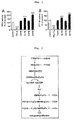
- Fig. 2 shows the point of action of PP2A and PTP1B in the cell proliferation pathway. Since it potentiates PP2A activation and/or potentiates PTP1B activation, it can inhibit, in each stage, phosphorylation-caused activation of factors at downstream, whereby the growth of cancer cell can be suppressed.
- the pharmacological actions of DPPE clarified in the present invention are the following.
- Protein phosphatase 2A is one kind of serine/threonine phosphatase, and plays an important role in the signal transduction in vivo which is involved in the intracellular processing such as cell cycle, growth, differentiation and the like.
- PP2A has an action to dephosphorylate p53, c-Myc, b-Catenin besides Akt, MEK, ERK, and is known to also function as a cell proliferation, signal transduction or apoptosis regulating factor.
- a PP2A activation enhancing agent may be possibly applied to various pharmaceutical uses.
- Protein tyrosine phosphatase (PTP) 1B is a cytosolic tyrosine phosphatase, and involved in the regulation of tyrosine kinase since it controls the phosphorylation state of tyrosine kinase.
- PTP1B has an action to control cell proliferation, differentiation, apoptosis, and cell migration (chemotaxis).
- a PTP1B activation enhancing agent may be possibly applied to various pharmaceutical uses.
- DPPE has an action to induce cell death of various cancer cells and suppress cell proliferation, as shown in the data of the Examples.
- Such pharmacological action shows that DPPE is useful as a cancer cell death-inducing agent (hereinafter to be simply referred to as the agent of the present invention), and also useful as a reagent for study which can be a tool useful for the development of an anti-cancer agent or a prophylactic or therapeutic drug for cancer (hereinafter to be simply referred to as the medicament of the present invention).
- the present invention can provide a method of inducing the cell death of cancer cells, and a prophylactic and/or treatment method of cancer (hereinafter to be simply referred to as the method of the present invention).
- the test subject may be a mammal.
- the mammal include primates (e.g., human, monkey, chimpanzee), rodents (e.g., mouse, rat, guinea pig), pets (e.g., dog, cat, rabbit), working animals or domestic animals (e.g., bovine, horse, swine, sheep, goat), and human is preferable.
- the cancer (cancer cell) to which the agent, medicament or method of the present invention is applied is not particularly limited, and specific examples thereof include glioblastoma, medulloblastoma, cancer of the tongue, pharynx cancer, laryngeal cancer, esophageal cancer, stomach cancer, colon cancer, liver cancer, gallbladder cancer, biliary tract cancer, pancreatic cancer, renal cancer, adrenal cancer, urinary bladder cancer, prostate cancer, penile cancer, uterine cancer, ovarian cancer, vulva cancer, virginal cancer, breast cancer, thyroid cancer, lung cancer, malignant pleural mesothelioma, skin cancer, malignant melanoma, malignant bone tumor, soft tissue sarcoma, malignant lymphoma, leukemia, multiple myeloma and the like.
- they are applied to malignant pleural mesothelioma, lung cancer, stomach cancer, colon cancer and breast cancer.
- the target cancer cells to be treated by DPPE are various cancer cells to which the above-mentioned medicament of the present invention is applied, and specific examples thereof include glioblastoma, medulloblastoma, cancer of the tongue, pharynx cancer, laryngeal cancer, esophageal cancer, stomach cancer, colon cancer, liver cancer, gallbladder cancer, biliary tract cancer, pancreatic cancer, renal cancer, adrenal cancer, urinary bladder cancer, prostate cancer, penile cancer, uterine cancer, ovarian cancer, vulva cancer, virginal cancer, breast cancer, thyroid cancer, lung cancer, malignant pleural mesothelioma, skin cancer, malignant melanoma, malignant bone tumor, soft tissue sarcoma, malignant lymphoma, leukemia, multiple myeloma and the like.
- they are applied to malignant pleural mesothelioma, lung cancer, stomach cancer, colon cancer and
- the “treatment” here means bringing the above-mentioned cells into contact with DPPE for a necessary and sufficient time. While the time varies depending on the desired effect and the kind of the cells to be used, it is generally 0.5 - 76 hr, preferably about 0.5 - 48 hr. Alternatively, the treatment may be performed for a shorter time, for example, about 0.5 - 24 hr, preferably about 0.5 - 12 hr. Conveniently, it is performed by culturing in a culture medium containing DPPE.
- the dose of the medicament of the present invention varies depending on the kind of cancer of the administration subject, severity thereof, animal species to be the administration subject, drug acceptability, body weight, age and the like of the administration subject, by an oral or parenteral route, generally, 0.1 - 10 g, preferably 1 - 4 g, in the amount of DPPE as the active ingredient is administered per day to an adult subject by oral administration, and 0.01 g - 1 g, preferably 0.1 - 0.4 g, by parenteral administration.
- the medicament of the present invention can contain, besides DPPE which is the active ingredient, any additive, for example, a pharmaceutically acceptable carrier.
- a pharmaceutically acceptable carrier include, but are not limited to, excipients such as sucrose,'starch, mannit, sorbit, lactose, glucose, cellulose, talc, calcium phosphate, calcium carbonate and the like, binders such as cellulose, methylcellulose, hydroxypropylcellulose, polypropylpyrrolidone, gelatin, gum arabic, polyethylene glycol, sucrose, starch and the like, disintegrants such as starch, carboxymethylcellulose, hydroxypropylstarch, sodium-glycol-starch, sodium hydrogen carbonate, calcium phosphate, calcium citrate and the like, lubricants such as magnesium stearate, aerosil, talc, sodium lauryl sulfate and the like, aromatic substances such as citric acid, menthol, glycyllysine ammonium salt, gly
- the medicament of the present invention can be formulated as a preparation preferable for oral administration.
- the preparation preferable for oral administration include a liquid wherein an effective amount of a substance is dissolved in a diluent such as water and saline, a capsule, granule, powder or tablet containing an effective amount of a substance as a solid or granules, a suspension wherein an effective amount of a substance is suspended in a suitable dispersion medium, an emulsion wherein a solution of an effective amount of a substance is dispersed and emulsified in a suitable dispersion medium, and the like.
- the medicament of the present invention can be formulated as a preparation preferable for parenteral administration.
- the preparation preferable for parenteral administration e.g., intravenous injection, subcutaneous injection, muscular injection, topical injection and the like
- examples of the preparation preferable for parenteral administration include aqueous and nonaqueous isotonic aseptic injection liquids, which may contain antioxidant, buffer, bacteriostatic, isotonicity agent and the like.
- examples thereof include aqueous and non-aqueous aseptic suspensions, which may contain suspension, solubilizer, thickener, stabilizer, preservative and the like.
- Unit dose or plural doses of the preparation can be filled in a container such as ampoule and vial.
- the active ingredient and a pharmaceutically acceptable carrier can be freeze-dried and preserved in a form that can be dissolved or suspended in a suitable aseptic vehicle immediately before use.
- the medicament of the present invention may be packed or filled individually by a unit ingestion amount or a divided amount thereof, or packed or filled comprehensively by many unit ingestion amounts or divided amounts thereof.
- Examples of the medicament wherein a unit ingestion amount or a divided amount thereof is packed or filled individually include general packages (e.g., PTP (press through packing) sheet, paper container, film (e.g., plastic film) container, glass container, plastic container) packed or filled with the unit ingestion amount or a divided amount thereof.
- the medicaments that are individually packed or filled may be further combined and packed or filled in a single container (e.g., paper container, film (e.g., plastic film) container, glass container, plastic container).
- Examples of the medicament wherein many unit ingestion amounts or a divided amount thereof are/is comprehensively packed or filled include those wherein many tablets or capsules are packed or filled in a single container (e.g., paper container, film (e.g., plastic film) container, glass container, plastic container) without distinction.
- the medicament of the present invention may contain a unit ingestion amount or a divided amount thereof in a number sufficient for long-term ingestion.
- a food can contain same in a number sufficient for ingestion for not less than 3 days, preferably not less than 7 days, 10 days, 14 days or 21 days, or 1 month, 2 months, or not less than 3 months.
- the medicament of the present invention may contain, besides DPPE to be the essential active ingredient, one or more kinds of other anti-cancer agents.
- other anti-cancer agent include metabolic antagonist (e.g., methotrexate, 5-fluorouracil etc.), alkylating agent (e.g., cyclophosphamide, ifosfamide etc.), platinum anti-cancer agent (e.g., cisplatin, carboplatin etc.), topoisomerase inhibitor (e.g., etoposide etc.), anticancer antibiotics (e.g., mitomycin, adriamycin etc.), plant-derived anticancer agent (e.g., vincristine, vindesine, taxol etc.), tyrosine kinase inhibitor (e.g., gefinitib, imanitib etc.), humanized antibody (e.g., herceptin etc.) and the like.
- metabolic antagonist e.g., methot
- Example 1 PP2A activation enhancing action and PTP1B activation enhancing action
- PP2A and PTP1B under cell-free conditions were performed according to the method described in a previous report ( Kanno T et al., Cell Physiol Biochem 2012; 30:1014-1022 .).
- Human recombinant PP2A was purchased from Millipore (Billerica, MA, USA).
- Human PTP1B was cloned to pGEX-6P-3 vector having a GST tag on the NH 2 terminal, and expressed in competent E. coli BL21 (DE3) suitable for transformation and protein expression.
- GST fused PTP1B was affinity-purified using glutathione sepharose 4B (GE Healthcare Bio-Science KK, Tokyo, Japan).
- p-NPP p-nitrophenylphosphate
- p-NPP (0.5 mM for PP2A, 10 mM for PTP1B) was added to the reaction medium and incubation was continued for 60 min. The reaction was discontinued by adding 0.1N NaOH. Dephosphorylated p-NPP, namely, p-NP, was quantified at absorbance 405 nm by using SpectraMax PLUS384 (Molecular Devices, Sunnyvale, CA, USA).
- DPPE has a strong PP2A activation enhancing action and a PTP1B activation enhancing action.
- Fig. 2 such actions of DPPE suggest that it suppresses cell proliferation.
- Example 2 cancer cell death inducing action
- NCI-H28 which is a cell line of human malignant pleural mesothelioma and Met5A which is a cell line of human non-malignant mesothelioma were used. These cells were purchased from American Type Culture Collection (Manassas, VA, USA). The cells were cultured in Roswell Park Memorial Institute (RPMI)-1640 medium added with 0.003% (w/v) L-glutamine. The cells were incubated in a medium added with 10% (v/v) heat-inactivated bovine serum, penicillin (final concentration, 100 U/ml) and streptomycin (final concentration, 0.1 mg/ml) in a humid environment under 5% CO 2 and 95% air at 37°C.
- RPMI Roswell Park Memorial Institute
- the cell viability was evaluated according to previous report ( Nogi Y, et al., Cell Physiol Biochem 2012; 30: 61-74 .) by using 3-(4,5-dimethyl-2-thiazolyl)-2,5-diphenyl-2H-tetrazolium bromide (MTT).
- MTT 3-(4,5-dimethyl-2-thiazolyl)-2,5-diphenyl-2H-tetrazolium bromide
- the measurement was performed by treating Met5A (human non-malignant mesothelioma cell) and NCI-H28 (human malignant mesothelioma cell) for 24 hr or 48 hr while changing the concentration of DPPE to 0, 1 ⁇ M, 10 ⁇ M and 100 ⁇ M.
- TUNEL staining was performed using In Situ Apoptosis Detection Kit (Takara Bio; Otsu, Japan). The cells fixed and membrane-permeabilized were incubated with terminal deoxynucleotidyl transferase and fluorescein isothiocyanate (FITC)-deoxyuridinetriphosphate at 37°C for 90 min. FITC signal was visualized by a confocal laser microscope (LSM 510; Carl Zeiss Co., Ltd., Oberkochen, Germany).
- the cells used were Met5A (human non-malignant mesothelioma cell) and NCI-H28 (human malignant mesothelioma cell), after a treatment for 48 hr by changing the concentration of DPPE to 0, 30 ⁇ M and 100 ⁇ M.
- DPPE is almost uninfluential on the non-malignant mesothelioma cell, but induces concentration-dependent cell death in the malignant mesothelioma cell.
- DPPE induces apoptosis of the malignant mesothelioma cell but does not induce apoptosis of the non-malignant mesothelioma cell.
- DPPE has a strong PP2A activation enhancing action and a strong PTP1B activation enhancing action, and further, a superior cancer cell death inducing action, it is expected to be applicable as an anti-cancer agent. Since phospholipid compounds are inherently present in the living body, the present invention can provide an anti-cancer agent more superior in safety.
Landscapes
- Health & Medical Sciences (AREA)
- Veterinary Medicine (AREA)
- Chemical & Material Sciences (AREA)
- Medicinal Chemistry (AREA)
- Pharmacology & Pharmacy (AREA)
- Life Sciences & Earth Sciences (AREA)
- Animal Behavior & Ethology (AREA)
- General Health & Medical Sciences (AREA)
- Public Health (AREA)
- Nuclear Medicine, Radiotherapy & Molecular Imaging (AREA)
- Chemical Kinetics & Catalysis (AREA)
- General Chemical & Material Sciences (AREA)
- Organic Chemistry (AREA)
- Epidemiology (AREA)
- Hematology (AREA)
- Oncology (AREA)
- Engineering & Computer Science (AREA)
- Bioinformatics & Cheminformatics (AREA)
- Pharmaceuticals Containing Other Organic And Inorganic Compounds (AREA)
Applications Claiming Priority (2)
| Application Number | Priority Date | Filing Date | Title |
|---|---|---|---|
| JP2013264714 | 2013-12-21 | ||
| PCT/JP2014/083657 WO2015093588A1 (fr) | 2013-12-21 | 2014-12-19 | Agent anticancéreux |
Publications (2)
| Publication Number | Publication Date |
|---|---|
| EP3085376A1 true EP3085376A1 (fr) | 2016-10-26 |
| EP3085376A4 EP3085376A4 (fr) | 2017-06-21 |
Family
ID=53402927
Family Applications (1)
| Application Number | Title | Priority Date | Filing Date |
|---|---|---|---|
| EP14871776.2A Withdrawn EP3085376A4 (fr) | 2013-12-21 | 2014-12-19 | Agent anticancéreux |
Country Status (4)
| Country | Link |
|---|---|
| US (1) | US9770458B2 (fr) |
| EP (1) | EP3085376A4 (fr) |
| JP (1) | JPWO2015093588A1 (fr) |
| WO (1) | WO2015093588A1 (fr) |
Families Citing this family (1)
| Publication number | Priority date | Publication date | Assignee | Title |
|---|---|---|---|---|
| JP2024039728A (ja) * | 2022-09-12 | 2024-03-25 | 賢一郎 蓮見 | 抗腫瘍免疫応答増強剤 |
Family Cites Families (3)
| Publication number | Priority date | Publication date | Assignee | Title |
|---|---|---|---|---|
| US5935936A (en) * | 1996-06-03 | 1999-08-10 | Genzyme Corporation | Compositions comprising cationic amphiphiles and co-lipids for intracellular delivery of therapeutic molecules |
| JP4619666B2 (ja) | 2004-03-03 | 2011-01-26 | 株式会社 西崎創薬研究所 | 医薬組成物 |
| WO2011056682A1 (fr) * | 2009-10-27 | 2011-05-12 | The University Of British Columbia | Lipides à têtes polaires inversées, compositions particulaires lipidiques comprenant les lipides à têtes polaires inversées, et procédés d'administration d'acides nucléiques |
-
2014
- 2014-12-19 WO PCT/JP2014/083657 patent/WO2015093588A1/fr not_active Ceased
- 2014-12-19 JP JP2015553615A patent/JPWO2015093588A1/ja active Pending
- 2014-12-19 US US15/106,401 patent/US9770458B2/en not_active Expired - Fee Related
- 2014-12-19 EP EP14871776.2A patent/EP3085376A4/fr not_active Withdrawn
Also Published As
| Publication number | Publication date |
|---|---|
| US20170027968A1 (en) | 2017-02-02 |
| JPWO2015093588A1 (ja) | 2017-03-23 |
| EP3085376A4 (fr) | 2017-06-21 |
| US9770458B2 (en) | 2017-09-26 |
| WO2015093588A1 (fr) | 2015-06-25 |
Similar Documents
| Publication | Publication Date | Title |
|---|---|---|
| Parvathaneni et al. | Systematic development and optimization of inhalable pirfenidone liposomes for non-small cell lung cancer treatment | |
| Torres et al. | Lipids in pathophysiology and development of the membrane lipid therapy: new bioactive lipids | |
| Wen et al. | PI (4, 5) P2 clustering and its impact on biological functions | |
| French et al. | Pharmacology and antitumor activity of ABC294640, a selective inhibitor of sphingosine kinase-2 | |
| van der Hoeven et al. | Sphingomyelin metabolism is a regulator of K-Ras function | |
| Corcelle et al. | Disruption of autophagy at the maturation step by the carcinogen Lindane is associated with the sustained mitogen-activated protein kinase/extracellular signal–regulated kinase activity | |
| Joardar et al. | Effect of phosphatidylethanolamine and oleic acid on membrane fusion: phosphatidylethanolamine circumvents the classical stalk model | |
| US20120107323A1 (en) | Kinase protein binding inhibitors | |
| Trousil et al. | The novel choline kinase inhibitor ICL-CCIC-0019 reprograms cellular metabolism and inhibits cancer cell growth | |
| US12195753B2 (en) | Nucleic acid and other compositions and methods for the modulation of cell membranes | |
| Ermakov et al. | High-affinity interactions of beryllium (2+) with phosphatidylserine result in a cross-linking effect reducing surface recognition of the lipid | |
| Maxian et al. | Effect of L-to D-amino acid substitution on stability and activity of antitumor peptide RDP215 against human melanoma and glioblastoma | |
| Bielsa et al. | Methuosis contributes to Jaspine-B-induced cell death | |
| Fong et al. | Structural transformation in vesicles upon hydrolysis of phosphatidylethanolamine and phosphatidylcholine with phospholipase C | |
| Scalise et al. | Studying interactions of drugs with cell membrane nutrient transporters: new frontiers of proteoliposome nanotechnology | |
| Islam et al. | Pegylated liposomal alendronate biodistribution, immune modulation, and tumor growth inhibition in a murine melanoma model | |
| Hengst et al. | Regulatory role of sphingosine-1-phosphate and C16: 0 ceramide, in immunogenic cell death of colon cancer cells induced by bak/bax-activation | |
| US9770458B2 (en) | Anti-cancer agent containing a diacylphosphatidylethanolamine as an active ingredient | |
| Zhang et al. | Molecular interactions between egg white peptides and giant unilamellar vesicle membranes: effect of peptide localization on membrane fluidity | |
| Takahashi et al. | Phosphorylation and inhibition of ceramide kinase by protein kinase C-β: Their changes by serine residue mutations | |
| EP3006033A1 (fr) | Médicament anticancéreux | |
| US9512152B2 (en) | Phospholipid compound containing unsaturated fatty acid derivative having cyclopropane ring | |
| Harisa et al. | Chitosan capped-NLCs enhanced codelivery of gefitinib and simvastatin into MDR HCC: impact of compositions on cell death, JNK3, and Telomerase | |
| EP2959896B1 (fr) | Utilisation du dcp-la comme réactif pour inhiber la protéine tyrosine phosphatase 1b in vitro | |
| US10251897B2 (en) | GLUT4 endocytosis inhibitor |
Legal Events
| Date | Code | Title | Description |
|---|---|---|---|
| PUAI | Public reference made under article 153(3) epc to a published international application that has entered the european phase |
Free format text: ORIGINAL CODE: 0009012 |
|
| 17P | Request for examination filed |
Effective date: 20160721 |
|
| AK | Designated contracting states |
Kind code of ref document: A1 Designated state(s): AL AT BE BG CH CY CZ DE DK EE ES FI FR GB GR HR HU IE IS IT LI LT LU LV MC MK MT NL NO PL PT RO RS SE SI SK SM TR |
|
| AX | Request for extension of the european patent |
Extension state: BA ME |
|
| RAP1 | Party data changed (applicant data changed or rights of an application transferred) |
Owner name: NISHIZAKI BIOINFORMATION RESEARCH INSTITUTE |
|
| DAX | Request for extension of the european patent (deleted) | ||
| A4 | Supplementary search report drawn up and despatched |
Effective date: 20170524 |
|
| RIC1 | Information provided on ipc code assigned before grant |
Ipc: A61P 35/02 20060101ALI20170518BHEP Ipc: A61K 31/685 20060101AFI20170518BHEP Ipc: A61P 35/00 20060101ALI20170518BHEP Ipc: A61P 43/00 20060101ALI20170518BHEP |
|
| GRAP | Despatch of communication of intention to grant a patent |
Free format text: ORIGINAL CODE: EPIDOSNIGR1 |
|
| STAA | Information on the status of an ep patent application or granted ep patent |
Free format text: STATUS: GRANT OF PATENT IS INTENDED |
|
| INTG | Intention to grant announced |
Effective date: 20180703 |
|
| STAA | Information on the status of an ep patent application or granted ep patent |
Free format text: STATUS: THE APPLICATION IS DEEMED TO BE WITHDRAWN |
|
| 18D | Application deemed to be withdrawn |
Effective date: 20181114 |