EP3085698B1 - Schmerzassoziierte verbindung und medizinische zusammensetzung - Google Patents
Schmerzassoziierte verbindung und medizinische zusammensetzung Download PDFInfo
- Publication number
- EP3085698B1 EP3085698B1 EP14871323.3A EP14871323A EP3085698B1 EP 3085698 B1 EP3085698 B1 EP 3085698B1 EP 14871323 A EP14871323 A EP 14871323A EP 3085698 B1 EP3085698 B1 EP 3085698B1
- Authority
- EP
- European Patent Office
- Prior art keywords
- pain
- group
- compound
- pharmaceutical composition
- same
- Prior art date
- Legal status (The legal status is an assumption and is not a legal conclusion. Google has not performed a legal analysis and makes no representation as to the accuracy of the status listed.)
- Active
Links
- 0 CCN1c2ccc(*)cc2S[C@]1CC(C)=N Chemical compound CCN1c2ccc(*)cc2S[C@]1CC(C)=N 0.000 description 2
- NHNCPERKBOHPQW-WQLSENKSSA-N CCN1c(cccc2OC)c2S/C1=C\C(C)=O Chemical compound CCN1c(cccc2OC)c2S/C1=C\C(C)=O NHNCPERKBOHPQW-WQLSENKSSA-N 0.000 description 1
- YZDCNWIDJQXDCG-XBBZPSQXSA-N C[N](CC1CC1)(CCC12c3c(C4)ccc(O)c3O[C@H]1C(CC1)=O)[C@H]4[C@@]21O Chemical compound C[N](CC1CC1)(CCC12c3c(C4)ccc(O)c3O[C@H]1C(CC1)=O)[C@H]4[C@@]21O YZDCNWIDJQXDCG-XBBZPSQXSA-N 0.000 description 1
Images


Classifications
-
- C—CHEMISTRY; METALLURGY
- C07—ORGANIC CHEMISTRY
- C07D—HETEROCYCLIC COMPOUNDS
- C07D277/00—Heterocyclic compounds containing 1,3-thiazole or hydrogenated 1,3-thiazole rings
- C07D277/60—Heterocyclic compounds containing 1,3-thiazole or hydrogenated 1,3-thiazole rings condensed with carbocyclic rings or ring systems
- C07D277/62—Benzothiazoles
- C07D277/64—Benzothiazoles with only hydrocarbon or substituted hydrocarbon radicals attached in position 2
-
- A—HUMAN NECESSITIES
- A61—MEDICAL OR VETERINARY SCIENCE; HYGIENE
- A61P—SPECIFIC THERAPEUTIC ACTIVITY OF CHEMICAL COMPOUNDS OR MEDICINAL PREPARATIONS
- A61P25/00—Drugs for disorders of the nervous system
- A61P25/04—Centrally acting analgesics, e.g. opioids
-
- A—HUMAN NECESSITIES
- A61—MEDICAL OR VETERINARY SCIENCE; HYGIENE
- A61P—SPECIFIC THERAPEUTIC ACTIVITY OF CHEMICAL COMPOUNDS OR MEDICINAL PREPARATIONS
- A61P29/00—Non-central analgesic, antipyretic or antiinflammatory agents, e.g. antirheumatic agents; Non-steroidal antiinflammatory drugs [NSAID]
Definitions
- the present disclosure relates to a pain-related compound, a pain-related pharmaceutical composition, and use of the same.
- Pain can be defined as an unpleasant sensory or emotional experience accompanied by a real or potential tissue damage, or can be described as such a damage.
- pains can be classified into inflammatory pains and neuropathic pains.
- the inflammatory pain is a nociceptive pain via nociceptor, which can be considered as a pain caused by an inflammatory mediator released to a site of tissue damage.
- the mechanism of an inflammatory pain is considered as follows. When a tissue is damaged and inflammation is caused, a pain producing substance such as bradykinin, ATP, or proton, and/or prostaglandin, serotonin, histamine, or an inflammatory cytokine are released, and a spontaneous pain develops incessantly. Further, hyperalgesia occurs due to hypersensitization of a nociceptor. Still further, as a mechanism of hypersensitization of a nociceptor, the phosphorylation of an ion channel, particularly TRPVlchannel known as a capsaicin receptor, is reported.
- a neuropathic pain can be defined as a pain that is caused by a lesion or a disease of a somatosensory nervous system (International Association for the Study of Pain in 2011). In Japan, it is estimated that there are several millions of neuropathic pain patients. The pain is a pain that does not involve excitation of a nociceptor, and that involves plastic changes of peripheral nerves or central nerves. As a mechanism of development of a neuropathic pain, the following have been reported: the ectopic firing of peripheral nerves; the neuroanatomical reconstruction in peripheral nerves and dorsal horns of the spinal cord; the control of descending inhibition systems; and the activation of glial cells in the spinal cord.
- the present disclosure provides a pain-related compound and a pain-related pharmaceutical composition.
- the invention is directed to the use of the same.
- the present invention provides a pharmaceutical composition for use in reducing pain, suppressing the exacerbation of pain, and/or treating pain, wherein the pharmaceutical composition contains, as an active ingredient, the compound represented by formula (II) below, or the pharmaceutically permissible salt of any of the same, wherein the pain is not neuropathic pain, wherein
- the present invention also provides use of the compound represented by formula (II) above, or the pharmaceutically permissible salt of any of the same, for producing the pharmaceutical composition as described hereinbefore.
- the present invention also provides a compound, the pharmaceutically permissible salt of any of the same, for use in reducing pain, suppressing the exacerbation of pain, and/or treating pain, wherein the compound is as defined hereinbefore, wherein the pain is not neuropathic pain.
- the present disclosure provides a compound represented by Formula (I) below, a prodrug of the same, or a pharmaceutically permissible salt of any of the same.
- W, X, Y, and Z each independently represent a hydrogen atom, a halogen atom, a substituted or unsubstituted amino group, an azido group, a cyano group, a nitro group, a hydroxyl group, a substituted or unsubstituted straight or branched chain or cyclic alkyloxy group having one to six carbon atoms, a substituted or unsubstituted aryloxy group, a substituted or unsubstituted heteroaryloxy group, a mercapto group, a straight or branched chain or cyclic alkylthio group having one to six carbon atoms, a substituted or unsubstituted arylthio group, a substituted or unsubstituted heteroarylthio group, a substituted or unsubstituted straight or branched chain or cyclic alkyl group having one to six carbon atoms, a benzyl or heteroary
- Examples of the straight or branched chain alkyl group having one to six carbon atoms in W, X, Y, and Z include methyl group, ethyl group, 1-propyl group, 2-propyl group, 2-methyl-1-propyl group, 2-methyl-2-propyl group, 1-butyl group, 2-butyl group, 1-pentyl group, 2-pentyl group, 3-pentyl group, 2-methyl-1-butyl group, 3-methyl-1-butyl group, 2-methyl-2-butyl group, 3-methyl-2-butyl group, 2,2-dimethyl-1-propyl group, 1-hexyl group, 2-hexyl group, 3-hexyl group, 2-methyl-1-pentyl group, 3-methyl-1-pentyl group, 4-methyl-1-pentyl group, 2-methyl-2-pentyl group, 3-methyl-2-pentyl group, 4-methyl-2-pentyl group, 2-methyl-3-pentyl group, 3-methyl-3-pentyl
- heteroaryl including heteroaryl in the heteroarylmethyl group
- W, X, Y, and Z examples include a five- or six-membered monocyclic group having one to two nitrogen atoms, a five- or six-membered monocyclic group having one to two nitrogen atoms, and one oxygen atom or one sulfur atom, a five-membered monocyclic group having one oxygen atom or one sulfur atom, and a bicyclic group having one to four nitrogen atoms obtained by condensation of a six-membered ring and a five- or six-membered ring.
- examples of the same include 2-piridyl, 3-piridyl, 4-piridyl, 2-thienyl, 3-thienyl, 3-oxadiazolyl, 2-imidazolyl, 2-thiazolyl, 3-isothiazolyl, 2-oxazolyl, 3-isoxazolyl, 2-furyl, 3-furyl, 3-pyrrolyl, 2-quinolyl, 8-quinolyl, 2-quinazolinyl, and 8-prenyl.
- the aryl group in R 1 and R 2 include an aryl group having ten or less carbon atoms such as a phenyl group, or a naphthyl group.
- the substituent in W, X, Y, and Z may be one substituent, or a plurality of identical or different substituents, and examples of the same include a halogen atom, a cyano group, a trifluoro methyl group, a nitro group, a hydroxyl group, a methylenedioxy group, a lower alkyl group, a lower alkoxy group, a benzyloxy group, a lower alkanoyloxy group, an amino group, a mono-lower alkylamino group, a di-lower alkylamino group, a carbamoyl group, a lower alkylaminocarbonyl group, a di-lower alkylaminocarbonyl group, a carboxyl group, a lower alkoxycarbonyl group, a lower alkylthio group, a lower alkylsulfinyl group, a lower alkylsulfonyl group, a lower alkanolya
- examples of the halogen atom include atoms such as fluorine, chlorine, bromine, and iodine.
- the lower alkyl is a straight or branched chain alkyl group having one to six carbon atoms.
- the compound represented by Formula (I) may be a compound represented by Formula (II) below.
- X 1 and Y 1 each independently represent a halogen atom, or a substituted or unsubstituted straight or branched chain or cyclic alkyl group having one to six carbon atoms
- Z 1 and W 1 each independently represent a hydrogen atom, a halogen atom, a hydroxyl group, a straight or branched chain or cyclic alkyloxy group having one to six carbon atoms, or a substituted or unsubstituted straight or branched chain or cyclic alkyl group having one to six carbon atoms.
- substituent in X 1 , Y 1 , Z 1 and W 1 include the substituents mentioned above.
- X 1 and Y 1 may each represent an alkyl group having 1 to 4 carbon atoms
- Z 1 may represent a halogen atom, a hydroxyl group, or an alkyloxy group having 1 to 4 carbon atoms
- W 1 may represent a hydrogen atom.
- Examples of the compound represented by Formula (I) or (II), include compounds indicated below.
- the compounds represented by Formulae (I) and (II), in cases where an asymmetric carbon atom is present and/or a stereoisomer is present, are mixed isomers or isolated isomers, in one or more embodiments.
- examples of the "prodrug” include those which can be easily hydrolyzed in vivo so that the compound represented by Formula (I) can be reproduced.
- the prodrug is, for example, the compound in which the carboxyl group has become an alkoxycarbonyl group, the compound in which the carboxyl group has become an alkylthio carbonyl group, or the compound in which the carboxyl group has become an alkylaminocarbonyl group.
- the prodrug is, for example, the compound in which the amino group is substituted with an alkanoly group, thereby becoming an alkanolyamino group, the compound in which the amino group is substituted with an alkoxycarbonyl group, thereby becoming an alkoxycarbonyl amino group, the compound in which the amino group has become an acyloxymethylamino group, or the compound in which the amino group has become hydroxylamine.
- the prodrug is, for example, the compound in which the hydroxyl group is substituted with an acyl group, thereby becoming an acyloxy group, the compound in which the hydroxyl group has become a phosphoric acid ester, the compound in which the hydroxyl group has become an acyloxymethyloxy group.
- the alkyl part of the group used in the prodrug conversion in these cases is, for example, the above-described alkyl group, and the alkyl group may be substituted (with, for example, an alkoxy group having one to six carbon atoms).
- the alkyl part is a lower alkoxycarbonyl (for example, having one to six carbon atoms) such as methoxycarbonyl or ethoxycarbonyl, or a lower alkoxycarbonyl (for example, having one to six carbon atoms) by substitution with an alkoxy group, such as methoxymethoxycarbonyl, ethoxymethoxycarbonyl, 2-methoxyethoxycarbonyl, 2-methoxyethoxymethoxycarbonyl, or pivaloyloxymethoxycarbonyl.
- the "pharmaceutically permissible salt” encompasses pharmaceutically, pharmacologically, and/or medically permissible salts, and examples of the same include inorganic acid salts, organic acid salts, inorganic base salts, organic base salts, and acidic or basic amino acid salts.
- the inorganic acid salt include hydrochlorides, hydrobromic acid salts, sulfuric acid salts, nitric acid salts, and phosphoric acid salts.
- the organic acid salt include acetic acid salts, succinic acid salts, fumaric acid salts, maleic acid salts, tartaric acid salts, citric acid salts, lactic acid salts, stearic acid salts, benzoic acid salts, methanesulfonic acid salts, and p-toluenesulfonic acid salts.
- inorganic base salt examples include alkali metal salts such as sodium salts and potassium salts, alkali earth metal salts such as calcium salts and magnesium salts, aluminum salts, and ammonium salts.
- organic base salt examples include diethylamine salts, diethanolamine salts, meglumine salts, and N,N'-dibenzylethylenediamine salts.
- Preferable examples of the above-described acidic amino acid salt include aspartic acid salts, and glutamic acid salts.
- Preferable examples of the basic amino acid salt include arginine salts, lysine salts, and ornithine salts.
- the “salt of the compound” in the present disclosure can encompass a hydrate formed with the compound when the compound is left to stand in the atmosphere thereby absorbing moisture. Further, in the present disclosure, the “salt of the compound” can also encompass a solvate formed with the compound when the compound absorbs another certain type of a solvent.
- the present disclosure also provides a pharmaceutical composition that contains, as an active ingredient, the compound represented by Formula (I), the prodrug of the same, or the pharmaceutically permissible salt of any of the same.
- the compound represented by Formula (I) or the pharmaceutical composition according to the present disclosure can be used for the purpose of reducing pain, suppressing the exacerbation of pain, and/or treating pain. Further, the compound represented by Formula (I) or the pharmaceutical composition according to the present disclosure can be used for the purpose of analgesia.
- the analgesia encompasses killing pain. Details of the mechanism in which the compound represented by Formula (I) or the pharmaceutical composition according to the present disclosure can be used for the purpose of reducing pain, suppressing the exacerbation of pain, and/or treating pain, as well as for the purpose of analgesia are not clear, but it can be presumed that the compound represented by Formula (I) exerts analgesic actions via an opioid receptor.
- the present disclosure and the present invention do not have to be limited to this mechanism.
- the "pain” in the present disclosure refers to an inflammatory pain or a neuropathic pain classified pathophysiologically. Further, in the present disclosure the “pain” refers to an acute pain, an inflammatory pain, a visceralgia, a breakthrough pain, a nociceptive pain, a neuropathic pain, a chronic pain, or a cancer-related pain, which are classified depending on the time lapse or the mechanism. In aspects of the invention the pain is not a neuropathic pain.
- the "pharmaceutical composition" in the present disclosure in one or more embodiments, can be in a dosage form suitable for administration, obtained by applying a known formulation technology.
- the administration form is, for example, oral administration in a dosage form such as a tablet agent, a capsule agent, a granule agent, a powder agent, a pill agent, a troche agent, a syrup agent, of a liquid agent, though the dosage form is not limited to these.
- the administration form is, for example, non-oral administration in a dosage form such as an injection agent, a liquid agent, an aerosol agent, a suppository agent, a plaster agent, a poultice agent, a lotion agent, a liniment agent, an ointment agent, or an eye drop agent.
- a dosage form such as an injection agent, a liquid agent, an aerosol agent, a suppository agent, a plaster agent, a poultice agent, a lotion agent, a liniment agent, an ointment agent, or an eye drop agent.
- an additive agent such as an excipient, a lubricant, a binder, a disintegrator, a stabilizer, a flavoring agent, and a diluent, though the additive agent is not limited to these.
- composition according to the present disclosure does not contain another active ingredient having therapeutic (or analgesic) effects, or alternatively, further contains one or more active ingredients.
- Examples of the above-described excipient include: starches such as starch, potato starch, and corn starch; lactose; crystalline cellulose; and phosphoric acid hydrogen calcium, though the excipient is not limited to these.
- Examples of the above-described coating agent include ethyl cellulose, hydroxypropyl cellulose, hydroxypropyl methyl cellulose, shellac, talc, carnauba wax, and paraffin, though the coating agent is not limited to these.
- Examples of the above-described binder include polyvinylpyrrolidone, macrogol, and the same compounds as those mentioned as the examples of the excipient, though the binder is not limited to these.
- Examples of the above-described disintegrator include the same compounds as those mentioned as the examples of the excipient, as well as chemically modified starches and celluloses such as croscarmellose sodium, carboxymethyl starch sodium, and cross-linked polyvinylpyrrolidone, though the disintegrator is not limited to these.
- Examples of the above-described stabilizer include: paraoxybenzoic acid esters such as methylparaben and propylparaben; alcohols such as chlorobutanol, benzyl alcohol, phenyl ethyl alcohol; benzalkonium chloride; phenols such as phenol, and cresol; thimerosal; dehydroacetic acid; and sorbic acid, though the stabilizer is not limited to these.
- Examples of the above-described flavoring agent include sweeteners, acidifiers, and aromas that are typically used, though the flavoring agent is not limited to these.
- ethanol phenol, chlorocresol, purification water, distilled water or the like
- a solvent though the solvent is not limited to these.
- a surfactant, an emulsifier, and the like also can be used as required. Examples of the foregoing surfactant and emulsifier include polysorbate 80, polyoxyl stearate 40, and lauromacrogol, though the surfactant and the emulsifier are not limited to these.
- the method for using the pharmaceutical composition according to the present disclosure can vary with the symptom, the age, the administering method, and the like.
- the method of use can be a method of intermittently or continuously administering the compound represented by Formula (I) as an active ingredient, orally, percutaneously, submucosally, subcutaneously, intramuscularly, intravascularly, intracerebrally, or intraperitoneally in such a manner that the concentration in the body is in a range of 100 nM to 1 mM, though the method is not limited to these.
- the method is such a method of administration to a target (an adult if the target is a human) in an amount from a lower limit of 0.01 mg or 0.1 mg, to an upper limit of 2000 mg, 500 mg, or 100 mg in terms of the compound represented by Formula (I), per one day, in one dose, or divided into several doses, according to the symptom.
- the method is such a method of administration to a target (an adult if the target is a human) in an amount from a lower limit of 0.001 mg, or preferably 0.01 mg, to an upper limit of 500 mg, or 50 mg per one day, in one dose, or divided into several doses, according to the symptom.
- the present disclosure relates to a method for reducing pain, suppressing the exacerbation of pain, and/or treating pain, the method including administering the pharmaceutical composition according to the present disclosure to a target that requires the administration of the pharmaceutical composition.
- the target may be, for example, a mammal, a mammal other than a human, or a human; or alternatively, a mammal, a mammal other than a human, or a human that exhibits a symptom of a pain.
- the method for administering the pharmaceutical composition according to the present disclosure may conform to the above-described method for using the pharmaceutical composition.
- the invention provides a compound represented by Formula (II) as described in [A1] below or a pharmaceutically permissible salt thereof, or composition containing the same as an active ingredient for use in reducing pain, suppressing the exacerbation of pain, and/or treating pain, wherein the pain is not neuropathic pain.
- Compound 1 was synthesized in the following manner.
- Ethyl iodide (iodoethane) (50.0 mL, 622 mmol, commercial product) solution of 5-fluoro-2-methylbenzothiazole (48.8 g, 292 mmol, commercial product) was heated and refluxed (oil bath temperature 100 °C) for 72 hours. After the solution was cooled at room temperature, a colorless solid substance formed was collected by filtration, washed with ethyl acetate, and dried under a reduced pressure, whereby 3-ethyl-5-fluoro-2-methylbenzothiazolium iodide (46.5 g, 151 mmol, 51.7 %) was obtained in a colorless solid state.
- acetic anhydride (22.5 mL, 236 mmol, commercial product) and triethylamine (32.2 mL, 231 mmol, commercial product) were added sequentially to an acetonitrile solution (150 mL) of 3-ethyl-5-fluoro-2-methylbenzothiazolium iodide (32.3 g, 100 mmol) at room temperature, and thereafter, this was heated and refluxed (oil bath temperature 80 °C) for three hours. After the reaction mixture thus obtained was cooled at room temperature, water was added thereto, and the reaction mixture was extracted with ethyl acetate ( ⁇ 3).
- Compound 3 was synthesized in the following manner.
- Compound 5 was synthesized in the following manner.
- acetic anhydride (2.41 mL, 25.5 mmol, commercial product) and triethylamine (3.44 mL, 24.7 mmol, commercial product) were added sequentially to an acetonitrile (18 mL) solution of 5-bromo-3-ethyl-2-methylbenzothiazolium iodide (4.10 g, 10.7 mmol) at room temperature, and thereafter, this was heated and refluxed (oil bath temperature 80 °C) for two hours. After the reaction mixture thus obtained was cooled at room temperature, 300 mL of methyl chloride was added to this reaction mixture.
- Compound 6 was synthesized in the following manner.
- acetic anhydride (3.29 mL, 34.8 mmol, commercial product) and triethylamine (4.70 mL, 33.8 mmol, commercial product) were added sequentially to an acetonitrile (25 mL) solution of 5-chloro-3-ethyl-2-methylbenzothiazolium iodide (4.95 g, 14.6 mmol) at room temperature, and thereafter, this was heated and refluxed (oil bath temperature 80 °C) for three hours. After the reaction mixture thus obtained was cooled at room temperature, 300 mL of methyl chloride was added to this reaction mixture.
- FIG. 3 The results are illustrated in Fig. 3 .
- a of Fig. 3 illustrates the results of examination on the threshold of the withdrawal reflex behavior with respect to the mechanical stimulation
- B of Fig. 3 illustrates the results of examination of the latency with respect to the thermal stimulation.
- CFA complete Freund's adjuvant
- Carrageenan was subcutaneously injected to a hind limb sole of each mouse, and seven hours later, compound 1 and an opioid antagonist were simultaneously administered intraperitoneally. At one hour after the administration and at three hours after the administration, therapeutic effects with respect to mechanical allodynia were evaluated. Specific conditions were as follows.
- Opioid antagonist MNTX Methylnaltrexone bromide Antagonist selective to a ⁇ -opioid receptor and a ⁇ -opioid receptor. Unable to pass through the blood-brain barrier.
- Opioid antagonist NAL-M Naloxone methiodide Antagonist not selective to an opioid receptor. Unable to pass through the blood-brain barrier.
Landscapes
- Chemical & Material Sciences (AREA)
- Organic Chemistry (AREA)
- Health & Medical Sciences (AREA)
- Life Sciences & Earth Sciences (AREA)
- Veterinary Medicine (AREA)
- General Chemical & Material Sciences (AREA)
- Medicinal Chemistry (AREA)
- Nuclear Medicine, Radiotherapy & Molecular Imaging (AREA)
- Chemical Kinetics & Catalysis (AREA)
- Pharmacology & Pharmacy (AREA)
- Pain & Pain Management (AREA)
- Animal Behavior & Ethology (AREA)
- General Health & Medical Sciences (AREA)
- Public Health (AREA)
- Rheumatology (AREA)
- Engineering & Computer Science (AREA)
- Bioinformatics & Cheminformatics (AREA)
- Biomedical Technology (AREA)
- Neurology (AREA)
- Neurosurgery (AREA)
- Pharmaceuticals Containing Other Organic And Inorganic Compounds (AREA)
Claims (8)
- Pharmazeutische Zusammensetzung zur Verwendung bei Schmerzlinderung, Unterdrücken der Verschlimmerung von Schmerzen und/oder Schmerzbehandlung, wobei die pharmazeutische Zusammensetzung die Verbindung, die durch die nachstehende Formel (II) dargestellt wird oder ein pharmazeutisch zulässiges Salz einer derselben als einen Wirkstoff enthält,
wobei der Schmerz kein neuropathischer Schmerz ist, X1 und Y1 jeweils unabhängig eine Methyl-, Ethyl-, 1-Propyl-, 2-Propyl- oder Cyclopropyl-Gruppe darstellen,Z1 ein Halogenatom, eine Hydroxylgruppe oder eine Alkyloxygruppe mit 1 bis 4 Kohlenstoffatomen darstellt, undW1 ein Wasserstoffatom darstellt.
 - Pharmazeutische Zusammensetzung zur Verwendung nach Anspruch 1, wobei die pharmazeutische Zusammensetzung als einen Wirkstoff zumindest eine Komponente enthält, ausgewählt aus der Gruppe, bestehend aus einer Verbindung, die durch eine der nachstehenden chemischen Formeln dargestellt wird, oder ein pharmazeutisch zulässiges Salz einer derselben:

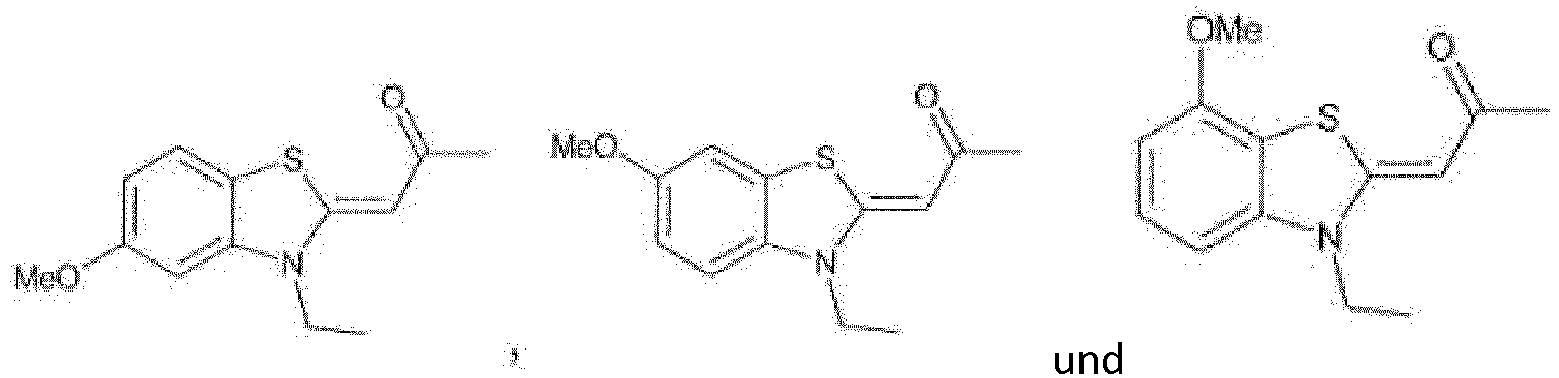
- Pharmazeutische Zusammensetzung zur Verwendung nach Anspruch 2, wobei die pharmazeutische Zusammensetzung als einen Wirkstoff zumindest eine Komponente enthält, ausgewählt aus der Gruppe, bestehend aus einer Verbindung, die durch eine der nachstehenden chemischen Formeln dargestellt wird, oder ein pharmazeutisch zulässiges Salz einer derselben:

- Pharmazeutische Zusammensetzung zur Verwendung nach einem der Ansprüche 1 bis 3, wobei der Schmerz ausgewählt ist aus der Gruppe, bestehend aus einem akuten Schmerz, einem Entzündungsschmerz, einem viszeralen Schmerz, einem Durchbruchschmerz, einem nozizeptiven Schmerz, einem chronischen Schmerz und einem krebsbedingten Schmerz.
- Pharmazeutische Zusammensetzung zur Verwendung nach Anspruch 4, wobei der Schmerz ein Entzündungsschmerz ist.
- Verwendung der Verbindung, die durch die nachstehende Formel (II) dargestellt wird, oder des pharmazeutisch zulässigen Salzes einer derselben zum Herstellen der pharmazeutischen Zusammensetzung nach einem der Ansprüche 1 bis 3,
 X1 und Y1 jeweils unabhängig eine Methyl-, Ethyl-, 1-Propyl-, 2-Propyl- oder Cyclopropyl-Gruppe darstellen, undZ1 ein Halogenatom, eine Hydroxylgruppe oder eine Alkyloxygruppe mit ein bis vier Kohlenstoffatomen darstellt, undW1 ein Wasserstoffatom darstellt.
 - Verbindung, das pharmazeutisch zulässige Salz einer derselben, zur Verwendung bei Schmerzlinderung, Unterdrücken der Verschlimmerung von Schmerzen und/oder Schmerzbehandlung, wobei die Verbindung wie nach einem der Ansprüche 1 bis 3 definiert ist, wobei der Schmerz kein neuropathischer Schmerz ist.
- Verbindung oder Salz zur Verwendung in Anspruch 7, wobei der Schmerz ausgewählt ist aus der Gruppe, bestehend aus einem akuten Schmerz, einem Entzündungsschmerz, einem viszeralen Schmerz, einem Durchbruchschmerz, einem nozizeptiven Schmerz, einem chronischen Schmerz und einem krebsbedingten Schmerz.
Applications Claiming Priority (2)
| Application Number | Priority Date | Filing Date | Title |
|---|---|---|---|
| JP2013261396 | 2013-12-18 | ||
| PCT/JP2014/083569 WO2015093567A1 (ja) | 2013-12-18 | 2014-12-18 | 疼痛に関する化合物及び医薬組成物 |
Publications (3)
| Publication Number | Publication Date |
|---|---|
| EP3085698A1 EP3085698A1 (de) | 2016-10-26 |
| EP3085698A4 EP3085698A4 (de) | 2017-05-31 |
| EP3085698B1 true EP3085698B1 (de) | 2019-11-13 |
Family
ID=53402909
Family Applications (1)
| Application Number | Title | Priority Date | Filing Date |
|---|---|---|---|
| EP14871323.3A Active EP3085698B1 (de) | 2013-12-18 | 2014-12-18 | Schmerzassoziierte verbindung und medizinische zusammensetzung |
Country Status (5)
| Country | Link |
|---|---|
| US (1) | US9745275B2 (de) |
| EP (1) | EP3085698B1 (de) |
| JP (1) | JP6531330B2 (de) |
| CN (1) | CN105829291B (de) |
| WO (1) | WO2015093567A1 (de) |
Families Citing this family (1)
| Publication number | Priority date | Publication date | Assignee | Title |
|---|---|---|---|---|
| US20230372309A1 (en) | 2020-09-23 | 2023-11-23 | Kyoto University | Alpha-2 adrenergic receptor antagonist |
Family Cites Families (10)
| Publication number | Priority date | Publication date | Assignee | Title |
|---|---|---|---|---|
| JPS5089367A (de) * | 1973-12-14 | 1975-07-17 | ||
| KR101035931B1 (ko) | 2002-03-29 | 2011-05-23 | 산텐 세이야꾸 가부시키가이샤 | 2-페닐벤조티아졸린 유도체로 이루어진 κ 오피오이드 수용체 작용약 |
| JP4296345B2 (ja) | 2002-03-29 | 2009-07-15 | 参天製薬株式会社 | 2−フェニルベンゾチアゾリン誘導体 |
| US7786151B2 (en) | 2004-01-09 | 2010-08-31 | Kinopharma, Inc. | Therapeutic composition of treating abnormal splicing caused by the excessive kinase induction |
| EP1893190A4 (de) | 2005-04-28 | 2010-07-28 | Theraquest Biosciences Llc | Verfahren und zusammensetzungen zur behandlung von schmerzen |
| AU2006339607A1 (en) | 2005-12-02 | 2007-09-13 | Sirtris Pharmaceuticals, Inc. | Modulators of Cdc2-like kinases (Clks) and methods of use thereof |
| US8481574B2 (en) * | 2006-10-12 | 2013-07-09 | Abbott Laboratories | Compounds as cannabinoid receptor ligands |
| WO2009085226A2 (en) | 2007-12-21 | 2009-07-09 | Sirtris Pharmaceuticals, Inc. | Inhibitors of cdc2-like kinases (clks) and methods of use thereof |
| KR20100010894A (ko) * | 2008-07-23 | 2010-02-02 | 가부시키가이샤 키노파마 | Dyrk를 저해하는 화합물을 함유하는 의약 조성물 |
| WO2013168826A1 (ja) * | 2012-05-09 | 2013-11-14 | 国立大学法人大阪大学 | 炎症関連フィードバックループが関与する疾患又は障害の予防又は治療剤のスクリーニング方法 |
-
2014
- 2014-12-18 EP EP14871323.3A patent/EP3085698B1/de active Active
- 2014-12-18 JP JP2015553602A patent/JP6531330B2/ja active Active
- 2014-12-18 CN CN201480070279.9A patent/CN105829291B/zh active Active
- 2014-12-18 US US15/105,985 patent/US9745275B2/en active Active
- 2014-12-18 WO PCT/JP2014/083569 patent/WO2015093567A1/ja not_active Ceased
Non-Patent Citations (1)
| Title |
|---|
| None * |
Also Published As
| Publication number | Publication date |
|---|---|
| JPWO2015093567A1 (ja) | 2017-03-23 |
| EP3085698A4 (de) | 2017-05-31 |
| US9745275B2 (en) | 2017-08-29 |
| WO2015093567A1 (ja) | 2015-06-25 |
| JP6531330B2 (ja) | 2019-06-19 |
| CN105829291B (zh) | 2019-05-21 |
| EP3085698A1 (de) | 2016-10-26 |
| US20170029389A1 (en) | 2017-02-02 |
| CN105829291A (zh) | 2016-08-03 |
Similar Documents
| Publication | Publication Date | Title |
|---|---|---|
| JP7810746B2 (ja) | 炎症性状態および癌性状態を治療するための、クロロキン化合物およびクレミゾール化合物の使用 | |
| EP3134410B1 (de) | Ionenkanalhemmung des übergangsrezeptorpotentials a1 | |
| EP3572404B1 (de) | Butylphthalid-telmisartan-heterokomplex, herstellungsverfahren und anwendung davon | |
| JP5860895B2 (ja) | 5−メチル−1−(ナフタレン−2−イル)−1h−ピラゾール誘導体 | |
| KR102418211B1 (ko) | 일시적 수용체 전위 a1 이온 채널의 억제 | |
| CN106478502B (zh) | 1,2,3,4-四氢异喹啉衍生物、其制备方法和应用 | |
| AU2016212625B2 (en) | Prevention or treatment of uric acid or gout disease | |
| EP3331853B1 (de) | Ausgewähltes amid der gamma-hydroxybuttersäure und verwendungen davon in der behandlung von alkoholmissbrauch | |
| EP3085698B1 (de) | Schmerzassoziierte verbindung und medizinische zusammensetzung | |
| CA3195597A1 (en) | Metalloenzyme inhibitors for treating cancers, alzheimer's disease, hemochromatosis, and other disorders | |
| EP3126333B1 (de) | Pqsr-modulatoren | |
| CN113527281B (zh) | 杂环化合物及其制备方法和应用 | |
| JP2008137892A (ja) | 止痒剤 | |
| HK1225032A1 (en) | Pain-related compound and medicinal composition | |
| HK1225032B (zh) | 与疼痛有关的化合物及医药组合物 | |
| US20100286219A1 (en) | 1, 3-Dihydroimidazoles for Treating Cardiovascular Disorders | |
| EP4218818A1 (de) | Alpha-2-adrenerge rezeptorantagonisten | |
| CN121398820A (zh) | 用于治疗癌症的氧代哌嗪衍生物 | |
| WO2013035997A2 (en) | Pharmaceutical composition for preventing or treating alopecia comprising tianeptine or its salt | |
| HK1190145B (en) | 5-methyl-1-(naphthalen-2-yl)-1h-pyrazole derivatives and their use in potentiating the effect of opioid analgesics |
Legal Events
| Date | Code | Title | Description |
|---|---|---|---|
| PUAI | Public reference made under article 153(3) epc to a published international application that has entered the european phase |
Free format text: ORIGINAL CODE: 0009012 |
|
| 17P | Request for examination filed |
Effective date: 20160708 |
|
| AK | Designated contracting states |
Kind code of ref document: A1 Designated state(s): AL AT BE BG CH CY CZ DE DK EE ES FI FR GB GR HR HU IE IS IT LI LT LU LV MC MK MT NL NO PL PT RO RS SE SI SK SM TR |
|
| AX | Request for extension of the european patent |
Extension state: BA ME |
|
| DAX | Request for extension of the european patent (deleted) | ||
| A4 | Supplementary search report drawn up and despatched |
Effective date: 20170503 |
|
| RIC1 | Information provided on ipc code assigned before grant |
Ipc: A61K 31/428 20060101ALI20170425BHEP Ipc: C07D 277/64 20060101AFI20170425BHEP Ipc: A61P 29/00 20060101ALI20170425BHEP Ipc: A61P 25/04 20060101ALI20170425BHEP |
|
| RAP1 | Party data changed (applicant data changed or rights of an application transferred) |
Owner name: KYOTO UNIVERSITY Owner name: KAGOSHIMA UNIVERSITY |
|
| STAA | Information on the status of an ep patent application or granted ep patent |
Free format text: STATUS: EXAMINATION IS IN PROGRESS |
|
| 17Q | First examination report despatched |
Effective date: 20180316 |
|
| GRAP | Despatch of communication of intention to grant a patent |
Free format text: ORIGINAL CODE: EPIDOSNIGR1 |
|
| STAA | Information on the status of an ep patent application or granted ep patent |
Free format text: STATUS: GRANT OF PATENT IS INTENDED |
|
| INTG | Intention to grant announced |
Effective date: 20190722 |
|
| GRAS | Grant fee paid |
Free format text: ORIGINAL CODE: EPIDOSNIGR3 |
|
| GRAA | (expected) grant |
Free format text: ORIGINAL CODE: 0009210 |
|
| STAA | Information on the status of an ep patent application or granted ep patent |
Free format text: STATUS: THE PATENT HAS BEEN GRANTED |
|
| AK | Designated contracting states |
Kind code of ref document: B1 Designated state(s): AL AT BE BG CH CY CZ DE DK EE ES FI FR GB GR HR HU IE IS IT LI LT LU LV MC MK MT NL NO PL PT RO RS SE SI SK SM TR |
|
| REG | Reference to a national code |
Ref country code: CH Ref legal event code: EP Ref country code: AT Ref legal event code: REF Ref document number: 1201522 Country of ref document: AT Kind code of ref document: T Effective date: 20191115 |
|
| REG | Reference to a national code |
Ref country code: DE Ref legal event code: R096 Ref document number: 602014056935 Country of ref document: DE |
|
| REG | Reference to a national code |
Ref country code: IE Ref legal event code: FG4D |
|
| REG | Reference to a national code |
Ref country code: NL Ref legal event code: MP Effective date: 20191113 |
|
| REG | Reference to a national code |
Ref country code: LT Ref legal event code: MG4D |
|
| PG25 | Lapsed in a contracting state [announced via postgrant information from national office to epo] |
Ref country code: NL Free format text: LAPSE BECAUSE OF FAILURE TO SUBMIT A TRANSLATION OF THE DESCRIPTION OR TO PAY THE FEE WITHIN THE PRESCRIBED TIME-LIMIT Effective date: 20191113 Ref country code: LV Free format text: LAPSE BECAUSE OF FAILURE TO SUBMIT A TRANSLATION OF THE DESCRIPTION OR TO PAY THE FEE WITHIN THE PRESCRIBED TIME-LIMIT Effective date: 20191113 Ref country code: SE Free format text: LAPSE BECAUSE OF FAILURE TO SUBMIT A TRANSLATION OF THE DESCRIPTION OR TO PAY THE FEE WITHIN THE PRESCRIBED TIME-LIMIT Effective date: 20191113 Ref country code: PL Free format text: LAPSE BECAUSE OF FAILURE TO SUBMIT A TRANSLATION OF THE DESCRIPTION OR TO PAY THE FEE WITHIN THE PRESCRIBED TIME-LIMIT Effective date: 20191113 Ref country code: NO Free format text: LAPSE BECAUSE OF FAILURE TO SUBMIT A TRANSLATION OF THE DESCRIPTION OR TO PAY THE FEE WITHIN THE PRESCRIBED TIME-LIMIT Effective date: 20200213 Ref country code: BG Free format text: LAPSE BECAUSE OF FAILURE TO SUBMIT A TRANSLATION OF THE DESCRIPTION OR TO PAY THE FEE WITHIN THE PRESCRIBED TIME-LIMIT Effective date: 20200213 Ref country code: FI Free format text: LAPSE BECAUSE OF FAILURE TO SUBMIT A TRANSLATION OF THE DESCRIPTION OR TO PAY THE FEE WITHIN THE PRESCRIBED TIME-LIMIT Effective date: 20191113 Ref country code: PT Free format text: LAPSE BECAUSE OF FAILURE TO SUBMIT A TRANSLATION OF THE DESCRIPTION OR TO PAY THE FEE WITHIN THE PRESCRIBED TIME-LIMIT Effective date: 20200313 Ref country code: GR Free format text: LAPSE BECAUSE OF FAILURE TO SUBMIT A TRANSLATION OF THE DESCRIPTION OR TO PAY THE FEE WITHIN THE PRESCRIBED TIME-LIMIT Effective date: 20200214 Ref country code: LT Free format text: LAPSE BECAUSE OF FAILURE TO SUBMIT A TRANSLATION OF THE DESCRIPTION OR TO PAY THE FEE WITHIN THE PRESCRIBED TIME-LIMIT Effective date: 20191113 |
|
| PG25 | Lapsed in a contracting state [announced via postgrant information from national office to epo] |
Ref country code: IS Free format text: LAPSE BECAUSE OF FAILURE TO SUBMIT A TRANSLATION OF THE DESCRIPTION OR TO PAY THE FEE WITHIN THE PRESCRIBED TIME-LIMIT Effective date: 20200313 Ref country code: HR Free format text: LAPSE BECAUSE OF FAILURE TO SUBMIT A TRANSLATION OF THE DESCRIPTION OR TO PAY THE FEE WITHIN THE PRESCRIBED TIME-LIMIT Effective date: 20191113 Ref country code: RS Free format text: LAPSE BECAUSE OF FAILURE TO SUBMIT A TRANSLATION OF THE DESCRIPTION OR TO PAY THE FEE WITHIN THE PRESCRIBED TIME-LIMIT Effective date: 20191113 |
|
| PG25 | Lapsed in a contracting state [announced via postgrant information from national office to epo] |
Ref country code: AL Free format text: LAPSE BECAUSE OF FAILURE TO SUBMIT A TRANSLATION OF THE DESCRIPTION OR TO PAY THE FEE WITHIN THE PRESCRIBED TIME-LIMIT Effective date: 20191113 |
|
| PG25 | Lapsed in a contracting state [announced via postgrant information from national office to epo] |
Ref country code: CZ Free format text: LAPSE BECAUSE OF FAILURE TO SUBMIT A TRANSLATION OF THE DESCRIPTION OR TO PAY THE FEE WITHIN THE PRESCRIBED TIME-LIMIT Effective date: 20191113 Ref country code: ES Free format text: LAPSE BECAUSE OF FAILURE TO SUBMIT A TRANSLATION OF THE DESCRIPTION OR TO PAY THE FEE WITHIN THE PRESCRIBED TIME-LIMIT Effective date: 20191113 Ref country code: RO Free format text: LAPSE BECAUSE OF FAILURE TO SUBMIT A TRANSLATION OF THE DESCRIPTION OR TO PAY THE FEE WITHIN THE PRESCRIBED TIME-LIMIT Effective date: 20191113 Ref country code: EE Free format text: LAPSE BECAUSE OF FAILURE TO SUBMIT A TRANSLATION OF THE DESCRIPTION OR TO PAY THE FEE WITHIN THE PRESCRIBED TIME-LIMIT Effective date: 20191113 Ref country code: DK Free format text: LAPSE BECAUSE OF FAILURE TO SUBMIT A TRANSLATION OF THE DESCRIPTION OR TO PAY THE FEE WITHIN THE PRESCRIBED TIME-LIMIT Effective date: 20191113 |
|
| REG | Reference to a national code |
Ref country code: CH Ref legal event code: PL |
|
| REG | Reference to a national code |
Ref country code: DE Ref legal event code: R097 Ref document number: 602014056935 Country of ref document: DE |
|
| REG | Reference to a national code |
Ref country code: AT Ref legal event code: MK05 Ref document number: 1201522 Country of ref document: AT Kind code of ref document: T Effective date: 20191113 |
|
| REG | Reference to a national code |
Ref country code: BE Ref legal event code: MM Effective date: 20191231 |
|
| PG25 | Lapsed in a contracting state [announced via postgrant information from national office to epo] |
Ref country code: SM Free format text: LAPSE BECAUSE OF FAILURE TO SUBMIT A TRANSLATION OF THE DESCRIPTION OR TO PAY THE FEE WITHIN THE PRESCRIBED TIME-LIMIT Effective date: 20191113 Ref country code: MC Free format text: LAPSE BECAUSE OF FAILURE TO SUBMIT A TRANSLATION OF THE DESCRIPTION OR TO PAY THE FEE WITHIN THE PRESCRIBED TIME-LIMIT Effective date: 20191113 Ref country code: SK Free format text: LAPSE BECAUSE OF FAILURE TO SUBMIT A TRANSLATION OF THE DESCRIPTION OR TO PAY THE FEE WITHIN THE PRESCRIBED TIME-LIMIT Effective date: 20191113 |
|
| PLBE | No opposition filed within time limit |
Free format text: ORIGINAL CODE: 0009261 |
|
| STAA | Information on the status of an ep patent application or granted ep patent |
Free format text: STATUS: NO OPPOSITION FILED WITHIN TIME LIMIT |
|
| 26N | No opposition filed |
Effective date: 20200814 |
|
| PG25 | Lapsed in a contracting state [announced via postgrant information from national office to epo] |
Ref country code: LU Free format text: LAPSE BECAUSE OF NON-PAYMENT OF DUE FEES Effective date: 20191218 Ref country code: IE Free format text: LAPSE BECAUSE OF NON-PAYMENT OF DUE FEES Effective date: 20191218 |
|
| PG25 | Lapsed in a contracting state [announced via postgrant information from national office to epo] |
Ref country code: LI Free format text: LAPSE BECAUSE OF NON-PAYMENT OF DUE FEES Effective date: 20191231 Ref country code: CH Free format text: LAPSE BECAUSE OF NON-PAYMENT OF DUE FEES Effective date: 20191231 Ref country code: AT Free format text: LAPSE BECAUSE OF FAILURE TO SUBMIT A TRANSLATION OF THE DESCRIPTION OR TO PAY THE FEE WITHIN THE PRESCRIBED TIME-LIMIT Effective date: 20191113 Ref country code: BE Free format text: LAPSE BECAUSE OF NON-PAYMENT OF DUE FEES Effective date: 20191231 Ref country code: SI Free format text: LAPSE BECAUSE OF FAILURE TO SUBMIT A TRANSLATION OF THE DESCRIPTION OR TO PAY THE FEE WITHIN THE PRESCRIBED TIME-LIMIT Effective date: 20191113 |
|
| PG25 | Lapsed in a contracting state [announced via postgrant information from national office to epo] |
Ref country code: IT Free format text: LAPSE BECAUSE OF FAILURE TO SUBMIT A TRANSLATION OF THE DESCRIPTION OR TO PAY THE FEE WITHIN THE PRESCRIBED TIME-LIMIT Effective date: 20191113 |
|
| PG25 | Lapsed in a contracting state [announced via postgrant information from national office to epo] |
Ref country code: CY Free format text: LAPSE BECAUSE OF FAILURE TO SUBMIT A TRANSLATION OF THE DESCRIPTION OR TO PAY THE FEE WITHIN THE PRESCRIBED TIME-LIMIT Effective date: 20191113 |
|
| PG25 | Lapsed in a contracting state [announced via postgrant information from national office to epo] |
Ref country code: HU Free format text: LAPSE BECAUSE OF FAILURE TO SUBMIT A TRANSLATION OF THE DESCRIPTION OR TO PAY THE FEE WITHIN THE PRESCRIBED TIME-LIMIT; INVALID AB INITIO Effective date: 20141218 Ref country code: MT Free format text: LAPSE BECAUSE OF FAILURE TO SUBMIT A TRANSLATION OF THE DESCRIPTION OR TO PAY THE FEE WITHIN THE PRESCRIBED TIME-LIMIT Effective date: 20191113 |
|
| PG25 | Lapsed in a contracting state [announced via postgrant information from national office to epo] |
Ref country code: TR Free format text: LAPSE BECAUSE OF FAILURE TO SUBMIT A TRANSLATION OF THE DESCRIPTION OR TO PAY THE FEE WITHIN THE PRESCRIBED TIME-LIMIT Effective date: 20191113 |
|
| PG25 | Lapsed in a contracting state [announced via postgrant information from national office to epo] |
Ref country code: MK Free format text: LAPSE BECAUSE OF FAILURE TO SUBMIT A TRANSLATION OF THE DESCRIPTION OR TO PAY THE FEE WITHIN THE PRESCRIBED TIME-LIMIT Effective date: 20191113 |
|
| PGFP | Annual fee paid to national office [announced via postgrant information from national office to epo] |
Ref country code: DE Payment date: 20251211 Year of fee payment: 12 |
|
| PGFP | Annual fee paid to national office [announced via postgrant information from national office to epo] |
Ref country code: GB Payment date: 20251219 Year of fee payment: 12 |
|
| PGFP | Annual fee paid to national office [announced via postgrant information from national office to epo] |
Ref country code: FR Payment date: 20251223 Year of fee payment: 12 |