EP3086251B1 - Identification d'utilisateur - Google Patents
Identification d'utilisateur Download PDFInfo
- Publication number
- EP3086251B1 EP3086251B1 EP16169902.0A EP16169902A EP3086251B1 EP 3086251 B1 EP3086251 B1 EP 3086251B1 EP 16169902 A EP16169902 A EP 16169902A EP 3086251 B1 EP3086251 B1 EP 3086251B1
- Authority
- EP
- European Patent Office
- Prior art keywords
- identification
- image data
- user
- server
- data
- Prior art date
- Legal status (The legal status is an assumption and is not a legal conclusion. Google has not performed a legal analysis and makes no representation as to the accuracy of the status listed.)
- Active
Links
Images


Classifications
-
- G—PHYSICS
- G06—COMPUTING OR CALCULATING; COUNTING
- G06F—ELECTRIC DIGITAL DATA PROCESSING
- G06F21/00—Security arrangements for protecting computers, components thereof, programs or data against unauthorised activity
- G06F21/30—Authentication, i.e. establishing the identity or authorisation of security principals
- G06F21/31—User authentication
- G06F21/32—User authentication using biometric data, e.g. fingerprints, iris scans or voiceprints
-
- H—ELECTRICITY
- H04—ELECTRIC COMMUNICATION TECHNIQUE
- H04L—TRANSMISSION OF DIGITAL INFORMATION, e.g. TELEGRAPHIC COMMUNICATION
- H04L9/00—Cryptographic mechanisms or cryptographic arrangements for secret or secure communications; Network security protocols
- H04L9/32—Cryptographic mechanisms or cryptographic arrangements for secret or secure communications; Network security protocols including means for verifying the identity or authority of a user of the system or for message authentication, e.g. authorization, entity authentication, data integrity or data verification, non-repudiation, key authentication or verification of credentials
- H04L9/3215—Cryptographic mechanisms or cryptographic arrangements for secret or secure communications; Network security protocols including means for verifying the identity or authority of a user of the system or for message authentication, e.g. authorization, entity authentication, data integrity or data verification, non-repudiation, key authentication or verification of credentials using a plurality of channels
-
- H—ELECTRICITY
- H04—ELECTRIC COMMUNICATION TECHNIQUE
- H04L—TRANSMISSION OF DIGITAL INFORMATION, e.g. TELEGRAPHIC COMMUNICATION
- H04L9/00—Cryptographic mechanisms or cryptographic arrangements for secret or secure communications; Network security protocols
- H04L9/32—Cryptographic mechanisms or cryptographic arrangements for secret or secure communications; Network security protocols including means for verifying the identity or authority of a user of the system or for message authentication, e.g. authorization, entity authentication, data integrity or data verification, non-repudiation, key authentication or verification of credentials
- H04L9/3226—Cryptographic mechanisms or cryptographic arrangements for secret or secure communications; Network security protocols including means for verifying the identity or authority of a user of the system or for message authentication, e.g. authorization, entity authentication, data integrity or data verification, non-repudiation, key authentication or verification of credentials using a predetermined code, e.g. password, passphrase or PIN
- H04L9/3228—One-time or temporary data, i.e. information which is sent for every authentication or authorization, e.g. one-time-password, one-time-token or one-time-key
-
- H—ELECTRICITY
- H04—ELECTRIC COMMUNICATION TECHNIQUE
- H04L—TRANSMISSION OF DIGITAL INFORMATION, e.g. TELEGRAPHIC COMMUNICATION
- H04L9/00—Cryptographic mechanisms or cryptographic arrangements for secret or secure communications; Network security protocols
- H04L9/32—Cryptographic mechanisms or cryptographic arrangements for secret or secure communications; Network security protocols including means for verifying the identity or authority of a user of the system or for message authentication, e.g. authorization, entity authentication, data integrity or data verification, non-repudiation, key authentication or verification of credentials
- H04L9/3234—Cryptographic mechanisms or cryptographic arrangements for secret or secure communications; Network security protocols including means for verifying the identity or authority of a user of the system or for message authentication, e.g. authorization, entity authentication, data integrity or data verification, non-repudiation, key authentication or verification of credentials involving additional secure or trusted devices, e.g. TPM, smartcard, USB or software token
Definitions
- Various embodiments relate to a method for identifying a user and a system for identifying a user.
- various embodiments relate to techniques which enable a user to be identified on an identification server by means of first and second image data transmitted by a user terminal.
- Identifying a user can mean: checking or providing the identity of the user or checking or providing one or more identity criteria of the user.
- identity criteria can be, for example, an age of the user, a place of residence of the user, and / or a name of the user.
- Such scenarios can e.g.
- transactions that are critical to identity such as purchase contracts or bank transfers or access controls, in which, for example, it should be ensured based on legal regulations or personal interests that the identity of the transaction partner is established and / or the identity criteria meet certain requirements - such as legal age or a place of residence in a specific country etc.
- the user can be authenticated depending on the identification.
- such scenarios may require a comparatively high degree of reliability and / or security against forgery and / or security against deception in the identification.
- identification techniques are known which are based on the fact that a user personally presents himself to an authorized body. An identification document with a photograph of the user can then be used there for identification.
- identification documents such as: passport, identity card, and / or driver's license.
- identification methods are based on the identification by means of database systems which link a bank account of the user with the identity of the user. It can then be accessed by the user's ability to access the bank details e.g. access via a bank transaction, the identity is checked and thus the identification is carried out.
- identification methods can have the peculiarity that the identification is comparatively complicated and / or takes a comparatively long period of time.
- identification methods that rely on the user personally presenting to an authorized body may require the user to visit the authorized body during business hours to present his identification document. This can be particularly complex and time-consuming, especially if the authorized location is comparatively far from a user's home or work place. It may also be limited or not possible to spontaneously identify the user e.g. to be carried out outside of the authorized agency's business hours, e.g. in the evening or on public holidays.
- a comparatively long latency can also occur in identification methods which require the execution of a bank transaction using the bank details of the user. This can be due to the fact that typically the execution of bank transactions takes a comparatively long time, for example in the range of days. Even in such scenarios, the spontaneous identification of the user may not be possible or only to a limited extent.
- a terminal device such as a computer, a mobile phone, a television, a tablet PC, a laptop, etc.
- it can often be desirable to identify the user This can be the case, for example, if the user's business activity includes age-relevant or identity-critical transactions.
- the US 2012/0106805 A1 discloses a method for verifying the identity of a remote user, which includes providing pose instructions for a remote device by a host during an authentication session. The host also receives an image from the device which it can analyze to determine whether the posture instructions have been followed. Based on this determination and optional further factors, the host verifies an identity attribute of the user.
- the website of the company IDscan (URL: https://web.archive.org/web/20121116001247/http://idscan.co.uk/id-check-idsmart) describes a process that includes the image acquisition of an identification document and the quick validation the same by comparison with a document library. Authentication can also be achieved by asking the user to take a photo. Face recognition algorithms are then used to validate whether the image on the ID document and the user match.
- the invention relates to a method for identifying a user.
- the method comprises receiving first image data from a user terminal on an identification server.
- the first image data represent an identification document with a photograph of the user.
- the method further comprises receiving second image data from the user's terminal on the identification server, the second image data representing a part of the user's face.
- the method further comprises identifying the user, the identifying comprising comparing the first image data with the second image data in order to determine a similarity of the user's photo from the first image data to the part of the user's face to determine the second image data.
- the method can further comprise determining identification data of the user from the identification document.
- the identification server can be a web server connected to the Internet.
- the reception of the first and / or second image data from the end device of the user can take place via the Internet.
- the comparison of the first image data with the second image data can be done automatically, semi-automatically or manually.
- comparing the image data may include: extracting an image of the user's photo from the first image data; and performing image registration between the image of the photo and the second image data to obtain a measure of similarity between the image of the photo and the second image data; and performing a threshold comparison between the similarity measure and a predetermined reference threshold.
- the reference threshold value may be specified as a function of a security level, the security level being indicative of a desired level of protection against counterfeiting and deception. Data that is indicative of the security level can be received at the identity server by another server.
- the user's photograph as obtained on the first image data has a large or small similarity to the part of the user's face as obtained from the second image data . If the similarity is sufficiently large, i. H. if the result of the threshold value comparison is positive, it can be assumed that the identification document and the user belong together.
- the identification data then describe the identity of the user with a high degree of probability and can be used for the identification. A positive identification result can be obtained.
- the comparison of the first image data with the second image data can be carried out manually, e.g. done by an operator.
- the operating personnel can e.g. receive the first and second image data from the identification server and thus carry out the comparison of the first and second image data by visual inspection.
- the manual comparison can only be performed selectively if the sufficiently large similarity of the user's photograph to the part of the face has not been found in automatic techniques.
- the user's photograph is very (slightly) similar to the part of the user's face, it can be assumed with a high (low) probability that the user is the person identified by the identification document. Is e.g. If this similarity is greater than a predetermined threshold value, the identity or certain identity criteria such as the age or the name of the user can be determined from the specific identification data of the identification document.
- the determination of the identification data of the user from the first image data on the basis of the identification document can include, for example: performing an automatic text recognition of the first image data to determine the identification data in electronically readable form.
- the determination of the identification data can optionally include: recognizing a type of the identification document on the basis of the first image data.
- various types of identification documents are known, such as passports, identity cards, driver's licenses, etc., each in different forms for different states or territories or jurisdictions. As a rule, the different types of identification documents have different user identification data. It may therefore be desirable to first identify the type of identification document and then to determine the identification data.
- the identification data can include: age of the user, name of the user, address of the user, bank details of the user, and / or date of birth of the user, identification number of the identification document, place of issue of the identification document, date of issue of the identification document, validity of the Identification document, etc.
- the method further comprises: comparing the specific identification data with reference identification data. It is possible that the method comprises receiving the reference identification data on the identification server. Alternatively or additionally, it would be possible for the method to comprise: depending on the comparison, sending the identification data of the user to a further server. It would then be possible for the specific identification data to be compared with reference identification data on the further server.
- the further server can e.g. be a server of a party requesting identification, e.g. a webshop server, a bank server, etc.
- the techniques described above may make it possible to identify the user comparatively quickly. For example, it may be possible for the user to acquire the first and second image data by means of the terminal and to send them to the identification server over the Internet. To do this, the user does not have to be in any particular local relationship with the identification server, e.g. the user can be at home or at his work place. When the first and second image data are received on the identification server, it can be possible without significant further waiting time to identify the user by comparing the first and second image data and determining the identification data on the basis of the identification document.
- comparing the first and second image data to determine the similarity enables comparatively reliable identification. Scenarios are described below, which can additionally promote a certainty of identification.
- the method can e.g. further include: generating validation data on the identification server and sending the validation data from the identification server to the terminal.
- the validation data can enable the terminal to contain additional validation information in the first image data and / or in the second image data.
- the identification can further comprise determining the validation information from the first image data and / or from the second image data and validating the determined validation information on the basis of the generated validation data.
- the generation of the validation data on the identification server comprises: taking into account random results and / or taking into account a time of generation and / or taking into account an identification of the end device of the user.
- Such techniques can allow differently generated validation data to have different values.
- the specific form of the validation data is dependent on the specific process of identifying the user.
- Validated validation information can be indicative of the authenticity of the first and / or second image data. Counterfeiting or deception can be avoided.
- the validation data can be generated using a proprietary technology and / or by means of randomly generated parts (random generator), so that it is not possible or only possible to a limited extent that previously produced image data, i. H. Image data that were generated before the generation of the validation data are used.
- the validation data can have a specific generation time and / or a specific lifespan, and it can be ensured by generating and using the validation data that the image data were created after the generation time of the validation data or within the lifespan of the validation data.
- the validation information can include at least one of the following elements: a watermark that is embossed on the first image data and / or the second image data; and / or an alphanumeric code which is mapped in the first image data and / or the second image data; and / or a position and / or distance of a camera capturing the image data to the identification document and / or to the part of the face; and / or an alphanumeric code which is mapped in the first image data and / or the second image data and which contains a point in time or a period of time.
- the watermark can e.g. be a semitransparent layer of the first and / or second image data.
- the watermark can e.g. contain an alphanumeric code and / or a machine-readable pattern.
- the latter can e.g. are determined as the validation information from the first and / or second image data and compared with the validation data.
- the alphanumeric code and / or the machine-readable pattern can be superimposed on the first and / or second image data.
- the first image data and / or the second image data can also contain the validation information implicitly.
- the validation data contain an instruction to the user in which way, i. H. At what position and / or distance, the first and / or second image data should represent the identification document and / or the area of the face; i.e. how the first and / or second image data are to be acquired by means of the terminal.
- the first and / or second image data can implicitly contain the associated validation information, i. H. for example in the form of the perspective properties of the elements depicted in the first and / or second image data.
- the user based on the validation data, to be asked to write down the validation information — for example a specific alphanumeric code or a specific pattern — and to include it in the first image data and / or the second image data.
- the user positions the written validation information, for example on a piece of paper or a sheet of paper, with the first image data and / or the second image data in a field of view depicted by the first and / or second image data.
- the method can further include: generating control data on the identification server and sending the control data from the identification server to the Terminal.
- the control data can instruct the terminal to acquire the first image data and / or the second image data with specific image parameters.
- the image parameters can preferably be selected from the following group: number of images; Exposure parameters; Flash; Image resolution.
- the exposure parameters can be selected, for example, from the following group: f-number, exposure time, light sensitivity.
- control data can each be different for the different images of the sequence of images.
- control data can be generated as a function of a random value, as a function of a point in time and / or as a function of an identity of the end device of the user. In this way it can be ensured that different generated control data have different values.
- the method includes: validating optical properties of the first image data and / or second image data based on the control data.
- the validation of the optical properties can include: determining a brightness histogram for the first and / or second image data and correlating the determined brightness histogram with exposure parameters of the control data.
- the method comprises: determining an image noise for the first and / or second image data and correlating the determined image noise with exposure parameters of the control data.
- the first and / or second image data can contain the exposure parameters and / or an indicator of the flash function in an electronically readable form. Then these can be compared with the control data generated on the server.
- Effects can be achieved, particularly with regard to security against counterfeiting and deception, which are comparable to the effects discussed above with regard to the validation data and validation information.
- the first image data and / or the second image data can be selected from the following group: an image; a movie; at least two pictures or two films that are sequential are recorded at different times; at least two images or two films that are recorded with different exposure parameters, at least two images or films that depict the identification document or the part of the face from different perspectives and / or distances.
- control data described above can determine which elements contain the first image data and / or the second image data.
- the first image data and / or the second image data each contain three images of the identification document and the part of the face of the user, from different perspectives and are acquired sequentially at different times.
- delusions that are based on the fact that an image of prefabricated photographs is acquired for the first image data and / or the second image data.
- an image of the face area in the second image data is different for a scenario in which the second image data is based on the actual face area of the user, e.g. by means of a camera, and for a scenario in which the second image data are obtained by capturing a prefabricated, two-dimensional photograph of the part of the user's face.
- identification document By using at least two images that are recorded with different exposure parameters, for example different exposure times, it may be possible to make certain security features of the identification document clearly visible in the first image data.
- different types of identification documents can include such security features as watermarks, holograms, security structures, etc.
- security features can become visible in particular if different exposure parameters and / or flash functions are used.
- the authenticity of the part of the user's face can be checked by using different exposure parameters and / or flash functions.
- the flash functions can be used to specifically stimulate or avoid a so-called "red-eye effect" in the second image data for the part of the face of the user.
- two images are received as part of the second image data, one with such flash parameters were detected, which stimulate the "red-eye effect", and once received with such flash parameters that suppress the "red-eye effect", the presence of the "red-eye effect" can be included in the second image data Indicate the authenticity of the received second image data.
- the method further comprises: receiving an identification request from another server on the identification server.
- the method may include: in response to the identification, sending an identification result from the identification server to the further server with reference to the identification request received.
- the additional server can be a web shop server or a bank server.
- the special design of the additional server is not particularly limited and corresponding techniques can be used for a large variety of additional servers.
- the method can e.g. further comprise: checking whether identification of the user is required, the checking taking place based on a connection between a further server and the end device of the user.
- the method further comprises: in response to receiving the identification request, sending a key phrase from the identification server to the further server.
- the further server sends the key phrase to a further terminal of the user or to the terminal, preferably to initiate the identification.
- the key phrase can uniquely identify an identification process on the identification server.
- the terminal establishes a connection with the identification server using the key phrase; For example, the user can be asked to enter the key phrase, which is reproduced by the further terminal, on the terminal. If, for example, the key phrase is sent directly to the end device of the user, the end device can also automatically establish the connection to the identification server using the key phrase.
- the key phrase can be, for example, an alphanumeric code of sufficient length to prevent the key phrase from being guessed.
- the information content of the identification request and the identification result can be different in different scenarios.
- the identification request can only indicate the need of the further server for the identification.
- the identification request can contain the reference identification data.
- the identification result and / or the identification request can comprise at least one of the following: an indicator which indicates a positive or a negative identification result; a name of the user; a user's first name and / or last name; a date of birth and / or age of the user; an indicator indicating whether the user's age is greater than an age threshold; a place of residence of the user; an address of the user; a zip code of the user's place of residence; anonymized user identification data; a classification of user identification data with respect to a reference classification; a user password.
- the reference classification can specify a specific range of identification data, such as a specific postal code area, specific telephone numbers, etc. It can then be checked whether the identification data are included or not.
- the age threshold can e.g. 18 years or 21 years and therefore correspond to an age of majority.
- the identification of the user can further include comparing the specific identification data with the identification request.
- This comparison may make it possible to authenticate the user based on the identification.
- the user can first transmit the identification criteria required, for example to the further server, so that the latter can pass them on to the identification server as part of the identification request.
- the identification data are then determined and compared with the identification criteria. If there is a match, authorization can be granted and otherwise refused.
- the comparison can also take place in different scenarios on the further server - for this purpose, the identification data can be sent to the further server in whole or in part as part of the identification result.
- the identification request it would be possible for the identification request that the identification server receives from the further server to contain the name of the user.
- the identification server could then use the techniques described herein to perform the method of identifying the user and comparing the specific identification data of the user with the name of the user contained in the identification request.
- the identification result sent can include an indicator that indicates a positive or a negative identification result.
- the identification result could include an indicator that indicates whether the user's age is greater than an age threshold, e.g. older than 18 years.
- the identification request received from the further server it would be possible for the identification request received from the further server to contain no further details about the identity of the user. In such a case, no comparison between the specific identification data of the user and information that would be contained in the identification query could take place during the identification of the user. Accordingly, it would be possible for the sent identification result to have a correspondingly greater information content, e.g. the name of the user and / or the date of birth or an age of the user.
- the identification server it would be possible for the identification server to receive the user password from the terminal.
- the user password can be chosen by the user.
- the identification server it would be possible for the identification server to provide the user password e.g. as part of the identification result and / or separately to the other server.
- the user may only have to indicate his user password that the further server is known together with the identification data.
- the logic of checking an identification criterion may be present to a greater or lesser extent on the identification server (the further server).
- a type of the information contained in the identification result and / or in the identification request can be different. For example, in the case of age verification or authentication of the user, it may be sufficient if the identification result contains the age of the user or only an indicator which indicates whether the age of the user is greater than an age threshold value. However, if further identification of the user is desired, the corresponding further information, such as name, place of residence and other data, can be included in the identification result. In the case of a verification of user data, it is possible that the user data to be verified are included in the identification request and the identification result only contains a positive or negative indicator which indicates a positive or negative verification of the user data. Different combinations of the scenarios described above are possible.
- the identification may further comprise at least one of the following steps: verification of integrity features of the identification document from the first image data, the integrity features including checksums and / or watermarks and / or hologram images and / or biometric data; and verifying meta data received with the first image data and / or with the second image data, the meta data being a recording time of the first image data and / or a recording time of the second image data and / or an identification of the terminal and / or comprise a recording position of the first image data and / or a recording position of the second image data.
- the method can include: performing a consistency check of the identification document based on the integrity features of the identification document. For example, can be checked by means of checksums whether individual numbers or letters of the identification data of the identification document have been changed, for example a "1" has been made a "4" etc. Counterfeiting can be avoided.
- the checksum may make it possible to identify forgeries and / or incorrect determinations of the identification data of the user.
- the presence of integrity features such as watermarks and / or hologram images can also make it possible to verify the integrity of the identification document shown in the first image data.
- biometric data of the user for example an eye color etc.
- Comparing the first image data with the second image data can then also compare the biometric data with the second Include image data. For example, a user's eye color, as specified in the biometric data of the identification document, can be compared with the eye color of the part of the user's face depicted in the second image data.
- the method can further comprise capturing the first image data by means of a camera, the first image data depicting an identification document with a photograph of the user.
- the method can also include capturing the second image data by means of the camera, the second image data representing a part of the user's face.
- the method can include sending the first image data and the second image data from the user's terminal to the identification server for identifying the user.
- the identification is based on a comparison of the first image data with the second image data in order to determine a similarity of the light image of the user from the first image data with the part of the face of the user from the second image data.
- the identification is further based on determining identification data of the user from the first image data on the basis of the identification document.
- the camera can be part of the terminal. However, it would also be possible for the terminal to control an external camera.
- the camera can be an optical camera, a webcam or the like.
- the method can e.g. further include: receiving validation data on the terminal, the validation data making it possible to include additional validation information in the first image data and / or in the second image data.
- the acquisition of the first image data and / or the acquisition of the second image data can further comprise: including the validation information in the first image data and / or in the second image data.
- the validation information for the first image data contain a certain perspective and / or a certain distance of the camera from the identification document.
- the validation information for the second image data includes a certain perspective and / or a certain distance from the camera to the face area.
- the method further comprise: issuing instructions which are dependent on the validation information by means of a User interface of the terminal to the user.
- the user interface can include, for example, graphical instructions, text, and / or a voice instruction.
- the instruction can ask the user to position the camera with respect to the identification document and / or the part of the face from a certain perspective and / or distance.
- the method can further comprise: receiving control data from the identification server on the terminal, wherein the acquisition of the first image data and / or the acquisition of the second image data takes place with a specific sequence of image parameters that are included in the control data, the Image parameters are selected from the following group: number of images; Exposure parameters; Flash; Image resolution.
- the various exposure parameters can be used to effect and check reflections in the first and / or second image data, which can be characteristic of the authenticity of the motif. Integrity features such as Holograms or watermarks of the identification document shown can be checked in this way.
- Suitable technical functions can also be used to ensure that it is not possible for the user, or only to a limited extent, to change these image parameters independently, ie. H. to be determined independently of the tax data. In other words, it may not be possible or only possible to a limited extent to perform the acquisition of the first image data and / or the acquisition of the second image data depending on the terminal and independently of the received validation data and / or of the received control data. In particular, this can increase security against deception and / or counterfeiting when identifying the user.
- the identification server can comprise a communication interface, the communication interface being set up to receive first image data from a terminal device of a user and second image data to be received by the terminal.
- the first image data represent an identification document with a photograph of the user.
- the second image data represent a part of the user's face.
- the identification server can furthermore comprise a processor which is set up to identify the user, the identification comprising: comparing the first image data with the second image data in order to find a similarity of the light image of the user from the first image data to the face area of the user to be determined from the second image data; and determining identification data of the user from the first image data on the basis of the identification document.
- the identification server can be set up to carry out the method for identifying a user.
- the invention relates to a system for identifying a user according to claim 11.
- the system comprises a user terminal, an identification server and a further server.
- the identification server comprises a communication interface, the communication interface being set up to receive first image data from the terminal of a user and to receive second image data from the terminal.
- the first image data represent an identification document with a photograph of the user.
- the second image data represent a part of the user's face.
- the identification server furthermore comprises a processor which is set up to identify the user, the identification comprising: comparing the first image data with the second image data in order to determine a similarity of the light image of the user from the first image data to the part of the face of the user determine the second image data; and determining identification data of the user from the first image data on the basis of the identification document.
- the further server comprises a processor which is set up to check whether identification of the user is required, the checking taking place based on a connection between the further server and a terminal of the user.
- the further server further comprises a communication interface, which is set up to send an identification request to the identification server depending on the checking, and to receive an identification result from the identification server.
- the system can also be set up to carry out a method for identifying a user according to a further aspect of the invention.
- effects can be achieved that are comparable to the effects that can be achieved for the method for identifying a user according to a further aspect of the present invention.
- connections and couplings between functional units and elements shown in the figures can also be implemented as an indirect connection or coupling.
- a connection or coupling can be implemented wired or wireless.
- Functional units can be implemented as hardware, software or a combination of hardware and software.
- identification is carried out with the help of a user's end device and an identification server.
- the user's end device and the identification server can be located in different locations and e.g. communicate over the internet.
- the identification takes into account a comparison of an image of a light image of the user, which is obtained from an identification document, with an image of the user himself. This ensures a high level of security of the identification against counterfeiting, deception, etc.
- the identification can be carried out quickly and by means of remote access.
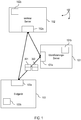
- FIG. 1 An identification server 101 is shown.
- the identification server 101 communicates with a terminal 103 of a user via a communication interface 101a. For example, this communication can take place over the Internet.
- the identification server allows the user to be identified.
- the communication interface 101a is set up to receive first image data 301 and second image data 302 from the terminal 103.
- a processor 101b of the identification server 101 is set up to carry out the identification of the user based on the first and second image data 301, 302.
- the first and second image data 301, 302 can include, for example, one or more images, a film or the like.
- the first and second image data 301, 302 can be captured with a camera 103b of the terminal 103 and then via a Communication interface 103a of the terminal 103 are sent to the identification server 101.
- the terminal can be, for example, a cell phone, a laptop, a computer, a webcam, a television, a tablet PC or the like.
- FIG. 1 another server 102 is shown.
- the identification server 101 forms, together with the further server 102, an identification server system 100.
- the further server 102 and the identification server 101 are coupled to one another via the interfaces 102a, 101a, for example again via the Internet.
- the further server 102 is coupled to the terminal 103; however, this is optional.
- the further server 102 could alternatively or additionally establish a connection to a further end device of the user.
- the further server 102 comprises a processor 102b, which is set up to check whether an identification of the user is required. This checking can take place, for example, based on the connection between the further server 102 and the terminal 103 and / or the further terminal of the user.
- the additional server may be an online shop, a bank server, or the like, and the user may seek a transaction enabled by the additional server 102. However, this transaction may require the user to be identified, for example because it is identification-critical or person-specific.
- the communication interface 102a of the further server 102 is set up to send an identification request to the identification server 101 as a function of the checking.
- the communication interface 102a is set up to receive an identification result from the identification server 101 after positive or negative identification of the user. Based on the identification result, an authentication of the user can be granted or refused, so that this identification result can determine the further progress of the above-mentioned transaction.
- SSL Secure Sockets Layer
- the identification of the user is essentially based on different scenarios on the determination of identification data of the user, such as name, age, address, etc., based on an identification document of the user.
- a comparison of a photograph of the identification document with a part of the face of the user verifies that the identification document actually identifies the user - and not another person. All of this is based on the first and second image data 301, 302.
- the identification document 200 contains the identification data 201 of the user, such as name and date of birth, as well as a serial number of the identification document 200. Furthermore, the identification document 200 has a photo 202 of the user. In particular, the light image 202 depicts a part of the user's face. The identification document 200 also has integrity features 203, for example a checksum, which is formed from the other information, in particular the identification data 201.
- FIG. 2 is the identification document 200 of the ID card type.
- any other identification document with photo 202 can be used, eg in particular passports or driver's licenses.
- different identification documents 200 can have different information, in particular with regard to the identification data 201.
- the identification can take place on the basis of a different information basis. However, the basic techniques described herein generally remain unaffected.
- the first image data 201 are shown.
- the first image data 301 represent the identification document 200.
- the first image data 300 contain three images 301-1, 301-2, 301-3, which depict the identification document 200 from different perspectives and distances.
- two images 301-2, 301-3 of the first image data 301 contain validation information 310 in which in FIG. 3 Embodiment shown in the form of a semi-transparent machine-readable pattern superimposed as a watermark.
- the validation information 310 is imprinted on the images 301-2, 301-3.
- the first image data 301 contain meta data 303, which include, for example: a time of acquiring the images 301-1, 301-2, 301-3, a location of acquiring the images and an ID of the terminal with which the images 301 -1, 301-2, 301-3 was recorded.
- meta data 303 may specify a longitude and / or latitude.
- the validation information 310 can be included in the first image data 301, e.g. Corresponding validation data are generated on the identification server 101 and sent to the terminal 103.
- Corresponding validation data are generated on the identification server 101 and sent to the terminal 103.
- the validation data and the validation information 310 derived therefrom and contained in the first image data 301 are only generated in the context of the identification, i. H. are generated in a narrow temporal context, the timeliness of the first image data 301 can be ensured. In particular, it can be avoided that the user uses prefabricated first image data 301.
- control data can instruct the terminal device 103 to acquire the first image data 301 with a specific sequence of image parameters, such as, for example, the number of images, exposure parameters, flash function and image resolution.
- image parameters such as, for example, the number of images, exposure parameters, flash function and image resolution.
- FIG. 3 was determined by means of the control data that a number of three images 301-1, 301-2, 301-3 is to be recorded. It is possible, for example, that the first image 301-1 has an overexposure of, for example, two aperture stops, the second image 301-2 has an underexposure of two aperture stops and the third image 301-3 has a normal exposure with additionally triggered flash. This is purely illustrative and not restrictive. Another choice and combination of image parameters is possible.
- the images 301-1, 301-2, 301-3 have different perspectives of the identification document 200. These different perspectives can be validated as validation information contained implicitly in the image data 301 based on the validation data.
- the identification data 201 of the identification document 200 are determined from the first image data 301 as part of the identification, for example by means of text recognition.
- the light image 202 of the identification document 200 is compared with the part of the face of the user, which is possible on the basis of the first and second image data 301, 302. If there is a sufficiently good match between the photo 202 and the part of the face, it can be assumed that the identification document 200 actually belongs to the user and that the user is identified by the identification data 201.
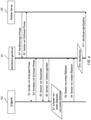
- the further server 102 sends an identification request to the identification server 101 in step S1.
- This can happen, for example, as a result of the identified need for identification of the user.
- the user can aim for a transaction, for example a product purchase or a bank transaction or the like, via the further server 102, for example by means of the terminal 103 or by means of a further terminal (in FIG. 4 Not shown).
- the identification request in step S1 can have different information content in different scenarios.
- the identification request can be made anonymously without any further information about the user.
- the identification request it would also be possible for the identification request to already contain certain identification data of the user to be verified, that is to say to specify an identification criterion.
- the identification server 101 sends a key phrase to the further server 102 (step S2).
- the further server 102 then sends the key phrase, for example, to the terminal device 103 (step S4), so that the latter can, for example, log on to the identification server 101 automatically in step S4 using the key phrase.
- the further server 102 not to send the key phrase to the terminal 103, but to another terminal of the user, for example a television, a computer, a laptop, a cell phone, a tablet PC, etc.
- This further terminal could reproduce the key phrase to the user.
- the user could, for example, manually enter the key phrase into the terminal 103 - that is, the registration on Identification server 101 can take place partially automatically (see also FIG. 7 ).
- the key phrase can uniquely characterize the particular identification process as a token, so that confusion between the identification of different users can be avoided.
- the identification server then sends the control data and the validation data to the terminal 103 in steps S5 and S6.
- the control data define a sequence and exposure parameters of the images which are recorded for the first and second image data (step S7).
- the validation data specify validation information that is included in the first and second image data.
- the first and second image data 301, 302 are sent from the terminal 103 to the identification server 101.
- the identification server 101 carries out the identification of the user based on the received first and second image data 301, 302 in step S10.
- the identification result is sent to the further server 102.
- the identification result can have a different information content.
- the identification result may include the user's specific identification data 201. It would also be possible that the identification result only contains certain identification data, e.g. as requested in the identification request. It would also be possible for the identification result to merely indicate a positive or negative identification of the user, for example based on the identification criterion. For example, can the identification criteria. a minimum age of the user or a place of residence of the user. Then the identification result can be a simple yes / no answer. Depending on the identification result, the transaction aimed for by the user can be authorized.
- a user password can be sent to the further server 102 after the identification (step S10).
- the user password can be generated on the terminal device 103, for example by user input.
- the user password can then be sent from the terminal 103 to the identification server 101 and from there, for example as part of the identification result, to the further server 102.
- the further server 102 can use the user password in connection with the user and / or store the identified identification data.
- the terminal 103 can also save the password.
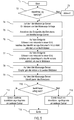
- step T1 it is checked whether the identification of the user is required. If the identification of the user is not required, the method ends in step T3. Otherwise, the identification server 101 receives the identification request from the further server 102 (step T4). In step T5, the terminal 103 logs on to the identification server 101. This can be done, for example, using the key phrase.
- the first and second image data 301, 302 are acquired on the terminal 103.
- the terminal 103 could control an external unit, such as a television or a webcam or the like, for capturing the first and second image data 301, 302.
- the first and second image data 301, 302 are then received on the identification server (step T8) and the user is identified (step T9). Depending on whether the identification is successful (step T10), a positive identification result is sent from the identification server 101 to the further server 102 in step T11, or a negative identification result is sent from the identification server 101 in step T12 sent to the further server 102. The method ends in step T13.
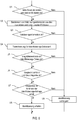
- step T9 of FIG. 5 shown identifying the user on the identification server 101.
- the meta data of the first and second image data 301, 302 are checked for validity in step U1. This can mean, for example, that a check is carried out to determine whether the first and second image data 301, 302 contain images that were acquired within a specific time period before the actual time at which step U1 is carried out, or not older than a specific one are maximum time value. It would also be possible to check whether the different images of the first and second image data 301, 302 were not captured at different locations and / or were captured by one and the same terminal 103. If a lack of validity of the meta data 303 of the first and second image data 301, 302 is found in step U1, the identification is refused in step U9.
- Step U2 can e.g. the use of image segmentation techniques and / or text recognition can include or can automatically read out certain areas of the first and / or second image data 301, 302 based on the validation data generated on the identification server 101.
- step U3 The integrity of the validation information is checked in step U3. If the validation information is not available, not complete or modified (e.g. can be determined based on checksums and / or the validation data), the identification can be refused in step U9.
- step U4 text recognition can be performed for the identification document 200 in step U4, e.g. in particular to read out the integrity features 203 of the identification document 200 and / or the identification data 201.
- step U5 the integrity features 203 can be validated. This can be based on the text recognition listed in step U4 and can optionally or alternatively include image segmentation techniques - e.g. to recognize watermarks or holograms.
- the integrity features 203 can e.g. Use checksums to mark the correctness of the identification data 201, which is also determined.
- step U6 a comparison of the light image 202 of the identification document 200 with the part of the face of the user depicted in the second image data 302 can be carried out in step U6.
- Step U6 can be carried out automatically, partially automatically or manually, for example. If step U6 is carried out automatically or partially automatically, step U6 may include image segmentation and / or image registration techniques.
- a similarity value can be determined between the light image 202 and the part of the user's face depicted in the second image data 302 and it can be checked whether the similarity value is sufficiently high. Will not sufficiently large similarity is determined in step U6, the identification can be refused in step U9.
- the integrity features 203 could also be checked in step U6 by manual inspection, e.g. for presence and / or integrity.
- a person could check the first image data 301.
- the identification request can include the criterion of whether the user has already reached the age of 18, i.e. is of legal age. Based on the determined identification data 201, it can be checked how old the user is and in step U7 the determined age can be compared with the criterion of the identification request. If the criterion of the identification request is not fulfilled, the identification can again be refused in step U9. Otherwise, the identification can be issued in step U8.
- step U6 determines the integrity features in step U5. Accordingly, it may be unnecessary to check the meta data 303 in step U1 or to determine and check the validation information 310 in the different steps U2 and U3.
- order of the various steps is not particularly limited. For example, it would be possible to carry out step U6 right at the beginning and the other identification steps only afterwards - other arrangements of the steps are possible.
- FIG. 7 Another scenario is shown in which compared to that in FIG. 1 illustrated scenario, the further server 102 does not establish a direct connection with the end device 103 of the user. Rather, the further server 102 is in communication connection with the further terminal device 104 of the user, for example by means of the communication interface 104a via the Internet.
- a conceivable scenario would be that the user strives for or triggers the identification-critical transaction via the connection between the further terminal 104 and the further server 102.
- the further terminal 104 is a television with video streaming functionality (English video on demand) and the user wants to call up a film with age-critical content on the television.
- the key phrase can be reproduced on the further terminal 104, here the television.
- the user can then log on to the identification server 101 using the key phrase via the terminal 103, for example a computer, laptop, mobile phone, etc. For this purpose, he can, for example, enter the key phrase sent to the further terminal 104 on the further terminal 103, so that the latter can establish the connection with the identification server 101.
- the techniques for identifying the user enable secure, fast, and location-independent identification. Therefore, such techniques can be used in many areas, such as online purchases, bank transactions, user logins on websites, transaction authorization, etc.
Landscapes
- Engineering & Computer Science (AREA)
- Computer Security & Cryptography (AREA)
- Computer Networks & Wireless Communication (AREA)
- Signal Processing (AREA)
- Theoretical Computer Science (AREA)
- Software Systems (AREA)
- Physics & Mathematics (AREA)
- General Engineering & Computer Science (AREA)
- General Physics & Mathematics (AREA)
- Computer Hardware Design (AREA)
- Collating Specific Patterns (AREA)
- Editing Of Facsimile Originals (AREA)
- Facsimiles In General (AREA)
Claims (12)
- Procédé d'identification d'un utilisateur, caractérisé en ce que le procédé comprend :- la réception de premières données d'image (301) d'un terminal (103) de l'utilisateur sur un serveur d'identification (101),dans lequel les premières données d'image (301) reproduisent un document d'identification (200) avec une photographie (202) de l'utilisateur,- la réception de deuxièmes données d'image (302) du terminal (103) de l'utilisateur sur le serveur d'identification (101),dans lequel les deuxièmes données d'image (302) reproduisent une partie du visage de l'utilisateur,- l'identification de l'utilisateur, dans lequel l'identification comprend :dans lequel le procédé comprend en outre :- la comparaison des premières données d'image (301) avec les deuxièmes données d'image (302) pour déterminer une similitude de la photographie (202) de l'utilisateur à partir des premières données d'image (301) avec la partie du visage de l'utilisateur à partir des deuxièmes données d'image (302),- la détermination de données d'identification (201) de l'utilisateur à partir des premières données d'image (301) à l'aide du document d'identification (200),la réception d'une demande d'identification d'un autre serveur (102) sur le serveur d'identification (101),en réaction à la réception de la demande d'identification, l'envoi d'une phrase clé du serveur d'identification (101) à l'autre serveur (102),en tant que réaction à la phrase clé reçue, l'autre serveur (102) envoie la phrase clé à un autre terminal (104) de l'utilisateur ou au terminal (103), etle terminal (103) établit une liaison avec le serveur d'identification (101) en utilisant la phrase clé.
- Procédé selon la revendication 1,
caractérisé en ce que le procédé comprend en outre :- la génération de données de validation sur le serveur d'identification (101),- l'envoi des données de validation du serveur d'identification (101) au terminal (103),dans lequel les données de validation permettent au terminal (103) de contenir une information de validation (310) supplémentaire dans les premières données d'image (301) et/ou dans les deuxièmes données d'image (302),
dans lequel l'identification comprend en outre :- la détermination de l'information de validation (310) à partir des premières données d'image (301) et/ou à partir des deuxièmes données d'image (302),- la validation de l'information de validation (310) déterminée à l'aide des données de validation générées. - Procédé selon la revendication 2,
caractérisé en ce que l'information de validation (310) comprend au moins un des éléments suivants :- un filigrane, qui est empreint sur les premières données d'image (301) et/ou les deuxièmes données d'image (302),- un code alphanumérique, qui est reproduit dans les premières données d'image (301) et/ou les deuxièmes données d'image (302),- un motif lisible par machine, qui est reproduit dans les premières données d'image (301) et/ou dans les deuxièmes données d'image (302),- une position et/ou une distance d'une caméra acquérant les données d'image par rapport au document d'identification (200) et/ou par rapport à la partie du visage,- un code alphanumérique, qui est reproduit dans les premières données d'image (301) et/ou les deuxièmes données d'image (302) et qui contient un instant ou un intervalle de temps. - Procédé selon l'une quelconque des revendications précédentes,
caractérisé en ce que le procédé comprend en outre :- la génération de données de commande sur le serveur d'identification (101),- l'envoi des données de commande du serveur d'identification (101) au terminal (103),dans lequel les données de commande instruisent au terminal (103) d'acquérir les premières données d'image (301) et/ou les deuxièmes données d'image (302) avec des paramètres d'image déterminés,
dans lequel les paramètres d'image sont sélectionnés de préférence dans le groupe suivant :- nombre d'images ;- paramètres d'exposition ;- fonction flash ;- résolution d'image. - Procédé selon l'une quelconque des revendications précédentes,
caractérisé en ce que les premières données d'image (301) et/ou les deuxièmes données d'image (302) sont sélectionnées dans le groupe suivant :- une image (301 -1, 301 -2, 301 -3) ;- un film ;- au moins deux images (301 -1, 301 -2, 301 -3) ou deux films, qui sont acquis séquentiellement à différents instants ;- au moins deux images (301 -1, 301 -2, 301 -3) ou deux films, qui sont acquis avec des paramètres d'exposition et/ou des fonctions flash respectivement différents,- au moins deux images (301 -1, 301 -2, 301 -3) ou films, qui reproduisent le document d'identification (200) ou la partie du visage depuis différentes perspectives et/ou distances. - Procédé selon l'une quelconque des revendications précédentes,
comprenant en outre :- en réaction à l'identification, l'envoi d'un résultat d'identification du serveur d'identification (101) à l'autre serveur (102) en se référant à la demande d'identification reçue. - Procédé selon la revendication 6,
caractérisé en ce que le résultat d'identification et/ou la demande d'identification comprend au moins un des éléments suivants :- un indicateur, qui indique un résultat d'identification positif ou un résultat d'identification négatif,- un nom de l'utilisateur,- un prénom et/ou un nom de famille de l'utilisateur,- une date de naissance et/ou un âge de l'utilisateur,- un indicateur, qui indique si l'âge de l'utilisateur est supérieur à une valeur seuil d'âge,- un domicile de l'utilisateur,- une adresse de l'utilisateur,- un code postal du domicile de l'utilisateur,- des données d'identification anonymisées de l'utilisateur,- une classification de données d'identification de l'utilisateur par rapport à une classification de référence,- un mot de passe de l'utilisateur. - Procédé selon l'une quelconque des revendications 6 ou 7,
caractérisé en ce que l'identification de l'utilisateur comprend en outre :- la comparaison des données d'identification (201) déterminées avec la demande d'identification. - Procédé selon l'une quelconque des revendications précédentes,
caractérisé en ce que l'identification comprend en outre au moins une des étapes suivantes :- vérification de caractéristiques d'intégrité du document d'identification (200) à partir des premières données d'image (301),dans lequel les caractéristiques d'intégrité contiennent des sommes de contrôle et/ou des filigranes et/ou des reproductions d'hologramme et/ou des données biométriques,- vérification de métadonnées, qui sont reçues avec les premières données d'image (301) et/ou avec les deuxièmes données d'image (302),dans lequel les métadonnées comprennent un instant d'enregistrement des premières données d'image (301) et/ou un instant d'enregistrement des deuxièmes données d'image (302) et/ou une identification du terminal (103) et/ou une position d'enregistrement des premières données d'image (301) et/ou une position d'enregistrement des deuxièmes données d'image (302). - Procédé selon l'une quelconque des revendications précédentes,
caractérisé en ce que le procédé comprend :- l'acquisition des premières données d'image (301) au moyen d'une caméra,- l'acquisition des deuxièmes données d'image (302) au moyen de la caméra,- l'envoi des premières données d'image (301) et des deuxièmes données d'image (302) du terminal (103) de l'utilisateur au serveur d'identification (101) pour l'identification de l'utilisateur. - Système d'identification d'un utilisateur,
caractérisé en ce que le système comprend :- un terminal (103) d'un utilisateur,- un serveur d'identification (101), dans lequel le serveur d'identification (101) comprend :dans lequel les premières données d'image (301) reproduisent un document d'identification (200) avec une photographie (202) de l'utilisateur,- une interface de communication (101a), dans lequel l'interface de communication (101 a) est aménagée pour recevoir des premières données d'image (301) du terminal (103) et pour recevoir des deuxièmes données d'image (302) du terminal (103),
dans lequel les deuxièmes données d'image (302) reproduisent une partie du visage de l'utilisateur,- un processeur (101b), qui est aménagé pour identifier l'utilisateur,dans lequel l'identification comprend :- la comparaison des premières données d'image (301) avec les deuxièmes données d'image (302) pour déterminer une similitude de la photographie (202) de l'utilisateur à partir des premières données d'image (301) avec la partie du visage de l'utilisateur à partir des deuxièmes données d'image (302),- la détermination de données d'identification (201) de l'utilisateur à partir des premières données d'image (301) à l'aide du document d'identification (200), dans lequel le système comprend en outre- un autre serveur (102), qui comprend :dans lequel le serveur d'identification (101) est aménagé pour envoyer en réaction à la réception de la demande d'identification, une phase clé à l'autre serveur (102),- un processeur (102b), qui est aménagé pour contrôler si une identification de l'utilisateur est nécessaire, dans lequel la vérification a lieu sur la base d'une liaison entre l'autre serveur (102) et le terminal (103) de l'utilisateur,- une interface de communication (102a), qui est aménagée pour envoyer en fonction du contrôle, une demande d'identification au serveur d'identification (101) et pour recevoir un résultat d'identification du serveur d'identification (101),
dans lequel l'autre serveur (102) est aménagé pour envoyer en tant que réaction à la phrase clé reçue, la phrase clé à un autre terminal (104) de l'utilisateur ou au terminal (103),
dans lequel le terminal (103) est aménagé pour établir une liaison avec le serveur d'identification (101) en utilisant la phrase clé. - Système selon la revendication 11,
caractérisé en ce que le système est aménagé pour réaliser un procédé selon l'une quelconque des revendications 1 - 10.
Priority Applications (2)
| Application Number | Priority Date | Filing Date | Title |
|---|---|---|---|
| EP24191440.7A EP4465592A3 (fr) | 2013-01-22 | 2014-01-13 | Identification d'utilisateur |
| EP20158397.8A EP3719681B1 (fr) | 2013-01-22 | 2014-01-13 | Identification d'utilisateur |
Applications Claiming Priority (3)
| Application Number | Priority Date | Filing Date | Title |
|---|---|---|---|
| DE102013100635.3A DE102013100635A1 (de) | 2013-01-22 | 2013-01-22 | Benutzer-Identifikation |
| EP14701683.6A EP2948891B2 (fr) | 2013-01-22 | 2014-01-13 | Identification de l'utilisateur |
| PCT/EP2014/050480 WO2014114513A1 (fr) | 2013-01-22 | 2014-01-13 | Identification de l'utilisateur |
Related Parent Applications (2)
| Application Number | Title | Priority Date | Filing Date |
|---|---|---|---|
| EP14701683.6A Division-Into EP2948891B2 (fr) | 2013-01-22 | 2014-01-13 | Identification de l'utilisateur |
| EP14701683.6A Division EP2948891B2 (fr) | 2013-01-22 | 2014-01-13 | Identification de l'utilisateur |
Related Child Applications (2)
| Application Number | Title | Priority Date | Filing Date |
|---|---|---|---|
| EP20158397.8A Division EP3719681B1 (fr) | 2013-01-22 | 2014-01-13 | Identification d'utilisateur |
| EP24191440.7A Division EP4465592A3 (fr) | 2013-01-22 | 2014-01-13 | Identification d'utilisateur |
Publications (2)
| Publication Number | Publication Date |
|---|---|
| EP3086251A1 EP3086251A1 (fr) | 2016-10-26 |
| EP3086251B1 true EP3086251B1 (fr) | 2020-02-26 |
Family
ID=50028991
Family Applications (4)
| Application Number | Title | Priority Date | Filing Date |
|---|---|---|---|
| EP24191440.7A Pending EP4465592A3 (fr) | 2013-01-22 | 2014-01-13 | Identification d'utilisateur |
| EP14701683.6A Active EP2948891B2 (fr) | 2013-01-22 | 2014-01-13 | Identification de l'utilisateur |
| EP20158397.8A Active EP3719681B1 (fr) | 2013-01-22 | 2014-01-13 | Identification d'utilisateur |
| EP16169902.0A Active EP3086251B1 (fr) | 2013-01-22 | 2014-01-13 | Identification d'utilisateur |
Family Applications Before (3)
| Application Number | Title | Priority Date | Filing Date |
|---|---|---|---|
| EP24191440.7A Pending EP4465592A3 (fr) | 2013-01-22 | 2014-01-13 | Identification d'utilisateur |
| EP14701683.6A Active EP2948891B2 (fr) | 2013-01-22 | 2014-01-13 | Identification de l'utilisateur |
| EP20158397.8A Active EP3719681B1 (fr) | 2013-01-22 | 2014-01-13 | Identification d'utilisateur |
Country Status (4)
| Country | Link |
|---|---|
| EP (4) | EP4465592A3 (fr) |
| DE (1) | DE102013100635A1 (fr) |
| ES (2) | ES2793306T3 (fr) |
| WO (1) | WO2014114513A1 (fr) |
Families Citing this family (18)
| Publication number | Priority date | Publication date | Assignee | Title |
|---|---|---|---|---|
| DE102014207439B4 (de) | 2014-04-17 | 2025-03-27 | IDnow GmbH | Maskierung von sensiblen Daten bei der Benutzer-Identifikation |
| DE102014018860A1 (de) * | 2014-12-16 | 2016-06-16 | Giesecke & Devrient Gmbh | Verifikation mit Webcam |
| DE102015206623A1 (de) | 2015-04-14 | 2016-10-20 | IDnow GmbH | Digitale signatur mit fern-identifizierung |
| EP4050503B1 (fr) | 2015-12-22 | 2023-11-01 | Financial & Risk Organisation Limited | Procédés et systèmes de création, de vérification et de gestion d'identités |
| DE102016007140A1 (de) * | 2016-06-10 | 2017-12-14 | Giesecke+Devrient Mobile Security Gmbh | Authentisierungssystem |
| DE102016112956A1 (de) | 2016-07-14 | 2018-01-18 | identity Trust Management AG | Verfahren zum online-basierten Identifizieren einer Person, Client-Server System und Computer-Programmprodukt |
| BE1023971B1 (fr) * | 2016-08-02 | 2017-09-26 | Portima Cvba/Scrl | Procede de signature electronique d'un document |
| DE102017106556A1 (de) | 2017-03-27 | 2018-09-27 | verify-U AG | Verfahren zur Prüfung der Integrität eines Videodatenstroms und System hierfür |
| IT201700036968A1 (it) * | 2017-04-04 | 2018-10-04 | Inventia S R L | Metodo e sistema di verifica online dell’identità di un soggetto |
| ES2694438A1 (es) | 2017-05-03 | 2018-12-20 | Electronic Identification, Sl | Sistema de video-identificación a distancia de personas físicas y procedimiento de video-identificación a distancia mediante el mismo |
| SG11201811691RA (en) * | 2017-06-30 | 2019-01-30 | Beijing Didi Infinity Technology & Development Co Ltd | Systems and methods for verifying authenticity of id photo |
| CN107798514A (zh) * | 2017-11-22 | 2018-03-13 | 阿里巴巴集团控股有限公司 | 基于信用实现理赔的方法和装置 |
| US11669607B2 (en) | 2019-08-29 | 2023-06-06 | PXL Vision AG | ID verification with a mobile device |
| EP4105865A1 (fr) | 2021-06-15 | 2022-12-21 | Pulvis Beteiligungs GmbH | Procédé et système de suivi assisté par ordinateur d'une procédure a mettre en uvre par une personne |
| DE202021103224U1 (de) | 2021-06-15 | 2021-07-02 | Bernd Gill | System zum computergestützten Nachverfolgen einer von einer Person durchzuführenden Prozedur |
| FR3144463B1 (fr) * | 2022-12-23 | 2025-01-03 | Ledger | Procédé pour la sauvegarde et la restauration d'un secret détenu par un portefeuille de cryptoactifs |
| FR3144465B1 (fr) * | 2022-12-23 | 2025-01-03 | Ledger | Procédé pour la sauvegarde et la restauration personnalisées d’un secret détenu par un portefeuille de cryptoactifs |
| KR20250153184A (ko) * | 2022-12-23 | 2025-10-24 | 레드거 | 암호자산 월렛이 보유한 비밀정보를 백업 및 복원하기 위한 방법 |
Citations (6)
| Publication number | Priority date | Publication date | Assignee | Title |
|---|---|---|---|---|
| EP0088941A1 (fr) | 1982-03-13 | 1983-09-21 | Agfa-Gevaert AG | Support d'information infalsifiable |
| DE19960769A1 (de) | 1998-12-17 | 2000-06-29 | Ibm | Verfahren und System zur Authentifizierung von Objekten und Objektdaten |
| US7191156B1 (en) | 2000-05-01 | 2007-03-13 | Digimarc Corporation | Digital watermarking systems |
| US20100011431A1 (en) | 2008-07-10 | 2010-01-14 | Cynkin Laurence H | Methods and apparatus for authorizing access to data |
| US20120106805A1 (en) * | 2010-11-03 | 2012-05-03 | Shuster Gary S | Online identity verification |
| US20120323735A1 (en) | 2005-09-28 | 2012-12-20 | Saf-T-Pay, Inc. | Payment system and clearinghouse of internet transactions |
Family Cites Families (14)
| Publication number | Priority date | Publication date | Assignee | Title |
|---|---|---|---|---|
| DE19901881A1 (de) | 1999-01-19 | 2000-07-27 | Dcs Dialog Communication Syste | Verfahren und System zur Fälschungssicherung bei biometrischer Personenerkennung |
| DE19906388A1 (de) | 1999-02-16 | 2000-08-24 | Bundesdruckerei Gmbh | Verfahren und Vorrichtung zur Personalisierung und Verifizierung von Identitäts- und Sicherheitsdokumenten sowie ein damit verwendbares Identitäts- und Sicherheitsdokument |
| EP1152592B1 (fr) * | 2000-04-25 | 2009-06-24 | Eastman Kodak Company | Méthode pour imprimer et vérifier l'authenticité de documents |
| US20030139994A1 (en) | 2002-01-22 | 2003-07-24 | Jones John E. | Financial institution system |
| GB0316631D0 (en) * | 2003-07-16 | 2003-08-20 | Omniperception Ltd | Facial liveness assessment system |
| US7672475B2 (en) | 2003-12-11 | 2010-03-02 | Fraudhalt Limited | Method and apparatus for verifying a hologram and a credit card |
| DE102004056007A1 (de) * | 2004-11-19 | 2006-05-24 | Bundesdruckerei Gmbh | Mobile Verifikationseinrichtung zur Echtheitsüberprüfung von Reisedokumenten |
| US20070098225A1 (en) | 2005-10-28 | 2007-05-03 | Piccionelli Gregory A | Age verification method for website access |
| US7925096B2 (en) | 2007-12-12 | 2011-04-12 | Xerox Corporation | Method and apparatus for validating holograms |
| US9305230B2 (en) | 2008-07-14 | 2016-04-05 | Jumio Inc. | Internet payment system using credit card imaging |
| EP2174796B1 (fr) | 2008-10-07 | 2012-07-25 | European Central Bank | Méthode de marquage par laser d'un document, le document doté d'une couleur fixe dans un environnement doté d'un effet de décalage de couleur |
| DE202010018382U1 (de) | 2010-10-04 | 2016-03-07 | cp.media AG | Datenverarbeitungseinrichtung zum Erzeugen eines sicheren Datensatzes und Vorrichtung zum Auswerten |
| US20120180115A1 (en) | 2011-01-07 | 2012-07-12 | John Maitland | Method and system for verifying a user for an online service |
| GB2542449B (en) * | 2012-02-21 | 2017-08-09 | Iproov Ltd | Online pseudonym verification and identity validation |
-
2013
- 2013-01-22 DE DE102013100635.3A patent/DE102013100635A1/de active Pending
-
2014
- 2014-01-13 EP EP24191440.7A patent/EP4465592A3/fr active Pending
- 2014-01-13 EP EP14701683.6A patent/EP2948891B2/fr active Active
- 2014-01-13 EP EP20158397.8A patent/EP3719681B1/fr active Active
- 2014-01-13 ES ES16169902T patent/ES2793306T3/es active Active
- 2014-01-13 EP EP16169902.0A patent/EP3086251B1/fr active Active
- 2014-01-13 WO PCT/EP2014/050480 patent/WO2014114513A1/fr not_active Ceased
- 2014-01-13 ES ES14701683T patent/ES2586144T5/es active Active
Patent Citations (6)
| Publication number | Priority date | Publication date | Assignee | Title |
|---|---|---|---|---|
| EP0088941A1 (fr) | 1982-03-13 | 1983-09-21 | Agfa-Gevaert AG | Support d'information infalsifiable |
| DE19960769A1 (de) | 1998-12-17 | 2000-06-29 | Ibm | Verfahren und System zur Authentifizierung von Objekten und Objektdaten |
| US7191156B1 (en) | 2000-05-01 | 2007-03-13 | Digimarc Corporation | Digital watermarking systems |
| US20120323735A1 (en) | 2005-09-28 | 2012-12-20 | Saf-T-Pay, Inc. | Payment system and clearinghouse of internet transactions |
| US20100011431A1 (en) | 2008-07-10 | 2010-01-14 | Cynkin Laurence H | Methods and apparatus for authorizing access to data |
| US20120106805A1 (en) * | 2010-11-03 | 2012-05-03 | Shuster Gary S | Online identity verification |
Non-Patent Citations (3)
| Title |
|---|
| ANONYMOUS: "Postident - richtig identifizieren", DEUTSCHE POST AG, August 2009 (2009-08-01), XP055357030 |
| MICHAEL SEEMANN: "Video-Überwachung zu Hause", PC MAGAZIN, 1 March 2011 (2011-03-01), XP055757618, Retrieved from the Internet <URL:https://www.pc-magazin.de/ratgeber/video-ueberwachung-zu-hause-1467657.html> |
| TOUCHPORTAL.DE, YOUTUBE, 8 January 2013 (2013-01-08), XP054981177, Retrieved from the Internet <URL:https://www.youtube.com/watch?v=n3s1l3jT1X0> [retrieved on 20201109] |
Also Published As
| Publication number | Publication date |
|---|---|
| EP3719681A1 (fr) | 2020-10-07 |
| ES2586144T5 (en) | 2025-04-02 |
| DE102013100635A1 (de) | 2014-07-24 |
| EP2948891B1 (fr) | 2016-05-18 |
| EP3719681B1 (fr) | 2024-07-31 |
| ES2793306T3 (es) | 2020-11-13 |
| EP2948891B2 (fr) | 2024-12-18 |
| EP3086251A1 (fr) | 2016-10-26 |
| WO2014114513A1 (fr) | 2014-07-31 |
| EP2948891A1 (fr) | 2015-12-02 |
| EP4465592A2 (fr) | 2024-11-20 |
| ES2586144T3 (es) | 2016-10-11 |
| EP3719681C0 (fr) | 2024-07-31 |
| DE102013100635A8 (de) | 2014-09-18 |
| EP4465592A3 (fr) | 2025-01-22 |
Similar Documents
| Publication | Publication Date | Title |
|---|---|---|
| EP3086251B1 (fr) | Identification d'utilisateur | |
| DE102013108713B4 (de) | Verfahren zum Auswerten eines Dokuments | |
| DE102014103016B4 (de) | Globales Identifizierungs-(ID-) und Altersverifizierungssystem und -verfahren | |
| DE112019000334T5 (de) | Validieren der identität eines fernen benutzers durch vergleichen auf der grundlage von schwellenwerten | |
| EP3082292A1 (fr) | Signature numerique comprenant une identification a distance | |
| DE112016005555T5 (de) | CAPTCHA-Aufgaben auf Bildbasis | |
| WO2009074342A1 (fr) | Protection de documents d'identité de personnes contre la falsification | |
| DE102014207439B4 (de) | Maskierung von sensiblen Daten bei der Benutzer-Identifikation | |
| EP3743844A1 (fr) | Système d'identité basé sur chaînes de blocs | |
| CN112598064A (zh) | 一种数据处理方法及装置 | |
| EP4097611B1 (fr) | Procédé pour attribuer un créateur à un fichier multimédia numérique et/ou pour distribuer le fichier multimédia numérique, dispositif d'enregistrement et dispositif d'affichage | |
| CH717006B1 (de) | Verfahren zur Benutzeridentifikation. | |
| AT507372A1 (de) | Identifikationsmerkmal | |
| EP3510515B1 (fr) | Lunettes intelligentes permettant la signature cryptographique de données d'image | |
| EP3407234B1 (fr) | Dispositif et procédé de vérification d'une identité d'une personne | |
| DE102016007140A1 (de) | Authentisierungssystem | |
| DE102016118886A1 (de) | Verfahren zur Prüfung einer Darstellung eines Objekts | |
| DE112023005478T5 (de) | Analyse einer Dokumentbegrenzung | |
| EP4716900A1 (fr) | Procédé de génération d'un code, procédé de vérification d'un code, document comprenant le code, et utilisation du code | |
| AT508440A2 (de) | Verfahren zur authentifizierten generierung eines elektronischen dokuments | |
| EP3144836A1 (fr) | Procédé de fourniture de données de documents numériques |
Legal Events
| Date | Code | Title | Description |
|---|---|---|---|
| PUAI | Public reference made under article 153(3) epc to a published international application that has entered the european phase |
Free format text: ORIGINAL CODE: 0009012 |
|
| AC | Divisional application: reference to earlier application |
Ref document number: 2948891 Country of ref document: EP Kind code of ref document: P |
|
| AK | Designated contracting states |
Kind code of ref document: A1 Designated state(s): AL AT BE BG CH CY CZ DE DK EE ES FI FR GB GR HR HU IE IS IT LI LT LU LV MC MK MT NL NO PL PT RO RS SE SI SK SM TR |
|
| 17P | Request for examination filed |
Effective date: 20170426 |
|
| RBV | Designated contracting states (corrected) |
Designated state(s): AL AT BE BG CH CY CZ DE DK EE ES FI FR GB GR HR HU IE IS IT LI LT LU LV MC MK MT NL NO PL PT RO RS SE SI SK SM TR |
|
| STAA | Information on the status of an ep patent application or granted ep patent |
Free format text: STATUS: REQUEST FOR EXAMINATION WAS MADE |
|
| STAA | Information on the status of an ep patent application or granted ep patent |
Free format text: STATUS: EXAMINATION IS IN PROGRESS |
|
| 17Q | First examination report despatched |
Effective date: 20190404 |
|
| GRAP | Despatch of communication of intention to grant a patent |
Free format text: ORIGINAL CODE: EPIDOSNIGR1 |
|
| STAA | Information on the status of an ep patent application or granted ep patent |
Free format text: STATUS: GRANT OF PATENT IS INTENDED |
|
| RAP1 | Party data changed (applicant data changed or rights of an application transferred) |
Owner name: IDNOW GMBH |
|
| RIC1 | Information provided on ipc code assigned before grant |
Ipc: G06F 21/32 20130101AFI20191111BHEP Ipc: H04L 9/32 20060101ALI20191111BHEP |
|
| INTG | Intention to grant announced |
Effective date: 20191202 |
|
| GRAS | Grant fee paid |
Free format text: ORIGINAL CODE: EPIDOSNIGR3 |
|
| GRAA | (expected) grant |
Free format text: ORIGINAL CODE: 0009210 |
|
| STAA | Information on the status of an ep patent application or granted ep patent |
Free format text: STATUS: THE PATENT HAS BEEN GRANTED |
|
| AC | Divisional application: reference to earlier application |
Ref document number: 2948891 Country of ref document: EP Kind code of ref document: P |
|
| AK | Designated contracting states |
Kind code of ref document: B1 Designated state(s): AL AT BE BG CH CY CZ DE DK EE ES FI FR GB GR HR HU IE IS IT LI LT LU LV MC MK MT NL NO PL PT RO RS SE SI SK SM TR |
|
| REG | Reference to a national code |
Ref country code: GB Ref legal event code: FG4D Free format text: NOT ENGLISH |
|
| REG | Reference to a national code |
Ref country code: CH Ref legal event code: EP |
|
| REG | Reference to a national code |
Ref country code: AT Ref legal event code: REF Ref document number: 1238501 Country of ref document: AT Kind code of ref document: T Effective date: 20200315 |
|
| REG | Reference to a national code |
Ref country code: IE Ref legal event code: FG4D Free format text: LANGUAGE OF EP DOCUMENT: GERMAN |
|
| REG | Reference to a national code |
Ref country code: DE Ref legal event code: R096 Ref document number: 502014013720 Country of ref document: DE |
|
| REG | Reference to a national code |
Ref country code: CH Ref legal event code: NV Representative=s name: LATSCHA SCHOELLHORN PARTNER AG, CH |
|
| REG | Reference to a national code |
Ref country code: NL Ref legal event code: FP |
|
| PG25 | Lapsed in a contracting state [announced via postgrant information from national office to epo] |
Ref country code: RS Free format text: LAPSE BECAUSE OF FAILURE TO SUBMIT A TRANSLATION OF THE DESCRIPTION OR TO PAY THE FEE WITHIN THE PRESCRIBED TIME-LIMIT Effective date: 20200226 Ref country code: FI Free format text: LAPSE BECAUSE OF FAILURE TO SUBMIT A TRANSLATION OF THE DESCRIPTION OR TO PAY THE FEE WITHIN THE PRESCRIBED TIME-LIMIT Effective date: 20200226 Ref country code: NO Free format text: LAPSE BECAUSE OF FAILURE TO SUBMIT A TRANSLATION OF THE DESCRIPTION OR TO PAY THE FEE WITHIN THE PRESCRIBED TIME-LIMIT Effective date: 20200526 |
|
| REG | Reference to a national code |
Ref country code: LT Ref legal event code: MG4D |
|
| PG25 | Lapsed in a contracting state [announced via postgrant information from national office to epo] |
Ref country code: LV Free format text: LAPSE BECAUSE OF FAILURE TO SUBMIT A TRANSLATION OF THE DESCRIPTION OR TO PAY THE FEE WITHIN THE PRESCRIBED TIME-LIMIT Effective date: 20200226 Ref country code: SE Free format text: LAPSE BECAUSE OF FAILURE TO SUBMIT A TRANSLATION OF THE DESCRIPTION OR TO PAY THE FEE WITHIN THE PRESCRIBED TIME-LIMIT Effective date: 20200226 Ref country code: HR Free format text: LAPSE BECAUSE OF FAILURE TO SUBMIT A TRANSLATION OF THE DESCRIPTION OR TO PAY THE FEE WITHIN THE PRESCRIBED TIME-LIMIT Effective date: 20200226 Ref country code: IS Free format text: LAPSE BECAUSE OF FAILURE TO SUBMIT A TRANSLATION OF THE DESCRIPTION OR TO PAY THE FEE WITHIN THE PRESCRIBED TIME-LIMIT Effective date: 20200626 Ref country code: BG Free format text: LAPSE BECAUSE OF FAILURE TO SUBMIT A TRANSLATION OF THE DESCRIPTION OR TO PAY THE FEE WITHIN THE PRESCRIBED TIME-LIMIT Effective date: 20200526 Ref country code: GR Free format text: LAPSE BECAUSE OF FAILURE TO SUBMIT A TRANSLATION OF THE DESCRIPTION OR TO PAY THE FEE WITHIN THE PRESCRIBED TIME-LIMIT Effective date: 20200527 |
|
| PG25 | Lapsed in a contracting state [announced via postgrant information from national office to epo] |
Ref country code: RO Free format text: LAPSE BECAUSE OF FAILURE TO SUBMIT A TRANSLATION OF THE DESCRIPTION OR TO PAY THE FEE WITHIN THE PRESCRIBED TIME-LIMIT Effective date: 20200226 Ref country code: SK Free format text: LAPSE BECAUSE OF FAILURE TO SUBMIT A TRANSLATION OF THE DESCRIPTION OR TO PAY THE FEE WITHIN THE PRESCRIBED TIME-LIMIT Effective date: 20200226 Ref country code: CZ Free format text: LAPSE BECAUSE OF FAILURE TO SUBMIT A TRANSLATION OF THE DESCRIPTION OR TO PAY THE FEE WITHIN THE PRESCRIBED TIME-LIMIT Effective date: 20200226 Ref country code: SM Free format text: LAPSE BECAUSE OF FAILURE TO SUBMIT A TRANSLATION OF THE DESCRIPTION OR TO PAY THE FEE WITHIN THE PRESCRIBED TIME-LIMIT Effective date: 20200226 Ref country code: EE Free format text: LAPSE BECAUSE OF FAILURE TO SUBMIT A TRANSLATION OF THE DESCRIPTION OR TO PAY THE FEE WITHIN THE PRESCRIBED TIME-LIMIT Effective date: 20200226 Ref country code: PT Free format text: LAPSE BECAUSE OF FAILURE TO SUBMIT A TRANSLATION OF THE DESCRIPTION OR TO PAY THE FEE WITHIN THE PRESCRIBED TIME-LIMIT Effective date: 20200719 Ref country code: DK Free format text: LAPSE BECAUSE OF FAILURE TO SUBMIT A TRANSLATION OF THE DESCRIPTION OR TO PAY THE FEE WITHIN THE PRESCRIBED TIME-LIMIT Effective date: 20200226 Ref country code: LT Free format text: LAPSE BECAUSE OF FAILURE TO SUBMIT A TRANSLATION OF THE DESCRIPTION OR TO PAY THE FEE WITHIN THE PRESCRIBED TIME-LIMIT Effective date: 20200226 |
|
| REG | Reference to a national code |
Ref country code: ES Ref legal event code: FG2A Ref document number: 2793306 Country of ref document: ES Kind code of ref document: T3 Effective date: 20201113 |
|
| REG | Reference to a national code |
Ref country code: DE Ref legal event code: R026 Ref document number: 502014013720 Country of ref document: DE |
|
| PLBI | Opposition filed |
Free format text: ORIGINAL CODE: 0009260 |
|
| PLAX | Notice of opposition and request to file observation + time limit sent |
Free format text: ORIGINAL CODE: EPIDOSNOBS2 |
|
| 26 | Opposition filed |
Opponent name: WEBID SOLUTIONS GMBH Effective date: 20201123 |
|
| PG25 | Lapsed in a contracting state [announced via postgrant information from national office to epo] |
Ref country code: IT Free format text: LAPSE BECAUSE OF FAILURE TO SUBMIT A TRANSLATION OF THE DESCRIPTION OR TO PAY THE FEE WITHIN THE PRESCRIBED TIME-LIMIT Effective date: 20200226 |
|
| PG25 | Lapsed in a contracting state [announced via postgrant information from national office to epo] |
Ref country code: PL Free format text: LAPSE BECAUSE OF FAILURE TO SUBMIT A TRANSLATION OF THE DESCRIPTION OR TO PAY THE FEE WITHIN THE PRESCRIBED TIME-LIMIT Effective date: 20200226 Ref country code: SI Free format text: LAPSE BECAUSE OF FAILURE TO SUBMIT A TRANSLATION OF THE DESCRIPTION OR TO PAY THE FEE WITHIN THE PRESCRIBED TIME-LIMIT Effective date: 20200226 |
|
| PLBB | Reply of patent proprietor to notice(s) of opposition received |
Free format text: ORIGINAL CODE: EPIDOSNOBS3 |
|
| PG25 | Lapsed in a contracting state [announced via postgrant information from national office to epo] |
Ref country code: MC Free format text: LAPSE BECAUSE OF FAILURE TO SUBMIT A TRANSLATION OF THE DESCRIPTION OR TO PAY THE FEE WITHIN THE PRESCRIBED TIME-LIMIT Effective date: 20200226 |
|
| PLAY | Examination report in opposition despatched + time limit |
Free format text: ORIGINAL CODE: EPIDOSNORE2 |
|
| REG | Reference to a national code |
Ref country code: BE Ref legal event code: MM Effective date: 20210131 |
|
| PLBC | Reply to examination report in opposition received |
Free format text: ORIGINAL CODE: EPIDOSNORE3 |
|
| PG25 | Lapsed in a contracting state [announced via postgrant information from national office to epo] |
Ref country code: BE Free format text: LAPSE BECAUSE OF NON-PAYMENT OF DUE FEES Effective date: 20210131 |
|
| PLCK | Communication despatched that opposition was rejected |
Free format text: ORIGINAL CODE: EPIDOSNREJ1 |
|
| APBM | Appeal reference recorded |
Free format text: ORIGINAL CODE: EPIDOSNREFNO |
|
| APBP | Date of receipt of notice of appeal recorded |
Free format text: ORIGINAL CODE: EPIDOSNNOA2O |
|
| APAH | Appeal reference modified |
Free format text: ORIGINAL CODE: EPIDOSCREFNO |
|
| APBQ | Date of receipt of statement of grounds of appeal recorded |
Free format text: ORIGINAL CODE: EPIDOSNNOA3O |
|
| PG25 | Lapsed in a contracting state [announced via postgrant information from national office to epo] |
Ref country code: HU Free format text: LAPSE BECAUSE OF FAILURE TO SUBMIT A TRANSLATION OF THE DESCRIPTION OR TO PAY THE FEE WITHIN THE PRESCRIBED TIME-LIMIT; INVALID AB INITIO Effective date: 20140113 |
|
| P01 | Opt-out of the competence of the unified patent court (upc) registered |
Effective date: 20230523 |
|
| PG25 | Lapsed in a contracting state [announced via postgrant information from national office to epo] |
Ref country code: CY Free format text: LAPSE BECAUSE OF FAILURE TO SUBMIT A TRANSLATION OF THE DESCRIPTION OR TO PAY THE FEE WITHIN THE PRESCRIBED TIME-LIMIT Effective date: 20200226 |
|
| REG | Reference to a national code |
Ref country code: DE Ref legal event code: R081 Ref document number: 502014013720 Country of ref document: DE Owner name: IDNOW GMBH, DE Free format text: FORMER OWNER: IDNOW GMBH, 80469 MUENCHEN, DE |
|
| APBY | Invitation to file observations in appeal sent |
Free format text: ORIGINAL CODE: EPIDOSNOBA2O |
|
| APCA | Receipt of observations in appeal recorded |
Free format text: ORIGINAL CODE: EPIDOSNOBA4O |
|
| REG | Reference to a national code |
Ref country code: LU Ref legal event code: PD Owner name: IDNOW NEWCO GMBH; DE Free format text: FORMER OWNER: IDNOW HOLDING GMBH Effective date: 20231026 Ref country code: LU Ref legal event code: HC Owner name: IDNOW GMBH; DE Free format text: FORMER OWNER: IDNOW NEWCO GMBH Effective date: 20231026 Ref country code: LU Ref legal event code: HC Owner name: IDNOW HOLDING GMBH; DE Free format text: FORMER OWNER: IDNOW GMBH Effective date: 20231026 |
|
| REG | Reference to a national code |
Ref country code: CH Ref legal event code: PK Free format text: BERICHTIGUNGEN |
|
| REG | Reference to a national code |
Ref country code: GB Ref legal event code: 732E Free format text: REGISTERED BETWEEN 20240222 AND 20240228 |
|
| PG25 | Lapsed in a contracting state [announced via postgrant information from national office to epo] |
Ref country code: MK Free format text: LAPSE BECAUSE OF FAILURE TO SUBMIT A TRANSLATION OF THE DESCRIPTION OR TO PAY THE FEE WITHIN THE PRESCRIBED TIME-LIMIT Effective date: 20200226 |
|
| REG | Reference to a national code |
Ref country code: NL Ref legal event code: PD Owner name: IDNOW NEWCO GMBH; DE Free format text: DETAILS ASSIGNMENT: CHANGE OF OWNER(S), DEMERGER; FORMER OWNER NAME: IDNOW GMBH Effective date: 20240424 Ref country code: NL Ref legal event code: HC Owner name: ; Free format text: DETAILS ASSIGNMENT: CHANGE OF OWNER(S), CHANGE OF OWNER(S) NAME; FORMER OWNER NAME: IDNOW NEWCO GMBH Effective date: 20240424 |
|
| REG | Reference to a national code |
Ref country code: AT Ref legal event code: PC Ref document number: 1238501 Country of ref document: AT Kind code of ref document: T Owner name: LDNOW GMBH, DE Effective date: 20240416 |
|
| REG | Reference to a national code |
Ref country code: DE Ref legal event code: R100 Ref document number: 502014013720 Country of ref document: DE |
|
| PG25 | Lapsed in a contracting state [announced via postgrant information from national office to epo] |
Ref country code: TR Free format text: LAPSE BECAUSE OF FAILURE TO SUBMIT A TRANSLATION OF THE DESCRIPTION OR TO PAY THE FEE WITHIN THE PRESCRIBED TIME-LIMIT Effective date: 20200226 |
|
| APBU | Appeal procedure closed |
Free format text: ORIGINAL CODE: EPIDOSNNOA9O |
|
| PLBN | Opposition rejected |
Free format text: ORIGINAL CODE: 0009273 |
|
| PLBP | Opposition withdrawn |
Free format text: ORIGINAL CODE: 0009264 |
|
| STAA | Information on the status of an ep patent application or granted ep patent |
Free format text: STATUS: OPPOSITION REJECTED |
|
| 27O | Opposition rejected |
Effective date: 20240627 |
|
| REG | Reference to a national code |
Ref country code: ES Ref legal event code: PC2A Owner name: IDNOW GMBH Effective date: 20240819 |
|
| PG25 | Lapsed in a contracting state [announced via postgrant information from national office to epo] |
Ref country code: MT Free format text: LAPSE BECAUSE OF FAILURE TO SUBMIT A TRANSLATION OF THE DESCRIPTION OR TO PAY THE FEE WITHIN THE PRESCRIBED TIME-LIMIT Effective date: 20200226 |
|
| REG | Reference to a national code |
Ref country code: CH Ref legal event code: U11 Free format text: ST27 STATUS EVENT CODE: U-0-0-U10-U11 (AS PROVIDED BY THE NATIONAL OFFICE) Effective date: 20260201 |
|
| PGFP | Annual fee paid to national office [announced via postgrant information from national office to epo] |
Ref country code: LU Payment date: 20260119 Year of fee payment: 13 Ref country code: NL Payment date: 20260120 Year of fee payment: 13 |
|
| PGFP | Annual fee paid to national office [announced via postgrant information from national office to epo] |
Ref country code: GB Payment date: 20260121 Year of fee payment: 13 |
|
| PGFP | Annual fee paid to national office [announced via postgrant information from national office to epo] |
Ref country code: ES Payment date: 20260205 Year of fee payment: 13 |
|
| PGFP | Annual fee paid to national office [announced via postgrant information from national office to epo] |
Ref country code: DE Payment date: 20260127 Year of fee payment: 13 Ref country code: IE Payment date: 20260128 Year of fee payment: 13 |
|
| PGFP | Annual fee paid to national office [announced via postgrant information from national office to epo] |
Ref country code: AT Payment date: 20260202 Year of fee payment: 13 |
|
| PGFP | Annual fee paid to national office [announced via postgrant information from national office to epo] |
Ref country code: FR Payment date: 20260129 Year of fee payment: 13 |
|
| PGFP | Annual fee paid to national office [announced via postgrant information from national office to epo] |
Ref country code: CH Payment date: 20260201 Year of fee payment: 13 |