EP3086567B1 - Oreillette placée à l'intérieur de l'oreille avec réduction de bruit active - Google Patents
Oreillette placée à l'intérieur de l'oreille avec réduction de bruit active Download PDFInfo
- Publication number
- EP3086567B1 EP3086567B1 EP16172087.5A EP16172087A EP3086567B1 EP 3086567 B1 EP3086567 B1 EP 3086567B1 EP 16172087 A EP16172087 A EP 16172087A EP 3086567 B1 EP3086567 B1 EP 3086567B1
- Authority
- EP
- European Patent Office
- Prior art keywords
- earphone
- passageway
- nozzle
- acoustic
- acoustic driver
- Prior art date
- Legal status (The legal status is an assumption and is not a legal conclusion. Google has not performed a legal analysis and makes no representation as to the accuracy of the status listed.)
- Revoked
Links
Images


Classifications
-
- G—PHYSICS
- G10—MUSICAL INSTRUMENTS; ACOUSTICS
- G10K—SOUND-PRODUCING DEVICES; METHODS OR DEVICES FOR PROTECTING AGAINST, OR FOR DAMPING, NOISE OR OTHER ACOUSTIC WAVES IN GENERAL; ACOUSTICS NOT OTHERWISE PROVIDED FOR
- G10K11/00—Methods or devices for transmitting, conducting or directing sound in general; Methods or devices for protecting against, or for damping, noise or other acoustic waves in general
- G10K11/16—Methods or devices for protecting against, or for damping, noise or other acoustic waves in general
- G10K11/175—Methods or devices for protecting against, or for damping, noise or other acoustic waves in general using interference effects; Masking sound
- G10K11/178—Methods or devices for protecting against, or for damping, noise or other acoustic waves in general using interference effects; Masking sound by electro-acoustically regenerating the original acoustic waves in anti-phase
- G10K11/1787—General system configurations
- G10K11/17879—General system configurations using both a reference signal and an error signal
- G10K11/17881—General system configurations using both a reference signal and an error signal the reference signal being an acoustic signal, e.g. recorded with a microphone
-
- G—PHYSICS
- G10—MUSICAL INSTRUMENTS; ACOUSTICS
- G10K—SOUND-PRODUCING DEVICES; METHODS OR DEVICES FOR PROTECTING AGAINST, OR FOR DAMPING, NOISE OR OTHER ACOUSTIC WAVES IN GENERAL; ACOUSTICS NOT OTHERWISE PROVIDED FOR
- G10K11/00—Methods or devices for transmitting, conducting or directing sound in general; Methods or devices for protecting against, or for damping, noise or other acoustic waves in general
- G10K11/16—Methods or devices for protecting against, or for damping, noise or other acoustic waves in general
-
- G—PHYSICS
- G10—MUSICAL INSTRUMENTS; ACOUSTICS
- G10K—SOUND-PRODUCING DEVICES; METHODS OR DEVICES FOR PROTECTING AGAINST, OR FOR DAMPING, NOISE OR OTHER ACOUSTIC WAVES IN GENERAL; ACOUSTICS NOT OTHERWISE PROVIDED FOR
- G10K11/00—Methods or devices for transmitting, conducting or directing sound in general; Methods or devices for protecting against, or for damping, noise or other acoustic waves in general
- G10K11/16—Methods or devices for protecting against, or for damping, noise or other acoustic waves in general
- G10K11/175—Methods or devices for protecting against, or for damping, noise or other acoustic waves in general using interference effects; Masking sound
- G10K11/178—Methods or devices for protecting against, or for damping, noise or other acoustic waves in general using interference effects; Masking sound by electro-acoustically regenerating the original acoustic waves in anti-phase
- G10K11/1781—Methods or devices for protecting against, or for damping, noise or other acoustic waves in general using interference effects; Masking sound by electro-acoustically regenerating the original acoustic waves in anti-phase characterised by the analysis of input or output signals, e.g. frequency range, modes, transfer functions
- G10K11/17813—Methods or devices for protecting against, or for damping, noise or other acoustic waves in general using interference effects; Masking sound by electro-acoustically regenerating the original acoustic waves in anti-phase characterised by the analysis of input or output signals, e.g. frequency range, modes, transfer functions characterised by the analysis of the acoustic paths, e.g. estimating, calibrating or testing of transfer functions or cross-terms
- G10K11/17817—Methods or devices for protecting against, or for damping, noise or other acoustic waves in general using interference effects; Masking sound by electro-acoustically regenerating the original acoustic waves in anti-phase characterised by the analysis of input or output signals, e.g. frequency range, modes, transfer functions characterised by the analysis of the acoustic paths, e.g. estimating, calibrating or testing of transfer functions or cross-terms between the output signals and the error signals, i.e. secondary path
-
- G—PHYSICS
- G10—MUSICAL INSTRUMENTS; ACOUSTICS
- G10K—SOUND-PRODUCING DEVICES; METHODS OR DEVICES FOR PROTECTING AGAINST, OR FOR DAMPING, NOISE OR OTHER ACOUSTIC WAVES IN GENERAL; ACOUSTICS NOT OTHERWISE PROVIDED FOR
- G10K11/00—Methods or devices for transmitting, conducting or directing sound in general; Methods or devices for protecting against, or for damping, noise or other acoustic waves in general
- G10K11/16—Methods or devices for protecting against, or for damping, noise or other acoustic waves in general
- G10K11/175—Methods or devices for protecting against, or for damping, noise or other acoustic waves in general using interference effects; Masking sound
- G10K11/178—Methods or devices for protecting against, or for damping, noise or other acoustic waves in general using interference effects; Masking sound by electro-acoustically regenerating the original acoustic waves in anti-phase
- G10K11/1785—Methods, e.g. algorithms; Devices
-
- G—PHYSICS
- G10—MUSICAL INSTRUMENTS; ACOUSTICS
- G10K—SOUND-PRODUCING DEVICES; METHODS OR DEVICES FOR PROTECTING AGAINST, OR FOR DAMPING, NOISE OR OTHER ACOUSTIC WAVES IN GENERAL; ACOUSTICS NOT OTHERWISE PROVIDED FOR
- G10K11/00—Methods or devices for transmitting, conducting or directing sound in general; Methods or devices for protecting against, or for damping, noise or other acoustic waves in general
- G10K11/16—Methods or devices for protecting against, or for damping, noise or other acoustic waves in general
- G10K11/175—Methods or devices for protecting against, or for damping, noise or other acoustic waves in general using interference effects; Masking sound
- G10K11/178—Methods or devices for protecting against, or for damping, noise or other acoustic waves in general using interference effects; Masking sound by electro-acoustically regenerating the original acoustic waves in anti-phase
- G10K11/1785—Methods, e.g. algorithms; Devices
- G10K11/17853—Methods, e.g. algorithms; Devices of the filter
- G10K11/17854—Methods, e.g. algorithms; Devices of the filter the filter being an adaptive filter
-
- G—PHYSICS
- G10—MUSICAL INSTRUMENTS; ACOUSTICS
- G10K—SOUND-PRODUCING DEVICES; METHODS OR DEVICES FOR PROTECTING AGAINST, OR FOR DAMPING, NOISE OR OTHER ACOUSTIC WAVES IN GENERAL; ACOUSTICS NOT OTHERWISE PROVIDED FOR
- G10K11/00—Methods or devices for transmitting, conducting or directing sound in general; Methods or devices for protecting against, or for damping, noise or other acoustic waves in general
- G10K11/16—Methods or devices for protecting against, or for damping, noise or other acoustic waves in general
- G10K11/175—Methods or devices for protecting against, or for damping, noise or other acoustic waves in general using interference effects; Masking sound
- G10K11/178—Methods or devices for protecting against, or for damping, noise or other acoustic waves in general using interference effects; Masking sound by electro-acoustically regenerating the original acoustic waves in anti-phase
- G10K11/1785—Methods, e.g. algorithms; Devices
- G10K11/17857—Geometric disposition, e.g. placement of microphones
-
- H—ELECTRICITY
- H04—ELECTRIC COMMUNICATION TECHNIQUE
- H04R—LOUDSPEAKERS, MICROPHONES, GRAMOPHONE PICK-UPS OR LIKE ACOUSTIC ELECTROMECHANICAL TRANSDUCERS; ELECTRIC HEARING AIDS; PUBLIC ADDRESS SYSTEMS
- H04R1/00—Details of transducers, loudspeakers or microphones
- H04R1/10—Earpieces; Attachments therefor ; Earphones; Monophonic headphones
- H04R1/1083—Reduction of ambient noise
-
- H—ELECTRICITY
- H04—ELECTRIC COMMUNICATION TECHNIQUE
- H04R—LOUDSPEAKERS, MICROPHONES, GRAMOPHONE PICK-UPS OR LIKE ACOUSTIC ELECTROMECHANICAL TRANSDUCERS; ELECTRIC HEARING AIDS; PUBLIC ADDRESS SYSTEMS
- H04R1/00—Details of transducers, loudspeakers or microphones
- H04R1/10—Earpieces; Attachments therefor ; Earphones; Monophonic headphones
- H04R1/1091—Details not provided for in groups H04R1/1008 - H04R1/1083
-
- H—ELECTRICITY
- H04—ELECTRIC COMMUNICATION TECHNIQUE
- H04R—LOUDSPEAKERS, MICROPHONES, GRAMOPHONE PICK-UPS OR LIKE ACOUSTIC ELECTROMECHANICAL TRANSDUCERS; ELECTRIC HEARING AIDS; PUBLIC ADDRESS SYSTEMS
- H04R3/00—Circuits for transducers
- H04R3/002—Damping circuit arrangements for transducers, e.g. motional feedback circuits
Definitions
- In-ear active noise reduction (ANR) earphone This specification describes an in-ear active noise reduction (ANR) earphone. Active noise reduction earphones are discussed in U.S. Pat. 4,455,675 . In-ear earphones are designed to be used with all, or a significant portion of the earphone in the ear of the user. In-ear earphones typically have a portion that is in the ear canal of a user when the earphone is in position.
- US 6 567 525 discloses a supra aural headphone including an earphone.
- the earphone has a cushion with a hole, the surface of the cushion being adapted to rest against an ear.
- M ⁇ l A
- ⁇ the density of air
- A the open cross sectional area of the nozzle
- l the length of the nozzle.
- of the passageway may be 8.0 ⁇ 10 6 kg m 4 sec or less at 1 kHz, where
- the apparatus my further includes a feed forward microphone, for detecting noise external to the earphone; feed forward circuitry, responsive to the feed forward microphone, for providing a feed forward noise reduction audio signal; circuitry for combining the feedback noise reduction audio signal and the feed forward noise reduction audio signal to provide the output noise reduction audio signal.
- an apparatus in another aspect, includes an earphone.
- the earphone includes a cavity that includes an ear canal of a user.
- the earphone may further include a feedback microphone, for detecting noise in the cavity, and feedback circuitry, responsive to the feedback microphone, for providing a feedback noise canceling audio signal.
- the earphone further includes an acoustic driver for transducing an output noise reduction audio signal that includes the feedback noise reduction audio signal to acoustic energy and radiating the acoustic energy into the cavity to attenuate the noise.
- the earphone may further include an opening coupling the cavity and the environment and impedance-providing structure in the opening.
- the impedance-providing structure may include acoustically resistive material in the opening.
- of the passageway is 800 ⁇ 10 3 kg m 4 sec or less at 100 Hz and 8.0 ⁇ 10 6 kg m 4 sec or less at 1 kHz, where
- the apparatus may further include structure engaging the outer ear for positioning and retaining the earphone in the ear. The angle ⁇ > may be ⁇ 45 degrees.
- the apparatus may further include an opening coupling the cavity to the environment and impedance-providing structure in the opening.
- the impedance-providing structure may include an acoustically resistive material in the opening.
- the acoustically resistive material may be wire mesh.
- the acoustically resistive material may include a plastic member with holes therethrough.
- the impedance-providing structure may include a tube acoustically coupling the opening and the environment. The tube may be filled with foam.
- the acoustic driver may have a nominal diameter of greater than 10 mm.
- the acoustic driver may have a nominal diameter of greater than 14 mm.
- the earphone may be configured so that a portion of the acoustic driver is within the concha of a user and another portion of the acoustic driver is outside the concha of the user when the earphone is in position.
- the apparatus may further include a feed forward microphone, for detecting noise outside the earphone; feed forward circuitry, responsive to the feed forward microphone, for providing a feed forward noise canceling audio signal; and circuitry for combining the feedback noise canceling audio signal and the feed forward noise canceling audio signal to provide the output noise canceling audio signal.
- the density of air ⁇ may be assumed to be 1.2 kg m 3 .
- an apparatus in another aspect, includes an active noise reduction (ANR) earphone.
- the ANR earphone includes structure for engaging the outer ear so that the earphone is positioned and retained in the ear of a user; active noise reduction circuitry comprising a feedback microphone acoustically coupled to an ear canal of a user, for detecting noise; feedback circuitry, responsive to the feedback microphone, for providing a feedback noise cancelling audio signal; and an acoustic driver with a nominal diameter greater than 10 mm for transducing an output noise canceling audio signal comprising the feedback noise canceling audio signal to attenuate the noise.
- active noise reduction circuitry comprising a feedback microphone acoustically coupled to an ear canal of a user, for detecting noise
- feedback circuitry responsive to the feedback microphone, for providing a feedback noise cancelling audio signal
- an acoustic driver with a nominal diameter greater than 10 mm for transducing an output noise canceling audio signal comprising the feedback noise canceling audio signal to attenuate
- the apparatus further includes a passageway acoustically coupling the acoustic driver with the ear canal of a user at the transition between the bowl of the concha and the entrance to the ear canal.
- the earphone is configured so that a portion of the acoustic driver is within the concha of a user and another portion of the acoustic driver is outside the concha of the user when the earphone is in position.
- the acoustic driver may be oriented so that a line parallel to, or coincident with, an axis of the acoustic driver and that intersects a centerline of the nozzle intersects the centerline of the nozzle at angle ⁇ > ⁇ 30 degrees.
- an apparatus in another aspect, includes an active noise reduction (ANR) earphone.
- the ANR earphone includes structure for engaging the outer ear so that the earphone is positioned and retained in the ear of a user; structure for sealing the earphone with the ear canal at the transition between the bowl of the concha and the entrance to the ear canal; active noise reduction circuitry comprising a feedback microphone acoustically coupled to an ear canal of a user, for detecting noise inside the earphone; feedback circuitry, responsive to the feedback microphone for providing a feedback noise cancelling audio signal; and an acoustic driver for transducing an output noise canceling audio signal comprising the feedback noise canceling audio signal to noise canceling acoustic energy.
- ANR active noise reduction
- the apparatus further includes a passageway acoustically coupling the acoustic driver and an ear canal of a user.
- the passageway has an open cross sectional area of at least 10 mm 2 .
- the apparatus nozzle may have a ratio l A of 1000 m m 2 or less, wherein A is the open cross sectional area of the passageway and l is the length of the passageway.
- the passageway may acoustically seal with the ear canal at the transition between the bowl of the concha and the entrance to the ear canal to form a cavity.
- M ⁇ l A
- ⁇ is the density of air
- A is the open cross sectional area of the passageway
- l is the length of the passageway.
- the density of air ⁇ may be assumed to be 1.2 kg m 3 .
- an apparatus in another aspect, includes an active noise reduction (ANR) earphone.
- the ANR earphone includes structure for engaging the outer ear so that the earphone is positioned and retained in the ear of a user without the use of a headband; active noise reduction circuitry comprising an acoustic driver with a nominal diameter greater than 10 mm; a feedback microphone acoustically coupled to an ear canal of a user, for detecting noise in the earphone; feedback circuitry responsive to the feedback microphone for providing a feedback noise canceling audio signal; and an acoustic driver for transducing an output noise canceling audio signal comprising the feedback noise canceling audio signal to noise canceling acoustic energy.
- active noise reduction circuitry comprising an acoustic driver with a nominal diameter greater than 10 mm
- a feedback microphone acoustically coupled to an ear canal of a user, for detecting noise in the earphone
- feedback circuitry responsive to the feedback microphone for providing a feedback noise canceling audio
- the apparatus may further include a passageway acoustically coupling the acoustic driver and an ear canal of a user.
- the acoustic driver may be oriented so that a line parallel to, or coincident with, an axis of the acoustic driver and that intersects a centerline of the passageway intersects the centerline of the passageway at angle ⁇ > ⁇ 30 degrees.
- the acoustic driver may be oriented so that a line parallel to, or coincident with, an axis of the acoustic driver and that intersects a centerline of the passageway intersects the centerline of the nozzle at angle ⁇ > ⁇ 45 degrees.
- an apparatus in another aspect, includes an active noise reduction (ANR) earphone.
- the ANR earphone includes structure for engaging the outer ear so that the earphone is positioned and retained in the ear of a user; active noise reduction circuitry comprising an acoustic driver with a nominal diameter greater than 10 mm; a feedback microphone acoustically coupled to an ear canal of a user, for detecting noise in the earphone; feedback circuitry responsive to the feedback microphone for providing a feedback noise canceling audio signal; and an acoustic driver for transducing an output noise canceling audio signal that includes the feedback noise canceling audio signal to noise canceling acoustic energy.
- active noise reduction circuitry comprising an acoustic driver with a nominal diameter greater than 10 mm
- a feedback microphone acoustically coupled to an ear canal of a user, for detecting noise in the earphone
- feedback circuitry responsive to the feedback microphone for providing a feedback noise canceling audio signal
- the earphone includes a passageway acoustically coupling the acoustic driver and an ear canal of a user.
- the passageway has an open cross sectional area of 7.5 mm or greater.
- the passageway may have an open cross sectional area of 10.mm or greater.
- an apparatus comprising: an earphone for an active noise reduction (ANR) earphone, comprising: structure for engaging the outer ear so that the earphone is positioned and retained in the ear of a user; a nozzle (70) providing a passageway that is adapted to acoustically seal with an ear canal (75) of a user at the transition between the bowl of the concha of the user and the entrance to the ear canal to form a cavity; active noise reduction circuitry comprising a feedback microphone (11) acoustically coupled to the ear canal, for detecting noise in the earphone; feedback circuitry (71) responsive to the feedback microphone for providing a feedback noise cancelling audio signal; and an acoustic driver (17) for transducing an output noise canceling audio signal comprising the feedback noise canceling audio signal to noise canceling acoustic energy ; and wherein the passageway acoustically coupling the acoustic driver and the ear canal has an open cross sectional area of
- Nominal refers to the dimension as specified by a manufacturer in, for example, a product specification sheet. The actual dimension may differ slightly from the nominal dimension.
- Acoustic driver 17 and terminal 25 are coupled by combiner 36, representing the combining of noise P I and the output of the acoustic driver.
- the acoustic output Po of combiner 36 is applied to a microphone 11 coupled to output preamplifier 35, which is in turn differentially coupled to signal combiner 30.
- the terminal 24, the signal combiner 30, the power amplifier 32, the feedback preamplifier 35, and the compensator 37 are not discussed in this specification and will be referred to collectively in subsequent views as feedback circuitry 71.
- the microphone 11, the acoustic driver 17, and the combiner 36 represent the elements of the active feedback loop that are in the front cavity 102 of the ANR earphone, that is, the acoustic volume that acoustically couples the acoustic driver and the eardrum.
- Some ANR earphones also have a rear cavity, that is, a cavity that is between the acoustic driver and the environment, typically separated from the front cavity by a baffle in which is mounted the acoustic driver. If present, the rear cavity may be separated from the environment by a cover which may have an opening to the environment for acoustic or pressure relief purposes.
- the feedback loop may be supplemented by optional (as indicated by the dashed lines) feedforward noise reduction circuitry 171.
- the feedforward circuitry 171 receives a noise signal from feedforward microphone 111 typically positioned outside the earphone, and derives a feedforward noise reduction signal, which is summed with the feedback noise reduction signal at signal combiner 230 to provide the output noise reduction audio signal.
- the amplifier amplifies the output noise reduction audio signal and provides the amplified output noise reduction audio signal to the acoustic driver.
- Feedforward circuitry typically includes filter structures, which may include adaptive filters.
- the front cavity is important to the operation of noise reduction earphones, because larger front cavities permit more passive attenuation, which permits more total attenuation or a lower requirement for active noise reduction, or both.
- the front cavity In an ANR earphone, in addition to permitting more passive attenuation, the front cavity has a great effect on the operation of an active noise reduction earphone.
- the characteristics, such as the dimensions and geometry affect the transfer function between the acoustic driver and the eardrum, between the microphone and the acoustic driver, and between the microphone and the eardrum.
- squeal Unpredictable and inconsistent transfer functions can result in feedback loop instability, which can be manifested by "squeal" which is particularly annoying with earphones because the squeal may be radiated directly into the ear canal and may be transmitted to the inner ear through the sinus cavities and through the user's bone structure.
- Preventing squeal can mean limiting the ANR capabilities of the ANR circuitry, for example by limiting the gain of the feedback loop or by limiting the frequency range over which the ANR circuitry operates.
- Figs.3A and 3B Examples of different kinds of earphones are shown in Figs.3A and 3B.
- Fig. 3A is a circumaural earphone.
- the front cavity 102 is typically defined by the cushion which seals against the side of the head. It is therefore possible to provide a large front cavity, particularly if the volume occupied by the cushion is used, for example as in U.S. Pat. 6,597,792 .
- Atypical volume of a front cavity of a circumaural earphone is 114 cc.
- Fig.3B is a supra-aural earphone. In a supra-aural earphone, the front cavity is defined by the cushion that seals against the external ear.
- the front cavity can still be made relatively large, for example 20 cc, by using the volume occupied by the cushion as part of the front cavity, for example as in U.S. Pat. 8,111,858 .
- FIG. 4 A diagrammatic view of a conventional in-ear ANR earphone is shown in Fig. 4 .
- the earphone of Fig. 4 includes an acoustic driver 217 and a positioning and retaining structure 220.
- the positioning and retaining structure has at least four functions. It aligns the earphone in the ear when the earphone is inserted; it forms a seal with the ear canal to prevent ambient noise from entering the ear canal; it retains the earphone in position, so that if the user's head moves, the earphone remains in position; and it provides a passageway from the acoustic driver to the ear canal.
- the positioning and aligning structures are typically made of a soft conformable material, so that the positioning and retaining structure can conform to the size and geometry of the ear canal and not cause pain or damage to the user's ear canal.
- the conformable material is some type of a foamed or solid elastomer, such as a silicone.
- the conformable material can be an open cell foam, which permits the volume of the foam to be used as a part of the front cavity, but open cell foam is acoustically semitransparent, so passive attenuation is compromised.
- the positioning and retaining structure protrudes too far into the ear canal, it may reduce the volume of the front cavity more than is desired; but if the positioning and retaining structure does not protrude far enough into the ear canal, it may not seal adequately, may affect the pressure gradient, and may not retain the earphone in position.
- Headbands are considered undesirable by some users of in-ear earphones.
- the front cavity includes the ear canal. Volumes and geometries of the ear canal differ substantially from individual to individual. In circumaural and supra-aural earphones, the variation in the dimensions and configuration of the ear has only a small effect on the operation of the ANR system. However, with an in-ear earphone, the ear canal is a substantial portion of the front cavity.
- Fig. 5 shows an in-ear earphone 110 that is suitable for use in an ANR system.
- the earphone 110 may include a stem 152 for positioning cabling and the like, an acoustic driver module 114, and a tip 160.
- Some earphones may lack the stem 152 but may include electronics modules (not shown) for wireless communicating with external devices.
- Other earphones may lack the stem and the acoustic driver module and may function as passive earplugs.
- the tip 160 includes a positioning and retaining structure 120, which in this example includes an outer leg 122 and an inner leg 124.
- the tip also includes a sealing structure 48 to seal against the opening to the ear canal to form the front cavity.
- the outer leg 122 and the inner leg 124 may extend from the acoustic driver module 114.
- Each of the two legs is connected to the body at one end.
- the outer leg may be curved to generally follow the curve of the anti-helix wall at the rear of the concha.
- the second ends of each of the legs may be joined.
- the joined inner and outer legs may extend past the point of attachment to a positioning and retaining structure extremity.
- a suitable positioning and retaining structure is described in U.S. Pat. App. 12/860,531 .
- the sealing structure 48 includes a conformable frusto-conically shaped structure that deflects inwardly when the earphone is urged into the ear canal.
- the structure conforms with the features of the external ear at the transition region between the bowl of the concha and the ear canal, to seal the ear canal to deter ambient noise from entering the ear canal.
- One such sealing structure is described in U.S. Pat. App. 13/193,288 .
- the combination of the positioning and retaining structure and the sealing structure 48 provides mechanical stability. No headband or other device for exerting inward pressure to hold the earphone in place is necessary. The earphone does not need to protrude into the ear canal as far as conventional positioning and retaining structures. In some cases, the sealing structure 48 is sufficient by itself to position and retain the earphone in the ear.
- the positioning and retaining structure provides more mechanical stability and permits more abrupt motion of the head.
- Fig. 6 is a view of a portion of the earphone of Fig. 5 , in position in a user's ear.
- some elements such as the acoustic driver module 114, the sealing structure 48, and the stem 152 are omitted and the tip 160 is partially cut away.
- the positioning and retaining structure 120 engages with features of the outer ear so that the acoustic driver module (including the acoustic driver) is mechanically stable on a user's ear despite a substantial portion of the earphone being outside the concha of the ear when the earphone is in use.
- Fig. 7A is a cross sectional view of an actual implementation of the earphone of Figs. 5 and 6 in place in a right ear of a user, sectioned in the transverse plane, and viewed from below.
- the acoustic driver 17 is acoustically coupled to the ear canal 75 by a nozzle 70, that is, a passageway that acoustically couples acoustic driver 17 and the ear canal.
- the combination of the sealed portion 77 of the ear canal, the space 73 in front of the diaphragm, and the nozzle 70 forms the front cavity of the earphone.
- the nozzle may include some or all of the positioning and retaining structure.
- the amount of active attenuation that can be provided by an ANR earphone is limited by the impedance of the front cavity. Generally, less impedance is preferable, even if the result of reducing the impedance results in a smaller front cavity. Generally, improvements in active noise reduction due to decreased impedance more than offset any reduction in passive attenuation due to a smaller front cavity. Impedance may be reduced in a number of ways, some of which are related. Impedance is frequency dependent, and it is desirable to reduce impedance over a wide range of frequencies, or at least over the range of frequencies over which the ANR system operates.
- the absolute value or magnitude of the total impedance at 100 Hz is 6.47 ⁇ 10 5 kg m 4 ⁇ sec and the mass impedance is 6.46 ⁇ 10 5 kg m 4 ⁇ sec . Therefore, hereinafter, only mass impedance will be considered.
- a ratio l A where l is the length of the nozzle
- the cross sectional area A is about 1.4x10 -5 - 1.6x10 -5 m 2 (14 - 16 mm 2 ), the ratio l A is between 625 and 857 m m 2 , the acoustic mass is between 750 and 1029 kg m 4 , and the absolute value of the mass impedance is between 4.7 ⁇ 10 5 kg m 4 ⁇ sec and 6.5 ⁇ 10 5 kg m 4 ⁇ sec at 100 Hz and between 4.7 ⁇ 10 6 kg m 4 ⁇ sec and 6.5 ⁇ 10 6 kg m 4 ⁇ sec at 1 kHz.
- the earphone has several features to lessen the likelihood that the nozzle will be obstructed or blocked. Since the nozzle does not extend as far into the ear canal as conventional earphones, it is less susceptible to obstruction or blockage caused by user to user variations in the geometry and the size of the ear.
- the stiff section 72 resists excessive deformation of the compliant section while the compliant section permits the earphone to conform to the user's ear size and geometry without causing discomfort.
- the stiff section is made of acrylonitrile butadiene styrene (ABS), and the compliant section is made of silicone. Elements 81 and 83 will be discussed below.
- Fig. 7B shows the implementation of Fig. 7A , without the features of the ear of the user.
- One end of the nozzle is positioned close to the edge 76 of the acoustic driver diaphragm 78.
- the axis 330 of the acoustic driver is oriented so that a line parallel to, or coincident with, the axis 330 and that intersects centerline 332 of the nozzle at an angle ⁇ > 30 degrees and preferably >45 degrees. In one implementation, ⁇ ⁇ 78 degrees.
- Figs. 8A - 8E are diagrammatic views illustrating the angle ⁇ of Fig. 7 .
- the axis 330 of the acoustic driver and the centerline 332 of the nozzle are coincident and in Fig. 8B , the axis 330 of the acoustic driver and the centerline of the nozzle are parallel.
- Fig. 9 it is desirable to place the microphone at a point 511A that is radially near the point 311 at which the diaphragm 78 is attached to the voice coil of the acoustic driver, as described in U.S. Pat. 8,077,874 , to minimize the time delay between the radiation of acoustic energy from diaphragm 78 and the measurement of the acoustic energy by microphone 11.
- changing the microphone position so that the microphone is farther away from the diaphragm has a greater negative effect on the time delay than changing the microphone so that it is at a different radial position relative to the diaphragm.
- Fig. 9 shows an example of changing the location of the microphone from point 511A (above the point of attachment 311 of the voice coil and the diaphragm) to point 511B (closer to the eardrum, close to or in the nozzle).
- the change of location, indicated by arrow 512 has a component away from the diaphragm, indicated by arrow 523, and a component across the diaphragm, indicated by arrow 524.
- Location change away from the diaphragm negatively affects time delay.
- Location change across the diaphragm does not negatively affect time delay nearly as much as location change away from the diaphragm.
- ⁇ 30 degrees, as shown in Fig.
- a substantial portion (indicated generally by line 81) of the acoustic driver 17 lies outside the concha of the user.
- the positioning and retaining structure 120 engages features 83 of the external ear to retain the earphone in place without the need for a headband.
- the earphone may have other features to reduce negative effects from obstruction or blockage. One of the features will be discussed below.
- Figs. 10A and 10B illustrate another feature of the earphone.
- Fig. 10A shows the feedback loop of Fig. 2 , as implemented in the ANR earphone of Figs. 5 and 7 .
- the front cavity 102 of the ANR earphone in which the feedback loop is employed includes an acoustic volume v , which includes the volume v nozzle of the nozzle 70 of Fig. 5 plus the volume v ear canal of the user's ear canal.
- the front cavity may also be characterized by an acoustic resistance representing the acoustic resistance r eardrum of the eardrum. Together, r eardrum and volume v form an impedance z internal .
- the geometry and dimensions of the front cavity and the resistance of the eardrum are among the factors which determine a transfer function G ds , that is, the transfer function from the acoustic driver 17 to the microphone 11.
- the transfer function may be some other function, for example G' ds of Fig. 11B , which may cause the feedback loop to become unstable or to perform poorly.
- Figs. 12A and 12B show, respectively, magnitude (97A) and phase (98A) of the transfer function Gds compared with the magnitude (97B) and phase (98B) of a transfer function with the nozzle blocked. The two curves diverge by about 20 dB at 1 kHz and by 45 to 90 degrees between 1 kHz and 3 kHz.
- Fig. 13A and 13B show a configuration that lessens the likelihood that an obstruction or blockage of the nozzle will alter the transfer function enough to cause instability in the feedback loop.
- the front cavity 102 is coupled to the environment by a shunt 80 with an impedance z external .
- the shunt lessens the likelihood that an obstruction or blockage of the nozzle would cause an instability in the feedback loop.
- the impedance z external should be low at low frequencies and higher than z internal at high frequencies.
- the shunt may be an opening to the environment with an impedance-providing structure in the opening.
- the impedance-providing structure could be a resistive screen 82 as shown in Fig. 13A .
- the shunt may be provided by forming acoustically resistive holes in the shell of the earphone or by an insert with holes formed in the insert.
- the shunt results in the acoustic driver being acoustically coupled to the environment by impedance z external and to the feedback circuitry 61 by transfer function Gds as shown in Fig. 13B .
- the shunt 80 has the opening and the screen 82 of Fig. 12 . Additionally, the opening 80 and screen 82 are coupled to the environment by a tube 84 filled with foam 86.
- the tube provides for more precision in determining the impedance z external , and the foam damps resonances that may occur in the tube.
- the resistive screen may be at the exterior end 88 of the tube 84, or there may be resistive screens in the opening 80 and the exterior end 88 of the tube 84.
- Figs. 15A and 15B show, respectively, the magnitude and phase of the transfer function G ds of an earphone according to Fig. 9 with the nozzle unblocked (curve 97B) and blocked (curve 98B). The curves diverge much less than the curves of Fig. 8 .
- Fig. 16 shows the total active cancellation at the system microphone 11 of previous figures with and without the shunt. Without the shunt, represented by curve 83, there is a pronounced drop to less than 0 dB between about 300 Hz and 800 Hz. With the shunt, represented by curve 85, the dropoff is eliminated, so that between about 700 Hz and 1 kHz, there is 10 dB or more difference in between the two configurations.
- Fig. 18 is a plot of attenuation in dB (where a more positive value on the vertical axis indicates greater attenuation) vs. frequency.
- curve 92 represents the passive attenuation provided by the earphone with the shunt
- curve 93 represents the passive attenuation provided by the earphone without the shunt.
- the earphone without the shunt provides less attenuation at lower frequencies and more attenuation at higher frequencies, while the reverse is true of the earphone with the shunt so there may not be a significant difference in the total attenuation provided.
- the shunt provides a more natural sound for ambient sounds and for sound originating with the user (for example, the user hearing his/her own voice conducted to the ear through the ear canal, through the bone structure, and through the sinus cavities).
Landscapes
- Physics & Mathematics (AREA)
- Engineering & Computer Science (AREA)
- Acoustics & Sound (AREA)
- Multimedia (AREA)
- Signal Processing (AREA)
- Soundproofing, Sound Blocking, And Sound Damping (AREA)
- Headphones And Earphones (AREA)
- Circuit For Audible Band Transducer (AREA)
Claims (15)
- Appareil comprenant :une oreillette pour une oreillette à réduction de bruit active (ANR), comprenant :une structure pour se mettre en prise avec une oreille externe de sorte que l'oreillette soit positionnée et retenue dans une oreille d'un utilisateur ;une buse (70) fournissant une voie de passage qui est apte à sceller acoustiquement l'oreillette avec un conduit auditif (75) de l'utilisateur à la transition entre le creux d'un pavillon de l'utilisateur et l'entrée du conduit auditif pour former une cavité ;une circuiterie de réduction de bruit active comprenantun microphone de retour (11) apte à être couplé acoustiquement au conduit auditif, pour détecter un bruit dans l'oreillette ;une circuiterie de retour (71) réactive au microphone de retour pour fournir un signal audio d'annulation de bruit de retour ; etun circuit d'attaque acoustique (17) pour la transduction d'un signal audio d'annulation de bruit de sortie comprenant le signal audio d'annulation de bruit de retour en énergie acoustique d'annulation de bruit ; etdans lequel la buse est agencée de manière à réguler une impédance acoustique de la buse, en choisissant une superficie de coupe transversale de la buse, un rapport de la longueur de buse sur la superficie de coupe transversale de buse, et une masse acoustique de la buse, de manière à amener une valeur absolue de l'impédance acoustique de la buse à être à la fois inférieure à


- Appareil selon la revendication 1, dans lequel la buse a un rapport

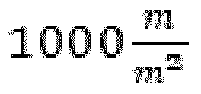
- Appareil selon la revendication 1, dans lequel le circuit d'attaque acoustique est orienté de sorte qu'une ligne parallèle à ou coïncidant avec un axe du circuit d'attaque acoustique et en intersection avec une ligne médiane de la voie de passage soit en intersection avec la ligne médiane de la voie de passage à un angle θ > ±30 degrés.
- Appareil selon la revendication 1, dans lequel la voie de passage a une masse acoustique M de

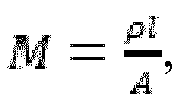
- Appareil selon la revendication 1, comprenant en outre une ouverture couplant la cavité à l'environnement ; et
une structure fournissant l'impédance dans l'ouverture. - Appareil selon la revendication 5, dans lequel la structure fournissant l'impédance comprend un matériau résistif acoustiquement dans l'ouverture.
- Appareil selon la revendication 6, dans lequel le matériau résistif acoustiquement est un treillis métallique.
- Appareil selon la revendication 1, dans lequel l'oreillette est configurée de sorte qu'une portion du circuit d'attaque acoustique se trouve à l'intérieur du pavillon de l'oreille de l'utilisateur et une autre portion du circuit d'attaque acoustique se trouve à l'extérieur du pavillon lorsque l'oreillette est en position.
- Appareil selon la revendication 1, comprenant en outre :un microphone d'avance pour détecter un bruit à l'extérieur de l'oreillette ;une circuiterie d'avance, réactive au microphone d'avance, pour fournir un signal audio d'annulation de bruit d'avance ; etune circuiterie pour combiner le signal audio d'annulation de bruit de retour et le signal audio d'annulation de bruit d'avance pour fournir le signal audio d'annulation de bruit de sortie.
- Appareil selon la revendication 1, dans lequel la buse comprend une structure de forme tronconique pour se mettre en prise avec la zone de transition entre le conduit auditif et le creux du pavillon et sceller acoustiquement le conduit auditif avec la buse.
- Appareil selon la revendication 1, dans lequel le microphone de retour se trouve radialement à une position intermédiaire entre un point auquel un diaphragme du circuit d'attaque acoustique est attaché à une bobine acoustique du circuit d'attaque acoustique et un bord du diaphragme.
- Appareil selon la revendication 1, dans lequel le microphone de retour est positionné à l'intersection du module supportant le circuit d'attaque acoustique et la voie de passage.
- Appareil selon la revendication 2, dans lequel le rapport

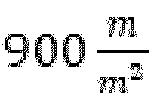
- Appareil selon la revendication 1, dans lequel la voie de passage a une superficie de coupe transversale ouverte d'au moins 10 mm2.
- Appareil selon la revendication 4, dans lequel la voie de passage a une masse acoustique M de

Applications Claiming Priority (3)
| Application Number | Priority Date | Filing Date | Title |
|---|---|---|---|
| US13/480,766 US9082388B2 (en) | 2012-05-25 | 2012-05-25 | In-ear active noise reduction earphone |
| PCT/US2013/042231 WO2013177285A1 (fr) | 2012-05-25 | 2013-05-22 | Écouteur à réduction de bruit active dans l'oreille |
| EP13726084.0A EP2856771B1 (fr) | 2012-05-25 | 2013-05-22 | Oreillette placée à l'intérieur de l'oreille avec réduction de bruit active |
Related Parent Applications (2)
| Application Number | Title | Priority Date | Filing Date |
|---|---|---|---|
| EP13726084.0A Division EP2856771B1 (fr) | 2012-05-25 | 2013-05-22 | Oreillette placée à l'intérieur de l'oreille avec réduction de bruit active |
| EP13726084.0A Division-Into EP2856771B1 (fr) | 2012-05-25 | 2013-05-22 | Oreillette placée à l'intérieur de l'oreille avec réduction de bruit active |
Publications (2)
| Publication Number | Publication Date |
|---|---|
| EP3086567A1 EP3086567A1 (fr) | 2016-10-26 |
| EP3086567B1 true EP3086567B1 (fr) | 2018-07-18 |
Family
ID=48538082
Family Applications (2)
| Application Number | Title | Priority Date | Filing Date |
|---|---|---|---|
| EP13726084.0A Active EP2856771B1 (fr) | 2012-05-25 | 2013-05-22 | Oreillette placée à l'intérieur de l'oreille avec réduction de bruit active |
| EP16172087.5A Revoked EP3086567B1 (fr) | 2012-05-25 | 2013-05-22 | Oreillette placée à l'intérieur de l'oreille avec réduction de bruit active |
Family Applications Before (1)
| Application Number | Title | Priority Date | Filing Date |
|---|---|---|---|
| EP13726084.0A Active EP2856771B1 (fr) | 2012-05-25 | 2013-05-22 | Oreillette placée à l'intérieur de l'oreille avec réduction de bruit active |
Country Status (6)
| Country | Link |
|---|---|
| US (3) | US9082388B2 (fr) |
| EP (2) | EP2856771B1 (fr) |
| JP (3) | JP6017682B2 (fr) |
| CN (2) | CN104429097B (fr) |
| MY (1) | MY168899A (fr) |
| WO (1) | WO2013177285A1 (fr) |
Families Citing this family (78)
| Publication number | Priority date | Publication date | Assignee | Title |
|---|---|---|---|---|
| US8588880B2 (en) | 2009-02-16 | 2013-11-19 | Masimo Corporation | Ear sensor |
| WO2012114155A1 (fr) * | 2011-02-25 | 2012-08-30 | Nokia Corporation | Appareil transducteur doté d'un microphone d'oreille |
| WO2016153359A2 (fr) * | 2015-03-23 | 2016-09-29 | Freebit As | Dispositif fixé à l'oreille |
| SE537587C2 (sv) * | 2012-11-28 | 2015-07-07 | Bo Franzén | Headset och öron-enhet |
| US9881601B2 (en) | 2013-06-11 | 2018-01-30 | Bose Corporation | Controlling stability in ANR devices |
| US9301040B2 (en) * | 2014-03-14 | 2016-03-29 | Bose Corporation | Pressure equalization in earphones |
| US10110984B2 (en) * | 2014-04-21 | 2018-10-23 | Apple Inc. | Wireless earphone |
| CN110418231B (zh) | 2014-05-30 | 2021-03-09 | 罗技加拿大股份有限公司 | 一种可定制耳塞 |
| US9615158B2 (en) * | 2015-03-08 | 2017-04-04 | Bose Corporation | Earpiece |
| US9905216B2 (en) | 2015-03-13 | 2018-02-27 | Bose Corporation | Voice sensing using multiple microphones |
| JP2016181741A (ja) * | 2015-03-23 | 2016-10-13 | ソニー株式会社 | ウェアラブル装置 |
| US9613615B2 (en) * | 2015-06-22 | 2017-04-04 | Sony Corporation | Noise cancellation system, headset and electronic device |
| US10057675B2 (en) | 2015-07-29 | 2018-08-21 | Bose Corporation | Integration of sensors into earphones |
| US9401158B1 (en) | 2015-09-14 | 2016-07-26 | Knowles Electronics, Llc | Microphone signal fusion |
| US9949017B2 (en) | 2015-11-24 | 2018-04-17 | Bose Corporation | Controlling ambient sound volume |
| WO2017106325A1 (fr) * | 2015-12-15 | 2017-06-22 | Westone Laboratories | Égalisation basse pression sonique ambiante |
| US9779716B2 (en) | 2015-12-30 | 2017-10-03 | Knowles Electronics, Llc | Occlusion reduction and active noise reduction based on seal quality |
| US9830930B2 (en) | 2015-12-30 | 2017-11-28 | Knowles Electronics, Llc | Voice-enhanced awareness mode |
| US9747887B2 (en) | 2016-01-12 | 2017-08-29 | Bose Corporation | Systems and methods of active noise reduction in headphones |
| US9774941B2 (en) | 2016-01-19 | 2017-09-26 | Apple Inc. | In-ear speaker hybrid audio transparency system |
| US10051357B2 (en) | 2016-01-28 | 2018-08-14 | Bose Corporation | Pressure equalization in earphones |
| US9812149B2 (en) | 2016-01-28 | 2017-11-07 | Knowles Electronics, Llc | Methods and systems for providing consistency in noise reduction during speech and non-speech periods |
| GB201602781D0 (en) | 2016-02-17 | 2016-03-30 | Soundchip Sa | In-ear earphone |
| WO2017147545A1 (fr) * | 2016-02-24 | 2017-08-31 | Avnera Corporation | Dispositifs, ensembles, composants et procédés de réduction automatique de bruit dans l'oreille |
| TWI596952B (zh) * | 2016-03-21 | 2017-08-21 | 固昌通訊股份有限公司 | 耳道式耳機 |
| KR102451114B1 (ko) | 2016-04-29 | 2022-10-05 | 삼성전자주식회사 | 마이크를 실장하는 웨어러블 음향 장치 |
| US10015581B2 (en) | 2016-06-14 | 2018-07-03 | Bose Corporation | Feedback microphone adaptor for noise canceling headphone |
| JP7163194B2 (ja) | 2016-06-22 | 2022-10-31 | ドルビー ラボラトリーズ ライセンシング コーポレイション | ヘッドフォンおよびヘッドフォン・システム |
| US9792893B1 (en) * | 2016-09-20 | 2017-10-17 | Bose Corporation | In-ear active noise reduction earphone |
| CN107124675B (zh) * | 2016-12-09 | 2019-09-13 | 美律电子(深圳)有限公司 | 耳机 |
| TWI683580B (zh) * | 2016-12-09 | 2020-01-21 | 美律實業股份有限公司 | 耳機 |
| US10841700B2 (en) * | 2016-12-29 | 2020-11-17 | Sony Corporation | Sound pickup device |
| JP6809929B2 (ja) | 2017-02-10 | 2021-01-06 | 株式会社三井ハイテック | 環状鉄心片及び環状鉄心 |
| USD860172S1 (en) | 2017-02-14 | 2019-09-17 | Spigen Korea Co., Ltd. | Earhook for earpieces |
| US10595111B2 (en) * | 2017-03-20 | 2020-03-17 | Bose Corporation | Earbud frame for acoustic driver and complimentary ear tip |
| US10553195B2 (en) | 2017-03-30 | 2020-02-04 | Bose Corporation | Dynamic compensation in active noise reduction devices |
| US10580398B2 (en) | 2017-03-30 | 2020-03-03 | Bose Corporation | Parallel compensation in active noise reduction devices |
| US10614790B2 (en) | 2017-03-30 | 2020-04-07 | Bose Corporation | Automatic gain control in an active noise reduction (ANR) signal flow path |
| EP3627493B1 (fr) | 2017-03-30 | 2024-05-15 | Bose Corporation | Compensation et commande automatique de gain dans de dispositifs de réduction active du bruit |
| US10362384B2 (en) | 2017-04-19 | 2019-07-23 | Spigen Korea Co., Ltd. | Earphone cover |
| US10250964B2 (en) * | 2017-05-10 | 2019-04-02 | Logitech Europe S.A. | Apparatus and method of forming a custom earpiece |
| USD870079S1 (en) | 2017-05-12 | 2019-12-17 | Spigen Korea Co., Ltd. | Earhook for earpieces |
| US10986432B2 (en) * | 2017-06-30 | 2021-04-20 | Bose Corporation | Customized ear tips |
| US10595114B2 (en) | 2017-07-31 | 2020-03-17 | Bose Corporation | Adaptive headphone system |
| JP7070576B2 (ja) * | 2017-09-13 | 2022-05-18 | ソニーグループ株式会社 | 音響処理装置及び音響処理方法 |
| US10096313B1 (en) | 2017-09-20 | 2018-10-09 | Bose Corporation | Parallel active noise reduction (ANR) and hear-through signal flow paths in acoustic devices |
| US11087776B2 (en) | 2017-10-30 | 2021-08-10 | Bose Corporation | Compressive hear-through in personal acoustic devices |
| US10645478B2 (en) | 2017-12-08 | 2020-05-05 | Skullcandy, Inc. | In-ear headphone for improved fit and function, and related methods |
| EP3503572B1 (fr) | 2017-12-20 | 2023-02-08 | ams AG | Dispositif audio activé d'annulation de bruit et système d'annulation de bruit |
| US10869115B2 (en) | 2018-01-03 | 2020-12-15 | Logitech Europe S.A. | Apparatus and method of forming a custom earpiece |
| US10411185B1 (en) | 2018-05-30 | 2019-09-10 | Spin Memory, Inc. | Process for creating a high density magnetic tunnel junction array test platform |
| EP3644620A1 (fr) | 2018-09-07 | 2020-04-29 | Austrian Audio GmbH | Écouteurs intra-auriculaires anc |
| EP3624112B1 (fr) | 2018-09-07 | 2024-07-17 | Austrian Audio GmbH | Écouteurs intra-auriculaires anc |
| US10820088B2 (en) | 2018-10-16 | 2020-10-27 | Bose Corporation | Active noise reduction earphone |
| KR102304077B1 (ko) * | 2018-10-28 | 2021-09-17 | 주식회사 아이앤드와이 | 이어폰 |
| EP3664466B1 (fr) * | 2018-12-07 | 2022-03-30 | GN Audio A/S | Écouteur avec microphone de rétroaction active de suppression du bruit disposé sur le côté arrière d'un diaphragme de haut-parleur |
| EP3672279B1 (fr) | 2018-12-19 | 2023-06-07 | Sonova AG | Dispositif d'aide auditive avec commande de rétroaction active |
| US11062687B2 (en) | 2019-01-04 | 2021-07-13 | Bose Corporation | Compensation for microphone roll-off variation in acoustic devices |
| WO2020161982A1 (fr) * | 2019-02-05 | 2020-08-13 | ソニー株式会社 | Dispositif acoustique |
| US10665220B1 (en) | 2019-03-05 | 2020-05-26 | Bose Corporation | Active noise reduction (ANR) system with multiple feedforward microphones and multiple controllers |
| US11062688B2 (en) | 2019-03-05 | 2021-07-13 | Bose Corporation | Placement of multiple feedforward microphones in an active noise reduction (ANR) system |
| KR102607566B1 (ko) * | 2019-04-01 | 2023-11-30 | 삼성전자주식회사 | 음향 장치의 착용 감지 방법 및 이를 지원하는 음향 장치 |
| GB2584535B (en) * | 2019-04-02 | 2021-12-01 | Tymphany Acoustic Tech Huizhou Co Ltd | In-ear headphone device with active noise control |
| US10873809B2 (en) | 2019-05-24 | 2020-12-22 | Bose Corporation | Dynamic control of multiple feedforward microphones in active noise reduction devices |
| US10764699B1 (en) | 2019-08-09 | 2020-09-01 | Bose Corporation | Managing characteristics of earpieces using controlled calibration |
| US11164554B2 (en) | 2020-03-06 | 2021-11-02 | Bose Corporation | Wearable active noise reduction (ANR) device having low frequency feedback loop modulation |
| EP4131253A4 (fr) * | 2020-03-31 | 2023-09-06 | Sony Group Corporation | Dispositif de reproduction de son, dispositif de traitement de signal et procédé de traitement de signal |
| US10937410B1 (en) | 2020-04-24 | 2021-03-02 | Bose Corporation | Managing characteristics of active noise reduction |
| WO2022042747A1 (fr) | 2020-08-31 | 2022-03-03 | 华为技术有限公司 | Écouteurs et terminal mobile |
| US11523230B2 (en) * | 2020-12-14 | 2022-12-06 | Bose Corporation | Earpiece with moving coil transducer and acoustic back volume |
| KR102871761B1 (ko) * | 2021-01-12 | 2025-10-16 | 삼성전자 주식회사 | 마이크로폰 모듈 및 상기 마이크로폰 모듈을 포함하는 전자 장치 |
| US11483655B1 (en) | 2021-03-31 | 2022-10-25 | Bose Corporation | Gain-adaptive active noise reduction (ANR) device |
| USD962204S1 (en) * | 2021-09-10 | 2022-08-30 | Class and Culture LLC | Pair of tapered earbud covers |
| CN114584912B (zh) * | 2022-03-04 | 2025-03-28 | 听智慧(南京)科技有限公司 | 制造定制无线耳机的前腔导音管的方法 |
| US12444399B2 (en) | 2022-09-02 | 2025-10-14 | Bose Corporation | Active damping of resonant canal modes |
| US12190855B2 (en) | 2022-09-06 | 2025-01-07 | Bose Corporation | Active noise reduction with impulse detection and suppression |
| CN115604612B (zh) * | 2022-10-28 | 2026-03-10 | 歌尔科技有限公司 | 麦克风位置调整方法、装置、系统与可读存储介质 |
| WO2024205790A1 (fr) | 2023-03-30 | 2024-10-03 | Bose Corporation | Commande d'interface par l'intermédiaire d'un son conduit par le corps |
Citations (8)
| Publication number | Priority date | Publication date | Assignee | Title |
|---|---|---|---|---|
| DE3719963A1 (de) | 1986-09-26 | 1988-03-31 | Deutsch Franz Forsch Inst | Schutzvorrichtung gegen laermeinwirkungen |
| WO1989012432A1 (fr) | 1988-06-24 | 1989-12-28 | Sensor Electronics, Inc. | Systeme actif de reduction de bruit |
| WO2007054807A2 (fr) | 2005-11-11 | 2007-05-18 | Phitek Systems Limited | Casque d'ecoute a annulation du bruit |
| US20080159554A1 (en) | 2006-12-29 | 2008-07-03 | Industrial Technology Research Institute | Noise reduction device and method thereof |
| US20090161885A1 (en) | 2007-10-02 | 2009-06-25 | Mark Donaldson | Component for noise reducing earphone |
| US20110044464A1 (en) | 2009-08-18 | 2011-02-24 | Roman Sapiejewski | Feedforward anr device acoustics |
| US8077874B2 (en) | 2006-04-24 | 2011-12-13 | Bose Corporation | Active noise reduction microphone placing |
| US8144890B2 (en) | 2009-04-28 | 2012-03-27 | Bose Corporation | ANR settings boot loading |
Family Cites Families (29)
| Publication number | Priority date | Publication date | Assignee | Title |
|---|---|---|---|---|
| US4455675A (en) | 1982-04-28 | 1984-06-19 | Bose Corporation | Headphoning |
| JPS6040187U (ja) * | 1983-08-29 | 1985-03-20 | 藤木電器株式会社 | イヤホ−ン |
| JPH02101697U (fr) * | 1989-01-31 | 1990-08-13 | ||
| US5305387A (en) * | 1989-10-27 | 1994-04-19 | Bose Corporation | Earphoning |
| US6567525B1 (en) | 1994-06-17 | 2003-05-20 | Bose Corporation | Supra aural active noise reduction headphones |
| US6683965B1 (en) * | 1995-10-20 | 2004-01-27 | Bose Corporation | In-the-ear noise reduction headphones |
| US6597792B1 (en) | 1999-07-15 | 2003-07-22 | Bose Corporation | Headset noise reducing |
| US6567524B1 (en) | 2000-09-01 | 2003-05-20 | Nacre As | Noise protection verification device |
| US7039195B1 (en) | 2000-09-01 | 2006-05-02 | Nacre As | Ear terminal |
| DK1537759T3 (da) | 2002-09-02 | 2014-10-27 | Oticon As | Fremgangsmåde til at modvirke okklusionseffekter |
| US7024010B2 (en) | 2003-05-19 | 2006-04-04 | Adaptive Technologies, Inc. | Electronic earplug for monitoring and reducing wideband noise at the tympanic membrane |
| US20060269090A1 (en) * | 2005-05-27 | 2006-11-30 | Roman Sapiejewski | Supra-aural headphone noise reducing |
| US8571227B2 (en) * | 2005-11-11 | 2013-10-29 | Phitek Systems Limited | Noise cancellation earphone |
| JP4709017B2 (ja) | 2006-01-12 | 2011-06-22 | ソニー株式会社 | イヤホン装置 |
| US7916888B2 (en) | 2006-06-30 | 2011-03-29 | Bose Corporation | In-ear headphones |
| GB2446982B (en) * | 2007-02-16 | 2009-04-29 | Wolfson Microelectronics Plc | Ear-worn speaker-carrying devices |
| US8180090B2 (en) * | 2007-05-11 | 2012-05-15 | Sony Ericsson Mobile Communications Ab | Headset with exchangeable speaker |
| JP2009055248A (ja) * | 2007-08-24 | 2009-03-12 | Sony Corp | イヤホン |
| EP2206358B1 (fr) | 2007-09-24 | 2014-07-30 | Sound Innovations, LLC | Dispositif numérique électronique intra-auriculaire de communication et de suppression de bruit |
| JP5114611B2 (ja) * | 2007-09-28 | 2013-01-09 | 株式会社DiMAGIC Corporation | ノイズ制御システム |
| JP4469898B2 (ja) * | 2008-02-15 | 2010-06-02 | 株式会社東芝 | 外耳道共鳴補正装置 |
| WO2010004624A1 (fr) * | 2008-07-09 | 2010-01-14 | パイオニア株式会社 | Écouteur |
| US8467539B2 (en) * | 2008-11-26 | 2013-06-18 | Bose Corporation | High transmission loss cushion |
| US8238570B2 (en) * | 2009-03-30 | 2012-08-07 | Bose Corporation | Personal acoustic device position determination |
| US8472637B2 (en) * | 2010-03-30 | 2013-06-25 | Bose Corporation | Variable ANR transform compression |
| US8737636B2 (en) * | 2009-07-10 | 2014-05-27 | Qualcomm Incorporated | Systems, methods, apparatus, and computer-readable media for adaptive active noise cancellation |
| JP2012023637A (ja) | 2010-07-15 | 2012-02-02 | Audio Technica Corp | ノイズキャンセルヘッドホン |
| US9037458B2 (en) | 2011-02-23 | 2015-05-19 | Qualcomm Incorporated | Systems, methods, apparatus, and computer-readable media for spatially selective audio augmentation |
| JP2014533444A (ja) | 2011-06-01 | 2014-12-11 | フィテック システムズ リミテッドPhitek Systems Limited | 能動騒音低減を組み込むインイヤー型装置 |
-
2012
- 2012-05-25 US US13/480,766 patent/US9082388B2/en active Active
-
2013
- 2013-04-17 US US13/864,865 patent/US8682001B2/en active Active
- 2013-05-22 EP EP13726084.0A patent/EP2856771B1/fr active Active
- 2013-05-22 MY MYPI2014003237A patent/MY168899A/en unknown
- 2013-05-22 EP EP16172087.5A patent/EP3086567B1/fr not_active Revoked
- 2013-05-22 JP JP2015514153A patent/JP6017682B2/ja active Active
- 2013-05-22 CN CN201380036568.2A patent/CN104429097B/zh active Active
- 2013-05-22 WO PCT/US2013/042231 patent/WO2013177285A1/fr not_active Ceased
- 2013-05-22 CN CN201710943694.6A patent/CN107864418B/zh active Active
-
2015
- 2015-06-08 US US14/733,315 patent/US10206033B2/en active Active
-
2016
- 2016-09-27 JP JP2016187934A patent/JP6215428B2/ja active Active
-
2017
- 2017-09-20 JP JP2017179952A patent/JP6556795B2/ja active Active
Patent Citations (8)
| Publication number | Priority date | Publication date | Assignee | Title |
|---|---|---|---|---|
| DE3719963A1 (de) | 1986-09-26 | 1988-03-31 | Deutsch Franz Forsch Inst | Schutzvorrichtung gegen laermeinwirkungen |
| WO1989012432A1 (fr) | 1988-06-24 | 1989-12-28 | Sensor Electronics, Inc. | Systeme actif de reduction de bruit |
| WO2007054807A2 (fr) | 2005-11-11 | 2007-05-18 | Phitek Systems Limited | Casque d'ecoute a annulation du bruit |
| US8077874B2 (en) | 2006-04-24 | 2011-12-13 | Bose Corporation | Active noise reduction microphone placing |
| US20080159554A1 (en) | 2006-12-29 | 2008-07-03 | Industrial Technology Research Institute | Noise reduction device and method thereof |
| US20090161885A1 (en) | 2007-10-02 | 2009-06-25 | Mark Donaldson | Component for noise reducing earphone |
| US8144890B2 (en) | 2009-04-28 | 2012-03-27 | Bose Corporation | ANR settings boot loading |
| US20110044464A1 (en) | 2009-08-18 | 2011-02-24 | Roman Sapiejewski | Feedforward anr device acoustics |
Non-Patent Citations (1)
| Title |
|---|
| "The Illustrated Dictionary of Electronics", 2001, pages: 9, XP055585036 |
Also Published As
| Publication number | Publication date |
|---|---|
| JP6215428B2 (ja) | 2017-10-18 |
| US20130315412A1 (en) | 2013-11-28 |
| CN107864418B (zh) | 2020-08-07 |
| JP2017022766A (ja) | 2017-01-26 |
| CN104429097B (zh) | 2017-10-31 |
| US20130315411A1 (en) | 2013-11-28 |
| JP6017682B2 (ja) | 2016-11-02 |
| WO2013177285A1 (fr) | 2013-11-28 |
| EP3086567A1 (fr) | 2016-10-26 |
| US9082388B2 (en) | 2015-07-14 |
| CN107864418A (zh) | 2018-03-30 |
| HK1207232A1 (en) | 2016-01-22 |
| EP2856771B1 (fr) | 2016-07-13 |
| US20150304771A1 (en) | 2015-10-22 |
| JP2015521008A (ja) | 2015-07-23 |
| EP2856771A1 (fr) | 2015-04-08 |
| CN104429097A (zh) | 2015-03-18 |
| US8682001B2 (en) | 2014-03-25 |
| JP6556795B2 (ja) | 2019-08-07 |
| US10206033B2 (en) | 2019-02-12 |
| JP2018038043A (ja) | 2018-03-08 |
| MY168899A (en) | 2018-12-04 |
Similar Documents
| Publication | Publication Date | Title |
|---|---|---|
| EP3086567B1 (fr) | Oreillette placée à l'intérieur de l'oreille avec réduction de bruit active | |
| US9269342B2 (en) | In-ear active noise reduction earphone | |
| EP3117629B1 (fr) | Égalisation de pression dans des écouteurs | |
| US10021478B2 (en) | In-the-ear automatic-noise-reduction devices, assemblies, components, and methods | |
| US9813794B2 (en) | Noise reduction with in-ear headphone | |
| CN109565626B (zh) | 具有主动降噪功能的声学开放式耳机 | |
| WO2017132456A1 (fr) | Égalisation de pression dans des écouteurs | |
| JPH0847074A (ja) | スープラオーラルヘッドホン | |
| CN108353222A (zh) | 无线噪声消除耳塞 | |
| HK1207232B (en) | In-ear active noise reduction earphone |
Legal Events
| Date | Code | Title | Description |
|---|---|---|---|
| PUAI | Public reference made under article 153(3) epc to a published international application that has entered the european phase |
Free format text: ORIGINAL CODE: 0009012 |
|
| AC | Divisional application: reference to earlier application |
Ref document number: 2856771 Country of ref document: EP Kind code of ref document: P |
|
| AK | Designated contracting states |
Kind code of ref document: A1 Designated state(s): AL AT BE BG CH CY CZ DE DK EE ES FI FR GB GR HR HU IE IS IT LI LT LU LV MC MK MT NL NO PL PT RO RS SE SI SK SM TR |
|
| 17P | Request for examination filed |
Effective date: 20161007 |
|
| RBV | Designated contracting states (corrected) |
Designated state(s): AL AT BE BG CH CY CZ DE DK EE ES FI FR GB GR HR HU IE IS IT LI LT LU LV MC MK MT NL NO PL PT RO RS SE SI SK SM TR |
|
| STAA | Information on the status of an ep patent application or granted ep patent |
Free format text: STATUS: EXAMINATION IS IN PROGRESS |
|
| 17Q | First examination report despatched |
Effective date: 20170206 |
|
| GRAP | Despatch of communication of intention to grant a patent |
Free format text: ORIGINAL CODE: EPIDOSNIGR1 |
|
| STAA | Information on the status of an ep patent application or granted ep patent |
Free format text: STATUS: GRANT OF PATENT IS INTENDED |
|
| INTG | Intention to grant announced |
Effective date: 20180213 |
|
| GRAS | Grant fee paid |
Free format text: ORIGINAL CODE: EPIDOSNIGR3 |
|
| GRAA | (expected) grant |
Free format text: ORIGINAL CODE: 0009210 |
|
| STAA | Information on the status of an ep patent application or granted ep patent |
Free format text: STATUS: THE PATENT HAS BEEN GRANTED |
|
| AC | Divisional application: reference to earlier application |
Ref document number: 2856771 Country of ref document: EP Kind code of ref document: P |
|
| AK | Designated contracting states |
Kind code of ref document: B1 Designated state(s): AL AT BE BG CH CY CZ DE DK EE ES FI FR GB GR HR HU IE IS IT LI LT LU LV MC MK MT NL NO PL PT RO RS SE SI SK SM TR |
|
| REG | Reference to a national code |
Ref country code: GB Ref legal event code: FG4D |
|
| REG | Reference to a national code |
Ref country code: CH Ref legal event code: EP |
|
| REG | Reference to a national code |
Ref country code: IE Ref legal event code: FG4D |
|
| REG | Reference to a national code |
Ref country code: AT Ref legal event code: REF Ref document number: 1020643 Country of ref document: AT Kind code of ref document: T Effective date: 20180815 |
|
| REG | Reference to a national code |
Ref country code: DE Ref legal event code: R096 Ref document number: 602013040696 Country of ref document: DE |
|
| REG | Reference to a national code |
Ref country code: NL Ref legal event code: MP Effective date: 20180718 |
|
| REG | Reference to a national code |
Ref country code: LT Ref legal event code: MG4D |
|
| REG | Reference to a national code |
Ref country code: AT Ref legal event code: MK05 Ref document number: 1020643 Country of ref document: AT Kind code of ref document: T Effective date: 20180718 |
|
| PG25 | Lapsed in a contracting state [announced via postgrant information from national office to epo] |
Ref country code: NL Free format text: LAPSE BECAUSE OF FAILURE TO SUBMIT A TRANSLATION OF THE DESCRIPTION OR TO PAY THE FEE WITHIN THE PRESCRIBED TIME-LIMIT Effective date: 20180718 |
|
| PG25 | Lapsed in a contracting state [announced via postgrant information from national office to epo] |
Ref country code: SE Free format text: LAPSE BECAUSE OF FAILURE TO SUBMIT A TRANSLATION OF THE DESCRIPTION OR TO PAY THE FEE WITHIN THE PRESCRIBED TIME-LIMIT Effective date: 20180718 Ref country code: NO Free format text: LAPSE BECAUSE OF FAILURE TO SUBMIT A TRANSLATION OF THE DESCRIPTION OR TO PAY THE FEE WITHIN THE PRESCRIBED TIME-LIMIT Effective date: 20181018 Ref country code: AT Free format text: LAPSE BECAUSE OF FAILURE TO SUBMIT A TRANSLATION OF THE DESCRIPTION OR TO PAY THE FEE WITHIN THE PRESCRIBED TIME-LIMIT Effective date: 20180718 Ref country code: FI Free format text: LAPSE BECAUSE OF FAILURE TO SUBMIT A TRANSLATION OF THE DESCRIPTION OR TO PAY THE FEE WITHIN THE PRESCRIBED TIME-LIMIT Effective date: 20180718 Ref country code: GR Free format text: LAPSE BECAUSE OF FAILURE TO SUBMIT A TRANSLATION OF THE DESCRIPTION OR TO PAY THE FEE WITHIN THE PRESCRIBED TIME-LIMIT Effective date: 20181019 Ref country code: RS Free format text: LAPSE BECAUSE OF FAILURE TO SUBMIT A TRANSLATION OF THE DESCRIPTION OR TO PAY THE FEE WITHIN THE PRESCRIBED TIME-LIMIT Effective date: 20180718 Ref country code: LT Free format text: LAPSE BECAUSE OF FAILURE TO SUBMIT A TRANSLATION OF THE DESCRIPTION OR TO PAY THE FEE WITHIN THE PRESCRIBED TIME-LIMIT Effective date: 20180718 Ref country code: PL Free format text: LAPSE BECAUSE OF FAILURE TO SUBMIT A TRANSLATION OF THE DESCRIPTION OR TO PAY THE FEE WITHIN THE PRESCRIBED TIME-LIMIT Effective date: 20180718 Ref country code: IS Free format text: LAPSE BECAUSE OF FAILURE TO SUBMIT A TRANSLATION OF THE DESCRIPTION OR TO PAY THE FEE WITHIN THE PRESCRIBED TIME-LIMIT Effective date: 20181118 Ref country code: BG Free format text: LAPSE BECAUSE OF FAILURE TO SUBMIT A TRANSLATION OF THE DESCRIPTION OR TO PAY THE FEE WITHIN THE PRESCRIBED TIME-LIMIT Effective date: 20181018 |
|
| PG25 | Lapsed in a contracting state [announced via postgrant information from national office to epo] |
Ref country code: AL Free format text: LAPSE BECAUSE OF FAILURE TO SUBMIT A TRANSLATION OF THE DESCRIPTION OR TO PAY THE FEE WITHIN THE PRESCRIBED TIME-LIMIT Effective date: 20180718 Ref country code: LV Free format text: LAPSE BECAUSE OF FAILURE TO SUBMIT A TRANSLATION OF THE DESCRIPTION OR TO PAY THE FEE WITHIN THE PRESCRIBED TIME-LIMIT Effective date: 20180718 Ref country code: HR Free format text: LAPSE BECAUSE OF FAILURE TO SUBMIT A TRANSLATION OF THE DESCRIPTION OR TO PAY THE FEE WITHIN THE PRESCRIBED TIME-LIMIT Effective date: 20180718 |
|
| REG | Reference to a national code |
Ref country code: DE Ref legal event code: R026 Ref document number: 602013040696 Country of ref document: DE |
|
| PLBI | Opposition filed |
Free format text: ORIGINAL CODE: 0009260 |
|
| PG25 | Lapsed in a contracting state [announced via postgrant information from national office to epo] |
Ref country code: ES Free format text: LAPSE BECAUSE OF FAILURE TO SUBMIT A TRANSLATION OF THE DESCRIPTION OR TO PAY THE FEE WITHIN THE PRESCRIBED TIME-LIMIT Effective date: 20180718 Ref country code: CZ Free format text: LAPSE BECAUSE OF FAILURE TO SUBMIT A TRANSLATION OF THE DESCRIPTION OR TO PAY THE FEE WITHIN THE PRESCRIBED TIME-LIMIT Effective date: 20180718 Ref country code: RO Free format text: LAPSE BECAUSE OF FAILURE TO SUBMIT A TRANSLATION OF THE DESCRIPTION OR TO PAY THE FEE WITHIN THE PRESCRIBED TIME-LIMIT Effective date: 20180718 Ref country code: IT Free format text: LAPSE BECAUSE OF FAILURE TO SUBMIT A TRANSLATION OF THE DESCRIPTION OR TO PAY THE FEE WITHIN THE PRESCRIBED TIME-LIMIT Effective date: 20180718 Ref country code: EE Free format text: LAPSE BECAUSE OF FAILURE TO SUBMIT A TRANSLATION OF THE DESCRIPTION OR TO PAY THE FEE WITHIN THE PRESCRIBED TIME-LIMIT Effective date: 20180718 |
|
| PLAX | Notice of opposition and request to file observation + time limit sent |
Free format text: ORIGINAL CODE: EPIDOSNOBS2 |
|
| 26 | Opposition filed |
Opponent name: K/S HIMPP Effective date: 20190417 |
|
| PG25 | Lapsed in a contracting state [announced via postgrant information from national office to epo] |
Ref country code: SK Free format text: LAPSE BECAUSE OF FAILURE TO SUBMIT A TRANSLATION OF THE DESCRIPTION OR TO PAY THE FEE WITHIN THE PRESCRIBED TIME-LIMIT Effective date: 20180718 Ref country code: DK Free format text: LAPSE BECAUSE OF FAILURE TO SUBMIT A TRANSLATION OF THE DESCRIPTION OR TO PAY THE FEE WITHIN THE PRESCRIBED TIME-LIMIT Effective date: 20180718 Ref country code: SM Free format text: LAPSE BECAUSE OF FAILURE TO SUBMIT A TRANSLATION OF THE DESCRIPTION OR TO PAY THE FEE WITHIN THE PRESCRIBED TIME-LIMIT Effective date: 20180718 |
|
| PG25 | Lapsed in a contracting state [announced via postgrant information from national office to epo] |
Ref country code: SI Free format text: LAPSE BECAUSE OF FAILURE TO SUBMIT A TRANSLATION OF THE DESCRIPTION OR TO PAY THE FEE WITHIN THE PRESCRIBED TIME-LIMIT Effective date: 20180718 |
|
| PLBB | Reply of patent proprietor to notice(s) of opposition received |
Free format text: ORIGINAL CODE: EPIDOSNOBS3 |
|
| REG | Reference to a national code |
Ref country code: CH Ref legal event code: PL |
|
| PG25 | Lapsed in a contracting state [announced via postgrant information from national office to epo] |
Ref country code: MC Free format text: LAPSE BECAUSE OF FAILURE TO SUBMIT A TRANSLATION OF THE DESCRIPTION OR TO PAY THE FEE WITHIN THE PRESCRIBED TIME-LIMIT Effective date: 20180718 Ref country code: CH Free format text: LAPSE BECAUSE OF NON-PAYMENT OF DUE FEES Effective date: 20190531 Ref country code: LI Free format text: LAPSE BECAUSE OF NON-PAYMENT OF DUE FEES Effective date: 20190531 |
|
| REG | Reference to a national code |
Ref country code: BE Ref legal event code: MM Effective date: 20190531 |
|
| PG25 | Lapsed in a contracting state [announced via postgrant information from national office to epo] |
Ref country code: LU Free format text: LAPSE BECAUSE OF NON-PAYMENT OF DUE FEES Effective date: 20190522 |
|
| PG25 | Lapsed in a contracting state [announced via postgrant information from national office to epo] |
Ref country code: TR Free format text: LAPSE BECAUSE OF FAILURE TO SUBMIT A TRANSLATION OF THE DESCRIPTION OR TO PAY THE FEE WITHIN THE PRESCRIBED TIME-LIMIT Effective date: 20180718 |
|
| PG25 | Lapsed in a contracting state [announced via postgrant information from national office to epo] |
Ref country code: IE Free format text: LAPSE BECAUSE OF NON-PAYMENT OF DUE FEES Effective date: 20190522 |
|
| PG25 | Lapsed in a contracting state [announced via postgrant information from national office to epo] |
Ref country code: BE Free format text: LAPSE BECAUSE OF NON-PAYMENT OF DUE FEES Effective date: 20190531 |
|
| PG25 | Lapsed in a contracting state [announced via postgrant information from national office to epo] |
Ref country code: PT Free format text: LAPSE BECAUSE OF FAILURE TO SUBMIT A TRANSLATION OF THE DESCRIPTION OR TO PAY THE FEE WITHIN THE PRESCRIBED TIME-LIMIT Effective date: 20181118 |
|
| PG25 | Lapsed in a contracting state [announced via postgrant information from national office to epo] |
Ref country code: CY Free format text: LAPSE BECAUSE OF FAILURE TO SUBMIT A TRANSLATION OF THE DESCRIPTION OR TO PAY THE FEE WITHIN THE PRESCRIBED TIME-LIMIT Effective date: 20180718 |
|
| PG25 | Lapsed in a contracting state [announced via postgrant information from national office to epo] |
Ref country code: HU Free format text: LAPSE BECAUSE OF FAILURE TO SUBMIT A TRANSLATION OF THE DESCRIPTION OR TO PAY THE FEE WITHIN THE PRESCRIBED TIME-LIMIT; INVALID AB INITIO Effective date: 20130522 Ref country code: MT Free format text: LAPSE BECAUSE OF FAILURE TO SUBMIT A TRANSLATION OF THE DESCRIPTION OR TO PAY THE FEE WITHIN THE PRESCRIBED TIME-LIMIT Effective date: 20180718 |
|
| RDAF | Communication despatched that patent is revoked |
Free format text: ORIGINAL CODE: EPIDOSNREV1 |
|
| APBM | Appeal reference recorded |
Free format text: ORIGINAL CODE: EPIDOSNREFNO |
|
| APBP | Date of receipt of notice of appeal recorded |
Free format text: ORIGINAL CODE: EPIDOSNNOA2O |
|
| APAH | Appeal reference modified |
Free format text: ORIGINAL CODE: EPIDOSCREFNO |
|
| APBQ | Date of receipt of statement of grounds of appeal recorded |
Free format text: ORIGINAL CODE: EPIDOSNNOA3O |
|
| PG25 | Lapsed in a contracting state [announced via postgrant information from national office to epo] |
Ref country code: MK Free format text: LAPSE BECAUSE OF FAILURE TO SUBMIT A TRANSLATION OF THE DESCRIPTION OR TO PAY THE FEE WITHIN THE PRESCRIBED TIME-LIMIT Effective date: 20180718 |
|
| P01 | Opt-out of the competence of the unified patent court (upc) registered |
Effective date: 20230328 |
|
| APAH | Appeal reference modified |
Free format text: ORIGINAL CODE: EPIDOSCREFNO |
|
| PGFP | Annual fee paid to national office [announced via postgrant information from national office to epo] |
Ref country code: GB Payment date: 20240419 Year of fee payment: 12 |
|
| PGFP | Annual fee paid to national office [announced via postgrant information from national office to epo] |
Ref country code: DE Payment date: 20240418 Year of fee payment: 12 |
|
| PGFP | Annual fee paid to national office [announced via postgrant information from national office to epo] |
Ref country code: FR Payment date: 20240418 Year of fee payment: 12 |
|
| REG | Reference to a national code |
Ref country code: DE Ref legal event code: R103 Ref document number: 602013040696 Country of ref document: DE Ref country code: DE Ref legal event code: R064 Ref document number: 602013040696 Country of ref document: DE |
|
| APBU | Appeal procedure closed |
Free format text: ORIGINAL CODE: EPIDOSNNOA9O |
|
| RDAG | Patent revoked |
Free format text: ORIGINAL CODE: 0009271 |
|
| STAA | Information on the status of an ep patent application or granted ep patent |
Free format text: STATUS: PATENT REVOKED |
|
| REG | Reference to a national code |
Ref country code: CH Ref legal event code: PL |
|
| 27W | Patent revoked |
Effective date: 20241017 |
|
| GBPR | Gb: patent revoked under art. 102 of the ep convention designating the uk as contracting state |
Effective date: 20241017 |