EP3087977A1 - Comprimé d'agomélatine stable de type i et son procédé de préparation - Google Patents
Comprimé d'agomélatine stable de type i et son procédé de préparation Download PDFInfo
- Publication number
- EP3087977A1 EP3087977A1 EP14873987.3A EP14873987A EP3087977A1 EP 3087977 A1 EP3087977 A1 EP 3087977A1 EP 14873987 A EP14873987 A EP 14873987A EP 3087977 A1 EP3087977 A1 EP 3087977A1
- Authority
- EP
- European Patent Office
- Prior art keywords
- crystalline
- agomelatine
- protective agent
- polyvinylpyrrolidone
- raw material
- Prior art date
- Legal status (The legal status is an assumption and is not a legal conclusion. Google has not performed a legal analysis and makes no representation as to the accuracy of the status listed.)
- Withdrawn
Links
Images





Classifications
-
- A—HUMAN NECESSITIES
- A61—MEDICAL OR VETERINARY SCIENCE; HYGIENE
- A61K—PREPARATIONS FOR MEDICAL, DENTAL OR TOILETRY PURPOSES
- A61K31/00—Medicinal preparations containing organic active ingredients
- A61K31/16—Amides, e.g. hydroxamic acids
- A61K31/165—Amides, e.g. hydroxamic acids having aromatic rings, e.g. colchicine, atenolol, progabide
-
- A—HUMAN NECESSITIES
- A61—MEDICAL OR VETERINARY SCIENCE; HYGIENE
- A61K—PREPARATIONS FOR MEDICAL, DENTAL OR TOILETRY PURPOSES
- A61K9/00—Medicinal preparations characterised by special physical form
- A61K9/20—Pills, tablets, discs, rods
- A61K9/2004—Excipients; Inactive ingredients
- A61K9/2009—Inorganic compounds
-
- A—HUMAN NECESSITIES
- A61—MEDICAL OR VETERINARY SCIENCE; HYGIENE
- A61K—PREPARATIONS FOR MEDICAL, DENTAL OR TOILETRY PURPOSES
- A61K9/00—Medicinal preparations characterised by special physical form
- A61K9/20—Pills, tablets, discs, rods
- A61K9/2004—Excipients; Inactive ingredients
- A61K9/2013—Organic compounds, e.g. phospholipids, fats
-
- A—HUMAN NECESSITIES
- A61—MEDICAL OR VETERINARY SCIENCE; HYGIENE
- A61K—PREPARATIONS FOR MEDICAL, DENTAL OR TOILETRY PURPOSES
- A61K9/00—Medicinal preparations characterised by special physical form
- A61K9/20—Pills, tablets, discs, rods
- A61K9/2004—Excipients; Inactive ingredients
- A61K9/2013—Organic compounds, e.g. phospholipids, fats
- A61K9/2018—Sugars, or sugar alcohols, e.g. lactose, mannitol; Derivatives thereof, e.g. polysorbates
-
- A—HUMAN NECESSITIES
- A61—MEDICAL OR VETERINARY SCIENCE; HYGIENE
- A61K—PREPARATIONS FOR MEDICAL, DENTAL OR TOILETRY PURPOSES
- A61K9/00—Medicinal preparations characterised by special physical form
- A61K9/20—Pills, tablets, discs, rods
- A61K9/2004—Excipients; Inactive ingredients
- A61K9/2022—Organic macromolecular compounds
- A61K9/2027—Organic macromolecular compounds obtained by reactions only involving carbon-to-carbon unsaturated bonds, e.g. polyvinyl pyrrolidone, poly(meth)acrylates
-
- A—HUMAN NECESSITIES
- A61—MEDICAL OR VETERINARY SCIENCE; HYGIENE
- A61K—PREPARATIONS FOR MEDICAL, DENTAL OR TOILETRY PURPOSES
- A61K9/00—Medicinal preparations characterised by special physical form
- A61K9/20—Pills, tablets, discs, rods
- A61K9/2004—Excipients; Inactive ingredients
- A61K9/2022—Organic macromolecular compounds
- A61K9/205—Polysaccharides, e.g. alginate, gums; Cyclodextrin
- A61K9/2054—Cellulose; Cellulose derivatives, e.g. hydroxypropyl methylcellulose
-
- A—HUMAN NECESSITIES
- A61—MEDICAL OR VETERINARY SCIENCE; HYGIENE
- A61K—PREPARATIONS FOR MEDICAL, DENTAL OR TOILETRY PURPOSES
- A61K9/00—Medicinal preparations characterised by special physical form
- A61K9/20—Pills, tablets, discs, rods
- A61K9/2072—Pills, tablets, discs, rods characterised by shape, structure or size; Tablets with holes, special break lines or identification marks; Partially coated tablets; Disintegrating flat shaped forms
- A61K9/2077—Tablets comprising drug-containing microparticles in a substantial amount of supporting matrix; Multiparticulate tablets
-
- A—HUMAN NECESSITIES
- A61—MEDICAL OR VETERINARY SCIENCE; HYGIENE
- A61K—PREPARATIONS FOR MEDICAL, DENTAL OR TOILETRY PURPOSES
- A61K9/00—Medicinal preparations characterised by special physical form
- A61K9/20—Pills, tablets, discs, rods
- A61K9/2095—Tabletting processes
-
- A—HUMAN NECESSITIES
- A61—MEDICAL OR VETERINARY SCIENCE; HYGIENE
- A61P—SPECIFIC THERAPEUTIC ACTIVITY OF CHEMICAL COMPOUNDS OR MEDICINAL PREPARATIONS
- A61P25/00—Drugs for disorders of the nervous system
- A61P25/20—Hypnotics; Sedatives
-
- A—HUMAN NECESSITIES
- A61—MEDICAL OR VETERINARY SCIENCE; HYGIENE
- A61P—SPECIFIC THERAPEUTIC ACTIVITY OF CHEMICAL COMPOUNDS OR MEDICINAL PREPARATIONS
- A61P25/00—Drugs for disorders of the nervous system
- A61P25/22—Anxiolytics
-
- A—HUMAN NECESSITIES
- A61—MEDICAL OR VETERINARY SCIENCE; HYGIENE
- A61P—SPECIFIC THERAPEUTIC ACTIVITY OF CHEMICAL COMPOUNDS OR MEDICINAL PREPARATIONS
- A61P25/00—Drugs for disorders of the nervous system
- A61P25/24—Antidepressants
Definitions
- the present invention belongs to technical field of pharmaceutical preparations, and relates to a stable crystalline I-form agomelatine tablet and a manufacture method thereof.
- Agomelatine is a melatonin drug for mental diseases.
- agomelatine is not only the first melatonin receptor agonist, but also a 5-hydroxytryptamine 2C (5-HT2C) receptor antagonist.
- Animal tests and clinical research demonstrate that the drug has anti-depression, anti-anxiety, sleep rhythm-adjusting and circadian clock-adjusting effects, with less adverse reaction, no bad influence on sexual function and no withdrawal syndrome.
- the first melatonin receptor agonist agomelatine (Valdoxan) is a melatonin analogue, and also a 5-hydroxytryptamine 2C (5-HT2C) receptor antagonist.
- Melatonin has an affinity Ki of 8.85 ⁇ 10 -11 and 2.63 ⁇ 10 -11 with its receptors MT1 and MT2, respectively.
- Agomelatine very similar to melatonin, also has high affinity with clonal human melatonin receptors MT1 and MT2 (Ki is 6.15 ⁇ 10 -11 and 2.68 ⁇ 10 -11 , respectively).
- agomelatine has a better curative effect on the patients with depression, and the adverse reaction is very little.
- 5-HT2C receptor blocking agent alone does not exhibit an antidepressant effect.
- Agomelatine can block 5-HT2C receptor.
- animal tests show that melatonin also has a small antidepressant effect, and studies show that stress is related with melatonin secretion, but no evident antidepressant effect is observed in a human body after administration of melatonin.
- agomelatine against depression is likely be associated with increased plasticity of hippocampus neurons and neuronal hyperplasia.
- the proliferation, regeneration and death of brain nerve cells of an adult rat were detected by an immunostaining method, and the result showed that long-term (three weeks) administration of agomelatine could increase cell proliferation and neuronal regeneration in hippocampal ventral dentate gyrus, which region is associated with emotional response.
- long-term administration 4 hours or nine weeks
- Prolonging the time for administration, cell proliferation and neuronal regeneration occurred in the entire dentate gyrus region, which implied that agomelatine could increase hippocampal neurogenesis to different degrees, resulting in new granulosa cells.
- Agomelatine is developed by Servier Company, and currently has been available on the market. It has a chemical structure bellow:
- Agomelatine tablet is a commonly-used dosage form in clinic, but there exist the following difficulties in the manufacture of crystalline I-form agomelatine tablet.
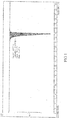
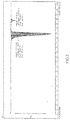
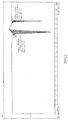
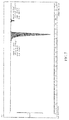
- the crystalline I-form agomelatine raw material is sensitive to pulverization, grinding, pressure, heat and the like, and transformation thereof to II-form crystals occurs to different degrees. Change of the crystalline I-form raw material in pulverization, grinding, and tabletting (at a pressure of 10 kg) was detected by DSC (see figures 1-4 ).
- An object of the present invention is to overcome disadvantages and deficiencies of the prior art by providing a novel crystalline I-form agomelatine tablet and a manufacture method of such tablet. To achieve this object, the present invention provides the following technical solution.
- a crystalline I-form agomelatine tablet is characterized in that it is composed of crystalline I-form agomelatine raw material, a protective agent, and a pharmaceutical adjuvant, wherein the weight ratio of the crystalline I-form agomelatine raw material, the protective agent, and the pharmaceutical adjuvant is 1:0.1-1:0.1-10; and the protective agent is one or more of polyvinylpyrrolidone, hydroxypropyl methyl cellulose and hydroxypropyl cellulose.
- the crystalline I-form agomelatine raw material refers to an agomelatine raw material in which I-form crystals account for at least 85%, preferably at least 95%.
- a preferred crystalline I-form agomelatine tablet according to the present invention consists of raw materials, based on the following weight parts: the crystalline I-form agomelatine 1 pure water 0.5-10 the protective agent 0.1-1 the pharmaceutical adjuvant 0.1-10 wherein the protective agent is one or more of polyvinylpyrrolidone, hydroxypropyl methyl cellulose and hydroxypropyl cellulose; and the pharmaceutical adjuvant is lactose, crosslinked sodium carboxymethyl cellulose, crosslinked polyvinylpyrrolidone, stearic acid, magnesium stearate or silica.
- the present invention further discloses a method for manufacturing the crystalline I-form agomelatine tablet, which comprises the following steps:
- the protective agent in the present invention is one or more of hydroxypropyl methyl cellulose, hydroxypropyl cellulose, polyvinylpyrrolidone k30, and polyvinylpyrrolidone k90.
- the protective agent has a concentration generally in a range of between 5 and 40%, preferably between 10 and 30% (w/w), e.g., 5-20% of hydroxypropyl methyl cellulose, 5-20% of hydroxypropyl cellulose, 5-20% of polyvinylpyrrolidone k30 or 5-20% of polyvinylpyrrolidone k90.
- the pharmaceutical adjuvant in the present invention is lactose, crosslinked sodium carboxymethyl cellulose, crosslinked polyvinylpyrrolidone, stearic acid, magnesium stearate or silica.
- the present invention mainly chooses pure water as a solvent, and one ore more protective agents, such as polyvinylpyrrolidone, hydroxypropyl methyl cellulose and hydroxypropyl cellulose, are added.
- the mixture is stirred, heated to 35 to 40°C, dissolved till the solution is clear, and cooled to room temperature. Then, the crystalline I-form agomelatine is added, and stirred uniformly to obtain a protective agent(s) containing the crystalline I-form agomelatine for use.
- a part of pharmaceutical adjuvant such as lactose, crosslinked sodium carboxymethyl cellulose or crosslinked polyvinylpyrrolidone, is mixed uniformly, and then the protective agent(s) containing the crystalline I-form agomelatine is added.
- the resulting mixture is subjected to wet mixing and granulating, and drying, thereby to obtain granules containing the crystalline I-form agomelatine.
- the remaining pharmaceutical adjuvant is added in proportion, mixed uniformly and tabletted.
- the crystalline I-form agomelatine (with a content of 85% or more) is sieved for use.
- Hydroxypropyl methyl cellulose or polyvinylpyrrolidone k90 is dissolved in water (about 40°C) under stirring, cooled to room temperature, added with the crystalline I-form agomelatine, and stirred uniformly to obtain a protective agent containing agomelatine for use.
- lactose and a part (1/2) of crosslinked sodium carboxymethyl cellulose are added to a wet mixing and granulating machine and mixed uniformly therein, and then the protective agent containing agomelatine is added.
- the mixture is granulated with an oscillating granulator, dried in a fluidized bed, and finished. The yield is calculated.
- the remaining pharmaceutical adjuvant is then added in proportion, mixed uniformly and tabletted.
- pure water is chosen as a solvent, and the crystalline I-form agomelatine (with a content of 99%) is sieved for use.
- Hydroxypropyl methyl cellulose and polyvinylpyrrolidone k30 are dissolved in water (about 40°C) under stirring, cooled to room temperature, added with the crystalline I-form agomelatine, and stirred uniformly to obtain a protective agent containing agomelatine.
- lactose and a part (1/2) of crosslinked polyvinylpyrrolidone are added to a wet mixing and granulating machine and mixed uniformly therein, and then the protective agent containing the crystalline I-form agomelatine is added.
- the mixture is made into a soft material, granulated with an oscillating granulator, dried in a fluidized bed, and finished.
- the remaining pharmaceutical adjuvant is added in proportion, mixed uniformly and tabletted.
- pure water is chosen as a solvent, and the crystalline I-form agomelatine (with a content of 95% or more) is sieved for use.
- Hydroxypropyl cellulose, hydroxypropyl methyl cellulose and polyvinylpyrrolidone k30 are dissolved in water (about 40°C) under stirring, cooled to room temperature, added with the crystalline I-form agomelatine, and stirred uniformly to obtain a protective agent containing agomelatine.
- lactose and a part (1/2) of crosslinked polyvinylpyrrolidone are added to a wet mixing and granulating machine and mixed uniformly therein, and then the protective agent containing the crystalline I-form agomelatine is added.
- the mixture is made into a soft material, granulated with an oscillating granulator, dried in a fluidized bed, and finished.
- the remaining pharmaceutical adjuvant is added in proportion, mixed uniformly and tabletted.
- the present invention emphasizes on the following key issues:
- the crystalline I-form agomelatine is almost insoluble in water, but very soluble in methanol, ethanol, acetonitrile, DMSO, etc. which further leads to change in crystal forms. Hence, it is most preferred to prepare in water, and an optimal amount of the water added is about 0.5 to 4 times of the raw material.
- the crystalline I-form agomelatine is sensitive to heat and pressure, and thus unstable under conditions of high temperature and high pressure.
- the inventors investigated mixing of adjuvant, such as lactose, mannitol, calcium hydrogen phosphate, microcrystalline cellulose, pregelatinized starch, polyethylene glycol 4000, polyvinyl pyrrolidone k30, hydroxypropyl methyl cellulose, hydroxypropyl cellulose, sodium carboxymethylstarch, crosslinked sodium carboxymethyl cellulose, crosslinked polyvinylpyrrolidone, magnesium stearate, stearic acid, silica, talc or the like, with the crystalline I-form agomelatine (at a ratio of 1:1).
- adjuvant such as lactose, mannitol, calcium hydrogen phosphate, microcrystalline cellulose, pregelatinized starch, polyethylene glycol 4000, polyvinyl pyrrolidone k30, hydroxypropyl methyl cellulose, hydroxypropyl cellulose, sodium carboxymethylstarch, crosslinked sodium carboxymethyl cellulose, crosslinked polyvinylpyrrolidone, magnesium
- Polyvinylpyrrolidone k30, hydroxypropyl methyl cellulose, polyethylene glycol and hydroxypropyl cellulose are chosen.
- Test method a proper amount of the protective agent was provided according to the prescription shown in the following table to prepare a 5% solution which was used as the protective agent for granulation.
- the crystalline I-form agomelatine was mixed with lactose, and added with the protective agent to prepare a soft material.
- the soft material was granulated through a 20 mesh sieve, dried in a fluidized bed (with an inlet air temperature of 45°C and a boiling bed temperature of 30°C). Yield was calculated.
- crosslinked polyvinylpyrrolidone, magnesium stearate, stearic acid and silica were added according to the amount in the prescription, and the mixture was tabletted with a punch having ⁇ 7.5 mm.
- the tablets were manufactured according to methods 1 and 2. The purity of I-form crystals were detected with results shown below: Items Method 1 Method 2 Purity (%) of I-form crystals detected by DSC 73 45
- Test 1 polyvinylpyrrolidone k30 was chosen as a protective agent, and protective effects thereof in different concentrations were investigated. According to the above prescription, a proper amount of polyvinylpyrrolidone k30 was formulated into 10%, 15% and 20% solutions, and tablets were manufactured according the aforementioned method. The purity of I-form crystals in the tablets was detected with results below: Concentration of polyvinylpyrrolidone k30 5% 10% 15% 20% Purity (%) of I-form crystals detected by DSC 73 90 95 96 The results indicate that the change in crystal forms decreases with an increase in concentration of polyvinylpyrrolidone k30.
- Test 2 hydroxypropyl cellulose was chosen as a protective agent, and protective effect thereof in different concentrations were investigated. According to the above prescription, a proper amount of hydroxypropyl cellulose was formulated into 5%, 10%, 15% and 20% solutions, and tablets were manufactured according the aforementioned method. The purity of I-form crystals in the tablets was detected with results below: Concentration of hydroxypropyl cellulose 5% 10% 15% 20% Purity (%) of I-form crystals detected by DSC 84 95 96 96 The results indicate that the change in crystal forms decreases with an increase in concentration of hydroxypropyl cellulose. Test 3: hydroxypropyl methyl cellulose was chosen as a protective agent, and protective effects thereof in different concentrations were investigated.
- hydroxypropyl methyl cellulose a proper amount of hydroxypropyl methyl cellulose was formulated into 5%, 10%, 15% and 20% solutions, and tablets were manufactured according the aforementioned method.
- the purity of I-form crystals in the tablets was detected with results below: Concentration of hydroxypropyl methyl cellulose 5% 10% 15% 20% Purity (%) of I-form crystals detected by DSC 95 97 98 98
- the results indicate that hydroxypropyl methyl cellulose exhibits the strongest protective effect, and the I-form crystal purity of 90% or more could be achieved in a concentration of 5%; and the change in crystal forms decreases with an increase in concentration of hydroxypropyl methyl cellulose.
- Test 4 polyvinylpyrrolidone k30 and hydroxypropyl cellulose were chosen as a protective agent, and protective effects thereof in different concentrations were investigated. According to the above prescription, a proper amount of polyvinylpyrrolidone k30 and hydroxypropyl cellulose (at a ratio of 1:1) was formulated into 5%, 10%, 15% and 20% solutions, and tablets were manufactured according the aforementioned method.
- Test 6 hydroxypropyl methyl cellulose and polyvinylpyrrolidone k30 were chosen as a protective agent, and protective effects thereof in different concentrations were investigated. According to the above prescription, a proper amount of hydroxypropyl methyl cellulose and polyvinylpyrrolidone k30 (at a ratio of 1:1) was formulated into 5%, 10%, 15% and 20% solutions, and tablets were manufactured according the aforementioned method.
- mixed protective agent achieves a best effect, where the most preferred is hydroxypropyl methyl cellulose and polyvinylpyrrolidone k30. Compared to a concentration of 20% (the viscosity is too high), a concentration of 15% makes the preparation of soft material easier, and is more beneficial to mass industrial production.
- results in the five dissolution media including water, 0.1 mol/L hydrochloric acid solution, acetate buffer with pH of 4.5, phosphate buffer with pH of 6.8, and 0.5% SDS solution, our own product was compared with the foreign sample, and the results of similarity factor are as follows: Result of comparison between a dissolution curve of our own product and that of the foreign sample dissolution media water 0.1 mol/L HCl solution Acetate buffer with pH 4.5 Phosphate buffer with pH 6.8 similarity factor f 2 53.3 71.4 70.3 64.2
- tablets were manufactured according to formulation and process with hydroxyproplyl methyl cellulose and polyvinylpyrrolindone k30 in a concentration of 15% as a protective agent.
- 1) Stability in the process crystal form purity of the tablets was detected using DSC method with crystal forms and relevant substances as evaluation indexes. Regarding detection of relevant substances, HPLC method was adopted using imported drug as a standard. The results are as follows: Results of the I-form crystalline agomelatine tablet manufactured in the present invention Items Relevant substances Crystal form purity Raw material 0.32 100 Granules containing raw material 0.34 100 tablet 0.31 100 The results indicate that the crystal form and relevant substances almost have no change during the formulation process, and the process is good.
- Example 1 Agomelatine (I-form crystal 99%) 25 g Water 20 ml Lactose 102 g Hydroxypropyl cellulose 3 g Polyvinylpyrrolidone k30 3g Crosslinked sodium carboxymethyl cellulose 13 g Magnesium stearate 1.3 g Stearic acid 2.6 g Silica 0.3 g
- the crystalline I-form agomelatine was sieved for use. Hydroxypropyl cellulose and polyvinylpyrrolidone k30 were stirred and dissolved in water (about 40°C), cooled to room temperature, added with the crystalline I-form agomelatine, and stirred uniformly to give a protective agent containing the crystalline I-form agomelatine for use. Subsequently, lactose and a part (1/2) of crosslinked sodium carboxymethyl cellulose were added to a wet mixing and granulating machine and mixed uniformly, and then the protective agent containing the crystalline I-form agomelatine was added.
- the resulting mixture was granulated with an oscillating granulator (a sieve with a pore diameter of 833 ⁇ m) for 2 min, dried in a fluidized bed (an inlet air temperature 45°C, and a boiling bed temperature 30°C), and finished. The yield was calculated. The remaining adjuvant was added and mixed uniformly in proportion.
- the resultant material was tabletted with a punch having a diameter of 7.5 mm.
- Example 2 Agomelatine (I-form crystal 90% or more) 25 g Water 30 ml Lactose 102 g Hydroxypropyl methyl cellulose 4.5 g Polyvinylpyrrolidone k30 4.5 g Crosslinked polyvinylpyrrolidone 13 g Magnesium stearate 1.3 g Stearic acid 2.6 g Silica 0.3 g
- the crystalline I-form agomelatine was sieved for use. Hydroxypropyl methyl cellulose and polyvinylpyrrolidone k30 were stirred and dissolved in water (about 40°C), cooled to room temperature, added with the crystalline I-form agomelatine, and stirred uniformly to give a protective agent containing the crystalline I-form agomelatine for use. Subsequently, lactose and a part (1/2) of crosslinked polyvinylpyrrolidone were added to a wet mixing and granulating machine and mixed uniformly, and then the protective agent containing the crystalline I-form agomelatine was added.
- the resulting mixture was granulated with an oscillating granulator (a sieve with a pore diameter of 833 ⁇ m) for 2 min, dried in a fluidized bed (an inlet air temperature 45°C, and a boiling bed temperature 30°C), and finished. The yield was calculated. The remaining adjuvant was added and mixed uniformly in proportion.
- the resultant material was tabletted with a punch having a diameter of 7.5 mm.
- Example 3 Agomelatine (I-form crystal 85% or more) 25 g Water 30 ml Lactose 99 g Hydroxypropyl methyl cellulose 4.5 g Hydroxypropyl cellulose 4.5 g Crosslinked sodium carboxymethyl cellulose 13 g Magnesium stearate 1.3 g Stearic acid 2.6 g Silica 0.3 g
- the crystalline I-form agomelatine was sieved for use. Hydroxypropyl methyl cellulose and hydroxypropyl cellulose were stirred and dissolved in water (about 40°C), cooled to room temperature, added with the crystalline I-form agomelatine, and stirred uniformly to give a protective agent containing the crystalline I-form agomelatine for use. Subsequently, lactose and a part (1/2) of crosslinked sodium carboxymethyl cellulose were added to a wet mixing and granulating machine and mixed uniformly, and then the protective agent containing the crystalline I-form agomelatine was added.
- Example 4 Agomelatine (I-form crystal 85% or more) 25 g Water 20 ml Lactose 99 g Hydroxypropyl methyl cellulose 9 g Crosslinked polyvinylpyrrolidone 13 g Magnesium stearate 1.3 g Stearic acid 2.6 g Silica 0.3 g
- the crystalline I-form agomelatine was sieved for use. Hydroxypropyl methyl cellulose was stirred and dissolved in water (about 40°C), cooled to room temperature, added with the crystalline I-form agomelatine, and stirred uniformly to give a protective agent containing the crystalline I-form agomelatine for use. Subsequently, lactose and a part (1/2) of crosslinked polyvinylpyrrolidone were added to a wet mixing and granulating machine and mixed uniformly, and then the protective agent containing the crystalline I-form agomelatine was added.
- Example 5 Agomelatine (I-form crystal 95%) 25 g Water 20 ml Lactose 99 g Polyvinylpyrrolidone k90 9 g Crosslinked sodium carboxymethyl cellulose 13 g Magnesium stearate 1.3 g Stearic acid 2.6 g Silica 0.3 g
- the crystalline I-form agomelatine was sieved for use.
- Polyvinylpyrrolidone k90 was stirred and dissolved in water (about 40°C), cooled to room temperature, added with the crystalline I-form agomelatine, and stirred uniformly to give a protective agent containing the crystalline I-form agomelatine for use.
- lactose and a part (1/2) of crosslinked sodium carboxymethyl cellulose were added to a wet mixing and granulating machine and mixed uniformly, and then the protective agent containing the crystalline I-form agomelatine was added.
- Example 6 Agomelatine (I-form crystal 95%) 25 g Water 20 ml Lactose 99 g Hydroxypropyl cellulose 9 g Crosslinked sodium carboxymethyl cellulose 13 g Magnesium stearate 1.3 g Stearic acid 2.6 g Silica 0.3 g
- the crystalline I-form agomelatine was sieved for use. Hydroxypropyl cellulose was stirred and dissolved in water (about 40°C), cooled to room temperature, added with the crystalline I-form agomelatine, and stirred uniformly to give a protective agent containing the crystalline I-form agomelatine for use. Subsequently, lactose and a part (1/2) of crosslinked sodium carboxymethyl cellulose were added to a wet mixing and granulating machine and mixed uniformly, and then the protective agent containing the crystalline I-form agomelatine was added.
- the resulting mixture was granulated with an oscillating granulator (a sieve with a pore diameter of 833 ⁇ m) for 2 min, dried in a fluidized bed (an inlet air temperature 45°C, and a boiling bed temperature 30°C), and finished. The yield was calculated. The remaining adjuvant was added and mixed uniformly in proportion.
- the material was tabletted with a punch having a diameter of 7.5 mm.
- Example 7 Agomelatine (I-form crystal 85% or more) 25 g Water 30 ml Lactose 99 g Hydroxypropyl methyl cellulose 3 g Hydroxypropyl cellulose 3 g Polyvinylpyrrolidone k30 3 g Crosslinked polyvinylpyrrolidone 13 g Magnesium stearate 1.3 g Stearic acid 2.6 g Silica 0.3 g
- the crystalline I-form agomelatine was sieved for use. Hydroxypropyl methyl cellulose, hydroxypropyl cellulose and polyvinylpyrrolidone k30 were stirred and dissolved in water (about 40°C), cooled to room temperature, added with the crystalline I-form agomelatine, and stirred uniformly to give a protective agent containing the crystalline I-form agomelatine for use. Subsequently, lactose and a part (1/2) of crosslinked sodium carboxymethyl cellulose were added to a wet mixing and granulating machine and mixed uniformly, and then the protective agent containing the crystalline I-form agomelatine was added.
- the resulting mixture was granulated with an oscillating granulator (a sieve with a pore diameter of 833 ⁇ m) for 2 min, dried in a fluidized bed (an inlet air temperature 45°C, and a boiling bed temperature 30°C), and finished. The yield was calculated. The remaining adjuvant was added and mixed uniformly in proportion.
- the resultant material was tabletted with a punch having a diameter of 7.5 mm.
Landscapes
- Health & Medical Sciences (AREA)
- Life Sciences & Earth Sciences (AREA)
- Chemical & Material Sciences (AREA)
- Pharmacology & Pharmacy (AREA)
- Veterinary Medicine (AREA)
- Public Health (AREA)
- General Health & Medical Sciences (AREA)
- Animal Behavior & Ethology (AREA)
- Medicinal Chemistry (AREA)
- Epidemiology (AREA)
- Engineering & Computer Science (AREA)
- Bioinformatics & Cheminformatics (AREA)
- Neurosurgery (AREA)
- Organic Chemistry (AREA)
- Nuclear Medicine, Radiotherapy & Molecular Imaging (AREA)
- General Chemical & Material Sciences (AREA)
- Chemical Kinetics & Catalysis (AREA)
- Neurology (AREA)
- Biomedical Technology (AREA)
- Molecular Biology (AREA)
- Biophysics (AREA)
- Inorganic Chemistry (AREA)
- Anesthesiology (AREA)
- Psychiatry (AREA)
- Pain & Pain Management (AREA)
- Medicinal Preparation (AREA)
- Acyclic And Carbocyclic Compounds In Medicinal Compositions (AREA)
Applications Claiming Priority (2)
| Application Number | Priority Date | Filing Date | Title |
|---|---|---|---|
| CN201310712841.0A CN103690499B (zh) | 2013-12-23 | 2013-12-23 | 一种稳定的晶i型阿戈美拉汀片剂及其制备方法 |
| PCT/CN2014/000527 WO2015096187A1 (fr) | 2013-12-23 | 2014-05-26 | Comprimé d'agomélatine stable de type i et son procédé de préparation |
Publications (2)
| Publication Number | Publication Date |
|---|---|
| EP3087977A1 true EP3087977A1 (fr) | 2016-11-02 |
| EP3087977A4 EP3087977A4 (fr) | 2017-08-02 |
Family
ID=50352273
Family Applications (1)
| Application Number | Title | Priority Date | Filing Date |
|---|---|---|---|
| EP14873987.3A Withdrawn EP3087977A4 (fr) | 2013-12-23 | 2014-05-26 | Comprimé d'agomélatine stable de type i et son procédé de préparation |
Country Status (6)
| Country | Link |
|---|---|
| US (1) | US20160193162A1 (fr) |
| EP (1) | EP3087977A4 (fr) |
| JP (1) | JP2016531944A (fr) |
| CN (1) | CN103690499B (fr) |
| CA (1) | CA2912738A1 (fr) |
| WO (1) | WO2015096187A1 (fr) |
Cited By (1)
| Publication number | Priority date | Publication date | Assignee | Title |
|---|---|---|---|---|
| EP3466413A1 (fr) | 2017-10-09 | 2019-04-10 | KRKA, d.d., Novo mesto | Composition pharmaceutique contenant de l'agomelatine et son procédé de préparation |
Families Citing this family (2)
| Publication number | Priority date | Publication date | Assignee | Title |
|---|---|---|---|---|
| USD993233S1 (en) * | 2021-07-21 | 2023-07-25 | Dongguan Chuang Long Electronics Limited | Mobile phone stand |
| CN119745805B (zh) * | 2025-01-02 | 2025-09-23 | 康芝药业股份有限公司 | 一种高稳定性羧甲司坦颗粒及其制备方法 |
Family Cites Families (14)
| Publication number | Priority date | Publication date | Assignee | Title |
|---|---|---|---|---|
| FR2658818B1 (fr) * | 1990-02-27 | 1993-12-31 | Adir Cie | Nouveaux derives a structure naphtalenique, leur procede de preparation et les compositions pharmaceutiques qui les contiennent. |
| FR2890562B1 (fr) * | 2005-09-09 | 2012-10-12 | Servier Lab | Utilisation de l'agomelatine pour l'obtention de medicaments destines au traitement des troubles du sommeil chez le patient deprime |
| CN101585779B (zh) * | 2009-03-10 | 2014-04-02 | 上海医药工业研究院 | 阿戈美拉汀的晶型vi及其制备方法和应用 |
| CN101704763B (zh) * | 2009-11-25 | 2012-03-28 | 天津泰普药品科技发展有限公司 | 阿戈美拉汀i型晶体的制备方法 |
| EP2558440B1 (fr) * | 2010-04-15 | 2016-11-16 | ratiopharm GmbH | Procédé pour la production de la forme polymorphe i d'agomélatine |
| CN102552188B (zh) * | 2010-12-17 | 2013-12-25 | 北大方正集团有限公司 | 一种阿戈美拉汀片剂及制备方法、其包衣片剂及制备方法 |
| CZ303787B6 (cs) * | 2011-01-21 | 2013-05-02 | Zentiva, K.S. | Metastabilní krystalové formy agomelatinu a jejich farmaceutické kompozice |
| CN102824327A (zh) * | 2011-06-14 | 2012-12-19 | 天津药物研究院 | 含有阿戈美拉汀的肠溶片的药用组合物 |
| CN102218050B (zh) * | 2011-06-24 | 2015-09-23 | 北京美迪康信医药科技有限公司 | 一种治疗抑郁症的药物组合物 |
| WO2013018100A1 (fr) * | 2011-08-01 | 2013-02-07 | Symed Labs Limited | Procédé de préparation de la forme cristalline 1 du n-[2-(7-méthoxy-1-naphtyl)éthyl]acétamide |
| CZ2012108A3 (en) * | 2012-02-15 | 2013-02-27 | Zentiva Ks | A method for the manufacture of a polymorphously stable pharmaceutical composition containing agomelatine |
| CN102988315B (zh) * | 2012-09-28 | 2017-11-17 | 浙江华海药业股份有限公司 | 阿戈美拉汀固体制剂的制备方法 |
| CN102911075A (zh) * | 2012-09-29 | 2013-02-06 | 福建广生堂药业股份有限公司 | 一种阿戈美拉汀硫酸盐新晶型ⅰ及其制备方法 |
| CN103251567B (zh) * | 2013-06-05 | 2014-03-12 | 重庆华森制药有限公司 | 一种阿戈美拉汀片剂及其制备方法 |
-
2013
- 2013-12-23 CN CN201310712841.0A patent/CN103690499B/zh not_active Expired - Fee Related
-
2014
- 2014-05-26 JP JP2016546132A patent/JP2016531944A/ja active Pending
- 2014-05-26 CA CA2912738A patent/CA2912738A1/fr not_active Abandoned
- 2014-05-26 US US14/909,900 patent/US20160193162A1/en not_active Abandoned
- 2014-05-26 WO PCT/CN2014/000527 patent/WO2015096187A1/fr not_active Ceased
- 2014-05-26 EP EP14873987.3A patent/EP3087977A4/fr not_active Withdrawn
Cited By (2)
| Publication number | Priority date | Publication date | Assignee | Title |
|---|---|---|---|---|
| EP3466413A1 (fr) | 2017-10-09 | 2019-04-10 | KRKA, d.d., Novo mesto | Composition pharmaceutique contenant de l'agomelatine et son procédé de préparation |
| WO2019072866A1 (fr) | 2017-10-09 | 2019-04-18 | Krka, D.D., Novo Mesto | Composition pharmaceutique contenant de l'agomélatine et procédé de préparation de celle-ci |
Also Published As
| Publication number | Publication date |
|---|---|
| CN103690499B (zh) | 2015-05-06 |
| EP3087977A4 (fr) | 2017-08-02 |
| JP2016531944A (ja) | 2016-10-13 |
| CA2912738A1 (fr) | 2015-07-02 |
| US20160193162A1 (en) | 2016-07-07 |
| CN103690499A (zh) | 2014-04-02 |
| WO2015096187A1 (fr) | 2015-07-02 |
Similar Documents
| Publication | Publication Date | Title |
|---|---|---|
| CN103536568B (zh) | 一种含有鲁拉西酮的口腔崩解片及其制备方法 | |
| EP3417861A1 (fr) | Composition pharmaceutique contenant un inhibiteur de janus kinase (jak) ou un sel pharmaceutiquement acceptable de celui-ci | |
| WO2020249001A1 (fr) | Comprimé solide pour voie orale comprenant un inhibiteur de tyrosine kinase de bruton et son procédé de préparation | |
| CN101951889A (zh) | 伊马替尼组合物 | |
| CN103372014B (zh) | 一种能快速溶出、稳定的盐酸伐地那非口服固体制剂及其制备方法 | |
| KR20160000762A (ko) | 에제티미브 및 로수바스타틴을 포함하는 경구용 복합제제 및 그 제조방법 | |
| CN105412036A (zh) | 依匹哌唑口腔崩解片 | |
| JP6680297B2 (ja) | 経口投与用医薬組成物 | |
| EP3087977A1 (fr) | Comprimé d'agomélatine stable de type i et son procédé de préparation | |
| EP2295040B1 (fr) | Compositions pharmaceutiques de pramipexole | |
| CN101804056A (zh) | 盐酸吡格列酮、格列美脲的复方片剂及制备方法 | |
| CN103379901B (zh) | 含有氯化甲基息奥宁的配方 | |
| EP3087976A1 (fr) | Comprimé d'agomélatine stable de type x et son procédé de préparation | |
| WO2020111089A1 (fr) | Composition pharmaceutique | |
| EP4082533A1 (fr) | Composition pharmaceutique d'inhibiteur de jak kinase | |
| CN117731627B (zh) | 一种多巴丝肼片及其制备方法和应用 | |
| CN112057427A (zh) | 一种含有布鲁顿氏酪氨酸激酶抑制剂的口服固体片剂及其制备方法 | |
| CN110354093A (zh) | 一种枸橼酸莫沙必利药物组合物 | |
| CN104027317A (zh) | 一种托吡酯分散片及其制备方法 | |
| EP2810647A1 (fr) | Formulations pharmaceutiques, comprenant l'agomélatine sous forme d'un co-cristal de l'agomélatine avec un acide organique | |
| CN117919218A (zh) | 一种乙酰半胱氨酸药物组合物及其制备方法 | |
| CN109966256B (zh) | 一种普拉克索缓释药物组合物、其制备方法及用途 | |
| EP4684778A1 (fr) | Composition pharmaceutique contre le sars-cov-2 et son procédé de préparation | |
| WO2025073002A1 (fr) | Formulation de comprimé | |
| EP3251669B1 (fr) | Composition solide de pyrrole carboxamide |
Legal Events
| Date | Code | Title | Description |
|---|---|---|---|
| PUAI | Public reference made under article 153(3) epc to a published international application that has entered the european phase |
Free format text: ORIGINAL CODE: 0009012 |
|
| 17P | Request for examination filed |
Effective date: 20151210 |
|
| AK | Designated contracting states |
Kind code of ref document: A1 Designated state(s): AL AT BE BG CH CY CZ DE DK EE ES FI FR GB GR HR HU IE IS IT LI LT LU LV MC MK MT NL NO PL PT RO RS SE SI SK SM TR |
|
| AX | Request for extension of the european patent |
Extension state: BA ME |
|
| DAX | Request for extension of the european patent (deleted) | ||
| RIC1 | Information provided on ipc code assigned before grant |
Ipc: A61K 31/165 20060101ALI20170621BHEP Ipc: A61P 25/22 20060101ALI20170621BHEP Ipc: A61P 25/24 20060101ALI20170621BHEP Ipc: A61K 9/20 20060101AFI20170621BHEP |
|
| A4 | Supplementary search report drawn up and despatched |
Effective date: 20170629 |
|
| STAA | Information on the status of an ep patent application or granted ep patent |
Free format text: STATUS: THE APPLICATION IS DEEMED TO BE WITHDRAWN |
|
| 18D | Application deemed to be withdrawn |
Effective date: 20171201 |