EP3089009A1 - Procédé de traitement d'affichage pour interface transitoire, et terminal - Google Patents
Procédé de traitement d'affichage pour interface transitoire, et terminal Download PDFInfo
- Publication number
- EP3089009A1 EP3089009A1 EP13900058.2A EP13900058A EP3089009A1 EP 3089009 A1 EP3089009 A1 EP 3089009A1 EP 13900058 A EP13900058 A EP 13900058A EP 3089009 A1 EP3089009 A1 EP 3089009A1
- Authority
- EP
- European Patent Office
- Prior art keywords
- interface
- transient
- preset
- application program
- identifier
- Prior art date
- Legal status (The legal status is an assumption and is not a legal conclusion. Google has not performed a legal analysis and makes no representation as to the accuracy of the status listed.)
- Ceased
Links
Images

Classifications
-
- G—PHYSICS
- G06—COMPUTING OR CALCULATING; COUNTING
- G06F—ELECTRIC DIGITAL DATA PROCESSING
- G06F3/00—Input arrangements for transferring data to be processed into a form capable of being handled by the computer; Output arrangements for transferring data from processing unit to output unit, e.g. interface arrangements
- G06F3/01—Input arrangements or combined input and output arrangements for interaction between user and computer
- G06F3/048—Interaction techniques based on graphical user interfaces [GUI]
- G06F3/0487—Interaction techniques based on graphical user interfaces [GUI] using specific features provided by the input device, e.g. functions controlled by the rotation of a mouse with dual sensing arrangements, or of the nature of the input device, e.g. tap gestures based on pressure sensed by a digitiser
- G06F3/0488—Interaction techniques based on graphical user interfaces [GUI] using specific features provided by the input device, e.g. functions controlled by the rotation of a mouse with dual sensing arrangements, or of the nature of the input device, e.g. tap gestures based on pressure sensed by a digitiser using a touch-screen or digitiser, e.g. input of commands through traced gestures
- G06F3/04886—Interaction techniques based on graphical user interfaces [GUI] using specific features provided by the input device, e.g. functions controlled by the rotation of a mouse with dual sensing arrangements, or of the nature of the input device, e.g. tap gestures based on pressure sensed by a digitiser using a touch-screen or digitiser, e.g. input of commands through traced gestures by partitioning the display area of the touch-screen or the surface of the digitising tablet into independently controllable areas, e.g. virtual keyboards or menus
-
- G—PHYSICS
- G06—COMPUTING OR CALCULATING; COUNTING
- G06F—ELECTRIC DIGITAL DATA PROCESSING
- G06F3/00—Input arrangements for transferring data to be processed into a form capable of being handled by the computer; Output arrangements for transferring data from processing unit to output unit, e.g. interface arrangements
- G06F3/01—Input arrangements or combined input and output arrangements for interaction between user and computer
- G06F3/048—Interaction techniques based on graphical user interfaces [GUI]
- G06F3/0481—Interaction techniques based on graphical user interfaces [GUI] based on specific properties of the displayed interaction object or a metaphor-based environment, e.g. interaction with desktop elements like windows or icons, or assisted by a cursor's changing behaviour or appearance
- G06F3/04817—Interaction techniques based on graphical user interfaces [GUI] based on specific properties of the displayed interaction object or a metaphor-based environment, e.g. interaction with desktop elements like windows or icons, or assisted by a cursor's changing behaviour or appearance using icons
-
- G—PHYSICS
- G06—COMPUTING OR CALCULATING; COUNTING
- G06F—ELECTRIC DIGITAL DATA PROCESSING
- G06F3/00—Input arrangements for transferring data to be processed into a form capable of being handled by the computer; Output arrangements for transferring data from processing unit to output unit, e.g. interface arrangements
- G06F3/01—Input arrangements or combined input and output arrangements for interaction between user and computer
- G06F3/048—Interaction techniques based on graphical user interfaces [GUI]
- G06F3/0487—Interaction techniques based on graphical user interfaces [GUI] using specific features provided by the input device, e.g. functions controlled by the rotation of a mouse with dual sensing arrangements, or of the nature of the input device, e.g. tap gestures based on pressure sensed by a digitiser
- G06F3/0488—Interaction techniques based on graphical user interfaces [GUI] using specific features provided by the input device, e.g. functions controlled by the rotation of a mouse with dual sensing arrangements, or of the nature of the input device, e.g. tap gestures based on pressure sensed by a digitiser using a touch-screen or digitiser, e.g. input of commands through traced gestures
- G06F3/04883—Interaction techniques based on graphical user interfaces [GUI] using specific features provided by the input device, e.g. functions controlled by the rotation of a mouse with dual sensing arrangements, or of the nature of the input device, e.g. tap gestures based on pressure sensed by a digitiser using a touch-screen or digitiser, e.g. input of commands through traced gestures for inputting data by handwriting, e.g. gesture or text
-
- G—PHYSICS
- G06—COMPUTING OR CALCULATING; COUNTING
- G06F—ELECTRIC DIGITAL DATA PROCESSING
- G06F3/00—Input arrangements for transferring data to be processed into a form capable of being handled by the computer; Output arrangements for transferring data from processing unit to output unit, e.g. interface arrangements
- G06F3/01—Input arrangements or combined input and output arrangements for interaction between user and computer
- G06F3/048—Interaction techniques based on graphical user interfaces [GUI]
- G06F3/0484—Interaction techniques based on graphical user interfaces [GUI] for the control of specific functions or operations, e.g. selecting or manipulating an object, an image or a displayed text element, setting a parameter value or selecting a range
- G06F3/04845—Interaction techniques based on graphical user interfaces [GUI] for the control of specific functions or operations, e.g. selecting or manipulating an object, an image or a displayed text element, setting a parameter value or selecting a range for image manipulation, e.g. dragging, rotation, expansion or change of colour
Definitions
- the present invention relates to the technical field of terminal control, and specifically relates to a display processing method for a transient interface and a terminal.
- Transient interfaces are interfaces that can automatically disappear within a certain period of time after appearing on terminals.
- the transient interfaces are of multiple different types, for example:
- the transient interfaces always have different demand conditions for different users. Part of users desire to acquire information or implement some functions through the transient interfaces, so the transient interfaces should have longer display time, otherwise, all information cannot be completely read, or the functions to be implemented cannot be selected timely; other users may desire to enter target interfaces as quickly as possible, namely the transient interfaces need to have shorter display time, otherwise, it may be considered that application programs are "stuck" or have optimization problems and the like.
- a new technical solution is provided, which can satisfy different requirements of different users with regard to a transient interface and prevents the user experience from being affected by a display time being too long or too short.
- the present invention provides a display processing method for a transient interface, including: displaying a transient interface on a screen interface of a terminal; after a first preset length of time, switching from the transient interface to a target interface, and displaying a preset identifier on the screen interface; and according to a received preset operation performed on the preset identifier, displaying the transient interface or information included within the transient interface on the screen interface.
- the preset identifier is displayed on the screen interface after the transient interface disappears, so that the display time (i.e. the first preset length of time) of the transient interface can be set to be shorter, for example, just the time needed for an actual loading or processing procedure of an application program, then the target interface can be viewed or operated within the shortest time for a user who does not desire to see the transient interface, the transient interface or the information in the transient interface can be redisplayed through the preset identifier for a user who desires to see the content of the transient interface or operates the transient interface, and the situation that complete content cannot be viewed or the transient interface cannot be timely operated due to too short display time of the transient interface is avoided.
- the display time i.e. the first preset length of time
- the target interface can be viewed or operated within the shortest time for a user who does not desire to see the transient interface
- the transient interface or the information in the transient interface can be redisplayed through the preset identifie
- the disappearance control of the transient interface obviously can be judged by adopting other conditions besides the time condition. For example, as a specific embodiment, whether a preset gesture operation is received (or whether a preset gesture operation is received within a preset time) can be judged, and the transient interface disappears under the condition that the preset gesture operation is received.
- the preset identifier can be set to be very small and even can be set to be semitransparent, and a user can change its display position on the screen interface by dragging for example, so that even if the preset identifier is displayed on the screen interface, it will not affect the viewing or operation of the user on the target interface.
- the pattern, size, transparency and the like of the preset identifier can be preset by the manufacturer or set by the user according to the use habit.
- the preset operation on the preset identifier can include: click, double click, long press, drag, drag for forming a preset locus and the like on the preset identifier.
- the displaying of the preset identifier is stopped.
- the preset identifier can be set to be very small or semitransparent and the like, it may still shield the content of the target interface or be clicked by a user, thus affecting the use of the user. Therefore, the preset identifier disappears after the second preset length of time to avoid the influence on the use of the user as much as possible.
- the method further includes: performing statistics on the number of times and/or the frequency that the transient interface or the information included within the transient interface is called out through the present identifier; if the number of times and/or the frequency are greater than or equal to a preset number of times and/or a preset frequency, prolonging the first preset length of time and/or the second preset length of time.
- the user's preference of requirement for the transient interface can be learnt by the above statistic operation. For example, when the number of times and/or the frequency are relatively high (greater than or equal to the preset number of times and/or the preset frequency), it indicates that the user tends to view or utilize the transient interface, then through prolonging the first preset length of time, the user can have longer time to view or operate the transient interface; through prolonging the second preset length of time, the user can have longer time to call out the transient interface or the information included within the transient interface and then view or operate the transient interface.
- the method further includes: displaying an initial interface on the screen interface; and when receiving a switching instruction to the target interface, switching from the initial interface to the transient interface.
- the transient interface may appear in the interface switching process, and the transient interface realizes interface switching transition or provides an operating function on the initial interface or the target interface for a user.
- the initial interface and the target interface belong to different functional interfaces in the same application program; or the initial interface and the target interface belong to functional interfaces in different application programs respectively.
- both the transient interface and the preset identifier can be displayed, so that "transition" in the interface switching process can be smoothly realized, and different requirements of different users for the transient interface can be met.
- the switching instruction includes: a close instruction on the first application program, or a start instruction or collaboration instruction on the second application program.
- the first application program and the second application program may be any application programs in the terminal.
- the second application program may be any application program when the user starts the first application program, specifically, the second application program may be a desktop launcher (the user previously starts the first application program through the application icon of the first application program), or other application program (the user previously calls the first application program through a corresponding calling interface on the interface of the second application program).
- the first application program may also be a desktop launcher, and when the first application program is the desktop launcher, the switching instruction may be a start instruction on the second application program. Moreover, when neither the first application program nor the second application program is a desktop launcher, it indicates that the first application program has a calling interface for the second application program, and collaborative calling of the second application program is realized through the collaboration instruction.
- the method further includes: acquiring application information and/or to-be-processed events of the first application program; and displaying the application information and/or to-be-processed events within the preset identifier.
- the first application program is an application program displayed on the terminal before the interface switching operation of the present invention
- the application information may include e.g. the name, icon and the like of the first application program, so that the user can be reminded of relevant condition of the first application program by the application information
- the to-be-processed events may include messages received in the first application program, update prompt and the like, and further, may include the number, sender, content or summary of the aforementioned messages and the like, so that on the interface of the second application program, the user can easily learn the condition of the first application program without executing specific interface switching.
- the process of displaying the information included within the transient interface according to the received preset operation performed on the preset identifier includes: extracting characters, images and/or functional interfaces included within the transient interface and displaying the same on the screen interface.
- the transient interface only has part of valid contents, e.g. characters, images, functional interfaces, etc., and then merely part of or all of the contents can be called out, so that the user can quickly acquire valid information.
- the present invention further provides a terminal, including: a switching execution unit, used for displaying a transient interface on a screen interface of the terminal, and after a first preset length of time, switching from the transient interface to a target interface; an identifier display unit, used for displaying a preset identifier on the screen interface when the screen interface is switched from the transient interface to the target interface; and a display control unit, used for, according to a received preset operation performed on the preset identifier, displaying the transient interface or information included within the transient interface on the screen interface.
- the preset identifier is displayed on the screen interface after the transient interface disappears, so that the display time (i.e. the first preset length of time) of the transient interface can be set to be shorter, for example, just the time needed for an actual loading or processing procedure of an application program, then the target interface can be viewed or operated within the shortest time for a user who does not desire to see the transient interface, the transient interface or the information in the transient interface can be redisplayed through the preset identifier for a user who desires to see the content of the transient interface or operates the transient interface, and the situation that complete content cannot be viewed or the transient interface cannot be timely operated due to too short display time of the transient interface is avoided.
- the display time i.e. the first preset length of time
- the target interface can be viewed or operated within the shortest time for a user who does not desire to see the transient interface
- the transient interface or the information in the transient interface can be redisplayed through the preset identifie
- the disappearance control of the transient interface obviously can be judged by adopting other conditions besides the time condition. For example, as a specific embodiment, whether a preset gesture operation is received (or whether a preset gesture operation is received within a preset time) can be judged, and the transient interface disappears under the condition that the preset gesture operation is received.
- the preset identifier can be set to be very small and even can be set to be semitransparent, and a user can change its display position on the screen interface by dragging for example, so that even if the preset identifier is displayed on the screen interface, it will not affect the viewing or operation of the user on the target interface.
- the pattern, size, transparency and the like of the preset identifier can be preset by the manufacturer or set by the user according to the use habit.
- the preset operation on the preset identifier can include: click, double click, long press, drag, drag for forming a preset locus and the like on the preset identifier.
- the identifier display unit is further used for: when the terminal receives the preset operation or the terminal does not receive the preset operation within a second preset length of time, stopping the displaying of the preset identifier.
- the preset identifier can be set to be very small or semitransparent and the like, it may still shield the content of the target interface or be clicked by a user, thus affecting the use of the user. Therefore, the preset identifier disappears after the second preset length of time to avoid the influence on the use of the user as much as possible.
- the terminal further includes: a statistical unit, used for performing statistics on the number of times and/or the frequency that the transient interface or the information included within the transient interface is called out through the present identifier; and a delay unit, used for, if the number of times and/or the frequency are greater than or equal to a preset number of times and/or a preset frequency, prolonging the first preset length of time and/or the second preset length of time.
- a statistical unit used for performing statistics on the number of times and/or the frequency that the transient interface or the information included within the transient interface is called out through the present identifier
- a delay unit used for, if the number of times and/or the frequency are greater than or equal to a preset number of times and/or a preset frequency, prolonging the first preset length of time and/or the second preset length of time.
- the user's preference of requirement for the transient interface can be learnt by the above statistic operation. For example, when the number of times and/or the frequency are relatively high (greater than or equal to the preset number of times and/or the preset frequency), it indicates that the user tends to view or utilize the transient interface, and through prolonging the first preset length of time, the user can have longer time to view or operate the transient interface; through prolonging the second preset length of time, the user can have longer time to call out the transient interface or the information included within the transient interface, and then view or operate the transient interface.
- the switching execution unit is further used for: when displaying an initial interface on the screen interface and receiving a switching instruction to the target interface, switching from the initial interface to the transient interface.
- the transient interface may appear in the interface switching process, and the transient interface realizes interface switching transition or provides an operating function on the initial interface or the target interface for a user.
- the initial interface and the target interface belong to different functional interfaces in the same application program; or the initial interface and the target interface belong to functional interfaces in different application programs respectively.
- both the transient interface and the preset identifier can be displayed, so that "transition" in the interface switching process can be smoothly realized, and different requirements of different users for the transient interface can be met.
- the switching instruction includes: a close instruction on the first application program, or a start instruction or collaboration instruction on the second application program.
- the first application program and the second application program may be any application programs in the terminal.
- the second application program may be any application program when the user starts the first application program, specifically, the second application program may be a desktop launcher (the user previously starts the first application program through the application icon of the first application program), or other application program (the user previously calls the first application program through a corresponding calling interface on the interface of the second application program).
- the first application program may also be a desktop launcher, and when the first application program is the desktop launcher, the switching instruction may be a start instruction on the second application program. Moreover, when neither the first application program nor the second application program is a desktop launcher, it indicates that the first application program has a calling interface for the second application program, and collaborative calling of the second application program is realized through the collaboration instruction.
- the identifier display unit is further used for: acquiring application information and/or to-be-processed events of the first application program; and displaying the application information and/or to-be-processed events within the preset identifier.
- the first application program is an application program displayed on the terminal before the interface switching operation of the present invention
- the application information may include e.g. the name, icon and the like of the first application program, so that the user can be reminded of relevant condition of the first application program by the application information
- the to-be-processed events may include messages received in the first application program, update prompt and the like, and further, may include the number, sender, content or summary of the messages and the like, so that on the interface of the second application program, the user can easily learn the condition of the first application program without executing specific interface switching.
- the information included within the transient interface includes: characters, images and/or functional interfaces included within the transient interface.
- the transient interface only has part of valid contents, e.g. characters, images, functional interfaces, etc., and then merely part of or all of the contents can be called out, so that the user can quickly acquire valid information.
- the above technical solutions can satisfy different requirements of different users with regard to a transient interface, and prevent the user experience from being affected by a display time being too long or too short.
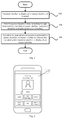
- Fig. 1 shows a schematic flow diagram of a display processing method for a transient interface according to an embodiment of the present invention.
- a display processing method for a transient interface includes the following steps:
- the preset identifier is displayed on the screen interface after the transient interface disappears, so that the display time (i.e. the first preset length of time) of the transient interface can be set to be shorter, for example, just the time needed for an actual loading or processing procedure of an application program, then the target interface can be viewed or operated within the shortest time for a user who does not desire to see the transient interface, the transient interface or the information in the transient interface can be redisplayed through the preset identifier for a user who desires to see the content of the transient interface or operates the transient interface, and the situation that complete content cannot be viewed or the transient interface cannot be timely operated due to too short display time of the transient interface is avoided.
- the display time i.e. the first preset length of time
- the target interface can be viewed or operated within the shortest time for a user who does not desire to see the transient interface
- the transient interface or the information in the transient interface can be redisplayed through the preset identifie
- the disappearance control of the transient interface obviously can be judged by adopting other conditions besides the time condition. For example, as a specific embodiment, whether a preset gesture operation is received (or whether a preset gesture operation is received within a preset time) can be judged, and the transient interface disappears under the condition that the preset gesture operation is received.
- the preset identifier can be set to be very small and even can be set to be semitransparent, and a user can change its display position on the screen interface by dragging for example, so that even if the preset identifier is displayed on the screen interface, it will not affect the viewing or operation of the user on the target interface.
- the pattern, size, transparency and the like of the preset identifier can be preset by the manufacturer or set by the user according to the use habit.
- the preset operation on the preset identifier can include: click, double click, long press, drag, drag for forming a preset locus and the like on the preset identifier.
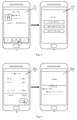
- Fig. 2 shows a schematic diagram of a transient interface according to an embodiment of the present invention.
- the transient interface 202 can automatically disappear.
- the display time e.g. the above-mentioned first preset length of time
- the transient interface 202 can automatically disappear.
- the display time is set to be relatively short, the user may not timely operate the transient interface 202 or finish viewing the content in the transient interface, but if the display time is too long, part of users who do not need transient interfaces may wait for too long time.
- Fig. 3 shows a schematic diagram illustrating that the transient interface is recalled according to an embodiment of the present invention.
- an identifier 206 i.e. the above-mentioned preset identifier
- the transient interface 202 is recalled.
- the first display time of the transient interface 202 can be set to be shortest, so that on the one hand, the waiting time of users who do not need the transient interface 202 can be shortened to the greatest extent; on the other hand, the transient interface 202 can be recalled through the identifier 206 for users who need the transient interface 202, and the problem that the display time is insufficient does not need to be concerned about, and both of the users are satisfied.
- the preset operation of recalling the transient interface 202 through the identifier 206 may include: click, double click, long press, drag, drag for forming a preset locus and the like on the identifier 206.
- the displaying of the preset identifier i.e. the identifier 206 is stopped.
- the identifier 206 can be set to be very small or semitransparent and the like, it may still shield the content of the target interface 204 or be clicked by the user, thus affecting the use of the user. Therefore, the identifier 206 disappears after the second preset length of time to avoid the influence on the use of the user as much as possible.
- the method further includes: performing statistics on the number of times and/or the frequency that the transient interface 202 or the information included within the transient interface 202 is called out through the present identifier; and if the number of times and/or the frequency are greater than or equal to a preset number of times and/or a preset frequency, prolonging the first preset length of time and/or the second preset length of time.
- the user's preference of requirement for the transient interface 202 can be learnt by the above statistic operation. For example, when the number of times and/or the frequency are relatively high (greater than or equal to the preset number of times and/or the preset frequency), it indicates that the user tends to view or utilize the transient interface 202, and through prolonging the first preset length of time, the user can have longer time to view or operate the transient interface 202; and through prolonging the second preset length of time, the user can have longer time to call out the transient interface 202 or the information included within the transient interface 202 within longer time, and then view or operate the transient interface 202.
- the display time of the transient interface 202 can be in the switching process of the display interface of the terminal, specifically, for example, the method may include: displaying an initial interface on the screen interface; and when receiving a switching instruction to the target interface, switching from the initial interface to the transient interface.
- the call interface (not shown in the figure) should be regarded as the initial interface, the interface before the call is regarded as the target interface 204, then after the call, the user clicks a "hangup" button on the call interface or the opposite party executes a hangup operation, and in order to facilitate the operation of the user on the one hand and to make transition for "stuck" phenomenon which may appear in the interface switching process on the other hand, the transient interface 202 is displayed to facilitate the operation of the user.
- the "hangup" operation on the initial interface i.e. the call interface
- the "callup" operation on the initial interface is actually a close instruction on a "call application", so that the switching operation to the target interface 204 is started through the "close” operation.
- the target interface 204 in Fig. 3 is a certain contact interface in an address book; but in fact, the target interface 204 corresponding to the close instruction may be any interface before the initial interface is started, and even includes a terminal desktop, namely a "desktop launcher" application.
- the initial interface is a call interface and the target interface 204 is an address book interface (or other application program such as a desktop launcher or the like)
- the initial interface and the target interface respectively belong to functional interfaces in different application programs.
- the transient interface 202 is called out through the close instruction in the above application scenario; as to more call modes of the transient interface 202, the interface switching processes between different application programs will be described in detail below in combination with more application scenarios.
- Fig. 4 shows a schematic diagram illustrating that the transient interface is called out through a start instruction according to an embodiment of the present invention.
- the initial interface 208 belongs to a first application program, namely a desktop launcher
- the transient interface 202 belongs to a second application program, namely a start interface of "Renren”
- the target interface (not shown in the figure) should be a specific content interface of "Renren”.
- the user executes a start instruction to a "Renren" application icon (start icon 210) on the initial interface 208 to switch from the initial interface 208 to the transient interface 202, and the transient interface 202 disappears after the first preset length of time.
- start icon 210 a "Renren" application icon
- the transient interface 202 in Fig. 4 is a "transition" interface provided in order to give sufficient response time for the application program. During waiting for complete start of the application, some content is displayed on the transient interface 202 for the user to read, for example, "tips" in Fig. 4 .
- the identifier 206 shown in Fig. 3 can be displayed on the target interface, and when the user does not finish reading the content in the transient interface 202, the user can recall the transient interface 202 through the identifier 206 to finish reading.
- Fig. 5 shows a schematic diagram illustrating that the transient interface is called out through a collaboration instruction according to an embodiment of the present invention.
- the initial interface 208 belongs to a first application program, namely an address book
- the transient interface 202 belongs to a second application program, namely a start interface of "short message”
- the target interface (not shown in the figure) should be a short message sending interface of "short message”.
- the user executes collaborative calling to a "short message" application on the initial interface 208 to switch from the initial interface 208 to the transient interface 202, and the transient interface 202 disappears after the first preset length of time.
- the transient interface 202 in Fig. 5 is also a "transition" interface provided in order to give sufficient response time for the application program.
- some function options are displayed on the transient interface 202 for the user to operate, for example, "add new addressee", "adjust display font size” and the like in Fig. 5 .
- the identifier 206 shown in Fig. 3 can be displayed on the target interface, and when the user does not finish selecting the function options in the transient interface 202, the user can recall the transient interface 202 through the identifier 206 to finish the selection operation.
- the transient interface 202 may also be called during switching between different functional interfaces of the same application programs, that is, the initial interface and the target interface belong to different functional interfaces in the same application program.
- Fig. 6 shows a schematic diagram illustrating that the transient interface is called out when interface switching is performed within the same application program according to an embodiment of the present invention.
- the initial interface 208 may be a shopping cart interface of a user, and when the user clicks "to settle” on the initial interface 208, it needs to be switched to a target interface (not shown in the figure), namely a settlement interface; wherein, in the process of switching from the shopping cart interface to the settlement interface, because the application program has certain processing procedure, particularly when the application program has a data interaction process with the network side, the transient interface 202 for the "transition" process needs to be displayed.
- the transient interface 202 may include the literal description "XX has been opened" for example; when the transient interface 202 disappears after the first preset length of time, the identifier 206 shown in Fig. 3 can be displayed on the target interface; and when the user does not finish reading the content displayed in the transient interface 202, the user can recall the transient interface 202 through the identifier 206 to finish reading.
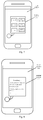
- Fig. 7 and Fig. 8 show schematic diagrams illustrating that the content in the transient interface is recalled according to an embodiment of the present invention.
- the transient interface 202 under the call scenario shown in Fig. 2 includes a plurality of functional interfaces (or function options), then when the user desires to re-operate the transient interface 202 through the identifier 206 shown in Fig. 3 , namely when the functional interfaces are reselected, the terminal can merely acquire the functional interfaces and display the functional interfaces on the target interface 204 as transient contents 212 shown in Fig. 7 .
- the transient interface 202 under the shopping scenario shown in Fig. 6 includes literal contents (obviously may also include others, e.g. images, links, etc.), then when the user desires to re-read the transient interface 202 through the identifier 206 shown in Fig. 3 , the terminal can merely acquire specific literal contents and display the literal contents on the target interface 204 as transient contents 212 shown in Fig. 7 .
- transient interface 202 only has part of valid contents, e.g. characters, images, links, functional interfaces, etc., merely part of or all of the contents can be called out, so that the user can quickly acquire valid information
- the method may further include: acquiring application information and/or to-be-processed events of the first application program; and displaying the application information and/or to-be-processed events within the preset identifier 206.
- the first application program is "QQ”
- the second application program is "WeChat”
- the current target interface 204 is an application program interface corresponding to "WeChat”.
- the identifier 206 is displayed on the target interface 204, and information corresponding to the first application program "QQ" is displayed in the identifier 206.
- the identifier 206 may include the application information of the first application program, namely "QQ" shown in the figure, thus prompting the user that before switching to the target interface 204, the application program running on the terminal is "QQ"; or, when the identifier 206 further includes other content, it may prompt the user that the information in the identifier 206 is the content relevant with "QQ".
- the content included within the identifier 206 may also be to-be-processed events, and still taking "QQ" as an example, it may include: number, sender, content or summary and the like of instant messages received by QQ, for example, "15" shown in the figure expresses currently received 15 unread instant messages.
- the first application program is an application program displayed on the terminal before the interface switching operation of the present invention
- the application information may include e.g. the name, icon and the like of the first application program, so that the user can be reminded of relevant condition of the first application program by the application information
- the to-be-processed events may include messages received in the first application program, update prompt and the like, and further, may include the number, sender, content or summary of the messages and the like, so that on the interface of the second application program, the user can easily learn the condition of the first application program without executing specific interface switching.
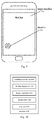
- Fig. 10 shows a schematic block diagram of a terminal according to an embodiment of the present invention.
- a terminal 1000 includes: a switching execution unit 1002, used for displaying a transient interface on a screen interface of the terminal 1000, and after a first preset length of time, switching from the transient interface to a target interface; an identifier display unit 1004, used for displaying a preset identifier on the screen interface when the screen interface is switched from the transient interface to the target interface; and a display control unit 1006, used for, according to a received preset operation performed on the preset identifier, displaying the transient interface or information included within the transient interface on the screen interface.
- the preset identifier is displayed on the screen interface after the transient interface disappears, so that the display time (i.e. the first preset length of time) of the transient interface can be set to be shorter, for example, just the time needed for an actual loading or processing procedure of an application program, then the target interface can be viewed or operated within the shortest time for a user who does not desire to see the transient interface, the transient interface or the information in the transient interface can be redisplayed through the preset identifier for a user who desires to see the content of the transient interface or operates the transient interface, and the situation that complete content cannot be viewed or the transient interface cannot be timely operated due to too short display time of the transient interface is avoided.
- the display time i.e. the first preset length of time
- the target interface can be viewed or operated within the shortest time for a user who does not desire to see the transient interface
- the transient interface or the information in the transient interface can be redisplayed through the preset identifie
- the disappearance control of the transient interface obviously can be judged by adopting other conditions besides the time condition. For example, as a specific embodiment, whether a preset gesture operation is received (or whether a preset gesture operation is received within a preset time) can be judged, and the transient interface disappears under the condition that the preset gesture operation is received.
- the preset identifier can be set to be very small and even can be set to be semitransparent, and a user can change its display position on the screen interface by dragging for example, so that even if the preset identifier is displayed on the screen interface, it will not affect the viewing or operation of the user on the target interface.
- the pattern, size, transparency and the like of the preset identifier can be preset by the manufacturer or set by the user according to the use habit.
- the preset operation on the preset identifier can include: click, double click, long press, drag, drag for forming a preset locus and the like on the preset identifier.
- the identifier display unit 1004 is further used for: when the terminal 1000 receives the preset operation or the terminal 1000 does not receive the preset operation within a second preset length of time, stopping the displaying of the preset identifier.
- the preset identifier can be set to be very small or semitransparent and the like, it may still shield the content of the target interface or be clicked by a user, thus affecting the use of the user. Therefore, the preset identifier disappears after the second preset length of time to avoid the influence on the use of the user as much as possible.
- the terminal further includes: a statistical unit 1008, used for performing statistics on the number of times and/or the frequency that the transient interface or the information included within the transient interface is called out through the present identifier; and a delay unit 1010, used for, if the number of times and/or the frequency are greater than or equal to a preset number of times and/or a preset frequency, prolonging the first preset length of time and/or the second preset length of time.
- a statistical unit 1008 used for performing statistics on the number of times and/or the frequency that the transient interface or the information included within the transient interface is called out through the present identifier
- a delay unit 1010 used for, if the number of times and/or the frequency are greater than or equal to a preset number of times and/or a preset frequency, prolonging the first preset length of time and/or the second preset length of time.
- the user's preference of requirement for the transient interface can be learnt by the above statistic operation. For example, when the number of times and/or the frequency are relatively high (greater than or equal to the preset number of times and/or the preset frequency), it indicates that the user tends to view or utilize the transient interface, and through prolonging the first preset length of time, the user can have longer time to view or operate the transient interface; through prolonging the second preset length of time, the user can have longer time to call out the transient interface or the information included within the transient interface, and then view or operate the transient interface.
- the switching execution unit 1002 is further used for: when displaying an initial interface on the screen interface and receiving a switching instruction to the target interface, switching from the initial interface to the transient interface.
- the transient interface may appear in the interface switching process, and the transient interface realizes interface switching transition or provides an operating function on the initial interface or the target interface for a user.
- the initial interface and the target interface belong to different functional interfaces in the same application program; or the initial interface and the target interface belong to functional interfaces in different application programs respectively.
- both the transient interface and the preset identifier can be displayed, so that "transition" in the interface switching process can be smoothly realized, and different requirements of different users for the transient interface can be met.
- the switching instruction includes: a close instruction on the first application program, or a start instruction or collaboration instruction on the second application program.
- the first application program and the second application program may be any application programs in the terminal 1000.
- the second application program may be any application program when the user starts the first application program, specifically, the second application program may be a desktop launcher (the user previously starts the first application program through the application icon of the first application program), or other application program (the user previously calls the first application program through a corresponding calling interface on the interface of the second application program).
- the first application program may also be a desktop launcher, and when the first application program is the desktop launcher, the switching instruction may be a start instruction on the second application program. Moreover, when neither the first application program nor the second application program is a desktop launcher, it indicates that the first application program has a calling interface for the second application program, and collaborative calling of the second application program is realized through the collaboration instruction.
- the identifier display unit is further used for: acquiring application information and/or to-be-processed events of the first application program; and displaying the application information and/or to-be-processed events within the preset identifier.
- the first application program is an application program displayed on the terminal before the interface switching operation of the present invention
- the application information may include e.g. the name, icon and the like of the first application program, so that the user can be reminded of relevant condition of the first application program by the application information
- the to-be-processed events may include messages received in the first application program, update prompt and the like, and further, may include the number, sender, content or summary of the messages and the like, so that on the interface of the second application program, the user can easily learn the condition of the first application program without executing specific interface switching.
- the information included within the transient interface includes: characters, images and/or functional interfaces included within the transient interface.
- the transient interface only has part of valid contents, e.g. characters, images, functional interfaces, etc., and then merely part of or all of the contents can be called out, so that the user can quickly acquire valid information.
- the technical solutions of the present invention are described in detail above in combination with the accompanying drawings; considering that in relevant technologies, the requirements of different users with regard to the display time of the transient interface are different, and are difficult to reconcile, thus, the present invention proposes a display processing method for a transient interface and a terminal, which can satisfy different requirements of different users with regard to the transient interface and prevent the user experience from being affected by the display time being too long or too short.
- a program product stored in a nonvolatile machine readable medium and used for processing the displaying of a transient interface
- the program product including a machine executive instruction enabling a computer system to execute the following steps: displaying a transient interface on a screen interface of a terminal; after a first preset length of time, switching from the transient interface to a target interface, and displaying a preset identifier on the screen interface; and according to a received preset operation performed on the preset identifier, displaying the transient interface or information included within the transient interface on the screen interface.
- a nonvolatile machine readable medium storing a program product for processing the displaying of a transient interface
- the program product including a machine executive instruction enabling a computer system to execute the following steps: displaying a transient interface on a screen interface of a terminal; after a first preset length of time, switching from the transient interface to a target interface, and displaying a preset identifier on the screen interface; and according to a received preset operation performed on the preset identifier, displaying the transient interface or information included within the transient interface on the screen interface.
- a machine readable program which enables a machine to execute the display processing method for a transient interface in any above technical solution.
- a storage medium storing a machine readable program, wherein the machine readable program enables a machine to execute the display processing method for a transient interface in any above technical solution.
Landscapes
- Engineering & Computer Science (AREA)
- General Engineering & Computer Science (AREA)
- Theoretical Computer Science (AREA)
- Human Computer Interaction (AREA)
- Physics & Mathematics (AREA)
- General Physics & Mathematics (AREA)
- User Interface Of Digital Computer (AREA)
Applications Claiming Priority (1)
| Application Number | Priority Date | Filing Date | Title |
|---|---|---|---|
| PCT/CN2013/090473 WO2015096076A1 (fr) | 2013-12-25 | 2013-12-25 | Procédé de traitement d'affichage pour interface transitoire, et terminal |
Publications (2)
| Publication Number | Publication Date |
|---|---|
| EP3089009A1 true EP3089009A1 (fr) | 2016-11-02 |
| EP3089009A4 EP3089009A4 (fr) | 2017-09-06 |
Family
ID=53477351
Family Applications (1)
| Application Number | Title | Priority Date | Filing Date |
|---|---|---|---|
| EP13900058.2A Ceased EP3089009A4 (fr) | 2013-12-25 | 2013-12-25 | Procédé de traitement d'affichage pour interface transitoire, et terminal |
Country Status (4)
| Country | Link |
|---|---|
| US (1) | US20170003875A1 (fr) |
| EP (1) | EP3089009A4 (fr) |
| CN (1) | CN105474156B (fr) |
| WO (1) | WO2015096076A1 (fr) |
Families Citing this family (6)
| Publication number | Priority date | Publication date | Assignee | Title |
|---|---|---|---|---|
| USD810124S1 (en) * | 2016-07-22 | 2018-02-13 | Sonos, Inc. | Display screen or portion thereof with animated graphical user interface elements incorporating overlapping circles |
| WO2018133019A1 (fr) * | 2017-01-20 | 2018-07-26 | Microsoft Technology Licensing, Llc | Lanceur de bureau |
| CN107436802B (zh) * | 2017-08-25 | 2020-04-14 | 网易(杭州)网络有限公司 | 用于应用程序的控制方法、系统、介质和计算设备 |
| CN111488816A (zh) * | 2017-09-12 | 2020-08-04 | Oppo广东移动通信有限公司 | 面部信息预览方法及相关产品 |
| CN109656446A (zh) * | 2018-12-20 | 2019-04-19 | 上海掌门科技有限公司 | 用于处理信息的方法和设备 |
| CN111694621A (zh) * | 2019-03-12 | 2020-09-22 | 青岛海信移动通信技术股份有限公司 | 终端及显示方法 |
Family Cites Families (14)
| Publication number | Priority date | Publication date | Assignee | Title |
|---|---|---|---|---|
| JP4098054B2 (ja) * | 2002-10-04 | 2008-06-11 | カルソニックカンセイ株式会社 | 情報表示装置 |
| US7383508B2 (en) * | 2002-06-19 | 2008-06-03 | Microsoft Corporation | Computer user interface for interacting with video cliplets generated from digital video |
| US7568167B2 (en) * | 2003-06-26 | 2009-07-28 | Microsoft Corporation | Non-persistent user interface for real-time communication |
| US7490295B2 (en) * | 2004-06-25 | 2009-02-10 | Apple Inc. | Layer for accessing user interface elements |
| US20090094552A1 (en) * | 2007-10-04 | 2009-04-09 | Microsoft Corporation | Guided Transition User Interfaces |
| CN101620494A (zh) * | 2008-06-30 | 2010-01-06 | 龙旗科技(上海)有限公司 | 一种导航菜单的动态显示方法 |
| TWI381305B (zh) * | 2008-12-25 | 2013-01-01 | Compal Electronics Inc | 使用者介面的顯示與操作方法以及電子裝置 |
| JP5487679B2 (ja) * | 2009-03-31 | 2014-05-07 | ソニー株式会社 | 情報処理装置、情報処理方法および情報処理プログラム |
| US20120254770A1 (en) * | 2011-03-31 | 2012-10-04 | Eyal Ophir | Messaging interface |
| KR20120126161A (ko) * | 2011-05-11 | 2012-11-21 | 삼성전자주식회사 | 휴대 단말기 및 이의 화면 제어 방법 |
| US9886188B2 (en) * | 2011-08-25 | 2018-02-06 | International Business Machines Corporation | Manipulating multiple objects in a graphic user interface |
| US20140026098A1 (en) * | 2012-07-19 | 2014-01-23 | M2J Think Box, Inc. | Systems and methods for navigating an interface of an electronic device |
| CN102981873B (zh) * | 2012-11-14 | 2016-08-03 | 广东欧珀移动通信有限公司 | 一种等待界面的显示方法及装置 |
| WO2014189632A1 (fr) * | 2013-05-20 | 2014-11-27 | Citrix Systems, Inc. | Fourniture d'interfaces utilisateur améliorées |
-
2013
- 2013-12-25 US US15/106,506 patent/US20170003875A1/en not_active Abandoned
- 2013-12-25 CN CN201380078896.9A patent/CN105474156B/zh active Active
- 2013-12-25 EP EP13900058.2A patent/EP3089009A4/fr not_active Ceased
- 2013-12-25 WO PCT/CN2013/090473 patent/WO2015096076A1/fr not_active Ceased
Also Published As
| Publication number | Publication date |
|---|---|
| US20170003875A1 (en) | 2017-01-05 |
| EP3089009A4 (fr) | 2017-09-06 |
| WO2015096076A1 (fr) | 2015-07-02 |
| CN105474156A (zh) | 2016-04-06 |
| CN105474156B (zh) | 2020-03-17 |
Similar Documents
| Publication | Publication Date | Title |
|---|---|---|
| US20100281409A1 (en) | Apparatus and method for handling notifications within a communications device | |
| CN103558958B (zh) | 应用程序的功能调用方法及终端 | |
| US20220083209A1 (en) | Method, apparatus, and terminal for processing notification information | |
| EP3089009A1 (fr) | Procédé de traitement d'affichage pour interface transitoire, et terminal | |
| US9154601B2 (en) | Intelligent user interfaces for multiple SIM cards | |
| CN104919419B (zh) | 终端和终端操控方法 | |
| CN109799938B (zh) | 控件显示管理方法、终端设备及计算机可读存储介质 | |
| US20100281481A1 (en) | Apparatus and method for providing a user interface within a computing device | |
| US20110202852A1 (en) | Method and apparatus for providing social network service widgets | |
| CN101727287B (zh) | 一种定制信息的提示方法、系统及移动终端 | |
| US20140379825A1 (en) | Sender-specific email reminder system and method | |
| US20180365527A1 (en) | Method and device for controlling expression classification identifier, and a storage medium | |
| US20160165128A1 (en) | Capturing and sending images and videos based on a single user interaction with a user interface element | |
| WO2022206699A1 (fr) | Procédé et appareil de transmission de message et dispositif électronique | |
| CN102999358A (zh) | 一种程序智能启动方法 | |
| CN104077104A (zh) | 一种移动终端通知栏的通知的显示与查看方法 | |
| EP3206115A1 (fr) | Procédé et appareil pour opérations d'élément de liste | |
| CN107992240A (zh) | 应用图标显示控制方法、装置及终端 | |
| CN103124313B (zh) | 一种短信查看方法及装置 | |
| CN107608585A (zh) | 一种应用程序的操作方法和设备以及移动终端 | |
| WO2012058811A1 (fr) | Procédé et dispositif permettant de vérifier un événement à traiter | |
| CN106302932A (zh) | 在通信终端中查看通讯记录的方法和设备 | |
| US12566538B2 (en) | Method and system for displaying screen of chatroom and performing chatroom transition | |
| US20160164809A1 (en) | Identifying and selecting contacts to include in a face tray of a messaging application | |
| WO2017045652A2 (fr) | Procédé d'affichage de contenu d'informations et dispositif terminal correspondant |
Legal Events
| Date | Code | Title | Description |
|---|---|---|---|
| PUAI | Public reference made under article 153(3) epc to a published international application that has entered the european phase |
Free format text: ORIGINAL CODE: 0009012 |
|
| 17P | Request for examination filed |
Effective date: 20160621 |
|
| AK | Designated contracting states |
Kind code of ref document: A1 Designated state(s): AL AT BE BG CH CY CZ DE DK EE ES FI FR GB GR HR HU IE IS IT LI LT LU LV MC MK MT NL NO PL PT RO RS SE SI SK SM TR |
|
| AX | Request for extension of the european patent |
Extension state: BA ME |
|
| DAX | Request for extension of the european patent (deleted) | ||
| A4 | Supplementary search report drawn up and despatched |
Effective date: 20170804 |
|
| RIC1 | Information provided on ipc code assigned before grant |
Ipc: G06F 3/0484 20130101ALI20170731BHEP Ipc: G06F 3/048 20130101AFI20170731BHEP Ipc: G06F 3/0481 20130101ALI20170731BHEP Ipc: G06F 3/0488 20130101ALI20170731BHEP |
|
| 17Q | First examination report despatched |
Effective date: 20181017 |
|
| REG | Reference to a national code |
Ref country code: DE Ref legal event code: R003 |
|
| STAA | Information on the status of an ep patent application or granted ep patent |
Free format text: STATUS: THE APPLICATION HAS BEEN REFUSED |
|
| 18R | Application refused |
Effective date: 20200313 |