EP3090890A1 - Verfahren zur regelung oder steuerung der dämpferkraft verstellbarer dämpfer in kraftfahrzeugen, insbesondere in nutzfahrzeugen - Google Patents
Verfahren zur regelung oder steuerung der dämpferkraft verstellbarer dämpfer in kraftfahrzeugen, insbesondere in nutzfahrzeugen Download PDFInfo
- Publication number
- EP3090890A1 EP3090890A1 EP16000860.3A EP16000860A EP3090890A1 EP 3090890 A1 EP3090890 A1 EP 3090890A1 EP 16000860 A EP16000860 A EP 16000860A EP 3090890 A1 EP3090890 A1 EP 3090890A1
- Authority
- EP
- European Patent Office
- Prior art keywords
- vehicle
- parameter
- damper
- information
- controlling
- Prior art date
- Legal status (The legal status is an assumption and is not a legal conclusion. Google has not performed a legal analysis and makes no representation as to the accuracy of the status listed.)
- Granted
Links
Images


Classifications
-
- B—PERFORMING OPERATIONS; TRANSPORTING
- B60—VEHICLES IN GENERAL
- B60G—VEHICLE SUSPENSION ARRANGEMENTS
- B60G17/00—Resilient suspensions having means for adjusting the spring or vibration-damper characteristics, for regulating the distance between a supporting surface and a sprung part of vehicle or for locking suspension during use to meet varying vehicular or surface conditions, e.g. due to speed or load
- B60G17/015—Resilient suspensions having means for adjusting the spring or vibration-damper characteristics, for regulating the distance between a supporting surface and a sprung part of vehicle or for locking suspension during use to meet varying vehicular or surface conditions, e.g. due to speed or load the regulating means comprising electric or electronic elements
- B60G17/018—Resilient suspensions having means for adjusting the spring or vibration-damper characteristics, for regulating the distance between a supporting surface and a sprung part of vehicle or for locking suspension during use to meet varying vehicular or surface conditions, e.g. due to speed or load the regulating means comprising electric or electronic elements characterised by the use of a specific signal treatment or control method
- B60G17/0182—Resilient suspensions having means for adjusting the spring or vibration-damper characteristics, for regulating the distance between a supporting surface and a sprung part of vehicle or for locking suspension during use to meet varying vehicular or surface conditions, e.g. due to speed or load the regulating means comprising electric or electronic elements characterised by the use of a specific signal treatment or control method involving parameter estimation, e.g. observer, Kalman filter
-
- B—PERFORMING OPERATIONS; TRANSPORTING
- B60—VEHICLES IN GENERAL
- B60G—VEHICLE SUSPENSION ARRANGEMENTS
- B60G17/00—Resilient suspensions having means for adjusting the spring or vibration-damper characteristics, for regulating the distance between a supporting surface and a sprung part of vehicle or for locking suspension during use to meet varying vehicular or surface conditions, e.g. due to speed or load
- B60G17/015—Resilient suspensions having means for adjusting the spring or vibration-damper characteristics, for regulating the distance between a supporting surface and a sprung part of vehicle or for locking suspension during use to meet varying vehicular or surface conditions, e.g. due to speed or load the regulating means comprising electric or electronic elements
- B60G17/016—Resilient suspensions having means for adjusting the spring or vibration-damper characteristics, for regulating the distance between a supporting surface and a sprung part of vehicle or for locking suspension during use to meet varying vehicular or surface conditions, e.g. due to speed or load the regulating means comprising electric or electronic elements characterised by their responsiveness, when the vehicle is travelling, to specific motion, a specific condition, or driver input
- B60G17/0165—Resilient suspensions having means for adjusting the spring or vibration-damper characteristics, for regulating the distance between a supporting surface and a sprung part of vehicle or for locking suspension during use to meet varying vehicular or surface conditions, e.g. due to speed or load the regulating means comprising electric or electronic elements characterised by their responsiveness, when the vehicle is travelling, to specific motion, a specific condition, or driver input to an external condition, e.g. rough road surface, side wind
-
- B—PERFORMING OPERATIONS; TRANSPORTING
- B60—VEHICLES IN GENERAL
- B60G—VEHICLE SUSPENSION ARRANGEMENTS
- B60G17/00—Resilient suspensions having means for adjusting the spring or vibration-damper characteristics, for regulating the distance between a supporting surface and a sprung part of vehicle or for locking suspension during use to meet varying vehicular or surface conditions, e.g. due to speed or load
- B60G17/015—Resilient suspensions having means for adjusting the spring or vibration-damper characteristics, for regulating the distance between a supporting surface and a sprung part of vehicle or for locking suspension during use to meet varying vehicular or surface conditions, e.g. due to speed or load the regulating means comprising electric or electronic elements
- B60G17/019—Resilient suspensions having means for adjusting the spring or vibration-damper characteristics, for regulating the distance between a supporting surface and a sprung part of vehicle or for locking suspension during use to meet varying vehicular or surface conditions, e.g. due to speed or load the regulating means comprising electric or electronic elements characterised by the type of sensor or the arrangement thereof
-
- B—PERFORMING OPERATIONS; TRANSPORTING
- B60—VEHICLES IN GENERAL
- B60G—VEHICLE SUSPENSION ARRANGEMENTS
- B60G17/00—Resilient suspensions having means for adjusting the spring or vibration-damper characteristics, for regulating the distance between a supporting surface and a sprung part of vehicle or for locking suspension during use to meet varying vehicular or surface conditions, e.g. due to speed or load
- B60G17/015—Resilient suspensions having means for adjusting the spring or vibration-damper characteristics, for regulating the distance between a supporting surface and a sprung part of vehicle or for locking suspension during use to meet varying vehicular or surface conditions, e.g. due to speed or load the regulating means comprising electric or electronic elements
- B60G17/0195—Resilient suspensions having means for adjusting the spring or vibration-damper characteristics, for regulating the distance between a supporting surface and a sprung part of vehicle or for locking suspension during use to meet varying vehicular or surface conditions, e.g. due to speed or load the regulating means comprising electric or electronic elements characterised by the regulation being combined with other vehicle control systems
-
- B—PERFORMING OPERATIONS; TRANSPORTING
- B60—VEHICLES IN GENERAL
- B60G—VEHICLE SUSPENSION ARRANGEMENTS
- B60G17/00—Resilient suspensions having means for adjusting the spring or vibration-damper characteristics, for regulating the distance between a supporting surface and a sprung part of vehicle or for locking suspension during use to meet varying vehicular or surface conditions, e.g. due to speed or load
- B60G17/06—Characteristics of dampers, e.g. mechanical dampers
-
- B—PERFORMING OPERATIONS; TRANSPORTING
- B60—VEHICLES IN GENERAL
- B60G—VEHICLE SUSPENSION ARRANGEMENTS
- B60G17/00—Resilient suspensions having means for adjusting the spring or vibration-damper characteristics, for regulating the distance between a supporting surface and a sprung part of vehicle or for locking suspension during use to meet varying vehicular or surface conditions, e.g. due to speed or load
- B60G17/06—Characteristics of dampers, e.g. mechanical dampers
- B60G17/08—Characteristics of fluid dampers
-
- B—PERFORMING OPERATIONS; TRANSPORTING
- B62—LAND VEHICLES FOR TRAVELLING OTHERWISE THAN ON RAILS
- B62D—MOTOR VEHICLES; TRAILERS
- B62D33/00—Superstructures for load-carrying vehicles
- B62D33/06—Drivers' cabs
- B62D33/0604—Cabs insulated against vibrations or noise, e.g. with elastic suspension
-
- B—PERFORMING OPERATIONS; TRANSPORTING
- B60—VEHICLES IN GENERAL
- B60G—VEHICLE SUSPENSION ARRANGEMENTS
- B60G2202/00—Indexing codes relating to the type of spring, damper or actuator
- B60G2202/20—Type of damper
- B60G2202/24—Fluid damper
-
- B—PERFORMING OPERATIONS; TRANSPORTING
- B60—VEHICLES IN GENERAL
- B60G—VEHICLE SUSPENSION ARRANGEMENTS
- B60G2400/00—Indexing codes relating to detected, measured or calculated conditions or factors
- B60G2400/10—Acceleration; Deceleration
-
- B—PERFORMING OPERATIONS; TRANSPORTING
- B60—VEHICLES IN GENERAL
- B60G—VEHICLE SUSPENSION ARRANGEMENTS
- B60G2400/00—Indexing codes relating to detected, measured or calculated conditions or factors
- B60G2400/20—Speed
- B60G2400/204—Vehicle speed
-
- B—PERFORMING OPERATIONS; TRANSPORTING
- B60—VEHICLES IN GENERAL
- B60G—VEHICLE SUSPENSION ARRANGEMENTS
- B60G2400/00—Indexing codes relating to detected, measured or calculated conditions or factors
- B60G2400/80—Exterior conditions
-
- B—PERFORMING OPERATIONS; TRANSPORTING
- B60—VEHICLES IN GENERAL
- B60G—VEHICLE SUSPENSION ARRANGEMENTS
- B60G2400/00—Indexing codes relating to detected, measured or calculated conditions or factors
- B60G2400/80—Exterior conditions
- B60G2400/82—Ground surface
-
- B—PERFORMING OPERATIONS; TRANSPORTING
- B60—VEHICLES IN GENERAL
- B60G—VEHICLE SUSPENSION ARRANGEMENTS
- B60G2400/00—Indexing codes relating to detected, measured or calculated conditions or factors
- B60G2400/80—Exterior conditions
- B60G2400/82—Ground surface
- B60G2400/821—Uneven, rough road sensing affecting vehicle body vibration
-
- B—PERFORMING OPERATIONS; TRANSPORTING
- B60—VEHICLES IN GENERAL
- B60G—VEHICLE SUSPENSION ARRANGEMENTS
- B60G2400/00—Indexing codes relating to detected, measured or calculated conditions or factors
- B60G2400/80—Exterior conditions
- B60G2400/82—Ground surface
- B60G2400/824—Travel path sensing; Track monitoring
-
- B—PERFORMING OPERATIONS; TRANSPORTING
- B60—VEHICLES IN GENERAL
- B60G—VEHICLE SUSPENSION ARRANGEMENTS
- B60G2400/00—Indexing codes relating to detected, measured or calculated conditions or factors
- B60G2400/80—Exterior conditions
- B60G2400/84—Atmospheric conditions
-
- B—PERFORMING OPERATIONS; TRANSPORTING
- B60—VEHICLES IN GENERAL
- B60G—VEHICLE SUSPENSION ARRANGEMENTS
- B60G2400/00—Indexing codes relating to detected, measured or calculated conditions or factors
- B60G2400/80—Exterior conditions
- B60G2400/84—Atmospheric conditions
- B60G2400/843—Humidity; Rainfall
-
- B—PERFORMING OPERATIONS; TRANSPORTING
- B60—VEHICLES IN GENERAL
- B60G—VEHICLE SUSPENSION ARRANGEMENTS
- B60G2400/00—Indexing codes relating to detected, measured or calculated conditions or factors
- B60G2400/90—Other conditions or factors
-
- B—PERFORMING OPERATIONS; TRANSPORTING
- B60—VEHICLES IN GENERAL
- B60G—VEHICLE SUSPENSION ARRANGEMENTS
- B60G2401/00—Indexing codes relating to the type of sensors based on the principle of their operation
- B60G2401/16—GPS track data
-
- B—PERFORMING OPERATIONS; TRANSPORTING
- B60—VEHICLES IN GENERAL
- B60G—VEHICLE SUSPENSION ARRANGEMENTS
- B60G2500/00—Indexing codes relating to the regulated action or device
- B60G2500/10—Damping action or damper
-
- B—PERFORMING OPERATIONS; TRANSPORTING
- B60—VEHICLES IN GENERAL
- B60G—VEHICLE SUSPENSION ARRANGEMENTS
- B60G2600/00—Indexing codes relating to particular elements, systems or processes used on suspension systems or suspension control systems
- B60G2600/04—Means for informing, instructing or displaying
- B60G2600/042—Monitoring means
- B60G2600/0422—Monitoring means involving data transmission, e.g. via satellite or GPS; for data monitoring, telemetry or platooning purposes
-
- B—PERFORMING OPERATIONS; TRANSPORTING
- B60—VEHICLES IN GENERAL
- B60G—VEHICLE SUSPENSION ARRANGEMENTS
- B60G2600/00—Indexing codes relating to particular elements, systems or processes used on suspension systems or suspension control systems
- B60G2600/18—Automatic control means
-
- B—PERFORMING OPERATIONS; TRANSPORTING
- B60—VEHICLES IN GENERAL
- B60G—VEHICLE SUSPENSION ARRANGEMENTS
- B60G2600/00—Indexing codes relating to particular elements, systems or processes used on suspension systems or suspension control systems
- B60G2600/71—Distributed control; Hierarchical control structure, e.g. with one unit steering and other units following; Remote control units
-
- B—PERFORMING OPERATIONS; TRANSPORTING
- B60—VEHICLES IN GENERAL
- B60G—VEHICLE SUSPENSION ARRANGEMENTS
- B60G2800/00—Indexing codes relating to the type of movement or to the condition of the vehicle and to the end result to be achieved by the control action
- B60G2800/16—Running
-
- B—PERFORMING OPERATIONS; TRANSPORTING
- B60—VEHICLES IN GENERAL
- B60G—VEHICLE SUSPENSION ARRANGEMENTS
- B60G2800/00—Indexing codes relating to the type of movement or to the condition of the vehicle and to the end result to be achieved by the control action
- B60G2800/16—Running
- B60G2800/162—Reducing road induced vibrations
-
- B—PERFORMING OPERATIONS; TRANSPORTING
- B60—VEHICLES IN GENERAL
- B60G—VEHICLE SUSPENSION ARRANGEMENTS
- B60G2800/00—Indexing codes relating to the type of movement or to the condition of the vehicle and to the end result to be achieved by the control action
- B60G2800/16—Running
- B60G2800/166—Platooning
-
- B—PERFORMING OPERATIONS; TRANSPORTING
- B60—VEHICLES IN GENERAL
- B60G—VEHICLE SUSPENSION ARRANGEMENTS
- B60G2800/00—Indexing codes relating to the type of movement or to the condition of the vehicle and to the end result to be achieved by the control action
- B60G2800/90—System Controller type
- B60G2800/91—Suspension Control
-
- B—PERFORMING OPERATIONS; TRANSPORTING
- B60—VEHICLES IN GENERAL
- B60G—VEHICLE SUSPENSION ARRANGEMENTS
- B60G2800/00—Indexing codes relating to the type of movement or to the condition of the vehicle and to the end result to be achieved by the control action
- B60G2800/90—System Controller type
- B60G2800/91—Suspension Control
- B60G2800/916—Body Vibration Control
-
- B—PERFORMING OPERATIONS; TRANSPORTING
- B60—VEHICLES IN GENERAL
- B60W—CONJOINT CONTROL OF VEHICLE SUB-UNITS OF DIFFERENT TYPE OR DIFFERENT FUNCTION; CONTROL SYSTEMS SPECIALLY ADAPTED FOR HYBRID VEHICLES; ROAD VEHICLE DRIVE CONTROL SYSTEMS FOR PURPOSES NOT RELATED TO THE CONTROL OF A PARTICULAR SUB-UNIT
- B60W50/00—Details of control systems for road vehicle drive control not related to the control of a particular sub-unit, e.g. process diagnostic or vehicle driver interfaces
- B60W2050/0062—Adapting control system settings
- B60W2050/0075—Automatic parameter input, automatic initialising or calibrating means
-
- B—PERFORMING OPERATIONS; TRANSPORTING
- B60—VEHICLES IN GENERAL
- B60W—CONJOINT CONTROL OF VEHICLE SUB-UNITS OF DIFFERENT TYPE OR DIFFERENT FUNCTION; CONTROL SYSTEMS SPECIALLY ADAPTED FOR HYBRID VEHICLES; ROAD VEHICLE DRIVE CONTROL SYSTEMS FOR PURPOSES NOT RELATED TO THE CONTROL OF A PARTICULAR SUB-UNIT
- B60W2510/00—Input parameters relating to a particular sub-units
- B60W2510/22—Suspension systems
- B60W2510/225—Damping
-
- B—PERFORMING OPERATIONS; TRANSPORTING
- B60—VEHICLES IN GENERAL
- B60W—CONJOINT CONTROL OF VEHICLE SUB-UNITS OF DIFFERENT TYPE OR DIFFERENT FUNCTION; CONTROL SYSTEMS SPECIALLY ADAPTED FOR HYBRID VEHICLES; ROAD VEHICLE DRIVE CONTROL SYSTEMS FOR PURPOSES NOT RELATED TO THE CONTROL OF A PARTICULAR SUB-UNIT
- B60W2530/00—Input parameters relating to vehicle conditions or values, not covered by groups B60W2510/00 or B60W2520/00
-
- B—PERFORMING OPERATIONS; TRANSPORTING
- B60—VEHICLES IN GENERAL
- B60W—CONJOINT CONTROL OF VEHICLE SUB-UNITS OF DIFFERENT TYPE OR DIFFERENT FUNCTION; CONTROL SYSTEMS SPECIALLY ADAPTED FOR HYBRID VEHICLES; ROAD VEHICLE DRIVE CONTROL SYSTEMS FOR PURPOSES NOT RELATED TO THE CONTROL OF A PARTICULAR SUB-UNIT
- B60W2552/00—Input parameters relating to infrastructure
-
- B—PERFORMING OPERATIONS; TRANSPORTING
- B60—VEHICLES IN GENERAL
- B60W—CONJOINT CONTROL OF VEHICLE SUB-UNITS OF DIFFERENT TYPE OR DIFFERENT FUNCTION; CONTROL SYSTEMS SPECIALLY ADAPTED FOR HYBRID VEHICLES; ROAD VEHICLE DRIVE CONTROL SYSTEMS FOR PURPOSES NOT RELATED TO THE CONTROL OF A PARTICULAR SUB-UNIT
- B60W2555/00—Input parameters relating to exterior conditions, not covered by groups B60W2552/00, B60W2554/00
- B60W2555/20—Ambient conditions, e.g. wind or rain
-
- B—PERFORMING OPERATIONS; TRANSPORTING
- B60—VEHICLES IN GENERAL
- B60W—CONJOINT CONTROL OF VEHICLE SUB-UNITS OF DIFFERENT TYPE OR DIFFERENT FUNCTION; CONTROL SYSTEMS SPECIALLY ADAPTED FOR HYBRID VEHICLES; ROAD VEHICLE DRIVE CONTROL SYSTEMS FOR PURPOSES NOT RELATED TO THE CONTROL OF A PARTICULAR SUB-UNIT
- B60W2556/00—Input parameters relating to data
- B60W2556/45—External transmission of data to or from the vehicle
-
- B—PERFORMING OPERATIONS; TRANSPORTING
- B60—VEHICLES IN GENERAL
- B60W—CONJOINT CONTROL OF VEHICLE SUB-UNITS OF DIFFERENT TYPE OR DIFFERENT FUNCTION; CONTROL SYSTEMS SPECIALLY ADAPTED FOR HYBRID VEHICLES; ROAD VEHICLE DRIVE CONTROL SYSTEMS FOR PURPOSES NOT RELATED TO THE CONTROL OF A PARTICULAR SUB-UNIT
- B60W2710/00—Output or target parameters relating to a particular sub-units
- B60W2710/22—Suspension systems
- B60W2710/226—Damping
-
- B—PERFORMING OPERATIONS; TRANSPORTING
- B60—VEHICLES IN GENERAL
- B60W—CONJOINT CONTROL OF VEHICLE SUB-UNITS OF DIFFERENT TYPE OR DIFFERENT FUNCTION; CONTROL SYSTEMS SPECIALLY ADAPTED FOR HYBRID VEHICLES; ROAD VEHICLE DRIVE CONTROL SYSTEMS FOR PURPOSES NOT RELATED TO THE CONTROL OF A PARTICULAR SUB-UNIT
- B60W2756/00—Output or target parameters relating to data
- B60W2756/10—Involving external transmission of data to or from the vehicle
-
- B—PERFORMING OPERATIONS; TRANSPORTING
- B60—VEHICLES IN GENERAL
- B60Y—INDEXING SCHEME RELATING TO ASPECTS CROSS-CUTTING VEHICLE TECHNOLOGY
- B60Y2400/00—Special features of vehicle units
- B60Y2400/86—Suspension systems
-
- G—PHYSICS
- G08—SIGNALLING
- G08G—TRAFFIC CONTROL SYSTEMS
- G08G1/00—Traffic control systems for road vehicles
- G08G1/09—Arrangements for giving variable traffic instructions
- G08G1/0962—Arrangements for giving variable traffic instructions having an indicator mounted inside the vehicle, e.g. giving voice messages
- G08G1/09623—Systems involving the acquisition of information from passive traffic signs by means mounted on the vehicle
-
- G—PHYSICS
- G08—SIGNALLING
- G08G—TRAFFIC CONTROL SYSTEMS
- G08G1/00—Traffic control systems for road vehicles
- G08G1/09—Arrangements for giving variable traffic instructions
- G08G1/0962—Arrangements for giving variable traffic instructions having an indicator mounted inside the vehicle, e.g. giving voice messages
- G08G1/09626—Arrangements for giving variable traffic instructions having an indicator mounted inside the vehicle, e.g. giving voice messages where the origin of the information is within the own vehicle, e.g. a local storage device, digital map
-
- G—PHYSICS
- G08—SIGNALLING
- G08G—TRAFFIC CONTROL SYSTEMS
- G08G1/00—Traffic control systems for road vehicles
- G08G1/09—Arrangements for giving variable traffic instructions
- G08G1/0962—Arrangements for giving variable traffic instructions having an indicator mounted inside the vehicle, e.g. giving voice messages
- G08G1/0967—Systems involving transmission of highway information, e.g. weather, speed limits
- G08G1/096708—Systems involving transmission of highway information, e.g. weather, speed limits where the received information might be used to generate an automatic action on the vehicle control
- G08G1/096725—Systems involving transmission of highway information, e.g. weather, speed limits where the received information might be used to generate an automatic action on the vehicle control where the received information generates an automatic action on the vehicle control
-
- G—PHYSICS
- G08—SIGNALLING
- G08G—TRAFFIC CONTROL SYSTEMS
- G08G1/00—Traffic control systems for road vehicles
- G08G1/09—Arrangements for giving variable traffic instructions
- G08G1/0962—Arrangements for giving variable traffic instructions having an indicator mounted inside the vehicle, e.g. giving voice messages
- G08G1/0967—Systems involving transmission of highway information, e.g. weather, speed limits
- G08G1/096733—Systems involving transmission of highway information, e.g. weather, speed limits where a selection of the information might take place
- G08G1/096758—Systems involving transmission of highway information, e.g. weather, speed limits where a selection of the information might take place where no selection takes place on the transmitted or the received information
-
- G—PHYSICS
- G08—SIGNALLING
- G08G—TRAFFIC CONTROL SYSTEMS
- G08G1/00—Traffic control systems for road vehicles
- G08G1/09—Arrangements for giving variable traffic instructions
- G08G1/0962—Arrangements for giving variable traffic instructions having an indicator mounted inside the vehicle, e.g. giving voice messages
- G08G1/0967—Systems involving transmission of highway information, e.g. weather, speed limits
- G08G1/096766—Systems involving transmission of highway information, e.g. weather, speed limits where the system is characterised by the origin of the information transmission
- G08G1/096775—Systems involving transmission of highway information, e.g. weather, speed limits where the system is characterised by the origin of the information transmission where the origin of the information is a central station
-
- G—PHYSICS
- G08—SIGNALLING
- G08G—TRAFFIC CONTROL SYSTEMS
- G08G1/00—Traffic control systems for road vehicles
- G08G1/09—Arrangements for giving variable traffic instructions
- G08G1/0962—Arrangements for giving variable traffic instructions having an indicator mounted inside the vehicle, e.g. giving voice messages
- G08G1/0967—Systems involving transmission of highway information, e.g. weather, speed limits
- G08G1/096766—Systems involving transmission of highway information, e.g. weather, speed limits where the system is characterised by the origin of the information transmission
- G08G1/096791—Systems involving transmission of highway information, e.g. weather, speed limits where the system is characterised by the origin of the information transmission where the origin of the information is another vehicle
Definitions
- the invention relates to a method for controlling or controlling the damper force of adjustable dampers in motor vehicles, in particular in commercial vehicles, according to the preamble of claim 1 and a device having the features of the preamble of claim 13.
- the present-day damper systems in vehicles can be divided into three groups: passive, semi-active and active damper systems.
- passive damper systems the magnitude and direction of the force exerted by the damper only depend on the relative speed of the damper.
- passive damper systems a change in the damper force during driving is not provided.
- the tuning of a vehicle with passive shock absorbers always represents only a compromise, since different driving conditions must be covered with the same suspension setting.
- shock absorbers In semi-active damper systems, their characteristic can be changed quickly while driving over a wide range.
- shock absorbers can be based on (proportional) adjusting valves, which change the flow of oil (English Continuous Damping Control ), or on magneto or electrorheological fluids, wherein a magnetic or electric field influences the viscosity of the fluid and thus the damping force.
- adjusting valves which change the flow of oil (English Continuous Damping Control )
- magneto or electrorheological fluids wherein a magnetic or electric field influences the viscosity of the fluid and thus the damping force.
- various control programs by means of an adjusting element depending on the current driving situation set the optimal damping force.
- active damper systems the desired force in any direction is provided via an actuator, regardless of the relative speed of the damper.
- DE 100 35 150 A1 discloses a vehicle with controllable vibration dampers, the damping properties of which are adjusted depending on the height of the brake pressure, wherein optionally also a dependent of the vehicle speed control is possible.
- the damping properties are represented by characteristics that allow either a "hard” setting, ie a large damping, or a "soft” setting, ie a low attenuation.
- an at least short-term setting to a "hard” characteristic is carried out here.
- DE 10 2004 053 695 A1 discloses a method for damping body, chassis, or wheel vibrations of a motor vehicle, in which a braking state of the motor vehicle is detected via sensors and in which the body accelerations and the chassis or wheel accelerations are determined separately via sensors. According to this method, after detecting a braking condition and after exceeding a limit value of the body acceleration determined by sensors during a first period of oscillation of the body as long as set and maintained a hard damping characteristic for the wheels or axles concerned, up through the determined by sensors body accelerations and / wheel accelerations reversing the wheel load or reducing the wheel load below a minimum value is detected. Only then are the dampers in the rebound and rebound controlled within preset damper characteristics.
- the DE 198 03 370 A1 discloses a method for operating a suspension and damping device of a motor vehicle, in which the dampers of individual wheels are locked or hardened in the presence of an acceleration signal which lies outside the regular values. This is a rocking of the body can be prevented.
- the US 4,741,554 shows a control system for chassis of motor vehicles, with the excessive pitching and rocking of the vehicle to be avoided (anti-dive and anti-rebound system).
- the damping in a braking, depending on a height position of the body determined by sensors, the damping is switched to a harder identifier. This harder ID will be retained for a period of time. In the unbraked state and above a certain limit height of the body, the damping is switched "soft".
- the EP 0 795 429 A2 discloses a method of controlling a damper which provides a so-called "Skyhook" algorithm during normal driving and is intended to suppress wheel load fluctuations during braking.
- a damper which provides a so-called "Skyhook" algorithm during normal driving and is intended to suppress wheel load fluctuations during braking.
- the brake pressure - as a start signal - and depending on the body acceleration is done here when braking
- one or more parameters are determined by means of an in-vehicle sensor system for controlling or controlling the damper force of adjustable dampers, from which or a chassis request and / or a road condition can be derived.
- a braking state of the motor vehicle the body acceleration, d. H. the vertical acceleration of the body, the chassis or wheel accelerations and / or the damper speed.
- distance sensors may be used to measure the parameter values, measuring the distance between a wheel and a vehicle body over time.
- a disadvantage of the known approaches is that an adaptation of the damper adjustment is only possible after a deterioration or improvement of the road surface has already occurred, which is disadvantageous for safety, comfort and wear points.
- the object of the invention is in particular to provide a method for controlling or controlling the damper force adjustable dampers in motor vehicles, which improves the driving safety and comfort for the driver.
- Another object is to provide a device for controlling or controlling the damper force of adjustable dampers in motor vehicles, with the disadvantages of conventional devices can be avoided.
- a method for controlling or controlling the damping force of adjustable dampers in motor vehicles, in particular in commercial vehicles, with active and / or semi-active damper systems.
- the regulation or control takes place as a function of at least one parameter from which a chassis request and / or a road condition can be derived, wherein a parameter value of the at least one parameter is provided by a vehicle-external data source and received by the motor vehicle while driving.
- a peculiarity of the invention thus lies in the fact that the parameter (s) used to control or regulate the damper force are not or at least not measured exclusively with an in-vehicle sensor system, but are provided by a vehicle-external data source.
- a vehicle-external data source By means of such externally provided data, a greater depth of interpretation of the current driving situation and in particular of the vehicle environment can be realized, whereby requirements for damper or suspension setting can be determined and predicted early.
- the vehicle-external data source may be at least one foreign vehicle, preferably a preceding foreign vehicle, wherein parameter values of the at least a parameter from which at least one other vehicle is received wirelessly via vehicle-to-vehicle communication.
- the vehicle can directly, preferably in real time, receive data relevant to the damper setting from preceding foreign vehicles, so as to be available at short notice via changed requirements for the damper setting, eg. For example, an underlying roadway deterioration to be informed. This allows the vehicle to adjust its damper setting in good time if necessary.
- the vehicle-external data source is a database, preferably an Internet database, in which parameter values of the at least one parameter are stored and can be called up by the motor vehicle by means of a remote wireless query.
- a database preferably an Internet database
- parameter values of the at least one parameter are stored and can be called up by the motor vehicle by means of a remote wireless query.
- the vehicle can obtain vehicle-outside information about the suspension setting via vehicle-to-vehicle communication.
- a wide variety of databases or so-called Big Data data sources can be accessed, which contain data relevant to the damper setting and can be evaluated by the vehicle.
- the aforementioned data of the other vehicle can be cached in a database, for. B. to allow access to it, if between the vehicles no vehicle-to-vehicle communication is possible.
- the at least one parameter may include weather information, traffic information, road conditions and / or map information relating to the current driving position and / or driving route of the vehicle.
- Weather information may e.g. B. indicate whether at the current driving position and / or where to expect on the route ahead with precipitation or a wet road.
- the controller or controller can set a safety-oriented damper setting.
- a road condition, z. B. "good”, “normal”, “bad”, can indicate in an analogous manner, whether at the current driving position and / or where on the route ahead with road bumps, potholes etc. is to be expected. In this sense, a chassis requirement and / or a road condition can be derived from these parameters and then used to adjust the damper force.
- a safety-based damper setting which causes the smallest possible wheel load fluctuations can then be set for the damper force of the adjustable damper, if, for example, the at least one parameter contains weather information indicates and indicates a high probability of rain or snow at the current driving position of the motor vehicle.
- the at least one parameter indicates an operating state and / or a driving behavior of at least one other vehicle that is currently driving or has been driven on the same road or at least in the vicinity of the motor vehicle.
- the foreign vehicle is preferably a foreign vehicle ahead of the vehicle.
- a variant of this embodiment provides that the at least one parameter indicates a current speed profile of the foreign vehicle or a current speed profile can be derived therefrom. For example, from a sudden reduction in speed of the preceding foreign vehicle or from an increased braking activity on a, especially temporary deterioration, pollution of the road condition or the presence of foreign bodies on the road are closed, if from further, z.
- the at least one parameter indicates a damper or chassis activity, in particular a wheel and / or body body movement, of the at least one other vehicle or this can be derived therefrom.
- the foreign vehicle can provide the measured values of its chassis sensor system via vehicle-to-vehicle communication in a predefined standardized form. On the basis of this data of the other vehicle, an underlying changed roadway unevenness can be recognized immediately, before the vehicle reaches this relevant point.
- the respective parameter values are combined with location information, e.g. In the form of GPS data, indicating the geographical location for which the respective parameter value is valid. This allows an accurate prediction of the point at which the damper force is to be adjusted as part of the control or regulation.
- the regulation or control can take place as a function of at least one parameter determined in-vehicle, so that data determined externally from the vehicle are combined with data determined in-vehicle to improve the damper control or control.
- the in-vehicle determined parameter may be an in-vehicle determined parameter as described above in connection with the prior art.
- the parameter determined at least one vehicle-internal parameter is a parameter from which a chassis request and / or a road surface condition can be derived and which is provided by at least one driver assistance system.
- the at least one driver assistance system may include a distance control and the parameter determined in-vehicle may indicate a speed or a speed profile of a preceding foreign vehicle, which is continuously detected by means of the distance control.
- the at least one driver assistance system comprises a camera system, laser system and / or radar system of the vehicle and the parameter determined in-vehicle indicates a current weather information and / or lane information determined with such a system, from which in turn a chassis request and / or a road condition is derivable.
- the received values of the at least one parameter of the vehicle-external data source are plausibility-checked and / or vice versa on the basis of the values of the parameter determined in-vehicle.
- the used parameters of the vehicle-external data source (s) and the parameters determined in-vehicle may contain redundant and / or complementary information in order to improve the accuracy and reliability of the derivation of a chassis request and / or a road condition from these data sources.
- the adjustable damper is a semi-active shock absorber of a chassis.
- the controlled or controlled damping system may be a cab damping system and / or a cargo storage system of a commercial vehicle.
- the so-called. Skyhook control is in the foreground, since a cab bearing has no direct influence on the wheel guidance
- the vehicle can be assigned to a roadway section time-variable information, in particular a road condition, traffic information, weather information, z. B. deriving the presence of snow and Eisglätte by means of an in-vehicle sensor system and / or from a traffic sign recognition own or foreign vehicles.
- the vehicle generates map data on which lane sections for which the time-varying information has been determined, e.g. B. roadway sections, which have a predetermined, in particular poor road condition, and wherein the marked roadway sections, the determined information is assigned.
- the vehicle transmits the generated map data to a foreign vehicle via a vehicle-to-vehicle communication and / or to a database, preferably an internet database.
- motor vehicles can mutually provide information that can be used to control or control the dampers.
- a device for controlling or controlling the damper force of adjustable dampers in motor vehicles, in particular in commercial vehicles, with active and / or semi-active damper systems is also proposed, wherein the device is set up to perform the regulation or control in dependence on at least one parameter, from which a chassis requirement and / or a road condition can be derived.
- the device is set up to receive parameter values of the at least one parameter from a vehicle-external data source while driving.
- the apparatus is particularly adapted to perform the method as disclosed herein. To avoid repetition, features disclosed purely in accordance with the method are also to be regarded as disclosed in accordance with the device and to be able to be claimed.
- the invention relates to a motor vehicle, in particular commercial vehicle, with a device as disclosed herein.
- FIG. 1 a vehicle-to-vehicle communication and remote database retrieval according to an embodiment of the invention is illustrated.
- the commercial vehicle includes a device for controlling or controlling the damper force of the semi-active damper, which is hereinafter associated with FIG. 2 will be explained in more detail.
- the device for controlling or controlling the damper force communicates in driving operation of the commercial vehicle 1 continuously via a vehicle-to-vehicle communication with other vehicles 9, which are within the range of the vehicle-to-vehicle communication and also with an inventively established Device for controlling or controlling the damper force are equipped.
- the wireless vehicle-to-vehicle communication is represented by the arrow indicated by reference numeral 11.
- the vehicle-to-vehicle communication is bidirectional, d.
- a vehicle participating in the vehicle-to-vehicle communication receives parameter values determined from a foreign vehicle 9 from which a chassis request and / or a road condition can be derived, and at the same time transmits correspondingly via the vehicle-to-vehicle communication interface Vehicle-internally determined parameter values to other vehicles 9.
- the device 2 of the commercial vehicle 1 further communicates with one or more external databases 8 during driving operation in order to access parameter values stored there, from which a chassis request and / or a road condition can be derived, and also transmits parameter values determined specifically for temporary storage to one or more several external databases 8, so that other vehicles 9 have access to it.
- the foreign vehicles 9 communicate with the external database 8.
- the wireless bidirectional communication with one or more external databases 8 is represented by the arrows marked with the reference numeral 10.
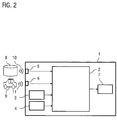
- FIG. 2 shows in a rough overview of the block diagram of a provided with the device 2 for controlling or controlling the damper force adjustable damper commercial vehicle 1. It is also on FIG. 3 Reference is made, which explains the operation of the device 2 and generally the inventive method by way of example with reference to a flow chart.
- the vehicle 1 is equipped with a plurality of semi-active dampers 7, the damping characteristic of the device 2 is adjustable.
- the wheels of the commercial vehicle 1 and the cab of the commercial vehicle in a conventional manner associated with semi-active damper 7.
- the shock absorbers 7 must be regulated depending on the driving situation and road conditions.
- the device 2 is set up, various predetermined parameters or their current values, from which a chassis request and / or a road condition can be derived, from various external data sources 8, 9 (step S1) and internal data sources 3, 4 (step S2).
- the device 2 communicates within the scope of step S1, as already described in connection with FIG FIG. 1 continuously, via the vehicle-to-vehicle interface 6 of the vehicle 1 with preceding foreign vehicles 9, if they are set up accordingly, to determine the parameters prescribed for the control or regulation of the damper settings and other vehicles via a vehicle-to-vehicle Provide communication. Furthermore, the device 2 communicates via a wireless interface 5 of the vehicle, as already also associated with FIG. 1 described with one or more external databases 8 to access there stored parameter values from which a chassis request and / or a road condition can be derived.
- the device 2 communicates continuously via a CAN data bus with an in-vehicle sensor 4 which is arranged in the region of the adjustable dampers and which provides the device 2 with current values of one or more parameters, from which also a chassis request and / or or a roadway texture is derivable. Furthermore, the controller 2 is set up to use at least one parameter that is generated by a driver assistance system 3 of the vehicle 1.
- the device 2 is set up to carry out the control or regulation method of the damper settings within the framework of a superordinate operating strategy, to record the driving situation, the driver's request, the roadway and / or vehicle state from the parameter values received from the various data sources 3, 4, 8 and 9 and according to predetermined evaluation criteria then z. B. to set a comfort or safety-oriented damper control (step S3).
- the vehicle and cab movements and the vibration behavior of the individual wheels are then regulated on a subordinate level, the global control specification being specified by the operating strategy depending on the respective situation (step S4).
- steps S1 to S4 will be explained by way of illustrative examples.
- distance sensors may be provided which measure the distance between a wheel and a vehicle body over time.
- the damping characteristic can be adjusted in a manner known per se. From an increased build-up acceleration, for example, an increased unevenness or ground waviness of the roadway can be inferred, since the body acceleration depends on the macrostructure of the ground and the vehicle springs back different degrees after the first immersion, depending on the hardness of the set damping and the degree of unevenness, that is, the structure is accelerated in the vertical direction and away from the ground. Thus, if the measured body acceleration exceeds a predetermined threshold, it may derive an uneven road condition and consequently a "softer" setting of the dampers as a chassis request and the damper characteristics are then controlled accordingly within predetermined damper characteristics.
- a chassis requirement and / or a road condition as described above can be derived, but only when the changed chassis requirement and / or a road condition has already occurred, for example in the form of increased unevenness or ground waviness of the roadway.
- this known control or regulation of the damper settings is supplemented and superimposed by a superordinate operating strategy.
- one or more parameters are used, from which also a chassis request and / or a road condition can be derived, but provided by a vehicle external data source 8, 9 and their current values are received by the vehicle 1 while driving.
- the data received in step S1 for this purpose can be, for example, weather information.
- weather information In the case of rain, snow, etc., a strong safety-based damper setting with the goal of lowest wheel load fluctuations is triggered on the basis of the findings.
- the data may include traffic and / or map material information.
- map data may be stored in which locations and / or sections with bad road surfaces etc. are marked. In the presence of such map data they are queried and evaluated by the device 2 for the current route, so that the device 2 detects a preceding road deterioration before it is reached by the vehicle 1.
- the device 2 can adapt the characteristics of the dampers 7 in good time before reaching the roadway deterioration, before the in-vehicle sensor system 4 can detect this roadway degradation on the basis of a vehicle or cab body movement.
- the vehicle 1 can "mark" route sections via dynamic map data if they are detected by means of the in-vehicle sensor system 4, and thus pass on bad road surfaces to other vehicles or the external database 8 by means of the marked map data.
- the device 2 can continuously monitor the speed of preceding vehicles, which by means of a vehicle-to-vehicle communication from the preceding Foreign vehicles is received or is obtained directly from a speed control (cruise control) of the vehicle.
- the often camera-based information from Abstandstempomaten or information from sensors such as laser, radar, etc. allow a greater depth of interpretation of the current driving situation and vehicle environment than by the conventional sensor 4, which detects only the movement of directly influenced by the damper 7 elements such as wheel and body movements , whereby a better prognosis ability is achieved. For example, it can be concluded from a sudden reduction in the speed of the preceding vehicles on a possible deterioration of the road condition, if it is known from other Internet-based sources that there is neither a speed limit nor a traffic jam.
- step S3 the data of the different data sources 3, 4, 8, 9 are thus evaluated and combined.
- additional information can be generated by cross-connections between individual information and therefore changing damper requirements can be predicted more accurately and earlier. If z. B. detected based on the vehicle speed profile of the vehicle ahead emergency braking of the preceding foreign vehicle, the device 2 causes a suspension setting that favors a minimum braking distance, z. B by means of a so-called. Groundhook control.
- a further advantage of using the different data sources 3, 4, 8, 9 is that the derivation of a chassis request and / or a road condition from the parameter values can be carried out less error-prone on the basis of complementary and / or redundant information.
- queried from an external Internet database 8 data regarding the current weather and traffic conditions on the camera systems and / or laser / radar sensors other assistance systems 3 can be adjusted and confirmed. Higher information security improves data quality.
Landscapes
- Engineering & Computer Science (AREA)
- Mechanical Engineering (AREA)
- Automation & Control Theory (AREA)
- Chemical & Material Sciences (AREA)
- Combustion & Propulsion (AREA)
- Transportation (AREA)
- Vehicle Body Suspensions (AREA)
- Controls For Constant Speed Travelling (AREA)
Abstract
Description
- Die Erfindung betrifft ein Verfahren zur Regelung oder Steuerung der Dämpferkraft verstellbarer Dämpfer in Kraftfahrzeugen, insbesondere in Nutzfahrzeugen, gemäß dem Oberbegriff des Anspruchs 1 und eine Vorrichtung mit den Merkmalen des Oberbegriffes des Anspruchs 13.
- Bei der Auslegung von Fahrwerkregelsystemen ist stets ein Kompromiss notwendig zwischen Komfort und Fahrsicherheit. Ein ideales Fahrwerk soll die durch Fahrbahnunebenheiten angeregten Schwingungen möglichst gut dämpfen und gleichzeitig die Radaufstandskräfte möglichst konstant auf einem vorgegebenem Wert halten, weil hierdurch die Räder das höchste Längs- und Seitenführungspotential haben und das Fahrzeug mit optimaler Sicherheit führen.
- Die gegenwärtig vorhandenen Dämpfersysteme in Fahrzeugen sind in drei Gruppen einteilbar: passive, semiaktive und aktive Dämpfersysteme. Bei passiven Dämpfersystemen sind die Größe und die Richtung der von dem Dämpfer ausgeübten Kraft nur abhängig von der relativen Geschwindigkeit des Dämpfers. In passiven Dämpfersystemen ist eine Veränderung der Dämpferkraft während des Fahrbetriebes nicht vorgesehen. Die Abstimmung eines Fahrzeugs mit passiven Stoßdämpfern stellt immer nur einen Kompromiss dar, da unterschiedliche Fahrzustände mit derselben Fahrwerkseinstellung abgedeckt werden müssen.
- Eine Lösung für diesen Zielkonflikt besteht im Einsatz semiaktiver Stoßdämpfer, die es ermöglichen, die Dämpferkennlinien über einen weiten Bereich per elektronischer Ansteuerung zu verändern und damit für unterschiedliche Fahrsituationen innerhalb weniger Millisekunden eine optimale Dämpfereinstellung bereitzustellen. Aber auch für unterschiedliche Beladungszustände, die insbesondere im Nutzfahrzeug große Unterschiede bzgl. Gesamtmasse und Schwerpunktslage bewirken können, können geeignete Dämpfervoreinstellungen gewählt werden, die einer einzigen Abstimmung passiver Dämpfer überlegen sind.
- Bei semiaktiven Dämpfersystemen kann deren Kennlinie während der Fahrt schnell und über einen weiten Bereich verändert werden. Insbesondere können solche Stoßdämpfer auf (proportionalen) Verstellventilen beruhen, die den Ölfluss verändern (engl. Continuous Damping Control), oder auf magneto- oder elektrorheologischen Flüssigkeiten, wobei ein magnetisches oder elektrisches Feld die Viskosität der Flüssigkeit und damit die Dämpfkraft beeinflusst. Es sind auch Kombinationen der Technologien aus der Praxis bekannt. Auf diese Art und Weise können verschiedene Regelungsprogramme mittels eines Stellelementes in Abhängigkeit von der aktuellen Fahrsituation die optimale Dämpferkraft einstellen. Bei aktiven Dämpfersystemen wird über einen Aktuator die gewünschte Kraft in jeglicher Richtung bereitgestellt, unabhängig von der relativen Geschwindigkeit des Dämpfers.
- Im Stand der Technik wurden bereits zahlreiche Verfahren zur Regelung oder Steuerung der Dämpferkraft verstellbarer Dämpfer vorgeschlagen.
- So ist in der
DE 101 26 933 A1 ein gattungsgemäßes Verfahren offenbart, bei dem die Regelung oder Steuerung in Abhängigkeit von der Dämpfergeschwindigkeit erfolgt und die Dämpfergeschwindigkeitssignale mittels Abstandssensoren und Differenzbildung der Abstandssensorensignale über eine festgelegte Zeitdifferenz ermittelt werden. -
DE 100 35 150 A1 offenbart ein Fahrzeug mit steuerbaren Schwingungsdämpfern, deren Dämpfungseigenschaften abhängig von der Höhe des Bremsdruckes eingestellt werden, wobei ggf. zusätzlich auch noch eine von der Fahrzeuggeschwindigkeit abhängige Regelung möglich ist. Die Dämpfungseigenschaften sind dabei durch Kennlinien darstellbar, die entweder eine "harte" Einstellung, also eine große Dämpfung, oder eine "weiche" Einstellung, also eine geringe Dämpfung, erlauben. Abhängig vom Bremsdruck wird hier eine mindestens kurzzeitige Einstellung auf eine "harte" Kennlinie durchgeführt. -
DE 10 2004 053 695 A1 offenbart ein Verfahren zur Dämpfung von Karosserie-, Fahrwerks-, oder Radschwingungen eines Kraftfahrzeugs, bei dem über Sensoren ein Bremszustand des Kraftfahrzeugs detektiert wird und bei dem jeweils die Aufbaubeschleunigungen und die Fahrwerks- oder Radbeschleunigungen separat über Sensoren ermittelt werden. Gemäß diesem Verfahren wird nach Erkennen eines Bremszustandes und nach Überschreiten eines Grenzwertes der über Sensoren ermittelten Aufbaubeschleunigung und/oder Radbeschleunigung während einer ersten Schwingungsperiode der Karosserie solange eine harte Dämpfungscharakteristik für die betroffenen Räder oder Achsen eingestellt und beibehalten, bis durch die über Sensoren ermittelten Aufbaubeschleunigungen und/oder Radbeschleunigungen eine Umkehr der Radlast oder eine Verminderung der Radlast unter einen Mindestwert festgestellt wird. Erst danach werden die Dämpfer in der Zug- und Druckstufe innerhalb vorgegebener Dämpferkennlinien geregelt. - Die
DE 198 03 370 A1 offenbart ein Verfahren zum Betrieb einer Federungs- und Dämpfungseinrichtung eines Kraftfahrzeugs, bei dem die Dämpfer einzelner Räder bei Vorliegen eines außerhalb der regulären Werte liegenden Beschleunigungssignals gesperrt oder verhärtet werden. Hierdurch soll ein Aufschaukeln der Karosserie verhindert werden. - Die
US 4,741,554 zeigt ein Regelungssystem für Fahrwerke von Kraftfahrzeugen, mit dem ein zu starkes Nicken und Aufschaukeln des Fahrzeugs vermieden werden soll (anti-dive and anti-rebound system). Hierbei erfolgt bei einer Bremsung abhängig von einer über Sensoren ermittelten Höhenstellung der Karosserie eine Umschaltung der Dämpfung auf eine härtere Kennung. Diese härtere Kennung wird für einen bestimmten Zeitraum beibehalten. Im ungebremsten Zustand und oberhalb einer bestimmten Grenzhöhe der Karosserie wird die Dämpfung "weich" geschaltet. - Die
EP 0 795 429 A2 offenbart ein Verfahren zur Steuerung eines Dämpfers, welches einen sogenannten "Skyhook"-Algorithmus bei normaler Fahrt bereitstellt und beim Bremsen Radlastschwankungen unterdrücken soll. Abhängig von der Schlupfermittlung über einen Vergleich der Raddrehzahlen mit der tatsächlichen Karosserie-Geschwindigkeit, abhängig vom Bremsdruck - als Startsignal - und abhängig von der Aufbaubeschleunigung erfolgt hier beim Bremsen eine variable Einstellung der Dämpfungscharakteristik einzelner Stoßdämpfer in der Zug- und in der Druckstufe im Wesentlichen so, dass jeweils nur eines der Charakteristika, also entweder die Zugstufe oder die Druckstufe, variabel geregelt wird, während das jeweils andere "weich" geschaltet ist. - Die vorgenannten Ansätze aus dem Stand der Technik haben gemeinsam, dass zur Regelung oder Steuerung der Dämpferkraft verstellbarer Dämpfer ein oder mehrere Parameter mittels einer fahrzeuginternen Sensorik bestimmt werden, aus dem oder denen eine Fahrwerksanforderung und/oder eine Fahrbahnbeschaffenheit ableitbar ist. Beispiele solcher Parameter sind, wie vorstehend erläutert, ein Bremszustand des Kraftfahrzeuges, die Aufbaubeschleunigung, d. h. die Vertikalbeschleunigung der Karosserie, die Fahrwerks- oder Radbeschleunigungen und/oder die Dämpfergeschwindigkeit. Zur Messung der Parameterwerte können beispielsweise Abstandssensoren verwendet werden, die die Entfernung zwischen einem Rad und einem Fahrzeugaufbau im Zeitverlauf messen.
- Ein Nachteil der bekannten Ansätze ist, dass damit eine Anpassung der Dämpfereinstellung erst möglich ist, nachdem eine Verschlechterung oder Verbesserung der Fahrbahnbeschaffenheit bereits eingetreten ist, was aus Sicherheits-, Komfort- und Verschleißgesichtspunkten nachteilig ist.
- Es ist somit eine Aufgabe der Erfindung, ein verbessertes Verfahren zur Regelung oder Steuerung der Dämpferkraft verstellbarer Dämpfer in Kraftfahrzeugen, insbesondere in Nutzfahrzeugen, bereitzustellen, mit dem Nachteile herkömmlicher Techniken vermieden werden können. Die Aufgabe der Erfindung ist es insbesondere, ein Verfahren zur Regelung oder Steuerung der Dämpferkraft verstellbarer Dämpfer in Kraftfahrzeugen bereitzustellen, das die Fahrsicherheit und den Komfort für den Fahrer verbessert. Eine weitere Aufgabe ist es, eine Vorrichtung zur Regelung oder Steuerung der Dämpferkraft verstellbarer Dämpfer in Kraftfahrzeugen bereitzustellen, mit der Nachteile herkömmlicher Vorrichtungen vermieden werden können.
- Diese Aufgaben werden durch ein Verfahren mit den Merkmalen des Anspruchs 1 und eine Vorrichtung mit den Merkmalen des Anspruchs 13 gelöst. Vorteilhafte Ausführungsformen und Anwendungen der Erfindung sind Gegenstand der abhängigen Ansprüche und werden in der folgenden Beschreibung unter teilweiser Bezugnahme auf die Figuren näher erläutert.
- Erfindungsgemäß wird ein Verfahren zur Regelung oder Steuerung der Dämpferkraft verstellbarer Dämpfer in Kraftfahrzeugen, insbesondere in Nutzfahrzeugen, mit aktiven und/oder semiaktiven Dämpfersystemen vorgeschlagen. Gemäß allgemeinen Gesichtspunkten der Erfindung erfolgt die Regelung oder Steuerung in Abhängigkeit von wenigstens einem Parameter, aus dem eine Fahrwerksanforderung und/oder eine Fahrbahnbeschaffenheit ableitbar ist, wobei ein Parameterwert des wenigstens einen Parameters von einer fahrzeugexternen Datenquelle bereitgestellt und vom Kraftfahrzeug im Fahrbetrieb empfangen wird.
- Eine Besonderheit der Erfindung liegt somit darin, dass der oder die zur Regelung oder Steuerung der Dämpferkraft verwendete(n) Parameter nicht oder zumindest nicht ausschließlich mit einer fahrzeuginternen Sensorik gemessen werden, sondern von einer fahrzeugexternen Datenquelle bereitgestellt werden. Mittels derartiger extern bereitgestellter Daten kann eine größere Interpretationstiefe der aktuellen Fahrsituation und insbesondere auch der Fahrzeugumgebung realisiert werden, wodurch Anforderungen an die Dämpfer- bzw. Fahrwerkseinstellung frühzeitig bestimmt und prognostiziert werden können.
- Beispielsweise kann die fahrzeugexterne Datenquelle wenigstens ein Fremdfahrzeug sein, vorzugsweise ein vorausfahrendes Fremdfahrzeug, wobei Parameterwerte des wenigstens einen Parameters von dem wenigstens einen Fremdfahrzeug drahtlos über eine Fahrzeug-zu-Fahrzeug-Kommunikation empfangen werden. Dies bietet den Vorteil, dass das Fahrzeug unmittelbar, vorzugsweise in Echtzeit, von vorausfahrenden Fremdfahrzeugen für die Dämpfereinstellung relevante Daten empfangen kann, um so kurzfristig über geänderte Anforderungen an die Dämpfereinstellung, z. B. eine vorausliegende Fahrbahnverschlechterung, informiert zu werden. Dadurch kann das Fahrzeug ggf. rechtzeitig seine Dämpfereinstellung anpassen.
- Ferner besteht im Rahmen der Erfindung die Möglichkeit, dass die fahrzeugexterne Datenquelle eine Datenbank, vorzugsweise eine Internetdatenbank ist, in der Parameterwerte des wenigstens einen Parameters hinterlegt sind und per Drahtlosfernabfrage vom Kraftfahrzeug abrufbar sind. Dies bietet den Vorteil, dass sich das Fahrzeug unabhängig von der Verfügbarkeit des wenigstens einen Parameters über eine Fahrzeug-zu-Fahrzeug-Kommunikation fahrzeugextern erzeugte Informationen zur Fahrwerkseinstellung beschaffen kann. Ferner kann gemäß dieser Variante auf unterschiedlichste Datenbanken oder sog. BigData-Datenquellen zugegriffen werden, die für die Dämpfereinstellung relevante Daten enthalten und vom Fahrzeug ausgewertet werden können. Ferner können die vorstehend genannten Daten des Fremdfahrzeugs in einer Datenbank zwischengespeichert werden, z. B. um auch Zugriff darauf zu ermöglichen, wenn zwischen den Fahrzeugen keine Fahrzeug-zu-Fahrzeug-Kommunikation möglich ist.
- Beispielsweise kann der wenigstens eine Parameter eine Wetterinformation, eine Verkehrsinformation, eine Fahrbahnbeschaffenheit und/oder eine Karteninformation betreffend die aktuelle Fahrposition und/oder Fahrtroute des Fahrzeugs enthalten. Eine Wetterinformation kann z. B. angeben, ob an der aktuellen Fahrposition und/oder wo auf der vorausliegenden Fahrtroute mit Niederschlag oder einer nassen Fahrbahn zu rechnen ist. An diesen Stellen kann die Steuerung oder Regelung eine sicherheitsorientierte Dämpfereinstellung einstellen. Eine Fahrbahnbeschaffenheit, z. B. "gut", "normal", "schlecht", kann in analoger Weise angeben, ob an der aktuellen Fahrposition und/oder wo auf der vorausliegenden Fahrtroute mit Fahrbahnunebenheiten, Schlaglöchern etc. zu rechnen ist. In diesem Sinne kann aus diesen Parametern eine Fahrwerksanforderung und/oder eine Fahrbahnbeschaffenheit abgeleitet und dann zur Einstellung der Dämpferkraft verwendet werden. Gemäß der vorgenannten Ausführungsvariante kann dann eine sicherheitsbasierte Dämpfereinstellung, die möglichst geringe Radlastschwankungen bewirkt, für die Dämpferkraft des verstellbaren Dämpfers eingestellt werden, wenn beispielsweise der wenigstens eine Parameter eine Wetterinformation angibt und diese eine hohe Wahrscheinlichkeit für Regen oder Schnee an der aktuellen Fahrposition des Kraftfahrzeugs angibt.
- Eine weitere vorteilhafte Möglichkeit der erfindungsgemäßen Realisierung sieht vor, dass der wenigstens eine Parameter einen Betriebszustand und/oder ein Fahrverhalten mindestens eines Fremdfahrzeugs angibt, das aktuell auf der gleichen Straße oder zumindest in der Nähe von dem Kraftfahrzeug fährt oder gefahren ist. Im Falle des Empfangs des wenigstens einen Parameters über eine Fahrzeug-zu-Fahrzeug-Kommunikation ist das Fremdfahrzeug vorzugsweise ein in Bezug auf das Fahrzeug vorausfahrendes Fremdfahrzeug.
- Eine Variante dieser Ausgestaltungsform sieht vor, dass der wenigstens eine Parameter einen aktuellen Geschwindigkeitsverlauf des Fremdfahrzeugs angibt oder ein aktueller Geschwindigkeitsverlauf daraus ableitbar ist. Beispielsweise kann aus einer plötzlichen Geschwindigkeitsverringerung des vorausfahrenden Fremdfahrzeugs oder aus einer erhöhten Bremsaktivität auf eine, insbesondere auch temporäre Verschlechterung, Verschmutzung des Fahrbahnzustandes oder das Vorhandensein von Fremdkörpern auf der Fahrbahn geschlossen werden, wenn aus weiteren, z. B. internetbasierten, Quellen zusätzlich ermittelt wurde, dass weder eine entsprechende Geschwindigkeitsbegrenzung noch ein Stau vorliegt. Wird auf diese Weise auf eine Verschlechterung des Fahrbahnzustandes geschlossen, kann wiederum eine sicherheitsorientierte Dämpfereinstellung gewählt werden.
- Ferner ist es vorteilhaft, wenn der wenigstens eine Parameter eine Dämpfer- bzw. Fahrwerksaktivität, insbesondere eine Rad- und/oder Karosserieaufbaubewegung, des mindestens einen Fremdfahrzeugs angibt oder diese daraus ableitbar ist. Beispielsweise kann das Fremdfahrzeug die Messwerte seiner Fahrwerksensorik über eine Fahrzeug-zu-FahrzeugKommunikation in vorgegebener genormter Form bereitstellen. Anhand dieser Daten des Fremdfahrzeugs kann eine vorausliegende veränderte Fahrbahnunebenheit unmittelbar erkannt werden, und zwar bevor das Fahrzeug diese betreffende Stelle erreicht.
- Bei einer Variante der vorgenannten Ausführungsbeispiele werden die jeweiligen Parameterwerte zusammen mit einer Ortsinformation, z. B. in Form von GPS-Daten, bereitgestellt, die die geographische Stelle angibt, für die der jeweilige Parameterwert gültig ist. Dies ermöglicht eine genaue Vorhersage derjenigen Stelle, an der im Rahmen der Steuerung oder Regelung die Dämpferkraft angepasst werden soll.
- Gemäß einer weiteren Ausführungsvariante kann die Regelung oder Steuerung in Abhängigkeit von wenigstens einem fahrzeugintern ermittelten Parameter erfolgen, so dass fahrzeugextern ermittelte Daten mit fahrzeugintern ermittelten Daten kombiniert werden, um die Dämpferregelung- bzw. Steuerung zu verbessern. Der fahrzeugintern ermittelte Parameter kann ein fahrzeugintern ermittelter Parameter sein, wie vorstehend im Zusammenhang mit dem Stand der Technik beschrieben.
- Besonders vorteilhaft ist jedoch, wenn der wenigstens eine fahrzeugintern ermittelte Parameter ein Parameter ist, aus dem eine Fahrwerksanforderung und/oder eine Fahrbahnbeschaffenheit ableitbar ist und der von wenigstens einem Fahrerassistenzsystem bereitgestellt wird.
- Beispielsweise kann das wenigstens eine Fahrerassistenzsystem einen Abstandstempomat umfassen und der fahrzeugintern ermittelte Parameter eine Geschwindigkeit oder einen Geschwindigkeitsverlauf eines vorausfahrenden Fremdfahrzeugs angeben, die oder der mittels des Abstandstempomaten fortlaufend erfasst wird.
- Eine weitere Möglichkeit im Rahmen der Erfindung ist, dass das wenigstens eine Fahrerassistenzsystem ein Kamerasystem, Lasersystem und/oder Radarsystem des Fahrzeugs umfasst und der fahrzeugintern ermittelte Parameter eine mit einem solchen System ermittelte aktuelle Wetterinformation und/oder Fahrbahninformation angibt, aus denen wiederum eine Fahrwerksanforderung und/oder eine Fahrbahnbeschaffenheit ableitbar ist.
- Gemäß einer weiteren Ausführungsvariante werden die empfangenen Werte des wenigstens einen Parameters der fahrzeugexternen Datenquelle anhand der Werte des fahrzeugintern ermittelten Parameters plausibilisiert und/oder umgekehrt. Dies bedeutet, dass die verwendeten Parameter der fahrzeugexternen Datenquelle(n) und die fahrzeugintern ermittelten Parameter redundante und/oder komplementäre Informationen enthalten können, um die Genauigkeit und Zuverlässigkeit der Ableitung einer Fahrwerksanforderung und/oder eine Fahrbahnbeschaffenheit aus diesen Datenquellen zu verbessern. Beispielsweise kann aus einer plötzlichen Geschwindigkeitsverringerung eines vorausfahrenden Fremdfahrzeugs, die mittels des Abstandstempomaten erfasst wird, auf eine Gefahrenbremsung des vorausfahrenden Fremdfahrzeugs aufgrund einer Verschlechterung des Fahrbahnzustandes oder Fremdkörpern (z. B. Reifenteile etc.) geschlossen werden, wenn aus weiteren fahrzeugexternen, z. B. internetbasierten, Datenquellen anhand komplementärer Verkehrs- und Karteninformationen zusätzlich ermittelt wurde, dass weder eine entsprechende Geschwindigkeitsbegrenzung noch ein Stau vorliegt.
- Gemäß einer bevorzugten Ausführungsform ist der verstellbare Dämpfer ein semiaktiver Stoßdämpfer eines Fahrwerks. Die Erfindung ist jedoch nicht nur zur Regelung oder Steuerung von semiaktiven Fahrwerken anwendbar. Das gesteuerte oder geregelte Dämpfungssystem kann ein Fahrerhausdämpfungssystem und/oder ein Ladungslagerungssystem eines Nutzfahrzeugs sein. Hier steht die sog. Skyhook-Regelung im Vordergrund, da eine Fahrerhauslagerung keinen direkten Einfluss auf die Radführung hat
- Gemäß einem weiteren Aspekt der Erfindung kann das Fahrzeug eine einem Fahrbahnabschnitt zuordenbare zeitlich veränderliche Information, insbesondere eine Fahrbahnbeschaffenheit, eine Verkehrsinformation, eine Wetterinformation, z. B. das Vorhandensein von Schnee- und Eisglätte, mittels eines fahrzeuginternen Sensorsystems und/oder aus einer Verkehrszeichenerkennung eigener oder fremder Fahrzeuge ableiten. Gemäß diesem Aspekt erzeugt das Fahrzeug Kartendaten, auf denen Fahrbahnabschnitte gekennzeichnet sind, für die die zeitlich veränderliche Information ermittelt wurde, z. B. Fahrbahnabschnitte, die eine vorbestimmte, insbesondere schlechte Fahrbahnbeschaffenheit aufweisen, und wobei den gekennzeichneten Fahrbahnabschnitten die ermittelte Information zugeordnet ist. Gemäß diesem Aspekt übermittelt das Fahrzeug die erzeugten Kartendaten an ein Fremdfahrzeug über eine Fahrzeug-zu-Fahrzeug-Kommunikation und/oder an eine Datenbank, vorzugsweise eine Internetdatenbank. Gemäß dieser Variante können Kraftfahrzeuge gegenseitig Informationen, die zur Regelung oder Steuerung der Dämpfer nutzbar sind, zur Verfügung stellen.
- Im Rahmen der Erfindung wird ferner eine Vorrichtung zur Regelung oder Steuerung der Dämpferkraft verstellbarer Dämpfer in Kraftfahrzeugen, insbesondere in Nutzfahrzeugen, mit aktiven und/oder semiaktiven Dämpfersystemen vorgeschlagen, wobei die Vorrichtung eingerichtet ist, die Regelung oder Steuerung in Abhängigkeit von wenigstens einem Parameter durchzuführen, aus dem eine Fahrwerksanforderung und/oder eine Fahrbahnbeschaffenheit ableitbar ist. Gemäß allgemeinen Gesichtspunkten der Erfindung ist die Vorrichtung eingerichtet, im Fahrbetrieb Parameterwerte des wenigstens einen Parameters von einer fahrzeugexternen Datenquelle zu empfangen. Die Vorrichtung ist insbesondere eingerichtet, das Verfahren, wie hierin offenbart, durchzuführen. Zur Vermeidung von Wiederholungen sollen rein verfahrensgemäß offenbarte Merkmale auch als vorrichtungsgemäß offenbart gelten und beanspruchbar sein.
- Ferner betrifft die Erfindung ein Kraftfahrzeug, insbesondere Nutzfahrzeug, mit einer Vorrichtung wie hierin offenbart.
- Die zuvor beschriebenen bevorzugten Ausführungsformen und Merkmale der Erfindung sind beliebig miteinander kombinierbar. Weitere Einzelheiten und Vorteile der Erfindung werden im Folgenden unter Bezug auf die beigefügten Zeichnungen beschrieben. Es zeigen:
- Figur 1
- eine schematische Illustration einer Fahrzeug-zu-Fahrzeug-Kommunikation und einer Fernabfrage einer Datenbank gemäß einer Ausführungsform der Erfindung;
- Figur 2
- ein schematisches Blockschaltdiagramm eines Fahrzeugs mit einer Vorrichtung zur Regelung oder Steuerung der Dämpferkraft verstellbarer Dämpfer gemäß einer Ausführungsform der Erfindung; und
- Figur 3
- ein Ablaufdiagramm zur Illustration eines Verfahrens zur Regelung oder Steuerung der Dämpferkraft verstellbarer Dämpfer gemäß einer Ausführungsform der Erfindung.
- In
Figur 1 ist eine Fahrzeug-zu-Fahrzeug-Kommunikation und eine Fernabfrage einer Datenbank gemäß einer Ausführungsform der Erfindung dargestellt. Das Nutzfahrzeug umfasst eine Vorrichtung zur Regelung oder Steuerung der Dämpferkraft der semiaktiven Dämpfer, die nachfolgend im Zusammenhang mitFigur 2 noch näher erläutert wird. - Die Vorrichtung zur Regelung oder Steuerung der Dämpferkraft kommuniziert im Fahrbetrieb des Nutzfahrzeugs 1 fortlaufend über eine Fahrzeug-zu-Fahrzeug-Kommunikation mit anderen Fahrzeugen 9, die sich innerhalb der Reichweite der Fahrzeug-zu-Fahrzeug-Kommunikation befinden und die ebenfalls mit einer erfindungsgemäß eingerichteten Vorrichtung zur Regelung oder Steuerung der Dämpferkraft ausgestattet sind. Die drahtlose Fahrzeug-zu-Fahrzeug-Kommunikation ist dargestellt durch den mit dem Bezugszeichen 11 gekennzeichneten Pfeil. Hierbei erfolgt die Fahrzeug-zu-Fahrzeug-Kommunikation bidirektional, d. h., ein an der Fahrzeug-zu-Fahrzeug-Kommunikation beteiligtes Fahrzeug empfängt von einem Fremdfahrzeug 9 ermittelte Parameterwerte, aus denen eine Fahrwerksanforderung und/oder eine Fahrbahnbeschaffenheit ableitbar ist, und sendet zugleich über die Fahrzeug-zu-Fahrzeug-Kommunikations-Schnittstelle entsprechende fahrzeug-intern ermittelte Parameterwerte an andere Fremdfahrzeuge 9.
- Die Vorrichtung 2 des Nutzfahrzeugs 1 kommuniziert im Fahrbetrieb ferner mit einer oder mehreren externen Datenbanken 8, um auf dort abgelegte Parameterwerte zuzugreifen, aus denen eine Fahrwerksanforderung und/oder eine Fahrbahnbeschaffenheit ableitbar ist, und übermittelt ferner zur Zwischenspeicherung eigens ermittelte Parameterwerte an eine oder mehrere externe Datenbanken 8, damit Fremdfahrzeuge 9 darauf Zugriff haben. In analoger Weise kommunizieren die Fremdfahrzeuge 9 mit der externen Datenbank 8. Die drahtlose bidirektionale Kommunikation mit einer oder mehreren externen Datenbanken 8 ist dargestellt durch die mit dem Bezugszeichen 10 gekennzeichneten Pfeile.
-
Figur 2 zeigt im groben Überblick das Blockschaltbild eines mit der Vorrichtung 2 zur Regelung oder Steuerung der Dämpferkraft verstellbarer Dämpfer versehenen Nutzfahrzeugs 1. Es wird ferner aufFigur 3 Bezug genommen, die die Arbeitsweise der Vorrichtung 2 sowie generell das erfindungsgemäße Verfahren beispielhaft anhand eines Ablaufdiagramms erläutert. - Das Fahrzeug 1 ist mit mehreren semiaktiven Dämpfern 7 ausgestattet, deren Dämpfungscharakteristik von der Vorrichtung 2 verstellbar ist. Hierbei sind den Rädern des Nutzfahrzeugs 1 sowie dem Fahrerhaus des Nutzfahrzeugs in an sich bekannter Weise semiaktive Dämpfer 7 zugeordnet. Die Stoßdämpfer 7 müssen je nach Fahrsituation und Straßenbeschaffenheit geregelt werden. Zur Bestimmung der Dämpfereinstellung ist die Vorrichtung 2 eingerichtet, verschiedene vorgegebene Parameter bzw. deren aktuelle Werte, aus denen eine Fahrwerksanforderung und/oder eine Fahrbahnbeschaffenheit ableitbar ist, aus verschiedenen externen Datenquellen 8, 9 (Schritt S1) und internen Datenquellen 3, 4 (Schritt S2) zu empfangen.
- Hierzu kommuniziert die Vorrichtung 2 im Rahmen von Schritt S1, wie bereits im Zusammenhang mit
Figur 1 beschrieben, fortlaufend über die Fahrzeug-zu-Fahrzeug-Schnittstelle 6 des Fahrzeugs 1 mit vorausfahrenden Fremdfahrzeugen 9, falls diese entsprechend eingerichtet sind, die für die Steuerung oder Regelung der Dämpfereinstellungen vorgegebenen Parameter zu bestimmen und anderen Fahrzeugen über eine Fahrzeug-zu-Fahrzeug-Kommunikation bereitzustellen. Ferner kommuniziert die Vorrichtung 2 über eine Drahtlosschnittstelle 5 des Fahrzeugs, wie bereits ebenfalls in Zusammenhang mitFigur 1 beschrieben, mit einer oder mehreren externen Datenbanken 8, um auf dort abgelegte Parameterwerte zuzugreifen, aus denen eine Fahrwerksanforderung und/oder eine Fahrbahnbeschaffenheit ableitbar ist. - Gleichzeitig kommuniziert die Vorrichtung 2 im Rahmen von Schritt S2 fortlaufend über einen CAN-Datenbus mit einer fahrzeuginternen Sensorik 4, die im Bereich der verstellbaren Dämpfer angeordnet ist und die der Vorrichtung 2 aktuelle Werte eines oder mehrerer Parameter bereitstellt, aus denen ebenfalls eine Fahrwerksanforderung und/oder eine Fahrbahnbeschaffenheit ableitbar ist. Ferner ist die Steuerung 2 eingerichtet, wenigstens einen Parameter, der von einem Fahrerassistenzsystem 3 des Fahrzeugs 1 erzeugt wird, zu verwenden.
- Die Vorrichtung 2 ist zur Durchführung des Steuerungs- oder Regelungsverfahrens der Dämpfereinstellungen im Rahmen einer übergeordneten Betriebsstrategie eingerichtet, anhand der aus den verschiedenen Datenquellen 3, 4, 8 und 9 empfangenen Parameterwerte die Fahrsituation, den Fahrerwunsch, den Fahrbahn- und/oder Fahrzeugzustand zu erfassen und entsprechend vorgegebener Bewertungskriterien dann z. B. eine komfort- oder sicherheitsorientierte Dämpferregelung einzustellen (Schritt S3). Auf einer untergeordneten Ebene werden dann die Fahrzeug- und Fahrerhausbewegungen und das Schwingungsverhalten der einzelnen Räder geregelt, wobei die globale Regelvorgabe abhängig von der jeweiligen Situation von der Betriebsstrategie vorgegeben wird (Schritt S4).
- Nachfolgend werden weitere Aspekte der Schritte S1 bis S4 anhand illustrierender Beispiele erläutert.
- Die im Bereich der verstellbaren Dämpfer 7 angeordnete fahrzeuginterne Sensorik 4, mittels der die Bewegung eines oder mehrerer unmittelbar durch die Dämpfer 7 beeinflussten Elemente wie Rad- und Aufbaubewegungen erfasst wird, kann gemäß einer der Varianten, wie eingangs im Zusammenhang mit dem Stand der Technik beschrieben wurde, ausgeführt sein, um beispielsweise die Aufbaubeschleunigung, die Fahrwerks- oder Radbeschleunigungen und/oder die Dämpfergeschwindigkeit zu ermitteln. Beispielsweise können Abstandssensoren vorgesehen sein, die die Entfernung zwischen einem Rad und einem Fahrzeugaufbau im Zeitverlauf messen.
- In Abhängigkeit von den fortlaufend ermittelten Parameterwerten der fahrzeuginternen Sensorik 4 kann die Dämpfungscharakteristik in an sich bekannter Weise angepasst werden. Aus einer erhöhten Aufbaubeschleunigung kann beispielsweise auf eine erhöhte Unebenheit oder Bodenwelligkeit der Fahrbahn geschlossen werden, da die Aufbaubeschleunigung abhängig von der Makrostruktur des Untergrundes ist und das Fahrzeug nach dem ersten Eintauchen je nach Härte der eingestellten Dämpfung und je nach Stärke der Unebenheit verschieden stark rückfedert, d. h., dass der Aufbau in vertikaler Richtung und vom Untergrund weg beschleunigt wird. Wenn somit die gemessene Aufbaubeschleunigung einen vorgegebenen Schwellenwert überschreitet, kann daraus eine unebene Fahrbahnbeschaffenheit und demzufolge eine "weichere" Einstellung der Dämpfer als Fahrwerksanforderung abgeleitet werden und die Dämpfercharakteristik dann entsprechend innerhalb vorgegebener Dämpferkennlinien geregelt werden.
- Aus den Messwerten der fahrzeuginternen Sensorik 4 ist somit eine Fahrwerksanforderung und/oder eine Fahrbahnbeschaffenheit wie vorstehend beschrieben ableitbar, jedoch erst, wenn die geänderte Fahrwerksanforderung und/oder eine Fahrbahnbeschaffenheit bereits eingetreten ist, beispielsweise in Form einer erhöhten Unebenheit oder Bodenwelligkeit der Fahrbahn.
- Erfindungsgemäß wird daher diese bekannte Steuerung oder Regelung der Dämpfereinstellungen von einer übergeordneten Betriebsstrategie ergänzt und überlagert. Hierzu werden zusätzlich eine oder mehrere Parameter verwendet, aus denen ebenfalls eine Fahrwerksanforderung und/oder eine Fahrbahnbeschaffenheit ableitbar ist, die jedoch von einer fahrzeugexternen Datenquelle 8, 9 bereitgestellt und deren aktuelle Werte vom Fahrzeug 1 im Fahrbetrieb empfangen werden.
- Die hierzu in Schritt S1 empfangenen Daten können beispielsweise Wetterinformationen sein. Bei Regen, Schnee etc. wird aufgrund der Erkenntnisse eine stark sicherheitsbasierte Dämpfereinstellung mit dem Ziel geringster Radlastschwankungen angesteuert.
- Ferner können die Daten Verkehrs- und/oder Kartenmaterialinformationen umfassen. Beispielsweise können in der Datenbank 8 Kartendaten hinterlegt sein, in denen Stellen und/oder Abschnitte mit schlechten Fahrbahnbelägen etc. markiert sind. Bei Vorhandensein derartiger Kartendaten werden diese von der Vorrichtung 2 für die aktuelle Fahrtroute abgefragt und ausgewertet, so dass die Vorrichtung 2 eine vorausliegende Fahrbahnverschlechterung erkennt, bevor diese vom Fahrzeug 1 erreicht wird. Die Vorrichtung 2 kann in diesem Fall die Charakteristiken der Dämpfer 7 rechtzeitig vor Erreichen der Fahrbahnverschlechterung anpassen, bevor die fahrzeuginterne Sensorik 4 diese Fahrbahnverschlechterung anhand einer Fahrzeug- oder Fahrerhausaufbaubewegung erkennen kann. Andererseits kann das Fahrzeug 1 Streckenabschnitte über dynamische Kartendaten "markieren", wenn diese mittels der fahrzeuginternen Sensorik 4 erkannt werden, und so schlechte Fahrbahnbeläge mittels der markierten Kartendaten an andere Fahrzeuge oder die externe Datenbank 8 weitergeben.
- Ferner kann die Vorrichtung 2 fortlaufend die Geschwindigkeit vorausfahrender Fahrzeuge überwachen, die mittels einer Fahrzeug-zu-Fahrzeug-Kommunikation von den vorausfahrenden Fremdfahrzeugen empfangen wird oder direkt von einem Abstandstempomaten (Geschwindigkeitsregelanlage) des Fahrzeugs erhalten wird. Die oft kamerabasierten Informationen von Abstandstempomaten oder Informationen aus Sensoren wie Laser, Radar etc. ermöglichen eine größere Interpretationstiefe der aktuellen Fahrsituation und Fahrzeugumgebung als durch die herkömmliche Sensorik 4, die lediglich die Bewegung der unmittelbar durch die Dämpfer 7 beeinflussten Elemente wie Rad- und Aufbaubewegungen erfasst, wodurch eine bessere Prognosefähigkeit erreicht wird. Zum Beispiel kann aus einer plötzlicher Geschwindigkeitsverringerung der vorausfahrenden Fremdfahrzeuge auf eine mögliche Verschlechterung des Fahrbahnzustandes geschlossen werden, wenn aus weiteren internetbasierten Quellen bekannt ist, dass weder ein Tempolimit noch ein Stau vorliegen.
- In Schritt S3 werden somit die Daten der unterschiedlichen Datenquellen 3, 4, 8, 9 ausgewertet und zusammengeführt. Durch Verwendung der unterschiedlichen Datenquellen 3, 4, 8, 9 können durch Querverbindungen zwischen einzelnen Informationen Zusatzinformationen generiert werden und sich ändernde Dämpferanforderungen daher genauer und frühzeitiger vorhergesagt werden. Wird z. B. anhand des Fahrgeschwindigkeitsverlaufs des vorausfahrenden Fahrzeugs eine Gefahrenbremsung des vorausfahrenden Fremdfahrzeugs erkannt, veranlasst die Vorrichtung 2 eine Fahrwerkseinstellung, die einen minimalen Bremsweg begünstigt, z. B mittels einer sog. Groundhook-Regelung.
- Ein weiterer Vorzug der Verwendung der unterschiedlichen Datenquellen 3, 4, 8, 9 ist, dass anhand komplementärer und/oder redundanter Informationen die Ableitung einer Fahrwerksanforderung und/oder eine Fahrbahnbeschaffenheit aus den Parameterwerten weniger fehleranfällig durchgeführt werden kann. So können beispielsweise aus einer externen Internetdatenbank 8 abgefragte Daten betreffend die aktuelle Wetter- und Verkehrslage über die Kamerasysteme und/oder Laser-/Radarsensoren anderer Assistenzsysteme 3 abgeglichen und bestätigt werden. Die höhere Informationssicherheit verbessert dabei die Datenqualität.
- Die Erfindung ist nicht auf die vorstehend beschriebenen bevorzugten Ausführungsbeispiele beschränkt. Vielmehr ist eine Vielzahl von Varianten und Abwandlungen möglich, die ebenfalls von dem Erfindungsgedanken Gebrauch machen und deshalb in den Schutzbereich fallen. Insbesondere beansprucht die Erfindung auch Schutz für den Gegenstand und die Merkmale der Unteransprüche unabhängig von den in Bezug genommenen Ansprüchen.
-
- 1
- Nutzfahrzeug
- 2
- Vorrichtung zur Steuerung oder Regelung der Dämpferkraft verstellbarer Dämpfer
- 3
- Fahrerassistenzsystem
- 4
- Fahrzeugsensorik
- 5
- Drahtlosschnittstelle
- 6
- Schnittstelle zur Fahrzeugkommunikation
- 7
- Verstellbarer semiaktiver Dämpfer
- 8
- Datenbank
- 9
- Fremdfahrzeug
- 10
- Drahtlose Datenübertragung zwischen Datenbank und Fahrzeug
- 11
- Fahrzeug zu Fahrzeug-Kommunikation
Claims (16)
- Verfahren zur Regelung oder Steuerung der Dämpferkraft verstellbarer Dämpfer (7) in Kraftfahrzeugen (1), insbesondere in Nutzfahrzeugen mit semiaktiven Dämpfersystemen, wobei die Regelung oder Steuerung in Abhängigkeit von wenigstens einem Parameter erfolgt, aus dem eine Fahrwerksanforderung und/oder eine Fahrbahnbeschaffenheit ableitbar ist, dadurch gekennzeichnet, dass ein Parameterwert des wenigstens einen Parameters von einer fahrzeugexternen Datenquelle (8, 9) bereitgestellt und vom Kraftfahrzeug (1) im Fahrbetrieb empfangen wird.
- Verfahren nach Anspruch 1, dadurch gekennzeichnet,(a) dass die fahrzeugexterne Datenquelle wenigstens ein Fremdfahrzeug (9) ist und der Parameterwert des wenigstens einen Parameters drahtlos über eine Fahrzeug-zu-Fahrzeug-Kommunikation (10) empfangen wird; und/oder(b) dass die fahrzeugexterne Datenquelle eine Datenbank (8), vorzugsweise eine Internetdatenbank, ist, in der der Parameterwert des wenigstens einen Parameters hinterlegt ist und per Drahtlosfernabfrage (11) vom Kraftfahrzeug (1) abrufbar ist.
- Verfahren nach Anspruch 1 oder 2, dadurch gekennzeichnet, dass der wenigstens eine Parameter eine Wetterinformation, eine Verkehrsinformation, eine Fahrbahnbeschaffenheit und/oder eine Karteninformation betreffend die aktuelle Fahrposition des Fahrzeugs (1) angibt.
- Verfahren nach einem der vorhergehenden Ansprüche, dadurch gekennzeichnet, dass der wenigstens eine Parameter einen Betriebszustand und/oder ein Fahrverhalten mindestens eines Fremdfahrzeugs (9) angibt, das aktuell auf der gleichen Straße oder zumindest in der Nähe von dem Kraftfahrzeug (1) fährt.
- Verfahren nach Anspruch 4, dadurch gekennzeichnet, dass aus dem wenigstens einen Parameter ein aktueller Geschwindigkeitsverlauf oder eine Fahrwerksaktivität, insbesondere eine Rad- und/oder Karosserieaufbaubewegung, mindestens eines Fremdfahrzeugs (9) ableitbar ist.
- Verfahren nach einem der vorhergehenden Ansprüche 3 bis 5, dadurch gekennzeichnet, dass die jeweiligen Parameterwerte zusammen mit einer Ortsinformation bereitgestellt werden, die die geographische Stelle angibt, für den der jeweilige Parameterwert gültig ist.
- Verfahren nach einem der vorhergehenden Ansprüche, dadurch gekennzeichnet, dass die Regelung oder Steuerung in Abhängigkeit von wenigstens einem fahrzeugintern ermittelten Parameter wenigstens eines Fahrerassistenzsystems (3) erfolgt, aus dem eine Fahrwerksanforderung und/oder eine Fahrbahnbeschaffenheit ableitbar ist.
- Verfahren nach Anspruch 7, dadurch gekennzeichnet, dass das wenigstens eine Fahrerassistenzsystem einen Abstandstempomaten umfasst und der fahrzeugintern ermittelte Parameter eine Geschwindigkeit oder einen Geschwindigkeitsverlauf eines vorausfahrenden Fremdfahrzeugs angibt.
- Verfahren nach Anspruch 7 oder 8, dadurch gekennzeichnet, dass das wenigstens eine Fahrerassistenzsystem ein Kamerasystem, Lasersystem und/oder Radarsystem des Fahrzeugs umfasst und der fahrzeugintern ermittelte Parameter eine mit einem solchen System ermittelte aktuelle Wetterinformation und/oder Fahrbahninformation angibt.
- Verfahren nach einem der Ansprüche 7 bis 9, dadurch gekennzeichnet, dass die empfangenen Parameterwerte des wenigstens einen Parameters der fahrzeugexternen Datenquelle anhand der Parameterwerte des fahrzeugintern ermittelten Parameters plausibilisiert werden.
- Verfahren nach einem der vorhergehenden Ansprüche, dadurch gekennzeichnet, dass eine sicherheitsbasierte Dämpfereinstellung für die Dämpferkraft des verstellbaren Dämpfers eingestellt wird, die möglichst geringe Radlastschwankungen bewirkt, wenn(a) der wenigstens eine Parameter eine Wetterinformation angibt und diese eine hohe Wahrscheinlichkeit für Regen oder Schnee an der aktuellen Fahrposition des Kraftfahrzeugs (1) angibt; und/oder(b) aus dem wenigstens einen Parameter ein aktueller Geschwindigkeitsverlauf oder eine Fahrwerksaktivität mindestens eines Fremdfahrzeugs (9) ableitbar ist, das aktuell auf der gleichen Straße oder zumindest in der Nähe von dem Kraftfahrzeug (1) fährt, und wenn aus dem Geschwindigkeitsverlauf eine erhöhte Bremsaktivität ableitbar ist und/oder eine erhöhte Fahrwerksaktivität des Fremdfahrzeugs (9) vorliegt.
- Verfahren nach einem der vorhergehenden Ansprüche, dadurch gekennzeichnet,(a) dass der verstellbare Dämpfer (7) ein semiaktiver Stoßdämpfer eines Fahrwerks ist; und/oder(b) dass das Dämpfungssystem ein Fahrerhausdämpfungssystem und/oder ein Ladungslagerungssystem eines Nutzfahrzeugs ist.
- Verfahren nach einem der vorhergehenden Ansprüche, dadurch gekennzeichnet, dass das Fahrzeug (1) eine einem Fahrbahnabschnitt zuordenbare zeitlich veränderliche Information, insbesondere eine Fahrbahnbeschaffenheit, eine Wetterinformation, oder eine Verkehrsinformation mittels eines fahrzeuginternen Sensorsystems und/oder einer Verkehrszeichenerkennung erfasst, Kartendaten erzeugt, auf denen die erfasste zeitlich veränderliche Information den entsprechenden Fahrbahnabschnitten zugeordnet sind, und die erzeugten Kartendaten an ein Fremdfahrzeug (9) über eine Fahrzeug-zu-Fahrzeug-Kommunikation (10) und/oder an eine Datenbank (8), vorzugsweise eine Internetdatenbank, übermittelt.
- Vorrichtung (2) zur Regelung oder Steuerung der Dämpferkraft verstellbarer Dämpfer (7) in Kraftfahrzeugen (1), insbesondere in Nutzfahrzeugen, mit semiaktiven Dämpfersystemen, wobei die Vorrichtung (2) eingerichtet ist, die Regelung oder Steuerung in Abhängigkeit von wenigstens einem Parameter durchzuführen, aus dem eine Fahrwerksanforderung und/oder eine Fahrbahnbeschaffenheit ableitbar ist, dadurch gekennzeichnet, dass die Vorrichtung (2) eingerichtet ist, im Fahrbetrieb einen Parameterwert des wenigstens einen Parameters von einer fahrzeugexternen Datenquelle (8, 9) zu empfangen.
- Vorrichtung (2) nach Anspruch 14, dadurch gekennzeichnet, dass die Vorrichtung eingerichtet ist, das Verfahren nach einem der Ansprüche 2 bis 13 durchzuführen.
- Kraftfahrzeug (1), insbesondere Nutzfahrzeug, mit einer Vorrichtung (2) nach Anspruch 14 oder 15.
Applications Claiming Priority (1)
| Application Number | Priority Date | Filing Date | Title |
|---|---|---|---|
| DE102015005964.5A DE102015005964A1 (de) | 2015-05-08 | 2015-05-08 | Verfahren zur Regelung oder Steuerung der Dämpferkraft verstellbarer Dämpfer in Kraftfahrzeugen, insbesondere in Nutzfahrzeugen |
Publications (2)
| Publication Number | Publication Date |
|---|---|
| EP3090890A1 true EP3090890A1 (de) | 2016-11-09 |
| EP3090890B1 EP3090890B1 (de) | 2018-08-22 |
Family
ID=55759439
Family Applications (1)
| Application Number | Title | Priority Date | Filing Date |
|---|---|---|---|
| EP16000860.3A Active EP3090890B1 (de) | 2015-05-08 | 2016-04-15 | Verfahren zur regelung oder steuerung der dämpferkraft verstellbarer dämpfer in kraftfahrzeugen, insbesondere in nutzfahrzeugen |
Country Status (6)
| Country | Link |
|---|---|
| US (1) | US20160325595A1 (de) |
| EP (1) | EP3090890B1 (de) |
| CN (1) | CN106114120A (de) |
| BR (1) | BR102016010024A2 (de) |
| DE (1) | DE102015005964A1 (de) |
| RU (1) | RU2720858C2 (de) |
Cited By (4)
| Publication number | Priority date | Publication date | Assignee | Title |
|---|---|---|---|---|
| EP3323699A1 (de) * | 2016-11-17 | 2018-05-23 | MAN Truck & Bus AG | Verfahren und vorrichtung zur steuerung oder regelung einer fahrerhauslagerung eines kraftfahrzeugs |
| DE102017207915A1 (de) * | 2017-05-10 | 2018-11-15 | Bayerische Motoren Werke Aktiengesellschaft | Fahrassistenzsystem und Fahrassistenzverfahren für ein Ego-Fahrzeug |
| CN114463989A (zh) * | 2021-12-13 | 2022-05-10 | 浙江明航智能科技有限公司 | 一种民航特种车限高检测系统 |
| CN116021936A (zh) * | 2021-10-25 | 2023-04-28 | 沃尔沃汽车公司 | 阻尼车辆的方法 |
Families Citing this family (20)
| Publication number | Priority date | Publication date | Assignee | Title |
|---|---|---|---|---|
| SE540430C2 (en) | 2017-01-17 | 2018-09-18 | Scania Cv Ab | System and method for controlling cab suspension and a vehicle including the system |
| DE102017201612A1 (de) | 2017-02-01 | 2018-08-02 | Bayerische Motoren Werke Aktiengesellschaft | Verfahren, Vorrichtung, Computerprogramm und ein mobiles Anwendergerät zum zumindest teilweise automatisierten Fahren |
| DE102017201613A1 (de) | 2017-02-01 | 2018-08-02 | Bayerische Motoren Werke Aktiengesellschaft | Verfahren, Vorrichtung und Computerprogramm zur Beeinflussung der Führung eines Fahrzeugs abhängig von vertikaldynamischen Einflüssen auf das Fahrzeug |
| DE102017201838A1 (de) | 2017-02-06 | 2018-08-09 | Continental Automotive Gmbh | Erkennung von Straßenunebenheiten anhand einer Situationsanalyse |
| DE102017203331B4 (de) | 2017-03-01 | 2023-06-22 | Bayerische Motoren Werke Aktiengesellschaft | Verfahren und Vorrichtung zum Einstellen der Dämpfkraft-Charakteristik von Schwingungsdämpfern im Fahrwerk eines Fahrzeugs |
| DE102017208217A1 (de) * | 2017-05-16 | 2018-11-22 | Bayerische Motoren Werke Aktiengesellschaft | Verfahren zum Ermitteln von Daten zur Beschaffenheit einer von Kraftfahrzeugen befahrbaren Fahrbahn |
| US11015944B2 (en) * | 2017-08-01 | 2021-05-25 | Ford Global Technologies, Llc | Method and apparatus for dynamic navigation modification |
| JP6993225B2 (ja) * | 2017-12-27 | 2022-01-13 | トヨタ自動車株式会社 | 車両の制御装置、及び車両の制御システム |
| DE102018202920A1 (de) * | 2018-02-27 | 2019-08-29 | Continental Teves Ag & Co. Ohg | Verfahren zum Betrieb eines sicherheitsrelevanten Fahrzeugsystems |
| FR3079779B1 (fr) * | 2018-04-06 | 2020-05-29 | Renault S.A.S | Procede de pilotage d'amortisseurs de vehicule au passage d'un dos d'ane |
| DE102018208213B4 (de) * | 2018-05-24 | 2021-10-14 | Bayerische Motoren Werke Aktiengesellschaft | Geschwindigkeitsgesteuerter adaptiver Modus |
| DE102018209754A1 (de) * | 2018-06-18 | 2019-12-19 | Bayerische Motoren Werke Aktiengesellschaft | Verfahren, Vorrichtung, mobiles Anwendergerät und Computerprogramm zum Bereitstellen einer Information zur Nutzung in einem Fahrzeug, sowie Verfahren, Vorrichtung und Computerprogramm zur Nutzung einer Information in einem Fahrzeug |
| DE102018210592A1 (de) * | 2018-06-28 | 2020-01-02 | Zf Friedrichshafen Ag | Vorrichtung und Verfahren zum Anpassen einer Fahreigenschaft eines eigenen Fahrzeugs bei einer Fahrt um eine Kurve |
| DE102018221062B4 (de) | 2018-12-05 | 2021-07-29 | Volkswagen Aktiengesellschaft | Verfahren zum Ermitteln eines Fahrbahnprofils |
| DE102018222762A1 (de) | 2018-12-21 | 2020-06-25 | Continental Automotive Gmbh | Verfahren zur Anpassung einer Übertragungsfunktion eines aktiven Fahrwerks eines Fahrzeugs |
| DE102019212272A1 (de) * | 2019-08-15 | 2021-02-18 | Zf Friedrichshafen Ag | Steuerung eines Fahrzeugdämpfungssystems |
| DE102019126453A1 (de) * | 2019-10-01 | 2021-04-01 | Ford Global Technologies, Llc | Dynamische Schwingungsdämpferüberwachung |
| US12005752B2 (en) * | 2021-01-28 | 2024-06-11 | Volvo Car Corporation | Limiting vehicle damper jerk |
| JP7729092B2 (ja) * | 2021-07-19 | 2025-08-26 | 日本精工株式会社 | 自律走行装置 |
| CN119636323B (zh) * | 2024-12-06 | 2025-11-04 | 赛力斯汽车有限公司 | 一种车辆阻尼的控制方法、装置、电子设备及可读介质 |
Citations (18)
| Publication number | Priority date | Publication date | Assignee | Title |
|---|---|---|---|---|
| US4741554A (en) | 1984-10-24 | 1988-05-03 | Nissan Motor Company, Limited | Control system for automotive vehicle suspension having variable damping characteristics with anti-dive control during deceleration |
| JPH0911723A (ja) * | 1995-06-27 | 1997-01-14 | Nec Eng Ltd | ダンパ可変装置 |
| JPH0962980A (ja) * | 1995-08-24 | 1997-03-07 | Honda Motor Co Ltd | 車載通信装置 |
| DE19600734A1 (de) * | 1996-01-11 | 1997-07-17 | Zahnradfabrik Friedrichshafen | Verfahren zur Steuerung von Aggregaten und/oder Systemen eines Kraftfahrzeugs |
| EP0795429A2 (de) | 1996-03-15 | 1997-09-17 | Unisia Jecs Corporation | Vorrichtung und Verfahren zum Regeln der Dämpfungscharakteristiken von Fahrzeugstossdämpfern |
| JPH1125389A (ja) * | 1997-07-09 | 1999-01-29 | Toyota Motor Corp | 情報提供システム及びこれに用いる情報処理装置 |
| DE19803370A1 (de) | 1998-01-29 | 1999-08-05 | Ferdinand Dr Piech | Verfahren und Vorrichtung zum Betreiben eines Kraftfahrzeuges |
| JP2000314337A (ja) * | 1993-03-17 | 2000-11-14 | Denso Corp | 車両制御装置 |
| DE10035150A1 (de) | 2000-07-19 | 2002-01-31 | Volkswagen Ag | Fahrzeug mit steuerbaren Schwingungsdämpfern |
| DE10126933A1 (de) | 2001-06-01 | 2002-12-12 | Continental Ag | Verfahren zur Regelung oder Steuerung der Dämpferkraft verstellbarer Dämpfer an Fahrzeugen |
| US20030125845A1 (en) * | 2002-01-03 | 2003-07-03 | Carlstedt Robert P. | Intervehicle network communication system |
| DE10344053A1 (de) * | 2002-09-25 | 2004-04-08 | Aisin Aw., Ltd. | Federungsregelungsvorrichtung für ein Fahrzeug |
| US6763292B1 (en) * | 2000-06-21 | 2004-07-13 | International Business Machines Corporation | Prediction and compensation for land vehicle dynamics based on feedforward road conditions |
| EP1449688A2 (de) * | 2003-02-18 | 2004-08-25 | Bose Corporation | Planung von vertikalen Trajektorien für ein Landfahrzeug |
| US20050090956A1 (en) * | 2003-10-03 | 2005-04-28 | Fumiharu Ogawa | Vehicle suspension control system and suspension control method |
| DE102004053695A1 (de) | 2004-11-06 | 2006-05-11 | Continental Aktiengesellschaft | Verfahren zur Dämpfung von Karosserie- und Fahrwerks oder Radschwingungen eines Kraftfahrzeuges |
| DE102005051141A1 (de) * | 2005-10-26 | 2007-05-03 | GM Global Technology Operations, Inc., Detroit | Regelungsverfahren für elektronisch regelbares Dämpfungssystem in Fahrzeugen und elektronisch regelbares Dämpfungssystem |
| US20120203428A1 (en) * | 2011-02-08 | 2012-08-09 | Honda Motor Co., Ltd | Road profile scanning method and vehicle using side facing sensors |
Family Cites Families (15)
| Publication number | Priority date | Publication date | Assignee | Title |
|---|---|---|---|---|
| US7774137B2 (en) * | 2003-06-24 | 2010-08-10 | Steve Thorne | Speed-monitoring radar-activated brake light |
| EP1680290A4 (de) * | 2003-10-17 | 2007-11-07 | Active Air Suspension Ltd | Fahrzeugsaufhängungssteuerung |
| JP2005149021A (ja) * | 2003-11-13 | 2005-06-09 | Denso Corp | 衝突可能性判定装置 |
| US8180547B2 (en) * | 2009-03-27 | 2012-05-15 | Ford Global Technologies, Llc | Telematics system and method for traction reporting and control in a vehicle |
| BRPI0924568B1 (pt) * | 2009-05-13 | 2019-06-04 | Toyota Jidosha Kabushiki Kaisha | Aparelho de controle de amortecimento de vibração |
| US8260496B2 (en) * | 2009-06-18 | 2012-09-04 | Honda Motor Co., Ltd. | Adaptive active suspension and aware vehicle network system and method |
| US20130054050A1 (en) * | 2011-08-24 | 2013-02-28 | Dimitar Petrov Filev | Methods and apparatus for a vehicle to cloud to vehicle control system |
| US9533539B2 (en) * | 2011-10-20 | 2017-01-03 | GM Global Technology Operations LLC | Vehicle suspension system and method of using the same |
| CN104640756B (zh) * | 2012-09-19 | 2017-03-29 | 丰田自动车株式会社 | 车辆驾驶行为预测装置 |
| US8788146B1 (en) * | 2013-01-08 | 2014-07-22 | Ford Global Technologies, Llc | Adaptive active suspension system with road preview |
| WO2014145018A2 (en) * | 2013-03-15 | 2014-09-18 | Levant Power Corporation | Active vehicle suspension improvements |
| US9702349B2 (en) * | 2013-03-15 | 2017-07-11 | ClearMotion, Inc. | Active vehicle suspension system |
| DE102013210553A1 (de) * | 2013-06-06 | 2014-12-11 | Bayerische Motoren Werke Aktiengesellschaft | Vorausschauendes Fahrwerkregelsystem |
| EP2955479B1 (de) * | 2014-06-09 | 2020-02-19 | Nira Dynamics AB | Verfahren, vorrichtungen und computerprogrammprodukt zum nachweis von kurzfristigen unregelmässigkeiten in einer fahrbahnoberfläche |
| US9766149B2 (en) * | 2015-03-26 | 2017-09-19 | GM Global Technology Operations LLC | Remote sensor data for vehicles |
-
2015
- 2015-05-08 DE DE102015005964.5A patent/DE102015005964A1/de not_active Withdrawn
-
2016
- 2016-04-15 EP EP16000860.3A patent/EP3090890B1/de active Active
- 2016-05-04 BR BR102016010024A patent/BR102016010024A2/pt not_active Application Discontinuation
- 2016-05-05 RU RU2016117380A patent/RU2720858C2/ru active
- 2016-05-06 CN CN201610295363.1A patent/CN106114120A/zh active Pending
- 2016-05-06 US US15/148,250 patent/US20160325595A1/en not_active Abandoned
Patent Citations (18)
| Publication number | Priority date | Publication date | Assignee | Title |
|---|---|---|---|---|
| US4741554A (en) | 1984-10-24 | 1988-05-03 | Nissan Motor Company, Limited | Control system for automotive vehicle suspension having variable damping characteristics with anti-dive control during deceleration |
| JP2000314337A (ja) * | 1993-03-17 | 2000-11-14 | Denso Corp | 車両制御装置 |
| JPH0911723A (ja) * | 1995-06-27 | 1997-01-14 | Nec Eng Ltd | ダンパ可変装置 |
| JPH0962980A (ja) * | 1995-08-24 | 1997-03-07 | Honda Motor Co Ltd | 車載通信装置 |
| DE19600734A1 (de) * | 1996-01-11 | 1997-07-17 | Zahnradfabrik Friedrichshafen | Verfahren zur Steuerung von Aggregaten und/oder Systemen eines Kraftfahrzeugs |
| EP0795429A2 (de) | 1996-03-15 | 1997-09-17 | Unisia Jecs Corporation | Vorrichtung und Verfahren zum Regeln der Dämpfungscharakteristiken von Fahrzeugstossdämpfern |
| JPH1125389A (ja) * | 1997-07-09 | 1999-01-29 | Toyota Motor Corp | 情報提供システム及びこれに用いる情報処理装置 |
| DE19803370A1 (de) | 1998-01-29 | 1999-08-05 | Ferdinand Dr Piech | Verfahren und Vorrichtung zum Betreiben eines Kraftfahrzeuges |
| US6763292B1 (en) * | 2000-06-21 | 2004-07-13 | International Business Machines Corporation | Prediction and compensation for land vehicle dynamics based on feedforward road conditions |
| DE10035150A1 (de) | 2000-07-19 | 2002-01-31 | Volkswagen Ag | Fahrzeug mit steuerbaren Schwingungsdämpfern |
| DE10126933A1 (de) | 2001-06-01 | 2002-12-12 | Continental Ag | Verfahren zur Regelung oder Steuerung der Dämpferkraft verstellbarer Dämpfer an Fahrzeugen |
| US20030125845A1 (en) * | 2002-01-03 | 2003-07-03 | Carlstedt Robert P. | Intervehicle network communication system |
| DE10344053A1 (de) * | 2002-09-25 | 2004-04-08 | Aisin Aw., Ltd. | Federungsregelungsvorrichtung für ein Fahrzeug |
| EP1449688A2 (de) * | 2003-02-18 | 2004-08-25 | Bose Corporation | Planung von vertikalen Trajektorien für ein Landfahrzeug |
| US20050090956A1 (en) * | 2003-10-03 | 2005-04-28 | Fumiharu Ogawa | Vehicle suspension control system and suspension control method |
| DE102004053695A1 (de) | 2004-11-06 | 2006-05-11 | Continental Aktiengesellschaft | Verfahren zur Dämpfung von Karosserie- und Fahrwerks oder Radschwingungen eines Kraftfahrzeuges |
| DE102005051141A1 (de) * | 2005-10-26 | 2007-05-03 | GM Global Technology Operations, Inc., Detroit | Regelungsverfahren für elektronisch regelbares Dämpfungssystem in Fahrzeugen und elektronisch regelbares Dämpfungssystem |
| US20120203428A1 (en) * | 2011-02-08 | 2012-08-09 | Honda Motor Co., Ltd | Road profile scanning method and vehicle using side facing sensors |
Cited By (6)
| Publication number | Priority date | Publication date | Assignee | Title |
|---|---|---|---|---|
| EP3323699A1 (de) * | 2016-11-17 | 2018-05-23 | MAN Truck & Bus AG | Verfahren und vorrichtung zur steuerung oder regelung einer fahrerhauslagerung eines kraftfahrzeugs |
| DE102017207915A1 (de) * | 2017-05-10 | 2018-11-15 | Bayerische Motoren Werke Aktiengesellschaft | Fahrassistenzsystem und Fahrassistenzverfahren für ein Ego-Fahrzeug |
| DE102017207915B4 (de) | 2017-05-10 | 2023-11-30 | Bayerische Motoren Werke Aktiengesellschaft | Fahrassistenzsystem und Fahrassistenzverfahren für ein Ego-Fahrzeug |
| CN116021936A (zh) * | 2021-10-25 | 2023-04-28 | 沃尔沃汽车公司 | 阻尼车辆的方法 |
| CN114463989A (zh) * | 2021-12-13 | 2022-05-10 | 浙江明航智能科技有限公司 | 一种民航特种车限高检测系统 |
| CN114463989B (zh) * | 2021-12-13 | 2023-09-08 | 浙江明航智能科技有限公司 | 一种民航特种车限高检测系统 |
Also Published As
| Publication number | Publication date |
|---|---|
| RU2016117380A (ru) | 2017-11-13 |
| BR102016010024A2 (pt) | 2016-11-16 |
| RU2720858C2 (ru) | 2020-05-13 |
| US20160325595A1 (en) | 2016-11-10 |
| EP3090890B1 (de) | 2018-08-22 |
| RU2016117380A3 (de) | 2019-11-20 |
| DE102015005964A1 (de) | 2016-11-10 |
| CN106114120A (zh) | 2016-11-16 |
Similar Documents
| Publication | Publication Date | Title |
|---|---|---|
| EP3090890B1 (de) | Verfahren zur regelung oder steuerung der dämpferkraft verstellbarer dämpfer in kraftfahrzeugen, insbesondere in nutzfahrzeugen | |
| DE102019111321B4 (de) | Elektronisch gesteuertes, Fahrbahnoberflächeninformationen verwendendes Aufhängungssteuerungssystem eines Fahrzeugs und ein derartiges System verwendendes Steuerungsverfahren | |
| DE102009057397B4 (de) | Aktives Aufhängungssystem für ein Fahrzeug und Verfahren zum betreiben desselben | |
| EP2808233B1 (de) | System und Betriebsverfahren zur Niveauregelung eines Fahrerhauses eines Nutzfahrzeugs gegenüber dem Fahrzeugchassis | |
| DE102016120510A1 (de) | Systeme und verfahren zur fahrzeugdynamikzuweisung | |
| EP3707470B1 (de) | Verfahren und fahrerassistenzsystem zur verbesserung eines fahrkomforts eines fortbewegungsmittels sowie fortbewegungsmittel | |
| EP3323699B1 (de) | Verfahren und vorrichtung zur steuerung oder regelung einer fahrerhauslagerung eines kraftfahrzeugs | |
| DE102014208318B4 (de) | Verfahren und Vorrichtung zur Regelung der Dämpfer eines Kraftfahrzeugs | |
| DE102013210553A1 (de) | Vorausschauendes Fahrwerkregelsystem | |
| DE112017000979T5 (de) | System und Verfahren zur Steuerung von Dämpfern eines aktiven Radaufhängungssystems | |
| DE102014208323A1 (de) | Dämpfungssteuerungsanordnung und Aktuatoranordnung zur Ansteuerung eines adaptiven Fahrwerksdämpfers | |
| EP3156270B1 (de) | Verfahren und vorrichtung zur anpassung der dämpferkraft verstellbarer dämpfer in kraftfahrzeugen | |
| DE112020001515T5 (de) | Radaufhängungssteuerungsvorrichtung | |
| DE102016009081A1 (de) | Verfahren und Vorrichtung zur Steuerung oder Regelung einer Fahrerhaus-Lagerung | |
| DE102016216008A1 (de) | Verfahren zur Ansteuerung der Schwingungsdämpfer einer Radaufhängung | |
| DE102008053008A1 (de) | Verfahren und System zur Beeinflussung der Bewegung eines in seinen Bewegungsabläufen steuerbaren oder regelbaren Fahrzeugaufbaus eines Kraftfahrzeuges und Fahrzeug | |
| DE102008052132B4 (de) | Verfahren und Vorrichtung zum Verbessern des Fahrverhaltens eines Kraftfahrzeugs | |
| EP3047987B1 (de) | Verfahren und vorrichtung zur niveauregelung eines gefederten fahrzeugaufbaus | |
| DE102008052134B4 (de) | Verfahren und Vorrichtung zum Verbessern des Fahrverhaltens eines Kraftfahrzeugs | |
| DE102008052991A1 (de) | Verfahren und System zur Beeinflussung der Bewegung eines in seinen Bewegungsabläufen steuerbaren oder regelbaren Fahrzeugaufbaus eines Kraftfahrzeuges und Fahrzeug | |
| DE102021201589B4 (de) | Steuerung eines Fahrzeugs abhängig von einem topographischen Merkmal einer Fahrbahnoberfläche | |
| DE10220575A1 (de) | Verfahren zur Erkennung einer Steilwandkurve an einem in eine solche Kurve hineinbewegten Fahrzeug | |
| DE102019211003A1 (de) | Situationsabhängige Dämpfung der vertikalen Radschwingung | |
| EP3093170B1 (de) | Verfahren und vorrichtung zur regelung oder steuerung einer semiaktiven dämpfereinrichtung eines kraftfahrzeugs | |
| DE102012016573A1 (de) | Verfahren und Vorrichtung zur Fahrwerksregelung eines Fahrzeugs |
Legal Events
| Date | Code | Title | Description |
|---|---|---|---|
| PUAI | Public reference made under article 153(3) epc to a published international application that has entered the european phase |
Free format text: ORIGINAL CODE: 0009012 |
|
| AK | Designated contracting states |
Kind code of ref document: A1 Designated state(s): AL AT BE BG CH CY CZ DE DK EE ES FI FR GB GR HR HU IE IS IT LI LT LU LV MC MK MT NL NO PL PT RO RS SE SI SK SM TR |
|
| AX | Request for extension of the european patent |
Extension state: BA ME |
|
| STAA | Information on the status of an ep patent application or granted ep patent |
Free format text: STATUS: REQUEST FOR EXAMINATION WAS MADE |
|
| 17P | Request for examination filed |
Effective date: 20170508 |
|
| RBV | Designated contracting states (corrected) |
Designated state(s): AL AT BE BG CH CY CZ DE DK EE ES FI FR GB GR HR HU IE IS IT LI LT LU LV MC MK MT NL NO PL PT RO RS SE SI SK SM TR |
|
| RIC1 | Information provided on ipc code assigned before grant |
Ipc: B60W 50/00 20060101ALI20171024BHEP Ipc: B60G 17/0165 20060101AFI20171024BHEP Ipc: G08G 1/16 20060101ALI20171024BHEP Ipc: B60W 30/02 20120101ALI20171024BHEP Ipc: B60W 40/02 20060101ALI20171024BHEP Ipc: B60W 10/22 20060101ALI20171024BHEP Ipc: B60G 17/0195 20060101ALI20171024BHEP Ipc: B60G 17/08 20060101ALI20171024BHEP |
|
| GRAP | Despatch of communication of intention to grant a patent |
Free format text: ORIGINAL CODE: EPIDOSNIGR1 |
|
| STAA | Information on the status of an ep patent application or granted ep patent |
Free format text: STATUS: GRANT OF PATENT IS INTENDED |
|
| INTG | Intention to grant announced |
Effective date: 20180129 |
|
| GRAS | Grant fee paid |
Free format text: ORIGINAL CODE: EPIDOSNIGR3 |
|
| RIN1 | Information on inventor provided before grant (corrected) |
Inventor name: ILLE, THOMAS Inventor name: FLEISCHHACKER, JAN Inventor name: WAGNER, PHILIPP |
|
| GRAA | (expected) grant |
Free format text: ORIGINAL CODE: 0009210 |
|
| STAA | Information on the status of an ep patent application or granted ep patent |
Free format text: STATUS: THE PATENT HAS BEEN GRANTED |
|
| AK | Designated contracting states |
Kind code of ref document: B1 Designated state(s): AL AT BE BG CH CY CZ DE DK EE ES FI FR GB GR HR HU IE IS IT LI LT LU LV MC MK MT NL NO PL PT RO RS SE SI SK SM TR |
|
| REG | Reference to a national code |
Ref country code: GB Ref legal event code: FG4D Free format text: NOT ENGLISH |
|
| REG | Reference to a national code |
Ref country code: CH Ref legal event code: EP |
|
| REG | Reference to a national code |
Ref country code: AT Ref legal event code: REF Ref document number: 1032028 Country of ref document: AT Kind code of ref document: T Effective date: 20180915 |
|
| REG | Reference to a national code |
Ref country code: IE Ref legal event code: FG4D Free format text: LANGUAGE OF EP DOCUMENT: GERMAN |
|
| REG | Reference to a national code |
Ref country code: DE Ref legal event code: R096 Ref document number: 502016001712 Country of ref document: DE |
|
| REG | Reference to a national code |
Ref country code: NL Ref legal event code: FP |
|
| REG | Reference to a national code |
Ref country code: SE Ref legal event code: TRGR |
|
| REG | Reference to a national code |
Ref country code: LT Ref legal event code: MG4D |
|
| PG25 | Lapsed in a contracting state [announced via postgrant information from national office to epo] |
Ref country code: NO Free format text: LAPSE BECAUSE OF FAILURE TO SUBMIT A TRANSLATION OF THE DESCRIPTION OR TO PAY THE FEE WITHIN THE PRESCRIBED TIME-LIMIT Effective date: 20181122 Ref country code: RS Free format text: LAPSE BECAUSE OF FAILURE TO SUBMIT A TRANSLATION OF THE DESCRIPTION OR TO PAY THE FEE WITHIN THE PRESCRIBED TIME-LIMIT Effective date: 20180822 Ref country code: GR Free format text: LAPSE BECAUSE OF FAILURE TO SUBMIT A TRANSLATION OF THE DESCRIPTION OR TO PAY THE FEE WITHIN THE PRESCRIBED TIME-LIMIT Effective date: 20181123 Ref country code: FI Free format text: LAPSE BECAUSE OF FAILURE TO SUBMIT A TRANSLATION OF THE DESCRIPTION OR TO PAY THE FEE WITHIN THE PRESCRIBED TIME-LIMIT Effective date: 20180822 Ref country code: IS Free format text: LAPSE BECAUSE OF FAILURE TO SUBMIT A TRANSLATION OF THE DESCRIPTION OR TO PAY THE FEE WITHIN THE PRESCRIBED TIME-LIMIT Effective date: 20181222 Ref country code: BG Free format text: LAPSE BECAUSE OF FAILURE TO SUBMIT A TRANSLATION OF THE DESCRIPTION OR TO PAY THE FEE WITHIN THE PRESCRIBED TIME-LIMIT Effective date: 20181122 Ref country code: LT Free format text: LAPSE BECAUSE OF FAILURE TO SUBMIT A TRANSLATION OF THE DESCRIPTION OR TO PAY THE FEE WITHIN THE PRESCRIBED TIME-LIMIT Effective date: 20180822 |
|
| PG25 | Lapsed in a contracting state [announced via postgrant information from national office to epo] |
Ref country code: AL Free format text: LAPSE BECAUSE OF FAILURE TO SUBMIT A TRANSLATION OF THE DESCRIPTION OR TO PAY THE FEE WITHIN THE PRESCRIBED TIME-LIMIT Effective date: 20180822 Ref country code: LV Free format text: LAPSE BECAUSE OF FAILURE TO SUBMIT A TRANSLATION OF THE DESCRIPTION OR TO PAY THE FEE WITHIN THE PRESCRIBED TIME-LIMIT Effective date: 20180822 Ref country code: HR Free format text: LAPSE BECAUSE OF FAILURE TO SUBMIT A TRANSLATION OF THE DESCRIPTION OR TO PAY THE FEE WITHIN THE PRESCRIBED TIME-LIMIT Effective date: 20180822 |
|
| PG25 | Lapsed in a contracting state [announced via postgrant information from national office to epo] |
Ref country code: PL Free format text: LAPSE BECAUSE OF FAILURE TO SUBMIT A TRANSLATION OF THE DESCRIPTION OR TO PAY THE FEE WITHIN THE PRESCRIBED TIME-LIMIT Effective date: 20180822 Ref country code: EE Free format text: LAPSE BECAUSE OF FAILURE TO SUBMIT A TRANSLATION OF THE DESCRIPTION OR TO PAY THE FEE WITHIN THE PRESCRIBED TIME-LIMIT Effective date: 20180822 Ref country code: RO Free format text: LAPSE BECAUSE OF FAILURE TO SUBMIT A TRANSLATION OF THE DESCRIPTION OR TO PAY THE FEE WITHIN THE PRESCRIBED TIME-LIMIT Effective date: 20180822 Ref country code: ES Free format text: LAPSE BECAUSE OF FAILURE TO SUBMIT A TRANSLATION OF THE DESCRIPTION OR TO PAY THE FEE WITHIN THE PRESCRIBED TIME-LIMIT Effective date: 20180822 Ref country code: CZ Free format text: LAPSE BECAUSE OF FAILURE TO SUBMIT A TRANSLATION OF THE DESCRIPTION OR TO PAY THE FEE WITHIN THE PRESCRIBED TIME-LIMIT Effective date: 20180822 |
|
| REG | Reference to a national code |
Ref country code: DE Ref legal event code: R097 Ref document number: 502016001712 Country of ref document: DE |
|
| PG25 | Lapsed in a contracting state [announced via postgrant information from national office to epo] |
Ref country code: SK Free format text: LAPSE BECAUSE OF FAILURE TO SUBMIT A TRANSLATION OF THE DESCRIPTION OR TO PAY THE FEE WITHIN THE PRESCRIBED TIME-LIMIT Effective date: 20180822 Ref country code: SM Free format text: LAPSE BECAUSE OF FAILURE TO SUBMIT A TRANSLATION OF THE DESCRIPTION OR TO PAY THE FEE WITHIN THE PRESCRIBED TIME-LIMIT Effective date: 20180822 Ref country code: DK Free format text: LAPSE BECAUSE OF FAILURE TO SUBMIT A TRANSLATION OF THE DESCRIPTION OR TO PAY THE FEE WITHIN THE PRESCRIBED TIME-LIMIT Effective date: 20180822 |
|
| PLBE | No opposition filed within time limit |
Free format text: ORIGINAL CODE: 0009261 |
|
| STAA | Information on the status of an ep patent application or granted ep patent |
Free format text: STATUS: NO OPPOSITION FILED WITHIN TIME LIMIT |
|
| RAP2 | Party data changed (patent owner data changed or rights of a patent transferred) |
Owner name: MAN TRUCK & BUS SE |
|
| 26N | No opposition filed |
Effective date: 20190523 |
|
| PG25 | Lapsed in a contracting state [announced via postgrant information from national office to epo] |
Ref country code: SI Free format text: LAPSE BECAUSE OF FAILURE TO SUBMIT A TRANSLATION OF THE DESCRIPTION OR TO PAY THE FEE WITHIN THE PRESCRIBED TIME-LIMIT Effective date: 20180822 |
|
| REG | Reference to a national code |
Ref country code: DE Ref legal event code: R081 Ref document number: 502016001712 Country of ref document: DE Owner name: MAN TRUCK & BUS SE, DE Free format text: FORMER OWNER: MAN TRUCK & BUS AG, 80995 MUENCHEN, DE |
|
| REG | Reference to a national code |
Ref country code: CH Ref legal event code: PL |
|
| REG | Reference to a national code |
Ref country code: BE Ref legal event code: MM Effective date: 20190430 |
|
| PG25 | Lapsed in a contracting state [announced via postgrant information from national office to epo] |
Ref country code: LU Free format text: LAPSE BECAUSE OF NON-PAYMENT OF DUE FEES Effective date: 20190415 Ref country code: MC Free format text: LAPSE BECAUSE OF FAILURE TO SUBMIT A TRANSLATION OF THE DESCRIPTION OR TO PAY THE FEE WITHIN THE PRESCRIBED TIME-LIMIT Effective date: 20180822 |
|
| PG25 | Lapsed in a contracting state [announced via postgrant information from national office to epo] |
Ref country code: CH Free format text: LAPSE BECAUSE OF NON-PAYMENT OF DUE FEES Effective date: 20190430 Ref country code: LI Free format text: LAPSE BECAUSE OF NON-PAYMENT OF DUE FEES Effective date: 20190430 |
|
| PG25 | Lapsed in a contracting state [announced via postgrant information from national office to epo] |
Ref country code: BE Free format text: LAPSE BECAUSE OF NON-PAYMENT OF DUE FEES Effective date: 20190430 |
|
| PG25 | Lapsed in a contracting state [announced via postgrant information from national office to epo] |
Ref country code: TR Free format text: LAPSE BECAUSE OF FAILURE TO SUBMIT A TRANSLATION OF THE DESCRIPTION OR TO PAY THE FEE WITHIN THE PRESCRIBED TIME-LIMIT Effective date: 20180822 |
|
| PG25 | Lapsed in a contracting state [announced via postgrant information from national office to epo] |
Ref country code: IE Free format text: LAPSE BECAUSE OF NON-PAYMENT OF DUE FEES Effective date: 20190415 |
|
| PG25 | Lapsed in a contracting state [announced via postgrant information from national office to epo] |
Ref country code: PT Free format text: LAPSE BECAUSE OF FAILURE TO SUBMIT A TRANSLATION OF THE DESCRIPTION OR TO PAY THE FEE WITHIN THE PRESCRIBED TIME-LIMIT Effective date: 20181222 |
|
| GBPC | Gb: european patent ceased through non-payment of renewal fee |
Effective date: 20200415 |
|
| PG25 | Lapsed in a contracting state [announced via postgrant information from national office to epo] |
Ref country code: GB Free format text: LAPSE BECAUSE OF NON-PAYMENT OF DUE FEES Effective date: 20200415 |
|
| PG25 | Lapsed in a contracting state [announced via postgrant information from national office to epo] |
Ref country code: CY Free format text: LAPSE BECAUSE OF FAILURE TO SUBMIT A TRANSLATION OF THE DESCRIPTION OR TO PAY THE FEE WITHIN THE PRESCRIBED TIME-LIMIT Effective date: 20180822 |
|
| PG25 | Lapsed in a contracting state [announced via postgrant information from national office to epo] |
Ref country code: HU Free format text: LAPSE BECAUSE OF FAILURE TO SUBMIT A TRANSLATION OF THE DESCRIPTION OR TO PAY THE FEE WITHIN THE PRESCRIBED TIME-LIMIT; INVALID AB INITIO Effective date: 20160415 Ref country code: MT Free format text: LAPSE BECAUSE OF FAILURE TO SUBMIT A TRANSLATION OF THE DESCRIPTION OR TO PAY THE FEE WITHIN THE PRESCRIBED TIME-LIMIT Effective date: 20180822 |
|
| REG | Reference to a national code |
Ref country code: AT Ref legal event code: MM01 Ref document number: 1032028 Country of ref document: AT Kind code of ref document: T Effective date: 20210415 |
|
| PG25 | Lapsed in a contracting state [announced via postgrant information from national office to epo] |
Ref country code: MK Free format text: LAPSE BECAUSE OF FAILURE TO SUBMIT A TRANSLATION OF THE DESCRIPTION OR TO PAY THE FEE WITHIN THE PRESCRIBED TIME-LIMIT Effective date: 20180822 |
|
| PG25 | Lapsed in a contracting state [announced via postgrant information from national office to epo] |
Ref country code: AT Free format text: LAPSE BECAUSE OF NON-PAYMENT OF DUE FEES Effective date: 20210415 |
|
| PGFP | Annual fee paid to national office [announced via postgrant information from national office to epo] |
Ref country code: NL Payment date: 20250424 Year of fee payment: 10 |
|
| PGFP | Annual fee paid to national office [announced via postgrant information from national office to epo] |
Ref country code: DE Payment date: 20250428 Year of fee payment: 10 |
|
| PGFP | Annual fee paid to national office [announced via postgrant information from national office to epo] |
Ref country code: IT Payment date: 20250422 Year of fee payment: 10 |
|
| PGFP | Annual fee paid to national office [announced via postgrant information from national office to epo] |
Ref country code: FR Payment date: 20250424 Year of fee payment: 10 |
|
| PGFP | Annual fee paid to national office [announced via postgrant information from national office to epo] |
Ref country code: SE Payment date: 20250424 Year of fee payment: 10 |