EP3091087A1 - Procédé de diagnostic in vitro de synucléinopathies utilisant des transcriptions du gène de l'alpha-synucléine - Google Patents
Procédé de diagnostic in vitro de synucléinopathies utilisant des transcriptions du gène de l'alpha-synucléine Download PDFInfo
- Publication number
- EP3091087A1 EP3091087A1 EP15382241.6A EP15382241A EP3091087A1 EP 3091087 A1 EP3091087 A1 EP 3091087A1 EP 15382241 A EP15382241 A EP 15382241A EP 3091087 A1 EP3091087 A1 EP 3091087A1
- Authority
- EP
- European Patent Office
- Prior art keywords
- sncatv3
- transcript
- sncatv2
- seq
- amount
- Prior art date
- Legal status (The legal status is an assumption and is not a legal conclusion. Google has not performed a legal analysis and makes no representation as to the accuracy of the status listed.)
- Withdrawn
Links
Images

Classifications
-
- C—CHEMISTRY; METALLURGY
- C12—BIOCHEMISTRY; BEER; SPIRITS; WINE; VINEGAR; MICROBIOLOGY; ENZYMOLOGY; MUTATION OR GENETIC ENGINEERING
- C12Q—MEASURING OR TESTING PROCESSES INVOLVING ENZYMES, NUCLEIC ACIDS OR MICROORGANISMS; COMPOSITIONS OR TEST PAPERS THEREFOR; PROCESSES OF PREPARING SUCH COMPOSITIONS; CONDITION-RESPONSIVE CONTROL IN MICROBIOLOGICAL OR ENZYMOLOGICAL PROCESSES
- C12Q1/00—Measuring or testing processes involving enzymes, nucleic acids or microorganisms; Compositions therefor; Processes of preparing such compositions
- C12Q1/68—Measuring or testing processes involving enzymes, nucleic acids or microorganisms; Compositions therefor; Processes of preparing such compositions involving nucleic acids
- C12Q1/6876—Nucleic acid products used in the analysis of nucleic acids, e.g. primers or probes
- C12Q1/6883—Nucleic acid products used in the analysis of nucleic acids, e.g. primers or probes for diseases caused by alterations of genetic material
-
- C—CHEMISTRY; METALLURGY
- C12—BIOCHEMISTRY; BEER; SPIRITS; WINE; VINEGAR; MICROBIOLOGY; ENZYMOLOGY; MUTATION OR GENETIC ENGINEERING
- C12Q—MEASURING OR TESTING PROCESSES INVOLVING ENZYMES, NUCLEIC ACIDS OR MICROORGANISMS; COMPOSITIONS OR TEST PAPERS THEREFOR; PROCESSES OF PREPARING SUCH COMPOSITIONS; CONDITION-RESPONSIVE CONTROL IN MICROBIOLOGICAL OR ENZYMOLOGICAL PROCESSES
- C12Q2600/00—Oligonucleotides characterized by their use
- C12Q2600/106—Pharmacogenomics, i.e. genetic variability in individual responses to drugs and drug metabolism
-
- C—CHEMISTRY; METALLURGY
- C12—BIOCHEMISTRY; BEER; SPIRITS; WINE; VINEGAR; MICROBIOLOGY; ENZYMOLOGY; MUTATION OR GENETIC ENGINEERING
- C12Q—MEASURING OR TESTING PROCESSES INVOLVING ENZYMES, NUCLEIC ACIDS OR MICROORGANISMS; COMPOSITIONS OR TEST PAPERS THEREFOR; PROCESSES OF PREPARING SUCH COMPOSITIONS; CONDITION-RESPONSIVE CONTROL IN MICROBIOLOGICAL OR ENZYMOLOGICAL PROCESSES
- C12Q2600/00—Oligonucleotides characterized by their use
- C12Q2600/158—Expression markers
Definitions
- the present invention relates to the field of medicine, particularly to neurodegenerative disorders, specifically to a method of in vitro diagnosis of synucleinopathies using transcripts of the alpha-synuclein gene (SNCA).
- SNCA alpha-synuclein gene
- Synucleinopathies are diseases characterized by the presence of neuronal proteinaceous inclusions called Lewy bodies (LB). Lewy bodies and Lewy neurites are formed fundamentally by the protein alpha-synuclein.
- LB Lewy bodies
- Several synucleinopathies are known, but by far the more relevant disorders included in this group are Parkinson's disease (PD) and Dementia with Lewy bodies (DLB). While PD is most common progressive movement disorder at old age, DLB is the second most frequent cause of dementia after Alzheimer's disease. When it was first described, it was believed that the DLB was a rare disorder; however, in recent years extensive research on this disease has revealed that it is present in 10-15% of autopsied cases. The main symptoms of DLB include fluctuating cognitive impairment, recurrent visual hallucinations and Parkinsonism.
- DLB Deep Learning advantary neurodegenerative disease
- DLB could be the same disease as PD but with widespread cortical pathological states, leading to dementia, fluctuating cognition, and the characteristic visual hallucinations.
- AD Alzheimer's disease
- Treatment of PD relies on administration of agents that increase the levels of dopamine (Levodopa).
- patients suffering of DLB benefit from administration of alternative/additional drugs, in particular, acetylcholine esterase inhibitors. It follows that there exists a need to provide cost-effective methods for the differential diagnosis of PD and DLB in order to be able to apply the most effective treatment for each patient.
- Patent EP2539461 discloses that specific alterations in Butyrylcholinesterase (BChE) gene are specifically related to DLB. This discovery allows for the differential diagnosis of patients suffering from DLB by determining the genotype of particular alterations in BChE gene in a blood sample. While being a substantial improvement for this field, the disclosed diagnosis may only identify a small proportion of DLB patients. Indeed, recent results have shown that this method identifies only around 10% of DLB patients, so that there is still a substantial proportion of DLB patients that are not diagnosed.
- BChE Butyrylcholinesterase
- alpha-synuclein protein as a biomarker in human biological fluids for detection of DLB.
- WO2011104696 monoclonal or polyclonal antibodies that detect protofibrilar or oligomeric soluble forms of alpha-synuclein in biological fluids, e.g. blood, and the use of these antibodies for diagnosing neurodegenerative synucleinopathies.
- WO201069603 discloses the use of antibodies obtained or isolated from a "pool" of elderly people without PD, which are sequenced and cloned in different vectors. Such antibodies have affinity for monomeric, oligomeric, aggregate forms, fragments and /or posttranslational modified forms of alpha-synuclein and allow detection of DLB.
- WO9950300 discloses methods for differentiation of synucleinopathies from other neurodegenerative diseases by detecting filamentous aggregates of synucleins.
- diagnosis could be accomplished by detecting levels of synuclein nucleic acids by performing known techniques, such as polymerase chain reaction (PCR), ligase chain reaction (LCR), isothermal nucleic acid amplification (NASBA) or polymerase chain reaction with reverse transcription (RT-PCR).
- PCR polymerase chain reaction
- LCR ligase chain reaction
- NASBA isothermal nucleic acid amplification
- RT-PCR polymerase chain reaction with reverse transcription
- the present invention relates to the use of transcripts of the alpha-synuclein gene as biomarkers in human biological fluids for in vitro diagnosis of synucleinopathies.
- SNCA alpha-synuclein protein
- the present invention provides a method for the in vitro diagnosis of a synucleinopathy in a human patient comprising the step of determining the amount of at least one transcript of the human alpha-synuclein gene (SNCA) selected from the group consisting of SNCAtv2 (SEQ ID NO: 2) and SNCAtv3 (SEQ ID NO: 3) in a biological sample obtained from the patient.
- SNCA human alpha-synuclein gene
- the present invention provides for the use of means for determining the amount of at least one transcript of the human SNCA selected from the group consisting of SNCAtv2 and SNCAtv3 in a biological sample for the diagnosis of a synucleinopathy in the method as defined in the first aspect of the invention.
- the present invention provides for the use of at least one human alpha-synuclein gene transcript selected from SNCAtv2 and SNCAtv3 for the diagnosis of synucleinopathies.
- the present diagnosis method is useful to a clinician, who is able to take appropriate decisions to treat the patient, i.e. to apply a medical regime that is appropriate for treating synucleinopathies.
- the invention is directed to a method of deciding or recommending to initiate a medical regime for the treatment of a synucleinopathy in a human patient, which method comprises diagnosing a synucleinopathy or determining whether the patient is suspicious of suffering a synucleinopathy by the method as defined in the first aspect of the invention, wherein (a) if the patient is diagnosed of suffering from a synucleinopathy, or of being suspicious of suffering from a synucleinopathy, then the initiation of the medical regimen is recommended, and (b) if the subject is diagnosed of not suffering from a synucleinopathy, the follow-up is performed optionally in consideration of the result of an examination of the patient by a physician.
- the amount of SNCAtv2 and SNCAtv3 transcripts may serve to monitor synucleinopathies progression because said amount is inversely correlated with the alpha -synuclein aggregation rate in the brain of the patients (see example 4).
- the amount of SNCAtv2 and SNCAtv3 transcripts may also be useful for determining the response to a medical regime that is administered to the patient to treat a synucleinopathy.
- another aspect of the invention refers to a method to stablish the response of a human patient which has been diagnosed with a synucleinopathy to a medical regime for the treatment of the synucleinopathy, which method comprises determining the amount of at least one human alpha-synuclein gene transcript selected from the group consisting of SNCAtv3 and SNCAtv2 in a biological sample obtained from the patient being treated and comparing said amount of transcript(s) with the amount of transcript(s) determined for the same patient before the treatment or at an earlier phase of the treatment, wherein a difference in the amount of transcript(s) with respect to before the treatment or earlier phase of the treatment is indicative of a the response to the medical regime.
- nucleinopathies refers to a group of disorders characterised by the abnormal accumulation of aggregates of alpha-synuclein protein in neurons, nerve fibres or glial cells. This group includes Parkinson's disease and dementia with Lewy bodies. Other rare disorders, such as multiple system atrophy and various neuroaxonal dystrophies also have alpha-synuclein pathologies.
- alpha-synuclein gene As used herein "alpha-synuclein gene”, “SNCA” and “SNCA gene” are indistinctively used to refer to the alpha-synuclein gene, while alpha-synuclein is used to refer to the corresponding protein.
- transcript refers to complete transcripts or specific regions thereof. That refers to complete molecules of ribonucleic acid (RNA) or to specific regions thereof.
- transcript SNCAtv1 refers to regions or fragments present in the different RNAs derived or produced from the SNCA gene or to complete transcripts or RNA molecules derived or produced from the SNCA gene.
- biological sample biological sample
- biological fluid sample biological fluid sample
- biological fluid biological fluid
- DLB DownLB
- Dementia with Lewy bodies refer to any stage of DLB, regardless of the age of patient or time since diagnosis.
- the present invention provides, in a first aspect, a method for the in vitro diagnosis of synucleinopathies in a human patient comprising the step of determining the amount of at least one transcript of the human alpha-synuclein gene (SNCA) selected from the group consisting of SNCAtv2 (SEQ ID NO: 2) and SNCAtv3 (SEQ ID NO: 3) in a biological sample obtained from the patient.
- SNCA human alpha-synuclein gene
- reference value referred to in the method of the first aspect is to be understood as a predefined amount of SNCAtv2 or SNCAtv3 transcripts, which are derived from the amounts of said marker in a sample or group of samples.
- the samples are taken from a subject or group of control subjects that do not suffer from any neurological symptomatology.
- the skilled person in the art, making use of the general knowledge, is able to choose the subject or group of subjects more adequate for obtaining the reference value.
- the reference value is determined from a population of control subjects that do not show any synucleinopathy. According to the findings of the present inventors, when the amount of SNCAtv2 and SNCAtv3 in the patient being tested was significantly decreased when compared to the reference value obtained from subjects without neurological symptomatology, it would be indicative that the patient suffers from a synucleinopathy. From said data, the clinician is able to take appropriate decisions to treat the patient, i.e. to apply a therapy that is appropriate for synucleinopathies.
- the method of the invention comprises determining the amount of at least SNCAtv3 in the sample. In another embodiment, the method of the invention comprises determining both SNCAtv2 and SNCAtv3 transcripts.
- the clinician may decide to recommend specific medical regimes that are indicated for treating DLB. In particular, the clinician may recommend administrating acetylcholine esterase inhibitors to the patient.
- the disease can be diagnosed at any stage and regardless of patient age.
- early diagnosis of synucleinopathies is achieved.
- early diagnosis of DLB is achieved by use of the present method when determining the amount of SNCAtv2 and SNCAtv3.
- the diagnosis is performed in patients that have recently developed the disease, in particular the diagnosis is performed less than 3 years from the onset of the disease, more particularly less than 2 or less than 1 year from onset of disease.
- the diagnosis is performed in patients of age below 75, or in patients of age below 65 years.
- the sample of human biological fluid is selected from a group comprising blood, plasma, saliva, urine, cerebrospinal fluid, semen and derivatives thereof.
- the method of diagnosis of synucleinopathies of the present invention has as additional advantages that it is a non-invasive method, even in its early stages; also, it is a reliable and inexpensive method compared to current techniques.
- Determining the amount of SNCAtv2 and/or SNCAtv3 transcripts can be performed by any method known to the skilled person, provided that said method permits the detection and quantification of RNA in a biological sample. Included among the examples of these procedures are PCR, quantitative real-time PCR (QPCR), multiplex PCR, NASBA, LCR, RT-PCR, RNA sequencing, array hybridization or "Northern" transfer, or combinations of these. In a preferred embodiment, the determination of the amount of the SNCA transcripts is performed by quantitative real-time PCR.
- RNA complementary DNA
- cDNA complementary DNA
- the use of primers is required to detect and/or amplify transcripts of interest.
- a skilled artisan would get easily and directly the sequence of the primers that can be used from the sequence of transcripts to be analysed.
- the primer sequences are derived from the sequence of the transcript SNCAtv2 (SEQ ID NO: 2).
- the primer sequences are obtained from SNCAtv3 transcript sequence (SEQ ID NO: 3).
- the primers used for determining the amount of SNCAtv2 are those with SEQ ID NO: 6 and SEQ ID NO: 8, while the primers used for determining the amount of SNCAtv3 are those with SEQ IDNO: 7 and SEQ ID NO: 8.
- the present invention requires comparing the amount of the SNCAtv2 and/or SNCAtv3 transcript in a sample obtained from the patient with a reference value. If the amount of the transcript(s) determined in patient's sample is significantly reduced with respect to the reference value, this is indicative of the presence of a synucleinopathy in the patient.
- the reference value is determined from a population of control subjects that do not show neurological symptomatology, in particular subjects that do not suffer from any synucleinopathy.
- the skilled person may use any available method to establish said comparison. For instance, when qPCR is used for determining the amount of the transcripts, the comparison between the amount of transcripts in the patient's and the amount of transcripts in the control subjects may be established by using the comparative Ct method.
- the "Ct” or "Ct value” of a qPCT reaction for a given target nucleic acid has the sense generally given in the art, i.e., the cycle threshold value.
- the Ct value means the number of PCR cycles where the reporter dye signal is sufficiently high to cross an automatically or manually determined threshold value, and it is a relative measure of the concentration of nucleic acid target in the qPCR reaction.
- the comparative Ct method is also known as deltadeltaCt (2 - ⁇ CT ) method, where:
- the housekeeping gene may be selected according to parameters well known to the skilled person.
- the housekeeping gene is beta-actin and hydroxymethylbilan.
- DLB is diagnosed when the reduction of the amount of the transcript(s) determined for the patient with respect to their respective reference values, wherein the reference value is the mean amount of transcript in control subjects, is calculated by the deltadeltaCt method, and said deltadeltaCt method yields a coefficient below 0.5.
- the tested subject is diagnosed with a synucleinopathy when the comparative Ct method yields a coefficient below 0.5 for SNCAtv3.
- the patient is diagnosed with DLB when the comparative Ct method yields a coefficient below 0.5 for both SNCAtv2 and SNCAtv3 transcripts.
- a second aspect of the invention provides for use of means for determining the amount of at least one transcript of the human alpha-synuclein gene selected from the group consisting of SNCAtv2 and SNCAtv3 in a biological sample for the diagnosis of synucleinopathies in the method as defined in the first aspect.
- a particular embodiment refers to use of means for determining the amount of both SNCAtv2 and SNCAtv3 transcripts in a biological sample for the diagnosis of DLB.
- said means are primers to determine the amount of the transcripts by qPCR.
- the primers used for determining the amount of SNCAtv2 are those with SEQ ID NO: 6 and SEQ ID NO: 8, while the primers used for determining the amount of SNCAtv3 are those with, SEQ IDNO: 7 and SEQ ID NO: 8.
- the means comprise at least one pair of primers selected from SEQ ID NO: 6/SEQ ID NO: 8 and SEQ IDNO: 7/SEQ ID NO: 8.
- the means include both pairs of primers defined above.
- any of the above means are comprised in a kit for the diagnosis of synucleinopathies, particularly for the differential diagnosis of DLB.
- the above means included or not in a kit, may also be employed for determining the amount of SNCAtv2 and/or SNCAtv3 transcripts for determining the progression of the synucleinopathy, deciding or recommending initiating a medical regime for the treatment of the synucleinopathy in the tested subject or stablishing the response of a patient to a medical regime for the treatment of the synucleinopathy.
- the above means are for determining the amount of SNCAtv2 and SNCAtv3 transcripts for determining the progression of the DLB, deciding or recommending initiating a medical regime for the treatment of DLB in the tested subject or stablishing the response of a patient to a medical regime for the treatment of DLB.
- the present invention provides the use of at least one human alpha-synuclein gene transcript selected from SNCAtv2 and SNCAtv3 for the diagnosis of synucleinopathies.
- the invention provides use SNCAtv3 for the diagnosis of synucleinopathies.
- the invention provides use of both SNCAtv2 and SNCAtv3 alpha-synuclein gene transcripts for the differential diagnosis of DLB.
- the present invention also contemplates using SNCAtv2 and SNCAtv3 gene transcripts for the differential diagnosis of DLB in combination with at least one other marker known as being indicative of DLB.
- This may be rephrased as a method for the in vitro diagnosis of a DLB in a human patient comprising the step of determining the amount of SNCAtv3 and SNCAtv2 in a biological sample obtained from the patient in combination with determining at least one other marker known as being indicative of DLB.
- the other marker is one of the polymorphic sites in BChE gene disclosed in EP2539461 .
- the other marker is the polymorphic site at position 68974 in BChE gene as defined by NCBI Accession Number NG_009031 (i.e. position 934 in SEQ ID NO: 9, which corresponds to SEQ ID NO: 28 of EP2539461 ).
- other variations in BChE gene are detected selected from the group consisting of the polymorphic sites at position 3687, 4206, 4443 and the poly-thymine region at positions 4780 to 4786 in NCBI Accession Number NG_009031 (i.e. positions 3687, 4206, 4443 and 4780-4786 respectively in SEQ ID NO: 10, which corresponds to SEQ ID NO: 1 of EP2539461 ).
- the invention also provides a method of deciding or recommending to initiate a medical regime for the treatment of a synucleinopathy in a patient by determining the amount of at least one of SNCAtv2 and SNCAtv3 transcripts.
- said method comprises the steps of (a) determining the amount of at least one human alpha-synuclein gene transcript selected from SNCAtv2 and SNCAtv3 in a biological sample obtained from the patient; and (b) comparing the level obtained in step (a) with a reference value, wherein if the amount of transcript(s) detected in step (a) is lower than the reference value it is indicative that the subject would benefit from a medical regimen for the treatment of synucleinopathies.
- the amount of SNCAtv3 is determined for deciding on the medical regime for the treatment of synucleinopathies. In further embodiments, the amount of both SNCAtv2 and SNCAtv3 is determined and, when both SNCAtv2 and SNCAtv3 are lower than a reference value, it is indicative that the subject would benefit from a medical regimen for the treatment of DLB.
- the invention is also directed to the use of at least one of SNCAtv2 or SNCAtv3 transcripts to determine synucleinopathies progression in a patient, and also to a method of stablishing the response of a patient to a medical regime for the treatment of synucleinopathies by determining the amount of at least one of SNCAtv2 or SNCAtv3 transcripts.
- the method to stablish the response of a patient which has been diagnosed with a synucleinopathy to a medical regime for the treatment of the synucleinopathy comprises determining the amount of at least one human alpha-synuclein gene transcript selected from the group consisting of SNCAtv3 and SNCAtv2 in a biological sample obtained from the patient being treated and comparing said amount of transcript(s) with the amount of transcript(s) determined for the same patient before the treatment or at an earlier phase of the treatment, wherein an increase of the amount of transcript(s) with respect to before the treatment or earlier phase of the treatment is indicative of a good response to the medical regime.
- the transcript for determining disease progression or stablishing response to a medical regime is SNCAtv3.
- both SNCAtv2 and SNCAtv3 transcripts are determined for determining DLB progression or stablishing response to a medical regime for the treatment of DLB..
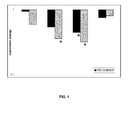
- Example 1 Study of the expression of transcripts SNCAtv1, SNCAtv2, SNCAtv3 and SNCA112 in patients diagnosed with PD, DLB and control subjects (control subjects did not present any neurological symptomatology).
- SNCAtv1, SNCAtv2, SNCAtv3 and SNCA112 in control subjects and patients diagnosed with DLB or PD.
- RNA from these blood samples was isolated by methods known in the technique and converted to cDNA (complementary DNA).
- RNA concentration of the different samples was measured by applying 1 to 2 ⁇ L in a DS-11 spectrophotometer (DeNovix, Willington, DE, United States).
- RNA reverse transcription conversion of RNA to complementary DNA was carried out by the use of the kit "Ready-kit to goTM You-Prime First-Strand Beads" (GE Healthcare Life Sciences, Uppsala, Sweden) and instructions provided by the manufacturer.
- 1 mg of RNA was diluted in a final volume of 32 ⁇ L and afterwards denatured by applying a temperature 65°C for 10 minutes. After denaturation, said RNA and 1 ⁇ L of random primers were added to the tubes provided by the manufacturer in the kit and these tubes were incubated for 1 hour at 37°C.
- the cDNA obtained was analysed by the technique of real time polymerase chain reaction (QPCR) using the primers listed in Table 1 and the marker SYBR Green. Beta-actin and hydroxymethylbilane synthase genes were used as "housekeeping" genes to normalize the expression of transcripts of interest. Table 1.
- Primer Label Primer sequence (5' to 3') Comments SNCA-1U (SEQ ID NO:7) ATCCAGGAACAGCTGTCTTC Specific primer for transcript SNCAtv3 SNCA-2aU (SEQ ID NO: 9) TTCAAGCCTTCTGCCTTTCC Specific primer for transcript SNCAtv1 SNCA-2bU (SEQ ID NO: 6) Specific primer for transcript SNCAtv2 SNCA-4L (SEQ ID NO: 8) ACCACTGCTCCTCCAACAT Generic primer for the studied SNCA transcripts Primer Label Primer sequence (5 'to 3') Comments SNCA-3U (SEQ ID NO: 10) GTGCATGGTGTGGCAACA Generic primer for the studied SNCA transcripts SNCA-4/6L (SEQ ID NO:11) ATACCCTTCCTTGCCCAAC Specific primer transcript SNCA112 ⁇ -actin U1 (SEQ ID NO: 12) CGAGAAGATGACCCAGATCA ⁇ -actin primer b-actin L
- the reaction was carried out using 0.1 mL tubes (Strips Tubes and Cups, Qiagen, Hilden, Germany) and the QuantiTect SYBR Green PCR kit (Qiagen, Hilden, Germany).
- the final reaction volume for each sample was 15 ⁇ L, including 16 pmol of each primer necessary for the reaction (see in Table 2 below primer combinations used) and 1 ⁇ L cDNA. Table 2.
- a decrease in expression is significant when the value obtained after normalization to the value of expression in control subjects is less than 0.5.
- an increase in expression is significant when the value obtained after normalization mentioned above, is greater than 1.5.
- Table 3 are shown the average values of expression change of transcripts SNCAtv1, SNCAtv2, SNCAtv3 and SNCA112 regarding to their expression in control subjects with the confidence interval in parentheses (confidence level 95%). According to the aforesaid, the results shown in Table 3 were considered significant:
- transcript SNCAtv3 showed a significant reduction of expression in patients with synucleinopathies (PD and DLB) with respect to control subjects. Additionally, it is shown that both SNCAtv2 and SNCAtv3 showed a significant reduction of expression in patients with DLB. However, it was noted that neither transcript SNCAtv1 and nor SNCA112 showed significant differences in expression between patients with PD or DLB and control subjects.
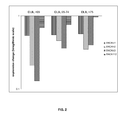
- Example 2 Influence of age of onset of the disease in patients with DLB on expression of transcripts SNCAtv1, SNCAtv2, SNCAtv3 and SNCA112.
- Example 1 Data of variation of expression of transcripts SNCAtv1, SNCAtv2, SNCAtv3 and SNCA112 in patients with DLB normalized versus control subjects obtained in Example 1 were divided into three groups depending on the age of DLB beginning of the patients: before an age of 65 years (4 patients), between 65 and 74 years (16 patients) and after 75 years (12 patients).
- transcripts SNCAtv2 and SNCAtv3 showed, in virtually all cases, a significant reduction of expression in DLB patients compared to control subjects. The only exception was observed in the group of patients with DLB debut aged between 65 and 74 years. In this group, the transcript SNCAtv2 showed no significant difference in its expression relative to control subjects, but a clear trend to reduced expression compared with control subjects. Therefore, expression of the transcripts SNCAtv2 and SNCAtv3 is reduced in patients with DLB independently on age of onset of the disease. Instead, it was observed that transcripts SNCAtv1 and SNCA112 showed no significant differences in expression between patients with DLB and control subjects in either group.
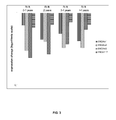
- Example 1 Data of variation of expression of transcripts SNCAtv1, SNCAtv2, SNCAtv3 and SNCA112 in patients with DLB normalized versus control subjects obtained in Example 1 were divided into four groups according to time since diagnosis: 0 to 1 year (6 patients), 2 years (9 patients), among 3 and 4 years (7 patients) and more than 4 years (6 patients).
- transcripts SNCAtv2 and SNCAtv3 showed, in virtually all cases, a significant reduction in their expression in different groups of patients with DLB compared to control subjects. The only exception was observed in the group of patients with DLB diagnosed more than four years ago. In this group the SNCAtv3 transcript showed no significant variation in expression respect to control subjects, but a clear trend of reduction of expression relative to said control subjects. Therefore, the expression of transcripts SNCAtv2 and SNCAtv3 is reduced in patients with DLB regardless of the time elapsed since diagnosis.
- transcripts SNCAtv1 and SNCA112 did not show significant differences significant in their expression between patients with DLB and control subjects.
- Example 1 Data of variation of expression of transcripts SNCAtv1, SNCAtv2, SNCAtv3 and SNCA112 in patients with DLB normalized versus control subjects obtained in Example 1 were divided into four groups according to time of disease progression: 0 to 1 year (6 patients), 2 years (9 patients), among 3 and 4 years (7 patients) and more than 4 years (6 patients).
- Table 6 The results obtained are summarized in Table 6 and represented in the Figure 4 .
- Table 6 Expression of transcripts SNCAtv1, SNCAtv2, SNCAtv3 and SNCA112 in patients with DLB normalized versus control subjects during disease progression Disease progression (years) SNCAtv1 SNCAtv2 SNCAtv3 SNCA112 between 0 and 1 year 0.68 (0.64-0.72) 0.3 (0.23-0.40) 0.24 (0.21-0.28) 0.63 (0.35-1.13) 2 years 0.43 (0.34-0.54) 0.4 (0.36-0.45) 0.27 (0.23-0.32) 0.69 (0.48-1.05) between 3 and 4 years 0.52 (0.41-0.66) 0.33 (0.23-0.46) 0.37 (0.35-0.40) 0.75 (0.73-0.79) more than 4 years 0.41 (0.29-0.57) 0.33 (0.32-0.34) 0.59 (0.50-0.68) 0.69 (0.41-1.16)
- alpha-synuclein expresses specifically in neurons and that its aggregation is a key event in the development of neuropathological changes in synucleinopathies. It is also known that the development of neuropathological changes begins much earlier than symptoms become evident, namely in preclinical stages of the disease and that disease progression is associated with neuron loss. It is further known that at advanced stages of disease only a few neurons remain intact.
Landscapes
- Chemical & Material Sciences (AREA)
- Life Sciences & Earth Sciences (AREA)
- Proteomics, Peptides & Aminoacids (AREA)
- Health & Medical Sciences (AREA)
- Organic Chemistry (AREA)
- Wood Science & Technology (AREA)
- Analytical Chemistry (AREA)
- Zoology (AREA)
- Genetics & Genomics (AREA)
- Engineering & Computer Science (AREA)
- Pathology (AREA)
- Immunology (AREA)
- Microbiology (AREA)
- Molecular Biology (AREA)
- Biotechnology (AREA)
- Biophysics (AREA)
- Physics & Mathematics (AREA)
- Biochemistry (AREA)
- Bioinformatics & Cheminformatics (AREA)
- General Engineering & Computer Science (AREA)
- General Health & Medical Sciences (AREA)
- Measuring Or Testing Involving Enzymes Or Micro-Organisms (AREA)
Priority Applications (6)
| Application Number | Priority Date | Filing Date | Title |
|---|---|---|---|
| EP15382241.6A EP3091087A1 (fr) | 2015-05-08 | 2015-05-08 | Procédé de diagnostic in vitro de synucléinopathies utilisant des transcriptions du gène de l'alpha-synucléine |
| PCT/EP2016/060177 WO2016180726A1 (fr) | 2015-05-08 | 2016-05-06 | Procédé de diagnostic in vitro de la démence à corps de lewy à l'aide de transcrits du gène de l'alphasynucléine |
| PT167221431T PT3294903T (pt) | 2015-05-08 | 2016-05-06 | Método para o diagnóstico in vitro da demência com corpos de lewy usando transcritos do gene da alfa-sinucleína |
| ES16722143T ES2762919T3 (es) | 2015-05-08 | 2016-05-06 | Método para el diagnóstico in vitro de la demencia con cuerpos de Lewy utilizando transcritos del gen de la alfa-sinucleína |
| US15/572,345 US20180148784A1 (en) | 2015-05-08 | 2016-05-06 | Method for in vitro diagnosis of dementia with lewy bodies using alphasynuclein gene transcripts |
| EP16722143.1A EP3294903B1 (fr) | 2015-05-08 | 2016-05-06 | Procédé de diagnostic in vitro de synucléinopathies utilisant des transcriptions du gène de l'alpha-synucléine |
Applications Claiming Priority (1)
| Application Number | Priority Date | Filing Date | Title |
|---|---|---|---|
| EP15382241.6A EP3091087A1 (fr) | 2015-05-08 | 2015-05-08 | Procédé de diagnostic in vitro de synucléinopathies utilisant des transcriptions du gène de l'alpha-synucléine |
Publications (1)
| Publication Number | Publication Date |
|---|---|
| EP3091087A1 true EP3091087A1 (fr) | 2016-11-09 |
Family
ID=53180691
Family Applications (2)
| Application Number | Title | Priority Date | Filing Date |
|---|---|---|---|
| EP15382241.6A Withdrawn EP3091087A1 (fr) | 2015-05-08 | 2015-05-08 | Procédé de diagnostic in vitro de synucléinopathies utilisant des transcriptions du gène de l'alpha-synucléine |
| EP16722143.1A Active EP3294903B1 (fr) | 2015-05-08 | 2016-05-06 | Procédé de diagnostic in vitro de synucléinopathies utilisant des transcriptions du gène de l'alpha-synucléine |
Family Applications After (1)
| Application Number | Title | Priority Date | Filing Date |
|---|---|---|---|
| EP16722143.1A Active EP3294903B1 (fr) | 2015-05-08 | 2016-05-06 | Procédé de diagnostic in vitro de synucléinopathies utilisant des transcriptions du gène de l'alpha-synucléine |
Country Status (5)
| Country | Link |
|---|---|
| US (1) | US20180148784A1 (fr) |
| EP (2) | EP3091087A1 (fr) |
| ES (1) | ES2762919T3 (fr) |
| PT (1) | PT3294903T (fr) |
| WO (1) | WO2016180726A1 (fr) |
Cited By (6)
| Publication number | Priority date | Publication date | Assignee | Title |
|---|---|---|---|---|
| WO2019070891A1 (fr) * | 2017-10-03 | 2019-04-11 | Prevail Therapeutics, Inc. | Thérapies géniques pour troubles lysosomaux |
| WO2020053556A1 (fr) * | 2018-09-12 | 2020-03-19 | University Of Newcastle Upon Tyne | Procédé de diagnostic d'une démence ou de détermination du risque de développer une démence |
| CN112166194A (zh) * | 2018-04-23 | 2021-01-01 | 杜克大学 | 通过dna甲基化的靶向编辑下调snca的表达 |
| US11661585B2 (en) | 2017-10-03 | 2023-05-30 | Prevail Therapeutics, Inc. | Gene therapies for lysosomal disorders |
| US11802294B2 (en) | 2017-10-03 | 2023-10-31 | Prevail Therapeutics, Inc. | Gene therapies for lysosomal disorders |
| US11903985B2 (en) | 2019-04-10 | 2024-02-20 | Prevail Therapeutics, Inc. | Gene therapies for lysosomal disorders |
Families Citing this family (2)
| Publication number | Priority date | Publication date | Assignee | Title |
|---|---|---|---|---|
| US12065701B2 (en) | 2018-07-19 | 2024-08-20 | Fundació Institut D'investigació En Ciències De La Salut Germans Trias I Pujol | In vitro method for the diagnosis of synucleinopathies |
| WO2025137637A2 (fr) * | 2023-12-21 | 2025-06-26 | Shape Therapeutics Inc. | Paires de bases wobble pour améliorer la spécificité d'édition d'arn |
Citations (6)
| Publication number | Priority date | Publication date | Assignee | Title |
|---|---|---|---|---|
| WO1999050300A1 (fr) | 1998-03-30 | 1999-10-07 | The Trustees Of The University Of Pennsylvania | Methode d'identification, de diagnostic et de traitement de troubles neurodegeneratifs a niveaux eleves de synucleine |
| WO2006039253A2 (fr) * | 2004-09-29 | 2006-04-13 | Children's Memorial Hospital | Silencage genique induit par arnsi de la synucleine |
| WO2010069603A1 (fr) | 2008-12-19 | 2010-06-24 | Neurimmune Therapeutics Ag | Auto-anticorps humains anti-alpha-synucléine |
| WO2011104696A1 (fr) | 2010-02-26 | 2011-09-01 | Bioarctic Neuroscience Ab | Anticorps se liant aux protofibrilles et utilisation associée dans des méthodes thérapeutiques et diagnostiques pour la maladie de parkinson, la démence à corps de lewy et d'autres alpha-synucléinopathies |
| WO2012032519A2 (fr) * | 2010-09-07 | 2012-03-15 | Yissum Research Development Company Of The Hebrew University Of Jerusalem Ltd. | Méthodes de diagnostic de la maladie de parkinson |
| EP2539461A1 (fr) | 2010-02-24 | 2013-01-02 | Universitat Autònoma De Barcelona | Marqueur génétique pour le diagnostic de la démence à corps de lewy |
-
2015
- 2015-05-08 EP EP15382241.6A patent/EP3091087A1/fr not_active Withdrawn
-
2016
- 2016-05-06 PT PT167221431T patent/PT3294903T/pt unknown
- 2016-05-06 EP EP16722143.1A patent/EP3294903B1/fr active Active
- 2016-05-06 US US15/572,345 patent/US20180148784A1/en not_active Abandoned
- 2016-05-06 WO PCT/EP2016/060177 patent/WO2016180726A1/fr not_active Ceased
- 2016-05-06 ES ES16722143T patent/ES2762919T3/es active Active
Patent Citations (6)
| Publication number | Priority date | Publication date | Assignee | Title |
|---|---|---|---|---|
| WO1999050300A1 (fr) | 1998-03-30 | 1999-10-07 | The Trustees Of The University Of Pennsylvania | Methode d'identification, de diagnostic et de traitement de troubles neurodegeneratifs a niveaux eleves de synucleine |
| WO2006039253A2 (fr) * | 2004-09-29 | 2006-04-13 | Children's Memorial Hospital | Silencage genique induit par arnsi de la synucleine |
| WO2010069603A1 (fr) | 2008-12-19 | 2010-06-24 | Neurimmune Therapeutics Ag | Auto-anticorps humains anti-alpha-synucléine |
| EP2539461A1 (fr) | 2010-02-24 | 2013-01-02 | Universitat Autònoma De Barcelona | Marqueur génétique pour le diagnostic de la démence à corps de lewy |
| WO2011104696A1 (fr) | 2010-02-26 | 2011-09-01 | Bioarctic Neuroscience Ab | Anticorps se liant aux protofibrilles et utilisation associée dans des méthodes thérapeutiques et diagnostiques pour la maladie de parkinson, la démence à corps de lewy et d'autres alpha-synucléinopathies |
| WO2012032519A2 (fr) * | 2010-09-07 | 2012-03-15 | Yissum Research Development Company Of The Hebrew University Of Jerusalem Ltd. | Méthodes de diagnostic de la maladie de parkinson |
Non-Patent Citations (4)
| Title |
|---|
| C. LINNERTZ ET AL: "The genetic contributions of SNCA and LRRK2 genes to Lewy Body pathology in Alzheimer's disease", HUMAN MOLECULAR GENETICS, vol. 23, no. 18, 15 September 2014 (2014-09-15), gb, pages 4814 - 4821, XP055225783, ISSN: 0964-6906, DOI: 10.1093/hmg/ddu196 * |
| JESSE R MCLEAN ET AL: "Transcript expression levels of full-length alpha-synuclein and its three alternatively spliced variants in Parkinson's disease brain regions and in a transgenic mouse model of alpha-synuclein overexpression", MOLECULAR AND CELLULAR NEUROSCIENCES, SAN DIEGO, US, vol. 49, no. 2, 26 November 2011 (2011-11-26), pages 230 - 239, XP028454655, ISSN: 1044-7431, [retrieved on 20111206], DOI: 10.1016/J.MCN.2011.11.006 * |
| KATRIN BEYER ET AL: "Alpha-Synuclein Posttranslational Modification and Alternative Splicing as a Trigger for Neurodegeneration", MOLECULAR NEUROBIOLOGY, vol. 47, no. 2, 25 August 2012 (2012-08-25), US, pages 509 - 524, XP055225766, ISSN: 0893-7648, DOI: 10.1007/s12035-012-8330-5 * |
| KATRIN BEYER ET AL: "Identification and characterization of a new alpha-synuclein isoform and its role in Lewy body diseases", NEUROGENETICS, SPRINGER, BERLIN, DE, vol. 9, no. 1, 23 October 2007 (2007-10-23), pages 15 - 23, XP019566114, ISSN: 1364-6753 * |
Cited By (12)
| Publication number | Priority date | Publication date | Assignee | Title |
|---|---|---|---|---|
| WO2019070891A1 (fr) * | 2017-10-03 | 2019-04-11 | Prevail Therapeutics, Inc. | Thérapies géniques pour troubles lysosomaux |
| US11661585B2 (en) | 2017-10-03 | 2023-05-30 | Prevail Therapeutics, Inc. | Gene therapies for lysosomal disorders |
| US11802294B2 (en) | 2017-10-03 | 2023-10-31 | Prevail Therapeutics, Inc. | Gene therapies for lysosomal disorders |
| US11807849B2 (en) | 2017-10-03 | 2023-11-07 | Prevail Therapeutics, Inc. | Gene therapies for lysosomal disorders |
| US11993790B2 (en) | 2017-10-03 | 2024-05-28 | Prevail Therapeutics, Inc. | Gene therapies for lysosomal disorders |
| US12049626B2 (en) | 2017-10-03 | 2024-07-30 | Prevail Therapeutics, Inc. | Gene therapy for neurodegenerative disorders |
| US12571002B2 (en) | 2017-10-03 | 2026-03-10 | Prevail Therapeutics, Inc | Gene therapies for lysosomal disorders |
| CN112166194A (zh) * | 2018-04-23 | 2021-01-01 | 杜克大学 | 通过dna甲基化的靶向编辑下调snca的表达 |
| WO2020053556A1 (fr) * | 2018-09-12 | 2020-03-19 | University Of Newcastle Upon Tyne | Procédé de diagnostic d'une démence ou de détermination du risque de développer une démence |
| GB2591941A (en) * | 2018-09-12 | 2021-08-11 | Univ Leicester | Method for diagnosing dementia or determining the risk of developing dementia |
| GB2591941B (en) * | 2018-09-12 | 2023-10-04 | Univ Leicester | Method for diagnosing dementia or determining the risk of developing dementia |
| US11903985B2 (en) | 2019-04-10 | 2024-02-20 | Prevail Therapeutics, Inc. | Gene therapies for lysosomal disorders |
Also Published As
| Publication number | Publication date |
|---|---|
| EP3294903A1 (fr) | 2018-03-21 |
| WO2016180726A1 (fr) | 2016-11-17 |
| ES2762919T3 (es) | 2020-05-26 |
| EP3294903B1 (fr) | 2019-09-18 |
| US20180148784A1 (en) | 2018-05-31 |
| PT3294903T (pt) | 2020-01-06 |
Similar Documents
| Publication | Publication Date | Title |
|---|---|---|
| EP3294903B1 (fr) | Procédé de diagnostic in vitro de synucléinopathies utilisant des transcriptions du gène de l'alpha-synucléine | |
| EP3847279B1 (fr) | Longs arn non codants (arnnc) pour le diagnostic et la thérapie des maladies cérébrales, en particulier de troubles cognitifs | |
| JP6021893B2 (ja) | 軽度認知機能障害(MCI)およびアルツハイマー病(AD)の早期検出ならびにモニタリングのために体液からのmiRNAを使用する方法 | |
| Belzeaux et al. | Clinical variations modulate patterns of gene expression and define blood biomarkers in major depression | |
| EP3433381B1 (fr) | Procédés d'utilisation de micro-arn provenant de liquides corporels pour la détection et la différenciation de maladies neurodégénératives | |
| CN114568028B (zh) | 用于诊断阿尔茨海默病的遗传变体 | |
| CN105969885A (zh) | 一种阿尔兹海默症的基因诊断试剂盒 | |
| Zhang et al. | Clinical characterization of an APP mutation (V717I) in five Han Chinese families with early-onset Alzheimer's disease | |
| EP3449009B1 (fr) | Micro-arn biomarqueurs dans le sang destiné au diagnostic de la maladie d'alzheimer | |
| CN108841951A (zh) | 一种用于系统性红斑狼疮诊断和检测疾病活动度的rnase2基因引物对及其试剂盒 | |
| EP2924124A1 (fr) | Méthode de diagnostic et/ou de pronostic de maladies neurodégénératives | |
| EP3807422B1 (fr) | Miarn circulants utilisés en tant que biomarqueurs pour le diagnostic d'une déficience cognitive légère et de la maladie d'alzheimer | |
| JP6616983B2 (ja) | 軽度認知障害を検査する方法 | |
| WO2022059745A1 (fr) | Procédé de détection de dermatite atopique infantile | |
| CN116218986A (zh) | 一种诊断是否患有阿尔茨海默病的试剂盒及其用途 | |
| CN116179676A (zh) | 一种诊断阿尔茨海默病的试剂盒及其用途 | |
| US10975436B2 (en) | Methods of using miRNA from bodily fluids for diagnosis and monitoring of neurodevelopmental disorders | |
| CN112941168A (zh) | 一种生物标志物在制备帕金森病早期诊断试剂盒中的应用 | |
| JP7731540B2 (ja) | アミロイドβ蓄積リスクの有無の指標とする方法、一塩基多型(SNP)の存在又は非存在を検出する方法、組成物、及びキット | |
| Azizi et al. | Association between NOS3 gene G894T polymorphism and late-onset Alzheimer disease in a sample from Iran | |
| Cots et al. | A plasma miRNA signature, including miR‐495, as early diagnostic biomarkers associated with cognitive decline in Alzheimer's disease | |
| CN108913767A (zh) | 一种帕金森病致病基因、试剂盒及应用 | |
| US11655507B2 (en) | Method for diagnosing Parkinson's disease using nasal mucus, composition therefore, and kit comprising the same | |
| KR20180078783A (ko) | 알츠하이머병 진단을 위한 신규한 miRNA | |
| CN117821576A (zh) | 早期筛查阿尔茨海默病的试剂盒及其应用 |
Legal Events
| Date | Code | Title | Description |
|---|---|---|---|
| PUAI | Public reference made under article 153(3) epc to a published international application that has entered the european phase |
Free format text: ORIGINAL CODE: 0009012 |
|
| AK | Designated contracting states |
Kind code of ref document: A1 Designated state(s): AL AT BE BG CH CY CZ DE DK EE ES FI FR GB GR HR HU IE IS IT LI LT LU LV MC MK MT NL NO PL PT RO RS SE SI SK SM TR |
|
| AX | Request for extension of the european patent |
Extension state: BA ME |
|
| STAA | Information on the status of an ep patent application or granted ep patent |
Free format text: STATUS: THE APPLICATION IS DEEMED TO BE WITHDRAWN |
|
| 18D | Application deemed to be withdrawn |
Effective date: 20170510 |