EP3091499A1 - System und verfahren zur überwachung und verwaltung der energieeffizienz von gebäuden - Google Patents
System und verfahren zur überwachung und verwaltung der energieeffizienz von gebäuden Download PDFInfo
- Publication number
- EP3091499A1 EP3091499A1 EP14876000.2A EP14876000A EP3091499A1 EP 3091499 A1 EP3091499 A1 EP 3091499A1 EP 14876000 A EP14876000 A EP 14876000A EP 3091499 A1 EP3091499 A1 EP 3091499A1
- Authority
- EP
- European Patent Office
- Prior art keywords
- consumption
- data
- investment
- energy
- monitoring
- Prior art date
- Legal status (The legal status is an assumption and is not a legal conclusion. Google has not performed a legal analysis and makes no representation as to the accuracy of the status listed.)
- Withdrawn
Links
Images

Classifications
-
- G—PHYSICS
- G05—CONTROLLING; REGULATING
- G05B—CONTROL OR REGULATING SYSTEMS IN GENERAL; FUNCTIONAL ELEMENTS OF SUCH SYSTEMS; MONITORING OR TESTING ARRANGEMENTS FOR SUCH SYSTEMS OR ELEMENTS
- G05B13/00—Adaptive control systems, i.e. systems automatically adjusting themselves to have a performance which is optimum according to some preassigned criterion
- G05B13/02—Adaptive control systems, i.e. systems automatically adjusting themselves to have a performance which is optimum according to some preassigned criterion electric
- G05B13/0205—Adaptive control systems, i.e. systems automatically adjusting themselves to have a performance which is optimum according to some preassigned criterion electric not using a model or a simulator of the controlled system
- G05B13/0255—Adaptive control systems, i.e. systems automatically adjusting themselves to have a performance which is optimum according to some preassigned criterion electric not using a model or a simulator of the controlled system the criterion being a time-optimal performance criterion
-
- G—PHYSICS
- G06—COMPUTING OR CALCULATING; COUNTING
- G06Q—INFORMATION AND COMMUNICATION TECHNOLOGY [ICT] SPECIALLY ADAPTED FOR ADMINISTRATIVE, COMMERCIAL, FINANCIAL, MANAGERIAL OR SUPERVISORY PURPOSES; SYSTEMS OR METHODS SPECIALLY ADAPTED FOR ADMINISTRATIVE, COMMERCIAL, FINANCIAL, MANAGERIAL OR SUPERVISORY PURPOSES, NOT OTHERWISE PROVIDED FOR
- G06Q50/00—Information and communication technology [ICT] specially adapted for implementation of business processes of specific business sectors, e.g. utilities or tourism
- G06Q50/06—Energy or water supply
-
- G—PHYSICS
- G05—CONTROLLING; REGULATING
- G05B—CONTROL OR REGULATING SYSTEMS IN GENERAL; FUNCTIONAL ELEMENTS OF SUCH SYSTEMS; MONITORING OR TESTING ARRANGEMENTS FOR SUCH SYSTEMS OR ELEMENTS
- G05B11/00—Automatic controllers
- G05B11/01—Automatic controllers electric
-
- G—PHYSICS
- G05—CONTROLLING; REGULATING
- G05B—CONTROL OR REGULATING SYSTEMS IN GENERAL; FUNCTIONAL ELEMENTS OF SUCH SYSTEMS; MONITORING OR TESTING ARRANGEMENTS FOR SUCH SYSTEMS OR ELEMENTS
- G05B19/00—Program-control systems
- G05B19/02—Program-control systems electric
- G05B19/04—Program control other than numerical control, i.e. in sequence controllers or logic controllers
- G05B19/042—Program control other than numerical control, i.e. in sequence controllers or logic controllers using digital processors
- G05B19/0428—Safety, monitoring
-
- G—PHYSICS
- G06—COMPUTING OR CALCULATING; COUNTING
- G06Q—INFORMATION AND COMMUNICATION TECHNOLOGY [ICT] SPECIALLY ADAPTED FOR ADMINISTRATIVE, COMMERCIAL, FINANCIAL, MANAGERIAL OR SUPERVISORY PURPOSES; SYSTEMS OR METHODS SPECIALLY ADAPTED FOR ADMINISTRATIVE, COMMERCIAL, FINANCIAL, MANAGERIAL OR SUPERVISORY PURPOSES, NOT OTHERWISE PROVIDED FOR
- G06Q50/00—Information and communication technology [ICT] specially adapted for implementation of business processes of specific business sectors, e.g. utilities or tourism
- G06Q50/10—Services
- G06Q50/16—Real estate
-
- G—PHYSICS
- G05—CONTROLLING; REGULATING
- G05B—CONTROL OR REGULATING SYSTEMS IN GENERAL; FUNCTIONAL ELEMENTS OF SUCH SYSTEMS; MONITORING OR TESTING ARRANGEMENTS FOR SUCH SYSTEMS OR ELEMENTS
- G05B2219/00—Program-control systems
- G05B2219/20—Pc systems
- G05B2219/25—Pc structure of the system
- G05B2219/25011—Domotique, I-O bus, home automation, building automation
-
- G—PHYSICS
- G05—CONTROLLING; REGULATING
- G05B—CONTROL OR REGULATING SYSTEMS IN GENERAL; FUNCTIONAL ELEMENTS OF SUCH SYSTEMS; MONITORING OR TESTING ARRANGEMENTS FOR SUCH SYSTEMS OR ELEMENTS
- G05B2219/00—Program-control systems
- G05B2219/20—Pc systems
- G05B2219/26—Pc applications
- G05B2219/2614—HVAC, heating, ventillation, climate control
Definitions
- the present invention relates to a system and method for monitoring and managing energy efficiency and building services, and is designed for facility administrators.
- the proposed system comprises a plurality of data acquisition devices, a communications network, a server that stores and processes information, and a procedure for optimizing forecasts and assessing alternatives for economic improvement.
- the proposed invention provides timely information about building breakdowns, proposes solutions for consumption patterns, and delivers recommendations regarding applicable technological alternatives for improving the efficiency of the building without the need for additional specialized consulting services.
- BEMS Building Energy Management Systems
- patent US7781910 discloses a system that uses a computer as an interface that is connected to a main bus or cable, which also connects to a web server, which provides access to the internet.
- a computer provides data analysis, and a master controller, which includes one or more programmable logic controllers (PLC), is able to control one or more modules.
- the modules comprise heating, ventilation and air conditioning (HVAC), security systems, fire systems and energy management systems devices.
- HVAC heating, ventilation and air conditioning
- patent US8055386 discloses a building automation system comprising a plurality of end devices, at least one communication network, and a protocol-independent server engine.
- This system comprises a server, preferably located in a central location, which operates as head of the control station, for other applications such as a network of computers or microprocessors.
- the server is part of a local network and communicates via internet, intranet or other type of communication network. It also comprises communication means that facilitate communication between the server and the other components or devices and a controller and supervisor that connect to the BAS.
- US6327541 discloses an electronic energy management system with a power distribution network, which provides power from a source to the sites predetermined by the user. A plurality of measuring devices are connected to each site and the user monitors energy consumption.
- the system comprises a data acquisition subsystem, which obtains information from power meters in use.
- Electronic data storage at a remote location and an electronic communication subsystem give the user access to the stored data.
- BEMS Commercially available BEMS include: IBM Tririga Energy Optimization, Samsung Smart BEMS, First Fuel Building Energy Analytics, Trend Bems, Spinwave systems and Tracer Summit from Trane. In general, all of these systems monitor energy consumption in real-time, report and analyze energy usage statistics and trends, and issue alerts if anomalies or instances of sub-optimal performance are detected in order for the user to take corrective measures. In some cases they are supplemented with some automation routines for such corrective measures, which allow the system to quantify their impact in energy and economic terms, but only after the corrective measures have been taken, not before.
- IBM Tririga combines real-time monitoring systems with facilities and events management.
- the gathered information is processed and used to display statistics such as maximum monthly electricity demand and energy usage trends, and to create a wide variety of graphics displays to represent such consumption and trends.
- the software's analytical capabilities include analytical rules designed to detect sub-optimal energy situations.
- the system helps to analyze and optimize the installation's operations, reduce energy costs and issues corrective measure alerts for high-energy-consumption equipment.
- the delivery of real-time information also allows for the creation of work orders to correct the detected anomalies.
- the Samsung Smart Bems system comprises three main functions: Monitoring, Analysis, and Alerts and Recommendations.
- Monitoring the system performs real-time monitoring of the building's operating status and energy consumption level in terms of: fuel, power, HACV, refrigeration, ovens, among others, depending on client needs.
- the Analysis function is responsible for detecting defects and analyzing equipment performance based on expert knowledge and available data.
- the Alerts and Recommendations function is responsible for generating real time breakdown alerts and issuing recommendations for reducing energy consumption.
- main benefits to the Smart Bems system user are an increase in the value of their real estate, reduced building management costs, and preparation for dealing with environmental regulations.
- First fuel ( http://www.firstfuel.com/ ) is an energy management and control system that works with historical electricity consumption information (requires 1 year of information) versus information collected daily. With this real and historical energy consumption information, First Fuel gives the user information as to the building's response in regard to any kind of weather, hours of operation, key energy indicators, daily usage patterns, seasonal and peak loads analysis. These analyses are explained to the user simply and are supported with recommendations. The analysis can be updated quarterly and followed over time. The system generates customized recommendations for each building, and if the user adopts and implements any of these recommendations, the system monitors its impact on energy savings over time. Lastly, it should be noted that the system allows for the creation of a portfolio of buildings to control, which allows for a segmented approach to energy savings with regard to the existing groups of buildings and their energy consumption characteristics.
- the Trend Bems system is designed to provide owners with satisfactory information which enables them to monitor and supervise the building in a way which provides a suitable working environment for its occupants.
- the building management system monitors and controls services such as heating, ventilation and air conditioning, so as to guarantee the highest level of operational efficiency and savings. This is achieved by maintaining an optimum balance between prevailing conditions, energy usage and operational requirements.
- the main system components are: Controllers, Supervisors, Networks, and On-site Devices.
- the controllers receive signals from field devices and following their programmed operating parameters, take action to control the plant's equipment.
- the Supervisors see or correct system data and provide a wide variety of energy analysis and maintenance functions.
- the Networks allow the devices to communicate over a physical distance which can be local, a wide area network, or remotely by using standard browser technology. In this way, the information can be accessed from anywhere in the world, ensuring full and continuous management access.
- the Field Devices send or receive data directly to/from the Controllers for local or remote monitoring and control. If an area is not measured or monitored it cannot be controlled.
- advantages to be gained from the Trend system are: reduced building management costs and the elimination of energy wastage; comparison between actual consumption data and normal profiles; identification and communication of alarms; remote monitoring; backup copies; and detection of maintenance needs depending on conditions.
- the Spinwave systems has a product line developed to function as an energy management system (A3 line).
- A3 line product integration comprises a mesh gateway that connects the wireless mesh network with databases hosted in the cloud and/or building automation systems.
- the mesh gateway radio nodes can support up to 140 wireless devices connected to the gateway's USB port. Up to two radios can be supported by each gateway.
- the system has a web server for configuration, commissioning and maintenance.
- the web client built into the gateway can send data and store it in a cloud for data analysis and performance dashboards. Data from the wireless device are accessible via Modbus TCP for integration with building automation systems.
- the wireless thermostat controls heating and cooling equipment, and is able to send messages to other wireless devices.
- the wireless sensors measure temperature, relative humidity, contact status, and voltage levels.
- the Ready-Modbus radio enables the input and output modules, controllers, electricity meters and other Modbus devices.
- the Tracer Summit building automation system provides building control through a single integrated system.
- the system handles variables which can be programmed and managed such as temperature, lighting, scheduling, and energy consumption among others.
- the Tracer Summit system consists of Building Control Units (BCUs) and workstations that use Tracer Summit software.
- BCUs provide centralized building control through communication with building equipment such as heating, ventilation and air conditioning (HVAC) equipment.
- HVAC heating, ventilation and air conditioning
- the building operator uses the workstation or BCU screen to perform system operator tasks.
- the workstation communicates with the BCU through an Ethernet network. Remote access to the system is available using a modem in the BCU or an internet connection with a Tracer Summit Web Server.
- the Tracer Summit software turns complex requirements into simple, consistent, and reliable operations.
- Tracer Summit can control any type of HVAC equipment, but provides an additional Integrated Comfort System benefit when connected to Trane HVAC equipment.
- Tracer Summit can also be connected to other building systems such as fire alarm controls, among other applications.
- the present invention comprises an automated system for monitoring and managing energy efficiency in buildings, which periodically assesses investment alternatives based on energy simulations adjusted by reverse optimization of environmental parameters and user behavior.
- the energy efficiency monitoring and management system of the present invention operates through the acquisition of online data from sensors in the feed sources of the consumption groups (such as water for lavatories, water for toilets, electricity for lighting by sector, weak currents, electricity for HACV, fuel supply), internet communication, and data processing using a methodology that includes series construction, simulation, automatic parameter adjustment, and economic assessment. It delivers timely information about breakdowns, proposes solutions based on consumption patterns, and plans investments in energy efficiency by conducting economic assessments of such investments.
- the consumption groups such as water for lavatories, water for toilets, electricity for lighting by sector, weak currents, electricity for HACV, fuel supply
- internet communication such as water for lavatories, water for toilets, electricity for lighting by sector, weak currents, electricity for HACV, fuel supply
- internet communication such as water for lavatories, water for toilets, electricity for lighting by sector, weak currents, electricity for HACV, fuel supply
- internet communication such as water for lavatories, water for toilets, electricity for lighting by sector, weak currents
- the present invention further proposes automated and periodic economic assessment of investment alternatives based on energy simulations adjusted using reverse optimization of environmental parameters and user behavior.
- the system offers two distinct types of investment alternatives for improving energy efficiency and service usage: the reduction of overall consumption and the reduction of HACV consumption.
- One of the advantages of the proposed invention compared to the IBM, Firstfuel and Tracer Summit commercial systems is precisely the ability to make economic assessments of energy efficiency investments alternatives through the reduction of energy consumption for HACV. Having recommendations based on these economic assessments can expedite and facilitate the building manager's decision making because the current systems can only identify areas for reducing consumption based on user behavior and only assess the obtained savings after the fact, without taking into account the investment associated with such improvement, and its relationship to future flows from the savings, i.e., the return on investment.
- one of the advantages of the present invention is that it provides an automatic and accurate economic and technical assessment with regard to the implementation of various energy efficiency investments alternatives, thereby providing the administrator with a reliable decision-making tool, while eliminating the need for external consultants.
- the present invention comprises an automated system for monitoring and managing energy efficiency in buildings, which periodically assesses investment alternatives based on energy simulations adjusted by reverse optimization of environmental parameters and user behavior.
- the system facilitates decision-making by facility managers as it continually identifies the most effective ways to reduce the consumption of water, HACV and electricity services.
- the simulations' optimization process including climatic conditions and the facility users' behavior, allow the system to operate in different environments and under different user conditions, or in facilities designed for different purposes, in a self-adaptive manner.
- the system comprises means for online data acquisition from consumption sensors, internet communication means and software processing means.
- the system delivers timely information about breakdowns, proposes solutions to consumption patterns, and plans investments in energy efficiency.
- the energy efficiency monitoring and management system in institutional buildings of the present invention comprises online sensor measurement and data acquisition means; data transmission, reception and transfer means; processing, storage and user interface means, where the user interface (8) comprises three main modules: the alarm module (15), the monitoring module (16) and the investment options module (17).
- the energy efficiency monitoring and management system in institutional buildings comprises measuring means which comprise measuring devices (2) which are sensors (S1, S2, S3, S4, S5, S6 and S7) specific to the variable being measured, where the sensors are connected by a shielded twisted pair (STP) cable to a data comprises data transmitting and receiving means comprising radio frequency modules such as Xbee (4) operating on the 2.4 GHz band employing the IEEE 802.15.4 (ZigBee) communication protocol belonging to the PAN (Personal Area Network) networks.
- the monitoring and management system comprises data transfer means that transfers data from the facility's various measuring devices (2) to their respective workstation (5), where the data is collected, sorted and written to a text file for later delivery to the storage and user interface stage (8).
- the Processing, Storage and User Interface means comprises a central server (6) that stores the data and generates a database (7) on which the data processing (software) is run and the results are displayed through the user interface (8) on the facility administrator's computer.
- the present invention relates to a method for monitoring and managing energy efficiency in institutional buildings comprising the following stages:
- the operation of the network for monitoring and managing energy efficiency of the present invention comprises three stages: Measurement; Data Transmission, Reception and Transfer; Processing, Storage and User Interface.
- the three stages can be implemented jointly or separately.
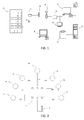
- Figure 1 shows an operating diagram for the network for monitoring and managing energy efficiency in buildings which comprises three stages.
- the design of the measurement system covers the main consumption points, i.e., water supply mains for each floor, and families of devices, electricity consumption meters for lighting, power and computer network by building (1) or by sector, as well as boilers or heat pumps within the facility.
- These systems are composed of measuring devices (2) which are sensors (S1, S2, S3, S4, S5, S6 and S7) specific to the type of variable being measured.
- the sensors are connected via shielded twisted pair (STP) cable to a data acquisition board (3) which is an chicken electronic board, used for data acquisition (see Figure 2 ).
- STP shielded twisted pair
- Xbee (4) modules are used to manage the data transmission and reception from each data acquisition board (3) to each serial port of the computers arranged as workstations (5) located in each building.
- the Xbee modules (4) are radio frequency modules working in the 2.4 GHz band employing the IEEE 802.15.4 (ZigBee) communication protocol networks belonging to the Personal Area Networks.
- ZigBee IEEE 802.15.4
- Among its advantages are low power consumption, simplicity of construction, and the ability to use up to 65,000 different network combinations, allowing for the creation of large scale point-to-point and point-to-multipoint networks.
- the data from the facility's various measuring devices (2) has been transferred to their respective workstation (5), the data is collected, sorted and written to a text file for later delivery to the storage and user interface stage (8).
- Another task performed in the processing stage is the cyclic sampling of the data received at the workstation (5), which is done by controlling an LCD display (9) installed next to each workstation (5) using an
- the data received from each building (1) is stored on a central server (6) which consolidates and processes the information for the administrator's portfolio of buildings.
- a consolidated database (7) is generated on which the data processing (software) is run, and the results are displayed through the user interface (8) on the facility administrator's computer, which offers a comprehensive view of the entire portfolio under management.
- the monitoring and management system of the present invention allows the user to access real-time information relative to the monitored building (1) or facility.
- the monitoring and management system is able to display consumption logs both graphically and numerically, indicating sample data characteristics for each buildings, and for the network generally. Among these data characteristic are: categorization of the facility, date and time the measurements were taken, variable measured (electricity, water or heating), monthly and annual average consumption, monetary cost of consumption, possible facility breakdown points, identification of gaps between actual use and predetermined consumption patterns, and portfolio of energy efficiency investments assessed economically for each building.
- the user interface (8) comprises three main modules: the alarm module (15), the monitoring module (16) and the investment options module (17).
- the alarm module (15) is responsible for displaying and issuing alerts as to the differences between historical and real consumption. It does so based on pre-established maximum allowable deviations, and the respective alarms are triggered if these deviations are surpassed, with an indication given of where the alarm was triggered.
- the system takes measurements at discrete small time intervals, which are used to build cumulative series. The new measurements are continually contrasted with the cumulative values so as to quickly detect anomalies and allow corrective measures to be taken in a timely manner.
- the monitoring module (16) for its part shows real time consumption from an aggregate level down to the maximum detail possible depending on the measurement ranges of the sensors (3); in this way it is possible to navigate through the building's divisions, depending on the intended objective.
- the real cumulative consumption is presented in contrast to a predetermined consumption pattern according to the usage load for each enclosure or built area based on the cumulative series, thereby identifying gaps where it is possible to reduce or adjust consumption, and continuously delivering the largest deviations between the profile and the pattern. This allows the administrator to intervene in user behavior (consumption profile) or implement automation to achieve such reductions in consumption where there is potential or space for it.
- the investment options module (17) presents a summary containing the economic assessment of the alternatives for investment in energy efficiency and service usage.
- the present invention performs periodic energy and economic assessments to identify spaces for investments or recommendations as to energy efficiency (coatings, insulation, windows, HVAC systems, greywater recovery, etc.).
- an analysis of the existing facility is carried out through an energy simulation which takes into account the facility's current construction features. Improvement alternatives are developed according to simulations, based on the current features of the facility and the inclusion of certain sets of optional upgrades to lower energy consumption and deliver savings.
- the corresponding economic assessment (13) is performed. If the alternative leads to a decrease in other types of consumption (e.g. water, or electricity for lighting) the saving (14) are calculated, followed by the associated economic assessment (13).
- the present invention delivers investment recommendations, prioritized based on their impact (reduced consumption expected from the investment) and the associated investment costs.
- the economic assessments are conducted periodically to determine when the investments should be made in terms of their profitability.
- the outcomes of an economic assessment vary over time, mainly as a result of changes in the prices of the inputs needed for the investment, and of the fuels used. Such information is updated automatically or manually by the user on a periodic basis.
- the estimated energy demand is corrected automatically over time with the real data collected.
- the simulation of a building's energy consumption is carried out by estimating the following energy flows: Transmission losses( H T ), ventilation losses( H V ), solar heat gain ( Q S ) and lastly the internal gain( Q i ).
- the sum of the above mentioned flows multiplied by some constant terms provides the building's annual energy requirements.
- the calculation procedure begins with the estimation of the volume of air and the useable floor area based on the building's volume and the total surface area. Subsequently transmission losses are estimated, which depend on the building's envelope components and its orientation.
- the thermal transmittance is calculated based on the thermal properties of the component materials (concrete, wood, simple glass, etc.) to then multiply by the surface area and a temperature correction factor by component, thereby obtaining the transmission loss for each component.
- the sum of the individual losses is the building's total transmission loss.
- ventilation losses are estimated, which depend on the volume of air flowing through the building multiplied by the number of air changes according to the building's use (production, warehouse, shopping center, etc.) and by a constant factor.
- the solar gains both in winter and summer depends on the surface of the building's envelope, the percentage of shading from other nearby buildings, the percentage of glass in the windows and the type of glass, multiplied by constant factors depending on the orientation of the envelope's component. It should be noted that solar gains in winter are considered in the energy simulations for heating consumption ( Q h ) and the solar gains in the summer for the consumption of cold ( Q f ). The constant terms change between winter and summer for each orientation. Finally, the internal gain is calculated according to the building's use, where there is a specific gain for each use, which is multiplied by its useable floor area, thereby obtaining total internal gain. The cooling requirement is calculated in an equivalent manner.
- the present invention proposes an automatic and periodic economic assessment of the investment alternatives based on energy simulations adjusted by reverse optimization of environmental parameters and user behavior.
- the invention distinguishes between two type of investment alternatives related to improving energy efficiency and service usage: reduction of consumption in general, and reduction of energy consumption for HACV.
- An economic assessment of an alternative to reduce overall consumption is carried out in the conventional manner by evaluating the potential savings from the investment over a determined number of years compared to the initial investment.
- An assessment of an alternative to reduce consumption for HACV requires an energy simulation where savings are estimated from the simulation of the building's performance including the new improvements and updated energy costs, and where the investment is periodically corrected as a function of the updated prices for materials and equipment. This generates a periodically updated portfolio of investments, and gives alerts at times when it is advisable to invest, either because consumption reached a critical level or because the price of materials and equipment has decreased.
- a report is generated which includes indicators such as net present value, internal rate of return, and the payback period for the investment, which detail the profitability of the proposed consumption reduction alternative.
- the approach relies on a cross optimization process, whereby the energy consumption of the building is estimated using a multiple regression model employing atmospheric variables (temperature, irradiance, wind speed, etc.) and user behavior variables (air changes and internal gains), thereby obtaining the coefficients which are then contrasted with those used in the simulation model, based primarily on the building's envelope and its characteristics.
- H T pertains to transmission losses.
- ⁇ H Ti is the sum total of the areas of the building envelope's components multiplied by their respective thermal transmittances and a temperature correction factor in accordance with DIN V 4108 standard.
- N is the number of air changes, and V n is the net volume of air in the building.
- ⁇ H sj is the sum total of the glazed areas in each cardinal direction multiplied by their respective frame percentage correction factors, shadings and coverages, by each type of glass' own reflection factor, and by the average irradiance of the corresponding orientation, as per DIN V 4108. These are factors that depend on the building's envelope, orientation, relationship between eaves and windows, and shadows, considered as intrinsic variables for each building.
- q i Is the specific internal gain per square meter accumulated over the heating period (W/m 2 ) and A n is the useable area of the building in m 2 .
- T d ⁇ a is the building's average daily temperature (N) is the estimated number of changes of air I ⁇ directa d i ⁇ a is the average daily direct irradiance
- ⁇ ' is the model's constant for the accumulated internal gains, calef on / off a binary variable with a value of 1 when the heating is on and 0 otherwise, and lastly feriado also a binary variable with a value of 1 if the measurement day is a holiday and 0 otherwise.
- ⁇ ' 1 , ⁇ ' 2 , ⁇ ' 3 , ⁇ ' 4 , ⁇ ' 5 are the regression model's coefficients, estimated using ordinary least squares (OLS) and ⁇ ' .
- OLS ordinary least squares
- the model represents the daily energy consumption in kWh, and each measurement of Q ⁇ h represents dashboard observation to determine the model's factors.
- the daily consumptions are added considering the average daily exogenous variables multiplied by determined factors.
- the coefficient values of the simulation model ( ⁇ 1 , ⁇ 2 , ⁇ 3 , and q i A n , respectively) can be obtained, as the respective components of: transmission losses, ventilation losses, solar gains and internal gains, have been equalized.
- the first estimate of N is an arbitrary number according to the building's type of use.
- the energy consumption terms for the simulated model (Q f ) and for the regression model ( Q ⁇ f ) respectively are the following:
- Q f ⁇ ⁇ H Ti + ⁇ 2 N V n ⁇ ⁇ 3 ⁇ H sj ⁇ q i A
- Q ⁇ f ⁇ ′ T ⁇ d ⁇ a + ⁇ ′ 2 T ⁇ d ⁇ a f N + ⁇ ′ 3 I ⁇ directa d ⁇ a + ⁇ ′ 4 a / c on / off + ⁇ ′ 5 feriado + ⁇ ′
- ⁇ 1 is the factor associated with transmission losses
- ⁇ 2 is the factor associated with ventilation losses
- ⁇ 3 is associated with the solar gains in summer
- q i A n is a constant term associated with the internal gains in the cooling period.
- ⁇ ' 1 , ⁇ ' 2 , ⁇ ' 3 , ⁇ ' 4 , ⁇ ' 5 and ⁇ ' are the OLS estimators of the regression model's coefficients for cooling consumption.
- the present invention employs the energy consumption savings, calculated by contrasting the current situation with the forecasted one, taking into account the different solutions and the prices of the different optimization solutions, to carry out multiple economic assessments using the net present value method.
- the present invention comprises a combination of technologies using iOS, ZigBee sensors, and decision support software.
- the present invention uses data processing and the user interface (8), makes available to the user the alarm display (15) for abnormal consumption, the real time monitoring (16) of the different consumptions, and the identification of potential energy savings gaps with respect to the predetermined pattern, and the result of the economic assessments (13) presented as investment options (17).
- Figure 3 presents a diagram of the operations described above.
- the monitoring and management system of the present invention provides a full economic assessment regarding the implementation of each of the improvement options in terms of its profitability and the payback period for the investment.
- the system automatically and periodically evaluates investment alternatives based on energy consumption simulations. These simulations are adjusted by reverse optimization of environmental parameters and user behavior, and they allow the system to operate in different environments and with different users or facility conditions, in a self-adaptive fashion.
- the economic assessment mentioned above is performed periodically, given the variability of the prices of the energy and materials required for the implementation of the improvement alternatives. It is for this reason that ongoing monitoring is undertaken to determine at what point in time it is economically advisable to make the investment, thereby making the system a reliable economic and energy decision-making tool for the facility manager.
- monitoring and management system of the present invention not only can it be applied to buildings but also to any installation wanting to control and improve operating conditions in terms of energy consumption and fuels.
- Examples of applications include:
- the monitoring and management system of the present invention applies to any building or group of buildings where energy consumption is properly sectorized, enabling monitoring by units or departments.
Landscapes
- Business, Economics & Management (AREA)
- Engineering & Computer Science (AREA)
- General Physics & Mathematics (AREA)
- Physics & Mathematics (AREA)
- Health & Medical Sciences (AREA)
- Tourism & Hospitality (AREA)
- Economics (AREA)
- General Health & Medical Sciences (AREA)
- Primary Health Care (AREA)
- Strategic Management (AREA)
- Human Resources & Organizations (AREA)
- General Business, Economics & Management (AREA)
- Theoretical Computer Science (AREA)
- Marketing (AREA)
- Automation & Control Theory (AREA)
- Water Supply & Treatment (AREA)
- Public Health (AREA)
- Artificial Intelligence (AREA)
- Evolutionary Computation (AREA)
- Medical Informatics (AREA)
- Software Systems (AREA)
- Computer Vision & Pattern Recognition (AREA)
- Management, Administration, Business Operations System, And Electronic Commerce (AREA)
- Alarm Systems (AREA)
Applications Claiming Priority (2)
| Application Number | Priority Date | Filing Date | Title |
|---|---|---|---|
| CL2013003810A CL2013003810A1 (es) | 2013-12-31 | 2013-12-31 | Sistema y método de monitoreo y gestion para la eficiencia energetica en edificaciones donde el sistema comprende medios de medicion y adquisicion de datos en linea desde sensores, medios de emision, recepcion y tranferencia de datos, medios de procesamiento, almacenaje e interfaz con el usuario, donde esta comprende un modulo de alarmas, un modulo de monitoreo y un modulo de opciones de inversion. |
| PCT/CL2014/000078 WO2015100507A1 (es) | 2013-12-31 | 2014-12-16 | Sistema y método de monitoreo y gestión para la eficiencia energética de edificaciones |
Publications (2)
| Publication Number | Publication Date |
|---|---|
| EP3091499A1 true EP3091499A1 (de) | 2016-11-09 |
| EP3091499A4 EP3091499A4 (de) | 2017-06-28 |
Family
ID=53403922
Family Applications (1)
| Application Number | Title | Priority Date | Filing Date |
|---|---|---|---|
| EP14876000.2A Withdrawn EP3091499A4 (de) | 2013-12-31 | 2014-12-16 | System und verfahren zur überwachung und verwaltung der energieeffizienz von gebäuden |
Country Status (4)
| Country | Link |
|---|---|
| US (1) | US20160370771A1 (de) |
| EP (1) | EP3091499A4 (de) |
| CL (1) | CL2013003810A1 (de) |
| WO (1) | WO2015100507A1 (de) |
Cited By (3)
| Publication number | Priority date | Publication date | Assignee | Title |
|---|---|---|---|---|
| CN110488686A (zh) * | 2019-08-02 | 2019-11-22 | 合肥融庄电子科技有限公司 | 一种安全性好的建筑智能化监控系统 |
| CN111311007A (zh) * | 2020-02-21 | 2020-06-19 | 安徽海螺信息技术工程有限责任公司 | 一种分布式能源消耗动态监测和调度分析的方法 |
| DE102022116001A1 (de) | 2022-06-28 | 2023-12-28 | WoodenValley UG (haftungsbeschränkt) | Verfahren und system zur dynamischen bestimmung von gebäudeemissionen |
Families Citing this family (37)
| Publication number | Priority date | Publication date | Assignee | Title |
|---|---|---|---|---|
| US10962248B1 (en) * | 2013-07-15 | 2021-03-30 | EnTouch Controls Inc. | Method of auto association of HVAC energy with control signal for self diagnostics of the HVAC system |
| US10692021B2 (en) * | 2015-01-16 | 2020-06-23 | Texas Energy Retail Company LLC | System and method for procurement decisioning using home automation inputs |
| US20170083015A1 (en) * | 2015-09-21 | 2017-03-23 | Invensys Systems, Inc. | Curating operational historian data for distribution via a communication network |
| WO2017105170A1 (es) * | 2015-12-14 | 2017-06-22 | Castro Baldenebro Brayan Gamaniel | Sistema de alarmas, optimizacion energetica y analitica de datos para un modelo de casa-habitacion |
| US11181875B2 (en) * | 2016-01-22 | 2021-11-23 | Johnson Controls Tyco IP Holdings LLP | Systems and methods for monitoring and controlling a central plant |
| US11875371B1 (en) | 2017-04-24 | 2024-01-16 | Skyline Products, Inc. | Price optimization system |
| US10731886B2 (en) | 2017-07-20 | 2020-08-04 | Carrier Corporation | HVAC system including energy analytics engine |
| US10459412B2 (en) * | 2017-09-27 | 2019-10-29 | Ademco Inc. | Convergence structure for control and data analytics systems |
| CN107944775A (zh) * | 2018-01-03 | 2018-04-20 | 太原科技大学 | 一种电动清扫车吸扫装置能耗评估系统及评估方法 |
| EP3759699A4 (de) | 2018-04-04 | 2021-12-01 | Schneider Electric USA, Inc. | Systeme und verfahren zur verwaltung von intelligenten alarmen |
| CN108629496A (zh) * | 2018-04-25 | 2018-10-09 | 交通运输部科学研究院 | 耦合施工活动的高速公路施工期二元能耗统计系统及方法 |
| US11282369B2 (en) * | 2018-07-06 | 2022-03-22 | Schneider Electric USA, Inc. | Systems and methods for managing voltage event alarms in an electrical system |
| CA3112850A1 (en) * | 2018-09-14 | 2020-03-19 | Ats Automation Tooling Systems Inc. | System and method for managing automation equipment |
| CN109447500A (zh) * | 2018-11-09 | 2019-03-08 | 上海正宏厨房设备有限公司 | 一种节能灶商业运行模式系统 |
| US11068623B2 (en) | 2019-02-04 | 2021-07-20 | Cove Tool, Inc. | Automated building design guidance software that optimizes cost, energy, daylight, glare, and thermal comfort |
| CN109782674B (zh) * | 2019-03-14 | 2023-11-24 | 云南大学 | 一种基于NB-IoT的结构可配置智慧卫生间的监测装置及方法 |
| US10824127B1 (en) * | 2019-04-30 | 2020-11-03 | Johnson Controls Technology Company | Newton-based extremum-seeking control system |
| US11041650B2 (en) * | 2019-05-20 | 2021-06-22 | Honeywell International Inc. | Cloud and edge integrated energy optimizer |
| CN110161930B (zh) * | 2019-06-05 | 2021-11-09 | 安徽三实信息技术服务有限公司 | 一种数据监控系统及其数据监控方法 |
| CN110276544A (zh) * | 2019-06-19 | 2019-09-24 | 华北电力大学(保定) | 基于区块链的多元信息交互综合能源服务系统及方法 |
| US10798175B1 (en) | 2019-06-28 | 2020-10-06 | CohesionIB | IoT contextually-aware digital twin with enhanced discovery |
| US10951713B2 (en) | 2019-06-28 | 2021-03-16 | CohesionIB | IoT analytics edge application on IoT gateway |
| CN110503238A (zh) * | 2019-07-16 | 2019-11-26 | 北京科诺伟业科技股份有限公司 | 一种智慧能源多能互补评价可视化实证平台 |
| CN110991043B (zh) * | 2019-12-03 | 2023-05-16 | 北京中计开元科技有限公司 | 一种能源消耗系统的能耗建模与评估方法 |
| CN112182720B (zh) * | 2020-10-13 | 2023-07-28 | 北京建筑技术发展有限责任公司 | 一种基于建筑能源管理应用场景的建筑能耗模型评价方法 |
| DE202021102194U1 (de) | 2021-04-23 | 2021-05-31 | Horst Zacharias | System zur Verringerung eines CO2-Ausstoßes bei der Energieversorgung von Gebäuden |
| CN113703400B (zh) * | 2021-07-27 | 2023-03-31 | 中电科思仪科技股份有限公司 | 一种支持远程协同的设备状态监测系统及其状态上报方法 |
| CN114320862A (zh) * | 2021-11-23 | 2022-04-12 | 国网浙江省电力有限公司嘉兴供电公司 | 一种空压机节能优化方法 |
| CN116241075B (zh) * | 2023-02-13 | 2024-07-23 | 中建八局发展建设有限公司 | 一种马鞍式自平衡拉索幕墙施工方法 |
| CN116843361B (zh) * | 2023-06-30 | 2024-02-06 | 国网信通亿力科技有限责任公司 | 电网审计信息化管理方法及系统 |
| CN116954285B (zh) * | 2023-09-19 | 2023-12-19 | 星璟材料科技(南通)有限公司 | 一种塑料加工机械的智能温度调节系统 |
| CN117519028B (zh) * | 2023-11-17 | 2024-05-10 | 蚌埠凯盛玻璃有限公司 | 智能玻璃加工输送线系统及能耗优化方法 |
| CN117610972B (zh) * | 2024-01-24 | 2024-05-07 | 荣泰建设集团有限公司 | 一种基于人工智能的绿色建筑数字化管理系统及方法 |
| CN118378834A (zh) * | 2024-04-29 | 2024-07-23 | 宜兴涚平软件有限公司 | 一种优化能源调度的节能型能源综合管理系统及方法 |
| CN118602536A (zh) * | 2024-06-07 | 2024-09-06 | 武汉科技大学 | 一种中央空调冷热源集控系统及方法 |
| CN119695837B (zh) * | 2024-10-18 | 2025-08-05 | 国网内蒙古东部电力有限公司供电服务监管与支持中心 | 一种基于电能替代分析的能耗调整管理系统 |
| CN120278563B (zh) * | 2025-06-11 | 2025-08-29 | 西华师范大学 | 一种建筑能耗预测方法、系统、设备及介质 |
Family Cites Families (8)
| Publication number | Priority date | Publication date | Assignee | Title |
|---|---|---|---|---|
| US6327541B1 (en) | 1998-06-30 | 2001-12-04 | Ameren Corporation | Electronic energy management system |
| US8055386B2 (en) | 2005-08-22 | 2011-11-08 | Trane International Inc. | Building automation system data management |
| US9557723B2 (en) * | 2006-07-19 | 2017-01-31 | Power Analytics Corporation | Real-time predictive systems for intelligent energy monitoring and management of electrical power networks |
| US7294026B1 (en) | 2006-07-20 | 2007-11-13 | Panduit Corp. | RS-485 connector plug and housing |
| US8583531B2 (en) * | 2010-11-24 | 2013-11-12 | Joseph P. Hirl | Decision support system for the management of energy use, contracting and capital investments for facilities |
| US20120166616A1 (en) * | 2010-12-23 | 2012-06-28 | Enxsuite | System and method for energy performance management |
| US20130103440A1 (en) * | 2011-10-21 | 2013-04-25 | Behzad Imani | Method and system for financial modeling of retrofitting cost of an energy system |
| FR2991483B1 (fr) * | 2012-06-04 | 2014-06-13 | Bouygues Immobilier | Systeme de suivi des performances energetiques d'un batiment |
-
2013
- 2013-12-31 CL CL2013003810A patent/CL2013003810A1/es unknown
-
2014
- 2014-12-16 US US15/108,850 patent/US20160370771A1/en not_active Abandoned
- 2014-12-16 WO PCT/CL2014/000078 patent/WO2015100507A1/es not_active Ceased
- 2014-12-16 EP EP14876000.2A patent/EP3091499A4/de not_active Withdrawn
Cited By (4)
| Publication number | Priority date | Publication date | Assignee | Title |
|---|---|---|---|---|
| CN110488686A (zh) * | 2019-08-02 | 2019-11-22 | 合肥融庄电子科技有限公司 | 一种安全性好的建筑智能化监控系统 |
| CN111311007A (zh) * | 2020-02-21 | 2020-06-19 | 安徽海螺信息技术工程有限责任公司 | 一种分布式能源消耗动态监测和调度分析的方法 |
| CN111311007B (zh) * | 2020-02-21 | 2023-01-13 | 安徽海螺信息技术工程有限责任公司 | 一种分布式能源消耗动态监测和调度分析的方法 |
| DE102022116001A1 (de) | 2022-06-28 | 2023-12-28 | WoodenValley UG (haftungsbeschränkt) | Verfahren und system zur dynamischen bestimmung von gebäudeemissionen |
Also Published As
| Publication number | Publication date |
|---|---|
| CL2013003810A1 (es) | 2015-01-09 |
| WO2015100507A1 (es) | 2015-07-09 |
| US20160370771A1 (en) | 2016-12-22 |
| EP3091499A4 (de) | 2017-06-28 |
Similar Documents
| Publication | Publication Date | Title |
|---|---|---|
| US20160370771A1 (en) | System and method for monitoring and managing the energy efficiency of buildings | |
| Morán et al. | Information and Communications Technologies (ICTs) for energy efficiency in buildings: Review and analysis of results from EU pilot projects | |
| US11306939B2 (en) | Energy management computer system | |
| Benedetti et al. | Energy consumption control automation using Artificial Neural Networks and adaptive algorithms: Proposal of a new methodology and case study | |
| Bynum et al. | Development and testing of an automated building commissioning analysis tool (ABCAT) | |
| US8977405B2 (en) | Continuous optimization energy reduction process in commercial buildings | |
| EP2858015A1 (de) | System und Verfahren zur Simulation, Steuerung und Leistungsüberwachung von Energiesysteme | |
| JP2020149732A (ja) | 資源消費分析論のためのシステムおよび方法 | |
| US9869486B2 (en) | Method of reducing heating energy consumption in commercial buildings | |
| WO2013043863A1 (en) | Adaptive stochastic controller for energy efficiency and smart buildings | |
| Harmer et al. | Using calibrated energy models for building commissioning and load prediction | |
| US20230367033A1 (en) | Automated system and method for managing weather related energy use | |
| KR20150026230A (ko) | Bim 데이터를 이용한 셀프 러닝 건물 에너지 관리 시스템 | |
| US20200217545A1 (en) | Method, system and apparatus for optimising energy consumption | |
| Shiel et al. | Effects of building energy optimisation on the predictive accuracy of external temperature in forecasting models | |
| US20230162205A1 (en) | System and Method for kWh Harvesting and Carbon Footprint Management Solutions | |
| CN105612484A (zh) | 通过仪表板界面监视和/或控制建筑结构的资源的系统和方法 | |
| Łokczewska et al. | On the influence of solar insolation and increase of outdoor temperature on energy savings obtained in heating system with forecast control | |
| KR20230013771A (ko) | Bim데이터를 활용한 건물의 에너지 관리 시스템 | |
| Naz et al. | Intelligent energy management in IoT-enabled smart homes: anomaly detection and consumption prediction for energy-efficient usage | |
| AU2013224733B2 (en) | Building energy consumption analysis system | |
| KR20180028816A (ko) | 에너지시뮬레이션모델 생성방법 및 생성장치, 그리고, 에너지시뮬레이션모델을 이용한 건물에너지관리방법 및 건물에너지관리장치 | |
| Yee et al. | Review of Advanced Applications in Energy Management, Control, and Information Systems 1 | |
| EP3521947A1 (de) | Energiemanagementverfahren | |
| MWANSA et al. | A framework for encouraging consumer behavioral change by modeling smart meter data energy usage |
Legal Events
| Date | Code | Title | Description |
|---|---|---|---|
| PUAI | Public reference made under article 153(3) epc to a published international application that has entered the european phase |
Free format text: ORIGINAL CODE: 0009012 |
|
| 17P | Request for examination filed |
Effective date: 20160801 |
|
| AK | Designated contracting states |
Kind code of ref document: A1 Designated state(s): AL AT BE BG CH CY CZ DE DK EE ES FI FR GB GR HR HU IE IS IT LI LT LU LV MC MK MT NL NO PL PT RO RS SE SI SK SM TR |
|
| AX | Request for extension of the european patent |
Extension state: BA ME |
|
| DAX | Request for extension of the european patent (deleted) | ||
| A4 | Supplementary search report drawn up and despatched |
Effective date: 20170526 |
|
| RIC1 | Information provided on ipc code assigned before grant |
Ipc: G06Q 50/06 20120101AFI20170519BHEP Ipc: G06Q 30/00 20120101ALI20170519BHEP Ipc: G06Q 50/16 20120101ALI20170519BHEP Ipc: G06F 17/00 20060101ALI20170519BHEP |
|
| STAA | Information on the status of an ep patent application or granted ep patent |
Free format text: STATUS: REQUEST FOR EXAMINATION WAS MADE |
|
| STAA | Information on the status of an ep patent application or granted ep patent |
Free format text: STATUS: THE APPLICATION IS DEEMED TO BE WITHDRAWN |
|
| 18D | Application deemed to be withdrawn |
Effective date: 20180103 |