EP3091804A1 - Verfahren und vorrichtung zur verarbeitung von informationen - Google Patents
Verfahren und vorrichtung zur verarbeitung von informationen Download PDFInfo
- Publication number
- EP3091804A1 EP3091804A1 EP14876348.5A EP14876348A EP3091804A1 EP 3091804 A1 EP3091804 A1 EP 3091804A1 EP 14876348 A EP14876348 A EP 14876348A EP 3091804 A1 EP3091804 A1 EP 3091804A1
- Authority
- EP
- European Patent Office
- Prior art keywords
- serving cell
- subframe
- subframes
- mode
- dividing
- Prior art date
- Legal status (The legal status is an assumption and is not a legal conclusion. Google has not performed a legal analysis and makes no representation as to the accuracy of the status listed.)
- Withdrawn
Links
Images

Classifications
-
- H—ELECTRICITY
- H04—ELECTRIC COMMUNICATION TECHNIQUE
- H04W—WIRELESS COMMUNICATION NETWORKS
- H04W16/00—Network planning, e.g. coverage or traffic planning tools; Network deployment, e.g. resource partitioning or cells structures
- H04W16/02—Resource partitioning among network components, e.g. reuse partitioning
-
- H—ELECTRICITY
- H04—ELECTRIC COMMUNICATION TECHNIQUE
- H04L—TRANSMISSION OF DIGITAL INFORMATION, e.g. TELEGRAPHIC COMMUNICATION
- H04L5/00—Arrangements affording multiple use of the transmission path
- H04L5/0001—Arrangements for dividing the transmission path
- H04L5/0003—Two-dimensional division
- H04L5/0005—Time-frequency
- H04L5/0007—Time-frequency the frequencies being orthogonal, e.g. OFDM(A) or DMT
- H04L5/001—Time-frequency the frequencies being orthogonal, e.g. OFDM(A) or DMT the frequencies being arranged in component carriers
-
- H—ELECTRICITY
- H04—ELECTRIC COMMUNICATION TECHNIQUE
- H04L—TRANSMISSION OF DIGITAL INFORMATION, e.g. TELEGRAPHIC COMMUNICATION
- H04L5/00—Arrangements affording multiple use of the transmission path
- H04L5/003—Arrangements for allocating sub-channels of the transmission path
- H04L5/0053—Allocation of signalling, i.e. of overhead other than pilot signals
-
- H—ELECTRICITY
- H04—ELECTRIC COMMUNICATION TECHNIQUE
- H04L—TRANSMISSION OF DIGITAL INFORMATION, e.g. TELEGRAPHIC COMMUNICATION
- H04L1/00—Arrangements for detecting or preventing errors in the information received
- H04L1/12—Arrangements for detecting or preventing errors in the information received by using return channel
- H04L1/16—Arrangements for detecting or preventing errors in the information received by using return channel in which the return channel carries supervisory signals, e.g. repetition request signals
- H04L1/18—Automatic repetition systems, e.g. Van Duuren systems
- H04L1/1829—Arrangements specially adapted for the receiver end
- H04L1/1864—ARQ related signaling
-
- H—ELECTRICITY
- H04—ELECTRIC COMMUNICATION TECHNIQUE
- H04L—TRANSMISSION OF DIGITAL INFORMATION, e.g. TELEGRAPHIC COMMUNICATION
- H04L5/00—Arrangements affording multiple use of the transmission path
- H04L5/14—Two-way operation using the same type of signal, i.e. duplex
-
- H—ELECTRICITY
- H04—ELECTRIC COMMUNICATION TECHNIQUE
- H04W—WIRELESS COMMUNICATION NETWORKS
- H04W72/00—Local resource management
- H04W72/20—Control channels or signalling for resource management
-
- H—ELECTRICITY
- H04—ELECTRIC COMMUNICATION TECHNIQUE
- H04W—WIRELESS COMMUNICATION NETWORKS
- H04W88/00—Devices specially adapted for wireless communication networks, e.g. terminals, base stations or access point devices
- H04W88/02—Terminal devices
Definitions
- the disclosure relates to a technical field of communications, and in particular to a method and device for processing information.
- a radio frame in a Long Term Evolution (LTE) system and an LTE-Advanced (LTE-A) system adopts a frame structure of a Frequency Division Duplex (FDD) mode or a Time Division Duplex (TDD) mode.
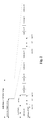
- Fig. 1 is a schematic diagram of a frame structure in an existing LTE/LTE-A FDD system.
- a 10ms radio frame is composed of twenty slots which are 0.5ms long and numbered from 0 to 19, and a slot 2i and a slot 2i+1 form a subframe i which is 1ms long.
- Fig. 2 is a schematic diagram of a frame structure in an existing LTE/LTE-A TDD system.
- a 10ms radio frame is composed of two half frames which are 5ms long. Each half frame includes five subframes which are 1ms long.
- a subframe i is defined as a slot 2i and a slot 2i+1 which are 0.5ms long.
- a time slot contains seven symbols which are 66.7us long, wherein a CP length of a first symbol is 5.21us, and CP lengths of the other six symbols are 4.69us.
- a time slot contains six symbols, and CP lengths of all symbols are 16.67us. Supported uplink-downlink configurations are shown in Table 1.
- 'D' represents a subframe dedicated for downlink transmission
- 'U' represents a subframe dedicated for uplink transmission
- 'S' represents a special subframe, containing a Downlink Pilot Time Slot (DwPTS), a Guard Period (GP) and an Uplink Pilot Time Slot (UpPTS).
- DwPTS Downlink Pilot Time Slot
- GP Guard Period
- UpPTS Uplink Pilot Time Slot
- a Hybrid Automatic Repeat reQuest (HARQ) process refers to that: when data needs to be transmitted at a sending end, a receiving end allocates information needed during transmission via downlink signalling, such as frequency domain resources and packet information. The sending end sends the data according to these pieces of information, and saves the data in a cache of the sending end to facilitate retransmission.
- the receiving end detects the data, if the data is correctly received, Acknowledged (ACK) information is sent to the sending end, after receiving the ACK information, the sending end empties the cache used in this transmission, and this transmission is ended.
- ACK Acknowledged
- Non-acknowledged (NACK) information is sent to the sending end, packets which are not correctly received are saved in a cache of the receiving end.
- the sending end extracts the data from the cache of the sending end and retransmits the data at a corresponding subframe and a corresponding frequency domain position by using a specific packet format.
- the receiving end combines the retransmitted packets with packets which are not correctly received, detection is performed again; and then the process is repeated until the data are correctly received or a frequency of transmission of the data exceeds a maximum transmission frequency threshold.
- timing regulations regarding scheduling of a Physical Downlink Shared Channel (PDSCH) in a downlink HARQ are as follows: an User Equipment (UE) detects a Physical Downlink Control Channel (PDCCH) on a subframe n, and analyzes a PDSCH of the current subframe according to information of the PDCCH.
- UE User Equipment
- PDCCH Physical Downlink Control Channel
- timing rules regarding sending of a Physical Uplink Control Channel (PUCCH) corresponding to an HARQ-ACK of the PDSCH in the downlink HARQ are as follows, namely a timing relation of the downlink HARQ is regulated as follows: the UE detects the PDCCH for transmitting or indicating downlink Semi-Persistent Scheduling (SPS) release of the PDSCH on the subframe n, and transmits a corresponding HARQ-ACK response on a subframe n+4.
- SPS Semi-Persistent Scheduling
- a timing relation of the downlink HARQ is regulated as follows: the UE detects the PDCCH for transmitting or indicating the downlink SPS release of the PDSCH on a subframe n-k, and transmits a corresponding HARQ-ACK response on an uplink subframe n, where k belongs to K, and K is valued as shown in Table 2.
- the UE in a FDD system, due to a one-to-one correspondence relation between uplink and downlink subframes, when the PDSCH contains only one transmission block, the UE needs to feed back 1-bit ACK/NACK answer information, and when the PDSCH contains two transmission blocks, the UE needs to feed back 2-bit ACK/NACK answer information.
- the UE sends 1/2-bit ACK/NACK answer information by using a PUCCH format1a/1b.
- ACK/NACK answer information corresponding to a plurality of downlink subframes needs to be sent on a PUCCH of an uplink subframe
- a downlink subframe set corresponding to the uplink subframe forms a 'bundling window'.
- One sending method is a bundling method, of which a core concept refers to that: spatial bundling operation needs to be performed on the ACK/NACK answer information of at least one transmission block corresponding to each downlink subframe fed back by the uplink subframe, if a downlink subframe has two transmission blocks, the UE needs to feed back the 2-bit ACK/NACK answer information, if each subframe has only one transmission block, the UE needs to feed back the 1-bit ACK/NACK answer information, and the UE sends the 1/2-bit ACK/NACK answer information by using the PUCCH format1a/1b.
- Another sending method is a multiplexing (multiplexing with channel selection) method of which a core concept refers to that: different feedback states of downlink subframes needing to be fed back on the uplink subframe are represented by utilizing different PUCCHs and different modulation symbols on each of different PUCCHs, if each downlink subframe has a plurality of transmission blocks, spatial bundling and channel selection are successively performed on ACK/NACK fed back by the transmission blocks of each downlink subframe, and the UE sends an ACK/NACK answer message by using a format 1b with channel selection.
- a core concept refers to that: different feedback states of downlink subframes needing to be fed back on the uplink subframe are represented by utilizing different PUCCHs and different modulation symbols on each of different PUCCHs, if each downlink subframe has a plurality of transmission blocks, spatial bundling and channel selection are successively performed on ACK/NACK fed back by the transmission blocks of each downlink subframe, and the UE sends an
- a carrier aggregation technology is introduced to the LTE-A system, that is, bandwidths of the LTE system are aggregated to obtain a larger bandwidth.
- a carrier for aggregation is called a Component Carrier (CC), and is also called a serving cell.
- CC Component Carrier
- PCC/PCell Primary Component Carrier/Cell
- SCC/SCell Secondary Component Carrier/Cell
- a primary serving cell and a secondary serving cell are included at least, wherein the primary serving cell is under an activated state all the time, and it is regulated that the PUCCH is transmitted only on the PCell.
- An existing carrier aggregation technology is only applied to an FDD serving cell or a TDD serving cell.
- the FDD serving cell and the TDD serving cell are considered.
- cross-carrier scheduling when the FDD serving cell and the TDD serving cell are aggregated, if cross-carrier scheduling is enabled, when the TDD serving cell is the primary serving cell, only some downlink subframes are scheduled on the FDD serving cell.
- the primary serving cell is TDD uplink-downlink configuration #0 and the cross-carrier scheduling is enabled, only downlink subframes #0, #1, #5 and #6 on the FDD serving cell can be scheduled, so as to cause reduction of a downlink throughput.
- the existing LTE system adopts the same management mode including a scheduling mode, a transmission mode, a sequence generation mode, a scrambling mode, signal configuration and power control.
- a scheduling mode including a scheduling mode, a transmission mode, a sequence generation mode, a scrambling mode, signal configuration and power control.
- disturbed conditions of different subframes are different, and receiving nodes or sending nodes are different. If the same management mode is adopted, different requirements of all subframes cannot be met, a performance of the system is influenced, and an efficiency of data transmission cannot be ensured.
- the embodiments of disclosure provide a method and device for processing information, so as to at least solve problems in the related art that requirements of each subframe cannot be met, and a performance of a system and an efficiency of data transmission are low due to adoption of the same management mode for all subframes.
- a method for processing information is provided, which may include that:
- the predefined rule includes at least one of: dividing the subframes of the first serving cell into the multiple subframe groups according to a subframe attribute of a second serving cell; dividing the subframes of the first serving cell into the multiple subframe groups according to signalling; dividing the subframes of the first serving cell into the multiple subframe groups according to subframe types; and dividing the subframes of the first serving cell into the multiple subframe groups according to a predefined subframe set.
- dividing the subframes of the first serving cell into the multiple subframe groups according to the subframe attribute of the second serving cell includes: dividing subframes of the first serving cell, having the same attribute as the subframe attribute of the second serving cell, under the same subframe index into one group, and dividing subframes of the first serving cell, having different attributes from the subframe attribute of the second serving cell, under the same subframe index into another group.
- dividing the subframes of the first serving cell into the multiple subframe groups according to the signalling includes: dividing the subframes of the first serving cell into the multiple subframe groups according to a subframe index, indicated in the signalling, of each group.
- dividing the subframes of the first serving cell into the multiple subframe groups according to the subframe types includes one of: dividing Multicast Broadcast Single Frequency Network, MBSFN, subframes of the first serving cell into one group, and dividing non-MBSFN subframes of the first serving cell into another group; dividing downlink subframes, indicated by a System Information Block 2, SIB2, of the first serving cell into one group, and dividing subframes obtained by switching uplink subframes to downlink subframes into another group; and dividing flexible subframes of the first serving cell into one group, and dividing fixed subframes into another group.
- MBSFN Multicast Broadcast Single Frequency Network
- SIB2 System Information Block 2
- dividing the subframes of the first serving cell into the multiple subframe groups according to the predefined subframe set includes one of: dividing subframes having predefined odd subframe indexes of the first serving cell into one group, and dividing subframes having even subframe indexes into another group; dividing subframes having predefined subframe indexes (#0, #1, #5 and #6) of the first serving cell into one group, and dividing the remaining subframes into another group; dividing predefined first half frames of the first serving cell into one group, and dividing predefined second half frames of the first serving cell into another group; dividing subframes, used for transmitting binding Paging, of the first serving cell into one group, and dividing the remaining subframes into another group; dividing subframes having predefined subframe indexes (#0 and #5) of the first serving cell into one group, dividing subframes having predefined subframe indexes (#1 and #6) into one group, and dividing the remaining subframes into another group; and dividing N subframes having pre
- configuring the management mode for each of the subframe groups includes at least one of: indicating the management mode corresponding to each of the subframe groups by signalling; negotiating about the management mode corresponding to each of the subframe groups between a base station and a terminal in advance; and determining the management mode corresponding to each of the subframe groups according to a type of each of the subframe groups.
- the management mode includes at least one of: a scheduling mode, a transmission mode, a sequence generation mode, a scrambling mode, a signal configuration mode and a power control mode.
- processing the information on the first serving cell according to the management mode configured for each of the subframe groups includes: processing a Physical Uplink Shared Channel, PUSCH,/Physical Downlink Shared Channel, PDSCH, on the first serving cell according to the scheduling mode of each of the subframe groups.
- processing the PUSCH/PDSCH on the first serving cell according to the scheduling mode of each of the subframe groups includes: when the scheduling mode of each of the subframe groups is self-scheduling, detecting a PDCCH/Enhanced PDCCH, EPDCCH, corresponding to the PUSCH/PDSCH on a downlink subframe, which corresponds to each of the subframe groups of the first serving cell; or when the scheduling mode of each of the subframe groups is cross-carrier scheduling, detecting the PDCCH/EPDCCH on a downlink subframe corresponding to subframe groups of one serving cell other than the first serving cell.
- processing the PUSCH/PDSCH on the first serving cell according to the scheduling mode of each of the subframe groups further includes: performing timing on scheduling of the first serving cell and/or Hybrid Automatic Repeat reQuest-Acknowledged, HARQ-ACK, timing according to reference scheduling timing and/or HARQ-ACK timing, wherein the reference scheduling timing and/or HARQ-ACK timing is scheduling timing and/or HARQ-ACK timing corresponding to the first serving cell, or the reference scheduling timing and/or HARQ-ACK timing is scheduling timing and/or HARQ-ACK timing corresponding to the second serving cell, or the reference scheduling timing and/or HARQ-ACK timing is scheduling timing and/or HARQ-ACK timing except the scheduling timing and/or HARQ-ACK timing corresponding to the first serving cell and the scheduling timing and/or HARQ-ACK timing corresponding to the second serving cell, or the reference scheduling timing and/or HARQ-ACK timing is any HARQ-ACK timing within scheduling timing and/or HARQ-ACK timing corresponding
- processing the information on the first serving cell according to the management mode configured for each of the subframe groups includes: processing channels and/or signals on subframes in each of the subframe groups according to the transmission mode corresponding to each of the subframe groups.
- processing the information on the first serving cell according to the management mode configured for each of the subframe groups includes: generating channels and/or sequences needed by the channels on subframes in each of the subframe groups according to the sequence generation mode corresponding to each of the subframe groups.
- processing the information on the first serving cell according to the management mode configured for each of the subframe groups includes: scrambling signals and/or channels on subframes in each of the subframe groups according to the scrambling mode corresponding to each of the subframe groups.
- processing the information on the first serving cell according to the management mode configured for each of the subframe groups includes: configuring signals on subframes in each of the subframe groups according to the signal configuration mode corresponding to each of the subframe groups.
- processing the information on the first serving cell according to the management mode configured for each of the subframe groups includes: performing power setting on signals/channels on subframes in each of the subframe groups according to a power control parameter corresponding to each of the subframe groups.
- the subframes include downlink subframes and/or uplink subframes.
- processing the information on the first serving cell includes: sending and/or receiving the information on the first serving cell.
- the information on the first serving cell includes: signals and/or channels on the first serving cell.
- the first serving cell includes at least one of: a scheduled serving cell; a serving cell corresponding to FDD; and a secondary serving cell.
- the second serving cell includes at least one of: a scheduling cell; a serving cell corresponding to TDD; and a primary serving cell.
- a device for processing information which may include:
- the device is located at a terminal or a base station.
- the subframes of the serving cell are divided into multiple subframe groups, the management mode is configured for each of the subframe groups, and according to the management mode configured for each of the subframe groups, the information on the serving cell is processed.
- the problem that some downlink subframes in the serving cell cannot be scheduled is solved, and different requirements of all subframes can be met, thereby improving the performance of a system, and ensuring the efficiency of data transmission.
- a method for processing information is provided.
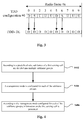
- Fig. 4 is a flowchart of a method for processing information according to an embodiment of the disclosure. As shown in Fig. 4 , the method includes Step S402 to Step S406 as follows.
- Step S402 the method for processing information according to the embodiment of the disclosure starts from Step S402.
- Step S402 according to a predefined rule, subframes of a first serving cell are divided into multiple subframe groups.
- the predefined rule in Step S402 includes, but not limited to, at least one of:
- the subframes of the first serving cell can be grouped in the following modes: dividing subframes of the first serving cell, having the same attribute as the subframe attribute of the second serving cell, under the same subframe index into one group, and dividing subframes of the first serving cell, having different attributes from the subframe attribute of the second serving cell, under the same subframe index into another group.
- the subframes of the first serving cell are grouped by adopting Rule 2
- the subframes of the first serving cell are grouped according to a subframe index, indicated in the signalling, in each group.
- a grouping mode can be determined by a base station, the base station sends signalling to a terminal to indicate a grouping mode for the subframes to the terminal, and after receiving the signalling from the base station, the terminal groups the subframes according to an indication of the signalling.
- the subframes of the first serving cell can be grouped in at least one of the following modes:
- the subframes can be grouped in at least one of the following modes:
- Step S402 After the subframes of the first serving cell are grouped in Step S402, a management mode is configured for each of the subframe groups in Step S404.
- the step that the management mode is configured for each of the subframe groups includes at least one of the following steps that:
- the management mode includes, but not limited to, at least one of: a scheduling mode, a transmission mode, a sequence generation mode, a scrambling mode, a signal configuration mode and a power control mode.
- Step S406 After the management mode is configured for each of the subframe groups in Step S404, in Step S406, according to the management mode configured for each of the subframe groups, information on the first serving cell is processed.
- the step that the information on the first serving cell is processed according to the management mode configured for each of the subframe groups includes that: a PUSCH/PDSCH on the first serving cell is processed according to the scheduling mode of each of the subframe groups.
- the step that the PUSCH/PDSCH on the first serving cell is processed according to the scheduling mode of each of the subframe groups may include that:
- the step that the PUSCH/PDSCH on the first serving cell is processed according to the scheduling mode of each of the subframe groups may further include that: timing is performed on scheduling of the first serving cell and/or HARQ-ACK timing according to reference scheduling timing and/or HARQ-ACK timing, wherein the reference scheduling timing and/or HARQ-ACK timing is scheduling timing and/or HARQ-ACK timing corresponding to the first serving cell, or the reference scheduling timing and/or HARQ-ACK timing is scheduling timing and/or HARQ-ACK timing corresponding to a second serving cell, or the reference scheduling timing and/or HARQ-ACK timing is scheduling timing and/or HARQ-ACK timing except the scheduling timing and/or HARQ-ACK timing corresponding to the first serving cell and the scheduling timing and/or HARQ-ACK timing corresponding to the second serving cell, or the reference scheduling timing and/or HARQ-ACK timing is any HARQ-ACK timing within scheduling timing and/or HARQ-ACK timing corresponding to a current
- each management mode includes the transmission mode
- channels and/or signals on subframes in each of the subframe groups can be processed according to the transmission mode corresponding to each of the subframe groups in Step S406.
- each management mode includes the sequence generation mode
- channels and/or sequences needed by the channels on subframes in each of the subframe groups can be generated according to the sequence generation mode corresponding to each of the subframe groups in Step S406.
- each management mode includes the scrambling mode
- signals and/or channels on subframes in each of the subframe groups can be scrambled according to the scrambling mode corresponding to each of the subframe groups in Step S406.
- each management mode includes the signal configuration mode
- signals on subframes in each of the subframe groups can be configured according to the signal configuration mode corresponding to each of the subframe groups in Step S406.
- power setting can be performed on signals/channels on subframes in each of the subframe groups according to a power control parameter corresponding to each of the subframe groups in Step S406.
- the subframes may be downlink subframes or uplink subframes.
- the method can be executed at a terminal side or a base station side.
- the step that the information on the first serving cell is processed includes, but not limited to, that: the information on the first serving cell is sent and/or received.
- the information on the first serving cell includes, but not limited to: signals and/or channels on the first serving cell.
- the first serving cell may be, but not limited to, a scheduled serving cell or a serving cell corresponding to FDD or a secondary serving cell; while the second serving cell may be, but not limited to, a scheduling cell or a serving cell corresponding to TDD or a primary serving cell.
- the problem that some downlink subframes in the serving cell cannot be scheduled can be solved, and different requirements of all subframes can be met, thereby improving the performance of the system, and ensuring the efficiency of data transmission.
- downlink subframes of a first serving cell are grouped, a scheduling mode is independently configured for each of the subframe groups, and a terminal receives a PDSCH on the first serving cell according to the scheduling mode of each of the subframe groups.
- dividing the subframes of the first serving cell into the multiple subframe groups refers to group the downlink subframes of the first serving cell according to at least one of the following predefined rules:
- downlink subframes of the first serving cell having different attributes from the subframe attribute of uplink subframes of the second serving cell under the same subframe index are divided into one group, and downlink subframes of the first serving cell having the same attribute as the subframe attribute of downlink subframes of the second serving cell under the same subframe index are divided into one group.
- the downlink subframes are grouped by adopting Rule 2
- the downlink subframes are grouped according to a subframe index, indicated by the received signalling, in each group.
- MBSFN subframes can be divided into one group, and Non-MBSFN subframes can be divided into another group; or downlink subframes indicated by an SIB2 are divided into one group, and subframes obtained by switching UL subframes to DL subframes are divided into another group.
- the downlink subframes can be grouped in the following modes: dividing subframes having predefined odd subframe indexes into one group, and dividing subframes having predefined even subframe indexes into another group; or dividing subframes having predefined subframe indexes (#0, #1, #5 and #6) into one group, and dividing subframes having predefined subframe indexes (#2, #3, #4, #7, #8 and #9) into another group; or dividing predefined first half frames into one group, and dividing predefined second half frames into another group.
- the scheduling mode can be independently configured for each of the subframe groups in one or more following modes: the scheduling mode corresponding to each downlink subframe group is indicated by the signalling; a base station and a terminal negotiate about the scheduling mode corresponding to each downlink subframe group in advance; and the scheduling mode is determined according to the type of each of the subframe groups.
- a PDCCH/EPDCCH corresponding to the PDSCH is detected on a downlink subframe corresponding to the subframe group of the first serving cell.
- the terminal does not detect the PDCCH/EPDCCH corresponding to the PDSCH on a downlink subframe corresponding to the subframe group of the first serving cell.
- the operation that the terminal does not detect the PDCCH/EPDCCH corresponding to the PDSCH on the downlink subframe corresponding to the subframe group of the first serving cell refers to that: the terminal detects the PDCCH/EPDCCH on the downlink subframe corresponding to the subframe group of any one serving cell other than the first serving cell.
- HARQ-ACK timing for the PDSCH of a scheduled serving cell can be performed according to reference HARQ-ACK timing.
- the first serving cell is the scheduled serving cell; or the first serving cell is a serving cell corresponding to FDD, or the first serving cell is a secondary serving cell.
- the second serving cell is a scheduling cell, or the second serving cell is a serving cell corresponding to TDD, or the first serving cell is a primary serving cell.
- the reference HARQ-ACK timing is HARQ-ACK timing corresponding to the first serving cell, or the reference HARQ-ACK timing is HARQ-ACK timing corresponding to the second serving cell, or the reference HARQ-ACK timing is HARQ-ACK timing except the HARQ-ACK timing corresponding to the first serving cell and the HARQ-ACK timing corresponding to the second serving cell, or the reference HARQ-ACK timing is any HARQ-ACK timing within HARQ-ACK timing corresponding to a conventional FDD system and a TDD system.
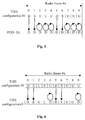
- a TDD serving cell of which the uplink-downlink configuration is configuration #0 is aggregated with an FDD serving cell, wherein the TDD serving cell, of which the uplink-downlink configuration is configuration #0, is a primary serving cell.
- downlink subframes on the FDD serving cell are grouped according to Rule 1, downlink subframes of the FDD serving cell corresponding to uplink subframes of the TDD serving cell, of which the uplink-downlink configuration is the configuration #0 under the same subframe index, are divided into one group, namely a downlink subframe group #0 has downlink ⁇ subframe #2, subframe #3, subframe #4, subframe #7, subframe #8 and subframe #9 ⁇ ; and downlink subframes of the FDD serving cell corresponding to downlink subframes of the TDD serving cell, of which the uplink-downlink configuration is the configuration #0 under the same subframe index, are divided into one group, namely a downlink subframe group #1 has downlink ⁇ subframe #0, subframe #1, subframe #5 and subframe #6 ⁇ .
- the base station and the terminal negotiate in advance about that the scheduling mode of the downlink subframe group #0 is self-scheduling and the scheduling mode of the downlink subframe group #1 is cross-carrier scheduling, the terminal detects a PDCCH/EPDCCH corresponding to a PDSCH on the downlink ⁇ subframe #2, subframe #3, subframe #4, subframe #7, subframe #8 and subframe #9 ⁇ of the FDD serving cell on downlink subframes corresponding to the downlink subframe group #0 of the FDD serving cell and detects a PDCCH/EPDCCH corresponding to a PDSCH on the downlink ⁇ subframe #0, subframe #1, subframe #5 and subframe #6 ⁇ on downlink subframes corresponding to the downlink subframe group #1 of the TDD serving cell of which the uplink-downlink configuration is the configuration #0, the HARQ-ACK timing corresponding to the PDSCH on the FDD serving cell is determined according to reference configurations, the reference configurations refer to that the PDSCH is
- a TDD serving cell of which a uplink-downlink configuration is configuration #0 is aggregated with a TDD serving cell of which a uplink-downlink configuration is configuration #1, wherein the TDD serving cell of which the uplink-downlink configuration is the configuration #0 is a primary serving cell.
- downlink subframes of the TDD serving cell of which the uplink-downlink configuration is the configuration #1
- Signalling indicates that a downlink subframe group #0 has downlink ⁇ subframe #4 and subframe #9 ⁇ and a downlink subframe group #1 has downlink ⁇ subframe #0, subframe #1, subframe #5 and subframe #6 ⁇
- the signalling indicates that a scheduling mode of the downlink subframe group #0 is self-scheduling and a scheduling mode of the downlink subframe group #1 is cross-carrier scheduling
- the terminal detects a PDCCH/EPDCCH corresponding to a PDSCH on the downlink ⁇ subframe #4 and subframe #9 ⁇ of the TDD serving cell of which the uplink-downlink configuration is the configuration #1 on downlink subframes corresponding to the downlink subframe group #0 of the TDD serving cell of which the uplink-downlink configuration is the configuration #1, and detects a PDCCH/EPDCCH corresponding to a
- a TDD serving cell of which a uplink-downlink configuration is configuration #0 is aggregated with a TDD serving cell of which a uplink-downlink configuration is configuration #1, wherein the TDD serving cell of which the uplink-downlink configuration is the configuration #0 is a primary serving cell.
- downlink subframes of the TDD serving cell of which the uplink-downlink configuration is the configuration #1
- Signalling indicates that a downlink subframe group #0 has downlink ⁇ subframe #4 and subframe #9 ⁇ and a downlink subframe group #1 has downlink ⁇ subframe #0, subframe #1, subframe #5 and subframe #6 ⁇
- the signalling indicates that a scheduling mode of the downlink subframe group #0 is self-scheduling and a scheduling mode of the downlink subframe group #1 is cross-carrier scheduling
- the terminal detects a PDCCH/EPDCCH corresponding to a PDSCH on the downlink ⁇ subframe #4 and subframe #9 ⁇ of the TDD serving cell of which the uplink-downlink configuration is the configuration #1 on downlink subframes corresponding to the downlink subframe group #0 of the TDD serving cell of which the uplink-downlink configuration is the configuration #1, and detects a PDCCH/EPDCCH corresponding to a
- uplink subframes of a first serving cell are grouped, a scheduling mode is independently configured for each of the subframe groups, and a terminal sends a PUSCH on the first serving cell according to the scheduling mode of each of the subframe groups.
- the uplink subframes of the first serving cell can be grouped according to at least one of the following rules:
- uplink subframes of the first serving cell having different attributes from the subframe attribute of downlink subframes of the second serving cell under the same subframe index can be divided into one group, and uplink subframes of the first serving cell having the same attribute from the subframe attribute of uplink subframes of the second serving cell under the same subframe index can be divided into another group.
- the uplink subframes when the uplink subframes are grouped by adopting Rule 2, the uplink subframes can be grouped according to a subframe index, indicated by the signalling, in each group.
- subframes having predefined odd subframe indexes can be divided into one group, and subframes having predefined even subframe indexes can be divided into another group; or subframes having predefined subframe indexes (#0, #1, #5 and #6) are divided into one group, and subframes having predefined subframe indexes (#2, #3, #4, #7, #8 and #9) are divided into another group; or predefined first half frames are divided into one group, and predefined second half frames are divided into another group.
- the scheduling mode can be independently configured for each of the subframe groups in one or the combination of the following modes that: the scheduling mode corresponding to each uplink subframe group is indicated by the signalling; or a base station and a terminal negotiate about the scheduling mode corresponding to each uplink subframe group, or the scheduling mode is determined according to the type of each of the subframe groups in advance.
- the operation that the terminal sends a PUSCH of the first serving cell according to the scheduling mode of each of the subframe groups may refer to that: when a scheduling mode of each of the subframe groups is self-scheduling, the terminal detects a PDCCH/EPDCCH corresponding to the PUSCH on a downlink subframe corresponding to the subframe group of the first serving cell.
- the operation that the terminal sends the PUSCH of the first serving cell according to the scheduling mode of each of the subframe groups may refer to that: when a scheduling mode of each of the subframe groups is cross-carrier scheduling, the terminal does not detect the PDCCH/EPDCCH corresponding to the PUSCH on the downlink subframe corresponding to the subframe group of the first serving cell.
- the operation that the terminal does not detect the PDCCH/EPDCCH corresponding to the PUSCH on the downlink subframe, which corresponds to the subframe groups of the first serving cell may refer to that: the terminal detects the PDCCH/EPDCCH on the downlink subframe corresponding to subframe groups of any one serving cell other than the first serving cell.
- the operation that the terminal sends the PUSCH of the first serving cell according to the scheduling mode of each of the subframe groups may further include that: scheduling timing/HARQ-ACK timing for the PUSCH of a scheduled serving cell is in accordance with reference scheduling timing/HARQ-ACK timing, wherein, the first serving cell is the scheduled serving cell; or the first serving cell is a serving cell corresponding to FDD, or the first serving cell is a secondary serving cell.
- the second serving cell is a scheduling cell, or the second serving cell is a serving cell corresponding to TDD, or the second serving cell is a primary serving cell.
- the reference scheduling timing/HARQ-ACK timing can be scheduling timing/HARQ-ACK timing corresponding to the first serving cell, or the reference scheduling timing/HARQ-ACK timing is scheduling timing/HARQ-ACK timing corresponding to the second serving cell, or the reference scheduling timing/HARQ-ACK timing is scheduling timing/HARQ-ACK timing except the scheduling timing/HARQ-ACK timing corresponding to the first serving cell and the scheduling timing/HARQ-ACK timing corresponding to the second serving cell, or the reference scheduling timing/HARQ-ACK timing is any scheduling timing/HARQ-ACK timing within scheduling timing/HARQ-ACK timing corresponding to a conventional FDD system and a TDD system, or the reference scheduling timing/HARQ-ACK timing is scheduling timing/HARQ-ACK timing of which Round Trip Time (RTT) is 10ms.
- RTT Round Trip Time
- an FDD serving cell #0 and an FDD serving cell #1 are aggregated, wherein the FDD serving cell #0 is a primary serving cell.
- uplink subframes of the FDD serving cell #1 are grouped according to Rule 3 in Example 1. It is predefined that an uplink subframe group #0 has uplink ⁇ subframe #0, subframe #1, subframe #2, subframe #3 and subframe #4 ⁇ and an uplink subframe group #1 has uplink ⁇ subframe #5, subframe #6, subframe #7, subframe #8 and subframe #9 ⁇ , and signalling indicates that a scheduling mode of the uplink subframe group #0 is self-scheduling and a scheduling mode of the uplink subframe group #1 is cross-carrier scheduling, so for uplink subframes of the FDD serving cell #1, the terminal detects a PDCCH/EPDCCH corresponding to a PUSCH on uplink ⁇ subframe #0, subframe #1, subframe #2, subframe #3 and subframe #4 ⁇ on downlink subframes, which correspond to the uplink subframe group #0 of the FDD serving cell #1, and detects a PDCCH/EPDCCH corresponding to a PUSCH
- uplink subframes of a first serving cell are grouped, a transmission mode is independently configured for each of the subframe groups, and then a terminal sends a PDCCH/EPDCCH and a PUSCH on a first serving cell according to the transmission mode of each of the subframe groups.
- the uplink subframes of the first serving cell can be grouped according to the predefined Rule 2, namely according to signalling.
- the operation that the uplink subframes of the first serving cell can be grouped according to the signalling may refer to, but not limit to, that: the signalling indicates a subframe index in each group, namely the signalling indicates that a first half frame is a subframe group #0 and a second half frame is a subframe group #1.
- the operation that the transmission mode is independently configured for each of the subframe groups may refer to, but not limit to, that: a base station and the terminal negotiate about the transmission mode corresponding to each downlink subframe group in advance.
- a transmission mode of the subframe group #0 is a single-antenna mode
- a transmission mode of the subframe group #1 is a multi-antenna mode.
- the operation that the terminal sends the PDCCH/EPDCCH and the PUSCH on the first serving cell according to the transmission mode of each of the subframe groups may refer to, but not limit to, that: if the transmission mode of the subframe group #0 is a single-antenna transmission mode, the terminal sends the PUSCH on the first serving cell according to an uplink subframe corresponding to the subframe group #0 in the single-antenna transmission mode; and if the transmission mode of the subframe group #1 is a multi-antenna transmission mode, the terminal sends the PUSCH on the first serving cell according to an uplink subframe corresponding to the subframe group #1 in the multi-antenna transmission mode.
- the first serving cell is a scheduled serving cell, or the first serving cell is a serving cell corresponding to FDD, or the first serving cell is a secondary serving cell.
- downlink subframes of a first serving cell are grouped, a transmission mode is independently configured for each of the subframe groups, and then a terminal sends a PDCCH/EPDCCH and/or a PDSCH and/or a Cell Reference Signal (CRS) and/or a Demodulation Reference Signal (DMRS) and/or a Channel State Indication Reference Signal (CSI-RS) on the first serving cell according to the transmission mode of each of the subframe groups.
- CRS Cell Reference Signal
- DMRS Demodulation Reference Signal
- CSI-RS Channel State Indication Reference Signal
- the downlink subframes of the first serving cell can be grouped according to the predefined Rule 2, namely according to signalling.
- the operation that the downlink subframes of the first serving cell can be grouped according to the signalling may refer to, but not limit to, that: the signalling indicates a subframe index in each group, namely the signalling indicates that a first half frame is a subframe group #0 and a second half frame is a subframe group #1.
- the operation that the transmission mode is independently configured for each of the subframe groups may refer to, but not limit to, that: the base station and the terminal negotiate about the transmission mode corresponding to each downlink subframe group in advance.
- a transmission mode of the subframe group #0 is a single-antenna mode
- a transmission mode of the subframe group #1 is a transmission diversity mode.
- the operation that the terminal sends the PDCCH/EPDCCH and/or the PDSCH and/or the CRS and/or the DMRS and/or the CSI-RS on the first serving cell according to the transmission mode of each of the subframe groups may refer to, but not limit to, that: if a transmission mode of the subframe group #0 is a single-antenna transmission mode, the terminal receives the PDCCH/EPDCCH and/or the PDSCH and/or the CRS and/or the DMRS and/or the CSI-RS on the first serving cell on a downlink subframe corresponding to the subframe group #0 according to the single-antenna transmission mode; and if a transmission mode of the subframe group #0 is a multi-antenna transmission mode, the terminal receives the PDCCH/EPDCCH and/or the PDSCH and/or the CRS and/or the DMRS and/or the CSI-RS on the first serving cell on a downlink subframe corresponding to the subframe group
- the first serving cell is a scheduled serving cell, or the first serving cell is a serving cell corresponding to FDD, or the first serving cell is a secondary serving cell.
- uplink subframes of a first serving cell are grouped, a sequence generation mode is independently configured for each of the subframe groups, and a terminal generates and sends a sequence needed by a PUCCH on the first serving cell according to the sequence generation mode of each of the subframe groups.
- the uplink subframes of the first serving cell can be grouped according to the predefined Rule 4, namely according to a predefined subframe index.
- the operation that the uplink subframes of the first serving cell are grouped according to the predefined subframe index may refer to, but not limit to, that: a subframe group #0 has an odd subframe index, and a subframe group #1 has an even subframe index.
- the operation that the sequence generation mode is independently configured for each of the subframe groups may refer to, but not limit to, that: a base station and the terminal negotiate about a generation mode of a sequence needed by a PUCCH on each uplink subframe group in advance, namely a generation mode of a sequence needed by a PUCCH corresponding to the subframe group #0 is A, and a generation mode of a sequence needed by a PUCCH corresponding to the subframe group #1 is B.
- a difference between the sequence generation mode A and the sequence generation mode B refers to generation of the sequences needed by the PUCCHs according to different cell indexes.
- the terminal When the terminal generates and sends the sequence needed by the PUCCH on the first serving cell according to the sequence generation mode of each of the subframe groups, if the generation mode of the sequence needed by the PUCCH corresponding to the subframe group #0 is A, the terminal generates the sequence needed by the PUCCH corresponding to the subframe group #0 according to the sequence generation mode A; and if the generation mode of the sequence needed by the PUCCH corresponding to the subframe group #1 is B, the terminal generates the sequence needed by the PUCCH corresponding to the subframe group #1 according to the sequence generation mode B.
- the first serving cell may be a scheduled serving cell, a serving cell corresponding to FDD, or a secondary serving cell.
- downlink subframes of a first serving cell are grouped, and a sequence generation mode is independently configured for each of the subframe groups; and a base station generates a sequence needed by an EPDCCH and/or a PDSCH and/or a CRS and/or a DM RS and/or a CSI-RS on the first serving cell according to the sequence generation mode of each of the subframe groups.
- the downlink subframes of the first serving cell can be grouped according to the predefined Rule 4, namely according to a predefined subframe index.
- the operation that the downlink subframes of the first serving cell are grouped according to the predefined subframe index may refer to, but not limit to, that: a subframe group #0 has an odd subframe index, and a subframe group #1 has an even subframe index.
- the operation that the sequence generation mode is independently configured for each of the subframe groups may refer to, but not limit to, that: the base station and the terminal negotiate about a generation mode of a sequence needed by an EPDCCH and/or a PDSCH and/or a CRS and/or a DM RS and/or a CSI-RS on each downlink subframe group in advance, namely a generation mode of a sequence needed by an EPDCCH and/or a PDSCH and/or a CRS and/or a DM RS and/or a CSI-RS corresponding to the subframe group #0 is A, and a generation mode of a sequence needed by an EPDCCH and/or a PDSCH and/or a CRS and/or a DM RS and/or a CSI-RS corresponding to the subframe group #1 is B.
- a difference between the sequence generation mode A and the sequence generation mode B refers to generation of the needed sequences according to different cell indexes.
- the base station When the base station generates the sequence needed by the EPDCCH and/or the PDSCH and/or the CRS and/or the DM RS and/or the CSI-RS on the first serving cell according to the sequence generation mode of each of the subframe groups, if the generation mode of the sequence needed by the EPDCCH and/or the PDSCH and/or the CRS and/or the DM RS and/or the CSI-RS corresponding to the subframe group #0 is A, the base station generates the sequence needed by the EPDCCH and/or the PDSCH and/or the CRS and/or the DM RS and/or the CSI-RS corresponding to the subframe group #0 according to the sequence generation mode A; and if the generation mode of the sequence needed by the EPDCCH and/or the PDSCH and/or the CRS and/or the DM RS and/or the CSI-RS corresponding to the subframe group #1 is B, the base station generates the sequence needed by the EPDCCH and/or the PDSCH
- the first serving cell may be a scheduled serving cell, a serving cell corresponding to FDD, or a secondary serving cell.
- downlink subframes of a first serving cell are grouped, a scrambling mode is independently configured for each of the subframe groups, and a terminal sends channels and/or signals on the first serving cell according to the scrambling mode of each of the subframe groups.
- the downlink subframes of the first serving cell can be grouped according to the predefined Rule 3, namely according to subframe types.
- the operation that the downlink subframes of the first serving cell are grouped according to the subframe types may refer to, but not limit to, that: MBSFN subframes are divided into a subframe group #0, and non-MBSFN subframes are divided into a subframe group #1.
- the operation that the scrambling mode is independently configured for each of the subframe groups may refer to, but not limit to, that: a scrambling mode of channels and/or signals on each downlink subframe group is determined according to the subframe types, namely a scrambling mode of channels and/or signals corresponding to the subframe group #0 is A, and a scrambling mode of channels and/or signals corresponding to the subframe group #1 is B.
- the terminal when the terminal sends the channels and/or the signals on the first serving cell according to the scrambling mode of each of the subframe groups, if the scrambling mode of the channels and/or the signals corresponding to the subframe group #0 is A, the terminal sends the channels and/or the signals corresponding to the subframe group #0 according to the scrambling mode A; and if the scrambling mode of the channels and/or the signals corresponding to the subframe group #1 is B, the terminal sends the channels and/or the signals corresponding to the subframe group #1 according to the scrambling mode B.
- the first serving cell may be a scheduled serving cell, a serving cell corresponding to FDD, or a secondary serving cell.
- uplink subframes of a first serving cell are grouped, and a scrambling mode is independently configured for each of the subframe groups; and a terminal sends a PUSCH on the first serving cell according to the scrambling mode of each of the subframe groups.
- downlink subframes of the first serving cell can be grouped according to the predefined Rule 4, namely according to a predefined subframe set.
- First half frames are divided into an uplink subframe group #0, and second half frames are divided into an uplink subframe group #1.
- the operation that the scrambling mode is independently configured for each of the subframe groups may refer to, but not limit to, that: a scrambling mode of a PUSCH on each uplink subframe group is determined according to a mode negotiated between a base station and an UE in advance, namely a scrambling mode of a PUSCH corresponding to the uplink subframe group #0 is A, and a scrambling mode of a PUSCH corresponding to the uplink subframe group #1 is B, wherein a difference between the scrambling mode A and the scrambling mode B refers to generation of scrambling sequences by using different cell indexes.
- the terminal When the terminal sends the PUSCH on the first serving cell according to the scrambling mode of each of the subframe groups, if the scrambling mode of the PUSCH corresponding to the uplink subframe group #0 is A, the terminal sends the PUSCH corresponding to the uplink subframe group #0 according to the scrambling mode A; and if the scrambling mode of the PUSCH corresponding to the uplink subframe group #1 is B, the terminal sends the PUSCH corresponding to the uplink subframe group #1 according to the scrambling mode B.
- the first serving cell may be a scheduled serving cell, a serving cell corresponding to FDD, or a secondary serving cell.
- uplink subframes of a first serving cell are grouped, a signal configuration mode is independently configured for each of the subframe groups, and a terminal sends signals on the first serving cell according to the signal configuration mode of each of the subframe groups.
- the uplink subframes of the first serving cell can be grouped according to the predefined Rule 3, namely according to subframe types.
- the operation that downlink subframes of the first serving cell are grouped according to the subframe types may refer to, but not limit to, that: fixed uplink subframes are divided into a subframe group #0, and flexible uplink subframes are divided into a subframe group #1.
- the operation that the signal configuration mode is independently configured for each of the subframe groups may refer to, but not limit to, that: a signal configuration mode of signals on each downlink subframe group is determined according to the subframe types, namely a signal configuration mode of signals corresponding to the subframe group #0 is A, and a signal configuration mode of signals corresponding to the subframe group #1 is B.
- the terminal When the terminal sends the signals on the first serving cell according to the signal configuration mode of each of the subframe groups, if the signal configuration mode of the signals corresponding to the subframe group #0 is A, the terminal sends the signals corresponding to the subframe group #0 according to the signal configuration mode A; and if the signal configuration mode of the signals corresponding to the subframe group #1 is B, the terminal sends the signals corresponding to the subframe group #1 according to the signal configuration mode B.
- the first serving cell may be a scheduled serving cell, a serving cell corresponding to FDD, or a secondary serving cell.
- uplink subframes of an FDD serving cell are grouped, a Sounding Reference Signal (SRS) configuration mode is independently configured for each of the subframe groups, and a terminal sends SRSs on a first serving cell according to the SRS configuration mode of each of the subframe groups.
- SRS Sounding Reference Signal
- the uplink subframes of the FDD serving cell are grouped according to the predefined Rule 4, namely according to a predefined subframe index.
- the operation that the uplink subframes of the FDD serving cell are grouped according to the predefined subframe index may refer to, but not limit to, that: uplink subframes having an odd subframe index are divided into a subframe group #0, namely the subframe group #0 is composed of ⁇ subframe #1, subframe #3, subframe #5 and subframe #9 ⁇ ; and uplink subframes having an even subframe index are divided into a subframe group #1, namely the subframe group #1 is composed of ⁇ subframe #0, subframe #2, subframe #4, subframe #6 and subframe #8 ⁇ .
- the operation that the signal configuration mode is independently configured for each of the subframe groups may refer to, but not limit to, that: an SRS configuration mode of signals on each downlink subframe group is determined according to signalling, namely a configuration mode of SRSs corresponding to the subframe group #0 is A, and a configuration mode of SRSs corresponding to the subframe group #1 is B, wherein the SRS configuration mode A refers to that an SRS period is 5ms, and the SRS configuration mode B refers to that an SRS period is 10ms.
- the terminal When the terminal sends the SRSs on the FDD serving cell according to the SRS configuration mode of each of the subframe groups, if the configuration mode of the SRSs corresponding to the subframe group #0 is A, the terminal sends the SRSs corresponding to the subframe group #0 according to the SRS period (5ms); and if the signal configuration mode of the signals corresponding to the subframe group #1 is B, the terminal sends the SRSs corresponding to the subframe group #1 according to the SRS period (10ms).
- an embodiment of the disclosure also provides a device for processing information of a serving cell, which are configured to implement the method for processing information of a serving cell.
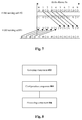
- Fig. 8 is a structural schematic diagram of a device for processing information according to an embodiment of the disclosure.
- the device for processing information according to the embodiment of the disclosure includes a grouping component 802, a configuration component 804 and a processing component 806.
- a connecting relationship between all components shown in Fig. 8 is only an example. Those skilled in the art can adopt other connecting relationships absolutely as long as functions of all components in the disclosure can be achieved under the connecting relationships.
- the functions of all components can be achieved by using specific hardware or hardware capable of being combined with appropriate software to execute processing.
- the hardware or the specific hardware may include an Application Specific Integrated Circuit (ASIC), various other circuits, various processes and the like.
- ASIC Application Specific Integrated Circuit
- the functions can be provided by a single specific processor, a single shared processor or a plurality of independent processors, some processors thereamong being probably shared.
- the processors should not be interpreted as specific hardware capable of executing software, and may impliedly include, but not limited to, Digital Signal Processor (DSP) hardware, a Read-Only Memory (ROM) configured to store software, a Random Access Memory (RAM) and a non-volatile storage device instead.
- DSP Digital Signal Processor
- ROM Read-Only Memory
- RAM Random Access Memory
- the grouping component 802 is configured to divide subframes of a first serving cell into multiple subframe groups according to a predefined rule; the configuration component 804 is configured to configure a management mode for each of the subframe groups; and the processing component 806 is configured to process information on the first serving cell according to the management mode configured for each of the subframe groups.
- the device for processing information of a serving cell can adopt an optional implementation mode corresponding to the method for processing information of a serving cell, and detailed descriptions are no longer made specifically.
- the device for processing information of a serving cell is located at a terminal or a base station.
- the subframes of the serving cell are grouped, and the management mode is configured for each of the subframe groups, so that the problem that some downlink subframes in the serving cell cannot be scheduled can be solved, and different requirements of different subframes can be met, thereby improving the performance of the system, and ensuring the efficiency of data transmission.
Landscapes
- Engineering & Computer Science (AREA)
- Signal Processing (AREA)
- Computer Networks & Wireless Communication (AREA)
- Mobile Radio Communication Systems (AREA)
Applications Claiming Priority (2)
| Application Number | Priority Date | Filing Date | Title |
|---|---|---|---|
| CN201310753174.0A CN104753632B (zh) | 2013-12-31 | 2013-12-31 | 信息处理方法及装置 |
| PCT/CN2014/080146 WO2015100959A1 (zh) | 2013-12-31 | 2014-06-17 | 信息处理方法及装置 |
Publications (2)
| Publication Number | Publication Date |
|---|---|
| EP3091804A1 true EP3091804A1 (de) | 2016-11-09 |
| EP3091804A4 EP3091804A4 (de) | 2017-04-12 |
Family
ID=53493103
Family Applications (1)
| Application Number | Title | Priority Date | Filing Date |
|---|---|---|---|
| EP14876348.5A Withdrawn EP3091804A4 (de) | 2013-12-31 | 2014-06-17 | Verfahren und vorrichtung zur verarbeitung von informationen |
Country Status (4)
| Country | Link |
|---|---|
| US (1) | US10321322B2 (de) |
| EP (1) | EP3091804A4 (de) |
| CN (1) | CN104753632B (de) |
| WO (1) | WO2015100959A1 (de) |
Cited By (1)
| Publication number | Priority date | Publication date | Assignee | Title |
|---|---|---|---|---|
| US12015165B2 (en) | 2019-06-17 | 2024-06-18 | Lg Energy Solution, Ltd. | Battery module including base plate having gas discharge passage, and battery pack and energy storage system including the same |
Families Citing this family (4)
| Publication number | Priority date | Publication date | Assignee | Title |
|---|---|---|---|---|
| EP3157188B1 (de) * | 2014-06-16 | 2018-10-10 | LG Electronics Inc. | Verfahren und vorrichtung zum senden eines downlink-signals in einem drahtloskommunikationssystem |
| US9882662B2 (en) * | 2014-11-11 | 2018-01-30 | Sharp Kabushiki Kaisha | Systems and methods for license assisted access |
| US10405332B2 (en) * | 2016-09-06 | 2019-09-03 | Samsung Electronics Co., Ltd. | Coexistence of different radio access technologies or services on a same carrier |
| CN107889205B (zh) * | 2016-09-30 | 2021-08-20 | 华为技术有限公司 | 上行功率控制方法及装置 |
Family Cites Families (20)
| Publication number | Priority date | Publication date | Assignee | Title |
|---|---|---|---|---|
| CN101532331A (zh) * | 2007-07-30 | 2009-09-16 | 诺瓦利斯股份有限公司 | 具有互锁设计的地板覆盖物 |
| KR101117002B1 (ko) | 2008-06-10 | 2012-03-16 | 엘지전자 주식회사 | 무선통신 시스템에서 harq 수행 방법 |
| KR100987458B1 (ko) * | 2008-06-24 | 2010-10-13 | 엘지전자 주식회사 | 상향링크 신호 전송 방법 |
| US20110176461A1 (en) * | 2009-12-23 | 2011-07-21 | Telefonakatiebolaget Lm Ericsson (Publ) | Determining configuration of subframes in a radio communications system |
| CN102754497A (zh) * | 2010-02-04 | 2012-10-24 | 日本电气株式会社 | 无线通信系统、无线电基站和协同控制方法 |
| US9112694B2 (en) * | 2010-02-23 | 2015-08-18 | Lg Electronics Inc. | Method and device for transmitting uplink acknowledgement information in a wireless communication system supporting multiple carriers |
| CN103155672A (zh) * | 2010-10-05 | 2013-06-12 | 诺基亚西门子网络公司 | 信道状态信息测量和报告 |
| CN102281638B (zh) * | 2011-08-02 | 2014-07-09 | 电信科学技术研究院 | 一种调度子帧的方法和设备 |
| KR20140097160A (ko) * | 2011-10-18 | 2014-08-06 | 엘지전자 주식회사 | 무선 통신 시스템에서 셀 간 간섭을 완화하는 방법 및 이를 위한 장치 |
| CN103200687B (zh) | 2012-01-09 | 2016-09-14 | 华为技术有限公司 | 一种控制信道资源映射方法、基站及用户设备 |
| CN103326833B (zh) * | 2012-03-22 | 2018-01-26 | 中兴通讯股份有限公司 | 一种上下行定时关系的确定方法和装置 |
| WO2013157869A1 (ko) * | 2012-04-18 | 2013-10-24 | 엘지전자 주식회사 | 무선 통신 시스템에서 제어 정보 전송 방법 및 장치 |
| CN103427938B (zh) * | 2012-05-18 | 2018-11-27 | 电信科学技术研究院 | 配置信道测量和dl csi反馈的方法、系统及设备 |
| CN103582099B (zh) | 2012-07-25 | 2018-06-19 | 中兴通讯股份有限公司 | 一种上行功率控制方法、终端及基站 |
| CN103780361B (zh) | 2012-10-17 | 2018-08-17 | 中兴通讯股份有限公司 | 一种应答信息的发送方法及装置 |
| US9692584B2 (en) * | 2013-01-17 | 2017-06-27 | Telefonatiebolaget L M Ericsson (Publ) | Methods of radio communications using different subframe configurations and related radio and/or network nodes |
| KR102077882B1 (ko) * | 2013-04-03 | 2020-02-14 | 인터디지탈 패튼 홀딩스, 인크 | 누산된 송신 전력 제어 커맨드들 및 대응 업링크 서브프레임 세트들에 기초하여 업링크 송신 전력을 제어하는 방법 및 장치 |
| JP6378679B2 (ja) * | 2013-07-12 | 2018-08-22 | シャープ株式会社 | 端末装置および方法 |
| CN104767593A (zh) * | 2014-01-03 | 2015-07-08 | 中兴通讯股份有限公司 | 应答信息传输方法及装置、终端、基站 |
| US9462448B2 (en) * | 2014-04-14 | 2016-10-04 | Qualcomm Incorporated | Adaptive positioning reference signal (PRS) for indoor location |
-
2013
- 2013-12-31 CN CN201310753174.0A patent/CN104753632B/zh active Active
-
2014
- 2014-06-17 US US15/038,913 patent/US10321322B2/en active Active
- 2014-06-17 EP EP14876348.5A patent/EP3091804A4/de not_active Withdrawn
- 2014-06-17 WO PCT/CN2014/080146 patent/WO2015100959A1/zh not_active Ceased
Cited By (1)
| Publication number | Priority date | Publication date | Assignee | Title |
|---|---|---|---|---|
| US12015165B2 (en) | 2019-06-17 | 2024-06-18 | Lg Energy Solution, Ltd. | Battery module including base plate having gas discharge passage, and battery pack and energy storage system including the same |
Also Published As
| Publication number | Publication date |
|---|---|
| CN104753632B (zh) | 2019-03-15 |
| US20160381561A1 (en) | 2016-12-29 |
| WO2015100959A1 (zh) | 2015-07-09 |
| EP3091804A4 (de) | 2017-04-12 |
| CN104753632A (zh) | 2015-07-01 |
| US10321322B2 (en) | 2019-06-11 |
Similar Documents
| Publication | Publication Date | Title |
|---|---|---|
| EP3930246B1 (de) | Verfahren zum senden oder empfangen von signalen in einem drahtloskommunikationssystem und vorrichtung dafür | |
| CN110036586B (zh) | 用于处理时间缩减信令的系统和方法 | |
| CN104412684B (zh) | 在无线通信系统中用于上行链路控制信道的资源分配方法及设备 | |
| EP3540997B1 (de) | Verfahren zur übertragung eines uplink-signals in einem drahtloskommunikationssystem und vorrichtung dafür | |
| US20210266114A1 (en) | Node and method for downlink scheduling and hybrid automatic repeat request timing | |
| JP2023017969A (ja) | 無線通信システムの制御チャネルの伝送及び受信方法、装置及びシステム | |
| CN104685808B (zh) | 在无线通信系统中接收ack/nack的方法和设备 | |
| EP2624497B1 (de) | Verfahren und vorrichtung zur übertragung von empfangsbestätigungen in einem drahtlosen system | |
| JP6917709B2 (ja) | フレキシブル・サブフレームを用いるフレキシブルなtddアップリンク/ダウンリンク構成 | |
| US10581559B2 (en) | User Equipment, base stations and methods | |
| EP3703453A1 (de) | Verfahren zum senden oder empfangen eines signals in einem drahtloskommunikationssystem und vorrichtung dafür | |
| EP4057547A1 (de) | Verfahren zur uplink-übertragung in einem drahtloskommunikationssystem und vorrichtung dafür | |
| CN111149321B (zh) | 在无线通信系统中发送/接收数据的方法和装置 | |
| US20180048447A1 (en) | User equipments, base stations and methods | |
| JP2019118153A (ja) | 非免許帯域を支援する無線接続システムにおいて競争ウィンドウサイズを調整する方法及びこれを支援する装置 | |
| CN104982000B (zh) | 在载波聚合系统中用于通信的方法和装置 | |
| EP3522642A1 (de) | Verfahren für eine vielzahl von verarbeitungszeiten oder eine vielzahl von übertragungszeitintervallen in einem drahtloskommunikationssystem und vorrichtung dafür | |
| US9538566B2 (en) | Method and device for transmitting reception acknowledgement response in wireless communication system | |
| WO2014129848A1 (ko) | 무선 통신 시스템에서 제어 정보를 송수신하는 방법 및 이를 위한 장치 | |
| CN106452661A (zh) | 应答信息的传输方法、装置、基站及终端 | |
| WO2014189304A1 (ko) | 무선통신 시스템에서 단말의 통신 방법 및 이러한 방법을 이용하는 단말 | |
| CN105207757B (zh) | 通信系统的载波聚合方法及装置 | |
| WO2013077633A1 (ko) | 무선 통신 시스템에서 ack/nack 전송 방법 및 장치 | |
| WO2013162287A1 (ko) | 무선 통신 시스템에서 무선 자원의 동적 할당 방법 및 이를 위한 장치 | |
| EP3468093A1 (de) | Verfahren zum senden oder empfangen eines uplink-signals für ein endgerät mit unterstützung von kurzen übertragungszeitintervallen in einem drahtloskommunikationssystem und vorrichtung dafür |
Legal Events
| Date | Code | Title | Description |
|---|---|---|---|
| PUAI | Public reference made under article 153(3) epc to a published international application that has entered the european phase |
Free format text: ORIGINAL CODE: 0009012 |
|
| 17P | Request for examination filed |
Effective date: 20160527 |
|
| AK | Designated contracting states |
Kind code of ref document: A1 Designated state(s): AL AT BE BG CH CY CZ DE DK EE ES FI FR GB GR HR HU IE IS IT LI LT LU LV MC MK MT NL NO PL PT RO RS SE SI SK SM TR |
|
| AX | Request for extension of the european patent |
Extension state: BA ME |
|
| RIC1 | Information provided on ipc code assigned before grant |
Ipc: H04L 5/00 20060101AFI20161116BHEP Ipc: H04W 16/02 20090101ALI20161116BHEP Ipc: H04W 72/04 20090101ALI20161116BHEP Ipc: H04W 16/04 20090101ALI20161116BHEP |
|
| DAX | Request for extension of the european patent (deleted) | ||
| A4 | Supplementary search report drawn up and despatched |
Effective date: 20170315 |
|
| RIC1 | Information provided on ipc code assigned before grant |
Ipc: H04W 72/04 20090101ALI20170309BHEP Ipc: H04W 16/02 20090101ALI20170309BHEP Ipc: H04W 16/04 20090101ALI20170309BHEP Ipc: H04L 5/14 20060101ALN20170309BHEP Ipc: H04L 5/00 20060101AFI20170309BHEP |
|
| STAA | Information on the status of an ep patent application or granted ep patent |
Free format text: STATUS: EXAMINATION IS IN PROGRESS |
|
| 17Q | First examination report despatched |
Effective date: 20171109 |
|
| STAA | Information on the status of an ep patent application or granted ep patent |
Free format text: STATUS: THE APPLICATION IS DEEMED TO BE WITHDRAWN |
|
| 18D | Application deemed to be withdrawn |
Effective date: 20200922 |