EP3092894A1 - Haustierschlafkissen - Google Patents
Haustierschlafkissen Download PDFInfo
- Publication number
- EP3092894A1 EP3092894A1 EP16169247.0A EP16169247A EP3092894A1 EP 3092894 A1 EP3092894 A1 EP 3092894A1 EP 16169247 A EP16169247 A EP 16169247A EP 3092894 A1 EP3092894 A1 EP 3092894A1
- Authority
- EP
- European Patent Office
- Prior art keywords
- lying surface
- bead
- edge
- cushion according
- opening
- Prior art date
- Legal status (The legal status is an assumption and is not a legal conclusion. Google has not performed a legal analysis and makes no representation as to the accuracy of the status listed.)
- Granted
Links
Images
Classifications
-
- A—HUMAN NECESSITIES
- A01—AGRICULTURE; FORESTRY; ANIMAL HUSBANDRY; HUNTING; TRAPPING; FISHING
- A01K—ANIMAL HUSBANDRY; AVICULTURE; APICULTURE; PISCICULTURE; FISHING; REARING OR BREEDING ANIMALS, NOT OTHERWISE PROVIDED FOR; NEW BREEDS OF ANIMALS
- A01K1/00—Housing animals; Equipment therefor
- A01K1/02—Pigsties; Dog-kennels; Rabbit-hutches or the like
- A01K1/035—Devices for use in keeping domestic animals, e.g. fittings in housings or dog beds
- A01K1/0353—Pet beds, e.g. dog beds
Definitions
- the invention relates to a pillow for a pet.
- This has an upper lying surface, a bead-like edge, an insert and an opening for removal of the insert, wherein the opening is closable by means of a closure means.
- the bead surrounds or circumscribes the upper lying surface, and the bead has an upper bead top side.
- the unloaded position of use the upper lying surface is arranged lower than the upper bead top.
- the unloaded Use position describes the state in which the cushion is designed, for example, on a horizontal surface, but an animal has not yet placed on this pillow.
- the closure means is designed, for example, as a zipper.
- a zipper is typically arranged centrally in the upper lying surface or in another lying surface of the pillow.
- the opening is arranged laterally on the upper lying surface.
- the embodiment according to the invention prevents the closure means from being present inside the lying surface as a source of inconvenience to the pet because the opening and thus also the closure means closing the opening are arranged laterally to the lying surface.
- the lying surface can do so preferably be made of one piece, for example of a piece of fabric, fabric or other material, and in particular without interruptions, seams and / or hardening. The pet will therefore accept the lying surface, but the accessibility of the insert is still given.
- the trick of the invention is that the closure means, which allows access to the opening, is arranged on the upper lying surface and, if a pet settles on the pillow and places its head on the bead, the pressed down bead exactly the area of Opening with displaced bead material additionally covered and an impairment of reclining comfort by the hard closure means is additionally avoided.
- a pillow for example, basically any type of pad for lying, sleeping or sitting can be understood.
- a pet is understood in particular to mean an animal which is usually kept in Europe in private households and in particular in dwellings, above all a four-legged, non-flighting and non-living and non-terrestrial animal, in particular vertebrates such as dogs or domestic cats , It can also be spoken by pet animals. The suitability for such a pet will typically be easily recognized on a pillow.
- a lying surface is typically formed of a continuous material such as fabric, fabric, plastic or other material.
- the bead-like edge serves in particular a certain fixation of the sleeping animal on the pillow.
- a depression may be formed, which is bounded by the bead-like edge, and in which the lying surface is located.
- the bead-like edge may be formed of the same or different material as the lying surface.
- the opening serves in particular to be able to remove the insert, for example to clean it or to replace it when it is worn out.
- the opening between the upper lying surface and the bead-like edge is arranged.
- the opening is located at a location which has unevenness anyway, so that the opening and in particular the closure means are no longer significant and / or are not or hardly noticeable.
- the closure means is arranged such that even with the closure means completely open, the upper lying surface remains on the cushion.
- the arrangement is chosen so that both the insert on the lying surface, as well as the insert of the bead can be removed by the closure means used and then the entire cover as a whole can be washed or cleaned. It is therefore sufficient to choose the opening so that the underlying insert can be removed, this reduces the length of the closure means and thus also possible sources of interference for the comfort of lying on the pillow pet.
- the upper lying surface has a first longitudinal side and a second longitudinal side, which are opposite and parallel to each other, wherein the opening is arranged along one of the longitudinal sides. This allows a sufficient length of the opening to remove the deposit. Furthermore the arrangement on one longitudinal side allows a straight execution of the opening, whereby the opening of the closure means can be facilitated.
- the closure means is a zipper. This allows reliable closure and easy opening.
- the closure means is a hook-and-loop fastener. This also allows reliable closure and easy opening.
- the insert is formed from an elastic and / or compressible material, in particular foam. This allows a soft feeling when laying on the pillow, which significantly increases the acceptance of the pillow in pets.
- the pillow further comprises a lower lying surface for the pet, which faces in a direction opposite to the upper lying surface.
- a further lying surface of the cushion can be provided. This can be used, for example, if the upper lying surface is dirty.
- the two lying surfaces can be designed differently, for example, be formed of different materials or be coated differently, for example, to be provided for different temperatures or seasons. Examples will be given below.
- the lower lying surface is aligned parallel to the upper lying surface. This corresponds to a simple and practical design.
- the bead-like edge runs around the lower lying surface. Even so, for example, a trough can be formed.
- the lower lying surface is permanently connected to the bead-like edge. This allows a stable and easy to manufacture execution.
- the removability of the insert is typically secured over the opening.
- a permanent connection is typically understood to mean a connection which is not intended for rapid release, that is to say in particular has no closure means such as zip fasteners or hook-and-loop fasteners.
- a non-detachable connection can be formed, for example, by a seam, which is indeed releasable with the appropriate effort, but is not intended.
- the bead-like edge protrudes beyond the upper lying surface and / or over the lower lying surface. This allows, for example, advantageously the formation of the trough described above.
- the upper lying surface and / or the lower lying surface are flat. This corresponds to a practicable design, which usually leads to a high acceptance in pets.
- the respective lying surface can also be slightly bent.
- one of the two lying surfaces preferably the upper lying surface
- a special feel and / or characteristic of the lying surface can be achieved become.
- such a plush-covered lying surface can be provided for cold temperatures.
- a section of the bead-like edge which adjoins the lying surface which is covered with a woven or knitted fabric, in particular plush, is likewise covered with the woven or knitted fabric, in particular plush.
- this section can occupy half the edge. In particular, it can extend from the lying surface to a circumferential line.
- a circumferential closure means in particular a circumferential zipper, is formed around the bead-like edge, the interior of the bead-like edge being accessible when the encircling closure means is opened.
- a material inside the edge can be removed in the same or similar manner as the insert, for example, for cleaning or replacement.
- the bead-like edge is filled with a filling, in particular of elastic and / or compressible material, in particular foam.
- a soft characteristic similar to the deposit, can be provided.
- the filling is tubular. This allows an adjacent circulation around the bed.
- the tube shape may be interrupted at one or more points in order to facilitate removal. For example, it may be interrupted at one, two, three, four, or five digits.
- the insert is arranged between the upper lying surface and the lower lying surface.
- the effect of the insert for both lying surfaces can be achieved, ie in particular the provision of a soft pad.
- both lying surfaces can be directly adjacent to the insert.
- the insert when the bead-like edge rests on a flat surface, the lower lying surface or the upper lying surface is spaced from the flat surface.
- an additional spring effect due to the distance can be achieved.
- the insert When a pet lays on the pillow, the insert is typically pushed down and a trough is thereby enlarged.
- the cushion is designed so that it can be turned around easily, so that both the upper lying surface, as well as the lower lying surface can face upwards and thus serve as a sleeping surface for the pet.
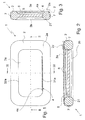
- FIG. 1 shows a pillow 1 according to the invention for a pet according to one embodiment.
- the cushion 1 has a bead-like edge 2. This surrounds an upper lying surface 3a.
- the upper lying surface 3a is designed so that a pet can lie on it, especially for sleeping.
- the lying surface 3a has a first longitudinal side 31a and a second longitudinal side 32a. Among other things, on these longitudinal sides 31a, 32a, the upper lying surface 3a adjoins the bead-like edge 2.
- an opening 4 is formed. This is intended to remove a pad located within the pad 1, described below.
- the opening 4 is closable by means of a closure means in the form of a zipper 4a.
- the zipper 4a is formed in a known manner. It can be opened to remove the insert and closed again after removal or replacement of the insert.
- the arrangement of the zipper 4a along the first longitudinal side 31a avoids any impairment of the comfort when lying on the upper lying surface 3a.
- the zipper 4a is located on the borderline between upper lying surface 3a and edge 2, on which an unevenness anyway occurs, which however is wanted. In this way, the zipper 4a does not disturb, in particular not while lying down.
- FIG. 2 shows a side sectional view through the pad 1 along the in FIG. 1 marked line II-II. It can be seen that the peripheral edge / bead 2 protrudes beyond the upper lying surface 3a. Thus, a trough forms in the cushion 1, in which the pet can lie comfortably and supported laterally by the edge 2.
- the edge / bead 2 is formed in other words bead-like.
- the upper bead surface of the bead of the or edge 2 is marked.
- Figure 2 shows the unloaded position of use in section. It can be clearly seen that the upper bead top 2a is above the upper lying surface 3a, and the upper lying surface 3a is positioned lower than the upper bead top 2a. The same situation arises naturally also in FIG. 3 ,
- the cushion 1 not only has the upper lying surface 3a, but also a lower lying surface 3b.
- the lower lying surface 3b points in a direction opposite to the upper lying surface 3a direction, as in FIG. 2 is shown.
- the upper lying surface 3a is above and the lower lying surface 3b is below. If a pet lies down on the pillow 1, then it lays down on the upper lying surface 3a. However, it should be understood that the pad 1 can also be turned over so that the lower lying surface 3b is at the top and a pet would lay on this lower lying surface 3b. In fact, in a typical embodiment, in practice, an unambiguous assignment of the lower and upper lying surface will as a rule not be possible, in particular if both lying surface 3a, 3b are designed for use as a lying surface for a pet.
- the upper lying surface 3a is covered with a fabric in the form of plush 6.
- This plush 6 ensures that the upper lying surface 3a is made somewhat softer and, in particular, more warming than the lower lying surface 3b, which is not covered with such a plush 6.
- the upper lying surface 3a at colder temperatures can be used, whereas the lower lying surface 3b can be used at warmer temperatures.
- typically a human chooses which of the two lying surface 3a, 3b should be on top and thus provides the pet with a suitable lying surface.
- the plush 6 also extends to the upper lying surface 3a adjacent areas of the edge 2.
- a similar feel and heat effect is achieved at the edge 2.
- the insert 5 can be removed through the opening 4. For this purpose, first the zipper 4a is opened. As a result, the insert 5 is accessible. In particular, the insert may be removed to clean it or to replace it with another, for example when a different degree of hardness is desired or when it is worn or damaged.
- the zipper 4a is closed again. This prevents the upper lying surface 3a from coming off the edge 2 along the first longitudinal side 31a. In addition, a direct contact with the insert 5 is prevented, which for example can prevent contamination.
- the edge 2 is filled with a filling 21.
- This is designed tubular. In the present case, it is made of the same material as the insert 5, ie of an elastic foam.
- the edge 2 offers a certain flexibility, which significantly increases the comfort of the pet when lying on the pillow 1.
- a circumferential closure means 7 is formed, which is also designed as a zipper. This can be opened to remove the filling 21, for example, for replacement or for cleaning.
- the tubular shape of the filling 21 is interrupted at present a point, so that the filling 21 can be easily removed. It should be understood, for example, that it could be interrupted at two or three places.
- FIG. 3 shows a side sectional view through the pad 1 along the in FIG. 1 marked line III-III. It can be seen that the pad 1 in the sectional view shown has a significantly smaller side length than in the sectional view of FIG. 2 ,
- FIG. 3 It can also be clearly seen that the opening 4 with its zipper 4a is formed directly between the upper lying surface 3a and the edge 2. As a result, a reduction of the lying quality is prevented, which then arise in particular would, if the opening 4 would be formed centrally in the upper lying surface 3a.
- edge 2 projects beyond both the upper lying surface 3a and the lower lying surface 3b, so that a respective recess is formed. This prevents a pet lying on the pillow 1 from falling over the edge 2 of the pillow, even if it is asleep, for example.
Landscapes
- Life Sciences & Earth Sciences (AREA)
- Environmental Sciences (AREA)
- Animal Behavior & Ethology (AREA)
- Zoology (AREA)
- Animal Husbandry (AREA)
- Biodiversity & Conservation Biology (AREA)
- Housing For Livestock And Birds (AREA)
Abstract
Description
- Die Erfindung betrifft ein Kissen für ein Haustier. Dieses weist eine obere Liegefläche, einen wulstartigen Rand, eine Einlage und eine Öffnung zur Entnahme der Einlage auf, wobei die Öffnung mittels eines Verschlussmittels verschließbar ist. Dabei umgibt oder umläuft der Wulst die obere Liegefläche, und der Wulst weist eine obere Wulstoberseite auf.
In der unbelasteten Gebrauchsstellung ist die obere Liegefläche niedriger angeordnet, wie die obere Wulstoberseite. Die unbelastete Gebrauchsstellung beschreibt dabei den Zustand, bei welchem das Kissen zum Beispiel auf einer horizontalen Fläche ausgelegt ist, aber ein Tier sich noch nicht auf dieses Kissen gelegt hat. Die Anordnung ist dabei so gewählt, dass der Wulst die Liegefläche randartig umgibt, derart, dass insbesondere die obere Wulstoberseite über der Liegefläche ist, und so eine ergonomisch günstige Auflagefläche für den Kopf des Tieres bietet.
Bei bekannten Kissen ist das Verschlussmittel beispielsweise als Reißverschluss ausgebildet. Ein solcher Reißverschluss ist typischerweise mittig in der oberen Liegefläche oder in einer anderen Liegefläche des Kissens angeordnet. Dies erlaubt zwar ein leichtes Herausnehmen der Einlage, kann jedoch für ein Haustier unangenehm sein, so dass die entsprechende Liegefläche von manchen Haustieren gemieden wird. Dies führt in der Praxis dazu, dass die Liegefläche, in welcher das Verschlussmittel angeordnet ist, nicht verwendbar ist. - Es ist deshalb eine Aufgabe der Erfindung, ein im Vergleich zum Stand der Technik alternatives Kissen bereitzustellen, bei welchem beispielsweise eine Einschränkung bei der Verwendung von Liegeflächen vermieden wird.
- Dies wird erfindungsgemäß durch ein Kissen gemäß Anspruch 1 erreicht. Vorteilhafte Ausgestaltungen sind in den Unteransprüchen beansprucht.
- Erfindungsgemäß ist vorgesehen, dass die Öffnung seitlich an der oberen Liegefläche angeordnet ist.
- Durch die erfindungsgemäße Ausgestaltung wird vermieden, dass innerhalb der Liegefläche das Verschlussmittel als Quelle von Unannehmlichkeiten für das Haustier vorhanden ist, weil die Öffnung und damit auch das die Öffnung verschließende Verschlussmittel seitlich zur Liegefläche angeordnet sind. Die Liegefläche kann damit vorzugsweise aus einem Stück, beispielsweise aus einem Stück Stoff, Gewebe oder sonstigem Material, und insbesondere ohne Unterbrechungen, Nähte und/oder Verhärtungen ausgeführt sein. Das Haustier wird deshalb die Liegefläche akzeptieren, wobei die Zugänglichkeit der Einlage trotzdem gegeben ist.
Der Pfiff der Erfindung liegt darin, dass das Verschlussmittel, welches Zugang zu der Öffnung ermöglicht, an der oberen Liegefläche angeordnet ist und, falls sich ein Haustier auf dem Kissen niederlässt und seinen Kopf auf den Wulst legt, der herunter gedrückte Wulst genau den Bereich der Öffnung mit verdrängtem Wulstmaterial zusätzlich überdeckt und eine Beeinträchtigung des Liegekomforts durch das harte Verschlussmittel zusätzlich vermieden ist.
Es sei verstanden, dass unter einem Kissen beispielsweise grundsätzlich jede Art von Unterlage zum Liegen, Schlafen oder Sitzen verstanden werden kann. Unter einem Haustier sei insbesondere ein Tier verstanden, welches üblicherweise in Europa in Privathaushalten und insbesondere in Wohngebäuden gehalten wird, und zwar vor allem ein vierbeiniges, nicht flugfähiges und nicht im Wasser lebendes sowie nicht in Terrarien gehaltenes Tier, insbesondere also Wirbeltiere wie Hund oder Hauskatze. Es kann dabei auch von Heimtieren gesprochen werden. Die Eignung für ein solches Haustier wird sich an einem Kissen typischerweise problemlos erkennen lassen. - Eine Liegefläche ist typischerweise aus einem durchgängigen Material wie Stoff, Gewebe, Kunststoff oder einem anderen Material ausgebildet.
- Der wulstartige Rand dient insbesondere einer gewissen Fixierung des auf dem Kissen schlafenden Tieres. Es kann insbesondere eine Mulde ausgebildet sein, welche durch den wulstartigen Rand begrenzt wird, und in welcher sich die Liegefläche befindet.
- Der wulstartige Rand kann aus dem gleichen oder einem anderen Material wie die Liegefläche ausgebildet sein.
- Die Öffnung dient insbesondere dazu, die Einlage entnehmen zu können, beispielsweise um sie zu reinigen oder um sie auszutauschen, wenn sie durchgelegen ist. Außerdem ist es möglich, unterschiedliche Einlagen für ein bestimmtes Kissen vorzusehen, um unterschiedliche Härtegrade durch einfachen Austausch der Einlagen realisieren zu können.
- Gemäß einer Ausführung ist vorgesehen, dass die Öffnung zwischen der oberen Liegefläche und dem wulstartigen Rand angeordnet ist. Damit befindet sich die Öffnung an einer Stelle, welche ohnehin Unebenheiten aufweist, so dass die Öffnung und insbesondere das Verschlussmittel nicht mehr ins Gewicht fallen und/oder nicht oder kaum spürbar sind.
- In einer bevorzugten Ausgestaltung des Vorschlages ist vorgesehen, dass das Verschlussmittel derart angeordnet ist, dass auch bei vollständig geöffnetem Verschlussmittel die obere Liegefläche an dem Kissen verbleibt. Die Anordnung ist so gewählt, dass durch die eingesetzten Verschlussmittel sowohl die Einlage an der Liegefläche, als auch die Einlage des Wulstes entfernt werden können und dann der gesamte Bezug im Ganzen gewaschen bzw. gereinigt werden kann. Es reicht daher aus, die Öffnung so zu wählen, dass die darunter befindliche Einlage entnommen werden kann, dies reduziert die Länge des Verschlussmittels und damit auch mögliche Störquellen für die Behaglichkeit des auf dem Kissen liegenden Haustieres.
- Gemäß einer Ausführung ist vorgesehen, dass die obere Liegefläche eine erste Längsseite und eine zweite Längsseite aufweist, welche gegenüberliegend und zueinander parallel sind, wobei die Öffnung entlang einer der Längsseiten angeordnet ist. Dies ermöglicht eine ausreichende Länge der Öffnung, um die Einlage zu entnehmen. Außerdem wird durch die Anordnung an einer Längsseite eine gerade Ausführung der Öffnung ermöglicht, wodurch das Öffnen des Verschlussmittels erleichtern werden kann.
- Gemäß einer Ausführung ist vorgesehen, dass das Verschlussmittel ein Reißverschluss ist. Dies erlaubt ein zuverlässiges Verschließen und ein einfaches Öffnen.
- Gemäß einer Ausführung ist vorgesehen, dass das Verschlussmittel ein Klettverschluss ist. Auch dies erlaubt ein zuverlässiges Verschließen und ein einfaches Öffnen.
- Gemäß einer Ausführung ist vorgesehen, dass die Einlage aus einem elastischen und/oder kompressiblen Material, insbesondere Schaumstoff, ausgebildet ist. Dies erlaubt ein weiches Gefühl beim Legen auf das Kissen, was die Akzeptanz des Kissens bei Haustieren deutlich erhöht.
- Gemäß einer Ausführung ist vorgesehen, dass das Kissen ferner eine untere Liegefläche für das Haustier aufweist, welche in eine zur oberen Liegefläche entgegengesetzte Richtung weist. Mittels einer solchen unteren Liegefläche kann eine weitere Liegefläche des Kissens vorgesehen werden. Diese kann beispielsweise verwendet werden, wenn die obere Liegefläche verschmutzt ist. Außerdem können die beiden Liegeflächen unterschiedlich ausgebildet sein, beispielsweise aus unterschiedlichen Materialien ausgebildet sein oder unterschiedlich überzogen sein, beispielsweise um für unterschiedliche Temperaturen oder Jahreszeiten vorgesehen zu sein. Beispiele hierzu werden weiter unten gegeben.
- Gemäß einer Ausführung ist vorgesehen, dass die untere Liegefläche parallel zur oberen Liegefläche ausgerichtet ist. Dies entspricht einer einfachen und praktikablen Ausführung.
- Gemäß einer Ausführung ist vorgesehen, dass der wulstartige Rand um die untere Liegefläche umläuft. Auch damit kann beispielsweise eine Mulde gebildet werden.
- Gemäß einer Ausführung ist vorgesehen, dass die untere Liegefläche unlösbar mit dem wulstartigen Rand verbunden ist. Dies erlaubt eine stabile und einfach herzustellende Ausführung. Die Entnehmbarkeit der Einlage ist dabei typischerweise über die Öffnung gesichert.
- Es sei verstanden, dass unter einer unlösbaren Verbindung typischerweise eine Verbindung verstanden sei, welche nicht für ein schnelles Lösen vorgesehen ist, also insbesondere kein Verschlussmittel wie Reiß- oder Klettverschlüsse aufweist. Eine unlösbare Verbindung kann beispielsweise durch eine Naht ausgebildet werden, welche zwar mit entsprechendem Aufwand lösbar ist, jedoch nicht dafür vorgesehen ist.
- Gemäß einer Ausführung ist vorgesehen, dass der wulstartige Rand über die obere Liegefläche und/oder über die untere Liegefläche hervorsteht. Dies erlaubt beispielsweise in vorteilhafter Weise das Ausbilden der weiter oben beschriebenen Mulde.
- Gemäß einer Ausführung ist vorgesehen, dass die obere Liegefläche und/oder die untere Liegefläche eben sind. Dies entspricht einer praktikablen Ausführung, welche üblicherweise zu einer hohen Akzeptanz bei Haustieren führt. Die jeweilige Liegefläche kann auch leicht gebogen sein.
- Gemäß einer Ausführung ist vorgesehen, dass eine der beiden Liegeflächen, bevorzugt die obere Liegefläche, mit einem Gewebe oder einem Gewirk, insbesondere Plüsch, überzogen ist. Damit kann eine spezielle Haptik und/oder Charakteristik der Liegefläche erreicht werden. Beispielsweise kann eine solche mit Plüsch überzogene Liegefläche für kalte Temperaturen vorgesehen sein.
- Gemäß einer Ausführung ist vorgesehen, dass ein Abschnitt des wulstartigen Rands, welcher an diejenige Liegefläche angrenzt, welche mit einem Gewebe oder Gewirk, insbesondere Plüsch, überzogen ist, ebenfalls mit dem Gewebe oder Gewirk, insbesondere Plüsch, überzogen ist. Damit erstreckt sich die Haptik und/oder Charakteristik auch auf den Rand. Dieser Abschnitt kann beispielsweise die Hälfte des Rands einnehmen. Er kann sich insbesondere von der Liegefläche bis zu einer umlaufenden Linie erstrecken.
- Gemäß einer Ausführung ist vorgesehen, dass um den wulstartigen Rand ein umlaufendes Verschlussmittel, insbesondere ein umlaufender Reißverschluss, ausgebildet ist, wobei bei Öffnung des umlaufenden Verschlussmittels das Innere des wulstartigen Rands zugänglich ist. Damit kann auch ein Material im Inneren des Rands in gleicher oder ähnlicher Weise entnommen werden wie die Einlage, beispielsweise zum Reinigen oder Austauschen.
- Gemäß einer Ausführung ist vorgesehen, dass der wulstartige Rand mit einer Füllung, insbesondere aus elastischem und/oder kompressiblem Material, insbesondere Schaumstoff, gefüllt ist. Damit kann eine weiche Charakteristik, ähnlich wie bei der Einlage, vorgesehen werden.
- Gemäß einer Ausführung ist vorgesehen, dass die Füllung schlauchförmig ausgeführt ist. Dies ermöglicht ein anliegendes Umlaufen um die Liegefläche. Die Schlauchform kann insbesondere an einer oder mehreren Stellen unterbrochen sein, um ein Herausnehmen zu erleichtern. Beispielsweise kann sie an einer, zwei, drei, vier oder fünf Stellen unterbrochen sein.
- Gemäß einer Ausführung ist vorgesehen, dass die Einlage zwischen der oberen Liegefläche und der unteren Liegefläche angeordnet ist. Damit kann die Wirkung der Einlage für beide Liegeflächen erzielt werden, insbesondere also das Vorsehen einer weichen Unterlage. Insbesondere können beide Liegeflächen unmittelbar an die Einlage angrenzen.
- Gemäß einer Ausführung ist vorgesehen, dass bei Auflage des wulstartigen Rands auf eine ebene Oberfläche die untere Liegefläche oder die obere Liegefläche von der ebenen Oberfläche beabstandet ist. Damit kann eine zusätzliche Federwirkung aufgrund des Abstands erzielt werden. Wenn sich ein Haustier auf das Kissen legt, wird die Einlage typischerweise nach unten gedrückt und eine Mulde wird dadurch noch vergrößert.
- Gemäß einer Ausführung ist vorgesehen, dass das Kissen derart ausgebildet ist, dass es einfach gewendet werden kann, so dass sowohl die obere Liegefläche, wie auch die untere Liegefläche nach oben weisen kann und somit als Liegefläche für das Haustier dienen kann.
- In der Zeichnung ist die Erfindung insbesondere in einem Ausführungsbeispiel schematisch dargestellt. Es zeigen:
- Fig. 1
- eine Draufsicht auf ein erfindungsgemäßes Kissen,
- Fig. 2
- eine seitliche Schnittansicht des Kissens,
- Fig. 3
- eine andere seitliche Schnittansicht des Kissens.
- In den Figuren sind gleiche oder einander entsprechende Elemente jeweils mit den gleichen Bezugszeichen bezeichnet und werden daher, sofern nicht zweckmäßig, nicht erneut beschrieben. Die in der gesamten Beschreibung enthaltenen Offenbarungen sind sinngemäß auf gleiche Teile mit gleichen Bezugszeichen bzw. gleichen Bauteilbezeichnungen übertragbar. Auch sind die in der Beschreibung gewählten Lageangaben, wie z.B. oben, unten, seitlich usw. auf die unmittelbar beschriebene sowie dargestellte Figur bezogen und sind bei einer Lageänderung sinngemäß auf die neue Lage zu übertragen. Weiterhin können auch Einzelmerkmale oder Merkmalskombinationen aus den gezeigten und beschriebenen unterschiedlichen Ausführungsbeispielen für sich eigenständige, erfinderische oder erfindungsgemäße Lösungen darstellen.
-
Figur 1 zeigt ein erfindungsgemäßes Kissen 1 für ein Haustier gemäß einem Ausführungsbeispiel. - Das Kissen 1 weist einen wulstartigen Rand 2 auf. Dieser umgibt eine obere Liegefläche 3a. Die obere Liegefläche 3a ist dazu ausgebildet, dass sich ein Haustier darauf legen kann, insbesondere zum Schlafen.
- Die Liegefläche 3a weist eine erste Längsseite 31a und eine zweite Längsseite 32a auf. Unter anderem an diesen Längsseiten 31a, 32a grenzt die obere Liegefläche 3a an den wulstartigen Rand 2 an.
- Entlang der ersten Längsseite 3a ist eine Öffnung 4 ausgebildet. Diese ist dazu vorgesehen, eine innerhalb des Kissens 1 befindliche, weiter unten beschriebene Einlage zu entnehmen. Die Öffnung 4 ist mittels eines Verschlussmittels in Form eines Reißverschlusses 4a verschließbar. Der Reißverschluss 4a ist dabei in bekannter Art und Weise ausgebildet. Er kann zum Entnehmen der Einlage geöffnet und beispielsweise nach Entnahme oder Austausch der Einlage wieder verschlossen werden.
- Durch die Anordnung des Reißverschlusses 4a entlang der ersten Längsseite 31a wird eine Beeinträchtigung des Komforts beim Liegen auf der oberen Liegefläche 3a vermieden. Der Reißverschluss 4a befindet sich an der Grenzlinie zwischen oberer Liegefläche 3a und Rand 2, an welcher ohnehin eine Unebenheit auftritt, welche jedoch gewollt ist. Auf diese Weise stört der Reißverschluss 4a nicht, insbesondere nicht beim Liegen.
-
Figur 2 zeigt eine seitliche Schnittansicht durch das Kissen 1 entlang der inFigur 1 eingezeichneten Linie II-II. Dabei ist zu erkennen, dass der umlaufende Rand/Wulst 2 über die obere Liegefläche 3a hervorsteht. Somit bildet sich eine Mulde in dem Kissen 1, in welche sich das Haustier bequem und seitlich durch den Rand 2 abgestützt legen kann. Der Rand/Wulst 2 ist anders ausgedrückt wulstartig ausgebildet. Mit dem Bezugszeichen 2a ist die obere Wulstoberfläche des Wulstes des bzw. Randes 2 gekennzeichnet. Figur 2 zeigt die unbelastete Gebrauchsstellung im Schnitt. Es ist gut zu erkennen, dass die obere Wulstoberseite 2a über der oberen Liegefläche 3a liegt, bzw. die obere Liegefläche 3a niedriger angeordnet ist, als die obere Wulstoberseite 2a. Die gleiche Situation ergibt sich natürlich auch inFigur 3 . - Des Weiteren ist in
Figur 2 zu erkennen, dass das Kissen 1 nicht nur die obere Liegefläche 3a aufweist, sondern auch eine untere Liegefläche 3b. Die untere Liegefläche 3b weist dabei in eine zur oberen Liegefläche 3a entgegengesetzte Richtung, wie dies inFigur 2 dargestellt ist. - In der in den Figuren dargestellten Lage befindet sich die obere Liegefläche 3a oben und die untere Liegefläche 3b befindet sich unten. Legt sich ein Haustier auf das Kissen 1, so legt es sich folglich auf die obere Liegefläche 3a. Es sei jedoch verstanden, dass das Kissen 1 auch umgedreht werden kann, so dass die untere Liegefläche 3b oben liegt und sich ein Haustier auf diese untere Liegefläche 3b legen würde. Tatsächlich wird bei einer typischen Ausführungsform in der Praxis eine eindeutige Zuordnung von unterer und oberer Liegefläche im Regelfall nicht möglich sein, insbesondere wenn beide Liegefläche 3a, 3b zur Verwendung als Liegefläche für ein Haustier ausgebildet sind.
- Des Weiteren ist in
Figur 2 zu erkennen, dass die obere Liegefläche 3a mit einem Gewebe in Form von Plüsch 6 überzogen ist. Dieser Plüsch 6 sorgt dafür, dass die obere Liegefläche 3a etwas weicher und insbesondere wärmender als die untere Liegefläche 3b ausgeführt ist, welche nicht mit einem solchen Plüsch 6 überzogen ist. Dadurch kann insbesondere die obere Liegefläche 3a bei kälteren Temperaturen verwendet werden, wohingegen die untere Liegefläche 3b bei wärmeren Temperaturen verwendet werden kann. Es sei verstanden, dass typischerweise ein Mensch auswählt, welche der beiden Liegefläche 3a, 3b oben liegen soll und damit dem Haustier eine passende Liegefläche bereitstellt. - Wie in
Figur 2 weiter zu erkennen ist, erstreckt sich der Plüsch 6 auch auf an die obere Liegefläche 3a angrenzende Bereiche des Rands 2. Damit wird an dem Rand 2 eine ähnliche Haptik und Wärmewirkung erreicht. - Außerdem ist in
Figur 2 zu erkennen, dass sich zwischen den beiden Liegeflächen 3a, 3b eine Einlage 5 befindet. Diese ist aus elastischem Schaumstoff ausgebildet und dient somit dazu, eine weiche Auflage auf die Liegeflächen 3a, 3b zu ermöglichen. Anders ausgedrückt wird die Einlage 5 zusammengedrückt, wenn sich das Haustier auf das Kissen 1 legt. Dies erhöht die Akzeptanz eines solchen Kissens bei Haustieren deutlich. - Die Einlage 5 kann durch die Öffnung 4 entnommen werden. Hierzu wird zunächst der Reißverschluss 4a geöffnet. Dadurch wird die Einlage 5 zugänglich. Die Einlage kann insbesondere entnommen werden, um sie zu reinigen oder um sie gegen eine andere zu ersetzen, beispielsweise wenn ein anderer Härtegrad gewünscht ist oder wenn sie durchgelegen oder beschädigt ist.
- Nachdem eine neue Einlage 5 oder die Einlage 5, beispielsweise nach Reinigung, eingelegt wurde, wird typischerweise der Reißverschluss 4a wieder geschlossen. Damit wird verhindert, dass sich die obere Liegefläche 3a entlang der ersten Längsseite 31a von dem Rand 2 löst. Außerdem wird ein direkter Kontakt zu der Einlage 5 verhindert, was beispielsweise Verschmutzungen verhindern kann.
- Des Weiteren ist in
Figur 2 zu erkennen, dass der Rand 2 mit einer Füllung 21 gefüllt ist. Diese ist schlauchförmig ausgeführt. Sie ist vorliegend aus dem gleichen Material wie die Einlage 5 ausgeführt, also aus einem elastischen Schaumstoff. Damit bietet auch der Rand 2 eine gewisse Nachgiebigkeit, was den Komfort des Haustiers beim Liegen auf dem Kissen 1 deutlich erhöht. - In dem Rand 2 ist ein umlaufendes Verschlussmittel 7 ausgebildet, welches ebenfalls als Reißverschluss ausgeführt ist. Dieser kann geöffnet werden, um die Füllung 21 zu entnehmen, beispielsweise zum Austausch oder zur Reinigung. Zu diesem Zweck ist die Schlauchform der Füllung 21 an vorliegend einer Stelle unterbrochen, so dass die Füllung 21 leichter entnommen werden kann. Es sei verstanden, dass sie beispielsweise auch an zwei oder drei Stellen unterbrochen sein könnte.
-
Figur 3 zeigt eine seitliche Schnittansicht durch das Kissen 1 entlang der inFigur 1 eingezeichneten Linie III-III. Dabei ist zu erkennen, dass das Kissen 1 in der gezeigten Schnittansicht eine deutlich kleinere Seitenlänge aufweist als in der Schnittansicht vonFigur 2 . - In
Figur 3 ist auch gut zu erkennen, dass die Öffnung 4 mit ihrem Reisverschluss 4a unmittelbar zwischen der oberen Liegefläche 3a und dem Rand 2 ausgebildet ist. Dadurch wird eine Verminderung der Liegequalität verhindert, welche sich insbesondere dann ergeben würde, wenn die Öffnung 4 mittig in der oberen Liegefläche 3a ausgebildet wäre. - Sowohl in
Figur 2 wie auch inFigur 3 ist gut zu erkennen, dass der Rand 2 über sowohl die obere Liegefläche 3a wie auch die untere Liegefläche 3b jeweils hervorsteht, so dass eine jeweilige Mulde gebildet wird. Dies verhindert, dass ein auf dem Kissen 1 liegendes Haustier über den Rand 2 des Kissens hinausfällt, auch wenn es beispielsweise schläft. - Die jetzt mit der Anmeldung und später eingereichten Ansprüche sind ohne Präjudiz für die Erzielung weitergehenden Schutzes.
- Sollte sich hier bei näherer Prüfung, insbesondere auch des einschlägigen Standes der Technik, ergeben, dass das eine oder andere Merkmal für das Ziel der Erfindung zwar günstig, nicht aber entscheidend wichtig ist, so wird selbstverständlich schon jetzt eine Formulierung angestrebt, die ein solches Merkmal, insbesondere im Hauptanspruch, nicht mehr aufweist. Auch eine solche Unterkombination ist von der Offenbarung dieser Anmeldung abgedeckt.
- Es ist weiter zu beachten, dass die in den verschiedenen Ausführungsformen beschriebenen und in den Figuren gezeigten Ausgestaltungen und Varianten der Erfindung beliebig untereinander kombinierbar sind. Dabei sind einzelne oder mehrere Merkmale beliebig gegeneinander austauschbar. Diese Merkmalskombinationen sind ebenso mit offenbart.
- Die in den abhängigen Ansprüchen angeführten Rückbeziehungen weisen auf die weitere Ausbildung des Gegenstandes des Hauptanspruches durch die Merkmale des jeweiligen Unteranspruches hin. Jedoch sind diese nicht als ein Verzicht auf die Erzielung eines selbständigen, gegenständlichen Schutzes für die Merkmale der rückbezogenen Unteransprüche zu verstehen.
- Merkmale, die nur in der Beschreibung offenbart wurden oder auch Einzelmerkmale aus Ansprüchen, die eine Mehrzahl von Merkmalen umfassen, können jederzeit als von erfindungswesentlicher Bedeutung zur Abgrenzung vom Stande der Technik in den oder die unabhängigen Anspruch/Ansprüche übernommen werden, und zwar auch dann, wenn solche Merkmale im Zusammenhang mit anderen Merkmalen erwähnt wurden beziehungsweise im Zusammenhang mit anderen Merkmalen besonders günstige Ergebnisse erreichen.
Claims (15)
- Kissen für ein Haustier, aufweisend- eine obere Liegefläche (3a) für das Haustier,- einen wulstartigen Rand (2) mit einer oberen Wulstoberseite (2a), welcher um die obere Liegefläche (3a) umläuft, und in der unbelasteten Gebrauchsstellung die obere Liegefläche (3a) niedriger angeordnet ist, als die obere Wulstoberseite (2a)- eine Einlage (5), welche unterhalb der oberen Liegefläche (3a) angeordnet ist, und- eine Öffnung (4) zur Entnahme der Einlage (5), wobei die Öffnung (4) mittels eines Verschlussmittels (4a) verschließbar ist,dadurch gekennzeichnet, dass
die Öffnung (4) seitlich an der oberen Liegefläche (3a) angeordnet ist. - Kissen nach Anspruch 1, dadurch gekennzeichnet, dass die Öffnung (4) zwischen der oberen Liegefläche (3a) und dem wulstartigen Rand (2) angeordnet ist.
- Kissen nach einem der vorhergehenden Ansprüche, dadurch gekennzeichnet, dass das Verschlussmittel (4a) derart angeordnet ist, dass auch bei vollständig geöffnetem Verschlussmittel (4a) die obere Liegefläche (3a) an dem Kissen verbleibt.
- Kissen nach einem der vorhergehenden Ansprüche, dadurch gekennzeichnet, dass die obere Liegefläche (3a) eine erste Längsseite (31a) und eine zweite Längsseite (32a) aufweist, welche gegenüberliegend und zueinander parallel sind, wobei die Öffnung (4) entlang einer der Längsseiten (31a, 32a) angeordnet ist.
- Kissen nach einem der vorhergehenden Ansprüche, dadurch gekennzeichnet, dass das Verschlussmittel (4a) ein Reißverschluss oder ein Klettverschluss (5) ist.
- Kissen nach einem der vorhergehenden Ansprüche, dadurch gekennzeichnet, dass die Einlage (5) aus einem elastischen und/oder kompressiblen Material, insbesondere Schaumstoff, ausgebildet ist.
- Kissen nach einem der vorhergehenden Ansprüche, dadurch gekennzeichnet, dass das Kissen (1) ferner eine untere Liegefläche (3b) für das Haustier aufweist, welche in eine zur oberen Liegefläche (3a) entgegengesetzte Richtung weist.
- Kissen nach einem der vorhergehenden Ansprüche, dadurch gekennzeichnet, dass die untere Liegefläche (3b) parallel zur oberen Liegefläche (3a) ausgerichtet ist und/oder der wulstartige Rand (2) um die untere Liegefläche (3b) umläuft.
- Kissen nach einem der vorhergehenden Ansprüche, dadurch gekennzeichnet, dass die untere Liegefläche (3b) unlösbar mit dem wulstartigen Rand (2) verbunden ist und/oder die obere Liegefläche (3a) und/oder die untere Liegefläche (3b) eben ist.
- Kissen nach einem der vorhergehenden Ansprüche, dadurch gekennzeichnet, dass der wulstartige Rand (2) über die untere Liegefläche (3b) hervorsteht.
- Kissen nach einem der vorhergehenden Ansprüche, dadurch gekennzeichnet, dass eine der beiden Liegeflächen (3a, 3b), bevorzugt die obere Liegefläche (3a), mit einem Gewebe oder einem Gewirk, insbesondere Plüsch (6), überzogen ist und/oder ein Abschnitt des wulstartigen Rands (2), welcher an diejenige Liegefläche (3a) angrenzt, welche mit einem Gewebe oder Gewirk, insbesondere Plüsch (6) überzogen ist, ebenfalls mit dem Gewebe oder Gewirk, insbesondere Plüsch (6), überzogen ist.
- Kissen nach einem der vorhergehenden Ansprüche, dadurch gekennzeichnet, dass um den wulstartigen Rand (2) ein umlaufendes Verschlussmittel (7), insbesondere ein umlaufender Reisverschluss, ausgebildet ist, wobei bei Öffnung des umlaufenden Verschlussmittels (7) das Innere des wulstartigen Rands (2) zugänglich ist und/oder der wulstartige Rand (2) mit einer Füllung (21) aus elastischem und/oder kompressiblem Material, insbesondere Schaumstoff, gefüllt ist.
- Kissen nach einem der vorhergehenden Ansprüche, dadurch gekennzeichnet, dass die Füllung (21) schlauchförmig ausgeführt ist.
- Kissen nach einem der vorhergehenden Ansprüche, dadurch gekennzeichnet, dass die Einlage (5) zwischen der oberen Liegefläche (3a) und der unteren Liegefläche (3b) angeordnet ist.
- Kissen nach einem der vorhergehenden Ansprüche, dadurch gekennzeichnet, dass bei Auflage des wulstartigen Rands (2) auf eine ebene Oberfläche die untere Liegefläche (3b) oder die obere Liegefläche (3a) von der ebenen Oberfläche beabstandet ist.
Applications Claiming Priority (1)
| Application Number | Priority Date | Filing Date | Title |
|---|---|---|---|
| DE202015102389.8U DE202015102389U1 (de) | 2015-05-11 | 2015-05-11 | Haustierschlafkissen |
Publications (3)
| Publication Number | Publication Date |
|---|---|
| EP3092894A1 true EP3092894A1 (de) | 2016-11-16 |
| EP3092894B1 EP3092894B1 (de) | 2018-09-26 |
| EP3092894B8 EP3092894B8 (de) | 2018-11-21 |
Family
ID=55968972
Family Applications (1)
| Application Number | Title | Priority Date | Filing Date |
|---|---|---|---|
| EP16169247.0A Not-in-force EP3092894B8 (de) | 2015-05-11 | 2016-05-11 | Haustierschlafkissen |
Country Status (2)
| Country | Link |
|---|---|
| EP (1) | EP3092894B8 (de) |
| DE (1) | DE202015102389U1 (de) |
Citations (6)
| Publication number | Priority date | Publication date | Assignee | Title |
|---|---|---|---|---|
| DE8617064U1 (de) * | 1986-06-26 | 1987-01-08 | Marmont, Pauline Marie Kathleen, Wellington | Lager für ein Haustier |
| US5784995A (en) * | 1995-10-31 | 1998-07-28 | J. W. Holdings Corp. | Pet bed |
| DE202004013058U1 (de) * | 2004-08-19 | 2004-12-16 | Gebler, Rocco | Lagerkissen für Haustiere |
| JP2006180793A (ja) * | 2004-12-28 | 2006-07-13 | Takikou Hosei:Kk | 愛玩動物用ベッド |
| WO2012112731A2 (en) * | 2011-02-15 | 2012-08-23 | Pioneer Pet Products, Llc | Pet bed |
| US8707485B1 (en) * | 2011-06-13 | 2014-04-29 | Susan Conley | Therapeutic support pillow |
Family Cites Families (3)
| Publication number | Priority date | Publication date | Assignee | Title |
|---|---|---|---|---|
| JP3038017U (ja) * | 1996-11-20 | 1997-06-06 | マスダ株式会社 | 枕 |
| US7614362B2 (en) * | 2005-06-01 | 2009-11-10 | Munchkin, Inc. | Modular pet bed assembly |
| AT11859U1 (de) * | 2010-05-12 | 2011-06-15 | Christa Guntendorfer | Kissen |
-
2015
- 2015-05-11 DE DE202015102389.8U patent/DE202015102389U1/de not_active Expired - Lifetime
-
2016
- 2016-05-11 EP EP16169247.0A patent/EP3092894B8/de not_active Not-in-force
Patent Citations (6)
| Publication number | Priority date | Publication date | Assignee | Title |
|---|---|---|---|---|
| DE8617064U1 (de) * | 1986-06-26 | 1987-01-08 | Marmont, Pauline Marie Kathleen, Wellington | Lager für ein Haustier |
| US5784995A (en) * | 1995-10-31 | 1998-07-28 | J. W. Holdings Corp. | Pet bed |
| DE202004013058U1 (de) * | 2004-08-19 | 2004-12-16 | Gebler, Rocco | Lagerkissen für Haustiere |
| JP2006180793A (ja) * | 2004-12-28 | 2006-07-13 | Takikou Hosei:Kk | 愛玩動物用ベッド |
| WO2012112731A2 (en) * | 2011-02-15 | 2012-08-23 | Pioneer Pet Products, Llc | Pet bed |
| US8707485B1 (en) * | 2011-06-13 | 2014-04-29 | Susan Conley | Therapeutic support pillow |
Also Published As
| Publication number | Publication date |
|---|---|
| DE202015102389U1 (de) | 2016-07-13 |
| EP3092894B1 (de) | 2018-09-26 |
| EP3092894B8 (de) | 2018-11-21 |
Similar Documents
| Publication | Publication Date | Title |
|---|---|---|
| DE2319801B2 (de) | Kopfkissen | |
| DE2159353A1 (de) | Flächenreißverschluß | |
| DE202009019127U1 (de) | Therapeutische Decke | |
| EP0486016A1 (de) | Orthopädisches Kissen | |
| EP1785124B1 (de) | Polsterelement für eine Patientenliegefläche eines Operationstisches | |
| DE102016009065B3 (de) | Bezug für eine Matratze oder ein Polster sowie Matratze oder Polster mit einem derartigen Bezug | |
| EP0258847A1 (de) | Kissen, insbesondere Kopfkissen | |
| DE29608396U1 (de) | Matratze | |
| EP3092894B1 (de) | Haustierschlafkissen | |
| DE9104195U1 (de) | Kissen, insbesondere Auflagekissen für Gartenmöbel | |
| DE202018104593U1 (de) | Pferdedecke mit Polsterelement | |
| DE102021122888A1 (de) | Matratze für ein Boxspringbett sowie ein Boxspringbett | |
| EP1512348B1 (de) | Matratze | |
| DE202010005661U1 (de) | Zusammensetzbare Federkernmatratze | |
| EP0753280A2 (de) | Reinigungshandschuh | |
| DE202004010142U1 (de) | Liegeflächenelement für ein Bett | |
| DE202013101910U1 (de) | Sitzmöbel mit einer nachgiebig gestalteten Sitzfläche | |
| DE202019103945U1 (de) | Kissen | |
| DE29923217U1 (de) | Kopfkissen | |
| EP3473137B1 (de) | Vorrichtung zur härteneinstellung von einzelstützelementen einer stützvorrichtung | |
| DE202015102193U1 (de) | Ruhekissen für Haustiere | |
| CH656296A5 (en) | Convertible seating and lying device | |
| DE202024100385U1 (de) | Orthopädisches und ergonomisches Sitzkissen geeignet für Personen mit Hämorrhoiden- Sitz- und Steißbeinbeschwerden | |
| DE835786C (de) | Rostartige Betteneinlage oder Unterlage fuer Kinder und Kranke | |
| AT20749B (de) | Zerlegbare Matratze. |
Legal Events
| Date | Code | Title | Description |
|---|---|---|---|
| PUAI | Public reference made under article 153(3) epc to a published international application that has entered the european phase |
Free format text: ORIGINAL CODE: 0009012 |
|
| AK | Designated contracting states |
Kind code of ref document: A1 Designated state(s): AL AT BE BG CH CY CZ DE DK EE ES FI FR GB GR HR HU IE IS IT LI LT LU LV MC MK MT NL NO PL PT RO RS SE SI SK SM TR |
|
| AX | Request for extension of the european patent |
Extension state: BA ME |
|
| STAA | Information on the status of an ep patent application or granted ep patent |
Free format text: STATUS: REQUEST FOR EXAMINATION WAS MADE |
|
| 17P | Request for examination filed |
Effective date: 20161201 |
|
| RBV | Designated contracting states (corrected) |
Designated state(s): AL AT BE BG CH CY CZ DE DK EE ES FI FR GB GR HR HU IE IS IT LI LT LU LV MC MK MT NL NO PL PT RO RS SE SI SK SM TR |
|
| STAA | Information on the status of an ep patent application or granted ep patent |
Free format text: STATUS: EXAMINATION IS IN PROGRESS |
|
| 17Q | First examination report despatched |
Effective date: 20170221 |
|
| GRAP | Despatch of communication of intention to grant a patent |
Free format text: ORIGINAL CODE: EPIDOSNIGR1 |
|
| STAA | Information on the status of an ep patent application or granted ep patent |
Free format text: STATUS: GRANT OF PATENT IS INTENDED |
|
| INTG | Intention to grant announced |
Effective date: 20180626 |
|
| GRAS | Grant fee paid |
Free format text: ORIGINAL CODE: EPIDOSNIGR3 |
|
| GRAA | (expected) grant |
Free format text: ORIGINAL CODE: 0009210 |
|
| STAA | Information on the status of an ep patent application or granted ep patent |
Free format text: STATUS: THE PATENT HAS BEEN GRANTED |
|
| AK | Designated contracting states |
Kind code of ref document: B1 Designated state(s): AL AT BE BG CH CY CZ DE DK EE ES FI FR GB GR HR HU IE IS IT LI LT LU LV MC MK MT NL NO PL PT RO RS SE SI SK SM TR |
|
| REG | Reference to a national code |
Ref country code: GB Ref legal event code: FG4D Free format text: NOT ENGLISH |
|
| REG | Reference to a national code |
Ref country code: CH Ref legal event code: EP |
|
| REG | Reference to a national code |
Ref country code: CH Ref legal event code: PK Free format text: BERICHTIGUNGEN Ref country code: AT Ref legal event code: REF Ref document number: 1044917 Country of ref document: AT Kind code of ref document: T Effective date: 20181015 |
|
| REG | Reference to a national code |
Ref country code: IE Ref legal event code: FG4D Free format text: LANGUAGE OF EP DOCUMENT: GERMAN |
|
| REG | Reference to a national code |
Ref country code: DE Ref legal event code: R096 Ref document number: 502016002058 Country of ref document: DE |
|
| RAP2 | Party data changed (patent owner data changed or rights of a patent transferred) |
Owner name: PAKMAS AG |
|
| REG | Reference to a national code |
Ref country code: CH Ref legal event code: PK Free format text: BERICHTIGUNG B8 |
|
| RIN2 | Information on inventor provided after grant (corrected) |
Inventor name: MOEBIUS, PETER |
|
| REG | Reference to a national code |
Ref country code: DE Ref legal event code: R083 Ref document number: 502016002058 Country of ref document: DE |
|
| REG | Reference to a national code |
Ref country code: NL Ref legal event code: FP |
|
| PG25 | Lapsed in a contracting state [announced via postgrant information from national office to epo] |
Ref country code: NO Free format text: LAPSE BECAUSE OF FAILURE TO SUBMIT A TRANSLATION OF THE DESCRIPTION OR TO PAY THE FEE WITHIN THE PRESCRIBED TIME-LIMIT Effective date: 20181226 Ref country code: GR Free format text: LAPSE BECAUSE OF FAILURE TO SUBMIT A TRANSLATION OF THE DESCRIPTION OR TO PAY THE FEE WITHIN THE PRESCRIBED TIME-LIMIT Effective date: 20181227 Ref country code: BG Free format text: LAPSE BECAUSE OF FAILURE TO SUBMIT A TRANSLATION OF THE DESCRIPTION OR TO PAY THE FEE WITHIN THE PRESCRIBED TIME-LIMIT Effective date: 20181226 Ref country code: LT Free format text: LAPSE BECAUSE OF FAILURE TO SUBMIT A TRANSLATION OF THE DESCRIPTION OR TO PAY THE FEE WITHIN THE PRESCRIBED TIME-LIMIT Effective date: 20180926 Ref country code: RS Free format text: LAPSE BECAUSE OF FAILURE TO SUBMIT A TRANSLATION OF THE DESCRIPTION OR TO PAY THE FEE WITHIN THE PRESCRIBED TIME-LIMIT Effective date: 20180926 Ref country code: FI Free format text: LAPSE BECAUSE OF FAILURE TO SUBMIT A TRANSLATION OF THE DESCRIPTION OR TO PAY THE FEE WITHIN THE PRESCRIBED TIME-LIMIT Effective date: 20180926 Ref country code: SE Free format text: LAPSE BECAUSE OF FAILURE TO SUBMIT A TRANSLATION OF THE DESCRIPTION OR TO PAY THE FEE WITHIN THE PRESCRIBED TIME-LIMIT Effective date: 20180926 |
|
| REG | Reference to a national code |
Ref country code: LT Ref legal event code: MG4D |
|
| PG25 | Lapsed in a contracting state [announced via postgrant information from national office to epo] |
Ref country code: AL Free format text: LAPSE BECAUSE OF FAILURE TO SUBMIT A TRANSLATION OF THE DESCRIPTION OR TO PAY THE FEE WITHIN THE PRESCRIBED TIME-LIMIT Effective date: 20180926 Ref country code: HR Free format text: LAPSE BECAUSE OF FAILURE TO SUBMIT A TRANSLATION OF THE DESCRIPTION OR TO PAY THE FEE WITHIN THE PRESCRIBED TIME-LIMIT Effective date: 20180926 Ref country code: LV Free format text: LAPSE BECAUSE OF FAILURE TO SUBMIT A TRANSLATION OF THE DESCRIPTION OR TO PAY THE FEE WITHIN THE PRESCRIBED TIME-LIMIT Effective date: 20180926 |
|
| PG25 | Lapsed in a contracting state [announced via postgrant information from national office to epo] |
Ref country code: IS Free format text: LAPSE BECAUSE OF FAILURE TO SUBMIT A TRANSLATION OF THE DESCRIPTION OR TO PAY THE FEE WITHIN THE PRESCRIBED TIME-LIMIT Effective date: 20190126 Ref country code: PL Free format text: LAPSE BECAUSE OF FAILURE TO SUBMIT A TRANSLATION OF THE DESCRIPTION OR TO PAY THE FEE WITHIN THE PRESCRIBED TIME-LIMIT Effective date: 20180926 Ref country code: ES Free format text: LAPSE BECAUSE OF FAILURE TO SUBMIT A TRANSLATION OF THE DESCRIPTION OR TO PAY THE FEE WITHIN THE PRESCRIBED TIME-LIMIT Effective date: 20180926 Ref country code: RO Free format text: LAPSE BECAUSE OF FAILURE TO SUBMIT A TRANSLATION OF THE DESCRIPTION OR TO PAY THE FEE WITHIN THE PRESCRIBED TIME-LIMIT Effective date: 20180926 Ref country code: IT Free format text: LAPSE BECAUSE OF FAILURE TO SUBMIT A TRANSLATION OF THE DESCRIPTION OR TO PAY THE FEE WITHIN THE PRESCRIBED TIME-LIMIT Effective date: 20180926 Ref country code: CZ Free format text: LAPSE BECAUSE OF FAILURE TO SUBMIT A TRANSLATION OF THE DESCRIPTION OR TO PAY THE FEE WITHIN THE PRESCRIBED TIME-LIMIT Effective date: 20180926 Ref country code: EE Free format text: LAPSE BECAUSE OF FAILURE TO SUBMIT A TRANSLATION OF THE DESCRIPTION OR TO PAY THE FEE WITHIN THE PRESCRIBED TIME-LIMIT Effective date: 20180926 |
|
| PG25 | Lapsed in a contracting state [announced via postgrant information from national office to epo] |
Ref country code: PT Free format text: LAPSE BECAUSE OF FAILURE TO SUBMIT A TRANSLATION OF THE DESCRIPTION OR TO PAY THE FEE WITHIN THE PRESCRIBED TIME-LIMIT Effective date: 20190126 Ref country code: SM Free format text: LAPSE BECAUSE OF FAILURE TO SUBMIT A TRANSLATION OF THE DESCRIPTION OR TO PAY THE FEE WITHIN THE PRESCRIBED TIME-LIMIT Effective date: 20180926 Ref country code: SK Free format text: LAPSE BECAUSE OF FAILURE TO SUBMIT A TRANSLATION OF THE DESCRIPTION OR TO PAY THE FEE WITHIN THE PRESCRIBED TIME-LIMIT Effective date: 20180926 |
|
| REG | Reference to a national code |
Ref country code: DE Ref legal event code: R026 Ref document number: 502016002058 Country of ref document: DE |
|
| PGFP | Annual fee paid to national office [announced via postgrant information from national office to epo] |
Ref country code: NL Payment date: 20190521 Year of fee payment: 4 |
|
| PLAZ | Examination of admissibility of opposition: despatch of communication + time limit |
Free format text: ORIGINAL CODE: EPIDOSNOPE2 |
|
| PLBI | Opposition filed |
Free format text: ORIGINAL CODE: 0009260 |
|
| PLBA | Examination of admissibility of opposition: reply received |
Free format text: ORIGINAL CODE: EPIDOSNOPE4 |
|
| PLAX | Notice of opposition and request to file observation + time limit sent |
Free format text: ORIGINAL CODE: EPIDOSNOBS2 |
|
| PG25 | Lapsed in a contracting state [announced via postgrant information from national office to epo] |
Ref country code: DK Free format text: LAPSE BECAUSE OF FAILURE TO SUBMIT A TRANSLATION OF THE DESCRIPTION OR TO PAY THE FEE WITHIN THE PRESCRIBED TIME-LIMIT Effective date: 20180926 |
|
| 26 | Opposition filed |
Opponent name: BETTEN DUSCHER GMBH Effective date: 20190625 |
|
| PGFP | Annual fee paid to national office [announced via postgrant information from national office to epo] |
Ref country code: FR Payment date: 20190521 Year of fee payment: 4 |
|
| REG | Reference to a national code |
Ref country code: DE Ref legal event code: R082 Ref document number: 502016002058 Country of ref document: DE Ref country code: DE Ref legal event code: R082 Ref document number: 502016002058 Country of ref document: DE Representative=s name: PATENTANWAELTE OLBRICHT, BUCHHOLD, KEULERTZ PA, DE |
|
| PG25 | Lapsed in a contracting state [announced via postgrant information from national office to epo] |
Ref country code: SI Free format text: LAPSE BECAUSE OF FAILURE TO SUBMIT A TRANSLATION OF THE DESCRIPTION OR TO PAY THE FEE WITHIN THE PRESCRIBED TIME-LIMIT Effective date: 20180926 |
|
| PLAF | Information modified related to communication of a notice of opposition and request to file observations + time limit |
Free format text: ORIGINAL CODE: EPIDOSCOBS2 |
|
| PLBB | Reply of patent proprietor to notice(s) of opposition received |
Free format text: ORIGINAL CODE: EPIDOSNOBS3 |
|
| REG | Reference to a national code |
Ref country code: CH Ref legal event code: PL |
|
| PG25 | Lapsed in a contracting state [announced via postgrant information from national office to epo] |
Ref country code: MC Free format text: LAPSE BECAUSE OF FAILURE TO SUBMIT A TRANSLATION OF THE DESCRIPTION OR TO PAY THE FEE WITHIN THE PRESCRIBED TIME-LIMIT Effective date: 20180926 Ref country code: LI Free format text: LAPSE BECAUSE OF NON-PAYMENT OF DUE FEES Effective date: 20190531 Ref country code: CH Free format text: LAPSE BECAUSE OF NON-PAYMENT OF DUE FEES Effective date: 20190531 |
|
| REG | Reference to a national code |
Ref country code: BE Ref legal event code: MM Effective date: 20190531 |
|
| PG25 | Lapsed in a contracting state [announced via postgrant information from national office to epo] |
Ref country code: LU Free format text: LAPSE BECAUSE OF NON-PAYMENT OF DUE FEES Effective date: 20190511 |
|
| REG | Reference to a national code |
Ref country code: CH Ref legal event code: AECN Free format text: DAS PATENT WURDE AUFGRUND DES WEITERBEHANDLUNGSANTRAGS VOM 24.01.2020 REAKTIVIERT. |
|
| PG25 | Lapsed in a contracting state [announced via postgrant information from national office to epo] |
Ref country code: TR Free format text: LAPSE BECAUSE OF FAILURE TO SUBMIT A TRANSLATION OF THE DESCRIPTION OR TO PAY THE FEE WITHIN THE PRESCRIBED TIME-LIMIT Effective date: 20180926 |
|
| PG25 | Lapsed in a contracting state [announced via postgrant information from national office to epo] |
Ref country code: IE Free format text: LAPSE BECAUSE OF NON-PAYMENT OF DUE FEES Effective date: 20190511 |
|
| PG25 | Lapsed in a contracting state [announced via postgrant information from national office to epo] |
Ref country code: BE Free format text: LAPSE BECAUSE OF NON-PAYMENT OF DUE FEES Effective date: 20190531 Ref country code: CH Free format text: LAPSE BECAUSE OF NON-PAYMENT OF DUE FEES Effective date: 20190531 Ref country code: LI Free format text: LAPSE BECAUSE OF NON-PAYMENT OF DUE FEES Effective date: 20190531 |
|
| PGRI | Patent reinstated in contracting state [announced from national office to epo] |
Ref country code: LI Effective date: 20200221 Ref country code: CH Effective date: 20200221 |
|
| REG | Reference to a national code |
Ref country code: DE Ref legal event code: R082 Ref document number: 502016002058 Country of ref document: DE |
|
| 29U | Proceedings interrupted after grant according to rule 142 epc |
Effective date: 20200520 |
|
| REG | Reference to a national code |
Ref country code: NL Ref legal event code: MM Effective date: 20200601 |
|
| PG25 | Lapsed in a contracting state [announced via postgrant information from national office to epo] |
Ref country code: NL Free format text: LAPSE BECAUSE OF NON-PAYMENT OF DUE FEES Effective date: 20200601 |
|
| GBPC | Gb: european patent ceased through non-payment of renewal fee |
Effective date: 20200511 |
|
| PG25 | Lapsed in a contracting state [announced via postgrant information from national office to epo] |
Ref country code: GB Free format text: LAPSE BECAUSE OF NON-PAYMENT OF DUE FEES Effective date: 20200511 |
|
| PG25 | Lapsed in a contracting state [announced via postgrant information from national office to epo] |
Ref country code: CY Free format text: LAPSE BECAUSE OF FAILURE TO SUBMIT A TRANSLATION OF THE DESCRIPTION OR TO PAY THE FEE WITHIN THE PRESCRIBED TIME-LIMIT Effective date: 20180926 |
|
| PLAB | Opposition data, opponent's data or that of the opponent's representative modified |
Free format text: ORIGINAL CODE: 0009299OPPO |
|
| R26 | Opposition filed (corrected) |
Opponent name: BETTEN DUSCHER GMBH Effective date: 20190625 |
|
| PG25 | Lapsed in a contracting state [announced via postgrant information from national office to epo] |
Ref country code: HU Free format text: LAPSE BECAUSE OF FAILURE TO SUBMIT A TRANSLATION OF THE DESCRIPTION OR TO PAY THE FEE WITHIN THE PRESCRIBED TIME-LIMIT; INVALID AB INITIO Effective date: 20160511 Ref country code: MT Free format text: LAPSE BECAUSE OF FAILURE TO SUBMIT A TRANSLATION OF THE DESCRIPTION OR TO PAY THE FEE WITHIN THE PRESCRIBED TIME-LIMIT Effective date: 20180926 |
|
| PGFP | Annual fee paid to national office [announced via postgrant information from national office to epo] |
Ref country code: CH Payment date: 20210525 Year of fee payment: 6 |
|
| PGFP | Annual fee paid to national office [announced via postgrant information from national office to epo] |
Ref country code: DE Payment date: 20211026 Year of fee payment: 6 Ref country code: AT Payment date: 20211102 Year of fee payment: 6 |
|
| PG25 | Lapsed in a contracting state [announced via postgrant information from national office to epo] |
Ref country code: MK Free format text: LAPSE BECAUSE OF FAILURE TO SUBMIT A TRANSLATION OF THE DESCRIPTION OR TO PAY THE FEE WITHIN THE PRESCRIBED TIME-LIMIT Effective date: 20180926 |
|
| REG | Reference to a national code |
Ref country code: DE Ref legal event code: R119 Ref document number: 502016002058 Country of ref document: DE |
|
| REG | Reference to a national code |
Ref country code: CH Ref legal event code: PL |
|
| REG | Reference to a national code |
Ref country code: AT Ref legal event code: MM01 Ref document number: 1044917 Country of ref document: AT Kind code of ref document: T Effective date: 20220511 |
|
| PG25 | Lapsed in a contracting state [announced via postgrant information from national office to epo] |
Ref country code: LI Free format text: LAPSE BECAUSE OF NON-PAYMENT OF DUE FEES Effective date: 20220531 Ref country code: CH Free format text: LAPSE BECAUSE OF NON-PAYMENT OF DUE FEES Effective date: 20220531 Ref country code: AT Free format text: LAPSE BECAUSE OF NON-PAYMENT OF DUE FEES Effective date: 20220511 |
|
| PG25 | Lapsed in a contracting state [announced via postgrant information from national office to epo] |
Ref country code: DE Free format text: LAPSE BECAUSE OF NON-PAYMENT OF DUE FEES Effective date: 20221201 |
|
| 29W | Proceedings resumed after grant [after interruption of proceedings according to rule 142 epc] |
Effective date: 20240502 |
|
| PUAJ | Public notification under rule 129 epc |
Free format text: ORIGINAL CODE: 0009425 |
|
| 32PN | Public notification |
Free format text: MITTEILUNG GEMAESS REGEL 142 EPUE (WIEDERAUFNAHME DES VERFAHRENS NACH REGEL 142 (2) EPUE VOM 11.10.2023) |
|
| PG25 | Lapsed in a contracting state [announced via postgrant information from national office to epo] |
Ref country code: FR Free format text: LAPSE BECAUSE OF NON-PAYMENT OF DUE FEES Effective date: 20200531 |
|
| PLBD | Termination of opposition procedure: decision despatched |
Free format text: ORIGINAL CODE: EPIDOSNOPC1 |
|
| PUAJ | Public notification under rule 129 epc |
Free format text: ORIGINAL CODE: 0009425 |
|
| 32PN | Public notification |
Free format text: ENTSCHEIDUNG UEBER DIE EINSTELLUNG DES EINSPRUCHSVERFAHREN (EPA FORM 2352 VOM 26.09.2024) |
|
| REG | Reference to a national code |
Ref country code: DE Ref legal event code: R100 Ref document number: 502016002058 Country of ref document: DE |
|
| PLBM | Termination of opposition procedure: date of legal effect published |
Free format text: ORIGINAL CODE: 0009276 |
|
| 27C | Opposition proceedings terminated |
Effective date: 20250208 |
|
| PUAJ | Public notification under rule 129 epc |
Free format text: ORIGINAL CODE: 0009425 |
|
| 32PN | Public notification |
Free format text: MITTEILUNG AN DIE BETEILIGTEN UEBER DEN ABSCHLUSS DES EINSPRUCHSVERFAHRENS |