EP3094372B1 - Stimulation nerveuse sélective au moyen d'un bloc de déplétion terminale présynaptique - Google Patents
Stimulation nerveuse sélective au moyen d'un bloc de déplétion terminale présynaptique Download PDFInfo
- Publication number
- EP3094372B1 EP3094372B1 EP15702608.9A EP15702608A EP3094372B1 EP 3094372 B1 EP3094372 B1 EP 3094372B1 EP 15702608 A EP15702608 A EP 15702608A EP 3094372 B1 EP3094372 B1 EP 3094372B1
- Authority
- EP
- European Patent Office
- Prior art keywords
- stimulation
- nerve
- electrode
- depletion
- depletion block
- Prior art date
- Legal status (The legal status is an assumption and is not a legal conclusion. Google has not performed a legal analysis and makes no representation as to the accuracy of the status listed.)
- Active
Links
Images










Classifications
-
- A—HUMAN NECESSITIES
- A61—MEDICAL OR VETERINARY SCIENCE; HYGIENE
- A61N—ELECTROTHERAPY; MAGNETOTHERAPY; RADIATION THERAPY; ULTRASOUND THERAPY
- A61N1/00—Electrotherapy; Circuits therefor
- A61N1/18—Applying electric currents by contact electrodes
- A61N1/32—Applying electric currents by contact electrodes alternating or intermittent currents
- A61N1/36—Applying electric currents by contact electrodes alternating or intermittent currents for stimulation
- A61N1/3605—Implantable neurostimulators for stimulating central or peripheral nerve system
- A61N1/36128—Control systems
- A61N1/36146—Control systems specified by the stimulation parameters
- A61N1/36167—Timing, e.g. stimulation onset
- A61N1/36171—Frequency
-
- A—HUMAN NECESSITIES
- A61—MEDICAL OR VETERINARY SCIENCE; HYGIENE
- A61N—ELECTROTHERAPY; MAGNETOTHERAPY; RADIATION THERAPY; ULTRASOUND THERAPY
- A61N1/00—Electrotherapy; Circuits therefor
- A61N1/18—Applying electric currents by contact electrodes
- A61N1/32—Applying electric currents by contact electrodes alternating or intermittent currents
- A61N1/36—Applying electric currents by contact electrodes alternating or intermittent currents for stimulation
- A61N1/3605—Implantable neurostimulators for stimulating central or peripheral nerve system
- A61N1/36128—Control systems
- A61N1/36135—Control systems using physiological parameters
- A61N1/36139—Control systems using physiological parameters with automatic adjustment
-
- A—HUMAN NECESSITIES
- A61—MEDICAL OR VETERINARY SCIENCE; HYGIENE
- A61N—ELECTROTHERAPY; MAGNETOTHERAPY; RADIATION THERAPY; ULTRASOUND THERAPY
- A61N1/00—Electrotherapy; Circuits therefor
- A61N1/18—Applying electric currents by contact electrodes
- A61N1/32—Applying electric currents by contact electrodes alternating or intermittent currents
- A61N1/36—Applying electric currents by contact electrodes alternating or intermittent currents for stimulation
- A61N1/3605—Implantable neurostimulators for stimulating central or peripheral nerve system
- A61N1/36053—Implantable neurostimulators for stimulating central or peripheral nerve system adapted for vagal stimulation
-
- A—HUMAN NECESSITIES
- A61—MEDICAL OR VETERINARY SCIENCE; HYGIENE
- A61N—ELECTROTHERAPY; MAGNETOTHERAPY; RADIATION THERAPY; ULTRASOUND THERAPY
- A61N1/00—Electrotherapy; Circuits therefor
- A61N1/18—Applying electric currents by contact electrodes
- A61N1/32—Applying electric currents by contact electrodes alternating or intermittent currents
- A61N1/36—Applying electric currents by contact electrodes alternating or intermittent currents for stimulation
- A61N1/3605—Implantable neurostimulators for stimulating central or peripheral nerve system
- A61N1/36128—Control systems
- A61N1/36146—Control systems specified by the stimulation parameters
- A61N1/36167—Timing, e.g. stimulation onset
- A61N1/36175—Pulse width or duty cycle
Definitions
- This document relates generally to medical devices, and more particularly, to systems, devices and methods for delivering selective nerve stimulation.
- Neural stimulation has been proposed as a therapy for a number of conditions.
- neural stimulation may be delivered to modulate the autonomic system, which may be referred to as an autonomic modulation therapy (AMT).
- AMT autonomic modulation therapy
- Examples of AMT include therapies for respiratory problems such as sleep disordered breathing, blood pressure control such as to treat hypertension, cardiac rhythm management, myocardial infarction and ischemia, heart failure (HF), and modulation of the cholinergic anti-inflammatory pathway.
- therapies to treat epilepsy, depression, pain, migraines, eating disorders and obesity, and movement disorders may include stimulation of a vagus nerve.
- Some neural targets are complex structures with different types of nerve fibers that may innervate different portions of the body. Indiscriminate stimulation of such complex structures may provide a desirable effect, but may also provide an undesired side effect.
- the cervical vagus nerve is a combined nerve with different sized fibers.
- a recurrent laryngeal nerve branches off from the cervical vagus and innervates the muscle around the larynx.
- the vagus nerve continues to descend below the laryngeal nerve branch to innervate other portions of the body including the heart, lungs, liver, stomach, intestines, bladder and kidneys.
- Therapies, such as a heart failure therapy, that stimulate the cervical vagus nerve have been proposed. It may desirable to stimulate the cervical vagus nerve in a manner that activates the fibers that innervate the heart without activating some other fibers in the cervical vagus nerve so as to avoid unwanted physiologic responses to the stimulation.
- US 2006/0200208 A1 discloses a method of treating a patient with at least one substance addiction, which comprises directly stimulating a cranial nerve, such as the vagus nerve, of a patient with an electrical pulse signal defined by a plurality of parameters to provide a therapy regimen for alleviating a symptom associated with the substance addiction.
- the present invention is defined by a system comprising the features of claim 1. Preferred embodiments of this system are represented in the dependent claims.
- the present disclosure relates to methods and systems that can deliver neural stimulation and depletion block stimulation.
- the neural stimulation may be applied to cause action potentials in some axons, and the depletion block stimulation may be applied to block action potentials in at least some of these from being communicated across a synaptic cleft.
- An example of a system may include a stimulator and at least one controller.
- the stimulator may be configured to deliver nerve stimulation to capture a first set of axons in a nerve and to deliver depletion block stimulation to capture a second set of axons in the nerve, where the second set of axons is a subset of the first set of axons.
- the depletion block stimulation may include a series of pulses at a depletion pulse frequency within a range between about 100 Hz to about 1 kHz (e.g. 100 Hz to 1000 Hz or frequencies near that range to provide the depletion block), and the nerve stimulation may include a series of pulses at a stimulation pulse frequency within a range of about 0.25 Hz to about 50 Hz.
- the at least one controller may be configured to communicate with the stimulator and control the depletion block stimulation and the nerve stimulation. At least a portion of the nerve stimulation and at least a portion of the depletion block stimulation may be delivered to be effective in providing a nerve block while delivering nerve stimulation.
- An example of a method may include delivering stimulation to a nerve having a plurality of axons.
- Delivering stimulation may include delivering nerve stimulation configured to capture a first set of axons in the nerve.
- Delivering nerve stimulation may include delivering a series of electrical pulses at a stimulation pulse frequency where the stimulation pulse frequency is between the range of about 0.25 Hz and about 50 Hz, where the delivered nerve stimulation is capable of inducing action potentials in the first set of axons.
- Delivering stimulation may include delivering a presynaptic depletion block stimulation configured to capture a second set of axons in the nerve. The second set may be a subset of the first set.
- Delivering the presynaptic depletion block stimulation may include delivering a series of electrical pulses at a depletion pulse frequency.
- the depletion pulse frequency may be within a range between about 100 Hz to about 1 kHz.
- At least a portion of the nerve stimulation and at least a portion of the depletion block stimulation are delivered to be effective in providing a nerve block while delivering nerve stimulation.
- Nerve fibers are projections from nerve cells.
- a nerve fiber connects a nerve cell to another nerve cell or to muscle or to gland cells at synapses. Synapses are structures that permit nerve cells to pass an electrical or chemical signal to other cells.
- Nerve fibers includes A fibers, B fibers, and C fibers. A fibers are the largest and, generally, the first captured as stimulation amplitude increases.
- a fibers can be sensory fibers (afferent) or motor fibers (efferent) that innervate muscle tissue. For example, stimulation of the vagus nerve in the cervical region may excite laryngeal muscle fibers which causing laryngeal activation which may be used as a marker for capture of the vagus nerve.
- B fibers are smaller and next to be captured when increasing current amplitude. These are typically efferent parasympathetic and sympathetic fibers. These B fibers may be a target for an autonomic neural stimulation therapy. C fibers are the smallest and associated with pain and other sensory information.
- Thick nerve fibers have longer sections of myelin sheaths between the nodes of Ranvier where the depolarization occurs and thus the change in electric field they experience is greater. It is currently believed that the vagus nerve includes the fiber types and sizes illustrated in Table 1, and it is further believed that the majority of the fibers are C fibers.
- Nerve Fibers Fibers Origin Size (um Conduction Velocity (m/s) Innervation A ⁇ Motor 13-20 80-120 Larynx A ⁇ Motor 5-8 4-24 A ⁇ Sensory 13-20 80-120 All organs A ⁇ Sensory 6-12 33-75 larynx and airways A ⁇ Sensory 1-5 3-30 lungs, heart B (pre-g) Efferent 1-5 3-15 stomach, pancreas C (pos-p) Efferent 0.2-1.5 0.5-2 bladder C Sensory 0.2-1.5 0.5-2
- vagal stimulation may first capture A motor and large sensory nerves fibers, then small sensory and B parasympathetic nerve fibers. This order is a general order because fibers that are closer to the electrodes experience a stronger electric field and are activated before fibers that are further away, and further these fiber types overlap in their size.
- the fibers that drive heart rate down are the smallest B efferent parasympathetic fibers. These B efferent parasympathetic fibers are the smallest of the myelinated fibers, as the C fibers are unmyelinated.
- Neural stimulation that causes a heart rate response indicates that the B efferent parasympathetic fibers have been captured and that the other larger fiber types are also being captured.
- FIG 1 illustrates neural activity at a synapse between a nerve and another membrane.
- An action potential propagates electrically down nerve axon 100 until it reaches a nerve ending, which may be referred to as a presynaptic terminal 101.
- the presynaptic terminal communicates with a postsynaptic membrane 102 of a target cell.
- the target cell may be another nerve or a muscle or gland. This membrane-to-membrane junction of the presynaptic terminal and the target cell is referred to as a synapse 103.
- a type of synapse is an electrical synaptic junction where the presynaptic terminal electrically communicates with the postsynaptic membrane using ions or small molecules that pass through channels from one cell to the next.
- Another type of synapse is a chemical synaptic junction, where neurotransmitters are used to transmit between cells.
- the presynaptic area 101 has a large number of synaptic vesicles 104 that contain neurotransmitter chemicals 105. Action potentials that propagate to the presynaptic terminal 101 drive a chemical reaction in the presynaptic terminal that releases neurotransmitters from synaptic vesicles within the terminal into the extracellular space. This extracellular space may be referred to as a synaptic cleft 106.
- the neurotransmitters cross the synaptic cleft between the presynaptic and postsynaptic terminals.
- the neurotransmitters start a chain of reaction in receptors 107 of either the post-synaptic membrane 102 (another neuronal cell) or the muscle cells (neuromuscular junction) that trigger either the firing of an action potential in the post-synaptic neuron or the muscular contraction if the synapse ends in a neuromuscular junction.
- the neurotransmitter acetylcholine (Ach) causes a rapid contraction of the target muscle cell.
- the action potential travels to the neuromuscular synaptic junction, causing calcium ions to flow through voltage-gated calcium channels 108 which release Ach from the presynaptic terminal into the extracellular space.
- Postsynaptic receptors in the membrane of the target muscle cell receive the Ach.
- the presynaptic terminal has a neurotransmitter re-uptake pump 109 that replenishes the presynaptic terminal with synaptic vesicles of neurotransmitters.
- a neural stimulation signal may be within a range from about 0.25 Hz to 50 Hz, or may be within a range of about 2 Hz to about 20 Hz, or may be about 20 Hz. At higher frequencies (e.g.
- a depletion block This inability of the presynaptic terminal to communicate may be referred to as a depletion block.
- the frequencies used to obtain this depletion block are lower than the high frequency (greater than 1 kHz) AC nerve block that would block action potentials from propagating down the nerve. At frequencies higher than 1 kHz, for example, the stimulation blocks the nerve from conducting the action potentials.
- the depletion block is delivered at frequencies below 1 kHz and thus does not stop the action potentials from propagating down the nerve to the presynaptic terminal, but rather depletes the presynaptic terminal so it is no longer able to communicate across the synaptic cleft to receptors of another cell.
- FIG 2 illustrates an experimental setup 210 used to observe a presynaptic terminal depletion block.
- a cervical vagus nerve 211 branches into the thoracic branch 212 and the recurrent laryngeal nerve 213.
- the illustrated experimental setup was used to stimulate the cervical vagus nerve 213 using a current source 214 and helical electrodes 215 in a bipolar arrangement, to monitor neural activity before the cervical vagus nerve 211 branches into the recurrent laryngeal nerve branch 213 and the thoracic branch 212 using an electroneurography (ENG) monitor 216, and to monitor vibration of the laryngeal muscles 217 using an electromyography (EMG) monitor 218.
- ENG electroneurography
- EMG electromyography
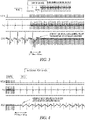
- FIG 3 illustrates the observed relationship between the stimulus signal and the recorded ENG and EMG signals when the stimulus changes from 20 Hz to 200 Hz, and also includes the observed time to deplete the presynaptic terminal and block the synaptic junction.
- both the ENG and EMG signals follow the stimulus signal.
- the high peaks in both ENG and EMG signals reflect the stimulation artifact.
- the ENG response is still present after the stimulus signal but the EMG signal quickly subsides after an onset response of about 100 ms.
- the artifact from charge-balancing is seen in the EMG waveform.
- the axons in the nerve continue to be active by propagating action potentials, but the communication across the synaptic cleft is reduced or stopped after the presynaptic terminal has been depleted from its ability to communicate across the synaptic cleft.
- this synaptic junction block occurs very quickly (e.g. 50 to 100 ms after the 200 Hz signal is applied), as soon as the propagated pulses received at the presynaptic terminal deplete the presynaptic terminal from its ability to communicate. It does not appear that the physiological reuptake process that restores neurotransmitters and/or calcium in the presynaptic terminal can keep up with the transmission of the neurotransmitters from the 200 Hz stimulation.
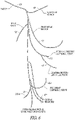
- FIG. 4 illustrates the relationship between the stimulus signal and the recorded ENG and EMG signals when the stimulus changes from 200 Hz to 20 Hz.
- the synaptic junction block occurs when the stimulus is delivered at 200 Hz.
- the ENG is still present following the stimulus artifact signal but the EMG response is not present. This indicates that the stimulus is capturing the nerve and causing action potentials to propagate through the axon. Every pulse in the stimulation causes a respective action potential in the nerve fiber.
- the laryngeal muscle is not stimulated because of the presynaptic terminal depletion that causes the synaptic junction block.
- the 200 action potentials per second deplete the ability of the presynaptic terminal to communicate across the synaptic cleft.
- the ENG response continues to be present following the stimulus pulse as every pulse in the stimulation causes a respective action potential in the nerve fiber.
- the EMG reappears right after the stimulus pulse just after a brief transitional period after the stimulation frequency changes to 20 Hz.
- the ability of the presynaptic terminal to communicate across the synaptic cleft is not depleted by 20 pulses per second.
- the synaptic junction block can be removed very quickly (e.g. 50 ms to 100 ms after the signal changes from 200 Hz to 20 Hz signal), which is believed to reflect the physiological response time for restoring neurotransmitters and/or calcium in the presynaptic terminal.
- frequencies less than about 100 Hz cause tetanic contraction; frequencies between about 100 to about 150 Hz causes a 90% depletion block in about 10 seconds to 4 seconds; a frequency between about 200 Hz to 1000 Hz causes a 90% depletion block; and a frequency is greater than 1 kHz starts to enter into nerve conduction block where the stimulation arrests the actions potentials from propagating down the nerve.
- FIG. 5A illustrates the response of a neural muscular junction to different stimulation frequencies.
- the neural muscular junction is a type of synaptic junction where an axon in a nerve communicates with muscle. Stimulation of axons within a range generally below 100 Hz (e.g. about 50 Hz) may cause a tetanic contraction of the muscle. Eventually, the muscle may fatigue and no longer respond to additional stimulation.
- the presynaptic terminal is depleted from its ability to communicate across the synaptic cleft at stimulation frequencies within a range from about 100 Hz to about 1 kHz.
- This frequency of the stimulation signal is outside of the ability of the physiological system to trigger the muscular contraction, as the frequency may cause the action potentials to arrive faster than the neurotransmitters and/or calcium can be replenished for subsequent action potentials in the stimulation.
- the observed block is attributable to a depletion of the junction but not fatigue of the muscle.
- a benefit of the depletion block applied to neural muscular junctions is that the depletion block does not cause muscle fatigue or tetanic contraction.
- the neuromuscular depletion block is quickly reversible by stopping stimulation.
- FIG. 5A is a simple illustration of frequency ranges, and that these ranges may vary for different applications.
- FIG. 5B provides another illustration of a response of a neural muscular junction to different stimulation frequencies.
- FIG. 5B illustrates a transition period T1 between the activation and depletion block ranges. Transition period T1 may depend on the transmitter and the synaptic end-organ, and may range from about 70 to 130 Hz.
- FIG. 5B also illustrates a transition period T2 between the depletion block and conduction block ranges that may provide a combined depletion and conduction block.
- a depletion block has a lower frequency and thus lower power requirements, has a relatively fast block ( ⁇ 100 ms) and a relatively fast recovery ( ⁇ 100 ms over 50% and 10 seconds 100%).
- a combined depletion and conduction block e.g. around 1 kHz
- may block slow fibers extremely fast due to conduction block may be initiated with a high kHz frequency and then lowered to keep the block at lower frequencies, may block slower fibers in less than 7 ms, and may have a faster recovery than the higher frequency kHz blocks.
- a high frequency kHz conduction block is fast (e.g. on: ⁇ 7ms an off: ⁇ 10 ms), but is more energy intensive due to higher frequencies and current requirements.
- a kHz conduction block may be observed with a lower boundary of about 1 kHz to 5 kHz rather than the simply illustrated 1 kHz.
- the upper boundary of a depletion block may be about 2 kHz rather than the simply illustrated 1 kHz.
- the frequencies for which stimulation transitions from depletion to conduction depends on the nerve fibers and end plate. Fast ⁇ -fibers have higher conduction and firing rates, so they will not necessarily block at 1 kHz, and slower fibers will block at lower frequencies (e.g. 600 Hz).
- the nerve stimulation frequency band may extend up to about 50 Hz
- the depletion block frequency band may extend between about 100 Hz to about 700 Hz
- the kHz conduction block frequency band may extend from about 5 kHz to 100 kHz.
- transition frequencies between the bands such as a transition between about 50 Hz to about 100 Hz or between about 70 Hz to 130 Hz for example and another transition between about 700 Hz to about 5 kHz.
- the response of the nerve to the stimulation frequency appears to depend on the transmitter and the synaptic end organ.
- different types of fibers may react differently for frequencies within the transition frequencies.
- one frequency may cause an activation or neural stimulation of some fibers, and cause a depletion block in other fibers.
- the stimulation may be limited to specific fibers by the diameter or origin of the fibers or the location of the electrodes.
- a frequency of the depletion block stimulation may be found to discriminate between afferent and efferent nerve fibers, or to discriminate between different fibers that emit different types of neurotransmitters.
- Such a frequency capable of providing both depletion block and activation/stimulation may be found in a transition region, but also may be found in one of the frequency bands such as within the depletion block frequency band.
- the stimulation parameters for delivering a depletion block are expected to be available in current devices at reasonable energy consumption costs.
- A-fibers were blocked at 2 mA, 200 Hz while still exciting B fibers that drove heart rate down at 5mA, 20 Hz.
- A-fibers were responsible for the laryngeal motor fibers recorded via EMG.
- Small parasympathetic efferent B-fibers have a higher activation threshold are typically are responsible for heart rate control in the SA node. This example showed that NMJ block, just as activation via electrical stimulation, is graded to the size of the fiber axon being targeted
- the speed of the depletion block depends on the frequency of the stimulation, where higher frequencies within the range of about 100 Hz to about 1 kHz provide the neurotransmitter block more quickly than the lower frequencies within that range.
- the depletion block may be implemented by a process that initiates the depletion block at a relatively high frequency (e.g. about 200 Hz to 400 Hz) to achieve fast depletion (e.g. about 50 ms or less), and then subsequently lower the frequency of the depletion block stimulation to about 100 Hz to maintain the block. As the lower frequency stimulation delivers fewer pulses, the lower frequency depletion block is more energy efficient than the higher frequency depletion block.
- the depletion block was started at about 100 Hz rather than 200 Hz, it would take longer to achieve the depletion block. Based on current observations, it is believed that the depletion block at 100 Hz will take about 5 seconds to 10 seconds.
- the use of two (or more) stages of frequencies can be used to obtain benefits of each frequency, such as inducing depletion block relatively quickly using one frequency and then maintaining depletion block relatively efficiently using another frequency.
- Various embodiments may use a depletion block at the synaptic junction to provide selective fiber communication.
- a depletion block may be limited to specific fibers by diameter or origin or location to the electrode.
- the amplitude of the depletion block pulses can be controlled to be greater than only the stimulation threshold for only some of the nerve fibers.
- the presynaptic terminal for some of the fibers are quickly depleted from their ability to communicate across the synaptic junction because the frequency of the stimulation causes the depletion block.
- Various stimulation waveforms may be used including non-sinusoidal or sinusoidal waveforms.
- Non-sinusoidal waveforms may include rectilinear pulses, charge balanced waveforms that may include biphasic rectangular pulses, quasi-trapezoidal for unidirectional applications, and pulsed triangular.
- Neural stimulation that elicits nerve traffic and a desired physiological response as part of neural stimulation therapy may be referred to as a low frequency stimulation (e.g. about 20 Hz or within a range of about 0.25 Hz to about 50 Hz); whereas in comparison a depletion frequency may be referred to as high frequency (e.g. about 200 Hz or within a range of about 100 Hz to about 1 kHz).
- a "high amplitude, low frequency” (HALF) stimulation signal may exceed a stimulation threshold and thus may be used to recruit both small and big fibers. As such, a HALF signal may be used to obtain the desired effect of the stimulation by capturing all the necessary A sensory and B efferent fibers.
- a "small amplitude, high frequency” (SAHF) stimulation signal may be set at an amplitude that it only exceeds a smaller stimulation threshold and thus only recruits some of the fibers with the lower stimulation threshold (e.g. bigger fibers or fibers closer to the stimulation electrode(s)), while leaving other fibers with a higher stimulation threshold (e.g. smaller fibers or fibers further away from the stimulation electrode(s)) still excitable with the HALF stimulation.
- the depletion block stimulation cancels the effectiveness of all signals that are evoked at lower frequencies (e.g. 20 Hz) with the same or lower amplitude.
- SAHF may be used to achieve the neurotransmitter depletion block of the large fibers which are the fibers with relatively low stimulation thresholds but not the smaller fibers which are the fibers with relatively high stimulation thresholds.
- the higher frequency depletion block stimulation may be delivered using the same or approximately the same high amplitude as the low frequency stimulation to reduce or modulate the effect of the applied therapy using the low frequency stimulation.
- the current amplitude and the pulse width control whether an axon is depolarized, and the frequency of the stimulation controls whether the neurotransmitters are depleted at the nerve ending.
- the current amplitude and pulse width may be controlled to select only larger fibers for the depletion block.
- the current amplitude and pulse width may be controlled to deplete the A fibers and not the smaller fibers, or may be controlled with higher amplitudes and/or wider pulse widths to deplete both A and B fibers.
- a full neurotransmitter block for intended fibers may be ensured by acquiring a recruitment curve.
- the recruitment curve may identify the activation threshold and saturation threshold for the neural target.
- the recruitment curve may be specific to an individual patient, may illustrate an increase in activity with increasing current amplitude, and may then illustrate a plateau where the activity does not significantly increase with increasing current amplitude.
- the activation threshold reflects where the nerve activity begins to increase with increasing current amplitude, and the saturation threshold reflects where the nerve activity does not significantly increase in response to further increases in current amplitude.
- the current amplitude for the depletion block stimulation may be determined based on the activation threshold, as it may be set at a margin higher than the activation threshold.
- the saturation threshold indicates a threshold where all or almost all of the nerve fibers propagate action potentials.
- the current amplitude for the depletion block stimulation may be higher than and based on the saturation threshold of the fibers that are intended to be blocked.
- the amplitude of the depletion stimulation signal may be set at approximately the saturation threshold of the fibers that are intended to be blocked, or may be set at a margin higher than the saturation threshold of the fibers, or may be set at a margin lower than the saturation threshold to provide a partial block.
- a procedure can be implemented to determine each individual patient's selective fiber stimulation therapy profile, as there may be patient variation or variations resulting from electrode spacing from nerves fibers.
- the particular procedure will depend on the particular neural target that is stimulated, as the nerve fibers in different neural targets innervate different portions of the body. For example, if a cervical vagus nerve is targeted, the patient's selective fiber stimulation therapy profile may be determined by observing laryngeal vibration as well as blood pressure and heart rate fluctuations.
- various embodiments for providing a depletion block may first find an activation threshold and saturation threshold for a neural target. The current amplitude may be selected to be above the saturation threshold of the neural target, and the frequency may be selected for a given application to be high enough (e.g.
- the procedure may transition the frequency of the stimulation while monitoring the physiological effects to transition between different types of block (e.g. transition between depletion block and kHz conduction block), or to improve efficiency, or to improve time constants (e.g. onset / restoration), or to find a desired frequency and location that both activates some nerve fibers and also provides a depletion block for other nerve fibers.
- different types of block e.g. transition between depletion block and kHz conduction block
- time constants e.g. onset / restoration
- Some embodiments may ramp up stimulation. Ramping up the stimulation may provide a graded block that may make the stimulation more tolerable. In a neural muscular junction depletion block, for example, the ramped stimulation may reduce the force of the one initial muscle activity at start of stimulation by creating an initial period of graded block.
- Some embodiments may change the frequency of stimulation signal during the block. Thus, higher frequency stimulations may be used to quickly obtain the block, and then lower frequency stimulation may be used to maintain the block that was previously obtained. For example, an initial frequency (e.g. 260 Hz) may be used to quickly achieve depletion block followed by a second frequency (e.g. 130 Hz) to maintain the depletion block. The frequency of stimulation is related to how long for complete or 90% depletion block.
- frequencies within the range of about 100 to about 150 Hz provide a 90% depletion block in about 10 to 4 seconds
- frequencies within the range of about 200 to 1000 Hz provides a 90% depletion block less than one second (e.g. on the order of milliseconds).
- Frequencies greater than 1 kHz start to enter into nerve conduction block.
- the present disclosure may be used in in applications that stimulate the vagus nerve, or in applications that stimulate other nerves.
- the vagus nerve is discussed herein as an example of a complex nerve.
- the vagus nerve is part of the autonomic nervous system (ANS) which is briefly discussed below.
- FIG. 6 illustrates some branches from the cervical vagus nerve.
- the cervical vagus nerve 619 is a combined nerve that separates into a number of branches, including the auricular branch 620 which innervates areas around the ear, the pharyngeal branch 621 that innervates areas around the pharynx, the internal 622 laryngeal nerve, external laryngeal nerve 623 and recurrent laryngeal nerve 624 that innervate areas around the larynx, the sinus nerve branch 625 which innervates the carotid sinus along with branches from the glossopharyngeal nerve, pulmonary branches 626 that innervate the lungs, and cardiac branches 627 that innervate the heart.
- the vagus nerve continues to innervate other portions of the body including the liver, stomach, intestines, bladder and kidneys.
- the fibers that innervate the heart for example include smaller B-fibers.
- Therapies, such as a heart failure therapy, that stimulate the cervical vagus nerve have been proposed. It may desirable to stimulate the cervical vagus nerve in a manner that activates the smaller diameter B-fibers (parasympathetic) without activating larger diameter A-fibers (motor) so as to avoid unwanted side effects that may occur from activating the A-fibers such as but not limited to laryngeal vibration, cough and various unpleasant feelings.
- the ANS regulates "involuntary" organs, while the contraction of voluntary (skeletal) muscles is controlled by somatic motor nerves.
- involuntary organs include respiratory and digestive organs, and also include blood vessels and the heart.
- the ANS functions in an involuntary, reflexive manner to regulate glands, to regulate muscles in the skin, eye, stomach, intestines and bladder, and to regulate cardiac muscle and the muscles around blood vessels, for example.
- the ANS includes the sympathetic nervous system and the parasympathetic nervous system.
- the sympathetic nervous system is affiliated with stress and the "fight or flight response" to emergencies.
- the "fight or flight response” increases blood pressure and heart rate to increase skeletal muscle blood flow, and decreases digestion to provide the energy for "fighting or fleeing.”
- the parasympathetic nervous system is affiliated with relaxation and the "rest and digest response” which, among other effects, decreases blood pressure and heart rate, and increases digestion to conserve energy.
- the ANS maintains normal internal function and works with the somatic nervous system. Afferent nerves convey impulses toward a nerve center, and efferent nerves convey impulses away from a nerve center.
- Stimulating the sympathetic and parasympathetic nervous systems can cause heart rate, blood pressure and other physiological responses. For example, stimulating the sympathetic nervous system dilates the pupil, reduces saliva and mucus production, relaxes the bronchial muscle, reduces the successive waves of involuntary contraction (peristalsis) of the stomach and the motility of the stomach, increases the conversion of glycogen to glucose by the liver, decreases urine secretion by the kidneys, and relaxes the wall and closes the sphincter of the bladder.
- Stimulating the parasympathetic nervous system constricts the pupil, increases saliva and mucus production, contracts the bronchial muscle, increases secretions and motility in the stomach and large intestine, and increases digestion in the small intestine, increases urine secretion, and contracts the wall and relaxes the sphincter of the bladder.
- the functions associated with the sympathetic and parasympathetic nervous systems are many and can be complexly integrated with each other.
- a reduction in parasympathetic nerve activity contributes to the development and progression of a variety of cardiovascular diseases.
- Some embodiments can be used to prophylactically or therapeutically treat various cardiovascular diseases by modulating autonomic tone.
- Neural stimulation to treat cardiovascular diseases may be referred to herein as neurocardiac therapy (NCT).
- Vagal stimulation used to treat cardiovascular diseases may be termed either VST or NCT.
- VST may be delivered for non-cardiovascular diseases
- NCT may be delivered by stimulating a nerve other than the vagal nerve.
- Examples of cardiovascular diseases or conditions include hypertension, HF, and cardiac remodeling. These conditions are briefly described below.
- Hypertension is a cause of heart disease and other related cardiac co-morbidities. Hypertension occurs when blood vessels constrict. As a result, the heart works harder to maintain flow at a higher blood pressure, which can contribute to HF. Hypertension generally relates to high blood pressure, such as a transitory or sustained elevation of systemic arterial blood pressure to a level that is likely to induce cardiovascular damage or other adverse consequences. Hypertension has been defined as a systolic blood pressure above 140 mm Hg or a diastolic blood pressure above 90 mm Hg.
- Consequences of uncontrolled hypertension include, but are not limited to, retinal vascular disease and stroke, left ventricular hypertrophy and failure, myocardial infarction, dissecting aneurysm, and renovascular disease.
- HF refers to a clinical syndrome in which cardiac function causes a below normal cardiac output that can fall below a level adequate to meet the metabolic demand of peripheral tissues.
- HF may present itself as congestive heart failure (CHF) due to the accompanying venous and pulmonary congestion.
- CHF congestive heart failure
- HF can be due to a variety of etiologies such as ischemic heart disease. HF patients have impaired autonomic balance, which is associated with LV dysfunction and increased mortality.
- Cardiac remodeling refers to a complex remodeling process of the ventricles that involves structural, biochemical, neurohormonal, and electrophysiologic factors, which can result following a myocardial infarction (M1) or other cause of decreased cardiac output.
- Ventricular remodeling is triggered by a physiological compensatory mechanism that acts to increase cardiac output due to so-called backward failure which increases the diastolic filling pressure of the ventricles and thereby increases the so-called preload (i.e., the degree to which the ventricles are stretched by the volume of blood in the ventricles at the end of diastole).
- preload i.e., the degree to which the ventricles are stretched by the volume of blood in the ventricles at the end of diastole.
- An increase in preload causes an increase in stroke volume during systole, a phenomena known as the Frank-Starling principle.
- ventricles When the ventricles are stretched due to the increased preload over a period of time, however, the ventricles become dilated.
- the enlargement of the ventricular volume causes increased ventricular wall stress at a given systolic pressure. Along with the increased pressure-volume work done by the ventricle, this acts as a stimulus for hypertrophy of the ventricular myocardium.
- the disadvantage of dilatation is the extra workload imposed on normal, residual myocardium and the increase in wall tension (Laplace's Law) which represent the stimulus for hypertrophy. If hypertrophy is not adequate to match increased tension, a vicious cycle ensues which causes further and progressive dilatation.
- afferent baroreceptor and cardiopulmonary receptor signals are sent to the vasomotor central nervous system control center, which responds with hormonal secretion and sympathetic discharge.
- the combination of hemodynamic, sympathetic nervous system and hormonal alterations account for the deleterious alterations in cell structure involved in ventricular remodeling.
- the sustained stresses causing hypertrophy induce apoptosis (i.e., programmed cell death) of cardiac muscle cells and eventual wall thinning which causes further deterioration in cardiac function.
- apoptosis i.e., programmed cell death
- ventricular dilation and hypertrophy may at first be compensatory and increase cardiac output, the processes ultimately result in both systolic and diastolic dysfunction. It has been shown that the extent of ventricular remodeling is positively correlated with increased mortality in post-MI and heart failure patients.
- the vagus has many neural pathways that are recruited at different stimulation thresholds.
- Various physiological responses to vagal stimulation are associated with various thresholds of VST intensity.
- the intensity of the VST can be adjusted by adjusting parameter(s) of the stimulation signal.
- the amplitude of the signal e.g. current or voltage
- Other stimulation parameter(s) can be adjusted as an alternative to or in addition to amplitude.
- stimulation intensity can vary with the frequency of the stimulation signal, a stimulation burst frequency, a pulse width and/or a duty cycle.
- FIG. 7 illustrates increasing VST intensity from the left side to the right side of the figure, and further illustrates intensity thresholds that elicit various physiological responses to VST.
- VST causes a physiological response "A” at a lower intensity than an intensity at which VST causes a physiological response "B", which occurs at a lower VST intensity than an intensity at which VST causes a physiological response "C”.
- VST triggers response "A” after reaching a certain level of intensity (e.g. a stimulation threshold), triggers response "B” along with response "A” after reaching a higher intensity (e.g. a higher stimulation threshold), and triggers response "C” along with responses "A” and "B” after reaching an even higher intensity (e.g. an event higher stimulation threshold).
- VST may be used to treat cardiovascular diseases.
- the beneficial effects of VST on cardiac function and remodeling are not necessarily mediated via heart rate reduction. That is, VST can benefit patients without undesired chronotropic effects associated with VST as well as other side effects due to high intensity stimulation such as coughing, muscle stimulation, etc. Rather, anti-inflammatory, anti-sympathetic, and anti-apoptosis mediators are triggered at lower VST intensities than intensities at which a heart rate reduction is realized. These mediators function as pathways through which the VST provides the therapeutic effects for cardiovascular disease. Physiological responses at the lower VST intensities have therapeutically-effective results for cardiovascular diseases such as HF. These responses mediate or provide pathways for these therapies.
- Examples of such responses that are beneficial for HF at the lower VST intensities include anti-inflammation, anti-sympathetic, and anti-apoptosis responses, and an increased nitric oxide (NO).
- Physiological responses at the higher VST intensities may not be desirable.
- Examples of responses to higher VST intensities that may reduce the ability of the patient to tolerate VST include, but are not limited to, reduced heart rate, prolonged AV conduction, vasodilation, and coughing.
- some physiological responses at lower VST intensities also may not be desirable. For example, patients may find laryngeal vibrations to be unpleasant. At least some of these responses may be desirable for some therapies but not desirable for other therapies.
- VST that reduces heart rate and or that prolongs AV conduction may be desirable to treat some cardiovascular conditions, but may not be desirable for others.
- the intensity of the VST can be adjusted by adjusting parameter(s) of the stimulation signal.
- the amplitude of the signal e.g. current or voltage
- Other stimulation parameter(s) can be adjusted as an alternative to or in addition to amplitude.
- stimulation intensity can vary with the frequency of the stimulation signal (e.g. a frequency of stimulation pulses), a stimulation burst frequency (e.g. a plurality of bursts delivered at a burst frequency for initiating bursts where each burst includes a plurality of pulses), a pulse width and/or a duty cycle.
- the present disclosure may be used to set or limit the intensity of the threshold to avoid undesired effects of high intensity stimulation, and may also be used to provide a depletion block for some undesired effects at the lower stimulation intensities.
- a depletion block may be implemented to block response "A" and the intensity of the stimulation may be set to avoid response "C", thus leaving the desired response "B” to the stimulation.
- Some embodiments provided herein may deliver a presynaptic terminal block to block undesired activations at lower thresholds such as can cause laryngeal vibrations, while delivering the VST intensity above the lower boundary. By blocking the undesired activations at lower thresholds, it may be possible to increase the intensity of the stimulation to capture more of the desired fibers and improve the desired response to the stimulation.
- FIG. 8 illustrates increasing VST intensity from the left side to the right side of the figure, and further illustrates an intensity threshold that elicits an undesired physiological response to VST that is used to define an upper boundary for the VST intensity and another intensity threshold that elicits another physiological response to VST.
- the VST intensity threshold for a cough can be used as an upper boundary
- the VST intensity threshold for a laryngeal vibration response can be used as a lower boundary.
- the physiological response to define the upper boundary is detected muscle stimulation. Large muscle stimulation or extraneous stimulation may be bothersome to the patient.
- a vagus nerve capture threshold can be set by first recruiting A fibers that cause laryngeal vibrations, and then increasing the intensity until a cough side effect is detected.
- the intensity is set between the intensity that caused the laryngeal vibrations and the intensity that caused the cough. For example, if the amplitude of the stimulation signal is increased to increase the VST intensity and if 1.0 mA caused laryngeal vibrations and 2.5 mA caused a cough, then the pacing amplitude may be set to 1.0 to 2.4 mA.
- the depletion block may be applied with appropriate stimulation parameters to block the VST from causing laryngeal vibrations or other undesired responses induced at lower amplitudes.
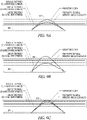
- FIGS. 9A-9C illustrate selective stimulation using a simple illustration of different stimulation thresholds for different fiber types in a complex nerve 928, and further using different combinations of nerve stimulation and presynaptic terminal depletion block stimulation.
- each of FIGS. 9A-9C include bipolar stimulation lead 929 configured to deliver both nerve stimulation and presynaptic terminal depletion block stimulation.
- the concept illustrated in these figures may apply to other types of stimulation such unipolar stimulation and multipolar stimulation.
- the figures provide a simple illustration of a nerve showing, by way of a simple example, three stimulation thresholds identified as a smaller threshold, a medium threshold and a larger threshold. The threshold for a given fiber is dependent on it fiber type as well as its location to the stimulation electrodes.
- FIGS. 9A-9C have larger-sized A type fibers with a smaller stimulation threshold, a medium-sized B type fibers with a medium stimulation threshold, and a smaller-sized C type fibers with a larger stimulation threshold.
- FIG. 9A illustrates selective stimulation of the medium-sized B type fibers with a medium stimulation threshold.
- the nerve stimulation has parameters to exceed the stimulation threshold of both the A and B fibers
- the depletion block has parameters to exceed the stimulation threshold of the A fibers.
- the combination of the nerve stimulation and the depletion block results in effectively stimulating only the B fibers as only the B fibers can communicate across their respective synaptic gap.
- FIG. 9A illustrates selective stimulation of the medium-sized B type fibers with a medium stimulation threshold.
- the nerve stimulation has parameters to exceed the stimulation threshold of both the A and B fibers
- the depletion block has parameters to exceed the stimulation threshold of the A fibers.
- FIG. 9B illustrates selective stimulation of the medium-sized B type fibers with a medium stimulation threshold and the smaller-sized C fibers with the smaller threshold.
- the nerve stimulation has parameters to exceed the stimulation threshold of the A, B and C fibers
- the depletion block has parameters to exceed the stimulation threshold of the A fibers.
- the combination of the nerve stimulation and the depletion block results in effectively stimulating only the B and C fibers as only the B and C fibers can communicate across their respective synaptic gap.
- FIG. 9C illustrates selective stimulation of the smaller-sized C fibers with the smaller threshold.
- the nerve stimulation has parameters to exceed the stimulation threshold of the A, B and C fibers, and the depletion block has parameters to exceed the stimulation threshold of the A and B fibers.
- the combination of the nerve stimulation and the depletion block results in effectively stimulating only the C fibers as only the C fibers can communicate across their respective synaptic gap.
- FIG. 10 illustrates a first set of axons 1030 in a nerve captured by nerve stimulation and a second set of axons 1031 captured by depletion block stimulation, wherein the second set of axons is a subset of the first set of axons.
- the nerve stimulation is larger than a threshold for stimulation the first set of axons, and thus will cause action potentials to propagate in the larger, first set of axons.
- the depletion block will prevent the presynaptic terminals of the subset of axons from conducting across their respective synaptic cleft, and only the remainder of the first set of axons is effective in communicating across the synaptic cleft.
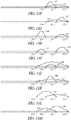
- FIGS. 11A-11M illustrate some examples of electrode configurations that may be used to deliver the selective neural stimulation using depletion block stimulation. These examples are not intended to show all possible electrode configurations.
- the electrode configurations may be bipolar configurations or unipolar configurations. Further, the spacing between electrodes may vary from that which is illustrated. Also, these examples are not intended to necessarily represent timing between the nerve stimulation and the depletion block stimulation.
- Some embodiments may interrupt the depletion block stimulation (e.g. 200 Hz) to provide windows of time within which a pulse of the nerve stimulation (e.g. 20 Hz) is delivered, thus avoiding simultaneous delivery of two signals using more than one cathode and/or more than one anode. The polarity of the signals may be switched.
- Some embodiments may share a cathode for both the nerve stimulation and the depletion block stimulation, and some embodiments may share an anode for both the nerve stimulation and the depletion block stimulation.
- FIG. 11A illustrates an electrode configuration in which a first electrode 1132 and a second electrode 1133 are used to deliver the nerve stimulation 1130, and are used to also deliver the depletion block 1131. There may be some anatomical locations which are more amenable to stimulation using some other electrode arrangements than others. Some of these are illustrated below. Some embodiments may be configured to electronically switch the stimulation vectors among available electrodes on the lead.
- FIG. 11B illustrates an electrode configuration including a first electrode 1132, a second electrode 1133 and a third electrode 1134 in which a first electrode 1132 and a third electrode 1134 are used to deliver the depletion block 1131 and first electrode 1132 and a third electrode 1134 are used to deliver the nerve stimulation 1130.
- FIG. 11A illustrates an electrode configuration in which a first electrode 1132 and a second electrode 1133 are used to deliver the nerve stimulation 1130, and are used to also deliver the depletion block 1131.
- FIG. 11C illustrates an electrode configuration including a first electrode 1132, a second electrode 1133 and a third electrode 1134 in which the first electrode 1132 and the third electrode 1134 are used to deliver the nerve stimulation 1130, and the second electrode 1132 and the third electrode 1134 are used to also deliver the depletion block 1131.
- FIG. 11D illustrates an electrode configuration including a first electrode 1132, a second electrode 1133 and a third electrode 1134 in which the first electrode 1132 and the second electrode 1133 are used to deliver the depletion block 1131, and the second electrode 1133 and the third electrode 1134 are used to deliver the nerve stimulation 1130.
- FIG. 11C illustrates an electrode configuration including a first electrode 1132, a second electrode 1133 and a third electrode 1134 in which the first electrode 1132 and the third electrode 1134 are used to deliver the nerve stimulation 1130, and the second electrode 1132 and the third electrode 1134 are used to also deliver the depletion block 1131.
- FIG. 11D illustrates an electrode configuration including a first electrode 11
- FIG. 11E illustrates an electrode configuration including a first electrode 1132, a second electrode 1133 and a third electrode 1134 in which the second electrode 1133 and the third electrode 1134 are used to deliver the nerve stimulation 1130, and the first electrode 1132 and the third electrode 1134 are used to deliver the depletion block 1131.
- FIG. 11F illustrates an electrode configuration including a first electrode 1132, a second electrode 1133 and a third electrode 1134 in which the first electrode 1132 and the third electrode 1134 are used to provide the depletion block 1131 and the second electrode 1133 and the third electrode 1134 are used to provide the nerve stimulation 1130.
- FIG. 11E illustrates an electrode configuration including a first electrode 1132, a second electrode 1133 and a third electrode 1134 in which the second electrode 1133 and the third electrode 1134 are used to deliver the nerve stimulation 1130, and the first electrode 1132 and the third electrode 1134 are used to deliver the depletion block 1131.
- FIG. 11E illustrates an electrode configuration including a first electrode 1132,
- FIG. 11G illustrates an electrode configuration including a first electrode 1132, a second electrode 1133 and a third electrode 1134 in which the first electrode 1132 and the second electrode 1133 are used to deliver the nerve stimulation 1130, and the first electrode 1132 and the third electrode 1134 are used to deliver the depletion block 1131.
- FIG. 11H illustrates an electrode configuration including a first electrode 1132, a second electrode 1133, a third electrode 1134, and a fourth electrode 1135 in which the first electrode 1132 and the second electrode 1133 are used to deliver the depletion block 1131 and the third electrode 1134 and the fourth electrode 1135 are used to deliver the nerve stimulation 1130.
- FIG. 11G illustrates an electrode configuration including a first electrode 1132, a second electrode 1133 and a third electrode 1134 in which the first electrode 1132 and the second electrode 1133 are used to deliver the nerve stimulation 1130, and the first electrode 1132 and the third electrode 1134 are used to deliver the depletion block 1131.
- FIG. 11G illustrates an electrode configuration including
- FIG. 11I illustrates an electrode configuration including a first electrode 1132, a second electrode 1133, a third electrode 1134, and a fourth electrode 1135 in which the first electrode 1132 and the second electrode 1133 are used to deliver the nerve stimulation 1130 and the third electrode 1134 and the fourth electrode 1135 are used to deliver the depletion block 1131.
- FIG. 11J illustrates an electrode configuration including a first electrode 1132, a second electrode 1133, a third electrode 1134, and a fourth electrode 1135 in which the first electrode 1132 and the fourth electrode 1135 are used to deliver the nerve stimulation 1130 and the second electrode 1133 and the third electrode 1134 are used to deliver the depletion block 1131.
- FIG. 11I illustrates an electrode configuration including a first electrode 1132, a second electrode 1133, a third electrode 1134, and a fourth electrode 1135 in which the first electrode 1132 and the fourth electrode 1135 are used to deliver the nerve stimulation 1130 and the second electrode 1133 and the third electrode 1134 are used to deliver the depletion block 11
- FIG. 11K illustrates an electrode configuration including a first electrode 1132, a second electrode 1133, a third electrode 1134, and a fourth electrode 1135 in which the first electrode 1132 and the fourth electrode 1135 are used to deliver the depletion block 1131 and the second electrode 1133 and the third electrode 1134 are used to deliver the nerve stimulation 1130.
- FIG. 11L illustrates an electrode configuration including a first electrode 1132, a second electrode 1133, a third electrode 1134, and a fourth electrode 1135 in which the first electrode 1132 and the third electrode 1134 are used to deliver the depletion block 1131 and the second electrode 1133 and the fourth electrode 1135 are used to deliver the nerve stimulation 1130.
- FIG. 11K illustrates an electrode configuration including a first electrode 1132, a second electrode 1133, a third electrode 1134, and a fourth electrode 1135 in which the first electrode 1132 and the third electrode 1134 are used to deliver the depletion block 1131 and the second electrode 1133 and the fourth electrode 1135 are used to deliver the nerve stimulation 11
- 11M illustrates an electrode configuration including a first electrode 1132, a second electrode 1133, a third electrode 1134, and a fourth electrode 1135 in which the first electrode 1132 and the third electrode 1134 are used to deliver the nerve stimulation 1130 and the second electrode 1133 and the fourth electrode 1135 are used to deliver the depletion block 1131.
- FIG. 12 illustrates, by way of example and not limitation, concurrent delivery of both nerve stimulation and depletion block stimulation.
- various embodiments may provide a stimulator capable of delivering a blocking waveform for blocking the A fibers simultaneously with a therapy waveform for eliciting action potentials in the B fibers.
- a fibers may be blocked using a 200 Hz frequency at a low current amplitude sufficient to reach the stimulation threshold for the A fibers but not sufficient to reach the stimulation threshold for B fibers.
- Such a stimulation signal may effectively block A fibers but not block the B fibers.
- the therapy to drive action potentials in the B-fiber may be delivered at 20 Hz and at a high current amplitude sufficient to reach the stimulation threshold for both A fibers and B fibers.
- the 20 Hz signal has a relatively high amplitude and a relatively low frequency and thus may be referred to as a high amplitude low frequency (HALF) signal; and the 200 Hz signal has a relatively small amplitude and a relatively high frequency and thus may be referred to as a small amplitude high frequency (SAHF) signal.
- HALF high amplitude low frequency
- SAHF small amplitude high frequency
- FIG. 13 illustrates, by way of example and not limitation, intermittent delivery of concurrent nerve stimulation and depletion block stimulation.
- the intermittent delivery includes stimulation ON times separated by stimulation OFF times.
- the stimulation ON times may be scheduled to occur at programmed times, such as a programmed start time and programmed stop time or a programmed start time and a programmed duration.
- An example of intermittent delivery includes ten seconds ON / 50 seconds OFF.
- stimulation ON periods maybe for a time period within a range between a 1 ⁇ 4 of a second and 150 seconds, and the stimulation OFF periods are for a time period between 1 second and 150 seconds.
- the onset for the depletion block is quick enough to allow for short period bursting.
- the stimulation ON times may be triggered by detected events.
- the detected events may be receipt of a patient command or a clinician command.
- the detected events may be a detected event determined from sensed parameter(s).
- the stimulation may be triggered when a specific portion of a cardiac cycle is detected using a sensed parameter such as heart rate, or ECG, heart sounds, or blood pressure.
- the duration of the stimulation delivered in response to the detected event may be a programmed fixed event or may be variable based on the detected event or the frequency of the detected events. For example, a window of time for delivering the stimulation may be shortened in response to an increased rate of stimulation.
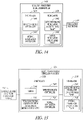
- FIG. 14 illustrates by way of example and not limitation an example of a selective nerve fiber stimulation system.
- the system 1436 may be connected to stimulation electrodes 1437.
- the system 1436 may include a stimulator 1438 and a controller 1439 operably connected to the stimulator 1438 to control the delivered stimulation.
- the controller 1439 may include a depletion block controller 1440 and a neural stimulation controller 1441, and the stimulator 1438 may include a depletion block stimulator 1442 and a neural stimulator 1443.
- the depletion block controller 1440 may be operably connected to the depletion block stimulator 1442 to control delivery of the depletion block stimulation, which has a frequency within a range of about 100 Hz to about 1kHz.
- This depletion block stimulation may be referred to as SAHF for some selective nerve fiber stimulation embodiments.
- the neural stimulation controller 1441 may be operably connected to the neural stimulator 1443 to control delivery of the nerve stimulation, which may a frequency within a range of about0.25 Hz to about 50 Hz.
- the frequency of the nerve stimulation signal may be about 20 Hz.
- This nerve stimulation signal may be referred to as a HALF signal.
- FIG. 15 illustrates by way of example and not limitation an example of a selective nerve fiber stimulation system.
- the system 1536 has similarities to FIG. 14 , including a controller 1539 that includes a depletion block controller 1540 and a neural stimulation controller 1541, and further including a stimulator 1538 that includes a depletion block stimulator 1542 and a neural stimulator 1543 similar to those shown and described in FIG. 14 .
- the controller 1539 may further include a timing module 1544 configured to control timing of the stimulation.
- the timing may be controlled in a variety of ways.
- the timing module may be configured to control the timing of both the depletion block and the neural stimulation. For example, the timing module may control the start and stop times for both the depletion block and the neural stimulation.
- the timing module may control the start and duration times for both the depletion block and neural stimulation.
- the timing module may control the timing of changes to the depletion block stimulation or changes to the neural stimulation. For example, the timing module may control the change from a first depletion block stimulation frequency to a second depletion block stimulation frequency.
- the timing module may control the relative timing between the depletion block and the neural stimulation.
- the depletion block stimulation may depend on the timing of the neural stimulation.
- the depletion block stimulation may be interrupted to provide a window in which a pulse of the nerve stimulation is delivered.
- the depletion block may be initiated simultaneously with the nerve stimulation, or may be initiated slightly before or slightly after the initiation of the nerve stimulation.
- a 200 Hz signal depletion block signal may begin less than one second before the nerve stimulation so that more than 90% block is achieved before the nerve stimulation begins.
- the timing may be based on commands or other input from a clinician or patient, or may be based on physiologic sensors such as, by way of example and not limitation, respiration sensors, blood pressure sensors, blood flow sensors, or cardiac sensors which may include information about the cardiac cycle and heart rate information.
- the controller 1539 may further include a titration control module 1546.
- the titration control module may be used to adjust the depletion block stimulation to control the axons that are captured by the depletion block stimulation, to adjust the nerve stimulation to control the axons that a captured by the nerve stimulation, or to adjust both the depletion block stimulation and the nerve stimulation.
- the amplitude of the stimulation may be adjusted, or the pulse width may be adjusted, or both the amplitude and pulse width may be adjusted to control the axons that are captured.
- Titration refers to the process of adjusting the dose of the stimulation which may be a depletion block stimulation, a nerve stimulation or both a depletion block and nerve stimulation, ultimately to a level that is therapeutically or prophylactically effective.
- An effective depletion block stimulation may be stimulation at a depletion block frequency (e.g. 100 Hz to 1 kHz) with an amplitude and pulse width effective to capture the desired axons.
- An effective nerve stimulation may be stimulation at a nerve stimulation frequency (e.g. 0.25 Hz to 50 Hz, such as about 20 Hz) with an amplitude and pulse width effective to capture the desired axons.
- the nerve stimulation also has a "dose" component to provide an effective amount of stimulation to provide the desired therapy.
- the dose includes an amount or intensity of the neural stimulation at a given time frame, and also includes the number of times the neural stimulation is delivered over a period of time.
- the intensity of the neural stimulation may be adjusted by adjusting parameters such as amplitude, duty cycle, duration, and or frequency of the neural stimulation, or the number of neural stimulation events that occur over a period of time.
- the titration procedure may occur during an implantation procedure, or during a follow-up clinical visit, or while a patient is ambulatory away from the clinical setting. The titration may be physician-controlled or automatically-controlled based on device programming.
- the titration may be based on commands or other input from a clinician or patient, or may be based on physiologic sensors such as, by way of example and not limitation, respiration sensors such as minute ventilation sensors, blood pressure sensors, blood flow sensors, impedance sensors, an accelerometer, an electromyogram (EMG) sensor, or cardiac sensors which may include information about the cardiac cycle and heart rate information such as a sensor configured to detect an electrocardiogram (EKG).
- respiration sensors such as minute ventilation sensors, blood pressure sensors, blood flow sensors, impedance sensors, an accelerometer, an electromyogram (EMG) sensor, or cardiac sensors which may include information about the cardiac cycle and heart rate information such as a sensor configured to detect an electrocardiogram (EKG).
- EKG electrocardiogram
- Cardiac sensors may include electrodes and heart sound sensors, for example.
- the neural stimulation and/or depletion block may be intermittent.
- FIG. 16 illustrates, by way of example, a representation of intermittent neural stimulation (INS).
- INS intermittent neural stimulation
- some embodiments deliver a plurality of monophasic or biphasic pulses within a neural stimulation burst illustrated in FIG. 16 .
- Pulses delivered within a burst 1647 may be delivered at a pulse frequency. These pulses also have an amplitude.
- the duration of the stimulation ON interval is sometimes referred to as the stimulation duration or burst duration.
- the burst duration also affects the dose of the neural stimulation therapy.
- the start of a stimulation ON interval is a temporal reference point NS Event.
- the time interval between successive NS Events is the INS Interval, which is sometimes referred to as the stimulation period or burst period 1648.
- the burst period 1648 or the number of neural stimulation events that occur over a time period also affect the dose of the neural stimulation.
- the stimulation duration i.e., ON interval
- the stimulation period i.e., INS Interval
- the duration of the OFF intervals of INS are determined by the durations of the ON interval and the INS Interval.
- the duration of the ON interval relative to the INS Interval (e.g., expressed as a ratio) is sometimes referred to as the duty cycle of the INS.
- a physician or clinician may control the adjustment of one or more neural stimulation parameters to control the stimulation intensity. For example, during an implantation procedure in which stimulation electrodes are implanted near a vagus nerve or other neural stimulation target, the physician or clinician may adjust stimulation parameter(s) to adjust the stimulation intensity to appropriately position the electrodes and program the stimulation to provide threshold stimulation of the neural target that provides a desired physiological effect.
- the physician or clinician may re-program an implantable neural stimulator during a follow-up visit, to account for migration of the electrodes, changes in impedance in the electrode/tissue interface, and the like.
- the physician or clinician may control the adjustment of one or more neural stimulation parameters to control the stimulation intensity to determine a neural stimulation intensity that provides the desired physiological response.
- the titration routine can be an automatic process for an implantable neural stimulation device implanted in an ambulatory patient.
- the automatic titration routine can be manually triggered by a signal from a patient or by the physician or clinician.
- the automatic titration routine can be automatically triggered by a programming schedule or by a sensed event.
- FIG. 17 illustrates a memory 1749 which may be incorporated in the controller 1439 in FIG. 14 or 1539 in FIG. 15 , according to various embodiments.
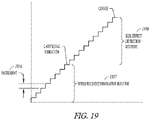
- the memory 1749 may include instructions 1780, operable on by the stimulation control circuitry, for controlling an up-titration routine by progressively stepping up through defined parameter sets (e.g. parameter set 1 through parameter set N), where each set incrementally changes (increases or decreases) the stimulation dose or intensity of the stimulation therapy.
- the memory may include a plurality of neural stimulation parameter sets, where each set includes a unique combination of parameter values for the neural stimulation and wherein each unique combination of parameter values is defined to provide neural stimulation therapy at an intensity level.
- the instructions include instructions for stepping through the plurality of neural stimulation parameter sets according to a schedule to change (increase or decrease) the intensity of the therapy until the therapy is at the desired long term intensity.
- Various embodiments provide a neural stimulation routine that automatically finds the desirable combination of therapy parameters (e.g. amplitude, pulse width, duty cycle) that provides a desired therapy intensity level.
- FIG. 18 illustrates an embodiment of a therapy titration module 1851, which may be part of the titration control module 1546 in FIG. 15 .
- the controller is adapted to set or adjust any one or any combination of stimulation features 1852.
- stimulation features include the amplitude, frequency, polarity and wave morphology of the stimulation signal.
- Some embodiments of the stimulation output circuit are adapted to generate a stimulation signal with a predetermined amplitude, morphology, pulse width and polarity, and are further adapted to respond to a control signal to modify at least one of the amplitude, wave morphology, pulse width and polarity.
- Some embodiments of the neural stimulation circuitry are adapted to generate a stimulation signal with a predetermined frequency, and are further adapted to respond to a control signal from the controller to modify the frequency of the stimulation signal.
- the therapy titration module 1851 can be programmed to change an electrode set or electrode configuration or to change stimulation sites 11853, such as changing the stimulation electrodes used for a neural target or changing the neural targets for the neural stimulation.
- different electrodes can be used to stimulate a neural target, and different electrodes can be used to stimulate different neural targets.
- a desirably low stimulation threshold for a neural target may be determined using different electrode sets/configurations for stimulating that neural target.
- Different neural targets can include different neural pathways such as the right and left vagus nerves and branches thereof, baroreceptor regions, chemoreceptor regions, the carotid sinus, and the carotid sinus nerve.
- Different neural targets may include different positions along a neural pathway (e.g.
- Autonomic neural targets can include afferent pathways and efferent pathways and can include sympathetic and parasympathetic nerves.
- the stimulation can include stimulation to stimulate neural traffic or stimulation to inhibit neural traffic.
- stimulation to evoke a sympathetic response can involve sympathetic stimulation and/or parasympathetic inhibition; and stimulation to evoke a parasympathetic response can involve parasympathetic stimulation and/or sympathetic inhibition.
- the therapy titration module 1851 can be programmed to change stimulation vectors 1854.
- Vectors can include stimulation vectors between electrodes, or stimulation vectors for transducers. For example, the stimulation vector between two electrodes can be reversed. More complicated combinations of electrodes can be used to provide more potential stimulation vectors between or among electrodes.
- the therapy titration module 1851 can be programmed to control the neural stimulation according to stimulation instructions, such as a stimulation routine or schedule 1855, stored in memory.
- Neural stimulation can be delivered in a stimulation burst, which is a train of stimulation pulses at a predetermined frequency.
- Stimulation bursts can be characterized by burst durations and burst intervals.
- a burst duration is the length of time that a burst lasts.
- a burst interval can be identified by the time between the start of successive bursts.
- a programmed pattern of bursts can include any combination of burst durations and burst intervals.
- a simple burst pattern with one burst duration and burst interval can continue periodically for a programmed period or can follow a more complicated schedule.
- the programmed pattern of bursts can be more complicated, composed of multiple burst durations and burst interval sequences.
- the programmed pattern of bursts can be characterized by a duty cycle, which refers to a repeating cycle of neural stimulation ON for a fixed time and neural stimulation OFF for a fixed time. Duty cycle is specified by the ON time and the cycle time, and thus can have units of ON time/cycle time.
- the control circuit controls the neural stimulation generated by the stimulation circuitry by initiating each pulse of the stimulation signal.
- the stimulation control circuit initiates a stimulation signal pulse train, where the stimulation signal responds to a command from the controller circuitry by generating a train of pulses at a predetermined frequency and burst duration.
- the predetermined frequency and burst duration of the pulse train can be programmable.
- the pattern of pulses in the pulse train can be a simple burst pattern with one burst duration and burst interval or can follow a more complicated burst pattern with multiple burst durations and burst intervals.
- the stimulation control circuit controls the stimulation output circuit to initiate a neural stimulation session and to terminate the neural stimulation session.
- the burst duration of the neural stimulation session under the control of the control circuit can be programmable.
- the controller may also terminate a neural stimulation session in response to an interrupt signal, such as may be generated by one or more sensed parameters or any other condition where it is determined to be desirable to stop neural stimulation.
- a device may include a programmed therapy schedule or routine stored in memory and may further include a clock or timer which can be used to execute the programmable stimulation schedule. For example, a physician can program a daily/weekly schedule of therapy based on the time of day.
- a stimulation session can begin at a first programmed time, and can end at a second programmed time.
- Various embodiments initiate and/or terminate a stimulation session based on a signal triggered by a user.
- Various embodiments use sensed data to enable and/or disable a stimulation session.
- the stimulation schedule refers to the time intervals or period when the neural stimulation therapy is delivered.
- a schedule can be defined by a start time and an end time, or a start time and a duration.
- Various schedules deliver therapy periodically.
- a device can be programmed with a therapy schedule to deliver therapy from midnight to 2AM every day, or to deliver therapy for one hour every six hours, or to deliver therapy for two hours per day, or according to a more complicated timetable.
- Various device embodiments apply the therapy according to the programmed schedule contingent on enabling conditions, such as sensed exercise periods, patient rest or sleep, a particular position/posture, low heart rate levels, and the like.
- the stimulation can be synchronized to the cardiac cycle based on detected events that enable the stimulation.
- the therapy schedule can also specify how the stimulation is delivered.
- FIG. 19 illustrates an embodiment of a routine for finding threshold values for each of the electrode configurations.
- the illustrated routine increases the intensity of the neural stimulation therapy over a period of time. The intensity is increased in increments 1956, which are not necessarily equal increments.
- a threshold determination routine 1957 is performed to detect a lower boundary physiologic response to the neural stimulation such as a laryngeal vibration response. The laryngeal vibration may be desirable during a titration process as it confirms capture of the vagus nerve, and this value can be used to determine an appropriate stimulation for the neural stimulation above the lower boundary.
- a side effect detection routine 1958 is performed to detect an upper boundary physiologic response (e.g. cough) to the neural stimulation.
- some embodiments may set a neural stimulation intensity between the lower boundary (e.g. laryngeal vibration) and the upper boundary (e.g. cough), and may set a depletion block stimulation intensity at or slightly above the lower boundary (e.g. laryngeal vibration) but below the intensity of the neural stimulation intensity.
- a threshold routine avoids side effects above the upper boundary (e.g. cough) and also avoids side effects below the lower boundary (e.g. laryngeal vibration) that would otherwise occur without the depletion block.
- Some embodiments decrease the intensity of the NCT therapy over a period of time to detect the desired or undesired physiologic responses to the neural stimulation.
- sensors to detect the lower boundary (e.g. laryngeal vibration) and the upper boundary (e.g. cough or phrenic nerve capture). At least some of the sensors may be part of an implantable device, such as an implantable nerve stimulator used to stimulate the target nerve. In some embodiments, at least some of the sensors are part of a programmer/ PSA (pacing system analyzer). Examples of sensors include a pressure sensor, an accelerometer, a minute ventilation sensor, an impedance sensor, a sensor configured to detect an electrocardiogram (EKG), a sensor configured to detect an electromyogram (EMG), and a blood pressure sensor. Some embodiments use feedback from a patient or physician.
- EKG electrocardiogram
- EMG electromyogram
- a clicker pad with a pain assessment or other scale can be used to allow the patient to provide feedback as to whether the stimulation provides laryngeal vibration or other desired response and whether the stimulation provides cough or phrenic nerve capture or other undesired physiological response to the stimulation.
- the algorithm can be implemented in the programmer, or in the implantable device, or in an external device configured to communicate with the programmer and/or the implantable device such as in a patient management system.
- Some system embodiments may be designed to sense laryngeal vibration to confirm capture of the vagus nerve, and then deliver a depletion block to the vagus nerve at an intensity (e.g. amplitude) selected to capture axons with lower stimulation thresholds to block the laryngeal vibration and also deliver a neural stimulation at an intensity (e.g. amplitude) selected to be higher than the depletion block stimulation to capture axons with a higher stimulation threshold and provide the desired physiological response for the delivered therapy.
- the confirmation of capture may be performed during an implantation procedure.
- Some implantable systems such as systems implanted in an ambulatory patient to provide a chronic therapy for heart failure, hypertension, or other chronic condition, may be configured to interrupt a depletion block to confirm that the implantable system is capturing the vagus nerve.
- the confirmation process may be initiated in response to a command from a clinician or patient or according to a schedule.
- the confirmation of capture may be accomplished a number of ways, including using external sensors, patient input, or clinician's observations. For example, a clinician may place fingers over the larynx to feel for laryngeal vibration.
- a clinician may place fingers over the larynx to feel for laryngeal vibration.
- FIG 20 One example of a system that may be used to confirm capture is illustrated in FIG 20 , which generally illustrates a right vagus nerve 2059 and a recurrent laryngeal nerve 2060 branching off of the right vagus nerve to innervate the laryngeal muscles 2061 near the trachea 2062.
- the ability to verify capture of a vagus nerve through EMG sensing of activity in laryngeal muscles may be used with right and/or left vagus nerve stimulation.
- the recurrent laryngeal nerve branches off the vagus nerve at a position caudal to the laryngeal muscles, and then loops back cranially to innervate the laryngeal muscles.
- This loop is a relatively lengthy neural pathway that provides latency between the time of a vagus nerve stimulation pulse and the time of the activation of the laryngeal muscles. Because of this latency, the laryngeal activation can be measured by EMG sensors after the pulse without being blunted by the stimulation artifact.
- the loop provides options for adjusting the distance between the vagus nerve stimulation site and the laryngeal muscles.
- the stimulation electrodes may be placed to stimulate the vagus nerve at stimulation site 2063 relatively near the point 2064 where the recurrent laryngeal nerve branches off the vagus nerve, and the EMG sensor(s) can be positioned along the vagus nerve at EMG sensing site 2065 proximate to the laryngeal muscles to improve detection of activity in the laryngeal muscles and reduce the potential of interference from stimulation pulses.
- the stimulation electrodes and EMG sensor(s) may be on the same lead.
- the muscles of the larynx will activate about 8.33-10 ms after the vagus nerve is stimulated.
- the response of the laryngeal muscles to vagal nerve stimulation has a relatively long latency because of the relatively long travel distance.
- the actual distance from the stimulation site to the laryngeal muscles will depend on the location of the stimulation site and the specific anatomy of the patient. For example, taller people with longer necks may have longer recurrent laryngeal nerves.
- Patient specific templates may be developed to account for the specific anatomical differences in the patient.
- FIGS. 21-30 illustrate, by way of example and not limitation, some selective fiber stimulation processes that may be performed using the depletion block stimulation.
- FIG. 21 illustrates an example of a process to titrate the nerve stimulation (e.g. HALF stimulation) to obtain a desired response to the stimulation.
- the selective fiber stimulation algorithm may be initiated at 2166.
- a physiological parameter, such as heart rate, may be monitored at 2167 and the selective fiber stimulation algorithm continues to be implemented as long as the monitored parameter is acceptable.
- the nerve stimulation e.g. HALF stimulation
- the nerve stimulation is appropriately titrated when the monitored parameter is not acceptable so that the adjusted nerve stimulation again causes the monitored parameter to be acceptable.
- FIG. 22 illustrates an example of a process to validate therapy delivery.
- the selective fiber stimulation is delivered as part of a therapy.
- the system checks to see if it is time to validate the therapy delivery.
- the validation process may be initiated by a clinician, may be initiated by a patient, or may be automatically-initiated by the system. Some embodiments that automatically initiated the validation process may be configured to allow the patient to disable the validation process. If it is time to validate, the depletion block may be temporarily halted at 2271.
- the neural stimulation may also be reduced to reduce patient discomfort that may otherwise result when the depletion block is halted.
- the patient may be monitored to validate that the neural stimulation is still capturing the nerve (e.g. "system check") at 2272. For example, some embodiments may check for laryngeal vibration to confirm vagal nerve stimulation.
- the process may return to deliver the selective fiber stimulation. Some embodiments automatically enable the therapy.
- FIG. 23 illustrates an example of a process for up-titration a neural stimulation therapy.
- Different patients may have different tolerance levels for neural stimulation. Additionally, a patient may not be able to tolerate a therapy if the intensity of the therapy begins at the desired intensity level, but may be able to accommodate to the neural stimulation and be able to tolerate the therapy better if the intensity is increased over an extended period of time on the order of days or weeks or months.
- the selective fiber stimulation may be delivered as part of a therapy.
- the system checks to see if it is time to titrate the therapy. The titration process may be initiated by a clinician, may be initiated by a patient, or may be automatically-initiated by the system.
- the titration process may be performed, where the depletion block stimulation may be halted at 2376 and the stimulation intensity is incremented and then delivered until the patient tolerates the increased stimulation without the depletion block. This process may continue until the patient is no longer able to tolerate the stimulation without the depletion block, at which time the intensity of the stimulation may be decremented back to a level which the patient could tolerate without the depletion block.
- the depletion block may be initiated and the up-titration process may continue at 2377, where the intensity of the stimulation is incremented and then delivered until the patient tolerates the increased stimulation with the depletion block.
- a system may be configured to use these tolerance levels (with or without depletion block stimulation) to set the neural stimulation intensity and to limit the neural stimulation intensity if the intensity is adjustable during the therapy.
- FIG. 24 illustrates an example of a process for adjusting depletion block stimulation.
- the selective fiber stimulation may be delivered as part of a therapy, and then the process determines if the selective fiber stimulation is tolerable at 2482. If the stimulation is tolerable the depletion block stimulation parameters may be stored as illustrated at 2483 and the up-titration process to increment the intensity of the nerve stimulation may continue until the nerve stimulation is not tolerable. If the stimulation is not tolerable at 2482, the process may modify the depletion block parameters (e.g. frequency, pulse width and/or amplitude) at 2484 and determine if the stimulation is tolerable with the modified depletion stimulation parameters 2485.
- the depletion block parameters e.g. frequency, pulse width and/or amplitude
- the process may return to 2484 to modify the depletion block parameters. The process may continue until there are no options available for further modification of the depletion block stimulation 2486 at which time the depletion block feature may be disabled 2487, or until the nerve stimulation with the depletion block stimulation is tolerable 2483.
- the depletion block stimulation parameters may be stored and the up-titration process to increment the intensity of the nerve stimulation may continue until the nerve stimulation is not tolerable.
- FIG. 25 illustrates an example of a process for implementing depletion block stimulation.
- depletion block stimulation may be implemented using a first set of stimulation parameters.
- the depletion block stimulation may be implemented using a second set of stimulation parameters 2590.
- the first set of parameters for the depletion block stimulation may include a relatively high frequency (e.g. 400 Hz) to provide a quick block
- the second set of parameters for the depletion stimulation may include a relatively low frequency (e.g. 200 Hz) to reduce energy expenditure during the maintenance of the depletion block stimulation.
- FIG. 26 illustrates an example of a process for delivering a dose of neural stimulation.
- the system determines if there is a desired time for a dose of neural stimulation therapy.
- the dose for the neural stimulation therapy may be initiated by a clinician, may be initiated by a patient, or may be automatically-initiated by the system.
- the system initiates the selective neural stimulation at 2692, including both the nerve stimulation and the depletion block stimulation.
- the neural stimulation may stop at 2694, and the process may return to 2691 to await the next dose time. If the dose has not been completed, the neural stimulation may continue at 2695.
- FIG. 27 illustrates an example of a process for setting the nerve stimulation and depletion block stimulation.
- the nerve stimulation may be delivered and an up-titration process (2796 and 2797) maybe implemented until a desired physiologic response is reached.
- the process may continue by delivering depletion block stimulation 2798.
- An example of a desired physiologic response is a desired heart rate or blood pressure response to vagal stimulation. If the depletion block stimulation does not undesirably affect the desired physiologic response at 2799, the nerve stimulation may continue at 2700. If the depletion block stimulation undesirably affects the desired physiologic response at 2799, then at 2701 the nerve stimulation may adjusted at 2795 and 2796 or the depletion block may be adjusted and the adjusted depletion block may be delivered at 2798.
- FIG. 28 illustrates an example of a process for delivering a dose of neural stimulation using more than one set of depletion block stimulation parameters.
- the depletion block e.g. SAHF
- the nerve stimulation e.g. HALF
- the depletion block stimulation may be implemented using a first set of stimulation parameters. After a period of time has elapsed 2803, the depletion block stimulation may stop using the first set of stimulation parameters and may be implemented using a second set of stimulation parameters 2804.
- the first set of parameters for the depletion block stimulation may include a relatively high frequency (e.g.
- the second set of parameters for the depletion stimulation may include a relatively low frequency (e.g. 200 Hz) to reduce energy expenditure during the maintenance of the depletion block stimulation.
- a relatively low frequency e.g. 200 Hz
- FIG. 29 illustrates an example of a process for implementing selective neural stimulation.
- depletion block stimulation may be implemented using a first set of stimulation parameters (e.g. SAHF 1 ).
- the depletion block stimulation may stop using the first set of stimulation parameters and may be implemented using a second set of stimulation parameters (e.g. SAHF 2 ) 2909.
- the first set of parameters for the depletion block stimulation may include a relatively high frequency (e.g. 400 Hz) to provide a quick block
- the second set of parameters for the depletion stimulation may include a relatively low frequency (e.g. 200 Hz) to reduce energy expenditure during the maintenance of the depletion block stimulation.
- the nerve stimulation (e.g. HALF) 2910 may begin when the depletion block is initiated with the first set of parameters, may begin after the depletion block is initiated with the first set of parameters but before being implemented using the second set of parameters, or may begin after the depletion block is implemented using the second set of parameters.
- it may be determined if the desired amount of stimulation for the dose has been delivered. The stimulation may continue until the dose is complete. If the dose has been completed, both the nerve stimulation and the depletion block stimulation may be stopped at 2912, and the process may return to 2907 to await a trigger for the next dose of therapy.
- FIG. 30 illustrates an example of a process for titrating selective nerve stimulation.
- a neural stimulation therapy with depletion block stimulation may be delivered at tolerated levels.
- a titration process may be initiated by a clinician, may be initiated by a patient, or may be automatically-initiated by the system. If it is time for titration at 3014 then a titration process such as an up-titration process may be implemented to determine a new tolerance threshold for the stimulation 3015. The process may return to 3013 to continue delivering selective nerve stimulation at settings corresponding to the new tolerance threshold for the stimulation.
- a goal of the titration process for the depletion block may include delivering the depletion block at currents as low as possible (to save battery) while retaining as much depletion block as necessary.
- a goal of the titration process for the nerve stimulation may include providing as much stimulation as possible to capture as many desired axons as possible, and avoiding excessive energy expenditure if the extra energy does not result in a significant number of additional desired axons being captured.
- vagus nerve stimulation for heart failure.
- present disclosure may be implemented for other therapies that involve stimulation of the vagus nerve or stimulation of other neural targets.
- therapies include, but are not limited to, vagal nerve stimulation for inflammation disorders such as Crohn's disease, rheumatoid arthritis, multiple organ failure (i.e. Spanish flu; major burn), vagal nerve stimulation for epilepsy, depression, eating disorders and pain, spinal cord stimulation for pain and heart failure, baroreceptor stimulation, nerve stimulation for hypertension, peripheral nerve stimulation, occipital nerve stimulation for migraines, spasticity, asthma or chronic obstructive pulmonary disease.
- vagal nerve stimulation for inflammation disorders such as Crohn's disease, rheumatoid arthritis, multiple organ failure (i.e. Spanish flu; major burn)
- vagal nerve stimulation for epilepsy, depression, eating disorders and pain
- spinal cord stimulation for pain and heart failure
- baroreceptor stimulation nerve stimulation for hypertension
- peripheral nerve stimulation occipital nerve stimulation for migraines, spasticity
- FIGS. 31-34 illustrate system embodiments adapted to provide vagal stimulation, and are illustrated as bilateral systems that can stimulate both the left and right vagus nerve.
- systems can be designed to stimulate only the right vagus nerve, systems can be designed to stimulate only the left vagus nerve, and systems can be designed to bilaterally stimulate both the right and left vagus nerves.
- systems may be designed to stimulate nerve targets other than the cervical vagus nerve.
- the systems can be designed to stimulate nerve traffic (providing a parasympathetic response when the vagus is stimulated), or to inhibit nerve traffic (providing a sympathetic response when the vagus is inhibited).
- Various embodiments deliver unidirectional stimulation or selective stimulation of some of the nerve fibers in the nerve.
- FIG. 31 illustrates a system embodiment in which an IMD 3117 is placed subcutaneously or submuscularly in a patient's chest with lead(s) 3118 positioned to stimulate a vagus nerve.
- neural stimulation lead(s) 3118 may be subcutaneously tunneled to a neural target.
- Some embodiments may have a nerve cuff electrode or helical electrode to stimulate the neural target.
- Some vagus nerve stimulation lead embodiments are intravascularly fed into a vessel proximate to the neural target, and use electrode(s) within the vessel to transvascularly stimulate the neural target. For example, some embodiments stimulate the vagus using electrode(s) positioned within the internal jugular vein.
- the illustrated system may include leadless ECG electrodes 3119 on the housing of the device. These ECG electrodes are capable of being used to detect heart rate and detecting portions of the cardiac cycle, for example.
- FIG. 32 illustrates a system embodiment that includes an implantable medical device (IMD) 3217 with satellite electrode(s) 3220 positioned to stimulate at least one neural target.
- the satellite electrode(s) are connected to the IMD, which functions as the planet for the satellites, via a wireless link. Stimulation and communication can be performed through the wireless link. Examples of wireless links include RF links and ultrasound links. Examples of satellite electrodes include subcutaneous electrodes, nerve cuff electrodes and intravascular electrodes.
- the system may include leadless ECG electrodes on the housing of the device. These ECG electrodes 3219 are capable of being used to detect heart rate and portions of the cardiac cycle, for example.
- FIG. 33 illustrates an IMD 3317 placed subcutaneously or submuscularly in a patient's chest with lead(s) 3321 positioned to provide a CRM therapy to a heart, and with lead(s) 3318 positioned to stimulate and/or inhibit neural traffic at a neural target, such as a vagus nerve, according to various embodiments.
- neural stimulation lead(s) may be subcutaneously tunneled to a neural target.
- Some embodiments may have a nerve cuff electrode or helical electrode to stimulate the neural target.
- Some lead embodiments may be intravascularly fed into a vessel proximate to the neural target, and use transducer(s) within the vessel to transvascularly stimulate the neural target.
- some embodiments may target the vagus nerve using electrode(s) positioned within the internal jugular vein.
- FIG. 34 illustrates an IMD 3417 with lead(s) 3421positioned to provide a CRM therapy to a heart, and with satellite transducers 3420 positioned to stimulate/inhibit a neural target such as a vagus nerve, according to various embodiments.
- the satellite transducers may be operably in communication with the IMD, which functions as the planet for the satellites, via a wireless link. Stimulation and communication can be performed through the wireless link. Examples of wireless links include RF links and ultrasound links. Although not illustrated, some embodiments perform myocardial stimulation using wireless links. Examples of satellite transducers include subcutaneous electrodes, nerve cuff electrodes and intravascular electrodes.
Landscapes
- Health & Medical Sciences (AREA)
- Life Sciences & Earth Sciences (AREA)
- Radiology & Medical Imaging (AREA)
- Engineering & Computer Science (AREA)
- Biomedical Technology (AREA)
- Nuclear Medicine, Radiotherapy & Molecular Imaging (AREA)
- Neurosurgery (AREA)
- Neurology (AREA)
- Animal Behavior & Ethology (AREA)
- General Health & Medical Sciences (AREA)
- Public Health (AREA)
- Veterinary Medicine (AREA)
- Biophysics (AREA)
- Physiology (AREA)
- Electrotherapy Devices (AREA)
Claims (14)
- Système, comprenant :un stimulateur (1438, 1538) qui est configuré de telle sorte qu'il administre une stimulation nerveuse pour capturer un premier ensemble d'axones dans un nerf et de telle sorte qu'il administre une stimulation de bloc de déplétion pour capturer un second ensemble d'axones dans le nerf, le second ensemble d'axones étant un sous-ensemble du premier ensemble d'axones, la stimulation de bloc de déplétion incluant une série d'impulsions à une fréquence impulsionnelle de déplétion à l'intérieur d'une plage entre environ 100 Hz à environ 1 kHz, la stimulation nerveuse incluant une série d'impulsions à une fréquence impulsionnelle de stimulation à l'intérieur d'une plage de 0,25 Hz à 50 Hz ; etau moins un contrôleur (1439, 1539) qui est configuré de telle sorte qu'il communique avec le stimulateur (1438, 1538) et qu'il contrôle la stimulation de bloc de déplétion et la stimulation nerveuse, au moins une partie de la stimulation nerveuse et au moins une partie de la stimulation de bloc de déplétion étant administrées de telle sorte qu'un bloc de déplétion soit constitué par la stimulation de bloc de déplétion dans le second ensemble d'axones tandis que la stimulation nerveuse est en cours d'administration ;dans lequel le contrôleur est configuré de telle sorte qu'il contrôle l'amplitude et/ou la largeur d'impulsion des impulsions de stimulation de bloc de déplétion dans le but de capturer le second ensemble d'axones ; etdans lequel le contrôleur est configuré de telle sorte qu'il contrôle l'amplitude et/ou la largeur d'impulsion des impulsions de stimulation nerveuse dans le but de capturer le premier ensemble d'axones.
- Système selon la revendication 1, dans lequel le stimulateur (1438, 1538) est configuré de telle sorte qu'il administre une stimulation neurale au nerf en utilisant une première électrode (1132) et une deuxième électrode (1133), et de telle sorte qu'il administre une stimulation de bloc de déplétion au nerf en utilisant la première électrode (1132) et la deuxième électrode (1133).
- Système selon la revendication 1, dans lequel le stimulateur (1438, 1538) est configuré de telle sorte qu'il administre une stimulation neurale au nerf en utilisant une première électrode (1132) et une deuxième électrode (1133), et de telle sorte qu'il administre une stimulation de bloc de déplétion au nerf en utilisant une troisième électrode (1134) et une quatrième électrode (1135).
- Système selon la revendication 1, dans lequel le stimulateur (1438, 1538) est configuré de telle sorte qu'il administre une stimulation neurale au nerf en utilisant une première électrode (1132) et une deuxième électrode (1133), et de telle sorte qu'il administre une stimulation de bloc de déplétion au nerf en utilisant la deuxième électrode (1133) et une troisième électrode (1134).
- Système selon l'une quelconque des revendications précédentes, dans lequel le sous-ensemble du premier ensemble, qui forme le second ensemble, présente un seuil de stimulation plus faible qu'un reste du premier ensemble.
- Système selon l'une quelconque des revendications précédentes, dans lequel le contrôleur (1439, 1539) est configuré de telle sorte qu'il :contrôle la stimulation de bloc de déplétion et la stimulation nerveuse afin d'assurer une stimulation neurale intermittente avec des périodes d'activation de stimulation et des périodes de désactivation de stimulation alternées ; qu'iladministre la stimulation nerveuse afin de capturer le premier ensemble d'axones dans le nerf pendant des périodes d'activation de stimulation et pas pendant des périodes de désactivation de stimulation ; et qu'iladministre une stimulation de bloc de déplétion afin de capturer le second ensemble d'axones dans le nerf pendant les périodes d'activation de stimulation et pas pendant les périodes de désactivation de stimulation.
- Système selon l'une quelconque des revendications précédentes, dans lequel le contrôleur (1439, 1539) est configuré de telle sorte qu'il initie l'administration de la stimulation de bloc de déplétion avant l'initiation de l'administration de la stimulation nerveuse.
- Système selon la revendication 6, dans lequel les périodes d'activation de stimulation concernent une période temporelle à l'intérieur d'une plage entre % d'une seconde et 150 secondes, et les périodes de désactivation de stimulation concernent une période temporelle entre 1 seconde et 150 secondes.
- Système selon l'une quelconque des revendications 6 à 8, comprenant en outre un capteur physiologique (1545) qui est configuré de telle sorte qu'il capture un paramètre physiologique, le contrôleur (1539) étant connecté de manière opérationnelle au capteur physiologique (1545) dans le but de détecter un événement physiologique à partir du paramètre physiologique capturé, le contrôleur (1539) étant en outre configuré de telle sorte qu'il déclenche une temporisation pour la stimulation intermittente sur la base de l'événement physiologique détecté.
- Système selon l'une quelconque des revendications précédentes, dans lequel le stimulateur neural (1443, 1543) est configuré de telle sorte qu'il administre une stimulation à une région cervicale d'un nerf vague et dans lequel le second ensemble d'axones inclut des fibres motrices de type A.
- Système selon la revendication 10, dans lequel au moins certains des axones dans le premier ensemble d'axones sont des fibres de type B et le second ensemble exclut au moins certaines des fibres de type B dans le premier ensemble.
- Système selon l'une quelconque des revendications 1 à 11, dans lequel le contrôleur (1539) est configuré de telle sorte qu'il mette en œuvre une routine de titrage programmée, et lors de la mise en œuvre de la routine de titrage programmée, le contrôleur (1539) est configuré de telle sorte qu'il interrompe l'administration de la stimulation au nerf, qu'il règle au moins une stimulation prise parmi la stimulation nerveuse et la stimulation de bloc de déplétion pendant l'interruption et qu'il rétablisse l'administration de la stimulation au nerf.
- Système selon la revendication 12, dans lequel, lors du réglage de l'au moins une stimulation prise parmi la stimulation nerveuse et la stimulation de bloc de déplétion, le contrôleur (1539) est configuré de telle sorte qu'il règle au moins une amplitude prise parmi une amplitude de la stimulation nerveuse et une amplitude de la stimulation de bloc de déplétion.
- Système selon les revendication 12 et 13, dans lequel, lors du réglage de l'au moins une stimulation prise parmi la stimulation nerveuse et la stimulation de bloc de déplétion, le contrôleur (1539) est configuré de telle sorte qu'il règle au moins une largeur d'impulsion prise parmi une largeur d'impulsion pour la série d'impulsions lors de la stimulation nerveuse et une largeur d'impulsion pour la série d'impulsions lors de la stimulation de bloc de déplétion.
Applications Claiming Priority (2)
| Application Number | Priority Date | Filing Date | Title |
|---|---|---|---|
| US201461928732P | 2014-01-17 | 2014-01-17 | |
| PCT/US2015/011468 WO2015109024A1 (fr) | 2014-01-17 | 2015-01-14 | Stimulation nerveuse sélective au moyen d'un bloc de déplétion terminale présynaptique |
Publications (2)
| Publication Number | Publication Date |
|---|---|
| EP3094372A1 EP3094372A1 (fr) | 2016-11-23 |
| EP3094372B1 true EP3094372B1 (fr) | 2022-11-02 |
Family
ID=52446437
Family Applications (1)
| Application Number | Title | Priority Date | Filing Date |
|---|---|---|---|
| EP15702608.9A Active EP3094372B1 (fr) | 2014-01-17 | 2015-01-14 | Stimulation nerveuse sélective au moyen d'un bloc de déplétion terminale présynaptique |
Country Status (5)
| Country | Link |
|---|---|
| EP (1) | EP3094372B1 (fr) |
| JP (1) | JP2017502787A (fr) |
| CN (1) | CN106573145A (fr) |
| AU (1) | AU2015206541B2 (fr) |
| WO (1) | WO2015109024A1 (fr) |
Cited By (1)
| Publication number | Priority date | Publication date | Assignee | Title |
|---|---|---|---|---|
| WO2025166370A1 (fr) * | 2024-02-02 | 2025-08-07 | The Alfred E. Mann Foundation For Scientific Research | Titrage de la stimulation du nerf vague |
Families Citing this family (16)
| Publication number | Priority date | Publication date | Assignee | Title |
|---|---|---|---|---|
| US9211410B2 (en) | 2009-05-01 | 2015-12-15 | Setpoint Medical Corporation | Extremely low duty-cycle activation of the cholinergic anti-inflammatory pathway to treat chronic inflammation |
| US11051744B2 (en) | 2009-11-17 | 2021-07-06 | Setpoint Medical Corporation | Closed-loop vagus nerve stimulation |
| US12172017B2 (en) | 2011-05-09 | 2024-12-24 | Setpoint Medical Corporation | Vagus nerve stimulation to treat neurodegenerative disorders |
| US20150202444A1 (en) | 2014-01-17 | 2015-07-23 | Cardiac Pacemakers, Inc. | Systems and methods for selective stimulation of nerve fibers in carotid sinus |
| US11311725B2 (en) | 2014-10-24 | 2022-04-26 | Setpoint Medical Corporation | Systems and methods for stimulating and/or monitoring loci in the brain to treat inflammation and to enhance vagus nerve stimulation |
| EP3405107B1 (fr) | 2016-01-20 | 2023-04-12 | Setpoint Medical Corporation | Commande de stimulation vagale |
| US11471681B2 (en) | 2016-01-20 | 2022-10-18 | Setpoint Medical Corporation | Batteryless implantable microstimulators |
| US10583304B2 (en) | 2016-01-25 | 2020-03-10 | Setpoint Medical Corporation | Implantable neurostimulator having power control and thermal regulation and methods of use |
| WO2019036470A1 (fr) | 2017-08-14 | 2019-02-21 | Setpoint Medical Corporation | Test de dépistage pour stimulation du nerf vague |
| US11260229B2 (en) | 2018-09-25 | 2022-03-01 | The Feinstein Institutes For Medical Research | Methods and apparatuses for reducing bleeding via coordinated trigeminal and vagal nerve stimulation |
| AU2020272128B9 (en) | 2019-04-12 | 2025-11-20 | Setpoint Medical Corporation | Vagus nerve stimulation to treat neurodegenerative disorders |
| WO2021236977A1 (fr) | 2020-05-21 | 2021-11-25 | The Feinstein Institutes For Medical Research | Systèmes et méthodes de stimulation du nerf vague |
| EP4297853A1 (fr) * | 2021-02-24 | 2024-01-03 | Medtronic, Inc. | Thérapie sélective de stimulation ultra-basse fréquence |
| WO2022245878A1 (fr) | 2021-05-17 | 2022-11-24 | Setpoint Medical Corporation | Système d'authentification et d'expiration de paramètre de neurostimulation pour neurostimulation |
| US20250229086A1 (en) | 2022-01-20 | 2025-07-17 | Setpoint Medical Corporation | Treatment of inflammatory disorders |
| CN115738077A (zh) * | 2022-11-04 | 2023-03-07 | 西安交通大学 | 一种迷走神经刺激上行传导阻滞装置及其控制方法 |
Family Cites Families (9)
| Publication number | Priority date | Publication date | Assignee | Title |
|---|---|---|---|---|
| US5421817A (en) * | 1991-05-21 | 1995-06-06 | E.P., Inc. | Non-intrusive analgesic neuroaugmentive and iontophoretic delivery apparatus and management system |
| AU2003247512A1 (en) * | 2002-06-13 | 2003-12-31 | Edward L. Paul Jr. | Transcutaneous electrical nerve stimulation device and method using microcurrent |
| US6990376B2 (en) * | 2002-12-06 | 2006-01-24 | The Regents Of The University Of California | Methods and systems for selective control of bladder function |
| JP5132310B2 (ja) * | 2004-09-08 | 2013-01-30 | スパイナル・モデュレーション・インコーポレイテッド | 神経刺激の方法及びシステム |
| US8700163B2 (en) * | 2005-03-04 | 2014-04-15 | Cyberonics, Inc. | Cranial nerve stimulation for treatment of substance addiction |
| US8620435B2 (en) * | 2005-06-09 | 2013-12-31 | Medtronic, Inc. | Combination therapy including peripheral nerve field stimulation |
| US8364273B2 (en) * | 2007-04-24 | 2013-01-29 | Dirk De Ridder | Combination of tonic and burst stimulations to treat neurological disorders |
| US20090204173A1 (en) * | 2007-11-05 | 2009-08-13 | Zi-Ping Fang | Multi-Frequency Neural Treatments and Associated Systems and Methods |
| US9370654B2 (en) * | 2009-01-27 | 2016-06-21 | Medtronic, Inc. | High frequency stimulation to block laryngeal stimulation during vagal nerve stimulation |
-
2015
- 2015-01-14 AU AU2015206541A patent/AU2015206541B2/en active Active
- 2015-01-14 CN CN201580014616.7A patent/CN106573145A/zh active Pending
- 2015-01-14 EP EP15702608.9A patent/EP3094372B1/fr active Active
- 2015-01-14 WO PCT/US2015/011468 patent/WO2015109024A1/fr not_active Ceased
- 2015-01-14 JP JP2016547080A patent/JP2017502787A/ja active Pending
Cited By (1)
| Publication number | Priority date | Publication date | Assignee | Title |
|---|---|---|---|---|
| WO2025166370A1 (fr) * | 2024-02-02 | 2025-08-07 | The Alfred E. Mann Foundation For Scientific Research | Titrage de la stimulation du nerf vague |
Also Published As
| Publication number | Publication date |
|---|---|
| AU2015206541A1 (en) | 2016-08-25 |
| JP2017502787A (ja) | 2017-01-26 |
| AU2015206541B2 (en) | 2017-08-24 |
| EP3094372A1 (fr) | 2016-11-23 |
| CN106573145A (zh) | 2017-04-19 |
| WO2015109024A1 (fr) | 2015-07-23 |
Similar Documents
| Publication | Publication Date | Title |
|---|---|---|
| US10413731B2 (en) | Selective nerve stimulation using presynaptic terminal depletion block | |
| EP3094372B1 (fr) | Stimulation nerveuse sélective au moyen d'un bloc de déplétion terminale présynaptique | |
| EP2658602B1 (fr) | Thérapie cardio-neuronale utilisant l'impédance électrique | |
| US9855431B2 (en) | Systems and methods for monitoring for nerve damage | |
| US8818524B2 (en) | Method for detecting vagus capture | |
| US9572989B2 (en) | Systems and methods to account for neck movement during nerve stimulation | |
| US8600505B2 (en) | Implantable device for facilitating control of electrical stimulation of cervical vagus nerves for treatment of chronic cardiac dysfunction | |
| US9393417B2 (en) | Systems and methods for using sensed pressure for neuro cardiac therapy | |
| EP3094369B1 (fr) | Systèmes de stimulation sélective de fibres nerveuses dans le sinus carotidien |
Legal Events
| Date | Code | Title | Description |
|---|---|---|---|
| PUAI | Public reference made under article 153(3) epc to a published international application that has entered the european phase |
Free format text: ORIGINAL CODE: 0009012 |
|
| 17P | Request for examination filed |
Effective date: 20160804 |
|
| AK | Designated contracting states |
Kind code of ref document: A1 Designated state(s): AL AT BE BG CH CY CZ DE DK EE ES FI FR GB GR HR HU IE IS IT LI LT LU LV MC MK MT NL NO PL PT RO RS SE SI SK SM TR |
|
| AX | Request for extension of the european patent |
Extension state: BA ME |
|
| DAX | Request for extension of the european patent (deleted) | ||
| STAA | Information on the status of an ep patent application or granted ep patent |
Free format text: STATUS: EXAMINATION IS IN PROGRESS |
|
| 17Q | First examination report despatched |
Effective date: 20181220 |
|
| GRAP | Despatch of communication of intention to grant a patent |
Free format text: ORIGINAL CODE: EPIDOSNIGR1 |
|
| STAA | Information on the status of an ep patent application or granted ep patent |
Free format text: STATUS: GRANT OF PATENT IS INTENDED |
|
| INTG | Intention to grant announced |
Effective date: 20220523 |
|
| GRAS | Grant fee paid |
Free format text: ORIGINAL CODE: EPIDOSNIGR3 |
|
| GRAA | (expected) grant |
Free format text: ORIGINAL CODE: 0009210 |
|
| STAA | Information on the status of an ep patent application or granted ep patent |
Free format text: STATUS: THE PATENT HAS BEEN GRANTED |
|
| AK | Designated contracting states |
Kind code of ref document: B1 Designated state(s): AL AT BE BG CH CY CZ DE DK EE ES FI FR GB GR HR HU IE IS IT LI LT LU LV MC MK MT NL NO PL PT RO RS SE SI SK SM TR |
|
| REG | Reference to a national code |
Ref country code: GB Ref legal event code: FG4D |
|
| REG | Reference to a national code |
Ref country code: CH Ref legal event code: EP Ref country code: AT Ref legal event code: REF Ref document number: 1528310 Country of ref document: AT Kind code of ref document: T Effective date: 20221115 |
|
| REG | Reference to a national code |
Ref country code: DE Ref legal event code: R096 Ref document number: 602015081405 Country of ref document: DE |
|
| REG | Reference to a national code |
Ref country code: IE Ref legal event code: FG4D |
|
| REG | Reference to a national code |
Ref country code: LT Ref legal event code: MG9D |
|
| REG | Reference to a national code |
Ref country code: NL Ref legal event code: MP Effective date: 20221102 |
|
| REG | Reference to a national code |
Ref country code: AT Ref legal event code: MK05 Ref document number: 1528310 Country of ref document: AT Kind code of ref document: T Effective date: 20221102 |
|
| PG25 | Lapsed in a contracting state [announced via postgrant information from national office to epo] |
Ref country code: SE Free format text: LAPSE BECAUSE OF FAILURE TO SUBMIT A TRANSLATION OF THE DESCRIPTION OR TO PAY THE FEE WITHIN THE PRESCRIBED TIME-LIMIT Effective date: 20221102 Ref country code: PT Free format text: LAPSE BECAUSE OF FAILURE TO SUBMIT A TRANSLATION OF THE DESCRIPTION OR TO PAY THE FEE WITHIN THE PRESCRIBED TIME-LIMIT Effective date: 20230302 Ref country code: NO Free format text: LAPSE BECAUSE OF FAILURE TO SUBMIT A TRANSLATION OF THE DESCRIPTION OR TO PAY THE FEE WITHIN THE PRESCRIBED TIME-LIMIT Effective date: 20230202 Ref country code: LT Free format text: LAPSE BECAUSE OF FAILURE TO SUBMIT A TRANSLATION OF THE DESCRIPTION OR TO PAY THE FEE WITHIN THE PRESCRIBED TIME-LIMIT Effective date: 20221102 Ref country code: FI Free format text: LAPSE BECAUSE OF FAILURE TO SUBMIT A TRANSLATION OF THE DESCRIPTION OR TO PAY THE FEE WITHIN THE PRESCRIBED TIME-LIMIT Effective date: 20221102 Ref country code: ES Free format text: LAPSE BECAUSE OF FAILURE TO SUBMIT A TRANSLATION OF THE DESCRIPTION OR TO PAY THE FEE WITHIN THE PRESCRIBED TIME-LIMIT Effective date: 20221102 Ref country code: AT Free format text: LAPSE BECAUSE OF FAILURE TO SUBMIT A TRANSLATION OF THE DESCRIPTION OR TO PAY THE FEE WITHIN THE PRESCRIBED TIME-LIMIT Effective date: 20221102 |
|
| PG25 | Lapsed in a contracting state [announced via postgrant information from national office to epo] |
Ref country code: RS Free format text: LAPSE BECAUSE OF FAILURE TO SUBMIT A TRANSLATION OF THE DESCRIPTION OR TO PAY THE FEE WITHIN THE PRESCRIBED TIME-LIMIT Effective date: 20221102 Ref country code: PL Free format text: LAPSE BECAUSE OF FAILURE TO SUBMIT A TRANSLATION OF THE DESCRIPTION OR TO PAY THE FEE WITHIN THE PRESCRIBED TIME-LIMIT Effective date: 20221102 Ref country code: LV Free format text: LAPSE BECAUSE OF FAILURE TO SUBMIT A TRANSLATION OF THE DESCRIPTION OR TO PAY THE FEE WITHIN THE PRESCRIBED TIME-LIMIT Effective date: 20221102 Ref country code: IS Free format text: LAPSE BECAUSE OF FAILURE TO SUBMIT A TRANSLATION OF THE DESCRIPTION OR TO PAY THE FEE WITHIN THE PRESCRIBED TIME-LIMIT Effective date: 20230302 Ref country code: HR Free format text: LAPSE BECAUSE OF FAILURE TO SUBMIT A TRANSLATION OF THE DESCRIPTION OR TO PAY THE FEE WITHIN THE PRESCRIBED TIME-LIMIT Effective date: 20221102 Ref country code: GR Free format text: LAPSE BECAUSE OF FAILURE TO SUBMIT A TRANSLATION OF THE DESCRIPTION OR TO PAY THE FEE WITHIN THE PRESCRIBED TIME-LIMIT Effective date: 20230203 |
|
| PG25 | Lapsed in a contracting state [announced via postgrant information from national office to epo] |
Ref country code: NL Free format text: LAPSE BECAUSE OF FAILURE TO SUBMIT A TRANSLATION OF THE DESCRIPTION OR TO PAY THE FEE WITHIN THE PRESCRIBED TIME-LIMIT Effective date: 20221102 |
|
| PG25 | Lapsed in a contracting state [announced via postgrant information from national office to epo] |
Ref country code: SM Free format text: LAPSE BECAUSE OF FAILURE TO SUBMIT A TRANSLATION OF THE DESCRIPTION OR TO PAY THE FEE WITHIN THE PRESCRIBED TIME-LIMIT Effective date: 20221102 Ref country code: RO Free format text: LAPSE BECAUSE OF FAILURE TO SUBMIT A TRANSLATION OF THE DESCRIPTION OR TO PAY THE FEE WITHIN THE PRESCRIBED TIME-LIMIT Effective date: 20221102 Ref country code: EE Free format text: LAPSE BECAUSE OF FAILURE TO SUBMIT A TRANSLATION OF THE DESCRIPTION OR TO PAY THE FEE WITHIN THE PRESCRIBED TIME-LIMIT Effective date: 20221102 Ref country code: DK Free format text: LAPSE BECAUSE OF FAILURE TO SUBMIT A TRANSLATION OF THE DESCRIPTION OR TO PAY THE FEE WITHIN THE PRESCRIBED TIME-LIMIT Effective date: 20221102 Ref country code: CZ Free format text: LAPSE BECAUSE OF FAILURE TO SUBMIT A TRANSLATION OF THE DESCRIPTION OR TO PAY THE FEE WITHIN THE PRESCRIBED TIME-LIMIT Effective date: 20221102 |
|
| REG | Reference to a national code |
Ref country code: DE Ref legal event code: R097 Ref document number: 602015081405 Country of ref document: DE |
|
| PG25 | Lapsed in a contracting state [announced via postgrant information from national office to epo] |
Ref country code: SK Free format text: LAPSE BECAUSE OF FAILURE TO SUBMIT A TRANSLATION OF THE DESCRIPTION OR TO PAY THE FEE WITHIN THE PRESCRIBED TIME-LIMIT Effective date: 20221102 Ref country code: AL Free format text: LAPSE BECAUSE OF FAILURE TO SUBMIT A TRANSLATION OF THE DESCRIPTION OR TO PAY THE FEE WITHIN THE PRESCRIBED TIME-LIMIT Effective date: 20221102 |
|
| REG | Reference to a national code |
Ref country code: CH Ref legal event code: PL |
|
| PLBE | No opposition filed within time limit |
Free format text: ORIGINAL CODE: 0009261 |
|
| STAA | Information on the status of an ep patent application or granted ep patent |
Free format text: STATUS: NO OPPOSITION FILED WITHIN TIME LIMIT |
|
| PG25 | Lapsed in a contracting state [announced via postgrant information from national office to epo] |
Ref country code: LU Free format text: LAPSE BECAUSE OF NON-PAYMENT OF DUE FEES Effective date: 20230114 |
|
| REG | Reference to a national code |
Ref country code: BE Ref legal event code: MM Effective date: 20230131 |
|
| 26N | No opposition filed |
Effective date: 20230803 |
|
| PG25 | Lapsed in a contracting state [announced via postgrant information from national office to epo] |
Ref country code: LI Free format text: LAPSE BECAUSE OF NON-PAYMENT OF DUE FEES Effective date: 20230131 Ref country code: CH Free format text: LAPSE BECAUSE OF NON-PAYMENT OF DUE FEES Effective date: 20230131 |
|
| PG25 | Lapsed in a contracting state [announced via postgrant information from national office to epo] |
Ref country code: SI Free format text: LAPSE BECAUSE OF FAILURE TO SUBMIT A TRANSLATION OF THE DESCRIPTION OR TO PAY THE FEE WITHIN THE PRESCRIBED TIME-LIMIT Effective date: 20221102 Ref country code: BE Free format text: LAPSE BECAUSE OF NON-PAYMENT OF DUE FEES Effective date: 20230131 |
|
| PG25 | Lapsed in a contracting state [announced via postgrant information from national office to epo] |
Ref country code: IE Free format text: LAPSE BECAUSE OF NON-PAYMENT OF DUE FEES Effective date: 20230114 |
|
| PG25 | Lapsed in a contracting state [announced via postgrant information from national office to epo] |
Ref country code: IT Free format text: LAPSE BECAUSE OF FAILURE TO SUBMIT A TRANSLATION OF THE DESCRIPTION OR TO PAY THE FEE WITHIN THE PRESCRIBED TIME-LIMIT Effective date: 20221102 |
|
| PG25 | Lapsed in a contracting state [announced via postgrant information from national office to epo] |
Ref country code: MC Free format text: LAPSE BECAUSE OF FAILURE TO SUBMIT A TRANSLATION OF THE DESCRIPTION OR TO PAY THE FEE WITHIN THE PRESCRIBED TIME-LIMIT Effective date: 20221102 |
|
| PG25 | Lapsed in a contracting state [announced via postgrant information from national office to epo] |
Ref country code: MC Free format text: LAPSE BECAUSE OF FAILURE TO SUBMIT A TRANSLATION OF THE DESCRIPTION OR TO PAY THE FEE WITHIN THE PRESCRIBED TIME-LIMIT Effective date: 20221102 |
|
| PG25 | Lapsed in a contracting state [announced via postgrant information from national office to epo] |
Ref country code: BG Free format text: LAPSE BECAUSE OF FAILURE TO SUBMIT A TRANSLATION OF THE DESCRIPTION OR TO PAY THE FEE WITHIN THE PRESCRIBED TIME-LIMIT Effective date: 20221102 |
|
| PG25 | Lapsed in a contracting state [announced via postgrant information from national office to epo] |
Ref country code: BG Free format text: LAPSE BECAUSE OF FAILURE TO SUBMIT A TRANSLATION OF THE DESCRIPTION OR TO PAY THE FEE WITHIN THE PRESCRIBED TIME-LIMIT Effective date: 20221102 |
|
| PG25 | Lapsed in a contracting state [announced via postgrant information from national office to epo] |
Ref country code: CY Free format text: LAPSE BECAUSE OF FAILURE TO SUBMIT A TRANSLATION OF THE DESCRIPTION OR TO PAY THE FEE WITHIN THE PRESCRIBED TIME-LIMIT; INVALID AB INITIO Effective date: 20150114 |
|
| PG25 | Lapsed in a contracting state [announced via postgrant information from national office to epo] |
Ref country code: HU Free format text: LAPSE BECAUSE OF FAILURE TO SUBMIT A TRANSLATION OF THE DESCRIPTION OR TO PAY THE FEE WITHIN THE PRESCRIBED TIME-LIMIT; INVALID AB INITIO Effective date: 20150114 |
|
| PG25 | Lapsed in a contracting state [announced via postgrant information from national office to epo] |
Ref country code: TR Free format text: LAPSE BECAUSE OF FAILURE TO SUBMIT A TRANSLATION OF THE DESCRIPTION OR TO PAY THE FEE WITHIN THE PRESCRIBED TIME-LIMIT Effective date: 20221102 |
|
| PGFP | Annual fee paid to national office [announced via postgrant information from national office to epo] |
Ref country code: GB Payment date: 20251220 Year of fee payment: 12 |
|
| PGFP | Annual fee paid to national office [announced via postgrant information from national office to epo] |
Ref country code: FR Payment date: 20251218 Year of fee payment: 12 |
|
| PGFP | Annual fee paid to national office [announced via postgrant information from national office to epo] |
Ref country code: DE Payment date: 20251217 Year of fee payment: 12 |