EP3095210B1 - Procédés efficaces pour protéger l'identité dans des transmissions authentifiées - Google Patents
Procédés efficaces pour protéger l'identité dans des transmissions authentifiées Download PDFInfo
- Publication number
- EP3095210B1 EP3095210B1 EP15735349.1A EP15735349A EP3095210B1 EP 3095210 B1 EP3095210 B1 EP 3095210B1 EP 15735349 A EP15735349 A EP 15735349A EP 3095210 B1 EP3095210 B1 EP 3095210B1
- Authority
- EP
- European Patent Office
- Prior art keywords
- user device
- public key
- key
- blinded
- shared secret
- Prior art date
- Legal status (The legal status is an assumption and is not a legal conclusion. Google has not performed a legal analysis and makes no representation as to the accuracy of the status listed.)
- Active
Links
Images




Classifications
-
- H—ELECTRICITY
- H04—ELECTRIC COMMUNICATION TECHNIQUE
- H04L—TRANSMISSION OF DIGITAL INFORMATION, e.g. TELEGRAPHIC COMMUNICATION
- H04L9/00—Cryptographic mechanisms or cryptographic arrangements for secret or secure communications; Network security protocols
- H04L9/08—Key distribution or management, e.g. generation, sharing or updating, of cryptographic keys or passwords
- H04L9/0816—Key establishment, i.e. cryptographic processes or cryptographic protocols whereby a shared secret becomes available to two or more parties, for subsequent use
- H04L9/0838—Key agreement, i.e. key establishment technique in which a shared key is derived by parties as a function of information contributed by, or associated with, each of these
- H04L9/0841—Key agreement, i.e. key establishment technique in which a shared key is derived by parties as a function of information contributed by, or associated with, each of these involving Diffie-Hellman or related key agreement protocols
- H04L9/0844—Key agreement, i.e. key establishment technique in which a shared key is derived by parties as a function of information contributed by, or associated with, each of these involving Diffie-Hellman or related key agreement protocols with user authentication or key authentication, e.g. ElGamal, MTI, MQV-Menezes-Qu-Vanstone protocol or Diffie-Hellman protocols using implicitly-certified keys
-
- H—ELECTRICITY
- H04—ELECTRIC COMMUNICATION TECHNIQUE
- H04L—TRANSMISSION OF DIGITAL INFORMATION, e.g. TELEGRAPHIC COMMUNICATION
- H04L63/00—Network architectures or network communication protocols for network security
- H04L63/06—Network architectures or network communication protocols for network security for supporting key management in a packet data network
- H04L63/061—Network architectures or network communication protocols for network security for supporting key management in a packet data network for key exchange, e.g. in peer-to-peer networks
-
- H—ELECTRICITY
- H04—ELECTRIC COMMUNICATION TECHNIQUE
- H04L—TRANSMISSION OF DIGITAL INFORMATION, e.g. TELEGRAPHIC COMMUNICATION
- H04L9/00—Cryptographic mechanisms or cryptographic arrangements for secret or secure communications; Network security protocols
- H04L9/08—Key distribution or management, e.g. generation, sharing or updating, of cryptographic keys or passwords
- H04L9/0816—Key establishment, i.e. cryptographic processes or cryptographic protocols whereby a shared secret becomes available to two or more parties, for subsequent use
- H04L9/0819—Key transport or distribution, i.e. key establishment techniques where one party creates or otherwise obtains a secret value, and securely transfers it to the other(s)
-
- H—ELECTRICITY
- H04—ELECTRIC COMMUNICATION TECHNIQUE
- H04L—TRANSMISSION OF DIGITAL INFORMATION, e.g. TELEGRAPHIC COMMUNICATION
- H04L9/00—Cryptographic mechanisms or cryptographic arrangements for secret or secure communications; Network security protocols
- H04L9/14—Cryptographic mechanisms or cryptographic arrangements for secret or secure communications; Network security protocols using a plurality of keys or algorithms
-
- H—ELECTRICITY
- H04—ELECTRIC COMMUNICATION TECHNIQUE
- H04W—WIRELESS COMMUNICATION NETWORKS
- H04W12/00—Security arrangements; Authentication; Protecting privacy or anonymity
- H04W12/04—Key management, e.g. using generic bootstrapping architecture [GBA]
- H04W12/041—Key generation or derivation
-
- H—ELECTRICITY
- H04—ELECTRIC COMMUNICATION TECHNIQUE
- H04L—TRANSMISSION OF DIGITAL INFORMATION, e.g. TELEGRAPHIC COMMUNICATION
- H04L2209/00—Additional information or applications relating to cryptographic mechanisms or cryptographic arrangements for secret or secure communication H04L9/00
- H04L2209/04—Masking or blinding
-
- H—ELECTRICITY
- H04—ELECTRIC COMMUNICATION TECHNIQUE
- H04L—TRANSMISSION OF DIGITAL INFORMATION, e.g. TELEGRAPHIC COMMUNICATION
- H04L2209/00—Additional information or applications relating to cryptographic mechanisms or cryptographic arrangements for secret or secure communication H04L9/00
- H04L2209/16—Obfuscation or hiding, e.g. involving white box
-
- H—ELECTRICITY
- H04—ELECTRIC COMMUNICATION TECHNIQUE
- H04L—TRANSMISSION OF DIGITAL INFORMATION, e.g. TELEGRAPHIC COMMUNICATION
- H04L2209/00—Additional information or applications relating to cryptographic mechanisms or cryptographic arrangements for secret or secure communication H04L9/00
- H04L2209/24—Key scheduling, i.e. generating round keys or sub-keys for block encryption
-
- H—ELECTRICITY
- H04—ELECTRIC COMMUNICATION TECHNIQUE
- H04L—TRANSMISSION OF DIGITAL INFORMATION, e.g. TELEGRAPHIC COMMUNICATION
- H04L2209/00—Additional information or applications relating to cryptographic mechanisms or cryptographic arrangements for secret or secure communication H04L9/00
- H04L2209/56—Financial cryptography, e.g. electronic payment or e-cash
-
- H—ELECTRICITY
- H04—ELECTRIC COMMUNICATION TECHNIQUE
- H04L—TRANSMISSION OF DIGITAL INFORMATION, e.g. TELEGRAPHIC COMMUNICATION
- H04L2209/00—Additional information or applications relating to cryptographic mechanisms or cryptographic arrangements for secret or secure communication H04L9/00
- H04L2209/80—Wireless
- H04L2209/805—Lightweight hardware, e.g. radio-frequency identification [RFID] or sensor
Definitions
- an attacker may attempt to eavesdrop on a contactless transaction (e.g., by using a concealed radio receiver). Even if payment information is encrypted or otherwise protected, the attacker may attempt to determine the identity of a user conducting a transaction. If determined, the identity of the user could be used for illicit purposes.
- BRZUSKA "An Analysis of the EMV Channel Establishment Protocol" discloses a combined authenticated key agreement scheme and secure channel protocol.
- Embodiments of the present invention address these problems and other problems individually and collectively.
- an access device as defined by appended claim 1.
- a method as defined in appended claim 6.
- a method as defined by appended claim 13.
- a computer readable medium as defined by appended claim 20.
- Embodiments of the invention relate to efficient methods for protecting identity in an authenticated data transmission. For example, a contactless transaction between a portable user device and an access device may be conducted without exposing the portable user device's public key in cleartext.
- server computer may include a powerful computer or cluster of computers.
- the server computer can be a large mainframe, a minicomputer cluster, or a group of servers functioning as a unit.
- the server computer may be a database server coupled to a Web server.
- the server computer may be coupled to a database and may include any hardware, software, other logic, or combination of the preceding for servicing the requests from one or more client computers.
- the server computer may comprise one or more computational apparatuses and may use any of a variety of computing structures, arrangements, and compilations for servicing the requests from one or more client computers.
- the term "public/private key pair" is a pair of linked cryptographic keys generated by an entity.
- the public key is used for public functions such as encrypting a message to send to the entity or for verifying a digital signature which was supposedly made by the entity.
- the private key on the other hand is used for private functions such as decrypting a received message or applying a digital signature.
- the public key will usually be authorized by a body known as a Certification Authority (CA) which stores the public key in a database and distributes it to any other entity which requests it.
- CA Certification Authority
- the private key will typically be kept in a secure storage medium and will usually only be known to the entity.
- the cryptographic systems described herein may feature key recovery mechanisms for recovering lost keys and avoiding data loss.
- Public and private keys may be in any suitable format, including those based on RSA or elliptic curve cryptography (ECC).
- a "digital signature” prefers to the result of applying an algorithm based on a public/private key pair, which allows a signing party to manifest, and a verifying party to verify, the authenticity and integrity of a document.
- the signing party acts by means of the private key and the verifying party acts by means of the public key. This process certifies the authenticity of the sender, the integrity of the signed document and the so-called principle of nonrepudiation, which does not allow disowning what has been signed.
- a certificate or other data that includes a digital signature by a signing party is said to be "signed" by the signing party.
- a “certificate” or “digital certificate” is an electronic document or data file that uses a digital signature to bind a public key with data associated with an identity.
- the certificate may include one or more data fields, such as the legal name of the identity, a serial number of the certificate, a valid-from and valid-to date for the certificate, certificaterelated permissions, etc.
- a certificate may contain a "valid-from” date indicating the first date the certificate is valid, and a "valid-to" date indicating the last date the certificate is valid.
- a certificate may also contain a hash of the data in the certificate including the data fields. Unless otherwise noted, each certificate is signed by a certificate authority.
- a "certificate authority” is one or more server computers operatively coupled to issue certificates to entities.
- the CA proves its identity using a CA certificate, which includes the CA's public key.
- the CA certificate is signed by another CA's private key, or is signed by the same CA's private key. The latter is known as a self-signed certificate.
- the CA may maintain a database of all certificates issued by the CA, and may also maintain a list of revoked certificates.
- the certificate authority receives an unsigned certificate from an entity whose identity is known.
- the unsigned certificate includes a public key, one or more data fields, and a hash of the data in the certificate.
- the CA signs the certificate with a private key corresponding to the public key included on the CA certificate.
- the CA may then store the signed certificate in a database, and issue the signed certificate to the entity.
- a "cryptographic nonce” is any number, string, bit sequence, or other data value intended to be used in association with a single communication session and is randomly or pseudo-randomly generated. Typically, a cryptographic nonce is of sufficient length as to make insignificant the likelihood of independently generating the same nonce value multiple times.
- a “blinded key,” such as a “blinded public key” is a key that has been obfuscated or otherwise modified from its original value by combination with a cryptographic nonce.
- a public key is multiplied by the nonce to generate a "blinded public key.”
- a private key is multiplied by the nonce to generate a "blinded private key.”
- An “ephemeral key pair” is a public key (i.e., an "ephemeral public key") and a private key (i.e., an "ephemeral private key) generated for use with a single transaction or other communication session.
- the ephemeral key pair may be of any suitable format, such as ECC or RSA.
- an ephemeral key pair may is deleted once the transaction or communication session has concluded.
- An “encryption key” is any data value or other information suitable to cryptographically encrypt data.
- a “decryption key” is any data value or other information suitable to decrypt encrypted data. In some cases, the same key used to encrypt data may be operable to decrypt the data. Such a key may be known as a symmetric encryption key.
- user device data comprises a user device certificate associated with the user device, wherein the user device certificate comprises the user device public key and a cryptographic nonce.
- Embodiments of the invention relate to efficient methods for protecting identity in an authenticated data transmission. For example, a contactless transaction between a portable user device and an access device is conducted without exposing the portable user device's public key in cleartext.
- an access device public key is received from an access device by a portable user device.
- a blinded user device public key is generated from a user device public key stored on the portable user device and a cryptographic nonce (e.g., a random value).
- a blinded user device private key is generated from a user device private key corresponding the user device public key and the cryptographic nonce.
- a shared secret is generated using the blinded user device private key and the ephemeral public key. The shared secret is used derive a session key, and the session key is used to encrypt user device data such as a user device certificate.
- the encrypted user device data and the blinded user device public key can then be sent to the access device.
- the access device can re-generate the shared secret using the blinded user device public key and the access device private key.
- the shared secret is used to re-generate the session key and decrypt the encrypted user device data.
- the access device can obtain and verify the user device certificate without the certificate being transmitted in cleartext.
- Embodiments can protect the identity of a portable user device or other entity in a secure communication.
- an attacker may snoop or otherwise monitor data communicated between an access device and a portable user device. Since embodiments of the invention avoid transmitting any identifiable information (such as a user device's public key) in cleartext, the identity of the portable user device is protected from unauthorized entities.
- Embodiments also achieve authenticated communication using only a single request and a single response. This allows fast authentication with reduced latency, and allows the integration of the security properties of embodiments into other existing request/response flows, without additional requests.
- the disclosed protocol data can be appended to the existing request/response.
- Embodiments can also appear identical to systems that do not use blinded keys to eavesdroppers, since an eavesdropper would not know whether a public key transmitted from a portable user device to an access device or vice-versa was a blinded or an non-blinded public key. Thus, embodiments can provide protection against reverse engineering of the protocol.
- FIG. 1 shows a system according to an embodiment of the invention.
- the system comprises a user (not shown) who may operate a portable user device 101.
- the user uses portable user device 101 to conduct payment transactions in communication with an access device 102.
- a "portable user device” is a mobile phone, tablet, credit card, debit card, or any other suitable device.
- an "access device” is any computing device suitable to communicate with a portable user device.
- access device 102 directly communicates with portable user device 101.
- access device 102 communicates to portable user device 101 via an interface device, such as a smart watch, smart glasses, or any other suitable device.
- Access device 102 is connected to merchant computer 103, which is connected to acquirer computer 104.
- Acquirer computer 104 is connected to issuer computer 106 via payment processing network 105.
- an “issuer” refers to a business entity (e.g., a bank) that maintains financial accounts for a user and often issues a portable user device 101 such as a credit or debit card to the user.
- a "merchant” is an entity that engages in transactions and can sell goods or services.
- An “acquirer” is a business entity (e.g., a commercial bank) that has a business relationship with a particular merchant or other entity. Some entities can perform both issuer and acquirer functions. Some embodiments may encompass such single entity issuer-acquirers.
- Each of the entities may comprise one or more computer apparatuses (e.g., merchant computer 103, acquirer computer 104, payment processing network 105, and issuer computer 106) to enable communications, or to perform one or more of the functions described herein.
- the payment processing network 105 may include data processing subsystems, networks, and operations used to support and deliver certificate authority services, authorization services, exception file services, transaction scoring services, and clearing and settlement services.
- An exemplary payment processing network may include VisaNet TM .
- Payment processing networks such as VisaNet TM are able to process credit card transactions, debit card transactions, and other types of commercial transactions.
- VisaNet TM in particular, includes a VIP system (Visa Integrated Payments system) which processes authorization requests and a Base II system which performs clearing and settlement services.
- the payment processing network 105 may include one or more server computers.
- a server computer is typically a powerful computer or cluster of computers.
- the server computer can be a large mainframe, a minicomputer cluster, or a group of servers functioning as a unit.
- the server computer may be a database server coupled to a Web server.
- the payment processing network 105 may use any suitable wired or wireless network, including the Internet.
- the user purchases a good or service at a merchant using a portable user device 101.
- the user's portable user device 101 interacts with an access device 102 at a merchant associated with merchant computer 103.
- the user may tap the portable user device 101 against an NFC reader in the access device 103.
- the user may indicate payment details to the merchant over a computer network, such as in an online transaction.
- An authorization request message for a transaction is generated by access device 102 or merchant computer 103 and then forwarded to the acquirer computer 104. After receiving the authorization request message, the authorization request message is then sent to the payment processing network 105. The payment processing network 105 then forwards the authorization request message to the corresponding issuer computer 106 associated with an issuer associated with the portable user device 101.
- An "authorization request message” may be an electronic message that is sent to a payment processing network and/or an issuer of a payment card to request authorization for a transaction.
- An authorization request message may comply with ISO 8583, which is a standard for systems that exchange electronic transaction information associated with a payment made by a user using a payment device or payment account.
- the authorization request message may include an issuer account identifier that may be associated with a payment device or payment account.
- An authorization request message may also comprise additional data elements corresponding to "identification information" including, by way of example only: a service code, a CVV (card verification value), a dCVV (dynamic card verification value), an expiration date, etc.
- An authorization request message may also comprise "transaction information," such as any information associated with a current transaction, such as the transaction amount, merchant identifier, merchant location, etc., as well as any other information that may be utilized in determining whether to identify and/or authorize a transaction.
- the authorization request message may also include other information such as information that identifies the access device that generated the authorization request message, information about the location of the access device, etc.
- the issuer computer 106 After the issuer computer 106 receives the authorization request message, the issuer computer 106 sends an authorization response message back to the payment processing network 105 to indicate whether the current transaction is authorized (or not authorized). The payment processing network 105 then forwards the authorization response message back to the acquirer computer 104. In some embodiments, payment processing network 105 may decline the transaction even if issuer computer 106 has authorized the transaction, for example depending on a value of the fraud risk score. The acquirer computer 104 then sends the response message back to the merchant computer 103.
- An "authorization response message” may be an electronic message reply to an authorization request message generated by an issuing financial institution 106 or a payment processing network 105.
- the authorization response message may include, by way of example only, one or more of the following status indicators: Approval -- transaction was approved; Decline -- transaction was not approved; or Call Center -- response pending more information, merchant must call the toll-free authorization phone number.
- the authorization response message may also include an authorization code, which may be a code that a credit card issuing bank returns in response to an authorization request message in an electronic message (either directly or through the payment processing network 105) to the merchant computer 103 that indicates approval of the transaction. The code may serve as proof of authorization.
- a payment processing network 105 may generate or forward the authorization response message to the merchant.
- the merchant computer 103 may then provide the authorization response message for the user.
- the response message may be displayed by the access device 102, or may be printed out on a physical receipt. Alternately, if the transaction is an online transaction, the merchant may provide a web page or other indication of the authorization response message as a virtual receipt.
- the receipts may include transaction data for the transaction.
- a clearing process is a process of exchanging financial details between an acquirer and an issuer to facilitate posting to a customer's payment account and reconciliation of the user's settlement position.
- FIG. 2 shows a diagram of communication between a portable user device 101 and an access device 102 in accordance with some embodiments of the invention.
- the interaction shown in FIG. 2 may take place as part of a payment transaction.
- portable user device 101 is a contactless chip card
- a user may tap or swipe the chip card against an access device 102 operated by a merchant.
- access device 102 generates an ephemeral public/private key pair.
- the public/private key pair is generated in any suitable manner, such as through the use of a random or pseudo-random number generator.
- the key pair is generated in any suitable key format, such as RSA or elliptic curve cryptography (ECC).
- ECC elliptic curve cryptography
- the ephemeral key pair is generated before portable user device 101 enters the contactless field of access device 102.
- access device 102 waits for some period of time after generating the ephemeral key pair for a portable user device 101 to enter the contactless field of access device 102.
- access device 102 transmits to portable user device 101 the ephemeral public key of the key pair generated at step 201.
- portable user device 101 uses the received ephemeral public key to establish a shared secret with access device 101.
- Portable user device 101 uses the shared secret to derive a session key, and uses the session key to encrypt response data.
- the shared secret is determined by combining the received ephemeral public key with a user device private key and a cryptographic nonce.
- access device 102 waits for a response from portable user device 101.
- portable user device 101 sends a response message to access device 101.
- the response message includes the encrypted response data and a blinded user device public key that access device 102 can use to determine the same shared secret established by user device 101 in step 204(a).
- the encrypted response data may include payment information such as a primary account number (PAN), an account expiration date, etc.
- the payment information may be included as part of a user device certificate.
- access device 102 establishes the same shared secret established by portable user device 101 at step 204(a). Access device 102 then generates a session key using the shared secret, and uses the session key to decrypt the encrypted response data. The decrypted response data is used by access device 102 to authenticate portable user device 101. response data includes a user device certificate, the certificate's signature is verified using a digital signature algorithm.
- access device 102 and portable user device 101 may exchange commands and responses.
- access device 101 may request additional data from portable user device 101, or portable user device 101 may request transaction information from access device 102.
- the commands and responses may be encrypted using a session key derived from the shared secret previously established between portable user device 101 and access device 102.
- any number of messages may be exchanged between devices 101 and 102.
- access device 102 authorizes a transaction using the response data provided by portable user device 101.
- access device 101 may generate an authorization request message as described with reference to FIG. 1 , and include in the authorization request message payment information associated with portable user device 101.
- portable user device 101 may leave the contactless field of access device 101 before the transaction is authorized.
- access device 101 can provide an indication to the user of whether the transaction was authorized.
- FIG. 2 describes an example of communication between portable user device 101 and access device 102
- some embodiments may skip command and response steps 207-210.
- portable user device 101 may leave the contactless field of access device 101 after step 205.
- access device 102 may authorize the transaction after a response message is received at step 205, but prior to sending one or more messages to portable user device 101.
- an account balance stored on portable user device 101 may be updated after access device 102 determines that the transaction has been authorized by the issuer of portable user device 101.
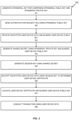
- FIG. 3 shows a method 300 of securely obtaining user device data.
- method 300 is performed in conjunction with method 400 of FIG. 4 , wherein the method 300 is performed by an access device 102, and method of 400 is performed by a user device 101.
- method 300 may take place as part of a payment transaction. For example, if user device 101 is a contactless chip card, a user may tap or swipe the chip card against an access device 102 operated by a merchant.
- portable user device 101 Before the method, portable user device 101 generates or is loaded with a user device key pair.
- a "user device key pair” is a pair of a public key (i.e., a "user device public key”) and a private key (i.e., a "user device private key”).
- User device 101 also comprises a "user device certificate” including the user device public key.
- the user device certificate is signed by a certificate authority, such as payment processing network 105 or issuer computer 106.
- an ephemeral key pair is generated.
- an authentication request is sent to portable user device 101 including the ephemeral public key.
- the authentication request can also include an access device identifier associated with access device 102.
- An "access device identifier" may include any data suitable to identify an access device.
- an access device identifier may be a serial number, globally unique identifier (GUID), network address, or any other suitable identifier.
- the authentication request may be sent when access device 102 detects a portable user device 101, such as if it passes close to a contactless transceiver.
- encrypted user device data and a blinded user device public key are received from portable user device 101 the encrypted user device data including an encrypted user device certificate and the cryptographic nonce used to generate the blinded user device public key.
- a shared secret is generated using the ephemeral private key generated at step 301 and the blinded user device public key received at step 303.
- the shared secret is generated using the elliptic-curve Diffie-Hellman protocol (ECDH).
- a session key is generated using the shared secret generated at step 304.
- the session key may be of any suitable format (e.g., AES, DES, Blowfish, etc.), of any suitable length, and generated using any suitable key derivation function.
- the session key may be generated using the Password-Based Key Derivation Function 2 (PBKDF2) algorithm.
- PBKDF2 Password-Based Key Derivation Function 2
- other data such as an access device identifier, may be used as additional inputs to the key derivation function.
- the encrypted user device data is decrypted using the session key to determine a user device certificate. and may also include
- the user device certificate and blinded user device public key are validated.
- Validating the user device certificate includes ensuring that the signature of the user device certificate matches an expect value based on a known CA public key.
- a digital signature algorithm such as the elliptic curve digital signature algorithm (ECDSA) is used to validate the user device certificate.
- EDSA elliptic curve digital signature algorithm
- Validating the blinded user device public key is done by ensuring that the blinded user device public key matches an expected value.
- a second blinded user device public key is generated using the user device public key included on the user device certificate, and the cryptographic nonce decrypted at step 306. The second blinded user device public key is then compared to the blinded user device public key received at step 303 to ensure that the keys match.
- a transaction is conducted using the user device data.
- an authorization request message may be generated as described with reference to FIG. 1 .
- an indication can be provided to the user of whether the transaction was successful.
- access device 102 may maintain a persistent key pair (i.e., an "access device public/private key pair"), and use the access device public and private keys in place of the ephemeral public and private keys, respectively.
- a persistent key pair i.e., an "access device public/private key pair”
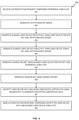
- FIG. 4 shows a method 400 of securely transmitting user device data to an access device 102 from the perspective of a user device 101.
- Method 300 of FIG. 3 is performed in conjunction with method 400, wherein method 300 is performed by an access device 102, and method 400 is performed by a user device 101.
- method 400 may take place as part of a payment transaction. For example, if user device 101 is a contactless chip card, a user may tap or swipe the chip card against an access device 102 operated by a merchant.
- portable user device 101 generates or is loaded with a user device key pair.
- a "user device key pair” is a pair of a public key (i.e., a "user device public key”) and a private key (i.e., a "user device private key”).
- User device 102 also comprises a "user device certificate” including the user device public key.
- the user device certificate is signed by a certificate authority, such as payment processing network 105 or issuer computer 106.
- an authentication request is received comprising an ephemeral public key.
- a cryptographic nonce is generated.
- a blinded user device private key is generated using the user device private key and the cryptographic nonce by multiplying the user device private key with the cryptographic nonce.
- a blinded user device public key is generated using the user device public key and the cryptographic nonce by multiplying the user device public key with the cryptographic nonce.
- a shared secret is generated using the blinded user device private key generated at step 403 and the ephemeral public key received at step 401.
- the shared secret using the elliptic-curve Diffie-Hellman protocol (ECDH).
- ECDH elliptic-curve Diffie-Hellman protocol
- the method used to generate the shared secret is the same process used by access device 102 at step 304 of FIG. 3 .
- a session key is generated using the shared secret generated at step 405
- the session key may be of any suitable format (e.g., AES, DES, Blowfish, etc.), of any suitable length, and generated using any suitable key derivation function.
- the session key may be generated using the Password-Based Key Derivation Function 2 (PBKDF2) algorithm.
- PBKDF2 Password-Based Key Derivation Function 2
- other data such as an access device identifier, may be used as additional inputs to the key derivation function.
- the algorithm used to generate the shared secret is the same protocol used by access device 102 at step 304 of FIG. 3 .
- the method used to derive the session key is the same process used by access device 102 at step 305 of FIG. 3 .
- user device data is encrypted using the session key to generate encrypted user device data.
- the user device data includes the user device certificate abd the cryptographic nonce used to generate the blinded user device public key.
- a second shared secret can be used to further user device data, such as a user device public key, returned in the response (in addition to the encryption using the first shared secret generated at step 405).
- user device data such as a user device public key
- the key can be decrypted when and where the second shared secret is established, for instance in a separate device (e.g., a hardware security module (HSM)) remotely connected to the access device 102.
- HSM hardware security module
- an authentication response comprising the encrypted user device data and the blinded user device public key is sent.
- access device 102 may maintain a persistent key pair (i.e., an "access device public/private key pair"), and use the access device public and private keys in place of the ephemeral public and private keys, respectively.
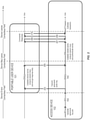
- FIG. 5 shows a data flow diagram illustrating operations performed in establishing a shared secret between access device 102 and portable user device 101 in accordance with the embodiments of the invention.
- access device 102 uses a public/private key pair generator (“KeyGen”) to generate an ephemeral public key (“ePubA”) and an ephemeral private key (“ePrivA”).
- KeyGen ephemeral public key
- ePubT ephemeral public key
- Portable user device 101 generates a cryptographic nonce (“NonceC”), and combines (“MUL”) the cryptographic nonce (“NonceU”) with a user device private key (“PrivU”) to generate a blinded user device private key (“PrivU ⁇ ").
- the blinded user device private key (“PrivC ⁇ ”) and an ephemeral public key (“ePubT”) are then used as inputs to an elliptic curve Diffie-Hellman (“ECDH”) function to generate a shared secret (“Z”).
- ECDH elliptic curve Diffie-Hellman
- Portable user device 101 also combines (“MUL") the cryptographic nonce (“NonceU”) with a user device public key (“PubU”) to generate a blinded user device public key (“PubU ⁇ ").
- the blinded user device public key (“PubU ⁇ ”) is transmitted to access device 102 in a response message.
- Access device 102 uses the blinded user device public key (“PubU ⁇ ”) and the ephemeral private key (“ePrivA”) as inputs to the elliptic curve Diffie-Hellman (“ECDH”) function to generate the same shared secret (“Z").
- embodiments can establish a shared secret between access device 102 and portable user device 101.
- FIG. 6 shows a data flow diagram illustrating operations performed in securely authenticating a user device 101 to an access device 102 according to the invention.
- access device 102 uses a public/private key pair generator (“KeyGen”) to generate an ephemeral public key (“ePubA”) and an ephemeral private key (“ePrivA”).
- KeyGen ephemeral public key
- ePubT ephemeral public key
- Portable user device 101 generates a cryptographic nonce (“NonceC”), and combines (“MUL”) the cryptographic nonce (“NonceU”) with a user device private key (“PrivU”) to generate a blinded user device private key (PrivU ⁇ ").
- the blinded user device private key (“PrivC ⁇ ”) and an ephemeral public key (“ePubT”) are then used as inputs to an elliptic curve Diffie-Hellman (“ECDH”) function to generate a shared secret (“Z”).
- ECDH elliptic curve Diffie-Hellman
- Portable user device 101 uses shared secret (“Z”) as an input to a key derivation function (“KDF”) to generate a session key (“SK”).
- An authenticated encryption cipher (“AE") encrypts a user device certificate (“CertU”) and the cryptographic nonce (“NonceU”) using the session key (“SK”) to generate an encrypted user device certificate (“CertU e ”) and an encrypted cryptographic nonce (“NonceU e ").
- Portable user device 101 also combines (“MUL") the cryptographic nonce ("NonceU”) with a user device public key (“PubU”) to generate a blinded user device public key (“PubU ⁇ ").
- the blinded user device public key (“PubU ⁇ "), the encrypted user device certificate (“CertU e "), and the encrypted cryptographic nonce (“NonceU e ”) are then transmitted to access device 102 in a response message.
- Access device 102 uses the blinded user device public key (“PubU ⁇ ”) and the ephemeral private key (“ePrivA”) as inputs to the elliptic curve Diffie-Hellman (“ECDH”) function to generate the same shared secret (“Z”).
- the shared secret (“Z") is used as an input to the key derivation function (“KDF”) to generate the same session key (“SK”).
- An authenticated decryption function (“AE -1 ”) decrypts the cryptographic nonce (“NonceU”), the user device certificate (“CertU”), and a user device public key (“PubU”) included in the user device certificate (“CertU”).
- An elliptic curve digital signature algorithm (“ECDSA”) is used to verify the user device certificate (“CertU”) using the certificate authority's public key (“PubCA”).
- the received blinded user device public key (“PubU ⁇ ) is verified by comparing it to a blinded user device public key (“PubU ⁇ 2 ”) generated from the decrypted user device public key (“PubU”) and the decrypted cryptographic nonce (“NonceU”).
- user device 101 If both the user device certificate and the blinded user device public key are verified, user device 101 is authenticated.
- FIGs. 7 and 8 , and Tables 1 and 2 describe optimized methods for secure communication in accordance with some embodiments of the invention.
- a user device 101 and an access device 102 may each maintain a registry of devices with which communication occurred in the past. Each registered device may be associated with a next shared secret and/or other data to be used in future communication sessions with the device.
- embodiments can avoid certain operations, such as a Diffie-Hellman key exchange, in any subsequent communication between two devices.
- embodiments can reduce the amount of time and processing needed to establish communication sessions.
- embodiments can achieve these benefits while protecting the identity of the user device 101, as will be described in further detail below.
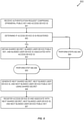
- FIG. 7 shows an optimized method 700 of securely obtaining user device data.
- method 700 comprises all steps of method 300 of FIG. 3 .
- method 700 is performed in conjunction with method 800 of FIG. 8 , wherein method 700 is performed by an access device 102, and method 800 is performed by a user device 101.
- both user device 101 and access device 102 may maintain a registry of devices with which prior communication has occurred.
- a "registry" may include any suitable electronic medium for the storage of data.
- a registry may comprise a database, a text file, or any other suitable medium.
- step 701 an ephemeral key pair is generated.
- an authentication request is sent to portable user device 101 including the ephemeral public key and an access device identifier associated with access device 102.
- the authentication request may be sent when access device 102 detects a portable user device 101, such as if it passes close to a contactless transceiver.
- encrypted user device data, a blinded user device public key, and a blinded user device identifier are received from portable user device 101.
- the "encrypted user device data includes an encrypted user device certificate and the cryptographic nonce used to generate the blinded user device public key.
- the "blinded user device identifier" may be generated from a user device identifier for user device 101.
- the user device identifier may be a user device public key.
- the blinded user device identifier may be a truncated version of the blinded user device public key.
- the user device identifier may be a serial number, globally unique identifier (GUID), or other data.
- the user device identifier may be a combination of the user device identifier and a cryptographic nonce.
- step 704 it is determined if the blinded user device identifier is registered. For example, in some embodiments, a registry may be searched for the blinded user device identifier.
- a shared secret associated with the blinded user device identifier is obtained.
- the shared secret may be retrieved from a record in the registry associated with the blinded user device identifier. The method then proceeds to step 707.
- step 304 of FIG. 3 is performed.
- a shared secret is generated using the ephemeral private key generated at step 701 and the blinded user device public key received at step 703.
- the shared secret may be generated using any suitable method.
- the shared secret may be determined using the elliptic-curve Diffie-Hellman protocol (ECDH). The method then proceeds to step 707.
- steps 305-308 of method 300 are performed. Further description of these steps may be found with reference to the corresponding steps in FIG. 3 .
- a next shared secret and a next blinded user device identifier are generated using the shared sccrct.
- the next shared sccrct and the next blinded user dcvicc identifier may be generated from the shared secret in any suitable manner.
- the next shared secret may be determined using a key derivation function.
- the key derivation function used to generate the session key at step 707 may also generate the next shared secret.
- the next blinded user device identifier may also be generated using a key derivation function.
- the key derivation function used to generate the session key at step 707 may be used to generate a next cryptographic nonce.
- the next cryptographic nonce and the user device public key may then be used to generate a next blinded user device public key.
- the next blinded user device identifier may be a subset of the next blinded user device public key.
- the cryptographic nonce may be combined with the blinded user device identifier to determine the next blinded user device identifier.
- the process used to determine the next blinded user device identifier at step 708 is also used by user device 101 at step 807 of method 800.
- next blinded user device identifier is registered and associated with the next shared secret.
- the next blinded user device identifier and the next shared secret may be stored in a registry or database.
- FIG. 8 shows an optimized method of securely transmitting user device data to an access device.
- portable user device 101 Before the method, portable user device 101 generates or is loaded with a user device key pair.
- both user device 101 and access device 102 may maintain a registry of devices with which prior communication has occurred.
- a "registry" may include any suitable electronic medium for the storage of data.
- a registry may comprise a database, a text file, or any other suitable medium.
- an authentication request from access device 102 is received comprising an ephemeral public key and an access device identifier.
- step 802 it is determined if the access device identifier is registered. For example, in some embodiments, a registry may be searched for the access device identifier.
- a shared secret, a blinded user device public key, and a blinded user device identifier associated with the access device identifier are obtained.
- the shared secret, the blinded user device public key, and the blinded user device identifier may be retrieved from a record in the registry associated with the blinded user device identifier.
- some or all of the shared secret, the blinded user device public key, and the blinded user device identifier may overlap.
- the blinded user device identifier may be a subset (e.g., the last 4 or 8 bits) of the blinded user device public key.
- step 803 If the access device is not registered, at step 803, steps 402-405 of method 400 are performed. Further description of these steps may be found with reference to the corresponding steps in FIG. 4 . Method 800 then proceeds to step 805.
- steps 406-408 of method 400 are performed. Specifically, in some embodiments, a session key is generated using the shared secret. The session key is used to encrypt user device data, such as a user device certificate. An authentication response message is then sent to access device 102, the response including the encrypted user device data and the blinded user device public key. Further description of these steps may also be found with reference to the corresponding steps in FIG. 4 .
- a next shared secret, a next blinded user device identifier, and a next blinded user device public key are generated using the shared secret.
- the next shared secret, the next blinded user device identifier, and the next blinded user device public key may be generated from the shared secret in any suitable manner.
- the next shared secret may be determined using a key derivation function.
- the key derivation function used to generate the session key at step 805 may also generate the next shared secret.
- the next blinded user device identifier may also be generated using a key derivation function.
- the key derivation function used to generate the session key at step 805 may be used to generate a cryptographic nonce.
- the cryptographic nonce and the user device public key may then be used to generate a next blinded user device public key.
- the next blinded user device identifier may be a subset of the next blinded user device public key.
- the cryptographic nonce may be combined with the blinded user device identifier to determine the next blinded user device identifier.
- the process used to determine the next blinded user device identifier at step 806 is also used by access device 102 at step 708 of method 700.
- next blinded user device identifier is registered and associated with the next shared secret.
- the next blinded user device public key and the next shared secret may be stored in a registry or database.
- Tables 1 and 2 below show pseudocode listings to implement a secure method for authenticated data transmission in accordance with some embodiments of the invention.
- Table 1 Line Pseudo-code A1 GenKeyPair(deA; QeA) A2 SendAuthenticationRequest(ID sA
- EncData U A3 ID s U (T 8 (BData U )) A4
- BData U belongs to EC domain A5 If ID s U not registered: A6 Z EC DH (d eA ; BData U ) A7 Zeroize d eA A8 Else: A9 Obtain Z from ID s U in PB registry A10 SK CFRM
- NextBlind KDF (Z, len, info (ID sU , ID sA , T 16 (Q eA )) A11 Zeroize
- Table 1 shows a pseudocode listing to implement a method of securely obtaining user device data from a user device. As described below, the method of Table 1 is performed by an access device 102 communicating with a user device 101. However, in other embodiments, the method may be performed by any other suitable entity.
- an ephemeral key pair is generated.
- the ephemeral key pair includes an ephemeral private key (d eA ) and an ephemeral public key (Q eA ).
- an authentication request is sent to user device 101 including an access device identifier (ID sA ), the ephemeral public key (Q eA ), and an access device protocol control byte (CB A ) that indicates various information regarding access device 102.
- ID sA access device identifier
- Q eA ephemeral public key
- CB A access device protocol control byte
- the authentication response includes a blinded user device public key (BData U ) and encrypted user device data (EncData U ).
- a blinded user device identifier (ID sU ) is determined by taking the leftmost 8 bytes (T 8 ) of the blinded user device public key (BData U ).
- a check is performed to ensure that the blinded user device public key (BData U ) belongs to an expected elliptic curve (EC) domain.
- a check is performed to determine whether the blinded user device identifier (ID sU ) was previously registered by access device 102. If the blinded user device identifier (ID sU ) is not registered, then at step A6 a shared secret (Z) is computed by combining the ephemeral private key (d eA ) and the received blinded user device public key (Bdata U ). Once the shared secret is computed, at step A7 the ephemeral private key is erased.
- a shared secret is obtained from a persistent binding (PB) registry using the blinded user device identifier (ID sU ).
- SK CFRM session keys
- SK MAC shared secret
- SK ENC next shared secret
- NextBlind next cryptographic nonce
- KDF key derivation function
- the inputs to the key derivation function are the shared secret (Z), a desired output length (len), and a combination of the blinded user device identifier (ID sU ), the access device identifier (ID sA ), and the left 16 bytes of the ephemeral public key (Q eA ).
- a derived session key (SK CFRM ) is used to decrypt the encrypted user device data (EncData U ) using an authenticated decryption algorithm (AE -1 ).
- AE -1 authenticated decryption algorithm
- a header Header
- a user device certificate C U
- N U cryptographic nonce
- CB U user device protocol control byte
- the header is compared to an expected value. In some embodiments, if the header does not match the expected value, authentication of user device 101 may fail.
- the user device protocol control byte (CB U ) is inspected to determine whether user device 101 intends to compute and register a new shared secret. If so, then at step A15, a next blinded user device identifier (NextID sU ) is determined using the next cryptographic nonce (NextBind) and the user device public key (Q sU ). At step A16, the next shared secret (NextZ) and the next blinded user device identifier (NextID sU ) are registered.
- the user device protocol control byte (CB U ) is inspected to determine whether user device 101 intends to compute and register a new shared secret or if user device 101 does not support persistent binding. If either is the case, then at step A18, the user device certificate (C U ) is verified using an elliptic curve digital signature algorithm (ECDSA). In addition, at step A19, the user device public key is determined from the user device certificate (C U ). The user device public key (Q sU ) is combined with the left four bytes of the nonce (N U ) to verify that the received blinded user device public key is consistent with the user device certificate. If both the certificate and the blinded user device public key are verified, user device 101 may be authenticated.
- CB U the user device protocol control byte
- step A21 further communication may be conducted using one or more of the derived session keys.
- Table 2 Line Pseudo-code Receive authentication request: ID sA
- Table 2 shows a pseudocode listing to implement a method of securely transmitting user device data to an access device. As described below, the method of Table 2 is performed by a user device 101 communicating with an access device 102. However, in other embodiments, the method may be performed by any other suitable entity.
- an authentication request message may be received from access device 102.
- the authentication request may include an access device identifier (ID sA ), the ephemeral public key (Q eA ), and an access device protocol control byte (CB A ) that indicates various information regarding access device 102.
- ID sA access device identifier
- Q eA ephemeral public key
- CB A access device protocol control byte
- a user device protocol control byte (CB U ) is prepared using the received access device protocol control byte (CB A ).
- a cryptographic nonce (N U ) is generated.
- the received access device identifier (ID sA ) is looked up in a registry at user device 101.
- steps U5-U7 are performed.
- a check is performed to ensure that the ephemeral public key (Q eA ) belongs to the correct elliptic curve (EC) domain.
- a shared secret (Z)) is computed by combining the ephemeral public key (Q eA ) and a user device private key (d sU ) that has been blinded by the nonce (N U ).
- a blinded user device public key (BData U ) is generated using a user device public key (Q sU ) and the left four bytes of the nonce (T 4 (N U )).
- steps U9 and U10 are performed.
- a shared secret (Z) and a blinded user device public key (BData U ) are retrieved from a registry using the access device identifier (ID sA ).
- the user device protocol control byte is updated to indicate that persistent binding is supported.
- a blinded user device identifier (ID sU ) is determined by taking the leftmost 8 bytes of the blinded user device public key (BData U ).
- SK CFRM session keys
- SK MAC shared secret
- SK ENC next shared secret
- NextBlind next cryptographic nonce
- KDF key derivation function
- the inputs to the key derivation function are the shared secret (Z), a desired output length (len), and a combination of the blinded user device identifier (ID sU ), the access device identifier (ID sA ), and the left 16 bytes of the ephemeral public key (Q eA ).
- an authenticated encryption function (AE) is used to encrypt a predefined header ("KC_1_V"), a user device certificate (C U ), the cryptographic nonce (N U ), and the user protocol control byte (CB U ).
- the result of the encryption function is encrypted user device data (EncData U ).
- step U15 if user device 101 and access device 102 support persistent binding (as indicated by their respective protocol control bytes), and either the access device identifier (ID sA ) is not registered or a re-registration is requested (as indicated by the access control protocol control byte), steps U16-U17 are performed.
- step U16 the next shared secret (NextZ), and the next blinded user device public key (NextBData U ) are registered and associated with the access device identifier (ID sA ).
- step U17 the user device protocol control byte (CB U ) is updated to indicate that user device 101 has computed a new next shared secret associated with access device 102.
- step U18 if the conditional at step U15 is not true and user device 101 does not support persistent binding, then at step U19, the user device protocol control byte (CB U ) is updated to indicate that persistent binding is not supported.
- CB U user device protocol control byte
- an authentication response message is sent to access device 102 including the blinded user device public key (BData U ) and the encrypted user device data (EncData U ).
- FIG. 9 shows an example of a payment device 101" in the form of a card.
- the payment device 101" comprises a plastic substrate 101(m).
- a contactless element 101(o) for interfacing with an access device 102 may be present on, or embedded within, the plastic substrate 101(m).
- User information 101(p) such as an account number, expiration date, and/or a user name may be printed or embossed on the card.
- a magnetic stripe 101(n) may also be on the plastic substrate 101(m).
- the payment device 101" may comprise a microprocessor and/or memory chips with user data stored in them.
- the payment device 101" may include both a magnetic stripe 101(n) and a contactless element 101(o). In some embodiments, both the magnetic stripe 101(n) and the contactless element 101(o) may be in the payment device 101". In some embodiments, either the magnetic stripe 101(n) or the contactless element 101(o) may be present in the payment device 101".
- FIG. 10 is a high level block diagram of a computer system that may be used to implement any of the entities or components described above.
- the subsystems shown in FIG. 10 are interconnected via a system bus 1075. Additional subsystems include a printer 1003, keyboard 1006, fixed disk 1007, and monitor 1009, which is coupled to display adapter 1004. Peripherals and input/output (I/O) devices, which couple to I/O controller 1000, can be connected to the computer system by any number of means known in the art, such as a serial port.
- serial port 1005 or external interface 1008 can be used to connect the computer apparatus to a wide area network such as the Internet, a mouse input device, or a scanner.
- system bus 1075 allows the central processor 1002 to communicate with each subsystem and to control the execution of instructions from system memory 1001 or the fixed disk 1007, as well as the exchange of information between subsystems.
- the system memory 1001 and/or the fixed disk may embody a computer-readable medium.
- the service may involve implementing one or more functions, processes, operations or method steps.
- the functions, processes, operations or method steps may be implemented as a result of the execution of a set of instructions or software code by a suitably-programmed computing device, microprocessor, data processor, or the like.
- the set of instructions or software code may be stored in a memory or other form of data storage element which is accessed by the computing device, microprocessor, etc.
- the functions, processes, operations or method steps may be implemented by firmware or a dedicated processor, integrated circuit, etc.
- any of the software components or functions described in this application may be implemented as software code to be executed by a processor using any suitable computer language such as, for example, Java, C++ or Perl using, for example, conventional or objectoriented techniques.
- the software code may be stored as a series of instructions, or commands on a computer-readable medium, such as a random access memory (RAM), a read-only memory (ROM), a magnetic medium such as a hard-drive or a floppy disk, or an optical medium such as a CD-ROM.
- RAM random access memory
- ROM read-only memory
- magnetic medium such as a hard-drive or a floppy disk
- an optical medium such as a CD-ROM.
- Any such computer-readable medium may reside on or within a single computational apparatus, and may be present on or within different computational apparatuses within a system or network.
Landscapes
- Engineering & Computer Science (AREA)
- Computer Security & Cryptography (AREA)
- Computer Networks & Wireless Communication (AREA)
- Signal Processing (AREA)
- Computer Hardware Design (AREA)
- Computing Systems (AREA)
- General Engineering & Computer Science (AREA)
- Financial Or Insurance-Related Operations Such As Payment And Settlement (AREA)
- Mobile Radio Communication Systems (AREA)
- Storage Device Security (AREA)
Claims (12)
- Dispositif d'accès (102) d'authentification d'un dispositif utilisateur (101) comprenant :un processeur ; etun support de stockage non transitoire lisible par ordinateur comprenant un code exécutable par le processeur pour mettre en œuvre un procédé comprenant :l'envoi d'une clé publique de dispositif d'accès au dispositif utilisateur (101), dans lequel la clé publique de dispositif d'accès est associée à une clé privée de dispositif d'accès ;la réception d'un message de réponse comportant une clé publique de dispositif utilisateur masquée et des données de dispositif utilisateur chiffrées provenant du dispositif utilisateur (101), dans lequel les données de dispositif utilisateur comprennent un nonce cryptographique et un certificat de dispositif utilisateur, le certificat de dispositif utilisateur comprenant la clé publique de dispositif utilisateur et dans lequel la clé publique de dispositif utilisateur masquée est générée par la multiplication par le dispositif utilisateur (101) de la clé publique de dispositif utilisateur par le nonce cryptographique, et dans lequel les données de dispositif utilisateur chiffrées sont chiffrées par le dispositif utilisateur (101) à l'aide d'une clé de session générée à l'aide d'un secret partagé, le secret partagé étant généré par la fourniture en entrée par le dispositif utilisateur de la clé publique de dispositif d'accès et d'une clé privée de dispositif utilisateur masquée dans une fonction Diffie-Hellman de courbe elliptique, la clé privée de dispositif utilisateur masquée étant générée par la multiplication d'une clé privée de dispositif utilisateur par le nonce cryptographique, la clé privée de dispositif utilisateur étant associée à la clé publique de dispositif utilisateur, le secret partagé étant connu du dispositif utilisateur ;la génération du secret partagé par la fourniture en entrée de la clé privée de dispositif d'accès et de la clé publique de dispositif utilisateur masquée dans la fonction Diffie-Hellman de courbe elliptique ;la génération de la clé de session à l'aide du secret partagé ;le déchiffrement des données de dispositif utilisateur chiffrées à l'aide de la clé de session ;la validation du certificat de dispositif utilisateur ;la génération d'une seconde clé publique de dispositif utilisateur masquée par la multiplication de la clé publique de dispositif utilisateur par le nonce cryptographique ;la comparaison de la seconde clé publique de dispositif utilisateur masquée à la clé publique de dispositif utilisateur masquée reçue, dans lequel le dispositif utilisateur est authentifié si la seconde clé publique de dispositif utilisateur masquée concorde avec la clé publique de dispositif utilisateur masquée reçue.
- Dispositif d'accès (102) selon la revendication 1, dans lequel la paire de clés de dispositif d'accès est une paire de clés éphémères, dans lequel la paire de clés éphémères est supprimée après la détermination du secret partagé.
- Dispositif d'accès (102) selon la revendication 1, le procédé comprenant en outre :
la réalisation d'une transaction à l'aide des données de dispositif utilisateur. - Système comprenant :un dispositif utilisateur (101) ;un dispositif d'accès (102) selon l'objet de la revendication 1 destiné à authentifier le dispositif utilisateur.
- Procédé mis en œuvre par ordinateur (300) comprenant :l'envoi (302), par un dispositif d'accès ayant un ou plusieurs processeurs, d'une clé publique de dispositif d'accès à un dispositif utilisateur, dans lequel la clé publique de dispositif d'accès est associée à une clé privée de dispositif d'accès ;la réception (303), par le dispositif d'accès, d'un message de réponse comportant une clé publique de dispositif utilisateur masquée et des données de dispositif utilisateur chiffrées provenant du dispositif utilisateur, dans lequel les données de dispositif utilisateur comprennent un certificat de dispositif utilisateur et un nonce cryptographique, le certificat de dispositif utilisateur comprenant la clé publique de dispositif utilisateur, et dans lequel la clé publique de dispositif utilisateur masquée est générée par la multiplication par le dispositif utilisateur d'une clé publique de dispositif utilisateur par le nonce cryptographique, et dans lequel les données de dispositif utilisateur chiffrées sont chiffrées par l'utilisation par le dispositif utilisateur d'une clé de session générée à partir d'un secret partagé, le secret partagé étant généré par la fourniture en entrée de la clé publique de dispositif d'accès et d'une clé privée de dispositif utilisateur masquée dans une fonction Diffie-Hellman de courbe elliptique, la clé privée de dispositif utilisateur masquée étant générée par la multiplication d'une clé privée de dispositif utilisateur par le nonce cryptographique, la clé privée de dispositif utilisateur étant associée à la clé publique de dispositif utilisateur, le secret partagé étant connu du dispositif utilisateur ; etla génération (304), par le dispositif d'accès, du secret partagé par la fourniture en entrée de la clé privée de dispositif d'accès et de la clé publique de dispositif utilisateur masquée dans une fonction Diffie-Hellman de courbe elliptique ;la génération (305), par le dispositif d'accès, de la clé de session à l'aide du secret partagé ;le déchiffrement (306), par le dispositif d'accès, des données de dispositif utilisateur chiffrées à l'aide de la clé de session pour déterminer les données de dispositif utilisateur ;la validation (307), par le dispositif d'accès, du certificat de dispositif utilisateur ;la génération, par le dispositif d'accès, d'une seconde clé publique de dispositif utilisateur masquée par la multiplication de la clé publique de dispositif utilisateur par le nonce cryptographique ; etla comparaison, par le dispositif d'accès, de la seconde clé publique de dispositif utilisateur masquée à la clé publique de dispositif utilisateur masquée reçue, dans lequel le dispositif utilisateur est authentifié si la seconde clé publique de dispositif utilisateur masquée concorde avec la clé publique de dispositif utilisateur masquée reçue.
- Procédé mis en œuvre par ordinateur (300) selon la revendication 5, dans lequel la paire de clés de dispositif d'accès est une paire de clés éphémères, dans lequel la paire de clés éphémères est supprimée après la génération du secret partagé.
- Procédé mis en œuvre par ordinateur (300) selon la revendication 5, comprenant en outre :
la réalisation (308), par le dispositif d'accès, d'une transaction à l'aide des données de dispositif utilisateur. - Procédé mis en œuvre par ordinateur (400) comprenant :la réception (401), par un dispositif utilisateur, d'une clé publique de dispositif d'accès provenant d'un dispositif d'accès ;la génération (403, 405), par le dispositif utilisateur, d'un secret partagé par la fourniture en entrée de la clé publique de dispositif d'accès et d'une clé privée de dispositif utilisateur masquée dans une fonction Diffie-Hellman de courbe elliptique, la clé privée de dispositif utilisateur masquée étant générée par la multiplication de la clé privée de dispositif utilisateur par un nonce cryptographique ;la génération (404), par le dispositif utilisateur, d'une clé publique de dispositif utilisateur masquée par la multiplication d'une clé publique de dispositif utilisateur incluse dans un certificat de dispositif utilisateur détenu sur le dispositif utilisateur par le nonce cryptographique, la clé publique de dispositif utilisateur étant associée à la clé privée de dispositif utilisateur ;la génération (406), par le dispositif utilisateur, d'une clé de session à l'aide du secret partagé ;le chiffrement (407), par le dispositif utilisateur, de données de dispositif utilisateur à l'aide de la clé de session pour générer des données de dispositif utilisateur chiffrées, les données de dispositif utilisateur comprenant le certificat de dispositif utilisateur et le nonce cryptographique ; etl'envoi (408), par le dispositif utilisateur, d'un message de réponse comportant la clé publique de dispositif utilisateur masquée et les données de dispositif utilisateur chiffrées au dispositif d'accès, pour ainsi permettre au dispositif d'accès de générer le secret partagé par la fourniture en entrée de la clé publique de dispositif utilisateur masquée et d'une clé privée de dispositif d'accès correspondant à la clé publique de dispositif d'accès dans la fonction Diffie-Hellman de courbe elliptique, et de déchiffrer les données de dispositif utilisateur chiffrées à l'aide de la clé de session générée à partir du secret partagé, dans lequel le dispositif d'accès authentifie le dispositif utilisateur à l'aide du certificat de dispositif utilisateur et du nonce cryptographique.
- Procédé mis en œuvre par ordinateur (400) selon la revendication 8, dans lequel la paire de clés de dispositif d'accès est une paire de clés éphémères, dans lequel le dispositif utilisateur supprime la clé publique de dispositif d'accès après la génération du secret partagé.
- Procédé mis en œuvre par ordinateur (400) selon la revendication 8, dans lequel le secret partagé est un premier secret partagé, et dans lequel le procédé comprend en outre :la génération (806), par le dispositif utilisateur, d'un second secret partagé à l'aide du premier secret partagé ; etl'association (807), par le dispositif utilisateur, du second secret partagé au dispositif d'accès, dans lequel le second secret partagé est utilisé pour chiffrer des données de dispositif utilisateur ultérieures envoyées par le dispositif utilisateur.
- Procédé mis en œuvre par ordinateur (400) selon la revendication 8, dans lequel le dispositif d'accès réalise une transaction à l'aide des données de dispositif utilisateur.
- Support lisible par ordinateur comprenant des instructions qui, lorsqu'elles sont exécutées par un processeur d'un système informatique, amènent le processeur à réaliser le procédé selon l'une quelconque des revendications 5 à 11.
Priority Applications (1)
| Application Number | Priority Date | Filing Date | Title |
|---|---|---|---|
| EP22155816.6A EP4027576B1 (fr) | 2014-01-13 | 2015-01-13 | Procédés efficaces pour protéger l'identité dans des transmissions authentifiées |
Applications Claiming Priority (2)
| Application Number | Priority Date | Filing Date | Title |
|---|---|---|---|
| US201461926908P | 2014-01-13 | 2014-01-13 | |
| PCT/US2015/011153 WO2015106248A1 (fr) | 2014-01-13 | 2015-01-13 | Procédés efficaces pour protéger l'identité dans des transmissions authentifiées |
Related Child Applications (2)
| Application Number | Title | Priority Date | Filing Date |
|---|---|---|---|
| EP22155816.6A Division EP4027576B1 (fr) | 2014-01-13 | 2015-01-13 | Procédés efficaces pour protéger l'identité dans des transmissions authentifiées |
| EP22155816.6A Division-Into EP4027576B1 (fr) | 2014-01-13 | 2015-01-13 | Procédés efficaces pour protéger l'identité dans des transmissions authentifiées |
Publications (3)
| Publication Number | Publication Date |
|---|---|
| EP3095210A1 EP3095210A1 (fr) | 2016-11-23 |
| EP3095210A4 EP3095210A4 (fr) | 2018-05-30 |
| EP3095210B1 true EP3095210B1 (fr) | 2022-03-23 |
Family
ID=53522258
Family Applications (2)
| Application Number | Title | Priority Date | Filing Date |
|---|---|---|---|
| EP15735349.1A Active EP3095210B1 (fr) | 2014-01-13 | 2015-01-13 | Procédés efficaces pour protéger l'identité dans des transmissions authentifiées |
| EP22155816.6A Active EP4027576B1 (fr) | 2014-01-13 | 2015-01-13 | Procédés efficaces pour protéger l'identité dans des transmissions authentifiées |
Family Applications After (1)
| Application Number | Title | Priority Date | Filing Date |
|---|---|---|---|
| EP22155816.6A Active EP4027576B1 (fr) | 2014-01-13 | 2015-01-13 | Procédés efficaces pour protéger l'identité dans des transmissions authentifiées |
Country Status (5)
| Country | Link |
|---|---|
| US (5) | US9647832B2 (fr) |
| EP (2) | EP3095210B1 (fr) |
| CN (2) | CN111277597B (fr) |
| AU (1) | AU2015204470B2 (fr) |
| WO (1) | WO2015106248A1 (fr) |
Families Citing this family (74)
| Publication number | Priority date | Publication date | Assignee | Title |
|---|---|---|---|---|
| DE102013108714B3 (de) * | 2013-08-12 | 2014-08-21 | Deutsche Post Ag | Unterstützung einer Entschlüsselung von verschlüsselten Daten |
| EP3095210B1 (fr) | 2014-01-13 | 2022-03-23 | Visa International Service Association | Procédés efficaces pour protéger l'identité dans des transmissions authentifiées |
| EP3050011B1 (fr) | 2014-05-02 | 2017-09-20 | Barclays Bank Plc. | Authentification de transactions |
| US9887839B2 (en) * | 2014-06-06 | 2018-02-06 | Rainberry, Inc. | Securely sharing information via a public key-value data store |
| CN111355749B (zh) | 2014-06-18 | 2024-12-20 | 维萨国际服务协会 | 用于已认证的通信的高效方法 |
| CN111756533B (zh) | 2014-08-29 | 2023-07-04 | 维萨国际服务协会 | 用于安全密码生成的系统、方法和存储介质 |
| EP3251284B1 (fr) | 2015-01-27 | 2020-08-19 | Visa International Service Association | Procédés de fourniture de justificatifs d'identité sécurisé |
| WO2016129863A1 (fr) | 2015-02-12 | 2016-08-18 | Samsung Electronics Co., Ltd. | Procédé de traitement de paiement et dispositif électronique prenant en charge ledit procédé |
| WO2016131056A1 (fr) | 2015-02-13 | 2016-08-18 | Visa International Service Association | Gestion de communications confidentielles |
| KR102460459B1 (ko) | 2015-02-27 | 2022-10-28 | 삼성전자주식회사 | 전자 장치를 이용한 카드 서비스 방법 및 장치 |
| US10193700B2 (en) | 2015-02-27 | 2019-01-29 | Samsung Electronics Co., Ltd. | Trust-zone-based end-to-end security |
| US20160253657A1 (en) * | 2015-02-27 | 2016-09-01 | Samsung Electronics Co., Ltd. | Method and apparatus for providing card service using electronic device |
| WO2016137277A1 (fr) | 2015-02-27 | 2016-09-01 | Samsung Electronics Co., Ltd. | Dispositif électronique fournissant une fonction de paiement électronique et son procédé de fonctionnement |
| US11049090B2 (en) * | 2015-03-11 | 2021-06-29 | Paypal, Inc. | NFC application registry for enhanced mobile transactions and payments |
| CN107852404A (zh) | 2015-06-30 | 2018-03-27 | 维萨国际服务协会 | 保密通信的相互认证 |
| US9390154B1 (en) | 2015-08-28 | 2016-07-12 | Swirlds, Inc. | Methods and apparatus for a distributed database within a network |
| US9529923B1 (en) | 2015-08-28 | 2016-12-27 | Swirlds, Inc. | Methods and apparatus for a distributed database within a network |
| US10747753B2 (en) | 2015-08-28 | 2020-08-18 | Swirlds, Inc. | Methods and apparatus for a distributed database within a network |
| US9584493B1 (en) | 2015-12-18 | 2017-02-28 | Wickr Inc. | Decentralized authoritative messaging |
| US9596079B1 (en) * | 2016-04-14 | 2017-03-14 | Wickr Inc. | Secure telecommunications |
| US9590958B1 (en) | 2016-04-14 | 2017-03-07 | Wickr Inc. | Secure file transfer |
| SG11201807726QA (en) | 2016-06-07 | 2018-10-30 | Visa Int Service Ass | Multi-level communication encryption |
| US11596754B2 (en) * | 2016-11-03 | 2023-03-07 | Resmed Inc. | Secure networked respiratory therapy systems |
| JP6966544B2 (ja) | 2016-11-10 | 2021-11-17 | スワールズ,インコーポレイテッド | 匿名エントリを含む分散型データベースのための方法および装置 |
| US10601585B1 (en) * | 2016-12-16 | 2020-03-24 | EMC IP Holding Company LLC | Methods and apparatus for blockchain encryption |
| CA3044071A1 (fr) | 2016-12-19 | 2018-06-28 | Swirlds, Inc. | Procedes et appareil pour une base de donnees distribuee qui permet la suppression d'evenements |
| EP3586241A4 (fr) | 2017-02-24 | 2021-01-13 | Semtech (International) AG | Masquage de message préservant la confidentialité |
| US10313133B2 (en) | 2017-06-21 | 2019-06-04 | Visa International Service Association | Secure communications providing forward secrecy |
| US10375037B2 (en) * | 2017-07-11 | 2019-08-06 | Swirlds, Inc. | Methods and apparatus for efficiently implementing a distributed database within a network |
| US10819696B2 (en) * | 2017-07-13 | 2020-10-27 | Microsoft Technology Licensing, Llc | Key attestation statement generation providing device anonymity |
| GB2566107B (en) | 2017-09-05 | 2019-11-27 | Istorage Ltd | Methods and systems of securely transferring data |
| CA3076257A1 (fr) | 2017-11-01 | 2019-05-09 | Swirlds, Inc. | Procedes et appareil pour une implementation efficace d'une base de donnees a copie rapide |
| US10841080B2 (en) * | 2018-03-20 | 2020-11-17 | International Business Machines Corporation | Oblivious pseudorandom function in a key management system |
| US10887293B2 (en) | 2018-03-20 | 2021-01-05 | International Business Machines Corporation | Key identifiers in an obliviousness pseudorandom function (OPRF)-based key management service (KMS) |
| US11863663B2 (en) * | 2018-03-20 | 2024-01-02 | Telefonaktiebolaget Lm Ericsson (Publ) | Initial network authorization for a communications device |
| US10887088B2 (en) * | 2018-03-20 | 2021-01-05 | International Business Machines Corporation | Virtualizing a key hierarchy using a partially-oblivious pseudorandom function (P-OPRF) |
| US11687929B2 (en) * | 2018-03-23 | 2023-06-27 | American Express Travel Related Services Co., Inc. | Authenticated secure online and offline transactions |
| US11451382B2 (en) * | 2018-05-14 | 2022-09-20 | nChain Holdings Limited | Method and system for communicating a secret |
| US10721064B2 (en) * | 2018-05-30 | 2020-07-21 | Nxp B.V. | Modular key exchange for key agreement and optional authentication |
| US11115206B2 (en) | 2018-08-23 | 2021-09-07 | International Business Machines Corporation | Assymetric structured key recovering using oblivious pseudorandom function |
| US10924267B2 (en) | 2018-08-24 | 2021-02-16 | International Business Machines Corporation | Validating keys derived from an oblivious pseudorandom function |
| US11973742B2 (en) * | 2018-10-15 | 2024-04-30 | Visa International Service Association | Techniques for securely communicating sensitive data for disparate data messages |
| EP3874677B1 (fr) | 2018-10-29 | 2024-11-27 | Visa International Service Association | Système et procédé de communication authentique efficace |
| GB2578767B (en) * | 2018-11-07 | 2023-01-18 | Istorage Ltd | Methods and systems of securely transferring data |
| US12462250B2 (en) * | 2019-03-01 | 2025-11-04 | Visa International Service Association | Mobile payments using multiple cryptographic protocols |
| WO2020181162A1 (fr) | 2019-03-07 | 2020-09-10 | Mastercard International Incorporated | Vérification d'utilisateur pour dispositif de justificatif d'identité |
| US11361660B2 (en) | 2019-03-25 | 2022-06-14 | Micron Technology, Inc. | Verifying identity of an emergency vehicle during operation |
| US11323275B2 (en) * | 2019-03-25 | 2022-05-03 | Micron Technology, Inc. | Verification of identity using a secret key |
| US11233650B2 (en) | 2019-03-25 | 2022-01-25 | Micron Technology, Inc. | Verifying identity of a vehicle entering a trust zone |
| US11218330B2 (en) * | 2019-03-25 | 2022-01-04 | Micron Technology, Inc. | Generating an identity for a computing device using a physical unclonable function |
| SG11202109729SA (en) | 2019-05-22 | 2021-10-28 | Swirlds Inc | Methods and apparatus for implementing state proofs and ledger identifiers in a distributed database |
| US11539517B2 (en) * | 2019-09-09 | 2022-12-27 | Cisco Technology, Inc. | Private association of customer information across subscribers |
| US11456855B2 (en) * | 2019-10-17 | 2022-09-27 | Arm Limited | Obfuscating data at-transit |
| GB2589145A (en) | 2019-11-25 | 2021-05-26 | Istorage Ltd | Protected portable media storage |
| US11366933B2 (en) * | 2019-12-08 | 2022-06-21 | Western Digital Technologies, Inc. | Multi-device unlocking of a data storage device |
| JP7569387B2 (ja) * | 2020-04-15 | 2024-10-17 | グーグル エルエルシー | 三者暗号ハンドシェイクプロトコル |
| DE102020112102B3 (de) * | 2020-05-05 | 2021-05-20 | Infineon Technologies Ag | Verfahren und Vorrichtungen zur Erzeugung eines symmetrischen Sitzungsschlüssels für die verschlüsselte Kommunikation |
| WO2022002146A1 (fr) | 2020-06-30 | 2022-01-06 | 云丁网络技术(北京)有限公司 | Procédé et système de commande de dispositif intelligent |
| CN113873513A (zh) * | 2020-06-30 | 2021-12-31 | 云丁网络技术(北京)有限公司 | 用于处理控制密钥的方法和装置 |
| KR20230107561A (ko) | 2020-10-06 | 2023-07-17 | 헤데라 하쉬그라프, 엘엘씨 | 네트워크 내의 분산 데이터베이스를 위한 방법들 및 장치 |
| US11595189B2 (en) * | 2020-10-27 | 2023-02-28 | Microsoft Technology Licensing, Llc | Secure key exchange using key-associated attributes |
| CN116830532A (zh) * | 2021-02-05 | 2023-09-29 | 维萨国际服务协会 | 移动装置秘密保护系统和方法 |
| US12184771B2 (en) * | 2021-05-21 | 2024-12-31 | Samsung Electronics Co., Ltd. | Encryption key generating method, apparatus, ciphertext operation method and apparatus using the generated encryption key |
| US11785449B2 (en) * | 2021-09-30 | 2023-10-10 | Visa International Service Association | Secure on-demand ultra-wideband communication channels systems and methods |
| CN114006741A (zh) * | 2021-10-27 | 2022-02-01 | 杭州弦冰科技有限公司 | Intel SGX可信服务集群化安全部署的实现方法及系统 |
| US12225130B2 (en) * | 2022-01-14 | 2025-02-11 | Micron Technology, Inc. | Embedded TLS protocol for lightweight devices |
| US12225111B2 (en) * | 2022-03-08 | 2025-02-11 | SanDisk Technologies, Inc. | Authorization requests from a data storage device to multiple manager devices |
| US12537668B2 (en) * | 2022-05-17 | 2026-01-27 | Samsung Electronics Co., Ltd | Authentication mechanism for computational storage download program |
| US11811752B1 (en) * | 2022-08-03 | 2023-11-07 | 1080 Network, Inc. | Systems, methods, and computing platforms for executing credential-less network-based communication exchanges |
| WO2024040226A1 (fr) * | 2022-08-19 | 2024-02-22 | Authentic Indication, Inc. | Plateforme informatique sécurisée |
| CN120530598A (zh) * | 2022-12-23 | 2025-08-22 | 莱德基尔公司 | 一种用于在电子设备与服务器之间建立安全数据连接的方法 |
| US12273725B2 (en) | 2023-04-27 | 2025-04-08 | Private Tech Inc. | Mobile subscriber identity rotation |
| US12267428B2 (en) | 2023-04-27 | 2025-04-01 | Private Tech Inc. | Blinded token device authentication |
| WO2024226179A1 (fr) * | 2023-04-27 | 2024-10-31 | Private Tech Inc. | Authentification de dispositif à jeton masqué |
Family Cites Families (44)
| Publication number | Priority date | Publication date | Assignee | Title |
|---|---|---|---|---|
| US6007701A (en) | 1999-02-16 | 1999-12-28 | Miami University | Method of removing contaminants from used oil |
| US6453159B1 (en) | 1999-02-25 | 2002-09-17 | Telxon Corporation | Multi-level encryption system for wireless network |
| US7707420B1 (en) * | 1999-06-23 | 2010-04-27 | Research In Motion Limited | Public key encryption with digital signature scheme |
| US7085376B2 (en) | 2001-02-14 | 2006-08-01 | Copytele, Inc. | Method and system for securely exchanging encryption key determination information |
| US7254232B2 (en) | 2001-02-14 | 2007-08-07 | Copytele, Inc. | Method and system for selecting encryption keys from a plurality of encryption keys |
| CA2369540C (fr) | 2001-12-31 | 2013-10-01 | Blackberry Limited | Methode et appareil pour calculer une cle secrete partagee |
| US20050044385A1 (en) * | 2002-09-09 | 2005-02-24 | John Holdsworth | Systems and methods for secure authentication of electronic transactions |
| EP1609065A1 (fr) | 2003-04-02 | 2005-12-28 | Pathfire, Inc. | Chiffrement a cles en cascade |
| KR100571820B1 (ko) | 2003-10-20 | 2006-04-17 | 삼성전자주식회사 | 신원 정보를 기반으로 하는 암호 시스템에서의 컨퍼런스세션 키 분배 방법 |
| US8031865B2 (en) | 2004-01-08 | 2011-10-04 | Encryption Solutions, Inc. | Multiple level security system and method for encrypting data within documents |
| US7346773B2 (en) | 2004-01-12 | 2008-03-18 | Cisco Technology, Inc. | Enabling stateless server-based pre-shared secrets |
| US7627760B2 (en) * | 2005-07-21 | 2009-12-01 | Microsoft Corporation | Extended authenticated key exchange |
| EP1748615A1 (fr) | 2005-07-27 | 2007-01-31 | Sun Microsystems France S.A. | Procédé et système pour la securisation avec chiffrement àclé publique de réseaux non-sûrs |
| CN101278538A (zh) * | 2005-10-05 | 2008-10-01 | 普里瓦斯菲尔公司 | 用于用户认证的方法和设备 |
| DE102006004868B4 (de) | 2005-11-04 | 2010-06-02 | Siemens Ag | Verfahren und Server zum Bereitstellen eines Mobilitätsschlüssels |
| US8074078B2 (en) * | 2006-05-15 | 2011-12-06 | Research In Motion Limited | System and method for remote reset of password and encryption key |
| KR101366243B1 (ko) * | 2006-12-04 | 2014-02-20 | 삼성전자주식회사 | 인증을 통한 데이터 전송 방법 및 그 장치 |
| CN101287277B (zh) * | 2007-04-13 | 2012-07-25 | 华为技术有限公司 | 一种为无线个域网中的用户终端提供业务的方法及系统 |
| ES2449790T3 (es) | 2008-02-22 | 2014-03-21 | Security First Corp. | Sistemas y métodos para la gestión y la comunicación seguras en un grupo de trabajo |
| JP4613969B2 (ja) | 2008-03-03 | 2011-01-19 | ソニー株式会社 | 通信装置、及び通信方法 |
| US8406735B2 (en) | 2008-06-24 | 2013-03-26 | Stmicroelectronics S.R.L. | Method for pairing electronic equipment in a wireless network system |
| USH2270H1 (en) | 2009-07-09 | 2012-06-05 | Actividentity, Inc. | Open protocol for authentication and key establishment with privacy |
| US8429408B2 (en) | 2010-06-11 | 2013-04-23 | Certicom Corp. | Masking the output of random number generators in key generation protocols |
| US20120137132A1 (en) | 2010-09-21 | 2012-05-31 | Le Saint Eric F | Shared secret establishment and distribution |
| EP2434715A1 (fr) * | 2010-09-24 | 2012-03-28 | Gemalto SA | Procédé pour établir un canal de communication sécurisé |
| EP2518932A3 (fr) | 2010-10-05 | 2015-11-18 | Brandenburgische Technische Universität Cottbus-Senftenberg | Procédé d'authentification et accord de clé de session pour la transmission sécurisée de données, procédé pour la transmission sécurisée de données et système de transmission électronique de données |
| US8756706B2 (en) | 2010-10-12 | 2014-06-17 | Blackberry Limited | Method for securing credentials in a remote repository |
| US8566577B2 (en) | 2010-11-30 | 2013-10-22 | Blackberry Limited | Method and device for storing secured sent message data |
| CN102063592B (zh) * | 2011-01-07 | 2013-03-06 | 北京工业大学 | 一种可信平台及其对硬件设备的控制方法 |
| US8549299B2 (en) | 2011-02-28 | 2013-10-01 | Certicom Corp. | Accelerated key agreement with assisted computations |
| KR101233254B1 (ko) * | 2011-04-26 | 2013-02-14 | 숭실대학교산학협력단 | 가변길이 인증코드를 사용하는 무선 통신 단말간 세션키 공유 방법 |
| US20120314865A1 (en) | 2011-06-07 | 2012-12-13 | Broadcom Corporation | NFC Communications Device for Setting Up Encrypted Email Communication |
| US20130091353A1 (en) | 2011-08-01 | 2013-04-11 | General Instrument Corporation | Apparatus and method for secure communication |
| DE102011080876A1 (de) | 2011-08-12 | 2013-02-14 | Tridonic Gmbh & Co Kg | Management des Gerätebesitzes und Inbetriebnahme in drahtlosen Netzwerken mit Verschlüsselung durch öffentliche Schlüssel |
| JP5367039B2 (ja) | 2011-09-30 | 2013-12-11 | 株式会社東芝 | サーバ装置及びプログラム |
| EP2817916B1 (fr) | 2012-02-21 | 2020-06-10 | Microchip Technology Incorporated | Système de transmission cryptographique utilisant une cle de chiffrement de cle |
| EP2680526A1 (fr) * | 2012-06-26 | 2014-01-01 | Certicom Corp. | Procédés et dispositifs pour établir une confiance sur une première utilisation pour des communications de proximité immédiate |
| US8948386B2 (en) | 2012-06-27 | 2015-02-03 | Certicom Corp. | Authentication of a mobile device by a network and key generation |
| CN103078741B (zh) * | 2013-01-07 | 2016-04-20 | 南通大学 | 一种rfid双向认证协议方法 |
| CN104919777A (zh) | 2013-01-10 | 2015-09-16 | 日本电气株式会社 | 用于在ue和网络二者处的密钥取得的mtc密钥管理 |
| GB201310084D0 (en) | 2013-06-06 | 2013-07-17 | Mastercard International Inc | Improvements to electronic authentication systems |
| EP3095210B1 (fr) | 2014-01-13 | 2022-03-23 | Visa International Service Association | Procédés efficaces pour protéger l'identité dans des transmissions authentifiées |
| CN111355749B (zh) | 2014-06-18 | 2024-12-20 | 维萨国际服务协会 | 用于已认证的通信的高效方法 |
| CN111756533B (zh) | 2014-08-29 | 2023-07-04 | 维萨国际服务协会 | 用于安全密码生成的系统、方法和存储介质 |
-
2015
- 2015-01-13 EP EP15735349.1A patent/EP3095210B1/fr active Active
- 2015-01-13 US US14/595,792 patent/US9647832B2/en active Active
- 2015-01-13 EP EP22155816.6A patent/EP4027576B1/fr active Active
- 2015-01-13 WO PCT/US2015/011153 patent/WO2015106248A1/fr not_active Ceased
- 2015-01-13 AU AU2015204470A patent/AU2015204470B2/en active Active
- 2015-01-13 CN CN202010070652.8A patent/CN111277597B/zh active Active
- 2015-01-13 CN CN201580004375.8A patent/CN105900375B/zh active Active
-
2017
- 2017-04-17 US US15/489,409 patent/US9967090B2/en active Active
-
2018
- 2018-03-13 US US15/920,271 patent/US10129020B2/en active Active
- 2018-03-13 US US15/920,236 patent/US10313110B2/en active Active
-
2019
- 2019-05-03 US US16/403,185 patent/US10666428B2/en active Active
Non-Patent Citations (2)
| Title |
|---|
| "International Conference on Financial Cryptography and Data Security", vol. 1977, 1 January 2000, SPRINGER, Berlin, Heidelberg, ISBN: 978-3-642-17318-9, article BOYEON SONG ET AL: "Two-Pass Authenticated Key Agreement Protocol with Key Confirmation", pages: 237 - 249, XP055456034, 032548, DOI: 10.1007/3-540-44495-5_21 * |
| EMVCO: "EMV ECC Key Establishment Protocols", 1 November 2012 (2012-11-01), XP055388321, Retrieved from the Internet <URL:https://www.emvco.com/specifications.aspx?id=243> [retrieved on 20170705] * |
Also Published As
| Publication number | Publication date |
|---|---|
| US9967090B2 (en) | 2018-05-08 |
| CN111277597B (zh) | 2022-08-16 |
| US20170222801A1 (en) | 2017-08-03 |
| US10666428B2 (en) | 2020-05-26 |
| EP4027576A1 (fr) | 2022-07-13 |
| AU2015204470A1 (en) | 2016-07-14 |
| US20180205539A1 (en) | 2018-07-19 |
| CN105900375B (zh) | 2020-02-07 |
| US10313110B2 (en) | 2019-06-04 |
| US20150200774A1 (en) | 2015-07-16 |
| US9647832B2 (en) | 2017-05-09 |
| US20190260578A1 (en) | 2019-08-22 |
| CN111277597A (zh) | 2020-06-12 |
| EP4027576B1 (fr) | 2023-11-22 |
| US10129020B2 (en) | 2018-11-13 |
| US20180205538A1 (en) | 2018-07-19 |
| CN105900375A (zh) | 2016-08-24 |
| WO2015106248A1 (fr) | 2015-07-16 |
| EP3095210A1 (fr) | 2016-11-23 |
| EP3095210A4 (fr) | 2018-05-30 |
| AU2015204470B2 (en) | 2019-03-07 |
Similar Documents
| Publication | Publication Date | Title |
|---|---|---|
| US10666428B2 (en) | Efficient methods for protecting identity in authenticated transmissions | |
| US12021850B2 (en) | Efficient methods for authenticated communication | |
| US11856104B2 (en) | Methods for secure credential provisioning | |
| AU2014290143B2 (en) | Secure remote payment transaction processing | |
| CN116132063A (zh) | 安全令牌分发 | |
| CN108234385A (zh) | 一种用户身份认证方法及装置 |
Legal Events
| Date | Code | Title | Description |
|---|---|---|---|
| PUAI | Public reference made under article 153(3) epc to a published international application that has entered the european phase |
Free format text: ORIGINAL CODE: 0009012 |
|
| 17P | Request for examination filed |
Effective date: 20160713 |
|
| AK | Designated contracting states |
Kind code of ref document: A1 Designated state(s): AL AT BE BG CH CY CZ DE DK EE ES FI FR GB GR HR HU IE IS IT LI LT LU LV MC MK MT NL NO PL PT RO RS SE SI SK SM TR |
|
| AX | Request for extension of the european patent |
Extension state: BA ME |
|
| DAX | Request for extension of the european patent (deleted) | ||
| RIC1 | Information provided on ipc code assigned before grant |
Ipc: H04L 9/32 20060101AFI20171208BHEP |
|
| REG | Reference to a national code |
Ref country code: DE Ref legal event code: R079 Ref document number: 602015077707 Country of ref document: DE Free format text: PREVIOUS MAIN CLASS: H04L0009320000 Ipc: H04L0009080000 |
|
| A4 | Supplementary search report drawn up and despatched |
Effective date: 20180502 |
|
| RIC1 | Information provided on ipc code assigned before grant |
Ipc: H04L 9/08 20060101AFI20180424BHEP |
|
| STAA | Information on the status of an ep patent application or granted ep patent |
Free format text: STATUS: EXAMINATION IS IN PROGRESS |
|
| 17Q | First examination report despatched |
Effective date: 20200318 |
|
| GRAP | Despatch of communication of intention to grant a patent |
Free format text: ORIGINAL CODE: EPIDOSNIGR1 |
|
| STAA | Information on the status of an ep patent application or granted ep patent |
Free format text: STATUS: GRANT OF PATENT IS INTENDED |
|
| INTG | Intention to grant announced |
Effective date: 20211005 |
|
| GRAS | Grant fee paid |
Free format text: ORIGINAL CODE: EPIDOSNIGR3 |
|
| GRAA | (expected) grant |
Free format text: ORIGINAL CODE: 0009210 |
|
| STAA | Information on the status of an ep patent application or granted ep patent |
Free format text: STATUS: THE PATENT HAS BEEN GRANTED |
|
| AK | Designated contracting states |
Kind code of ref document: B1 Designated state(s): AL AT BE BG CH CY CZ DE DK EE ES FI FR GB GR HR HU IE IS IT LI LT LU LV MC MK MT NL NO PL PT RO RS SE SI SK SM TR |
|
| REG | Reference to a national code |
Ref country code: GB Ref legal event code: FG4D |
|
| REG | Reference to a national code |
Ref country code: CH Ref legal event code: EP |
|
| REG | Reference to a national code |
Ref country code: IE Ref legal event code: FG4D |
|
| REG | Reference to a national code |
Ref country code: DE Ref legal event code: R096 Ref document number: 602015077707 Country of ref document: DE |
|
| REG | Reference to a national code |
Ref country code: AT Ref legal event code: REF Ref document number: 1478188 Country of ref document: AT Kind code of ref document: T Effective date: 20220415 |
|
| REG | Reference to a national code |
Ref country code: LT Ref legal event code: MG9D |
|
| REG | Reference to a national code |
Ref country code: NL Ref legal event code: MP Effective date: 20220323 |
|
| PG25 | Lapsed in a contracting state [announced via postgrant information from national office to epo] |
Ref country code: SE Free format text: LAPSE BECAUSE OF FAILURE TO SUBMIT A TRANSLATION OF THE DESCRIPTION OR TO PAY THE FEE WITHIN THE PRESCRIBED TIME-LIMIT Effective date: 20220323 Ref country code: RS Free format text: LAPSE BECAUSE OF FAILURE TO SUBMIT A TRANSLATION OF THE DESCRIPTION OR TO PAY THE FEE WITHIN THE PRESCRIBED TIME-LIMIT Effective date: 20220323 Ref country code: NO Free format text: LAPSE BECAUSE OF FAILURE TO SUBMIT A TRANSLATION OF THE DESCRIPTION OR TO PAY THE FEE WITHIN THE PRESCRIBED TIME-LIMIT Effective date: 20220623 Ref country code: LT Free format text: LAPSE BECAUSE OF FAILURE TO SUBMIT A TRANSLATION OF THE DESCRIPTION OR TO PAY THE FEE WITHIN THE PRESCRIBED TIME-LIMIT Effective date: 20220323 Ref country code: HR Free format text: LAPSE BECAUSE OF FAILURE TO SUBMIT A TRANSLATION OF THE DESCRIPTION OR TO PAY THE FEE WITHIN THE PRESCRIBED TIME-LIMIT Effective date: 20220323 Ref country code: BG Free format text: LAPSE BECAUSE OF FAILURE TO SUBMIT A TRANSLATION OF THE DESCRIPTION OR TO PAY THE FEE WITHIN THE PRESCRIBED TIME-LIMIT Effective date: 20220623 |
|
| REG | Reference to a national code |
Ref country code: AT Ref legal event code: MK05 Ref document number: 1478188 Country of ref document: AT Kind code of ref document: T Effective date: 20220323 |
|
| PG25 | Lapsed in a contracting state [announced via postgrant information from national office to epo] |
Ref country code: LV Free format text: LAPSE BECAUSE OF FAILURE TO SUBMIT A TRANSLATION OF THE DESCRIPTION OR TO PAY THE FEE WITHIN THE PRESCRIBED TIME-LIMIT Effective date: 20220323 Ref country code: GR Free format text: LAPSE BECAUSE OF FAILURE TO SUBMIT A TRANSLATION OF THE DESCRIPTION OR TO PAY THE FEE WITHIN THE PRESCRIBED TIME-LIMIT Effective date: 20220624 Ref country code: FI Free format text: LAPSE BECAUSE OF FAILURE TO SUBMIT A TRANSLATION OF THE DESCRIPTION OR TO PAY THE FEE WITHIN THE PRESCRIBED TIME-LIMIT Effective date: 20220323 |
|
| PG25 | Lapsed in a contracting state [announced via postgrant information from national office to epo] |
Ref country code: NL Free format text: LAPSE BECAUSE OF FAILURE TO SUBMIT A TRANSLATION OF THE DESCRIPTION OR TO PAY THE FEE WITHIN THE PRESCRIBED TIME-LIMIT Effective date: 20220323 |
|
| PG25 | Lapsed in a contracting state [announced via postgrant information from national office to epo] |
Ref country code: SM Free format text: LAPSE BECAUSE OF FAILURE TO SUBMIT A TRANSLATION OF THE DESCRIPTION OR TO PAY THE FEE WITHIN THE PRESCRIBED TIME-LIMIT Effective date: 20220323 Ref country code: SK Free format text: LAPSE BECAUSE OF FAILURE TO SUBMIT A TRANSLATION OF THE DESCRIPTION OR TO PAY THE FEE WITHIN THE PRESCRIBED TIME-LIMIT Effective date: 20220323 Ref country code: RO Free format text: LAPSE BECAUSE OF FAILURE TO SUBMIT A TRANSLATION OF THE DESCRIPTION OR TO PAY THE FEE WITHIN THE PRESCRIBED TIME-LIMIT Effective date: 20220323 Ref country code: PT Free format text: LAPSE BECAUSE OF FAILURE TO SUBMIT A TRANSLATION OF THE DESCRIPTION OR TO PAY THE FEE WITHIN THE PRESCRIBED TIME-LIMIT Effective date: 20220725 Ref country code: ES Free format text: LAPSE BECAUSE OF FAILURE TO SUBMIT A TRANSLATION OF THE DESCRIPTION OR TO PAY THE FEE WITHIN THE PRESCRIBED TIME-LIMIT Effective date: 20220323 Ref country code: EE Free format text: LAPSE BECAUSE OF FAILURE TO SUBMIT A TRANSLATION OF THE DESCRIPTION OR TO PAY THE FEE WITHIN THE PRESCRIBED TIME-LIMIT Effective date: 20220323 Ref country code: CZ Free format text: LAPSE BECAUSE OF FAILURE TO SUBMIT A TRANSLATION OF THE DESCRIPTION OR TO PAY THE FEE WITHIN THE PRESCRIBED TIME-LIMIT Effective date: 20220323 Ref country code: AT Free format text: LAPSE BECAUSE OF FAILURE TO SUBMIT A TRANSLATION OF THE DESCRIPTION OR TO PAY THE FEE WITHIN THE PRESCRIBED TIME-LIMIT Effective date: 20220323 |
|
| PG25 | Lapsed in a contracting state [announced via postgrant information from national office to epo] |
Ref country code: PL Free format text: LAPSE BECAUSE OF FAILURE TO SUBMIT A TRANSLATION OF THE DESCRIPTION OR TO PAY THE FEE WITHIN THE PRESCRIBED TIME-LIMIT Effective date: 20220323 Ref country code: IS Free format text: LAPSE BECAUSE OF FAILURE TO SUBMIT A TRANSLATION OF THE DESCRIPTION OR TO PAY THE FEE WITHIN THE PRESCRIBED TIME-LIMIT Effective date: 20220723 Ref country code: AL Free format text: LAPSE BECAUSE OF FAILURE TO SUBMIT A TRANSLATION OF THE DESCRIPTION OR TO PAY THE FEE WITHIN THE PRESCRIBED TIME-LIMIT Effective date: 20220323 |
|
| REG | Reference to a national code |
Ref country code: DE Ref legal event code: R097 Ref document number: 602015077707 Country of ref document: DE |
|
| PLBE | No opposition filed within time limit |
Free format text: ORIGINAL CODE: 0009261 |
|
| STAA | Information on the status of an ep patent application or granted ep patent |
Free format text: STATUS: NO OPPOSITION FILED WITHIN TIME LIMIT |
|
| PG25 | Lapsed in a contracting state [announced via postgrant information from national office to epo] |
Ref country code: DK Free format text: LAPSE BECAUSE OF FAILURE TO SUBMIT A TRANSLATION OF THE DESCRIPTION OR TO PAY THE FEE WITHIN THE PRESCRIBED TIME-LIMIT Effective date: 20220323 |
|
| 26N | No opposition filed |
Effective date: 20230102 |
|
| PG25 | Lapsed in a contracting state [announced via postgrant information from national office to epo] |
Ref country code: SI Free format text: LAPSE BECAUSE OF FAILURE TO SUBMIT A TRANSLATION OF THE DESCRIPTION OR TO PAY THE FEE WITHIN THE PRESCRIBED TIME-LIMIT Effective date: 20220323 |
|
| P01 | Opt-out of the competence of the unified patent court (upc) registered |
Effective date: 20230511 |
|
| PG25 | Lapsed in a contracting state [announced via postgrant information from national office to epo] |
Ref country code: IT Free format text: LAPSE BECAUSE OF FAILURE TO SUBMIT A TRANSLATION OF THE DESCRIPTION OR TO PAY THE FEE WITHIN THE PRESCRIBED TIME-LIMIT Effective date: 20220323 |
|
| REG | Reference to a national code |
Ref country code: CH Ref legal event code: PL |
|
| PG25 | Lapsed in a contracting state [announced via postgrant information from national office to epo] |
Ref country code: LU Free format text: LAPSE BECAUSE OF NON-PAYMENT OF DUE FEES Effective date: 20230113 |
|
| REG | Reference to a national code |
Ref country code: BE Ref legal event code: MM Effective date: 20230131 |
|
| PG25 | Lapsed in a contracting state [announced via postgrant information from national office to epo] |
Ref country code: LI Free format text: LAPSE BECAUSE OF NON-PAYMENT OF DUE FEES Effective date: 20230131 Ref country code: CH Free format text: LAPSE BECAUSE OF NON-PAYMENT OF DUE FEES Effective date: 20230131 |
|
| PG25 | Lapsed in a contracting state [announced via postgrant information from national office to epo] |
Ref country code: BE Free format text: LAPSE BECAUSE OF NON-PAYMENT OF DUE FEES Effective date: 20230131 |
|
| PG25 | Lapsed in a contracting state [announced via postgrant information from national office to epo] |
Ref country code: IE Free format text: LAPSE BECAUSE OF NON-PAYMENT OF DUE FEES Effective date: 20230113 |
|
| PG25 | Lapsed in a contracting state [announced via postgrant information from national office to epo] |
Ref country code: MC Free format text: LAPSE BECAUSE OF FAILURE TO SUBMIT A TRANSLATION OF THE DESCRIPTION OR TO PAY THE FEE WITHIN THE PRESCRIBED TIME-LIMIT Effective date: 20220323 |
|
| PG25 | Lapsed in a contracting state [announced via postgrant information from national office to epo] |
Ref country code: MC Free format text: LAPSE BECAUSE OF FAILURE TO SUBMIT A TRANSLATION OF THE DESCRIPTION OR TO PAY THE FEE WITHIN THE PRESCRIBED TIME-LIMIT Effective date: 20220323 |
|
| PG25 | Lapsed in a contracting state [announced via postgrant information from national office to epo] |
Ref country code: CY Free format text: LAPSE BECAUSE OF FAILURE TO SUBMIT A TRANSLATION OF THE DESCRIPTION OR TO PAY THE FEE WITHIN THE PRESCRIBED TIME-LIMIT; INVALID AB INITIO Effective date: 20150113 |
|
| PG25 | Lapsed in a contracting state [announced via postgrant information from national office to epo] |
Ref country code: HU Free format text: LAPSE BECAUSE OF FAILURE TO SUBMIT A TRANSLATION OF THE DESCRIPTION OR TO PAY THE FEE WITHIN THE PRESCRIBED TIME-LIMIT; INVALID AB INITIO Effective date: 20150113 |
|
| PG25 | Lapsed in a contracting state [announced via postgrant information from national office to epo] |
Ref country code: TR Free format text: LAPSE BECAUSE OF FAILURE TO SUBMIT A TRANSLATION OF THE DESCRIPTION OR TO PAY THE FEE WITHIN THE PRESCRIBED TIME-LIMIT Effective date: 20220323 |
|
| PGFP | Annual fee paid to national office [announced via postgrant information from national office to epo] |
Ref country code: GB Payment date: 20251220 Year of fee payment: 12 |
|
| PGFP | Annual fee paid to national office [announced via postgrant information from national office to epo] |
Ref country code: FR Payment date: 20251217 Year of fee payment: 12 |
|
| PGFP | Annual fee paid to national office [announced via postgrant information from national office to epo] |
Ref country code: DE Payment date: 20251217 Year of fee payment: 12 |