EP3095246B1 - Récepteur de signaux de télévision et/ou radio, configuré pour préparer un accès à un contenu inclus dans lesdits signaux de télévision et/ou radio sur la base de l'emplacement géographique dudit récepteur - Google Patents
Récepteur de signaux de télévision et/ou radio, configuré pour préparer un accès à un contenu inclus dans lesdits signaux de télévision et/ou radio sur la base de l'emplacement géographique dudit récepteur Download PDFInfo
- Publication number
- EP3095246B1 EP3095246B1 EP14700716.5A EP14700716A EP3095246B1 EP 3095246 B1 EP3095246 B1 EP 3095246B1 EP 14700716 A EP14700716 A EP 14700716A EP 3095246 B1 EP3095246 B1 EP 3095246B1
- Authority
- EP
- European Patent Office
- Prior art keywords
- receiver
- content
- geographical
- location
- received
- Prior art date
- Legal status (The legal status is an assumption and is not a legal conclusion. Google has not performed a legal analysis and makes no representation as to the accuracy of the status listed.)
- Active
Links
Images


Classifications
-
- H—ELECTRICITY
- H04—ELECTRIC COMMUNICATION TECHNIQUE
- H04N—PICTORIAL COMMUNICATION, e.g. TELEVISION
- H04N21/00—Selective content distribution, e.g. interactive television or video on demand [VOD]
- H04N21/40—Client devices specifically adapted for the reception of or interaction with content, e.g. set-top-box [STB]; Operations thereof
- H04N21/41—Structure of client; Structure of client peripherals
- H04N21/426—Internal components of the client ; Characteristics thereof
- H04N21/42607—Internal components of the client ; Characteristics thereof for processing the incoming bitstream
- H04N21/4263—Internal components of the client ; Characteristics thereof for processing the incoming bitstream involving specific tuning arrangements, e.g. two tuners
-
- H—ELECTRICITY
- H04—ELECTRIC COMMUNICATION TECHNIQUE
- H04H—BROADCAST COMMUNICATION
- H04H60/00—Arrangements for broadcast applications with a direct linking to broadcast information or broadcast space-time; Broadcast-related systems
- H04H60/35—Arrangements for identifying or recognising characteristics with a direct linkage to broadcast information or to broadcast space-time, e.g. for identifying broadcast stations or for identifying users
- H04H60/38—Arrangements for identifying or recognising characteristics with a direct linkage to broadcast information or to broadcast space-time, e.g. for identifying broadcast stations or for identifying users for identifying broadcast time or space
- H04H60/41—Arrangements for identifying or recognising characteristics with a direct linkage to broadcast information or to broadcast space-time, e.g. for identifying broadcast stations or for identifying users for identifying broadcast time or space for identifying broadcast space, i.e. broadcast channels, broadcast stations or broadcast areas
- H04H60/42—Arrangements for identifying or recognising characteristics with a direct linkage to broadcast information or to broadcast space-time, e.g. for identifying broadcast stations or for identifying users for identifying broadcast time or space for identifying broadcast space, i.e. broadcast channels, broadcast stations or broadcast areas for identifying broadcast areas
-
- H—ELECTRICITY
- H04—ELECTRIC COMMUNICATION TECHNIQUE
- H04H—BROADCAST COMMUNICATION
- H04H60/00—Arrangements for broadcast applications with a direct linking to broadcast information or broadcast space-time; Broadcast-related systems
- H04H60/35—Arrangements for identifying or recognising characteristics with a direct linkage to broadcast information or to broadcast space-time, e.g. for identifying broadcast stations or for identifying users
- H04H60/49—Arrangements for identifying or recognising characteristics with a direct linkage to broadcast information or to broadcast space-time, e.g. for identifying broadcast stations or for identifying users for identifying locations
- H04H60/51—Arrangements for identifying or recognising characteristics with a direct linkage to broadcast information or to broadcast space-time, e.g. for identifying broadcast stations or for identifying users for identifying locations of receiving stations
-
- H—ELECTRICITY
- H04—ELECTRIC COMMUNICATION TECHNIQUE
- H04N—PICTORIAL COMMUNICATION, e.g. TELEVISION
- H04N21/00—Selective content distribution, e.g. interactive television or video on demand [VOD]
- H04N21/40—Client devices specifically adapted for the reception of or interaction with content, e.g. set-top-box [STB]; Operations thereof
- H04N21/43—Processing of content or additional data, e.g. demultiplexing additional data from a digital video stream; Elementary client operations, e.g. monitoring of home network or synchronising decoder's clock; Client middleware
- H04N21/443—OS processes, e.g. booting an STB, implementing a Java virtual machine in an STB or power management in an STB
- H04N21/4432—Powering on the client, e.g. bootstrap loading using setup parameters being stored locally or received from the server
-
- H—ELECTRICITY
- H04—ELECTRIC COMMUNICATION TECHNIQUE
- H04N—PICTORIAL COMMUNICATION, e.g. TELEVISION
- H04N21/00—Selective content distribution, e.g. interactive television or video on demand [VOD]
- H04N21/40—Client devices specifically adapted for the reception of or interaction with content, e.g. set-top-box [STB]; Operations thereof
- H04N21/45—Management operations performed by the client for facilitating the reception of or the interaction with the content or administrating data related to the end-user or to the client device itself, e.g. learning user preferences for recommending movies, resolving scheduling conflicts
- H04N21/4508—Management of client data or end-user data
- H04N21/4524—Management of client data or end-user data involving the geographical location of the client
-
- H—ELECTRICITY
- H04—ELECTRIC COMMUNICATION TECHNIQUE
- H04N—PICTORIAL COMMUNICATION, e.g. TELEVISION
- H04N5/00—Details of television systems
- H04N5/44—Receiver circuitry for the reception of television signals according to analogue transmission standards
- H04N5/50—Tuning indicators; Automatic tuning control
-
- H—ELECTRICITY
- H04—ELECTRIC COMMUNICATION TECHNIQUE
- H04H—BROADCAST COMMUNICATION
- H04H60/00—Arrangements for broadcast applications with a direct linking to broadcast information or broadcast space-time; Broadcast-related systems
- H04H60/35—Arrangements for identifying or recognising characteristics with a direct linkage to broadcast information or to broadcast space-time, e.g. for identifying broadcast stations or for identifying users
- H04H60/38—Arrangements for identifying or recognising characteristics with a direct linkage to broadcast information or to broadcast space-time, e.g. for identifying broadcast stations or for identifying users for identifying broadcast time or space
- H04H60/41—Arrangements for identifying or recognising characteristics with a direct linkage to broadcast information or to broadcast space-time, e.g. for identifying broadcast stations or for identifying users for identifying broadcast time or space for identifying broadcast space, i.e. broadcast channels, broadcast stations or broadcast areas
Definitions
- the present invention refers to a receiver of television and/or radio signals, configured to prepare access to the content included in said television and/or radio signals based on the geographical location of said receiver.
- receiver apparatus of television signals it is meant a television equipped with its own screen, or a terrestrial type Set Top Box, able to receive and display television programs, in the latter case using for viewing an external screen of a monitor or a television, or a television/radio USB receiver for portable computers, or a personal computer card that can receive and decode the television signal.
- receiver apparatus of radio signals it is meant any type of radio that is incorporated with other equipment or of the stand-alone type.
- broadcasters that normally operate at a national level and that at certain times provide content of local interest.
- An example of this type of broadcaster is the national German channel ARD that at certain times of the day broadcasts local programs:
- This type of broadcaster is of particular importance when it is necessary to spread messages to the population in case of disasters (e.g. floods, hurricanes, earthquakes or similar). In this type of situation it is vital that only people affected by disasters receive, by way of local radio/television broadcasters, the most accurate information possible about the self-protection measures to be taken and/or refuge points to reach or the like.
- disasters e.g. floods, hurricanes, earthquakes or similar
- a particularly critical scenario would be when a disaster occurs affecting two or more different areas (e.g. two or more neighboring regions) and wherein the population that resides in a first zone receives information from a television broadcaster and/or radio station that transmits information relating to a second zone.
- the inhabitants of the first zone might be advised to move to the north, while those of the second zone to move to the south, if the message with the north direction was received by the inhabitants of the second zone, instead of moving away from the disasters, they would move towards it, with obvious disastrous consequences.
- a receiver of television and/or radio signals configured to prepare access to the content included in said television and/or radio signals based on the geographical location of said receiver, where said location is determined according to the television and/or radio signals actually received and by geographic transmission information relating to television and/or radio services that transmit said signals, as claimed in the appended claims which form an integral part of the present description.
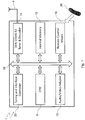
- a receiver 1 of radio and/or television signals (hereinafter identified only with the term 'signals') is shown.
- Such receiver 1 comprises memory means 13 in which are stored the geographic transmission information relating to services that transmit said signals.
- This information includes a plurality of elements, where each element includes data which allows to identify a geographic location of a particular television service that includes certain content.
- 'content' indicates a television/radio service, e.g. called 'service' in accordance with the terminology of the DVB standards, whereas in the terminology of the MPEG standards the same is referred to as 'program'.
- Each content is identified by a name which is formed by a string of characters, wherein said character string is preferably equal to the name of the service transmitted using the DVB standard or the name of the radio station transmitted using the RDS standard.
- the various data comprised in the geographical transmission information are structured so that the location of a certain service can be identified according to one or more of the following informational items: name of the service/broadcaster, the multiplex frequency, the multiplex identifier or the like.
- name of the service/broadcaster the multiplex frequency
- the multiplex identifier the multiplex identifier
- the receiver 1 also includes the following elements:
- the memory means 13 may be of the ROM type (Read Only Memory) within which the programs (software) are written to be executed , or of the EPROM type (Erasable Programmable Read Only Memory), for instance of the re-writable type, apart from a memory RAM (Random Access Memory) in which the data elaborated by the CPU are momentarily written, or other similar type.
- ROM Read Only Memory
- EPROM Erasable Programmable Read Only Memory
- the signals receiver 1 may be a regular TV or a Smart-TV or a digital video recorder (Digital/Personal Video Recorder - DVR/PVR) or a set top box or other similar receiver or a radio receiver.
- a digital video recorder Digital/Personal Video Recorder - DVR/PVR
- set top box or other similar receiver or a radio receiver.
- the receiver 1 comprises means for receiving signals via radio which preferably comprise at least one tuner and decoder for digital terrestrial television 14, preferably according to the standard DVB-T and/or DVB-T2, connected to an antenna 4 for the reception of terrestrial television signals.
- the receiver 1 may also comprise an appropriate radio tuner for receiving FM radio signals (with analog audio modulation and RDS data) or DAB signals (with digital modulation) .
- means for receiving signals via radio include a tuner and decoder for digital terrestrial television 14. Similarly it may operate as a radio receiver.
- the central computing unit 11 executes a set of instructions that configure, preferably through the tuning and interface controller 20, the digital terrestrial television tuner and decoder 14 to perform a scan of all the frequency bands in which television and/or radio transmissions can be present.
- the central computing unit 11 is also configured to store in the memory means 13 the tuning information relative to each receivable service in the area where the receiver is located 1.
- the tuning information allows for configuring, preferably through the tuning and interface controller 20, the receiving means (in this case the tuner and decoder 14) for the reception of the contents included in the received radio-television signals; for each receivable content, such tuning information includes, inter alia, the channel frequency containing the multiplex within which the desired service is comprised .
- the abovementioned tuning information allows the central processing unit 11 to quickly configure, upon request of a user (for example, by means of remote control), the receiving means, namely the tuner and decoder 14, so as to allow the reception of desired television and/or radio services.
- the central computing unit 11 of the receiver 1 is also configured to execute a set of instructions designed to estimate the location of the receiver 1 using both the tuning information (obtained when the receiver 1 is in the initialization - installation condition) and the geographical transmission information relating to the services of the received signals.
- each content contains, for each content, a literal description, preferably in the form of a string, of the area in which said content can be received (the so-called coverage area), each content is identified by a string in the column "Content ID” which is the name of the service according to the DVB standard.
- the receiver 1, having made such an automatic scan through the tuner and decoder 14 has stored, preferably in the memory means 13, the tuning information in the following table Content_ID Frequency (MHz) Rai 1 674, 000 Rai 2 674, 000 Rai 3 674, 000 Primocanale 658,000 Telegenova 623.250 Toscana TV 586,000
- the receiver 1 can for example select the lines of geographic transmission information, memorized in said memory means 13 that are compatible with the detected tuning information. In this way, the receiver 1 is able to determine its location by selecting the area that has the largest number of geographic information compatible with the tuning information.
- the receiver can determine its location 1 by performing the operation as just described by way of running the following SQL query:
- the accuracy in determining the location can be advantageously increased by adding to the tuning information the geographical information relative to the transmitter that uses the frequency (of the multiplex) from which a certain content is received. This also allows for taking advantage of national wide broadcasters that transmit content of local/regional interest.
- this type of broadcaster are not always able to transmit in DVB-T using the isofrequency technique (SFN - Single- Frequency Network), but, in order to avoid problems in areas of overlap of the transmitted signal by two or more repeaters, they are obliged to transmit using the multi-frequency technique (MFN - Multi- Frequency Network).
- SFN Single- Frequency Network
- MFN multi-frequency technique
- the geographical transmission information also includes, for each content, the channel frequency where the multiplex is placed the and the geographical location of the transmitter of the content.
- the receiver 1 contains in its memory means 13, the geographical transmission information in the following table: Content_ID Frequency (MHz) Transmitter_Location Zone Rai 1 482,000 Turin Piedmont Rai 2 482,000 Turin Piedmont Rai 3 482,000 Turin Piedmont Rai1 674,000 Genoa Liguria Rai 2 674,000 Genoa Liguria Rai 3 674,000 Genoa Liguria 4rete 498,000 Turin Piedmont Toscana TV 586 000 Massa Carrara Arabicy Primocanale 658,000 Genoa Liguria Telegenova 538,000 Genoa Liguria
- Transmitter_Location may also contain, rather than the literal description of the location, a pair of values that represent the geographic coordinates (latitude, longitude) relative to the location of the transmitter.
- the receiver 1 after scanning by way of the tuner and decoder 14, has stored, preferably in the memory means 13, the tuning information in the following table: Content_ID Frequency (MHz) Rai 1 674, 000 Rai 2 674, 000 Rai 3 674, 000 Primo canale 658,000 Telegenova 623.250 Toscana TV 586,000
- the receiver determines its location by selecting the rows of geographic transmission information that are compatible with the detected tuning information. After that, the receiver 1 can group together the selected geographical information, based on the area or location. In this way, the receiver 1 is able to determine its location by selecting the area or the location which has the largest number of geographic information compatible with the tuning information generated by the receiver 1 itself.
- the receiver 1 can determine its location by carrying out the operation just described above by running the following SQL query:
- the receiver 1 can prepare to access the receivable content arranging the tuning information in an appropriate way according to the determined location. As in the previous example, it is possible to eliminate the tuning information related to the content having the Content_ID relative to the alphanumeric string 'Toscana TV' or move the content to a separate list, or memorize the same at the end of the list of receivable services.
- a requirement for determining the location of the receiver 1, using the strategy described above, is that the tuning information should be comparable with the geographical transmission information, namely it should be possible to understand, by example comparing, in some way, one or more of the respective fields of information, which elements of geographical transmission information corresponds to certain elements of tuning information generated/inserted by/in the receiver 1.
- An example of preparing access to content is the elimination of tuning information that allows access to content that does not transmit information relevant to the area where the receiver 1 is located.
- tuning information As an alternative to the elimination of the tuning information as mentioned above, it is possible to organize the information so as that the contents are not immediately accessible to the user, for example by making it possible to access the said tuning information, which is related to the content not relevant to the area where the receiver 1 is located, only through a secondary service list. In this way, in the primary service list only the content would be present that transmit information of local interest.
- the geographic transmission information has a very important role in ensuring correct preparation of the tuning information.
- such geographical transmission information can be updated via radio, for example periodically tuning the tuner and decoder 14 to a particular service on which such information are transmitted (for example, using the MHP or another data transmission system associated to the television service).
- a network interface not illustrated in the attached figures
- a web service Web Service
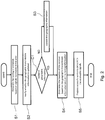
- the receiver 1 performs a method for preparing access to the content included in the radio and television signals received by said receiver 1, wherein said method comprises the following steps:
- said method can be encoded in a computer program using a programming language, such as C/C++, C #, Visual Basic, Fortran or similar.
- a programming language such as C/C++, C #, Visual Basic, Fortran or similar.
- part of the method may be performed by specially developed circuitry and/or programmable hardware, for example a CPLD, FPGA or other.
- an implementation of the method described above and applied to the receiver 1 includes the following states:
- the receiver When the receiver enters a state of initialization/installation (for example, when the search for services is initiated or the receiver 1 is turned on for the first time), the method described above is performed and the receiver 1 enters state S1.
- a state of initialization/installation for example, when the search for services is initiated or the receiver 1 is turned on for the first time
- the receiver 1 During its permanence in this state S1, the receiver 1 generates tuning information, for example by using the automatic scanning feature that is present today in the majority of radio and television receivers, the receiver 1 then switches to S2.
- the receiver 1 checks whether the geographic transmission information is updated, for example by calculating a summary (hash) of the transmission information present in the memory means 13 and by comparing the computed hash with the one published by a web service or by means of a radio service update, where said service is responsible for the transmission of updated geographic transmission information. If the information is not updated, the receiver 1 enters state S3, otherwise the receiver 1 enters state S4.
- the receiver 1 downloads from a network, to which it is connected by way of the network interface, updated geographic transmission information and proceeds to update the information already present in the memory means 13. Alternatively, or in combination with what has just been described, the receiver 1 may update such information waiting for a more recently updated version of the radio service to be transmitted. After updating the geographic transmission information, the receiver enters state S4.
- the receiver 1 determines its location by running step b. of the method according to the invention, after which the receiver 1 enters state S5.
- the receiver 1 prepares access to the content included in the received signals, preferably facilitating access to the contents of local interest based on the location of receiver 1, for example by deleting or moving to a secondary list the content of local interest that is related to a geographical area other than that in which the receiver 1 is located.
- the receiver 1 When the receiver 1 exits state S5, ending the execution of the method according to the invention, the receiver 1 is configured to access the contents of local interest relating to the location of the receiver 1.
- the receiver 1, before passing from state S4 to state S5, can generate, through the audio/video controller 12, a location confirmation screen 8.
- This screen 8 confirming the geographic location includes a message 81 that informs the user of the receiver 1 that the generation of the tuning information is complete and that the receiver 1 has determined its geographical location.
- said message 81 includes a string of a geographic location 811 which, preferably through a string of characters (e.g. 'Genoa', 'Turin', 'Massa Carrara'), expressing the geographical location determined during step b. (step S4) of the method according to the invention.
- this message 8 requires the user to confirm whether the specific geographical location is correct or not, which can be done, for instance, by using the remote control unit 26 which includes the buttons 'OK' and 'EXIT'.
- the receiver 1 switches to state S5, while if the key 'EXIT' is pressed then the receiver 1 shows a screen of geographical location (not shown in the drawings) that allows the user to correct (or specify more precisely) the geographical location determined by the receiver 1.
- the geographical location screen may comprise a map (for example similar to that of Google Maps, Bing Maps or other) on which is represented by means of an icon the position initially determined by the receiver 1, where such icon can be moved to the current location of the receiver 1, preferably by way of the remote control 26, for example using the 'ARROW UP/DOWN/LEFT/RIGHT' buttons included on the remote control.
- the user can confirm whether or not to proceed with the cancellation and/or moving of such content, for example using the 'OK' and 'EXIT' buttons on the remote control.
- the receiver 1 will remove all tuning information relative to the contents that convey information of local interest, but which, however, do not relate to the geographical location in which the receiver 1 is located.
- tuning information is placed in a secondary access list, e.g. a list of access to content (services) that are not immediately accessible to the user, in other words the central calculation unit 11 is also configured to prepare access to the tuning information so that the content related to the geographical location of receiver 1 is directly or immediately accessible, while the contents that are not related to the location of receiver 1 are not directly accessible or are accessible in a second mode.
- the method according to the invention can be performed on a request made by a user, for example by means of a remote control, for example, after the receiver 1 has performed the automatic search of available content in a specific area.
Landscapes
- Engineering & Computer Science (AREA)
- Signal Processing (AREA)
- Multimedia (AREA)
- Databases & Information Systems (AREA)
- General Engineering & Computer Science (AREA)
- Software Systems (AREA)
- Circuits Of Receivers In General (AREA)
- Two-Way Televisions, Distribution Of Moving Picture Or The Like (AREA)
Claims (15)
- Récepteur (1) de signaux de radio et/ou de télévision comprenant des contenus, où lesdits signaux sont transmis via radio par des émetteurs et sont reçus par ledit récepteur (1), comprenant :- un moyen de réception de signaux via radio (14, 16) qui, par le biais des informations de réglage, peut être configuré pour la réception du contenu des signaux de radio et/ou de télévision reçus, dans lequel les informations de réglage comprennent, pour chaque contenu reçu, un nom de service et/ou une station radio et/ou la fréquence de canal sur laquelle le multiplexe qui contient ledit contenu est reçu ;- un moyen de mémoire (13) contenant au moins les informations de transmission géographiques qui comportent les zones géographiques de couverture des émetteurs, qui transmettent les signaux reçus par le moyen de réception (14), dans lequel lesdites informations de transmission géographiques sont comparables aux informations de réglage, et moyennant quoi lesdites informations de transmission géographiques comportent, pour chaque contenu, un nom de service et/ou une station radio.
caractérisé par- une unité informatique centrale (11) configurée pour déterminer l'emplacement géographique du récepteur (1) d'après une comparaison entre les informations de transmission géographiques et les informations de réglage, et où l'unité informatique centrale (11) est également configurée pour agencer les informations de réglage d'après l'emplacement géographique du récepteur (1) afin d'organiser un accès aux contenus concernant l'emplacement du récepteur (1). - Récepteur (1) selon la revendication 1, dans lequel les informations de réglage comprennent, pour chaque contenu reçu, un nom de service et/ou de station radio et/ou une valeur de fréquence radio sur laquelle ledit contenu est reçu.
- Récepteur (1) selon la revendication 2, dans lequel les informations de transmission géographiques comportent, pour chaque contenu, la zone géographique relative au nom du service et/ou de la station radio.
- Récepteur (1) selon la revendication 3, dans lequel les informations de réglage comprennent, pour chaque contenu reçu, la fréquence de canal sur laquelle le multiplexe qui contient ledit contenu est reçu.
- Récepteur (1) selon la revendication 4, dans lequel les informations de transmission géographiques comportent, pour chaque contenu, la fréquence de canal dans laquelle le multiplexe qui contient ledit contenu est inséré.
- Récepteur (1) selon la revendication 5, dans lequel les informations de transmission géographiques comportent, pour chaque contenu, l'emplacement géographique de l'émetteur qui transmet ledit contenu.
- Récepteur (1) selon l'une quelconque des revendications 1 à 6 précédentes, dans lequel l'unité informatique centrale (11) est également configurée pour préparer un accès aux informations de réglage de sorte que le contenu lié à l'emplacement géographique du récepteur (1) soit accessible au moyen d'une première liste d'accès, tandis que les contenus qui ne sont pas liés à l'emplacement géographique du récepteur (1) sont accessibles au moyen d'une seconde liste d'accès, où la première liste d'accès est disponible au récepteur (1) avant la seconde liste d'accès ou dans lequel l'unité informatique centrale (11) est également configurée pour préparer un accès aux informations de réglage en éliminant les informations de réglage relatives aux contenus qui ne concernent pas l'emplacement géographique du récepteur (1).
- Récepteur (1) selon l'une quelconque des revendications 1 à 7 précédentes, dans lequel l'unité informatique centrale (11) est configurée pour générer un écran de confirmation d'emplacement (8) qui permet à un utilisateur dudit récepteur (1) de confirmer l'emplacement géographique déterminé par ledit récepteur (1).
- Récepteur (1) selon l'une quelconque des revendications 1 à 8 précédentes, dans lequel l'unité informatique centrale (11) est configurée pour générer un écran d'emplacement géographique qui permet à un utilisateur dudit récepteur (1) de corriger l'emplacement géographique déterminé par ledit récepteur (1).
- Procédé de préparation d'accès à un contenu inclus dans des signaux de radio et/ou de télévision reçus par un récepteur de signaux (1) selon l'une quelconque des revendications 1 à 9, comprenant les étapes suivantes :a. la génération des informations de réglage relatives auxdits signaux de radio/télévision reçus, dans lequel lesdites informations de réglage sont capables de configurer le récepteur (1) pour la réception du contenu des signaux de radio et/ou de télévision reçus,
caractérisé parb. la détermination de l'emplacement géographique du récepteur (1) d'après une comparaison entre les informations de réglage générées au cours de l'étape a. et les informations de transmission géographiques qui comportent les zones de couverture des émetteurs qui transmettent des signaux qui sont reçus par le récepteur (1), dans lequel lesdites informations de transmission géographiques sont comparables aux informations de réglage, moyennant quoi les informations de réglage comprennent notamment, pour chaque contenu reçu, un nom de service et/ou une station radio et/ou la fréquence de canal sur laquelle le multiplexe qui contient ledit contenu est reçu,c. l'agencement des informations de réglage générées pendant l'étape a. d'après l'emplacement géographique du récepteur (1) déterminé à l'étape b. afin d'agencer un accès au contenu relatif à l'emplacement du récepteur (1), moyennant quoi les informations de transmission géographiques comportent notamment, pour chaque contenu, un nom de service et/ou une station radio. - Procédé selon la revendication 10, dans lequel les informations de transmission géographiques comportent, pour chaque contenu, la fréquence de canal dans laquelle le multiplexe qui contient ledit contenu est inséré.
- Procédé selon la revendication 11, dans lequel les informations de transmission géographiques comportent, pour chaque contenu, l'emplacement géographique de l'émetteur qui transmet ledit contenu.
- Procédé selon l'une quelconque des revendications 10 à 12 précédentes, dans lequel pendant l'étape a. des informations de réglage sont générées automatiquement d'après les signaux reçus par ledit récepteur (1).
- Procédé selon l'une quelconque des revendications 10 à 13 précédentes, dans lequel pendant l'étape c. des informations de réglage sont organisées de sorte que le contenu concernant l'emplacement géographique du récepteur (1) soit accessible au moyen d'une première liste d'accès, tandis que les contenus qui ne sont pas liés à l'emplacement du récepteur (1) sont accessibles au moyen d'une seconde liste d'accès, dans lequel le récepteur (1) peut accéder à ladite première liste d'accès avant la seconde liste d'accès ou,
dans lequel pendant l'étape c. des informations de réglage concernant un contenu qui n'est pas relatif à l'emplacement du récepteur (1) sont éliminées. - Produit-programme d'ordinateur pouvant être chargé dans la mémoire d'un ordinateur et comprenant des portions de code logiciel pour implémenter les étapes du procédé selon l'une quelconque des revendications 10 à 14 précédentes.
Applications Claiming Priority (1)
| Application Number | Priority Date | Filing Date | Title |
|---|---|---|---|
| PCT/EP2014/050871 WO2015106818A1 (fr) | 2014-01-17 | 2014-01-17 | Récepteur de signaux de télévision et/ou radio, configuré pour préparer un accès à un contenu inclus dans lesdits signaux de télévision et/ou radio sur la base de l'emplacement géographique dudit récepteur |
Publications (2)
| Publication Number | Publication Date |
|---|---|
| EP3095246A1 EP3095246A1 (fr) | 2016-11-23 |
| EP3095246B1 true EP3095246B1 (fr) | 2020-09-02 |
Family
ID=49989776
Family Applications (1)
| Application Number | Title | Priority Date | Filing Date |
|---|---|---|---|
| EP14700716.5A Active EP3095246B1 (fr) | 2014-01-17 | 2014-01-17 | Récepteur de signaux de télévision et/ou radio, configuré pour préparer un accès à un contenu inclus dans lesdits signaux de télévision et/ou radio sur la base de l'emplacement géographique dudit récepteur |
Country Status (4)
| Country | Link |
|---|---|
| US (1) | US9832514B2 (fr) |
| EP (1) | EP3095246B1 (fr) |
| CN (1) | CN105917657B (fr) |
| WO (1) | WO2015106818A1 (fr) |
Families Citing this family (2)
| Publication number | Priority date | Publication date | Assignee | Title |
|---|---|---|---|---|
| US9948982B2 (en) * | 2016-07-05 | 2018-04-17 | Sony Corporation | Locality systems and methods for digital broadcasting |
| EP3672264B1 (fr) * | 2018-12-19 | 2022-04-06 | Vestel Elektronik Sanayi ve Ticaret A.S. | Récepteur de signal et procédé de fonctionnement |
Family Cites Families (7)
| Publication number | Priority date | Publication date | Assignee | Title |
|---|---|---|---|---|
| FR2685845A1 (fr) | 1991-12-26 | 1993-07-02 | Thomson Consumer Electronics | Recepteur de chaines de television muni d'un systeme d'affectation automatique des canaux. |
| GB0324696D0 (en) | 2003-10-23 | 2003-11-26 | Koninkl Philips Electronics Nv | Accessing content at a geographical location |
| JP4470574B2 (ja) * | 2004-05-11 | 2010-06-02 | 船井電機株式会社 | ディジタルテレビジョン放送信号受信装置 |
| WO2007001265A1 (fr) | 2005-06-16 | 2007-01-04 | Thomson Licensing | Utilisation d'un systeme de positionnement global (gps) pour l'identification de l'emetteur dans une television mobile |
| EP2227006B1 (fr) | 2009-03-04 | 2012-12-12 | Sony United Kingdom Limited | Procédé de fonctionnement d'un récepteur |
| US20110096243A1 (en) * | 2009-10-26 | 2011-04-28 | EchoStar Technologies. L.L.C. | Systems and Methods for Television Receiving System Setup Including Terrestrial Transmitter Locating |
| US20150181282A1 (en) * | 2013-12-19 | 2015-06-25 | Bby Solutions, Inc. | Multiple location channel database for digital television system and method |
-
2014
- 2014-01-17 WO PCT/EP2014/050871 patent/WO2015106818A1/fr not_active Ceased
- 2014-01-17 US US15/111,859 patent/US9832514B2/en active Active
- 2014-01-17 CN CN201480073380.XA patent/CN105917657B/zh active Active
- 2014-01-17 EP EP14700716.5A patent/EP3095246B1/fr active Active
Non-Patent Citations (1)
| Title |
|---|
| None * |
Also Published As
| Publication number | Publication date |
|---|---|
| EP3095246A1 (fr) | 2016-11-23 |
| US9832514B2 (en) | 2017-11-28 |
| CN105917657A (zh) | 2016-08-31 |
| CN105917657B (zh) | 2018-03-06 |
| WO2015106818A1 (fr) | 2015-07-23 |
| US20160337685A1 (en) | 2016-11-17 |
Similar Documents
| Publication | Publication Date | Title |
|---|---|---|
| US8120712B2 (en) | Channel selection in a receiver for terrestrial digital television broadcasting | |
| JP2004186975A (ja) | ディジタル放送受信装置 | |
| JP4488566B2 (ja) | 放送受信装置 | |
| US20110096243A1 (en) | Systems and Methods for Television Receiving System Setup Including Terrestrial Transmitter Locating | |
| EP3095246B1 (fr) | Récepteur de signaux de télévision et/ou radio, configuré pour préparer un accès à un contenu inclus dans lesdits signaux de télévision et/ou radio sur la base de l'emplacement géographique dudit récepteur | |
| JP2006013765A (ja) | デジタル放送受信装置 | |
| JP3848931B2 (ja) | 地上波デジタル放送受信機 | |
| JP2008005410A (ja) | 放送受信装置及び放送受信装置におけるチャンネル情報の更新方法 | |
| US10965390B2 (en) | Receiver apparatus and method for controlling the access to contents broadcasted via satellite | |
| JP5399279B2 (ja) | デジタル放送受信装置及びデジタル放送受信方法 | |
| JP2006025201A (ja) | テレビジョン放送受信システム | |
| JP6723435B2 (ja) | デジタル放送受信装置及びデジタル放送受信方法、並びにプログラム及び記録媒体 | |
| US7907221B2 (en) | Television device | |
| JP2006157334A (ja) | テレビジョン放送受信装置 | |
| JP5375759B2 (ja) | デジタル放送受信装置、受信方法およびプログラム | |
| JP4006707B2 (ja) | デジタル放送受信システム | |
| JP2005204009A (ja) | テレビジョン受信機及びテレビジョン受信方法 | |
| JP5350209B2 (ja) | デジタル放送受信装置及びデジタル放送受信方法 | |
| JP2007235434A (ja) | 地上波ディジタル放送受信装置 | |
| JP5899784B2 (ja) | 放送受信装置 | |
| JP2011119791A (ja) | 受信装置 | |
| JP2004363819A (ja) | 地上デジタル放送の選局方法、編成チャンネル設定方法およびテレビ受像機 | |
| JP4034646B2 (ja) | デジタル放送受信装置およびデジタル放送選局方法 | |
| KR20050107224A (ko) | 방송 수신기의 채널 검색 방법 | |
| JP2012019331A (ja) | デジタル放送受信装置および管理方法 |
Legal Events
| Date | Code | Title | Description |
|---|---|---|---|
| PUAI | Public reference made under article 153(3) epc to a published international application that has entered the european phase |
Free format text: ORIGINAL CODE: 0009012 |
|
| 17P | Request for examination filed |
Effective date: 20160817 |
|
| AK | Designated contracting states |
Kind code of ref document: A1 Designated state(s): AL AT BE BG CH CY CZ DE DK EE ES FI FR GB GR HR HU IE IS IT LI LT LU LV MC MK MT NL NO PL PT RO RS SE SI SK SM TR |
|
| AX | Request for extension of the european patent |
Extension state: BA ME |
|
| DAX | Request for extension of the european patent (deleted) | ||
| STAA | Information on the status of an ep patent application or granted ep patent |
Free format text: STATUS: EXAMINATION IS IN PROGRESS |
|
| 17Q | First examination report despatched |
Effective date: 20180503 |
|
| GRAP | Despatch of communication of intention to grant a patent |
Free format text: ORIGINAL CODE: EPIDOSNIGR1 |
|
| STAA | Information on the status of an ep patent application or granted ep patent |
Free format text: STATUS: GRANT OF PATENT IS INTENDED |
|
| INTG | Intention to grant announced |
Effective date: 20200317 |
|
| GRAS | Grant fee paid |
Free format text: ORIGINAL CODE: EPIDOSNIGR3 |
|
| GRAA | (expected) grant |
Free format text: ORIGINAL CODE: 0009210 |
|
| STAA | Information on the status of an ep patent application or granted ep patent |
Free format text: STATUS: THE PATENT HAS BEEN GRANTED |
|
| AK | Designated contracting states |
Kind code of ref document: B1 Designated state(s): AL AT BE BG CH CY CZ DE DK EE ES FI FR GB GR HR HU IE IS IT LI LT LU LV MC MK MT NL NO PL PT RO RS SE SI SK SM TR |
|
| REG | Reference to a national code |
Ref country code: GB Ref legal event code: FG4D |
|
| REG | Reference to a national code |
Ref country code: AT Ref legal event code: REF Ref document number: 1310198 Country of ref document: AT Kind code of ref document: T Effective date: 20200915 Ref country code: CH Ref legal event code: EP |
|
| REG | Reference to a national code |
Ref country code: DE Ref legal event code: R096 Ref document number: 602014069630 Country of ref document: DE |
|
| REG | Reference to a national code |
Ref country code: IE Ref legal event code: FG4D |
|
| REG | Reference to a national code |
Ref country code: LT Ref legal event code: MG4D |
|
| PG25 | Lapsed in a contracting state [announced via postgrant information from national office to epo] |
Ref country code: BG Free format text: LAPSE BECAUSE OF FAILURE TO SUBMIT A TRANSLATION OF THE DESCRIPTION OR TO PAY THE FEE WITHIN THE PRESCRIBED TIME-LIMIT Effective date: 20201202 Ref country code: GR Free format text: LAPSE BECAUSE OF FAILURE TO SUBMIT A TRANSLATION OF THE DESCRIPTION OR TO PAY THE FEE WITHIN THE PRESCRIBED TIME-LIMIT Effective date: 20201203 Ref country code: NO Free format text: LAPSE BECAUSE OF FAILURE TO SUBMIT A TRANSLATION OF THE DESCRIPTION OR TO PAY THE FEE WITHIN THE PRESCRIBED TIME-LIMIT Effective date: 20201202 Ref country code: LT Free format text: LAPSE BECAUSE OF FAILURE TO SUBMIT A TRANSLATION OF THE DESCRIPTION OR TO PAY THE FEE WITHIN THE PRESCRIBED TIME-LIMIT Effective date: 20200902 Ref country code: HR Free format text: LAPSE BECAUSE OF FAILURE TO SUBMIT A TRANSLATION OF THE DESCRIPTION OR TO PAY THE FEE WITHIN THE PRESCRIBED TIME-LIMIT Effective date: 20200902 Ref country code: SE Free format text: LAPSE BECAUSE OF FAILURE TO SUBMIT A TRANSLATION OF THE DESCRIPTION OR TO PAY THE FEE WITHIN THE PRESCRIBED TIME-LIMIT Effective date: 20200902 Ref country code: FI Free format text: LAPSE BECAUSE OF FAILURE TO SUBMIT A TRANSLATION OF THE DESCRIPTION OR TO PAY THE FEE WITHIN THE PRESCRIBED TIME-LIMIT Effective date: 20200902 |
|
| REG | Reference to a national code |
Ref country code: NL Ref legal event code: MP Effective date: 20200902 |
|
| REG | Reference to a national code |
Ref country code: AT Ref legal event code: MK05 Ref document number: 1310198 Country of ref document: AT Kind code of ref document: T Effective date: 20200902 |
|
| PG25 | Lapsed in a contracting state [announced via postgrant information from national office to epo] |
Ref country code: RS Free format text: LAPSE BECAUSE OF FAILURE TO SUBMIT A TRANSLATION OF THE DESCRIPTION OR TO PAY THE FEE WITHIN THE PRESCRIBED TIME-LIMIT Effective date: 20200902 Ref country code: PL Free format text: LAPSE BECAUSE OF FAILURE TO SUBMIT A TRANSLATION OF THE DESCRIPTION OR TO PAY THE FEE WITHIN THE PRESCRIBED TIME-LIMIT Effective date: 20200902 Ref country code: LV Free format text: LAPSE BECAUSE OF FAILURE TO SUBMIT A TRANSLATION OF THE DESCRIPTION OR TO PAY THE FEE WITHIN THE PRESCRIBED TIME-LIMIT Effective date: 20200902 |
|
| PG25 | Lapsed in a contracting state [announced via postgrant information from national office to epo] |
Ref country code: EE Free format text: LAPSE BECAUSE OF FAILURE TO SUBMIT A TRANSLATION OF THE DESCRIPTION OR TO PAY THE FEE WITHIN THE PRESCRIBED TIME-LIMIT Effective date: 20200902 Ref country code: CZ Free format text: LAPSE BECAUSE OF FAILURE TO SUBMIT A TRANSLATION OF THE DESCRIPTION OR TO PAY THE FEE WITHIN THE PRESCRIBED TIME-LIMIT Effective date: 20200902 Ref country code: SM Free format text: LAPSE BECAUSE OF FAILURE TO SUBMIT A TRANSLATION OF THE DESCRIPTION OR TO PAY THE FEE WITHIN THE PRESCRIBED TIME-LIMIT Effective date: 20200902 Ref country code: RO Free format text: LAPSE BECAUSE OF FAILURE TO SUBMIT A TRANSLATION OF THE DESCRIPTION OR TO PAY THE FEE WITHIN THE PRESCRIBED TIME-LIMIT Effective date: 20200902 Ref country code: NL Free format text: LAPSE BECAUSE OF FAILURE TO SUBMIT A TRANSLATION OF THE DESCRIPTION OR TO PAY THE FEE WITHIN THE PRESCRIBED TIME-LIMIT Effective date: 20200902 Ref country code: PT Free format text: LAPSE BECAUSE OF FAILURE TO SUBMIT A TRANSLATION OF THE DESCRIPTION OR TO PAY THE FEE WITHIN THE PRESCRIBED TIME-LIMIT Effective date: 20210104 |
|
| PG25 | Lapsed in a contracting state [announced via postgrant information from national office to epo] |
Ref country code: ES Free format text: LAPSE BECAUSE OF FAILURE TO SUBMIT A TRANSLATION OF THE DESCRIPTION OR TO PAY THE FEE WITHIN THE PRESCRIBED TIME-LIMIT Effective date: 20200902 Ref country code: AT Free format text: LAPSE BECAUSE OF FAILURE TO SUBMIT A TRANSLATION OF THE DESCRIPTION OR TO PAY THE FEE WITHIN THE PRESCRIBED TIME-LIMIT Effective date: 20200902 Ref country code: AL Free format text: LAPSE BECAUSE OF FAILURE TO SUBMIT A TRANSLATION OF THE DESCRIPTION OR TO PAY THE FEE WITHIN THE PRESCRIBED TIME-LIMIT Effective date: 20200902 Ref country code: IS Free format text: LAPSE BECAUSE OF FAILURE TO SUBMIT A TRANSLATION OF THE DESCRIPTION OR TO PAY THE FEE WITHIN THE PRESCRIBED TIME-LIMIT Effective date: 20210102 |
|
| REG | Reference to a national code |
Ref country code: DE Ref legal event code: R097 Ref document number: 602014069630 Country of ref document: DE |
|
| PG25 | Lapsed in a contracting state [announced via postgrant information from national office to epo] |
Ref country code: SK Free format text: LAPSE BECAUSE OF FAILURE TO SUBMIT A TRANSLATION OF THE DESCRIPTION OR TO PAY THE FEE WITHIN THE PRESCRIBED TIME-LIMIT Effective date: 20200902 |
|
| PLBE | No opposition filed within time limit |
Free format text: ORIGINAL CODE: 0009261 |
|
| STAA | Information on the status of an ep patent application or granted ep patent |
Free format text: STATUS: NO OPPOSITION FILED WITHIN TIME LIMIT |
|
| 26N | No opposition filed |
Effective date: 20210603 |
|
| PG25 | Lapsed in a contracting state [announced via postgrant information from national office to epo] |
Ref country code: SI Free format text: LAPSE BECAUSE OF FAILURE TO SUBMIT A TRANSLATION OF THE DESCRIPTION OR TO PAY THE FEE WITHIN THE PRESCRIBED TIME-LIMIT Effective date: 20200902 Ref country code: DK Free format text: LAPSE BECAUSE OF FAILURE TO SUBMIT A TRANSLATION OF THE DESCRIPTION OR TO PAY THE FEE WITHIN THE PRESCRIBED TIME-LIMIT Effective date: 20200902 Ref country code: MC Free format text: LAPSE BECAUSE OF FAILURE TO SUBMIT A TRANSLATION OF THE DESCRIPTION OR TO PAY THE FEE WITHIN THE PRESCRIBED TIME-LIMIT Effective date: 20200902 |
|
| REG | Reference to a national code |
Ref country code: CH Ref legal event code: PL |
|
| PG25 | Lapsed in a contracting state [announced via postgrant information from national office to epo] |
Ref country code: LU Free format text: LAPSE BECAUSE OF NON-PAYMENT OF DUE FEES Effective date: 20210117 |
|
| REG | Reference to a national code |
Ref country code: BE Ref legal event code: MM Effective date: 20210131 |
|
| PG25 | Lapsed in a contracting state [announced via postgrant information from national office to epo] |
Ref country code: LI Free format text: LAPSE BECAUSE OF NON-PAYMENT OF DUE FEES Effective date: 20210131 Ref country code: CH Free format text: LAPSE BECAUSE OF NON-PAYMENT OF DUE FEES Effective date: 20210131 |
|
| PG25 | Lapsed in a contracting state [announced via postgrant information from national office to epo] |
Ref country code: IE Free format text: LAPSE BECAUSE OF NON-PAYMENT OF DUE FEES Effective date: 20210117 |
|
| PG25 | Lapsed in a contracting state [announced via postgrant information from national office to epo] |
Ref country code: BE Free format text: LAPSE BECAUSE OF NON-PAYMENT OF DUE FEES Effective date: 20210131 |
|
| PG25 | Lapsed in a contracting state [announced via postgrant information from national office to epo] |
Ref country code: HU Free format text: LAPSE BECAUSE OF FAILURE TO SUBMIT A TRANSLATION OF THE DESCRIPTION OR TO PAY THE FEE WITHIN THE PRESCRIBED TIME-LIMIT; INVALID AB INITIO Effective date: 20140117 |
|
| P01 | Opt-out of the competence of the unified patent court (upc) registered |
Effective date: 20230419 |
|
| PG25 | Lapsed in a contracting state [announced via postgrant information from national office to epo] |
Ref country code: CY Free format text: LAPSE BECAUSE OF FAILURE TO SUBMIT A TRANSLATION OF THE DESCRIPTION OR TO PAY THE FEE WITHIN THE PRESCRIBED TIME-LIMIT Effective date: 20200902 |
|
| PG25 | Lapsed in a contracting state [announced via postgrant information from national office to epo] |
Ref country code: MK Free format text: LAPSE BECAUSE OF FAILURE TO SUBMIT A TRANSLATION OF THE DESCRIPTION OR TO PAY THE FEE WITHIN THE PRESCRIBED TIME-LIMIT Effective date: 20200902 |
|
| PG25 | Lapsed in a contracting state [announced via postgrant information from national office to epo] |
Ref country code: MT Free format text: LAPSE BECAUSE OF FAILURE TO SUBMIT A TRANSLATION OF THE DESCRIPTION OR TO PAY THE FEE WITHIN THE PRESCRIBED TIME-LIMIT Effective date: 20200902 |
|
| PG25 | Lapsed in a contracting state [announced via postgrant information from national office to epo] |
Ref country code: TR Free format text: LAPSE BECAUSE OF FAILURE TO SUBMIT A TRANSLATION OF THE DESCRIPTION OR TO PAY THE FEE WITHIN THE PRESCRIBED TIME-LIMIT Effective date: 20200902 |
|
| PGFP | Annual fee paid to national office [announced via postgrant information from national office to epo] |
Ref country code: GB Payment date: 20260121 Year of fee payment: 13 |
|
| PGFP | Annual fee paid to national office [announced via postgrant information from national office to epo] |
Ref country code: DE Payment date: 20260203 Year of fee payment: 13 |
|
| PGFP | Annual fee paid to national office [announced via postgrant information from national office to epo] |
Ref country code: IT Payment date: 20260128 Year of fee payment: 13 |
|
| PGFP | Annual fee paid to national office [announced via postgrant information from national office to epo] |
Ref country code: FR Payment date: 20260123 Year of fee payment: 13 |