EP3095895A1 - Procédé de formation des revêtements protecteurs au silicium sur composants métalliques - Google Patents
Procédé de formation des revêtements protecteurs au silicium sur composants métalliques Download PDFInfo
- Publication number
- EP3095895A1 EP3095895A1 EP16171410.0A EP16171410A EP3095895A1 EP 3095895 A1 EP3095895 A1 EP 3095895A1 EP 16171410 A EP16171410 A EP 16171410A EP 3095895 A1 EP3095895 A1 EP 3095895A1
- Authority
- EP
- European Patent Office
- Prior art keywords
- silicon
- free
- metal component
- substantially chromium
- layer
- Prior art date
- Legal status (The legal status is an assumption and is not a legal conclusion. Google has not performed a legal analysis and makes no representation as to the accuracy of the status listed.)
- Granted
Links
Images
Classifications
-
- C—CHEMISTRY; METALLURGY
- C23—COATING METALLIC MATERIAL; COATING MATERIAL WITH METALLIC MATERIAL; CHEMICAL SURFACE TREATMENT; DIFFUSION TREATMENT OF METALLIC MATERIAL; COATING BY VACUUM EVAPORATION, BY SPUTTERING, BY ION IMPLANTATION OR BY CHEMICAL VAPOUR DEPOSITION, IN GENERAL; INHIBITING CORROSION OF METALLIC MATERIAL OR INCRUSTATION IN GENERAL
- C23C—COATING METALLIC MATERIAL; COATING MATERIAL WITH METALLIC MATERIAL; SURFACE TREATMENT OF METALLIC MATERIAL BY DIFFUSION INTO THE SURFACE, BY CHEMICAL CONVERSION OR SUBSTITUTION; COATING BY VACUUM EVAPORATION, BY SPUTTERING, BY ION IMPLANTATION OR BY CHEMICAL VAPOUR DEPOSITION, IN GENERAL
- C23C18/00—Chemical coating by decomposition of either liquid compounds or solutions of the coating forming compounds, without leaving reaction products of surface material in the coating; Contact plating
- C23C18/02—Chemical coating by decomposition of either liquid compounds or solutions of the coating forming compounds, without leaving reaction products of surface material in the coating; Contact plating by thermal decomposition
- C23C18/12—Chemical coating by decomposition of either liquid compounds or solutions of the coating forming compounds, without leaving reaction products of surface material in the coating; Contact plating by thermal decomposition characterised by the deposition of inorganic material other than metallic material
- C23C18/125—Process of deposition of the inorganic material
- C23C18/1279—Process of deposition of the inorganic material performed under reactive atmosphere, e.g. oxidising or reducing atmospheres
-
- C—CHEMISTRY; METALLURGY
- C23—COATING METALLIC MATERIAL; COATING MATERIAL WITH METALLIC MATERIAL; CHEMICAL SURFACE TREATMENT; DIFFUSION TREATMENT OF METALLIC MATERIAL; COATING BY VACUUM EVAPORATION, BY SPUTTERING, BY ION IMPLANTATION OR BY CHEMICAL VAPOUR DEPOSITION, IN GENERAL; INHIBITING CORROSION OF METALLIC MATERIAL OR INCRUSTATION IN GENERAL
- C23C—COATING METALLIC MATERIAL; COATING MATERIAL WITH METALLIC MATERIAL; SURFACE TREATMENT OF METALLIC MATERIAL BY DIFFUSION INTO THE SURFACE, BY CHEMICAL CONVERSION OR SUBSTITUTION; COATING BY VACUUM EVAPORATION, BY SPUTTERING, BY ION IMPLANTATION OR BY CHEMICAL VAPOUR DEPOSITION, IN GENERAL
- C23C18/00—Chemical coating by decomposition of either liquid compounds or solutions of the coating forming compounds, without leaving reaction products of surface material in the coating; Contact plating
- C23C18/02—Chemical coating by decomposition of either liquid compounds or solutions of the coating forming compounds, without leaving reaction products of surface material in the coating; Contact plating by thermal decomposition
- C23C18/06—Coating on selected surface areas, e.g. using masks
-
- C—CHEMISTRY; METALLURGY
- C23—COATING METALLIC MATERIAL; COATING MATERIAL WITH METALLIC MATERIAL; CHEMICAL SURFACE TREATMENT; DIFFUSION TREATMENT OF METALLIC MATERIAL; COATING BY VACUUM EVAPORATION, BY SPUTTERING, BY ION IMPLANTATION OR BY CHEMICAL VAPOUR DEPOSITION, IN GENERAL; INHIBITING CORROSION OF METALLIC MATERIAL OR INCRUSTATION IN GENERAL
- C23C—COATING METALLIC MATERIAL; COATING MATERIAL WITH METALLIC MATERIAL; SURFACE TREATMENT OF METALLIC MATERIAL BY DIFFUSION INTO THE SURFACE, BY CHEMICAL CONVERSION OR SUBSTITUTION; COATING BY VACUUM EVAPORATION, BY SPUTTERING, BY ION IMPLANTATION OR BY CHEMICAL VAPOUR DEPOSITION, IN GENERAL
- C23C18/00—Chemical coating by decomposition of either liquid compounds or solutions of the coating forming compounds, without leaving reaction products of surface material in the coating; Contact plating
- C23C18/02—Chemical coating by decomposition of either liquid compounds or solutions of the coating forming compounds, without leaving reaction products of surface material in the coating; Contact plating by thermal decomposition
- C23C18/12—Chemical coating by decomposition of either liquid compounds or solutions of the coating forming compounds, without leaving reaction products of surface material in the coating; Contact plating by thermal decomposition characterised by the deposition of inorganic material other than metallic material
- C23C18/1204—Chemical coating by decomposition of either liquid compounds or solutions of the coating forming compounds, without leaving reaction products of surface material in the coating; Contact plating by thermal decomposition characterised by the deposition of inorganic material other than metallic material inorganic material, e.g. non-oxide and non-metallic such as sulfides, nitrides based compounds
- C23C18/1208—Oxides, e.g. ceramics
- C23C18/1212—Zeolites, glasses
-
- C—CHEMISTRY; METALLURGY
- C23—COATING METALLIC MATERIAL; COATING MATERIAL WITH METALLIC MATERIAL; CHEMICAL SURFACE TREATMENT; DIFFUSION TREATMENT OF METALLIC MATERIAL; COATING BY VACUUM EVAPORATION, BY SPUTTERING, BY ION IMPLANTATION OR BY CHEMICAL VAPOUR DEPOSITION, IN GENERAL; INHIBITING CORROSION OF METALLIC MATERIAL OR INCRUSTATION IN GENERAL
- C23C—COATING METALLIC MATERIAL; COATING MATERIAL WITH METALLIC MATERIAL; SURFACE TREATMENT OF METALLIC MATERIAL BY DIFFUSION INTO THE SURFACE, BY CHEMICAL CONVERSION OR SUBSTITUTION; COATING BY VACUUM EVAPORATION, BY SPUTTERING, BY ION IMPLANTATION OR BY CHEMICAL VAPOUR DEPOSITION, IN GENERAL
- C23C18/00—Chemical coating by decomposition of either liquid compounds or solutions of the coating forming compounds, without leaving reaction products of surface material in the coating; Contact plating
- C23C18/02—Chemical coating by decomposition of either liquid compounds or solutions of the coating forming compounds, without leaving reaction products of surface material in the coating; Contact plating by thermal decomposition
- C23C18/12—Chemical coating by decomposition of either liquid compounds or solutions of the coating forming compounds, without leaving reaction products of surface material in the coating; Contact plating by thermal decomposition characterised by the deposition of inorganic material other than metallic material
- C23C18/1229—Composition of the substrate
- C23C18/1241—Metallic substrates
-
- C—CHEMISTRY; METALLURGY
- C23—COATING METALLIC MATERIAL; COATING MATERIAL WITH METALLIC MATERIAL; CHEMICAL SURFACE TREATMENT; DIFFUSION TREATMENT OF METALLIC MATERIAL; COATING BY VACUUM EVAPORATION, BY SPUTTERING, BY ION IMPLANTATION OR BY CHEMICAL VAPOUR DEPOSITION, IN GENERAL; INHIBITING CORROSION OF METALLIC MATERIAL OR INCRUSTATION IN GENERAL
- C23C—COATING METALLIC MATERIAL; COATING MATERIAL WITH METALLIC MATERIAL; SURFACE TREATMENT OF METALLIC MATERIAL BY DIFFUSION INTO THE SURFACE, BY CHEMICAL CONVERSION OR SUBSTITUTION; COATING BY VACUUM EVAPORATION, BY SPUTTERING, BY ION IMPLANTATION OR BY CHEMICAL VAPOUR DEPOSITION, IN GENERAL
- C23C18/00—Chemical coating by decomposition of either liquid compounds or solutions of the coating forming compounds, without leaving reaction products of surface material in the coating; Contact plating
- C23C18/02—Chemical coating by decomposition of either liquid compounds or solutions of the coating forming compounds, without leaving reaction products of surface material in the coating; Contact plating by thermal decomposition
- C23C18/12—Chemical coating by decomposition of either liquid compounds or solutions of the coating forming compounds, without leaving reaction products of surface material in the coating; Contact plating by thermal decomposition characterised by the deposition of inorganic material other than metallic material
- C23C18/125—Process of deposition of the inorganic material
- C23C18/1275—Process of deposition of the inorganic material performed under inert atmosphere
-
- C—CHEMISTRY; METALLURGY
- C23—COATING METALLIC MATERIAL; COATING MATERIAL WITH METALLIC MATERIAL; CHEMICAL SURFACE TREATMENT; DIFFUSION TREATMENT OF METALLIC MATERIAL; COATING BY VACUUM EVAPORATION, BY SPUTTERING, BY ION IMPLANTATION OR BY CHEMICAL VAPOUR DEPOSITION, IN GENERAL; INHIBITING CORROSION OF METALLIC MATERIAL OR INCRUSTATION IN GENERAL
- C23C—COATING METALLIC MATERIAL; COATING MATERIAL WITH METALLIC MATERIAL; SURFACE TREATMENT OF METALLIC MATERIAL BY DIFFUSION INTO THE SURFACE, BY CHEMICAL CONVERSION OR SUBSTITUTION; COATING BY VACUUM EVAPORATION, BY SPUTTERING, BY ION IMPLANTATION OR BY CHEMICAL VAPOUR DEPOSITION, IN GENERAL
- C23C22/00—Chemical surface treatment of metallic material by reaction of the surface with a reactive liquid, leaving reaction products of surface material in the coating, e.g. conversion coatings, passivation of metals
- C23C22/05—Chemical surface treatment of metallic material by reaction of the surface with a reactive liquid, leaving reaction products of surface material in the coating, e.g. conversion coatings, passivation of metals using aqueous solutions
- C23C22/06—Chemical surface treatment of metallic material by reaction of the surface with a reactive liquid, leaving reaction products of surface material in the coating, e.g. conversion coatings, passivation of metals using aqueous solutions using aqueous acidic solutions with pH less than 6
- C23C22/48—Chemical surface treatment of metallic material by reaction of the surface with a reactive liquid, leaving reaction products of surface material in the coating, e.g. conversion coatings, passivation of metals using aqueous solutions using aqueous acidic solutions with pH less than 6 not containing phosphates, hexavalent chromium compounds, fluorides or complex fluorides, molybdates, tungstates, vanadates or oxalates
-
- C—CHEMISTRY; METALLURGY
- C23—COATING METALLIC MATERIAL; COATING MATERIAL WITH METALLIC MATERIAL; CHEMICAL SURFACE TREATMENT; DIFFUSION TREATMENT OF METALLIC MATERIAL; COATING BY VACUUM EVAPORATION, BY SPUTTERING, BY ION IMPLANTATION OR BY CHEMICAL VAPOUR DEPOSITION, IN GENERAL; INHIBITING CORROSION OF METALLIC MATERIAL OR INCRUSTATION IN GENERAL
- C23C—COATING METALLIC MATERIAL; COATING MATERIAL WITH METALLIC MATERIAL; SURFACE TREATMENT OF METALLIC MATERIAL BY DIFFUSION INTO THE SURFACE, BY CHEMICAL CONVERSION OR SUBSTITUTION; COATING BY VACUUM EVAPORATION, BY SPUTTERING, BY ION IMPLANTATION OR BY CHEMICAL VAPOUR DEPOSITION, IN GENERAL
- C23C22/00—Chemical surface treatment of metallic material by reaction of the surface with a reactive liquid, leaving reaction products of surface material in the coating, e.g. conversion coatings, passivation of metals
- C23C22/73—Chemical surface treatment of metallic material by reaction of the surface with a reactive liquid, leaving reaction products of surface material in the coating, e.g. conversion coatings, passivation of metals characterised by the process
- C23C22/74—Chemical surface treatment of metallic material by reaction of the surface with a reactive liquid, leaving reaction products of surface material in the coating, e.g. conversion coatings, passivation of metals characterised by the process for obtaining burned-in conversion coatings
Definitions
- the present invention relates to coated metal components and, more particularly, substantially chromium-free metal components with a substantially chromium-free protective coating containing silicon, and methods of forming such substantially chromium-free protective coatings on substantially chromium-free metal components.
- Inorganic layers and coatings are often formed on a surface of a substantially chromium-free metal component to protect and mask the underlying metal substrate and to extend its useful life, such as by providing corrosion resistance and chemical resistance.
- zinc may be applied as an inorganic protective coating on iron or steel substrates either electrochemically by plating or by hot dip methods, such zinc protective coatings may be subject to corrosion in the form of a white rust defect.
- a conversion coating such as a chromate may be applied as a pretreatment on the iron or steel substrate before the zinc is applied.
- the process forming chromate coatings presents environmental and health risks that reduce their prevalence of use and that have instigated research to identify suitable substitute environmentally friendly coatings to replace chromate coatings.
- Hard chrome plating is another common inorganic protective coating used in industrial equipment to reduce friction and wear.
- Hard chrome coatings are applied by electrolytic deposition processes.
- electrolytic deposition processes involve chemicals that are extremely hazardous, toxic, corrosive, and damaging to the environment.
- the use, storage, and disposal of the chemicals involved in electrolytic deposition processes are governed by law in most jurisdictions. Personal safety equipment and proper containment facilities are considered mandatory.
- Copper is most frequently used as a pure, unalloyed metal.
- copper tubing and pipes are used to transport potable water in a residence.
- copper corrodes over time and, if sulfur has been present, turns blue due to the formation of copper sulfate from sulfur exposure.
- Organic (i.e., carbon-based) coatings such as conventional paints, may also be used to protect substantially chromium-free metal substrates.
- organic coatings may deteriorate at high temperatures because of the presence of a polymer operating as a binder to confer film-forming properties. Consequently, organic coatings may lose their protective ability such that the formerly protected metal substrate is vulnerable to corrosion or chemical attack.
- the present invention provides, in one aspect, methods for forming a substantially chromium-free protective coating on a substantially chromium-free metal component in which a substantially chromium-free fluid composition layer containing silicon is applied to the substantially chromium-free metal component and heated to a temperature exceeding 400°F to convert the composition layer to the substantially chromium-free protective coating.
- the fluid composition layer may be a liquid composition layer.
- the protective coating may be, for example, effective for reducing corrosion and sulfidation of the underlying metal of the metal comopnent.
- the metal component may be formed from any metal including, but not limited to, iron, aluminum, titanium, copper, nickel, and alloys of each of these metals such as mild steel and stainless steels.
- the properties of the protective coating may be tailored according to the type of atmosphere in which the substantially chromium-free, silicon-containing fluid composition layer is heated.
- the fluid composition layer may be heated in air to form, for example, a silica or silicate protective coating or film.
- the fluid composition layer may be heated in argon to form, for example, a metal silicide protective coating.
- the substantially chromium-free, silicon-containing protective coating of the present invention would operate to mask and protect the underlying base metal of the metal component at room temperature and may retain the protective properties at elevated temperatures that area significantly above room temperature.
- the heat resistance would be advantageous in comparison to, for example, conventional organic or carbon-based paints that deteriorate at high temperatures and, therefore, lose their protective ability.
- the protective coating of the present invention would also eliminate the risks and concerns associated with producing conventional chromate coatings and hard chromium plating, among other types of conventional coatings.
- the protective coating of the present invention may also be applied to metal components that otherwise would not receive such coatings, such as copper tubing.
- the protective coating of the present invention may also reduce the need to alloy the metal of a component with another metal to impart corrosion resistance.
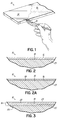
- a substantially chromium-free, silicon-containing layer 12 is applied to at least a portion of an original surface 14 of a substantially chromium-free metal component 10.
- the metal component 10 may be formed from a substantially chromium-free substrate 15 that includes any metal including, but not limited to, iron, aluminum, titanium, copper, nickel, and alloys of each of these materials, including mild steel and stainless steels.
- the metal may also include some non-metallic components.
- layer 12 and substrate 15 are substantially free of chromium content, other than a trace amount of chromium present as an impurity.
- the substantially chromium-free, silicon-containing layer 12 may be formed from a substantially chromium-free, silicon-containing fluid composition (e.g., liquid composition, solution, or slurry) that is applied to surface 14, such as by hand application with a paint brush B ( FIG. 1 ) as if being painted, by spraying in a controlled manner, or by dipping into a bath (not shown).
- the uncured fluid composition is then cured at a low temperature to form a solid or semi-solid that is bonded to the surface 14.
- the silicon-containing layer 12 may be cured by air-drying with optional heating.
- the curing temperature of the silicon-containing layer 12 is significantly less than 400°F.
- the fluid composition may be cured at about 250°F (121°C) for about 15 to 25 minutes to form the silicon-containing layer 12.
- the fluid composition forming layer 12 is substantially free of chromium content, other than a trace amount of chromium present as an impurity.
- the surface 14 may be substantially cleaned of any contaminants.
- a degreaser such as acetone, sodium hydroxide (NaOH) or potassium hydroxide (KOH) may be used to clean the surface 14 and potentially improve the bonding of the cured layer 12 to the surface.
- a biocide such as silver chloride (AgCl) may also be added to the fluid composition before layer 12 is applied to surface 14.
- a particular fluid or liquid composition that may be selected for use in forming layer 12 is a silicon-containing substance or liquid such as a silane.
- Silanes suitable for use in the present invention may have mono-, bis-, or tri-functional trialkoxy silane.
- the silane may be a bifunctional trialkoxy silyl, preferably trimethoxy, or triethoxy silyl groups.
- Amino silanes may also be used, although thio silanes may not be desired due to their sulfur content.
- Bisfunctional silane compounds are well known to persons having ordinary skill in the art, and two preferred for use in the present invention are bis(triethoxysilyl) ethane and bis(trimethoxysilyl) methane. In both of these compounds, the bridging group between the two silane moieties is an alkyl group. Additional commercially available silanes include, but are not limited to,
- the silane may be neat, in an aqueous solution, or diluted in an aqueous/alcohol solvent solution.
- a solvent for the latter type of diluted solution may contain from about 1% to 2% by volume to about 30% by volume deionized water with the remainder being a monohydric alcohol such as methanol, ethanol, n- or iso-propanol, or the like. Ethanol and methanol are preferred monohydric alcohols.
- the solvent is combined with the silane and glacial acetic acid to preferably establish a pH of about 4-6.
- the silane concentration in the solution may be limited to a maximum concentration for which the silane remains in solution during application. Generally, the solution will consist of about 1% to about 20% silane, wherein the percentage may be measured either by volume or by weight.
- a particularly useful silane for use in providing silicon-containing layer 12 may be an organofunctional silane such as BTSE 1,2 bis(triethoxysilyl) ethane or BTSM 1,2 bis(trimethoxysilyl) methane.
- the silane may be dissolved in a mixture of water and acetic acid at a pH of 5, then in denatured alcohol and glacial acetic acid to establish a silane solution.
- the silane concentration in the solution is between about 1% and 10% by volume and, advantageously, about 5% by volume. This silane solution readily forms the silicon-containing layer 12, which may have a more or less hard consistency, at a temperature readily achieved and insufficient to form the protective coating 16.
- the liquid composition that is applied to, after curing, form the silicon-containing layer 12 is applied in an amount of about 0.01 g/cm 2 to about 2.0 g/cm 2 .
- Multiple layers of the liquid composition may be applied; each individual layer being dried and heated to remove the solvent before applying the next successive layer.
- the silicon-containing layer 12 may refer to either the initially applied layer of liquid composition, or without limitation to the dried layer.
- the silicon-containing layer 12 may have a thickness in the range of about 40 nm to about 200 nm in the cured state and may form a continuous layer on surface 14, although the invention is not so limited.
- Silicon-containing layer 12 is heated to a temperature and for a duration effective to convert layer 12 into a substantially chromium-free, silicon-containing protective coating 16 across the portion of the original surface 14 of the metal component 10 to which layer 12 is applied.
- the conversion temperature is a temperature between 400°F and about 70 percent of the melting temperature of the substantially chromium-free metal constituting component 10.
- the specific temperature to which silicon-containing layer 12 is heated to cause the conversion to protective coating 16 will depend, among other things, upon the composition and characteristics of the liquid composition used to form layer 12 and the specific metal constituting the metal component 10.
- the protective coating 16 may be continuous with a thickness measured relative to an exposed surface 24 that, after the coating 16 is applied, is exposed to the operating environment of the metal component 10.
- the protective coating 16 substantially free of chromium content, other than a trace amount of chromium present as an impurity.
- a particularly advantageous conversion temperature may be the eutectic temperature for silicon and the particular metal constituting the metal component 10.
- a eutectic or eutectic mixture is a mixture of two or more elements that has a lower melting point than any of its constituents. The proper ratio of silicon and metal to obtain a eutectic alloy is identified by the eutectic point on a phase diagram. The eutectic point is the point at which the liquid phase borders directly on the solid forms of pure silicon and the pure metal, which represents the minimum melting temperature or eutectic temperature of any possible alloy of silicon and the metal(s) constituting the metal component 10.
- the substantially chromium-free silicon-containing layer 12 may be heated in various different atmospheres and under various different conditions to form the substantially chromium-free protective coating 16.
- the conversion from substantially chromium-free, silicon-containing layer 12 to substantially chromium-free, silicon-containing protective coating 16 may be accomplished by placing the metal component 10 into a heated enclosure, like an oven or furnace. However, the specific heating method may be selected based upon the size of the component 10 and the availability of heating options.
- the heated enclosure is heated to a temperature sufficient to elevate layer 12 to a temperature sufficient to cause the conversion.
- the curing step to form silicon-containing layer 12 and the subsequent step converting the cured layer 12 into protective coating 16 may be conducted in the same heated enclosure or before placing the metal component 10 into the heated enclosure.
- the silicon-containing layer 12 cures at a lower temperature than the temperature required to convert layer 12 into protective coating 16.
- the heat tunnels used in powder coaters may provide a suitable heated environment or enclosure.
- this approach may be particularly advantageous for forming the protective coating 16 on metal components composed of aluminum.
- the substantially chromium-free, silicon-containing layer 12 communicates with the ambient atmosphere surrounding the substantially chromium-free metal component 10 during heating.
- the properties of the protective coating 16 may be tailored according to the type of atmosphere in which the fluid composition in the silicon-containing layer 12 is heated.
- the substantially chromium-free silicon-containing layer 12 may be heated in an oxidizing ambient atmosphere, such as air, to convert layer 12 to a substantially chromium-free protective coating 16 containing oxygen and silicon, such as a glass precursor of silicon like SiO 2 , a silica, or a silicate.
- the oxygen-containing coating 16 may optionally include elements from the material constituting the metal component 10 such that the protective coating 16 comprise a mixtures of metal oxides formed from the metal matrix that is covered by a thin silicon-enriched oxide outer layer.
- the substantially chromium-free silicon-containing layer 12 may be heated in a non-oxidizing ambient atmosphere, such as argon, to form, for example, a substantially chromium-free protective coating 16, such as a metal silicide, that contains silicon from layer 12 and a concentration of one or more elements from the constituent material of the metal component 10.
- a non-oxidizing ambient atmosphere such as argon
- the non-oxidizing ambient environment may be an oxygen-depleted environment created by evacuating atmospheric gases (air) from a heating chamber and filling the evacuated chamber with an inert gas.
- the substantially chromium-free silicon-containing layer 12 may further include an additive that is subsequently incorporated as an optional dopant into the substantially chromium-free protective coating 16.
- Suitable additives generally include any compound of the dopant that is dissolvable in the particular silane solution, although additives containing sulfur ligands and/or oxygen ligands may be disfavored. If the dopant is yttrium, for example, suitable yttrium compounds include, but are not limited to, yttrium halides, such as yttrium chloride, yttrium bromide, yttrium iodide, and yttrium fluoride.
- yttrium compounds include, but are not limited to, yttrium acetate, yttrium acetate hydrate, yttrium 2-ethylhexanoate, yttrium perchlorate solution (e.g., 40 wt. % in water), yttrium nitrate hexahydrate, yttrium nitrate tetrahydrate, yttrium isopropoxide oxide, yttrium isopropoxide solution (e.g., 25 wt.
- hafnium for example, suitable hafnium compounds include, but are not limited to, hafnium halides, such as hafnium chloride, hafnium bromide, hafnium iodide, and hafnium fluoride.
- hafnium compounds include, but are not limited to, any hafnium compound with an organic ligand, such as hafnium tert-butoxide, and hafnium nitrates. Permitted hafnium compounds generally exclude compounds with either sulfur ligands or oxide ligands. These, and other, yttrium and hafnium compounds are commercially available, for example, from Sigma-Aldrich (St. Louis, Missouri).
- one or more of the candidate dopant compounds is dissolved in or combined with the silane or silane solution. Before combining, the added amount of the dopant compound is measured for accurately regulating the concentration of dopant in the substantially chromium-free silicon-containing layer 12 and, subsequently, in the protective coating 16. Typically, a single additive or dopant compound will be combined with the silane to form the fluid composition that is applied as layer 12 to all or a portion of surface 14.
- the substantially chromium-free silicon-containing layer 12 may be applied across an existing coating 18 on substrate 15.
- the existing coating 18 may be, for example, an existing protective coating 16 that is in need of repair.
- the existing coating 18 may be stripped from surface 14 before the silicon-containing layer 12 is applied for forming the protective coating 16.
- the metal component 10 includes the protective coating 16 on the surface 14 of the substrate 15.
- the protective coating 16 protects the underlying metal of the substrate 12 of metal component 10 against, for example, oxidation and corrosion.
- the substantially chromium-free protective coating 16 may be an additive layer 20 or, more typically, may include a concentration of one or more elements from substrate 15 because of interdiffusion between the applied silicon-containing layer 12 and the metal of the substrate 15.
- the protective coating 16 will be generally characterized by a diffusion zone 22 in addition to the additive layer 20 that overlies the diffusion zone 22.
- the interdiffusion may advantageously introduce a concentration of one or more additional elements from the substrate 15 into the protective coating 16 that ultimately endow the coating 16 with beneficial protective capabilities.
- the diffusion zone 22 may be absent.
- the invention also contemplates that the silicon from the layer 12 may diffusion into the surface 14 and combine with the metal of the substrate 15 such that the original surface 14 is present after the conversion and the silicon resides entirely in a diffusion zone 22.
- the invention further contemplates that the fluid compositions described herein may be introduced into internal passages (not shown) of the substantially chromium-free metal component 10 for purposes of forming the substantially chromium-free, silicon-containing protective coating 16 on internal surfaces bordering the passages.
- the silicon-containing fluid composition is introduced into the passages to form substantially chromium-free, silicon-containing layer 12 and heated to form the protective coating 16 on these internal surfaces.
- the substantially chromium-free, silicon-containing layer 12 may be applied to a metal component 10 composed of zinc and heated in an oxidizing environment, like air, to a temperature greater than 400°F that is sufficient to form a protective coating 16, which may be zinc oxide, that incorporates silicon from the liquid composition constituting layer 12.
- a protective coating which may be zinc oxide, that incorporates silicon from the liquid composition constituting layer 12.
- the protective coating is believed to reduce oxidation of the underlying zinc substrate 15.
- the substantially chromium-free, silicon-containing layer 12 may be applied to a metal component 10 composed of copper by immersion in the liquid composition, preferably almost immediately after the copper component 10 is drawn to a final dimension.
- a protective coating 16 containing silicon is formed in which silicon is incorporated into copper metal as a diffusion zone 22 with an optional additive layer 20.
- the protective coating 16 may be a copper silicide layer.
- the substantially chromium-free, silicon-containing layer 12 may be applied to a metal component 10 composed of a steel.
- a metal component 10 composed of a steel.
- the application of a thin layer of silane followed by heating to a temperature less than 770°C (1418°F) but greater than 400°F in a non-oxidizing environment forms a protective coating 16, which may be ferric silicide, that improves corrosion resistance.
- the solubility of the silicon in iron is less than four (4) weight percentage. In very dilute solutions less than 0.4 weight percent silicon, silicon may replace carbon in the steel.
- the existing layer 18 may be a hard chromium coating or plating that is pre-existing on the substantially chromium-free metal component 10 before the substantially chromium-free, silicon-containing layer 12 is applied.
- the silicon-containing layer 12 is heated to a temperature less than 800°C (1472°F) but greater than 400°F in an inert environment to form the protective coating 16.
- the resultant protective coating 16 is not substantially free of chromium as preferred by the present invention, the chromium in coating 16 does not originate from either component 10 or layer 12 but, instead, originates from layer 18.
- the substantially chromium-free, silicon-containing layer 12 may be applied to a metal component 10 composed of aluminum, followed by heating to less than 400°C (752°F) but greater than 400°F in a non-oxidizing environment, which is believed to produce a protective coating 16 of aluminum silicide.
- the solubility of silicon in aluminum is limited to a maximum of one (1) weight percent to 1.5 weight percent at the eutectic temperature of 577°C (1071°F).
- the protective coating 16 may also increase the resistivity of the metal of the metal component 10, which may represent an additional benefit of the present invention.
Landscapes
- Chemical & Material Sciences (AREA)
- Engineering & Computer Science (AREA)
- General Chemical & Material Sciences (AREA)
- Chemical Kinetics & Catalysis (AREA)
- Materials Engineering (AREA)
- Mechanical Engineering (AREA)
- Metallurgy (AREA)
- Organic Chemistry (AREA)
- Physics & Mathematics (AREA)
- Thermal Sciences (AREA)
- Inorganic Chemistry (AREA)
- Ceramic Engineering (AREA)
- Other Surface Treatments For Metallic Materials (AREA)
- Turbine Rotor Nozzle Sealing (AREA)
- Application Of Or Painting With Fluid Materials (AREA)
- Chemically Coating (AREA)
Priority Applications (1)
| Application Number | Priority Date | Filing Date | Title |
|---|---|---|---|
| PL16171410T PL3095895T3 (pl) | 2004-12-13 | 2005-12-12 | Elementy metalowe z powłokami ochronnymi zawierającymi krzem i sposoby wytwarzania takich powłok ochronnych |
Applications Claiming Priority (3)
| Application Number | Priority Date | Filing Date | Title |
|---|---|---|---|
| PCT/US2004/041896 WO2006036171A1 (fr) | 2004-09-16 | 2004-12-13 | Composants de reacteur en superalliage a revetements de protection et procede de formation de ces revetements de protection sur des composants de reacteur en superalliage |
| PCT/US2005/045078 WO2006065819A2 (fr) | 2004-12-13 | 2005-12-12 | Composants metalliques avec revetements protecteurs au silicium et procedes de formation de ces revetements protecteurs |
| EP05853894.3A EP1834009B1 (fr) | 2004-12-13 | 2005-12-12 | Composants metalliques avec revetements protecteurs au silicium et procedes de formation de ces revetements protecteurs |
Related Parent Applications (2)
| Application Number | Title | Priority Date | Filing Date |
|---|---|---|---|
| EP05853894.3A Division EP1834009B1 (fr) | 2004-12-13 | 2005-12-12 | Composants metalliques avec revetements protecteurs au silicium et procedes de formation de ces revetements protecteurs |
| EP05853894.3A Division-Into EP1834009B1 (fr) | 2004-12-13 | 2005-12-12 | Composants metalliques avec revetements protecteurs au silicium et procedes de formation de ces revetements protecteurs |
Publications (2)
| Publication Number | Publication Date |
|---|---|
| EP3095895A1 true EP3095895A1 (fr) | 2016-11-23 |
| EP3095895B1 EP3095895B1 (fr) | 2019-05-01 |
Family
ID=36405882
Family Applications (3)
| Application Number | Title | Priority Date | Filing Date |
|---|---|---|---|
| EP16171410.0A Expired - Lifetime EP3095895B1 (fr) | 2004-12-13 | 2005-12-12 | Procédé de formation des revêtements protecteurs au silicium sur composants métalliques |
| EP05858676A Expired - Lifetime EP1831428B1 (fr) | 2004-12-13 | 2005-12-12 | Composants de moteur a turbine avec revetements protecteurs contenant du silicium et du chrome sans aluminure et procedes de fabrication de tels revetements protecteurs sans aluminure |
| EP05853894.3A Expired - Lifetime EP1834009B1 (fr) | 2004-12-13 | 2005-12-12 | Composants metalliques avec revetements protecteurs au silicium et procedes de formation de ces revetements protecteurs |
Family Applications After (2)
| Application Number | Title | Priority Date | Filing Date |
|---|---|---|---|
| EP05858676A Expired - Lifetime EP1831428B1 (fr) | 2004-12-13 | 2005-12-12 | Composants de moteur a turbine avec revetements protecteurs contenant du silicium et du chrome sans aluminure et procedes de fabrication de tels revetements protecteurs sans aluminure |
| EP05853894.3A Expired - Lifetime EP1834009B1 (fr) | 2004-12-13 | 2005-12-12 | Composants metalliques avec revetements protecteurs au silicium et procedes de formation de ces revetements protecteurs |
Country Status (4)
| Country | Link |
|---|---|
| EP (3) | EP3095895B1 (fr) |
| ES (1) | ES2368436T3 (fr) |
| PL (2) | PL3095895T3 (fr) |
| WO (2) | WO2007067185A2 (fr) |
Families Citing this family (1)
| Publication number | Priority date | Publication date | Assignee | Title |
|---|---|---|---|---|
| EP2103713A1 (fr) * | 2008-03-20 | 2009-09-23 | Münch Chemie International GmbH | Couche de protection contre la corrosion |
Citations (5)
| Publication number | Priority date | Publication date | Assignee | Title |
|---|---|---|---|---|
| GB893397A (en) * | 1959-07-29 | 1962-04-11 | Dow Corning | Improvements in or relating to coating metals |
| US4500364A (en) * | 1982-04-23 | 1985-02-19 | Exxon Research & Engineering Co. | Method of forming a protective aluminum-silicon coating composition for metal substrates |
| EP0327311A2 (fr) * | 1988-02-02 | 1989-08-09 | Hitachi Chemical Co., Ltd. | Fluide de revêtement pour la formation d'une couche d'oxyde |
| WO1998030735A2 (fr) * | 1997-01-09 | 1998-07-16 | University Of Cincinnati | Procede servant a empecher la corrosion de metaux au moyen de silanes |
| WO2003035942A2 (fr) * | 2001-08-03 | 2003-05-01 | Elisha Holding Llc | Procede electrolytique et autocatalytique de traitement de surfaces metalliques et produits traites selon ce procede |
Family Cites Families (13)
| Publication number | Priority date | Publication date | Assignee | Title |
|---|---|---|---|---|
| CA1004964A (en) * | 1972-05-30 | 1977-02-08 | Union Carbide Corporation | Corrosion resistant coatings and process for making the same |
| CH597364A5 (fr) * | 1974-04-11 | 1978-03-31 | Bbc Sulzer Turbomaschinen | |
| GB1529441A (en) * | 1976-01-05 | 1978-10-18 | Bp Chem Int Ltd | Protective surface films of oxide or silicide |
| JPS5754282A (ja) * | 1980-09-17 | 1982-03-31 | Mitsubishi Heavy Ind Ltd | Tainetsugokinnohyomenshorihoho |
| US4774149A (en) * | 1987-03-17 | 1988-09-27 | General Electric Company | Oxidation-and hot corrosion-resistant nickel-base alloy coatings and claddings for industrial and marine gas turbine hot section components and resulting composite articles |
| US6503347B1 (en) * | 1996-04-30 | 2003-01-07 | Surface Engineered Products Corporation | Surface alloyed high temperature alloys |
| US5721061A (en) * | 1996-11-15 | 1998-02-24 | General Electric Company | Oxidation-resistant coating for niobium-base alloys |
| GB9821748D0 (en) * | 1998-10-07 | 1998-12-02 | Rolls Royce Plc | A titanium article having a protective coating and a method of applying a protective coating to a titanium article |
| DE60022300T2 (de) | 1999-12-20 | 2006-06-22 | United Technologies Corp., Hartford | Gegenstände mit korrosionsbeständigen Beschichtungen |
| WO2002024344A2 (fr) * | 2000-09-25 | 2002-03-28 | Chemetall Gmbh | Procede de pretraitement et d'enduction de surfaces metalliques, avant leur façonnage, au moyen d'un revetement ressemblant a de la peinture, et utilisation de substrats ainsi enduits |
| US6521356B2 (en) * | 2001-02-02 | 2003-02-18 | General Electric Company | Oxidation resistant coatings for niobium-based silicide composites |
| US6605161B2 (en) * | 2001-06-05 | 2003-08-12 | Aeromet Technologies, Inc. | Inoculants for intermetallic layer |
| US20060057418A1 (en) * | 2004-09-16 | 2006-03-16 | Aeromet Technologies, Inc. | Alluminide coatings containing silicon and yttrium for superalloys and method of forming such coatings |
-
2005
- 2005-12-12 WO PCT/US2005/044843 patent/WO2007067185A2/fr not_active Ceased
- 2005-12-12 PL PL16171410T patent/PL3095895T3/pl unknown
- 2005-12-12 EP EP16171410.0A patent/EP3095895B1/fr not_active Expired - Lifetime
- 2005-12-12 EP EP05858676A patent/EP1831428B1/fr not_active Expired - Lifetime
- 2005-12-12 ES ES05858676T patent/ES2368436T3/es not_active Expired - Lifetime
- 2005-12-12 PL PL05858676T patent/PL1831428T3/pl unknown
- 2005-12-12 WO PCT/US2005/045078 patent/WO2006065819A2/fr not_active Ceased
- 2005-12-12 EP EP05853894.3A patent/EP1834009B1/fr not_active Expired - Lifetime
Patent Citations (5)
| Publication number | Priority date | Publication date | Assignee | Title |
|---|---|---|---|---|
| GB893397A (en) * | 1959-07-29 | 1962-04-11 | Dow Corning | Improvements in or relating to coating metals |
| US4500364A (en) * | 1982-04-23 | 1985-02-19 | Exxon Research & Engineering Co. | Method of forming a protective aluminum-silicon coating composition for metal substrates |
| EP0327311A2 (fr) * | 1988-02-02 | 1989-08-09 | Hitachi Chemical Co., Ltd. | Fluide de revêtement pour la formation d'une couche d'oxyde |
| WO1998030735A2 (fr) * | 1997-01-09 | 1998-07-16 | University Of Cincinnati | Procede servant a empecher la corrosion de metaux au moyen de silanes |
| WO2003035942A2 (fr) * | 2001-08-03 | 2003-05-01 | Elisha Holding Llc | Procede electrolytique et autocatalytique de traitement de surfaces metalliques et produits traites selon ce procede |
Also Published As
| Publication number | Publication date |
|---|---|
| PL3095895T3 (pl) | 2019-10-31 |
| EP1834009A2 (fr) | 2007-09-19 |
| EP1831428B1 (fr) | 2011-06-22 |
| WO2006065819A2 (fr) | 2006-06-22 |
| WO2007067185A3 (fr) | 2007-08-02 |
| EP3095895B1 (fr) | 2019-05-01 |
| PL1831428T3 (pl) | 2012-03-30 |
| EP1831428A2 (fr) | 2007-09-12 |
| WO2006065819A3 (fr) | 2006-11-30 |
| ES2368436T3 (es) | 2011-11-17 |
| EP1834009B1 (fr) | 2016-07-20 |
| WO2007067185A2 (fr) | 2007-06-14 |
Similar Documents
| Publication | Publication Date | Title |
|---|---|---|
| US9157140B2 (en) | Metal components with silicon-containing protective coatings substantially free of chromium and methods of forming such protective coatings | |
| EP2102384B1 (fr) | Procede et composition de revetement sol-gel | |
| Figueira et al. | Organic–inorganic hybrid sol–gel coatings for metal corrosion protection: a review of recent progress | |
| Wu et al. | Electrodeposition of cerium (III)-modified bis-[triethoxysilypropyl] tetra-sulphide films on AA2024-T3 (aluminum alloy) for corrosion protection | |
| Vignesh et al. | Surface modification, characterization and corrosion protection of 1, 3-diphenylthiourea doped sol-gel coating on aluminium | |
| CN103205738A (zh) | 一种无铬纯化液 | |
| HUP0003824A2 (en) | Method and compositions for preventing corrosion of metal substrates | |
| EP2915903A1 (fr) | Revêtement de conversion exempt de chrome | |
| Conde et al. | Protective properties of a sol-gel coating on zinc coated steel | |
| CN105671469B (zh) | 一种热浸镀钢及其制造方法 | |
| CN104611667B (zh) | 一种用于锌铝镁稀土共渗层的共渗剂 | |
| Petrunin et al. | The directional formation and protective effect of self-assembling vinyl siloxane nanolayers on copper surface | |
| EP1834009B1 (fr) | Composants metalliques avec revetements protecteurs au silicium et procedes de formation de ces revetements protecteurs | |
| WO2013054066A1 (fr) | Procédé de traitement anticorrosion d'un substrat métallique solide et substrat métallique susceptible d'être obtenu par un tel procédé | |
| EP2766508A1 (fr) | Procédé de traitement anticorrosion d'un substrat métallique solide et substrat métallique solide traité susceptible d'être obtenu par un tel procédé | |
| CN106893485A (zh) | 一种烧结温度较低的无铬锌铝涂料及其制备方法和用途 | |
| Li et al. | Dynamic corrosion behavior of superhydrophobic surfaces | |
| Mansfeld et al. | Surface modification of Al/15% SiC metal matrix composite in molten salts containing CeCl3 | |
| Spuller et al. | Cerium-containing hexamethyldisiloxane coatings for corrosion protection of a laser-based powder bed fusion fabricated AlSi10Mg0. 3 alloy | |
| Zhu et al. | Corrosion Resistance Behavior of Zinc Substrate Treated with Rare Earth Salt Passivation: Zhu, Shen, Zhang, and Xu | |
| Vuori et al. | Improved corrosion properties of hot dip galvanized steel by nanomolecular silane layers as hybrid interface between zinc and top coatings | |
| JP2026003032A (ja) | 腐食抑制被覆を含む物品とその製造方法 | |
| JP7312583B2 (ja) | 鋳鉄管およびその製造方法 | |
| Garcia-Galvan et al. | Multiscale Electrochemical Analysis of Sol-Gel Films Modified with Eco-Friendly Corrosion Inhibitors for Active Corrosion Protection of AZ61 Magnesium Alloy | |
| CN106425050A (zh) | 一种海洋环境用高耐候多丝埋弧焊钢管强化方法 |
Legal Events
| Date | Code | Title | Description |
|---|---|---|---|
| PUAI | Public reference made under article 153(3) epc to a published international application that has entered the european phase |
Free format text: ORIGINAL CODE: 0009012 |
|
| AC | Divisional application: reference to earlier application |
Ref document number: 1834009 Country of ref document: EP Kind code of ref document: P |
|
| AK | Designated contracting states |
Kind code of ref document: A1 Designated state(s): AT BE BG CH CY CZ DE DK EE ES FI FR GB GR HU IE IS IT LI LT LU LV MC NL PL PT RO SE SI SK TR |
|
| STAA | Information on the status of an ep patent application or granted ep patent |
Free format text: STATUS: REQUEST FOR EXAMINATION WAS MADE |
|
| 17P | Request for examination filed |
Effective date: 20170523 |
|
| RBV | Designated contracting states (corrected) |
Designated state(s): AT BE BG CH CY CZ DE DK EE ES FI FR GB GR HU IE IS IT LI LT LU LV MC NL PL PT RO SE SI SK TR |
|
| STAA | Information on the status of an ep patent application or granted ep patent |
Free format text: STATUS: EXAMINATION IS IN PROGRESS |
|
| 17Q | First examination report despatched |
Effective date: 20180608 |
|
| GRAP | Despatch of communication of intention to grant a patent |
Free format text: ORIGINAL CODE: EPIDOSNIGR1 |
|
| STAA | Information on the status of an ep patent application or granted ep patent |
Free format text: STATUS: GRANT OF PATENT IS INTENDED |
|
| INTG | Intention to grant announced |
Effective date: 20181217 |
|
| GRAS | Grant fee paid |
Free format text: ORIGINAL CODE: EPIDOSNIGR3 |
|
| GRAA | (expected) grant |
Free format text: ORIGINAL CODE: 0009210 |
|
| STAA | Information on the status of an ep patent application or granted ep patent |
Free format text: STATUS: THE PATENT HAS BEEN GRANTED |
|
| AC | Divisional application: reference to earlier application |
Ref document number: 1834009 Country of ref document: EP Kind code of ref document: P |
|
| AK | Designated contracting states |
Kind code of ref document: B1 Designated state(s): AT BE BG CH CY CZ DE DK EE ES FI FR GB GR HU IE IS IT LI LT LU LV MC NL PL PT RO SE SI SK TR |
|
| REG | Reference to a national code |
Ref country code: GB Ref legal event code: FG4D |
|
| REG | Reference to a national code |
Ref country code: CH Ref legal event code: EP Ref country code: AT Ref legal event code: REF Ref document number: 1126989 Country of ref document: AT Kind code of ref document: T Effective date: 20190515 |
|
| REG | Reference to a national code |
Ref country code: DE Ref legal event code: R096 Ref document number: 602005055732 Country of ref document: DE |
|
| REG | Reference to a national code |
Ref country code: IE Ref legal event code: FG4D |
|
| REG | Reference to a national code |
Ref country code: NL Ref legal event code: MP Effective date: 20190501 |
|
| REG | Reference to a national code |
Ref country code: LT Ref legal event code: MG4D |
|
| PG25 | Lapsed in a contracting state [announced via postgrant information from national office to epo] |
Ref country code: FI Free format text: LAPSE BECAUSE OF FAILURE TO SUBMIT A TRANSLATION OF THE DESCRIPTION OR TO PAY THE FEE WITHIN THE PRESCRIBED TIME-LIMIT Effective date: 20190501 Ref country code: LT Free format text: LAPSE BECAUSE OF FAILURE TO SUBMIT A TRANSLATION OF THE DESCRIPTION OR TO PAY THE FEE WITHIN THE PRESCRIBED TIME-LIMIT Effective date: 20190501 Ref country code: NL Free format text: LAPSE BECAUSE OF FAILURE TO SUBMIT A TRANSLATION OF THE DESCRIPTION OR TO PAY THE FEE WITHIN THE PRESCRIBED TIME-LIMIT Effective date: 20190501 Ref country code: ES Free format text: LAPSE BECAUSE OF FAILURE TO SUBMIT A TRANSLATION OF THE DESCRIPTION OR TO PAY THE FEE WITHIN THE PRESCRIBED TIME-LIMIT Effective date: 20190501 Ref country code: SE Free format text: LAPSE BECAUSE OF FAILURE TO SUBMIT A TRANSLATION OF THE DESCRIPTION OR TO PAY THE FEE WITHIN THE PRESCRIBED TIME-LIMIT Effective date: 20190501 Ref country code: PT Free format text: LAPSE BECAUSE OF FAILURE TO SUBMIT A TRANSLATION OF THE DESCRIPTION OR TO PAY THE FEE WITHIN THE PRESCRIBED TIME-LIMIT Effective date: 20190901 |
|
| PG25 | Lapsed in a contracting state [announced via postgrant information from national office to epo] |
Ref country code: LV Free format text: LAPSE BECAUSE OF FAILURE TO SUBMIT A TRANSLATION OF THE DESCRIPTION OR TO PAY THE FEE WITHIN THE PRESCRIBED TIME-LIMIT Effective date: 20190501 Ref country code: GR Free format text: LAPSE BECAUSE OF FAILURE TO SUBMIT A TRANSLATION OF THE DESCRIPTION OR TO PAY THE FEE WITHIN THE PRESCRIBED TIME-LIMIT Effective date: 20190802 Ref country code: BG Free format text: LAPSE BECAUSE OF FAILURE TO SUBMIT A TRANSLATION OF THE DESCRIPTION OR TO PAY THE FEE WITHIN THE PRESCRIBED TIME-LIMIT Effective date: 20190801 |
|
| REG | Reference to a national code |
Ref country code: AT Ref legal event code: MK05 Ref document number: 1126989 Country of ref document: AT Kind code of ref document: T Effective date: 20190501 |
|
| PG25 | Lapsed in a contracting state [announced via postgrant information from national office to epo] |
Ref country code: IS Free format text: LAPSE BECAUSE OF FAILURE TO SUBMIT A TRANSLATION OF THE DESCRIPTION OR TO PAY THE FEE WITHIN THE PRESCRIBED TIME-LIMIT Effective date: 20190901 |
|
| PG25 | Lapsed in a contracting state [announced via postgrant information from national office to epo] |
Ref country code: RO Free format text: LAPSE BECAUSE OF FAILURE TO SUBMIT A TRANSLATION OF THE DESCRIPTION OR TO PAY THE FEE WITHIN THE PRESCRIBED TIME-LIMIT Effective date: 20190501 Ref country code: SK Free format text: LAPSE BECAUSE OF FAILURE TO SUBMIT A TRANSLATION OF THE DESCRIPTION OR TO PAY THE FEE WITHIN THE PRESCRIBED TIME-LIMIT Effective date: 20190501 Ref country code: CZ Free format text: LAPSE BECAUSE OF FAILURE TO SUBMIT A TRANSLATION OF THE DESCRIPTION OR TO PAY THE FEE WITHIN THE PRESCRIBED TIME-LIMIT Effective date: 20190501 Ref country code: AT Free format text: LAPSE BECAUSE OF FAILURE TO SUBMIT A TRANSLATION OF THE DESCRIPTION OR TO PAY THE FEE WITHIN THE PRESCRIBED TIME-LIMIT Effective date: 20190501 Ref country code: DK Free format text: LAPSE BECAUSE OF FAILURE TO SUBMIT A TRANSLATION OF THE DESCRIPTION OR TO PAY THE FEE WITHIN THE PRESCRIBED TIME-LIMIT Effective date: 20190501 Ref country code: EE Free format text: LAPSE BECAUSE OF FAILURE TO SUBMIT A TRANSLATION OF THE DESCRIPTION OR TO PAY THE FEE WITHIN THE PRESCRIBED TIME-LIMIT Effective date: 20190501 |
|
| REG | Reference to a national code |
Ref country code: DE Ref legal event code: R097 Ref document number: 602005055732 Country of ref document: DE |
|
| PLBE | No opposition filed within time limit |
Free format text: ORIGINAL CODE: 0009261 |
|
| STAA | Information on the status of an ep patent application or granted ep patent |
Free format text: STATUS: NO OPPOSITION FILED WITHIN TIME LIMIT |
|
| PG25 | Lapsed in a contracting state [announced via postgrant information from national office to epo] |
Ref country code: TR Free format text: LAPSE BECAUSE OF FAILURE TO SUBMIT A TRANSLATION OF THE DESCRIPTION OR TO PAY THE FEE WITHIN THE PRESCRIBED TIME-LIMIT Effective date: 20190501 |
|
| 26N | No opposition filed |
Effective date: 20200204 |
|
| PG25 | Lapsed in a contracting state [announced via postgrant information from national office to epo] |
Ref country code: SI Free format text: LAPSE BECAUSE OF FAILURE TO SUBMIT A TRANSLATION OF THE DESCRIPTION OR TO PAY THE FEE WITHIN THE PRESCRIBED TIME-LIMIT Effective date: 20190501 |
|
| REG | Reference to a national code |
Ref country code: BE Ref legal event code: MM Effective date: 20191231 |
|
| PG25 | Lapsed in a contracting state [announced via postgrant information from national office to epo] |
Ref country code: MC Free format text: LAPSE BECAUSE OF FAILURE TO SUBMIT A TRANSLATION OF THE DESCRIPTION OR TO PAY THE FEE WITHIN THE PRESCRIBED TIME-LIMIT Effective date: 20190501 |
|
| PG25 | Lapsed in a contracting state [announced via postgrant information from national office to epo] |
Ref country code: LU Free format text: LAPSE BECAUSE OF NON-PAYMENT OF DUE FEES Effective date: 20191212 Ref country code: IE Free format text: LAPSE BECAUSE OF NON-PAYMENT OF DUE FEES Effective date: 20191212 |
|
| PG25 | Lapsed in a contracting state [announced via postgrant information from national office to epo] |
Ref country code: BE Free format text: LAPSE BECAUSE OF NON-PAYMENT OF DUE FEES Effective date: 20191231 |
|
| PG25 | Lapsed in a contracting state [announced via postgrant information from national office to epo] |
Ref country code: CY Free format text: LAPSE BECAUSE OF FAILURE TO SUBMIT A TRANSLATION OF THE DESCRIPTION OR TO PAY THE FEE WITHIN THE PRESCRIBED TIME-LIMIT Effective date: 20190501 |
|
| PG25 | Lapsed in a contracting state [announced via postgrant information from national office to epo] |
Ref country code: HU Free format text: LAPSE BECAUSE OF FAILURE TO SUBMIT A TRANSLATION OF THE DESCRIPTION OR TO PAY THE FEE WITHIN THE PRESCRIBED TIME-LIMIT; INVALID AB INITIO Effective date: 20051212 |
|
| P01 | Opt-out of the competence of the unified patent court (upc) registered |
Effective date: 20230519 |
|
| PGFP | Annual fee paid to national office [announced via postgrant information from national office to epo] |
Ref country code: PL Payment date: 20241121 Year of fee payment: 20 |
|
| PGFP | Annual fee paid to national office [announced via postgrant information from national office to epo] |
Ref country code: GB Payment date: 20241227 Year of fee payment: 20 |
|
| PGFP | Annual fee paid to national office [announced via postgrant information from national office to epo] |
Ref country code: FR Payment date: 20241226 Year of fee payment: 20 |
|
| PGFP | Annual fee paid to national office [announced via postgrant information from national office to epo] |
Ref country code: IT Payment date: 20241218 Year of fee payment: 20 |
|
| PGFP | Annual fee paid to national office [announced via postgrant information from national office to epo] |
Ref country code: DE Payment date: 20241227 Year of fee payment: 20 |
|
| PGFP | Annual fee paid to national office [announced via postgrant information from national office to epo] |
Ref country code: CH Payment date: 20250108 Year of fee payment: 20 |
|
| REG | Reference to a national code |
Ref country code: CH Ref legal event code: H14 Free format text: ST27 STATUS EVENT CODE: U-0-0-H10-H14 (AS PROVIDED BY THE NATIONAL OFFICE) Effective date: 20251212 Ref country code: DE Ref legal event code: R071 Ref document number: 602005055732 Country of ref document: DE |
|
| REG | Reference to a national code |
Ref country code: GB Ref legal event code: PE20 Expiry date: 20251211 |