EP3096310B1 - Geheimnisberechnungsverfahren, geheimnisberechgnungssystem, zufallspermutationsvorrichtung und program - Google Patents
Geheimnisberechnungsverfahren, geheimnisberechgnungssystem, zufallspermutationsvorrichtung und program Download PDFInfo
- Publication number
- EP3096310B1 EP3096310B1 EP15737344.0A EP15737344A EP3096310B1 EP 3096310 B1 EP3096310 B1 EP 3096310B1 EP 15737344 A EP15737344 A EP 15737344A EP 3096310 B1 EP3096310 B1 EP 3096310B1
- Authority
- EP
- European Patent Office
- Prior art keywords
- random permutation
- secret sharing
- random
- permutation
- devices
- Prior art date
- Legal status (The legal status is an assumption and is not a legal conclusion. Google has not performed a legal analysis and makes no representation as to the accuracy of the status listed.)
- Active
Links
Images


Classifications
-
- G—PHYSICS
- G09—EDUCATION; CRYPTOGRAPHY; DISPLAY; ADVERTISING; SEALS
- G09C—CIPHERING OR DECIPHERING APPARATUS FOR CRYPTOGRAPHIC OR OTHER PURPOSES INVOLVING THE NEED FOR SECRECY
- G09C1/00—Apparatus or methods whereby a given sequence of signs, e.g. an intelligible text, is transformed into an unintelligible sequence of signs by transposing the signs or groups of signs or by replacing them by others according to a predetermined system
-
- G—PHYSICS
- G06—COMPUTING OR CALCULATING; COUNTING
- G06F—ELECTRIC DIGITAL DATA PROCESSING
- G06F21/00—Security arrangements for protecting computers, components thereof, programs or data against unauthorised activity
- G06F21/60—Protecting data
-
- H—ELECTRICITY
- H04—ELECTRIC COMMUNICATION TECHNIQUE
- H04L—TRANSMISSION OF DIGITAL INFORMATION, e.g. TELEGRAPHIC COMMUNICATION
- H04L9/00—Cryptographic mechanisms or cryptographic arrangements for secret or secure communications; Network security protocols
- H04L9/08—Key distribution or management, e.g. generation, sharing or updating, of cryptographic keys or passwords
- H04L9/0816—Key establishment, i.e. cryptographic processes or cryptographic protocols whereby a shared secret becomes available to two or more parties, for subsequent use
- H04L9/085—Secret sharing or secret splitting, e.g. threshold schemes
-
- H—ELECTRICITY
- H04—ELECTRIC COMMUNICATION TECHNIQUE
- H04L—TRANSMISSION OF DIGITAL INFORMATION, e.g. TELEGRAPHIC COMMUNICATION
- H04L2209/00—Additional information or applications relating to cryptographic mechanisms or cryptographic arrangements for secret or secure communication H04L9/00
- H04L2209/46—Secure multiparty computation, e.g. millionaire problem
Definitions
- the present invention relates to a secret calculation technique, and especially relates to a technique for performing secret random permutation.
- Secret calculation is a technique in which data processing is performed while concealing data by secret sharing.
- the secret sharing is a technique in which data is converted into a plurality of distributed values so that original data can be restored by using a certain number or more number of pieces of distributed values, while original data cannot be restored by using distributed values of which the number of pieces is smaller than the certain number.
- the secret sharing can be categorized into several kinds. Examples of the secret sharing include (k,n)-secret sharing, additive secret sharing, permutation data secret sharing, and the like.
- the plain text can be restored when arbitrary k pieces of shares are provided. Any information on the plain text cannot be obtained from shares of which the number is smaller than k.
- Specific examples of types of the (k,n)-secret sharing include Shamir secret sharing, replicated secret sharing, and the like.
- the additive secret sharing is (k,k)-secret sharing by the replicated secret sharing.
- the additive secret sharing is the simplest secret sharing in which a plain text is restored only by adding up k pieces of shares.
- the permutation data secret sharing is secret sharing performed while concealing permutation data.
- the permutation data is data representing the rearrangement way in rearrangement of data columns.
- permutation data ⁇ having the volume m is data representing a bijective map ⁇ :N m ⁇ N m .
- N m represents a collection of non-negative integers which are smaller than an arbitrary integer m.
- data of which elements in vectors x ⁇ ⁇ (N m ) m are different from each other can be assumed as random permutation data having the volume m.
- it is assumed to rearrange the data column y ⁇ (1,5,7,10) by the vector x ⁇ . 1 which is the 0th element of the data column y ⁇ is moved to the third position represented by the 0th element of the vector x ⁇ . 5 which is the first element of the data column y ⁇ is moved to the 0th position represented by the first element of the vector x ⁇ .
- 7 is moved to the second position and 10 is moved to the first position.
- the secret random permutation is a technique for performing permutation of an inputted data column in a random manner while concealing the permutated orders even from a processing executor.
- a conventional technique for performing the secret random permutation the technique described in Non-patent Literature 1 is disclosed.
- any parties do not know the plain text ⁇ of the permutation data secret sharing values ⁇ >, that is, the permutated order in the data column.
- the following three types of secret random permutation can be conceivable based on the difference in forms of an input and an output.
- the first type is a case where both of an input and an output are (k,n)-secret sharing values.
- the second type is a case where an input is a (k,n)-secret sharing value and an output is a disclosed value.
- the third type is a case where an input is a disclosed value and an output is a (k,n)-secret sharing value.
- an input is a disclosed value
- the above-described processing of the basic form is performed after the disclosed value is subjected to secret sharing to be secret sharing values.
- disclosed processing is performed after the above-described processing of the basic form is performed.
- a disclosed value is a value which is known by all parties. The disclosed processing represents that all parties transmit own shares to other all parties and secret sharing is restored from the shares which are received by all parties.
- Non-patent Literature 1 Koki Hamada, Dai Ikarashi, Koji Chida, Katsumi Takahashi, "A Random Permutation Protocol on Three-Party Secure Function Evaluation", Computer Security Symposium 2010, 2010
- Non-patent Literature 1 processing of permutation and processing of resharing are repeated by using (k,n)-secret sharing values. Respective parties have to mutually communicate with all other parties so as to perform resharing of (k,n)-secret sharing values. Thus, there is a problem in which the communication volume and the number of communication stages are large.
- An object of the present invention is to reduce the communication volume and the number of communication stages required for secret random permutation and to perform secret calculation including secret random permutation at high speed.
- the communication volume and the number of communication stages in performing of secret random permutation can be reduced. Accordingly, secret calculation including secret random permutation can be executed at high speed.
- p represents a party possessing shares.
- P (p 0 ,...,p n-1 ) represents a collection of the whole of n parties possessing shares.
- [x] represents a (k,n)-secret sharing value of the plane text x ⁇ G.
- G represents a commutative group.
- the (k,n)-secret sharing value represents a set obtained by collecting all shares which are obtained by distributing the plain text x by the (k,n)-secret sharing.
- Secret sharing values [x] are normally possessed in a manner to be distributed in n party collection P, so that all secret sharing values [x] are not possessed at one place and therefore, secret sharing values [x] are virtual.
- [x] p represents a share possessed by the party p ⁇ P among (k,n)-secret sharing values [x].
- [x ⁇ ] represents a column of (k,n)-secret sharing values by which a column of a plain text becomes x ⁇ .
- [G] represents a collection of the whole of (k,n)-secret sharing values in the commutative group G.
- «x» ⁇ represents an additive secret sharing value of the plain text x ⁇ G and represents that the k party group ⁇ possesses a share.
- the additive secret sharing value represents a set obtained by collecting all shares which are obtained by distributing the plain text x by additive secret sharing.
- «x» ⁇ p represents a share possessed by the party p ⁇ in the additive secret sharing value «x» ⁇ .
- «x ⁇ » ⁇ represents a column of additive secret sharing values by which a column of a plain text becomes x ⁇ .
- «G» ⁇ represents a collection of the whole of additive secret sharing values in the commutative group G.
- ⁇ > represents a permutation data secret sharing value of permutation data ⁇ .
- ⁇ represents a collection of the whole permutation data having the volume m.
- ⁇ > represents a collection of the whole permutation data secret sharing value having the volume m.
- Step 1 An input is converted from a (k,n)-secret sharing value or a disclosed value into an additive secret sharing value.
- Step 2. Each party which belongs to the k party collection ⁇ having shares repeats normal permutation of the permutation data secret sharing value ⁇ > by the sub share ⁇ ⁇ and resharing on additive secret sharing values. However, the resharing is not performed on the final time.
- one time in the repetition is referred to as unit permutation and the whole repeated processing is referred to as repetition permutation.
- Step 3 An output is converted from an additive secret sharing value into a (k,n)-secret sharing value or a disclosed value.
- Step 1 An existing method is applicable to Step 1 and Step 3. Points in the processing of Step 2 will be described below.
- a point in the unit permutation is selecting of the k party collection ⁇ i on the i-th unit permutation so as to satisfy
- 1. That is, only one party is different between the k party collection ⁇ i performing the i-th unit permutation and the k party collection ⁇ i+1 performing the i+1-th unit permutation and the rest of k-1 parties are same parties.
- Such unit permutation is referred to as 1-additive resharing protocol because this unit permutation is the case where only one party is different.
- the communication volume of (n-1)(k-1) pieces of G elements is required.
- the communication volume of only k-1 pieces of G elements is required.
- the communication volume is the communication volume of only one piece of G element. In this case, the communication volume becomes a constant and thus, it is very efficient.
- the party p k outputs the received «a» ⁇ ' pk .
- ⁇ ⁇ a ⁇ p k ⁇ ' ⁇ ⁇ a ⁇ ⁇ p 0 ⁇ ⁇ ⁇ 1 ⁇ i ⁇ k r i
- the party p i calculates the secret sharing value «a» ⁇ ' pi with the following formula so as to output the secret sharing value «a» ⁇ ' pi .
- ⁇ ⁇ a ⁇ ⁇ p i ⁇ ' ⁇ ⁇ a ⁇ ⁇ p i ⁇ + r i
- the repetition permutation is repetition of permutation ⁇ resharing ⁇ permutation ⁇ resharing ⁇ ... ⁇ permutation, in which permutation is executed N times and resharing is executed N-1 times.
- the number of communication stages is the number of times of resharing, that is, N-1 stages.
- unit permutation by the 1-additive resharing protocol can be parallelized on communication. This is because a party which waits for data reception is one party, that is, only a party which does not participate in the previous unit permutation and other parties execute only offline processing without waiting for any data reception and can shift to the next unit permutation processing.
- the number of shares of the additive secret sharing is k pieces. Therefore, if the order P in the k party group is appropriately set, k times of unit permutation, at the maximum, can be executed on one stage. Accordingly, the number of communication stages can be reduced to (N-1)/k stages.
- the number of communication stages can be efficiently improved by setting the order P in the k party group such that the numbers of communication stages of paths from the party p i are equal to each other or such that the difference between the maximum value and the minimum value is the smallest, with respect to arbitrary i ⁇ k.
- the number of communication stages of a path is the number of ⁇ in which communication is required due to change of parties on the path, that is,
- the communication in the 1-additive resharing protocol is communication of random numbers except that the party p k waits for transmission from the party p 0 and does not depend on a result of resharing on the previous stage.
- the number of communication stages of a path represents the number of stages which are aligned in series and therefore, cannot be executed in parallel in communication from the party p 0 to the party p k .
- the number of communication stages in the whole repetition permutation is as expressed in the following formula. Thus, when the numbers of communication stages of respective paths are equal to each other, it is efficient.
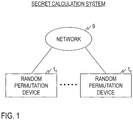
- the secret calculation system includes n ( ⁇ 2) pieces of random permutation devices 1 1 , ..., 1 n and a network 9.
- Each of the random permutation devices 1 1 , ..., 1 n is connected to the network 9. It is sufficient that the network 9 is configured so that the random permutation devices 1 1 , ..., 1 n can communicate with each other and the network 9 may be composed of an internet, a LAN, a WAN, or the like, for example. Further, the random permutation devices 1 1 , ..., 1 n do not necessarily have to be able to mutually communicate online via the network 9.
- such configuration may be employed that information outputted from a certain random permutation device 1 i (1 ⁇ i ⁇ n) is stored in a portable recording medium such as a USB memory and is inputted offline into another random permutation device 1 j (1 ⁇ j ⁇ n, i ⁇ j) from the portable recording medium.
- a portable recording medium such as a USB memory
- the random permutation device 1 includes a preliminary conversion unit 10, a unit permutation unit 12, a resharing unit 14, a post-facto conversion unit 16, and a storage unit 18.
- the random permutation device 1 is a special device which is configured by reading a special program into a known or dedicated computer including a central processing unit (CPU), a main storage device (a random access memory, RAM), and the like, for example.
- the random permutation device 1 executes each processing under the control of the central processing unit, for example.
- the storage unit 18 provided to the random permutation device 1 can be composed of a main storage device such as a random access memory (RAM), an auxiliary storage device composed of a hard disc, an optical disc, or a semiconductor memory element such as a flash memory, or middleware such as a relational database and a key-value store, for example.
- a main storage device such as a random access memory (RAM)
- RAM random access memory
- auxiliary storage device composed of a hard disc, an optical disc, or a semiconductor memory element such as a flash memory
- middleware such as a relational database and a key-value store
- the (k,n)-secret sharing value [a] p or the disclosed value a of the plain text a, the sub share ⁇ p of the permutation data ⁇ corresponding to the k party group ⁇ including the party p, and N ⁇ k pieces of seeds s 0,1 , ..., s N-1,k are stored.
- the seeds s 0,1 , ..., s N-1,k are preliminarily stored so as to generate random numbers without communication in the later-described processing by the resharing unit 14.
- the seeds s 0,1 , ..., s N-1,k do not have to be stored in the case where random numbers are generated in a coordinated manner each time.
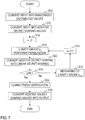
- FIG. 3 one example of a processing flow of a secret calculation method which is executed by the secret calculation system according to the first embodiment is described in accordance with an order of a procedure which is actually performed.
- step S10 the preliminary conversion units 10 provided to the k pieces of random permutation devices 1 ⁇ 0 convert the (k,n)-secret sharing values [a] pi or the disclosed values a which are stored in the storage units 18 into the additive secret sharing values «a» ⁇ 0 .
- a known method can be used for the method for converting from a (k,n)-secret sharing value or a disclosed value into an additive secret sharing value.
- the conversion into an additive secret sharing value can be performed as follows, for example. It is assumed that ⁇ is a group of the k pieces of random permutation devices 1 p0 , ..., 1 pk-1 , a ⁇ G is a disclosed value which is inputted, and the random permutation device 1 p0 knows the disclosed value a.
- the conversion into an additive secret sharing value can be performed by the method described in Reference Literature 1 and Reference Literature 2 below, for example.
- Reference Literature 1 the method for converting from linear secret sharing including Shamir secret sharing into additive secret sharing without communication is described.
- Reference Literature 2 the method for converting from replicated secret sharing into linear secret sharing without communication is described. Therefore, the conversion from replicated secret sharing into additive secret sharing is realized without communication by combining the method described in Reference Literature 2 and the method described in Reference Literature 1.
- step S1a the k pieces of random permutation devices 1 ⁇ 0 initialize the counter i which shows the number of times of execution of permutation processing to 0.
- step S12 the unit permutation unit 12 provided to the k pieces of random permutation devices 1 ⁇ i permutates the additive secret sharing values «a» ⁇ i by using the sub share ⁇ ⁇ i of permutation data which is stored in the storage unit 18.
- a conventional method of permutation data secret sharing may be employed as the method of permutation.
- step S14 the resharing units 14 provided to the k pieces of random permutation devices 1 ⁇ i+1 performs resharing of the additive secret sharing values «a» ⁇ i by the 1-additive resharing protocol.
- the random permutation device 1 p0 is a random permutation device which is included in the random permutation devices 1 ⁇ i but is not included in the random permutation devices 1 ⁇ i+1
- the random permutation device 1 pk is a random permutation device which is not included in the random permutation devices 1 ⁇ i but is included in the random permutation devices 1 ⁇ i+1 .
- the resharing units 14 provided to the random permutation devices 1 ⁇ i+1 generate k pieces of random numbers r 1 ,...,r k ⁇ G.
- the k pieces of random permutation devices 1 ⁇ i+1 may cooperate with each other to generate common random numbers r 1 , ..., r k or may generate pseudo random numbers r 1 , ..., r k by using the seeds s i,1 , ..., s i,k which are stored in the storage units 18.
- pseudo random numbers are generated by using the seeds s i,1 , ..., s i,k which are shared in advance, random numbers can be generated without communication among the random permutation devices. Thus, it is very efficient.
- the resharing unit 14 provided to the random permutation device 1 p0 generates the additive secret sharing values «a» ⁇ i+1 pk for the random permutation device 1 pk by using the additive secret sharing values «a» ⁇ i p0 and the random numbers r 0 , ..., r k-1 with the formula below so as to transmit the additive secret sharing values «a» ⁇ i+1 pk to the random permutation device 1 pk .
- ⁇ ⁇ a ⁇ p k ⁇ i + 1 ⁇ ⁇ a ⁇ ⁇ p 0 ⁇ i ⁇ 1 ⁇ i ⁇ k r i
- the resharing units 14 provided to the random permutation devices 1 pj generate the additive secret sharing values «a» ⁇ i+1 pj by using the additive secret sharing values «a» ⁇ i pj and the random numbers r j with the formula below.
- ⁇ ⁇ a ⁇ ⁇ p i ⁇ i + 1 ⁇ ⁇ a ⁇ ⁇ p i ⁇ i ⁇ r j
- step S1c the k pieces of random permutation devices 1 ⁇ i+1 add 1 to the counter i showing the number of times of execution of the permutation processing. After that, the unit permutation of step S12 and the resharing of step S14 are repeated until it is determined that the counter i reaches N-1 in step S1b.
- step S16 the post-facto conversion units 16 provided to the k pieces of random permutation devices 1 ⁇ N-1 convert additive secret sharing values into (k,n)-secret sharing values or disclosed values.
- the method for converting from an additive secret sharing value into other format can be performed with relatively light volume.
- the conversion method described below is an example and it does not represent that other conversion methods are not applicable.
- conversion can be performed by the following procedure, for example, with respect to secret sharing with the additive homomorphism property such as linear secret sharing and replicated secret sharing, that is, secret sharing in which addition can be performed without communication on secret sharing values.
- the secret calculation system converts an input into additive secret sharing values so as to be able to reduce the communication volume in processing of resharing and thus, the processing can be performed more efficiently than conventional random permutation.
- unit permutation In the case where an input in secret random permutation is a disclosed value, efficiency can be further improved than the first embodiment.
- unit permutation needs to be performed equal times to the number of elements of the column P of the k party group, of which any complement ⁇ - i satisfies ⁇ - i , with respect to arbitrary k-1 party group ⁇ .
- unit permutation may be performed fewer times. This is because an input is a disclosed value and therefore the party p can perform permutation by one party at first and thus can collectively perform permutation for all disclosed values which are known by the party p.
- the disclosed value a is stored in the storage unit 18 provided to at least one piece of random permutation device 1 p0 .
- the disclosed value a may be possessed at least one device and may be possessed by any number of pieces of random permutation devices.
- the sub share ⁇ ⁇ i which corresponds to the k party group ⁇ i including the party p i , of the permutation data ⁇ and N ⁇ k pieces of seeds s 0,1 , ..., s N-1,k are stored in the storage units 18 provided to n-1 pieces of random permutation devices 1 p1 , ..., 1 pn-1 except for the random permutation device 1 p0 .
- N is n-1 C k .
- the seeds s 0,1 , ..., s N-1,k do not necessarily have to be stored.
- FIG. 4 one example of a processing flow of a secret calculation method which is executed by a secret calculation system according to the second embodiment is described in accordance with an order of a procedure which is actually performed.
- step S12 p0 the unit permutation unit 12 provided to the random permutation device I p0 generates the permutation data ⁇ which is random so as to permutate the disclosed values a with the permutation data ⁇ .
- the method of permutation is similar to a conventional permutation method.
- step S10 p0 the preliminary conversion unit 10 provided to the random permutation device 1 p0 converts the disclosed values a which are permutated into the additive secret sharing values «a» ⁇ -1 .
- the method of conversion is similar to step S10 of the first embodiment.
- the additive secret sharing values «a» ⁇ -1 are distributed to arbitrarily-selected k-1 pieces of random permutation devices among the random permutation devices 1 ⁇ 0 . It is assumed that distribution is performed with respect to the random permutation devices 1 p1 , ..., 1 pk-1 , in this example.
- step S14 p0 the resharing units 14 provided to the k pieces of random permutation devices 1 ⁇ 0 perform resharing of the additive secret sharing values «a» ⁇ -1 by the 1-additive resharing protocol.
- the method of resharing is similar to that in step S14 of the first embodiment.
- step S1a to S16 processing from step S1a to S16 is executed by n-1 pieces of random permutation devices 1 p1 , ..., 1 pn-1 except for the random permutation device 1 p0 .
- the secret calculation system of the second embodiment random permutation is performed by n-1 pieces of random permutation devices after permutation is collectively performed by one piece of random permutation device, so that the number of times of permutation processing is n-1 C k +1.
- the secret calculation system of the second embodiment can perform the processing more efficiently than the secret calculation system of the first embodiment.
- the sub share ⁇ ⁇ i which corresponds to the k party group ⁇ i including the party p 1 , of the permutation data n and N ⁇ k pieces of seeds s 0,1 , ..., s N-1,k are stored in the storage units 18 provided to n-1 pieces of random permutation devices 1 p1 , ..., 1 pn-1 except for the random permutation device 1 p0 .
- N is n-1 C k .
- the seeds s 0,1 , ..., s N-1,k do not necessarily have to be stored.
- FIG. 5 one example of a processing flow of a secret calculation method which is executed by a secret calculation system according to the third embodiment is described in accordance with an order of a procedure which is actually performed.
- step S10 to S1b processing until it is determined that i ⁇ N-1 is satisfied is executed by the n-1 pieces of random permutation devices 1 p1 , ..., 1 pn-1 except for the random permutation device 1 p0 .
- step S16 p0 the post-facto conversion unit 16 provided to the random permutation device 1 p0 converts additive secret sharing values into disclosed values.
- step S12 p0 the unit permutation unit 12 provided to the random permutation device 1 p0 generates the permutation data ⁇ which is random so as to permutate the disclosed values which are restored.
- the method of permutation is similar to a conventional permutation method.
- permutation is collectively performed by one piece of random permutation device after random permutation is performed by n-1 pieces of random permutation devices, so that the number of times of permutation processing is n-1 C k +1.
- the secret calculation system of the third embodiment can perform the processing more efficiently than the secret calculation system of the first embodiment.
- a fourth embodiment enables detection of tampering in secret calculation with respect to secret random permutation of this invention.
- a secret tampering detection method for detecting tampering in secret calculation a method described in Reference Literature 3 below is proposed.
- tampering detection in secret calculation is performed in three phases. In a randomization phase, a distributed value is converted into a randomized distributed value of which correctness can be verified. In a calculation phase, desired secret calculation is executed by using an operation, which is composed of the semi-honest operation, for a randomized distributed value. At this time, the calculation is performed while collecting randomized distributed values which will be required for calculation of a checksum in the following correctness verification phase.
- checksums are collectively calculated with respect to the randomized distributed values which are collected in the calculation phase so as to perform correctness verification.
- the checksum is correct, a calculation result obtained in the calculation phase is outputted.
- the checksum is incorrect, only the fact of incorrectness is outputted without outputting the calculation result.
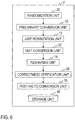
- the random permutation device 2 includes the preliminary conversion unit 10, the unit permutation unit 12, the resharing unit 14, the post-facto conversion unit 16, and the storage unit 18 in a similar manner to the random permutation device 1 according to the above-described embodiments and further includes a randomization unit 20, a unit conversion unit 22, and a correctness verification unit 24.
- FIG. 7 one example of a processing flow of a secret calculation method which is executed by the secret calculation system according to the fourth embodiment is described in accordance with an order of a procedure which is actually performed.
- step S20 the randomization units 20 provided to the k pieces of random permutation devices 1 ⁇ 0 convert the (k,n)-secret sharing values [a] pi which are stored into randomized distributed values.
- the disclosed values a are stored in the storage unit 18, the disclosed values a are converted into the (k,n)-secret sharing values [a] pi so as to be converted into randomized distributed values.
- the randomized distributed value is the set ([a] pi ,[ar] pi ) composed of the distributed value [a] pi of the value a ⁇ R and the distributed value [ar] pi of the integrated value ar of the value a ⁇ R and the random number r ⁇ A.
- R represents a ring and A represents an associative algebra on the ring R.
- the associative algebra is a joined ring and has a structure in a linear space on a certain field compatible with the ring.
- the associative algebra can be described such that a value dealt in a vector space may be a ring instead of a field.
- the 0th component ([a] pi ) of the randomized distributed value is also referred to as the R component and the first component ([ar] pi ) is also referred to as the A component.
- a random number used in generation of a randomized distributed value is generated such that a distributed value for one secret sharing is converted into a distributed value for the other secret sharing so as to obtain an identical value of the random number in the case where a plurality of types of secret sharing on one ring are used.
- tampering detection should be possible or tampering should be impossible.
- Reference Literature 2 a method which prohibits tampering conversion from replicated secret sharing into linear secret sharing is described in Reference Literature 2 above.
- step S22 the unit conversion units 22 provided to the k pieces of random permutation devices 1 ⁇ i convert the additive secret sharing values «a» ⁇ i which are permutated by the unit permutation unit 12 into randomized distributed values by (k,n)-secret sharing so as to be accumulated in the storage units 18.
- the accumulated randomized distributed values are used for calculation for a checksum by the correctness verification unit 24 which will be described later. Accumulation of randomized distributed values does not necessarily have to be performed after all unit permutation but may be performed in part of unit permutation.
- step S24 the correctness verification unit 24 executes synchronous processing (SYNC) in which an action of waiting is performed until all secret calculations for all secret sharing are ended.
- SYNC synchronous processing
- the checksums C 0 , ..., C J-1 are verified by using the distributed values [r 0 ], ..., [r J-1 ] of the random numbers r 0 , ..., r J-1 which are used in the randomization unit 20 so as to verify correctness of (k,n)-secret sharing values or disclosed values which are obtained as a result of secret random permutation.
- step S16 In the case where it is determined that there is no tampering as a result of the verification of the checksums C 0 , ..., C J-1 , the processing goes to step S16. In the case where it is determined that there is tampering, information representing the presence of tampering (for example, " ⁇ " or the like) is outputted.
- all of the values ⁇ 0 , ..., ⁇ J-1 are 0, it is determined that there is no tampering in the whole secret random permutation.
- any value ⁇ j is not 0, it is determined that tampering is performed in any operation in the secret random permutation.
- the distributed value [ ⁇ ] ([ ⁇ ⁇ ]+[ ⁇ ⁇ ])-([ ⁇ ⁇ ]+[ ⁇ ⁇ ]) which is obtained by subtracting the distributed value [ ⁇ ⁇ + ⁇ ⁇ ] which is obtained by adding the converted distributed value [ ⁇ ⁇ ] and the distributed value [ ⁇ ⁇ ] which is calculated from the ⁇ -th checksum C ⁇ in a similar manner from the distributed value [ ⁇ ⁇ + ⁇ ⁇ ] which is obtained by adding the converted distributed value [ ⁇ ⁇ ] and the distributed value [ ⁇ ⁇ ] which is calculated from the checksum C ⁇ in a similar manner is restored.
- the restored value ⁇ is 0, it is determined that there is no tampering.
- step S16 the post-facto conversion unit 16 converts additive secret sharing values into (k,n)-secret sharing values or disclosed values.
- such configuration is employed that the additive secret sharing values «a» ⁇ N-1 after execution of last permutation processing are transmitted to the random permutation device 1 p and the random permutation device 1 p obtains disclosed values a by the restoration method of additive secret sharing values in the case where an output is a disclosed value.
- such configuration is employed that additive secret sharing values are once converted into (k,n)-secret sharing values and then disclosed values a are obtained by the restoration method of (k,n)-secret sharing.
- the random permutation device 1 p receives (k,n)-secret sharing values which are obtained by converting a format of the additive secret sharing values «a» ⁇ N-1 from arbitrary k- 1 pieces of random permutation devices. Further, checksums such as hash values of the (k,n)-secret sharing values which are obtained by converting the format of the additive secret sharing values «a» ⁇ N-1 are received from n-k pieces of random permutation devices which are the rest of random permutation devices. The checksum does not have to be a hash value but a safer and more information-theoretical checksum can be used.
- the information-theoretical checksum is a combination of a random number r and a i r i+1 when a calculation object of the checksum is a i , for example.
- the random permutation device 1 p recovers n-k pieces of (k,n)-secret sharing values from k pieces of (k,n)-secret sharing values to which a (k,n)-secret sharing value possessed by the random permutation device 1 p is added and calculates checksums respectively from the (k,n)-secret sharing values which are recovered.
- the recovery is a method in which n-k pieces of distributed values which are unusable are reconstructed without losing secrecy from k pieces of distributed values which are usable when part of distributed values are lost.
- the random permutation device 1 p confirms whether or not the checksums of the (k,n)-secret sharing values which are received from the n-k pieces of random permutation devices and the checksums of the recovered (k,n)-secret sharing values are accorded with each other. In the case where all of the checksums are accorded with each other, it is determined that there is not tampering and (k,n)-secret sharing values or disclosed values are outputted. In the case where any of the checksums are different from each other, it is determined that there is tampering and information representing the presence of tampering (for example, " ⁇ " or the like) is outputted.
- the configuration as that of the present embodiment enables tampering detection and enhances security in the secret random permutation of the present invention.
- the present invention can employ various configurations by combining four independent standpoints other than the above-described embodiments.
- the first standpoint is a form of an input and an output. From this standpoint, four configuration methods are conceivable.
- the first configuration is a case where an input is a linear secret sharing value and an output is a linear secret sharing value.
- the second configuration is a case where an input is a linear secret sharing value and an output is a replicated secret sharing value or a case where an input is a replicated secret sharing value and an output is a linear secret sharing value on the other way.
- the third configuration is a case where an input is a disclosed value and an output is a secret sharing value.
- the fourth configuration is a case where an input is a linear secret sharing value and an output is a disclosed value.
- the second standpoint is a standpoint of the random number generation method. In this standpoint, two configuration methods are conceivable.
- the first configuration is the case where a random number is a pseudo random number which is generated from a seed which is preliminarily shared.
- the second configuration is the case where a random number is shared in execution of a protocol.
- the third standpoint is a standpoint of types of random permutation.
- the first configuration is the case where permutation data is arbitrary, that is, the case where shuffling is desired to be performed in a totally random manner.
- the fourth standpoint is a standpoint of a specific example of repetition permutation limiting k and n.
- six specific examples, in total, which are obtained by adding the standpoint of an input and an output to each configuration are conceivable.
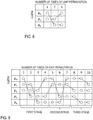
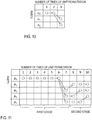
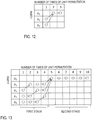
- the vertical axis represents a party and the horizontal axis represents the number of times of unit permutation.
- a circle represents a party which performs processing in unit permutation.
- a solid arrow represents a direction of a party to which a secret sharing value is transmitted in the resharing.
- a dotted arrow represents that the same party continuously holds a secret sharing value in the resharing.
- Fig. 8 repetition permutation of this specific example is described.
- the vertical axis represents a party and the horizontal axis represents the number of times of unit permutation.
- a circle represents a party which performs processing in unit permutation.
- a solid arrow represents a direction of a party to which a secret sharing value is transmitted in the resharing.
- a dotted arrow represents that the same party continuously holds a secret sharing value in the resharing.
- the parties p 0 and p 1 perform processing in the first unit permutation and a secret sharing value is transmitted from the party p 0 to the party p 2 in the first resharing.
- the parties p 1 and p 2 perform processing in the second unit permutation and a secret sharing value is transmitted from the party p 1 to the party p 0 in the second resharing.
- the parties p 0 and p 2 perform processing in the third unit permutation and repetition permutation is completed.
- Fig. 9 repetition permutation of this specific example is described. Notation of the drawing is similar to that of Fig. 8 .
- Fig. 9 repetition permutation of this specific example is described. Notation of the drawing is similar to that of Fig. 8 .
- Fig. 9 repetition permutation of this specific example is described. Notation of the drawing is similar to that of Fig. 8 .
- the parties p 0 , p 1 , and p 2 perform processing in the first unit permutation and a secret sharing value is transmitted from the party p 0 to the party p 3 in the first resharing.
- the parties p 1 , p 2 , and p 3 perform processing in the second unit permutation and a secret sharing value is transmitted from the party p 1 to the party p 4 in the second resharing.
- the parties p 2 , p 3 , and p 4 perform processing in the third unit permutation and a secret sharing value is transmitted from the party p 2 to the party p 0 in the third resharing.
- the parties p 0 , p 3 , and p 4 perform processing in the fourth unit permutation and a secret sharing value is transmitted from the party p 3 to the party p 1 in the fourth resharing.
- the secret sharing value which is transmitted from the party p 3 to the party p 1 is the secret sharing value which is transmitted from the party p 0 to the party p 3 in the first resharing, so that reception waiting of the party p 1 occurs before the fifth resharing.
- the resharing up to the fourth resharing is the first stage of communication. After that, permutation and resharing are repeated in a similar manner and thus, the repetition permutation is completed with three communication stages in this specific example.
- repetition permutation of this specific example is described. Notation of the drawing is similar to that of Fig. 8 .
- Only the party p 0 performs processing in the first and second unit permutation.
- the unit permutation may be simply repeated twice or permutation for two-time permutation may be collectively performed.
- a secret sharing value is transmitted from the party p 0 to the parties p 1 and p 2 in the second resharing.
- the parties p 1 and p 2 perform processing in the third unit permutation and the repetition permutation is completed.
- Fig. 11 repetition permutation of this specific example is described. Notation of the drawing is similar to that of Fig. 8 .
- Fig. 11 repetition permutation of this specific example is described. Notation of the drawing is similar to that of Fig. 8 .
- Fig. 11 repetition permutation of this specific example is described. Notation of the drawing is similar to that of Fig. 8 .
- the unit permutation may be simply repeated six times or permutation for six-time permutation may be collectively performed.
- a secret sharing value is transmitted from the party p 0 to the parties p 2 , p 3 and p 4 in the sixth resharing.
- the parties p 2 , p 3 , and p 4 perform processing in the seventh unit permutation and a secret sharing value is transmitted from the party p 2 to the party p 1 in the seventh resharing.
- the parties p 1 , p 3 , and p 4 perform processing in the eighth unit permutation and a secret sharing value is transmitted from the party p 3 to the party p 2 in the eighth resharing.
- the parties p 1 , p 2 , and p 4 perform processing in the ninth unit permutation and a secret sharing value is transmitted from the party p 4 to the party p 3 in the ninth resharing.
- the parties p 1 , p 2 , and p 3 perform processing in the tenth unit permutation and the repetition permutation is completed. As illustrated in Fig. 9 , the repetition permutation is completed with two communication
- Fig. 12 repetition permutation of this specific example is described. Notation of the drawing is similar to that of Fig. 8 .
- the parties p 1 and p 2 perform processing in the first unit permutation and secret sharing values are transmitted from the party p 1 and p 2 to the party p 0 .
- the party p 0 restores a secret sharing value and performs the second and third unit permutation.
- the unit permutation may be simply repeated twice or permutation for two-time permutation may be collectively performed. Thus, the repetition permutation is completed.
- Fig. 13 repetition permutation of this specific example is described. Notation of the drawing is similar to that of Fig. 8 .
- Fig. 13 repetition permutation of this specific example is described. Notation of the drawing is similar to that of Fig. 8 .
- Fig. 13 repetition permutation of this specific example is described. Notation of the drawing is similar to that of Fig. 8 .
- the parties p 2 , p 3 , and p 4 perform processing in the first unit permutation and a secret sharing value is transmitted from the party p 2 to the party p 1 in the first resharing.
- the party p 0 restores a secret sharing value and performs the fifth to tenth unit permutation.
- the unit permutation may be simply repeated six times or permutation for six-time permutation may be collectively performed. Thus, the repetition permutation is completed.
- the computer-readable recording medium may be any medium such as a magnetic recording device, an optical disc, a magneto-optical recording medium, and a semiconductor memory.
- Distribution of this program is implemented by sales, transfer, rental, and other transactions of a portable recording medium such as a DVD and a CD-ROM on which the program is recorded, for example. Furthermore, this program may be stored in a storage unit of a server computer and transferred from the server computer to other computers via a network so as to be distributed.
- a computer which executes such program first stores the program stored in a portable recording medium or transferred from a server computer once in a storage unit of the computer, for example.
- the computer reads out the program stored in the recording medium of the computer and performs processing in accordance with the program thus read out.
- the computer may directly read out the program from a portable recording medium and perform processing in accordance with the program.
- the computer may sequentially perform processing in accordance with the received program.
- ASP application service provider
- a program according to the present embodiment includes information provided for processing performed by electronic calculation equipment, which is equivalent to a program (such as data which is not a direct instruction to the computer but has a property specifying the processing performed by the computer).
- the present device is configured with a predetermined program executed on a computer.
- the present device may be configured with at least part of these processing contents realized in a hardware manner.
Landscapes
- Engineering & Computer Science (AREA)
- Theoretical Computer Science (AREA)
- Physics & Mathematics (AREA)
- Computer Security & Cryptography (AREA)
- General Physics & Mathematics (AREA)
- Signal Processing (AREA)
- Computer Networks & Wireless Communication (AREA)
- General Health & Medical Sciences (AREA)
- Computer Hardware Design (AREA)
- Software Systems (AREA)
- Bioethics (AREA)
- General Engineering & Computer Science (AREA)
- Health & Medical Sciences (AREA)
- Storage Device Security (AREA)
Claims (10)
- Geheimnisberechnungsverfahren, bei dem n und k als Ganzzahlen eingestellt sind, die gleich 2 oder größer sind, n > k gilt, N = nCk gilt, ρ als eine Gruppe von k Zufallspermutationsvorrichtungen eingestellt ist, die aus n Zufallspermutationsvorrichtungen ausgewählt werden, ρ0, ..., ρN-1 eingestellt sind, um |ρi\ρi+1|= 1 im Verhältnis zu i = 0, ..., N-2 zu erfüllen, «a»ρi als additive Geheimnisteilungswerte eines Klartextes a eingestellt ist, wobei die additiven Geheimnisteilungswerte einer i. Gruppe ρi von Zufallspermutationsvorrichtungen gehören, «a»ρi p als ein additiver Geheimnisteilungswert eingestellt ist, der einer Zufallspermutationsvorrichtung p aus den additiven Geheimnisteilungswerten «a»ρi gehört, πρi als Teilgeheimnisse der Permutationsdaten π eingestellt sind, wobei die Teilgeheimnisse der i. Gruppe ρi von Zufallspermutationsvorrichtungen entsprechen, eine Zufallspermutationsvorrichtung p0 als eine Zufallspermutationsvorrichtung eingestellt ist, die in der i. Gruppe ρi von Zufallspermutationsvorrichtungen enthalten ist und in einer i+1. Gruppe ρi+1 von Zufallspermutationsvorrichtungen nicht enthalten ist, eine Zufallspermutationsvorrichtung pk als eine Zufallspermutationsvorrichtung eingestellt ist, die in der i. Gruppe ρi von Zufallspermutationsvorrichtungen nicht enthalten ist und in der i+1. Gruppe ρi+1 von Zufallspermutationsvorrichtung enthalten ist, und die Zufallspermutationsvorrichtungen pj(j = 1, ..., k-1) als k-1 Zufallspermutationsvorrichtungen eingestellt sind, die sowohl in der i. Gruppe ρi von Zufallspermutationsvorrichtungen als auch in der i+1. Gruppe ρi+1 von Zufallspermutationsvorrichtungen enthalten sind, wobei das Geheimnisberechnungsverfahren Folgendes umfasst:einen Einheitspermutationsschritt, in dem die Zufallspermutationsvorrichtungen p0, ..., pk-1 eine Permutation der additiven Geheimnisteilungswerte «a»ρi mit den Teilgeheimnissen πρi ausführen; undeinen Wiederteilungsschritt, in dem die Zufallspermutationsvorrichtung p0 additive Geheimnisteilungswerte «a»ρi+1 pk unter Verwendung der Zufallszahlen r1, ..., rk-1 generiert, die jeweils mit den Zufallspermutationsvorrichtugen pj geteilt werden, um die additiven Geheimnisteilungswerte «a»ρi+1 pk an die Zufallspermutationsvorrichtung pk zu senden, und jede der Zufallspermutationsvorrichtungen pj additive Geheimnisteilungswerte «a»ρi+1 pj unter Verwendung der Zufallszahlen rj generiert.
- Geheimnisberechnungsverfahren nach Anspruch 1, wobei in dem Wiederteilungsschritt die Zufallspermutationsvorrichtung p0 die additiven Geheimnisteilungswerte «a»ρi+1 pk mit der folgenden Formel


- Geheimnisberechnungsverfahren nach Anspruch 2, wobei ρ0, ..., pN-1 derart eingestellt sind, dass eine Differenz zwischen einem Höchstwert und einem Mindestwert einer Anzahl von Kommunikationsstadien von Wegen von k Exemplaren von Zufallspermutationsvorrichtungen, die in einer 0. Gruppe ρ0 von Zufallspermutationsvorrichtungen enthalten sind, zu k Exemplaren von Zufallspermutationsvorrichtungen, die in einer N-1. Gruppe ρN-1 von Zufallspermutationsvorrichtungen enthalten sind, am kleinsten wird.
- Geheimnisberechnungsverfahren nach einem der Ansprüche 1 bis 3, ferner umfassend:einen vorbereitenden Umwandlungsschritt, in dem die Geheimnisteilungswerte [a], die durch eine (k,n)-Geheimnisteilung des Klartextes a erzielt werden, in die additiven Geheimnisteilungswerte «a»ρ0 umgewandelt werden; undeinen nachträglichen Umwandlungsschritt, in dem die additiven Geheimnisteilungswerte «a»ρN-1 in die auszugebenden Geheimnisteilungswerte [a] umgewandelt werden.
- Geheimnisberechnungsverfahren nach einem der Ansprüche 1 bis 3, bei dem N = n-1Ck gilt und ρ als eine Gruppe k Exemplaren von Zufallspermutationsvorrichtungen eingestellt ist, die aus n Exemplaren von Zufallspermutationsvorrichtungen ausgewählt werden, wobei eine vorbestimmte Zufallspermutationsvorrichtung q ausgeschlossen ist, ferner umfassend:einen vorbereitenden Umwandlungsschritt, in dem der Klartext a in die additiven Geheimnisteilungswerte «a»ρ0 umgewandelt wird; undeinen nachträglichen Umwandlungsschritt, in dem die additiven Geheimnisteilungswerte «a»ρN-1 basierend auf einer auszugebenden (k,n)-Geheimnisteilung in die Geheimnisteilungswerte [a] umgewandelt werden, wobeiin dem Einheitspermutationsschrittdie Zufallspermutationsvorrichtung q eine Permutation des Klartextes a mit den Teilgeheimnissen πρi für den Fall von i ≤ nCk-n-1Ck ausführt, unddie Zufallspermutationsvorrichtungen p1, ..., pk-1 eine Permutation der additiven Geheimnisteilungswerte «a»ρi mit den Teilgeheimnissen πρi für den Fall von i > nCk-n-1Ck ausführen.
- Geheimnisberechnungsverfahren nach einem der Ansprüche 1 bis 3, wobei N = n-1Ck gilt und ρ als eine Gruppe von k Exemplaren von Zufallspermutationsvorrichtungen eingestellt ist, die aus n Exemplaren von Zufallspermutationsvorrichtungen ausgewählt werden, wobei eine vorbestimmte Zufallspermutationsvorrichtung q ausgeschlossen ist, ferner umfassend:einen vorbereitenden Umwandlungsschritt, in dem die Geheimnisteilungswerte [a] basierend auf einer (k,n)-Geheimnisteilung des Klartextes a in die additiven Geheimnisteilungswerte «a»ρ0 umgewandelt werden; undeinen nachträglichen Umwandlungsschritt, in dem die additiven Geheimnisteilungswerte «a»ρN-1 wiederhergestellt werden, um den Klartext a auszugeben, wobeiin dem Einheitspermutationsschrittfür den Fall von i ≤ n-1Ck die Zufallspermutationsvorrichtungen p1, ..., pk-1 eine Permutation der additiven Geheimnisteilungswerte «a»ρi mit den Teilgeheimnissen πρi ausführen, undfür den Fall von i > n-1Ck die Zufallspermutationsvorrichtung q eine Permutation des Klartextes a mit den Teilgeheimnissen πρi ausführt.
- Geheimnisberechnungsverfahren nach einem der Ansprüche 1 bis 6, ferner umfassend:
einen Einheitsumwandlungsschritt, in dem die additiven Geheimnisteilungswerte «a»ρi, die in dem Einheitspermutationsschritt permutiert werden, basierend auf einer (k,n)-Geheimnisteilung in Geheimnisteilungswerte [a] umgewandelt werden, um in einer Speichereinheit kumuliert zu werden. - Geheimnisberechnungssystem, umfassend:n Zufallspermutationsvorrichtungen (1), wenn n als Ganzzahl eingestellt ist, die gleich 2 oder größer ist; wobeik als eine Ganzzahl eingestellt ist, die gleich 2 oder größer ist, n > k gilt, N = nCk gilt, ρ als eine Gruppe von k Zufallspermutationsvorrichtungen eingestellt ist, die aus n Zufallspermutationsvorrichtungen ausgewählt werden, ρ0, ..., ρN-1 eingestellt sind, um |ρi\ρi+1|= 1 im Verhältnis zu i = 0, ..., N-2 zu erfüllen, «a»ρi als additive Geheimnisteilungswerte eines Klartextes a eingestellt ist, wobei die additiven Geheimnisteilungswerte einer i. Gruppe ρi von Zufallspermutationsvorrichtungen gehören, «a»ρi p als ein additiver Geheimnisteilungswert eingestellt ist, der einer Zufallspermutationsvorrichtung p aus den additiven Geheimnisteilungswerten «a»ρi gehört, πρi als Teilgeheimnisse der Permutationsdaten a eingestellt ist, wobei die Teilgeheimnisse der i. Gruppe ρi von Zufallspermutationsvorrichtungen entsprechen, eine Zufallspermutationsvorrichtung p0 als eine Zufallspermutationsvorrichtung eingestellt ist, die in der i. Gruppe ρi von Zufallspermutationsvorrichtungen enthalten ist und in einer i+1. Gruppe ρi+1 von Zufallspermutationsvorrichtungen nicht enthalten ist, eine Zufallspermutationsvorrichtung pk als eine Zufallspermutationsvorrichtung eingestellt ist, die in der i. Gruppe ρi von Zufallspermutationsvorrichtungen nicht enthalten ist und in der i+1. Gruppe ρi+1 von Zufallspermutationsvorrichtungen enthalten ist, die Zufallspermutationsvorrichtungen pj(j = 1, ..., k-1) als k-1 Zufallspermutationsvorrichtungen eingestellt sind, die sowohl in der i. Gruppe ρi von Zufallspermutationsvorrichtungen als auch in der i+1. Gruppe ρi+1 von Zufallspermutationsvorrichtung enthalten sind, unddie Zufallspermutationsvorrichtungen (1) umfasseneine Einheitspermutationseinheit (12), die eine Permutation der additiven Geheimnisteilungswerte «a»ρi mit den Teilgeheimnissen πρi ausführt, undeine Wiederteilungseinheit (14), die additive Geheimnisteilungswerte «a»ρi+1 pk unter Verwendung der Zufallszahlen r1, ..., rk-1 generiert, die mit jeder der Zufallspermutationsvorrichtungen pj geteilt werden, um die additiven Geheimnisteilungswerte «a»ρi+1 pk an die Zufallspermutationsvorrichtung pk zu senden, wenn eine entsprechende Zufallspermutationsvorrichtung die Zufallspermutationsvorrichtung p0 ist, und die additiven Geheimnisteilungswerte «a»ρi+1 pj unter Verwendung der Zufallszahlen rj generiert, wenn die entsprechende Zufallspermutationsvorrichtung eine der Zufallspermutationsvorrichtungen pj ist.
- Zufallspermutationsvorrichtung (1), bei der n und k als Ganzzahlen eingestellt sind, die gleich 2 oder größer sind, n > k gilt, N = nCk gilt, ρ als eine Gruppe von k Zufallspermutationsvorrichtungen eingestellt ist, die aus n Zufallspermutationsvorrichtungen ausgewählt werden, ρ0, ..., ρN-1 eingestellt sind, um |ρi\ρi+1| = 1 im Verhältnis zu i = 0, ..., N-2 zu erfüllen, «a»ρi als additive Geheimnisteilungswerte eines Klartextes a eingestellt ist, wobei die additiven Geheimnisteilungswerte einer i. Gruppe ρi von Zufallspermutationsvorrichtungen gehören, «a»ρi p als ein additiver Geheimnisteilungswert eingestellt ist, der einer Zufallspermutationsvorrichtung p aus den additiven Geheimnisteilungswerten «a»ρi gehört, πρi als Teilgeheimnisse der Permutationsdaten π eingestellt ist, wobei die Teilgeheimnisse der i. Gruppe ρi von Zufallspermutationsvorrichtungen entsprechen, eine Zufallspermutationsvorrichtung p0 als eine Zufallspermutationsvorrichtung eingestellt ist, die in der i. Gruppe ρi von Zufallspermutationsvorrichtungen enthalten ist und in einer i+1. Gruppe ρi+1 von Zufallspermutationsvorrichtungen nicht enthalten ist, eine Zufallspermutationsvorrichtung pk als eine Zufallspermutationsvorrichtung eingestellt ist, die in der i. Gruppe ρi von Zufallspermutationsvorrichtungen nicht enthalten ist und in der i+1. Gruppe ρi+1 von Zufallspermutationsvorrichtungen enthalten ist, und die Zufallspermutationsvorrichtungen pj(j = 1, ..., k-1) als k-1 Zufallspermutationsvorrichtungen eingestellt sind, die sowohl in der i. Gruppe ρi von Zufallspermutationsvorrichtungen als auch in der i+1. Gruppe ρi+1 von Zufallspermutationsvorrichtung enthalten sind, wobei die Zufallspermutationsvorrichtung umfasst:eine Permutationseinheit (12), die eine Permutation der additiven Geheimnisteilungswerte «a»ρi mit den Teilgeheimnissen πρi ausführt; undeine Wiederteilungseinheit (14), die additive Geheimnisteilungswerte «a»ρi+1 pk unter Verwendung der Zufallszahlen r1, ..., rk-1 generiert, die mit jeder der Zufallspermutationsvorrichtungen pj geteilt werden, um die additiven Geheimnisteilungswerte «a»ρi+1 pk an die Zufallspermutationsvorrichtung pk zu senden, wenn eine entsprechende Zufallspermutationsvorrichtung die Zufallspermutationsvorrichtung p0 ist, und die additiven Geheimnisteilungswerte «a»ρi+1 pj unter Verwendung der Zufallszahlen rj generiert, wenn die entsprechende Zufallspermutationsvorrichtung eine der Zufallspermutationsvorrichtungen pj ist.
- Programm, das bewirkt, dass ein Computer als die Zufallspermutationsvorrichtung (1) nach Anspruch 9 dient.
Applications Claiming Priority (2)
| Application Number | Priority Date | Filing Date | Title |
|---|---|---|---|
| JP2014006694 | 2014-01-17 | ||
| PCT/JP2015/050231 WO2015107952A1 (ja) | 2014-01-17 | 2015-01-07 | 秘密計算方法、秘密計算システム、ランダム置換装置及びプログラム |
Publications (3)
| Publication Number | Publication Date |
|---|---|
| EP3096310A1 EP3096310A1 (de) | 2016-11-23 |
| EP3096310A4 EP3096310A4 (de) | 2017-09-27 |
| EP3096310B1 true EP3096310B1 (de) | 2018-08-01 |
Family
ID=53542842
Family Applications (1)
| Application Number | Title | Priority Date | Filing Date |
|---|---|---|---|
| EP15737344.0A Active EP3096310B1 (de) | 2014-01-17 | 2015-01-07 | Geheimnisberechnungsverfahren, geheimnisberechgnungssystem, zufallspermutationsvorrichtung und program |
Country Status (5)
| Country | Link |
|---|---|
| US (1) | US10002547B2 (de) |
| EP (1) | EP3096310B1 (de) |
| JP (1) | JP6009698B2 (de) |
| CN (1) | CN105900165B (de) |
| WO (1) | WO2015107952A1 (de) |
Families Citing this family (37)
| Publication number | Priority date | Publication date | Assignee | Title |
|---|---|---|---|---|
| WO2015107951A1 (ja) * | 2014-01-17 | 2015-07-23 | 日本電信電話株式会社 | 秘密計算方法、秘密計算システム、ソート装置及びプログラム |
| CN105204782B (zh) * | 2015-10-13 | 2018-12-11 | 中国联合网络通信集团有限公司 | 一种实现数据存储的方法及装置 |
| IL278834B2 (en) | 2016-02-23 | 2023-09-01 | Nchain Holdings Ltd | Automatic registration and management method for smart contracts based on 'block chain' |
| EP3754901A1 (de) | 2016-02-23 | 2020-12-23 | Nchain Holdings Limited | Blockchain-implementiertes zählsystem und verfahren zur verwendung bei der sicheren stimmabgabe und verteilung |
| KR102777896B1 (ko) | 2016-02-23 | 2025-03-10 | 엔체인 홀딩스 리미티드 | 토큰화를 이용한 블록체인 기반 교환 방법 |
| US12107952B2 (en) | 2016-02-23 | 2024-10-01 | Nchain Licensing Ag | Methods and systems for efficient transfer of entities on a peer-to-peer distributed ledger using the blockchain |
| SG11201805542TA (en) | 2016-02-23 | 2018-09-27 | Nchain Holdings Ltd | Secure multiparty loss resistant storage and transfer of cryptographic keys for blockchain based systems in conjunction with a wallet management system |
| US10652014B2 (en) | 2016-02-23 | 2020-05-12 | nChain Holdings Limited | Determining a common secret for the secure exchange of information and hierarchical, deterministic cryptographic keys |
| MX2018010058A (es) | 2016-02-23 | 2019-01-21 | Nchain Holdings Ltd | Metodo y sistema para la transferencia eficiente de criptomoneda asociada con un pago de nomina en una cadena de bloques que lleva a un metodo y sistema de pago de nomina automatico con base en contratos inteligentes. |
| CN109074580B (zh) | 2016-02-23 | 2022-09-30 | 区块链控股有限公司 | 在区块链上安全转移实体的方法和系统 |
| GB2560274C (en) | 2016-02-23 | 2022-06-15 | Nchain Holdings Ltd | Personal device security using elliptic curve cryptography for secret sharing |
| CN109155036B (zh) | 2016-02-23 | 2023-05-23 | 区块链控股有限公司 | 用于经由区块链控制资产有关的动作的系统及方法 |
| JP7249148B2 (ja) | 2016-02-23 | 2023-03-30 | エヌチェーン ライセンシング アーゲー | ブロックチェーンベースユニバーサルトークン化システム |
| JP6995762B2 (ja) | 2016-02-23 | 2022-01-17 | エヌチェーン ホールディングス リミテッド | ブロックチェーンからのデータのセキュアな抽出のための暗号方法及びシステム |
| SG10202007907PA (en) | 2016-02-23 | 2020-09-29 | Nchain Holdings Ltd | Blockchain-implemented method for control and distribution of digital content |
| MX2018010056A (es) | 2016-02-23 | 2019-01-21 | Nchain Holdings Ltd | Un metodo y sistema para asegurar software de computadora usando un cuadro hash distribuido y una cadena de bloques. |
| KR102753021B1 (ko) | 2016-02-23 | 2025-01-14 | 엔체인 홀딩스 리미티드 | 블록체인에서 교환을 구현하기 위한 토큰화 방법 및 시스템 |
| JP7047838B2 (ja) * | 2017-05-18 | 2022-04-05 | 日本電気株式会社 | 秘密計算装置、比較方法、比較プログラム、および秘密計算システム |
| WO2018211676A1 (en) | 2017-05-18 | 2018-11-22 | Nec Corporation | Multiparty computation method, apparatus and program |
| JP6777816B2 (ja) * | 2017-05-25 | 2020-10-28 | 日本電信電話株式会社 | 秘密改ざん検知システム、秘密改ざん検知装置、秘密改ざん検知方法、およびプログラム |
| WO2019009180A1 (ja) * | 2017-07-05 | 2019-01-10 | 日本電信電話株式会社 | 秘密計算システム、秘密計算装置、秘密計算方法、プログラム、および記録媒体 |
| US11374743B2 (en) * | 2017-08-22 | 2022-06-28 | Nippon Telegraph And Telephone Corporation | Share generating device, share converting device, secure computation system, share generation method, share conversion method, program, and recording medium |
| JP6901004B2 (ja) * | 2017-10-12 | 2021-07-14 | 日本電信電話株式会社 | 置換装置、置換方法、およびプログラム |
| CN111183469B (zh) * | 2017-10-13 | 2023-02-28 | 日本电信电话株式会社 | 隐匿分类系统以及方法 |
| WO2019087317A1 (ja) * | 2017-10-31 | 2019-05-09 | 日本電気株式会社 | 秘密計算装置、システム、方法、プログラム |
| GB201720753D0 (en) | 2017-12-13 | 2018-01-24 | Nchain Holdings Ltd | Computer-implemented system and method |
| CN111902854B (zh) * | 2018-03-26 | 2023-08-01 | 日本电信电话株式会社 | 秘密重复排除滤波器生成系统、秘密重复排除系统、它们的方法、秘密计算装置以及记录介质 |
| CN112313728B (zh) * | 2018-06-20 | 2024-04-19 | 日本电信电话株式会社 | 秘密结合系统、方法、秘密计算装置以及记录介质 |
| EP3839923B1 (de) * | 2018-08-13 | 2023-11-22 | Nippon Telegraph And Telephone Corporation | System für geheime starke mapping-berechnungen, verfahren dafür, geheimberechnungsvorrichtung und programm |
| WO2020165931A1 (ja) * | 2019-02-12 | 2020-08-20 | 日本電気株式会社 | 情報処理装置、秘密計算方法及びプログラム |
| US12143420B2 (en) | 2019-11-28 | 2024-11-12 | Nec Corporation | Shuffling shares among nodes to detect incorrectness or frauds |
| US12160506B2 (en) | 2019-11-28 | 2024-12-03 | Nec Corporation | Shuffling shares among nodes to detect incorrectness or frauds |
| JP7801842B2 (ja) * | 2020-02-14 | 2026-01-19 | 株式会社野村総合研究所 | 秘密分散ベースのマルチパーティ計算のための装置 |
| JP7494931B2 (ja) * | 2020-10-16 | 2024-06-04 | 日本電信電話株式会社 | 秘密計算システム、秘密計算方法、およびプログラム |
| AU2020472388B2 (en) * | 2020-10-16 | 2024-02-15 | Ntt, Inc. | Secure computation system, secure computation apparatus, secure computation method, and program |
| WO2022195799A1 (ja) * | 2021-03-18 | 2022-09-22 | 日本電気株式会社 | 秘密計算システム、秘密計算サーバ装置、秘密計算方法および秘密計算プログラム |
| EP4328893A4 (de) * | 2021-04-19 | 2025-01-22 | Nippon Telegraph And Telephone Corporation | Sicheres berechnungssystem, sichere berechnungsvorrichtung, verfahren und programm |
Family Cites Families (8)
| Publication number | Priority date | Publication date | Assignee | Title |
|---|---|---|---|---|
| US6035041A (en) * | 1997-04-28 | 2000-03-07 | Certco, Inc. | Optimal-resilience, proactive, public-key cryptographic system and method |
| US6772339B1 (en) * | 2000-03-13 | 2004-08-03 | Lucent Technologies Inc. | Mix and match: a new approach to secure multiparty computation |
| EP1249963B1 (de) * | 2001-04-11 | 2013-01-16 | Hitachi, Ltd. | Verfahren zur Verschlüsselung mittels öffentlichem Schlüssel und verschlüsselte Kommunikation, welche gegenüber einem Angriff mit ausgewähltem Schlüsseltext gesichert ist |
| US6950937B2 (en) * | 2001-05-30 | 2005-09-27 | Lucent Technologies Inc. | Secure distributed computation in cryptographic applications |
| US7725730B2 (en) * | 2002-08-09 | 2010-05-25 | Emc Corporation | Cryptographic methods and apparatus for secure authentication |
| EP1646174A1 (de) * | 2004-10-07 | 2006-04-12 | Axalto SA | Verfahren und Vorrichtung zur automatischen Generierung eines Kryptographisch Instruktionsatz und Codegenerierung |
| US8050411B2 (en) * | 2005-09-29 | 2011-11-01 | Hewlett-Packard Development Company, L.P. | Method of managing one-time pad data and device implementing this method |
| JP5411994B2 (ja) * | 2010-10-06 | 2014-02-12 | 日本電信電話株式会社 | 秘密分散システム、秘密分散装置、秘密分散方法、秘密ソート方法、秘密分散プログラム |
-
2015
- 2015-01-07 EP EP15737344.0A patent/EP3096310B1/de active Active
- 2015-01-07 US US15/110,886 patent/US10002547B2/en active Active
- 2015-01-07 CN CN201580004210.0A patent/CN105900165B/zh active Active
- 2015-01-07 WO PCT/JP2015/050231 patent/WO2015107952A1/ja not_active Ceased
- 2015-01-07 JP JP2015557797A patent/JP6009698B2/ja active Active
Non-Patent Citations (1)
| Title |
|---|
| None * |
Also Published As
| Publication number | Publication date |
|---|---|
| EP3096310A4 (de) | 2017-09-27 |
| JPWO2015107952A1 (ja) | 2017-03-23 |
| US20160335924A1 (en) | 2016-11-17 |
| CN105900165A (zh) | 2016-08-24 |
| US10002547B2 (en) | 2018-06-19 |
| JP6009698B2 (ja) | 2016-10-19 |
| WO2015107952A1 (ja) | 2015-07-23 |
| EP3096310A1 (de) | 2016-11-23 |
| CN105900165B (zh) | 2019-03-08 |
Similar Documents
| Publication | Publication Date | Title |
|---|---|---|
| EP3096310B1 (de) | Geheimnisberechnungsverfahren, geheimnisberechgnungssystem, zufallspermutationsvorrichtung und program | |
| EP3096309B1 (de) | Sicheres berechnungsverfahren, sicheres berechnungssystem, sortiervorrichtung und programm | |
| US10003460B2 (en) | Secret quotient transfer device, secret bit decomposition device, secret modulus conversion device, secret quotient transfer method, secret bit decomposition method, secret modulus conversion method, and programs therefor | |
| JP5860556B1 (ja) | 不整合検知方法、不整合検知システム、不整合検知装置、およびプログラム | |
| EP3195522B1 (de) | Erzeugung von anteilen an geheimen daten | |
| JP5957120B1 (ja) | 秘密分散方法、秘密分散システム、分散装置、およびプログラム | |
| US10885814B2 (en) | Share recovery system, share recovery apparatus, share recovery method, and program | |
| EP2879324B1 (de) | System zum teilen von geheimnissen, datenverteilungsvorrichtung, vorrichtung zum transformieren verteilter daten, verfahren zum teilen von geheimnissen und programm | |
| EP2947642B1 (de) | Sicheres computersystem, computervorrichtung, sicheres computerverfahren und programm | |
| US9503263B2 (en) | Method and apparatus for storing encrypted data files across distributed storage media | |
| WO2016104476A1 (ja) | 秘密改ざん検知システム、秘密計算装置、秘密改ざん検知方法、およびプログラム | |
| CN110622232B (zh) | 秘密篡改探测系统、秘密篡改探测装置、秘密篡改探测方法以及程序 | |
| EP3675088B1 (de) | Anteilerzeugungsvorrichtung, anteilumwandlungsvorrichtung, sicheres rechensystem, anteilerzeugungsverfahren, anteilumwandlungs-verfahren, -programm und -aufzeichnungsmedium | |
| AU2018320434B2 (en) | Secure computation device, secure computation method, program, and recording medium | |
| JP5554357B2 (ja) | 演算装置 |
Legal Events
| Date | Code | Title | Description |
|---|---|---|---|
| PUAI | Public reference made under article 153(3) epc to a published international application that has entered the european phase |
Free format text: ORIGINAL CODE: 0009012 |
|
| 17P | Request for examination filed |
Effective date: 20160817 |
|
| AK | Designated contracting states |
Kind code of ref document: A1 Designated state(s): AL AT BE BG CH CY CZ DE DK EE ES FI FR GB GR HR HU IE IS IT LI LT LU LV MC MK MT NL NO PL PT RO RS SE SI SK SM TR |
|
| AX | Request for extension of the european patent |
Extension state: BA ME |
|
| DAX | Request for extension of the european patent (deleted) | ||
| A4 | Supplementary search report drawn up and despatched |
Effective date: 20170830 |
|
| RIC1 | Information provided on ipc code assigned before grant |
Ipc: G09C 1/00 20060101AFI20170824BHEP Ipc: G06F 21/60 20130101ALI20170824BHEP |
|
| GRAP | Despatch of communication of intention to grant a patent |
Free format text: ORIGINAL CODE: EPIDOSNIGR1 |
|
| STAA | Information on the status of an ep patent application or granted ep patent |
Free format text: STATUS: GRANT OF PATENT IS INTENDED |
|
| INTG | Intention to grant announced |
Effective date: 20180306 |
|
| GRAS | Grant fee paid |
Free format text: ORIGINAL CODE: EPIDOSNIGR3 |
|
| GRAA | (expected) grant |
Free format text: ORIGINAL CODE: 0009210 |
|
| STAA | Information on the status of an ep patent application or granted ep patent |
Free format text: STATUS: THE PATENT HAS BEEN GRANTED |
|
| AK | Designated contracting states |
Kind code of ref document: B1 Designated state(s): AL AT BE BG CH CY CZ DE DK EE ES FI FR GB GR HR HU IE IS IT LI LT LU LV MC MK MT NL NO PL PT RO RS SE SI SK SM TR |
|
| REG | Reference to a national code |
Ref country code: GB Ref legal event code: FG4D |
|
| REG | Reference to a national code |
Ref country code: CH Ref legal event code: EP Ref country code: AT Ref legal event code: REF Ref document number: 1025224 Country of ref document: AT Kind code of ref document: T Effective date: 20180815 |
|
| REG | Reference to a national code |
Ref country code: IE Ref legal event code: FG4D |
|
| REG | Reference to a national code |
Ref country code: DE Ref legal event code: R096 Ref document number: 602015014352 Country of ref document: DE |
|
| REG | Reference to a national code |
Ref country code: FR Ref legal event code: PLFP Year of fee payment: 5 |
|
| REG | Reference to a national code |
Ref country code: NL Ref legal event code: MP Effective date: 20180801 |
|
| REG | Reference to a national code |
Ref country code: LT Ref legal event code: MG4D |
|
| REG | Reference to a national code |
Ref country code: AT Ref legal event code: MK05 Ref document number: 1025224 Country of ref document: AT Kind code of ref document: T Effective date: 20180801 |
|
| PG25 | Lapsed in a contracting state [announced via postgrant information from national office to epo] |
Ref country code: FI Free format text: LAPSE BECAUSE OF FAILURE TO SUBMIT A TRANSLATION OF THE DESCRIPTION OR TO PAY THE FEE WITHIN THE PRESCRIBED TIME-LIMIT Effective date: 20180801 Ref country code: PL Free format text: LAPSE BECAUSE OF FAILURE TO SUBMIT A TRANSLATION OF THE DESCRIPTION OR TO PAY THE FEE WITHIN THE PRESCRIBED TIME-LIMIT Effective date: 20180801 Ref country code: RS Free format text: LAPSE BECAUSE OF FAILURE TO SUBMIT A TRANSLATION OF THE DESCRIPTION OR TO PAY THE FEE WITHIN THE PRESCRIBED TIME-LIMIT Effective date: 20180801 Ref country code: SE Free format text: LAPSE BECAUSE OF FAILURE TO SUBMIT A TRANSLATION OF THE DESCRIPTION OR TO PAY THE FEE WITHIN THE PRESCRIBED TIME-LIMIT Effective date: 20180801 Ref country code: GR Free format text: LAPSE BECAUSE OF FAILURE TO SUBMIT A TRANSLATION OF THE DESCRIPTION OR TO PAY THE FEE WITHIN THE PRESCRIBED TIME-LIMIT Effective date: 20181102 Ref country code: NO Free format text: LAPSE BECAUSE OF FAILURE TO SUBMIT A TRANSLATION OF THE DESCRIPTION OR TO PAY THE FEE WITHIN THE PRESCRIBED TIME-LIMIT Effective date: 20181101 Ref country code: NL Free format text: LAPSE BECAUSE OF FAILURE TO SUBMIT A TRANSLATION OF THE DESCRIPTION OR TO PAY THE FEE WITHIN THE PRESCRIBED TIME-LIMIT Effective date: 20180801 Ref country code: IS Free format text: LAPSE BECAUSE OF FAILURE TO SUBMIT A TRANSLATION OF THE DESCRIPTION OR TO PAY THE FEE WITHIN THE PRESCRIBED TIME-LIMIT Effective date: 20181201 Ref country code: LT Free format text: LAPSE BECAUSE OF FAILURE TO SUBMIT A TRANSLATION OF THE DESCRIPTION OR TO PAY THE FEE WITHIN THE PRESCRIBED TIME-LIMIT Effective date: 20180801 Ref country code: AT Free format text: LAPSE BECAUSE OF FAILURE TO SUBMIT A TRANSLATION OF THE DESCRIPTION OR TO PAY THE FEE WITHIN THE PRESCRIBED TIME-LIMIT Effective date: 20180801 Ref country code: BG Free format text: LAPSE BECAUSE OF FAILURE TO SUBMIT A TRANSLATION OF THE DESCRIPTION OR TO PAY THE FEE WITHIN THE PRESCRIBED TIME-LIMIT Effective date: 20181101 |
|
| PG25 | Lapsed in a contracting state [announced via postgrant information from national office to epo] |
Ref country code: LV Free format text: LAPSE BECAUSE OF FAILURE TO SUBMIT A TRANSLATION OF THE DESCRIPTION OR TO PAY THE FEE WITHIN THE PRESCRIBED TIME-LIMIT Effective date: 20180801 Ref country code: HR Free format text: LAPSE BECAUSE OF FAILURE TO SUBMIT A TRANSLATION OF THE DESCRIPTION OR TO PAY THE FEE WITHIN THE PRESCRIBED TIME-LIMIT Effective date: 20180801 Ref country code: AL Free format text: LAPSE BECAUSE OF FAILURE TO SUBMIT A TRANSLATION OF THE DESCRIPTION OR TO PAY THE FEE WITHIN THE PRESCRIBED TIME-LIMIT Effective date: 20180801 |
|
| PG25 | Lapsed in a contracting state [announced via postgrant information from national office to epo] |
Ref country code: RO Free format text: LAPSE BECAUSE OF FAILURE TO SUBMIT A TRANSLATION OF THE DESCRIPTION OR TO PAY THE FEE WITHIN THE PRESCRIBED TIME-LIMIT Effective date: 20180801 Ref country code: ES Free format text: LAPSE BECAUSE OF FAILURE TO SUBMIT A TRANSLATION OF THE DESCRIPTION OR TO PAY THE FEE WITHIN THE PRESCRIBED TIME-LIMIT Effective date: 20180801 Ref country code: CZ Free format text: LAPSE BECAUSE OF FAILURE TO SUBMIT A TRANSLATION OF THE DESCRIPTION OR TO PAY THE FEE WITHIN THE PRESCRIBED TIME-LIMIT Effective date: 20180801 Ref country code: EE Free format text: LAPSE BECAUSE OF FAILURE TO SUBMIT A TRANSLATION OF THE DESCRIPTION OR TO PAY THE FEE WITHIN THE PRESCRIBED TIME-LIMIT Effective date: 20180801 Ref country code: IT Free format text: LAPSE BECAUSE OF FAILURE TO SUBMIT A TRANSLATION OF THE DESCRIPTION OR TO PAY THE FEE WITHIN THE PRESCRIBED TIME-LIMIT Effective date: 20180801 |
|
| REG | Reference to a national code |
Ref country code: DE Ref legal event code: R097 Ref document number: 602015014352 Country of ref document: DE |
|
| PG25 | Lapsed in a contracting state [announced via postgrant information from national office to epo] |
Ref country code: DK Free format text: LAPSE BECAUSE OF FAILURE TO SUBMIT A TRANSLATION OF THE DESCRIPTION OR TO PAY THE FEE WITHIN THE PRESCRIBED TIME-LIMIT Effective date: 20180801 Ref country code: SK Free format text: LAPSE BECAUSE OF FAILURE TO SUBMIT A TRANSLATION OF THE DESCRIPTION OR TO PAY THE FEE WITHIN THE PRESCRIBED TIME-LIMIT Effective date: 20180801 Ref country code: SM Free format text: LAPSE BECAUSE OF FAILURE TO SUBMIT A TRANSLATION OF THE DESCRIPTION OR TO PAY THE FEE WITHIN THE PRESCRIBED TIME-LIMIT Effective date: 20180801 |
|
| PLBE | No opposition filed within time limit |
Free format text: ORIGINAL CODE: 0009261 |
|
| STAA | Information on the status of an ep patent application or granted ep patent |
Free format text: STATUS: NO OPPOSITION FILED WITHIN TIME LIMIT |
|
| 26N | No opposition filed |
Effective date: 20190503 |
|
| PG25 | Lapsed in a contracting state [announced via postgrant information from national office to epo] |
Ref country code: SI Free format text: LAPSE BECAUSE OF FAILURE TO SUBMIT A TRANSLATION OF THE DESCRIPTION OR TO PAY THE FEE WITHIN THE PRESCRIBED TIME-LIMIT Effective date: 20180801 Ref country code: MC Free format text: LAPSE BECAUSE OF FAILURE TO SUBMIT A TRANSLATION OF THE DESCRIPTION OR TO PAY THE FEE WITHIN THE PRESCRIBED TIME-LIMIT Effective date: 20180801 |
|
| REG | Reference to a national code |
Ref country code: CH Ref legal event code: PL |
|
| PG25 | Lapsed in a contracting state [announced via postgrant information from national office to epo] |
Ref country code: LU Free format text: LAPSE BECAUSE OF NON-PAYMENT OF DUE FEES Effective date: 20190107 |
|
| REG | Reference to a national code |
Ref country code: BE Ref legal event code: MM Effective date: 20190131 |
|
| REG | Reference to a national code |
Ref country code: IE Ref legal event code: MM4A |
|
| PG25 | Lapsed in a contracting state [announced via postgrant information from national office to epo] |
Ref country code: BE Free format text: LAPSE BECAUSE OF NON-PAYMENT OF DUE FEES Effective date: 20190131 |
|
| PG25 | Lapsed in a contracting state [announced via postgrant information from national office to epo] |
Ref country code: CH Free format text: LAPSE BECAUSE OF NON-PAYMENT OF DUE FEES Effective date: 20190131 Ref country code: LI Free format text: LAPSE BECAUSE OF NON-PAYMENT OF DUE FEES Effective date: 20190131 |
|
| PG25 | Lapsed in a contracting state [announced via postgrant information from national office to epo] |
Ref country code: IE Free format text: LAPSE BECAUSE OF NON-PAYMENT OF DUE FEES Effective date: 20190107 |
|
| PG25 | Lapsed in a contracting state [announced via postgrant information from national office to epo] |
Ref country code: TR Free format text: LAPSE BECAUSE OF FAILURE TO SUBMIT A TRANSLATION OF THE DESCRIPTION OR TO PAY THE FEE WITHIN THE PRESCRIBED TIME-LIMIT Effective date: 20180801 |
|
| PG25 | Lapsed in a contracting state [announced via postgrant information from national office to epo] |
Ref country code: PT Free format text: LAPSE BECAUSE OF FAILURE TO SUBMIT A TRANSLATION OF THE DESCRIPTION OR TO PAY THE FEE WITHIN THE PRESCRIBED TIME-LIMIT Effective date: 20181201 Ref country code: MT Free format text: LAPSE BECAUSE OF NON-PAYMENT OF DUE FEES Effective date: 20190107 |
|
| PG25 | Lapsed in a contracting state [announced via postgrant information from national office to epo] |
Ref country code: CY Free format text: LAPSE BECAUSE OF FAILURE TO SUBMIT A TRANSLATION OF THE DESCRIPTION OR TO PAY THE FEE WITHIN THE PRESCRIBED TIME-LIMIT Effective date: 20180801 |
|
| PG25 | Lapsed in a contracting state [announced via postgrant information from national office to epo] |
Ref country code: HU Free format text: LAPSE BECAUSE OF FAILURE TO SUBMIT A TRANSLATION OF THE DESCRIPTION OR TO PAY THE FEE WITHIN THE PRESCRIBED TIME-LIMIT; INVALID AB INITIO Effective date: 20150107 |
|
| PG25 | Lapsed in a contracting state [announced via postgrant information from national office to epo] |
Ref country code: MK Free format text: LAPSE BECAUSE OF FAILURE TO SUBMIT A TRANSLATION OF THE DESCRIPTION OR TO PAY THE FEE WITHIN THE PRESCRIBED TIME-LIMIT Effective date: 20180801 |
|
| REG | Reference to a national code |
Ref country code: DE Ref legal event code: R081 Ref document number: 602015014352 Country of ref document: DE Owner name: NTT, INC., JP Free format text: FORMER OWNER: NIPPON TELEGRAPH AND TELEPHONE CORPORATION, TOKYO, JP Ref country code: DE Ref legal event code: R082 Ref document number: 602015014352 Country of ref document: DE Representative=s name: DENNEMEYER & ASSOCIATES RECHTSANWALTSGESELLSCH, DE |
|
| PGFP | Annual fee paid to national office [announced via postgrant information from national office to epo] |
Ref country code: GB Payment date: 20260123 Year of fee payment: 12 |
|
| PGFP | Annual fee paid to national office [announced via postgrant information from national office to epo] |
Ref country code: DE Payment date: 20260121 Year of fee payment: 12 |
|
| PGFP | Annual fee paid to national office [announced via postgrant information from national office to epo] |
Ref country code: FR Payment date: 20260123 Year of fee payment: 12 |