EP3096748B1 - Verfahren zur veränderung von scherkraft-induzierter blutplättchenaktivierung - Google Patents
Verfahren zur veränderung von scherkraft-induzierter blutplättchenaktivierung Download PDFInfo
- Publication number
- EP3096748B1 EP3096748B1 EP15704426.4A EP15704426A EP3096748B1 EP 3096748 B1 EP3096748 B1 EP 3096748B1 EP 15704426 A EP15704426 A EP 15704426A EP 3096748 B1 EP3096748 B1 EP 3096748B1
- Authority
- EP
- European Patent Office
- Prior art keywords
- platelets
- shear
- composition
- dmso
- membrane
- Prior art date
- Legal status (The legal status is an assumption and is not a legal conclusion. Google has not performed a legal analysis and makes no representation as to the accuracy of the status listed.)
- Active
Links
Images




Classifications
-
- A—HUMAN NECESSITIES
- A61—MEDICAL OR VETERINARY SCIENCE; HYGIENE
- A61K—PREPARATIONS FOR MEDICAL, DENTAL OR TOILETRY PURPOSES
- A61K31/00—Medicinal preparations containing organic active ingredients
- A61K31/095—Sulfur, selenium, or tellurium compounds, e.g. thiols
- A61K31/10—Sulfides; Sulfoxides; Sulfones
-
- A—HUMAN NECESSITIES
- A61—MEDICAL OR VETERINARY SCIENCE; HYGIENE
- A61K—PREPARATIONS FOR MEDICAL, DENTAL OR TOILETRY PURPOSES
- A61K31/00—Medicinal preparations containing organic active ingredients
-
- A—HUMAN NECESSITIES
- A61—MEDICAL OR VETERINARY SCIENCE; HYGIENE
- A61K—PREPARATIONS FOR MEDICAL, DENTAL OR TOILETRY PURPOSES
- A61K31/00—Medicinal preparations containing organic active ingredients
- A61K31/16—Amides, e.g. hydroxamic acids
- A61K31/165—Amides, e.g. hydroxamic acids having aromatic rings, e.g. colchicine, atenolol, progabide
-
- A—HUMAN NECESSITIES
- A61—MEDICAL OR VETERINARY SCIENCE; HYGIENE
- A61K—PREPARATIONS FOR MEDICAL, DENTAL OR TOILETRY PURPOSES
- A61K31/00—Medicinal preparations containing organic active ingredients
- A61K31/185—Acids; Anhydrides, halides or salts thereof, e.g. sulfur acids, imidic, hydrazonic or hydroximic acids
- A61K31/19—Carboxylic acids, e.g. valproic acid
- A61K31/20—Carboxylic acids, e.g. valproic acid having a carboxyl group bound to a chain of seven or more carbon atoms, e.g. stearic, palmitic, arachidic acids
- A61K31/202—Carboxylic acids, e.g. valproic acid having a carboxyl group bound to a chain of seven or more carbon atoms, e.g. stearic, palmitic, arachidic acids having three or more double bonds, e.g. linolenic
-
- A—HUMAN NECESSITIES
- A61—MEDICAL OR VETERINARY SCIENCE; HYGIENE
- A61K—PREPARATIONS FOR MEDICAL, DENTAL OR TOILETRY PURPOSES
- A61K31/00—Medicinal preparations containing organic active ingredients
- A61K31/33—Heterocyclic compounds
- A61K31/335—Heterocyclic compounds having oxygen as the only ring hetero atom, e.g. fungichromin
- A61K31/337—Heterocyclic compounds having oxygen as the only ring hetero atom, e.g. fungichromin having four-membered rings, e.g. taxol
-
- A—HUMAN NECESSITIES
- A61—MEDICAL OR VETERINARY SCIENCE; HYGIENE
- A61K—PREPARATIONS FOR MEDICAL, DENTAL OR TOILETRY PURPOSES
- A61K31/00—Medicinal preparations containing organic active ingredients
- A61K31/33—Heterocyclic compounds
- A61K31/395—Heterocyclic compounds having nitrogen as a ring hetero atom, e.g. guanethidine or rifamycins
- A61K31/40—Heterocyclic compounds having nitrogen as a ring hetero atom, e.g. guanethidine or rifamycins having five-membered rings with one nitrogen as the only ring hetero atom, e.g. sulpiride, succinimide, tolmetin, buflomedil
- A61K31/407—Heterocyclic compounds having nitrogen as a ring hetero atom, e.g. guanethidine or rifamycins having five-membered rings with one nitrogen as the only ring hetero atom, e.g. sulpiride, succinimide, tolmetin, buflomedil condensed with other heterocyclic ring systems, e.g. ketorolac, physostigmine
-
- A—HUMAN NECESSITIES
- A61—MEDICAL OR VETERINARY SCIENCE; HYGIENE
- A61K—PREPARATIONS FOR MEDICAL, DENTAL OR TOILETRY PURPOSES
- A61K31/00—Medicinal preparations containing organic active ingredients
- A61K31/56—Compounds containing cyclopenta[a]hydrophenanthrene ring systems; Derivatives thereof, e.g. steroids
- A61K31/575—Compounds containing cyclopenta[a]hydrophenanthrene ring systems; Derivatives thereof, e.g. steroids substituted in position 17 beta by a chain of three or more carbon atoms, e.g. cholane, cholestane, ergosterol, sitosterol
-
- A—HUMAN NECESSITIES
- A61—MEDICAL OR VETERINARY SCIENCE; HYGIENE
- A61K—PREPARATIONS FOR MEDICAL, DENTAL OR TOILETRY PURPOSES
- A61K31/00—Medicinal preparations containing organic active ingredients
- A61K31/66—Phosphorus compounds
- A61K31/683—Diesters of a phosphorus acid with two hydroxy compounds, e.g. phosphatidylinositols
- A61K31/685—Diesters of a phosphorus acid with two hydroxy compounds, e.g. phosphatidylinositols one of the hydroxy compounds having nitrogen atoms, e.g. phosphatidylserine, lecithin
-
- A—HUMAN NECESSITIES
- A61—MEDICAL OR VETERINARY SCIENCE; HYGIENE
- A61K—PREPARATIONS FOR MEDICAL, DENTAL OR TOILETRY PURPOSES
- A61K35/00—Medicinal preparations containing materials or reaction products thereof with undetermined constitution
- A61K35/12—Materials from mammals; Compositions comprising non-specified tissues or cells; Compositions comprising non-embryonic stem cells; Genetically modified cells
- A61K35/14—Blood; Artificial blood
- A61K35/19—Platelets; Megacaryocytes
-
- C—CHEMISTRY; METALLURGY
- C12—BIOCHEMISTRY; BEER; SPIRITS; WINE; VINEGAR; MICROBIOLOGY; ENZYMOLOGY; MUTATION OR GENETIC ENGINEERING
- C12N—MICROORGANISMS OR ENZYMES; COMPOSITIONS THEREOF; PROPAGATING, PRESERVING, OR MAINTAINING MICROORGANISMS; MUTATION OR GENETIC ENGINEERING; CULTURE MEDIA
- C12N5/00—Undifferentiated human, animal or plant cells, e.g. cell lines; Tissues; Cultivation or maintenance thereof; Culture media therefor
- C12N5/0006—Modification of the membrane of cells, e.g. cell decoration
-
- C—CHEMISTRY; METALLURGY
- C12—BIOCHEMISTRY; BEER; SPIRITS; WINE; VINEGAR; MICROBIOLOGY; ENZYMOLOGY; MUTATION OR GENETIC ENGINEERING
- C12N—MICROORGANISMS OR ENZYMES; COMPOSITIONS THEREOF; PROPAGATING, PRESERVING, OR MAINTAINING MICROORGANISMS; MUTATION OR GENETIC ENGINEERING; CULTURE MEDIA
- C12N5/00—Undifferentiated human, animal or plant cells, e.g. cell lines; Tissues; Cultivation or maintenance thereof; Culture media therefor
- C12N5/06—Animal cells or tissues; Human cells or tissues
- C12N5/0602—Vertebrate cells
- C12N5/0634—Cells from the blood or the immune system
- C12N5/0644—Platelets; Megakaryocytes
-
- C—CHEMISTRY; METALLURGY
- C12—BIOCHEMISTRY; BEER; SPIRITS; WINE; VINEGAR; MICROBIOLOGY; ENZYMOLOGY; MUTATION OR GENETIC ENGINEERING
- C12N—MICROORGANISMS OR ENZYMES; COMPOSITIONS THEREOF; PROPAGATING, PRESERVING, OR MAINTAINING MICROORGANISMS; MUTATION OR GENETIC ENGINEERING; CULTURE MEDIA
- C12N2500/00—Specific components of cell culture medium
- C12N2500/30—Organic components
- C12N2500/36—Lipids
-
- C—CHEMISTRY; METALLURGY
- C12—BIOCHEMISTRY; BEER; SPIRITS; WINE; VINEGAR; MICROBIOLOGY; ENZYMOLOGY; MUTATION OR GENETIC ENGINEERING
- C12N—MICROORGANISMS OR ENZYMES; COMPOSITIONS THEREOF; PROPAGATING, PRESERVING, OR MAINTAINING MICROORGANISMS; MUTATION OR GENETIC ENGINEERING; CULTURE MEDIA
- C12N2500/00—Specific components of cell culture medium
- C12N2500/60—Buffer, e.g. pH regulation, osmotic pressure
- C12N2500/62—DMSO
Definitions
- the invention is generally directed to agents or compositions that alter cell reactivity, most notably to exogenous physical forces, e.g. shear forces, and methods of use thereof.
- Cells the common building blocks of life, from the single cell to the multi-cellular organism remain functionally intact by virtue of their surrounding envelope. For all cells this is the cell membrane. For specialized cells, i.e. plant cells, this includes a cell wall. To operate in the larger environment cells communicate across the cell membrane, bringing in nutrients, dissolved gases, stimulating biochemicals, signaling molecules, hormones and other ionic or molecular entities involved in function, which may be normal or modified based on these stimuli. Similarly, cells exchange and export numerous compounds which are used for communication, either in the local environment (autocrine and paracrine functions) as well as in the larger environment, i.e. endocrine function or beyond. So the essential element here is the intactness, normality as well as selective function of the cell membrane.
- cells respond to physical stimuli.
- Application of pressure, electrical fields, magnetic fields, light and other electromagnetic radiation, ultrasound, audible sound and beyond, frictional forces, heat, cold or shear forces may all modulate cell function.
- the mechanism by which physical forces, in particular shear forces, tractional forces, frictional forces, and pressure, are sensed by the cell involves a complex set of cellular components via a process referred to as mechano-transduction.
- mechano-transduction a series of cell surface receptors, most notably integrins, hetero-dimeric protein receptors made of two subunits, alpha and beta, come together to form a functional receptor. These receptors typically interact with surrounding extracellular matrix proteins and physical substrates.
- Integrins represent a complex family with over 18 alpha subunits and 8 beta subunits, which come together to form varying combinations, with a range of specificity to defined matrix proteins.
- alpha1 beta1 and alpha 2 beta 1 typically bind to collagen.
- Alpha 5 beta-1 more typically binds to fibronectin, alpha V beta 3 has been referred to as the Vitronectin receptor.
- the Vitronectin receptor While elements of specificity exist for specific combinations of integrin subunit pairs, a variable degree of promiscuity exists in integrin-ligand interaction, to provide for redundancy and adhesion. Beyond the adhesive function of integrin receptors, these moieties sit in the membrane like antennae and respond to shear, tugging, and physical manipulation to "transmit" the physical stimuli through the membrane to sub-membrane assemblies.
- sub-membrane assemblies contain protein complexes, which include FAK kinase and other kinases, talin, paxillin and vinculin, all of which function to phosphorylate a cascade of proteins, which then signal, trigger and modulate intra-cellular processes.
- Such processes may include modulation of protein function, i.e., post-translational modification, induction of protein synthesis or alteration of gene expression.
- integrin-ligand signaling may stimulate intracellular micro filaments, which run throughout the cell like "guywires," altering cell shape, stimulating cell membrane alteration, sending out cell projections or budding of vesicles.
- microtubules may be stimulated, which act both as physical structural devices as well as transport systems to similarly evoke intra-cellular processes.
- Integrins reside within cell membranes; thus, their positioning, stabilization and grounding within the membrane is essential for normal function in order to transduce mechanical and other physical stimuli.
- integrins may be viewed as basic pillars or posts within a cell membrane "foundation.” Pillars and posts in the building must be structurally intact to provide support and communication between the building and the underground, so as to provide structural rigidity and stability. If the foundation, i.e. the membrane, in which they reside is shaky, loose or fluid the functional effect, stability in the case of this analogy, is diminished or completely lost. This also applies to integrins and cell membranes. If the cell membrane function is altered due to physical forces, chemical activity or other exogenous stimuli, transduction of information from both the "outside-in,” as well as the "inside-out” may be altered.
- integrin-mediated mechano-transduction Beyond integrin-mediated mechano-transduction, other means of transmitting exogenous physical stimuli into the cell, to alter function, exist. This may occur via perturbation of numerous cell surface receptors as well. These receptors include cadherins, immunoglobulin superfamily, gangliosides, selectins, syndecans and the like.
- stimulation may occur via nonspecific membrane damage creating pores, rifts, rents, or other physical communication means allowing contact and mixing of the extracellular and intracellular environments.
- Heart failure is the final common pathway of all forms of heart disease. Whether one is afflicted with atherosclerotic coronary artery disease leading to reduced blood flow in coronary vessels; or one has a myopathy in which the cardiac muscle pumps poorly; or suffers from an arrhythmia where cardiac contraction is cacophonous; or has a narrowed (stenotic) or insufficient valve, at the end of the day heart pump function is compromised. This is known as heart failure. While we have made major advances in the treatment of heart failure through the use of pharmacologic agents such as ACE inhibitors, beta blockers, digoxin and diuretics, as heart function declines one eventually needs augmentation or replacement of pump function.
- pharmacologic agents such as ACE inhibitors, beta blockers, digoxin and diuretics
- MCS mechanical circulatory support
- VAD As blood traverses and is propelled through a VAD, significant shear forces are imparted to the cells.
- devices were largely pulsatile, subjecting cells to shear and turbulence at a level above physiologic shear (i.e. > 0 - 50 dynes/cm 2 ) though typically in ranges only slightly above physiologic levels.
- a new class of VAD was developed, that of a continuous flow rotary or centrifugal blood pump. These devices are akin to a small "jet engine” being placed within the bloodstream. They spin at ranges of 7000 to 12,000 rpm or beyond and impart shear in the 100's if not 1000's of dynes/cm 2 .
- red blood cells and white cells subjected to these extreme forces undergo physical stimulation via both mechano-transductive mechanisms as well as direct force interaction leading to both biochemical and physical stimulatory events.
- these forces may lead to membrane fragmentation, resulting in direct communication between the extracellular and intracellular environment, or frank disruption of these cells leading to spillage of intracellular contents and exposure of cell membranes in the bloodstream. In the blood environment this can have dire if not fatal consequences.
- thrombosis This type of stimulation of platelets, (as well as RBCs and WBCs) instantly and dramatically drives thrombosis. If the level of damage and the number of cells stimulated is significant enough both local and distant thrombus formation may occur. This can lead to reduction of VAD pump function and potential death of the patient due to reduced cardiac output. More commonly thrombus formation may propagate, break off, embolize, or be showered distally via the pump, leading to embolic consequences including stroke and transient ischemic attack (TIA), and coronary, renal, peripheral or other forms of infarction.
- TIA stroke and transient ischemic attack
- conventional anti-platelet agents such as aspirin, dipyridamole, pentoxyfylline, theinopyridines, CPTP inhibitors and anticoagulants, such as heparin, warfarin, rivaroxiban, and direct thrombin inhibitors are used to limit platelet activation and associated biochemical coagulation - involving the intrinsic, extrinsic and common pathways. While these drugs are known to be effective for conventional biochemical stimulation of platelets and coagulation under conditions of low shear, stagnation and pooling, in recent studies it has been demonstrated that these agents have limited or no effect under the "hyper shear" conditions experienced with MCS systems.
- compositions, kits, devices, and methods for protecting or insulating cells or to otherwise limit the impact of exogenous physical stimuli on the cells are provided.
- WO 00/69429 discloses methods for reducing the platelet activation state in an individual by administering a selective serotonin reuptake inhibitor (SSRI).
- the invention also relates to methods for treating or preventing an individual at risk for a vascular event, disease or disorder by administering an SSRI.
- SSRI selective serotonin reuptake inhibitor
- VADs ventricular assist devices
- a composition for use in a therapeutic method of modulating the shear-mediated activation or aggregation of platelets of a patient as a result of exogenous physical stimuli where the patient has a circulatory assist device to pump blood in the patient's body and wherein the exogenous physical force is a force provided by the circulatory assist device providing a shear stress greater than 3 x 10 -4 N/cm 2 (30 dynes/cm 2 ) in the blood flow
- said composition comprising one or more agents to modulate membrane function and stability selected from the group consisting of: DMSO, cholesterol, cytochalasin B, Jasplakinolide, colchicine and taxol, and wherein the composition is to be applied to the platelets by administration to the patient.
- the method includes administering to the platelets a composition that limits, modulates, insulates or otherwise alters the effects of exogenous physical stimuli on the platelets.
- the platelets may be removed from the body, preferably isolated, and treated ex vivo with the composition to limit the effects of physical stimuli on the platelets and then returned to a patient in need thereof. Alternatively, the platelets may be treated in vivo.
- the compositions can be administered in a variety of manners, such as systemically, locally or regionally. Compositions may be administered orally, parenterally, via catheter, subcutaneously, or by other suitable means. In some embodiments the platelets are contacted with a device including the composition(s).
- compositions and methods disclosed herein are useful for patients whose cells experience shear forces, for example, patients needing mechanical circulatory support.
- An example of such patients include patients with a ventricular assist device.
- composition for use in a therapeutic method of modulating the shear-mediated activation or aggregation of platelets limits, modulates, insulates or otherwise alters the effects of exogenous physical stimuli on the platelets.
- the one or more agents with the functions disclosed herein and used in the methods described herein are preferably exogenous chemical and biochemical agents.
- the agents are selected from the group consisting of: DMSO, cholesterol, cytochalasin B, Jasplakinolide, colchicine and taxol
- the compositions may be administered to the platelets passively, i.e. just by contact.
- active methods for administering the compositions may be used, including but not limited to, ultrasound, electroporation, iontophoresis, applied pressure, etc.
- the platelets may be removed from the body, preferably isolated, and treated ex vivo with a composition that contains one or more agents to modulate membrane function and stability selected from the group consisting of: DMSO, cholesterol, cytochalasin B, Jasplakinolide, colchicine and taxol in an effective amount to modulate the shear-mediated activation or aggregation of said platelets as a result of exogenous physical forces provided by a circulatory assist device providing a shear stress in the blood flow of a patient greater than 3x10 -4 N/cm 2 (30 dynes/cm 2 ),.
- a composition that contains one or more agents to modulate membrane function and stability selected from the group consisting of: DMSO, cholesterol, cytochalasin B, Jasplakinolide, colchicine and taxol in an effective amount to modulate the shear-mediated activation or aggregation of said platelets as a result of exogenous physical forces provided by a circulatory assist device providing a shear stress in
- compositions disclosed herein are administered in vivo.
- the disclosed composition or device containing one or more agents in an effective amount to alter the effects of exogenous physical stimuli on the cells may be administered to the patient.
- the compositions may be administered by a variety of suitable methods, including, but not limited to, orally, systemically, locally, regionally, enterally, parenterally, and subcutaneously.
- a catheter can be inserted into a patient, and the composition can be infused, perfused, or superfused to the desired site to expose the platelets thereto.
- the composition may be administered via an osmotic pump.
- the platelets can be isolated, treated according to the methods disclosed and claimed herein, stored and reinfused into an animal, including man.
- the platelets are contacted with a device including the composition(s).
- the composition can be included in a stent, or paving layer, or other blood contacting device.
- one or more materials that alter the effects of exogenous physical stimuli on the platelets may be admixed into a polymer depot that is applied to cells. Suitable techniques are known and include, but are not limited to solid paving and coating.
- the composition(s) is coated on all or part of the platelets.
- the membrane function and stability, most specifically fluidity, of the platelets may be modulated.
- the sub-membrane assemblies involved in mechano-transduction may be modulated following administration of the compositions and devices.
- the intracellular microfilament function may be modulated following administration of the compositions and devices.
- the intracellular microtubule function may be modulated following administration of the compositions and devices.
- the intracellular fluid content and tonicity may be modulated following administration of the compositions and devices.
- compositions and methods disclosed herein are useful for patients whose cells experience shear forces, for example, patients needing mechanical circulatory support such as a ventricular assist device.
- mechanical circulatory support such as a ventricular assist device.
- VADs for the left ventricle (LVADs), right ventricle (RVADs), or both chambers (biventricular VADS, or BVADs) as well as full artificial hearts.
- LVADs left ventricle
- RVADs right ventricle
- BVADs both chambers
- biochemical activation still occurs.
- the agent selected can reduce responsiveness to mechanical activation while maintaining biochemical activation.
- the disclosed method includes administering to platelets, a composition that includes one or more agents in an effective amount to modulate of membrane function and stability, in particular fluidity. Alteration of membrane fluidity via exogenous agents is effective to "rubberize" the membrane, thereby allowing it to tolerate more exogenous physical force and shear, effectively desensitizing it to these stimuli.
- the one or more agents are effective to increase membrane fluidity and/or reduce membrane stiffness. In other preferred embodiments, the one or more agents are effective to decrease membrane fluidity and/or increase membrane stiffness.
- DMSO is an organosulfur compound utilized as solvent and skin penetrant. DMSO is commonly used as an organic solvent for inactive antiplatelet drugs where they have to be metabolized to produce active metabolite. DMSO has been employed in cell biology to induce cell fusion, differentiation and cryo-preservation.
- cell surface integrins such as platelet integrins
- integrins serve as shear-sensitive receptors.
- This activation involves shape change, release of numerous platelet granules and biochemical mediators and exposure of membranes elements, leading to activation of the biochemical cascades of coagulation resulting in thrombin generation and conversion of fibrinogen to fibrin, resulting in an active clot.
- compositions disclosed herein can be used to alter platelet membrane function, preferably fluidity. Alteration of platelet membrane fluidity results in the platelet having greater resilience to damage from physical forces. This leads to a preservation of normal integrin signaling, i.e . via prevention of accidental or sub-threshold signaling via "wobble” or physical instability of integrins in the membrane, or leakiness of the membrane, leading to concomitant biochemical activation. Further, alteration of membrane fluidity will induce inadvertent pore formation and membrane fragmentation due to shear.
- the disclosed method includes administering to platelets a composition containing one or more agents in an effective amount to alter sub-membrane assemblies involved in mechano-transduction.
- proteins and molecular transducers involved in mechano-tranduction have been described for example in Zaidel-Bar, et al., 32:416-420 (2004); Bershadsky, et al., Current Opinion in Cell Biology, 18:472-481 (2006 ), Wehrle-Haller, et al., Trends in Cell Biology, 12(8):382-389 (2002 ); Geiger, et al., Cell, 110:139-142 (2002 ); and Geiger, et al. Current Opinion in Cell Biology, 13:584-592 (2001 ).
- the one or more agents are effective to increase the level and/or activity of sub-membrane assemblies.
- the one or more agents are effective to decrease the level and/or activity of sub-membrane assemblies.
- agents can be administered alone, or in combination with other agents disclosed herein such as the polymeric coating, agents that alter membrane fluidity, modulate intracellular microfilament or microtubule function or agents that modulate intracellular fluid content and tonicity.
- compositions used in the methods disclosed herein may contain one or more agents in an effective amount to modulate intracellular microfilament function.
- the one or more agents are effective to increase the microfilament assembly and/or integrity.
- the one or more agents are effective to decrease to increase the microfilament assembly and/or integrity.
- Suitable agents that are capable of modulating intracellular microfilament function include cytochalasin B and taxol.
- agents can be administered alone, or in combination with other agents disclosed herein such as the polymeric coating, agents that alter membrane fluidity, or submembrane assemblies, agents that modulate intracellular microtubule function or intracellular fluid content and tonicity.
- compositions used in the methods disclosed herein may contain one or more agents in an effective amount to modulate intracellular microtubule function.
- the one or more agents are effective to increase the microtubule assembly and/or integrity.
- the one or more agents are effective to decrease to increase the microtubule assembly and/or integrity.
- Suitable agents that are capable of modulating intracellular microtubule function include colchicine and taxol.
- agents can be administered alone, or in combination with other agents disclosed herein such as the polymeric coating, agents that alter membrane fluidity or submembrane assemblies, or agents that modulate intracellular microfilament, or intracellular fluid content and tonicity.
- compositions used in the methods disclosed herein may contain one or more agents in an effective amount to modulate intracellular fluid content and tonicity.
- the compositions may include hypo or hypertonic solutions, for example, saline, lactated ringers, dextrose, sucrose, mannitol, or similar small molecules.
- the cells may be contacted ( in vivo ) with or incubated ex vivo in hypo or hypertonic solution.
- the cells may also be contacted with aqueporin receptors modulating agents, agonists or antagonists, Hg Cl 2 , G-protein modulating agents, vasopression receptors modualtors, including V1a, V1b and V2, tolvaptan, convivaptan, and/or other vaptans.
- Aqueporin receptors may be modulated via Hg Cl 2 . See Lee, et al., “Water channels in platelet volume regulation", J Cell Mol Med, 16:945 (2012 )). G-proteins may be modulated. And vasopression receptors, notably V1a and V1b, may be modulated by these treatments.
- agents can be administered in combination with agents disclosed herein.
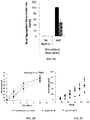
- PAS assay showed that at 5 min of 30 dyne/cm 2 , 5% DMSO can protect the platelet up to 90% in comparison to control. In contrary, when platelets were exposed to a longer time of 10 min, the same level of protection shifted to 10% DMSO; suggesting that there is a correlation in the intensity of shear stress and the level of protection. PAS results were further confirmed by the LTA, where the 5% of DMSO-pretreated platelets had lower maximal aggregation and slower platelet aggregation rate. These findings suggest that DMSO can deactivate platelets.
- LTA Light transmission aggregometry
- DMSO altered platelets membrane fluidity and desensitized their aggregability from certain common agonists; thus reflecting the role of DMSO in some biochemical pathways that inhibit platelets.
- platelets were pre-incubated with DMSO, at 0.95% (v/v), and then subjected to much higher levels of shear via a platelet hammer device, i.e. shear from 100 -1000 dynes/cm 2 .
- a platelet hammer device i.e. shear from 100 -1000 dynes/cm 2 .
- FIG. 1B it was observed that with optimal DMSO preincubation, platelets were able to tolerate much higher levels of sheer, i.e. hyper shear, at levels an order of magnitude greater than in the above study. These levels correlate with the levels experienced in VADs and other high shear MCS devices.
- Platelets were collected from human volunteers and PRP obtained as described above. Platelet-activation was determined (biochemical vs. shear mediated) was determined within the context of modulation of intracellular microfilament action, as measured by the effect on actin was determined.
- Actin is a globular multi-functional protein that forms microfilaments. It is found in almost all eukaryotic cells where it may be present at concentrations of over 100 ⁇ M. An actin protein's mass is roughly 42-kDa and it is the monomeric subunit of two types of filaments in cells: microfilaments, one of the three major components of the cytoskeleton, and thin filaments, part of the contractile apparatus in muscle cells. It can be present as either a free monomer called G-actin (globular) or as part of a linear polymer microfilament called F-actin (filamentous).
- Jasplakinolide a cyclo-depsipeptide
- the data shows that compared to control cells (with 0.1% DMSO), GFP experience less activation over time in the presence of the actin stabilizer in response to a 70 dyn shearing force.
- Platelet stiffness was characterized by electrodeformation using Dielectrophoresis (DEP). DEP is the lateral motion generated on uncharged particles due to polarization induced by non-uniform electric fields. DEP stiffness measurements for actin stabilizing/depolymerization drug treated platelets are shown in in Fig. 2C .
- Platelets were obtained as previously described and the effect of microtubule modulation on biochemical or shear-induced (70 dyn shearing force) platelet activation was determined.
- Microtubule modulation was effected using colcichine and taxol, for example. Colchicine has been shown to inhibit mictotuble polymerization. Skoufias, Biocehmistry, 31(3):738-746 (1992 ). Taxol on the other has been shown to stabilize microtubules. Arnal, et al., Curr. Biol., 5(8):900-908 (1995 ). The effect of these agents on platelet stiffness when compared to control is show in in Fig. 3A . Shear-induced platelet activation in the presence of these microtubule modulators was also determined and is shown in Fig. 3B .
- Platelets were obtained as previously described and the effect of microtubule modulation on biochemical or shear-induced (70 dyn shearing force) platelet activation was determined.
- Membrane modulation was effected using hydrophobic molecules such as Docosahexaenoic acid (DHA) and Eicosapentaenoic acid (EPA), the structures of which are shown below.
- DHA Docosahexaenoic acid
- EPA Eicosapentaenoic acid
- DHA at pH 7 decreases the bilayer stiffness, consistent with an amphiphile-induced increase in elasticity.
- EPA increases hydrophobicity in 1K-1 cells.
- Fig. 4A The effect of DHA and EPA on biochemically induced platelet activation using PRP is shown in Fig. 4A .
- Platelet activation was induced by treating cells with ADP or collagen as previously described.
- the effect of DHA and EPA on ADP or collagen induced platelet activation was compared to control cells (with 1%ETOH). DHA and EPA each reduced platelet aggregation observed with collagen and ADP treatment.
- Shear-mediated platelet activation was also measured in the presence of DHA, EPA and wild salmon oil ( Fig. 4B-C ).
- Shear-mediated and biochemical mediated platelet activation was also measured in the presence of the amphipathic molecules, cholesterol and lecithin. Cholesterol adds firmness and integrity to the plasma membrane and prevents it from becoming overly fluid i.e., cholesterol helps the membrane maintain its fluidity.
- cholesterol-treated cells were compared with cells treated with 0.1% DMSO.
- the data shown in Fig. 4D-E shows that cholesterol reduces shear-induced platelet activation at both concentrations used.
- the data for lecithin is shown in Fig. 4F and G .
- shear-induced platelet activation as measured by PAS increases in the presence of lecithin, when compared to controls.
- the data in this example shows that DHA, EPA and lecithin increase platelet sensitivity to shear stress.
Landscapes
- Health & Medical Sciences (AREA)
- Life Sciences & Earth Sciences (AREA)
- Chemical & Material Sciences (AREA)
- General Health & Medical Sciences (AREA)
- Public Health (AREA)
- Epidemiology (AREA)
- Animal Behavior & Ethology (AREA)
- Pharmacology & Pharmacy (AREA)
- Medicinal Chemistry (AREA)
- Veterinary Medicine (AREA)
- Engineering & Computer Science (AREA)
- Biomedical Technology (AREA)
- Biotechnology (AREA)
- Zoology (AREA)
- Hematology (AREA)
- Bioinformatics & Cheminformatics (AREA)
- Organic Chemistry (AREA)
- Wood Science & Technology (AREA)
- Genetics & Genomics (AREA)
- Cell Biology (AREA)
- Microbiology (AREA)
- Immunology (AREA)
- Biochemistry (AREA)
- General Engineering & Computer Science (AREA)
- Virology (AREA)
- Developmental Biology & Embryology (AREA)
- Pharmaceuticals Containing Other Organic And Inorganic Compounds (AREA)
- Medicines That Contain Protein Lipid Enzymes And Other Medicines (AREA)
- Heart & Thoracic Surgery (AREA)
- Medicines Containing Material From Animals Or Micro-Organisms (AREA)
Claims (9)
- Zusammensetzung zur Verwendung in einem therapeutischen Verfahren zum Modulieren der schubvermittelten Aktivierung oder Aggregation von Blutplättchen eines Patienten als Resultat von exogenen physikalischen Reizen, wobei der Patient eine Kreislaufunterstützungsvorrichtung aufweist, um Blut in dem Körper des Patienten pumpen, und wobei die exogene physikalische Kraft eine Kraft ist, die durch die Kreislaufunterstützungsvorrichtung bereitgestellt wird, die eine Schubspannung von mehr als 3 x 10⁻⁴ N/cm2 (30 dyn/cm2) in dem Blutfluss bereitstellt, wobei die Zusammensetzung ein oder mehrere Mittel umfasst, ausgewählt aus der Gruppe, die aus Folgenden besteht:
DMSO, Cholesterin, Cytochalasin B, Jasplakinolid, Colchicin und Taxol, und wobei die Zusammensetzung durch Verabreichung an den Patienten auf die Blutplättchen angewendet werden soll. - Zusammensetzung zur Verwendung nach Anspruch 1, wobei die Kraft eine Schubspannung von mehr als 5 x 10⁻⁴ N/cm2 (50 dyn/cm2) bereitstellt.
- Zusammensetzung zur Verwendung nach Anspruch 2, wobei die Kraft eine Schubspannung von 2 x 10⁻⁴ N/cm2 (200 dyn/cm2) oder mehr, vorzugsweise 5 x 10⁻³ N/cm2 (500 dyn/cm2) oder mehr, bereitstellt.
- Zusammensetzung zur Verwendung nach Anspruch 3, wobei die Kraft eine Schubspannung von mehr als oder gleich wie 0,01 N/cm2 (1000 Dyn/cm2) bereitstellt.
- Zusammensetzung zur Verwendung nach einem der Ansprüche 1 bis 4, wobei die Kreislaufunterstützungsvorrichtung eine ventrikuläre Unterstützungsvorrichtung (ventricular assist device, VAD) oder ein vollständiges Kunstherz ist.
- Zusammensetzung zur Verwendung eines der vorherigen Ansprüche, wobei das Mittel ausgewählt ist aus der Gruppe bestehend aus DMSO und nicht-atherogenem Cholesterin.
- Zusammensetzung zur Verwendung eines der vorherigen Ansprüche, wobei das Mittel DMSO ist.
- Zusammensetzung zur Verwendung eines der vorherigen Ansprüche, wobei das Mittel nicht-atherogenes Cholesterin ist.
- Ex-vivo-Verfahren zum Behandeln von Blutplättchen, um die schubvermittelte Aktivierung oder Aggregation der Blutplättchen als Resultat exogener physikalischer Kräfte zu modulieren, die durch eine Kreislaufunterstützungsvorrichtung bereitgestellt werden, die eine Schubspannung in dem Blutfluss eines Patienten von mehr als 3x10⁻⁴ N/cm2 (30 dyn/cm2) bereitstellt, wobei das Verfahren ein Verabreichen einer Zusammensetzung, wie sie in einem der vorherigen Ansprüche beansprucht ist, an die Blutplättchen umfasst.
Applications Claiming Priority (2)
| Application Number | Priority Date | Filing Date | Title |
|---|---|---|---|
| US201461931398P | 2014-01-24 | 2014-01-24 | |
| PCT/US2015/012960 WO2015113001A1 (en) | 2014-01-24 | 2015-01-26 | Materials, methods and devices for altering cell reactivity |
Publications (2)
| Publication Number | Publication Date |
|---|---|
| EP3096748A1 EP3096748A1 (de) | 2016-11-30 |
| EP3096748B1 true EP3096748B1 (de) | 2019-09-25 |
Family
ID=52469923
Family Applications (1)
| Application Number | Title | Priority Date | Filing Date |
|---|---|---|---|
| EP15704426.4A Active EP3096748B1 (de) | 2014-01-24 | 2015-01-26 | Verfahren zur veränderung von scherkraft-induzierter blutplättchenaktivierung |
Country Status (3)
| Country | Link |
|---|---|
| US (1) | US10478404B2 (de) |
| EP (1) | EP3096748B1 (de) |
| WO (1) | WO2015113001A1 (de) |
Families Citing this family (15)
| Publication number | Priority date | Publication date | Assignee | Title |
|---|---|---|---|---|
| EP3634528B1 (de) | 2017-06-07 | 2023-06-07 | Shifamed Holdings, LLC | Intravaskuläre fluidbewegungsvorrichtungen, systeme und verwendungsverfahren |
| US11511103B2 (en) | 2017-11-13 | 2022-11-29 | Shifamed Holdings, Llc | Intravascular fluid movement devices, systems, and methods of use |
| US10565028B2 (en) * | 2017-11-29 | 2020-02-18 | Microsoft Technology Licensing, Llc | Resumption of activities using activity data collected by an operating system |
| EP3746149B1 (de) | 2018-02-01 | 2025-08-06 | Shifamed Holdings, LLC | Intravaskuläre blutpumpen |
| US12606797B2 (en) * | 2018-06-15 | 2026-04-21 | Arizona Board Of Regents On Behalf Of The University Of Arizona | Methods of detection of mechanically-activated platelet activation and uses thereof |
| WO2020028537A1 (en) | 2018-07-31 | 2020-02-06 | Shifamed Holdings, Llc | Intravascaular blood pumps and methods of use |
| WO2020073047A1 (en) | 2018-10-05 | 2020-04-09 | Shifamed Holdings, Llc | Intravascular blood pumps and methods of use |
| WO2021011473A1 (en) | 2019-07-12 | 2021-01-21 | Shifamed Holdings, Llc | Intravascular blood pumps and methods of manufacture and use |
| US11654275B2 (en) | 2019-07-22 | 2023-05-23 | Shifamed Holdings, Llc | Intravascular blood pumps with struts and methods of use and manufacture |
| US12465748B2 (en) | 2019-08-07 | 2025-11-11 | Supira Medical, Inc. | Catheter blood pumps and collapsible pump housings |
| US11724089B2 (en) | 2019-09-25 | 2023-08-15 | Shifamed Holdings, Llc | Intravascular blood pump systems and methods of use and control thereof |
| WO2021062260A1 (en) | 2019-09-25 | 2021-04-01 | Shifamed Holdings, Llc | Catheter blood pumps and collapsible blood conduits |
| EP4501393A3 (de) | 2019-09-25 | 2025-04-09 | Shifamed Holdings, LLC | Katheterblutpumpen und zusammenklappbare pumpengehäuse |
| EP4072650A4 (de) | 2019-12-11 | 2024-01-10 | Shifamed Holdings, LLC | Absteigende aorten- und hohlvenenblutpumpen |
| EP4077947A4 (de) | 2019-12-19 | 2024-01-10 | Shifamed Holdings, LLC | Intravaskuläre blutpumpen, motoren und fluidsteuerung |
Family Cites Families (7)
| Publication number | Priority date | Publication date | Assignee | Title |
|---|---|---|---|---|
| US5358844A (en) | 1993-02-18 | 1994-10-25 | Brigham And Women's Hospital, Inc. | Preservation of blood platelets |
| US20010044584A1 (en) * | 1997-08-28 | 2001-11-22 | Kensey Kenneth R. | In vivo delivery methods and compositions |
| US6245782B1 (en) | 1999-05-17 | 2001-06-12 | Heartdrug Research L.L.C. | Methods of inhibiting platelet activation with selective serotonin reuptake inhibitors |
| AU2003223428A1 (en) | 2002-04-04 | 2003-10-20 | Hemodyne, Inc. | Onset of force development as a marker of thrombin generation |
| TWI299663B (en) | 2002-05-14 | 2008-08-11 | Novartis Ag | Methods of treatment |
| CA2566081A1 (en) | 2004-05-13 | 2005-12-01 | Boehringer Ingelheim International Gmbh | Use of dipyridamole for treatment of resistance to platelet inhibitors |
| US20070003528A1 (en) | 2005-06-29 | 2007-01-04 | Paul Consigny | Intracoronary device and method of use thereof |
-
2015
- 2015-01-26 EP EP15704426.4A patent/EP3096748B1/de active Active
- 2015-01-26 US US15/113,393 patent/US10478404B2/en active Active
- 2015-01-26 WO PCT/US2015/012960 patent/WO2015113001A1/en not_active Ceased
Non-Patent Citations (1)
| Title |
|---|
| None * |
Also Published As
| Publication number | Publication date |
|---|---|
| US10478404B2 (en) | 2019-11-19 |
| WO2015113001A1 (en) | 2015-07-30 |
| EP3096748A1 (de) | 2016-11-30 |
| US20170007552A1 (en) | 2017-01-12 |
Similar Documents
| Publication | Publication Date | Title |
|---|---|---|
| US10478404B2 (en) | Materials, methods and devices for altering cell reactivity | |
| Togo et al. | A decrease in membrane tension precedes successful cell-membrane repair | |
| Lampi et al. | Photopatterned hydrogels to investigate the endothelial cell response to matrix stiffness heterogeneity | |
| Lowenstein et al. | Regulation of Weibel–Palade body exocytosis | |
| Samarel | Costameres, focal adhesions, and cardiomyocyte mechanotransduction | |
| Barbee | Mechanical cell injury | |
| Kakisis et al. | Effects of cyclic strain on vascular cells | |
| Asparuhova et al. | Role of the actin cytoskeleton in tuning cellular responses to external mechanical stress | |
| Slepian et al. | Shear-mediated platelet activation in the free flow: Perspectives on the emerging spectrum of cell mechanobiological mechanisms mediating cardiovascular implant thrombosis | |
| Filippini et al. | Calcium mobilization in endothelial cell functions | |
| Casciola et al. | A molecular dynamic study of cholesterol rich lipid membranes: comparison of electroporation protocols | |
| Holló et al. | Shape changes and budding of giant vesicles induced by an internal chemical trigger: an interplay between osmosis and pH change | |
| Joardar et al. | Effect of phosphatidylethanolamine and oleic acid on membrane fusion: phosphatidylethanolamine circumvents the classical stalk model | |
| Traktuev et al. | Urokinase gene transfer augments angiogenesis in ischemic skeletal and myocardial muscle | |
| Grego et al. | Endothelial dysfunction in cardiovascular diseases: mechanisms and in vitro models | |
| Li et al. | Experimental research on therapeutic angiogenesis induced by hepatocyte growth factor directed by ultrasound‐targeted microbubble destruction in rats | |
| Schreckenberg et al. | Mechanisms by which calcium receptor stimulation modifies electromechanical coupling in isolated ventricular cardiomyocytes | |
| McGrane et al. | PIEZO force sensors and the heart | |
| Li et al. | Microencapsulation facilitates low-cryoprotectant vitrification of human umbilical vein endothelial cells | |
| Zhang et al. | Intracellular Delivery Enabled by Squeezing Mechanoporation | |
| Gahan et al. | Interactions of bacterial quorum sensing signals with model lipid membranes: influence of membrane composition on membrane remodeling | |
| Worbs et al. | T cell migration dynamics within lymph nodes during steady state: an overview of extracellular and intracellular factors influencing the basal intranodal T cell motility | |
| US20230076160A1 (en) | A system and method for releasing a species | |
| Xu et al. | Bacterial swimming and accumulation on endothelial cell surfaces | |
| Nguyen et al. | Unraveling kinetics of collapsed polymers in extensional flow |
Legal Events
| Date | Code | Title | Description |
|---|---|---|---|
| PUAI | Public reference made under article 153(3) epc to a published international application that has entered the european phase |
Free format text: ORIGINAL CODE: 0009012 |
|
| 17P | Request for examination filed |
Effective date: 20160603 |
|
| AK | Designated contracting states |
Kind code of ref document: A1 Designated state(s): AL AT BE BG CH CY CZ DE DK EE ES FI FR GB GR HR HU IE IS IT LI LT LU LV MC MK MT NL NO PL PT RO RS SE SI SK SM TR |
|
| AX | Request for extension of the european patent |
Extension state: BA ME |
|
| DAX | Request for extension of the european patent (deleted) | ||
| STAA | Information on the status of an ep patent application or granted ep patent |
Free format text: STATUS: EXAMINATION IS IN PROGRESS |
|
| 17Q | First examination report despatched |
Effective date: 20170825 |
|
| GRAP | Despatch of communication of intention to grant a patent |
Free format text: ORIGINAL CODE: EPIDOSNIGR1 |
|
| STAA | Information on the status of an ep patent application or granted ep patent |
Free format text: STATUS: GRANT OF PATENT IS INTENDED |
|
| INTG | Intention to grant announced |
Effective date: 20190122 |
|
| GRAS | Grant fee paid |
Free format text: ORIGINAL CODE: EPIDOSNIGR3 |
|
| GRAA | (expected) grant |
Free format text: ORIGINAL CODE: 0009210 |
|
| STAA | Information on the status of an ep patent application or granted ep patent |
Free format text: STATUS: THE PATENT HAS BEEN GRANTED |
|
| AK | Designated contracting states |
Kind code of ref document: B1 Designated state(s): AL AT BE BG CH CY CZ DE DK EE ES FI FR GB GR HR HU IE IS IT LI LT LU LV MC MK MT NL NO PL PT RO RS SE SI SK SM TR |
|
| REG | Reference to a national code |
Ref country code: GB Ref legal event code: FG4D |
|
| REG | Reference to a national code |
Ref country code: CH Ref legal event code: EP |
|
| REG | Reference to a national code |
Ref country code: DE Ref legal event code: R096 Ref document number: 602015038609 Country of ref document: DE |
|
| REG | Reference to a national code |
Ref country code: AT Ref legal event code: REF Ref document number: 1183130 Country of ref document: AT Kind code of ref document: T Effective date: 20191015 |
|
| REG | Reference to a national code |
Ref country code: IE Ref legal event code: FG4D |
|
| REG | Reference to a national code |
Ref country code: NL Ref legal event code: MP Effective date: 20190925 |
|
| PG25 | Lapsed in a contracting state [announced via postgrant information from national office to epo] |
Ref country code: NO Free format text: LAPSE BECAUSE OF FAILURE TO SUBMIT A TRANSLATION OF THE DESCRIPTION OR TO PAY THE FEE WITHIN THE PRESCRIBED TIME-LIMIT Effective date: 20191225 Ref country code: FI Free format text: LAPSE BECAUSE OF FAILURE TO SUBMIT A TRANSLATION OF THE DESCRIPTION OR TO PAY THE FEE WITHIN THE PRESCRIBED TIME-LIMIT Effective date: 20190925 Ref country code: SE Free format text: LAPSE BECAUSE OF FAILURE TO SUBMIT A TRANSLATION OF THE DESCRIPTION OR TO PAY THE FEE WITHIN THE PRESCRIBED TIME-LIMIT Effective date: 20190925 Ref country code: LT Free format text: LAPSE BECAUSE OF FAILURE TO SUBMIT A TRANSLATION OF THE DESCRIPTION OR TO PAY THE FEE WITHIN THE PRESCRIBED TIME-LIMIT Effective date: 20190925 Ref country code: HR Free format text: LAPSE BECAUSE OF FAILURE TO SUBMIT A TRANSLATION OF THE DESCRIPTION OR TO PAY THE FEE WITHIN THE PRESCRIBED TIME-LIMIT Effective date: 20190925 Ref country code: BG Free format text: LAPSE BECAUSE OF FAILURE TO SUBMIT A TRANSLATION OF THE DESCRIPTION OR TO PAY THE FEE WITHIN THE PRESCRIBED TIME-LIMIT Effective date: 20191225 |
|
| REG | Reference to a national code |
Ref country code: LT Ref legal event code: MG4D |
|
| PG25 | Lapsed in a contracting state [announced via postgrant information from national office to epo] |
Ref country code: GR Free format text: LAPSE BECAUSE OF FAILURE TO SUBMIT A TRANSLATION OF THE DESCRIPTION OR TO PAY THE FEE WITHIN THE PRESCRIBED TIME-LIMIT Effective date: 20191226 Ref country code: LV Free format text: LAPSE BECAUSE OF FAILURE TO SUBMIT A TRANSLATION OF THE DESCRIPTION OR TO PAY THE FEE WITHIN THE PRESCRIBED TIME-LIMIT Effective date: 20190925 Ref country code: RS Free format text: LAPSE BECAUSE OF FAILURE TO SUBMIT A TRANSLATION OF THE DESCRIPTION OR TO PAY THE FEE WITHIN THE PRESCRIBED TIME-LIMIT Effective date: 20190925 |
|
| REG | Reference to a national code |
Ref country code: AT Ref legal event code: MK05 Ref document number: 1183130 Country of ref document: AT Kind code of ref document: T Effective date: 20190925 |
|
| PG25 | Lapsed in a contracting state [announced via postgrant information from national office to epo] |
Ref country code: AL Free format text: LAPSE BECAUSE OF FAILURE TO SUBMIT A TRANSLATION OF THE DESCRIPTION OR TO PAY THE FEE WITHIN THE PRESCRIBED TIME-LIMIT Effective date: 20190925 Ref country code: PL Free format text: LAPSE BECAUSE OF FAILURE TO SUBMIT A TRANSLATION OF THE DESCRIPTION OR TO PAY THE FEE WITHIN THE PRESCRIBED TIME-LIMIT Effective date: 20190925 Ref country code: NL Free format text: LAPSE BECAUSE OF FAILURE TO SUBMIT A TRANSLATION OF THE DESCRIPTION OR TO PAY THE FEE WITHIN THE PRESCRIBED TIME-LIMIT Effective date: 20190925 Ref country code: AT Free format text: LAPSE BECAUSE OF FAILURE TO SUBMIT A TRANSLATION OF THE DESCRIPTION OR TO PAY THE FEE WITHIN THE PRESCRIBED TIME-LIMIT Effective date: 20190925 Ref country code: EE Free format text: LAPSE BECAUSE OF FAILURE TO SUBMIT A TRANSLATION OF THE DESCRIPTION OR TO PAY THE FEE WITHIN THE PRESCRIBED TIME-LIMIT Effective date: 20190925 Ref country code: ES Free format text: LAPSE BECAUSE OF FAILURE TO SUBMIT A TRANSLATION OF THE DESCRIPTION OR TO PAY THE FEE WITHIN THE PRESCRIBED TIME-LIMIT Effective date: 20190925 Ref country code: PT Free format text: LAPSE BECAUSE OF FAILURE TO SUBMIT A TRANSLATION OF THE DESCRIPTION OR TO PAY THE FEE WITHIN THE PRESCRIBED TIME-LIMIT Effective date: 20200127 Ref country code: RO Free format text: LAPSE BECAUSE OF FAILURE TO SUBMIT A TRANSLATION OF THE DESCRIPTION OR TO PAY THE FEE WITHIN THE PRESCRIBED TIME-LIMIT Effective date: 20190925 Ref country code: IT Free format text: LAPSE BECAUSE OF FAILURE TO SUBMIT A TRANSLATION OF THE DESCRIPTION OR TO PAY THE FEE WITHIN THE PRESCRIBED TIME-LIMIT Effective date: 20190925 |
|
| PGFP | Annual fee paid to national office [announced via postgrant information from national office to epo] |
Ref country code: GB Payment date: 20200117 Year of fee payment: 6 Ref country code: DE Payment date: 20200121 Year of fee payment: 6 |
|
| PG25 | Lapsed in a contracting state [announced via postgrant information from national office to epo] |
Ref country code: CZ Free format text: LAPSE BECAUSE OF FAILURE TO SUBMIT A TRANSLATION OF THE DESCRIPTION OR TO PAY THE FEE WITHIN THE PRESCRIBED TIME-LIMIT Effective date: 20190925 Ref country code: SM Free format text: LAPSE BECAUSE OF FAILURE TO SUBMIT A TRANSLATION OF THE DESCRIPTION OR TO PAY THE FEE WITHIN THE PRESCRIBED TIME-LIMIT Effective date: 20190925 Ref country code: SK Free format text: LAPSE BECAUSE OF FAILURE TO SUBMIT A TRANSLATION OF THE DESCRIPTION OR TO PAY THE FEE WITHIN THE PRESCRIBED TIME-LIMIT Effective date: 20190925 Ref country code: IS Free format text: LAPSE BECAUSE OF FAILURE TO SUBMIT A TRANSLATION OF THE DESCRIPTION OR TO PAY THE FEE WITHIN THE PRESCRIBED TIME-LIMIT Effective date: 20200224 |
|
| REG | Reference to a national code |
Ref country code: DE Ref legal event code: R097 Ref document number: 602015038609 Country of ref document: DE |
|
| PGFP | Annual fee paid to national office [announced via postgrant information from national office to epo] |
Ref country code: FR Payment date: 20200121 Year of fee payment: 6 |
|
| PG2D | Information on lapse in contracting state deleted |
Ref country code: IS |
|
| PG25 | Lapsed in a contracting state [announced via postgrant information from national office to epo] |
Ref country code: IS Free format text: LAPSE BECAUSE OF FAILURE TO SUBMIT A TRANSLATION OF THE DESCRIPTION OR TO PAY THE FEE WITHIN THE PRESCRIBED TIME-LIMIT Effective date: 20200126 Ref country code: DK Free format text: LAPSE BECAUSE OF FAILURE TO SUBMIT A TRANSLATION OF THE DESCRIPTION OR TO PAY THE FEE WITHIN THE PRESCRIBED TIME-LIMIT Effective date: 20190925 |
|
| PLBE | No opposition filed within time limit |
Free format text: ORIGINAL CODE: 0009261 |
|
| STAA | Information on the status of an ep patent application or granted ep patent |
Free format text: STATUS: NO OPPOSITION FILED WITHIN TIME LIMIT |
|
| PG25 | Lapsed in a contracting state [announced via postgrant information from national office to epo] |
Ref country code: MC Free format text: LAPSE BECAUSE OF FAILURE TO SUBMIT A TRANSLATION OF THE DESCRIPTION OR TO PAY THE FEE WITHIN THE PRESCRIBED TIME-LIMIT Effective date: 20190925 |
|
| REG | Reference to a national code |
Ref country code: CH Ref legal event code: PL |
|
| 26N | No opposition filed |
Effective date: 20200626 |
|
| REG | Reference to a national code |
Ref country code: BE Ref legal event code: MM Effective date: 20200131 |
|
| REG | Reference to a national code |
Ref country code: DE Ref legal event code: R082 Ref document number: 602015038609 Country of ref document: DE Representative=s name: VENNER SHIPLEY LLP, DE |
|
| PG25 | Lapsed in a contracting state [announced via postgrant information from national office to epo] |
Ref country code: LU Free format text: LAPSE BECAUSE OF NON-PAYMENT OF DUE FEES Effective date: 20200126 |
|
| PG25 | Lapsed in a contracting state [announced via postgrant information from national office to epo] |
Ref country code: BE Free format text: LAPSE BECAUSE OF NON-PAYMENT OF DUE FEES Effective date: 20200131 Ref country code: LI Free format text: LAPSE BECAUSE OF NON-PAYMENT OF DUE FEES Effective date: 20200131 Ref country code: SI Free format text: LAPSE BECAUSE OF FAILURE TO SUBMIT A TRANSLATION OF THE DESCRIPTION OR TO PAY THE FEE WITHIN THE PRESCRIBED TIME-LIMIT Effective date: 20190925 Ref country code: CH Free format text: LAPSE BECAUSE OF NON-PAYMENT OF DUE FEES Effective date: 20200131 |
|
| PG25 | Lapsed in a contracting state [announced via postgrant information from national office to epo] |
Ref country code: IE Free format text: LAPSE BECAUSE OF NON-PAYMENT OF DUE FEES Effective date: 20200126 |
|
| REG | Reference to a national code |
Ref country code: DE Ref legal event code: R119 Ref document number: 602015038609 Country of ref document: DE |
|
| GBPC | Gb: european patent ceased through non-payment of renewal fee |
Effective date: 20210126 |
|
| PG25 | Lapsed in a contracting state [announced via postgrant information from national office to epo] |
Ref country code: FR Free format text: LAPSE BECAUSE OF NON-PAYMENT OF DUE FEES Effective date: 20210131 |
|
| PG25 | Lapsed in a contracting state [announced via postgrant information from national office to epo] |
Ref country code: GB Free format text: LAPSE BECAUSE OF NON-PAYMENT OF DUE FEES Effective date: 20210126 Ref country code: DE Free format text: LAPSE BECAUSE OF NON-PAYMENT OF DUE FEES Effective date: 20210803 |
|
| PG25 | Lapsed in a contracting state [announced via postgrant information from national office to epo] |
Ref country code: TR Free format text: LAPSE BECAUSE OF FAILURE TO SUBMIT A TRANSLATION OF THE DESCRIPTION OR TO PAY THE FEE WITHIN THE PRESCRIBED TIME-LIMIT Effective date: 20190925 Ref country code: MT Free format text: LAPSE BECAUSE OF FAILURE TO SUBMIT A TRANSLATION OF THE DESCRIPTION OR TO PAY THE FEE WITHIN THE PRESCRIBED TIME-LIMIT Effective date: 20190925 Ref country code: CY Free format text: LAPSE BECAUSE OF FAILURE TO SUBMIT A TRANSLATION OF THE DESCRIPTION OR TO PAY THE FEE WITHIN THE PRESCRIBED TIME-LIMIT Effective date: 20190925 |
|
| PG25 | Lapsed in a contracting state [announced via postgrant information from national office to epo] |
Ref country code: MK Free format text: LAPSE BECAUSE OF FAILURE TO SUBMIT A TRANSLATION OF THE DESCRIPTION OR TO PAY THE FEE WITHIN THE PRESCRIBED TIME-LIMIT Effective date: 20190925 |