EP3097726B1 - Procédé et appareil de commande d'interdiction adaptative pour mo-sms dans un système d'accès sans fil - Google Patents
Procédé et appareil de commande d'interdiction adaptative pour mo-sms dans un système d'accès sans fil Download PDFInfo
- Publication number
- EP3097726B1 EP3097726B1 EP15740826.1A EP15740826A EP3097726B1 EP 3097726 B1 EP3097726 B1 EP 3097726B1 EP 15740826 A EP15740826 A EP 15740826A EP 3097726 B1 EP3097726 B1 EP 3097726B1
- Authority
- EP
- European Patent Office
- Prior art keywords
- barring
- sms
- access
- acb
- load
- Prior art date
- Legal status (The legal status is an assumption and is not a legal conclusion. Google has not performed a legal analysis and makes no representation as to the accuracy of the status listed.)
- Active
Links
- 238000000034 method Methods 0.000 title claims description 37
- 230000003044 adaptive effect Effects 0.000 title claims description 28
- 230000000977 initiatory effect Effects 0.000 claims description 6
- 230000006870 function Effects 0.000 description 24
- 230000005540 biological transmission Effects 0.000 description 16
- 238000004891 communication Methods 0.000 description 13
- 238000012546 transfer Methods 0.000 description 6
- 238000007726 management method Methods 0.000 description 5
- 238000010295 mobile communication Methods 0.000 description 5
- 238000012545 processing Methods 0.000 description 5
- 230000011664 signaling Effects 0.000 description 5
- 238000005516 engineering process Methods 0.000 description 4
- 241000760358 Enodes Species 0.000 description 3
- 230000015654 memory Effects 0.000 description 3
- 230000008859 change Effects 0.000 description 2
- 238000010276 construction Methods 0.000 description 2
- 230000000694 effects Effects 0.000 description 2
- 238000013459 approach Methods 0.000 description 1
- 238000003491 array Methods 0.000 description 1
- 230000006399 behavior Effects 0.000 description 1
- 230000009286 beneficial effect Effects 0.000 description 1
- 230000015556 catabolic process Effects 0.000 description 1
- 230000001413 cellular effect Effects 0.000 description 1
- 230000006835 compression Effects 0.000 description 1
- 238000007906 compression Methods 0.000 description 1
- 238000006731 degradation reaction Methods 0.000 description 1
- 230000001419 dependent effect Effects 0.000 description 1
- 230000007774 longterm Effects 0.000 description 1
- 230000007246 mechanism Effects 0.000 description 1
- 230000008569 process Effects 0.000 description 1
- 230000004044 response Effects 0.000 description 1
- XLYOFNOQVPJJNP-UHFFFAOYSA-N water Substances O XLYOFNOQVPJJNP-UHFFFAOYSA-N 0.000 description 1
Images





Classifications
-
- H—ELECTRICITY
- H04—ELECTRIC COMMUNICATION TECHNIQUE
- H04W—WIRELESS COMMUNICATION NETWORKS
- H04W4/00—Services specially adapted for wireless communication networks; Facilities therefor
- H04W4/12—Messaging; Mailboxes; Announcements
- H04W4/14—Short messaging services, e.g. short message services [SMS] or unstructured supplementary service data [USSD]
-
- H—ELECTRICITY
- H04—ELECTRIC COMMUNICATION TECHNIQUE
- H04W—WIRELESS COMMUNICATION NETWORKS
- H04W28/00—Network traffic management; Network resource management
- H04W28/02—Traffic management, e.g. flow control or congestion control
- H04W28/0284—Traffic management, e.g. flow control or congestion control detecting congestion or overload during communication
-
- H—ELECTRICITY
- H04—ELECTRIC COMMUNICATION TECHNIQUE
- H04W—WIRELESS COMMUNICATION NETWORKS
- H04W4/00—Services specially adapted for wireless communication networks; Facilities therefor
- H04W4/06—Selective distribution of broadcast services, e.g. multimedia broadcast multicast service [MBMS]; Services to user groups; One-way selective calling services
-
- H—ELECTRICITY
- H04—ELECTRIC COMMUNICATION TECHNIQUE
- H04W—WIRELESS COMMUNICATION NETWORKS
- H04W48/00—Access restriction; Network selection; Access point selection
- H04W48/02—Access restriction performed under specific conditions
- H04W48/06—Access restriction performed under specific conditions based on traffic conditions
-
- H—ELECTRICITY
- H04—ELECTRIC COMMUNICATION TECHNIQUE
- H04W—WIRELESS COMMUNICATION NETWORKS
- H04W48/00—Access restriction; Network selection; Access point selection
- H04W48/08—Access restriction or access information delivery, e.g. discovery data delivery
-
- H—ELECTRICITY
- H04—ELECTRIC COMMUNICATION TECHNIQUE
- H04W—WIRELESS COMMUNICATION NETWORKS
- H04W48/00—Access restriction; Network selection; Access point selection
- H04W48/08—Access restriction or access information delivery, e.g. discovery data delivery
- H04W48/10—Access restriction or access information delivery, e.g. discovery data delivery using broadcasted information
-
- H—ELECTRICITY
- H04—ELECTRIC COMMUNICATION TECHNIQUE
- H04W—WIRELESS COMMUNICATION NETWORKS
- H04W48/00—Access restriction; Network selection; Access point selection
- H04W48/08—Access restriction or access information delivery, e.g. discovery data delivery
- H04W48/12—Access restriction or access information delivery, e.g. discovery data delivery using downlink control channel
-
- H—ELECTRICITY
- H04—ELECTRIC COMMUNICATION TECHNIQUE
- H04W—WIRELESS COMMUNICATION NETWORKS
- H04W28/00—Network traffic management; Network resource management
- H04W28/02—Traffic management, e.g. flow control or congestion control
- H04W28/0205—Traffic management, e.g. flow control or congestion control at the air interface
-
- H—ELECTRICITY
- H04—ELECTRIC COMMUNICATION TECHNIQUE
- H04W—WIRELESS COMMUNICATION NETWORKS
- H04W48/00—Access restriction; Network selection; Access point selection
- H04W48/16—Discovering, processing access restriction or access information
-
- H—ELECTRICITY
- H04—ELECTRIC COMMUNICATION TECHNIQUE
- H04W—WIRELESS COMMUNICATION NETWORKS
- H04W76/00—Connection management
- H04W76/10—Connection setup
Definitions
- the present invention relates to a wireless access system, and more particularly, to methods and apparatus for an adaptive barring control for a Mobile Originating Short Message Service (MO-SMS). Similar methods and apparatuses are known from 3GPP draft documents R2-133357 SCM SOLUTIONS - VOICE PRIORITIZATION_R2, R2-134184_83BIS#13_SCM_EMAIL_SUMMARY and DOC_LIST_SA1_65_DRAFT_JAN10.
- a wireless communication system has been widely developed to provide various kinds of communication services such as voice and data.
- the wireless communication system is a multiple access system that can support communication with multiple users by sharing available system resources (bandwidth, transmission power, etc.).
- Examples of the multiple access system include a code division multiple access (CDMA) system, a frequency division multiple access (FDMA) system, a time division multiple access (TDMA) system, an orthogonal frequency division multiple access (OFDMA) system, and a single carrier frequency division multiple access (SC-FDMA) system.
- CDMA code division multiple access
- FDMA frequency division multiple access
- TDMA time division multiple access
- OFDMA orthogonal frequency division multiple access
- SC-FDMA single carrier frequency division multiple access
- MMTEL Multimedia Telephony Service
- ACB Access Class Barring
- MO+MT Mobile Terminating SMS
- MO-SMS is subject to the ACB. Therefore, it is need to newly define the process for access class barring control for MO-SMS.
- the object of the present invention is to provide methods and apparatuses for adaptive barring control for the MO-SMS to obviate one or more of the problems due to limitations and disadvantages of the related art.
- Another object of the present invention is to define parameters, such as a new access barring factor and a barring time for control the access barring for the MO-SMS.
- Still another object of the present invention is to propose a method for determining an indication bits included in a system information block for control the access barring for the MO-SMS by considering loads of the MO-SMS, MMTEL voice and MMTEL video.
- Still another object of the present invention is to provide a user equipment (UE) and/or a base station apparatus for supporting the above-described methods.
- UE user equipment
- the present invention relates to a method and apparatus for an adaptive barring control for a Mobile Originating Short Message Service (MO-SMS).
- MO-SMS Mobile Originating Short Message Service
- the present invention proposes a method for controlling an adaptive access class barring (ACB), for Mobile Originated-Short Message Service (MO-SMS) in a wireless access system, in accordance with claim 1.
- the method is performed by an enhanced Node-B (eNB).
- eNB enhanced Node-B
- the LessCongested may indicate the SMS load is medium high.
- the MoreCongested may indicate the SMS load is severely high.
- the open barring may indicate the access class barring is opened.
- the present inventions are able to provides an adaptive and finer granularity for accommodating the MO-SMS.
- this is also beneficial to use when the MMTEL voice and MMTEL video have a different level of congestion.
- the second embodiments of the present application can be extended to other methods of reusing ACB and EAB, CSFB-AC(Circuit Switch Fallback-Access Control) in the similar way.
- the present invention belongs to the technical field of adaptive barring to avoid network congestion.
- the present invention is defined by a first independent claim referring to a method executed by a eNB (claim 1) and by a second independent claim referring to an apparatus acting as an eNB (claim 3).
- Various embodiments are defined by the dependent claims.
- a BS refers to a terminal node of a network, which directly communicates with a UE.
- a specific operation described as being performed by the BS may be performed by an upper node of the BS.
- a network comprised of a plurality of network nodes including a BS
- various operations performed for communication with a UE may be performed by the BS, or network nodes other than the BS.
- the term 'BS' may be replaced with a fixed station, a Node B, an eNode B (eNB), an ABS (Advanced Base Station), an access point, etc.
- UE may be replaced with the terms MS (Mobile Station), SS (Subscriber Station), MSS (Mobile Subscriber Station), AMS (Advanced Mobile Station), mobile terminal, etc.
- MS Mobile Station
- SS Subscriber Station
- MSS Mobile Subscriber Station
- AMS Advanced Mobile Station
- mobile terminal etc.
- 'eNB' and 'eNode-B' are used interchangeably and the terms 'UE' and 'terminal' are interchangeably used in the embodiments of the present invention.
- a transmitter is a fixed and/or mobile node that provides a data or voice service and a receiver is a fixed and/or mobile node that receives a data or voice service. Therefore, an MS may serve as a transmitter and a BS may serve as a receiver, on uplink. Likewise, the MS may serve as a receiver and the BS may serve as a transmitter, on downlink.
- the embodiments of the present invention are supported by standard documents disclosed for at least one of wireless access systems including IEEE 802.xx systems, a 3GPP system, a 3GPP LTE system, and a 3GPP2 system.
- the embodiments of the present invention are supported by 3GPP TS 22.011, 3GPP TS 36.211, 3GPP TS 36.212, 3GPP TS 36.213, 3GPP TS 36.321, and 3GPP TS 36.331 documents.
- the steps or parts, which are not described to clearly reveal the technical idea of the present invention, in the embodiments of the present invention may be supported by the above documents. All terms used in the embodiments of the present invention may be explained by the standard documents.
- the embodiments of the present invention may be used in various wireless access technologies, such as CDMA (Code Division Multiple Access), FDMA (Frequency Division Multiple Access), TDMA (Time Division Multiple Access), OFDMA (Orthogonal Frequency Division Multiple access), and SC-FDMA (Single Carrier Frequency Division Multiple Access).
- CDMA Code Division Multiple Access
- FDMA Frequency Division Multiple Access
- TDMA Time Division Multiple Access
- OFDMA Orthogonal Frequency Division Multiple access
- SC-FDMA Single Carrier Frequency Division Multiple Access
- CDMA may be implemented with radio technology such as UTRA (Universal Terrestrial Radio Access) or CDMA2000.
- TDMA may be implemented with radio technology such as GSM (Global System for Mobile communications)/GPRS (General Packet Radio Service)/EDGE (Enhanced Data Rates for GSM Evolution).
- OFDMA may be implemented with radio technology such as IEEE 802.11 (Wi-Fi), IEEE 802.16 (WiMAX), IEEE 802.20, and E-UTRA (Evolved UTRA).
- UTRA is part of a UMTS (Universal Mobile Telecommunications System).
- 3GPP LTE is a part of Evolved UMTS (E-UMTS), which uses E-UTRA.
- 3GPP LTE employs OFDMA on downlink and uses SC-FDMA on uplink.
- LTE-A Advanced is an evolved version of 3GPP LTE. The following embodiments of the present invention mainly describe examples of the technical characteristics of the present invention as applied to the 3GPP LTE/LTE-A systems.
- a UE receives information from a BS through a downlink and transmits information to the BS through an uplink.
- Information transmitted and received between the UE and the BS includes general data information and control information.
- a variety of physical channels are provided according to type/use of information transmitted and received between the UE and the BS.
- FIG. 1 illustrates a schematic structure a network structure of an evolved universal mobile telecommunication system (E-UMTS).
- E-UMTS is an evolved version of the WCDMA UMTS system and basic standardization thereof is in progress under the 3rd Generation Partnership Project (3GPP).
- 3GPP 3rd Generation Partnership Project
- the E-UMTS is also referred to as a Long Term Evolution (LTE) system.
- LTE Long Term Evolution
- the E-UMTS mainly includes a User Equipment (UE), base stations (or eNBs or eNode Bs), and an Access Gateway (AG) which is located at an end of a network (e.g., E-UTRAN) and which is connected to an external network.
- UE User Equipment
- base stations or eNBs or eNode Bs
- AG Access Gateway
- an eNB can simultaneously transmit multiple data streams for a broadcast service, a multicast service and/or a unicast service.
- the AG can be divided into a part that handles processing of user traffic and a part that handles control traffic.
- the AG part for processing new user traffic and the AG part for processing control traffic can communicate with each other using a new interface.
- One or more cells may be present for one eNB.
- An interface for transmitting user traffic or control traffic can be used between eNBs.
- a Core Network may include the AG and a network node or the like for user registration of UEs.
- An interface for discriminating between the E-UTRAN and the CN can be used.
- the AG manages mobility of a UE on a Tracking Area (TA) basis.
- One TA includes a plurality of cells.
- FIG. 2 illustrates a network structure of an Evolved Universal Terrestrial Radio Access Network (E-UTRAN) system.
- the E-UTRAN system is an evolved version of the conventional UTRAN system.
- the E-UTRAN includes base stations that will also be referred to as "eNode Bs" or "eNBs”.
- the eNBs are connected through X2 interfaces.
- the X2 user plane interface (X2-U) is defined between eNBs.
- the X2-U interface provides nonguaranteed delivery of user plane PDUs.
- the X2 control plane interface (X2-CP) is defined between two neighbor eNBs.
- the X2-CP performs following functions: context transfer between eNBs, control of user plane tunnels between source eNB and target eNB, transfer of handover related messages, uplink load management and the like.
- Each eNB is connected to User Equipment (UE) through a radio interface and is connected to an Evolved Packet Core (EPC) through an S1 interface.
- the S1 user plane interface (S1-U) is defined between the eNB and the S-GW.
- the S1-U interface provides nonguaranteed delivery of user plane PDUs between the eNB and the S-GW (Serving Gateway).
- the S1 control plane interface (S1-MME) is defined between the eNB and the MME (Mobility Management Entity).
- the S1 interface performs following functions: EPS (Enhanced Packet System) Bearer Service Management function, NAS (Non-Access Stratum) Signaling Transport function, Network Sharing Function, MME Load balancing Function and the like.
- FIG. 3 illustrates the configurations of a control plane and a user plane of a radio interface protocol between the E-UTRAN and a UE based on the 3GPP radio access network standard.
- the radio interface protocol is divided horizontally into a physical layer, a data link layer, and a network layer, and vertically into a user plane for data transmission and a control plane for signaling.
- the protocol layers of FIG. 3 can be divided into an L1 layer (first layer), an L2 layer (second layer), and an L3 layer (third layer) based on the lower three layers of the Open System Interconnection (OSI) reference model widely known in communication systems.
- OSI Open System Interconnection
- the control plane is a passage through which control messages that a UE and a network use in order to manage calls are transmitted.
- the user plane is a passage through which data (e.g., voice data or Internet packet data) generated at an application layer is transmitted.
- data e.g., voice data or Internet packet data
- the physical layer which is the first layer, provides an information transfer service to an upper layer using a physical channel.
- the physical layer is connected to a Media Access Control (MAC) layer, located above the physical layer, through a transport channel. Data is transferred between the MAC layer and the physical layer through the transport channel. Data transfer between different physical layers, specifically between the respective physical layers of transmitting and receiving sides, is performed through the physical channel.
- the physical channel is modulated according to the Orthogonal Frequency Division Multiplexing (OFDM) method, using time and frequencies as radio resources.
- OFDM Orthogonal Frequency Division Multiplexing
- the MAC layer of the second layer provides a service to a Radio Link Control (RLC) layer, located above the MAC layer, through a logical channel.
- RLC Radio Link Control
- the RLC layer of the second layer supports reliable data transmission.
- the functions of the RLC layer may also be implemented through internal functional blocks of the MAC layer. In this case, the RLC layer need not be present.
- a PDCP layer of the second layer performs a header compression function to reduce unnecessary control information in order to efficiently transmit IP packets such as IPv4 or IPv6 packets in a radio interface with a relatively narrow bandwidth.
- a Radio Resource Control (RRC) layer located at the bottom of the third layer is defined only in the control plane and is responsible for control of logical, transport, and physical channels in association with configuration, re-configuration, and release of Radio Bearers (RBs).
- the RB is a service that the second layer provides for data communication between the UE and the E-UTRAN.
- the RRC layer of the UE and the RRC layer of the network exchange RRC messages.
- the UE is in an RRC connected mode if an RRC connection has been established between the RRC layer of the radio network and the RRC layer of the UE. Otherwise, the UE is in an RRC idle mode.
- a Non-Access Stratum (NAS) layer located above the RRC layer performs functions such as session management and mobility management.
- NAS Non-Access Stratum
- One cell of the eNB is set to use a bandwidth such as 1.25, 2.5, 5, 10 or 20MHz to provide a downlink or uplink transmission service to UEs.
- a bandwidth such as 1.25, 2.5, 5, 10 or 20MHz to provide a downlink or uplink transmission service to UEs.
- different cells may be set to use different bandwidths.
- Downlink transport channels for transmission of data from the network to the UE include a Broadcast Channel (BCH) for transmission of system information, a Paging Channel (PCH) for transmission of paging messages, and a downlink Shared Channel (SCH) for transmission of user traffic or control messages.
- BCH Broadcast Channel
- PCH Paging Channel
- SCH downlink Shared Channel
- User traffic or control messages of a downlink multicast or broadcast service may be transmitted through a downlink SCH and may also be transmitted through a downlink multicast channel (MCH).
- Uplink transport channels for transmission of data from the UE to the network include a Random Access Channel (RACH) for transmission of initial control messages and an uplink SCH for transmission of user traffic or control messages.
- RACH Random Access Channel
- Logical channels which are located above the transport channels and are mapped to the transport channels, include a Broadcast Control Channel (BCCH), a Paging Control Channel (PCCH), a Common Control Channel (CCCH), a Multicast Control Channel (MCCH), and a Multicast Traffic Channel (MTCH).
- BCCH Broadcast Control Channel
- PCCH Paging Control Channel
- CCCH Common Control Channel
- MCCH Multicast Control Channel
- MTCH Multicast Traffic Channel
- a Public Land Mobile Network is a network established and operated by an Administration or RPOA for the specific purpose of providing land mobile communication services to the public.
- the PLMN provides communication possibilities for mobile users. For communication between mobile and fixed users, interworking with a fixed network is necessary. Therefore, PLMNs shall provide a location registration function with the main purpose of providing continuity of service to UEs over the whole system area.
- the location registration function shall be such as to allow:
- Broadcast messages should be available on a cell by cell basis indicating the class(es) or categories of subscribers barred from network access.
- the use of these facilities allows the network operator to prevent overload of the access channel under critical conditions. It is not intended that access control be used under normal operating conditions.
- CS Circuit Switched
- PS Packet Switched
- the UE shall ignore Access Class related cell access restrictions when selecting a cell to camp on, i.e. it shall not reject a cell for camping on because access on that cell is not allowed for any of the Access Classes of the UE.
- a change of the indicated access restriction shall not trigger cell re-selection by the UE.
- Access Class related cell access restrictions shall be checked by the UE before sending an RRC CONNECTION REQUEST message when entering Connected Mode from UTRAN Idle mode.
- Access Class related cell access restrictions if it is sent as a part of Domain Specific Access Restriction parameters, shall also be checked by the UE before sending INITIAL DIRECT TRANSFER message.
- Access Class related cell access restrictions if it is sent as a part of Paging Permission with Access Control Parameters, shall be checked by the UE before sending a response to a paging message or before initiating a Location/Registration procedure.
- Access Class related cell access restrictions if it is sent as a part of Extended Access Barring parameters, shall be checked by the UE before sending an RRC CONNECTION REQUEST message or INITIAL DIRECT TRANSFER message subject to extended access barring as indicated by higher layers.
- All UEs are members of one out of ten randomly allocated mobile populations, defined as Access Classes 0 to 9. The population number is stored in the SIM/USIM. In addition, UEs may be members of one or more out of 5 special categories (Access Classes 11 to 15), also held in the SIM/USIM. These are allocated to specific high priority users as following Table 1 (The enumeration is not meant as a priority sequence). [Table 1] Access Classes Target Class 15 PLMN Staff Class 14 Emergency Services Class 13 Public Utilities (e.g. water/gas suppliers) Class 12 Security Services Class 11 For PLMN Use
- the serving network can indicate that UEs are allowed to respond to paging and perform location registration, even if their access class is not permitted. Otherwise access attempts are not allowed. Also, the serving network can indicate that UEs are restricted to perform location registration, although common access is permitted. If the UE responded to paging it shall follow the normal defined procedures and react as specified to any network command. In this case, the network operator can take the network load into account when allowing UEs access to the network.
- Access Classes are applicable as following Table 2. [Table 2] Classes Entity Classes 0 - 9 Home and Visited PLMNs Classes 11 and 15 Home PLMN only if the EHPLMN list is not present or any EHPLMN Classes 12, 13, 14 Any number of these classes may be barred at any one time.
- the access network shall be able to apply Access Class Barring for the different core networks individually.
- SBC Services Specific Access Control
- MMTEL independent access control for telephony services
- each RAN node is able to indicate whether the SMS related access is to be subjected to ACB controls or not, when ACB is applied. If the RAN node indicates that SMS related access is not subjected to ACB, then SMS related access shall be open.
- IE barring configuration Information Element
- the 'sms-Barringtime' is a new mean access barring time value in seconds for the MO-SMS.
- the 'sms-Barringtime' represents the time duration of prohibited time to access the network.
- values of the 'sms-Barringtime' field are set to 1, 2, 4, 8, 16, 32 subframes.
- the 'sms-Barringfactor' represents the access success possibility of a network access. That is, if the random number drawn by the UE is lower than the value indicated by the 'sms-Barringfactor', access is allowed. Otherwise the access is barred.
- This values are interpreted in a range of ⁇ 0, 5, 10, ..., 95% ⁇ . In this case, 0% means all of the UEs are barred and 95% means most of the UEs which attempt to access can be allowed.
- SIB2 System Information Block 2
- FIG. 4 illustrates one of methods for Adaptive barring control for the MO-SMS.
- the base station (eNB) is ready to control an access class barring for user equipments (UEs) in cells which the base station manages (S401).
- UEs user equipments
- the eNB determines whether there is needed to modify the access class barring on MO-SMS (S402).
- the eNB estimates SMS load on the network (S403).
- the eNB If there is no need to modify the access barring on the MO-SMS, the eNB returns the ready state.
- the eNB modifies access class barring parameters (or, fields) based on the estimated SMS loads. For example, as discussed above, the eNB modifies the previous access class barring parameters by adding newly defined access barring parameters, such as 'sms-BarringFactor' and 'sms-Barringtime' (S404).
- the eNB transmits the 'sms-Barring Factor' and 'sms-Barring time' parameters through system information block (SIB) message (e.g., SIB2) (S405).
- SIB system information block
- the SIB message is broadcast in the cells managed by the eNB.
- the UEs which have not been registered to the eNB are also able to decode the SIB message because the SIB includes system information of the eNB and is subject to all the UEs in the cell area. Accordingly, by using the SIB, the UE in the cells of the eNB can check that whether an access of the UE is barred or not.
- the UE check if MO-SMS is under control by checking the configuration of MO-SMS access baring parameters which have been received via the SIB (S406).
- the UE determines the barring status with the SIB. For example, the UE draws uniform a random number between 0 and 1 (S407), and compares this drawn uniform random number with the sms-Barringfactor to determine whether it is barred or not (S408).
- the UE performs random access procedure with the eNB (S409).
- the access attempt is not allowed. So, the UE come back step S407.
- Previously MMTEL voice and MMTEL video services are provided via the circuit switched (CS) network.
- the MMTEL voice and MMTEL video services are provided via the packet switched (PS) network.
- the MO-SMS service is provided via the PS network also. So, to more exactly control the ACB for the MO-SMS, it is preferable that the eNB considers the load of the MMTEL voice and MMTEL video services also when the eNB configures the access class barring parameters for the MO-SMS.
- FIG. 5 illustrates another method for Adaptive barring control for the MO-SMS.
- the base station eNB is ready to control an access class barring for user equipments (UEs) in cells which the eNB manages (S501).
- UEs user equipments
- the eNB determines whether there is a need to modify the access class barring on the MO-SMS (S502).
- the eNB If there is no need to modify the access barring on the MO-SMS, the eNB returns the ready state.
- the eNB estimates SMS load, MMTEL voice load and/or MMTEL video load on the network (S503).
- the eNB may estimate the loads of the MO-SMS, the MMTEL voice and/or the MMTEL video in consideration of the number of attempts for initiating session per minute. For example, the number of the UE's attempts from an idle mode to a normal mode can be used for estimate the loads.
- the eNB generates RACH congestion levels by using the MMTEL voice load and the MMTEL video loads.
- the eNB has three thresholds (e.g., threshold_1, threshold_2, and threshold_3) and the RACH congestion level can be defined as 'LessCongested' and 'MoreCongested' based on the threshold.
- the congestion level of 'LessCongested' can be calculated as following Equation 1 and the congestion level of 'moreCongested' can be calculated as following Equation 2 (S504).
- LessCongested argmin MMTEL voice load
- MMTEL video load 'moreCongested' argmax MMTEL voice load
- MMTEL video load argmin MMTEL voice load
- Equation 1 the meaning of function 'argmin' stands for the argument of the minimum, that is to say, the set of points of the given argument for which the given function attains its minimum value.
- the meaning of function 'argmax' stands for the argument of the maximum, that is to say, the set of points of the given argument for which the given function attains its maximum value.
- the eNB has three thresholds (e.g., threshold_1, threshold_2, and threshold_3) to determine indication bits which are used for adaptive barring control on the MO-SMS. So, the eNB compares the MO-SMS loads with the threshold_1 which represent least congested (S505).
- the eNB transmits the SIB message (e.g., SIB2) without barring configuration in order to indicate an open of the access class barring on the MO-SMS. That is, if the SMS load is expected to be tolerably high to the eNB, then the eNB send the SIB message including indication bits representing the open MO-SMS barring (S505a).
- SIB2 SIB2
- the eNB sets the indication bits to indicate the 'LessCongested' level and transmits the indication bits through the SIB message (i.e., SIB2). That is, the SMS load is bigger than and equal to the threshold_1 but is less than the threshold_2, the eNB transmits the SIB message including the indication bits (S506, S506a).
- the eNB sets the indication bits to indicate the 'MoreCongested' level and transmits the indication bits through the SIB message (i.e., SIB2). That is, if the SMS load is bigger than and equal to the threshold_2 but is less than the threshold_3, the eNB transmits the SIB message including the indication bits (S507, S507a).
- the SIB message is broadcast in the cells managed by the eNB.
- the UEs which have not been registered to the eNB are also able to decode the SIB message because the SIB is subject to broadcast to every cell area and includes system information of the eNB. Accordingly, by using the SIB, the UE in the cells of the eNB can check that whether an access of the UE is barred or not.
- the UE check the 'indication bits' in the SIB. If the indication bits are in effect to see whether MO-SMS is under control, then the UE determines the barring status with the SIB. For example, the UE draws uniform a random number between 0 and 1 (S508, S509), and compares this drawn uniform random number with the congestion level indicated by the indication bits to determine whether it is barred or not (S510).
- the congestion level may be set as 'open barring', 'LessCongested' or 'MoreCongested' to support the adaptive barring control.
- the congestion level can be set as a specific value for representing the three kinds of levels.
- the congestion level can be set as a form of the sms-barringfactor which is newly defined as explained above Fig. 4 .
- the sms-barringfactor can be classified as three categories and one of them can be transmitted to indicate the congestion level.
- the UE performs random access procedure with the eNB (S511).
- the UE come back step S509.
- the step S509 can be performed every time when the condition has been satisfied. Namely, one success in a random draw holds well for the following random access attempt, for next attempt, the UE may do it again.
- the access barring control can be more effectively applied to the MO-SMS.
- step S507a there is only one SIB message transmitted according to the determining procedure through steps S505 to S507. That is, the SIB message of step S507a can be transmitted when all of the conditions of S505, S506 and S507 are satisfied.
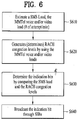
- FIG. 6 illustrates a flow chart summering the method for Adaptive barring control for MO-SMS in view of the eNB on Fig. 5 .
- the eNB estimates a SMS load, the MMTEL voice and/or MMTEL video loads (S610).
- the eNB generates RACH congestion level by using the MMTEL voice and/or the MMTEL video loads (S620).
- the eNB is able to determine the indication bits by comparing the SMS load and the RACH congestion levels (S630).
- the eNB broadcast the indication bits through SIBx message.
- FIG. 7 shows apparatuses for implementing the above-mentioned methods described with reference to FIGs. 1 to 6 .
- a UE can serve as a transmitter on uplink and as a receiver on downlink.
- An eNB can serve as a receiver on uplink and as a transmitter on downlink.
- the UE and the eNB may include transmission modules (Tx modules) 740 and 750 and reception modules (Rx modules) 760 and 770 for controlling transmission and reception of signal, data and/or messages and antennas 700 and 710 for transmitting and receiving signal, data and/or messages, respectively.
- Tx modules transmission modules
- Rx modules reception modules
- the UE and the eNB may respectively include processors 720 and 730 for performing the above-described embodiments of the present invention and memories 770 and 790 for storing processing procedures of the processors temporarily or continuously.
- the embodiments of the present invention can be performed using the aforementioned components and functions of the UE and the eNB.
- the apparatuses shown in FIG. 7 may be one of members illustrated in FIGs. 1 and 2 .
- the processors 720 and 730 preferably include the components shown in FIGS. 2 , 3 and 4 .
- the processor 720 of the UE can receive the SIB messages broadcast by the eNB. Particularly, an LTE-A UE can check the MO-SMS is under control by checking the newly defined sms-barring parameters or the indication bits included in the SIB. In addition, the processor 720 is able to draw a uniform random number between 0 to 1 and compare it with the sms-barringfactor or the indication bits to determine that the access class of the UE is barred or not.
- the processor 730 of the eNB can configure the SIB message including the newly defined sms-barring parameters or the indication bits based on the estimated loads of the MO-SMS, the MMTEL voice and/or the MMTEL video.
- the processor 730 of the eNB also generates the RACH congestion level such as 'lesscongested' and 'morecongested' to determine the indication bits.
- the transmission modules 740 and 750 and the reception modules 760 and 770 included in the UE and the eNB can have packet modulation and demodulation functions, a fast packet channel coding function, an OFDMA packet scheduling function, a TDD packet scheduling function and/or a channel multiplexing function.
- the UE and the eNB may further include a low-power radio frequency (RF)/intermediate frequency (IF) module.
- RF radio frequency
- IF intermediate frequency
- PDA personal digital assistant
- PCS personal communication service
- GSM global system for mobile
- WCDMA wideband CDMA
- MBS mobile broadband system
- the smart phone is a terminal having advantages of both a mobile communication terminal and a PDA.
- the smart phone can be a mobile communication terminal having scheduling and data communication functions including facsimile transmission/reception, Internet access, etc. of the PDA.
- the MM-MB terminal means a terminal including a multi-modem chip, which can be operated in both a portable Internet system and a mobile communication system (e.g., CDMA 2000 system, WCDMA system, etc.).
- the exemplary embodiments of the present invention may be achieved by various means, for example, hardware, firmware, software, or a combination thereof.
- the exemplary embodiments of the present invention may be achieved by one or more Application Specific Integrated Circuits (ASICs), Digital Signal Processors (DSPs), Digital Signal Processing Devices (DSPDs), Programmable Logic Devices (PLDs), Field Programmable Gate Arrays (FPGAs), processors, controllers, microcontrollers, microprocessors, etc.
- ASICs Application Specific Integrated Circuits
- DSPs Digital Signal Processors
- DSPDs Digital Signal Processing Devices
- PLDs Programmable Logic Devices
- FPGAs Field Programmable Gate Arrays
- processors controllers, microcontrollers, microprocessors, etc.
- the exemplary embodiments of the present invention may be achieved by a module, a procedure, a function, etc. performing the above-described functions or operations.
- Software code may be stored in a memory unit and executed by a processor.
- the memory unit may be located at the interior or exterior of the processor and may transmit and receive data to and from the processor via various known means.
- the embodiments of the present invention may be applied to various wireless access systems.
- the wireless access systems include 3GPP, 3GPP2 and/or IEEE 802.xx (Institute of Electrical and Electronic Engineers 802) system, etc.
- the embodiments of the present invention may be applied to technical fields using the various wireless access systems in addition to the wireless access systems.
Landscapes
- Engineering & Computer Science (AREA)
- Computer Networks & Wireless Communication (AREA)
- Signal Processing (AREA)
- Computer Security & Cryptography (AREA)
- Multimedia (AREA)
- Mobile Radio Communication Systems (AREA)
- Telephone Function (AREA)
Claims (4)
- Procédé de commande d'une limitation de classe d'accès, ACB, adaptative pour service de messages courts d'origine mobile, MO-SMS, dans un système d'accès sans fil, le procédé étant mis en œuvre par un nœud B évolué, eNB, et comprenant :la détermination (S502) s'il faut modifier une ACB sur le MO-SMS ;l'estimation (S503) d'une charge de SMS, d'une charge vocale de service de téléphonie multimédia, MMTEL, et d'une charge vidéo MMTEL sur le système d'accès sans fil en tenant compte d'un nombre de tentatives d'équipements d'utilisateur, UE, pour une session d'initiation par minute ;la génération (S504) de trois niveaux d'encombrement de canal d'accès aléatoire, RACH, sur la base de la charge vocale MMTEL et de la charge vidéo MMTEL ;la détermination (S505) de bits d'indication qui sont utilisés pour l'ACB adaptative par la comparaison de la charge de SMS aux trois niveaux d'encombrement RACH ; etl'émission (S505a, S506a, S507a) d'un message de bloc d'informations de système, SIB, incluant des bits d'indication pour l'un des trois niveaux d'encombrement RACH,dans lequel les trois niveaux d'encombrement RACH sont une interdiction d'ouverture, un niveau moins encombré et un niveau plus encombré,dans lequel l'ACB adaptative est ouverte par une absence d'interdiction lorsque les bits d'indication sont pour l'interdiction d'ouverture, ou l'ACB adaptative est mise en œuvre sur la base d'une valeur spécifique représentée par le niveau moins encombré ou par le niveau plus encombré, etdans lequel le niveau plus encombré représente une valeur spécifique de facteurs d'interdiction qui est supérieure à une valeur spécifique représentée par le niveau moins encombré.
- Procédé selon la revendication 1, dans lequel le message SIB n'inclut pas un élément d'informations de configuration d'interdiction lorsque les bits d'indication sont pour l'interdiction d'ouverture.
- Appareil agissant en tant qu'un nœud B évolué, eNB, pour commander une limitation de classe d'accès, ACB, adaptative pour service de messages courts d'origine mobile, MO-SMS, dans un système d'accès sans fil, l'appareil comprenant :un récepteur (770) ;un émetteur (750) ; etun processeur (730) pour commander l'ACB adaptative,dans lequel le processeur est configuré pour :la détermination s'il faut modifier une ACB sur le MO-SMS ;l'estimation d'une charge de SMS, d'une charge vocale de service de téléphonie multimédia, MMTEL, et d'une charge vidéo MMTEL sur le système d'accès sans fil en tenant compte d'un nombre de tentatives d'équipements d'utilisateur, UE, pour une session d'initiation par minute ;la génération de trois niveaux d'encombrement de canal d'accès aléatoire, RACH, sur la base de la charge vocale MMTEL et de la charge vidéo MMTEL ;la détermination de bits d'indication qui sont utilisés pour l'ACB adaptative par la comparaison de la charge de SMS aux trois niveaux d'encombrement RACH ; etl'émission, par l'utilisation de l'émetteur, d'un message de bloc d'informations de système, SIB, incluant des bits d'indication pour l'un des trois niveaux d'encombrement RACH,dans lequel les trois niveaux d'encombrement RACH sont une interdiction d'ouverture, un niveau moins encombré et un niveau plus encombré,dans lequel l'ACB adaptative est ouverte par l'absence d'interdiction lorsque les bits d'indication sont pour l'interdiction d'ouverture, ou l'ACB adaptative est mise en œuvre sur la base d'une valeur spécifique représentée par le niveau moins encombré ou par le niveau plus encombré, etdans lequel le niveau plus encombré représente une valeur spécifique de facteurs d'interdiction qui est supérieure à une valeur spécifique représentée par le niveau moins encombré.
- Appareil selon la revendication 3, dans lequel le message SIB n'inclut pas un élément d'informations de configuration d'interdiction lorsque les bits d'indication sont pour l'interdiction d'ouverture.
Applications Claiming Priority (4)
| Application Number | Priority Date | Filing Date | Title |
|---|---|---|---|
| US201461929978P | 2014-01-22 | 2014-01-22 | |
| US201461929976P | 2014-01-22 | 2014-01-22 | |
| US201462054397P | 2014-09-24 | 2014-09-24 | |
| PCT/KR2015/000668 WO2015111929A1 (fr) | 2014-01-22 | 2015-01-22 | Procédé et appareil de commande d'interdiction adaptative pour mo-sms dans un système d'accès sans fil |
Publications (3)
| Publication Number | Publication Date |
|---|---|
| EP3097726A1 EP3097726A1 (fr) | 2016-11-30 |
| EP3097726A4 EP3097726A4 (fr) | 2017-08-16 |
| EP3097726B1 true EP3097726B1 (fr) | 2020-01-15 |
Family
ID=53681675
Family Applications (1)
| Application Number | Title | Priority Date | Filing Date |
|---|---|---|---|
| EP15740826.1A Active EP3097726B1 (fr) | 2014-01-22 | 2015-01-22 | Procédé et appareil de commande d'interdiction adaptative pour mo-sms dans un système d'accès sans fil |
Country Status (6)
| Country | Link |
|---|---|
| US (1) | US10028114B2 (fr) |
| EP (1) | EP3097726B1 (fr) |
| JP (1) | JP6473458B2 (fr) |
| KR (1) | KR20160111400A (fr) |
| CN (1) | CN105940718B (fr) |
| WO (1) | WO2015111929A1 (fr) |
Families Citing this family (12)
| Publication number | Priority date | Publication date | Assignee | Title |
|---|---|---|---|---|
| KR102445680B1 (ko) | 2013-08-30 | 2022-09-20 | 인터디지탈 패튼 홀딩스, 인크 | 애플리케이션 특정 액세스 제어 방법 |
| ITUB20152710A1 (it) * | 2015-07-31 | 2017-01-31 | Freni Brembo Spa | Impianto frenante per veicoli, in particolare cicli e motocicli, e metodo di attuazione di un impianto frenante per veicoli |
| EP3354075A1 (fr) * | 2015-09-22 | 2018-08-01 | Telefonaktiebolaget LM Ericsson (publ) | Sélection de cellules sur la base de niveaux d'encombrement |
| US10582415B2 (en) * | 2016-02-17 | 2020-03-03 | Telefonaktiebolaget Lm Ericsson (Publ) | Associating unit, a mobile terminal, and methods therein for setting up bearers, and communicating in a congested communications network |
| CN115665857B (zh) | 2016-07-13 | 2026-02-03 | 三星电子株式会社 | 在移动通信中使用的接入控制方法和装置 |
| EP3632155B1 (fr) * | 2017-05-30 | 2021-07-07 | Telefonaktiebolaget LM Ericsson (Publ) | Assistance de procédure de resélection de cellule et dispositifs associés |
| CN111133800B (zh) * | 2017-08-09 | 2022-08-12 | 康维达无线有限责任公司 | 5g nr中的接入控制 |
| JP7250472B2 (ja) * | 2018-10-18 | 2023-04-03 | Hapsモバイル株式会社 | 基地局装置、プログラム、制御装置及び制御方法 |
| JP7495275B2 (ja) * | 2020-05-27 | 2024-06-04 | 京セラ株式会社 | セルラ通信システム、無線端末、及び基地局 |
| CN114980258B (zh) * | 2021-02-26 | 2024-11-22 | 上海大唐移动通信设备有限公司 | 一种接入控制方法、装置及存储介质 |
| US12279153B2 (en) * | 2021-11-01 | 2025-04-15 | At&T Intellectual Property I, L.P. | Short message service congestion manager |
| TWI833581B (zh) * | 2023-02-14 | 2024-02-21 | 緯創資通股份有限公司 | 用戶設備、通訊系統及其通訊方法 |
Family Cites Families (15)
| Publication number | Priority date | Publication date | Assignee | Title |
|---|---|---|---|---|
| CN101925151A (zh) | 2009-06-12 | 2010-12-22 | 华为技术有限公司 | 接入控制方法、设备及系统 |
| CN102036265B (zh) * | 2009-09-28 | 2013-09-18 | 中国移动通信集团北京有限公司 | 控制基站负荷的方法及装置 |
| US8817709B2 (en) * | 2009-10-14 | 2014-08-26 | Qualcomm Incorporated | Methods and apparatus for controlling channel utilization |
| US8995356B2 (en) * | 2009-10-14 | 2015-03-31 | Qualcomm Incorporated | Coding methods and apparatus for broadcast channels |
| CN102065000B (zh) * | 2009-11-17 | 2013-02-13 | 中国移动通信集团公司 | 网络拥塞控制方法、装置及系统 |
| JP2013520100A (ja) * | 2010-02-12 | 2013-05-30 | インターデイジタル パテント ホールディングス インコーポレイテッド | マシン間通信におけるアクセス制御および輻輳制御 |
| CN101808324B (zh) * | 2010-04-09 | 2013-04-24 | 北京交通大学 | 无线Mesh网络MAC层架构设计 |
| US20110261695A1 (en) | 2010-04-23 | 2011-10-27 | Xiaoming Zhao | System and method for network congestion control |
| EP2609695B1 (fr) * | 2010-08-27 | 2019-10-02 | LG Electronics Inc. | Procédés de signalisation et d'exploitation de pdu mac pour interdiction de classe d'accès et commande de délai d'attente pour réseau d'accès radio à grande échelle |
| US9572133B2 (en) * | 2010-11-15 | 2017-02-14 | Nokia Solutions And Networks Oy | Sub-frame configuration |
| US20120170503A1 (en) * | 2010-12-30 | 2012-07-05 | Motorola, Inc. | Method and apparatus for controlling network access in a multi-technology wireless communication system |
| US9408231B2 (en) * | 2011-05-09 | 2016-08-02 | Nokia Solutions And Networks Oy | Extended access barring mechanisms for machine type communications |
| WO2013112019A1 (fr) * | 2012-01-27 | 2013-08-01 | 삼성전자 주식회사 | Procédé et appareil permettant de contrôler efficacement l'accès à des fins d'ajustement de la charge du système dans des systèmes de communication mobile |
| CN115484638A (zh) * | 2013-10-30 | 2022-12-16 | 交互数字专利控股公司 | 用于处理优先级服务拥塞的系统和方法 |
| US9326311B2 (en) * | 2013-12-13 | 2016-04-26 | Blackberry Limited | Managing connection retries due to access class barring |
-
2015
- 2015-01-22 KR KR1020167020773A patent/KR20160111400A/ko not_active Withdrawn
- 2015-01-22 US US15/113,311 patent/US10028114B2/en active Active
- 2015-01-22 EP EP15740826.1A patent/EP3097726B1/fr active Active
- 2015-01-22 JP JP2016547877A patent/JP6473458B2/ja active Active
- 2015-01-22 WO PCT/KR2015/000668 patent/WO2015111929A1/fr not_active Ceased
- 2015-01-22 CN CN201580005314.3A patent/CN105940718B/zh not_active Expired - Fee Related
Non-Patent Citations (1)
| Title |
|---|
| None * |
Also Published As
| Publication number | Publication date |
|---|---|
| CN105940718B (zh) | 2019-09-03 |
| EP3097726A1 (fr) | 2016-11-30 |
| US10028114B2 (en) | 2018-07-17 |
| KR20160111400A (ko) | 2016-09-26 |
| US20170006442A1 (en) | 2017-01-05 |
| WO2015111929A1 (fr) | 2015-07-30 |
| EP3097726A4 (fr) | 2017-08-16 |
| CN105940718A (zh) | 2016-09-14 |
| JP2017506451A (ja) | 2017-03-02 |
| JP6473458B2 (ja) | 2019-02-20 |
Similar Documents
| Publication | Publication Date | Title |
|---|---|---|
| US10028114B2 (en) | Method and apparatus for adaptive barring control for MO-SMS in wireless access system | |
| KR101979856B1 (ko) | 접속 제어 방법 및 사용자기기 | |
| EP3471457B1 (fr) | Procédé de transmission de données basé sur une transmission edt | |
| US11177870B2 (en) | Method by which relay UE having connection with remote UE connects network in wireless communication system and apparatus therefor | |
| US10798639B2 (en) | Connection try method and user equipment, and connection control method and base station | |
| EP3567924B1 (fr) | Procédé de sélection d'un terminal relais par un terminal distant lorsqu'un contrôle d'accès est appliqué en raison d'un encombrement du réseau, et terminal distant exécutant le procédé | |
| US10397855B2 (en) | Access attempt method and user equipment, and access control method and base station | |
| US11166323B2 (en) | Method for using PS data off function and user equipment | |
| EP2870710B1 (fr) | Procédé et appareil permettant une interdiction d'accès à des services | |
| CN109076437B (zh) | 系统信息传输方法和基站、以及系统信息接收方法和用户设备 | |
| US10999781B2 (en) | Method for transmitting RRC message and wireless device | |
| US10455483B2 (en) | Method and apparatus for performing access control for network sharing in wireless communication system | |
| EP3525546A1 (fr) | Procédé de connexion à un réseau et équipement utilisateur | |
| CN104756544B (zh) | 在无线通信系统中接收扩展接入限制参数的方法和装置 | |
| US11064555B2 (en) | Method for transmitting RRC message and wireless device | |
| KR102400462B1 (ko) | 무선 통신 시스템에서 접속 제어 메커니즘을 위하여 시그널링 카테고리를 구성하는 방법 및 장치 | |
| EP3117666B1 (fr) | Procédé et appareil destinés à indiquer une omission d'une interdiction de classe d'accès dans un système de communication sans fil | |
| US11490319B2 (en) | Method and apparatus for signaling of access barring parameters in wireless communication system | |
| CN116193537A (zh) | 无线网络的特定于网络切片的接入限制 | |
| US20190289532A1 (en) | Method and user equipment for receiving system information, and method and base station for transmitting system information | |
| CN106105320B (zh) | 在无线通信系统中执行d2d特定接入控制的方法和装置 |
Legal Events
| Date | Code | Title | Description |
|---|---|---|---|
| PUAI | Public reference made under article 153(3) epc to a published international application that has entered the european phase |
Free format text: ORIGINAL CODE: 0009012 |
|
| 17P | Request for examination filed |
Effective date: 20160816 |
|
| AK | Designated contracting states |
Kind code of ref document: A1 Designated state(s): AL AT BE BG CH CY CZ DE DK EE ES FI FR GB GR HR HU IE IS IT LI LT LU LV MC MK MT NL NO PL PT RO RS SE SI SK SM TR |
|
| AX | Request for extension of the european patent |
Extension state: BA ME |
|
| DAX | Request for extension of the european patent (deleted) | ||
| A4 | Supplementary search report drawn up and despatched |
Effective date: 20170713 |
|
| RIC1 | Information provided on ipc code assigned before grant |
Ipc: H04W 48/06 20090101AFI20170707BHEP Ipc: H04W 28/08 20090101ALI20170707BHEP Ipc: H04W 48/10 20090101ALI20170707BHEP Ipc: H04W 4/14 20090101ALI20170707BHEP |
|
| STAA | Information on the status of an ep patent application or granted ep patent |
Free format text: STATUS: EXAMINATION IS IN PROGRESS |
|
| 17Q | First examination report despatched |
Effective date: 20180412 |
|
| REG | Reference to a national code |
Ref country code: DE Ref legal event code: R079 Ref document number: 602015045608 Country of ref document: DE Free format text: PREVIOUS MAIN CLASS: H04W0048060000 Ipc: H04W0004060000 |
|
| GRAP | Despatch of communication of intention to grant a patent |
Free format text: ORIGINAL CODE: EPIDOSNIGR1 |
|
| STAA | Information on the status of an ep patent application or granted ep patent |
Free format text: STATUS: GRANT OF PATENT IS INTENDED |
|
| RIC1 | Information provided on ipc code assigned before grant |
Ipc: H04W 28/02 20090101ALI20190718BHEP Ipc: H04W 48/16 20090101ALI20190718BHEP Ipc: H04W 48/12 20090101ALI20190718BHEP Ipc: H04W 4/06 20090101AFI20190718BHEP Ipc: H04W 28/08 20090101ALI20190718BHEP Ipc: H04W 48/08 20090101ALI20190718BHEP Ipc: H04W 4/14 20090101ALI20190718BHEP Ipc: H04W 48/06 20090101ALI20190718BHEP |
|
| INTG | Intention to grant announced |
Effective date: 20190812 |
|
| GRAS | Grant fee paid |
Free format text: ORIGINAL CODE: EPIDOSNIGR3 |
|
| GRAA | (expected) grant |
Free format text: ORIGINAL CODE: 0009210 |
|
| STAA | Information on the status of an ep patent application or granted ep patent |
Free format text: STATUS: THE PATENT HAS BEEN GRANTED |
|
| AK | Designated contracting states |
Kind code of ref document: B1 Designated state(s): AL AT BE BG CH CY CZ DE DK EE ES FI FR GB GR HR HU IE IS IT LI LT LU LV MC MK MT NL NO PL PT RO RS SE SI SK SM TR |
|
| REG | Reference to a national code |
Ref country code: GB Ref legal event code: FG4D Ref country code: CH Ref legal event code: EP |
|
| REG | Reference to a national code |
Ref country code: IE Ref legal event code: FG4D |
|
| REG | Reference to a national code |
Ref country code: DE Ref legal event code: R096 Ref document number: 602015045608 Country of ref document: DE |
|
| REG | Reference to a national code |
Ref country code: AT Ref legal event code: REF Ref document number: 1226229 Country of ref document: AT Kind code of ref document: T Effective date: 20200215 |
|
| PGFP | Annual fee paid to national office [announced via postgrant information from national office to epo] |
Ref country code: DE Payment date: 20200113 Year of fee payment: 6 |
|
| REG | Reference to a national code |
Ref country code: NL Ref legal event code: MP Effective date: 20200115 |
|
| REG | Reference to a national code |
Ref country code: LT Ref legal event code: MG4D |
|
| PG25 | Lapsed in a contracting state [announced via postgrant information from national office to epo] |
Ref country code: RS Free format text: LAPSE BECAUSE OF FAILURE TO SUBMIT A TRANSLATION OF THE DESCRIPTION OR TO PAY THE FEE WITHIN THE PRESCRIBED TIME-LIMIT Effective date: 20200115 Ref country code: NL Free format text: LAPSE BECAUSE OF FAILURE TO SUBMIT A TRANSLATION OF THE DESCRIPTION OR TO PAY THE FEE WITHIN THE PRESCRIBED TIME-LIMIT Effective date: 20200115 Ref country code: FI Free format text: LAPSE BECAUSE OF FAILURE TO SUBMIT A TRANSLATION OF THE DESCRIPTION OR TO PAY THE FEE WITHIN THE PRESCRIBED TIME-LIMIT Effective date: 20200115 Ref country code: PT Free format text: LAPSE BECAUSE OF FAILURE TO SUBMIT A TRANSLATION OF THE DESCRIPTION OR TO PAY THE FEE WITHIN THE PRESCRIBED TIME-LIMIT Effective date: 20200607 Ref country code: NO Free format text: LAPSE BECAUSE OF FAILURE TO SUBMIT A TRANSLATION OF THE DESCRIPTION OR TO PAY THE FEE WITHIN THE PRESCRIBED TIME-LIMIT Effective date: 20200415 |
|
| PG25 | Lapsed in a contracting state [announced via postgrant information from national office to epo] |
Ref country code: HR Free format text: LAPSE BECAUSE OF FAILURE TO SUBMIT A TRANSLATION OF THE DESCRIPTION OR TO PAY THE FEE WITHIN THE PRESCRIBED TIME-LIMIT Effective date: 20200115 Ref country code: GR Free format text: LAPSE BECAUSE OF FAILURE TO SUBMIT A TRANSLATION OF THE DESCRIPTION OR TO PAY THE FEE WITHIN THE PRESCRIBED TIME-LIMIT Effective date: 20200416 Ref country code: LV Free format text: LAPSE BECAUSE OF FAILURE TO SUBMIT A TRANSLATION OF THE DESCRIPTION OR TO PAY THE FEE WITHIN THE PRESCRIBED TIME-LIMIT Effective date: 20200115 Ref country code: IS Free format text: LAPSE BECAUSE OF FAILURE TO SUBMIT A TRANSLATION OF THE DESCRIPTION OR TO PAY THE FEE WITHIN THE PRESCRIBED TIME-LIMIT Effective date: 20200515 Ref country code: SE Free format text: LAPSE BECAUSE OF FAILURE TO SUBMIT A TRANSLATION OF THE DESCRIPTION OR TO PAY THE FEE WITHIN THE PRESCRIBED TIME-LIMIT Effective date: 20200115 Ref country code: BG Free format text: LAPSE BECAUSE OF FAILURE TO SUBMIT A TRANSLATION OF THE DESCRIPTION OR TO PAY THE FEE WITHIN THE PRESCRIBED TIME-LIMIT Effective date: 20200415 |
|
| REG | Reference to a national code |
Ref country code: CH Ref legal event code: PL |
|
| REG | Reference to a national code |
Ref country code: BE Ref legal event code: MM Effective date: 20200131 |
|
| REG | Reference to a national code |
Ref country code: DE Ref legal event code: R097 Ref document number: 602015045608 Country of ref document: DE |
|
| PG25 | Lapsed in a contracting state [announced via postgrant information from national office to epo] |
Ref country code: LT Free format text: LAPSE BECAUSE OF FAILURE TO SUBMIT A TRANSLATION OF THE DESCRIPTION OR TO PAY THE FEE WITHIN THE PRESCRIBED TIME-LIMIT Effective date: 20200115 Ref country code: RO Free format text: LAPSE BECAUSE OF FAILURE TO SUBMIT A TRANSLATION OF THE DESCRIPTION OR TO PAY THE FEE WITHIN THE PRESCRIBED TIME-LIMIT Effective date: 20200115 Ref country code: ES Free format text: LAPSE BECAUSE OF FAILURE TO SUBMIT A TRANSLATION OF THE DESCRIPTION OR TO PAY THE FEE WITHIN THE PRESCRIBED TIME-LIMIT Effective date: 20200115 Ref country code: EE Free format text: LAPSE BECAUSE OF FAILURE TO SUBMIT A TRANSLATION OF THE DESCRIPTION OR TO PAY THE FEE WITHIN THE PRESCRIBED TIME-LIMIT Effective date: 20200115 Ref country code: SM Free format text: LAPSE BECAUSE OF FAILURE TO SUBMIT A TRANSLATION OF THE DESCRIPTION OR TO PAY THE FEE WITHIN THE PRESCRIBED TIME-LIMIT Effective date: 20200115 Ref country code: DK Free format text: LAPSE BECAUSE OF FAILURE TO SUBMIT A TRANSLATION OF THE DESCRIPTION OR TO PAY THE FEE WITHIN THE PRESCRIBED TIME-LIMIT Effective date: 20200115 Ref country code: LU Free format text: LAPSE BECAUSE OF NON-PAYMENT OF DUE FEES Effective date: 20200122 Ref country code: SK Free format text: LAPSE BECAUSE OF FAILURE TO SUBMIT A TRANSLATION OF THE DESCRIPTION OR TO PAY THE FEE WITHIN THE PRESCRIBED TIME-LIMIT Effective date: 20200115 Ref country code: MC Free format text: LAPSE BECAUSE OF FAILURE TO SUBMIT A TRANSLATION OF THE DESCRIPTION OR TO PAY THE FEE WITHIN THE PRESCRIBED TIME-LIMIT Effective date: 20200115 Ref country code: CZ Free format text: LAPSE BECAUSE OF FAILURE TO SUBMIT A TRANSLATION OF THE DESCRIPTION OR TO PAY THE FEE WITHIN THE PRESCRIBED TIME-LIMIT Effective date: 20200115 |
|
| REG | Reference to a national code |
Ref country code: AT Ref legal event code: MK05 Ref document number: 1226229 Country of ref document: AT Kind code of ref document: T Effective date: 20200115 |
|
| PLBE | No opposition filed within time limit |
Free format text: ORIGINAL CODE: 0009261 |
|
| STAA | Information on the status of an ep patent application or granted ep patent |
Free format text: STATUS: NO OPPOSITION FILED WITHIN TIME LIMIT |
|
| PG25 | Lapsed in a contracting state [announced via postgrant information from national office to epo] |
Ref country code: BE Free format text: LAPSE BECAUSE OF NON-PAYMENT OF DUE FEES Effective date: 20200131 Ref country code: CH Free format text: LAPSE BECAUSE OF NON-PAYMENT OF DUE FEES Effective date: 20200131 Ref country code: LI Free format text: LAPSE BECAUSE OF NON-PAYMENT OF DUE FEES Effective date: 20200131 |
|
| 26N | No opposition filed |
Effective date: 20201016 |
|
| PG25 | Lapsed in a contracting state [announced via postgrant information from national office to epo] |
Ref country code: IE Free format text: LAPSE BECAUSE OF NON-PAYMENT OF DUE FEES Effective date: 20200122 Ref country code: IT Free format text: LAPSE BECAUSE OF FAILURE TO SUBMIT A TRANSLATION OF THE DESCRIPTION OR TO PAY THE FEE WITHIN THE PRESCRIBED TIME-LIMIT Effective date: 20200115 Ref country code: FR Free format text: LAPSE BECAUSE OF NON-PAYMENT OF DUE FEES Effective date: 20200315 Ref country code: AT Free format text: LAPSE BECAUSE OF FAILURE TO SUBMIT A TRANSLATION OF THE DESCRIPTION OR TO PAY THE FEE WITHIN THE PRESCRIBED TIME-LIMIT Effective date: 20200115 |
|
| PG25 | Lapsed in a contracting state [announced via postgrant information from national office to epo] |
Ref country code: SI Free format text: LAPSE BECAUSE OF FAILURE TO SUBMIT A TRANSLATION OF THE DESCRIPTION OR TO PAY THE FEE WITHIN THE PRESCRIBED TIME-LIMIT Effective date: 20200115 Ref country code: PL Free format text: LAPSE BECAUSE OF FAILURE TO SUBMIT A TRANSLATION OF THE DESCRIPTION OR TO PAY THE FEE WITHIN THE PRESCRIBED TIME-LIMIT Effective date: 20200115 |
|
| GBPC | Gb: european patent ceased through non-payment of renewal fee |
Effective date: 20200415 |
|
| PG25 | Lapsed in a contracting state [announced via postgrant information from national office to epo] |
Ref country code: GB Free format text: LAPSE BECAUSE OF NON-PAYMENT OF DUE FEES Effective date: 20200415 |
|
| REG | Reference to a national code |
Ref country code: DE Ref legal event code: R119 Ref document number: 602015045608 Country of ref document: DE |
|
| PG25 | Lapsed in a contracting state [announced via postgrant information from national office to epo] |
Ref country code: DE Free format text: LAPSE BECAUSE OF NON-PAYMENT OF DUE FEES Effective date: 20210803 |
|
| PG25 | Lapsed in a contracting state [announced via postgrant information from national office to epo] |
Ref country code: TR Free format text: LAPSE BECAUSE OF FAILURE TO SUBMIT A TRANSLATION OF THE DESCRIPTION OR TO PAY THE FEE WITHIN THE PRESCRIBED TIME-LIMIT Effective date: 20200115 Ref country code: MT Free format text: LAPSE BECAUSE OF FAILURE TO SUBMIT A TRANSLATION OF THE DESCRIPTION OR TO PAY THE FEE WITHIN THE PRESCRIBED TIME-LIMIT Effective date: 20200115 Ref country code: CY Free format text: LAPSE BECAUSE OF FAILURE TO SUBMIT A TRANSLATION OF THE DESCRIPTION OR TO PAY THE FEE WITHIN THE PRESCRIBED TIME-LIMIT Effective date: 20200115 |
|
| PG25 | Lapsed in a contracting state [announced via postgrant information from national office to epo] |
Ref country code: MK Free format text: LAPSE BECAUSE OF FAILURE TO SUBMIT A TRANSLATION OF THE DESCRIPTION OR TO PAY THE FEE WITHIN THE PRESCRIBED TIME-LIMIT Effective date: 20200115 Ref country code: AL Free format text: LAPSE BECAUSE OF FAILURE TO SUBMIT A TRANSLATION OF THE DESCRIPTION OR TO PAY THE FEE WITHIN THE PRESCRIBED TIME-LIMIT Effective date: 20200115 |