EP3099740B1 - Matières de moulage thermoplastiques présentant un rapport optimisé entre fluidité et ténacité - Google Patents
Matières de moulage thermoplastiques présentant un rapport optimisé entre fluidité et ténacité Download PDFInfo
- Publication number
- EP3099740B1 EP3099740B1 EP15701221.2A EP15701221A EP3099740B1 EP 3099740 B1 EP3099740 B1 EP 3099740B1 EP 15701221 A EP15701221 A EP 15701221A EP 3099740 B1 EP3099740 B1 EP 3099740B1
- Authority
- EP
- European Patent Office
- Prior art keywords
- graft
- styrene
- copolymer
- composition
- acrylonitrile
- Prior art date
- Legal status (The legal status is an assumption and is not a legal conclusion. Google has not performed a legal analysis and makes no representation as to the accuracy of the status listed.)
- Active
Links
Images
Classifications
-
- C—CHEMISTRY; METALLURGY
- C08—ORGANIC MACROMOLECULAR COMPOUNDS; THEIR PREPARATION OR CHEMICAL WORKING-UP; COMPOSITIONS BASED THEREON
- C08L—COMPOSITIONS OF MACROMOLECULAR COMPOUNDS
- C08L25/00—Compositions of, homopolymers or copolymers of compounds having one or more unsaturated aliphatic radicals, each having only one carbon-to-carbon double bond, and at least one being terminated by an aromatic carbocyclic ring; Compositions of derivatives of such polymers
- C08L25/02—Homopolymers or copolymers of hydrocarbons
- C08L25/04—Homopolymers or copolymers of styrene
- C08L25/08—Copolymers of styrene
- C08L25/12—Copolymers of styrene with unsaturated nitriles
-
- C—CHEMISTRY; METALLURGY
- C08—ORGANIC MACROMOLECULAR COMPOUNDS; THEIR PREPARATION OR CHEMICAL WORKING-UP; COMPOSITIONS BASED THEREON
- C08J—WORKING-UP; GENERAL PROCESSES OF COMPOUNDING; AFTER-TREATMENT NOT COVERED BY SUBCLASSES C08B, C08C, C08F, C08G or C08H
- C08J3/00—Processes of treating or compounding macromolecular substances
- C08J3/005—Processes for mixing polymers
-
- C—CHEMISTRY; METALLURGY
- C08—ORGANIC MACROMOLECULAR COMPOUNDS; THEIR PREPARATION OR CHEMICAL WORKING-UP; COMPOSITIONS BASED THEREON
- C08J—WORKING-UP; GENERAL PROCESSES OF COMPOUNDING; AFTER-TREATMENT NOT COVERED BY SUBCLASSES C08B, C08C, C08F, C08G or C08H
- C08J3/00—Processes of treating or compounding macromolecular substances
- C08J3/12—Powdering or granulating
- C08J3/126—Polymer particles coated by polymer, e.g. core shell structures
-
- C—CHEMISTRY; METALLURGY
- C08—ORGANIC MACROMOLECULAR COMPOUNDS; THEIR PREPARATION OR CHEMICAL WORKING-UP; COMPOSITIONS BASED THEREON
- C08J—WORKING-UP; GENERAL PROCESSES OF COMPOUNDING; AFTER-TREATMENT NOT COVERED BY SUBCLASSES C08B, C08C, C08F, C08G or C08H
- C08J3/00—Processes of treating or compounding macromolecular substances
- C08J3/20—Compounding polymers with additives, e.g. colouring
- C08J3/203—Solid polymers with solid and/or liquid additives
-
- C—CHEMISTRY; METALLURGY
- C08—ORGANIC MACROMOLECULAR COMPOUNDS; THEIR PREPARATION OR CHEMICAL WORKING-UP; COMPOSITIONS BASED THEREON
- C08L—COMPOSITIONS OF MACROMOLECULAR COMPOUNDS
- C08L23/00—Compositions of homopolymers or copolymers of unsaturated aliphatic hydrocarbons having only one carbon-to-carbon double bond; Compositions of derivatives of such polymers
- C08L23/02—Compositions of homopolymers or copolymers of unsaturated aliphatic hydrocarbons having only one carbon-to-carbon double bond; Compositions of derivatives of such polymers not modified by chemical after-treatment
- C08L23/16—Ethylene-propylene or ethylene-propylene-diene copolymers
-
- C—CHEMISTRY; METALLURGY
- C08—ORGANIC MACROMOLECULAR COMPOUNDS; THEIR PREPARATION OR CHEMICAL WORKING-UP; COMPOSITIONS BASED THEREON
- C08L—COMPOSITIONS OF MACROMOLECULAR COMPOUNDS
- C08L25/00—Compositions of, homopolymers or copolymers of compounds having one or more unsaturated aliphatic radicals, each having only one carbon-to-carbon double bond, and at least one being terminated by an aromatic carbocyclic ring; Compositions of derivatives of such polymers
- C08L25/02—Homopolymers or copolymers of hydrocarbons
- C08L25/04—Homopolymers or copolymers of styrene
- C08L25/08—Copolymers of styrene
-
- C—CHEMISTRY; METALLURGY
- C08—ORGANIC MACROMOLECULAR COMPOUNDS; THEIR PREPARATION OR CHEMICAL WORKING-UP; COMPOSITIONS BASED THEREON
- C08L—COMPOSITIONS OF MACROMOLECULAR COMPOUNDS
- C08L51/00—Compositions of graft polymers in which the grafted component is obtained by reactions only involving carbon-to-carbon unsaturated bonds; Compositions of derivatives of such polymers
- C08L51/06—Compositions of graft polymers in which the grafted component is obtained by reactions only involving carbon-to-carbon unsaturated bonds; Compositions of derivatives of such polymers grafted on to homopolymers or copolymers of aliphatic hydrocarbons containing only one carbon-to-carbon double bond
-
- C—CHEMISTRY; METALLURGY
- C08—ORGANIC MACROMOLECULAR COMPOUNDS; THEIR PREPARATION OR CHEMICAL WORKING-UP; COMPOSITIONS BASED THEREON
- C08L—COMPOSITIONS OF MACROMOLECULAR COMPOUNDS
- C08L55/00—Compositions of homopolymers or copolymers, obtained by polymerisation reactions only involving carbon-to-carbon unsaturated bonds, not provided for in groups C08L23/00 - C08L53/00
- C08L55/02—ABS [Acrylonitrile-Butadiene-Styrene] polymers
-
- C—CHEMISTRY; METALLURGY
- C08—ORGANIC MACROMOLECULAR COMPOUNDS; THEIR PREPARATION OR CHEMICAL WORKING-UP; COMPOSITIONS BASED THEREON
- C08L—COMPOSITIONS OF MACROMOLECULAR COMPOUNDS
- C08L9/00—Compositions of homopolymers or copolymers of conjugated diene hydrocarbons
-
- C—CHEMISTRY; METALLURGY
- C08—ORGANIC MACROMOLECULAR COMPOUNDS; THEIR PREPARATION OR CHEMICAL WORKING-UP; COMPOSITIONS BASED THEREON
- C08J—WORKING-UP; GENERAL PROCESSES OF COMPOUNDING; AFTER-TREATMENT NOT COVERED BY SUBCLASSES C08B, C08C, C08F, C08G or C08H
- C08J2325/00—Characterised by the use of homopolymers or copolymers of compounds having one or more unsaturated aliphatic radicals, each having only one carbon-to-carbon double bond, and at least one being terminated by an aromatic carbocyclic ring; Derivatives of such polymers
- C08J2325/02—Homopolymers or copolymers of hydrocarbons
- C08J2325/04—Homopolymers or copolymers of styrene
- C08J2325/08—Copolymers of styrene
- C08J2325/12—Copolymers of styrene with unsaturated nitriles
-
- C—CHEMISTRY; METALLURGY
- C08—ORGANIC MACROMOLECULAR COMPOUNDS; THEIR PREPARATION OR CHEMICAL WORKING-UP; COMPOSITIONS BASED THEREON
- C08J—WORKING-UP; GENERAL PROCESSES OF COMPOUNDING; AFTER-TREATMENT NOT COVERED BY SUBCLASSES C08B, C08C, C08F, C08G or C08H
- C08J2409/00—Characterised by the use of homopolymers or copolymers of conjugated diene hydrocarbons
-
- C—CHEMISTRY; METALLURGY
- C08—ORGANIC MACROMOLECULAR COMPOUNDS; THEIR PREPARATION OR CHEMICAL WORKING-UP; COMPOSITIONS BASED THEREON
- C08J—WORKING-UP; GENERAL PROCESSES OF COMPOUNDING; AFTER-TREATMENT NOT COVERED BY SUBCLASSES C08B, C08C, C08F, C08G or C08H
- C08J2451/00—Characterised by the use of graft polymers in which the grafted component is obtained by reactions only involving carbon-to-carbon unsaturated bonds; Derivatives of such polymers
- C08J2451/06—Characterised by the use of graft polymers in which the grafted component is obtained by reactions only involving carbon-to-carbon unsaturated bonds; Derivatives of such polymers grafted on to homopolymers or copolymers of aliphatic hydrocarbons containing only one carbon-to-carbon double bond
-
- C—CHEMISTRY; METALLURGY
- C08—ORGANIC MACROMOLECULAR COMPOUNDS; THEIR PREPARATION OR CHEMICAL WORKING-UP; COMPOSITIONS BASED THEREON
- C08L—COMPOSITIONS OF MACROMOLECULAR COMPOUNDS
- C08L2205/00—Polymer mixtures characterised by other features
- C08L2205/02—Polymer mixtures characterised by other features containing two or more polymers of the same C08L -group
- C08L2205/025—Polymer mixtures characterised by other features containing two or more polymers of the same C08L -group containing two or more polymers of the same hierarchy C08L, and differing only in parameters such as density, comonomer content, molecular weight, structure
-
- C—CHEMISTRY; METALLURGY
- C08—ORGANIC MACROMOLECULAR COMPOUNDS; THEIR PREPARATION OR CHEMICAL WORKING-UP; COMPOSITIONS BASED THEREON
- C08L—COMPOSITIONS OF MACROMOLECULAR COMPOUNDS
- C08L2207/00—Properties characterising the ingredient of the composition
- C08L2207/53—Core-shell polymer
Definitions
- the present invention relates to thermoplastic molding compositions or compositions having an improved melt flow rate, containing at least two different polymer components.
- the molding compositions contain as components one or more styrene copolymers A, at least one graft rubber B, and optionally further additives D.
- the present invention relates to an improved process for the preparation of these thermoplastic molding compositions, as well as the use of the molding compositions for the production of moldings, for example for household items or electronic components.
- thermoplastic molding compositions For decades, the skilled person is familiar with the production of thermoplastic molding compositions. The interest lies in particular in the modification of styrene-acrylonitrile copolymers by the incorporation of rubbers. This is done, for example, by graft copolymerization of styrene and acrylonitrile in the presence of a rubber and by subsequent mixing of this graft copolymer with a separately prepared polymeric matrix, for example a styrene-acrylonitrile copolymer or a methylstyrene-acrylonitrile copolymer.
- oligomers can also be formed in a thermal copolymerization of styrene and acrylonitrile is K. Kirchner (Makromol Chem 1976, 177, 2031-2042 ). This document finds, via gas-liquid chromatography coupled to mass spectroscopy, essentially the formation of dimers and focuses further on Diel-Alder adducts with three repeat units and their analytics. To counteract this oligomer formation, initiators such as di-tert-butyl peroxide can be used.
- oligomers The influence of oligomers on the properties of styrene-acrylonitrile copolymers was reported by Schellenberg and Hamann (Angew Macromol Chem 1991, 187, 123-134 ). In this context, the impact of different oligomer levels on product properties was also investigated.
- the oligomers are obtainable by polymerization of styrene and acrylonitrile and have two or three repeat units. This component has up to 8.4 wt .-% residual monomer content of styrene, based on 100 wt .-% oligomer.
- Schellenberg showed that an increased oligomer content substantially leads to deteriorated product properties, such as a decrease in the Vicat softening temperature.
- melt volume index increases steadily at an oligomer content of 0 to 5 wt .-%.
- Schellenberg does not elaborate on the influence of oligomers containing more than three repeating units (the monomers) and their oligomer mixtures on polymer compositions. Also, there is no evidence of how an oligomeric moiety in a polymer blend could behave.
- EP-A 0 869 149 describes a polycarbonate / graft polymer blend, in particular of the ABS type, with reduced deposit formation.
- the blend contains aromatic polycarbonates, thermoplastic homopolymers, copolymers and terpolymers, graft polymers and at least one additive.
- the reduced deposit formation and the mass loss increase with increasing amount of oligomer.
- oligomers products of two to four repeating units Preferably, the amount of oligomer is 0.6 wt% or less, based on the ABS matrix.
- thermoplastic molding composition based on styrene copolymers and polyamides, containing 0.1 to 5 wt .-% of alkyl acrylate oligomers having a weight average of 1,200 to 4,000 g / mol.
- the oligomers are added separately and are not part of the styrene-acrylate matrix.
- the comparative examples which do not contain any oligomers have a lower melt flow index and a lower notched impact strength.
- WO 2000/24829 describes thermoplastic polycarbonate resins which may also contain styrene copolymers.
- thermoplastic molding compositions described in the prior art are intended to reduce the oligomer content in order to optimize the product properties, additives must often be added to improve the processing of the molding compositions.
- An object of the present invention is to provide thermoplastic molding compositions based on styrene copolymers and agglomerated graft rubber with improved melt flow rate (MVR) and good notched impact strength (Charpy) for improved processing of the molding compositions.
- thermoplastic molding composition comprising components A and B and, if appropriate, the other components C and D, the sum of which gives 100 wt .-%, said molding composition or composition 0.2 to 3, 0 wt .-%, based on the total weight of components A to D of oligomers.
- the invention relates in particular to a thermoplastic composition
- a thermoplastic composition comprising the components A and B and D, the sum of which gives a total of 100 wt .-%, wherein the molding composition consists of (about) 65 to 70 wt .-% of a styrene-acrylonitrile copolymer A.
- the invention further relates to a thermoplastic composition in which the oligomers have a molecular weight in the range of 100 to 700 g / mol.
- the invention further relates to a thermoplastic composition in which component B is a polybutadiene rubber, preferably prepared using 1 to 5 wt .-%, based on component B, of an agglomerating additive.
- the invention relates to a thermoplastic composition in which the oligomers are formed substantially from styrene and / or acrylonitrile. These oligomers are often formed from 2, 3, 4, 5 or 6 monomer units.
- the invention furthermore relates to a thermoplastic composition in which it contains from 60 to 70% by weight of one or more styrene copolymers A, this styrene copolymer A consisting of two or more monomers from the groups styrene, ⁇ -methylstyrene on the one hand and acrylonitrile and / or or methyl methacrylate, on the other hand.
- the styrene copolymer A is often a SAN copolymer.
- the invention further relates to a thermoplastic composition in which this 29 to 37 wt .-%, one or more graft copolymers B contains, said graft copolymer B is composed of a graft and at least one graft, wherein the graft of two or more monomers from the Group butadiene, styrene, acrylonitrile, ⁇ -methyl styrene, MMA, butyl acrylate, ethyl acrylate and methylacrylamide is constructed.
- the invention furthermore relates to a thermoplastic composition in which it additionally contains 1 to 15% by weight of a rubber C other than component B, this further rubber C comprising two or more monomers selected from ethene, propene, butene and / or octene Contains blocks.
- the polydispersity U (ratio of Mw to Mn) and the particle size distribution can be determined by methods known to the person skilled in the art (GPC, light scattering, NMR, etc.).
- the invention further relates to a thermoplastic composition in which component A is composed of 60 to 85% by weight of styrene and 15 to 40% by weight of acrylonitrile.
- the invention also relates to a process for producing a thermoplastic composition as described above by mixing the components A and B and optionally the other components C and / or D.
- An object of the present invention is also a process for the preparation of molding compositions, as described above, by mixing the components A and B, and optionally the components C and D, in which the mixing in one (or more) extruder (s) such that the composition after mixing 0.2 to 3.0 wt .-%, in particular 0.6 to 3.0 wt .-%, often 1.1 to 2.8 wt .-%, based on the Total weight of components A to D, containing oligomers.
- These oligomers are usually derived from components A and / or B.
- the invention further relates to a process for producing a thermoplastic composition, wherein the mixing of the components takes place in an extruder and the process of extrusion in a period of 0.2 to 30 minutes, often 0.2 to 10 minutes, and in a temperature range of 230 to 260 ° C takes place.
- the subject matter is also the use of a thermoplastic composition as described above for the production of fibers, films and moldings.
- the invention also relates to the use of the molding compositions described above for the production of household items, electronic components, household appliances, gardening tools, medical-technical equipment, automotive components and body parts.
- the invention further relates to shaped articles (eg household articles, electronic components, household appliances, gardening tools, medical-technical devices, motor vehicle components and body parts), fibers and films produced from a molding composition as described above.
- shaped articles eg household articles, electronic components, household appliances, gardening tools, medical-technical devices, motor vehicle components and body parts
- fibers and films produced from a molding composition as described above.
- thermoplastic compositions or molding compositions contain 60 to 75 wt .-% (based on the sum of all components) at least of a styrene copolymer A.
- Component A is known to the person skilled in the art and can be prepared by customary processes, for example the free-radical anionic or cationic polymerization.
- Component A is preferably prepared by means of continuous or incomplete bulk polymerization, emulsion polymerization or solution polymerization.
- the polymerization is particularly preferably carried out in 0 to 20% by weight, often 0.5 to 20% by weight, of aromatic solvents, such as toluene, xylene or ethylbenzene. More about the production of component A can also the Plastics Handbook (Vieweg-Daumiller, Volume V polystyrene, Carl Hanser Verlag, Kunststoff, 1969, page 124, line 12 ff .).
- SAN or other rubber-free styrene copolymers can be understood as styrene copolymers.
- component A are common copolymer matrices such as styrene-acrylonitrile copolymers (SAN) prepared by bulk polymerization, emulsion or solvent polymerization. Mixtures of matrices are also suitable, for example those in Ulmann's Encyclopedia of Industrial Chemistry (VCH-Verlag, 5th Edition, 1992, p. 633 f .).
- a molding composition which comprises one or more styrene copolymers A, this styrene copolymer A being composed of two or three monomers from the group consisting of styrene, acrylonitrile and / or ⁇ -methylstyrene.
- the copolymer matrix A is preferably prepared from the components acrylonitrile and styrene and / or ⁇ -methylstyrene by bulk polymerization or in the presence of one or more solvents.
- copolymers A having molar masses M w of from 15,000 to 300,000 g / mol, it being possible to determine the molar masses, for example by light scattering in tetrahydrofuran (GPC with UV detection).
- Component A particularly preferably comprises acrylonitrile as the ⁇ , ⁇ -unsaturated component and styrene and / or ⁇ -methylstyrene as the aromatic vinylic component.
- Component A contains a certain amount of oligomers, as described above.
- Component A is often contained in the molding composition with 60 to 70 wt .-% of one or more styrene copolymers A, said styrene copolymer A preferably from two or more monomers from the group consisting of styrene, acrylonitrile, ⁇ -methyl styrene and Methylmetacrylate is constructed.
- component A of the molding composition of the invention comprises a SAN or an AMSAN copolymer or a styrene- ⁇ -methylstyrene-acrylonitrile copolymer (SAMSAN) composed of acrylonitrile and ⁇ -methylsyrol and styrene.
- SAMSAN styrene- ⁇ -methylstyrene-acrylonitrile copolymer
- the copolymer matrix A may contain, for example: (Aa) Polystyrene-acrylonitrile, prepared from, based on (Aa), 60 to 85 wt .-% of styrene and 15 to 40 wt .-% of acrylonitrile, or (From) Poly- ⁇ -methylstyrene-acrylonitrile, prepared from, based on (Ab), 60 to 85 wt .-% ⁇ -methylstyrene and 15 to 40 wt .-% of acrylonitrile, or (Ac) a mixture of the copolymer matrix (Aa) and the copolymer matrix (Ab).
- the copolymer matrix A can also be obtained by copolymerization of acrylonitrile, styrene and ⁇ -methylstyrene.
- the number-average molecular weight (M n ) of the copolymer matrix A can be carried out by customary methods, for example by gas chromatography or by gel permeation chromatography, and is from 15,000 to 500,000 g / mol, preferably from 15,000 to 300,000 g / mol (determined by means of GPC with UV). detection).
- the viscosity (VZ) of the copolymeric matrix A is (measured according to DIN 53726 at 25 ° C. in a 0.5% strength by weight solution in DMF), for example, of 50 to 120 ml / g.
- the copolymer matrix A can be prepared by a process as described, for example, in US Pat Plastics Handbook, Vieweg-Daumiller, volume V, (polystyrene), Carl-Hanser-Verlag, Kunststoff 1969, pages 122 f., Lines 12 ff , is described.
- a composition is prepared containing from 25 to 40% by weight, often from 29 to 37% by weight, of one or more graft polymers B.
- This graft polymer B is preferably composed of a graft base and at least one graft.
- the graft polymer B is for example composed of two or more monomers from the group butadiene, isoprene, styrene, acrylonitrile, ⁇ -methylstyrene, methyl methacrylate, ethyl acrylate and / or methylacrylamide.
- the graft polymer B and its preparation reference is made to the description in Ullmann's Encyclopedia of Industrial Chemistry (5th edition, VCH, 1992, pages 633f .).
- the thermoplastic molding compositions often contain a graft rubber, this graft rubber preferably from 25 to 40 wt .-%, in particular from 29 to 37 wt .-% of the total molding compositions.
- This graft polymer B is composed of a grafting base, for example of polybutadiene (optionally containing a butadiene as the main component copolymer), and at least one graft.
- the graft pad is preferably made up of two or more monomers from the group of styrene, acrylonitrile, ⁇ -methylstyrene, ethyl acrylate, methylacrylamide and / or other co-polymerizable monomers.
- thermoplastic molding compositions containing a copolymer matrix of styrene and acrylonitrile and a graft copolymer of a rubber latex, styrene and acrylonitrile.
- a polybutadiene latex is prepared by radical polymerization using potassium peroxodisulfate as an initiator. This rubber latex is then subjected to agglomeration, which serves to enlarge the rubber particles.
- This agglomeration can be carried out, for example, by reacting the rubber latex with an emulsion of a copolymer of ethyl acrylate and methacrylamide.
- the graft rubber is then produced by reacting the agglomerated rubber latex with styrene and acrylonitrile using an initiator. On the oligomer content will not be discussed here.
- a molding composition which contains a graft rubber as component B, the agglomerated graft base B1 having a bimodal particle size distribution of a fraction x) of non-agglomerated particles with a d 50 value in the range from 80 to 120 nm and a particle size of Fraction y) agglomerated particles having a d 50 value in the range of 350 to 550 nm and a polydispersity U of less than 0.27.
- the person skilled in the art also knows how these distributions are determined and that the size of the rubber particles has a significant influence on the physical properties of the thermoplastic molding compositions.
- EP-A 077 038 is z.
- the agglomeration of a dispersed rubber in the presence of a dispersion of an acid group-containing latex and in the presence of a neutral electrolyte is described.
- EP-A 714 941 is a method for the mechanical agglomeration of rubber particles known, but can be implemented on a technical scale only with great effort. Other methods of producing particulate rubbers containing at least one fraction of agglomerated particles may be used EP-A 0 022 200 . DE 10 2005 022 632 . EP-A 1 305 345 . WO 2008/020012 be removed.
- an agglomerated graft rubber is used, wherein the graft base (B1) is premixed with an agglomerating component (E).
- the graft base (B1) may be composed of a diene component (B11) such as isoprene and / or butadiene, with butadiene being preferred and a component (B12) containing styrene, acrylonitrile and / or ⁇ -methylstyrene, with styrene being preferred.
- the diene component (B12) is in an amount of 79 to 100, often 90 to 100 wt .-%, preferably from 90 to 98 wt .-%, and the vinyl aromatic component (B11) in an amount of 0 to 21 wt .-%, often 0 to 10 wt .-%, preferably from 2 to 10 wt .-% used.
- a graft base B1 of butadiene and styrene is preferred, this is used in the aforementioned composition.
- the styrene content is 7 to 14 wt .-%, in particular from 7 to 10 wt .-%, based on B1 in one embodiment.
- the components (B12) and optionally (B11) are polymerized in aqueous emulsion by processes known to the person skilled in the art at temperatures of generally from 20 to 100.degree. C., preferably from 50 to 90.degree.
- the usual auxiliaries such as emulsifiers, such as alkali metal salts of alkyl or arylsulfonic acids, alkyl sulfates, fatty alcohol sulfonates, salts of higher fatty acids having 10 to 30 carbon atoms or resin soaps can be used.
- auxiliaries may be polymerization initiators, in particular the customary persulfates, such as potassium peroxodisulfate, but redox systems are also suitable.
- the amounts of initiator for example 0.1 to 1 wt .-%, based on the total weight of the monomers used for the preparation of the graft (B1), depends on the desired molecular weight. Generally, a water to monomer ratio of 2: 1 to 0.7: 1 is used.
- Polymerization aids may include the usual buffering agents which adjust pHs preferably from 6 to 10, such as sodium bicarbonate and sodium pyrophosphate, and generally from 0.1 to 3 weight percent of a molecular weight regulator such as mercaptans, terpinol or dimeric alpha-methylstyrene.
- buffering agents which adjust pHs preferably from 6 to 10, such as sodium bicarbonate and sodium pyrophosphate, and generally from 0.1 to 3 weight percent of a molecular weight regulator such as mercaptans, terpinol or dimeric alpha-methylstyrene.
- the graft base (B1) is used with an agglomerating component (E), which according to the invention has a polydispersity U of less than 0.27 and a d 50 value of 100 to 150 nm.
- Component (E) is composed of a copolymer (E1) consisting of one or more hydrophobic C 1 - to C 12 -alkyl acrylates or C 1 - to C 12 -alkyl methacrylates and (E2) consisting of one or more hydrophilic comonomers, selected from the group consisting of acrylamide, methylacrylamide, ethylacrylamide and n-butylacrylamide.
- the copolymer (E1) in an amount of 80 to 99.9 wt .-%, preferably 90 to 99.9 wt .-%, and the comonomer component (E2) in an amount of 0.1 used to 20 wt .-%, preferably 0.1 to 10 wt .-%.
- Ethyl acrylate is particularly preferably used as monomer (E1) and methacrylamide as monomer (E2).
- copolymer (E) is composed of 92 to 98% by weight of ethyl acrylate and 2 to 8% by weight, based in each case on the total solids in (E), of methylacrylamide.
- a copolymer (E) described above which has a core which is made up of at least one of the hydrophobic monomers mentioned as component (C1), preferably of ethyl acrylate, this core being grafted with a copolymer consisting of the components ( E1) and (E2) is constructed.
- the preparation of the agglomerating copolymer E used is known to the person skilled in the art, preferably by emulsion polymerization, it being possible to use the emulsifiers mentioned above for the graft base B1.
- the agglomerating copolymer (E) preferably has a polydispersity U of less than 0.26, more preferably of small 0.25.
- the agglomerating copolymer (E) preferably has a d 50 value of 110 to 140 nm, more preferably of 115 to 140 nm.
- agglomeration of the graft base (B1) is effected by adding a dispersion of the above-described copolymer (E).
- concentration of the copolymer (E) in the dispersion used for agglomeration should generally be between 3 and 60% by weight, preferably between 5 and 40% by weight.
- the temperature of the agglomeration in a range of 20 to 120 ° C, preferably maintained from 30 to 100 ° C, wherein the addition of the agglomerating copolymer (E) all at once or in portions, continuously or with a feed profile over a certain Period can be done.
- the agglomeration time i. the time from the beginning of the addition of E to the start of the subsequent graft copolymerization is preferably from one minute to several hours, for example, to 2 hours.
- the agglomerization may optionally be added to electrolytes in an amount of 1 to 50% by weight, based on 100% by weight of the solid content of the copolymer E.
- Suitable basic electrolytes here are organic, preferably inorganic, hydroxides.
- lithium hydroxide, sodium hydroxide or potassium hydroxide can be used, for. B. in concentration ranges from 0.001 to 0.1 g electrolyte / ml.
- the agglomerated graft base B1 obtained after agglomeration has a bimodal particle size distribution of fractions x) and y).
- x) stands for a fraction of non-agglomerated particles, which generally have a d 50 value in the range of 80 to 120 nm and y) for a fraction of agglomerated particles with a d 50 value in the range of 350 to 550 nm and a Polydispersity U of less than 0.28.
- the agglomerated graft base B1 is grafted with the monomers B21 and B22 of the graft shell (B2), the graft polymer being generally composed of 40 to 85% by weight of a graft base (B1) and 15 to 60% by weight. %, in each case based on the solids content of the graft copolymer B, of a graft shell, the sum of B1 and B2 together amounting to 100% by weight.
- the graft shell (B2) can, for. B. obtained by reacting (B21) 70 to 90 wt .-% of styrene and / or ⁇ -methylstyrene, in particular styrene, and (B22) 10 to 30 wt .-% of acrylonitrile, methacrylonitrile and / or methyl methacrylate, in particular acrylonitrile , in the presence of the agglomerated graft base (B1). The sum of B21 and B22 gives 100% by weight.
- the graft shell (B2) is preferably produced by carrying out the above-described agglomeration of the graft base (B1) by an emulsion polymerization process.
- the graft copolymers B according to the invention can be used as they are obtained in the reaction mixture, for example as latex emulsion or latex dispersion. Alternatively, they can also be processed in a further step. Workup measures are known in principle to the person skilled in the art.
- the work-up steps include, for example, isolation of the graft copolymers B from the reaction mixture, for example by spray-drying, shearing or precipitation with strong acids or by other precipitating agents, e.g. inorganic compounds such as magnesium sulfate.
- the work-up steps also include the drying of the isolated rubber.
- the solids content of the graft rubber dispersion is often about 40% by weight.
- the molding composition contains one or more additional components C and / or D.
- the molding composition may, for example, additionally contain 0 to 15% by weight, often 0.1 to 15% by weight, in particular 1 to 15% by weight of further rubbers C different from component B or a mixture of rubbers.
- This further rubber C may for example be composed of two or more monomers, preferably from the group butadiene, isoprene, styrene, acrylonitrile, ⁇ -methylstyrene, methyl methacrylate, butyl acrylate and / or ethylhexyl acrylate.
- Also functionalized rubbers, for example based on ethene and C 3 -C 8 olefins are useful as component C.
- These are graft rubbers made in emulsion, consisting of at least one "hard” and one "soft” component, the ratio of hard to soft phase often being between 20:60 and 70:30 parts by weight.
- the rubber core may preferably consist of diene (particularly preferably butadiene), acrylates (preferably n-butyl acrylate, ethylhexyl acrylate), EPDM rubber or siloxane.
- the proportion of the rubber core is between 40 and 90 wt .-%.
- the glass transition temperature of the core determined by methods known to those skilled in the art, is preferably below 0 ° C.
- the particle size of this rubber should be 0.05 to 10 .mu.m, preferably 0.1 to 5 .mu.m and in particular 0.15 to 3 microns.
- Reactive groups may also be present in the outer shell (epoxy or oxazoline groups, acid, acid anhydride, ester).
- Suitable rubber components C are copolymers of ⁇ -olefins.
- the ⁇ -olefins are usually monomers having 2 to 8 carbon atoms, preferably ethylene and propylene.
- Suitable comonomers are alkyl acrylates or alkyl methacrylates derived from alcohols having 1 to 8 carbon atoms, preferably from ethanol, butanol or ethylhexanol, and also reactive comonomers such as acrylic acid, methacrylic acid, maleic acid, maleic anhydride or glycidyl (meth) acrylate and others Vinylester, in particular vinyl acetate, proved suitable. Mixtures of different comonomers can also be used. Copolymers of ethylene with ethyl or butyl acrylate and acrylic acid and / or maleic anhydride have proved to be particularly suitable.
- the copolymers can be prepared in a high pressure process at a pressure of 400 to 4500 bar or by grafting the comonomers onto the poly- ⁇ -olefin.
- the proportion of the ⁇ -olefin in the copolymer C is i.a. in the range of 55 to 99.95% by weight.
- thermoplastic compositions optionally contain 0 to 5 wt .-%, often 0.1 to 5 wt .-%, of one or more, to the components A to C of different additives (auxiliaries and additives).
- additives auxiliaries and additives.
- Monofunctional anhydrides, particulate mineral fillers, processing aids, stabilizers and antioxidants, anti-heat and ultraviolet light decomposition agents, lubricants and mold release agents, flame retardants, dyes and pigments, and plasticizers may be mentioned.
- monofunctional anhydrides low molecular weight compounds which have dicarboxylic acid anhydride groups. Also, according to the present invention, two or more of these compounds can be used. In general, the compounds are present with a molecular weight of less than 3000 g / mol, preferably less than 150 g / mol. These compounds may also contain other functional groups in addition to the dicarboxylic anhydride groups.
- Suitable monofunctional anhydrides are C 4 -C 10 alkyl dicarboxylic acid anhydrides, for example succinic anhydride, glutaric anhydride or adipic anhydride. Also contemplated are cycloaliphatic dicarboxylic anhydrides such as 1,2-cyclohexadicarboxylic anhydride and dicarboxylic anhydrides which are ethylenically unsaturated or aromatic compounds such as maleic anhydride, phthalic anhydride or trimellitic anhydride. Phthalic anhydride is preferably suitable.
- Particulate mineral fillers may be, for example, amorphous silica, carbonates such as magnesium carbonate, calcium carbonate (chalk), powdered quartz, mica, various silicates such as clays, muscovite, biotite, suzoite, cinnamon, talc, chlorite, phlogophite, feldspar, calcium silicates such as wollastonite or Kaolin, especially calcined kaolin can be provided. These are often used very finely divided.
- the particle diameters of the particles can be determined, for example, by taking up electron micrographs of thin layers of the polymer mixture and using at least 25, preferably at least 50 filler particles for the evaluation. Likewise, the determination of the particle diameter can be carried out by sedimentation analysis (according to Transactions of ASAE, page 491, 1983). The weight fraction of the fillers, which is less than 40 microns, can also be measured by sieve analysis. The aspect ratio is the ratio of particle diameter to thickness (largest dimension to smallest dimension).
- fibrous fillers such as carbon fibers, potassium titanate whiskers, aramid fibers or preferably glass fibers can be used, wherein at least 50 wt .-% of the fibrous fillers (glass fibers) have a length of more than 50 mm.
- the (glass) fibers used may preferably have a diameter of up to 25 ⁇ m, more preferably 5 to 13 ⁇ m.
- at least 70 wt .-% of the glass fibers have a length of more than 60 microns.
- the average length of the glass fibers is particularly preferably 0.08 to 0.5 mm.
- the length of the glass fibers refers to a finished molded part obtained, for example, after injection molding.
- the glass fibers can be added to the molding compositions already in the appropriately cut-to-length form or in the form of endless strands (rovings).
- UV stabilizers are, for example, various substituted resorcinols, salicylates, benzotriazoles and benzophenones, which are generally available in amounts of up to 2 wt .-%, z. B. 0.1 to 2 wt .-%, can be used.
- thermoplastic compositions according to the invention may be added with oxidation inhibitors and heat stabilizers.
- Halides of metals of Group I of the periodic table for example, sodium, lithium halides, optionally in combination with copper (I) halides, for example chlorides, bromides and iodides may be mentioned.
- the halides, in particular of the copper may also contain electron-rich ⁇ -ligands.
- Cu halide complexes with, for example, triphenylphosphine may be mentioned.
- zinc fluoride and zinc chloride can be used.
- sterically hindered phenols, hydroquinones, substituted members of this group, secondary aromatic amines, optionally in conjunction with phosphorus-containing acids or their salts, and mixtures of these compounds, preferably in concentrations up to 1 wt .-%, z. B. 0.1 to 1 wt .-%, based on the weight of the total mixture, can be used.
- UV and heat stabilizers for styrene copolymers.
- suitable stabilizers are also in DE-A 44 19 897 listed.
- transesterification inhibitors such as phosphates, phosphites or phosphonites may be included.
- Lubricants and mold release agents which are generally available in amounts of up to 1 wt .-%, z. 0.1 to 1% by weight added to the thermoplastic composition are stearic acid, stearyl alcohol, stearic acid alkyl esters and amides, preferably Irganox®, and esters of pentaerythritol with long-chain fatty acids. It is also possible to use salts of calcium, zinc or aluminum of stearic acid and dialkyl ketones, for example distearyl ketone. Furthermore, ethylene oxide-propylene oxide copolymers can also be used as lubricants and mold release agents.
- Flame retardants can be both halogen-containing and preferably halogen-free compounds.
- Suitable halogen compounds with brominated compounds being preferred over the chlorinated ones, remain stable in the preparation and processing of the molding composition of this invention so that no corrosive gases are released and efficacy is not thereby compromised.
- halogen-free compounds such as phosphorus compounds, in particular phosphine oxides and derivatives of acids of phosphorus and salts of acids and acid derivatives of phosphorus are used.
- Phosphorus compounds particularly preferably contain ester, alkyl, cycloalkyl and / or aryl groups.
- oligomeric phosphorus compounds having a molecular weight of less than 2000 g / mol, such as these, for example, in US Pat EP-A 0 363 608 to be discribed.
- pigments and dyes may be included and are generally included in amounts of 0 to 4, preferably 0 to 3.4 and in particular 0.5 to 3 wt .-%.
- the pigments for coloring thermoplastics are well known, see, for example R. Gumbleter and H. Müller, Taschenbuch der Kunststoffadditive, Carl Hanser Verlag, 1983, pp. 494 to 510 .
- the first preferred group of pigments are white pigments such as zinc oxide, zinc sulfide, lead white (2 PbCO 3 .Pb (OH) 2 ), lithopone, antimony white and titanium dioxide.
- the rutile form is used for the whitening of the molding compositions according to the invention.
- Black color pigments which can be used according to the invention are iron oxide black (Fe 3 O 4 ), spinel black (Cu (Cr, Fe) 2 O 4 ), manganese black (mixture of manganese dioxide, silicon oxide and iron oxide), cobalt black and antimony black, and particularly preferably carbon black, which is usually used in the form of furnace or gas black (see G. Benzing, Pigments for paints, Expert-Verlag (1988), p. 78ff ). It is also possible to use inorganic colored pigments such as chromium oxide green or organic colored pigments such as azo pigments and phthalocyanines according to the invention to adjust certain shades. Such pigments are generally available commercially. Furthermore, it may be advantageous to use said pigments or dyes in a mixture, for example carbon black with copper phthalocyanines, since in general the color dispersion in the thermoplastic is facilitated.
- oligomers are understood as meaning compounds which have a molecular weight (M W ) of from 100 to 700 g per mole.
- M W molecular weight
- the molecular weight can be determined by customary methods (such as size exclusion chromatography, SEC).
- SEC size exclusion chromatography
- the oligomers are often substantially formed from the monomers styrene and / or acrylonitrile. Often these oligomers are derived from component A of the composition.
- thermoplastic molding compositions according to the invention is carried out by known methods by mixing the components. It may be advantageous to premix individual components. It is also possible to mix the components in solution while removing the solvents.
- Suitable organic solvents are, for example, chlorobenzene, mixtures of chlorobenzene and methylene chloride or mixtures of chlorobenzene and aromatic hydrocarbons, such as toluene.
- the evaporation of the solvent mixtures can be carried out, for example, in evaporation extruders.
- the mixing of, for example, dry components A and B and optionally C and D can be carried out by all known methods.
- the mixing is carried out at temperatures of 200 to 290 ° C, in particular 230 ° to 260 ° C, by coextruding, kneading or rolling the components, wherein the components have been optionally previously isolated from the solution obtained in the polymerization or from the aqueous dispersion are.
- thermoplastic molding compositions according to the invention can be processed by the known methods of thermoplastic processing, for example by extrusion, injection molding, calendering, blow molding or sintering.
- the molding compositions of the invention can be used for the production of films, fibers and moldings. In addition, they can preferably be used for the production of body parts in the automotive sector, in particular for the production of mechanically demanding automotive parts and of the components mentioned above.
- the invention also relates to corresponding moldings, fibers or films and body parts of motor vehicles and the products described in the introduction.
- the molding compositions according to the invention can be prepared by processes known per se, for example extrusion.
- the starting components may be mixed in conventional mixing devices such as screw extruders, preferably twin-screw extruders, Brabender mixers or Banbury mixers and kneaders, and then extruded.
- the extrudate is cooled and comminuted after extrusion.
- the order of mixing the components can be varied so that two or possibly three components can be premixed, but it is also possible to mix all the components together.
- the above-described particulate graft polymers in a hard component for.
- the SAN copolymer incorporated.
- the incorporation can be carried out, for example, by isolating the particulate graft polymer (s) from the emulsion by adding an electrolyte.
- the isolation (the soft component), z. B. can be done, inter alia, by precipitation, centrifugation, concentration or other common methods.
- the intermediate product may optionally be dried to be mixed by coextrusion, kneading or rolling with the hard component A.
- an intensive mixing is advantageous.
- generally average mixing times of 0.2 to 30 minutes, preferably from 5 to 30 minutes, at temperatures of 200 to 290 ° C, preferably from 230 to 260 ° C, required.
- the extrudate is usually cooled and comminuted.
- the molding compositions according to the invention are surprisingly distinguished by balanced product properties in terms of melt flow index (MVR), haze (haze), scratch resistance and notched impact strength (aK), if a defined amount of oligomers is contained in the composition.
- MVR melt flow index
- haze haze
- aK notched impact strength
- the SAN oligomer content was determined by SEC measurement.
- the notched impact strength (ak) of the thermoplastic molding compositions at 23 ° C was determined on ISO rods according to DIN 53 453 (ISO 179 1 eA).
- the scratch resistance was measured by nanoindentation test according to PV 3952 with scratch depths in the range (mm). For this purpose, a colorimetric measurement and an optical assessment were carried out on the surface of the component after a scratching stress.
- the rubbing fastness was checked by means of Crockmeter test according to DIN EN ISO 105-X12. For this purpose, 5 or 10 double strokes were carried out on the surfaces of the materials to be examined, and the gloss unit was also examined.
- the fluidity (MVR) was determined according to the standard DIN EN ISO 1133 at 240 ° C and 5 kg test load and at 220 ° C and 10 kg load.
- the haze (tests of optical and surface parameters of plastic) of the ABS samples was evaluated independently by 10 persons.
- the evaluation is made on points from 1 to 5 (where 5 is the highest score).
- an ⁇ - methylstyrene-acrylonitrile copolymer with 75 wt .-% ⁇ - methylstyrene and 25 wt .-% acrylonitrile and a viscosity number of 80 ml / g (determined according to DIN 53726 or DIN EN ISO 1628-2 in 0, 5 wt .-% DMF solution at 25 ° C).
- the molecular weight (Mn) is about 120,000 g / mol (GPC in THF with PS calibration: Stationary phase: 5-styrene-divinylbenzene gel columns (PLgel Mixed-B, Polymer Laboratories); THF 1.2 ml / min) ,
- a graft rubber having 60% by weight of polybutadiene as graft base and 40% by weight of a graft shell of 80% by weight of styrene and 20% by weight of acrylonitrile was prepared in emulsion polymerization using potassium peroxodisulfate as initiator.
- the mean particle size was about 400 nm (measured by means of ultra-centrifuge).
- Irganox® PS802 (di-stearyl-dithiopropionate), manufacturer Ciba (Switzerland) was used.
- compositions (1 and 4) and the comparative compositions (V2 and V3) were intimately mixed in an extruder (ZSK 30 twin-screw extruder from Werner & Pfleiderer) at a temperature of 240 ° C. , The melt was then passed through a water bath and the product granulated.
- the molding composition (1) with 2.2 wt .-% oligomers leads to significantly better properties than the comparative molding compound (V2) with 3.5 wt .-%.
- V2 comparative molding compound
- V3 4 A2 99 99 D 1 1 OA ⁇ 0.01 0.6 MVR [220/10] 8.3 9.1 Charpy (ak, 23 ° C) [kJ / m 2 ] 1.3 1.2
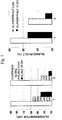
- FIG. 1 (FIG ) the result of a crockmeter test, with the gloss units (GE) on the left before (0 double strokes, DH) and after scratching (5 or 10 double strokes) and on the right the gloss retention (%) after scratching (5 or 10 double strokes) being represented.
- GE gloss units
- FIG. 1 shows that the gloss retention with an oligomer amount> 3 wt .-% (2 corresponds to V2) compared to the molding composition (1) with a lower oligomer content decreases significantly.
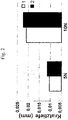
- FIG. 2 shows the result of a nano-indentation test, showing the depth of scratching (in mm) at a force of 5 N and 10 N.
Landscapes
- Chemical & Material Sciences (AREA)
- Health & Medical Sciences (AREA)
- Chemical Kinetics & Catalysis (AREA)
- Medicinal Chemistry (AREA)
- Polymers & Plastics (AREA)
- Organic Chemistry (AREA)
- Crystallography & Structural Chemistry (AREA)
- Compositions Of Macromolecular Compounds (AREA)
- Graft Or Block Polymers (AREA)
Claims (13)
- Composition thermoplastique comprenant des composants A et B et éventuellement d'autres composants C et D, en des proportions formant au total 100% en poids, la composition de moulage étant constituée de:a) 60 à 75% en poids d'un ou plusieurs copolymères de styrène A,b) de 25 à 40% en poids d'un ou plusieurs copolymères greffés B,c) de 0 à 15% en poids d'un caoutchouc C différent du composant B,d) de 0 à 5% en poids d'un ou plusieurs additifs D,cette composition contenant 0,2 à 3,0% en poids, notamment de 0,6 à 3,0% en poids, exprimés par rapport au poids total des composants A à D, d'oligomères, et les oligomères présentant une masse moléculaire de l'ordre de 100 à 700g/mol et étant pratiquement formée de styrène et/ou d'acrylonitrile.
- Composition selon la revendication 1, caractérisée en ce que le composant B est un caoutchouc de polybutadiène, préparé en utilisant de 1 à 5% en poids, exprimés par rapport au composant B, d'un additif agglomérée.
- Composition selon l'une des revendications 1 ou 2, caractérisée en ce qu'elle contient de 60 à 70% en poids d'un ou plusieurs copolymères de styrène A, ce copolymère de styrène A étant formé de deux ou davantage de monomères choisis dans le groupe formé par le styrène, l'α-méthylstyrène d'une part et d'autre part l'acrylonitrile et/ou le méthacrylate de méthyle.
- Composition selon l'une quelconque des revendications 1 à 3, caractérisée en ce qu'elle contient de 29 à 37% en poids d'un ou plusieurs copolymères greffés B, ce copolymère greffé B étant constitué d'une base greffée et d'au moins un revêtement greffé, ce revêtement greffé étant formé de deux ou plusieurs monomères choisis dans le groupe formé par le butadiène, le styrène, l'acrylonitrile, l'α-méthylstyrène, le MMA, l'acrylate de butyle, l'acrylate d'éthyle et le méthylacrylamide.
- Composition selon l'une quelconque des revendications 1 à 4, caractérisée en ce qu'elle contient en outre de 1 à 15% en poids d'un des différents caoutchoucs C du composant B, ce caoutchouc C supplémentaire contenant deux ou plus de deux monomères choisis dans le groupe formé par l'éthène, le propène, le butène et/ou l'octène comme blocs de construction.
- Composition selon l'une quelconque des revendications 1 à 5, caractérisée en ce que le copolymère greffé B1 est constitué de:(B1): de 40 à 85% en poids, exprimés par rapport à la teneur en solides du copolymère greffé B, d'une base de greffage B1 obtenue par :(a) polymérisation de(B11): 0 à 10% en poids de styrène, exprimés par rapport à la base de greffage B1, et(B12): 90 à 100% en poids, exprimés par rapport à la base de greffage B1, de butadiène; et(b) agglomération de la base de greffage B1 résultante par addition de:(E): de 0,01 à 5 parties en poids, exprimées par rapport à 100 parties en poids de la base de greffage B1, toutes exprimées par rapport à la teneur en solides d'un copolymère (E) aggloméré formé de:(E1): 80 à 99,9% en poids d'un ou plusieurs alkyl-acrylates en C1 à C12 ou alkylméthylacrylates en C1-C12, et(E2): 0,1 à 20% en poids d'un ou plusieurs comonomères choisis dans le groupe constitué par les acrylamides, méthylacrylamides, éthylacrylamides et n-butylacrylamide; et(B2): 15 à 60% en poids, exprimés par rapport à la teneur en matière solide du copolymère greffé B, d'une enveloppe greffée, susceptible d'être obtenue par traitement de la base greffée B1 agglomérée avec un mélange de:dans laquelle(B21): 70 à 90% en poids de styrène, exprimés par rapport à l'enveloppe de greffe B2,, et(B22): 10 à 30% en poids d'acrylonitrile, exprimés par rapport à l'enveloppe de greffe B2,(i) le copolymère agglomérée (E) présentant une polydispersité U inférieure à 0,27 et une valeur d50 de 100 à 150 nm, et(ii) la base de greffage agglomérée B1 présentant une distribution granulométrique bimodale pour une fraction x) de particules non agglomérées ayant une valeur d50 comprise entre 80 et 120 nm et une fraction y) de particules agglomérées ayant une valeur d50 de 350 à 150 nm et une polydispersité U inférieure à 0,27.
- Composition selon l'une des revendications 1 à 6, caractérisée en ce que l'on prépare le composant A à partir de 60 à 85% en poids de styrène et de 15 à 40% en poids d'acrylonitrile.
- Composition selon la revendication 1, comprenant les composants A et B et D, en des proportions formant au total 100% en poids, la composition à mouler étant constituée de (quelque) 65 à 70% en poids d'un copolymère styrène-acrylonitrile A, de (quelque) 30 à 35% en poids d'un copolymère greffé ABS B et de 0,1 à 5% en poids d'un additif D, ladite composition contenant 1,1 à 2,8% en poids, exprimés par rapport au poids total des composants A à D. d'oligomères de styrène et/ou d'acrylonitrile ayant un poids moléculaire de 100 à 700 g/mol.
- Procédé de préparation d'une composition thermoplastique selon l'une des revendications 1 à 8 par mélange des composants A et B et éventuellement d'autres composants C et/ou D.
- Procédé de préparation d'une composition thermoplastique selon l'une des revendications 1 à 8 par les étapes suivantes:(i) la polymérisation du styrène, de l'a-méthylstyrène et/ou de l'acrylonitrile, de sorte que la composition résultante contienne de 0,6 à 3,0% en poids, d'oligomères exprimés par rapport au poids total des composants A à D, ,(ii) la polymérisation en émulsion aqueuse des monomères styrène et butadiène pour former une base de greffage particulaire B1,(iii) l'agglomération de la base de greffage particulaire B1 présente dans l'émulsion au moyen d'un copolymère aggloméré (E), le copolymère (E) ayant une polydispersité U inférieure à 0,27 et une valeur d50 de 100 à 150 nm, à une base de greffe particulaire agglomérée B1, et ensuite(iv) la polymérisation des monomères styrène et acrylonitrile de l'enveloppe de greffage en émulsion aqueuse en présence de la base de greffage particulaire agglomérée B1,(v) le mélange des composants A et B et éventuellement des autres composants C et/ou D.
- Procédé de préparation d'une composition thermoplastique selon la revendication 10, dans lequel le mélange des composants est effectué dans une extrudeuse et le traitement d'extrusion se déroule en une période de 0,2 à 30 minutes et dans une plage de température comprise entre 230 et 260°C.
- Utilisation d'une composition thermoplastique selon l'une quelconque des revendications 1 à 8, pour la fabrication de fibres, de films et de moulages.
- Corps façonnés, fibres et films d'une composition thermoplastique selon l'une des revendications 1 à 8.
Applications Claiming Priority (2)
| Application Number | Priority Date | Filing Date | Title |
|---|---|---|---|
| EP14152826 | 2014-01-28 | ||
| PCT/EP2015/051548 WO2015113948A1 (fr) | 2014-01-28 | 2015-01-27 | Matières de moulage thermoplastiques présentant un rapport optimisé entre fluidité et ténacité |
Publications (2)
| Publication Number | Publication Date |
|---|---|
| EP3099740A1 EP3099740A1 (fr) | 2016-12-07 |
| EP3099740B1 true EP3099740B1 (fr) | 2018-09-26 |
Family
ID=49999836
Family Applications (1)
| Application Number | Title | Priority Date | Filing Date |
|---|---|---|---|
| EP15701221.2A Active EP3099740B1 (fr) | 2014-01-28 | 2015-01-27 | Matières de moulage thermoplastiques présentant un rapport optimisé entre fluidité et ténacité |
Country Status (6)
| Country | Link |
|---|---|
| US (1) | US10138364B2 (fr) |
| EP (1) | EP3099740B1 (fr) |
| KR (1) | KR102214221B1 (fr) |
| CN (1) | CN106103581B (fr) |
| ES (1) | ES2699926T3 (fr) |
| WO (1) | WO2015113948A1 (fr) |
Families Citing this family (4)
| Publication number | Priority date | Publication date | Assignee | Title |
|---|---|---|---|---|
| ES2685578T3 (es) * | 2013-04-18 | 2018-10-10 | Ineos Styrolution Group Gmbh | Masas moldeadas termoplásticas a base de acrilonitrilo, estireno y butadieno |
| KR102256898B1 (ko) * | 2014-04-02 | 2021-05-31 | 이네오스 스티롤루션 그룹 게엠베하 | 개선된 기계적 특성을 지닌 열가소성 성형 조성물의 제조 방법 |
| WO2019243107A1 (fr) * | 2018-06-20 | 2019-12-26 | Ineos Styrolution Group Gmbh | Mélange de polycarbonate modifié par impact et résistant aux températures élevées |
| KR20250140232A (ko) * | 2024-03-18 | 2025-09-25 | 롯데케미칼 주식회사 | 열가소성 수지 조성물 및 이로부터 제조되는 성형품 |
Family Cites Families (20)
| Publication number | Priority date | Publication date | Assignee | Title |
|---|---|---|---|---|
| DE2244519C2 (de) | 1971-09-29 | 1987-04-23 | Rohm And Haas Co., Philadelphia, Pa. | Pfropfpolymermasse und ihre Verwendung |
| US4068064A (en) | 1975-12-22 | 1978-01-10 | The Dow Chemical Company | Method for preparing monovinyl aromatic monomer-acrylonitrile copolymer |
| DE2927572A1 (de) | 1979-07-07 | 1981-01-22 | Basf Ag | Themoplastische formmassen |
| CA1193036A (fr) | 1981-10-09 | 1985-09-03 | Kazuo Kishida | Methode pour obtenir des resines de greffe, resistant aux chocs, et renfermant un caoutchouc agglomere |
| CN1005633B (zh) | 1984-06-19 | 1989-11-01 | 电气化学工业株式会社 | 热塑性树脂共混物 |
| NL8802346A (nl) | 1988-09-22 | 1990-04-17 | Gen Electric | Polymeermengsel met aromatisch polycarbonaat, styreen bevattend copolymeer en/of entpolymeer en een vlamvertragend middel, daaruit gevormde voorwerpen. |
| DE3843371A1 (de) | 1988-12-23 | 1990-07-05 | Basf Ag | Pfropfpolymerisate |
| DE4223202A1 (de) * | 1992-07-15 | 1994-01-20 | Basf Ag | Teilchenförmiges Pfropfcopolymerisat |
| US5362783A (en) | 1993-06-08 | 1994-11-08 | The Dow Chemical Company | Stabilizer composition |
| DE69501584T2 (de) | 1994-11-21 | 1998-09-10 | Gen Electric | Schlagzäh modifizierte Zusammensetzungen auf Basis von Copolymeren aus alpha-alkyl Vinylaromaten und Vinylcyanid |
| JP2996115B2 (ja) | 1994-12-19 | 1999-12-27 | 東レ株式会社 | 熱可塑性樹脂組成物 |
| DE19713508A1 (de) | 1997-04-01 | 1998-10-08 | Bayer Ag | Polycarbonat/Pfropfpolymerisat-Formmassen mit reduzierter Belagsbildung |
| EP1084187A1 (fr) * | 1998-03-31 | 2001-03-21 | Basf Aktiengesellschaft | Matiere moulable thermoplastique presentant une resistance elevee a la perforation et de bonnes proprietes antistatiques |
| EP1129138A1 (fr) * | 1998-10-23 | 2001-09-05 | General Electric Company | Melanges de resines de polycarbonates/copolymeres greffes d'acrylonitrile-butadiene-styrene/styrene-acrylonitrile |
| DE10037280A1 (de) | 2000-07-28 | 2002-02-07 | Basf Ag | Verfahren zur Agglomeration dispergierter Kautschuke |
| DE102005022632B4 (de) | 2005-05-11 | 2022-05-25 | Ineos Styrolution Europe Gmbh | Teilchenförmiger Kautschuk, Verfahren zu dessen Herstellung und Verwendung, sowie Pfropfcopolymerisat, thermoplastische Formmasse und Verfahren zu deren Herstellung |
| EP2949699A1 (fr) | 2006-08-18 | 2015-12-02 | Styrolution Europe GmbH | Procédé de préparation de masses de moulage thermoplastiques à base d'acrylonitrile, styrène et butadiène comprenant un copolymère thermoplastique et un copolymère greffé |
| US8921491B2 (en) * | 2008-01-30 | 2014-12-30 | Dow Global Technologies Llc | Polymer blends with ethylene/α-olefin interpolymers |
| EP2640784B1 (fr) | 2010-11-18 | 2015-10-07 | Styrolution Europe GmbH | Matières de moulage thermoplastiques à base de copolymères de styrène et de polyamides, leurs procédés de fabrication et leur utilisation |
| US9624333B2 (en) * | 2013-04-18 | 2017-04-18 | Ineos Styrolution Group Gmbh | Thermoplastic moulding materials based on acrylonitrile, styrene and butadiene |
-
2015
- 2015-01-27 CN CN201580013196.0A patent/CN106103581B/zh active Active
- 2015-01-27 ES ES15701221T patent/ES2699926T3/es active Active
- 2015-01-27 US US15/114,615 patent/US10138364B2/en active Active
- 2015-01-27 KR KR1020167023110A patent/KR102214221B1/ko active Active
- 2015-01-27 WO PCT/EP2015/051548 patent/WO2015113948A1/fr not_active Ceased
- 2015-01-27 EP EP15701221.2A patent/EP3099740B1/fr active Active
Non-Patent Citations (1)
| Title |
|---|
| None * |
Also Published As
| Publication number | Publication date |
|---|---|
| WO2015113948A1 (fr) | 2015-08-06 |
| US20160340504A1 (en) | 2016-11-24 |
| EP3099740A1 (fr) | 2016-12-07 |
| CN106103581A (zh) | 2016-11-09 |
| KR20160113210A (ko) | 2016-09-28 |
| ES2699926T3 (es) | 2019-02-13 |
| CN106103581B (zh) | 2019-09-03 |
| KR102214221B1 (ko) | 2021-02-08 |
| US10138364B2 (en) | 2018-11-27 |
Similar Documents
| Publication | Publication Date | Title |
|---|---|---|
| EP2986650B1 (fr) | Matières à mouler thermoplastiques à base d'acrylnitrile, styrène et butadiène | |
| EP2121833B1 (fr) | Masses moulables dont la résilience a une anisotropie réduite | |
| EP2986649B1 (fr) | Matières à mouler thermoplastiques à base d'acrylnitrile styrène et butadiène | |
| EP3383923B1 (fr) | Procédé de production de matériaux synthétiques de type abs présentant des propriétés améliorées | |
| EP3126400B1 (fr) | Procédé de production de caoutchouc acrylate à formation de coagulats réduite | |
| DE60024477T2 (de) | Verbesserte massenpolymerisierte kautschuckmodifizierte monovinyliden-aromatische copolymer zusammensetzungen | |
| EP0244856A1 (fr) | Composition à mouler thermoplastique à base de polycarbonate, ASA et copolymères contenant des unités aromatiques-vinyliques et AN | |
| DE2420358B2 (de) | Formmassen | |
| EP2949699A1 (fr) | Procédé de préparation de masses de moulage thermoplastiques à base d'acrylonitrile, styrène et butadiène comprenant un copolymère thermoplastique et un copolymère greffé | |
| EP0800555A1 (fr) | Masses thermoplastiques de moulage a base de copolymeres greffes et de polymeres sequences | |
| DE102004004230A1 (de) | Thermoplastische Formmassen auf Basis von Styrolcopolymeren und Polyamiden | |
| DE4121975A1 (de) | Thermoplastische formmassen auf der basis von polycarbonaten, styrol/acrylnitril-polymerisaten und polyolefinen | |
| EP3298079B1 (fr) | Matière à mouler à base d'abs présentant une bonne association de propriétés en termes d'aptitude au façonnage et de qualité de surface | |
| EP3099740B1 (fr) | Matières de moulage thermoplastiques présentant un rapport optimisé entre fluidité et ténacité | |
| DE102005022632B4 (de) | Teilchenförmiger Kautschuk, Verfahren zu dessen Herstellung und Verwendung, sowie Pfropfcopolymerisat, thermoplastische Formmasse und Verfahren zu deren Herstellung | |
| EP0312929A2 (fr) | Compositions à mouler thermoplastiques, procédé pur leur préparation et leur utilisation | |
| DE60012959T2 (de) | Polycarbonatmischungen mit verbesserter fliessfähigkeit | |
| KR101760987B1 (ko) | 열가소성 수지 조성물 및 이로부터 제조된 성형품 | |
| DE60215849T2 (de) | Transparentes Kautschuk-modifiziertes Copolymerharz und Harzzusammensetzung davon | |
| EP3265496B1 (fr) | Copolymères efficaces à action agglomérante | |
| DE4241555A1 (de) | Thermoplastische Formmassen auf der Basis von Polycarbonaten, Pfropfpolymerisaten und Styrol/Acrylnitril-Copolymerisaten | |
| WO2011138185A1 (fr) | Masse de matière à mouler à dispersion de la lumière réduite | |
| DE10116819B4 (de) | Verfahren zur Erhöhung der Bruchdehnung von Formkörpern sowie Verwendung von teilchenförmigen Emulsionspolymerisaten | |
| DE19630099A1 (de) | Radkappen | |
| DE1769852B2 (de) | Thermoplastische Vinylchloridpolymerlsat-Massen zur Herstellung schlagfester Formkörper mit hoher Durchsichtigkeit |
Legal Events
| Date | Code | Title | Description |
|---|---|---|---|
| PUAI | Public reference made under article 153(3) epc to a published international application that has entered the european phase |
Free format text: ORIGINAL CODE: 0009012 |
|
| STAA | Information on the status of an ep patent application or granted ep patent |
Free format text: STATUS: REQUEST FOR EXAMINATION WAS MADE |
|
| 17P | Request for examination filed |
Effective date: 20160810 |
|
| AK | Designated contracting states |
Kind code of ref document: A1 Designated state(s): AL AT BE BG CH CY CZ DE DK EE ES FI FR GB GR HR HU IE IS IT LI LT LU LV MC MK MT NL NO PL PT RO RS SE SI SK SM TR |
|
| AX | Request for extension of the european patent |
Extension state: BA ME |
|
| DAX | Request for extension of the european patent (deleted) | ||
| STAA | Information on the status of an ep patent application or granted ep patent |
Free format text: STATUS: EXAMINATION IS IN PROGRESS |
|
| 17Q | First examination report despatched |
Effective date: 20170523 |
|
| GRAP | Despatch of communication of intention to grant a patent |
Free format text: ORIGINAL CODE: EPIDOSNIGR1 |
|
| STAA | Information on the status of an ep patent application or granted ep patent |
Free format text: STATUS: GRANT OF PATENT IS INTENDED |
|
| INTG | Intention to grant announced |
Effective date: 20180604 |
|
| GRAS | Grant fee paid |
Free format text: ORIGINAL CODE: EPIDOSNIGR3 |
|
| GRAA | (expected) grant |
Free format text: ORIGINAL CODE: 0009210 |
|
| STAA | Information on the status of an ep patent application or granted ep patent |
Free format text: STATUS: THE PATENT HAS BEEN GRANTED |
|
| AK | Designated contracting states |
Kind code of ref document: B1 Designated state(s): AL AT BE BG CH CY CZ DE DK EE ES FI FR GB GR HR HU IE IS IT LI LT LU LV MC MK MT NL NO PL PT RO RS SE SI SK SM TR |
|
| RAP1 | Party data changed (applicant data changed or rights of an application transferred) |
Owner name: INEOS STYROLUTION GROUP GMBH |
|
| REG | Reference to a national code |
Ref country code: GB Ref legal event code: FG4D Free format text: NOT ENGLISH |
|
| REG | Reference to a national code |
Ref country code: CH Ref legal event code: EP |
|
| REG | Reference to a national code |
Ref country code: AT Ref legal event code: REF Ref document number: 1045989 Country of ref document: AT Kind code of ref document: T Effective date: 20181015 |
|
| REG | Reference to a national code |
Ref country code: IE Ref legal event code: FG4D Free format text: LANGUAGE OF EP DOCUMENT: GERMAN |
|
| REG | Reference to a national code |
Ref country code: DE Ref legal event code: R096 Ref document number: 502015006068 Country of ref document: DE |
|
| REG | Reference to a national code |
Ref country code: NL Ref legal event code: FP |
|
| PG25 | Lapsed in a contracting state [announced via postgrant information from national office to epo] |
Ref country code: SE Free format text: LAPSE BECAUSE OF FAILURE TO SUBMIT A TRANSLATION OF THE DESCRIPTION OR TO PAY THE FEE WITHIN THE PRESCRIBED TIME-LIMIT Effective date: 20180926 Ref country code: RS Free format text: LAPSE BECAUSE OF FAILURE TO SUBMIT A TRANSLATION OF THE DESCRIPTION OR TO PAY THE FEE WITHIN THE PRESCRIBED TIME-LIMIT Effective date: 20180926 Ref country code: LT Free format text: LAPSE BECAUSE OF FAILURE TO SUBMIT A TRANSLATION OF THE DESCRIPTION OR TO PAY THE FEE WITHIN THE PRESCRIBED TIME-LIMIT Effective date: 20180926 Ref country code: GR Free format text: LAPSE BECAUSE OF FAILURE TO SUBMIT A TRANSLATION OF THE DESCRIPTION OR TO PAY THE FEE WITHIN THE PRESCRIBED TIME-LIMIT Effective date: 20181227 Ref country code: BG Free format text: LAPSE BECAUSE OF FAILURE TO SUBMIT A TRANSLATION OF THE DESCRIPTION OR TO PAY THE FEE WITHIN THE PRESCRIBED TIME-LIMIT Effective date: 20181226 Ref country code: NO Free format text: LAPSE BECAUSE OF FAILURE TO SUBMIT A TRANSLATION OF THE DESCRIPTION OR TO PAY THE FEE WITHIN THE PRESCRIBED TIME-LIMIT Effective date: 20181226 Ref country code: FI Free format text: LAPSE BECAUSE OF FAILURE TO SUBMIT A TRANSLATION OF THE DESCRIPTION OR TO PAY THE FEE WITHIN THE PRESCRIBED TIME-LIMIT Effective date: 20180926 |
|
| REG | Reference to a national code |
Ref country code: LT Ref legal event code: MG4D |
|
| REG | Reference to a national code |
Ref country code: ES Ref legal event code: FG2A Ref document number: 2699926 Country of ref document: ES Kind code of ref document: T3 Effective date: 20190213 |
|
| PG25 | Lapsed in a contracting state [announced via postgrant information from national office to epo] |
Ref country code: LV Free format text: LAPSE BECAUSE OF FAILURE TO SUBMIT A TRANSLATION OF THE DESCRIPTION OR TO PAY THE FEE WITHIN THE PRESCRIBED TIME-LIMIT Effective date: 20180926 Ref country code: HR Free format text: LAPSE BECAUSE OF FAILURE TO SUBMIT A TRANSLATION OF THE DESCRIPTION OR TO PAY THE FEE WITHIN THE PRESCRIBED TIME-LIMIT Effective date: 20180926 Ref country code: AL Free format text: LAPSE BECAUSE OF FAILURE TO SUBMIT A TRANSLATION OF THE DESCRIPTION OR TO PAY THE FEE WITHIN THE PRESCRIBED TIME-LIMIT Effective date: 20180926 |
|
| PG25 | Lapsed in a contracting state [announced via postgrant information from national office to epo] |
Ref country code: RO Free format text: LAPSE BECAUSE OF FAILURE TO SUBMIT A TRANSLATION OF THE DESCRIPTION OR TO PAY THE FEE WITHIN THE PRESCRIBED TIME-LIMIT Effective date: 20180926 Ref country code: CZ Free format text: LAPSE BECAUSE OF FAILURE TO SUBMIT A TRANSLATION OF THE DESCRIPTION OR TO PAY THE FEE WITHIN THE PRESCRIBED TIME-LIMIT Effective date: 20180926 Ref country code: PL Free format text: LAPSE BECAUSE OF FAILURE TO SUBMIT A TRANSLATION OF THE DESCRIPTION OR TO PAY THE FEE WITHIN THE PRESCRIBED TIME-LIMIT Effective date: 20180926 Ref country code: IS Free format text: LAPSE BECAUSE OF FAILURE TO SUBMIT A TRANSLATION OF THE DESCRIPTION OR TO PAY THE FEE WITHIN THE PRESCRIBED TIME-LIMIT Effective date: 20190126 Ref country code: EE Free format text: LAPSE BECAUSE OF FAILURE TO SUBMIT A TRANSLATION OF THE DESCRIPTION OR TO PAY THE FEE WITHIN THE PRESCRIBED TIME-LIMIT Effective date: 20180926 |
|
| PG25 | Lapsed in a contracting state [announced via postgrant information from national office to epo] |
Ref country code: SM Free format text: LAPSE BECAUSE OF FAILURE TO SUBMIT A TRANSLATION OF THE DESCRIPTION OR TO PAY THE FEE WITHIN THE PRESCRIBED TIME-LIMIT Effective date: 20180926 Ref country code: SK Free format text: LAPSE BECAUSE OF FAILURE TO SUBMIT A TRANSLATION OF THE DESCRIPTION OR TO PAY THE FEE WITHIN THE PRESCRIBED TIME-LIMIT Effective date: 20180926 Ref country code: PT Free format text: LAPSE BECAUSE OF FAILURE TO SUBMIT A TRANSLATION OF THE DESCRIPTION OR TO PAY THE FEE WITHIN THE PRESCRIBED TIME-LIMIT Effective date: 20190126 |
|
| REG | Reference to a national code |
Ref country code: DE Ref legal event code: R097 Ref document number: 502015006068 Country of ref document: DE |
|
| PG25 | Lapsed in a contracting state [announced via postgrant information from national office to epo] |
Ref country code: DK Free format text: LAPSE BECAUSE OF FAILURE TO SUBMIT A TRANSLATION OF THE DESCRIPTION OR TO PAY THE FEE WITHIN THE PRESCRIBED TIME-LIMIT Effective date: 20180926 |
|
| PLBE | No opposition filed within time limit |
Free format text: ORIGINAL CODE: 0009261 |
|
| STAA | Information on the status of an ep patent application or granted ep patent |
Free format text: STATUS: NO OPPOSITION FILED WITHIN TIME LIMIT |
|
| PG25 | Lapsed in a contracting state [announced via postgrant information from national office to epo] |
Ref country code: MC Free format text: LAPSE BECAUSE OF FAILURE TO SUBMIT A TRANSLATION OF THE DESCRIPTION OR TO PAY THE FEE WITHIN THE PRESCRIBED TIME-LIMIT Effective date: 20180926 |
|
| REG | Reference to a national code |
Ref country code: CH Ref legal event code: PL |
|
| 26N | No opposition filed |
Effective date: 20190627 |
|
| PG25 | Lapsed in a contracting state [announced via postgrant information from national office to epo] |
Ref country code: LU Free format text: LAPSE BECAUSE OF NON-PAYMENT OF DUE FEES Effective date: 20190127 |
|
| REG | Reference to a national code |
Ref country code: IE Ref legal event code: MM4A |
|
| PG25 | Lapsed in a contracting state [announced via postgrant information from national office to epo] |
Ref country code: SI Free format text: LAPSE BECAUSE OF FAILURE TO SUBMIT A TRANSLATION OF THE DESCRIPTION OR TO PAY THE FEE WITHIN THE PRESCRIBED TIME-LIMIT Effective date: 20180926 |
|
| PG25 | Lapsed in a contracting state [announced via postgrant information from national office to epo] |
Ref country code: CH Free format text: LAPSE BECAUSE OF NON-PAYMENT OF DUE FEES Effective date: 20190131 Ref country code: LI Free format text: LAPSE BECAUSE OF NON-PAYMENT OF DUE FEES Effective date: 20190131 |
|
| PG25 | Lapsed in a contracting state [announced via postgrant information from national office to epo] |
Ref country code: IE Free format text: LAPSE BECAUSE OF NON-PAYMENT OF DUE FEES Effective date: 20190127 |
|
| PG25 | Lapsed in a contracting state [announced via postgrant information from national office to epo] |
Ref country code: TR Free format text: LAPSE BECAUSE OF FAILURE TO SUBMIT A TRANSLATION OF THE DESCRIPTION OR TO PAY THE FEE WITHIN THE PRESCRIBED TIME-LIMIT Effective date: 20180926 |
|
| PG25 | Lapsed in a contracting state [announced via postgrant information from national office to epo] |
Ref country code: MT Free format text: LAPSE BECAUSE OF FAILURE TO SUBMIT A TRANSLATION OF THE DESCRIPTION OR TO PAY THE FEE WITHIN THE PRESCRIBED TIME-LIMIT Effective date: 20180926 |
|
| REG | Reference to a national code |
Ref country code: AT Ref legal event code: MM01 Ref document number: 1045989 Country of ref document: AT Kind code of ref document: T Effective date: 20200127 |
|
| PG25 | Lapsed in a contracting state [announced via postgrant information from national office to epo] |
Ref country code: CY Free format text: LAPSE BECAUSE OF FAILURE TO SUBMIT A TRANSLATION OF THE DESCRIPTION OR TO PAY THE FEE WITHIN THE PRESCRIBED TIME-LIMIT Effective date: 20180926 Ref country code: AT Free format text: LAPSE BECAUSE OF NON-PAYMENT OF DUE FEES Effective date: 20200127 |
|
| PG25 | Lapsed in a contracting state [announced via postgrant information from national office to epo] |
Ref country code: HU Free format text: LAPSE BECAUSE OF FAILURE TO SUBMIT A TRANSLATION OF THE DESCRIPTION OR TO PAY THE FEE WITHIN THE PRESCRIBED TIME-LIMIT; INVALID AB INITIO Effective date: 20150127 |
|
| PG25 | Lapsed in a contracting state [announced via postgrant information from national office to epo] |
Ref country code: MK Free format text: LAPSE BECAUSE OF FAILURE TO SUBMIT A TRANSLATION OF THE DESCRIPTION OR TO PAY THE FEE WITHIN THE PRESCRIBED TIME-LIMIT Effective date: 20180926 |
|
| PGFP | Annual fee paid to national office [announced via postgrant information from national office to epo] |
Ref country code: FR Payment date: 20230123 Year of fee payment: 9 |
|
| PGFP | Annual fee paid to national office [announced via postgrant information from national office to epo] |
Ref country code: GB Payment date: 20230124 Year of fee payment: 9 |
|
| P01 | Opt-out of the competence of the unified patent court (upc) registered |
Effective date: 20230515 |
|
| GBPC | Gb: european patent ceased through non-payment of renewal fee |
Effective date: 20240127 |
|
| PG25 | Lapsed in a contracting state [announced via postgrant information from national office to epo] |
Ref country code: GB Free format text: LAPSE BECAUSE OF NON-PAYMENT OF DUE FEES Effective date: 20240127 |
|
| PG25 | Lapsed in a contracting state [announced via postgrant information from national office to epo] |
Ref country code: FR Free format text: LAPSE BECAUSE OF NON-PAYMENT OF DUE FEES Effective date: 20240131 |
|
| PG25 | Lapsed in a contracting state [announced via postgrant information from national office to epo] |
Ref country code: GB Free format text: LAPSE BECAUSE OF NON-PAYMENT OF DUE FEES Effective date: 20240127 Ref country code: FR Free format text: LAPSE BECAUSE OF NON-PAYMENT OF DUE FEES Effective date: 20240131 |
|
| PGFP | Annual fee paid to national office [announced via postgrant information from national office to epo] |
Ref country code: NL Payment date: 20260121 Year of fee payment: 12 |
|
| PGFP | Annual fee paid to national office [announced via postgrant information from national office to epo] |
Ref country code: ES Payment date: 20260217 Year of fee payment: 12 |
|
| PGFP | Annual fee paid to national office [announced via postgrant information from national office to epo] |
Ref country code: DE Payment date: 20260130 Year of fee payment: 12 |
|
| PGFP | Annual fee paid to national office [announced via postgrant information from national office to epo] |
Ref country code: IT Payment date: 20260130 Year of fee payment: 12 Ref country code: BE Payment date: 20260121 Year of fee payment: 12 |