EP3100571B1 - Bedingte wiederanbindung an einem 3gpp netzwerk - Google Patents
Bedingte wiederanbindung an einem 3gpp netzwerk Download PDFInfo
- Publication number
- EP3100571B1 EP3100571B1 EP14881144.1A EP14881144A EP3100571B1 EP 3100571 B1 EP3100571 B1 EP 3100571B1 EP 14881144 A EP14881144 A EP 14881144A EP 3100571 B1 EP3100571 B1 EP 3100571B1
- Authority
- EP
- European Patent Office
- Prior art keywords
- 3gpp network
- network
- value
- 3gpp
- predetermined rule
- Prior art date
- Legal status (The legal status is an assumption and is not a legal conclusion. Google has not performed a legal analysis and makes no representation as to the accuracy of the status listed.)
- Active
Links
Images



Classifications
-
- H—ELECTRICITY
- H04—ELECTRIC COMMUNICATION TECHNIQUE
- H04W—WIRELESS COMMUNICATION NETWORKS
- H04W36/00—Hand-off or reselection arrangements
- H04W36/0005—Control or signalling for completing the hand-off
- H04W36/0055—Transmission or use of information for re-establishing the radio link
- H04W36/0069—Transmission or use of information for re-establishing the radio link in case of dual connectivity, e.g. decoupled uplink/downlink
- H04W36/00692—Transmission or use of information for re-establishing the radio link in case of dual connectivity, e.g. decoupled uplink/downlink using simultaneous multiple data streams, e.g. cooperative multipoint [CoMP], carrier aggregation [CA] or multiple input multiple output [MIMO]
-
- H—ELECTRICITY
- H04—ELECTRIC COMMUNICATION TECHNIQUE
- H04W—WIRELESS COMMUNICATION NETWORKS
- H04W36/00—Hand-off or reselection arrangements
- H04W36/0005—Control or signalling for completing the hand-off
- H04W36/0055—Transmission or use of information for re-establishing the radio link
- H04W36/0069—Transmission or use of information for re-establishing the radio link in case of dual connectivity, e.g. decoupled uplink/downlink
- H04W36/00698—Transmission or use of information for re-establishing the radio link in case of dual connectivity, e.g. decoupled uplink/downlink using different RATs
-
- H—ELECTRICITY
- H04—ELECTRIC COMMUNICATION TECHNIQUE
- H04W—WIRELESS COMMUNICATION NETWORKS
- H04W36/00—Hand-off or reselection arrangements
- H04W36/14—Reselecting a network or an air interface
- H04W36/144—Reselecting a network or an air interface over a different radio air interface technology
- H04W36/1446—Reselecting a network or an air interface over a different radio air interface technology wherein at least one of the networks is unlicensed
-
- H—ELECTRICITY
- H04—ELECTRIC COMMUNICATION TECHNIQUE
- H04W—WIRELESS COMMUNICATION NETWORKS
- H04W36/00—Hand-off or reselection arrangements
- H04W36/16—Performing reselection for specific purposes
-
- H—ELECTRICITY
- H04—ELECTRIC COMMUNICATION TECHNIQUE
- H04W—WIRELESS COMMUNICATION NETWORKS
- H04W36/00—Hand-off or reselection arrangements
- H04W36/24—Reselection being triggered by specific parameters
- H04W36/30—Reselection being triggered by specific parameters by measured or perceived connection quality data
- H04W36/305—Handover due to radio link failure
-
- H—ELECTRICITY
- H04—ELECTRIC COMMUNICATION TECHNIQUE
- H04W—WIRELESS COMMUNICATION NETWORKS
- H04W84/00—Network topologies
- H04W84/02—Hierarchically pre-organised networks, e.g. paging networks, cellular networks, WLAN [Wireless Local Area Network] or WLL [Wireless Local Loop]
- H04W84/04—Large scale networks; Deep hierarchical networks
- H04W84/042—Public Land Mobile systems, e.g. cellular systems
-
- H—ELECTRICITY
- H04—ELECTRIC COMMUNICATION TECHNIQUE
- H04W—WIRELESS COMMUNICATION NETWORKS
- H04W84/00—Network topologies
- H04W84/02—Hierarchically pre-organised networks, e.g. paging networks, cellular networks, WLAN [Wireless Local Area Network] or WLL [Wireless Local Loop]
- H04W84/10—Small scale networks; Flat hierarchical networks
- H04W84/12—WLAN [Wireless Local Area Networks]
-
- H—ELECTRICITY
- H04—ELECTRIC COMMUNICATION TECHNIQUE
- H04W—WIRELESS COMMUNICATION NETWORKS
- H04W88/00—Devices specially adapted for wireless communication networks, e.g. terminals, base stations or access point devices
- H04W88/02—Terminal devices
- H04W88/06—Terminal devices adapted for operation in multiple networks or having at least two operational modes, e.g. multi-mode terminals
Definitions
- This disclosure relates generally to method and a user equipment for conditional reattachment to a Long Term Evolution (LTE) network after detachment.
- LTE Long Term Evolution
- a concept in 3GPP Evolved Packet Core (EPC) architecture is a "Packet Data Network" (PDN).
- PDN is an IP network, which is typically, for example, the Internet, but it can also be a closed corporate network or an operator service network, like IMS.
- a PDN has one or more names, each name represented in a string called an Access Point Name (APN).
- a PDN gateway (PDN-GW or PGW) is a functional node that provides access to one or more PDNs.
- a PDN connection provides a User Equipment (UE) with an access channel to a PDN.
- the PDN connection is a logical IP tunnel between the UE and PGW.
- Each PDN connection has a single IP address/prefix.
- a UE can setup multiple PDN connections, possibly to the same APN.
- Each PDN connection contains one or more EPS Bearers, where each bearer is defined by a set of IP packet filters and a QoS profile.
- Each EPS bearer runs end-to-end between UE and PDN GW and is a concatenation of an S5 GTP tunnel (PGW-SGW), an S1 GTP tunnel (SGW-eNB), and a radio bearer (eNB-UE).
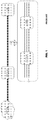
- Fig. 1 further illustrates an EPC network with LTE as radio access network.
- This type of access is also called a "3GPP access" because the radio access technology is defined by 3GPP.
- a non-3GPP access is a radio access network based on a radio technology not defined by 3GPP (e.g., CDMA200 or WLAN).
- a PDN connection can be setup over a 3GPP access or over a non-3GPP access.
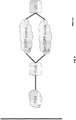
- Fig. 2 illustrates these concepts. Integration of WLAN as non-3GPP access with the 3GPP Evolved Packet Core (EPC) is specified in 3GPP TS 23.402 section 16.
- EPC Evolved Packet Core
- the UE may connect to the mobile core network and the PDN via a non-3GPP access. If such non-3GPP access is a WLAN, then the UE needs to select a WLAN access point (AP). Also, if the UE is connected to both the 3GPP access and the WLAN access, a method is needed to decide which part of the user-plane traffic to route over which access.
- non-3GPP access is a WLAN
- AP WLAN access point
- AP selection and traffic steering is controlled by operator policies received in the UE from the Access Network Discovery and Selection Function (ANDSF).
- ANDSF is defined and described in 3GPP TS 23.402 section 4.8.
- ANDSF is a core network function that is accesses by the UE over an IP-based interface (S14).
- AP selection and traffic steering is controlled from the 3GPP radio access network (RAN).
- RAN 3GPP radio access network
- a basic design principle in LTE is that a UE connected to an EPC via LTE always has an IP connection (i.e., a UE always has at least one PDN connection). If the last PDN connection gets disconnected from a LTE network (e.g., because of a handover from LTE to WLAN), then the UE gets disconnected from the LTE network. Upon a handover of a PDN connection to a WLAN, if the PDN connection is routed to an EPC via WLAN, the UE continues using the PGW in the EPC, but if the last PDN connection was handed over from the LTE network to the WLAN, the UE is disconnected from the LTE network.
- the control signaling goes over the LTE network or any other network compatible with the UE (e.g., 2G, 3G, etc.). If the UE gets disconnected from the LTE (e.g., because RAN steers all traffic for that UE to the WLAN, and all EPS bearers and consequently all PDN connections are moved to WLAN), then subsequent control signaling cannot reach the UE anymore. This is a problem in RAN-based traffic steering.
- One solution to this problem is to ensure that there always stays at least one PDN connection over the LTE network (e.g., the PDN connection for IMS voice always stays on the LTE network, while the PDN connection for Internet data traffic can move between the LTE network and WLAN).
- this solution may not always be possible.
- a common solution may be that the UE only has a single PDN connection carrying all types of traffic. In order to stay connected to the LTE network, even in the case the single PDN Connection is moved to the WLAN, a solution could be to setup a "dummy PDN connection" to the LTE network.
- Several alternatives exist on when to setup the dummy PDN connection are possible.
- the dummy PDN Connection can then be released when the ordinary PDN connection has returned to the LTE network.
- the dummy connection Having a dummy connection is not preferred, for a number of reasons.
- the dummy connection generates control signaling upon initial setup and upon intra-LTE handover.
- the dummy connection takes resources in the involved network nodes (e.g., memory state).
- WO 2012/147270 A1 discusses that with the deployment of the Mobile Routers, some of the mobile devices would access the IP services, e.g. Remote Local IP Access (LIPA), via the local connections provided by the Mobile Router. In such cases, the mobile devices may be detached from the 3GPP access, and thus lose the capability of receiving certain services, e.g. CS domain related services.
- LIPA Remote Local IP Access
- WO 2012/147270 A1 discloses a method to allow the mobile device to continue enjoying the services provided via 3GPP access by placing the mobile device into a special state and binding Mobile Router's context with the mobile device's context. In this way, the mobile operator's core network would be able to trigger the mobile device to receive the CS service even its 3GPP access connections are removed.
- EP 2317822 A1 relates to methods for (re)attaching a UE to a 3GPP access network and for storing bearer context information of a UE upon handover from a 3GPP access network to a non-3GPP access network. Furthermore, the invention relates to 3GPP network nodes, such as mobility management entity, serving gateway and packed data gateway, and a UE that are specially adapted to perform these methods.
- 3GPP network nodes such as mobility management entity, serving gateway and packed data gateway, and a UE that are specially adapted to perform these methods.
- the invention proposes to maintain context information on data bearer(s) of a UE within the 3GPP access network and the UE, while the UE is not attached to the 3GPP access network, so that data bearer context information for this UE is available and can be used for the (re)activation of data bearer(s) once the UE is attaching to the 3GPP access network again.
- US 2012/275371 A1 discloses a method of cell reselection in a wireless communications system where parameters are transmitted by the network in system information blocks to WTRU's on the network. Parameters are either added or subtracted from an equation representing the signal level and/or quality of a cell. Parameters may be prioritized. The results of the calculations are used to rank the servicing cell and neighboring cells. If a neighboring cell has a higher quality than the servicing cell, then the WTRU reselects the better cell. The network may transmit a blacklist of cells where the WTRU cannot camp as well as a barring timer for each cell where if the timer expires, the cell can again be considered for reselection. Information germane to the reselection decision may be transmitted and used by the network.
- US20020147008A1 discloses a method for seamless mobility between GSM Networks and different radio networks.
- US 2008/008127 A1 discloses a method for handover of a communication of a mobile communication device between a first radio access network and a second radio access network.
- US 2014/022932 A1 discloses a method of switching of connection from Wi-Fi network to cellular network based on RSSI measurements.
- US 2008/076428 A1 discloses a method of handoff of ongoing calls based on LQI of access points and quality of cellular links.
- US 2010/056157 A1 discloses a method and apparatus for handover of a mobile station from a serving system to a target system, where a network of the serving system is different from a network of the target system.
- AU 2011203129 A1 discloses a method for adjusting a reselection timer and cell ranking criteria, and reporting degraded signal measurement of a serving cell.
- a wireless communication deployment 300 in accordance with exemplary embodiments includes an access node 304 serving a wireless communication device (WCD) 306.
- WCDs include, but are not limited to, mobile telephones, user equipments (UEs), personal digital assistants, electronic readers, portable electronic tablets, wireless sensors, machine communication devices, personal computers, and laptop computers.
- the device 306 may be a legacy UE or dynamic TDD capable UE.
- Access node 304 may be, for example, a base station, an eNodeB, relay node, or gateway type device, and is capable of communicating with device 306, along with any additional elements suitable to support wireless communication between wireless communication devices or between a wireless communication device and another communication device, such as landline telephone.
- the access node 304 may be in communication with, for instance via a network 302, an MME 308.
- the MME 308 may be in communication with both the home subscriber server (HSS) 314 and SGW 310, which is in communication with PGW 312.
- HSS home subscriber server
- 3GPP TS 24.301 section 5.2.2 describes a procedure after power on of a UE.
- the UE enters a EMM-DEREGISTERED state. Assuming that the UE has a USIM, the UE enters a PLMN-SEARCH sub-state. The sub-state chosen, after the PLMN-SEARCH following power on, is a NORMAL-SERVICE sub-state if a suitable cell has been found and the PLMN or tracking area is not in a forbidden list.
- NORMAL-SERVICE sub-state the UE initiates an attach procedure.
- the UE enters the EMM-REGISTERED state after a successful attach procedure. After a successful attach, the UE is also in an ECM-CONNECTED state (see also 3GPP TS 23.401 section 4.6).
- a PDN connection may be moved, for example, from the LTE network to the WLAN network when the LTE network is overloaded and there is free capacity in the WLAN network, or when the LTE signal strength gets low, and the WLAN signal strength is high.
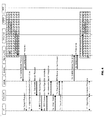
- the PGW may initiate a procedure "PGW initiated bearer deactivation" in 3GPP TS 23.401 section 5.4.4.1, as illustrated in Fig. 4 .
- the MME receives a Delete Bearer Request signal (step 3a).
- a first scenario if the UE is in an ECM-IDLE mode, then there is no S1-MME interface set-up between the UE and the MME. Accordingly, in this scenario, the MME performs a local detach for this UE. The MME further demotes the UE state to EMM-DEREGISTERED. Moreover, in this scenario, the steps 4-7 and 11 are not performed. In other words, the UE is not explicitly notified of the detachment.
- a second scenario if the UE is in an ECM-CONNECTED mode, then there is an S1-MME interface set up.
- the MME may initiate the "S1 release procedure" as described in 3GPP TS 23.401 section 5.3.5 (shown in Fig. 5 ).
- the UE enters the ECM-IDLE mode.
- the MME locally demotes the UE state to EMM-DEREGISTERED.
- steps 4-7 are not performed. However, in this scenario, step 11 is performed.
- step 5 is performed. In other words, the UE is explicitly notified of the detachment by means of an "RRC Connection Release."
- Some of steps 4-7 in Fig. 4 may be performed in scenarios where there is handover to a PDN connection to a WLAN while one or more other PDN connections stay on the LTE network. In another scenario, some of steps 4-7 may be performed.
- the UE If a UE in the ECM-IDLE mode tries to send traffic over the LTE interface, the UE first needs to do a transition to the ECM-CONNECTED mode. This transition may be performed by a "Service Request" procedure as described in 3GPP TS 23.401 section 5.3.4.1. If the UE was already in a EMM-DEREGISTERED mode in the MME, the network will inform the UE with a cause code "implicitly detached.” Similarly, if a UE in the ECM-IDLE mode performs a tracking area update, the UE is informed of this implicit detachment in a fault code.
- the UE When receiving the "implicitly detached" fault code, the UE enters the EMM-DEREGISTERED state with NORMAL-SERVICE sub-state (see 3GPP TS 24.301). From here, the procedure is similar to the one after power on (i.e., the UE initiates an attach procedure to the LTE network.)
- the UE may either power off the LTE side, or immediately tries to reattach to the LTE network. Totally powering off the LTE side is not preferred since RAN steering via the LTE network would be stopped. However, trying to reattach immediately is not preferred either since this would constitute a conventional dummy PDN connection.
- an "ATTACH-CONDITONALLY” state is introduced in the UE.
- This state may be a sub-state of the EMM-DEREGISTERED state and is entered, in some embodiments, when the last PDN connection is handed over to any non-3GPP access such as a WLAN.
- the PDN connection may handed over to any non-3GPP access known to one of ordinary skill in the art. Entering this state may be performed either implicitly (i.e., when the UE detects that all of the UE's PDN connections are shifted to the WLAN), or a cause value (i.e., field) may be specified in a RRC Release message that indicates to the UE to enter this sub-state. See 3GPP TS 36.331 for a detailed definition of the RRC Connection Release message.
- the UE once in the ATTACH-CONDITIONALLY sub-state, the UE initiates an attachment to the LTE network only if certain conditions are fulfilled.
- the UE listens to broadcast transmissions (i.e., information) from eNB(s) serving the PLMN that the UE was connected to while still on the LTE network. From these broadcast transmissions, the UE extracts broadcast data.
- the broadcast data may include, but is not limited to, a signal level of the LTE, a load level of the LTE, and condition thresholds.
- the condition thresholds may be added to the SystemInformationBlockType1 in 3GPP TS 36.331.
- the signal levels included in the broadcast transmissions are measured by the UE.
- the UE while in the conditional state and connected to the WLAN, the UE measures a signal level of the WLAN and a load level of the WLAN.
- the load level refers to an amount of traffic on a respective network.
- the load level may refer to a load on an air interface.
- load level may refer to a load on a backhaul of a network (e.g., network behind an access point (AP)). Some Aps broadcast this network load level. Sometimes, the air interface is not overloaded but the backhaul is overloaded.
- AP access point
- the UE applies the extracted broadcast data to a predefined rule.
- a predefined rule may specify that if a first value > second value, then reattach to the LTE network.
- the first value may be a signal level of the LTE network that is measured by the UE (e.g., 10 dBm)
- the second value may be a condition threshold (e.g., 5 dBm) that is included in the broadcast data or is a predetermined value known to the UE.
- the broadcast data may include a Reference Signal Received Power (RSRP) threshold, a Received Signal Strength Indicator (RSSI) threshold, WLAN load threshold, or any other threshold used as the second value in the predetermined rule.
- the condition thresholds applied as the second value in a predetermined rule may be included in an explicit message (e.g., RRC Connection Release Message) from the LTE network that causes the UE to enter the conditional state.
- the UE reattaches to the LTE network. That is, the UE moves to the EMM-DEREGISTERED.NORMAL-SERVICE state. Otherwise, the UE stays in the EMM-DEREGISTERED.ATTACH-CONDITIONALLY state. Furthermore, in some embodiments, if the conditional attachment rules are fulfilled, and there is a valid cell to which to connect, the UE moves to EMM-DEREGISTERED. NORMAL-SERVICE.
- the UE continuously checks whether the conditions for reattachment to the LTE network are fulfilled.
- the UE continuously monitors the broadcast transmissions, extracts the broadcast data included in the broadcast transmissions, and applies the extracted broadcast data to the predefined rules.
- a timer is configured to specify the duration between two consecutive checks of whether the conditions for reattachment to the LTE network are fulfilled.
- the value of the timer (e.g., count down value) may be fixed or variable. For example, a back off mechanism may be employed where the timer value is scaled up each time the conditions for the predefined rules are not met.
- the timer value is scaled depending on how far the measured values are from the threshold values. For example, if an RSRP threshold to re-attach to 3GPP is X, and the measured value is half of that (i.e., .5X), the timer value is scaled up by a factor of 2.
- the timer value is scaled up by a factor of 4.
- the WLAN threshold to reattach to the LTE network is Y, and the measured WLAN value is double of that (i.e., 2Y), the timer value is also doubled, and if it's 3 times the WLAN thresholds, the timer value is tripled, etc.
- the scaling of the timer value may be performed in accordance with multiple thresholds at the same time (e.g., RSRP threshold and RCPI threshold as compared with the respective measured values).
- the UE's WLAN interface when the UE's WLAN interface, for any reason, is terminated (e.g., the network disconnects the UE from the WLAN, or the WLAN interface is switched off), then the UE moves to EMM-DEREGISTERED.NORMAL-SERVICE if a cell with a valid PLMN is available at that time, even if the conditions for the reattachment that are based on the 3GPP LTE network are not met.
- the UE When the UE is in the DEREGISTERED.NORMAL-SERVICE state, the UE follows normal procedures for reattaching to the LTE network.
- a UE may be configured with one or multiple rules. These rules may be preconfigured on the UE or sent to the UE by the network. These rules may be periodically evaluated and may contain zero, one, or multiple thresholds. An example of a rule with zero thresholds is “Ten minutes have elapsed.” Examples of a rule with one threshold is “WLAN signal strength ⁇ x" or "LTE signal strength > x.” Other examples include, but are not limited to: “IF WLAN signal level ⁇ x;" "IF LTE signal level > y;” "IF WLAN signal level ⁇ x OR LTE signal level >y;” "IF WLAN signal level ⁇ x AND LTE signal level >y;” "IF WLAN signal level ⁇ x OR WLAN load > y;” etc.
- One of ordinary skill in the art may create any desired rule as a condition for reattaching to the network.
- the threshold values broadcasted from the eNB are not UE-specific. That is, all the UEs listening for the broadcast receive the same broadcasts. Thresholds on a per-UE granularity would require the UE to get authenticated, which is part of the attach procedure.
- all UEs that are in the EMM-DEREGISTERED.ATTACH-CONDITIONALLY and in the same cell will listen to the same broadcast information and will apply the same rules. Once the attachment conditions are fulfilled, all these UEs will simultaneously perform an attach procedure. This behavior can be optimized by sending additional information to the UE in the detachment signaling.
- the UE is provided with one or more scaling factors that are applied to the conditional attachment thresholds. For example, assume a scaling factor of 1 ⁇ 2 is provided to a UE and corresponds with the threshold associated with the 3GPP signal level, and the broadcasted threshold level for reattaching to 3GPP is X. While UEs in the EMM-DEREGISTERED.ATTACH-CONDITIONALLY state that were not provided with a scaling factor will not try to reattach to the LTE network when the 3GPP signal level is below X, the UEs that were provided with the scaling factor will try to reattach to the LTE network when the 3GPP signal level is above 0.5*X.
- a scaling factor may be configured for each broadcasted threshold (e.g., one scaling factor for 3GPP signal level, one scaling factor for WLAN signal level, one scaling factor for WLAN load level, etc.).
- the scaling factor is added to the RRC Connection Release message. It is noted that when the UE is in IDLE mode and outside LTE coverage when it performs the handover to WLAN, the UE does not receive the RRC Connection Release message.
- the scaling factor is set in accordance with a load level of the UE on the LTE network.
- the scaling factor is set to force UEs with high traffic to stay in the WLAN for as long as possible when the 3GPP LTE network is overloaded.
- the scaling factor is applied randomly to the UEs to prevent attach-detach ping pongs.
- An attach-detach ping-pong refers to a scenario where a UE that attaches to a second access immediately goes back to reattach to the first access.
- a rule may specify "return to the LTE network when WLAN load > x". If some UEs move to the WLAN, a situation may occur where their combined load goes above x, with the result that all UEs would immediately return to the LTE network.
- a random scaling factor would introduce some differentiation, which helps alleviate this ping-pong effect.
- the scaling factor is determined in accordance to a UE type.
- LTE has features that are better than WLAN (e.g., support for quality of service.
- An operator may want to prefer "gold" level users returning to the LTE earlier than ordinary users.
- the scaling factors are set based on a subscription level of a UE.
- a UE's subscription profile may specify the UE as a gold customer (i.e., preferred or priority customer) or a bronze customer (i.e., basic subscription service).
- the scaling factors may be set to differentiate between these subscription levels, where for example, a gold customer can be provided with a scaling factor to make him/her come back to the more reliable 3GPP LTE network earlier than a bronze customer.
- the network node determines the scaling factor when the UE is attached to the LTE network. For example, when the UE attaches to the LTE network, the network node retrieves the UE's subscription profile or UE type, or monitors the UEs load level on the LTE network.
- Fig. 6 illustrates a flow chart of an embodiment of a process performed by the UE.
- the process may start at step 600 where the UE establishes a data connection to a WLAN Network.
- the process proceeds to step 602 where the UE detects detachment from the LTE network that cause the UE to enter the conditional state (e.g., detect that all connections removed from LTE network or receive explicit message).
- the explicit message may include one or more condition thresholds that is used in a predetermined rule.
- step 604 the UE monitors one or more broadcast transmissions from a network node.
- step 606 the UE extracts broadcast data from the one or more broadcast transmissions.
- step 608 the UE applies the extracted broadcast data to a predetermined rule 608.
- Steps 604-608 may be performed continuously or at the expiration of a timer as discussed above. Additionally, in step 608, one or more scaling factors may be applied to the predetermined rule as described above.
- step 610 determines if the predetermined rule is satisfied. If the predetermined rule is satisfied, the process proceeds to step 612 to establish a reattachment to the LTE network. If, the predetermined rule is not satisfied, the process returns to step 604.
- Fig. 7 illustrates an embodiment of a process performed in a network node.
- the process may generally start at 700 where the network node identifies a UE registered on a LTE network managed by the network node.
- the process proceeds to step 702 where the network node retrieves network information.
- the process proceeds to step 704 where the network node sets a scaling factor in accordance with the retrieved network information.
- the process proceeds to step 706 where the network node provides the scaling factor to the UE.
- FIG. 8 illustrates a block diagram of an exemplary access node, such as node 304 shown in FIG. 3 .
- the access node 304 may include: a data processing system 802, which may include one or more microprocessors and/or one or more circuits, such as an application specific integrated circuit (ASIC), field-programmable gate arrays (FPGAs), and the like; a network interface 810; a transceiver 804, and a data storage system 806, which may include one or more non-volatile storage devices and/or one or more volatile storage devices (e.g., random access memory (RAM)).
- the data processing system 802 may comprise a control unit used for selection of transmission parameters.
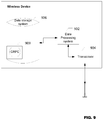
- FIG. 9 illustrates a block diagram of an exemplary wireless device, such as device 306 shown in FIG. 3 .
- the device 306 may include: a data processing system 902, which may include one or more microprocessors and/or one or more circuits, such as an application specific integrated circuit (ASIC), field-programmable gate arrays (FPGAs), and the like; a transceiver 904, and a data storage system 906, which may include one or more non-volatile storage devices and/or one or more volatile storage devices (e.g., random access memory (RAM)).
- the data processing system 902 may comprise a control unit used for selection of transmission parameters.
- computer readable program code (CRPC) 908 may be stored in a computer readable medium, such as, but not limited, to magnetic media (e.g., a hard disk), optical media (e.g., a DVD), memory devices (e.g., random access memory), and the like.
- computer readable program code is configured such that when executed by a processor, the code causes the data processing system 902 to perform steps described above (e.g., steps described above with reference to the flow charts shown in Fig. 6 ).
- the device 306 is configured to perform steps described herein without the need for code. That is, for example, data processing system 902 may consist merely of one or more ASICs.
- the features of the embodiments described herein may be implemented in hardware and/or software.
- the functional components of the base station described above may be implemented by data processing system 902 executing computer instructions, by data processing system 902 operating independent of any computer instructions, or by any suitable combination of hardware and/or software.
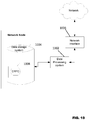
- FIG. 10 illustrates a block diagram of network node such as MME 308 shown in FIG. 3 .
- the network node may include: a data processing system 1002, which may include one or more microprocessors and/or one or more circuits, such as an application specific integrated circuit (ASIC), field-programmable gate arrays (FPGAs), and the like; a network interface 1006, and a data storage system 1004, which may include one or more non-volatile storage devices and/or one or more volatile storage devices (e.g., random access memory (RAM)).
- the data processing system 1002 may comprise a control unit used for selection of transmission parameters.
- computer readable program code (CRPC) 1008 may be stored in a computer readable medium, such as, but not limited, to magnetic media (e.g., a hard disk), optical media (e.g., a DVD), memory devices (e.g., random access memory), and the like.
- computer readable program code is configured such that when executed by a processor, the code causes the data processing system 1002 to perform steps described above (e.g., steps described above with reference to the flow charts shown in Fig. 7 ).
- the MME 308 is configured to perform steps described herein without the need for code. That is, for example, data processing system 1002 may consist merely of one or more ASICs.
- the features of the embodiments described herein may be implemented in hardware and/or software.
- the functional components of the base station described above may be implemented by data processing system 1002 executing computer instructions, by data processing system 1002 operating independent of any computer instructions, or by any suitable combination of hardware and/or software.
- a RAN keeps a certain control of the UE even though the UE has left (i.e., detached from) the LTE network, which is achieved without requiring LTE network resources.
- NodeB and UE are nonlimiting and does in particular do not imply a certain hierarchical relation between the two; in general "NodeB” could be considered as device 1 and “UE” device 2, and these two devices communicate with each other over some radio channel.
- the terms “comprise”, “comprising”, “comprises”, “include”, “including”, “includes”, “have”, “has”, “having”, or variants thereof are open-ended, and include one or more stated features, integers, elements, steps, components or functions but does not preclude the presence or addition of one or more other features, integers, elements, steps, components, functions or groups thereof.
- the common abbreviation “e.g.”, which derives from the Latin phrase “exempli gratia” may be used to introduce or specify a general example or examples of a previously mentioned item, and is not intended to be limiting of such item.
- the common abbreviation “i.e.”, which derives from the Latin phrase “id est,” may be used to specify a particular item from a more general recitation.
- Example embodiments are described herein with reference to block diagrams and/or flowchart illustrations of computer-implemented methods, apparatus (systems and/or devices) and/or non-transitory computer program products. It is understood that a block of the block diagrams and/or flowchart illustrations, and combinations of blocks in the block diagrams and/or flowchart illustrations, can be implemented by computer program instructions that are performed by one or more computer circuits.
- These computer program instructions may be provided to a processor circuit of a general purpose computer circuit, special purpose computer circuit, and/or other programmable data processing circuit to produce a machine, such that the instructions, which execute via the processor of the computer and/or other programmable data processing apparatus, transform and control transistors, values stored in memory locations, and other hardware components within such circuitry to implement the functions/acts specified in the block diagrams and/or flowchart block or blocks, and thereby create means (functionality) and/or structure for implementing the functions/acts specified in the block diagrams and/or flowchart block(s).
Landscapes
- Engineering & Computer Science (AREA)
- Computer Networks & Wireless Communication (AREA)
- Signal Processing (AREA)
- Mobile Radio Communication Systems (AREA)
Claims (12)
- Verfahren, durchgeführt durch ein Teilnehmergerät (user equipment, UE) (306) zum Herstellen einer Wiederanbindung an ein Third Generation Partnership Project (3GPP) -Netzwerk, wobei das Verfahren Folgendes umfasst:Herstellen (600) einer Datenverbindung mit einem nicht-3GPP-Netzwerk;Erkennen (602) einer Trennung von dem 3GPP-Netzwerk, nachdem die Datenverbindung mit dem nicht-3GPP-Netzwerk hergestellt wird;Eintreten (602) in einen bedingten Zustand nach dem Erkennen der Trennung von dem 3GPP-Netzwerk, wobei die Trennung basierend auf einem Empfang einer expliziten Nachricht von dem 3GPP-Netzwerk erkannt wird, die den bedingten Zustand angibt,wobei die explizite Nachricht einen Skalierungsfaktor, der gemäß einer Belastungshöhe des UE auf dem 3GPP-Netzwerk und einem Teilnehmerprofil auf dem UE festgelegt ist, und einen Bedingungsschwellenwert spezifiziert, wobei der Bedingungsschwellenwert in einer vorbestimmten Regel verwendet wird, und wobei der Bedingungsschwellenwert gemäß dem Skalierungsfaktor skaliert ist; undnach dem Eintreten in den bedingten Zustand:Überwachen (604) von einer oder mehreren Broadcast-Übertragungen von einem Netzwerkknoten im 3GPP-Netzwerk;Extrahieren (606) von Broadcast-Daten, die in den Broadcast-Übertragungen des 3GPP-Netzwerks beinhaltet sind;Anwenden (608) der extrahierten Broadcast-Daten auf die vorbestimmte Regel; undals Reaktion auf das Bestimmen, dass die vorbestimmte Regel erfüllt (610) ist, Herstellen (612) der Wiederanbindung an das 3GPP-Netzwerk.
- Verfahren nach Anspruch 1, wobei die vorbestimmte Regel eine oder mehrere Unterregeln beinhaltet.
- Verfahren nach Anspruch 2, wobei jede Unterregel mindestens einen ersten Wert, einen zweiten Wert und eine Regelbedingung beinhaltet.
- Verfahren nach Anspruch 3, wobei der erste Wert mit dem zweiten Wert gemäß der Regelbedingung verglichen wird, um zu bestimmen, ob die vorbestimmte Regel erfüllt ist.
- Verfahren nach Anspruch 4, wobei
der erste Wert (i) ein Signalpegel des 3GPP-Netzwerks, beinhaltet in den extrahierten Broadcast-Daten und gemessen durch das UE, (ii) ein Signalpegel des nicht-3GPP-Netzwerks, gemessen durch das UE, (iii) eine Belastungshöhe des 3GPP-Netzwerks, (iv) eine Belastungshöhe des nicht-3GPP-Netzwerks oder (iv) ein vorbestimmter Wert ist,
der zweite Wert (i) ein vorbestimmter Wert, (ii) ein Bedingungsschwellenwert, beinhaltet in den extrahierten Broadcast-Daten, oder (iii) ein Bedingungsschwellenwert, beinhaltet in der expliziten Nachricht vom 3GPP-Netzwerk, die den bedingten Zustand angibt, ist, und
die Regelbedingung eines aus Folgendem spezifiziert (i) gleich wie, (ii) größer als, (iii) größer als oder gleich wie, (iv) weniger als und (v) weniger als oder gleich wie. - Verfahren nach Ansprüchen 4 oder 5, wobei der erste Wert eine Menge an Zeit ist, die vergangen ist, seit das UE in den bedingten Zustand eingetreten ist, der zweite Wert ein vorbestimmter Wert ist und die vorbestimmte Regel erfüllt ist, wenn der erste Wert größer als oder gleich wie der zweite Wert ist.
- Verfahren nach einem der Ansprüche 1 bis 6, wobei die Trennung erkannt wird, wenn das UE erkennt, dass alle Datenverbindungen zwischen dem UE und dem 3GPP-Netzwerk vom 3GPP-Netzwerk zum nicht-3GPP-Netzwerk übertragen werden.
- Verfahren nach einem der Ansprüche 1 bis 7, wobei der Netzwerkknoten eine Basisstation (304) ist.
- Verfahren nach einem der Ansprüche 1 bis 8, wobei das UE die eine oder mehreren Broadcast-Übertragungen kontinuierlich überwacht, die Broadcast-Daten extrahiert und die Broadcast-Daten auf die vorbestimmte Regel anwendet.
- Verfahren nach einem der Ansprüche 3 bis 9, ferner umfassend:
Festlegen eines Countdown-Werts eines Zeitgebers nach Eintreten in den bedingten Zustand, wobei der Überwachungsschritt (604) bei Auslaufen des Countdown-Werts durchgeführt wird. - Verfahren nach Anspruch 10, ferner umfassend:nach Bestimmen, dass die vorbestimmte Regel nicht erfüllt ist, Bestimmen einer Differenz zwischen dem ersten Wert und dem zweiten Wert;Skalieren des Countdown-Werts gemäß einer bestimmten Differenz; undÜberwachen von einer oder mehreren Broadcast-Übertragungen vom Netzwerkknoten nach Auslaufen des skalierten Countdown-Werts des Zeitgebers.
- Teilnehmergerät (UE) (306) zum Herstellen einer Wiederanbindung an ein Third Generation Partnership Project (3GPP) -Netzwerk, wobei das UE Folgendes umfasst:einen Prozessor (902); undeinen Speicher (906), der an den Prozessor gekoppelt ist,wobei der Prozessor für Folgendes konfiguriert ist;Herstellen (600) einer Datenverbindung mit einem nicht-3GPP-Netzwerk;Erkennen (602) einer Trennung von dem 3GPP-Netzwerk, nachdem die Datenverbindung mit dem nicht-3GPP-Netzwerk hergestellt wird;Eintreten (602) in einen bedingten Zustand nach dem Erkennen der Trennung von dem 3GPP-Netzwerk, wobei die Trennung basierend auf einem Empfang einer expliziten Nachricht von dem 3GPP-Netzwerk erkannt wird, die den bedingten Zustand angibt,wobei die explizite Nachricht einen Skalierungsfaktor, der gemäß einer Belastungshöhe des UE auf dem 3GPP-Netzwerk und einem Teilnehmerprofil auf dem UE festgelegt ist, und einen Bedingungsschwellenwert spezifiziert, wobei der Bedingungsschwellenwert in einer vorbestimmten Regel verwendet wird, und wobei der Bedingungsschwellenwert gemäß dem Skalierungsfaktor skaliert ist; undnach dem Eintreten in den bedingten Zustand ist der Prozessor für Folgendes konfiguriert:Überwachen (604) von einer oder mehreren Broadcast-Übertragungen von einem Netzwerkknoten im 3GPP-Netzwerk,Extrahieren (606) von Broadcast-Daten, die in den Broadcast-Übertragungen des 3GPP-Netzwerks beinhaltet sind,Anwenden (608) der extrahierten Broadcast-Daten auf die vorbestimmte Regel undals Reaktion auf das Bestimmen, dass die vorbestimmte Regel erfüllt (610) ist, Herstellen (612) der Wiederanbindung an das 3GPP-Netzwerk.
Applications Claiming Priority (2)
| Application Number | Priority Date | Filing Date | Title |
|---|---|---|---|
| US201461934587P | 2014-01-31 | 2014-01-31 | |
| PCT/SE2014/051576 WO2015115961A1 (en) | 2014-01-31 | 2014-12-29 | Methods and devices for conditional attachment to a network |
Publications (3)
| Publication Number | Publication Date |
|---|---|
| EP3100571A1 EP3100571A1 (de) | 2016-12-07 |
| EP3100571A4 EP3100571A4 (de) | 2017-01-18 |
| EP3100571B1 true EP3100571B1 (de) | 2020-10-28 |
Family
ID=53757415
Family Applications (1)
| Application Number | Title | Priority Date | Filing Date |
|---|---|---|---|
| EP14881144.1A Active EP3100571B1 (de) | 2014-01-31 | 2014-12-29 | Bedingte wiederanbindung an einem 3gpp netzwerk |
Country Status (3)
| Country | Link |
|---|---|
| US (1) | US9967791B2 (de) |
| EP (1) | EP3100571B1 (de) |
| WO (1) | WO2015115961A1 (de) |
Families Citing this family (4)
| Publication number | Priority date | Publication date | Assignee | Title |
|---|---|---|---|---|
| US9955398B2 (en) * | 2015-03-30 | 2018-04-24 | Apple Inc. | WLAN / cellular interworking based on mobility information |
| WO2020030277A1 (en) | 2018-08-09 | 2020-02-13 | Huawei Technologies Co., Ltd. | Device and method for ue registration assisted by analytics to support intra and inter network slice load balancing |
| CN110087255B (zh) * | 2019-04-22 | 2022-03-01 | 新华三技术有限公司 | 信息统计方法及装置 |
| US20230122569A1 (en) * | 2021-10-14 | 2023-04-20 | Cable Television Laboratories, Inc. | Network awareness of multi-universal subscriber identity module (musim) devices by assistance information signaling |
Citations (6)
| Publication number | Priority date | Publication date | Assignee | Title |
|---|---|---|---|---|
| US20020147008A1 (en) * | 2001-01-29 | 2002-10-10 | Janne Kallio | GSM Networks and solutions for providing seamless mobility between GSM Networks and different radio networks |
| US20080008127A1 (en) * | 2006-07-05 | 2008-01-10 | Infineon Technologies Ag | Method and apparatus for handover of wireless communication between networks |
| US20080076428A1 (en) * | 2003-09-12 | 2008-03-27 | Cisco Technology, Inc. | Method and System for Triggering Handoff of a Call Between Networks |
| US20100056157A1 (en) * | 2008-08-26 | 2010-03-04 | Motorola, Inc. | Method and Apparatus for Making Handover Decisions in a Heterogeneous Network |
| AU2011203129A1 (en) * | 2007-03-09 | 2011-07-21 | Interdigital Technology Corporation | Method and apparatus for adjusting a reselection timer and cell ranking criteria, and reporting degraded signal measurement of a serving cell |
| US20140022932A1 (en) * | 2012-07-18 | 2014-01-23 | Samsung Electronics Co. Ltd. | Network connection control apparatus and method of mobile terminal |
Family Cites Families (16)
| Publication number | Priority date | Publication date | Assignee | Title |
|---|---|---|---|---|
| KR20070013444A (ko) * | 2005-07-26 | 2007-01-31 | 삼성전자주식회사 | 무선통신시스템에서 이종망간 핸드오프 처리 장치 및 방법 |
| BRPI0808232A2 (pt) | 2007-03-13 | 2014-07-22 | Interdigital Tech Corp | Processo de re-seleção de célula para comunicações sem fio. |
| JP5135438B2 (ja) * | 2007-09-05 | 2013-02-06 | テレフオンアクチーボラゲット エル エム エリクソン(パブル) | 移動電気通信システムにおける相対閾値の使用に基づくセル再選択 |
| US8730921B2 (en) * | 2009-08-28 | 2014-05-20 | Blackberry Limited | System and method for call re-establishment |
| EP2317822A1 (de) * | 2009-10-29 | 2011-05-04 | Panasonic Corporation | Verbesserung der Verbindungsprozedur zur Wiederanbindung eines mobilen Endgeräts an ein 3GPP-Zugriffsnetz |
| US8737354B2 (en) * | 2011-01-10 | 2014-05-27 | Alcatel Lucent | Method of data path switching during inter-radio access technology handover |
| US8744450B2 (en) * | 2011-04-04 | 2014-06-03 | Kyocera Corporation | Mobile communication method |
| WO2012147270A1 (en) * | 2011-04-28 | 2012-11-01 | Panasonic Corporation | Communication system, mobile terminal, router, and mobility management entity |
| US20130034080A1 (en) * | 2011-08-02 | 2013-02-07 | Qualcomm Incorporated | Method for fast return to source rat (radio access technology) after redirection to target rat |
| US20130083646A1 (en) * | 2011-09-30 | 2013-04-04 | Renesas Mobile Corporation | Methods and Apparatus for Managing Resource Access Attempts |
| US20130208605A1 (en) * | 2012-01-04 | 2013-08-15 | Qualcomm Incorporated | Method and apparatus for ue-based handover during network coverage holes |
| WO2013164247A2 (en) * | 2012-04-30 | 2013-11-07 | Nokia Siemens Networks Oy | Method to introduce a state in a device for reachability when the device is not attached |
| EP2661125A1 (de) * | 2012-05-01 | 2013-11-06 | BlackBerry Limited | Bestimmung von geschwindigkeitsabhängigen Skalierfaktoren |
| US9100852B2 (en) * | 2012-05-15 | 2015-08-04 | Futurewei Technologies, Inc. | System and method for network detection and selection |
| US20130329631A1 (en) * | 2012-06-06 | 2013-12-12 | Muhammad Adeel Alam | Methods and apparatus for enhanced transmit power control |
| US9380646B2 (en) * | 2013-09-24 | 2016-06-28 | At&T Intellectual Property I, L.P. | Network selection architecture |
-
2014
- 2014-12-29 WO PCT/SE2014/051576 patent/WO2015115961A1/en not_active Ceased
- 2014-12-29 US US14/418,819 patent/US9967791B2/en active Active
- 2014-12-29 EP EP14881144.1A patent/EP3100571B1/de active Active
Patent Citations (6)
| Publication number | Priority date | Publication date | Assignee | Title |
|---|---|---|---|---|
| US20020147008A1 (en) * | 2001-01-29 | 2002-10-10 | Janne Kallio | GSM Networks and solutions for providing seamless mobility between GSM Networks and different radio networks |
| US20080076428A1 (en) * | 2003-09-12 | 2008-03-27 | Cisco Technology, Inc. | Method and System for Triggering Handoff of a Call Between Networks |
| US20080008127A1 (en) * | 2006-07-05 | 2008-01-10 | Infineon Technologies Ag | Method and apparatus for handover of wireless communication between networks |
| AU2011203129A1 (en) * | 2007-03-09 | 2011-07-21 | Interdigital Technology Corporation | Method and apparatus for adjusting a reselection timer and cell ranking criteria, and reporting degraded signal measurement of a serving cell |
| US20100056157A1 (en) * | 2008-08-26 | 2010-03-04 | Motorola, Inc. | Method and Apparatus for Making Handover Decisions in a Heterogeneous Network |
| US20140022932A1 (en) * | 2012-07-18 | 2014-01-23 | Samsung Electronics Co. Ltd. | Network connection control apparatus and method of mobile terminal |
Also Published As
| Publication number | Publication date |
|---|---|
| US20160037412A1 (en) | 2016-02-04 |
| WO2015115961A1 (en) | 2015-08-06 |
| US9967791B2 (en) | 2018-05-08 |
| EP3100571A1 (de) | 2016-12-07 |
| EP3100571A4 (de) | 2017-01-18 |
Similar Documents
| Publication | Publication Date | Title |
|---|---|---|
| US9504005B2 (en) | Method for processing data associated with location area update in a wireless communication system | |
| AU2018204917B2 (en) | Machine-to-machine (M2M) terminal, base station, method and computer readable medium | |
| US10524168B2 (en) | Wireless local area network offloading through radio access network rules | |
| US9380623B2 (en) | Network-initiated control method and apparatus for providing proximity service | |
| CN104025655B (zh) | 在无线通信系统中通过应用最高优先级来进行小区重选的方法及其装置 | |
| US11070996B2 (en) | Method for controlling wireless link and wireless connection of terminal in wireless communication system, and apparatus supporting same | |
| US20190239147A1 (en) | Method for connecting to network and user equipment | |
| EP2830361B1 (de) | Verfahren und vorrichtung für den zugang zu einer zelle in einem drahtlosen kommunikationssystem | |
| US10356705B2 (en) | Method for location area update in multi-rat environment and method for transmitting/receiving paging information | |
| US9794973B2 (en) | Method and apparatus for providing proximity service | |
| EP2975882B1 (de) | Verfahren und vorrichtung zur änderung einer auf näherungsdienst basierten funkzugangstechnologie | |
| US10306520B2 (en) | Handover method between heterogeneous wireless communication techniques and device for same | |
| EP3100571B1 (de) | Bedingte wiederanbindung an einem 3gpp netzwerk | |
| WO2016018021A1 (ko) | 무선 통신 시스템에서 접근 제어 방법 및 이를 지원하는 장치 | |
| WO2016047594A1 (ja) | 無線端末 |
Legal Events
| Date | Code | Title | Description |
|---|---|---|---|
| PUAI | Public reference made under article 153(3) epc to a published international application that has entered the european phase |
Free format text: ORIGINAL CODE: 0009012 |
|
| STAA | Information on the status of an ep patent application or granted ep patent |
Free format text: STATUS: REQUEST FOR EXAMINATION WAS MADE |
|
| 17P | Request for examination filed |
Effective date: 20160705 |
|
| AK | Designated contracting states |
Kind code of ref document: A1 Designated state(s): AL AT BE BG CH CY CZ DE DK EE ES FI FR GB GR HR HU IE IS IT LI LT LU LV MC MK MT NL NO PL PT RO RS SE SI SK SM TR |
|
| AX | Request for extension of the european patent |
Extension state: BA ME |
|
| A4 | Supplementary search report drawn up and despatched |
Effective date: 20161221 |
|
| RIC1 | Information provided on ipc code assigned before grant |
Ipc: H04W 76/02 20090101AFI20161215BHEP Ipc: H04W 28/08 20090101ALI20161215BHEP Ipc: H04W 36/14 20090101ALI20161215BHEP |
|
| STAA | Information on the status of an ep patent application or granted ep patent |
Free format text: STATUS: EXAMINATION IS IN PROGRESS |
|
| 17Q | First examination report despatched |
Effective date: 20170127 |
|
| DAX | Request for extension of the european patent (deleted) | ||
| REG | Reference to a national code |
Ref country code: DE Ref legal event code: R079 Ref document number: 602014071831 Country of ref document: DE Free format text: PREVIOUS MAIN CLASS: H04W0076020000 Ipc: H04W0036140000 |
|
| RIC1 | Information provided on ipc code assigned before grant |
Ipc: H04W 36/14 20090101AFI20200709BHEP Ipc: H04W 88/06 20090101ALI20200709BHEP |
|
| GRAP | Despatch of communication of intention to grant a patent |
Free format text: ORIGINAL CODE: EPIDOSNIGR1 |
|
| STAA | Information on the status of an ep patent application or granted ep patent |
Free format text: STATUS: GRANT OF PATENT IS INTENDED |
|
| INTG | Intention to grant announced |
Effective date: 20200818 |
|
| GRAS | Grant fee paid |
Free format text: ORIGINAL CODE: EPIDOSNIGR3 |
|
| GRAA | (expected) grant |
Free format text: ORIGINAL CODE: 0009210 |
|
| STAA | Information on the status of an ep patent application or granted ep patent |
Free format text: STATUS: THE PATENT HAS BEEN GRANTED |
|
| AK | Designated contracting states |
Kind code of ref document: B1 Designated state(s): AL AT BE BG CH CY CZ DE DK EE ES FI FR GB GR HR HU IE IS IT LI LT LU LV MC MK MT NL NO PL PT RO RS SE SI SK SM TR |
|
| REG | Reference to a national code |
Ref country code: GB Ref legal event code: FG4D |
|
| REG | Reference to a national code |
Ref country code: CH Ref legal event code: EP |
|
| REG | Reference to a national code |
Ref country code: AT Ref legal event code: REF Ref document number: 1329513 Country of ref document: AT Kind code of ref document: T Effective date: 20201115 |
|
| REG | Reference to a national code |
Ref country code: DE Ref legal event code: R096 Ref document number: 602014071831 Country of ref document: DE |
|
| REG | Reference to a national code |
Ref country code: IE Ref legal event code: FG4D |
|
| REG | Reference to a national code |
Ref country code: NL Ref legal event code: FP |
|
| REG | Reference to a national code |
Ref country code: AT Ref legal event code: MK05 Ref document number: 1329513 Country of ref document: AT Kind code of ref document: T Effective date: 20201028 |
|
| PG25 | Lapsed in a contracting state [announced via postgrant information from national office to epo] |
Ref country code: RS Free format text: LAPSE BECAUSE OF FAILURE TO SUBMIT A TRANSLATION OF THE DESCRIPTION OR TO PAY THE FEE WITHIN THE PRESCRIBED TIME-LIMIT Effective date: 20201028 Ref country code: FI Free format text: LAPSE BECAUSE OF FAILURE TO SUBMIT A TRANSLATION OF THE DESCRIPTION OR TO PAY THE FEE WITHIN THE PRESCRIBED TIME-LIMIT Effective date: 20201028 Ref country code: NO Free format text: LAPSE BECAUSE OF FAILURE TO SUBMIT A TRANSLATION OF THE DESCRIPTION OR TO PAY THE FEE WITHIN THE PRESCRIBED TIME-LIMIT Effective date: 20210128 Ref country code: PT Free format text: LAPSE BECAUSE OF FAILURE TO SUBMIT A TRANSLATION OF THE DESCRIPTION OR TO PAY THE FEE WITHIN THE PRESCRIBED TIME-LIMIT Effective date: 20210301 Ref country code: GR Free format text: LAPSE BECAUSE OF FAILURE TO SUBMIT A TRANSLATION OF THE DESCRIPTION OR TO PAY THE FEE WITHIN THE PRESCRIBED TIME-LIMIT Effective date: 20210129 |
|
| REG | Reference to a national code |
Ref country code: LT Ref legal event code: MG4D |
|
| PG25 | Lapsed in a contracting state [announced via postgrant information from national office to epo] |
Ref country code: SE Free format text: LAPSE BECAUSE OF FAILURE TO SUBMIT A TRANSLATION OF THE DESCRIPTION OR TO PAY THE FEE WITHIN THE PRESCRIBED TIME-LIMIT Effective date: 20201028 Ref country code: LV Free format text: LAPSE BECAUSE OF FAILURE TO SUBMIT A TRANSLATION OF THE DESCRIPTION OR TO PAY THE FEE WITHIN THE PRESCRIBED TIME-LIMIT Effective date: 20201028 Ref country code: IS Free format text: LAPSE BECAUSE OF FAILURE TO SUBMIT A TRANSLATION OF THE DESCRIPTION OR TO PAY THE FEE WITHIN THE PRESCRIBED TIME-LIMIT Effective date: 20210228 Ref country code: PL Free format text: LAPSE BECAUSE OF FAILURE TO SUBMIT A TRANSLATION OF THE DESCRIPTION OR TO PAY THE FEE WITHIN THE PRESCRIBED TIME-LIMIT Effective date: 20201028 Ref country code: BG Free format text: LAPSE BECAUSE OF FAILURE TO SUBMIT A TRANSLATION OF THE DESCRIPTION OR TO PAY THE FEE WITHIN THE PRESCRIBED TIME-LIMIT Effective date: 20210128 Ref country code: ES Free format text: LAPSE BECAUSE OF FAILURE TO SUBMIT A TRANSLATION OF THE DESCRIPTION OR TO PAY THE FEE WITHIN THE PRESCRIBED TIME-LIMIT Effective date: 20201028 Ref country code: AT Free format text: LAPSE BECAUSE OF FAILURE TO SUBMIT A TRANSLATION OF THE DESCRIPTION OR TO PAY THE FEE WITHIN THE PRESCRIBED TIME-LIMIT Effective date: 20201028 |
|
| PG25 | Lapsed in a contracting state [announced via postgrant information from national office to epo] |
Ref country code: HR Free format text: LAPSE BECAUSE OF FAILURE TO SUBMIT A TRANSLATION OF THE DESCRIPTION OR TO PAY THE FEE WITHIN THE PRESCRIBED TIME-LIMIT Effective date: 20201028 |
|
| REG | Reference to a national code |
Ref country code: DE Ref legal event code: R097 Ref document number: 602014071831 Country of ref document: DE |
|
| PG25 | Lapsed in a contracting state [announced via postgrant information from national office to epo] |
Ref country code: SK Free format text: LAPSE BECAUSE OF FAILURE TO SUBMIT A TRANSLATION OF THE DESCRIPTION OR TO PAY THE FEE WITHIN THE PRESCRIBED TIME-LIMIT Effective date: 20201028 Ref country code: RO Free format text: LAPSE BECAUSE OF FAILURE TO SUBMIT A TRANSLATION OF THE DESCRIPTION OR TO PAY THE FEE WITHIN THE PRESCRIBED TIME-LIMIT Effective date: 20201028 Ref country code: LT Free format text: LAPSE BECAUSE OF FAILURE TO SUBMIT A TRANSLATION OF THE DESCRIPTION OR TO PAY THE FEE WITHIN THE PRESCRIBED TIME-LIMIT Effective date: 20201028 Ref country code: CZ Free format text: LAPSE BECAUSE OF FAILURE TO SUBMIT A TRANSLATION OF THE DESCRIPTION OR TO PAY THE FEE WITHIN THE PRESCRIBED TIME-LIMIT Effective date: 20201028 Ref country code: EE Free format text: LAPSE BECAUSE OF FAILURE TO SUBMIT A TRANSLATION OF THE DESCRIPTION OR TO PAY THE FEE WITHIN THE PRESCRIBED TIME-LIMIT Effective date: 20201028 Ref country code: SM Free format text: LAPSE BECAUSE OF FAILURE TO SUBMIT A TRANSLATION OF THE DESCRIPTION OR TO PAY THE FEE WITHIN THE PRESCRIBED TIME-LIMIT Effective date: 20201028 |
|
| REG | Reference to a national code |
Ref country code: CH Ref legal event code: PL |
|
| PG25 | Lapsed in a contracting state [announced via postgrant information from national office to epo] |
Ref country code: DK Free format text: LAPSE BECAUSE OF FAILURE TO SUBMIT A TRANSLATION OF THE DESCRIPTION OR TO PAY THE FEE WITHIN THE PRESCRIBED TIME-LIMIT Effective date: 20201028 Ref country code: MC Free format text: LAPSE BECAUSE OF FAILURE TO SUBMIT A TRANSLATION OF THE DESCRIPTION OR TO PAY THE FEE WITHIN THE PRESCRIBED TIME-LIMIT Effective date: 20201028 |
|
| PLBE | No opposition filed within time limit |
Free format text: ORIGINAL CODE: 0009261 |
|
| REG | Reference to a national code |
Ref country code: BE Ref legal event code: MM Effective date: 20201231 |
|
| STAA | Information on the status of an ep patent application or granted ep patent |
Free format text: STATUS: NO OPPOSITION FILED WITHIN TIME LIMIT |
|
| 26N | No opposition filed |
Effective date: 20210729 |
|
| PG25 | Lapsed in a contracting state [announced via postgrant information from national office to epo] |
Ref country code: AL Free format text: LAPSE BECAUSE OF FAILURE TO SUBMIT A TRANSLATION OF THE DESCRIPTION OR TO PAY THE FEE WITHIN THE PRESCRIBED TIME-LIMIT Effective date: 20201028 Ref country code: LU Free format text: LAPSE BECAUSE OF NON-PAYMENT OF DUE FEES Effective date: 20201229 Ref country code: FR Free format text: LAPSE BECAUSE OF NON-PAYMENT OF DUE FEES Effective date: 20201231 Ref country code: IE Free format text: LAPSE BECAUSE OF NON-PAYMENT OF DUE FEES Effective date: 20201229 Ref country code: IT Free format text: LAPSE BECAUSE OF FAILURE TO SUBMIT A TRANSLATION OF THE DESCRIPTION OR TO PAY THE FEE WITHIN THE PRESCRIBED TIME-LIMIT Effective date: 20201028 |
|
| PG25 | Lapsed in a contracting state [announced via postgrant information from national office to epo] |
Ref country code: CH Free format text: LAPSE BECAUSE OF NON-PAYMENT OF DUE FEES Effective date: 20201231 Ref country code: SI Free format text: LAPSE BECAUSE OF FAILURE TO SUBMIT A TRANSLATION OF THE DESCRIPTION OR TO PAY THE FEE WITHIN THE PRESCRIBED TIME-LIMIT Effective date: 20201028 Ref country code: LI Free format text: LAPSE BECAUSE OF NON-PAYMENT OF DUE FEES Effective date: 20201231 |
|
| PG25 | Lapsed in a contracting state [announced via postgrant information from national office to epo] |
Ref country code: IS Free format text: LAPSE BECAUSE OF FAILURE TO SUBMIT A TRANSLATION OF THE DESCRIPTION OR TO PAY THE FEE WITHIN THE PRESCRIBED TIME-LIMIT Effective date: 20210228 Ref country code: TR Free format text: LAPSE BECAUSE OF FAILURE TO SUBMIT A TRANSLATION OF THE DESCRIPTION OR TO PAY THE FEE WITHIN THE PRESCRIBED TIME-LIMIT Effective date: 20201028 Ref country code: MT Free format text: LAPSE BECAUSE OF FAILURE TO SUBMIT A TRANSLATION OF THE DESCRIPTION OR TO PAY THE FEE WITHIN THE PRESCRIBED TIME-LIMIT Effective date: 20201028 Ref country code: CY Free format text: LAPSE BECAUSE OF FAILURE TO SUBMIT A TRANSLATION OF THE DESCRIPTION OR TO PAY THE FEE WITHIN THE PRESCRIBED TIME-LIMIT Effective date: 20201028 |
|
| PG25 | Lapsed in a contracting state [announced via postgrant information from national office to epo] |
Ref country code: MK Free format text: LAPSE BECAUSE OF FAILURE TO SUBMIT A TRANSLATION OF THE DESCRIPTION OR TO PAY THE FEE WITHIN THE PRESCRIBED TIME-LIMIT Effective date: 20201028 |
|
| PG25 | Lapsed in a contracting state [announced via postgrant information from national office to epo] |
Ref country code: BE Free format text: LAPSE BECAUSE OF NON-PAYMENT OF DUE FEES Effective date: 20201231 |
|
| PGFP | Annual fee paid to national office [announced via postgrant information from national office to epo] |
Ref country code: NL Payment date: 20221226 Year of fee payment: 9 Ref country code: GB Payment date: 20221227 Year of fee payment: 9 |
|
| PGFP | Annual fee paid to national office [announced via postgrant information from national office to epo] |
Ref country code: DE Payment date: 20221228 Year of fee payment: 9 |
|
| REG | Reference to a national code |
Ref country code: DE Ref legal event code: R119 Ref document number: 602014071831 Country of ref document: DE |
|
| REG | Reference to a national code |
Ref country code: NL Ref legal event code: MM Effective date: 20240101 |
|
| GBPC | Gb: european patent ceased through non-payment of renewal fee |
Effective date: 20231229 |
|
| PG25 | Lapsed in a contracting state [announced via postgrant information from national office to epo] |
Ref country code: NL Free format text: LAPSE BECAUSE OF NON-PAYMENT OF DUE FEES Effective date: 20240101 |
|
| PG25 | Lapsed in a contracting state [announced via postgrant information from national office to epo] |
Ref country code: NL Free format text: LAPSE BECAUSE OF NON-PAYMENT OF DUE FEES Effective date: 20240101 |
|
| PG25 | Lapsed in a contracting state [announced via postgrant information from national office to epo] |
Ref country code: DE Free format text: LAPSE BECAUSE OF NON-PAYMENT OF DUE FEES Effective date: 20240702 |
|
| PG25 | Lapsed in a contracting state [announced via postgrant information from national office to epo] |
Ref country code: GB Free format text: LAPSE BECAUSE OF NON-PAYMENT OF DUE FEES Effective date: 20231229 |
|
| PG25 | Lapsed in a contracting state [announced via postgrant information from national office to epo] |
Ref country code: GB Free format text: LAPSE BECAUSE OF NON-PAYMENT OF DUE FEES Effective date: 20231229 Ref country code: DE Free format text: LAPSE BECAUSE OF NON-PAYMENT OF DUE FEES Effective date: 20240702 |