EP3101122B1 - Erzeugung von ctl-linien mit spezifizität gegen mehrere tumorantigene oder mehrere viren - Google Patents
Erzeugung von ctl-linien mit spezifizität gegen mehrere tumorantigene oder mehrere viren Download PDFInfo
- Publication number
- EP3101122B1 EP3101122B1 EP16180607.0A EP16180607A EP3101122B1 EP 3101122 B1 EP3101122 B1 EP 3101122B1 EP 16180607 A EP16180607 A EP 16180607A EP 3101122 B1 EP3101122 B1 EP 3101122B1
- Authority
- EP
- European Patent Office
- Prior art keywords
- cells
- ctl
- specific
- cell
- antigen
- Prior art date
- Legal status (The legal status is an assumption and is not a legal conclusion. Google has not performed a legal analysis and makes no representation as to the accuracy of the status listed.)
- Active
Links
Images









Classifications
-
- C—CHEMISTRY; METALLURGY
- C12—BIOCHEMISTRY; BEER; SPIRITS; WINE; VINEGAR; MICROBIOLOGY; ENZYMOLOGY; MUTATION OR GENETIC ENGINEERING
- C12N—MICROORGANISMS OR ENZYMES; COMPOSITIONS THEREOF; PROPAGATING, PRESERVING, OR MAINTAINING MICROORGANISMS; MUTATION OR GENETIC ENGINEERING; CULTURE MEDIA
- C12N5/00—Undifferentiated human, animal or plant cells, e.g. cell lines; Tissues; Cultivation or maintenance thereof; Culture media therefor
- C12N5/06—Animal cells or tissues; Human cells or tissues
- C12N5/0602—Vertebrate cells
- C12N5/0634—Cells from the blood or the immune system
- C12N5/0636—T lymphocytes
-
- A—HUMAN NECESSITIES
- A61—MEDICAL OR VETERINARY SCIENCE; HYGIENE
- A61K—PREPARATIONS FOR MEDICAL, DENTAL OR TOILETRY PURPOSES
- A61K35/00—Medicinal preparations containing materials or reaction products thereof with undetermined constitution
- A61K35/12—Materials from mammals; Compositions comprising non-specified tissues or cells; Compositions comprising non-embryonic stem cells; Genetically modified cells
-
- A—HUMAN NECESSITIES
- A61—MEDICAL OR VETERINARY SCIENCE; HYGIENE
- A61K—PREPARATIONS FOR MEDICAL, DENTAL OR TOILETRY PURPOSES
- A61K39/00—Medicinal preparations containing antigens or antibodies
- A61K39/12—Viral antigens
-
- A—HUMAN NECESSITIES
- A61—MEDICAL OR VETERINARY SCIENCE; HYGIENE
- A61K—PREPARATIONS FOR MEDICAL, DENTAL OR TOILETRY PURPOSES
- A61K39/00—Medicinal preparations containing antigens or antibodies
- A61K39/12—Viral antigens
- A61K39/155—Paramyxoviridae, e.g. parainfluenza virus
-
- A—HUMAN NECESSITIES
- A61—MEDICAL OR VETERINARY SCIENCE; HYGIENE
- A61K—PREPARATIONS FOR MEDICAL, DENTAL OR TOILETRY PURPOSES
- A61K39/00—Medicinal preparations containing antigens or antibodies
- A61K39/12—Viral antigens
- A61K39/245—Herpetoviridae, e.g. herpes simplex virus
-
- A—HUMAN NECESSITIES
- A61—MEDICAL OR VETERINARY SCIENCE; HYGIENE
- A61K—PREPARATIONS FOR MEDICAL, DENTAL OR TOILETRY PURPOSES
- A61K40/00—Cellular immunotherapy
- A61K40/10—Cellular immunotherapy characterised by the cell type used
- A61K40/11—T-cells, e.g. tumour infiltrating lymphocytes [TIL] or regulatory T [Treg] cells; Lymphokine-activated killer [LAK] cells
-
- A—HUMAN NECESSITIES
- A61—MEDICAL OR VETERINARY SCIENCE; HYGIENE
- A61K—PREPARATIONS FOR MEDICAL, DENTAL OR TOILETRY PURPOSES
- A61K40/00—Cellular immunotherapy
- A61K40/20—Cellular immunotherapy characterised by the effect or the function of the cells
- A61K40/22—Immunosuppressive or immunotolerising
-
- A—HUMAN NECESSITIES
- A61—MEDICAL OR VETERINARY SCIENCE; HYGIENE
- A61K—PREPARATIONS FOR MEDICAL, DENTAL OR TOILETRY PURPOSES
- A61K40/00—Cellular immunotherapy
- A61K40/40—Cellular immunotherapy characterised by antigens that are targeted or presented by cells of the immune system
- A61K40/41—Vertebrate antigens
- A61K40/418—Antigens related to induction of tolerance to non-self
-
- A—HUMAN NECESSITIES
- A61—MEDICAL OR VETERINARY SCIENCE; HYGIENE
- A61K—PREPARATIONS FOR MEDICAL, DENTAL OR TOILETRY PURPOSES
- A61K40/00—Cellular immunotherapy
- A61K40/40—Cellular immunotherapy characterised by antigens that are targeted or presented by cells of the immune system
- A61K40/41—Vertebrate antigens
- A61K40/42—Cancer antigens
- A61K40/4238—Regulators of development
- A61K40/424—Apoptosis related proteins, e.g. survivin or livin
-
- A—HUMAN NECESSITIES
- A61—MEDICAL OR VETERINARY SCIENCE; HYGIENE
- A61K—PREPARATIONS FOR MEDICAL, DENTAL OR TOILETRY PURPOSES
- A61K40/00—Cellular immunotherapy
- A61K40/40—Cellular immunotherapy characterised by antigens that are targeted or presented by cells of the immune system
- A61K40/41—Vertebrate antigens
- A61K40/42—Cancer antigens
- A61K40/4264—Cancer antigens from embryonic or fetal origin
- A61K40/4266—Carcinoembryonic antigen [CEA]
-
- A—HUMAN NECESSITIES
- A61—MEDICAL OR VETERINARY SCIENCE; HYGIENE
- A61K—PREPARATIONS FOR MEDICAL, DENTAL OR TOILETRY PURPOSES
- A61K40/00—Cellular immunotherapy
- A61K40/40—Cellular immunotherapy characterised by antigens that are targeted or presented by cells of the immune system
- A61K40/41—Vertebrate antigens
- A61K40/42—Cancer antigens
- A61K40/4267—Cancer testis antigens, e.g. SSX, BAGE, GAGE or SAGE
-
- A—HUMAN NECESSITIES
- A61—MEDICAL OR VETERINARY SCIENCE; HYGIENE
- A61K—PREPARATIONS FOR MEDICAL, DENTAL OR TOILETRY PURPOSES
- A61K40/00—Cellular immunotherapy
- A61K40/40—Cellular immunotherapy characterised by antigens that are targeted or presented by cells of the immune system
- A61K40/41—Vertebrate antigens
- A61K40/42—Cancer antigens
- A61K40/4267—Cancer testis antigens, e.g. SSX, BAGE, GAGE or SAGE
- A61K40/4268—MAGE
-
- A—HUMAN NECESSITIES
- A61—MEDICAL OR VETERINARY SCIENCE; HYGIENE
- A61K—PREPARATIONS FOR MEDICAL, DENTAL OR TOILETRY PURPOSES
- A61K40/00—Cellular immunotherapy
- A61K40/40—Cellular immunotherapy characterised by antigens that are targeted or presented by cells of the immune system
- A61K40/41—Vertebrate antigens
- A61K40/42—Cancer antigens
- A61K40/4267—Cancer testis antigens, e.g. SSX, BAGE, GAGE or SAGE
- A61K40/4269—NY-ESO
-
- A—HUMAN NECESSITIES
- A61—MEDICAL OR VETERINARY SCIENCE; HYGIENE
- A61K—PREPARATIONS FOR MEDICAL, DENTAL OR TOILETRY PURPOSES
- A61K40/00—Cellular immunotherapy
- A61K40/40—Cellular immunotherapy characterised by antigens that are targeted or presented by cells of the immune system
- A61K40/41—Vertebrate antigens
- A61K40/42—Cancer antigens
- A61K40/4267—Cancer testis antigens, e.g. SSX, BAGE, GAGE or SAGE
- A61K40/427—PRAME
-
- A—HUMAN NECESSITIES
- A61—MEDICAL OR VETERINARY SCIENCE; HYGIENE
- A61K—PREPARATIONS FOR MEDICAL, DENTAL OR TOILETRY PURPOSES
- A61K40/00—Cellular immunotherapy
- A61K40/40—Cellular immunotherapy characterised by antigens that are targeted or presented by cells of the immune system
- A61K40/41—Vertebrate antigens
- A61K40/42—Cancer antigens
- A61K40/4271—Melanoma antigens
- A61K40/4273—Glycoprotein 100 [Gp100]
-
- A—HUMAN NECESSITIES
- A61—MEDICAL OR VETERINARY SCIENCE; HYGIENE
- A61K—PREPARATIONS FOR MEDICAL, DENTAL OR TOILETRY PURPOSES
- A61K40/00—Cellular immunotherapy
- A61K40/40—Cellular immunotherapy characterised by antigens that are targeted or presented by cells of the immune system
- A61K40/46—Viral antigens
-
- A—HUMAN NECESSITIES
- A61—MEDICAL OR VETERINARY SCIENCE; HYGIENE
- A61P—SPECIFIC THERAPEUTIC ACTIVITY OF CHEMICAL COMPOUNDS OR MEDICINAL PREPARATIONS
- A61P31/00—Antiinfectives, i.e. antibiotics, antiseptics, chemotherapeutics
- A61P31/12—Antivirals
-
- A—HUMAN NECESSITIES
- A61—MEDICAL OR VETERINARY SCIENCE; HYGIENE
- A61P—SPECIFIC THERAPEUTIC ACTIVITY OF CHEMICAL COMPOUNDS OR MEDICINAL PREPARATIONS
- A61P31/00—Antiinfectives, i.e. antibiotics, antiseptics, chemotherapeutics
- A61P31/12—Antivirals
- A61P31/14—Antivirals for RNA viruses
-
- A—HUMAN NECESSITIES
- A61—MEDICAL OR VETERINARY SCIENCE; HYGIENE
- A61P—SPECIFIC THERAPEUTIC ACTIVITY OF CHEMICAL COMPOUNDS OR MEDICINAL PREPARATIONS
- A61P31/00—Antiinfectives, i.e. antibiotics, antiseptics, chemotherapeutics
- A61P31/12—Antivirals
- A61P31/14—Antivirals for RNA viruses
- A61P31/16—Antivirals for RNA viruses for influenza or rhinoviruses
-
- A—HUMAN NECESSITIES
- A61—MEDICAL OR VETERINARY SCIENCE; HYGIENE
- A61P—SPECIFIC THERAPEUTIC ACTIVITY OF CHEMICAL COMPOUNDS OR MEDICINAL PREPARATIONS
- A61P31/00—Antiinfectives, i.e. antibiotics, antiseptics, chemotherapeutics
- A61P31/12—Antivirals
- A61P31/20—Antivirals for DNA viruses
-
- A—HUMAN NECESSITIES
- A61—MEDICAL OR VETERINARY SCIENCE; HYGIENE
- A61P—SPECIFIC THERAPEUTIC ACTIVITY OF CHEMICAL COMPOUNDS OR MEDICINAL PREPARATIONS
- A61P35/00—Antineoplastic agents
-
- A—HUMAN NECESSITIES
- A61—MEDICAL OR VETERINARY SCIENCE; HYGIENE
- A61P—SPECIFIC THERAPEUTIC ACTIVITY OF CHEMICAL COMPOUNDS OR MEDICINAL PREPARATIONS
- A61P35/00—Antineoplastic agents
- A61P35/02—Antineoplastic agents specific for leukemia
-
- A—HUMAN NECESSITIES
- A61—MEDICAL OR VETERINARY SCIENCE; HYGIENE
- A61P—SPECIFIC THERAPEUTIC ACTIVITY OF CHEMICAL COMPOUNDS OR MEDICINAL PREPARATIONS
- A61P37/00—Drugs for immunological or allergic disorders
-
- A—HUMAN NECESSITIES
- A61—MEDICAL OR VETERINARY SCIENCE; HYGIENE
- A61P—SPECIFIC THERAPEUTIC ACTIVITY OF CHEMICAL COMPOUNDS OR MEDICINAL PREPARATIONS
- A61P37/00—Drugs for immunological or allergic disorders
- A61P37/02—Immunomodulators
-
- C—CHEMISTRY; METALLURGY
- C12—BIOCHEMISTRY; BEER; SPIRITS; WINE; VINEGAR; MICROBIOLOGY; ENZYMOLOGY; MUTATION OR GENETIC ENGINEERING
- C12N—MICROORGANISMS OR ENZYMES; COMPOSITIONS THEREOF; PROPAGATING, PRESERVING, OR MAINTAINING MICROORGANISMS; MUTATION OR GENETIC ENGINEERING; CULTURE MEDIA
- C12N15/00—Mutation or genetic engineering; DNA or RNA concerning genetic engineering, vectors, e.g. plasmids, or their isolation, preparation or purification; Use of hosts therefor
- C12N15/09—Recombinant DNA-technology
- C12N15/63—Introduction of foreign genetic material using vectors; Vectors; Use of hosts therefor; Regulation of expression
- C12N15/79—Vectors or expression systems specially adapted for eukaryotic hosts
- C12N15/85—Vectors or expression systems specially adapted for eukaryotic hosts for animal cells
-
- C—CHEMISTRY; METALLURGY
- C12—BIOCHEMISTRY; BEER; SPIRITS; WINE; VINEGAR; MICROBIOLOGY; ENZYMOLOGY; MUTATION OR GENETIC ENGINEERING
- C12N—MICROORGANISMS OR ENZYMES; COMPOSITIONS THEREOF; PROPAGATING, PRESERVING, OR MAINTAINING MICROORGANISMS; MUTATION OR GENETIC ENGINEERING; CULTURE MEDIA
- C12N5/00—Undifferentiated human, animal or plant cells, e.g. cell lines; Tissues; Cultivation or maintenance thereof; Culture media therefor
- C12N5/06—Animal cells or tissues; Human cells or tissues
- C12N5/0602—Vertebrate cells
- C12N5/0634—Cells from the blood or the immune system
- C12N5/0636—T lymphocytes
- C12N5/0638—Cytotoxic T lymphocytes [CTL] or lymphokine activated killer cells [LAK]
-
- A—HUMAN NECESSITIES
- A61—MEDICAL OR VETERINARY SCIENCE; HYGIENE
- A61K—PREPARATIONS FOR MEDICAL, DENTAL OR TOILETRY PURPOSES
- A61K39/00—Medicinal preparations containing antigens or antibodies
- A61K2039/54—Medicinal preparations containing antigens or antibodies characterised by the route of administration
-
- A—HUMAN NECESSITIES
- A61—MEDICAL OR VETERINARY SCIENCE; HYGIENE
- A61K—PREPARATIONS FOR MEDICAL, DENTAL OR TOILETRY PURPOSES
- A61K39/00—Medicinal preparations containing antigens or antibodies
- A61K2039/57—Medicinal preparations containing antigens or antibodies characterised by the type of response, e.g. Th1, Th2
- A61K2039/572—Medicinal preparations containing antigens or antibodies characterised by the type of response, e.g. Th1, Th2 cytotoxic response
-
- A—HUMAN NECESSITIES
- A61—MEDICAL OR VETERINARY SCIENCE; HYGIENE
- A61K—PREPARATIONS FOR MEDICAL, DENTAL OR TOILETRY PURPOSES
- A61K2239/00—Indexing codes associated with cellular immunotherapy of group A61K40/00
- A61K2239/31—Indexing codes associated with cellular immunotherapy of group A61K40/00 characterized by the route of administration
-
- A—HUMAN NECESSITIES
- A61—MEDICAL OR VETERINARY SCIENCE; HYGIENE
- A61K—PREPARATIONS FOR MEDICAL, DENTAL OR TOILETRY PURPOSES
- A61K2239/00—Indexing codes associated with cellular immunotherapy of group A61K40/00
- A61K2239/38—Indexing codes associated with cellular immunotherapy of group A61K40/00 characterised by the dose, timing or administration schedule
-
- A—HUMAN NECESSITIES
- A61—MEDICAL OR VETERINARY SCIENCE; HYGIENE
- A61K—PREPARATIONS FOR MEDICAL, DENTAL OR TOILETRY PURPOSES
- A61K2239/00—Indexing codes associated with cellular immunotherapy of group A61K40/00
- A61K2239/46—Indexing codes associated with cellular immunotherapy of group A61K40/00 characterised by the cancer treated
- A61K2239/48—Blood cells, e.g. leukemia or lymphoma
-
- C—CHEMISTRY; METALLURGY
- C12—BIOCHEMISTRY; BEER; SPIRITS; WINE; VINEGAR; MICROBIOLOGY; ENZYMOLOGY; MUTATION OR GENETIC ENGINEERING
- C12N—MICROORGANISMS OR ENZYMES; COMPOSITIONS THEREOF; PROPAGATING, PRESERVING, OR MAINTAINING MICROORGANISMS; MUTATION OR GENETIC ENGINEERING; CULTURE MEDIA
- C12N2501/00—Active agents used in cell culture processes, e.g. differentation
- C12N2501/20—Cytokines; Chemokines
- C12N2501/23—Interleukins [IL]
-
- C—CHEMISTRY; METALLURGY
- C12—BIOCHEMISTRY; BEER; SPIRITS; WINE; VINEGAR; MICROBIOLOGY; ENZYMOLOGY; MUTATION OR GENETIC ENGINEERING
- C12N—MICROORGANISMS OR ENZYMES; COMPOSITIONS THEREOF; PROPAGATING, PRESERVING, OR MAINTAINING MICROORGANISMS; MUTATION OR GENETIC ENGINEERING; CULTURE MEDIA
- C12N2501/00—Active agents used in cell culture processes, e.g. differentation
- C12N2501/20—Cytokines; Chemokines
- C12N2501/23—Interleukins [IL]
- C12N2501/2302—Interleukin-2 (IL-2)
-
- C—CHEMISTRY; METALLURGY
- C12—BIOCHEMISTRY; BEER; SPIRITS; WINE; VINEGAR; MICROBIOLOGY; ENZYMOLOGY; MUTATION OR GENETIC ENGINEERING
- C12N—MICROORGANISMS OR ENZYMES; COMPOSITIONS THEREOF; PROPAGATING, PRESERVING, OR MAINTAINING MICROORGANISMS; MUTATION OR GENETIC ENGINEERING; CULTURE MEDIA
- C12N2501/00—Active agents used in cell culture processes, e.g. differentation
- C12N2501/20—Cytokines; Chemokines
- C12N2501/23—Interleukins [IL]
- C12N2501/2306—Interleukin-6 (IL-6)
-
- C—CHEMISTRY; METALLURGY
- C12—BIOCHEMISTRY; BEER; SPIRITS; WINE; VINEGAR; MICROBIOLOGY; ENZYMOLOGY; MUTATION OR GENETIC ENGINEERING
- C12N—MICROORGANISMS OR ENZYMES; COMPOSITIONS THEREOF; PROPAGATING, PRESERVING, OR MAINTAINING MICROORGANISMS; MUTATION OR GENETIC ENGINEERING; CULTURE MEDIA
- C12N2501/00—Active agents used in cell culture processes, e.g. differentation
- C12N2501/20—Cytokines; Chemokines
- C12N2501/23—Interleukins [IL]
- C12N2501/2307—Interleukin-7 (IL-7)
-
- C—CHEMISTRY; METALLURGY
- C12—BIOCHEMISTRY; BEER; SPIRITS; WINE; VINEGAR; MICROBIOLOGY; ENZYMOLOGY; MUTATION OR GENETIC ENGINEERING
- C12N—MICROORGANISMS OR ENZYMES; COMPOSITIONS THEREOF; PROPAGATING, PRESERVING, OR MAINTAINING MICROORGANISMS; MUTATION OR GENETIC ENGINEERING; CULTURE MEDIA
- C12N2501/00—Active agents used in cell culture processes, e.g. differentation
- C12N2501/20—Cytokines; Chemokines
- C12N2501/23—Interleukins [IL]
- C12N2501/2312—Interleukin-12 (IL-12)
-
- C—CHEMISTRY; METALLURGY
- C12—BIOCHEMISTRY; BEER; SPIRITS; WINE; VINEGAR; MICROBIOLOGY; ENZYMOLOGY; MUTATION OR GENETIC ENGINEERING
- C12N—MICROORGANISMS OR ENZYMES; COMPOSITIONS THEREOF; PROPAGATING, PRESERVING, OR MAINTAINING MICROORGANISMS; MUTATION OR GENETIC ENGINEERING; CULTURE MEDIA
- C12N2501/00—Active agents used in cell culture processes, e.g. differentation
- C12N2501/20—Cytokines; Chemokines
- C12N2501/23—Interleukins [IL]
- C12N2501/2315—Interleukin-15 (IL-15)
-
- C—CHEMISTRY; METALLURGY
- C12—BIOCHEMISTRY; BEER; SPIRITS; WINE; VINEGAR; MICROBIOLOGY; ENZYMOLOGY; MUTATION OR GENETIC ENGINEERING
- C12N—MICROORGANISMS OR ENZYMES; COMPOSITIONS THEREOF; PROPAGATING, PRESERVING, OR MAINTAINING MICROORGANISMS; MUTATION OR GENETIC ENGINEERING; CULTURE MEDIA
- C12N2502/00—Coculture with; Conditioned medium produced by
- C12N2502/11—Coculture with; Conditioned medium produced by blood or immune system cells
-
- Y—GENERAL TAGGING OF NEW TECHNOLOGICAL DEVELOPMENTS; GENERAL TAGGING OF CROSS-SECTIONAL TECHNOLOGIES SPANNING OVER SEVERAL SECTIONS OF THE IPC; TECHNICAL SUBJECTS COVERED BY FORMER USPC CROSS-REFERENCE ART COLLECTIONS [XRACs] AND DIGESTS
- Y02—TECHNOLOGIES OR APPLICATIONS FOR MITIGATION OR ADAPTATION AGAINST CLIMATE CHANGE
- Y02A—TECHNOLOGIES FOR ADAPTATION TO CLIMATE CHANGE
- Y02A50/00—TECHNOLOGIES FOR ADAPTATION TO CLIMATE CHANGE in human health protection, e.g. against extreme weather
- Y02A50/30—Against vector-borne diseases, e.g. mosquito-borne, fly-borne, tick-borne or waterborne diseases whose impact is exacerbated by climate change
Definitions
- T cell clones directed targeting a single epitope in the melanoma-associated antigen, gpl00 +/-IL-2 but reported poor clinical responses, with only one minor response and one mixed response, and showed that the cells failed to engraft or persist in vivo.
- Gerdemann et al discloses nucleofection of dcs to generate multivirus-specific t cells for prevention or treatment of viral infections in the immunocompromised host.
- Vera et al. discloses accelerated production of antigen-specific t cells for preclinical and clinical applications using gas-permeable rapid expansion cultureware (G-Rex).
- G-Rex gas-permeable rapid expansion cultureware
- the present disclosure relates to the production of CTLs that either target multiple tumor antigens or that target target multiple pathogens (including viruses or bacteria, for example).
- the CTLs are more rapidly generated than conventional methods because of novel improvements provided herein.
- Such improvements include at least the use of the source of the antigens being from particular types of vectors (for example, plasmids) or particular libraries of peptides.
- Other improvements include the use of certain cytokines and cell culture environments in the cell proliferation media.
- Described herein for illusrtrative purposes are methods to produce multivirus-specific CTLs for treating individuals with multiple virus infections (such as those having multiple virus infections post allogeneic stem cell transplant). Also described herein are methods to produce multi-specific CTLs for treating individuals with cancer having particular tumor-associated antigens.
- the source of the antigen may be either plasmids or peptide libraries.
- the CTLs may be cultured in vessels having gas permeable membrane.
- the culture medium comprises IL4 and IL7.
- the culture medium comprises IL-7, IL12, IL15 and either IL6 or IL27.
- dendritic cells may be pulsed with pepmixes spanning the viral antigens or DCs may be nucleofected with plasmids encoding the viral antigens to produce antigen-presenting cells (APCs).
- APCs antigen-presenting cells
- PBMCs can be stimulated directly with pepmixes to activate antigen-specific cells.
- DCs may be pulsed with pepmixes spanning the target antigen or DCs may be nucleofected with plasmids encoding at least part of the tumor antigens. Additional aspects described herein include the use of a certain cytokine(s) that act to promote proliferation and reduce cell death in the activated T-cell population, and use of cell culture in a bioreactor, such as a G-Rex bioreactor, to promote optimal T-cell expansion in vitro.
- a certain cytokine(s) that act to promote proliferation and reduce cell death in the activated T-cell population
- a bioreactor such as a G-Rex bioreactor
- an immunocompromised individual solid organ transplantation, HIV infection, chemotherapy, genetic immunodeficiency
- the viral infection may be of any kind(s), although in specific embodiments it is EBV, CMV, Adenovirus, BK, HHV6, RSV, Influenza, Parainfluenza, Bocavirus, Coronavirus, LCMV, Mumps, Measles, Metapneumovirus, Parvovirus B, Rotavirus, and West Nile Virus.
- the present disclosure utilizes a certain cytokine combination of IL-4 and IL-7 that acts to promote proliferation and reduce cell death in the activated T-cell population.
- a method for generating donor-derived multivirus-specific cytotoxic T-cells to treat and/or prevent viral infection and/or reactivation in a subject in need of such treatment comprising at least one or more of the following steps: (i) isolation of peripheral blood mononuclear cells (PBMCs) from a donor; (ii) generation of antigen-presenting cells (APCs) called dendritic cells from the PBMCs by selecting for the ability to adhere to a cell culture substrate, followed by culture in medium containing GM-CSF and II,4; (ii) separate nucleofection of DCs with plasmid DNA expression vectors that encode at least one viral protein from at least two viruses as follows: (a) an expression plasmid encoding the immunodominant adenovirus antigens hexon and penton; (b) Cytomegalovirus (CMV) immediate early 1 (IE1) and pp65; (c) Epstein Barr
- non viral tumor-expressed antigens can be targeted.
- These antigens, which are expressed or overexpressed on tumor cells include SURVIVIN, PRAME, NY-ESO-1, MAGE-A4, SSX2, and SSX4 (as examples), which are commonly expressed in HL and NHL and are targets for antigen-specific T cells .
- endprotocols have been developed to generate polyclonal CTL lines with simultaneous specificity against multiple tumor antigens using DCs pulsed with a mastermix of pepmixes spanning for example SSX2, Survivin, and MAGEA4 to prime both CD4+ and CD8+ T cells tumor-specific T cells.
- This strategy of targeting multiple antigens simultaneously should maximize CTL efficacy and minimize tumor immune escape.
- the inventors defined an optimized cytokine cocktail to promote maximum specific proliferation while preserving the multi specificity of the lines.
- the resultant CTL were functional in vitro and produced IFN ⁇ and TNF ⁇ when stimulated with TAA pepmixes in ELIspot and intracellular cytokine assays, and specifically lysed pepmix-pulsed and whole antigen-expressing target cells in traditional Cr 51 release assays.
- TAA-CTL were successfully generated from PBMCs isolated from heavily pretreated HL patients that were able to lyse autologous tumor material.
- CTLs are developed that target TAA that are highly expressed on tumor cells, including, for example, MAGEl, 3, PRAME, and NY-ESO-l, for example (see below).
- the disclosure concerns CTL therapy for the treatment of particular tumors, including EBV negative tumors.
- the disclosure concerns generation of CTLs for multiple tumor antigens.
- the invention may be utilized for any cancer, including lung, breast, brain, stomach, ovarian, pancreatic, kidney, liver, bone, cervical, uterine, testicular, prostate, head and neck tumors, and so forth, in certain embodiments the invention is utilized for cancers associated with blood and bone marrow.
- a method of generating cytotoxic T-lymphocytes comprising the steps of nucleofecting a population of dendritic cells (DCs) from an individual with a plurality of plasmids, wherein each plasmid in the plurality encodes at least one antigen from one of the two or more viruses, and thereby producing a population of dendritic cells that expresses and presents at least one antigen from two or more viruses; contacting peripheral blood mononuclear cells (PBMC) from the individual with the nucleofected DCs (APCs) to produce a population of antigen-specific T lymphocytes that are capable of responding to at least one antigen from two or more viruses; and culturing the antigen-specific T lymphocytes in medium in a vessel that has a gas permeable membrane, wherein components of medium comprise IL-4 and IL-7, to produce cytotoxic T-lymphocytes (CTLs) that target at least one antigen from two or more viruses, comprising the steps of nucleofecting
- cytotoxic T-lymphocytes that target at least one antigen from two or more viruses, comprising the steps of either (1) nucleofecting a population of dendritic cells (DCs) from an individual with a plurality of plasmids, wherein each plasmid in the plurality encodes at least one antigen from one of the two or more viruses, and thereby producing a population of dendritic cells that expresses and presents at least one antigen from two or more viruses; or (2) contacting a population of DCs from an individual with a library of peptides, wherein the peptides overlap in sequence to span part or all of an entire viral antigen, thereby producing a population of DCs (APCs) that present at least one epitope from two or more different antigens; and contacting peripheral blood mononuclear cells (PBMC) from the individual with the nucleofected DCs (APCs) to produce a population of antigen-
- DCs dendritic cells
- APCs peripheral blood mononu
- cytotoxic T-lymphocytes comprising the steps of either (1) nucleofecting a population of DCs from an individual with a plurality of plasmids, wherein each plasmid in the plurality encodes at least one epitope of one or more tumor antigens, thereby producing a population of DCs (APCs) that express and present at least one epitope from two or more tumor antigens; or (2) contacting a population of DCs from an individual with a library of peptides, wherein the peptides overlap in sequence to span part or all of an entire antigen, thereby producing a population of DCs (APCs) that present at least one epitope from two or more different antigens; and contacting peripheral blood mononuclear cells (PBMCs) from the individual with the APCs to produce a population of antigen specific T lymphocytes that are capable of responding to at least one epitope from two
- CTLs cytotoxic T-lymphocytes
- the invention provides an in vitro method of expanding a population comprising CD4+ cytotoxic T-lymphocytes (CTLs) and CD8+ CTLs specific for two or more non-viral tumor associated antigens (TAAs), the method comprising:
- Some embodiments of the invention may consist of or consist essentially of one or more elements, method steps, and/or methods of the invention. It is contemplated that any method or composition described herein can be implemented with respect to any other method or composition described herein.
- CTLs that target multiple pathogens (including viruses or bacteria, for example) or that target multiple tumor antigens is described herein for illustrative purposes.
- the CTLs are produced more rapidly than conventional methods by employing improvements provided by the invention.
- the improvements include the use of particular types of vectors or particular libraries of peptides as a source of the antigens, and the use of certain cytokines in the cell proliferation media and the use of specialized cell culture equipment to support optimal cell culture proliferation and expansion.
- multivirus-specific CTLs for treating individuals with multiple virus infections (such as those having multiple virus infections post allogeneic stem cell transplant).
- methods to produce multi-specific CTLs for treating individuals with cancer having particular tumor-associated antigens In both multivirus and tumor-associated antigen cases, the source of the antigen may be either plasmids or peptide libraries. In both cases, the CTLs may be cultured in vessels having gas permeable membrane.
- the culture medium comprises IL4 and IL7.
- tumor-associated antigen asepcts the culture medium comprises IL-7, IL12, IL15 and either IL6 or IL27.
- any cells are cultured under conditions to facilitate proliferation of the desired cells.
- the cells are cultured under conditions as described in U.S. Provisional Patent Application 61/267,761, "Culture Method for More Efficient Production of Cells", filed December 8, 2009 , and U.S. Patent Application No. 10/961,814, filed October 8, 2004 .
- cells are cultured in a gas permeable cell culture device.
- the cell culture equipment allows T cells to proliferate to higher densities while dramatically reducing manipulations on the part of a cell culture technician.
- the device has a gas permeable bottom that permits cells to gravitate to the bottom to access oxygen via the gas permeable bottom.
- a gas permeable cell culture device comprising a top and a bottom joined by a plurality of sides, wherein the bottom comprises a gas permeable material and at least a portion of a side is comprised of a gas permeable material such that cells can be cultured when the apparatus is oriented in at least two positions, certically and horizontally.
- gas permeable devices and methods are disclosed for cell culture, including cell culture devices and methods that contain medium at heights and certain gas permeable surface area to medium volume ratios. These devices and methods allow improvements in cell culture efficiency and scale up efficiency.
- Certain embodiments disclosed herein provide more efficient cell culture devices and methods that overcome the limitations of prior devices and methods by creating gas permeable devices that can integrate a variety of novel attributes. These various attributes include gas exchange without reliance upon a gas/liquid interface, increased medium height, reduced gas permeable surface area to medium volume ratios, gas exchange through the device, side walls, cell support scaffolds that are comprised of traditional materials, and increased gas permeable material thickness.
- gas permeable devices comprised of a lower gas permeable material it is beneficial to increase medium height beyond that dictated by conventional wisdom or allowed in commercially available devices such that convection of substrates within cell culture medium plays a role
- Reducing the ratio of gas permeable surface area to medium volume to a ratio not contemplated in prior cell culture devices or methods can also increase culture efficiency. It allows an increase in medium height without a corresponding increase in device length or width.
- provisions are made that allow either medium height to increase or the ratio of gas permeable surface area to medium volume to decrease. Provisions can also be made that allow both the medium height to increase and the ratio of gas permeable surface area to medium volume to decrease.
- gas permeable devices and methods can take the form of prior devices, or entirely new forms. If the form is a gas permeable petri dish up below 50 mm in diameter, the gas permeable surface area to medium volume ratio should preferably be below 2.74 cm 2 /ml. If the form is a gas permeable petri dish 50 mm or greater in diameter, the gas permeable surface area to medium volume ratio should preferably be below 1.96 cm 2 /ml.
- the gas permeable surface area to medium volume ratio should preferably be below 1.10 cm 2 /ml; less than 24 wells to less than 384 wells, the gas permeable surface area to medium volume ratio should preferably be below 1.03 cm 2 /ml; 24 wells or less, the gas permeable surface area to medium volume ratio should preferably be below 0.97 cm 2 /ml. If the form is a gas permeable cartridge in which two sides of the cartridge are gas permeable, the surface area to medium volume ratio should preferably be below 0.79 cm 2 /ml.
- the gas permeable surface area to medium volume ratio should preferably be below 1.0 cm 2 /ml. If the form is a compartmentalized device, and all medium in the device resides entirely above the semi-permeable membrane, the gas penneable surface area to medium volume ratio should preferably be below 1.74 cm 2 /ml. If the form is a compartmentalized device, and all medium in the device does not reside entirely above the semi ⁇ permeable membrane, the gas permeable surface area to medium volume ratio should preferably be below 0.31 cm 2 /ml.
- the lower gas permeable material can be any membrane, film, or material used for gas permeable cell culture devices, such as silicone, flouroethylenepolypropylene, polyolefin, and ethylene vinyl acetate copolymer.
- gas permeable cell culture devices such as silicone, flouroethylenepolypropylene, polyolefin, and ethylene vinyl acetate copolymer.
- a wide range of sources for learning about gas permeable materials and their use in cell culture can be used for additional guidance, including co-pending U.S. Patent Application No. 10/460,850 .
- the use of the words film and membrane imply a very thin distance across the gas permeable material, and the inventors have found that the embodiments of this invention function when the gas permeable material of the described devices and methods is beyond the thickness associated with films and membranes. Therefore, the portion of the device that contributes to gas exchange of the culture is called a gas permeable material herein.
- the gas permeable material should be selected based on a variety of characteristics including gas permeability, moisture vapor transmission, capacity to be altered for desired cell interaction with cells, optical clarity, physical strength, and the like.
- the height of walls of the device plays an important role in device scale up efficiency.
- An object of this invention is to provide for increased medium height, thereby increasing device efficiency.
- the height of the walls can dictate how much medium is allowed to reside in the device. Adding medium provides a larger source of substrates and a larger sink for waste products.
- the geometry of the device is more compatible with the shape of incubators, flow hoods, and biohazard disposal bags.
- the increase in volume relative to the surface area upon which cells reside can allow more medium per cell to be present. That can have the effect of reducing feeding frequency, thereby reducing labor and contamination risk. It can also have the effect of increasing the number of cells residing per square centimeter of device footprint. Structuring walls to allow an increase in medium volume can also have the beneficial effect of diminishing the effects of medium evaporation.
- walls are capable of allowing medium to reside at a height that exceeds that of devices that rely upon a gas/liquid interface and more preferably exceeds that of typical static gas permeable devices.
- the height of wall is beyond 3 mm, and in some cases beyond 2.0 cm, and will thus provide advantages.
- walls and lower gas permeable material can be formed of the same material and fabricated as a single entity.
- a multiple well tissue culture device such as a plate, having multiple wells each composed of a well bottom comprising a gas permeable material and the well sidewalls exceed a certain height, for example exceed 5mm, 7mm, 9mm, 10mm, 10.5mm, 10.7mm, 10.9mm, 11mm, 11.1mm, 11.5mm, 12mm, 13mm, 14mm, 15mm, 16mm, 16.5mm, 17mm, 18mm, and so forth.
- the ratio of surface area of gas permeable material to the volume of a cell culture compartment is less than a particular size, for example, less than 3, 2, 1, 0.58, 0.94, 0.91, cm 2 /ml.
- a gas permeable cartridge is employed in the invention, wherein the cartridge is comprised of a lower wall comprised of a gas permeable material, an upper wall, wherein the lower and upper walls are affixed to an intermediate sidewall forming a cell culture compartment, wherein the intermediate sidewall exceeds 0.5cm, 0.75cm, 0.9cm, 1.0cm, 1.2cm, 1.27 cm, 1.3 cm, 1.4 cm, 1.5 cm, and 1.6 cm in height.
- a gas permeable cell culture device employed in the invention consisting essentially of a static cell culture container, wherein the cell culture container includes a top, a bottom, and a sidewall, wherein at least the bottom is comprised at least in part of non-porous gas permeable material, the bottom not being curved, an access port to the cell culture container, and at least a portion of the sidewall residing at a height greater than a certain amount from the surface of the bottom, for example, greater than 3cm, 4cm, 5cm, 5.2cm, 6cm, 7cm, and so forth.
- a gas permeable cell culture device comprising a static cell culture container, wherein the cell culture container includes a top, a bottom, and a sidewall, wherein at least the bottom is comprised at least in part of non-porous gas permeable material, the bottom not being curved, an access port to the cell culture container, and not including mixing equipment, wherein the sidewall is not interrupted by the access port at least below a height of a certain amount (for example, 1cm, 1.5cm, 2.0cm, 2.5cm, 2.6cm, 2.7cm, 2.8cm, 3.0cm, and so forth) from the bottom when the top is not comprised entirely of gas permeable material or at least beyond a height of a certain amount (for example, 1.5cm, 1.7cm. 1.8cm, 1.9cm, 2.0cm, 2.1cm, 2.2cm, 2.3cm, and so forth) from the bottom when the top is comprised entirely of gas permeable material.
- a certain amount for example,
- there includes a method of culturing cells including forming a cell culture container that includes a gas permeable bottom; and adding cell culture medium and seeding cells of a predetermined cell type and of a predetermined quantity in the cell culture container such that the cell type and cell culture medium reside in the cell culture container; and allowing the predetermined quantity of cells to gravitate to the gas permeable bottom in order to establish a first cell surface density, the first cell surface density defined as cells per square centimeter of container surface area upon which they reside at the seeding stage of cell culture; and the first cell surface density, when normalized to cells/cm 2 , being less than the first cell surface density that has been established by conventional methods for culturing the given cell type when cultured in flasks or multiple well plates, and not mixing the cell culture medium and allowing the cell type to grow to a second cell surface density; and the second cell surface density being greater than the maximum attainable cell surface density of conventional methods.
- PBMCs may be cultured in a G-Rex40 in a volume of 30ml of medium + IL4 + IL7. On days 5-7 cells will be counted and if there are >5 ⁇ 10 7 cells the culture will be split 1:1 and few with fresh media, in certain embodiments.
- TAA-specific CTL are employed for the treatment and/or prevention of cancer
- a variety of TAA may be targeted.
- Tumor antigens are substances produced in tumor cells that trigger an immune response in a host.
- Exemplary tumor antigens include at least the following: carcinoembryonic antigen (CEA) for bowel cancers; CA-125 for ovarian cancer; MUC-1 or epithelial tumor antigen (ETA) or CA15-3 for breast cancer; tyrosinase or melanoma-associated antigen (MAGE) for malignant melanoma; and abnormal products of ras, p53 for a variety of types of tumors; alphafetoprotein for hepatoma, ovarian, or testicular cancer; beta subunit of hCG for men with testicular cancer; prostate specific antigen for prostate cancer; beta 2 microglobulin for multiple myelom and in some lymphomas; CA19-9 for colorectal, bile duct, and pancreatic cancer; chromogranin A for lung and prostate cancer; TA90 for melanoma, soft tissue sarcomas, and breast, colon, and lung cancer.
- tumor antigens are known in the art, for
- tumor antigens include at least CEA, MHC, CTLA-4, gp100, mesothelin, PD-L1, TRP1, CD40, EGFP, Her2, TCR alpha, trp2, TCR, MUC1, cdr2, ras, 4-1BB, CT26, GITR, OX40, TGF- ⁇ .
- Pepmixes utilized in the invention may be from commercially available peptide libraries made up of peptides that are 15 amino acids long and overlapping one another by 11 amino acids, in certain aspects. Examples include those from JPT technologies or Miltenyi.
- the peptides are 7, 8, 9, 10, 11, 12, 13, 14, 15, 16, 17, 18, 19, 20, 21, 22, 23, 24, 25, 26, 27, 28, 29, 30, 31, 32, 33, 34, or 35 or more amino acids in length, for example, and there is overlap of 5, 6, 7, 8, 9, 10, 11, 12, 13, 14, 15, 16, 17, 18, 19, 20, 21, 22, 23, 24, 25, 26, 27, 28, 29, 30, 31, 32, 33, or 34 amino acids in length.
- Clinical aspects of the present disclosure may be combined with other agents effective in the treatment of hyperproliferative disease, such as anti-cancer agents.
- An "anti-cancer” agent is capable of negatively affecting cancer in a subject, for example, by killing cancer cells, inducing apoptosis in cancer cells, reducing the growth rate of cancer cells, reducing the incidence or number of metastases, reducing tumor size, inhibiting tumor growth, reducing the blood supply to a tumor or cancer cells, promoting an immune response against cancer cells or a tumor, preventing or inhibiting the progression of cancer, or increasing the lifespan of a subject with cancer. More generally, these other compositions would be provided in a combined amount effective to kill or inhibit proliferation of the cell.
- This process may involve contacting the cancer cells with the expression construct and the agent(s) or multiple factor(s) at the same time. This may be achieved by contacting the cell with a single composition or pharmacological formulation that includes both agents, or by contacting the cell with two distinct compositions or formulations, at the same time, wherein one composition includes the expression construct and the other includes the second agent(s).
- HS-tK herpes simplex-thymidine kinase
- the present inventive therapy may precede or follow the other agent treatment by intervals ranging from minutes to weeks.
- the other agent and present invention are applied separately to the individual, one would generally ensure that a significant period of time did not expire between the time of each delivery, such that the agent and inventive therapy would still be able to exert an advantageously combined effect on the cell.
- present invention is "A” and the secondary agent, such as radio- or chemotherapy, is "B":
- Cancer therapies also include a variety of combination therapies with both chemical and radiation based treatments.
- Combination chemotherapies include, for example, abraxane, altretamine, docetaxel, herceptin, methotrexate, novantrone, zoladex, cisplatin (CDDP), carboplatin, procarbazine, mechlorethamine, cyclophosphamide, camptothecin, ifosfamide, melphalan, chlorambucil, busulfan, nitrosurea, dactinomycin, daunorubicin, doxorubicin, bleomycin, plicomycin, mitomycin, etoposide (VP16), tamoxifen, raloxifene, estrogen receptor binding agents, taxol, gemcitabien, navelbine, farnesyl-protein tansferase inhibitors, transplatinum, 5-fluorouracil, vincristin, vinblastin and methotre
- Dosage ranges for X-rays range from daily doses of 50 to 200 roentgens for prolonged periods of time (3 to 4 wk), to single doses of 2000 to 6000 roentgens.
- Dosage ranges for radioisotopes vary widely, and depend on the half-life of the isotope, the strength and type of radiation emitted, and the uptake by the neoplastic cells.
- contacted and “exposed,” when applied to a cell are used herein to describe the process by which a therapeutic construct and a chemotherapeutic or radiotherapeutic agent are delivered to a target cell or are placed in direct juxtaposition with the target cell.
- both agents are delivered to a cell in a combined amount effective to kill the cell or prevent it from dividing.
- Immunotherapeutics generally, rely on the use of immune effector cells and molecules to target and destroy cancer cells.
- the immune effector may be, for example, an antibody specific for some marker on the surface of a tumor cell.
- the antibody alone may serve as an effector of therapy or it may recruit other cells to actually effect cell killing.
- the antibody also may be conjugated to a drug or toxin (chemotherapeutic, radionuclide, ricin A chain, cholera toxin, pertussis toxin, etc .) and serve merely as a targeting agent.
- the effector may be a lymphocyte carrying a surface molecule that interacts, either directly or indirectly, with a tumor cell target.
- Various effector cells include cytotoxic T cells and NK cells.
- Immunotherapy could be used as part of a combined therapy, in conjunction with the present cell therapy.
- the general approach for combined therapy is discussed below.
- the tumor cell must bear some marker that is amenable to targeting, i.e. , is not present on the majority of other cells.
- Common tumor markers include carcinoembryonic antigen, prostate specific antigen, urinary tumor associated antigen, fetal antigen, tyrosinase (p97), gp68, TAG-72, HMFG, Sialyl Lewis Antigen, MucA, MucB, PLAP, estrogen receptor, laminin receptor, erb B and p155.
- the secondary treatment is a gene therapy in which a therapeutic polynucleotide is administered before, after, or at the same time as the present invention clinical embodiments.
- a variety of expression products are encompassed within the invention, including inducers of cellular proliferation, inhibitors of cellular proliferation, or regulators of programmed cell death.
- Curative surgery is a cancer treatment that may be used in conjunction with other therapies, such as the treatment of the present invention, chemotherapy, radiotherapy, hormonal therapy, gene therapy, immunotherapy and/or alternative therapies.
- Curative surgery includes resection in which all or part of cancerous tissue is physically removed, excised, and/or destroyed.
- Tumor resection refers to physical removal of at least part of a tumor.
- treatment by surgery includes laser surgery, cryosurgery, electrosurgery, and miscopically controlled surgery (Mohs' surgery). It is further contemplated that the present invention may be used in conjunction with removal of superficial cancers, precancers, or incidental amounts of normal tissue.
- a cavity may be formed in the body.
- Treatment may be accomplished by perfusion, direct injection or local application of the area with an additional anti-cancer therapy.
- Such treatment may be repeated, for example, every 1, 2, 3, 4, 5, 6, or 7 days, or every 1, 2, 3, 4, and 5 weeks or every 1, 2, 3, 4, 5, 6, 7, 8, 9, 10, 11, or 12 months.
- These treatments may be of varying dosages as well.
- agents may be used in combination with the present invention to improve the therapeutic efficacy of treatment.
- additional agents include immunomodulatory agents, agents that affect the upregulation of cell surface receptors and GAP junctions, cytostatic and differentiation agents, inhibitors of cell adhesion, or agents that increase the sensitivity of the hyperproliferative cells to apoptotic inducers.
- Immunomodulatory agents include tumor necrosis factor; interferon alpha, beta, and gamma; IL-2 and other cytokines; F42K and other cytokine analogs; or MIP-1, MIP-1beta, MCP-1, RANTES, and other chemokines.
- cell surface receptors or their ligands such as Fas / Fas ligand, DR4 or DR5 / TRAIL would potentiate the apoptotic inducing abililties of the present invention by establishment of an autocrine or paracrine effect on hyperproliferative cells. Increases intercellular signaling by elevating the number of GAP junctions would increase the anti-hyperproliferative effects on the neighboring hyperproliferative cell population.
- cytostatic or differentiation agents can be used in combination with the present invention to improve the anti-hyerproliferative efficacy of the treatments.
- Inhibitors of cell adhesion are contemplated to improve the efficacy of the present invention.
- cell adhesion inhibitors are focal adhesion kinase (FAKs) inhibitors and Lovastatin. It is further contemplated that other agents that increase the sensitivity of a hyperproliferative cell to apoptosis, such as the antibody c225, could be used in combination with the present invention to improve the treatment efficacy.
- FAKs focal adhesion kinase
- Lovastatin Lovastatin
- Hormonal therapy may also be used in conjunction with the present invention or in combination with any other cancer therapy previously described.
- the use of hormones may be employed in the treatment of certain cancers such as breast, prostate, ovarian, or cervical cancer to lower the level or block the effects of certain hormones such as testosterone or estrogen. This treatment is often used in combination with at least one other cancer therapy as a treatment option or to reduce the risk of metastases.
- DNA methyltransferase inhibitors and/or histone deacetylase inhibitors.
- Exemplary DNA methyltransferase inhibitors include, for example, 5-azacytidine, 5-aza-2'-deoxycytidine, 1-beta-D-arabinofuranosyl-5-azacytosine and dihydro-5-azacytidine.
- Exemplary HDAC inhibitors include hydroxamic acids, such as trichostatin A; cyclic tetrapeptides (such as trapoxin B), and the depsipeptides; benzamides; electrophilic ketones; and the aliphatic acid compounds such as phenylbutyrate and valproic acid.
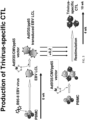
- FIG. 3 provides a conventional approach for generating virus-specific (for example) CTL for adoptive transfer.
- Donor-derived B cells were first transformed in EBV-transformed lymphoblastoid cell lines (LCL) to use as antigen presenting cells.
- LCL lymphoblastoid cell lines
- donor PBMCs are transduced with an adenoviral vector expressing the immunodominant pp65 antigen from CMV.
- Monocytes in the PBMCs are preferentially transduced and stimulate virus-specific T cells which then are expanded in additional rounds of stimulation using LCLs transduced with the same vector as APCs (Leen et al. , 2006). This process is time consuming and expensive (for production of clinical grade Ad vector and EBV virus).
- FIG. 4 there is generation of multivirus-specific CTL ( FIG. 4 ) that is an alternative to using Ad vector and EBV virus as sources of antigen for T cell stimulation.
- DNA plasmids were generated encoding viral antigens from EBV, CMV and Ad (for example). These can be expressed in APCs by nucleofection, and then the APCs can be pooled and used to stimulate T cells (Gerdemann et al. , 2009).
- Described herein for illustrative purposes is a novel protocol to generate multivirus CTL using plasmids or pepmixes as a source of antigen and, in certain embodiments, other refinements such as the addition of the cytokines IL4 and IL7 to the cell culture medium in which the CTLs are cultured.
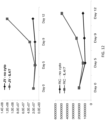
- Such aspects are useful for maintaining the breadth of reactivity in the CTL lines, and culture in the G-Rex bioreactor supports maximal T cell expansion ( FIG. 5 ).
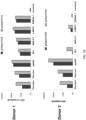
- CTL generated in the presence of IL4 and IL7 recognize a broad repertoire of peptides from the target antigens/viruses ( FIGS. 9 , 10 , 11 ) and have minimal alloreactivity- i.e. do not recognize normal cells from a potential recipient ( FIG. 12 ).
- CTL produced herein are highly virus-specific and do not recognize uninfected cells of the intended recipient and therefore should not induce graft-vs-host disease (GVHD) after infusion.
- GVHD graft-vs-host disease
- multicistronic plasmids expressing (for example) 2 or 3 or more immunogenic genes from the target viruses Ad, EBV, and CMV (for example).
- One exemplary Adenoviral construct (7970bp) comprises Hexon:IRES:Penton (2858bp Hexon and 1715bp Penton).
- One exemplary EBV construct (6641bp) comprises EBNA1 ⁇ GALMP2:IRES:BZLF1 (1926bp EBNA1 ⁇ ; 1493bp for LMP2; and for 737bp BZLF1).
- One exemplary CMV construct comprises IE1: IRES: pp65 (1471bp for IE1 and 1686bp for pp65).
- the bicistronic plasmids were efficient at activating T cells.
- backbone as small as possible (2.8-3kbp, for example); optimized promoter, such as a CMV promoter (SV40 enhancer); no antibiotic resistance gene; and no homology to human genomic DNA.
- the plasmid comprises bacterial selection via sucrose (levansucrase (SacB) is a conditional lethal in bacteria) (Nature Technology Corporation).
- the CTL line is a mixture of both CD4+ and CD8+ T cells.
- an expected profile of reactivated cells against the different target antigens is as follows: Antigen Predominant T cell restriction IE1 CD8 pp65 CD8 EBNA1 CD4 LMP2 CD4+CD8 BZLF1 CD8 Hexon CD4 Penton CD4
- FIG. 6 shows optimization of the seeding density of DCs:PBMCs for the initial stimulation and showed that a ratio of at least 1:20 was required for optimal activation.
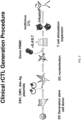
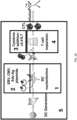
- FIG. 18 shows the results of clinical rCTL generation procedure including multiple components of an aspect of a system described herein for illustrative purposes, for example the following: 1) DC nucleofection; 2) EBV, CMV, Adv-Ag plasmids; 3) cytokine addition of II,4/II,7; 4) T cell expansion in G-Rex; and 5) DC generation.
- FIG. 8 it is shown that the CTL could be produced with characteristics similar to those produced using the conventional protocol but in a fraction of the time. These cells should be safe in vivo and associated with minimal alloreactivity as assessed by chromium release assay.
- nucleofecting the DCs may occur by any useful means in the art, including, for example the Amaxa ® nucleofection system or the InVitrogen ® nucleofection system.
- Multivirus CTL can also be rapidly generated by pulsing DCs with pepmixes spanning the target antigens or by stimulating PBMCs directly with the antigens of interest.
- PBMCs For preparation of previously frozen PBMCs, thaw cells at 37°C, dilute in 10 mL of warm CellGenix DC medium per 1 mL of frozen cells, and count.
- DC initiation proceed as follows. Calculate the number of 35 mm wells of a 6 well plate(s) seeded at ⁇ 10 ⁇ 10 6 PBMC per plate (range 7 to 14 ⁇ 10 6 ) to use all available PBMC. Centrifuge at 400 ⁇ G for 5 minutes at ambient temperature. Resuspend cells in 2 mLs per plate to be seeded. Transfer to 37°C/5% CO 2 incubator for two hours to adhere DC precursors.
- Immature DC are fed. On day 3 or 4, replenish IL-4 to 1000 units per ml and GM-CSF to 800 units per ml. Make up CellGenix medium containing 20X GM-CSF and IL-4 and add 100 ⁇ L per well.
- Antigen-specific cytotoxic T cell lines can be generated by stimulation of peripheral blood mononuclear cells (PBMC) with autologous antigen-presenting cells (APC) expressing the antigen from a DNA plasmid.
- the APC are the dendritic cells (DC), in certain embodiments of the invention.
- Dendritic cells are potent APCs that can be efficiently nucleofected and are used to generate virus-specific T cells from patients.
- plasmid-nucleofected dendritic cells can be used for second or subsequent stimulations. Under the culture conditions employed, outgrowing T cell lines should contain T cells specific for the antigens of interest (CMV-IE1 and pp65, Adenovirus antigens and EBV antigens). Cytokines (IL-4 and IL-7) are added at the first stimulation.
- Preparation of responder cells from previously frozen PBMCs or non-adherent mononuclear cells may be performed, if necessary. Thaw cells at 37°C, dilute in 10 mL of warm medium per 1 mL of frozen cells. Cells are counted.
- PBMC stimulation by dendritic cells, for example in plates or in bioreactors. Centrifuge at PBMCs at 400 ⁇ G for 5 minutes at room temperature. Remove supernatant and resuspend at 2 ⁇ 10 6 cells per mL in CTL media + IL4 (1000U/ml - final concentration) and IL7 (10ng/ml - final concentration). Aliquot 1 mL of cells per well of a 24 well and return plate to incubator or aliquot 5 to 7.5 mL (10 to 15 ⁇ 10 6 ) PBMCs in a GP40 bioreactor and return to incubator.
- the cells may have the following characteristics, in certain embodiments: 1) sufficient CTL numbers for infusion of the patient at the appropriate dose level (determined at that time) and for all QC requirements; ⁇ 10% killing of recipient PHA blasts at 20:1 (if allogeneic); and 3) ⁇ 2% CD 83+/CD3 ⁇ cells (exclusion of DC).
- the mutlivirus CTLs may be directed against two, three, four, five, six, seven, eight, nine, ten, or more viruses.
- the CTLs may be directed against one or more of HHV-6, BK, RSV, Influenza, or Parainfluenza, for example (see FIG. 19 ).
- Reconstitution of anti-viral immunity by donor-derived CTLs is useful for preventing and treating infections with CMV, EBV and adenovirus post-transplant (Leen et al. , 2006).
- the broader implementation of T cell immunotherapy using conventional protocols is limited by (i) the cost of production (ii) the complexity of production limiting scalability, and (iii) the time required for CTL production, which not only contributes to cost and complexity but also precludes urgent treatment of seriously ill patients, unless CTLs have been prepared speculatively, and well in advance.
- rCTL donor-derived multivirus-specific CTLs
- HSCT allogeneic hematopoietic stem cell transplant
- Patients may receive the cells as prophylaxis and/or treatment for early infection following any type of allogeneic transplant. If patients are receiving steroids for treatment of graft-versus-host disease (GVHD) or for other reasons, dosage must be tapered to ⁇ 0.5mg/kg Prednisone (or equivalent). Patients may not have received ATG, or Campath or other immunosuppressive monoclonal antibodies in the previous 28 days, in certain aspects of the invention.
- GVHD graft-versus-host disease
- patients receive between 5 ⁇ 10 6 and 5 ⁇ 10 7 rCTL/m 2 in a single infusion on the dose escalation safety phase of the study and 5 ⁇ 10 7 rCTL/m 2 for the fixed dose Phase II efficacy component. If they have a partial response (as defined) or receive therapy post-infusion that could ablate the infused T cells, they are eligible to receive up to 2 additional doses, for example. Individuals may be followed by PCR analyses of viral load and may have GvHD scores recorded at the intervals defined.
- rCTLs are safe and have activity against three exemplary viruses EBV, CMV and adenovirus.
- Patients may have one or more of the following characteristics: 1) prior allogeneic hematopoietic stem cell transplant using either bone marrow or PBSC; 2) Karnofsky/Lansky score of ⁇ 50; 3) ANC greater than 500/ ⁇ L; 4) Bilirubin ⁇ 2x, AST ⁇ 3x, Serum creatinine ⁇ 2x upper limit of normal, Hgb >8.0; 6) Pulse oximetry of > 90% on room air; 7) Negative pregnancy test (if female of childbearing potential); and 8) Available tri-virus-specific cytotoxic T lymphocytes.
- a primary endpoint For Phase 1 component encompasses safety including acute GvHD by day 42 and infusion-related adverse events or nonhematological adverse events within 30 days of the last CTL infusion.
- An exemplary primary endpoint for Phase II component includes safety and antiviral responses.
- Exemplary secondary Endpoints for both phases includes effects of rCTL on viral loads in patients with infection; reconstitution of antiviral immunity at 1, 2, 4, 6 and 8 weeks and 3 months; and/or viral reactivations within 3 months.
- HSCT hematopoietic stem cell transplantation
- Antiviral pharmacologic agents are only effective against some of these viruses; their use is costly and is associated with significant toxicities and the outgrowth of drug-resistant mutants. As delay in recovery of virus-specific cellular immune response is clearly associated with viral reactivation and disease in these patients, cellular immunotherapy to restore viral-specific immunity is useful to target three exemplary common viruses; CMV, EBV and adenovirus.
- Cytomegalovirus is a latent beta-herpesvirus that usually causes an asymptomatic infection in immunocompetent individuals. It persists in approximately 70% of healthy adults and replicates in epithelial cells, fibroblasts and monocytes. Reactivation of CMV in the stem cell recipient can result in significant morbidity and mortality, with clinical manifestations including interstitial pneumonitis, gastroenteritis, fevers, hepatitis, encephalitis and retinitis (Boeckh et al. , 2003). Cell-mediated immunity is considered the most important factor in controlling CMV infection and CMV-specific CD4+ and CD8+ lymphocytes play an important role in immune protection both primary infection and subsequent reactivations.
- ganciclovir The most frequently used drugs for prophylactic or preemptive therapy are ganciclovir and foscarnet. These drugs have been successful in reducing mortality associated with CMV disease and in preventing early CMV disease in combination with intravenous immune globulin. However, both have significant side effects including neutropenia and nephrotoxocity.
- Epstein-Barr virus is a gamma-herpesvirus that infects more than 95% of the world's population. Primary infection usually produces a mild self-limiting disease, which is followed by latent infection in B cells and productive replication in B cells and mucosal epithelium. There are at least four types of viral latency: type 1, expressing only the virus nuclear antigen 1 (EBNA1); type 2, expressing in addition to EBNA1, the latent membrane proteins, LMP1 and LMP2; and type 3, expressing all the seven latency-associated proteins including the immunodominant EBNA3 viral antigens (Young and Rickinson, 2004).
- EBNA1 virus nuclear antigen 1
- LMP1 and LMP2 the latent membrane proteins
- type 3 expressing all the seven latency-associated proteins including the immunodominant EBNA3 viral antigens (Young and Rickinson, 2004).
- RNAs and EBERs are abundantly expressed as well as transcripts from the BamHI A region of the viral genome, BARTs.
- PTLD post-transplant lymphoproliferative disease
- PTLD graft-versus-host disease
- rituximab a monoclonal antibody against the B cell phenotypic antigen, CD20.
- Response rates to rituximab between 55% and 100% have been reported in different series (Brunstein et al. , 2006; Keuhnle et al. , 2000; Comoli et al. , 2007).
- rituximab a monoclonal antibody against the B cell phenotypic antigen
- Adenovirus is a non-enveloped lytic DNA virus. Humans are susceptible to infection with 51 serotypes of adenovirus, forming six distinct species (A to F), which differ in their tissue specificity and virulence. Although acutely infecting viruses, adenoviruses may persist for many months after resolution of disease and therefore are frequently carried undetected into the transplant by donor or recipient. While acute infection is rarely fatal in healthy adults, it is a significant cause of morbidity and mortality in immunocompromised individuals, in whom it may produce pneumonia, hemorrhagic cystitis, nephritis, colitis, hepatitis, and encephalitis. Adenovirus has a particularly high incidence after pediatric HSCT (Myers et al.
- virus-specific T cells generated by repeated stimulation with antigen presenting cells expressing viral antigens have been evaluated in clinical trials to prevent and treat viral infections in immunocompromised hosts (Leen et al. , 2006; Leen et al. , 2009; heslop et al. , 2009; Walter et al. , 1995; Pegs et al. , 2003). This approach eliminates alloreactive T cells.
- APC effective antigen-presenting cells
- MHC major histocompatibility complex
- CMV-specific T-cell clones were derived from sibling donors after stimulation with autologous fibroblasts pulsed with CMV (Walter et al. , 1995). There were no adverse effects and CMV-specific immune responses were reconstituted, with none of the patients developing CMV disease or late recurrence. Anti-CMV activity did decline, however, in recipients who did not develop CD4+ CMV-specific T-cell responses, indicating CD4 T cells may be necessary for long-term persistence, in certain cases. In another prophylaxis study, Peggs et al.
- the outgrowing EBV-infected B cells of PTLD have the same phenotype and viral antigen expression as the EBV-transformed lymphoblastoid cell lines (LCLs) generated by infecting peripheral blood B cells with a laboratory strain of EBV.
- LCLs lymphoblastoid cell lines
- EBV-specific CTLs generated using this methodology are polyclonal, contain both CD4+ and CD8+ EBV-specific T cells, and recognize multiple latent and lytic viral antigens.
- Adoptively transferred EBV-specific CTLs can survive for at least 8 years, expand up to 2-4 logs after infusion, and reduce the high virus load that is observed in about 20% of patients (Heslop et al. , 2009; Rooney et al. , 1995; Heslop et al. , 1996).
- PTLD Heslop et al. , 2010.
- Feuchtinger et al. treated patients with adenovirus infection using CD4+ and CD8+ adenovirus-specific T cells isolated from the donor after a short in vitro stimulation with adenovirus viral antigen followed by selection of gamma-interferon-secreting cells (Feuchtinger et al. , 2006). Small numbers of adenovirus-specific donor T cells were infused into nine children with systemic adenovirus infection after HSCT. Adenovirus specific immune responses were detected in five of six evaluable patients, associated with a sustained decrease in viral load and clearance of infection (Feuchtinger et al. , 2006).
- DNA plasmids that encode multiple viral antigens.
- Ad5pp65 vector Advanced and CMV specificities
- EBV-LCL EBV specificities
- DNA plasmids that encode multiple viral antigens.
- APCs such as monocytes or DCs
- Lonza/AMAXA nucleofection system After transfer, high level transgene expression is achieved with good target cell viability during the period of T cell activation (Gerdemann et al. , 2009). Plasmids are non-infectious, non-replicative, and integrate poorly into the transfected cell genome.
- Clinical grade DNA can be rapidly and cost-effectively produced in scalable quantities with excellent long term stability. Substitution of plasmids reduces the cost of manufacture by more than 50%, by reducing the time of CTL manufacture and the extent of immunogen testing, since the cost of plasmid testing is about one tenth that of adenovirus vector testing.
- CMV-IE1-specific T cells may target cells that reactivate CMV from latency, while pp65-specific T cells target newly-infected cells.
- the inclusion of two proteins for each virus in the immunogen increases the number of potential target epitopes and hence the probability that T cells will be reactivated irrespective of the HLA type of the T cell donors.
- EBNA1 is an immunodominant CD4+ T cell target antigen expressed in all EBV-associated malignancies and in normal EBV-infected B cells
- LMP2 is immunogenic across multiple HLA types and expressed in most EBV malignancies
- BZLF1 encodes an immunodominant, immediate early lytic cycle antigen that stimulates both CD4+ and CD8+ T cells from most individuals.
- virus-specific CTL can efficiently and rapidly be expanded in the presence of enhancing cytokines IL-7 (10ng/ml) and IL-4 (1,000U/ml). These cytokines reduce activation induced cell death of antigen-specific T cells that correspondingly helps increase the frequency and repertoire of responding antigen-specific T cells compared to T cells from the same patients generated in the absence of cytokine.
- G-Rex gas permeable rapid expansion device
- rCTLs rapidly generated trivirus-specific lines
- the primary purpose of the study is to assess the safety of administering rCTLs in transplant patients at risk of EBV, CMV, or adenovirus infection or with early reactivation or infection.
- CTLs manufactured by our previous methodology were safe at doses up to 10 8 cells/kg (Leen et al. , 2006). However as the manufacturing methodology has been modified, some cases in this study start at a lower dose of 5 ⁇ 10 6 cells/m 2 .
- Patients in a feasibility/safety study are eligible following any type of allogeneic transplant to receive CTLs as prophylaxis or for early reactivations as defined herein, including, for example: 1) early treatment may be given to eligible patients with a single or multiple infections (patients with multiple infections with one reactivation and one controlled infection may be included); 2) clinical status at enrollment to allow tapering of steroids to less than 0.5 mg/kg/day prednisone; 3) negative pregnancy test in female patients if applicable (childbearing potential who have received a reduced intensity conditioning regimen); 4) prior myeoloablative or non-myeloablative allogeneic hematopoietic stem cell transplant using either bone marrow or peripheral blood stem cells within 12 months; 5) prophylaxis for patients at risk of CMV, adenovirus or EBV infection; 6) early treatment of reactivation or infection which is defined for specific embodiments for each virus as delineated:
- CMV antigenemia is monitored at least weekly post transplant. Early reactivation is defined at CMV antigenemia with ⁇ 10 leucocytes positive. If any patient develops CMV antigenemia (with >10 leukocytes positive) or clinical evidence of CMV infection (defined as the demonstration of CMV by biopsy specimen from visceral sites (by culture or histology) either pre or after CTL infusions, standard treatment with Ganciclovir, and/or Foscarnet and Immunoglobulins will be initiated. Patients may receive CTLs for antigenemia or elevated PCR without visceral infection.
- Adenovirus infection is defined as the presence of adenoviral positivity as detected by PCR or culture from ONE site such as stool or blood or urine or nasopharynx.
- Adenovirus disease is defined as the presence of adenoviral positivity as detected by culture from more than two sites such as stool or blood or urine or nasopharynx.
- Cidofvir may be added unless the subject could not tolerate this agent due to nephrotoxicity. Patients may receive CTLs for elevated PCR in blood or stool.
- EBV-LPD is defined according to recent guidelines (Styczynski et al. , 2009) as proven EBV-LPD defined by biopsy or probable EBV-LPD defined as an elevated EBV DNA level associated with clinical symptoms (adenopathy or fever or masses on imaging) but without biopsy confirmation. Patients with EBV DNA reactivation only may receive CTLs on study. Patients with proven or probable EBV-LPD should also receive Rituxan.
- certain patients may be excluded: 1) patients receiving ATG, or Campath or other immunosuppressive T cell monoclonal antibodies within 28 days of screening for enrollment; 2) patients with other uncontrolled infections (For bacterial infections, patients must be receiving definitive therapy and have no signs of progressing infection for 72 hours prior to enrollment; for fungal infections patients must be receiving definitive systemic anti-fungal therapy and have no signs of progressing infection for 1 week prior to enrollment; progressing infection is defined as hemodynamic instability attributable to sepsis or new symptoms, worsening physical signs or radiographic findings attributable to infection.
- Donors for allogeneic (i.e. HLA matched or mismatched related or unrelated) stem cell transplants may be evaluated, including with the following: complete history and physical examination; CBC, platelets, differential; Electrolytes, BUN, creatinine, glucose, total protein, albumin, total bilirubin, alkaline phosphatase, ALT, AST, LDH, serum protein electrophoresis (if indicated); HIV-1 antibody, HIV-2 antibody, HIV NAT, HTLV-1/2 antibodies, HBsantigen, HBc antibody, HCV NAT, CMV antibody, RPR, West Nile virus NAT, and Chagas testing; ABO and Rh typing; Hemoglobin electrophoresis or Sickle Prep test (if indicated); Complete urinalysis
- Trivirus specific CTL lines may be generated using a rapid protocol, using plasmid-nucleofected DCs, growth promoting cytokines and the G-Rex culture device optimized for T cell expansion, for example.
- monocyte-derived DCs are generated using plastic aherence for 2 hrs, culture in IL4 + GM-CSF for 5 days and maturation for 1 day using PGE1, TNFa.
- DCs are nucleofected with DNA plasmids expressing protective and immunogenic viral antigens of EBV, CMV and Adenovirus using the GMP compatible Lonza/AMAXA system, for example.
- Bicistronic plasmids are constructed that encode 1) CMV-pp65 and IE1 and 2) Adv hexon and penton, each linked by an IRES sequence.
- EBV a construct is generated encoding three EBV antigens, EBNA1, LMP2, and BZLF1. Nucleofected DCs are then used to stimulate virus specific T cell retained from the non adhearent PBMC fraction, at a stimulator/responder ratio of 1:10.
- the cytokines IL7 and IL4 are added in a concentration of 10ng/ml and 1,000U/ml respectively at the day of stimulation. T cell stimulation and expansion will take place in an optimized GMP-compatible G-Rex device which has been validated for the production of multivirus-specific T cells (Vera et al, in press).
- the frequency of T cells specific for each virus and antigen is determined using multimer reagents, for example.
- multimer reagents for example.
- pepmixes overlapping peptide libraries spanning CMV-pp65 and IE1, Adv-hexon and penton, and EBV-EBNA1, LMP2 and BZLF1 as a stimulus in IFNg ELIspot assays.
- EBV-EBNA1 overlapping peptide libraries
- Cytotoxicity assays are performed using recipient PHA blasts as a measure of residual alloreactiviity, and one can test antigen-specific T cell killing using LCLs either alone, or nucleofected with the three stimulating plasmids, and one can assess killing of antigen presented by shared alleles using recipient PHA blasts pulsed with pepmixes spanning pp65, IE1, Hexon, Penton, EBNA1, LMP2 and BZLF1.
- the CTL lines are checked for identity, phenotype and sterility, and cryopreserved prior to administration according to SOP, in certain embodiments.
- Release criteria for administering the CTL to patients include viability >70%, negative culture for bacteria and fungi for at least 7 days, endotoxin testing ⁇ 5EU/ml, negative result for Mycoplasma, ⁇ 2% CD83 positive cells, ⁇ 10% killing of recipient PHA blasts at 20:1 ratio in Cr51 release assay and HLA identity.
- Multivirus specific T cells are thawed and given by intravenous injection, for example.
- Patients may be premedicated with Benadryl 0.25-0.5mg/kg (max 25 mg) IV and Tylenol 5-10 mg/kg (max 650 mg) PO.
- Patients may be monitored according to institutional standards for administration of blood products and at a minimum will be monitored according to below: Patients may remain on continuous pulse oximetry for at least 30 minutes, for example. Vital signs are monitored at the end of infusion then at 30 and 60 minutes. Patients may receive supportive care for acute or chronic toxicity, including blood components or antibiotics, and other intervention as appropriate. If a patient has a partial response (as defined by a 50% fall in viral load) or receives medication (such as steroids) which may affect the persistence or function of the infused CTL they are eligible to receive up to 2 additional doses at the same initial dose.
- medication such as steroids
- Chronic GVHD Definite manifestations of Chronic GVHD include scleroderma (superficial or fasciitis), lichen planus, vitiligo, scarring alopecia, hyperkeratosis pilaris, contractures from skin immobility, nail bed dysplasia; non-infectious ulcers, corneal erosions/non-infectious conjunctivitis; Esophageal strictures, steatorrhea; Vaginal stricture, Non-septic arthritis, myositis, myasthenia, polyserositis, contractures from joint immobilization, and Bronchiolitis obliterans.
- GVHD chronic GVHD
- eczematoid rash dry skin, maculopapular rash, hyperpigmentation, hair loss
- Xerostomia keratoconjunctivitis sicca
- Anorexia malabsorption, weight loss, diarrhea, abdominal pain
- elevation of alkaline phosphatase, transaminitis, cholangitis, hyperbilirubinemia non-infectious vaginitis, vaginal atrophy
- arthralgia thrombocytopenia, eosinophilia, autoimmune cytopenias
- bronchiolitis obliterans with organizing pneumonia, and interstitial pneumonitis.
- CTLs are susceptible to killing by steroids given at a dose of 1-2mg/kg. This is standard therapy for GVHD and could also be given if a recipient develops other complications considered possibly related to CTL administration.
- the primary objectives for the phase I component are feasibility and safety.
- the primary endpoint for the phase II component is antiviral efficacy.
- Safety of administration of CTLs is 42 days for GVHD and 30 days for other toxicities.
- the safety endpoint will be defined as acute GvHD grades III-IV within 42 days of the last dose of CTLs or grades 3-5 infusion-related adverse events within 30 days of the last CTL dose or grades 4-5 nonhematological adverse events within 30 days of the last CTL dose and that are not due to the pre-existing infection or the original malignancy or pre-existing co-morbidities as defined by the NCI Common Terminology Criteria for Adverse Events (CTCAE), Version 4.0.
- CCAE NCI Common Terminology Criteria for Adverse Events
- Toxicities to consider include GI toxicity, renal toxicity, hemorrhagic toxicity, cardiovascular toxicity (hypotension, cardiac arrhythmia and left ventricular systolic dysfunction), neurological toxicity (somnolence and seizure), coagulation toxicity, vascular toxicity and pulmonary toxicity.
- Acute GVHD grading may be performed by the consensus conference criteria (Przepiorka, et al. , 1994).
- Stage 0 Stage 1
- Stage 2 Stage 3
- Generalized erythroderma Plus bullae and desquamatio n Gut ⁇ 500 mL diarrhea/day 501-1000 mL/day 1001-1500 mL/day > 1500 mL/day Severe abdominal pain & ileus
- Viral load is monitored for CMV, EBV and adenovirus.
- For the infection under treatment response in viral load will be defined as follows:
- Chronic GVHD is assessed at 3, 6 and 12 months post CTL infusion.
- Secondary graft failure is defined as initial neutrophil engraftment followed by subsequent decline in the ANC to ⁇ 500/mm 3 for three consecutive measurements on different days, unresponsive to growth factor therapy that persists for at least 14 days in the absence of a known cause such as relapse. Secondary graft failure will be assessed at 30 days post CTL infusion.
- the follow-up Schedule for scheduled study visits is outlined below.
- the timing of follow-up visits is based on the date of CTL infusion. If a patient has multiple CTL doses the schedule resets again at the beginning, so follow up relates to the last CTL dose.
- assessments may include history and physical exam including height and weight; viral loads for EBV, adenovirus, CMV; complete acute GVHD staging and grading information including assessments of rash, diarrhea, nausea/vomiting, weight and liver function tests; CBC with differential, platelet count; liver function tests (bilirubin, alkaline phosphatase, AST, ALT) plus creatinine; tacrolimus/cyclosporine level if on these agents; ⁇ pregnancy test if of childbearing potential and has received a reduced intensity transplant regimen; and/or ⁇ samples for research laboratory studies.
- Assessments may include one or more of the following: History and physical exam; CMV, EBV, adenovirus load; Acute GVHD evaluation; Chronic GVHD evaluation; CBC with differential, platelet count; basic chemistry (creatinine); liver function tests (alkaline phosphatase, bilirubin, AST, ALT); toxicity evaluation; steroid dose; blood and serum for ancillary laboratory studies; infections.
- phase I trial Upon the completion of the phase I trial, additional patients aer accrued on the maximum tolerated dose (MTD) level to evaluate the clinical endpoint on antiviral activity in an early phase II study.
- MTD maximum tolerated dose
- the maximum sample size for the phase I trial is 18. Including the 6 subjects treated at the MTD dose level, an additional 10 subjects will be accrued in the early phase II study.
- the maximum sample size for the phase I/II study is 28 patients.
- Dose escalation is guided by the modified continual reassessment method (mCRM) to determine the MTD of rCTL (Przepiorka et al. , 1995).
- the risk that adoptively transferred rCTL will cause GVHD is very low.
- the target probability of acceptable toxicity is set to be no more than 20% of eligible cases.
- MTD is thus defined as the dose at which the probability of dose limiting toxicity (DLT) is at most 20%. Based on previous trials, the inventors expect a shallow dose-toxicity curve.
- a previously treated dose level is selected and any of the patients develops DLTs, the trial is stopped; otherwise, two patients are enrolled at the next dose level. If none of the patients develops DLTs at the mCRM recommended dose level, two patients continue to the next dose level. The dose selection process is repeated until the MTD or the highest dose level is reached.
- the proposed design provides better estimates of the MTD based on a higher probability of declaring the appropriate dose level as the MTD, afforded smaller number of patients accrued at lower dose levels, and maintained a lower average total number of patients required for the trial.
- the first dose level is the same as that used in previous studies of CTL post HSCT and the highest dose is less than half that of the previous trail (Leen et al. , 2009).
- DLTs that occur within 42 days after initial infusion are factored into the CRM calculations to determine the recommended dose for the subsequent cohort, so the next cohort will wait until the completion of the 42 days DLT evaluation.
- real-time monitoring of patient toxicity outcome is performed in order to estimate the dose-toxicity curve and dose level is determined for the next patient cohort using one of the pre-specified dose levels.
- additional patients are treated at the MTD level to further assess its antiviral activity. It is tested whether the rate of treatment response in viral load can be higher than 65%.
- the treatment response is defined as complete response, partial response and mixed response.
- the rCTL MTD is not effective if the response rate is lower than 30%.
- an additional 10 patients may be treated at the MTD level (total 16 including 6 treated at phase I trial for safety consideration).
- the sample size of 16 provides an exact 84.1% power to detect the hypothesized 65% rate, compared to an uninteresting rate of change of 30%, for a type-I error of 0.05.
- the phase I/II trial will accrue maximum 28 subjects.
- the power of simultaneously targeting multiple tumor antigens is that it affords a strategy for overcoming and compensating for suppression of antigen expression by the tumor, such that a CTL product directed against a single antigen might not be effective if the tumor expresses low levels of that antigen, but if multiple antigens are simultaneously targeted in a single CTL product, the probability of stimulating a robust antitumor response is increased.
- Hodgkin's disease is a malignant neoplasm of lymphoreticular cell origin, characterized by the presence of large mononucleated Hodgkin (H) and giant multinucleated Reed-Sternberg (RS) cells, and collectively referred to as Hodgkin and Reed-Sternberg cells (HRS) (Anastasi et al. , 1989; Harris, 1999).
- H mononucleated Hodgkin
- RS giant multinucleated Reed-Sternberg cells
- HRS Hodgkin and Reed-Sternberg cells
- Approximately 7,500 new cases are diagnosed in the US annually, with the highest incidence in the 3rd decade of life.
- Combination chemotherapy and radiation are effective and overall survival rates are high but long-term morbidity and mortality secondary to treatment remains a significant issue. Therefore, it is desirable to develop novel therapies that improve outcomes and reduce treatment-related complications (Yazbeck et al. , 2006).
- HL Hodgkin's lymphoma
- HDAC histone deacetylation
- TAA-expression profiles are different in biopsies collected pre- and post-epigenetic therapy and in some cases it is assessed whether CTL directed against the expressed antigens can be generated ex vivo from Peripheral blood mononuclear cell (PBMCs) isolated pre- and post-therapy.
- PBMCs Peripheral blood mononuclear cell
- Adoptive immunotherapy - virus-associated malignancies Another treatment option for patients with relapsed or refractory HL is adoptive T cell transfer.
- Our studies in >100 stem cell recipients have shown that donor-derived Epstein-Barr virus (EBV)-CTL lines can safely protect patients against the development of EBV-driven lymphomas and cure patients even with bulky established disease (Rooney et al. , 1995; Rooney et al. , 1998; Heslop et al. , 1996).
- This approach has also shown promise for the treatment of EBV-associated tumors that arise in immunocompetent individuals (Straathof et al. , 2005; Louis et al. , 2008; Bollard et al.
- Non Viral Tumor-associated antigens-Cancer testis antigens were among the first non-viral TAA to be identified, and were initially shown to be present in melanoma (Scanlan et al. , 2004; Carrel and Johnson, 1993). Subsequently many other tumors were shown to express TAAs including MAGE, SSX, NY-ESO-1, PRAME and Survivin (Mashino et al. , 2001; Chambost et al. , 2000; van et al. , 1999; van et al. , 2005; Ambrosini et al. , 1997). Survivin is expressed during fetal development but is undetectable in terminally differentiated normal tissues.
- CTA- and Survivin-specific T cells have been isolated from patients with a range of tumors and have been shown to recognize and kill tumor targets (Yee et al. , 2002; Mautner et al. , 2005; Tan et al. , 2005). TAA expression is documented in HL and their immunogenicity and the potency of reactive CTL in vitro and in vivo are assessed.
- TAA-specific CTL in vitro EBV-transformed lymphoblastoid cell lines (LCL) and adenoviral vector transduced monocytes/DCs overexpressing viral antigens have been employed to produce polyclonal virus-specific CTL in vitro (Bollard et al. , 2004; Bolard et al. , 2007; Leen et al. , 1997; Leen et al. , 2006).
- this approach cannot be used to generate TAA-CTL, because EBV and Adv antigens are significantly more immunogenic than TAA.
- TAA-CTL generation has required the use of single epitope peptides as a source of antigen and culture of the CTL lines in the presence of enhancing cytokines (Foster et al. , 2007; Quintarelli et al. , 2008). As described below, this process is optimized to allow the reproducible generation of TAA-CTL from patient PBMC using DCs expressing whole antigen (pepmix or TAA-encoding plasmids, for example) as APCs and co-culture in the presence of an optimal cytokine combination. TAA-CTL efficacy is assessed in vitro and in vivo.
- the invention may be utilized for head and neck tumors.
- Squamous cell carcinoma which accounts for the majority of head and neck tumors, continues to have a 5-year survival rate of 50% or less, a figure that has remained unchanged for 4 decades (Forastiere et al. , 2001; Uppaluri et al. , 2008).
- CTLs cytotoxic T lymphocytes
- tumor directed CTLs are employed to treat SCC of the head and neck.
- TAA tumor-associated antigens
- MAGEl MAGEl
- PRAME PRAME
- NY-ESO-I tumor-associated antigens
- the rate of expression was generally more widespread in those with advanced stage tumors (T4-100% of analyzed samples), in whom ⁇ 2 TAA genes were commonly detected (Kienstra et al. , 2003; Figueiredo et al. , 2006; Ries et al. , 2008; Mollaoglu et al ., 2008; Marioni et al. , 2005; Atanackovic et al. , 2006).
- Reactivated T cells may be cultured in the presence of IL-7, IL-12, IL-15, and either IL-6 or IL-27, since these cytokines have proven useful for the activation of TAA-specific CTL in vitro ( FIG. 13 ).
- FIG. 14 describes CTL lines showing simultaneous specificity for two or more antigens. Such lines demonstrate specific activity against TAAs and specificity in CD4 and CD8 T cell compartment.
- In vivo efficiency of tumor CTLs is closely associated with in vivo persistence, and in certain aspects of the invention, antitumor CTLs can be genetically modified to enhance their in vivo survival and persistence.
- tumor CTLs can be transduced with a transgenic IL7 receptor ( FIG. 15 ), the transgenic IL7 receptor is functional therein ( FIG. 16 ), and these tumor CTL maintain their antigen specificity ( FIG. 17 ).
- TAA pepmix-pulsed or plasmid transfected DCs were used to reactivate tumor antigen-specific T cells at a 10:1 ratio ( FIG. 1A ).
- PBMCs were cultured in the presence of IL7 (10ng/ml), IL12 (10ng/ml) and IL15 (10ng/ml).
- a second stimulation on day 9 with plasmid transfected/pepmix-pulsed DCs with addition of IL-7 restimulates the tumor antigen-specific T cells in the culture, which are subsequently fed with IL-2 twice weekly from day 12.
- the specificity of the expanded TAA-CTL lines was assessed by IFN- ⁇ ELIspot on day 16-17.
- Results from 2 healthy donors are shown in FIG. 2B; the left panel shows CTL specificity of a line generated using SSX2 pepmix-pulsed DCs as APCs while the right panel shows the specificity of a line generated DCs transfected with a plasmid encoding Survivin as a stimulus.
- the left panel shows CTL specificity of a line generated using SSX2 pepmix-pulsed DCs as APCs while the right panel shows the specificity of a line generated DCs transfected with a plasmid encoding Survivin as a stimulus.
- TAA-CTL tumor-specific CTL specific for multiple lymphoma-associated target antigens.
- pepmixes for example, l5-mers overlapping by 11 aa
- TAA-encoding DNA plasmids and DCs are APCs for stimulation.
- FIG. 1B Studies showing TAA-CTL generated from healthy donors using both antigen sources are shown in FIG. 1B .
- For generating multiTAA-CTL one can generate a mastermix of 3 or more pepmixes spanning the most frequently-expressed antigens or one can transfect DCs with multiple plasmids simultaneously ( FIG. 1C ), although in some cases one can nucleofect each plasmid separately and then pool the nucleofected DCs.
- Reactivated T cells are cultured in the presence of enhancing cytokines that have proven essential for the activation of TAA-specific CTL in vitro (Foster et al. , 2007; Quintarelli et al. , 2008).
- the expanded cells are restimulated on day 9 with either TAA pepmix-pulsed or transfected DCs and cultured with IL7, and twice weekly IL-2 (50U/ml) from day 12. Specificity is assessed by IFN- ⁇ ELIspot on d16.
- a schematic is shown in FIG. 1A .
- TAA-CTL may bereadily produced from patient PBMC, particularly those collected post-epigenetic therapy (i.e . patients receiving decitabine and HDAC inhibitors, for example).
- a reproducible method is provided to generate polyclonal multispecific TAA-CTL, which in certain embodiments are predominantly CD8+ and contain T cells derived from both central (CD62L+) and effector memory (CD62L-) populations, and in specific aspects produce IFN ⁇ (and other Thl cytokines) when stimulated by cognate antigen(s).
- the present disclosure provides a reproducible technique for the manufacture of polyclonal CTL with specificity for multiple epitopes within multiple tumor antigens. These methodologies are amenable to clinical scale up, because they employ protocols that are translatable to good manufacturing practice (GMP) production.
- GMP good manufacturing practice
- the specificity and function of TA-specific CTL lines in vitro and in vivo may be assessed.
- In vitro - CTL expansion may be assessed, in specific cases, by weekly counting using trypan blue exclusion to ensure that one can reproducibly produce sufficient TAA-CTL for clinical use (or, for example, in a dose escalation study (4 ⁇ 10 7 -2 ⁇ 10 8 cells/m 2 )).
- Cytolytic function may be assessed by Cr 51 release assay using TAA-expressing APCs and autologous tumor as targets, for example. Cytokine producing ability may be assessed by fluorescence-activated cell sorting.
- Intracellular TNF- ⁇ , INF- ⁇ , and IL-2 from both CD4+ and CD8+ T cells are measured post antigenic-stimulation.
- TAA-CTL recognize and kill tumor targets in vitro
- the expanded cells may retain specificity and activity against all of the stimulating antigens as measured by flow cytometry, IFN- ⁇ ELIspot, and cytolytic assays, for example, and the CTL will kill tumor targets in vitro and in vivo.
- HDAC inhibitors include hydroxamic acids, such as trichostatin A; cyclic tetrapeptides (such as trapoxin B), and the depsipeptides; benzamides; electrophilic ketones; and the aliphatic acid compounds such as phenylbutyrate and valproic acid.
- the pattern of TAA expression in SCC biopsy samples is investigated, for example to establish TAA expression in SCC biopsy samples by IRC and RT-PCR.
- TAA expression is independent of tumor differentiation (grading), lymph node involvement, metastasis, or location of primary tumor (oral cavity, hypopharynx, larynx, etc .) as studies have shown that TAA expression only correlates with local dissemination (Figueiredo et al. , 2006; Ries et al. , 2008).
- the present example considers administration of TAA-specific CTLs for individuals with active or relapsed Hodgkin or non-Hodgkin lymphoma, although the skilled artisan recognizes that these practices can be applied to and/or adapted to any other types of cancer.
- Certain aspects described herein concern injections (such as intravenous) of autologous or allogeneic TAA-specific CTLs in individuals with Hodgkin's (HL) or non-Hodgkin's lymphoma (NHL).
- HL Hodgkin's
- NHL non-Hodgkin's lymphoma
- the model tumor antigens should be specifically and universally expressed on tumor cells in order to limit collateral damage, and in some cases may be essential for the maintenance of the oncogenic phenotype of the tumor.
- the majority of antigens do not meet these criteria because they are not necessarily neo-antigens uniquely present in cancer cells but rather antigens that are also expressed in normal cells and against which peripheral blood T cells are tolerized or deleted.
- antigens that are essentially tumor-specific have been identified as discussed below, but the pattern of tumor antigens expressed is highly tumor type-dependent. This underscores the importance of identifying appropriate antigens that are not expressed or poorly expressed on normal tissues and of optimizing cell culture conditions for tumor-specific CTL production, to overcome the mechanisms that establish T cell tolerance against "self' antigens.
- Tumor associated antigens can be classified into four main groups based on their expression and tissue distribution:
- T cell immunotherapies for non-viral tumor antigen have been described, with promising clinical results in some studies. Rosenberg and colleagues reported that infusion of melanoma-specific tumor-infiltrating lymphocytes (TILs) together with high-dose interleukin 2 (IL-2) produced clinical responses in approximately 35% of patients with metastatic melanoma. The specificity of the infused cells was not analyzed but it is likely that they targeted multiple epitopes/tumor associated antigens. More promising results were subsequently achieved using a modified treatment protocol which incorporated a lymphodepletion step prior to CTL infusion, in order to improve the expansion and persistence of adoptively-transferred cells.
- TILs tumor-infiltrating lymphocytes
- IL-2 interleukin 2
- T cell clones directed targeting a single epitope in the melanoma-associated antigen, gpl00 +/-IL-2 but reported poor clinical responses, with only one minor response and one mixed response, and showed that the cells failed to engraft or persist in vivo. This highlights the importance of targeting multiple epitopes/antigens to produce optimal clinical results.
- TAA expressed in HL and NHL The CTAs, NY-ESO-1, PRAME, MAGE-A4 and SSX2 are expressed in up to 55% of Hodgkin Reed Sternberg cells.
- Survivin is a good target for CTLs, which can be expanded in vitro from cancer patients and healthy donors (Pisarev et al. , 2003).
- the expression of these tumor antigens in HL and NHL and their evident immunogenicity make them useful targets for CTL therapy.
- broad-spectrum antigen-specific T cells targeting multiple antigens for all patients can be generated.
- pepmixes As a means of stimulating T cells one can use clinically applicable peptide mixtures (pepmixes) that comprise, for example, 15mer peptides overlapping by 11 amino acids spanning the entire sequence NY-ESO-1, SSX2, Survivin, Prame and MAGEA4. These peptide libraries encompass all possible HLA class I epitopes of each protein.
- the pepmixes are pooled for T cell stimulation so that T cells with specificity for multiple epitopes from all their antigens can be produced from all patients or donors, regardless of their HLA phenotype. Since the individual peptides are 15 amino acids in length, in some cases both CD4+ and CD8+ T cells are activated.
- DCs dendritic cells
- cytokines e.g . IL-12
- Tumor-specific T cells isolated from whole blood or tumor biopsy samples are often anergized/tolerized, with poor proliferative capabilities.
- IL-15 is common gamma chain cytokine, which overcomes T cell tolerance of tumor-specific CTL without promoting Treg growth
- IL-7 improves the survival of naive, memory and activated tumor-specific T cells
- IL-12 is a Th1/Tc1 polarizing cytokine that acts in an additive/synergistic manner to enhance IFN- ⁇ production, proliferation, and cytotoxic function of antigen-specific T cells.
- IL-6 also benefits TAA CTL generation, as it can skew naive CD4 to Th17 T cells while preventing Treg formation.
- a new gas permeable rapid expansion device (G-Rex) is employed that dramatically reduces T cell apoptosis during culture, resulting in more efficient expansion in vitro.
- Gas exchange (O 2 in and CO 2 out) occurs across a gas permeable silicon membrane at the base of the flask, preventing hypoxia while allowing a greater depth of medium above the cells, providing more nutrients and diluting waste products.
- These culture conditions allow the stable cell:cell interactions essential for CTL production to proceed unencumbered by physical disruptions, reducing technician time >10 fold, increasing cell output by >3 fold, and accelerating CTL manufacturing time >2 fold without affecting the phenotype or function of the CTLs (Vera et al. , 2010).
- T cells targeting self antigens expressed in normal tissue induces an inflammatory response post-infusionone can administer steroids to effect a reversal in pulmonary symptoms, for example, thereby rapidly and effectively controlling the associated toxicity.
- Patients may be included in the study described herein that have a diagnosis of Hodgkin's or non-Hodgkin's Lymphoma and that have active disease or in relapse or after autologous or syngeneic SCT or after allogeneic SCT; that have life expectancy > 6 weeks; that have a Karnofsky/Lansky score of > 50; that are HIV negative at time of procurement (if autologous product - patient must be HIV negative); if post allogeneic SCT must not have less than 50% donor chimerism in either peripheral blood or bone marrow; that have bilirubin ⁇ 3x normal, AST ⁇ 5x normal, and Hgb >8.0; that have creatinine ⁇ 2x normal for age; that have been off other investigational therapy for one month prior to entry in the study; that have been off conventional therapy for at least 1 week prior to entry in this study. Patients are excluded that have severe intercurrent infection, who are HIV positive, and have GVHD > Grade II.
- the CTL line may be derived from patient (or donor) peripheral blood T cells, by stimulation with antigen-presenting cells (APCs) pulsed with a mastermix of pepmixes (for example) spanning the exemplary tumor-associated antigens SSX2, MAGEA4, Survivin, PRAME, and NY-ESO-1 (although other tumor antigens and combinations may be employed).
- APCs antigen-presenting cells
- the initial stimulation is performed in the presence of the Th1/pro-proliiferative cytokines interleukin (IL) 7, IL-12, IL-15, and IL6 and cells will be expanded in the presence of IL-2, in particular embodiments.
- the APCs used to stimulate and expand the tumor-specific T cells are dendritic cells derived from patient mononuclear cells.
- PBMC peripheral blood mononuclear cells
- DCs monocyte-derived dendritic cells
- GM-CSF cytokines
- IL-1 ⁇ IL6, TNF ⁇ and PGE2, as an example
- IL-1 ⁇ IL6, TNF ⁇
- PGE2 standard DC maturation cocktail
- DCs are washed once and used to stimulate PBMC-derived T cells in the presence of a T cell activating cocktail, IL-7, IL15, IL12 and IL-6 at responder: stimulator ratio of 10:1.
- a T cell activating cocktail IL-7, IL15, IL12 and IL-6 at responder: stimulator ratio of 10:1.
- DCs are prepared from about 60 mL of blood and the T cells are derived from 20 to 40 mL of blood, for example.
- pepmix-pulsed DCs for the second and subsequent stimulations and cells are cultured in the presence of IL-2. At least 100 ⁇ 10 6 mononuclear cells are required to generate the second batch of DCs.
- CTLs may be cryopreserved and aliquots tested for phenotype, function, specificity, identity and sterility.
- the frequency of tumor-specific CTLs is determined using intracellular cytokine staining, ELIspot assay, and HLA-peptide tetramers if available. Effector memory phenotype and T cell subsets are analyzed by FLOW cytometry.
- Release criteria may include identity, viability >70%, negative culture for bacteria and fungi after 7 days, endotoxin testing ⁇ 5EU/ml, negative result for Mycoplasma, ⁇ 10% killing of patient PHA blasts or skin fibroblasts at 20:1 ratio (if an allogeneic product), ⁇ 2% CD83pos/CD3neg cells and HLA identity.
- pepmixes for example produced by JPT Technologies
- JPT Technologies JPT Technologies
- pepmixes are overlapping peptide libraries (15 mers overlapping by 11 amino acids) spanning the entire sequence of each of the antigens of interest.
- Each peptide has been chemically synthesized to at least >90% purity, for example.
- CTLs Patients are evaluated in the clinic and 2 doses of CTL are administered two weeks apart, in certain cases. Patients are monitored for clinical toxicity by the NCI Common Toxicity Criteria Scale. One can also analyze immunological parameters including phenotype and CTL frequencies by ELIspot and tetramer studies in patients who have HLA types for which tetramers are available. Functional analyses (antigen-specific cytotoxicity and cytokine release) are performed by chromium release assays and ELIspot/intracellular cytokine staining, respectively. The levels of serum cytokines before and following infusion are compared. A time period of 6 weeks, for example, will constitute the time for clinical safety monitoring. If patients have had a partial response or have stable disease they are eligible to receive up to 6 further doses of CTLs, each of which may consist of the same number as their second injection.
- the following exemplary doses may be employed: 5 ⁇ 10 6 cells/m 2 ; 1 ⁇ 10 7 cells/m 2 ; 2 ⁇ 10 7 cells/m 2 ; and 4 ⁇ 10 7 cells/m 2 .
- Dose Level One Day 0 5 x 10 6 cells/m 2 Day 14 5 x 10 6 cells/m 2
- Dose Level Two Day 0 1 x 10 7 cells/m 2
- Dose Level Three Day 0 2 x 10 7 cells/m 2
- Dose Level Four Day 0 4 x 10 7 cells/m 2 Day 14 4 x 10 7 cells/m 2
- patients with active disease have stable disease or a partial response by the RECIST criteria at their 8 week or subsequent evaluations they are eligible to receive up to 6 additional doses of CTLs at monthly intervals-each of which may consist of the same cell number as their second injection. Patients will not be able to receive additional doses until the initial safety profile is completed at 6 weeks following the second infusion.
- tumor-specific T cells may be given by intravenous injection over 1-10 minutes through either a peripheral or a central line. Monitoring may be undertaken according to institutional standards for administration of blood products with the exception that the injection will be given by a physician. Patients may receive supportive care for acute or chronic toxicity, including blood components or antibiotics, and other intervention as appropriate.
- the following investigations may be obtained pre-infusion, at 2, 4 and 6 weeks post-infusion and then at 3, 6, 9, and 12 months: CBC and differential, BUN, creatinine, bilirubin, SGOT, SGPT, alkaline phosphatase, Na, K, Cl, CO 2 , albumin, and/or total protein.
- Diagnostic imaging CT scans, MRI, nuclear imaging
- blood tests serum cytokines
- Peripheral blood in preservative free heparin and ACD (acid citrate dextrose) anticoagulant (20-40ml). This blood may be used for phenotyping of peripheral blood T cells and analysis of specificity of CTL response using HLA-peptide tetramer analysis and immune function assays including ELIspot, intracellular cytokine staining and cytotoxicity assays.
- ACD acid citrate dextrose
- a sample of this may be used to assess the tumor antigen expression profile. If a patients' hemoglobin is less than 8.0g/dl at any of the evaluation times, the amount of blood drawn for the evaluation will be reduced and may be obtained over more than one venipuncture, if necessary.
- Monitoring parameters can include infusion tumor CTLs, CBC differential, electrolytes and liver function tests, imagin studies, phenotyping, and immune function studies, for example.
- patients may be evaluated (seen in clinic or contacted by research coordinator) at two-week intervals for the first eight weeks, then at 3, 6, 9 and 12 months, then yearly for 1 year. Additional visits may be obtained as clinically indicated or if the patient is having more than 2 infusions.
- this study may be considered complete when 2-6 patients have been entered at each dose level in each group. Therapy for an individual patient can be terminated if a dose limiting toxicity has been observed.
- dose limiting toxicity may be defined as any toxicity that is irreversible, life threatening or Grade 3-4 considered to be primarily related to the CTL injection.
- DLT dose-limiting toxicity
- GVHD may be graded by the method of Przepiorka et al. (2006). A 6-week period after the second infusion may constitute a course, which may be evaluated for critical toxicity, and a 6-week period after CTL infusion may be required for evaluation for antitumor activity. Although response is not the primary endpoint of this trial, patients with measurable disease are assessed by standard criteria. Evaluations of tumor size are performed within 2 weeks of beginning treatment and 6 weeks after the second injection. All patients who receive the first infusion are evaluable for response. Patient long term overall and progression free survival may also be evaluated at 1 year.
- Complete response is defined as disappearance of all target lesions.
- Partial response is defined as at least a 30% decrease in the sum of the longest diameter (LD) of target lesions, taking as reference the baseline sum LD.
- Progressive disease is defined as at least a 20% increase in the sum of the LD of target lesions, taking as reference the smallest sum LD recorded since the treatment started or the appearance of one or more new lesions.
- Stable disease is defined as neither sufficient shrinkage to qualify for PR nor sufficient increase to qualify for PD, taking as reference the smallest sum LD since the treatment started.
- individuals may have CR or PR or stable disease.
Landscapes
- Health & Medical Sciences (AREA)
- Life Sciences & Earth Sciences (AREA)
- General Health & Medical Sciences (AREA)
- Veterinary Medicine (AREA)
- Public Health (AREA)
- Animal Behavior & Ethology (AREA)
- Epidemiology (AREA)
- Engineering & Computer Science (AREA)
- Chemical & Material Sciences (AREA)
- Immunology (AREA)
- Organic Chemistry (AREA)
- Biomedical Technology (AREA)
- Biotechnology (AREA)
- Genetics & Genomics (AREA)
- Bioinformatics & Cheminformatics (AREA)
- Virology (AREA)
- Zoology (AREA)
- Wood Science & Technology (AREA)
- Pharmacology & Pharmacy (AREA)
- Medicinal Chemistry (AREA)
- Microbiology (AREA)
- General Engineering & Computer Science (AREA)
- Chemical Kinetics & Catalysis (AREA)
- Nuclear Medicine, Radiotherapy & Molecular Imaging (AREA)
- General Chemical & Material Sciences (AREA)
- Biochemistry (AREA)
- Cell Biology (AREA)
- Hematology (AREA)
- Mycology (AREA)
- Oncology (AREA)
- Molecular Biology (AREA)
- Communicable Diseases (AREA)
- Pulmonology (AREA)
- Physics & Mathematics (AREA)
- Biophysics (AREA)
- Plant Pathology (AREA)
- Developmental Biology & Embryology (AREA)
- Micro-Organisms Or Cultivation Processes Thereof (AREA)
- Medicines Containing Material From Animals Or Micro-Organisms (AREA)
- Peptides Or Proteins (AREA)
Claims (5)
- In-vitro-Verfahren zum Expandieren einer Population, die CD4+ zytotoxische T-Lymphozyten (CTLs) und CD8+ CTLs umfasst, die für zwei oder mehr nicht-virale tumorassoziierte Antigene (TAAs) spezifisch sind, wobei das Verfahren umfasst:(a) Inberührungbringen von mononukleären Zellen des peripheren Blutes (PBMCs) eines Individuums mit einer Population von dendritischen Zellen (DCs), die die TAAs präsentieren und dadurch eine Population von antigenspezifischen T-Lymphozyten produzieren, die in der Lage sind, auf wenigstens ein Epitop von den zwei oder mehr TAAs zu reagieren; wobei die DCs mit einer Bibliothek von Peptiden in Berührung gebracht wurden, wobei die Bibliothek von Peptiden in der Sequenz überlappt, um alle oder einen Teil eines gesamten TAAs zu überspannen, wobei dadurch die DCs produziert werden, die TAAs präsentieren; und(b) Züchten der T-Lymphozyten in einem Medium in einem Gefäß, das eine gasdurchlässige Membran aufweist, in der Gegenwart von IL7, IL12, IL15 und entweder IL6 oder IL27.
- Verfahren nach Anspruch 1, wobei die TAAs ein Hoden-Antigen umfassen.
- Verfahren nach Anspruch 1, in dem(a) die Peptide wenigstens 7 oder mehr Aminosäuren aufweisen; oder(b) es eine Überlappung von wenigstens 5 Aminosäuren zwischen wenigstens zwei Peptiden gibt.
- Verfahren nach einem der Ansprüche 1 bis 4, wobei die TAAs aus der Gruppe ausgewählt sind, bestehend aus SSX2, Survivin, MAGE-A4, CEA, MHC, CTLA-4, gp100, Mesothelin, PD-L1, TRP1, CD40, EGFP, Her2, TCR alpha, trp2, TCR, MUC1, cdr2, ras, 4-1BB, CT26, GITR, OX40, TGF-b, WT1, MUC1, LMP2, HPV E6 E7, EGFRvIII, HER-2/neu, MAGE-A3, p53 mutiert, p53 nicht mutiert, NY-ESO-1, PSMA, GD2, Melan A/MART1, Ras mutiert, Proteinase3 (PR1), bcr-abl, Tyrosinase, PSA, hTERT, EphA2, PAP, MLIAP, AFP, EpCAM, ERG (TMPRSS2 ETS Fusionsgen), NA17, PAX3, ALK, Androgenrezeptor, Cyclin B1, Polysialinsäure, MYCN, RhoC, TRP-2, GD3, Fucosyl GM1, Mesothelin, PSCA, MAGE A1, sLe(a), CYP1B1, PLAC1, GM3, BORIS, Tn, GloboH, ETV6-AML, NY-BR-1, RGS5, SART3, STn, Kohlensäureanhydrase IX, PAX5, OY-TES1, Spermaprotein 17, LCK, HMWMAA, AKAP-4, SSX2, XAGE 1, B7H3, Legumain, Tie 2, Page4, VEGFR2, MAD-CT-1, FAP, PDGFR-b, MAD-CT-2 und Fos-verwandtes Antigen 1.
- Verfahren nach Anspruch 1, wobei das Individuum ein Lymphom oder Leukämie hat.
Priority Applications (1)
| Application Number | Priority Date | Filing Date | Title |
|---|---|---|---|
| EP21160943.3A EP3854870A1 (de) | 2009-08-24 | 2010-08-24 | Erzeugung von ctl-linien mit spezifizität gegen mehrere tumorantigene oder mehrere viren |
Applications Claiming Priority (3)
| Application Number | Priority Date | Filing Date | Title |
|---|---|---|---|
| US23626109P | 2009-08-24 | 2009-08-24 | |
| PCT/US2010/046505 WO2011028531A1 (en) | 2009-08-24 | 2010-08-24 | Generation of ctl lines with specificity against multiple tumor antigens or multiple viruses |
| EP10814245.6A EP2470644B1 (de) | 2009-08-24 | 2010-08-24 | Erzeugung von ctl-linien mit spezifizität gegen mehrere tumorantigene oder mehrere viren |
Related Parent Applications (2)
| Application Number | Title | Priority Date | Filing Date |
|---|---|---|---|
| EP10814245.6A Division EP2470644B1 (de) | 2009-08-24 | 2010-08-24 | Erzeugung von ctl-linien mit spezifizität gegen mehrere tumorantigene oder mehrere viren |
| EP10814245.6A Division-Into EP2470644B1 (de) | 2009-08-24 | 2010-08-24 | Erzeugung von ctl-linien mit spezifizität gegen mehrere tumorantigene oder mehrere viren |
Related Child Applications (2)
| Application Number | Title | Priority Date | Filing Date |
|---|---|---|---|
| EP21160943.3A Division EP3854870A1 (de) | 2009-08-24 | 2010-08-24 | Erzeugung von ctl-linien mit spezifizität gegen mehrere tumorantigene oder mehrere viren |
| EP21160943.3A Division-Into EP3854870A1 (de) | 2009-08-24 | 2010-08-24 | Erzeugung von ctl-linien mit spezifizität gegen mehrere tumorantigene oder mehrere viren |
Publications (3)
| Publication Number | Publication Date |
|---|---|
| EP3101122A1 EP3101122A1 (de) | 2016-12-07 |
| EP3101122C0 EP3101122C0 (de) | 2023-06-14 |
| EP3101122B1 true EP3101122B1 (de) | 2023-06-14 |
Family
ID=43649581
Family Applications (3)
| Application Number | Title | Priority Date | Filing Date |
|---|---|---|---|
| EP16180607.0A Active EP3101122B1 (de) | 2009-08-24 | 2010-08-24 | Erzeugung von ctl-linien mit spezifizität gegen mehrere tumorantigene oder mehrere viren |
| EP21160943.3A Pending EP3854870A1 (de) | 2009-08-24 | 2010-08-24 | Erzeugung von ctl-linien mit spezifizität gegen mehrere tumorantigene oder mehrere viren |
| EP10814245.6A Active EP2470644B1 (de) | 2009-08-24 | 2010-08-24 | Erzeugung von ctl-linien mit spezifizität gegen mehrere tumorantigene oder mehrere viren |
Family Applications After (2)
| Application Number | Title | Priority Date | Filing Date |
|---|---|---|---|
| EP21160943.3A Pending EP3854870A1 (de) | 2009-08-24 | 2010-08-24 | Erzeugung von ctl-linien mit spezifizität gegen mehrere tumorantigene oder mehrere viren |
| EP10814245.6A Active EP2470644B1 (de) | 2009-08-24 | 2010-08-24 | Erzeugung von ctl-linien mit spezifizität gegen mehrere tumorantigene oder mehrere viren |
Country Status (13)
| Country | Link |
|---|---|
| US (8) | US9963677B2 (de) |
| EP (3) | EP3101122B1 (de) |
| JP (1) | JP2013502235A (de) |
| KR (1) | KR20120059581A (de) |
| CN (1) | CN102625832A (de) |
| AU (1) | AU2010289785A1 (de) |
| CA (1) | CA2772076A1 (de) |
| DK (1) | DK2470644T3 (de) |
| ES (1) | ES2953434T3 (de) |
| MX (1) | MX2012002365A (de) |
| RU (1) | RU2012111349A (de) |
| SG (1) | SG178885A1 (de) |
| WO (1) | WO2011028531A1 (de) |
Families Citing this family (56)
| Publication number | Priority date | Publication date | Assignee | Title |
|---|---|---|---|---|
| EP3101122B1 (de) | 2009-08-24 | 2023-06-14 | Baylor College of Medicine | Erzeugung von ctl-linien mit spezifizität gegen mehrere tumorantigene oder mehrere viren |
| US8956860B2 (en) | 2009-12-08 | 2015-02-17 | Juan F. Vera | Methods of cell culture for adoptive cell therapy |
| AU2011295845B2 (en) * | 2010-09-01 | 2016-09-22 | Baylor College Of Medicine | EBV-specific cytotoxic T-lymphocytes for the treatment of locoregional nasopharyngeal carcinoma (NPC) |
| CN103906531A (zh) | 2011-05-26 | 2014-07-02 | 金纽斯生物科技投资有限责任公司 | 调节的免疫优势疗法 |
| CN104769104A (zh) * | 2011-12-12 | 2015-07-08 | 细胞药物有限公司 | 扩大t细胞的方法 |
| GB201121308D0 (en) * | 2011-12-12 | 2012-01-25 | Cell Medica Ltd | Process |
| PT2812431T (pt) * | 2012-02-09 | 2019-10-18 | Baylor College Medicine | Pepmixes para gerar ctls multivirais com larga especifidade |
| CN104411819B (zh) * | 2012-06-11 | 2019-05-10 | 威尔逊沃夫制造公司 | 用于过继细胞疗法的改进的细胞培养方法 |
| US10260038B2 (en) | 2013-05-10 | 2019-04-16 | Whitehead Institute For Biomedical Research | Protein modification of living cells using sortase |
| CN105593362B (zh) * | 2013-09-23 | 2021-09-10 | 威尔逊沃夫制造公司 | 遗传修饰动物细胞的改进方法 |
| WO2016145578A1 (en) | 2015-03-13 | 2016-09-22 | Syz Cell Therapy Co. | Methods of cancer treatment using activated t cells |
| IL294055A (en) * | 2015-03-20 | 2022-08-01 | Childrens Nat Medical Ct | Generating virus or other antigen-specific t cells from a naive t cell population |
| CA2981033A1 (en) * | 2015-03-26 | 2016-09-29 | The Trustees Of The University Of Pennsylvania | In vitro artificial lymph node for sensitization and expansion of t cells for therapy and epitope mapping |
| US20180171294A1 (en) * | 2015-03-26 | 2018-06-21 | The Trustees Of The University Of Pennsylvania | In vitro artificial lymph node method for sensitization and expansion of t cells for therapy and epitope mapping |
| CN104830793A (zh) * | 2015-05-05 | 2015-08-12 | 杨光华 | 基于lmp-1抗原的dc细胞、靶向性免疫细胞群及其制备方法和用途 |
| CN108076642A (zh) | 2015-05-08 | 2018-05-25 | 威尔逊沃夫制造公司 | 改进的用于测试的培养方法和装置 |
| EP3302423B1 (de) | 2015-06-04 | 2022-05-25 | Crititech, Inc. | Partikelproduktionssystem und partikelsammelvorrichtung |
| HK1254397A1 (zh) | 2015-06-26 | 2019-07-19 | 纪念斯隆-凯特林癌症中心 | 通过t细胞疗法治疗cmv视网膜炎的方法 |
| JP6999941B2 (ja) * | 2015-09-18 | 2022-02-10 | ベイラー カレッジ オブ メディスン | 病原体からの免疫原性抗原同定および臨床的有効性との相関 |
| EP3368051B1 (de) | 2015-10-30 | 2026-04-15 | Children's National Medical Center | Erzeugung von hpv-antigen-spezifischen t-zellen aus einer naiven t-zellpopulation |
| CN105713876A (zh) * | 2016-03-29 | 2016-06-29 | 深圳爱生再生医学科技有限公司 | Cik细胞培养基及其应用 |
| BR112018069628A2 (pt) | 2016-04-04 | 2019-02-12 | Crititech, Inc. | métodos para tratamento de tumor sólido |
| JP2019122261A (ja) * | 2016-05-19 | 2019-07-25 | 東洋製罐グループホールディングス株式会社 | 細胞調製方法、及び細胞培養容器 |
| JP7185530B2 (ja) | 2016-06-13 | 2022-12-07 | トルク セラピューティクス, インコーポレイテッド | 免疫細胞機能を促進するための方法および組成物 |
| KR20190037243A (ko) * | 2016-06-28 | 2019-04-05 | 지니우스 바이오테크놀로지 인코포레이티드 | 면역치료를 위한 티 세포 조성물 |
| AU2017326173B2 (en) * | 2016-09-16 | 2022-08-18 | Baylor College Of Medicine | Platform for activation and expansion of virus-specific T-cells |
| US9642906B2 (en) * | 2016-09-16 | 2017-05-09 | Baylor College Of Medicine | Generation of HPV-specific T-cells |
| US10821134B2 (en) | 2017-05-17 | 2020-11-03 | Board Of Regents, The University Of Texas System | BK virus specific T cells |
| EP3615145B1 (de) | 2017-06-09 | 2024-05-15 | Crititech, Inc. | Zusammensetzungen zur verwendung bei der behandlung von epithelzysten durch intracystische injektion antineoplastischer partikeln |
| WO2018231908A1 (en) | 2017-06-14 | 2018-12-20 | Crititech, Inc. | Methods for treating lung disorders |
| CN111343996A (zh) * | 2017-07-18 | 2020-06-26 | 卡利门股份有限公司 | 用于选择供体修饰细胞的可调节开关 |
| CN110997903B (zh) | 2017-08-10 | 2024-03-29 | 古德T细胞有限公司 | 用于癌症治疗的t细胞的活化方法 |
| JP7285828B2 (ja) | 2017-09-05 | 2023-06-02 | トルク セラピューティクス, インコーポレイテッド | 治療用タンパク質組成物ならびにその作製および使用方法 |
| KR20250057947A (ko) | 2017-10-03 | 2025-04-29 | 크리티테크, 인크. | 암의 치료를 위한 면역치료제의 전신 전달과 조합된 항신생물성 입자의 국소 전달 |
| WO2019183924A1 (en) | 2018-03-30 | 2019-10-03 | Syz Cell Therapy Co. | Improved multiple antigen specific cell therapy methods |
| CN112512538A (zh) * | 2018-05-18 | 2021-03-16 | 国家儿童医疗中心 | 改进的靶向t细胞疗法 |
| CN112243372A (zh) * | 2018-05-31 | 2021-01-19 | 克里蒂泰克公司 | 从受试者分离肿瘤特异性免疫细胞用于过继性细胞疗法的方法和癌症疫苗 |
| WO2019239216A2 (en) * | 2018-06-13 | 2019-12-19 | The Council Of The Queensland Institute Of Medical Research | Viral detection assay |
| IL286629B2 (en) * | 2019-03-25 | 2024-10-01 | Baylor College Medicine | Multi-respiratory virus antigen-specific t cells and methods of making and using the same therapeutically |
| CN120172958A (zh) | 2019-04-12 | 2025-06-20 | C4医药公司 | Ikaros和aiolos的三环降解物 |
| US10772914B1 (en) * | 2019-04-18 | 2020-09-15 | Baylor College Of Medicine | EBV-specific immune cells |
| WO2022056285A1 (en) * | 2020-09-10 | 2022-03-17 | Children's National Medical Center | Cytokine cocktails for selective expansion of t cell subsets |
| WO2020243729A1 (en) * | 2019-05-31 | 2020-12-03 | Children's National Medical Center | Cytokine cocktails for selective expansion of t cell subsets |
| AU2020333654A1 (en) * | 2019-08-16 | 2022-03-17 | Baylor College Of Medicine | Third party virus-specific T cell compositions, and methods of making and using the same in anti-viral prophylaxis |
| US20230028788A1 (en) * | 2019-12-23 | 2023-01-26 | Baylor College Of Medicine | T cell performance assay as a prognostic factor for clinical outcome |
| CA3175039A1 (en) | 2020-03-10 | 2021-09-16 | Cellares Corporation | Systems, devices, and methods for cell processing |
| WO2021189084A1 (en) * | 2020-03-20 | 2021-09-23 | Baylor College Of Medicine | Sars-cov2-specific t cell compositions and their use in treating and preventing coronavirus and other respiratory virus infections |
| CN111647606B (zh) * | 2020-08-06 | 2020-11-27 | 北京翊博普惠生物科技发展有限公司 | 靶向afp全抗原的dc细胞、ctl细胞及其制备方法和应用 |
| US11191827B1 (en) * | 2020-12-09 | 2021-12-07 | Tevogen Bio Inc. | COVID-19 peptide specific T-cells and methods of treating and preventing COVID-19 |
| GB202109886D0 (en) | 2021-07-08 | 2021-08-25 | Achilles Therapeutics Uk Ltd | Assay |
| EP4320435A1 (de) | 2021-04-09 | 2024-02-14 | Achilles Therapeutics UK Limited | Batch-freisetzungstest für pharmazeutische produkte im zusammenhang mit t-zell-therapien |
| WO2023159088A1 (en) * | 2022-02-15 | 2023-08-24 | Marker Therapeutics, Inc. | Compositions and methods for antigen-specific t cell expansion |
| WO2023238124A1 (en) * | 2022-06-08 | 2023-12-14 | Sheba Impact Ltd. | Virus-specific t cells, methods of their preparation and use thereof |
| EP4605422A2 (de) | 2022-10-20 | 2025-08-27 | Repertoire Immune Medicines, Inc. | Gegen cd8-t-zelle gerichtetes il2 |
| US12399193B2 (en) | 2023-05-05 | 2025-08-26 | Cellares Corporation | Systems, devices, and methods for combined cell processes |
| US12497587B2 (en) | 2023-08-21 | 2025-12-16 | Cellares Corporation | Bioreactors and methods of their use in automatic cell processing systems |
Family Cites Families (116)
| Publication number | Priority date | Publication date | Assignee | Title |
|---|---|---|---|---|
| US5641628A (en) * | 1989-11-13 | 1997-06-24 | Children's Medical Center Corporation | Non-invasive method for isolation and detection of fetal DNA |
| WO1994002156A1 (en) | 1992-07-16 | 1994-02-03 | The Board Of Trustees Of Leland Stanford Junior University | Methods for using dendritic cells to activate t cells |
| US6821778B1 (en) * | 1993-12-01 | 2004-11-23 | The Board Of Trustees Of Leland Stanford Junior University | Methods for using dendritic cells to activate gamma/delta-T cell receptor-positive T cells |
| WO1995024217A1 (en) | 1994-03-08 | 1995-09-14 | Dana-Farber Cancer Institute | Methods for modulating t cell unresponsiveness |
| AUPM446594A0 (en) | 1994-03-16 | 1994-04-14 | Csl Limited | Cytotoxic t-cell epitopes identified within epstein-barr virus |
| PT772624E (pt) | 1994-04-06 | 2001-03-30 | Immunex Corp | Interleucina-15 |
| PT804210E (pt) | 1994-05-16 | 2003-04-30 | Roche Diagnostics Gmbh | Processo de imunomodelacao por transferencia adoptiva de linfocitos t citotoxicos especificos de um antigenio |
| US6300090B1 (en) * | 1994-07-29 | 2001-10-09 | The Rockefeller University | Methods of use of viral vectors to deliver antigen to dendritic cells |
| US5827642A (en) | 1994-08-31 | 1998-10-27 | Fred Hutchinson Cancer Research Center | Rapid expansion method ("REM") for in vitro propagation of T lymphocytes |
| PT747481E (pt) | 1995-06-06 | 2002-05-31 | Organon Teknika Bv | Peptidos do virus de epstein-barr e anticorpos contra estes peptidos |
| FR2745185B1 (fr) | 1996-02-28 | 1998-05-15 | Sanofi Sa | Utilisation de l'il-7 dans le traitement des maladies auto-immunes, en particulier le diabete mellitus insulinodependant |
| US6699477B2 (en) | 1996-05-24 | 2004-03-02 | The Council Of The Queensland Institute Of Medical Research | EBV CTL epitopes |
| US5962318A (en) | 1996-11-15 | 1999-10-05 | St. Jude Children's Research Hospital | Cytotoxic T lymphocyte-mediated immunotherapy |
| WO1998033888A1 (en) | 1997-01-31 | 1998-08-06 | Epimmune, Inc. | Peptides and peptide-loaded antigen presenting cells for the activation of ctl |
| US6528307B1 (en) | 1997-04-25 | 2003-03-04 | The Wistar Institute Of Anatomy And Biology | Cytolytic T-cell clones against colorectal carcinoma |
| US7951383B2 (en) | 1997-05-23 | 2011-05-31 | The United States Of America As Represented By The Department Of Health And Human Services | Attenuated parainfluenza virus (PIV) vaccines |
| AUPO784197A0 (en) | 1997-07-10 | 1997-08-07 | Csl Limited | Treatment of nasopharyngeal carcinoma |
| ATE428769T1 (de) * | 1997-10-27 | 2009-05-15 | Univ Rockefeller | Methode und zusammensetzung zur herstellung von reifen dendritischen zellen |
| US20020155108A1 (en) | 1998-05-04 | 2002-10-24 | Biocrystal, Ltd. | Method for ex vivo loading of antigen presenting cells with antigen, and a vaccine comprising the loaded cells |
| US6828147B1 (en) | 1999-02-24 | 2004-12-07 | The Wistar Institute Of Anatomy And Biology | Method of modifying cytotoxic cells and uses thereof |
| WO2000050569A1 (en) | 1999-02-24 | 2000-08-31 | The Wistar Institute Of Anatomy And Biology | Method of modifying cytotoxic cells and uses thereof |
| US7005131B1 (en) | 1999-08-13 | 2006-02-28 | The Rockefeller University | Protective antigen of Epstein Barr Virus |
| US20150037297A1 (en) | 1999-08-30 | 2015-02-05 | David S Terman | Sickled Erythrocytes and Progenitors Target Cytotoxics to Tumors |
| AU2425801A (en) * | 1999-11-24 | 2001-06-04 | Ernest G. Hope | Anti-angiogenic cellular agent for cancer therapy |
| AU785148B2 (en) | 1999-12-10 | 2006-10-05 | Government Of The United States Of America, As Represented By The Secretary Of The Department Of Health And Human Services, The | Use of recombinant parainfluenza viruses (PIVs) as vectors to protect against infection and disease caused by PIV and other human pathogens |
| DE10009341A1 (de) | 2000-02-22 | 2001-09-06 | Florian Kern | Verfahren zur antigen-spezifischen Stimulation von T-Lymphozyten |
| US20020155127A1 (en) | 2000-06-02 | 2002-10-24 | Danher Wang | Genetic vaccine against human immunodeficiency virus |
| DK2336187T3 (en) | 2000-06-19 | 2016-08-22 | Beth Israel Deaconess Medical Ct Inc | Compositions and Methods of monoclonal and polyclonal antibodies which are specific for T-cell subpopulations |
| AU2001288863A1 (en) | 2000-09-15 | 2002-03-26 | Ortho-Mcneil Pharmaceutical, Inc. | Compositions and methods for inducing specific cytolytic t cell responses |
| EP1229043A1 (de) | 2001-01-30 | 2002-08-07 | Cyto-Barr B.V. | Peptiden abgeleitet VON Epstein Barr virus (EBV) Proteine LMP1, LMP2 und BARF1 |
| GB0107628D0 (en) | 2001-03-27 | 2001-05-16 | Avidex Ltd | Substances |
| US20040022761A1 (en) * | 2001-05-11 | 2004-02-05 | Banchereau Jacques F | Compositions and methods for producing antigen-presenting cells |
| ATE438710T1 (de) | 2001-05-15 | 2009-08-15 | Ortho Mcneil Janssen Pharm | Ex-vivo-priming zur erzeugung cd40-ligand spezifischer zytotoxischer t-lymphozyten zur behandlung von autoimmun- und allergischen erkrankungen |
| UA75429C2 (en) | 2001-09-28 | 2006-04-17 | Mowing blade | |
| EP1444330A1 (de) | 2001-11-07 | 2004-08-11 | Kirin Beer Kabushiki Kaisha | Vermehrung von t-zellen in vitro und vermehrte t-zell populationen |
| US20030148982A1 (en) | 2001-11-13 | 2003-08-07 | Brenner Malcolm K. | Bi-spcific chimeric T cells |
| RU2313365C2 (ru) | 2001-11-29 | 2007-12-27 | Дандрит Байотек А/С | Фармацевтическая композиция для индукции иммунной реакции у человека |
| US20040096457A1 (en) | 2001-12-11 | 2004-05-20 | Huber Brigitte T | Treatment and prevention of ebv infection and ebv-associated disorders |
| US7745140B2 (en) | 2002-01-03 | 2010-06-29 | The Trustees Of The University Of Pennsylvania | Activation and expansion of T-cells using an engineered multivalent signaling platform as a research tool |
| WO2003057171A2 (en) | 2002-01-03 | 2003-07-17 | The Trustees Of The University Of Pennsylvania | Activation and expansion of t-cells using an engineered multivalent signaling platform |
| WO2004041849A1 (en) | 2002-11-07 | 2004-05-21 | The Council Of The Queensland Institute Of Medical Research | Epstein barr virus peptide epitopes, polyepitopes and delivery system therefor |
| AU2002953238A0 (en) | 2002-12-09 | 2003-01-02 | The Corporation Of The Trustees Of The Order Of The Sisters Of Mercy In Queensland | In vitro immunization |
| IL158140A0 (en) * | 2003-09-25 | 2004-03-28 | Hadasit Med Res Service | Multiepitope polypeptides for cancer immunotherapy |
| CN101120083B (zh) * | 2003-10-08 | 2013-03-27 | 威尔森沃尔夫制造公司 | 利用透气性材料进行细胞培养的方法及装置 |
| US20050221481A1 (en) | 2004-03-30 | 2005-10-06 | Istituto Superiore Di Sanita' | Amplification of T cells from human cord blood in serum-deprived culture stimulated with stem cell factor, interleukin-7 and interleukin-2 |
| US7785806B2 (en) | 2004-04-28 | 2010-08-31 | Vaxdesign Corporation | Method for determining the immunogenicity of an antigen |
| AU2005250408B2 (en) | 2004-05-27 | 2010-09-23 | The Trustees Of The University Of Pennsylvania | Novel artificial antigen presenting cells and uses therefor |
| US7785875B2 (en) * | 2004-07-03 | 2010-08-31 | Mogam Biotechnology Research Institute | Polynucleotide encoding HCV epitopes which can bind to various HLA supertypes, immunogenic composition comprising same and method of inducing an HCV-specific immune response using same |
| US20060045883A1 (en) * | 2004-08-26 | 2006-03-02 | Jeffrey Molldrem | Anti-cancer vaccines |
| JP4731867B2 (ja) * | 2004-10-01 | 2011-07-27 | 国立大学法人三重大学 | Cd8陽性の細胞傷害性tリンパ球の誘導方法 |
| WO2006099448A2 (en) | 2005-03-14 | 2006-09-21 | University Of Iowa Research Foundation | Accelerated cd8+ t-cell memory after dendritic cell vaccination |
| EP1712615A1 (de) | 2005-04-15 | 2006-10-18 | Txcell | In vitro Herstellung einer Zellpopulation mittels Nährzellen |
| ES2334936T3 (es) | 2005-04-20 | 2010-03-17 | F. Hoffmann-La Roche Ag | Metodo de identificacion de epitopos relacionados con la inmunogenicidad en biofarmacos. |
| WO2006124412A2 (en) | 2005-05-11 | 2006-11-23 | The Trustees Of The University Of Pennsylvania | Methods for the rapid expansion of antigen specific t-cells |
| US20070003531A1 (en) | 2005-06-30 | 2007-01-04 | University Of Connecticut | Methods for improving immunotherapy by enhancing survival of antigen-specific cytotoxic T lymphocytes |
| US20100035282A1 (en) | 2005-08-03 | 2010-02-11 | Maria Chiara Bonini | Use of common gamma chain cytokines for the visualization, isolation and genetic modification of memory t lymphocytes |
| JP4824389B2 (ja) | 2005-10-28 | 2011-11-30 | 株式会社医学生物学研究所 | エプスタイン−バールウイルス感染細胞を特異的に攻撃する細胞傷害性t細胞エピトープペプチド及びその用途 |
| JP5492418B2 (ja) | 2005-11-18 | 2014-05-14 | ザ オハイオ ステート ユニバーシティー リサーチ ファウンデーション | ウイルス関連疾患を予防するためのウイルス遺伝子産物およびワクチン接種の方法 |
| PL1989544T3 (pl) | 2006-03-02 | 2012-01-31 | Antitope Ltd | Testy na komórkach T |
| GB0604170D0 (en) | 2006-03-02 | 2006-04-12 | Antitope Ltd | T cell assays |
| US20070243549A1 (en) | 2006-04-12 | 2007-10-18 | Biocept, Inc. | Enrichment of circulating fetal dna |
| WO2008025992A2 (en) | 2006-09-01 | 2008-03-06 | Cambridge Enterprise Limited | Methods of expanding non-effector cd8 t-cell populations |
| EP2091961A4 (de) | 2006-11-22 | 2009-12-09 | Univ Arkansas | Immuntherapie gegen krebs mit multiepitop-peptidbeladenen dendritischen zellen |
| AU2007332869B2 (en) * | 2006-12-07 | 2012-10-11 | Wilson Wolf Manufacturing, LLC | Highly efficient gas permeable devices and methods for culturing cells |
| DK2117571T3 (en) | 2006-12-08 | 2017-05-08 | Monopar Therapeutics Inc | Urokinase-type plasminogen activator receptor epitope |
| DE102006060824B4 (de) | 2006-12-21 | 2011-06-01 | Johannes-Gutenberg-Universität Mainz | Nachweis von individuellen T-Zell-Reaktionsmustern gegen Tumor-assoziierte Antigene (TAA) in Tumorpatienten als Basis für die individuelle therapeutische Vakzinierung von Patienten |
| WO2008148170A1 (en) | 2007-06-08 | 2008-12-11 | The University Of Queensland | Human metapneumovirus immunogenic peptides, compositions, and methods of use |
| CA2700618A1 (en) | 2007-09-27 | 2009-04-02 | The Board Of Trustees Of The University Of Arkansas | Inhibition of dendritic cell-driven regulatory t cell activation and potentiation of tumor antigen-specific t cell responses by interleukin-15 and map kinase inhibitor |
| EP2060583A1 (de) | 2007-10-23 | 2009-05-20 | Ganymed Pharmaceuticals AG | Identifikation Tumor-assoziierter Marker für Diagnose und Therapie |
| US20100254958A1 (en) | 2007-10-24 | 2010-10-07 | Anne Letsch | Antigen-Specific T-Cell Preparations from Bone Marrow |
| JP2011502484A (ja) | 2007-11-01 | 2011-01-27 | メイヨ・ファウンデーション・フォー・メディカル・エデュケーション・アンド・リサーチ | Hla−dr結合性ペプチドおよびそれらの使用 |
| EP2065462A1 (de) | 2007-11-27 | 2009-06-03 | Helmholtz Zentrum München Deutsches Forschungszentrum für Gesundheit und Umwelt (GmbH) | Ex-vivo-Verfahren zur Herstellung eines Präparats mit für strukturale EBV-Antigene spezifischen CD4+-T-Zellen |
| EP2321407A4 (de) | 2008-09-11 | 2012-07-18 | Univ Florida | System und verfahren zur herstellung von t-zellen |
| CN101824400B (zh) | 2009-03-05 | 2012-08-08 | 中国科学院微生物研究所 | 一种放大增殖抗原特异性t细胞的方法 |
| EP3101122B1 (de) | 2009-08-24 | 2023-06-14 | Baylor College of Medicine | Erzeugung von ctl-linien mit spezifizität gegen mehrere tumorantigene oder mehrere viren |
| JP5833443B2 (ja) | 2009-08-29 | 2015-12-16 | 株式会社バイオメッドコア | 抗原特異的t細胞誘導能測定法 |
| GB0917090D0 (en) | 2009-09-29 | 2009-11-11 | Ucl Biomedica Plc | T-cell receptor |
| US8956860B2 (en) | 2009-12-08 | 2015-02-17 | Juan F. Vera | Methods of cell culture for adoptive cell therapy |
| US20130115617A1 (en) | 2009-12-08 | 2013-05-09 | John R. Wilson | Methods of cell culture for adoptive cell therapy |
| US8809050B2 (en) | 2009-12-08 | 2014-08-19 | Wilson Wolf Manufacturing | Methods of cell culture for adoptive cell therapy |
| BR112012029066A2 (pt) | 2010-05-14 | 2020-09-01 | The General Hospital Corporation | composições e processos de identificação de neoantígenos específicos de tumor. |
| US9114100B2 (en) | 2010-05-17 | 2015-08-25 | Duke University | Methods of treatment using ex vivo expansion of cord blood T cells |
| EP2600890A1 (de) | 2010-08-04 | 2013-06-12 | Instituto Europeo di Oncologia S.r.l. | Antigenbeladungsverfahren für eine immuntherapie |
| US8741642B2 (en) | 2010-10-22 | 2014-06-03 | Virginia Commonwealth University | Methods for producing autologous immune cells resistant to myeloid-derived suppressor cells effects |
| EP2453243A1 (de) | 2010-11-11 | 2012-05-16 | Cosmo S.p.A. | Verfahren zur Diagnose und/oder Überwachung der Entwicklung eines Tumors |
| US20130045491A1 (en) | 2011-07-19 | 2013-02-21 | Derya Unutmaz | Methods for activating t cells |
| AU2012305931B2 (en) | 2011-09-08 | 2017-09-07 | Yeda Research And Development Co. Ltd | Anti third party central memory T cells, methods of producing same and use of same in transplantation and disease treatment |
| CN104769104A (zh) | 2011-12-12 | 2015-07-08 | 细胞药物有限公司 | 扩大t细胞的方法 |
| GB201121308D0 (en) | 2011-12-12 | 2012-01-25 | Cell Medica Ltd | Process |
| PT2812431T (pt) | 2012-02-09 | 2019-10-18 | Baylor College Medicine | Pepmixes para gerar ctls multivirais com larga especifidade |
| US20130217122A1 (en) | 2012-02-21 | 2013-08-22 | The Trustees Of The University Of Pennsylvania | Expansion of Interferon-Gamma-Producing T-Cells Using Glypican-3 Peptide Library |
| HK1207667A1 (en) | 2012-05-08 | 2016-02-05 | Western University Of Health Sciences | Standardized ex vivo platforms for the antigen-specific expansion of cd4+ t cell populations |
| US10357515B2 (en) | 2013-11-22 | 2019-07-23 | Cellectis | Method for generating batches of allogeneic T-cells with averaged potency |
| US20160341718A1 (en) | 2014-01-21 | 2016-11-24 | INSERM (Institut National de la Santé et de la Recherche Médicale) | Methods for testing t cell priming efficacy in a subject |
| MY189857A (en) | 2014-11-05 | 2022-03-14 | Memorial Sloan Kettering Cancer Center | Methods of selecting t cell line and donor thereof for adoptive cellular therapy |
| WO2016073595A1 (en) | 2014-11-05 | 2016-05-12 | The United States Of America, As Represented By The Secretary, Department Of Health & Human Services | T cells and dendritic cells for polyomavirus therapy |
| IL294055A (en) | 2015-03-20 | 2022-08-01 | Childrens Nat Medical Ct | Generating virus or other antigen-specific t cells from a naive t cell population |
| HK1254397A1 (zh) | 2015-06-26 | 2019-07-19 | 纪念斯隆-凯特林癌症中心 | 通过t细胞疗法治疗cmv视网膜炎的方法 |
| JP6999941B2 (ja) | 2015-09-18 | 2022-02-10 | ベイラー カレッジ オブ メディスン | 病原体からの免疫原性抗原同定および臨床的有効性との相関 |
| MX2018013959A (es) | 2016-05-25 | 2019-08-22 | Council Queensland Inst Medical Res | Metodos para tratar enfermedad autoinmune usando celulas t alogenicas. |
| KR20190037243A (ko) | 2016-06-28 | 2019-04-05 | 지니우스 바이오테크놀로지 인코포레이티드 | 면역치료를 위한 티 세포 조성물 |
| AU2017326173B2 (en) | 2016-09-16 | 2022-08-18 | Baylor College Of Medicine | Platform for activation and expansion of virus-specific T-cells |
| US20200172864A1 (en) | 2016-09-26 | 2020-06-04 | Tessa Therapeutics Ltd. | T Cell Expansion Method |
| WO2018232467A1 (en) | 2017-06-22 | 2018-12-27 | The Westmead Institute for Medical Research | Adoptive t cell therapy 2 |
| JP2020533688A (ja) | 2017-09-06 | 2020-11-19 | ナント ホールディングス アイピー,エルエルシー | Hla組織照合およびそのための方法 |
| GB201808651D0 (en) | 2018-05-25 | 2018-07-11 | Rolls Royce Plc | Rotor blade arrangement |
| IL286629B2 (en) | 2019-03-25 | 2024-10-01 | Baylor College Medicine | Multi-respiratory virus antigen-specific t cells and methods of making and using the same therapeutically |
| TWI777160B (zh) | 2019-05-08 | 2022-09-11 | 美商百歐恩泰美國公司 | T細胞製備組合物及方法 |
| AU2020297019A1 (en) | 2019-06-20 | 2022-02-17 | Janssen Sciences Ireland Unlimited Company | Carbohydrate nanocarrier delivery of hepatitis B virus (HBV) vaccines |
| US20220257654A1 (en) | 2019-07-23 | 2022-08-18 | Baylor College Of Medicine | Antigen-specific t cell banks and methods of making and using the same therapeutically |
| MX2022001322A (es) | 2019-07-29 | 2022-05-24 | Baylor College Medicine | Bancos de células t específicas de antígeno y métodos para fabricar y usar los mismos terapéuticamente. |
| AU2020333654A1 (en) | 2019-08-16 | 2022-03-17 | Baylor College Of Medicine | Third party virus-specific T cell compositions, and methods of making and using the same in anti-viral prophylaxis |
| US20230028788A1 (en) | 2019-12-23 | 2023-01-26 | Baylor College Of Medicine | T cell performance assay as a prognostic factor for clinical outcome |
| WO2021189084A1 (en) | 2020-03-20 | 2021-09-23 | Baylor College Of Medicine | Sars-cov2-specific t cell compositions and their use in treating and preventing coronavirus and other respiratory virus infections |
| EP3974029A1 (de) | 2020-09-25 | 2022-03-30 | Universidad Autónoma de Madrid | Speicher-t-zellen als adoptive zelltherapie für virusinfektionen |
| WO2023159088A1 (en) | 2022-02-15 | 2023-08-24 | Marker Therapeutics, Inc. | Compositions and methods for antigen-specific t cell expansion |
-
2010
- 2010-08-24 EP EP16180607.0A patent/EP3101122B1/de active Active
- 2010-08-24 MX MX2012002365A patent/MX2012002365A/es unknown
- 2010-08-24 CN CN2010800481571A patent/CN102625832A/zh active Pending
- 2010-08-24 RU RU2012111349/10A patent/RU2012111349A/ru unknown
- 2010-08-24 JP JP2012526919A patent/JP2013502235A/ja active Pending
- 2010-08-24 EP EP21160943.3A patent/EP3854870A1/de active Pending
- 2010-08-24 US US12/862,409 patent/US9963677B2/en active Active
- 2010-08-24 AU AU2010289785A patent/AU2010289785A1/en not_active Abandoned
- 2010-08-24 ES ES16180607T patent/ES2953434T3/es active Active
- 2010-08-24 SG SG2012013371A patent/SG178885A1/en unknown
- 2010-08-24 EP EP10814245.6A patent/EP2470644B1/de active Active
- 2010-08-24 KR KR1020127007680A patent/KR20120059581A/ko not_active Withdrawn
- 2010-08-24 CA CA2772076A patent/CA2772076A1/en not_active Abandoned
- 2010-08-24 DK DK10814245.6T patent/DK2470644T3/en active
- 2010-08-24 WO PCT/US2010/046505 patent/WO2011028531A1/en not_active Ceased
-
2016
- 2016-08-24 US US15/246,241 patent/US10385316B2/en active Active
-
2019
- 2019-01-11 US US16/246,369 patent/US20190144826A1/en not_active Abandoned
- 2019-05-09 US US16/408,093 patent/US20190264176A1/en not_active Abandoned
-
2022
- 2022-05-26 US US17/804,239 patent/US12435309B2/en active Active
- 2022-12-06 US US18/062,452 patent/US20230114971A1/en not_active Abandoned
-
2023
- 2023-07-18 US US18/354,308 patent/US20230357721A1/en active Pending
-
2025
- 2025-09-08 US US19/322,212 patent/US20260002129A1/en active Pending
Non-Patent Citations (2)
| Title |
|---|
| LIAO XINSHENG ET AL: "Transfection of RNA encoding tumor antigens following maturation of dendritic cells leads to prolonged presentation of antigen and the generation of high-affinity tumor-reactive cytotoxic T lymphocytes", MOLECULAR THERAPY, & 15TH ANNUAL MEETING OF THE AMERICAN-SOCIETY-OF-GENE-AND-CELL-THERAPY (ASGCT); PHILADELPHIA, PA, USA; MAY 16 -19, 2012, vol. 9, no. 5, 1 May 2004 (2004-05-01), pages 757 - 764, XP008080544, ISSN: 1525-0016, DOI: 10.1016/J.YMTHE.2004.02.011 * |
| NAIR SMITA K ET AL: "Induction of tumor-specific cytotoxic T lymphocytes in cancer patients by autologous tumor RNA-transfected dendritic cells", ANNALS OF SURGERY, J.B. LIPPINCOTT COMPANY, PHILADELPHIA, US, vol. 235, no. 4, 1 April 2002 (2002-04-01), pages 540 - 549, XP002467170, ISSN: 0003-4932, DOI: 10.1097/00000658-200204000-00013 * |
Also Published As
| Publication number | Publication date |
|---|---|
| US20190144826A1 (en) | 2019-05-16 |
| US20160362658A1 (en) | 2016-12-15 |
| EP2470644A1 (de) | 2012-07-04 |
| ES2953434T3 (es) | 2023-11-13 |
| US20190264176A1 (en) | 2019-08-29 |
| RU2012111349A (ru) | 2013-10-27 |
| JP2013502235A (ja) | 2013-01-24 |
| US9963677B2 (en) | 2018-05-08 |
| US20230357721A1 (en) | 2023-11-09 |
| EP2470644A4 (de) | 2013-04-03 |
| SG178885A1 (en) | 2012-04-27 |
| US12435309B2 (en) | 2025-10-07 |
| EP3101122C0 (de) | 2023-06-14 |
| EP3101122A1 (de) | 2016-12-07 |
| US20110182870A1 (en) | 2011-07-28 |
| EP3854870A1 (de) | 2021-07-28 |
| US10385316B2 (en) | 2019-08-20 |
| KR20120059581A (ko) | 2012-06-08 |
| AU2010289785A1 (en) | 2012-03-15 |
| MX2012002365A (es) | 2012-07-17 |
| US20230114971A1 (en) | 2023-04-13 |
| US20220282218A1 (en) | 2022-09-08 |
| CN102625832A (zh) | 2012-08-01 |
| CA2772076A1 (en) | 2011-03-10 |
| DK2470644T3 (en) | 2017-01-16 |
| WO2011028531A1 (en) | 2011-03-10 |
| EP2470644B1 (de) | 2016-09-21 |
| US20260002129A1 (en) | 2026-01-01 |
Similar Documents
| Publication | Publication Date | Title |
|---|---|---|
| US12435309B2 (en) | Generation of CTL lines with specificity against multiple tumor antigens or multiple viruses | |
| US20240408200A1 (en) | Methods of cell culture for adoptive cell therapy | |
| Leen et al. | Antiviral T‐cell therapy | |
| JP2025092558A (ja) | 養子細胞療法のための改良型細胞培養方法 | |
| EP2694640B1 (de) | Umkehrung der effekte einer tumormikroumgebung mit chimären cytokinrezeptoren | |
| JP6081483B2 (ja) | T細胞を増殖させるプロセス | |
| CN113811604A (zh) | Car-nk细胞的产生方法及其用途 | |
| JP7584437B2 (ja) | 抗bcma car t細胞の製造 | |
| WO2020232029A1 (en) | Methods and compositions for selecting tumor infiltrating lymphocytes and uses of the same in immunotherapy | |
| EP4251177A2 (de) | Antigenspezifische t-zellen und verfahren zur herstellung und verwendung davon | |
| HK40058582A (en) | Generation of ctl lines with specificity against multiple tumor antigens or multiple viruses | |
| WO2023200929A1 (en) | Tumor-infiltrating lymphocyte (til) compositions and uses thereof | |
| Scut | Characterization of the immune response induced by rhabdovirus-infected leukemia cell vaccines | |
| CN116688132A (zh) | Myo7a基因和/或蛋白的抑制剂在制备药物中的应用 | |
| HK1194760A (en) | Reversing the effects of the tumor microenvironment using chimeric cytokine receptors | |
| HK1194760B (en) | Reversing the effects of the tumor microenvironment using chimeric cytokine receptors |
Legal Events
| Date | Code | Title | Description |
|---|---|---|---|
| PUAI | Public reference made under article 153(3) epc to a published international application that has entered the european phase |
Free format text: ORIGINAL CODE: 0009012 |
|
| STAA | Information on the status of an ep patent application or granted ep patent |
Free format text: STATUS: THE APPLICATION HAS BEEN PUBLISHED |
|
| AC | Divisional application: reference to earlier application |
Ref document number: 2470644 Country of ref document: EP Kind code of ref document: P |
|
| AK | Designated contracting states |
Kind code of ref document: A1 Designated state(s): AL AT BE BG CH CY CZ DE DK EE ES FI FR GB GR HR HU IE IS IT LI LT LU LV MC MK MT NL NO PL PT RO SE SI SK SM TR |
|
| AX | Request for extension of the european patent |
Extension state: BA ME RS |
|
| RIN1 | Information on inventor provided before grant (corrected) |
Inventor name: WILSON, JOHN ROBERT Inventor name: LEEN, ANN MARIE Inventor name: VERA, JUAN Inventor name: GERDEMANN, ULRIKE Inventor name: ROONEY, CLIONA |
|
| RIN1 | Information on inventor provided before grant (corrected) |
Inventor name: VERA, JUAN Inventor name: LEEN, ANN MARIE Inventor name: GERDEMANN, ULRIKE Inventor name: WILSON, JOHN ROBERT Inventor name: ROONEY, CLIONA |
|
| RIN1 | Information on inventor provided before grant (corrected) |
Inventor name: ROONEY, CLIONA Inventor name: VERA, JUAN Inventor name: LEEN, ANN MARIE Inventor name: WILSON, JOHN ROBERT Inventor name: GERDEMANN, ULRIKE |
|
| STAA | Information on the status of an ep patent application or granted ep patent |
Free format text: STATUS: REQUEST FOR EXAMINATION WAS MADE |
|
| 17P | Request for examination filed |
Effective date: 20170602 |
|
| RAX | Requested extension states of the european patent have changed |
Extension state: BA Payment date: 20170606 Extension state: RS Payment date: 20170606 Extension state: ME Payment date: 20170606 |
|
| RBV | Designated contracting states (corrected) |
Designated state(s): AL AT BE BG CH CY CZ DE DK EE ES FI FR GB GR HR HU IE IS IT LI LT LU LV MC MK MT NL NO PL PT RO SE SI SK SM TR |
|
| STAA | Information on the status of an ep patent application or granted ep patent |
Free format text: STATUS: EXAMINATION IS IN PROGRESS |
|
| 17Q | First examination report despatched |
Effective date: 20170721 |
|
| GRAP | Despatch of communication of intention to grant a patent |
Free format text: ORIGINAL CODE: EPIDOSNIGR1 |
|
| STAA | Information on the status of an ep patent application or granted ep patent |
Free format text: STATUS: GRANT OF PATENT IS INTENDED |
|
| INTG | Intention to grant announced |
Effective date: 20230102 |
|
| GRAS | Grant fee paid |
Free format text: ORIGINAL CODE: EPIDOSNIGR3 |
|
| GRAA | (expected) grant |
Free format text: ORIGINAL CODE: 0009210 |
|
| STAA | Information on the status of an ep patent application or granted ep patent |
Free format text: STATUS: THE PATENT HAS BEEN GRANTED |
|
| AC | Divisional application: reference to earlier application |
Ref document number: 2470644 Country of ref document: EP Kind code of ref document: P |
|
| AK | Designated contracting states |
Kind code of ref document: B1 Designated state(s): AL AT BE BG CH CY CZ DE DK EE ES FI FR GB GR HR HU IE IS IT LI LT LU LV MC MK MT NL NO PL PT RO SE SI SK SM TR |
|
| REG | Reference to a national code |
Ref country code: CH Ref legal event code: EP |
|
| REG | Reference to a national code |
Ref country code: DE Ref legal event code: R096 Ref document number: 602010068877 Country of ref document: DE |
|
| REG | Reference to a national code |
Ref country code: AT Ref legal event code: REF Ref document number: 1579266 Country of ref document: AT Kind code of ref document: T Effective date: 20230715 |
|
| U01 | Request for unitary effect filed |
Effective date: 20230630 |
|
| U07 | Unitary effect registered |
Designated state(s): AT BE BG DE DK EE FI FR IT LT LU LV MT NL PT SE SI Effective date: 20230707 |
|
| U20 | Renewal fee for the european patent with unitary effect paid |
Year of fee payment: 14 Effective date: 20230802 |
|
| REG | Reference to a national code |
Ref country code: LT Ref legal event code: MG9D |
|
| PG25 | Lapsed in a contracting state [announced via postgrant information from national office to epo] |
Ref country code: NO Free format text: LAPSE BECAUSE OF FAILURE TO SUBMIT A TRANSLATION OF THE DESCRIPTION OR TO PAY THE FEE WITHIN THE PRESCRIBED TIME-LIMIT Effective date: 20230914 |
|
| REG | Reference to a national code |
Ref country code: ES Ref legal event code: FG2A Ref document number: 2953434 Country of ref document: ES Kind code of ref document: T3 Effective date: 20231113 |
|
| PG25 | Lapsed in a contracting state [announced via postgrant information from national office to epo] |
Ref country code: HR Free format text: LAPSE BECAUSE OF FAILURE TO SUBMIT A TRANSLATION OF THE DESCRIPTION OR TO PAY THE FEE WITHIN THE PRESCRIBED TIME-LIMIT Effective date: 20230614 Ref country code: GR Free format text: LAPSE BECAUSE OF FAILURE TO SUBMIT A TRANSLATION OF THE DESCRIPTION OR TO PAY THE FEE WITHIN THE PRESCRIBED TIME-LIMIT Effective date: 20230915 |
|
| PG25 | Lapsed in a contracting state [announced via postgrant information from national office to epo] |
Ref country code: SK Free format text: LAPSE BECAUSE OF FAILURE TO SUBMIT A TRANSLATION OF THE DESCRIPTION OR TO PAY THE FEE WITHIN THE PRESCRIBED TIME-LIMIT Effective date: 20230614 |
|
| PG25 | Lapsed in a contracting state [announced via postgrant information from national office to epo] |
Ref country code: IS Free format text: LAPSE BECAUSE OF FAILURE TO SUBMIT A TRANSLATION OF THE DESCRIPTION OR TO PAY THE FEE WITHIN THE PRESCRIBED TIME-LIMIT Effective date: 20231014 |
|
| PG25 | Lapsed in a contracting state [announced via postgrant information from national office to epo] |
Ref country code: SM Free format text: LAPSE BECAUSE OF FAILURE TO SUBMIT A TRANSLATION OF THE DESCRIPTION OR TO PAY THE FEE WITHIN THE PRESCRIBED TIME-LIMIT Effective date: 20230614 Ref country code: SK Free format text: LAPSE BECAUSE OF FAILURE TO SUBMIT A TRANSLATION OF THE DESCRIPTION OR TO PAY THE FEE WITHIN THE PRESCRIBED TIME-LIMIT Effective date: 20230614 Ref country code: RO Free format text: LAPSE BECAUSE OF FAILURE TO SUBMIT A TRANSLATION OF THE DESCRIPTION OR TO PAY THE FEE WITHIN THE PRESCRIBED TIME-LIMIT Effective date: 20230614 Ref country code: IS Free format text: LAPSE BECAUSE OF FAILURE TO SUBMIT A TRANSLATION OF THE DESCRIPTION OR TO PAY THE FEE WITHIN THE PRESCRIBED TIME-LIMIT Effective date: 20231014 Ref country code: CZ Free format text: LAPSE BECAUSE OF FAILURE TO SUBMIT A TRANSLATION OF THE DESCRIPTION OR TO PAY THE FEE WITHIN THE PRESCRIBED TIME-LIMIT Effective date: 20230614 |
|
| PG25 | Lapsed in a contracting state [announced via postgrant information from national office to epo] |
Ref country code: PL Free format text: LAPSE BECAUSE OF FAILURE TO SUBMIT A TRANSLATION OF THE DESCRIPTION OR TO PAY THE FEE WITHIN THE PRESCRIBED TIME-LIMIT Effective date: 20230614 |
|
| PG25 | Lapsed in a contracting state [announced via postgrant information from national office to epo] |
Ref country code: MC Free format text: LAPSE BECAUSE OF FAILURE TO SUBMIT A TRANSLATION OF THE DESCRIPTION OR TO PAY THE FEE WITHIN THE PRESCRIBED TIME-LIMIT Effective date: 20230614 |
|
| REG | Reference to a national code |
Ref country code: DE Ref legal event code: R097 Ref document number: 602010068877 Country of ref document: DE |
|
| REG | Reference to a national code |
Ref country code: CH Ref legal event code: PL |
|
| PG25 | Lapsed in a contracting state [announced via postgrant information from national office to epo] |
Ref country code: MC Free format text: LAPSE BECAUSE OF FAILURE TO SUBMIT A TRANSLATION OF THE DESCRIPTION OR TO PAY THE FEE WITHIN THE PRESCRIBED TIME-LIMIT Effective date: 20230614 |
|
| PLBE | No opposition filed within time limit |
Free format text: ORIGINAL CODE: 0009261 |
|
| STAA | Information on the status of an ep patent application or granted ep patent |
Free format text: STATUS: NO OPPOSITION FILED WITHIN TIME LIMIT |
|
| PG25 | Lapsed in a contracting state [announced via postgrant information from national office to epo] |
Ref country code: CH Free format text: LAPSE BECAUSE OF NON-PAYMENT OF DUE FEES Effective date: 20230831 |
|
| 26N | No opposition filed |
Effective date: 20240315 |
|
| REG | Reference to a national code |
Ref country code: IE Ref legal event code: MM4A |
|
| PG25 | Lapsed in a contracting state [announced via postgrant information from national office to epo] |
Ref country code: IE Free format text: LAPSE BECAUSE OF NON-PAYMENT OF DUE FEES Effective date: 20230824 |
|
| PG25 | Lapsed in a contracting state [announced via postgrant information from national office to epo] |
Ref country code: IE Free format text: LAPSE BECAUSE OF NON-PAYMENT OF DUE FEES Effective date: 20230824 |
|
| U21 | Renewal fee for the european patent with unitary effect paid with additional fee |
Year of fee payment: 15 Effective date: 20250219 |
|
| PG25 | Lapsed in a contracting state [announced via postgrant information from national office to epo] |
Ref country code: CY Free format text: LAPSE BECAUSE OF FAILURE TO SUBMIT A TRANSLATION OF THE DESCRIPTION OR TO PAY THE FEE WITHIN THE PRESCRIBED TIME-LIMIT; INVALID AB INITIO Effective date: 20100824 |
|
| PG25 | Lapsed in a contracting state [announced via postgrant information from national office to epo] |
Ref country code: HU Free format text: LAPSE BECAUSE OF FAILURE TO SUBMIT A TRANSLATION OF THE DESCRIPTION OR TO PAY THE FEE WITHIN THE PRESCRIBED TIME-LIMIT; INVALID AB INITIO Effective date: 20100824 |
|
| U20 | Renewal fee for the european patent with unitary effect paid |
Year of fee payment: 16 Effective date: 20250827 |
|
| PGFP | Annual fee paid to national office [announced via postgrant information from national office to epo] |
Ref country code: ES Payment date: 20250901 Year of fee payment: 16 |
|
| PGFP | Annual fee paid to national office [announced via postgrant information from national office to epo] |
Ref country code: GB Payment date: 20250827 Year of fee payment: 16 |
|
| PG25 | Lapsed in a contracting state [announced via postgrant information from national office to epo] |
Ref country code: TR Free format text: LAPSE BECAUSE OF FAILURE TO SUBMIT A TRANSLATION OF THE DESCRIPTION OR TO PAY THE FEE WITHIN THE PRESCRIBED TIME-LIMIT Effective date: 20230614 |