EP3101607A1 - Nfc-fähige vorrichtungen zur durchführung sicherer kontaktloser transaktionen und verwendung von hce - Google Patents
Nfc-fähige vorrichtungen zur durchführung sicherer kontaktloser transaktionen und verwendung von hce Download PDFInfo
- Publication number
- EP3101607A1 EP3101607A1 EP15305848.2A EP15305848A EP3101607A1 EP 3101607 A1 EP3101607 A1 EP 3101607A1 EP 15305848 A EP15305848 A EP 15305848A EP 3101607 A1 EP3101607 A1 EP 3101607A1
- Authority
- EP
- European Patent Office
- Prior art keywords
- security
- data
- nfc
- contactless
- trustlet
- Prior art date
- Legal status (The legal status is an assumption and is not a legal conclusion. Google has not performed a legal analysis and makes no representation as to the accuracy of the status listed.)
- Withdrawn
Links
Images




Classifications
-
- G—PHYSICS
- G06—COMPUTING OR CALCULATING; COUNTING
- G06Q—INFORMATION AND COMMUNICATION TECHNOLOGY [ICT] SPECIALLY ADAPTED FOR ADMINISTRATIVE, COMMERCIAL, FINANCIAL, MANAGERIAL OR SUPERVISORY PURPOSES; SYSTEMS OR METHODS SPECIALLY ADAPTED FOR ADMINISTRATIVE, COMMERCIAL, FINANCIAL, MANAGERIAL OR SUPERVISORY PURPOSES, NOT OTHERWISE PROVIDED FOR
- G06Q20/00—Payment architectures, schemes or protocols
- G06Q20/30—Payment architectures, schemes or protocols characterised by the use of specific devices or networks
- G06Q20/32—Payment architectures, schemes or protocols characterised by the use of specific devices or networks using wireless devices
- G06Q20/327—Short range or proximity payments by means of M-devices
- G06Q20/3278—RFID or NFC payments by means of M-devices
-
- G—PHYSICS
- G06—COMPUTING OR CALCULATING; COUNTING
- G06F—ELECTRIC DIGITAL DATA PROCESSING
- G06F21/00—Security arrangements for protecting computers, components thereof, programs or data against unauthorised activity
- G06F21/50—Monitoring users, programs or devices to maintain the integrity of platforms, e.g. of processors, firmware or operating systems
- G06F21/57—Certifying or maintaining trusted computer platforms, e.g. secure boots or power-downs, version controls, system software checks, secure updates or assessing vulnerabilities
-
- G—PHYSICS
- G06—COMPUTING OR CALCULATING; COUNTING
- G06F—ELECTRIC DIGITAL DATA PROCESSING
- G06F21/00—Security arrangements for protecting computers, components thereof, programs or data against unauthorised activity
- G06F21/70—Protecting specific internal or peripheral components, in which the protection of a component leads to protection of the entire computer
- G06F21/71—Protecting specific internal or peripheral components, in which the protection of a component leads to protection of the entire computer to assure secure computing or processing of information
- G06F21/74—Protecting specific internal or peripheral components, in which the protection of a component leads to protection of the entire computer to assure secure computing or processing of information operating in dual or compartmented mode, i.e. at least one secure mode
-
- G—PHYSICS
- G06—COMPUTING OR CALCULATING; COUNTING
- G06Q—INFORMATION AND COMMUNICATION TECHNOLOGY [ICT] SPECIALLY ADAPTED FOR ADMINISTRATIVE, COMMERCIAL, FINANCIAL, MANAGERIAL OR SUPERVISORY PURPOSES; SYSTEMS OR METHODS SPECIALLY ADAPTED FOR ADMINISTRATIVE, COMMERCIAL, FINANCIAL, MANAGERIAL OR SUPERVISORY PURPOSES, NOT OTHERWISE PROVIDED FOR
- G06Q20/00—Payment architectures, schemes or protocols
- G06Q20/30—Payment architectures, schemes or protocols characterised by the use of specific devices or networks
- G06Q20/32—Payment architectures, schemes or protocols characterised by the use of specific devices or networks using wireless devices
- G06Q20/322—Aspects of commerce using mobile devices [M-devices]
- G06Q20/3227—Aspects of commerce using mobile devices [M-devices] using secure elements embedded in M-devices
-
- G—PHYSICS
- G06—COMPUTING OR CALCULATING; COUNTING
- G06Q—INFORMATION AND COMMUNICATION TECHNOLOGY [ICT] SPECIALLY ADAPTED FOR ADMINISTRATIVE, COMMERCIAL, FINANCIAL, MANAGERIAL OR SUPERVISORY PURPOSES; SYSTEMS OR METHODS SPECIALLY ADAPTED FOR ADMINISTRATIVE, COMMERCIAL, FINANCIAL, MANAGERIAL OR SUPERVISORY PURPOSES, NOT OTHERWISE PROVIDED FOR
- G06Q20/00—Payment architectures, schemes or protocols
- G06Q20/30—Payment architectures, schemes or protocols characterised by the use of specific devices or networks
- G06Q20/32—Payment architectures, schemes or protocols characterised by the use of specific devices or networks using wireless devices
- G06Q20/322—Aspects of commerce using mobile devices [M-devices]
- G06Q20/3229—Use of the SIM of a M-device as secure element
-
- G—PHYSICS
- G06—COMPUTING OR CALCULATING; COUNTING
- G06Q—INFORMATION AND COMMUNICATION TECHNOLOGY [ICT] SPECIALLY ADAPTED FOR ADMINISTRATIVE, COMMERCIAL, FINANCIAL, MANAGERIAL OR SUPERVISORY PURPOSES; SYSTEMS OR METHODS SPECIALLY ADAPTED FOR ADMINISTRATIVE, COMMERCIAL, FINANCIAL, MANAGERIAL OR SUPERVISORY PURPOSES, NOT OTHERWISE PROVIDED FOR
- G06Q20/00—Payment architectures, schemes or protocols
- G06Q20/30—Payment architectures, schemes or protocols characterised by the use of specific devices or networks
- G06Q20/32—Payment architectures, schemes or protocols characterised by the use of specific devices or networks using wireless devices
- G06Q20/326—Payment applications installed on the mobile devices
-
- H—ELECTRICITY
- H04—ELECTRIC COMMUNICATION TECHNIQUE
- H04W—WIRELESS COMMUNICATION NETWORKS
- H04W4/00—Services specially adapted for wireless communication networks; Facilities therefor
- H04W4/80—Services using short range communication, e.g. near-field communication [NFC], radio-frequency identification [RFID] or low energy communication
Definitions
- the present invention relates to the domain of near field communications (NFC). More particularly, the invention relates to NFC-enabled devices that use host card emulation (HCE) and implement secure contactless transactions.
- NFC near field communications
- HCE host card emulation
- NFC Near field communications
- NFC Near field communications
- An NFC-enabled mobile phone generally has the capacity to emulate a reader (NFC initiator), to emulate a contactless card (NFC target/responder) and/or to operate in a peer-to-peer manner.
- Fig.1 is a highly-simplified diagram representing an NFC-enabled mobile phone and illustrates connections and protocols that may be used when the phone acts as a contactless reader (represented using arrows with long and short dashes), those that may be used when the device operates in a peer-to-peer mode (represented using dashed arrows), and those that may be used when the device operates as a contactless card (represented using solid-line arrows.
- the expression "responder” will be used for a device that responds to commands received by NFC as part of a contactless transaction, irrespective of whether the device is emulating a contactless card or operating in P2P mode.
- the expression “initiator” will be used for a device that issues commands by NFC as part of a contactless transaction, irrespective of whether the device is emulating a contactless reader or operating in P2P mode.
- NFC-enabled devices for example mobile phones
- contactless applications such as payments, ticketing, identification, access control, healthcare, retail, and so forth.
- bare compliance with NFC technical standards is not necessarily sufficient to ensure adequate security in contactless transactions.
- reaction is used in this document in a general sense to designate an exchange of data to achieve some purpose (i.e. it is not limited to exchanges that result in a sale or acquisition).
- SE secure element
- the SE is envisaged and designed to provide security to, and confer trust on, the devices as they participate in the underlying contactless applications.
- the SE stores data such as sensitive information, credentials, privileges, and so on.
- an SE is a hardware element that is typically realized on dedicated and highly trustworthy, tamper resistant platforms such as a smart card micro-controller and is typically enabled with ecosystems such as Java Card, MIFARE, and card management systems such as Global Platform.
- NFC-enabled devices that incorporate an SE
- the SE that communicates with the NFC controller during performance of a contactless transaction.
- the host operating system (OS) of the device may be able to communicate with the SE to obtain certain non-sensitive data about the transaction, for example for display to the user, but cannot communicate directly with the NFC controller.
- OS operating system
- the form factor of the SE can be different depending on the specific implementation: for example it may be an embedded SE (surface-mounted integrated circuit), a suitable SIM card (e.g. UICC SE, SWP-SIM), or an SE in the form of a secure memory card (e.g. SD card, MMC).
- SIM surface-mounted integrated circuit
- SWP-SIM refers to a SIM which is connected to the NFC chip (or "contactless front-end", CLF) by a single conductor according to the Single Wire Protocol codified by the European Telecommunications Standards Institute (ETSI) in technical specifications such as ETSI TS 102 613 V.11.0.0 (physical and data link layer) and ETSI TS 102 613 V.11.0.0 (host controller interface).
- ETSI European Telecommunications Standards Institute
- Hybrid NFC-enabled mobile phones incorporate more than one type of SE within the same phone.
- soft-SE software-based secure element emulation
- HCE host card emulation
- This type of soft-SE is realised within an application processor - e.g. a Mobile Application Processor (MAP) - and executes within the device's underlying untrusted operating system (rich OS) such as Android. Tokens that the NFC controller obtains from the host OS may not be trustworthy.
- MAP Mobile Application Processor
- rich OS untrusted operating system
- Tokens that the NFC controller obtains from the host OS may not be trustworthy.
- SE secure element
- soft-SE secure element
- a soft-SE can co-exist with other SE form-factors (e.g. embedded-SE, UICC-SE, etc.) and provides greater control for platform/ecosystem providers.
- the NFC controller CRF
- HCE host OS
- the present invention has been made in the light of the above situation.
- NFC near field communications
- the above device can implement HCE with enhanced security end-to-end, and confer trust, because, when commands that require particular security are implemented during a contactless transaction, the TEE and SE can cooperate to produce security-endorsed data that is secure and trustworthy.
- the application processor used by the host OS has greater processing power than the smart card micro controllers usually provided by an SE and so this approach takes advantage of the processing power of the host OS.
- the host OS can access larger memory storage than a smart card micro controller and can access APIs which are not normally available in an SE.
- the trustlet in the TEE may be designed to obtain data from the applet in the SE in response to a request from the contactless-transaction application, and to send the security-endorsed data to the contactless-transaction application only if the data received from the applet has been validated.
- a secure authentication module in an external device that receives the security-endorsed data has an assurance that the security-endorsed data can be trusted.
- the applet may respond to a request for data, from the trustlet, by performing a process that includes application of a digital signature, and transmission of digitally-signed data to the trustlet.
- the trustlet may check that the digitally-signed data has been signed by a valid digital signature of the SE, thereby enhancing the security of generation of the security-endorsed data.
- the applet may be configured to generate a one-time code (OTC) as part of the process for generating the security-endorsed data.
- OTC one-time code
- Such a one-time code may be synchronized with the external device, thus providing a reliable way for the external device to check the identity of the SE.
- the TEE and SE may be configured to establish a secure channel for communication with each other via the host OS.
- the SE may encrypt the above-mentioned one-time code (OTC) using a first key known to the TEE and SE so that the data is secure as it transits through the host operating system.
- OTC one-time code
- the trustlet validates the data it has received from the applet it may apply its own digital signature to the validated data and encrypt the validated data, as a way of increasing the security of the security-endorsed data.
- the above-mentioned device may have a timer module to measure a predetermined time interval during generation of the security-endorsed data. If the timer module assesses the duration of the measured time interval relative to a criterion indicative of normal operation and finds that the measured time interval does not respect the criterion then the timer module may implement a security procedure (e.g. abort the contactless transaction or execution of the current command, issue a notification signalling the irregularity, log the occurrence of the irregularity, and so on).
- a security procedure e.g. abort the contactless transaction or execution of the current command, issue a notification signalling the irregularity, log the occurrence of the irregularity, and so on.
- the SE may be a SIM, e.g. an UICC (Universal Integrated Circuit Card).
- SIMs are tamper-resistant tokens that support strong user authentication (e.g. PIN validation) and offer secure storage. SIMs have the advantage that they are standardised, interoperable, and portable.
- an initiator device having near field communications (NFC) capability comprising:
- An initiator device as described above can ensure adequate security for contactless transactions that are performed with intervention of the host OS of the receptor device, by invoking a security protocol that obtains security-endorsed data from the receptor device and authenticating the security-endorsed data.
- the initiator device may comprise a timer module to measure the time interval between transmission, to a determined responder device, of a command invoking the determined security protocol and the reception of security-endorsed data in response from said determined responder device, to assess the duration of the measured time interval relative to a criterion indicative of normal operation, and to implement a security procedure responsive to a determination that the duration of the measured time interval does not satisfy the criterion.
- Yet further embodiments of the invention provide a method of performing a contactless transaction between a first NFC-enabled device and a second NFC-enabled device, the first NFC-enabled device comprising a secure authentication module, and the second NFC-enabled device comprising a host operating system (host OS), a trusted execution environment (TEE), and a secure element (SE),the TEE and SE being configured to establish a secure channel for communication with each other, the method comprising:
- host OS host operating system
- TEE trusted execution environment
- SE secure element
- the above-described method provides end-to-end security when contactless transactions are performed that involve a responder device that implements HCE.
- Fig.2 is a diagram illustrating an example of NFC-enabled devices arranged to communicate by NFC in a method of performing a contactless transaction according to an embodiment of the invention.
- a first NFC-enabled device 10 operates as an initiator in a contactless transaction performed by NFC with a second NFC-enabled device 20.
- the NFC-enabled device 20 operates as an NFC-responder in this transaction.
- the description shall be presented for an example case in which the device 10 is a contactless reader and the device 20 is an NFC-enabled mobile phone.
- the contactless reader 10 has a secure authentication module (SAM) 12 and participates in contactless (NFC) transactions under the control of a control module 14 configured to run a contactless-transaction application 15.
- SAM secure authentication module
- NFC contactless
- the application 15 has at least the functionality required for the reader-side operations involved in implementation of the transaction. Additional functionality is present in the case where the first NFC-enabled device 10 can also operate as a responder (including P2P operation).
- the contactless-transaction application 15 may be installed and run on a control module 14 that is integrated into the same device as the SAM 12 or it may be installed/run in another device that communicates with the SAM 12. In the latter case the NFC-enabled device 10 may have its own local control module.
- the SAM 12 is configured to perform various functions in order to authenticate security-endorsed data that is obtained from the second NFC-enabled device 20 during a secured contactless transaction according to an embodiment of the invention.
- Fig.2 illustrates the case where the authentication functions include verification of signatures and verification of a one-time code (OTC).
- OTC one-time code
- the SAM is configured to hold various secrets that are used during implementation of the authentication functions.
- Fig.2 illustrates the case where the secrets include the public keys of an SE and TEE in the second NFC-enabled device, as well as a key involved in authentication of the OTC.
- the contactless reader 10 may include a timer module 17 to produce a timing benchmark (discussed below).
- the mobile phone 20 is an NFC-enabled, mobile phone comprising an NFC controller 21, a host operating system 22 (e.g. a Rich OS), a trusted execution environment 24 and a secure element 26.
- the mobile phone 20 is a TEE-enabled mobile phone.
- the design principles of TEE include process isolation, protecting sensitive apps and data by providing security containers or domains, protecting assets and resources based on access control & cryptography, and provide highly trustworthy user interface (UI) for sensitive operations such as PIN input for user authentication.
- TEE is standardized and is fast becoming available in several mobile phone platforms.
- the core of TEE architecture is a secure operating system, which manages Trustlets (or Trusted Applications, TA), and its secure interaction with Rich OS applications (shown as (a) in Figure 3 ).
- the Rich OS applications can securely communicate and interact with TA (shown as (c, a, b) in Figure 3 ).
- SEs such as SIM/(U)SIM/UICC (shown as (d) in Figure 3 ). It is important to note that in the current state of the art there is not a standardized secure channel between a SE (such as SIM/(U)SIM/UICC) and a trusted application TA.
- the mobile phone 20 includes elements for implementing HCE, including an HCE application 23 to run in the host OS 22, an HCE-associated trustlet 25 to run in the TEE HCE, and an HCE-associated Applet 27; and various links between aforementioned components.
- the mobile phone 20 may include a timer module 29 to produce a timing benchmark (discussed below).
- the processing infrastructure of the mobile phone 20 typically includes additional elements such as APIs, and a Secure OS for the TEE.
- the SE 26 may be a SIM.
- SIM is a highly-trustworthy core mobile network operator asset. It is tamper resistant platform that is capable of performing secure computations (e.g. cryptographic operations), support strong user authentication (e.g. PIN validation) and provide secure storage for credentials.
- SIM is a standardized, interoperable, portable, and has been used to successfully deploy security to subscribers. It is a proven platform that is capable of enforcing security.
- Advanced smart card platform such as Universal (UICC) support more than one of subscriber identity application such as SIM and USIM. For simplicity purposes we refer to SIM or USIM or (U)SIM as either "SIM" or "UICC”.
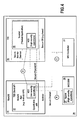
- Fig.4 illustrates how HCE functionalities may be extended to a TEE (as shown by label (A)) in certain embodiments of the invention.
- a secure channel between UICC 26 and trustlet 25 is realized to utilize UICC's security features and thereby enhance the security of HCE (as shown in Figure 4 by the arrow (B)).
- B the arrow
- an HCE based contactless application emulates an SE whereby the low security contactless functions are performed in the Rich OS context and the high security contactless functions are performed in the Secure OS and the UICC context.
- an HCE based application acts as a front-end/proxy and processes any non-sensitive security functions. While the Trusted Application in the TEE and Applet on the SE process security sensitive functions.
- the HCE component 23 in the Rich OS context is initialised, and made ready for transaction, in accordance to the principles of the supported contactless technology. For example, if ISO 14443-A is supported by the HCE-associated application 23 run in the host OS, then layer 3 and 4 procedures are first completed, and then HCE-associated application 23 is ready for any exchange of application data. Any contactless message that is received by the NFC controller 21 from the reader application 10 (e.g. Point-of-Sale) is first passed to the HCE component 23 that is executing in the Rich OS context 22.
- the NFC controller 21 e.g. Point-of-Sale
- HCE secure extension trustlet 25
- the HCE extension 25 in the TEE context processes this data and translates into UICC context and transfers the data to the HCE applet 27 residing in the UICC 26.
- the applet 27 in the UICC 26 processes the data received and provides an adequate response to the HCE component 25 in the TEE context over a secure channel.
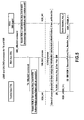
- Fig.5 illustrates interactions that may occur in an example process implementing the loading and unloading of the secure channel.
- Fig.6 illustrates a data exchange sequence that may occur in an example process implementing set-up of a secure channel between the trustlet 25 associated with HCE in the TEE and the applet 27 associated with HCE in the SE 26.
- the secure channel is setup between HCE 25 in TEE context and HCE 27 in the SE context in order to guarantee security for any data exchanged by means of entity authentication, confidentiality and integrity of data.
- Fig.7 is a block diagram showing certain components and signals involved in the method of the present embodiment.
- a control module 14 associated with the first NFC-enabled device 10 comprises a security-evaluation module 18.
- the security-evaluation module 18 is designed and/or programmed to evaluate the security requirements of different steps involved in implementation of a contactless transaction application 15. For steps that have a low security requirement it may be deemed permissible for the responder-side operations to be performed by an HCE component 23 executing in the host OS 22. Accordingly the control module 14 may control implementation of the required contactless exchanges between the initiator device 10 and the responder device 20 in a conventional manner.
- the security-evaluation module 18 determines that a particular step (or steps) in the application 15 require processing on the responder side and require a higher level of security (e.g. because implementation of the step may involve the responder device 20 handling sensitive data) it may be deemed undesirable for the responder-side processing to be performed by an HCE component executing in the host OS 22.
- the control module 14 controls the initiator device 10 to send to the responder device 20 a command which invokes a security protocol.
- the responder device 20 makes use of the TEE and SE to generate security-endorsed data for return to the initiator device.
- a command labelled CMD_SP is used to designate any format of signal that comprises an indication that the expected response should include data whose security is endorsed by the responder device according to the techniques of the present invention. Such an indication invokes a security protocol according to the invention.
- CMD_Trans_Authenticate is used to designate an example of CMD_SP that requests authentication of a transaction.
- CMD_SP may be a dedicated command transmitted on its own expressly for the purpose of obtaining valid security-endorsed data from the responder device 20.
- the return of valid security-endorsed data may serve to indicate that the responder device 20 is an authentic device having the identity expected by the initiator device 10. This may, in turn, serves to authenticate other data/transactions involved in an overall series of contactless exchanges taking place between the initiator and responder devices 10, 20.
- Fig.9 illustrates a data exchange in an example where a dedicated signal CMD_Trans_Authenticate is transmitted.
- CMD_SP may be transmitted in association with another command, for example as an indication that data to be returned in response to the other command should be generated as security-endorsed data (i.e. generated and security-endorsed by the TEE 24 and SE 26).
- security-endorsed data i.e. generated and security-endorsed by the TEE 24 and SE 26.
- the command indicative of invocation of the security protocol may be transmitted together with the other command, or a combined command may be used.
- the contactless-transaction application 23 that runs in the host OS 22 of responder device 20 is designed to interpret the command that invokes the security protocol and respond by sending to the trustlet in the TEE 24 a request (labelled CMD_GEN_S-E_Data in Fig.7 ) for generation of security-endorsed data.
- the request CMD_GEN_S-E_Data sent from the application 23 to the trustlet 25 may contain associated information, for example, it may identify sensitive data to be read from secure memory and returned in the form of security-endorsed data, a process that is to be performed securely (e.g.an interaction with a user to obtain a PIN) and so on.
- the trustlet 25 and secure element 26 interact with each other to generate the required security-endorsed data S-E_Data.
- the communication channel between the TEE 24 and SE 26 is illustrated in Fig.7 using a dashed line between those components, it is to be understood that the communication takes place on a secure channel 28 via the host OS as illustrated in Fig.2 .
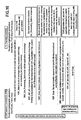
- Fig.8 illustrates a data exchange sequence that may occur between the contactless-transaction application 23 associated with HCE in the host OS, the trustlet 25 associated with HCE in the TEE and the applet 27 associated with HCE in the SE 26 in an example of the generation of security-endorsed data.
- the trustlet receives from the HCE component 27 in the UICC context a one time usable code (OTC) that is cryptographically generated and signed by the UICC 26.
- the HCE 25 in TEE context receives this response and validates the UICC signature and then counter- signs the data which is then passed to HCE 23 in the Rich OS context.
- This response is then passed to the NFC controller 21 for onward transmission to the second NFC-enabled device 10 (e.g. external contactless reader) that encompasses a Secure Authentication Module (SAM) 12.
- SAM 12 validates the response data to ensure that it is signed by UICC 26, TEE 24 and contains the appropriate one-time useable code (OTC).
- OTC one-time useable code
- the one-time useable code is validated by SAM 12 for its authenticity.
- SAM 12 may share the K 2 _OTC, a synchronised counter, and the computation method with UICC 26. If authentic, then the associated contactless transaction is deemed trustworthy and successful.
- the security-endorsed data is a One Time Code digitally signed by the SE 26 and also digitally signed by the TEE 24.
- the security endorsement may take many different forms, typically involving measures such as encryption, digital signature, provision of a shared secret, and so on.
- the One Time Code is generated by the SE 26.
- a One Time Code or other data required for the security-endorsement could be generated by the TEE 24.
- the HCE component 23 in the host OS context is arranged to transmit the security-endorsed data received from the TEE 24 to the initiator device 10 (possibly in association with other data, and/or after subjecting it to further processing for instance an additional encryption) in a data transmission 32 from the NFC controller.
- the initiator device 10 uses the SAM 12 to authenticate the received security-endorsed data. If the SAM 12 successfully authenticates the security-endorsed data the contactless-transaction application 15 can be assured of the security of the data and can trust the data. If the SAM 12 does not successfully authenticate the security-endorsed data then security is not assured and the contactless-transaction application 15 may take some action in response (e.g. not proceed further with a sale, not allow a requested access, and so on).
- Fig.9 is a diagram illustrating an example of an overall series of interactions between a secure authentication module 12 and control module 14 of a contactless reader as an example of the first NFC-enabled device 10, and the contactless-transaction application 23, trustlet 24 and applet 26 of a mobile phone as an example of the second NFC-enabled device 20, to obtain security-endorsed data.
- the SE is a SIM
- Priv_TA indicates the private key of the trustlet
- Pub_TA indicates the public key of the trustlet
- Priv_SIM indicates the private key of the SIM
- Pub_SIM indicates the public key of the SIM
- Session_Key_i indicates a session key used during communications over the secure channel
- Enc_ indicates encryption by an indicated key
- Sign_ indicates application of a digital signature by the indicated entity.
- the method prevents a malicious party from being a ble to successfully mount a replay attack of any captured legitimate transaction from the past.
- the method integrates HCE, TEE, SAM and SIM for enabling secure contactless applications.
- Fig.10 is a diagram illustrating interactions between a contactless-card reader (e.g. a point-of-sale terminal) and a contactless payment card (or NFC-enabled device having HCE capability) in a comparative example method of performing a contactless transaction between the reader and the card.
- the series of interactions involves transmission of a CMD_Select command from the payment terminal to the payment card to identify the specific payment application that is being used (e.g. "this is a MasterCard ® payment").
- this is a low-security command because the codes identifying different applications tend to be in the public domain.
- Embodiments of the present invention may be applied to provide security and trust for the data returned by the responder device in response to one command, two commands or more than two commands that are sent by the payment terminal.
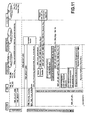
- Fig.11 is a diagram illustrating the case where example NFC-enabled initiator and responder devices according to certain embodiments of the invention execute the "get processing options" command shown in Fig.10 in a manner such that security-endorsed data is returned.
- the contactless-transaction application (HCE component) 23 that runs in the host OS context employs a command handler and the trustlet 25 employs a secure command handler.
- the applications, trustlets and applets mentioned above are typically implemented using machine-readable instructions that implement described functionality when the instructions are executed by a suitable processing device.
- the applications, trustlets and applets are installed in the initiator and responder devices 10, 20, however other approaches may be permitted (e.g. installation in an ancillary device) and the machine-readable instructions may be stored on a non-transitory machine-readable medium, accessed using a network connection, and so on.
- a timing benchmark is built by the initiator device as the number of transactions increases.
- the timing benchmark may be computed for a whole transaction by measuring the time elapsed between each command and each corresponding response received from the responder device (e.g. mobile phone).
- This benchmark may be refined continuously taking into account the observed (permissible) variations in the measured time interval.
- the timing benchmark could include an average (or other convenient measure) computed over all the measurements made for transactions of a corresponding type, excluding any measurements that are deemed to constitute irregularities.
- the initiator device can use the timing benchmark to detect an irregularity, e.g. a transaction that is taking more time than usual. This is done, for example, by comparing the measured time interval for each command and response with the corresponding value of the timing benchmark, and/or by comparing the time taken by the transaction as a whole compared to the corresponding value in the benchmark.
- an irregularity e.g. a transaction that is taking more time than usual. This is done, for example, by comparing the measured time interval for each command and response with the corresponding value of the timing benchmark, and/or by comparing the time taken by the transaction as a whole compared to the corresponding value in the benchmark.
- the initiator device may implement a security procedure when it detects an irregularity as described above.
- the nature of the security procedure may vary as desired by the designer of the application.
- the security procedure may consist just in logging details of the transaction affected by the irregularity.
- the security procedure consists in failure to relay the contactless transaction in question (e.g. to the processing infrastructure associated with the application).
- the TEE may measure time intervals occurring during its communication with the SE or host OS
- the SE may measure time intervals occurring during its communication with the TEE
- the host OS may measure time intervals occurring during its communication with the TEE
- the NFC controller may measure time intervals arising during its communication with the host OS.
- a responder NFC-enabled device is a mobile phone
- the invention may be applied regardless of the form-factor supported by the NFC-enabled responder device. So, for example, it may be an HCE-enabled watch with SIM or any form of SE and TEE present.
- an initiator NFC-enabled device is a contactless car reader
- the invention may be applied regardless of the form-factor supported by the NFC-enabled initiator device.
- the description above refers in the singular to the contactless-transaction application in an initiator device, to the contactless-transaction application in a responder device, to a trustlet in the TEE, and to an applet in the SE.
- plural contactless-transaction applications, trustlets and applets may be provided.
- the responder device may have other applications, trustlets and applets additional to those described above.
Landscapes
- Engineering & Computer Science (AREA)
- Theoretical Computer Science (AREA)
- Business, Economics & Management (AREA)
- Physics & Mathematics (AREA)
- General Physics & Mathematics (AREA)
- Computer Networks & Wireless Communication (AREA)
- Computer Hardware Design (AREA)
- Strategic Management (AREA)
- General Business, Economics & Management (AREA)
- Accounting & Taxation (AREA)
- General Engineering & Computer Science (AREA)
- Computer Security & Cryptography (AREA)
- Software Systems (AREA)
- Mathematical Physics (AREA)
- Signal Processing (AREA)
- Mobile Radio Communication Systems (AREA)
Priority Applications (4)
| Application Number | Priority Date | Filing Date | Title |
|---|---|---|---|
| EP15305848.2A EP3101607A1 (de) | 2015-06-02 | 2015-06-02 | Nfc-fähige vorrichtungen zur durchführung sicherer kontaktloser transaktionen und verwendung von hce |
| US15/579,270 US10740747B2 (en) | 2015-06-02 | 2016-05-30 | NFC-enabled devices for performing secure contactless transactions and using HCE |
| EP16729809.0A EP3304465B1 (de) | 2015-06-02 | 2016-05-30 | Nfc-fähige vorrichtungen zur durchführung sicherer kontaktloser transaktionen und verwendung von hce |
| PCT/EP2016/062193 WO2016193227A1 (en) | 2015-06-02 | 2016-05-30 | Nfc-enabled devices for performing secure contactless transactions and using hce |
Applications Claiming Priority (1)
| Application Number | Priority Date | Filing Date | Title |
|---|---|---|---|
| EP15305848.2A EP3101607A1 (de) | 2015-06-02 | 2015-06-02 | Nfc-fähige vorrichtungen zur durchführung sicherer kontaktloser transaktionen und verwendung von hce |
Publications (1)
| Publication Number | Publication Date |
|---|---|
| EP3101607A1 true EP3101607A1 (de) | 2016-12-07 |
Family
ID=53365944
Family Applications (2)
| Application Number | Title | Priority Date | Filing Date |
|---|---|---|---|
| EP15305848.2A Withdrawn EP3101607A1 (de) | 2015-06-02 | 2015-06-02 | Nfc-fähige vorrichtungen zur durchführung sicherer kontaktloser transaktionen und verwendung von hce |
| EP16729809.0A Active EP3304465B1 (de) | 2015-06-02 | 2016-05-30 | Nfc-fähige vorrichtungen zur durchführung sicherer kontaktloser transaktionen und verwendung von hce |
Family Applications After (1)
| Application Number | Title | Priority Date | Filing Date |
|---|---|---|---|
| EP16729809.0A Active EP3304465B1 (de) | 2015-06-02 | 2016-05-30 | Nfc-fähige vorrichtungen zur durchführung sicherer kontaktloser transaktionen und verwendung von hce |
Country Status (3)
| Country | Link |
|---|---|
| US (1) | US10740747B2 (de) |
| EP (2) | EP3101607A1 (de) |
| WO (1) | WO2016193227A1 (de) |
Cited By (5)
| Publication number | Priority date | Publication date | Assignee | Title |
|---|---|---|---|---|
| CN106920081A (zh) * | 2017-02-24 | 2017-07-04 | 济南汉泰信息科技有限公司 | 一种支付方法、系统和电子设备 |
| CN109151777A (zh) * | 2018-06-11 | 2019-01-04 | 中国银联股份有限公司 | 一种非接通信方法以及通信装置 |
| WO2019051839A1 (zh) * | 2017-09-18 | 2019-03-21 | 华为技术有限公司 | 一种数据处理的方法及装置 |
| WO2020117559A1 (en) * | 2018-12-06 | 2020-06-11 | Visa International Service Association | Secured extended range application data exchange |
| CN116170791A (zh) * | 2023-02-23 | 2023-05-26 | 四川科道芯国智能技术股份有限公司 | 一种双se芯片设备切换方法、装置、设备和存储介质 |
Families Citing this family (19)
| Publication number | Priority date | Publication date | Assignee | Title |
|---|---|---|---|---|
| FR3030829A1 (fr) * | 2014-12-23 | 2016-06-24 | Orange | Procede de securisation de transactions sans contact |
| KR102453705B1 (ko) | 2015-09-25 | 2022-10-11 | 삼성전자주식회사 | 호스트의 정당성 여부에 따라 선택적으로 결제 기능을 온(on)하는 결제 장치의 동작 방법 |
| FR3050348A1 (fr) * | 2016-04-18 | 2017-10-20 | Orange | Procede d'obtention par un terminal mobile d'un jeton de securite |
| KR102604046B1 (ko) * | 2016-11-28 | 2023-11-23 | 삼성전자주식회사 | 전자 기기의 프로그램 관리 방법 및 장치 |
| US10972265B2 (en) | 2017-01-26 | 2021-04-06 | Microsoft Technology Licensing, Llc | Addressing a trusted execution environment |
| US10897360B2 (en) | 2017-01-26 | 2021-01-19 | Microsoft Technology Licensing, Llc | Addressing a trusted execution environment using clean room provisioning |
| US10897459B2 (en) * | 2017-01-26 | 2021-01-19 | Microsoft Technology Licensing, Llc | Addressing a trusted execution environment using encryption key |
| TWM549900U (zh) * | 2017-06-08 | 2017-10-01 | 鴻驊科技股份有限公司 | 行動裝置以及用戶身分模組卡 |
| US10956905B2 (en) | 2017-10-05 | 2021-03-23 | The Toronto-Dominion Bank | System and method of session key generation and exchange |
| US10891384B2 (en) * | 2017-10-19 | 2021-01-12 | Koninklijke Kpn N.V. | Blockchain transaction device and method |
| US11368845B2 (en) | 2017-12-08 | 2022-06-21 | Carrier Corporation | Secure seamless access control |
| US11443323B2 (en) * | 2018-03-07 | 2022-09-13 | Samsung Electronics Co., Ltd. | System and method for secure transactions with a trusted execution environment (TEE) |
| US10721223B2 (en) | 2018-04-12 | 2020-07-21 | Rockwell Automation Technologies, Inc. | Method and apparatus for secure device provisioning in an industrial control system |
| US11129014B2 (en) * | 2019-03-08 | 2021-09-21 | Apple Inc. | Methods and apparatus to manage inactive electronic subscriber identity modules |
| US11704649B2 (en) * | 2020-09-03 | 2023-07-18 | Mastercard International Incorporated | Contactless payment relay attack protection |
| CN114786160B (zh) * | 2022-04-12 | 2022-11-11 | 芯电智联(北京)科技有限公司 | 一种nfc标签密钥管理系统 |
| US12354078B1 (en) * | 2022-12-30 | 2025-07-08 | Block, Inc. | Systems and methods for communicating with NFC readers |
| US12443693B2 (en) * | 2023-09-28 | 2025-10-14 | Apple Inc. | Authorizer for operations of a virtual terminal |
| US12493684B2 (en) * | 2024-01-24 | 2025-12-09 | Oracle International Corporation | Multi-tenant secure element platform runtime environments |
Citations (2)
| Publication number | Priority date | Publication date | Assignee | Title |
|---|---|---|---|---|
| US20130060959A1 (en) * | 2011-09-02 | 2013-03-07 | Ebay Inc. | Secure elements broker (seb) for application communication channel selector optimization |
| US8712407B1 (en) * | 2012-04-05 | 2014-04-29 | Sprint Communications Company L.P. | Multiple secure elements in mobile electronic device with near field communication capability |
Family Cites Families (7)
| Publication number | Priority date | Publication date | Assignee | Title |
|---|---|---|---|---|
| WO2011128499A1 (en) * | 2010-04-14 | 2011-10-20 | Nokia Corporation | Method and apparatus for providing automated payment |
| US9317689B2 (en) * | 2012-06-15 | 2016-04-19 | Visa International Service Association | Method and apparatus for secure application execution |
| US10152706B2 (en) * | 2013-03-11 | 2018-12-11 | Cellco Partnership | Secure NFC data authentication |
| US8935746B2 (en) * | 2013-04-22 | 2015-01-13 | Oracle International Corporation | System with a trusted execution environment component executed on a secure element |
| KR20160013196A (ko) * | 2013-05-29 | 2016-02-03 | 비자 인터네셔널 서비스 어소시에이션 | 보안 요소에서 수행되는 검증 시스템 및 방법 |
| WO2015047224A1 (en) * | 2013-09-24 | 2015-04-02 | Intel Corporation | Systems and methods for nfc access control in a secure element centric nfc architecture |
| KR20160118794A (ko) * | 2015-04-03 | 2016-10-12 | 삼성전자주식회사 | 시큐어 엘리먼트를 이용한 데이터 통신 방법 및 이를 적용한 전자 시스템 |
-
2015
- 2015-06-02 EP EP15305848.2A patent/EP3101607A1/de not_active Withdrawn
-
2016
- 2016-05-30 EP EP16729809.0A patent/EP3304465B1/de active Active
- 2016-05-30 US US15/579,270 patent/US10740747B2/en active Active
- 2016-05-30 WO PCT/EP2016/062193 patent/WO2016193227A1/en not_active Ceased
Patent Citations (2)
| Publication number | Priority date | Publication date | Assignee | Title |
|---|---|---|---|---|
| US20130060959A1 (en) * | 2011-09-02 | 2013-03-07 | Ebay Inc. | Secure elements broker (seb) for application communication channel selector optimization |
| US8712407B1 (en) * | 2012-04-05 | 2014-04-29 | Sprint Communications Company L.P. | Multiple secure elements in mobile electronic device with near field communication capability |
Cited By (11)
| Publication number | Priority date | Publication date | Assignee | Title |
|---|---|---|---|---|
| CN106920081A (zh) * | 2017-02-24 | 2017-07-04 | 济南汉泰信息科技有限公司 | 一种支付方法、系统和电子设备 |
| WO2019051839A1 (zh) * | 2017-09-18 | 2019-03-21 | 华为技术有限公司 | 一种数据处理的方法及装置 |
| US11552807B2 (en) | 2017-09-18 | 2023-01-10 | Huawei Technologies Co., Ltd. | Data processing method and apparatus |
| CN109151777A (zh) * | 2018-06-11 | 2019-01-04 | 中国银联股份有限公司 | 一种非接通信方法以及通信装置 |
| CN109151777B (zh) * | 2018-06-11 | 2020-11-24 | 中国银联股份有限公司 | 一种非接通信方法以及通信装置 |
| US11775956B2 (en) | 2018-06-11 | 2023-10-03 | China Unionpay Co., Ltd. | Non-contact communication method and communication device |
| WO2020117559A1 (en) * | 2018-12-06 | 2020-06-11 | Visa International Service Association | Secured extended range application data exchange |
| US11134065B2 (en) | 2018-12-06 | 2021-09-28 | Visa International Service Association | Secured extended range application data exchange |
| US11689511B2 (en) | 2018-12-06 | 2023-06-27 | Visa International Service Association | Communication device using virtual access device and transaction applet |
| US12335245B2 (en) | 2018-12-06 | 2025-06-17 | Visa International Service Association | Communication device using virtual access device and transaction applet |
| CN116170791A (zh) * | 2023-02-23 | 2023-05-26 | 四川科道芯国智能技术股份有限公司 | 一种双se芯片设备切换方法、装置、设备和存储介质 |
Also Published As
| Publication number | Publication date |
|---|---|
| WO2016193227A1 (en) | 2016-12-08 |
| US20180165673A1 (en) | 2018-06-14 |
| EP3304465A1 (de) | 2018-04-11 |
| US10740747B2 (en) | 2020-08-11 |
| EP3304465B1 (de) | 2022-06-29 |
Similar Documents
| Publication | Publication Date | Title |
|---|---|---|
| EP3304465B1 (de) | Nfc-fähige vorrichtungen zur durchführung sicherer kontaktloser transaktionen und verwendung von hce | |
| EP3564886B1 (de) | Verfahren und vorrichtung zum hinzufügen einer bankkarte | |
| RU2523304C2 (ru) | Доверенный администратор достоверности (tim) | |
| KR102382474B1 (ko) | 보안 전송 프로토콜을 사용하여 신뢰를 설정하기 위한 시스템 및 방법 | |
| US10237072B2 (en) | Signatures for near field communications | |
| US10999737B2 (en) | Detection of a rerouting of a communication channel of a telecommunication device connected to an NFC circuit | |
| KR102372571B1 (ko) | 모바일 결제 방법, 장치 및 시스템 | |
| US9219745B2 (en) | Assessing the resistance of a security module against attacks by communication pipe diversion | |
| US10880739B2 (en) | Protection of a communication channel between a security module and an NFC circuit | |
| CN110278084B (zh) | eID建立方法、相关设备及系统 | |
| EP3394788B1 (de) | Verfahren und system zur verbesserung der sicherheit einer transaktion | |
| CN107111814A (zh) | 保护通过移动设备所执行的非接触式支付 | |
| US9549322B2 (en) | Methods and systems for authentication of a communication device | |
| Umar et al. | Performance variation in host-based card emulation compared to a hardware security element | |
| EP3179751B1 (de) | Informationssendeverfahren und -vorrichtung, endgerätevorrichtung und system | |
| CN110100410A (zh) | 密码系统管理 | |
| CN105321069A (zh) | 一种实现远程支付的方法及装置 | |
| US11972419B2 (en) | Method for authenticating payment data, corresponding devices and programs | |
| US11068880B2 (en) | Control of applications in a mobile terminal | |
| US12022294B2 (en) | Access control for Near Field Communication functions | |
| GB2525423A (en) | Secure Token implementation | |
| CN121510012A (zh) | 认证方法、装置、电子设备及存储介质 | |
| Hrašna | Support for U2F FIDO tokens in mobile applications | |
| CN119961921A (zh) | 应用隔离方法、装置、电子设备及计算机可读存储介质 | |
| WO2016189277A1 (en) | Securing host card emulation (hse) solutions |
Legal Events
| Date | Code | Title | Description |
|---|---|---|---|
| PUAI | Public reference made under article 153(3) epc to a published international application that has entered the european phase |
Free format text: ORIGINAL CODE: 0009012 |
|
| AK | Designated contracting states |
Kind code of ref document: A1 Designated state(s): AL AT BE BG CH CY CZ DE DK EE ES FI FR GB GR HR HU IE IS IT LI LT LU LV MC MK MT NL NO PL PT RO RS SE SI SK SM TR |
|
| AX | Request for extension of the european patent |
Extension state: BA ME |
|
| STAA | Information on the status of an ep patent application or granted ep patent |
Free format text: STATUS: THE APPLICATION IS DEEMED TO BE WITHDRAWN |
|
| 18D | Application deemed to be withdrawn |
Effective date: 20170608 |