EP3103229B1 - Sélection de trajet de communication pour distribution de contenu - Google Patents
Sélection de trajet de communication pour distribution de contenu Download PDFInfo
- Publication number
- EP3103229B1 EP3103229B1 EP15746642.6A EP15746642A EP3103229B1 EP 3103229 B1 EP3103229 B1 EP 3103229B1 EP 15746642 A EP15746642 A EP 15746642A EP 3103229 B1 EP3103229 B1 EP 3103229B1
- Authority
- EP
- European Patent Office
- Prior art keywords
- end user
- user devices
- content server
- content
- communication
- Prior art date
- Legal status (The legal status is an assumption and is not a legal conclusion. Google has not performed a legal analysis and makes no representation as to the accuracy of the status listed.)
- Active
Links
Images



Classifications
-
- H—ELECTRICITY
- H04—ELECTRIC COMMUNICATION TECHNIQUE
- H04L—TRANSMISSION OF DIGITAL INFORMATION, e.g. TELEGRAPHIC COMMUNICATION
- H04L45/00—Routing or path finding of packets in data switching networks
- H04L45/70—Routing based on monitoring results
-
- H—ELECTRICITY
- H04—ELECTRIC COMMUNICATION TECHNIQUE
- H04L—TRANSMISSION OF DIGITAL INFORMATION, e.g. TELEGRAPHIC COMMUNICATION
- H04L43/00—Arrangements for monitoring or testing data switching networks
- H04L43/08—Monitoring or testing based on specific metrics, e.g. QoS, energy consumption or environmental parameters
- H04L43/0852—Delays
-
- H—ELECTRICITY
- H04—ELECTRIC COMMUNICATION TECHNIQUE
- H04L—TRANSMISSION OF DIGITAL INFORMATION, e.g. TELEGRAPHIC COMMUNICATION
- H04L43/00—Arrangements for monitoring or testing data switching networks
- H04L43/16—Threshold monitoring
-
- H—ELECTRICITY
- H04—ELECTRIC COMMUNICATION TECHNIQUE
- H04L—TRANSMISSION OF DIGITAL INFORMATION, e.g. TELEGRAPHIC COMMUNICATION
- H04L61/00—Network arrangements, protocols or services for addressing or naming
- H04L61/45—Network directories; Name-to-address mapping
- H04L61/4505—Network directories; Name-to-address mapping using standardised directories; using standardised directory access protocols
- H04L61/4511—Network directories; Name-to-address mapping using standardised directories; using standardised directory access protocols using domain name system [DNS]
Definitions
- Network-provided content such as Internet web pages or media content such as video, pictures, music, and the like, are typically served to end users via networked computer systems. End user requests for the network-provided content are processed and the content is responsively provided over various network links and Internet service providers (ISPs) from the networked computer system to the end user device.
- ISPs Internet service providers
- the networked computer systems may include origin hosting servers which originally host network content of content creators or originators, such as web servers for hosting a news website.
- a user device may contact a domain name server (DNS) to determine the location of the desired content.
- DNS domain name server
- the DNS is configured to translate an alphanumeric request, such as www.alpha.com, into an Internet Protocol (IP) address.
- IP Internet Protocol
- the user device may contact the addressed server over the various links and ISPs.
- the networked computer system is configured to identify the request, and return the desired content to the end user device. Further, in some instances, the end user device may use the IP address provided by the DNS to upload or provide data to the networked computing system.
- WO 2012/167106 A1 discloses a Content Delivery Network Interconnection (CDNI) mechanism.
- Embodiments contemplate the movement of mobile node from a first access network to a second access network, while in communication with a CDN server. The method checks if the first CDN server becomes in efficient and might redirect the traffic over a new CDN server to increase the performance.
- CDNI Content Delivery Network Interconnection
- US 2012/0054265 A1 discloses an optimized content distribution based on metrics derived from the end user. After an IP address of the end user is identified, a set of servers send packets to the end user to derive performance metrics. These performance metrics are used to determine a server from a set of servers. Another method is described, which determine the optimal server by providing downloadable content that is embedded with a monitoring tool.
- 2007 / 0050522 A1 discloses a method and apparatus for increasing the performance of world-wide-web traffic over the internet by high-performance delivery.
- Two kinds of nodes will be used.
- a first node receives the request and communicates the request to a node of the second type.
- the second type is chosen in such that it is close to the request's ultimate destination.
- a method of operating a content server that hosts content to be provided to a plurality of end user devices includes, identifying latency data for a plurality of end user devices communicating with the content server, and identifying that the one or more end user devices in the plurality of end user devices exceed a latency threshold based on the latency data.
- the method further includes, in response to identifying that the one or more end user devices in the plurality of end user devices exceed the latency threshold, modifying the communication path between the content server and the one or more end user devices by modifying a domain name system (DNS) configuration for the content server.
- DNS domain name system
- a computer apparatus to operate a content server that hosts content to be provided to a plurality of end user devices includes, processing instructions that direct the content server to identify latency data for the plurality of end user devices communicating with the content server, and identify that the one or more end user devices in the plurality of end user devices exceed a latency threshold based on the latency data.
- the processing instructions further direct the content server to, in response to identifying that the one or more end user devices in the plurality of end user devices exceed the latency threshold, modify a communication path between the content server and the one or more end user devices by modifying a DNS configuration for the content server.
- the computer apparatus further includes one or more non-transitory computer readable media that store the processing instructions.
- a system to alter a communication path between one or more end user devices and a content server that hosts content to be provided to a plurality of end user devices includes a DNS configured to provide Internet Protocol (IP) addresses to the plurality of end user devices based on a DNS configuration for the content server.
- IP Internet Protocol
- the system further includes the content server configured to identify content delivery performance data for the plurality of end user devices communicating with the content server, and identify that the one or more end user devices in the plurality of end user devices meet a performance condition based on the content delivery performance data.
- the content server is further configured to, in response to identifying that the one or more end user devices in the plurality of end user devices meet the performance condition, modify the communication path between the content server and the one or more end user devices by transferring, for delivery to the DNS, a DNS modification notification regarding the DNS configuration for the content server.
- User devices may include applications or other software that require network content from content servers.
- This content may include text, hypertext markup language (HTML) pages, pictures, video, audio, code, scripts, or other content viewable by an end user in a browser or other application.
- HTML hypertext markup language
- the network content includes example website content referenced in Figure 1 , such as "www.gamma.gov,” “www.alpha.com,” and “www.beta.net,” among others.
- user devices may connect to the content servers using plurality of Internet Service Providers (ISPs) that pass the required data from one provider to the next.
- ISPs Internet Service Providers
- Each content server may be connected to multiple ISPs that are each provided with a unique IP address for the server.
- the ISPs may be connected to other network devices and ISPs that provide data communications to the end user devices.
- a user device may have options in routing the communications from the content providing servers to the user device, and may prefer to select the path based on the delivery performance of the communication path.
- a method of altering communication paths for the end user devices comprises identifying content delivery performance data, which may include the content server ISP identifier, the IP address for the end user device, the latency of data communications with the content server, or any other similar data related performance information.
- the content ISP is the ISP that is in direct connection with the content server, and may be identified by the unique IP address that the ISP uses to contact the server. With these determinations, a change can be made in the path between the content server and the user device to provide the fastest connection, such as changing the content ISP for communications with the user device.
- Figure 1 illustrates a communication system 100 that allows changes in a communication path based on data latency.
- System 100 includes content providers 110, end user devices 130-131, DNS 191, user internet service providers (UISP) 180, and content internet service providers (CISP) 185.
- Each of content servers 111-112 can include one or more data storage systems that allow the storage of content, such as content 145-146.
- End user devices 130-131 are representative of a plurality of end user communication devices that can request and receive network content. It should be understood that any number of end user devices 130-131 might request data from content servers 111-112.
- UISPs 181-182 and end users 130-131 communicate over associated network links 170.
- CISPs 186-187 communicate with content servers 111-112 over communication links 171, and content servers 111-112 further communicate with DNS 191 over communication link 173.
- UISPs 181-182 communicate with CISPs 186-187 over communication links 172. Although illustrated in direct communication, it should be understood that UISPs 180 and CISPs 185 might have one or more intermediary internet service providers.
- end user devices 130-131 request network content, such as content 145-146 associated with content servers 111-112.
- the content servers are configured to pass the content to the appropriate CISP, which will in turn communicate the content to the UISP and the end user device.
- each content server 111-112 may be configured with multiple IP addresses to communicate with different internet service providers.
- content server 111 may include a first IP address to communicate with CISP 186, but may be configured with an alternative IP address to communicate with CISP 187.
- DNS 191 is included to provide translations of domain names into IP addresses for user devices 130-131.
- end user devices 130-131 require content from a domain name
- user devices 130-131 will contact a DNS, such as DNS 191, to translate alphanumeric domain names to numerical network address.
- DNS 191 will return the configured network address for the domain name. From this numerical address, a content request can be made to the appropriate content server over a content internet service provider.
- Figure 2 illustrates a method of configuring data paths for end user devices based on delivery performance data, such as latency.
- user devices may communicate with content providers 110 to receive various data and information from content servers 111-112.
- Content servers 111-112 may be configured with multiple IP addresses that allow each CISP 186-187 to address the content servers individually.
- CISP 186 may have a different IP address for content server 111 than CISP 187, allowing the end user devices to address the same content server using different communication paths.
- each content server is configured to gather performance information, such as latency data, for the plurality of devices that attempt to communicate with the content server (201).
- This latency data may include a variety of information, such as the IP address for the requesting user device, the identity of the CISP that is making the request to the content server, as well as the latency or time for the data request to be processed.
- the content server is configured to determine that one or more of the user devices have met or exceeded a latency threshold (202).
- the latency threshold may be determined based on a comparison to the latency of other devices, a predefined threshold by an administrator of the system, or any other possible latency threshold.
- the content server is configured to adjust the communication path for the one or more user devices by changing the path between the content server and the CISP (203).
- the user device may be routed through the same user ISP, the user ISP may be communicating directly or indirectly with an alternative CISP. This may allow the avoidance of any problems that may have existed between the user ISP and the first CISP.
- user device 130 may be communicating with content server 111 using UISP 181 and CISP 186.
- content server 111 may identify that the communication latency between the user device and content server 111 is above a certain threshold.
- content server 111 may configure DNS 191 to change the IP address associated with content server 111 to an IP addresses used by CISP 187.
- This alternative IP address is still used by content server 111, but allows the communication path for the user device to change, potentially avoiding a problem within the communication system.
- user device 130 may communicate with content server 111 using UISP 181 and CISP 187 to avoid any communication issues between UISP 181 and CISP 186.
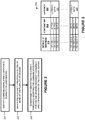
- Figure 3 illustrates a data structure 300 for determining latency between a user device and content server.
- Data structure 300 is illustrated as a table in the present example, but it should be understood that data structure 300 might take the form of tree, linked list, or any other structure capable of maintaining latency information about a plurality of user devices.
- Data structure 300 includes device IP address 310, content ISP 312, and latency 314 that manages latency data 320.
- a content server such as content server 111
- the content server may be configured to determine IP addresses for the user devices, content ISP identifiers, and latency data for the various communications.
- the content ISP identifiers are used to identify the various ISPs that can communicate directly with the content server. These ISPs are provided with separate IP addresses for the serving device, which allows different paths between user devices and the content on the server.
- pluralities of user devices are connected to the content server using two separate content ISPs, alpha and beta. These ISPs each connect with the content server using different IP addresses, such that the address used by alpha is not the same as the address used by beta.
- the node may determine that a threshold latency value has been reached in the data accesses. This threshold latency value may be specified by an administrator of the system, may be based in comparison to the latency of other data accesses to the server, or may be based on any other threshold determination.
- the content server is configured to change the communication path between the user device and content server. For instance, the content server may modify a DNS configuration to change the communication path from passing through ISP alpha to passing through ISP beta. As a result, the communication latency may improve if there were any issues in the original path.
- Figures 4A and 4B illustrate an overview of changing a communication path based on latency.
- the overview includes content server 410, content ISPs 420-422, user ISP 430, and user device 440.
- user device 440 may initiate a communication with content server 410 using user ISP 430 and content ISP 420.
- content server 410 may monitor delivery performance data, such as latency or timing information, for user device 440, as well as the performance data for a plurality of other user devices. Based on the performance information, content server 410 may identify that the device meets a performance condition to change the communication path between the user devices and the content server. This condition or threshold may be preset by an administrator, may be based on a comparison with other latency values, or may be determined by any similar measurement.
- content server 410 is configured to modify the communication path for the user device.
- content server 410 may define IP groups for the user devices that are affected by the latency or performance of the communication. These IP groups may be defined by a range of IP addresses that likely share a user ISP provider or that may be routed through the same or similar connection path in arriving at content server 410. Accordingly, content server 410 may be configured to change the communication path for all similar or related devices in the IP group based on the attainment of a performance condition by at least one of the devices.
- user device 440 is transitioned to communicating with content server 410 using content ISP 422 and user ISP 430.
- content server 410 may be configured to change the IP address associated with content server 410 to route communications through content ISP 422 as opposed to content ISP 420. This transition may be used to avoid any possible obstacles that were slowing the communication using the previous path.
- content server 410 may be configured with multiple IP addresses that are associated with each content ISP.
- content ISP 420 may be configured to communicate with content server 410 using a first IP address
- content ISP 422 may be configured to communicate with content server 410 using a second IP address.
- the IP address that is given to user device 440 by a DNS may be changed to direct the user device communications through content ISP 422.
- the IP address provided to the users by the DNS may be the second IP address as opposed to the first IP address to improve latency in content communications.
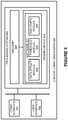
- Figure 5 illustrates a content computing system 500 with the ability to change communication paths based on latency data.
- Content computing system 500 is an example content server from Figures 1-4 , although other content server examples may exist.
- Content computing system 500 may comprise a real or virtual computing device or system of devices.
- Content computing system 500 comprises communication interface 501, user interface 502, and processing system 503.
- Processing system 503 is linked to communication interface 501 and user interface 502.
- Processing system 503 includes processing circuitry 505 and memory device 506 that stores operating software 507.
- Communication interface 501 comprises components that communicate over communication links, such as network cards, ports, RF transceivers, processing circuitry and software, or some other communication devices.
- Communication interface 501 may be configured to communicate over metallic, wireless, or optical links.
- Communication interface 501 may be configured to use TDM, IP, Ethernet, optical networking, wireless protocols, communication signaling, or some other communication format - including combinations thereof.
- Communication interface 501 may communicate with end user devices over one or more ISPs, and also communicate with a DNS that provides IP addresses to the end user devices.
- User interface 502 comprises components that interact with a user.
- User interface 502 may include a keyboard, display screen, mouse, touch pad, or some other user input/output apparatus.
- User interface 502 may be omitted in some examples.
- Processing circuitry 505 comprises microprocessor and other circuitry that retrieves and executes operating software 507 from memory device 506.
- Memory device 506 comprises a non-transitory storage medium, such as a disk drive, flash drive, data storage circuitry, or some other memory apparatus.
- Operating software 507 comprises computer programs, firmware, or some other form of machine-readable processing instructions.
- Operating software 507 includes data structure module 508, threshold module 509, and DNS configuration module 510.
- Operating software 507 may further include an operating system, utilities, drivers, network interfaces, applications, or some other type of software. When executed by circuitry 505, operating software 507 directs processing system 503 to operate content computing system 500 as described herein.
- content computing system 500 is used to provide hosted original data content to one or more end user devices.
- computing system 500 may be assigned a plurality of IP addresses that are accessible using a corresponding plurality of ISPs.
- each of the ISPs may connect to computing system 500 using distinct IP addresses for the computing system.
- data structure module 508 is configured to identify performance information, such as latency data, for the user devices.
- This data may include the IP address for each connecting user device, the content ISP that is connecting computing system 500, as well as performance or latency timing for providing content to the user devices.
- threshold module 509 may be configured to identify that one or more of the connecting user devices exceed a latency threshold or meet a performance condition.
- the one or more user devices that exceed the threshold or meet the condition may be from a similar range of device IP addresses. Accordingly, computing system 500 may determine that the range of IP addresses connect using the same user ISP.
- DNS configuration module 510 is configured to adjust the communication path for the one or more identified user devices. For instance, because computing system 500 determines that certain IP addresses are having issues with performance, computing system 500 may configure a DNS to direct the affected devices to the computing system using an alternative content ISP. As a result, the end user device may connect to the same user ISP, but the path to computing system 500 will be different with the alternative content ISP.
- Figure 6 illustrates an overview of operating a communication system according to one example.
- Figure 6 includes content server 610, content ISPs (620-622), user ISP 630, end user devices 640-641, and DNS 650.
- DNS 650 is used to provide end user devices 640-641 with network IP addresses that allow the devices to communicate with external servers and systems. For example, if the user desired to visit a website, such as www.alpha.com, DNS 650 would associate the domain name of the site to the appropriate IP address.
- end user device 640 initiates a content request for content that is stored on content server 610.
- DNS 650 provides first IP address 651, which directs communications from end user device 640 across the network, including at least content ISP 620 and user ISP 630, to content server 610.
- content server 610 maintains content delivery performance data for providing content to the end user devices. This delivery performance data may include the amount of time for a request to be received by content server 610, the amount of time for content to be requested and delivered to end user device 640, or any other similar performance metrics between content server 610 and end user device 640.
- content server 610 may identify that one or more of the communicating devices meet a latency or performance condition, which may be predefined by an administrator, based on a relationship to other communications on content server 610, or any other threshold measurement.
- content server 610 identifies that the performance data for end user device 640 has met a performance condition for the communication. Accordingly, content server 610 modifies the DNS configuration at DNS 650 by including second IP address 652. Once the configuration is modified, future DNS requests by end user device 640 will direct the device to content server 610 using second IP address 652.
- the communication path from content server 610 to end user device 640 is modified to carry communications over content ISP 622 rather than content ISP 620.
- the new path intends to overcome possible obstacles that may have slowed performance or increased latency between the end user device and the content server by using the alternative ISP path.
- Content server 610 classifies these devices as similar to end user device 640 and, thus, the path for these devices is modified in the same way as end user device 640.
- content server 610 may classify devices within a range of IP addresses as being effected by the performance or latency issues. As a result, when end user device 640 reaches the performance condition, a range of IP addresses near the IP address for end user device 640 may also have their path redirected.
- the range of IP addresses attempts to account for the range of devices that connect using user ISP 630, although the range of end user devices to be affected may connect using multiple user ISPs
- content servers 111-112, UISPs 181-182, CISPs 186-187, and DNS 191 can each include communication interfaces, network interfaces, processing systems, computer systems, microprocessors, storage systems, storage media, or some other processing devices or software systems, and can be distributed among multiple devices.
- End user devices 130-131 can include subscriber equipment, customer equipment, access terminal, smartphone, personal digital assistant (PDA), computer, tablet computing device, e-book, Internet appliance, media player, game console, or some other user communication apparatus, including combinations thereof.
- End user devices 130-131 are configured to communicate with content servers 111-112 over UISPs 181-182 and CISP 186-187.
- UISPs 181-182 and CISP 186-187 Although the endpoint ISPs are illustrated in the present example, it should be understood that communication links 172 may comprise any number of ISPs to route communications between the user devices and the content servers.
- Communication links 170-173 each use metal, glass, optical, air, space, or some other material as the transport media.
- Communication links 170-173 can each use various communication protocols, such as Time Division Multiplex (TDM), asynchronous transfer mode (ATM), Internet Protocol (IP), Ethernet, synchronous optical networking (SONET), hybrid fiber-coax (HFC), circuit-switched, communication signaling, wireless communications, or some other communication format, including combinations, improvements, or variations thereof.
- Communication links 170-173 can each be a direct link or can include intermediate networks, systems, or devices, and can include a logical network link transported over multiple physical links.
- Links 170-173 are merely illustrative to show communication modes or access pathways. In other examples, further links can be shown, with portions of the further links shared and used for different communication sessions or different content types, among other configurations.
- Communication links 170-173 can each include many different signals sharing the same associated link, as represented by the associated lines in Figure 1 , comprising resource blocks, access channels, paging channels, notification channels, forward links, reverse links, user communications, communication sessions, overhead communications, carrier frequencies, other channels, timeslots, spreading codes, transportation ports, logical transportation links, network sockets, packets, or communication directions.
Landscapes
- Engineering & Computer Science (AREA)
- Computer Networks & Wireless Communication (AREA)
- Signal Processing (AREA)
- Environmental & Geological Engineering (AREA)
- Data Exchanges In Wide-Area Networks (AREA)
- Information Transfer Between Computers (AREA)
- Computer And Data Communications (AREA)
Claims (10)
- Procédé d'exploitation d'un serveur de contenu (111, 112) qui héberge un contenu de réseau (145, 146), le serveur de contenu (111, 112) étant entretenu par une pluralité de fournisseurs de services Internet de contenu (CISPs) (185-187) dont chacun est muni d'une différente adresse de protocole Internet (651, 652) attribué au serveur de contenu (111, 112), le procédé comprenant les étapes consistant à:identifier des données de latence (320) associé avec la communication entre le serveur de contenu (111, 112) et un premier CISP (185-187) de la pluralité de CISPs (185-187) pour le serveur de contenu (111, 112) et la communication entre le premier CISP (185-187) et une pluralité d'appareils d'utilisateurs finaux (130, 131),le procédé étant caractérisé par:l'identification que le ou les dispositifs d'utilisateur final (130, 131) dans la pluralité de dispositifs d'utilisateur finaux (130, 131) dépassent un seuil de latence (202) sur la base des données de latence (32) ; eten réponse à l'identification du fait que le ou les dispositifs d'utilisateur final (130, 131) dans la pluralité de dispositifs d'utilisateur finaux (130, 131) dépassant le seuil de latence (202), l'identification d'un second CISP (185-187) d'une pluralité de CISPs (185-187) pour le serveur de contenu (111, 112) la modification de la configuration d'un nom de domaine ouvrir parenthèse DNS) (191) de façon à ce que le chemin de communication partant du ou des dispositifs d'utilisateur final (130, 131) vers le serveur de contenu (111, 112) passe à travers le second CISP (185-187).
- Procédé selon la revendication 1, dans lequel le serveur de contenu (111, 112) comprend un serveur d'origine.
- Procédé selon la revendication 1, dans lequel la modification de la configuration DNS (191) pour le serveur de contenu (111, 112) comprend la modification d'une adresse de protocole Internet (IP) (651, 652) fournie à un ou plusieurs dispositifs d'utilisateur finaux (130, 131) pour le serveur de contenu (111, 112).
- Procédé selon la revendication 1, comprenant en outre:l'identification d'un ou de plusieurs dispositifs d'utilisateurs final (130, 131) supplémentaires associés au ou aux dispositifs d'utilisateurs final (130, 131); eten réponse à l'identification du ou des dispositifs d'utilisateur final (130, 131) supplémentaires, la modification de la configuration DNS (191) de façon a ce qu'un second chemin de communication
- Procédé selon la revendication 4, dans lequel l'identification du ou des dispositifs d'utilisateur final supplémentaires (130, 131) en relation avec le ou les dispositifs d'utilisateur final (130, 131) comprend l'identification du ou des dispositifs d'utilisateur final supplémentaires (130, 131) en utilisant le même fournisseur de services Internet (180-182) que le ou les dispositifs d'utilisateur final (130, 131).
- Appareil ordinateur destiné à faire fonctionner un serveur de contenu (111, 112) qui héberge un contenu de réseau (145, 146), le serveur de contenu (111, 112) étant entretenu par une pluralité de fournisseurs de services Internet de contenu (CISPs) (185-187) dont chacun est muni d'une différente adresse de protocole Internet (651, 652) attribué au serveur de contenu (111, 112), l'appareil ordinateur comprenant:des instructions de traitement qui dirigent le serveur de contenu (111, 112), lorsqu'elles sont exécutées par le serveur de contenu (111, 112), pour:identifier des données de latence (320) associé avec la communication entre le serveur de contenu (111, 112) et un premier CISP (185-187) de la pluralité de CISPs (185-187) pour le serveur de contenu (111, 112) et la communication entre le premier CISP (185-187) et une pluralité d'appareils d'utilisateurs finaux (130, 131),l'appareil ordinateur étant caractérisé par des instructions de traitement qui dirigent le serveur de contenu (111, 112) à :identifier le ou les dispositifs d'utilisateur final (130, 131) dans la pluralité de dispositifs d'utilisateur finaux (130, 131) dépassant un seuil de latence (202) sur la base des données de latence (32) ; eten réponse à l'identification du fait que le ou les dispositifs d'utilisateur final (130, 131) dans la pluralité de dispositifs d'utilisateur finaux (130, 131) dépassent le seuil de latence (202), l'identification d'un second CISP (185-187) d'une pluralité de CISPs (185-187) pour le serveur de contenu (111, 112) la modification de la configuration d'un nom de domaine ouvrir parenthèse DNS) (191) de façon à ce que le chemin de communication partant du ou des dispositifs d'utilisateur final (130, 131) vers le serveur de contenu (111, 112) passe à travers le second CISP (185-187), etun ou plusieurs supports lisibles par ordinateur non transitoires qui stockent les instructions de traitement.
- Appareil ordinateur selon la revendication 6, dans lequel les instructions de traitement pour la configuration DNS (191) pour le serveur de contenu (111, 112) comprend la modification d'une adresse de protocole Internet (IP) (650, 652) fournie par le ou les dispositifs d'utilisateur final (130, 131) pour le serveur de contenu (111, 131).
- Appareil ordinateur selon la revendication 6, dans lequel les instructions de traitement ordonnent en outre au serveur de contenu (111, 131) de:identifier un ou plusieurs dispositifs d'utilisateur final supplémentaires (130, 131) associés au ou aux dispositifs d'utilisateur final (130, 131) ; etmodifier la configuration DNS (19) de façon à ce qu'un second chemin de communication.
- Appareil ordinateur selon la revendication 8, dans lequel le serveur de contenu (111, 112) comprend un serveur d'origine.
- L'appareil ordinateur selon la revendication en chiffres huit, dans lequel le ou les dispositifs d'utilisateur final (130, 131) comprennent des dispositifs d'utilisateur final (130, 131) dans une plage d'adresses IP (651, 652).
Applications Claiming Priority (3)
| Application Number | Priority Date | Filing Date | Title |
|---|---|---|---|
| US201461935640P | 2014-02-04 | 2014-02-04 | |
| US14/488,832 US10044609B2 (en) | 2014-02-04 | 2014-09-17 | Communication path selection for content delivery |
| PCT/US2015/014038 WO2015119878A1 (fr) | 2014-02-04 | 2015-02-02 | Sélection de trajet de communication pour distribution de contenu |
Publications (3)
| Publication Number | Publication Date |
|---|---|
| EP3103229A1 EP3103229A1 (fr) | 2016-12-14 |
| EP3103229A4 EP3103229A4 (fr) | 2017-09-06 |
| EP3103229B1 true EP3103229B1 (fr) | 2019-01-30 |
Family
ID=53755778
Family Applications (1)
| Application Number | Title | Priority Date | Filing Date |
|---|---|---|---|
| EP15746642.6A Active EP3103229B1 (fr) | 2014-02-04 | 2015-02-02 | Sélection de trajet de communication pour distribution de contenu |
Country Status (3)
| Country | Link |
|---|---|
| US (3) | US10044609B2 (fr) |
| EP (1) | EP3103229B1 (fr) |
| WO (1) | WO2015119878A1 (fr) |
Families Citing this family (13)
| Publication number | Priority date | Publication date | Assignee | Title |
|---|---|---|---|---|
| WO2014062996A2 (fr) | 2012-10-19 | 2014-04-24 | Parallel Wireless Inc. | Réseau à large bande sans fil avec services intégrés de diffusion de contenu multimédia en continu |
| US9807574B2 (en) | 2013-10-03 | 2017-10-31 | Parallel Wireless, Inc. | Multicast and broadcast services over a mesh network |
| US9575837B2 (en) | 2015-02-03 | 2017-02-21 | Uber Technologies, Inc. | System and method for introducing functionality to an application for use with a network service |
| US10004019B2 (en) | 2015-09-08 | 2018-06-19 | Parallel Wireless, Inc. | RAN for multimedia delivery |
| US10887239B2 (en) | 2015-09-08 | 2021-01-05 | Parallel Wireless, Inc. | RAN for multimedia delivery |
| US11533226B2 (en) * | 2015-10-13 | 2022-12-20 | Uber Technologies, Inc. | Application service configuration system |
| US10158528B2 (en) * | 2015-10-13 | 2018-12-18 | Uber Technologies, Inc. | Application service configuration system |
| US10503613B1 (en) * | 2017-04-21 | 2019-12-10 | Amazon Technologies, Inc. | Efficient serving of resources during server unavailability |
| US10666603B2 (en) * | 2017-07-13 | 2020-05-26 | T-Mobile Usa, Inc. | Optimizing routing of access to network domains via a wireless communication network |
| US11159984B2 (en) * | 2018-03-12 | 2021-10-26 | Parallel Wireless, Inc. | Role assignment for caching |
| US10977105B2 (en) | 2018-12-14 | 2021-04-13 | Uber Technologies, Inc. | Memory crash prevention for a computing device |
| CN115086332B (zh) * | 2022-06-27 | 2024-03-08 | 北京奇艺世纪科技有限公司 | 一种通信方法、装置、电子设备及存储介质 |
| US20260095363A1 (en) * | 2024-09-30 | 2026-04-02 | Zoom Communications, Inc. | Identifying Network Issues Impacting Communication Sessions |
Family Cites Families (82)
| Publication number | Priority date | Publication date | Assignee | Title |
|---|---|---|---|---|
| US6502135B1 (en) * | 1998-10-30 | 2002-12-31 | Science Applications International Corporation | Agile network protocol for secure communications with assured system availability |
| US7418504B2 (en) * | 1998-10-30 | 2008-08-26 | Virnetx, Inc. | Agile network protocol for secure communications using secure domain names |
| ATE492973T1 (de) * | 1998-10-30 | 2011-01-15 | Virnetx Inc | Netzwerkprotokoll zur geschützten kommunikation |
| US7685311B2 (en) * | 1999-05-03 | 2010-03-23 | Digital Envoy, Inc. | Geo-intelligent traffic reporter |
| US6785704B1 (en) * | 1999-12-20 | 2004-08-31 | Fastforward Networks | Content distribution system for operation over an internetwork including content peering arrangements |
| US6820133B1 (en) | 2000-02-07 | 2004-11-16 | Netli, Inc. | System and method for high-performance delivery of web content using high-performance communications protocol between the first and second specialized intermediate nodes to optimize a measure of communications performance between the source and the destination |
| US7162539B2 (en) * | 2000-03-16 | 2007-01-09 | Adara Networks, Inc. | System and method for discovering information objects and information object repositories in computer networks |
| US6934763B2 (en) * | 2000-04-04 | 2005-08-23 | Fujitsu Limited | Communication data relay system and method of controlling connectability between domains |
| US7120662B2 (en) * | 2000-04-17 | 2006-10-10 | Circadence Corporation | Conductor gateway prioritization parameters |
| US7725602B2 (en) | 2000-07-19 | 2010-05-25 | Akamai Technologies, Inc. | Domain name resolution using a distributed DNS network |
| US7336613B2 (en) * | 2000-10-17 | 2008-02-26 | Avaya Technology Corp. | Method and apparatus for the assessment and optimization of network traffic |
| US20020087722A1 (en) * | 2000-12-29 | 2002-07-04 | Ragula Systems D/B/A/ Fatpipe Networks | Domain name resolution making IP address selections in response to connection status when multiple connections are present |
| US8554940B2 (en) * | 2001-01-19 | 2013-10-08 | Single Touch Interactive, Inc. | System and method for routing media |
| JP4095258B2 (ja) * | 2001-04-03 | 2008-06-04 | 株式会社エヌ・ティ・ティ・ドコモ | 移動通信システム、関門交換機選択サーバ及び関門交換機選択方法 |
| US20030079027A1 (en) * | 2001-10-18 | 2003-04-24 | Michael Slocombe | Content request routing and load balancing for content distribution networks |
| US8145788B1 (en) * | 2002-05-31 | 2012-03-27 | Emc Corporation | Distributed ISP load balancer |
| US7058633B1 (en) * | 2002-09-09 | 2006-06-06 | Cisco Technology, Inc. | System and method for generalized URL-rewriting |
| US7257628B2 (en) * | 2002-11-08 | 2007-08-14 | Cisco Technology, Inc. | Methods and apparatus for performing content distribution in a content distribution network |
| WO2004072798A2 (fr) * | 2003-02-10 | 2004-08-26 | Internap Network Services Corporation | Procedes et systemes de fourniture d'un systeme de nom de domaine dynamique pour commande de route entrante |
| US7568041B1 (en) * | 2003-09-29 | 2009-07-28 | Nortel Networks Limited | Methods and apparatus for selecting a media proxy |
| US9100120B1 (en) * | 2003-09-30 | 2015-08-04 | Ciena Corporation | Methods and apparatus for determining a path in a communications network |
| US20060187820A1 (en) * | 2005-02-22 | 2006-08-24 | Daren French | Vector routing-revised |
| US7814227B2 (en) * | 2005-03-04 | 2010-10-12 | Cisco Technology, Inc. | Computation of a shortest inter-domain TE-LSP across a set of autonomous systems |
| US8228786B2 (en) * | 2005-04-07 | 2012-07-24 | Cisco Technology, Inc. | Dynamic shared risk node group (SRNG) membership discovery |
| US7697439B2 (en) * | 2005-05-10 | 2010-04-13 | Cisco Technology, Inc. | Method of determining transit costs across autonomous systems |
| US20070264989A1 (en) * | 2005-10-03 | 2007-11-15 | Rajesh Palakkal | Rendezvous calling systems and methods therefor |
| US7660296B2 (en) * | 2005-12-30 | 2010-02-09 | Akamai Technologies, Inc. | Reliable, high-throughput, high-performance transport and routing mechanism for arbitrary data flows |
| US7624417B2 (en) * | 2006-01-27 | 2009-11-24 | Robin Dua | Method and system for accessing media content via the internet |
| US9264355B2 (en) * | 2006-09-05 | 2016-02-16 | Telefonaktiebolaget L M Ericsson (Publ) | Name-address management and routing in communication networks |
| US7991910B2 (en) * | 2008-11-17 | 2011-08-02 | Amazon Technologies, Inc. | Updating routing information based on client location |
| EP2015236A1 (fr) * | 2007-07-10 | 2009-01-14 | Ubs Ag | Technique de rédirection dans un réseau de communication |
| JP5029700B2 (ja) * | 2007-12-13 | 2012-09-19 | 富士通株式会社 | パケット通信システム及びパケット通信方法並びにノード及びユーザ端末 |
| US20090172192A1 (en) * | 2007-12-28 | 2009-07-02 | Christian Michael F | Mapless Global Traffic Load Balancing Via Anycast |
| US7962597B2 (en) * | 2008-03-31 | 2011-06-14 | Amazon Technologies, Inc. | Request routing based on class |
| US8051185B2 (en) * | 2008-05-16 | 2011-11-01 | Fastsoft, Inc. | Network communication through a specified intermediate destination |
| US7920481B2 (en) * | 2008-06-23 | 2011-04-05 | Dell Products, Lp | Path maximum transmission unit determination |
| CN101340327B (zh) * | 2008-08-21 | 2011-11-30 | 腾讯科技(深圳)有限公司 | 实现网络服务器负载均衡的方法和系统 |
| US8756341B1 (en) * | 2009-03-27 | 2014-06-17 | Amazon Technologies, Inc. | Request routing utilizing popularity information |
| US8688837B1 (en) * | 2009-03-27 | 2014-04-01 | Amazon Technologies, Inc. | Dynamically translating resource identifiers for request routing using popularity information |
| US20100318918A1 (en) * | 2009-06-16 | 2010-12-16 | Alireza Mahmoodshahi | Communication Path Exchange Service |
| JP4755275B2 (ja) * | 2009-07-27 | 2011-08-24 | 富士通株式会社 | ネットワーク管理プログラム、ネットワーク管理装置、およびネットワーク管理方法 |
| US20110055312A1 (en) * | 2009-08-28 | 2011-03-03 | Apple Inc. | Chunked downloads over a content delivery network |
| US8233400B2 (en) * | 2009-09-04 | 2012-07-31 | Genband Us Llc | Methods, systems, and computer readable media for verifying the availability of an internet protocol (IP) media router during a call setup |
| DE102009043403B4 (de) * | 2009-09-29 | 2012-04-12 | Siemens Aktiengesellschaft | Verfahren zum Aufbau eines bidirektionalen Kommunikationspfads in einem drahtlosen Netzwerk |
| US8199752B2 (en) * | 2009-10-02 | 2012-06-12 | Limelight Networks, Inc. | Enhanced anycast for edge server selection |
| US9036504B1 (en) * | 2009-12-07 | 2015-05-19 | Amazon Technologies, Inc. | Using virtual networking devices and routing information to associate network addresses with computing nodes |
| US8560598B2 (en) * | 2009-12-22 | 2013-10-15 | At&T Intellectual Property I, L.P. | Integrated adaptive anycast for content distribution |
| US8224971B1 (en) * | 2009-12-28 | 2012-07-17 | Amazon Technologies, Inc. | Using virtual networking devices and routing information to initiate external actions |
| US7953865B1 (en) * | 2009-12-28 | 2011-05-31 | Amazon Technologies, Inc. | Using virtual networking devices to manage routing communications between connected computer networks |
| CN102130820A (zh) * | 2010-01-14 | 2011-07-20 | 深圳市深信服电子科技有限公司 | 一种网络服务访问方法以及接入网关设备 |
| US8447875B2 (en) * | 2010-03-10 | 2013-05-21 | Thomson Licensing | Unified cache and peer-to-peer method and apparatus for streaming media in wireless mesh networks |
| US20110225312A1 (en) * | 2010-03-10 | 2011-09-15 | Thomson Licensing | Unified cache and peer-to-peer method and apparatus for streaming media in wireless mesh networks |
| US8427958B2 (en) | 2010-04-30 | 2013-04-23 | Brocade Communications Systems, Inc. | Dynamic latency-based rerouting |
| US9680750B2 (en) * | 2010-07-06 | 2017-06-13 | Nicira, Inc. | Use of tunnels to hide network addresses |
| EP2596618A1 (fr) * | 2010-07-22 | 2013-05-29 | Telefonaktiebolaget L M Ericsson (PUBL) | Sélection de n uds dans un réseau de base à commutation de paquets |
| CN101917492B (zh) * | 2010-08-06 | 2013-06-05 | 北京乾唐视联网络科技有限公司 | 一种新型网的通信方法及系统 |
| CN102377636B (zh) * | 2010-08-06 | 2014-12-17 | 北京乾唐视联网络科技有限公司 | 一种接入网设备的服务通信方法及系统 |
| US8639748B2 (en) | 2010-09-01 | 2014-01-28 | Edgecast Networks, Inc. | Optimized content distribution based on metrics derived from the end user |
| US8819283B2 (en) | 2010-09-28 | 2014-08-26 | Amazon Technologies, Inc. | Request routing in a networked environment |
| WO2012060316A1 (fr) * | 2010-11-01 | 2012-05-10 | 日本電気株式会社 | Système de communication, dispositif de commande, procédé et programme permettant de commander une voie de transfert de paquets |
| CN102571401B (zh) * | 2010-12-24 | 2015-07-08 | 华为技术有限公司 | 建立备份路径的方法及设备、选取备份路径的方法及设备 |
| US20130103784A1 (en) * | 2011-02-02 | 2013-04-25 | 3Crowd Technologies, Inc. | Routing client requests |
| GB2488122A (en) * | 2011-02-15 | 2012-08-22 | Metaswitch Networks Ltd | System and method for monitoring network link quality |
| WO2012131287A1 (fr) * | 2011-04-01 | 2012-10-04 | British Telecommunications Plc. | Sélection de nœuds de services pour la fourniture de services |
| EP2702748A4 (fr) * | 2011-04-29 | 2015-05-20 | Ericsson Telefon Ab L M | Sélection automatique de connexion |
| EP2716011A1 (fr) | 2011-06-01 | 2014-04-09 | Interdigital Patent Holdings, Inc. | Mécanisme d'interconnexion réseau de distribution de contenu (cdni) |
| US8738766B1 (en) * | 2011-11-01 | 2014-05-27 | Edgecast Networks, Inc. | End-to-end monitoring and optimization of a content delivery network using anycast routing |
| US8745177B1 (en) * | 2011-11-01 | 2014-06-03 | Edgecast Networks, Inc. | End-to-end monitoring and optimization of a content delivery network using anycast routing |
| CN102668518B (zh) * | 2011-12-02 | 2013-10-02 | 华为技术有限公司 | 一种内容分发网络路由方法、系统和用户终端 |
| US9075660B2 (en) * | 2012-03-29 | 2015-07-07 | Alcatel Lucent | Apparatus and method for providing service availability to a user via selection of data centers for the user |
| US9602586B2 (en) * | 2012-05-09 | 2017-03-21 | Twilio, Inc. | System and method for managing media in a distributed communication network |
| US9240941B2 (en) * | 2012-05-09 | 2016-01-19 | Twilio, Inc. | System and method for managing media in a distributed communication network |
| US20130343380A1 (en) * | 2012-06-21 | 2013-12-26 | Rodney S. Canion | Flexible port binding for control processor |
| US9369520B2 (en) * | 2012-08-19 | 2016-06-14 | Box, Inc. | Enhancement of upload and/or download performance based on client and/or server feedback information |
| US10666701B2 (en) * | 2012-11-16 | 2020-05-26 | Citrix Systems, Inc. | Adaptation of content delivery network to incremental delivery of large, frequently updated data sets |
| US9141669B2 (en) * | 2013-01-22 | 2015-09-22 | Go Daddy Operating Company, LLC | Configuring an origin server content delivery using a pulled data list |
| US9160809B2 (en) * | 2012-11-26 | 2015-10-13 | Go Daddy Operating Company, LLC | DNS overriding-based methods of accelerating content delivery |
| US9130970B2 (en) * | 2012-11-26 | 2015-09-08 | Go Daddy Operating Company, LLC | Systems for accelerating content delivery via DNS overriding |
| US9456253B2 (en) * | 2012-12-04 | 2016-09-27 | Virtual Marketing Incorporated | Internet protocol television streaming methods and apparatus |
| US9548874B2 (en) * | 2012-12-07 | 2017-01-17 | Verizon Patent And Licensing Inc. | Selecting a content delivery network |
| US9634940B2 (en) * | 2013-01-31 | 2017-04-25 | Mellanox Technologies, Ltd. | Adaptive routing using inter-switch notifications |
| US9014006B2 (en) * | 2013-01-31 | 2015-04-21 | Mellanox Technologies Ltd. | Adaptive routing using inter-switch notifications |
-
2014
- 2014-09-17 US US14/488,832 patent/US10044609B2/en active Active
-
2015
- 2015-02-02 WO PCT/US2015/014038 patent/WO2015119878A1/fr not_active Ceased
- 2015-02-02 EP EP15746642.6A patent/EP3103229B1/fr active Active
-
2018
- 2018-07-17 US US16/038,009 patent/US10700969B2/en active Active
-
2020
- 2020-06-03 US US16/891,313 patent/US20200374226A1/en not_active Abandoned
Non-Patent Citations (1)
| Title |
|---|
| None * |
Also Published As
| Publication number | Publication date |
|---|---|
| US20190014042A1 (en) | 2019-01-10 |
| US10700969B2 (en) | 2020-06-30 |
| EP3103229A4 (fr) | 2017-09-06 |
| EP3103229A1 (fr) | 2016-12-14 |
| WO2015119878A1 (fr) | 2015-08-13 |
| US20150222536A1 (en) | 2015-08-06 |
| US10044609B2 (en) | 2018-08-07 |
| US20200374226A1 (en) | 2020-11-26 |
Similar Documents
| Publication | Publication Date | Title |
|---|---|---|
| EP3103229B1 (fr) | Sélection de trajet de communication pour distribution de contenu | |
| US10536372B2 (en) | Communication path selection for content delivery | |
| US11336614B2 (en) | Content node network address selection for content delivery | |
| US10938941B2 (en) | Proxy server failover and load clustering using hash value ranges and hash value calculations based on IP addresses | |
| US10178065B2 (en) | Enhanced domain name translation in content delivery networks | |
| Xie et al. | Supporting seamless virtual machine migration via named data networking in cloud data center | |
| EP3066575B1 (fr) | Sélection d'adresses de réseau de serveur basée sur des caractéristiques de réseau de fournisseurs de services | |
| US20150127837A1 (en) | Relay apparatus and data transfer method | |
| EP2834960A2 (fr) | Contournement de système de nom de domaine dans des applications d'utilisateur | |
| US20190356735A1 (en) | Load balancing across origin servers | |
| US10430304B2 (en) | Communication continuation during content node failover | |
| CA2931906A1 (fr) | Systemes et methodes servant a determiner un emplacement de destination dans un systeme reseau | |
| US10977141B2 (en) | Systems and methods for handling server failovers | |
| CN107508760B (zh) | 一种基于线路源ip进行负载分发的方法 |
Legal Events
| Date | Code | Title | Description |
|---|---|---|---|
| PUAI | Public reference made under article 153(3) epc to a published international application that has entered the european phase |
Free format text: ORIGINAL CODE: 0009012 |
|
| STAA | Information on the status of an ep patent application or granted ep patent |
Free format text: STATUS: REQUEST FOR EXAMINATION WAS MADE |
|
| 17P | Request for examination filed |
Effective date: 20160811 |
|
| AK | Designated contracting states |
Kind code of ref document: A1 Designated state(s): AL AT BE BG CH CY CZ DE DK EE ES FI FR GB GR HR HU IE IS IT LI LT LU LV MC MK MT NL NO PL PT RO RS SE SI SK SM TR |
|
| AX | Request for extension of the european patent |
Extension state: BA ME |
|
| DAX | Request for extension of the european patent (deleted) | ||
| A4 | Supplementary search report drawn up and despatched |
Effective date: 20170804 |
|
| RIC1 | Information provided on ipc code assigned before grant |
Ipc: H04L 29/12 20060101ALI20170731BHEP Ipc: H04L 12/26 20060101ALI20170731BHEP Ipc: H04L 12/727 20130101AFI20170731BHEP Ipc: H04L 12/721 20130101ALI20170731BHEP |
|
| GRAP | Despatch of communication of intention to grant a patent |
Free format text: ORIGINAL CODE: EPIDOSNIGR1 |
|
| STAA | Information on the status of an ep patent application or granted ep patent |
Free format text: STATUS: GRANT OF PATENT IS INTENDED |
|
| INTG | Intention to grant announced |
Effective date: 20180816 |
|
| GRAS | Grant fee paid |
Free format text: ORIGINAL CODE: EPIDOSNIGR3 |
|
| GRAA | (expected) grant |
Free format text: ORIGINAL CODE: 0009210 |
|
| STAA | Information on the status of an ep patent application or granted ep patent |
Free format text: STATUS: THE PATENT HAS BEEN GRANTED |
|
| AK | Designated contracting states |
Kind code of ref document: B1 Designated state(s): AL AT BE BG CH CY CZ DE DK EE ES FI FR GB GR HR HU IE IS IT LI LT LU LV MC MK MT NL NO PL PT RO RS SE SI SK SM TR |
|
| REG | Reference to a national code |
Ref country code: GB Ref legal event code: FG4D |
|
| REG | Reference to a national code |
Ref country code: CH Ref legal event code: EP |
|
| REG | Reference to a national code |
Ref country code: AT Ref legal event code: REF Ref document number: 1094119 Country of ref document: AT Kind code of ref document: T Effective date: 20190215 |
|
| REG | Reference to a national code |
Ref country code: IE Ref legal event code: FG4D |
|
| REG | Reference to a national code |
Ref country code: DE Ref legal event code: R096 Ref document number: 602015024041 Country of ref document: DE |
|
| REG | Reference to a national code |
Ref country code: DE Ref legal event code: R082 Ref document number: 602015024041 Country of ref document: DE Representative=s name: HGF EUROPE LLP, DE Ref country code: DE Ref legal event code: R082 Ref document number: 602015024041 Country of ref document: DE Representative=s name: HGF EUROPE LP, DE |
|
| REG | Reference to a national code |
Ref country code: NL Ref legal event code: FP |
|
| REG | Reference to a national code |
Ref country code: LT Ref legal event code: MG4D |
|
| PG25 | Lapsed in a contracting state [announced via postgrant information from national office to epo] |
Ref country code: LT Free format text: LAPSE BECAUSE OF FAILURE TO SUBMIT A TRANSLATION OF THE DESCRIPTION OR TO PAY THE FEE WITHIN THE PRESCRIBED TIME-LIMIT Effective date: 20190130 Ref country code: PL Free format text: LAPSE BECAUSE OF FAILURE TO SUBMIT A TRANSLATION OF THE DESCRIPTION OR TO PAY THE FEE WITHIN THE PRESCRIBED TIME-LIMIT Effective date: 20190130 Ref country code: FI Free format text: LAPSE BECAUSE OF FAILURE TO SUBMIT A TRANSLATION OF THE DESCRIPTION OR TO PAY THE FEE WITHIN THE PRESCRIBED TIME-LIMIT Effective date: 20190130 Ref country code: SE Free format text: LAPSE BECAUSE OF FAILURE TO SUBMIT A TRANSLATION OF THE DESCRIPTION OR TO PAY THE FEE WITHIN THE PRESCRIBED TIME-LIMIT Effective date: 20190130 Ref country code: NO Free format text: LAPSE BECAUSE OF FAILURE TO SUBMIT A TRANSLATION OF THE DESCRIPTION OR TO PAY THE FEE WITHIN THE PRESCRIBED TIME-LIMIT Effective date: 20190430 Ref country code: PT Free format text: LAPSE BECAUSE OF FAILURE TO SUBMIT A TRANSLATION OF THE DESCRIPTION OR TO PAY THE FEE WITHIN THE PRESCRIBED TIME-LIMIT Effective date: 20190530 Ref country code: ES Free format text: LAPSE BECAUSE OF FAILURE TO SUBMIT A TRANSLATION OF THE DESCRIPTION OR TO PAY THE FEE WITHIN THE PRESCRIBED TIME-LIMIT Effective date: 20190130 |
|
| REG | Reference to a national code |
Ref country code: AT Ref legal event code: MK05 Ref document number: 1094119 Country of ref document: AT Kind code of ref document: T Effective date: 20190130 |
|
| PG25 | Lapsed in a contracting state [announced via postgrant information from national office to epo] |
Ref country code: RS Free format text: LAPSE BECAUSE OF FAILURE TO SUBMIT A TRANSLATION OF THE DESCRIPTION OR TO PAY THE FEE WITHIN THE PRESCRIBED TIME-LIMIT Effective date: 20190130 Ref country code: BG Free format text: LAPSE BECAUSE OF FAILURE TO SUBMIT A TRANSLATION OF THE DESCRIPTION OR TO PAY THE FEE WITHIN THE PRESCRIBED TIME-LIMIT Effective date: 20190430 Ref country code: LV Free format text: LAPSE BECAUSE OF FAILURE TO SUBMIT A TRANSLATION OF THE DESCRIPTION OR TO PAY THE FEE WITHIN THE PRESCRIBED TIME-LIMIT Effective date: 20190130 Ref country code: IS Free format text: LAPSE BECAUSE OF FAILURE TO SUBMIT A TRANSLATION OF THE DESCRIPTION OR TO PAY THE FEE WITHIN THE PRESCRIBED TIME-LIMIT Effective date: 20190530 Ref country code: GR Free format text: LAPSE BECAUSE OF FAILURE TO SUBMIT A TRANSLATION OF THE DESCRIPTION OR TO PAY THE FEE WITHIN THE PRESCRIBED TIME-LIMIT Effective date: 20190501 Ref country code: HR Free format text: LAPSE BECAUSE OF FAILURE TO SUBMIT A TRANSLATION OF THE DESCRIPTION OR TO PAY THE FEE WITHIN THE PRESCRIBED TIME-LIMIT Effective date: 20190130 |
|
| REG | Reference to a national code |
Ref country code: CH Ref legal event code: PL |
|
| PG25 | Lapsed in a contracting state [announced via postgrant information from national office to epo] |
Ref country code: MC Free format text: LAPSE BECAUSE OF FAILURE TO SUBMIT A TRANSLATION OF THE DESCRIPTION OR TO PAY THE FEE WITHIN THE PRESCRIBED TIME-LIMIT Effective date: 20190130 Ref country code: LU Free format text: LAPSE BECAUSE OF NON-PAYMENT OF DUE FEES Effective date: 20190202 Ref country code: AL Free format text: LAPSE BECAUSE OF FAILURE TO SUBMIT A TRANSLATION OF THE DESCRIPTION OR TO PAY THE FEE WITHIN THE PRESCRIBED TIME-LIMIT Effective date: 20190130 Ref country code: DK Free format text: LAPSE BECAUSE OF FAILURE TO SUBMIT A TRANSLATION OF THE DESCRIPTION OR TO PAY THE FEE WITHIN THE PRESCRIBED TIME-LIMIT Effective date: 20190130 Ref country code: SK Free format text: LAPSE BECAUSE OF FAILURE TO SUBMIT A TRANSLATION OF THE DESCRIPTION OR TO PAY THE FEE WITHIN THE PRESCRIBED TIME-LIMIT Effective date: 20190130 Ref country code: IT Free format text: LAPSE BECAUSE OF FAILURE TO SUBMIT A TRANSLATION OF THE DESCRIPTION OR TO PAY THE FEE WITHIN THE PRESCRIBED TIME-LIMIT Effective date: 20190130 Ref country code: EE Free format text: LAPSE BECAUSE OF FAILURE TO SUBMIT A TRANSLATION OF THE DESCRIPTION OR TO PAY THE FEE WITHIN THE PRESCRIBED TIME-LIMIT Effective date: 20190130 Ref country code: CZ Free format text: LAPSE BECAUSE OF FAILURE TO SUBMIT A TRANSLATION OF THE DESCRIPTION OR TO PAY THE FEE WITHIN THE PRESCRIBED TIME-LIMIT Effective date: 20190130 Ref country code: RO Free format text: LAPSE BECAUSE OF FAILURE TO SUBMIT A TRANSLATION OF THE DESCRIPTION OR TO PAY THE FEE WITHIN THE PRESCRIBED TIME-LIMIT Effective date: 20190130 |
|
| REG | Reference to a national code |
Ref country code: DE Ref legal event code: R097 Ref document number: 602015024041 Country of ref document: DE |
|
| REG | Reference to a national code |
Ref country code: BE Ref legal event code: MM Effective date: 20190228 |
|
| REG | Reference to a national code |
Ref country code: IE Ref legal event code: MM4A |
|
| PG25 | Lapsed in a contracting state [announced via postgrant information from national office to epo] |
Ref country code: SM Free format text: LAPSE BECAUSE OF FAILURE TO SUBMIT A TRANSLATION OF THE DESCRIPTION OR TO PAY THE FEE WITHIN THE PRESCRIBED TIME-LIMIT Effective date: 20190130 |
|
| PLBE | No opposition filed within time limit |
Free format text: ORIGINAL CODE: 0009261 |
|
| STAA | Information on the status of an ep patent application or granted ep patent |
Free format text: STATUS: NO OPPOSITION FILED WITHIN TIME LIMIT |
|
| PG25 | Lapsed in a contracting state [announced via postgrant information from national office to epo] |
Ref country code: AT Free format text: LAPSE BECAUSE OF FAILURE TO SUBMIT A TRANSLATION OF THE DESCRIPTION OR TO PAY THE FEE WITHIN THE PRESCRIBED TIME-LIMIT Effective date: 20190130 Ref country code: LI Free format text: LAPSE BECAUSE OF NON-PAYMENT OF DUE FEES Effective date: 20190228 Ref country code: CH Free format text: LAPSE BECAUSE OF NON-PAYMENT OF DUE FEES Effective date: 20190228 |
|
| 26N | No opposition filed |
Effective date: 20191031 |
|
| PG25 | Lapsed in a contracting state [announced via postgrant information from national office to epo] |
Ref country code: IE Free format text: LAPSE BECAUSE OF NON-PAYMENT OF DUE FEES Effective date: 20190202 |
|
| PG25 | Lapsed in a contracting state [announced via postgrant information from national office to epo] |
Ref country code: BE Free format text: LAPSE BECAUSE OF NON-PAYMENT OF DUE FEES Effective date: 20190228 Ref country code: FR Free format text: LAPSE BECAUSE OF NON-PAYMENT OF DUE FEES Effective date: 20190330 Ref country code: SI Free format text: LAPSE BECAUSE OF FAILURE TO SUBMIT A TRANSLATION OF THE DESCRIPTION OR TO PAY THE FEE WITHIN THE PRESCRIBED TIME-LIMIT Effective date: 20190130 |
|
| PG25 | Lapsed in a contracting state [announced via postgrant information from national office to epo] |
Ref country code: TR Free format text: LAPSE BECAUSE OF FAILURE TO SUBMIT A TRANSLATION OF THE DESCRIPTION OR TO PAY THE FEE WITHIN THE PRESCRIBED TIME-LIMIT Effective date: 20190130 |
|
| PG25 | Lapsed in a contracting state [announced via postgrant information from national office to epo] |
Ref country code: MT Free format text: LAPSE BECAUSE OF NON-PAYMENT OF DUE FEES Effective date: 20190202 |
|
| PG25 | Lapsed in a contracting state [announced via postgrant information from national office to epo] |
Ref country code: CY Free format text: LAPSE BECAUSE OF FAILURE TO SUBMIT A TRANSLATION OF THE DESCRIPTION OR TO PAY THE FEE WITHIN THE PRESCRIBED TIME-LIMIT Effective date: 20190130 |
|
| PG25 | Lapsed in a contracting state [announced via postgrant information from national office to epo] |
Ref country code: HU Free format text: LAPSE BECAUSE OF FAILURE TO SUBMIT A TRANSLATION OF THE DESCRIPTION OR TO PAY THE FEE WITHIN THE PRESCRIBED TIME-LIMIT; INVALID AB INITIO Effective date: 20150202 |
|
| REG | Reference to a national code |
Ref country code: DE Ref legal event code: R079 Ref document number: 602015024041 Country of ref document: DE Free format text: PREVIOUS MAIN CLASS: H04L0012727000 Ipc: H04L0045121000 |
|
| PG25 | Lapsed in a contracting state [announced via postgrant information from national office to epo] |
Ref country code: MK Free format text: LAPSE BECAUSE OF FAILURE TO SUBMIT A TRANSLATION OF THE DESCRIPTION OR TO PAY THE FEE WITHIN THE PRESCRIBED TIME-LIMIT Effective date: 20190130 |
|
| PGFP | Annual fee paid to national office [announced via postgrant information from national office to epo] |
Ref country code: NL Payment date: 20260226 Year of fee payment: 12 |
|
| PGFP | Annual fee paid to national office [announced via postgrant information from national office to epo] |
Ref country code: GB Payment date: 20260227 Year of fee payment: 12 |
|
| PGFP | Annual fee paid to national office [announced via postgrant information from national office to epo] |
Ref country code: DE Payment date: 20260227 Year of fee payment: 12 |