EP3103285B1 - Verfahren und vorrichtung zur bestimmung eines netzwerksuchparameters in einem mobilfunknetz - Google Patents
Verfahren und vorrichtung zur bestimmung eines netzwerksuchparameters in einem mobilfunknetz Download PDFInfo
- Publication number
- EP3103285B1 EP3103285B1 EP15704084.1A EP15704084A EP3103285B1 EP 3103285 B1 EP3103285 B1 EP 3103285B1 EP 15704084 A EP15704084 A EP 15704084A EP 3103285 B1 EP3103285 B1 EP 3103285B1
- Authority
- EP
- European Patent Office
- Prior art keywords
- network
- mobile terminal
- search parameter
- value
- mobile
- Prior art date
- Legal status (The legal status is an assumption and is not a legal conclusion. Google has not performed a legal analysis and makes no representation as to the accuracy of the status listed.)
- Active
Links
Images


Classifications
-
- H—ELECTRICITY
- H04—ELECTRIC COMMUNICATION TECHNIQUE
- H04W—WIRELESS COMMUNICATION NETWORKS
- H04W48/00—Access restriction; Network selection; Access point selection
- H04W48/08—Access restriction or access information delivery, e.g. discovery data delivery
-
- H—ELECTRICITY
- H04—ELECTRIC COMMUNICATION TECHNIQUE
- H04W—WIRELESS COMMUNICATION NETWORKS
- H04W16/00—Network planning, e.g. coverage or traffic planning tools; Network deployment, e.g. resource partitioning or cells structures
- H04W16/24—Cell structures
- H04W16/32—Hierarchical cell structures
-
- H—ELECTRICITY
- H04—ELECTRIC COMMUNICATION TECHNIQUE
- H04W—WIRELESS COMMUNICATION NETWORKS
- H04W48/00—Access restriction; Network selection; Access point selection
- H04W48/16—Discovering, processing access restriction or access information
-
- H—ELECTRICITY
- H04—ELECTRIC COMMUNICATION TECHNIQUE
- H04W—WIRELESS COMMUNICATION NETWORKS
- H04W76/00—Connection management
- H04W76/10—Connection setup
- H04W76/19—Connection re-establishment
Definitions
- the present disclosure relates to a method of operating a mobile communications network, and in particular to a method of operating a mobile communications network which comprises a plurality of femtocells alongside other mobile communications networks which comprise a plurality of macrocells.
- Figure 1 shows a schematic depiction of a mobile communications network 100 which comprises a first plurality of femtocells 110 and a second plurality of macrocells 120.
- One macrocell will cover a substantially larger area than a femtocell and thus it will be appreciated that the network 100 may comprise many more femtocells than macrocells.
- Operators of conventional mobile communications networks deploy femtocells in areas where there are high levels of network use, for example in city centres, shopping malls, transport interchanges. However, there is the possibility that a first organisation is operating the plurality of femtocells and that a second organisation is operating the plurality of macrocells.
- customers of the first organisation would have their calls and data sessions routed via a femtocell when they are within the coverage of a femtocell.
- customers were outside of the range of a femtocell then their calls and data sessions would be routed via a macrocell, with a roaming agreement being in place between the first and second organisations.
- the first organisation will be motivated for its customers to connect via a femtocell in preference to via a macrocell whenever possible. Firstly, it is likely that users connected via a femtocell will experience a better throughput of data (as typically there will be fewer users in a femtocell than in a macrocell and thus the bandwidth available within a femtocell is likely to be greater than that within a macrocell on a per user basis). Furthermore, there is a commercial driver for the first organisation as it will be cheaper to route data via the femtocells as it will not have to pay roaming charges to the second organisation for routing data via the macrocells.
- US 2012/0015651 discloses a method of determining a network search frequency in the situation where a user terminal moves from a location where there is network coverage to a second location which is outside of the service area provided by the network.
- US 2011/0124334 discloses a method of cell re-selection when moving from one location to a second location within a defined network.
- W2009/146435 discloses a further method of searching for a signal when a wireless device is out of service.
- the first connection with the femtocell associated with the home mobile network may be lost because the mobile terminal moves out of the area covered by the femtocell, or because the apparatus which provides the femtocell ceases to operate.
- Such an approach allows the mobile terminal to search for the home network in order to be able to switch back from the visited network to the home network as soon as is feasible.
- the value of the network search parameter may increase as the time for which the mobile terminal is connected with the macrocell associated with the visited mobile network increases.
- the value of the network search parameter is preferably an integral multiple of 6 minutes.
- the network search parameter value may be stored by the mobile terminal.
- a computer-readable storage medium comprising instructions which, when executed by a computer, cause the computer to carry out the method as described above.
- Mobile networks for example as described above with reference to Figure 1 , are often referred to as Public Land Mobile Networks (PLMNs).
- PLMNs Public Land Mobile Networks
- a mobile terminal will have a Home PLMN (HPLMN) which the terminal will connect to in preference to all other PLMNs.
- HPLMN Home PLMN
- VPLMN visited PLMN
- the VPLMN may be selected randomly from the PLMNs which are available to the mobile terminal, or there may be one or more higher priority PLMNs which will be selected by the mobile terminal in preference to other PLMNs.
- a mobile terminal When a mobile terminal is connected to a VPLMN it will occasionally search for its home PLMN, or one of the HPLMN's preferred PLMNs (PPLMN). This search is known as a higher priority PLMN search.
- Each mobile terminal will have a fixed parameter, T, which is normally programmed into its SIM card.
- the parameter T is a multiple of 6 minutes and the default value, which is typically used in practice, is 60 minutes.
- the mobile terminal will perform the search for its home PLMN at the frequency determined by the value of T.
- the default value of 60 minutes is typically used as it can minimise 'ping-pong' effects, that is a terminal making repeated transfers between a first and a second network, and also prevents excessive battery consumption caused by searching for a higher priority PLMN.
- the network that a mobile terminal is connected to can over-ride the value of the parameter T if it is determined that searches are being made too frequently. In such a case, the network can issue a MinimumPeriodicSearchTimer value to the mobile terminal. If the MinimumPeriodicSearchTimer value is greater than the value of the T parameter then the MinimumPeriodicSearchTimer value will be used to determine the frequency of searches for the home PLMN.
- the T parameter in the mobile terminal SIM should be set to its minimum value.
- the current standards have a minimum value of 6 minutes but it will be understood that this minimum value could be reduced further.
- the T parameter value could be ignored and the frequency of PLMN searches be determined entirely based on the MinimumPeriodicSearchTimer parameter communicated from the network operator to a mobile terminal.
- Table 1 below shows how the value of the MinimumPeriodicSearchTimer parameter can be varied with time.
- searches can be made on a more frequent basis shortly after a mobile terminal has connected to a VPLMN. As the time that the mobile terminal has been connected to the VPLMN increases then the time between successive PLMN searches will increase. This is based on the fact that the failure of the more frequent PLMN searches to find the HPLMN (or a PPLMN) is indicative that the mobile terminal is not near to the HPLMN so the PLMN search frequency may be reduced.
- Table 1 Variation of MinimumPeriodicSearchTimer parameter with time. Time (minutes) from entering VPLMN Issue new MinimumPeriodicSearchTimer value of 0 2 12 6 36 12 120 60
- this method offers significant benefits. Overall battery usage is reduced (if the final value is larger than the fixed period that would have otherwise been used) when not in coverage of a preferred PLMN, yet the likely time to discover a preferred PLMN is quicker on average.
- the network operator will determine appropriate parameter values in order to balance the compromise between fast searches vs the unwanted 'ping-pong' effect and the reduction in battery life, based on testing.
- MinimumPeriodicSearchTimer parameter value is not of relevance to the present disclosure. Further data and or parameters which may be used to determine the value of MinimumPeriodicSearchTimer may be generated or collected within the network.
- Table 2 Variation of MinimumPeriodicSearchTimer value with time and number of previous switches Time (minutes) from entering VPLMN Issue new MinimumPeriodicSearchTimer value of If 2 or more PLMN switch in X minutes If 1 PLMN switch in X minutes If no PLMN switch in X minutes 0 12 6 2 12 12 12 6 36 12 12 12 120 60 60 60 60
- Table 2 shows an example of how the value of MinimumPeriodicSearchTimer may vary in accordance with the time for which a mobile terminal has been connected to a VPLMN and also the number of PLMN switches that have been made in a predetermined time period.
- the predetermined time period may have a value between 1 and 30 minutes, although larger values may be used.
- Mobility history for a mobile terminal in idle mode is not standardised so the data on the timing and number of previous switches could come from a network management system, in either the home or visited network, or from the mobile terminal itself.
- Table 3 Variation of MinimumPeriodicSearchTimer value with location of mobile terminal Issue new MinimumPeriodicSearchTimer value of Where no HPLMN/PPLMN expected Where HPLMN/PPLMN edge expected Within expected coverage of HPLMN/PPLMN 255 30 2
- Table 3 shows an exemplary set of MinimumPeriodicSearchTimer values which vary in accordance with the location of the mobile terminal. Such a method is of use as the location of the femtocells and macrocells are known and is unlikely to vary. If a mobile terminal is within expected coverage of the HPLMN (or a PPLMN) then it will be preferred that the mobile terminal switch from a VPLMN to the HPLMN quickly. Similarly, if it can be determined that the mobile terminal is outside the coverage of the HPLMN then HPLMN searches should be carried out infrequently to reduce battery drainage.
- the location of the mobile network may be determined by the network, for example using well known triangulation methods, or by the mobile terminal reporting its own location, for example based on GPS circuitry within the terminal.
- Mobile terminals are likely, by definition, to vary their location and thus the terminal location should be determined on a periodic basis, for example every 30 minutes, and the MinimumPeriodicSearchTimer determined accordingly.
- Table 4 shows an exemplary set of MinimumPeriodicSearchTimer values for a further method in which the values are determined in accordance with both the location of the mobile terminal and the time since it connected to the VPLMN.
- Such a hybrid approach prevents the unwanted effects of regular PLMN searching (i.e. excessive battery usage) in the event that it is not possible to switch to the HPLMN despite the location of the mobile terminal indicating that such a switch is feasible.
- Table 4 Variation of MinimumPeriodicSearchTimer value with time and location of mobile terminal Time (minutes) from entering VPLMN Issue new MinimumPeriodicSearchTimer value of Where no HPLMN/PPLMN expected Where HPLMN/PPLMN edge expected Within expected coverage of HPLMN/PPLMN 0 60 6 2 12 60 12 6 36 60 12 12 120 255 60 60
- Table 5 shows a further example of how MinimumPeriodicSearchTimer values can be determined, in this case in accordance with a condition of the mobile terminal, for example the remaining battery charge.
- the battery condition may be reported periodically by the mobile terminal, or the network may poll the terminal periodically to obtain the data.
- the search frequency may be adjusted in order to maintain battery life by making searches less frequent as battery life decreases.
- Table 5 Variation of MinimumPeriodicSearchTimer value with battery condition Battery lifetime at most recent update Issue new MinimumPeriodicSearchTimer value of > 50% 2 50% > 25% 6 25% > 15% 60 15% > 255
- Battery life is reported is likely to be vendor specific. Battery life may then be reported by methods such as a percentage of expected battery life remaining, as descriptors such as low/medium/high, or as a number of mW hours remaining. The operator may also use knowledge of the power consumption behaviours of various handsets and/or users when deciding on the appropriate action.
- the method described above with respect to Table 5 may also be used in conjunction with the other methods described above so that the MinimumPeriodicSearchTimer value indicated by the battery level may act as a threshold so that other methods may be used to determine the MinimumPeriodicSearchTimer but that value would be only be used if it indicated a MinimumPeriodicSearchTimer value greater than that indicated by Table 5 (that is, searches would only be performed at a lower frequency than that indicated by Table 5).
- Table 6 shows a yet further set of MinimumPeriodicSearchTimer values, which are determined in accordance with one or more user preferences. Table 6: Variation of MinimumPeriodicSearchTimer with user preference Battery lifetime at most recent update Issue new MinimumPeriodicSearchTimer value of Where user wants to maximise battery life at all costs Where user wants to minimise roaming charges at all costs User concerned about battery more than roaming User concerned about roaming more than battery > 50% 255 2 6 2 50% > 25% 255 2 12 6 25% > 15% 255 2 60 12 15% > 255 2 255 60
- Table 6 shows an example where the user is given the option from selecting from 4 profiles which indicate their preferences, for example in prioritising battery life over the cost of roaming (which may be incurred by using a VPLMN and is likely to be passed on to the user by a network operator) and vice versa.
- the MinimumPeriodicSearchTimer values are then determined in accordance with the selected profiles, as can be seen from Table 6.
- MinimumPeriodicSearchTimer values in accordance with user preferences may be devised.
- a user may be able to send real time QoE data to the network (for example, the user's mobile terminal may run a QoE reporting application), and possibly also the reasons for a given QoE, for example the fact that the battery is running low, or that the battery is draining quickly.
- the data from such reports may then be used to determine a MinimumPeriodicSearchTimer value.
- Table 7 shows a still further example of how the MinimumPeriodicSearchTimer value can be varied in the event of a failure of the HPLMN. If one or more of the femtocells which are part of the HPLMN were to fail for a short period of time then this failure can be signalled to the operator of the VPLMN (or VPLMNs) to which the mobile terminals will connect (the operators of the VPLMN(s) may be able to infer the failure of the HPLMN based on the sudden number of roaming connections being made in one or more concentrated locations).
- Table 7 Variation of MinimumPeriodicSearchTimer with network availability Probability that HPLMN now available in area Issue new MinimumPeriodicSearchTimer value of > 95% 2 95% > 50% 6 50% > 5% 20 5% > 255
- the mobile terminal were to determine the MinimumPeriodicSearchTimer value in accordance with some of the methods discussed above then there may be many frequent searches made even though there may be no HPLMN to switch to.
- the MinimumPeriodicSearchTimer values are determined as set out in Table 7 then when there is a very low likelihood of the HPLMN being available (i.e. very shortly after failure) then there is a very high MinimumPeriodicSearchTimer value, which will reduce as the likelihood of the HPLMN being available increases.
- the likelihood of the HPLMN being available may be inferred based on the time since the failure. When the service is restored then this information can be sent to the VPLMN so that a very low MinimumPeriodicSearchTimer value is transmitted to the mobile terminals so that the mobile terminals can swiftly re-connect to the HPLMN.
- Table 8 shows a variant of the method discussed above with respect to Table 7, in which the determination of the MinimumPeriodicSearchTimer value is also made with respect to the number of mobile devices which are be looking to switch back to the HPLMN. Such control of the search frequency can prevent too much signalling from occurring in a short space of time.
- Table 8 Variation of MinimumPeriodicSearchTimer with network availability and number of terminals requiring to switch to the HPLMN.
- the network would have to go into connected mode in order to be able to receive parameter values, or other similar data from one or more mobile terminals.
- This connection may be initiated either by network or by the mobile terminal. Data could be transferred to the network either during the next scheduled connection or a connection may be initiated for the purpose of transferring parameters.
- the signalling overhead required to make such a connection may be a factor which is taken into account when determining the frequency of updates.
- parameters could also be generated from within the network, either a VPLMN or a HPLMN. These parameters may then be reported to a base station which is in communication with the mobile terminal.
- the determination of a MinimumPeriodicSearchTimer value may be made in a distributed manner, that is the values are calculated for each mobile terminal by the respective base station. Alternatively, centralised calculations may be made, with the parameter values being issued to all the respective mobile terminals, for example from the Mobility Management Entity (MME).
- MME Mobility Management Entity
- the parameters may be transmitted to the mobile terminals using a non-access stratum (NAS) message, which allows the parameter to be sent to one or more terminals as required.
- NAS non-access stratum
- MinimumPeriodicSearchTimer is based on monitoring one or more parameters. These parameters would typically come from the mobile terminal. It will be understood that the specific manner in which these parameters are reported is not relevant to the operation of the present method. For example an application could run on the phone, which sends periodic or threshold based updates, to an application server. The application server would then send the relevant information to the base station (or eNodeB in the context of LTE networks). An alternative could be to upgrade the specification of logged minimisation of drive testing (MDT) reporting. After each update a network may decide to take action to update MinimumPeriodicSearchTimer.
- MDT logged minimisation of drive testing
- the granularity of HPLMN searching in 3GPP can only go down to multiples of 6 minutes at the moment.
- the present method makes it possible to determine MinimumPeriodicSearchTimer values with smaller granularities which could be fed into 3GPP standardisation. It will be understood that the present method could be used within the context of the present standards with a value of MinimumPeriodicSearchTimer being determined in a manner as described and then being rounded to the nearest multiple of 6 minutes.
- FIG. 2 shows a schematic depiction of a further example of a communications network 100'.
- Network 100' comprises a plurality of femtocells 110a, 110b, 110c and a single macrocell 120. All of the plurality of femtocells are contained within the area covered by the macrocell 120.
- the macrocell is provided using a conventional cellular base station 122, which has a backhaul network connection 125 to a switch 127 which allows data and/or voice signals to be routed to and from the base station, and thence to cellular terminals which are connected to the cellular base station.
- the switch 127 is further connected to a core communications network 128.
- the macrocell provides an LTE interface but may also provide further radio interfaces such as GSM, 3G etc.
- Each of the femtocells 110a, 110b, 110c are provided by a respective wireless access point 112a, 112b, 112c.
- the wireless access points each have a respective connection to an exchange building 116, which houses a switch 117 which allows data to be sent to and from the wireless access points.
- the switch 117 is further connected to a core communications network 118.
- Wireless access point 112a is connected to the exchange using a copper cable 113 with the data being transported using, for example, ADSL technology which can provide up to 24Mbit/s.
- Wireless access points 112b & 112c both have copper cable connections 113 to a cabinet 114 which houses VDSL equipment.
- the cabinet 114 is then connected to the exchange using an optical fibre connection 115.
- VDSL technology can be used to transport data at rates of up to 80Mbit/s.
- the wireless access points may preferably comprise a conventional internet router and WiFi access point which further comprises an appropriate radio interface, such as LTE, to allow it to function as a wireless access point for a cellular network.
- an appropriate radio interface such as LTE
- LTE long term evolution
- other network technologies may be used to connect the wireless access points to the exchange (for example, fibre to the premises (FTTP), point to point radio, etc) and that this is not relevant to the operation of the present method.
- a mobile terminal When a mobile terminal is turned on within the coverage of one of the femtocells 110 then it will connect to the femtocell as the plurality of femtocells form a part of the HPLMN. When the HPLMN is lost to the mobile terminal (see below) then the mobile terminal will connect to the macrocell 120, which forms part of a VPLMN. As discussed previously, it is preferred that as much traffic be carried over the HPLMN as possible, in order to maintain network capacity on the VPLMN and to reduce any cost which may be incurred by sending traffic over the VPLMN. Thus, the mobile terminal will seek to transfer back to the HPLMN as soon as feasible, with the PLMN search frequency being selected and/or varied in accordance with one of the methods described above.
- the wireless access points are likely to be provided in domestic and commercial properties in the same manner that WiFi hotspots are currently provided. Thus, they may be disconnected or powered off if the property is not occupied; if the ADSUVDSL connection were to fail then the wireless access point would not be able to operate properly; the loss of electrical power to the property would cause the wireless access point to fail (whereas base stations are normally provided with battery backup power systems); the wireless access point may be power cycled in attempt to clear a fault, etc.. Regardless of the cause of the failure of the wireless access point, the mobile terminal will need to handover to the macrocell and then seek to move back to a femtocell as soon as is feasible.
- Such a mobile terminal may comprise a smart phone, tablet, or other mobile computing device (see below).
- An app may be provided to control the operation of the mobile terminal such that an appropriate PLMN search frequency can be selected and then varied as needed.
- This app may contain data regarding the likely location of femtocells, for example based on the address of customers who have suitably equipped wireless access points in their premises.
- the mobile terminal can determine its location, using known techniques, and then calculate the likelihood that a wireless access point is in range. Depending on the result of this calculation then the PLMN search frequency may be varied accordingly.
- the wireless access point is likely to also provide WiFi connectivity
- the app detects that the mobile terminal has re-established a WiFi connection subsequent to the connection being lost then this can be used to infer that there is a high probability that the terminal is within the coverage of a femtocell.
- This inference can be strengthened by identifying the provider of the WiFi service that the mobile terminal is connected to. This can be achieved by checking the SSID of the WiFi access point (for example 'BT WiFi') or by matching the IP address assigned to the WiFi interface with a predetermined range of IP addresses used by the network operator. This inference can be used to change the PLMN search frequency or can be a prompt which initiates a handover from the VPLMN to the HPLMN.
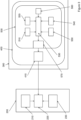
- FIG 3 shows a schematic depiction of a user equipment (UE) 200 and the Mobility Management Entity (MME) 300 when the present method is used in the context of LTE.
- UE user equipment
- MME Mobility Management Entity
- the UE 200 comprises a SIM 210, PLMN search function 220 and user preferences 230.
- the MME 300 controls a number of different UE control functions and uses the NAS (non-access stratum) 400.
- the NAS is a functional layer in the LTE protocol stacks which is used to carry dialogue between the UE and the network nodes.
- the NAS will store a plurality of management object parameters 410 for transmission to the UEs.
- the various functions and entities required to implement the present method 500 comprise a UE timer 510, look-up table 520, a MinimumPeriodicSearchTimer algorithm 530, operator preferences 540, UE capabilities 550, user preferences 560 and a MinimumPeriodicSearchTimer update function 570.
- the UE SIM 210 stores a value for T, which can determine the frequency of PLMN searches if it is less than the MinimumPeriodicSearchTimer parameter value. It will be understood that this is a feature of the present standards and that these standards could be modified so that the MinimumPeriodicSearchTimer parameter value provided by the network operator takes priority over the T parameter value stored in the SIM.
- the SIM also stores data regarding the HPLMN and one or more PPLMNs.
- the PLMN search function carries out the search for a PLMN and is activated in accordance with the MinimumPeriodicSearchTimer parameter value determined as described above.
- User preferences 230 store a number of data parameters and measurements which can be reported to the network periodically, as described above. These parameters may include, for example, battery condition, UE location, QoE, QoE preferences, etc. and historical values and trends for one or more of these parameters and values.
- the MinimumPeriodicSearchTimer algorithm 530 will determine a value for the MinimumPeriodicSearchTimer parameter based on the inputs received from one or more of the UE timer 510, operator preferences 540, UE capabilities 550, and the user preferences 560. The algorithm may be prompted to retrieve a MinimumPeriodicSearchTimer value from the look-up table 520 dependent on the outcome of the determination. It will be understood that the UE timer, UE capabilities and the user preferences will need to be stored and/or determined on a per user basis. The operator preferences may be stored and/or determined on a per user basis or for a group of one or more UEs.
- MinimumPeriodicSearchTimer parameter value When a new MinimumPeriodicSearchTimer parameter value is determined for a particular UE then the value will be sent to the MinimumPeriodicSearchTimer update function 570, which will cause the new parameter value to be sent to the UE, as a management object parameter.
- a conventional mobile terminal which may be a mobile telephone, smartphone, or other mobile device
- a conventional mobile terminal may be upgraded to be able to perform the present method by the installation of one or more apps or other software.
- Suitable computer code may be deployed to such devices via download, for example via the internet, or on some physical media, for example, DVD, CD-ROM, USB memory stick, etc. for which the device has an appropriate media reader.
- the present disclosure provides a method for more efficiently managing a mobile communications network by varying the frequency with which a mobile terminal searches for a home network.
Landscapes
- Engineering & Computer Science (AREA)
- Computer Networks & Wireless Communication (AREA)
- Signal Processing (AREA)
- Computer Security & Cryptography (AREA)
- Mobile Radio Communication Systems (AREA)
Claims (9)
- Verfahren zum Betreiben eines Mobilkommunikationsnetzes (100'), wobei das Verfahren die folgenden Schritte, die durch eine Vorrichtung (122,300) des Netzes ausgeführt werden, umfasst:a) in Reaktion darauf, dass ein mobiles Endgerät (200) eine erste Verbindung mit einer ersten Netzbasisstation (112a, 112b, 112c) verliert und dann eine zweite Verbindung mit einer zweiten Netzbasisstation (122) aufbaut, Bestimmen eines Netzdurchsuchungs-Parameterwertes für das mobile Endgerät, wobei der Netzdurchsuchungs-Parameterwert eine Periode repräsentiert, mit der das mobile Endgerät periodische Durchsuchungen für sein mobiles Heimnetz ausführt;b) Senden des Netzdurchsuchungs-Parameterwertes zu dem mobilen Endgerät;c) periodisches erneutes Bestimmen des Wertes des Netzdurchsuchungs-Parameters, falls das mobile Endgerät noch immer mit der zweiten Basisstation verbunden ist; undd) Senden des Netzdurchsuchungs-Parameterwertes, der im Schritt c) bestimmt wurde, zu dem mobilen Endgerät,wobei:i) die erste Netzbasisstation eine Femtozelle (110a, 110b, 110c), die dem mobilen Heimnetz zugeordnet ist, enthält;ii) die zweite Netzbasisstation eine Makrozelle (120), die einem besuchten mobilen Netz zugeordnet ist, enthält; undiii) der Bereich, der durch die Makrozelle abgedeckt wird, mehrere Femtozellen (110a, 110b, 110c) enthält; und wobeidas Bestimmen und das erneute Bestimmen des Wertes des Netzdurchsuchungs-Parameterwertes in den Schritten a) bzw. c) durch einen Algorithmus (530) ausgeführt werden, der basiert auf einem UE-Zeitgeber (510) und/oder Betreiberpräferenzen (540) und/oder UE-Fähigkeiten (550) und/oder Anwenderpräferenzen (560) und/oder der Mobilitätshistorie für das mobile Endgerät und/oder einem Ort des mobilen Endgeräts und/oder einem Zustand des mobilen Endgeräts und/oder Erfahrungsqualitätsdaten, "QoE-Daten" und/oder Netzfehlerdaten und/oder der Anzahl mobiler Vorrichtungen, die das mobile Heimnetz suchen, und/oder einer Folgerung, dass eine hohe Wahrscheinlichkeit besteht, dass sich das mobile Endgerät in dem Abdeckungsbereich einer Femtozelle befindet.
- Verfahren nach Anspruch 1, wobei der Wert des Netzdurchsuchungs-Parameters zunimmt, wenn die Zeit, in der das mobile Endgerät mit der zweiten Basisstation verbunden ist, zunimmt.
- Verfahren nach Anspruch eins oder 2, wobei der Wert des Netzdurchsuchungs-Parameters ein ganzzahliges Vielfaches von 6 Minuten ist.
- Verfahren nach einem vorhergehenden Anspruch, wobei der Netzdurchsuchungs-Parameterwert durch das mobile Endgerät gespeichert wird.
- Verfahren nach einem vorhergehenden Anspruch, wobei die Vorrichtung des Netzes eine Basisstation oder eine Mobilitätsmanagement-Entität, MME, ist.
- Vorrichtung (122, 300) eines Mobilkommunikationsnetzes (100'), wobei die Vorrichtung während der Verwendung konfiguriert ist zum:A) Bestimmen eines Netzdurchsuchungs-Parameterwertes für ein mobiles Endgerät (200) in Reaktion darauf, dass das mobile Endgerät eine erste Verbindung mit einer ersten Netzbasisstation (112a, 112b, 112c) verliert und eine zweite Verbindung mit einer zweiten Netzbasisstation (122) aufbaut, wobei der Netzdurchsuchungs-Parameterwert eine Periode repräsentiert, mit der das mobile Endgerät periodische Durchsuchungen seines mobilen Heimnetzes ausführt;B) Senden des Netzdurchsuchungs-Parameterwertes zu dem mobilen Endgerät;C) periodisches erneutes Bestimmen des Wertes des Netzdurchsuchungs-Parameters, falls das mobile Endgerät noch immer mit der zweiten Basisstation verbunden ist; undD) Senden des Netzdurchsuchungs-Parameterwertes, der im Schritt C) bestimmt wurde, zu dem mobilen Endgerät;wobeiI) die erste Netzbasisstation eine Femtozelle (110a, 110b, 110c), die dem mobilen Heimnetz zugeordnet ist, enthält;II) die zweite Netzbasisstation eine Makrozelle (120), die einem besuchten mobilen Netz zugeordnet ist, enthält;III) der Bereich, der durch die Makrozelle abgedeckt wird, mehrere Femtozellen (110a, 110b, 110c), die sich darin befinden, enthält; und wobei:
das Bestimmen und das erneute Bestimmen des Wertes des Netzdurchsuchungs-Parameterwertes in den Schritten A) bzw. C) durch einen Algorithmus (530) ausgeführt werden, der basiert auf einem UE-Zeitgeber (510) und/oder Betreiberpräferenzen (540) und/oder UE-Fähigkeiten (550) und/oder Anwenderpräferenzen (560) und/oder der Mobilitätshistorie für das mobile Endgerät und/oder einem Ort des mobilen Endgeräts und/oder einem Zustand des mobilen Endgeräts und/oder Erfahrungsqualitätsdaten, "QoE-Daten" und/oder Netzfehlerdaten und/oder der Anzahl mobiler Vorrichtungen, die das mobile Heimnetz suchen, und/oder einer Folgerung, dass eine hohe Wahrscheinlichkeit besteht, dass sich das mobile Endgerät in dem Abdeckungsbereich einer Femtozelle befindet. - Vorrichtung nach Anspruch 6, wobei die Vorrichtung während der Verwendung ferner konfiguriert ist, den Wert des Netzdurchsuchungs-Parameters zu erhöhen, wenn die Zeit, in der das mobile Endgerät mit der zweiten Basisstation verbunden ist, zunimmt.
- Vorrichtung nach Anspruch 6 oder Anspruch 7, wobei die Vorrichtung eine Basisstation oder eine Mobilitätsmanagement-Entität, MME, ist.
- Computerlesbares Speichermedium, das Anweisungen enthält, die dann, wenn sie durch einen Computer ausgeführt werden, den Computer dazu veranlassen, das Verfahren nach einem der Ansprüche 1 bis 5 auszuführen.
Applications Claiming Priority (2)
| Application Number | Priority Date | Filing Date | Title |
|---|---|---|---|
| EP14250019 | 2014-02-06 | ||
| PCT/GB2015/050311 WO2015118327A1 (en) | 2014-02-06 | 2015-02-05 | Method and apparatus for determining a network search parameter in a mobile communications network |
Publications (2)
| Publication Number | Publication Date |
|---|---|
| EP3103285A1 EP3103285A1 (de) | 2016-12-14 |
| EP3103285B1 true EP3103285B1 (de) | 2023-03-29 |
Family
ID=50277156
Family Applications (1)
| Application Number | Title | Priority Date | Filing Date |
|---|---|---|---|
| EP15704084.1A Active EP3103285B1 (de) | 2014-02-06 | 2015-02-05 | Verfahren und vorrichtung zur bestimmung eines netzwerksuchparameters in einem mobilfunknetz |
Country Status (4)
| Country | Link |
|---|---|
| US (1) | US10368294B2 (de) |
| EP (1) | EP3103285B1 (de) |
| CN (1) | CN106105325A (de) |
| WO (1) | WO2015118327A1 (de) |
Families Citing this family (5)
| Publication number | Priority date | Publication date | Assignee | Title |
|---|---|---|---|---|
| CN106105324A (zh) | 2014-02-06 | 2016-11-09 | 英国电讯有限公司 | 用于确定移动通信网络中的网络搜索参数的方法和设备 |
| US10231171B2 (en) | 2014-02-06 | 2019-03-12 | British Telecommunications Public Limited Company | Method and apparatus for determining a network search parameter in a mobile communications network |
| EP3103288B1 (de) | 2014-02-06 | 2023-04-12 | British Telecommunications public limited company | Verfahren und vorrichtung zur bestimmung eines netzwerksuchparameters in einem mobilfunknetz |
| CN107750059B (zh) * | 2017-12-05 | 2021-02-23 | 宇龙计算机通信科技(深圳)有限公司 | 一种频段搜索方法及相关设备 |
| WO2022014987A1 (ko) * | 2020-07-13 | 2022-01-20 | 엘지전자 주식회사 | 재난 로밍 발생으로 인한 타이머 t 조정 시 ui/ux 표시 방법 및 이를 지원하는 장치 |
Family Cites Families (20)
| Publication number | Priority date | Publication date | Assignee | Title |
|---|---|---|---|---|
| EP1527653B1 (de) * | 2002-08-05 | 2007-10-31 | Roamware, Inc. | Verfahren und system zur weiterleitung von verkehr in einem zellularen netzwerk |
| CN100396150C (zh) | 2004-11-25 | 2008-06-18 | 华为技术有限公司 | 一种公共陆地移动网络的重选方法 |
| FI20075297A0 (fi) | 2007-04-27 | 2007-04-27 | Nokia Siemens Networks Oy | Menetelmä, radiojärjestelmä ja tukiasema |
| CN101299870B (zh) | 2007-04-30 | 2011-04-20 | 华为技术有限公司 | 接入私有基站的控制方法、系统及装置 |
| KR101140560B1 (ko) | 2007-06-26 | 2012-05-02 | 엔이씨 유럽 리미티드 | 이동 단말기의 스캐닝 프로세스를 최적화하는 방법 |
| US8175567B2 (en) | 2008-05-30 | 2012-05-08 | Qualcomm Incorporated | Method and apparatus for searching for signals in a wireless communication system |
| US8331929B2 (en) | 2009-11-24 | 2012-12-11 | At&T Mobility Ii Llc | Mobility-based reselection scan scheduling |
| KR20110065825A (ko) | 2009-12-10 | 2011-06-16 | 삼성전자주식회사 | 중첩 네트워크 환경에서 핸드오버를 수행하기 위한 방법 및 시스템 |
| TWI417532B (zh) * | 2010-03-01 | 2013-12-01 | Univ Nat Chiao Tung | 用於多階衝擊器之多微孔噴嘴板之製造方法 |
| US9491690B2 (en) * | 2010-07-15 | 2016-11-08 | CSC Holdings, LLC | Efficient searching for communications networks |
| GB2482869B (en) | 2010-08-16 | 2013-11-06 | Picochip Designs Ltd | Femtocell access control |
| US8385917B2 (en) | 2010-11-15 | 2013-02-26 | At&T Mobility Ii Llc | Radio selection employing transit data determined from kinetic energy generation |
| US8514717B2 (en) | 2011-01-21 | 2013-08-20 | T-Mobile Usa, Inc. | Smart connection manager |
| US9137733B2 (en) | 2011-03-15 | 2015-09-15 | At&T Mobility Ii Llc | Dynamic control of cell reselection parameters |
| US8526945B2 (en) | 2011-03-31 | 2013-09-03 | Alcatel Lucent | Tracking and paging at boundries in LTE networks |
| US8611307B2 (en) * | 2011-04-21 | 2013-12-17 | Amazon Technologies, Inc. | Server assisted higher priority PLMN scan |
| US9100900B2 (en) * | 2011-08-16 | 2015-08-04 | Amazon Technologies, Inc. | Home or higher priority PLMN scan in 4G connected mode |
| US9049646B2 (en) | 2011-11-01 | 2015-06-02 | Blackberry Limited | Methods and apparatus for network searching |
| US9380557B2 (en) | 2012-06-20 | 2016-06-28 | Apple Inc. | Adaptive out of service scanning |
| US20140274063A1 (en) | 2013-03-15 | 2014-09-18 | Qualcomm Incorporated | System and method for mitigating ping-pong handovers and cell reselections |
-
2015
- 2015-02-05 EP EP15704084.1A patent/EP3103285B1/de active Active
- 2015-02-05 WO PCT/GB2015/050311 patent/WO2015118327A1/en not_active Ceased
- 2015-02-05 CN CN201580013820.7A patent/CN106105325A/zh active Pending
- 2015-02-05 US US15/116,380 patent/US10368294B2/en active Active
Also Published As
| Publication number | Publication date |
|---|---|
| WO2015118327A1 (en) | 2015-08-13 |
| CN106105325A (zh) | 2016-11-09 |
| EP3103285A1 (de) | 2016-12-14 |
| US10368294B2 (en) | 2019-07-30 |
| US20170013542A1 (en) | 2017-01-12 |
Similar Documents
| Publication | Publication Date | Title |
|---|---|---|
| EP3103288B1 (de) | Verfahren und vorrichtung zur bestimmung eines netzwerksuchparameters in einem mobilfunknetz | |
| KR101579020B1 (ko) | 블랙리스트 또는 화이트리스트를 사용한 셀 선택 | |
| EP2826309B1 (de) | Verfahren und benutzergerät zur selektiven zugangskontrolle mit gesicherten dienstkontinuitätsgarantien | |
| EP3069556B1 (de) | Kommunikationssystem, infrastrukturvorrichtung, kommunikationsendgerät und verfahren | |
| EP3103285B1 (de) | Verfahren und vorrichtung zur bestimmung eines netzwerksuchparameters in einem mobilfunknetz | |
| EP3103286B1 (de) | Kommunikationsnetzeverfahren und vorrichtung zur bestimmung eines netzwerksuchparameters in einem mobilfunknetz | |
| US9474026B2 (en) | Communications device and a method thereby, a base station and a method thereby, a system, and a non-transitory computer readable medium | |
| WO2009096496A1 (en) | Plmn selection in multi-network environment | |
| US12177651B2 (en) | Traffic steering in a heterogeneous network | |
| CN103384375B (zh) | 基站标准版本模式处理方法及装置、终端、基站 | |
| EP3103287B1 (de) | Kommunikationsnetzwerkeverfahren und vorrichtung zur bestimmung eines netzwerksuchparameters in einem mobilfunknetz | |
| EP4550892A1 (de) | Kommunikation in bezug auf plmn-suchintervall | |
| CN103945475A (zh) | 网络选择 | |
| EP2905997A1 (de) | Verfahren und Vorrichtung zur Bestimmung eines Netzwerksuchparameter in einem Mobilfunknetz | |
| EP4668872A1 (de) | Vorrichtung und verfahren zur auswahl eines öffentlichen landfunknetzes in einem drahtlosen kommunikationssystem | |
| US20250358715A1 (en) | SHARING SYSTEM INFORMATION UPDATES ON A MULTIPLE SIM/eSIM WIRELESS DEVICE | |
| WO2024147954A1 (en) | Optimizing cellular wireless network searching by a multiple sim/esim wireless device |
Legal Events
| Date | Code | Title | Description |
|---|---|---|---|
| PUAI | Public reference made under article 153(3) epc to a published international application that has entered the european phase |
Free format text: ORIGINAL CODE: 0009012 |
|
| STAA | Information on the status of an ep patent application or granted ep patent |
Free format text: STATUS: REQUEST FOR EXAMINATION WAS MADE |
|
| 17P | Request for examination filed |
Effective date: 20160801 |
|
| AK | Designated contracting states |
Kind code of ref document: A1 Designated state(s): AL AT BE BG CH CY CZ DE DK EE ES FI FR GB GR HR HU IE IS IT LI LT LU LV MC MK MT NL NO PL PT RO RS SE SI SK SM TR |
|
| AX | Request for extension of the european patent |
Extension state: BA ME |
|
| DAX | Request for extension of the european patent (deleted) | ||
| RAP1 | Party data changed (applicant data changed or rights of an application transferred) |
Owner name: BRITISH TELECOMMUNICATIONS PUBLIC LIMITED COMPANY |
|
| STAA | Information on the status of an ep patent application or granted ep patent |
Free format text: STATUS: EXAMINATION IS IN PROGRESS |
|
| 17Q | First examination report despatched |
Effective date: 20190128 |
|
| RAP3 | Party data changed (applicant data changed or rights of an application transferred) |
Owner name: BRITISH TELECOMMUNICATIONS PUBLIC LIMITED COMPANY |
|
| RIC1 | Information provided on ipc code assigned before grant |
Ipc: H04W 76/19 20180101ALI20220831BHEP Ipc: H04W 48/16 20090101AFI20220831BHEP |
|
| GRAP | Despatch of communication of intention to grant a patent |
Free format text: ORIGINAL CODE: EPIDOSNIGR1 |
|
| STAA | Information on the status of an ep patent application or granted ep patent |
Free format text: STATUS: GRANT OF PATENT IS INTENDED |
|
| INTG | Intention to grant announced |
Effective date: 20221020 |
|
| GRAS | Grant fee paid |
Free format text: ORIGINAL CODE: EPIDOSNIGR3 |
|
| GRAA | (expected) grant |
Free format text: ORIGINAL CODE: 0009210 |
|
| STAA | Information on the status of an ep patent application or granted ep patent |
Free format text: STATUS: THE PATENT HAS BEEN GRANTED |
|
| AK | Designated contracting states |
Kind code of ref document: B1 Designated state(s): AL AT BE BG CH CY CZ DE DK EE ES FI FR GB GR HR HU IE IS IT LI LT LU LV MC MK MT NL NO PL PT RO RS SE SI SK SM TR |
|
| REG | Reference to a national code |
Ref country code: GB Ref legal event code: FG4D |
|
| REG | Reference to a national code |
Ref country code: CH Ref legal event code: EP |
|
| REG | Reference to a national code |
Ref country code: DE Ref legal event code: R096 Ref document number: 602015082951 Country of ref document: DE |
|
| REG | Reference to a national code |
Ref country code: AT Ref legal event code: REF Ref document number: 1557521 Country of ref document: AT Kind code of ref document: T Effective date: 20230415 |
|
| REG | Reference to a national code |
Ref country code: IE Ref legal event code: FG4D |
|
| REG | Reference to a national code |
Ref country code: LT Ref legal event code: MG9D |
|
| PG25 | Lapsed in a contracting state [announced via postgrant information from national office to epo] |
Ref country code: RS Free format text: LAPSE BECAUSE OF FAILURE TO SUBMIT A TRANSLATION OF THE DESCRIPTION OR TO PAY THE FEE WITHIN THE PRESCRIBED TIME-LIMIT Effective date: 20230329 Ref country code: NO Free format text: LAPSE BECAUSE OF FAILURE TO SUBMIT A TRANSLATION OF THE DESCRIPTION OR TO PAY THE FEE WITHIN THE PRESCRIBED TIME-LIMIT Effective date: 20230629 Ref country code: LV Free format text: LAPSE BECAUSE OF FAILURE TO SUBMIT A TRANSLATION OF THE DESCRIPTION OR TO PAY THE FEE WITHIN THE PRESCRIBED TIME-LIMIT Effective date: 20230329 Ref country code: LT Free format text: LAPSE BECAUSE OF FAILURE TO SUBMIT A TRANSLATION OF THE DESCRIPTION OR TO PAY THE FEE WITHIN THE PRESCRIBED TIME-LIMIT Effective date: 20230329 Ref country code: HR Free format text: LAPSE BECAUSE OF FAILURE TO SUBMIT A TRANSLATION OF THE DESCRIPTION OR TO PAY THE FEE WITHIN THE PRESCRIBED TIME-LIMIT Effective date: 20230329 |
|
| P01 | Opt-out of the competence of the unified patent court (upc) registered |
Effective date: 20230623 |
|
| REG | Reference to a national code |
Ref country code: NL Ref legal event code: MP Effective date: 20230329 |
|
| REG | Reference to a national code |
Ref country code: AT Ref legal event code: MK05 Ref document number: 1557521 Country of ref document: AT Kind code of ref document: T Effective date: 20230329 |
|
| PG25 | Lapsed in a contracting state [announced via postgrant information from national office to epo] |
Ref country code: SE Free format text: LAPSE BECAUSE OF FAILURE TO SUBMIT A TRANSLATION OF THE DESCRIPTION OR TO PAY THE FEE WITHIN THE PRESCRIBED TIME-LIMIT Effective date: 20230329 Ref country code: NL Free format text: LAPSE BECAUSE OF FAILURE TO SUBMIT A TRANSLATION OF THE DESCRIPTION OR TO PAY THE FEE WITHIN THE PRESCRIBED TIME-LIMIT Effective date: 20230329 Ref country code: GR Free format text: LAPSE BECAUSE OF FAILURE TO SUBMIT A TRANSLATION OF THE DESCRIPTION OR TO PAY THE FEE WITHIN THE PRESCRIBED TIME-LIMIT Effective date: 20230630 Ref country code: FI Free format text: LAPSE BECAUSE OF FAILURE TO SUBMIT A TRANSLATION OF THE DESCRIPTION OR TO PAY THE FEE WITHIN THE PRESCRIBED TIME-LIMIT Effective date: 20230329 |
|
| PG25 | Lapsed in a contracting state [announced via postgrant information from national office to epo] |
Ref country code: SM Free format text: LAPSE BECAUSE OF FAILURE TO SUBMIT A TRANSLATION OF THE DESCRIPTION OR TO PAY THE FEE WITHIN THE PRESCRIBED TIME-LIMIT Effective date: 20230329 Ref country code: RO Free format text: LAPSE BECAUSE OF FAILURE TO SUBMIT A TRANSLATION OF THE DESCRIPTION OR TO PAY THE FEE WITHIN THE PRESCRIBED TIME-LIMIT Effective date: 20230329 Ref country code: PT Free format text: LAPSE BECAUSE OF FAILURE TO SUBMIT A TRANSLATION OF THE DESCRIPTION OR TO PAY THE FEE WITHIN THE PRESCRIBED TIME-LIMIT Effective date: 20230731 Ref country code: ES Free format text: LAPSE BECAUSE OF FAILURE TO SUBMIT A TRANSLATION OF THE DESCRIPTION OR TO PAY THE FEE WITHIN THE PRESCRIBED TIME-LIMIT Effective date: 20230329 Ref country code: EE Free format text: LAPSE BECAUSE OF FAILURE TO SUBMIT A TRANSLATION OF THE DESCRIPTION OR TO PAY THE FEE WITHIN THE PRESCRIBED TIME-LIMIT Effective date: 20230329 Ref country code: AT Free format text: LAPSE BECAUSE OF FAILURE TO SUBMIT A TRANSLATION OF THE DESCRIPTION OR TO PAY THE FEE WITHIN THE PRESCRIBED TIME-LIMIT Effective date: 20230329 |
|
| PG25 | Lapsed in a contracting state [announced via postgrant information from national office to epo] |
Ref country code: SK Free format text: LAPSE BECAUSE OF FAILURE TO SUBMIT A TRANSLATION OF THE DESCRIPTION OR TO PAY THE FEE WITHIN THE PRESCRIBED TIME-LIMIT Effective date: 20230329 Ref country code: PL Free format text: LAPSE BECAUSE OF FAILURE TO SUBMIT A TRANSLATION OF THE DESCRIPTION OR TO PAY THE FEE WITHIN THE PRESCRIBED TIME-LIMIT Effective date: 20230329 Ref country code: IS Free format text: LAPSE BECAUSE OF FAILURE TO SUBMIT A TRANSLATION OF THE DESCRIPTION OR TO PAY THE FEE WITHIN THE PRESCRIBED TIME-LIMIT Effective date: 20230729 |
|
| REG | Reference to a national code |
Ref country code: DE Ref legal event code: R097 Ref document number: 602015082951 Country of ref document: DE |
|
| PG25 | Lapsed in a contracting state [announced via postgrant information from national office to epo] |
Ref country code: DK Free format text: LAPSE BECAUSE OF FAILURE TO SUBMIT A TRANSLATION OF THE DESCRIPTION OR TO PAY THE FEE WITHIN THE PRESCRIBED TIME-LIMIT Effective date: 20230329 Ref country code: CZ Free format text: LAPSE BECAUSE OF FAILURE TO SUBMIT A TRANSLATION OF THE DESCRIPTION OR TO PAY THE FEE WITHIN THE PRESCRIBED TIME-LIMIT Effective date: 20230329 |
|
| PLBE | No opposition filed within time limit |
Free format text: ORIGINAL CODE: 0009261 |
|
| STAA | Information on the status of an ep patent application or granted ep patent |
Free format text: STATUS: NO OPPOSITION FILED WITHIN TIME LIMIT |
|
| 26N | No opposition filed |
Effective date: 20240103 |
|
| PG25 | Lapsed in a contracting state [announced via postgrant information from national office to epo] |
Ref country code: SI Free format text: LAPSE BECAUSE OF FAILURE TO SUBMIT A TRANSLATION OF THE DESCRIPTION OR TO PAY THE FEE WITHIN THE PRESCRIBED TIME-LIMIT Effective date: 20230329 |
|
| PG25 | Lapsed in a contracting state [announced via postgrant information from national office to epo] |
Ref country code: SI Free format text: LAPSE BECAUSE OF FAILURE TO SUBMIT A TRANSLATION OF THE DESCRIPTION OR TO PAY THE FEE WITHIN THE PRESCRIBED TIME-LIMIT Effective date: 20230329 Ref country code: IT Free format text: LAPSE BECAUSE OF FAILURE TO SUBMIT A TRANSLATION OF THE DESCRIPTION OR TO PAY THE FEE WITHIN THE PRESCRIBED TIME-LIMIT Effective date: 20230329 |
|
| PG25 | Lapsed in a contracting state [announced via postgrant information from national office to epo] |
Ref country code: MC Free format text: LAPSE BECAUSE OF FAILURE TO SUBMIT A TRANSLATION OF THE DESCRIPTION OR TO PAY THE FEE WITHIN THE PRESCRIBED TIME-LIMIT Effective date: 20230329 |
|
| REG | Reference to a national code |
Ref country code: CH Ref legal event code: PL |
|
| PG25 | Lapsed in a contracting state [announced via postgrant information from national office to epo] |
Ref country code: LU Free format text: LAPSE BECAUSE OF NON-PAYMENT OF DUE FEES Effective date: 20240205 |
|
| PG25 | Lapsed in a contracting state [announced via postgrant information from national office to epo] |
Ref country code: CH Free format text: LAPSE BECAUSE OF NON-PAYMENT OF DUE FEES Effective date: 20240229 |
|
| PG25 | Lapsed in a contracting state [announced via postgrant information from national office to epo] |
Ref country code: LU Free format text: LAPSE BECAUSE OF NON-PAYMENT OF DUE FEES Effective date: 20240205 Ref country code: CH Free format text: LAPSE BECAUSE OF NON-PAYMENT OF DUE FEES Effective date: 20240229 |
|
| PG25 | Lapsed in a contracting state [announced via postgrant information from national office to epo] |
Ref country code: BG Free format text: LAPSE BECAUSE OF FAILURE TO SUBMIT A TRANSLATION OF THE DESCRIPTION OR TO PAY THE FEE WITHIN THE PRESCRIBED TIME-LIMIT Effective date: 20230329 |
|
| PG25 | Lapsed in a contracting state [announced via postgrant information from national office to epo] |
Ref country code: BG Free format text: LAPSE BECAUSE OF FAILURE TO SUBMIT A TRANSLATION OF THE DESCRIPTION OR TO PAY THE FEE WITHIN THE PRESCRIBED TIME-LIMIT Effective date: 20230329 |
|
| REG | Reference to a national code |
Ref country code: BE Ref legal event code: MM Effective date: 20240229 |
|
| PG25 | Lapsed in a contracting state [announced via postgrant information from national office to epo] |
Ref country code: BE Free format text: LAPSE BECAUSE OF NON-PAYMENT OF DUE FEES Effective date: 20240229 |
|
| PG25 | Lapsed in a contracting state [announced via postgrant information from national office to epo] |
Ref country code: IE Free format text: LAPSE BECAUSE OF NON-PAYMENT OF DUE FEES Effective date: 20240205 |
|
| PG25 | Lapsed in a contracting state [announced via postgrant information from national office to epo] |
Ref country code: IE Free format text: LAPSE BECAUSE OF NON-PAYMENT OF DUE FEES Effective date: 20240205 Ref country code: BE Free format text: LAPSE BECAUSE OF NON-PAYMENT OF DUE FEES Effective date: 20240229 |
|
| PG25 | Lapsed in a contracting state [announced via postgrant information from national office to epo] |
Ref country code: CY Free format text: LAPSE BECAUSE OF FAILURE TO SUBMIT A TRANSLATION OF THE DESCRIPTION OR TO PAY THE FEE WITHIN THE PRESCRIBED TIME-LIMIT; INVALID AB INITIO Effective date: 20150205 |
|
| PG25 | Lapsed in a contracting state [announced via postgrant information from national office to epo] |
Ref country code: HU Free format text: LAPSE BECAUSE OF FAILURE TO SUBMIT A TRANSLATION OF THE DESCRIPTION OR TO PAY THE FEE WITHIN THE PRESCRIBED TIME-LIMIT; INVALID AB INITIO Effective date: 20150205 |
|
| PG25 | Lapsed in a contracting state [announced via postgrant information from national office to epo] |
Ref country code: TR Free format text: LAPSE BECAUSE OF FAILURE TO SUBMIT A TRANSLATION OF THE DESCRIPTION OR TO PAY THE FEE WITHIN THE PRESCRIBED TIME-LIMIT Effective date: 20230329 |
|
| PGFP | Annual fee paid to national office [announced via postgrant information from national office to epo] |
Ref country code: GB Payment date: 20260121 Year of fee payment: 12 |
|
| PGFP | Annual fee paid to national office [announced via postgrant information from national office to epo] |
Ref country code: DE Payment date: 20260121 Year of fee payment: 12 |
|
| PGFP | Annual fee paid to national office [announced via postgrant information from national office to epo] |
Ref country code: FR Payment date: 20260121 Year of fee payment: 12 |