EP3103308B1 - Verfahren und geräte zur wiederverbindung von master-vorrichtung und slave-vorrichtung - Google Patents
Verfahren und geräte zur wiederverbindung von master-vorrichtung und slave-vorrichtung Download PDFInfo
- Publication number
- EP3103308B1 EP3103308B1 EP15772367.7A EP15772367A EP3103308B1 EP 3103308 B1 EP3103308 B1 EP 3103308B1 EP 15772367 A EP15772367 A EP 15772367A EP 3103308 B1 EP3103308 B1 EP 3103308B1
- Authority
- EP
- European Patent Office
- Prior art keywords
- master device
- slave
- slave device
- master
- user
- Prior art date
- Legal status (The legal status is an assumption and is not a legal conclusion. Google has not performed a legal analysis and makes no representation as to the accuracy of the status listed.)
- Active
Links
Images


Classifications
-
- H—ELECTRICITY
- H04—ELECTRIC COMMUNICATION TECHNIQUE
- H04W—WIRELESS COMMUNICATION NETWORKS
- H04W88/00—Devices specially adapted for wireless communication networks, e.g. terminals, base stations or access point devices
- H04W88/02—Terminal devices
-
- H—ELECTRICITY
- H04—ELECTRIC COMMUNICATION TECHNIQUE
- H04W—WIRELESS COMMUNICATION NETWORKS
- H04W76/00—Connection management
- H04W76/10—Connection setup
- H04W76/14—Direct-mode setup
-
- H—ELECTRICITY
- H04—ELECTRIC COMMUNICATION TECHNIQUE
- H04W—WIRELESS COMMUNICATION NETWORKS
- H04W12/00—Security arrangements; Authentication; Protecting privacy or anonymity
- H04W12/06—Authentication
- H04W12/068—Authentication using credential vaults, e.g. password manager applications or one time password [OTP] applications
-
- H—ELECTRICITY
- H04—ELECTRIC COMMUNICATION TECHNIQUE
- H04W—WIRELESS COMMUNICATION NETWORKS
- H04W4/00—Services specially adapted for wireless communication networks; Facilities therefor
- H04W4/80—Services using short range communication, e.g. near-field communication [NFC], radio-frequency identification [RFID] or low energy communication
-
- H—ELECTRICITY
- H04—ELECTRIC COMMUNICATION TECHNIQUE
- H04W—WIRELESS COMMUNICATION NETWORKS
- H04W92/00—Interfaces specially adapted for wireless communication networks
- H04W92/16—Interfaces between hierarchically similar devices
- H04W92/18—Interfaces between hierarchically similar devices between terminal devices
-
- H—ELECTRICITY
- H04—ELECTRIC COMMUNICATION TECHNIQUE
- H04W—WIRELESS COMMUNICATION NETWORKS
- H04W76/00—Connection management
- H04W76/10—Connection setup
- H04W76/19—Connection re-establishment
-
- H—ELECTRICITY
- H04—ELECTRIC COMMUNICATION TECHNIQUE
- H04W—WIRELESS COMMUNICATION NETWORKS
- H04W8/00—Network data management
- H04W8/005—Discovery of network devices, e.g. terminals
-
- H—ELECTRICITY
- H04—ELECTRIC COMMUNICATION TECHNIQUE
- H04W—WIRELESS COMMUNICATION NETWORKS
- H04W84/00—Network topologies
- H04W84/18—Self-organising networks, e.g. ad-hoc networks or sensor networks
- H04W84/20—Leader-follower arrangements
Definitions
- Apparatuses and methods consistent with exemplary embodiments relate to reconnecting a master device and a slave device.
- Bluetooth is a communications protocol in which data is transmitted or received between electronic devices at a high speed by using a wireless frequency without physical communication cables. Also, Bluetooth may be used for wireless communication between various devices at a speed of 1 Mbps (actual effective speed of 721K), and transmit and receive radio waves by using frequency-hopping spread spectrum technology to switch between 79 channels having a bandwidth of 1 MHz to 2.4 GHz, or 1,600 times per second. In addition, Bluetooth does not consume a lot of power. Therefore, Bluetooth may avoid interfering with other signals by quick recognition and by using the frequency-hopping spread spectrum technology, and may stably transmit and receive data by using quicker and shorter packets in comparison to other systems that operate in the same frequency range.
- Patent applications EP2582160 A1 , US2011/0293095 A1 , US2010/0056055 A1 , US2008/0280559 A1 , EP2651179 A1 and EP2323460 A2 all disclose different master and slave devices which can pair and unpair each other.
- first, second, etc. can be used illustrating various elements
- the structural elements are not restricted by the terms. The terms are only used to distinguish one element from another element.
- a first structural element may be named a second structural element.
- the second structural element also may be named the first structural element.
- a "module” or a “unit” may perform at least one function or operation and may be embodied as hardware or software or as a combination of hardware and software. Also, a plurality of “modules” or a plurality of “units” may be integrated into at least one module except a "module” or a “unit” that may be embodied as particular hardware, to be embodied as at least one processor.
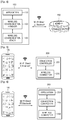
- FIG. 1 is a diagram illustrating a method of automatically reconnecting a master device 100 and a slave device 200, according to an exemplary embodiment.
- the master device 100 and the slave device 200 may transmit an unpairing message so that reconnection is not unnecessarily attempted.
- the master device 100 and the slave device 200 may perform a discovery process.
- the master device 100 or the slave device 200 may search for an adjacent communication device.
- the master device 100 or the slave device 200 may receive a search request via an input unit (e.g., inputter) from the user to search for an adjacent communication device capable of wireless communication, such as Bluetooth or Wi-Fi.
- an input unit e.g., inputter
- the master device 100 or the slave device 200 might search for an adjacent communication device only when there is a search request from the user.
- the master device 100 may search for the slave device 200 when the slave device 200 is near the master device 100, and the slave device 200 may search for the master device 100 when the master device 100 is near the slave device 200.
- the master device 100 or the slave device 200 may display found communication devices on a display. The user may select a device from among the communication devices displayed to be connected via wireless communication.
- the master device 100 and the slave device 200 may perform a pairing operation. Pairing refers to a process for authenticating devices.
- the master device 100 and the slave device 200 may search for adjacent communication devices and select a communication device to be connected via wireless communication.
- Various authentication methods may be used. For example, the user may perform authentication by inputting a personal identification number (PIN) code.
- PIN personal identification number
- Pairing information is secured. Therefore, even when the master device 100 and the slave device 200 are disconnected, the master device 100 and the slave device 200 may be reconnected without an additional authentication process (pairing). However, if the pairing information is deleted, the pairing operation needs to be performed again to connect the master device 100 and the slave device 200.
- the master device 100 and the slave device 200 may be connected via wireless communication.
- the master device 100 and the slave device 200 are selected by the user, the master device 100 or the slave device 200 is connected to the other via wireless communication.
- Wireless communication is a communication method of transmitting and receiving data between devices that are near one another, such as Bluetooth or Wi-Fi.
- the master device 100 and the slave device 200 may be automatically reconnected to one another without an additional input when the master device 100 and the slave device 200 are in a reconnectable state. For example, when Bluetooth is OFF on the slave device 200, the master device 100 attempts reconnection with the slave device 200. When Bluetooth is turned ON on the slave device 200, the master device 100 is automatically reconnected to the slave device 200.
- the slave device 200 may transmit an unpairing message to the master device 100.
- the slave device 200 may receive an unpairing request from the user via the input unit.
- the slave device 200 may transmit the unpairing message to the master device 100 and disconnect from the master device 100.
- the slave device 200 may not attempt to reconnect to the master device 100 before a pairing request is received from the user.
- the master device 100 may attempt auto-connection with the slave device 200 depending on whether or not an unpairing message is received. When an unpairing message is received from the slave device 200, the master device 100 may disconnect from the slave device 200 and may not attempt to reconnect to the slave device 200. If the master device 100 did not receive an unpairing message from the slave device 200 and is disconnected from the slave device 200 without user intervention, the master device 100 may attempt to reconnect to the slave device 200.
- FIG. 1 illustrates an example in which the slave device 200 transmits the unpairing message to the master device 100
- the master device 100 may transmit an unpairing message to the slave device 200 and stop the slave device 200 from attempting to reconnect to the master device 100.
- the master device 100 or the slave device 200 may be electronic devices such as a mobile phone, a tablet PC, a laptop computer, or a wearable device, etc.
- the wearable device may be an electronic device that may be worn on the body of the user, such as glasses, a bracelet, an armband, an earring, etc.
- the slave device 200 may display a "PAIRING” button and an "UNPAIRING” button on the display. The user may pair or unpair the slave device 200 with the master device 100 by selecting the "PAIRING” button or the "UNPAIRING” button.
- the master device 100 may also display a "PAIRING” button and an “UNPAIRING” button on the display. The user may pair or unpair the master device 100 with the slave device 200 by selecting the "PAIRING” button or the "UNPAIRING” button.
- the master device 100 and the slave device 200 may continuously attempt to connect to one another and thus may consume power.
- the master device 100 and the slave device 200 may be paired but disconnected when the master device 100 and the slave device 200 are moved apart by a certain distance while they are connected to each other, when one of the master device 100 and the slave device 200 stops wireless communication, or when one of the master device 100 and the slave device 200 is turned off.
- the master device 100 and the slave device 200 may not be connected to each other even when the master device 100 or the slave device 200 attempts reconnection, and thus, power may be unnecessarily consumed.
- the master device 100 and the slave device 200 When the master device 100 and the slave device 200 continuously attempt to connect to one another when they are unpaired, power consumption may be increased. For example, when the master device 100 and the slave device 200 are not connected at first or are connected but become unpaired, the master device 100 and the slave device 200 may not be connected to each other even if the master device 100 or the slave device 200 attempts connection. Thus, power may be unnecessarily consumed.
- FIG. 2 is a diagram illustrating an example in which a plurality of slave devices 200 are connected to a master device 100.
- three slave devices 200 are connected to one master device 100.
- the master device 100 may stop a reconnection attempt when unpairing messages are received from each of the three slave devices 200.
- Each of the slave devices 200 may transmit an unpairing message to the master device 100.
- the master device 100 may determine whether an unpairing message is received from each of the slave devices 200. According to the determination result, when an unpairing message is received from all of the slave devices 200, since there are no more slave devices 200 that have attempted connection, the master device 100 does not transmit a message for requesting reconnection to the slave devices 200.
- the master device 100 does not attempt reconnection when an unpairing message is received from all of the N slave devices 200.
- FIG. 3 is a diagram illustrating details of the master device 100 according to an exemplary embodiment.
- the master device 100 includes a wireless communication handler 120 and a wireless communication stack 130.
- the wireless communication handler 120 may be a controller and includes at least one of processor.
- the wireless communication stack 130 may be a communication unit.
- the wireless communication handler 120 may perform a pairing operation with the slave device 200, and determine whether to attempt to reconnect to the slave device 200 according to whether an unpairing message is received from the slave device 200. In other words, the wireless communication handler 120 controls wireless communication performed by the master device 100.
- the wireless communication handler 120 may authenticate the slave device 200 by using data received from the slave device 200.
- the master device 100 may be connected to the authenticated slave device 200 via Bluetooth or Wi-Fi. Therefore, the wireless communication handler 120 may perform authentication by using the data received from the slave device 200 such as a password.
- the wireless communication handler 120 may control the wireless communication stack 130 so that the wireless communication stack 130 attempts to connect the master device 100 to the slave device 200 via Bluetooth or Wi-Fi.
- the wireless communication handler 120 may control the wireless communication stack 130 so that the wireless communication stack 130 stops attempting to reconnect the master device 100 to the slave device 200.
- the unpairing message may terminate the authentication of the slave device 200. Therefore, after the unpairing message is received, a pairing process may be required again to reconnect the master device 100 to the slave device 200.
- the wireless communication handler 120 may control the wireless communication stack 130 such that the wireless communication stack 130 attempts to reconnect the master device 100 to the slave device 200. Specifically, when the unpairing message is not received and the master device 100 is disconnected from the slave device 200, the wireless communication handler 120 may control the wireless communication stack 130 so that reconnection is attempted.
- the wireless communication stack 130 may wirelessly communicate with the slave device 200 and transmit data to or receive data from the slave device 200 under the control of the wireless communication handler 120.
- the wireless communication stack 130 may actually transmit data to or receive data from the slave device 200. That is, the wireless communication stack 130 may transmit and receive data for Bluetooth or Wi-Fi connection, and transmit and receive data after being connected via Bluetooth or Wi-Fi.
- the wireless communication stack 130 may receive the unpairing message in packets.
- a packet may be 4-byte data in a file format that satisfies Bluetooth requirements.
- FIG. 4 is a diagram illustrating details of the master device 100 according to another exemplary embodiment.
- the master device 100 further includes an application 110.
- the application 110 controls wireless communication connection.
- the application 110 may perform an operation of receiving a request from the user via the display or another input method, and output the request from the user to the wireless communication handler 120.
- the application 110 may receive a pairing request or an unpairing request from the user, and output the pairing request or the unpairing request to the wireless communication handler 120.
- the application 110 may request connection to adjacent electronic devices.
- the application 110 may display adjacent electronic devices that are found and connect to an electronic device selected by the user.
- the application 110 may request the wireless communication handler 120 to connect to the selected electronic device.
- the application 110 may process data via wireless communication.
- the application 110 may control the wireless communication handler 120 and the wireless communication stack 130 so that data stored in the master device 100 is transmitted to the slave device 200. Also, the application 110 may display data received from a slave device 200 or store the data in memory.
- the wireless communication handler 120 may process a received request according to a current state of the master device 100.
- the wireless communication handler 120 may receive a request from the application 110 or the wireless communication stack 130.
- the wireless communication handler 120 may process the received request according to whether the master device 100 is paired with the slave device 200, connected to the slave device 200 via Bluetooth or Wi-Fi, or has received an unpairing message or not. For example, when the master device 100 is connected to the slave device 200 and the wireless communication stack 130 receives an unpairing message, the wireless communication handler 120 may disconnect from the slave device 200 and stop a reconnection attempt.
- a display is a device for receiving a request from the user.
- the display may receive the request via a touch panel, a keyboard, or a display screen, etc., from the user. For example, when the display is a touch panel, letters or numbers may be determined according to a location touched by the user.
- the display may display an image and request the user to input a password, or display a keypad and receive letters, special characters, or numbers from the user.
- the display may output letters, special characters, or numbers that are input by the user to the application 110.
- FIG. 5 is a diagram illustrating the details of slave device 200 according to an exemplary embodiment.
- the slave device 200 may include a connection controller 220 and a wireless connector 230.
- the connection controller 220 may be a controller and includes at least one of processor.
- the wireless connector 230 may be a communication unit.
- the connection controller 220 may pair the slave device 200 with the master device 100, and determine whether to attempt to reconnect the slave device 200 to the master device 100 depending on whether an unpairing message is transmitted to the master device 100.
- the connection controller 220 may authenticate the master device 100 by using data received from the master device 100.
- the slave device 200 may be connected to the authenticated master device 100, via Bluetooth or Wi-Fi. Therefore, the connection controller 220 may perform authentication by using data received from the master device 100, e.g., a password.
- the connection controller 220 may control the wireless connector 230 such that the wireless connector 230 attempts to connect the slave device 200 to the master device 100 via Bluetooth or Wi-Fi.
- the connection controller 220 may transmit an unpairing message according to a current state of the connection controller 220. That is, when the current state of the connection controller 220 indicates that the slave device 200 is connected to the master device 100, the connection controller 220 may generate and transmit an unpairing message to the master device 100.
- connection controller 220 may control the wireless connector 230 such that the wireless connector 230 stops attempting to reconnect the slave device 200 to the master device 100.
- the unpairing message is for terminating the authentication of the master device 100. Therefore, after the unpairing message is transmitted, a pairing process may be required again to reconnect the slave device 200 to the master device 100.
- connection controller 220 may control the wireless connector 230 such that the wireless connector 230 attempts to reconnect the slave device 200 to the master device 100. Specifically, if the unpairing message is not transmitted and the master device 100 is disconnected from the slave device 200, the connection controller 220 may control the wireless connector 230 such that reconnection is attempted.
- the wireless connector 230 may wirelessly communicate with the master device 100 and transmit data to or receive data from the master device 100 under the control of the connection controller 220.
- the wireless connector 230 may actually transmit data to or receive data from the master device 100. That is, the wireless connector 230 may transmit and receive data for a Bluetooth or Wi-Fi connection, and transmit and receive data after being connected via Bluetooth or Wi-Fi.
- the wireless connector 230 may transmit the unpairing message to the master device 100 under the control of the connection controller 220. Also, the wireless connector 230 may transmit the unpairing message in packets.
- FIG. 6 is a diagram illustrating the slave device 200 according to another exemplary embodiment.
- the slave device 200 further includes an application 210.
- the application 210 controls wireless communication connection.
- the application 210 may perform an operation of receiving a request from the user via the display or other input means, and output the request from the user to the connection controller 220.
- the application 210 may receive a pairing request or an unpairing request from the user, and provide the pairing request or the unpairing request to the connection controller 220.
- the application 210 may request connection to adjacent electronic devices.
- the application 210 may display adjacent electronic devices that are found and connect to an electronic device selected by the user.
- the application 210 may request the connection controller 220 to connect to the selected electronic device.
- the application 210 may process data via wireless communication.
- the application 210 may control the connection controller 220 and the wireless connector 230 so that data stored in the slave device 200 is transmitted to the master device 100. Also, the application 210 may display data received from the master device 100 or store the data in memory.
- the connection controller 220 may process a received request according to a current state of the slave device 200.
- the connection controller 220 may receive a request from the application 210 or the wireless connector 230.
- the connection controller 220 may process the received request according to whether the slave device 200 is paired with the master device 100, connected to the master device 100 via Bluetooth or Wi-Fi, or has received an unpairing message or not. For example, when the slave device 200 is connected to the master device 100 and the wireless connector 230 receives an unpairing message, the connection controller 220 may disconnect from the master device 100 and stop a reconnection attempt.
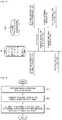
- FIG. 7 is a flowchart illustrating a method of automatically reconnecting the master device 100 and the slave device 200.
- the master device 100 may determine settings for a pairing operation.
- the master device 100 may receive a pairing start request from the user, search for adjacent electronic devices, and display found adjacent electronic devices on a display screen.
- the master device 100 may attempt to be paired with an electronic device selected by the user from among the adjacent electronic devices displayed on the display screen.
- the slave device 200 may determine settings for a pairing operation.
- the slave device 200 may receive a pairing start request from the user, search for adjacent electronic devices, and display found adjacent electronic devices on a display screen.
- the slave device 200 may attempt to be paired with an electronic device selected by the user from among the adjacent electronic devices displayed on the display screen.
- the master device 100 and the slave device 200 perform the pairing operation.
- the master device 100 and the slave device 200 may transmit and receive authentication information, determine whether received information corresponds to stored information, and authenticate according to the determination result.
- the master device 100 and the slave device 200 attempt to connect to the other via Bluetooth or Wi-Fi.
- the slave device 200 receives an unpairing request from the user.
- the user may input an unpairing request.
- the slave device 200 transmits the unpairing message to the master device 100.
- the slave device 200 stops the pairing operation and disconnects from the master device 100.
- the master device 100 may not determine whether the master device 100 was disconnected from the slave device 200 or unpaired with the slave device 200. Therefore, the slave device 200 may send the unpairing message to the master device 100 to notify the master device 100 that the pairing operation has stopped.
- the slave device 200 stops attempting to reconnect to the master device 100.
- the slave device 200 and the master device 100 are unpaired and disconnected. Therefore, since the slave device 200 does not attempt to reconnect to the master device 100 even when the slave device 200 and the master device 100 are technically able to reconnect, unnecessary power consumption may be reduced.
- the master device 100 stops attempting to reconnect to the slave device 200. Since the master device 100 received the unpairing message, the master device 100 can determine that the master device 100 is unpaired with and disconnected from the slave device 200. Therefore, since the master device 100 does not attempt to reconnect to the slave device 200 until an additional request is received from the user, unnecessary power consumption may be reduced.
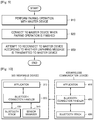
- FIG. 8 is a flowchart illustrating a method of reconnecting the master device 100 with the slave device 200, according to an exemplary embodiment. Referring to FIG. 8 , the master device 100 attempts to reconnect to the slave device 200 depending on whether an unpairing message is received.
- the master device 100 performs a pairing operation with the slave device 200.
- the master device 100 when the master device 100 is paired with the slave device 200, the master device 100 connects to the slave device 200.
- the master device 100 and the slave device 200 may be connected to each other via Bluetooth or Wi-Fi.
- the master device 100 attempts to reconnect to the slave device 200 depending on whether an unpairing message is received from the slave device 200. If an unpairing message is received from the slave device 200, the master device 100 does not attempt reconnection even when the master device 100 is disconnected from the slave device 200. However, if an unpairing message is not received from the slave device 200 and the master device 100 is disconnected from the slave device 200 by some other means, the master device 100 attempts to reconnect to the slave device 200.
- FIG. 9 is a flowchart illustrating a method of reconnecting the slave device 200 with the master device 100, according to an exemplary embodiment. Referring to FIG. 9 , the slave device 200 attempts to reconnect to the master device 100 depending on whether an unpairing message is transmitted.
- the slave device 200 performs a pairing operation with the master device 100.
- the slave device 200 connects to the master device 100.
- the slave device 200 and the master device 100 may be connected to each other via Bluetooth or Wi-Fi.
- the slave device 200 attempts to reconnect to the master device 100 depending on whether an unpairing message is transmitted to the master device 100. If an unpairing message is transmitted to the master device 100, the slave device 200 does not attempt reconnection even when the slave device 200 is disconnected from the master device 100. However, if an unpairing message is not transmitted to the master device 100 and the slave device 200 is disconnected from the master device 100, the slave device 200 attempts to reconnect to the master device 100.
- FIG. 10 is a diagram illustrating a method of reconnecting a wearable device 300 and a wireless communication device 400, according to an exemplary embodiment.
- the wearable device 300 includes an application 310, a Bluetooth connection handler 320, a Bluetooth stack 330, and a sensor manager 340.
- the wearable device 300 refers to an electronic device that may be worn on the body of the user, such as glasses, a bracelet, an armband, an earring, etc.
- the application 310 controls operations of the wearable device 300.
- the application 310 transmits, receives, stores, and displays data according to a request input by the user.
- the Bluetooth connection handler 320 determines a request received from the application 310 and performs state management. State management refers to processing a request received according to a current state.
- the Bluetooth connection handler 320 processes a pairing request or a connection request.
- the Bluetooth connection handler 320 may process a pairing end request or a connection end request. When there is a currently connected electronic device, the Bluetooth connection handler 320 may disregard a connection request received from another electronic device, change to a standby state, or connect to the other electronic device.
- the Bluetooth connection handler 320 determines whether a user is wearing the wearable device 300.
- the Bluetooth connection handler 320 may determine whether a user is wearing the wearable device 300 based on information received from the sensor manager 340.
- the Bluetooth connection handler 320 determines that the user is wearing the wearable device 300.
- the Bluetooth connection handler 320 determines that the user is wearing the wearable device 300.
- the Bluetooth connection handler 320 determines that the user is wearing the wearable device 300. If the wearable device 300 is glasses, a sensor or a camera may determine that the user is wearing the glasses when an eye of the user is at a certain location or within a certain distance.
- the Bluetooth connection handler 320 sends a message indicating whether the user is wearing the wearable device 300 to the wireless communication device 400.
- the Bluetooth stack 330 may be controlled by the Bluetooth connection handler 320.
- the Bluetooth stack 330 may connect to an adjacent electronic device via Bluetooth or transmit data to or receive data from the adjacent electronic device.
- the Bluetooth stack 330 reconnects to the wireless communication device 400 only when the user is wearing the wearable device 300.
- the Bluetooth stack 330 receives information indicating whether the user is wearing the wearable device 300 from the Bluetooth connection handler 320.
- the Bluetooth stack 330 attempts to reconnect to the wireless communication device 400.
- the sensor manager 340 manages various sensors included in the wearable device 300.
- the sensors may include an acceleration sensor, a gyro sensor, and an infrared sensor.
- the sensor manager 340 manages operations of the sensors and signals received from the sensors.
- the acceleration sensor estimates an acceleration speed generated by the movement of the wearable device 300.
- the acceleration sensor may provide the estimated acceleration speed to the sensor manager 340.
- the gyro sensor estimates a velocity generated by the movement of the wearable device 300.
- the gyro sensor may provide the estimated velocity to the sensor manager 340.
- the infrared sensor detects infrared rays around the wearable device 300.
- the infrared sensor may provide information about the detected infrared rays to the sensor manager 340.
- the temperature of the user may be detected by the infrared sensor, a laser, or a thermometer.
- the sensor manager 340 may provide information received from the infrared sensor, the laser, or the thermometer to the Bluetooth connection handler 320.
- the wireless communication device 400 includes an application 410, a Bluetooth connection handler 420, and a Bluetooth stack 430.
- the application 410, the Bluetooth connection handler 420, and the Bluetooth stack 430 of the wireless communication device 400 perform similar operations as the application 310, the Bluetooth connection handler 320, and the Bluetooth stack 330 of the wearable device 300, respectively. Therefore, elements and features described above with regard to the application 310, the Bluetooth connection handler 320, and the Bluetooth stack 330 of the wearable device 300 may also be applied to the application 410, the Bluetooth connection handler 420, and the Bluetooth stack 430 of the wireless communication device 400.
- the Bluetooth stack 430 receives a message indicating whether the user is wearing the wearable device 300 from the wearable device 300.
- the Bluetooth stack 430 may output the received message to the Bluetooth connection handler 420.
- the Bluetooth connection handler 420 attempts to reconnect to the wearable device 300 only when the user is wearing the wearable device 300.
- the Bluetooth connection handler 420 may attempt to reconnect to the wearable device 300 only when the wireless communication device 400 is disconnected from the wearable device 300 and the user is wearing the wearable device 300. In other words, in the case that the user is not wearing the wearable device 300, the Bluetooth connection handler 420 does not attempt to reconnect to the wearable device 300 even when the wireless communication device 400 is disconnected from the wearable device 300. Thus, unnecessary power consumption may be reduced.
- FIG. 11 is a flowchart illustrating a method of reconnecting the wearable device 300 with the wireless communication device 400, according to the invention.
- the wearable device 300 may determine whether the user is wearing the wearable device 300 and reconnect to the wireless communication device 400 depending on the determination result.
- the wearable device 300 monitors a heart rate of the user. If the heart rate of the user is detected, the method proceeds to operation 1140, if not, the method proceeds to operation 1120. Disconnection may occur when a distance between the wearable device 300 and the wireless communication device 400 is too large to transmit and receive data via Bluetooth, when the user has turned off the wearable device 300 or the wireless communication device 400, or when the user has ended communication via Bluetooth. When the wearable device 300 and the wireless communication device 400 are disconnected from each other, the wearable device 300 and the wireless communication device 400 may automatically attempt reconnection. However, attempting reconnection even in a case when the user is not wearing the wearable device 300 and not using the wearable device 300 may unnecessarily consume power.
- the wearable device 300 may determine that the user is wearing the wearable device 300. Therefore, the method proceeds to operation 1140 and the wearable device 300 attempts to reconnect to the wireless communication device 400.
- FIG. 11 only illustrates an example of monitoring the heart rate of the user, the wearable device 300 may also detect the temperature of the user to determine whether the user is wearing the wearable device 300.
- the wearable device 300 may send a message to the wireless communication device 400 when the heart rate of the user is detected. That is, the wearable device 300 sends a message indicating that the user is wearing the wearable device 300 to the wireless communication device 400.
- the wearable device 300 maintains a standby mode. Since the user may not be wearing the wearable device 300, the wearable device 300 is on standby until the user wears the wearable device 300.
- the wearable device 300 determines whether the acceleration sensor responded. If the acceleration sensor responds, the method proceeds to operation 1110; otherwise, the method proceeds to operation 1120.
- the wearable device 300 recognizes the response of the acceleration sensor as a trigger and restarts monitoring the heart rate of the user. When the acceleration sensor responds, this may be determined as the user starting to use the wearable device 300. Therefore, since the heart rate of the user may be monitored only when the acceleration sensor responds, unnecessary power consumption may be reduced.
- FIG. 11 only describes an acceleration sensor, other sensors capable of detecting the movement of the wearable device 300 may function in the same manner as the acceleration sensor.
- the wearable device 300 may attempt to reconnect to the wireless communication device 400.
- the wearable device 300 determines that the user is wearing the wearable device 300, and automatically attempt to reconnect to the wireless communication device 400. Therefore, since the wearable device 300 attempts to reconnect to the wireless communication device 400 only when the user is wearing the wearable device 300, unnecessary power consumption may be reduced.
- the wearable device 300 determines whether the wearable device 300 is successfully connected to the wireless communication device 400. If the connection is successful, the wearable device 300 ends the reconnecting operation; otherwise, if not, the method proceeds to operation 1160.
- the wearable device 300 may fail to connect to the wireless communication device 400 even when the user is wearing the wearable device 300. In this case, the wearable device 300 attempts reconnection with the wireless communication device 400 within a certain amount of time. The amount of time may be predetermined or may be set by a user.
- the wearable device 300 may determine whether a certain amount of time has elapsed. If the certain amount of time has elapsed, the method proceeds to operation 1110; otherwise, if not, the wearable device 300 proceeds to operation 1140. The wearable device 300 may attempt reconnection with the wireless communication device 400 within the certain amount of time, and if reconnection fails within the certain amount of time, the wearable device 300 may determine whether the heart rate of the user is detected and attempts reconnection again.
- the wearable device 300 since the wearable device 300 attempts to reconnect to the wireless communication device 400 only when the user is wearing the wearable device 300, it is possible to prevent the wearable device 300 from unnecessarily attempting reconnection when the user is not wearing the wearable device 300.
- FIG. 12 is a flowchart illustrating a method of reconnecting the wireless communication device 400 with the wearable device 300, according to the invention.
- the wireless communication device 400 attempts to reconnect to the wearable device 300 only when the user is wearing the wearable device 300 so that unnecessary power consumption is reduced.
- the wireless communication device 400 is connected to the wearable device 300 via wireless communication.
- Wireless communication refers to communication over short distances such as Bluetooth or Wi-Fi.
- the wireless communication device 400 determines whether the user is wearing the wearable device 300.
- the wireless communication device 400 receives a message indicating whether the user is wearing the wearable device 300.
- the wearable device 300 may determine whether the user is wearing the wearable device 300 depending on whether the heart rate of the user is detected or whether the temperature of the user is detected. Therefore, the wearable device 300 sends the message to the wireless communication device 400.
- the wireless communication device 400 determines whether the user is wearing the wearable device 300 based on information in the message.
- the wireless communication device 400 may attempt to reconnect to the wearable device 300 according to the determination result.
- the wireless communication device 400 attempts to reconnect to the wearable device 300. If the user is not wearing the wearable device 300, the wireless communication device 400 does not attempt reconnection even when the wireless communication device 400 is disconnected from the wearable device 300.
- the wearable device 300 determines whether the user is wearing the wearable device 300, and sends a message indicating whether the user is wearing the wearable device 300 to the wireless communication device 400. When the user is not wearing the wearable device 300, the wearable device 300 does not attempt to reconnect to the wireless communication device 400 even when the wearable device 300 is disconnected from the wireless communication device 400. When the user is wearing the wearable device 300, the wearable device 300 attempts to reconnect to the wireless communication device 400 when the wearable device 300 is disconnected from the wireless communication device 400.
- the wireless communication device 400 and the wearable device 300 When the wireless communication device 400 and the wearable device 300 are paired but disconnected, the wireless communication device 400 and the wearable device 300 continuously attempt to connect to one another and thus consume power.
- the wireless communication device 400 and the wearable device 300 may be paired but disconnected when a distance between the wireless communication device 400 and the wearable device 300 is increased while they are connected to each other, when one of the wireless communication device 400 and the wearable device 300 stops wireless communication, or when one of the wireless communication device 400 and the wearable device 300 is turned off. In this case, the wireless communication device 400 and the wearable device 300 may not be connected to each other even when the wireless communication device 400 or the wearable device 300 attempts reconnection, and thus, power is unnecessarily consumed.
- the wireless communication device 400 and the wearable device 300 attempt to connect to one another when they are unpaired, power consumption may be increased.
- the wireless communication device 400 and the wearable device 300 may not be connected to each other even when the wireless communication device 400 or the wearable device 300 attempts connection, and thus, power is unnecessarily consumed.
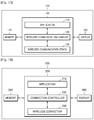
- FIG. 13 is a block diagram illustrating the master device 100 according to an exemplary embodiment.
- the master device 100 includes a memory 140, a controller 150, and a display 160.
- the memory 140 stores data and software modules used by the master device 100.
- the controller 150 controls operations of the master device 100.
- the controller 150 may load the software module stored in the memory 140.
- the controller 150 includes the application 110, the wireless communication handler 120, and the wireless communication stack 130.
- the controller 150 may load the software modules stored in the memory 140 which respectively correspond to the application 110, the wireless communication handler 120, and the wireless communication stack 130, and drive the application 110, the wireless communication handler 120, and the wireless communication stack 130.
- the wireless communication stack 130 may be a Bluetooth communication module or a Wi-Fi communication module.
- the controller 150 may be an application processor (AP) or a central processing unit (CPU).
- AP application processor
- CPU central processing unit
- the display 160 displays information according to a request from the controller 150.
- the display 160 may detect an input of the user, such as a touch input, and provide the input to the controller 150.
- FIG. 14 is a block diagram illustrating the slave device 200 according to an exemplary embodiment.
- the slave device 200 includes a memory 240, a controller 250, and a display 260.
- the memory 240 stores data and software modules used by the slave device 200.
- the controller 250 controls operations of the slave device 200.
- the controller 250 may load the software modules stored in the memory 240.
- the controller 250 includes the application 210, the connection controller 220, and the wireless connector 230.
- the controller 250 may load the software modules stored in the memory 240 which respectively correspond to the application 210, the connection controller 220, and the wireless connector 230, and drive the application 210, the connection controller 220, and the wireless connector 230.
- the wireless connector 230 may be a Bluetooth communication module or a Wi-Fi communication module.
- the controller 250 may be an AP or a CPU.
- the display 260 displays information according to a request from the controller 250.
- the display 260 may detect an input of the user, such as a touch input, and provide the input to the controller 250.
- the master device 100 may perform functions of the wireless communication device 400, and the slave device 200 may perform functions of the wearable device 300. Therefore, elements and features of the wireless communication device 400 and the wearable device 300 may also be respectively applied to the master device 100 and the slave device 200.
- a master device may attempt to reconnect to a slave device according to whether an unpairing message is received from the slave device.
- the slave device according to an exemplary embodiment may attempt to reconnect to the master device according to whether the unpairing message is transmitted to the master device.
- the slave device according to an exemplary embodiment may transmit the unpairing message to the master device when an unpairing request is received from a user, and stop attempting to reconnect to the master device.
- a wireless communication device may attempt to reconnect to a wearable device according to whether the user is wearing the wearable device.
- the wearable device may attempt to reconnect to the wireless communication device according to whether the user is wearing the wearable device.
- the device described herein may comprise a processor, a memory for storing program data and executing the program, a permanent storage unit such as a disk drive, a communications port for handling communications with external devices, and user interface devices, including a touch panel, keys, buttons, etc.
- these software modules may be stored as program instructions or computer-readable codes executable on a processor on a computer-readable medium.
- the computer-readable recording medium include magnetic storage media (e.g., ROM, floppy disks, hard disks, etc.), and optical recording media (e.g., CD-ROMs, or DVDs).
- the computer-readable recording medium can also be distributed over network-coupled computer systems so that the computer-readable code is stored and executed in a distributive manner. This media can be read by the computer, stored in the memory, and executed by the processor.
- inventive concepts may be described in terms of functional block components and various processing steps. Such functional blocks may be realized by any number of hardware and/or software components configured to perform the specified functions.
- the inventive concept may employ various integrated circuit (IC) components, e.g., memory elements, processing elements, logic elements, look-up tables, and the like, which may carry out a variety of functions under the control of one or more microprocessors or other control devices.
- IC integrated circuit
- the inventive concept may be implemented with any programming or scripting language such as C, C++, Java, assembler language, or the like, with the various algorithms being implemented with any combination of data structures, objects, processes, routines or other programming elements.
Landscapes
- Engineering & Computer Science (AREA)
- Computer Networks & Wireless Communication (AREA)
- Signal Processing (AREA)
- Computer Security & Cryptography (AREA)
- Telephone Function (AREA)
- Mobile Radio Communication Systems (AREA)
Claims (14)
- Durch eine Master-Vorrichtung ausgeführtes Verfahren zum automatischen Neuverbinden der Master-Vorrichtung und einer Slave-Vorrichtung, wobei die Slave-Vorrichtung eine Wearable-Vorrichtung ist, wobei das Verfahren Folgendes umfasst:Ausführen (810) einer Paarungsoperation mit der Slave-Vorrichtung;Verbinden (820) mit der Slave-Vorrichtung als Reaktion auf Abschluss der Paarungsoperation;Empfangen einer Nachricht von der Wearable-Vorrichtung, die angibt, ob ein Benutzer die Wearable-Vorrichtung trägt; undVersuchen (830) neu mit der Slave-Vorrichtung zu verbinden, abhängig davon, ob eine Entpaarungsnachricht von der Slave-Vorrichtung empfangen wird, und nur dann, wenn der Benutzer die Wearable-Vorrichtung trägt.
- Durch eine Slave-Vorrichtung ausgeführtes Verfahren zum automatischen Neuverbinden einer Master-Vorrichtung und der Slave-Vorrichtung, wobei die Slave-Vorrichtung eine Wearable-Vorrichtung ist, wobei das Verfahren Folgendes umfasst:Ausführen (910) einer Paarungsoperation mit der Master-Vorrichtung;Senden einer Nachricht zu der Master-Vorrichtung, die angibt, ob ein Benutzer die Wearable-Vorrichtung trägt;Verbinden (920) mit der Master-Vorrichtung als Reaktion auf Abschluss der Paarungsoperation; undVersuchen (930), neu mit der Master-Vorrichtung zu verbinden, abhängig davon, ob eine Entpaarungsnachricht zu der Master-Vorrichtung gesendet wird, und nur dann, wenn ein Benutzer die Wearable-Vorrichtung trägt.
- Verfahren nach Anspruch 2, wobei das Versuchen (930) neu mit der Master-Vorrichtung zu verbinden, umfasst, Neuverbindung als Reaktion darauf nicht zu versuchen, dass die Entpaarungsnachricht zu der Master-Vorrichtung gesendet wird.
- Verfahren nach Anspruch 2, wobei das Versuchen, neu mit der Master-Vorrichtung zu verbinden, umfasst, Neuverbindung zu versuchen, während die Entpaarungsnachricht nicht zu der Master-Vorrichtung gesendet wird.
- Verfahren nach Anspruch 2, wobei die Master-Vorrichtung und die Slave-Vorrichtung über Bluetooth drahtlos miteinander verbunden sind.
- Verfahren nach Anspruch 2, wobei das Durchführen (910) der Paarung Authentifizieren der Master-Vorrichtung umfasst.
- Verfahren nach Anspruch 2, wobei die Entpaarungsnachricht Beenden der Authentifizierung der Master-Vorrichtung umfasst.
- Verfahren nach Anspruch 2, wobei die Entpaarungsnachricht in Paketen gesendet wird.
- Verfahren nach Anspruch 2, wobei das Versuchen (930), neu mit der Master-Vorrichtung zu verbinden, Senden der Entpaarungsnachricht als Reaktion auf Empfang einer Entpaarungsanforderung von einem Benutzer über eine Anwendung umfasst.
- Master-Vorrichtung, umfassend:eine Steuerung (150), ausgelegt zumAusführen einer Paarungsoperation mit einer Slave-Vorrichtung, wobei die Slave-Vorrichtung eine Wearable-Vorrichtung ist, undBestimmen, ob neu mit der Slave-Vorrichtung zu verbinden ist, abhängig davon, ob eine Entpaarungsnachricht von der Slave-Vorrichtung empfangen wird; undeine Kommunikationseinheit, ausgelegt zum Durchführen von drahtloser Kommunikation mit der Slave-Vorrichtung unter der Kontrolle der Steuerung,wobei die Master-Vorrichtung betreibbar ist zum Empfangen einer Nachricht von der Wearable-Vorrichtung, die angibt, ob ein Benutzer die Wearable-Vorrichtung trägt, und die Steuerung ausgelegt ist zum Bestimmen, neu mit der Slave-Vorrichtung zu verbinden, nur dann, wenn der Benutzer die Wearable-Vorrichtung trägt.
- Slave-Vorrichtung, wobei die Slave-Vorrichtung eine Wearable-Vorrichtung ist, umfassend:eine Steuerung (250), ausgelegt zum Ausführen einer Paarungsoperation mit einer Master-Vorrichtung und Bestimmen, ob neu mit der Master-Vorrichtung zu verbinden ist, abhängig davon, ob eine Entpaarungsnachricht zu der Master-Vorrichtung gesendet wird; undeine Kommunikationseinheit, ausgelegt zum Durchführen drahtloser Kommunikation mit der Master-Vorrichtung unter der Kontrolle der Steuerung,wobei die Slave-Vorrichtung betreibbar ist zum Senden einer Nachricht zu der Master-Vorrichtung, die angibt, ob ein Benutzer die Wearable-Vorrichtung trägt, und die Steuerung ausgelegt ist zum Bestimmen, neu mit der Master-Vorrichtung zu verbinden, nur dann, wenn der Benutzer die Wearable-Vorrichtung trägt.
- Slave-Vorrichtung nach Anspruch 11, wobei als Reaktion auf Senden der Entpaarungsnachricht zu der Master-Vorrichtung die Verbindungssteuerung ausgelegt ist zum Steuern des drahtlosen Verbinders, das Versuchen, neu mit der Master-Vorrichtung zu verbinden, zu stoppen.
- Slave-Vorrichtung nach Anspruch 11, wobei, während die Entpaarungsnachricht nicht zu der Master-Vorrichtung gesendet wird, die Steuerung (250) ausgelegt ist zum Versuchen, neu mit der Master-Vorrichtung zu verbinden.
- Slave-Vorrichtung nach Anspruch 11, wobei die Master-Vorrichtung und die Slave-Vorrichtung dafür ausgelegt sind, über Bluetooth drahtlos miteinander verbunden zu sein.
Applications Claiming Priority (2)
| Application Number | Priority Date | Filing Date | Title |
|---|---|---|---|
| KR1020140039576A KR102209068B1 (ko) | 2014-04-02 | 2014-04-02 | 마스터 단말과 슬레이브 단말을 재연결하는 방법 |
| PCT/KR2015/003187 WO2015152614A1 (en) | 2014-04-02 | 2015-03-31 | Method of reconnecting master device and slave device |
Publications (3)
| Publication Number | Publication Date |
|---|---|
| EP3103308A1 EP3103308A1 (de) | 2016-12-14 |
| EP3103308A4 EP3103308A4 (de) | 2017-11-15 |
| EP3103308B1 true EP3103308B1 (de) | 2020-03-18 |
Family
ID=54210984
Family Applications (1)
| Application Number | Title | Priority Date | Filing Date |
|---|---|---|---|
| EP15772367.7A Active EP3103308B1 (de) | 2014-04-02 | 2015-03-31 | Verfahren und geräte zur wiederverbindung von master-vorrichtung und slave-vorrichtung |
Country Status (4)
| Country | Link |
|---|---|
| US (1) | US9930708B2 (de) |
| EP (1) | EP3103308B1 (de) |
| KR (1) | KR102209068B1 (de) |
| WO (1) | WO2015152614A1 (de) |
Families Citing this family (13)
| Publication number | Priority date | Publication date | Assignee | Title |
|---|---|---|---|---|
| KR102296184B1 (ko) * | 2014-10-01 | 2021-08-31 | 삼성전자주식회사 | 이동 통신 시스템에서 통신 및 디스커버리 신호 송신 기법 |
| JP6611550B2 (ja) * | 2015-10-09 | 2019-11-27 | キヤノン株式会社 | 通信装置、通信装置の制御方法及びプログラム |
| US9854529B2 (en) * | 2015-12-03 | 2017-12-26 | Google Llc | Power sensitive wireless communication radio management |
| US10484484B2 (en) | 2016-02-05 | 2019-11-19 | International Business Machines Corporation | Context-aware task processing for multiple devices |
| US10044798B2 (en) * | 2016-02-05 | 2018-08-07 | International Business Machines Corporation | Context-aware task offloading among multiple devices |
| TWI650633B (zh) * | 2017-10-06 | 2019-02-11 | 財團法人國家實驗研究院 | 模組化電子組合裝置 |
| KR102480875B1 (ko) | 2017-12-04 | 2022-12-26 | 삼성전자주식회사 | 블루투스 통신을 재연결하는 방법 및 장치 |
| KR102711155B1 (ko) * | 2019-05-03 | 2024-09-30 | 삼성전자주식회사 | 외부 전자 장치와 통신을 개설하는 전자 장치 및 그 제어 방법 |
| EP3737196A1 (de) * | 2019-05-09 | 2020-11-11 | Hilti Aktiengesellschaft | Verfahren zum aufbau einer kommunikationsverbindung zwischen ausgewählten komponenten eines arbeits- und kommunikationssystems |
| CN115033319A (zh) * | 2021-06-08 | 2022-09-09 | 华为技术有限公司 | 一种应用界面的分布式显示方法及终端 |
| EP4415384A4 (de) * | 2022-01-27 | 2025-03-12 | Samsung Electronics Co., Ltd. | Verfahren zur steuerung einer vielzahl von elektronischen vorrichtungen und elektronische vorrichtung |
| CN114158025B (zh) * | 2022-02-09 | 2022-06-14 | 荣耀终端有限公司 | 设备回连方法和相关装置 |
| CN119234452A (zh) | 2022-08-30 | 2024-12-31 | 三星电子株式会社 | 用于重新执行简易设置的电子装置、用户终端设备及其控制方法 |
Family Cites Families (15)
| Publication number | Priority date | Publication date | Assignee | Title |
|---|---|---|---|---|
| US7523191B1 (en) * | 2000-06-02 | 2009-04-21 | Yahoo! Inc. | System and method for monitoring user interaction with web pages |
| SG114481A1 (en) | 2000-12-06 | 2005-09-28 | Netrobust Pte Ltd | Real-time financial charting system |
| EP2309695A1 (de) | 2004-03-10 | 2011-04-13 | Qualcomm Incorporated | Schnittstellenvorrichtung mit hoher Datenrate und Verfahren |
| US7706750B2 (en) * | 2007-05-07 | 2010-04-27 | Dell Products L.P. | Enabling bluetooth support within a secondary and/or across multiple operating system partitions |
| JP4666319B2 (ja) | 2008-03-31 | 2011-04-06 | Necシステムテクノロジー株式会社 | 生体装着型データ通信装置 |
| US8112037B2 (en) * | 2008-09-02 | 2012-02-07 | Nissaf Ketari | Bluetooth assistant |
| TW201021473A (en) * | 2008-11-21 | 2010-06-01 | Inventec Appliances Corp | A master-slave system for mobile communications and a domain login method therefor |
| US8509121B2 (en) * | 2009-01-09 | 2013-08-13 | Pine Valley Inestments, Inc. | System and method using local wireless network for group communications |
| US8498618B2 (en) * | 2009-06-22 | 2013-07-30 | Mourad Ben Ayed | Systems for intelligent authentication based on proximity |
| JP5573571B2 (ja) * | 2009-11-13 | 2014-08-20 | ソニー株式会社 | 無線通信装置、無線通信システム、プログラム、および無線通信方法 |
| EP2635938B1 (de) * | 2010-11-01 | 2022-09-07 | NIKE Innovate C.V. | Tragbare vorrichtung mit sportlicher funktionalität |
| US8626144B2 (en) * | 2011-07-13 | 2014-01-07 | GM Global Technology Operations LLC | Bluetooth low energy approach detections through vehicle paired capable devices |
| US9131327B2 (en) * | 2011-10-12 | 2015-09-08 | Blackberry Limited | Methods and apparatus to control accessories |
| KR101920245B1 (ko) * | 2012-04-13 | 2018-11-20 | 삼성전자주식회사 | 와이 파이 다이렉트 통신 시스템에서 연결 취소 시 대기 시간 단축을 위한 방법 및 그 전자 장치 |
| US9374841B2 (en) * | 2013-07-22 | 2016-06-21 | Htc Corporation | Communicative connection method among multiple devices |
-
2014
- 2014-04-02 KR KR1020140039576A patent/KR102209068B1/ko not_active Expired - Fee Related
-
2015
- 2015-03-31 WO PCT/KR2015/003187 patent/WO2015152614A1/en not_active Ceased
- 2015-03-31 EP EP15772367.7A patent/EP3103308B1/de active Active
- 2015-04-02 US US14/677,457 patent/US9930708B2/en active Active
Non-Patent Citations (1)
| Title |
|---|
| None * |
Also Published As
| Publication number | Publication date |
|---|---|
| EP3103308A1 (de) | 2016-12-14 |
| WO2015152614A1 (en) | 2015-10-08 |
| KR20150114845A (ko) | 2015-10-13 |
| US20150289308A1 (en) | 2015-10-08 |
| EP3103308A4 (de) | 2017-11-15 |
| KR102209068B1 (ko) | 2021-01-28 |
| US9930708B2 (en) | 2018-03-27 |
Similar Documents
| Publication | Publication Date | Title |
|---|---|---|
| EP3103308B1 (de) | Verfahren und geräte zur wiederverbindung von master-vorrichtung und slave-vorrichtung | |
| KR102693979B1 (ko) | 링크 공유를 지원하는 전자 장치 및 이를 위한 방법 | |
| EP2929613B1 (de) | Vorrichtung und verfahren zur verwendung einer drahtlosen ladevorrichtung in einer drahtlosen andockumgebung | |
| CN102396287B (zh) | 瘦客户机会话管理的方法和设备 | |
| JP5807936B2 (ja) | ワイヤレスネットワークアクセスのためのアクセサリの構成 | |
| KR102632299B1 (ko) | 블루투스 네트워크 환경에서 응답 메시지를 전송하기 위한 전자 장치 및 그에 관한 방법 | |
| CN110072219B (zh) | 用于无线接近配对的电子设备、方法和计算机可读介质 | |
| US10638396B2 (en) | Information processing device, information processing method, and program | |
| KR102632536B1 (ko) | 블루투스 네트워크 환경에서 응답 메시지를 전송하기 위한 전자 장치 및 그에 관한 방법 | |
| WO2012058629A2 (en) | System and method for inductively pairing devices to share data or resources | |
| EP2526628B1 (de) | Vorrichtung und verfahren zur bewegungserkennung in einem mobilkommunikationsendgerät | |
| EP2838309A1 (de) | Verfahren, vorrichtung und system zum herstellen einer datenverbindung | |
| EP2947956B1 (de) | Kommunikationsvorrichtung, steuerungsverfahren und speichermedium | |
| KR102527868B1 (ko) | Nan 프로토콜에 기반한 네트워크 환경에서 데이터 통신을 위한 장치 및 방법 | |
| KR102753033B1 (ko) | 블루투스 연결 정보 공유를 통한 소스 기기 전환 방법 및 장치 | |
| KR20240091055A (ko) | Ssb 전송 지시 방법, 장치, 단말, 장비 및 매체 | |
| WO2016038423A1 (en) | Communication between devices without establishing a persistent connection | |
| EP2824974B1 (de) | Kommunikationsvorrichtung, steuerverfahren, computerprogramm und speichermedium | |
| EP3001278B1 (de) | Drahtlosverbindungsumschaltverfahren, drahtloses endgerät und system dafür | |
| US10568157B2 (en) | Communication apparatus that carries out communications with external apparatuses, control method therefor, and storage medium | |
| CN105745947A (zh) | 用于报告用户接口状况的系统和方法 | |
| KR102224156B1 (ko) | 이동 단말기 및 이의 제어방법 | |
| CN109219016B (zh) | 无线通信系统、车辆、智能设备及其控制方法 | |
| EP3562183B1 (de) | Kommunikationsvorrichtung und verfahren zur steuerung davon | |
| US12550219B2 (en) | Electronic apparatus, control device, and operating methods of the same |
Legal Events
| Date | Code | Title | Description |
|---|---|---|---|
| PUAI | Public reference made under article 153(3) epc to a published international application that has entered the european phase |
Free format text: ORIGINAL CODE: 0009012 |
|
| STAA | Information on the status of an ep patent application or granted ep patent |
Free format text: STATUS: REQUEST FOR EXAMINATION WAS MADE |
|
| 17P | Request for examination filed |
Effective date: 20160906 |
|
| AK | Designated contracting states |
Kind code of ref document: A1 Designated state(s): AL AT BE BG CH CY CZ DE DK EE ES FI FR GB GR HR HU IE IS IT LI LT LU LV MC MK MT NL NO PL PT RO RS SE SI SK SM TR |
|
| AX | Request for extension of the european patent |
Extension state: BA ME |
|
| DAV | Request for validation of the european patent (deleted) | ||
| DAX | Request for extension of the european patent (deleted) | ||
| A4 | Supplementary search report drawn up and despatched |
Effective date: 20171016 |
|
| RIC1 | Information provided on ipc code assigned before grant |
Ipc: H04W 4/00 20090101AFI20171010BHEP Ipc: H04W 84/20 20090101ALN20171010BHEP Ipc: H04W 8/00 20090101ALN20171010BHEP Ipc: H04W 12/06 20090101ALI20171010BHEP Ipc: H04W 76/02 20090101ALI20171010BHEP |
|
| REG | Reference to a national code |
Ref country code: DE Ref legal event code: R079 Ref document number: 602015049045 Country of ref document: DE Free format text: PREVIOUS MAIN CLASS: H04W0076020000 Ipc: H04W0012060000 |
|
| GRAP | Despatch of communication of intention to grant a patent |
Free format text: ORIGINAL CODE: EPIDOSNIGR1 |
|
| STAA | Information on the status of an ep patent application or granted ep patent |
Free format text: STATUS: GRANT OF PATENT IS INTENDED |
|
| RIC1 | Information provided on ipc code assigned before grant |
Ipc: H04W 76/19 20180101ALN20191108BHEP Ipc: H04W 76/14 20180101ALI20191108BHEP Ipc: H04W 12/06 20090101AFI20191108BHEP Ipc: H04W 8/00 20090101ALN20191108BHEP Ipc: H04W 4/80 20180101ALI20191108BHEP Ipc: H04W 84/20 20090101ALN20191108BHEP |
|
| INTG | Intention to grant announced |
Effective date: 20191129 |
|
| GRAS | Grant fee paid |
Free format text: ORIGINAL CODE: EPIDOSNIGR3 |
|
| GRAA | (expected) grant |
Free format text: ORIGINAL CODE: 0009210 |
|
| STAA | Information on the status of an ep patent application or granted ep patent |
Free format text: STATUS: THE PATENT HAS BEEN GRANTED |
|
| AK | Designated contracting states |
Kind code of ref document: B1 Designated state(s): AL AT BE BG CH CY CZ DE DK EE ES FI FR GB GR HR HU IE IS IT LI LT LU LV MC MK MT NL NO PL PT RO RS SE SI SK SM TR |
|
| REG | Reference to a national code |
Ref country code: GB Ref legal event code: FG4D |
|
| REG | Reference to a national code |
Ref country code: DE Ref legal event code: R096 Ref document number: 602015049045 Country of ref document: DE |
|
| REG | Reference to a national code |
Ref country code: AT Ref legal event code: REF Ref document number: 1247327 Country of ref document: AT Kind code of ref document: T Effective date: 20200415 Ref country code: IE Ref legal event code: FG4D |
|
| PG25 | Lapsed in a contracting state [announced via postgrant information from national office to epo] |
Ref country code: NO Free format text: LAPSE BECAUSE OF FAILURE TO SUBMIT A TRANSLATION OF THE DESCRIPTION OR TO PAY THE FEE WITHIN THE PRESCRIBED TIME-LIMIT Effective date: 20200618 Ref country code: RS Free format text: LAPSE BECAUSE OF FAILURE TO SUBMIT A TRANSLATION OF THE DESCRIPTION OR TO PAY THE FEE WITHIN THE PRESCRIBED TIME-LIMIT Effective date: 20200318 Ref country code: FI Free format text: LAPSE BECAUSE OF FAILURE TO SUBMIT A TRANSLATION OF THE DESCRIPTION OR TO PAY THE FEE WITHIN THE PRESCRIBED TIME-LIMIT Effective date: 20200318 |
|
| REG | Reference to a national code |
Ref country code: NL Ref legal event code: MP Effective date: 20200318 |
|
| PG25 | Lapsed in a contracting state [announced via postgrant information from national office to epo] |
Ref country code: HR Free format text: LAPSE BECAUSE OF FAILURE TO SUBMIT A TRANSLATION OF THE DESCRIPTION OR TO PAY THE FEE WITHIN THE PRESCRIBED TIME-LIMIT Effective date: 20200318 Ref country code: GR Free format text: LAPSE BECAUSE OF FAILURE TO SUBMIT A TRANSLATION OF THE DESCRIPTION OR TO PAY THE FEE WITHIN THE PRESCRIBED TIME-LIMIT Effective date: 20200619 Ref country code: BG Free format text: LAPSE BECAUSE OF FAILURE TO SUBMIT A TRANSLATION OF THE DESCRIPTION OR TO PAY THE FEE WITHIN THE PRESCRIBED TIME-LIMIT Effective date: 20200618 Ref country code: SE Free format text: LAPSE BECAUSE OF FAILURE TO SUBMIT A TRANSLATION OF THE DESCRIPTION OR TO PAY THE FEE WITHIN THE PRESCRIBED TIME-LIMIT Effective date: 20200318 Ref country code: LV Free format text: LAPSE BECAUSE OF FAILURE TO SUBMIT A TRANSLATION OF THE DESCRIPTION OR TO PAY THE FEE WITHIN THE PRESCRIBED TIME-LIMIT Effective date: 20200318 |
|
| REG | Reference to a national code |
Ref country code: LT Ref legal event code: MG4D |
|
| PG25 | Lapsed in a contracting state [announced via postgrant information from national office to epo] |
Ref country code: NL Free format text: LAPSE BECAUSE OF FAILURE TO SUBMIT A TRANSLATION OF THE DESCRIPTION OR TO PAY THE FEE WITHIN THE PRESCRIBED TIME-LIMIT Effective date: 20200318 |
|
| REG | Reference to a national code |
Ref country code: DE Ref legal event code: R119 Ref document number: 602015049045 Country of ref document: DE |
|
| PG25 | Lapsed in a contracting state [announced via postgrant information from national office to epo] |
Ref country code: CZ Free format text: LAPSE BECAUSE OF FAILURE TO SUBMIT A TRANSLATION OF THE DESCRIPTION OR TO PAY THE FEE WITHIN THE PRESCRIBED TIME-LIMIT Effective date: 20200318 Ref country code: RO Free format text: LAPSE BECAUSE OF FAILURE TO SUBMIT A TRANSLATION OF THE DESCRIPTION OR TO PAY THE FEE WITHIN THE PRESCRIBED TIME-LIMIT Effective date: 20200318 Ref country code: SM Free format text: LAPSE BECAUSE OF FAILURE TO SUBMIT A TRANSLATION OF THE DESCRIPTION OR TO PAY THE FEE WITHIN THE PRESCRIBED TIME-LIMIT Effective date: 20200318 Ref country code: PT Free format text: LAPSE BECAUSE OF FAILURE TO SUBMIT A TRANSLATION OF THE DESCRIPTION OR TO PAY THE FEE WITHIN THE PRESCRIBED TIME-LIMIT Effective date: 20200812 Ref country code: EE Free format text: LAPSE BECAUSE OF FAILURE TO SUBMIT A TRANSLATION OF THE DESCRIPTION OR TO PAY THE FEE WITHIN THE PRESCRIBED TIME-LIMIT Effective date: 20200318 Ref country code: LT Free format text: LAPSE BECAUSE OF FAILURE TO SUBMIT A TRANSLATION OF THE DESCRIPTION OR TO PAY THE FEE WITHIN THE PRESCRIBED TIME-LIMIT Effective date: 20200318 Ref country code: SK Free format text: LAPSE BECAUSE OF FAILURE TO SUBMIT A TRANSLATION OF THE DESCRIPTION OR TO PAY THE FEE WITHIN THE PRESCRIBED TIME-LIMIT Effective date: 20200318 Ref country code: IS Free format text: LAPSE BECAUSE OF FAILURE TO SUBMIT A TRANSLATION OF THE DESCRIPTION OR TO PAY THE FEE WITHIN THE PRESCRIBED TIME-LIMIT Effective date: 20200718 |
|
| REG | Reference to a national code |
Ref country code: CH Ref legal event code: PL |
|
| REG | Reference to a national code |
Ref country code: AT Ref legal event code: MK05 Ref document number: 1247327 Country of ref document: AT Kind code of ref document: T Effective date: 20200318 |
|
| REG | Reference to a national code |
Ref country code: BE Ref legal event code: MM Effective date: 20200331 |
|
| PG25 | Lapsed in a contracting state [announced via postgrant information from national office to epo] |
Ref country code: MC Free format text: LAPSE BECAUSE OF FAILURE TO SUBMIT A TRANSLATION OF THE DESCRIPTION OR TO PAY THE FEE WITHIN THE PRESCRIBED TIME-LIMIT Effective date: 20200318 Ref country code: LU Free format text: LAPSE BECAUSE OF NON-PAYMENT OF DUE FEES Effective date: 20200331 |
|
| PLBE | No opposition filed within time limit |
Free format text: ORIGINAL CODE: 0009261 |
|
| STAA | Information on the status of an ep patent application or granted ep patent |
Free format text: STATUS: NO OPPOSITION FILED WITHIN TIME LIMIT |
|
| PG25 | Lapsed in a contracting state [announced via postgrant information from national office to epo] |
Ref country code: AT Free format text: LAPSE BECAUSE OF FAILURE TO SUBMIT A TRANSLATION OF THE DESCRIPTION OR TO PAY THE FEE WITHIN THE PRESCRIBED TIME-LIMIT Effective date: 20200318 Ref country code: LI Free format text: LAPSE BECAUSE OF NON-PAYMENT OF DUE FEES Effective date: 20200331 Ref country code: DK Free format text: LAPSE BECAUSE OF FAILURE TO SUBMIT A TRANSLATION OF THE DESCRIPTION OR TO PAY THE FEE WITHIN THE PRESCRIBED TIME-LIMIT Effective date: 20200318 Ref country code: DE Free format text: LAPSE BECAUSE OF NON-PAYMENT OF DUE FEES Effective date: 20201001 Ref country code: CH Free format text: LAPSE BECAUSE OF NON-PAYMENT OF DUE FEES Effective date: 20200331 Ref country code: ES Free format text: LAPSE BECAUSE OF FAILURE TO SUBMIT A TRANSLATION OF THE DESCRIPTION OR TO PAY THE FEE WITHIN THE PRESCRIBED TIME-LIMIT Effective date: 20200318 Ref country code: IT Free format text: LAPSE BECAUSE OF FAILURE TO SUBMIT A TRANSLATION OF THE DESCRIPTION OR TO PAY THE FEE WITHIN THE PRESCRIBED TIME-LIMIT Effective date: 20200318 Ref country code: IE Free format text: LAPSE BECAUSE OF NON-PAYMENT OF DUE FEES Effective date: 20200331 |
|
| 26N | No opposition filed |
Effective date: 20201221 |
|
| PG25 | Lapsed in a contracting state [announced via postgrant information from national office to epo] |
Ref country code: BE Free format text: LAPSE BECAUSE OF NON-PAYMENT OF DUE FEES Effective date: 20200331 Ref country code: PL Free format text: LAPSE BECAUSE OF FAILURE TO SUBMIT A TRANSLATION OF THE DESCRIPTION OR TO PAY THE FEE WITHIN THE PRESCRIBED TIME-LIMIT Effective date: 20200318 |
|
| PG25 | Lapsed in a contracting state [announced via postgrant information from national office to epo] |
Ref country code: FR Free format text: LAPSE BECAUSE OF NON-PAYMENT OF DUE FEES Effective date: 20200518 |
|
| PG25 | Lapsed in a contracting state [announced via postgrant information from national office to epo] |
Ref country code: SI Free format text: LAPSE BECAUSE OF FAILURE TO SUBMIT A TRANSLATION OF THE DESCRIPTION OR TO PAY THE FEE WITHIN THE PRESCRIBED TIME-LIMIT Effective date: 20200318 |
|
| PG25 | Lapsed in a contracting state [announced via postgrant information from national office to epo] |
Ref country code: TR Free format text: LAPSE BECAUSE OF FAILURE TO SUBMIT A TRANSLATION OF THE DESCRIPTION OR TO PAY THE FEE WITHIN THE PRESCRIBED TIME-LIMIT Effective date: 20200318 Ref country code: MT Free format text: LAPSE BECAUSE OF FAILURE TO SUBMIT A TRANSLATION OF THE DESCRIPTION OR TO PAY THE FEE WITHIN THE PRESCRIBED TIME-LIMIT Effective date: 20200318 Ref country code: CY Free format text: LAPSE BECAUSE OF FAILURE TO SUBMIT A TRANSLATION OF THE DESCRIPTION OR TO PAY THE FEE WITHIN THE PRESCRIBED TIME-LIMIT Effective date: 20200318 |
|
| PG25 | Lapsed in a contracting state [announced via postgrant information from national office to epo] |
Ref country code: MK Free format text: LAPSE BECAUSE OF FAILURE TO SUBMIT A TRANSLATION OF THE DESCRIPTION OR TO PAY THE FEE WITHIN THE PRESCRIBED TIME-LIMIT Effective date: 20200318 Ref country code: AL Free format text: LAPSE BECAUSE OF FAILURE TO SUBMIT A TRANSLATION OF THE DESCRIPTION OR TO PAY THE FEE WITHIN THE PRESCRIBED TIME-LIMIT Effective date: 20200318 |
|
| PGFP | Annual fee paid to national office [announced via postgrant information from national office to epo] |
Ref country code: GB Payment date: 20230220 Year of fee payment: 9 |
|
| GBPC | Gb: european patent ceased through non-payment of renewal fee |
Effective date: 20240331 |
|
| PG25 | Lapsed in a contracting state [announced via postgrant information from national office to epo] |
Ref country code: GB Free format text: LAPSE BECAUSE OF NON-PAYMENT OF DUE FEES Effective date: 20240331 |
|
| PG25 | Lapsed in a contracting state [announced via postgrant information from national office to epo] |
Ref country code: GB Free format text: LAPSE BECAUSE OF NON-PAYMENT OF DUE FEES Effective date: 20240331 |