EP3107032A1 - Procédé et dispositif pour l'annotation de repère facial, produit de programme informatique correspondant et support lisible par ordinateur - Google Patents
Procédé et dispositif pour l'annotation de repère facial, produit de programme informatique correspondant et support lisible par ordinateur Download PDFInfo
- Publication number
- EP3107032A1 EP3107032A1 EP15305938.1A EP15305938A EP3107032A1 EP 3107032 A1 EP3107032 A1 EP 3107032A1 EP 15305938 A EP15305938 A EP 15305938A EP 3107032 A1 EP3107032 A1 EP 3107032A1
- Authority
- EP
- European Patent Office
- Prior art keywords
- image
- face image
- annotated
- landmarks
- annotate
- Prior art date
- Legal status (The legal status is an assumption and is not a legal conclusion. Google has not performed a legal analysis and makes no representation as to the accuracy of the status listed.)
- Withdrawn
Links
Images

Classifications
-
- G—PHYSICS
- G06—COMPUTING OR CALCULATING; COUNTING
- G06V—IMAGE OR VIDEO RECOGNITION OR UNDERSTANDING
- G06V40/00—Recognition of biometric, human-related or animal-related patterns in image or video data
- G06V40/10—Human or animal bodies, e.g. vehicle occupants or pedestrians; Body parts, e.g. hands
- G06V40/16—Human faces, e.g. facial parts, sketches or expressions
- G06V40/161—Detection; Localisation; Normalisation
- G06V40/165—Detection; Localisation; Normalisation using facial parts and geometric relationships
-
- G—PHYSICS
- G06—COMPUTING OR CALCULATING; COUNTING
- G06V—IMAGE OR VIDEO RECOGNITION OR UNDERSTANDING
- G06V40/00—Recognition of biometric, human-related or animal-related patterns in image or video data
- G06V40/10—Human or animal bodies, e.g. vehicle occupants or pedestrians; Body parts, e.g. hands
- G06V40/16—Human faces, e.g. facial parts, sketches or expressions
- G06V40/168—Feature extraction; Face representation
- G06V40/171—Local features and components; Facial parts ; Occluding parts, e.g. glasses; Geometrical relationships
Definitions
- the invention relates to computer vision. More specifically, the invention relates to landmark annotation for face analysis (face detection, facial point detection, face and facial expression recognition, etc.).
- the invention finds particular application in any field implementing facial analysis such as character animation in computer-generated imagery (CGI) movies or video games, photo or video retouching, human-computer interaction, image or video enhancement, forensics, and user authentication.
- CGI computer-generated imagery
- the non-rigid shape and visual texture (intensity and colour) of an object are statistically modelled using a low dimensional parametric representation obtained by a principal component analysis (PCA) to a set of labelled training data, such as training images annotated with landmarks.
- PCA principal component analysis
- the parameter values can be estimated to fit a new image of the object, which might vary in shape or texture or both.
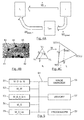
- FIG. 1 An example of annotation is illustrated by figure 1 where a topology comprising five, eight, eleven, thirteen landmarks is used for annotating respectively, each eyebrow, each eye or the mouth, the nose contour, and the neck contour.
- Such annotation stage is typically carried out manually, which is not a trivial task, as it requires a human trained to perform this task.
- Such task is time-consuming, labour-intensive, (considering that a lot of annotations are often redundant and convey the same information), and sometimes still inaccurate considering human factors such as fatigue or lack of concentration.
- face detection results are not always optimal and sometimes marred by errors.
- Such method aims at globally minimizing a cost function defined on both annotated and unannotated images, and is based on a piecewise affine warp between all images, which is not relevant in case of large changes in face expression or head pose in the different images.
- AOM Active Orientation Models
- a first aspect of the present invention relates to a method for annotating, with a set of landmarks, each face image of a set of face images to annotate, from a set of previously annotated face images, the method being implemented by a processor and comprising, for each annotated face image of said set of previously annotated face images:
- Embodiments of the first aspect of the invention thus proposes a new (semi-) automatic technique for efficiently annotating facial landmarks in a database of images, even in case of large differences in facial expressions and head poses, by introducing a technique based on a selection process of the best (i.e. the closest) annotated face image for annotating a face image to annotate.
- said best annotated face image is selected among a set of previously annotated images by determining, for each annotated face image of the set of previously annotated face images, similarity information.
- One piece of said similarity information is obtained by using a global warping function between the image to annotate and one annotated face image of the set of previously annotated face images. More precisely, said warping function is applied to the considered annotated face image to deliver a warped image, which is then compared to the face image to annotate to deliver said similarity information associated with the considered annotated face image.
- Such a global warping function between two images aims to make these two images appear as similar as possible by removing all variations due to global image transforms such as head rotation.
- the term “global” refers to the whole image, and is opposed to “local”, which refers to a part (i.e. a patch) of the image but not the whole image.
- the annotated face image associated with similarity information of the highest value is selected as the best annotated image.
- each landmark of the set of landmarks of the face image is determined, its set of landmarks is used for locating each landmark of the set of landmarks of the face image to annotate.
- all the annotated face images have a common set of landmarks (in other words a common annotation topology with, for instance, eight landmarks used in each image for delimiting the mouth like the ones represented on figure 1 , the position of said landmarks differing from one face image to another due to a change of face expression).
- the selection of the best annotated face image for the considered image to annotate will permit a coarse initial annotation of the face image to annotate.
- the steps of this new technique may be performed by a processor, which allows an image to be automatically annotated with landmarks by taking into consideration the corresponding landmarks of the best annotated face image.
- said image similarity information is a sum of square differences between said annotated face image and said warped image.
- said sum is obtained by considering only the pixels located in an area, the contour of which is a line linking landmarks of said annotated face image.
- Such aspect permits to reduce the computation time and the complexity required for determining similarity information associated to each of the previously annotated face images.
- said warping function is obtained by implementing a geometry-based Procrustes analysis and/or a texture-based least square congealing.
- such a warping function can be provided by an external device or can be also automatically determined by the device according to embodiments of the invention by implementing the known geometry-based Procrustes analysis and/or a texture-based least square congealing as disclosed by M. Cox et al. ("Least squares congealing for Unsupervised Alignment of images"), IEEE International on Conference on Computer Vision and Pattern Recognition (CVPR), June, 2008 .
- the known and robust geometry-based Procrustes analysis can be applied on points provided by the known Scale-invariant feature transform (SIFT).
- SIFT Scale-invariant feature transform
- said warping function corresponds to the warping function leading to similarity information of the highest value when comparing the value of similarity information resulting from the warping function obtained with said geometry-based Procrustes analysis, with the value of similarity information resulting from the warping function obtained with said texture-based least square congealing.
- said geometry-based Procrustes analysis and said texture-based least square congealing are complementary considering for instance that for generic faces "in the wild", the texture-based least square congealing performs better, whereas for a user-specific face database geometry-based Procrustes analysis will be more accurate.
- warping function different methods can be used (i.e. geometry-based Procrustes analysis or a texture-based least square congealing) depending on the nature of the image to annotate, the method providing the warping function leading to similarity information of the highest value being selected.
- the method further comprises a previous locating of a face inside each image of said set of face images to annotate, said face locating implementing a Viola-Jones method.
- Such a feature is particularly recommended when face images in the database have very different scale and location.
- said set of previously annotated face images comprises at least a reference image, previously manually annotated, said reference image providing a common reference geometry for all face images of said set of previously annotated face images and of said set of face images to annotate, and wherein said determining of a location of each landmark of said set of landmarks of said face image to annotate implements at least a warping of said set of landmarks of said best annotated face image using a warping function between said best annotated face image and said reference image delivering said set of landmarks of said face image to annotate expressed in said common reference geometry of said reference image.
- Such manually annotated reference image provides a common reference geometry for all images (comprising previously annotated images and images to annotate) and is used for annotating all the other images to annotate using the method according to embodiments of the invention.
- such a reference image corresponds to a face in a front and neutral position, and is useful since all images are warped to this common referential to compensate for translation, scaling and in-plane rotation between images.
- a reference image allows meaningful comparison of landmark locations and texture across images.
- the warping function between said best annotated face image and said reference image is known at the time of processing the face image to annotate as described in details in the following.
- Such warping function between said best annotated face image and said reference image is used according to embodiments of the invention to express, in said common reference geometry of said reference image, said set of landmarks of said face image to annotate.
- such a step provides automatically a coarse initial annotation of the face image to annotate, the annotation being expressed in the common reference geometry of the reference image.
- the method according to the first aspect of the invention further comprises, for each landmark of said set of landmarks of said face image to annotate expressed in said common reference geometry of said reference image, a refining of its location comprising:
- an automatic refinement of the location of each landmarks provided by the coarse initial annotation is also implemented according to an embodiment of the present invention.
- the optimal location of each landmark is obtained by considering the couple (made of a face annotated image and the corresponding optimal displacement of the initial location of the considered landmark delivered by the global coarse initial automatic annotation), which provides the highest value of a local patch similarity information, and which can be different from one landmark to another.
- said patch similarity information, between said texture patch of said face image to annotate and said texture patch of said warping image is obtained using one of the operations belonging to the group comprising:
- normalized cross-correlation such as the one disclosed by J. P. Lewis ("Fast Normalized Cross-Correlation"), Vision Interface Conference, 1995, pages 120-123 , allows making said patch similarity information robust to changes in lighting conditions.
- said research area is identical or different from one landmark to another landmark.
- said research area can be larger for landmarks corresponding to lower lips than the one used for landmarks of eye corners.
- said set of landmarks comprises two categories of landmarks:
- the category of landmark points should be manually indicated by the operator when he annotates manually the reference image from which all the other images to annotate can be annotated using the method according to the present disclosure.
- Such annotation depends on the face shape and contrast, in particular, when there is a change in curvature in the face, such a change is annotated by a landmark belonging to the first category.
- two or three, six or seven, and three landmark points can be used respectively for the eyebrows, the nose, and the chin (which is usually really regular except in case of beard).
- the landmarks of both categories are similarly processed, whereas in embodiments of the invention the landmarks of the second category are automatically moved along a contour located between two landmarks belonging to the first category of landmarks, so that said landmarks belonging to the second category have the same relative position (curvilinear abscissa) as in the reference image.
- the two extremities of said eyebrow belong to the first category, whereas the three landmarks located between these two extremities belong to the second category.
- the relative position of the landmarks belonging to said second category is the same in every image to ensure an evenly distribution of them along each face contour defined between their two associated extremities landmarks belonging to the first category of landmarks.
- the manual annotation of the reference image implements also such an automatic distribution of landmarks belonging to said second category to reduce the required time of such manual operation.
- figure 1 which comprises, for instance, thirty-seven landmarks, nineteen landmarks (corresponding respectively to the extremities of eyebrows and of the neck contour, the eyes and lip corners and the sharp edges of the nose contour), belong to the first category and are first manually located on the reference image, and then the remaining eighteen landmarks, belonging to the second category, are automatically and evenly distributed along the contour they belong to, with respect to the starting and ending landmark of the first category defining such contour.
- the method for annotating according to the first aspect of the invention further comprises:
- Said embodiment permits validation or manual refinement the result delivered by the steps performed automatically by a processor according to previous aspects as described above.
- the method provided by the present invention is thus semi-automatic.
- Said phase of manual refinement can be implemented directly after the coarse initial annotation of the face image to annotate provided automatically by the method according to embodiments of the invention, or after the optional automatic refinement as previously described.
- the validated annotated face image is obtained, it is placed in the set of previously annotated face images, and the validated warping function between said validated annotated face image and said reference image is also computed to be used then for processing the next image to annotate.
- a second aspect of the present invention relates to a device for annotating, with a set of landmarks, each face image of a set of face images to annotate, from a set of previously annotated face images, wherein said device comprises a processor configured to control, for each annotated face image of said set of previously annotated face images:
- Such a device can be especially adapted to implement the method for annotating, with a set of landmarks, each face image of a set of face images to annotate, from a set of previously annotated face images, described here above. It could of course comprise the different characteristics pertaining to the method for annotating, with a set of landmarks, each face image of a set of face images to annotate, from a set of previously annotated face images, according to an embodiment of the disclosure, which can be combined or taken separately.
- the characteristics and advantages of the device are the same as those of the method for annotating, with a set of landmarks, each face image of a set of face images to annotate, from a set of previously annotated face images, and are not described in more ample detail.
- a further aspect of the invention pertains to a computer program product downloadable from a communication network and/or recorded on a medium readable by computer and/or executable by a processor, comprising program code instructions for implementing the steps of the method for annotating, with a set of landmarks, each face image of a set of face images to annotate as described previously when it is executed by a processor.
- another aspect of the present invention concerns a non-transitory computer-readable medium comprising a computer program product recorded thereon and capable of being run by a processor, including program code instructions for implementing the steps of the method for annotating, with a set of landmarks, each face image of a set of face images to annotate as described previously when it is executed by a processor.
- aspects of the present principles can be embodied as a device, method or computer readable medium. Accordingly, aspects of the present principles can take the form of an entirely hardware embodiment, an entirely software embodiment (including firmware, resident software, micro-code, and so forth), or an embodiment combining software and hardware aspects than can all generally be referred herein as a "circuit", "module”, or “system”. Furthermore, aspects of the present principles can take the form of a computer readable storage medium. Any combination of one or more computer readable storage medium(s) may be utilized.
- a computer readable storage medium can take the form of a computer readable program product embodied in one or more computer readable medium(s) and having computer readable program code embodied thereon that is executable by a computer.
- a computer readable storage medium as used herein is considered a non-transitory storage medium given the inherent capability to store the information therein as well as the inherent capability to provide retrieval of the information therefrom.
- a computer readable storage medium can be, for example, but is not limited to, an electronic, magnetic, optical, electromagnetic, infrared, or semiconductor system, apparatus, or device, or any suitable combination of the foregoing.
- Embodiments of the present invention provide a new technique for annotating, with a set of landmarks, each face image of a set of face images to annotate, from a set of previously annotated face images.
- the closest annotated image is first selected, using a global similarity measure, which provides a coarse annotation. Then, for each landmark, the closest annotated image (which can be different for every landmark) is selected using a local similarity measure, which is used to refine the landmark location. In case of an outlier (no similar landmark found), an operator can manually provide a new annotation to the system, which will update the annotation database for a subsequent labelling stage.
- the approach proposed in embodiments of the present invention is able to cope with arbitrarily large differences in expression and head pose.
- An image to annotate I i of a set S of M face images to annotate with landmarks and a set A of N previously annotated face images are considered as an input.
- the purpose of embodiments of the invention is to annotate all the images belonging to said set S of M face images to annotate, and in particular said image I i with a set of K landmarks [L i,1 , ..., L i,k ,.., L i,K ], K being an integer, 1 ⁇ k ⁇ K.
- said set A of previously annotated face images comprises at least a reference image I 1 , previously manually annotated (100), said reference image I 1 providing a common reference geometry for all face images of said set A of previously annotated face images and of said set of face images to annotate.
- Said reference image I 1 corresponds to the rest pose of the face (frontal head pose, neutral expression), and it associated landmarks are [L 1,1 , ..., L 1 , k ,..., L 1,K] , K being an integer, 1 ⁇ k ⁇ K.
- the landmark L 1,1 of said reference image I 1 image will correspond to the landmark L i,1 of the considered image I i to annotate and is associated for example with the left corner of the lip as represented on the face image in figure 1 .
- said set of K landmarks comprises two categories of landmarks:
- the traditional manual annotation process of said reference image I 1 the primary points (i.e. the landmarks belonging to said first category) are typically first located by the operator OP at an accurate location depending on the image content only.
- the secondary points i.e. the landmarks belonging to said second category
- both primary and secondary landmark points are similarly processed.
- the category of landmark points should be manually indicated by the operator when he annotates the reference image I 1 , once the primary landmark points have been manually located by the operator, the secondary landmark points are automatically and evenly redistributed (101) along the contour they belong to.
- Such a warping function W j,1 can be obtained either as a global similarity using the known Procrustes analysis, or using a geometry-based Procrustes analysis for instance based on SIFT points, or using texture-based least square congealing, or using a piecewise affine warp obtained using Delaunay triangulation.
- any pixel x k in image I 1 must lie within one of the triangles in the mesh associated to image I 1 , obtained for instance by Delaunay triangulation of the set of landmark locations.
- a triangle with vertex positions (V 1 , V 2 , V 3 ) in the mean shape image I 1 and let W be the affine restriction of the piecewise-affine warp W j,1 to this triangle.
- the images of the triangle vertices (W(V 1 ), W(V 2 ), W(V 3 )) are the known locations of the vertices of the corresponding triangle in the model geometry g j of said image I j .
- the correspondences between the locations of the three vertices in s 0 and in g j uniquely determine, as the solution of a linear system, the six parameters (a g ), 1 ⁇ g ⁇ 6 , of the affine warp W.
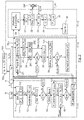
- a first step 11 is the determining (11) of a warping function W i , j ⁇ between said face image I i to annotate and said annotated face image I j as represented in figure 3 .
- said warping function W i , j ⁇ is obtained (11) by implementing a geometry-based Procrustes analysis (111) and/or a texture-based least square congealing (112). These two ways of obtaining are complementary.
- the first one is the geometry-based Procrustes analysis (111), based on SIFT points for instance.
- geometry-based Procrustes analysis (111) implements the following substeps:
- the texture-based least square congealing (112) provides a solution to the problem of aligning an ensemble of images (i.e. all the images I j are simultaneously warped onto the image I i ) in an unsupervised manner by simultaneously estimating the warp parameter updates for every image of the stack (given one reference image that remains static).
- said geometry-based Procrustes analysis (111) and texture-based least square congealing (112) are both implemented, said warping function W i , j ⁇ corresponds to the warping function leading to a similarity score (provided by a SSD) of the highest value when comparing the value of similarity resulting from the warping function W i , j ⁇ P obtained with said geometry-based Procrustes analysis, with the value of similarity information resulting from the warping function W i , j ⁇ C obtained with said texture-based least square congealing.
- image similarity information Sim(i,j) between said annotated face image I j and said warped image W i , j ⁇ I i is determined (13).
- said sum is obtained by considering only the pixels located in an area, the contour of which is a line linking landmarks of said annotated face image I j .
- a location (x,y) of each landmark L i,k of said set of K landmarks of said face image I i to annotate is determined (15) by using a corresponding location of each landmark L jbest,k of a set of K landmarks of said best annotated face image I jbest .
- said determining (15) of a location (x,y) of each landmark L i,k of said set of K landmarks of said face image I i to annotate implements at least a warping of said set of K landmarks of said best annotated face image I jbest using a warping function W jbest,1 between said best annotated face image I jbest and said reference image I 1 delivering said set of K landmarks of said face image I i to annotate expressed in said common reference geometry of said reference image I 1 .
- the K landmarks L jbest of the annotated face image I jbest are used to initialize the K landmarks L i of the image to annotate I i , which are expressed in the common reference geometry of the reference image I 1 .
- First phase (1) provides thus coarse estimates of the landmarks locations of the considered image to annotate I i , such landmarks locations being computed and expressed in the common geometrical referential of image I 1 . Owing to this common referential, the texture around a given landmark can be matched across images.
- the first phase (1) of coarse initial annotation ends, which allows automatically annotating an image I i with landmarks by taking into consideration the corresponding landmarks of the best annotated face image.
- two other phases an automatic refinement (phase 2) and a manual refinement (phase 3) can be implemented.
- the selecting step (14) is trivial since only one annotated image is available (i.e. the reference image I 1 ).
- the automatic refinement (phase 2) and/or the manual refinement (phase 3) will be implemented to take into account the differences between the reference image I 1 and the first image that is annotated. The operator, will correct only the wrong landmarks for the image points of the second image to annotate, which are differing from the corresponding ones in the reference image I 1 .
- phase 2 the location of each landmark of the considered image to annotate I i is refined so as to maximize the similarity between the local texture around the refined location and the local texture around the same landmark in already annotated images.
- a refining of the location (x,y) of said landmark L i,k comprises:
- a local texture patch based method is implemented to refine the landmarks location, wherein, for every warped annotated image W j,1 (I j ) of said set A of previously annotated face images, a texture patch P j,k of same size (typically 5x5 pixels) as said texture patch P i,k of said face image I i to annotate is extracted and centred on the landmark L j,k corresponding to the landmark L i,k (for example the landmark of the right corner of the lip).
- Such moving (or sliding) of said texture patch P i,k is operated in a research area whose size is identical or different from one landmark L i,k to another landmark L i,k+1 .
- said research area is larger for lower lip landmarks than the one used for eye corners.
- a value of local patch similarity information is computed between the warped annotated image W j,1 (I j ) and the warped image to annotate W i , 1 I i ⁇ , by using for instance the sum of squared differences (SSD) between these two patches SSD(P i,k (dx,dy), P j,k )
- Such value of similarity information is computed for every annotated image of said set A.
- the position (x,y) of the landmark L i,k is then refined and becomes (x+dx, y+dy) (dx or dy being possibly negative).
- Such refinement is automatically applied to all landmarks of said set of K landmarks.
- said patch similarity information is not restricted to the sum of squared differences (SSD), but can be extended to other metrics such that the a sum of absolute differences (SAD), a normalized cross-correlation (NCC) or a zero-mean normalized cross-correlation (ZNCC).
- the secondary landmark points are automatically and evenly redistributed (101) along the contour they belong to.
- phase 3 of manual refinement comprises:
- the operator OP can then manually check the landmark positions and correct them individually in case of failure or unaccuracy on some landmarks.
- a new global warp W i,1 between the image I i and the reference image I 1 is computed using Procrutes analysis based on final landmarks.
- W i , jbest ⁇ is then used for the following images to annotate (typically in steps 15 of phase 1 or 22 of phase 2).
- Figure 5 schematically illustrates an example of a device in accordance with an embodiment of the invention for annotating, with a set of landmarks, each face image of a set of face images to annotate, from a set of previously annotated face images.
- each face image of a set of face images to annotate, from a set of previously annotated face images are shown.
- Such device comprises at least:
- the features of the device are the same as those of the method for annotating, with a set of landmarks, each face image of a set of face images to annotate, from a set of previously annotated face images.
- each block in the flowchart or block diagrams may represent a module, segment, or portion of code, which comprises one or more executable instructions for implementing the specified logical function(s).
- the one or more processing units 58 may be configured to execute the various software programs and/or sets of instructions of the software components to perform the respective functions of: determining a warping function W i , j ⁇ between said face image I i to annotate and said annotated face image I j , warping said face image I i to annotate using said warping function W i , j ⁇ delivering a warped image W i , j ⁇ I i ,
- aspects of the present principles can be embodied as a system, method, computer program or computer readable medium. Accordingly, aspects of the present principles can take the form of an entirely hardware embodiment, an entirely software embodiment (including firmware, resident software, micro-code, and so forth), or an embodiment combining software and hardware aspects that can all generally be referred to herein as a "circuit,” “module”, or “system.” Furthermore, aspects of the present principles can take the form of a computer readable storage medium. Any combination of one or more computer readable storage medium(s) may be utilized.
- a computer readable storage medium can take the form of a computer readable program product embodied in one or more computer readable medium(s) and having computer readable program code embodied thereon that is executable by a computer.
- a computer readable storage medium as used herein is considered a non-transitory storage medium given the inherent capability to store the information therein as well as the inherent capability to provide retrieval of the information therefrom.
- a computer readable storage medium can be, for example, but is not limited to, an electronic, magnetic, optical, electromagnetic, infrared, or semiconductor system, apparatus, or device, or any suitable combination of the foregoing.
Landscapes
- Engineering & Computer Science (AREA)
- Health & Medical Sciences (AREA)
- Oral & Maxillofacial Surgery (AREA)
- General Health & Medical Sciences (AREA)
- Physics & Mathematics (AREA)
- Human Computer Interaction (AREA)
- General Physics & Mathematics (AREA)
- Multimedia (AREA)
- Theoretical Computer Science (AREA)
- Computer Vision & Pattern Recognition (AREA)
- Geometry (AREA)
- Image Analysis (AREA)
Priority Applications (1)
| Application Number | Priority Date | Filing Date | Title |
|---|---|---|---|
| EP15305938.1A EP3107032A1 (fr) | 2015-06-17 | 2015-06-17 | Procédé et dispositif pour l'annotation de repère facial, produit de programme informatique correspondant et support lisible par ordinateur |
Applications Claiming Priority (1)
| Application Number | Priority Date | Filing Date | Title |
|---|---|---|---|
| EP15305938.1A EP3107032A1 (fr) | 2015-06-17 | 2015-06-17 | Procédé et dispositif pour l'annotation de repère facial, produit de programme informatique correspondant et support lisible par ordinateur |
Publications (1)
| Publication Number | Publication Date |
|---|---|
| EP3107032A1 true EP3107032A1 (fr) | 2016-12-21 |
Family
ID=53502581
Family Applications (1)
| Application Number | Title | Priority Date | Filing Date |
|---|---|---|---|
| EP15305938.1A Withdrawn EP3107032A1 (fr) | 2015-06-17 | 2015-06-17 | Procédé et dispositif pour l'annotation de repère facial, produit de programme informatique correspondant et support lisible par ordinateur |
Country Status (1)
| Country | Link |
|---|---|
| EP (1) | EP3107032A1 (fr) |
Cited By (2)
| Publication number | Priority date | Publication date | Assignee | Title |
|---|---|---|---|---|
| CN110147701A (zh) * | 2018-06-27 | 2019-08-20 | 腾讯科技(深圳)有限公司 | 关键点标注方法、装置、计算机设备及存储介质 |
| WO2020263277A1 (fr) * | 2019-06-28 | 2020-12-30 | 1Hewlett-Packard Development Company, L. P. | Lissage temporel de points de repère |
-
2015
- 2015-06-17 EP EP15305938.1A patent/EP3107032A1/fr not_active Withdrawn
Non-Patent Citations (14)
| Title |
|---|
| C. SAGONAS: "A semi-automatic methodology for facial landmark annotation", IEEE CONFERENCE ON COMPUTER VISION AND PATTERN RECOGNITION, 23 June 2013 (2013-06-23), pages 896 - 903 |
| COOTES T F ET AL: "Active shape models - their training and application", COMPUTER VISION AND IMAGE UNDERSTANDING, ACADEMIC PRESS, US, vol. 61, no. 1, 1 January 1995 (1995-01-01), pages 38 - 59, XP002607166, ISSN: 1077-3142, [retrieved on 20020424], DOI: 10.1006/CVIU.1995.1004 * |
| CRISTINACCE D ET AL: "Facial Feature Detection and Tracking with Automatic Template Selection", AUTOMATIC FACE AND GESTURE RECOGNITION, 2006. FGR 2006. 7TH INTERNATIO NAL CONFERENCE ON SOUTHAMPTON, UK 10-12 APRIL 2006, PISCATAWAY, NJ, USA,IEEE, 10 April 2006 (2006-04-10), pages 429 - 434, XP010911645, ISBN: 978-0-7695-2503-7, DOI: 10.1109/FGR.2006.50 * |
| I. MATTHEWS ET AL.: "Active Appearance Models Revisited", INTERNATIONAL JOURNAL OF COMPUTER VISION, vol. 60, no. 2, November 2004 (2004-11-01), pages 135 - 164 |
| IAIN MATTHEWS ET AL: "Active Appearance Models Revisited", INTERNATIONAL JOURNAL OF COMPUTER VISION, KLUWER ACADEMIC PUBLISHERS, BO, vol. 60, no. 2, 1 November 2004 (2004-11-01), pages 135 - 164, XP019216428, ISSN: 1573-1405, DOI: 10.1023/B:VISI.0000029666.37597.D3 * |
| J. P. LEWIS: "Fast Normalized Cross-Correlation", VISION INTERFACE CONFERENCE, 1995, pages 120 - 123 |
| M. COX ET AL.: "Least squares congealing for Unsupervised Alignment of images", IEEE INTERNATIONAL ON CONFERENCE ON COMPUTER VISION AND PATTERN RECOGNITION (CVPR, June 2008 (2008-06-01) |
| MINGCAI ZHOU ET AL: "AAM based face tracking with temporal matching and face segmentation", 2010 IEEE CONFERENCE ON COMPUTER VISION AND PATTERN RECOGNITION (CVPR), 13-18 JUNE 2010, SAN FRANCISCO, CA, USA, IEEE, PISCATAWAY, NJ, USA, 13 June 2010 (2010-06-13), pages 701 - 708, XP031725971, ISBN: 978-1-4244-6984-0 * |
| NANNAN WANG ET AL: "Facial Feature Point Detection: A Comprehensive Survey", INTERNATIONAL JOURNAL OF COMPUTER VISION MANUSCRIPT, 4 October 2014 (2014-10-04), XP055221277, Retrieved from the Internet <URL:http://arxiv.org/pdf/1410.1037.pdf> [retrieved on 20151015] * |
| SAGONAS CHRISTOS ET AL: "A Semi-automatic Methodology for Facial Landmark Annotation", 2013 IEEE CONFERENCE ON COMPUTER VISION AND PATTERN RECOGNITION WORKSHOPS, IEEE, 23 June 2013 (2013-06-23), pages 896 - 903, XP032479944, DOI: 10.1109/CVPRW.2013.132 * |
| SIMON LUCEY ET AL: "Non-rigid Face Tracking Using Short Track-Life Features", DIGITAL IMAGE COMPUTING: TECHNIQUES AND APPLICATIONS (DICTA), 2010 INTERNATIONAL CONFERENCE ON, IEEE, PISCATAWAY, NJ, USA, 1 December 2010 (2010-12-01), pages 241 - 248, XP031853180, ISBN: 978-1-4244-8816-2 * |
| X. LIU: "Facial Contour labelling vi Congealing", ECCV2010 EUROPEAN CONFERENCE ON COMPUTER VISION |
| Y. TONG: "Automatic facial landmark labeling with minimal supervision", IEEE CONFERENCE ON COMPUTER VISION AND PATTERN RECOGNITION, 20 June 2009 (2009-06-20), pages 2097 - 2104 |
| YANG WANG ET AL: "Non-Rigid Object Alignment with a Mismatch Template Based on Exhaustive Local Search", 2013 IEEE INTERNATIONAL CONFERENCE ON COMPUTER VISION, 1 October 2007 (2007-10-01), pages 1 - 8, XP055220868, ISSN: 1550-5499, DOI: 10.1109/ICCV.2007.4409188 * |
Cited By (3)
| Publication number | Priority date | Publication date | Assignee | Title |
|---|---|---|---|---|
| CN110147701A (zh) * | 2018-06-27 | 2019-08-20 | 腾讯科技(深圳)有限公司 | 关键点标注方法、装置、计算机设备及存储介质 |
| WO2020263277A1 (fr) * | 2019-06-28 | 2020-12-30 | 1Hewlett-Packard Development Company, L. P. | Lissage temporel de points de repère |
| US11954905B2 (en) | 2019-06-28 | 2024-04-09 | Hewlett-Packard Development Company, L.P. | Landmark temporal smoothing |
Similar Documents
| Publication | Publication Date | Title |
|---|---|---|
| CN113160257B (zh) | 图像数据标注方法、装置、电子设备及存储介质 | |
| US11455496B2 (en) | System and method for domain adaptation using synthetic data | |
| CN103839223B (zh) | 图像处理方法及装置 | |
| CN111126125A (zh) | 证件中的目标文本提取方法、装置、设备及可读存储介质 | |
| US9607391B2 (en) | Image object segmentation using examples | |
| EP3553741B1 (fr) | Inspection automatisée de la qualité de la peinture pour aéronef | |
| US10824910B2 (en) | Image processing method, non-transitory computer readable storage medium and image processing system | |
| US20120321134A1 (en) | Face tracking method and device | |
| CN110458855B (zh) | 图像提取方法及相关产品 | |
| WO2020052352A1 (fr) | Procédé et dispositif de segmentation de dommages d'une image de dommages de véhicule | |
| CN107895377B (zh) | 一种前景目标提取方法、装置、设备及存储介质 | |
| CN114119695B (zh) | 一种图像标注方法、装置及电子设备 | |
| CN111079571A (zh) | 证卡信息识别及其边缘检测模型训练方法、装置 | |
| CN119494990A (zh) | 一种智能结算机及智能结算机餐盘识别方法、系统及介质 | |
| CN113837067B (zh) | 器官轮廓检测方法、装置、电子设备及可读存储介质 | |
| CN109117837B (zh) | 感兴趣区域确定方法和设备 | |
| CN109117840B (zh) | 感兴趣区域修正方法和设备 | |
| US9836846B2 (en) | System and method of estimating 3D facial geometry | |
| EP3107032A1 (fr) | Procédé et dispositif pour l'annotation de repère facial, produit de programme informatique correspondant et support lisible par ordinateur | |
| CN116012290B (zh) | 用于验证产品实拍的系统和方法 | |
| CN116894849A (zh) | 图像分割方法和装置 | |
| CN109785367B (zh) | 三维模型追踪中外点滤除方法和装置 | |
| Shyam et al. | Retaining image feature matching performance under low light conditions | |
| CN109934152B (zh) | 一种针对手语图像的改进小弯臂图像分割方法 | |
| CN118840424A (zh) | 电连接器孔位识别方法及装置 |
Legal Events
| Date | Code | Title | Description |
|---|---|---|---|
| PUAI | Public reference made under article 153(3) epc to a published international application that has entered the european phase |
Free format text: ORIGINAL CODE: 0009012 |
|
| AK | Designated contracting states |
Kind code of ref document: A1 Designated state(s): AL AT BE BG CH CY CZ DE DK EE ES FI FR GB GR HR HU IE IS IT LI LT LU LV MC MK MT NL NO PL PT RO RS SE SI SK SM TR |
|
| AX | Request for extension of the european patent |
Extension state: BA ME |
|
| STAA | Information on the status of an ep patent application or granted ep patent |
Free format text: STATUS: THE APPLICATION IS DEEMED TO BE WITHDRAWN |
|
| 18D | Application deemed to be withdrawn |
Effective date: 20170622 |