EP3107107A2 - Hochaktive, magnetische kieselsäurenanopartikel zur reinigung von biomaterial und herstellungsverfahren dafür - Google Patents
Hochaktive, magnetische kieselsäurenanopartikel zur reinigung von biomaterial und herstellungsverfahren dafür Download PDFInfo
- Publication number
- EP3107107A2 EP3107107A2 EP15185656.4A EP15185656A EP3107107A2 EP 3107107 A2 EP3107107 A2 EP 3107107A2 EP 15185656 A EP15185656 A EP 15185656A EP 3107107 A2 EP3107107 A2 EP 3107107A2
- Authority
- EP
- European Patent Office
- Prior art keywords
- magnetic nanoparticles
- highly active
- silica magnetic
- active silica
- nucleic acid
- Prior art date
- Legal status (The legal status is an assumption and is not a legal conclusion. Google has not performed a legal analysis and makes no representation as to the accuracy of the status listed.)
- Granted
Links
Images


Classifications
-
- H—ELECTRICITY
- H01—ELECTRIC ELEMENTS
- H01F—MAGNETS; INDUCTANCES; TRANSFORMERS; SELECTION OF MATERIALS FOR THEIR MAGNETIC PROPERTIES
- H01F1/00—Magnets or magnetic bodies characterised by the magnetic materials therefor; Selection of materials for their magnetic properties
- H01F1/0036—Magnets or magnetic bodies characterised by the magnetic materials therefor; Selection of materials for their magnetic properties showing low dimensional magnetism, i.e. spin rearrangements due to a restriction of dimensions, e.g. showing giant magnetoresistivity
- H01F1/0045—Zero dimensional, e.g. nanoparticles, soft nanoparticles for medical/biological use
- H01F1/0054—Coated nanoparticles, e.g. nanoparticles coated with organic surfactant
-
- B—PERFORMING OPERATIONS; TRANSPORTING
- B22—CASTING; POWDER METALLURGY
- B22F—WORKING METALLIC POWDER; MANUFACTURE OF ARTICLES FROM METALLIC POWDER; MAKING METALLIC POWDER; APPARATUS OR DEVICES SPECIALLY ADAPTED FOR METALLIC POWDER
- B22F1/00—Metallic powder; Treatment of metallic powder, e.g. to facilitate working or to improve properties
- B22F1/10—Metallic powder containing lubricating or binding agents; Metallic powder containing organic material
- B22F1/105—Metallic powder containing lubricating or binding agents; Metallic powder containing organic material containing inorganic lubricating or binding agents, e.g. metal salts
-
- C—CHEMISTRY; METALLURGY
- C01—INORGANIC CHEMISTRY
- C01B—NON-METALLIC ELEMENTS; COMPOUNDS THEREOF; METALLOIDS OR COMPOUNDS THEREOF NOT COVERED BY SUBCLASS C01C
- C01B33/00—Silicon; Compounds thereof
- C01B33/113—Silicon oxides; Hydrates thereof
- C01B33/12—Silica; Hydrates thereof, e.g. lepidoic silicic acid
- C01B33/18—Preparation of finely divided silica neither in sol nor in gel form; After-treatment thereof
-
- C—CHEMISTRY; METALLURGY
- C12—BIOCHEMISTRY; BEER; SPIRITS; WINE; VINEGAR; MICROBIOLOGY; ENZYMOLOGY; MUTATION OR GENETIC ENGINEERING
- C12N—MICROORGANISMS OR ENZYMES; COMPOSITIONS THEREOF; PROPAGATING, PRESERVING, OR MAINTAINING MICROORGANISMS; MUTATION OR GENETIC ENGINEERING; CULTURE MEDIA
- C12N15/00—Mutation or genetic engineering; DNA or RNA concerning genetic engineering, vectors, e.g. plasmids, or their isolation, preparation or purification; Use of hosts therefor
- C12N15/09—Recombinant DNA-technology
- C12N15/10—Processes for the isolation, preparation or purification of DNA or RNA
- C12N15/1003—Extracting or separating nucleic acids from biological samples, e.g. pure separation or isolation methods; Conditions, buffers or apparatuses therefor
- C12N15/1006—Extracting or separating nucleic acids from biological samples, e.g. pure separation or isolation methods; Conditions, buffers or apparatuses therefor by means of a solid support carrier, e.g. particles, polymers
- C12N15/1013—Extracting or separating nucleic acids from biological samples, e.g. pure separation or isolation methods; Conditions, buffers or apparatuses therefor by means of a solid support carrier, e.g. particles, polymers by using magnetic beads
-
- H—ELECTRICITY
- H01—ELECTRIC ELEMENTS
- H01F—MAGNETS; INDUCTANCES; TRANSFORMERS; SELECTION OF MATERIALS FOR THEIR MAGNETIC PROPERTIES
- H01F1/00—Magnets or magnetic bodies characterised by the magnetic materials therefor; Selection of materials for their magnetic properties
- H01F1/01—Magnets or magnetic bodies characterised by the magnetic materials therefor; Selection of materials for their magnetic properties of inorganic materials
- H01F1/03—Magnets or magnetic bodies characterised by the magnetic materials therefor; Selection of materials for their magnetic properties of inorganic materials characterised by their coercivity
- H01F1/032—Magnets or magnetic bodies characterised by the magnetic materials therefor; Selection of materials for their magnetic properties of inorganic materials characterised by their coercivity of hard-magnetic materials
- H01F1/04—Magnets or magnetic bodies characterised by the magnetic materials therefor; Selection of materials for their magnetic properties of inorganic materials characterised by their coercivity of hard-magnetic materials metals or alloys
- H01F1/06—Magnets or magnetic bodies characterised by the magnetic materials therefor; Selection of materials for their magnetic properties of inorganic materials characterised by their coercivity of hard-magnetic materials metals or alloys in the form of particles, e.g. powder
-
- B—PERFORMING OPERATIONS; TRANSPORTING
- B22—CASTING; POWDER METALLURGY
- B22F—WORKING METALLIC POWDER; MANUFACTURE OF ARTICLES FROM METALLIC POWDER; MAKING METALLIC POWDER; APPARATUS OR DEVICES SPECIALLY ADAPTED FOR METALLIC POWDER
- B22F2999/00—Aspects linked to processes or compositions used in powder metallurgy
-
- C—CHEMISTRY; METALLURGY
- C01—INORGANIC CHEMISTRY
- C01P—INDEXING SCHEME RELATING TO STRUCTURAL AND PHYSICAL ASPECTS OF SOLID INORGANIC COMPOUNDS
- C01P2004/00—Particle morphology
- C01P2004/60—Particles characterised by their size
- C01P2004/64—Nanometer sized, i.e. from 1-100 nanometer
-
- C—CHEMISTRY; METALLURGY
- C01—INORGANIC CHEMISTRY
- C01P—INDEXING SCHEME RELATING TO STRUCTURAL AND PHYSICAL ASPECTS OF SOLID INORGANIC COMPOUNDS
- C01P2006/00—Physical properties of inorganic compounds
- C01P2006/42—Magnetic properties
Definitions
- the present invention relates to a method for preparing highly active silica magnetic nanoparticles, highly active silica magnetic nanoparticles prepared by the method, a composition and kit for nucleic acid isolation and diagnosis comprising the highly active silica magnetic nanoparticles, and nucleic acid isolation and diagnosis methods that use the highly active silica magnetic nanoparticles.
- Magnetic particles started to be frequently used as basic materials in bioengineering research, and have been used for the rapid and simple isolation of biomaterials.
- Conventional methods for the isolation of biomaterials, particularly, nucleic acids are processes requiring large amounts of time and labor, and comprise several extraction and centrifugation steps, but the yield and purity of nucleic acids isolated by these methods were low, and these methods were not suitable for the automated or high-throughput isolation of biomaterials.
- special magnetic particles were prepared, and methods of rapidly and efficiently isolating nucleic acids using magnetic particles under suitable buffer conditions were developed ( U.S. Patent Nos. 5,523,231 and 5,665,554 ).
- the use of the above methods for nucleic acid isolation can provide an automated method capable of isolating nucleic acids by treating a large number of samples at the same time.
- the use of an automated robotic system can isolate a large amount of a desired nucleic acid by automatically treating several hundred or thousand samples.
- nucleic acids DNA and RNA
- isolation methods employing magnetic particles have recently been developed.
- the method of isolating nucleic acids using magnetic particles comprises inducing the binding of magnetic particles to a gene, and then applying an external magnetic field to the sample to isolate the nucleic acid. It is generally known that the particle size of magnetic particles that are used for the isolation and purification of DNA, RNA, protein or the like is preferably in the range from about 100 nm to about 10 ⁇ m.
- a functional group capable of binding to a gene or a specific protein should be conjugated to the surface of the magnetic particles.
- the magnetic particles should be coated with an organic functional group or silica.
- Magnetic iron oxide particles are generally present as magnetite (Fe 3 O 4 ), maghemite (Fe 2 O 3 ) or hematite (Fe 2 O 3 ), and can be used for the isolation and purification of biomaterials, for example, nucleic acids (DNA and RNA), proteins, peptides and polypeptides, as well as lipids.
- magnetic particles which do not aggregate and interact with one another, can be prepared only when magnetic iron or iron oxide particles are prepared from an iron salt compound by a liquid-phase reduction method and are coated with silica, a polymer or a nonmagnetic material such as gold or silver.
- silica-coated magnetic particles have been mainly developed ( U.S. Patent Nos. 6,027,945 , 6,673,631 , and 7,183,002 , and Japanese Patent No. 3253638 ).
- silica-coated magnetic particles have shortcomings in that a process for preparing the silica-coated magnetic particle is complex and the yield of isolation of biomaterials such as nucleic acids by the silica-coated magnetic particles is low.
- a method for the chemical preparation of silica magnetic particles comprises using a silane treatment process and adding an acid-base catalyst to an alcohol solvent to induce a silica formation reaction, it can prepare highly active silica magnetic nanoparticles, thereby completing the present invention.
- Another object of the present invention is to provide highly active silica magnetic nanoparticles prepared by the above method and having increased nucleic acid purification efficiency.
- Still another object of the present invention is to provide a method for isolating and purifying nucleic acid, wherein the highly active silica magnetic nanoparticles are used as nucleic acid-binding carriers.
- Yet another object of the present invention is to provide a composition for purifying nucleic acid, which contains the highly active silica magnetic nanoparticles.
- a further object of the present invention is to provide a composition for diagnosis based on nucleic acid detection, which contains the highly active silica magnetic nanoparticles.
- a still further object of the present invention is to provide a kit for purifying nucleic acid, which contains the highly active silica magnetic nanoparticles.
- a yet further object of the present invention is to provide a kit for diagnosis based on nucleic acid detection, which contains the highly active silica magnetic nanoparticles.
- Another further object of the present invention is to provide a method wherein the highly active silica magnetic nanoparticles are used in a process selected from the group consisting of protein purification, antibody purification, enzyme immunoassay, peptide purification, and endotoxin removal.
- the present invention provides a method for preparing highly active silica magnetic nanoparticles, the method comprising the steps of: (a) ultrasonically dispersing a solution obtained by adding magnetic nanoparticles, an acid-base catalyst and a water-soluble hydrophobic solvent to a mixed solvent of distilled water and alcohol; and (b) adding silane to the dispersed solution to prepare silica magnetic nanoparticles.
- the present invention provides highly active silica magnetic nanoparticles having a silica content of 0.5-2.5 wt%, a particle size of 300-600 nm, and a coating thickness of 1-15 nm.
- the highly active silica magnetic nanoparticles according to the present invention may be prepared by the inventive method for preparing highly active silica magnetic nanoparticles.
- the present invention also provides a method for isolating and purifying nucleic acid, wherein the highly active silica magnetic nanoparticles are used as nucleic acid-binding carriers.
- the present invention also provides a composition for purifying nucleic acid, which contains the highly active silica magnetic nanoparticles.
- the present invention also provides a composition for diagnosis based on nucleic acid detection, which contains the highly active silica magnetic nanoparticles.
- the present invention also provides a kit for purifying nucleic acid, which contains the highly active silica magnetic nanoparticles.
- the present invention also provides a kit for diagnosis based on nucleic acid detection, which contains the highly active silica magnetic nanoparticles.
- the present invention also provides a method wherein the highly active silica magnetic nanoparticles are used in a process selected from the group consisting of protein purification, antibody purification, enzyme immunoassay, peptide purification, and endotoxin removal.
- the highly active silica magnetic nanoparticles prepared according to the present invention contain magnetic nanoparticles completely coated with silica, can be used as a reagent for isolating biomaterials, particularly, nucleic acids, and can isolate and purify nucleic acid in a high yield.
- the highly active silica magnetic nanoparticles can also be used for protein purification, antibody purification, enzyme immunoassay, peptide purification, endotoxin removal and the like.
- the present inventors have developed a novel method for preparing silica magnetic nanoparticles, which is simpler than a conventional method for preparing silica magnetic particles and can control the amount of silica coated on silica magnetic particles.
- highly active silica magnetic nanoparticles having a high extraction efficiency for nucleic acid compared to conventional silica magnetic particles can be prepared by using nano-sized silica magnetic particles that provide a maximized surface area.
- the present invention is directed to a method for preparing highly active silica magnetic nanoparticles, the method comprising the steps of: (a) ultrasonically dispersing a solution obtained by adding magnetic nanoparticles, an acid-base catalyst and a water-soluble hydrophobic solvent to a mixed solvent of distilled water and alcohol; and (b) adding silane to the dispersed solution to prepare silica magnetic nanoparticles.
- the solvent that is used in the preparation method according to the present invention is a mixed solvent of distilled water and alcohol.
- the alcohol that is used in the present invention is preferably methyl alcohol, ethyl alcohol, propyl alcohol, butyl alcohol, or a mixture of two or more thereof, but is not limited thereto.
- the distilled water that is used in the present invention is preferably double-distilled water or triple-distilled water (ultrapure water).
- the mixed solvent preferably contains 30 vol% or less of distilled water.
- a silane compound is added in step (b) of the method.
- the silane compound reacts with the acid-base catalyst to form a silica coating on the surface of the magnetic nanoparticles.
- silane examples include, but are not limited to, tetramethoxysilane, tetraethoxysilane or a mixture thereof.
- the silane compound may be added in an amount of 0.01-0.5 parts by volume, preferably 0.01-0.2 parts by volume based on 100 parts by volume of the total volume of distilled water and alcohol that are used as a solvent, and the acid-based catalyst and water-soluble hydrophobic solvent added. If the silane compound is added in an amount of more than 0.5 parts by volume, it will influence silica formation, and thus silica magnetic nanoparticles will aggregate, and if the silane compound is added in an amount of less than 0.01 parts by volume, a silica coating will not be formed on the surface of the magnetic nanoparticles.
- Examples of the acid-base catalyst that is used in the present invention include, but are not limited to, ammonia water (NH 4 OH), ammonium fluoride (NH 4 F), hydrochloric acid (HCl), nitric acid (HNO 3 ), sulfuric acid (H 2 SO 4 ), phosphoric acid (H 3 PO 4 ), fluoric acid (HF), oxalic acid, and acetic acid.
- ammonia water may be used.
- the preparation method according to the present invention is characterized in that the thickness of silica coated on the surface of the silica magnetic nanoparticles can be controlled according to the amount of silane compound added.
- the magnetic nanoparticles that are used in the preparation method according to the present invention are metal nanoparticles made of one or more selected from the group consisting of iron oxide (hematite, maghemite (Fe 2 O 3 ) or magnetite (Fe 3 O 4 )), ferrite, iron, cobalt, nickel, iron oxides, cobalt oxides, nickel oxides, and mixtures thereof, but are not limited thereto.
- the magnetic nanoparticles are iron oxide (magnetite) nanoparticles having a particle size of 100-500 nm.
- Iron oxide magnetic nanoparticles that are used in the present invention may be prepared by synthesis or commercially purchased. Specifically, iron oxide, ferrite or a mixture thereof may be used.
- iron oxide magnetic nanoparticles can, for example, be prepared by instantaneously injecting carbonyl iron into a high-temperature solvent to prepare iron magnetic particles while generating carbon dioxide by pyrolysis, and oxidizing the prepared iron magnetic particles.
- Another preparation method a method of preparing iron oxide by adding ammonia water (NH 4 OH) to a mixture of FeCl 2 and FeCl 3 is also widely known.
- the magnetic nanoparticles may be used in an amount of 0.01-0.5 parts by weight, preferably 0.05-0.3 parts by weight, based on 100 parts by weight of the total weight of distilled water, alcohol, the acid-base catalyst and the water-soluble hydrophobic solvent. If the magnetic nanoparticles are used in an amount of more than 0.5 parts by weight, there will be a problem in that silica magnetic nanoparticles will aggregate, and if the magnetic nanoparticles are used in an amount of less than 0.01 parts by weight, there will be a problem in that the number of magnetic particles contained in the solvent is too small, and thus productivity is low.
- the water-soluble hydrophobic solvent that is used in the present invention is preferably selected from the group consisting of pentane, cyclopentane, hexane, cyclohexane, toluene, benzene, xylene, diethyl ether, dioxane, chloroform, and dichloromethane, but is not limited thereto. More preferably, the water-soluble hydrophobic solvent may be toluene.
- the magnetic nanoparticles and the silane compound are preferably added at a weight ratio of 1:0.1-1:3.0. If the magnetic nanoparticles and the silane compound are added at a weight ratio of more than 1:3.0, there will be a problem in that silica magnetic nanoparticles aggregate, and if these are added at a weight of less than 1:0.1, there will be a problem in that silica coating is not sufficient.
- the preparation method according to the present invention may further comprise, after step (b), conventional filtering, washing and drying steps.
- the filtering step is performed using filter paper
- the washing step is performed by washing the filtered material several times with ethanol and ultrapure water.
- the drying step that is the final step is performed by drying the prepared silica magnetic nanoparticles in an air-circulated dryer for 2 hours or more at a temperature of 100 to 300°C, preferably 100 to 200°C.
- the present invention is directed to highly active silica magnetic nanoparticles having a silica content of 0.5-2.5 wt%, a particle size of 300-600 nm, and a coating thickness of 1-15 nm.
- the highly active silica magnetic nanoparticles may be prepared by the above-described method for preparing highly active silica magnetic nanoparticles.
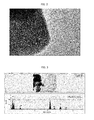
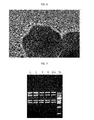
- Highly active silica magnetic nanoparticles that are prepared according to an embodiment of the present invention have a particle size of 400-450 nm as shown in FIGS. 1 , 2 , 5 and 6 .
- Spherical silica magnetic nanoparticles prepared by the preparation method of the present invention are magnetic particles (having a particle size of several ten to several hundred nanometers) coated with silica, and show a negative zeta potential (-30 to -50 mV) due to the hydroxyl group of silica.
- the present invention is directed to a method for isolating and purifying nucleic acid, wherein the highly active silica magnetic nanoparticles are used as nucleic acid-binding carriers.
- a method of isolating nucleic acid using silica is performed using a chaotropic reagent, and is a widely known method ( R. Boom et al., J. Clin. Microbiol., Vol 28(3), p495-503 (1990 )).
- this method when magnetic particles coated with silica bind to nucleic acid by the chaotropic reagent, and the nucleic acid is isolated by separating the silica magnetic particles using an external magnetic force.
- Highly active silica magnetic nanoparticles prepared by the preparation method of the present invention are used to isolate various types of nucleic acids, including, but not limited to, plasmid DNA, genomic DNA, cDNA, PCR DNA (polymerase chain reaction DNA), RNA, siRNA, ribozymes, aptamers, oligonucleotides and DNA primers.
- nucleic acids including, but not limited to, plasmid DNA, genomic DNA, cDNA, PCR DNA (polymerase chain reaction DNA), RNA, siRNA, ribozymes, aptamers, oligonucleotides and DNA primers.
- a method of isolating and purifying nucleic acid using the highly active silica magnetic nanoparticles of the present invention is as follows.
- the highly active silica magnetic nanoparticles of the present invention are added to a sample containing the nucleic acid to be isolated to induce the binding of the nucleic acid to the silica magnetic nanoparticles.
- a binding buffer is used.
- a chaotropic reagent is used as the binding buffer.
- Chaotropic reagents include guanidine salt, urea, chloride, iodide, perchlorate, (iso)thiocyanate and the like, and specific examples include, but are not limited to, sodium perchlorate, guanidine hydrochloride, guanidine isothiocyanate, potassium iodide, potassium thiocyanate, sodium chloride, sodium isothiocyanate, magnesium chloride, sodium iodide, etc.
- the chaotropic reagent is preferably used at a concentration of 1-8 M (mol/L).
- the second step of the method for nucleic acid isolation is a step of isolating the silica magnetic nanoparticles having the nucleic acid bound thereto.
- the silica magnetic nanoparticles having the nucleic acid bound thereto are collected on the wall of the container by an external magnetic force, and unbound material is separated, followed by washing.
- the third step is a step of removing the external magnetic force and isolating the nucleic acid from the silica magnetic nanoparticles having the nucleic acid bound thereto.
- the nucleic acid bound to the silica magnetic particles is isolated using an elution buffer (tris-(hydroxymethyl)amino methane buffer).
- the present invention is directed to a composition and kit for purifying nucleic acid, which contains the highly active silica magnetic nanoparticles.
- a composition or kit for nucleic acid purification may comprise a chaotropic reagent for binding nucleic acid to the silica magnetic nanoparticles.
- the kit for nucleic acid purification according to the present invention may comprise a binding buffer for binding nucleic acid to the silica magnetic nanoparticles, a washing buffer, an elution buffer, and a magnet for isolating the silica magnetic nanoparticles.
- the present invention is directed to a composition and kit for diagnosis based on nucleic acid detection, which contains the highly active silica magnetic nanoparticles.
- a composition or kit for diagnosis based on nucleic acid detection may comprise a chaotropic reagent for binding nucleic acid to the silica magnetic nanoparticles.
- the kit for diagnosis based on nucleic acid detection may comprise a binding buffer for binding nucleic acid to the silica magnetic nanoparticles, a washing buffer, an elution buffer, and a magnet for isolating the silica magnetic nanoparticles.
- the kit of the present invention may include an instruction manual.
- the "instruction manual” is a printed matter describing how to use the kit, for instance, the method of preparing reagents for making nucleic acids, recommended preparation conditions, and the like.
- the instruction manual includes those appearing on labels attached to the kit, packages housing the kit, and the like, as well as handling brochures in a pamphlet or leaflet form.
- the instruction manual includes information that is disclosed or provided via an electronic medium such as the internet.
- the present invention is directed to a method wherein the highly active silica magnetic nanoparticles are used in a process selected from the group consisting of protein purification, antibody purification, enzyme immunoassay, peptide purification, and endotoxin removal.
- an enzyme, a peptide or an endotoxin, highly active silica nanoparticles having an amino substituent prepared by dispersing silica magnetic nanoparticles and then reacting the silica magnetic nanoparticles with an amine-based compound such as 3-aminopropyltriethoxysilane, N-[3-(trimethoxysilyl)propyl]ethylenediamine, or N'-[3-(trimethoxysilyl)propyl]diethylene triamine, can be used.
- an amine-based compound such as 3-aminopropyltriethoxysilane, N-[3-(trimethoxysilyl)propyl]ethylenediamine, or N'-[3-(trimethoxysilyl)propyl]diethylene triamine
- TEOS tetraethoxysilane
- FIGS. 1 and 2 The results of scanning electron microscope (SEM) analysis and transmission electron microscope (TEM) analysis of the prepared highly active silica magnetic nanoparticles are shown in FIGS. 1 and 2 , respectively.
- the iron oxide magnetic nanoparticles were coated with silica to a thickness of about 2 nm.
- the prepared highly active silica magnetic nanoparticles were analyzed by energy dispersive spectrometry (EDS), and as a result, it was shown that a silica component was detected ( FIG. 3 ).
- the zeta potential of the prepared highly active silica magnetic nanoparticles was measured to be -41.0 mV, indicating that there was a hydroxyl group on the silica surface ( FIG. 4 ).
- the mean particle size of the prepared highly active silica magnetic nanoparticles was measured to be 420 nm.
- Example 2 Reparation of silica magnetic nanoparticles by addition of 2-fold amount of TEOS
- Highly active silica magnetic nanoparticles were prepared in the same manner as described in Example 1, except that the amount of tetraethoxysilane (TEOS, 98%, Samchun Chemical Co., Ltd.) added was increased to 1.0 ml.
- TEOS tetraethoxysilane
- FIG. 5 shows a transmission electron microscope (TEM) photograph of the prepared highly active silica magnetic nanoparticles.
- the iron oxide magnetic nanoparticles were coated with silica to a thickness of about 5 nm, which was thicker than that in Example 1.
- the zeta potential of the prepared highly active silica magnetic nanoparticles was measured to be -33.2 mV, indicating that there was a hydroxyl group on the silica surface.
- the mean particle size of the prepared highly active silica magnetic nanoparticles was measured to be 430 nm.
- Example 3 Reparation of silica magnetic nanoparticles by addition of 4-fold amount of TEOS
- Highly active silica magnetic nanoparticles were prepared in the same manner as described in Example 1, except that the amount of tetraethoxysilane (TEOS, 98%, Samchun Chemical Co., Ltd.) added was 2.0 ml.
- TEOS tetraethoxysilane
- FIG. 6 shows a transmission electron microscope (TEM) photograph of the prepared highly active silica magnetic nanoparticles.
- the iron oxide magnetic nanoparticles were coated with silica to a thickness of about 13 nm, which was thicker than that in Example 1.
- the zeta potential of the prepared highly active silica magnetic nanoparticles was measured to be -37.1 mV, indicating that there was a hydroxyl group on the silica surface.
- the mean particle size of the prepared highly active silica magnetic nanoparticles was measured to be 450 nm.
- Table 1 below shows the change in the silica coating thickness of the surface of the magnetic nanoparticles as a function of the amount of TEOS added.
- Table 1 Coating thicknesses of silica magnetic nanoparticles under various reaction conditions LOT Ethanol (ml) Ultrapure water (ml) Magnetic nanoparticles(g) TEOS (ml) Zeta potential (mV) Coating thickness (nm)
- Example 1 1,600 400 1.5 0.5 -41.0 2
- Example 2 1,600 400 1.5 1.0 -33.2 5
- Example 3 1,600 400 1.5 2.0 -37.1 13
- Example 4 Isolation of nucleic acid using highly active silica magnetic nanoparticles
- silica magnetic particles prepared in Example 1 were added to and mixed with a solution containing 200 ⁇ l of a DNA sample (a total of 4 ug containing 1 ug of each of 10.2 kb, 5 kb, 2 kb and 1.6 kb fragmented DNAs) and 900 ⁇ l of binding Solution (Bioneer Exiprep TM kit K-3215).
- the silica magnetic particles were isolated from the supernatant using a neodymium magnet, and the supernatant was completely removed therefrom using a micropipette.
- 900 ⁇ l of 1 st washing solution (Bioneer Exiprep TM kit K-3215) was added to the silica magnetic particles and sufficiently mixed using a micropipette, and then the silica magnetic particles were isolated from the supernatant using a neodymium magnet. After the supernatant was completely removed using a micropipette, 1000 ⁇ l of 2 nd washing solution (Bioneer Exiprep TM kit K-3215) was added to the silica magnetic particles and completely mixed using a micropipette, and then the silica magnetic particles were isolated from the supernatant using a neodymium magnet.
- 1 st washing solution (Bioneer Exiprep TM kit K-3215) was added to the silica magnetic particles and sufficiently mixed using a micropipette, and then the silica magnetic particles were isolated from the supernatant using a neodymium magnet.
- elution buffer (Bioneer ExiPrep TM kit K-3215) was added to the completely dried silica magnetic particles and sufficiently mixed, and the mixture was allowed to stand in a heating block at 60°C for 5 minutes so that nucleic acid could be easily eluted from the silica magnetic particles.
- the silica magnetic particles were isolated using a neodymium magnet, and the supernatant containing nucleic acid was collected by a micropipette and transferred into a fresh 1.5 ml tube.
- a DNA extraction experiment was performed in the same manner as described above using 5 mg of conventional silica magnetic particles (Bioneer, AccuBead TM TS-1010).
- FIG. 7 is a photograph showing the results of electrophoresis of the DNAs extracted by the above-described method using the conventional micro-sized silica magnetic particles (Bioneer, TS-1010) and the highly active silica magnetic nanoparticles of the present invention.
- lanes 1 and 2 show the results of electrophoresis of the DNA extracted using the conventional micro-sized silica magnetic particles
- lanes 3 and 4 show the results of electrophoresis of the DNA extracted using the highly active silica magnetic nanoparticles of the present invention
- control (Ctrl) shows the results of electrophoresis of the DNA itself before extraction. From the results of electrophoresis, it can be seen that four different DNAs having different sizes could be easily extracted.
Landscapes
- Chemical & Material Sciences (AREA)
- Engineering & Computer Science (AREA)
- Health & Medical Sciences (AREA)
- Organic Chemistry (AREA)
- Inorganic Chemistry (AREA)
- Life Sciences & Earth Sciences (AREA)
- Biomedical Technology (AREA)
- Nanotechnology (AREA)
- Genetics & Genomics (AREA)
- Molecular Biology (AREA)
- General Health & Medical Sciences (AREA)
- Power Engineering (AREA)
- Biotechnology (AREA)
- Bioinformatics & Cheminformatics (AREA)
- Zoology (AREA)
- Wood Science & Technology (AREA)
- General Engineering & Computer Science (AREA)
- Analytical Chemistry (AREA)
- Biochemistry (AREA)
- Microbiology (AREA)
- Biophysics (AREA)
- Physics & Mathematics (AREA)
- Plant Pathology (AREA)
- Crystallography & Structural Chemistry (AREA)
- Silicon Compounds (AREA)
- Compounds Of Iron (AREA)
- Immunology (AREA)
- Treatment Of Liquids With Adsorbents In General (AREA)
- Soft Magnetic Materials (AREA)
- Hematology (AREA)
- Urology & Nephrology (AREA)
- Peptides Or Proteins (AREA)
- Medicinal Chemistry (AREA)
- Solid-Sorbent Or Filter-Aiding Compositions (AREA)
- Saccharide Compounds (AREA)
- Proteomics, Peptides & Aminoacids (AREA)
- Pathology (AREA)
- General Physics & Mathematics (AREA)
- Food Science & Technology (AREA)
- Cell Biology (AREA)
Applications Claiming Priority (1)
| Application Number | Priority Date | Filing Date | Title |
|---|---|---|---|
| KR1020150074861A KR101646610B1 (ko) | 2015-05-28 | 2015-05-28 | 생체 물질 정제용 고활성 실리카 자성나노입자 및 이의 제조 방법 |
Publications (3)
| Publication Number | Publication Date |
|---|---|
| EP3107107A2 true EP3107107A2 (de) | 2016-12-21 |
| EP3107107A3 EP3107107A3 (de) | 2017-05-03 |
| EP3107107B1 EP3107107B1 (de) | 2022-08-17 |
Family
ID=54359703
Family Applications (1)
| Application Number | Title | Priority Date | Filing Date |
|---|---|---|---|
| EP15185656.4A Active EP3107107B1 (de) | 2015-05-28 | 2015-09-17 | Hochaktive, magnetische silikananopartikel zur reinigung von biomaterial und herstellungsverfahren dafür |
Country Status (5)
| Country | Link |
|---|---|
| US (2) | US10465184B2 (de) |
| EP (1) | EP3107107B1 (de) |
| JP (1) | JP6231057B2 (de) |
| KR (1) | KR101646610B1 (de) |
| CN (2) | CN113284730A (de) |
Families Citing this family (17)
| Publication number | Priority date | Publication date | Assignee | Title |
|---|---|---|---|---|
| KR101646610B1 (ko) * | 2015-05-28 | 2016-08-09 | (주)바이오니아 | 생체 물질 정제용 고활성 실리카 자성나노입자 및 이의 제조 방법 |
| US10920274B2 (en) * | 2017-02-21 | 2021-02-16 | Apdn (B.V.I.) Inc. | Nucleic acid coated submicron particles for authentication |
| KR101957048B1 (ko) * | 2017-10-11 | 2019-03-11 | 성균관대학교산학협력단 | Dna 함유 고분자-산화철 복합 나노구조체 및 이를 이용한 유전자 발현 조절 방법 |
| KR101954082B1 (ko) * | 2017-09-14 | 2019-03-05 | 한국세라믹기술원 | 플라스미드 dna의 정제 방법 |
| CN107796864B (zh) * | 2017-10-17 | 2020-08-14 | 中国科学院上海硅酸盐研究所 | 一种纳米颗粒耦合探针体系在ctDNA高灵敏检测中的应用 |
| US20200122134A1 (en) * | 2018-10-19 | 2020-04-23 | Vanderbilt University | Efficient capture of magnetic and paramagnetic carriers of biomarkers from a flowing system |
| CN111747420A (zh) * | 2019-03-29 | 2020-10-09 | 福建通源硅业有限公司 | 一种二氧化硅的提纯方法 |
| US12209988B2 (en) | 2019-05-24 | 2025-01-28 | Electronics And Telecommunications Research Institute | Sensor and method of manufacturing the same |
| KR102545196B1 (ko) * | 2019-05-24 | 2023-06-21 | 한국전자통신연구원 | 센서 및 그의 제조방법 |
| CN110548489B (zh) * | 2019-09-12 | 2022-06-24 | 安徽工业大学 | 一种氨基磁性纳米粒子的制备方法及其在dna提取中的应用 |
| KR20210044664A (ko) * | 2019-10-15 | 2021-04-23 | 한양대학교 산학협력단 | 수처리용 자성 기반 가중응집제 및 이의 제조방법 |
| KR102359187B1 (ko) | 2020-06-08 | 2022-02-07 | 경북대학교 산학협력단 | 실리카로 코팅된 산화철 나노비드의 제조방법 및 이의 핵산 분리용 용도 |
| CN112058247B (zh) * | 2020-10-14 | 2022-09-09 | 广西科技大学 | 一种水中多环芳烃俘获剂及其制备方法 |
| KR102760158B1 (ko) | 2021-02-17 | 2025-01-31 | 성균관대학교산학협력단 | 생물학적 표적의 분리를 위한 고분자 물질로 코팅된 나노 입자 복합체 및 이의 제조 방법 |
| WO2022177326A1 (ko) * | 2021-02-17 | 2022-08-25 | 성균관대학교산학협력단 | 생물학적 표적의 분리를 위한 고분자 물질로 코팅된 나노 입자 복합체 및 이의 제조 방법 |
| KR102513309B1 (ko) | 2021-02-17 | 2023-03-24 | 성균관대학교 산학협력단 | 생물학적 표적의 분리를 위한 나노 입자 복합체 및 이의 제조 방법 |
| US12559385B2 (en) * | 2021-09-30 | 2026-02-24 | Agilent Technologies, Inc. | Magnetic nanoparticles for sample separation |
Citations (4)
| Publication number | Priority date | Publication date | Assignee | Title |
|---|---|---|---|---|
| US5523231A (en) | 1990-02-13 | 1996-06-04 | Amersham International Plc | Method to isolate macromolecules using magnetically attractable beads which do not specifically bind the macromolecules |
| US5665554A (en) | 1994-06-09 | 1997-09-09 | Amersham International Plc | Magnetic bead precipitation method |
| US6027945A (en) | 1997-01-21 | 2000-02-22 | Promega Corporation | Methods of isolating biological target materials using silica magnetic particles |
| US7183002B2 (en) | 2000-03-24 | 2007-02-27 | Qiagen, Gmbh | Porous ferro- or ferrimagnetic glass particles for isolating molecules |
Family Cites Families (29)
| Publication number | Priority date | Publication date | Assignee | Title |
|---|---|---|---|---|
| JP2965131B2 (ja) * | 1995-07-07 | 1999-10-18 | 東洋紡績株式会社 | 核酸結合用磁性担体およびそれを用いる核酸単離方法 |
| DE19614136A1 (de) | 1996-04-10 | 1997-10-16 | Inst Neue Mat Gemein Gmbh | Verfahren zur Herstellung agglomeratfreier nanoskaliger Eisenoxidteilchen mit hydrolysebeständigem Überzug |
| US6195353B1 (en) | 1997-05-06 | 2001-02-27 | Telefonaktiebolaget Lm Ericsson (Publ) | Short packet circuit emulation |
| DE10153639A1 (de) * | 2001-10-31 | 2003-05-22 | Inst Neue Mat Gemein Gmbh | Superparamagnetisches Eisenoxid enthaltende Kompositpartikel |
| DE10201084A1 (de) * | 2002-01-14 | 2003-07-24 | Bayer Ag | Siliziumhaltige Magnetpartikel, Verfahren zu deren Herstellung und Verwendung der Partikel |
| EP1499895B1 (de) * | 2002-04-22 | 2008-05-07 | University Of Florida | Funktionalisierte nanopartikel und verwendungsverfahren |
| JP4080798B2 (ja) | 2002-06-27 | 2008-04-23 | 日立マクセル株式会社 | 核酸結合用磁性担体およびその製造方法 |
| US20040101822A1 (en) * | 2002-11-26 | 2004-05-27 | Ulrich Wiesner | Fluorescent silica-based nanoparticles |
| KR20060061494A (ko) * | 2004-12-02 | 2006-06-08 | 요업기술원 | 핵산(dna/rna) 분리정제용 기능성 실리카자성나노입자 및 그 제조방법 |
| CA2598558C (en) * | 2005-02-14 | 2013-04-02 | Australian Nuclear Science & Technology Organisation | Layered nanoparticles |
| JP5007920B2 (ja) | 2005-08-31 | 2012-08-22 | 日立金属株式会社 | 核酸抽出方法、がん細胞検出方法および磁気ビーズ |
| KR100762969B1 (ko) | 2006-10-04 | 2007-10-04 | 요업기술원 | 기능성 실리카 코팅 자성 나노입자를 이용한 고효율의 핵산및 단백질의 선택적 분리정제 방법 |
| KR100950548B1 (ko) * | 2008-01-10 | 2010-03-30 | 연세대학교 산학협력단 | 다공성 중공 실리카 나노입자, 그의 제조 방법, 상기를포함하는 약물 전달체 및 약제학적 조성물 |
| KR101053023B1 (ko) * | 2008-02-14 | 2011-08-01 | (주)바이오니아 | 구형 실리카 자성입자 및 이의 제조방법 |
| EP2272608B1 (de) * | 2008-03-27 | 2014-09-17 | Hitachi Metals, Ltd. | Beschichtetes feines metallteilchen und herstellungsverfahren dafür |
| DE102008061714A1 (de) * | 2008-12-12 | 2010-06-17 | Siemens Healthcare Diagnostics Inc., Deerfield | Verfahren zur Aufreinigung von Nukleinsäuren, inbesondere aus fixiertem Gewebe |
| KR20100097576A (ko) * | 2009-02-26 | 2010-09-03 | (주)씽크루트 | 자성 실리카 입자체 및 이의 제조방법 |
| CN101923932A (zh) * | 2009-06-09 | 2010-12-22 | 南京大学 | 多功能化双层壳-核结构磁性纳米粒子及其制备方法和应用 |
| CN101707106B (zh) * | 2009-12-04 | 2011-12-28 | 陕西北美基因股份有限公司 | 一种核壳结构的二氧化硅磁性复合微球的制备方法 |
| US20130089614A1 (en) | 2010-06-14 | 2013-04-11 | Xuefeng Zhang | Magnetic Nanoparticles and Uses Thereof |
| US20120208026A1 (en) * | 2011-02-10 | 2012-08-16 | Xerox Corporation | Silica-Coated Magnetic Nanoparticles and Process for Making Same |
| EP2600359A1 (de) | 2011-11-30 | 2013-06-05 | Evonik Degussa GmbH | Magnetische Kern-Schale-Partikel |
| KR101413958B1 (ko) * | 2013-05-24 | 2014-07-04 | 고센바이오비드 주식회사 | 다 작용기를 가지는 자성나노입자 제조방법 |
| CN103310935A (zh) * | 2013-06-05 | 2013-09-18 | 中国科学院上海硅酸盐研究所 | 二氧化硅纳米磁性微球及其制备方法 |
| CN103406078A (zh) | 2013-08-12 | 2013-11-27 | 上海应用技术学院 | 一种椭球状核壳结构的二氧化硅包覆磁性三氧化二铁微粒的制备方法 |
| CN103500622B (zh) | 2013-08-30 | 2017-05-10 | 复旦大学 | 磁性无机纳米粒/有序介孔二氧化硅核壳复合微球及其制备方法 |
| JP2015024407A (ja) | 2014-09-12 | 2015-02-05 | 株式会社東芝 | 油分吸着材および油分吸着材の製造方法 |
| CN104655759B (zh) | 2015-02-13 | 2016-06-08 | 王利兵 | 一种适配体功能化磁性纳米材料磁分离双酚a的方法 |
| KR101646610B1 (ko) * | 2015-05-28 | 2016-08-09 | (주)바이오니아 | 생체 물질 정제용 고활성 실리카 자성나노입자 및 이의 제조 방법 |
-
2015
- 2015-05-28 KR KR1020150074861A patent/KR101646610B1/ko active Active
- 2015-09-15 US US14/854,783 patent/US10465184B2/en active Active
- 2015-09-17 EP EP15185656.4A patent/EP3107107B1/de active Active
- 2015-09-25 CN CN202110286574.XA patent/CN113284730A/zh active Pending
- 2015-09-25 CN CN201510622371.8A patent/CN106185960A/zh active Pending
- 2015-09-29 JP JP2015191141A patent/JP6231057B2/ja active Active
-
2019
- 2019-09-27 US US16/586,507 patent/US10724031B2/en active Active
Patent Citations (6)
| Publication number | Priority date | Publication date | Assignee | Title |
|---|---|---|---|---|
| US5523231A (en) | 1990-02-13 | 1996-06-04 | Amersham International Plc | Method to isolate macromolecules using magnetically attractable beads which do not specifically bind the macromolecules |
| US5665554A (en) | 1994-06-09 | 1997-09-09 | Amersham International Plc | Magnetic bead precipitation method |
| US6027945A (en) | 1997-01-21 | 2000-02-22 | Promega Corporation | Methods of isolating biological target materials using silica magnetic particles |
| JP3253638B2 (ja) | 1997-01-21 | 2002-02-04 | プロメガ コーポレイション | シリカ磁気粒子を使用する生物学的目標物質の分離法 |
| US6673631B1 (en) | 1997-01-21 | 2004-01-06 | Promega Corporation | Simultaneous isolation and quantitation of DNA |
| US7183002B2 (en) | 2000-03-24 | 2007-02-27 | Qiagen, Gmbh | Porous ferro- or ferrimagnetic glass particles for isolating molecules |
Non-Patent Citations (1)
| Title |
|---|
| R. BOOM ET AL., J. CLIN. MICROBIOL., vol. 28, no. 3, 1990, pages 495 - 503 |
Also Published As
| Publication number | Publication date |
|---|---|
| US10465184B2 (en) | 2019-11-05 |
| EP3107107A3 (de) | 2017-05-03 |
| EP3107107B1 (de) | 2022-08-17 |
| CN113284730A (zh) | 2021-08-20 |
| CN106185960A (zh) | 2016-12-07 |
| US10724031B2 (en) | 2020-07-28 |
| US20160348094A1 (en) | 2016-12-01 |
| KR101646610B1 (ko) | 2016-08-09 |
| JP2016221498A (ja) | 2016-12-28 |
| JP6231057B2 (ja) | 2017-11-15 |
| US20200024592A1 (en) | 2020-01-23 |
Similar Documents
| Publication | Publication Date | Title |
|---|---|---|
| US10724031B2 (en) | Highly active silica magnetic nanoparticles for purifying biomaterial and preparation method thereof | |
| US8697020B2 (en) | Silica magnetic particles having a spherical form and a process for preparing the same | |
| US7964380B2 (en) | Nanoparticles for manipulation of biopolymers and methods of thereof | |
| EP2066709B1 (de) | Partikel und ihre verwendung in einem verfahren zur nukleinsäureisolierung oder einem verfahren zur phosphorproteinisolierung | |
| US8288169B2 (en) | Surface mediated self-assembly of nanoparticles | |
| JP6156971B2 (ja) | 核酸精製方法 | |
| EP2244268A1 (de) | Chemische stabile magnetische Träger | |
| US20070026435A1 (en) | Hydroxysilane functionalized magnetic particles and nucleic acid separation method | |
| US20180010169A1 (en) | Methods and reagents for selection of biological molecules | |
| CN109727761A (zh) | 一种单分散超顺磁性纳米磁珠的制备方法和应用 | |
| CN112121768A (zh) | 一种氨基磁珠、其制备方法及应用 | |
| KR101135054B1 (ko) | 단백질 분리용 나노입자, 그 제조 방법 및 이를 이용한 단백질 분리 정제 방법 | |
| US12559385B2 (en) | Magnetic nanoparticles for sample separation | |
| CN114787194A (zh) | 使用核-壳-壳磁珠的设备系统和方法 | |
| HK40057097A (en) | Highly active silicon dioxide magnetic nanoparticles for purifying biomaterial and preparation method thereof | |
| JP5183905B2 (ja) | 担体、担体の製造方法、およびその利用 | |
| KR20230066585A (ko) | 자성 비드, 이의 제조 방법 및 사용 방법 | |
| GB2455780A (en) | Nucleic acid separation |
Legal Events
| Date | Code | Title | Description |
|---|---|---|---|
| PUAI | Public reference made under article 153(3) epc to a published international application that has entered the european phase |
Free format text: ORIGINAL CODE: 0009012 |
|
| STAA | Information on the status of an ep patent application or granted ep patent |
Free format text: STATUS: REQUEST FOR EXAMINATION WAS MADE |
|
| 17P | Request for examination filed |
Effective date: 20150917 |
|
| AK | Designated contracting states |
Kind code of ref document: A2 Designated state(s): AL AT BE BG CH CY CZ DE DK EE ES FI FR GB GR HR HU IE IS IT LI LT LU LV MC MK MT NL NO PL PT RO RS SE SI SK SM TR |
|
| AX | Request for extension of the european patent |
Extension state: BA ME |
|
| PUAL | Search report despatched |
Free format text: ORIGINAL CODE: 0009013 |
|
| AK | Designated contracting states |
Kind code of ref document: A3 Designated state(s): AL AT BE BG CH CY CZ DE DK EE ES FI FR GB GR HR HU IE IS IT LI LT LU LV MC MK MT NL NO PL PT RO RS SE SI SK SM TR |
|
| AX | Request for extension of the european patent |
Extension state: BA ME |
|
| RIC1 | Information provided on ipc code assigned before grant |
Ipc: H01F 1/00 20060101AFI20170325BHEP |
|
| RBV | Designated contracting states (corrected) |
Designated state(s): AL AT BE BG CH CY CZ DE DK EE ES FI FR GB GR HR HU IE IS IT LI LT LU LV MC MK MT NL NO PL PT RO RS SE SI SK SM TR |
|
| R17P | Request for examination filed (corrected) |
Effective date: 20150917 |
|
| STAA | Information on the status of an ep patent application or granted ep patent |
Free format text: STATUS: EXAMINATION IS IN PROGRESS |
|
| 17Q | First examination report despatched |
Effective date: 20211105 |
|
| GRAP | Despatch of communication of intention to grant a patent |
Free format text: ORIGINAL CODE: EPIDOSNIGR1 |
|
| STAA | Information on the status of an ep patent application or granted ep patent |
Free format text: STATUS: GRANT OF PATENT IS INTENDED |
|
| INTG | Intention to grant announced |
Effective date: 20220228 |
|
| GRAS | Grant fee paid |
Free format text: ORIGINAL CODE: EPIDOSNIGR3 |
|
| GRAA | (expected) grant |
Free format text: ORIGINAL CODE: 0009210 |
|
| STAA | Information on the status of an ep patent application or granted ep patent |
Free format text: STATUS: THE PATENT HAS BEEN GRANTED |
|
| AK | Designated contracting states |
Kind code of ref document: B1 Designated state(s): AL AT BE BG CH CY CZ DE DK EE ES FI FR GB GR HR HU IE IS IT LI LT LU LV MC MK MT NL NO PL PT RO RS SE SI SK SM TR |
|
| REG | Reference to a national code |
Ref country code: CH Ref legal event code: EP |
|
| REG | Reference to a national code |
Ref country code: DE Ref legal event code: R096 Ref document number: 602015080350 Country of ref document: DE |
|
| REG | Reference to a national code |
Ref country code: IE Ref legal event code: FG4D |
|
| REG | Reference to a national code |
Ref country code: AT Ref legal event code: REF Ref document number: 1512706 Country of ref document: AT Kind code of ref document: T Effective date: 20220915 |
|
| REG | Reference to a national code |
Ref country code: NL Ref legal event code: MP Effective date: 20220817 |
|
| REG | Reference to a national code |
Ref country code: LT Ref legal event code: MG9D |
|
| PG25 | Lapsed in a contracting state [announced via postgrant information from national office to epo] |
Ref country code: SE Free format text: LAPSE BECAUSE OF FAILURE TO SUBMIT A TRANSLATION OF THE DESCRIPTION OR TO PAY THE FEE WITHIN THE PRESCRIBED TIME-LIMIT Effective date: 20220817 Ref country code: RS Free format text: LAPSE BECAUSE OF FAILURE TO SUBMIT A TRANSLATION OF THE DESCRIPTION OR TO PAY THE FEE WITHIN THE PRESCRIBED TIME-LIMIT Effective date: 20220817 Ref country code: PT Free format text: LAPSE BECAUSE OF FAILURE TO SUBMIT A TRANSLATION OF THE DESCRIPTION OR TO PAY THE FEE WITHIN THE PRESCRIBED TIME-LIMIT Effective date: 20221219 Ref country code: NO Free format text: LAPSE BECAUSE OF FAILURE TO SUBMIT A TRANSLATION OF THE DESCRIPTION OR TO PAY THE FEE WITHIN THE PRESCRIBED TIME-LIMIT Effective date: 20221117 Ref country code: NL Free format text: LAPSE BECAUSE OF FAILURE TO SUBMIT A TRANSLATION OF THE DESCRIPTION OR TO PAY THE FEE WITHIN THE PRESCRIBED TIME-LIMIT Effective date: 20220817 Ref country code: LV Free format text: LAPSE BECAUSE OF FAILURE TO SUBMIT A TRANSLATION OF THE DESCRIPTION OR TO PAY THE FEE WITHIN THE PRESCRIBED TIME-LIMIT Effective date: 20220817 Ref country code: LT Free format text: LAPSE BECAUSE OF FAILURE TO SUBMIT A TRANSLATION OF THE DESCRIPTION OR TO PAY THE FEE WITHIN THE PRESCRIBED TIME-LIMIT Effective date: 20220817 Ref country code: FI Free format text: LAPSE BECAUSE OF FAILURE TO SUBMIT A TRANSLATION OF THE DESCRIPTION OR TO PAY THE FEE WITHIN THE PRESCRIBED TIME-LIMIT Effective date: 20220817 Ref country code: ES Free format text: LAPSE BECAUSE OF FAILURE TO SUBMIT A TRANSLATION OF THE DESCRIPTION OR TO PAY THE FEE WITHIN THE PRESCRIBED TIME-LIMIT Effective date: 20220817 |
|
| REG | Reference to a national code |
Ref country code: AT Ref legal event code: MK05 Ref document number: 1512706 Country of ref document: AT Kind code of ref document: T Effective date: 20220817 |
|
| PG25 | Lapsed in a contracting state [announced via postgrant information from national office to epo] |
Ref country code: PL Free format text: LAPSE BECAUSE OF FAILURE TO SUBMIT A TRANSLATION OF THE DESCRIPTION OR TO PAY THE FEE WITHIN THE PRESCRIBED TIME-LIMIT Effective date: 20220817 Ref country code: IS Free format text: LAPSE BECAUSE OF FAILURE TO SUBMIT A TRANSLATION OF THE DESCRIPTION OR TO PAY THE FEE WITHIN THE PRESCRIBED TIME-LIMIT Effective date: 20221217 Ref country code: HR Free format text: LAPSE BECAUSE OF FAILURE TO SUBMIT A TRANSLATION OF THE DESCRIPTION OR TO PAY THE FEE WITHIN THE PRESCRIBED TIME-LIMIT Effective date: 20220817 Ref country code: GR Free format text: LAPSE BECAUSE OF FAILURE TO SUBMIT A TRANSLATION OF THE DESCRIPTION OR TO PAY THE FEE WITHIN THE PRESCRIBED TIME-LIMIT Effective date: 20221118 |
|
| PG25 | Lapsed in a contracting state [announced via postgrant information from national office to epo] |
Ref country code: SM Free format text: LAPSE BECAUSE OF FAILURE TO SUBMIT A TRANSLATION OF THE DESCRIPTION OR TO PAY THE FEE WITHIN THE PRESCRIBED TIME-LIMIT Effective date: 20220817 Ref country code: RO Free format text: LAPSE BECAUSE OF FAILURE TO SUBMIT A TRANSLATION OF THE DESCRIPTION OR TO PAY THE FEE WITHIN THE PRESCRIBED TIME-LIMIT Effective date: 20220817 Ref country code: DK Free format text: LAPSE BECAUSE OF FAILURE TO SUBMIT A TRANSLATION OF THE DESCRIPTION OR TO PAY THE FEE WITHIN THE PRESCRIBED TIME-LIMIT Effective date: 20220817 Ref country code: CZ Free format text: LAPSE BECAUSE OF FAILURE TO SUBMIT A TRANSLATION OF THE DESCRIPTION OR TO PAY THE FEE WITHIN THE PRESCRIBED TIME-LIMIT Effective date: 20220817 Ref country code: AT Free format text: LAPSE BECAUSE OF FAILURE TO SUBMIT A TRANSLATION OF THE DESCRIPTION OR TO PAY THE FEE WITHIN THE PRESCRIBED TIME-LIMIT Effective date: 20220817 |
|
| REG | Reference to a national code |
Ref country code: DE Ref legal event code: R097 Ref document number: 602015080350 Country of ref document: DE |
|
| REG | Reference to a national code |
Ref country code: BE Ref legal event code: MM Effective date: 20220930 |
|
| PG25 | Lapsed in a contracting state [announced via postgrant information from national office to epo] |
Ref country code: SK Free format text: LAPSE BECAUSE OF FAILURE TO SUBMIT A TRANSLATION OF THE DESCRIPTION OR TO PAY THE FEE WITHIN THE PRESCRIBED TIME-LIMIT Effective date: 20220817 Ref country code: MC Free format text: LAPSE BECAUSE OF FAILURE TO SUBMIT A TRANSLATION OF THE DESCRIPTION OR TO PAY THE FEE WITHIN THE PRESCRIBED TIME-LIMIT Effective date: 20220817 Ref country code: EE Free format text: LAPSE BECAUSE OF FAILURE TO SUBMIT A TRANSLATION OF THE DESCRIPTION OR TO PAY THE FEE WITHIN THE PRESCRIBED TIME-LIMIT Effective date: 20220817 |
|
| PLBE | No opposition filed within time limit |
Free format text: ORIGINAL CODE: 0009261 |
|
| STAA | Information on the status of an ep patent application or granted ep patent |
Free format text: STATUS: NO OPPOSITION FILED WITHIN TIME LIMIT |
|
| PG25 | Lapsed in a contracting state [announced via postgrant information from national office to epo] |
Ref country code: LU Free format text: LAPSE BECAUSE OF NON-PAYMENT OF DUE FEES Effective date: 20220917 Ref country code: AL Free format text: LAPSE BECAUSE OF FAILURE TO SUBMIT A TRANSLATION OF THE DESCRIPTION OR TO PAY THE FEE WITHIN THE PRESCRIBED TIME-LIMIT Effective date: 20220817 |
|
| 26N | No opposition filed |
Effective date: 20230519 |
|
| PG25 | Lapsed in a contracting state [announced via postgrant information from national office to epo] |
Ref country code: IE Free format text: LAPSE BECAUSE OF NON-PAYMENT OF DUE FEES Effective date: 20220917 |
|
| PG25 | Lapsed in a contracting state [announced via postgrant information from national office to epo] |
Ref country code: SI Free format text: LAPSE BECAUSE OF FAILURE TO SUBMIT A TRANSLATION OF THE DESCRIPTION OR TO PAY THE FEE WITHIN THE PRESCRIBED TIME-LIMIT Effective date: 20220817 |
|
| PG25 | Lapsed in a contracting state [announced via postgrant information from national office to epo] |
Ref country code: BE Free format text: LAPSE BECAUSE OF NON-PAYMENT OF DUE FEES Effective date: 20220930 |
|
| PG25 | Lapsed in a contracting state [announced via postgrant information from national office to epo] |
Ref country code: HU Free format text: LAPSE BECAUSE OF FAILURE TO SUBMIT A TRANSLATION OF THE DESCRIPTION OR TO PAY THE FEE WITHIN THE PRESCRIBED TIME-LIMIT; INVALID AB INITIO Effective date: 20150917 |
|
| PG25 | Lapsed in a contracting state [announced via postgrant information from national office to epo] |
Ref country code: CY Free format text: LAPSE BECAUSE OF FAILURE TO SUBMIT A TRANSLATION OF THE DESCRIPTION OR TO PAY THE FEE WITHIN THE PRESCRIBED TIME-LIMIT Effective date: 20220817 |
|
| PG25 | Lapsed in a contracting state [announced via postgrant information from national office to epo] |
Ref country code: MK Free format text: LAPSE BECAUSE OF FAILURE TO SUBMIT A TRANSLATION OF THE DESCRIPTION OR TO PAY THE FEE WITHIN THE PRESCRIBED TIME-LIMIT Effective date: 20220817 |
|
| PG25 | Lapsed in a contracting state [announced via postgrant information from national office to epo] |
Ref country code: BG Free format text: LAPSE BECAUSE OF FAILURE TO SUBMIT A TRANSLATION OF THE DESCRIPTION OR TO PAY THE FEE WITHIN THE PRESCRIBED TIME-LIMIT Effective date: 20220817 |
|
| PG25 | Lapsed in a contracting state [announced via postgrant information from national office to epo] |
Ref country code: MT Free format text: LAPSE BECAUSE OF FAILURE TO SUBMIT A TRANSLATION OF THE DESCRIPTION OR TO PAY THE FEE WITHIN THE PRESCRIBED TIME-LIMIT Effective date: 20220817 |
|
| REG | Reference to a national code |
Ref country code: CH Ref legal event code: U11 Free format text: ST27 STATUS EVENT CODE: U-0-0-U10-U11 (AS PROVIDED BY THE NATIONAL OFFICE) Effective date: 20251001 |
|
| PGFP | Annual fee paid to national office [announced via postgrant information from national office to epo] |
Ref country code: DE Payment date: 20250702 Year of fee payment: 11 |
|
| PGFP | Annual fee paid to national office [announced via postgrant information from national office to epo] |
Ref country code: IT Payment date: 20250825 Year of fee payment: 11 |
|
| PGFP | Annual fee paid to national office [announced via postgrant information from national office to epo] |
Ref country code: GB Payment date: 20250703 Year of fee payment: 11 |
|
| PGFP | Annual fee paid to national office [announced via postgrant information from national office to epo] |
Ref country code: FR Payment date: 20250708 Year of fee payment: 11 |
|
| PG25 | Lapsed in a contracting state [announced via postgrant information from national office to epo] |
Ref country code: TR Free format text: LAPSE BECAUSE OF FAILURE TO SUBMIT A TRANSLATION OF THE DESCRIPTION OR TO PAY THE FEE WITHIN THE PRESCRIBED TIME-LIMIT Effective date: 20220817 |
|
| PGFP | Annual fee paid to national office [announced via postgrant information from national office to epo] |
Ref country code: CH Payment date: 20251001 Year of fee payment: 11 |