EP3107638B1 - Matériaux organométalliques d'adsorption de co2 - Google Patents
Matériaux organométalliques d'adsorption de co2 Download PDFInfo
- Publication number
- EP3107638B1 EP3107638B1 EP15752271.5A EP15752271A EP3107638B1 EP 3107638 B1 EP3107638 B1 EP 3107638B1 EP 15752271 A EP15752271 A EP 15752271A EP 3107638 B1 EP3107638 B1 EP 3107638B1
- Authority
- EP
- European Patent Office
- Prior art keywords
- gas
- mom
- sifsix
- adsorption
- metal
- Prior art date
- Legal status (The legal status is an assumption and is not a legal conclusion. Google has not performed a legal analysis and makes no representation as to the accuracy of the status listed.)
- Active
Links
Images




Classifications
-
- B—PERFORMING OPERATIONS; TRANSPORTING
- B01—PHYSICAL OR CHEMICAL PROCESSES OR APPARATUS IN GENERAL
- B01D—SEPARATION
- B01D71/00—Semi-permeable membranes for separation processes or apparatus characterised by the material; Manufacturing processes specially adapted therefor
-
- B—PERFORMING OPERATIONS; TRANSPORTING
- B01—PHYSICAL OR CHEMICAL PROCESSES OR APPARATUS IN GENERAL
- B01D—SEPARATION
- B01D53/00—Separation of gases or vapours; Recovering vapours of volatile solvents from gases; Chemical or biological purification of waste gases, e.g. engine exhaust gases, smoke, fumes, flue gases, aerosols
- B01D53/02—Separation of gases or vapours; Recovering vapours of volatile solvents from gases; Chemical or biological purification of waste gases, e.g. engine exhaust gases, smoke, fumes, flue gases, aerosols by adsorption, e.g. preparative gas chromatography
-
- B—PERFORMING OPERATIONS; TRANSPORTING
- B01—PHYSICAL OR CHEMICAL PROCESSES OR APPARATUS IN GENERAL
- B01D—SEPARATION
- B01D53/00—Separation of gases or vapours; Recovering vapours of volatile solvents from gases; Chemical or biological purification of waste gases, e.g. engine exhaust gases, smoke, fumes, flue gases, aerosols
- B01D53/22—Separation of gases or vapours; Recovering vapours of volatile solvents from gases; Chemical or biological purification of waste gases, e.g. engine exhaust gases, smoke, fumes, flue gases, aerosols by diffusion
- B01D53/228—Separation of gases or vapours; Recovering vapours of volatile solvents from gases; Chemical or biological purification of waste gases, e.g. engine exhaust gases, smoke, fumes, flue gases, aerosols by diffusion characterised by specific membranes
-
- B—PERFORMING OPERATIONS; TRANSPORTING
- B01—PHYSICAL OR CHEMICAL PROCESSES OR APPARATUS IN GENERAL
- B01D—SEPARATION
- B01D69/00—Semi-permeable membranes for separation processes or apparatus characterised by their form, structure or properties; Manufacturing processes specially adapted therefor
- B01D69/02—Semi-permeable membranes for separation processes or apparatus characterised by their form, structure or properties; Manufacturing processes specially adapted therefor characterised by their properties
-
- B—PERFORMING OPERATIONS; TRANSPORTING
- B01—PHYSICAL OR CHEMICAL PROCESSES OR APPARATUS IN GENERAL
- B01J—CHEMICAL OR PHYSICAL PROCESSES, e.g. CATALYSIS OR COLLOID CHEMISTRY; THEIR RELEVANT APPARATUS
- B01J20/00—Solid sorbent compositions or filter aid compositions; Sorbents for chromatography; Processes for preparing, regenerating or reactivating thereof
- B01J20/22—Solid sorbent compositions or filter aid compositions; Sorbents for chromatography; Processes for preparing, regenerating or reactivating thereof comprising organic material
- B01J20/223—Solid sorbent compositions or filter aid compositions; Sorbents for chromatography; Processes for preparing, regenerating or reactivating thereof comprising organic material containing metals, e.g. organo-metallic compounds, coordination complexes
- B01J20/226—Coordination polymers, e.g. metal-organic frameworks [MOF], zeolitic imidazolate frameworks [ZIF]
-
- B—PERFORMING OPERATIONS; TRANSPORTING
- B01—PHYSICAL OR CHEMICAL PROCESSES OR APPARATUS IN GENERAL
- B01J—CHEMICAL OR PHYSICAL PROCESSES, e.g. CATALYSIS OR COLLOID CHEMISTRY; THEIR RELEVANT APPARATUS
- B01J20/00—Solid sorbent compositions or filter aid compositions; Sorbents for chromatography; Processes for preparing, regenerating or reactivating thereof
- B01J20/28—Solid sorbent compositions or filter aid compositions; Sorbents for chromatography; Processes for preparing, regenerating or reactivating thereof characterised by their form or physical properties
- B01J20/28054—Solid sorbent compositions or filter aid compositions; Sorbents for chromatography; Processes for preparing, regenerating or reactivating thereof characterised by their form or physical properties characterised by their surface properties or porosity
- B01J20/28057—Surface area, e.g. B.E.T specific surface area
-
- B—PERFORMING OPERATIONS; TRANSPORTING
- B01—PHYSICAL OR CHEMICAL PROCESSES OR APPARATUS IN GENERAL
- B01J—CHEMICAL OR PHYSICAL PROCESSES, e.g. CATALYSIS OR COLLOID CHEMISTRY; THEIR RELEVANT APPARATUS
- B01J20/00—Solid sorbent compositions or filter aid compositions; Sorbents for chromatography; Processes for preparing, regenerating or reactivating thereof
- B01J20/28—Solid sorbent compositions or filter aid compositions; Sorbents for chromatography; Processes for preparing, regenerating or reactivating thereof characterised by their form or physical properties
- B01J20/28054—Solid sorbent compositions or filter aid compositions; Sorbents for chromatography; Processes for preparing, regenerating or reactivating thereof characterised by their form or physical properties characterised by their surface properties or porosity
- B01J20/28078—Pore diameter
-
- B—PERFORMING OPERATIONS; TRANSPORTING
- B01—PHYSICAL OR CHEMICAL PROCESSES OR APPARATUS IN GENERAL
- B01D—SEPARATION
- B01D2253/00—Adsorbents used in seperation treatment of gases and vapours
- B01D2253/20—Organic adsorbents
- B01D2253/204—Metal organic frameworks (MOF's)
-
- B—PERFORMING OPERATIONS; TRANSPORTING
- B01—PHYSICAL OR CHEMICAL PROCESSES OR APPARATUS IN GENERAL
- B01D—SEPARATION
- B01D2257/00—Components to be removed
- B01D2257/50—Carbon oxides
- B01D2257/504—Carbon dioxide
-
- B—PERFORMING OPERATIONS; TRANSPORTING
- B01—PHYSICAL OR CHEMICAL PROCESSES OR APPARATUS IN GENERAL
- B01D—SEPARATION
- B01D2323/00—Details relating to membrane preparation
- B01D2323/15—Use of additives
- B01D2323/218—Additive materials
- B01D2323/2189—Metal-organic compounds or complexes
-
- B—PERFORMING OPERATIONS; TRANSPORTING
- B01—PHYSICAL OR CHEMICAL PROCESSES OR APPARATUS IN GENERAL
- B01D—SEPARATION
- B01D2325/00—Details relating to properties of membranes
- B01D2325/38—Hydrophobic membranes
-
- Y—GENERAL TAGGING OF NEW TECHNOLOGICAL DEVELOPMENTS; GENERAL TAGGING OF CROSS-SECTIONAL TECHNOLOGIES SPANNING OVER SEVERAL SECTIONS OF THE IPC; TECHNICAL SUBJECTS COVERED BY FORMER USPC CROSS-REFERENCE ART COLLECTIONS [XRACs] AND DIGESTS
- Y02—TECHNOLOGIES OR APPLICATIONS FOR MITIGATION OR ADAPTATION AGAINST CLIMATE CHANGE
- Y02C—CAPTURE, STORAGE, SEQUESTRATION OR DISPOSAL OF GREENHOUSE GASES [GHG]
- Y02C20/00—Capture or disposal of greenhouse gases
- Y02C20/40—Capture or disposal of greenhouse gases of CO2
Definitions
- MOF Metal-organic framework
- Zhang et al. (“Gas permeability properties of Matrimid (R) membranes containing the metal-organic framework Cu-BPY-HFS",JOURNAL OF MEMBRANE SCIENCE, ELSEVIER BV, NL, vol. 313, no. 1-2, 16 January 2008 (2008-01-16), pages 170-181 ) discloses using [Cu(pyr)2(SiF6)]n in form of a membrane to separate CO 2 .
- Embodiments of the present disclosure provide for metal-organic materials (MOMs), systems using MOMs to separate components in a gas, methods of separating CO 2 from a gas, and the like.
- MOMs metal-organic materials
- An embodiment of the method of capturing CO 2 in a gas includes: exposing the gas to a metal-organic material (MOM), wherein the gas includes CO 2 at a concentration in the gas of about 5% or less; and capturing the CO 2 in the MOM.
- MOM metal-organic material
- An embodiment of the system for capturing CO 2 in a gas mixture includes: a first structure including a metal-organic material (MOM), wherein the gas includes CO 2 at a concentration in the gas of about 5% or less; and a second structure for introducing the gas to the first structure, wherein CO 2 is removed from the gas after the exposure to the MOM to form a modified gas (CO 2 free), wherein the second structure flows the modified gas away from the first structure.
- MOM metal-organic material
- An embodiment of the method of separating components in a gas mixture includes: exposing a gas including a CO 2 and a second component to a metal-organic material (MOM), wherein the MOM has a greater relative affinity (kinetic and thermodynamic) for the CO 2 over a second component, wherein the CO 2 is at a concentration in the gas of about 5% or less; and capturing the first component in the MOM.
- MOM metal-organic material
- An embodiment of the system for separating components in a gas includes: a first structure including a metal-organic material (MOM), wherein the gas includes CO 2 and a second component, wherein the MOM has a greater relative affinity for CO 2 over the second component, wherein the CO 2 is at a concentration in the gas of about 5% or less; and a second structure for introducing the gas to the first structure, wherein CO 2 is removed from the gas after the exposure to the MOM to form a modified gas, wherein the second structure flows the modified gas away from the first structure.
- MOM metal-organic material
- An embodiment of the composition includes: a MOM comprising [Cu(pyr) 2 (SiF 6 )] n , wherein n is 1 to 100,000,000, and wherein the MOM has a pore size of about 3.5 ⁇ .
- Embodiments of the present disclosure will employ, unless otherwise indicated, techniques of chemistry, organic chemistry, organometallic chemistry, coordination chemistry and the like, which are within the skill of the art. Such techniques are explained fully in the literature.
- Embodiments of the present disclosure provide for metal-organic materials (MOMs), systems using MOMs to separate components in a gas, methods of separating CO 2 from a gas, and the like.
- the MOM can be used to remove or separate CO 2 in a gas at a variety of concentrations.
- the MOM can be used to remove or separate trace levels of CO 2 in a gas (e.g ., CO 2 at a concentration of about 5% or less in a gas) with high specificity and removal capacity, which can be advantageous in a number of industries.
- CAD Direct Air Capture
- Removal of trace amounts of CO 2 from air for industrial purposes is important particularly for pre-purification of air when atmospheric air is used during the separation of nitrogen and oxygen.
- air prior to air separation using cryogenic distillation or pressure swing adsorption (PSA), air must be CO 2 free to avoid (i) blockage of heat-exchange equipment due to frozen CO 2 during the liquefaction process and (ii) adsorbents (e.g., zeolites) contamination used for oxygen production by PSA.
- MOMs of the present disclosure can be used to remove CO 2 for air separation using cryogenic distillation or PSA.
- alkaline Fuel Cells require the oxygen and hydrogen used as feedstock to be CO 2 free as trace amounts of CO 2 (300 ppm) degrade the electrolyte in AFCs.
- MOMs of the present disclosure can be used in AFCs to remove CO 2 .
- CO 2 Efficient removal of CO 2 at low concentrations is also vital for the proper operation of breathing systems in confined spaces such as submarines, planes, aerospace shuttles, and the like.
- CO 2 must be removed from the air and recycled because resupply opportunities are less frequent or non-existent.
- Humans require oxygen, and in return emit carbon dioxide.
- An average crew member requires approximately 0.84 kg of oxygen and emits approximately 1kg of carbon dioxide.
- the ability to continuously purify the exhaled air (with a CO 2 concentration of 5% or less) can lead to an optimal recycling and considerable reduction in fresh air supply in closed, confined spaces such as space shuttles, planes and submarines.
- embodiments of the MOMs can be used in breathing systems to manage CO 2 concentration.
- MOMs Efficient CO 2 removal is also of importance in mining and rescue missions and diving.
- embodiments of the MOMs can be used to manage CO 2 concentration.
- CO 2 removal is also a concern in medical applications such as anesthesia machines.
- the use of anesthesia machines is a growing clinical trend throughout the world, driven by the need to reduce cost and improve patient care.
- CO 2 removal in anesthesia machines is particularly important in semi- or closed rebreathing systems in which the rebreathing fraction is at least 50% of the exhaled gas volume is directed back to the patient after proper carbon dioxide removal in the next exhalation.
- Current solutions are costly, have limited recyclability, and have large disposal costs associated with them, while MOMs of the present disclosure can be used to remove and manage CO 2 concentration levels in anesthesia machines and in some situations can have a lifetime that is 10,000 times greater than current standards.
- the MOM can be porous and can be a three dimensional net so that molecules can be disposed ( e.g ., captured) within ( e.g ., pores or cavities) the MOM to the exclusion of other molecules.
- the MOM combines sorption thermodynamics and kinetics to achieve advantageous results.
- Embodiments of the present disclosure describe MOMs that have no unsaturated metal centers and the pore walls have no hydrogen bonding donors or acceptors, while having strong electrostatics for inducing dipoles in polarizable molecules such as CO 2 .
- a gas such as CO 2 is absorbed faster and stronger than other gases in the gas mixture, so that CO 2 can be captured in the MOMs to the substantial exclusion of the other gases.
- the MOM can be used to remove or separate CO 2 in a gas, where the gas includes CO 2 at a concentration of about 5% or less.
- have enhanced CO 2 interactions at the same time have reduced interactions with water vapor.
- the MOM can be a hydrophobic MOM.
- the hydrophobic MOM can be used to separate CO 2 from one or more other gases, where the gas includes water vapor. Due to its hydrophobic characteristic, hydrophobic MOMs can be used in methods and systems that use gases that include water vapor, which was not previously possible in porous materials that exhibit strong physisorption towards CO 2 . This is advantageous because other systems and methods that use other MOMs or other porous materials must separate water vapor from the gas prior to the gas being introduced to the other MOMs or porous materials since the other MOMs or porous materials have a higher affinity for the water vapor than CO 2 .
- MOMs of the present disclosure can remove trace levels of CO 2 .
- Embodiments of the systems and methods can be simplified and result in reduced expenditure since the water vapor does not have to be removed prior to introduction to the hydrophobic MOMs.
- hydrophobic MOMs used in embodiments of the present disclosure are still effective at removing CO 2 and are highly selective in separating CO 2 from other gases such as N 2 , H 2 , and/or CH 4 , even at trace levels of CO 2 .
- embodiments of the present disclosure can be used in CO 2 capture systems where the gas has trace levels of CO 2 , and these can include direct air capture systems, pre-purification systems (e . g ., PSA and cryogenic distillation), AFCs, breathing systems, mining and rescue missions, diving, and in medical applications.
- embodiments of the present disclosure can be used in post-combustion systems (e . g ., flue gas to separate CO 2 and N 2 ), pre-combustion systems ( e . g ., shifted synthesis gas stream to separate CO 2 and H 2 ), and/or natural gas upgrading ( e . g ., natural gas cleanup to separate CO 2 and CH 4 ).
- the hydrophobic MOMs can be used to separate other gases and can be used in processes such as He separation from natural gas, Ar separation, Kr separation, and H 2 /D 2 separation.
- Embodiments of the present disclosure provide for MOMs that are three dimensional nets that have a primitive cubic topology (See Figure 1 ) that can be used in methods and systems of the present disclosure.
- the MOM e . g ., [Cu(pyr) 2 (SiF 6 )] n
- the MOM can be designed and synthesized using two dimensional square grids (or nets) (e.g., Cu (4,4'-dipyridylacetylene) 2 ) that are linked via metal nodes using a pillar ( e . g ., SiF 6 2- ).
- the two dimensional square grids include metal cations, metal cluster molecular building blocks (MBBs), or metal-organic polyhedral supermolecular building blocks (SBBs).
- MBBs or SBBs serve the geometric role of the node in a network and they are connected by organic molecules, inorganic anions and/or metal complexes, which serve as linkers.
- the two dimensional square grids are connected to one another using other linkers or pillars that connect the metal nodes.
- the components of the MOM can be selected to design a MOM that can be used in a system or method that includes trace levels of CO 2 and/or water vapor and is highly effective at separating gases due to the MOM having a higher relative affinity for one component of the gas (e.g ., CO 2 ) over one or more other components (e.g ., N 2 , H 2 , and CH 4 ) in the gas.
- one component of the gas e.g ., CO 2
- other components e.g ., N 2 , H 2 , and CH 4
- the MOM is highly selective between or among CO 2 and other components, even where the CO 2 concentration is at trace levels.
- a method of the present disclosure includes exposing a gas to a MOM (e.g., [Cu(pyr) 2 (SiF 6 )] n ).
- MOM e.g., [Cu(pyr) 2 (SiF 6 )] n .
- the MOM has a greater relative affinity for a first component (e . g ., trace levels of CO 2 ) of the gas over a second component of the gas.
- the phrase "greater relative affinity" or similar phrases mean that a MOM can interact with a first component much more strongly than a second component so that the MOM and the first component interact to the substantial exclusion of the second component.
- the first component can be captured ( e .
- modified gas includes the second component and a substantially reduced amount ( e . g ., greater than about 80% or more, about 90% or more, about 95% or more, about 99% or more, about 99.9% or more, removal of the first component from the gas) of the first component.
- the selectivity for CO 2 /N 2 can be about 100 or more, about 500 or more, about 1000 or more, or about 2000 or more, based on column breakthrough experiments and at conditions of 25° C and 1 bar total pressure using gas stream with CO 2 in the range 400 ppm to 50 % .
- the column breakthrough tests were run by passing the non-treated gas stream trough a column containing the MOFs. The gas downstream the column is monitored by a gas analyzer to determine the change in composition of each gas.
- the MOM has a removal capacity of about 1.2 -2 mmol/g (44-71 cm 3 (STP)/cm 3 ) at 400 ppm or about 2.2-2.5- mmol/g (80-88 cm 3 (STP)/cm 3 ) at 5000 ppm.
- the system for capturing CO 2 in a gas mixture can includes pressure (vacuum) swing adsorption, temperature swing adsorption, and combination thereof.
- the method of separating components in a gas mixture can include removal of high CO 2 concentrations, removal of intermediate CO 2 concentrations, and very low CO 2 concentration.
- the method of capturing CO 2 in a gas can include bulk CO 2 separation (50% CO 2 >), CO 2 purification ( ⁇ 5%) and CO 2 ultra-purification ( ⁇ 1%).
- a substantial advantage of some embodiments of the present disclosure is that methods and systems using the MOMs can be conducted using a gas having water vapor, which is a completely unexpected result since most of other MOMs and related inorganic porous materials are typically hydrophilic and have a strong affinity for water so that the water vapor needs to be substantially or completely removed from the gas for the MOM to be commercially viable.
- the water vapor in the gas can be at a concentration of about 1% to 10% at a temperature of about 273K to 340K.
- the gas includes two or more components and includes water vapor. It should be noted that in many situations, the gas may primarily include a few components or only a few components that are important to the desired separation.
- the component can include one or more of the following: CO 2 ( e . g ., trace levels), N 2 , H 2 , CH 4 , He, hydrocarbons having 2 or more carbons (saturated or unsaturated and/or linear or branched), and a combination thereof.
- CO 2 can be in the gas in an amount of about 400 ppm to 50% or in an amount of about 5% or less.
- N 2 can be in the gas in an amount of about 50% to 99.99%.
- H 2 can be in the gas in an amount of about 50% to 99.99%.
- CH 4 can be in the gas in an amount of about 50% to 99.99%.
- He can be in the gas in an amount of about 50% to 99.99%.
- the components in a gas can be separated using a system to introduce the gas to the MOM and remove the modified gas.
- a first structure or device including the MOM can be interfaced with a second structure or device to introduce a gas to the first structure so that the gas and the MOM can interact so that the MOM can capture the first component (e . g ., trace levels of CO 2 ).
- the remaining gas or modified gas can be removed from the first structure. This process can be repeated as appropriate for the particular system.
- the first component can be removed from the MOM and the MOM can be reused and/or recycled using an appropriate gas handling system.
- the first structure and the second structure can include those used in systems such as direct air capture systems, pre-purification systems (e . g ., PSA and cryogenic distillation), AFCs, breathing systems, mining and rescue missions, diving, medical applications, post-combustion systems, pre-combustion systems, natural gas upgrading systems, and He separation systems.
- the first structure can include structures such as those used in typical systems mentioned above.
- the second structure can include standard gas handling systems, valves, pumps, flow meters, and the like.
- MOMs can be three dimensional nets that have a primitive cubic topology (See Figure 1 ).
- the MOM can be designed and synthesized using two dimensional square nets that are linked via metal nodes using a molecule or ion that serves the role of a pillar.
- the two dimensional square nets can include metal cations, MBBs, or SBBs, and linkers can be used to bond the metal ions and the MBB and the SBB.
- MOMs can have one of the following generic structure: (M(L) a (P) n ), where M is the metal ion, L is the linker, and P is the pillar, a is 2 and n is 1.
- the MOM has a pore size of about 3.3 ⁇ to 3.9 ⁇ or about 3.5 ⁇ .
- L and P can be difunctional ligands that are capable of linking the metal clusters or ions such as pyrazine, 4,4'-bipyridine, 1,4-benzenedicarboxylate, hexaflourosilicate, and hexaflourotitanate.
- these types of MOMs are described in references 13-15 below in the Example.
- the metal cations can include M 1+ (e.g., Na, K, Li, Ag, etc.); M 2+ ( e.g., Cu, Zn, Co, Mn, Mo, Cr, Fe, Ca, Ba, Cs, Pb, Pt, Pd, Ru, Rh, Cd, etc.); M 3+ ( e.g. In, Fe, Y, Ln (Yb, Tb, etc.)); M 4+ ( e.g., Zr, Ti, V, etc.); or other higher oxidative state metals such as +4, +5, +6, +7, and +8.
- the MBBs and SBBs can include these metal cations as well.
- the linkers in the two dimensional square grid can include organic molecules, inorganic anions and/or metal complexes.
- the linkers can include pyrazine (substituted and unsubstituted) and derivatives thereof, bipyridine (substituted and unsubstituted) and derivatives thereof, and the like.
- the pillars can include organic molecules, inorganic anions and/or metal complexes.
- the pillars can include SiF 6 2- , GeF 6 2- , TiF 6 2- , SnF 6 2- , PF 6 - , and NO 3 - .
- MOMs of the present disclosure can be designed consistent with the description of (M(L) a (P) n ) so that the MOM has a pore size of about 3.3 ⁇ to 3.9 ⁇ or about 3.5 ⁇ .
- MOMs having pore sizes in this range and having a high charge density are effective at trapping CO 2 at concentrations of about 5% or less, about 4% or less, about 0.1 to 5%, or about 0.1 to 4%.
- the MOM can include: [Cu(pyr) 2 (SiF 6 )] n , wherein n is 1 to 100,000,000.
- Direct air capture is another alternative approach to mitigate the increasing CO 2 emissions while accounting for both carbon emissions from various sources such as transportation sector and stationary power plants sources.
- DAC Direct air capture
- MOFs with periodically arrayed hexaflourosilicate (SIFSIX) pillars offers for the first time remarkable CO 2 adsorption, uptake and selectivity in highly diluted gas streams that other plain class of materials are unable to achieve.
- alkaline fuel cells require oxygen and hydrogen used as feedstock to be CO 2 free. Indeed, trace amounts of CO 2 (300 ppm) degrade the electrolyte in AFCs. 10-12
- humans require oxygen, and in return emit carbon dioxide. Therefore, efficient removal of CO 2 at low concentrations is also vital for the proper operation of breathing systems in confined spaces such as submarines and aerospace shuttles. 13-15
- CO 2 must be removed from the air and recycled because resupply opportunities are less frequent or non-existent.
- An average crew member requires approximately 0.84 kg of oxygen and emits approximately 1kg of carbon dioxide. 15
- the ability to continuously purify the exhaled air (with a maximum CO 2 concentration of 2-5%) will lead to an optimal recycling and considerable reduction in fresh air supply in closed, confined spaces.
- CO 2 removal and resupply of fresh air is also of prime importance in mining and rescue missions, 16 diving, and most importantly in medical applications such as anaesthesia machines. 17
- the use of anaesthesia machine was and still a growing clinical trend throughout the world, driven by the need to reduce cost and improve patient care via the use of efficient CO 2 sorbents.
- CO 2 removal feature in anaesthesia machine is particularly important in semi-closed or closed rebreathing systems, as the rebreathing fraction is at least 50% of the exhaled gas volume, directed back to the patient after proper CO 2 removal in the next exhalation.
- Sodalime is currently the sorbent of choice in most commercially available anaesthesia machines.
- This sorbent exhibits a high CO 2 removal efficiency from exhaled air, with an average continuous operation of about 24 hours using a pre-packed commercial cartridge. 18 Nevertheless, a major drawback of this technology is that one sodalime cartridge can only be used for a single cycle and is non-regenerable, generating therefore a huge amount of waste that should be disposed properly. Recently, a growing interest to low CO 2 concentration removal applications, 12 was spotted and few materials were reported to adsorb efficiently traces of COz, particularly with regards to DAC using a variety of amine supported (silica based) materials.
- MOFs metal-organic frameworks
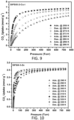
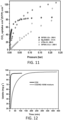
- SIFSIX-3-Zn revealed very steeper variable CO 2 adsorption isotherms ( Figure 12 ) than SIFSIX-2-Cu-I ( Figure 11 ) suitable for post-combustion capture (at the CO 2 partial pressure of 100-mbar), but also excellent features suitable for natural and biogas upgrading, as well as pre-combustion capture [20] (high CO 2 concentration and high pressure).
- SIFSIX-3-Zn showed an order of magnitude higher volumetric CO 2 uptake (55 cm 3 (STP)/ cm 3 ) than Mg-MOF-74, 20 (28 cm 3 (STP)/ cm 3 ) at 10 mbar (1% CO 2 ), while UTSA-16, 29 exhibited much lower CO 2 uptake similar to SIFSIX-2-Cu-I.
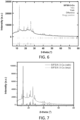
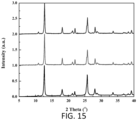
- the PXRD diagram was found not to match with any of the related reported structures, i.e. the Cu-2D structures or the 3D Zn analogue reported by Kita et al. 30 ( Figure 5 ). Despite extensive attempts, it was not possible to isolate synthetic conditions affording single crystals of sufficient size for single crystal diffraction (SCD), and the structure was then solved from PXRD using direct methods. The structural model was then energetically and geometrically refined, and the good agreement between experimental and calculated PXRD diagrams validates our model ( Figures 6 and 7 ). Analysis of the structure revealed the formula of the Cu analogue; [Cu(SiF 6 )(pyz) 2 .solv].
- the thermal gravimetric analysis (TGA) of the SIFSIX-3-Cu was tested in the temperature range 25-250 °C.
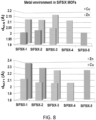
- the thermogram ( Figure 8 ) shows a mass loss of about 10% for the dried sample in the range of 50 -150 corresponding to guest molecules. Further gradual loss was observed above 150 °C due to the decomposition and loss of pyrazine and SiF6 ions.
- the TGA for the SIFSIX-3-Cu is in a good a greement with the one reported for the SIFSIX-3-Zn.
- this new Cu analogue should at least show the same promising adsorption properties as the SIFSIX-3-Zn. 23
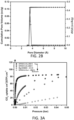
- the Cu analogue showed even steeper variable temperature adsorption isotherms ( Figure 2 (left)) at very low pressure indicative of the stronger CO 2 - SIFSIX-3-Cu interactions.
- Table 1 shows a summary of the adsorption uptake at variable low CO 2 concentration (partial pressures) for SIFSIX compounds as compared to Mg-MOF-74 and amine supported materials (including MOFs); relevant to different traces CO 2 removal applications. It is to notice that SIFSIX-3-Cu showed even higher CO 2 uptake at 400 ppm and 328 K as compared to the corresponding uptake at 323 K for amine functionalized Mg-dobpdc-mmen (Table S3). Table 1.
- the Q st of CO 2 adsorption in the contracted structure increased by 20%, from 45 to 54 kJ mol -1 ( Figure 3b ), in perfect agreement with the relatively steeper CO 2 adsorption isotherms in case of the Cu analogue at very low pressure. This increase is mainly attributed to the small unit cell and the small pore size of the Cu analogue.
- the Q st of COz adsorption is an intrinsic property that dictates the affinity of the pore surface toward CO 2 ; this in turn plays a major role in determining the adsorption selectivity and the necessary energy to release CO 2 during the regeneration step.
- MOFs offers remarkable CO 2 adsorption attributes in highly diluted gas streams that other plain class of materials are unable to achieve. Further works will be dedicated to study the effect of substituting other metals such as cadmium, cobalt, chromium etc., on the CO 2 separation properties in diluted CO 2 -containing gases.
- a methanol solution (5.0 mL) of pyrazine (pyz, 0.30 g, 3.0 mmol) was layered in a glass tube onto a methanol solution (5.0 mL) of CuSiF 6 ⁇ xH 2 O (0.325 g, 0.6 mmol).
- a fast formation of light violet powder was observed, and the powder was left for 24 hours in the mother solution.
- the powder was then collected and washed extensively with methanol then dried under vacuum Characterization:
- Adsorption equilibrium measurements of pure gases were performed using a Rubotherm gravimetric-densimetric apparatus (Bochum, Germany) (Scheme S1), composed mainly of a magnetic suspension balance (MSB) and a network of valves, mass flowmeters and temperature and pressure sensors.
- the MSB overcomes the disadvantages of other commercially available gravimetric instruments by separating the sensitive microbalance from the sample and the measuring atmosphere and is able to perform adsorption measurements across a wide pressure range, i.e. from 0 to 20 MPa.
- the adsorption temperature may also be controlled within the range of 77 K to 423 K.
- the adsorbent is precisely weighed and placed in a basket suspended by a permanent magnet through an electromagnet.
- Vadsorbent and Vss and Vadsorbed phase refer to the volume of the adsorbent, the volume of the suspension system and the volume of the adsorbed phase, respectively.
- DICVOL06 was used for pattern indexing of SIFSIX-3-Cu; the cell refinement was carried out by a structureless whole pattern profile refinement using the FullProf software and its graphical interface WinPlotr.
- J. Epdic 7 European Powder Diffraction, Pts 1 and 2 Vol. 378-3 Materials Science Forum (eds R. Delhez & E. J. Mittemeijer) 118-123 (2001 )
- the structure of SIFSIX-3-Cu was solved ab initio on the as-synthesized solid using powder X-Ray diffraction (PXRD) data by direct method using Expo2009.
- PXRD powder X-Ray diffraction
- ratios, concentrations, amounts, and other numerical data may be expressed herein in a range format. It is to be understood that such a range format is used for convenience and brevity, and thus, should be interpreted in a flexible manner to include not only the numerical values explicitly recited as the limits of the range, but also to include all the individual numerical values or sub-ranges encompassed within that range as if each numerical value and sub-range is explicitly recited.
- a concentration range of "about 0.1% to about 5%” should be interpreted to include not only the explicitly recited concentration of about 0.1 wt% to about 5 wt%, but also include individual concentrations ( e.g., 1%, 2%, 3%, and 4%) and the sub-ranges ( e.g., 0.5%, 1.1%, 2.2%, 3.3%, and 4.4%) within the indicated range.
- the term "about” can include traditional rounding according to measurement techniques and the units of the numerical value.
- the phrase "about 'x' to 'y'" includes “about 'x' to about 'y'".
Landscapes
- Chemical & Material Sciences (AREA)
- Chemical Kinetics & Catalysis (AREA)
- Analytical Chemistry (AREA)
- Organic Chemistry (AREA)
- Engineering & Computer Science (AREA)
- General Chemical & Material Sciences (AREA)
- Oil, Petroleum & Natural Gas (AREA)
- Inorganic Chemistry (AREA)
- Solid-Sorbent Or Filter-Aiding Compositions (AREA)
- Separation Of Gases By Adsorption (AREA)
- Carbon And Carbon Compounds (AREA)
Claims (14)
- Procédé de capture de CO2 dans un gaz, comprenant les étapes consistant à :exposer le gaz à un matériau organométallique (MOM) qui présente une affinité relative pour le CO2 plus importante que pour une vapeur d'eau, où le MOM présente une taille de pore de 3,3 Å à 3,9 Å, et où le gaz comporte du CO2 et de la vapeur d'eau, où le MOM présente une topologie cubique primitive présentant la structure générique (M(L)a(P)n), où M est un ion métal, L est un élément de liaison, P est un pilier, a vaut 2 et n vaut 1 ; etcapturer le CO2 dans le MOM.
- Procédé de la revendication 1, dans lequel le gaz comporte au moins l'un des gaz suivants : N2, H2 ou CH4, dans lequel le MOM présente une affinité relative pour le CO2 plus importante que pour chacun des N2, H2 et CH4.
- Procédé de la revendication 1, dans lequel M est Na, K, Li, Ag, Cu, Zn, Co, Mn, Mo, Cr, Fe, Ca, Ba, Cs, Pb, Pt, Pd, Ru, Rh, Cd, In, Fe, Y, Yb, Tb, Zr, Ti ou V.
- Procédé de la revendication 1, dans lequel L est de la pyrazine, de la 4,4'-bipyridine ou du 1,4-benzènedicarboxylate.
- Procédé de la revendication 1, dans lequel P est SiF6 2-, GeF6 2-, TiF6 2-, SnF6 2-, PF6 - ou NO3 -.
- Procédé de la revendication 1, dans lequel le MOM est du [Cu(pyrazine)2(SiF6)]n, où n vaut 1 à 100 000 000.
- Procédé de la revendication 1, dans lequel le MOM présente une taille de pore de 3,35 Å.
- Système pour capturer du CO2 dans un gaz, comprenant :une première structure comportant un matériau organométallique (MOM), où le MOM présente une topologie cubique primitive présentant la structure générique (M(L)a(P)n), où M est un ion métal, L est un élément de liaison, P est un pilier, a vaut 2 et n vaut 1, où la première structure est configurée pour capturer du CO2 depuis un gaz qui comporte du CO2 et une vapeur d'eau, où le MOM présente une taille de pore de 3,3 Å à 3,9 Å, où le MOM présente une affinité relative pour le CO2 plus importante que pour la vapeur d'eau ; etune deuxième structure permettant d'introduire le gaz dans la première structure, où la première structure est configurée pour éliminer le CO2 du gaz pour former un gaz modifié, où la deuxième structure est configurée pour faire s'écouler le gaz modifié loin de la première structure de sorte que le CO2 est capturé dans la première structure à l'exclusion du gaz modifié.
- Système de la revendication 8, dans lequel le gaz comporte au moins l'un des gaz suivants : N2, H2 et CH4, où le MOM présente une affinité relative pour le CO2 plus importante que pour chacun de N2, H2 et CH4.
- Système de la revendication 8, dans lequel M est Na, K, Li, Ag, Cu, Zn, Co, Mn, Mo, Cr, Fe, Ca, Ba, Cs, Pb, Pt, Pd, Ru, Rh, Cd, In, Fe, Y, Yb, Tb, Zr, Ti ou V.
- Système de la revendication 8, dans lequel L est de la pyrazine, de la 4,4'-bipyridine ou du 1,4-benzènedicarboxylate.
- Système de la revendication 8, dans lequel P est SiF6 2-, GeF6 2-, TiF6 2-, SnF6 2-, PF6 - ou NO3 -.
- Procédé de la revendication 8, dans lequel le MOM est du [Cu(pyrazine)2(SiF6)]n, où n vaut 1 à 100 000 000, et où le MOM présente une taille de pore de 3,35 Å.
- Procédé de la revendication 8, dans lequel la première structure est configurée pour capturer du CO2 d'un gaz dans lequel le CO2 est présent selon une concentration dans le gaz de 5 % ou moins.
Applications Claiming Priority (2)
| Application Number | Priority Date | Filing Date | Title |
|---|---|---|---|
| US201461941151P | 2014-02-18 | 2014-02-18 | |
| PCT/US2015/016382 WO2015126945A1 (fr) | 2014-02-18 | 2015-02-18 | Matériaux organométalliques d'adsorption de co2 |
Publications (3)
| Publication Number | Publication Date |
|---|---|
| EP3107638A1 EP3107638A1 (fr) | 2016-12-28 |
| EP3107638A4 EP3107638A4 (fr) | 2017-10-18 |
| EP3107638B1 true EP3107638B1 (fr) | 2023-07-05 |
Family
ID=53878915
Family Applications (1)
| Application Number | Title | Priority Date | Filing Date |
|---|---|---|---|
| EP15752271.5A Active EP3107638B1 (fr) | 2014-02-18 | 2015-02-18 | Matériaux organométalliques d'adsorption de co2 |
Country Status (3)
| Country | Link |
|---|---|
| EP (1) | EP3107638B1 (fr) |
| SA (1) | SA516371700B1 (fr) |
| WO (1) | WO2015126945A1 (fr) |
Families Citing this family (2)
| Publication number | Priority date | Publication date | Assignee | Title |
|---|---|---|---|---|
| KR102361888B1 (ko) * | 2017-10-31 | 2022-02-15 | 더 리젠츠 오브 더 유니버시티 오브 캘리포니아 | 이산화탄소 분리를 위한 폴리아민-부가된 금속-유기 골격체 |
| CN112316745B (zh) * | 2020-10-21 | 2023-02-10 | 中南林业科技大学 | 一种金属-有机分子笼状配合物混合基质膜及其制备方法和应用 |
Citations (3)
| Publication number | Priority date | Publication date | Assignee | Title |
|---|---|---|---|---|
| US20080184881A1 (en) * | 2007-02-02 | 2008-08-07 | Miami University | Mesh-adjustable molecular sieve |
| WO2015195791A1 (fr) * | 2014-06-17 | 2015-12-23 | King Abdullah University Of Science And Technology | Procédés écologiques de préparation de structures organiques métalliques hautement sélectives au co2 et tolérantes au h2s |
| WO2016036814A1 (fr) * | 2014-09-02 | 2016-03-10 | King Abdullah University Of Science And Technology | Procédés et appareil d'élimination de co2 sous forme de traces et en faible concentration au moyen de structures organométalliques |
Family Cites Families (10)
| Publication number | Priority date | Publication date | Assignee | Title |
|---|---|---|---|---|
| US7556673B2 (en) * | 2006-11-24 | 2009-07-07 | Basf Aktiengesellschaft | Method for the separation of carbon dioxide using a porous metal-organic framework material |
| TW200914115A (en) * | 2007-05-14 | 2009-04-01 | Shell Int Research | Process for producing purified natural gas from natural gas comprising water and carbon dioxide |
| GB0807862D0 (en) * | 2008-04-29 | 2008-06-04 | Uni I Oslo | Compounds |
| US8500889B2 (en) * | 2009-01-05 | 2013-08-06 | Commonwealth Scientific And Industrial Research Organisation | Gas adsorption material |
| WO2010148276A2 (fr) * | 2009-06-19 | 2010-12-23 | The Regents Of The University Of California | Capture du dioxyde de carbone, et son stockage par utilisation de cadres ouverts |
| JP6038878B2 (ja) * | 2011-03-31 | 2016-12-07 | カウンスィル オブ サイエンティフィック アンド インダストリアル リサーチCouncil Of Scientific & Industrial Research | 向上したガス吸着容量を有する活性炭−金属有機骨格複合材料およびその調製のための方法 |
| GB201205365D0 (en) * | 2012-03-27 | 2012-05-09 | Univ Nottingham | Frameworks |
| US9375678B2 (en) * | 2012-05-25 | 2016-06-28 | Georgia Tech Research Corporation | Metal-organic framework supported on porous polymer |
| GB201212898D0 (en) * | 2012-07-20 | 2012-09-05 | Univ Nottingham | Metal-organic frameworks |
| CA2879807A1 (fr) * | 2012-07-26 | 2014-01-30 | Commonwealth Scientific And Industrial Research Organisation | Procedes de separation de gaz |
-
2015
- 2015-02-18 WO PCT/US2015/016382 patent/WO2015126945A1/fr not_active Ceased
- 2015-02-18 EP EP15752271.5A patent/EP3107638B1/fr active Active
-
2016
- 2016-08-18 SA SA516371700A patent/SA516371700B1/ar unknown
Patent Citations (3)
| Publication number | Priority date | Publication date | Assignee | Title |
|---|---|---|---|---|
| US20080184881A1 (en) * | 2007-02-02 | 2008-08-07 | Miami University | Mesh-adjustable molecular sieve |
| WO2015195791A1 (fr) * | 2014-06-17 | 2015-12-23 | King Abdullah University Of Science And Technology | Procédés écologiques de préparation de structures organiques métalliques hautement sélectives au co2 et tolérantes au h2s |
| WO2016036814A1 (fr) * | 2014-09-02 | 2016-03-10 | King Abdullah University Of Science And Technology | Procédés et appareil d'élimination de co2 sous forme de traces et en faible concentration au moyen de structures organométalliques |
Also Published As
| Publication number | Publication date |
|---|---|
| SA516371700B1 (ar) | 2022-05-25 |
| EP3107638A1 (fr) | 2016-12-28 |
| EP3107638A4 (fr) | 2017-10-18 |
| WO2015126945A1 (fr) | 2015-08-27 |
Similar Documents
| Publication | Publication Date | Title |
|---|---|---|
| US10112175B2 (en) | Metal-organic materials (MOMs) for CO2 absorption and methods of using MOMs | |
| US11819795B2 (en) | Trace and low concentration CO2 removal methods and apparatus utilizing metal organic frameworks | |
| Qazvini et al. | MUF-16: A robust metal–organic framework for pre-and post-combustion Carbon Dioxide capture | |
| Zhang et al. | Perspective of microporous metal–organic frameworks for CO 2 capture and separation | |
| US9138719B1 (en) | Metal-organic materials (MOMs) for CO2 adsorption and methods of using MOMs | |
| Sumida et al. | Carbon dioxide capture in metal–organic frameworks | |
| Shalini et al. | Potential of ultramicroporous metal–organic frameworks in CO 2 clean-up | |
| Yao et al. | Interpenetrated metal–organic frameworks and their uptake of CO 2 at relatively low pressures | |
| US20220056064A1 (en) | Metal-organic frameworks for gas adsorption | |
| Wang et al. | Ultramicroporous zinc-aminotriazole MOF with customized alkaline pore environments for highly efficient capture of CO2 from flue gas | |
| WO2022260592A2 (fr) | Structure simple organométallique pour l'adsorption sélective de dioxyde de carbone issu de gaz de combustion | |
| EP3280511A1 (fr) | Réseaux de coordination organométalliques ni-m f6-nh2o/onpyrazine2(solvant)x hautement stables et procédés d'utilisation | |
| Li et al. | Porous Lanthanide Metal–Organic Frameworks for Gas Storage and Separation | |
| US20170113204A1 (en) | Metal-organic materials for c02 adsorption | |
| EP3107638B1 (fr) | Matériaux organométalliques d'adsorption de co2 | |
| US11285426B2 (en) | Methods of capturing of CO2 and H2O | |
| US11439944B2 (en) | Metal-organic materials for CO2 adsorption | |
| Eddaoudi et al. | Metal-organic materials for c02 adsorption | |
| O’Nolan et al. | Enhanced CO 2 sorption properties in a polarizable [WO 2 F 4] 2−-pillared physisorbent under direct air capture conditions | |
| GB2618647A (en) | Porous metal-organic framework, method for producing the same, adsorbent, and method for separating carbon dioxide | |
| Lourenço et al. | Gas‐Organic and Gas‐Inorganic Interfacial Effects in Gas/Adsorbent Interactions: The Case of CO2/CH4 Separation | |
| Eddaoudi et al. | Metal-organic materials for CO2 adsorption | |
| Yao et al. | The application of metal-organic frameworks to CO2 capture | |
| US20260008800A1 (en) | Pyrazole cobalt-based metal-organic framework material with dynamic pore size, method for making the same, and use in sulfur hexafluoride capture | |
| Evans | Metal-Organic Framework Structure-Property Relationships for Selective Sulfur Dioxide Adsorption |
Legal Events
| Date | Code | Title | Description |
|---|---|---|---|
| PUAI | Public reference made under article 153(3) epc to a published international application that has entered the european phase |
Free format text: ORIGINAL CODE: 0009012 |
|
| STAA | Information on the status of an ep patent application or granted ep patent |
Free format text: STATUS: REQUEST FOR EXAMINATION WAS MADE |
|
| 17P | Request for examination filed |
Effective date: 20160913 |
|
| AK | Designated contracting states |
Kind code of ref document: A1 Designated state(s): AL AT BE BG CH CY CZ DE DK EE ES FI FR GB GR HR HU IE IS IT LI LT LU LV MC MK MT NL NO PL PT RO RS SE SI SK SM TR |
|
| AX | Request for extension of the european patent |
Extension state: BA ME |
|
| DAX | Request for extension of the european patent (deleted) | ||
| A4 | Supplementary search report drawn up and despatched |
Effective date: 20170920 |
|
| RIC1 | Information provided on ipc code assigned before grant |
Ipc: B01D 71/02 20060101ALI20170914BHEP Ipc: B01D 53/22 20060101AFI20170914BHEP Ipc: B01J 20/22 20060101ALI20170914BHEP |
|
| STAA | Information on the status of an ep patent application or granted ep patent |
Free format text: STATUS: EXAMINATION IS IN PROGRESS |
|
| 17Q | First examination report despatched |
Effective date: 20190417 |
|
| GRAP | Despatch of communication of intention to grant a patent |
Free format text: ORIGINAL CODE: EPIDOSNIGR1 |
|
| STAA | Information on the status of an ep patent application or granted ep patent |
Free format text: STATUS: GRANT OF PATENT IS INTENDED |
|
| RIC1 | Information provided on ipc code assigned before grant |
Ipc: B01J 20/28 20060101ALI20221219BHEP Ipc: B01D 71/00 20060101ALI20221219BHEP Ipc: B01D 69/02 20060101ALI20221219BHEP Ipc: B01D 53/02 20060101ALI20221219BHEP Ipc: B01J 20/22 20060101ALI20221219BHEP Ipc: B01D 71/02 20060101ALI20221219BHEP Ipc: B01D 53/22 20060101AFI20221219BHEP |
|
| INTG | Intention to grant announced |
Effective date: 20230116 |
|
| GRAS | Grant fee paid |
Free format text: ORIGINAL CODE: EPIDOSNIGR3 |
|
| GRAA | (expected) grant |
Free format text: ORIGINAL CODE: 0009210 |
|
| STAA | Information on the status of an ep patent application or granted ep patent |
Free format text: STATUS: THE PATENT HAS BEEN GRANTED |
|
| AK | Designated contracting states |
Kind code of ref document: B1 Designated state(s): AL AT BE BG CH CY CZ DE DK EE ES FI FR GB GR HR HU IE IS IT LI LT LU LV MC MK MT NL NO PL PT RO RS SE SI SK SM TR |
|
| REG | Reference to a national code |
Ref country code: CH Ref legal event code: EP |
|
| REG | Reference to a national code |
Ref country code: AT Ref legal event code: REF Ref document number: 1584303 Country of ref document: AT Kind code of ref document: T Effective date: 20230715 |
|
| REG | Reference to a national code |
Ref country code: DE Ref legal event code: R096 Ref document number: 602015084442 Country of ref document: DE |
|
| REG | Reference to a national code |
Ref country code: IE Ref legal event code: FG4D |
|
| REG | Reference to a national code |
Ref country code: LT Ref legal event code: MG9D |
|
| REG | Reference to a national code |
Ref country code: NL Ref legal event code: MP Effective date: 20230705 |
|
| REG | Reference to a national code |
Ref country code: AT Ref legal event code: MK05 Ref document number: 1584303 Country of ref document: AT Kind code of ref document: T Effective date: 20230705 |
|
| PG25 | Lapsed in a contracting state [announced via postgrant information from national office to epo] |
Ref country code: NL Free format text: LAPSE BECAUSE OF FAILURE TO SUBMIT A TRANSLATION OF THE DESCRIPTION OR TO PAY THE FEE WITHIN THE PRESCRIBED TIME-LIMIT Effective date: 20230705 |
|
| PG25 | Lapsed in a contracting state [announced via postgrant information from national office to epo] |
Ref country code: GR Free format text: LAPSE BECAUSE OF FAILURE TO SUBMIT A TRANSLATION OF THE DESCRIPTION OR TO PAY THE FEE WITHIN THE PRESCRIBED TIME-LIMIT Effective date: 20231006 |
|
| PG25 | Lapsed in a contracting state [announced via postgrant information from national office to epo] |
Ref country code: ES Free format text: LAPSE BECAUSE OF FAILURE TO SUBMIT A TRANSLATION OF THE DESCRIPTION OR TO PAY THE FEE WITHIN THE PRESCRIBED TIME-LIMIT Effective date: 20230705 |
|
| PG25 | Lapsed in a contracting state [announced via postgrant information from national office to epo] |
Ref country code: IS Free format text: LAPSE BECAUSE OF FAILURE TO SUBMIT A TRANSLATION OF THE DESCRIPTION OR TO PAY THE FEE WITHIN THE PRESCRIBED TIME-LIMIT Effective date: 20231105 |
|
| PG25 | Lapsed in a contracting state [announced via postgrant information from national office to epo] |
Ref country code: SE Free format text: LAPSE BECAUSE OF FAILURE TO SUBMIT A TRANSLATION OF THE DESCRIPTION OR TO PAY THE FEE WITHIN THE PRESCRIBED TIME-LIMIT Effective date: 20230705 Ref country code: RS Free format text: LAPSE BECAUSE OF FAILURE TO SUBMIT A TRANSLATION OF THE DESCRIPTION OR TO PAY THE FEE WITHIN THE PRESCRIBED TIME-LIMIT Effective date: 20230705 Ref country code: PT Free format text: LAPSE BECAUSE OF FAILURE TO SUBMIT A TRANSLATION OF THE DESCRIPTION OR TO PAY THE FEE WITHIN THE PRESCRIBED TIME-LIMIT Effective date: 20231106 Ref country code: NO Free format text: LAPSE BECAUSE OF FAILURE TO SUBMIT A TRANSLATION OF THE DESCRIPTION OR TO PAY THE FEE WITHIN THE PRESCRIBED TIME-LIMIT Effective date: 20231005 Ref country code: LV Free format text: LAPSE BECAUSE OF FAILURE TO SUBMIT A TRANSLATION OF THE DESCRIPTION OR TO PAY THE FEE WITHIN THE PRESCRIBED TIME-LIMIT Effective date: 20230705 Ref country code: LT Free format text: LAPSE BECAUSE OF FAILURE TO SUBMIT A TRANSLATION OF THE DESCRIPTION OR TO PAY THE FEE WITHIN THE PRESCRIBED TIME-LIMIT Effective date: 20230705 Ref country code: IS Free format text: LAPSE BECAUSE OF FAILURE TO SUBMIT A TRANSLATION OF THE DESCRIPTION OR TO PAY THE FEE WITHIN THE PRESCRIBED TIME-LIMIT Effective date: 20231105 Ref country code: HR Free format text: LAPSE BECAUSE OF FAILURE TO SUBMIT A TRANSLATION OF THE DESCRIPTION OR TO PAY THE FEE WITHIN THE PRESCRIBED TIME-LIMIT Effective date: 20230705 Ref country code: GR Free format text: LAPSE BECAUSE OF FAILURE TO SUBMIT A TRANSLATION OF THE DESCRIPTION OR TO PAY THE FEE WITHIN THE PRESCRIBED TIME-LIMIT Effective date: 20231006 Ref country code: FI Free format text: LAPSE BECAUSE OF FAILURE TO SUBMIT A TRANSLATION OF THE DESCRIPTION OR TO PAY THE FEE WITHIN THE PRESCRIBED TIME-LIMIT Effective date: 20230705 Ref country code: ES Free format text: LAPSE BECAUSE OF FAILURE TO SUBMIT A TRANSLATION OF THE DESCRIPTION OR TO PAY THE FEE WITHIN THE PRESCRIBED TIME-LIMIT Effective date: 20230705 Ref country code: AT Free format text: LAPSE BECAUSE OF FAILURE TO SUBMIT A TRANSLATION OF THE DESCRIPTION OR TO PAY THE FEE WITHIN THE PRESCRIBED TIME-LIMIT Effective date: 20230705 |
|
| PG25 | Lapsed in a contracting state [announced via postgrant information from national office to epo] |
Ref country code: PL Free format text: LAPSE BECAUSE OF FAILURE TO SUBMIT A TRANSLATION OF THE DESCRIPTION OR TO PAY THE FEE WITHIN THE PRESCRIBED TIME-LIMIT Effective date: 20230705 |
|
| REG | Reference to a national code |
Ref country code: DE Ref legal event code: R097 Ref document number: 602015084442 Country of ref document: DE |
|
| PG25 | Lapsed in a contracting state [announced via postgrant information from national office to epo] |
Ref country code: SM Free format text: LAPSE BECAUSE OF FAILURE TO SUBMIT A TRANSLATION OF THE DESCRIPTION OR TO PAY THE FEE WITHIN THE PRESCRIBED TIME-LIMIT Effective date: 20230705 Ref country code: RO Free format text: LAPSE BECAUSE OF FAILURE TO SUBMIT A TRANSLATION OF THE DESCRIPTION OR TO PAY THE FEE WITHIN THE PRESCRIBED TIME-LIMIT Effective date: 20230705 Ref country code: EE Free format text: LAPSE BECAUSE OF FAILURE TO SUBMIT A TRANSLATION OF THE DESCRIPTION OR TO PAY THE FEE WITHIN THE PRESCRIBED TIME-LIMIT Effective date: 20230705 Ref country code: DK Free format text: LAPSE BECAUSE OF FAILURE TO SUBMIT A TRANSLATION OF THE DESCRIPTION OR TO PAY THE FEE WITHIN THE PRESCRIBED TIME-LIMIT Effective date: 20230705 Ref country code: CZ Free format text: LAPSE BECAUSE OF FAILURE TO SUBMIT A TRANSLATION OF THE DESCRIPTION OR TO PAY THE FEE WITHIN THE PRESCRIBED TIME-LIMIT Effective date: 20230705 Ref country code: SK Free format text: LAPSE BECAUSE OF FAILURE TO SUBMIT A TRANSLATION OF THE DESCRIPTION OR TO PAY THE FEE WITHIN THE PRESCRIBED TIME-LIMIT Effective date: 20230705 |
|
| PLBE | No opposition filed within time limit |
Free format text: ORIGINAL CODE: 0009261 |
|
| STAA | Information on the status of an ep patent application or granted ep patent |
Free format text: STATUS: NO OPPOSITION FILED WITHIN TIME LIMIT |
|
| PG25 | Lapsed in a contracting state [announced via postgrant information from national office to epo] |
Ref country code: IT Free format text: LAPSE BECAUSE OF FAILURE TO SUBMIT A TRANSLATION OF THE DESCRIPTION OR TO PAY THE FEE WITHIN THE PRESCRIBED TIME-LIMIT Effective date: 20230705 |
|
| 26N | No opposition filed |
Effective date: 20240408 |
|
| PG25 | Lapsed in a contracting state [announced via postgrant information from national office to epo] |
Ref country code: SI Free format text: LAPSE BECAUSE OF FAILURE TO SUBMIT A TRANSLATION OF THE DESCRIPTION OR TO PAY THE FEE WITHIN THE PRESCRIBED TIME-LIMIT Effective date: 20230705 |
|
| PG25 | Lapsed in a contracting state [announced via postgrant information from national office to epo] |
Ref country code: MC Free format text: LAPSE BECAUSE OF FAILURE TO SUBMIT A TRANSLATION OF THE DESCRIPTION OR TO PAY THE FEE WITHIN THE PRESCRIBED TIME-LIMIT Effective date: 20230705 |
|
| REG | Reference to a national code |
Ref country code: CH Ref legal event code: PL |
|
| PG25 | Lapsed in a contracting state [announced via postgrant information from national office to epo] |
Ref country code: LU Free format text: LAPSE BECAUSE OF NON-PAYMENT OF DUE FEES Effective date: 20240218 |
|
| PG25 | Lapsed in a contracting state [announced via postgrant information from national office to epo] |
Ref country code: CH Free format text: LAPSE BECAUSE OF NON-PAYMENT OF DUE FEES Effective date: 20240229 |
|
| PG25 | Lapsed in a contracting state [announced via postgrant information from national office to epo] |
Ref country code: LU Free format text: LAPSE BECAUSE OF NON-PAYMENT OF DUE FEES Effective date: 20240218 Ref country code: CH Free format text: LAPSE BECAUSE OF NON-PAYMENT OF DUE FEES Effective date: 20240229 |
|
| PG25 | Lapsed in a contracting state [announced via postgrant information from national office to epo] |
Ref country code: BG Free format text: LAPSE BECAUSE OF FAILURE TO SUBMIT A TRANSLATION OF THE DESCRIPTION OR TO PAY THE FEE WITHIN THE PRESCRIBED TIME-LIMIT Effective date: 20230705 |
|
| PG25 | Lapsed in a contracting state [announced via postgrant information from national office to epo] |
Ref country code: BG Free format text: LAPSE BECAUSE OF FAILURE TO SUBMIT A TRANSLATION OF THE DESCRIPTION OR TO PAY THE FEE WITHIN THE PRESCRIBED TIME-LIMIT Effective date: 20230705 |
|
| REG | Reference to a national code |
Ref country code: BE Ref legal event code: MM Effective date: 20240229 |
|
| PG25 | Lapsed in a contracting state [announced via postgrant information from national office to epo] |
Ref country code: BE Free format text: LAPSE BECAUSE OF NON-PAYMENT OF DUE FEES Effective date: 20240229 |
|
| PG25 | Lapsed in a contracting state [announced via postgrant information from national office to epo] |
Ref country code: IE Free format text: LAPSE BECAUSE OF NON-PAYMENT OF DUE FEES Effective date: 20240218 |
|
| PG25 | Lapsed in a contracting state [announced via postgrant information from national office to epo] |
Ref country code: IE Free format text: LAPSE BECAUSE OF NON-PAYMENT OF DUE FEES Effective date: 20240218 Ref country code: BE Free format text: LAPSE BECAUSE OF NON-PAYMENT OF DUE FEES Effective date: 20240229 |
|
| PG25 | Lapsed in a contracting state [announced via postgrant information from national office to epo] |
Ref country code: CY Free format text: LAPSE BECAUSE OF FAILURE TO SUBMIT A TRANSLATION OF THE DESCRIPTION OR TO PAY THE FEE WITHIN THE PRESCRIBED TIME-LIMIT; INVALID AB INITIO Effective date: 20150218 |
|
| PG25 | Lapsed in a contracting state [announced via postgrant information from national office to epo] |
Ref country code: HU Free format text: LAPSE BECAUSE OF FAILURE TO SUBMIT A TRANSLATION OF THE DESCRIPTION OR TO PAY THE FEE WITHIN THE PRESCRIBED TIME-LIMIT; INVALID AB INITIO Effective date: 20150218 |
|
| PG25 | Lapsed in a contracting state [announced via postgrant information from national office to epo] |
Ref country code: TR Free format text: LAPSE BECAUSE OF FAILURE TO SUBMIT A TRANSLATION OF THE DESCRIPTION OR TO PAY THE FEE WITHIN THE PRESCRIBED TIME-LIMIT Effective date: 20230705 |
|
| PGFP | Annual fee paid to national office [announced via postgrant information from national office to epo] |
Ref country code: GB Payment date: 20260227 Year of fee payment: 12 |
|
| PGFP | Annual fee paid to national office [announced via postgrant information from national office to epo] |
Ref country code: DE Payment date: 20260227 Year of fee payment: 12 |
|
| PGFP | Annual fee paid to national office [announced via postgrant information from national office to epo] |
Ref country code: FR Payment date: 20260225 Year of fee payment: 12 |