EP3107919B1 - Makrocyclische therapiemittel, verfahren zur herstellung davon und verfahren zur behandlung - Google Patents
Makrocyclische therapiemittel, verfahren zur herstellung davon und verfahren zur behandlung Download PDFInfo
- Publication number
- EP3107919B1 EP3107919B1 EP15751780.6A EP15751780A EP3107919B1 EP 3107919 B1 EP3107919 B1 EP 3107919B1 EP 15751780 A EP15751780 A EP 15751780A EP 3107919 B1 EP3107919 B1 EP 3107919B1
- Authority
- EP
- European Patent Office
- Prior art keywords
- compound
- formula
- optionally substituted
- independently
- disorder
- Prior art date
- Legal status (The legal status is an assumption and is not a legal conclusion. Google has not performed a legal analysis and makes no representation as to the accuracy of the status listed.)
- Active
Links
- 0 CC[C@](C)[C@](*(C)C([C@](C)*(C)C([C@](Cc(cc1)ccc1OC)*(C)(C)C(CC[C@@]1*=C(C[C@](C[C@](C)C[C@@](C(C)(C)C)OC([C@]2*3CCC2)=O)OC)NC1)=O)=O)=O)C3=O Chemical compound CC[C@](C)[C@](*(C)C([C@](C)*(C)C([C@](Cc(cc1)ccc1OC)*(C)(C)C(CC[C@@]1*=C(C[C@](C[C@](C)C[C@@](C(C)(C)C)OC([C@]2*3CCC2)=O)OC)NC1)=O)=O)=O)C3=O 0.000 description 12
- OFQQPXGCSPULDH-SSNYWQTASA-N CC[C@H](C)[C@@H](C(N(CCC1)[C@@H]1C(O[C@@H](C[C@@H](C)CC([C@H](C)C(SC1)=N[C@@H]1CCC(N[C@@H](C)C(N[C@H]1C)=O)=O)O)C(C)(C)C)=O)=O)NC1=O Chemical compound CC[C@H](C)[C@@H](C(N(CCC1)[C@@H]1C(O[C@@H](C[C@@H](C)CC([C@H](C)C(SC1)=N[C@@H]1CCC(N[C@@H](C)C(N[C@H]1C)=O)=O)O)C(C)(C)C)=O)=O)NC1=O OFQQPXGCSPULDH-SSNYWQTASA-N 0.000 description 1
- UYLSEMZBLAQPHF-RWTJWMLSSA-N CC[C@H](C)[C@@H](C(N(CCC1)[C@@H]1C(O[C@@H](C[C@@H](C)C[C@@H](CC(SC1)=N[C@H]1CCC(N[C@@H](Cc(cc1)ccc1OC)C(N[C@H]1C)=O)=O)O)C(C)(C)C)=O)=O)NC1=O Chemical compound CC[C@H](C)[C@@H](C(N(CCC1)[C@@H]1C(O[C@@H](C[C@@H](C)C[C@@H](CC(SC1)=N[C@H]1CCC(N[C@@H](Cc(cc1)ccc1OC)C(N[C@H]1C)=O)=O)O)C(C)(C)C)=O)=O)NC1=O UYLSEMZBLAQPHF-RWTJWMLSSA-N 0.000 description 1
Images
Classifications
-
- C—CHEMISTRY; METALLURGY
- C07—ORGANIC CHEMISTRY
- C07K—PEPTIDES
- C07K5/00—Peptides containing up to four amino acids in a fully defined sequence; Derivatives thereof
- C07K5/04—Peptides containing up to four amino acids in a fully defined sequence; Derivatives thereof containing only normal peptide links
- C07K5/12—Cyclic peptides with only normal peptide bonds in the ring
- C07K5/126—Tetrapeptides
-
- A—HUMAN NECESSITIES
- A61—MEDICAL OR VETERINARY SCIENCE; HYGIENE
- A61K—PREPARATIONS FOR MEDICAL, DENTAL OR TOILETRY PURPOSES
- A61K31/00—Medicinal preparations containing organic active ingredients
- A61K31/33—Heterocyclic compounds
- A61K31/395—Heterocyclic compounds having nitrogen as a ring hetero atom, e.g. guanethidine or rifamycins
- A61K31/41—Heterocyclic compounds having nitrogen as a ring hetero atom, e.g. guanethidine or rifamycins having five-membered rings with two or more ring hetero atoms, at least one of which being nitrogen, e.g. tetrazole
- A61K31/42—Oxazoles
- A61K31/424—Oxazoles condensed with heterocyclic ring systems, e.g. clavulanic acid
-
- A—HUMAN NECESSITIES
- A61—MEDICAL OR VETERINARY SCIENCE; HYGIENE
- A61K—PREPARATIONS FOR MEDICAL, DENTAL OR TOILETRY PURPOSES
- A61K31/00—Medicinal preparations containing organic active ingredients
- A61K31/33—Heterocyclic compounds
- A61K31/395—Heterocyclic compounds having nitrogen as a ring hetero atom, e.g. guanethidine or rifamycins
- A61K31/41—Heterocyclic compounds having nitrogen as a ring hetero atom, e.g. guanethidine or rifamycins having five-membered rings with two or more ring hetero atoms, at least one of which being nitrogen, e.g. tetrazole
- A61K31/425—Thiazoles
- A61K31/429—Thiazoles condensed with heterocyclic ring systems
-
- A—HUMAN NECESSITIES
- A61—MEDICAL OR VETERINARY SCIENCE; HYGIENE
- A61K—PREPARATIONS FOR MEDICAL, DENTAL OR TOILETRY PURPOSES
- A61K38/00—Medicinal preparations containing peptides
- A61K38/04—Peptides having up to 20 amino acids in a fully defined sequence; Derivatives thereof
- A61K38/12—Cyclic peptides, e.g. bacitracins; Polymyxins; Gramicidins S, C; Tyrocidins A, B or C
-
- A—HUMAN NECESSITIES
- A61—MEDICAL OR VETERINARY SCIENCE; HYGIENE
- A61K—PREPARATIONS FOR MEDICAL, DENTAL OR TOILETRY PURPOSES
- A61K45/00—Medicinal preparations containing active ingredients not provided for in groups A61K31/00 - A61K41/00
- A61K45/06—Mixtures of active ingredients without chemical characterisation, e.g. antiphlogistics and cardiaca
-
- A—HUMAN NECESSITIES
- A61—MEDICAL OR VETERINARY SCIENCE; HYGIENE
- A61P—SPECIFIC THERAPEUTIC ACTIVITY OF CHEMICAL COMPOUNDS OR MEDICINAL PREPARATIONS
- A61P35/00—Antineoplastic agents
-
- C—CHEMISTRY; METALLURGY
- C07—ORGANIC CHEMISTRY
- C07D—HETEROCYCLIC COMPOUNDS
- C07D207/00—Heterocyclic compounds containing five-membered rings not condensed with other rings, with one nitrogen atom as the only ring hetero atom
- C07D207/02—Heterocyclic compounds containing five-membered rings not condensed with other rings, with one nitrogen atom as the only ring hetero atom with only hydrogen or carbon atoms directly attached to the ring nitrogen atom
- C07D207/04—Heterocyclic compounds containing five-membered rings not condensed with other rings, with one nitrogen atom as the only ring hetero atom with only hydrogen or carbon atoms directly attached to the ring nitrogen atom having no double bonds between ring members or between ring members and non-ring members
- C07D207/10—Heterocyclic compounds containing five-membered rings not condensed with other rings, with one nitrogen atom as the only ring hetero atom with only hydrogen or carbon atoms directly attached to the ring nitrogen atom having no double bonds between ring members or between ring members and non-ring members with hetero atoms or with carbon atoms having three bonds to hetero atoms with at the most one bond to halogen, e.g. ester or nitrile radicals, directly attached to ring carbon atoms
- C07D207/16—Carbon atoms having three bonds to hetero atoms with at the most one bond to halogen, e.g. ester or nitrile radicals
-
- C—CHEMISTRY; METALLURGY
- C07—ORGANIC CHEMISTRY
- C07K—PEPTIDES
- C07K5/00—Peptides containing up to four amino acids in a fully defined sequence; Derivatives thereof
- C07K5/04—Peptides containing up to four amino acids in a fully defined sequence; Derivatives thereof containing only normal peptide links
- C07K5/10—Tetrapeptides
- C07K5/1002—Tetrapeptides with the first amino acid being neutral
- C07K5/1016—Tetrapeptides with the first amino acid being neutral and aromatic or cycloaliphatic
Definitions
- marine cyanobacteria are prolific producers of bioactive secondary metabolites, many of which are modified peptides or peptide-polyketide hybrids with promising antitumor activities, such as dolastatin 10, curacin A, and apratoxin A
- modified peptides or peptide-polyketide hybrids with promising antitumor activities, such as dolastatin 10, curacin A, and apratoxin A
- Apratoxins are potent cytotoxins derived from marine cyanobacteria and, due to their biological activity and interesting structures, they have been subject to several total syntheses and SAR studies [ Luesch, H.; Yoshida, W. Y.; Moore, R. E.; Paul, V. J.; Corbett, T. H. J. Am. Chem. Soc. 2001, 123, 5418-5423 ; Luesch, H.; Yoshida, W. Y.; Moore, R. E.; Paul, V. J., Bioorg. Med. Chem. 2002, 10, 1973-1978 ; Matthew, S.; Schupp, P. J.; Luesch, H. J. Nat. Prod.
- Tetrahedron Asymmetry 2004, 15, 355-363 ; Doi, T.; Numajiri, Y.; Takahashi, T.; Takagi, M.; Shin-ya, K. Chem. Asian J. 2011, 6, 180-188 ; Chen, J.; Forsyth, C. J. J. Am. Chem. Soc. 2003, 125, 8734-8735 ; Ma, D.; Zou, B.; Cai, G.; Hu, X.; Liu, J. O. Chem. Eur. J. 2006, 12, 7615-7626 ; Zou, B.; Wei, J.; Cai, G.; Ma, D. Org. Lett.
- Apratoxins have been shown to prevent cotranslational translocation and thereby downregulate various receptors, including receptor tyrosine kinases (RTKs), and inhibit trafficking of other secretory molecules, including growth factors that act on RTKs [ Chen, Q.-Y.; Liu, Y.; Luesch, H. ACS Med. Chem. Lett.
- RTKs such as epidermal growth factor receptors and corresponding ligands such as vascular endothelial growth factor A (VEGF-A) individually are validated drug targets, which resulted in the approval of small molecules and antibodies against these proteins for colorectal cancer and other cancers [ Lurje, G.; Lenz, H.-J.
- Apratoxin A has been shown to possess broad-spectrum yet differential in vitro activity; however, it also demonstrated in vivo toxicity and sub-optimal tolerability [ Luesch, H.; Chanda, S.K.; Raya, R.M.; DeJesus, P.D.; Orth, A. P.; Walker, J. R.; Izpis ⁇ a Belmonte, J. C.; Schultz, P.G. Nat Chem Biol. 2006, 2, 158-167 ; Chen, Q.-Y.; Liu, Y.; Luesch, H. ACS Med. Chem. Lett. 2011, 2, 861-865 ]. Therefore, the compounds of the present invention were designed and synthesized to address these shortcomings while maintaining or improving biological activity.
- Modulation of cellular activity by apratoxins may be beneficial for cancer treatment and for immunosuppression, e.g., based on downregulation of receptors, inhibition of STAT3 activity and of T-cell activation.
- other diseases that may be treated with apratoxin-based agents include other diseases where receptor downregulation may be beneficial, e.g., autoimmune diseases, some which may be associated with chemokine receptors (e.g., multiple sclerosis), or inflammation.
- the disclosure is directed towards macrocyclic compounds and methods of synthesis, their mechanism of action, methods of modulating proliferation activity, and methods of treating proliferation disease and disorders.
- the invention provides a compound that is: or a salt thereof.
- the invention provides an effective amount of a compound as depicted above, or a salt thereof, for use in inhibiting the activity of cell proliferation in a subject in need, in an amount and under conditions sufficient to inhibit cell proliferation, preferably wherein the cell is a cancer cell, or wherein the cell is a tumor cell or/and wherein the compound downregulates the level of endoplasmic reticulum (ER) proteins, or/and wherein the compound downregulates a FGFR or VEGFR.
- ER endoplasmic reticulum
- the invention provides an effective amount of a compound as depicted above, or a salt thereof, for use in treating a subject suffering from or susceptible to a cell proliferation related disorder or disease, such that said subject is treated for said disorder, wherein the disorder is cancer, solid tumor, or metastatic tumor, or/and wherein the disorder is an angiogenesis disorder, or/and wherein the disorder is solid tumor.
- the invention provides an effective amount of a compound, or pharmaceutical composition thereof of, a compound as depicted above, or a salt thereof, for use in treating a subject suffering from or susceptible to a disease or disorder, such that said subject is treated for said disease or disorder, wherein the disease or disorder is cervical, ovarian, bladder, pancreatic, or brain cancer.
- the invention provides a pharmaceutical composition
- a pharmaceutical composition comprising a compound as depicted above, or a salt thereof, and a pharmaceutically acceptable carrier.
- the invention provides a kit comprising a compound as depicted above.
- the invention provides a process for preparing the compounds of the invention as disclosed below.
- the disclosure provides a compound according to formula 1 or formula 2 : wherein
- the disclosure provides a compound according to any of the formula 3 or formula 4 : wherein:
- the compound is of any of the formulae 5 to 15 and 44 to 46 wherein the variables are as defined in formulae 1 or 2 :
- the compounds are those of the following formulae:
- the disclosure provides a compound according to a formula 34 : wherein:
- the disclosure provides a compound according to any of the formulae:
- the invention provides a compound according to formula 32 : wherein
- the disclosure provides a compound according to formula 33 : wherein
- the disclosure provides a compound according to formula 23a : wherein
- the disclosure provides a compound according to formula 23b : wherein
- the disclosure provides a compound according to formula 27a : wherein
- the disclosure provides a compound according to formula 27b : wherein
- Another aspect is a compound herein, wherein X is S.
- Another aspect of the disclosure is a compound herein, identified as an inhibitor of cotranslational translocation within the secretory pathway.
- the disclosure provides a pharmaceutical composition
- a pharmaceutical composition comprising the compound of any of the formulae herein and a pharmaceutically acceptable carrier.
- the disclosure provides a process to prepare a compound of formula 16 or formula 17 : wherein the process comprises the step of reacting a compound of formula 18 , with a compound of formula 19 , to afford a compound of formula 20 , wherein
- the disclosure provides a process to prepare a compound of formula 20 : comprising reacting a compound of formula 18 , with a compound of formula 19 , to afford a compound of formula 20 ;
- the invention provides a process to prepare a compound of formula 16 or formula 17 : wherein the process comprises the step of reacting (i) a compound of formula 21 , (ii) a compound of formula 22a , or a compound of formula 22b , and (iii) a coupling reagent (preferably, BOP, BEP, PyAOP, or DEPBT) to afford a compound of formula 23a , or formula 23b , wherein
- a coupling reagent preferably, BOP, BEP, PyAOP, or DEPBT
- the invention provides a process to prepare a compound of formula 23a or formula 23b : comprising reacting (i) a compound of formula 21 , (ii) a compound of formula 22a , or a compound of formula 22b , and (iii) a coupling reagent (preferably, BOP, BEP, PyAOP, or DEPBT) to afford a compound of formula 23a or formula 23b ; wherein
- a coupling reagent preferably, BOP, BEP, PyAOP, or DEPBT
- the invention provides a process to prepare a compound of formula 16 or formula 17 : wherein the process comprises the step of reacting (i) a compound of formula 24a , or formula 24b , and (ii) a Lewis acid to afford a compound of formula 25a , or formula 25b , wherein
- the invention provides a process to prepare a compound of formula 25a or formula 25b : comprising reacting (i) a compound of formula 24a , or formula 24b , and (ii) a Lewis acid to afford a compound of formula 25a or formula 25b ; wherein
- the invention provides a process to prepare a compound of formula 16 or formula 17 : wherein the process comprises the step of reacting (i) a compound of formula 26a , or formula 26b , (ii) a compound of formula 26 , and (iii) a coupling reagent (preferably, BOP, BEP, PyAOP, or DEPBT) to afford a compound of formula 27a , or formula 27b , wherein
- a coupling reagent preferably, BOP, BEP, PyAOP, or DEPBT
- the disclosure provides a process to prepare a compound of formula 27a or formula 27b : comprising reacting (i) a compound of formula 25a , or formula 25b , (ii) a compound of formula 26 , and (iii) a coupling reagent (preferably, BOP, BEP, PyAOP, or DEPBT) to afford a compound of formula 27a or formula 27b ; wherein
- a coupling reagent preferably, BOP, BEP, PyAOP, or DEPBT
- the invention provides a process to prepare a compound of formula 16 or formula 17 : comprising reacting (i) a compound of formula 28a , or formula 28b , and (ii) a coupling reagent (preferably, BOP, BEP, PyAOP, or DEPBT) to afford a compound of formula 16 or formula 17 ; wherein
- a coupling reagent preferably, BOP, BEP, PyAOP, or DEPBT
- the invention provides a process to prepare a compound of formula 16 or formula 17 : comprising:
- the disclosure provides a process to prepare a compound of formula 16 or formula 17 : comprising:
- the compound from any of the processes presented herein is a compound of formula 32a or 32b : wherein
- the compound from any of the processes presented herein is a compound selected from the following:
- the Lewis acid from any of the processes presented herein is selected from the group consisting of TiCl 4 , Ti(OiPr) 4 , AlCl 3 , BF 3 , BCl 3 , SnCl 4 (preferably TiCl 4 ).
- a method of treating a disease, disorder, or symptom thereof in a subject comprising administering to said subject a compound of any of the formulae herein.
- a method of treating a subject suffering from or susceptible to a STAT3 activity and/or T-cell activation related disorder or disease, wherein the subject has been identified as in need of treatment for a STAT3 activity and/or T-cell activation related disorder or disease comprising administering to said subject in need thereof, an effective amount of a compound or pharmaceutical composition any of the formulae herein, such that said subject is treated for said disease or disorder.
- the disease or disorder is one wherein receptor downregulation may be beneficial, e.g., autoimmune diseases, some which may be associated with chemokine receptors (e.g., multiple sclerosis), or inflammation.
- a method of treating a subject suffering from or susceptible to a disorder or disease wherein inhibition of cotranslational translocation within the secretory pathway leads to downregulation of receptors, other membrane proteins, or secreted proteins comprising administering to said subject in need thereof, an effective amount of a compound or pharmaceutical composition of any of the formulae herein, such that said subject is treated for said disease or disorder.
- the method comprises treatment of a subject having a disease identified as one wherein downregulation of a receptor (or other membrane proteins, or secreted proteins) and/or inhibition of growth factor/cytokine secretion is caused by inhibition of cotranslational translocation.
- the disease or disorder is one wherein receptor tyrosine kinase (RTK) receptor downregulation may be beneficial, e.g., cancer, autoimmune diseases, some which may be associated with chemokine receptors (e.g., multiple sclerosis), or inflammation.
- RTK receptor tyrosine kinase
- the downregulated target is any growth factor or cytokine (e.g., FGF1-4, VEGF, IL-6) or FGFR, PDGFR, IGFR, VEGFR and other receptors (e.g., FGFR1-4, or VEGFR2).
- the disease or disorder is one modulated by any growth factor, FGF, VEGF or other receptor (e.g., FGF1-4, FGFR2 or VEGFR2) or cytokine whose secretion is inhibited by the described compounds.
- the methods herein are those wherein inhibition of growth factor/cytokine secretion is caused by the compounds of any of the formulae herein. In another aspect the methods herein are those wherein both downregulation of a receptor (e.g., any cited herein) and inhibition of growth factor/cytokine secretion is caused by the compounds of any of the formulae herein.
- the methods herein are those wherein the compounds of any of the formulae herein inhibit a receptor (e.g., any cited herein; growth factor, cytokine, an RTK, etc.). In one aspect the methods herein are those wherein the compounds of any of the formulae herein inhibit a ligand of a receptor (e.g., any cited herein; growth factor, cytokine, an RTK, etc.).
- a receptor e.g., any cited herein; growth factor, cytokine, an RTK, etc.
- the methods herein are those wherein the compounds of any of the formulae herein inhibit a receptor (e.g., any cited herein; growth factor, cytokine, an RTK, etc.) and inhibit a ligand of a receptor (e.g., any cited herein; growth factor, cytokine, an RTK, etc.).
- the methods herein are those wherein the compounds of any of the formulae herein inhibit a receptor (e.g., any cited herein; growth factor, cytokine, an RTK, etc.) and/or inhibit a ligand of that receptor (e.g., any cited herein; growth factor, cytokine, an RTK, etc.).
- inhibition of cotranslational translocation using the compounds herein results in the downregulation of certain ER proteins such as CANX, TXNDC5, PDI, CALR, BIP, or RPN1.
- the disease or disorder is Hashimoto's thyroiditis, Pernicious anemia, Addison's disease, Type I diabetes, Rheumatoid arthritis, Systemic lupus erythematosus, Dermatomyositis, Sjogren syndrome, Lupus erythematosus, Multiple sclerosis, Myasthenia gravis, Reactive arthritis, Grave's disease, or Celiac disease - sprue.
- the disease or disorder is cystic fibrosis.
- a method of modulating the proliferation activity in a subject comprising contacting the subject with a compound of any of the formulae herein, in an amount and under conditions sufficient to modulate proliferation activity.
- disclsoure in one aspect of the disclsoure is provided a method of treating a subject suffering from or susceptible to a proliferation related disorder or disease, comprising administering to the subject an effective amount of a compound or pharmaceutical composition any of the formulae herein.
- a method of treating a subject suffering from or susceptible to a proliferation related activity related disorder or disease, wherein the subject has been identified as in need of treatment for a proliferation related disorder or disease comprising administering to said subject in need thereof, an effective amount of a compound or pharmaceutical composition of any of the formulae herein, such that said subject is treated for said disorder.
- a method of treating a subject suffering from or susceptible to a cell proliferation related disorder or disease, wherein the subject has been identified as in need of treatment for a cell proliferation related disorder or disease comprising administering to said subject in need thereof, an effective amount of a compound or pharmaceutical composition of any of the formulae herein, such that cell proliferation in said subject is modulated (e.g., down regulated).
- the compounds delineated herein preferentially target cancer cells over nontransformed cells.
- a method of treating a subject suffering from or susceptible to a disorder or disease, wherein the subject has been identified as in need of treatment for a disorder or disease comprising administering to said subject in need thereof, an effective amount of a compound or pharmaceutical composition thereof wherein the compound inhibits a target (e.g., any cited herein; growth factor, cytokine, an RTK, etc.) and/or inhibits a ligand of that target (e.g., any cited herein; growth factor, cytokine, an RTK, etc.).
- the compound is any of the formulae herein, or composition thereof.
- kits comprising an effective amount of any the formulae herein identified as an inhibitor of cotranslational translocation of proteins destined for the secretory pathway, in unit dosage form, together with instructions for administering the compound to a subject suffering from or susceptible to a cell proliferation disorder.
- Another aspect of the disclosure is a method of modulating the activity of cell proliferation in a subject, comprising identifying a subject in need of inhibition of cotranslational translocation of proteins destined for the secretory pathway with a compound identified as an inhibitor of cotranslational translocation of proteins destined for the secretory pathway, and administering to said subject in need thereof, an effective amount of a compound or pharmaceutical composition of any of the formulae herein, in an amount and under conditions sufficient to modulate cell proliferation.
- the inhibition of cotranslational translocation of proteins destined for the secretory pathway can be through modulation of other targets, or can additionally affect targets in the endoplasmic reticulum (e.g., ER proteins, including those delineated herein).
- Another aspect of the disclosure is a method of treating a subject suffering from or susceptible to a cell proliferation related disorder or disease (e.g., cancer), wherein the subject has been identified as in need of treatment for a cell proliferation related disorder or disease by downregulation of a receptor tyrosine kinase, comprising administering to said subject in need thereof, an effective amount of a compound of any of the formulae herein, such that said subject is treated for said disorder.
- a cell proliferation related disorder or disease e.g., cancer
- Another aspect of the disclosure is a method of treating a subject suffering from or susceptible to a disorder or disease wherein growth factor and cytokine (ligand) downregulation is beneficial, particularly diseases including cancers that are driven by autocrine loops (e.g., colon cancer), wherein the subject has been identified as in need of treatment for a such disorder or disease, comprising administering to said subject in need thereof, an effective amount of a compound herein (or composition thereof), such that said subject is treated for said disorder.
- the disclsoure provides a method of treating cancer, tumor growth, cancer of the colon, breast, bone, brain and others (e.g., osteosarcoma, neuroblastoma, colon adenocarcinoma), chronic myelogenous leukemia (CML), acute myeloid leukemia (AML), acute promyelocytic leukemia (APL), comprising administering to said subject in need thereof, an effective amount of a compound delineated herein (e.g., any of the formulae herein), and pharmaceutically acceptable salts thereof.
- a compound delineated herein e.g., any of the formulae herein
- cardiac cancer e.g., sarcoma, myxoma, rhabdomyoma, fibroma, lipoma and teratoma
- lung cancer e.g., bronchogenic carcinoma, alveolar carcinoma, bronchial adenoma, sarcoma, lymphoma, chondromatous hamartoma, mesothelioma
- various gastrointestinal cancer e.g., cancers of esophagus, stomach, pancreas, small bowel, and large bowel
- genitourinary tract cancer e.g., kidney, bladder and urethra, prostate, testis
- liver cancer e.g., hepatoma, cholangiocarcinoma, hepatoblastoma, angiosarcoma, hepatocellular adenoma, hemangioma
- bone cancer e.g., osteogenic s
- treating encompasses preventing, ameliorating, mitigating and/or managing the disorder and/or conditions that may cause the disorder.
- the terms “treating” and “treatment” refer to a method of alleviating or abating a disease and/or its attendant symptoms.
- “treating” includes preventing, blocking, inhibiting, attenuating, protecting against, modulating, reversing the effects of and reducing the occurrence of e.g., the harmful effects of a disorder.
- inhibiting encompasses preventing, reducing and halting progression.
- modulate refers to increases or decreases in the activity of a cell in response to exposure to a compound of the invention.
- isolated refers to material that is substantially or essentially free from components that normally accompany it as found in its native state. Purity and homogeneity are typically determined using analytical chemistry techniques such as polyacrylamide gel electrophoresis or high performance liquid chromatography. Particularly, in embodiments the compound is at least 85% pure, more preferably at least 90% pure, more preferably at least 95% pure, and most preferably at least 99% pure.
- polypeptide peptide
- protein protein
- amino acid polymers in which one or more amino acid residue is an artificial chemical mimetic of a corresponding naturally occurring amino acid, as well as to naturally occurring amino acid polymers and non-naturally occurring amino acid polymer.
- a “peptide” is a sequence of at least two amino acids. Peptides can consist of short as well as long amino acid sequences, including proteins.
- amino acid refers to naturally occurring and synthetic amino acids, as well as amino acid analogs and amino acid mimetics that function in a manner similar to the naturally occurring amino acids.
- Naturally occurring amino acids are those encoded by the genetic code, as well as those amino acids that are later modified, e.g., hydroxyproline, ⁇ -carboxyglutamate, and O-phosphoserine.
- Amino acid analogs refers to compounds that have the same basic chemical structure as a naturally occurring amino acid, i.e., an a carbon that is bound to a hydrogen, a carboxyl group, an amino group, and an R group, e.g., homoserine, norleucine, methionine sulfoxide, methionine methyl sulfonium. Such analogs have modified R groups (e.g., norleucine) or modified peptide backbones, but retain the same basic chemical structure as a naturally occurring amino acid.
- Amino acid mimetics refers to chemical compounds that have a structure that is different from the general chemical structure of an amino acid, but that functions in a manner similar to a naturally occurring amino acid.
- protein refers to series of amino acid residues connected one to the other by peptide bonds between the alpha-amino and carboxy groups of adjacent residues.
- Amino acids may be referred to herein by either their commonly known three letter symbols or by the one-letter symbols recommended by the IUPAC-IUB Biochemical Nomenclature Commission.
- amino acid sequences As to amino acid sequences, one of skill will recognize that individual substitutions, deletions or additions to a peptide, polypeptide, or protein sequence which alters, adds or deletes a single amino acid or a small percentage of amino acids in the encoded sequence is a "conservatively modified variant" where the alteration results in the substitution of an amino acid with a chemically similar amino acid. Conservative substitution tables providing functionally similar amino acids are well known in the art.
- Macromolecular structures such as polypeptide structures can be described in terms of various levels of organization. For a general discussion of this organization, see, e.g., Alberts et al., Molecular Biology of the Cell (3rd ed., 1994) and Cantor and Schimmel, Biophysical Chemistry Part I. The Conformation of Biological Macromolecules (1980).
- Primary structure refers to the amino acid sequence of a particular peptide.
- Secondary structure refers to locally ordered, three dimensional structures within a polypeptide. These structures are commonly known as domains. Domains are portions of a polypeptide that form a compact unit of the polypeptide and are typically 50 to 350 amino acids long.
- Typical domains are made up of sections of lesser organization such as stretches of ⁇ -sheet and ⁇ -helices.
- Tetiary structure refers to the complete three dimensional structure of a polypeptide monomer.
- Quaternary structure refers to the three dimensional structure formed by the noncovalent association of independent tertiary units. Anisotropic terms are also known as energy terms.
- administration includes routes of introducing the compound(s) to a subject to perform their intended function.
- routes of administration include injection (subcutaneous, intravenous, parenterally, intraperitoneally, intrathecal), topical, oral, inhalation, rectal and transdermal.
- an effective amount includes an amount effective, at dosages and for periods of time necessary, to achieve the desired result.
- An effective amount of compound may vary according to factors such as the disease state, age, and weight of the subject, and the ability of the compound to elicit a desired response in the subject. Dosage regimens may be adjusted to provide the optimum therapeutic response.
- An effective amount is also one in which any toxic or detrimental effects (e.g. , side effects) of the elastase inhibitor compound are outweighed by the therapeutically beneficial effects.
- systemic administration means the administration of a compound(s), drug or other material, such that it enters the patient's system and, thus, is subject to metabolism and other like processes.
- terapéuticaally effective amount refers to that amount of the compound being administered sufficient to prevent development of or alleviate to some extent one or more of the symptoms of the condition or disorder being treated.
- a therapeutically effective amount of compound may range from about 0.005 ⁇ g/kg to about 200 mg/kg, preferably about 0.1 mg/kg to about 200 mg/kg, more preferably about 10 mg/kg to about 100 mg/kg of body weight. In other embodiments, the therapeutically effect amount may range from about 1.0 pM to about 500nM.
- treatment of a subject with a therapeutically effective amount of a compound can include a single treatment or, preferably, can include a series of treatments.
- a subject is treated with a compound in the range of between about 0.005 ⁇ g/kg to about 200 mg/kg of body weight, one time per week for between about 1 to 10 weeks, preferably between 2 to 8 weeks, more preferably between about 3 to 7 weeks, and even more preferably for about 4, 5, or 6 weeks. It will also be appreciated that the effective dosage of a compound used for treatment may increase or decrease over the course of a particular treatment.
- chiral refers to molecules which have the property of non-superimposability of the mirror image partner, while the term “achiral” refers to molecules which are superimposable on their mirror image partner.
- diastereomers refers to stereoisomers with two or more centers of dissymmetry and whose molecules are not mirror images of one another.
- enantiomers refers to two stereoisomers of a compound which are non-superimposable mirror images of one another.
- An equimolar mixture of two enantiomers is called a “racemic mixture” or a “racemate.”
- isomers or “stereoisomers” refers to compounds which have identical chemical constitution, but differ with regard to the arrangement of the atoms or groups in space.
- prodrug includes compounds with moieties which can be metabolized in vivo. Generally, the prodrugs are metabolized in vivo by esterases or by other mechanisms to active drugs. Examples of prodrugs and their uses are well known in the art (See, e.g. , Berge et al. (1977) "Pharmaceutical Salts", J. Pharm. Sci. 66:1-19 ).
- the prodrugs can be prepared in situ during the final isolation and purification of the compounds, or by separately reacting the purified compound in its free acid form or hydroxyl with a suitable esterifying agent. Hydroxyl groups can be converted into esters via treatment with a carboxylic acid.
- prodrug moieties include substituted and unsubstituted, branch or unbranched lower alkyl ester moieties, ( e.g. , propionoic acid esters), lower alkenyl esters, di-lower alkyl-amino lower-alkyl esters ( e.g. , dimethylaminoethyl ester), acylamino lower alkyl esters ( e.g. , acetyloxymethyl ester), acyloxy lower alkyl esters ( e.g. , pivaloyloxymethyl ester), aryl esters (phenyl ester), aryl-lower alkyl esters (e.g.
- prodrug moieties are propionoic acid esters and acyl esters.
- Prodrugs which are converted to active forms through other mechanisms in vivo are also disclosed.
- subject refers to animals such as mammals, including, but not limited to, primates (e.g., humans), cows, sheep, goats, horses, dogs, cats, rabbits, rats, mice and the like. In certain embodiments, the subject is a human.
- the compounds of the invention include olefins having either geometry: "Z” refers to what is referred to as a “cis” (same side) conformation whereas “E” refers to what is referred to as a “trans” (opposite side) conformation.
- Z refers to what is referred to as a "cis” (same side) conformation
- E refers to what is referred to as a "trans” (opposite side) conformation.
- d and “l” configuration are as defined by the IUPAC Recommendations.
- diastereomer, racemate, epimer and enantiomer these will be used in their normal context to describe the stereochemistry of preparations.
- alkyl refers to a straight-chained or branched hydrocarbon group containing 1 to 12 carbon atoms.
- the term “lower alkyl” refers to a C1-C6 alkyl chain. Examples of alkyl groups include methyl, ethyl, n-propyl, isopropyl, tert -butyl, and n-pentyl. Alkyl groups may be optionally substituted with one or more substituents.
- alkenyl refers to an unsaturated hydrocarbon chain that may be a straight chain or branched chain, containing 2 to 12 carbon atoms and at least one carbon-carbon double bond. Alkenyl groups may be optionally substituted with one or more substituents.
- alkynyl refers to an unsaturated hydrocarbon chain that may be a straight chain or branched chain, containing the 2 to 12 carbon atoms and at least one carbon-carbon triple bond. Alkynyl groups may be optionally substituted with one or more substituents.
- the sp 2 or sp carbons of an alkenyl group and an alkynyl group, respectively, may optionally be the point of attachment of the alkenyl or alkynyl groups.
- alkoxy refers to an -O-alkyl radical.
- halogen means -F, -Cl, -Br or -I.
- cycloalkyl refers to a hydrocarbon 3-8 membered monocyclic or 7-14 membered bicyclic ring system having at least one saturated ring or having at least one non-aromatic ring, wherein the non-aromatic ring may have some degree of unsaturation.
- Cycloalkyl groups may be optionally substituted with one or more substituents. In one embodiment, 0, 1, 2, 3, or 4 atoms of each ring of a cycloalkyl group may be substituted by a substituent.
- cycloalkyl group examples include cyclopropyl, cyclopentyl, cyclohexyl, cyclobutyl, cycloheptyl, cyclopentenyl, cyclopentadienyl, cyclohexenyl, cyclohexadienyl, and the like.
- aryl refers to a hydrocarbon monocyclic, bicyclic or tricyclic aromatic ring system.
- Aryl groups may be optionally substituted with one or more substituents. In one embodiment, 0, 1, 2, 3, 4, 5 or 6 atoms of each ring of an aryl group may be substituted by a substituent. Examples of aryl groups include phenyl, naphthyl, anthracenyl, fluorenyl, indenyl, azulenyl, and the like.
- heteroaryl refers to an aromatic 5-8 membered monocyclic, 8-12 membered bicyclic, or 11-14 membered tricyclic ring system having 1-4 ring heteroatoms if monocyclic, 1-6 heteroatoms if bicyclic, or 1-9 heteroatoms if tricyclic, said heteroatoms selected from O, N, or S, and the remainder ring atoms being carbon (with appropriate hydrogen atoms unless otherwise indicated).
- Heteroaryl groups may be optionally substituted with one or more substituents. In one embodiment, 0, 1, 2, 3, or 4 atoms of each ring of a heteroaryl group may be substituted by a substituent.
- heteroaryl groups include pyridyl, furanyl, thienyl, pyrrolyl, oxazolyl, oxadiazolyl, imidazolyl thiazolyl, isoxazolyl, quinolinyl, pyrazolyl, isothiazolyl, pyridazinyl, pyrimidinyl, pyrazinyl, triazinyl, isoquinolinyl, indazolyl, and the like.
- heterocycloalkyl refers to a nonaromatic 3-8 membered monocyclic, 7-12 membered bicyclic, or 10-14 membered tricyclic ring system comprising 1-3 heteroatoms if monocyclic, 1-6 heteroatoms if bicyclic, or 1-9 heteroatoms if tricyclic, said heteroatoms selected from O, N, S, B, P or Si, wherein the nonaromatic ring system is completely saturated.
- Heterocycloalkyl groups may be optionally substituted with one or more substituents. In one embodiment, 0, 1, 2, 3, or 4 atoms of each ring of a heterocycloalkyl group may be substituted by a substituent.
- heterocycloalkyl groups include piperidinyl, piperazinyl, tetrahydropyranyl, morpholinyl, thiomorpholinyl, 1,3-dioxolane, tetrahydrofuranyl, tetrahydrothienyl, thiirenyl, and the like.
- alkylamino refers to an amino substituent which is further substituted with one or two alkyl groups.
- aminoalkyl refers to an alkyl substituent which is further substituted with one or more amino groups.
- hydroxyalkyl or hydroxylalkyl refers to an alkyl substituent which is further substituted with one or more hydroxyl groups.
- alkyl or aryl portion of alkylamino, aminoalkyl, mercaptoalkyl, hydroxyalkyl, mercaptoalkoxy, sulfonylalkyl, sulfonylaryl, alkylcarbonyl, and alkylcarbonylalkyl may be optionally substituted with one or more substituents.
- carboxylic acid protecting group refers to a labile chemical moiety which is known in the art to protect a carboxylic acid group against undesired reactions during synthetic procedures. After said synthetic procedure(s) the carboxylic acid protecting group as described herein may be selectively removed.
- Carboxylic acid protecting groups as known in the are described generally in T. H. Greene and P. G. M. Wuts, Protective Groups in Organic Synthesis, 3rd edition, John Wiley & Sons, New York (1999 ).
- Non-limiting examples of carboxylic acid protecting groups include methyl ester, heptyl ester, 9-fluorenylmethyl ester, methoxymethyl ester, methylthiomethyl ester, tetrahydropyranyl ester, tetrahydrofuranyl ester, methoxyethoxymethyl ester, 2-(trimethylsilyl)ethoxymethyl ester, benzyloxymethyl ester, pivaloyloxymethyl ester, phenylacetoxymethyl ester, triisopropylsilylmethyl ester, cyanomethyl ester, acetol ester, phenacyl ester, p -bromophenacyl ester, p -methoxyphenacyl ester, desyl ester, carboxamidomethyl ester, p -azobenzenecarboxamidomethyl ester, N -phthalimidomethyl ester, 2,2,2-trichloroethyl ester, 2-haloethyl este
- amino protecting group refers to a labile chemical moiety which is known in the art to protect an amino group against undesired reactions during synthetic procedures. After said synthetic procedure(s) the amino protecting group as described herein may be selectively removed.
- Amino protecting groups as known in the are described generally in T. H. Greene and P. G. M. Wuts, Protective Groups in Organic Synthesis, 3rd edition, John Wiley & Sons, New York (1999 ).
- amino protecting groups include, but are not limited to, methyl carbamate, ethyl carbamate, 9-fluorenylmethyl carbamate, 2,2,2-trichloroethyl carbamate, 2-trimethylsilylethyl carbamate, 2-phenylethyl carbamate, 1-(1-adamanthyl)-1-methylethyl carbamate, 2-chloroethyl carbamate, 1,1-dimethyl-2-haloethyl carbamate, 2-(2'-pyridyl)ethyl carbamate, 2-(4'-pyridyl)ethyl carbamate, 1-adamanthyl carbamate, 2-adamanthyl carbamate, vinyl carbamate, allyl carbamate, cinnamyl carbamate, 3-(3'-pyridyl)prop-2-enyl carbamate, N -hydroxypiperidinyl carbamate, alkyldi
- thiol protecting group refers to a labile chemical moiety which is known in the art to protect a thiol group against undesired reactions during synthetic procedures. After said synthetic procedure(s) the amino protecting group as described herein may be selectively removed. Thiol protecting groups as known in the are described generally in T. H. Greene and P. G. M. Wuts, Protective Groups in Organic Synthesis, 3rd edition, John Wiley & Sons, New York (1999 ).
- thiol protecting groups include, but are not limited to, alkyl, benzyl, p -methoxybenzyl, p -nitrobenzyl, 2,4,6-trimethylbenzyl, 2,4,6-trimethoxybenzyl, diphenylmethyl, bis(4-methoxyphenyl)phenylmethyl, diphenyl-4-pyridyl, 2,4-dinitrophenyl, trifluoroacetyl, 9-fluorenylmethyl, t -butyl, triphenylmethyl, phenyl, methoxymethyl, benzyloxymethyl, alkylcarbonyl, benzoyl, trifluoroacetyl, t -butoxycarbonyl, 2,2,2-trichloroethoxycarbonyl, benzyloxycarbonyl, alkylaminocarbonyl, and the like.
- Acids and bases useful in the methods herein are known in the art.
- Acid catalysts are any acidic chemical, which can be inorganic (e.g., hydrochloric, sulfuric, nitric acids, aluminum trichloride) or organic (e.g., camphorsulfonic acid, p-toluenesulfonic acid, acetic acid, ytterbium triflate) in nature. Acids are useful in either catalytic or stoichiometric amounts to facilitate chemical reactions.
- Bases are any basic chemical, which can be inorganic (e.g., sodium bicarbonate, potassium hydroxide) or organic (e.g., triethylamine, pyridine) in nature. Bases are useful in either catalytic or stoichiometric amounts to facilitate chemical reactions.
- Alkylating agents are any reagent that is capable of effecting the alkylation of the functional group at issue (e.g., oxygen atom of an alcohol, nitrogen atom of an amino group).
- Alkylating agents are known in the art, including in the references cited herein, and include alkyl halides (e.g., methyl iodide, benzyl bromide or chloride), alkyl sulfates (e.g., methyl sulfate), or other alkyl group-leaving group combinations known in the art.
- Leaving groups are any stable species that can detach from a molecule during a reaction (e.g., elimination reaction, substitution reaction) and are known in the art, including in the references cited herein, and include halides (e.g., I-, Cl-, Br-, F-), hydroxy, alkoxy (e.g., -OMe, -O-t-Bu), acyloxy anions (e.g., -OAc, -OC(O)CF 3 ), sulfonates (e.g., mesyl, tosyl), acetamides (e.g.,-NHC(O)Me), carbamates (e.g., N(Me)C(O)Ot-Bu), phosphonates (e.g., -OP(O)(OEt) 2 ), water or alcohols (protic conditions), and the like.
- halides e.g., I-, Cl-, Br-, F-
- alkoxy e
- substituents on any group can be at any atom of that group, wherein any group that can be substituted (such as, for example, alkyl, alkenyl, alkynyl, aryl, aralkyl, heteroaryl, heteroaralkyl, cycloalkyl, heterocycloalkyl) can be optionally substituted with one or more substituents (which may be the same or different), each replacing a hydrogen atom.
- substituents include, but are not limited to alkyl, alkenyl, alkynyl, cycloalkyl, heterocycloalkyl, aralkyl, heteroaralkyl, aryl, heteroaryl, halogen, haloalkyl, cyano, nitro, alkoxy, aryloxy, hydroxyl, hydroxylalkyl, oxo (i.e., carbonyl), carboxyl, formyl, alkylcarbonyl, alkylcarbonylalkyl, alkoxycarbonyl, alkylcarbonyloxy, aryloxycarbonyl, heteroaryloxy, heteroaryloxycarbonyl, thio, mercapto, mercaptoalkyl, arylsulfonyl, amino, aminoalkyl, dialkylamino, alkylcarbonylamino, alkylaminocarbonyl, alkoxycarbonylamino, alkylamino, arylamino, diary
- reaction schemes and protocols may be determined by the skilled artesian by use of commercially available structure-searchable database software, for instance, SciFinder® (CAS division of the American Chemical Society) and CrossFire Beilstein® (Elsevier MDL), or by appropriate keyword searching using an internet search engine such as Google® or keyword databases such as the US Patent and Trademark Office text database.
- SciFinder® CAS division of the American Chemical Society
- CrossFire Beilstein® Elsevier MDL
- keywords databases such as the US Patent and Trademark Office text database.
- compounds of formulae herein can be made using methodology known in the art, including Doi et al., Org Lett. 2006 Feb 2;8(3):531-4 ; Ma, et al., Chemistry. 2006 Oct 10;12(29):7615-26 ; and Chen et al., Proc Natl Acad Sci USA. 2004 Aug 17;101(33): 12067-72 .
- the compounds herein may also contain linkages (e.g., carbon-carbon bonds) wherein bond rotation is restricted about that particular linkage, e.g. restriction resulting from the presence of a ring or double bond. Accordingly, all cis / trans and E / Z isomers are expressly included in the present invention.
- the compounds herein may also be represented in multiple tautomeric forms, in such instances, the invention expressly includes all tautomeric forms of the compounds described herein, even though only a single tautomeric form may be represented. All such isomeric forms of such compounds herein are expressly included in the present disclosure. All crystal forms and polymorphs of the compounds described herein are expressly included in the present invention.
- isomers is intended to include diastereoisomers, enantiomers, regioisomers, structural isomers, rotational isomers, tautomers, and the like.
- the methods of the invention may be carried out with an enantiomerically enriched compound, a racemate, or a mixture of diastereomers.
- Preferred enantiomerically enriched compounds have an enantiomeric excess of 50% or more, more preferably the compound has an enantiomeric excess of 60%, 70%, 80%, 90%, 95%, 98%, or 99% or more.
- only one enantiomer or diastereomer of a chiral compound of the invention is administered to cells or a subject.
- Scheme I illustrates the synthesis of aldehyde K starting from pivalaldehyde.
- ⁇ -Hydroxy ketone A was prepared via the D-proline catalyzed aldol reaction of pivalaldehyde with acetone.
- B protection of A as the TBS ether to afford B
- B reduction with NaBH 4 to C
- C elimination via the corresponding mesylate
- C was transformed into allyl TBS ether D .
- the cleavage of the TBS moiety from D afforded allyl alcohol E , which is the most critical step in the preparation of K due to its volatile property [ Kinnaird, J. W. A.; Ng, P.
- E -containing fractions can be removed by distillation using a Vigreux fractionation column for small scale reaction under normal pressure; however, for large-scale reactions, this was not feasible and, thus, we used the combination of a cooling-concentration method under ambient reduced pressure and Vigreux fraction concentration.
- Aldehyde K was prepared starting from allyl alcohol E through formation of acryloyl ester F , Grubbs' catalyst-effected RCM reaction ( G ), methylation with Me 2 (CuCN)Li 2 ( H ), Weinreb amide formation ( I ), protection of hydroxy group with PMB ( J ) and reduction with DIBAL-H ( K ).
- the yield was low (10-25%) when we used p -methoxybenzyl bromide (PMBBr) to protect the hydroxy group of I in the presence of NaH/ tetra - n -butyl-ammonium iodide (TBAI) in THF or NaH in DMF.
- PMBBr p -methoxybenzyl bromide
- Roush's ( E )-crotylborate is not commercially available, it is laborious to purify crude Roush's ( E )-crotylborate prepared in the lab by distillation and, if the crude product was used without purification, the impurity reduced the yield to as low as 55%.
- Scheme 2 employs Leighton's silanes, L and M , instead of Roush's crotylborate to construct the C34-C35 units in N and O .
- the Troc ester of O was not stable and partly dehydrated to form a conjugated double bond, which led to low yield and complicated the purification. Therefore, the hydroxy group of O was protected with TBSOTf to smoothly afford the stable TBS ether Q .
- the removal of the PMB group and subsequent esterification with Fmoc-Pro-OH by the Yamaguchi method provided prolyl esters R and S [ Doi, T.; Numajiri, Y.; Munakata, A.; Takahashi, T. Org. Lett. 2006, 8, 531-534 ; Numajiri, Y.; Takahashi, T.; Doi, T. Chem. Asian J.
- Kiyooka The enantioselective chiral borane-mediated aldol reaction developed by Kiyooka was used to construct the ⁇ -hydroxy- ⁇ , ⁇ -dimethyl acid part of C34- gem -dimethyl acid AB (Scheme 2b) [ Kiyooka, S.-I.; Kaneko, Y.; Komura, M.; Matsuo, H.; Nakano, M. J. Org. Chem. 1991, 56, 2276-2278 ].
- thiazoline-containing intermediates AP , AU , AY , and BC were immediately treated with Zn-NH 4 OAc to remove the Troc group, which then provided AQ , AV , AZ , and BD in 55-90% yield.
- 15.5% dehydration compound e.g. dehyd-AV
- no dehydration compound was detected in the preparation of AQ , AZ , or BD .
- the removal of allyl ester of AQ , AV , AZ , and BD using Pd(PPh 3 ) 4 / N -methylaniline provided acids AR , AW , BA , and BE .
- BK has the most optimized yield of 5.0%.
- the lower yields of BL and BN resulted mainly from their dehydration propensity at C35 in the formation of the thiazoline ring and/or macrocyclization steps.
- the lower total yield of BM is due to the lower efficiency of the thiazoline ring formation presumably as a result of steric hindrance of gem -dimethyl at C34.
- the disclosure provides a method of treating a disease, disorder, or symptom thereof in a subject, comprising contacting the subject with a compound any of the formulae herein, in an amount and under conditions sufficient to treat the disease, disorder, or symptom thereof in the subject.
- the invention provides a method of treating a disease, disorder, or symptom thereof in a subject, wherein the disorder is Hashimoto's thyroiditis, Pernicious anemia, Addison's disease, Type I diabetes, Rheumatoid arthritis, Systemic lupus erythematosus, Dermatomyositis, Sjogren syndrome, Lupus erythematosus, Multiple sclerosis, Myasthenia gravis, Reactive arthritis, Grave's disease, Celiac disease - sprue or cystic fibrosis.
- the disorder is Hashimoto's thyroiditis, Pernicious anemia, Addison's disease, Type I diabetes, Rheumatoid arthritis, Systemic lupus erythematosus, Dermatomyositis, Sjogren syndrome, Lupus erythematosus, Multiple sclerosis, Myasthenia gravis, Reactive arthritis, Grave's disease, Celiac disease - sprue or cystic
- the invention provides a method of modulating the proliferation activity of a cell in a subject, comprising contacting the subject with a compound of any of the formulae herein, in an amount and under conditions sufficient to modulate cell proliferation activity.
- the modulation is inhibition
- the invention provides a method of treating a subject suffering from or susceptible to a cell proliferation related disorder or disease, comprising administering to the subject an effective amount of a compound or pharmaceutical composition of any of the formulae herein.
- the invention provides a method of treating a subject suffering from or susceptible to a cell proliferation related disorder or disease, wherein the subject has been identified as in need of treatment for a cell proliferation related disorder or disease, comprising administering to said subject in need thereof, an effective amount of a compound or pharmaceutical composition of any of the formulae herein, such that said subject is treated for said disorder.
- the invention provides a method of treating a disorder, wherein the disorder is cancer (e.g., breast, colon, pancreas) or solid tumor.
- cancer e.g., breast, colon, pancreas
- the subject is a mammal, preferably a primate or human.
- Methods delineated herein include those wherein the subject is identified as in need of a particular stated treatment. Identifying a subject in need of such treatment can be in the judgment of a subject or a health care professional and can be subjective (e.g. opinion) or objective (e.g. measurable by a test or diagnostic method).
- the invention provides a method as described above, wherein the effective amount of the compound of any of the formulae herein ranges from about 0.005 ⁇ g/kg to about 200 mg/kg. In certain embodiments, the effective amount of the compound of any of the formulae herein ranges from about 0.1 mg/kg to about 200 mg/kg. In a further embodiment, the effective amount of compound of any of the formulae herein ranges from about 10 mg/kg to 100 mg/kg.
- the invention provides a method as described above wherein the effective amount of the compound of any of the formulae herein ranges from about 1.0 pM to about 500 nM. In certain embodiments, the effective amount ranges from about 10.0 pM to about 1000 pM. In another embodiment, the effective amount ranges from about 1.0 nM to about 10 nM.
- the invention provides a method as described above, wherein the compound of any of the formulae herein is administered intravenously, intramuscularly, subcutaneously, intracerebroventricularly, orally or topically.
- the invention provides a method as described above, wherein the compound of any of the formulae herein is administered alone or in combination with one or more other therapeutics.
- the additional therapeutic agent is an anti-cancer agent, chemotherapeutic agent, an anti-angiogenesis agent, cytotoxic agent, or an anti-proliferation agent.
- chemotherapeutic agents include but are not limited to daunorubicin, daunomycin, dactinomycin, doxorubicin, epirubicin, idarubicin, esorubicin, bleomycin, mafosfamide, ifosfamide, cytosine arabinoside, bis-chloroethylnitrosurea, busulfan, mitomycin C, actinomycin D, mithramycin, prednisone, hydroxyprogesterone, testosterone, tamoxifen, dacarbazine, procarbazine, hexamethylmelamine, pentamethylmelamine, mitoxantrone, amsacrine, chlorambucil, methylcyclohexylnitrosurea, nitrogen mustards, melphalan, cyclophosphamide, 6-mercaptopurine, 6-thioguanine, cytarabine (CA), 5-azacytidine, hydroxyure
- Another object of the present invention is the use of a compound as described herein (e.g., of any formulae herein) in the manufacture of a medicament for use in the treatment of a cell proliferation disorder or disease.
- Another object of the present invention is the use of a compound as described herein (e.g., of any formulae herein) for use in the treatment of a cell proliferation disorder or disease.
- the invention provides a pharmaceutical composition comprising the compound of any of the formulae herein and a pharmaceutically acceptable carrier.
- the invention provides a pharmaceutical composition wherein the compound of any of the formulae herein is a compound of any of Formula I and a pharmaceutically acceptable carrier.
- the invention provides a pharmaceutical composition further comprising an additional therapeutic agent.
- the additional therapeutic agent is an anti-cancer agent, chemotherapeutic agent, an anti-angiogenesis agent, cytotoxic agent, or an anti-proliferation agent.
- the invention provides a kit comprising an effective amount of a compound of any of the formulae herein, in unit dosage form, together with instructions for administering the compound to a subject suffering from or susceptible to a cell proliferation disease or disorder, including cancer, solid tumor, angiogenesis, etc.
- pharmaceutically acceptable salts or “pharmaceutically acceptable carrier” is meant to include salts of the active compounds which are prepared with relatively nontoxic acids or bases, depending on the particular substituents found on the compounds described herein.
- base addition salts can be obtained by contacting the neutral form of such compounds with a sufficient amount of the desired base, either neat or in a suitable inert solvent.
- pharmaceutically acceptable base addition salts include sodium, potassium, calcium, ammonium, organic amino, or magnesium salt, or a similar salt.
- acid addition salts can be obtained by contacting the neutral form of such compounds with a sufficient amount of the desired acid, either neat or in a suitable inert solvent.
- Examples of pharmaceutically acceptable acid addition salts include those derived from inorganic acids like hydrochloric, hydrobromic, nitric, carbonic, monohydrogencarbonic, phosphoric, monohydrogenphosphoric, dihydrogenphosphoric, sulfuric, monohydrogensulfuric, hydriodic, or phosphorous acids and the like, as well as the salts derived from relatively nontoxic organic acids like acetic, propionic, isobutyric, maleic, malonic, benzoic, succinic, suberic, fumaric, lactic, mandelic, phthalic, benzenesulfonic, p-tolylsulfonic, citric, tartaric, methanesulfonic, and the like.
- inorganic acids like hydrochloric, hydrobromic, nitric, carbonic, monohydrogencarbonic, phosphoric, monohydrogenphosphoric, dihydrogenphosphoric, sulfuric, monohydrogensulfuric, hydriodic, or phosphorous acids and
- salts of amino acids such as arginate and the like, and salts of organic acids like glucuronic or galactunoric acids and the like (see, e.g., Berge et al., Journal of Pharmaceutical Science 66:1-19 (1977 )).
- Certain specific compounds of the present invention contain both basic and acidic functionalities that allow the compounds to be converted into either base or acid addition salts.
- Other pharmaceutically acceptable carriers known to those of skill in the art are suitable for the present invention.
- the neutral forms of the compounds may be regenerated by contacting the salt with a base or acid and isolating the parent compound in the conventional manner.
- the parent form of the compound differs from the various salt forms in certain physical properties, such as solubility in polar solvents, but otherwise the salts are equivalent to the parent form of the compound for the purposes of the present invention.
- prodrugs of the compounds described herein are those compounds that readily undergo chemical changes under physiological conditions to provide the compounds of the present invention.
- prodrugs can be converted to the compounds of the present invention by chemical or biochemical methods in an ex vivo environment. For example, prodrugs can be slowly converted to the compounds of the present invention when placed in a transdermal patch reservoir with a suitable enzyme or chemical reagent.
- Certain compounds of the present invention can exist in unsolvated forms as well as solvated forms, including hydrated forms. In general, the solvated forms are equivalent to unsolvated forms and are intended to be encompassed within the scope of the present invention. Certain compounds of the present invention may exist in multiple crystalline or amorphous forms. In general, all physical forms are equivalent for the uses contemplated by the present invention and are intended to be within the scope of the present invention.
- the invention also provides a pharmaceutical composition, comprising an effective amount a compound described herein and a pharmaceutically acceptable carrier.
- compound is administered to the subject using a pharmaceutically-acceptable formulation, e.g., a pharmaceutically-acceptable formulation that provides sustained delivery of the compound to a subject for at least 12 hours, 24 hours, 36 hours, 48 hours, one week, two weeks, three weeks, or four weeks after the pharmaceutically-acceptable formulation is administered to the subject.
- Actual dosage levels and time course of administration of the active ingredients in the pharmaceutical compositions of this invention may be varied so as to obtain an amount of the active ingredient which is effective to achieve the desired therapeutic response for a particular patient, composition, and mode of administration, without being toxic (or unacceptably toxic) to the patient.
- At least one compound according to the present invention is administered in a pharmaceutically effective amount to a subject in need thereof in a pharmaceutical carrier by intravenous, intramuscular, subcutaneous, or intracerebro ventricular injection or by oral administration or topical application.
- a compound of the invention may be administered alone or in conjunction with a second, different therapeutic.
- in conjunction with is meant together, substantially simultaneously or sequentially.
- a compound of the invention is administered acutely.
- the compound of the invention may therefore be administered for a short course of treatment, such as for about 1 day to about 1 week.
- the compound of the invention may be administered over a longer period of time to ameliorate chronic disorders, such as, for example, for about one week to several months depending upon the condition to be treated.
- pharmaceutically effective amount as used herein is meant an amount of a compound of the invention, high enough to significantly positively modify the condition to be treated but low enough to avoid serious side effects (at a reasonable benefit/risk ratio), within the scope of sound medical judgment.
- a pharmaceutically effective amount of a compound of the invention will vary with the particular goal to be achieved, the age and physical condition of the patient being treated, the severity of the underlying disease, the duration of treatment, the nature of concurrent therapy and the specific apratoxin compound employed. For example, a therapeutically effective amount of a compound of the invention administered to a child or a neonate will be reduced proportionately in accordance with sound medical judgment. The effective amount of a compound of the invention will thus be the minimum amount which will provide the desired effect.
- Dispersions can also be prepared, for example, in glycerol, liquid polyethylene glycols, and mixtures thereof, and in oils.
- the pharmaceutical forms suitable for injectable use include sterile aqueous solutions (where water soluble) or dispersions and sterile powders for the extemporaneous preparation of sterile injectable solutions or dispersions.
- the carrier can be a solvent or dispersion medium containing, for example, water, DMSO, ethanol, polyol (for example, glycerol, propylene glycol, liquid polyethylene glycol, and the like), suitable mixtures thereof and vegetable oils.
- the proper fluidity can be maintained, for example, by the use of a coating such as lecithin, by the maintenance of the required particle size in the case of dispersion.
- a coating such as lecithin
- isotonic agents for example, sugars or sodium chloride.
- Prolonged absorption of the injectable compositions can be brought about by the use in the compositions of agents delaying absorption, for example, aluminum monostearate and gelatin.
- Sterile injectable solutions are prepared by incorporating the compound of the invention in the required amount in the appropriate solvent with various of the other ingredients enumerated above, as required, followed by filtered sterilization.
- dispersions are prepared by incorporating the various sterilized compounds into a sterile vehicle which contains the basic dispersion medium and the required other ingredients from those enumerated above.
- the preferred methods of preparation are vacuum-drying and the freeze-drying technique which yields a powder of the active ingredient plus any additional desired ingredient from previously sterile-filtered solution thereof.
- the compound may be incorporated with excipients and used in the form of ingestible tablets, buccal tablets, troches, capsules, elixirs, suspensions, syrups, wafers, and the like.
- Compositions or preparations according to the present invention are prepared so that an oral dosage unit form contains compound concentration sufficient to treat a disorder in a subject.
- substances which can serve as pharmaceutical carriers are sugars, such as lactose, glucose and sucrose; starches such as corn starch and potato starch; cellulose and its derivatives such as sodium carboxymethycellulose, ethylcellulose and cellulose acetates; powdered tragancanth; malt; gelatin; talc; stearic acids; magnesium stearate; calcium sulfate; vegetable oils, such as peanut oils, cotton seed oil, sesame oil, olive oil, corn oil and oil of theobroma; polyols such as propylene glycol, glycerine, sorbitol, manitol, and polyethylene glycol; agar; alginic acids; pyrogen-free water; isotonic saline; and phosphate buffer solution; skim milk powder; as well as other non-toxic compatible substances used in pharmaceutical formulations such as Vitamin C, estrogen and echinacea, for example.
- Wetting agents and lubricants such as sodium lauryl
- Tetrahydrofuran (THF) and diethyl ether (Et 2 O) were distilled from sodium chips in the presence of a small amount of benzophenone; CH 2 Cl 2 and toluene were distilled from CaH 2 ; MeCN, N,N -dimethylformamide (DMF) were dried with 4 ⁇ molecular sieves (MS) and MeOH dried with 3 ⁇ MS; 4 M Hydrochloric acid (HCl) solution in ethyl acetate was prepared by dissolving HCl gas (yielding by dropping aqueous hydrochloric acid (34%) to concentrated sulfuric acid (98%)) to ethyl acetate.
- Optical rotation was measured on a Perkin-Elmer 341 polarimeter (Na D line) using a microcell of 1-dm path length.
- High resolution mass spectra (HRMS) data were obtained using an Agilent-LC-TOF mass spectrometer with an APCI/ESI multimode ion source detector; LR-MS data was obtained using a 3200 QTrap triple quadrupole mass spectrometer and detection by electrospray ionization-MS in the positive ion mode.
- D-proline (4.082 g, 35.46 mmol) was added to the mixture of acetone (208 mL) and DMSO (800 mL) at room temperature and the mixture was stirred at the same temperature for 1h before pivalaldehyde (10.18 g/13 mL, 118.2 mmol) was added. After stirring at room temperature for 4 days, the mixture was cooled to 0 °C with an ice-water bath and a saturated aqueous NH 4 Cl solution (800 mL) was added to quench the reaction. The mixture was extracted with ethyl acetate (1000 mL ⁇ 3) and the extract was concentrated under reduced pressure to remove most of the ethyl acetate and acetone.
- Tetrahedron Asymmetry 2004, 15, 355-363 ; Doi, T.; Numajiri, Y.; Takahashi, T.; Takagi, M.; Shin-ya, K. Chem. Asian J. 2011, 6, 180-188 ; Chen, J.; Forsyth, C. J. J. Am. Chem. Soc. 2003, 125, 8734-8735 ; Ma, D.; Zou, B.; Cai, G.; Hu, X.; Liu, J. O. Chem. Eur. J. 2006, 12, 7615-7626 ; Zou, B.; Wei, J.; Cai, G.; Ma, D. Org. Lett.
- reaction mixture continued to reflux for another 4 h, was then cooled to room temperature, evaporated in vacuo and purified by column chromatography (eluted by diethyl ether/pentane 2:7) to give product G (3.05 g, 90%) as a colorless oil
- product G 3.05 g, 90%
- Methyllithium (1.6 M in diethyl ether, 131 mL, 209.21 mmol) was added slowly (over 1 h) to the suspension of CuCN (9.37g, 96.56 mmol) in diethyl ether at -78 °C. After the mixture was stirred at the same temperature for 40 min, it was transferred to an ice-bath for another 40 min, then re-cooled to -78 °C before compound G (12.4 g, 80.47 mmol) was added slowly (over 1 h) in dried diethyl ether (150 mL).
- reaction mixture was kept at -78 °C 40 min, warmed to -50 - -40 °C for 40 min, -20 °C for 1 h, was then quenched with 5% FeCl 3 (300 mL), extracted with diethyl ether (300 mL ⁇ 3), washed with brine (300 mL ⁇ 3), dried with anhydrous MgSO 4 , concentrated in vacuo, and purified by column chromatography (eluted by dietyl ether/pentane 1:4) to give product H (11.6 g, 85%) as a colorless oil [ Liu, Y.; Law, B.K.; Luesch, H., Mol. Pharmacol.
- Trimethylaluminum ((CH 3 ) 3 Al) (2M in hexane, 102.5 ml, 205.90 mmol) was added to a solution of N,O -dimethylhydroxylamine hydrochloride (20.00 g, 204.90 mmol) in CH 2 Cl 2 (300 mL) at -78 °C, then warmed to room temperature and maintained at room temperature overnight.
- the solution of compound H (11.62 g, 68.30 mmol) in CH 2 Cl 2 (150 mL) was added slowly to the above solution over 1 h at 0 °C.
- reaction mixture was stirred at 0 °C for 40 min and at room temperature for another 5 h, was then concentrated to about 300 mL, quenched with a sodium potassium tartrate (Rochelle's salt) solution (240 g in 500 mL water), extracted with ethyl acetate (500 mL ⁇ 3), washed with brine (300 mL ⁇ 2), dried with anhydrous MgSO 4 and purified by column chromatography (eluted by ethyl acetate/hexane 1:2) to give product I (14.2g, 90%) as a thick colorless oil [ Ruan, W.-J.; Lai, M.-D. Med. Oncol. 2004, 21, 1-7 ].
- Diisobutylaluminum hydride (1M in toluene, 7.0 ml, 7.1 mmol) was added dropwise to a solution of J (996 mg, 2.836 mmol) in THF (60 mL) at -78 °C.
- the reaction mixture was quenched with 10% Rochelle's salt solution (100 mL) and diethyl ether (100 mL) and was then stirred at -78 °C for 30 min.
- Example 2 Preparation of Carboxylic Acid T (3 R ,4 S ,6 S ,8 S )-8-(4-methoxybenzyloxy)-3,6,9,9-tetramethyldec-1-en-4-ol (N) .
- Example 3 Preparation of Carboxylic Acid U (4 S ,6 S ,8 S )-8-(4-methoxybenzyloxy)-6,9,9-tetramethyldec-1-en-4-ol (O) .
- Example 4 Preparation of Carboxylic Acid AB Methyl (3 S ,5 S ,7 S )-3-hydroxy-7-(4-methoxybenzyloxy)-2,2,5,8,8-pentamethylnonanoate (W) .
- N -Boc-Cys( S -Trt)-OH 2.5g, 5.393 mmol
- CH 2 Cl 2 25 mL
- N , O -dimethylhydroxyamine hydrochloride 0.631 g, 6.471 mmol
- DIEA N,N- diisopropylethylamine
- EDCI ⁇ HCl 1.344 g, 7.011 mmol
- HOBt ⁇ H 2 O 1.074 g, 7.011 mmol
- Human colon adenocarcinoma HCT116 cells were purchased from ATCC (Manassas, VA) and cultured in Dulbecco's modified Eagle's medium (Invitrogen, Carlsbad, CA) supplemented with 10% fetal bovine serum (HyClone, Logan, UT) at 37 °C humidified air and 5% CO 2 .
- HCT116 cells were seeded at a density of 1 ⁇ 10 4 cells per well in 96-well plates. 24 h later the cells were treated with various concentrations of apratoxins or solvent control. After 48 h of incubation, cell viability was detected using MTT according to the manufacturer's instructions (Promega, Madison, WI).
- HCT116 cells (1 ⁇ 10 4 cells per well) were seeded in 96-well plates and one day later treated with various concentrations of apratoxins or solvent control. After 12 h of incubation, culture supernatants were collected for detection of VEGF-A by using an alphaLISA kit (PerkinElmer, Waltham, MA) following the manufacturer's instructions. Briefly, acceptor bead and anti-VEGF antibody were incubated first with the supernatants for 60 min, donor beads were added later and incubated for another 30 min and then VEGF-A levels detected using Envision (PerkinElmer).
- HCT116 cells were seeded in 6-well plates at a density of 4 ⁇ 10 5 cells and the next day treated with various concentrations of apratoxins or solvent control. 24 h later, whole cell lysates were collected using PhosphoSafe buffer (EMD Chemicals, Inc, Gibbstown, NJ). The protein concentration was measured with the BCA Protein Assay kit (Thermo Fisher Scientific, Rockford, IL). Lysates containing equal amounts of protein were separated by SDS polyacrylamide gel electrophoresis (4-12%), transferred to polyvinylidene difluoride membranes, probed with primary and secondary antibodies, and detected with the SuperSignal West Femto Maximum Sensitivity Substrate (Thermo Fisher Scientific). Anti-Met and secondary anti-mouse antibodies were from Cell Signaling Technology, Inc. (Danvers, MA).
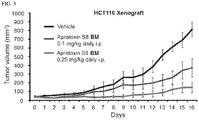
- mice were injected intraperitoneally with the doses of 2 ⁇ g/mouse (0.1 mg/kg), 5 ⁇ g/mouse (0.25 mg/kg) of apratoxin S8 ( BM ) or solvent (DMSO) control every day until the tumor size in one dimension reached 15 mm and tumor tissue was harvested on the following day. 50 mg of tumor tissue was sonicated in PhosphoSafe lysis buffer (EMD chemicals, Inc) and used for immunoblot analysis described as the above. All studies were carried out under the protocol approved by the Institutional Animal Care and Use Committee at the University of Florida.
- PhosphoSafe lysis buffer EMD chemicals, Inc
- HPLC-MS was done on a 3200 QTRAP (Applied Biosystems) equipped with a Shimadzu (Kyoto, Japan) UFLC System.
- Mouse serum and harmine were purchased from Sigma-Aldrich.
- Pooled CD1 mouse liver (female) microsomes were purchased from XenoTech, LCC (Lenexa, KS) with protein concentrations of 0.5 mg/ml.
- HCT116 cell lysates were prepared with PhosphoSafe lysis buffer (Novagen). Protein concentration was determined by using the BCA Assay. Analysis was carried out similarly as previously described [ Liu, Y.; Salvador, L. A.; Byeon, S.; Ying, Y.; Kwan, J. C.; Law, B. K.; Hong, J.; Luesch. H. J. Pharmacol. Exp. Ther. 2010, 335, 351-361 ].
- a 1-mg/mL stock solution of the internal standard harmine was prepared in ethanol, which subsequently was used to prepare 100 ⁇ g/mL solution with ethanol.
- An aliquot of the 100 ⁇ g/mL harmine solution was diluted to 35 ng/ml with ethyl acetate to serve as the working internal standard solution.
- Plasma stability In vitro plasma stability of apratoxin A, S4 ( BK ), S7 ( BL ), S8 ( BM ) and S9 ( BN ) was done by using a modification of a published method [ Chen, X.; Gardner, E. R.; Figg, W. D. J. Chromatogr. B Analyt. Technol. Biomed. Life Sci. 2008, 86, 153-158 ].
- Ten microliters of apratoxin A, BK , BL , BM , or BN were added to 100 ⁇ L of mouse serum, and the solution was vortex-mixed for 15 s and incubated for 0.25 min to 24 h (11 time points).
- Microsomal stability The stability of apratoxin A, S4 ( BK ), S7 ( BL ), S8 ( BM ) and S9 ( BN ) in the presence of mouse microsomes was determined by using an adaptation of a published procedure [ Ackley, D. C.; Rockich, K. T.; Baker, T. R. Optimization in Drug Discovery: In Vitro Methods (Series: Methods in Pharmacology and Toxicology) (eds Yan Z, Caldwell JW) 2004, pp 151-162, Springer, New Jersey ]. In brief, microsomes were added to prewarmed phosphate buffer (100 mM, pH 7.4) at 37 °C.
- Apratoxin A, BK , BL , BM , or BN were added to the microsomal preparation followed by NADPH cofactor solution (1.3 mM NADP, 3.3 mM glucose 6-phosphate, 0.4 U/mL glucose-6-phosphate dehydrogenase, 3.3 mM MgCl 2 ).
- NADPH cofactor solution 1.3 mM NADP, 3.3 mM glucose 6-phosphate, 0.4 U/mL glucose-6-phosphate dehydrogenase, 3.3 mM MgCl 2 .
- the reaction was allowed to proceed for 3 min to 3 h (7 time points) at 37 °C (thermomixer, 1050 rpm).
- the reaction was quenched by addition of ethyl acetate and subsequently spiked with harmine.
- the zero time point was defined by denaturing the microsomes with ethyl acetate before the addition of apratoxins.
- Incubation of apratoxins with microsomes alone
- HCT116 cell lysates were diluted with 25 mM Tris-HCl buffer, pH 8.0, to give a final reaction volume of 100 ⁇ L and protein concentration of 0.7 mg/mL.
- Cell lysate solutions were incubated with 10 ⁇ L of apratoxin A, BK , BL , BM , or BN (25 ⁇ g/mL) for 0.25 min to 24 h (nine time points). Remaining apratoxin A, BK , BL , BM , or BN were extracted from the reaction solution at the end of the incubation periods with ethyl acetate using the same procedure as described for the plasma stability assay.
- Aqueous stability The stability of apratoxin A, S4 ( BK ), S7 ( BL ), S8 ( BM ) and S9 ( BN ) in aqueous solution was determined in 100 mM phosphate buffer, pH 4.88, 100 mM phosphate buffer, pH 7.4. Portions of each solution (100 ⁇ L) were spiked with 10 ⁇ L of apratoxin solution (25 ⁇ g/ml) and allowed to incubate for 0.25 min to 24 h (11 time points).
- the reaction was quenched at the end of each time point, and the remaining apratoxin A, S4 ( BK ), S7 ( BL ), S8 ( BM ) and S9 ( BN ) were extracted after the ethyl acetate extraction procedure, as in the plasma stability study.
- HPLC-MS parameters Analysis of apratoxin A, S4 ( BK ), S7 ( BL ), S8 ( BM ) and S9 ( BN ) was done by using HPLC-MS [column, Onyx Monolithic C18 (3.0 ⁇ 100 mm), Phenomenex (Torrance, CA); solvent, water (solvent A) acetonitrile (solvent B); flow rate, 0.5 ml/min; detection by electrospray ionization-MS in positive ion mode (MRM scan)].
- a stepwise gradient elution was used starting at 60% B and 40% A, then increasing to 80% B at 5 min and maintained at this condition for 5 min.
- the retention times ( t R , min; MRM ion pair) of the analytes and internal standard are as follows: harmine (2.2; 213.1 ⁇ 169.9), apratoxin A (4.7; 841.4 ⁇ 445.2), apratoxin S4 ( BK ) (4.1; 828.5 ⁇ 432.2), apratoxin S7 ( BL ) (4.05; 814.5 ⁇ 418.2), apratoxin S8 ( BM ) (5.2; 842.5 ⁇ 446.2), apratoxin S9 ( BN ) (4.9; 828.5 ⁇ 432.2).
- Compound-dependent parameters used were as follows: apratoxin A, declustering potential (DP) 51, entrance potential (EP) 12, collision energy (CE) 45, collision cell exit potential (CXP) 6, collision cell entrance potential (CEP) 32; and harmine, DP 56.0, EP 4.5, CE 44.0, CXP 5, CEP 16.0.
- Source gas parameters used were as follows: curtain gas, 15.0; collision gas low, ionspray voltage 5500; temperature, 600.0; ion source gas 1 50.0; ion source gas 2 60.0.
- Apratoxins S7-S9 ( BL , BM , BN ) retained potent activity compared with apratoxin S4 ( BK ) in all biological assays.
- the anti-proliferative activities of Apratoxin S4 ( BK ) and Apratoxins S7-S9 ( BL , BM , BN ) are shown in Table 5. It has previously been demonstrated that apratoxin A inhibits cotranslational translocation of secretory molecules, including receptors and growth factors, and therefore we measured representative key members of these protein classes when assessing the properties of S7 ( BL ), S8 ( BM ) and S9 ( BN ) [ Chen, Q.-Y.; Liu, Y.; Luesch, H.
- BM In vivo activity of apratoxin S8 (BM). Even though apratoxin S8 ( BM ) had slightly lower activity than our other synthetic apratoxins, it was still very potent in vitro and had the potential advantage that it cannot dehydrate to form a conjugated system. Therefore, we tested BM for efficacy in the same HCT116 xenograft mouse model as previously performed for apratoxin S4 ( BK ) and administered BM at the previous efficacious dose for BK (0.25 mg/kg, ⁇ 5 ⁇ g/mouse) and a 2.5-fold lower dose (0.1 mg/kg, ⁇ 2 ⁇ g/mouse) daily via intraperitoneal (i.p.) injection for about 2 weeks.
- BK apratoxin S4
Landscapes
- Health & Medical Sciences (AREA)
- Chemical & Material Sciences (AREA)
- Life Sciences & Earth Sciences (AREA)
- Organic Chemistry (AREA)
- General Health & Medical Sciences (AREA)
- Medicinal Chemistry (AREA)
- Veterinary Medicine (AREA)
- Animal Behavior & Ethology (AREA)
- Public Health (AREA)
- Pharmacology & Pharmacy (AREA)
- Epidemiology (AREA)
- Proteomics, Peptides & Aminoacids (AREA)
- Biophysics (AREA)
- Biochemistry (AREA)
- Genetics & Genomics (AREA)
- Molecular Biology (AREA)
- Gastroenterology & Hepatology (AREA)
- Engineering & Computer Science (AREA)
- Bioinformatics & Cheminformatics (AREA)
- Immunology (AREA)
- Chemical Kinetics & Catalysis (AREA)
- General Chemical & Material Sciences (AREA)
- Nuclear Medicine, Radiotherapy & Molecular Imaging (AREA)
- Pharmaceuticals Containing Other Organic And Inorganic Compounds (AREA)
- Medicines That Contain Protein Lipid Enzymes And Other Medicines (AREA)
Claims (9)
- Verbindung, nämlich:

- Wirksame Menge einer Verbindung nach Anspruch 1 oder eines Salzes davon zur Verwendung bei der Hemmung der Aktivität der Zellproliferation in einem bedürftigen Individuum, in einer Menge und unter Bedingungen, die ausreichen, um die Zellproliferation zu hemmen, vorzugsweise
wobei die Zelle eine Krebszelle ist, oder
wobei die Zelle eine Tumorzelle ist, oder/und
wobei die Verbindung den Spiegel von Proteinen des endoplasmatischen Retikulums (ER) herunterreguliert, oder/und
wobei die Verbindung einen FGFR oder VEGFR herunterreguliert. - Wirksame Menge einer Verbindung nach Anspruch 1 oder eines Salzes davon zur Verwendung bei der Behandlung eines Individuums, das an einer mit der Zellproliferation zusammenhängenden Störung oder Krankheit leidet oder dafür anfällig ist, so dass das Individuum gegen die Störung behandelt wird, wobei die Störung Krebs, ein solider Tumor oder ein metastasierender Tumor ist, oder/und
wobei die Störung eine Angiogenese-Störung ist, oder/und wobei die Störung ein solider Tumor ist,
vorzugsweise
wobei die Störung oder Krankheit durch eine Rezeptortyrosinkinase vermittelt wird, die IGF1R-β, PDGFR-β, HER2/neu, c-Met oder ein FGFR oder VEGFR Ist, oder/und
wobei das Individuum ein Säugetier ist, vorzugsweise wobei das Individuum ein Primat oder ein Mensch ist, oder/und wobei die wirksame Menge der Verbindung nach Anspruch 1 oder eines Salzes davon im Bereich von etwa 0,005 µg/kg bis etwa 200 mg/kg liegt, oder wobei die wirksame Menge der Verbindung nach Anspruch 1 oder eines Salzes davon im Bereich von etwa 0,1 mg/kg bis etwa 200 mg/kg liegt, oder wobei die wirksame Menge der Verbindung nach Anspruch 1 oder eines Salzes davon im Bereich von etwa 10 mg/kg bis 100 mg/kg liegt, oder
wobei die wirksame Menge der Verbindung nach Anspruch 1 oder eines Salzes davon im Bereich von etwa 1,0 pM bis etwa 500 nM liegt, oder/und wobei die Verbindung oder ein Salz davon intravenös, intramuskulär, subkutan, Intrazerebroventrikulär, oral oder topisch verabreicht wird,
oder/und
wobei die Verbindung oder ein Salz davon allein oder in Kombination mit einem oder mehreren anderen Therapeutika verabreicht wird, vorzugsweise wobei das zusätzliche therapeutische Agens ein Antlkrebsagens, ein chemotherapeutisches Agens, ein Anti-Angiogenese-Agens, ein zytotoxisches Agens oder ein antiproliferatives Agens ist. - Wirksame Menge einer Verbindung oder einer pharmazeutischen Zusammensetzung einer Verbindung nach Anspruch 1 oder eines Salzes davon zur Verwendung bei der Behandlung eines Individuums, das an einer Krankheit oder Störung leidet oder dafür anfällig ist, so dass das Individuum wegen dieser Krankheit oder Störung behandelt wird, wobei die Krankheit oder Störung Gebärmutterhals-, Eierstock-, Blasen-, Bauchspeicheldrüsen- oder Hirnkrebs ist.
- Pharmazeutische Zusammensetzung, umfassend eine Verbindung nach Anspruch 1 oder ein Salz davon und einen pharmazeutisch akzeptablen Träger.
- Kit, umfassend eine wirksame Menge einer Verbindung nach Anspruch 1 oder eines Salzes davon in Einheitsdosisform, zusammen mit Anweisungen zur Verabreichung der Verbindung an ein Individuum, das an einer Zellproliferationsstörung leidet oder dafür anfällig ist;
wobei die Störung Krebs, ein solider Tumor oder ein metastasierender Tumor ist, oder/und
wobei die Störung eine Angiogenese-Störung ist, oder/und
wobei die Störung ein solider Tumor ist,
vorzugsweise
wobei die Störung oder Krankheit durch eine Rezeptortyrosinkinase vermittelt wird, die IGF1R-β, PDGFR-β, HER2/neu, c-Met oder ein FGFR oder VEGFR ist, oder/und
wobei das Individuum ein Säugetier ist, vorzugsweise
wobei das Individuum ein Primat oder Mensch ist. - Verfahren zur Herstellung einer Verbindung, nämlich

 a) Umsetzen (i) einer Verbindung der Formel 26b

 b) Entschützen der Carbonsäureschutzgruppe R11 einer Verbindung der Formel 27b
 c) Entschützen der Aminschutzgruppe R10 einer Verbindung der Formel 29b
 d) Koppeln der Amino- und Carbonsäurereste einer Verbindung der Formel 30b
wobeiX jeweils für S steht;R1 und R2 Jeweils unabhängig für H oder wahlweise substituiertes Alkyl stehen;R3 jeweils unabhängig für H, wahlweise substituiertes Alkyl oder für -C(O)-Alkyl steht;R5 jeweils unabhängig für H, wahlweise substituiertes Alkyl oder für -C(O)-Alkyl steht;R7 und R8 jeweils unabhängig für H oder wahlweise substituiertes Alkyl stehen;R9 jeweils unabhängig für H, wahlweise substituiertes Alkyl oder wahlweise substituiertes Aralkyl steht;R10 jeweils unabhängig für eine Aminschutzgruppe steht, undR11 jeweils für eine Carbonsaureschutzgruppe steht. - Verfahren zur Herstellung einer Verbindung, nämlich
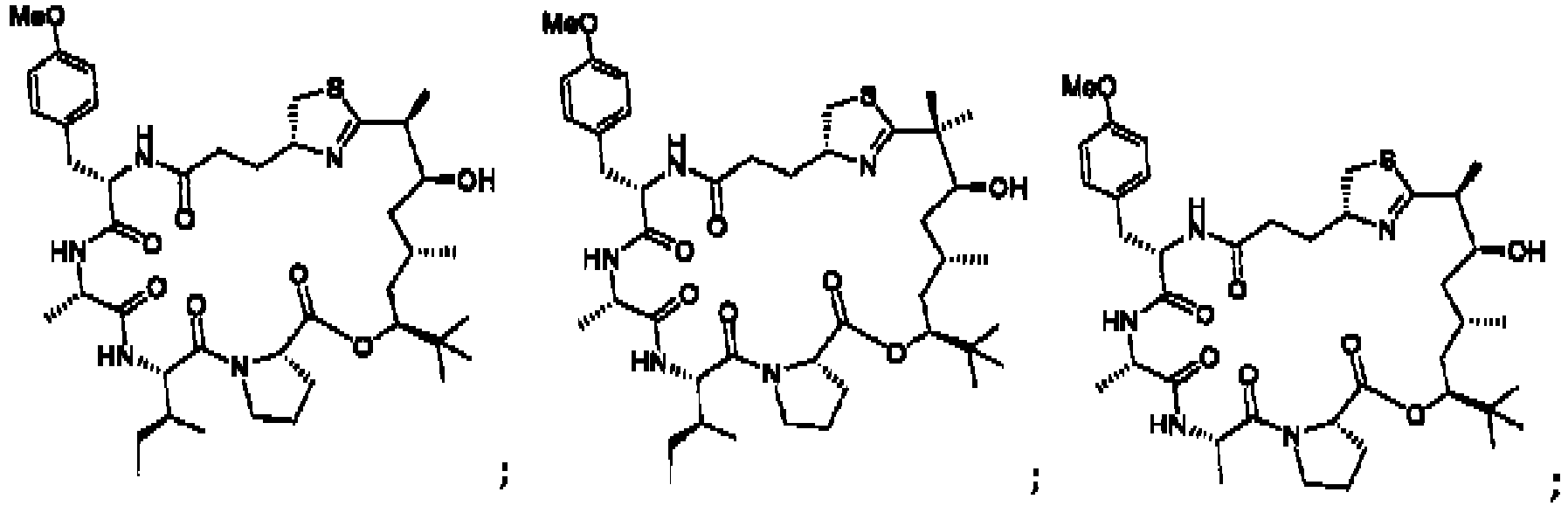
 a) Umsetzen (i) einer Verbindung der Formel 26b

 b) Entschützen der Aminschutzgruppe R10 einer Verbindung der Formel 27b
 c) Entschützen der Carbonsäureschutzgruppe R11 einer Verbindung der Formel 31b
 d) Koppeln der Amino- und Carbonsäurereste einer Verbindung der Formel 30b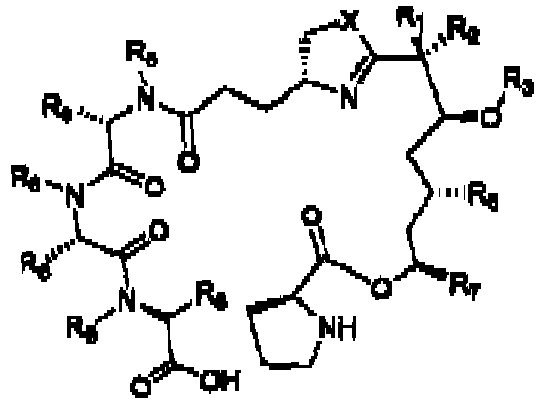
wobeiX jeweils für S steht;R1 und R2 jeweils unabhängig für H oder wahlweise substituiertes Alkyl stehen;Ra jeweils unabhängig für H, wahlweise substituiertes Alkyl oder für -C(O)-Alkyl steht;Re jeweils unabhängig für H, wahlweise substituiertes Alkyl oder für -C(O)-Alkyl steht;R7 und R8 jeweils unabhängig für H oder wahlweise substituiertes Alkyl stehen;R9 jeweils unabhängig für H, wahlweise substituiertes Alkyl oder wahlweise substituiertes Aralkyl steht;R10 jeweils unabhängig für eine Aminschutzgruppe steht, undR11 jeweils für eine Carbonsäureschutzgruppe steht. - Verfahren nach Anspruch 7 oder 8, wobei das Kopplungsmittel in wenigstens einem der Schritte a) oder d) ausgewählt ist aus der Gruppe bestehend aus BOP, BEP, PyAOP und DEPBT.
Applications Claiming Priority (2)
| Application Number | Priority Date | Filing Date | Title |
|---|---|---|---|
| US201461942495P | 2014-02-20 | 2014-02-20 | |
| PCT/US2015/016743 WO2015127161A1 (en) | 2014-02-20 | 2015-02-20 | Macrocyclic therapeutic agents, methods of manufacture, and methods of treatment |
Publications (3)
| Publication Number | Publication Date |
|---|---|
| EP3107919A1 EP3107919A1 (de) | 2016-12-28 |
| EP3107919A4 EP3107919A4 (de) | 2017-11-22 |
| EP3107919B1 true EP3107919B1 (de) | 2021-01-27 |
Family
ID=53878987
Family Applications (1)
| Application Number | Title | Priority Date | Filing Date |
|---|---|---|---|
| EP15751780.6A Active EP3107919B1 (de) | 2014-02-20 | 2015-02-20 | Makrocyclische therapiemittel, verfahren zur herstellung davon und verfahren zur behandlung |
Country Status (3)
| Country | Link |
|---|---|
| US (3) | US20170057996A1 (de) |
| EP (1) | EP3107919B1 (de) |
| WO (1) | WO2015127161A1 (de) |
Families Citing this family (5)
| Publication number | Priority date | Publication date | Assignee | Title |
|---|---|---|---|---|
| US20170057996A1 (en) | 2014-02-20 | 2017-03-02 | University Of Florida Research Foundation, Incorporated | Macrocyclic therapeutic agents, methods of manufacture, and methods of treatment |
| CN106674330B (zh) * | 2015-11-10 | 2021-07-02 | 复旦大学 | 一种34-Dimethyl apratoxin A/E的制备方法 |
| CN105294519B (zh) * | 2015-11-20 | 2017-03-29 | 哈尔滨工业大学(威海) | 一种海洋天然产物apratoxin E的moCys片段的合成方法 |
| CN109265516A (zh) * | 2017-07-18 | 2019-01-25 | 复旦大学 | 一种杂合肽及其制备方法和应用 |
| WO2019157293A1 (en) * | 2018-02-08 | 2019-08-15 | Ohio State Innovation Foundation | Apratoxin analogs |
Family Cites Families (9)
| Publication number | Priority date | Publication date | Assignee | Title |
|---|---|---|---|---|
| WO2009032338A1 (en) | 2007-09-09 | 2009-03-12 | University Of Florida Research Foundation | Apratoxin therapeutic agents: mechanism and methods of treatment |
| WO2009032351A1 (en) | 2007-09-09 | 2009-03-12 | University Of Florida Research Foundation | Natural product agents, derivatives, and methods of treatment |
| KR101133772B1 (ko) * | 2007-12-20 | 2012-04-24 | 주식회사 엘지생명과학 | 글루코키나아제 활성화제 및 이를 활성성분으로 함유하는 약제학적 조성물 |
| US20100291533A1 (en) * | 2008-01-04 | 2010-11-18 | Soon Ha Kim | Indole and indazole derivatives having a cell-, tissue- and organ-preserving effect |
| WO2009091618A1 (en) | 2008-01-16 | 2009-07-23 | University Of Florida Research Foundation, Inc. | Macrocyclic antiproliferation agents and methods of treatment |
| US20110294720A1 (en) | 2008-12-01 | 2011-12-01 | University Of Florida Research Foundation | Apratoxin therapeutic agents: mechanism and methods of treatment |
| US8598313B2 (en) * | 2010-03-12 | 2013-12-03 | The Regents Of The University Of California | Compositions for ameliorating cell proliferative disorders and methods of making and using them |
| AU2012255251B2 (en) * | 2011-05-18 | 2017-06-15 | University Of Florida Research Foundation, Inc. | Macrocyclic therapeutic agents and methods of treatment |
| US20170057996A1 (en) | 2014-02-20 | 2017-03-02 | University Of Florida Research Foundation, Incorporated | Macrocyclic therapeutic agents, methods of manufacture, and methods of treatment |
-
2015
- 2015-02-20 US US15/120,356 patent/US20170057996A1/en not_active Abandoned
- 2015-02-20 EP EP15751780.6A patent/EP3107919B1/de active Active
- 2015-02-20 WO PCT/US2015/016743 patent/WO2015127161A1/en not_active Ceased
-
2019
- 2019-02-11 US US16/272,636 patent/US20190241611A1/en not_active Abandoned
-
2020
- 2020-04-24 US US16/857,934 patent/US11718645B2/en active Active
Non-Patent Citations (1)
| Title |
|---|
| None * |
Also Published As
| Publication number | Publication date |
|---|---|
| US20200317732A1 (en) | 2020-10-08 |
| US11718645B2 (en) | 2023-08-08 |
| US20190241611A1 (en) | 2019-08-08 |
| EP3107919A1 (de) | 2016-12-28 |
| US20170057996A1 (en) | 2017-03-02 |
| EP3107919A4 (de) | 2017-11-22 |
| WO2015127161A1 (en) | 2015-08-27 |
Similar Documents
| Publication | Publication Date | Title |
|---|---|---|
| US11718645B2 (en) | Macrocyclic therapeutic agents, methods of manufacture, and methods of treatment | |
| ES2393823T3 (es) | Compuestos macrocíclicos y métodos de tratamiento | |
| EP4458823A1 (de) | Meninhemmer und verwendung davon | |
| EP3998262A1 (de) | Nrf2-aktivierende verbindung | |
| US20150210718A1 (en) | Macrocyclic compounds and methods of treatment | |
| EP2991993B1 (de) | Neue morpholinyl-anthracyclin-derivate | |
| US20240002396A1 (en) | Macrocyclic compounds and methods of treatment | |
| AU2012255251B2 (en) | Macrocyclic therapeutic agents and methods of treatment | |
| US8759512B2 (en) | Methods of preparation of macrocyclic compounds | |
| US20110294720A1 (en) | Apratoxin therapeutic agents: mechanism and methods of treatment | |
| US9051350B2 (en) | Macrocyclic antiproliferation agents and methods of treatment | |
| EP2699580B1 (de) | Diazonamid-analoga | |
| WO2009032351A1 (en) | Natural product agents, derivatives, and methods of treatment | |
| WO2015153518A1 (en) | Biisoquinoline compounds and methods of treatment | |
| HK1193805A (en) | Diazonamide analogs | |
| HK1193805B (en) | Diazonamide analogs | |
| HK1153465B (en) | Macrocyclic compounds and methods of treatment |
Legal Events
| Date | Code | Title | Description |
|---|---|---|---|
| STAA | Information on the status of an ep patent application or granted ep patent |
Free format text: STATUS: THE INTERNATIONAL PUBLICATION HAS BEEN MADE |
|
| PUAI | Public reference made under article 153(3) epc to a published international application that has entered the european phase |
Free format text: ORIGINAL CODE: 0009012 |
|
| STAA | Information on the status of an ep patent application or granted ep patent |
Free format text: STATUS: REQUEST FOR EXAMINATION WAS MADE |
|
| 17P | Request for examination filed |
Effective date: 20160916 |
|
| AK | Designated contracting states |
Kind code of ref document: A1 Designated state(s): AL AT BE BG CH CY CZ DE DK EE ES FI FR GB GR HR HU IE IS IT LI LT LU LV MC MK MT NL NO PL PT RO RS SE SI SK SM TR |
|
| AX | Request for extension of the european patent |
Extension state: BA ME |
|
| DAX | Request for extension of the european patent (deleted) | ||
| A4 | Supplementary search report drawn up and despatched |
Effective date: 20171025 |
|
| RIC1 | Information provided on ipc code assigned before grant |
Ipc: A61P 35/00 20060101ALI20171019BHEP Ipc: C07K 5/107 20060101ALI20171019BHEP Ipc: A61K 31/424 20060101ALI20171019BHEP Ipc: C07D 498/12 20060101ALI20171019BHEP Ipc: C07K 5/12 20060101ALI20171019BHEP Ipc: C07D 207/16 20060101ALI20171019BHEP Ipc: A61K 38/12 20060101ALI20171019BHEP Ipc: A61K 45/06 20060101ALI20171019BHEP Ipc: C07D 513/04 20060101AFI20171019BHEP Ipc: A61K 31/429 20060101ALI20171019BHEP Ipc: C07D 498/04 20060101ALI20171019BHEP Ipc: C07D 513/12 20060101ALI20171019BHEP |
|
| STAA | Information on the status of an ep patent application or granted ep patent |
Free format text: STATUS: EXAMINATION IS IN PROGRESS |
|
| 17Q | First examination report despatched |
Effective date: 20181116 |
|
| GRAP | Despatch of communication of intention to grant a patent |
Free format text: ORIGINAL CODE: EPIDOSNIGR1 |
|
| STAA | Information on the status of an ep patent application or granted ep patent |
Free format text: STATUS: GRANT OF PATENT IS INTENDED |
|
| INTG | Intention to grant announced |
Effective date: 20200820 |
|
| GRAS | Grant fee paid |
Free format text: ORIGINAL CODE: EPIDOSNIGR3 |
|
| GRAA | (expected) grant |
Free format text: ORIGINAL CODE: 0009210 |
|
| STAA | Information on the status of an ep patent application or granted ep patent |
Free format text: STATUS: THE PATENT HAS BEEN GRANTED |
|
| AK | Designated contracting states |
Kind code of ref document: B1 Designated state(s): AL AT BE BG CH CY CZ DE DK EE ES FI FR GB GR HR HU IE IS IT LI LT LU LV MC MK MT NL NO PL PT RO RS SE SI SK SM TR |
|
| REG | Reference to a national code |
Ref country code: GB Ref legal event code: FG4D |
|
| REG | Reference to a national code |
Ref country code: CH Ref legal event code: EP |
|
| REG | Reference to a national code |
Ref country code: AT Ref legal event code: REF Ref document number: 1358271 Country of ref document: AT Kind code of ref document: T Effective date: 20210215 |
|
| REG | Reference to a national code |
Ref country code: IE Ref legal event code: FG4D |
|
| REG | Reference to a national code |
Ref country code: DE Ref legal event code: R096 Ref document number: 602015065239 Country of ref document: DE |
|
| REG | Reference to a national code |
Ref country code: NL Ref legal event code: MP Effective date: 20210127 |
|
| REG | Reference to a national code |
Ref country code: LT Ref legal event code: MG9D |
|
| REG | Reference to a national code |
Ref country code: AT Ref legal event code: MK05 Ref document number: 1358271 Country of ref document: AT Kind code of ref document: T Effective date: 20210127 |
|
| PG25 | Lapsed in a contracting state [announced via postgrant information from national office to epo] |
Ref country code: LT Free format text: LAPSE BECAUSE OF FAILURE TO SUBMIT A TRANSLATION OF THE DESCRIPTION OR TO PAY THE FEE WITHIN THE PRESCRIBED TIME-LIMIT Effective date: 20210127 Ref country code: PT Free format text: LAPSE BECAUSE OF FAILURE TO SUBMIT A TRANSLATION OF THE DESCRIPTION OR TO PAY THE FEE WITHIN THE PRESCRIBED TIME-LIMIT Effective date: 20210527 Ref country code: HR Free format text: LAPSE BECAUSE OF FAILURE TO SUBMIT A TRANSLATION OF THE DESCRIPTION OR TO PAY THE FEE WITHIN THE PRESCRIBED TIME-LIMIT Effective date: 20210127 Ref country code: FI Free format text: LAPSE BECAUSE OF FAILURE TO SUBMIT A TRANSLATION OF THE DESCRIPTION OR TO PAY THE FEE WITHIN THE PRESCRIBED TIME-LIMIT Effective date: 20210127 Ref country code: GR Free format text: LAPSE BECAUSE OF FAILURE TO SUBMIT A TRANSLATION OF THE DESCRIPTION OR TO PAY THE FEE WITHIN THE PRESCRIBED TIME-LIMIT Effective date: 20210428 Ref country code: BG Free format text: LAPSE BECAUSE OF FAILURE TO SUBMIT A TRANSLATION OF THE DESCRIPTION OR TO PAY THE FEE WITHIN THE PRESCRIBED TIME-LIMIT Effective date: 20210427 Ref country code: NO Free format text: LAPSE BECAUSE OF FAILURE TO SUBMIT A TRANSLATION OF THE DESCRIPTION OR TO PAY THE FEE WITHIN THE PRESCRIBED TIME-LIMIT Effective date: 20210427 Ref country code: NL Free format text: LAPSE BECAUSE OF FAILURE TO SUBMIT A TRANSLATION OF THE DESCRIPTION OR TO PAY THE FEE WITHIN THE PRESCRIBED TIME-LIMIT Effective date: 20210127 |
|
| PG25 | Lapsed in a contracting state [announced via postgrant information from national office to epo] |
Ref country code: SE Free format text: LAPSE BECAUSE OF FAILURE TO SUBMIT A TRANSLATION OF THE DESCRIPTION OR TO PAY THE FEE WITHIN THE PRESCRIBED TIME-LIMIT Effective date: 20210127 Ref country code: RS Free format text: LAPSE BECAUSE OF FAILURE TO SUBMIT A TRANSLATION OF THE DESCRIPTION OR TO PAY THE FEE WITHIN THE PRESCRIBED TIME-LIMIT Effective date: 20210127 Ref country code: LV Free format text: LAPSE BECAUSE OF FAILURE TO SUBMIT A TRANSLATION OF THE DESCRIPTION OR TO PAY THE FEE WITHIN THE PRESCRIBED TIME-LIMIT Effective date: 20210127 Ref country code: PL Free format text: LAPSE BECAUSE OF FAILURE TO SUBMIT A TRANSLATION OF THE DESCRIPTION OR TO PAY THE FEE WITHIN THE PRESCRIBED TIME-LIMIT Effective date: 20210127 Ref country code: AT Free format text: LAPSE BECAUSE OF FAILURE TO SUBMIT A TRANSLATION OF THE DESCRIPTION OR TO PAY THE FEE WITHIN THE PRESCRIBED TIME-LIMIT Effective date: 20210127 |
|
| PG25 | Lapsed in a contracting state [announced via postgrant information from national office to epo] |
Ref country code: IS Free format text: LAPSE BECAUSE OF FAILURE TO SUBMIT A TRANSLATION OF THE DESCRIPTION OR TO PAY THE FEE WITHIN THE PRESCRIBED TIME-LIMIT Effective date: 20210527 |
|
| REG | Reference to a national code |
Ref country code: BE Ref legal event code: MM Effective date: 20210228 |
|
| REG | Reference to a national code |
Ref country code: DE Ref legal event code: R097 Ref document number: 602015065239 Country of ref document: DE |
|
| PG25 | Lapsed in a contracting state [announced via postgrant information from national office to epo] |
Ref country code: CZ Free format text: LAPSE BECAUSE OF FAILURE TO SUBMIT A TRANSLATION OF THE DESCRIPTION OR TO PAY THE FEE WITHIN THE PRESCRIBED TIME-LIMIT Effective date: 20210127 Ref country code: EE Free format text: LAPSE BECAUSE OF FAILURE TO SUBMIT A TRANSLATION OF THE DESCRIPTION OR TO PAY THE FEE WITHIN THE PRESCRIBED TIME-LIMIT Effective date: 20210127 Ref country code: MC Free format text: LAPSE BECAUSE OF FAILURE TO SUBMIT A TRANSLATION OF THE DESCRIPTION OR TO PAY THE FEE WITHIN THE PRESCRIBED TIME-LIMIT Effective date: 20210127 Ref country code: LU Free format text: LAPSE BECAUSE OF NON-PAYMENT OF DUE FEES Effective date: 20210220 Ref country code: SM Free format text: LAPSE BECAUSE OF FAILURE TO SUBMIT A TRANSLATION OF THE DESCRIPTION OR TO PAY THE FEE WITHIN THE PRESCRIBED TIME-LIMIT Effective date: 20210127 |
|
| PG25 | Lapsed in a contracting state [announced via postgrant information from national office to epo] |
Ref country code: RO Free format text: LAPSE BECAUSE OF FAILURE TO SUBMIT A TRANSLATION OF THE DESCRIPTION OR TO PAY THE FEE WITHIN THE PRESCRIBED TIME-LIMIT Effective date: 20210127 Ref country code: SK Free format text: LAPSE BECAUSE OF FAILURE TO SUBMIT A TRANSLATION OF THE DESCRIPTION OR TO PAY THE FEE WITHIN THE PRESCRIBED TIME-LIMIT Effective date: 20210127 Ref country code: ES Free format text: LAPSE BECAUSE OF FAILURE TO SUBMIT A TRANSLATION OF THE DESCRIPTION OR TO PAY THE FEE WITHIN THE PRESCRIBED TIME-LIMIT Effective date: 20210127 Ref country code: DK Free format text: LAPSE BECAUSE OF FAILURE TO SUBMIT A TRANSLATION OF THE DESCRIPTION OR TO PAY THE FEE WITHIN THE PRESCRIBED TIME-LIMIT Effective date: 20210127 |
|
| PLBE | No opposition filed within time limit |
Free format text: ORIGINAL CODE: 0009261 |
|
| STAA | Information on the status of an ep patent application or granted ep patent |
Free format text: STATUS: NO OPPOSITION FILED WITHIN TIME LIMIT |
|
| 26N | No opposition filed |
Effective date: 20211028 |
|
| PG25 | Lapsed in a contracting state [announced via postgrant information from national office to epo] |
Ref country code: AL Free format text: LAPSE BECAUSE OF FAILURE TO SUBMIT A TRANSLATION OF THE DESCRIPTION OR TO PAY THE FEE WITHIN THE PRESCRIBED TIME-LIMIT Effective date: 20210127 |
|
| PG25 | Lapsed in a contracting state [announced via postgrant information from national office to epo] |
Ref country code: SI Free format text: LAPSE BECAUSE OF FAILURE TO SUBMIT A TRANSLATION OF THE DESCRIPTION OR TO PAY THE FEE WITHIN THE PRESCRIBED TIME-LIMIT Effective date: 20210127 |
|
| PG25 | Lapsed in a contracting state [announced via postgrant information from national office to epo] |
Ref country code: IT Free format text: LAPSE BECAUSE OF FAILURE TO SUBMIT A TRANSLATION OF THE DESCRIPTION OR TO PAY THE FEE WITHIN THE PRESCRIBED TIME-LIMIT Effective date: 20210127 |
|
| PG25 | Lapsed in a contracting state [announced via postgrant information from national office to epo] |
Ref country code: IS Free format text: LAPSE BECAUSE OF FAILURE TO SUBMIT A TRANSLATION OF THE DESCRIPTION OR TO PAY THE FEE WITHIN THE PRESCRIBED TIME-LIMIT Effective date: 20210527 |
|
| PG25 | Lapsed in a contracting state [announced via postgrant information from national office to epo] |
Ref country code: BE Free format text: LAPSE BECAUSE OF NON-PAYMENT OF DUE FEES Effective date: 20210228 |
|
| PG25 | Lapsed in a contracting state [announced via postgrant information from national office to epo] |
Ref country code: HU Free format text: LAPSE BECAUSE OF FAILURE TO SUBMIT A TRANSLATION OF THE DESCRIPTION OR TO PAY THE FEE WITHIN THE PRESCRIBED TIME-LIMIT; INVALID AB INITIO Effective date: 20150220 |
|
| PG25 | Lapsed in a contracting state [announced via postgrant information from national office to epo] |
Ref country code: CY Free format text: LAPSE BECAUSE OF FAILURE TO SUBMIT A TRANSLATION OF THE DESCRIPTION OR TO PAY THE FEE WITHIN THE PRESCRIBED TIME-LIMIT Effective date: 20210127 |
|
| P01 | Opt-out of the competence of the unified patent court (upc) registered |
Effective date: 20230601 |
|
| PG25 | Lapsed in a contracting state [announced via postgrant information from national office to epo] |
Ref country code: MK Free format text: LAPSE BECAUSE OF FAILURE TO SUBMIT A TRANSLATION OF THE DESCRIPTION OR TO PAY THE FEE WITHIN THE PRESCRIBED TIME-LIMIT Effective date: 20210127 |
|
| PG25 | Lapsed in a contracting state [announced via postgrant information from national office to epo] |
Ref country code: TR Free format text: LAPSE BECAUSE OF FAILURE TO SUBMIT A TRANSLATION OF THE DESCRIPTION OR TO PAY THE FEE WITHIN THE PRESCRIBED TIME-LIMIT Effective date: 20210127 |
|
| PG25 | Lapsed in a contracting state [announced via postgrant information from national office to epo] |
Ref country code: MT Free format text: LAPSE BECAUSE OF FAILURE TO SUBMIT A TRANSLATION OF THE DESCRIPTION OR TO PAY THE FEE WITHIN THE PRESCRIBED TIME-LIMIT Effective date: 20210127 |
|
| REG | Reference to a national code |
Ref country code: CH Ref legal event code: U11 Free format text: ST27 STATUS EVENT CODE: U-0-0-U10-U11 (AS PROVIDED BY THE NATIONAL OFFICE) Effective date: 20260301 |
|
| PGFP | Annual fee paid to national office [announced via postgrant information from national office to epo] |
Ref country code: GB Payment date: 20260227 Year of fee payment: 12 |
|
| PGFP | Annual fee paid to national office [announced via postgrant information from national office to epo] |
Ref country code: DE Payment date: 20260227 Year of fee payment: 12 Ref country code: IE Payment date: 20260227 Year of fee payment: 12 |
|
| PGFP | Annual fee paid to national office [announced via postgrant information from national office to epo] |
Ref country code: FR Payment date: 20260225 Year of fee payment: 12 |
|
| PGFP | Annual fee paid to national office [announced via postgrant information from national office to epo] |
Ref country code: CH Payment date: 20260301 Year of fee payment: 12 |