EP3107952B1 - Procédé pour la génération de bibliothèques chimiques - Google Patents
Procédé pour la génération de bibliothèques chimiques Download PDFInfo
- Publication number
- EP3107952B1 EP3107952B1 EP15702802.8A EP15702802A EP3107952B1 EP 3107952 B1 EP3107952 B1 EP 3107952B1 EP 15702802 A EP15702802 A EP 15702802A EP 3107952 B1 EP3107952 B1 EP 3107952B1
- Authority
- EP
- European Patent Office
- Prior art keywords
- group
- aryl
- initiator
- mixture
- chr
- Prior art date
- Legal status (The legal status is an assumption and is not a legal conclusion. Google has not performed a legal analysis and makes no representation as to the accuracy of the status listed.)
- Not-in-force
Links
- 238000000034 method Methods 0.000 title claims description 101
- 239000000126 substance Substances 0.000 title claims description 24
- 239000000178 monomer Substances 0.000 claims description 141
- 239000003999 initiator Substances 0.000 claims description 99
- 239000000203 mixture Substances 0.000 claims description 75
- -1 heteroalkylaryl Chemical group 0.000 claims description 69
- 230000015572 biosynthetic process Effects 0.000 claims description 55
- 150000001875 compounds Chemical class 0.000 claims description 52
- 125000004122 cyclic group Chemical group 0.000 claims description 45
- 125000003118 aryl group Chemical group 0.000 claims description 38
- 125000000217 alkyl group Chemical group 0.000 claims description 36
- 125000003342 alkenyl group Chemical group 0.000 claims description 32
- 125000006193 alkinyl group Chemical group 0.000 claims description 32
- 125000002877 alkyl aryl group Chemical group 0.000 claims description 32
- 125000000753 cycloalkyl group Chemical group 0.000 claims description 32
- 125000004404 heteroalkyl group Chemical group 0.000 claims description 32
- 125000001072 heteroaryl group Chemical group 0.000 claims description 32
- 125000000592 heterocycloalkyl group Chemical group 0.000 claims description 32
- 229910052736 halogen Inorganic materials 0.000 claims description 27
- 150000002367 halogens Chemical class 0.000 claims description 27
- 238000010976 amide bond formation reaction Methods 0.000 claims description 26
- 238000006243 chemical reaction Methods 0.000 claims description 26
- 229910052739 hydrogen Inorganic materials 0.000 claims description 25
- 239000001257 hydrogen Substances 0.000 claims description 25
- 125000004435 hydrogen atom Chemical class [H]* 0.000 claims description 25
- 125000005647 linker group Chemical group 0.000 claims description 21
- 238000000746 purification Methods 0.000 claims description 15
- 239000002904 solvent Substances 0.000 claims description 15
- 238000009826 distribution Methods 0.000 claims description 14
- 238000006384 oligomerization reaction Methods 0.000 claims description 13
- 239000000539 dimer Substances 0.000 claims description 11
- 239000003153 chemical reaction reagent Substances 0.000 claims description 10
- 150000002148 esters Chemical class 0.000 claims description 10
- 125000002496 methyl group Chemical group [H]C([H])([H])* 0.000 claims description 10
- 125000001424 substituent group Chemical group 0.000 claims description 10
- KXDHJXZQYSOELW-UHFFFAOYSA-M Carbamate Chemical compound NC([O-])=O KXDHJXZQYSOELW-UHFFFAOYSA-M 0.000 claims description 9
- 229910019142 PO4 Inorganic materials 0.000 claims description 9
- 125000001797 benzyl group Chemical group [H]C1=C([H])C([H])=C(C([H])=C1[H])C([H])([H])* 0.000 claims description 9
- 125000003178 carboxy group Chemical group [H]OC(*)=O 0.000 claims description 9
- 230000000694 effects Effects 0.000 claims description 9
- DOUHZFSGSXMPIE-UHFFFAOYSA-N hydroxidooxidosulfur(.) Chemical compound [O]SO DOUHZFSGSXMPIE-UHFFFAOYSA-N 0.000 claims description 9
- 125000001181 organosilyl group Chemical group [SiH3]* 0.000 claims description 9
- NBIIXXVUZAFLBC-UHFFFAOYSA-K phosphate Chemical compound [O-]P([O-])([O-])=O NBIIXXVUZAFLBC-UHFFFAOYSA-K 0.000 claims description 9
- 239000010452 phosphate Substances 0.000 claims description 9
- BDHFUVZGWQCTTF-UHFFFAOYSA-M sulfonate Chemical compound [O-]S(=O)=O BDHFUVZGWQCTTF-UHFFFAOYSA-M 0.000 claims description 9
- 125000000999 tert-butyl group Chemical group [H]C([H])([H])C(*)(C([H])([H])[H])C([H])([H])[H] 0.000 claims description 9
- 239000000376 reactant Substances 0.000 claims description 8
- 229910018830 PO3H Inorganic materials 0.000 claims description 7
- 125000002915 carbonyl group Chemical group [*:2]C([*:1])=O 0.000 claims description 7
- CEIPQQODRKXDSB-UHFFFAOYSA-N ethyl 3-(6-hydroxynaphthalen-2-yl)-1H-indazole-5-carboximidate dihydrochloride Chemical compound Cl.Cl.C1=C(O)C=CC2=CC(C3=NNC4=CC=C(C=C43)C(=N)OCC)=CC=C21 CEIPQQODRKXDSB-UHFFFAOYSA-N 0.000 claims description 7
- 229910052760 oxygen Inorganic materials 0.000 claims description 7
- 229910052717 sulfur Inorganic materials 0.000 claims description 7
- 238000003776 cleavage reaction Methods 0.000 claims description 6
- 230000007017 scission Effects 0.000 claims description 6
- 238000000926 separation method Methods 0.000 claims description 6
- 239000013638 trimer Substances 0.000 claims description 6
- 150000001413 amino acids Chemical group 0.000 claims description 5
- 239000003054 catalyst Substances 0.000 claims description 5
- 125000001997 phenyl group Chemical group [H]C1=C([H])C([H])=C(*)C([H])=C1[H] 0.000 claims description 5
- YBJHBAHKTGYVGT-ZKWXMUAHSA-N (+)-Biotin Chemical compound N1C(=O)N[C@@H]2[C@H](CCCCC(=O)O)SC[C@@H]21 YBJHBAHKTGYVGT-ZKWXMUAHSA-N 0.000 claims description 4
- 125000001584 benzyloxycarbonyl group Chemical group C(=O)(OCC1=CC=CC=C1)* 0.000 claims description 4
- 125000002619 bicyclic group Chemical group 0.000 claims description 4
- 239000013632 covalent dimer Substances 0.000 claims description 4
- 125000001449 isopropyl group Chemical group [H]C([H])([H])C([H])(*)C([H])([H])[H] 0.000 claims description 4
- 239000003960 organic solvent Substances 0.000 claims description 4
- 125000005931 tert-butyloxycarbonyl group Chemical group [H]C([H])([H])C(OC(*)=O)(C([H])([H])[H])C([H])([H])[H] 0.000 claims description 4
- 239000012062 aqueous buffer Substances 0.000 claims description 3
- 125000001495 ethyl group Chemical group [H]C([H])([H])C([H])([H])* 0.000 claims description 3
- XLYOFNOQVPJJNP-UHFFFAOYSA-N water Substances O XLYOFNOQVPJJNP-UHFFFAOYSA-N 0.000 claims description 3
- 125000003088 (fluoren-9-ylmethoxy)carbonyl group Chemical group 0.000 claims description 2
- UUFQTNFCRMXOAE-UHFFFAOYSA-N 1-methylmethylene Chemical compound C[CH] UUFQTNFCRMXOAE-UHFFFAOYSA-N 0.000 claims description 2
- XZWYTXMRWQJBGX-VXBMVYAYSA-N FLAG peptide Chemical compound NCCCC[C@@H](C(O)=O)NC(=O)[C@H](CC(O)=O)NC(=O)[C@H](CC(O)=O)NC(=O)[C@H](CC(O)=O)NC(=O)[C@H](CC(O)=O)NC(=O)[C@H](CCCCN)NC(=O)[C@@H](NC(=O)[C@@H](N)CC(O)=O)CC1=CC=C(O)C=C1 XZWYTXMRWQJBGX-VXBMVYAYSA-N 0.000 claims description 2
- 108091093037 Peptide nucleic acid Proteins 0.000 claims description 2
- 229960002685 biotin Drugs 0.000 claims description 2
- 235000020958 biotin Nutrition 0.000 claims description 2
- 239000011616 biotin Substances 0.000 claims description 2
- 239000007850 fluorescent dye Substances 0.000 claims description 2
- 230000001939 inductive effect Effects 0.000 claims description 2
- 108020004707 nucleic acids Proteins 0.000 claims description 2
- 150000007523 nucleic acids Chemical class 0.000 claims description 2
- 102000039446 nucleic acids Human genes 0.000 claims description 2
- UYWQUFXKFGHYNT-UHFFFAOYSA-N phenylmethyl ester of formic acid Natural products O=COCC1=CC=CC=C1 UYWQUFXKFGHYNT-UHFFFAOYSA-N 0.000 claims description 2
- HEDRZPFGACZZDS-MICDWDOJSA-N Trichloro(2H)methane Chemical compound [2H]C(Cl)(Cl)Cl HEDRZPFGACZZDS-MICDWDOJSA-N 0.000 description 54
- 239000000047 product Substances 0.000 description 43
- 238000003786 synthesis reaction Methods 0.000 description 42
- 241000711549 Hepacivirus C Species 0.000 description 32
- YMWUJEATGCHHMB-UHFFFAOYSA-N Dichloromethane Chemical compound ClCCl YMWUJEATGCHHMB-UHFFFAOYSA-N 0.000 description 31
- LRHPLDYGYMQRHN-UHFFFAOYSA-N N-Butanol Chemical compound CCCCO LRHPLDYGYMQRHN-UHFFFAOYSA-N 0.000 description 24
- 108091005804 Peptidases Proteins 0.000 description 23
- 239000004365 Protease Substances 0.000 description 23
- 239000000243 solution Substances 0.000 description 23
- XEKOWRVHYACXOJ-UHFFFAOYSA-N Ethyl acetate Chemical compound CCOC(C)=O XEKOWRVHYACXOJ-UHFFFAOYSA-N 0.000 description 22
- 102100037486 Reverse transcriptase/ribonuclease H Human genes 0.000 description 22
- VLKZOEOYAKHREP-UHFFFAOYSA-N n-Hexane Chemical class CCCCCC VLKZOEOYAKHREP-UHFFFAOYSA-N 0.000 description 22
- 238000003556 assay Methods 0.000 description 20
- 230000008569 process Effects 0.000 description 19
- 239000011541 reaction mixture Substances 0.000 description 18
- CIISBYKBBMFLEZ-UHFFFAOYSA-N 1,2-oxazolidine Chemical compound C1CNOC1 CIISBYKBBMFLEZ-UHFFFAOYSA-N 0.000 description 17
- 238000001644 13C nuclear magnetic resonance spectroscopy Methods 0.000 description 16
- 238000005160 1H NMR spectroscopy Methods 0.000 description 16
- 239000010409 thin film Substances 0.000 description 16
- IAZDPXIOMUYVGZ-UHFFFAOYSA-N Dimethylsulphoxide Chemical compound CS(C)=O IAZDPXIOMUYVGZ-UHFFFAOYSA-N 0.000 description 15
- YXFVVABEGXRONW-UHFFFAOYSA-N Toluene Chemical compound CC1=CC=CC=C1 YXFVVABEGXRONW-UHFFFAOYSA-N 0.000 description 15
- 238000003818 flash chromatography Methods 0.000 description 15
- 238000004128 high performance liquid chromatography Methods 0.000 description 15
- 239000007853 buffer solution Substances 0.000 description 14
- OKKJLVBELUTLKV-UHFFFAOYSA-N Methanol Chemical compound OC OKKJLVBELUTLKV-UHFFFAOYSA-N 0.000 description 13
- 239000007787 solid Substances 0.000 description 13
- 0 *C(C(CCC(N1[C@@](CNOC(c2ccccc2)=O)CCC1)=O)=O)=O Chemical compound *C(C(CCC(N1[C@@](CNOC(c2ccccc2)=O)CCC1)=O)=O)=O 0.000 description 11
- KPGXRSRHYNQIFN-UHFFFAOYSA-N 2-oxoglutaric acid Chemical compound OC(=O)CCC(=O)C(O)=O KPGXRSRHYNQIFN-UHFFFAOYSA-N 0.000 description 11
- 239000000872 buffer Substances 0.000 description 11
- 235000019439 ethyl acetate Nutrition 0.000 description 11
- 238000002474 experimental method Methods 0.000 description 11
- 239000003112 inhibitor Substances 0.000 description 11
- OKKJLVBELUTLKV-MZCSYVLQSA-N Deuterated methanol Chemical compound [2H]OC([2H])([2H])[2H] OKKJLVBELUTLKV-MZCSYVLQSA-N 0.000 description 10
- 239000007788 liquid Substances 0.000 description 10
- 238000002360 preparation method Methods 0.000 description 10
- WEVYAHXRMPXWCK-UHFFFAOYSA-N Acetonitrile Chemical compound CC#N WEVYAHXRMPXWCK-UHFFFAOYSA-N 0.000 description 9
- 238000010790 dilution Methods 0.000 description 9
- 239000012895 dilution Substances 0.000 description 9
- NIXOWILDQLNWCW-UHFFFAOYSA-M Acrylate Chemical compound [O-]C(=O)C=C NIXOWILDQLNWCW-UHFFFAOYSA-M 0.000 description 8
- HEDRZPFGACZZDS-UHFFFAOYSA-N Chloroform Chemical compound ClC(Cl)Cl HEDRZPFGACZZDS-UHFFFAOYSA-N 0.000 description 8
- 150000004716 alpha keto acids Chemical class 0.000 description 8
- 125000004432 carbon atom Chemical group C* 0.000 description 8
- BTTXESIFAHCXMK-UHFFFAOYSA-N methyl 2-methoxyprop-2-enoate Chemical compound COC(=C)C(=O)OC BTTXESIFAHCXMK-UHFFFAOYSA-N 0.000 description 8
- 238000012216 screening Methods 0.000 description 8
- DDLBXVHASQVBOC-HNAYVOBHSA-N tert-butyl 3-[(3s,5r)-5-[(4-chlorophenyl)methylcarbamoyl]-5-methoxy-1,2-oxazolidin-3-yl]propanoate Chemical compound C=1C=C(Cl)C=CC=1CNC(=O)[C@@]1(OC)C[C@H](CCC(=O)OC(C)(C)C)NO1 DDLBXVHASQVBOC-HNAYVOBHSA-N 0.000 description 8
- FQDOAQMGAIINEJ-FSIIMWSLSA-N C([C@H](O)[C@H](O)[C@@H](O)[C@H](O)CO)=NO Chemical compound C([C@H](O)[C@H](O)[C@@H](O)[C@H](O)CO)=NO FQDOAQMGAIINEJ-FSIIMWSLSA-N 0.000 description 7
- ZMANZCXQSJIPKH-UHFFFAOYSA-N Triethylamine Chemical compound CCN(CC)CC ZMANZCXQSJIPKH-UHFFFAOYSA-N 0.000 description 7
- 238000013459 approach Methods 0.000 description 7
- 238000003756 stirring Methods 0.000 description 7
- SXTUOXBTKCUQDG-IONNQARKSA-N (3s,5r)-5-methoxy-3-(2-methylpropyl)-1,2-oxazolidine-5-carboxamide Chemical compound CO[C@]1(C(N)=O)C[C@H](CC(C)C)NO1 SXTUOXBTKCUQDG-IONNQARKSA-N 0.000 description 6
- DZFWPFWIOWEDNO-UHFFFAOYSA-N 2-methylidene-1,4-dioxaspiro[4.5]decan-3-one Chemical compound O1C(=O)C(=C)OC11CCCCC1 DZFWPFWIOWEDNO-UHFFFAOYSA-N 0.000 description 6
- QCQCHGYLTSGIGX-GHXANHINSA-N 4-[[(3ar,5ar,5br,7ar,9s,11ar,11br,13as)-5a,5b,8,8,11a-pentamethyl-3a-[(5-methylpyridine-3-carbonyl)amino]-2-oxo-1-propan-2-yl-4,5,6,7,7a,9,10,11,11b,12,13,13a-dodecahydro-3h-cyclopenta[a]chrysen-9-yl]oxy]-2,2-dimethyl-4-oxobutanoic acid Chemical compound N([C@@]12CC[C@@]3(C)[C@]4(C)CC[C@H]5C(C)(C)[C@@H](OC(=O)CC(C)(C)C(O)=O)CC[C@]5(C)[C@H]4CC[C@@H]3C1=C(C(C2)=O)C(C)C)C(=O)C1=CN=CC(C)=C1 QCQCHGYLTSGIGX-GHXANHINSA-N 0.000 description 6
- DCOQQSLOEMQPIB-WCBMZHEXSA-N C(C(C)C)[C@@H]1NO[C@](C1)(C(=O)OC)OC Chemical compound C(C(C)C)[C@@H]1NO[C@](C1)(C(=O)OC)OC DCOQQSLOEMQPIB-WCBMZHEXSA-N 0.000 description 6
- 238000004166 bioassay Methods 0.000 description 6
- 238000006352 cycloaddition reaction Methods 0.000 description 6
- 230000005764 inhibitory process Effects 0.000 description 6
- 239000012071 phase Substances 0.000 description 6
- 238000001338 self-assembly Methods 0.000 description 6
- 239000000137 peptide hydrolase inhibitor Substances 0.000 description 5
- 150000004799 α-ketoamides Chemical class 0.000 description 5
- LCXVZPKFNIOISX-CMPLNLGQSA-N (3s,5r)-n-cyclopropyl-5-methoxy-3-(2-methylpropyl)-1,2-oxazolidine-5-carboxamide Chemical compound C1CC1NC(=O)[C@@]1(OC)C[C@H](CC(C)C)NO1 LCXVZPKFNIOISX-CMPLNLGQSA-N 0.000 description 4
- RYHBNJHYFVUHQT-UHFFFAOYSA-N 1,4-Dioxane Chemical compound C1COCCO1 RYHBNJHYFVUHQT-UHFFFAOYSA-N 0.000 description 4
- WYURNTSHIVDZCO-UHFFFAOYSA-N Tetrahydrofuran Chemical compound C1CCOC1 WYURNTSHIVDZCO-UHFFFAOYSA-N 0.000 description 4
- 230000008878 coupling Effects 0.000 description 4
- 238000010168 coupling process Methods 0.000 description 4
- 238000005859 coupling reaction Methods 0.000 description 4
- 238000005580 one pot reaction Methods 0.000 description 4
- 238000005457 optimization Methods 0.000 description 4
- VLTRZXGMWDSKGL-UHFFFAOYSA-N perchloric acid Chemical compound OCl(=O)(=O)=O VLTRZXGMWDSKGL-UHFFFAOYSA-N 0.000 description 4
- 239000011734 sodium Substances 0.000 description 4
- 239000002699 waste material Substances 0.000 description 4
- OOGXESMKCJPTBR-IEBWSBKVSA-N (3r,5r)-n-[3-(diethylamino)propyl]-5-methoxy-3-(4-methoxyphenyl)-1,2-oxazolidine-5-carboxamide Chemical compound N1O[C@](C(=O)NCCCN(CC)CC)(OC)C[C@@H]1C1=CC=C(OC)C=C1 OOGXESMKCJPTBR-IEBWSBKVSA-N 0.000 description 3
- HKYYRYBLTMRVAZ-FUHWJXTLSA-N (3s,5r)-3-benzyl-5-methoxy-n-(2-pyrrolidin-1-ylethyl)-1,2-oxazolidine-5-carboxamide Chemical compound C([C@H]1C[C@](ON1)(OC)C(=O)NCCN1CCCC1)C1=CC=CC=C1 HKYYRYBLTMRVAZ-FUHWJXTLSA-N 0.000 description 3
- IYSGPTDYCZBANT-WMLDXEAASA-N (3s,5r)-5-methoxy-3-(2-methylpropyl)-n-[2-(4-sulfamoylphenyl)ethyl]-1,2-oxazolidine-5-carboxamide Chemical compound C=1C=C(S(N)(=O)=O)C=CC=1CCNC(=O)[C@@]1(OC)C[C@H](CC(C)C)NO1 IYSGPTDYCZBANT-WMLDXEAASA-N 0.000 description 3
- OWGUOSBRHYVUPA-WBHXJHRCSA-N 1,2-oxazolidine (2R,3R,4S,5R)-2,3,4,5,6-pentahydroxyhexanal Chemical compound O1NCCC1.O=C[C@H](O)[C@H](O)[C@@H](O)[C@H](O)CO OWGUOSBRHYVUPA-WBHXJHRCSA-N 0.000 description 3
- RTZKZFJDLAIYFH-UHFFFAOYSA-N Diethyl ether Chemical compound CCOCC RTZKZFJDLAIYFH-UHFFFAOYSA-N 0.000 description 3
- 229940122604 HCV protease inhibitor Drugs 0.000 description 3
- 229940124158 Protease/peptidase inhibitor Drugs 0.000 description 3
- VYPSYNLAJGMNEJ-UHFFFAOYSA-N Silicium dioxide Chemical compound O=[Si]=O VYPSYNLAJGMNEJ-UHFFFAOYSA-N 0.000 description 3
- 239000006227 byproduct Substances 0.000 description 3
- 238000012512 characterization method Methods 0.000 description 3
- 238000013461 design Methods 0.000 description 3
- 238000013537 high throughput screening Methods 0.000 description 3
- 230000014759 maintenance of location Effects 0.000 description 3
- 238000002156 mixing Methods 0.000 description 3
- 150000002894 organic compounds Chemical class 0.000 description 3
- 230000009257 reactivity Effects 0.000 description 3
- 239000007858 starting material Substances 0.000 description 3
- 238000003860 storage Methods 0.000 description 3
- GQHTUMJGOHRCHB-UHFFFAOYSA-N 2,3,4,6,7,8,9,10-octahydropyrimido[1,2-a]azepine Chemical compound C1CCCCN2CCCN=C21 GQHTUMJGOHRCHB-UHFFFAOYSA-N 0.000 description 2
- WFDIJRYMOXRFFG-UHFFFAOYSA-N Acetic anhydride Chemical compound CC(=O)OC(C)=O WFDIJRYMOXRFFG-UHFFFAOYSA-N 0.000 description 2
- CSCPPACGZOOCGX-UHFFFAOYSA-N Acetone Chemical compound CC(C)=O CSCPPACGZOOCGX-UHFFFAOYSA-N 0.000 description 2
- VVJKKWFAADXIJK-UHFFFAOYSA-N Allylamine Chemical compound NCC=C VVJKKWFAADXIJK-UHFFFAOYSA-N 0.000 description 2
- GCYSHDWLKNPSBV-ACAGNQJTSA-N CC(C)(OC1)OC1C(C1OC(C)(C)OC1/C=N\O)O Chemical compound CC(C)(OC1)OC1C(C1OC(C)(C)OC1/C=N\O)O GCYSHDWLKNPSBV-ACAGNQJTSA-N 0.000 description 2
- AVXURJPOCDRRFD-UHFFFAOYSA-N Hydroxylamine Chemical compound ON AVXURJPOCDRRFD-UHFFFAOYSA-N 0.000 description 2
- YNAVUWVOSKDBBP-UHFFFAOYSA-N Morpholine Chemical compound C1COCCN1 YNAVUWVOSKDBBP-UHFFFAOYSA-N 0.000 description 2
- 239000007832 Na2SO4 Substances 0.000 description 2
- BTNMPGBKDVTSJY-UHFFFAOYSA-N OC(C(Cc1ccccc1)=O)=O Chemical compound OC(C(Cc1ccccc1)=O)=O BTNMPGBKDVTSJY-UHFFFAOYSA-N 0.000 description 2
- 108010038807 Oligopeptides Proteins 0.000 description 2
- 102000015636 Oligopeptides Human genes 0.000 description 2
- PMZURENOXWZQFD-UHFFFAOYSA-L Sodium Sulfate Chemical compound [Na+].[Na+].[O-]S([O-])(=O)=O PMZURENOXWZQFD-UHFFFAOYSA-L 0.000 description 2
- UIIMBOGNXHQVGW-UHFFFAOYSA-M Sodium bicarbonate Chemical class [Na+].OC([O-])=O UIIMBOGNXHQVGW-UHFFFAOYSA-M 0.000 description 2
- WQDUMFSSJAZKTM-UHFFFAOYSA-N Sodium methoxide Chemical compound [Na+].[O-]C WQDUMFSSJAZKTM-UHFFFAOYSA-N 0.000 description 2
- FFAMOWYJNBIPNC-WCQYABFASA-N [(3s,5r)-5-methoxy-3-(2-methylpropyl)-1,2-oxazolidin-5-yl]-morpholin-4-ylmethanone Chemical compound C1COCCN1C(=O)[C@@]1(OC)C[C@H](CC(C)C)NO1 FFAMOWYJNBIPNC-WCQYABFASA-N 0.000 description 2
- 150000001299 aldehydes Chemical class 0.000 description 2
- 235000001014 amino acid Nutrition 0.000 description 2
- 239000007864 aqueous solution Substances 0.000 description 2
- 238000010170 biological method Methods 0.000 description 2
- 239000012267 brine Substances 0.000 description 2
- 125000000484 butyl group Chemical group [H]C([*])([H])C([H])([H])C([H])([H])C([H])([H])[H] 0.000 description 2
- 210000000692 cap cell Anatomy 0.000 description 2
- 239000003795 chemical substances by application Substances 0.000 description 2
- 230000001351 cycling effect Effects 0.000 description 2
- JHIVVAPYMSGYDF-UHFFFAOYSA-N cyclohexanone Chemical compound O=C1CCCCC1 JHIVVAPYMSGYDF-UHFFFAOYSA-N 0.000 description 2
- 238000000354 decomposition reaction Methods 0.000 description 2
- 229940042399 direct acting antivirals protease inhibitors Drugs 0.000 description 2
- 239000003480 eluent Substances 0.000 description 2
- 238000007824 enzymatic assay Methods 0.000 description 2
- 238000002866 fluorescence resonance energy transfer Methods 0.000 description 2
- 125000000524 functional group Chemical group 0.000 description 2
- 239000011521 glass Substances 0.000 description 2
- 230000002209 hydrophobic effect Effects 0.000 description 2
- 230000003993 interaction Effects 0.000 description 2
- 238000002955 isolation Methods 0.000 description 2
- 150000002611 lead compounds Chemical class 0.000 description 2
- 238000002844 melting Methods 0.000 description 2
- 230000008018 melting Effects 0.000 description 2
- 239000012044 organic layer Substances 0.000 description 2
- ZRSNZINYAWTAHE-UHFFFAOYSA-N p-methoxybenzaldehyde Chemical compound COC1=CC=C(C=O)C=C1 ZRSNZINYAWTAHE-UHFFFAOYSA-N 0.000 description 2
- 238000002823 phage display Methods 0.000 description 2
- 239000002244 precipitate Substances 0.000 description 2
- 238000002953 preparative HPLC Methods 0.000 description 2
- 108090000765 processed proteins & peptides Proteins 0.000 description 2
- 125000006239 protecting group Chemical group 0.000 description 2
- 238000010992 reflux Methods 0.000 description 2
- 238000011160 research Methods 0.000 description 2
- 229910052938 sodium sulfate Inorganic materials 0.000 description 2
- HPALAKNZSZLMCH-UHFFFAOYSA-M sodium;chloride;hydrate Chemical compound O.[Na+].[Cl-] HPALAKNZSZLMCH-UHFFFAOYSA-M 0.000 description 2
- 238000001228 spectrum Methods 0.000 description 2
- 238000005556 structure-activity relationship Methods 0.000 description 2
- 239000000758 substrate Substances 0.000 description 2
- 238000010189 synthetic method Methods 0.000 description 2
- 238000004885 tandem mass spectrometry Methods 0.000 description 2
- YLQBMQCUIZJEEH-UHFFFAOYSA-N tetrahydrofuran Natural products C=1C=COC=1 YLQBMQCUIZJEEH-UHFFFAOYSA-N 0.000 description 2
- 238000004809 thin layer chromatography Methods 0.000 description 2
- CEPZXRAIHOCLRW-DZGCQCFKSA-N (3s,5r)-5-methoxy-3-(2-methylpropyl)-n-(pyridin-4-ylmethyl)-1,2-oxazolidine-5-carboxamide Chemical compound C=1C=NC=CC=1CNC(=O)[C@@]1(OC)C[C@H](CC(C)C)NO1 CEPZXRAIHOCLRW-DZGCQCFKSA-N 0.000 description 1
- YMVFJGSXZNNUDW-UHFFFAOYSA-N (4-chlorophenyl)methanamine Chemical compound NCC1=CC=C(Cl)C=C1 YMVFJGSXZNNUDW-UHFFFAOYSA-N 0.000 description 1
- DIOHEXPTUTVCNX-UHFFFAOYSA-N 1,1,1-trifluoro-n-phenyl-n-(trifluoromethylsulfonyl)methanesulfonamide Chemical compound FC(F)(F)S(=O)(=O)N(S(=O)(=O)C(F)(F)F)C1=CC=CC=C1 DIOHEXPTUTVCNX-UHFFFAOYSA-N 0.000 description 1
- HPIVVOQIZYNVJE-UHFFFAOYSA-N 1,2-oxazolidin-2-ium;chloride Chemical compound Cl.C1CNOC1 HPIVVOQIZYNVJE-UHFFFAOYSA-N 0.000 description 1
- QKNYBSVHEMOAJP-UHFFFAOYSA-N 2-amino-2-(hydroxymethyl)propane-1,3-diol;hydron;chloride Chemical compound Cl.OCC(N)(CO)CO QKNYBSVHEMOAJP-UHFFFAOYSA-N 0.000 description 1
- UKPLRVAKKXWITN-UHFFFAOYSA-N 2-cyclopentylethanamine Chemical compound NCCC1CCCC1 UKPLRVAKKXWITN-UHFFFAOYSA-N 0.000 description 1
- AZAXFLWCDPQVHO-UHFFFAOYSA-N 3-thiophen-2-ylpropanal Chemical compound O=CCCC1=CC=CS1 AZAXFLWCDPQVHO-UHFFFAOYSA-N 0.000 description 1
- FXNSVEQMUYPYJS-UHFFFAOYSA-N 4-(2-aminoethyl)benzenesulfonamide Chemical compound NCCC1=CC=C(S(N)(=O)=O)C=C1 FXNSVEQMUYPYJS-UHFFFAOYSA-N 0.000 description 1
- NSPMIYGKQJPBQR-UHFFFAOYSA-N 4H-1,2,4-triazole Chemical compound C=1N=CNN=1 NSPMIYGKQJPBQR-UHFFFAOYSA-N 0.000 description 1
- VHUUQVKOLVNVRT-UHFFFAOYSA-N Ammonium hydroxide Chemical compound [NH4+].[OH-] VHUUQVKOLVNVRT-UHFFFAOYSA-N 0.000 description 1
- ZOXJGFHDIHLPTG-UHFFFAOYSA-N Boron Chemical compound [B] ZOXJGFHDIHLPTG-UHFFFAOYSA-N 0.000 description 1
- HNPCBPOHJMCIBO-JAVCKPHESA-N CC(C)C[C@@H](C1)NOC1(C(O)=O)OC Chemical compound CC(C)C[C@@H](C1)NOC1(C(O)=O)OC HNPCBPOHJMCIBO-JAVCKPHESA-N 0.000 description 1
- PWMGVZGENGGVMA-ZSOXZCCMSA-N CC(C)C[C@@H](C1)NOC11OC2(CCCCC2)OC1=O Chemical compound CC(C)C[C@@H](C1)NOC11OC2(CCCCC2)OC1=O PWMGVZGENGGVMA-ZSOXZCCMSA-N 0.000 description 1
- PWMGVZGENGGVMA-YNODCEANSA-N CC(C)C[C@H](C1)NOC11OC2(CCCCC2)OC1=O Chemical compound CC(C)C[C@H](C1)NOC11OC2(CCCCC2)OC1=O PWMGVZGENGGVMA-YNODCEANSA-N 0.000 description 1
- CSXNWZJSVSUKQM-UHFFFAOYSA-N CC(C1N[O]=CC1)O Chemical compound CC(C1N[O]=CC1)O CSXNWZJSVSUKQM-UHFFFAOYSA-N 0.000 description 1
- ALTFLAPROMVXNX-UHFFFAOYSA-N CC1OC(C)(C)OC1 Chemical compound CC1OC(C)(C)OC1 ALTFLAPROMVXNX-UHFFFAOYSA-N 0.000 description 1
- RBULCNLVRIGYET-LBPRGKRZSA-N CN1[C@H](CNOC(c2ccccc2)=O)CCC1 Chemical compound CN1[C@H](CNOC(c2ccccc2)=O)CCC1 RBULCNLVRIGYET-LBPRGKRZSA-N 0.000 description 1
- HTJDQJBWANPRPF-UHFFFAOYSA-N Cyclopropylamine Chemical compound NC1CC1 HTJDQJBWANPRPF-UHFFFAOYSA-N 0.000 description 1
- 102000005927 Cysteine Proteases Human genes 0.000 description 1
- 108010005843 Cysteine Proteases Proteins 0.000 description 1
- WQZGKKKJIJFFOK-CBPJZXOFSA-N D-Gulose Chemical compound OC[C@H]1OC(O)[C@H](O)[C@H](O)[C@H]1O WQZGKKKJIJFFOK-CBPJZXOFSA-N 0.000 description 1
- 102000004190 Enzymes Human genes 0.000 description 1
- 108090000790 Enzymes Proteins 0.000 description 1
- 101000801643 Homo sapiens Retinal-specific phospholipid-transporting ATPase ABCA4 Proteins 0.000 description 1
- 238000006736 Huisgen cycloaddition reaction Methods 0.000 description 1
- DGAQECJNVWCQMB-PUAWFVPOSA-M Ilexoside XXIX Chemical compound C[C@@H]1CC[C@@]2(CC[C@@]3(C(=CC[C@H]4[C@]3(CC[C@@H]5[C@@]4(CC[C@@H](C5(C)C)OS(=O)(=O)[O-])C)C)[C@@H]2[C@]1(C)O)C)C(=O)O[C@H]6[C@@H]([C@H]([C@@H]([C@H](O6)CO)O)O)O.[Na+] DGAQECJNVWCQMB-PUAWFVPOSA-M 0.000 description 1
- 150000008575 L-amino acids Chemical class 0.000 description 1
- CTQNGGLPUBDAKN-UHFFFAOYSA-N O-Xylene Chemical compound CC1=CC=CC=C1C CTQNGGLPUBDAKN-UHFFFAOYSA-N 0.000 description 1
- VBTAQWMHQYTFFL-KIYNQFGBSA-N OC(C(CNC([C@H](Cc1ccccc1)NC(C1NOCC1)=O)=O)=O)=O Chemical compound OC(C(CNC([C@H](Cc1ccccc1)NC(C1NOCC1)=O)=O)=O)=O VBTAQWMHQYTFFL-KIYNQFGBSA-N 0.000 description 1
- AIGUHPKNZGAJLU-SZSXPDSJSA-N OC(C[C@H](C1)NOC11OC2(CCCCC2)OC1=O)=O Chemical compound OC(C[C@H](C1)NOC11OC2(CCCCC2)OC1=O)=O AIGUHPKNZGAJLU-SZSXPDSJSA-N 0.000 description 1
- NFHFRUOZVGFOOS-UHFFFAOYSA-N Pd(PPh3)4 Substances [Pd].C1=CC=CC=C1P(C=1C=CC=CC=1)C1=CC=CC=C1.C1=CC=CC=C1P(C=1C=CC=CC=1)C1=CC=CC=C1.C1=CC=CC=C1P(C=1C=CC=CC=1)C1=CC=CC=C1.C1=CC=CC=C1P(C=1C=CC=CC=1)C1=CC=CC=C1 NFHFRUOZVGFOOS-UHFFFAOYSA-N 0.000 description 1
- 229910002666 PdCl2 Inorganic materials 0.000 description 1
- 102000035195 Peptidases Human genes 0.000 description 1
- 102100033617 Retinal-specific phospholipid-transporting ATPase ABCA4 Human genes 0.000 description 1
- MTCFGRXMJLQNBG-UHFFFAOYSA-N Serine Natural products OCC(N)C(O)=O MTCFGRXMJLQNBG-UHFFFAOYSA-N 0.000 description 1
- 102000012479 Serine Proteases Human genes 0.000 description 1
- 108010022999 Serine Proteases Proteins 0.000 description 1
- VMHLLURERBWHNL-UHFFFAOYSA-M Sodium acetate Chemical compound [Na+].CC([O-])=O VMHLLURERBWHNL-UHFFFAOYSA-M 0.000 description 1
- 239000004141 Sodium laurylsulphate Substances 0.000 description 1
- 239000001852 Succistearin Substances 0.000 description 1
- 230000003213 activating effect Effects 0.000 description 1
- HWXBTNAVRSUOJR-UHFFFAOYSA-N alpha-hydroxyglutaric acid Natural products OC(=O)C(O)CCC(O)=O HWXBTNAVRSUOJR-UHFFFAOYSA-N 0.000 description 1
- 229940009533 alpha-ketoglutaric acid Drugs 0.000 description 1
- 238000010640 amide synthesis reaction Methods 0.000 description 1
- 150000001412 amines Chemical class 0.000 description 1
- 239000000908 ammonium hydroxide Substances 0.000 description 1
- 238000004458 analytical method Methods 0.000 description 1
- 238000003149 assay kit Methods 0.000 description 1
- 238000010256 biochemical assay Methods 0.000 description 1
- 239000012472 biological sample Substances 0.000 description 1
- 238000006664 bond formation reaction Methods 0.000 description 1
- 229910052796 boron Inorganic materials 0.000 description 1
- 210000004899 c-terminal region Anatomy 0.000 description 1
- 150000001732 carboxylic acid derivatives Chemical class 0.000 description 1
- 230000003197 catalytic effect Effects 0.000 description 1
- 210000004027 cell Anatomy 0.000 description 1
- VZDYWEUILIUIDF-UHFFFAOYSA-J cerium(4+);disulfate Chemical compound [Ce+4].[O-]S([O-])(=O)=O.[O-]S([O-])(=O)=O VZDYWEUILIUIDF-UHFFFAOYSA-J 0.000 description 1
- 229910000355 cerium(IV) sulfate Inorganic materials 0.000 description 1
- 239000007795 chemical reaction product Substances 0.000 description 1
- 239000003638 chemical reducing agent Substances 0.000 description 1
- 238000009833 condensation Methods 0.000 description 1
- 230000005494 condensation Effects 0.000 description 1
- 239000000470 constituent Substances 0.000 description 1
- 239000012045 crude solution Substances 0.000 description 1
- 230000001419 dependent effect Effects 0.000 description 1
- IJKVHSBPTUYDLN-UHFFFAOYSA-N dihydroxy(oxo)silane Chemical compound O[Si](O)=O IJKVHSBPTUYDLN-UHFFFAOYSA-N 0.000 description 1
- GUVUOGQBMYCBQP-UHFFFAOYSA-N dmpu Chemical compound CN1CCCN(C)C1=O GUVUOGQBMYCBQP-UHFFFAOYSA-N 0.000 description 1
- 231100000673 dose–response relationship Toxicity 0.000 description 1
- 238000009509 drug development Methods 0.000 description 1
- 238000001437 electrospray ionisation time-of-flight quadrupole detection Methods 0.000 description 1
- 238000005516 engineering process Methods 0.000 description 1
- 238000011156 evaluation Methods 0.000 description 1
- 230000005284 excitation Effects 0.000 description 1
- 238000001914 filtration Methods 0.000 description 1
- 239000012025 fluorinating agent Substances 0.000 description 1
- ZHNUHDYFZUAESO-UHFFFAOYSA-N formamide Substances NC=O ZHNUHDYFZUAESO-UHFFFAOYSA-N 0.000 description 1
- CNUDBTRUORMMPA-UHFFFAOYSA-N formylthiophene Chemical compound O=CC1=CC=CS1 CNUDBTRUORMMPA-UHFFFAOYSA-N 0.000 description 1
- 238000013467 fragmentation Methods 0.000 description 1
- 238000006062 fragmentation reaction Methods 0.000 description 1
- 238000004108 freeze drying Methods 0.000 description 1
- 238000007429 general method Methods 0.000 description 1
- 231100001261 hazardous Toxicity 0.000 description 1
- 238000010438 heat treatment Methods 0.000 description 1
- 125000004051 hexyl group Chemical group [H]C([H])([H])C([H])([H])C([H])([H])C([H])([H])C([H])([H])C([H])([H])* 0.000 description 1
- 238000012988 high-throughput synthesis Methods 0.000 description 1
- 230000007062 hydrolysis Effects 0.000 description 1
- 238000006460 hydrolysis reaction Methods 0.000 description 1
- 239000012535 impurity Substances 0.000 description 1
- 238000011065 in-situ storage Methods 0.000 description 1
- 238000013383 initial experiment Methods 0.000 description 1
- 238000010501 iterative synthesis reaction Methods 0.000 description 1
- 150000004715 keto acids Chemical class 0.000 description 1
- 238000004949 mass spectrometry Methods 0.000 description 1
- 238000001819 mass spectrum Methods 0.000 description 1
- 239000000463 material Substances 0.000 description 1
- 230000007246 mechanism Effects 0.000 description 1
- 230000001404 mediated effect Effects 0.000 description 1
- QSHDDOUJBYECFT-UHFFFAOYSA-N mercury Chemical compound [Hg] QSHDDOUJBYECFT-UHFFFAOYSA-N 0.000 description 1
- 229910052753 mercury Inorganic materials 0.000 description 1
- 229910052751 metal Inorganic materials 0.000 description 1
- 239000002184 metal Substances 0.000 description 1
- CEDOILMBNQLUSD-WCQYABFASA-N methyl (3S,5R)-3-benzyl-5-methoxy-1,2-oxazolidine-5-carboxylate Chemical compound C(C1=CC=CC=C1)[C@@H]1NO[C@](C1)(C(=O)OC)OC CEDOILMBNQLUSD-WCQYABFASA-N 0.000 description 1
- QOHMWDJIBGVPIF-UHFFFAOYSA-N n',n'-diethylpropane-1,3-diamine Chemical compound CCN(CC)CCCN QOHMWDJIBGVPIF-UHFFFAOYSA-N 0.000 description 1
- SQDFHQJTAWCFIB-UHFFFAOYSA-N n-methylidenehydroxylamine Chemical compound ON=C SQDFHQJTAWCFIB-UHFFFAOYSA-N 0.000 description 1
- 239000002547 new drug Substances 0.000 description 1
- 231100000252 nontoxic Toxicity 0.000 description 1
- 230000003000 nontoxic effect Effects 0.000 description 1
- 238000000655 nuclear magnetic resonance spectrum Methods 0.000 description 1
- 230000000269 nucleophilic effect Effects 0.000 description 1
- 230000003287 optical effect Effects 0.000 description 1
- 230000000704 physical effect Effects 0.000 description 1
- SCVFZCLFOSHCOH-UHFFFAOYSA-M potassium acetate Chemical compound [K+].CC([O-])=O SCVFZCLFOSHCOH-UHFFFAOYSA-M 0.000 description 1
- IUBQJLUDMLPAGT-UHFFFAOYSA-N potassium bis(trimethylsilyl)amide Chemical compound C[Si](C)(C)N([K])[Si](C)(C)C IUBQJLUDMLPAGT-UHFFFAOYSA-N 0.000 description 1
- 239000012286 potassium permanganate Substances 0.000 description 1
- VBKNTGMWIPUCRF-UHFFFAOYSA-M potassium;fluoride;hydrofluoride Chemical compound F.[F-].[K+] VBKNTGMWIPUCRF-UHFFFAOYSA-M 0.000 description 1
- 230000003389 potentiating effect Effects 0.000 description 1
- 230000002035 prolonged effect Effects 0.000 description 1
- 235000018102 proteins Nutrition 0.000 description 1
- 102000004169 proteins and genes Human genes 0.000 description 1
- 108090000623 proteins and genes Proteins 0.000 description 1
- TXQWFIVRZNOPCK-UHFFFAOYSA-N pyridin-4-ylmethanamine Chemical compound NCC1=CC=NC=C1 TXQWFIVRZNOPCK-UHFFFAOYSA-N 0.000 description 1
- 238000010791 quenching Methods 0.000 description 1
- 230000000171 quenching effect Effects 0.000 description 1
- 230000035484 reaction time Effects 0.000 description 1
- 238000001953 recrystallisation Methods 0.000 description 1
- 238000009877 rendering Methods 0.000 description 1
- 230000002441 reversible effect Effects 0.000 description 1
- 238000002702 ribosome display Methods 0.000 description 1
- 238000006798 ring closing metathesis reaction Methods 0.000 description 1
- UAWABSHMGXMCRK-UHFFFAOYSA-L samarium(ii) iodide Chemical compound I[Sm]I UAWABSHMGXMCRK-UHFFFAOYSA-L 0.000 description 1
- 238000007086 side reaction Methods 0.000 description 1
- 239000000741 silica gel Substances 0.000 description 1
- 229910002027 silica gel Inorganic materials 0.000 description 1
- 239000000377 silicon dioxide Substances 0.000 description 1
- 229910052708 sodium Inorganic materials 0.000 description 1
- 238000010532 solid phase synthesis reaction Methods 0.000 description 1
- 238000010186 staining Methods 0.000 description 1
- 238000010561 standard procedure Methods 0.000 description 1
- 239000011550 stock solution Substances 0.000 description 1
- 238000003883 substance clean up Methods 0.000 description 1
- 231100000331 toxic Toxicity 0.000 description 1
- 230000002588 toxic effect Effects 0.000 description 1
- 231100000419 toxicity Toxicity 0.000 description 1
- 230000001988 toxicity Effects 0.000 description 1
- 238000010626 work up procedure Methods 0.000 description 1
- 239000008096 xylene Substances 0.000 description 1
Images



Classifications
-
- C—CHEMISTRY; METALLURGY
- C12—BIOCHEMISTRY; BEER; SPIRITS; WINE; VINEGAR; MICROBIOLOGY; ENZYMOLOGY; MUTATION OR GENETIC ENGINEERING
- C12Q—MEASURING OR TESTING PROCESSES INVOLVING ENZYMES, NUCLEIC ACIDS OR MICROORGANISMS; COMPOSITIONS OR TEST PAPERS THEREFOR; PROCESSES OF PREPARING SUCH COMPOSITIONS; CONDITION-RESPONSIVE CONTROL IN MICROBIOLOGICAL OR ENZYMOLOGICAL PROCESSES
- C12Q1/00—Measuring or testing processes involving enzymes, nucleic acids or microorganisms; Compositions therefor; Processes of preparing such compositions
- C12Q1/34—Measuring or testing processes involving enzymes, nucleic acids or microorganisms; Compositions therefor; Processes of preparing such compositions involving hydrolase
- C12Q1/37—Measuring or testing processes involving enzymes, nucleic acids or microorganisms; Compositions therefor; Processes of preparing such compositions involving hydrolase involving peptidase or proteinase
-
- C—CHEMISTRY; METALLURGY
- C08—ORGANIC MACROMOLECULAR COMPOUNDS; THEIR PREPARATION OR CHEMICAL WORKING-UP; COMPOSITIONS BASED THEREON
- C08G—MACROMOLECULAR COMPOUNDS OBTAINED OTHERWISE THAN BY REACTIONS ONLY INVOLVING UNSATURATED CARBON-TO-CARBON BONDS
- C08G69/00—Macromolecular compounds obtained by reactions forming a carboxylic amide link in the main chain of the macromolecule
-
- G—PHYSICS
- G01—MEASURING; TESTING
- G01N—INVESTIGATING OR ANALYSING MATERIALS BY DETERMINING THEIR CHEMICAL OR PHYSICAL PROPERTIES
- G01N2500/00—Screening for compounds of potential therapeutic value
- G01N2500/04—Screening involving studying the effect of compounds C directly on molecule A (e.g. C are potential ligands for a receptor A, or potential substrates for an enzyme A)
-
- G—PHYSICS
- G01—MEASURING; TESTING
- G01N—INVESTIGATING OR ANALYSING MATERIALS BY DETERMINING THEIR CHEMICAL OR PHYSICAL PROPERTIES
- G01N2500/00—Screening for compounds of potential therapeutic value
- G01N2500/20—Screening for compounds of potential therapeutic value cell-free systems
Definitions
- the present invention relates to a method for the generation of an oligomer or a mixture of oligomers, in particular for providing chemical libraries for activity screening. It furthermore relates to a method for identifying active compounds from such a library using a tailored screening process.
- each compound is prepared, purified, stored, and screened as a single molecular entity. This simplifies the identification of active hits and reduces false positives, but effectively prevents the expansion of chemical libraries beyond a few million compounds.
- mixtures of compounds can be screened.
- Early attempts at the synthesis of screening of unpurified combinatorial mixtures of compounds were stymied by problems with reproducibility and biologically active impurities.
- Methods for screening large mixtures of tagged compounds, such as phage display, ribosome display, and DNA-encoded libraries provide a powerful and highly successful alternative.
- Hiroshi Ishida et al propose a new synthesis of an enantiopure isoxazolidine monomer for ⁇ 3 -aspartic acid in chemoselective ⁇ -oligopeptide synthesis via chemoselective a-ketoacid-hydroxylamine amide formation.
- the proposed route involves nitrone cycloaddition of 3-thiophenylpropanal and circumvents limitations of other potential starting materials.
- Ying-Ling Chiang et al propose a new method for the synthesis of enantiomerically pure isoxazolidine monomers for the synthesis of ⁇ 3 -oligopeptides via ⁇ -keto acid hydroxylamine (KAHA) ligation.
- the one-pot synthetic method utilizes in situ generated nitrones bearing gulose-derived chiral auxiliaries for the asymmetric 1,3-dipolar cycloaddition with methyl 2-methoxyacrylate.
- the resulting enantiomerically pure isoxazolidine monomers bearing diverse side chains can be synthesized in either configuration (like- and unlike-configured).
- the scalable and enantioselective synthesis of the isoxazolidine monomers enables the use of the synthesis of b3-oligopeptides via iterative ⁇ -keto acidhydroxylamine (KAHA) ligation.
- KAHA ⁇ -keto acidhydroxylamine
- HCV hepatitis C virus
- This chemistry allows combinatorial mixtures of ⁇ -peptide ⁇ -ketoamides to be quickly prepared, screened and deconvoluted.
- the only technique needed for the library preparation is liquid handling with a microliter pipette.
- the resulting libraries can be screened directly on multi-well plates using an enzymatic assay.
- the libraries themselves do not need to be stored and can be discarded and quickly reconstituted when needed.
- HCV hepatitis C virus
- a terminator was designed that forms a C-terminal ⁇ -ketoamide, as it is known to be an excellent pharmacophore for several classes of proteases such as serine proteases and cysteine proteases.
- the unpurified mixtures which contain only peptide oligomers and small amounts of the terminator (T), which is used in excess, can be subjected to biological assays directly without further purification.
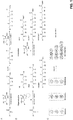
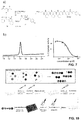
- the number of products expands exponentially in the reaction mixture with increasing types of ⁇ -ketoacid initiators (I), monomers (M), and terminators (T) ( Fig. 1C ).
- I ⁇ -ketoacid initiators
- M monomers
- T terminators
- the present invention thus relates to and proposes a method as claimed in claim 1, namely a method for the generation of oligomers or a mixture of oligomers to form a chemical library by amide-forming oligomerization.
- the proposed method comprises the following the steps, in the given order:
- step 1) either one single type of dimer can be generated, if one single initiator is used, or if one single initiator is used combined with several different monomers, well-controlled set of dimers of the single initiator with in each case one of the different monomers.
- reactant concentrations it's also possible to obtain, when using one single initiator, an oligomer with the initiator combined with a chain of the monomers.
- the proposed reaction scheme is essentially free from side reactions, does not necessitate the sequential build-up of the chain, and can be controlled as concerns the distribution of the reaction products. It further allows for a well controllable, non-toxic reaction scheme to obtain either individual systems, or mixtures of systems in the sense of chemical libraries. By tailoring the distribution of the systems in a mixture of the corresponding chemical libraries can very efficiently be used in an incomplete factorial design approach to identify chemically and/or biologically active systems with a reduced separation/identification effort.
- Preferably essentially enantiopure building blocks for the initiator and/or the monomer and/or the terminator.
- the importance of producing a large array of compounds in a fast and cost-effective way is well recognized.
- the proposed method provides compound libraries efficiently and can be practiced routinely in industry and academia.
- the normally associated concerns like complicated experimental procedures, expensive stoichiometric reagents, the need for protection of common functional groups, the occurrence of false positives, costly waste handling and time-consuming purifications, the major obstacles for library synthesis, which necessitate the preparation and storage of pure, isolated compounds, can be avoided.
- a self-assembly process for a ⁇ -peptide library synthesis is proposed that does not require reagents or protecting groups and operates under aqueous conditions.
- the resulting product mixtures can be screened directly in biological assays and the libraries can be rapidly modulated for optimization or deconvolution simply by changing the composition of the monomers or the addition order.
- the libraries can be quickly and reproducibly resynthesized as needed, rendering the need to isolate and purify each member obsolete.
- the requisite building blocks are readily synthesized in enantiomerically pure form and are stable to prolonged storage. By simply mixing these building blocks and heating the reaction solutions in microplates, chemical libraries are synthesized "on-demand”.
- Libraries of oligomers with specific chemical and physical properties can be easily obtained by employing designed building blocks owing to the modular nature of the self-assembly process.
- the building blocks used here can be incorporated with various functional groups by straightforward syntheses and are tolerated in the mild self-assembly process conditions.
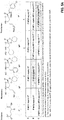
- HCV protease inhibitor libraries were synthesized. Our processes to find target molecules are divided into four phases ( Fig. 8 ).
- Discovery phase various building blocks are engaged in library syntheses.
- the proposed method can be applied in industry with the merit of low-cost operations and avoidance of hazardous organic chemicals.
- the aqueous-mediated library syntheses without involvement of purification steps minimize the amount of organic solvent waste.
- R being selected from the group consisting of: substituted or unsubstituted alkyl, hetero
- the residue R comprises in the range of 1-10 carbon atoms, more preferably it is selected from the group consisting of benzyl, NO 2 substituted benzyl, ethyl, carboxyethyl, hexyl, tert. Butyl.
- the initiator (I) for the formation of a cyclic oligomer or a mixture of cyclic oligomers by amide-bond formation is selected in that the linker structure is selected from the group consisting of: a chain of one or two elements selected from the group of: amino acid, -CO((CH 2 ) 2 NH-, and this chain preferably terminated by a group selected from:
- One of these groups can also be directly, so without an element as outlined in the paragraph before, the linker element, so can be the residue R of the initiator as defined above.
- the initiator (I), also but not necessarily, for the formation of a cyclic oligomer or a mixture of cyclic oligomers by amide-bond formation can be given by covalent dimers or trimmers of the above structures, in which case the residue R is a common linker element. Possible are thus structures comprising at least two initiator moieties selected from the group consisting of: with
- dimers or trimers for the initiator (I) can be of the following general structure wherein
- the initiator (I) for the formation of a cyclic oligomer or a mixture of cyclic oligomers by amide-bond formation can be given by a structure comprising at least one such terminator moiety as defined further below and at least one such initiator moiety as given just above.
- the initiator (I) for the formation of a cyclic oligomer or a mixture of cyclic oligomers can be given by a structure consisting of a hydroxylamine at one end a ketoacid or acylboronate at the other end.
- the initiator (I) for the formation of a cyclic oligomer or a mixture of cyclic oligomers by amide-bond formation is selected from the group consisting of: wherein
- the monomer (M) is preferably selected from the group consisting of: with preferably the following definitions:
- the monomer is selected from the following group, with the definitions as given just above:
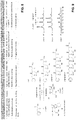
- a monomer of formula (V) can be prepared in an analogous manner to that described in Org. Process. Res. Dev., 2012, 16, 687-696 , as shown in the following Scheme:
- a monomer of formula (VII) can be prepared in an analogous manner to that described in Helv. Chim. Acta, 2012, 95, 2481 , as shown in the following Scheme:
- a monomer of formula (VIII) can be prepared, as shown in the following scheme, by treating a compound of formula (VII) with a suitable base, such as NaOMe, in a suitable solvent, such as methanol:
- a monomer of formulae (XIII) can be prepared as shown in the following Scheme.
- a compound of formula (IX) with a reducing agent, such as SmI 2 , in a suitable solvent such as methanol/tetrahydrofuran, to give a compound of formula (X).
- a carboxylic acid activating agent such as Ac 2 O/AcONa or DCC
- a suitable solvent such as dichloromethane
- Conversion of a compound of formula (XI) to a compound of formula (XII) can be carried out either using a triflating agent, such as Tf 2 O or PhNTf 2 , and a suitable base, such as Et 3 N or KHMDS, in a suitable solvent, such as tetrahydrofuran and DMPU.
- a triflating agent such as Tf 2 O or PhNTf 2
- a suitable base such as Et 3 N or KHMDS
- a monomer of formula (XIV) can be prepared by treating a compound of formula (XII) with a suitable catalyst, such as PdCl 2 dppf, and a suitable boron reagent, such as B 2 (pin) 2 , in the presence of a suitable base, such as AcOK, and in a suitable solvent, such as 1,4-dioxan, at elevated temperature (see Scheme below). Further treatment of XIV with a suitable fluorinating agent, such as KHF 2 , in a suitable solvent, such acetone/water, will give rise to a monomer of formula (XV):
- a suitable catalyst such as PdCl 2 dppf
- a suitable boron reagent such as B 2 (pin) 2
- a suitable base such as AcOK
- a suitable solvent such as 1,4-dioxan
- Monomers of formulae (XIX) and (XX) can be prepared in an analogous manner to monomers (XV) and (XIII) respectively, as described above.
- a monomer of formula (XVIII), where R is e.g. CR 1 R 2 can be prepared by a cycloaddition reaction between a compound of formula (XVI) and a compound of formula (XVII), in a suitable solvent, such as xylene (see Scheme below). Interconversion of the Y functionality can be carried out using a method known to those skilled in the art.
- the monomer (I) is selected from the group consisting of:
- Me -CH 3
- t Bu 1,1-dimethylethyl
- Cbz benzyloxycarbonyl
- iPr isopropyl
- Ph phenyl.
- the terminator (T), if used, so in case of linear products, is selected from the group consisting of: with preferably the following definitions:
- the terminator (T) also but not necessarily for the formation of a cyclic oligomer or a mixture of cyclic oligomers by amide-bond formation, can be given by covalent dimers or trimers of the above structures, in which case then R 1 and R 7 or R 8 are common linker elements. So the terminators can also be given by a structure comprising at least two terminator moieties selected from the group consisting of: with
- one single initiator (I) can be used in step 1) and, in case of the formation of a linear oligomer or a mixture of linear oligomers by amide-bond formation, one single terminator (T) can be used in step 2).
- Step 1) and/or 2) can be carried out, apart from solvent(s), without any added further chemical reagents or catalysts, which simplifies the procedure and reduces toxicity issues.
- organic solvents water, aqueous buffer or combinations thereof can be used.
- step 1) more than 1, preferably 2-6, more preferably 2-4 different monomers can be used.
- step 1) the reaction can be carried over to lead to oligomers with at least 2 interlinked monomers, preferably in the range of 2-10, more preferably in the range of 2-6 interlinked monomers.
- step 1) the reaction conditions, preferably temperature and/or pressure, and/or reactant concentrations and/or reactant addition order and/or reactant addition time can be selected so as to lead, between different batches, to targeted different distributions of different oligomers in the mixture.
- step 1) one single initiator (I), one single monomer (M) and, in case of the generation of a linear oligomers, in step 2) one single terminator (T) can be used, and the reaction conditions in step 1) and/or step 2) can be adapted such as to form a specific trimer structure.
- the present invention relates to a method of identification of biologically and/or chemically active systems from a chemical library preferably based on at least one mixture of oligomers made using a method as outlined above, wherein preferably the mixtures of oligomers are screened for activity prior to purification or separation of the compounds from the mixture.
- a number of specifically differing mixtures made using a method as outlined above can be used, checking these mixtures for biological and/or chemical activity, inferring from activity patterns initiators and/or monomers and/or terminators inducing activity, optionally preparing further mixtures using a method as outlined above based on the identified active initiators and/or monomers and/or terminators only, thereby successively reducing the number of possible active oligomers.
- the method can be very efficiently used in an incomplete factorial design screening process.
- the "on-demand” library synthesis was used to prepare and screen inhibitors of HCV protease.
- the library syntheses were performed directly in 96-well plates.
- each well, containing a mixture of products was diluted and screened directly.
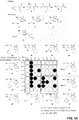
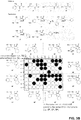
- FIG. 3 The arrangement of initiators, monomers and terminators in preliminary libraries is shown in Fig. 3 : (1) Row/column had its assigned specific initiator/terminator. Wells containing active initiators and terminators were recognized based on the highest occurrence from the active wells. For example, in library 1, initiator I 1 I 3 and terminator T 2 T 4 were identified. (2) Each library was divided into four sectors and wells in the same sector had the assigned three out of four monomers. The same approach can be used with a larger number of monomers, initiators or terminators, thereby increasing the number of possible products that can be formed in each well. This setting was designed to facilitate the monomer selection processes. The three monomers in the sector with the least numbers of active wells were considered inactive and eliminated.
- Well C2 showed positive results both in the original and in 10-folddiluted concentration while C5 showed reactivity only at the original concentration; well C 2 was therefore chosen for deconvolution.
- library 3 which contained initiator I 3 , monomer M 2 M 4 M 5 , and terminator T 4 , we assumed that if the active compound was constituted with the inclusion of three molecules of the monomer, reaction wells containing only one or two equivalents of monomers were less active.
- the active compound in B2 could be I 3 -M 5 -M 5 -T 4 or I 3 -M 5 -M 5 -M 5 -T 4 . Because there was no inhibition shown in C1, the active molecule in C4 is most likely to be I 3 -M 5 -M 5 -T 4 , I 3 -M 5 -M 2 -T 4 , I 3 -M 5 -M 5 -M 5 -T 4 , I 3 -M 5 -M 2 -M 2 -T 4 or I 3 -M 5 -M 5 -M 2 -T 4 . Further deconvolution of these confined lead candidates was performed. Different quantities of monomer M 5 were used to deconvolute the active compounds in well B2 in library 4. In library 5 row A ( Fig. 5 ), positive results were observed with wells containing more than one equivalent of M 5 .
- I 3 -M 5 -M 5 -T 4 and I 3 -M 5 -M 5 -M 5 -T 4 I 3 -M 5 -M 5 -M 5 -T 4 was more likely to be the inhibitor.
- Rows B-E were designed to deconvolute C4 well in library 4.
- M 5 and M 2 were added in different ratios and quantities as indicated at the same time. A positive trend was seen when the ratio of M 5 /M 2 was greater than 1. This result implied that the lead compounds incorporated more M 5 than M 2 . Possible active structures were thus limited to I 3 -M 5 -M 5 -M 5 -T 4 and I 3 -M 5 -M 5 -M 2 -T 4 .
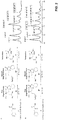
- HPLC analyses were carried out. HPLC traces of well A5, C5 and E4 in library 5 are shown in Fig. 6 . The fractions were collected, lyophilized, redissolved in DMSO, and subjected to the HCV protease assay. The result showed that the fraction at 27.5 min was responsible for the HCV protease inhibition in all these three wells and corresponded to I 3 -M 5 -M 5 -M 5 -T 4 .
- Compound I 3 -M 5 -M 5 -M 5 -T 4 was synthesized under aqueous conditions by combining 1.0 equiv I3 and 3.6 equiv M 5 for 2 h, followed by the addition of 2.0 equiv T 4 .
- the product was isolated by HPLC and fully characterized. The pure material was subjected to the HCV protease assay and an IC50 of 1.0 ⁇ M was measured ( Fig. 7 ). This confirmed its identity as the most active compound in the focused library, library 3.
- initiator I 1 1.0 mg, 6.1 ⁇ mol, 1.0 equiv
- monomer M 1 (0.93 mg, 3.1 ⁇ mol, 0.50 equiv)
- the mixture was allowed to stir at 45 °C for 2 h.
- the solution was cooled to RT and monomer M 2 (1.2 mg, 3.1 ⁇ mol, 0.50 equiv) was added.
- the mixture was allowed to stir at 45 °C for 2 h.
- the solution was cooled to RT and terminator T 1 was added and the mixture was heated at 45 °C for 2 h.
- the 96-well plate was capped, centrifuged for 2 min at 2000 rpm, and heated in the PCR machine (equipped with a heated lid at 110 °C to prevent solvent condensation on the cap) at 45 °C for 2 h.
- the plate was cooled to RT and corresponding terminators from stock solutions were added to each well by a micropipettor.
- the plate was capped, centrifuged and heated at 45 °C for 2 h.
- HCV protease assay kits were purchased from ProteinOne and experiments were performed according to the manual provided. Without inhibitors, HCV protease cleaves the FRET substrate and results in a fluorescence signal at 530 nm (excitation wavelength at 490 nm).
- each well contained one initiator (0.5 ⁇ mol, 1.0 equiv) and three assigned monomers (total 1.0 ⁇ mol, 2.0 equiv) in a total of 5 ⁇ L 5:1 t BuOH/buffer solution. The three monomers were in a 1:1:1 ratio (i.e. 0.67 ⁇ mol of each monomer).
- well A1 in library 1 contained initiator I 1 (0.50 ⁇ mol, 1.0 equiv), monomer M 1 (0.33 ⁇ mol, 0.67 equiv), monomer M 3 (0.33 ⁇ mol, 0.67 equiv) and monomer M 4 (0.33 ⁇ mol, 0.67 equiv).
- initiator I 1 0.50 ⁇ mol, 1.0 equiv
- monomer M 1 (0.33 ⁇ mol, 0.67 equiv)
- monomer M 3 (0.33 ⁇ mol, 0.67 equiv
- monomer M 4 (0.33 ⁇ mol, 0.67 equiv
- each well was diluted to 35 ⁇ L with 5:1 t BuOH/buffer and 1.0 ⁇ L of this crude solution was used for the HCV assay.
- the relative fluorescence units (RFU) values from assay results were normalized, with the highest value as 100, and active wells were identified with normalized RFU value ⁇ 65 (Table 1). Table 1. RFU raw values (above) and normalized values (below) at 90 min in ( a ) library 1 ( b ) library 2.
- each well in sector 1 contained one initiator (0.5 ⁇ mol, 1.0 equiv) and all three monomers (total 1.0 ⁇ mol, 2.0 equiv) in a total of 5.0 ⁇ L 5:1 t BuOH/buffer solution.
- the three monomers were in a 1:1:1 ratio (i.e. 0.67 ⁇ mol of each monomer).
- well A1 contained initiator I 1 (0.50 ⁇ mol, 1.0 equiv), monomer M 2 (0.33 ⁇ mol, 0.67 equiv), monomer M 4 (0.33 ⁇ mol, 0.67 equiv), and monomer M 5 (0.33 ⁇ mol, 0.67 equiv).
- each well contained initiator I 3 (0.5 ⁇ mol, 1.0 equiv) and monomers (as indicated) in a total of 5.0 ⁇ L 5:1 t BuOH/buffer solution.
- well A1 contained initiator I 3 (0.50 ⁇ mol, 1.0 equiv), and monomer M 2 (0.5 ⁇ mol, 1.0 equiv).
- Well C3 contained initiator I 3 (0.50 ⁇ mol, 1.0 equiv), monomer M 5 (0.50 ⁇ mol, 1.0 equiv) and monomer M 4 (0.50 ⁇ mol, 1.0 equiv).
- the first monomer (0.50 ⁇ mol, 1.0 equiv) was allowed to react with the initiator (0.5 ⁇ mol, 1.0 equiv) in a total 5.0 ⁇ L 5:1 t BuOH/buffer solution for 2 h.
- the second monomer (0.50 ⁇ mol, 1.0 equiv) in 2.0 ⁇ L 5:1 t BuOH/buffer solution was added to the solution and the reaction mixture was allowed to react for another 2 h.
- well C1 contained initiator I 3 (0.50 ⁇ mol, 1.0 equiv) and monomer M 2 (0.50 ⁇ mol, 1.0 equiv) in a total 5.0 ⁇ L 5:1 t BuOH/buffer solution. After 2 h reaction time, monomer M 5 (0.50 ⁇ mol, 1.0 equiv) in 2.0 ⁇ L 5:1 t BuOH/buffer solution was added.
- each well contained initiator I 3 (0.5 ⁇ mol, 1.0 equiv) and monomers (as indicated) in a total of 5.0 ⁇ L 5:1 t BuOH/buffer solution.
- well A4 contained initiator I 3 (0.50 ⁇ mol, 1.0 equiv) and monomer M 5 (2.0 ⁇ mol, 4.0 equiv) in a total 5.0 ⁇ L 5:1 t BuOH/buffer solution.
- Well C2 contained initiator I 3 (0.50 ⁇ mol, 1.0 equiv), monomer M 2 (1.0 ⁇ mol, 2.0 equiv) and monomer M 5 (0.50 ⁇ mol, 1.0 equiv) in a total 5.0 ⁇ L 5:1 t BuOH/buffer solution.
- each well was diluted to 50 ⁇ L with 5:1 t BuOH/buffer (first dilution). From this diluted solution, 10 ⁇ L were taken and further diluted with 5:1 t BuOH/buffer to 100 ⁇ L (second dilution). One microliter of the second dilution solution was used for the HCV assay. Active wells were identified with normalized RFU value ⁇ 65. In the library of deconvolution of well C4 in library 4 (rows B-E), highlighted wells were with normalized RFU ⁇ 40 (Table 4). Table 4.
- RFU raw values (above) and normalized values (below) at 90 min in library 5. (The selected wells are shaded in the table of RFU raw values.) 1 2 3 4 5 A 621 242 243 236 234 B 389 474 429 227 240 C 262 325 465 247 207 D 429 357 439 226 221 E 446 371 387 205 246 1 2 3 4 5 A 100 39 39 38 38 B 63 76 69 37 39 C 42 52 75 40 33 D 69 57 71 36 36 E 72 60 62 33 40
- the crude reaction mixture was purified by preparative HPLC (gradient of 55 to 75% CH 3 CN with 0.1% TFA, 30 min) at 28 min and the collected product fraction was lyophilized to give as a white solid (6.6 mg, 0.0071 mmol, 24 %).
- IC 50 Ten different concentrations (10, 5.0, 2.5, 1.0, 0.75, 0.50, 0.30, 0.25, 0.080, 0.050 ⁇ M in DMSO) of I 3 -M 5 -M 5 -M 5 -T 4 were measured with HCV protease assay. Fluorescence signals were recorded at 90 min. The experiment was repeated in triplicate. IC 50 was calculated via nonlinear regression using the software package GraphPad Prism 5.
- Methyl 2-methoxy acrylate ( 8 ) was prepared according to the literature procedure.
- a toluene solution (0.20-0.50 M) of 2,3:5,6- O -diisopropylidene-D-gulose oxime ( 3 ) 1 (1.0 equiv), aldehyde 4 (1.0 equiv) and acrylate 2 or 8 (1.0-2.0 equiv) was heated with a Dean-Stark apparatus fitted with a reflux condenser for 24 h.
- the solution was cooled to RT and toluene removed under reduced pressure.
- the crude cycloadduct D-gulose-isoxazolidine 5 or 9 was purified by flash chromatography and recrystallization.
- Acrylate 2 was prepared according to General Procedure (a) from 5-chloromethyl-2,2-pentamethylene-1,3-dioxolan-4-one ( 1 ) (0.15 g, 0.73 mmol, 1.0 equiv) and NEt 3 (0.19 mL, 1.5 mmol, 2.1 equiv) in CHCl 3 (1.5 mL).
- the cycloaddition was performed according to General Procedure (c) from the crude acrylate 2, D-gulose oxime 3 (0.20 g, 0.73 mmol, 1.0 equiv) and thiophene 2-carboxaldehyde (68 ⁇ L, 0.73 mmol, 1.0 equiv) in toluene (1.5 mL).
- the cycloadduct was purified by flash chromatography (9:1 hexanes/EtOAc) and recrystallized from hexanes/EtOAc to afford the product as a white solid (0.19 g, 0.35 mmol, 48%).
- Acrylate 2 was prepared according to General Procedure (a) from 5-chloromethyl-2,2-pentamethylene-1,3-dioxolan-4-one ( 1 ) (1.5 g, 7.4 mmol, 1.0 equiv) and NEt 3 (2.0 mL, 15 mmol, 2.0 equiv) in CHCl 3 (15 mL).
- the cycloaddition was performed according to General Procedure (c) from the crude acrylate 2, D-gulose oxime 3 (2.0 g, 7.4 mmol, 1.0 equiv) and 2-fluorobenzylaldehyde (0.78 mL, 7.4 mmol, 1.0 equiv) in toluene (15 7.9mL).
- Terminator T 1 was prepared according to General Procedure (f) from ammonium hydroxide solution (25% w/w, 0.50 mL, 3.3 mmol, 8.3 equiv) and (3 S ,5 R )-methyl 3-isobutyl-5-methoxyisoxazolidine-5-carboxylate (86 mg, 0.40 mmol, 1.0 equiv). The product was isolated as a white solid (73 mg, 0.36 mmol, 90%).
- Terminator T 2 was prepared according to General Procedure (f) from cyclopropylamine (0.20 mL, 2.9 mmol, 4.8 equiv) and (3 S ,5 R )-methyl 3-isobutyl-5-methoxyisoxazolidine-5-carboxylate (0.13 g, 0.60 mmol, 1.0 equiv). The product was isolated as a colorless liquid (92 mg, 0.38 mmol, 63%).
- Terminator T 4 was prepared according to General Procedure (f) from 4-chlorobenzylamine (1.5 mL, 12 mmol, 8.6 equiv) and tert-butyl 3-((3 S ,5 R )-5-((4-chlorobenzyl)carbamoyl)-5-methoxyisoxazolidin-3-yl)propanoate (0.40 g, 1.4 mmol, 1.0 equiv). The crude reaction mixture was purified by flash chromatography (1:1 hexanes/EtOAc) and the product was isolated as a white solid (0.48 g, 1.2 mmol, 86%).
- Terminator T 5 was prepared according to General Procedure (f) from allylamine (0.35 mL, 4.6 mmol, 5.9 equiv) and (3 S ,5 R )-methyl 3-isobutyl-5-methoxyisoxazolidine-5-carboxylate (0.17 g, 0.78 mmol, 1.0 equiv). The product was isolated as a white solid (0.18 g, 0.74 mmol, 95%).
- Terminator T 6 was prepared according to General Procedure (f) from N,N -diethyl-1,3-diaminopropane (0.60 mL, 3.7 mmol, 4.7 equiv) and ⁇ 3 h-(4-methoxyphenyl)-isoxazolidine 15 (0.17 g, 0.78 mmol, 1.0 equiv) in DMF (0.60 mL). The product was isolated as a colorless liquid (0.21 g, 0.58 mmol, 74%).
- Terminator T 7 was prepared according to General Procedure (f) from 2-cyclopentylethanamine (0.47 mL, 3.7 mmol, 10 equiv) and (3 S ,5 R )-methyl 3-benzyl-5-methoxyisoxazolidine-5-carboxylate (87 mg, 0.35 mmol, 1.0 equiv).
- the crude reaction mixture was purified by flash chromatography (9:1 CH 2 Cl 2 /CH 3 OH) and the product was isolated as a clear liquid (87 mg, 0.26 mmol, 73%).
- Terminator T 8 was prepared according to General Procedure (f) from 4-(aminomethyl)pyridine (0.40 mL, 4.0 mmol, 5.1 equiv) and (3 S ,5 R )-methyl 3-isobutyl-5-methoxyisoxazolidine-5-carboxylate (0.17 g, 0.78 mmol, 1.0 equiv).
- the crude reaction mixture was purified by flash chromatography (9:1 CH 2 Cl 2 /CH 3 OH) and the product was isolated as a white solid (0.18 g, 0.61 mmol, 78%).
- Terminator T 9 was prepared according to General Procedure (f) from 4-(2-aminoethyl)benzenesulfonamide (0.79 g, 4.0 mmol, 5.1 equiv) and (3 S ,5 R )-methyl 3-isobutyl-5-methoxyisoxazolidine-5-carboxylate (0.17 g, 0.78 mmol, 1.0 equiv) and in DMF (2.0 mL).
Landscapes
- Chemical & Material Sciences (AREA)
- Organic Chemistry (AREA)
- Health & Medical Sciences (AREA)
- Life Sciences & Earth Sciences (AREA)
- Engineering & Computer Science (AREA)
- Zoology (AREA)
- Wood Science & Technology (AREA)
- Proteomics, Peptides & Aminoacids (AREA)
- Chemical Kinetics & Catalysis (AREA)
- Medicinal Chemistry (AREA)
- Polymers & Plastics (AREA)
- Biotechnology (AREA)
- Biochemistry (AREA)
- Immunology (AREA)
- Microbiology (AREA)
- Molecular Biology (AREA)
- Analytical Chemistry (AREA)
- Physics & Mathematics (AREA)
- Biophysics (AREA)
- Bioinformatics & Cheminformatics (AREA)
- General Engineering & Computer Science (AREA)
- General Health & Medical Sciences (AREA)
- Genetics & Genomics (AREA)
- Organic Low-Molecular-Weight Compounds And Preparation Thereof (AREA)
- Polyamides (AREA)
Claims (16)
- Procédé de génération d'oligomères ou d'un mélange d'oligomères pour former une banque chimique par oligomérisation par formation d'amide comprenant les étapes de1) réaction d'un mélange d'au moins un initiateur (I) avec au moins un monomère (M)
pour former un dimère (I-M) de l'initiateur (I) et du monomère (M) ou
pour former un pré-oligomère (I-M-M, I-M-M-M, ...) avec un initiateur (I) lié à une chaîne de plus d'un monomère (M), ou un mélange de ceux-ci par formation de liaison amide ;2) addition d'au moins un terminateur (T) pour la formation d'un oligomère linéaire (I-M-T, I-M-M-T, ...) ou d'un mélange d'oligomères linéaires par formation de liaison amide ;ou, pour la formation d'un oligomère cyclique ou d'un mélange d'oligomères cycliques par formation de liaison amide, modification des conditions de réaction par rapport à l'étape 1) de façon à former une liaison covalente entre l'au moins un initiateur (I) et un monomère (M) du dimère ou pré-oligomère formé dans l'étape 1),
dans lequel l'initiateur (I) est choisi dans le groupe constitué de : avec, pour la formation d'un oligomère linéaire ou un mélange d'oligomères linéaires par formation de liaison amide,R étant choisi dans le groupe constitué de : alkyle, hétéroalkyle, cycloalkyle, hétérocycloalkyle, aryle, hétéroaryle, alkylaryle, hétéroalkylaryle, alcényle, hétéroalcényle, alcynyle, hétéroalcynyle substitué ou non substitué, -C(NH2)RI, -C(NH2){RI-CO-C(NH2)}nRI avec n = 1, 2 et R1 étant H ou une chaîne latérale d'acide aminé, un colorant fluorescent, un acide nucléique ou un dérivé de ceux-ci, un acide nucléique peptidique, un octapeptide FLAG (DYKDDDDK), la biotine ou une étiquette d'affinité ;ou avec, pour la formation d'un oligomère cyclique ou d'un mélange d'oligomères cycliques par formation de liaison amide,R étant choisi dans le groupe constitué de : -{(CH2)}nRC, -{(CHCH3)}nRC, -{(CH(1,1-diméthyléthyl))}nRC, -{(CH(benzyl))}nRC, dans chaque cas avec n = 1,2 et RC étant une structure de lieur permettant de former une liaison amide covalente avec le monomère terminal respectif du dimère ou oligomère formé dans l'étape 1) ;et dans les deux cas avec
X+ étant un contre-ion, choisi dans le groupe constitué de : K+, Cs+, Li+, Na+, R4N+, R4P+ ou R3S+ avec R étant un substituant organique ou H ;X, Y, Z, étant, indépendamment les uns des autres, choisis dans le groupe constitué de : F, OR, N+R3, N+R2OR, N+R2SR, et N+R2NR2, et forment facultativement une structure cyclique ou bicyclique ; où R est un substituant organique ou H ;ou des dimères ou trimères covalents de ceux-ci avec R étant dans ce cas un élément de lieur commun ;dans lequel le monomère (M) est choisi dans le groupe constitué de :


 X étant choisi dans le groupe constitué de : halogène, -OH, -COOH, -NH2, -O-alkyle, -O-aryle, -O-CO-alkyle, -O-CO-aryle, -SH, S-alkyle, -S-aryle, N-acyle, -NH-alkyle, -NH-aryle, -N(alkyle)2, -N(aryle)2, -N(alkyl)(aryle), -CO-NH-alkyle, -CO-NH-aryle, -CO-N(alkyle)2, -CO-N(aryle)2, -CO-N(alkyl)(aryle), -CN, -NO2, -N3, -S(O) aryle, -S(O)2aryle ;Y étant choisi dans le groupe constitué de : -PO3H, -COOH, -BF3-X+, -BXYZ, où X+, X, Y, Z sont définis comme décrit ci-dessus dans le contexte de l'initiateur (I),Z étant choisi dans le groupe constitué de : -PO3H, -COOH, -BF3-X+, -BXYZ, où X+, X, Y, Z sont définis comme décrit ci-dessus dans le contexte de l'initiateur (I), ainsi que des dérivés de ceux-ci qui, après séparation de X et Z après clivage de la liaison NO, conduisent à Y ;R étant choisi dans le groupe constitué de : O, S, NR1, Si, CHR1R2 ;R1-R6 étant, indépendamment les uns des autres, choisis dans le groupe constitué de : hydrogène, halogène, alkyle, hétéroalkyle, aryle, cycloalkyle, hétérocycloalkyle, hétéroaryle, alkylaryle, hétéroalkylaryle, alcényle, hétéroalcényle, alcynyle, hétéroalcynyle substitué ou non substitué, ainsi que des formes cycliques reliant ceux-ci les uns aux autres ;Q étant choisi dans le groupe constitué de : O, S, Si, NR1, où R1 est un substituant organique ou H ;et dans lequel le terminateur (T), s'il est utilisé, est choisi dans le groupe constitué de :avec
 R étant choisi dans le groupe constitué de : CH2, (CH2)2, CHRT, CH2CHRT, (CH2)3, (CH2)2CHRT, CH2CHRTCH2, (CH2)4, où RT est choisi dans le groupe constitué de : hydrogène, halogène, alkyle, hétéroalkyle, aryle, cycloalkyle, hétérocycloalkyle, hétéroaryle, alkylaryle, hétéroalkylaryle, alcényle, hétéroalcényle, alcynyle, hétéroalcynyle substitué ou non substitué ;R1 étant choisi dans le groupe constitué de : alkyle, hétéroalkyle, aryle, cycloalkyle, hétérocycloalkyle, hétéroaryle, alkylaryle, hétéroalkylaryle, alcényle, hétéroalcényle, alcynyle, hétéroalcynyle substitué ou non substitué, ester, carbamate, sulfonate, sulfinate, phosphate, silyle ;R7-R9 étant, indépendamment les uns des autres, choisis dans le groupe constitué de : hydrogène, halogène, alkyle, hétéroalkyle, aryle, cycloalkyle, hétérocycloalkyle, hétéroaryle, alkylaryle, hétéroalkylaryle, alcényle, hétéroalcényle, alcynyle, hétéroalcynyle substitué ou non substitué, ester, carbamate, sulfonate, sulfinate, phosphate, silyle, ainsi que des formes cycliques reliant ceux-ci les uns aux autres et carbonyle, imidate, thiomidateou des dimères ou trimères covalents de ceux-ci avec R1 et/ou au moins l'un de R7 ou R8 étant dans ce cas un élément de lieur commun.
 - Procédé selon la revendication 1, dans lequel la génération d'oligomères ou d'un mélange d'oligomères est conduite en utilisant les étapes de1) réaction d'un mélange d'au moins un initiateur (I) avec au moins un monomère (M)
pour former un dimère (I-M) de l'initiateur (I) et du monomère (M) ou
pour former un pré-oligomère (I-M-M, I-M-M-M, ...) avec un initiateur (I) lié à une chaîne de plus d'un monomère (M), ou un mélange de ceux-ci par formation de liaison amide ;2) addition d'au moins un terminateur (T) pour la formation d'un oligomère linéaire (I-M-T, I-M-M-T, ...) ou d'un mélange d'oligomères linéaires par formation de liaison amide ;ou, pour la formation d'un oligomère cyclique ou d'un mélange d'oligomères cycliques par formation de liaison amide, modification des conditions de réaction par rapport à l'étape 1) de façon à former une liaison covalente entre l'au moins un initiateur (I) et, de préférence, le monomère (M) terminal respectif du dimère ou pré-oligomère formé dans l'étape 1). - Procédé selon la revendication 1 ou 2, dans lequel un seul initiateur (I) est utilisé dans l'étape 1) et, dans le cas de la formation d'un oligomère linéaire ou d'un mélange d'oligomères linéaires par formation de liaison amide, un seul terminateur (T) est utilisé dans l'étape 2).
- Procédé selon l'une quelconque des revendications précédentes, dans lequel l'initiateur (I) pour la formation d'un oligomère linéaire ou d'un mélange d'oligomères linéaires par formation de liaison amide est choisi dans le groupe constitué de :


- Procédé selon l'une quelconque des revendications précédentes, dans lequel l'initiateur (I) pour la formation d'un oligomère cyclique ou d'un mélange d'oligomères cycliques par formation de liaison amide est choisi de sorte que la structure de lieur soit choisie dans le groupe constitué de : une chaîne d'un ou deux éléments choisis dans le groupe de : un acide aminé, CO((CH2)2NH, et cette chaîne terminée par un groupe choisi parmi :

- Procédé selon l'une quelconque des revendications précédentes, dans lequel l'initiateur (I) pour la formation d'un oligomère cyclique ou d'un mélange d'oligomères cycliques par formation de liaison amide est défini par une structure comprenant un fragment d'initiateur choisi dans le groupe constitué de :
 R étant un élément de lieurX+ étant un contre-ion, choisi dans le groupe constitué de : K+, Cs+, Li+, Na+, R4N+, R4P+ ou R3S+ avec R étant un substituant organique ou H ;X, Y, Z, étant, indépendamment les uns des autres, choisis dans le groupe constitué de : F, OR, N+R3, N+R2OR, N+R2SR, et N+R2NR2, et forment facultativement une structure cyclique ou bicyclique ; où R est un substituant organique ou H ;et au moins un fragment de terminateur choisi dans le groupe constitué de :
 R étant choisi dans le groupe constitué de : CH2, (CH2)2, CHRT, CH2CHRT, (CH2)3, (CH2)2CHRT, CH2CHRTCH2, (CH2)4, où RT est choisi dans le groupe constitué de : hydrogène, halogène, alkyle, hétéroalkyle, aryle, cycloalkyle, hétérocycloalkyle, hétéroaryle, alkylaryle, hétéroalkylaryle, alcényle, hétéroalcényle, alcynyle, hétéroalcynyle substitué ou non substitué ;R1 étant un élément de lieur ;R7-R9 étant, indépendamment les uns des autres, choisis dans le groupe constitué de : hydrogène, halogène, alkyle, hétéroalkyle, aryle, cycloalkyle, hétérocycloalkyle, hétéroaryle, alkylaryle, hétéroalkylaryle, alcényle, hétéroalcényle, alcynyle, hétéroalcynyle substitué ou non substitué, ester, carbamate, sulfonate, sulfinate, phosphate, silyle, ainsi que des formes cycliques reliant ceux-ci les uns aux autres et carbonyle, imidate, thiomidate, à condition qu'au moins l'un de R7 ou R8 soit un élément de lieur,liés par un élément de lieur commun défini par R dans le fragment d'initiateur et par R1 ou R7 ou R8 dans le fragment de terminateur.
 - Procédé selon la revendication 6, dans lequel l'initiateur (I) pour la formation d'un oligomère cyclique ou d'un mélange d'oligomères cycliques par formation de liaison amide est choisi dans le groupe constitué de :

 R1 est un élément de lieur ;Rq est un élément structural complémentant un cycle de 4, 5, 6 ou 7 chaînons, de préférence choisi dans le groupe constitué de : -C-, -CH2-C-, -CHRT-C-, -(CH2)2-C-, -(CHRT)2-C-, -(CH2)-C-(CH2)-, -(CHRT)-C-(CH2)-, -(CHRT)-C-(CHRT)-, -(CH2)3-C, où RT est choisi dans le groupe constitué de : hydrogène, halogène, alkyle, hétéroalkyle, aryle, cycloalkyle, hétérocycloalkyle, hétéroaryle, alkylaryle, hétéroalkylaryle, alcényle, hétéroalcényle, alcynyle, hétéroalcynyle substitué ou non substitué ;Rt est un élément structural complémentant un cycle de 4, 5, 6 ou 7 chaînons, de préférence choisi dans le groupe constitué de : -CRU-, -CH2-CRU-, - CHRT-CRU-, -(CH2)2-CRU-, -(CHRT)2-CRU-, -(CH2)-CRU-(CH2)-, -(CHRT)-CRU-(CH2)-, -(CHRT)-CRU-(CHRT)-, -(CH2)3-CRU, dans lequel RT est choisi dans le groupe constitué de : hydrogène, halogène, alkyle, hétéroalkyle, aryle, cycloalkyle, hétérocycloalkyle, hétéroaryle, alkylaryle, hétéroalkylaryle, alcényle, hétéroalcényle, alcynyle, hétéroalcynyle substitué ou non substitué, et où RU est choisi dans le groupe constitué de : hydrogène, halogène, alkyle, hétéroalkyle, aryle, cycloalkyle, hétérocycloalkyle, hétéroaryle, alkylaryle, hétéroalkylaryle, alcényle, hétéroalcényle, alcynyle, hétéroalcynyle substitué ou non substitué ;R7-R9 étant, indépendamment les uns des autres, choisis dans le groupe constitué de : hydrogène, halogène, alkyle, hétéroalkyle, aryle, cycloalkyle, hétérocycloalkyle, hétéroaryle, alkylaryle, hétéroalkylaryle, alcényle, hétéroalcényle, alcynyle, hétéroalcynyle substitué ou non substitué, ainsi que des formes cycliques reliant ceux-ci les uns aux autres et carbonyle, imidate, thiomidate,R étant choisi dans le groupe constitué de : O, S, NR1, SiR1R2, CR1R2 ; où R1 et R2 sont, indépendamment l'un de l'autre, choisis dans le groupe constitué de : hydrogène, halogène, alkyle, hétéroalkyle, aryle, cycloalkyle, hétérocycloalkyle, hétéroaryle, alkylaryle, hétéroalkylaryle, alcényle, hétéroalcényle, alcynyle, hétéroalcynyle substitué ou non substitué,Y étant choisi dans le groupe constitué de : -PO3H, -COOH, -BF3X+, -BXYZ, où X+, X, Y, Z sont définis comme décrit ci-dessus dans le contexte de l'initiateur (I) ;dans lequel, de préférence, cette structure est choisie dans le groupe constitué de :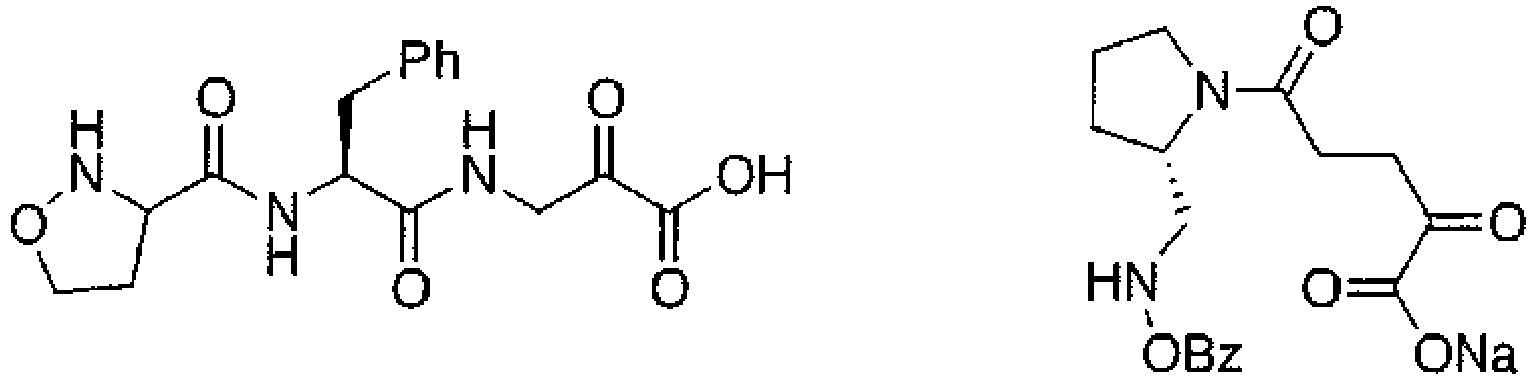
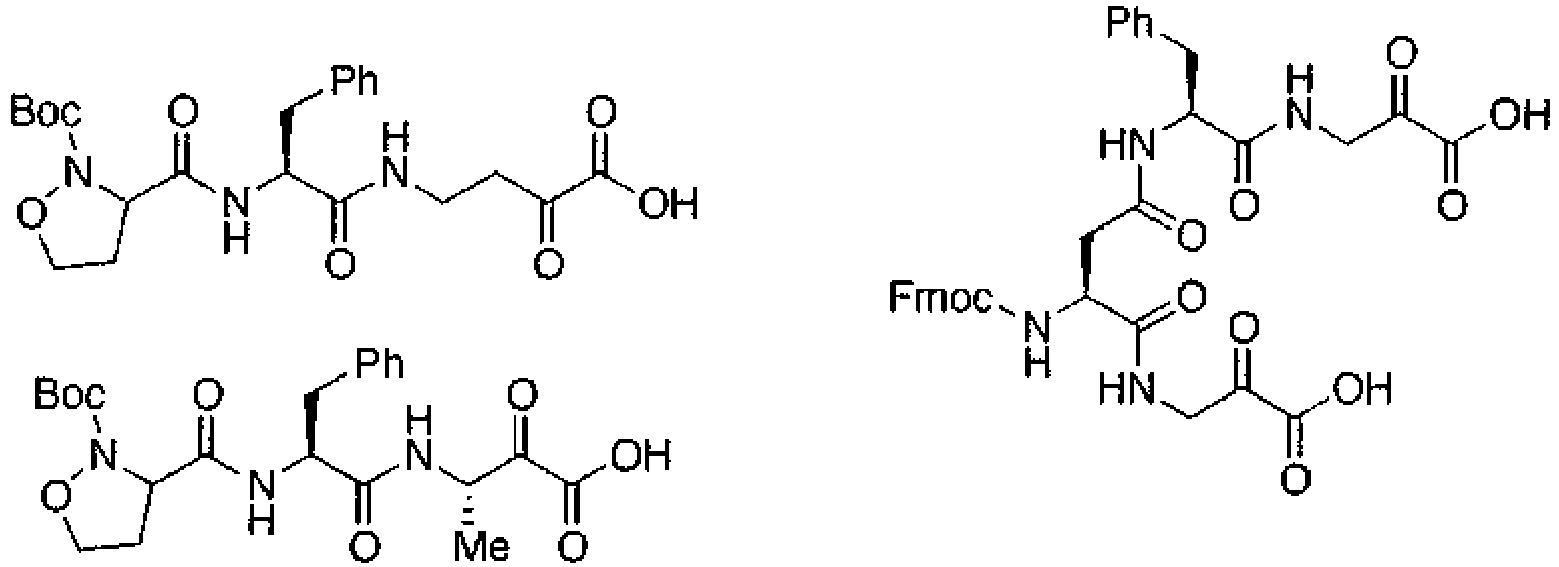


- Procédé selon l'une des revendications précédentes, dans lequel le monomère (M) est choisi dans le groupe constitué de :


- Procédé selon l'une quelconque des revendications précédentes, dans lequel le terminateur (T) est choisi dans le groupe constitué de :

 R1 étant choisi dans le groupe constitué de : alkyle, hétéroalkyle, aryle, cycloalkyle, hétérocycloalkyle, hétéroaryle, alkylaryle, hétéroalkylaryle, alcényle, hétéroalcényle, alcynyle, hétéroalcynyle substitué ou non substitué, ester, carbamate, sulfonate, sulfinate, phosphate, silyle ;Me = -CH3, Et = éthyle ; Ph = phényle.
 - Procédé selon l'une quelconque des revendications précédentes, dans lequel les étapes 1) et/ou 2) sont conduites, hormis le(s) solvant (s), sans aucun réactif ou catalyseur chimique supplémentaire ajouté.
- Procédé selon l'une quelconque des revendications précédentes, dans lequel, dans l'étape 1) et/ou dans l'étape 2), des solvants organiques, de l'eau, un tampon aqueux ou des combinaisons de ceux-ci sont utilisés.
- Procédé selon l'une quelconque des revendications précédentes, dans lequel, dans l'étape 1), plus de 1, de préférence 2 à 6, plus préférablement 2 à 4 monomères différents sont utilisés, et/ou dans lequel, dans l'étape 1), la réaction est conduite pour conduire à des oligomères avec au moins 2 monomères interconnectés, de préférence dans la plage de 2 à 10, plus préférablement dans la plage de 2 à 6 monomères interconnectés.
- Procédé selon l'une quelconque des revendications précédentes, dans lequel, dans l'étape 1), les conditions de réaction, de préférence la température et/ou la pression, et/ou les concentrations des réactifs et/ou l'ordre d'ajout des réactifs et/ou le temps d'ajout des réactifs et/ou la chiralité des réactifs sont choisis de façon à conduire, entre différent lots, à différentes distributions ciblées de différents oligomères dans le mélange.
- Procédé selon l'une quelconque des revendications précédentes, dans lequel, dans l'étape 1), un seul initiateur (I), un seul monomère (M) et, dans le cas de la génération d'oligomères linéaires, dans l'étape 2) un seul terminateur (T) est utilisé, et dans lequel les conditions de réaction dans l'étape 1) et/ou l'étape 2) sont adaptées de façon à former une structure de trimère spécifique.
- Procédé d'identification de systèmes biologiquement et/ou chimiquement actifs depuis une banque chimique sur la base d'au moins un mélange d'oligomères préparés en utilisant un procédé selon l'une quelconque des revendications précédentes, dans lequel les mélanges d'oligomères sont criblés pour une activité avant la purification ou la séparation des composés à partir du mélange.
- Procédé selon la revendication 15, utilisant une pluralité de mélanges différant spécifiquement préparés en utilisant un procédé selon la revendication 10 et/ou 11, le contrôle de ces mélanges pour une activité biologique et/ou chimique, la déduction à partir des profils d'activité d'initiateurs et/ou monomères et/ou terminateurs induisant une activité, la préparation de mélanges supplémentaires en utilisant un procédé selon l'une quelconque des revendications précédentes 1 à 12 sur la base des initiateurs et/ou monomères et/ou terminateurs actifs identifiés de façon unique, de façon à réduire successivement le nombre d'oligomères actifs possibles.
Applications Claiming Priority (2)
| Application Number | Priority Date | Filing Date | Title |
|---|---|---|---|
| EP14000586 | 2014-02-19 | ||
| PCT/EP2015/052504 WO2015124443A1 (fr) | 2014-02-19 | 2015-02-06 | Procédé de génération de banques chimiques |
Publications (2)
| Publication Number | Publication Date |
|---|---|
| EP3107952A1 EP3107952A1 (fr) | 2016-12-28 |
| EP3107952B1 true EP3107952B1 (fr) | 2018-09-26 |
Family
ID=50156537
Family Applications (1)
| Application Number | Title | Priority Date | Filing Date |
|---|---|---|---|
| EP15702802.8A Not-in-force EP3107952B1 (fr) | 2014-02-19 | 2015-02-06 | Procédé pour la génération de bibliothèques chimiques |
Country Status (4)
| Country | Link |
|---|---|
| US (1) | US20170088878A1 (fr) |
| EP (1) | EP3107952B1 (fr) |
| JP (1) | JP2017517475A (fr) |
| WO (1) | WO2015124443A1 (fr) |
Families Citing this family (4)
| Publication number | Priority date | Publication date | Assignee | Title |
|---|---|---|---|---|
| EP3426674A4 (fr) | 2016-03-09 | 2019-08-14 | Blade Therapeutics, Inc. | Composés céto-amides cycliques utilisés en tant que modulateurs de la calpaïne, et leurs procédés de production et d'utilisation |
| EP3481835A4 (fr) | 2016-07-05 | 2020-02-26 | Blade Therapeutics, Inc. | Modulateurs de calpain et leurs utilisations thérapeutiques |
| SG10201912574WA (en) | 2016-09-28 | 2020-02-27 | Blade Therapeutics Inc | Calpain modulators and therapeutic uses thereof |
| SG11202008750XA (en) * | 2018-03-28 | 2020-10-29 | Blade Therapeutics Inc | Calpain modulators and therapeutic uses thereof |
-
2015
- 2015-02-06 US US15/119,813 patent/US20170088878A1/en not_active Abandoned
- 2015-02-06 EP EP15702802.8A patent/EP3107952B1/fr not_active Not-in-force
- 2015-02-06 WO PCT/EP2015/052504 patent/WO2015124443A1/fr not_active Ceased
- 2015-02-06 JP JP2016552514A patent/JP2017517475A/ja active Pending
Non-Patent Citations (1)
| Title |
|---|
| None * |
Also Published As
| Publication number | Publication date |
|---|---|
| WO2015124443A1 (fr) | 2015-08-27 |
| US20170088878A1 (en) | 2017-03-30 |
| JP2017517475A (ja) | 2017-06-29 |
| EP3107952A1 (fr) | 2016-12-28 |
Similar Documents
| Publication | Publication Date | Title |
|---|---|---|
| CA2658334C (fr) | Composes de capture, collections associees et methodes d'analyse du proteome et de compositions de complexes | |
| Wang et al. | Synthetic chemical diversity: Solid phase synthesis of libraries of C2 symmetric inhibitors of HIV protease containing diamino diol and diamino alcohol cores | |
| Zhang | Fluorous technologies for solution-phase high-throughput organic synthesis | |
| Kappe | The generation of dihydropyrimidine libraries utilizing Biginelli multicomponent chemistry | |
| Watts et al. | Solution phase synthesis of β-peptides using micro reactors | |
| US6218551B1 (en) | Combinatorial hydroxy-amino acid amide libraries | |
| US20170088878A1 (en) | Method for the generation of chemical libraries | |
| JP4012145B2 (ja) | ピロール−イミダゾールポリアミドの固相合成法 | |
| Gordeev | Combinatorial approaches to harmacophoric heterocycles: A solid‐phase synthesis of 3, 1‐benzoxazine‐4‐ones | |
| Hermann et al. | Syntheses of hapalosin analogs by solid-phase assembly of acyclic precursors | |
| Yeh et al. | Microwave-enhanced liquid-phase synthesis of thiohydantoins and thioxotetrahydropyrimidinones | |
| US10501581B2 (en) | Sequence-defined polymers and methods of making same and using same | |
| Zhang et al. | Multigram Solution‐Phase Synthesis of Three Diastereomeric Tripeptidic Second‐Generation Dendrons Based on (2S, 4S)‐,(2S, 4R)‐, and (2R, 4S)‐4‐Aminoprolines | |
| Zinieris et al. | Improved solid-phase peptide synthesis of ‘difficult peptides’ by altering the microenvironment of the developing sequence | |
| WO1998033783A1 (fr) | Syntheses de banques combinatoires et de phases solides de 3,1-benzoxazine-4-ones | |
| Singh et al. | A convenient and new approach to the synthesis of ω-heterocyclic amino acids from carboxy lactams through ring-chain-transformation. Part 2: Synthesis of (2R)-/(2S)-2-aminomethyl-3-(1-aryl-/1, 5-diaryl-1H-pyrazol-3-yl)-propionic acid | |
| Kele et al. | Highly enantioselective synthesis of a fluorescent amino acid | |
| US20060217534A1 (en) | Bis (amino acid) molecular scaffolds | |
| Candela-Lena et al. | Asymmetric synthesis of α-mercapto-β-amino acid derivatives: application to the synthesis of polysubstituted thiomorpholines | |
| Kunishima et al. | Specific labeling of streptavidin for better understanding of ligand modification in modular method for affinity labeling (MoAL) | |
| Makino et al. | Solid-phase synthesis of quinazoline-2, 4-diones using SNAr reaction | |
| EP4526297A2 (fr) | Composition d'un agent lipophile pour la synthèse en phase solution de biomolécules | |
| EP1066295A2 (fr) | Synthese de composes et de banques de composes | |
| Peschke et al. | Synthesis of amino alcohols on solid support via sulfonium-ion mediated Darzens reaction | |
| Boeglin et al. | Efficient solid-phase synthesis of 4, 5-dihydro-1, 2, 4-triazin-6 (1H)-ones |
Legal Events
| Date | Code | Title | Description |
|---|---|---|---|
| PUAI | Public reference made under article 153(3) epc to a published international application that has entered the european phase |
Free format text: ORIGINAL CODE: 0009012 |
|
| STAA | Information on the status of an ep patent application or granted ep patent |
Free format text: STATUS: REQUEST FOR EXAMINATION WAS MADE |
|
| 17P | Request for examination filed |
Effective date: 20160826 |
|
| AK | Designated contracting states |
Kind code of ref document: A1 Designated state(s): AL AT BE BG CH CY CZ DE DK EE ES FI FR GB GR HR HU IE IS IT LI LT LU LV MC MK MT NL NO PL PT RO RS SE SI SK SM TR |
|
| AX | Request for extension of the european patent |
Extension state: BA ME |
|
| DAX | Request for extension of the european patent (deleted) | ||
| STAA | Information on the status of an ep patent application or granted ep patent |
Free format text: STATUS: EXAMINATION IS IN PROGRESS |
|
| 17Q | First examination report despatched |
Effective date: 20171004 |
|
| GRAP | Despatch of communication of intention to grant a patent |
Free format text: ORIGINAL CODE: EPIDOSNIGR1 |
|
| STAA | Information on the status of an ep patent application or granted ep patent |
Free format text: STATUS: GRANT OF PATENT IS INTENDED |
|
| INTG | Intention to grant announced |
Effective date: 20180417 |
|
| GRAS | Grant fee paid |
Free format text: ORIGINAL CODE: EPIDOSNIGR3 |
|
| GRAA | (expected) grant |
Free format text: ORIGINAL CODE: 0009210 |
|
| STAA | Information on the status of an ep patent application or granted ep patent |
Free format text: STATUS: THE PATENT HAS BEEN GRANTED |
|
| AK | Designated contracting states |
Kind code of ref document: B1 Designated state(s): AL AT BE BG CH CY CZ DE DK EE ES FI FR GB GR HR HU IE IS IT LI LT LU LV MC MK MT NL NO PL PT RO RS SE SI SK SM TR |
|
| REG | Reference to a national code |
Ref country code: GB Ref legal event code: FG4D |
|
| RIN1 | Information on inventor provided before grant (corrected) |
Inventor name: NODA, HIDETOSHI Inventor name: HUANG, YI-LIN Inventor name: BODE, JEFFREY |
|
| REG | Reference to a national code |
Ref country code: CH Ref legal event code: EP |
|
| REG | Reference to a national code |
Ref country code: AT Ref legal event code: REF Ref document number: 1045960 Country of ref document: AT Kind code of ref document: T Effective date: 20181015 |
|
| REG | Reference to a national code |
Ref country code: IE Ref legal event code: FG4D |
|
| REG | Reference to a national code |
Ref country code: DE Ref legal event code: R096 Ref document number: 602015016918 Country of ref document: DE |
|
| REG | Reference to a national code |
Ref country code: NL Ref legal event code: MP Effective date: 20180926 |
|
| PG25 | Lapsed in a contracting state [announced via postgrant information from national office to epo] |
Ref country code: LT Free format text: LAPSE BECAUSE OF FAILURE TO SUBMIT A TRANSLATION OF THE DESCRIPTION OR TO PAY THE FEE WITHIN THE PRESCRIBED TIME-LIMIT Effective date: 20180926 Ref country code: RS Free format text: LAPSE BECAUSE OF FAILURE TO SUBMIT A TRANSLATION OF THE DESCRIPTION OR TO PAY THE FEE WITHIN THE PRESCRIBED TIME-LIMIT Effective date: 20180926 Ref country code: BG Free format text: LAPSE BECAUSE OF FAILURE TO SUBMIT A TRANSLATION OF THE DESCRIPTION OR TO PAY THE FEE WITHIN THE PRESCRIBED TIME-LIMIT Effective date: 20181226 Ref country code: NO Free format text: LAPSE BECAUSE OF FAILURE TO SUBMIT A TRANSLATION OF THE DESCRIPTION OR TO PAY THE FEE WITHIN THE PRESCRIBED TIME-LIMIT Effective date: 20181226 Ref country code: SE Free format text: LAPSE BECAUSE OF FAILURE TO SUBMIT A TRANSLATION OF THE DESCRIPTION OR TO PAY THE FEE WITHIN THE PRESCRIBED TIME-LIMIT Effective date: 20180926 Ref country code: GR Free format text: LAPSE BECAUSE OF FAILURE TO SUBMIT A TRANSLATION OF THE DESCRIPTION OR TO PAY THE FEE WITHIN THE PRESCRIBED TIME-LIMIT Effective date: 20181227 Ref country code: FI Free format text: LAPSE BECAUSE OF FAILURE TO SUBMIT A TRANSLATION OF THE DESCRIPTION OR TO PAY THE FEE WITHIN THE PRESCRIBED TIME-LIMIT Effective date: 20180926 |
|
| REG | Reference to a national code |
Ref country code: LT Ref legal event code: MG4D |
|
| PG25 | Lapsed in a contracting state [announced via postgrant information from national office to epo] |
Ref country code: HR Free format text: LAPSE BECAUSE OF FAILURE TO SUBMIT A TRANSLATION OF THE DESCRIPTION OR TO PAY THE FEE WITHIN THE PRESCRIBED TIME-LIMIT Effective date: 20180926 Ref country code: AL Free format text: LAPSE BECAUSE OF FAILURE TO SUBMIT A TRANSLATION OF THE DESCRIPTION OR TO PAY THE FEE WITHIN THE PRESCRIBED TIME-LIMIT Effective date: 20180926 Ref country code: LV Free format text: LAPSE BECAUSE OF FAILURE TO SUBMIT A TRANSLATION OF THE DESCRIPTION OR TO PAY THE FEE WITHIN THE PRESCRIBED TIME-LIMIT Effective date: 20180926 |
|
| REG | Reference to a national code |
Ref country code: AT Ref legal event code: MK05 Ref document number: 1045960 Country of ref document: AT Kind code of ref document: T Effective date: 20180926 |
|
| PG25 | Lapsed in a contracting state [announced via postgrant information from national office to epo] |
Ref country code: CZ Free format text: LAPSE BECAUSE OF FAILURE TO SUBMIT A TRANSLATION OF THE DESCRIPTION OR TO PAY THE FEE WITHIN THE PRESCRIBED TIME-LIMIT Effective date: 20180926 Ref country code: IT Free format text: LAPSE BECAUSE OF FAILURE TO SUBMIT A TRANSLATION OF THE DESCRIPTION OR TO PAY THE FEE WITHIN THE PRESCRIBED TIME-LIMIT Effective date: 20180926 Ref country code: RO Free format text: LAPSE BECAUSE OF FAILURE TO SUBMIT A TRANSLATION OF THE DESCRIPTION OR TO PAY THE FEE WITHIN THE PRESCRIBED TIME-LIMIT Effective date: 20180926 Ref country code: NL Free format text: LAPSE BECAUSE OF FAILURE TO SUBMIT A TRANSLATION OF THE DESCRIPTION OR TO PAY THE FEE WITHIN THE PRESCRIBED TIME-LIMIT Effective date: 20180926 Ref country code: IS Free format text: LAPSE BECAUSE OF FAILURE TO SUBMIT A TRANSLATION OF THE DESCRIPTION OR TO PAY THE FEE WITHIN THE PRESCRIBED TIME-LIMIT Effective date: 20190126 Ref country code: EE Free format text: LAPSE BECAUSE OF FAILURE TO SUBMIT A TRANSLATION OF THE DESCRIPTION OR TO PAY THE FEE WITHIN THE PRESCRIBED TIME-LIMIT Effective date: 20180926 Ref country code: PL Free format text: LAPSE BECAUSE OF FAILURE TO SUBMIT A TRANSLATION OF THE DESCRIPTION OR TO PAY THE FEE WITHIN THE PRESCRIBED TIME-LIMIT Effective date: 20180926 Ref country code: AT Free format text: LAPSE BECAUSE OF FAILURE TO SUBMIT A TRANSLATION OF THE DESCRIPTION OR TO PAY THE FEE WITHIN THE PRESCRIBED TIME-LIMIT Effective date: 20180926 Ref country code: ES Free format text: LAPSE BECAUSE OF FAILURE TO SUBMIT A TRANSLATION OF THE DESCRIPTION OR TO PAY THE FEE WITHIN THE PRESCRIBED TIME-LIMIT Effective date: 20180926 |
|
| PGFP | Annual fee paid to national office [announced via postgrant information from national office to epo] |
Ref country code: CH Payment date: 20190211 Year of fee payment: 5 Ref country code: DE Payment date: 20190219 Year of fee payment: 5 Ref country code: GB Payment date: 20190218 Year of fee payment: 5 |
|
| PG25 | Lapsed in a contracting state [announced via postgrant information from national office to epo] |
Ref country code: SM Free format text: LAPSE BECAUSE OF FAILURE TO SUBMIT A TRANSLATION OF THE DESCRIPTION OR TO PAY THE FEE WITHIN THE PRESCRIBED TIME-LIMIT Effective date: 20180926 Ref country code: PT Free format text: LAPSE BECAUSE OF FAILURE TO SUBMIT A TRANSLATION OF THE DESCRIPTION OR TO PAY THE FEE WITHIN THE PRESCRIBED TIME-LIMIT Effective date: 20190126 Ref country code: SK Free format text: LAPSE BECAUSE OF FAILURE TO SUBMIT A TRANSLATION OF THE DESCRIPTION OR TO PAY THE FEE WITHIN THE PRESCRIBED TIME-LIMIT Effective date: 20180926 |
|
| PGFP | Annual fee paid to national office [announced via postgrant information from national office to epo] |
Ref country code: BE Payment date: 20190218 Year of fee payment: 5 Ref country code: FR Payment date: 20190220 Year of fee payment: 5 |
|
| REG | Reference to a national code |
Ref country code: DE Ref legal event code: R097 Ref document number: 602015016918 Country of ref document: DE |
|
| PG25 | Lapsed in a contracting state [announced via postgrant information from national office to epo] |
Ref country code: DK Free format text: LAPSE BECAUSE OF FAILURE TO SUBMIT A TRANSLATION OF THE DESCRIPTION OR TO PAY THE FEE WITHIN THE PRESCRIBED TIME-LIMIT Effective date: 20180926 |
|
| PLBE | No opposition filed within time limit |
Free format text: ORIGINAL CODE: 0009261 |
|
| STAA | Information on the status of an ep patent application or granted ep patent |
Free format text: STATUS: NO OPPOSITION FILED WITHIN TIME LIMIT |
|
| 26N | No opposition filed |
Effective date: 20190627 |
|
| PG25 | Lapsed in a contracting state [announced via postgrant information from national office to epo] |
Ref country code: LU Free format text: LAPSE BECAUSE OF NON-PAYMENT OF DUE FEES Effective date: 20190206 Ref country code: MC Free format text: LAPSE BECAUSE OF FAILURE TO SUBMIT A TRANSLATION OF THE DESCRIPTION OR TO PAY THE FEE WITHIN THE PRESCRIBED TIME-LIMIT Effective date: 20180926 Ref country code: SI Free format text: LAPSE BECAUSE OF FAILURE TO SUBMIT A TRANSLATION OF THE DESCRIPTION OR TO PAY THE FEE WITHIN THE PRESCRIBED TIME-LIMIT Effective date: 20180926 |
|
| REG | Reference to a national code |
Ref country code: IE Ref legal event code: MM4A |
|
| PG25 | Lapsed in a contracting state [announced via postgrant information from national office to epo] |
Ref country code: IE Free format text: LAPSE BECAUSE OF NON-PAYMENT OF DUE FEES Effective date: 20190206 |
|
| PG25 | Lapsed in a contracting state [announced via postgrant information from national office to epo] |
Ref country code: TR Free format text: LAPSE BECAUSE OF FAILURE TO SUBMIT A TRANSLATION OF THE DESCRIPTION OR TO PAY THE FEE WITHIN THE PRESCRIBED TIME-LIMIT Effective date: 20180926 |
|
| PG25 | Lapsed in a contracting state [announced via postgrant information from national office to epo] |
Ref country code: MT Free format text: LAPSE BECAUSE OF NON-PAYMENT OF DUE FEES Effective date: 20190206 |
|
| REG | Reference to a national code |
Ref country code: DE Ref legal event code: R119 Ref document number: 602015016918 Country of ref document: DE |
|
| REG | Reference to a national code |
Ref country code: CH Ref legal event code: PL |
|
| GBPC | Gb: european patent ceased through non-payment of renewal fee |
Effective date: 20200206 |
|
| REG | Reference to a national code |
Ref country code: BE Ref legal event code: MM Effective date: 20200229 |
|
| PG25 | Lapsed in a contracting state [announced via postgrant information from national office to epo] |
Ref country code: LI Free format text: LAPSE BECAUSE OF NON-PAYMENT OF DUE FEES Effective date: 20200229 Ref country code: CH Free format text: LAPSE BECAUSE OF NON-PAYMENT OF DUE FEES Effective date: 20200229 |
|
| PG25 | Lapsed in a contracting state [announced via postgrant information from national office to epo] |
Ref country code: GB Free format text: LAPSE BECAUSE OF NON-PAYMENT OF DUE FEES Effective date: 20200206 Ref country code: DE Free format text: LAPSE BECAUSE OF NON-PAYMENT OF DUE FEES Effective date: 20200901 Ref country code: FR Free format text: LAPSE BECAUSE OF NON-PAYMENT OF DUE FEES Effective date: 20200229 |
|
| PG25 | Lapsed in a contracting state [announced via postgrant information from national office to epo] |
Ref country code: BE Free format text: LAPSE BECAUSE OF NON-PAYMENT OF DUE FEES Effective date: 20200229 |
|
| PG25 | Lapsed in a contracting state [announced via postgrant information from national office to epo] |
Ref country code: CY Free format text: LAPSE BECAUSE OF FAILURE TO SUBMIT A TRANSLATION OF THE DESCRIPTION OR TO PAY THE FEE WITHIN THE PRESCRIBED TIME-LIMIT Effective date: 20180926 |
|
| PG25 | Lapsed in a contracting state [announced via postgrant information from national office to epo] |
Ref country code: HU Free format text: LAPSE BECAUSE OF FAILURE TO SUBMIT A TRANSLATION OF THE DESCRIPTION OR TO PAY THE FEE WITHIN THE PRESCRIBED TIME-LIMIT; INVALID AB INITIO Effective date: 20150206 |
|
| PG25 | Lapsed in a contracting state [announced via postgrant information from national office to epo] |
Ref country code: MK Free format text: LAPSE BECAUSE OF FAILURE TO SUBMIT A TRANSLATION OF THE DESCRIPTION OR TO PAY THE FEE WITHIN THE PRESCRIBED TIME-LIMIT Effective date: 20180926 |